株探米国株
英語
エドガーで原本を確認する

UNITED STATES
SECURITIES AND EXCHANGE COMMISSION
Washington, DC 20549

FORM 20-F


REGISTRATION STATEMENT PURSUANT TO SECTION 12(b) OR (g) OF THE SECURITIES EXCHANGE ACT OF 1934
OR


ANNUAL REPORT PURSUANT TO SECTION 13 OR 15(d) OF THE SECURITIES EXCHANGE ACT OF 1934
For the fiscal year ended June 30, 2025

OR


TRANSITION REPORT PURSUANT TO SECTION 13 OR 15(d) OF THE SECURITIES EXCHANGE ACT OF 1934


SHELL COMPANY REPORT PURSUANT TO SECTION 13 OR 15(d) OF THE SECURITIES EXCHANGE ACT OF 1934
Date of event requiring this shell company report       
For the transition period from      to      
Commission file number 001-41412
IONEER LTD
(Exact name of Registrant as specified in its charter)

N/A
 
AUSTRALIA
(Translation of Registrant’s name into English)
 
(Jurisdiction of incorporation or organization)
Suite 16.01, Level 16, 213 Miller Street
North Sydney, NSW 2060, Australia
(Address of principal executive offices)
Bernard Rowe
Managing Director and Chief Executive Officer
61 (2) 9922-5800 (telephone)
Suite 16.01, Level 16, 213 Miller Street
North Sydney, NSW 2060, AU
(Name, Telephone, E-mail and/or Facsimile number and Address of Company Contact Person)
Securities registered or to be registered pursuant to Section 12(b) of the Act:

Title of each class:
Trading Symbol(s):
Name of each exchange on which registered or to be registered:
American Depositary Shares each representing 40 Ordinary Shares, no par value
IONR
The Nasdaq Capital Market

(1)
Evidenced by American Depositary Receipts

Securities registered or to be registered pursuant to Section 12(g) of the Act: None
Securities for which there is a reporting obligation pursuant to Section 15(d) of the Act: None
Number of outstanding shares of each of the issuer’s classes of capital or common stock as of June 30, 2025: 2,608,172,516 ordinary shares.
Indicate by check mark if the registrant is a well-known seasoned issuer, as defined in Rule 405 of the Securities Act.
Yes  ☐ No ☒
If this report is an annual or transition report, indicate by check mark if the registrant is not required to file reports pursuant to Section 13 or 15(d) of the Securities Exchange Act of 1934.
Yes  ☐ No  ☒
Indicate by check mark whether the registrant (1) has filed all reports required to be filed by Section 13 or 15(d) of the Securities Exchange Act of 1934 during the preceding 12 months (or for such shorter period that the registrant was required to file such reports), and (2) has been subject to such filing requirements for the past 90 days.
Yes  ☒ No ☐
Indicate by check mark whether the registrant has submitted electronically every Interactive Data File required to be submitted pursuant to Rule 405 of Regulation S-T during the preceding 12 months (or for such shorter period that the registrant was required to submit such files).
Yes  ☒ No  ☐
Indicate by check mark whether the registrant is a large accelerated filer, an accelerated filer, a non-accelerated filer, or an emerging growth company.

Large accelerated filer  ☐
 
Accelerated filer  ☐
 
Non-accelerated filer ☒
 
Emerging growth company ☒

If an emerging growth company that prepares its financial statements in accordance with U.S. GAAP, indicate by check mark if the registrant has elected not to use the extended transition period for complying with any new or revised financial accounting standards provided pursuant to Section 13(a) of the Exchange Act.  ☐
Indicate by check mark whether the registrant has filed a report on and attestation to its management’s assessment of the effectiveness of its internal control over financial reporting under Section 404(b) of the Sarbanes-Oxley Act (15 U.S.C. 7262(b)) by the registered public accounting firm that prepared or issued its audit report. ☐
If securities are registered pursuant to Section 12(b) of the Act, indicate by check mark whether the financial statements of the registrant included in the filing reflect the correction of an error to previously issued financial statements. ☐
Indicate by check mark whether any of those error corrections are restatements that required a recovery analysis of incentive-based compensation received by any of the registrant’s executive officers during the relevant recovery period pursuant to §240.10D-1(b). ☐
Indicate by check mark which basis of accounting the registrant has used to prepare the financial statements included in this filing.
U.S. GAAP  ☐
International Financial Reporting Standards as issued by the International Accounting Standards Board ☒
Other  ☐
If “Other” has been checked in response to the previous question, indicate by check mark which financial statement item the registrant has elected to follow.
Item 17  ☐ Item 18  ☐
If this is an annual report, indicate by check mark whether the registrant is a shell company (as defined in Rule 12b-2 of the Exchange Act).
Yes  ☐ No  ☒
(APPLICABLE ONLY TO ISSUERS INVOLVED IN BANKRUPTCY PROCEEDINGS DURING THE PAST FIVE YEARS)
Indicate by check mark whether the registrant has filed all documents and reports required to be filed by Sections 12, 13 or 15(d) of the Securities Exchange Act of 1934 subsequent to the distribution of securities under a plan confirmed by a court.
Yes  ☐ No  ☐


TABLE OF CONTENTS

3
 
 
5
 
 
6
 
 
7
 
 
8

9


ITEM 1.
9
 
ITEM 2.
9
 
ITEM 3.
9
 
A.
9
 
B.
9
 
C.
9
 
D.
9
 
ITEM 4.
26
 
A.
26
 
B.
39
 
C.
42
 
D.
43
 
ITEM 4A.
44
 
ITEM 5.
44
 
A.
45
 
B.
48
 
C.
49
 
D.
49
 
E.
49
 
ITEM 6.
50
 
A.
50
 
B.
52
 
C.
62
 
D.
63
 
E.
64
 
ITEM 7.
65
 
A.
65
 
B.
66
 
C.
66
 
ITEM 8.
66
 
A.
66
 
B.
66
 
ITEM 9.
66
 
A.
66
 
B.
67
 
C.
67
 
D.
67
 
E.
67
 
F.
67
 
ITEM 10.
67
 
A.
67
 
B.
67

i
 
C.
79
 
D.
80
 
E.
80
 
F.
89
 
G.
89
 
H.
89
 
I.
89
 
J.
90
 
ITEM 11.
90
 
ITEM 12.
90
 
A.
90
 
B.
90
 
C.
90
 
D.
90


92


ITEM 13.
92
 
ITEM 14.
92
 
ITEM 15.
92
 
ITEM 16.
93
 
ITEM 16A.
93
 
ITEM 16B.
93
 
ITEM 16C.
93
 
ITEM 16D.
94
 
ITEM 16E.
94
 
ITEM 16F.
94
 
ITEM 16G.
94
 
ITEM 16H.
95
 
ITEM 16I.
95
 
ITEM 16J.
95
 
ITEM 16K.
95
 
96


ITEM 17.
96
 
ITEM 18.
96
 
ITEM 19.
97

graphic

INTRODUCTION

ioneer Ltd (“ioneer” or the “Company”) is the operator and 100% owner of the Rhyolite Ridge Lithium-Boron Project (“Rhyolite Ridge” or “the Project”) located in Nevada, the only known lithium-boron deposit in North America and one of only two known such deposits in the world.  Rhyolite Ridge is expected to become a globally significant, long-life, cost-effective source of lithium and boron vital to a sustainable future.

Rhyolite Ridge’s unique mineralogy allows lithium and boron to be extracted in a low-cost and environmentally sustainable manner.  The Project’s commercial viability is made possible by having both lithium and boron revenue streams.

On October 25, 2024, the Rhyolite Ridge Lithium-Boron Project received its federal permit from the Bureau of Land Management (“BLM”). The formal Record of Decision (“ROD”) followed the issuance in September 2024 of the final Environmental Impact Statement (“EIS”) by the BLM. This concluded the federal permitting process, which began in early 2020.

On January 20, 2025, we announced the closing of a US$996 million loan from the U.S. Department of Energy (“DOE”) Loan Programs Office (“LPO”) under the Advanced Technology Vehicles Manufacturing program to support the development of an on-site processing facility at the Rhyolite Ridge Lithium-Boron Project. The total amount of the loan, US$996 million, includes US$968 million in principal and US$28 million in capitalized interest with a term of 20 years. The loan amount represents a US$268 million increase in loan principal from the conditional loan commitment announced January 16, 2023. The loan will be at an interest rate fixed from the date of each advance for the term of the loan at applicable U.S. Treasury rates. Conditions precedent to first loan funding include closing a strategic partnering agreement for the equity component of the build cost, securing necessary additional required funding and a project finance model bring down.

On February 26, 2025, we announced that Sibanye-Stillwater Ltd had decided not to proceed with the proposed joint venture in the Rhyolite Ridge Project.

On June 2, 2025, ioneer released revised Project economics to the completed definitive feasibility study (“DFS”) announced April 30, 2020, which was followed by a second announcement of further material improvement in project economics released in September 2025, which forms the basis of the Technical Report.  The updated Project economics reaffirmed Rhyolite Ridge can operate at scale, over a long life and with the potential to be a low-cost and globally significant producer of both lithium and boron.  Following the completion of all technical studies and all necessary permitting activities, we may undertake mining and processing activities to become a U.S. source of lithium and boron. As of June 30, 2025, we had invested US$203.1 million in the Rhyolite Ridge Project

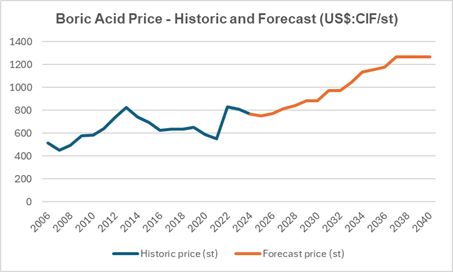
The Project has a stable overall operating cost structure to produce lithium carbonate and battery grade lithium hydroxide due to the scale and reliability of its boric acid credit. Boron remains one of the most stable natural resource commodities over many decades.

ioneer has refined Project plans over the past four years and updates now include an Association for the Advancement of Cost Engineering (“AACE”) Class 2 capital cost estimate (-10%, +15%) with approximately 70% of the Project’s engineering complete. As a result of this and other engineering work including reliability, availability and maintainability (RAM) analysis and detailed engineering design, ioneer has adopted a more conservative approach to plant availability, equipment downtime and maintenance strategies.  While this approach reduces bottom line economics, the Company believes it is appropriate for a Project of this type and scale.

The Company now estimates total capital expenditure to complete the Project will be US$1,667.9 million, including a 10% contingency (2020 DFS estimate US$785 million).


The subscription agreement providing for the Joint Venture is included as an exhibit to this annual report on Form 20-F.

graphic


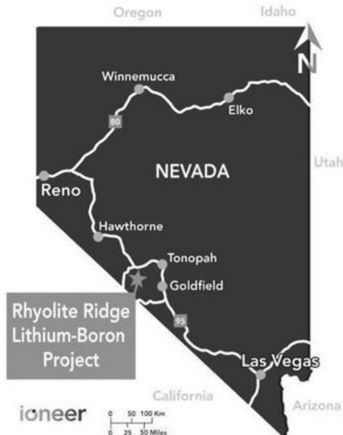
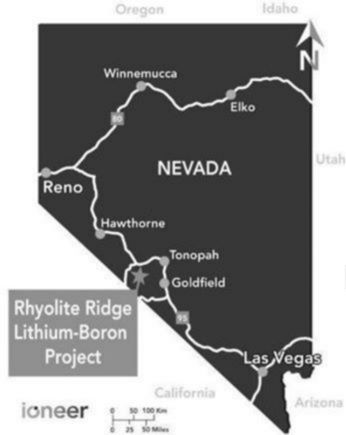
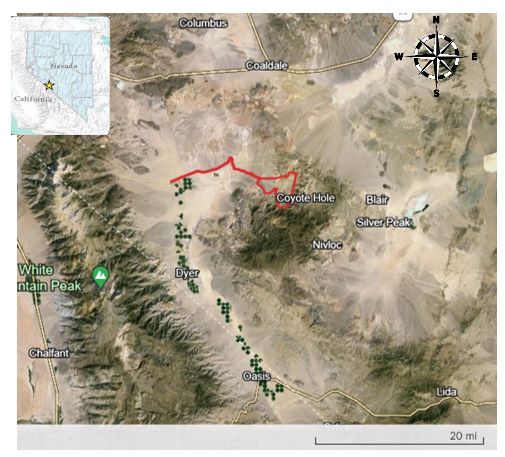
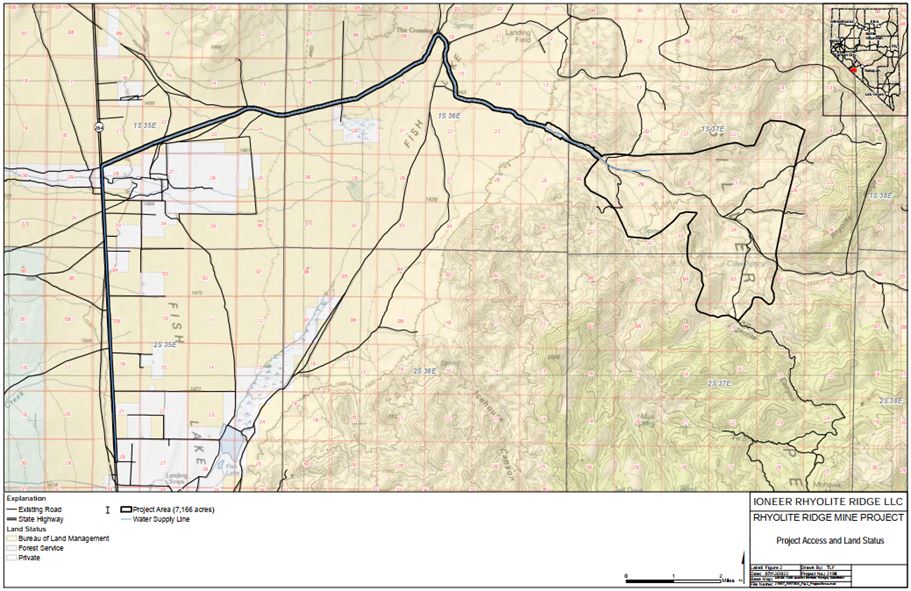
Location of the Rhyolite Ridge Project in Nevada
Our U.S. office is located at 9460 Double R. Blvd, Suite 200, Reno, Nevada 89521.  Our corporate office is located at Suite 16.01, Level 16, 213 Miller Street North Sydney, NSW 2060, Australia.  The telephone number of our U.S. office is +1 (775) 382-4800 and the telephone number of our corporate office is +61 (2) 9922-5800.

Our ordinary shares are publicly traded on the Australian Securities Exchange, or ASX, under the symbol “INR”.

Our American Depositary Shares (“ADSs”), each representing 40 of our ordinary shares, are listed on the Nasdaq Capital Market (“Nasdaq”) under the symbol “IONR”.  The Bank of New York Mellon acts as depositary for the ADSs.

We also maintain a website at www.ioneer.com.  The information contained on our website or available through our website is not incorporated by reference into and should not be considered a part of this annual report on Form 20-F, and the reference to our website in this annual report on Form 20-F is an inactive textual reference only.

ABOUT THIS ANNUAL REPORT

Unless otherwise indicated or the context implies otherwise, any reference in this annual report on Form 20-F to:

“ioneer” refers to ioneer Ltd, unless otherwise indicated;

“the Company”, “we”, “us”, or “our” refer to ioneer Ltd and its consolidated subsidiaries, through which it conducts its business, unless otherwise indicated;

“shares” or “ordinary shares” refers to our ordinary shares;

“ADS” refers to the American depositary shares; and

“ASX” refers to the Australian Securities Exchange.

Unless otherwise indicated, all references to “A$” are to Australian dollars, and all references to “US$” are to United States dollars.  Our reporting and functional currency has traditionally been the Australian dollar, although our U.S. subsidiaries have used U.S. dollars as their reporting and functional currency.  Effective July 1, 2022, we changed our reporting currency from Australian dollars to U.S. dollars, in order to better align the reporting currency with the underlying transactions.  This annual report contains translations of certain Australian dollar amounts into U.S. dollar amounts for convenience.  Unless otherwise noted, all translations from Australian dollars to U.S. dollars in this annual report were made at A$0.6561 to US$1.00, the noon buying rate for June 30, 2025, as set forth in the H. 10 statistical release of the Board of Directors of the Federal Reserve System.

This annual report on Form 20-F contains forward-looking statements that involve risks and uncertainties.  See “Cautionary Note Regarding Forward-Looking Statements.” This annual report on Form 20-F also includes statistical data, market data and other industry data and forecasts, which we obtained from market research, publicly available information and independent industry publications and reports that we believe to be reliable sources.

CAUTIONARY NOTE TO UNITED STATES INVESTORS

We are subject to the reporting requirements of the applicable U.S. and Australian securities laws, and as a result we report our mineral reserves and mineral resources as required by both of these standards.  As an Australian listed public company, we are required to report estimates of mineral resources and ore reserves in terms of “Measured, Indicated and Inferred” Mineral Resources and “Proved and Probable” Ore Reserves in compliance with the JORC 2012, Australasian Code for Reporting of Exploration Results, Mineral Resources and Ore Reserves (the “JORC Code”).  The JORC Code was prepared by the Joint Ore Reserves Committee of The Australasian Institute of Mining and Metallurgy, Australian Institute of Geoscientists and Minerals Council of Australia.  These defined terms contained within the JORC Code differ in some respects from the definitions under the U.S. Securities Act of 1933, as amended (the “Securities Act”), including in Regulation S-K, Subpart 1300 (“Subpart 1300”).

Information about mineral reserves and resources contained in this annual report on Form 20-F is also presented in compliance with Subpart 1300.  While guidelines for reporting mineral resources, including subcategories of measured, indicated and inferred resources, are largely similar between JORC Code and Subpart 1300 standards, information contained herein that describes our mineral deposits may not be directly comparable to similar information made public by other U.S. companies under the SEC’s old reporting standard, Industry Guide 7, or to similar information published by other ASX-listed companies.  Investors are cautioned that public disclosure by us of such mineral resources in Australia in accordance with ASX Listing Rules do not form a part of this annual report on Form 20-F.

CAUTIONARY NOTE REGARDING FORWARD-LOOKING STATEMENTS

Certain information included or incorporated by reference in this annual report on Form 20-F may be deemed to be “forward-looking statements” within the meaning of applicable securities laws.  Such forward-looking statements concern our anticipated results and progress of our operations in future periods, planned exploration and, if warranted, development of our properties, plans related to our business and other matters that may occur in the future.  These statements relate to analyses and other information that are based on forecasts of future results, estimates of amounts not yet determinable and assumptions of management.  All statements contained herein that are not clearly historical in nature are forward-looking, and the words “anticipate”, “believe”, “expect”, “estimate”, “may”, “will”, “could”, “leading”, “intend”, “contemplate”, “shall” and similar expressions are generally intended to identify forward-looking statements.  Forward-looking statements are subject to a variety of known and unknown risks, uncertainties and other factors which could cause actual events or results to differ from those expressed or implied by the forward-looking statements.  Forward-looking statements in this annual report on Form 20-F include, but are not limited to, statements with respect to:

risks related to our limited operating history in the lithium and boron industry;

risks related to our status as a development stage company;

risks related to our ability to identify mineralization and achieve commercial mining at the Project;

risks related to mining, exploration and mine construction, if warranted, on our properties;

risks related to our ability to achieve and maintain profitability and to develop positive cash flow from our mining activities;

risks related to investment risk and operational costs associated with our exploration activities;

risks related to our ability to access capital and the financial markets;

risks related to compliance with government regulations;

risks related to our ability to acquire necessary mining licenses, permits or access rights;

risks related to environmental liabilities and reclamation costs;

risks related to volatility in lithium or boron prices or demand for lithium or boron;

risks related to stock price and trading volume volatility;

risks relating to the development of an active trading market for the ADSs;

risks related to ADS holders not having certain shareholder rights;

risks related to ADS holders not receiving certain distributions; and

risks related to our status as a foreign private issuer and emerging growth company.

All forward-looking statements reflect our beliefs and assumptions based on information available at the time the assumption was made.  These forward-looking statements are not based on historical facts but rather on management’s expectations regarding future activities, results of operations, performance, future capital and other expenditures (including the amount, nature and sources of funding thereof), competitive advantages, business prospects and opportunities.  By its nature, forward-looking information involves numerous assumptions, inherent risks and uncertainties, both general and specific, known and unknown, that contribute to the possibility that the predictions, forecasts, projections or other forward-looking statements will not occur.  Although we have attempted to identify important factors that could cause actual results to differ materially from those described in forward-looking statements, there may be other factors that cause results not to be as anticipated, estimated or intended.  Should one or more of these risks or uncertainties materialize, or should underlying assumptions prove incorrect, actual results may vary materially from those anticipated, believed, estimated or expected.  We caution readers not to place undue reliance on any such forward-looking statements, which speak only as of the date made.  Except as otherwise required by the securities laws of the United States and Australia, we disclaim any obligation to subsequently revise any forward-looking statements to reflect events or circumstances after the date of such statements or to reflect the occurrence of anticipated or unanticipated events.  We qualify all the forward-looking statements contained in this annual report on Form 20-F by the foregoing cautionary statements.

PRESENTATION OF FINANCIAL INFORMATION

Unless otherwise indicated, the consolidated financial statements and related notes included in this annual report on Form 20-F have been prepared in accordance with International Financial Reporting Standards (“IFRS”) and interpretations issued by the International Accounting Standards Board, (the “IASB”) which differ in certain significant respects from Generally Accepted Accounting Principles in the United States (“U.S. GAAP”) and thus may not be comparable to financial statements of United States companies.  Because the SEC has adopted rules to accept financial statements prepared in accordance with IFRS as issued by the IASB without reconciliation to U.S. GAAP for foreign private issuers such as us, we will not be providing a description of the principal differences between U.S. GAAP and IFRS.

Our fiscal year ends on June 30.  We designate our fiscal year by the year in which that fiscal year ends – for example, “fiscal 2025” refers to our fiscal year ended June 30, 2025.

COMPETENT PERSONS STATEMENT

As required by Australian securities laws and the ASX Listing Rules, we hereby notify Australian investors that the information in this annual report that relates to mineral resources is based on estimates and data included in the report dated September 30, 2025, by Independent Mining Consultants, Inc. entitled “Technical Report Summary of the Rhyolite Ridge Lithium-Boron Project” (as amended, the “TRS”), which is being filed as an exhibit to this annual report on Form 20-F.

We confirm to Australian investors that:  a) we are not aware of any new information or data that materially affects the information included in the original ASX announcement or the TRS; b) all material assumptions and technical parameters underpinning the Mineral Resource Statement and Parameters and Ore Reserve Statement and Parameters included in the original ASX announcements continue to apply and have not materially changed; and c) the form and context in which the relevant Competent Persons’ findings are presented in this report have not been materially modified from the original ASX announcement or the TRS.

PART I.

ITEM 1.
IDENTITY OF DIRECTORS, SENIOR MANAGEMENT AND ADVISERS

Not applicable.

ITEM 2.
OFFER STATISTICS AND EXPECTED TIMETABLE

Not applicable.

ITEM 3.
KEY INFORMATION

A.
[Reserved]

B.
Capitalization and Indebtedness

Not applicable.

C.
Reasons for the Offer and Use of Proceeds

Not applicable.

D.
Risk Factors

You should carefully consider the risks described below, together with all of the other information in this annual report on Form 20-F.  If any of the following risks occur, our business, financial condition and results of operations could be seriously harmed and you could lose all or part of your investment.  Further, if we fail to meet the expectations of the public market in any given period, the market price of the ADSs could decline.  We operate in a competitive environment that involves significant risks and uncertainties, some of which are outside of our control.  If any of these risks actually occurs, our business and financial condition could suffer and the price of the ADSs could decline.

Business Risks

We will need additional funds to develop the Project.

We estimated in June 2025 that development of the Project would require approximately US$1,668 million. We expect that this estimate will increase due to cost inflation in the global mining industry until re-estimated at the time of taking a final investment decision (the “FID”). We expect to fund part of the capital expenditure for the Project with proceeds from the US$996 million loan from the U.S. Department of Energy (DOE) Loan Programs Office. ioneer is currently running a strategic partnering process with the assistance of Goldman Sachs to secure a sale of a stake in the Project.

We continue to actively assess options to fund the Project beyond these sources of funding, including through further strategic partnering, debt and equity. Project funding considerations and funding sources will be considered in any decision to approve the FID.

We cannot assure you that we will have, or will be able to raise on favorable terms or at all, sufficient cash to fully develop the Project and also to maintain adequate liquidity to satisfy future working capital requirements.  There can be no assurances that we will be able to meet all conditions precedent to funding under the DOE loan. Even if the relevant conditions precedent are met for the debt from the DOE, we may need to secure substantial additional funds, through future debt or equity financings, to complete development of the Project.  In addition, any reduction in federal funding or changes in the terms of funding could impact our ability to operate, thereby affecting our operational capabilities and financial performance.  Furthermore, we anticipate that between the release of the June 2025 cost estimate, and any future FID, there will be construction cost inflation across the global mining industry. We expect similar pressure to also increase the capital cost estimates at the Project, in particular as it relates to labor, fuel and logistics costs. If we are unable to raise additional funds through equity or debt financing, we may not have the necessary cash resources to finance our business plan.  If we are able to raise additional funds, these funds may be on less favorable terms than anticipated, which may adversely affect our future profitability and financial flexibility.

Funding terms may also place restrictions on the manner in which we conduct our business and impose limitations on our ability to execute on our business plan and growth strategies.

Our future performance is difficult to evaluate because we have a limited operating history.

We are a development stage company and have not realized any revenues to date from the sale of lithium or boron.  Our immediate operating cash flow needs are expected to be significant and to be financed primarily through issuances of our ordinary shares and not through cash flows derived from our operations.  As a result, we have little historical financial and operating information available to help you evaluate our performance.

We cannot guarantee that our properties will result in the commercial extraction of mineral deposits.

We are engaged in the business of developing mineral properties with the intention of locating economic deposits of minerals.  Our Rhyolite Ridge property interest is at the development stage.  Accordingly, it is unlikely that we will realize profits in the short term, and we cannot assure you that we will realize profits in the medium to long term.  Any profitability in the future from our business will be dependent upon development of mineral deposits and further exploration and development of other economic deposits of minerals, each of which is subject to numerous risk factors.  Further, we cannot assure you that, even to the extent mineral deposits have been located, any of our property interests can be commercially mined.  The exploration and development of mineral deposits involves a high degree of financial risk over a significant period of time which a combination of careful evaluation, experience and knowledge of management may not eliminate.  While discovery of additional ore-bearing deposits may result in substantial rewards, few properties which are explored are ultimately developed into producing mines.  Major expenses may be required to construct mining and processing facilities.  It is impossible to ensure that our current development and exploration programs will result in profitable commercial mining operations.  The profitability of our operations will be, in part, directly related to the cost and success of our development and exploration programs which may be affected by a number of factors.  Additional expenditures are required to commercially mine and to construct, complete and install mining and processing facilities in those properties that are actually mined and developed.

In addition, development stage projects like ours have no operating history upon which to base estimates of future operating costs and capital requirements.  Estimates of reserves, ore recoveries and cash operating costs are to a large extent based upon the interpretation of geologic data, obtained from a limited number of drill holes and other sampling techniques, and feasibility studies.  Actual operating costs and economic returns of any and all projects may materially differ from estimated costs and returns, and accordingly, our financial condition, results of operations and cash flows may be negatively affected.

We face risks related to mining, exploration and mine construction on our properties.

Our level of profitability, if any, in future years will depend to a great degree on lithium and boron prices and whether our properties can be brought into production.  Whether it will be economically feasible to extract ore deposits depends on a number of factors, including, but not limited to:  the particular attributes of the deposit, such as size, grade and proximity to infrastructure; sale prices; mining, processing and transportation costs; the willingness of lenders and investors to provide project financing; labor costs and possible labor strikes; and governmental regulations, including, without limitation, regulations relating to prices, taxes, royalties, land tenure, land use, importing and exporting materials, foreign exchange, environmental protection, employment, worker safety, transportation, and reclamation and closure obligations.  The exact effect of these factors cannot be accurately predicted, but the combination of these factors may result in us receiving an inadequate return on invested capital.  In addition, we are subject to the risks normally encountered in the mining industry, such as:

the discovery of unusual or unexpected geological formations;

accidental fires, floods, earthquakes or other natural disasters;

unplanned power outages and water shortages;

controlling water and other similar mining hazards;

operating labor disruptions and labor disputes;

the ability to obtain suitable or adequate machinery, equipment, or labor;

our liability for pollution or other hazards; and

other known and unknown risks involved in the conduct of exploration and operation of mines.

The nature of these risks is such that liabilities could exceed any applicable insurance policy limits or could be excluded from coverage.  There are also risks against which we cannot insure or against which we may elect not to insure.  The potential costs which could be associated with any liabilities not covered by insurance, or in excess of insurance coverage, or compliance with applicable laws and regulations may cause substantial delays and require significant capital outlays, adversely affecting our future earnings and competitive position and, potentially, our financial viability.

Our long-term success will depend ultimately on our ability to achieve and maintain profitability and to develop positive cash flow from our mining activities.

Our long-term success, including the recoverability of the carrying values of our assets, our ability to acquire additional projects, and continuing with development, exploration and commissioning and mining activities on our existing projects, will depend ultimately on our ability to achieve and maintain profitability and to develop positive cash flow from our operations by establishing ore bodies that contain commercially recoverable deposits and develop profitable mining activities.  The economic viability of our mining activities has many risks and uncertainties including, but not limited to:

a significant, prolonged decrease in the market prices of lithium or boron;

difficulty in marketing and/or selling lithium or boron;

significantly higher than expected capital costs to construct our mine;

significantly higher than expected extraction costs;

significantly lower than expected ore extraction quantities;

significantly lower than expected recoveries;

significant delays, reductions or stoppages of ore extraction activities;

significant delays in achieving commercial operations; and

the introduction of significantly more stringent regulatory laws and regulations.

Our future mining activities may change as a result of any one or more of these risks and uncertainties, and we cannot assure you that any ore body that we extract mineralized materials from will result in achieving and maintaining profitability and developing positive cash flow.

We depend on our ability to successfully access the capital and financial markets.  Any inability to access the capital or financial markets may limit our ability to execute our business plan or pursue investments that we may rely on for future growth.

We rely on access to long-term capital markets as a source of liquidity for our capital and operating requirements.  We will require additional capital to establish any future mining operations, which would require funds for construction and working capital.  We cannot assure you that such additional funding will be available to us on satisfactory terms, or at all, or that we will be successful in commencing commercial lithium extraction, or that our sales projections will be realized.

In order to finance our future capital needs, we expect to raise additional funds through the issuance of additional equity or debt securities.  Depending on the type and the terms of any financing we pursue, shareholders’ rights and the value of their investment in our ordinary shares or the ADSs could be reduced.  Any additional equity financing will dilute shareholdings, and new or additional debt financing, if available, may involve restrictions on financing and operating activities.  In addition, if we issue secured debt securities, the holders of the debt would have a claim to our assets that would be prior to the rights of shareholders until the debt is paid.  Interest on such debt securities would increase costs and negatively impact operating results.  If the issuance of new securities results in diminished rights to holders of our ordinary shares or the ADSs, the market price of the ADSs could be negatively impacted.

If we are unable to obtain additional financing, as needed, at competitive rates, our ability to implement our business plan and strategy may be affected, and we may be required to reduce the scope of our operations and scale back our exploration, development and mining programs.  There is, however, no guarantee that we will be able to secure additional funding or be able to secure funding which will provide us with sufficient funds to meet our objectives, which may adversely affect our business and financial position.

Certain market disruptions may increase our cost of borrowing or affect our ability to access one or more financial markets.  Such market disruptions could result from:

adverse economic conditions;

adverse general capital market conditions;

poor performance and health of the lithium or mining industries in general;

bankruptcy or financial distress of unrelated lithium companies or marketers;

significant decrease in the demand for lithium; or

adverse regulatory actions that affect our exploration and construction plans or the use of lithium generally.

Our efforts to grow may adversely affect our business, financial condition and results of operations.

Future growth may place strains on our financial, technical, operational and administrative resources and cause us to rely more on project partners and independent contractors, potentially adversely affecting our financial position and results of operations.  Our ability to grow will depend on a number of factors, including:

our ability to develop existing properties;

our ability to obtain leases or options on properties;

our ability to identify and acquire new exploratory prospects;

our ability to continue to retain and attract skilled personnel;

our ability to maintain or enter into new relationships with project partners and independent contractors;

the results of our development and exploration programs;

the market prices for our production;

our access to capital; and

our ability to enter into sales arrangements.

We may not be successful in upgrading our technical, operational and administrative resources or increasing our internal resources sufficiently to provide certain of the services currently provided by third parties, and we may not be able to maintain or enter into new relationships with project partners and independent contractors on financially attractive terms, if at all.  Our inability to achieve or manage growth may materially and adversely affect our business, results of operations and financial condition.

Our failure to successfully secure any potential future strategic partners, or to close conditions precedent to the DOE Loan, could have an adverse effect on us.

We believe that any potential future strategic partners and the loan from the DOE Loan Programs Office will give us additional capital to substantially fund our growth and expand our operational capabilities.  However, our failure to successfully identify, complete and integrate any potential future strategic partners, or to close conditions precedent to first draw of the loan from the DOE Loan Programs Office, could have adverse consequences on us.  Additionally, at this time we cannot predict what effect, if any investment by potential future strategic partners, or the loan from the DOE Loan Programs Office will have on the trading price of our ordinary shares or the ADSs.

We had targeted to close the transactions encompassing a joint venture with Sibanye Stillwater Limited (“Sibanye”) in the first quarter of calendar year 2025.  However, the closing of such transactions was subject to various conditions precedent, including obtaining necessary project permits, executing the Sibanye-Stillwater agreement, securing adequate debt financing, and procurement of additional funding requirements to enable us to make an FID regarding the Rhyolite Ridge Project.  In February 2025, Sibanye decided not to proceed with the joint venture and ioneer and Sibanye terminated the related Unit Purchase and Subscription Agreement. Although this development has not resulted in a material adverse effect on the trading price of our ordinary shares or the ADSs, there can be no assurances that our future agreement with strategic partners will be executed on terms and timeline reasonably satisfactory to us.

Additionally, on January 20, 2025, we announced the closing of a loan from the DOE’s Loan Programs Office under the Advanced Technology Vehicles Manufacturing program to support the development of an on-site processing facility at the Rhyolite Ridge Lithium-Boron Project. Conditions precedent to first loan funding include closing a strategic partnering agreement for the equity component of the build cost, securing necessary additional required funding and a project finance model bring down. We cannot guarantee that these conditions precedent will be satisfied according to our anticipated timeline or at all.  If for any reason the conditions precedent to the loan are not satisfied according to our anticipated timeline or at all, including due to new or changed policies implemented by the administration in the United States, the trading price of our ordinary shares or the ADSs may be adversely affected and we may need to seek other sources of capital in order to fund our growth, which we cannot guarantee we will successfully obtain.

We are dependent upon key management employees.

The responsibility of overseeing the day-to-day operations and the strategic management of our business depends substantially on our senior management and our key personnel.  Loss of such personnel may have an adverse effect on our performance.  The success of our operations will depend upon numerous factors, many of which are beyond our control, including our ability to attract and retain additional key personnel in sales, marketing, technical support and finance.  We currently depend upon a relatively small number of key persons to seek out and form strategic alliances and find and retain additional employees.  Certain areas in which we operate are highly competitive regions and competition for qualified personnel is intense.  We may be unable to hire suitable field personnel for our technical team or there may be periods of time where a particular position remains vacant while a suitable replacement is identified and appointed.  We may not be successful in attracting and retaining the personnel required to grow and operate our business profitably.

Our growth will require new personnel, which we will be required to recruit, hire, train and retain.

Members of our management team possess significant experience and have previously carried out or been exposed to exploration and production activities including development of greenfield lithium projects into commercial production.  However, we have limited operating history with respect to lithium projects and our ability to achieve our objectives depends on the ability of our directors, officers and management to implement current plans and respond to any unforeseen circumstances that require changes to those plans.  The execution of our exploration and development plans will place demands on us and our management.  Our ability to recruit and assimilate new personnel will be critical to our performance.  We will be required to recruit additional personnel and to train, motivate and manage employees, which may adversely affect our plans.

Lawsuits against us or affecting our interests in the Rhyolite Ridge Project may be filed, and an adverse ruling in any such lawsuit may adversely affect our business, financial condition or liquidity or the market price of the ADSs.

In the normal course of our business, we may become involved in, named as a party to, or be the subject of, various legal proceedings, including regulatory proceedings, tax proceedings and legal actions, relating to personal injuries, property damage, property taxes, land rights, endangered species, the environment and contract disputes, or our interests may be indirectly affected by such legal proceedings.  The outcome of outstanding, pending or future proceedings cannot be predicted with certainty and may be determined adversely to us and as a result, could have a material adverse effect on our assets, liabilities, business, financial condition or results of operations.  Even if we prevail in any such legal proceeding, the proceedings could be costly and time-consuming and may divert the attention of management and key personnel from our business operations, which could adversely affect our financial condition.

While currently pending lawsuit and regulatory proceedings have not impacted our permitting or development activities to date, legal challenges by third parties, such as non-governmental organizations, could materially adversely affect our operations.

Government regulations relating to mineral rights tenure, permission to disturb areas and the right to operate have the potential to materially adversely affect us.

The Project is located on federal lands administered by the Bureau of Land Management (the “BLM”) under the Federal Land Policy and Management Act of 1976 (“FLPMA”).  Proposed BLM actions require review under the National Environmental Policy Act (“NEPA”). The Project completed the NEPA review and received BLM approval under FLPMA to mine our properties at Rhyolite Ridge in October 2024.  The process for permitting applications is often complex and time-consuming, requiring a significant amount of time and other resources.  The duration and success of efforts to obtain permits are contingent upon many variables outside of the Company’s control.  Any amendments to our development, mining or production plans would need to be approved by relevant regulatory authorities.  There is no certainty that any future permitting changes will be approved.

Certain key federal and other state permits are required for the Rhyolite Ridge Project to proceed.  These include air quality, water pollution control, and reclamation permits and approvals of the Company’s use of water under the water rights certificates and permits the Company holds.  Applications have been submitted for many of the necessary permits and rights.  The Company has received a Water Pollution Control Permit and Class II Air Quality Permit from the State of Nevada. The BLM published a final Environmental Impact Statement for the Project in September, 2024 and a positive Record of Decision (“ROD”), in October 2024. Receipt of the positive ROD gives us a license to commence construction activity at Rhyolite Ridge. Future actions, expansions or material changes to process from those described in the current plan of operation may require additional BLM review under NEPA and or modifications to our State of Nevada authorizations. There can be no assurance that all necessary additional approvals and permits will be obtained for either of the Company’s projects, projected timelines for agency permitting decisions will be met, or the projected costs of permitting will prove accurate. 

In addition, most major permitting authorizations are subject to appeals or administrative protests, resulting in the potential for litigation that could lead to administrative reconsiderations or reversals of permitting decisions. On October 31, 2024, three non-government organizations (Center for Biological Diversity, Great Basin Resource Watch and Western Shoshone Defense Project) filed suit against the BLM seeking to vacate the Department of Interior decisions related to the BLM’s Record of Decision and FWS’s Biological Opinion related to the Rhyolite Ridge approval.  ioneer has since joined the case as an intervenor.  The case is pending in the United States District Court for the District of Nevada and no injunctions related to the initiation of site construction have been issued. However, appeals and similar litigation processes can cause lengthy delays, with uncertain outcomes.  Such issues could impact the expected development timelines of the Company’s projects and have a material adverse effect on our business.

Endangered or threatened species protections may impact the development of the project by subjecting it to time delays, restrictions or mitigation measures.  For example, the Center for Biological Diversity petitioned both the U.S. Fish and Wildlife Services (“FWS”) and the Nevada Department of Conservation and Natural Resources (“NDCNR”) to require additional protection for Tiehm’s buckwheat, a plant found along the western margin of the Company’s Rhyolite Ridge ore deposit. On December 14, 2022, FWS listed Tiehm’s buckwheat as an endangered species under the Endangered Species Act (“ESA”) and designated approximately 910 acres of critical habitat. For Tiehm’s buckwheat, critical habitat includes the approximately 10 acres of occupied habitat suitable for the species and approximately 900 acres of surrounding land that has been identified because of their potential to support pollinators for Tiehm’s buckwheat.  As part of publication of the Final Environmental Impact Statement (EIS) by BLM on September 20, 2024, the USFWS also formally released the ESA Section 7 Biological Opinion, concluding the Rhyolite Ridge Project will not jeopardize the ESA-listed Tiehm’s buckwheat or adversely modify its critical habitat. The issuance of the Biological Opinion marked the end of the ESA consultation process between FWS and the BLM regarding Rhyolite Ridge.  The NDCNR process is ongoing.

Also prompted by a Center for Biological Diversity petition, the FWS proposed listing of Fish Lake Valley Tui Chub (FLVTC) as an endangered species on May 20, 2025. The species is a small minnow found in the McNett Spring system, at a location adjacent to the access road and infrastructure corridor for the Rhyolite Ridge Project, approximately 2,200 feet from the infrastructure corridor and more than 8 miles from and approximately 1,600 feet lower in elevation than the project. A second FLVTC population has been introduced into Lida Pond which is over 50 miles from the Rhyolite Ridge Project.

While we do not believe adverse impacts will occur to such species from Rhyolite Ridge Project activities, should the FLVTC be listed, the BLM could potentially require Section 7 consultation to be reinitiated, which may delay project timelines.

There is a risk that these and any other habitat protections for endangered and threatened species could compromise the economic viability of future development of the Rhyolite Ridge Project. 

Our mineral properties consist of unpatented mining claims that may carry certain risks and uncertainties.

Our mineral properties consist of unpatented mining claims which are located on lands administered by the BLM.  The United States retains and manages the surface of these lands and the Company holds only possessory title to the minerals and the right to use the surface to extract and process the minerals.  Title to unpatented mining claims is subject to inherent uncertainties.  These uncertainties relate to such things as the sufficiency of the Company’s discovery of a deposit of valuable minerals as required under the Mining Law of 1872, proper location and posting and marking of boundaries, and possible conflicts with other claims which are not determinable from descriptions of record.  The Company has undertaken investigations of the unpatented mining claims that it acquired from third parties and which it located and is confident that its unpatented mining claims are compliant with federal and state laws.  Substantial mineral exploration, development and mining in the western United States occurs on unpatented mining claims, and these uncertainties are inherent in the mining industry.

The present status of our unpatented mining claims located on public lands allows us the right to mine and remove valuable minerals, including lithium and other metals, from the claims conditioned upon applicable environmental reviews and permitting programs.  We also are generally allowed to use the surface of the land solely for purposes related to mining and processing the mineral-bearing ores.  Legal ownership of the land remains with the United States.  We remain at risk that the mining claims may be forfeited either to the United States or to rival private claimants if we fail to comply with statutory requirements, including payment of the federal annual mining claim maintenance fees which presently are US$200.00 for each unpatented mining claim.

Before 1994, a mining claim locator who was able to prove the discovery of valuable, locatable minerals on an unpatented mining claim, and to meet all other applicable federal and state requirements and procedures pertaining to the location and maintenance of the unpatented mining claim, had the right to prosecute a patent application to secure fee title to the mining claim from the federal government.  The right to pursue a patent, however, has been subject to a moratorium since October 1994, through federal legislation restricting the BLM from accepting any new mineral patent applications.  If we do not obtain fee title to our unpatented mining claims, we can provide no assurance that we will be able to obtain compensation in connection with an action by BLM to contest or condemn our claims.

Legislation has been proposed periodically that could, if enacted, significantly affect the cost of our operations on our unpatented mining claims or the amount of net proceeds of mineral tax we will pay to the State of Nevada on the commencement of production of minerals from the Rhyolite Ridge Project.

Members of the U.S. Congress have periodically introduced bills which would supplant or alter the provisions of the Mining Law of 1872.  Such bills have proposed, among other things, to impose a federal royalty on production from unpatented mining claims.  Such proposed legislation could change the cost of holding unpatented mining claims and could significantly impact our ability to develop mineralized material on unpatented mining claims.  Our mining claims are unpatented claims.  Although we cannot predict what legislated royalties might be, the enactment of these proposed bills could adversely affect the potential for development of our unpatented mining claims and the economics of our existing operating mines on federal unpatented mining claims.  Passage of such legislation could adversely affect our financial performance and results of operations.

We are subject to net proceeds of mineral tax payable to the State of Nevada on up to 5% of net proceeds generated from the Rhyolite Ridge Project.  Net proceeds are calculated as the excess of gross yield over certain direct costs.  Gross yield is determined as the value received when minerals are sold, exchanged for anything of value or removed from the state.  Direct costs generally include the costs to develop, extract, produce, transport and refine minerals.  From time-to-time Nevada legislators introduce bills which aim to increase the amount of net proceeds of minerals tax which Nevada mining companies pay.

Cybersecurity risks and cyber incidents may adversely affect our business.

Attempts to gain unauthorized access to our information technology systems become more sophisticated over time. These attempts, which might be related to industrial or other espionage, include covertly introducing malware to our computers and networks and impersonating authorized users, among others. We seek to detect and investigate all security incidents and to prevent their recurrence, but in some cases, we might be unaware of an incident or its magnitude and effects. The theft, unauthorized use, or publication of our intellectual property and/or confidential business information could harm our competitive position, reduce the value of our investment in research and development and other strategic initiatives or otherwise adversely affect our business. In addition, the devotion of additional resources to the security of our information technology systems in the future could significantly increase the cost of doing business or otherwise adversely impact our financial results.

Regulatory and Industry Risks

The Project will be subject to significant governmental regulations, including the U.S. Federal Mine Safety and Health Act and the Endangered Species Act.

Mining activities in the United States are generally subject to extensive federal, state, local and foreign laws and regulations governing environmental and endangered species protection, natural resources, prospecting, development, production, post-closure reclamation, taxes, labor standards and occupational health and safety laws and regulations, including mine safety, toxic substances and other matters.  The costs associated with compliance with such laws and regulations are substantial.  In addition, changes in such laws and regulations, or more restrictive interpretations of current laws and regulations by governmental authorities, could result in unanticipated capital expenditures, expenses or restrictions on or suspensions of our operations and delays in the development of our properties.

We must obtain and renew governmental permits in order to develop our mining operations, a process which is often costly and time-consuming.

We are required to obtain and renew the licenses, permits, rights-of-way and regulatory consents necessary for our development and exploration activities.  Obtaining and renewing these licenses, permits, rights-of-way and regulatory consents is a complex and time-consuming process.  The timeliness and success of permitting efforts are contingent upon many variables not within our control, including the interpretation of approval requirements administered by the applicable authority.  We may not be able to obtain or renew licenses, permits and regulatory consents that are necessary to our planned operations or the cost and time required to obtain or renew such licenses, permits and regulatory consents may exceed our expectations.  Further, we may not be able to maintain our existing licenses, permits and regulatory consents in full force and effect without modification or revocation adverse to our interests.  Any unexpected delays or costs associated with the permitting process could delay the development, exploration or operation of our properties, which in turn could materially adversely affect our future revenues and profitability.  In addition, key licenses, permits and regulatory consents may be revoked or suspended or may be changed in a manner that adversely affects our activities.

Private parties, such as environmental activists, frequently attempt to intervene in the approval process and to persuade regulators to deny necessary licenses, permits and regulatory consents or seek to overturn those that have been issued.  Obtaining the necessary governmental licenses, permits and regulatory consents involves numerous jurisdictions, public hearings, and possibly costly undertakings.  These third-party actions can materially increase the costs and cause delays in the process and could cause us to not proceed with the development or operation of a property.  In addition, our ability to successfully obtain key permits and approvals to develop, explore, operate, and expand operations will likely depend on our ability to undertake such activities in a manner consistent with the creation of social and economic benefits in the surrounding communities, which may or may not be required by law.  Our ability to obtain permits and approvals and to successfully operate in particular communities may be adversely affected by real or perceived detrimental events associated with our activities.

Compliance with environmental regulations and litigation based on environmental regulations could require significant expenditures and delay development timelines, and the physical effects of climate change could have an adverse effect on our operations.

Environmental regulations mandate, among other things, the maintenance of air and water quality standards, land development and land reclamation, and set forth limitations on the generation, transportation, storage and disposal of solid and hazardous waste.  Environmental legislation is evolving in a manner that may require stricter standards and enforcement, increased fines and penalties for non-compliance, more stringent environmental assessments of proposed projects, and a heightened degree of responsibility for mining companies and their officers, directors and employees.  New environmental laws and regulations or changes in existing environmental laws and regulations could have a negative effect on exploration activities, operations, production levels and methods of production.  In connection with our current exploration and development activities or in connection with our prior mining operations, we may incur environmental costs that could have a material adverse effect on financial condition and results of operations.  Any failure to remedy an environmental problem could require us to suspend operations or enter into interim compliance measures pending completion of the required remedy.

Moreover, governmental authorities and private parties may bring lawsuits based upon damage to property and injury to persons resulting from the environmental, health and safety impacts of prior and current operations.  These lawsuits could lead to the imposition of substantial fines, remediation costs, penalties and other civil and criminal sanctions.  We cannot assure you that any such law, regulation, enforcement or private claim would not have a material adverse effect on our financial condition, results of operations or cash flows.  Mining companies may also be held responsible for the costs of addressing contamination at the site of current or former activities or at third party sites.  Under the Comprehensive Environmental Response, Compensation, and Liability Act and its state law equivalents, present or past owners of a property may be held jointly and severally liable for cleanup costs or forced to undertake remedial actions in response to unpermitted releases of hazardous substances at such property, in addition to, among other potential consequences, potential liability to governmental entities for the cost of damages to natural resources, which may be substantial.

Environmental regulations require us to obtain various operating permits, approvals and licenses and also impose standards and controls relating to development and production activities—see above.  For example, FWS has designated critical habitat areas it believes are necessary for survival of Tiehm’s buckwheat, which it listed as an endangered species.  The critical habitat designation could result in further material restrictions to land use and may materially delay or prohibit land access for our development.  Failure to obtain necessary permits or authorizations required under environmental regulations could also result in delays in beginning or expanding operations, incurring additional costs for investigation or cleanup of hazardous substances, litigation, payment of penalties for non-compliance or discharge of pollutants, and post-mining closure, reclamation and bonding, all of which could have a material adverse impact on our financial performance, results of operations and liquidity.

We cannot predict at this time what changes, if any, to federal laws or regulations may be adopted or imposed by Congress and the Trump Administration.  We cannot provide any assurance that future changes in environmental laws and regulations will not adversely affect our current operations or future projects.  Any changes to these laws and regulations could have an adverse impact on our financial performance and results of operations by, for example, requiring changes to operating constraints, technical criteria, fees or financial assurance requirements.

Congress has from time to time considered adopting legislation to reduce emissions of greenhouse gas emissions (“GHGs”), and a number of state and regional efforts have emerged that are aimed at tracking and/or reducing GHG emissions by means of cap and trade programs.  Cap and trade programs typically require major sources of GHG emissions to acquire and surrender emission allowances in return for emitting those GHGs The United States rejoined the Paris Agreement but is in the process of withdrawal with a formal exit set for January 2026.  Various states and local governments such as Nevada’s have also vowed to continue to enact regulations to satisfy their proportionate obligations under the Paris Agreement.  The adoption of legislation or regulatory programs or other government action to reduce emissions of GHGs could require us to incur increased operating costs.  Finally, some scientists have concluded that increasing concentrations of GHGs in the earth’s atmosphere may produce climate changes that could have significant physical effects, such as increased frequency and severity of storms, droughts, floods and other climatic events; if such effects were to occur, they could have an adverse impact on our operations.

Lithium and boron prices are subject to unpredictable fluctuations.

We currently expect to derive revenues, if any, principally from the sale of refined lithium and boron compounds.  The price of these materials may fluctuate widely and is affected by numerous factors beyond our control, including international, economic and political trends, expectations of inflation, currency exchange fluctuations, tariff rate changes, export regulations, chemical classifications, interest rates, global or regional consumptive patterns, speculative activities, increased production due to new extraction developments and improved extraction and production methods and technological changes in the markets for the end products.  The effect of these factors on prices, and therefore the economic viability of any of our properties, cannot accurately be predicted.

Changes in technology or other developments could result in preferences for substitute products.

Lithium, boron and their derivatives are preferred raw materials for certain industrial applications, such as lithium-ion batteries.  Many materials and technologies are being researched and developed with the goal of making batteries lighter, more efficient, faster charging and less expensive.  Some of these technologies could be successful and could adversely affect demand for lithium batteries in personal electronics, electric and hybrid vehicles and other applications, as well as the type of lithium product required.  We cannot predict which new technologies may ultimately prove to be commercially viable and on what time horizon.  In addition, alternatives to such products may become more economically attractive as global commodity prices shift.  Any of these events could adversely affect demand for and market prices of lithium, thereby resulting in a material adverse effect on the economic feasibility of extracting any mineralization we discover and reducing or eliminating any reserves we identify.

New production of lithium from current or new competitors in the lithium markets could adversely affect prices.

In recent years, new and existing competitors have increased the supply of lithium, which has affected its price.  Further production increases could negatively affect prices.  There is limited information on the status of new lithium production capacity expansion projects being developed by current and potential competitors and, as such, we cannot make accurate projections regarding the capacities of possible new entrants into the market and the dates on which they could become operational.  If these potential projects are completed in the short term, they could adversely affect market lithium prices, thereby resulting in a material adverse effect on the economic feasibility of extracting any mineralization we discover and reducing or eliminating any reserves we identify.

Risks Related to an Investment in the ADSs

ADSs holders may not be entitled to a jury trial with respect to claims arising under the deposit agreement, which could result in less favorable outcomes to the plaintiffs in any such action.

The deposit agreement governing the ADSs provides that, to the fullest extent permitted by law, ADS holders waive the right to a jury trial of any claim they may have against us or the depositary arising out of or relating to our ordinary shares, the ADSs or the deposit agreement, including any claim under the U.S. federal securities laws.  The waiver of jury trial provision applies to all holders of ADSs, including purchasers who acquire ADSs on the open market.  If we or the depositary opposed a jury trial demand based on the waiver, the court would determine whether the waiver was enforceable based on the facts and circumstances of that case in accordance with the applicable state and federal law.  To our knowledge, the enforceability of a contractual pre-dispute jury trial waiver in connection with claims arising under the federal securities laws has not been finally adjudicated by the United States Supreme Court.  However, we believe that a contractual pre-dispute jury trial waiver provision is generally enforceable, including under the laws of the State of New York, which govern the deposit agreement, by a federal or state court in the City of New York, which has non-exclusive jurisdiction over matters arising under the deposit agreement.  In determining whether to enforce a contractual pre-dispute jury trial waiver provision, courts will generally consider whether a party knowingly, intelligently and voluntarily waived the right to a jury trial.  We believe that this is the case with respect to the deposit agreement and the ADSs.  In addition, New York courts will not enforce a jury trial waiver provision in order to bar a viable setoff or counterclaim sounding in fraud or one which is based upon a creditor’s negligence in failing to liquidate collateral upon a guarantor’s demand, or in the case of an intentional tort claim (as opposed to a contract dispute), none of which we believe are applicable in the case of the deposit agreement or the ADSs.  It is advisable that you consult legal counsel regarding the jury waiver provision before obtaining ADSs.

If you or any other holder of ADSs bring a claim against us or the depositary in connection with matters arising under the deposit agreement or the ADSs, including claims under federal securities laws, you or such other holder may not be entitled to a jury trial with respect to such claims, which may have the effect of limiting and discouraging lawsuits against us and/or the depositary.  If a lawsuit is brought against us or the depositary under the deposit agreement, it may be heard only by a judge of the applicable trial court, which would be conducted according to different civil procedures and may result in different outcomes than a trial by jury would have had, including results that could be less favorable to the plaintiffs in any such action.

Nevertheless, if this jury trial waiver provision is not permitted by applicable law, an action could proceed under the terms of the deposit agreement with a jury trial.

Limitations in the deposit agreement may not be effective to waive claims against the Company based on compliance with the federal securities laws.

Although the deposit agreement provides a waiver of jury trial as described above, we have been advised that no condition, stipulation or provision of the deposit agreement or ADSs can serve as a waiver by any owner or holder of ADSs or by us or the depositary of compliance with any substantive provision of the U.S. federal securities laws and the rules and regulations promulgated thereunder.  Accordingly, we expect to be subject to a jury trial in actions based on such laws, rules and regulations.

The market price and trading volume of the ADSs may be volatile and may be affected by economic conditions beyond our control.

The market price of the ADSs may be highly volatile and subject to wide fluctuations.  In addition, the trading volume of the ADSs may fluctuate and cause significant price variations to occur.  If the market price of the ADSs declines significantly, you may be unable to resell the ADSs at or above the purchase price, if at all.  We cannot assure you that the market price of the ADSs will not fluctuate or significantly decline in the future.

Some specific factors that could negatively affect the price of the ADSs or result in fluctuations in their price and trading volume include:

changes or delays in development or exploration activities;

actual or expected fluctuations in our prospects or operating results;

changes in the demand for, or market prices of, lithium or boron;

additions to or departures of our key personnel;

fluctuations of exchange rates between the U.S. dollar and the Australian dollar;

changes or proposed changes in laws and regulations;

changes in trading volume of ADSs on Nasdaq and of our ordinary shares on the ASX;

sales or perceived potential sales of the ADSs or ordinary shares by us, our directors, senior management or our shareholders in the future;

announcement or expectation of additional financing efforts; and

conditions in the U.S. or Australian financial markets or changes in general economic conditions.

An active trading market for the ADSs may not be maintained, and the trading price for our ordinary shares may fluctuate significantly.

We listed our ADSs on Nasdaq in June 2022, and we cannot assure you that an active public market for the ADSs will be maintained.  If an active public market for the ADSs is not maintained, the market price and liquidity of the ADSs may be adversely affected, and you may experience a decrease in the value of the ADSs regardless of our operating performance.  We are aware that following past periods of volatility in the market price of a company’s securities, shareholders of those companies have often instituted securities class action litigations.  If we were to become involved in a class action suit, it could divert the attention of senior management and, if adversely determined, could have a material adverse effect on our results of operations and financial condition.

ADS holders are not our shareholders and do not have shareholder rights.

The Bank of New York Mellon, as depositary, registers and delivers the ADSs.  ADS holders are not treated as our shareholders and do not have shareholders rights.  The depositary is the holder of our ordinary shares underlying the ADSs.  Holders of ADSs have ADS holder rights.  A deposit agreement among us, the depositary, ADS holders, and the beneficial owners of ADSs, sets out ADS holder rights as well as the rights and obligations of the depositary.  New York law governs the deposit agreement and the ADSs.  We and the depositary may amend or terminate the deposit agreement without the ADS holders’ consent in a manner that could prejudice ADS holders.  For a description of ADS holder rights, see “Additional Information—Constitutional Documents—Description of Share Capital—American Depositary Shares.” Our shareholders have shareholder rights.  Australian law and our Constitution govern shareholder rights.

ADS holders do not have the same voting rights as our shareholders.  Shareholders are entitled to receive our notices of general meetings and to attend and vote at our general meetings of shareholders.  At a general meeting, every shareholder present (in person or by proxy, attorney or representative) and entitled to vote has one vote on a show of hands.  Every shareholder present (in person or by proxy, attorney or representative) and entitled to vote has one vote per fully paid ordinary share on a poll.  This is subject to any other rights or restrictions that may be attached to any shares.  ADS holders may instruct the depositary to vote the ordinary shares underlying their ADSs.  ADS holders will not be entitled to attend and vote at a general meeting unless they surrender their ADSs and withdraw the ordinary shares.  However, ADS holders may not have sufficient advance notice about the meeting to surrender their ADSs and withdraw the shares.  If we ask for ADS holders’ instructions, the depositary will notify ADS holders of the upcoming vote and arrange to deliver our voting materials and form of notice to them.  If we ask the depositary to solicit voting instructions, the depositary will try, as far as practical, subject to Australian law and the provisions of the depositary agreement, to vote the shares as ADS holders instruct.  The depositary will not vote or attempt to exercise the right to vote other than in accordance with the instructions of ADS holders.  We cannot assure ADS holders that they will receive the voting materials in time to ensure that they can instruct the depositary to vote their shares.  In addition, there may be other circumstances in which ADS holders may not be able to exercise voting rights.

ADS holders do not have the same rights to receive dividends or other distributions as our shareholders.  Subject to any special rights or restrictions attached to any shares, the directors may determine that a dividend will be payable on our ordinary shares and fix the amount, the time for payment and the method for payment (although we have never declared or paid any cash dividends on our ordinary shares and we do not anticipate paying any cash dividends in the foreseeable future).  Dividends may be paid on our ordinary shares of one class but not another and at different rates for different classes.  Dividends and other distributions payable to our shareholders with respect to our ordinary shares generally will be payable directly to them.  Any dividends or distributions payable with respect to ordinary shares represented by ADSs will be paid to the depositary, which has agreed to pay to ADS holders the cash dividends or other distributions it or the custodian receives on shares or other deposited securities, after deducting its fees and expenses.  Before the depositary makes a distribution to you in respect of your ADSs, any withholding taxes that must be paid will be deducted.  Additionally, if the exchange rate fluctuates during a time when the ADS depositary cannot convert the foreign currency, you may lose some or all of the value of the distribution.  ADS holders will receive these distributions in proportion to the number of ordinary shares their ADSs represent.  In addition, there may be certain circumstances in which the depositary may not pay to ADS holders amounts distributed by us as a dividend or distribution.

There are circumstances where it may be unlawful or impractical to make distributions to the holders of the ADSs.

The deposit agreement requires the depositary to convert foreign currency distributions it receives on deposited ordinary shares into U.S. dollars and distribute the net U.S. dollars to ADS holders if it can do so on a reasonable basis and transfer the money to the United States.  If it cannot make that conversion and transfer, the deposit agreement allows the depositary to distribute the foreign currency only to those ADS holders to whom it is possible to do so.  If a distribution is payable by us in Australian dollars, the depositary will hold the foreign currency it cannot convert for the account of ADS holders who have not been paid.  It will not invest the foreign currency and it will not be liable for any interest.  If the exchange rates fluctuate during a time when the depositary cannot convert the foreign currency, ADS holders may lose some of the value of the distribution.  The depositary is not responsible if it decides that it is unlawful or impractical to make a distribution available to any ADS holders.  This means that ADS holders may not receive the distributions we make on our ordinary shares or any value for them if it is illegal or impractical for us to make them available to them.

Rights as a holder of ordinary shares are governed by Australian law and our Constitution and differ from the rights of shareholders under U.S. law.  Holders of the ADSs may have difficulty in effecting service of process in the United States or enforcing judgments obtained in the United States.

We are a public company incorporated under the laws of Australia.  Therefore, the rights of holders of our ordinary shares are governed by Australian law and our Constitution.  These rights differ from the typical rights of shareholders in U.S. corporations.  The rights of holders of ADSs are affected by Australian law and our Constitution but are governed by U.S. law.  Circumstances that under U.S. law may entitle a shareholder in a U.S. company to claim damages may also give rise to a cause of action under Australian law entitling a shareholder in an Australian company to claim damages.  However, this will not always be the case.

Holders of the ADSs may have difficulties enforcing, in actions brought in courts in jurisdictions located outside the United States, liabilities under U.S. securities laws.  In particular, if such a holder sought to bring proceedings in Australia based on U.S. securities laws, the Australian court might consider whether:

it did not have jurisdiction;

it was not an appropriate forum for such proceedings;

applying Australian conflict of laws rule, U.S. law (including U.S. securities laws) did not apply to the relationship between holders of our ordinary shares or ADSs and us or our directors and officers; or

the U.S. securities laws were of a public or penal nature and should not be enforced by the Australian court.

Certain of our directors and executive officers are residents of countries other than the United States.  Furthermore, a portion of our and their assets are located outside the United States.  As a result, it may not be possible for a holder of our ordinary shares or ADSs to:

effect service of process within the United States upon certain directors and executive officers or on us;

enforce in U.S. courts judgments obtained against any of our directors and executive officers or us in the U.S. courts in any action, including actions under the civil liability provisions of U.S. securities laws;

enforce in U.S. courts judgments obtained against any of our directors and senior management or us in courts of jurisdictions outside the United States in any action, including actions under the civil liability provisions of U.S. securities laws; or

bring an original action in an Australian court to enforce liabilities against any of our directors and executive officers or us based upon U.S. securities laws.

Holders of our ordinary shares and the ADSs may also have difficulties enforcing in courts outside the U.S. judgments obtained in the U.S. courts against any of our directors and executive officers or us, including actions under the civil liability provisions of the U.S. securities laws.

The dual listing of our ordinary shares and the ADSs may adversely affect the liquidity and value of the ADSs.

Our ordinary shares are listed on the ASX.  We cannot predict how the dual listing of our ordinary shares on ASX and our ADSs on Nasdaq will affect the value of these securities.  Dual listing may dilute the liquidity in one or both markets and may adversely affect the development of an active trading market for the ADSs in the United States.

Currency fluctuations may adversely affect the price of the ADSs relative to the price of our ordinary shares.

The price of our ordinary shares is quoted in Australian dollars and the price of the ADSs is quoted in U.S. dollars.  Movements in the Australian dollar/U.S. dollar exchange rate may adversely affect the U.S. dollar price of the ADSs and the U.S. dollar equivalent of the price of our ordinary shares.  If the Australian dollar weakens against the U.S. dollar, the U.S. dollar price of the ADSs could decline, even if the price of our ordinary shares in Australian dollars increases or remains unchanged.  If we pay dividends, we will likely calculate and pay any cash dividends in Australian dollars and, as a result, exchange rate movements will affect the U.S. dollar amount of any dividends holders of the ADSs will receive from the depositary.

As a foreign private issuer, we are permitted and expect to follow certain home country corporate governance practices in lieu of certain Nasdaq requirements applicable to domestic issuers.

As a foreign private issuer listed on Nasdaq, we will be permitted to, and intend to, follow certain home country corporate governance practices in lieu of certain Nasdaq practices.  In particular, we follow home country law instead of Nasdaq practice regarding:  (i) the requirement that a majority of the board of directors be independent; (ii) the establishment of independent committees to oversee compensation matters and director nominations; (iii) the requirement that we obtain shareholder approval for certain dilutive events, such as an issuance that may result in a change of control of the company, certain transactions other than a public offering involving issuances of a 20% or more interest in the company and certain acquisitions of the stock or assets of another company; and (iv) the requirement to have at least annual meetings of independent directors in executive sessions.  See “Item 16G.  Corporate Governance” for additional information with respect to these differences.

As a foreign private issuer, we are permitted to file less information with the SEC than a company that files as a domestic issuer.

As a foreign private issuer, we are exempt from certain rules under the U.S. Securities Exchange Act of 1934, as amended, or the Exchange Act, that impose disclosure requirements as well as procedural requirements for proxy solicitations under Section 14 of the Exchange Act.  In addition, our officers, directors and principal shareholders are exempt from the reporting and “short-swing” profit recovery provisions of Section 16 of the Exchange Act.  Moreover, we are not required to file periodic reports and financial statements with the SEC as frequently or as promptly as a company that files as a domestic issuer whose securities are registered under the Exchange Act, nor are we generally required to comply with the SEC’s Regulation FD, which restricts the selective disclosure of material non-public information.

Under Australian law, we prepare financial statements on an annual and semi-annual basis, we are not required to prepare or file quarterly financial information other than quarterly updates.  Our quarterly updates have consisted of a brief review of operations for the quarter together with a statement of cash expenditure during the quarter, the cash and cash equivalents balance as at the end of the quarter and estimated cash outflows for the following quarter.

For as long as we are a “foreign private issuer,” we intend to file our annual financial statements on Form 20-F and furnish our semi-annual financial statements and quarterly updates on Form 6-K to the SEC as long as we are subject to the reporting requirements of Section 13 or 15(d) of the Exchange Act.  However, the information we file or furnish is not the same as the information that is required in annual and quarterly reports on Form 10-K or Form 10-Q for U.S. domestic issuers.  Accordingly, there may be less information publicly available concerning us than there is for a company that files as a U.S. issuer.

We may lose our foreign private issuer status, which would then require us to comply with the Exchange Act’s domestic reporting regime and cause us to incur additional legal, accounting and other expenses.

We are required to determine our status as a foreign private issuer on an annual basis at the end of our second fiscal quarter.  We would cease to be a foreign private issuer at such time as more than 50% of our outstanding voting securities are held by U.S. residents and any of the following three circumstances applies:  (1) the majority of our executive officers or directors are U.S. citizens or residents; (2) more than 50% of our assets are located in the United States; or (3) our business is administered principally in the United States.  Since more than 50% of our assets are located in the United States, we will lose our status as a foreign private issuer if more than 50% of our outstanding voting securities are held by U.S. residents as of the last day of our second fiscal quarter in any year.  If we lost this status, we would be required to comply with the Exchange Act reporting and other requirements applicable to U.S. domestic issuers, which are more detailed and extensive than the requirements for foreign private issuers.  We may also be required to make changes in our corporate governance practices and to comply with United States generally accepted accounting principles, as opposed to IFRS.  The regulatory and compliance costs to us under U.S. securities laws if we are required to comply with the reporting requirements applicable to a U.S. domestic issuer may be higher than the cost we would incur as a foreign private issuer.  As a result, we expect that a loss of foreign private issuer status would increase our legal and financial compliance costs.

We are an emerging growth company, and we cannot be certain if the reduced disclosure requirements applicable to emerging growth companies may make the ADSs less attractive to investors and, as a result, adversely affect the price of the ADSs and result in a less active trading market for the ADSs.

We are an emerging growth company as defined in the U.S. Jumpstart Our Business Startups Act of 2012, or the JOBS Act, and we may take advantage of certain exemptions from various reporting requirements that are applicable to other public companies that are not emerging growth companies.  For example, we have elected to rely on an exemption from the auditor attestation requirements of Section 404 of the Sarbanes-Oxley Act relating to internal control over financial reporting, and we will not provide such an attestation from our auditors.

We may avail ourselves of these disclosure exemptions until we are no longer an emerging growth company.  We cannot predict whether investors will find the ADSs less attractive because of our reliance on some or all of these exemptions.  If investors find the ADSs less attractive, it may adversely affect the price of the ADSs and there may be a less active trading market for the ADSs.

We will cease to be an emerging growth company upon the earliest of:

the last day of the fiscal year during which we have total annual gross revenues of US$1,235,000,000 (as such amount is indexed for inflation every five years by the United States Securities and Exchange Commission, or SEC) or more;

the last day of our fiscal year following the fifth anniversary of the completion of our first sale of common equity securities pursuant to an effective registration statement under the Securities Act, which is currently expected to be June 30, 2028, unless we change our fiscal year to December 31, in which case such date will be December 31, 2027;

the date on which we have, during the previous three-year period, issued more than US$1,000,000,000 in non-convertible debt; or

the date on which we are deemed to be a “large accelerated filer”, as defined in Rule 12b-2 of the Exchange Act, which would occur in future fiscal years if the market value of our ordinary shares and ADSs that are held by non-affiliates exceeds US$700,000,000 as of the last day of our most recently-completed second fiscal quarter.

We will incur significant increased costs as a result of operating as a company whose ADSs are publicly traded in the United States, and our management will be required to devote substantial time to new compliance initiatives.

As a company whose ADSs will be publicly traded in the United States, we will incur significant legal, accounting, insurance and other expenses that we did not previously incur.  In addition, the Sarbanes-Oxley Act, Dodd-Frank Wall Street Reform and Consumer Protection Act and related rules implemented by the SEC, have imposed various requirements on public companies including requiring establishment and maintenance of effective disclosure and internal controls.  Our management and other personnel will need to devote a substantial amount of time to these compliance initiatives, and we will need to add additional personnel and build our internal compliance infrastructure.  Moreover, these rules and regulations will increase our legal and financial compliance costs and will make some activities more time-consuming and costly.  These laws and regulations could also make it more difficult and expensive for us to attract and retain qualified persons to serve on our board of directors, our board committees or as our senior management.  Furthermore, if we are unable to satisfy our obligations as a public company in the United States, we could be subject to delisting of the ADSs, fines, sanctions and other regulatory action and potentially civil litigation.

We do not anticipate paying dividends in the foreseeable future.

We do not anticipate paying dividends in the foreseeable future.  We currently intend to retain future earnings, if any, to finance the development of our business.  Dividends, if any, on our outstanding ordinary shares will be declared by and subject to the discretion of our Board of Directors on the basis of our earnings, financial requirements and other relevant factors, and subject to Australian law.  As a result, a return on your investment will only occur if the ADS price appreciates.  We cannot assure you that the ADSs will appreciate in value or even maintain the price at which you purchase the ADSs.  You may not realize a return on your investment in the ADSs and you may even lose your entire investment in the ADSs.

If U.S. securities or industry analysts do not publish research reports about our business, or if they issue an adverse opinion about our business, the market price and trading volume of our ordinary shares or ADSs could decline.

The trading market for our ordinary shares and ADSs will be influenced by the research and reports that U.S. securities or industry analysts publish about us or our business.  Securities and industry analysts may discontinue research on us, to the extent such coverage currently exists, or in other cases, may never publish research on us.  If no or too few U.S. securities or industry analysts commence coverage of our Company, the trading price for the ADSs would likely be negatively affected.  In the event securities or industry analysts initiate coverage, if one or more of the analysts who cover us downgrade the ADSs or publish inaccurate or unfavorable research about our business, the market price of the ADSs would likely decline.  If one or more of these analysts cease coverage of us or fail to publish reports on us regularly, demand for the ADSs could decrease, which might cause our price and trading volume to decline.  In addition, research and reports that Australian securities or industry analysts publish about us, our business or our ordinary shares may impact the market price of the ADSs.

You may be subject to limitations on transfers of the ADSs.

The ADSs are transferable on the books of the depositary.  However, the depositary may close its transfer books at any time or from time to time when it deems expedient in connection with the performance of its duties.  In addition, the depositary may refuse to deliver, transfer or register transfers of ADSs generally when our books or the books of the depositary are closed, or at any time if we or the depositary deems it advisable to do so because of any requirement of law or of any government or governmental body, or under any provision of the deposit agreement, or for any other reason.

Our Constitution and Australian laws and regulations applicable to us may adversely affect our ability to take actions that could be beneficial to our shareholders.

As an Australian company we are subject to different corporate requirements than a corporation organized under the laws of the United States.  Our Constitution, as well as the Australian Corporations Act, set forth various rights and obligations that are unique to us as an Australian company.  These requirements may operate differently than those of many U.S. companies.  You should carefully review the summary of these matters set forth under the section entitled “Additional Information—Share Capital” as well as our Constitution, which is included as an exhibit to this registration on Form 20-F, prior to investing in the ADSs.

If we fail to maintain proper internal controls, our ability to produce accurate financial statements or comply with applicable regulations could be impaired.

We are subject to the reporting obligations under the U.S. securities laws.  The SEC, as required under Section 404 of the Sarbanes-Oxley Act, has adopted rules requiring a public company to include a report of management on the effectiveness of such company’s internal control over financial reporting in its annual report on Form 20-F.  In addition, once we cease to be an “emerging growth company,” as such term is defined in the JOBS Act, an independent registered public accounting firm for a public company must issue an attestation report on the effectiveness of our internal control over financial reporting.  If in the future we are unable to conclude that we have effective internal controls over financial reporting or our independent auditors are unwilling or unable to provide us with an unqualified report on the effectiveness of our internal controls over financial reporting as required by the Sarbanes-Oxley Act, investors may lose confidence in our operating results, the price of the ADSs could decline and we may be subject to litigation or regulatory enforcement actions.  In addition, if we are unable to meet the requirements of the Sarbanes-Oxley Act, we may not be able to remain listed on Nasdaq.

We believe that we were a passive foreign investment company (“PFIC”) for U.S. federal income tax purposes for the taxable year ended June 30, 2025, and we expect to be a passive foreign investment company for the current taxable year, which could have adverse tax consequences for our investors.

The rules governing PFICs can have adverse consequences for U.S. investors for U.S. federal income tax purposes.  Under the Internal Revenue Code of 1986, as amended (the “Code”), we will be a PFIC for any taxable year in which, after the application of certain “look-through” rules with respect to our subsidiaries, either (i) 75% or more of our gross income consists of “passive income,” or (ii) 50% or more of the average quarterly value of our assets consist of assets that produce, or are held for the production of, “passive income.” Passive income generally includes interest, dividends, rents, certain non-active royalties and capital gains.  As discussed in “Taxation—Material U.S.  Federal Income Tax Considerations—Certain Tax Consequences If We Are a PFIC,” we believe that we were a PFIC for the taxable year ended June 30, 2025 because we did not have active business income in that taxable year, and we expect to be a PFIC for the current taxable year because we do not expect to begin active business operations in the current taxable year.

If we are a PFIC for any taxable year during which a U.S. Holder (as defined in “Taxation—Material U.S. Federal Income Tax Considerations”) holds ADSs or ordinary shares, we generally would continue to be treated as a PFIC with respect to that U.S. Holder for all succeeding years during which the U.S. Holder holds ADSs or ordinary shares, even if we ceased to meet the threshold requirements for PFIC status.  Such a U.S. Holder may suffer adverse tax consequences, including ineligibility for any preferential tax rates on capital gains or on actual or deemed dividends, interest charges on certain taxes treated as deferred and additional reporting requirements under U.S. federal income tax laws and regulations.  A U.S. Holder may, in certain circumstances, make a timely qualified electing fund (“QEF”) election or a mark-to-market election to avoid or minimize the adverse tax consequences described above.  We do not, however, expect to provide the information regarding our income that would be necessary in order for a U.S. Holder to make a QEF election.  Potential investors should consult their tax advisors regarding all aspects of the application of the PFIC rules to the ADSs and ordinary shares.

If we fail to maintain proper internal controls, our ability to produce accurate financial statements or comply with applicable regulations could be impaired.

We are subject to the reporting obligations under the U.S. securities laws. The SEC, as required under Section 404 of the Sarbanes-Oxley Act, has adopted rules requiring a public company to include a report of management on the effectiveness of such company’s internal control over financial reporting in its annual report on Form 20-F. In addition, once we cease to be an “emerging growth company,” as such term is defined in the JOBS Act, an independent registered public accounting firm for a public company must issue an attestation report on the effectiveness of our internal control over financial reporting. If in the future we are unable to conclude that we have effective internal controls over financial reporting or our independent auditors are unwilling or unable to provide us with an unqualified report on the effectiveness of our internal controls over financial reporting as required by the Sarbanes-Oxley Act, investors may lose confidence in our operating results, the price of the ADSs could decline and we may be subject to litigation or regulatory enforcement actions.

ITEM 4.
INFORMATION ON THE COMPANY

A.
History and Development of the Company

Overview

ioneer Ltd’s primary business is developing a lithium-boron mine and processing facility, known as the Rhyolite Ridge Project, in Esmeralda County, Nevada, United States.  The Project is located on public land administered by the BLM of the U.S. Department of Interior. ioneer Ltd. currently holds a 100% interest in the project.

The SEC maintains an internet site at http://www.sec.gov that contains reports, information statements, and other information regarding issuers that file electronically with the SEC.

History

Several previous drilling and exploration projects have occurred at or near the project site, with the earliest known boron exploration beginning in the 1890s.  Major exploration activities at the site have included:

Stauffer Chemicals drilling boreholes in the vicinity more than 50 years ago.

U.S. Borax drilled 16 holes on the Cave Spring property between 1987 and 1992 and excavated and sampled numerous trenches. U.S. Borax held claims until sometime after 2000, at which time the property was released by U.S. Borax and acquired by Gold Summit Corp.

In 2003, our predecessor, Global Geoscience Limited, began exploratory operations in Nevada under the leadership of our current Managing Director, Bernard Rowe.

In 2010 and 2011, JOGMEC-American Lithium, after acquiring the property from Gold Summit, resampled existing trenches and drilled a total of 21 diamond core HQ-sized core holes (approximately 16,850 feet) as well as 15 reverse circulation (RC) rotary percussion holes (approximately 12,000 feet) in the South Basin, for a total of nearly 29,000 feet of drilling.

In 2015, Boundary Peak Minerals acquired mineral rights to the property prior to its transfer to us in 2016.

ioneer’s history at Rhyolite Ridge has included:

In 2016, we acquired our initial interest in the Rhyolite Ridge Project under a Mining Lease and Option to Purchase Agreement with Boundary Peak Minerals dated June 3, 2016.  We exercised our option to purchase and acquired title to the unpatented mining claims in May 2017.

During 2016 and 2017, we drilled an additional 28 RC holes (17,330 feet) and 3 diamond HQ core holes (about 2,800 feet) at the property, for a total of over 20,000 feet of drilling.

During 2017 and 2018, we performed all payment obligations under the mining lease.

In October 2018, we completed a Prefeasibility Study (“PFS”).

During 2018 and 2019, we commissioned additional infill drilling to further define the lithium-boron resource at the site, collecting and testing approximately 29,000 feet of additional core and installing one test well, three monitoring wells, and five vibrating wire piezometers.  In addition, we signed our first binding offtake agreement for boron.

In 2020, we completed a Definitive Feasibility Study (“DFS”) which affirmed the Project’s scale, long life and potential to become a low-cost and globally significant producer of both lithium and boron products.

During 2021, we announced our first lithium offtake agreement and continued to advance engineering, funding discussions and project permitting.

In June 2021, we agreed a binding 3-year offtake agreement with EcoPro Innovation for 2,000 tpa of lithium carbonate.

In September 2021, we agreed to enter into the Strategic Partnership with Sibanye-Stillwater to develop the Rhyolite Ridge Project.  Under the terms of the agreement, subject to the satisfaction of conditions precedent, Sibanye-Stillwater will contribute US$490 million for a 50% interest in the Joint Venture holding the project, with ioneer maintaining a 50% interest and retaining operatorship.

In October 2021, the Company completed a US$70 million strategic investment by Sibanye-Stillwater.

In February 2022, we announced that EcoPro Innovation, a major Korean battery manufacturer had increased its 3-year lithium offtake volume to 7,000 tpa.

In June 2022, our ADSs were listed and commenced trading on Nasdaq.

In July 2022, we agreed a binding 5-year offtake agreement with the Ford Motor Company for 7,000 tpa of lithium carbonate.

In August 2022, we announced a binding 5-year offtake agreement with Prime Planet Energy & Solutions, Inc. (“PPES”), a joint venture between Toyota Motor Corporation and Panasonic Corporation, for 4,000 tpa of lithium carbonate.
 
In December 2022, the BLM announced its decision to publish the Notice of Intent for Rhyolite Ridge Lithium-Boron Project in the federal register, representing a major milestone toward completion of the NEPA process and approval of the Project’s Plan of Operations.

In January 2023, we announced finalization of a term sheet and offer of a Conditional Commitment for a proposed loan of up to US$700 million from the DOE Loan Programs Office for financing the construction of the Rhyolite Ridge Lithium-Boron Project.

In May 2023, we announced a lithium offtake agreement with Dragonfly Energy Holdings Corp. (NASDAQ: DFLI), a Nevada-based industry leader in energy storage for 250 tpa of lithium carbonate.

In October 2023, we announced a Research and Development Memorandum of Understanding with EcoPro Innovation Co Ltd, a global leader in battery grade high purity lithium hydroxide conversion. The Lithium Clay R&D project is currently excluded from the Stage 1 Project design and economics.

In April 2024, we announced the draft Environmental Impact Statement (“DEIS”) for the Project was made public by the Federal Bureau of Land Management (BLM) and was published in the Federal Register.

In April 2024, we announced that we had completed three separate geotechnical drilling programs (53 drill holes in total) under 2920 permits with a primary reason to collect geotechnical data. The 53 holes were drilled outside of the then mineral resource over an area of approximately 0.8 km2 – compared to the 3 km2 footprint of the current Resource.

In September 2024, the BLM published the Final Environmental Impact Statement (“EIS”) regarding the Rhyolite Ridge Project, which included the FWS Biological Opinion concluding the Project would not jeopardize ESA-listed Tiehm’s buckwheat or adversely modify its critical habitat.  Publication of the Final EIS begins a 30-day statutory waiting period before a Record of Decision can be issued.

In October 2024, ioneer announced it had received a positive Record of Decision, being final approval from the U.S. Government to develop the Rhyolite Ridge Project.

In January 2025, ioneer announced the closing of a US$996 million loan (consisting of $968 million in principal and $28 million of capitalized interest) from the U.S. Department of Energy Loan Programs Office under the Advanced Technology Vehicles Manufacturing program to support the development of an on-site processing facility at the Rhyolite Ridge Lithium-Boron Project.

In February 2025, Sibanye-Stillwater announced that it had decided not to proceed with the proposed joint venture in the Rhyolite Ridge Project.

In March 2025, the Company announced a 45% increase in the mineral resource estimate for the Rhyolite Ridge Project to 510 Million tonne (“Mt”).

In June 2025, ioneer announced the more than quadrupling of ore reserve to 247 Mt, and updated economics for the Project.

In September 2025, ioneer announced a further material improvement in Project economics achieved through leach optimization.

Following the completion of all permitting activities, pre-construction engineering works, offtake agreements for lithium and boron and funding discussions, we intend to undertake mining and processing activities to become a U.S. source of lithium and boron.

graphic

Location of the Rhyolite Ridge Project in Nevada
Our U.S. office is located at 9460 Double R. Blvd, Suite 200, Reno, Nevada 89521.  Our corporate office is located at Suite 16.01, Level 16, 213 Miller Street North Sydney, NSW 2060, Australia.  The telephone number of our U.S. office is +1 (775) 382-4800 and the telephone number of our corporate office is +61 (2) 9922-5800.

Our ordinary shares are publicly traded on the Australian Securities Exchange, or ASX, under the symbol “INR”.

Our ADSs, each representing 40 of our ordinary shares, are listed on Nasdaq under the symbol “IONR”.  The Bank of New York Mellon acts as depositary for the ADSs.

We also maintain a web site at www.ioneer.com.  The information contained on our website or available through our website is not incorporated by reference into and should not be considered a part of this annual report on Form 20-F, and the reference to our website in this annual report on Form 20-F is an inactive textual reference only.

We were originally incorporated on October 26, 2001, as Paradigm Geoscience Pty Ltd.  The Company changed its name to Global Geoscience Pty Limited on September 21, 2007, and was listed on the Australian Stock exchange as a public company on December 19, 2007.  On October 31, 2018, the Company changed its name to ioneer Ltd.

Strengths

We believe that we are well-positioned to successfully execute our business strategies because of the following competitive strengths:

Demonstrated potential to become a world-class lithium-boron producer

Definitive Feasibility Study (2020) and updated Project economics (2025) confirm plans for a large, long-life, low-cost operation

Strategically advantageous location in a tier-one mining jurisdiction with easy access to key US and Asian markets

Set to produce two materials essential in a modern world and well-positioned to capitalize on expected lithium demand boom

Completed offtake strategy for both boron and lithium production, obtained significant debt financing, subject to the satisfaction of conditions precedent, via the US$996 million conditional loan from U.S. Department of Energy Loan Programs Office

Engaged top-tier mining, engineering, processing and environmental partners in Fluor, Veolia, and AtkinsRealis (previously SNC Lavalin). Approximately 70% detailed engineering has been completed on a state-of-the-art facility

Highly experienced board and management with necessary skills to develop, build and operate a world-class lithium-boron mine

Development Plans

Subject to market conditions and the ability to define an economically viable project, our business plan for the Project is to become a low-cost and globally significant producer of both lithium and boron products.  We plan to effect our business plan by:

Complete required permitting and zoning activities.  Though we must obtain several permits, there are three key permits necessary before we can begin construction at Rhyolite Ridge, namely:

a Class II Air Quality Permit from the Nevada State Government (Received in June 2021) was resubmitted for approval to amend it for the updated approved mine plan - received July 2025

a Water Pollution Control Permit from the Nevada State Government (Received July 2021) was resubmitted for approval to amend it for the updated approved mine plan – received August 2025; and

completion of an environmental review and final decision by the federal government authorizing the use of federal land under the National Environmental Policy Act (“NEPA”) – received in October 2024.

Undertake discussions with potential offtake parties for future sales of lithium and boron products.

Lithium – We announced our first lithium offtake agreement on June 30, 2021 with EcoPro Innovation (“EcoPro”), a large Korean lithium and battery materials manufacturer.  On February 16, 2022 we announced that EcoPro had exercised an option under the agreement to increase the annual supply volume.  Under the agreement, we will deliver 7,000 tonnes per annum (tpa) of lithium carbonate to EcoPro over a three-year term, which we estimate will represent approximately one-third of our projected lithium carbonate production over that period.  On July 22, 2022 we announced a five-year binding offtake agreement with the Ford Motor Company for the supply of 7,000 tpa of technical grade lithium carbonate.  On August 1, 2022 we announced the signing of a further five-year binding offtake agreement with PPES, a joint venture battery company between Toyota Motor Corporation and Panasonic Corporation.  The agreement is for a total of 4,000 tonnes per annum of lithium carbonate from ioneer’s Rhyolite Ridge Lithium-Boron operation in Nevada and represents approximately 20% of annual output in the first five years of production.  In total, the three binding offtake agreements account for approximately 90% of our expected first three years of production of lithium carbonate. In May 2023, we announced a commercial offtake agreement partnership with Dragonfly Energy Holdings Corp. (“Dragonfly”) for a variable amount of surplus tonnes available after meeting previously announced offtake commitments. The contract duration is three years beginning when ioneer notifies Dragonfly that the project has been fully completed and commissioned.

Boron – On December 18, 2019, we announced our first binding offtake agreement for the sale of boric acid to Dalian Jinma Boron Technology Group Co. Ltd (“Jinma”) for 105,000 tpa of boric acid which included a distribution agreement for the territories of China and Taiwan.  On May 21, 2020, we announced that we had secured two separate boric acid Distribution and Sales Agreements for the supply of boric acid to Kintamani Resources Pte Limited and Boron Bazar Limited.  In aggregate, the volume commitments and minimum volume targets in these agreements place 100% of our first four years of projected boric acid production.  As with our lithium carbonate agreements, we anticipate entering into offtake and other sales agreements with a variety of partners to build a diversified customer base for our boric acid production.  We anticipate that our boric acid production will account for approximately 25% of the Project’s revenue.

Complete pre-construction engineering.  This workstream includes progressing engineering to the start of the Full Notice to Proceed (“FNTP”) phase; also known as the Engineering, Procurement, and Construction Management (“EPCM”) phase.  The key aim of ongoing activities is to be construction ready to support construction mobilization following FNTP award.  The FNTP award will be dependent on the receipt of all permitting.

Complete required financing activities.  We estimated in June 2025 that development of the Rhyolite Ridge Project would require approximately US$1,668 million, and we will update the cost estimate prior to making a FID. If we ultimately make an FID to develop the Project, we will need to secure substantial additional funds to complete development. We plan to fund the capital expense by raising equity capital by selling an interest in the Rhyolite Ridge Project to a strategic partner and drawing on the DOE Loan Program’s Office loan of US$996 million, subject to the satisfaction of conditions precedent. Even if the conditions precedent to first draw of the DOE loan are met, we may need to secure substantial additional funds, through future debt or equity financings, to complete development of the Project.

Complete Construction at the Rhyolite Ridge Project.  We are targeting to commence construction as soon as all permitting is received, funding is in place and the Company makes an FID to construct the Project. The timing of making an FID and starting construction is dependent on the outcomes of the strategic partnering process. Construction is expected to be approximately 36 months (including the supply of long-lead items). We anticipate a 6-month period of ramp-up of production post the start of construction.

Continue our exploration programs.  Our development of the Rhyolite Ridge Project is situated in the southern basin (the “South Basin”) and all resource and reserve estimates are for the South Basin.  Pursuant to our mine plan of operations, we intend to conduct further activities to define additional reserves and resources in the South Basin.  We are also currently undertaking technical studies to assess the additional economic potential of the northern basin of Rhyolite Ridge (the “North Basin”) and defining additional reserves and resources.

Summary Mineral Resource Data

We are required by ASX Listing Rules to report ore reserves and mineral resources in Australia in compliance with the Australasian Code for Reporting of Exploration Results, Mineral Resources and Ore Reserves (the JORC Code 2012 Edition) prepared by the Joint Ore Reserves Committee of The Australasian Institute of Mining and Metallurgy, Australian Institute of Geoscientists and Minerals Council of Australia (JORC).  In contrast, the SEC generally requires disclosure of mining reserves in accordance with Regulation S-K, Subpart 1300.

Mineral Resource Estimate (exclusive of ore reserves), for Rhyolite Ridge South Basin (as of the end of August, 2025) Based on Prices Set Forth in Footnote 6 Below

Stream
Group
Classification
Tonnage
 kt
Li
ppm
B
ppm
Li2CO3
wt. %
H3BO3
wt. %
Contained
Li2CO3
kt
Contained
H3BO3
kt
Stream 1 (>= 5,000 ppm  B)
Upper Zone
B5 Unit
Measured
10,414
1,921
15,063
1.02
8.61
106
897
Indicated
7,214
1,749
13,240
0.93
7.57
67
546
Total (M&I)
17,628
1,850
14,317
0.98
8.19
174
1,443
Inferred
10,628
1,712
10,563
0.91
6.04
97
642
Total (MII)
28,255
1,798
12,905
0.96
7.38
270
2,085
Upper Zone
M5 Unit
Measured
1,073
2,186
7,397
1.16
4.23
12
45
Indicated
814
2,100
7,535
1.12
4.31
9
35
Total (M&I)
1,887
2,149
7,456
1.14
4.26
22
80
Inferred
763
2,197
6,515
1.17
3.73
9
28
Total (MII)
2,650
2,163
7,185
1.15
4.11
31
109
Upper Zone
S5 Unit
Measured
1,456
1,561
7,467
0.83
4.27
12
62
Indicated
1,393
1,571
7,132
0.84
4.08
12
57
Total (M&I)
2,849
1,566
7,303
0.83
4.18
24
119
Inferred
1,572
1,400
6,469
0.75
3.70
12
58
Total (MII)
4,421
1,507
7,006
0.80
4.01
35
177
Upper Zone Total
Measured
12,943
1,902
13,573
1.01
7.76
131
1,004
Indicated
9,420
1,753
11,844
0.93
6.77
88
638
Total (M&I)
22,363
1,839
12,845
0.98
7.34
219
1,642
Inferred
12,963
1,703
9,828
0.91
5.62
117
728
Total (MII)
35,326
1,789
11,738
0.95
6.71
336
2,371
Lower Zone
L6 Unit
Measured
12,014
1,355
9,838
0.72
5.63
87
676
Indicated
26,139
1,319
10,365
0.70
5.93
183
1,549
Total (M&I)
38,153
1,330
10,199
0.71
5.83
270
2,225
Inferred
13,914
1,415
12,287
0.75
7.03
105
978
Total (MII)
52,067
1,353
10,757
0.72
6.15
375
3,203
Total Stream 1 (all zones)
Measured
24,957
1,639
11,775
0.87
6.73
218
1,680
Indicated
35,559
1,434
10,757
0.76
6.15
271
2,187
Total (M&I)
60,516
1,518
11,177
0.81
6.39
489
3,867
Inferred
26,877
1,554
11,101
0.83
6.35
222
1,706
Total (MII)
87,393
1,529
11,153
0.81
6.38
711
5,573
Stream 2 (>= 11.13/tonne net value, < 5,000 ppm B. Low Clay)
Upper Zone
B5 Unit
Measured
438
2,321
2,925
1.24
1.67
5
7
Indicated
362
2,092
3,674
1.11
2.10
4
8
Total (M&I)
800
2,217
3,264
1.18
1.87
9
15
Inferred
3,690
1,695
1,776
0.90
1.02
33
37
Total (MII)
4,491
1,788
2,041
0.95
1.17
43
52
Upper Zone
S5 Unit
Measured
9,400
996
1,226
0.53
0.70
50
66
Indicated
7,981
1,012
1,524
0.54
0.87
43
70
Total (M&I)
17,382
1,003
1,363
0.53
0.78
93
135
Inferred
15,491
889
1,014
0.47
0.58
73
90
Total (MII)
32,873
949
1,198
0.51
0.69
166
225
Upper Zone Total
Measured
9,839
1,055
1,302
0.56
0.74
55
73
Indicated
8,343
1,059
1,617
0.56
0.92
47
77
Total (M&I)
18,182
1,057
1,447
0.56
0.83
102
150
Inferred
19,187
1,044
1,160
0.56
0.66
107
127
Total (MII)
37,369
1,050
1,300
0.56
0.74
209
278
Lower Zone
L6 Unit
Measured
19,043
1,155
1,979
0.61
1.13
117
215
Indicated
51,191
1,158
1,624
0.62
0.93
316
475
Total (M&I)
70,234
1,157
1,720
0.62
0.98
433
691
Inferred
47,474
1,244
790
0.66
0.45
314
214
Total (MII)
117,708
1,192
1,345
0.63
0.77
747
905
Total Stream 2 (all zones)
Measured
28,881
1,121
1,748
0.60
1.00
172
289
Indicated
59,535
1,144
1,623
0.61
0.93
363
553
Total (M&I)
88,416
1,137
1,664
0.60
0.95
535
841
Inferred
66,662
1,186
897
0.63
0.51
421
342
Total (MII)
155,078
1,158
1,334
0.62
0.76
956
1,183
Stream 3(>= 11.13/tonne net value, < 5,000 ppm B, High Clay)
Total Stream 3 (M5 zone)
Measured
13,602
2,202
1,487
1.17
0.85
159
116
Indicated
11,437
2,100
1,205
1.12
0.69
128
79
Total (M&I)
25,039
2,155
1,358
1.15
0.78
287
194
Inferred
11,608
1,654
601
0.88
0.34
102
40
Total (MII)
36,647
1,997
1,118
1.06
0.64
389
234
All Streams
M&I Resource
Measured
67,440
1,530
5,406
0.81
3.09
549
2,085
Indicated
106,531
1,344
4,627
0.72
2.65
762
2,818
Total (M&I)
173,971
1,416
4,929
0.75
2.82
1,311
4,903
Inferred Resource
 
Inferred
105,147
1,332
3,472
0.71
1.99
745
2,088
Total (MII)
279,117
1,384
4,380
0.74
2.50
2,056
6,991

Notes:

1.
Ktonnes = thousand tonnes; Li = Lithium; B = Boron; ppm = parts per million; Li2CO3 = Lithium carbonate; H3BO3 = boric acid.

2.
Totals may differ due to rounding, mineral resources reported on a dry in-situ basis. Lithium is converted to Equivalent Contained Tonnes of Lithium Carbonate (Li2CO3) using a stochiometric conversion factor of 5.322, and boron is converted to Equivalent Contained Tonnes of Boric Acid (H3BO3) using a stochiometric conversion factor of 5.718. Equivalent stochiometric conversion factors are derived from the molecular weights of the individual elements which make up Lithium Carbonate (Li2CO3) and Boric Acid (H3BO3).

3.
The statement of estimates of mineral resources has been compiled by Independent Mining Consultants, Inc. (“IMC”) and is independent of ioneer and its affiliates. IMC has sufficient experience that is relevant to the style of mineralization and type of deposit under consideration and to the activity being undertaken to qualify as a Qualified Person as defined in Subpart 1300.

4.
All mineral resource figures reported in the table above represent estimates at August 2025. Mineral resource estimates are not precise calculations, being dependent on the interpretation of limited information on the location, shape and continuity of the occurrence and on the available sampling results. The totals contained in the above table have been rounded to reflect the relative uncertainty of the estimate.

5.
Mineral resources have been prepared in accordance with requirements of Subpart 1300. Mineral resources are also reported in accordance with the Australasian Code for Reporting of Exploration Results, Mineral Resources and Ore Reserves (The Joint Ore Reserves Committee Code – JORC 2012 Edition).

6.
The mineral resource estimate is the result of determining the mineralized material that has a reasonable prospect of economic extraction. In making this determination, constraints were applied to the geological model based upon a pit optimization analysis that defined a conceptual pit shell limit. The conceptual pit shell was based upon a net value per tonne calculation including a 5,000ppm boron cut-off grade for high boron – high lithium (HiB-Li) mineralization (Stream 1) and a $11.13/tonne net value cut-off grade for low boron (LoB-Li) mineralization  below 5,000ppm boron broke into two material types, low clay and high clay material respectfully (Stream 2 and Stream 3). The pit shell was constrained by a conceptual mineral resource optimized pit shell for the purpose of establishing reasonable prospects of eventual economic extraction based on potential mining, metallurgical and processing grade parameters identified by mining, metallurgical and processing studies performed to date on the Project. Key inputs in developing the mineral resource pit shell included a 5,000ppm boron cut-off grade for HiB-Li mineralization, $11.13/tonne net value cut-off grade for LoB-Li low clay mineralization and LoB-Li high clay mineralization; mining cost of US$1.69 /tonne; G&A cost of US$11.13 /process tonne; plant feed processing and grade control costs which range between US$18.87/tonne and US$98.63/tonne of plant feed (based on the acid consumption per stream and the mineral resource average grades); boron and lithium recovery (respectively) for Stream 1: M5 80.2% and 85.7%, B5 78.3% and 85.2%, S5 77.0% and 82.5%, L6 75.8% and 79.4%; Stream 2 and 3: M5 65.0% and 78.0%, B5 78.3% and 85.2%, S5 46.8% and 84.8%, L6 32.9% and 78.7%,  respectively; boric acid sales price of US$1,172.78/tonne; lithium carbonate sales price of US$19,351.38/tonne.

7.
The mineral resource is reported exclusive of the mineral reserves.

In December 2022, the United States Fish and Wildlife Service (USFWS) listed Tiehm’s buckwheat as an endangered species under the Endangered Species Act (ESA) and has designated critical habitat by way of applying a 500 meter radius around several distinct plant populations that occur on the Project site. ioneer is committed to the protection and conservation of the Tiehm’s buckwheat. The Project’s Mine Plan of Operations, approved by the BLM’s ROD in October 2024, has no direct impact on Tiehm’s buckwheat and includes measures to minimize and mitigate for indirect impacts within the designated critical habitat areas identified.

The mineral resource pit shell used to constrain the August 2025 mineral resource estimate was not adjusted to account for any adjustments from avoidance of Tiehm’s buckwheat or minimization of disturbance within the designated critical habitat. Environmental and permitting assumptions and factors have not been taken into consideration during modifying factors studies for the Project. The tonnes and grade within the avoidance polygons have not been removed from the mineral resources for the August 2025 estimate. Environmental and permitting assumptions and factors may be taken into consideration during future studies for the Project. These permitting assumptions and factors may result in potential changes to the mineral resource footprint in the future.

Comparison with Previous Resource

The Table below presents a summary comparison of the current August 2025 mineral resource estimate against the previous mineral resource estimate for the Project, prepared by WSP USA Inc. (“WSP”) in October 2023.

 
Category
Tonnage (MT)1
Li, ppm
B,ppm
Li2CO3 ktonnes
H3BO3 ktonnes
 
August 2025
 
Measured
67.4
1,530
5,406
549
2,085
 
Indicated
106.5
1,344
4,627
762
2,818
 
Sum M&I
174.0
1,416
4,929
1,311
4,903
 
Inferred
105.1
1,332
3,472
745
2,088
 
Total
279.1
1,384
4,380
2,056
6,991
 
October 2023
 
Measured
17.1
1,503
9,374
137
919
 
Indicated
220.1
1,760
4,654
2,061
5,856
 
Sum M&I
237.2
1,741
4,995
2,198
6,775
 
Inferred
62.1
1,795
4,392
593
1,558
 
Total
299.3
1,752
4,870
2,791
8,334
 
Difference
 
Measured
50.3
   
412.2
1,165.7
 
Indicated
-113.6
   
-1,299.4
-3,038.0
 
Sum M&I
-63.3
   
-887.3
-1,872.3
 
Inferred
43.1
   
152.7
529.2
 
Total
-20.2
   
-734.5
-1,343.1

Notes:

1.
MT = one million metric tonnes.

The updated August 2025 mineral resource estimate has been constrained by applying a 5,000 ppm Boron cut-off grade to HiB-Li mineralization within the B5, M5, S5 and L6 geological units (Stream 1) as well as a $11.13/tonne net value cut-off grade to LoB-Li low clay mineralization in the  B5, S5 and L6 geological units (Stream 2) and LoB-Li high clay  in the M5 geological unit (Stream 3). All three styles of mineralization have also been constrained by the application of a single high-level optimized resource pit shell.

Relative to the October 2023 mineral resource estimate, the updated August 2025 mineral resource estimate for the Project reflects a decrease in the estimated resource tonnes and grades due to the conversion of resource to reserve.  The material changes that have affected the resource model and resource estimate are as follows:
 
•           Drill Hole Database: added 54 holes (5 RC, 49 core), total additional meters  - 9,183 m (30,129 ft) and 1,547 additional assay samples;

•           Density: Use of 2010 density dataset was not used in the August 2025 resource as the values could not be validated leading to a lower density value and overall tonnage than calculated in October 2023 resource;

•           Resource Block Model: new geologic framework and grade estimation: tabulation changed from a 1.52m (5 ft) model to 9.14 m (30ft) reblock model from a 1.52 m (5 ft) model;

•           Recovery: changed from one recovery (Boron at 83.5%, Lithium at 81.1%) to recovery by seam and process stream;

•           Process Costs: changed from one total process cost to combination of fixed cost (by seam and stream) plus a cost of acid based on the acid consumption calculated for each block in the resource model, Reduced leach retention time is reduced from three days to two; and

•           Resource Tabulation: changed from tabulating seams M5, B5, L6 above 5,000 ppm Boron to tabulating M5, B5, S5, L6 for process Streams 1, 2 and 3.

Estimation Methodology

•          Drill core samples were assayed on nominal 1.52 m lengths and this data set was composited to 1.52m lengths which respected seam contacts and was used for the interpolation of grade data into a 1.52m bench height block model. The data set honored geological contacts (i.e. assay intervals did not span unit contacts).

•          Based on a statistical analysis, extreme B grade values were identified in some of the units other than the targeted G5, B5, M5, S5, G6, L6 and Lsi units. The units other than these units were not estimated so no grade capping was applied to the drill hole database.  The units B5, M5, S5 and L6 are the units of economic interest and the grades in these units and the adjacent units were estimated for completeness when re-blocking to a 9.14m bench height block model used to tabulate the mineral resource.

•          The geological model was developed as a gridded surface stratigraphic model with fault domains included which offset the stratigraphic units in various areas of the deposit.  The geological model was developed by GSI Enviromental Inc., an engineering and enviromental science consulting firm, under direction of ioneer and provided to IMC as the geologic basis for grade estimation.  IMC has reviewed the geological model and accepts the interpretation.

•          Domaining in the model was constrained by the roof and floor surfaces of the geological units. The unit boundaries were modelled as hard boundaries, with samples interpolated only within the unit in which they occurred.

•          The geological model used as the basis for estimating mineral resources was developed as a stratigraphic gridded surface model using a 7.6m regularized grid in plan. The grade block model was developed using a 7.6m north-south by 7.6m east-west by 1.52m vertical block dimension (no sub-blocking was applied). The grid cell and block size dimensions represent 25 percent of the nominal drill hole spacing across the model area.  The model was reblocked to 9.14 m high blocks (six 1.52m blocks combined vertically) for assigning the economic attributes and tabulating the mineral resource.

•          Inverse Distance Squared (‘ID2’) grade interpolation was used for the estimate, constrained by stratigraphic unit roof and floor surfaces from the geological model. The search direction for estimating grade varied and followed the floor orientation of the seams which changed within   the fault block domains. The search distances ranged from 533 m in B5 to 229 m in S5.  The number of drill hole composites used to estimate the grades of a model block ranges from a minimum of two composites to a maximum of 10 composites, with no more than 3 composites from one drill hole.

•          The density values used to convert volumes to tonnages were assigned on a by-geological unit basis using mean values calculated from 120 density samples collected from drill core during the 2018 and more recent 2022-2023 P1 and P2 drilling programs. The density values by seam ranged from 1.53 grams per cubic centimeter (‘g/cm3’) for S3 to 1.98/cm3 in seam L6. The density analyses performed by geotechnical consultants present during both the 2018 and 2022-2023 drilling programs (P1 and P2) followed a strict repeatable process in sample collection and analysis utilizing the Archimedes-principle (water displacement) method for density determination, with values reported in dry basis.  This provided consistent representative data. The 2018 and 2022-2023 data aligned well and proved to be representative across the resource.

Classification Criteria

Estimated mineral resources were classified as follows:

•          Measured: Between 107 and 122 meter spacing between points of observation depending on the seam, with sample interpolation from a minimum of four drill holes.

•          Indicated: Between 168 and 244 meter spacing between points of observation depending on the seam, with sample interpolation from a minimum of two drill holes.

•          Inferred: To the limit of the estimation range (maximum 533 meters, depending on the seam), with sample interpolation from a minimum of one drill hole (2 composites).
The mineral resource classification included the consideration of data reliability, spatial distribution and abundance of data and continuity of geology, fault structures and grade parameters.
Ore Reserve Statement, for Rhyolite Ridge South Basin (as of the end of August, 2025)

Area 
Group
Classification 
Metric
Lithium
Boron
Contained Equivalent Grade2 
Contained6 
Equivalent2 Tonnes
Recovered6 
Equivalent2 Tonnes
Tonnes2 
Grade7 
Grade7 
 
Li 
Li2CO3
H3BO3
Li2CO3
H3BO3 
Li2CO3
H3BO3
(ktonnes) 
(ppm)
(ppm) 
(Wt. %)
(Wt. %)
(kt) 
(kt) 
(kt) 
(kt) 
Stream 1
(>= 5,000 ppm  B) 
Upper Zone  
Proven
3,489
2,401
7,652
1.28
4.38
45
153
38
122
M5 Unit 
Probable
3,410
2,262
7,430
1.20
4.25
41
145
35
116
 
Sub-total B5 Unit
6,899
2,332
7,542
1.24
4.31
86
298
73
239
Upper Zone
Proven
27,991
1,880
15,364
1.00
8.79
280
2,459
239
1,925
B5 Unit 
Probable
31,456
1,742
14,169
0.93
8.10
292
2,549
248
1,995
 
Sub-total M5 Unit
59,447
1,807
14,732
0.96
8.42
572
5,008
487
3,921
Upper Zone  
Proven
2,237
1,326
7,754
0.71
4.43
16
99
13
76
S5 Unit 
Probable
3,355
1,166
7,533
0.62
4.31
21
145
17
111
 
Sub-total S5 Unit
5,592
1,230
7,621
0.65
4.36
37
244
30
187
Upper Zone
Proven
33,717
1,897
14,061
1.01
8.04
340
2,711
290
2,124
(B5, M5 & S5)
Probable
38,221
1,738
12,985
0.92
7.42
353
2,838
301
2,223
Sub-Total
Sub-total Upper Zone
71,938
1,813
13,489
0.96
7.71
694
5,549
591
4,347
Lower Zone  
Proven
5,712
1,389
8,357
0.74
4.78
42
273
34
207
L6 Unit 
Probable
13,592
1,334
7,856
0.71
4.49
96
611
77
463
 
Sub-total Lower Zone
19,303
1,350
8,004
0.72
4.58
139
883
110
670
Total Stream 1 (all zones) 
Proven
39,428
1,824
13,235
0.97
7.57
383
2,984
323
2,331
Probable
51,813
1,632
11,640
0.87
6.66
450
3,448
377
2,686
Sub-total  Stream 1
91,241
1,715
12,329
0.91
7.05
833
6,432
700
5,017
Stream 2
($11.13/tonne net value cut-off grade, Low Clay)
 
Upper Zone  
Proven
4,528
2,219
2,143
1.18
1.23
53
55
46
43
B5 Unit 
Probable
4,384
2,118
2,415
1.13
1.38
49
61
42
47
 
Sub-total B5 Unit
8,912
2,169
2,277
1.15
1.30
103
116
88
91
Upper Zone  
Proven
15,005
1,022
1,125
0.54
0.64
82
97
69
45
S5 Unit 
Probable
27,495
825
866
0.44
0.50
121
136
102
64
 
Sub-total S5 Unit
42,500
895
957
0.48
0.55
202
233
172
109
Upper Zone
Proven
19,533
1,299
1,361
0.69
0.78
135
152
115
89
(B5 & S5)
Probable
31,880
1,003
1,079
0.53
0.62
170
197
144
111
Sub-Total
Sub-total Upper Zone
51,413
1,116
1,186
0.59
0.68
305
349
259
200
Lower Zone  
Proven
24,936
1,254
1,279
0.67
0.73
166
182
131
60
L6 Unit 
Probable
68,952
1,196
1,535
0.64
0.88
439
605
345
199
 
Sub-total Lower Zone
93,888
1,211
1,467
0.64
0.84
605
788
476
259
Total Stream 2 (all zones) 
Proven
44,469
1,274
1,315
0.68
0.75
302
334
246
149
Probable
100,832
1,135
1,391
0.60
0.80
609
802
490
310
Sub-total  Stream 2
145,301
1,177
1,368
0.63
0.78
911
1,136
736
459
Stream 3
($11.13/tonne net value cut-off grade, High Clay) 
Total Stream 3 (M5 zone) 
Proven
5,621
2,199
1,702
1.17
0.97
66
55
51
36
Probable
18,178
2,082
1,145
1.11
0.65
201
119
157
77
Sub-total  Stream 3
23,799
2,110
1,277
1.12
0.73
267
174
208
113
TOTAL of All Streams, All Seams, and All Proven & Probable 
260,341
1,451
5,201
0.77
2.97
2,010
7,742
1,645
5,588

Notes:


1.
Kt – thousand metric tonnes, MT – million metric tonnes, ktonne = thousand metric tons; Li= lithium; B= boron’ ppm= parts per million; Li2CO3 = lithium carbonate; H3BO3 = boric acid; kst = thousand metric tonnes.


2.
Totals may differ due to rounding, mineral reserves reported on a dry in-situ basis. The Contained and Recovered Lithium Carbonate (Li2CO3) and Boric Acid (H3BO3) are reported in the table above in short tons.  Lithium is converted to Equivalent Contained Tonnes of Lithium Carbonate (Li2CO3) using a stochiometric conversion factor of 5.322, and boron is converted to Equivalent Contained Tonnes of Boric Acid (H3BO3) using a stochiometric conversion factor of 5.718. Equivalent stochiometric conversion factors are derived from the molecular weights of the individual elements which make up Lithium Carbonate (Li2CO3) and Boric Acid (H3BO3). The Equivalent Recovered Tons of Lithium Carbonate (Li2CO3) and Boric Acid (H3BO3) is the portion of the contained tonnage that can be recovered after processing. 


3.
The statement of estimates of mineral reserves has been compiled by Independent Mining Consultants, Inc. (IMC) and is independent of ioneer and its affiliates. IMC has sufficient experience that is relevant to the style of mineralisation and type of deposit under consideration and to the activity being undertaken to qualify as a Competent Person as defined in Subpart 1300.


4.
The mineral reserve estimate is the result of determining the measured and indicated resource that is economically minable allowing for the conversion to proven and probable.  In making this determination, constraints were applied to the geological model based upon a pit optimization analysis that defined a conceptual pit shell limit. The conceptual pit shell was based upon a net value per ton calculation including a 5,000ppm boron cut-off grade for high boron – high lithium (HiB-Li) mineralization (Stream 1) and $11.13 Net value per tonne cut-off for low boron (LoB-Li) mineralization below 5,000ppm boron broke in to two material types low clay and high clay material respectfully (Stream 2 and Stream 3).  The conceptual pit shell was constrained by the measured and indicated resource that incorporates the potential mining, metallurgical and processing grade parameters identified by mining, metallurgical and processing studies performed to date on the Project. The conceptual pit shell was used as a guide for an engineered pit design.  Key inputs in developing the mineral reserve pit shell included a 5,000ppm boron cut-off grade for HiB-Li mineralization, $11.13 Net Value per tonne cut-off for LoB-Li low clay mineralization and $11.13 Net value per tonne cut-off for LoB-Li high clay mineralization; base mining cost of US$1.69/tonne and incremental cost of $0.055/tonne per bench below 6220ft elevation; plant feed processing and grade control costs which range between US$52.92/tonne and US$82.55/ton of plant feed for stream 1, US$18.87 and US$98.62 for streams 2&3; boron and lithium recovery for Stream 1: M5= of 80.2% and 85.7%, B5=80.2% and 78.3%, S5=77.0% and 82.5%, L6=75.8% and 79.4%; Stream 2 and 3: M5 65% and 78%, B5 78.3% and 85.2%, S5 46.8% and 84.8%, L6 32.9% and 78.7%,  respectively; boric acid sales price of US$1,172.78/tonne; lithium carbonate sales price of $19,351.38/tonne.


5.
Ore reserves are based on a block model that is 7.62m x 7.62m in plan and 9.14m high.  The model block size used for the ore reserve estimate is based on selected mining equipment and approached used within the mine plan.  As a result, the dilution and ore loss are incorporated within the block model.


6.
All ore reserve figures represent estimates as of August 2025. Ore reserve estimates are not precise calculations, being dependent on the interpretation of limited information on the location, shape and continuity of the occurrence and on the available sampling results. The totals have been rounded to reflect the relative uncertainty of the estimate. Totals may not sum due to rounding.


7.
Mineral reserves are reported in accordance with the US SEC Regulation S-K Subpart 1300.  The mineral reserves in this report were estimated and reported using the regulation S-K §229.1304 of the United States Securities and Exchange Commission (“SEC”).  Mineral reserves are also reported in accordance with the Australasian Code for Reporting of Exploration Results, Mineral Resources and Ore Reserves (The Joint Ore Reserves Committee Code – JORC 2012 Edition).   


8.
The mineral reserve is reported exclusive of mineral resources.  

Comparison with Previous Ore Reserve

The Table below presents a summary comparison of the current August 2025 mineral resource estimate against the previous mineral resource estimate for the Project, prepared by WSP in October 2023.

Group
Classification
Tonnes
(Mt)
Li
(ppm)
B
(ppm)
Li2CO3
(wt. %)
H3BO3
(wt. %)
Li2CO3
(kt)
H3BO3
(kt)
August 2025
Reserve
Proved
89.5
1,574
6,589
0.84
3.77
750
3,373
Probable
170.8
1,386
4,473
0.74
2.56
1,260
4,369
Total
260.3
1,451
5,201
0.77
2.97
2,010
7,742
October 2023
Reserve
Proved
29.0
1,900
16,250
1.00
9.30
290
2,700
Probable
31.5
1,700
14,650
0.90
8.40
280
2,620
Total
60.5
1,796
15,417
0.95
8.83
580
5,320
 
Variation
Proved
60.5
-326
-9,661
   
460
673
Probable
139.3
-314
-10,177
   
980
1,749
Total
199.8
-345
-10,216
   
1,440
2,422

Compared with the October 2023 estimate, the updated August 2025 ore reserve estimate has been revised with an increase of 330% in proven and probable total tonnes. With the inclusion of Stream 2 and Stream 3, overall average lithium grade has decreased due to the inclusion of lower grade material; however contained metals increased by 248% for lithium and 46% for boron.

The changes as compared to the previous ore reserve estimate primarily relate to:

Decrease in vat resident leach time;

Optimization of acid consumption; and

Inclusion of Stream 2 and Stream 3

U.S. Regulations

We have internal controls for reviewing and documenting the information supporting the mineral reserve and mineral resource estimates, describing the methods used, and ensuring the validity of the estimates. These internal control processes were not materially impacted by the adoption of S-K 1300. Information that is utilized to compile mineral reserves and mineral resources is prepared and certified by appropriate QPs and is subject to our internal review process, which includes review by a QP. The QP and management agree on the reasonableness of the criteria for the purposes of estimating resources and reserves. Calculations using these criteria are reviewed and validated by the QP. We recognize the risks inherent in mineral resource and reserve estimates, such as the geological complexity, interpretation and extrapolation of data, changes in operating approach, macroeconomic conditions and new data, among others. Overestimated resources and reserves resulting from these risks could have a material effect on future profitability.

We are an “emerging growth company” under the U.S. Jumpstart Our Business Startups Act of 2012, or the JOBS Act, and will continue to qualify as an “emerging growth company” until the earliest to occur of:

the last day of the fiscal year during which we have total annual gross revenues of US$1,235,000,000 (as such amount is indexed for inflation every five years by the SEC) or more;

the last day of our fiscal year following the fifth anniversary of the completion of our first sale of common equity securities pursuant to an effective registration statement under the Securities Act, which is currently expected to be June 30, 2028, unless we change our fiscal year to December 31, in which case such date will be December 31, 2027;

the date on which we have, during the previous three-year period, issued more than US$1,000,000,000 in non-convertible debt; or

the date on which we are deemed to be a “large accelerated filer”, as defined in Rule 12b-2 of the U.S. Securities Exchange Act of 1934, as amended, or the Exchange Act, which would occur in future fiscal years if the market value of our ordinary shares and ADSs that are held by non-affiliates exceeds US$700,000,000 as of the last day of our most recently-completed second fiscal quarter.

An emerging growth company may take advantage of specified exemptions from various requirements that are otherwise applicable to public companies in the United States.  Generally, a company that registers any class of its securities under Section 12 of the Exchange Act is required to include in the second and all subsequent annual reports filed by it under the Exchange Act, a management report on internal control over financial reporting and an auditor attestation report on management’s assessment of the company’s internal control over financial reporting.  However, for so long as we continue to qualify as an emerging growth company, we will be exempt from the requirement to include an auditor attestation report in our annual reports filed under the Exchange Act.  In addition, Section 103(a)(3) of the Sarbanes-Oxley Act of 2002, or the Sarbanes-Oxley Act, has been amended by the JOBS Act, to provide that, among other things, auditors of an emerging growth company are exempt from any rules of the Public Company Accounting Oversight Board minimum mandatory audit firm rotation or a supplement to the auditor’s report in which the auditor would be required to provide additional information about the audit and the financial statements of the company.

We are also considered a “foreign private issuer” pursuant to Rule 405 under the Securities Act.  As a foreign private issuer, we are exempt from certain rules under the Exchange Act that impose certain disclosure obligations and procedural requirements for proxy solicitations under Section 14 of the Exchange Act.  In addition, our officers, directors and principal shareholders are exempt from the reporting and “short-swing” profit recovery provisions of Section 16 of the Exchange Act and the rules under the Exchange Act with respect to their purchases and sales of our ordinary shares or ADSs.  Moreover, we are not required to file periodic reports and financial statements with the SEC as frequently or as promptly as United States companies whose securities are registered under the Exchange Act.  In addition, we are not required to comply with Regulation FD (Fair Disclosure), which restricts the selective disclosure of material information.

Under Australian law, we prepare financial statements on an annual and semi-annual basis, and we are not required to prepare or file quarterly financial information other than quarterly updates.  Our quarterly updates consist of a brief review of operations for the quarter together with a statement of cash expenditure during the quarter, the cash and cash equivalents balance as at the end of the quarter and estimated cash outflows for the following quarter.

For as long as we are a “foreign private issuer” we intend to file our annual financial statements on Form 20-F and furnish our semi-annual financial statements and quarterly updates on Form 6-K to the SEC for so long as we are subject to the reporting requirements of Section 13 or 15(d) of the Exchange Act.  However, the information we file or furnish is not the same as the information that is required in annual and quarterly reports on Form 10-K or Form 10-Q for U.S. domestic issuers.  Accordingly, there may be less information publicly available concerning us than there is for a company that files as a domestic issuer.

We may take advantage of these exemptions until such time as we are no longer a foreign private issuer.  We are required to determine our status as a foreign private issuer on an annual basis at the end of our second fiscal quarter.  We would cease to be a foreign private issuer at such time as more than 50% of our outstanding voting securities are held by U.S. residents and any of the following three circumstances applies:  (1) the majority of our executive officers or directors are U.S. citizens or residents; (2) more than 50% of our assets are located in the United States; or (3) our business is administered principally in the United States.  Since more than 50% of our assets are located in the United States, we will lose our status as a foreign private issuer if more than 50% of our outstanding voting securities are held by U.S. residents as of the last day of our second fiscal quarter in any year.  See “Risk Factors— We may lose our foreign private issuer status, which would then require us to comply with the Exchange Act’s domestic reporting regime and cause us to incur additional legal, accounting and other expenses.”

Capital Expenditures

Our capital expenditures for fiscal 2025, 2024 and 2023 amounted to US$15.3 million, US$35.4 million, US$33.6 million, respectively.

Our capital expenditures have historically consisted principally of expenditures on exploration and geotechnical drilling, permitting, PFS engineering, the Rhyolite Ridge pilot plant, DFS, vendor engineering and post DFS engineering.  We financed these expenditures principally through the issue of new ordinary shares in the Company.

B.
Business Overview

Overview

ioneer Ltd’s primary business is to develop a lithium-boron mine and processing facility, known as the Rhyolite Ridge Project, in Esmeralda County, Nevada, United States.  The Project is located on public land administered by the BLM of the U.S. Department of Interior. ioneer Ltd. currently holds a 100% interest in the Project.  Under the terms of the loan from the U.S. Department of Energy Loans Program Office, once conditions precedent to first loan funding are met, including closing a joint venture agreement, securing necessary additional required funding and a project finance model bring down, a loan of US$996 million will be available to help fund the Project. The company is currently running a strategic partnering process to secure a sale of a portion of a stake in the Project.

Marketing

Because we are a development stage company, we do not currently have any marketing or distribution channels or sales agreements. We continue to evolve our marketing and sales plans as we progress toward development of the Project. We have completed our pre-production plans for the sale of lithium carbonate and boric acid. These offtakes deliver on ioneer’s strategy to ensure our lithium, produced in the U.S., is delivered into the U.S. domestic supply chain. For boric acid, we have entered into one binding offtake and three sales and distribution agreements with committed and minimum target volumes totaling 100% of our expected first three years of production. All of the aforementioned agreements are subject to conditions precedent, including the taking of an FID and meeting a supply start date. We expect to enter into additional agreements of the same type in the near term and from time to time. The primary agreements we have entered into as of the date hereof include:

Binding lithium offtake supply agreement between the Company and EcoPro Innovation Co. Ltd, a three-year agreement for a total of 7,000 tpa of technical-grade lithium carbonate, upon commencement of production.

Binding lithium offtake supply agreement between the Company and the Ford Motor Company, a five-year agreement for a total of 7,000 tpa of technical-grade lithium carbonate, upon commencement of production.

Binding lithium offtake supply agreement between the Company and PPES, a joint venture between Toyota Motor Corporation and Panasonic Corporation, a five-year agreement for a total of 4,000 tpa of technical-grade lithium carbonate, upon commencement of production.

Binding lithium offtake supply agreement between the Company and Dragonfly Energy Holdings, a three-year agreement for a total of 250 tpa of technical-grade lithium carbonate, upon commencement of production.

Binding boric acid offtake agreement between the Company and Dalian Jinma Boron Technology, a five-year agreement for 105,000 tpa of boric acid, upon commencement of production.

Three-year boric acid distribution and sales agreement with Kintamani Resources Pte Limited for certain minimum sales volume targets of boric acid, upon commencement of production.

Three-year boric acid distribution and sales agreement with Boron Bazar Limited for certain minimum sales volume targets of boric acid, upon commencement of production.

Permitting

We are required to obtain governmental permits for our exploration activities and may be required to renew the permits we already have.  Significant state authorization required for construction of the project have been obtained and modified to align with the approved plan of operations.   The three key permits from the state of Nevada include: Nevada State Reclamation Permit issued December 2024, modification to Nevada Class II Air Quality Permit (received in July 2025), and a renewal and major modification to a Nevada Water Pollution Control Permit (received August 2025).  None of the Nevada state authorizations were appealed; they are effective and in good standing as of the date of this annual report.  Additional state and local authorizations will be required for commissioning and operations of specific aspects of the project and processing facilities.

On December 20, 2022, the U.S. Department of Interior’s (“DOI”) BLM published a Notice of Intent (“NOI”) regarding the Project Mine Plan of Operations.  Publication of the NOI marked the beginning of the National Environmental Policy Act (“NEPA”) review process.  The BLM published a final Environmental Impact Statement for the Project on September 20, 2024, and a positive Record of Decision (“ROD”), on October 24, 2024.  The ROD represents the DOI’s final decision on ioneer’s application for an approved Plan of Operations.

On October 31, 2024, three non-government organizations (Center for Biological Diversity, Great Basin Resource Watch and Western Shoshone Defense Project) filed suit against the BLM seeking to vacate the Department of Interior decisions related to the BLM’s Record of Decision and FWS’s Biological Opinion related to the Rhyolite Ridge approval.  ioneer has since joined the case as an intervenor.  The case is pending in the United States District Court for the District of Nevada and no injunctions related to the initiation of site construction have been issued.

Significant changes to the project design or expansive development of the resource beyond the approved Plan of Operations may require obtaining new or modified governmental permits.  Although permitting authorities are knowledgeable and the regulatory framework is well established the process is a complex and time-consuming process and involves numerous jurisdictions, public hearings and possibly costly undertakings including legal challenge.  The timeliness and success of permitting efforts are contingent upon many variables not within our control, including the interpretation of permit approval requirements administered by the applicable permitting authority.  We may not be able to obtain or renew permits that are necessary for our planned operations or the cost and time required to obtain or renew such permits may exceed our expectations.  Any unexpected delays or costs associated with the permitting process could delay the future exploration, development or operation of our properties.

See “Risk Factors—We must obtain and renew governmental permits in order to develop our mining operations, a process which is often costly and time-consuming.” Please also refer to the attached TRS, for a full list of the permits that are required for us to mine, refine and produce lithium and boron products at Rhyolite Ridge.

Specialized Skills and Knowledge

We rely on specialized skills and knowledge to gather, interpret and process geological and geophysical data, successfully permit and then design, build and operate extraction facilities and numerous additional activities required to extract lithium and boron.  We expect to employ a strategy of contracting consultants and other service providers to supplement the skills and knowledge of our permanent staff in order to provide the specialized skills and knowledge to undertake our lithium operations effectively.

Competition

We compete with other mining companies, many of which possess greater financial resources and technical facilities than we do, in connection with the acquisition of suitable exploration properties and in connection with the engagement of qualified personnel.  The mining development and exploration industry is fragmented, and we are a very small participant in this sector.  Many of our competitors explore for a variety of minerals and control many different properties around the world.  Many of them have been in business longer than we have and have established more strategic partnerships and relationships and have greater financial accessibility than we have.

While we compete with other exploration companies in acquiring suitable properties, we believe that there would be readily available purchasers of lithium, boron and other minerals if they were to be produced from any of our leased properties.  The price of minerals can be affected by a number of factors beyond our control, including:

fluctuations in the market prices for lithium or boron;

fluctuating supplies of lithium or boron;

changes in the demand for, or market prices of, lithium or boron; and

mining activities of others.

Government Regulations

Overview

Our exploration operations at the Project are subject to extensive laws and regulations, which are overseen and enforced by multiple U.S. federal, state and local authorities.  These laws govern exploration, development, production, exports, various taxes, labor standards, occupational health and safety, waste disposal, protection and remediation of the environment, protection of endangered and protected species and other matters.  Mineral exploration operations are also subject to U.S. federal and state laws and regulations that seek to maintain health and safety standards by regulating the design and use of drilling methods and equipment.  Various permits from government bodies are required for drilling operations to be conducted, and we cannot assure you such permits will be received.  Environmental laws and regulations also may:

require notice to stakeholders of proposed and ongoing operations;

require the installation of pollution control equipment;

restrict the types, quantities and concentration of various substances that can be released into the environment in connection with mining or drilling activities;

limit or prohibit mining or drilling activities on lands located within wetlands, areas inhabited by endangered species and other protected areas, or otherwise restrict or prohibit activities that could impact the environment, including scarce water resources;

impose substantial liabilities for pollution resulting from current or former operations on or for any preexisting environmental impacts at the Project site; and

require preparation of an Environmental Assessment or an Environmental Impact Statement.

As of the date hereof, other than with respect to the acquisition of the Project and related permitting activities, we have not been required to spend material amounts on compliance with environmental regulations.  However, compliance with these laws, regulations and permits may impose substantial costs on us, subject us to significant potential liabilities, and have an adverse effect upon our capital expenditures, results of operations or competitive position.  Violations and liabilities with respect to these laws and regulations could result in significant administrative, civil, or criminal penalties, remedial clean-ups, natural resource damages, permit modifications or revocations, operational interruptions or shutdowns and other liabilities.  The costs of remedying such conditions may be significant, and remediation obligations could adversely affect our business, results of operations and financial condition.  Additionally, Congress and federal and state agencies frequently revise environmental laws and regulations, and any changes in these regulations could require us to expend significant resources to comply with new laws or regulations or changes to current requirements and could have a material adverse effect on our business operations.

U.S. Legal Framework

The Project will be required to comply with applicable environmental protection laws and regulations and licensing and permitting requirements.  The material environmental, health and safety laws and regulations that we may need to comply with include, among others, the following United States federal laws and regulations:

NEPA, which requires evaluation of the environmental impacts of mining operations that require federal approvals;

Clean Air Act, or CAA, and its amendments, which governs air emissions;

Clean Water Act, or CWA, which governs discharges to and excavations within the waters of the United States;

Safe Drinking Water Act, or SDWA, which governs the underground injection and disposal of wastewater;

FLPMA, which governs BLM’s management of the federal public lands;

Resource Conservation and Recovery Act, or RCRA, which governs the management of solid waste;

Comprehensive Environmental Response, Compensation, and Liability Act, or CERCLA, which imposes liability where hazardous substances have been released into the environment (commonly known as Superfund); and

Federal Mine Safety and Health Act, which established the primary safety and health standards regarding working conditions of employees engaged in mining, related operations, and preparation and milling of the minerals extracted, as well as the Occupational Safety and Health Act, which regulates the protection of the health and safety of workers to the extent such protection is not already addressed by the Federal Mine Safety and Health Act.

In addition, the ESA restricts activities that may affect endangered and threatened species or their habitats.  Some of our operations may be located in areas that are designated as habitats for endangered or threatened species.  In February 2016, FWS published a final policy which alters how it identifies critical habitat for endangered and threatened species.  A critical habitat designation could result in further material restrictions to federal and private land use and could delay or prohibit land access or development.  Moreover, the United States Fish and Wildlife Service continues its effort to make listing decisions and critical habitat designations where necessary for over 250 species, as required under a 2011 settlement approved by the United States District Court for the District of Columbia, and many hundreds of additional anticipated listing decisions have already been identified beyond those recognized in the 2011 settlement.  The designation of previously unprotected species as being endangered or threatened could cause us to incur additional costs or become subject to operating restrictions in areas where the species are known to exist.

On December 14, 2022, FWS listed Tiehm’s buckwheat as an endangered species under the Endangered Species Act (“ESA”).  The Secretary of Interior also designated critical habitat to accompany the Tiehm’s buckwheat listing.  On January 18, 2023, the BLM issued a trespass notice to us for the unauthorized use of certain Tiehm’s buckwheat habitat. Since receipt of the notice, we have fully cooperated with the BLM. All required activities were completed, and the trespass notice was closed on February 28, 2025.  As part of publication of the Final Environmental Impact Statement (EIS) by BLM on September 20, 2024, FWS also formally released the ESA Section 7 Biological Opinion, concluding the Rhyolite Ridge Project will not jeopardize ESA-listed Tiehm’s buckwheat or adversely modify its critical habitat. The issuance of the Biological Opinion marked the end of the ESA consultation process between FWS and the BLM regarding Rhyolite Ridge.  Our operations are also subject to certain analogous and other state environmental law and regulations, including laws and regulations related to the reclamation of mined lands, which require the Company to provide financial assurances to secure reclamation permits before the commencement of mining operations.

Compliance with these and other federal and state laws and regulations could result in delays in obtaining, or failure to obtain, government permits and approvals, delays in beginning or expanding operations, limitations on production levels, incurring additional costs for investigation or cleanup of hazardous substances, payment of fines, penalties or remediation costs for non-compliance, and post-mining closure, reclamation and bonding.  We cannot presently predict which federal laws and regulations may be amended by Congress and the Trump Administration, respectively.

C.
Organizational Structure

ioneer Ltd is principally a holding company with a number of subsidiaries.  Through these subsidiaries ioneer Ltd owns 100% of the Project.

ioneer Ltd owns all of the voting common stock issued by ioneer Holdings Nevada Inc. (a Nevada corporation) which in turn wholly owns ioneer USA Corporation (a Nevada corporation) and ioneer Minerals Corporation (a Nevada corporation). ioneer Limited wholly owns ioneer Canada ULC (a Canadian unlimited liability company) which in turn wholly owns ioneer Holdings USA Inc. (a Nevada corporation). ioneer Holdings USA Inc. owns all of the nonvoting preferred stock issued by ioneer Holdings Nevada Inc. (a Nevada corporation).

ioneer USA Corporation and ioneer Minerals Corporation wholly own ioneer Rhyolite Ridge Holdings LLC (a Nevada limited liability company), which wholly owns ioneer Rhyolite Ridge MidCo LLC (a Nevada limited liability company), which wholly owns ioneer Rhyolite Ridge LLC (a Nevada limited liability company).  ioneer Rhyolite Ridge LLC owns the Project assets.

As of September 30, 2025, we hold our 100% interest in the Project through the foregoing described entities. 

In addition to its ownership interest in ioneer Rhyolite Ridge Holdings LLC, ioneer USA Corporation wholly owns Gerlach Gold LLC (a Nevada limited liability company), which owns certain mining claims which are not part of the Project, and Paradigm AZ LLC (an Arizona limited liability company), an inactive entity which has no assets.

D.
Property, Plant and Equipment

Description of the Property

Our principal asset is the Rhyolite Ridge Lithium-Boron project in Nevada, USA.

Location and Coordinates

The property is located in the west-central portion of Nevada’s Esmeralda County on public land administered by the BLM within the Silver Peak Range.  Rhyolite Ridge is approximately 13 miles northeast from Dyer, Nevada (nearest town); 65 miles southwest of Tonopah, Nevada (closest city); 215 miles from Reno (third largest city in Nevada); and 255 miles from Las Vegas (largest city in Nevada) (all driving distances).  Surface elevations at the Project site range from 5,535 to 6,010 feet (1,687 to 1,832 meters) above sea level.  The South Basin, where our development of the Project is currently situated, measures 4 miles by 1 mile and covers an area of just under 2,000 acres.  Rhyolite Ridge South Basin extends from approximately UTM 14,232,000 N to 14,246,000 N, and from 2,830,000 E to 2,842,000 E (NVSPW 1983, feet).  Total surface area for the Rhyolite Ridge South Basin Project is approximately 7,861 acres.  The Project site is located 15 miles west of Albermarle’s Silver Peak Lithium Mine (Figure 3.1), currently the only producing lithium mine in the US.  The coordinate system is presented in imperial units using the using the Nevada State Plane Coordinate System of 1983, West Zone (NVSPW 1983) projection, and the North American Vertical Datum of 1988 (NAVD 88).

No private surface rights are required for the Project as the Project is located on BLM ground including the access road which ioneer will have a right of way.  Groundwater rights have transferred water sufficient for construction from existing Fish Lake Valley (FLV) basin water rights holders to ioneer, as FLV is a closed basin such that it is closed to new groundwater rights. ioneer currently has sufficient lease options in place with landowners to cover all construction and operational water needs.  An application to transfer dewatering water rights is in the application process.  The final groundwater change application for process water will be submitted to NDWR to officially transfer point of diversion and place of use for all Project groundwater rights.  The process water application is in preparation and will be submitted at a later date. ioneer has agreements in place securing the necessary water rights for the Project.  There are no known encumbrances to the mineral resources or mineral reserves on the Property. There are no royalty payments due to the Project.  See sections 3 and 15 of the TRS for additional information about the Project’s location and coordinates.

Infrastructure

The Project area is readily serviced by sealed highways (Hwy 95 or Hwy 6 and Hwy 264) and an unimproved gravel county road.  We will be responsible for upgrading the gravel country road and maintaining it as part of the Project. The Project site may be reached from the towns of Tonopah or Dyer.  Regular airline access to the Project area is available via international airports in Las Vegas 240 miles by road) or Reno (225 miles by road). In April 2025, ioneer and Esmeralda County finalized a development agreement to provide funding for expanded public services and infrastructure upgrades and establishes a framework for continued collaboration.  Amongst other matters, the development agreement addresses road access, improvements, maintenance and traffic management.  Consideration will be given to make certain that the safety of all users of county roads is not compromised through development of the Project.  The Project is near a region of active lithium brine extraction and open-pit gold mining.  The nearest operations are the Mineral Ridge Gold Mine, which has been in operation or under care and maintenance since 2011, and the Silver Peak Lithium Mine, which has been in operation since the 1960s.  There are paved roads, powerlines and small towns that have a history of servicing the mining industry in the area.  Nevada is considered one of the world’s most favorable and stable mining jurisdictions, and there is a high degree of experienced, qualified, and skilled personnel available to meet workforce requirements for the Project.  Housing options near the site are limited and there are not currently any plans to construct a workforce camp.  ioneer plans to contribute to individual housing support, which is included in the operating costs estimate, and may also invest in local housing infrastructure.  The Rhyolite Ridge Project is designed to operate separately from the Nevada power grid.  Power will be produced onsite using a steam turbine generator.  Steam will be produced from the waste heat boiler in the sulphuric acid plant, to supply the steam turbine generator. Water supply for the Project will be sourced from new and/or existing wells located on private land in Fish Lake Valley. Two new booster stations (with one located on private land and one within the Access Road and Infrastructure Corridor) will pump water via a pipeline adjacent SR 264 and the access road to the Operational Project Area and Processing Facility. The line will supply the site’s domestic and firewater needs, as well as the process make-up water.  Water derived from sources of groundwater will be integrated into the water supply and distribution system using pipelines to provide water to meet site needs (i.e., make-up process water, dust control, fire suppression, potable needs).  There is sufficient water available to meet processing and dust control requirements, with water recycling and reuse systems in place where possible.

Mining Claims

The mineral tenement and land tenure for the Project comprises a total of 549 unpatented lode mining claims (totaling approximately 10,702 acres) in five claim groups, held by one wholly owned subsidiary of ioneer, ioneer Rhyolite Ridge, LLC.   The five claim groups include, South Lithium Basin (SLB), Solid Leasable Mineral (SLM), Rhyolite Ridge (RR), South Lithium Placer (SLP), and Paleozoic Rock (PR). In fiscal 2025, each claim was subject to a yearly maintenance fee of $200.00, totaling $109,800 for the 549 claims.

Development Plans

We continue to work towards securing all necessary permits and approvals required for the construction and operation of the Project.  In addition, other key remaining workstreams include completing the equity and debt funding agreements, procuring additional funding requirements for the Project and completing detail engineering and vendor engineer to ensure we are construction ready.  We may also elect to undertake additional exploration and evaluation drilling, and optimization works.  See “A. History and Development of the Company” for more information about our development plans.

ITEM 4A
UNRESOLVED STAFF COMMENTS

Not applicable.

ITEM 5.
OPERATING AND FINANCIAL REVIEW AND PROSPECTS

The following discussion and analysis should be read in conjunction with our financial statements and related notes included elsewhere in this annual report on Form 20-F.  The following discussion contains forward-looking statements that reflect our plans, estimates and beliefs.  Our actual results could differ materially from those discussed in the forward-looking statements.  Factors that could cause or contribute to these differences include those discussed below and elsewhere in this annual report on Form 20-F, particularly those in the section of this annual report on Form 20-F entitled “Risk Factors.”

The consolidated general purpose financial statements of the consolidated group have been prepared in accordance with IFRS as issued by the IASB.

Material accounting policies adopted in the preparation of this financial report are presented below and have been consistently applied unless otherwise stated.

Our annual consolidated financial statements for the fiscal years ended June 30, 2025, 2024 and 2023 are presented in U.S. dollars and have been prepared in accordance with IFRS.  See “About This Annual Report.”

Business Strategy

Subject to market conditions and the ability to define an economically viable project, our business plan for the Project is to become a low-cost and globally significant producer of both lithium and boron products.  We plan to effect our business plan as described in “Item 4. Information on the Company—A.  History and Development of the Company—Development Plans.”

A.
Operating Results

For additional information see “Note 1—Basis of Presentation” of our financial statements and related notes included elsewhere in this annual report on Form 20-F.

Summary

The following table sets forth our selected financial information for the periods indicated:

Consolidated Statement of Profit and Loss and Other
Comprehensive Income
(in thousands)
 
Fiscal
2025
   
Fiscal
2024
   
Fiscal
2023


US$’000
   
US$’000
   
US$’000
 
Exploration expenditure written off
   
(37
)
   
(31
)
   
(45
)
Other income
   
-
     
-
     
-
 
Employee benefits expensed
   
(6,372
)
   
(5,344
)
   
(5,967
)
Other expenses
   
(3,787
)
   
(3,850
)
   
(3,684
)
Loss from operating activities
   
(10,196
)
   
(9,225
)
   
(9,696
)
Finance income
   
653
     
1,411
     
3,321
 
Finance costs
   
(11
)
   
(11
)
   
(16
)
Net finance income / (costs)
   
642
     
1,400
     
3,305
 
Loss before tax
   
(9,554
)
   
(7,825
)
   
(6,391
)
Income tax expense
   
-
     
-
     
-
 
Loss for the year
   
(9,554
)
   
(7,825
)
   
(6,391
)
Loss attributable to equity holders of the company
   
(9,554
)
   
(7,825
)
   
(6,391
)

Consolidated Statement of Financial Position (in thousands)
 
Fiscal
2025
   
Fiscal
2024


US$’000
   
US$’000
 
Current assets
           
Cash assets
   
25,059
     
35,715
 
Receivables
   
192
     
324
 
Prepayments
   
16
     
19
 
Total current assets
   
25,267
     
36,058
 
Non-current assets
               
Receivables
   
289
     
276
 
Plant and equipment
   
289
     
406
 
Right of use asset
   
334
     
71
 
Exploration and evaluation expenditure
   
203,110
     
187,664
 
Other
   
4,252
     
-
 
Total non-current assets
   
208,274
     
188,417
 
Total assets
   
233,541
     
224,475
 
Current liabilities
               
Payables
   
2,408
     
4,543
 
Lease liabilities
   
106
     
41
 
Provisions
   
462
     
428
 
Borrowings
   
-
     
1,200
 
Total current liabilities
   
2,976
     
6,212
 
Non-current liabilities
               
Lease liabilities – non-current
   
267
     
42
 
Total non-current liabilities
   
267
     
42
 
Total liabilities
   
3,243
     
6,254
 
Net assets
   
230,298
     
218,221
 
Equity
               
Contributed equity
   
302,651
     
281,671
 
Reserves
   
(2,447
)
   
(3,098
)
Accumulated losses
   
(69,906
)
   
(60,352
)
Total equity
   
230,298
     
218,221
 

Revenues

We are a development stage company and have had no revenue from sales. Finance income for fiscal 2025 was US$653,000, which is US$758,000 lower than fiscal 2024 primarily due to a reduction in interest income of US$685,000. Finance income for fiscal 2024 was US$1,411,000, which is US$1,910,000 lower than fiscal 2024 primarily due to lower net foreign exchange gains of US$1,754,000, and a reduction in interest income of US$191,000.

Expenses

Expenses incurred (in thousands)
 
Fiscal
2025
   
Fiscal
2024
   
Fiscal
2023


US$’000
   
US$’000
   
US$’000
 
Exploration expenditure written off
   
(37
)
   
(31
)
   
(45
)
Employee benefits expensed
   
(6,372
)
   
(5,344
)
   
(5,967
)
Other expenses
   
(3,787
)
   
(3,850
)
   
(3,684
)
Finance costs
   
(11
)
   
(11
)
   
(16
)

Exploration expenditure written off.  Exploration expenditure written off includes permitting costs for non-core assets. Exploration expenditure written off increased US$6,000 or 19% from fiscal 2024 to 2025 due to an increase by the BLM in annual permit fees to $200 per claim or 21%.  Exploration expenditure written off decreased US$14,000 or 31%, from fiscal 2023 to fiscal 2024 as ioneer decreased the number of non-core permits.

Employee benefits expensed.  Employee benefits expensed includes non-executive director fees, executive director fees, employee benefits and share-based payments expenses. Employee benefits expensed increased US$1,028,000 or 19% from fiscal 2024 to fiscal 2025 primarily because of increased share-based payments expense. The decrease of US$623,000, or 10%, from fiscal 2023 to fiscal 2024 was driven by a reduction in employee benefits expense, offset by increased share-based payments expense.

Other expenses.  Other expenses include general and administrative expenses, consulting and professional costs and depreciation and amortization. Other expenses decreased US$63,000, or 2%, from fiscal 2024 to fiscal 2025 largely as a result of lower consulting and professional fees, partly offset by higher general and administration expenses and depreciation and amortization. Other expenses increased US$166,000, or 5%, from fiscal 2023 to fiscal 2024 largely as a result of higher consulting and professional fees and depreciation and amortization, offset by lower general and administration expenses.

Finance costs.  Finance costs include bank charges, net foreign exchange losses and lease interest expenses. Finance costs remained flat from fiscal 2024 to fiscal 2025. Finance costs decreased by US$5,000, or 31%, from fiscal 2023 to fiscal 2024.

Comparison of the fiscal years 2025 and 2024

Our net loss for fiscal 2025 and fiscal 2024 was US$9,554,000 and US$7,825,000, respectively. Significant items contributing to the current year loss and the differences from the previous financial year include:

Employee benefits expense increased US$1,028,000;

Other expenses decreased US$63,000;

Finance income decreased US$758,000; and

Comparison of the fiscal years 2024 and 2023

Our net loss for fiscal 2024 and fiscal 2023 was US$7,825,000 and US$6,391,000, respectively. Significant items contributing to the fiscal 2024 loss and the differences from fiscal 2023 include:

Employee benefits expense decreased US$623,000;

Other expenses increased US$3,215,000;

Finance income decreased US$1,910,000; and

Finance costs decreased US$5,000.

Historical Sources and Uses of Cash

Consolidated Statement of Cash Flows (in thousands)
 
Fiscal
2025
   
Fiscal
2024
   
Fiscal
2023


US$’000
   
US$’000
   
US$’000
 
Cash flows from operating activities
                 
Payment to suppliers and employees
   
(6,805
)
   
(7,198
)
   
(8,069
)
Interest and other finance costs paid
   
-
     
-
     
-
 
Net cash flows used in operating activities
   
(6,805
)
   
(7,198
)
   
(8,069
)
Cash flows from investing activities
                       
Expenditure on mining exploration
   
(14,510
)
   
(36,635
)
   
(33,333
)
Purchase of equipment
   
-
     
(2
)
   
(601
)
Interest received
   
680
     
1,254
     
1,462
 
Net cash flows used in investing activities
   
(13,830
)
   
(35,383
)
   
(32,472
)
Cash flows from financing activities
                       
Proceeds from the issue of shares
   
16,412
     
25,141
     
-
 
Proceeds from borrowings
   
-
     
1,200
     
-
 
Repayments of borrowings
   
(1,200
)
   
-
     
-
 
Proceeds from exercise of options
   
-
     
55
     
-
 
Equity raising expenses
   
(618
)
   
(780
)
   
(12
)
Payments of lease liability
   
(140
)
   
(130
)
   
(213
)
Payment for establishment of loan
   
(4,252
)
   
-
     
-
 
Net cash flows received / (used in) financing activities
   
10,202
     
25,486
     
(225
)
Net increase / (decrease) in cash held
   
(10,433
)
   
(17,095
)
   
(40,766
)
Cash at the beginning of the financial year
   
35,715
     
52,709
     
94,177
 
Effect of exchange rate fluctuations on balances of cash held in USD
   
(223
)
   
101
     
(702
)
Closing cash carried forward
   
25,059
     
35,715
     
52,709
 

Operating Activities

Net cash used in operating activities of US$6,805,000 in fiscal 2025 decreased by US$393,000 compared to fiscal 2024 and was driven primarily by decreased payments to suppliers and savings in office costs. Net cash used in operating activities of US$7,198,000 in fiscal 2024 decreased by US$871,000 compared to fiscal 2023 and was driven primarily by decreased payments to suppliers and savings in office costs.

Investing Activities

Net cash used in investing activities of US$13,830,000 in fiscal 2025 decreased by US$21,553,000 compared to fiscal 2024 and was driven primarily by a large reduction in Project engineering work, and no geotechnical drilling. Net cash used in investing activities of US$35,383,000 in fiscal 2024 increased by US$2,911,000 compared to fiscal 2023 and was driven primarily by continuing high Project engineering work, coupled with geotechnical drilling.

Financing Activities

Net cash provided by financing activities of US$10,202,000 in fiscal 2025 decreased by US$15,284,000 compared to fiscal 2024 and was driven primarily by lower proceeds from issue of shares of US$8,729,000, repayment of borrowings of US$1,200,000 and payment for the establishment of the DOE loan of US$4,252,000. Net cash used in financing activities of US$25,486,000 in fiscal 2024 increased by US$25,711,000 compared to fiscal 2023 and was driven primarily by proceeds from issue of shares of US$25,141,000 and proceeds from borrowings, offset by share issue costs.

B.
Liquidity and Capital Resources

In fiscal 2025, 2024 and 2023, we incurred a loss of US$9,554,000, US$7,825,000 and US$6,391,000, respectively, and had accumulated losses of US$69,906,000 as of June 30, 2025. We have not yet commenced commercial production at any of our properties and expect to continue to incur losses during the exploration, evaluation, and development of the Project.

Our operations have been financed primarily by proceeds from issuances of ordinary shares. Our cash and cash equivalent position at June 30, 2025 was US$25,059,000, compared to US$35,715,000 as at June 30, 2024 and US$52,709,000 as at June 30, 2023.

Management believes that the current working capital is sufficient to support our operations up to June 30, 2026.

Capital Expenditures and Requirements

Our capital expenditures for fiscal 2025, 2024 and 2023 amounted to US$15,300,000, US$35,398,000 and US$33,579,000, respectively. Our capital expenditures for fiscal 2025, 2024, and 2023 related primarily to permitting expenditures, loan establishment fees, resource drilling, land option and water rights payments, ongoing detail engineering and vendor engineering.

We estimated in June 2025 that development of the Project would require approximately US$1,668 million. This cost estimate will be updated prior to making an FID. ioneer expects construction cost inflation across the global mining industry to continue and place upward pressure on the capital cost estimates at Rhyolite Ridge, in particular as it relates to labor, fuel and logistics costs. If we ultimately make an FID to develop the Project, we will need to secure substantial additional funds to complete development. In January 2025, the Project closed a US$996 million loan with the DOE Loan Program’s Office to develop the Rhyolite Ridge Project. In June 2025, ioneer announced that it had begun a strategic partnering process, with Goldman Sachs acting as financial advisors, to identify an equity partner to contribute to the development costs of the Project.  Even if the conditions precedent to the DOE loan are met and a new strategic partner commits to providing equity funding to the Project, we may need to secure substantial additional funds, through future debt or equity financings, to complete development of the Project.  See “Item 1D.—Risk Factors—Business Risks—We will need additional funds to develop the Project.”

We also may decide to pursue additional debt or equity financing activities to facilitate further exploration, evaluation and development activities.

If we decide to raise capital by issuing equity securities, the issuance of additional ordinary shares or ADSs would result in dilution to our existing shareholders. We cannot assure you that we will be successful in completing any financings or that any such debt or equity financing will be available to us if and when required or on satisfactory terms.

C.
Research and Development, Patents and Licenses

Not Applicable.

D.
Trend Information

Not applicable, as the Company is in development stage and therefore has no material trends in production, sales or inventory.

E.
Critical Accounting Estimates

The preparation of these financial statements in conformity with IFRS has required management to make judgements, estimates and assumptions which impact the application of policies and reported amounts of assets and liabilities, income and expenses.  These estimates and associated assumptions are based on historical knowledge and various other factors that are believed to be reasonable in the circumstance.  Actual results may differ from these estimates.

Estimates and underlying assumptions are reviewed regularly and revisions to accounting estimates are reviewed in the period in which the estimate is revised.  The most significant estimates and assumptions which have a significant risk of causing material adjustment to the carrying amounts of assets and liabilities within the next financial year relate to:

Reserve Estimates

Reserves are estimates of the amount of product that can be economically and legally extracted, processed and sold from our properties under current and foreseeable economic conditions.  We determine and report reserves under the standards incorporated in the Australian Code for Reporting Exploration Results, Mineral Resources and Ore Reserves, 2012 edition (the JORC code).

The determination of ore reserves includes estimates and assumptions about a range of geological, technical and economic factors including quantities, grades, production techniques, recovery rates, commodity prices and exchange rates.  Changes in ore reserve impact the assessment of recoverability of exploration and evaluation assets.

Estimating the quantity and/or grade of reserves requires the size, shape and depth of ore to be determined by analyzing geological data.  This process may require complex and difficult judgements to interpret the data.  We use expert consultants to prepare and review our ore reserve estimates.

Exploration and Evaluation Assets

Our policy for exploration and evaluation expenditure is set out in “Note 4.6—Exploration and evaluation expenditure” of our financial statements and related notes included elsewhere in this annual report on Form 20-F.  The application of this policy requires certain judgements, estimates and assumptions as to future events and circumstances, in particular the assessment of whether economic quantities of reserves will be found.  Any such estimates and assumptions may change as new information becomes available.  If, after capitalization of expenditure under the policy, it is concluded that the capitalized expenditure will not be recovered by future exploitation or sale, then the relevant amount will be written off in the statement of profit or loss.  Changes in assumptions may result in a material adjustment to the carrying amount of exploration and evaluation assets.

Share-based Payment Transactions

We measure the cost of equity-settled transactions with employees by reference to the fair value of the equity investments at the date on which they are granted.  Additional information is set out in “Note 7.3—Share-based payments” of our financial statements and related notes included elsewhere in this annual report on Form 20-F.

ITEM 6.
DIRECTORS, SENIOR MANAGEMENT AND EMPLOYEES

A.
Directors and Senior Management

The following discussion sets forth information regarding our directors and executive officers as of September 30, 2025.  In accordance with the ASX Listing Rules, a Director (other than the Managing Director) must not hold office, without re-election, past the third annual general meeting following the Director’s appointment or three years, whichever is longer.  In addition, under our Constitution, at every annual general meeting, one-third of the Directors (other than the Managing Director), are required to retire from office.  Such Directors are entitled to submit for re-election.  The following table lists the names of our directors and executive officers.  The business address for each director and member of senior management is c/o Suite 16.01, Level 16, 213 Miller Street, North Sydney, NSW 2060, Australia.

Name
 
Age
 
Position
James D. Calaway
 
 
68
 
Executive Chairman
Bernard Rowe
 
 
58
 
Managing Director & Chief Executive Officer
Alan Davies
 
 
54
 
Independent Non-executive Director
Rose McKinney-James
 
 
73
 
Independent Non-executive Director
Margaret Walker
 
 
73
 
Independent Non-executive Director
Timothy Woodall
   
58
 
Independent Non-executive Director
Ian Bucknell
 
 
55
 
Chief Financial Officer & Company Secretary
Ken Coon
 
 
65
 
Vice President of Human Resources
Yoshio Nagai
 
 
64
 
Vice President Commercial Sales & Marketing
Matt Weaver
 
 
59
 
Senior Vice President of Engineering & Operations
Chad Yeftich
 
 
50
 
Vice President Corporate Development & External Affairs

James D. Calaway (68 years of age) – Executive Chairman

James Calaway has considerable experience and success in building young companies into successful commercial enterprises.  He was the non-executive chairman Orocobre Ltd from May 2009 to July 2016, helping lead the company from its earliest development to becoming a significant producer of lithium carbonate and a member of the ASX 300.  He joined the board of ioneer as a non-executive director in April 2017, has served as Chairman since June 2017 and was appointed Executive Chairman in July 2020.

James is currently Chairman of Distributed Power Partners Inc, a US international distributed power development company which is a leader in clustered distributed solar power development.  He has also been a chair of several other U.S. corporate boards including the Centre for Houston’s Future, and the Houston Independent School District Foundation.

Bernard Rowe (58 years of age) – Managing Director & Chief Executive Officer

Bernard was appointed managing director and Chief Executive Officer in August 2007.  He has more than 30 years’ international experience in mineral exploration and mine development.  His diverse mineral industry experience includes gold, copper, zinc, diamond, lithium and boron exploration in Australia, Europe, Africa, North America and South America.  He led the Company’s listing on the ASX in 2007 with a focus on gold and copper exploration in Nevada and Peru.  In early 2016 Bernard visited a little-known lithium-boron deposit in southern Nevada – later to be renamed Rhyolite Ridge.  He realized the potential opportunity and quickly secured a 12-month option over the Project to give the Company sufficient time to fully assess and evaluate the unique and poorly understood deposit.  Bernard is a member of the Australian Institute of Geoscientists, the Society of Economic Geologist and the Geological Society of Nevada. He is a non-executive director of G50 Corporation (2021-current), an AX listed gold, silver and gallium exploration company.

Alan Davies (54 years of age) – Independent Non-executive Director

Alan joined the board as a non-executive director in May 2017.  He has expertise in running and leading mining businesses with Rio Tinto, most recently as chief executive, Energy & Minerals.  Former roles include chief executive, Diamonds & Minerals and chief financial officer of Rio Tinto Iron Ore.  Alan held management positions in Australia, London and the US for Rio Tinto’s Iron Ore and Energy businesses, and has run and managed operations in Africa, Asia, Australia, Europe and North and South America.  He is also a former director of Rolls Royce Holdings plc.  He is currently the chief executive officer of the Moxico Resources PLC a Zambian copper and zinc explorer and developer.  He is also Chairman of Trigem DMCC, a vertically integrated diamond and colored stone service provider.  Alan is a Fellow of the Institute of Chartered Accountants in Australia.

Rose McKinney-James (73 years of age) – Independent Non-executive Director

Rose is an experienced and accomplished public company director, clean energy advocate, and small business leader with a broad history in public service, private sector corporate sustainability, social impact, and non-profit volunteerism.  She is the former President and CEO of the Corporation for Solar Technology and Renewable Resources (“CSTRR”), and former Commissioner with the Nevada Public Service Commission, she also served as Nevada’s first Director of the Department of Business and Industry.  She is currently the Managing Principal of McKinney-James & Associates, which provides business-consulting services and advocacy in public affairs, energy policy, strategy and economic and sustainable development.  She is also a Non-Executive Director of MGM Resorts International, Toyota Financial Savings Bank, Pacific Premier Bancorp Inc, Clean Energy for America, and the Las Vegas Stadium Authority.  Rose holds a Juris Doctorate from Antioch School of Law and a BA in Liberal Arts from Olivet College.  She has been honored by the American Solar Energy Society (“SOLAR NV”) as the Advocate of the Year.  She is the recipient of the inaugural GreenBiz Verge VANGUARD Award and the DirectWomen Sandra Day O’Connor Award for Board Excellence.

Margaret R. Walker (73 years of age) – Independent Non-executive Director

Margaret brings over 40 years’ experience and leadership in large-scale chemical engineering, project management and organizational development gained through a career as a chemical engineer with The Dow Chemical Company (“Dow Chemical”).  From 2004 until her retirement in December 2010, Mrs. Walker was Vice President of Engineering & Technology for Dow Chemical.  Prior to this, Margaret held other senior positions with Dow Chemical including Senior Leader in Manufacturing & Engineering and Business Director of Contract Manufacturing.  Dow Chemical provides chemical, plastic and agricultural products and services. Margaret holds a Bachelor of Chemical Engineering from Texas Tech University, and in 2018 became a National Association of Corporate Directors Board Leadership Fellow.

Timothy R. Woodall (58 years of age) – Independent Non-executive Director

Tim joined the board as a non-executive director in May 2025.  He has over 30 years’ experience in international M&A and finance, specializing in the energy sector. His expertise includes being the founder and Managing Director of a boutique advisory firm, the CEO of a technical consulting firm and senior roles in New York and London with global investment banks. Additionally, he has held senior executive positions with energy companies in Australia and the USA. He previously served as a non-executive director (and executive director) of FAR Limited (August 2017 to June 2021) and Central Petroleum. He holds a Bachelor of Economics from the University of Adelaide, is a Fellow of the Australian Society of CPAs, and a graduate of the Australian Institute of Company Directors.

Ian Bucknell (55 years of age) – Chief Financial Officer & Company Secretary

Ian joined ioneer in November 2018 as Chief Financial Officer and became Company Secretary in April 2019.  Ian is responsible for the finance, investor relations, IT and company secretarial functions of the Company.  He has more than 25 years of international resource sector experience, most recently as Chief Financial Officer and Company Secretary of AWE Limited and previously held the position of Chief Financial Officer of Drillsearch Energy Limited.

Ken Coon (65 years of age) – Vice President of Human Resources

Ken Coon is responsible for the human resource function of the Company.  He has more than 30 years of human resources experience holding international and regional leadership roles with Royal Dutch Shell’s downstream refining and chemicals organization and Entergy, a large US Gulf Coast utility company.

Yoshio Nagai (64 years of age) – Vice President Commercial Sales & Marketing

Yoshio Nagai is responsible for the sales and marketing function of the Company.  He has more than 20 years chemical and mining industry sales and marketing experience, most recently as Sales Vice President at the Rio Tinto Group Company accountable for borates, salt and talc products, in Asia and the USA.

Matt Weaver (59 years of age) – Senior Vice President of Engineering & Operations

Matt Weaver is responsible for all engineering and operational aspects of the Rhyolite Ridge lithium-boron Project in Nevada and for delivering the Project through the Definitive Feasibility Study and project execution and into full commercial production.  He has 30 years of international mining experience, having worked with BHP, Rio Tinto and Newmont, and several junior mining companies.

Chad Yeftich (50 years of age) – Vice President Corporate Development & External Affairs

Chad Yeftich is responsible for US government relations, public relations, community affairs and corporate development.  He has over 25 years finance and investment industry experience, having worked with Maverick Capital, H.I.G Capital, Trafelet Brokaw & Company, and PwC.

Family Relationships

There are no family relationships between any members of our executive management and our directors.

Arrangements for Election of Directors and Members of Management

There are no contracts or other arrangements pursuant to which directors have been or must be selected.

B.
Compensation

Overview

Our remuneration policy for our key management personnel (“KMP”) has been developed by our Board taking into account our size, the size of our management team, the nature and stage of development of our current operations, and market conditions and comparable salary levels for companies of a similar size and operating in similar sectors.

In addition to considering the above general factors, the Board has also placed emphasis on the following specific issues in determining the remuneration policy for KMP:

we are currently focused on undertaking exploration, appraisal and development activities;

risks associated with developing resource companies whilst exploring and developing projects; and

other than profit which may be generated from asset sales, we do not expect to be undertaking profitable operations until sometime after the commencement of commercial production on any of our projects.

Executive Remuneration

Our remuneration framework and executive reward strategy provides a mix of fixed and variable remuneration with a blend of short and long-term incentives.  The key elements of the remuneration packages are as follows:

Fixed:  Annual base salary.

Variable short-term incentive:  annual cash bonus.

Variable equity:  performance rights granted under shareholder approved equity incentive plans

Post-employment benefits:  superannuation contributions and similar retirement benefits savings for non-Australian executives.

We believe our executive compensation strategy provides for fair, competitive remuneration that aligns potential rewards with the Company’s objectives while being transparent to shareholders.  Key remuneration elements are reviewed annually to determine appropriate awards based upon factors such as individual performance, Company results and competitive benchmark survey data.

Fixed

Base salaries are reviewed annually and adjusted based upon individual performance and competitive benchmarks that may be reviewed from time to time to ensure competitiveness.

Variable short-term incentive

Annual (short-term) cash bonuses are reviewed annually with awards granted based upon individual performance and Company results.  Bonus targets are benchmarked from time to time to ensure competitiveness.  Bonuses may range from 0 to 200% of target.  The Board reserves the right to grant bonuses larger than 200% for exceptional contributions to Company objectives.

Variable equity

Equity (long-term) grants are reviewed annually with a portion of the grants being performance based and a portion restricted time based.  The Board has a current practice of granting a ratio of 60% performance-based equity rights and 40% restricted time-based equity rights.  Typically, equity grants awarded as part of the Company’s annual review cycle will vest over a 3-year period.  Vesting of performance-based grants are reviewed with the time-based grants at the time of vesting with the size of the vested award to be based upon the degree to which pre-established objectives were achieved, and the overall value of the vested award determined by market share price.  Performance based equity grants may range between 0 and 200% at time of vesting based upon achievement of pre-established business targets.  Equity targets are benchmarked from time to time to ensure competitiveness.

Post-employment benefits

Superannuation funds are accessible by Australian employees after retirement, as mandated by Australian law.  Similar retirement benefits savings for non-Australian executives are accessible after retirement.

Non-Executive Director Remuneration

Total remuneration for all non-executive directors, last voted upon by shareholders at the 2017 Annual General Meeting of the Company, is not to exceed A$1,000,000 (US$656,100) per annum, inclusive of superannuation (excluding special exertion fees).

This total pool enables the Company in the future, if required, to provide for:

Adequate financial incentives, commensurate with the market to attract and retain suitably qualified and experienced directors to replace existing non-executive directors;

Appropriate arrangements to be put in place to ensure a smooth transition on replacement of directors, including a period of overlap if required; and

Increases in non-executive directors in the future should it be considered appropriate.

Total remuneration paid to non-executive directors in the financial year was US$457,123 (2024: US$456,563, 2023: US$416,136). The non-executive director fees included US$197,123 (2024: US$197,683, 2023: US$165,103) paid in the form of performance rights. The board believes that providing remuneration to directors in the form of performance rights in consideration for their services as directors more effectively aligns the interests of directors with those of shareholders, by giving directors an opportunity to share in the success of the Company. In addition, given the pre-production stage of the Project, the Company conserves cash by providing non-executive directors with non-cash remuneration.

Non-executive directors are also entitled to be paid reasonable travelling, accommodation and other expenses incurred as a consequence of their attendance at Board meetings and otherwise in the execution of their duties as directors. These expenses do not contribute to the A$1,000,000 cap set by the Company’s shareholders. The Chair of each of the Audit & Risk Committee, the Nomination & Remuneration Committee, the Project Execution Committee and the ESG Committee receive an additional US$5,000 per annum to reflect the time spent in managing the Committees.

The Board has determined that there will be no increase in fees payable to non-executive directors for the financial year ending June 30, 2026. The Board has determined to put to shareholders at the 2025 Annual General Meeting, that non-executive directors receive US$25,000 in performance Rights (2024: US$25,000 in performance rights) of the Company in lieu of receipt of directors’ fees in cash.

Details of Remuneration for Fiscal 2025

Details of the nature and amount of each element of the emoluments of our Directors and executive officers are presented below. Timothy Woodall was appointed non-executive director on May 5, 2025. Stephen Gardiner retired as a non-executive director on May 5, 2025.

Statutory Remuneration

Name
                                                       
(Position)
Year
 
Base Salary
   
Super-annuation
   
Health & Life Benefits
   
Non-
Monetary
Benefits1
   
STI
   
Long
Service
Leave
 
Share
Based
Payment
Options
& Rights2
 
 
Total
Statutory
Remuneration
   
% of performance- based rem
 
Non-Executive Director
                                                       
Alan Davies
2025
 
65,000
   
-
   
-
   
-
   
-
     -    
15,000
   
80,000
   
19
%

2024
 
65,000
   
-
   
-
   
-
   
-
   
-
   
35,807
   
100,807
   
36
%
Stephen Gardiner
2025
 
52,600
   
-
   
-
   
-
   
-
    -
   
46,681
   
99,281
   
47
%

2024
 
65,000
   
-
   
-
   
-
   
-
   
-
   
64,658
   
129,658
   
50
%
Rose McKinney-James
2025
 
65,000
   
-
   
-
   
-
   
-
    -
   
15,000
   
80,000
   
19
%

2024
 
65,000
   
-
   
-
   
-
   
-
   
-
   
48,609
   
113,049
   
43
%
Margaret R Walker
2025
 
65,000
   
-
   
-
   
-
   
-
    -
   
15,000
   
80,000
   
19
%

2024
 
65,000
   
-
   
-
   
-
   
-
   
-
   
48,049
   
113,609
   
43
%
Timothy Woodall
2025
 
12,400
   
-
   
-
   
-
   
-
    -
   
972
   
13,372
   
7
%

2024
  -    
-
   
-
   
-
   
-
   
-
   
-
   
-
   
-
 
Executive Director
                                                       
James D Calaway
2025
 
462,500
   
-
   
-
   
-
   
82,180
   
-
   
340,591
   
885,271
   
48
%

2024
 
462,000
   
-
   
-
   
-
   
188,000
   
-
   
146,767
   
796,767
   
42
%
Bernard Rowe
2025
 
421,009
   
19,454
   
3,742
   
-
   
144,546
   
7,255
   
844,085
   
1,440,091
   
69
%

2024
 
386,361
   
18,032
   
-
   
-
   
313,000
   
15,114
   
240,071
   
972,578
   
57
%
Executives

                                                     
Ian Bucknell
2025
 
298,209
   
19,454
   
4,081
         
66,438
   
4,962
   
571,535
   
964,679
   
66
%

2024
 
294,749
   
18,032
   
-
   
-
   
141,000
   
40,269
   
335,562
   
829,612
   
57
%
Ken Coon3
2025
 
200,333
   
-
   
1,033
   
3,950
   
29,325
   
-
   
309,602
   
544,243
   
62
%

2024
 
258,167
   
-
   
1,027
   
46,289
   
85,000
    -
   
199,807
   
590,289
   
48
%
Yoshio Nagai3
2025
 
212,298
   
11,490
   
4,116
   
-
   
30,905
   
-
   
312,068
   
570,877
   
60
%

2024
 
274,717
   
12,400
   
4,116
   
-
   
103,000
    -
   
215,971
   
610,203
   
52
%
Chad Yeftich
2025
 
291,067
   
8,070
   
15,869
   
-
   
52,908
   
-
   
398,909
   
766,823
   
59
%

2024
 
275,580
   
31,455
   
14,493
   
-
   
112,000
    -
   
234,278
   
667,807
   
52
%
Matt Weaver
2025
 
331,683
   
16,584
   
14,145
   
-
   
72,528
   
-
   
669,894
   
1,104,834
   
67
%

2024
 
312,524
   
15,809
   
6,127
   
-
   
165,000
   
-
   
314,123
   
813,582
   
59
%
Total
2025
 
2,477,099
   
75,052
   
42,985
   
3,950
   
478,830
   
12,217
   
3,539,336
   
6,629,470
       

2024
 
2,524,097
   
95,728
   
25,763
   
46,289
   
1,107,000
   
55,383
   
1,884,261
   
5,738,522
       

(1)
Share based payment expense for the year ended 30 June 2025.
(2)
Ken Coon and Yoshio Nagai transitioned from full-time to part-time employment, effective January 1, 2025.
(3)
Non-monetary benefits relate to leased accommodation provided to executives located in Reno, Nevada.

KMP Shareholdings

   
Ordinary shares
   
Performance rights
   
Options
 
Name
 
Balance at
30/06/24
   
Acquired1
   
Disposed2
   
Other
   
Balance at
30/06/25
   
Balance
at
30/06/24
   
Net
change
   
Balance at
30/06/25
   
Balance at 30/06/24
   
Net change
   
Balance
at
30/06/25
 
Non-Executive Directors
                                                                 
                                                                   
Alan Davies
   
4,774,045
     
252,214
     
-
     
-
     
5,026,259
     
252,214
     
(120,024
)
   
132,190
     
653,120
     
(326,797
)
   
326,323
 
Stephen Gardiner3
   
71,449
     
252,214
     
-
     
-
     
323,663
     
452,214
     
(188,860
)
   
263,354
     
-
     
-
     
-
 
Rose McKinney-James
   
417,856
     
252,214
     
-
     
-
     
670,070
     
252,214
     
(120,024
)
   
132,190
     
-
     
-
     
-
 
Margaret R Walker
   
497,856
     
252,214
     
-
     
-
     
750,070
     
252,214
     
(120,024
)
   
132,190
     
-
     
-
     
-
 
Timothy Woodall
   
-
     
75,000
     
-
     
-
     
75,000
     
-
     
200,000
     
200,000
     
-
     
-
     
-
 
Executive Directors
                                                                                       
James D Calaway
   
56,790,814
     
2,204,296
     
-
     
-
     
58,995,110
     
4,290,111
     
1,649,431
     
5,939,542
     
653,120
     
(326,797
)
   
326,323
 
Bernard Rowe
   
67,112,580
     
2,496,567
     
-
     
-
     
69,609,147
     
6,486,978
     
5,419,879
     
11,906,857
     
-
     
-
     
-
 
Executives
                                                                                       
Ian Bucknell
   
4,028,649
     
2,873,416
     
(601,299
)
   
-
     
6,300,766
     
3,358,723
     
4,345,274
     
7,703,997
     
-
     
-
     
-
 
Ken Coon
   
1,778,064
     
1,953,116
     
(842,754
)
   
-
     
2,888,426
     
1,893,150
     
1,679,735
     
3,572,885
     
-
     
-
     
-
 
Yoshio Nagai
   
2,327,213
     
2,070,866
     
-
     
-
     
4,398,079
     
2,008,389
     
1,934,483
     
3,942,872
     
-
     
-
     
-
 
Matt Weaver
   
5,110,227
     
3,715,884
     
(1,511,517
)
   
-
     
7,314,594
     
3,816,390
     
5,066,719
     
8,883,109
     
-
     
-
     
-
 
Chad Yeftich
   
1,664,167
     
2,371,796
     
(1,274,078
)
   
-
     
2,761,885
     
2,278,367
     
2,356,624
     
4,634,991
     
-
     
-
     
-
 
Total
   
144,572,920
     
18,769,797
     
(4,229,648
)
   
-
     
159,113,069
     
25,340,964
     
22,103,213
     
47,444,177
     
1,306,240
     
(653,594
)
   
652,646
 

(1)
Timothy Woodall held 75,000 ordinary shares upon his appointment in May 2025. All other ordinary shares acquired during the period were the direct result of the vesting of KMP PRs.
(2)
All disposals were made by KMP in their capacity as shareholders. Shares were disposed of to cover taxes, a routine process for Ken Coon, Matt Weaver and Chad Yeftich.
(3)
Closing balance represents balance on the date of retirement, which was May 5, 2025. Movement post-retirement has not been disclosed.

Option Movement During the Year

All options are exercisable following vesting.  The following table presents all the options that have vested or been granted that have not lapsed.  Options are exercised into ordinary shares on a 1-for-1 basis.  The option terms are set out in “Note 5—Capital Structure” of our financial statements and related notes included elsewhere in this annual report on Form 20-F.

Name
Grant
Date
Vesting
Date
Expiry
Date
 
Fair
value
at
grant
   
Exercise
Price
   
Balance
at
30/06/24
   
Options
Granted
   
Options
Exercised
   
Options
Lapsed
   
Balance at
30/06/25
   
Financial
year to vest
 
James D Calaway
14/11/2019
14/11/2020
14/11/2024
   
0.138
     
0.243
     
326,797
     
-
     
-
     
(326,797
)
   
-
     
2021
 

16/11/2020
16/11/2021
16/11/2025
   
0.138
     
0.185
     
326,323
     
-
     
-
     
-
     
326,323
     
2022
 
Sub Total
                         
653,120
     
-
     
-
     
(326,797
)
   
326,323
         
Alan Davies
14/11/2019
14/11/2020
14/11/2024
   
0.138
     
0.243
     
326,797
     
-
     
-
     
(326,797
)
   
-
     
2021
 

16/11/2020
16/11/2021
16/11/2025
   
0.138
     
0.185
     
326,323
     
-
     
-
     
-
     
326,323
     
2022
 
Sub Total
                         
653,120
     
-
     
-
     
(357,710
)
   
326,323
         
Total
                         
1,306,240
     
-
     
-
     
(653,594
)
   
652,646
         

Performance Rights Movement During the Year

The following table presents all performance rights that have vested or been granted that have not lapsed.  The rights terms are set out in “Note 5—Capital Structure” of our financial statements and related notes included elsewhere in this annual report on Form 20-F.

Name
                                                   
Plan
Grant
Date
Vesting
Date
 
Fair
value at
grant
   
Balance
at
30/06/24
   
Rights
Granted
   
Rights
Vested
   
Rights
Lapsed
   
Balance at
30/06/25
   
%
vested
   
Financial
year to
vest
 
James D Calaway
                                                   
2021 LTI - time based
1/07/2021
1/07/2024
   
0.790
     
505,096
     
-
     
(505,096
)
   
-
     
-
     
100
%
   
2025
 
2021 LTI - performance based
1/07/2021
1/07/2024
   
0.724
     
757,644
     
-
     
(189,411
)
   
(568,233
)
   
-
     
25
%
   
2025
 
2022 LTI - time based
4/11/2022
1/07/2025
   
0.570
     
272,878
     
-
     
-
     
-
     
272,878
     
-
     
2026
 
2022 LTI - performance based
4/11/2022
1/07/2025
   
0.525
     
409,317
     
-
     
-
     
-
     
409,317
     
-
     
2026
 
2023 STI – time based
3/11/2023
1/07/2024
   
0.175
     
1,156,690
     
-
     
(1,156,690
)
   
-
     
-
     
100
%
   
2025
 
In lieu of director fees
3/11/2023
3/11/2024
   
0.175
     
353,099
     
-
     
(353,099
)
   
-
     
-
     
100
%
   
2025
 
2023 LTI - time based
3/11/2023
1/07/2026
   
0.175
     
334,155
     
-
     
-
     
-
     
334,155
     
-
     
2027
 
2023 LTI - performance based
3/11/2023
1/07/2026
   
0.162
     
501,232
     
-
     
-
     
-
     
501,232
     
-
     
2027
 
2024 LTI - performance based
1/11/2024
1/07/2027
   
0.280
     
-
     
1,178,594
     
-
             
1,178,594
     
-
     
2028
 
2024 LTI – time based
1/11/2024
1/07/2027
   
0.280
     
-
     
785,729
     
-
             
785,729
     
-
     
2028
 
2024 STI – time based
1/11/2024
1/07/2025
   
0.280
     
-
     
2,272,571
     
-
             
2,272,571
     
-
     
2026
 
In lieu of director fees
1/11/2024
1/11/2025
   
0.280
      -
     
185,066
      -
             
185,066
      -
     
2026
 
Sub Total
                4,290,111       4,421,960       (2,204,296 )
   
(568,233
)
    5,939,542                  
Alan Davies
                                                                   
In lieu of director fees
3/11/2023
3/11/2024
   
0.154
     
252,214
     
-
     
(252,214
)
   
-
     
-
     
100
%
   
2025
 
In lieu of director fees
1/11/2024
1/11/2025
   
0.280
     
-
     
132,190
     
-
     
-
     
132,190
      -

   
2026
 
Sub Total
               
252,214
     
132,190
     
(252,214
)
   
-
     
132,190
                 
Stephen Gardiner1
                                                                   
Granted on appointment
25/08/2022
25/08/2025
   
0.660
     
200,000
     
-
     
-
     
(3,467
)
   
196,533
             
2026
 
In lieu of director fees
3/11/2023
3/11/2024
   
0.154
     
252,214
     
-
     
(252,214
)
   
-
     
-
     
100
%
   
2025
 
In lieu of director fees
1/11/2024
1/11/2025
   
0.280
     
-
     
132,190
     
-
     
(65,369
)
   
66,821
      -      
2026
 
Sub Total
               
452,214
     
132,190
     
(252,214
)
   
(68,836
)
   
263,354
                 
Rose McKinney-James
                                                                   
In lieu of director fees
3/11/2023
3/11/2024
   
0.154
     
252,214
     
-
     
(252,214
)
   
-
     
-
     
100
%
   
2025
 
In lieu of director fees
1/11/2024
1/11/2025
   
0.280
             
132,190
     
-
     
-
     
132,190
      -      
2026
 

(1)
Non-executive director Stephen Gardiner retired on 5 May 2025. The Board approved that his performance rights will be pro-rated over the performance period to his retirement date and will vest on the original date.

Name                                                            
Plan
Grant
Date
Vesting
Date
 
Fair
value at
grant
     
Balance
at
30/06/24
   
Rights
Granted
     
Rights
Vested
     
Rights
Lapsed
     
Balance at
30/06/25
   
%
vested
   
Financial
year to
vest
 
Sub Total              
252,214
   
132,190
     
(252,214
)     -      
132,190
             
Margaret R Walker
                                                           
In lieu of director fees
3/11/2023
3/11/2024
   
0.154
     
252,214
     
-
     
(252,214
)
   
-
     
-
     
100
%
   
2025
 
In lieu of director fees
3/11/2023
3/11/2024
   
0.240
     
-
     
132,190
     
-
     
-
     
132,190
     
-
     
2026
 
Sub Total
               
252,214
     
132,190
     
(252,214
)
   
-
     
132,190
                 
Timothy Woodall
                                                                   
Granted on appointment2
5/05/2025
4/05/2028
   
0.135
     
-
     
200,000
     
-
     
-
     
200,000
     
-
     
2028
 
Sub Total
               
-
     
200,000
     
-
     
-
     
200,000
                 
Ian Bucknell
                                                                   
2021 LTI - time based
1/07/2021
1/07/2024
   
0.330
     
290,268
     
-
     
(290,268
)
   
-
     
-
     
100
%
   
2025
 
2021 LTI - performance based
1/07/2021
1/07/2024
   
0.371
     
435,402
     
-
     
(108,851
)
   
(326,551
)
   
-
     
25
%
   
2025
 
2022 LTI - time based
1/07/2022
1/07/2025
   
0.425
     
292,581
     
-
     
-
     
-
     
292,581
     
-
     
2026
 
2022 LTI - performance based
1/07/2022
1/07/2025
   
0.453
     
438,871
     
-
     
-
     
-
     
438,871
     
-
     
2026
 
2023 STI – time based
1/07/2023
1/07/2024
   
0.340
     
853,586
     
-
     
(853,586
)
   
-
     
-
     
100
%
   
2025
 
2023 LTI - time based
1/07/2023
1/07/2026
   
0.340
     
419,206
     
-
     
-
     
-
     
419,206
     
-
     
2027
 
2023 LTI - performance based
1/07/2023
1/07/2026
   
0.599
     
628,809
     
-
     
-
     
-
     
628,809
     
-
     
2027
 
2024 STI – time based
1/07/2024
1/07/2025
   
0.149
     
-
     
1,717,742
     
-
     
-
     
1,717,742
     
-
     
2026
 
2024 LTI - time based
1/07/2024
1/07/2027
   
0.149
     
-
     
989,382
     
-
     
-
     
989,382
     
-
     
2028
 
2024 LTI - performance based
1/07/2024
1/07/2027
   
0.149
     
-
     
1,484,073
     
-
     
-
     
1,484,073
     
-
     
2028
 
ROD Bonus3
7/11/2024
8/11/2024
   
0.210
     
-
     
1,620,711
     
(1,620,711
)
   
-
     
-
     
100
%
   
2025
 
Supplemental 2024 LTI
1/03/2025
28/02/2029
   
0.145
     
-
     
866,666
     
-
     
-
     
866,666
     
-
     
2029
 
Supplemental 2024 LTI
1/03/2025
28/02/2029
   
0.145
     
-
     
866,667
     
-
     
-
     
866,667
     
-
     
2029
 
Sub Total
               
3,358,723
     
7,545,241
     
(2,873,416
)
   
(326,551
)
   
7,703,997
                 
Ken Coon
                                                                   
2021 LTI - time based
1/07/2021
1/07/2024
   
0.330
     
162,978
     
-
     
(162,978
)
   
-
     
-
     
100
%
   
2025
 
2021 LTI - performance based
1/07/2021
1/07/2024
   
0.371
     
244,466
     
-
     
(61,117
)
   
(183,349
)
   
-
     
25
%
   
2025
 
2022 LTI - time based
1/07/2022
1/07/2025
   
0.425
     
151,599
                     
-
     
151,599
             
2026
 
2022 LTI - performance based
1/07/2022
1/07/2025
   
0.453
     
227,398
                     
-
     
227,398
             
2026
 
2023 STI – time based
1/07/2023
1/07/2024
   
0.340
     
642,605
     
-
     
(642,605
)
   
-
     
642,605
     
100
%
   
2025
 
2023 LTI - time based
1/07/2023
1/07/2026
   
0.340
     
185,642
     
-
     
-
     
-
     
185,642
     
-
     
2027
 
2023 LTI - performance based
1/07/2023
1/07/2026
   
0.599
     
278,462
     
-
     
-
     
-
     
278,462
     
-
     
2027
 
2024 STI – time based
1/07/2024
1/07/2025
   
0.149
     
-
     
1,027,493
     
-
     
-
     
1,027,493
     
-
     
2026
 
2024 LTI - time based
1/07/2024
1/07/2027
   
0.149
     
-
     
431,950
     
-
     
-
     
431,950
     
-
     
2028
 
2024 LTI - performance based
1/07/2024
1/07/2027
   
0.149
     
-
     
647,925
     
-
     
-
     
647,925
     
-
     
2028
 
ROD Bonus3
7/11/2024
8/11/2024
   
0.210
     
-
     
1,086,416
     
(1,086,416
)
   
-
     
-
     
100
%
   
2025
 
Supplemental 2024 LTI
1/03/2025
28/02/2029
   
0.145
     
-
     
311,208
     
-
     
-
     
311,208
     
-
     
2029
 
Supplemental 2024 LTI
1/03/2025
28/02/2029
   
0.145
     
-
     
311,208
     
-
     
-
     
311,208
     
-
     
2029
 
Sub Total
               
1,893,150
      3,816,200      
(1,953,116
)
   
(183,349
)
   
3,572,885
                 

(2)
Timothy Woodall was granted 200,000 performance rights on appointment and will be issued 200,000 fully paid ordinary shares on vesting, 3 years after date of appointment.

Name
                                                   
Plan
Grant
Date
Vesting
Date
 
Fair
value at
grant
   
Balance
at
30/06/24
   
Rights
Granted
   
Rights
Vested
   
Rights
Lapsed
   
Balance at
30/06/25
     
%
vested
   
Financial
year to
vest
 
Yoshio Nagai
                                                   
2021 LTI - time based
1/07/2021
1/07/2024
   
0.330
     
173,416
     
-
     
(173,416
)
   
-
     
-
     
100
%
   
2025
 
2021 LTI - performance based
1/07/2021
1/07/2024
   
0.371
     
260,124
     
-
     
(65,031
)
   
(195,093
)
   
-
     
25
%
   
2025
 
2022 LTI - time based
1/07/2022
1/07/2025
   
0.425
     
160,695
     
-
             
-
     
160,695
             
2026
 
2022 LTI - performance based
1/07/2022
1/07/2025
   
0.453
     
241,042
     
-
             
-
     
241,042
             
2026
 
2023 STI – time based
1/07/2023
1/07/2024
   
0.340
     
681,162
     
-
     
(681,162
)
   
-
     
-
     
100
%
   
2025
 
2023 LTI - time based
31/08/2023
1/07/2026
   
0.240
     
196,780
     
-
     
-
     
-
     
196,780
     
-
     
2027
 
2023 LTI - performance based
31/08/2023
1/07/2026
   
0.418
     
295,170
     
-
     
-
     
-
     
295,170
     
-
     
2027
 
2024 STI – time based
1/07/2024
1/07/2025
   
0.149
     
-
     
1,025,079
     
-
     
-
     
1,025,079
     
-
     
2026
 
2024 LTI - time based
1/07/2024
1/07/2027
   
0.149
     
-
     
457,738
     
-
     
-
     
457,738
     
-
     
2028
 
2024 LTI - performance based
1/07/2024
1/07/2027
   
0.149
     
-
     
686,607
     
-
     
-
     
686,607
     
-
     
2028
 
ROD Bonus3
7/11/2024
8/11/2024
   
0.210
     
-
     
1,151,277
     
(1,151,277
)
   
-
     
-
     
100
%
   
2025
 
Supplemental 2024 LTI
1/03/2025
28/02/2029
   
0.145
     
-
     
329,880
     
-
     
-
     
329,880
     
-
     
2029
 
Supplemental 2024 LTI
1/03/2025
28/02/2029
   
0.145
     
-
     
329,881
     
-
     
-
     
329,881
     
-
     
2029
 
Sub Total
               
2,008,389
     
3,980,462
     
(2,070,886
)
   
(195,093
)
   
3,722,872
                 
Bernard Rowe
                                                                   
2021 LTI - time based
5/11/2021
1/07/2024
   
0.790
     
540,220
     
-
     
(540,220
)
   
-
     
-
     
100
%
   
2025
 
2021 LTI - performance based
5/11/2021
1/07/2024
   
0.724
     
810,331
     
-
     
(202,583
)
   
(607,748
)
   
-
     
25
%
   
2025
 
2022 LTI - time based
1/07/2022
1/07/2025
   
0.570
     
560,084
     
-
     
-
     
-
     
560,084
             
2026
 
2022 LTI - performance based
1/07/2022
1/07/2025
   
0.525
     
840,125
     
-
     
-
     
-
     
840,125
             
2026
 
2023 STI – time based
3/11/2023
1/07/2024
   
0.175
     
1,753,764
     
-
     
(1,753,764
)
   
-
     
-
     
100
%
   
2025
 
2023 LTI - time based
3/11/2023
1/07/2026
   
0.175
     
792,982
     
-
     
-
     
-
     
792,982
     
-
     
2027
 
2023 LTI - performance based
3/11/2023
1/07/2026
   
0.162
     
1,189,472
     
-
     
-
     
-
     
1,189,472
     
-
     
2027
 
2024 STI – time based
1/07/2024
1/07/2025
   
0.149
     
-
     
3,806,452
     
-
     
-
     
3,806,452
     
-
     
2026
 
2024 LTI - time based
1/07/2024
1/07/2027
   
0.149
     
-
     
1,887,097
     
-
     
-
     
1,887,097
     
-
     
2028
 
2024 LTI - performance based
1/07/2024
1/07/2027
   
0.149
     
-
     
2,830,645
     
-
     
-
     
2,830,645
     
-
     
2028
 
Sub Total
               
6,486,978
     
8,524,194
     
(2,496,567
)
   
(607,748
)
   
11,906,857
                 
Chad Yeftich
                                                                   

Name                                                                    
Plan
Grant
Date
Vesting
Date
   
Fair
value at
grant
     
Balance
at
30/06/24
     
Rights
Granted
     
Rights
Vested
     
Rights
Lapsed
     
Balance at
30/06/25
     
%
vested
     
Financial
year to
vest
 
2021 LTI - time based
5/11/2021
1/07/2024
   
0.510
     
223,084
     
-
     
(223,084
)
   
-
     
-
     
100
%
   
2025
 
2021 LTI - performance based
5/11/2021
1/07/2024
   
0.457
     
223,084
     
-
     
(55,771
)
   
(167,313
)
   
-
     
25
%
   
2025
 
2022 LTI - time based
1/07/2022
1/07/2025
   
0.615
     
204,658
     
-
     
-
     
-
     
204,658
     
-
     
2026
 
2022 LTI - performance based
1/07/2022
1/07/2025
   
0.645
     
306,987
     
-
     
-
     
-
     
306,987
     
-
     
2026
 
2023 STI – time based
1/07/2023
1/07/2024
   
0.340
     
694,014
     
-
     
(694,014
)
   
-
     
-
     
100
%
   
2025
 
2023 LTI - time based
31/08/2023
1/07/2026
   
0.240
     
250,616
     
-
     
-
     
-
     
250,616
     
-
     
2027
 
2023 LTI - performance based
31/08/2023
1/07/2026
   
0.418
     
375,924
     
-
     
-
     
-
     
375,924
     
-
     
2027
 
2024 STI – time based
1/07/2024
1/07/2025
   
0.149
     
-
     
1,353,872
     
-
     
-
     
1,353,872
     
-
     
2026
 
2024 LTI - time based
1/07/2024
1/07/2027
   
0.149
     
-
     
588,290
     
-
     
-
     
588,290
     
-
     
2028
 
2024 LTI - performance based
1/07/2024
1/07/2027
   
0.149
     
-
     
882,435
     
-
     
-
     
882,435
     
-
     
2028
 
ROD Bonus3
7/11/2024
8/11/2024
   
0.210
     
-
     
1,398,927
     
(1,398,927
)
   
-
     
-
     
100
%
   
2025
 
Supplemental 2024 LTI
1/03/2025
28/02/2029
   
0.145
     
-
     
336,104
     
-
     
-
     
336,104
     
-
     
2029
 
Supplemental 2024 LTI
1/03/2025
28/02/2029
   
0.145
     
-
     
336,105
     
-
     
-
     
336,105
     
-
     
2029
 
Sub Total
               
2,278,367
     
4,895,733
     
(2,371,796
)
   
(167,313
)
   
4,634,991
                 
Matt Weaver
                                                                   
2021 LTI - time based
1/07/2021
1/07/2024
   
0.330
     
345,907
     
-
     
(345,907
)
   
-
     
-
     
100
%
   
2025
 
2021 LTI - performance based
1/07/2021
1/07/2024
   
0.371
     
518,860
     
-
     
(129,715
)
   
(389,145
)
   
-
     
25
%
   
2025
 
2022 LTI - time based
1/07/2022
1/07/2025
   
0.425
     
323,663
     
-
     
-
     
-
     
323,663
             
2026
 
2022 LTI - performance based
1/07/2022
1/07/2025
   
0.453
     
485,495
     
-
     
-
     
-
     
485,495
             
2026
 
2023 STI – time based
1/07/2023
1/07/2024
   
0.340
     
939,275
     
-
     
(939,275
)
   
-
     
-
     
100
%
   
2025
 
2023 LTI - time based
31/08/2023
1/07/2026
   
0.240
     
481,276
     
-
     
-
     
-
     
481,276
     
-
     
2027
 
2023 LTI - performance based
31/08/2023
1/07/2026
   
0.418
     
721,914
     
-
     
-
     
-
     
721,914
     
-
     
2027
 
2024 STI – time based
1/07/2024
1/07/2025
   
0.149
     
-
     
1,994,544
     
-
     
-
     
1,994,544
     
-
     
2026
 
2024 LTI - time based
1/07/2024
1/07/2027
   
0.149
     
-
     
1,140,516
     
-
     
-
     
1,140,516
     
-
     
2028
 
2024 LTI - performance based
1/07/2024
1/07/2027
   
0.149
     
-
     
1,710,775
     
-
     
-
     
1,710,775
     
-
     
2028
 
ROD Bonus3
7/11/2024
8/11/2024
   
0.210
     
-
     
2,300,987
     
(2,300,987
)
   
-
     
-
     
100
%
   
2025
 
Supplemental 2024 LTI
1/03/2025
28/02/2029
   
0.145
     
-
     
1,012,463
     
-
     
-
     
1,012,463
     
-
     
2029
 
Supplemental 2024 LTI
1/03/2025
28/02/2029
   
0.145
     
-
     
1,012,463
     
-
     
-
     
1,012,463
     
-
     
2029
 
Sub Total
               
3,816,390
     
9,171,748
     
(3,715,884
)
   
(389,145
)
   
8,883,109
                 
Total
               
24,888,750
     
42,440,897
     
(18,279,625
)
   
(1,869,199
)
   
47,180,823
                 

(3)
ROD bonuses are a one-off time-based grant issued to staff granted upon achievement of a positive Record of Decision, with a 1-day vesting period.

Employment Agreements

The key provisions of the employment agreements are set out below for each of our executive officers.  None of these employment agreements have termination dates.

Mr. Calaway, Executive Chairman

Mr. Calaway’s employment agreement has a fixed term of 12 months from July 1, 2024 and was established effective July 1, 2024. It provides for fixed remuneration of US$250,000. At risk STI is 60% of base salary and at risk LTI is 60% of base salary. The split of LTI performance-based vs time based is 60% to 40%. The agreement can be terminated by Mr. Calaway on one months’ notice and by the Company on one months’ notice.

Mr. Rowe, Managing Director & Chief Executive Officer

Mr. Rowe’s employment agreement has an open term and was established effective July 1, 2019. It provides for fixed remuneration of A$585,000. At risk STI is 80% of the base salary (actual awards may range from 0 to 200% contingent upon individual and company performance compared to established targets) and at risk LTI is 120% of the base salary. The split of LTI performance-based vs time based is 60% to 40%. The agreement can be terminated by Mr. Rowe on six months’ notice and by the Company on six months’ notice.

Mr. Bucknell, Chief Financial Officer & Company Secretary

Mr. Bucknell’s employment agreement has an open term and was established effective July 1, 2019. It provides for fixed remuneration of A$433,000. At risk STI is 50% of the base salary (actual awards may range from 0 to 200% contingent upon individual and company performance compared to established targets) and at risk LTI is 85% of the base salary. The split of LTI performance-based vs time based is 60% to 40%. The agreement can be terminated by Mr. Bucknell on three months’ notice and by the Company on six months’ notice.

Mr. Coon, Vice President Human Resources

Mr. Coon’s employment agreement has an open term and was established effective July 1, 2019. It provides for fixed remuneration of US$268,000. Effective January 1, 2025, Mr. Coon transitioned from full-time to part-time employment, with fixed remuneration halved to US$134,000. At risk STI is 40% of the base salary (actual awards may range from 0 to 200% contingent upon individual and company performance compared to established targets) and at risk LTI is 40% of the base salary. The split of LTI performance-based vs time based is 60% to 40%. The agreement can be terminated by Mr. Coon on three months’ notice and by the Company on six months’ notice.

Mr. Nagai, Vice President Commercial Sales & Marketing

Mr. Nagai’s employment agreement has an open term and was established effective July 1, 2019. It provides for fixed remuneration of US$284,000. Effective January 1, 2025, Mr. Nagai transitioned from full-time to part-time employment, with fixed remuneration halved to US$142,000. At risk STI is 40% of the base salary (actual awards may range from 0 to 200% contingent upon individual and company performance compared to established targets) and at risk LTI is 40% of the base salary. The split of LTI performance-based vs time based is 60% to 40%. The agreement can be terminated by Mr. Nagai on three months’ notice and by the Company on six months’ notice.

Mr. Weaver, Senior Vice President of Engineering & Operations

Mr. Weaver’s employment agreement has an open term and was established effective July 1, 2019.  It provides for fixed remuneration of US$333,000.  At risk STI is 50% of the base salary (actual awards may range from 0 to 200% contingent upon individual and company performance compared to established targets) and at risk LTI is 85% of the base salary.  The split of LTI performance-based vs time based is 60% to 40%.  The agreement can be terminated by Mr. Weaver on three months’ notice and by the Company on six months’ notice.

Mr. Yeftich, Corporate Development & External Affairs

Mr. Yeftich’s employment agreement has an open term and was established effective July 1, 2019. It provides for fixed remuneration of US$292,000. At risk STI is 40% of the base salary (actual awards may range from 0 to 200% contingent upon individual and company performance compared to established targets) and at risk LTI is 50% of the base salary. The split of LTI performance-based vs time based is 60% to 40%. The agreement can be terminated by Mr. Yeftich on three months’ notice and by the Company on six months’ notice.

C.
Board Practices

Our board of directors consists of James Calaway (appointed Director in April 2017 and Chairman in June 2017), Bernard Rowe (appointed Managing Director in August 2007), Alan Davies (appointed Director in May 2017), Rose McKinney-James (appointed Director in February 2021), Margaret Walker (appointed Director in February 2021), and Timothy Woodall (appointed Director in May 2025).

In accordance with the ASX Listing Rules, a Director (other than the Managing Director) must not hold office, without re-election, past the third annual general meeting following the Director’s appointment or three years, whichever is longer.  In addition, under our Constitution, at every annual general meeting, one-third of the Directors (other than the Managing Director), are required to retire from office.  Such Directors are entitled to submit for re-election.

Service Contracts

Other than as disclosed under “Item 6. Directors, Senior Management and Employees—Compensation—Employment Agreements—Termination and Change of Control Benefits” we do not have any service contracts with directors which provide for benefits upon termination of employment.

Board Committees

Audit and Risk Committee

The Company has an Audit and Risk Committee established in accordance with the Company’s constitution that operates under a charter approved by the board of directors.  The Audit and Risk Committee’s roles include overseeing corporate reporting, external audits, risk management and compliance, and related party transactions.

The current membership of the Audit and Risk Committee is:

Timothy Woodall (Chairman, independent, non-executive director);

Margaret R. Walker (independent, non-executive director); and

Alan Davies (independent, non-executive director).

Nomination and Remuneration Committee

The Company has a Nomination and Remuneration Committee established in accordance with the Company’s constitution that operates under a charter approved by the board of directors.  The Nomination and Remuneration Committee’s nomination responsibilities include making recommendations regarding board size and director competencies; developing a board skills matrix; making recommendations regarding director selection, appointment and re-election; providing information to security holders; assessing director and executive performance, time commitment and independence; overseeing succession planning; and making other recommendations regarding governance matters.  The Nomination and Remuneration Committee’s remuneration responsibilities include developing, reviewing and making recommendations to the board regarding directors’ fees, senior executive remuneration, bias, policies, incentive schemes, equity-based programs, superannuation and retirement benefits, and other perquisites, as well as reviewing and administering incentive schemes and equity-based remuneration plans, including whether shareholder approval is required and ensuring that payments and awards of equity are made in accordance with their terms.

The current membership of the Nomination and Remuneration Committee is:

Alan Davies (Chairman, independent, non-executive director);

Rose McKinney-James (independent, non-executive director); and

Timothy Woodall (independent, non-executive director.

Project Execution Committee

The current membership of the Project Execution Committee is:

Margaret R. Walker (Chairman, independent, non-executive director);

Alan Davies (independent, non-executive director); and

Bernard Rowe (managing director and CEO).

Environmental, Sustainability and Governance Committee

The current membership of the Environmental, Sustainability and Governance Committee is:

Rose McKinney-James (Chairman, independent, non-executive director);

James D. Calaway (executive director); and

Margaret R. Walker (independent, non-executive director).

D.
Employees

As of June 30, 2025, we had 23 employees and 8 employee contractors based in five different countries, as shown in the chart below.

   
United
States
   
Australia
   
Canada
   
Netherlands
   
Singapore
 
Employees
   
19
     
2
     
1
     
0
     
1
 
Employee Contractors
   
4
     
1
     
0
     
1
     
2
 

The workforce is non-unionized.

E.
Share Ownership

The following table lists as of October 1, 2025, the number of our shares beneficially owned by each of our directors, our chief executive officer and other members of our senior management as a group. Beneficial ownership is calculated based on 2,667,809,645 ordinary shares outstanding as of October 1, 2025. For any shareholder holding options or performance rights that are currently exercisable or exercisable within 60 days of October 1, 2025, beneficial ownership is calculated based on 2,667,809,645 ordinary shares outstanding as of October 1, 2025 plus any options or performance rights currently exercisable or exercisable within 60 days of October 1, 2025 held by such shareholder.

   
Ordinary Shares
Beneficially Owned(1)
 
Shareholder
 
Number
   
Percent
 
Officers and Directors
           
James D. Calaway(2)
   
62,125,625
     
2.329
%
Bernard Rowe(3)
   
74,426,906
     
2.790
%
Alan Davies(4)
   
5,784,772
     
0.217
%
Rose McKinney-James
   
802,260
     
0.030
%
Margaret R. Walker
   
1,155,380
     
0.043
%
Timothy Woodall(5)
   
375,000
     
0.014
%
Ian Bucknell
   
9,445,076
     
0.354
%
Ken Coon
   
4,010,738
     
0.150
%
Yoshio Nagai
   
5,847,241
     
0.219
%
Matt Weaver
   
9,882,323
     
0.370
%
Chad Yeftich
   
3,582,706
     
0.134
%
Officers and directors as a group (11 persons)
   
177,438,027
     
6.651
%

(1)
Beneficial ownership is determined according to the rules of the SEC and generally means that a person has beneficial ownership of a security if he, she or it possesses sole or shared voting or investment power of that security, including options and performance rights that are currently exercisable or exercisable within 60 days of October 1, 2025. As of October 1, 2025, the number of options and performance rights beneficially owned by each of our directors, our chief executive officer and other members of our senior management, currently exercisable or exercisable within 60 days of October 1, 2025 is 1,301,103.

(2)
56,268,106 ordinary shares are held of record by Lithium Investors Americas LLC, an entity controlled by Mr. Calaway. 5,346,130 ordinary shares are held of record in the name of Mr. Calaway. 326,323 options (currently exercisable), and 185,066 Performance rights (vesting in the next 60 days) are held of record in the name of Mr. Calaway.

(3)
36,690,902 ordinary shares and 400,000 American Depositary Receipts are held of record by Mopti Pty Limited, an entity controlled by Mr. Rowe. 5,826,182 ordinary shares are held of record by Mopti Management Pty Limited, an entity controlled by Mr. Rowe. 15,909,822 ordinary shares are held of record in the name of Mr. Rowe.

(4)
2,616,649 ordinary shares are held of record by Diversa Trustees Limited as trustee for HUB24 Super Fund, an entity controlled by Mr. Davies. 3,165,310 ordinary shares, 326,323 options (currently exercisable), and 132,190 Performance rights (vesting in the next 60 days) are held of record in the name of Mr. Davies.

(5)
375,000 ordinary shares are held of record by Timothy Roy Woodall Superfund, an entity controlled by Mr. Davies.

F.
Disclosure of a registrant’s action to recover erroneously awarded compensation
Not applicable.

ITEM 7.
MAJOR SHAREHOLDERS AND RELATED PARTY TRANSACTIONS

A.
Major Shareholders

The following table and accompanying footnotes sets forth, as of October 1, 2025, information regarding beneficial ownership of our ordinary shares by each person known by us to be the beneficial owner of more than 5% of our ordinary shares. In preparing the disclosure below, we have relied to the extent we believe appropriate on substantial shareholder notices provided to us by our substantial shareholders and released to ASX.

Beneficial ownership is determined according to the rules of the SEC and generally means that a person has beneficial ownership of a security if he, she or it possesses sole or shared voting or investment power of that security, including options and performance rights that are currently exercisable or exercisable within 60 days of October 1, 2025. Ordinary shares subject to options and performance rights currently exercisable or exercisable within 60 days of October 1, 2025 are deemed to be outstanding for computing the percentage ownership of the person holding these options and/or performance rights and the percentage ownership of any group of which the holder is a member, but are not deemed outstanding for computing the percentage of any other person.

Our calculation of the percentage of beneficial ownership is based on 2,667,809,645 ordinary shares issued and outstanding as at October 1, 2025. A large number of our ordinary shares are held by nominee companies so we cannot be certain of the identity of those beneficial owners.

Unless otherwise indicated, to our knowledge each shareholder possesses sole voting and investment power over the ordinary shares listed subject to community property laws, where applicable. None of our shareholders has different voting rights from other shareholders.

   
Ordinary Shares
Beneficially Owned
 
Shareholder
 
Number
   
Percent
 
Centaurus Capital LP(1)
   
428,342,433
     
16.1
%
Bank of New York Mellon Corporation(2)
   
196,113,790
     
7.4
%

(1)
John D. Arnold is the natural person with ultimate voting or investment control over Centaurus Capital LP and thus indirectly controls voting with regard to shares of ioneer owned by Centaurus Capital LP.  The address of Centaurus Capital LP is 1717 West Loop South, Suite 1800 Houston, TX 77027.
(2)
The Bank of New York Mellon, as depositary, registers and delivers American Depositary Shares, also referred to as ADSs. The depositary’s office at which the ADSs are administered and its principal executive office are located at 240 Greenwich Street, New York, New York 10286.

Record Holders

As of September 30, 2025, we had 2,667,809,645 ordinary shares outstanding. Based on information known to us, as of September 30, 2025, 905,995,740 (34.0%) of our ordinary shares were being held in the United States by 115 holders and 799,075,386 (30.0%) of our ordinary shares were being held in Australia by 329 holders. A large number of our ordinary shares are held by nominee companies so we cannot be certain of the identity of those beneficial owners.

We are not controlled by another corporation, by any foreign government or by any natural or legal persons except as set forth herein, and there are no arrangements known to us which would result in a change in control of us at a subsequent date.

B.
Related Party Transactions

Other than as disclosed below, since the start of fiscal 2022, other than employment and “Compensation”, matters described under “Executive Compensation”, there have been no transactions or loans between us and:

(a)
enterprises that directly or indirectly through one or more intermediaries, control or are controlled by, or are under common control with us;

(b)
associates, meaning unconsolidated enterprises in which we have a significant influence or which have significant influence over us;

(c)
individuals owning, directly or indirectly, an interest in the voting power of us that gives them significant influence over our us, and close members of any such individual’s family;

(d)
key management personnel, that is, those persons having authority and responsibility for planning, directing and controlling the activities of ours, including directors and senior management of us and close members of such individuals’ families; and

(e)
enterprises in which a substantial interest in the voting power is owned, directly or indirectly, by any person described in (c) or (d) above or over which such a person is able to exercise significant influence, including enterprises owned by directors or major shareholders of us and enterprises that have a member of key management in common with us.

C.
Interests of Experts and Counsel

Not Applicable.

ITEM 8.
FINANCIAL INFORMATION.

A.
Consolidated Statements and Other Financial Information.

See “Item 18. Financial Statements.”

Legal Proceedings

We are not a party to any material legal proceedings.

Dividends

We have not declared any dividends during fiscal 2025, 2024 or 2023 and do not anticipate that we will do so in the foreseeable future.  We currently intend to retain future earnings, if any, to finance the development of our business.  Dividends, if any, on our outstanding ordinary shares will be declared by and subject to the discretion of our Board of Directors on the basis of our earnings, financial requirements and other relevant factors, and subject to Australian law.

Any dividend we declare will be paid to the holders of ADSs, subject to the terms of the deposit agreement, to the same extent as holders of our ordinary shares, to the extent permitted by applicable law and regulations, less the fees and expenses payable under the deposit agreement.  Any dividend we declare will be distributed by the depositary bank to the holders of the ADSs, subject to the terms of the deposit agreement.  See “Additional Information—Constitutional Documents—Description of Share Capital—American Depositary Shares.”

B.
Significant Changes

No significant change, other than as otherwise described in this annual report on Form 20-F, has occurred in our operations since the date of our consolidated financial statements included in this annual report on Form 20-F.

ITEM 9.
THE OFFER AND LISTING

A.
Offer and Listing Details

The principal trading market for our ordinary shares is the ASX in Australia.  Our ordinary shares trade under the symbol “INR”.

On October 17, 2025, the closing price of our ordinary shares as traded on the ASX was A$0.23 per ordinary share.  Our ADSs are listed on Nasdaq under the symbol “IONR”.

B.
Plan of Distribution

Not applicable.

C.
Markets

Our ordinary shares are publicly traded on the ASX under the symbol “INR”.  Our ADSs are publicly traded on Nasdaq under the symbol “IONR”.

D.
Selling Shareholders

Not applicable.

E.
Dilution

Not applicable.

F.
Expenses of the Issue

Not applicable.

ITEM 10.
ADDITIONAL INFORMATION

A.
Share Capital

Not Applicable.

B.
Constitutional Documents

DESCRIPTION OF SHARE CAPITAL

The following description of our ordinary shares is only a summary.  We encourage you to read our Constitution, which is included as an exhibit to our Annual Report on Form 20-F.  All references to the “Company,” “we,” “us,” “our” and “ours” refer to ioneer Ltd. and its consolidated subsidiaries.

General

We are a public company limited by shares registered under the Corporations Act by the Australian Securities and Investments Commission (“ASIC”).  Our corporate affairs are principally governed by our Constitution, the Corporations Act and the ASX Listing Rules.  Our ordinary shares trade on the ASX.  Our ADSs, each representing 40 of our ordinary shares, are listed on Nasdaq under the symbol “IONR.” The Bank of New York Mellon, acting as depositary, registers and delivers the ADSs.

The Australian law applicable to our Constitution is not significantly different from U.S. laws applicable to a U.S. company’s charter documents except we do not have a limit on our authorized share capital, as the concept of par value is not recognized under Australian law.

Subject to restrictions on the issue of securities in our Constitution, the Corporations Act and the ASX Listing Rules of the Australian Securities Exchange and any other applicable law, we may at any time issue shares and grant options or warrants on any terms, with the rights and restrictions and for the consideration that our Board of Directors determine.

The rights and restrictions attaching to ordinary shares are derived through a combination of our Constitution, the common law applicable to Australia, the ASX Listing Rules, the Corporations Act and other applicable law.  A general summary of some of the rights and restrictions attaching to our ordinary shares are summarized below.  Each ordinary shareholder is entitled to receive notice of, and to be present, vote and speak at, general meetings.

Constitution

Our constituent document is a Constitution.  The Constitution is subject to the terms of the ASX Listing Rules and the Australian Corporations Act.  The Constitution may be amended or repealed and replaced by special resolution of shareholders, which is a resolution of which notice has been given and that has been passed by at least 75% of the votes cast by shareholders entitled to vote on the resolution.  Where there is an inconsistency between the provisions of the Constitution and the ASX Listing Rules, the provisions of the ASX Listing Rules will prevail over any inconsistent provisions of the Constitution.

Purposes and Objects

As a public company, we have all the rights, powers and privileges of a natural person.  Our Constitution does not provide for or prescribe any specific objects or purposes.

The Powers of the Directors and Management of the Company

The business is managed by the directors who may exercise all the powers of the Company that are not required to be exercised by shareholders in a general meeting.  The exercise of these powers is subject to the provisions of this Constitution, the ASX Listing Rules and the Australian Corporations Act (to the extent applicable).

Members Approval to Significant Changes

We must not make a significant change (either directly or indirectly) to the nature and scale of our activities except after having disclosed full details to the ASX in accordance with the requirements of the ASX Listing Rules (and if required by the ASX, subject to us obtaining the approval of shareholders in a general meeting).  We must not sell or otherwise dispose of the main undertaking of our company without the approval of shareholders in a general meeting.  We need not comply with the above obligations if the ASX grants us an applicable waiver to be relieved of our obligations.

Rights Attached to Our Ordinary Shares

All of our issued shares are ordinary shares and as such the rights pertaining to these ordinary shares are the same.  As at the date of this annual report on Form 20-F, there are no ordinary shares that have superior or inferior rights.

The concept of authorized share capital no longer exists in Australia and as a result, our authorized share capital is unlimited.  All our ordinary shares on issue are validly issued, fully paid and rank pari passu (equally).  The rights attached to our ordinary shares are as follows:

Dividend Rights.  Under our Constitution, subject to the rights of persons (if any) entitled to shares with special rights to dividends, the directors may declare an interim or final dividend be paid to the members in accordance with the Australian Corporations Act and may authorize the payment or crediting by us to the members of such a dividend.  No dividend carries interest as against us.  Under the Australian Corporations Act, we must not pay a dividend unless:  (a) our assets exceed our liabilities immediately before the dividend is declared and the excess is sufficient for the payment of the dividend; (b) the payment of the dividend is fair and reasonable to our shareholders as a whole; and (c) the payment of the dividend does not materially prejudice our ability to pay our creditors.  Unless the resolution for the payment of the dividend otherwise directs, all dividends are to be apportioned and paid proportionately to the amounts paid, or credited as paid on the relevant shares.

Voting Rights.  Holders of ordinary shares have one vote per person on a show of hands, or one vote for each fully paid ordinary share held (or for a partly paid share, a fraction of a vote equal to the proportion which the amount paid up bears to the total issue price of the share) on all matters submitted to a vote of shareholders conducted by way of a poll.

The quorum required for a general meeting of shareholders consists of at least five shareholders or shareholders representing at least 10% of our voting shares present in person, or by proxy, attorney or representative appointed pursuant to our Constitution.  A meeting at which there is a lack of a quorum after 30 minutes (excluding a meeting convened on the requisition of shareholders) will be adjourned to the date, time and place as the Directors may by notice to shareholders appoint, or failing any appointment, to the same day in the following week at the same time and place.  The meeting is dissolved if a quorum is not present within 30 minutes from the time appointed for the reconvened meeting.

Under the Australian Corporations Act, an ordinary resolution requires approval by the shareholders by a simple majority of the votes cast (namely, a resolution passed by more than 50% of the votes cast by shareholders entitled to vote on the resolution).  Under our Constitution and the Australian Corporations Act, a special resolution (such as in relation to amending our Constitution, approving any variation of rights attached to any class of shares or our voluntary winding-up), requires approval of a special majority (namely a resolution that has been passed by at least 75% of the votes cast by shareholders entitled to vote on the resolution).

Rights in the Event of Liquidation.  Under our Constitution, in the event of our liquidation, after satisfaction of liabilities to creditors and other statutory obligations prescribed by the laws of Australia, and the passing of a special resolution giving effect to the following, the liquidator may distribute our assets to the holders of ordinary shares in proportion to the shares held by them respectively.  This right may be affected by the grant of preferential dividend or distribution rights to the holders of a class of shares with preferential rights, such as the right in winding up to payment in cash of the amount then paid up on the share, and any arrears of dividend in respect of that share, in priority to any other class of shares.

Changing Rights Attached to Shares

Under the Australian Corporations Act and our Constitution, the rights attached to any class of shares, unless otherwise provided by the terms of the class, may be varied with either the written consent of the holders of not less than 75% of the issued shares of that class or the sanction of a special resolution passed at a separate general meeting of the shares of that class.

Annual and Extraordinary Meetings

Under the Australian Corporations Act, our directors must convene an annual meeting of shareholders at least once every calendar year and within five months after the end of our last financial year.  Notice of at least 28 days prior to the date of the meeting is required.  A general meeting may be convened by any director, or one or more shareholders holding in the aggregate at least 5% of the votes that may be cast at a general meeting of shareholders.  A general meeting must be called by the directors if requested by one or more shareholders holding in aggregate at least 5% of the votes that may be cast at a general meeting of shareholders.  The directors must call the meeting not more than 21 days after the request is made.  The meeting must be held not later than two months after the request is given.

Limitations on the Rights to Own Securities in Our Company

Subject to certain limitations on the percentage of shares a person may hold in our Company, imposed by the takeover provisions in the Australian Corporations Act which prohibit a person from acquiring voting shares or interests above the 20% level unless the person uses one of several permitted transactions types, neither our Constitution nor the laws of the Commonwealth of Australia (excluding the Foreign Acquisitions and Takeovers Act 1975 (as amended from time to time) and related regulations) restrict in any way the ownership of shares in our Company.

Changes in Our Capital

Pursuant to the ASX Listing Rules, we may in our discretion issue securities without the approval of shareholders, if such issue of securities, when aggregated with securities issued by us during the previous 12-month period, would be an amount that would not exceed 15% of our issued capital at the commencement of the 12-month period.  The Company may seek shareholder approval by special resolution at its annual general meeting to increase its capacity to issue equity securities by an additional 10% for the proceeding 12-month period.  Issues of securities in excess of this limit or the issue of securities to our related parties, certain substantial shareholders and their respective associates require approval of shareholders (unless otherwise permitted under the ASX Listing Rules or unless we have obtained a waiver from the ASX in relation to the 15% limit).

The Foreign Acquisitions and Takeovers Act 1975

Overview

Australia’s foreign investment regime is set out in the Foreign Acquisitions and Takeovers Act 1975 (Cth) (“FATA”) and Australia’s Foreign Investment Policy, or the Policy.  The Australian Treasurer administers the FATA and the Policy with the advice and assistance of the Foreign Investment Review Board, or FIRB.

In the circumstances set out below in the section entitled ‘Mandatory notification requirements’, foreign persons are required to notify and receive a prior statement of no objection, or FIRB Clearance, from the Australian Treasurer.  In the circumstances set out below in the section entitled ‘Other situations where FIRB clearance might be sought’, it is generally recommended that foreign persons obtain FIRB Clearance.

The Australian Treasurer has powers under the FATA to make adverse orders, including prohibition of a proposal, ordering disposal of an interest acquired or imposing conditions on a proposed transaction, in respect of a relevant acquisition if he or she considers it to be contrary to Australia’s national interest.  The issue of a FIRB Clearance removes the risk of the exercise of the Australian Treasurer’s powers.

The obligation to notify and obtain FIRB Clearance is upon the acquirer of the interest, and not the Company.  The failure to obtain FIRB Clearance may be an offence under Australian law.

Investor’s Responsibility

It is the responsibility of any persons who wish to acquire shares of the Company to satisfy themselves as to their compliance with the FATA, regulations made under the FATA, the Policy, guidelines issued by the FIRB and with any other necessary approval and registration requirement or formality, before acquiring an interest in the Company.

Mandatory Notification Requirements

Broadly, FIRB Clearance is required for the following transactions involving the acquisition of shares by foreign persons in an Australian corporation:

the acquisition of a substantial interest if the Australian corporation is valued in excess of the applicable monetary threshold (see below);

any direct investment by a foreign government investor; and

the acquisition of shares in an Australian land corporation where applicable monetary thresholds are met.

As at September 30, 2025, the prescribed threshold applicable to the majority of non-land investments is A$330 million though a higher threshold of A$1.427 billion applies for private foreign investors from the United States, New Zealand, China, Japan, South Korea, Singapore, Hong Kong, Peru, Chile, United Kingdom, Canada, Mexico, Malaysia and Vietnam unless the transaction involves certain prescribed sensitive sectors.

Application of these Requirements to the Company

An investor in the Company would currently be subject to the mandatory notification regime if they are a foreign government investor making a direct investment in the Company.  Further, given the market capitalization of the Company at June 30, 2025 was in excess of relevant thresholds a private foreign person (from a non-partner jurisdiction) that acquires a substantial interest in the Company’s shares would also be subject to mandatory notification regime.  Applications for FIRB Clearance may be made by prospective investors in accordance with the information on FIRB’s website.

Other Situations Where FIRB Clearance Might be Sought

In addition to those circumstances where it is mandatory under the FATA for a foreign person to notify FIRB and seek FIRB Clearance for a particular transaction (see above), there are other instances where, despite there being no mandatory notification obligation, the Australian Treasurer may make adverse orders under the FATA if he or she considers a particular transaction to be ‘contrary to the national interest’.

For example, FIRB has stated in its guidance as at July 1, 2023 that foreign persons proposing to invest in a business or entity involved in the extraction, processing or sale of lithium are encouraged to seek FIRB Clearance on a voluntary basis.

In this circumstance, clearance may be sought on a voluntary basis.  This would then preclude the Australian Treasurer from exercising his powers to make adverse orders in respect of the proposed transaction.

The Company as a Foreign Person

If foreign persons have an aggregate substantial interest in the Company (disregarding certain small holdings), the Company would be considered to be a foreign person under the FATA.  In such event, we would be required to obtain FIRB Clearance for our own transactions involving the acquisitions of interests in Australian land and certain types of acquisitions of interests in Australian corporations.  FIRB Clearance for such acquisitions may or may not be given or may be given subject to conditions.  If FIRB Clearance is required and not given in relation to a proposed investment, we may not be able to proceed with that investment.  There can be no assurance that we will be able to obtain any required FIRB Clearances in the future.

Defined Terms Used in this Section

Foreign Persons

Under Australia’s foreign investment regime, it is the responsibility of any person (including, without limitation, nominees and trustees) who is:

a natural person not ordinarily resident in Australia;

a corporation in which a natural person not ordinarily resident in Australia, or a corporation incorporated outside of Australia, or a foreign government investor, holds a substantial interest (being a direct or indirect, actual or potential, voting power of 20.0% or more);

a corporation in which two or more persons, each of whom is either a non-Australian resident, a non-Australian corporation or a foreign government investor, hold an aggregate substantial interest (being a direct or indirect, actual or potential, voting power in aggregate of 40.0% or more);

a trustee of a trust or the general partner of a limited partnership in which a non-Australian resident, non-Australian corporation, or a foreign government investor, holds a substantial interest;

a trustee of a trust or the general partner of a limited partnership in which two or more persons, each of whom is either a non-Australian resident, a non-Australian corporation or a foreign government investor, hold an aggregate substantial interest; or

a foreign government investor,

to ascertain if they may be required to notify the Australian Treasurer of their investment.

Associates

Under the FATA, an associate of a person is broadly defined to include:

relatives (including spouse or de facto partner) of the person;

any person with whom the person is acting, or proposes to act, in concert in relation to an action;

any business partner of the person;

any entity of which the person is a senior officer;

any holding entity of the person or any senior officer of the person (where the person is a corporation);

any entity whose senior officers are accustomed or under an obligation, whether formal or informal, to act in accordance with the directions, instructions or wishes of the person or, where the person is an entity, of the senior officers of the person;

any entity in accordance with the directions, instructions or wishes of which, or of the senior officers of which, the person is accustomed or under an obligation, whether formal or informal, to act;

any corporation in which the person holds a substantial interest;

where the person is a corporation—a person who holds a substantial interest in the corporation;

the trustee of a trust in which the person holds a substantial interest;

where the person is the trustee of a trust —a person who holds a substantial interest in the trust estate; and

 •
where the person is a foreign government, a separate government entity or a foreign government investor in relation to a country other than Australia (or a part of that country):
•  any other person that is a foreign government in relation to that country (or any part of that country); or
•  any other person that is a separate government entity in relation to that country (or any part of that country); or
•  any other foreign government investor in relation to that country (or any part of that country),

(subject to certain exceptions).

Australian Land Corporation

An Australian land corporation, or ALC, is a corporation where the value of its total assets comprising interests in Australian land exceeds 50% of the value of its total gross assets.  An ALC is not necessarily a company registered in Australia.  It may be registered anywhere.  It is the composition of the assets of the corporation that will make it an ALC for the purposes of the Australian foreign investment regime.

Substantial Interest

A substantial interest in an entity is an interest in at least 20% or more of the actual or potential voting power or issued shares in that entity held by a foreign person alone or together with one or more associates.

An aggregate substantial interest in an entity is an aggregate interest in at least 40% or more of the actual or potential voting power or issued shares in that entity held by two or more multiple foreign persons together with any one or more associates of any of them.

Direct Interest

Any investment (by a foreign person and its associates) of an interest of 10% or more is considered to be a direct investment.  Investments that involve interests below 10% may also be considered direct interests if the acquiring foreign person is building a strategic stake in the target, or can use that investment to influence or control the target.  In particular, it includes investments of less than 10% which include any of the following:

is in a position to influence or participate in the central management and control of the entity or business (e.g. preferential, special or veto voting rights or the ability to appoint directors or asset managers);

where the acquiring person has entered a legal arrangement relating to the businesses of that foreign person and the entity or business (e.g. contractual agreements including, but not restricted to, agreements for loans, provision of services and off take agreements); or

is in a position to influence, participate in or determine the policy of the entity or business (e.g. building or maintaining a strategic or long-term relationship with a target entity).

Foreign Government Investor

A Foreign Government Investor is:

a foreign government or separate government entity;

an entity in which a foreign government or separate government entity has a substantial interest of 20% or more; or

an entity in which foreign governments or separate government entities of more than one foreign country have an aggregate substantial interest of 40% or more (subject to certain exceptions).

Our Constitution does not contain any additional limitations on a nonresident’s right to hold or vote our securities.

Australian law requires the transfer of shares in our Company to be made in writing pursuant to an instrument of transfer (as prescribed under the Australian Corporations Act) if the Company’s shares are not quoted on the ASX or another prescribed financial market in Australia.  Under current stamp duty legislation no Australian stamp duty will be payable in Australia on the issue or trading of shares in the Company as the Company is not a “landholder” in any Australian State or Territory, and it is expected that all of the Company’s issued shares will remain quoted on the ASX at all times and no shareholder will acquire or commence to hold (on an associate inclusive basis) 90% or more of the Company’s total issued shares.

American Depositary Shares

The Bank of New York Mellon, as depositary, registers and delivers American Depositary Shares, also referred to as ADSs.  Each ADS represents 40 shares (or a right to receive 40 shares) deposited with HSBC Bank Australia Limited, as custodian for the depositary in Australia.  Each ADS also represents any other securities, cash or other property that may be held by the depositary.  The deposited shares together with any other securities, cash or other property held by the depositary are referred to as the deposited securities.  The depositary’s office at which the ADSs are administered and its principal executive office are located at 240 Greenwich Street, New York, New York 10286.

You may hold ADSs either (A) directly (i) by having an American Depositary Receipt, also referred to as an ADR, which is a certificate evidencing a specific number of ADSs, registered in your name, or (ii) by having uncertificated ADSs registered in your name, or (B) indirectly by holding a security entitlement in ADSs through your broker or other financial institution that is a direct or indirect participant in The Depository Trust Company, also called DTC.  If you hold ADSs directly, you are a registered ADS holder, also referred to as an ADS holder.  This description assumes you are an ADS holder.  If you hold the ADSs indirectly, you must rely on the procedures of your broker or other financial institution to assert the rights of ADS holders described in this section.  You should consult with your broker or financial institution to find out what those procedures are.

Registered holders of uncertificated ADSs receive statements from the depositary confirming their holdings.

As an ADS holder, we will not treat you as one of our shareholders and you will not have shareholder rights.  Australian law governs shareholder rights.  The depositary will be the holder of the shares underlying your ADSs.  As a registered holder of ADSs, you will have ADS holder rights.  A deposit agreement among us, the depositary, ADS holders and all other persons indirectly or beneficially holding ADSs sets out ADS holder rights as well as the rights and obligations of the depositary.  New York law governs the deposit agreement and the ADSs.

The following is a summary of the material provisions of the deposit agreement.  For more complete information, you should read the entire deposit agreement and the form of ADR.

Dividends and Other Distributions

How will you receive dividends and other distributions on the shares?

The depositary has agreed to pay or distribute to ADS holders the cash dividends or other distributions it or the custodian receives on shares or other deposited securities, upon payment or deduction of its fees and expenses.  You will receive these distributions in proportion to the number of shares your ADSs represent.

Cash.  The depositary will convert any cash dividend or other cash distribution we pay on the shares into U.S. dollars, if it can do so on a reasonable basis and can transfer the U.S. dollars to the United States.  If that is not possible or if any government approval is needed and cannot be obtained, the deposit agreement allows the depositary to distribute the foreign currency only to those ADS holders to whom it is possible to do so.  It will hold the foreign currency it cannot convert for the account of the ADS holders who have not been paid.  It will not invest the foreign currency and it will not be liable for any interest.

Before making a distribution, any withholding taxes, or other governmental charges that must be paid will be deducted.  The depositary will distribute only whole U.S. dollars and cents and will round fractional cents to the nearest whole cent.  If the exchange rates fluctuate during a time when the depositary cannot convert the foreign currency, you may lose some of the value of the distribution.

Shares.  The depositary may distribute additional ADSs representing any shares we distribute as a dividend or free distribution.  The depositary will only distribute whole ADSs.  It will sell shares which would require it to deliver a fraction of an ADS (or ADSs representing those shares) and distribute the net proceeds in the same way as it does with cash.  If the depositary does not distribute additional ADSs, the outstanding ADSs will also represent the new shares.  The depositary may sell a portion of the distributed shares (or ADSs representing those shares) sufficient to pay its fees and expenses in connection with that distribution.

Rights to purchase additional shares.  If we offer holders of our securities any rights to subscribe for additional shares or any other rights, the depositary may (i) exercise those rights on behalf of ADS holders, (ii) distribute those rights to ADS holders or (iii) sell those rights and distribute the net proceeds to ADS holders, in each case after deduction or upon payment of its fees and expenses.  To the extent the depositary does not do any of those things, it will allow the rights to lapse.  In that case, you will receive no value for them.  The depositary will exercise or distribute rights only if we ask it to and provide satisfactory assurances to the depositary that it is legal to do so.  If the depositary will exercise rights, it will purchase the securities to which the rights relate and distribute those securities or, in the case of shares, new ADSs representing the new shares, to subscribing ADS holders, but only if ADS holders have paid the exercise price to the depositary.  U.S. securities laws may restrict the ability of the depositary to distribute rights or ADSs or other securities issued on exercise of rights to all or certain ADS holders, and the securities distributed may be subject to restrictions on transfer.

Other Distributions.  The depositary will send to ADS holders anything else we distribute on deposited securities by any means it thinks is legal, fair and practical.  If it cannot make the distribution in that way, the depositary has a choice.  It may decide to sell what we distributed and distribute the net proceeds, in the same way as it does with cash.  Or, it may decide to hold what we distributed, in which case ADSs will also represent the newly distributed property.  However, the depositary is not required to distribute any securities (other than ADSs) to ADS holders unless it receives satisfactory evidence from us that it is legal to make that distribution.  The depositary may sell a portion of the distributed securities or property sufficient to pay its fees and expenses in connection with that distribution.  U.S. securities laws may restrict the ability of the depositary to distribute securities to all or certain ADS holders, and the securities distributed may be subject to restrictions on transfer.

The depositary is not responsible if it decides that it is unlawful or impractical to make a distribution available to any ADS holders.  We have no obligation to register ADSs, shares, rights or other securities under the Securities Act.  We also have no obligation to take any other action to permit the distribution of ADSs, shares, rights or anything else to ADS holders.  This means that you may not receive the distributions we make on our shares or any value for them if it is illegal or impractical for us to make them available to you.

Deposit, Withdrawal and Cancellation

How are ADSs issued?

The depositary will deliver ADSs if you or your broker deposits shares or evidence of rights to receive shares with the custodian.  Upon payment of its fees and expenses and of any taxes or charges, such as stamp taxes or stock transfer taxes or fees, the depositary will register the appropriate number of ADSs in the names you request and will deliver the ADSs to or upon the order of the person or persons that made the deposit.

How can ADS holders withdraw the deposited securities?

You may surrender your ADSs to the depositary for the purpose of withdrawal.  Upon payment of its fees and expenses and of any taxes or charges, such as stamp taxes or stock transfer taxes or fees, the depositary will deliver the shares and any other deposited securities underlying the ADSs to the ADS holder or a person the ADS holder designates at the office of the custodian.  Or, at your request, risk and expense, the depositary will deliver the deposited securities at its office, if feasible.  However, the depositary is not required to accept surrender of ADSs to the extent it would require delivery of a fraction of a deposited share or other security.  The depositary may charge you a fee and its expenses for instructing the custodian regarding delivery of deposited securities.

How do ADS holders interchange between certificated ADSs and uncertificated ADSs?

You may surrender your ADR to the depositary for the purpose of exchanging your ADR for uncertificated ADSs.  The depositary will cancel that ADR and will send to the ADS holder a statement confirming that the ADS holder is the registered holder of uncertificated ADSs.  Upon receipt by the depositary of a proper instruction from a registered holder of uncertificated ADSs requesting the exchange of uncertificated ADSs for certificated ADSs, the depositary will execute and deliver to the ADS holder an ADR evidencing those ADSs.

Voting Rights

How do you vote?

ADS holders may instruct the depositary how to vote the number of deposited shares their ADSs represent.  If we request the depositary to solicit your voting instructions (and we are not required to do so), the depositary will notify you of a shareholders’ meeting and send or make voting materials available to you.  Those materials will describe the matters to be voted on and explain how ADS holders may instruct the depositary how to vote.  For instructions to be valid, they must reach the depositary by a date set by the depositary.  The depositary will try, as far as practical, subject to the laws of Australia and the provisions of our constitution or similar documents, to vote or to have its agents vote the shares or other deposited securities as instructed by ADS holders.  If we do not request the depositary to solicit your voting instructions, you can still send voting instructions, and, in that case, the depositary may try to vote as you instruct, but it is not required to do so.

Except by instructing the depositary as described above, you won’t be able to exercise voting rights unless you surrender your ADSs and withdraw the shares.  However, you may not know about the meeting enough in advance to withdraw the shares.  In any event, the depositary will not exercise any discretion in voting deposited securities and it will only vote or attempt to vote as instructed.

We cannot assure you that you will receive the voting materials in time to ensure that you can instruct the depositary to vote the shares represented by your ADSs.  In addition, the depositary and its agents are not responsible for failing to carry out voting instructions or for the manner of carrying out voting instructions.  This means that you may not be able to exercise voting rights and there may be nothing you can do if the shares represented by your ADSs are not voted as you requested.

In order to give you a reasonable opportunity to instruct the depositary as to the exercise of voting rights relating to Deposited Securities, if we request the Depositary to act, we agree to give the depositary notice of any such meeting and details concerning the matters to be voted upon at least 30 days in advance of the meeting date.

Payment of Taxes

You will be responsible for any taxes or other governmental charges payable on your ADSs or on the deposited securities represented by any of your ADSs.  The depositary may refuse to register any transfer of your ADSs or allow you to withdraw the deposited securities represented by your ADSs until those taxes or other charges are paid.  It may apply payments owed to you or sell deposited securities represented by your ADSs to pay any taxes owed and you will remain liable for any deficiency.  If the depositary sells deposited securities, it will, if appropriate, reduce the number of ADSs to reflect the sale and pay to ADS holders any proceeds, or send to ADS holders any property, remaining after it has paid the taxes.

Tender and Exchange Offers; Redemption, Replacement or Cancellation of Deposited Securities

The depositary will not tender deposited securities in any voluntary tender or exchange offer unless instructed to do so by an ADS holder surrendering ADSs and subject to any conditions or procedures the depositary may establish.

If deposited securities are redeemed for cash in a transaction that is mandatory for the depositary as a holder of deposited securities, the depositary will call for surrender of a corresponding number of ADSs and distribute the net redemption money to the holders of called ADSs upon surrender of those ADSs.

If there is any change in the deposited securities such as a sub-division, combination or other reclassification, or any merger, consolidation, recapitalization or reorganization affecting the issuer of deposited securities in which the depositary receives new securities in exchange for or in lieu of the old deposited securities, the depositary will hold those replacement securities as deposited securities under the deposit agreement.  However, if the depositary decides it would not be lawful and practical to hold the replacement securities because those securities could not be distributed to ADS holders or for any other reason, the depositary may instead sell the replacement securities and distribute the net proceeds upon surrender of the ADSs.

If there is a replacement of the deposited securities and the depositary will continue to hold the replacement securities, the depositary may distribute new ADSs representing the new deposited securities or ask you to surrender your outstanding ADRs in exchange for new ADRs identifying the new deposited securities.

If there are no deposited securities underlying ADSs, including if the deposited securities are cancelled, or if the deposited securities underlying ADSs have become apparently worthless, the depositary may call for surrender of those ADSs or cancel those ADSs upon notice to the ADS holders.

Amendment and Termination

How may the deposit agreement be amended? We may agree with the depositary to amend the deposit agreement and the ADRs without your consent for any reason.

If an amendment adds or increases fees or charges, except for taxes and other governmental charges or expenses of the depositary for registration fees, facsimile costs, delivery charges or similar items, or prejudices a substantial right of ADS holders, it will not become effective for outstanding ADSs until 30 days after the depositary notifies ADS holders of the amendment. At the time an amendment becomes effective, you are considered, by continuing to hold your ADSs, to agree to the amendment and to be bound by the ADRs and the deposit agreement as amended.

How may the deposit agreement be terminated?

The depositary will initiate termination of the deposit agreement if we instruct it to do so.  The depositary may initiate termination of the deposit agreement if:

60 days have passed since the depositary told us it wants to resign but a successor depositary has not been appointed and accepted its appointment;

we delist the ADSs from an exchange in the United States on which they were listed and do not list the ADSs on another exchange in the United States or make arrangements for trading of ADSs on the U.S. over-the-counter market;

we delist our shares from an exchange on which they were listed and do not list the shares on another exchange;

the depositary has reason to believe the ADSs have become, or will become, ineligible for registration on Form F-6 under the Securities Act of 1933;

we appear to be insolvent or enter insolvency proceedings;

all or substantially all the value of the deposited securities has been distributed either in cash or in the form of securities;

there are no deposited securities underlying the ADSs or the underlying deposited securities have become apparently worthless; or

there has been a replacement of deposited securities.

If the deposit agreement will terminate, the depositary will notify ADS holders at least 90 days before the termination date.  At any time after the termination date, the depositary may sell the deposited securities.  After that, the depositary will hold the money it received on the sale, as well as any other cash it is holding under the deposit agreement, unsegregated and without liability for interest, for the pro rata benefit of the ADS holders that have not surrendered their ADSs.  Normally, the depositary will sell as soon as practicable after the termination date.

After the termination date and before the depositary sells, ADS holders can still surrender their ADSs and receive delivery of deposited securities, except that the depositary may refuse to accept a surrender for the purpose of withdrawing deposited securities or reverse previously accepted surrenders of that kind that have not settled if it would interfere with the selling process.  The depositary may refuse to accept a surrender for the purpose of withdrawing sale proceeds until all the deposited securities have been sold.  The depositary will continue to collect distributions on deposited securities, but, after the termination date, the depositary is not required to register any transfer of ADSs or distribute any dividends or other distributions on deposited securities to the ADSs holder (until they surrender their ADSs) or give any notices or perform any other duties under the deposit agreement except as described in this paragraph.

Limitations on Obligations and Liability

Limits on our Obligations and the Obligations of the Depositary; Limits on Liability to Holders of ADSs The deposit agreement expressly limits our obligations and the obligations of the depositary.

It also limits our liability and the liability of the depositary. We and the depositary:

are only obligated to take the actions specifically set forth in the deposit agreement without negligence or bad faith, and the depositary will not be a fiduciary or have any fiduciary duty to holders of ADSs;

are not liable if we are or it is prevented or delayed by law or by events or circumstances beyond our or its ability to prevent or counteract with reasonable care or effort from performing our or its obligations under the deposit agreement;

are not liable if we or it exercises discretion permitted under the deposit agreement;

are not liable for the inability of any holder of ADSs to benefit from any distribution on deposited securities that is not made available to holders of ADSs under the terms of the deposit agreement, or for any special, consequential or punitive damages for any breach of the terms of the deposit agreement;

have no obligation to become involved in a lawsuit or other proceeding related to the ADSs or the deposit agreement on your behalf or on behalf of any other person;

are not liable for the acts or omissions of any securities depository, clearing agency or settlement system; and

the depositary has no duty to make any determination or provide any information as to our tax status, or any liability for any tax consequences that may be incurred by ADS holders as a result of owning or holding ADSs or be liable for the inability or failure of an ADS holder to obtain the benefit of a foreign tax credit, reduced rate of withholding or refund of amounts withheld in respect of tax or any other tax benefit.

In the deposit agreement, we and the depositary agree to indemnify each other under certain circumstances.

Requirements for Depositary Actions

Before the depositary will deliver or register a transfer of ADSs, make a distribution on ADSs, or permit withdrawal of shares, the depositary may require:

payment of stock transfer or other taxes or other governmental charges and transfer or registration fees charged by third parties for the transfer of any shares or other deposited securities;

satisfactory proof of the identity and genuineness of any signature or other information it deems necessary; and

compliance with regulations it may establish, from time to time, consistent with the deposit agreement, including presentation of transfer documents.

The depositary may refuse to deliver ADSs or register transfers of ADSs when the transfer books of the depositary or our transfer books are closed or at any time if the depositary or we think it advisable to do so.

Your Right to Receive the Shares Underlying your ADSs

ADS holders have the right to cancel their ADSs and withdraw the underlying shares at any time except:

when temporary delays arise because:  (i) the depositary has closed its transfer books or we have closed our transfer books; (ii) the transfer of shares is blocked to permit voting at a shareholders’ meeting; or (iii) we are paying a dividend on our ordinary shares;

when you owe money to pay fees, taxes and similar charges; or

when it is necessary to prohibit withdrawals in order to comply with any laws or governmental regulations that apply to ADSs or to the withdrawal of ordinary shares or other deposited securities.

This right of withdrawal may not be limited by any other provision of the deposit agreement.

Direct Registration System

In the deposit agreement, all parties to the deposit agreement acknowledge that the Direct Registration System, also referred to as DRS, and Profile Modification System, also referred to as Profile, will apply to the ADSs.  DRS is a system administered by DTC that facilitates interchange between registered holding of uncertificated ADSs and holding of security entitlements in ADSs through DTC and a DTC participant.  Profile is a feature of DRS that allows a DTC participant, claiming to act on behalf of a registered holder of uncertificated ADSs, to direct the depositary to register a transfer of those ADSs to DTC or its nominee and to deliver those ADSs to the DTC account of that DTC participant without receipt by the depositary of prior authorization from the ADS holder to register that transfer.

In connection with and in accordance with the arrangements and procedures relating to DRS/Profile, the parties to the deposit agreement understand that the depositary will not determine whether the DTC participant that is claiming to be acting on behalf of an ADS holder in requesting registration of transfer and delivery as described in the paragraph above has the actual authority to act on behalf of the ADS holder (notwithstanding any requirements under the Uniform Commercial Code).  In the deposit agreement, the parties agree that the depositary’s reliance on and compliance with instructions received by the depositary through the DRS/Profile system and in accordance with the deposit agreement will not constitute negligence or bad faith on the part of the depositary.

Shareholder Communications; Inspection of Register of Holders of ADSs

The depositary will make available for your inspection at its office all communications that it receives from us as a holder of deposited securities that we make generally available to holders of deposited securities.  The depositary will send you copies of those communications or otherwise make those communications available to you if we ask it to.  You have a right to inspect the register of holders of ADSs, but not for the purpose of contacting those holders about a matter unrelated to our business or the ADSs.

Jury Trial Waiver

The deposit agreement provides that, to the extent permitted by law, ADS holders waive the right to a jury trial of any claim they may have against us or the depositary arising out of or relating to our shares, the ADSs or the deposit agreement, including any claim under the U.S. federal securities laws.  The waiver of jury trial provision applies to all holders of ADSs, including purchasers who acquire ADSs on the open market.  If we or the depositary opposed a jury trial demand based on the waiver, the court would determine whether the waiver was enforceable in the facts and circumstances of that case in accordance with applicable case law.

Although the deposit agreement provides a waiver of jury trial, we have been advised that no condition, stipulation or provision of the deposit agreement or ADSs can serve as a waiver by any owner or holder of ADSs or by us or the depositary of compliance with any substantive provision of the U.S. federal securities laws and the rules and regulations promulgated thereunder.  Accordingly, we expect to be subject to a jury trial in actions based on such laws, rules and regulations.

C.
Material Contracts

There are no other contracts, other than those disclosed in this annual report on Form 20-F and those entered into in the ordinary course of our business, that are material to us and which were entered into in the last two completed fiscal years or which were entered into before the two most recently completed fiscal years but are still in effect as of the date of this annual report on Form 20-F.

D.
Exchange Controls

Australia has largely abolished exchange controls on investment transactions.  The Australian dollar is freely convertible into U.S. dollars or other currencies.  In addition, there are currently no specific rules or limitations regarding the export from Australia of profits, dividends, capital or similar funds belonging to foreign investors, except that certain payments to non-residents must be reported to the Australian Cash Transaction Reports Agency, which monitors such transaction, and amounts on account of potential Australian tax liabilities may be required to be withheld unless a relevant taxation treaty can be shown to apply and under such there are either exemptions or limitations on the level of tax to be withheld.

E.
Taxation

The following is a summary of material U.S. federal and Australian income tax considerations to U.S. Holders, as defined below, of the ownership and disposition of their absolute beneficial ownership of ADSs and ordinary shares. This discussion is based on the laws as of the date of this annual report, and is subject to changes in the relevant income tax law, including changes that could have retroactive effect.  The following summary does not take into account or discuss the tax laws of any country or other taxing jurisdiction other than the United States and Australia.  Holders are advised to consult their tax advisors concerning the overall tax consequences of the ownership and disposition of ADSs and ordinary shares in their particular circumstances.  This discussion is not intended, and should not be construed, as legal or professional tax advice.

This summary does not address the 3.8% U.S. federal Medicare Tax on net investment income, the effects of U.S. federal estate and gift tax laws, the alternative minimum tax, or any state and local tax considerations within the United States, and is not a comprehensive description of all U.S. federal or Australian income tax considerations that may be relevant to a decision to own or dispose of ADSs or ordinary shares.  Furthermore, this summary does not address U.S. federal or Australian income tax considerations relevant to holders subject to taxing jurisdictions other than, or in addition to, the United States and Australia, and does not address all possible categories of holders, some of which may be subject to special tax rules.

Material U.S. Federal Income Tax Considerations

The following summary, subject to the limitations set forth below, describes the material U.S. federal income tax consequences to a U.S. Holder (as defined below) of the ownership and disposition of the ADSs and ordinary shares as of the date hereof.  This summary is limited to U.S. Holders that hold the ADSs or ordinary shares as capital assets within the meaning of Section 1221 of the Internal Revenue Code of 1986, as amended, or the Code.

This section does not discuss the tax consequences to any particular holder, nor any tax considerations that may apply to U.S. Holders subject to special tax rules, such as:

insurance companies;

banks or other financial institutions;

individual retirement and other tax-deferred accounts;

regulated investment companies;

real estate investment trusts;

individuals who are former U.S. citizens or former long-term U.S. residents;

brokers, dealers or traders in securities, commodities or currencies;

traders that elect to use a mark-to-market method of accounting;

persons holding the ADSs or ordinary shares through a partnership (including an entity or arrangement treated as a partnership for U.S. federal income tax purposes) or S corporation;

persons that received ADSs or ordinary shares as compensation for the performance of services;

grantor trusts;

tax-exempt entities;

persons that hold ADSs or ordinary shares as a position in a straddle or as part of a hedging, constructive sale, conversion or other integrated transaction for U.S. federal income tax purposes;

persons that have a functional currency other than the U.S. dollar;

persons that own (directly, indirectly or constructively) 10% or more of our equity (by vote or value); or

persons that are not U.S. Holders.

In this section, a “U.S. Holder” means a beneficial owner of ADSs or ordinary shares that is, for U.S. federal income tax purposes:

an individual who is a citizen or resident of the United States;

a corporation created or organized in or under the laws of the United States or any state thereof or the District of Columbia;

an estate the income of which is subject to U.S. federal income taxation regardless of its source; or

a trust (i) the administration of which is subject to the primary supervision of a court in the United States and for which one or more U.S. persons have the authority to control all substantial decisions or (ii) that has an election in effect under applicable income tax regulations to be treated as a U.S. person for U.S. federal income tax purposes.

In addition, we have not received nor do we expect to seek a ruling from the U.S. Internal Revenue Service, or the IRS, regarding any matter discussed herein.  No assurance can be given that the IRS would not assert, or that a court would not sustain, a position contrary to any of those set forth below. Each U.S. Holder should consult its tax advisors with respect to the U.S. federal, state and local and non-U.S. tax consequences of owning and disposing of the ADSs and ordinary shares.

If an entity or arrangement treated as a partnership for U.S. federal income tax purposes acquires, owns or disposes of ADSs or ordinary shares, the U.S. federal income tax treatment of a partner in such partnership generally will depend on the status of the partner and the activities of the partnership.  Such a partner or partnership should consult its tax advisor as to the U.S. federal income tax consequences of owning and disposing of the ADSs or ordinary shares.

The discussion below is based upon the provisions of the Code, and the U.S. Treasury regulations, rulings and judicial decisions thereunder as of the date hereof, and such authorities may be replaced, revoked or modified, possibly with retroactive effect, so as to result in U.S. federal income tax consequences different from those discussed below.  In addition, this summary is based, in part, upon representations made by the depositary to us and assumes that the deposit agreement, and all other related agreements, will be performed in accordance with their terms.

You are urged to consult your tax advisor with respect to the U.S. federal, as well as state, local and non-U.S., tax consequences to you of owning and disposing of ADSs or ordinary shares in light of your particular circumstances, including the possible effects of changes in U.S. federal and other tax laws.

ADSs

If you hold ADSs, you generally will be treated for U.S. federal income tax purposes as the owner of the underlying ordinary shares that are represented by such ADSs.  Accordingly, no gain or loss will be recognized for U.S. federal income tax purposes if you exchange ADSs for the underlying shares represented by those ADSs.

Certain Tax Consequences If We Are a PFIC

The rules governing PFICs can result in adverse tax consequences to U.S. Holders.  We generally will be a PFIC for any taxable year if (i) at least 75% of our gross income for the taxable year consists of certain types of passive income or (ii) at least 50% of our gross assets during the taxable year, based on a quarterly average and generally determined by value, produce or are held for the production of passive income.  Passive income for this purpose generally includes, among other things, dividends, interest, rents, royalties, gains from commodities and securities transactions and gains from the disposition of assets that produce or are held for the production of passive income.  In determining whether a non-U.S. corporation is a PFIC, a pro-rata portion of the income and assets of each corporation in which it owns, directly or indirectly, at least a 25% interest (by value) is taken into account.  Under this rule, we should be deemed to own the assets and to receive the income of our wholly-owned subsidiaries for purposes of the PFIC determination.  If we are classified as a PFIC in any taxable year with respect to which you own ADSs or ordinary shares, we generally will continue to be treated as a PFIC with respect to you in all succeeding taxable years, regardless of whether we continue to meet the tests described above, unless we cease to be a PFIC and you make the “deemed sale election” described below.

Because we did not have active business income in the taxable year ended June 30, 2025, we believe we were a PFIC in tax year 2025, and, because we do not expect to begin active business operations in the current taxable year, we expect to be a PFIC in the current taxable year. The determination of our PFIC status for any taxable year, however, will not be determinable until after the end of the taxable year, and will depend on, among other things, the composition of our income and assets (which could change significantly during the course of a taxable year) and the market value of our assets for such taxable year, which may be, in part, based on the market price of the ADSs or ordinary shares (which may be especially volatile). The PFIC determination will depend, in part, on whether we are able to generate gross income from mining operations. If we are able to generate sufficient income from such operations more quickly than is currently anticipated, we may not be a PFIC for the current taxable year. Our ability to generate such income, however, depends on a number of factors, which cannot be predicted with any certainty. Moreover, the PFIC rules are complex and in some cases their application can be uncertain. In light of the foregoing, and because we must make a separate determination after the close of each taxable year as to whether we were a PFIC for that year, our PFIC status is subject to substantial uncertainty. Accordingly, we cannot assure you that we will not be a PFIC for our current or any future taxable year. You should consult your tax advisor regarding our PFIC status.

U.S. Federal Income Tax Treatment of a Shareholder of a PFIC

If we are a PFIC for any taxable year during which you hold ADSs or ordinary shares, absent certain elections (including the mark-to-market election or qualified electing fund election described below), you generally will be subject to adverse rules (regardless of whether we continue to be classified as a PFIC) with respect to (1) any “excess distribution” (generally, any distributions you receive on the ADSs or ordinary shares in a taxable year that are greater than 125% of the average annual distributions you receive in the three preceding taxable years or, if shorter, your holding period) and (2) any gain recognized from a sale, exchange, or other disposition of such ADSs or ordinary shares.  Under these special tax rules:

the excess distribution or gain will be allocated ratably over your holding period for the ADSs or ordinary shares;

the amount allocated to the current taxable year and any taxable year prior to the first taxable year in which we were classified as a PFIC in your holding period will be treated as ordinary income arising in the current taxable year (and would not be subject to the interest charge discussed below); and

the amount allocated to each other taxable year during your holding period in which we were classified as a PFIC (i) will be subject to income tax at the highest rate in effect for that year and applicable to you and (ii) will be subject to an interest charge generally applicable to underpayments of tax with respect to the resulting tax attributable to each such year.

In addition, if you are a non-corporate U.S. Holder, you will not be eligible for reduced rates of taxation on any dividends that we pay if we are a PFIC for either the taxable year in which the dividend is paid or the preceding year.

If we are a PFIC for any taxable year during which you hold ADSs or ordinary shares, the tax liability for amounts allocated to years prior to the year of disposition or excess distribution cannot be offset by any net operating losses, and gains (but not losses) recognized on the transfer of the ADSs or ordinary shares cannot be treated as capital gains, even if the ADSs or ordinary shares are held as capital assets.  Furthermore, unless otherwise provided by the U.S. Treasury Department, if we are a PFIC for any taxable year during which you hold ADSs or ordinary shares, you will be required to file an annual report (currently Form 8621) describing your interest in us, making an election on how to report PFIC income, and providing other information about your share of our income.

If we are a PFIC for any taxable year during which any of our non-U.S. subsidiaries is also a PFIC, during such year you would be treated as owning a proportionate amount (by value) of the shares of the lower-tier PFIC for purposes of the application of these rules to such subsidiary.  You should consult your tax advisor regarding the tax consequences if the PFIC rules apply to any of our subsidiaries.

If we are classified as a PFIC and then cease to be so classified, a U.S. Holder may make an election (a “deemed sale election”) to be treated for U.S. federal income tax purposes as having sold such U.S. Holder’s ADSs or ordinary shares on the last day of our taxable year during which we were a PFIC.  A U.S. Holder that makes a deemed sale election would then cease to be treated as owning stock in a PFIC.  However, gain recognized as a result of making the deemed sale election would be subject to the adverse rules described above, and loss would not be recognized.

PFIC “Mark-to-market” Election

In certain circumstances, a holder of “marketable stock” of a PFIC can avoid certain of the adverse rules described above by making a mark-to-market election with respect to such stock.  For purposes of these rules, “marketable stock” is stock which is “regularly traded” (traded in greater than de minimis quantities on at least 15 days during each calendar quarter) on a “qualified exchange” or other market within the meaning of applicable U.S. Treasury Regulations.  A “qualified exchange” includes a national securities exchange that is registered with the SEC. A non-U.S. securities exchange is a “qualified exchange” if (1) it is regulated or supervised by a governmental authority of the country in which the market is located, (2) it satisfies certain trading volume, listing, financial disclosure, surveillance, and other requirements, (3) the laws of the country ensure such requirements described in (2) are met, and (4) the rules of the exchange effectively promote active trading of listed stocks.

If you make a mark-to-market election, you generally must include in gross income, as ordinary income, for each taxable year that we are a PFIC an amount equal to the excess, if any, of the fair market value of the ADSs or ordinary shares that are “marketable stock” at the close of the taxable year over your adjusted tax basis in such ADSs or ordinary shares.  If you make such election, you may also claim a deduction as an ordinary loss in each such year for the excess, if any, of your adjusted tax basis in such ADSs or ordinary shares over their fair market value at the end of the year, but only to the extent of the net amount previously included in income as a result of the mark-to-market election.  The adjusted tax basis of the ADSs or ordinary shares with respect to which the mark-to-market election applies would be adjusted to reflect amounts included in gross income or allowed as a deduction because of such election.  If you make an effective mark-to-market election, any gain you recognize upon the sale, exchange or other disposition of the ADSs or ordinary shares in a year that we are a PFIC will be treated as ordinary income and any loss will be treated as ordinary loss, but only to the extent of the net amount previously included in income as a result of the mark-to-market election.

Under current law, the mark-to-market election may be available to U.S. Holders of ADSs if the ADSs remain listed on Nasdaq, which constitutes a qualified exchange, although there can be no assurance that the ADSs will be “regularly traded” for purposes of the mark-to-market election.  It should also be noted that it is intended that only the ADSs and not the ordinary shares will be listed on Nasdaq.  While we would expect the ASX, on which the ordinary shares are listed, to be considered a qualified exchange, no assurance can be given as to whether the ASX is a qualified exchange, or that the ordinary shares would be traded in sufficient frequency to be considered regularly traded for these purposes.  Additionally, because a mark-to-market election cannot be made for equity interests in any lower-tier PFIC that we may own, if we are a PFIC and you make a mark-to-mark election with respect to us, you may continue to be subject to the PFIC rules with respect to any indirect investments held by us that are treated as an equity interest in a PFIC for U.S. federal income tax purposes.

If you make a mark-to-market election, it will be effective for the taxable year for which the election is made and all subsequent taxable years unless the ADSs or ordinary shares are no longer regularly traded on a qualified exchange or the IRS consents to the revocation of the election.  You are urged to consult your tax advisors about the availability of the mark-to-market election, and whether making the election would be advisable in your particular circumstances.

PFIC “QEF” election

Alternatively, in certain cases, a U.S. Holder can avoid the interest charge and the other adverse PFIC tax consequences described above by obtaining certain information from the PFIC and electing to treat the PFIC as a “qualified electing fund” under Section 1295 of the Code.  However, we do not anticipate that this option will be available to you because we do not intend to provide the information regarding our income that would be necessary to permit you to make this election.

PFIC Reporting Requirements

If we are a PFIC, each U.S. Holder generally would be required to file an annual information return on IRS Form 8621 containing such information as the U.S. Treasury Department may require. The failure to file IRS Form 8621 could result in the imposition of penalties and the extension of the statute of limitations with respect to U.S. federal income tax.

The U.S. federal income tax rules relating to PFICs, mark-to-market elections, and QEF elections are very complex and are affected by various factors in addition to those described above. You are urged to contact your tax advisor with respect to the impact of PFIC status on the ownership and disposition of our ADSs or ordinary shares, the consequences to you of an investment in a PFIC, any elections available with respect to our ADSs and ordinary shares, and the IRS information reporting obligations with respect to the ownership and disposition of the common shares of a PFIC.

Certain Tax Consequences If We Are Not a PFIC

Distributions

If you are a U.S. Holder of the ADSs or ordinary shares in a taxable year in which we are a PFIC (and any subsequent taxable years), then this section generally will not apply to you.  Instead, see “—Certain Tax Consequences If We Are A PFIC.”

We do not currently anticipate paying any distributions on the ADSs or ordinary shares in the foreseeable future.  However, to the extent there are any distributions made with respect to the ADSs or ordinary shares in the foreseeable future, and subject to the PFIC rules discussed above, the gross amount of any such distributions (without deduction for any withholding tax) made out of our current or accumulated earnings and profits (as determined for U.S. federal income tax purposes) generally will be taxable to you as ordinary dividend income on the date such distribution is actually or constructively received.  Distributions in excess of our current and accumulated earnings and profits, as so determined, will be treated first as a tax-free return of capital to the extent of your adjusted tax basis in the ADSs or ordinary shares, as applicable, and thereafter, as capital gain.  Notwithstanding the foregoing, we do not intend to maintain calculations of earnings and profits, as determined for U.S. federal income tax purposes.  Consequently, you should expect to treat any distributions paid with respect to the ADSs or ordinary shares as dividend income.  See “—Backup Withholding Tax and Information Reporting Requirements” below.  If you are a corporate U.S. Holder, dividends paid to you generally will not be eligible for the dividends-received deduction generally allowed under the Code.

If you are a non-corporate U.S. Holder, dividends paid to you by a “qualified foreign corporation” may be subject to taxation at a maximum rate of 20% if the dividends are “qualified dividends.” Dividends will be treated as qualified dividends if (a) certain holding period requirements are satisfied, (b) we are eligible for benefits under the Convention between the Government of the United States of America and the Government of Australia for the Avoidance of Double Taxation and the Prevention of Fiscal Evasion with Respect to Taxes on Income, as amended (the “Treaty”) or the ADSs or ordinary shares are readily tradable on an established U.S. securities market, and (c) we were not, in the taxable year prior to the year in which the dividend was paid, and are not, in the taxable year in which the dividend is paid, a PFIC.

The Treaty has been approved for purposes of the qualified dividend rules.  IRS guidance indicates that the ADSs (which are listed on Nasdaq) are readily tradeable for purposes of satisfying the conditions required for these reduced tax rates, but there can be no assurance that the ADSs will be considered readily tradeable on an established securities market in subsequent years.  We do not expect that our ordinary shares will be listed on an established securities market in the United States.

As discussed above, we believe we were a PFIC in our taxable year ending June 30, 2025 and expect to be a PFIC in our current taxable year. Therefore, the reduced rate of taxation available to U.S. Holders of a “qualified foreign corporation” is not expected to be available for such years or any subsequent year in which we are classified as a PFIC. See the discussion above under “—Certain Tax Consequences If We Are a PFIC.” You should consult your tax advisor regarding the availability of the reduced tax rate on any dividends paid with respect to the ADSs or ordinary shares.

Distributions paid in Australian dollars, including any Australian taxes withheld, will be included in your gross income in a U.S. dollar amount calculated by reference to the spot exchange rate in effect on the date of actual or constructive receipt, regardless of whether the Australian dollars are converted into U.S. dollars at that time.  If Australian dollars are converted into U.S. dollars on the date of actual or constructive receipt, your tax basis in those Australian dollars generally should be equal to their U.S. dollar value on that date and, as a result, you generally should not be required to recognize any foreign exchange gain or loss.

If Australian dollars so received are not converted into U.S. dollars on the date of receipt, you will have a tax basis in the Australian dollars equal to their U.S. dollar value on the date of receipt.  Any gain or loss on a subsequent conversion or other disposition of the Australian dollars generally will be treated as ordinary income or loss to you and generally will be income or loss from sources within the United States for foreign tax credit limitation purposes.

Dividends you receive with respect to ADSs or ordinary shares generally will be treated as foreign source income, which may be relevant in calculating your foreign tax credit limitation.  The limitation on foreign taxes eligible for credit is calculated separately with respect to specific classes of income.  For these purposes, dividends generally will be categorized as “passive category” income or, in the case of certain U.S. Holders, “general category” income.  A foreign tax credit for foreign taxes imposed on distributions may be denied if you do not satisfy certain minimum holding period requirements or if you engage in certain risk reduction transactions.  Subject to certain limitations, you generally will be entitled, at your option, to claim either a credit against your U.S. federal income tax liability or a deduction in computing your U.S. federal taxable income in respect of any Australian taxes withheld.  If you elect to claim a deduction, rather than a foreign tax credit, for Australian taxes withheld for a particular taxable year, the election will apply to all foreign taxes paid or accrued by you or on your behalf in the particular taxable year.

The availability of the foreign tax credit and the application of the limitations on its availability are fact-specific and are subject to complex rules.  You are urged to consult your tax advisor as to the consequences of Australian withholding taxes and the availability of a foreign tax credit or deduction.  See “—Certain Australian Income Tax Considerations—Taxation of Dividends.” You should also consult your tax advisor regarding the application of the foreign tax credit rules to the QEF and mark-to-market regimes described above in the event we are a PFIC (as we believe to be the case with respect to the taxable year ended June 30, 2025 and the current taxable year).

Sale, Exchange or Other Disposition of ADSs or Ordinary Shares

If you are a U.S. Holder of the ADSs or ordinary shares in a taxable year in which we are a PFIC (and any subsequent taxable years), then this section generally will not apply to you—instead, see the discussion above under “—Certain Tax Consequences If We Are A PFIC.”

Subject to the PFIC rules discussed above, you generally will, for U.S. federal income tax purposes, recognize capital gain or loss on a sale, exchange or other disposition of ADSs or ordinary shares equal to the difference between the amount realized on the sale, exchange or other disposition (determined in the case of sales, exchanges or other dispositions in currencies other than U.S. dollars by reference to the spot exchange rate in effect on the date of the sale, exchange or other disposition, or, in the case of a sale, exchange or other disposition on an established securities market and you are a cash basis taxpayer or an electing accrual basis taxpayer, the spot exchange rate in effect on the settlement date) and your adjusted tax basis (as determined in U.S. dollars) in the ADSs or ordinary shares.  Your initial tax basis will be your U.S. dollar purchase price for such ADSs or ordinary shares.

Assuming we are not a PFIC and have not been treated as a PFIC during your holding period for the ADSs or ordinary shares, this recognized gain or loss will generally be long-term capital gain or loss if you have held the ADSs or ordinary shares for more than one year.  Generally, if you are a non-corporate U.S. Holder, long-term capital gains are subject to U.S. federal income tax at preferential rates.  For foreign tax credit limitation purposes, gain or loss recognized upon a disposition generally will be treated as from sources within the United States.  However, in limited circumstances, the Treaty can re-source U.S. source income as Australian source income.  The deductibility of capital losses is subject to limitations for U.S. federal income tax purposes.

You should consult your tax advisor regarding the availability of a foreign tax credit or deduction in respect of any Australian tax imposed on a sale, exchange or other disposition of ADSs or ordinary shares.  See “Certain Australian Income Tax Considerations—Tax on Sales or other Dispositions of Shares.”

Backup Withholding Tax and Information Reporting Requirements

Payments of dividends with respect to the ADSs or ordinary shares and proceeds from the sale, exchange or other disposition of the ADSs or ordinary shares, by a U.S. paying agent or other U.S. intermediary, or made into the United States, will be reported to the IRS and to you as may be required under applicable Treasury regulations.  Backup withholding may apply to these payments if you fail to provide an accurate taxpayer identification number or certification of exempt status or otherwise fail to comply with applicable certification requirements.  Certain U.S. Holders are not subject to backup withholding and information reporting.  Backup withholding is not an additional tax.  Any amounts withheld under the backup withholding rules from a payment to you will be refunded (or credited against your U.S. federal income tax liability, if any), provided the required information is timely furnished to the IRS.  Prospective investors should consult their tax advisors as to their qualification for exemption from backup withholding and the procedure for establishing an exemption.

Certain individual U.S. Holders (and under Treasury regulations, certain entities) may be required to report to the IRS (on Form 8938) information with respect to their investment in the ADSs or ordinary shares not held through an account with a U.S. financial institution. You are urged to consult with your tax advisor regarding the reporting obligations that may arise from the ownership or disposition of the ADSs or ordinary shares.

The discussion above is not intended to constitute a complete analysis of all tax considerations applicable to an investment in ADSs or ordinary shares.  You should consult with your tax advisor concerning the tax consequences to you in your particular situation.

Certain Australian Income Tax Considerations

In this section, we discuss the material Australian income tax, stamp duty and goods and services tax considerations related to the acquisition, ownership and disposal by the absolute beneficial owners of the ordinary shares or ADSs.

It is based upon existing Australian tax law as of the date of this annual report, which is subject to change, possibly retrospectively.  This discussion does not address all aspects of Australian tax law which may be important to particular investors in light of their individual investment circumstances, such as shares held by investors subject to special tax rules (for example, financial institutions, insurance companies, tax exempt organizations or funds managers).  In addition, this summary does not discuss any foreign or state tax considerations, other than stamp duty.

Prospective investors are urged to consult their tax advisors regarding the Australian and foreign income and other tax considerations of the acquisition, ownership and disposition of the shares.  As used in this summary a “Non-Australian Shareholder” is a holder that is not an Australian tax resident and is not carrying on business in Australia through a permanent establishment.

Nature of ADSs for Australian Taxation Purposes

A U.S. holder of ADSs will be treated for Australian taxation purposes as being “absolutely entitled” to the underlying ordinary shares in the Company in accordance with Taxation Ruling TR 2004/D25.  Consequently, the underlying ordinary shares will be regarded as owned by the ADS holder for Australian income tax and capital gains tax purposes.  Dividends paid on the underlying ordinary shares will also be treated as dividends paid to the ADS holder, as the person beneficially entitled to those dividends.  Therefore, in the following analysis we discuss the tax consequences to Non-Australian Shareholders of holding ordinary shares for Australian taxation purposes.  We note that the holder of an ADS will be treated for Australian tax purposes as the owner of the underlying ordinary shares that are represented by such ADSs.

Taxation of Dividends

Australia operates a dividend imputation system under which dividends may be declared to be “franked” to the extent of tax paid on company profits.  Fully franked dividends are not subject to dividend withholding tax.  An exemption for dividend withholding tax can also apply to unfranked dividends that are declared to be conduit foreign income, or CFI, and paid to Non-Australian Shareholders.

Dividend withholding tax on unfranked dividends that are not declared to be CFI will be imposed at 30%, unless a shareholder is a resident of a country with which Australia has a double taxation agreement and qualifies for the benefits of the treaty.  Under the provisions of the current Double Taxation Convention between Australia and the United States, the Australian tax withheld on unfranked dividends that are not declared to be CFI and are paid by the Company to a resident of the United States which is beneficially entitled to that dividend is limited to 15% where that resident is a qualified person for the purposes of the Double Taxation Convention between Australia and the United States, and provided the shares are not effectively connected with a permanent establishment or a fixed base of the resident of the United States in Australia through which the resident of the United States carries on business in Australia or provides independent personal services.

The Australian tax withheld on dividends paid by the Company is limited to 5% where the dividends are paid by the Company to a beneficial owner that is a non-Australian Shareholder which is a company, is a qualified person for the purposes of the Double Taxation Convention between Australia and the United States and which owns a 10% or greater interest in the voting power of the Company.  In limited circumstances the rate of withholding can be reduced to zero.

Tax on Sales or other Dispositions of Shares—Capital gains tax

Non-Australian Shareholders who hold their shares on capital account will not be subject to Australian capital gains tax on the gain made on a sale or other disposal of ordinary shares, unless (1) they, together with associates, hold 10% or more of the Company’s issued capital, at the time of disposal or for 12 months of the last 2 years prior to disposal and (2) more than 50% of the market values of the Company’s assets are attributable to Australian real property assets (discussed below).

Non-Australian Shareholders who own an associate inclusive interest (directly or indirectly) of 10% or more in the underlying ordinary shares in the Company would be subject to Australian capital gains tax where more than 50% of the Company’s direct or indirect assets, determined by reference to market value, consists of Australian land, leasehold interests or Australian mining, quarrying or prospecting rights.  The Double Taxation Convention between the United States and Australia is unlikely to limit Australia’s right to tax any gain in these circumstances.  Net capital gains are calculated after reduction for capital losses, which may only be offset against capital gains.  The net capital gain is included in the Non-Australian Shareholder’s income.

A 12.5% non-final withholding obligation applies to when a non-resident disposes of certain taxable Australian property (which can include a non-portfolio interest (an interest of 10% or more) in a company whose underlying value is principally derived from Australian real property).

Tax on Sales or other Dispositions of Shares—Shareholders Holding Shares on Revenue Account or as Trading Stock

Some Non-Australian Shareholders may hold shares on revenue account or as trading stock rather than on capital account for example, share traders.  These shareholders may have the gains made on the sale or other disposal of the shares included in their assessable income under the ordinary income taxing provisions of the income tax law, if the gains are sourced in Australia (subject to the application of the Double Taxation Convention between the United States and Australia as outlined below)

Non-Australian Shareholders assessable under these ordinary income provisions in respect of gains made on shares held on revenue account or as trading stock would be assessed for such gains at the Australian tax rates for non-Australian residents, which start at a marginal rate of 32.5% for non-Australian resident individuals.  Where the Non-Australian Shareholder is entitled to the benefit of the Double Taxation Convention between the United States and Australia, any Australian-sourced gains on disposal of the shares will only be subject to tax in Australia where the Company’s assets consist wholly or principally of real property situated in Australia, or where the shares are attributable to a PE of the non-resident in Australia.  Non-Australian Shareholders that are companies will be assessed at a rate of 30%.

To the extent an amount would be included in a Non-Australian Shareholder’s assessable income under both the capital gains tax provisions and the ordinary income provisions, the capital gain amount would generally be reduced, so that the shareholder would not be subject to tax twice in Australia on any part of the income gain or capital gain.

Dual Residency

If a shareholder is a resident of both Australia and the United States under those countries’ domestic taxation laws, that shareholder may be subject to tax as both an Australian resident and a US resident.  Shareholders should obtain specialist taxation advice in these circumstances.

Stamp Duty

No Australian stamp duty is payable by Australian residents or non-Australian residents on the issue and trading of our shares because:

the Company is not (directly or indirectly) a ‘landholder’ for the purposes of the duties legislations in each Australian State and Territory; and

all of our issued shares remain quoted on the ASX at all times, and no shareholder acquires or commences to hold (on an associate inclusive basis) 90% or more of all of our issued shares.

No Australian stamp duty is payable on the issue and trading of ADSs, for the same reasons.

Australian Death Duty

Australia does not have estate or death duties.  As a general rule, no capital gains tax liability is realized upon the inheritance of a deceased person’s shares.  The disposal of inherited shares by beneficiaries may, however, give rise to a capital gains tax liability if the gain falls within the scope of Australia’s jurisdiction to tax.

Goods and Services Tax

The issue or transfer of shares to a non-Australian resident investor will not incur Australian goods and services tax.

F.
Dividends and Paying Agents

Not applicable.

G.
Statement by Experts

Not applicable.

H.
Documents on Display

We are subject to the information reporting requirements of the Exchange Act applicable to foreign private issuers and under those requirements file reports with the SEC.  You may read and copy the annual report on Form 20-F, including the related exhibits and schedules, and any document we file with the SEC without charge at the SEC’s public reference room at 100 F Street, N.E., Room 1580, Washington, DC 20549.  You may also obtain copies of the documents at prescribed rates by writing to the Public Reference Section of the SEC at 100 F Street, N.E., Room 1580, Washington, DC 20549.  Please call the SEC at 1-800-SEC-0330 for further information on the public reference room.  The SEC also maintains an Internet website that contains reports and other information regarding issuers that file electronically with the SEC.  Our filings with the SEC will also available to the public through the SEC’s website at www.sec.gov.

As a foreign private issuer, we are exempt from the rules under the Exchange Act related to the furnishing and content of proxy statements, and our officers, directors and principal shareholders are exempt from the reporting and short-swing profit recovery provisions contained in Section 16 of the Exchange Act.  In addition, we are not required under the Exchange Act to file annual, quarterly and current reports and financial statements with the SEC as frequently or as promptly as U.S. domestic companies whose securities are registered under the Exchange Act.  However, we will file with the SEC, within 120 days after the end of each fiscal year, or such applicable time as required by the SEC, an annual report on Form 20-F containing financial statements audited by an independent registered public accounting firm, and may submit to the SEC, on a Form 6-K, unaudited quarterly financial information.

In addition, since our ordinary shares are traded on the ASX, we have filed annual and semi-annual reports with, and furnish information to, the ASX, as required under the ASX Listing Rules and the Corporations Act.  Copies of our filings with the ASX can be retrieved electronically at www.asx.com.au under our symbol “INR”.  We also maintain a web site at ioneer.com.  The information contained on our website or available through our website is not incorporated by reference into and should not be considered a part of this annual report on Form 20-F, and the reference to our website in this annual report on Form 20-F is an inactive textual reference only.

I.
Subsidiary Information.

Not applicable.

J.
Annual Report to Security Holders.

If we are required to provide an annual report to security holders in response to the requirements of Form 6-K, we intend to submit such annual report to security holders in electronic format in accordance with the EDGAR Filer Manual.

ITEM 11.
QUANTITATIVE AND QUALITATIVE DISCLOSURES ABOUT MARKET RISK

Interest Rate Risk

Our exposure to the risk of changes in market interest rates relates primarily to the cash, short-term deposits and borrowings with a floating interest rate. These financial assets with variable rates expose us to cash flow interest rate risk. All other financial assets and liabilities, in the form of receivables and payables are non-interest bearing. At June 30, 2025, 2024 and 2023, we had US$25.1 million, US$35.7 million, and US$52.7 million, respectively, of cash and short-term deposits. We currently do not engage in any hedging or derivative transactions to manage interest rate risk. Additional information is set out in “Note 6.2—Financial risk management” of our financial statements and related notes included elsewhere in this annual report on Form 20-F.

Foreign Currency Risk

We currently do not enter into hedging or derivative transactions to manage foreign currency risk as our exposure to foreign currency risk is not material.

Commodity Price Risk

Although we are currently engaged in exploration and development activities, we are exposed to commodity price risk because commodity prices affect the economic feasibility of mining on our properties and the value of such properties.  These commodity prices can be volatile and are influenced by factors beyond our control.  We currently do not enter into hedging or derivative transactions to manage commodity price risk.

ITEM 12.
DESCRIPTION OF SECURITIES OTHER THAN EQUITY SECURITIES

A.
Debt Securities.

Not applicable.

B.
Warrants and rights.

Not applicable.

C.
Other Securities.

Not applicable.

D.
American Depositary Shares

Fees and Expenses

Persons depositing or withdrawing ordinary shares or ADS holders must pay the depositary:
 
For:
 
       
US$5.00 (or less) per 100 ADSs (or portion of 100 ADSs)
 
 
Issuance of ADSs, including issuances resulting from a distribution of shares or rights or other property
Cancellation of ADSs for the purpose of withdrawal, including if the deposit agreement terminates
       
US$0.05 (or less) per ADS
 
Any cash distribution to ADS holders
       
A fee equivalent to the fee that would be payable if securities distributed to you had been shares and the shares had been deposited for issuance of ADSs
 
Distribution of securities distributed to holders of deposited securities (including rights) that are distributed by the depositary to ADS holders
       
US$0.05 (or less) per ADS per calendar year
 
Depositary services
       
Registration or transfer fees
Expenses of the depositary
 
 
Transfer and registration of shares on our share register to or from the name of the depositary or its agent when you deposit or withdraw shares
Cable (including SWIFT) and facsimile transmissions (when expressly provided in the deposit agreement)
Converting foreign currency to U.S. dollars
       
Taxes and other governmental charges the depositary or the custodian have to pay on any ADS or shares underlying ADSs, such as stock transfer taxes, stamp duty or withholding taxes
 
As necessary
       
Any charges incurred by the depositary or its agents for servicing the deposited securities
 
As necessary

The depositary collects its fees for delivery and surrender of ADSs directly from investors depositing shares or surrendering ADSs for the purpose of withdrawal or from intermediaries acting for them.  The depositary collects fees for making distributions to investors by deducting those fees from the amounts distributed or by selling a portion of distributable property to pay the fees.  The depositary may collect its annual fee for depositary services by deduction from cash distributions or by directly billing investors or by charging the book-entry system accounts of participants acting for them.  The depositary may collect any of its fees by deduction from any cash distribution payable (or by selling a portion of securities or other property distributable) to ADS holders that are obligated to pay those fees.  The depositary may generally refuse to provide fee-attracting services until its fees for those services are paid.

From time to time, the depositary may make payments to us to reimburse us for costs and expenses generally arising out of establishment and maintenance of the ADS program, waive fees and expenses for services provided to us by the depositary or share revenue from the fees collected from ADS holders.  In performing its duties under the deposit agreement, the depositary may use brokers, dealers, foreign currency dealers or other service providers that are owned by or affiliated with the depositary and that may earn or share fees, spreads or commissions.

The depositary may convert currency itself or through any of its affiliates, or the custodian or we may convert currency and pay U.S. dollars to the depositary.  Where the depositary converts currency itself or through any of its affiliates, the depositary acts as principal for its own account and not as agent, advisor, broker or fiduciary on behalf of any other person and earns revenue, including, without limitation, transaction spreads, that it will retain for its own account.  The revenue is based on, among other things, the difference between the exchange rate assigned to the currency conversion made under the deposit agreement and the rate that the depositary or its affiliate receives when buying or selling foreign currency for its own account.  The depositary makes no representation that the exchange rate used or obtained by it or its affiliate in any currency conversion under the deposit agreement will be the most favorable rate that could be obtained at the time or that the method by which that rate will be determined will be the most favorable to ADS holders, subject to the depositary’s obligation to act without negligence or bad faith.  The methodology used to determine exchange rates used in currency conversions made by the depositary is available upon request.  Where the custodian converts currency, the custodian has no obligation to obtain the most favorable rate that could be obtained at the time or to ensure that the method by which that rate will be determined will be the most favorable to ADS holders, and the depositary makes no representation that the rate is the most favorable rate and will not be liable for any direct or indirect losses associated with the rate.  In certain instances, the depositary may receive dividends or other distributions from us in U.S. dollars that represent the proceeds of a conversion of foreign currency or translation from foreign currency at a rate that was obtained or determined by us and, in such cases, the depositary will not engage in, or be responsible for, any foreign currency transactions and neither it nor we make any representation that the rate obtained or determined by us is the most favorable rate and neither it nor we will be liable for any direct or indirect losses associated with the rate.

PART II.

ITEM 13.
DEFAULTS, DIVIDEND ARREARAGES AND DELINQUENCIES

None.

ITEM 14.
MATERIAL MODIFICATIONS TO THE RIGHTS OF SECURITY HOLDERS AND USE OF PROCEEDS

None.

ITEM 15.
CONTROLS AND PROCEDURES

Disclosure Controls and Procedures

Our management, with the participation of our chief executive officer and our chief financial officer, evaluated the effectiveness of our disclosure controls and procedures as of June 30, 2025. “Disclosure controls and procedures,” as defined in Rules 13a-15(e) and 15d-15(e) under the Exchange Act, are designed to ensure that information required to be disclosed by a company in the reports that it files or submits under the Exchange Act is (i) recorded, processed, summarized and reported within the time periods specified in the Securities and Exchange Commission’s rules and forms and (ii) accumulated and communicated to the company’s management, including its principal executive officer and principal financial officer, as appropriate to allow timely decisions regarding required disclosure.  Based on the evaluation of our disclosure controls and procedures, our chief executive officer and chief financial officer concluded that our disclosure controls and procedures were effective as of June 30, 2025.  Any controls and procedures, no matter how well designed and operated, can provide only reasonable assurance of achieving the desired control objectives.

Management’s Report on Internal Control over Financial Reporting

Our management, including our Chief Executive Officer and Chief Financial Officer, is responsible for establishing and maintaining adequate internal control over financial reporting, as defined under Exchange Act Rules 13a-15(f) and 15d-15(f). Our internal control over financial reporting is a process designed to provide reasonable assurance regarding the reliability of financial reporting and the preparation of financial statements in accordance with IFRS as issued by the IASB. Internal control over financial reporting includes those policies and procedures that: (1) pertain to the maintenance of records that, in reasonable detail, accurately and fairly reflect the transactions and dispositions of our assets; (2) provide reasonable assurance that transactions are recorded as necessary to permit preparation of financial statements in accordance with IFRS as issued by the IASB, and that our receipts and expenditures are being made only in accordance with authorizations of our management and directors; and (3) provide reasonable assurance regarding prevention or timely detection of unauthorized acquisition, use, or disposition of our assets that could have a material effect on the financial statements.

Because of its inherent limitations, internal control over financial reporting may not prevent or detect misstatements on a timely basis. Also, projections of any evaluation of effectiveness to future periods are subject to the risk that controls may become inadequate because of changes in conditions, or that the degree of compliance with the policies or procedures may deteriorate.

Our Chief Executive Officer and Chief Financial Officer assessed the effectiveness of our internal control over financial reporting as of the end of the period covered by this Annual Report based on the criteria established in Internal Control—Integrated Framework (2013) issued by the Committee of Sponsoring Organizations of the Treadway Commission. Management’s assessment included an evaluation of the design of our internal control over financial reporting and testing of the operational effectiveness of our internal control over financial reporting. Based on that assessment, our Chief Executive Officer and Chief Financial Officer concluded that as of June 30, 2025, our internal control over financial reporting was effective.

Attestation Report of the Registered Public Accounting Firm

This annual report does not include an attestation report of our company’s Registered Public Accounting firm, because we qualify as an “emerging growth company” under section 3(a) of the Securities Exchange Act of 1934, as amended, and we are exempted from such attestation requirement.

Changes in Internal Control over Financial Reporting

During fiscal 2025, there were no changes in our internal control over financial reporting that have materially affected, or are reasonably likely to materially affect, our internal control over financial reporting.

ITEM 16.
[RESERVED]

ITEM 16A.
AUDIT COMMITTEE FINANCIAL EXPERT

Our board of directors has determined that Mr. Woodall is an audit committee financial expert and is independent under the listing standards of Nasdaq for audit committee members and the heightened independence requirement for audit committee members required by Rule 10A-3 under the Exchange Act.

ITEM 16B.
CODE OF ETHICS

We have adopted a code of conduct that applies to our executive officers, including our chief executive officer, chief financial officer, or persons performing similar functions.  The code of conduct is publicly available under the “Corporate Governance” section of our website at www.ioneer.com/about/corporate-governance.  Written copies are available upon request.  If we make any substantive amendment to the code of conduct or grant any waivers, including any implicit waiver, from a provision of the codes of conduct, we will disclose the nature of such amendment or waiver on our website.

ITEM 16C.
PRINCIPAL ACCOUNTANT FEES AND SERVICES

The following table sets forth, for each of the years indicated, the fees billed by Ernst & Young, which has served as our independent registered public accounting firm for the last two completed fiscal years.

Services Rendered
Fiscal 2025
Fiscal 2024
Audit Fees
US$261,040
US$211,400
Audit Related Fees
US$-
US$-
Tax Fees
US$-
US$-
All Other Fees
US$-
US$-
Total
US$261,040
US$211,400

Pre-Approval Policies and Procedures

Our Audit and Risk Committee has adopted policies and procedures for the pre-approval of audit and non-audit services rendered by our independent registered public accounting firm.  Pre-approval of an audit or non-audit service may be given as a general pre-approval, as part of the Audit and Risk Committee’s approval of the scope of the engagement of our independent registered public accounting firm, or on an individual basis.  Any proposed services exceeding general pre-approved levels also requires specific pre-approval by our audit committee.  All of the fees described above were pre-approved by our board of directors prior to our listing on Nasdaq and by the Audit and Risk Committee after our listing on Nasdaq.

ITEM 16D.
EXEMPTIONS FROM THE LISTING STANDARDS FOR AUDIT COMMITTEES

In connection with our initial listing on Nasdaq and registration under the Exchange Act, we did not elect to use the exemption from audit committee standards set forth in Rule 10A-3(b)(1)(iv).

ITEM 16E.
PURCHASES OF EQUITY SECURITIES BY THE ISSUER AND AFFILIATED PURCHASERS

Neither we, nor any affiliated purchaser of us, purchased any of our securities during the year ended June 30, 2025.

ITEM 16F.
CHANGE IN REGISTRANT’S CERTIFYING ACCOUNTANT

None.

ITEM 16G.
CORPORATE GOVERNANCE

Corporate Governance Differences

Nasdaq allows a foreign private issuer, such as ioneer, to follow its home country practices in lieu of certain of Nasdaq’s corporate governance standards.  We rely on exemptions from certain corporate governance standards and instead follow laws, rules, regulations or generally accepted business practices in Australia.  In particular, we follow home country law instead of Nasdaq practice regarding:

We rely on an exemption from the requirement that our independent directors meet regularly in executive sessions.  The ASX Listing Rules and the Corporations Act do not require the independent directors of an Australian company to have such executive sessions and, accordingly, we have claimed this exemption.

We rely on an exemption from the quorum requirements applicable to meetings of shareholders under Nasdaq.  Our Constitution provides that five shareholders or shareholders representing at least 10% of the voting shares present shall constitute a quorum for a general meeting.  Nasdaq requires that an issuer provide for a quorum as specified in its bylaws for any meeting of the holders of ordinary shares, which quorum may not be less than 33 1/3% of the outstanding shares of an issuer’s voting ordinary shares.  Accordingly, because applicable Australian law and rules governing quorums at shareholder meetings differ from Nasdaq’s quorum requirements, we have claimed this exemption.

We rely on an exemption from the requirement that our nomination and remuneration committee be independent as defined by Nasdaq.  We instead maintain the independence of such a committee in compliance with the ASX Corporate Governance Principles and Recommendations.

We rely on an exemption from the requirement prescribed by Nasdaq that issuers obtain shareholder approval prior to the issuance of securities in connection with certain acquisitions, changes of controls or private placements of securities, or the establishment or amendment of certain stock option, purchase or other compensation plans.  Applicable Australian law and rules differ from Nasdaq requirements, with the ASX Listing Rules providing generally for prior shareholder approval in numerous circumstances, including (i) issuance of equity securities exceeding 15% (or an additional 10% capacity to issue equity securities for the proceeding 12 month period if shareholder approval by special resolution is sought at the Company’s annual general meeting) of our issued share capital in any 12 month period (but, in determining the available issue limit, securities issued under an exception to the rule or with shareholder approval are not counted), (ii) issuance of equity securities to related parties, certain substantial shareholders and their respective associates (as defined in the ASX Listing Rules) and (iii) directors or their associates acquiring securities under an employee incentive plan.  Due to differences between Australian law and rules and Nasdaq shareholder approval requirements, we have claimed this exemption.

We rely on an exemption from the requirement that issuers must maintain a code of conduct in compliance with Nasdaq.  Instead, we maintain a code of conduct consistent with the ASX Corporate Governance Principles and Recommendations.

Following our home country governance practices, as opposed to the requirements that would otherwise apply to a United States company listed on Nasdaq, may in certain circumstances provide less protection than is accorded to investors in a U.S. issuer.

ITEM 16H.
MINE SAFETY DISCLOSURE

Not applicable because we do not currently operate any mines subject to the U.S. Federal Mine Safety and Health Act of 1977.

ITEM 16I.
DISCLOSURE REGARDING FOREIGN JURISDICTIONS THAT PREVENT INSPECTIONS

Not applicable.

ITEM 16J.
INSIDER TRADING POLICIES

Our Trading Policy governs purchases, sales and other dispositions of our securities by our directors, executive officers and employees. We believe our Trading Policy is reasonably designed to promote compliance with applicable insider trading laws, rules and regulations applicable to us. Our Trading Policy prohibits purchases, sales and other dispositions of our securities while in possession of material nonpublic information about us and from disclosing such information to others, and it prohibits trading on material nonpublic information of other companies. The foregoing summary does not purport to be complete and is qualified in its entirety by our Trading Policy, a copy of which was filed as exhibit 11.1 to our annual report for the year ended June 30, 2024, which is being incorporated by reference herein.

ITEM 16.K 
CYBERSECURITY

Cyber security encompasses a key component of our risk management program. We partner with an IT managed services provider to assist with our cyber security program which includes monitoring and implementing various protective systems and incident reporting procedures. At this time, we do not engage any other consultants, auditors, or other third parties in connection with any such processes, given the size and scale of the Company, the resources available to it, the anticipated expenditures, and the risks it faces in terms of cybersecurity.

Within the last 12 months, we have not experienced any cybersecurity incidents or identified risks from known cybersecurity threats, including as a result of any previous cybersecurity incidents, that have materially affected or are reasonably likely to materially affect the Company, including its business strategy, results of operations, or financial condition. The organization also participates in regular cybersecurity training.

The Board is collectively responsible for oversight of risks from cybersecurity threats. The Audit & Risk Committee assists the Board in its oversight of the Group risk management framework, including how executive officers manage material business risks. The Company’s executive officers oversee the overall processes to safeguard data and comply with relevant regulations and will report material cybersecurity incidents to the Audit & Risk Committee and Board. Our executive officers have limited experience in the area of cybersecurity. However, where necessary in the view of the Company’s executive officers, the Company will consult with external advisers to manage and remediate any cybersecurity incidents. For material cybersecurity incidents, the Company’s executive officers will promptly inform, update, and seek the instructions of the Audit & Risk Committee and Board.

PART III.
 
ITEM 17.
FINANCIAL STATEMENTS
 
We have elected to provide financial statements and related information pursuant to Item 18.
 
ITEM 18.
FINANCIAL STATEMENTS
 
ioneer Limited

ANNUAL CONSOLIDATED FINANCIAL STATEMENTS
For the years ended June 30, 2025, 2024 and 2023

TABLE OF CONTENTS
PAGE
   
F-2
   
FINANCIAL STATEMENTS


F-3
F-4
F-5
F-6
F-7

Report of Independent Registered Public Accounting Firm
 
To the Shareholders and the Board of Directors of ioneer Ltd
 
Opinion on the Financial Statements

We have audited the accompanying consolidated statements of financial position of ioneer Ltd and its subsidiaries (the “Company”) as of June 30, 2025 and 2024, the related consolidated statements of profit or loss and other comprehensive income, changes in equity and cash flows for each of the three years in the period ended June 30, 2025, and the related notes (collectively referred to as the “financial statements”). In our opinion, the financial statements present fairly, in all material respects, the financial position of the Company at June 30, 2025 and 2024 and the results of its operations and its cash flows for each of the three years in the period ended June 30, 2025 in accordance with International Financial Reporting Standards as issued by the International Accounting Standards Board (“IFRS”).

Basis for Opinion

These financial statements are the responsibility of the Company's management. Our responsibility is to express an opinion on the Company’s financial statements based on our audits. We are a public accounting firm registered with the Public Company Accounting Oversight Board (United States) (PCAOB) and are required to be independent with respect to the Company in accordance with the U.S. federal securities laws and the applicable rules and regulations of the Securities and Exchange Commission and the PCAOB.

We conducted our audits in accordance with the standards of the PCAOB. Those standards require that we plan and perform the audit to obtain reasonable assurance about whether the financial statements are free of material misstatement, whether due to error or fraud. The Company is not required to have, nor were we engaged to perform, an audit of its internal control over financial reporting. As part of our audits, we are required to obtain an understanding of internal control over financial reporting but not for the purpose of expressing an opinion on the effectiveness of the Company's internal control over financial reporting. Accordingly, we express no such opinion.

Our audits included performing procedures to assess the risks of material misstatement of the financial statements, whether due to error or fraud, and performing procedures that respond to those risks. Such procedures included examining, on a test basis, evidence regarding the amounts and disclosures in the financial statements. Our audits also included evaluating the accounting principles used and significant estimates made by management, as well as evaluating the overall presentation of the financial statements. We believe that our audits provide a reasonable basis for our opinion.

/s/ Ernst & Young

We have served as the Company’s auditor since 2017

Sydney, Australia

October 22, 2025

Consolidated statement of profit or loss and other comprehensive income
For the years ended June 30 2025, 2024 and 2023

         
2025
   
2024
   
2023


Note
   
$'000
   
$'000
   
$'000
 
Exploration expenditure written off
 
2.2
     
(37
)
   
(31
)
   
(45
)
Employee benefits expensed
 
7.1
     
(6,372
)
   
(5,344
)
   
(5,967
)
Other expenses
 
2.3
     
(3,787
)
   
(3,850
)
   
(3,684
)
Loss from operating activities
           
(10,196
)
   
(9,225
)
   
(9,696
)
Finance income
 
2.4
     
653
     
1,411
     
3,321
 
Finance costs
 
2.4
     
(11
)
   
(11
)
   
(16
)
Net finance income / (costs)
 
2.4
     
642
     
1,400
   
3,305
Loss before tax
           
(9,554
)
   
(7,825
)
   
(6,391
)
Income tax expense
 
3.1
     
-
     
-
     
-
 
Loss for the year
           
(9,554
)
   
(7,825
)
   
(6,391
)
Loss attributable to equity holders of the company
           
(9,554
)
   
(7,825
)
   
(6,391
)
                                 
Items that may be reclassified subsequently to profit and loss
                         
Foreign currency translation difference on foreign operations
           
(269
)
   
(45
)
   
(2,523
)
Other comprehensive income/(loss) (net of tax)
           
(269
)
   
(45
)
   
(2,523
)
Total comprehensive profit / (loss) for the year
           
(9,823
)
   
(7,870
)
   
(8,914
)
Total comprehensive income / (loss) attributable to the owners of the company
           
(9,823
)
   
(7,870
)
   
(8,914
)
                                 
             
2025
     
2024
     
2023
 
                           
Earnings per share
         
Cents
   
Cents
   
Cents
 
Basic loss per ordinary share
 
2.5
     
(0.41
)
   
(0.36
)
   
(0.30
)
Diluted loss per ordinary share
 
2.5
     
(0.41
)
   
(0.36
)
   
(0.30
)

The consolidated statement of profit and loss and other comprehensive income should be read in conjunction with the accompanying notes.

Consolidated statement of financial position
As at June 30 2025 and 2024

         
2025
    2024  
                   
   
Note
   
$'000
    $'000  
Current assets
                 
Cash assets
   
4.1
     
25,059
     
35,715
 
Receivables
   
4.2
     
192
     
324
 
Prepayments     4.3
      16       19  
Total current assets
           
25,267
     
36,058
 
                         
Non-current assets
                       
Receivables
   
4.2
     
289
     
276
 
Plant and equipment
   
4.4
     
289
     
406
 
Right of use asset
   
4.5
     
334
     
71
 
Exploration and evaluation expenditure
   
4.6
     
203,110
     
187,664
 
Other
    4.7       4,252       -  
Total non-current assets
           
208,274
     
188,417
 
Total assets
           
233,541
     
224,475
 
                         
Current liabilities
                       
Payables
   
4.8
     
2,408
     
4,543
 
Lease liabilities
   
4.8
     
106
     
41
 
Provisions
   
4.10
     
462
     
428
 
Borrowings
    4.9
      -       1,200  
Total current liabilities
           
2,976
     
6,212
 
                         
Non-current liabilities
                       
Lease liabilities - non-current
   
4.8
     
267
     
42
 
Total Non-current liabilities
           
267
     
42
 
Total liabilities
           
3,243
     
6,254
 
Net assets
           
230,298
     
218,221
 
                         
Equity
                       
Contributed equity
   
5.1
     
302,651
     
281,671
 
Reserves
   
5.2
     
(2,447
)
   
(3,098
)
Accumulated losses
           
(69,906
)
   
(60,352
)
Total equity
            230,298
     
218,221
 

The consolidated statement of financial position should be read in conjunction with the accompanying notes.

Consolidated statement of changes in equity
For the years ended June 30 2025, 2024 and 2023

         
Issued
capital
   
Foreign
currency
translation
reserve
   
Equity compensation reserve
   
Accumulated losses
   
Total equity
 

  Note    
$'000
   
$'000
   
$'000
   
$'000
   
$'000
 
                                     
As at July 1 2024
          281,671       (12,761 )     9,663       (60,352 )     218,221  
Loss for the year ended June 30 2025
          -       -       -       (9,554 )     (9,554 )
Other comprehensive income
                                             
Foreign currency translation differences on foreign operations
          -       (269 )     -       -       (269 )
Total other comprehensive income
          -       (269 )     -       -       (269 )
Total comprehensive income for the year
          -       (269 )     -       (9,554 )     (9,823 )
Share-based payments
                                             
Share-based payments expensed/capitalized
   
5.2
      -       -       6,106       -       6,106  
Fair value of performance rights vested
   
5.2
      5,186       -       (5,186 )     -       -  
Share issue costs
   
5.1
      (618 )     -       -       -       (618 )
Shares issued from capital raise
     5.1       16,412       -       -       -       16,412  
Options exercised
     5.2       -       -       -       -       -  
As at June 30 2025
            302,651       (13,030 )     10,583       (69,906 )     230,298  
                                                 
As at July 1 2023
            255,364       (12,716 )     7,278       (52,527 )     197,399  
Loss for the year ended June 30 2024
            -       -       -       (7,825 )     (7,825 )
Other comprehensive income
                                               
Foreign currency translation differences on foreign operations
            -       (45 )     -       -       (45 )
Total other comprehensive income
            -       (45 )     -       -       (45 )
Total comprehensive income for the year
            -       (45 )     -       (7,825 )     (7,870 )
Share-based payments
                                               
Share-based payments expensed/capitalized
   
5.2
      -       -       4,277       -       4,277  
Fair value of performance rights vested
   
5.2
      1,892       -       (1,892 )     -       -  
Share issue costs
   
5.1
      (780 )     -       -       -       (780 )
Shares issued from capital raise
    5.1
      25,141       -       -       -       25,141  
Options exercised
    5.2
      54       -       -       -       54  
As at June 30 2024
            281,671       (12,761 )     9,663       (60,352 )     218,221  
                                                 
As at July 1 2022
            254,273       (10,193 )     5,755       (46,136 )     203,699  
Loss for the year ended June 30 2023
            -       -       -       (6,391 )     (6,391 )
Other comprehensive income
                                               
Foreign currency translation differences on foreign operations
            -       (2,523 )     -       -       (2,523 )
Total other comprehensive income
            -       (2,523 )     -       -       (2,523 )
Total comprehensive income for the year
            -       (2,523 )     -       (6,391 )     (8,914 )
Share-based payments
                                               
Share-based payments expensed/capitalized
   
5.2
      -       -       2,626       -       2,626  
Fair value of performance rights vested
   
5.2
      1,103       -       (1,103 )     -       -  
Share issue costs
   
5.1
      (12 )     -       -       -       (12 )
As at June 30 2023
            255,364       (12,716 )     7,278       (52,527 )     197,399  

The consolidated statement of changes in equity should be read in conjunction with the accompanying notes.

Consolidated statement of cashflows
For the years ended June 30 2025, 2024 and 2023

         
2025
   
2024
   
2023


  Note    
$'000
   
$'000
   
$'000
 
Cash flows from operating activities
                       
Payment to suppliers and employees
         
(6,805
)
   
(7,198
)
   
(8,069
)
Net cash flows used in operating activities (inclusive of GST)
   
4.1
     
(6,805
)
   
(7,198
)
   
(8,069
)
                                 
Cash flows from investing activities
                               
Expenditure on mining exploration and evaluation
           
(14,510
)
   
(36,635
)
   
(33,333
)
Purchase of equipment
   
4.4
     
-
     
(2
)
   
(601
)
Interest received
           
680
     
1,254
     
1,462
 
Net cash flows used in investing activities
           
(13,830
)
   
(35,383
)
   
(32,472
)
                                 
Cash flows from financing activities
                               
Proceeds from the issue of shares
   
5.1
     
16,412
     
25,141
     
-
 
Proceeds from exercise of options
    5.1
      -       55       -  
Equity raising expenses
   
5.1
     
(618
)
   
(780
)
   
(12
)
Payments of lease liability
           
(140
)
   
(130
)
   
(213
)
Proceeds from borrowings
    4.9       -       1,200       -  
Repayment of borrowings
    4.9
      (1,200 )     -       -  
Payment for establishment of loan
            (4,252 )     -       -  
Net cash flows received / (used in) financing activities
           
10,202
     
25,486
     
(225
)
Net increase / (decrease) in cash held
           
(10,433
)
   
(17,095
)
   
(40,766
)
                                 
Cash at the beginning of the financial year
           
35,715
     
52,709
     
94,177
 
Effect of exchange rate fluctuations on balances of cash
           
(223
)
   
101
     
(702
)
Closing cash carried forward
   
4.1
     
25,059
     
35,715
     
52,709
 

The consolidated statement of cash flows should be read in conjunction with the accompanying notes.

Notes to the Consolidated Financial Statements
For the years ended June 30 2025, 2024 and 2023

Section 1.
Basis of preparation
 
INTRODUCTION - What’s New in this Report

1.1.
Reporting entity
 
The financial report of ioneer Ltd for the year ended 30 June 2025 was authorized for issue in accordance with a resolution of the Directors on September 17, 2025.

ioneer Ltd is a for profit company limited by shares and incorporated in Australia whose shares are publicly traded on the Australian Securities Exchange under the ticker code “INR” and on Nasdaq under ticker code “IONR”. The registered office of the Company is suite 16.01, 213 Miller Street, North Sydney, NSW 2060 Australia.

The Company is principally engaged in the development of the Rhyolite Ridge lithium-boron deposit in the state of Nevada, United States of America. Further information about the nature of the Group’s operations and activities is provided in the directors’ report. Information on the group structure is set out in Section 8 of this report and information on other related party disclosures of the Group is provided in Section 9.

F-7
 
Notes to the Consolidated Financial Statements
For the years ended June 30 2025, 2024 and 2023
1.2.
Basis of preparation
 

These financial statements comply with International Financial Reporting Standards (IFRS) as issued by the International Accounting Standards Board ('IASB'), including new or amended accounting standards effective for reporting periods beginning July 1, 2022.

Unless otherwise stated, the accounting policies disclosed have been consistently applied.

The financial report has been prepared on a historical cost basis.

The financial statements have been presented in US dollars which is the Groups presentation currency.

The financial statements have been prepared on the going concern basis which assumes the company and consolidated entity will have sufficient cash to pay its debts as and when they become payable for a period of at least 12 months from the date the financial report was authorized for issue.

1.3.
New and amended accounting standards and interpretations

The Group has adopted all the new or amended Accounting Standards and Interpretations issued by the International Accounting Standards Board (“IASB”) that are mandatory for the current reporting period.

Any new or amended Accounting Standards or Interpretations that are not yet mandatory have not been early adopted.

The adoption of these Accounting Standards and Interpretations did not have any significant impact on the financial performance or position of the Group.

The following standards and interpretations that have recently been issued but are not yet mandatory, have not been early adopted by the Group for the annual reporting period ended June 30, 2025. The Group’s management have yet to assess the impact of these new or amended Accounting Standards and Interpretations, which are most relevant to the Group are set out below:

IAS 18 - Presentation and Disclosure in Financial Statements(IAS 1)
IAS 18 replaces IAS 1 as the standard describing the primary financial statements and sets out the requirements for the presentation and disclosure of information in IFRS-compliant financial statements. Amongst other changes, it introduces the concept of 'management-defined performance measure' to financial statements and requires the classification of transactions presented within the statement of profit or loss within one of five categories - operating, investing, financing, income taxes and discontinued operations. It also provides enhanced requirements for the aggregation and disaggregation of information
IAS 7 and IAS 39 – Financial Instruments
The amendments to IAS 7 and IAS 39 clarify that a financial liability is derecognized on settlement date, i.e. when the related obligation is discharged, cancelled, expires or the liability otherwise disqualifies for recognition. It also clarifies how to assess contractual cash flow characteristics.

The Group is currently assessing the impact the amendments will have on current practice.

F-8
 
Notes to the Consolidated Financial Statements
For the years ended June 30 2025, 2024 and 2023
1.4.
Basis of consolidation
 
Controlled entities
 
Controlled entities are entities controlled by the Company. Control exists when the Company has the power, directly or indirectly to govern the financial and operating policies of an entity so as to obtain benefits from its operations. The financial statements of controlled entities are included in the consolidated financial statements from the date control commences until the date that control ceases. There has been no change in the control of any subsidiaries during the financial period. All subsidiaries are 100% owned by the Company (2024: 100%).

Transactions eliminated on consolidation
 
All inter-company balances and transactions, including unrealized profits arising from intra-group transactions, have been eliminated in full.
 
Accounting policies
 
The financial statements of subsidiaries are prepared for the same reporting period as the parent company, using consistent accounting policies.

1.5
Current versus non-current classification
 
The Group presents assets and liabilities in the statement of financial position based on current/non-current classification. An asset is current when it is:
-
Expected to be realized or intended to be sold or consumed in the normal operating cycle
-
Held primarily for the purpose of trading
-
Expected to be realized within twelve months after the reporting period


Or
-
Cash or cash equivalent unless restricted from being exchanged or used to settle a liability for at least twelve months after the reporting period
 
All other assets are classified as non-current.
 
A liability is current when:
-
It is expected to be settled in the normal operating cycle
-
It is held primarily for the purpose of trading
-
It is due to be settled within twelve months after reporting period


Or
-
There is no unconditional right to defer the settlement of the liability for at least twelve months after the reporting period

The terms of the liability that could, at the option of the counterparty, result in its settlement by the issue of equity instruments do not affect its classification.

The Group classifies all other liabilities as non-current.

Deferred tax assets and liabilities are classified as non-current assets and liabilities.

F-9
 
Notes to the Consolidated Financial Statements
For the years ended June 30 2025, 2024 and 2023
1.6.
Critical accounting estimates and judgements
 
The preparation of these financial statements in conformity with International Financial Reporting Standards has required management to make judgements, estimates and assumptions which impact the application of policies and reported amounts of assets and liabilities, income and expenses. These estimates and associated assumptions are based on historical knowledge and various other factors that are believed to be reasonable in the circumstance. Actual results may differ from these estimates.

Estimates and underlying assumptions are reviewed regularly and revisions to accounting estimates are reviewed in the period in which the estimate is revised. The most significant estimates and assumptions which have a significant risk of causing material adjustment to the carrying amounts of assets and liabilities within the next financial year relate to:

Exploration and evaluation assets
The Group’s policy for exploration and evaluation expenditure is set out in note 4.6. The application of this policy requires certain judgements, estimates and assumptions as to the future events and circumstances, in particular the assessment of whether economic quantities of reserves will be found. Any such estimates and assumptions may change as new information becomes available. If, after capitalization of expenditure under the policy, it is concluded that the capitalized expenditure will not be recovered by future exploitation or sale, then the relevant amount will be written off in the statement of profit or loss. Changes in assumptions may result in a material adjustment to the carrying amount of exploration and evaluation assets.

Share-based payment transactions
The Group measures the cost of equity-settled transactions with employees by reference to the fair value of the equity investments at the date on which they are granted. Additional information is set out in note 7.3, Share-based payments.

1.7.
Foreign Currency Transactions and Balances
 
Functional and presentation currency
 
The functional currency of each of the Group’s entities is measured using the currency of the primary economic environment in which that entity operates.

The functional currency of the entities in the Group is predominantly US Dollars, with the exception of ioneer Limited, which has a functional currency of Australian Dollars.

 
Notes to the Consolidated Financial Statements
For the years ended June 30 2025, 2024 and 2023
Transactions and balances
 
Foreign currency transactions are translated at the foreign exchange rate at the date of the transaction. Monetary assets and liabilities denominated in a foreign currency at the end of the reporting period are translated at the year-end exchange rate. Exchange differences arising on the translation of monetary items are recognized in the statement of profit or loss.

Non-monetary items measured at historical cost continue to be carried at the exchange rate at the date of the transaction. Exchange differences arising on the translation of non-monetary items are recognized directly in other comprehensive income to the extent that the underlying gain or loss is recognized in other comprehensive income; otherwise, the exchange difference is recognized in profit or loss.

Presentation of foreign exchange gains and losses in the statement of profit or loss
 
The Group presents its foreign exchange gains and losses within net financing income /expense in the statement of profit or loss.

1.8. Going Concern

The Directors believe that the going concern basis is appropriate for the preparation of the consolidated financial statements, notwithstanding continued losses and no ongoing revenue stream, with the Group having a strong fund-raising track record.

The Group currently has sufficient cash reserves to support this Going Concern position and is confident in its ability to raise further funds from securing an equity partner via the strategic partnership process recommenced in Q2 of 2025, equity capital markets or a mixture of both.

Section 2.
Financial performance
 
2.1.
Operating segments
 
An operating segment is a component of the Group that engages in business activities from which it may earn revenues and incur expenses, including revenues and expenses that relate to transactions with any of the Group’s other components. An operating segment’s operating results are reviewed regularly by the Chief Operating Decision Maker (CODM) to make decisions about resources to be allocated to the segment and assess its performance, and for which discrete financial information is available. The Managing Director is considered to be the CODM and is empowered by the Board to allocate resources and assess the performance of the Group.

Segment results that are reported to the CODM include items directly attributable to a segment as well as those that can be allocated on a reasonable basis.

Description of segments
 
The Company operates predominantly as a mineral exploration and development company. The operating segments are based on the reports reviewed by the Managing Director for assessing performance and determining the allocation of resources and strategic decision making within the Group.

F-11
 
Notes to the Consolidated Financial Statements
For the years ended June 30 2025, 2024 and 2023
North America
Represents activity in the US, primarily in relation to Rhyolite Ridge and the Reno office.
Australia
Represents head office expenditure, including ASX listing costs, employee benefits, exchange gains and losses and corporate assets (predominantly cash).

Segment information provided to the CODM:

Segment information   North America     Australia
    Total  
   
2025
    2024
   
2023
    2025
   
2024
   
2023
    2025
   
2024
   
2023
 
   
$
’000
   
$
’000
   
$
’000
   
$
’000
   
$
’000
   
$
’000
   
$
’000
   
$
’000
   
$
’000
 
                                                                         
Exploration expenditure - non core
   
(37
)
   
(31
)
   
(45
)
   
-
     
-
     
-
     
(37
)
   
(31
)
   
(45
)
Other expenses
   
(1,899
)
   
(2,383
)
   
(1,356
)
   
(1,888
)
   
(1,467
)
   
(2,328
)
   
(3,787
)
   
(3,850
)
   
(3,684
)
Reportable segment loss
   
(1,936
)
   
(2,414
)
   
(1,401
)
   
(1,888
)
   
(1,467
)
   
(2,328
)
   
(3,824
)
   
(3,881
)
   
(3,729
)
Employee benefits and other expenses
   
(2,680
)
   
(2,407
)
   
(2,043
)
   
(3,692
)
   
(2,937
)
   
(3,924
)
   
(6,372
)
   
(5,344
)
   
(5,967
)
Net financing income / (expense)
   
(3,173
)
   
(1,802
)
   
(25
)
   
3,815
     
3,202
     
3,330
     
642
     
1,400
     
3,305
 
Net loss before income tax
   
(7,789
)
   
(6,623
)
   
(3,469
)
   
(1,765
)
   
(1,202
)
   
(2,922
)
   
(9,554
)
   
(7,825
)
   
(6,391
)
                                                                         
Segment assets
                                                                       
Exploration assets
   
203,110
     
187,664
     
152,226
     
-
     
-
     
-
     
203,110
     
187,664
     
152,226
 
Other assets
   
9,443
     
8,576
     
5,258
     
20,988
     
28,235
     
48,835
     
30,431
     
36,811
     
54,093
 
Total assets
   
212,553
     
196,240
     
157,484
     
20,988
     
28,235
     
48,835
     
233,541
     
224,475
     
206,319
 
Segment liabilities
                                                                       
Payables
   
2,124
     
4,442
     
7,547
     
390
     
142
     
927
     
2,514
     
4,584
     
8,474
 
Provisions
   
165
     
177
     
167
     
297
     
251
     
201
     
462
     
428
     
368
 
Borrowings
    -       1,200       -       -       -       -       -       1,200       -  
Total current liabilities
   
2,289
     
5,819
     
7,714
     
687
     
393
     
1,128
     
2,976
     
6,212
     
8,842
 
Payables
   
267
     
(8
)
   
78
     
-
     
50
     
-
     
267
     
42
     
78
 
Total non-current liabilities
   
267
     
(8
)
   
78
     
-
     
50
     
-
     
267
     
42
     
78
 
Total liabilities
   
2,556
     
5,811
     
7,792
     
687
     
443
     
1,128
     
3,243
     
6,254
     
8,920
 
Net assets
   
209,997
     
190,429
     
149,692
     
20,301
     
27,792
     
47,707
     
230,298
     
218,221
     
197,399
 

Major customers
 
The Company has no major customers and nil revenues (2024 and 2023: nil).

F-12
 
Notes to the Consolidated Financial Statements
For the years ended June 30 2025, 2024 and 2023


2025


2024


2023


$’000


$’000


$’000

2.2.
Impairment write-off
 
Exploration expenditure written off
   
(37
)
   
(31
)
   
(45
)
Total impairment
   
(37
)
   
(31
)
   
(45
)
 
2.3.
Other expenses
 
General and administrative expenses
   
1,877
     
1,668
     
2,751
 
Consulting and professional costs
   
1,633
     
1,922
     
881
 
Depreciation and amortization
   
277
     
260
     
52
 
Total other expenses
   
3,787
     
3,850
     
3,684
 
 
2.4.
Net finance income / (costs)
 
Interest income from external providers
   
608
     
1,293
     
1,484
 
Other revenue
   
-
     
-
     
26
 
Net foreign exchange gain
   
45
     
118
     
1,811
 
Finance income
   
653
     
1,411
     
3,321
 
                         
Bank charges
   
(9
)
   
(9
)
   
(6
)
Net foreign exchange loss
   
-
     
-
     
-
Lease interest
   
(2
)
   
(2
)
   
(10
)
Finance costs
   
(11
)
   
(11
)
   
(16
)
Net finance income / (costs)
   
642
     
1,400
     
3,305

Interest income is recorded at the effective interest rate applicable to the financial instrument. Interest is recognized as it accrues (using the effective interest method, which is the rate that exactly discounts estimated future cash receipts through the expected life of the financial instrument) to the net carrying amount of the financial asset.

F-13
 
Notes to the Consolidated Financial Statements
For the years ended June 30 2025, 2024 and 2023
2.5.
Earnings per share
 
   
2025
   
2024
   
2023


$’000
   

$’000    

$’000  
                         
Earnings used in calculating earnings per share
                       
Basic and diluted loss
    (9,554 )     (7,825 )     (6,391 )
                         
Weighted average number of ordinary shares used as the denominator
 
Number
   
Number
   
Number
 
                         
Issued ordinary shares - opening balance
   
2,325,614,708
     
2,098,818,267
     
2,091,299,420
 
Effect of shares issued
   
31,960,803
     
46,244,015
     
6,894,635
 
                         
Weighted average number of ordinary shares
   
2,357,575,511
     
2,145,062,282
     
2,098,194,055
 
                         
Weighted average number of ordinary shares (diluted)
                       
Weighted average number of ordinary shares at 30 June for basic EPS
   
2,357,575,511
     
2,145,062,282
     
2,098,194,055
 
Effect of dilution from options and rights on issue
   
-
     
-
     
-
 
Weighted average number of ordinary shares adjusted for effect of dilution
   
2,357,575,511
     
2,145,062,282
     
2,098,194,055


Cents
   
Cents
   
Cents
 
Basic loss per share attributable to the ordinary equity holders of the company
   
(0.41
)
   
(0.36
)
   
(0.30
)
Diluted loss per share attributable to the ordinary equity holders of the company
   
(0.41
)
   
(0.36
)
   
(0.30
)

Basic EPS is calculated by dividing the profit for the year attributable to ordinary equity holders of the parent by the weighted average number of ordinary shares outstanding during the year.

Diluted EPS is calculated by dividing the profit attributable to ordinary equity holders of the parent by the weighted average number of ordinary shares outstanding during the year plus the weighted average number of ordinary shares that would be issued on conversion of all the dilutive potential ordinary shares into ordinary shares. The effect of dilution from options and rights on issue in the financial year would be 64,922,144 (2024: 36,944,618 and 2023: 35,840,492). The impact the potential ordinary shares is treated as dilutive only when their conversion to ordinary shares would decrease EPS.

F-14
 
Notes to the Consolidated Financial Statements
For the years ended June 30 2025, 2024 and 2023
Section 3.
Taxation
 
3.1.
Taxation
 
   
2025
   
2024
   
2023


$’000
   

$’000
   

$’000
1
Tax expense comprises:
                       
Income tax
                       
Current tax benefit / (expense)
   
-
     
-
     
-
 
Tax expense related to movements in deferred tax balances
   
-
     
-
     
-
 
Total tax (expense) / benefit
   
-
     
-
     
-
 
Numerical reconciliation between tax (expense) / benefit and pre-tax net result:
                       
Loss before tax
   
(9,554
)
   
(7,825
)
   
(6,391
)
Prima facie taxation benefit at 30%
   
(2,866
)
   
(2,348
)
   
(1,917
)
Decrease / (increase) in income tax benefit due to:
                       
Differences in tax rates
    273       232       224  
Non-deductible expenses
   
1,162
     
746
     
1,113
 
Foreign exchange and other translation adjustments
   
(38
)
   
(130
)
   
(586
)
Additional tax deductible expenditure
   
(4
)
   
(7
)
   
(166
)
Unrecognized tax losses relating to current year
   
1,473
     
1,507
     
1,181
 
Adjustments for prior years
   
-
     
-
   
151
Income tax (expense) / benefit
   
-
     
-
     
-
 

No provision for income tax is considered necessary in respect of the Company for the year ended June 30, 2025. No recognition has been given to any future income tax benefit which may arise from operating losses not claimed for tax purposes (2024: nil). The Group has estimated tax loss positions across the group as follows:
 
Deferred Tax
Deferred tax relates to the following:
   
2025
    2024


$’000
   
$’000  
Deferred tax relates to the following
               
Foreign exchange gain/loss
   
(1,406
)
    (1,368 )
Losses available for offsetting against future taxable income
   
1,406
      1,368  
Net deferred tax asset
   
-
      -  

The Group has tax losses for which no deferred tax asset has been recognized on the Statement of Financial Position that amounted to $45.9 million (2024: $40.5m).

F-15
 
Notes to the Consolidated Financial Statements
For the years ended June 30 2025, 2024 and 2023
   
Jurisdiction June 30, 2025
 
     Australia      USA      Canada  
   
$’000
   
$’000
   
$’000
 
Non-recognized tax losses - revenue
                 
Balance at the beginning of the period
   
12,391
     
23,087
     
188
 
Movement during the period
   
(684
)
   
5,959
     
139
 
Balance at the end of the period
   
11,707
     
29,046
     
327


$’000
   
$’000
   
$’000
 
Non-recognized tax losses - capital
                       
Balance at the beginning of the period
   
4,792
     
-
     
-
 
Movement during the period
   
3
     
-
     
-
 
Balance at the end of the period
   
4,795
     
-
     
-
 
Total revenue and capital losses not recognized
   
16,502
     
29,046
     
327
 

These amounts will only be obtained if:


the Company and Controlled Entities derive future assessable income of a nature and of an amount sufficient to enable the benefit from the deductions for the losses to be recognized,

the Company and Controlled Entities continue to comply with the conditions for deductibility imposed by the law,

no changes in tax legislation adversely affect the Company and Controlled Entities in recognizing the benefit from the deductions for the losses,

the accumulated tax losses in Australia may be carried forward and offset against taxable income in the future for an indefinite period, subject to meeting Australian tax rules around continuity of ownership or business continuity test, and

the accumulated tax losses in the USA can be carried forward and used to offset future taxable income for a period of 20 years from the year in which the losses were incurred and losses will start to expire from the year 2027 onwards.

ioneer Ltd is not part of an Australian tax-consolidated group. Current and deferred tax amounts (if any) are measured as a stand-alone taxpayer. There are no tax funding arrangements or tax sharing agreements in place.

The group has additional tax value embedded in the Rhyolite Ridge exploration asset. Future deductibility is expected against anticipated assessable income from the Project once in production.

F-16
 
Notes to the Consolidated Financial Statements
For the years ended June 30 2025, 2024 and 2023
Section 4.
Invested and working capital
 
4.1.
Cash assets
 
   
2025
   
2024
 
   
$
’000
   
$
’000
 
                 
Cash at bank
   
21,001
     
19,205
 
Short term deposits
   
4,058
     
16,510
 
Total cash assets
   
25,059
     
35,715
 
Cash flow reconciliation
               
Reconciliation of net cash outflow from operating activities to operating loss after tax
               
Loss for the period
   
(9,554
)
   
(7,825
)
Adjustments to reconcile profit to net cash flows:
               
Depreciation
   
277
     
118
 
Exploration expenditure written-off
   
37
     
31
 
Share-based payments
   
3,164
     
1,633
 
Net foreign exchange differences - unrealized
   
(45
)
   
(96
)
Interest income
   
(681
)
   
(1,293
)
Interest expense
   
26
     
11
 
Change in assets and liabilities during the financial year:
               
Decrease / (Increase) in trade and other receivables
   
127
     
(50
)
(Decrease) / increase in provisions and employee benefits
    34       (60 )
Increase in accounts payable
   
(173
)
   
344
 
Interest paid
    (17 )     (11 )
Net cash used in operating activities
   
(6,805
)
   
(7,198
)

Cash and short-term deposits in the statement of financial position comprise cash at banks and on hand and short-term highly liquid deposits with a maturity of three months or less, that are readily convertible to a known amount of cash and subject to an insignificant risk of changes in value.

F-17
 
Notes to the Consolidated Financial Statements
For the years ended June 30 2025, 2024 and 2023
4.2.
Receivables
 
   
2025
   
2024


$’000
   

$’000
 
Current
               
Interest receivable
   
-
     
-
 
Other debtors
   
143
     
195
 
Prepayments
   
49
     
129
 
Total current trade and other receivables
   
192
     
324
 
                 
Non-current
               
Other debtors
   
289
     
276
 
Total non-current trade and other receivables
   
289
     
276
 
                 
Total current and non-current trade and other receivables
   
481
     
600
 

Receivables are recognized initially at fair value and subsequently measured at amortized cost using the effective interest rate method less provision for impairment. Impairment losses are recognized in the profit and loss.
 

4.3.
Current assets - other


2025
   
2024


$’000
   

$’000
 
Current
               
Prepayments
   
16
     
19
 
Total current other assets
   
16
     
19
 

4.4.
Plant and equipment
 
    2025     2024  
   
$’000    
$’000  
Plant and equipment - at cost
   
606
     
606
 
Less accumulated depreciation
   
(317
)
   
(200
)
Total plant and equipment
   
289
     
406
 
                 
Reconciliation of the movement
               
Opening balance
   
406
     
522
 
Additions
   
-
     
2
 
Disposals
    -       -
Depreciation expense
   
(117
)
   
(118
)
Closing balance
   
289
     
406
 

Tangible plant and equipment assets are stated at cost less accumulated depreciation and any impairment in value. Depreciation is calculated on a straight-line basis over the useful life of the asset being between 1-4 years.

An item of plant and equipment is derecognized upon disposal. Any gain or loss arising on derecognition of the asset (calculated as the difference between the net disposal proceeds and the carrying amount of the item) is included in the statement of comprehensive income in the period the item is derecognized.

F-18
 
Notes to the Consolidated Financial Statements
For the years ended June 30 2025, 2024 and 2023
At each reporting date, the Group assesses whether there is any indication that an asset may be impaired. Where an indicator of impairment exists, the Group makes a formal estimate of recoverable amount. Where the carrying amount of an asset exceeds its recoverable amount the asset is considered impaired and is written down to its recoverable amount. Recoverable amount is the greater of fair value less costs to sell and value in use.

4.5.
Right of Use Asset
 
   
2025
   
2024


$’000
   

$’000
 
Premises - at cost
   
755
     
368
 
Less accumulated amortization
   
(421
)
   
(297
)
Total Right of Use Asset
   
334
     
71
 
                 
Reconciliation of the movement
               
Opening balance
   
71
     
202
 
Additions
   
423
     
11
 
Amortization expense
   
(160
)
   
(142
)
Foreign exchange translation difference
   
-
     
-
Closing balance
   
334
     
71
 

The Group recognizes right-of-use assets at the commencement date of the lease (i.e., the date the underlying asset is available for use). Right-of-use assets are measured at cost, less any accumulated depreciation and impairment losses, and adjusted for any remeasurement of lease liabilities. The cost of right-of-use assets includes the amount of lease liabilities recognized, initial direct costs incurred, and lease payments made at or before the commencement date less any lease incentives received. Unless the Group is reasonably certain to obtain ownership of the leased asset at the end of the lease term, the recognized right-of-use assets are depreciated on a straight-line basis over the shorter of its estimated useful life and the lease term. Right-of-use assets are subject to impairment.

4.6.
Exploration and evaluation expenditure
 
Exploration and evaluation expenditure incurred by or on behalf of the Group is accumulated separately for each area of interest. Such expenditure comprises net direct costs and an appropriate portion of related overhead expenditure but does not include general overheads or administrative expenditure not having a specific connection with a particular area of interest.

Exploration and evaluation costs in relation to separate areas of interest for which rights of tenure are current are brought to account in the year in which they are incurred and carried forward provided that:

such costs are expected to be recouped through successful development and exploitation of the area, or alternatively through its sale; or

exploration and/or evaluation activities in the area have not yet reached a stage which permits a reasonable assessment of the existence or otherwise of economically recoverable reserves.

The types of costs recognized as exploration and evaluation assets include costs to acquire the legal rights to explore in the specific area and costs incurred in respect of the search for mineral resources, determination of technical feasibility and the assessment of commercial viability of an identified resource, in accordance with IFRS 6.

F-19
 
Notes to the Consolidated Financial Statements
For the years ended June 30 2025, 2024 and 2023
A Final Investment Decision (FID) to develop the Project is expected to be made after considering the following key factors: required permits are in place, engineering has reached construction ready status, adequate offtake agreements have been signed to underwrite any debt requirements, and the Project is funded through a mix of equity and debt. In order to attract funding, the Project will need to demonstrate technical feasibility and commercial viability.

Once FID has been taken, all past and future exploration and evaluation assets in respect of the area of interest are tested for impairment and transferred to the cost of development. To date, no development decision has been made.

The Directors assess at each reporting date whether there is an indication that an asset has been impaired and for exploration and evaluation costs carried forward whether the above carry forward criteria are met. No indicator of impairment has been identified as at June 30 2025.

When the above criteria do not apply or when the Directors assess that the carrying value may exceed the recoverable amount the accumulated costs in respect of areas of interest are written off in the Statement of profit and loss and other comprehensive income.

   
2025
   
2024


$’000
   

$’000
 
                 
Exploration and evaluation expenditure
   
203,110
     
187,664
 
Reconciliation of movement
               
Opening balance
   
187,664
     
152,226
 
Additions - Rhyolite Ridge
   
15,300
     
35,398
 
Exploration expenditure - non core
   
183
     
71
 
Exploration expenditure - written off
   
(37
)
   
(31
)
Carrying amount at the end of the financial year
   
203,110
     
187,664
 

The above amounts represent costs of areas of interest carried forward as an asset in accordance with the accounting policy described above. The ultimate recoupment of exploration and evaluation expenditure in respect of an area of interest carried forward is dependent upon the discovery of commercially viable reserves and the successful development and exploitation of the respective areas or alternatively sale of the underlying areas of interest for at least their carrying value. Amortization, in respect of the relevant area of interest, is not charged until a mining operation has commenced.

All exploration and evaluation costs carried forward relate in large part to the Rhyolite Ridge Lithium–Boron Project in Nevada, USA. Exploration and evaluation expenditure on all other tenements owned by the Company has been fully impaired where applicable.

4.7.
Non-current assets - other

   
2025
   
2024


$’000
   

$’000
 
                 
Unamortized loan fees
   
4,252
     
-
 

The Company paid fees to establish a loan with the US Department of Energy (DOE). The fees will be amortized over the life of the loan. Amortization begins after the first draw on said loan. The total loan amount is US$996 million (US$968 million in principal and US$28 million in capitalized interest during construction). The loan term is 20 years, and the interest rate is fixed from the date of each advance for the term of the loan at the applicable long-dated U.S. Treasury rate.

F-20
 
Notes to the Consolidated Financial Statements
For the years ended June 30 2025, 2024 and 2023
4.8.
Payables
 
    2025     2024  
       $’000        $’000  
Current
               
Trade creditors and other payables
   
2,066
     
4,056
 
Accrued expenses
   
342
     
487
 
Lease Liabilities
   
106
     
41
 
Total current payables
   
2,514
     
4,584
 
                 
Non-current
               
Lease Liabilities
   
267
     
42
 
Total non-current payables
   
267
     
42
 
Total current and non-current payables
   
2,781
     
4,626
 

All financial liabilities are recognized initially at fair value net of directly attributable transaction costs.

After initial measurement, financial liabilities are subsequently measured at amortized cost. Current payables, other than lease liabilities, due to their short-term nature are measured at amortized cost and are not discounted.

The current payables, other than lease liabilities, are unsecured and are non-interest bearing generally on 30-60 day terms. The carrying amounts approximate fair value.
 
At the commencement date of the lease, the Group recognizes lease liabilities measured at the present value of lease payments to be made over the lease term. The lease payments include fixed payments (including in - substance fixed payments) less any lease incentives receivable, variable lease payments that depend on an index or a rate, and amounts expected to be paid under residual value guarantees. The lease payments also include the exercise price of a purchase option reasonably certain to be exercised by the Group and payments of penalties for terminating a lease, if the lease term reflects the Group exercising the option to terminate. The variable lease payments that do not depend on an index or a rate are recognized as expense in the period on which the event or condition that triggers the payment occurs.

In calculating the present value of lease payments, the Group uses the incremental borrowing rate at the lease commencement date if the interest rate implicit in the lease is not readily determinable. After the commencement date, the amount of lease liabilities is increased to reflect the accretion of interest and reduced for the lease payments made. In addition, the carrying amount of lease liabilities is remeasured if there is a modification, a change in the lease term, a change in the in-substance fixed lease payments or a change in the assessment to purchase the underlying asset.

F-21
 
Notes to the Consolidated Financial Statements
For the years ended June 30 2025, 2024 and 2023
4.9.
Borrowings

     2025
   
2024
 
       $’000    

$’000
 
               
Current
             
Other current debt
   
-
      1,200  
Total borrowings
   
-
      1,200  


In the previous financial year, the current debt was comprised of an unsecured loan from Sibanye Stillwater Limited. In February 2025, the Company received notification that Sibanye Stillwater Limited had decided not to proceed with the Rhyolite Ridge joint venture. In accordance with the strategic partnership unit purchase and subscription agreement, ioneer repaid the unsecured loan of $1,200,000 within 30 days following notification, and the agreement was terminated.

4.10.
Provisions

Employee entitlements
 
   
2025
   
2024


$’000
   

$’000
 
                 
Current
               
Provision for employee benefits
   
462
     
428
 
Total provisions
   
462
     
428
 

Provision is made for the Group’s liability for employee benefits arising from services rendered by employees to the end of the reporting period. Employee benefits that are expected to be settled within one year have been measured at the amounts expected to be paid when the liability is settled. Employee benefits payable later than one year have been measured at the present value of the estimated future cash outflows to be made for those benefits. In determining the liability, consideration is given to employee wage increases and the probability that the employee may satisfy vesting requirements. Those cash flows are discounted using market yields on high quality corporate bonds with terms to maturity that match the expected timing of cash flows.

F-22
 
Notes to the Consolidated Financial Statements
For the years ended June 30 2025, 2024 and 2023
Section 5.
Capital structure
 
5.1.
Share capital
 
Ordinary shares
 
   
2025
   
2024


$’000
   

$’000
 
                 
2,608,172,516 (2024: 2,325,614,708) ordinary shares, fully paid
   
302,651
     
281,671


2025
   

2024
   

2025
   

2024
 
   
Number
   
Number
   

$’000
   

$’000
 
Reconciliation of movement:
                           
Balance at the beginning of the financial year
   
2,325,614,708
     
2,098,818,267
     
281,671
     
255,364
 
Ordinary shares
   
252,500,000
     
213,602,562
     
16,412
     
25,141
 
Ordinary shares non-cash
   
-
     
-
     
-
     
-
 
Exercise of unlisted options (1)
   
-
     
357,710
     
-
     
54
 
Performance rights vested (2)
   
30,057,808
     
12,836,169
     
5,186
     
1,892
 
Share issue costs
   
-
     
-
     
(618
)
   
(780
)
Balance at the end of the financial period
   
2,608,172,516
     
2,325,614,708
     
302,651
     
281,671


(1)
Value of unlisted options exercised equals the sum of the exercise price received plus the fair value transferred from the equity compensation reserve

(2)
Ordinary shares issued to employees upon vesting of performance rights

Ordinary shares are classified as equity. There are no restrictions on voting rights. On a show of hands every member present or by proxy shall have one vote and upon a poll each share shall have one vote.  Where a member holds shares, which are not fully paid, the number of votes to which that member is entitled on a poll in respect of those part paid shares shall be that fraction of one vote which the amount paid up bears to the total issued price thereof. They have the right to receive dividends as declared and, in the event of winding up the Company, to participate in the proceeds from the sale of all surplus assets in proportion to the number of and amounts paid up on shares held.

Incremental costs directly attributable to the issue of new shares, options or rights are shown in equity as a deduction from the proceeds.

Management controls the capital of the Group in order to maintain a sustainable debt to equity ratio, generate long-term shareholder value and ensure that the Group can fund its operations and continue as a going concern.

F-23
 
Notes to the Consolidated Financial Statements
For the years ended June 30 2025, 2024 and 2023
The Group is not subject to any externally imposed capital requirements.

During the year ended 30 June 2025 the Company issued:

30,057,808 shares as a consequence of Performance Rights vesting under the Equity Incentive Plan;

252,500,000 shares as a consequence of a share placement in June 2025.

During the year ended 30 June 2024 the Company issued:

12,836,169 shares as a consequence of Performance Rights vesting under the Equity Incentive Plan;

357,710 shares as a consequence of Options exercised under the Share Options Plan;

213,602,562 shares as a consequence of a share placement in May 2024.

During the year ended 30 June 2023 the Company issued:

7,518,847 shares as a consequence of Performance Rights vesting under the Equity Incentive Plan.

Share schemes
 
The Company has two share schemes in operation:

The Share Option Plan; and

The Equity Incentive Plan.

Under these plans ordinary shares have been granted to senior executives, employees and a number of consultants. Further details about the operation of these plans are set out in note 7.3, Shared-based payments. The Equity Incentive Plan is capable of issuing both options and performance rights. The pre-existing Share Option Plan will be phased out as existing options are issued or expire. The movement in options and performance rights issued under these plans is set out in the following tables.

Share options

Movement in options on issue for the year ended June 30, 2025  
 
Grant
date
Vesting
date
Expiry
date
 
 
FV per
option at
grant
date
$
   
 
Exercise
price
$
   
 
Opening
balance
    Issued     Exercised     Expired      
Closing
balance
 
NEDs(1)
14-Nov-19
14-Nov-20
14-Nov-24
   
0.138
     
0.243
     
653,594
     
-
     
-
   
(653,594
)
   
-
 
Ex-NEDs (2)
14-Nov-19
14-Nov-20
14-Nov-24
   
0.138
     
0.243
     
653,594
     
-
     
-
     
(653,594
)
   
-
 
NEDs(1)
16-Nov-20
16-Nov-21
16-Nov-25
   
0.138
     
0.185
     
652,646
     
-
     
-
     
-
     
652,646
 
Ex-NEDs (2)
16-Nov-20
16-Nov-21
16-Nov-25
   
0.138
     
0.185
     
978,969
     
-
     
-
     
-
     
978,969
 
Movement for the year ended June 30, 2025
                   
2,938,803
     
-
     
-
   
(1,307,188
)
   
1,631,615
 

F-24
 
Notes to the Consolidated Financial Statements
For the years ended June 30 2025, 2024 and 2023
Movement in options on issue for the year ended June 30, 2024  

Grant
date
Vesting
date
Expiry
date
 
FV per
option at
grant
date
$
   
Exercise
price
$
   
Opening
balance
    Issued     Exercised     Expired    
Closing
balance
 
NEDs (1)
09-Nov-18
09-Nov-19
09-Nov-23
   
0.126
     
0.242
     
715,420
     
-
     
(357,710
)
   
(357,710
)
   
-
 
Ex-NEDs (2)
09-Nov-18
09-Nov-19
09-Nov-23
   
0.126
     
0.242
     
715,420
     
-
     
-
     
(715,420
)
   
-
 
NEDs(1)
14-Nov-19
14-Nov-20
14-Nov-24
   
0.138
     
0.243
     
653,594
     
-
     
-
     
-
     
653,594
 
Ex-NEDs (2)
14-Nov-19
14-Nov-20
14-Nov-24
   
0.138
     
0.243
     
653,594
     
-
     
-
     
-
     
653,594
 
NEDs(1)
16-Nov-20
16-Nov-21
16-Nov-25
   
0.138
     
0.185
     
652,646
     
-
     
-
     
-
     
652,646
 
Ex-NEDs (2)
16-Nov-20
16-Nov-21
16-Nov-25
   
0.138
     
0.185
     
978,969
     
-
     
-
     
-
     
978,969
 
Movement for the year ended June 30, 2024
                   
4,369,643
     
-
     
(357,710
)
   
(1,073,130
)
   
2,938,803
 

(1)
NEDs refers to Non-executive directors.
(2)
Ex-NEDs refers to former Non-executive directors.

F-25
 
Notes to the Consolidated Financial Statements
For the years ended June 30 2025, 2024 and 2023
Performance rights

Movement in performance rights on issue for the year ended June 30, 2025              


Grant


Vesting
 
Fair value
per
right
grant
date
   
Opening
balance
    Issued
    Exercised
   
Forfeited
   
Closing
balance
 
  date  date  
 $    
Number
   
Number
   
Number
   
Number
   
Number
 
2021 LTI - performance based - KMP
01-Jul-21
01-Jul-24
   
0.3710
     
1,458,852
     
-
     
(364,714
)
   
(1,094,138
)
   
-
 
2021 LTI - time based - KMP
01-Jul-21
01-Jul-24
   
0.3300
     
972,569
     
-
     
(972,569
)
   
-
     
-
 
Retention on employment- staff
01-Jul-21
01-Jul-24
   
0.3300
     
679,146
     
-
     
(679,146
)
   
-
     
-
 
2021 LTI - performance based - staff
26-Aug-21
01-Jul-24
   
0.4570
     
354,093
     
-
     
(88,525
)
   
(265,568
)
   
-
 
2021 LTI - performance based - KMP
26-Aug-21
01-Jul-24
   
0.4570
     
223,084
     
-
     
(55,771
)
   
(167,313
)
   
-
 
2021 LTI - time based - staff
26-Aug-21
01-Jul-24
   
0.5100
     
721,111
     
-
     
(721,111
)
   
-
     
-
 
2021 LTI - time based - KMP
26-Aug-21
01-Jul-24
   
0.5100
     
223,084
     
-
     
(223,084
)
   
-
     
-
 
2021 LTI - performance based - KMP
05-Nov-21
01-Jul-24
   
0.7240
     
1,567,975
     
-
     
(391,995
)
   
(1,175,980
)
   
-
 
2021 LTI time based - KMP
05-Nov-21
01-Jul-24
   
0.7900
     
1,045,316
     
-
     
(1,045,316
)
   
-
     
-
 
Retention on employment- staff
16-Nov-21
16-Nov-24
   
0.7050
     
115,000
     
-
     
(115,000
)
   
-
     
-
 
2022 LTI – performance based - KMP
01-Jul-22
01-Jul-25
   
0.4528
     
1,392,806
     
-
     
-
     
-
     
1,392,806
 
2022 LTI – time based – KMP
01-Jul-22
01-Jul-25
   
0.4250
     
928,538
     
-
     
-
     
-
     
928,538
 
Retention on employment – staff
01-Jul-22
01-Jul-25
   
0.4250
     
35,000
     
-
     
-
     
-
     
35,000
 
2022 LTI – time based – staff
22-Aug-22
01-Jul-25
   
0.6800
     
200,000
     
-
     
-
     
(57,773
)
   
142,227
 
Retention on employment – directors
25-Aug-22
25-Aug-25
   
0.6600
     
200,000
     
-
     
-
     
(3,467
)
   
196,533
 
2022 LTI – performance based – staff
01-Sep-22
01-Jul-25
   
0.6128
     
59,905
     
-
     
-
     
(19,258
)
   
40,647
 
2022 LTI – time based – staff
01-Sep-22
01-Jul-25
   
0.6500
     
179,715
     
-
     
-
     
-
     
179,715
 
2022 LTI – performance based - staff
05-Sep-22
01-Jul-25
   
0.6448
     
306,987
     
-
     
-
     
-
     
306,987
 
2022 LTI – time based – staff
05-Sep-22
01-Jul-25
   
0.6150
     
204,658
     
-
     
-
     
-
     
204,658
 
2022 LTI – performance based – staff
05-Sep-22
01-Jul-25
   
0.5780
     
651,640
     
-
     
-
     
-
     
651,640
 
2022 LTI – time based – staff
05-Sep-22
01-Jul-25
   
0.6150
     
961,948
     
-
     
-
     
-
     
961,948
 
2022 LTI – performance based – KMP
04-Nov-22
01-Jul-25
   
0.5245
     
1,249,442
     
-
     
-
     
-
     
1,249,442
 
2022 LTI time based – KMP
04-Nov-22
01-Jul-25
   
0.5700
     
832,962
     
-
     
-
     
-
     
832,962
 
Retention on employment - staff
01-Jan-23
01-Jan-26
   
0.3700
     
200,000
     
-
     
-
     
(200,000
)
   
-
 
2023 STI time based - staff
01-Jul-23
01-Jul-24
   
0.3400
     
548,268
     
-
     
(548,268
)
   
-
     
-
 
2023 STI performance based – KMP
01-Jul-23
01-Jul-24
   
0.3400
     
3,810,642
     
-
     
(3,810,642
)
   
-
     
-
 
2023 LTI time based – staff
12-Sep-23
01-Jul-26
   
0.2250
     
2,249,082
     
-
     
-
     
(197,049
)
   
2,052,033
 
2023 LTI performance based – staff
12-Sep-23
01-Jul-26
   
0.2250
     
1,361,291
     
-
     
-
     
(149,891
)
   
1,211,400
 
2023 LTI time based - KMP
12-Sep-23
01-Jul-26
   
0.2250
     
1,533,520
     
-
     
-
     
-
     
1,533,520
 
2023 LTI performance based – KMP
12-Sep-23
01-Jul-26
   
0.2250
     
2,300,279
     
-
     
-
     
-
     
2,300,279
 
2023 LTI time based – KMP
12-Sep-23
01-Jul-26
   
0.2250
     
1,127,137
     
-
     
-
     
-
     
1,127,137
 
2023 LTI performance based – KMP
12-Sep-23
01-Jul-26
   
0.2250
     
1,690,704
     
-
     
-
     
-
     
1,690,704
 
Retention on employment – staff
1-Oct-23
30-Sep-26
   
0.2200
     
225,000
     
-
     
-
     
-
     
225,000
 
2023 STI time based – KMP
03-Nov-23
01-Jul-24
   
0.1750
     
2,910,454
     
-
     
(2,910,454
)
   
-
     
-
 
Retention on employment – directors
03-Nov-23
02-Nov-24
   
0.2400
     
1,361,955
     
-
     
(1,361,955
)
   
-
     
-
 
2024 STI – staff
01-Jul-24
01-Oct-24
   
0.1488
     
-
     
3,417,317
     
(722,266
)
   
-
     
2,695,051
 
2024 STI – KMP
01-Jul-24
01-Oct-24
   
0.1488
     
-
     
7,338,731
     
-
     
-
     
7,338,731
 
2024 LTI performance based – KMP
30-Sep-24
01-Jul-27
   
0.1488
     
-
     
5,411,818
     
-
     
-
     
5,411,818
 
2024 LTI time based – KMP
30-Sep-24
01-Jul-27
   
0.1488
     
-
     
3,607,876
     
-
     
-
     
3,607,876
 
2024 LTI performance based – staff
30-Sep-24
01-Jul-27
   
0.1488
     
-
     
2,815,486
     
-
     
(54,774
)
   
2,760,712
 
2024 LTI time based - staff
30-Sep-24
01-Jul-27
   
0.1488
     
-
     
4,494,646
     
-
     
(164,323
)
   
4,330,323
 
2024 LTI performance based - KMP
01-Nov-24
01-Jul-27
   
0.2800
     
-
     
4,009,239
     
-
     
-
     
4,009,239
 
2024 LTI time based – KMP
01-Nov-24
01-Jul-27
   
0.2800
     
-
     
2,672,826
     
-
     
-
     
2,672,826
 
2024 STI – KMP
01-Nov-24
01-Jul-25
   
0.2800
     
-
     
6,079,022
     
-
     
-
     
6,079,022
 
Retention on employment – directors
01-Nov-24
01-Nov-25
   
0.2800
     
-
     
713,826
     
-
     
(65,369
)
   
648,457
 
ROD bonus – KMP
07-Nov-24
08-Nov-24
   
0.2100
     
-
     
7,558,318
     
(7,558,318
)
   
-
     
-
 
ROD bonus – staff
07-Nov-24
08-Nov-24
   
0.2100
     
-
     
8,488,674
     
(8,488,674
)
   
-
     
-
 
2024 supplemental LTI -
01-Mar-25
28-Feb-29
   
0.1450
             
6,273,298
     
-
     
-
     
6,273,298
 
Retention on employment – directors
05-May-25
04-May-28
   
0.1350
     
-
     
200,000
     
-
     
-
     
200,000
 
Movement for the year ended 30 June 2025
             
33,882,163
     
63,081,077
     
(30,057,808
)
   
(3,614,903
)
   
63,290,529
 

F-27
 
Notes to the Consolidated Financial Statements
For the years ended June 30 2025, 2024 and 2023
Movement in performance rights on issue for the year ended June 30, 2024
             
Grant
Vesting
 
Fair value
per
right
grant
date
   
Opening
balance
   
Issued
   
Exercised
   
Forfeited
   
Closing
balance
 
date
date
 
 $    
Number
   
Number
   
Number
   
Number
    Number  
2020 LTI - performance based - KMP
06-Nov-20
01-Jul-23
   
0.1665
     
2,016,774
     
-
     
(705,871
)
   
(1,310,903
)
   
-
 
2020 LTI - time based - KMP
06-Nov-20
01-Jul-23
   
0.1950
     
1,344,516
     
-
     
(1,344,516
)
   
-
     
-
 
2020 LTI - performance based - staff
01-Jul-20
01-Jul-23
   
0.1370
     
1,527,255
     
-
     
(534,541
)
   
(992,714
)
   
-
 
2020 LTI - time based - staff
01-Jul-20
01-Jul-23
   
0.1250
     
2,170,190
     
-
     
(2,170,190
)
   
-
     
-
 
2020 LTI - performance based - KMP
01-Jul-20
01-Jul-23
   
0.1370
     
3,642,025
     
-
     
(1,274,711
)
   
(2,367,314
)
   
-
 
2020 LTI time based - KMP
01-Jul-20
01-Jul-23
   
0.1250
     
2,428,016
     
-
     
(2,428,016
)
   
-
     
-
 
Retention on employment- staff
30-Sep-20
30-Sep-23
   
0.1200
     
226,129
     
-
     
(226,129
)
   
-
     
-
 
Retention on employment- directors
01-Feb-21
01-Feb-24
   
0.3300
     
600,000
     
-
     
(600,000
)
   
-
     
-
 
2021 LTI - performance based - KMP
01-Jul-21
01-Jul-24
   
0.3710
     
1,458,852
     
-
     
-
     
-
     
1,458,852
 
2021 LTI - time based - KMP
01-Jul-21
01-Jul-24
   
0.3300
     
972,569
     
-
     
-
     
-
     
972,569
 
Retention on employment- staff
01-Jul-21
01-Jul-24
   
0.3300
     
679,146
     
-
     
-
     
-
     
679,146
 
2021 LTI - performance based - staff
26-Aug-21
01-Jul-24
   
0.4570
     
605,125
     
-
     
-
     
(27,948
)
   
577,177
 
2021 LTI - time based - staff
26-Aug-21
01-Jul-24
   
0.5100
     
1,028,040
     
-
     
-
     
(83,845
)
   
944,195
 
2021 LTI - performance based - KMP
05-Nov-21
01-Jul-24
   
0.7240
     
1,567,975
     
-
     
-
     
-
     
1,567,975
 
2021 LTI time based - KMP
05-Nov-21
01-Jul-24
   
0.7900
     
1,045,316
     
-
     
-
     
-
     
1,045,316
 
Retention on employment- staff
16-Nov-21
16-Nov-24
   
0.7050
     
115,000
     
-
     
-
     
-
     
115,000
 
2022 LTI – performance based - KMP
01-Jul-22
01-Jul-25
   
0.4528
     
1,392,806
     
-
     
-
     
-
     
1,392,806
 
2022 LTI – time based – KMP
01-Jul-22
01-Jul-25
   
0.4250
     
928,538
     
-
     
-
     
-
     
928,538
 
Retention on employment – staff
01-Jul-22
01-Jul-25
   
0.4250
     
35,000
     
-
     
-
     
-
     
35,000
 
2022 Cash Bonus conversion – KMP
01-Jul-22
01-Jul-23
   
0.4250
     
1,207,370
     
-
     
(1,207,370
)
   
-
     
-
 
2022 Cash Bonus conversion– staff
01-Jul-22
01-Jul-23
   
0.4250
     
929,307
     
-
     
(929,307
)
   
-
     
-
 
2022 LTI – time based – staff
22-Aug-22
01-Jul-25
   
0.6800
     
200,000
     
-
     
-
     
-
      200,000  
Retention on employment – directors
25-Aug-22
25-Aug-25
   
0.6600
     
200,000
     
-
     
-
     
-
      200,000  
2022 LTI – performance based – staff
01-Sep-22
01-Jul-25
   
0.6128
     
59,905
     
-
     
-
     
-
      59,905  
2022 LTI – time based – staff
01-Sep-22
01-Jul-25
   
0.6500
     
179,715
     
-
     
-
     
-
      179,715  
2022 LTI – performance based - staff
05-Sep-22
01-Jul-25
   
0.6448
     
306,987
     
-
     
-
     
-
      306,987  
2022 LTI – time based – staff
05-Sep-22
01-Jul-25
   
0.6150
     
204,658
     
-
     
-
     
-
      204,658  
2022 LTI – performance based – staff
05-Sep-22
01-Jul-25
   
0.5780
     
681,095
     
-
     
-
     
(29,455
)
    651,640  
2022 LTI – time based – staff
05-Sep-22
01-Jul-25
   
0.6150
     
1,050,312
     
-
     
-
     
(88,364
)
    961,948  
2022 LTI – performance based – KMP
04-Nov-22
01-Jul-25
   
0.5245
     
1,249,442
     
-
     
-
     
-
      1,249,442  
2022 LTI time based – KMP
04-Nov-22
01-Jul-25
   
0.5700
     
832,962
     
-
     
-
     
-
      832,962  
PR’s in lieu of directors fees
04-Nov-22
04-Nov-23
   
0.5700
     
385,824
     
-
     
-
     
-
      385,824  
Retention on employment - staff
01-Jan-23
01-Jan-26
   
0.3700
     
200,000
     
-
     
-
     
-
      200,000  
2023 STI time based - staff
01-Jul-23
01-Jul-24
           
-
     
548,268
     
-
     
-
      548,268  
2023 STI performance based – KMP
01-Jul-23
01-Jul-24
           
-
     
3,810,642
      -      
-
      3,810,642  
2023 STI time based – KMP
03-Nov-23
01-Jul-24
           
-
     
2,910,454
      -      
-
      2,910,454  
Retention on employment – directors
03-Nov-23
02-Nov-24
           
-
     
1,361,955
      -      
-
      1,361,955  
2023 LTI time based – staff
12-Sep-23
01-Jul-26
           
-
     
2,249,082
      -      
-
      2,249,082  
2023 LTI performance based – staff
12-Sep-23
01-Jul-26
           
-
     
1,361,291
      -      
-
      1,361,291  
 2023 LTI time based - KMP
12-Sep-23
01-Jul-26
           
-
     
1,533,520
      -      
-
      1,533,520  
2023 LTI performance based – KMP
12-Sep-23
01-Jul-26
           
-
     
2,300,279
      -      
-
      2,300,279  
Retention on employment – staff
1-Oct-23
30-Sep-26
           
-
     
225,000
      -       -       225,000  
2023 LTI time based – KMP
12-Sep-23
01-Jul-26
           
-
     
1,127,137
      -       -       1,127,137  
2023 LTI performance based – KMP
12-Sep-23
01-Jul-26
           
-
     
1,690,704
      -       -       1,690,704  
2023 MD Awards – KMP
01-Oct-23
03-Oct-23
           
-
     
280,000
     
(280,000
)
    -      
-
 
2023 cash bonus conversion – staff
29-Sep-23
01-Oct-23
           
-
     
749,694
     
(749,694
)
    -       -  
Movement for the year ended 30 June 2024
             
31,470,849
     
20,148,026
     
(12,836,169
)
   
(4,900,543
)
    33,882,163  


For further details regarding the Equity Incentive Plan (2018) and the Option Plan refer to note 7.3.

F-27
 
Notes to the Consolidated Financial Statements
For the years ended June 30 2025, 2024 and 2023
5.2.
Reserves
 
   
2025
   
2024
 
   
$
’000
   
$
’000
 
                 
Equity compensation reserve
               
Balance at the beginning of period
   
9,663
     
7,278
 
Share based payment expensed/capitalized
   
6,106
     
4,277
 
Fair value of unlisted options exercised
   
-
     
-
 
Fair value of performance rights vested
   
(5,186
)
   
(1,892
)
Balance at the end of the financial period
   
10,583
     
9,663
 
                 
Foreign currency translation reserve
               
Balance at the beginning of period
   
(12,761
)
   
(12,716
)
Foreign currency translation differences for foreign operations
   
(269
)
   
(45
)
Balance at the end of the financial period
   
(13,030
)
   
(12,761
)
Total reserves
   
(2,447
)
   
(3,098
)

The equity compensation reserve is used to recognize the value of equity settled share-based payments provided to employees, directors and consultants. The fair value of such compensation is measured using generally accepted valuation methodologies for pricing financial instruments, and incorporates all factors and assumptions that knowledgeable, willing market participants would consider in setting the price. The fair value of instruments granted is recognized as an expense or capitalized if appropriate over the vesting period with a corresponding increase in equity.

The foreign currency translation reserve comprises all foreign exchange differences arising from the following:

The translation of the financial statements of foreign operations where the functional currency is different to the functional currency of the parent entity; and

Exchange differences arise on the translation of monetary items which form part of the net investment in the foreign operation.

Section 6.
Financial instruments
 
6.1.
Classification and measurement
 
The carrying values of financial assets and liabilities of the Group approximate their fair value.

The Group measures and recognizes in the statement of financial position on a recurring basis certain assets and liabilities at fair value in accordance with IFRS 13 Fair value measurement. The fair value must be estimated for recognition and measurement or for disclosure purposes in accordance with the following hierarchy:


Level 1:  Quoted prices (unadjusted) in active markets for identical assets or liabilities;

Level 2:  Inputs other than quoted prices included within level 1 that are observable for the asset or liability, either directly (as prices) or indirectly (derived from prices); and

Level 3:  Inputs for the asset or liabilities which are not based on observable market data (unobservable inputs).

F-28
 
Notes to the Consolidated Financial Statements
For the years ended June 30 2025, 2024 and 2023
The Group has no financial assets where the carrying amount exceeds net fair values at balance date. The Group’s receivables at balance date are detailed in Section 4.2 of this report.
 
6.2.
Financial risk management
 
Framework
 
The Group is involved in activities that expose it to a variety of financial risks including:

a)
Credit risk

b)
Liquidity risk

c)
Capital management risk

d)
Market risk related to commodity pricing, interest rates and currency fluctuations.

The Board of Directors has overall responsibility for the establishment and oversight of the financial risk management framework of the Group. Management is responsible for monitoring the financial risks.

The objective of the financial risk management strategy is to minimize the impact of volatility in financial markets on financial performance, cash flows and shareholder returns. This requires the identification and analysis of relevant financial risks and possible impact on the achievement of the Group’s objectives.

The Group does not undertake any hedging activities.

a)
Credit risk
 
Credit risk is the risk of sustaining a financial loss as a result of the default by a counterparty to make full and timely payments on transactions which have been executed, after allowing for setoffs which are legally enforceable.

Credit risk arises from investments in cash and cash equivalents with banks and credit exposure to customers and/or suppliers. Receivables and cash and cash equivalents represent the Group’s maximum exposure to credit risk.

There are no trade receivables past due or impaired at the end of the reporting period (2024: Nil).

b)
Liquidity risk
 
Liquidity risk is the risk that the Group will not have sufficient liquidity to meet its financial obligations as they fall due.

The Group manages liquidity risk by continually monitoring forecast and actual cash flows and matching maturity profiles of financial assets and liabilities. Short and long-term cash flow projections are prepared periodically and submitted to the Board.

F-29
 
Notes to the Consolidated Financial Statements
For the years ended June 30 2025, 2024 and 2023
         
Less than 1
year
   
1-2 years
   
2-5 years
   
More than 5
years
   
Total
 
Contractual cash flows
 
Note
   
$’000
   

$’000
   

$’000
   

$’000
   

$’000
 
Consolidated – 2025
                                             
Payables
   
4.8
     
2,408
     
-
     
-
     
-
     
2,408
 
Lease Liabilities
   
4.8
     
118
     
168
     
108
     
-
     
394
 
Borrowings
    4.9       -       -       -       -       -  
Total
           
2,526
     
168
     
108
     
-
     
2,802
 
                                                 
Consolidated – 2024
                                               
Payables
   
4.8
     
4,614
     
-
     
-
     
-
     
4,614
 
Lease Liabilities
   
4.8
     
41
     
29
     
13
     
-
     
83
 
Borrowings
    4.9
      1,200       -       -       -       1,200  
Total
           
5,855
     
29
     
13
     
-
     
5,897
 

c)
Capital management risk
 
The overriding objective of the Group’s capital management strategy is to increase shareholder returns whilst maintaining the flexibility to pursue the strategic initiatives within a prudent capital structure.

The primary objective of the capital management policy is to ensure the Group maintains a strong credit rating and appropriate capital ratios to support the development of the Company’s assets.

The Company manages its capital structure and adjusts it in light of economic conditions.

d)
Market risk
 
The method and assumptions remain consistent with prior periods.

Foreign exchange risk
Foreign exchange risk arises from the commercial transactions and valuations of assets and liabilities that are denominated in a currency that is not the entity’s functional currency.

The Group has monetary items, including financial assets, denominated in currencies other than the functional currency of the entity. These are primarily US$ cash and intercompany loan balances in the holding company, which has an A$ functional currency.

These items are restated to A$ equivalent at each period end, and the associated gain or loss is taken to the income statement. The US$ equivalent of these FX balances is reported in the group income statement as the functional currency financial statements are translated to US$ reporting currency for group reporting purposes.

The Group operates in a predominantly USD environment. The majority of the Group’s financial position is managed and reported in US$. There is a foreign exchange exposure where the Group holds financial assets and liabilities in A$. These positions are summarized in the table below.

F-30
 
Notes to the Consolidated Financial Statements
For the years ended June 30 2025, 2024 and 2023
   
Average rate for the
year ended June 30
2025
   
Spot rate at the end of the
reporting period
2025
 
Exchange rates applied during the year:
           
AUD / USD
   
0.6465
     
0.6561


2025
     
2024
 
Financial instruments denominated in United States dollars
 

 US$’000    

 US$’000  
Financial assets
               
Cash
   
16,398
     
11,513
 
Trade and other receivables
   
19
     
105
 
Financial liabilities
               
Trade and other payables
   
(321
)
   
(120
)
Provisions
    -       -  
Lease liabilities
   
(296
)
   
(251
)

An increase in the AUD:USD foreign exchange rate of 10% would result in a:

$1,639,839 increase in A$ cash balance (June 30, 2024: $1,151,000) with nil impact on current year loss because the impact is taken to foreign currency translation reserve.

$1,858 increase in A$ receivables (June 30, 2024: $10,000) with nil impact on current year loss because the impact is taken to foreign currency translation reserve.

$32,146 increase in payables (June 30, 2024: $12,000) with nil impact on current year loss because the impact is taken to foreign currency translation reserve.

No change to lease liabilities (June 30, 2024: nil) with nil impact on current year loss because the impact is taken to foreign currency translation reserve.

$29,650 increase in provisions (June 30, 2024: $25,000) with nil impact on current year loss because the impact is taken to foreign currency translation reserve.

A decrease in the AUD:USD foreign exchange rate of 10% would result in:

$1,639,839 decrease in A$ cash balance (June 30, 2024: $1,151,000) with nil impact on current year loss because the impact is taken to foreign currency translation reserve.

$1,858 decrease in A$ receivables (June 30, 2024: $10,000) with nil impact on current year loss because the impact is taken to foreign currency translation reserve.

$32,146 decrease in payables (June 30, 2024: $12,000) with nil impact on current year loss because the impact is taken to foreign currency translation reserve.

No change to lease liabilities (June 30, 2024: nil) with nil impact on current year loss because the impact is taken to foreign currency translation reserve.

$29,650 decrease in provisions (June 30, 2024: $25,000) with nil impact on current year loss because the impact is taken to foreign currency translation reserve.

Interest rate risk
The Company’s exposure to interest rate risk, which is the risk that a financial instrument’s value will fluctuate as a result of reasonable possible changes in the market interest rates arise in relation to the Company’s bank balances.

The Company does not engage in any hedging or derivative transactions to manage interest rate risk.

An increase of interest rates of 1% will result in a $255,326 (June 30, 2024: $308,000) decrease in the current year loss and an increase in interest income related to cash deposits. A decrease of interest rates of 1% will result in a $255,326 (June 30, 2024: $308,000) increase in current year loss and decrease in interest income related to cash deposits.

F-31
 
Notes to the Consolidated Financial Statements
For the years ended June 30 2025, 2024 and 2023
Commodity price risk
The Company is exposed to future commodity price risk. This risk arises from its activities directed at exploration and development of mineral commodities. If commodity prices fall, the share price for companies exploring for these commodities is affected. The Company does not hedge its exposures.

Section 7.
Employee benefits and KMP disclosures
 
7.1.
Employee benefits expensed

     
2025


2024


2023  
     
$’000


$’000


$’000
 
Non-Executive Director fees
   
410
     
410
     
401
 
Executive Director fees2
   
313
     
311
     
516
 
Employee benefits expense
   
2,485
     
2,990
     
3,674
 
Share-based payments
   
3,164
     
1,633
     
1,376
 
Total employee benefit expense
   
6,372
     
5,344
     
5,967
 
 
7.2.
Key management personnel disclosure
 
Key management personnel (KMP) comprised the following:

   
2025
   
2024
   
2023
 
   
$’000
   

$’000
   

$’000
 
Salary and Short-term incentive
   
3,015
     
3,734
     
3,709
 
Post-employment benefits
   
75
     
121
     
101
 
Share-based payments
   
3,539
     
1,884
     
1,501
 
Total payments to KMP
   
6,629
     
5,739
     
5,311
 

Transactions with directors and KMP
 
With the exception of the disclosures within this note, no director or executive has entered into any material contracts with the Group since the end of the previous financial year and there were no material contracts involving directors’ or executive interests existing at year end.

The Company has entered into indemnity deeds to indemnify executives of the Company against certain liabilities incurred in the course of performing their duties.

7.3.
Share-based payments
 
Share-based compensation is provided to employees via rights or options to acquire shares in the Company. As described in note 5.1 Share capital, the Company has two share schemes in operation. Under these plans, options or performance rights which may be converted into ordinary shares have been granted to non-executive directors, senior executives, employees and a number of consultants.

F-32
 
Notes to the Consolidated Financial Statements
For the years ended June 30 2025, 2024 and 2023
The cost of these equity-settled transactions is determined by reference to the fair value at the date at which they are granted. The fair value of the options granted is determined using the Black & Scholes option pricing model. The fair value of the performance rights granted with time based hurdles is determined by using the 10 day Volume Weighted Average Price (VWAP) of the Company’s fully paid share capital, up to and including the date the performance rights are granted, and for the performance based performance rights the fair value is determined by using a Monte Carlo model for the valuation of the performance rights subject to the relative performance hurdle and for those rights subject to the business objectives, the valuation is equal to the value of the share price at grant date, multiplied by the number of shares anticipated to vest.

The cumulative expense recognized for equity-settled transactions at each reporting date reflects:


i.
the extent to which the vesting period has expired, and

ii.
the number of awards that, in the opinion of the directors of the Company, will ultimately vest.

This opinion is formed based on the best available information at balance date. Where an equity-settled award is cancelled, the estimate is treated as if it had vested on the date of cancellation, and any expense not yet recognized for the award is recognized immediately.

Each plan is described in more detail below.

Equity Incentive Plan – established at the 2018 AGM
 
A new Equity Incentive Plan was established following the Annual General Meeting (AGM) held on October 31 2018. The purpose of the new Equity Incentive Plan (“the Plan”) is to provide eligible persons the opportunity to participate in the growth and profits of the Company and to attract, motivate and retain their services to promote the Company’s long-term success.

Under the terms of the Plan, the Board may at its discretion invite eligible persons to participate in a grant of awards. An award may be either an option or performance right, to acquire a share in the capital of the Company in accordance with the Plan rules.

Options and rights issued under the terms and condition of the new ioneer Equity Incentive Plan are as follows:

Type
Key terms
Expiry Date
Options
Non-Executive
Directors
The options were issued at an exercise price equal to the VWAP for the Company’s shares over the 10 trading days immediately before the date of the AGM.  The options vest after 12 months and expire 60 months from the date of issue.
Tranche 2: Nov 14, 2024
Performance rights – time-based
Retention on
Employment
•    Agreements with early recruits included vesting in equal instalments after 12, 24 and 36 months. However, since mid-2019 a standard approach of vesting after 3 years has been implemented.
•    Conditional on the achievement of continuing employment
N/A
Deferred STI
•    12 month vesting period from July 1 the year following the relevant STI period
•    Conditional on the achievement of continuing employment
N/A
LTI grants
•    36 month vesting period from July 1 of relevant period
•    Conditional on the achievement of continuing employment
N/A

F-33
 
Notes to the Consolidated Financial Statements
For the years ended June 30 2025, 2024 and 2023
Type
Key terms
Expiry Date
Performance rights – performance-based
LTI grants
•     36 month vesting period from July 1 of relevant period
•     The Board will employ discretion in assessing Project results and determining vesting of performance units; below, at or above targets:
o     HSE: Top quartile HSE & Community performance (compared to North American Mining Projects)
o     Construction: Construction delivery compared to schedule at FID
o     Ops Readiness: Operational and business readiness on track (recruiting, systems, training etc.)
o     Cost Control: Project spend within margin established at FID
o     Share price: INR shareholder return compared to competitors
•     Unlike producing organizations with established operations that typically aim to deliver performance conditions tied to anticipated revenues, production levels and growth objectives, ioneer has a single pre-production project with less certainty or control over key deliverables.  Providing the Board with the discretion to assess the extent of delivery, the importance/value of the various targets delivered (or not) allows the ability to balance shareholder expectations and KMP reward, motivation and retention.
•     The Board will employ discretion in assessing Project results and determining the vesting of performance units; below, at or above targets (up to 200%)
N/A

Key features include:


The Board may at its discretion make invitations to or grant awards to eligible persons.

Award means an option or a performance right to acquire a Share in the capital of the Company.

Eligible Persons include executive directors or executive officers of the Group, employees, contractors or consultants of the group or any other person.

A participant may not sell or assign awards.

Within 30 days after the vesting date in respect of a vested performance right, the Company must either allocate shares or procure payment to the participant of a cash amount equal to the market price of the shares which would have otherwise been allocated.

At any time during the exercise period a participant may exercise any or all their vested options by paying the exercise price.

Whilst there are a number of options and performance rights remaining on issue under the terms and conditions of previous schemes, no further options or rights will be issued under these pre-existing schemes which are described below.

Share Option Plan
 
The Group established a Share Option Plan in 2010 (and reconfirmed it at the 2016 AGM) to assist in the attraction, retention and motivation of KMP and in the retention of key consultants. Key features include:

F-34
 
Notes to the Consolidated Financial Statements
For the years ended June 30 2025, 2024 and 2023

Full or part time employees or consultants of the Group are eligible to participate.

Options issued pursuant to the plan will be issued free of charge.

Options are time based and there are no performance conditions.

Options cannot be transferred and are not quoted on the ASX.

Options expire if not exercised 90 days after a participant resigns from the Company.

The exercise price of the options, at grant date, shall be as the directors in their absolute discretion determine, provided the exercise price shall not be less than the weighted average of the last sale price of the Company’s shares on ASX at the close of business on each of the 5 business days immediately preceding the date on which the directors resolve to grant the options.

The directors may limit the total number of options which may be exercised under the plan in any year.

A summary of options and performance rights on issue is set out in note 5.1.

Section 8.
Group structure
 
8.1
Controlled entities

         
2025
 
2024
 
2023
Controlled entities of ioneer Ltd
Note
 
Country of
incorporation
 
ownership
interest
 
ownership
interest
 
ownership
interest
Ioneer USA Corporation
   
USA
 
100
 
100
 
100
Ioneer Minerals Corporation
   
USA
 
100
 
100
 
100
Ioneer Holdings USA Inc.
   
USA
 
100
 
100
 
100
Ioneer Holdings Nevada Inc.
   
USA
 
100
 
100
 
100
Gerlach Gold LLC
   
USA
 
100
 
100
 
100
Paradigm AZ LLC
   
USA
 
100
 
100
 
100
Ioneer Rhyolite Ridge Holdings LLC
   
USA
 
100
 
100
 
100
Ioneer Rhyolite Ridge Midco LLC
   
USA
 
100
 
100
 
100
Ioneer Rhyolite Ridge LLC
   
USA
 
100
 
100
 
100
Ioneer SLP LLC
   
USA
 
0
 
100
 
100
ioneer Canada ULC
   
Canada
 
100
 
100
 
100

F-35
 
Notes to the Consolidated Financial Statements
For the years ended June 30 2025, 2024 and 2023
Section 9.
Other disclosures
 
9.1
Capital and other commitments
 
   
2025
   
2024
 
   
$’000
   
$’000
 
Payable within one year
               
Water rights
   
1,336
     
498
 
Non-cancellable lease commitments
   
261
     
267
 
Exploration and evaluation expenditure commitments
   
317
     
216
 
Sub total
   
1,913
     
981
 
Payable after one year but not later than five years
               
Water rights
   
4,971
     
953
 
Non-cancellable lease commitments
   
288
     
54
 
Exploration and evaluation expenditure commitments
   
317
     
432
 
Sub total
   
5,576
     
1,439
 
Payable later than five years
               
Water rights
   
9,116
     
-
 
Non-cancellable operating lease rental commitments
   
-
     
-
 
Exploration and evaluation expenditure commitments
   
-
     
-
 
Sub total
   
9,116
     
-
 
Total commitments
   
16,605
     
2,420
 

Water rights
 
The Company has secured water rights via exclusive options to enter into long-term leases. In addition, there is an option to purchase these water rights and associated land at any time at the Company’s sole election. This is a discretionary purchase and is excluded from the commitments disclosed above.

Non-cancellable lease commitments
 
Included within non-cancellable lease commitments is the lease of a neighboring property to the Rhyolite Ridge Lithium-Boron Project. The Company has entered into an option agreement to purchase this property. The cost of this discretionary purchase is excluded from the commitments disclosed above.

Exploration license expenditure requirements
 
In order to maintain the Company’s tenements in good standing with the various mines departments and comply with the underlying option agreements, the Company will be required to pay annual claim maintenance fees. It is likely that the granting of new licenses and changes in license areas at renewal or expiry will change the expenditure commitment to the Company from time to time.

9.2
Contingent liabilities
 
Settlement of Rhyolite Ridge
 
The Company entered an option agreement to purchase Rhyolite Ridge from Boundary Peak Minerals LLC on June 3, 2016. The Company has made four progress payments to Boundary Peak under the agreement. A final payment will fall due following Board making a ‘decision to mine’ the Rhyolite Ridge property. Once this decision is made, the Company is required under the terms of the contract to either:

F-36
 
Notes to the Consolidated Financial Statements
For the years ended June 30 2025, 2024 and 2023

Pay Boundary Peak LLC US$3 million, or

Issue shares (or a mix of both shares and cash) to Boundary Peak LLC, to the equivalent of US$3 million at a fixed exchange rate of USD $0.75 = AUD$1.00.

At the date of this report the decision to mine has not yet been made by the Company.

There are no other known contingent liabilities as at June 30, 2025.
 
9.3
Related Party disclosures
 
Non-key management personnel disclosures
 
The Group has a related party relationship with its controlled entities, refer to note 8.1. The Company and its controlled entities engage in a variety of related party transactions in the ordinary course of business. These transactions are conducted on normal terms and conditions.

Key management personnel disclosures
 
For all related party transactions with key management personnel, refer to note 7.2, Key management personnel disclosures.

9.4
Events after reporting date
 
On July 17, 2025, ioneer announced the issue of 33,550,000 new fully paid ordinary shares under a share purchase plan for its existing Australian and New Zealand shareholders, raising approximately US$2.2 million. The proceeds will be used to accelerate the development of the Rhyolite Ridge Lithium-Boron Project.

Other than as mentioned above, in the period since June 30, 2025 and up to the date of this report, there has not been any other item, transaction or event of a material and unusual nature likely in the opinion of directors, to substantially affect the operations of the Group, the results of those operations or the state of affairs of the Group in subsequent financial years.

ITEM 19. EXHIBITS

Exhibit
Number
 
Description
 
Constitution of ioneer Ltd (incorporated by reference to Exhibit 1.1 to the Company’s Registration Statement on Form 20-F, filed on June 3, 2022)
 
Deposit Agreement among ioneer Ltd, The Bank of New York Mellon, and Owners and Holders of American Depositary Shares (incorporated by reference to Exhibit 2.1 to the Company’s Registration Statement on Form 20-F, filed on June 3, 2022)
 
Form of American Depositary Receipt evidencing American Depositary Shares (included in Exhibit 2.1)
 
Description of Share Capital (incorporated by reference to Exhibit 2.3 to the Company’s Annual Report on Form 20-F, filed on October 21, 2022)
4.1+
  Loan Arrangement and Reimbursement Agreement, dated January 17, 2025, by and between ioneer Rhyolite Ridge LLC and United States Department of Energy
4.2+
  Sponsor Support, Share Retention and Subordination Agreement, dated January 17, 2025, by and among ioneer Ltd, ioneer Rhyolite Ridge LLC, United States Department of Energy, Citibank, N.A. and other parties thereto
 
Mining Lease and Option to Purchase Agreement, dated June 3, 2016, by and among Boundary Peak Minerals LLC, Paradigm Minerals Arizona Corporation and the other parties thereto (incorporated by reference to Exhibit 4.2 to the Company’s Registration Statement on Form 20-F, filed on June 15, 2022)+
 
Form of ioneer Ltd Employee and Consultant Share Option Plan (incorporated by reference to Exhibit 99.1 to the Company’s Registration Statement on Form S-8, filed on July 14, 2022).
 
Form of ioneer Ltd Incentive Plan (incorporated by reference to Exhibit 99.2 to the Company’s Registration Statement on Form S-8, filed on July 14, 2022).
 
List of Subsidiaries of ioneer Ltd (incorporated by reference to Exhibit 8.1 to the Company’s Registration Statement on Form 20-F, filed on June 3, 2022)
 
Trading Policy (incorporated by reference to Exhibit 11.1 to the Company’s Annual Report on Form 20-F, filed on October 22, 2024)
 
Section 302 Certification of Chief Executive Officer
 
Section 302 Certification of Chief Financial Officer
 
Section 906 Certification of Chief Executive Officer
 
Section 906 Certification of Chief Financial Officer
 
Consent of Ernst & Young
15.2   Consent of Independent Mining Consultants, Inc.
 
Technical Report Summary, dated September 30, 2025
 
Clawback Policy (incorporated by reference to Exhibit 11.1 to the Company’s Annual Report on Form 20-F, filed on October 22, 2024)
101.1
 
The following financial statements from the Company’s Annual Report on Form 20-F for the year ended June 30, 2025, formatted in Inline XBRL: (i) Consolidated Statements of Profit or Loss and Other Comprehensive Income, (ii) Consolidated Statement of Financial Position, (iii) Consolidated Statements of Changes in Equity, (iv) Consolidated Statements of Cash Flows, and (v) Notes to Consolidated Financial Statements, tagged as blocks of text and including detailed tags.
104
 
Cover Page Interactive Data File (formatted as Inline XBRL and contained in Exhibit 101).

+
Certain confidential information contained in this document, marked by ***, has been omitted because it is both (i) not material and (ii) would be competitively harmful if publicly disclosed.

SIGNATURES

The registrant hereby certifies that it meets all of the requirements for filing on Form 20-F and that it has duly caused and authorized the undersigned to sign this annual report on Form 20-F filed on its behalf.

 
IONEER LTD
     
 
By:
/s/ Bernard Rowe
 
   
Bernard Rowe
   
Managing Director and Chief Executive Officer
Date: October 22, 2025


98

EX-4.1 2 ef20050367_ex4-1.htm EXHIBIT 4.1

Exhibit 4.1
 
Certain identified information in this Agreement denoted with “[***]” has been excluded from this exhibit because it is both not material and of the type that the registrant treats as private and confidential.

EXECUTION VERSION
 
LOAN ARRANGEMENT AND REIMBURSEMENT AGREEMENT
 
January 17, 2025
 
between
 
IONEER RHYOLITE RIDGE LLC,
as Borrower,
 
and
 
UNITED STATES DEPARTMENT OF ENERGY
 
RHYOLITE RIDGE
ESMERALDA COUNTY, NEVADA, USA
 
Loan No. [***]


CONTENTS
 
Page
 
ARTICLE I DEFINITIONS AND OTHER RULES OF CONSTRUCTION
2
   
 
Section 1.01
Terms Generally
2
 
Section 1.02
Other Rules of Construction
2
 
Section 1.03
Definitions in Other Written Communications
4
 
Section 1.04
Conflict with Funding Agreements
4
 
Section 1.05
Accounting Terms
4
       
ARTICLE II FUNDING
4
   
 
Section 2.01
Loan
4
 
Section 2.02
Availability and Reductions
4
 
Section 2.03
Mechanics for Requesting Advances
5
 
Section 2.04
Mechanics for Funding Advances
6
 
Section 2.05
Advance Requirements under the Funding Agreements
9
 
Section 2.06
No Approval of Work
9
 
Section 2.07
Determination of Advance Amounts
9
       
ARTICLE III PAYMENTS; PREPAYMENTS
10
   
 
Section 3.01
Place and Manner of Payments
10
 
Section 3.02
Maturity and Amortization
10
 
Section 3.03
Evidence of Debt
11
 
Section 3.04
Interest Provisions Relating to All Advances
11
 
Section 3.05
Prepayments
12
       
ARTICLE IV REIMBURSEMENT AND OTHER PAYMENT OBLIGATIONS
16
   
 
Section 4.01
Reimbursement and Other Payment Obligations
16
 
Section 4.02
Subrogation
18
 
Section 4.03
Obligations Absolute
18
 
Section 4.04
Evidence of Payment
21
 
Section 4.05
Payment of Financing Document Amounts
21
       
ARTICLE V CONDITIONS PRECEDENT
22
   
 
Section 5.01
Conditions Precedent to the Execution Date
22
 
Section 5.02
Conditions Precedent to FFB Purchase of the Note
27
 
Section 5.03
Conditions Precedent to the First Advance Date
28
 
Section 5.04
Advance Approval Conditions Precedent
38
 
Section 5.05
Conditions Precedent to FFB Advance
44
 
Section 5.06
Advance Deductions
44
 
Section 5.07
Satisfaction of Conditions Precedent
45
       
ARTICLE VI REPRESENTATIONS AND WARRANTIES
45
   
 
Section 6.01
Organization and Existence
45
 
Section 6.02
Authorization; No Conflict
46
 
Section 6.03
Capitalization
46

i
 
Section 6.04
Solvency
46
 
Section 6.05
Eligibility of Borrower; Project
47
 
Section 6.06
Transaction Documents
47
 
Section 6.07
Required Approvals
47
 
Section 6.09
Indebtedness
48
 
Section 6.10
Security Interests; Liens
48
 
Section 6.11
Taxes
49
 
Section 6.12
Financial Statements
49
 
Section 6.13
Business; Other Transactions
50
 
Section 6.14
Accounts
51
 
Section 6.15
Real Property
51
 
Section 6.16
Integrated Project Schedule and Construction Budget; Operating Forecasts and Base Case Financial Model
53
 
Section 6.17
Intellectual Property
53
 
Section 6.18
Infringement; No Adverse Proceedings
54
 
Section 6.19
No Amendments to Transaction Documents
55
 
Section 6.20
Compliance with Laws; Program Requirements
55
 
Section 6.21
Investment Company Act
55
 
Section 6.22
Margin Stock
55
 
Section 6.23
Anti-Corruption Laws
55
 
Section 6.24
Environmental Laws
56
 
Section 6.25
Employment and Labor Contracts
56
 
Section 6.26
Davis-Bacon Act
57
 
Section 6.27
ERISA
57
 
Section 6.28
Sanctions; Anti-Money Laundering Laws
58
 
Section 6.29
Cargo Preference Act
59
 
Section 6.30
Lobbying Restriction
59
 
Section 6.31
Federal Funding
59
 
Section 6.32
No Federal Debt Delinquency
59
 
Section 6.33
No Tax-Exempt Indebtedness
60
 
Section 6.34
Sufficient Funds
60
 
Section 6.35
Use of Proceeds
60
 
Section 6.36
No Immunity
60
 
Section 6.37
No Fraudulent Intent
60
 
Section 6.38
Disclosure
60
 
Section 6.39
Insurance
61
 
Section 6.40
Information Technology; Cyber Security
61
 
Section 6.41
PUHCA
62
 
Section 6.42
Certain Events
62
 
Section 6.43
No Material Adverse Effect
62
 
Section 6.44
Water Agreements
62
 
Section 6.45
Production Interests
62
       
ARTICLE VII AFFIRMATIVE COVENANTS
62
   
 
Section 7.01
Maintenance of Existence; Property; Etc
62
 
Section 7.02
Intellectual Property
63
 
Section 7.03
Insurance
65

ii
 
Section 7.04
Event of Loss
66
 
Section 7.05
Further Assurances; Creation and Perfection of Security Interests
68
 
Section 7.06
Diligent Construction of Project; Approved Project Changes
68
 
Section 7.07
Contractual Remedies
68
 
Section 7.08
Taxes, Duties, Expenses and Liabilities
69
 
Section 7.09
Performance of Obligations
69
 
Section 7.10
Sales and Marketing Plan
70
 
Section 7.11
Use of Proceeds
70
 
Section 7.12
Books, Records and Inspections
70
 
Section 7.13
Compliance with Applicable Law
72
 
Section 7.14
Compliance with Program Requirements
72
 
Section 7.15
Accounts; Cash Deposits
72
 
Section 7.16
Offtake Agreements
73
 
Section 7.17
Know Your Customer Information
73
 
Section 7.18
Davis-Bacon Act
73
 
Section 7.19
Lobbying Restriction
74
 
Section 7.20
Cargo Preference Act
74
 
Section 7.21
SAM Registration
75
 
Section 7.22
ERISA
75
 
Section 7.23
Historical Ratio
75
 
Section 7.24
Public Announcements
75
 
Section 7.25
Bankruptcy Remoteness
75
 
Section 7.26
Prohibited Persons
76
 
Section 7.27
International Compliance Directives
76
 
Section 7.28
Operating Plan; Operations
77
 
Section 7.29
O&M Budget
78
 
Section 7.30
Acceptance and Start-up Testing
79
 
Section 7.31
Investment Earnings
79
 
Section 7.32
Water Agreements
80
       
ARTICLE VIII INFORMATION COVENANTS
80
   
 
Section 8.01
Financial Statements
80
 
Section 8.02
Reports
82
 
Section 8.03
Notices
85
 
Section 8.04
Other Information
88
 
Section 8.05
Adverse Proceedings; Defense of Claims
88
       
ARTICLE IX NEGATIVE COVENANTS
88
   
 
Section 9.01
Restrictions on Operations
89
 
Section 9.02
Liens
90
 
Section 9.03
Merger; Disposition; Transfer
91
 
Section 9.04
Restricted Payments
91
 
Section 9.05
Use of Proceeds
92
 
Section 9.06
Organizational Documents; Fiscal Year; Account Policies; Reporting Practices
92
 
Section 9.07
Amendment of and Notices under Transaction Documents
92
 
Section 9.08
Approved Project Changes; Integrated Project Schedule; Budgets
94
 
iii
 
Section 9.09
Hedging Agreements
94
 
Section 9.10
Margin Regulations
94
 
Section 9.11
Environmental Laws
95
 
Section 9.12
ERISA
95
 
Section 9.13
Investment Company Act
95
 
Section 9.14
Sanctions
95
 
Section 9.15
Debarment Regulations
96
 
Section 9.16
Prohibited Person
96
 
Section 9.17
Restrictions on Indebtedness and Certain Capital Transactions
96
 
Section 9.18
No Other Federal Funding
97
 
Section 9.19
Intellectual Property
97
 
Section 9.20
Program Requirements
98
 
Section 9.21
North Basin
98
       
ARTICLE X EVENTS OF DEFAULT AND REMEDIES
98
   
 
Section 10.01
Events of Default
98
 
Section 10.02
Remedies; Waivers
105
 
Section 10.03
Accelerated Advances
107
       
ARTICLE XI MISCELLANEOUS
108
   
 
Section 11.01
Waiver and Amendment
108
 
Section 11.02
Right of Set-Off
108
 
Section 11.03
Survival of Representations and Warranties
108
 
Section 11.04
Notices
109
 
Section 11.05
Severability
109
 
Section 11.06
Judgment Currency
109
 
Section 11.07
Indemnification
110
 
Section 11.08
Limitation on Liability
112
 
Section 11.09
Successors and Assigns
112
 
Section 11.10
FFB Right to Sell Loan
113
 
Section 11.11
Further Assurances and Corrective Instruments
113
 
Section 11.12
Reinstatement
113
 
Section 11.13
Governing Law; Waiver of Jury Trial
113
 
Section 11.14
Submission to Jurisdiction; Etc
114
 
Section 11.15
Entire Agreement
115
 
Section 11.16
Benefits of Agreement
115
 
Section 11.17
Headings
115
 
Section 11.18
Counterparts; Electronic Signatures
115
 
Section 11.19
No Partnership; Etc
116
 
Section 11.20
Independence of Covenants
116
 
Section 11.21
Marshaling
116
 
Section 11.22
Release Date
116

iv
ANNEXES, SCHEDULES AND EXHIBITS
 
Annex A
Definitions
   
Schedule 3.02(b)
Amortization Schedule
Schedule 5.01(i)
Required Approvals
Schedule 5.03(gg)
Employment Projections
Schedule 5.04(y)
Specified Proceedings
Schedule 6.13(e)
Affiliate Transactions
Schedule 6.15(a)
Project Site
Schedule 6.15(c)
Project Mining Claims
Schedule 6.15(d)
Restrictions on Surface and Access Rights
Schedule 6.26(b)
Davis-Bacon Act Covered Contracts
Schedule 7.03
Required Insurance
Schedule 7.28
O&M Parameters
Schedule 11.04
Notices
   
Exhibit A
Form of Advance Request
Exhibit B-1
Form of Borrower Entity Advance Date Certificate
Exhibit B-2
Form of Independent Engineer Advance Date Certificate
Exhibit C
Form of Drawstop Notice
Exhibit D
Form of Officer’s Certificate
Exhibit E
Form of Closing Certificate
Exhibit F
Form of Tax Certificate
Exhibit G
Construction Budget
Exhibit H
O&M Budget
Exhibit I
Davis-Bacon Act Contract Provisions
Exhibit J
Form of Justice40 Annual Report and Community Benefits Plan
Exhibit K-1
Form of Borrower Financial Model Certification
Exhibit K-2
Form of Financial Advisor Financial Model Confirmation
Exhibit L
Form of Bring Down Certificate
Exhibit M
Form of Event of Loss Certificate
Exhibit N
Form of Compliance Certificate
Exhibit O
Form of Annual Certificate
Exhibit P
Form of Quarterly Certificate
Exhibit Q
Form of Construction Workforce Report
Exhibit R
Form of Operations and Maintenance Workforce Report
Exhibit S
Form of Monthly Certificate
Exhibit T
Form of Restricted Payment Certificate
Exhibit U
Safety Report
Exhibit V
Monthly Construction Progress Report
Exhibit W
Form of Prepayment Election Notice

v
LOAN ARRANGEMENT AND REIMBURSEMENT AGREEMENT, dated January 17, 2025 (this “Agreement”) between the UNITED STATES DEPARTMENT OF ENERGY, an agency of the United States of America (“DOE”) and IONEER RHYOLITE RIDGE LLC, a limited liability company organized and existing under the laws of the State of Delaware (the “Borrower”).
 
PRELIMINARY STATEMENTS
 
(A)         DOE has been authorized to arrange for FFB to make loans to manufacturers of advanced technology vehicles and components pursuant to the ATVM Program, as set forth in Section 136.
 
(B)      Borrower has undertaken the development, design, engineering, procurement, equipping, construction, startup and commissioning, testing, repair, management, maintenance and operation of: (a) a lithium and boron mine; and (b) a facility for processing of lithium carbonate and boric acid in Esmeralda County, Nevada.
 
(C)       As of the date of this Agreement, the ioneer Sponsor indirectly owns one hundred percent (100%) of the Equity Interests of the Intermediate Company, and the Intermediate Company directly owns one hundred percent (100%) of the Direct Parent, and the Direct Parent directly owns one hundred percent (100%) of the Equity Interests of the Borrower.
 
(D)         The Borrower submitted an Application dated October 10, 2021, which was deemed substantially complete on December 15, 2021, for a multi-draw term loan facility to be authorized and approved by DOE under the ATVM Program, subject to the requirements of Section 136 and the Applicable Regulations.
 
(E)        The Borrower and DOE entered into a Conditional Commitment Letter dated January 10, 2023 (the “Conditional Commitment Letter”), pursuant to which DOE agreed to arrange for FFB to purchase a certain Note from the Borrower and to make Advances from time to time thereunder, in each case, upon the terms and subject to the conditions of this Agreement and the other Financing Documents.
 
(F)        Subject to the terms and conditions hereof, DOE will, in connection with arranging the financing for the Borrower from FFB contemplated by the Note, issue and deliver to FFB the Principal Instruments.
 
(G)        Pursuant to the terms of the Program Financing Agreement, DOE will be obligated to reimburse FFB for any liabilities, losses, costs or expenses incurred by FFB from time to time with respect to the Note or the related Note Purchase Agreement.
 
(H)         The Borrower’s obligations to DOE and FFB will be secured by the Liens granted under the Security Documents, to the extent provided therein.
 
(I)         The parties hereto desire: (a) to specify, among other things, the terms and conditions for: (i) the delivery by DOE of the Principal Instruments required for FFB to purchase the Note pursuant to the Note Purchase Agreement; (ii) the delivery by DOE of Advance Request Approval Notices; and (iii) certain indemnity and reimbursement obligations of the Borrower to DOE; and (b) to provide for certain other matters related thereto.
 
1
NOW, THEREFORE, in consideration of the foregoing and for other good and valuable consideration, the receipt and adequacy of which are hereby acknowledged, the parties hereby agree as follows:
 
ARTICLE I

DEFINITIONS AND OTHER RULES OF CONSTRUCTION
 
Section 1.01        Terms Generally. Capitalized terms used herein, including in the preliminary statements, without definition shall have the respective meanings assigned to such terms in Annex A (Definitions) hereto.
 
Section 1.02         Other Rules of Construction. Unless the contrary is expressly stated herein:
 
(a)          words in this Agreement denoting one (1) gender only shall be construed to include the other gender;
 
(b)       when used in this Agreement, the words “including,” “includes” and “include” shall be deemed to be followed in each instance by the words “without limitation”;
 
(c)          when used in this Agreement, the word “or” is not exclusive;
 
(d)          when used in this Agreement, the words “herein,” “hereby,” “hereunder,” “hereof,” “hereto,” “hereinbefore,” and “hereinafter,” and words of similar import, unless otherwise specified, shall refer to this Agreement in its entirety and not to any particular section, subsection, paragraph, clause or other subdivision, exhibit, schedule or appendix of this Agreement;
 
(e)          each reference in this Agreement to any article, section, subsection, paragraph, clause or other subdivision, exhibit, schedule or appendix shall mean, unless otherwise specified, the respective article, section, subsection, paragraph, clause or other subdivision, exhibit, schedule or appendix of this Agreement;
 
(f)         capitalized terms in this Agreement referring to any Person or party to any Financing Document or to any other agreement, instrument, deed or other document shall refer to such Person or party together with its successors and permitted assigns, and in the case of any Governmental Authority, any Person succeeding to its functions and capacities;
 
(g) each reference in this Agreement to any Financing Document or to any other agreement, instrument, deed or other document, shall be deemed to be a reference to such Financing Document or such other agreement, instrument, deed or document, as the case may be, as the same may be amended, supplemented, novated or otherwise modified from time to time in accordance with the terms hereof and thereof; (h) each reference in this Agreement to any Applicable Law or Environmental Law shall be construed as a reference to such Applicable Law or Environmental Law, as applied, amended, modified, extended or re-enacted from time to time, and includes any rules or regulations promulgated thereunder;
 
2
 
(i)         each reference in this Agreement to any provision of any other Financing Document will include reference to any definition or provision incorporated by reference within that provision;
 
(j)          except where expressly provided otherwise, whenever any matter is required to be satisfactory to, or determined or approved by, DOE or FFB, or DOE or FFB is required or permitted to exercise any discretion (including any discretion to waive, select, require, deem appropriate, deem necessary, permit, determine or approve any matter), the satisfaction, determination or approval of DOE or FFB, or the exercise by DOE or FFB of such discretion, shall be in its respective sole and absolute discretion, as applicable, and further DOE shall be entitled to consult with the Independent Engineer or any other of its Secured Party Advisors in making such determination or exercising such discretion;
 
(k)       except where expressly provided otherwise, the words “days,” “weeks,” “months” and “years” shall mean calendar days, weeks, months and years, respectively, and each reference to a time of day shall mean such time in Washington, D.C.;
 
(l)          the table of contents and article and section headings and other captions have been inserted as a matter of convenience for the purpose of reference only and do not limit or affect the meaning of the terms and provisions thereof;
 
(m)        the expression “reasonable efforts” and expressions of like import, when used in connection with an obligation of the Borrower, means taking in good faith and with due diligence all commercially reasonable steps to achieve the objective and to perform the obligation, including doing all that can reasonably be done in the circumstances taking into account each party’s obligations hereunder to mitigate delays and additional costs to the other party, and in any event taking no fewer steps and efforts than those that would be taken by a commercially reasonable and prudent Person in comparable circumstances, where the whole of the benefit of the obligation and where all the results of taking such steps and efforts accrue solely to that Person’s own benefit;
 
(n)          the words “asset” and “property,” unless otherwise defined herein, shall be construed to have the same meaning and effect and to refer to any and all tangible and intangible assets and properties, including cash, Equity Interests, securities, revenues, accounts, leasehold interests, Intellectual Property and contract rights;
 
(o)          the word “will” shall be construed as having the same meaning and effect as the word “shall”; and
 
(p)          the definitions of the terms herein shall apply equally to the singular and plural forms of the terms defined.
 
3
Section 1.03       Definitions in Other Written Communications. Unless the contrary intention appears, any capitalized term used without definition in any notice or other written communication given under or pursuant to this Agreement shall have the same meaning in that notice or other written communication as in this Agreement.
 
Section 1.04        Conflict with Funding Agreements. In the case of any conflict between the terms of this Agreement and the terms of any Funding Agreement (other than the Program Financing Agreement), the terms of such Funding Agreement, as between the Borrower and the Secured Parties party thereto, shall control, unless expressly stated to the contrary herein.
 
Section 1.05       Accounting Terms. Except as otherwise expressly provided herein, all accounting terms used herein and in the other Financing Documents, and in any certificate or other document made or delivered pursuant hereto or thereto, but not otherwise defined in Annex A (Definitions) hereto shall have the respective meanings assigned to them in conformity with the Designated Standard.
 
ARTICLE II

FUNDING
 
Section 2.01         Loan. Subject to the terms and conditions hereof and of the Funding Agreements, on the Execution Date, DOE shall deliver to FFB the Principal Instruments required pursuant to Section 4.2 (Delivery of Principal Instruments by the Secretary to FFB) of the Note Purchase Agreement, with respect to the offer to FFB to purchase on the Execution Date, the Note contemplated thereunder in an aggregate maximum principal amount not to exceed nine hundred sixty-eight million Dollars ($968,000,000) (the “Maximum Principal Amount”) and an aggregate maximum amount of capitalized interest not to exceed twenty-eight million three hundred sixteen thousand seven hundred Dollars ($28,316,700) in accordance with Section 3.04(a) (Interest Amount and Interest Computations) (the “Maximum Capitalized Interest Amount” and together with the Maximum Principal Amount, “Maximum Loan Amount”, and the loan extended under the Note, the “Loan”).
 
Section 2.02         Availability and Reductions.
 
(a)          Maximum Loan Amount; Availability Period. Subject to the terms and conditions hereof and of the Funding Agreements, DOE shall, during the Availability Period, deliver to FFB an Advance Request Approval Notice authorizing FFB to make Advances in accordance with Section 2.04(a)(ii) (Advance Request Approval Notice); provided, that after giving effect to any Advance and the use of proceeds thereof and subject to Section 2.07 (Determination of Advance Amounts), the aggregate amount of all Advances made to the Borrower under the Note shall not exceed the Maximum Principal Amount.
 
(b)          Loan Commitment Amount Reductions. The Borrower may, on not less than fifteen (15) days’ prior written notice to DOE and upon the satisfaction of any consent requirement or other applicable provisions of this Agreement and each other Financing Document permanently cancel or reduce the Loan Commitment Amount:
 
4
(i)          in part, but only if:
 
(A)       the Borrower demonstrates to DOE’s satisfaction that the total funding committed (including all debt, equity and any other committed sources of capital) available to the Project is sufficient to pay all remaining Project Costs in accordance with the then-applicable Construction Budget, Integrated Project Schedule and Base Case Financial Model;
 
(B)         DOE is satisfied that the proposed reduction or cancellation would not reasonably be expected to cause a Default or an Event of Default;
 
(C)        the Borrower shall have delivered to DOE by an Acceptable Delivery Method, a certificate, in form and substance satisfactory to DOE, with respect to the matters set forth in clauses (A) and (B) above; and
 
(D)         upon such cancellation or reduction, the Borrower shall pay all expenses and other amounts then due with respect to, or as a result of, such cancellation or reduction under this Agreement; and
 
(ii)        in whole, but only if the Borrower, pursuant to Section 3.05(b) (Voluntary Prepayments), provides for the prepayment in full of all outstanding Advances and all other Secured Obligations.
 
Once reduced or canceled, the Loan Commitment Amount may not be increased.
 
(c)          DOE Termination. If the First Advance Date has not occurred by the First Advance Longstop Date, DOE may terminate this Agreement upon no less than ten (10) Business Days’ prior written notice to the Borrower. Upon such termination, provided any outstanding Secured Obligations have been paid in full, all obligations owed by the Borrower Entities to each of DOE and FFB shall automatically be released and discharged without premium or penalty (other than those provisions that expressly survive such termination). Once terminated, this Agreement may not be reinstated.
 
Section 2.03         Mechanics for Requesting Advances.
 
(a)        Advance Requests. Subject to the Funding Agreements, from time to time during the Availability Period, the Borrower may request Advances under the Funding Agreements by delivering, by an Acceptable Delivery Method, to DOE, an appropriately completed request with respect to such Advance or Advances (each, an “Advance Request”), in the form attached as Exhibit A (Form of Advance Request) (as such form may be amended, supplemented or modified from time to time by DOE, the “Form of Advance Request”):
 
(i) in the event the requested Advance is an amount less than five hundred million Dollars ($500,000,000), not less than eighteen (18) Business Days and not more than twenty-five (25) Business Days prior to the Requested Advance Date; and (ii) in the event the requested Advance is an amount equal to or greater than five hundred million Dollars ($500,000,000), not less than twenty (20) Business Days and not more than twenty-five (25) Business Days prior to any Requested Advance Date.
 
5
 
(b)        Frequency. The Borrower may request Advances in accordance with clause (a) above no earlier than ninety (90) days from the date of the immediately preceding Advance Request; provided, that: (i) the Borrower shall not deliver an Advance Request more frequently than once per calendar quarter without the prior written consent of DOE; and (ii) in no event shall any Requested Advance Date be: (A) the last three (3) Business Days of any calendar month other than March, June, September or December; (B) the last seven (7) Business Days of March, June, September or December; or (C) during the period from September 15 through and including the third (3rd) Business Day of October.
 
Section 2.04         Mechanics for Funding Advances.
 
(a)          Advance Funding.
 
(i)          Satisfaction of Conditions. Promptly after receipt of an Advance Request complying with Section 2.03(a) (Advance Requests), DOE shall review such Advance Request to determine whether all certificates and documentation required to be attached thereto pursuant to this Section 2.04 (Mechanics for Funding Advances) have been delivered to it. Within ten (10) Business Days after receipt of such Advance Request, DOE shall determine whether it has received all such required certificates and documentation and shall so notify FFB and the Borrower.
 
(ii)         Advance Request Approval Notice. With respect to any Advance under the Funding Agreements, if DOE determines that all conditions precedent set forth in Sections 5.03 (Conditions Precedent to the First Advance Date) and 5.04 (Advance Approval Conditions Precedent), as applicable, in respect of the requested Advance have been satisfied (or waived in writing), then DOE shall issue to FFB an Advance Request Approval Notice:
 
(A)         in the event the Advance is an amount less than five hundred million Dollars ($500,000,000), no later than three (3) Business Days prior to the Requested Advance Date; and
 
(B)         in the event the Advance is an amount equal to or greater than five hundred million Dollars ($500,000,000), five (5) Business Days prior to the Requested Advance Date.
 
(iii)        Funding. For any requested Advance for which an Advance Request Approval Notice has been issued pursuant to this clause (a) and for which no Drawstop Notice has been issued pursuant to clause (b) below, FFB shall fund such Advance on the Requested Advance Date in accordance with the Note Purchase Agreement and the Note. Such funds shall be applied as specified in the Funding Agreements and in accordance with clause (b) below; provided, that if any Drawstop Notice has been issued and is in effect on the Requested Advance Date with respect to any funds received by the Borrower, such funds (together with any additional amounts due thereon or arising therefrom) shall be returned by the Borrower to FFB pursuant to clause (b) below.
 
6
(b)          Drawstop Notices.
 
(i)          Issuance. Following the issuance of any Advance Request Approval Notice by DOE pursuant to clause (a) above and on or prior to the Requested Advance Date, DOE or FFB may, from time to time, issue a notice substantially in the form attached hereto as Exhibit C (Form of Drawstop Notice) (a “Drawstop Notice”) to the Borrower and to DOE or FFB, as the case may be, if and only if DOE or FFB, as the case may be, determines that:
 
(A)         any condition set forth in Sections 5.03 (Conditions Precedent to the First Advance Date), 5.04 (Advance Approval Conditions Precedent), and 5.05 (Conditions Precedent to FFB Advance), as applicable, with respect to such Advance is not met, or, having been met at the applicable Requested Advance Date, is no longer met (and has not otherwise been waived); or
 
(B)          to the extent the Advance Request Approval Notice has been issued for any Advance under the Note and the Note Purchase Agreement, the conditions precedent to such Advance contained in the Note and the Note Purchase Agreement are not met, or, having been met, are no longer met (and has not otherwise been waived).
 
(ii)        Consequences. If a Drawstop Notice is issued, FFB shall not be obligated to make the requested Advance set forth on such Drawstop Notice; provided, that if FFB makes any such Advance to the Borrower following the issuance of a Drawstop Notice, the Borrower shall return such Advance to FFB within one (1) Business Day following receipt thereof; provided, further, that any amount required to be returned by the Borrower pursuant to this clause (ii) shall accrue interest at the Late Charge Rate from the date such Advance is made until such Advance is returned to FFB. Following the return of such Advance: (A) FFB shall deliver an invoice to the Borrower setting forth the interest and other applicable amounts due and payable (if any) under the Funding Agreements; and (B) the Borrower shall pay such interest and such other applicable amounts promptly (if any), but in no event later than five (5) Business Days following delivery of such invoice, as directed by FFB, in each case, in accordance with the terms of the Note and the Funding Agreements.
 
(c)          No Liability.
 
(i)         The Borrower acknowledges and agrees that DOE shall only be required to use its commercially reasonable efforts to provide FFB with the necessary Advance Request Approval Notices within the time frames specified in clauses (a)(i) and (ii) above, but DOE shall in any event ensure that FFB receives all such Advance Requests and Advance Request Approval Notices as soon as commercially practicable following receipt from the Borrower of the applicable Advance Requests and necessary certificates and other documentation specified above (subject to the Borrower satisfying all necessary conditions precedent specified in this Agreement, including Sections 5.03 (Conditions Precedent to the First Advance Date), 5.04 (Advance Approval Conditions Precedent), and 5.05 (Conditions Precedent to FFB Advance), as applicable and, prior to the Execution Date, Sections 5.01 (Conditions Precedent to the Execution Date) and 5.02 (Conditions Precedent to FFB Purchase of the Note), respectively, or such conditions being waived by DOE).
 
7
(ii)         Neither DOE nor FFB shall have any liability for any action taken (including the delivery of a Drawstop Notice) or omitted to be taken (including the refusal to fund any Advance or Advances following the issuance of a Drawstop Notice) or for any loss or injury resulting from its actions or inaction or its performance or lack of performance of any of its other obligations hereunder unless and solely to the extent such liability arises from the gross negligence or willful misconduct of DOE or FFB as determined in a final and Non-Appealable judgment of a court of competent jurisdiction. In no event shall DOE, FFB or any subsequent holder of the Note be liable: (A) for acting in accordance with, or relying upon, any entitlement order, instruction, notice, demand, certificate or document from the Borrower or any entity acting on behalf of the Borrower; or (B) in the case of FFB or any subsequent holder of the Note, for acting in accordance with, or relying upon, any Drawstop Notice issued by DOE.
 
(iii)        Notwithstanding anything contained in this Agreement to the contrary, neither DOE nor FFB shall incur any liability to the Borrower, any Affiliate thereof or to any other Secured Party for not performing any act or fulfilling any duty, obligation or responsibility hereunder or under any other Financing Document by reason of any Lender Force Majeure Event; it being understood that DOE or FFB, as the case may be, shall resume performance hereunder as soon as reasonably practicable after such Lender Force Majeure Event ceases to prevent or otherwise hinder DOE or FFB, as applicable, from performing hereunder or thereunder.
 
(d)          Disbursement of Proceeds.
 
(i)          The Borrower shall use or apply the proceeds of any Advance solely to:
 
(A)         reimburse the Borrower for Eligible Project Costs that have been previously incurred and paid by the Borrower;
 
(B)        fund the Debt Service Reserve Account in an amount equal to the then applicable Debt Service Reserve Requirement in accordance with and as defined in the Accounts Agreement;
 
(C)         pay for Eligible Project Costs that have been invoiced and are due and payable or that are reasonably expected to become due and payable in the next ninety (90)-day period following the relevant Advance Date (it being understood that at the time of payment of the relevant Eligible Project Costs, the Borrower shall be in possession of all the invoices, or other documentation reasonably acceptable to DOE, necessary to evidence the incurrence of such Eligible Project Costs, in each case, in accordance with the provisions of the Accounts Agreement);
 
(D)         capitalize interest during construction, as calculated pursuant to Section 3.04(a) (Interest Amount and Interest Computations); or
 
(E)          with respect to proceeds from the First Advance, fund any Equity Refund Amount.
 
8
(ii)          In no event shall the proceeds of the Loan be:
 
(A)         applied towards any portion of Project Costs incurred prior to the Eligibility Effective Date;
 
(B)        used to pay interest payments on the Loan (other than any portion of the principal attributable to capitalized interest as provided in clause (i)(D) above), administrative or other fees relating to the Loan or any other amounts due under the Financing Documents (it being understood that the foregoing prohibition in this clause (ii) shall not apply to administrative or other similar fees incurred in connection with the completion of the Project to the extent such fees constitute Eligible Project Costs);
 
(C)         disbursed to fund (or reimburse the Borrower or any Borrower Entity for) any contribution made under the Equity Funding Commitment or the Project Completion Guarantee, other than, for the avoidance of doubt, any Equity Refund Amount; or
 
(D)         used to pay any portion of the Project Costs that are not Eligible Project Costs.
 
Section 2.05       Advance Requirements under the Funding Agreements. Notwithstanding anything to the contrary contained in this Article II (Funding), the Borrower shall comply with each disbursement requirement set forth in the Funding Agreements. Unless otherwise specified in the Funding Agreements, all determinations to be made with respect to the Funding Agreements shall be made by DOE.
 
Section 2.06       No Approval of Work. The making of any Advance or Advances under the Financing Documents shall not be deemed an approval or acceptance by any Secured Party of any work, labor, supplies, materials or equipment furnished or supplied with respect to the Project.
 
Section 2.07         Determination of Advance Amounts. As of any Requested Advance Date, after giving effect to such requested Advance: the sum of:
 
(a)          (i) the aggregate outstanding principal amount of all Advances then made to the Borrower under the Note outstanding (including, for the avoidance of doubt, the principal amount of such requested Advance); and (ii) the Aggregate Capitalized Interest, shall not exceed [***]  of the sum of: (A) Eligible Project Costs (excluding all interest for such purposes) incurred and paid on or prior to the relevant Requested Advance Date (or with respect to the final Advance, reasonably anticipated to be paid within ninety (90) days after such Requested Advance Date); and (B) the Aggregate Capitalized Interest;
 
9
(b)          the outstanding principal amount of the Loan shall not exceed the Maximum Principal Amount; and
 
(c)          the aggregate amount of capitalized interest shall not exceed the Maximum Capitalized Interest Amount.
 
ARTICLE III

PAYMENTS; PREPAYMENTS
 
Section 3.01         Place and Manner of Payments.
 
(a)          All payments due under the Note shall be made by the Borrower to FFB pursuant to the terms of the Funding Agreements.
 
(b)          All payments to be made to DOE under this Agreement shall be sent by the Borrower in Dollars in immediately available funds before 1:00 p.m. (District of Columbia time) on the date when due to such account as DOE shall direct by written notice to the Borrower not less than five (5) Business Days prior to the date when due.
 
(c)         In the event that the date of any payment to DOE or the expiration of any time period hereunder occurs on a day that is not a Business Day, then such payment or expiration of time period shall be made or occur on the next succeeding Business Day, and such extension of time shall in such cases be included in computing interest or fees, if any, in connection with such payment.
 
(d)          All payments by any Borrower Entity under this Agreement or any other Financing Document payable to: (i) DOE or FFB (as agencies or instrumentalities of the United States); or (ii) any other Person that provides to the Borrower an executed and complete IRS Form W-9 claiming a complete exemption from U.S. federal withholding tax, shall, in each case, be paid free and clear of all Taxes.
 
Section 3.02        Maturity and Amortization.
 
(a)          Maturity Date. The Borrower shall repay the outstanding Loan on the Maturity Date.
 
(b)          Payments. The Note shall: (i) be stated to mature in consecutive quarterly installments of principal payable on each Payment Date, commencing on the First Principal Payment Date (or, if not a Business Day, the next Business Day) in the amounts set forth in the schedule set out in Schedule 3.02(b) (Amortization Schedule); and (ii) provide for the capitalization and payment of interest in accordance with Section 3.04 (Interest Provisions Relating to All Advances) and the Funding Agreements.
 
10
Section 3.03        Evidence of Debt. The entries made in the internal records maintained by or on behalf of DOE evidencing the amounts from time to time: (a) advanced by FFB under the Note Purchase Agreement and the Note; (b) paid by DOE to FFB pursuant to Section 6.3 (Reimbursement) of the Program Financing Agreement; and (c) paid by or on behalf of the Borrower from time to time in respect thereof, shall constitute, absent manifest error, evidence of the existence and amount of the Note Obligations of the Borrower as therein recorded.
 
Section 3.04         Interest Provisions Relating to All Advances.
 
(a)          Interest Amount and Interest Computations.
 
(i)          Interest shall accrue on the outstanding principal amount of each Advance from the date such Advance is disbursed to the Borrower pursuant to the Note Purchase Agreement and the Note, to the date such Advance is due, in each case, at a rate per annum as specified in the Funding Agreements. Except as provided in clause (ii) of this clause (a), interest accrued on the outstanding principal balance of each Advance shall be due and payable on each Payment Date beginning on the first Payment Date to occur after the date on which such Advance is made, up through and including the Maturity Date.
 
(ii)         For each Advance made prior to the First Interest Payment Date, the amount of accrued interest on the Note that would otherwise be due and payable on each Payment Date to occur before the First Interest Payment Date shall be capitalized on the respective Payment Date and be added to the principal amount due under the Note, and interest shall thereafter accrue on the sum of the outstanding principal (including such capitalized interest) at the rate established for such Advance in accordance with paragraph 6 of the Note; provided, that the aggregate amount of accrued interest that may be capitalized shall not exceed the Maximum Capitalized Interest Amount. The amount of interest that shall be capitalized on each Advance shall be determined as set forth in the Note.
 
(iii)       Without limiting the foregoing, all Overdue Amounts shall: (A) accrue interest at the Late Charge Rate; and (B) be payable by the Borrower in accordance with the Funding Agreements.
 
(iv)        The Borrower hereby authorizes FFB to record in an account or accounts maintained by FFB on its books: (A) the interest rates applicable to the Advances; (B) the date and amount of each principal and interest payment on each Advance outstanding; and (C) such other information as FFB may determine is necessary for the computation of interest and the Prepayment Price payable by the Borrower under the Note. The Borrower acknowledges and agrees that all computations of interest and the Prepayment Price by FFB pursuant to this Section 3.04 (Interest Provisions Relating to All Advances) and the Note shall, in the absence of manifest error, be evidence of the amount thereof. All computations of interest shall be made as set forth in the relevant Funding Agreement.
 
11
(b)        Interest Payment Dates. Subject to the terms of the Note Purchase Agreement and the Note, the Borrower shall pay accrued interest on the outstanding principal amount of each Advance: (i) on each Payment Date, as and to the extent specified in clause (a) above; (ii) on each prepayment date (to the extent accrued and unpaid on the applicable prepayment amount); and (iii) at maturity (whether by acceleration or otherwise).
 
Section 3.05         Prepayments.
 
(a)          Terms of All Prepayments.
 
(i)          With respect to any prepayment of any Advance, whether such prepayment is voluntary or mandatory, including a prepayment upon acceleration, the Borrower shall comply with all applicable terms and provisions of this Agreement and the Funding Agreements.
 
(ii)        All prepayments of the Note shall be: (A) applied to Advances as specified in the relevant Prepayment Election Notice; and (B) due in an amount equal to the Prepayment Price calculated by FFB in accordance with the terms of the Note.
 
(iii)        The Borrower may not re-borrow the principal amount of any Advance that is prepaid, nor shall any such prepayment create availability for further borrowings during the Availability Period.
 
(iv)       If the Borrower shall fail to make a prepayment to FFB on any Intended Prepayment Date in accordance with this Agreement and the Note, the Borrower shall pay FFB a Late Charge on any Overdue Amount from such Intended Prepayment Date to the date on which payment is made, computed in accordance with the provisions of such Note.
 
(v)        Any prepayment made pursuant to this Section 3.05 (Prepayments) shall be applied: (A) to the specific Advances identified by the Borrower in accordance with the Funding Agreements; and (B) in the inverse order of maturity among the outstanding principal amounts of such Advances, or as otherwise specified by the Note or by DOE (and agreed by the Borrower).
 
(vi)         Any prepayment of the Advances under the Loan in full shall require payment in full of all other Secured Obligations then outstanding.
 
(b)          Voluntary Prepayments.
 
(i)          Subject to clause (ii) below, the Borrower may at any time and from time to time prepay all or any portion of the outstanding principal amount of any Advance under the Note (such amounts, the “Voluntary Prepayment Amounts”), upon prior submission of a Prepayment Election Notice by the Borrower to DOE and FFB (with a copy to the Collateral Agent) not less than thirteen (13) Business Days prior to the Intended Prepayment Date in accordance with the terms hereof and the Note.
 
(ii)        The Borrower may only prepay the Advances under clause (i) above if either such prepayment includes the prepayment in full of all outstanding Advances and all other Secured Obligations or if such prepayment is in part as follows:
 
12
(A)       to the extent that such partial prepayment is made prior to the expiration of the Availability Period, DOE has provided its prior written consent; or
 
(B)        to the extent such prepayment is made after the expiration of the Availability Period, the Borrower has demonstrated to the satisfaction of DOE that, immediately following such prepayment:
 
(I)          each Reserve Account has been fully funded to its required balance in accordance with the Accounts Agreement;
 
(II)        if the Physical Completion Date has not yet occurred, the Physical Completion Date is expected to occur on or before the Physical Completion Longstop Date;
 
(III)       in the event such prepayment is made before the Project Completion Date, the Project Completion Date is expected to occur on or before the Project Completion Longstop Date, and the total funding committed and available to the Borrower is sufficient to pay all remaining Project Costs in accordance with the then-applicable Construction Budget, Integrated Project Schedule, Mine Plan and Base Case Financial Model;
 
(IV)      the total funding available and Operating Revenues reasonably expected to be received by the Project will be, in the aggregate, sufficient to pay all Operating Costs in accordance with the then-applicable O&M Budget and Base Case Financial Model; and
 
(V)        in each case, no Default or Event of Default has occurred, is continuing or could reasonably be expected to occur as a result of such prepayment.
 
(c)          Mandatory Prepayments.
 
(i)         The Borrower shall prepay the Advances upon the occurrence of any of the following events (each, a “Mandatory Prepayment Event”) in the prepayment amounts set forth below (such amounts, the “Mandatory Prepayment Amounts”):
 
(A)       with the amount received by the Borrower in respect of any Net Performance Liquidated Damages (as reasonably determined by the Borrower and confirmed by DOE (in consultation with the Independent Engineer)), to the extent such amount is greater than [***], individually or in the aggregate;
 
(B)         with the amount received by the Borrower constituting Net Loss Proceeds, to the extent such amount is required to be prepaid in accordance with Section 7.04 (Event of Loss);
 
(C) with the amount received by the Borrower in respect of any Net Project Document Compensation (as reasonably determined by the Borrower and confirmed by DOE (in consultation with the Independent Engineer)), to the extent such amount is greater than [***]individually or in the aggregate; (D) with the amount received by the Borrower in respect of any Permitted Disposition pursuant to clause (b) of the definition thereof, in a single transaction or a series of related transactions, that portion of the Net Disposition Proceeds that are not applied (or reasonably expected to be applied) to the acquisition of replacement assets, to the extent that such amount exceeds [***] individually or [***] in the aggregate in any Fiscal Year;
 
13
 
(E)         on each Payment Date occurring twelve (12) months after the First Principal Payment Date, the percentage specified below of all funds on deposit in the Excess Cash Account or the Excess Cash Reserve Account, as applicable, (such funds, “Excess Cash”), calculated as follows and after giving effect to all other withdrawals and transfers required to be made on such Payment Date pursuant to the Accounts Agreement and otherwise in accordance with the terms thereof (such amounts to be applied for prepayment hereunder, the “Cash Sweep Mandatory Prepayment”):
 
(I)          if, as of such Payment Date: (1) the Project has successfully produced the equivalent of at least 18.5 kilotons per annum of Lithium Products; and (2) the Historical Debt Service Coverage Ratio is equal to or greater than [***], in each case, for the preceding twelve (12) months prior to the immediately preceding Calculation Date, then fifty percent (50%) of the funds then available in each of the Excess Cash Account and the Excess Cash Reserve Account will first be used to effect the Cash Sweep Mandatory Prepayment and then any remaining balance will be transferred to the Restricted Payment Suspense Account;
 
(II)        if, as of such Payment Date: (1) the Project has successfully produced the equivalent of at least 16 kilotons per annum but not more than 18.5 kilotons per annum of Lithium Products; or (2) the Historical Debt Service Coverage Ratio is greater than or equal to [***] and less than [***], in each case, for the preceding twelve (12) months prior to the immediately preceding Calculation Date, then sixty-five percent (65%) of the funds then available in each of the Excess Cash Account and the Excess Cash Reserve Account will first be used to effect the Cash Sweep Mandatory Prepayment and then any remaining balance will be transferred to the Restricted Payment Suspense Account; and
 
(III) if, as of such Payment Date: (1) the Project has successfully produced the equivalent of less than 16 kilotons per annum of Lithium Products; or (2) the Historical Debt Service Coverage Ratio is less than [***], in each case, for the preceding twelve (12) months prior to the immediately preceding Calculation Date, then one hundred percent (100%) of the funds then available in the Excess Cash Account will be transferred to the Excess Cash Reserve Account; (F) with respect to any Reserve Account that is funded, in part or in full, with the proceeds of any Advance, an amount equal to any Acceptable Letter of Credit that is credited to such Reserve Account in lieu of such proceeds; provided, that such prepayment shall be limited to the amount deposited in the applicable Reserve Account that was funded into such Reserve Account with the proceeds of any Advance;
 
14
 
(G)        as instructed by DOE to the Borrower in writing, on any Payment Date, all funds on deposit in the Excess Cash Reserve Account and the Restricted Payment Suspense Account if no transfer or distribution of such funds has occurred in the preceding six (6) consecutive Payment Dates;
 
(H)        as of the Project Completion Date (and as a condition to the occurrence of Project Completion), in the event that the Project Completion Date Base Case Financial Model demonstrates that a portion of the Loan must be prepaid in order to satisfy the Debt Sizing Parameters required to achieve Project Completion pursuant to the Integrated Project Schedule, such amount; provided, that: (I) the Project Completion Date shall not occur until the Borrower has made this prepayment in full; and (II) any prepayment pursuant to this clause (H) shall be paid from: (1) first, the then-available amount of the Base Equity Contributions held in the Equity Contribution Account in excess of the amount of Project Costs projected to become due and payable up to the Project Completion Date; (2) second, to the extent of any remaining insufficiency, the Funded Completion Support (in each case of clauses (1) and (2), to the extent of funds are actually contributed to the Borrower to fund such prepayment); and (3) third, to the extent of any remaining insufficiency, Additional Equity Contributions from the Sponsors to the Borrower;
 
(I)          a sum equal to any Excess Advance Amount as of any Quarterly Reporting Date;
 
(J)          a sum equal to any Excess Loan Amount as of any date;
 
(K)         a sum equal to any Issuance Proceeds received by the Borrower as of any date;
 
(L)        upon the determination by DOE that any Applicable Law has made it unlawful or impossible for FFB to make Advances or maintain the Loan or any portion thereof, or DOE to reimburse or commit to reimburse FFB the amount of any Advance, or otherwise renders unlawful the performance by DOE or FFB of their respective obligations under the Financing Documents, a sum equal to all outstanding Advances and all other Secured Obligations under the Loan; and
 
(M)       with the amounts received by the Borrower constituting an Extraordinary Amount in excess of [***] during any Fiscal Year that are not otherwise required to be used pursuant to the Financing Documents.
 
15
(ii)          Any Mandatory Prepayment shall be made on the Intended Prepayment Date set forth in the relevant Prepayment Election Notice delivered pursuant to this Section 3.05 (Prepayments), which Intended Prepayment Date shall be the date required for such Mandatory Prepayment pursuant to this Section 3.05(c) (Mandatory Prepayments) but in no event later than fifteen (15) Business Days after the occurrence of such Mandatory Prepayment Event (unless DOE otherwise consents in writing).
 
(iii)        With respect to any Mandatory Prepayment Event, at any time: (A) prior to the Project Completion Date; or (B) after the Project Completion Date, if: (I) the Restricted Payment Conditions have not been satisfied as of the immediately preceding Payment Date; or (II) a Default or Event of Default has occurred and is continuing at the time of such Mandatory Prepayment Event, during the period commencing on the date DOE received notice of such Mandatory Prepayment Event and ending on the Intended Prepayment Date, DOE may direct the Borrower in writing to transfer funds equal to the corresponding Mandatory Prepayment Amount due and owing to the Prepayment Reserve Account to be utilized in accordance with the Accounts Agreement, and upon such transfer the obligation of the Borrower to make such prepayment shall be waived up to the amount of such transferred funds.
 
ARTICLE IV

REIMBURSEMENT AND OTHER PAYMENT OBLIGATIONS
 
Section 4.01         Reimbursement and Other Payment Obligations.
 
(a)          The Borrower shall pay to DOE the Administrative Fee on or before the Execution Date.
 
(b)         The Borrower shall pay to DOE (or, to the extent applicable, reimburse DOE), or such other Person as DOE shall direct in writing, within five (5) Business Days after a demand therefor (or such other period of time as may be contemplated in any underlying agreement), as follows:
 
(i)          a sum, in Dollars, equal to the total of all amounts payable by DOE to FFB pursuant to Section 6.3.1 (Secretary’s Agreement to Reimburse) of the Program Financing Agreement which relate to, or arise out of, the Funding Agreements or FFB providing or having provided financing under the Note (such amounts, “Reimbursement Amounts”);
 
(ii)          all documented Secured Party Expenses paid or incurred in connection
 
with:
 
(A) whether or not the transactions contemplated by this Agreement or the Financing Documents are consummated, the due diligence of the Borrower, the other Borrower Entities and the Project, and the preparation, execution and recording of this Agreement, the other Transaction Documents and any other documents and instruments related to this Agreement or thereto (including legal opinions); (B) any amendment or modification to, or the protection or preservation of any right or claim under, or consent or waiver in connection with, this Agreement or any other Transaction Document, any such other document or instrument related to this Agreement or such other Transaction Document or any Collateral;
 
16
 
(C)         the administration, preservation in full force and effect and enforcement of this Agreement, the other Transaction Documents and any other documents and instruments referred to herein or therein (including the documented out-of-pocket fees and disbursements of counsel for DOE and travel costs);
 
(D)        the servicing, administration and monitoring of the Project throughout the term of the Loan, including in connection with any difficulty experienced by the Project relating to technical, environmental, commercial, financial or legal matters or other events; and
 
(E)        any foreclosure against, sale or other disposition of any Collateral securing the Secured Obligations from time to time, or pursuit of any other remedies under any of the Financing Documents, to the extent such costs and expenses are not recovered from such foreclosure, sale or other disposition; and
 
(iii)        to the extent permitted by Applicable Law, interest at the Late Charge Rate on any and all amounts described in this Article IV (Reimbursement and Other Payment Obligations) (other than Financing Document Amounts, interest on which shall accrue and be payable only to the extent (including subject to any conditions provided for therein and any defenses of the Borrower thereunder or in respect thereof), at the times, in the manner and in the amounts provided for in the Financing Documents (excluding this Section 4.01 (Reimbursement and Other Payment Obligations))) from the date payable by DOE under the Program Financing Agreement until payment of such overdue amounts in full by the Borrower.
 
(c)         Upon the occurrence of and during the continuation of any Event of Default, to the extent reasonably determined by DOE and upon written notice to the Borrower (subject to Section 4.05 (Payment of Financing Document Amounts)), the Borrower shall pay to DOE an amount up to two percent (2%) per annum on the outstanding principal amount of the Loan (such amount being in addition to any interest payable pursuant to the Note, including at the Late Charge Rate) (the “DOE Default Charge”), payable to DOE on each Payment Date following a written demand by DOE during the period commencing on the date of such Event of Default until the date such Event of Default is cured or waived in writing and is no longer continuing.
 
(d)        The Borrower shall not use the proceeds of: (i) any federal grants, assistance or loans (including the Loan); or (ii) other funds guaranteed by the federal government, in either case to pay any costs, fees or expenses payable under Section 4.01(a) or (b)(i) (Reimbursement and Other Payment Obligations).
 
17
(e)          If an amendment or waiver of any provision of this Agreement or any other Financing Document constitutes a “modification” (as defined in Section 502(9) of FCRA) that increases the amount of the Credit Subsidy Cost (as calculated as of the Execution Date, or if the Credit Subsidy Cost has been increased after the Execution Date, as of the date of the most recent increase, in accordance with FCRA and OMB Circulars A-11 and A-129, and as determined by OMB in its sole discretion), the Borrower shall pay the amount of any such increase to DOE prior to such amendment or waiver pursuant to Section 11.01 (Waiver and Amendment).
 
(f)          The Borrower shall pay to DOE any documented fees that DOE may assess or incur from time to time in connection with any amendment, consent or waiver in connection with this Agreement or any other Financing Document.
 
(g)        All fees payable to DOE hereunder shall be paid on the dates due, in immediately available funds in Dollars to DOE and shall be non-refundable upon payment.
 
(h)         All amounts payable to DOE hereunder shall be paid by wire transfer to the following account, or to such other account as may be specified by DOE from time to time:
 
U.S. Treasury Department
 
ABA No. [***]
 
OBI = [***]
 
Section 4.02        Subrogation. In furtherance of and not in limitation of DOE’s right of subrogation, the Borrower acknowledges that, to the extent of any payment made by DOE of Reimbursement Amounts, DOE shall be fully subrogated to the extent of any such payment, and any additional interest due on any late payment, to the rights of FFB under the Note, the Note Purchase Agreement and any other Financing Documents. The Borrower acknowledges and agrees to such subrogation and shall execute such instruments and take such actions as DOE may reasonably request to evidence such subrogation and to perfect the right of DOE to receive any amounts paid or payable thereunder. If and to the extent that DOE shall be fully and indefeasibly reimbursed in cash or immediately available funds by the Borrower pursuant to Section 4.01 (Reimbursement and Other Payment Obligations) in respect of any payment made by DOE of Reimbursement Amounts, such reimbursement shall be deemed to constitute an equal and corresponding payment in respect of DOE’s rights of subrogation hereunder in respect of such payment of Reimbursement Amounts.
 
Section 4.03         Obligations Absolute.
 
(a)          The obligations of the Borrower under this Article IV (Reimbursement and Other Payment Obligations) shall be absolute and unconditional, and shall be paid or performed strictly in accordance with this Agreement under all circumstances irrespective of:
 
(i)          any lack of validity or enforceability of, or any amendment or other modifications of, or waiver with respect to the Note, this Agreement or any other Financing Document;
 
18
(ii)          any exchange or release of any other obligations hereunder;
 
(iii)        the existence of any claim, setoff, defense (other than a defense of payment or performance), reduction, abatement or other right that any Borrower Entity may have at any time against DOE or any other Person;
 
(iv)        any document presented in connection with any Financing Document proving to be forged, fraudulent, invalid or insufficient in any respect or any statement therein being untrue or inaccurate in any respect;
 
(v)          any payment by DOE pursuant to the terms of the Program Financing Agreement against presentation of a certificate or other document which does not strictly comply with terms of such Program Financing Agreement;
 
(vi)         any breach by any Borrower Entity of any representation, warranty or covenant contained in any of the Financing Documents;
 
(vii)       except to the extent prohibited by mandatory provisions of Applicable Law, status as, and any other rights of, a “debtor” under the UCC as in effect from time to time in the State of New York or under the Applicable Law of any other relevant jurisdiction;
 
(viii)       any duty on the part of DOE to disclose any matter, fact or thing relating to the business, operations or financial or other condition of any Borrower Entity now known or hereafter known by DOE;
 
(ix)         any disability or other defense (other than a defense of payment or performance) of any Borrower Entity or any other Person;
 
(x)         any act or omission by DOE that directly or indirectly results in or aids the discharge of any Borrower Entity or any other Person, by operation of law or otherwise;
 
(xi)       any change in the time, manner or place of payment of, or in any other term of, all or any of its obligations or liabilities hereunder or any compromise, renewal, extension, acceleration or release (other than a release of such obligations of the Borrower under this Article IV (Reimbursement and Other Payment Obligations)) with respect thereto, any change in the Collateral securing its obligations or liabilities hereunder or any other Financing Document or any amendment or waiver of or any consent to departure from any other guarantee for all or any of its obligations or liabilities hereunder or any other Financing Document;
 
(xii)        any change in the corporate structure or existence of any Borrower Entity;
 
(xiii)       any exchange, taking or release of Collateral;
 
(xiv)       any application of Collateral to the Secured Obligations; or
 
19
(xv)      any other circumstances or conditions, foreseen or unforeseen, now existing or hereafter occurring, which might otherwise constitute a defense available to, or discharge of, any Borrower Entity in respect of any Financing Document (other than a defense of payment or performance).
 
(b)          The Borrower and all others who may become liable for all or part of the obligations of the Borrower under this Agreement agree to be bound by this Article IV (Reimbursement and Other Payment Obligations) and, to the extent permitted by Applicable Law:
 
(i)         waive and renounce any and all redemption and exemption rights and the benefit of all valuation and appraisement privileges against the indebtedness and obligations evidenced by any Financing Documents or by any extension or renewal thereof
 
(ii)         waive presentment and demand for payment, notices of non-payment and of dishonor, protest of dishonor and notice of protest, except as expressly provided otherwise in this Agreement;
 
(iii)      waive all notices in connection with the delivery and acceptance hereof and all other notices in connection with the performance, default or enforcement of any payment hereunder except as required hereby or by the other Financing Documents;
 
(iv)        waive all rights of abatement, diminution, postponement or deduction, and any defense (other than a defense of payment or performance), that any party to any Financing Document or any beneficiary thereof may have at any time against DOE or any other Person, or out of any obligation at any time owing to DOE or FFB;
 
(v)        agree that its liabilities hereunder shall be unconditional and without regard to any setoff, counterclaim or the liability of any other Person for the payment hereof;
 
(vi)         agree that any consent, waiver or forbearance hereunder with respect to an event shall operate only for such event and not for any subsequent event;
 
(vii)        consent to any and all extensions of time that may be granted by DOE or FFB with respect to any payment hereunder or other provisions hereof and to the release of any security at any time given for any payment hereunder, or any part thereof, with or without substitution, and to the release of any Person or entity liable for any such payment;
 
(viii)      waive all defenses and allegations based on or arising out of any contradiction or incompatibility among its obligations or liabilities hereunder and any of its other obligations;
 
(ix)       waive, unless and until its obligations or liabilities hereunder have been performed, paid, satisfied or discharged in full, any right to enforce any remedy that DOE or FFB now has or may in the future have against any Borrower Entity or any other Person;
 
20
(x)          waive any benefit of, or any right to participate in, any guarantee or insurance whatsoever now or in the future held by DOE or FFB;
 
(xi)         waive the benefit of any statute of limitations affecting its liability hereunder; and
 
(xii)      consent to the addition or release of any and all other makers, endorsers, guarantors and other obligors for any payment hereunder, and to the acceptance or release of any and all other security for any payment hereunder, and agree that the addition or release of any such obligors or security shall not affect the liability of the parties hereto for any payment hereunder.
 
(c)         The Borrower shall remain liable for its reimbursement and other payment obligations under this Agreement and the other Financing Documents until such obligations have been irrevocably paid or otherwise satisfied and discharged in full in accordance with this Agreement and the other Financing Documents, and nothing except irrevocable payment, satisfaction or discharge in full thereof in accordance with this Agreement and the other Financing Documents shall release the Borrower from such obligations.
 
(d)        Except as expressly provided herein, the obligations and liabilities of the Borrower under this Agreement or the other Financing Documents shall not be conditioned or contingent upon the pursuit or exercise by DOE, FFB or any other Person at any time of any right or remedy (nor shall such obligations and liabilities be affected, released or modified by any action, failure, delay or omission by DOE, FFB or any other Person in the enforcement or exercise of any right or remedy under Applicable Law) against any Person that may be or become liable in respect of all or any part of the obligations and liabilities of the Borrower under this Agreement or the other Financing Documents.
 
Section 4.04       Evidence of Payment. In the event of any payment by DOE that is required to be reimbursed or indemnified by the Borrower, the Borrower shall accept written evidence of billing and payment by DOE as evidence, absent manifest error, of the existence and amount thereof.
 
Section 4.05         Payment of Financing Document Amounts.
 
(a)          Anything in this Article IV (Reimbursement and Other Payment Obligations) to the contrary notwithstanding, including Section 4.04 (Evidence of Payment):
 
(i) amounts payable by the Borrower pursuant to Section 4.01 (Reimbursement and Other Payment Obligations) in respect of payments made or required to be made by DOE to FFB on account of Financing Document Amounts shall be payable by the Borrower only to the extent (including subject to any conditions provided for in the Financing Documents and any defenses of the Borrower under the Financing Documents), at the times, in the manner and in the amounts that such Financing Document Amounts would otherwise have been payable by the Borrower under the Financing Documents (including, for the avoidance of doubt, on an accelerated basis following the occurrence of an Event of Default); (ii) amounts payable by the Borrower under Section 4.01 (Reimbursement and Other Payment Obligations) shall be without duplication of any amounts payable by the Borrower pursuant to: (A) this Agreement; (B) the Note; (C) the Note Purchase Agreement; (D) the subrogation rights referred to in Section 4.02 (Subrogation); or (E) the provisions of Section 11.07 (Indemnification); and
 
21
 
(iii)        no amount shall be payable by the Borrower under Section 4.01 (Reimbursement and Other Payment Obligations) in respect of payments made or required to be made by DOE to FFB in respect of any liability, loss, cost or expense relating to or arising out of any sale, assignment or other transfer of the Note or portion thereof by FFB to DOE, except during the continuance of a Default or an Event of Default.
 
(b)        If an event permitting the acceleration of any Advance and/or the Note shall at any time have occurred and be continuing, and such acceleration of any Advance and/or the Note shall at such time be prevented by reason of the pendency against any Borrower Entity or any other Person of a case or proceeding under a bankruptcy or insolvency law, the Borrower acknowledges and agrees that, for purposes of this Agreement and its obligations hereunder, in respect of any payment made by DOE to FFB, such Advance and/or the Note shall be deemed to have been accelerated with the same effect as if such Advance and/or the Note had been accelerated in accordance with the terms of the Funding Agreements.
 
ARTICLE V

CONDITIONS PRECEDENT
 
Section 5.01        Conditions Precedent to the Execution Date. The obligation of DOE to execute this Agreement and deliver to FFB the Principal Instruments in accordance with Section 4.2 (Delivery of Principal Instruments by the Secretary to FFB) of the Note Purchase Agreement required for FFB to purchase the Note on the Execution Date, and the obligation of FFB to thereupon deliver an acceptance notice pursuant to Section 5.1 (Acceptance or Rejection of Principal Instruments) of the Note Purchase Agreement shall be subject to the prior satisfaction (or waiver in writing) of each of the following conditions precedent as of the Execution Date (the “Execution Date Conditions Precedent”), in each case, as determined by: (1) in all cases, DOE (upon consultation with the Secured Parties’ Advisors at DOE’s discretion); and (2) with respect to any documents or instruments addressed to FFB or to which FFB is a party, FFB:
 
(a)          KYC Requirements. Receipt by DOE of:
 
(i)         all documentation (including taxpayer identification documents) and other information in respect of the Borrower and the ioneer Sponsor to the extent required by any Secured Party to enable it to be satisfied with the results of all “know your customer” and other requirements (including, the Anti-Money Laundering Laws); and
 
(ii)         confirmation by each Secured Party of the completion of its respective “know your customer” diligence in respect of the Borrower and the ioneer Sponsor.
 
22
(b)         Transaction Documents. Receipt by DOE of fully executed originals (in sufficient counterparts for each of DOE, FFB and the Collateral Agent), or copies thereof if permitted by DOE, of this Agreement, the Funding Agreements, the Sponsor Support Agreement and the Security Documents listed in clauses (a), (c) and (d) in the definition thereof.
 
(c)        Borrower Funding Agreements. Receipt by DOE of each of the documents, including the Borrower Instruments, the Certificate Specifying Authorized Borrower Officials and the Opinion of Borrower’s Counsel re: Borrower Instruments that are required to be delivered by the Borrower to FFB pursuant to Section 3.2 (Borrower Instruments) of the Note Purchase Agreement.
 
(d)         Organizational Documents. Receipt by DOE of the Organizational Documents of each Borrower Entity, accompanied, in each case, by an Officer’s Certificate of such Borrower Entity (substantially in the form attached as Exhibit D (Form of Officer’s Certificate)) attaching:
 
(i)          true and correct copies of good standing certificates, incumbency certificates, resolutions and any other documents as DOE shall reasonably request, with respect to, inter alia, approval of:
 
(A)         each such Borrower Entity’s participation in the Project;
 
(B)         the financing therefor (including the Loan and this Agreement) and the granting of Liens to secure the Secured Obligations; and
 
(C)          the execution, delivery and performance by such Borrower Entity of the Transaction Documents to which it is party at the Execution Date;
 
(ii)          a current corporate chart, including the Borrower Entities, each of its Affiliates and Subsidiaries, and the Sponsors as of the Execution Date;
 
(iii)       a capitalization table of the Borrower setting out the Direct Parent and each indirect beneficial owner of the Borrower of more than ten percent (10%); and
 
(iv)       an organizational chart demonstrating the management and governance structure of the Borrower Entities and identifying key Persons of each Borrower Entity.
 
(e)          Execution Date Certificates. Receipt by DOE of:
 
(i)          a closing certificate from a Responsible Officer of each Borrower Entity, dated as of the Execution Date, substantially in the form of Exhibit E (Form of Closing Certificate) (the “Closing Certificate”); and
 
(ii)       a certificate from a Responsible Officer of the Borrower, dated as of the Execution Date, substantially in the form of Exhibit F (Form of Tax Certificate) (the “Tax Certificate”).
 
23
(f)          Legal Opinions. Receipt by DOE and the other Secured Parties of executed copies (or originals, if requested by DOE or FFB) of the following legal opinions dated as of the Execution Date and addressed to the Secured Parties:
 
(i)          the legal opinion of Vinson & Elkins, as New York and limited Delaware counsel to the Borrower Entities; and
 
(ii)          the legal opinion of Ashurst LLP, as Australian counsel to the ioneer Sponsor.
 
(g)        Financial Statements. Receipt by DOE of the Historical Financial Statements and a certificate by a Responsible Officer of the ioneer Sponsor that such Historical Financial Statements fairly present, in all material respects, the financial condition of the Borrower Entities as at the dates indicated, and the results of its operations and their cash flows for the relevant periods, in each case, in accordance with the Designated Standard applied on a basis consistent with prior years, subject, in the case of unaudited Financial Statements, to changes resulting from the absence of notes and normal audit and year-end adjustments, as applicable.
 
(h)          Base Case Financial Model. Receipt by DOE of either:
 
(i)        a certification from a Financial Officer of the Borrower that there are no material changes to the Original Base Case Financial Model or to the assumptions therein, accompanied by a confirmation from the Financial Advisor concurring with the Borrower’s assessment and assumptions set out in its certification; or
 
(ii)         a certificate from a Financial Officer of the Borrower that includes a written explanation from the Borrower of all variances from the Original Base Case Financial Model; and
 
(A)         a report from the Financial Advisor confirming:
 
(I)          the mathematical accuracy of the computations therein;
 
(II)         the consistency of mathematical computations and timeline projections in all relevant material respects of such updated Base Case Financial Model with the draft Construction Budget, draft Integrated Project Schedule and draft Mine Plan, in each case, provided by Borrower to DOE;
 
(III)       as described in Work Area 2 of Matching Order DE-MO01-22LP05007, the reasonableness of the underlying assumptions and their consistency in all material respects with the applicable provisions of the Transaction Documents; and
 
(IV)       that such updated Base Case Financial Model demonstrates compliance with the financial covenants set forth in clause (ii) above.
 
24
(i)          Required Approvals. Receipt by DOE of fully executed copies of each Required Approval listed on the Execution Date Required Approvals Schedule related to the Borrower Entities, together with a certificate of a Responsible Officer of the Borrower Entities, certifying that:
 
(i)         the copies submitted are true, correct and complete (including all schedules, exhibits, attachments, supplements and amendments thereto and any related protocols or side letters);
 
(ii)        each such Required Approval that has been obtained has not been amended, modified or supplemented other than to the extent a copy of such amendment, modification or supplement has been provided to DOE;
 
(iii)         each such Required Approval that has been obtained has been validly issued, is in full force and effect and Non-Appealable; and
 
(iv)        all conditions precedent to the effectiveness of each such Required Approval that has been obtained have been satisfied (or waived in accordance with their terms).
 
(j)          Security Interests. Receipt by DOE of evidence that:
 
(i)          all Security Documents required to be delivered as of the Execution Date shall be in full force and effect and shall have been duly filed and registered or recorded in any jurisdiction and with any Governmental Authority in which such filing and registration or recording is necessary or advisable to make valid and effective the Liens intended to be created thereby and the rights of the Secured Parties thereunder;
 
(ii)          such Liens constitute valid, enforceable, First Priority Liens over the Collateral in favor of the Secured Parties, subject only to Permitted Liens; and
 
(iii)        all fees and duties (including any stamp taxes) in connection with such filing, registration or recording have been paid in full, other than any stamp taxes payable in Australia with respect to the Security Documents entered into by the ioneer Sponsor which shall be paid within five (5) Business Days after the Execution Date.
 
(k)          Payment of the Administrative Fee. Receipt by DOE of the Administrative Fee.
 
(l)          Fees and Expenses. Receipt by DOE of:
 
(i)          payment in full or reimbursement of all fees required to be paid on or prior to the Execution Date and all Secured Party Expenses and other fees or expenses (if any) then due and payable in accordance with Section 4.01 (Reimbursement and Other Payment Obligations); and
 
(ii)          (A) reimbursement of all fees and Secured Party Expenses of any Secured Party Advisors incurred in connection with the Project and invoiced prior to the Execution Date; or (B) confirmation that such fees and Secured Party Expenses have been paid directly.
 
25
(m)         Appointment of Process Agent. Receipt by DOE of evidence that:
 
(i)          each of the Borrower and the ioneer Sponsor shall have irrevocably appointed an agent for service of process as required pursuant to the relevant Financing Documents to which it is a party at the Execution Date;
 
(ii)          such agent has been duly appointed and holds such appointment without reservation until six (6) months after the Maturity Date (or such earlier date as may be agreed by DOE); and
 
(iii)         all fees of such agent that are due and payable, if any, have been paid in full through the term of the engagement.
 
(n)          Representations and Warranties. Each of the representations and warranties made (or deemed made) by any Borrower Entity in any Transaction Document to which it is a party at the Execution Date are true and correct in all respects on and as of the Execution Date (or, to the extent such representations and warranties expressly relate to an earlier date, on and as of such earlier date).
 
(o)          No Material Adverse Effect. No event (including a change in law) shall have occurred that has or could reasonably be expected to have a Material Adverse Effect.
 
(p)         Certain Events. No Default, Event of Default, Event of Force Majeure or Event of Loss has occurred and is continuing or could reasonably be expected to occur immediately following the Execution Date.
 
(q)          SAM Registration. Receipt by DOE of evidence of the registration by the Borrower in SAM.
 
(r)          Lobbying Certification. Receipt by DOE of each Borrower Entity’s completed “Disclosure Form to Report Lobbying” (Standard Form LLL).
 
(s)         NEPA. Receipt by DOE of evidence that BLM has published a Record of Decision (“ROD”) following publication of a final Environmental Impact Statement (“EIS”).
 
(t)         Program Requirements. Receipt by DOE of evidence that all Program Requirements required to have been satisfied as of the Execution Date have been satisfied.
 
(u)          Action Memoranda. Receipt by DOE of one (1) or more action memoranda executed by the Secretary of Energy approving and authorizing:
 
(i) the execution by DOE of the Financing Documents entered into as of the Execution Date to which it is a party and the transactions contemplated thereby; (ii) any provisions in the Transaction Documents entered into as of the Execution Date that constitute material changes to the terms and conditions set forth in the Term Sheet; and
 
26
 
(iii)         the apportionment of the Credit Subsidy Cost.
 
(v)          Credit Subsidy Cost. Receipt by DOE of evidence that:
 
(i)          OMB has reviewed and approved DOE’s calculation of the Credit Subsidy Cost;
 
(ii)          OMB has approved the Apportionment and Reapportionment Schedule (Standard Form 132) with respect to the Credit Subsidy Cost; and
 
(iii)        the apportionment of the Credit Subsidy Cost has occurred.
 
(w)         Inter-Agency Consultations and Approvals. DOE shall have engaged in all required consultations, obtained all required approvals, and satisfied all applicable legal requirements in connection with execution and performance by DOE of the Financing Documents entered into as of the Execution Date.
 
(x)          Due Diligence Review. Preliminary satisfaction by DOE of its due diligence review of the Borrower Entities, the Project and all other matters related thereto based on information provided to date, including evidence that no material issues exist with respect to the Project under the laws of the United States, the State of Nevada, any subdivision or local jurisdiction thereof or any other Applicable Law.
 
(y)          Mineral Title Report. A report dated on or about the Execution Date (the “Mineral Title Report”) with respect to all mineral rights that comprise the Project, which (i) includes: (A) all unpatented mining claims and millsites that comprise the Project Site; and (B) a list and maps of any Leased Mining Claims and Owned Mining Claims; and (ii) confirms that (A) the certificates of location and mining claim maps for the Owned Mining Claims were properly and timely recorded in the Office of the Esmeralda County Recorder; (B) copies of the certificates of location and mining claim maps for the Owned Mining Claims were properly and timely filed in the BLM Nevada State Office; (C) Borrower or its predecessors-in-interest, as applicable, has paid the federal annual claim maintenance fees for the Owned Mining Claims; (D) the Owned Mining Claims are in good standing in the BLM mining claim records; (E) Borrower or its predecessors-in-interest, as applicable, has recorded affidavits of payment of the federal annual mining claim maintenance fees in the Office of the Esmeralda County Recorder; (F) title to the Project Mining Claims is vested in Borrower; and (G) there are no recorded instruments of Leased Mining Claims of the Borrower in Esmeralda County, Nevada.
 
Section 5.02        Conditions Precedent to FFB Purchase of the Note. The obligation of FFB to deliver an acceptance notice pursuant to Section 5.1 (Acceptance or Rejection of Principal Instruments) of the Note Purchase Agreement to purchase the Note is subject to the prior satisfaction (or waiver in writing) as determined by FFB of each of the following conditions precedent as of the Execution Date and as of the First Advance Date:
 
27
(a)         Conditions Precedent in the Funding Agreements. Each condition precedent under the Funding Agreements to the purchase of the Note by FFB shall have been satisfied in the sole determination of FFB.
 
(b)          Receipt of the Principal Instruments. FFB shall have received from DOE each of the Principal Instruments.
 
(c)          Representations and Warranties. Each of the representations and warranties made (or deemed made) by any Borrower Entity in any Financing Document are true and correct in all material respects (except to the extent any such representation and warranty itself is qualified by “materiality,” “Material Adverse Effect” or a similar qualifier, in which case it is true and correct in all respects) as of such date, except to the extent such representation or warranty is made only as of a specific date or time (in which event such representation or warranty is true and correct as of such date or time).
 
Section 5.03       Conditions Precedent to the First Advance Date. The obligation of DOE to deliver an Advance Request Approval Notice pursuant to Section 2.04(a)(ii) (Advance Request Approval Notice) directing FFB to make the First Advance of the Loan in accordance with the Note Purchase Agreement and the Note shall be subject to the prior satisfaction (or waiver in writing) of each of the following conditions precedent as of the date of the Advance Request and to their continued satisfaction on the first Requested Advance Date for such Advance, in each case, as determined by: (a) in all cases, DOE (upon consultation with Secured Parties’ Advisors at DOE’s discretion); and (b) with respect to any documents or instruments addressed to FFB or to which FFB is party, FFB:
 
(a)          [***].
 
(b)          KYC Requirements. Receipt by DOE, to the extent such evidence, documentation, or confirmation was not previously provided to DOE, of:
 
(i)        evidence that the Borrower Entities have established proper accounting and cybersecurity policies, operating and credit policies and procedures (including, “know your customer” and anti-money laundering policies) to ensure, inter alia, proper credit, risk and conflicts of interest management;
 
(ii)       all documentation (including taxpayer identification documents) and other information in respect of: (A) any Borrower Entity; (B) any Person holding, directly or indirectly, ten percent (10%) or more of the Equity Interests of the Borrower (other than a Qualified Public Company or any Person holding Equity Interests through a Qualified Investment Fund); or (C) any other Major Project Participant (the “KYC Parties”) to the extent required by any Secured Party to enable it to be satisfied with the results of all “know your customer” and other requirements (including, the Anti-Money Laundering Laws); provided, that with respect to any Sponsor that is a publicly-traded company, information regarding entities that are shareholders of such Sponsor’s shareholders shall be limited to information that is publicly-available; and
 
(iii)        confirmation by each Secured Party of the completion of its respective “know your customer” diligence in respect of each KYC Party.
 
28
(c)          Transaction Documents. Receipt by DOE of:
 
(i)          fully executed originals (in sufficient counterparts for each of DOE, FFB and the Collateral Agent), or copies thereof if permitted by DOE, of each Financing Document to the extent not executed in accordance with Section 5.01(b) (Transaction Documents);
 
(ii)          fully executed copies of each Major Project Document entered into after the Execution Date, together with a certificate of a Responsible Officer of the Borrower, certifying that:
 
(A)        the copies submitted are true, correct and complete (including all schedules, exhibits, attachments, supplements and amendments thereto and any related protocols or side letters);
 
(B)         no term or condition thereof has been amended from that delivered pursuant to this Section 5.03(c) (Transaction Documents);
 
(C)         each such Major Project Document is in full force and effect;
 
(D)        all conditions precedent to the effectiveness of each such Major Project Document (if any) have been satisfied (or, subject to DOE’s prior consent, have been waived in accordance with their terms); and
 
(iii)         evidence that:
 
(A)       all Project assets comprising any portion of the Project previously owned by a Borrower Entity, other than the Borrower (including any Leased Mining Claims, Owned Mining Claims and Real Property rights), are owned and held only by the Borrower; and
 
(B)       each Project Document entered into by a Borrower Entity, other than the Borrower, has been assigned to the Borrower pursuant to the Contribution Agreement.
 
(d)          Consultant Reports. Receipt by DOE of a report addressed to DOE from each of:
 
(i)          the Independent Engineer;
 
(ii)          the Market Consultant;
 
(iii)         the Financial Advisor;
 
(iv)         the Insurance Consultant (addressing the adequacy of the insurance coverage to be maintained);
 
(v)          the Logistics Consultant;
 
29
(vi)         the Mining Consultant;
 
(vii)        the Environmental Consultant; and
 
(viii)       a hydrogeologist consultant with respect to the Water Agreements.
 
(e)          Organizational Documents. Receipt by DOE of:
 
(i)          bring down certificates for the Organizational Documents of each Borrower Entity delivered pursuant to Section 5.01(d) (Organizational Documents) substantially in the form attached as Exhibit L (Form of Bring Down Certificate); and
 
(ii)         the Organizational Documents of the relevant Sponsor party to the Sponsor Accession Agreement accompanied by the Officer’s Certificate described in Section 5.01(d) (Organizational Documents).
 
(f)          First Advance Date Certificates. Receipt by DOE of a certificate of each Borrower Entity substantially in the form of Exhibit B-1 (Form of Borrower Entity Advance Date Certificate) (the “First Advance Date Certificate”) and a Tax Certificate of the Borrower, dated as of the First Advance Date.
 
(g)          Reserved.
 
(h)          Notices to Proceed. Receipt by DOE of evidence that:
 
(i)         the Borrower has issued a notice to commence construction, or any equivalent term as applicable, under each relevant Construction Contract, or otherwise confirmed readiness of all parties to proceed under any other relevant Construction Contract that does not contain such a defined term or equivalent concept, which notice may be issued simultaneously with occurrence of the First Advance Date; and
 
(ii)        (A) the Borrower has provided the financial guarantee for reclamation to BLM (the “BLM Financial Guarantee”) and BLM’s approval of such financial instrument(s) provided by Borrower; and (B) BLM has provided a notice to proceed and approval to initiate ground disturbing activities.
 
(i)          Eligible Project Costs. Receipt by DOE of all information with respect to the Eligible Project Costs incurred and paid by the Borrower as of the First Advance Date for which the Borrower expects to be reimbursed, including such breakdowns or other information as DOE may request, all certified by a Responsible Officer of the Borrower as being true and complete.
 
(j)          [***]
 
30
(k)          Base Case Financial Model. Receipt by DOE of either:
 
(i)          a certification from a Financial Officer of the Borrower that there are no material changes to the Execution Date Base Case Financial Model (or if not applicable, the Original Base Case Financial Model) or to the assumptions therein, accompanied by a confirmation from the Financial Advisor concurring with the Borrower’s assessment and assumptions set out in its certification; or
 
(ii)        a certified updated Base Case Financial Model (the “First Advance Date Base Case Financial Model”) demonstrating compliance with the Projected Debt Service Coverage Ratio equal to or better than the Execution Date Base Case Financial Model (or if not applicable, the Original Base Case Financial Model) for each Calculation Date set out therein, accompanied by:
 
(A)       a certificate from a Financial Officer of the Borrower that includes a written explanation from the Borrower of all variances from the Execution Date Base Case Financial Model (or if not applicable, the Original Base Case Financial Model); and
 
(B)         a report from the Financial Advisor confirming:
 
(I)          the mathematical accuracy of the computations therein;
 
(II)         the consistency of mathematical computations and timeline projections in all relevant material respects of such updated Base Case Financial Model with the Construction Budget, Mine Plan and Integrated Project Schedule;
 
(III)       as described in Work Area 2 of Matching Order DE-MO01-22LP05007, the reasonableness of the underlying assumptions and their consistency in all material respects with the applicable provisions of the Transaction Documents; and
 
(IV)       that such updated Base Case Financial Model demonstrates compliance with the financial covenants set forth in this clause (ii).
 
(l)          Integrated Project Schedule and Mine Plan. Receipt by DOE of the Integrated Project Schedule and the Mine Plan.
 
(m)         Construction Budget. Receipt by DOE of the Construction Budget.
 
(n)          Implementation Plans. Receipt by DOE of:
 
(i)          the Business Continuity Plan;
 
(ii)          the Feedstock Supply Plan;
 
(iii)         the Equity Investment Plan;
 
(iv)         the Logistics Plan; and
 
(v)          the Sales and Marketing Plan.
 
31
(o)          Insurance; Insurance Consultant Report. Receipt by DOE of:
 
(i)          true, correct and complete copies of each policy of Required Insurance then-required to be in effect in accordance with Section 7.03 (Insurance) and Schedule 7.03 (Required Insurance), each in full force and effect and endorsed with the form of the Secured Parties’ endorsement and applicable loss payee clause section in Schedule 7.03 (Required Insurance) and compliant with such other requirements regarding coverage, deductibles, exceptions and premiums as set out in Schedule 7.03 (Required Insurance);
 
(ii)          a Broker’s Letter of Undertaking in respect of the Required Insurance; and
 
(iii)        a report from the Insurance Consultant in respect of the Project and the Required Insurance, the adequacy of insurance coverage to be maintained and such other insurance-related matters as DOE may request.
 
(p)          Security Interests. Receipt by DOE of:
 
(i)          fully executed copies of all Security Documents listed in clauses (e) to (g) and, to the extent applicable, clauses (b) and (h) to (j) in the definition thereof;
 
(ii)         evidence that all Security Documents required to be in effect shall be in full force and effect and shall have been duly filed and registered or recorded in any jurisdiction and with any Governmental Authority in which such filing and registration or recording is necessary or advisable to make valid and effective the Liens intended to be created thereby and the rights of the Secured Parties thereunder;
 
(iii)       evidence that such Liens constitute valid, enforceable, First Priority Liens over the Collateral in favor of the Secured Parties, subject only to Permitted Liens; and
 
(iv)        evidence that all fees and duties (including any stamp taxes) in connection with such filing, registration or recording have been paid in full, other than any stamp taxes payable in Australia with respect to the Security Documents entered into by the ioneer Sponsor which shall be paid within five (5) Business Days after the Execution Date.
 
(q)        Repayment of Existing Indebtedness; Release of Existing Liens. Receipt by DOE of evidence that all existing Indebtedness of the Borrower (other than Permitted Indebtedness) has been repaid in full, and all Liens encumbering any Collateral (other than the Permitted Liens) have been released, and, as necessary or appropriate, such releases have been recorded with the relevant Governmental Authorities.
 
32
(r)          Real Estate. Receipt by DOE of evidence that the Borrower owns and has valid legal and beneficial title, or has a valid leasehold interest in all Real Property interests in the Project Site identified in Schedule 6.15(a) (Project Site) and to the extent such Real Property interest is insurable, the Borrower has entered into adequate contracts of insurance in respect thereof as confirmed by the Insurance Consultant report delivered under Section 5.03(o)(iii) (Insurance; Insurance Consultant Report).
 
(s)          [***].
 
(t)          Mining Rights. Receipt by DOE of evidence that the Borrower shall have:
 
(i)          obtained a legal identity for the Project through the Mine Safety and Health Administrations (“MSHA”) as per the Code of Federal Regulations Title 30 – Mineral Resources (“30 C.F.R.”) and made all required notices pursuant to the Federal Mine Safety and Health Act of 1977 and any regulations promulgated thereunder;
 
(ii)          fully developed policies and procedures reasonably designed to ensure compliance with the MSHA;
 
(iii)        obtained a down-dated Mineral Title Report, dated on or about the First Advance Date, with respect to all mineral rights that comprise the Project: (A) which (I) includes all unpatented mining claims and millsites that comprise the Project Site; and (II) a list and maps of any Leased Mining Claims and Owned Mining Claims; and (B) confirms that: (I) the certificates of location and mining claim maps for the Owned Mining Claims were properly and timely recorded in the Office of the Esmeralda County Recorder; (II) copies of the certificates of location and mining claim maps for the Owned Mining Claims were properly and timely filed in the BLM Nevada State Office; (III) Borrower or its predecessors-in-interest, as applicable, paid the federal annual claim maintenance fees for the Owned Mining Claims; (IV) the Owned Mining Claims are in good standing in the BLM mining claim records; (V) Borrower or its predecessors-in-interest, as applicable, recorded affidavits of payment of the federal annual mining claim maintenance fees in the Office of the Esmeralda County Recorder; (VI) title to the Project Mining Claims is vested in Borrower; and (VII) there are no recorded instruments of Leased Mining Claims of the Borrower in Esmeralda County, Nevada;
 
(iv)        demonstrated that: (A) the Borrower is the lessee of any Leased Mining Claims and each lease entered into in respect thereof is a legal, valid and binding obligation of the applicable lessor and enforceable against such lessor in accordance with its terms, and that all fees and other amounts due thereunder have been paid in full; and (B) the Borrower is the owner of the Owned Mining Claims and that the total amounts which are payable in respect of the Owned Mining Claims have been paid in full and no further amounts are payable in respect thereof, except as stated in Schedule 6.15(c) (Project Mining Claims); and
 
(v)          fulfilled any other conditions precedent related to development, construction or operation of the Mine following completion of diligence prior to the First Advance Date.
 
33
(u)       Davis-Bacon Act. Receipt by DOE of a certificate from the Borrower certifying that: (i) the clauses set forth in Exhibit I (Davis-Bacon Act Contract Provisions) and the appropriate wage determination(s) of the Secretary of Labor have been included in each DBA Covered Contract existing as of the First Advance Date; and (ii) the Borrower and each DBA Contract Party under each DBA Covered Contract existing on or prior to the First Advance Date have taken all necessary steps to comply with and is in compliance (including retroactive compliance) with the Davis-Bacon Act Requirements.
 
(v)        JORC Report. At least forty-five (45) days prior to the request of the First Advance, receipt by DOE of: (i) a revised report under the Australian Code for Reporting of Exploration Results, Mineral Resources and Ore Reserves and industry-standard supporting documentation; and (ii) the Mine Plan, each of which shall be consistent with the First Advance Date Base Case Financial Model and the Construction Budget and which are in both cases in form and substance satisfactory to DOE.
 
(w)          Intellectual Property; Source Code. Receipt by DOE of:
 
(i)          a fully executed original (to the extent required) or copy of each Project IP Agreement executed by any Borrower Entity and confirmation that the licenses included therein remain in full force and effect; and
 
(ii)          evidence that:
 
(A)         the Borrower exclusively owns all Project IP, or has rights to use all Project IP pursuant to a Project IP Agreement (other than any Project IP Agreement contemplated in this Section 5.03(w) (Intellectual Property; Source Code)), and confirmation that the licenses included in such Project IP Agreement remain in full force and effect;
 
(B)        the Borrower has complied, and (to the extent applicable) has caused each Borrower Entity to comply, with Section 7.02(g) (Source Code Escrow), or receipt by DOE of a certificate from each Borrower Entity certifying that no Project Source Code is owned by or licensed to such Borrower Entity (as the case may be) at such time; and
 
(C)        the Borrower has granted, and (to the extent applicable) has caused each Borrower Entity and each licensor of Project IP to grant, to the Secured Parties a Secured Parties’ License, and confirmation that such license remains in full force and effect.
 
(x)          Legal Opinions. Receipt by DOE and the other Secured Parties of executed copies (or originals, if requested by DOE or FFB) of the following legal opinions in respect of each Borrower Entity and each Major Project Participant, dated as of the First Advance Date and addressed to the Secured Parties:
 
(i)          the legal opinion of Vinson & Elkins, as New York and limited Delaware counsel to the Borrower Entities;
 
(ii)          the legal opinion of Erwin Thompson Faillers, as Nevada counsel to the Borrower;
 
34
(iii)         [***]
 
(iv)         the legal opinion of Woodburn Wedge regarding the Water Agreements; and
 
(v)         for each Major Project Participant, to the extent required by DOE, legal opinions of counsel (acceptable to DOE) to such Major Project Participant regarding the due authorization, execution and delivery and valid, binding and enforceable nature of the Transaction Documents to which each such Person is a party.
 
(y)        Financial Statements. Receipt by DOE of: (i) audited annual Financial Statements of the Borrower Entities delivered pursuant to Section 8.01(a) (Annual Financial Statements); and (ii) unaudited quarterly Financial Statements of the Borrower Entities delivered pursuant to Section 8.01(b) (Quarterly Financial Statements), in each case, from such Borrower Entities, and a certificate by a Responsible Officer thereof, as applicable, that such Financial Statements fairly present, in all material respects, the financial condition of such Borrower Entity, as applicable, as at the dates indicated, and the results of its operations and their cash flows for the relevant periods, in each case, in accordance with the Designated Standard applied on a basis consistent with prior years, subject, in the case of unaudited Financial Statements, to changes resulting from the absence of notes and normal audit and year-end adjustments, as applicable.
 
(z)         Required Approvals. Receipt by DOE of fully executed copies of each Required Approval listed on the First Advance Date Required Approvals Schedule related to the Borrower Entities and the Major Project Participants, together with a certificate of a Responsible Officer of the relevant Borrower Entity or Major Project Participant, certifying that (provided, that to the extent such certification of the Borrower relates to a Major Project Participant that is not Affiliate to any Borrower Entity, or to the Required Approval to be obtained by such Major Project Participant, the Borrower certifies to the Borrower’s Knowledge that):
 
(i)         the copies submitted are true, correct and complete (including all schedules, exhibits, attachments, supplements and amendments thereto and any related protocols or side letters);
 
(ii)        each such Required Approval that has been obtained has not been amended, modified or supplemented other than to the extent a copy of such amendment, modification or supplement has been provided to DOE;
 
(iii)         each such Required Approval that has been obtained has been validly issued, is in full force and effect and Non-Appealable; and
 
(iv)        all conditions precedent to the effectiveness of each such Required Approval that has been obtained have been satisfied (or waived in accordance with their terms).
 
(aa)      Accounts. Receipt by DOE of evidence that each Project Account and the Distribution Account, to the extent required, shall have been established in accordance with the provisions of the Accounts Agreement and, if applicable, funded to the extent of any amounts required to have been deposited prior to the First Advance Date in accordance with the Financing Documents.
 
35
(bb)        Fees and Expenses. Receipt by DOE of:
 
(i)          payment in full or reimbursement of all fees required to be paid on or prior to the First Advance Date and all Secured Party Expenses and other fees or expenses (if any) then due and payable in accordance with Section 4.01 (Reimbursement and Other Payment Obligations); and
 
(ii)          (A) reimbursement of all fees and Secured Party Expenses of any Secured Party Advisors incurred in connection with the Project and invoiced prior to the First Advance Date; or (B) confirmation that such fees and Secured Party Expenses have been paid directly.
 
(cc)         Authorization to Borrower’s Accountant. Receipt by DOE of evidence that:
 
(i)          the Borrower has appointed the Borrower’s Accountant; and
 
(ii)        the Borrower has irrevocably instructed the Borrower’s Accountant to communicate directly with DOE regarding the Borrower’s accounts, operations and all other matters set forth in Section 7.12 (Books, Records and Inspections).
 
(dd)        Appointment of Process Agent. Receipt by DOE of evidence that:
 
(i)        (A) each Borrower Entity; and (B) each Major Project Participant that has executed a Direct Agreement (to the extent that such Major Project Participant is not domiciled in the United States and, to the extent not a Borrower Entity, is required to do so under the applicable Direct Agreement) in each case, shall have irrevocably appointed an agent for service of process as required pursuant to the relevant Financing Documents to which it is a party;
 
(ii)          such agent has been duly appointed and holds such appointment without reservation until six (6) months after the Maturity Date (or such earlier date as may be agreed by DOE); and
 
(iii)         all fees of such agent that are due and payable, if any, have been paid in full through the term of the engagement.
 
(ee)        Lobbying Certification. Receipt by DOE of completed “Disclosure Form to Report Lobbying” (Standard Form LLL) for the relevant Sponsor party to the Sponsor Accession Agreement.
 
(ff)          No Appeals. Receipt by DOE of:
 
(i) the Biological Opinion that has been completed and signed by U.S. Fish and Wildlife Service, and any lawsuits or appeals thereto, or any other Environmental Claims, have been resolved to the satisfaction of DOE or the status of which is otherwise acceptable to DOE; (ii) the Memorandum of Agreement with the Nevada State Historical Preservation Office that has been completed and entered into by Borrower and any lawsuits or appeals thereto have been resolved to the satisfaction of DOE or the status of which is otherwise acceptable to DOE;
 
36
 
(iii)        evidence that consultation with Native American Tribes has been completed and any lawsuits or appeals thereto resolved to satisfaction of DOE or the status of which is otherwise acceptable to DOE; and
 
(iv)        evidence that any challenges, lawsuits and appeals with respect to BLM’s environmental review under NEPA and DOE’s compliance with NEPA (through adoption of the EIS and ROD) have been resolved to the satisfaction of DOE or the status of which is otherwise acceptable to DOE.
 
(gg)       Employment Projections. Receipt by DOE of projections for temporary and permanent jobs created or maintained in the U.S. as a result of the Project for each Fiscal Year occurring during the term of the Loan as set forth in Schedule 5.03(ii) (Employment Projections).
 
(hh)        Community Benefits Plan. Receipt by DOE of a Community Benefits Plan.
 
(ii)         CFIUS. Receipt by DOE of evidence that the Sponsors have received written notification from the Committee on Foreign Investment in the United States (“CFIUS”) stating that: (i) CFIUS lacks jurisdiction over any transactions notified to it with respect to the Project (the “CFIUS Covered Transactions”); (ii) CFIUS has concluded all action pursuant to Section 721 of the Defense Production Act of 1950, as amended by the Foreign Investment Risk Review Modernization Act of 2018, and has determined that there are no unresolved national security concerns with respect to the CFIUS Covered Transactions; or (iii) following an investigation, CFIUS has sent a report to the President requesting the President’s decision and either: (A) the President has announced a decision not to take any action to suspend or prohibit the CFIUS Covered Transactions; or (B) the President has not taken any action within fifteen (15) days from the date the President received the report from CFIUS.
 
(jj)          First Advance Longstop Date. The First Advance Longstop Date shall not have occurred.
 
(kk)       Program Requirements. Receipt by DOE of evidence that all Program Requirements required to have been satisfied as of the First Advance Date have been satisfied.
 
(ll)          Action Memoranda. Receipt by DOE of one (1) or more action memoranda executed by the Secretary of Energy approving and authorizing:
 
(i)          the execution by DOE of the Financing Documents entered into as of the First Advance Date to which it is a party and the transactions contemplated thereby; and
 
37
(ii)         any provisions in the Transaction Documents entered into as of the First Advance Date that constitute material changes to the terms and conditions set forth in the Term Sheet.
 
(mm)     Inter-Agency Consultations and Approvals. DOE shall have engaged in all required consultations, obtained all required approvals, and satisfied all applicable legal requirements in connection with execution and performance by DOE of the Financing Documents entered into as of the First Advance Date.
 
(nn)      Other Documents. DOE shall have received such other documents and evidence as DOE may request in connection with the Project and the transactions contemplated by the Transaction Documents.
 
Section 5.04        Advance Approval Conditions Precedent. The obligation of DOE to deliver an Advance Request Approval Notice pursuant to Section 2.04(a)(ii) (Advance Request Approval Notice) directing FFB to make each Advance (including the First Advance) in accordance with the Note Purchase Agreement and the Note shall be subject to the prior satisfaction (or waiver in writing) of each of the following conditions precedent and to their continued satisfaction on the Requested Advance Date for such Advance, in each case, as determined by: (i) in all cases, DOE (upon consultation with the Secured Parties’ Advisors at DOE’s discretion); and (ii) with respect to any documents or instruments addressed to FFB or to which FFB is party, FFB:
 
(a)         Advance Request. Receipt by DOE from the Borrower of an Advance Request and a Borrower Advance Date Certificate pursuant to Section 2.03(a) (Advance Requests).
 
(b)          Conditions Precedent in the Funding Agreements. Each of the conditions precedent (other than delivery of the Advance Request Approval Notice by DOE) to such Advance under the Note in accordance with the Note Purchase Agreement and the Note have been satisfied.
 
(c)          Representations and Warranties. Each of the representations and warranties made (or deemed made) by any Borrower Entity in or pursuant to any Financing Document shall be true and correct in all material respects (except: (i) to the extent any such representation and warranty itself is qualified by “materiality,” “Material Adverse Effect” or a similar qualifier; and (ii) in the case of the Borrower, the representation and warranty set forth in Sections 6.23 (Anti-Corruption Laws); 6.24 (Environmental Laws); 6.26 (Davis-Bacon Act), 6.28 (Sanctions; Anti-Money Laundering Laws), 6.29 (Cargo Preference Act), 6.30 (Lobbying Restriction), 6.31 (Federal Funding), 6.32 (No Federal Debt Delinquency), 6.33 (No Tax-Exempt Indebtedness), 6.35 (Use of Proceeds), and 6.37 (No Fraudulent Intent); which representations and warranties shall, in each case, be true and correct in all respects) on and as of such date as if made on and as of such date (or, to the extent such representations and warranties expressly relate to an earlier date, on and as of such earlier date), before and after giving effect to the extensions of credit requested to be made on such dates.
 
(d)        Projected Debt Service Coverage Ratio. Receipt by DOE of an Officer’s Certificate of the Borrower certifying that the minimum Projected Debt Service Coverage Ratio (as set forth in the First Advance Date Base Case Financial Model) will not be less than [***] for each consecutive twelve (12)-month period ending on the last day of each Fiscal Quarter following the Project Completion Date up to (and including) the Payment Date immediately prior to the Maturity Date, after giving effect to the Advances to be made on such Requested Advance Date.
 
38
(e)          Equity Funding Commitment; Adequate Project Funding. Receipt by DOE of:
 
(i)        a certification and supporting information from the Borrower that the following funds available to the Borrower are sufficient: (A) to pay all remaining Project Costs (including any reasonably expected Cost Overruns): (I) the amount of the requested Advance; (II) the undisbursed amount of the Loan after giving effect to such Advance; (III) the then-available amount of Base Equity Contributions held in the Equity Contribution Account or supported by an Acceptable Letter of Credit for such amount; and (IV) the then-remaining amount of the Funded Completion Support; and (B) to achieve: (I) Physical Completion by the Physical Completion Longstop Date; and (II) Project Completion by the Project Completion Longstop Date;
 
(ii)        each Sponsor has funded its pro rata amount of Additional Equity Contributions in an amount sufficient to pay all Cost Overruns that have been incurred or are reasonably be expected to be incurred as of Requested Advance Date; and
 
(iii)         evidence of compliance by each Sponsor with Section 7.01 (Financial Covenants) of the Sponsor Support Agreement.
 
(f)          Aggregate Advances. Receipt of evidence by DOE that the aggregate principal amount of all Advances, after giving effect to the Advances to be made on such Requested Advance Date, do not exceed the Maximum Loan Amount.
 
(g)        Use of Proceeds. Receipt by DOE of: (i) evidence that the proceeds of the requested Advance will be applied in accordance with Section 2.04(d) (Disbursement of Proceeds); and (ii) invoices or other documentation evidencing the incurrence of such Eligible Project Costs.
 
(h)          Independent Engineer’s Certificate. Receipt by DOE of certificate from the Independent Engineer, dated as of the date of the Advance Request certifying:
 
(i)          that the following funds available to the Borrower are sufficient to pay all remaining Project Costs (including any reasonably expected Cost Overrun) as set out in the then applicable Construction Budget and the Base Case Financial Model: (A) the amount of the requested Advance; (B) the undisbursed amount of the Loan after giving effect to such Advance; (C) the then-available amount of Base Equity Contributions held in the Equity Contribution Account or supported by an Acceptable Letter of Credit for such amount; and (D) the then-remaining amount of the Funded Completion Support; and
 
(ii)         that the Project is on schedule to achieve: (A) Physical Completion by the Physical Completion Longstop Date; and (B) Project Completion by the Project Completion Longstop Date.
 
39
(i)          Lien Waivers. Receipt by DOE of evidence that:
 
(i)         any unpaid balances then due and payable and unsettled claims with any Construction Contractor, or their subcontractors, have been paid in full (unless otherwise provided by the relevant Construction Contract), except for balances or claims that the Borrower is actively contesting in accordance with the Permitted Contest Conditions; and
 
(ii)          any Construction Contractor, or their subcontractors, to be paid with the proceeds of such Advance and the Equity Funding Commitment or funds of the Borrower, has conditionally (or if applicable, finally and unconditionally) waived on terms satisfactory to DOE and released all Liens, statutory or otherwise, that it or any of its subcontractors may have or acquire on the Collateral or the Project with respect to work completed prior to its last submission for payment, such Lien waivers to be in form and substance prescribed by Applicable Law in Nevada.
 
(j)          Judgment Liens. No judgment Lien exists against any of the Borrower’s property for Indebtedness owed to the United States of America or any delinquent federal, state or local Indebtedness, including tax liabilities, except for balances or claims in the normal course of business that the Borrower is actively contesting in accordance with the Permitted Contest Conditions.
 
(k)          Reserved.
 
(l)          [***]
 
(m)       Program Requirements. Receipt by DOE of evidence that the Borrower is in compliance with or shall have satisfied, as applicable, all requirements and approvals pursuant to the Program Requirements.
 
(n)          Required Approvals. Receipt by DOE of fully executed copies of each of the Required Approvals listed on the Subsequent Required Approvals Schedule that are necessary or required to have been obtained as of the relevant Advance Date, together with a certificate of a Responsible Officer of the Borrower, certifying that (provided, that to the extent such certification relates to the Major Project Participants that is not Affiliate to any Borrower Entity or the Required Approval to be obtained by such Major Project Participant, the Borrower certifies to the Borrower’s Knowledge that):
 
(i)       the copies of such Required Approvals are true, correct and complete copies of such Required Approvals (including all schedules, exhibits, attachments, supplements and amendments thereto and any related protocols or side letters);
 
(ii)        no term or condition of any of such Required Approvals has been amended from the form thereof delivered pursuant to this Section 5.04(n) (Required Approvals);
 
40
(iii)         each such Required Approval has been validly issued, is in full force and effect and Non-Appealable; and
 
(iv)         all conditions precedent to the effectiveness of such Required Approvals have been satisfied.
 
(o)       Davis-Bacon Act. Receipt by DOE of a certificate from the Borrower certifying that: (i) the clauses set forth in Exhibit I (Davis-Bacon Act Contract Provisions) and the appropriate wage determination(s) of the Secretary of Labor have been included in each DBA Covered Contract existing as of such Advance Date; and (ii) the Borrower and each DBA Contract Party under each DBA Covered Contract existing on or prior to such Advance Date have taken all necessary steps to comply with and are in compliance (including retroactive compliance) with the Davis-Bacon Act Requirements.
 
(p)          Payment of Fees. Receipt by DOE of:
 
(i)         payment in full of all fees required under the Financing Documents to be paid on or prior to the Requested Advance Date, and all Secured Party Expenses and reimbursement of all fees and Secured Party Expenses of any Secured Party Advisors, incurred and invoiced prior to the Requested Advance Date; or
 
(ii)          confirmation that all such fees and Secured Party Expenses have been paid directly to the relevant Secured Party Advisors.
 
(q)        Environmental Compliance. Receipt by DOE of a certificate from a Responsible Officer of the Borrower certifying that the Borrower is, in all material respects, in compliance with all applicable Environmental Laws and all Required Approvals thereunder, and has obtained and maintains in full force and effect all Required Approvals under any applicable Environmental Law as of the date of such Advance.
 
(r)          Legal Opinions. To the extent requested by DOE, receipt by DOE of:
 
(i)         legal opinions in respect of any amendment, modification, termination or entry into any new Transaction Document that has been executed and delivered after the prior Advance Date, in each case, dated as of the Requested Advance Date, addressed to each Secured Party and from legal counsel satisfactory to DOE; and
 
(ii)          to the extent that, since the date of any legal opinion furnished pursuant to Section 5.01(f) (Legal Opinions), Section 5.03(x) (Legal Opinions) or this clause (r), there has been a material change in circumstances on any matter covered by such legal opinion, supplemental legal opinions with respect to the possible legal consequences of such changed circumstances, dated as of the Requested Advance Date, addressed to each Secured Party, and from legal counsel satisfactory to DOE.
 
(s)         Security. All Security Documents required to be in effect continue to be in full force and effect, properly perfected, filed and registered or recorded in any jurisdiction and with any Governmental Authority where perfection, filing and registration or recordation is required, as applicable, and all Liens or pledges in favor of the Secured Parties continue to be properly registered or recorded in favor of such Secured Parties.
 
41
(t)          Cargo Preference Act. To the extent not previously received by DOE and unless and to the extent the Borrower has entered into an agreement with the United States Maritime Administration excusing the Borrower from the following obligations, receipt by DOE of each of the documents listed in Section 7.20 (Cargo Preference Act) (whether or not the date by which such document must be delivered pursuant to such section has occurred) with respect to CPA Goods the cost of which have been or are to be paid or reimbursed with proceeds of the Advances made on or prior to the Requested Advance Date and that have been delivered to a carrier and loaded for shipment to any Borrower Entity or any of its contractors or their subcontractors.
 
(u)          No Violation. The making of the requested Advance shall not result in a violation of any Applicable Law, Transaction Document, Governmental Approval, or any other agreement or consent to which the Borrower is a party, or any judgment or approval to which any Borrower Entity is subject.
 
(v)          Construction Budget. Receipt by DOE of a certification from the Borrower and the Independent Engineer that:
 
(i)         there have been no changes to the Construction Budget with respect to amounts reflected therein or the timing of the payments, since the last Advance, except for those changes permitted by the Financing Documents or otherwise previously approved in writing by DOE;
 
(ii)        the Project has not incurred, and is not reasonably expected to incur, any Cost Overruns, except for Cost Overruns permitted by the Financing Documents or otherwise previously identified, agreed in writing by DOE or fully funded with Additional Equity Contributions by the Sponsors (and in the case of such equity funding, together with evidence of such funding), and reflected in the then-current Construction Budget;
 
(iii)       the aggregate amounts to be expended for each line item of Project Costs do not exceed the aggregate amounts budgeted for such costs in the then-approved Construction Budget unless otherwise permitted by the Financing Documents;
 
(iv)       Cost Overruns in any line item of Project Costs are sufficiently covered by available contingency in the Construction Budget, unless otherwise permitted by the Financing Documents; and
 
(v)          the proceeds of such Advance shall be used solely for payment or reimbursement of Eligible Project Costs.
 
(w)        Transaction Documents. Receipt by DOE of fully executed originals (to the extent required) or copies of all Transaction Documents required to be executed as of the date of such Advance (to the extent such documents have not already been provided), including the Major Lithium Offtake Agreements and the Major Boric Acid Offtake Agreement, in each case, in the name of the Borrower as counterparty thereto, and confirmation that such Transaction Documents remain in full force and effect without amendment and no Default or Event of Default shall have occurred and be continuing thereunder.
 
42
(x)          Intellectual Property; Source Code. Receipt by DOE of:
 
(i)         a fully executed original (to the extent required) or copy of each additional or amended Project IP Agreement between any Borrower Entity, and confirmation that the licenses included in all Project IP Agreements between any Borrower Entity remain in full force and effect; and
 
(ii)          evidence that:
 
(A)         the Borrower exclusively owns all Project IP, or has rights to use all Project IP pursuant to a Project IP Agreement (other than any Project IP Agreement contemplated in Section 5.03(w)(i) (Intellectual Property; Source Code) or Section 5.03(x)(i) (Intellectual Property; Source Code)), and confirmation that the licenses included in such Project IP Agreement remain in full force and effect;
 
(B)        the Borrower has complied, and (to the extent applicable) has caused each Borrower Entity to comply, with Section 7.02(g) (Source Code Escrow), or receipt by DOE of a certificate from each Borrower Entity certifying that no Project Source Code is owned by or licensed to such Borrower Entity (as the case may be) at such time; and
 
(C)       the Borrower has granted, and (to the extent applicable) has caused each Borrower Entity and each licensor of Project IP to grant or otherwise permit to grant, to the Secured Parties a Secured Parties’ License, and confirmation that such license remains in full force and effect.
 
(y)          Litigation. Receipt by DOE of:
 
(i)        an Officer’s Certificate of the Borrower certifying that there is no pending or, to the Borrower’s Knowledge, threatened (in writing) Adverse Proceeding (other than any Adverse Proceeding set out in Schedule 5.04(y) (Specified Proceedings) (as of the Execution Date and as such schedule may be amended with the prior written consent of DOE)), that relates to:
 
(A)         the legality, validity or enforceability of any Financing Document or Major Project Document;
 
(B)         any transaction contemplated by any Transaction Document;
 
(C)         the Project;
 
(D)         any Borrower Entity; or
 
(E)         any Project Document,
 
43
solely, in the case of clause (D) above (solely as it relates to each Sponsor and each Major Project Participant that is an Affiliate to a Borrower Entity) and clause (E) above, in each case, that either individually or in the aggregate, has or could reasonably be expected to have a Material Adverse Effect; and
 
(ii)         to the extent not previously confirmed as resolved in a manner acceptable to DOE in writing, evidence that the specified proceedings described in Schedule 5.04(y) (Specified Proceedings) have been resolved in such manner acceptable to DOE or the status of such proceedings is otherwise satisfactory to DOE.
 
(z)          Reserve Accounts. All Reserve Accounts shall have been funded in full to the then-applicable funding requirement as of the date of such Advance pursuant to the Accounts Agreement.
 
(aa)        No Material Adverse Effect. No event (including any legal, arbitral or other dispute review proceeding or any change in law) has occurred and is continuing, or could reasonably be expected to occur, that shall have had, or could reasonably be expected to have, a Material Adverse Effect.
 
(bb)       Certain Events. No Default, Event of Default, Event of Force Majeure, or Event of Loss has occurred and is continuing as of the Advance Date or could reasonably be expected to occur as a result of the Advance.
 
(cc)       Other Documents and Information. Receipt by DOE of other documentation, legal opinions, certificates and other information relating to the Project, any Borrower Entity, the Sponsors, any Major Project Participant, or the matters contemplated by the Transaction Documents, as DOE may have requested in writing not fewer than ten (10) Business Days prior to the Requested Advance Date.
 
Section 5.05        Conditions Precedent to FFB Advance. The obligation of FFB to make each Advance (including the initial Advance) under the Note Purchase Agreement and the Note is subject to the prior satisfaction (or waiver in writing) as determined by FFB of each of the following conditions precedent as of the date of the relevant Advance Request and as of the Advance Date:
 
(a)          Receipt of Advance Request Approval Notice. FFB shall have received from DOE an Advance Request Approval Notice.
 
(b)          Absence of Drawstop Notice. No Drawstop Notice shall have been delivered to DOE or FFB.
 
Section 5.06      Advance Deductions. Unless the Borrower shall have prepaid the applicable Advance in the amount of any excess as provided in Section 3.05(c)(i)(H) (Mandatory Prepayments) prior to each Requested Advance Date immediately following the parties’ determination of the existence of an Excess Advance Amount (whether pursuant to the Quarterly Certificate or otherwise), the Borrower shall:
 
44
(a)          in the relevant Advance Request, deduct from the total amount of the Advance or Advances to be made on such Requested Advance Date an amount equal to the amount that would otherwise have been prepayable by the Borrower pursuant to Section 3.05(c)(i)(H) (Mandatory Prepayments); and
 
(b)        in the relevant Advance Request, include a certification by a Responsible Officer, substantially in the form set forth in the Form of Advance Request, certifying as to the amount of such deduction,
 
provided, that if the amount of the Advance requested to be made on such Requested Advance Date is less than the total amount to be deducted on such Requested Advance Date, the Borrower shall deduct an amount equal to the total amount of the Advance requested to be made on such date, and the remaining shortfall shall be deducted by the Borrower from Advances requested in future Advance Requests made on future Requested Advance Dates until such amount has been deducted in full.
 
Section 5.07         Satisfaction of Conditions Precedent. Each of the Borrower and DOE hereby acknowledges and agrees that:
 
(a)          by delivering the Principal Instruments on the Execution Date, DOE shall be deemed to have approved of or consented to, or to be satisfied with, each of the Execution Date Conditions Precedent that must be approved or consented to by, or be satisfactory to, DOE; and
 
(b)          FFB, by delivering an acceptance notice under Section 5.1 (Acceptance or Rejection of Principal Instruments) of the Note Purchase Agreement or making any Advance under the Note, shall be deemed to have approved of or consented to, or to be satisfied with, each of the matters set forth in Sections 5.01 (Conditions Precedent to the Execution Date) and 5.02 (Conditions Precedent to FFB Purchase of the Note) that must be approved or consented to by, or satisfactory to, FFB.
 
ARTICLE VI
 
REPRESENTATIONS AND WARRANTIES
 
To induce DOE to enter into this Agreement and to arrange for FFB to purchase the Note and offer extensions of credit thereunder, the Borrower makes each of the following representations and warranties to and in favor of DOE and FFB as of: (a) the Execution Date; (b) each Advance Date (both immediately before and immediately after giving effect to the Advances, if any, being made on such date); (c) the Physical Completion Date; and (d) the Project Completion Date, except as such representations and warranties are expressly made as to an earlier date, in which case such representations and warranties will be true as of such earlier date:
 
Section 6.01         Organization and Existence. The Borrower:
 
(a) is duly organized, validly existing and in good standing under the laws of its jurisdiction of organization; (b) is duly qualified to do business in, and in good standing in, the State of Nevada and each other jurisdiction where the failure to so qualify and be in good standing could reasonably be expected to have a Material Adverse Effect; and
 
45
 
(c)          has all requisite power and authority to:
 
(i)          own or hold under lease and operate the property it purports to own or hold under lease;
 
(ii)          carry on its business as now being conducted and as proposed to be conducted in respect of the Project;
 
(iii)         incur Indebtedness and create Liens on all and any of its properties pursuant to the Financing Documents or the Project Documents; and
 
(iv)         execute, deliver, perform and observe the terms and conditions of each of the Transaction Documents to which it is a party.
 
Section 6.02        Authorization; No Conflict. The Borrower has duly authorized, executed and delivered the Transaction Documents to which it is a party, and none of: (a) its execution and delivery thereof; (b) its consummation of the transactions contemplated hereby or thereby nor its compliance with the terms of this Agreement or thereof; and (c) the issuance of the Note, the borrowings under the Funding Agreements, the use of the proceeds thereof and Reimbursement Obligations hereunder, in each case, do or will: (i) contravene its Organizational Documents or any Applicable Laws; (ii) contravene or result in any breach or constitute any default under any Governmental Judgment; (iii) contravene or result in any breach, constitute any default under, or result in or require the creation of any Lien upon any of its properties, in each case, under any material agreement or instrument to which it is a party or by which it or any of its properties may be bound, except for any Permitted Liens; or (iv) require the consent or approval of any Person other than the Required Approvals and any other consents or approvals that have been obtained and are in full force and effect.
 
Section 6.03       Capitalization. All of the Equity Interests of the Borrower have been duly authorized, validly issued, are fully paid and non-assessable, and are directly owned by the Direct Parent, free and clear of all Liens other than Liens created under the Equity Pledge Agreement. No options or rights for conversion into or acquisition, purchase or transfer of Equity Interests of the Borrower or any agreements or arrangements for the issuance by the Borrower of additional Equity Interests are outstanding. The Borrower does not have outstanding: (a) any securities convertible into or exchangeable for its Equity Interests; or (b) any rights to subscribe for or to purchase, or any option for the purchase of, or any agreement, arrangement or understanding providing for the issuance (contingent or otherwise) of, or any call, loan commitment or claims of any character relating to, its Equity Interests.
 
Section 6.04         Solvency.
 
(a)          The value of the assets (at fair value and present fair saleable value or at book value) of the Borrower is, on the date of determination, greater than the amount of liabilities at book value (including contingent and unliquidated liabilities) of the Borrower as of such date. As of the date of determination, the Borrower is able to pay all of its liabilities as such liabilities mature and does not have an unreasonably small capital. In computing the amount of contingent or unliquidated liabilities at any time, such liabilities shall be computed at the amount that, in light of all the facts and circumstances existing at such time, represents the amount that can reasonably be expected to become an actual or matured liability.
 
46
(b)          The Borrower is not the subject of any pending or, to the Borrower’s Knowledge, threatened Insolvency Proceedings.
 
(c)         No corporate action, legal proceedings or other procedure or step is being considered or prepared by the Borrower that could trigger the occurrence of any event or circumstance described in Section 10.01(k) (Bankruptcy; Insolvency; Dissolution).
 
Section 6.05       Eligibility of Borrower; Project. The Borrower has satisfied each of the conditions contained in the Program Requirements: (a) to be classified as an Eligible Applicant; and (b) required to classify the Project-related manufacturing facilities as Eligible Projects.
 
Section 6.06        Transaction Documents. Each Transaction Document to which the Borrower is (or will be when executed) a party is a legal, valid and binding obligation of the Borrower, enforceable against the Borrower in accordance with its terms, except as enforceability may be limited by applicable bankruptcy, insolvency, reorganization, moratorium or similar laws affecting the enforcement of creditors’ rights generally and by general equitable principles (whether enforcement is sought by proceedings in equity or at law).
 
Section 6.07         Required Approvals.
 
(a)          The Required Approvals Schedules set forth all Required Approvals.
 
(b)         The Execution Date Required Approvals Schedule sets forth all of the Required Approvals that are necessary or required to be obtained prior to the Execution Date.
 
(c)        Each Required Approval set forth in the Execution Date Required Approvals Schedule has been duly and validly issued, is in full force and effect and is Non-Appealable.
 
(d)          The Subsequent Required Approvals Schedule sets forth all of the Required Approvals that are necessary or required to be obtained after the Execution Date.
 
(e)          Each Required Approval set forth in the Subsequent Required Approvals Schedule that is required to be obtained, as of any date on which this representation is made, has been duly and validly issued, is in full force and effect and is Non-Appealable.
 
(f)          The Borrower does not have any reason to believe that it, any other Borrower Entity or, to the Borrower’s Knowledge, any Major Project Participant will be unable to obtain the Required Approvals set forth in the Subsequent Required Approvals Schedule applicable to it in the Ordinary Course of Business, free from conditions or requirements, and at such time or times as may be necessary to avoid any material delay in, or impairment to any transactions contemplated by, the Transaction Documents.
 
47
(g)        The Borrower, each Borrower Entity and, to the Borrower’s Knowledge, each Major Project Participant is in compliance in all material respects with all Required Approvals that have been obtained by, or are otherwise applicable to, such Person.
 
Section 6.08        Litigation. Except as otherwise set forth on Schedule 5.04(y) (Specified Proceedings) (as of the Execution Date and as such schedule may be amended with the prior written consent of DOE), there are no Adverse Proceedings pending or, to the Borrower’s Knowledge, threatened in writing that relate to:
 
(a)          the legality, validity or enforceability of any Financing Document or any Major Project Document;
 
(b)          the Project or any transaction contemplated by any Financing Document or any Major Project Document;
 
(c)          any Borrower Entity; or
 
(d)          any Project Document,
 
solely, in the case of clause (c) above (solely as it relates to each Sponsor and each Major Project Participant that is an Affiliate to a Borrower Entity) and clause (d) above, in each case, that either individually or in the aggregate has, or could reasonably be expected to have a Material Adverse Effect.
 
Section 6.09        Indebtedness. The Borrower has no outstanding Indebtedness other than Permitted Indebtedness.
 
Section 6.10         Security Interests; Liens.
 
(a)         Pursuant to the Security Documents, the Collateral Agent has a legal, valid, enforceable and perfected First Priority Lien in the Collateral subject only to Permitted Liens.
 
(b)         Such Lien in the Collateral is and, with respect to any after-acquired property, when so subsequently acquired, will be superior and prior to the Liens of all third Persons now existing or hereafter arising, other than Permitted Liens.
 
(c)          All documents and instruments, including the Real Property Documents and the Project Mining Claims, as required, have been recorded or filed for record in such manner and in such places as are required and all other action as is necessary or reasonably requested by the Collateral Agent have been taken to establish and perfect the Collateral Agent’s Lien in and to the Collateral (for the benefit of the Secured Parties) to the extent contemplated by the Security Documents.
 
(d)        All Taxes (including stamp taxes) and filing fees and Secured Party Expenses that are due and payable in connection with the execution, delivery or recordation of any Mortgage or any other Transaction Document, or the mortgaging of the mortgaged property under such Mortgage or the Project Mining Claims, have been paid.
 
48
(e)          Except for Permitted Liens, neither the Borrower nor any other owner of any of the Collateral has created or is under any obligation to create, or has entered into any transaction or agreement that would result in the imposition of, any Lien upon any of the Collateral. There are no Liens on the Equity Interests of the Borrower other than those created under or permitted by the Equity Pledge Agreement and Liens described in clause (b) above.
 
Section 6.11         Taxes.
 
(a)          The Borrower has filed, subject to applicable extensions, all tax returns required by Applicable Laws to be filed by it and has paid: (i) all income Taxes that have become due pursuant to such tax returns; and (ii) all other material Taxes and assessments payable by it that have become due regardless of whether or not such Taxes were shown as due on a tax return (other than those Taxes that it is contesting in accordance with the Permitted Contest Conditions).
 
(b)          Assuming that each Secured Party, to the extent applicable, provides a properly completed IRS Form W-9 to establish its status as a United States Person and to certify that such Secured Party is exempt from U.S. federal backup withholding tax (or, in the case of any Secured Party that is not a United States Person, a properly completed applicable Form W-8 or other certificate, form or documentation establishing an exemption from U.S. federal withholding Taxes), no withholding Taxes are payable by the Borrower to any Governmental Authority in connection with any amounts payable by the Borrower to any Secured Party under or in respect of the Financing Documents.
 
(c)         DOE’s execution and delivery of this Agreement and the issuance of the Loan by FFB, and any determination by DOE that any Project Costs are Eligible Project Costs, in each case: (i) does not prejudice or otherwise have any binding effect with respect to any determination by the Internal Revenue Service, the U.S. Department of Treasury or a court of law as to the tax basis of the Project or any part thereof under the Code; (ii) does not constitute a determination regarding, and is unrelated to whether the Borrower, any other Borrower Entity or the Project has complied or will comply with, U.S. federal tax law; and (iii) will not be used to demonstrate or prove that the Borrower, any other Borrower Entity or the Project complied with the requirements to claim a tax credit or other amount under the Code in an administrative or judicial proceeding.
 
Section 6.12         Financial Statements.
 
(a)          Each of the Historical Financial Statements and each Financial Statement of each Borrower Entity delivered to DOE pursuant to Section 5.03(y) (Financial Statements) and Section 8.01 (Financial Statements) is complete and correct, has been prepared in accordance with the Designated Standard and presents fairly, in all material respects, the financial condition of such Borrower Entity, as applicable, as of the respective dates of the Financial Statements for the respective periods covered therein.
 
(b)          Such Financial Statements reflect all liabilities or obligations of the relevant Borrower Entity of any nature whatsoever for the period to which such Financial Statements relate that are required to be disclosed in accordance with the Designated Standard.
 
49
(c)          As of the Execution Date or the date of delivery of such Financial Statements pursuant to Section 5.03(y) (Financial Statements) or Section 8.01 (Financial Statements), as applicable, or the respective date of such Financial Statements, whichever is earlier, no Borrower Entity has incurred or assumed any liabilities or obligations that would be required to be disclosed in accordance with the Designated Standard and which are not reflected in such Financial Statements or the notes thereto.
 
Section 6.13         Business; Other Transactions.
 
(a)          The Borrower has not conducted any business other than the business contemplated by the Transaction Documents and such other business as may be related or ancillary to the Project.
 
(b)          The Borrower is not a party to, or bound by, any contract other than those contracts permitted under the Financing Documents.
 
(c)          Except as provided in the Financing Documents, the Borrower has not executed and delivered any powers of attorney or similar documents.
 
(d)        The Borrower has not paid or become obligated to pay: (i) any fee or commission to any broker, finder or intermediary for or on account of arranging the financing of the transactions contemplated by the Transaction Documents; or (ii) any contingency fee (computed as a percentage of any amount of the Loan) to any financial or other professional advisors of the Borrower.
 
(e)          Except as set forth on Schedule 6.13(e) (Affiliate Transactions) or as permitted pursuant to Section 9.01(b) (Other Transactions), the Borrower is not a party to any contract or agreement with, and does not have any other loan commitment to, any Affiliate.
 
(f)         The Borrower has not: (i) entered into any transaction or series of related transactions with any Person (including any Affiliate) other than: (A) in the Ordinary Course of Business and on an arm’s length basis; or (B) which are otherwise permitted under the Transaction Documents; or (ii) entered into any transaction whereby the Borrower could reasonably be expected to pay more than the fair market value for products of others.
 
(g)          The Borrower has not made any Investments other than Permitted Investments.
 
(h)          The Borrower has no Subsidiaries and does not legally or beneficially own any Equity Interests of any other Person.
 
(i)          Each of the Integrated Project Schedule and the Mine Plan, as amended or supplemented in accordance with the provisions of this Agreement: (i) is complete and based on reasonable assumptions made in good faith; and (ii) is consistent with the provisions of the Transaction Documents.
 
50
(j)          The Borrower has maintained adequate internal controls, reporting systems and cost control systems that are designed to ensure that the Borrower satisfies its obligations under the Financing Documents.
 
Section 6.14       Accounts. The Borrower does not own or maintain any accounts with a bank or financial institution other than the Project Accounts and the Distribution Account.
 
Section 6.15        Real Property.
 
(a)          Title to Collateral.
 
(i)         The maps titled “Lode Claim Location Map”, “Placer Claim Location Map” and “Mill Location Map” included in Schedule 6.15(a) (Project Site) depict the boundaries of the Project and identify and depict the Project Mining Claims that are located within in the Project Site. The Project Mining Claims described in Schedule 6.15(a) (Project Site) are all of the Project Mining Claims which Borrower owns.
 
(ii)         The Borrower owns and has valid legal and beneficial title, or has a valid leasehold interest in, such Real Property interests in the Project Site free and clear of any Lien of any kind, except for Permitted Liens, and no contracts or arrangements, conditional or unconditional, exist for the creation by the Borrower of any Lien on any Real Property, other than Permitted Liens and the Security Documents, and none of the Permitted Liens, individually or in the aggregate, would materially impair the development, construction, operation, or use of the Project Site by (or for the benefit of) the Borrower.
 
(iii)        All easements, leasehold and other Real Property interests and utility and other related services, means of transportation, facilities, other materials and Real Property rights that can reasonably be expected to be necessary for the construction of the Project in accordance with Applicable Laws and the Transaction Documents have been procured, and are not subject to a pending or threatened in writing contest or dispute, under the Major Project Documents or are commercially available to the Project at the Project Site on terms consistent with the Construction Budget and the Base Case Financial Model and, to the extent appropriate, arrangements have been made on terms consistent with the Construction Budget and the Base Case Financial Model for such easements, interests, services, means of transportation, facilities, materials and rights.
 
(b)          Leases. Any Leases material to the Project in existence on the date of this representation and under which the Borrower is a lessee, sublessee or licensee are valid and subsisting, the Borrower is not in default in any material respect under any of such Leases, the Borrower enjoys peaceful and undisturbed possession of the Real Property subject to such Leases, and the Borrower has the right to continue to enjoy such possession during the time when such property is necessary for the Project.
 
(c)          Project Mining Claims.
 
(i)         Schedule 6.15(c) (Project Mining Claims) sets forth a true and complete list of the Project Mining Claims necessary for the Project to operate in accordance with the Base Case Financial Model, the Integrated Project Schedule, the Mine Plan and the Transaction Documents.
 
51
(ii)          (A) As of the Execution Date, the Borrower is the owner of the Project Mining Claims described in Schedule 6.15(c) (Project Mining Claims), and there are no Leased Mining Claims; and (B) at all times on and after the First Advance Date, the Borrower is the owner or lessee (as applicable) of the relevant Project Mining Claims.
 
(iii)      All payments to the Borrower’s predecessors-in-interest of ownership of the Project Mining Claims and the lessors of the Borrower and its predecessors-in-interest (as applicable) which are or were required to be made by the Borrower or any other Borrower Entity to such predecessors-in-interest and lessors (as applicable) have been made and no other amounts are due or to be due and payable, other than any future rent under the lease of any Leased Mining Claims, if any. With respect to Owned Mining Claims, there are no further amounts which the Borrower is obligated to pay to any predecessors-in-interest thereof other than as stated on Schedule 6.15(c) (Project Mining Claims).
 
(iv)        Each of the Borrower, any other Borrower Entity and their predecessors-in-interest as respective owners or lessees of the Project Mining Claims, and each Sponsor, have properly and timely made all required annual maintenance fee payments, including federal annual mining claim maintenance fees for the Project Mining Claims, and properly and timely recorded affidavits of payment of the federal annual mining claim maintenance fees and notices of intent to hold the Project Mining Claims in the Office of the Esmeralda County Recorder.
 
(v)          Neither the Borrower, nor any Sponsor has received any written communication, or has Knowledge of: (A) any pending or threatened administrative action, decision, claim contest (brought by either BLM or privately by a third party) or legal action to contest, forfeit or void the Project Mining Claims or any act or omission which would be grounds for the same; (B) that any of the Project Mining Claims are invalid, or that there is any possibility of abandonment, forfeiture, or relinquishment (or to the extent permitted under Applicable Law, any breach, or other termination) of any Project Mining Claim resulting from any act or omission of the Borrower; or (C) that any third party has located or attempted to locate or has senior valid unpatented mining claims on the federal public lands within the boundaries of the Project Mining Claims and the Project Site.
 
(d)          Surface and Access Rights. Except as set forth in Schedule 6.15(d) (Restrictions on Surface and Access Rights), the Borrower has the right of surface use and access upon and across the Project Mining Claims in accordance with FLPMA, BLM surface use regulations and the Mining Law of 1872, 30 U.S.C. 22 et seq.
 
(e)          Project Site. The Project Site is sufficient and appropriate in all material respects for the development, siting, design, engineering, construction, ownership, operation, maintenance and use of the Project as contemplated by the Transaction Documents.
 
52
(f)          Condemnation. To the Borrower’s Knowledge, no condemnation or adverse zoning or usage change proceeding has occurred and is continuing, or has been threatened in writing, against any of the Real Property or the Project Mining Claims that could impair in any material respect the development, construction, operation, access to or use by (or for the benefit of) the Borrower of the Project Site for the Project.
 
Section 6.16         Integrated Project Schedule and Construction Budget; Operating Forecasts and Base Case Financial Model.
 
(a)          The Construction Budget, the Equity Investment Plan, the Mine Plan, the Integrated Project Schedule, and the Base Case Financial Model:
 
(i)          are complete in all material respects and based on reasonable assumptions;
 
(ii)          are consistent with the provisions of the Major Project Documents related thereto;
 
(iii)         have been prepared in good faith and with due care; and
 
(iv)       fairly represent the Borrower’s reasonable expectation as to the matters covered thereby as of any date on which this representation is made or deemed made.
 
(b)        The Integrated Project Schedule accurately specifies in summary form the work that each Construction Contractor and Equipment Supplier proposes to complete on or before the deadlines specified therein.
 
(c)          The Construction Budget represents the Borrower’s best estimate of Project Costs anticipated to be incurred to achieve the Physical Completion Date by the Physical Completion Longstop Date. The Construction Budget has not been amended or changed in any material respect other than pursuant to Section 9.07 (Amendment of and Notices under Transaction Documents) or Section 9.08 (Approved Project Changes; Integrated Project Schedule; Budgets) and to reflect changes resulting from Approved Project Changes or with the consent of DOE.
 
(d)          The Borrower’s good faith estimate and belief is that the Physical Completion Date will occur no later than the Scheduled Physical Completion Date and the Project Completion Date will occur no later than the Scheduled Project Completion Date.
 
(e)          The Borrower believes that it is technically feasible for the Project to be constructed, completed, operated and maintained so as to fulfill in all material respects the design specifications and requirements contained in the Major Project Documents.
 
Section 6.17         Intellectual Property.
 
(a)         The Borrower exclusively owns, or has a valid and enforceable license or right to use with sufficient scope: (i) all Project IP; and (ii) all other technology necessary to: (A) develop, design, engineer, procure, equip, construct, startup, commission, operate, use and maintain the Project; (B) achieve Project Completion; and (C) exercise its rights and perform its obligations under the Major Project Documents, as applicable at the relevant time.
 
53
(b)        The Project IP constitutes all of the Intellectual Property (other than Commercially Available Software) that, at the relevant time, is necessary: (i) for the Project and to achieve Project Completion; and (ii) to exercise the Borrower’s rights and perform its obligations under the Major Project Documents, as applicable. The foregoing is not intended to be a representation or warranty regarding the absence of infringement, misappropriation or other violation of Intellectual Property, which is addressed in Section 6.18 (Infringement; No Adverse Proceedings).
 
(c)          Neither the Borrower nor any other Borrower Entity is in material breach of or default under any Project IP Agreement. To the Borrower’s Knowledge, there are no facts or circumstances that would be reasonably expected (after the giving of notice, the lapse of time, or both) to give rise to any revocation or termination of any Project IP Agreement, or the Borrower’s rights or licenses to Project IP thereunder.
 
(d)         All Project IP owned by any Borrower Entity is subsisting and, to the Borrower’s Knowledge, valid and enforceable. Borrower’s right, title and interest in and to the Project IP owned by Borrower is free and clear of all Liens, except for Permitted Liens.
 
(e)         No Governmental Authority, university or other educational or research institution funding, facilities or personnel were used in the development of any Project IP in a manner that has adversely affected, or would reasonably be expected to adversely affect: (i) any Borrower Entity’s rights in any Project IP; or (ii) DOE’s rights in or to any Project IP granted pursuant to this Agreement.
 
Section 6.18         Infringement; No Adverse Proceedings.
 
(a)         To the Borrower’s Knowledge, neither the Borrower, its business, nor the development, design, engineering, procurement, equipping, construction, starting up, commissioning, ownership, operation, use or maintenance of the Project, infringes upon, misappropriates or otherwise violates the Intellectual Property of any Person.
 
(b)        There is no Adverse Proceeding pending to which the Borrower or any other Borrower Entity is a party or, to the Borrower’s Knowledge, threatened (including any demand to take a license to Intellectual Property), and no other written objection: (i) alleging any infringement, misappropriation or other violation of the Intellectual Property of any Person: (A) by the Borrower; or (B) with respect to the development, design, engineering, procurement, equipping, construction, starting up, commissioning, ownership, use or maintenance of the Project; or (ii) challenging the validity, enforceability, ownership or use of any Project IP owned by the Borrower. There are no facts or circumstances that would be reasonably expected to give rise to any such Adverse Proceeding or objection.
 
(c)          To the Borrower’s Knowledge, no Person is infringing, misappropriating or otherwise violating any Project IP owned by the Borrower or any other Borrower Entity. There is no Adverse Proceeding pending to which the Borrower or any other Borrower Entity is a party or, to the Borrower’s Knowledge, threatened, alleging any such infringement, misappropriation or other violation.
 
54
Section 6.19     No Amendments to Transaction Documents. None of the Transaction Documents to which the Borrower is a party has been amended, modified or terminated, except in accordance with or as permitted by this Agreement or as disclosed to DOE and consented to in writing by DOE.
 
Section 6.20       Compliance with Laws; Program Requirements.          The Borrower is in compliance with, and has conducted and is conducting its business in compliance with: (a) all Applicable Law (including all Program Requirements with respect to the Project); (b) Required Approvals; and (c) its Organizational Documents.
 
Section 6.21        Investment Company Act. The Borrower is not required to register as an “investment company” as defined in or subject to regulation under the Investment Company Act of 1940.
 
Section 6.22         Margin Stock. No part of the proceeds of any Advance, and no other extensions of credit under the Funding Agreements, will be used, directly or indirectly, to purchase or carry any margin stock within the meaning of Regulation T, U or X of the Board, or any regulations, interpretations or rulings thereunder, or for any purpose that violates any regulation of the Board.
 
Section 6.23         Anti-Corruption Laws.
 
(a)         The Borrower and its directors, officers, employees and, to the Borrower’s Knowledge, agents are, and for the last five (5) years have been, in compliance with all Anti-Corruption Laws.
 
(b)          There are no Adverse Proceedings pending or, to the Borrower’s Knowledge, threatened against or affecting any Borrower Entity or their respective directors, officers or employees regarding any actual or alleged non-compliance with any Anti-Corruption Laws.
 
(c)          Neither the Borrower nor its directors, officers, employees nor, to the Borrower’s Knowledge, agents, has made, offered or promised to make, provided or paid any unlawful contributions, entertainment or anything of value to any local or foreign official, foreign political party or party official, any candidate for foreign political office, family member or close associate of any of the foregoing, or any other Person:
 
(i)          in order to influence any act or decision of any foreign official, foreign political party, party official or candidate for foreign political office in his or her official capacity, including a decision to fail to perform his or her official functions;
 
(ii)          to secure an unlawful or improper advantage; or
 
55
(iii)         with the intent to induce the recipient to misuse his or her official position to direct business wrongfully to the Borrower or any of its Affiliates or to any other Person, in violation of any applicable Anti-Corruption Law.
 
Section 6.24        Environmental Laws.
 
(a)          All Required Approvals for the Project relating to: (i) air emissions; (ii) discharges to land, surface water or ground water; (iii) noise emissions; (iv) solid or liquid waste disposal; (v) the use, generation, storage, transportation or disposal of toxic or Hazardous Substances or wastes; or (vi) otherwise required under applicable Environmental Law have been obtained, are in full force and effect and are Non-Appealable and there are no Adverse Proceedings pending or, to the Borrower’s Knowledge, threatened in writing that would reasonably be expected to result in the recission, termination, suspension or withholding of any such Required Approval.
 
(b)        The Borrower has not received written notice of, and the Borrower does not have Knowledge of any facts, circumstances, conditions, actions, activities or events that have resulted or could reasonably be expected to result in any Environmental Claim against or affecting the Borrower, the Project or the Project Site that is, or could reasonably be expected to become, material.
 
(c)         There is not and has not been any condition, circumstance, action, activity or event with respect to the Project, the Borrower or the Project Site that could reasonably form the basis of any violation of Environmental Law or any other Environmental Claim, in each case, that could reasonably be expected to have a Material Adverse Effect or result in material harm to environmental, occupational health or workplace safety matters.
 
(d)        None of the Borrower, any Borrower Entity nor, to the Borrower’s Knowledge, any other Person, has used, generated, manufactured, produced, stored, transported, or released, on, under or about the Project Site or transported thereto or therefrom, any Hazardous Substances in any manner that violates Applicable Law or violates the terms and conditions of any Required Approval and could reasonably be expected to: (i) form the basis of an Environmental Claim; (ii) cause the Project to be subject to any restrictions arising under Environmental Laws; (iii) have a Material Adverse Effect; or (iv) result in material harm to the environment, occupational health or workplace safety.
 
Section 6.25         Employment and Labor Contracts.
 
(a)          As of the Execution Date:
 
(i)          with respect to the Project, the Borrower is not or has not been within the past two (2) years: (A) a party to or bound by any collective bargaining or similar agreement with any union, labor organization or other bargaining agent; or (B) subject to any labor disputes, strikes or work stoppages, requests for arbitration, grievance proceedings or union negotiations or organizational efforts; and
 
(ii)        to the Borrower’s Knowledge, with respect to the Project, there has not been in the past three (3) years, any organized effort or demand for recognition or certification or attempt to organize employees of the Borrower by any labor organization.
 
56
(b)       There are no strikes, slowdowns or work stoppages ongoing or threatened in writing by the employees of any of the Borrower or, to the Borrower’s Knowledge, any Major Project Participant that have caused or could reasonably be expected to cause a Material Adverse Effect.
 
Section 6.26         Davis-Bacon Act.
 
(a)        The Borrower and each DBA Contract Party under each DBA Covered Contract have taken all necessary steps to comply with and are in compliance (including retroactive compliance) with the Davis-Bacon Act Requirements.
 
(b)          As of the Execution Date, there are no DBA Covered Contracts, except for those listed in Schedule 6.26(b) (Davis-Bacon Act Covered Contracts).
 
(c)          If and to the extent construction, alteration or repair (within the meaning of 29 C.F.R. § 5.5(a)) of the Project began prior to the Execution Date, the Borrower has prior to the Execution Date, retroactively adjusted, and caused each DBA Contract Party to retroactively adjust, the wages of each affected laborer and mechanic employed in the construction, alteration or repair of the Project prior to the Execution Date, and paid or caused to be paid to each such laborer or mechanic such additional wages, if any, as were necessary for such laborers and mechanics to have been paid at rates not less than those prevailing on similar work in the relevant locality during the period such work was performed, as determined by the Secretary of Labor in accordance with the Davis-Bacon Act wage determinations attached to Exhibit I (Davis-Bacon Act Contract Provisions).
 
Section 6.27         ERISA.
 
(a)          The Borrower and each of its ERISA Affiliates have operated the Employee Benefit Plans in material compliance with their terms and in all material respects with all applicable provisions and requirements of the Code, ERISA and all other Applicable Laws and have performed all their respective material obligations under such plan.
 
(b)          Each Employee Benefit Plan has been determined by the IRS to be so qualified or is in the process of being submitted to the IRS for approval or will be so submitted during the applicable remedial amendment period, and nothing has occurred since the date of such determination that would materially adversely affect such determination (or, in the case of an Employee Benefit Plan with no determination, nothing has occurred that would materially adversely affect such qualification).
 
(c)          There exists no Unfunded Pension Liabilities with respect to Employee Benefit Plans in the aggregate, taking into account only Employee Benefit Plans with positive Unfunded Pension Liabilities, which would reasonably be expected to have, either singly or in the aggregate, a Material Adverse Effect.
 
(d)        There are no Adverse Proceedings pending against or threatened involving an Employee Benefit Plan (other than routine claims for benefits) or, to the Borrower’s Knowledge, any Borrower Entity or any ERISA Affiliate, which would reasonably be expected to be asserted successfully against any Employee Benefit Plan and, if so asserted successfully, would reasonably be expected, either singly or in the aggregate, to have a Material Adverse Effect.
 
57
(e)          No ERISA Event has occurred or, to the Borrower’s Knowledge, is reasonably expected to occur, which would reasonably be expected to have, either singly or in the aggregate, a Material Adverse Effect.
 
(f)         Except to the extent required under Section 4980B of the Code or comparable state law, no Employee Benefit Plan provides health or welfare benefits (through the purchase of insurance or otherwise) for any retired or former employee of the Borrower or any ERISA Affiliate.
 
(g)          The execution and delivery of this Agreement and the consummation of the transactions contemplated hereunder (or the exercise by DOE of its rights under this Agreement) will not involve any non-exempt transaction that is subject to the prohibitions of Section 406 of ERISA or in connection with which taxes could be imposed pursuant to Section 4975(c)(1)(A)-(D) of the Code.
 
(h)          (i) The assets of the Borrower do not and will not constitute: (A) “plan assets” within the meaning of Section 3(42) of ERISA and DOL Regulations set forth in 29 C.F.R. 2510.3-101; or (B) the assets of any governmental, church, non-U.S. or other plan (“Similar Law Plan”); and (ii) transactions by or with the Borrower are not and will not be subject to state statutes applicable to the Borrower regulating investments of fiduciaries with respect to any Similar Law Plan.
 
(i)          Neither the Borrower nor any ERISA Affiliate has ceased operations at a facility so as to become subject to the provisions of Section 4068(a) of ERISA, withdrawn as a substantial employer so as to become subject to the provisions of Section 4063 of ERISA, or ceased making contributions to any Employee Benefit Plan subject to Section 4064(a) of ERISA to which it made contributions, which would reasonably be expected to have, either singly or in the aggregate, a Material Adverse Effect.
 
(j)          Neither the Borrower nor any ERISA Affiliate has incurred or reasonably expects to incur any liability to PBGC save for any liability for premiums due in the ordinary course or other liability which would not reasonably be expected to have, either singly or in the aggregate, a Material Adverse Effect.
 
Section 6.28         Sanctions; Anti-Money Laundering Laws.
 
(a)          None of the Borrower or any of its Affiliates is a Prohibited Person, and the Borrower and its respective directors, officers, employees and, to the Borrower’s Knowledge, agents, are and for the last five (5) years have been in compliance with all Sanctions.
 
(b)          Neither the Borrower nor any of its respective members, directors, officers, employees or, to the Borrower’s Knowledge, agents, is a Prohibited Person.
 
58
(c)         None of the Collateral is owned, traded or used, directly or, to the Borrower’s Knowledge, indirectly by a Prohibited Person or is located or organized in a Prohibited Jurisdiction.
 
(d)        The Borrower and its respective directors, officers, employees and, to the Borrower’s Knowledge, agents, are and for the last five (5) years have been in compliance with all applicable Anti-Money Laundering Laws.
 
(e)          There are no Adverse Proceedings pending or, to the Borrower’s Knowledge, threatened, against or affecting the Borrower or its respective directors, officers, employees or, to the Borrower’s Knowledge, agents, regarding any actual or alleged non-compliance with any Sanctions or Anti-Money Laundering Laws.
 
(f)        The Borrower has implemented, maintained, and at all times complied with policies and procedures reasonably designed to ensure compliance with all applicable International Compliance Directives and Anti-Money Laundering Laws.
 
Section 6.29       Cargo Preference Act. The Borrower is in compliance with the Cargo Preference Act of 1954, as amended, and all related implementing regulations with respect to all equipment, materials and commodities procured, contracted or obtained in connection with the Project, or has entered into an agreement with the United States Maritime Administration with respect to such compliance.
 
Section 6.30         Lobbying Restriction. The Borrower is in compliance with all requirements of 31 U.S.C. § 1352, as amended, including the requirement that no proceeds of the Advances be expended by the Borrower or any of its Affiliates to pay any Person for influencing or attempting to influence an officer or employee of any federal agency, a member of the U.S. Congress, an officer or employee of the U.S. Congress, or an employee of a member of Congress in connection with the making of the Loan or any other action described in 31 U.S.C. § 1352(a)(2).
 
Section 6.31        Federal Funding. No application has been delivered by the Borrower to, and no application is pending review or approval by, any Governmental Authority for allocation of Federal Funding to the Project other than the Loan.
 
Section 6.32         No Federal Debt Delinquency. The Borrower does not have:
 
(a)          any judgment Lien against any of its Property for a debt owed to the United States or any other creditor; or
 
(b)          any Indebtedness (other than a debt under the Code) owed to the United States or any Governmental Authority thereof that is in delinquent status, as the term “delinquent status” is defined in 31 C.F.R. 285.13(d), including any Tax liabilities (other than those Tax liabilities contested in accordance with the Permitted Contest Conditions), except to the extent such delinquency has been resolved with the appropriate Governmental Authority in accordance with Applicable Law.
 
59
Section 6.33      No Tax-Exempt Indebtedness. Neither the Loan nor the Reimbursement Obligations finance, either directly or indirectly, tax-exempt debt obligations, consistent with the requirements of Section 149(b) of the Code.
 
Section 6.34       Sufficient Funds. The remaining Loan Commitment Amount, the remaining Equity Funding Commitment (as contributed in accordance with the Equity Investment Plan), and, with respect to any date on which this representation is made which is an Advance Date, the amount of the requested Advance are, collectively, with any amounts on deposit in the Equity Contribution Account and the Construction Reserve Accounts or supported by an Acceptable Letter of Credit for an amount sufficient to pay all remaining Project Costs (including any reasonably expected Cost Overruns) in accordance with the then-applicable Construction Budget, the Mine Plan and Integrated Project Schedule and to achieve Physical Completion by the Physical Completion Longstop Date and Project Completion by the Project Completion Longstop Date.
 
Section 6.35        Use of Proceeds. The Borrower has used the proceeds of each Advance in accordance with Section 2.04(d) (Disbursement of Proceeds) and the other terms and conditions of all applicable Financing Documents.
 
Section 6.36      No Immunity. Neither the Borrower nor any of its assets is entitled to immunity in any jurisdiction in which judicial proceedings may at any time be commenced with respect to this Agreement or any other Transaction Document.
 
Section 6.37        No Fraudulent Intent. Neither the execution and delivery of this Agreement or any of the other Transaction Documents nor the performance of any actions required hereunder or thereunder is being undertaken by the Borrower with or as a result of any actual intent by the Borrower to hinder, delay or defraud any entity to which the Borrower is now or will hereafter become indebted.
 
Section 6.38        Disclosure.
 
(a)         The statements and information contained in the Financing Documents, taken together with all documents, reports or other written information pertaining to the Project that have been furnished by or on behalf of the Borrower or any other Borrower Entity to DOE or any Secured Party Advisor from time to time, are, taken as a whole, true and correct in all material respects and do not contain any material misstatement of fact or omit to state a material fact or any fact necessary to make the statements contained therein not materially misleading at the time they were made; provided, that with respect to any projected financial information, forecasts, estimates or forward-looking information, including that contained in the Construction Budget, the Mine Plan and the Integrated Project Schedule, the Borrower represents only that such information was prepared in good faith upon assumptions believed to be reasonable at the time; provided, further, that no representation or warranty is made by the Borrower or any Borrower Entity as to any information or material provided to the Borrower or Borrower Entity by Secured Party Advisors (except to the extent such information or material originated with the Borrower).
 
60
(b)          To the Borrower’s knowledge, there are no facts, documents or agreements that have not been disclosed to DOE in writing that could reasonably be expected to be material to DOE’s decision to enter into this Agreement or the transactions contemplated hereby or authorize any Advance or that could otherwise reasonably be expected to materially and adversely alter or affect the Project; provided, that with respect to any projected financial information, forecasts, estimates or forward-looking information, including that contained in the Construction Budget, the Mine Plan and the Integrated Project Schedule, the Borrower represents only that such information was prepared in good faith upon assumptions believed to be reasonable at the time; provided, further, that no representation or warranty is made by the Borrower or any Borrower Entity as to any information or material provided to the Borrower or Borrower Entity by Secured Party Advisors (except to the extent such information or material originated with the Borrower).
 
Section 6.39        Insurance. From and after the Execution Date, all Required Insurance is in full force and effect.
 
Section 6.40         Information Technology; Cyber Security.
 
(a)        The computer, information technology (and data communications systems), equipment and devices used in the business of the Borrower (“IT Systems”) operate and perform in all material respects as necessary: (i) for the development, design, engineering, procurement, equipping, construction, starting up, commissioning, ownership, operation or maintenance of the Project; (ii) to achieve Project Completion; and (iii) to exercise the Borrower’s rights and perform its obligations under the Major Project Documents, as applicable at the relevant time.
 
(b)        The Borrower has implemented and maintains, and has caused each other Borrower Entity and obligated each Major Project Participant (as applicable) to implement and maintain in connection with the Project, commercially reasonable Trade Secret protection practices and privacy, information security, cyber security, disaster recovery, business continuity, data backup and incident response plans, policies and procedures, in each case, consistent with industry standards (including reasonable and appropriate administrative, technical and physical safeguards) designed to protect: (i) Sensitive Information from any unauthorized, accidental, or unlawful Processing or loss; (ii) each IT System from any unauthorized or unlawful access, acquisition, use, control, disruption, destruction, or modification; and (iii) the integrity, security and availability of the Sensitive Information and IT Systems.
 
(c)          In the past five (5) years, neither the Borrower, nor to the Borrower’s Knowledge, any Person that Processes Sensitive Information on behalf of the Borrower, has suffered any data breach, security breach, ransomware, denial of access attack, denial of service attack, hacking or similar incident that has resulted in: (i) any unauthorized or unlawful Processing, or loss, theft or other misuse, of any Sensitive Information; or (ii) any corruption, or unauthorized or unlawful access to or acquisition, use, control or disruption, of any of the IT Systems owned or controlled by the Borrower. In the past five (5) years, the Borrower has not received any written claims related to any of the foregoing, or any written notice (including by any Governmental Authority) of any claims, investigations, or alleged violations relating to any Sensitive Information Processed by or on behalf of the Borrower. To the Borrower’s Knowledge, there are no facts or circumstances that would be reasonably expected to require the Borrower to provide notice to any Person (including any Governmental Authority) of any of the foregoing.
 
61
(d)         The Borrower is in material compliance with all applicable Data Protection Laws and, to the extent relating to the Processing of Sensitive Information, privacy, data protection or security, all applicable: (i) rules, guidelines, principles or industry standards to which the Borrower is required to adhere; (ii) Contractual Obligations; and (iii) notices and policies binding on the Borrower.
 
Section 6.41       PUHCA. The Borrower is not subject to, or is exempt from, regulation as a “holding company” under PUHCA in accordance with 18 C.F.R. § 366.3. In addition, the Borrower either is: (a) not subject to, or is exempt from, rate, financial, and/or organizational regulation as a “public utility”, “public service company,” an “electric company”, or similar entity under the laws of any State or territory of the United States in which the Project is located (provided, that the Borrower is, or may be, subject to regulation of contracting or marketing by a public utility commission); or (b) subject to such rate, financial and/or organizational regulation and compliant in all material respects with the laws of the relevant State or territory of the United States and the regulations of the relevant Governmental Authority to which the Sponsors are subject.
 
Section 6.42       Certain Events. No Default; Event of Default; Event of Force Majeure that impedes or otherwise impacts the Project; or Event of Loss has occurred and is continuing.
 
Section 6.43        No Material Adverse Effect. No event has occurred and is continuing that has or could reasonably be expected to have or result in a Material Adverse Effect.
 
Section 6.44      Water Agreements. The Borrower has no outstanding payment obligations under the Water Agreements and any other agreements (including option agreements) with respect to access and use of water in connection with the construction and operation of the Project that were disclosed to DOE as part of DOE’s due diligence of the Project. No agreement referred to in this Section 6.44 (Water Agreements) has been amended, modified or terminated since the last date of delivery of such agreement to DOE.
 
Section 6.45       Production Interests. The Borrower has not entered into any royalty instrument, stream, offtake or hybrid instrument in relation to the production of minerals from the Project, other than the Offtake Agreements.
 
ARTICLE VII

AFFIRMATIVE COVENANTS
 
The Borrower hereby agrees that, until the Release Date:
 
Section 7.01         Maintenance of Existence; Property; Etc.
 
(a)         The Borrower shall preserve and maintain: (i) its legal existence; and (ii) all of its licenses, rights, privileges and franchises material to the conduct of its business and the Project.
 
(b)          The Borrower shall keep (or cause to be kept) all its Properties and IT Systems in good working order and condition to the extent necessary to ensure that its business can be conducted properly, continuously and in compliance with all Applicable Laws, all Required Approvals and its Organizational Documents at all times.
 
62
(c)         The Borrower shall maintain the Project Mining Claims in good standing in material compliance with all Applicable Laws (and, with respect any Leased Mining Claims, the applicable lease for such Project Mining Claims, including in respect of the Borrower’s obligation to pay any rent due thereunder) and, at least thirty (30) days before the applicable statutory and regulatory deadlines, pay the federal annual mining claim maintenance fees and record in the Office of the Esmeralda County Recorder affidavits of payment of the federal annual mining claim maintenance fees and notices of intent to hold in accordance with Nevada Applicable Law. The Borrower shall notify DOE promptly upon the Borrower’s compliance with its obligations under this Section 7.01(c) (Maintenance of Existence; Property; Etc.), and promptly deliver to DOE copies of the receipts for payment issued by BLM and the instruments recorded in the Office of the Esmeralda County Recorder. The Borrower shall also keep in good order the data related to the Project Mining Claims. Such data shall include surveys, maps, plans, specifications, drill core samples, assays, books, records, studies, assessments, models, interpretations and copies of drill logs, reports or other information of any kind and in any format (including in electronic format) relating to the Project Mining Claims.
 
(d)        Except as otherwise permitted hereunder, the Borrower shall preserve and maintain good and marketable title to or a leasehold interest in or rights to the Collateral and such rights to use the Project Site as are necessary to construct, operate and maintain the Project (including the Water Rights and the Project Mining Claims) in accordance with the requirements of the Transaction Documents, the Mine Plan and the Integrated Project Schedule, subject to Permitted Liens, and shall, at its own expense, take all actions to ensure that it has sufficient rights to the Project Site as are necessary for the development, construction and operation of the Project as contemplated by the Transaction Documents.
 
Section 7.02         Intellectual Property.
 
(a)          Acquisition and Maintenance of Project IP. The Borrower shall at all times acquire and maintain ownership of, or obtain and maintain rights (including under the Project IP Agreements) with sufficient scope to use, all Intellectual Property that is used in or necessary to: (i) develop, design, engineer, procure, equip, construct, startup, commission, own, operate and maintain the Project; (ii) achieve Project Completion; and (iii) exercise its rights and perform its obligations under the Major Project Documents, as applicable at the relevant time.
 
(b)          Protection of Project IP. The Borrower shall take all commercially reasonable steps to: (i) protect, enforce, preserve and maintain its rights, title or interests in and to the Project IP, including maintaining and pursuing any application for or registration or issuance of Project IP owned by the Borrower, which the Borrower, in its reasonable business judgment, believes should be maintained and pursued; (ii) protect the secrecy and confidentiality of all confidential information and Trade Secrets included in the Project IP, or with respect to which the Borrower, has any Contractual Obligation of confidentiality; and (iii) preserve its rights and licenses under, and comply in all material respects with the terms and conditions of, the Project IP Agreements. If: (A) any Project IP owned by, or licensed under any Project IP Agreement to, the Borrower becomes, as applicable: (I) abandoned, lapsed, dedicated to the public or placed in the public domain; (II) invalid or unenforceable; or (III) subject to any adverse action or proceeding before any intellectual property office or registrar; and (B) the foregoing, individually or in the aggregate, could reasonably be expected to result in a Material Adverse Effect, then, after the Borrower obtains Knowledge thereof, the Borrower shall notify DOE thereof in accordance with Section 8.03(g) (Notices).
 
63
(c)         Continued Security Interest in Project IP. The Borrower shall, promptly upon the reasonable request of DOE, execute (or procure the execution of) and deliver to DOE any document and take all actions necessary to acknowledge, confirm, register, record or perfect DOE’s security interest in any part of the Project IP included in the Collateral (including the filing of the IP Security Agreement with the United States Patent and Trademark Office, the United States Copyright Office, or the corresponding entities in any applicable jurisdiction), whether such Collateral is now owned or hereafter acquired (whether by application, registration, purchase or otherwise); provided, that no security interest shall be granted in United States intent-to-use trademark applications to the extent that, and solely during the period in which, the grant of a security interest therein would impair the validity or enforceability of any registration issuing from such intent-to-use trademark applications under applicable federal law.
 
(d)          Protection Against Infringement. In the event that the Borrower has Knowledge of any breach or violation of any of the terms or conditions of any Project IP Agreement or that any material Project IP owned by any Borrower Entity is infringed, misappropriated or otherwise violated by any Person, the Borrower shall: (i) take actions or inactions that are, in the Borrower’s reasonable judgment, appropriate under the circumstances (taking into account Applicable Law with respect to such infringement, misappropriation or other violation), and protect its rights in such Project IP; and (ii) after the Borrower obtains Knowledge of such infringement, misappropriation or other violation, notify DOE in accordance with Section 8.03(g) (Notices).
 
(e)        Notice of Borrower’s Alleged Infringement. In the event that the Borrower has Knowledge of any Adverse Proceeding in which it is alleged that the Borrower, its business, or the development, design, engineering, procurement, equipping, construction, starting up, commissioning, ownership, operation, use or maintenance of the Project, is infringing, misappropriating or otherwise violating any Intellectual Property of any Person, the Borrower shall: (i) take actions or inactions that are, in the Borrower’s reasonable business judgment, appropriate under the circumstances to avoid or avert a Material Adverse Effect; and (ii) after the Borrower obtains Knowledge thereof, report such notice or communication relating thereto to DOE in accordance with Section 8.03(g) (Notices).
 
(f)          License Grant. The Borrower hereby grants, and shall cause each applicable Borrower Entity and each licensor of Project IP under a Project IP Agreement to grant or otherwise permit to grant, to the Secured Parties a Secured Parties’ License.
 
(g)          Source Code Escrow. With respect to any and all Project Source Code, the Borrower shall, and shall cause each applicable Borrower Entity to, at Borrower’s (or any designee of Borrower’s) cost and expense:
 
64
(i)          no later than three (3) months after the Execution Date, enter into a Source Code escrow agreement for the benefit of the Secured Parties with an escrow agent approved by DOE containing:
 
(A)         terms and conditions (including release conditions) that are usual and customary for Source Code escrow arrangements and are satisfactory to DOE (it being understood and agreed that an unwillingness or inability to support or maintain the Software is a usual and customary release condition); and
 
(B)       the grant to the Secured Parties by the Borrower, applicable Borrower Entity or other licensor of Project Source Code, as applicable (effective as of or prior to the Execution Date, or if acquired later, upon such acquisition date, but enforceable upon the occurrence of any release condition specified in the Source Code escrow agreement) of an irrevocable, perpetual, non-exclusive, transferable, sublicensable, fully paid-up and royalty-free right and license to Practice, compile and execute any and all Source Code and other materials placed into escrow pursuant to Section 7.02(g)(ii) (Source Code Escrow), for purposes of developing, designing, engineering, procuring, constructing, starting up, commissioning, operating and maintaining the Project and achieving Project Completion, as applicable; and
 
(ii)        promptly deposit in escrow: (A) a complete, reproducible copy of all Project Source Code that exists as of the Execution Date, or if no Project Source Code exists on such date, as of the date on which Project Source Code is owned by or licensed to the Borrower; and (B) all revisions, modifications and enhancements to such Project Source Code as such revisions, modifications or enhancements are used in or otherwise made available to the Project, in each case, together with all such documentation or materials as are reasonably required to exercise the rights granted in Section 7.02(g)(i)(B) (Source Code Escrow).
 
(h)        Project IP Agreement Terms. The Borrower shall ensure that each license agreement that constitutes a Project IP Agreement grants to the Borrower: (i) a direct, and transferable or sublicensable license; or (ii) an irrevocable, perpetual, and transferable or sublicensable sublicense, to Project IP which is owned by any other Borrower Entity or which is either critical to (or otherwise inextricably embedded in) the Project or not readily replaceable; provided, that with respect to Borrower Entity-owned Project IP, each license and sublicense is fully paid-up and royalty-free.
 
Section 7.03         Insurance.
 
(a)          The Borrower shall obtain, maintain and comply with (or cause to be obtained, maintained and complied with) the Required Insurance at all times and in all respects, and shall keep its present and future Properties insured as required by, and in accordance with the requirements of Schedule 7.03 (Required Insurance).
 
(b)          The Borrower shall pursue any contractual remedies to cause other Persons required to provide Required Insurance, including any Major Project Participant, to obtain and maintain such Required Insurance and as otherwise required in the respective Major Project Documents.
 
65
Section 7.04         Event of Loss.
 
(a)          If any Event of Loss shall occur with respect to the Project or any part thereof, the Borrower shall promptly, and in any event within five (5) Business Days, deliver notice thereof to DOE and:
 
(i)          diligently pursue all of its rights to compensation against all relevant insurers, reinsurers and Governmental Authorities, as applicable, in respect of such event;
 
(ii)          compromise or settle any claim with respect to any Event of Loss involving an amount in excess of [***] (such Event of Loss, a “Threshold Event of Loss”) per claim only upon prior written consent of DOE; and
 
(iii)         pay or apply all Net Loss Proceeds received by the Borrower in respect of such event in accordance with this Section 7.04 (Event of Loss) including, to the extent required in this Section 7.04 (Event of Loss), for prepayments in accordance with Section 3.05(c)(i)(B) (Mandatory Prepayments).
 
(b)         Upon the occurrence of any Event of Loss, Net Loss Proceeds shall be promptly deposited into, or credited to the Loss Proceeds Account. The Borrower shall, in advance, direct the relevant insurers, reinsurers and Governmental Authorities, as applicable, to pay Net Loss Proceeds directly to the Collateral Agent as loss payee for deposit to the Loss Proceeds Account (and subject to the use of such proceeds by the Borrower in accordance with this Section 7.04 (Event of Loss)). If Net Loss Proceeds are paid to the Borrower, such Net Loss Proceeds shall be received in trust, for the benefit of the Collateral Agent, shall be segregated from other funds of the Borrower, and shall be forthwith paid over to the Collateral Agent in the same form as received (with any necessary endorsement) for deposit to the Loss Proceeds Account.
 
(c)          Upon the occurrence of any Event of Loss, the Borrower shall promptly Restore the Affected Property and cause Net Loss Proceeds associated with the loss to be applied to the payment of the costs of Restoration of the portion of the Project lost or damaged if and to the extent required in clause (d), (e) or (f), as applicable of this Section 7.04 (Event of Loss) or, upon DOE written consent, reimburse the Borrower for any cost of Restoration prior to the receipt of such Net Loss Proceeds paid using Equity Contributions if and to the extent required in clause (e) of this Section 7.04 (Event of Loss); provided, that, in each case, DOE shall have: (i) received a notice within five (5) Business Days in the event Borrower intends to Restore the Affected Property and an Officer’s Certificate of the Borrower within thirty (30) days from the occurrence of any Event of Loss with a summary of the relevant Event of Loss, the basis for the Borrower’s decision to Restore and the Restoration Plan and certification that such Net Loss Proceeds shall be used by the Borrower exclusively to Restore such Affected Property within ninety (90) days following the receipt of the Net Loss Proceeds in respect thereof; and (ii) approved such Restoration Plan; provided, further, that if the Borrower delivers an Officer’s Certificate of the Borrower not sooner than forty-five (45) days and not later than thirty (30) days prior to the end of such period certifying that it is proceeding with diligence and in good faith in implementing such Restoration Plan, then, with the prior written consent of DOE, such ninety (90)-day period shall be extended to such date, not to exceed a total of one hundred eighty (180) days, as shall be necessary for the Borrower diligently to finalize such Restoration Plan.
 
66
(d)          With respect to the Net Loss Proceeds not from a Threshold Event of Loss, the Borrower shall apply such amount either:
 
(i)          within one hundred eighty (180) days to Restore the Affected Property; or
 
(ii)          to the extent that the failure to use all or a portion of such amount toward Restoration of the Affected Property would not reasonably be expected to: (A) reduce the annual production capacity of the Project; (B) reduce net Operating Revenues from the sale of the Products; or (C) to increase the Operating Costs with respect to the Project, such amounts may be transferred to the Revenue Account on the next Payment Date for application in accordance with the Accounts Agreement, and DOE has received a certificate in the form set out in Exhibit M (Form of Event of Loss Certificate), of the foregoing together with information supporting its conclusion.
 
(e)         With respect to the Net Loss Proceeds from a Threshold Event of Loss, the Borrower shall undertake the relevant Restoration, and apply the amounts from Loss Proceeds Account (or, upon DOE written consent, reimburse the Borrower or any Sponsor, as applicable, for any cost of Restoration prior to the receipt of such Net Loss Proceeds paid using Equity Contributions) to pay the costs of the relevant Restoration if, and only if, DOE determines, after consultation with the Independent Engineer, that:
 
(i)          Restoration of the relevant portion of the Project is technically and economically feasible; and
 
(ii)          the Borrower is in compliance with such other conditions and requirements as DOE shall consider appropriate in the circumstances.
 
(f)          In respect of any Event of Loss that: (i) is not a Threshold Event of Loss; or (ii) is a Threshold Event of Loss for which DOE has consented to the Restoration in accordance with clause (e) above, the Borrower shall, on the tenth (10th) Business Day of each month until such Restoration has been completed and the contractors performing such Restoration work have been paid in full, deliver to the Collateral Agent and DOE the following:
 
(iii)          a detailed summary of the work performed in connection with any such Restoration Plan during the preceding month and the itemized expenses that are then due and payable, together with copies of all invoices, conditional (upon payment only) Lien waivers from the contractors performing such Restoration work and other information and documents reasonably requested by DOE with respect to such Restoration Plan; and
 
(iv)         proposed Funds Withdrawal/Transfer Certificate directing the Collateral Agent to disburse to the contractors performing such Restoration amounts constituting Net Loss Proceeds on deposit in the Loss Proceeds Account in the respective amounts then due and payable to such contractors.
 
67
(g)         Upon the completion of any such Restoration work (as validated in writing by the Independent Engineer), or if Restoration is not undertaken in accordance with a Restoration Plan pursuant to this Section 7.04 (Event of Loss), and to the extent that the Borrower has not delivered a Prepayment Election Notice in accordance with Section 3.05(c) (Mandatory Prepayments), DOE shall be entitled to instruct the Collateral Agent to apply any amounts constituting Net Loss Proceeds on deposit in the Loss Proceeds Account to the prepayment of the Advances on the second (2nd) Business Day following receipt of such instructions, in accordance with Section 3.05(c) (Mandatory Prepayments).
 
Section 7.05         Further Assurances; Creation and Perfection of Security Interests.
 
(a)        The Borrower shall, at its own expense, execute and deliver, from time to time, as reasonably requested by DOE or the Collateral Agent, such other documents as shall be necessary or advisable or that DOE and the Collateral Agent may reasonably request in connection with the rights and remedies of DOE and the Collateral Agent granted or provided for by the Transaction Documents and to consummate the transactions contemplated therein.
 
(b)          The Borrower shall, at its own expense, take all actions that have been or shall be requested by DOE or the Collateral Agent, or that the Borrower knows are necessary to establish, maintain, protect, perfect and continue the perfection of the First Priority (subject to Permitted Liens) security interests of the Secured Parties created by the Security Documents in all assets relating in any manner to the Project and shall furnish timely notice of the necessity of any such action, together with such instruments, in execution form, and such other information as may be required or reasonably requested to enable any appropriate Secured Party to effect any such action.
 
Section 7.06         Diligent Construction of Project; Approved Project Changes.
 
(a)        The Borrower shall use its commercially reasonable efforts to cause: (i) the Physical Completion Date to occur on or prior to the Scheduled Physical Completion Date; and (ii) the Project Completion Date to occur on or prior to the Scheduled Project Completion Date, within the Construction Budget.
 
(b)        The Borrower shall construct and complete, or cause to be constructed and completed, the Project diligently in accordance in all material respects with the Major Project Documents, all Required Approvals, the Integrated Project Schedule, the Mine Plan and the then-current Construction Budget.
 
(c)          The Borrower shall cause all Approved Project Changes to be described in Construction Progress Report and, where applicable, reflected in revised versions of the Integrated Project Schedule, the Equity Investment Plan, the Mine Plan and the Construction Budget, as applicable, and delivered to DOE in accordance with the terms hereof.
 
Section 7.07        Contractual Remedies. The Borrower shall diligently pursue all contractual remedies available to it to cause each Major Project Participant to: (a) comply with and conduct its property, business and operations in compliance with all Applicable Laws that are applicable to the activities that such Person carries out under the Project; and (b) procure, maintain and comply in all material respects with all Required Approvals that are required for such Person to perform its obligations under the Project Documents to which it is a party.
 
68
Section 7.08         Taxes, Duties, Expenses and Liabilities.
 
(a)          The Borrower shall pay or cause to be paid on or before the date payment is due: (i) all Taxes (including stamp taxes), Secured Party Expenses, or other fees payable on or in connection with the execution, issue, delivery, registration, or notarization, or for the legality, validity, or enforceability, of the Transaction Documents (other than those Taxes that it is contesting in accordance with the Permitted Contest Conditions and Taxes imposed with respect to an assignment by a Secured Party); provided, that the Borrower shall promptly pay or cause to be paid any valid, final judgment rendered upon the conclusion of any relevant Adverse Proceeding enforcing any Tax and cause it to be satisfied of record; and (ii) all claims, levies or liabilities (including claims for labor, services, materials and supplies) for sums that have become due and payable and that have resulted in or could reasonably be expected to become a Lien (other than a Permitted Lien) upon the property of the Borrower (or any part thereof).
 
(b)          The Borrower shall file, subject to applicable extensions, all tax returns required by Applicable Laws to be filed by it and shall pay or cause to be paid on or before the date payment is due: (i) all income Taxes that are required to be paid by it; and (ii) all other material Taxes and assessments required to be paid by it regardless of whether or not such Taxes are shown as due on a tax return (other than those Taxes that it contests in accordance with the Permitted Contest Conditions).
 
Section 7.09         Performance of Obligations.
 
(a)         The Borrower shall perform and observe all of its covenants and obligations contained in any Financing Document, any Required Approval or any Project Document (except with respect to any Project Document that is not a Major Project Document, to the extent that the failure to do so could not reasonably be expected to have Material Adverse Effect).
 
(b)          The Borrower shall take all reasonable and necessary action to prevent the termination, suspension or cancellation of any Financing Document, any Required Approval or any Project Document (except with respect to any Project Document that is not a Major Project Document, to the extent that the failure to do so could not reasonably be expected to have Material Adverse Effect), except for: (i) the expiration of any Financing Document, any Required Approval or any Project Document in accordance with its terms and not as a result of a breach or default thereunder by the Borrower, provided, that the foregoing are no longer necessary or desirable for the Project; and (ii) the termination or cancellation of any Project Document that the Borrower replaces as permitted herein.
 
(c)          The Borrower shall enforce against the relevant Project Participant in accordance with its terms and each material covenant or obligation under each Major Project Document to which such Project Participant is a party, except to the extent that any such enforcement would not be in accordance with prudent commercial practices.
 
69
Section 7.10        Sales and Marketing Plan. The Borrower shall comply with the Sales and Marketing Plan or in the event the Borrower is unable to comply with the Sales and Marketing Plan, deliver a revised Sales and Marketing Plan in form and substance satisfactory to DOE.
 
Section 7.11        Use of Proceeds. The Borrower shall use the proceeds of each Advance in accordance with Section 2.04(d) (Disbursement of Proceeds) and the other terms and conditions of all applicable Financing Documents and not in contravention of any Applicable Law, Transaction Document or Governmental Approval. Neither DOE nor FFB shall have any responsibility as to the use of any proceeds of any Advance.
 
Section 7.12        Books, Records and Inspections.
 
(a)          The Borrower shall:
 
(i)          keep proper records and books of account in which full, true and correct entries in accordance with the Designated Standard and all Applicable Laws are made in respect of all dealing and transactions relating to the business and activities of the Borrower;
 
(ii)          maintain adequate internal controls, reporting systems, IT Systems and cost control systems that are designed to ensure that the Borrower satisfies its obligations under the Financing Documents and:
 
(A)         for overseeing the financial operations of the Borrower, including its cash management, accounting and financial reporting;
 
(B)         for overseeing the Borrower’s relationship with DOE and the Borrower’s Accountant;
 
(C)         for promptly identifying any Cost Overruns;
 
(D)       for maintaining such records as are necessary to facilitate an effective and accurate audit and performance evaluation of the Project as required by the Program Requirements; and
 
(E)          for compliance with securities, corporate and other Applicable Law regarding adoption of a code of ethics and auditor independence; and
 
(iii)      record, store, maintain, and operate its records, systems, controls, data and information using means (including any electronic, mechanical or photographic process, whether computerized or not) that are under its exclusive ownership and direct control (including all means of access thereto and therefrom).
 
(b)          The Borrower shall:
 
(i)          consult and cooperate with Secured Parties and the Secured Party Advisors regarding the Project upon DOE’s request;
 
70
(ii)          upon reasonable notice and at reasonable times during normal business hours, and in all cases subject to compliance with all applicable Project Site safety requirements and policies, provide to officers and designated representatives of Secured Parties, any agent of any of the foregoing, the Comptroller General and the Secured Party Advisors: (A) access to any pertinent books, documents, papers and records of the Borrower for the purpose of audit, examination, inspection and monitoring upon reasonable notice and at reasonable times during normal business hours, to examine and discuss the affairs, finances and accounts of the Borrower with the representatives of the Borrower; and (B) such access rights as required by the Program Requirements, including access to the Project Site and ancillary facilities (and allowing the officers and designated representatives of the Secured Parties and the Comptroller General to discuss the Borrower’s and its subsidiaries’ affairs, finances and accounts with the Borrower’s officers) for the purpose of monitoring the performance of the Project;
 
(iii)       afford proper facilities for such inspections described in clause (ii) above, and make copies (at the Borrower’s expense) of any records that are subject to such inspection; and
 
(iv)       subject to the Borrower’s protection of confidential information and Trade Secrets described in Section 7.02(b) (Protection of Project IP), make available all information related to the Project, including all patents, technology and proprietary rights owned or controlled by, or licensed to, the Borrower and utilized in the development, design, engineering, procurement, equipping, construction, starting-up, commissioning, operation or maintenance of the Project, as may be reasonably necessary in order to determine the technical progress, soundness of financial condition, management stability, compliance with Environmental Law, adequacy of occupational health and workplace safety conditions and all other matters with respect to the Project.
 
(c)          The Borrower shall:
 
(i)          authorize the Borrower’s Accountant to communicate directly with DOE, FFB and the Comptroller General at any time regarding any Agreed-Upon Procedures Report and the Borrower’s accounts and operations relating thereto; provided, that at any time prior to a Default or Event of Default, a representative of the Borrower shall be provided a reasonable opportunity to participate in such communications and shall be a copy to written (including email) communications; and
 
(ii)         in the event that the Borrower’s Accountant should cease to be the accountants of the Borrower for any reason, promptly, but in any event no later than five (5) Business Days after the occurrence thereof, notify DOE of such change in the Borrower’s Accountant and the reason therefor, and the Borrower shall appoint and maintain another firm of independent public accountants that satisfy the conditions set forth herein to qualify as the Borrower’s Accountant.
 
(d)          The Borrower shall disclose in writing to its outside auditors and audit committee and shall, promptly, and in any event no later than five (5) Business Days, provide copies thereof to DOE of:
 
71
(i)          any significant deficiencies and material weaknesses in the design or operation of internal controls over financial reporting that are reasonably likely to adversely affect its ability to record, process, summarize and report financial information; and
 
(ii)         any fraud, whether or not material, that involves management or other employees who have a significant role in its internal controls over financial reporting.
 
(e)          The Borrower shall retain all records relating to expenditures incurred with respect to the Project with respect to which Advances were made until the latter of: (i) the date that is five (5) years after the Advance was made with respect to such expenditure; and (ii) the Physical Completion Date.
 
Section 7.13         Compliance with Applicable Law. The Borrower shall:
 
(a)          comply with, and conduct its business, operations, assets, equipment, property, leaseholds, and other facilities (including the Project) in compliance with all Environmental Laws, all Required Approvals and all other Applicable Laws including any reporting, monitoring, minimization and mitigation requirements set forth in the Biological Opinion and Memorandum of Agreement and in a manner that would not result in a material harm to the environment, health or safety in violation of any Environmental Law;
 
(b)          comply with all applicable requirements of all Anti-Money Laundering Laws, and maintain policies and procedures to comply with Anti-Money Laundering Laws and proper operating and credit policies and procedures to ensure, inter alia, proper credit, risk and conflicts of interest management in connection therewith; and
 
(c)          procure all Required Approvals at or prior to such time as they are required or necessary, and maintain and comply with all Required Approvals.
 
Section 7.14         Compliance with Program Requirements. The Borrower shall comply with all Program Requirements in connection with the Project.
 
Section 7.15         Accounts; Cash Deposits.
 
(a)       The Borrower shall maintain, or cause to be maintained, each of the Lender Project Accounts, the Local Accounts and amounts on deposit therein in accordance with the terms of the Accounts Agreement, any Control Agreement and relevant Financing Documents (as applicable).
 
(b)        The Borrower shall instruct each Person remitting cash to or for the account of the Borrower to deposit such cash in accordance with the terms of the Accounts Agreement.
 
(c)          The Borrower shall remit any amounts received by it or received by third parties on its behalf to the Collateral Agent for deposit in accordance with the terms of the Accounts Agreement.
 
72
(d)         The Borrower shall, within forty-five (45) days (or such other period as agreed by DOE) following: (i) for any Local Account existing as of the Execution Date, the Execution Date; or (ii) in all other cases, the date of opening of the relevant Local Account, deliver to the Collateral Agent a duly executed Control Agreement, together with legal opinions satisfactory to DOE with respect to such Control Agreement.
 
Section 7.16       Offtake Agreements. The Borrower shall enter into and maintain Offtake Agreements in accordance with the Sales and Marketing Plan or otherwise with DOE’s prior written consent.
 
Section 7.17         Know Your Customer Information. The Borrower shall provide DOE and the Agents any information reasonably requested by DOE or the Agents under or in connection with International Compliance Directives and Anti-Money Laundering Laws, including in connection with entry into any Additional Project Documents.
 
Section 7.18         Davis-Bacon Act.
 
(a)          The Borrower shall comply (and shall ensure that each DBA Contract Party complies) with the Davis-Bacon Act Requirements.
 
(b)        The Borrower shall maintain an Electronic Payroll System accessible to DOE and the Borrower shall systematically review the certified weekly payroll records that the Borrower maintains for its own laborers and mechanics and those that it receives for the laborers and mechanics of any Borrower Entity and DBA Contract Party.
 
(c)         The Borrower shall designate and identify to DOE a primary point of contact who will: (i) be responsible for ensuring the Borrower’s compliance with the Davis-Bacon Act Requirements; and (ii) provide to DOE any information reasonably requested in support of DOE’s Davis-Bacon Act compliance monitoring efforts. The Borrower shall notify DOE in writing regarding any change to this primary point of contact person.
 
(d)          The Borrower shall promptly notify DOE in writing when it receives any complaint related to non-compliance with the Davis-Bacon Act, or discovers in the course of its systematic review of the certified payroll records an incident that the Borrower reasonably believes to be a case of such non-compliance and which, in each case, the Borrower cannot resolve on its own, and shall forward to DOE: (i) the complaint or a written summary of the non-compliant incident; (ii) a summary of the Borrower’s investigation into such complaint or such incident; and (iii) the relevant certified payroll records.
 
(e)        The Borrower shall maintain and preserve certified payroll records for three (3) years after completion of work. The Borrower shall make such records available to DOE and DOL when necessary, and upon request, for purposes of an investigation or audit of compliance with prevailing wage requirements. Certified payroll records maintained by the Borrower shall be considered federal government records for the purposes of the Freedom of Information Act, 42 U.S.C. § 552. The Borrower shall provide such records to DOE within five (5) Business Days of receipt of any request for such records from DOE.
 
73
(f)          The Borrower shall use commercially reasonable efforts to cause each DBA Compliance Matter Contractor to cure each applicable DBA Compliance Matter. Such efforts may be suspended while a DBA Compliance Matter Contractor is, in good faith, appealing a DOL determination of non-compliance.
 
(g)          Within ten (10) Business Days after the end of each month prior to the resolution of any DBA Compliance Matter that has been fully cured to the satisfaction of DOL or otherwise finally resolved favorably to the Borrower or DBA Contract Party, the Borrower shall either:
 
(i)          notify DOE of the specific details of each DBA Compliance Matter that has not been so cured or finally resolved, and describe the commercially reasonable efforts that it and the applicable DBA Compliance Matter Contractor have taken to cause the DBA Compliance Matter Contractor to comply with the Davis-Bacon Act Requirements that are the subject of such dispute; or
 
(ii)        notify DOE that the applicable DBA Compliance Matter Contractor has appealed, and is diligently prosecuting such appeal, in good faith DOL’s determination that the DBA Compliance Matter Contractor has failed to comply with the Davis-Bacon Act Requirements giving rise to such DBA Compliance Matter.
 
Section 7.19        Lobbying Restriction. The Borrower shall comply with all requirements of 31 U.S.C. § 1352, as amended, including the requirement that no proceeds of any Advance be expended by the Borrower or any of its Affiliates to pay any Person for influencing or attempting to influence an officer or employee of any federal agency, a member of the U.S. Congress, an officer or employee of the U.S. Congress, or an employee of a member of Congress in connection with the making of the Loan or any other action described in 31 U.S.C. § 1352(a)(2).
 
Section 7.20         Cargo Preference Act.
 
(a)          The Borrower shall comply with the Cargo Preference Act of 1954, as amended, and all related implementing regulations with respect to CPA Goods, unless it has reached an agreement with the United States Maritime Administration with respect to such compliance, in which case it shall comply with such agreement.
 
(b)          Without limiting the generality of the foregoing, and unless the Borrower has reached an agreement with the United States Maritime Administration excusing them from the following obligations, the Borrower shall deliver to DOE:
 
(i) no later than on each Quarterly Reporting Date, evidence that either: (A) at least fifty percent (50%) of CPA Goods will be transported from each port of loading to the applicable port of unloading on privately owned U.S.-flag commercial vessels; or (B) privately owned U.S.-flag commercial vessels are not available to transport such amount of CPA Goods; and (ii) promptly after delivery of any CPA Goods to the applicable carrier, but not later than the earlier of: (A) the date of delivery thereof to the United States Maritime Administration; and (B) (I) in the case of shipments originating outside of the United States, thirty (30) working days (as such term is used in 46 C.F.R.
 
74
381.7); or (II) in the case of shipments originating within the United States, twenty (20) days, in each case, following the date of loading any CPA Goods, a legible copy of a rated, ‘on-board’ commercial ocean bill-of-lading in English for each shipment of CPA Goods.
 
Section 7.21         SAM Registration. The Borrower shall maintain its SAM database registration at all times.
 
Section 7.22         ERISA.
 
(a)          The Borrower shall, and shall cause its ERISA Affiliates to maintain all Employee Benefit Plans that are presently in existence or may, from time to time, come into existence, in material compliance with terms of any such Employee Benefit Plan, ERISA, the Code and all other Applicable Laws.
 
(b)          The Borrower shall, and shall cause its ERISA Affiliates to make, or cause to be made, contributions to all Employee Benefit Plans in a timely manner and, with respect to Pension Plans and Multiemployer Plans, in a sufficient amount to comply with the requirements of Sections 302 and 303 of ERISA and Sections 412 and 430 of the Code.
 
Section 7.23        Historical Ratio. The Borrower shall, as of each Calculation Date, commencing on March 31, 2029, maintain a Historical Debt Service Coverage Ratio of no less than [***], which shall be calculated based on the Financial Statements with respect to the Borrower that have been, or are required to have been, delivered by the Borrower pursuant to Section 5.03(y) (Financial Statements) or Section 8.01 (Financial Statements).
 
Section 7.24         Public Announcements. The Borrower shall coordinate with DOE with respect to:
 
(a)         any subsequent public announcements by the Borrower in connection with material developments in respect of the Project (including the ground-breaking ceremony, the Project going into operation, etc.); and
 
(b)          the initial public announcement of satisfaction of any Project Milestones; provided, that this covenant shall not apply to advertisements or social media posts for recruitment or general promotional purposes and shall not restrict announcements by the Borrower regarding electric vehicles or the component parts thereof that:
 
(i)          do not involve the Project or the financing thereof by DOE;
 
(ii)          are required by Applicable Law, any court or national stock exchange rules; or
 
(iii)         are routinely made to Governmental Authorities.
 
Section 7.25        Bankruptcy Remoteness. The Borrower shall ensure that it remains a bankruptcy-remote, single-purpose entity at all times and shall do all things necessary to maintain its corporate existence separate and apart from any other Borrower Entity.
 
75
Section 7.26         Prohibited Persons.
 
(a)          If any Principal Person of the Borrower becomes (whether through a transfer or otherwise) a Prohibited Person, the Borrower shall remove and replace such Principal Person with a Person reasonably acceptable to DOE within thirty (30) days from the date that the Borrower obtained Knowledge that such Principal Person became a Prohibited Person.
 
(b)          In the event the Borrower does not replace such Principal Person with a Person that is not a Prohibited Person within thirty (30) days from the date that the Borrower obtained Knowledge such Principal Person became a Prohibited Person, the Borrower shall not be considered to have breached Section 7.26(a) (Prohibited Persons) if, on a timely basis the Borrower submitted to DOE a timely written certification of its conclusion no replacement is required, in accordance with Section 7.26(a) (Prohibited Persons). The Borrower shall not remove such Principal Person, and shall not be deemed to be in breach of such removal or replacement by the Borrower pursuant to Section 7.26(a) (Prohibited Persons) for failing to remove such Principal Person in accordance with Section 7.26(a) (Prohibited Persons), if removal would be prohibited by applicable Sanctions or otherwise not authorized by OFAC; in such case, the Borrower shall submit and implement a mitigation plan with respect to such Prohibited Person in form and substance satisfactory to DOE.
 
(c)         If any Borrower Entity (other than the Borrower) or any Major Project Participant or any of their respective Principal Persons becomes (whether through a transfer or otherwise) a Prohibited Person, within thirty (30) days of the Borrower obtaining actual Knowledge that such Person has become a Prohibited Person, the Borrower shall engage and continue to engage in good faith discussions with DOE regarding the removal or replacement of such Person or, if such removal or replacement is not reasonably feasible, the implementation of other mitigation measures acceptable to DOE.
 
(d)         The internal management and accounting practices and controls of each Borrower Entity shall at all times be adequate to ensure that each Borrower Entity and each Principal Person thereof: (i) does not become a Prohibited Person; and (ii) complies with all applicable International Compliance Directives.
 
Section 7.27         International Compliance Directives.
 
(a)          The Borrower shall comply with all International Compliance Directives.
 
(b)          If any Principal Person of the Borrower fails to comply with any International Compliance Directive, the Borrower shall remove such Principal Person and replace such Principal Person: (i) with a Person that, to the Borrower’s Knowledge, has not violated any International Compliance Directives; and (ii) within thirty (30) days from the date that the Borrower obtained Knowledge of such violation. The Borrower shall provide written notice to DOE as soon as practicable from the date that the Borrower obtained Knowledge of such violation (except to the extent that the Borrower reasonably determines that replacement of such Principal Person would not be required to ensure continued operation of the Borrower’s business as conducted at that time) (such notice, “IC Violation Notice”). As part of such IC Violation Notice, or in a subsequent written communication provided to DOE no later than five (5) Business Days after the Borrower’s provision of the IC Violation Notice, the Borrower shall: (A) (I) identify and propose a reasonable replacement for such Principal Person; and (II) certify that the replacement proposed under clause (A)(I) has not, to the Borrower’s Knowledge, failed to comply with any International Compliance Directive as of the time of delivery of such IC Violation Notice; or (B) certify it has concluded no replacement is required.
 
76
(c)        In the event the Borrower does not replace such Principal Person within thirty (30) days from the date that the Borrower obtained Knowledge that such Principal Person failed to comply with any International Compliance Directive, the Borrower shall not be considered to have breached Section 7.27(b) (International Compliance Directives) if: (i) the Borrower submitted timely the IC Violation Notice to DOE; and (ii) the Borrower submitted to DOE a timely written certification of its conclusion no replacement is required in accordance with Section 7.27(b) (International Compliance Directives).
 
(d)        If any Borrower Entity (other than the Borrower) or any Major Project Participant or any of their respective Principal Persons fails to comply with any applicable International Compliance Directive, the Borrower shall, within thirty (30) days of obtaining actual Knowledge that such Person has so failed to comply, notify DOE and use commercially reasonable efforts to cause the replacement of such Person or, if such removal or replacement is not reasonably feasible, the implementation of other mitigation measures.
 
(e)        For the purposes of this Section 7.27 (International Compliance Directives), the Borrower shall assess the compliance of each Principal Person of the Borrower with International Compliance Directives semi-annually.
 
Section 7.28         Operating Plan; Operations.
 
(a)          The Borrower shall cause the Project, or such portions of the Project that have begun commercial operations, to operate in all material respects pursuant to the Operating Plan then in effect. The Borrower shall conduct the operations of the Project in accordance, in all material respects, with the Financing Documents and the Major Project Documents, the Operating Plan, the Business Continuity Plan, the O&M Budget, the O&M Parameters, Applicable Law, any applicable Required Approvals, and Prudent Industry Practice.
 
(b)        The Borrower shall own, maintain, repair and replace (or cause to be owned, maintained, repaired and replaced) all equipment, spare parts, and inventory reasonably necessary for the operation and maintenance of the Project in all material respects in accordance with the Financing Documents and the Major Project Documents, the Operating Plan, the Business Continuity Plan, the O&M Parameters, Applicable Law, any other applicable Required Approvals and Prudent Industry Practice.
 
(c)          The Borrower shall maintain, or cause to be maintained, at the Project Site a complete set of plans and specifications for the Project.
 
77
Section 7.29          O&M Budget.
 
(a)          Submission and Approval of O&M Budget.
 
(i)         No later than: (A) sixty (60) days prior to the achievement of the Substantial Completion Date; and (B) no later than sixty (60) days prior to the beginning of each Fiscal Year of the Borrower, the Borrower shall prepare and submit for approval to DOE, with a copy to the Independent Engineer, the proposed O&M Budget for, in the case of the initial O&M Budget, the then-current Fiscal Year, and thereafter, for the succeeding Fiscal Year. Each such proposed O&M Budget shall be consistent with the Base Case Financial Model being submitted concurrently to DOE for approval in accordance with Section 8.02(a) (Annual Reports) and shall be accompanied by a certification of a Responsible Officer of the Borrower that, to the best of such Responsible Officer’s Knowledge, the O&M Budget is a reasonable estimate for the period covered thereby and is in compliance with the requirements of this Section 7.29 (O&M Budget). DOE shall approve or reject in writing all or any portion of a proposed O&M Budget, and during such review by DOE, DOE will confirm the Required Balance for the Maintenance Reserve Account and the O&M Reserve Account for such year. If DOE does not approve all or portions of an O&M Budget, DOE shall advise the Borrower of the items that are rejected and the reason or reasons therefor.
 
(ii)          Each proposed O&M Budget approved by DOE shall become effective on the later of: (A) the first (1st) day of the relevant Fiscal Year; and (B) the date DOE advises the Borrower that DOE has approved such O&M Budget.
 
(iii)        If any part of a proposed O&M Budget is rejected or pending DOE approval after the first (1st) day of the relevant Fiscal Year, the Borrower shall comply with all approved items of such proposed O&M Budget. With respect to those items of any O&M Budget that are not approved, the Borrower and DOE shall continue to consult regarding such items in good faith, during which time an amount equal to up to [***] percent of the Operating Costs in the O&M Budget for the preceding Fiscal Year related to such items shall be applicable and shall for all purposes of this Agreement be deemed to be part of the approved O&M Budget for the preceding Fiscal Year until such time as such items for the current Fiscal Year have been approved in writing by DOE.
 
(iv)         Each proposed O&M Budget submitted pursuant to this Section 7.29 (O&M Budget) shall:
 
(A) be prepared in good faith on the basis of all facts and circumstances then existing and known to the Borrower, and assumptions that the Borrower believes to be reasonable as to all factual and legal matters material to such estimates (which shall be set forth in reasonable detail in the O&M Budget), and reflect the Borrower’s best estimate of the future revenues and expenditures to be received or incurred by the Borrower; (B) be based on the same format and maintained substantially on the same basis as, and provide sufficient detail to permit a meaningful comparison to, the O&M Budgets for the previous Fiscal Years; and
 
78
 
(C)          include the following:
 
(I)         fair and good faith reasonable estimates of: (1) Operating Revenues; (2) Operating Costs (on an individual line-item basis); (3) Debt Service; and (4) Capital Expenditures for each period covered by such O&M Budget;
 
(II)         a Maintenance Plan; and
 
(III)        such other information as may be reasonably requested by DOE.
 
(b)        Amendments to O&M Budget. If at any time during any Fiscal Year, Operating Costs to be paid during the balance of such Fiscal Year exceed or could reasonably be expected to exceed the limitations set forth in this Section 7.29 (O&M Budget), the Borrower shall deliver a proposed amendment to the then-current O&M Budget to DOE and the Independent Engineer describing the purpose of such amendment and certifying that such amendment is reasonably necessary or advisable for the operation and maintenance of the Project. Such proposed amendment shall become effective on the date approved by DOE and, until such proposed amendment is approved, the Borrower shall comply with the approved O&M Budget (subject to the allowance provisions of this Section 7.29 (O&M Budget)) until the proposed amendment is approved by DOE.
 
Section 7.30         Acceptance and Start-up Testing.
 
(a)          The Borrower shall consult with and provide, or cause to be provided, reasonable notice to DOE and the Independent Engineer regarding provisions related to startup and testing of the Project and equipment pursuant to the Construction Contracts and the O&M Agreement.
 
(b)          The Borrower shall provide the Independent Engineer with the opportunity to observe the start-up and testing of the Project.
 
(c)        The Borrower shall at the request of DOE, promptly, but in any event no later than five (5) Business Days after such request, provide DOE and the Independent Engineer with any data or reports received by the Borrower in connection with any of the start-up testing of the Project.
 
Section 7.31       Investment Earnings. The Borrower shall remit, or cause to be remitted, to FFB all interest earned on any Investment Earnings on any investment of proceeds of Advances in any Project Account, any Local Account and any applicable Reserve Account in excess of the interest accrued on such proceeds of Advances pursuant to the Funding Agreements.
 
79
Section 7.32        Water Agreements. The Borrower shall maintain, or shall cause to be maintained, at all times the Water Agreements and any other agreements (including option agreements) with respect to access and use of water in connection with the construction and operation of the Project that were disclosed to DOE as part of DOE’s due diligence of the Project, including with respect to quarry, dewatering and processing water for the life of the Project.
 
ARTICLE VIII

INFORMATION COVENANTS
 
The Borrower hereby agrees that until the Release Date:
 
Section 8.01        Financial Statements. At its own expense, the Borrower shall furnish or cause to be furnished to DOE by an Acceptable Delivery Method (unless otherwise noted), and if requested by FFB or DOE on behalf of FFB, to FFB by email transmission, with a reproduction of the signatures where required, the following items:
 
(a)         Annual Financial Statements. With respect to the Borrower, Direct Parent and each Sponsor, as soon as available, but in any event within ninety (90) days following such Borrower Entity’s Fiscal Year end or, if such Borrower Entity is a public company, upon the earlier of the date on which such Borrower Entity reports its Financial Statements or the date on which such Borrower Entity is required to report such Financial Statements pursuant to Applicable Law:
 
(i)          audited Financial Statements of such Borrower Entity for such Fiscal Year (in the case of the Sponsors, if applicable, on a consolidated basis);
 
(ii)          each Compliance Certificate required by Section 8.01(c) (Compliance Certificates); and
 
(iii)         a report on such Financial Statements of the Borrower’s Accountant or Borrower Entity’s Accountant, as applicable, which report shall:
 
(A)         be unqualified as to going concern and scope of audit;
 
(B)        subject to changes in professional auditing standards from time to time, contain a statement to the effect that such Financial Statements fairly present, in all material respects, the consolidated financial condition of such Borrower Entity, as applicable, and its Subsidiaries as at the dates indicated and the results of their operations and their cash flows for the period indicated in conformity with the Designated Standard applied on a basis consistent with prior years (except as otherwise disclosed in such Financial Statements); and
 
(C)         state that the examination by the Borrower’s Accountant or Borrower Entity’s Accountant, as applicable, in connection with such Financial Statements has been made in accordance with generally accepted auditing standards.
 
80
(b)          Quarterly Financial Statements. With respect to each Borrower Entity, as soon as available, but in any event within forty-five (45) days following the end of each Fiscal Quarter of such Borrower Entity’s Fiscal Year, or, if such Borrower Entity is a public company, upon the earlier of the date on which such Borrower Entity reports its Financial Statements or the date on which such Borrower Entity is required to report such Financial Statements pursuant to Applicable Law:
 
(i)          unaudited Financial Statements of the Borrower and each Sponsor for such Fiscal Quarter;
 
(ii)          each Compliance Certificate required by Section 8.01(c) (Compliance Certificates); and
 
(iii)       true and correct copies of bank statements of each Sponsor and such other evidence as may be required by DOE to demonstrate each Sponsors’ compliance with Section 7.01 (Financial Covenants) of the Sponsor Support Agreement.
 
(c)          Compliance Certificates. Concurrently with any delivery of Financial Statements or other information pursuant to any of Sections 8.01(a) (Annual Financial Statements) through (d) (Major Project Participant Financial Statements), a certificate (a “Compliance Certificate”) of a Financial Officer of the relevant Borrower Entity substantially in the form of the document attached as Exhibit N (Form of Compliance Certificate) hereto, which certificate shall:
 
(i)          certify that no Default or Event of Default has occurred, or, if such certification cannot be made, the nature and period of existence of such Default or Event of Default and what corrective action such Borrower Entity has taken or proposes to take with respect thereto;
 
(ii)        set forth computations in reasonable detail satisfactory to DOE demonstrating whether or not: (A) in the case of the Borrower, it is in compliance with Section 7.23 (Historical Ratio); and (B) in the case of any Sponsor, it is in compliance with Section 7.01 (Financial Covenants) of the Sponsor Support Agreement; and
 
(iii)       in the case of each Compliance Certificate delivered concurrently with annual Financial Statements pursuant to Section 8.01(a) (Annual Financial Statements):
 
(A)         certify that such Financial Statements fairly present, in all material respects, the financial condition of such Borrower Entity as at the dates indicated and the results of its operations and its cash flows for the periods indicated, in each case in conformity with the Designated Standard applied on a basis consistent with prior years;
 
(B) either confirm that there has been no material change in the information set forth in the schedules attached hereto since the date thereof or the date of the most recent certificate delivered pursuant to this Section 8.01 (Financial Statements) or, if such confirmation cannot be made, identify such changes; and (d) Major Project Participant Financial Statements.
 
81
(C)        contain a written statement stating any material changes, if any, within the Designated Standard used to prepare the applicable Financial Statements or in the application thereof since the date of the previous certification and describing the effect of any such changes on such Financial Statements accompanying such certificate.
 
With respect to each Major Project Participant, to the extent the Borrower is entitled to receive such information pursuant to the applicable Major Project Document or Direct Agreement entered into with such Major Project Participant, audited Financial Statements of such Major Project Participant, as soon as available, but in any event within ninety (90) days following such Major Project Participant’s Fiscal Year end, audited Financial Statements of such Major Project Participant for such Fiscal Year.
 
Section 8.02        Reports. At its own expense, the Borrower shall furnish or cause to be furnished to DOE by an Acceptable Delivery Method, and, if requested by FFB or DOE on behalf of FFB, to FFB by email transmission, with a reproduction of the signatures where required, the following items, in each case, in form and substance satisfactory to DOE:
 
(a)          Annual Reports. With respect to each Fiscal Year of the Borrower:
 
(i)          no later than the date falling sixty (60) days prior to the end of such Fiscal Year (such date, an “Annual Reporting Date”), an annual certificate (each, an “Annual Certificate”) of a Responsible Officer of the Borrower, substantially in the form attached as Exhibit O (Form of Annual Certificate) hereto, setting forth the following and including all material calculations and assumptions used to generate the information provided therein:
 
(A)          an updated O&M Budget and Operating Plan for the following Fiscal Year of the Borrower prepared in accordance with, and subject to the approval of DOE as specified in Section 7.29 (O&M Budget), accompanied by: (I) a report on the immediately preceding four (4) Fiscal Quarters of production of the Product; Operating Costs and Capital Expenditures; and (II) a forecast of anticipated Capital Expenditures for the following Fiscal Year of the Borrower;
 
(B)       (I) a certificate from a Financial Officer of the Borrower that there have been no changes to the Base Case Financial Model or the assumptions therein from the Base Case Financial Model then in effect; or (II) a proposed update to the Base Case Financial Model, together with a certificate from a Financial Officer of the Borrower that includes a written explanation from the Borrower of all variances from the Base Case Financial Model; and
 
(C)        the Sales and Marketing Plan, together with a report setting out the status of offtake arrangements, each of which will be in form and substance reasonably satisfactory to DOE; and
 
(ii)          no later than the date falling sixty (60) days following the end of such Fiscal Year:
 
82
(A)         updated versions of the Sales and Marketing Plan, the Business Continuity Plan, the Equity Investment Plan, and the Feedstock Supply Plan in each case, together with a report setting out changes as compared to the contents of the then-approved plans; and
 
(B)        an updated asset register listing and describing the net book values of all tangible assets related to the Project and any other asset constituting Collateral, including inventory, plant, property and equipment as derived from the Borrower’s Accountant worksheet to the audited Financial Statements of the Borrower; and
 
(iii)         such other information as DOE may reasonably request.
 
(b)         Quarterly Certificate. With respect to each Fiscal Quarter of the Borrower, no later than the date on which the quarterly unaudited Financial Statements are delivered pursuant to Section 8.01(b) (Quarterly Financial Statements) (such date, a “Quarterly Reporting Date”), a quarterly certificate (each, a “Quarterly Certificate”) of a Responsible Officer of the Borrower, substantially in the form attached as Exhibit P (Form of Quarterly Certificate) hereto and in form and substance satisfactory to DOE, setting forth the following and including all material calculations and assumptions used to generate the information provided therein:
 
(i)          the financial performance of the Project for immediately preceding Fiscal Quarter and for the Fiscal Year to date, together with a comparison of:
 
(A)       for any Quarterly Certificate in respect of any Fiscal Quarter beginning prior to the Final Construction Completion Date, Project Costs actually incurred during such Fiscal Quarter against the amounts set forth for such period in the then-applicable Construction Budget and an analysis of the construction cost variances, if any, relating to the Project and the Borrower’s suggested approach and solution to manage any Cost Overruns; and
 
(B)         for any Quarterly Certificate in respect of any Fiscal Quarter beginning on or following the Substantial Completion Date, Operating Costs actually incurred during such Fiscal Quarter against the amounts set forth for such period in the then-applicable O&M Budget and an analysis of cost variances, if any, compared to the then-applicable O&M Budget relating to the Project and the Borrower’s suggested approach and solution to manage any Cost Overruns;
 
(ii)          a progress report as against the Sales and Marketing Plan delivered under the Annual Certificate;
 
(iii)        a summary of details of any material discussions with any potential offtaker of the Product, including any milestones to achieving qualification of the Product with such offtaker;
 
(iv)       after the Commercial Operation Date, operating reports, in form and substance satisfactory to DOE, regarding the operating performance of the Project (including description of operating performance and maintenance of the Project and updates to key personnel); and
 
83
(v)          a report on water usage and availability against initial water resource assessment and progress on development of the pipeline.
 
(c)          Labor Reporting and Justice40 Initiative Reporting Requirements. The Borrower shall deliver to DOE:
 
(i)          no later than each Annual Reporting Date, Quarterly Reporting Date and Monthly Reporting Date occurring on or prior to the Project Completion Date and on the Project Completion Date, a construction workforce report in the form of Exhibit Q (Form of Construction Workforce Report);
 
(ii)         no later than each Annual Reporting Date, Quarterly Reporting Date and Monthly Reporting Date occurring after the Commercial Operation Date, an operations and maintenance workforce report in the form of Exhibit R (Form of Operations and Maintenance Workforce Report);
 
(iii)         no later than ninety (90) days after the end of each Fiscal Year of the Borrower: (A) a Community Benefits Plan; and (B) a Justice40 Annual Report substantially in the form of Exhibit J (Form of Justice40 Annual Report and Community Benefits Plan); and
 
(iv)         such other information as DOE may request.
 
(d)          Monthly Certificate. Within fifteen (15) Business Days after the end of each month (such date, a “Monthly Reporting Date”):
 
(i)         a monthly report, accompanied by an Officer’s Certificate of the Borrower substantially in the form of Exhibit S (Form of Monthly Certificate), which report shall include a reconciliation statement (which may be presented via a management ledger) that sets forth any expenditure for any line item in the O&M Budget in excess of such line item and any reallocation from one line item to another in the O&M Budget and such other matters as DOE may request; and
 
(ii)        prior to the Commercial Operation Date, a Construction Progress Report, substantially in the form of Exhibit V (Monthly Construction Progress Report), which shall include updates to the progress against the then-applicable Integrated Project Schedule and the Mine Plan.
 
84
(e)          Environmental Reports.
 
(i)          (A) Prior to the Project Completion Date, within twenty (20) Business Days after each of March 31, June 30, September 30 and December 31 of each Fiscal Year; and (B) from and after the Project Completion Date, within twenty (20) Business Days after June 30 and December 31 of each Fiscal Year, the Borrower shall deliver to DOE a report regarding environmental matters relating to the Project during the applicable reporting period in form and substance satisfactory to DOE acting reasonably, which report shall: (I) summarize: (1) the Project’s compliance with applicable Environmental Laws and the environmental requirements set forth in this Agreement during such reporting period, including all Required Approvals (including for the avoidance of doubt any Required Approvals related to water rights) and their associated reporting requirements under applicable Environmental Laws for construction and operation of the Project; (2) any material changes to the Project that may require additional review pursuant to NEPA; (3) any Environmental Claims; (4) any actual or alleged violations of Environmental Laws identified in writing by any Governmental Authority or other third party and any remedial or other action taken with respect thereto; and (5) to the extent not included in the foregoing, any reporting performed in connection with or as a result of any consultation with Native American Tribes or any environmental reporting made to the BLM; and (II) contain, or be supplemented with, any information reasonably requested by DOE. The reports completed for the reporting period ending on December 31 of each Fiscal Year shall include section specific to the reporting period, including an annual summary of all the reports completed for the Fiscal Year.
 
(ii)        Not less frequently than once each Fiscal Year, the Borrower shall conduct, or cause the Operator to conduct, a Safety Audit of the Project in a manner satisfactory to DOE. Each such Safety Audit shall result in the preparation of a written Safety Report with respect thereto which shall be delivered to DOE within twenty (20) Business Days of December 31 of each Fiscal Year following the Execution Date. The Borrower shall provide for the prompt correction of any deficiencies identified in such Safety Report and for the operation and maintenance of the Project. Each such Safety Audit shall focus on the Project’s compliance with the regulations implementing the Occupational Safety and Health Act and address the following general occupational health and safety compliance items: (A) management commitment and employee involvement; (B) worksite analysis; (C) hazard prevention and control; (D) training for employees, supervisors and managers; (E) incident reporting; and (F) information posting.
 
Section 8.03        Notices. Promptly, but in any event within five (5) Business Days, after any Borrower Entity obtains Knowledge thereof or information pertaining thereto, the Borrower shall furnish or cause to be furnished to DOE, at the Borrower’s expense, by an Acceptable Delivery Method, and if requested by FFB or DOE on behalf of FFB, to FFB by email to FFB_Admin@treasury.gov, with a reproduction of the signatures where required, written notice of the following items:
 
(a)         any event that constitutes a Default or Event of Default, specifying the nature thereof, together with a certificate of a Responsible Officer of the Borrower indicating the steps the Borrower has taken or proposes to take to remedy the same;
 
(b)          the occurrence of any Mandatory Prepayment Event;
 
(c) any management letter or other material communications received by any Borrower Entity from such Borrower Entity’s Accountant in relation to its financial, accounting and other systems, management or accounts or the Project; (d) any event or change in circumstance that impacts, or reasonably could impact, the then-current Base Case Financial Model, including any calculation or assumption set out therein, together with a proposed update to such Base Case Financial Model; provided, that such proposed update shall be agreed and approved by DOE in accordance with Section 5.03(k) (Base Case Financial Model);
 
85
 
(e)          any change to the board of directors of any Borrower Entity;
 
(f)        any rejected shipment of or warranty claims for Products from the Project to the extent that the negotiation of a resolution of such rejected shipment or warranty claims has not been achieved under such Project Document within thirty (30) days;
 
(g)          any matter that has resulted or could reasonably be expected to result in a Material Adverse Effect, including to the extent caused by:
 
(i)          any breach or non-performance of, or any default under, a Contractual Obligation of any Borrower Entity;
 
(ii)          any dispute, litigation, investigation, proceeding or suspension between any Borrower Entity and any Governmental Authority;
 
(iii)      the commencement of, or any material development in, any litigation or proceeding affecting any Borrower Entity, including pursuant to any applicable Environmental Laws and notice requirements for publicly-traded companies; or
 
(iv)        any actual or proposed termination, rescission, discharge (in each case, other than by performance), amendment, supplement, modification, waiver or indulgence or breach of any Project Document, any Governmental Approval or any Required Approval;
 
(h)          not less than twelve (12) months prior to expiration or anticipated termination of any Offtake Agreement required for the Borrower to maintain the Lithium Minimum Offtake Amount, other than by its terms, notification of such expiration or termination, together with a written plan for replacement of such Offtake Agreement and revenues generated thereunder;
 
(i)          the occurrence of any ERISA Event;
 
(j)          any written formal or informal material environmental notices, orders, decisions, directives or determinations submitted by any Governmental Authority or other Persons to the Borrower, including any notices of violations or determinations of violations of Environmental Law identified in writing by such Governmental Authority or other Persons and/or Project Mining Claims together with a report setting out remedial action or proposed remedial action taken with respect thereto;
 
(k) any accident or event related to the Project having a material and adverse impact on the environment or on human health (including any such accident resulting in serious injury or the loss of life), including any discovery of the presence of any Hazardous Substances at the Project Site, or Release or threatened Release on, under, at or through the Project Site required to be reported to any federal, state or local Governmental Authority under any applicable Environmental Law; (l) any Adverse Proceeding pending or threatened in writing (to the Borrower’s Knowledge) against or affecting any Borrower Entity, any of their respective property or any other third party that could reasonably be expected to impact the Project:
 
86
 
(i)          that could reasonably be expected to have a Material Adverse Effect;
 
(ii)          that seeks damages in excess of [***];
 
(iii)        that seeks to enjoin or otherwise prevent the consummation of, or to recover any damages or obtain relief as a result of, the transactions contemplated hereby;
 
(iv)       that arises in respect of any Indebtedness that, in each case, has an aggregate principal amount of, in the case of: (A) the Borrower or any other Borrower Entity that is not a Sponsor, at least [***] (B) ioneer Sponsor or any other Borrower Entity that is not [***] or the Borrower, [***]; (C)  [***]; or (D) any Acceptable Sponsor, as set out in the Sponsor Accession Agreement;
 
(v)          where any Governmental Authority alleges substantial criminal misconduct by any Borrower Entity or its Affiliates; or
 
(vi)        if related to the Project, where any Governmental Authority alleges any criminal misconduct by any relevant Person, and any material developments with respect to any of the foregoing;
 
(m)        any actual or proposed termination (other than by its terms), rescission, discharge (otherwise than by performance), amendment, supplement, modification, waiver or breach of any Major Project Document or any Required Approval;
 
(n)        any information that representations made with respect to Debarment Regulations were erroneous when made or have become erroneous by reason of changed circumstances;
 
(o)          the occurrence of any Emergency; and
 
(p)          the achievement of each Project Milestone in accordance with the Integrated Project Schedule and the Mine Plan; provided, that if the Borrower is unable to deliver such notice due to the failure to achieve a Project Milestone, the Borrower shall deliver, no later than thirty (30) calendar days from the date of such scheduled Project Milestone, a remediation plan setting forth proposed steps to be taken by the Borrower Entities to achieve such Project Milestone in a manner acceptable to DOE and periodically thereafter, the Borrower shall deliver reports setting out the Borrower’s execution of the remediation plan and compliance with the terms thereof, provided, that in the event of a conflict between this clause (p) and the Integrated Project Schedule, the latter shall govern.
 
87
Section 8.04         Other Information. At its own expense, the Borrower shall furnish or cause to be furnished to DOE by an Acceptable Delivery Method, and, if requested by FFB or DOE on behalf of FFB, to FFB by email to FFB_Admin@treasury.gov, with a reproduction of the signatures where required, the following items:
 
(a)          Major Project Documents. Without limiting Article IX (Negative Covenants), as soon as available, but in no event later than ten (10) Business Days after the execution thereof the Borrower shall furnish copies of any Major Project Document obtained or entered into by the Borrower after the Execution Date, and with respect to any Major Project Document, unless otherwise instructed by DOE, the Borrower shall deliver to DOE, concurrently with delivery of such copy:
 
(i)          a customary legal opinion (addressed to the Secured Parties) from external counsel qualified in the jurisdiction of organization of each counterparty thereto, and, if different, in the jurisdiction whose law governs such Major Project Document, in form and substance satisfactory to DOE; and
 
(ii)         a fully executed Direct Agreement with the Major Project Participant thereunder, in form and substance satisfactory to DOE and the Collateral Agent and subject only to countersignature by the Collateral Agent.
 
(b)        Additional Audit Reports. As soon as available, but, in any event, within thirty (30) Business Days after the receipt thereof by the Borrower, copies of all other material annual or interim reports submitted to the Borrower by the Borrower’s Accountant.
 
(c)          Information Pertaining to Banks Providing Acceptable Letters of Credit. As soon as available, but, in any event, no later than one (1) Business Day after the Borrower obtains Knowledge of any adverse change in the credit rating of any bank issuing any Acceptable Letter of Credit delivered pursuant to any Financing Document.
 
(d)          Other Information. Promptly upon request, such other information or documents as DOE reasonably requests.
 
Section 8.05        Adverse Proceedings; Defense of Claims. The Borrower shall provide DOE with rights to review, with appropriate restrictions to protect against the waiver of any relevant privileges, including any attorney-client privilege, controlled by the Borrower, drafts of any submissions that the Borrower has prepared for filing in any court or with any regulatory body in connection with proceedings to which the Borrower is or is seeking to become a party; provided, that this obligation shall not apply to any such proceedings between the Borrower and any Secured Party.
 
ARTICLE IX

NEGATIVE COVENANTS
 
The Borrower hereby agrees that until the Release Date:
 
88
Section 9.01        Restrictions on Operations.
 
(a)          Ordinary Course of Conduct; No Other Business. The Borrower shall not:
 
(i)          engage in any business other than the acquisition, ownership, design, development, construction, financing, implementation, completion, operation and maintenance of the Project and activities directly related thereto in accordance with and as contemplated by the Transaction Documents and incidental thereto;
 
(ii)          undertake any action that could reasonably be expected to lead to a material change to the nature of its business or the nature or scope of the Project (including any expansion thereof);
 
(iii)         change its name or take any other action that might adversely affect the Liens created by the Security Documents; or
 
(iv)         fail to maintain its existence and its right to carry on its business.
 
(b)          Other Transactions. The Borrower shall not, directly or indirectly:
 
(i)         enter into any contracts or other agreements providing it with material rights against, or material obligations toward, any Person, other than in connection with, and in furtherance of, the Project;
 
(ii)        enter into any royalty instrument, stream, offtake or hybrid instrument in relation to the production of minerals from the Project, other than the Offtake Agreements;
 
(iii)        enter into any Additional Project Documents without the prior written consent of DOE, except as expressly permitted in accordance with Section 7.16 (Offtake Agreements) or a Replacement Contract to the extent the Replacement Contract Conditions are satisfied;
 
(iv)       enter into any transaction or series of related transactions with any Person (including any Affiliate) other than: (A) in the Ordinary Course of Business and on an arm’s-length basis, including Project Documents with Major Project Participants that are Affiliates of Borrower Entities; or (B) which are otherwise permitted pursuant to the Financing Documents; or
 
(v)         establish any sole and exclusive purchasing or sales agency, or enter into any transaction, whereby the Borrower could reasonably be expected to pay more than the fair market value for products or services of others.
 
(c)          Commissions. The Borrower shall not pay:
 
 
89
(i) any commission or fee to any Borrower Entity for furnishing guarantees, counter-guarantees or other credit support for any Contractual Obligations undertaken by the Borrower in connection with the Project (other than as set forth in clause (ii) below); or (ii) any fee to any Borrower Entity with respect to or in connection with the development, construction, financing or operation of the Project, including salaries, bonuses, commissions, management fees, consulting fees, and technical assistance fees; provided, that this provision shall not preclude the Borrower from paying salaries and bonuses to its employees consistent with the Integrated Project Schedule, and then-applicable Construction Budget or O&M Budget, as the case may be.
 
(d)          Compromise or Settlement of Disputes. The Borrower shall not agree or otherwise consent to settle or compromise:
 
(i)          any single Adverse Proceeding in excess of [***]; or
 
(ii)          any material dispute under any Major Project Document,
 
in each case, without the prior written consent of DOE.
 
(e)          Accounts. The Borrower shall not establish or maintain any bank accounts other than the Project Accounts, the Local Accounts and the Distribution Account.
 
(f)          Local Accounts. The Borrower shall not, without DOE’s prior consent, deposit, or permit to be deposited, any amounts into any Local Account until a Control Agreement with respect to such Local Account is in full force and effect and the Borrower has delivered legal opinions, in form and substance acceptable to DOE and the Collateral Agent, with respect to such Control Agreement.
 
(g)        Assignment. Other than the assignment of the Project Documents and Governmental Approvals to the Collateral Agent as security for the benefit of the Secured Parties, the Borrower shall not assign or otherwise transfer its rights under any of the Transaction Documents or Required Approvals to any Person.
 
(h)          Powers of Attorney. The Borrower shall not grant any power of attorney or similar power to any Person, except:
 
(i)          to its officers, directors or employees in the Ordinary Course of Business; or
 
(ii)          in connection with Permitted Liens granted to the Secured Parties.
 
Section 9.02       Liens. The Borrower shall not, and shall not agree to, create, assume or otherwise permit to exist any Lien upon any of the Collateral or any of its other property, whether now owned or hereafter acquired, or in any proceeds or income therefrom, other than Permitted Liens.
 
90
Section 9.03         Merger; Disposition; Transfer. The Borrower shall not, and shall not agree to:
 
(a)          enter into any transaction of merger or consolidation;
 
(b)        carry out any Disposition of all or any part of its ownership interests in the Project or any other part of its business or property of any kind whatsoever, whether real, personal or mixed and whether tangible or intangible, whether now or hereafter acquired other than Permitted Dispositions;
 
(c)        acquire by purchase or otherwise the business, property or fixed assets of any Person, other than purchases or other acquisitions of inventory, property, services or materials or spare parts or Capital Expenditures, either: (i) in the Ordinary Course of Business in accordance with the applicable Construction Budget or O&M Budget; or (ii) constituting Emergency Operating Costs as required in connection with an Emergency; or (iii) in accordance with the Real Property Documents for the lease, option to purchase or purchase of Real Property owned by third parties; or
 
(d)          transfer or release (other than as permitted by clause (b) above) the Collateral, or other similar actions.
 
Section 9.04      Restricted Payments. The Borrower shall not, and shall not agree to, directly or indirectly: (i) reduce its Share Capital (other than as required by the Designated Standards); (ii) declare or make or authorize any dividend or any other payment or distribution of cash or property to any Equity Owner on account of any Equity Interests of the Borrower; (iii) redeem, retire, purchase or otherwise acquire any of the Equity Interests of the Borrower; (iv) make any payment with respect to principal or interest on or purchase, redeem, retire or defease any Indebtedness owed to or for the benefit of any Affiliate of the Borrower; (v) make any other payment (including with respect to any development, management or operation fee) to any Affiliate of the Borrower except for payments pursuant to any Major Project Document that exists on the Execution Date (or is a Replacement Contract of such Major Project Document, to the extent the Replacement Contract Conditions are satisfied) or is entered into with the consent of DOE; or (vi) set aside any funds for any of the foregoing, excluding, in each of clauses (i) to (vi) and solely on the date of the first Advance, the Equity Refund (collectively, the “Restricted Payments”), unless such Restricted Payment is made solely with available funds standing to the credit of the Restricted Payment Account after transfer thereto from the Restricted Payment Suspense Account following satisfaction of each of the following conditions to such transfer (the “Restricted Payment Conditions”):
 
(b)          the Project Completion Date shall have occurred;
 
(c)         (i) such transfer shall be made not more than thirty (30) days after a Payment Date; and (ii) no other such transfer shall have been made during such thirty (30)-day period;
 
(d)          no Default or Event of Default exists or would exist prior to or after giving effect to any such transfer;
 
91
(e)         (i) all amounts standing to the credit of each Reserve Accounts shall be equal or exceed the amount, if any, then-required in accordance with the Accounts Agreement, both before and after given effect to such transfer; and (ii) the Operating Account shall have been fully funded in an amount not less than the Minimum Liquidity Requirement;

(f)          as of the immediately preceding Calculation Date: (i) the Historical Debt Service Coverage Ratio shall be at least [***]; and (ii) the Projected Debt Service Coverage Ratio shall be at least [***];
 
(g)          no Offtake Agreement shall be scheduled or anticipated to be terminated or expire within the six (6)-month period following the most recent Payment Date, which termination or expiration could result in the Borrower’s failure to maintain the Lithium Minimum Offtake Amount on a pro forma basis;
 
(h)          such transfer is made in accordance with the Accounts Agreement; and
 
(i)          in connection with such transfer, no earlier than twenty (20) Business Days and no later than fifteen (15) Business Days prior to the making of such transfer, a Responsible Officer of the Borrower shall have delivered a certificate (which certificate shall be brought down and dated as of such transfer date) in the form set out as Exhibit T (Form of Restricted Payment Certificate) certifying, among other things, that: (i) the satisfaction of all conditions in this Section 9.04 (Restricted Payments) with respect to the proposed Restricted Payment; and (ii) setting out in reasonable detail (and certifying the accuracy of) the calculations for computing the ratios in clause (e) above and stating that such calculations were made by the Borrower in good faith and were based on reasonable assumptions that are customary for similar transactions.
 
Section 9.05      Use of Proceeds. The Borrower shall not use the proceeds of any Advance for any purpose other than as specified in Section 2.04(d) (Disbursement of Proceeds).
 
Section 9.06       Organizational Documents; Fiscal Year; Account Policies; Reporting Practices. The Borrower shall not, except with the prior written consent of DOE, amend or modify:
 
(a)          its Organizational Documents, except such amendments that would not have any Material Adverse Effect on the rights of the Secured Parties;
 
(b)          its Fiscal Year;
 
(c)          accounting policies or reporting practices other than as required by the Designated Standard; or
 
(d)          its legal form or its capital structure (including to provide for the issuance of any options, warrants or other rights with respect thereto).
 
Section 9.07      Amendment of and Notices under Transaction Documents. The Borrower shall not, except with the prior written consent of DOE, agree, directly or indirectly, to any material amendment, material modification, termination, material supplement of, or waive any right to consent to any material amendment, material modification, termination, material supplement or waiver of any right with respect to, or assign any of the respective duties or obligations under:
 
92
(a)          any Major Project Document (except in the case of any Construction Contract, any change orders or other modifications that reflect or implement Approved Project Changes), the Integrated Project Schedule, the Construction Budget, the Mine Plan, the Sales and Marketing Plan or the O&M Budget;
 
(b)          any Offtake Agreement;
 
(c)         any Project Document (other than any Major Project Document), unless such amendment, modification, termination, supplement or waiver is an Approved Project Change or such amendment, modification, termination, supplement or waiver could not reasonably be expected to:
 
(i)          delay the occurrence of the Physical Completion Date beyond the Scheduled Physical Completion Date;
 
(ii)          delay the occurrence of the Project Completion Date beyond the Project Completion Longstop Date; or
 
(iii)         otherwise have a Material Adverse Effect; or
 
(d)          any Governmental Approval or other Required Approval, the effect of which could reasonably be expected to have a Material Adverse Effect,
 
provided, that:
 
(i)          notwithstanding clause (a) above, the Borrower may terminate any Project Document that is a Replaceable Contract to the extent the Borrower enters into a Replacement Contract, subject to satisfaction or waiver of the Replacement Contract Conditions, and upon such replacement, the Borrower shall be deemed to be in compliance with this Section 9.07 (Amendment of and Notices under Transaction Documents);
 
(ii)          notwithstanding clause (a) above, the Borrower may agree to Change Orders under any Construction Contract or Operating Contract that could not reasonably be expected to: (I) result in any modification to the Construction Budget, the Integrated Project Schedule or the Mine Plan, unless such Change Order is in connection with any Approved Project Change; (II) delay the occurrence of Project Completion beyond the Scheduled Project Completion Date; and (III) result in a Material Adverse Effect; provided, that in all such instances the Borrower gives DOE prior written notice of any such Change Order, together with a copy thereof;
 
(iii) notwithstanding clause (a) above, the Borrower may certify, consent to or otherwise permit through a Change Order or otherwise, “Final Completion” (as defined in the Construction Contracts), or any equivalent term, to occur under the Construction Contracts; (iv) in no event may the Borrower enter into any agreement other than any Financing Document that would restrict its ability to amend or otherwise modify any of the Transaction Documents;
 
93
 
(v)          in no event may the Borrower give or withhold any material consent or approval, or exercise any option or take or decline to take any other material action under the provisions of the Major Project Documents other than actions permitted under this Section 9.07 (Amendment of and Notices under Transaction Documents), actions that are reasonably required to carry out the Project in accordance with the Integrated Project Schedule and the Mine Plan, and actions reasonably required to comply with the Borrower’s affirmative obligations under this Agreement, including under Sections 7.06 (Diligent Construction of Project; Approved Project Changes), 7.07 (Contractual Remedies), 7.09 (Performance of Obligations), 7.14 (Compliance with Program Requirements), 7.15 (Accounts; Cash Deposits), 7.16 (Offtake Agreements), 7.17 (Know Your Customer Information), 7.18 (Davis-Bacon Act), and 7.28 (Operating Plan; Operations); and
 
(vi)         in no event may the Borrower appoint any Person as the Operator other than the Sponsors.
 
Section 9.08        Approved Project Changes; Integrated Project Schedule; Budgets. The Borrower shall not:
 
(a)          except with the prior written consent of DOE or as otherwise required or permitted hereunder, change, reallocate, amend, modify, or supplement or permit or consent, directly or indirectly, to any changes, reallocations, amendments, modifications, or supplements (including consent to any plans) (each, a “Project Change”) of any provisions of the Integrated Project Schedule, the Equity Investment Plan, the Mine Plan, the Operating Plan, the Construction Budget, the O&M Budget, the Sales and Marketing Plan, the Business Continuity Plan, the Feedstock Supply Plan, the Logistics Plan, or the Base Case Financial Model, in each case that is then applicable;
 
(b)          make any alterations to the Processing Facility, including the installation of a lithium hydroxide circuit; and
 
(c)          other than with respect to the incurrence or payment of Emergency Operating Costs, incur or pay any Operating Costs that are not contemplated in a line item or category contained in the O&M Budget, unless: (i) such Operating Costs have been reallocated from a line item or category for which they are no longer needed, as approved in writing by DOE; and (ii) as of any Calculation Date, the aggregate amount of Operating Costs incurred as of such date does not exceed [***] of the aggregate amount of Operating Costs reflected in the O&M Budget.
 
Section 9.09         Hedging Agreements. The Borrower shall not enter into any Hedging Agreements.
 
Section 9.10       Margin Regulations. The Borrower shall not directly or indirectly apply any part of the proceeds of any Advance or other revenues to the purchasing or carrying of any margin stock within the meaning of Regulation T, U or X of the Board, or any regulations, interpretations or rulings thereunder, or for any purpose that violates any regulation of the Board.
 
94
Section 9.11        Environmental Laws. The Borrower shall not undertake any action or Release any Hazardous Substances in violation of any Environmental Law and shall ensure that the Project shall be operated in compliance with all Environmental Laws and that the Project shall not be operated in any manner that would pose an unmitigated hazard to the public health or the environment.
 
Section 9.12        ERISA. The Borrower shall not, and shall cause its ERISA Affiliates not to:
 
(a)         take any action that would result in the occurrence of an ERISA Event to the extent that, when taken together with all other such ERISA Events for which liability is reasonably expected to occur, the occurrence of such ERISA Event could reasonably be expected to, individually or in the aggregate, result in a Material Adverse Effect;
 
(b)        allow, or permit any of its ERISA Affiliates to allow, the aggregate amount of Unfunded Pension Liabilities among all Employee Benefit Plans (taking into account only Employee Benefit Plans with positive Unfunded Pension Liabilities) at any time to exist where such amount could have a Material Adverse Effect; or
 
(c)          fail, or permit any of its ERISA Affiliates to fail, to comply with ERISA or the related provisions of the Code, if any such non-compliance, singly or in the aggregate, would be reasonably likely to have a Material Adverse Effect.
 
Section 9.13        Investment Company Act. The Borrower shall not take any action that would result in the Borrower being required to register as an “investment company” under the Investment Company Act or that would result in it being controlled by any Person that is or is required to be registered as an “investment company” under the Investment Company Act of 1940.
 
Section 9.14        Sanctions. The Borrower shall not:
 
(a)          (i) become a Person whose property or interests in property are blocked or subject to blocking pursuant to Section 1 of Executive Order 13224 of September 23, 2001, Blocking Property and Prohibiting Transactions With Persons Who Commit, Threaten to Commit or Support Terrorism (66 Fed. Reg. 49079(2001)); (ii) engage in any dealings or transactions prohibited by Section 2 of such executive order, or be otherwise associated with any such Person in any manner violative of Section 2; or (iii) otherwise become the target of any Sanctions;
 
(b) directly or indirectly use the proceeds of any Advance, or lend, contribute or otherwise make available such proceeds to any Person: (i) to fund any activities, dealings or business of or with any Prohibited Person or in any Prohibited Jurisdiction; or (ii) in any other manner that would result in a violation of Sanctions by any Person (including any Person participating in the Loan); or (a) Unless authorized by DOE, the Borrower shall not knowingly enter into any transactions in connection with the construction, operation or maintenance of the Project with any Person who is debarred, suspended, declared ineligible or voluntarily excluded from participation in procurement or non-procurement transactions with any United States federal government department or agency pursuant to any of the Debarment Regulations.
 
95
(c)         repay any portion of the Loan with any funds: (i) obtained or derived, directly or knowingly indirectly, from any business or dealings with any Prohibited Person; or (ii) constituting the proceeds of a violation of any International Compliance Directive.
 
Section 9.15         Debarment Regulations.
 
 
(b)          The Borrower shall not fail to comply with any and all Debarment Regulations in a manner that results in the Borrower being debarred, suspended, declared ineligible or voluntarily excluded from participation in procurement or non-procurement transactions with any United States federal government department or agency pursuant to any of such Debarment Regulations.
 
Section 9.16         Prohibited Person. The Borrower shall not become (whether through a transfer or otherwise) a Prohibited Person.
 
Section 9.17         Restrictions on Indebtedness and Certain Capital Transactions.
 
(a)          Indebtedness. The Borrower shall not and shall not agree to, directly or indirectly:
 
(i)          incur, create, guarantee, assume, permit to exist or otherwise become liable for any Indebtedness, except for Permitted Indebtedness; and
 
(ii)          without the prior written consent of DOE, incur any liabilities to third parties in order to sell (including pursuant to any contract) Product.
 
(b)          Capital Expenditures. The Borrower shall not make any Capital Expenditure in any year except for Permitted Capital Expenditures.
 
(c)          Investments. The Borrower shall not make any Investments except for Permitted Investments.
 
(d)         Leases. The Borrower shall not enter into any Lease of any property or equipment of any kind (including by sale-leaseback or otherwise), except for Permitted Leases in an amount not in excess of the amount budgeted therefor in the Construction Budget or the O&M Budget, as applicable.
 
(e)          Redemption or Issuance of Stock. The Borrower shall not:
 
(i)          redeem, retire, purchase or otherwise acquire, directly or indirectly, any of its outstanding Equity Interests (or any options or warrants issued by the Borrower with respect to its Equity Interests) or set aside any funds for any of the foregoing; and
 
96
(ii)         issue any Equity Interests to any other Person, other than issuance of Equity Interests to the Direct Parent to the extent permitted by the Financing Documents.
 
(f)          Subsidiaries. The Borrower shall not:
 
(i)          form or have any Subsidiaries;
 
(ii)          enter into any partnership or a joint venture;
 
(iii)         acquire any Equity Interests in or make any capital contribution to any other Person;
 
(iv)        enter into any partnership, profit-sharing or royalty agreement or other similar arrangement whereby the Borrower’s income or profits are, or might be, shared with any other Person; or
 
(v)         enter into any management contract or similar arrangement whereby its business or operations are managed by any other Person, other than the O&M Agreement.
 
Section 9.18         No Other Federal Funding. The Borrower shall not use any other Federal Funding to pay any Project Costs.
 
Section 9.19        Intellectual Property.
 
(a)          The Borrower shall not (and shall cause each Borrower Entity and, solely with respect to Project IP owned, developed or otherwise disclosed to a Major Project Participant by any Borrower Entity, each Major Project Participant to not) assign or otherwise transfer any right, title or interest in any Project IP:
 
(i)          to any Prohibited Person;
 
(ii)          without providing to the Secured Parties advance written notice of such assignment or transfer; and
 
(iii)         without requiring such assignee or transferee to:
 
(A)         comply with 7.02(g) (Source Code Escrow);
 
(B)        as applicable: (I) for all Project IP licensed to the Borrower under a Project IP Agreement, comply with the terms and conditions of such agreement granting to the Borrower a license to such Project IP; and (II) for all Project IP owned by the Borrower, grant to the Borrower the right to freely use and sublicense, for no additional consideration, rights in the Project IP to: (1) develop, design, engineer, procure, equip, construct, start up, commission, operate and maintain the Project; (2) achieve Project Completion; and (3) exercise its rights and perform its obligations under the Major Project Documents, as applicable at the relevant time;
 
97
(C)          demonstrate the technical experience and financial ability to maintain and develop the Project IP as required for the Project; and
 
(D)          grant to the Secured Parties the Secured Parties’ License, which license shall also be enforceable upon any bankruptcy or insolvency action involving such assignee or transferee.
 
Section 9.20        Program Requirements. The Borrower shall not take any action, or fail to take any action, that would cause:
 
(a)        the components manufactured by the Project to not be “advanced technology vehicles”/”qualifying components” (as defined in Section 611.2 of the Applicable Regulations); or
 
(b)          the Project not to be an Eligible Project.
 
Section 9.21         North Basin.
 
The Borrower shall not, without DOE’s prior consent:
 
(a)          conduct any activities or make any investments with respect to the North Basin;
 
(b)          process any ore from the North Basin;
 
(c)         directly or indirectly cause or allow the use, assignment or sale of any utilities related to the Project, including (i) Water Rights, (ii) sulfuric acid, and (iii) power, for the benefit of any asset related to the North Basin or otherwise not related to the Project, and the Borrower shall ensure that the sulfuric acid supply of the Project shall not be curtailed or limited as a consequence of the development or operation of the North Basin;
 
(d)          conduct any roadwork activities related to the North Basin or otherwise not for the benefit of the Project; or
 
(e)          use any equipment related to the Project as common equipment between the Project and the North Basin.
 
ARTICLE X
 
EVENTS OF DEFAULT AND REMEDIES
 
Section 10.01       Events of Default. The occurrence of any of the following events shall constitute an “Event of Default” hereunder:
 
(a)          Borrower Failure to Make Payment Under Financing Documents. The Borrower shall fail to pay, in accordance with the terms of this Agreement, the Funding Agreements or any other Financing Documents (whether at scheduled maturity, as a required prepayment, by acceleration or otherwise):
 
98
(i)         any principal amount of the Advances or any interest otherwise due and payable in respect of the Loan or any Reimbursement Obligation on or before the date such amount is due; or
 
(ii)          any fee, charge or other amount due under any Financing Document on or before the date such amount is due,
 
and, in each case other than any amount due and payable in respect of the Loan at scheduled maturity, such failure to pay shall continue unremedied for a period of five (5) Business Days after the date on which such amount was due.
 
(b)         Sponsor Failure to Make Payment Under Financing Documents. Any Sponsor shall fail to pay, in accordance with the terms of this Agreement, or any other Financing Documents, any fee, charge or other amount due under any Financing Document on or before the date such amount is due and such failure to pay shall continue unremedied for a period of five (5) Business Days after the date on which such amount was due.
 
(c)         Misstatements; Omissions. Any representation or warranty confirmed or made in any Financing Document by or on behalf of any Borrower Entity or any Major Project Participant or in any certificate, Financial Statement or other document provided by or on behalf of any such Person to any Secured Party or any Secured Party Advisor in connection with the transactions contemplated by the Transaction Documents shall be found to have been incorrect, false or misleading in any material respect when confirmed, made or deemed to have been made.
 
(d)          Borrower Entity Breaches Under the Financing Documents Without Cure Period.
 
(i)          The Borrower fails, as of any relevant date of determination, to perform or observe any of its obligations under any term, covenant or agreement set forth in Sections 7.01 (Maintenance of Existence; Property; Etc.), 7.02 (Intellectual Property), 7.05 (Further Assurances; Creation and Perfection of Security Interests), 7.11 (Use of Proceeds), 7.14 (Compliance with Program Requirements), 7.15 (Accounts; Cash Deposits), 7.17 (Know Your Customer Information), 7.18 (Davis-Bacon Act), 7.19 (Lobbying Restriction), 7.20 (Cargo Preference Act), 7.23 (Historical Ratio), 7.24 (Public Announcements), 7.25 (Bankruptcy Remoteness), 7.26 (Prohibited Persons), 7.27 (International Compliance Directives), or this IX (Negative Covenants).
 
(ii)          Any Sponsor fails, as of any relevant date of determination, to perform or observe any of its obligations under any term, covenant or agreement set forth in Sections 7.05 (Existence; Conduct of Business), 7.06 (Intellectual Property), 7.07 (Further Assurances; Creation and Perfection of Security Interests), 7.12 (Compliance with Program Requirements), 7.13 (Know Your Customer Information), 7.15 (Public Statements), 7.16 (Lobbying Restriction), 7.17 (Bankruptcy Remoteness), 7.18 (Prohibited Persons), 7.19 (International Compliance Directives), or Article III (Negative Covenants) of the Sponsor Support Agreement.
 
99
(iii)      Any Borrower Entity fails, as of any relevant date of determination, to perform or observe any of its obligations under any term, covenant or agreement set forth in any Security Document.
 
(e)         Other Breaches Under Financing Documents. Any Borrower Entity or any Major Project Participant shall fail to perform or observe any covenant, or any other term or obligation under this Agreement or any other Financing Document to which it is a party (other than those described in clauses (a) to (d) above), in each case, where such failure to perform or observe has not been remedied within the relevant cure period, if any, specified for such covenant, term or obligation in such Financing Document, or if no cure period is specified, thirty (30) days following such failure; provided, that if such Person proceeds with all requisite diligence and in good faith to cure such Default, then, upon delivery by the Borrower of an Officer’s Certificate that: (i) certifies to the foregoing; (ii) provides a reasonably detailed description of such cure activities; and (iii) certifies that the outstanding Default does not have and could not reasonably be expected to have a Material Adverse Effect while such Person continues to cure such Default, then at the written approval of DOE the relevant cure period shall be extended to such date, not to exceed a total of an additional thirty (30) days after the end of the initial cure period and sixty (60) days from the original failure, as shall be necessary for such Person to cure such Default. Any Borrower Entity or any Major Project Participant shall have an additional thirty (30) day cure period upon the prior written approval of DOE if: (A) such Default does not have or would not reasonably be expected to have a Material Adverse Effect; (B) the condition or event giving rise to such Default is capable of being remedied, but by its nature cannot reasonably be remedied within such thirty (30)-day period; (C) the Borrower has commenced remedying such Default within such thirty (30)-day period and is proceeding diligently to cure such Default; and (D) such Default is actually remedied within sixty (60) days following such failure.
 
(f)          Breach or Default Under Major Project Documents.
 
(i)          Any Borrower Entity shall fail to perform or observe any covenant or any other term or obligation in any material respect under any Major Project Document to which it is a party, and such breach or default shall continue unremedied beyond any applicable cure period set forth therein, or if no cure period is specified, thirty (30) days following such failure; provided, that if such Person proceeds with all requisite diligence and in good faith to cure such Default, then, upon delivery by the Borrower of an Officer’s Certificate that certifies to the foregoing, provides a reasonably detailed description of such cure activities, and certifies that the outstanding Default could not reasonably be expected to have an Material Adverse Effect while the Borrower continues to cure such Default, at the written approval of DOE, the relevant cure period shall be extended to such date, not to exceed a total of an additional thirty (30) days after the end of the initial cure period, as shall be necessary for such Person to cure such Default.
 
100
(ii)        Any Major Project Participant shall fail to perform or observe any material covenant or any other material term or obligation under any Major Project Document to which it is a party, and such breach or default: (A) would entitle the Borrower or applicable Borrower Entity that is party thereto to exercise contractual remedies under the applicable Major Project Document as a result thereof; and (B) shall continue unremedied beyond any applicable cure period set forth therein, or if no cure period is specified, thirty (30) days from the earlier of Borrower’s Knowledge or notice of such failure; provided, that if such Person proceeds with all requisite diligence and in good faith to cure such Default, then, upon delivery by the Borrower of an Officer’s Certificate that certifies to the foregoing, provides a reasonably detailed description of such cure activities, and certifies that the outstanding Default could not reasonably be expected to have an Material Adverse Effect while the Major Project Document continues to cure such Default, at the written approval of DOE, the relevant cure period shall be extended to such date, not to exceed a total of an additional thirty (30) days after the end of the initial cure period, as shall be necessary for such Person to cure such Default; provided, further, that in the case of a Replaceable Contract, no Event of Default shall occur under this clause (ii) to the extent that the Borrower has replaced such Replaceable Contract with a Replacement Contract in accordance with the Replacement Contract Conditions.
 
(g)          Borrower Default Under Other Indebtedness. Any Borrower Entity (with respect to each Sponsor, until the applicable Sponsor Obligation Expiration Date for such Sponsor) shall default in the payment of any principal, interest or other amount due under any agreement or instrument evidencing, or under which such Borrower Entity has outstanding at any time, any Indebtedness for Borrowed Money (other than the Loans and Permitted Subordinated Loans) in an amount in excess of: (i) in the case of the Borrower or any other Borrower Entity that is not a Sponsor, [***]; (ii) in the case of the ioneer Sponsor or any other Borrower Entity that is not [***] or the Borrower, [***]; (iii) in the case of [***]; and (iv) in the case of any Acceptable Sponsor, as set out in the Sponsor Accession Agreement, and, in each case, for a period beyond any applicable grace period, or any other default occurs under any such agreement or instrument, if the effect of such default is to accelerate, or to permit the acceleration of, the maturity of such Indebtedness for Borrowed Money.
 
(h)        Unenforceability, Termination, Repudiation or Transfer of Any Transaction Documents. Any Financing Document, any Major Project Document or any Project Documents (to the extent it is not a Major Project Document, solely to the extent that such event results in a Material Adverse Effect) at any time and for any reason:
 
(i)          is or becomes invalid, illegal, void or unenforceable or any party thereto has repudiated or disavowed or taken any action to challenge the validity or enforceability of such agreement;
 
(ii)        except as otherwise expressly permitted hereunder, ceases to be in full force and effect except at the stated termination date thereof, or shall be assigned or otherwise transferred or terminated early by any party thereto prior to the repayment in full of all Secured Obligations (other than with the prior written consent of DOE); or
 
(iii)         is suspended or revoked,
 
provided, that, in each case, such Event of Default with respect to any Project Document that is a Replaceable Contract shall not be deemed to have occurred if such Project Document has been replaced with a Replacement Contract that satisfies the Replacement Contract Conditions within sixty (60) days of the occurrence of any of the events in clauses (i), (ii) or (iii) above.
 
101
(i)          Security Interests. Any of the Security Documents shall fail to provide the First Priority Lien, security interests, rights, titles, interests, remedies, powers or privileges intended to be created thereby (including the priority intended to be created thereby) or such Lien shall fail to have a First Priority Lien contemplated therefor in such Security Documents, or any such Security Document or First Priority Lien shall cease to be in full force and effect, or the validity thereof or the applicability thereof to the Advances, the Secured Obligations or any other obligations purported to be secured or guaranteed thereby or any part thereof, shall be disaffirmed by or on behalf of any Borrower Entity or any other Person party thereto (other than the Secured Parties).
 
(j)          Governmental Approvals and Required Approvals. Any Borrower Entity or any Major Project Participant shall fail to obtain, renew, maintain or comply in any material respect with any Required Approval or any such Required Approval shall be rescinded, terminated, suspended, modified, withdrawn or withheld or shall be determined to be invalid or shall cease to be in full force and effect; or any proceedings shall be commenced by or before any Governmental Authority for the purpose of rescinding, terminating, suspending, modifying, withdrawing or withholding any such Required Approval and such proceeding is not dismissed within sixty (60) days of institution, including as a result of satisfaction of any judgment or settlement of any claim that does not otherwise separately result in an Event of Default hereunder.
 
(k)          Bankruptcy; Insolvency; Dissolution.
 
(i)          Involuntary Bankruptcy; Etc. The commencement of an Insolvency Proceeding against any Borrower Entity or any Major Project Participant and such proceeding continues undismissed for thirty (30) days; provided, that in the case of a Major Project Participant that is party to a Replaceable Contract, no Event of Default shall occur under this clause (i) to the extent that the Borrower has replaced such Major Project Participant with a Replacement Contractor in accordance with the Replacement Contract Conditions.
 
(ii)          Voluntary Bankruptcy; Etc. The institution by any Borrower Entity or any Major Project Participant of any Insolvency Proceeding, or the admission by it in writing of its inability to pay its Indebtedness generally as it becomes due or its general failure to pay its Indebtedness as it becomes due, or any other event has occurred that under any Applicable Law would have an effect analogous to any of those events listed above, or any action is taken by any such Person for the purpose of effecting any of the foregoing; provided, that in the case of a Major Project Participant that is party to a Replaceable Contract, no Event of Default shall occur under this clause (ii) to the extent that the Borrower has replaced such Major Project Participant with a Replacement Contractor in accordance with the Replacement Contract Conditions.
 
(iii)        Dissolution. The dissolution of any Borrower Entity or any Major Project Participant; provided, that in the case of any such Major Project Participant that is party to a Replaceable Contract, no Event of Default shall occur under this clause (iii) to the extent that the Borrower has replaced such Major Project Participant with a Replacement Contractor in accordance with the Replacement Contract Conditions.
 
102
(l)          Attachment. An attachment or analogous process is levied or enforced upon or issued against any of the assets of any Borrower Entity (with respect to each Sponsor, such until the applicable Sponsor Obligation Expiration Date for such Sponsor) which: (i) in the case of the Borrower or any other Borrower Entity that is not a Sponsor, is in excess of [***]; (ii) in the case of the ioneer Sponsor or any other Borrower Entity that is not [***] or the Borrower, is in excess of  [***]; (iii) in the case of [***]; and (iv) in the case of any Acceptable Sponsor, as set out in the Sponsor Accession Agreement, or, in any case, has or could reasonably be expected to have a Material Adverse Effect.
 
(m)       Judgments. One (1) or more Governmental Judgments shall be entered: (i) against any Borrower Entity (with respect to each Sponsor, such until the applicable Sponsor Obligation Expiration Date for such Sponsor) and such Governmental Judgments have not been vacated, discharged or stayed or bonded pending appeal for any period of thirty (30) days, and the aggregate amount of all such Governmental Judgments outstanding at any time (except to the extent any applicable insurer(s) have acknowledged liability therefor) exceeds: (A) in the case of the Borrower or any other Borrower Entity that is not a Sponsor, [***]; (B) in the case of the ioneer Sponsor or any other Borrower Entity that is not [***] or the Borrower, [***]; (C) in the case of [***]; and (D) in the case of any Acceptable Sponsor, as set out in the Sponsor Accession Agreement; or (ii) such Governmental Judgment is in the form of an injunction or similar form of relief that is not satisfied or discharged requiring suspension or abandonment of operation of the Project.
 
(n)          Construction and Operation. Any of the following occurs:
 
(i)          the Physical Completion Date shall have not occurred by the corresponding Physical Completion Longstop Date;
 
(ii)          the Project Completion Date shall have not occurred by the Project Completion Longstop Date;
 
(iii)      failure to produce and sell Boric Acid Product and Lithium Product in an amount equal to or greater than [***] of the respective amounts contemplated for each Fiscal Quarter in the Base Case Financial Model for a period of four (4) consecutive Fiscal Quarters; and
 
(iv)        the Borrower shall: (A) cease to have the right to possess or use the Project; (B) cease to have the right to possess or use any portion of the Project Site or any rights granted to it under any of the Project Documents; (C) cease to maintain Project Mining Claims; or (D) lose a material right of way, easement or other right of use or access to land necessary for the Project, which, in each case, shall continue unremedied for thirty (30) days from the earlier of the Borrower’s Knowledge or notice of such event.
 
103
(o)       Environmental Matters. (i) Any Adverse Proceeding alleging a material violation of any Environmental Law by any Borrower Entity or asserting any Environmental Claim against or affecting any Borrower Entity or the Project that could reasonably be expected to materially and adversely affect the Project is threatened in writing or instituted; or (ii) any Governmental Judgment imposing a penalty, monetary damages, investigation, removal or remediation requirements or restrictions of construction or operations of the Project is issued relating to any Release of Hazardous Substances, violation of Environmental Law, violation of the terms or conditions or any Required Approval, in each case, issued under any Environmental Law or restricting the use of any such Required Approval in any material respect, and such Adverse Proceeding or Governmental Judgment is not: (A) dismissed within sixty (60) days of institution, including as a result of satisfaction of any judgment or settlement of any claim that does not otherwise separately result in an Event of Default hereunder; and (B) subject to a time limit of one hundred eighty (180) days, diligently contested or appealed by any Borrower Entity in accordance with Permitted Contest Conditions; provided, that to benefit from the cure periods described above, in either case, the Borrower shall have timely notified DOE of the relevant Adverse Proceeding or Governmental Judgment and consulted in good faith with DOE with respect to its intended response.
 
(p)         Event of Loss. All or substantially all of the Project is destroyed or becomes permanently inoperative as a result of a material Event of Loss, and is not covered by insurance, or not repaired or restored with Net Loss Proceeds within any time periods required under 7.04 (Event of Loss).
 
(q)          Force Majeure. An Event of Force Majeure shall occur which impedes or otherwise impacts the construction or operation of the Project or the Collateral for a period of at least one hundred eighty (180) consecutive days.
 
(r)          Changes in Ownership. Any Change of Control occurs.
 
(s)          ERISA Events. An ERISA Event shall have occurred that, individually or when aggregated with any other then-existing ERISA Event, results in or could reasonably be expected to result in liability to any Borrower Entity or ERISA Affiliate that would reasonably be expected to have a Material Adverse Effect.
 
(t)          Certain Governmental Actions. Any Governmental Authority shall: (i) lawfully condemn or assume custody of all of the property or assets (or a substantial part thereof) of any Borrower Entity; or (ii) take lawful action to displace the management of, or the Equity Interests in, any Borrower Entity.
 
(u)          Abandonment or Suspension of Project.
 
(i)          Prior to the Project Completion Date, construction of the Project shall be suspended for a period of [***]or [***] in the aggregate;
 
(ii)         from and after the Project Completion Date ceases to operate for a period of [***]or [***] in the aggregate in any Fiscal Year, in each case, other than scheduled shutdowns or maintenance; or
 
(iii)        the Borrower shall abandon, or suspend, agree in writing to abandon or suspend, or make any public statements regarding its intention to abandon, or suspend, the Project, or take any action that could be deemed an “abandonment,” or “suspension”.
 
104
(v)          Compliance with International Compliance Directives and Anti-Money Laundering Laws. Subject to any applicable notice and cure periods set forth in 7.27 (International Compliance Directives):
 
(i)          the making of any Advances or the use of the proceeds thereof shall violate or cause any Person, including the lender, to violate any International Compliance Directives or Anti-Money Laundering Laws or other applicable Anti-Corruption Laws; and
 
(ii)          any violation by any Borrower Entity or any Major Project Participant of any International Compliance Directives or Anti-Money Laundering Laws or other applicable Anti-Corruption Laws.
 
(w)          Offtake Agreements.
 
(i)         The failure of the Borrower to have binding Lithium Offtake Agreements in full force and effect in an amount sufficient to achieve the Lithium Minimum Offtake Amount.
 
(ii)        The failure of the Borrower to renew or replace any Major Lithium Offtake Agreement with a binding Replacement Contract on terms and conditions acceptable to DOE no later than six (6) months prior to the stated expiration date of such Major Lithium Offtake Agreement.
 
(iii)       The failure of the Borrower to renew or replace any Major Boric Acid Offtake Agreement with a binding Replacement Contract on terms and conditions acceptable to DOE no later than six (6) months prior to the stated expiration date of such Major Boric Acid Offtake Agreement.
 
(x)          Project Inputs.
 
(i)          The failure of the Borrower to procure and maintain Feedstock in accordance with the Feedstock Supply Plan.
 
(ii)          The failure of the Borrower to maintain: (A) Project Mining Claims; or (B) the Water Rights, as applicable, then necessary for the status of Project.
 
(y)        Material Adverse Effect. Any event or condition that has had or could reasonably be expected to have a Material Adverse Effect shall occur and be continuing.
 
For the avoidance of doubt, each clause of this 10.01 (Events of Default) shall operate independently, and the occurrence of any such event shall constitute an Event of Default.
 
Section 10.02       Remedies; Waivers.
 
(a)          Upon the occurrence of and during the continuance of an Event of Default, DOE or the Collateral Agent may exercise any one (1) or more of the rights and remedies set forth below:
 
105
(i)        declare all or any portion of the indebtedness and obligations of every type or description owed by the Borrower to DOE and FFB under this Agreement and each other Financing Document to be immediately due and payable, and the same shall thereupon be immediately due and payable;
 
(ii)         exercise any rights and remedies available under the Financing Documents, including DOE’s right to prevent access to or prevent the operation by the Borrower of the Project or any of the Collateral;
 
(iii)       take whatever action at law or in equity as may appear necessary or desirable in its judgment to collect the amounts then due and thereafter to become due under the Financing Documents or to enforce performance of any obligation of the Borrower under the Financing Documents;
 
(iv)         (A) refuse, and the Secured Parties shall not be obligated, to make any further Advances; and (B) reduce the Loan Commitment Amount to zero (0);
 
(v)          take those actions necessary to perfect and maintain the Liens of the Security Documents pursuant to which assets have been pledged as Collateral for the repayment under the Financing Documents;
 
(vi)        set off and apply such amounts to the satisfaction of the Secured Obligations under all of the Financing Documents, including any moneys of the Borrower on deposit with any Secured Party; and/or
 
(vii)        without limiting or being limited by any of the foregoing, draw upon any Acceptable Letter of Credit issued pursuant to any Financing Document in accordance with its terms, and apply such funds to pay down the Secured Obligations.
 
(b)       Upon the occurrence of an Event of Default, with respect to the Borrower, referred to in 10.01(k) (Bankruptcy; Insolvency; Dissolution): (i) all Loan Commitment Amounts shall automatically be reduced to zero (0); and (ii) each Advance made under the Note, together with interest accrued thereon and all other amounts due under the Note, this Agreement and the other Financing Documents, shall immediately mature and become due and payable, without any other presentment, demand, diligence, protest, notice of acceleration, or other notice of any kind, all of which the Borrower hereby expressly waives.
 
(c)         Unless otherwise expressly provided, no remedy herein conferred upon or reserved is intended to be exclusive of any other available remedy, but each remedy shall be cumulative and shall be in addition to other remedies given under the Financing Documents or existing at law or in equity. No delay or failure to exercise any right or power accruing under any Financing Document upon the occurrence and during the continuance of any Event of Default or otherwise shall impair any such right or power or shall be construed to be a waiver thereof, but any such right and power may be exercised from time to time and as often as may be deemed expedient.
 
106
(d)          In order to entitle DOE to exercise any remedy reserved to DOE in this Agreement, it shall not be necessary to give any notice, other than such notice as may be required in this Agreement or under any other Financing Document or under Applicable Law.
 
(e)         If any proceeding has been commenced to enforce any right or remedy under this Agreement, and such proceeding has been discontinued or abandoned for any reason, or has been determined adversely to DOE or FFB, then and in every such case, subject, in each case, to any determination in such proceeding: (i) the parties hereto shall be restored to their respective former positions hereunder; and (ii) thereafter, all rights and remedies of DOE or FFB, as the case may be, shall continue as though no such proceeding had been instituted.
 
(f)          DOE shall have the right, to be exercised (or not) in its complete discretion, to waive any covenant, Default or Event of Default by a writing setting forth the terms, conditions and extent of such waiver signed by DOE and delivered to the Borrower. Any such waiver may be effected only in writing duly executed by DOE, and no other course of conduct shall constitute a waiver of any provision hereof. Unless such writing expressly provides to the contrary, any waiver so granted shall extend only to the specific event or occurrence so waived and not to any other similar event or occurrence that occurs subsequent to the date of such waiver.
 
(g)          Upon the occurrence and during the continuation of any Default, the Borrower shall deliver no later than thirty (30) calendar days from the occurrence of such Default a remediation plan setting forth proposed steps to be taken by the Borrower Entities to cure such Default or otherwise address such Default in a manner acceptable to DOE and periodically thereafter, the Borrower shall deliver reports setting out the Borrower’s execution of the remediation plan and compliance with the terms thereof. The Borrower Entities shall make relevant company representatives and outside advisors available to meet and confer with DOE, the Independent Engineer, and its other outside advisors (including legal and financial advisors) on the contents of the remediation plan.
 
(h)          Upon the occurrence and during the continuation of any Event of Default, in the event that the Borrower fails to procure or maintain (or cause to be procured and maintained) the Required Insurance, DOE may (but shall not be obligated to) procure the Required Insurance and pay the premiums in connection therewith and all amounts so paid by DOE shall become an additional Note Obligation owed by the Borrower to DOE, and the Borrower shall forthwith pay any such amounts to DOE, together with interest on such amounts at the Late Charge Rate from the date so paid.
 
Section 10.03      Accelerated Advances. Upon the delivery of a notice of acceleration, the accelerated amount due and payable under the Note shall be the Prepayment Price (as defined in and determined pursuant to the Note) under the Note.
 
107
ARTICLE XI

MISCELLANEOUS
 
Section 11.01      Waiver and Amendment.
 
(a)         No failure or delay by DOE or the other Secured Parties in exercising any right, power or remedy shall operate as a waiver thereof or otherwise impair any rights, powers or remedies of the Secured Parties. No single or partial exercise of any such right, power or remedy shall preclude any other or further exercise thereof or the exercise of any other legal right, power or remedy.
 
(b)         The rights, powers or remedies provided for herein are cumulative and are not exclusive of any other rights, powers or remedies provided by law or in any other Transaction Document. The assertion or employment of any right, power or remedy hereunder, or otherwise, shall not prevent the concurrent assertion of any other right, power or remedy.
 
(c)          Except as otherwise provided herein, neither this Agreement nor any provision hereof may be changed, waived, discharged or terminated unless such change, waiver, discharge or termination is in writing and executed by the Borrower and DOE.
 
(d)         Any amendment to or waiver of this Agreement or any other Transaction Document or any provision hereof or thereof that constitutes a “modification” (as defined in Section 502(9) of FCRA) that increases the amount of the Credit Subsidy Cost (as calculated in accordance with FCRA and OMB Circulars A-11 and A-129) shall be subject to the availability to DOE of funds appropriated by the U.S. Congress, or, to the extent permitted by Applicable Law, payment by the Borrower, to meet any such increase in the Credit Subsidy Cost.
 
Section 11.02      Right of Set-Off. In addition to any rights now or hereafter granted under Applicable Law or otherwise, and not by way of limitation of any such rights, upon the occurrence and during the continuance of an Event of Default, each Secured Party is hereby authorized at any time or from time to time, without presentment, demand, protest or other notice of any kind to the Borrower or to any other Person, any such notice being hereby expressly waived, to set-off and to appropriate and apply any and all deposits (general or special, time or demand, provisional or final) and any other Indebtedness at any time held or owing by such Secured Party (including by any branches and agencies of such Secured Party wherever located) to or for the credit or the account of the Borrower against and on account of the Secured Obligations and liabilities of the Borrower to such Secured Party under this Agreement or any other Financing Document. Each of DOE, FFB and each subsequent holder of the Note or any portion of the Note shall promptly notify the Borrower after any such set-off and application made by it; provided, that the failure to give such notice shall not affect the validity of such set-off and application.
 
Section 11.03      Survival of Representations and Warranties. All representations and warranties made hereunder, in the other Financing Documents and in any document, certificate or statement delivered pursuant hereto or thereto or in connection herewith or therewith (including any Advance Request) shall survive the execution and delivery of this Agreement and the making of the Advances under the Funding Agreements.
 
108
Section 11.04      Notices. Except to the extent otherwise expressly provided herein or as required by Applicable Law, any communications, including any notices, between or among the parties to the Financing Documents shall be provided using the addresses listed in Schedule 11.04 (Notices), and shall be in writing and shall be considered as properly given: (a) if delivered in person; (b) if sent by overnight delivery service for domestic delivery or international courier for international delivery; (c) in the event overnight delivery service or international courier service is not readily available, if mailed by first class mail (or airmail for international delivery), postage prepaid, registered or certified with return receipt requested; (d) if sent by facsimile or telecopy with transmission verified; or (e) if transmitted by electronic mail, to the electronic mail address set forth in Schedule 11.04 (Notices). Any party hereto has the right to change its address for notice under this Agreement to any other location by giving prior written notice to each of the other parties in the manner set forth hereinabove. Notice so given shall be effective upon delivery to the addressee, except that communication or notice so transmitted by facsimile or telecopy or other direct written electronic means shall be deemed to have been validly and effectively given on the day (if a Business Day and, if not, on the following Business Day) on which it is validly transmitted if transmitted before 5:00 p.m. (District of Columbia time), recipient’s time, and if transmitted after that time, on the next following Business Day. Any party has the right to change its address for notice under any of the Financing Documents to any other location by giving prior written notice to each of the other parties in the manner set forth hereinabove.
 
Section 11.05       Severability. In case any one (1) or more of the provisions contained in any Financing Document should be invalid, illegal or unenforceable in any respect, the validity, legality and enforceability of the remaining provisions shall not in any way be affected or impaired thereby, and the parties hereto shall engage the parties to the Financing Documents to enter into good faith negotiations to replace the invalid, illegal or unenforceable provision.
 
Section 11.06      Judgment Currency. The Borrower shall, to the fullest extent permitted under Applicable Law, indemnify DOE and FFB against any loss incurred by DOE or FFB, as the case may be, as a result of any judgment or order being given or made for any amount due to DOE or FFB hereunder or under any other Financing Document and such judgment or order being expressed and to be paid in a currency (the “Judgment Currency”) other than Dollars (the “Currency of Denomination”) and as a result of any variation between: (a) the rate of exchange at which amounts in the Currency of Denomination are converted into Judgment Currency for the purpose of such judgment or order; and (b) the rate of exchange at which DOE or FFB would have been able to purchase the Currency of Denomination with the amount of the Judgment Currency actually received by DOE or FFB, as the case may be, had DOE or FFB, as the case may be, utilized the amount of Judgment Currency so received to purchase the Currency of Denomination as promptly as practicable upon receipt thereof. The foregoing indemnity shall continue in full force and effect notwithstanding any such judgment or order as aforesaid. The term “rate of exchange” shall include any premiums and costs of exchange payable in connection with the purchase of, or conversion into, the relevant Currency of Denomination that are documented and reasonable in light of market conditions at the time of such conversion.
 
109
Section 11.07       Indemnification.
 
(a)          In addition to any and all rights of reimbursement, indemnification, subrogation or any other rights pursuant to this Agreement or under law or in equity, the Borrower shall pay, and shall protect, indemnify and hold harmless DOE, FFB, each other governmental agency and instrumentality of the United States, each other holder of the Note or any portion thereof, each Secured Party, and each of their respective officers, directors, employees, representatives, attorneys and agents (each, an “Indemnified Party”), on an after-tax basis, from and against (and shall reimburse each Indemnified Party as the same are incurred) any and all liabilities, obligations, losses, damages, penalties, claims, actions, judgments, suits, costs, expenses and disbursements incurred by any of them (each, an “Indemnified Liability”), to which such Indemnified Party may become subject arising out of or relating to any or all of the following: (i) the execution or delivery of this Agreement, the Term Sheet, any Transaction Document or any agreement or instrument contemplated hereby or thereby, the performance by the parties hereto or thereto of their respective obligations hereunder or thereunder or the consummation of the transactions contemplated hereby or thereby; (ii) the enforcement or preservation of any rights under this Agreement, any Transaction Document or any agreement or instrument prepared in connection herewith or therewith; (iii) any Loan or the use or proposed use of the proceeds thereof; (iv) any actual or alleged presence or Release of Hazardous Substances, on, under or originating from any property owned, occupied or operated by the Borrower or any of its Affiliates in connection with the Project, or any environmental liability related in any way to the Borrower or any of its Affiliates and their respective currently or formerly owned, occupied, or operated properties arising out of or relating to the Project; or (v) any actual or prospective claim, litigation, investigation or proceeding relating to any of the foregoing, whether based on contract, tort or any other theory, whether brought by any third party or by the Borrower or any of its Affiliates or otherwise, and regardless of whether any Indemnified Party is a party thereto, such clauses (i) through (v) including, to the extent permitted by Applicable Law, the fees, disbursements and other charges of counsel to such Indemnified Party incurred in connection with any investigation, litigation or other proceeding or in connection with enforcing the provisions of this 11.07 (Indemnification); provided, that the Borrower shall not have any obligation under this 11.07 (Indemnification) to any Indemnified Party with respect to Indemnified Liabilities to the extent they arise from the bad faith, gross negligence or willful misconduct of such Indemnified Party (as determined pursuant to a final, Non-Appealable judgment by a court of competent jurisdiction). Any claims under this 11.07 (Indemnification) in respect of any Indemnified Liabilities are referred to herein, collectively, as “Indemnity Claims”.
 
(b)          All sums paid and costs incurred by any Indemnified Party with respect to any matter indemnified hereunder shall: (i) be payable within the later to occur of: (A) fifteen (15) Business Days after the Borrower receives an invoice for such amounts from any applicable Indemnified Party; and (B) five (5) Business Days prior to the date on which such Indemnified Party expects to pay such costs on account of which the Borrower’s indemnity hereunder is payable, and if not paid by such applicable date shall bear interest at the Late Charge Rate from and after such applicable date until paid in full; (ii) be added to the Secured Obligations; (iii) be secured by the Security Documents; and (iv) shall be immediately due and payable on demand. Each such Indemnified Party shall promptly notify the Borrower in a timely manner of any such amounts payable by the Borrower hereunder, provided, that any failure to provide such notice shall not affect the Borrower’s obligations under this 11.07 (Indemnification).
 
(c)          Each Indemnified Party within ten (10) days after the receipt by it of notice of the commencement of any action for which indemnity may be sought by it, or by any Person controlling it, from the Borrower on account of the agreements contained in this 11.07 (Indemnification), shall notify the Borrower in writing of the commencement thereof, but the failure of such Indemnified Party to so notify the Borrower of any such action shall not release the Borrower from any liability that it may have to such Indemnified Party.
 
110
(d)         To the extent that the undertaking in the preceding clauses of this 11.07 (Indemnification) may be unenforceable because it is violative of any law or public policy, and to provide for just and equitable contribution in the event of any such unenforceability (other than due to application of this 11.07 (Indemnification)), the Borrower shall contribute the maximum portion that it is permitted to pay and satisfy under Applicable Law to the payment and satisfaction of such undertakings.
 
(e)         The provisions of this 11.07 (Indemnification) shall survive the Release Date, the foreclosure under the Security Documents and satisfaction or discharge of the Secured Obligations and shall be in addition to any other rights and remedies of any Indemnified Party.
 
(f)          The Borrower shall be entitled, at its expense, to participate in the defense of any Indemnity Claim; provided, that such Indemnified Party shall have the right to retain its own counsel, at the Borrower’s expense, and such participation by the Borrower in the defense thereof shall not release the Borrower of any liability that it may have to the applicable Indemnified Party. Any Indemnified Party against whom any Indemnity Claim is made shall be entitled, after consultation with the Borrower and upon consultation with legal counsel wherein such Indemnified Party is advised that such Indemnity Claim is meritorious, to compromise or settle any such Indemnity Claim. Any such compromise or settlement shall be binding upon the Borrower for purposes of this 11.07 (Indemnification).
 
(g)        Upon payment of any Indemnity Claim by the Borrower pursuant to this 11.07 (Indemnification), the Borrower, without any further action, shall be subrogated to any and all claims that the applicable Indemnified Party may have relating thereto, and such Indemnified Party shall at the request and expense of the Borrower cooperate with the Borrower and give at the request and expense of the Borrower such further assurances as are necessary or advisable to enable the Borrower vigorously to pursue such claims.
 
(h)         Notwithstanding any other provision of this 11.07 (Indemnification), the Borrower shall not be entitled to: (i) notice; (ii) participation in the defense of; (iii) consent rights with respect to any compromise or settlement; or (iv) subrogation rights, in each case except as otherwise provided for pursuant to this 11.07 (Indemnification) with respect to any action, suit or proceeding against the Borrower or any Sponsor.
 
(i)          No Indemnified Party shall be obligated to pursue first any recovery under any other indemnity or reimbursement obligation before seeking recovery under the indemnification and reimbursement obligations of the Borrower or any other Borrower Entity under this Agreement.
 
111
Section 11.08      Limitation on Liability. Notwithstanding anything herein to the contrary, no claim shall be made by the Borrower or any of its Affiliates against any Secured Party or any of their Affiliates, directors, officers, employees, attorneys or agents, including the Secured Party Advisors, for any special, indirect, consequential or punitive damages (whether or not the claim therefor is based on contract, tort or duty imposed by law), in connection with, arising out of or in any way related to the transactions contemplated by this Agreement or the other Financing Documents or any act or omission or event occurring in connection therewith; and the Borrower hereby waives, releases and agrees not to sue upon any such claim for any such damages, whether or not accrued and whether or not known or suspected to exist in its favor.
 
Section 11.09       Successors and Assigns.
 
(a)          The provisions of this Agreement shall be binding upon and inure to the benefit of the parties to this Agreement and their respective successors and permitted assigns.
 
(b)          The Borrower may not assign or otherwise transfer (whether by operation of law or otherwise) any of its rights or obligations under this Agreement or under any other Financing Document without the prior written consent of DOE and/or FFB, as the case may be.
 
(c)         FFB may assign any or all of its rights, benefits and obligations under the Financing Documents and with respect to the Collateral in accordance with the provisions of the Funding Agreements; provided, that upon any such assignment of rights, benefits or obligations to any third party that is not the United States or any governmental agency or instrumentality thereof, FFB shall provide the Borrower with notice of such assignment; provided, further, that such assignee, by accepting the benefits of this Agreement and the Financing Documents: (i) hereby irrevocably designates and appoints DOE to act as its agent hereunder and under the Financing Documents; (ii) hereby irrevocably authorizes DOE to take such action on its behalf under the provisions of this Agreement and the other Financing Documents and to exercise such powers and perform such duties as are necessary or appropriate, as determined by DOE, under the Financing Documents; and (iii) hereby authorizes DOE to enter into all such amendments or modifications of any Financing Document on behalf of such assignee and or grant all waivers as are necessary or appropriate, as determined by DOE, under the Financing Documents (other than amendments to the Notes, which amendments shall also require the consent of such assignee); provided, further, that: (A) neither DOE nor any of its officers, directors, employees, agents, attorneys-in-fact or affiliates shall be: (I) liable to any assignee for any action lawfully taken or omitted to be taken by it or such Person under or in connection with this Agreement or any other Financing Document; or (II) responsible in any manner to any assignee for any recitals, statements, representations or warranties made by the Borrower, any other Borrower Entity or any of their respective officers contained in this Agreement or any other Financing Document or in any certificate, report, statement or other document referred to or provided for in, or received by DOE under or in connection with, this Agreement or any other Financing Document or for the value, validity, effectiveness, genuineness, enforceability or sufficiency of this Agreement or any other Financing Document or for any failure of the Borrower or any other Borrower Entity to the extent it is a party hereto or thereto, to perform its obligations hereunder or thereunder; and (B) DOE may conclusively rely upon information supplied by FFB or such assignee in taking any action, or exercising any rights, in accordance with the terms of this 11.09 (Successors and Assigns).
 
(d)        For purposes of compliance with Sections 163(f), 871(h)(2)(B)(i), 881(c)(2) of the Code, the Borrower shall maintain a register for the recordation of the names and addresses of each Person that acquires an interest in the Loan in accordance with the provisions of the Funding Agreements and the principal amount (and stated interest) of the Advances owing to each such Person pursuant to the terms of this Agreement from time to time (the “Register”). The Register shall be available for inspection by the Borrower and any Secured Party, at any reasonable time and from time to time upon reasonable prior notice.
 
112
Section 11.10      FFB Right to Sell Loan. If FFB has: (a) fully funded the Loan; or (b) partially funded the Loan and the Availability Period has expired, in each case, FFB shall have the right to sell all or any portion of the Note without the prior written consent of the Borrower, and upon any such sale, any reimbursement obligations of the Loan by DOE shall automatically terminate and be of no further force and effect. For any such sale prior to the end of the Availability Period until FFB has funded the Loan, the Borrower, DOE and FFB shall enter in agreements satisfactory to them in respect of FFB’s right to sell the Note and delegate its obligations under the Note Purchase Agreement.
 
Section 11.11     Further Assurances and Corrective Instruments. To the extent permitted by Applicable Law the Borrower shall execute and deliver, or cause to be executed and delivered, to DOE such additional documents or other instruments and shall take or cause to be taken such additional actions as DOE may require or reasonably request in writing to: (a) cause the Financing Documents to be properly executed, binding and enforceable in all relevant jurisdictions; (b) perfect and maintain the priority of the Secured Parties’ security interest in all Collateral; (c) enable the Secured Parties to preserve, protect, exercise and enforce all other rights, remedies or interests granted or purported to be granted under the Financing Documents; and (d) otherwise carry out the purposes of the Transaction Documents.
 
Section 11.12      Reinstatement. Where any discharge is made in whole or in part, or any arrangement is made on the faith of, any payment, security or other disposition which is avoided or must be repaid, whether upon the insolvency, or bankruptcy, this Agreement shall continue to be effective or be reinstated, as the case may be, if at any time payment and performance of the Borrower’s obligations hereunder, or any part thereof, is, pursuant to Applicable Laws, rescinded or reduced in amount, or must otherwise be restored or returned by any Secured Party. In the event that any payment or any part thereof is so rescinded, reduced, restored or returned, such obligations shall be reinstated and deemed reduced only by such amount paid and not so rescinded, reduced, restored or returned.
 
Section 11.13       Governing Law; Waiver of Jury Trial.
 
(a)         THIS AGREEMENT AND THE RIGHTS AND OBLIGATIONS OF THE PARTIES HEREUNDER SHALL BE GOVERNED BY, AND CONSTRUED AND INTERPRETED IN ACCORDANCE WITH, THE FEDERAL LAW OF THE UNITED STATES. TO THE EXTENT THAT FEDERAL LAW DOES NOT SPECIFY THE APPROPRIATE RULE OF DECISION FOR A PARTICULAR MATTER AT ISSUE, IT IS THE INTENTION AND AGREEMENT OF THE PARTIES TO THIS AGREEMENT THAT THE LAW OF THE STATE OF NEW YORK (WITHOUT GIVING EFFECT TO ITS CONFLICT OF LAWS PRINCIPLES (EXCEPT SECTION 5-1401 OF THE NEW YORK GENERAL OBLIGATIONS LAW)) SHALL BE ADOPTED AS THE GOVERNING FEDERAL RULE OF DECISION.
 
113
(b)        EACH OF THE PARTIES TO THIS AGREEMENT HEREBY KNOWINGLY, VOLUNTARILY, INTENTIONALLY AND IRREVOCABLY WAIVES ANY RIGHTS IT MAY HAVE TO A TRIAL BY JURY IN RESPECT OF ANY DISPUTE BASED HEREON, OR ARISING OUT OF, UNDER, OR IN CONNECTION WITH, THIS AGREEMENT, OR ANY COURSE OF CONDUCT, COURSE OF DEALING, STATEMENTS (WHETHER VERBAL OR WRITTEN), OR ACTIONS OF THE BORROWER. THIS PROVISION IS A MATERIAL INDUCEMENT FOR EACH PARTY TO ENTER INTO THIS AGREEMENT AND THE OTHER FINANCING DOCUMENTS.
 
Section 11.14       Submission to Jurisdiction; Etc. By execution and delivery of this Agreement, the Borrower irrevocably and unconditionally:
 
(a)         submits for itself and its property in any legal action or proceeding against it arising out of or in connection with this Agreement or any other Financing Document, or for recognition and enforcement of any judgment in respect thereof, to the non-exclusive general jurisdiction of: (i) the courts of the United States for the District of Columbia; (ii) the courts of the United States in and for the Southern District of New York; (iii) any other federal court of competent jurisdiction in any other jurisdiction where it or any of its property may be found; and (iv) appellate courts from any of the foregoing;
 
(b)          consents that any such action or proceeding may be brought in or removed to such courts, and waives any objection, or right to stay or dismiss any action or proceeding, that it may now or hereafter have to the venue of any such action or proceeding in any such court or that such action or proceeding was brought in an inconvenient court and agrees not to plead or claim the same;
 
(c)          agrees to irrevocably designate and appoint an agent satisfactory to DOE for service of process in New York under this Agreement and any other Financing Document governed by the laws of the State of New York, with respect to any action or proceeding in New York, as its authorized agent to receive, accept and confirm receipt of, on its behalf, service of process in any such proceeding. The Borrower agrees that service of process, writ, judgment or other notice of legal process upon said agent shall be deemed and held in every respect to be effective personal service upon it. The Borrower shall maintain such appointment (or that of a successor satisfactory to DOE) continuously in effect at all times while the Borrower is obligated under this Agreement;
 
(d)          agrees that nothing herein shall: (i) affect the right of any Secured Party to effect service of process in any other manner permitted by law; or (ii) limit the right of any Secured Party to commence proceedings against or otherwise sue the Borrower or any other Person in any other court of competent jurisdiction nor shall the commencement of proceedings in any one (1) or more jurisdictions preclude the commencement of proceedings in any other jurisdiction (whether concurrently or not) if, and to the extent, permitted by the Applicable Laws; and
 
(e)          agrees that judgment against it in any such action or proceeding shall be conclusive and may be enforced in any other jurisdiction within or outside the U.S. by suit on the judgment or otherwise as provided by law, a certified or exemplified copy of which judgment shall be conclusive evidence of the fact and amount of the Borrower’s obligation.
 
114
Section 11.15      Entire Agreement. This Agreement, including any agreement, document or instrument attached to this Agreement or referred to herein, integrates all the terms and conditions mentioned herein or incidental to this Agreement and supersedes all prior oral negotiations, agreements and understandings of the parties to this Agreement in respect to the subject matter of this Agreement made prior to the date hereof.
 
Section 11.16      Benefits of Agreement. Nothing in this Agreement or any other Financing Document, express or implied, shall give to any Person, other than the parties hereto and thereto and their successors and permitted assigns hereunder or thereunder, any benefit or any legal or equitable right or remedy under this Agreement. FFB is an intended third party beneficiary of, with enforceable rights and remedies under this Agreement, in respect of those provisions in II (Funding), III (Payments; Prepayments), IV (Reimbursement and Other Payment Obligations), V (Conditions Precedent), VI (Representations and Warranties), this XI (Miscellaneous) and Sections 8.01 (Financial Statements), 8.02 (Reports), 8.03 (Notices), and 10.02 (Remedies; Waivers) that refer to rights of or payments to FFB; provided, that in the event of any conflict between any provision of this Agreement and the Note or the Note Purchase Agreement, as between FFB and the Borrower, the terms of the Note and the Note Purchase Agreement shall govern.
 
Section 11.17     Headings. Paragraph headings have been inserted in the Financing Documents as a matter of convenience for reference only and it is agreed that such paragraph headings are not a part of the Financing Documents and shall not be used in the interpretation of any provision of the Financing Documents.
 
Section 11.18       Counterparts; Electronic Signatures.
 
(a)         This Agreement may be executed in one (1) or more duplicate counterparts and when executed by all of the parties shall constitute a single binding agreement. Each party hereto agrees to deliver a manually executed original promptly following such facsimile or electronic submission.
 
(b)          Delivery of an executed signature page of this Agreement by facsimile (or other electronic) transmission shall be effective as delivery of a manually executed counterpart hereof. Except to the extent Applicable Law would prohibit the same, make the same unenforceable or affirmatively requires a manually executed counterpart signature: (i) the delivery of an executed counterpart of a signature page of this Agreement by emailed .pdf or any other electronic means approved by DOE in writing (which may be via email) that reproduces an image of the actual executed signature page shall be as effective as the delivery of a manually executed counterpart of this Agreement; and (ii) if agreed by DOE in writing (which may be via email) with respect to this Agreement, the delivery of an executed counterpart of a signature page of this Agreement by electronic means that types in the signatory to a document as a “conformed signature” from an email address approved by DOE in writing (which may be via email) shall be as effective as the delivery of a manually executed counterpart of this Agreement. In furtherance of the foregoing, the words “execution”, “signed”, “signature”, “delivery” and words of like import in or relating to any document to be signed in connection with this Agreement and the transactions contemplated hereby or thereby shall be deemed to include Electronic Signatures, deliveries or the keeping of records in electronic form, each of which shall be of the same legal effect, validity or enforceability as a manually executed signature, physical delivery thereof or the use of a paper-based recordkeeping system, as the case may be, to the extent and as provided for in any Applicable Law, including the Federal Electronic Signatures in Global and National Commerce Act, the New York State Electronic Signatures and Records Act, or any other similar state laws based on the Uniform Electronic Transactions Act. As used herein, “Electronic Signature” has the meaning assigned to it by 15 U.S.C. §7006, as it may be amended from time to time.
 
115
Section 11.19      No Partnership; Etc. The Secured Parties and the Borrower intend that the relationship between them shall be solely that of creditor and debtor. Nothing contained in this Agreement or in any other Financing Document shall be deemed or construed to create a partnership, tenancy-in-common, joint tenancy, joint venture or co-ownership by, between or among the Secured Parties and the Borrower or any other Person. The Secured Parties shall not be in any way responsible or liable for the indebtedness, losses, obligations or duties of the Borrower or any other Person with respect to the Project or otherwise. All obligations to pay Real Property expenses and Project Mining Claims expenses or other taxes, assessments, insurance premiums, and all other fees and expenses in connection with or arising from the ownership, operation or occupancy of the Project or any other assets and to perform all obligations under the agreements and contracts relating to the Project or any other assets shall be the sole responsibility of the Borrower.
 
Section 11.20     Independence of Covenants. All covenants hereunder and under the other Financing Documents shall be given independent effect so that if a particular action or condition is not permitted by any of such covenants, the fact that it would be permitted by an exception to, or would otherwise be within the limitations of, another covenant shall not avoid the occurrence of a Default or an Event of Default if such action is taken or condition exists.
 
Section 11.21      Marshaling. Neither DOE nor FFB nor any other Secured Party shall be under any obligation to marshal any assets in favor of the Borrower or any other Person or against or in payment of any or all of the Secured Obligations.
 
Section 11.22       Release Date. Upon the Release Date, this Agreement shall terminate (other than those provisions that expressly survive such termination).
 
[NO FURTHER TEXT ON THIS PAGE; SIGNATURES FOLLOW]
 
116
IN WITNESS WHEREOF, the parties hereto have executed this Agreement, all as of the day and year first above mentioned.
 
 
IONEER RHYOLITE RIDGE LLC,
 
a Delaware limited liability company,
 
as Borrower


By:
/s/ Chad Yeftich
 
Name:
Chad Yeftich
 
Title:
Vice President Corporate Development & External Affairs

[Signature Page to Loan Arrangement and Reimbursement Agreement]


U.S. DEPARTMENT OF ENERGY,
 
an agency of the federal government of the United
 
States of America
   
 
By:
/s/ Herman Cortes
 
Name
Herman Cortes
 
Title:
Directors
 
[Signature Page to Loan Arrangement and Reimbursement Agreement]


ANNEX A

DEFINITIONS
 
“Acceptable Bank” means a bank or financial institution or branch office thereof in New York, New York organized under or licensed as a branch under the laws of the United States or any state thereof, which has a rating for its long-term unsecured and unguaranteed Indebtedness of “A-”/Stable outlook or higher by S&P or Fitch or A3 or higher by Moody’s, using the lowest rating of the aforementioned three (3) rating firms.
 
“Acceptable Delivery Method” means, with respect to any certificate, document or other item required to be delivered by an Acceptable Delivery Method hereunder:
 
(a)          transmission, by an Authorized Transmitter, of such certificate, document or other item in Electronic Format, together with the Transmission Code;
 
(b)          delivery of a manually executed original of such certificate, document or other item; or
 
(c)          such other delivery method as the Borrower and DOE shall mutually agree.
 
“Acceptable Insurer” means:
 
(a)          any insurance company or international reinsurance company: (i) authorized to do business in Nevada if required by law or regulation; and (ii) with a rating for its long-term unsecured and non-credit enhanced debt obligations of: (A) A- or higher by S&P or Fitch; (B) A2 or higher by Moody’s; (C) A- or better by AM Best’s Insurance Guide and Key Ratings and a financial size category of VII or higher; or (D) a comparable rating from an internationally recognized credit rating agency; or
 
(b)          any other insurance company acceptable to DOE.
 
“Acceptable Letter of Credit” means an unconditional, irrevocable standby letter of credit, in form and substance satisfactory to the Collateral Agent (acting on the instructions of DOE) issued by an Acceptable Bank, payable in New York in Dollars, substantially in the form of Exhibit B of the Sponsor Support Agreement or otherwise on terms satisfactory to DOE and meeting the following requirements:
 

Annex A - 1
(a) the initial expiration date thereof shall be at least twelve (12) months beyond the date of issuance, and shall automatically renew upon its expiration (which renewal period shall be at least twelve (12) months) unless, at least sixty (60) days prior to any such expiration, the issuer shall provide the Collateral Agent and DOE with a notice of non-renewal of such letter of credit; (b) upon receipt of any non-renewal notice, or ten (10) Business Days after the issuer ceases to be an Acceptable Bank, the Collateral Agent shall be entitled to draw the entire face amount of such letter of credit (unless the Collateral Agent shall have received a replacement Acceptable Letter of Credit in accordance with the terms of the relevant Financing Document(s) or amounts have been deposited in the applicable Project Account such that the amount on deposit therein, when aggregated with the face amount available to be drawn under any other applicable Acceptable Letter of Credit then outstanding is equal to or greater than the amount required to be on deposit in the relevant Project Account pursuant to the Financing Documents);
 
(c)          the Collateral Agent shall be named sole beneficiary under such letter of credit and entitled to draw amounts thereunder pursuant to its terms;
 
(d)          with respect to any Acceptable Letter of Credit delivered in connection with any Project Account, such letter of credit shall be drawable in all cases in which the Accounts Agreement provides for a transfer of funds from such Project Account;
 
(e)         there shall be no conditions to any drawing thereunder other than the submission of a drawing request substantially in the form attached to such letter of credit;
 
(f)          no agreement, instrument or document executed in connection with any Acceptable Letter of Credit shall: (i) obligate the Borrower or any Secured Party to make any reimbursement or any other payment to the issuer thereof or otherwise with respect to such Acceptable Letter of Credit; or (ii) provide the issuer thereof or any other Person with any claim, subrogation right or other right or remedy against or other recourse to the Borrower, any Secured Party or against any Collateral or other Property of any thereof, whether for costs of issuance or maintenance, reimbursement of amounts drawn under such Acceptable Letter of Credit or otherwise; and
 
(g)          such letter of credit shall be subject to International Standby Practices 1998, International Chamber of Commerce Publication No. 590, as amended, modified or supplemented and in effect from time to time, and as to any matter not governed thereby, governed by and construed in accordance with the laws of the State of New York.
 
“Acceptable Sponsor” means a Person approved by DOE in accordance with 4.05 (Sponsor Accession) of the Sponsor Support Agreement.
 
“Account Bank” means Citibank, N.A., acting through its Agency and Trust business in its capacity as account bank, or any successor account bank appointed from to time to time pursuant to the Accounts Agreement.
 
“Accounts Agreement” means the Collateral Agency and Accounts Agreement entered into as of the Execution Date by and among the Borrower, the ioneer Sponsor, the Direct Parent, DOE, the Collateral Agent and the Account Bank.
 
“Additional Equity Contributions” has the meaning given to such term in the Sponsor Support Agreement.
 
Annex A - 2
“Additional Lithium Offtake Agreement” means any other sale, distribution or offtake agreement for the Lithium Products that is not a Major Lithium Offtake Agreement.
 
“Additional Lithium Offtaker” means any other counterparty that is not a Major Lithium Offtaker to a Lithium Offtake Agreement.
 
“Additional Project Document” means: (a) any contract entered into by the Borrower, subsequent to the First Advance Date, that is necessary for or material to the construction and operation of the Project under which the Borrower is reasonably expected to have aggregate obligations or liabilities in excess of [***] any twelve (12)-month period or the breach, non-performance, cancellation, or early termination of which could reasonably be expected to materially and adversely affect the Borrower or the Project or otherwise have a Material Adverse Effect; and (b) at all times, any Offtake Agreement.
 
“Administrative Fee” means an administrative fee equal to [***], to be paid by the Borrower to DOE on the Execution Date.
 
“Advance” means, an advance of funds by FFB to the Borrower (excluding for the avoidance of doubt, interest capitalized in accordance with 3.04(a) (Interest Amount and Interest Computations)) under the Note as may be requested by the Borrower from time to time during the Availability Period.
 
“Advance Date” means the date on which FFB makes any Advance to the Borrower.
 
“Advance Request” has the meaning given to such term in 2.03(a) (Advance Requests).
 
“Advance Request Approval Notice” means the written notice from DOE located at the end of an Advance Request advising FFB that such Advance Request has been approved by or on behalf of DOE.
 
“Adverse Proceeding” means any action, suit, proceeding (whether administrative, judicial or otherwise), governmental investigation or arbitration at law or in equity, or before or by any Governmental Authority, domestic or foreign or other regulatory body or any arbitrator.
 
“Affected Property” means any portion of the Project or the Collateral that is lost, destroyed, damaged or otherwise affected by an Event of Loss.
 
“Affiliate” means, as applied to any Person: (a) any other Person directly or indirectly controlling, controlled by, or under common control with, that Person; and (b) in addition, in the case of any Person that is an individual, each member of such Person’s immediate family, any trusts or other entities established for the benefit of such Person or any member of such Person’s immediate family, and any other Person controlled by any of the foregoing. For the purposes of this definition, “control” (including, with correlative meanings, the terms “controlling,” “controlled by” and “under common control with”), as applied to any Person, means the possession, directly or indirectly, of the power: (i) to vote ten percent (10%) or more of the securities having ordinary voting power for the election of directors of such Person; or (ii) to direct or cause the direction of the management and policies of that Person, whether through the ownership of voting securities or by contract or otherwise.
 
“Agent” has the meaning given to such term in the Accounts Agreement.
 
Annex A - 3
“Agent Fees” has the meaning given to such term in the Accounts Agreement.
 
“Aggregate Capitalized Interest” means, as of any Requested Advance Date, the aggregate amount of interest that has been capitalized, and will be capitalized after given effect to the requested Advance, on all Advances then made to the Borrower under the Note outstanding (including, for the avoidance of doubt, such requested Advance) as determined in accordance with the Note.
 
“Agreed-Upon Procedures Report” means a report in substantially the form of the document titled “Agreed-Upon Procedures Report,” prepared by the Borrower’s Accountant, as such form may be revised from time to time by the Borrower and the Borrower’s Accountant with the consent of DOE, which consent shall not be unreasonably withheld.
 
“Agreement” has the meaning given to such term in the preamble hereto.
 
“Annual Certificate” has the meaning given to such term in 8.02(a)(i) (Annual Reports).
 
“Annual Reporting Date” has the meaning given to such term in 8.02(a)(i) (Annual Reports).
 
“Anti-Corruption Laws” means: (a) the Foreign Corrupt Practices Act of 1977 (Pub. L. No. 95-213, §§101-104), as amended; and (b) any equivalent U.S. or foreign Applicable Law concerning or relating to anti-bribery, anti-corruption, and anti-kickback matters in the public and private sector.
 
“Anti-Money Laundering Laws” means the Currency and Foreign Transactions Reporting Act of 1970 (otherwise known as the Bank Secrecy Act), the USA PATRIOT Act, the Anti-Money Laundering Act of 2020, the Money Laundering Control Act, the rules and regulations thereunder and any similar Applicable Laws relating to money laundering, terrorist financing, or financial recordkeeping and recording requirements administered or enforced by any United States of America governmental agency.
 
“Applicable Law” means, with respect to any Person, any constitution, statute, law, rule, regulation, code, ordinance, treaty, judgment, order or any published directive, guideline, requirement or other governmental rule or restriction which has the force of law, by or from a court, arbitrator or other Governmental Authority having jurisdiction over such Person or any of its properties, as in effect from time to time, including as of the date of this Agreement or as of any date hereafter.
 
“Applicable Regulations” means the final regulations located at 10 C.F.R. Part 611 and any other applicable regulations from time to time promulgated by DOE under Section 136.
 
“Approved Project Change” means:
 
(a)         any Project Change that: (i) has been submitted in writing by the Borrower to DOE (including an explanation in reasonable detail of the reasons for such Project Change); and (ii) has received a written approval from DOE;
 
Annex A - 4
(b)          any allocation of Budgeted Contingencies to Project Costs set forth in the Construction Budget; and
 
(c)         Project Changes that are in the Ordinary Course of Business and do not exceed [***] individually, and [***] in the aggregate during any six (6)-month period.
 
“ATVM Program” means the Advanced Technology Vehicles Manufacturing Incentive Program authorized by Section 136 and administered by DOE.
 
“Authorized Transmitter” means, with respect to delivery of documentation: (a) by any Borrower Entity to DOE, the list of individuals designated as Authorized Transmitters set forth in the relevant certificate delivered pursuant to Sections 5.01(d) (Organizational Documents), 5.03(c) (Transaction Documents), 5.03(e) (Organizational Documents) and 5.04(h) (Independent Engineer’s Certificate), as applicable, delivered by such Borrower Entity to DOE prior to the Execution Date, as updated or modified, with the consent of DOE, from time to time; and (b) to FFB, each of the individuals listed on the Certificate Specifying Authorized Borrower Officials.
 
“Availability Period” means the period from the Execution Date to, and including, the earliest of:
 
(a)          the date that the Maximum Loan Amount is fully disbursed;
 
(b)          the Commercial Operation Date;
 
(c)          December 31, 2028; and
 
(d)          the date of termination of obligations to disburse any undisbursed amounts of the Loan following the occurrence of any Event of Default.
 
“Base Case Financial Model” means a mechanically sound financial model prepared by the Borrower in good faith, showing financial projections and underlying assumptions believed by the Borrower to be reasonable, in Excel form and otherwise in accordance with the Transaction Documents, that are set forth on a quarterly basis, for the period from December 15, 2021 to a date falling no sooner than December 15, 2052, which projections: (a) are consistent with the Construction Budget, the Integrated Project Schedule and the Mine Plan; and (b) designed to demonstrate, among other things, compliance with the Debt Sizing Parameters and all other financial covenants in the Financing Documents. References to “Base Case Financial Model” refer to the Original Base Case Financial Model, the Execution Date Base Case Financial Model, the First Advance Date Base Case Financial Model or any updated Base Case Financial Model approved by DOE in accordance with Section 8.02(a)(i)(B) (Annual Reports).
 
“Base Equity Commitment” has the meaning given to such term in the Sponsor Support Agreement.
 
“Base Equity Contribution” has the meaning given to such term in the Sponsor Support Agreement.
 
“BLM” means the Bureau of Land Management.
 
Annex A - 5
“BLM Financial Guarantee” has the meaning given to such term in 5.03(h)(ii) (Notices to Proceed).
 
“Board” means the Board of Governors of the Federal Reserve System of the United States (or any successor).
 
“Boric Acid Offtake Agreement” means each of:
 
(a)          each Major Boric Acid Offtake Agreement; and
 
(b)       each other sale, distribution or offtake agreement for the Boric Acid Products under an offtake agreement or other agreement pursuant to a sales and distribution platform.
 
“Boric Acid Product” means the processed boric acid.
 
“Borrower” has the meaning given to such term in the preamble hereto.
 
“Borrower Advance Date Certificate” means the form attached hereto as Exhibit B (Form of Borrower Advance Date Certificate).
 
“Borrower Entity” means each of:
 
(a)          the Borrower;
 
(b)          the Direct Parent;
 
(c)          each Sponsor;
 
(d)          the Intermediate Company; and
 
(e)          any Major Project Participant that is an Affiliate of any of the foregoing.
 
“Borrower Entity’s Accountant” means, with respect to: (a) each Borrower Entity (other than the Borrower or the Additional Sponsor), KPMG USA, Ernst & Young Global Limited or such other firm of independent certified public accountants of nationally or internationally recognized standing as may be appointed by such Borrower Entity from time to time with prior written notice to DOE; and (b) the Additional Sponsor, as set forth in the Sponsor Accession Agreement or such other firm of independent certified public accountants of nationally or internationally recognized standing as may be appointed by such Borrower Entity from time to time with prior written notice to DOE.
 
“Borrower Instruments” has the meaning given to such term in Section 3.2 (Borrower Instruments) of the Note Purchase Agreement.
 
“Borrower’s Accountant” means KPMG USA, Ernst & Young Global Limited or such other firm of independent certified public accountants of nationally or internationally recognized standing as may be appointed by the Borrower from time to time with prior written notice to DOE.
 
Annex A - 6
“Broker’s Letter of Undertaking” means each letter delivered or to be delivered by the Borrower’s insurance broker to DOE, substantially in the form set out in Annex A (Form of Broker’s Letter of Undertaking) to Schedule 7.03 (Required Insurance) or any other form acceptable to DOE.
 
“Budgeted Contingency” means the line item for “$ 218,180,935.00 Contingency” included in the Base Case Financial Model.
 
“Business Continuity Plan” means the plan delivered on or prior to the First Advance Date setting out a detailed plan of the Borrower’s systems and strategies in place to prevent or rapidly recover from a significant disruption to operations or other material events, to include such matters as: (a) succession plans for key management positions at the Borrower Entities; (b) resiliency and redundancy plans for information technology and intellectual property; and (c) emergency management plans and procedures.
 
“Business Day” means any day on which FFB and the Federal Reserve Bank of New York are both open for business.
 
“Calculation Date” means the date that is the last day of each Fiscal Quarter of each Fiscal Year.
 
“Capital Expenditures” means all expenditures that are required to be capitalized in accordance with the Designated Standards.
 
“Capital Lease” means, for any Person, any lease of (or other agreement conveying the right to use) any property or equipment of such Person that would be required, in accordance with the Designated Standards, to be capitalized and accounted for as a capital or financing lease on a balance sheet of such Person.
 
“Capital Lease Obligations” means, with respect to any Person, the obligations of such Person to pay rent or other amounts under any lease of (or other arrangement conveying the right to use) real or personal property, or a combination thereof, which obligations are required to be classified and accounted for as Capital Leases.
 
“Cash Flow Available for Debt Service” means, for any period, the sum determined in accordance with the Borrower’s Designated Standard for such period of Operating Revenue (excluding non-cash items and extraordinary revenues, but including business interruption insurance received during such period for an event that occurred during such period) received during such period, minus: (a) cash operating and maintenance expenses; (b) increases in working capital; (c) Taxes paid with cash; (d) Capital Expenditures; and (e) required periodic decommissioning or restoration contributions paid or payable as required under the Financing Documents, provided, that solely for purposes of: (i) calculating the Projected Debt Service Coverage Ratio for purposes of clause (a) of the definition of Debt Sizing Parameters; and (ii) 5.04(d) (Projected Debt Service Coverage Ratio), Cash Flow Available for Debt Service shall include amounts funded (or projected to be funded pursuant to the Base Case Financial Model) in the Liquidity Reserve Account.
 
Annex A - 7
“Cash Sweep Mandatory Prepayment” has the meaning given to such term in 3.05(c) (Mandatory Prepayments).
 
“Certificate Specifying Authorized Borrower Officials” has the meaning given to such term in the Note Purchase Agreement.
 
“CFIUS” has the meaning given to such term in 5.03(ii) (CFIUS).
 
“CFIUS Covered Transactions” has the meaning given to such term in 5.03(ii) (CFIUS).
 
“Change of Control” means:
 
(a)          any failure of the Sponsors to Control the Borrower or the Direct Parent;
 
(b)          (i) (A) prior to the Sponsor Accession Date (as defined in the Sponsor Support Agreement), any failure of the ioneer Sponsor to own and Control, directly or indirectly, one hundred percent (100%) (by both vote and value) of the voting and economic securities of any Borrower Entity (excluding the Sponsors); and (B) on and following the Sponsor Accession Date, until the Project Completion Date, any failure of: (I) the ioneer Sponsor and the Additional Sponsor (as defined in the Sponsor Support Agreement) to collectively own, directly or indirectly, one hundred percent (100%) (by both vote and value) of the voting and economic securities of any Borrower Entity (excluding the Sponsors); or (II) either the ioneer Sponsor or the Additional Sponsor to individually own, directly or indirectly, less than forty-five percent (45%) of the voting and economic securities of any Borrower Entity (excluding the Sponsors); and (ii) after the Project Completion Date, any failure of the Sponsors to own and control, directly or indirectly, sixty-six and two thirds percent (662/3%) (by both vote and value) of the voting and economic securities of any Borrower Entity (excluding the Sponsors), on terms and conditions to be agreed in the Financing Documents; provided, that the Sponsors may not transfer, or the cause the issuance of, any economic or voting securities in any other Borrower Entity to a Prohibited Person;
 
(c)         (i) prior to the Project Completion Date, any member of the board of directors of any Borrower Entity (other than the Sponsors) being nominated or appointed by any person other than the Sponsors, the Sponsors’ wholly-owned subsidiaries or board members nominated by the Sponsors; and (ii) after the Project Completion Date, the number of the board of directors of any Borrower Entity (other than the Sponsors) necessary for voting Control of such Borrower Entity being nominated or appointed by any person other than the Sponsors, the Sponsors’ wholly-owned subsidiaries or board members nominated by the Sponsors;
 
(d)          any failure of the Direct Parent to directly own one hundred percent (100%) (both by vote and value) of the Equity Interest of the Borrower;
 
(e) as of the date a person (other than a Qualified Public Company or a person holding interests through a Qualified Investment Fund) first acquires direct or indirect ownership of ten percent (10%) or more of the voting or economic interests in the Borrower, such person is a Prohibited Person; (f) if a Sponsor is not a Publicly Traded Company: (i) any event that results in that Sponsor being Controlled by any person or affiliated group of persons; or (ii) any failure of the ultimate beneficial owner of the Sponsor to own and Control, directly or indirectly, one hundred percent (100%) of the voting and economic securities of such Sponsor;
 
Annex A - 8
 
(g)          if a Sponsor is a Publicly Traded Company:
 
(h)          prior to the Sponsor Obligation Expiration Date, any person or “group” (within the meaning of Rules 13d-3 and 13d-5 under the Securities Exchange Act of 1934, but excluding any Employee Benefit Plan of such Person or its Subsidiaries, and any Person acting in its capacity as trustee, agent or other fiduciary or administrator of any such plan) achieving:
 
(A)         the ability or power (whether pursuant to direct or indirect acquisition of the voting interest in outstanding Equity Interests of that Sponsor, special authority, contract, agency or in any other manner, and including all securities that such person or group has the right to acquire, whether such right is exercisable immediately or only after the passage of time) to:
 
(I)        exercise voting control over more than thirty-five percent (35%), on a fully diluted basis, of the voting interests in outstanding Equity Interests of that Sponsor, that can be exercised at the general meeting of equity holders of that Sponsor;
 
(II)         appoint or remove all or more than thirty-five percent (35%) of the members of the board of directors of that Sponsor;
 
(III)      Control any operating or financial policies of the Sponsors that are binding on the directors or equivalent personnel of that Sponsor; or
 
(IV)       direct the management or policies of that Sponsor; or
 
(B)         hold “beneficial ownership” (within the meaning of Rule 13d-3 under the Securities Exchange Act of 1934) of more than thirty-five percent (35%) of that part of the issued capital of that Sponsor corresponding to ordinary shares or other Equity Interests having voting rights on a fully diluted basis; and
 
(ii)        after the Sponsor Obligation Expiration Date as it relates to each Sponsor, any person or “group” (within the meaning of Rules 13d-3 and 13d-5 under the Securities Exchange Act of 1934, but excluding any Employee Benefit Plan of such Person or its Subsidiaries, and any Person acting in its capacity as trustee, agent or other fiduciary or administrator of any such plan) achieving:
 
Annex A - 9
(A)        the ability and power (whether pursuant to direct or indirect acquisition of the voting interest in outstanding Equity Interests of that Sponsor, special authority, contract, agency or in any other manner, and including all securities that such Person or group has the right to acquire, whether such right is exercisable immediately or only after the passage of time) to:
 
(I)         exercise voting control over more than fifty percent (50%), on a fully diluted basis, of the voting interests in outstanding capital stock or other Equity Interest of such Sponsors, that can be exercised at the general meeting of equity holders of the relevant Sponsor;
 
(II)         appoint or remove all or more than fifty percent (50%) of the members of the board of directors of the relevant Sponsor;
 
(III)       Control any operating or financial policies of the relevant Sponsor that are binding upon the directors or equivalent personnel of such Sponsor;
 
(IV)        direct the management or policies of the relevant Sponsor; or
 
(V)         the ownership of more than fifty percent (50%) of that part of the issued capital of the relevant Sponsor corresponding to ordinary shares or of other Equity Interests having voting rights; or
 
(i)          any Transfer (as defined in the Sponsor Support Agreement) of the Equity Interests in the Borrower Entities (excluding the Sponsors) by the Sponsors that is not a Permitted Equity Transfer (as defined in the Sponsor Support Agreement).
 
“Change Order” means any change order or variation order, amendment, supplement or modification in respect of any Construction Contract.
 
“Closing Certificate” has the meaning given to such term in 5.01(e) (Execution Date Certificates).
 
“Code” means the United States Internal Revenue Code of 1986, as amended from time to time, and the regulations promulgated and rulings issued thereunder.
 
“Collateral” means any right, title and interest in and to all real and personal Property (including all Water Rights, easements, leasehold and fee interests of the Borrower and the Sponsors and, to the extent legally permissible, all Project Mining Claims and rights to minerals legally extractable from the federal public lands within the Project Mining Claims) and all IP Collateral, in each case, which is subject, from time to time, to any Lien granted, or purported or intended to have been granted, pursuant to any Security Document.
 
Annex A - 10
“Collateral Agent” means Citibank, N.A., acting through its Agency and Trust business in its capacity as collateral agent for the benefit of the Secured Parties, or any successor collateral agent appointed from time to time pursuant to the Accounts Agreement.
 
“Commercial Operation Date” has the meaning given to such term in the Integrated Project Schedule delivered pursuant to 5.03(l) (Integrated Project Schedule and Mine Plan).
 
“Commercially Available Software” means any Software that: (a) has not been modified or customized for the Borrower; (b) is readily commercially available in object code form; and (c) is licensed under standard terms and conditions.
 
“Community Benefits Plan” means a plan substantially in the form described in Exhibit J (Form of Justice40 Annual Report and Community Benefits Plan).
 
“Compliance Certificate” has the meaning given to such term in 8.01(c) (Compliance Certificates).
 
“Comptroller General” means the Comptroller General of the United States.
 
“Conditional Commitment Letter” has the meaning given to such term in the recitals to this Agreement.
 
“Construction Budget” means a construction budget, substantially in the form of Exhibit G (Construction Budget) hereto, that: (a) sets forth, on a monthly basis in a level of detail, all Project Costs necessary to design, develop, construct and start-up the Project through Project Completion in accordance with the Project Milestones (including the amount of any Project Costs paid up to and including the date of such construction budget); and (b) specifies such Project Costs on a line item and aggregate basis, including: (i) the portions of any Project Costs that constitute Eligible Project Costs; and (ii) the amount of any Budgeted Contingencies.
 
“Construction Contract” means, each of:
 
(a)          the Engineering Contract;
 
(b)          the Construction Management Contract;
 
(c)          to the extent applicable, one (1) or more construction interface contracts executed by material contractors governing the interface of construction activities on the Project Site and corresponding risk/liability allocation; and
 
(d)        any other contracts, agreements and other documents, including all material sub-contracts and all related guarantees or other credit support instruments, necessary or appropriate for Project Construction, in each case, designated as a Construction Contract by DOE.
 
“Construction Contractor” means any party to any Construction Contract, excluding the Borrower.
 
Annex A - 11
“Construction Management Contract” means a construction management agreement to be entered into between the Construction Management Contractor and the Borrower pursuant to which the Construction Management Contractor agrees to provide construction management services to the Borrower to coordinate all construction activities in accordance with the terms of the Construction Contracts, Required Approvals, Applicable Law and Prudent Industry Practice.
 
“Construction Management Contractor” means Fluor Corporation.
 
“Construction Progress Report” means a monthly summary construction report, certified by the Borrower and the Independent Engineer as correct and not misleading in any material respect, which shall include:
 
(a)          a detailed assessment of the Project’s performance in comparison with the Construction Budget, the Integrated Project Schedule and Mine Plan, in each case, then in effect for such period, including:
 
(i)          basic data relating to construction of the Project, including information regarding any incurred, or reasonably expected to be incurred, Cost Overruns;
 
(ii)          a description and explanation of any Event of Loss, Adverse Proceedings or other material disputes between the Borrower and any Person; and
 
(iii)         any material non-compliance with any Required Approval then in effect;
 
(b)        an updated Integrated Project Schedule, Mine Plan and an updated Construction Budget, reflecting any Approved Project Change (or certification that no changes or updates are then-required);
 
(c)        a statement that the Project is on schedule to achieve: (i) the Physical Completion Date by the Scheduled Physical Completion Date; and (ii) the Project Completion Date by the Scheduled Project Completion Longstop Date; and
 
(d)         a statement that the aggregate amount expended for each Punch List Item does not exceed the aggregate amount budgeted for such cost in the Construction Budget, except for Approved Project Change.
 
“Construction Reserve Account” has the meaning given to such term in the Accounts Agreement.
 
“Contest Claim” means any Tax or any Lien or other claim or payment of any nature.
 
“Contingent Obligations” means, as to any Person, any obligation of such Person with respect to any Indebtedness (“primary obligations”) of any other Person (“primary obligor”) in any manner, whether directly or indirectly, including any obligation of such Person, whether or not contingent, as a guarantee or otherwise:
 
Annex A - 12
(a)          for the purchase, payment or discharge of any such primary obligation;
 
(b)          to purchase, repurchase or otherwise acquire such primary obligations or any property constituting direct or indirect security therefor, including the obligation to make take or pay or similar payments;
 
(c)          to advance or supply funds;
 
(d)         to maintain working capital or equity capital of the primary obligor or otherwise to maintain the net worth or solvency or any balance sheet item, level of income or financial condition of the primary obligor;
 
(e)          to purchase property, securities or services primarily for the purpose of assuring the holder of any such primary obligation of the ability of the primary obligor to make payment of such primary obligation; or
 
(f)          otherwise to assure or hold harmless the holder of such primary obligation against loss in respect thereof, including with respect to letter of credit obligations, swap agreements, foreign exchange contracts and other similar agreements (including agreements relating to derivative instruments),
 
provided, that: (i) the term “Contingent Obligation” shall not include endorsements of instruments for deposit or collection in the Ordinary Course of Business; and (ii) the amount of any Contingent Obligation shall be deemed to be an amount equal to the stated or determinable amount of the primary obligation in respect of which such Contingent Obligation is made or, if not stated or determinable, the maximum anticipated liability in respect thereof (assuming such Person is required to perform thereunder) as determined by such Person in good faith.
 
“Contract Party” means any contractor, subcontractor (including any lower tier subcontractor) or other entity (other than the Borrower but including, if applicable, the Sponsors or any other Borrower Entity) that is party to a DBA Covered Contract; it being understood that the foregoing exclusion of Borrower from the definition of Contract Party in no way affects the Borrower’s Davis-Bacon Act obligations as set forth in this Agreement.
 
“Contractual Obligation” means, as to any Person, any provision of any security issued by such Person or of any agreement, instrument or other undertaking to which such Person is a party or by which it or any of its property is bound.
 
“Contribution Agreement” means the contribution agreement to be entered into between the Borrower and the Sponsors, in form and substance satisfactory to DOE.
 
“Control” means the power, directly or indirectly, to direct or cause the direction of the management or business or policies of a Person (whether through the ownership of voting securities or partnership or other ownership interests, by contract, or otherwise); and the words “Controlling,” “Controlled,” and similar constructions shall have corresponding meanings.
 
Annex A - 13
“Control Agreement” means an account control agreement, entered into by and among the Borrower, the Collateral Agent and the Local Account Bank in respect of the Local Accounts, in form and substance satisfactory to DOE and the Collateral Agent.
 
“Copyrights” means any and all: (a) copyright rights in any work subject to copyright laws of the United States or any other jurisdiction, whether as author, assignee, transferee or otherwise, including Mask Works (as defined under 17 U.S.C. § 901 of the U.S. Copyright Act) (in each case, whether registered or unregistered); (b) registrations and applications for registration of any such copyrights, including registrations, extensions, renewals recordings, supplemental registrations and pending applications for registration in the United States Copyright Office or any foreign equivalent office; and (c) other copyrights as defined in the IP Security Agreement (if applicable).
 
“Cost Overrun” means any actual aggregate costs and reasonable estimated and foreseeable costs of achieving Project Completion in excess of Project Costs set forth in the then-applicable Construction Budget (excluding any costs incurred and paid for prior to the start date of the Construction Budget and not counted towards the Base Equity Commitment or Funded Completion Support), including: (a) any Liquidated Damages payable by the Borrower under any Project Document; (b) any Debt Service and other costs and expenses under the Financing Documents; and (c) all other costs, expenses and liabilities incurred or expected to be incurred as a result of any delay in achieving Physical Completion by the Physical Completion Longstop Date or Project Completion by the Project Completion Longstop Date.
 
“CPA Goods” means any equipment, materials or commodities procured, contracted or obtained for the Project, the cost of which has been or is projected to be paid or reimbursed with proceeds of any Advance, and that have been or will be transported by ocean vessel.
 
“Credit Subsidy Cost” means the “cost of a direct loan,” as defined in Section 502(5)(B) of FCRA.
 
“Currency of Denomination” has the meaning given to such term in 11.06 (Judgment Currency).
 
“Data Protection Laws” means any and all foreign or domestic (including U.S. federal, state and local) Applicable Laws relating to the privacy, security, notification of breaches, Process of any data or information that identifies or can be used to identify an individual, household or device, whether directly or indirectly, and other similar sensitive information, in each case, in any manner applicable to any Borrower Entity or any of its Subsidiaries, including (solely to the extent applicable) the Health Insurance Portability and Accountability Act (HIPAA), Section 5 of the Federal Trade Commission Act (15 U.S.C. § 45) and other consumer protection laws, the General Data Protection Regulation (EU) 2016/679 and any Applicable Laws implementing such regulation in any European Union Member State (GDPR), the California Consumer Privacy Act and its corresponding regulations (CCPA), the California Privacy Rights Act (CPRA), the Personal Information Protection and Electronic Documents Act (PIPEDA), and biometric data and genetic testing laws.
 
Annex A - 14
“Davis-Bacon Act” or “DBA” means Subchapter IV of Chapter 31 of Part A of Subtitle II of Title 40 of the United States Code, including and as implemented by the regulations set forth in Parts 1, 3 and 5 of title 29 of the Code of Federal Regulations.
 
“Davis-Bacon Act Requirements” the requirement that all laborers and mechanics employed by contractors or subcontractors during construction, alteration, or repair that is financed, in whole or in part, by the Loan shall be paid wages at rates not less than those prevailing on similar construction in the locality, as determined by the Secretary of Labor in accordance with the Davis-Bacon Act, and all regulations related thereto, including those set forth in 29 C.F.R. 5.5, and all notice, reporting and other obligations related thereto as required by DOE, including the obligations under 7.18 (Davis-Bacon Act) and the inclusion of the provisions in Exhibit I (Davis-Bacon Act Contract Provisions) and the appropriate wage determination(s) of the Secretary of Labor in each Davis-Bacon Act Covered Contract.
 
“DBA Compliance Matter” means any deviation from compliance with the applicable Davis-Bacon Act Requirements.
 
“DBA Compliance Matter Contractor” means the DBA Contract Party that is party to the Davis-Bacon Act Covered Contract giving rise to the DBA Compliance Matter.
 
“DBA Contract Party” means any contractor, subcontractor (including any lower tier subcontractor) or other Person (other than any Borrower Entity) that is party to a DBA Covered Contract.
 
“DBA Covered Contract” means any contract, agreement or other arrangement for the construction, alteration or repair (within the meaning of Section 276a of the Davis-Bacon Act and 29 C.F.R. 5.2) of all or any portion of the Project.
 
“DBA Holdback Account” has the meaning given to such term in the Accounts Agreement.
 
“DBA Holdback Amount” means the sum of: (a) the aggregate amount of back wages determined from time to time by DOL, or any office thereof, as being due and payable to any employees of DBA Contract Parties as a result of any violation of the Davis-Bacon Act Requirements, whether or not such determination has become final, and which back wages have not been paid in full to such employees or determined by a final action of DOL to not be payable to such employees; and (b) any other amount otherwise required to be withheld in accordance with Section (2)(2)(i) of Exhibit I (Davis-Bacon Act Contract Provisions).
 
“Debarment Regulations” means all of the following: (a) Subpart 9.4 (Debarment, Suspension, and Ineligibility) of the Federal Acquisition Regulations, 48 C.F.R. 9.400 – 9.409; and (b) the Government wide Debarment and Suspension (Non-procurement) regulations (Common Rule), 2 C.F.R. 200.214 implementing Executive Orders 12549 and 12689, and 2 C.F.R. Part 180, as supplemented by 2 C.F.R. Part 901.
 
“Debt Service” means, with respect to any period, the sum of: (a) principal, interest, fees and other amounts paid or to be paid under the Financing Documents; and (b) all other payments made or to be made with respect to other Indebtedness for Borrowed Money of the Borrower.
 
Annex A - 15
“Debt Sizing Parameters” means the following conditions: (a) the minimum Projected Debt Service Coverage Ratio will not be less than [***] for each consecutive twelve (12)-month period ending on the last day of each Fiscal Quarter following the Project Completion Date up to (and including) the Payment Date immediately prior to the Maturity Date; (b) the principal amount of the Loan shall not exceed the Loan Commitment Amount; and (c) at no time shall the aggregate principal amount of the Loan be more than [***] of the Eligible Project Costs incurred and paid on or prior to the date of a requested Advance or reasonably anticipated to be paid within ninety (90) days after such Advance.
 
“Default” means any event or circumstance that with the giving of notice, the lapse of time, or both would become an Event of Default.
 
“Delay Liquidated Damages” means any and all penalties, damages, indemnities, reimbursements or other compensation or proceeds paid to the Borrower by or on behalf of any Project Participant related to the delayed performance of any obligation or failure to meet required deadlines or longstop dates under any Project Document.
 
“Designated Standard” means:
 
(a)         with respect to the Borrower, GAAP or IFRS (provided, that unless such standards are GAAP, any Financial Statements prepared in accordance therewith shall include a reconciliation to GAAP, certified by the Borrower’s Accountant); and
 
(b)         with respect to any Person other than the Borrower, any of GAAP, IFRS or other applicable and appropriate generally accepted accounting principles to which such Person is subject and that may be applicable thereto from time to time.
 
“Direct Agreement” means each direct agreement entered into between a Major Project Participant and the Collateral Agent in respect of each Major Project Document.
 
“Direct Parent” means Ioneer Rhyolite Ridge MidCo LLC, a company organized under the laws of Delaware.
 
“Disclosure Form to Report Lobbying” has the meaning given to such term in 5.01(r) (Lobbying Certification).
 
“Disposition” means, with respect to any property or assets, any single or series of related sales, transfers, conveyances, leases, licenses or other dispositions thereof, and the terms “Dispose” and “Disposed of” shall have correlative meanings; provided, that the term “Disposition” shall not include the creation or existence of any Permitted Lien, so long as no ownership is transferred to any party pursuant thereto.
 
“Distribution Account” has the meaning given to such term in the Accounts Agreement.
 
“DOE” has the meaning given to such term in the preamble hereto.
 
“DOE Default Charge” has the meaning given to such term in 4.01(c) (Reimbursement and Other Payment Obligations).
 
Annex A - 16
“DOE Extraordinary Expenses” means, in connection with any technical, financial, legal or other difficulty experienced by the Project (e.g., engineering failure or financial workouts) that requires DOE to incur time or expenses (including third party expenses) beyond standard monitoring and administration of the Financing Documents, the amounts that DOE determines are required to: (a) reimburse DOE’s additional internal administrative costs (including any costs to determine whether an amendment or modification would be required that could constitute a “modification” (as defined in Section 502(9) of FCRA)); and (b) any related fees and expenses of the Secured Party Advisors to the extent not paid directly by on or behalf of the Borrower.
 
“DOL” means the United States Department of Labor.
 
“Dollars” or “USD” or “$” means the lawful currency of the United States.
 
“Drawstop Notice” has the meaning given to such term in 2.04(b)(i) (Issuance).
 
“EcoPro” means EcoPro Innovation Co., Ltd.
 
“EcoPro Lithium Offtake Contract” means that certain Offtake for Lithium Carbonate, dated June 31, 2021, between ioneer Sponsor and EcoPro, as novated from ioneer Sponsor to the Borrower on February 28, 2022, and as amended by that certain Amendment Letter dated June 14, 2022.
 
“EIS” has the meaning given to such term in 5.01(s) (NEPA).
 
“Electronic Format” means an unalterable electronic format (including Portable Document Format (.pdf) and email) with a reproduction of signatures where required or such other format as shall be mutually agreed between the Borrower and DOE.
 
“Electronic Payroll System” means any electronic certified payroll reporting software that is compliant with the certified payroll requirements outlined in 29 C.F.R. 5.5(a)(3)(ii).
 
“Electronic Signature” has the meaning given to such term in 11.18 (Counterparts; Electronic Signatures).
 
“Eligibility Effective Date” means December 15, 2021.
 
“Eligible Applicant” has the meaning given to such term in the Applicable Regulations.
 
“Eligible Project” has the meaning given to such term in the Applicable Regulations.
 
“Eligible Project Costs” means Project Costs that satisfy each of the following conditions: (a) DOE has determined the Project Costs to be “eligible costs” in accordance with Section 611.102(a) of the Applicable Regulations; (b) the Project Costs have not been paid and are not expected to be paid any time after the First Advance Date with: (i) any federal grants, assistance, or loans (excluding the Loan); or (ii) other funds guaranteed by the federal government of the United States; (c) the Project Costs are identified in the Construction Budget; (d) the Project Costs do not constitute Cost Overruns; and (e) the Project Costs were incurred after the Eligibility Effective Date.
 
Annex A - 17
“Emergency” means an unforeseeable event, circumstance or condition (including as a result of an Event of Loss), that in the good faith judgment of the Borrower (and subsequently confirmed by the Independent Engineer, in its reasonable judgment and using information and facts that were available to the Borrower at the time that the applicable mitigation measures were implemented) necessitates the taking of immediate measures to prevent or mitigate: (a) a life threatening situation, safety, environmental or regulatory non-compliance concern, including breach of any Applicable Law; or (b) to prevent or mitigate an event or circumstance not known or reasonably foreseeable prior to the preparation of the O&M Budget.
 
“Emergency Operating Costs” means those amounts required to be expended in order to prevent or mitigate an Emergency; provided, that such expenditures are either: (a) payable under an insurance policy (in an aggregate amount not to exceed [***] in any twelve (12)-month period); (b) payable by insurance or a warranty provided under any Project Document (in an aggregate amount not to exceed [***] in any twelve (12)-month period); (c) in an amount that does not exceed [***] in any twelve (12)-month period; or (d) otherwise reasonably necessary to prevent or mitigate an emergency situation involving endangerment of life, human health, safety or the environment.
 
“Employee Benefit Plan” means, collectively: (a) all “employee benefit plans” (as defined in Section 3(3) of ERISA) including any Multiemployer Plans which are or at any time have been maintained or sponsored by the Borrower or ERISA Affiliate or to which any Borrower Entity or ERISA Affiliate has ever made, or been obligated to make, contributions or with respect to which any Borrower Entity or ERISA Affiliate has incurred or is likely to incur any liability or obligation; and (b) all Pension Plans.
 
“Engineering Contract” means that certain Sulphuric Acid Plant EP Agreement No. Con –RR – 2019 – 002, dated as of March 19, 2019, by and between Ioneer USA Corporation and the Engineering Contractor.
 
“Engineering Contractor” means AtkinsRéalis Group Inc. (formerly known as SNC Lavalin Constructors (Eastern) Inc.).
 
“Environmental Claim” means any and all obligations, liabilities, losses, abatements, administrative, regulatory or judicial actions, suits, demands, decrees, claims, liens, judgments, citations, directives, complaints, orders, notices of noncompliance or violation, investigations, or any other Adverse Proceedings alleging or potentially giving rise to any liability, obligation (including any obligation for abatement, clean-up, or any removal or remedial action or order) loss, damages (foreseeable and unforeseeable, including consequential and punitive damages) or penalties under or relating in any way to any Environmental Law or any Governmental Approval issued under any Environmental Law, including: (a) any and all Indemnity Claims by any Governmental Authority for enforcement, clean-up, removal, response, remedial or other actions or damages pursuant to any applicable Environmental Law; and (b) any and all Indemnity Claims by any third party seeking damages, contribution, indemnification, cost recovery, compensation or injunctive relief resulting from actual, alleged, or threatened exposure to, or the Release or threatened Release of, Hazardous Substances, the violation or alleged violation of any Environmental Law or the violation or alleged violation of any term or condition of any Governmental Approval issued under any Environmental Law, or arising from alleged injury or threat of injury to human health, safety or the environment.
 
Annex A - 18
“Environmental Consultant” means such Person appointed from time to time by DOE to act as environmental consultant in connection with the Project.
 
“Environmental Laws” means any and all foreign, Federal, state, provincial, local or municipal laws, rules, orders, regulations, statutes, ordinances, codes, decrees, requirements of any Governmental Authority or other Applicable Law (including common law) regulating, relating to or imposing liability or standards of conduct concerning: (a) protection of human health or safety (as it relates to exposure to Hazardous Substances), the environment or natural resources; (b) the presence, Release or threatened Release, generation, use, management, handling, transportation, treatment, storage or disposal of Hazardous Substances; or (c) noise, odor or vibration, in each case, as now or may at any time hereafter be in effect.
 
“Equipment Supplier” means any Person, satisfactory to DOE, acting in a capacity as Equipment Supplier under a Project Document.
 
“Equity Contribution” has the meaning given to such term in the Sponsor Support Agreement.
 
“Equity Contribution Account” has the meaning given to such term in the Accounts Agreement.
 
“Equity Document” means each of:
 
(a)          the Sponsor Support Agreement;
 
(b)          the Sponsor Accession Agreement;
 
(c)          each Acceptable Letter of Credit provided by or on behalf of the Sponsors pursuant to the Sponsor Support Agreement;
 
(d)          each other agreement between the Sponsors and DOE regarding the Borrower and the Project; and
 
(e)          each other agreement pursuant to which the Sponsors agree to any obligations, conditions, representations or covenants in relation to the Project.
 
“Equity Funding Commitment” has the meaning given to such term in the Sponsor Support Agreement.
 
“Equity Interests” means any and all shares, interests, participations or other equivalents (however designated) of capital stock of a corporation, any and all equivalent ownership interests, including partnership interests, limited liability interests and trust beneficial interests, in a Person (other than a corporation) and any and all warrants, rights or options to purchase any of the foregoing and all rights (including voting rights), and interests with respect to or derived from such equity interest.
 
Annex A - 19
“Equity Investment Plan” means the plan delivered to DOE prior to the First Advance Date pursuant to 5.03(n)(iii) (Implementation Plans) setting out the Sponsors’ strategy to raise equity funding to support the Equity Funding Commitment in the amounts and at the times required by the Construction Budget and the Base Case Financial Model, as such plan is updated by the Sponsor from time to time in accordance with this Agreement and the Sponsor Support Agreement, as applicable.
 
“Equity Owner” means, with respect to any Person, another Person holding Equity Interests in such first Person.
 
“Equity Pledge Agreement” means the Equity Pledge Agreement entered into as of the Execution Date between the Direct Parent and the Collateral Agent in respect of the Direct Parent’s Equity Interests in the Borrower.
 
“Equity Refund” means a payment by the Borrower to each Sponsor on the First Advance Date from the proceeds of the First Advance, in an amount not to exceed the Equity Refund Amount.
 
“Equity Refund Amount” means an amount, as determined by the Borrower and DOE in consultation with the Independent Engineer, equal to the aggregate amount of all Base Equity Contributions made by or on behalf of the Sponsors and applied towards payment of Project Costs by the Borrower prior to the First Advance Date in excess of the Base Equity Commitment.
 
“ERISA” means the United States Employee Retirement Income Security Act of 1974, as amended from time to time, and the regulations promulgated and rulings issued thereunder.
 
“ERISA Affiliate” means any Person, trade or business (whether or not incorporated) that would be deemed at any relevant time to be: (a) a single employer with a Borrower Entity under Section 414(b), (c), (m) or (o) of the Code; or (b) under common control with a Borrower Entity under Section 4001 of ERISA.
 
“ERISA Event” means:
 
(a)          a reportable event as defined in Section 4043 of ERISA with respect to a Pension Plan, excluding, however, such events as to which the PBGC by regulation has waived the requirement of Section 4043(a) of ERISA that it be notified within thirty (30) days of the occurrence of such event. Notwithstanding the foregoing, the existence of a failure to meet the minimum funding standard of Section 412 of the Code or Section 302 of ERISA with respect to any Pension Plan shall be a reportable event for the purposes of this clause (a) regardless of the issuance of any waiver;
 
(b)         a withdrawal by any Borrower Entity or ERISA Affiliate from a Pension Plan or the termination of any Pension Plan resulting in liability under Sections 4063 or 4064 of ERISA;
 
(c) the withdrawal of any Borrower Entity or ERISA Affiliate in a complete or partial withdrawal (within the meaning of Sections 4201, 4203 and 4205 of ERISA) from any Multiemployer Plan if there is any liability with respect to such withdrawal, or the receipt by any Borrower Entity or ERISA Affiliate of notice from any Multiemployer Plan that it is insolvent within the meaning of Section 4245 of ERISA; (d) the filing of a notice of intent to terminate any Pension Plan, or the treatment of a plan amendment as a termination, or the termination of any Pension Plan under Section 4041 or 4042 of ERISA, or the termination of any Multiemployer Plan under Section 4041A of ERISA; or the commencement of proceedings by the PBGC to terminate, or to appoint a trustee to administer, a Pension Plan or Multiemployer Plan;
 
Annex A - 20
 
(e)          the present value of all non-forfeitable accrued benefits under any Pension Plan (using the actuarial assumptions utilized by the PBGC upon termination of an employee pension benefit plan subject to Title IV of ERISA) (in the opinion of DOE) materially exceeding the fair market value of the Pension Plan’s assets allocable to such benefits, all determined as of the most recent valuation date for each such Pension Plan;
 
(f)         the imposition of liability on any Borrower Entity or ERISA Affiliate pursuant to Sections 4062(e) or 4069 of ERISA or by reason of the application of Section 4212(c) of ERISA;
 
(g)          the failure by the Borrower or an ERISA Affiliate to make any required contribution under Section 412 or 430 of the Code to an Employee Benefit Plan, the failure to meet the minimum funding standard of Section 302 of ERISA or Section 412 of the Code with respect to any Pension Plan (whether or not waived), the failure to make by its due date a required installment under Section 303(j) of ERISA or Section 430(j) of the Code with respect to any Pension Plan or the failure to make any required contribution to a Multiemployer Plan under Section 304 of ERISA or Section 431 of the Code;
 
(h)         an event or condition that would reasonably be expected to constitute grounds under Section 4042 of ERISA for the termination of, or the appointment of a trustee to administer, any Pension Plan or Multiemployer Plan;
 
(i)          the imposition of any liability under Title I or Title IV of ERISA (other than PBGC premiums due but not delinquent under Section 4007 of ERISA) upon any Borrower Entity or ERISA Affiliate;
 
(j)          an application for a funding waiver under Section 302(c) of ERISA or Section 412(c) of the Code with respect to any Pension Plan;
 
(k)         the imposition of any Lien on any of the rights, properties or assets of any Borrower Entity or ERISA Affiliate, or the posting of a bond or other security by of such entities, in either case pursuant to Title I or IV of ERISA or to Section 412, 430, or 436 of the Code;
 
(l)          the making of any amendment to any Pension Plan that could directly result in the imposition of a Lien or the posting of a bond or other security;
 
(m)          the occurrence of a non-exempt prohibited transaction (within the meaning of Section 4975 of the Code or Section 406 of ERISA);
 
(n)          the determination that an Employee Benefit Plan’s qualification or tax-exempt status under Section 401(a) of the Code has been or could be revoked;
 
Annex A - 21
(o)        a determination that any Employee Benefit Plan is, or is expected to be, in “at risk” status (within the meaning of Section 303(i)(4) of ERISA or Section 430(i)(4) of the Code);
 
(p)          the receipt by any Borrower Entity or ERISA Affiliate of any notice of the imposition of withdrawal liability or of a determination that a Multiemployer Plan is, or is expected to be, in “endangered” or “critical” status within the meaning of Section 305 of ERISA or Section 432 of the Code; or
 
(q)          the occurrence of any Foreign Plan Event.
 
“Event of Default” has the meaning given to such term in 10.01 (Events of Default).
 
“Event of Force Majeure” means an event or circumstance beyond the reasonable control of, and not the result of the fault or negligence of, the Borrower, and that could not have been prevented by the exercise of reasonable diligence by the Borrower, including any act of God, fire, flood, severe weather, epidemic, equipment failure, failure or delay in issuance of Governmental Approvals (but for which Governmental Approval the Borrower must be using commercially reasonable efforts to obtain) or other acts or inaction of Governmental Authorities (but which act or inaction the Borrower must be using commercially reasonable efforts to contest or reverse), change in Applicable Law, default by suppliers or contractors, quarantine restriction, explosion, sabotage, strike or other material labor disruption, act of war, act or threat of terrorism or riot or civil commotion.
 
“Event of Loss” means any condemnation, expropriation or taking (including by any Governmental Authority) of any portion of the Project or Collateral, or any other event that causes any portion of the Project or the Collateral to be damaged, destroyed or rendered unfit for normal use for any reason whatsoever, including through a failure of title (or defect therein) or any damage, destruction or loss of such property.
 
“Excess Advance Amount” means, on any date of determination with respect to any Advance under the Note, an amount equal to the total proceeds of such Advance that were: (a) applied by the Borrower to reimburse itself for applicable Project Costs incurred and paid but which did not constitute Eligible Project Costs relating to the Note for which such Advance was sought; or (b) not applied by the Borrower to pay Eligible Project Costs incurred and invoiced relating to the Note for which such Advance was sought.
 
“Excess Cash” has the meaning given to such term in Section 3.05(c)(i)(E) (Mandatory Prepayments).
 
“Excess Cash Account” has the meaning given to such term in the Accounts Agreement.
 
“Excess Cash Reserve Account” has the meaning given to such term in the Accounts Agreement.
 
Annex A - 22
“Excess Loan Amount” means the amount by which the aggregate principal amount of all Advances made under the Note exceeds the Maximum Loan Amount, the Aggregate Capitalized Interest under the Note exceeds the Maximum Capitalized Interest Amount or the aggregate amount of Advances otherwise exceeds the Debt Sizing Parameters.
 
“Execution Date” means the date on which all of the conditions precedent set out in 5.01 (Conditions Precedent to the Execution Date) have been satisfied or waived and this Agreement is fully executed and delivered by all parties thereto.
 
“Execution Date Base Case Financial Model” has the meaning given to such term in 5.01(h)(ii) (Base Case Financial Model).
 
“Execution Date Conditions Precedent” has the meaning given to such term in 5.01 (Conditions Precedent to the Execution Date).
 
“Execution Date Required Approvals Schedule” means the schedule attached hereto as Schedule 5.01(i) (Required Approvals), as updated or otherwise supplemented pursuant to 6.07 (Required Approvals).
 
“Extraordinary Amount” means any cash or other amounts or receipts received by, on behalf of or on account of the Borrower or, to the extent received in connection with any claims initiated on behalf of the Borrower or the Project, any Borrower Entity, not in the Ordinary Course of Business, including: (a) indemnification payments; (b) any cash or other receipts in the nature of indemnification payments under or in respect of any acquisition documentation or any related documentation; and (c) any judgment or settlement proceeds, or other consideration of any kind received in connection with any cause of action or proceeding, in each case, minus any Taxes paid or payable and arising in connection therewith; provided, that, for the avoidance of doubt, Extraordinary Amounts shall not include Loss Proceeds or Liquidated Damages.
 
“FCRA” means the Federal Credit Reform Act of 1990, P.L. 101-508, 104 Stat. 1388-609 (1990), as amended by P.L. 105-33, 111 Stat. 692 (1997).
 
“Federal Funding” means any funds obtained from the United States or any agency or instrumentality thereof, including funding under any other loan program.
 
“Feedstock” means each of soda ash, hydrated lime, sulfur and fuel.
 
“Feedstock Supply Agreement” means each feedstock supply arrangement entered into by the Borrower and a feedstock supplier.
 
“Feedstock Supply Plan” means the plan delivered to DOE prior to the First Advance Date pursuant to 5.03(n)(ii) (Implementation Plans) setting out the Borrower’s strategy and approach for feedstock supply for the Project, as such plan is updated by the Borrower from time to time in accordance with this Agreement.
 
“FERC” means the Federal Energy Regulatory Commission.
 
Annex A - 23
“FFB” means the Federal Financing Bank, an instrumentality of the United States government created by the Federal Financing Bank Act of 1973 that is under the general supervision of the Secretary of Treasury.
 
“Final Construction Completion Date” has the meaning given to such term in the Integrated Project Schedule delivered pursuant to 5.03(l) (Integrated Project Schedule and Mine Plan).
 
“Financial Advisor” means Deloitte Consulting LLP, or such other advisor appointed by DOE.
 
“Financial Officer” means, with respect to any Person, the chief financial officer, chief executive officer, treasurer or such other officer acceptable to DOE.
 
“Financial Statements” means, with respect to any Person, for any period, the balance sheet of such Person as at the end of such period and the related statements of income, stockholders’ equity and cash flows for such period and for the period from the beginning of the then-current Fiscal Year to the end of such period, together with all notes thereto and except in the case of the Historical Financial Statements, with comparable figures for the corresponding period of the previous Fiscal Year, each prepared (except where otherwise noted herein) in accordance with the Designated Standard.
 
“Financing Document” means each of:
 
(a)          this Agreement;
 
(b)          each Funding Agreement;
 
(c)          each Equity Document;
 
(d)          each Security Document;
 
(e)          the Subordination Agreement;
 
(f)          each Acceptable Letter of Credit, if any, delivered pursuant to any Financing Document; and
 
(g)          each other certificate, document, instrument or agreement executed and delivered by any Borrower Entity for the benefit of any Secured Party in connection with any of the foregoing including, any accession agreement referred to in clause (f)(iv) of the definition of Permitted Equity Transfer in the Sponsor Support Agreement.
 
“Financing Document Amounts” means any amounts payable or allegedly payable by the Borrower to FFB under any provision of any Financing Document, other than 4.01 (Reimbursement and Other Payment Obligations).
 
“First Advance” means the first Advance of the Loan occurring on the First Advance Date.
 
Annex A - 24
“First Advance Date” means the date on which the first Advance of the Loan has been made in accordance with this Agreement.
 
“First Advance Date Base Case Financial Model” has the meaning given to such term in 5.03(k)(ii) (Base Case Financial Model).
 
“First Advance Date Certificate” has the meaning given to such term in 5.03(f) (First Advance Date Certificates).
 
“First Advance Date Required Approvals Schedule” means the schedule attached hereto as Schedule 5.01(i) (Required Approvals), as updated or otherwise supplemented pursuant to 6.07 (Required Approvals).
 
“First Advance Longstop Date” means December 31, 2027.
 
“First Interest Payment Date” means April 15, 2029.
 
“First Payment Date” means April 15, 2029.
 
“First Principal Payment Date” means April 15, 2029.
 
“First Priority” means, with respect to any Lien purported to be created in any Collateral pursuant to any Security Document, that such Lien:
 
(a)          has been validly created and perfected under all Applicable Law;
 
(b)          is the only Lien to which such Collateral is subject, other than any Permitted Lien; and
 
(c)          is the most senior Lien on such Collateral other than Permitted Liens.
 
“Fiscal Quarter” means the three (3)-month periods ending on March 31, June 30, September 30 and December 31 of each Fiscal Year.
 
“Fiscal Year” means, with respect to:
 
(a)          the Borrower, the period beginning on January 1 and ending on December 31; and
 
(b)          any other Person, such Person’s financial year.
 
“Fitch” means Fitch Ratings Ltd.
 
“FLPMA” means the Federal Land Policy and Management Act of 1976 as amended.
 
“Ford” means the Ford Motor Company.
 
“Ford Lithium Offtake Agreement” means that certain Lithium Carbonate Offtake Agreement, dated July 21, 2022, between the Borrower and Ford.
 
Annex A - 25
“Foreign Plan” means any employee benefit plan, program, policy, arrangement or agreement not subject to ERISA or Section 4975 of the Code, including any defined benefit pension plan maintained, contributed to or sponsored by the Borrower or any of its Subsidiaries for the benefit of employees employed outside the United States, other than any such plan, program, policy, arrangement or agreement that is funded through a trust or funding vehicle maintained exclusively by a Governmental Authority.
 
“Foreign Plan Event” means, with respect to any Foreign Plan:
 
(a)          the existence of unfunded liabilities in excess of the amount permitted under any Applicable Law, or in excess of the amount that would be permitted absent a waiver from a Governmental Authority;
 
(b)          the failure to make the required contributions or payments, under any Applicable Law, on or before the due date for such contributions or payments;
 
(c)         the receipt of a notice from a Governmental Authority relating to the intention to terminate any such Foreign Plan, or alleging the insolvency of any such Foreign Plan;
 
(d)          the incurrence of liability by the Borrower or any of its Subsidiaries under Applicable Law on account of the complete or partial termination of such Foreign Plan or the complete or partial withdrawal of any participating employer therein; or
 
(e)         the occurrence of any transaction that is prohibited under any Applicable Law and that would reasonably be expected to result in the incurrence of any liability to the Borrower or any of its Subsidiaries, or the imposition on the Borrower or any of its Subsidiaries of any fine, excise tax or penalty resulting from any non-compliance with any Applicable Law.
 
“Form of Advance Request” has the meaning given to such term in 2.03(a) (Advance Requests).
 
“Funded Completion Support” has the meaning given to such term in the Sponsor Support Agreement.
 
“Funding Agreement” means each of:
 
(a)          the Program Financing Agreement;
 
(b)          the Note Purchase Agreement;
 
(c)          the Note;
 
(d)          the Secretary’s Affirmation; and
 
(e)          any other documents, certificates and instruments required in connection with the foregoing.
 
Annex A - 26
“Funds Withdrawal/Transfer Certificate” has the meaning given to such term in the Accounts Agreement.
 
“GAAP” means generally accepted accounting principles in the United States as in effect from time to time.
 
“Governmental Approval” means any approval, consent, authorization, license, permit, order, certificate, qualification, waiver, exemption, or variance, or any other action of a similar nature, of or by a Governmental Authority, including any of the foregoing that is or may be deemed given or withheld by failure to act within a specified time period.
 
“Governmental Authority” means any federal, state, county, municipal, or regional authority, or any other entity of a similar nature, exercising any executive, legislative, judicial, regulatory, or administrative function of government.
 
“Governmental Judgment” means, with respect to any Person, any judgment, order, decision or decree, or any action of a similar nature, of or by a Governmental Authority having jurisdiction over such Person or any of its properties.
 
“Guarantee” means, as to any Person, obligations, contingent or otherwise (including a Contingent Obligation), guaranteeing or having the economic effect of guaranteeing any Indebtedness of another Person in any manner, whether directly or indirectly, and including any obligation:
 
(a)          to purchase or pay any Indebtedness or to purchase or provide security for the payment of any Indebtedness;
 
(b)          to purchase or lease property, securities or services for the purpose of assuring the payment of any Indebtedness;
 
(c)          to maintain working capital, equity capital or any other financial statement condition or liquidity of any other Person; or
 
(d)          in respect of any letter of credit, letter of guaranty or bond issued to support any obligation or Indebtedness,
 
except that the term “Guarantee” shall not include endorsements for collection or deposit in the Ordinary Course of Business.
 
“Hazardous Substance” means any toxic substances, chemicals, materials, pollutants or wastes defined, listed, classified or regulated as hazardous, toxic or a pollutant or contaminant, or for which standards of conduct are imposed by any Governmental Authority, under any applicable Environmental Laws, including: (a) any petroleum or petroleum products (including gasoline, crude oil or any fraction thereof), flammable explosives, radioactive materials, asbestos in any form that is or could become friable, urea formaldehyde foam insulation, per- and polyfluoroalkyl substances and polychlorinated biphenyls; (b) any chemicals, materials or substances defined as or included in the definition of “hazardous substances,” “hazardous wastes,” “extremely hazardous wastes,” “restricted hazardous wastes,” “toxic substances,” “toxic pollutants,” “contaminants” or “pollutants,” or words of similar import, under any applicable Environmental Law; and (c) any other chemical, material or substance of which the import, storage, transport, management, use, Release or disposal of, or exposure to, is prohibited, limited or otherwise regulated under any Environmental Law.
 
Annex A - 27
“Hedging Agreement” means any agreement or instrument (including a cap, swap, collar, option, forward purchase agreement or other similar derivative instrument) relating to the hedging of any interest under any Indebtedness, including any foreign currency trading or hedging transaction.
 
“Historical Debt Service Coverage Ratio” means, as of any Calculation Date, the ratio of: (a) actual Cash Flow Available for Debt Service for the immediately preceding twelve (12)-month period; to (b) aggregate Debt Service payable during such period.
 
“Historical Financial Statements” means as of the Execution Date, the audited Financial Statements for the ioneer Sponsor ending on June 30, 2024 and the unaudited quarterly Financial Statements for the ioneer Sponsor for the Fiscal Quarter ending September 30, 2024.
 
“IC Violation Notice” has the meaning given to such term in 7.27 (International Compliance Directives).
 
“IFRS” means the International Financial Reporting Standards, adopted by the International Accounting Standards Board, as in effect from time to time.
 
“Indebtedness” means, with respect to any Person, without duplication:
 
(a)          Indebtedness for Borrowed Money;
 
(b)          all obligations of such Person evidenced by bonds, debentures, notes or similar instruments;
 
(c)          all obligations of such Person under conditional sale or other title retention agreements relating to property acquired by such Person;
 
(d)         all obligations of such Person in respect of the deferred purchase price of property or services (excluding current accounts payable incurred in the Ordinary Course of Business and obligations in respect of the funding of plans under ERISA);
 
(e)          all Indebtedness of others secured by (or for which the holder of such Indebtedness has an existing right, contingent or otherwise, to be secured by) any Lien on property owned or acquired by such Person, whether or not the Indebtedness secured thereby has been assumed;
 
(f)          all Guarantees by such Person;
 
 
Annex A - 28
(g) all Capital Lease Obligations of such Person; (h) all obligations, contingent or otherwise (including Contingent Obligations), of such Person as an account party in respect of letters of credit and letters of guaranty or as a purchaser counterparty to a put agreement or such other similar agreement relating to the purchase of preferred stock of any of its Subsidiaries;
 
(i)          all obligations, contingent or otherwise, of such Person in respect of bankers’ acceptances; and
 
(j)          all obligations of such Person to redeem or purchase its preferred stock that are classified as indebtedness under the Designated Standard,
 
provided, that the Indebtedness of any Person shall include the Indebtedness of any other entity (including any partnership in which such Person is a general partner) to the extent such Person is liable therefor as a result of such Person’s ownership interest in or other relationship with such entity, except to the extent the terms of such Indebtedness provide that such Person is not liable therefor.
 
“Indebtedness for Borrowed Money” means, as to any Person, without duplication:
 
(a)          all indebtedness (including principal, interest, fees and charges) of such Person for borrowed money or for the deferred purchase price of property or services (other than any deferral:
 
(i)          in connection with the provision of credit in the Ordinary Course of Business by any trade creditor or utility; or
 
(ii)          of any amounts payable under the Project Documents); or
 
(b)          the aggregate amount required to be capitalized under any Capital Lease under which such Person is the lessee.
 
“Indemnified Liability” has the meaning given to such term in 11.07 (Indemnification).
 
“Indemnified Party” has the meaning given to such term in 11.07 (Indemnification).
 
“Indemnity Claims” has the meaning given to such term in 11.07 (Indemnification).
 
“Independent Engineer” means Lummus Consultants International LLC, or such other Person appointed from time to time by DOE to act as independent engineer in connection with the Project.
 
“Initial Funded Completion Support” means [***].
 
“Insolvency Proceeding” means, with respect to any Person, any one (1) or more of the following under any Applicable Law, in any jurisdiction and whether voluntary or involuntary:
 
Annex A - 29
(a)          any bankruptcy, insolvency, liquidation, company reorganization, restructuring, controlled management, suspension of payments or scheme of arrangement or rehabilitation with respect to such Person;
 
(b)         any appointment of a provisional or interim liquidator, receiver, trustee, administrative receiver or other custodian for all or any substantial part of the property of such Person;
 
(c)          any notification, resolution or petition for winding up or similar proceeding with respect to such Person; or
 
(d)          any issuance of a warrant or attachment, execution or similar process against all or any substantial part of the property of such Person.
 
“Insurance Consultant” means or such Person appointed from time to time by DOE to act as insurance consultant in connection with the Project.
 
“Integrated Project Schedule” means an agreed schedule of construction and other milestones delivered to DOE prior to the First Advance Date pursuant to 5.03(l) (Integrated Project Schedule and Mine Plan), including; (a) payment milestones, in accordance with the Construction Contracts, in scheduled chronological order that the Borrower will need to satisfy in order to achieve the Project Completion Date; (b) anticipated completion dates for each of the Project Milestones and the anticipated costs and expenses that the Borrower expects to incur in connection with, and upon the completion of, each of the Project Milestones; and (c) a P6 level 3 schedule for the development and construction of the Project.
 
“Intellectual Property” means any and all rights, priorities and privileges with respect to intellectual property, whether arising under United States, multinational or foreign laws or otherwise, including any and all of the following, as they exist anywhere in the world, whether registered or unregistered and including all registrations, issuances and applications therefor (whether or not any such applications are modified, withdrawn, abandoned or resubmitted) and all extensions and renewals thereof:
 
(a)          Patents;
 
(b)          Trademarks;
 
(c)          Copyrights;
 
(d)          Software;
 
(e)          Trade Secrets;
 
(f)          domain names, registrations and Internet addresses and other computer identifiers;
 
(g)          design registrations, and rights in databases and data compilations; and
 
Annex A - 30
(h)          all other intellectual property or industrial property rights and all rights corresponding thereto throughout the world.
 
“Intended Prepayment Date” means the date identified in the Prepayment Election Notice as the particular date on which the Borrower intends to make the prepayment specified therein, which date must: (a) be a Business Day; (b) be at least two (2) Business Days following a Payment Date; and (c) shall not be on the last day of any Fiscal Quarter.
 
“Interest Expense” means, for any period, total interest expense (including that attributable to Capital Leases) net of total interest income of the Borrower on a consolidated basis for such period with respect to all outstanding Indebtedness of the Borrower (including all commissions, discounts and other fees and charges owed with respect to letters of credit and bankers’ acceptance financing and net costs under Hedging Agreements in respect of interest rates to the extent that such net costs are allocable to such period).
 
“Intermediate Company” means each of: (a) Ioneer Rhyolite Ridge Holdings LLC, a limited liability company organized and existing under the laws of the State of Delaware; and (b) any other Subsidiary of a Sponsor which Controls the Direct Parent.
 
“International Compliance Directives” means:
 
(a)          Anti-Corruption Laws; and
 
(b)          all Sanctions.
 
“Investment” means, for any Person:
 
(a)         the acquisition (whether for cash, property, services or securities or otherwise) or holding of Equity Interests, bonds, notes, debentures, partnership or other ownership interests or other securities of or in any other Person;
 
(b)         the making of any deposit with, or advance, loan or any other extension of credit to, any other Person or any guarantee of, or other Contingent Obligation with respect to, any Indebtedness or other liability of any other Person and (without duplication) any amount committed to be deposited, advanced, lent or extended to, or guaranteed on behalf of, any other Person; and
 
(c)          the acquisition of any similar property, right or interest of or in any other Person.
 
“Investment Company Act” means the United States Investment Company Act of 1940, as amended.
 
“Investment Earnings” has the meaning given to such term in the Accounts Agreement.
 
“Investment Earnings” has the meaning given to such term in the Accounts Agreement.
 
“ioneer Sponsor” means ioneer Ltd, a corporation organized in Australia.
 
Annex A - 31
“IP Collateral” means all: (a) existing and after-acquired rights, title and interests of the Borrower in or to Intellectual Property, including all of the Borrower’s rights, title and interests in or to the Project IP, the Project IP Agreements and other licensing agreements or similar arrangements in and to Patents, Copyrights, Trademarks (provided, that no United States intent to use trademark applications shall be deemed IP Collateral to the extent that, and solely during the period in which, the grant of a security interest therein would impair the validity or enforceability of any registration issuing from such intent to use trademark applications under applicable federal law), Trade Secrets or Software; (b) rights to sue or otherwise recover for past, present and future infringements or other violations of the foregoing; and (c) income, royalties, damages, claims, and payments now or hereafter due or payable under and with respect to any of the foregoing, including damages and payments for such infringements and other violations.
 
“IP Security Agreement” means:
 
(a)          each Intellectual Property Security Agreement (as defined in the Security Agreement) executed in accordance with the Security Agreement; and
 
(b)         each other intellectual property security agreement necessary or appropriate to create or perfect the First Priority Lien in the Intellectual Property owned by, or registered copyrights exclusively licensed to, the Borrower and applied for, registered or issued in the United States.
 
“Issuance Proceeds” means any proceeds from: (a) any incurrence or issuance of any Indebtedness (other than Permitted Indebtedness); and (b) any issuance or granting of Equity Interests of the Borrower (except as expressly contemplated by the Sponsor Support Agreement).
 
“IT Systems” has the meaning given to such term in 6.40 (Information Technology; Cyber Security).
 
“Judgment Currency” has the meaning given to such term in 11.06 (Judgment Currency).
 
“Justice40 Implementation Plan” means a plan that considers each of the elements set forth in Section (V)(B) of the Justice40 Initiative Guidance and contemplates a stakeholder engagement process satisfying the terms described in Section (VI) of the Justice40 Initiative Guidance, as set forth in Exhibit J (Form of Justice40 Annual Report and Community Benefits Plan).
 
“Justice40 Initiative Guidance” means that certain General Guidance for Justice40 Implementation by DOE to the Justice40 Initiative established pursuant to Executive Order 14008, Tackling the Climate Crisis at Home and Abroad, issued on January 27, 2021, as amended, modified or supplemented from time to time.
 
“Knowledge” means, with respect to:
 
(a)        any Borrower Entity, the actual knowledge of any Principal Persons of such Borrower Entity or any knowledge that should have been obtained by any Principal Person of such Borrower Entity upon reasonable investigation and inquiry; and
 
Annex A - 32
(b)         any other Person, the actual knowledge of any such Person or any knowledge that should have been obtained by such Person upon reasonable investigation and inquiry.
 
“KYC Parties” has the meaning given to such term in 5.03(b)(ii) (KYC Requirements).
 
“Late Charge” has the meaning given to such term in the Note.
 
“Late Charge Rate” has the meaning given to such term in the Note.
 
“Lease” means any agreement that is required to be characterized as an operating lease in the Designated Standards.
 
“Leased Mining Claims” means any unpatented mining claims and millsite claims leased by the Borrower, as described in Schedule 6.15(c) (Project Mining Claims), and any amendments, relocations, patents or interests to which such unpatented mining claims are converted under Applicable Law, subject in all cases to the paramount title of the United States of America.
 
“Lender Force Majeure Event” means any act, event or circumstance that is beyond the control of any Secured Party or such party’s respective agents, including any act or provision of any present or future law or regulation of any Governmental Authority (other than FFB or DOE, unless DOE or FFB, as the case may be, is issuing such regulation in compliance with Applicable Law), any act of God, fire, flood, severe weather, epidemic, quarantine restriction, explosion, sabotage, strike or other material labor disruption, act of war, act of terrorism, riot, civil commotion, lapse of the statutory authority of the United States Department of the Treasury to raise cash through the issuance of Treasury debt instruments, the unavailability of the Federal Reserve Bank wire, disruption or failure of the Treasury Financial Communications System or facsimile or other wire or communication facility, closure of the federal government, unforeseen or unscheduled closure or evacuation of such Secured Party’s office or any other similar event.
 
“Lien” means, with respect to any asset:
 
(a)          any mortgage, deed of trust, lien, pledge, hypothecation, encumbrance, license, charge or security interest in, on or of such asset;
 
(b)         the interest of a vendor or a lessor under any conditional sale agreement, Capital Lease or title retention agreement (or any financing lease having substantially the same economic effect as any of the foregoing) relating to such asset; and
 
(c)          in the case of securities, any purchase option, call or similar right of a third party with respect to such securities.
 
“Liquidated Damages” means collectively: (a) Delay Liquidated Damages; and (b) Performance Liquidated Damages.
 
“Lithium Minimum Offtake Amount” means an aggregate amount of at least eighteen (18) kilotons per annum of contracted offtake for Lithium Products produced in accordance with the Major Lithium Offtake Agreements.
 
Annex A - 33
“Lithium Offtake Agreement” means each of:
 
(a)          each Additional Lithium Offtake Agreement; and
 
(b)          each Major Lithium Offtake Agreement.
 
“Lithium Offtaker” means each of: (a) each Major Lithium Offtaker; and (b) each Additional Lithium Offtaker.
 
“Lithium Product” means the processed lithium carbonate.
 
“Loan” has the meaning given to such term in 2.01 (Loan).
 
“Loan Commitment Amount” has the meaning given to “Maximum Principal Amount” in the Note, as such amount may be adjusted from time to time in accordance with this Agreement.
 
“Local Account” has the meaning given to such term in the Accounts Agreement.
 
“Logistics Consultant” means Lummus, or such other Person appointed from time to time by DOE to act as logistics consultant in connection with the Project.
 
“Logistics Plan” means a Project logistics plan for successful completion of the Project delivered on or prior to the First Advance Date.
 
“Loss Account” has the meaning given to such term in the Accounts Agreement.
 
“Loss Proceeds” means all proceeds (other than any proceeds of business interruption or delay in start-up insurance and proceeds covering liability of the Borrower to third parties) resulting from an Event of Loss.
 
“Loss Proceeds Account” has the meaning given to such term in the Accounts Agreement.
 
“Maintenance Plan” means a summary of the Project’s major maintenance schedule to the end of the then-current long-term major maintenance cycle (and related scheduled outages) that describes:
 
(a)          the routine, preventative and predictive maintenance activities or practices for all major equipment or systems, including the expected intervals or frequency and duration for the maintenance activities as demonstrated in a schedule showing the expected outages and their duration over the subsequent ten (10) years;
 
(b)        the Borrower’s fair and good faith reasonable estimates of any Capital Expenditures during such maintenance cycle, or that are otherwise expected to be incurred in the succeeding ten (10) years; and
 
(c)          the envisioned effect of any contemplated major maintenance activities or Capital Expenditures on the Project’s operations, which shall be consistent with the Base Case Financial Model being submitted concurrently to DOE for approval in accordance with 8.02(a) (Annual Reports).
 
Annex A - 34
“Major Boric Acid Offtake Agreement” means that certain Boric Acid Offtake Agreement with Dalian Jinma Boron Technology Group, dated December 16, 2019.
 
“Major Construction Contract” means the Construction Management Contract and each other Construction Contract designated as a Major Construction Contract by DOE.
 
“Major Engineering Contract” means the Engineering Contract and each other Construction Contract designated as a Major Engineering Contract by DOE.
 
“Major Lithium Offtake Agreement” means each of:
 
(a)          the PPES Lithium Offtake Agreement;
 
(b)          the Ford Lithium Offtake Agreement; and
 
(c)          the EcoPro Lithium Offtake Contract,
 
and any replacement thereof.
 
“Major Lithium Offtaker” means each of:
 
(a)          EcoPro;
 
(b)          Ford (which may assign its rights under the Ford Lithium Offtake Agreement to Blue Oval SK); and
 
(c)          PPES.
 
“Major Offtake Contract” means each Major Lithium Offtake Agreement and the Major Boric Acid Offtake Agreement.
 
“Major Operating Contract” means the O&M Agreement.
 
“Major Project Document” means, each of:
 
(a)          each Major Engineering Contract;
 
(b)          each Major Construction Contract;
 
(c)          each Major Offtake Contract;
 
(d)          each Major Operating Contract;
 
(e)          each Real Property Document;
 
(f)          each Additional Project Document;
 
Annex A - 35
(g)        each Project IP Agreement, under which the breach, non-performance, cancellation, or early termination has materially and adversely affected, or could reasonably be expected to materially and adversely affect, the Borrower or the Project;
 
(h)        each contract pertaining to the construction of a pipeline and ancillary items pertaining to the transportation of water to the Project Site in relation to the operation of the Project; and
 
(i)          any material support instrument provided in connection with any of the preceding.
 
“Major Project Participant” means each party (other than the Borrower) to any Major Project Document.
 
“Mandatory Prepayment” means the prepayment of any outstanding Loan, in whole or in part, pursuant to 3.05(c) (Mandatory Prepayments).
 
“Mandatory Prepayment Amounts” has the meaning given to such term in 3.05(c)(i) (Mandatory Prepayments).
 
“Mandatory Prepayment Event” has the meaning given to such term in 3.05(c)(i) (Mandatory Prepayments).
 
“Market Consultant” means Deloitte Consulting LLP, or such other Person appointed from time to time by DOE to act as market insurance consultant in connection with the Project.
 
“Material Adverse Effect” means, as determined by DOE as of any date, a material and adverse effect on:
 
(a)          the business, operations, assets, property or financial condition of the Borrower or either Sponsor (until the applicable Sponsor Obligation Expiration Date for such Sponsor);
 
(b)          the Project or the Project Site;
 
(c)         the ability of the Borrower, any Sponsor or any Major Project Participant to perform and comply with its payment obligations or any of its material obligations under any Transaction Document to which it is a party;
 
(d)          the validity or enforceability of any material provision under any Financing Document or specified Major Project Document;
 
(e)         the validity, priority, perfection or enforceability of the Secured Parties’ security interests in and First Priority Liens on the Collateral or the ability of any Secured Party to exercise its rights and obligations in respect of the Collateral; or
 
(f)          any material right, remedy or benefit available to or conferred upon DOE or the other Secured Party under any Financing Document.
 
Annex A - 36
“Maturity Date” means January 15, 2047.
 
“Maximum Capitalized Interest Amount” has the meaning given to such term in 2.01 (Loan).
 
“Maximum Loan Amount” has the meaning given to such term in 2.01 (Loan).
 
“Maximum Principal Amount” has the meaning given to such term in 2.01 (Loan).
 
“Mine” means the lithium and boron mine to be constructed as part of the Project, on land which constitutes the South Basin.
 
“Mine Plan” means a plan setting forth the mining operations to extract and process lithium carbonate and boric acid from the Project Mining Claims reasonably anticipated by Borrower for the foreseeable life of the Mine, as the same may be updated from time to time pursuant to 9.08 (Approved Project Changes; Integrated Project Schedule; Budgets).
 
“Mineral Title Report” has the meaning given to such term in 5.01(y) (Mineral Title Report).
 
“Minimum Liquidity Requirement” has the meaning given to such term in the Sponsor Support Agreement.
 
“Mining Consultant” means Behre Dolbear Group, Inc., or such other Person appointed from time to time by DOE to act as mining consultant in connection with the Project.
 
“Monthly Reporting Date” has the meaning given to such term in 8.02(d) (Monthly Certificate).
 
“Moody’s” means Moody’s Investors Service, Inc.
 
“Mortgage” means any Deed of Trust, Assignment of Rents, Security Agreement and Financing Statement by the Borrower in favor of the Collateral Agent on behalf the Secured Parties.
 
“MSHA” has the meaning given to such term in 5.03(t) (Mining Rights).
 
“Multiemployer Plan” means a “multiemployer plan” (within the meaning of Section 3(37) of ERISA) that is subject to Title IV of ERISA which any Borrower Entity or ERISA Affiliate contributes to or participates in, or with respect to which any Borrower Entity or ERISA Affiliate has or in the past has had any liability or other obligation (whether accrued, absolute, contingent or otherwise).
 
“NEPA” means the National Environmental Policy Act, 42 U.S.C. 4321 et seq., all regulations and publicly available determinations promulgated thereunder, as either amended or modified from time to time.
 
Annex A - 37
“Net Amount” means, with respect to any proceeds received by the Borrower, the total amount of such proceeds minus: (a) any Taxes paid or payable in connection with such proceeds; and (b) any reasonable and documented external legal fees and filing fees incurred to obtain such proceeds (and excluding any amount paid or payable to any Affiliate of the Borrower).
 
“Net Disposition Proceeds” means the Net Amount of all proceeds from a Permitted Disposition, as requested by the Borrower in a certificate calculating such costs executed by a Responsible Officer of the Borrower and delivered to DOE (with a copy to the Independent Engineer) and the Collateral Agent not more than ten (10) Business Days after to the date upon which such proceeds are received.
 
“Net Income” means, with respect to any Person and for any period, the net income (or loss) of such Person, as determined in accordance with the Designated Standard.
 
“Net Loss Proceeds” means the Net Amount of all Loss Proceeds less the amount incurred or reasonably expected to be incurred by the Borrower in remedying the applicable Event of Loss in respect of which such Loss Proceeds were received by the Borrower in accordance with this Agreement, as requested by the Borrower in a certificate calculating such costs executed by a Responsible Officer of the Borrower and delivered to DOE (with a copy to the Independent Engineer) and the Collateral Agent not more than ten (10) Business Days after to the date upon which such Loss Proceeds are received.
 
“Net Performance Liquidated Damages” means the Net Amount of any Performance Liquidated Damages less the amount incurred or reasonably expected to be incurred by the Borrower, to pay to construct, repair or restore the Project, as requested by the Borrower in a certificate calculating such costs executed by a Responsible Officer of the Borrower and delivered to DOE (with a copy to the Independent Engineer) and the Collateral Agent not more than ten (10) Business Days after to the date upon which such Liquidated Damages are received.
 
“Net Project Document Compensation” means the Net Amount of any Project Document Compensation less the amount incurred or reasonably expected to be incurred by the Borrower in either replacing such Project Document or remedying the applicable breach by the Project Participant under the Project Document in respect of which such Project Document Compensation was received by the Borrower, as requested by the Borrower in a certificate calculating such costs executed by a Responsible Officer of the Borrower and delivered to DOE (with a copy to the Independent Engineer) and the Collateral Agent not more than ten (10) Business Days after the date upon which such Project Document Compensation is received.
 
“Non-Appealable” means, with respect to any Required Approval, unless otherwise agreed by DOE that: (a) such Required Approval is not subject to any pending or threatened appeal, intervention or similar proceeding or any unsatisfied condition to effectiveness which may result in modification, suspension or revocation; and (b) all applicable appeal periods have expired (except for any Required Approval which does not have any limit on an appeal period under Applicable Law).
 
Annex A - 38
“North Basin” means the lands within the exterior boundaries of the unpatented mining claims depicted in and labelled as the “BH Claims” and “NLB Claims” in the North Basin Lode Claim Location Map included in Schedule 6.15(a) (Project Site), but not including any of the lands within the boundaries of the unpatented mining claims depicted in and labelled as the “PR Claims” and the “RR Claims” in such North Basin Lode Claim Location Map.
 
“Note” means each promissory note to be issued by the Borrower in favor of FFB in accordance with the Funding Agreements to induce FFB to advance funds thereunder to the Borrower, as such note may be amended, supplemented, substituted and restated from time to time in accordance with its terms.
 
“Note Obligations” means, collectively, the unpaid principal of and interest on Advances made under the Note, the Note Reimbursement Obligations and all other obligations and liabilities of the Borrower (including interest accruing at the then-applicable rate provided in the Funding Agreements after maturity of the relevant Advances and Reimbursement Obligations and Post-Petition Interest) to DOE or FFB or any subsequent holder or holders of such Note (on any portion thereof), whether direct or indirect, absolute or contingent, due or to become due, or now existing or hereafter incurred, which may arise under, out of, or in connection with, this Agreement, the Note, the Note Purchase Agreement, the Program Financing Agreement, the Security Documents, or any other document made, delivered or given in connection with any of the foregoing, in each case, whether on account of principal, interest, charges, expenses, fees, external attorneys’ or other Secured Party Advisors’ fees and disbursements, reimbursement obligations, prepayment premiums, indemnities, costs, or otherwise (including all fees and Advances made with respect to the Note of DOE or FFB or any subsequent holder or holders of such Note (or any portion thereof) that are required to be paid by the Borrower pursuant to the terms of any of the foregoing agreements).
 
“Note Purchase Agreement” means the Note Purchase Agreement entered into between the Borrower, the Secretary of Energy and FFB prior to the Execution Date.
 
“Note Reimbursement Obligations” means any Reimbursement Obligations of the Borrower to DOE arising under, out of, pursuant to or in connection with the Note.
 
“O&M Agreement” the operations and maintenance agreement to be entered into between the Borrower and an Operator in form and substance satisfactory to DOE, including as to the identity and qualifications of the relevant Operator.
 
“O&M Budget” means, initially, the O&M Budget delivered in connection with the First Advance Date, and thereafter for any Fiscal Year, the then-current monthly O&M budget delivered and approved pursuant to 7.28 (Operating Plan; Operations) and substantially in the form of Exhibit H (O&M Budget) and in each case, which shall include the Operating Forecast and the Operating Plan for the relevant period.
 
“O&M Parameters” mean the parameters set forth in Schedule 7.28 (O&M Parameters).
 
“OFAC” means the Office of Foreign Assets Control of the U.S. Department of the Treasury.
 
Annex A - 39
“Officer’s Certificate” means, with respect to any Person, a certificate of such certified by a Responsible Officer thereof substantially in the form set out in Exhibit D (Form of Officer’s Certificate).
 
“Offtake Agreement” means, each of:
 
(a)          the Major Boric Acid Offtake Agreement;
 
(b)          each Boric Acid Offtake Agreement;
 
(c)          each Lithium Offtake Agreement; and
 
(d)          any replacement thereof.
 
“OMB” means the Office of Management and Budget of the Executive Office of the President of the United States.
 
“Operating Account” has the meaning given to such term in the Accounts Agreement.
 
“Operating Contract” means each:
 
(a)          Major Operating Contract; and
 
(b)          each other equipment, services, supply and other contracts related to the operation, maintenance and management of the Project.
 
“Operating Costs” means for any period with respect to which costs are being calculated, all amounts paid (or projected to be paid) by the Borrower for the administration, management and operation and maintenance of the Project.
 
“Operating Forecast” means a periodic forecast prepared by the Borrower (on an annual and month-by-month basis) in connection with the operation of the Project and which shall:
 
(a)          be the Borrower’s good faith projections at such time taking into account all facts and circumstances then existing and assumptions believed by the Borrower to be reasonable on the date made, complete, fair and accurate estimates of all Operating Revenues reasonably expected to be received and all Operating Costs (by category) reasonably expected to be incurred;
 
(b)          reflect Debt Service due during each period, and pro forma Cash Flow Available for Debt Service projections for each period;
 
(c)          include such other information as may be reasonably requested by DOE or the Independent Engineer; and
 
(d)          be prepared on a basis consistent from period to period and consistent with the Operating Plan, in sufficient detail to permit meaningful comparisons, and shall include a statement of the assumptions on which it is based.
 
Annex A - 40
“Operating Plan” means the periodic operating plan for the Project prepared by the Borrower in connection with the operation of the Project and included in the O&M Budget, and that shall:
 
(a)          describe the Project’s operating plan for the relevant period;
 
(b)         summarize any changes in the Maintenance Plan for the relevant period, including the Project’s program for spare parts, inventory management and supply management;
 
(c)          summarize any changes in the Project’s capital plan for the relevant period;
 
(d)          include such other information as may be reasonably requested by DOE or the Independent Engineer;
 
(e)          be prepared on a basis consistent from period to period, and consistent with the Operating Forecast, in sufficient detail to permit meaningful comparisons, and
 
(f)          include a statement of the assumptions on which it is based.
 
“Operating Revenues” means all cash receipts (or projected receipts) of the Borrower deposited in the Project Accounts, including revenues from:
 
(a)          the sales under the Offtake Agreements;
 
(b)          proceeds from business interruption and delay in start-up insurance policies;
 
(c)          Delay Liquidated Damages payable under any Construction Contract or any other Project Document; and
 
(d)          interest and other income earned and received on the Project Accounts,
 
provided, that “Operating Revenues” shall not include proceeds: (i) from casualty and Event of Loss insurance; or (ii) that are subject to a Mandatory Prepayment pursuant to 3.05(c) (Mandatory Prepayments).
 
“Operator” means the ioneer Sponsor or any replacement or successor operator of the Project or any portion thereof appointed by the Borrower.
 
“Opinion of Borrower’s Counsel re: Borrower Instruments” has the meaning given to such term in the Note Purchase Agreement.
 
“Ordinary Course of Business” means, in respect of any transaction involving any Person, the ordinary course of such Person’s business, as conducted by any such Person in accordance with past practice (or as contemplated by such Person’s business plan) and undertaken by such Person in good faith, on ordinary business terms and not for purposes of evading any covenant or restriction in any Financing Document.
 
Annex A - 41
“Organizational Documents” means, with respect to:
 
(a)          any corporation, its certificate or articles of incorporation or organization, as amended, and its by-laws, as amended;
 
(b)          any limited partnership, its certificate of limited partnership, as amended, and its partnership agreement, as amended;
 
(c)          any general partnership, its partnership agreement, as amended; and
 
(d)          any limited liability company, its articles of organization, as amended, and its operating agreement, as amended.
 
“Original Base Case Financial Model” means the Base Case Financial Model delivered by the Borrower, and approved by DOE, in connection with the Term Sheet.
 
“Overdue Amount” means any amount owing under the Note that is not paid when and as due.
 
“Owned Mining Claims” means the unpatented mining claims and millsite claims owned by the Borrower, as described in Schedule 6.15(c) (Project Mining Claims), and any amendments, relocations, patents or interests to which such unpatented mining claims are converted under Applicable Law, subject in all cases to the paramount title of the United States of America.
 
“Patents” means any and all: (a) patents, certificates of invention, and other patent or similar industrial property rights, all registrations and recordings thereof, and all applications for patents of the United States or any other jurisdiction, including registrations, recordings and pending applications in the United States Patent and Trademark Office or any foreign equivalent office; (b) reissues, reexaminations, continuations, divisionals, continuations-in-part, renewals, interferences or extensions thereof, and the inventions or designs disclosed or claimed therein (including the right to make, use, offer to sell, sell and/or import such inventions or designs); and (c) other patents as defined in any IP Security Agreement (if applicable).
 
“Payment Date” means each January 15, April 15, July 15, and October 15, or, in each case, if such day is not a Business Day, the next Business Day.
 
“PBGC” means the Pension Benefit Guaranty Corporation or any entity succeeding to any or all of its functions under ERISA.
 
“Pension Plan” means an “employee benefit plan” (as defined in Section 3(3) of ERISA) other than a Multiemployer Plan that is or was:
 
(a)          at any time maintained or sponsored by any Borrower Entity or ERISA Affiliate or to which any Borrower Entity or ERISA Affiliate has ever made, or was obligated to make, contributions or has or could have any liability; and
 
(b)          subject to Section 412 of the Code, Section 302 of ERISA or Title IV of ERISA.
 
Annex A - 42
“Performance Liquidated Damages” means any performance liquidated damages paid to the Borrower from any Project Participant under any Project Document.
 
“Permitted Capital Expenditure” means:
 
(a)          any Capital Expenditure contemplated by the Construction Budget or the then-approved O&M Budget;
 
(b)          any Capital Expenditures made from funds on deposit in the Loss Account in accordance with 7.04 (Event of Loss);
 
(c)          any Capital Expenditures from amounts that are available in the Restricted Payment Account;
 
(d)          Emergency Operating Costs to the extent they constitute Capital Expenditures; and
 
(e)          any other Capital Expenditures in an aggregate in any Fiscal Year not in excess of [***].
 
“Permitted Contest Conditions” means a contest, pursued in good faith, challenging the enforceability, validity, interpretation, amount or application of any Applicable Law, Contest Claim, or other matter (legal, contractual or other) by appropriate proceedings timely instituted if: (a) the applicable obligor diligently pursues such contest; (b) the applicable obligor establishes adequate reserves with respect to the contested claim to the extent required by the Designated Standard; and (c) such contest: (i) could not reasonably be expected to have a Material Adverse Effect; (ii) does not involve any material risk or danger of any criminal or unindemnified civil liability being incurred by any Secured Party; and (iii) does not involve the risk of material disruption or any foreclosure, sale, forfeiture or loss of, or imposition of a Lien (other than a Permitted Lien) on the Project, the Project Site or any other Collateral or the impairment of the use, operation or maintenance of the Project, the Project Site.
 
“Permitted Disposition” means:
 
(a)          any transaction permitted under the Transaction Documents, including any Disposition of Product under any Offtake Agreement;
 
(b)          any Dispositions of equipment or property of the Borrower that is:
 
(i)          obsolete;
 
(ii)          no longer used or useful in the operation of the Project; or
 
(iii)         replaced by other equipment of equal value and utility,
 
provided, that in each case: (A) such Dispositions are valued at not more than, [***] on an individual basis or [***] on an aggregate basis in any twelve (12)-month period; (B) the Borrower has received consideration in an amount equal to the value that would have been obtained in an arm’s length transaction with an unaffiliated third party (unless such assets have only scrap value); and (C) the proceeds thereof are applied in accordance with Section 3.05(c)(i)(D) (Mandatory Prepayments); and
 
Annex A - 43
(c)          any Disposition of Permitted Investments in accordance with the Accounts Agreement.
 
“Permitted Indebtedness” means:
 
(a)          Indebtedness incurred under the Financing Documents;
 
(b)         Indebtedness in respect of amounts due to trade creditors and accrued expenses, in each case arising in the Ordinary Course of Business, to the extent such amounts and expenses are not unpaid more than ninety (90) days past the due date therefor or are being contested in accordance with Permitted Contest Conditions;
 
(c)          Indebtedness comprised of purchase money obligations or leases for discrete items of property and equipment not comprising an integral part of the Project, the amount of which does not exceed the cost of the equipment so financed in an aggregate amount not to exceed [***]; provided, that such Indebtedness shall not be incurred in respect of the purchase of Owned Mining Claims or the lease of Leased Mining Claims;
 
(d)          Permitted Subordinated Loans;
 
(e)          Permitted Leases and any replacements thereof;
 
(f)          Indebtedness in respect of any bankers’ acceptances, letters of credit, warehouse receipts or similar facilities, in each case, incurred in the Ordinary Course of Business;
 
(g)        subordinated (on terms and conditions satisfactory to DOE) Indebtedness incurred after the Project Completion Date for general corporate purposes in an aggregate amount outstanding at any one time not to exceed [***];
 
(h)         to the extent constituting Indebtedness, indebtedness arising from the honoring by a bank or other financial institution of a check, draft or similar instrument drawn against insufficient funds in the ordinary course or other cash management services in the Ordinary Course of Business;
 
(i)          Indebtedness in respect of netting services, overdraft protections and otherwise in connection with deposit accounts;
 
(j) contingent liabilities incurred in the Ordinary Course of Business, including the acquisition or sale of goods, services, supplies or merchandise in the normal course of business, the endorsement of negotiable instruments received in the normal course of business and indemnities provided under any of the Project Documents; (k) to the extent constituting Indebtedness, obligations in respect of performance bonds, bid bonds, appeal bonds, surety bonds, indemnification obligations, obligations to pay insurance premiums, take-or-pay obligations contained in supply agreements and similar obligations incurred in the Ordinary Course of Business, including the BLM Financial Guarantee; and
 
Annex A - 44
 
(l)         Indebtedness consisting of the financing of insurance premiums in customary amounts consistent with the operations and business of the Borrower in the Ordinary Course of Business.
 
“Permitted Investments” means any of the following, to the extent owned by the Borrower free and clear of all Liens (other than Permitted Liens):
 
(a)          direct obligations of the United States (including obligations issued or held in book-entry form on the books of the United States Department of the Treasury) or obligations, the timely payment of principal and interest of which is fully guaranteed by the United States maturing not more than one hundred eighty (180) days from the date of the creation thereof;
 
(b)         obligations, debentures, notes or other evidence of Indebtedness issued or guaranteed by any agency or instrumentality of the United States maturing not more than one hundred eighty (180) days from the date of the creation thereof;
 
(c)         interest-bearing demand or time deposits (including certificates of deposit) that are held in banks with a general obligation rating of not less than “A-” by S&P or the equivalent rating by Moody’s, or if not so rated, secured at all times, in the manner and to the extent provided by law, by Collateral described in clause (a) or (b) of this definition, of a market value of no less than the amount of moneys so invested maturing not more than one hundred eighty (180) days from the date of the creation thereof;
 
(d)          commercial paper rated (on the date of acquisition thereof) at least “A-1” or “P-1” or equivalent by S&P or Moody’s, respectively (or an equivalent rating by another nationally recognized credit rating agency of similar standing if neither of such corporations is then in the business of rating commercial paper), maturing not more than ninety (90) days from the date of creation thereof;
 
(e)          money market funds, so long as such funds are rated “Aaa” by Moody’s and “AAA” by S&P; and
 
(f)          any Advances, loans or extensions of credit or any stock, bonds, notes, debentures or other securities as DOE may from time to time approve.
 
“Permitted Leases” means leases of office space, office equipment or motor vehicles with respect to which the aggregate lease payments do not exceed [***] per Fiscal Year.
 
“Permitted Liens” means:
 
(a)          any Liens securing the Secured Obligations;
 
Annex A - 45
(b)         Liens for any tax, assessment or other governmental charge that is: (i) not yet delinquent by more than thirty (30) days; or (ii) being diligently contested in accordance with the Permitted Contest Conditions and by appropriate proceedings timely instituted, so long as: (A) such proceedings shall not involve any danger of the sale, forfeiture or loss of any material part of the Project; and (B) with respect to such Liens that exceed [***], if required by the relevant Governmental Authority or Applicable Law, a bond, adequate reserves or other security acceptable to DOE has been posted or provided in such manner and amount as to assure DOE that any taxes, assessments or other charges determined to be due will promptly be paid in full when such contest is determined;
 
(c)        Liens in favor of materialmen, landlords, workers or repairmen, or other like Liens arising in the Ordinary Course of Business or in connection with the construction of the Project, which Liens, in accordance with the construction of the Project and the Integrated Project Schedule are either for amounts not yet due or for amounts being diligently contested in accordance with the Permitted Contest Conditions and by appropriate proceedings timely instituted so long as: (i) such proceedings shall not involve any danger of the sale, forfeiture or loss of any part of the Project; and (ii) a bond or other security acceptable to DOE has been posted or provided in such manner and amount as to assure DOE that any amounts determined to be due will promptly be paid in full when such contest is determined;
 
(d)         zoning, entitlement, building and other land use regulations imposed by Governmental Authorities having jurisdiction over the Project Site that do not and could not reasonably be expected to materially impair the development, construction, operation, or use by (or for the benefit of) the Borrower of the Project Site;
 
(e)          covenants, conditions, restrictions, easements and other similar encumbrances on title, and other minor defects or irregularities of record affecting title to the Project Site, or that are identified in any land purchase agreement to be recorded against the Project Site, which in either case do not and could not be reasonably expected to materially impair the development, construction, operation, access to or use by (or for the benefit of) the Borrower of the Project Site;
 
(f)        any other Lien affecting the Project Site the existence of which does not and could not reasonably be expected to materially impair the development, construction, operation, access to or use by (or for the benefit of) the Borrower of the Project Site for the Project;
 
(g)          Liens (not securing Indebtedness) of depository institutions and securities intermediaries (including rights of set-off or similar rights) with respect to deposit accounts or securities accounts;
 
(h) Liens securing: (i) judgments or awards rendered or claims filed for the payment of money that do not constitute an Event of Default; or (ii) appeals and the other surety bonds related thereto; (i) deposits to secure the performance of bids, trade contracts and leases (other than Indebtedness), statutory obligations (including the Borrower’s obligations to reclaim the Project Site), surety bonds (other than bonds related to judgments or litigation), performance bonds and other obligations of a like nature incurred in the Ordinary Course of Business; and
 
Annex A - 46
 
(j)          non-exclusive licenses or sublicenses of Intellectual Property granted in the Ordinary Course of Business,
 
provided, that notwithstanding the foregoing, Permitted Liens shall not include any Lien on any Equity Interests of the Borrower (other than any Lien in favor of the Secured Parties).
 
“Permitted Subordinated Loans” means any subordinated loans made by, or on behalf of, the Sponsors to the Borrower in lieu of purchasing Equity Interests or making Equity Contributions, on the terms and conditions set forth in the Sponsor Support Agreement.
 
“Person” means any individual, corporation, partnership, joint venture, association, joint-stock company, trust, trust company, unincorporated organization or Governmental Authority.
 
“Personal Information” means any data or information that is subject to: (a) Data Protection Laws; or (b) any binding rules, guidelines, principles or industry standards, any contractual obligations, or any binding notices or policies, relating to privacy, data protection or security, or the Process of any data or information that identifies or can be used to identify an individual, household or device, whether directly or indirectly.
 
“Physical Completion” has the meaning given to such term in the Integrated Project Schedule delivered pursuant to 5.03(l) (Integrated Project Schedule and Mine Plan).
 
“Physical Completion Date” means the date on which Physical Completion occurs as confirmed by DOE.
 
“Physical Completion Date Certificate” means a certificate executed by a Responsible Officer of the Borrower, substantially in the form attached to the Integrated Project Schedule delivered pursuant to 5.03(l) (Integrated Project Schedule and Mine Plan).
 
“Physical Completion Longstop Date” has the meaning given to such term in the Integrated Project Schedule delivered pursuant to 5.03(l) (Integrated Project Schedule and Mine Plan).
 
“Post-Petition Interest” means all interest (or entitlement to fees or expenses or other charges) accruing or that would have accrued after the commencement of any Insolvency Proceeding, irrespective of whether a claim for post-filing or petition interest (or entitlement to fees or expenses or other charges) is allowed in any such Insolvency Proceeding.
 
“PPES” means Prime Planet Energy & Solutions, Inc.
 
Annex A - 47
“PPES Lithium Offtake Agreement” means that certain Lithium Carbonate Offtake Agreement, dated August 1, 2022, between the Borrower and PPES.
 
“Practice” means to practice Intellectual Property in any way, including to reproduce, distribute, modify, improve, make, display, perform, create derivative works of, access and utilize.
 
“Prepayment Election Notice” means a notice substantially in the form set out in Exhibit W (Form of Prepayment Election Notice).
 
“Prepayment Price” has the meaning given to such term in the Note.
 
“Prepayment Reserve Account” has the meaning given to such term in the Accounts Agreement.
 
“Principal Instruments” means each of the documents or instruments required to be delivered by the Secretary of Energy pursuant to Section 4.2 (Delivery of Principal Instruments by the Secretary to FFB) of the Note Purchase Agreement.
 
“Principal Persons” means any executive officer, director, or other Person with primary management or supervisory responsibilities with respect to any Borrower Entity or other Major Project Participant.
 
“Process” means any operation or set of operations that are performed on data or information or on sets of data or information, whether or not by automated means, including creation, receipt, maintenance, access, acquisition, use, disclosure, transmission, storage, retention, processing, destruction, modification or transfer (including cross-border transfer).
 
“Processing Facility” means the facility for processing Product, including the offsite water supply and associated infrastructure, steam turbine generator, diesel generator sets, sulphuric acid plant, evaporation and crystallization equipment, boric acid circuit, vat leach plant, lithium carbonate circuit, reagent handling equipment, ore handling and sizing and storage area and structures and associated equipment, in-process and final product storage area and associated structures and equipment, balance of plant equipment associated with the aforementioned systems and equipment and Shared Infrastructure.
 
“Product” means each of:
 
(a)          the Boric Acid Product; and
 
(b)          the Lithium Product.
 
“Program Financing Agreement” means the Program Financing Agreement, dated as of September 16, 2009, as amended from time to time, between FFB and the Secretary of Energy.
 
“Program Requirements” means all of the following:
 
(a)          Section 136; and
 
Annex A - 48
(b)          the Applicable Regulations.
 
“Prohibited Jurisdiction” means any jurisdiction that:
 
(a)         at any time, is a country or territory that is itself the target of comprehensive country-wide or territory-wide Sanctions (as of the date of this Agreement, Cuba, Iran, North Korea, Syria, the Crimea region of Ukraine, the so-called Donetsk People’s Republic region of Ukraine, and the so-called Luhansk People’s Republic region of Ukraine);
 
(b)        has been designated by the Secretary of Treasury under Section 311 or 312 of the USA PATRIOT Act as warranting special measures due to money laundering concerns; or
 
(c)          has been designated as non-cooperative with international anti-money laundering principles or procedures by an intergovernmental group or organization of which the U.S. is a member, such as the Financial Action Task Force on Money Laundering, and with which designation the U.S. representative to the group or organization continues to concur.
 
“Prohibited Person” means any Person:
 
(a)          named, identified, or described on the list of “Specially Designated Nationals and Blocked Persons” (Appendix A to 31 C.F.R. Chapter V) as published by OFAC at its official website, or at any replacement website or other replacement official publication of such list;
 
(b)          named, identified or described on any other blocked persons list, denied persons list, entity list, debarred party list, unverified list, or other Sanctions-related list of designated persons with whom U.S. Persons are in any way prohibited from conducting business, maintained by any agency or instrumentality of the United States, including OFAC, the U.S. Department of Commerce, and the U.S. Department of State;
 
(c)          organized, resident, domiciled, or located in a Prohibited Jurisdiction;
 
(d)          that is or constitutes the government of, or any Person owned or controlled by the government of, a Prohibited Jurisdiction;
 
(e)          that is fifty percent (50%) or more owned or controlled by, or acting for or on behalf of, any Persons described in clauses (a) to (d) above;
 
(f)          that is otherwise a target of Sanctions (“target of Sanctions” signifying a Person with whom a Person subject to the jurisdiction of any Sanctions would be prohibited or restricted by such Sanctions from engaging in trade, business, or other activities);
 
 
Annex A - 49
(g) that is debarred or suspended from contracting with the U.S. government or any agency or instrumentality thereof; (h) that is debarred, suspended, proposed for debarment with a final determination still pending, declared ineligible or voluntarily excluded (as such terms are defined in any of the Debarment Regulations) from contracting with any U.S. federal government department or any agency or instrumentality thereof or otherwise participating in procurement or non-procurement transactions with any U.S. federal government department or agency pursuant to any of the Debarment Regulations;
 
(i)          that has been indicted, convicted or had a Governmental Judgment rendered against it for any of the offenses listed in any of the Debarment Regulations; or
 
(j)          subject to U.S. or multilateral economic or Sanctions in which the U.S. participates; and
 
(k)          whose direct or indirect owners of ten percent (10%) or more of its Equity Interests, by value or vote, include any Prohibited Person listed above.
 
“Project” means the development design, engineering, procurement, equipping, construction, startup and commissioning, testing, repair, management, maintenance and operation of the Mine and a facility for processing the Products derived from minerals extracted from Project Mining Claims, including the Processing Facility and Shared Infrastructure to be located in the Esmeralda County, Nevada.
 
“Project Accounts” has the meaning given to such term in the Accounts Agreement.
 
“Project Change” has the meaning given to such term in 9.08(a) (Approved Project Changes; Integrated Project Schedule; Budgets).
 
“Project Completion” has the meaning given to such term in the Integrated Project Schedule delivered pursuant to 5.03(l) (Integrated Project Schedule and Mine Plan).
 
“Project Completion Date” means the date on which Project Completion occurs as confirmed by DOE.
 
“Project Completion Date Base Case Financial Model” has the meaning given to such term in the Integrated Project Schedule delivered pursuant to 5.03(l) (Integrated Project Schedule and Mine Plan).
 
“Project Completion Date Certificate” means a certificate executed by a Responsible Officer of the Borrower, substantially in the form attached to the Integrated Project Schedule delivered pursuant to 5.03(l) (Integrated Project Schedule and Mine Plan).
 
“Project Completion Guarantee” has the meaning given to such term in the Sponsor Support Agreement.
 
“Project Completion Longstop Date” has the meaning given to such term in the Integrated Project Schedule delivered pursuant to 5.03(l) (Integrated Project Schedule and Mine Plan).
 
Annex A - 50
“Project Construction” means the acquisition, permitting, development, design, engineering, procurement, equipping, construction, construction management, testing, start up and commissioning of the Project from commencement of the Project by the Borrower through the Commercial Operation Date.
 
“Project Costs” means all costs incurred or are expected to be incurred in connection with Project Construction, including:
 
(a)          amounts payable under the Construction Contracts;
 
(b)          interest, fees and expenses payable under the Financing Documents prior to the First Principal Payment Date;
 
(c)          principal payments of the Loan occurring prior to the Commercial Operation Date, if any;
 
(d)          costs to acquire title or use rights to the Project Site, necessary easements and other Real Property interests (including Project Mining Claim interests);
 
(e)          costs and expenses of legal, engineering, accounting, construction management and other advisors or Secured Party Advisors incurred in connection with the Project;
 
(f)          fees, commissions and expenses payable to the Secured Parties at or prior to the Commercial Operation Date;
 
(g)          development costs to the extent permitted to be paid under the Financing Documents;
 
(h)          construction insurance premiums for Required Insurance obtained prior to the Commercial Operation Date;
 
(i)          the Borrower’s labor costs and general and administrative costs prior to the Commercial Operation Date;
 
(j)          costs incurred under the Project Documents and in the Base Case Financial Model;
 
(k)          initial funding of Reserve Accounts in accordance with the Accounts Agreement;
 
(l)          any Ramp Up Costs; and
 
(m)         such other costs or expenses approved by DOE,
 
but excluding: (i) any Operating Costs or Capital Expenditures incurred by the Borrower after the Commercial Operation Date; and (ii) any costs related to technical product development, marketing, product qualification with potential customers, customer development and engagement with respect to the Project or the Products.
 
Annex A - 51
“Project Document” means each agreement necessary or appropriate for the Project, including:
 
(a)          each Engineering Contract;
 
(b)          each Construction Contract;
 
(c)          each Feedstock Supply Agreement;
 
(d)          each Vendor Contract;
 
(e)          each Operating Contract;
 
(f)          each Offtake Agreement;
 
(g)          each Real Property Document;
 
(h)          each Project IP Agreement;
 
(i)          each Utility Contract; and
 
(j)          each Additional Project Document.
 
“Project Document Compensation” means:
 
(a)          any amounts paid to the Borrower from any Project Participant in respect of the termination or repudiation of any Project Document; and
 
(b)       any damages (excluding any Liquidated Damages) paid to the Borrower as a result of a breach by any Project Participant (other than termination or repudiation) under any Project Document.
 
“Project IP” means all Intellectual Property, excluding any Commercially Available Software, that is: (a) used in, or material or necessary for the development, design, engineering, procurement, equipping, construction, starting up, commissioning, ownership, operation or maintenance of the Project; (b) necessary to achieve Project Completion; or (c) necessary to exercise the Borrower’s rights and perform its obligations under the Major Project Documents, as applicable at the relevant time.
 
“Project IP Agreement” means each agreement granting or document evidencing the Borrower’s exclusive ownership of any Project IP (including assignment agreements), or rights to use any Project IP.
 
“Project Milestone” means the construction and other milestones, including payment milestones, in accordance with the Construction Contracts set out in the Integrated Project Schedule.
 
Annex A - 52
“Project Mining Claims” means any Leased Mining Claims and the Owned Mining Claims.
 
“Project Participant” means any party to any Project Document or any party to a Financing Document other than the Secured Parties.
 
“Project Site” means the Real Property on which the Project is or is intended to be situated, as further described in Schedule 6.15(a) (Project Site), as the same may be updated pursuant to 6.15(e) (Project Site).
 
“Project Source Code” means Source Code that constitutes Project IP owned by, or (subject to the applicable third party license terms) licensed to, any Borrower Entity and included in the Collateral.
 
“Projected Debt Service Coverage Ratio” means, as of any date of determination, the ratio of: (a) Cash Flow Available for Debt Service for the next succeeding twelve (12)-month period; to (b) aggregate Debt Service scheduled to be due and payable for such period, in each case based on amounts projected in the Base Case Financial Model, as adjusted for actual interest rates and any factors known as of the date of determination as agreed between the Borrower and DOE.
 
“Property” means any present or future right or interest in, to or under any assets, equipment, facilities, contracts, leaseholds, business, receivables, revenues, accounts, or other property of any kind whatsoever, whether real, personal or mixed and whether tangible or intangible (including Intellectual Property).
 
“Prudent Industry Practice” means those practices, methods, equipment, specifications, and standards of safety and performance, as are commonly accepted in the mining and processing industry, and other applicable industries, as good, safe, prudent and commercial practices in the United States in connection with the design, construction, operation, maintenance, repair and use of the Project.
 
“Publicly Traded Company” means a corporation: (a) listed on a major stock exchange; and (b) at least fifty percent (50%) of whose Equity Interests are Publicly Traded Securities.
 
“Publicly Traded Securities” means Equity Interests that are traded on a major stock exchange.
 
“PUHCA” means the Public Utility Holding Company Act of 2005, and FERC’s implementing regulations.
 
“Punch List Items” means items listed on the construction punch list that are certified in writing by the Borrower and agreed by DOE (in consultation with the Independent Engineer).
 
“Qualified Investment Fund” has the meaning given to such term in the Sponsor Support Agreement.
 
Annex A - 53
“Qualified Public Company” has the meaning given to such term in the Sponsor Support Agreement.
 
“Quality Control Plan” means the document to be provided by the Borrower in form and substance reasonably satisfactory to DOE (in consultation with the Independent Engineer) and designated as the “Quality Control Plan” which:
 
(a)          links manufacturing process steps to key inspection and control activities;
 
(b)         controls process variables to ensure that the Product meets both the Borrower’s internal quality specifications and any quality specifications required by the Offtake Agreements; and
 
(c)          includes standards, methods, processes, testing locations (if not performed at the Project Site) and identified control activities to ensure that the Product meets its required quality specifications.
 
“Quarterly Certificate” has the meaning given to such term in 8.02(b) (Quarterly Certificate).
 
“Quarterly Reporting Date” has the meaning given to such term in 8.02(b) (Quarterly Certificate).
 
“Ramp Up Cost” means any Operating Costs or Capital Expenditures that have been incurred or are expected to be incurred on or after the Substantial Completion Date in connection with the operations and maintenance of the Project by the Borrower through the Commercial Operation Date.
 
“Real Property” means, with respect to any Person, all right, title and interest of such Person in and to any and all parcels of real property owned, leased, subleased or encumbered by such Person, together with all improvements and appurtenant fixtures, equipment, easements and other real property and other rights incidental to the ownership, lease, grant or operation thereof, including the Project Mining Claims, the Water Rights and the portions of the Project Site constituting real property or such other rights.
 
“Real Property Document” means each of:
 
(a)          each Water Agreement;
 
(b)          any Mortgage; and
 
(c)          each other document evidencing the Borrower’s ownership leasehold interest or other right and entitlement to use Real Property.
 
“Reimbursement Amounts” has the meaning given to such term in 4.01(b)(i) (Reimbursement and Other Payment Obligations).
 
Annex A - 54
“Reimbursement Obligation” means the obligation of the Borrower to reimburse DOE pursuant to IV (Reimbursement and Other Payment Obligations).
 
“Release” means any disposing, discharging, injecting, spilling, leaking, leaching, dumping, pumping, pouring, emitting, escaping, emptying, seeping, placing, or migrating into, through or upon the natural or man-made environment (including the abandonment or discarding of barrels, containers and other closed receptacles containing Hazardous Substances).
 
“Release Date” means the date on which all of the Secured Obligations (other than inchoate indemnity obligations) have been paid in full and the Loan Commitment Amount has been reduced to zero (0).
 
“Replaceable Contract” means any Major Project Document excluding any Real Property Document and any Offtake Agreement.
 
“Replacement Contract” means each agreement entered into by the Borrower to replace a Replaceable Contract in accordance with this Agreement.
 
“Replacement Contract Conditions” means, with respect to any Major Project Document and the Major Project Participant counterparty thereto: (a) upon the occurrence of a Default pursuant to 10.01(k) (Bankruptcy; Insolvency; Dissolution) with respect to such Major Project Document and relevant Major Project Participant; or (b) default by a Major Project Participant of its material obligations under such Major Project Document (whether or not such default may result in any liquidated damages payable to Borrower):
 
(a)         within five (5) Business Days of the occurrence of such event, the Borrower delivers to DOE written notification of its intent to replace such Replaceable Contract with a Replacement Contract;
 
(b)         within twenty (20) Business Days of the occurrence of such event, the Borrower delivers to DOE a cure plan reasonably acceptable to DOE pursuant to which the Borrower shall replace such Major Project Participant and Replaceable Contract;
 
(c) (i) the terms of the proposed Replacement Contract are reasonably acceptable to DOE; (ii) the creditworthiness and technical competence of the proposed Replacement Contractor are at least equivalent to the creditworthiness and technical competence of, as of the Execution Date or, if later, the date of execution of such Replaceable Contract in accordance with the terms of this Agreement, the Major Project Participant party to such Replaceable Contract (as determined by DOE); (iii) if the Major Project Participant being replaced entered into a Direct Agreement, the proposed Replacement Contractor enters into a Direct Agreement with respect to such Replacement Contract substantially: (A) in the form of the Direct Agreement for the Replaceable Contract; or (B) otherwise in form and substance satisfactory to DOE; and (iv) if a Secured Party originally received a legal opinion relating to such Replaceable Contract, each such Secured Party receives a legal opinion in form and substance reasonably acceptable to such Secured Party relating to the proposed Replacement Contractor, Major Project Document and related Direct Agreement; (d) such Replaceable Contract is replaced within a period not to exceed ninety (90) days after the occurrence thereof or, to the extent approved by DOE, such longer period pursuant to the cure plan referred to in clause (b) of this definition; and
 
Annex A - 55
 
(e)         during the period that the Borrower is attempting to replace such Major Project Participant and Replaceable Contract, no Material Adverse Effect has occurred or could reasonably be expected to occur.
 
“Replacement Contractor” means each counterparty to a Replacement Contract that replaces a Major Project Participant party to a Replaceable Contract in accordance with this Agreement.
 
“Requested Advance Date” means, for any Advance Request, the date requested by the Borrower for FFB to make an Advance under the Note.
 
“Required Approval” means any Governmental Approval or other consent and approval of any Person that is necessary or required to be obtained by any Borrower Entity or, to the Borrower’s Knowledge, any Major Project Participant (or with respect to their respective Properties) under Applicable Law, the Program Requirements, the Transaction Documents or any other Contractual Obligation (solely with respect to any Borrower Entity) (other than Governmental Approvals and other consents and approvals that, in each case, are of a routine or ministerial nature and can be obtained in the Ordinary Course of Business or have expired pursuant to its terms or is no longer required in light of the relevant stage of development or operation of the Project) for:
 
(a)         the due execution, delivery recordation, filing or performance by any Borrower Entity or Major Project Participant of any Transaction Document to which such Person is a party and in the case of the Borrower, any Funding Agreement, in each case, to which it is, or is intended to be, party;
 
(b)          the issuance of the Note and the borrowings under the Funding Agreements, the use of the proceeds thereof and the Reimbursement Obligations;
 
(c)          the grant of all Liens granted pursuant to the Security Documents;
 
(d)          the perfection or maintenance of all Liens created under the Security Documents (including the First Priority nature thereof);
 
(e)         the exercise by any Secured Party of its rights under any of the Financing Documents or the remedies in respect of the Collateral pursuant to the Security Documents;
 
(f)          the development, commencement, completion of construction, operation or maintenance of the Project; or
 
(g)          the Borrower’s ownership and operation of the Project.
 
Annex A - 56
“Required Approvals Schedule” means, collectively: (a) the Execution Date Required Approvals Schedule; (b) First Advance Date Required Approvals; and (c) the Subsequent Required Approvals Schedule.
 
“Required Insurance” means each of the contracts of insurance taken out or maintained (or required to be taken out or maintained) in accordance with Schedule 7.03 (Required Insurance).
 
“Reserve Accounts” has the meaning given to such term in the Accounts Agreement.
 
“Responsible Officer” means:
 
(a)          with respect to any Person:
 
(i)          that is a corporation, the chairman, chief executive officer, president, vice president, assistant vice president, treasurer, assistant treasurer, any Person holding equivalent positions in such corporations, or any other Financial Officer of such Person;
 
(ii)       that is a partnership, each general partner of such Person or the chairman, chief executive officer, president, a vice president, an assistant vice president, treasurer, an assistant treasurer, any Person holding equivalent positions in such corporations, or any other Financial Officer of a general partner of such Person; or
 
(iii)      that is a limited liability company, the sole member, the manager, managing partner or duly appointed officer of such Person, the individuals authorized to represent such Person pursuant to the Organizational Documents of such Person, or the chairman, chief executive officer, president, vice president, assistant vice president, treasurer, assistant treasurer, or any Person holding equivalent positions in such corporations, or any other Financial Officer of the manager or managing member of such Person; and
 
(b)       with respect to any Borrower Entity, only those individuals holding any of the foregoing positions whose names appear on the relevant certificate of incumbency delivered pursuant to 5.01(e) (Execution Date Certificates), in each case, as such certificate of incumbency may be amended from time to time to identify the individuals then holding such offices and the capacity in which they are acting.
 
“Restoration Plan” means a written, reasonably detailed plan for Restoration of any Affected Property including a description of the work or approach to restore the Affected Property, an estimated budget, and schedule.
 
“Restore” means, with respect to any Affected Property, the design, engineering, procurement, construction and other work required to rebuild, repair, restore or replace such Affected Property. The term “Restoration” shall have a correlative meaning.
 
Annex A - 57
“Restricted Payment Account” has the meaning given to such term in the Accounts Agreement.
 
“Restricted Payment Conditions” has the meaning given to such term in 9.04 (Restricted Payments).
 
“Restricted Payment Suspense Account” has the meaning given to such term in the Accounts Agreement.
 
“Restricted Payments” has the meaning given to such term in 9.04 (Restricted Payments).
 
“Revenue Account” has the meaning given to such term in the Accounts Agreement.
 
“ROD” has the meaning given to such term in 5.01(s) (NEPA).
 
“Safety Audit” means a safety audit of the Project in a manner satisfactory to DOE that focuses on compliance with the regulations implementing the Occupational Safety and Health Act, and addresses the following general occupational safety and health compliance items: management commitment and employee involvement; worksite analysis; hazard prevention and control; training for employees, supervisors, and managers; incident reporting and information posting.
 
“Safety Report” means a written report, in form satisfactory to DOE, attached hereto as Exhibit U (Safety Report), with respect to an annual Safety Audit that sets forth: (a) any deficiencies identified as a result of such Safety Audit; (b) any recommendations for the operation and maintenance of the Project; (c) compliance with the regulations implementing the Occupational Safety and Health Act; and (d) any other items reasonably requested by DOE.
 
“Sales and Marketing Plan” means a plan delivered to DOE prior to the First Advance Date pursuant to 5.03(n)(v) (Implementation Plans), setting forth the Borrower’s plan and strategy for the sale and offtake contracting of the Boric Acid Product and Lithium Product, including potential terms and conditions for future Offtake Agreements.
 
“SAM” means the System for Award Management electronic database administered by the United States General Services Administration, found at www.sam.gov.
 
“Sanctions” means any economic, financial and trade sanctions, export controls, restrictive measures, or embargoes administered or enforced by: (a) the U.S. government, including OFAC, the U.S. Department of Commerce, and the U.S. Department of State; (b) the United Kingdom; (c) the European Union; (d) the United Nations; and (e) any multilateral economic or trade sanctions in which the United States participates.
 
“Scheduled Physical Completion Date” has the meaning given to such term in the Integrated Project Schedule delivered pursuant to 5.03(l) (Integrated Project Schedule and Mine Plan).
 
“Scheduled Project Completion Date” means has the meaning given to such term in the Integrated Project Schedule delivered pursuant to 5.03(l) (Integrated Project Schedule and Mine Plan).
 
Annex A - 58
“Secretary of Energy” means as of any date, the then-current secretary of the U.S. Department of Energy or, in their absence, the Person discharging their duties or exercising their prerogatives in accordance with applicable law.
 
“Secretary of Labor” means as of any date, the then-current secretary of the U.S. Department of Labor or, in their absence, the Person discharging their duties or exercising their prerogatives in accordance with applicable law.
 
“Secretary of Treasury” means as of any date, the then-current secretary of the U.S. Department of Treasury or, in their absence, the Person discharging their duties or exercising their prerogatives in accordance with applicable law.
 
“Secretary’s Affirmation” has the meaning given to such term in the Note Purchase Agreement.
 
“Section 136” means Section 136 of the Energy Independence and Security Act of 2007 (Pub. L. 110-140, 121 Stat. 1492, 151(4)), as amended from time to time.
 
“Secured Obligations” means, at any time, all Note Obligations and all other amounts owed to DOE or any other Secured Party under the Financing Documents, including accrued interest thereon, fees, Secured Party Expenses, Agent Fees, penalties and indemnity obligations.
 
“Secured Parties’ License” means the irrevocable, perpetual, non-exclusive and transferable right (that with respect to: (a) any license granted by an applicable Borrower Entity, is fully paid up and royalty-free; and (b) any license granted by any other Person, is subject to the royalties and other payment terms and conditions set forth in the applicable Project IP Agreement) for the Secured Parties to use and otherwise Practice and to assign or sublicense, in each case, for no additional consideration, the Borrower’s rights in and to Project IP (effective as of or prior to the Execution Date or if acquired later, upon such acquisition date, but enforceable: (i) during the continuance of an Event of Default; (ii) upon an enforcement and transfer of ownership in the Borrower; (iii) upon Borrower’s insolvency; or (iv) thirty (30) days after any bankruptcy or similar action involving the Borrower that is not dismissed).
 
“Secured Party” means each of:
 
(a)          DOE;
 
(b)          FFB;
 
(c)          the Collateral Agent;
 
(d)          the Account Bank; and
 
(e)          any other holder of any Secured Obligations outstanding at any time.
 
“Secured Party Advisor” means each of:
 
(a)          the Independent Engineer;
 
Annex A - 59
(b)          the Insurance Consultant;
 
(c)          the Market Consultant;
 
(d)          the Mining Consultant;
 
(e)          the Logistics Consultant;
 
(f)          the Environmental Consultant;
 
(g)          the Financial Advisor;
 
(h)          Allen Overy Shearman Sterling US LLP, as legal counsel to DOE;
 
(i)          McDonald Carano LLP, as legal counsel to DOE; and
 
(j)          each other advisor, legal counsel or consultant retained by DOE from time to time in connection with the Loan, the Project or the Transaction Documents.
 
“Secured Party Expenses” means any out-of-pocket costs, expenses and other amounts paid or incurred by any Secured Party from time to time in connection with the due diligence of the Borrower, the Sponsors or the Project and the preparation, execution, recording and performance of this Agreement, the other Transaction Documents and any other documents and instruments related to this Agreement or thereto (including legal opinions), including any of the following:
 
(a)          recordation and other costs, fees and charges in connection with the execution, delivery, filing, registration, or performance of the Transaction Documents or the perfection of the security interests in the Collateral;
 
(b)          fees, charges, and expenses of any Secured Party Advisors;
 
(c)          commissions, charges, costs and expenses for the conversion of currencies;
 
(d)          other fees, charges, expenses and other amounts from time to time due to any Secured Party under or in connection with the Financing Documents;
 
(e)          fees and expenses of the legal counsel, consultants and advisors of any Secured Party with respect to any of the foregoing; and
 
(f)          DOE Extraordinary Expenses.
 
“Security Agreement” means the Security Agreement entered into as of the Execution Date among the Borrower, the ioneer Sponsor, and the Collateral Agent in favor of the Collateral Agent for the benefit of the Secured Parties.
 
“Security Document” means, each of:
 
(a)          the Accounts Agreement;
 
Annex A - 60
(b)          each Control Agreement;
 
(c)          the Security Agreement;
 
(d)          the Equity Pledge Agreement;
 
(e)          each Direct Agreement;
 
(f)          each IP Security Agreement;
 
(g)          any Mortgage;
 
(h)          all subordination, attornment and non-disturbance agreements with landlords and sub-landlords;
 
(i)          each other security document, agreement or instrument hereafter delivered to any Secured Party from time to time granting, or purporting to grant, a Lien on any property, rights and assets of any Person to secure any of the Secured Obligations, including any security documentation delivered pursuant to 9.16 (Assignment and Grant of Security Interest by the Sponsor Entities) of the Sponsor Support Agreement; and
 
(j)          such other documents, certificates, filings and instruments that may be required by the Secured Parties in connection with the foregoing.
 
“Sensitive Information” means: (a) Personal Information; (b) any Trade Secrets or other confidential information included in the Project IP (including any relevant Project IP owned by any of the Borrower Entities); and (c) any information with respect to which any of the Borrower Entities have any Contractual Obligation of confidentiality.
 
“Share Capital” means, with respect to any Person, any and all shares, interests, quotas, participations or ownership or partnership interests or rights in or other equivalents of or in (however designated, whether voting or non-voting, ordinary or preferred) the equity or capital of such Person, now or hereafter outstanding, and any and all rights, warrants or options exchangeable for or convertible into any thereof.
 
“Shared Infrastructure” means infrastructure associated with the Processing Facility, including power transmission lines, water lines, off-site wells, pumping stations and other utility facilities, and easements and rights-of way related thereto.
 
[***]
 
“Similar Law Plan” has the meaning given to such term in 6.27 (ERISA).
 
“Software” means any and all: (a) computer programs and software implementations of algorithms, models and methodologies, in each case, whether in source code, object code or any other form; (b) descriptions, flow charts and other work product used to design, plan, organize and develop any of the foregoing, firmware, development tools, configurations, interfaces, platforms and applications; (c) data, databases and compilations; and (d) documentation supporting or related to any of the foregoing (including training materials). Software shall include “software” as such term is defined in the UCC and computer programs that may be construed as included in the definition of “goods” in the UCC, including any licensed rights to Software, and all media that may contain Software or recorded data of any kind.
 
Annex A - 61
“Source Code” means, with respect to any Software, the human-readable form of such Software (including all related system documentation, comments and procedural code), and all revisions, modifications and enhancements thereto (including updates, upgrades and corrections thereto, and derivative works thereof).
 
“South Basin” means the lands within the exterior boundaries of the unpatented mining claims depicted in and labelled as the “PR Claims”, “RR Claims”, “SLB Claims” and “SLM Claims” in the South Basin Lode Claim Location Map included in Schedule 6.15(a) (Project Site).
 
“Sponsor” means each of: (a) ioneer Sponsor; and (b) following execution of the Sponsor Accession Agreement, [***] or any Acceptable Sponsor.
 
“Sponsor Accession Agreement” has the meaning given to such term in the Sponsor Support Agreement.
 
“Sponsor Guarantees” has the meaning given to such term in the Sponsor Support Agreement.
 
“Sponsor Obligation Expiration Date” means, as applicable to each Sponsor, the date on which such Sponsor has no further guarantee or credit support obligations under the Sponsor Support Agreement.
 
“Sponsor Support Agreement” means the sponsor support and share retention agreement, dated as of the Execution Date, entered into by and among the ioneer Sponsor, the Intermediate Company, the Direct Parent, the Borrower, the Collateral Agent, and DOE.
 
“Standard & Poor’s” or “S&P” means S&P Global Ratings, a division of S&P Global Inc.
 
“Subordination Agreement” means the subordination agreement, if any, entered into, or to be entered into, between the Borrower, the Direct Parent, the Sponsors and DOE (or any agent satisfactory to DOE acting on its behalf), which shall be entered into only if required by DOE and then in form and substance satisfactory to the parties thereto.
 
“Subsequent Required Approvals Schedule” means the schedule attached hereto as Schedule 5.01(i) (Required Approvals), as updated on or prior to the relevant Advance Date in form and substance satisfactory to DOE or otherwise supplemented pursuant to 5.01(i) (Required Approvals) and prior to the Project Completion Date in accordance with the Integrated Project Schedule.
 
Annex A - 62
“Subsidiary” means, with respect to any Person, any corporation, partnership, limited liability company, association, joint venture or other business entity the accounts of which would be consolidated with those of such Person in such Person’s consolidated financial statements if such financial statements were prepared in accordance with the Designated Standard as of such date, as well as any other corporation, partnership, limited liability company, association, joint venture or other business entity of which more than fifty percent (50%) of the total voting power of shares of stock or other ownership interests entitled (without regard to the occurrence of any contingency) to vote in the election of the Person or Persons (whether directors, managers, trustees or other Persons performing similar functions) having the power to direct or cause the direction of the management and policies thereof is at the time owned or controlled, directly or indirectly, by that Person or one (1) or more of the other Subsidiaries of that Person or a combination thereof.
 
“Substantial Completion” has the meaning given to such term in the Integrated Project Schedule delivered pursuant to 5.03(l) (Integrated Project Schedule and Mine Plan).
 
“Substantial Completion Date” means the date on which Substantial Completion occurs as confirmed by DOE.
 
“Tax Certificate” has the meaning given to such term in 5.01(e)(ii) (Execution Date Certificates).
 
“Taxes” means all taxes, levies, imposts, duties, deductions, charges or withholdings imposed by any Governmental Authority, including any interest, penalties or additions thereto imposed in respect thereof.
 
“Term Sheet” means the Summary Terms and Conditions for Loan under U.S. Department of Energy Advanced Technology Vehicles Manufacturing Loan Program, dated November 14, 2022.
 
“Threshold Event of Loss” has the meaning given to such term in 7.04(a) (Event of Loss).
 
“Title Company” means one (1) or more title companies satisfactory to DOE.
 
“Trade Secrets” means trade secrets, know-how, inventions, processes, procedures, algorithms, Source Code, databases, concepts, ideas, research or development information, techniques, technical information and data, specifications, methods, discoveries, modifications, extensions, customer and supplier lists, and other confidential information and proprietary information and rights, in each case, whether or not reduced to a writing or other tangible form.
 
“Trademarks” means any and all: (a) trademarks, service marks, trade names, business names, trade styles, trade dress, designs, fictitious business names, logos and other source or business identifiers (in each case, whether registered or unregistered); (b) registrations and applications for registration in the United States Patent and Trademark Office or any similar offices in any State of the United States or any political subdivision thereof or any other jurisdiction, and recordations renewals and extensions thereof; (c) other Trademarks as defined in the IP Security Agreement (if applicable), and in each case, together with all goodwill associated therewith and any other trademarks as defined in the IP Security Agreement; and (d) goodwill associated with any and all of the foregoing.
 
“Transaction Document” means each Financing Document and each Major Project Document.
 
Annex A - 63
“Transmission Code” means the code delivered by DOE to each of the Authorized Transmitters of the Borrower.
 
“UCC” means the Uniform Commercial Code as adopted and in effect in the State of New York.
 
“Unfunded Pension Liabilities” means the excess of an Employee Benefit Plan’s benefit liabilities under Section 4001(a)(16) of ERISA, over the current value of that plan’s assets, determined in accordance with the assumptions used for funding the Employee Benefit Plan pursuant to Section 412 of the Code for the applicable plan year.
 
“United States” and “U.S.” mean the United States of America.
 
“USA PATRIOT Act” means the Uniting and Strengthening America by Providing Appropriate Tools Required to Intercept and Obstruct Terrorism Act of 2001 (Pub. L. 107-56).
 
“Utility Contract” means each document evidencing the Borrower’s dedicated access to required infrastructure, including power, water and transportation infrastructure necessary or advisable for the construction and operation of the Project, including in respect of any pipelines used for the transport of water to the Project.
 
“Vendor Contract” means each contract pursuant to which Borrower procures equipment and technical services from third party vendors (excluding Construction Contracts) as required by Borrower to design, engineer, procure, startup, commission, operate and maintain the Project, including any grants of third party Intellectual Property therein or ancillary thereto that do not constitute Project IP Agreements.
 
“Voluntary Prepayment Amounts” has the meaning given to such term in 3.05(b)(i) (Voluntary Prepayments).
 
“Water Agreements” means the: (a) [***]; and (b) any other agreement reasonably determined by DOE (acting in consultation with its advisors) as necessary for the lease or acquisition of Water Rights for the life of the Project.
 
“Water Rights” means a right to beneficially use the water of the state of Nevada established or recognized pursuant to the provisions of Nevada Revised Statutes Chapters 533 and 534.
 
 [***].
 
Annex A - 64
Schedule 3.02(b)
 
Amortization Schedule

[***]

Schedule 3.02(b) - 1
SCHEDULE 5.01(i)
 
TO RHYOLITE RIDGE LOAN ARRANGEMENT AND REIMBURSEMENT
AGREEMENT
 
REQUIRED APPROVALS
 
[***]

Schedule 5.01(i) - 2
Rhyolite Ridge Loan Agreement
SCHEDULE 5.03(gg)
 
TO RHYOLITE RIDGE LOAN ARRANGEMENT AND REIMBURSEMENT
AGREEMENT
 
EMPLOYMENT PROJECTIONS
 
[reserved]

Schedule 5.03(gg) - 1
SCHEDULE 5.04(y)
 
TO RHYOLITE RIDGE LOAN ARRANGEMENT AND REIMBURSEMENT
AGREEMENT
 
SPECIFIED PROCEEDINGS
 
[***]

Schedule 5.04(y) - 1
Rhyolite Ridge Loan Agreement
SCHEDULE 6.13(e)
 
TO RHYOLITE RIDGE LOAN ARRANGEMENT AND REIMBURSEMENT
AGREEMENT
 
AFFILIATE TRANSACTIONS
 
[***]

Schedule 6.13(e) - 1
Rhyolite Ridge Loan Agreement
SCHEDULE 6.15(a)
 
TO RHYOLITE RIDGE LOAN ARRANGEMENT AND REIMBURSEMENT
AGREEMENT
 
PROJECT SITE

[***]

Schedule 6.15(a) - 2
Rhyolite Ridge Loan Agreement
SCHEDULE 6.15(c)
 
TO RHYOLITE RIDGE LOAN ARRANGEMENT AND REIMBURSEMENT
AGREEMENT
 
PROJECT MINING CLAIMS
 
[***]

Schedule 6.15(c) - 1
Rhyolite Ridge Loan Agreement
SCHEDULE 6.15(d)
 
TO RHYOLITE RIDGE LOAN ARRANGEMENT AND REIMBURSEMENT
AGREEMENT
 
RESTRICTIONS ON SURFACE AND ACCESS RIGHTS
 
[***]

Schedule 6.15(d) - 1
Rhyolite Ridge Loan Agreement
SCHEDULE 6.26(b)
 
TO RHYOLITE RIDGE LOAN ARRANGEMENT AND REIMBURSEMENT
AGREEMENT
 
DAVIS-BACON ACT COVERED CONTRACTS

[***]

Schedule 6.26(b) - 1
Rhyolite Ridge Loan Agreement
SCHEDULE 7.03
 
TO RHYOLITE RIDGE LOAN ARRANGEMENT AND REIMBURSEMENT
AGREEMENT
 
REQUIRED INSURANCE

[***]

Schedule 7.03 - 2
Rhyolite Ridge Loan Agreement
 
SCHEDULE 7.28
 
TO RHYOLITE RIDGE LOAN ARRANGEMENT AND REIMBURSEMENT

AGREEMENT
 
O&M PARAMETERS
 
[reserved]

Schedule 7.28 - 1
Rhyolite Ridge Loan Agreement
SCHEDULE 11.04
 
TO RHYOLITE RIDGE LOAN ARRANGEMENT AND REIMBURSEMENT

AGREEMENT
 
NOTICES

[***]

Schedule 11.04 - 1
Rhyolite Ridge Loan Agreement
EXHIBIT A
 
TO RHYOLITE RIDGE LOAN ARRANGEMENT AND REIMBURSEMENT
 
AGREEMENT
 
FORM OF ADVANCE REQUEST
 
[***]

Exhibit A - 1
Rhyolite Ridge Loan Agreement
EXHIBIT B-1
 
TO RHYOLITE RIDGE LOAN ARRANGEMENT AND REIMBURSEMENT
 
AGREEMENT
 
FORM OF BORROWER ENTITY ADVANCE DATE CERTIFICATE
 
[***]

Exhibit B-1 - 1
Rhyolite Ridge Loan Agreement
EXHIBIT B-2
 
TO RHYOLITE RIDGE LOAN ARRANGEMENT AND REIMBURSEMENT
 
AGREEMENT
 
FORM OF INDEPENDENT ENGINEER ADVANCE DATE CERTIFICATE
 
[***]

Exhibit B-2 - 1
Rhyolite Ridge Loan Agreement
EXHIBIT C
 
TO RHYOLITE RIDGE LOAN ARRANGEMENT AND REIMBURSEMENT
 
AGREEMENT
 
FORM OF DRAWSTOP NOTICE

[***]
 
Exhibit C - 1
Rhyolite Ridge Loan Agreement
EXHIBIT D
 
TO RHYOLITE RIDGE LOAN ARRANGEMENT AND REIMBURSEMENT
AGREEMENT
 
FORM OF OFFICER’S CERTIFICATE

[***]

Exhibit D - 1
Rhyolite Ridge Loan Agreement
EXHIBIT E
 
TO RHYOLITE RIDGE LOAN ARRANGEMENT AND REIMBURSEMENT
AGREEMENT
 
FORM OF CLOSING CERTIFICATE

[***]

Exhibit E - 1
Rhyolite Ridge Loan Agreement
EXHIBIT F
 
TO RHYOLITE RIDGE LOAN ARRANGEMENT AND REIMBURSEMENT
AGREEMENT
 
FORM OF TAX CERTIFICATE
 
[***]
 
Exhibit F - 1
Rhyolite Ridge Loan Agreement
EXHIBIT G
 
TO RHYOLITE RIDGE LOAN ARRANGEMENT AND REIMBURSEMENT
AGREEMENT
 
FORM OF CONSTRUCTION BUDGET
 
[***]

Exhibit G - 1
Rhyolite Ridge Loan Agreement
EXHIBIT H
 
TO RHYOLITE RIDGE LOAN ARRANGEMENT AND REIMBURSEMENT
AGREEMENT
 
FORM OF O&M BUDGET
 
[***]
 
Exhibit H - 1
Rhyolite Ridge Loan Agreement
EXHIBIT I
 
TO RHYOLITE RIDGE LOAN ARRANGEMENT AND REIMBURSEMENT
AGREEMENT
 
DAVIS-BACON ACT CONTRACT PROVISIONS

[***]

Exhibit I - 1
Rhyolite Ridge Loan Agreement
EXHIBIT J
 
TO RHYOLITE RIDGE LOAN ARRANGEMENT AND REIMBURSEMENT
AGREEMENT
 
FORM OF JUSTICE40 ANNUAL REPORT AND COMMUNITY BENEFITS PLAN
 
[***]


EXHIBIT K-1
 
TO RHYOLITE RIDGE LOAN ARRANGEMENT AND REIMBURSEMENT
AGREEMENT
 
FORM OF BORROWER FINANCIAL MODEL CERTIFICATION

[***]

Exhibit K-1 - 1
Rhyolite Ridge Loan Agreement
EXHIBIT K-2
 
TO RHYOLITE RIDGE LOAN ARRANGEMENT AND REIMBURSEMENT
AGREEMENT
 
FORM OF FINANCIAL ADVISOR FINANCIAL MODEL CONFIRMATION

[***]
 
Exhibit K-2 - 1
Rhyolite Ridge Loan Agreement
EXHIBIT L
 
TO RHYOLITE RIDGE LOAN ARRANGEMENT AND REIMBURSEMENT
AGREEMENT
 
FORM OF BRING DOWN CERTIFICATE

[***]

Exhibit L - 1
Rhyolite Ridge Loan Agreement
EXHIBIT M
 
TO RHYOLITE RIDGE LOAN ARRANGEMENT AND REIMBURSEMENT
AGREEMENT
 
FORM OF EVENT OF LOSS CERTIFICATE

[***]

Exhibit M - 1
Rhyolite Ridge Loan Agreement
EXHIBIT N
 
TO RHYOLITE RIDGE LOAN ARRANGEMENT AND REIMBURSEMENT
AGREEMENT
 
FORM OF COMPLIANCE CERTIFICATE

[***]

Exhibit N - 1
Rhyolite Ridge Loan Agreement
EXHIBIT O
 
TO RHYOLITE RIDGE LOAN ARRANGEMENT AND REIMBURSEMENT
AGREEMENT
 
FORM OF ANNUAL CERTIFICATE

[***]

Exhibit O - 1
Rhyolite Ridge Loan Agreement
EXHIBIT P
 
TO RHYOLITE RIDGE LOAN ARRANGEMENT AND REIMBURSEMENT
AGREEMENT
 
FORM OF QUARTERLY CERTIFICATE

[***]

Exhibit P - 1
Rhyolite Ridge Loan Agreement
EXHIBIT Q
 
TO RHYOLITE RIDGE LOAN ARRANGEMENT AND REIMBURSEMENT
AGREEMENT
 
FORM OF CONSTRUCTION WORKFORCE REPORT
 
[***]
 
Exhibit Q - 1
Rhyolite Ridge Loan Agreement
EXHIBIT R
 
TO RHYOLITE RIDGE LOAN ARRANGEMENT AND REIMBURSEMENT
AGREEMENT
 
FORM OF OPERATIONS AND MAINTENANCE WORKFORCE REPORT
 
[***]

Exhibit R - 1
Rhyolite Ridge Loan Agreement
EXHIBIT S
 
TO RHYOLITE RIDGE LOAN ARRANGEMENT AND REIMBURSEMENT
AGREEMENT
 
FORM OF MONTHLY CERTIFICATE

[***]

Exhibit S - 1
Rhyolite Ridge Loan Agreement
EXHIBIT T
 
TO RHYOLITE RIDGE LOAN ARRANGEMENT AND REIMBURSEMENT
AGREEMENT
 
FORM OF RESTRICTED PAYMENT CERTIFICATE

[***]

Exhibit T - 1
Rhyolite Ridge Loan Agreement
EXHIBIT U
 
TO RHYOLITE RIDGE LOAN ARRANGEMENT AND REIMBURSEMENT
AGREEMENT
 
SAFETY REPORT
 
[***]

Exhibit U - 1
Rhyolite Ridge Loan Agreement
EXHIBIT V
 
TO RHYOLITE RIDGE LOAN ARRANGEMENT AND REIMBURSEMENT
AGREEMENT
 
FORM OF MONTHLY CONSTRUCTION PROGRESS REPORT
 
[***]

Exhibit V - 1
Rhyolite Ridge Loan Agreement
EXHIBIT W
 
TO RHYOLITE RIDGE LOAN ARRANGEMENT AND REIMBURSEMENT
AGREEMENT
 
FORM OF PREPAYMENT ELECTION NOTICE
 
[***]


Exhibit W - 1
Rhyolite Ridge Loan Agreement

EX-4.2 3 ef20050367_ex4-2.htm EXHIBIT 4.2

Exhibit 4.2

Certain identified information in this Agreement denoted with “[***]” has been excluded from this exhibit because it is both not material and of the type that the registrant treats as private and confidential.

EXECUTION VERSION
 
SPONSOR SUPPORT, SHARE RETENTION AND SUBORDINATION AGREEMENT
 
January 17, 2025
 
among
 
IONEER LTD (ACN 098 564 606),
 
IONEER RHYOLITE RIDGE HOLDINGS LLC,
 
IONEER RHYOLITE RIDGE MIDCO LLC,
 
IONEER RHYOLITE RIDGE LLC,
 
UNITED STATES DEPARTMENT OF ENERGY,
 
and
 
CITIBANK, N.A.,
 
as Collateral Agent
 
RHYOLITE RIDGE
 
ESMERALDA COUNTY, NEVADA, USA
 
Loan No. [***]


TABLE OF CONTENTS
 
Page
 
ARTICLE I DEFINITIONS
2
   
ARTICLE II EQUITY FUNDING
9
   
 
Section 2.01
Base Equity Contributions
9
 
Section 2.02
Funded Completion Support
9
 
Section 2.03
Method of Contribution
11
 
Section 2.04
No Limitation
11
       
ARTICLE III SPONSOR GUARANTEES
11
   
 
Section 3.01
Sponsor Guarantee
11
 
Section 3.02
Nature of Guaranty
11
 
Section 3.03
Unconditional Obligations
12
 
Section 3.04
Subrogation
14
 
Section 3.05
Waiver; Demand of Payment
14
 
Section 3.06
Waiver of Defenses
14
 
Section 3.07
Taxes; Applicable Law
16
 
Section 3.08
Release
16
 
Section 3.09
No Set-off
16
       
ARTICLE IV RETENTION OF EQUITY INTERESTS
17
   
 
Section 4.01
Prohibition on Transfers of Equity Interests
17
 
Section 4.02
Effect of Prohibited Transfers
17
 
Section 4.03
Issuance of Equity Interests
18
 
Section 4.04
Notification of Transfer Restrictions
18
 
Section 4.05
Sponsor Accession
18
 
Section 4.06
Intermediate Companies
19
       
ARTICLE V RESTRICTED PAYMENTS
19
   
ARTICLE VI REPRESENTATIONS AND WARRANTIES
20
   
 
Section 6.01
Organization and Existence
20
 
Section 6.02
Authorization; No Conflict
21
 
Section 6.03
Capitalization
22
 
Section 6.04
Solvency
22
 
Section 6.05
Transaction Documents
22
 
Section 6.06
Required Approvals
23
 
Section 6.07
Litigation
23
 
Section 6.08
Corporate Matters
23
 
Section 6.09
Tax
23
 
Section 6.10
Financial Statements
24
 
Section 6.11
Intellectual Property
24
 
Section 6.12
No Amendments to Transaction Documents
26
 
Section 6.13
Compliance with Applicable Law; Program Requirements
26

i
 
Section 6.14
Investment Company Act
26
 
Section 6.15
Anti-Corruption Laws
26
 
Section 6.16
Sanctions; Anti-Money Laundering
27
 
Section 6.17
Prohibited Person
28
 
Section 6.18
ERISA
28
 
Section 6.19
Lobbying Restriction
29
 
Section 6.20
Federal Funding
29
 
Section 6.21
No Federal Debt Delinquency
29
 
Section 6.22
Sufficient Funds
29
 
Section 6.23
No Immunity
29
 
Section 6.24
No Fraudulent Intent
30
 
Section 6.25
Disclosure
30
 
Section 6.26
Fees and Enforcement
30
 
Section 6.27
Operating Agreement
30
 
Section 6.28
PUHCA
31
 
Section 6.29
Certain Events
31
 
Section 6.30
No Material Adverse Effect
31
       
ARTICLE VII COVENANTS
31
   
 
Section 7.01
Financial Covenants
31
 
Section 7.02
Financial Statements
31
 
Section 7.03
Notices
33
 
Section 7.04
Other Information
34
 
Section 7.05
Existence; Conduct of Business
35
 
Section 7.06
Intellectual Property
35
 
Section 7.07
Further Assurances; Creation and Perfection of Security Interests
37
 
Section 7.08
Tax, Duties, Expenses and Liabilities
37
 
Section 7.09
Performance of Obligations
38
 
Section 7.10
Books, Records and Inspections
38
 
Section 7.11
Compliance with Applicable Law
40
 
Section 7.12
Compliance with Program Requirements
41
 
Section 7.13
Know Your Customer Information
41
 
Section 7.14
Compliance with Debarment Regulations
41
 
Section 7.15
Public Statements
41
 
Section 7.16
Lobbying Restriction
41
 
Section 7.17
Bankruptcy Remoteness
41
 
Section 7.18
Prohibited Persons
42
 
Section 7.19
International Compliance Directives
42
 
Section 7.20
Direct Parent’s Activities
43
 
Section 7.21
Proper Legal Form
44
 
Section 7.22
Audit Reports
44
 
Section 7.23
Adverse Proceedings; Defense of Claims
44
       
ARTICLE VIII NEGATIVE COVENANTS
44
   
 
Section 8.01
Restrictions on Transfer
44
 
Section 8.02
Liens
45

ii
 
Section 8.03
Permitted Subordinated Loan
45
 
Section 8.04
Organizational Documents; Fiscal Year; Legal Form; Capital Structure; Manager
45
 
Section 8.05
Acquisitions
45
 
Section 8.06
Investment Company Act
46
 
Section 8.07
Classification for Tax Purposes
46
 
Section 8.08
Sanctions
46
 
Section 8.09
ERISA
46
 
Section 8.10
Intellectual Property
47
 
Section 8.11
North Basin
47
       
ARTICLE IX SUBORDINATION
48
   
 
Section 9.01
Subordination
48
 
Section 9.02
Permitted Subordinated Loans
48
 
Section 9.03
Interest and Fees
48
 
Section 9.04
Payments
49
 
Section 9.05
Deferral
49
 
Section 9.06
No Acceleration
49
 
Section 9.07
No Commencement of Any Proceeding
49
 
Section 9.08
No Set-Off
49
 
Section 9.09
Subordination in Bankruptcy
49
 
Section 9.10
Rights of Subrogation
50
 
Section 9.11
Lien Subordination
50
 
Section 9.12
No Other Assignment
50
 
Section 9.13
Governing Law
50
 
Section 9.14
No Amendment to Subordinated Debt
50
 
Section 9.15
Amounts Held in Trust
51
 
Section 9.16
Assignment and Grant of Security Interest by the Sponsor Entities
51
       
ARTICLE X MISCELLANEOUS
52
   
 
Section 10.01
Waiver and Amendment
52
 
Section 10.02
Right of Set-Off
53
 
Section 10.03
Survival of Representations and Warranties
53
 
Section 10.04
Notices
54
 
Section 10.05
Severability
54
 
Section 10.06
Judgment Currency
54
 
Section 10.07
Indemnification
54
 
Section 10.08
Limitation on Liability
57
 
Section 10.09
Successors and Assigns
57
 
Section 10.10
Further Assurances and Corrective Instruments
57
 
Section 10.11
Reinstatement
58
 
Section 10.12
Governing Law; Waiver of Jury Trial
58
 
Section 10.13
Submission to Jurisdiction; Etc
58
 
Section 10.14
Entire Agreement
59
 
Section 10.15
Benefits of Agreement
60
 
Section 10.16
Headings
60

iii
 
Section 10.17
Counterparts; Electronic Signatures
60
 
Section 10.18
No Partnership; Etc
61
 
Section 10.19
Independence of Covenants
61
 
Section 10.20
Marshaling
61
 
Section 10.21
Release Date
61
 
Section 10.22
Rights and Immunities of Secured Parties
61

EXHIBITS AND SCHEDULES
 
Exhibit A
Form of Compliance Certificate
   
Exhibit B
Form of Letter of Credit
   
Exhibit C
Sponsor Accession Agreement
   
Schedule A
Notices
   
Schedule B
Capitalization Table
   
Schedule C
Location of Books and Records

iv
SPONSOR SUPPORT AGREEMENT, dated January 17, 2025 (this “Agreement”), by and among IONEER LTD (ACN 098 564 606), a company organized in Australia (“ioneer”), IONEER RHYOLITE RIDGE HOLDINGS LLC (the “ioneer HoldCo”), IONEER RHYOLITE RIDGE MIDCO LLC, a limited liability company organized under the laws of Delaware (the “Direct Parent”), IONEER RHYOLITE RIDGE LLC, a limited liability company organized under the laws of Delaware (the “Borrower”), CITIBANK, N.A., a national banking association organized and existing under the laws of the United States of America, acting through its Agency and Trust business as collateral agent for the Secured Parties (the “Collateral Agent”) and the UNITED STATES DEPARTMENT OF ENERGY, an agency of the United States of America (“DOE”).
 
RECITALS
 
A.
DOE has been authorized to arrange for FFB to make loans to manufacturers of advanced technology vehicles and components pursuant to the ATVM Program, as set forth in Section 136.
 
B.
Borrower has undertaken the development, design, engineering, procurement, construction, startup and commissioning, testing, repair, management, maintenance and operation of: (a) a lithium and boron mine; and (b) a facility for processing of lithium and boric acid in Esmeralda County, Nevada.
 
C.
As of the date of this Agreement, ioneer indirectly owns one hundred percent (100%) of the Equity Interests of the ioneer HoldCo, and the ioneer HoldCo directly owns one hundred percent (100%) of the Direct Parent, and the Direct Parent directly owns one hundred percent (100%) of the Equity Interests of the Borrower. [***].
 
D.
To finance the construction of the Project, on or about the date hereof, the Borrower and DOE entered into the Loan Arrangement and Reimbursement Agreement (the “Loan Agreement”) pursuant to which DOE agreed to arrange for FFB to purchase a Note from the Borrower and to make Advances from time to time thereunder, in each case, upon the terms and subject to the conditions of the Loan Agreement and other Financing Documents.
 
E.
In consideration for DOE entering into the Loan Agreement: (a) such Sponsor Entity has agreed to comply with the obligations and covenants set forth herein; and (b) such Sponsor has agreed to: (i) make each Equity Contribution as and when required pursuant to the terms hereof; and (ii) unconditionally and irrevocably guarantee certain obligations of the Borrower Entities related to completion of the Project.
 
F.
The undertaking of this Agreement by the Sponsor Entities will provide substantial benefit, directly or indirectly, to the Sponsor Entities and the other Borrower Entities, and it is necessary or convenient to the conduct, promotion, or attainment of the business of the Sponsor Entities.
 
G.
It is a condition precedent to the execution of the Loan Agreement and making of each Advance from time to time that the Sponsor Entities and the Borrower shall have executed and delivered this Agreement and that it otherwise remains in full force and effect.
 
1
NOW, THEREFORE, in consideration of the foregoing and for other good and valuable consideration, the receipt and adequacy of which are hereby acknowledged, the parties hereto agree as follows:
 
ARTICLE I

DEFINITIONS
 
Unless otherwise defined herein, capitalized terms used in this Agreement shall have the meanings ascribed to such terms in Annex A (Definitions) to the Loan Agreement. The rules of construction set forth in Section 1.02 (Other Rules of Construction) of the Loan Agreement shall apply mutatis mutandis to this Agreement. As used in this Agreement, the following terms shall have the following meanings:
 
“Acceptable Sponsor” has the meaning given to such term in Section 4.05(a) (Sponsor Accession).
 
“Additional Equity Contributions” means, with respect to any Sponsor, any Cash Contributions funded by, or on behalf of, such Sponsor to the Borrower, other than: (a) any Base Equity Contribution; (b) any Funded Completion Support Amount; or (c) any Guaranteed Obligations.
 
“Additional Sponsor” means the Sibanye Sponsor or an Acceptable Sponsor who becomes a “Sponsor” and a “Sponsor Entity” hereunder in accordance with Section 4.05(b) (Sponsor Accession).
 
“Additional Sponsor’s Operating Agreement” means: (a) with respect to the Sibanye Sponsor, the operating agreement of the Sibanye Sponsor, dated October 19, 2021; or (b) with respect to any Acceptable Sponsor, the applicable operating so designated pursuant to the Sponsor Accession Agreement.
 
“Agreement” has the meaning given to such term in the preamble.
 
“Amended Shareholders Agreement” means, to the extent applicable, each of: (a) the amended and restated limited liability company agreement of an Intermediate Company reflecting the shareholding in such Intermediate Company on and following the Sponsor Accession Date; (b) the amended and restated limited liability company agreement of the Borrower reflecting the shareholding in the Borrower on and following the Sponsor Accession Date; and (c) the amended and restated limited liability company agreement of the Direct Parent reflecting the shareholding in the Direct Parent on and following the Sponsor Accession Date.
 
“Base Equity Commitment” means, with respect to any Sponsor, the applicable Dollar amount set out in the Sponsor Accession Agreement, which shall reflect the Revised Shareholding Percentage of such Sponsor of the aggregate amount of [***].
 
“Base Equity Contributions” has the meaning given to such term in Section 2.01(a) (Base Equity Contributions).
 
2
“Borrower” has the meaning given to such term in the preamble.
 
“Cash Contribution” means a contribution of cash of immediately available funds in Dollars to the Borrower by: (a) a subscription of Equity Interests; (b) any Permitted Subordinated Loan; or (c) a combination of the foregoing, in each case, into a designated Project Account in accordance with the Accounts Agreement.
 
“Compliance Certificate” has the meaning given to such term in Section 7.02(c) (Compliance Certificates).
 
“Construction Reserve Account” has the meaning given to such term in the Accounts Agreement.
 
“Debt Service Guarantee” has the meaning given to such term in Section 3.01(b) (Sponsor Guarantee).
 
“Debtor Relief Law” means any bankruptcy laws and all other liquidation, bankruptcy, assignment for the benefit of creditors, conservatorship, moratorium, receivership, insolvency, rearrangement, reorganization or similar debtor relief laws of the United States, any state or other subdivision thereof or other applicable jurisdictions in effect from time to time.
 
“Direct Parent” has the meaning given to such term in the preamble.
 
“Direct Parent Operating Agreement” means the Amended and Restated Limited Liability Company Agreement of Ioneer Rhyolite Ridge MidCo LLC, dated October 19, 2021.
 
“DOE” has the meaning given to such term in the preamble.
 
“Equity” means funds consisting of subscriptions and contributions to the Equity Interests of the Borrower.
 
“Equity Contribution” means: (a) any Base Equity Contribution; and (b) any Cash Contribution related to the Funded Completion Support, as the context may require.
 
“Equity Contribution Account” has the meaning given to such term in the Accounts Agreement.
 
“Equity Funding Commitment” means: (a) the Base Equity Commitment; and (b) any Funded Completion Support Amount, as applicable.
 
“Equity Support L/C” means any Acceptable Letter of Credit delivered by such Sponsor in respect to its obligation to fund the Funded Completion Support.
 
“Expropriation Event” means any event or circumstance in which any Governmental Authority condemns, nationalizes, seizes or otherwise expropriates: (a) all or any material part of the Project or other assets of the Borrower; or (b) all or any part of the Equity Interest of any Borrower Entity owned directly or indirectly by any Sponsor Entity or any of their respective Affiliates.
 
3
“Fund Party” means, with respect to an investment fund, such fund’s general partner, managing member, investment manager and/or fund administrator, as applicable.
 
“Funded Completion Support” means, with respect to any Sponsor, the obligation of such Sponsor to fund the relevant Funded Completion Support Amount in accordance with Section 2.02 (Funded Completion Support).
 
“Funded Completion Support Amount” means the Initial Funded Completion Support Amount and the Minimum Funded Completion Support Amount.
 
“Guaranteed Debt Obligations” means the full and prompt payment and performance when due of all Secured Obligations (whether at stated maturity, by required prepayment, declaration, demand, upon acceleration or otherwise), now or hereafter existing, including interest accruing during the pendency of any bankruptcy, insolvency, receivership or other similar proceeding, regardless of whether allowed or allowable in such proceeding.
 
“Guaranteed Obligations” means, collectively: (a) the Guaranteed Project Completion Obligations; and (b) the Guaranteed Debt Obligations.
 
“Guaranteed Project Completion Obligations” means:
 
(a)          the full and prompt payment and performance when due of all Project Costs and/or Operating Costs prior to the Project Completion Date;
 
(b)          the timely, full, complete and punctual observance, performance and satisfaction of any and all obligations, duties, covenants and agreements of the Borrower under any Project Document, including all obligations, duties, covenants and agreements of Borrower that pertain specifically to achieving Project Completion by the Project Completion Longstop Date; and
 
(c)          the prompt payment when due, of all sums owed by the Borrower pursuant to any Project Document.
 
“Indemnity Claims” has the meaning given to such term in Section 10.07(a) (Indemnification).
 
“Initial Funded Completion Support Amount” means, as of the Execution Date, [***] as such amount may be updated prior to the First Advance Date to reflect the First Advance Date Base Case Financial Model.
 
“Intermediate Company” means each of: (a) the ioneer HoldCo; and (b) any other Subsidiary of a Sponsor which is a direct shareholder in, and Controls, the Direct Parent.
 
“Intermediate Company Operating Agreement” means (a) the Amended and Restated Limited Liability Company Agreement of Ioneer Rhyolite Ridge Holdings LLC, dated October 19, 2021; and (b) if applicable, the relevant operating agreement of any other Intermediate Company.
 
4
“ioneer” has the meaning given to such term in the preamble.
 
“ioneer Operating Agreement” means the constitution of ioneer, dated December, 2007.
 
“Liquidity Reserve Account” has the meaning given to such term in the Accounts Agreement.
 
“Liquidity Reserve Amount” means [***].
 
“Loan Agreement” has the meaning given to such term in the Recitals.
 
“Maintenance Reserve Account” has the meaning given to such term in the Accounts Agreement.
 
“Minimum Funded Completion Support Amount” means [***].
 
“Minimum Liquidity Requirement” has the meaning given to such term in Section 7.01 (Financial Covenants).
 
“O&M Reserve Account” has the meaning given to such term in the Accounts Agreement.
 
“Permitted Equity Transfer” means any Transfer of Equity Interests in the Borrower from a Transferor to a proposed Transferee that: (1) has been consented to by DOE in its discretion; or (2) has satisfied each of the following conditions:
 
(a)          the Transferee is not a Prohibited Person;
 
(b)          the Transfer does not and is not reasonably be expected to:
 
(i)          result in a Default or Event of Default (including for the avoidance of doubt, any Change of Control);
 
(ii)          violate any Applicable Law related to the ownership or Transfer of such Equity Interest or ownership, operation or maintenance of the Project; or
 
(iii)          adversely affect the Borrower’s regulatory status;
 
(c)        the Transferee is, and the proposed Transfer is consummated, in compliance with all Applicable Law, including Anti-Corruption Laws, Anti-Money Laundering Laws, and Sanctions;
 
(d) (i) none of the Transferor, the Transferee or the relevant Borrower Entity is required to obtain any Required Approvals or other consents or approvals of third parties for such Transfer (other than those that have been validly issued and obtained and are in full force and effect and are not the subject of an appeal or judicial or other review by any Governmental Authority); and (ii) each of the Transferor, the Transferee and the relevant Borrower Entity is in compliance in all respects with each Required Approval or other consents or approvals of third parties for such Transfer;
 
5
 
(e)          the Transfer does not give rise to any waiver or consent right under any Major Project Document, nor any termination, amendment or modification (including any modification of any rate or pricing terms) thereof (except any such waiver, consent, termination, amendment or modification that has been obtained and if DOE consent was required under the Loan Agreement, such consent has been obtained in accordance with the Loan Agreement);
 
(f)          the Sponsor Obligations of each Sponsor remains in full force and effect; and
 
(g)          with respect to any Transfer resulting in a Transferee (other than a Qualified Transferee) holding, directly or indirectly, on an aggregate basis together with all Controlled Affiliates, ten percent (10%) or more of direct or indirect Equity Interests in the Borrower:
 
(i)          the relevant Transferor has provided written notice of the proposed Transfer to DOE not less than thirty (30) days prior to the proposed date of Transfer;
 
(ii)          the relevant Transferor shall have received written notification from CFIUS stating that: (A) CFIUS lacks jurisdiction over such proposed Transfer; (B) CFIUS has concluded all action pursuant to Section 721 of the Defense Production Act of 1950, as amended by the Foreign Investment Risk Review Modernization Act of 2018, and has determined that there are no unresolved national security concerns with respect to the proposed Transfer; or (C) following an investigation, CFIUS has sent a report to the President requesting the President’s decision and either: (1) the President has announced a decision not to take any action to suspend or prohibit the proposed Transfer; or (2) the President has not taken any action within fifteen (15) days from the date the President received the report from CFIUS;
 
(iii)         not less than ten (10) days prior to the proposed date of Transfer, the Transferee has provided all requested documentation and other information related to, and has otherwise satisfied, the “know your customer” due diligence requirements of each Secured Party to its sole satisfaction pursuant to its policies, including policies relating to, inter alia, national security, foreign assistance, foreign policy, and the prevention and deterrence of corruption, fraud, collusion, coercion, money laundering activities, and terrorist financing; and
 
(iv)       such Transferee has agreed to execute and deliver to DOE an accession agreement in form and substance of Exhibit C (Sponsor Accession Agreement).
 
“Permitted Subordinated Loan” has the meaning given to such term in the Loan Agreement.
 
6
“Processing” has the meaning given to such term in the Loan Agreement.
 
“Project” has the meaning given to such term in the Recitals.
 
“Project Completion Guarantee” has the meaning given to such term in Section 3.01(a) (Sponsor Guarantee).
 
“Qualified Investment Fund” means an investment fund in relation to which:
 
(a)         such fund and each of its Fund Parties have provided all requested documentation and other information related to, and has otherwise satisfied, the “know your customer” due diligence requirements of each Secured Party pursuant to its policies; and
 
(b)          the relevant Fund Parties have certified in writing, to the satisfaction of DOE, that:
 
(i)          due diligence on the fund’s limited partners, members, or shareholders has been performed in accordance with the fund’s anti-money laundering and “know your customer” policies that are consistent with applicable legislation, regulations, or industry guidelines;
 
(ii)          the Fund Parties have developed and will maintain due diligence policies and procedures for prospective members or shareholders in accordance with the fund’s anti-money laundering and “know your customer” policies that are consistent with applicable legislation, regulations, or industry guidelines;
 
(iii)          the Fund Parties being reviewed is not a Prohibited Person; and
 
(iv)          no ultimate beneficial owner in such Fund Party, together with its Controlled Affiliates, owns in the aggregate ten percent (10%) or more of the direct or indirect Equity Interests in the Borrower.
 
“Qualified Public Company Shareholder” means each Person that holds, directly or indirectly, shares in a company, which shares are not restricted or closely held, but are freely available to the public for trading on any national securities exchange approved by or registered with the competent securities regulator of the relevant country.
 
“Qualified Transferee” means any Transferee that holds, directly or indirectly, any Equity Interests or ownership interest, as a Qualified Public Company Shareholder or through a Qualified Investment Fund.
 
“Release Certificate” means a reduction certificate substantially in the form of Exhibit E to the form of Acceptable Letter of Credit attached as hereto as Exhibit B (Form of Letter of Credit).
 
“Revenue Account” has the meaning given to such term in the Accounts Agreement.
 
7
“Revised Shareholding Percentage” has the meaning given to such term in the Sponsor Accession Agreement (once entered into); provided, that, such Revised Shareholding Percentage may be revised in accordance with the terms of the Amended Shareholders Agreement; provided, further, that, notwithstanding the foregoing, without the prior consent of DOE, the Revised Shareholding Percentage may not be revised such that ioneer or the Acceptable Sponsor individually owns, directly or indirectly, less than forty-five percent (45%) of the voting and economic securities of the Borrower.
 
“Sibanye Sponsor” means Sibanye Stillwater Limited, a corporation organized in South Africa.
 
“Sponsor” means:
 
(a)          prior to the Sponsor Accession Date, ioneer; and
 
(b)          following the Sponsor Accession Date, each of: (i) ioneer; and (ii) the Additional Sponsor.
 
“Sponsor Accession Agreement” means the accession agreement attached hereto as Exhibit C (Sponsor Accession Agreement).
 
“Sponsor Accession Date” has the meaning given to such term in Section 4.05(b) (Sponsor Accession).
 
“Sponsor Entity” means:
 
(a)          prior to the Sponsor Accession Date, each of: (i) ioneer; (ii) any Intermediate Company; and (iii) the Direct Parent; and
 
(b)        following the Sponsor Accession Date, each of: (i) ioneer; (ii) any Intermediate Company; (iii) the Direct Parent; (iv) the Additional Sponsor; and (v) any Affiliate of the Additional Sponsor to the extent set forth in the Sponsor Accession Agreement.
 
“Sponsor Entity Security” has the meaning given to such term in Section 9.16(a) (Assignment and Grant of Security Interest by the Sponsor Entities).
 
“Sponsor Entity Security Proceeds” means all monies due and to become due to the Collateral Agent for the benefit of the Secured Parties from any Sponsor Entity Security, which shall include:
 
(a)          all accounts, contract rights, all rights and benefits whatsoever accruing to it under any Sponsor Entity Security;
 
(b)          all payments made or payable to any Sponsor Entity in connection with any requisition, confiscation, condemnation, seizure, taking or forfeiture of all or any part of the Sponsor Entity Security by any Governmental Authority;
 
8
(c)          any and all other amounts from time to time paid or payable under or in connection with any of the Sponsor Entity Security; and
 
(d)          all “proceeds” (as defined in the UCC) of the Sponsor Entity Security.
 
“Sponsor Guarantee” has the meaning given to such term in Section 3.01(b) (Sponsor Guarantee).
 
“Sponsor IT System” has the meaning given to such term in Section 6.11(c) (Information Technology; Cyber Security).
 
“Sponsor Obligations” means, with respect to each Sponsor, all obligations of such Sponsor under this Agreement, including with respect to any required Equity Funding Commitment or Guaranteed Obligation.
 
“Sponsor Operating Agreements” has the meaning given to such term in Section 6.27 (Operating Agreement).
 
“Subordinated Debt” means, any indebtedness and obligations of the Borrower to any Sponsor Entity, whether in respect of any Permitted Subordinated Loans or otherwise.
 
“Trade Secret” has the meaning given to such term in the Loan Agreement.
 
“Transfer” means, with respect to any Equity Interests, any direct or indirect issuance, sale, assignment, exchange, conveyance or other transfer thereof, whether by agreement, operation of law or otherwise (and the verb “Transfer” and the nouns “Transferor” and “Transferee” shall be construed accordingly).
 
ARTICLE II

EQUITY FUNDING
 
Section 2.01        Base Equity Contributions.
 
(a)        On or prior to the First Advance Date, each Sponsor shall make or cause to be made Cash Contributions in an amount equal to its respective Base Equity Commitment (the “Base Equity Contributions”) in accordance with Section 2.03 (Method of Contribution).
 
(b)        Without limiting or modifying any other provision of this Agreement or any other Financing Document, each Sponsor shall have the right, but shall not be obligated, to make or cause to be made Additional Equity Contributions to the Borrower in its discretion.
 
Section 2.02        Funded Completion Support.
 
(a)          Each Sponsor shall:
 
9
(i)          on or prior to the First Advance Date: (A) make or cause to be made Cash Contributions for deposit into the Construction Reserve Accounts in accordance with the Accounts Agreement; (B) provide or cause to be provided an Equity Support L/C in accordance with the terms herein; or (C) fund or cause to be funded through any combination of the foregoing, in each case, in an amount equal to the Initial Funded Completion Support Amount in accordance with Section 2.03 (Method of Contribution); and
 
(ii)          at all times from the date falling after the First Advance Date until the Project Completion Date ensure that the aggregate of any funds then-standing to the credit of the Construction Reserve Accounts and any Equity Support L/C, in each case as described in clause (i) above, is equal to the Minimum Funded Completion Support Amount.
 
(b)         If, at any time following the First Advance Date, the aggregate amount of funds then-standing to the credit of the applicable Project Accounts, together with the amount of any Advances then available to be drawn, is insufficient to pay: (x) any Project Costs (including any Cost Overruns and any Ramp Up Costs); or (y) any Operating Costs or Capital Expenditures that have been incurred or are expected to be incurred on or after the Commercial Operation Date through the Project Completion Date, in each case, then due and owing by the Borrower, DOE shall be entitled to instruct the Collateral Agent to:
 
(i)          first, draw, on demand, any Equity Support L/C provided as support for the Funded Completion Support, which amounts shall be deposited into the Construction Reserve Accounts and applied in accordance with the Accounts Agreement; and
 
(ii)          second, to the extent that amounts under such Equity Support L/C shall be insufficient or no such Equity Support L/C shall have been provided, transfer funds from the Construction Reserve Accounts in accordance with the Accounts Agreement,
 
in each case, to pay the Project Costs or Operating Costs or Capital Expenditures, in each case, as described in this clause (b), as applicable, then due and owing.
 
(c)        On the Project Completion Date: (i) the Borrower shall, in accordance with the Accounts Agreement, deposit any funds then-standing to the credit of the Construction Reserve Accounts in accordance with the Accounts Agreement; (ii) any Equity Support L/Cs provided with respect to the Funded Completion Support, shall be released (and in the case of any such Equity Support L/C, DOE shall deliver a duly executed Release Certificate to the issuer of such Equity Support L/C (with a copy to the applicable Sponsor)); and (iii) the Construction Reserve Accounts shall be closed, in each case, in accordance with the Accounts Agreement.
 
(d)       If, on the Project Completion Date the amounts standing to the credit of each of the O&M Reserve Account, the Maintenance Reserve Account and the Liquidity Reserve Account are less than the applicable minimum balance required pursuant to the Accounts Agreement, each Sponsor shall provide or cause to be made Additional Equity Contributions to the Borrower, so that, in respect of each of the O&M Reserve Account, the Maintenance Reserve Account and the Liquidity Reserve Account, the aggregate of: (i) any amounts standing to the credit of such account; and (ii) any Additional Equity Contributions made by the Sponsors pursuant to this clause (d), is equal to the minimum balance required for such Project Account pursuant to the Accounts Agreement.
 
10
Section 2.03      Method of Contribution. Each Sponsor shall, to the extent permitted by Applicable Law, be entitled to fund or cause to be funded any required Equity Contribution through the funding of Cash Contributions; provided, that the following conditions shall be satisfied prior to any funding of Equity Contributions with a Permitted Subordinated Loan:
 
(a)          such Permitted Subordinated Loan is subordinated in full to the rights of the Secured Parties pursuant to Article IX (Subordination) hereto;
 
(b)        the rights and interests of the Borrower under such Permitted Subordinated Loan shall be pledged in favor of the Collateral Agent pursuant to the Security Agreement; and
 
(c)          the rights and interests of the applicable Sponsor Entity under such Permitted Subordinated Loan shall be pledged in favor of the Collateral Agent pursuant to Article IX (Subordination) hereto.
 
Section 2.04          No Limitation. No provision of funds by the Sponsors or caused to be provided by the Sponsors pursuant to Sections 2.01 (Base Equity Contributions), 2.02 (Funded Completion Support), and 2.03 (Method of Contribution) as applicable, shall limit or in any way reduce their obligations to provide funds under any other provisions of this Agreement or any other Financing Document, in each case, in accordance with the terms and conditions thereof.
 
ARTICLE III
 
SPONSOR GUARANTEES
 
Section 3.01        Sponsor Guarantee. Each Sponsor, on a joint and several basis, hereby absolutely, unconditionally and irrevocably guarantees, as primary obligor and not as surety, to the Secured Parties:
 
(a)          the Guaranteed Project Completion Obligations (such guarantee, the “Project Completion Guarantee”); and
 
(b)       the Guaranteed Debt Obligations (such guarantee, the “Debt Service Guarantee” and together with the Project Completion Guarantee, the “Sponsor Guarantee”).
 
Section 3.02       Nature of Guaranty. The obligations of each Sponsor under the Sponsor Guarantee shall constitute a guarantee of payment and performance when due and not of collection. Each Sponsor specifically agrees that it shall not be necessary or required that the Secured Parties exercise any right, assert any claim, or enforce any remedy whatsoever against any Borrower Entity, either before or as a condition to the obligations of the Sponsors hereunder; provided, that each Sponsor shall have the benefit of, and the right to, assert any defenses against the claims of the Secured Parties which are available to the applicable Borrower Entity, if any, and which would have also been available to such Sponsor if such Sponsor had been in the same contractual position as such Borrower Entity, other than: (a) defenses arising from the insolvency, reorganization or bankruptcy of such Sponsor or any Borrower Entity; (b) defenses expressly waived herein; (c) defenses arising by reason of: (i) a Borrower Entity’s direct or indirect ownership interests, as applicable, in such Sponsor; or (ii) Applicable Law that prevents the payment by any Borrower Entity of obligations that constitute Guaranteed Obligations; and (d) defenses previously asserted by any Borrower Entity against such claims to the extent such defenses have been finally resolved in favor of any Secured Party by a court order, arbitral tribunal or settlement that is, in each case, no longer subject to appeal.
 
11
Section 3.03        Unconditional Obligations.
 
(a)          The Guaranteed Obligations shall conclusively be deemed to have been created, contracted or incurred, or renewed, extended, amended or waived, in reliance upon the guaranty by the Sponsors. All dealings between any Borrower Entity and the Secured Parties shall be conclusively presumed to have been had or consummated in reliance upon this Article III (Sponsor Guarantees).
 
(b)        (i) The obligations of each Sponsor under this Article III (Sponsor Guarantees) are independent of any other obligations of any Sponsor or any other Borrower Entity under the Financing Documents, and an action may be brought and prosecuted against any Sponsor to enforce the Guaranteed Obligations hereunder, irrespective of whether any action is brought against any other Borrower Entity or whether any other Borrower Entity is joined in any such action or actions; and (ii) the applicable Sponsor shall be responsible for paying all costs and expenses (including attorney’s fees and expenses) incurred by the Secured Parties in any such enforcement of such Sponsor’s Sponsor Guarantee.
 
(c)          Subject to Section 3.01(a) (Sponsor Guarantee), the liability of each Sponsor hereunder shall be irrevocable, absolute and unconditional irrespective of, and each Sponsor hereby irrevocably waives, any circumstance which constitutes a legal or equitable discharge of a guarantor or surety other than satisfaction in full of the Guaranteed Obligations. In furtherance of the foregoing and without limiting the generality thereof, each Sponsor agrees to waive defenses or counterclaims of any nature or description that it may now or hereafter have in any way relating to the Guaranteed Obligations, including without limitation, defenses or counterclaims in any way relating to any or all of the following:
 
(i)          any lack of validity or enforceability of the Guaranteed Obligations, any Financing Document or any agreement or instrument relating thereto;
 
(ii)          any taking, exchange, release or non-perfection of any collateral, or any taking, release or amendment or waiver of or consent to departure from any other guaranty, any Financing Document, or any of the Guaranteed Obligations, without notice or demand;
 
(iii)          any manner of application of collateral, or proceeds thereof, to all or any of the Guaranteed Obligations, or any manner of sale or other disposition of any collateral for all or any of the Guaranteed Obligations;
 
(iv) any change or corporate restructuring of such Sponsor, any other Borrower Entity or any of their respective Subsidiaries; (v) any change in the time, manner or place of payment of, or in any other term of, all or any of the Guaranteed Obligations or any amendment, release, discharge, substitution, or waiver of any Financing Document or any of the Guaranteed Obligations;
 
12
 
(vi)          the acceptance of any other guaranties or security for any of the Guaranteed Obligations;
 
(vii)          the payment by any other Person of a portion, but not all, of the Guaranteed Obligations;
 
(viii)        any duty on the part of any Secured Party to disclose any matter, fact or thing relating to the business, operations or financial or other condition of any Borrower Entity or any Sponsor now known or hereafter known by such Person;
 
(ix)          any disability or other defense of any Borrower Entity or any Sponsor, any other co-obligor, guarantor, insurer, or any other Person; and
 
(x)          any action or failure to act in any manner referred to herein which may deprive such Sponsor of its rights to subrogation against any other Borrower Entity to recover full indemnity for any payments or performances made pursuant hereto or of its right to contribution against any other Person.
 
(d)          Each Sponsor further irrevocably waives, and agrees not to assert in any suit, action or other legal proceeding relating hereto, to the fullest extent permitted by Applicable Law: (i) all defenses, counterclaims and allegations based on or arising out of any contradiction or incompatibility among the Guaranteed Obligations and any other obligation of such Sponsor or any other Borrower Entity; (ii) unless and until the Guaranteed Obligations have been performed, paid, satisfied, or discharged in full in accordance with the terms hereof, any right to enforce any remedy which any Secured Party now has or may in the future have against the Borrower or any other Borrower Entity, any other co-obligor, guarantor or insurer or any other Person; (iii) any benefit of, or any right to participate in, any other guarantee or insurance whatsoever now or in the future held by any Secured Party; and (iv) the benefit of any statute of limitations affecting such Sponsor’s liability hereunder. Each Sponsor further agrees that any payment of any Guaranteed Obligation or other act which shall toll any statute of limitations applicable to the Guaranteed Obligations shall also operate to toll such statute of limitations applicable to such Sponsor’s liability hereunder.
 
(e)          Each Sponsor agrees that the Secured Parties’ books and records showing the account between the Secured Parties and the other Borrower Entities shall be admissible in any action or proceeding and shall be binding upon the Sponsors for the purposes of establishing the information set forth therein and constitute conclusive proof thereof.
 
13
(f)        The obligations of each Sponsor shall continue to be effective or be reinstated, as the case may be, if at any time any payment of any of the Guaranteed Obligations is rescinded or must otherwise be returned by the Secured Parties or any other Person upon the insolvency, bankruptcy, or reorganization of any Borrower Entity or otherwise, all as though such payment had not been made, and, in such event, each Sponsor will promptly pay to the Secured Parties or such other Person an amount equal to any such payment that has been rescinded or returned. The provisions of this clause (f) will survive any release or termination of each Sponsor’s obligations under this Article III (Sponsor Guarantees). If and to the extent that any Sponsor makes any payment to the Secured Parties or to any other Person pursuant to or in respect of this Article III (Sponsor Guarantees), any claim which such Sponsor may have against the Borrower by reason thereof shall be subject and subordinate to the prior payment in full, in cash, of the Guaranteed Obligations.
 
(g)        The obligations of each Sponsor hereunder shall not be affected by any of the following: (i) the illegality, invalidity or unenforceability of the Guaranteed Obligations; (ii) any fraudulent, illegal or improper act by the Borrower or any Borrower Entity; (iii) any other defense of the Borrower or any other Person obligated to the Secured Parties as a consequence of transactions with the Borrower; or (iv) the invalidation, by operation of law or otherwise, of all or any part of the Guaranteed Obligations, including, without limitation, to any interest accruable on the Guaranteed Obligations during the pendency of any bankruptcy or receivership of the Borrower.
 
Section 3.04        Subrogation. Notwithstanding anything herein to the contrary, and in addition to any other rights of the Secured Parties to which any Sponsor or any of its designees may be subrogated, to the extent a Sponsor shall make or cause to be made any payment pursuant hereto, such Sponsor shall be subrogated to all rights the Secured Parties may have under the Financing Documents in respect thereof; provided, that the Sponsors shall be entitled to enforce such right of subrogation only after all of the Guaranteed Obligations shall have been fully and finally satisfied. Any amount paid on account of the subrogation rights herein that is contrary to the provisions hereof shall forthwith be paid to the Collateral Agent to be credited and applied to the payment of matured Guaranteed Obligations in accordance with the terms of the Financing Documents.
 
Section 3.05       Waiver; Demand of Payment. Each Sponsor hereby unconditionally waives: (a) promptness, presentment, demand of payment, protest for nonpayment or dishonor, diligence, notice of acceptance and any other notice with respect to any of the Guaranteed Obligations by the Secured Parties; (b) any requirement that the Secured Parties or any other Person protect, secure, perfect or insure any security interest or lien on any property subject thereto; and (c) any requirement that the Secured Parties bring or prosecute a separate action, or proceed or make another demand, or enforce or exhaust any right or remedy or mitigate any damages or take any action against the Borrower or any other Person or entity or any collateral.
 
Section 3.06       Waiver of Defenses. Subject to and without limiting the foregoing, the covenants and agreements of each Sponsor set forth herein shall be primary obligations of each Sponsor, and such obligations shall be absolute and unconditional, shall not be subject to any counterclaim, set-off, deduction, diminution, abatement, recoupment, suspension, deferment, reduction or defense, other than:
 
(a)          full and strict compliance by each Sponsor with its obligations hereunder; and
 
(b)          satisfaction in full of the Guaranteed Obligations,
 
14
based upon any claim any Sponsor, any other Borrower Entity or any other Person may have against any other Borrower Entity, any Secured Party or any other Person, and shall remain in full force and effect without regard to, and shall not be released, discharged or in any way affected by, any circumstance or condition whatsoever (whether or not any Sponsor or any Secured Party shall have any knowledge or notice thereof), including, without limitation:
 
(i)          any failure, forbearance, omission or delay on the part of any Borrower Entity or any Secured Party to conform to or comply with any term of the Financing Documents or any other instrument or agreement, or except as required pursuant to this Agreement, any failure to give notice to such Sponsor of the occurrence of a Default or Event of Default by the Borrower under the Loan Agreement or any other Financing Document;
 
(ii)        any voluntary or involuntary bankruptcy, insolvency, reorganization, arrangement, readjustment, rehabilitation, assignment for the benefit of creditors, composition, receivership, conservatorship, custodianship, liquidation, marshaling of assets and liabilities or similar proceedings with respect to any Borrower Entity or any other Person or any of their respective properties or creditors, or any action taken by any trustee or receiver or by any court in any such proceeding;
 
(iii)        any limitation on the liability or obligations of any Borrower Entity under the Loan Agreement, any other Financing Document or any other instrument or agreement or any discharge, termination, cancellation, frustration, irregularity, invalidity or unenforceability, in whole or in part, of this Agreement, any other Financing Document or any other instrument or agreement;
 
(iv)          any merger, consolidation or amalgamation of any Borrower Entity into or with any other Person, or any sale, lease or transfer of any of the assets of any Borrower Entity to any other Person;
 
(v)        any change in the ownership (including, without limitation, ownership of any Equity Interests) of any Borrower Entity or any change in the relationship between or among any Borrower Entity, or any termination of any such relationship;
 
(vi)          to the extent permitted by Applicable Law, any release or discharge, by operation of law or otherwise, of any Borrower Entity from the performance or observance of any obligation, covenant or agreement contained in this Agreement, the Loan Agreement, any other Financing Document or any other instrument or agreement; or
 
(vii)          any other occurrence, circumstance, happening or event whatsoever, whether similar or dissimilar to the foregoing, whether foreseen or unforeseen, and any other circumstance which might otherwise constitute a legal or equitable defense, or release or discharge of the liabilities of any Sponsor or which might otherwise limit recourse against any Sponsor.
 
15
Section 3.07        Taxes; Applicable Law.
 
(a)         Any and all payments by each Sponsor under the Sponsor Guarantee shall be made free and clear of, and without withholding or deducting for, any and all Taxes and all liabilities with respect thereto, except to the extent required by Applicable Law. If any Sponsor shall be required by Applicable Law to withhold or deduct any Taxes from or in respect of any sum payable hereunder:
 
(i)          the sum payable shall be increased as may be necessary so that after making all such required withholdings or deductions (including withholdings or deductions applicable to additional sums payable under this Section 3.07 (Taxes; Applicable Law)), the recipient receives an amount equal to the sum it would have received had no such withholdings or deductions been made;
 
(ii)          such Sponsor shall make such withholdings or deductions; and
 
(iii)          such Sponsor shall pay the full amount withheld or deducted to the relevant taxation authority or other authority on a timely basis and in accordance with all Applicable Law.
 
(b)         If the obligations of any Sponsor under this Article III (Sponsor Guarantees) would otherwise be subject to avoidance or subordination under Debtor Relief Laws or any comparable provisions of any Applicable Law on account of the amount of its liability under this Section 3.07 (Taxes; Applicable Law) (including amounts owed under this Agreement and the other Financing Documents) then, notwithstanding any other provision to the contrary, the amount of such liability of such Sponsor shall, without any further action by any Sponsor, any Secured Party or any other Person, be automatically limited and reduced to the highest amount for which such Sponsor can be liable without rendering this guarantee subject to avoidance or subordination under the Debtor Relief Laws or any comparable provisions of any Applicable Law.
 
Section 3.08        Release. Each Sponsor Guarantee is continuous and shall terminate as follows:
 
(a)          the Project Completion Guarantee shall terminate as of the Project Completion Date; and
 
(b)          the Debt Service Guarantee shall terminate:
 
(i)          if the Additional Sponsor is: (A) the Sibanye Sponsor, as of the Project Completion Date; or (B) an Acceptable Sponsor, as of the date set out in the Sponsor Accession Agreement; and
 
(ii)          with respect to ioneer, as of the second (2nd) anniversary of the Project Completion Date.
 
Section 3.09          No Set-off. No set-off, counterclaim, reduction, or diminution of any obligation, or any defense of any kind or nature (other than payment or performance by the Sponsors of the Guaranteed Obligations hereunder) which any Sponsor or any Borrower Entity may have or assert against any Secured Party shall be available hereunder to, or shall be asserted by, any Sponsor against any Secured Party in any action arising out of the transactions contemplated hereby, or out of any of the documents or instruments referred to herein.
 
16
ARTICLE IV

RETENTION OF EQUITY INTERESTS
 
Section 4.01        Prohibition on Transfers of Equity Interests.
 
(a)          No Sponsor Entity shall make, suffer or permit to occur any Transfer of any of its Equity Interests in the Borrower to any Person unless such Transfer is a Permitted Equity Transfer or otherwise permitted by the Financing Documents.
 
(b)          Each Sponsor Entity shall notify DOE promptly upon receipt of any request to register or record any Transfer of Equity Interests in the Borrower, the Direct Parent, or any other transaction in respect of such Equity Interests, together with the details of such request, to the extent that such Transfer or other transaction would be inconsistent with the provisions of this Article IV (Retention of Equity Interests).
 
Section 4.02        Effect of Prohibited Transfers.
 
(a)          Any:
 
(i)          Transfer of the Equity Interests in the Borrower attempted in violation of this Agreement; or
 
(ii)          change in ownership and/or control of the Equity Interests in the Borrower, other than as permitted by Section 4.01(a) (Prohibition on Transfers of Equity Interests) that would, if consummated, constitute a Change of Control shall, in either case, be void ab initio. Each Sponsor Entity agrees that any such proposed Transfer and/or change in ownership and/or control of the Equity Interests in the Borrower that would, if consummated, breach the provisions of this Article IV (Retention of Equity Interests) and/or constitute a Change of Control shall, in either case, cause irreparable injury to the interests of the Secured Parties for which monetary damages (or other remedies at law) are inadequate in view of the complexities and uncertainties in measuring the actual damages that would be sustained by reason of such party’s noncompliance and the uniqueness of the Borrower’s business and the relationship among the parties hereto. Accordingly, the parties hereto agree that DOE may enforce, including without limitation, the provisions of this Article IV (Retention of Equity Interests) by specific performance or injunctive relief.
 
(b)          Each Sponsor Entity hereby irrevocably waives, to the extent that it may do so under Applicable Law, any defense based on the adequacy of a remedy at law or in equity that may be asserted as a bar to the remedy of specific performance in any action brought against it for specific performance of the obligation of any Sponsor Entity to retain its Equity Interests in the Borrower or the Direct Parent, as applicable, under this Agreement by DOE, any other Secured Party, the Direct Parent, or the Borrower, as applicable, or for any of their benefit by a receiver, custodian or trustee appointed for the Borrower or the Direct Parent, as applicable, or in respect of all or a substantial part of the assets of Borrower or the Direct Parent, as applicable, under the bankruptcy, insolvency or similar laws of any jurisdiction to which the Borrower or the Direct Parent, as applicable, or its respective assets are subject.
 
17
Section 4.03        Issuance of Equity Interests. Notwithstanding anything to the contrary in this Agreement, each Sponsor may, from time to time, directly or indirectly, issue Equity Interests in the Borrower to the Direct Parent in accordance with, and as permitted by, the Borrower’s Organizational Documents and the Financing Documents in connection with any Equity Contribution made by the Sponsors in accordance with Section 2.03 (Method of Contribution).
 
Section 4.04        Notification of Transfer Restrictions. The restrictions imposed under this Article IV (Retention of Equity Interests) shall be recorded in the stock ledger of the Direct Parent and the Borrower, as applicable, and noted on the Equity Interest certificates issued by the Borrower to the Direct Parent and by the Direct Parent to the Sponsors:
 
(a)          the Borrower shall cause the registration in the stock ledger of the Borrower of the Equity Interests in the Direct Parent’s name;
 
(b)        the Direct Parent shall cause the registration in the stock ledger of the Direct Parent of the Equity Interests in the Sponsors’ names or the name of each Affiliate of such Sponsor that owns any Equity Interests in it, as applicable; and
 
(c)          if applicable, each Equity Interest certificate issued by the Direct Parent or the Borrower, as applicable, or any certificate issued in exchange or replacement therefor, is to bear a legend reasonably determined by DOE to evidence the transfer restrictions imposed under this Article IV (Retention of Equity Interests) and such other terms and conditions of this Agreement that DOE deems advisable.
 
Section 4.05        Sponsor Accession.
 
(a)          By no later than the First Advance Date, the Borrower shall procure the accession to this Agreement of:
 
(i)          the Sibanye Sponsor; or
 
(ii)          a Person acceptable to DOE (“Acceptable Sponsor”).
 
(b)          Any Additional Sponsor shall be designated as a “Sponsor” and a “Sponsor Entity” hereunder upon DOE’s confirmation of the satisfaction (in form and substance, and in a manner, satisfactory to DOE) of each of the following conditions (the date of such confirmation, the “Sponsor Accession Date”):
 
(i)          receipt by DOE of a copy of the Sponsor Accession Agreement executed by each of DOE, the Additional Sponsor and ioneer;
 
(ii)          receipt by DOE of true and correct copies of the Amended Shareholders Agreement;
 
(iii)          satisfaction by the Additional Sponsor of applicable “know your customer” or similar requirements as required pursuant to Section 5.03(b)(ii) (KYC Requirements) of the Loan Agreement;
 
18
(iv)          receipt by DOE of:
 
(A)          the Organizational Documents for the Additional Sponsor pursuant to Section 5.03(e) (Organizational Documents) of the Loan Agreement;
 
(B)          the legal opinions with respect to the Additional Sponsor and the Sponsor Accession Agreement required pursuant to Section 5.03(x) (Legal Opinions) of the Loan Agreement;
 
(C)          audited annual Financial Statements and unaudited quarterly Financial Statements for the Additional Sponsor pursuant to Section 5.03(y) (Financial Statements) of the Loan Agreement;
 
(D)           all Required Approvals for the Additional Sponsor pursuant to Section 5.03(z) (Required Approvals) of the Loan Agreement; and
 
(E)          process agent appointment letter for the Additional Sponsor pursuant to Section 5.03(dd) (Appointment of Process Agent) of the Loan Agreement;
 
(v)          receipt by DOE of evidence that a Construction Reserve Account in the name of the Additional Sponsor has been established, funded by the Additional Sponsor and subject to security, in accordance with the provisions of the Accounts Agreement; and
 
(vi)        receipt by DOE of any additional documentation with respect to the Additional Sponsor and its accession pursuant to the Sponsor Accession Agreement as DOE may reasonably require.
 
Section 4.06        Intermediate Companies.
 
The Sponsor hereby agrees that, in the event that any Subsidiary of a Sponsor (other than the ioneer HoldCo) becomes a direct shareholder in, and Controls, the Direct Parent, it shall procure such entity shall simultaneously accede to this Agreement in its capacity as Intermediate Company.
 
ARTICLE V

RESTRICTED PAYMENTS
 
(a)          Each Sponsor Entity shall cause the Borrower not to make any Restricted Payment, except as permitted under the Financing Documents.
 
19
(b)        If any Sponsor Entity receives a Restricted Payment from the Borrower to which it is not entitled because such Restricted Payment was not made in accordance with clause (a) above, then such Sponsor Entity shall hold such Restricted Payment (or an amount equal thereto) in trust, segregated from all other property of such Sponsor Entity for the benefit of the Secured Parties and deliver the same to the Collateral Agent (or otherwise as DOE may direct) upon written demand therefor by DOE or the Collateral Agent acting at the instruction of DOE. Upon any receipt thereof, DOE shall, or shall cause the Collateral Agent to, deposit the proceeds of any such Restricted Payment into the Revenue Account to be applied in accordance with the Accounts Agreement.
 
(c)          If any Sponsor Entity obtains knowledge that any of its Affiliates has received a Restricted Payment from the Borrower to which such Person is not entitled pursuant to the terms hereof or the other Financing Documents, then such Sponsor Entity shall cause such Affiliate to hold such Restricted Payment (or an amount equal thereto) in trust, segregated from all other property of such Sponsor Entity for the benefit of the Secured Parties and deliver the same to the Collateral Agent (or otherwise as DOE may direct) upon written demand therefor by DOE or the Collateral Agent acting at the instruction of DOE. Upon any receipt thereof, DOE shall, or shall cause the Collateral Agent to, deposit the proceeds of any such Restricted Payment into the Revenue Account to be applied in accordance with the Accounts Agreement.
 
ARTICLE VI

REPRESENTATIONS AND WARRANTIES
 
To induce DOE to enter into the Loan Agreement and to arrange for FFB to purchase the Note and offer extensions of credit thereunder, each Sponsor Entity hereby makes all of the following representations and warranties contained in this Article VI (Representations and Warranties) hereto solely with respect to itself and its Affiliates to and in favor of the Secured Parties as of: (a) the Execution Date (solely with respect to ioneer); (b) the Sponsor Accession Date (solely with respect to the Additional Sponsor); (c) each Advance Date (both immediately before and immediately after giving effect to such Advance, if any, being made on such date); (d) the Physical Completion Date; and (e) the Project Completion Date, except as such representations and warranties are expressly made as to an earlier date, in which case such representations and warranties will be true as of such earlier date:
 
Section 6.01        Organization and Existence.
 
(a)          ioneer is duly organized, validly existing and in good standing under the laws of Australia with the sole legal name of “ioneer Ltd” as set forth in the public records filed in Australia.
 
(b)          If the Additional Sponsor is: (i) the Sibanye Sponsor, such Sibanye Sponsor is duly organized, validly existing and in good standing under the laws of South Africa with the sole legal name of “Sibanye Stillwater Limited” as set forth in the public records filed in South Africa; and (ii) an Acceptable Sponsor, such representation as set out in Section 4(g) of the Sponsor Accession Agreement.
 
20
(c)        ioneer HoldCo is duly organized, validly existing and in good standing under the laws of Delaware with the sole legal name of “Ioneer Rhyolite Ridge Holdings LLC” as set forth in the public records filed in Delaware.
 
(d)        The Direct Parent is duly organized, validly existing and in good standing under the laws of Delaware with the sole legal name of “Ioneer Rhyolite Ridge MidCo LLC” as set forth in the public records filed in Delaware.
 
(e)          Such Sponsor Entity is duly qualified to do business in, and in good standing in each jurisdiction where the failure to so qualify and be in good standing could reasonably be expected to have a Material Adverse Effect.
 
(f)        (i) ioneer HoldCo directly owns one hundred percent (100%) of the Direct Parent; (ii) the Direct Parent directly owns one hundred percent (100%) of the Equity Interests of the Borrower; and (iii) (x) prior to the Sponsor Accession Date, ioneer indirectly owns one hundred percent (100%) of the Equity Interests of the ioneer HoldCo; and (y) on and after the Sponsor Accession Date, ioneer and the Additional Sponsor each indirectly own the Revised Shareholding Percentages of the Equity Interests of the ioneer HoldCo.
 
(g)          Such Sponsor Entity has all requisite power and authority to:
 
(i)          own or hold under lease and operate the property it purports to own or hold under lease;
 
(ii)          carry on its business as now being conducted and as proposed to be conducted in respect of the Project;
 
(iii)          incur Indebtedness and create Liens on all and any of its properties; and
 
(iv)          execute, deliver, perform and observe the terms and conditions of each of the Transaction Documents to which it is a party.
 
Section 6.02        Authorization; No Conflict. Such Sponsor Entity has duly authorized, executed and delivered the Transaction Documents to which it is a party, and none of: (a) its execution and delivery thereof; (b) its consummation of the transactions contemplated hereby or thereby nor its compliance with the terms of this Agreement or thereof; and (c) the issuance of the Note, the borrowings under the Funding Agreements, the use of the proceeds thereof and Reimbursement Obligations thereunder, in each case, do or will: (i) contravene its Organizational Documents or any Applicable Laws; (ii) contravene or result in any breach or constitute any default under any Governmental Judgment; (iii) contravene or result in any breach, constitute any default under, or result in or require the creation of any Lien upon any of its properties, in each case, under any material agreement or instrument to which it is a party or by which it or any of its properties may be bound, except for any Permitted Liens; or (iv) require the consent or approval of any Person other than the Required Approvals and any other consents or approvals that have been obtained and are in full force and effect.
 
21
Section 6.03        Capitalization.
 
(a)         All of the Equity Interests of: (i) such Sponsor Entity has been duly authorized, validly issued, are fully paid and non-assessable, and are directly owned by the owners listed under the capitalization table in Schedule B (Capitalization Table), except as of each Advance Date occurring after the date hereof, as a result of any Permitted Equity Transfer; and (ii) each of any Intermediate Company and the Direct Parent have been duly authorized, validly issued, are fully paid and non-assessable, and are directly owned by ioneer and, following the Sponsor Accession Date, ioneer and the Additional Sponsor, in each case, free and clear of all Liens other than the Liens created under the Financing Documents.
 
(b)          No options or rights for conversion into or acquisition, purchase or transfer of Equity Interests of the Direct Parent or any agreements or arrangements for the issuance by each of any Intermediate Company and the Direct Parent of additional Equity Interests are outstanding.
 
(c)          Each of any Intermediate Company and the Direct Parent do not have outstanding: (i) any securities convertible into or exchangeable for its Equity Interests; or (ii) any rights to subscribe for or to purchase, or any option for the purchase of, or any agreement, arrangement or understanding providing for the issuance (contingent or otherwise) of, or any call, loan commitment or claims of any character relating to, its Equity Interests.
 
Section 6.04        Solvency.
 
(a)          The value of the assets (at fair value and present fair saleable value or at book value) of such Sponsor Entity are, on the date of determination, greater than the amount of liabilities at book value (including contingent and unliquidated liabilities) of such Sponsor Entity, as of such date. As of the date of determination, such Sponsor Entity is able to pay all of its respective liabilities as such liabilities mature and does not have an unreasonably small capital. In computing the amount of contingent or unliquidated liabilities at any time, such liabilities shall be computed at the amount that, in light of all the facts and circumstances existing at such time, represents the amount that can reasonably be expected to become an actual or matured liability.
 
(b)          No Sponsor Entity is the subject of any pending or, to its Knowledge, threatened Insolvency Proceedings.
 
(c)         No corporate action, legal proceedings or other procedure or step is being considered or prepared by any Sponsor Entity that could trigger the occurrence of any event or circumstance described in Section 10.01(k) (Bankruptcy; Insolvency; Dissolution) of the Loan Agreement.
 
Section 6.05       Transaction Documents. Each Transaction Document to which such Sponsor Entity is a party to is (or will be when executed) a legal, valid and binding obligation of such Sponsor Entity, enforceable against such Sponsor Entity in accordance with its terms, except as enforceability may be limited by applicable bankruptcy, insolvency, reorganization, moratorium or similar laws affecting the enforcement of creditors’ rights generally and by general equitable principles (whether enforcement is sought by proceedings in equity or at law).
 
22
Section 6.06        Required Approvals. Such Sponsor Entity:
 
(a)        has all the Governmental Approvals to operate its business, perform its obligations and exercise its rights under the Transaction Documents, and otherwise necessary to ensure the validity and enforceability of the Transaction Documents to which it is a party; and
 
(b)          is in compliance in all material respects with all Required Approvals that have been obtained by, or are otherwise applicable to, itself.
 
Section 6.07        [***]
 
Section 6.08        Corporate Matters. Schedule C (Location of Books and Records) accurately lists:
 
(a)          the location of such Sponsor Entity’s books and records; and
 
(b)          the location of such Sponsor Entity’s chief executive offices and chief operating offices.
 
Section 6.09        Tax.
 
(a)          Such Sponsor Entity has filed, subject to applicable extensions, all tax returns required by Applicable Laws to be filed by it and has paid: (i) all income Taxes that have become due pursuant to such tax returns; and (ii) all other material Taxes and assessments payable by it that have become due regardless of whether or not such Taxes were shown as due on a tax return (other than those Taxes that it is contesting in accordance with the Permitted Contest Conditions).
 
(b)          Assuming that each Secured Party, to the extent applicable, provides a properly completed IRS Form W-9 to establish its status as a United States Person and to certify that such Secured Party is exempt from U.S. federal backup withholding tax (or, in the case of any Secured Party that is not a United States Person, a properly completed applicable Form W-8 or other certificate, form or documentation establishing an exemption from U.S. federal withholding Taxes), no withholding Taxes are payable by any Sponsor Entity to any Governmental Authority in connection with any amounts payable by such Sponsor Entity to any Secured Party under or in respect of the Financing Documents.
 
(c)          Such Sponsor Entity acknowledges and agrees, and shall cause each other Borrower Entity to acknowledge and agree, that the Loan extended pursuant to the Loan Agreement, including the determination by DOE as to whether Project Costs are Eligible Project Costs, in each case: (i) does not prejudice or otherwise have any binding effect with respect to any determination by the Internal Revenue Service, the U.S. Department of Treasury or a court of law as to the tax basis of the Project or any part thereof under the Code; (ii) does not constitute a determination regarding, and is unrelated to whether the Borrower, any other Borrower Entity or the Project has complied or will comply with, federal tax law; and (iii) will not be used to demonstrate or prove that the Borrower, any other Borrower Entity or the Project complied with the requirements to claim a tax credit or other amount under the Code in an administrative or judicial proceeding.
 
23
Section 6.10        Financial Statements.
 
(a)       Each of the Historical Financial Statements and each Financial Statement of such Sponsor Entity delivered to DOE pursuant to Section 7.02 (Financial Statements) is complete and correct, has been prepared in accordance with the Designated Standard and presents fairly, in all material respects, the financial condition of such Sponsor Entity, as applicable, as of the respective dates of the Financial Statements for the respective periods covered therein.
 
(b)         Such Financial Statements reflect all liabilities or obligations of the relevant Sponsor Entity of any nature whatsoever for the period to which such Financial Statements relate that are required to be disclosed in accordance with the Designated Standard.
 
Section 6.11        Intellectual Property.
 
(a)          Intellectual Property – General.
 
(i)          Such Sponsor Entity directly or indirectly exclusively owns, or has a valid and enforceable license or right to use with sufficient scope: (A) all Project IP; and (B) all other technology necessary to: (I) develop, design, engineer, procure, equip, construct, startup, commission, operate, use and maintain the Project; (II) achieve Project Completion; and (III) exercise its rights and perform its obligations under the Major Project Documents, as applicable at the relevant time.
 
(ii)          No Sponsor Entity is in material breach of or default under any Project IP Agreement. To such Sponsor Entity’s Knowledge, there are no facts or circumstances that would be reasonably expected (after the giving of notice, the lapse of time, or both) to give rise to any revocation or termination of any Project IP Agreement, or any Sponsor Entity’s or the Borrower’s rights or licenses to Project IP thereunder.
 
(iii)         All Project IP owned by any Sponsor Entity is subsisting and, to such Sponsor Entity’s Knowledge, valid and enforceable. Such Sponsor Entity’s right, title and interest in and to all Project IP owned or licensed by such Sponsor Entity is free and clear of all Liens, except for Permitted Liens.
 
(iv)          The Project IP constitutes all of the Intellectual Property (other than Commercially Available Software) that, at the relevant time, is necessary: (A) for the Project and to achieve Project Completion; and (B) to exercise such Sponsor Entity’s rights and perform its obligations under the Major Project Documents, as applicable. The foregoing is not intended to be a representation or warranty regarding the absence of infringement, misappropriation or other violation of Intellectual Property, which is addressed in clause (b) below.
 
(v)          No Governmental Authority, university or other educational or research institution funding, facilities or personnel were used in the development of any Project IP in a manner that has adversely affected, or would reasonably be expected to adversely affect: (A) any Sponsor Entity’s rights in any Project IP; or (B) DOE’s rights in or to any Project IP granted pursuant to this Agreement.
 
24
(b)          Infringement; No Adverse Proceedings.
 
(i)          To such Sponsor Entity’s Knowledge, no Sponsor Entity, its business, nor the development, design, engineering, procurement, construction, starting up, commissioning, ownership, operation, use or maintenance of the Project infringes upon, misappropriates or otherwise violates the Intellectual Property of any Person.
 
(ii)          There is no Adverse Proceeding pending to which any Sponsor Entity or any other Borrower Entity is a party or to any Sponsor Entity’s Knowledge, threatened (including any demand to take a license to Intellectual Property) and no other written objection: (A) alleging any infringement, misappropriation or other violation of the Intellectual Property of any Person: (I) by any Sponsor Entity; or (II) with respect to the development, design, engineering, procurement, equipping, construction, starting up, commissioning, ownership, use or maintenance of the Project; or (B) challenging the validity, enforceability, ownership or use of any Project IP owned by any Sponsor Entity. To the Sponsor Entity’s knowledge, there are no facts or circumstances that would be reasonably expected to give rise to any such Adverse Proceeding or objection.
 
(iii)          To such Sponsor Entity’s Knowledge, no Person is infringing, misappropriating or otherwise violating any Project IP owned any Sponsor Entity or any other Borrower Entity. There is no Adverse Proceeding pending to which such Sponsor Entity is a party or, to such Sponsor Entity’s Knowledge, threatened, alleging any such infringement, misappropriation or other violation.
 
(c)          Information Technology; Cyber Security.
 
(i)          The computer, information technology (and data communications systems), equipment and devices that such Sponsor Entity uses in connection with the Project, or sublicenses or otherwise makes available to any Borrower Entity in connection with the Project (“Sponsor IT System”) operates and performs in all material respects as necessary: (A) for the development, design, engineering, procurement, equipping, construction, starting up, commissioning, ownership, operation or maintenance of the Project; (B) to achieve Project Completion; and (C) to exercise such Sponsor Entity’s rights and perform its obligations under the Major Project Documents, as applicable at the relevant time.
 
(ii)          Such Sponsor Entity has implemented and maintains, and has caused each other Borrower Entity and Major Project Participant (as applicable) to implement and maintain in connection with the Project, commercially reasonable Trade Secret protection practices and privacy, information security, cyber security, disaster recovery, business continuity, data backup and incident response plans, policies and procedures, in each case, consistent with industry standards (including reasonable and appropriate administrative, technical and physical safeguards) designed to protect:
 
(A)          Sensitive Information from any unauthorized, accidental, or unlawful Process or loss;
 
25
(B)          each Sponsor IT System from any unauthorized or unlawful access, acquisition, use, control, disruption, destruction, or modification; and
 
(C)          the integrity, security and availability of the Sensitive Information and Sponsor IT Systems.
 
(iii)          In the past five (5) years, no Sponsor Entity, nor to such Sponsor Entity’s Knowledge, any Person that Processes Sensitive Information on behalf of such Sponsor Entity, has suffered any data breach, security breach, ransomware, denial of access attack, denial of service attack, hacking or similar incident that has resulted in: (A) any unauthorized or unlawful Processing, or loss, theft or other misuse, of any Sensitive Information; or (B) any corruption, or unauthorized or unlawful access to or acquisition, use, control or disruption, of any of the IT Systems owned or controlled by such Sponsor Entity. In the past five (5) years, no Sponsor Entity has received any written claims related to any of the foregoing, or any written notice (including by any Governmental Authority) of any claims, investigations, or alleged violations relating to any Sensitive Information Processed by or on behalf of such Sponsor Entity. To such Sponsor Entity’s Knowledge, there are no facts or circumstances that would be reasonably expected to require such Sponsor Entity to provide notice to any Person (including any Governmental Authority) of any of the foregoing.
 
(iv)          Such Sponsor Entity is in material compliance with all applicable Data Protection Laws and, to the extent relating to the Processing of Sensitive Information, privacy, data protection or security, all applicable: (A) rules, guidelines, principles or industry standards to which such Sponsor Entity is required to adhere; (B) Contractual Obligations; and (C) notices and policies binding on such Sponsor Entity.
 
Section 6.12       No Amendments to Transaction Documents. None of the Transaction Documents to which any Sponsor Entity is a party has been amended, modified or terminated, except in accordance with or as permitted by this Agreement or the other Financing Documents or as disclosed to DOE and consented to in writing by DOE.
 
Section 6.13        Compliance with Applicable Law; Program Requirements. Such Sponsor Entity is in compliance with and has conducted and is conducting its business: (a) in compliance with all Program Requirements with respect to the Project and in material compliance with Applicable Law; (b) in compliance with Required Approvals; and (c) in compliance with its Organizational Documents.
 
Section 6.14        Investment Company Act. No Sponsor Entity is an “investment company” as defined in or subject to regulation under the Investment Company Act of 1940.
 
Section 6.15        Anti-Corruption Laws.
 
(a)         Such Sponsor Entity and its directors, officers, employees and, to such Sponsor Entity’s Knowledge, agents are, and for the last five (5) years have been, in compliance with all Anti-Corruption Laws.
 
26
(b)        There are no Adverse Proceedings pending or, to such Sponsor Entity’s Knowledge, threatened against or affecting any Sponsor Entity or their respective directors, officers or employees regarding any actual or alleged non-compliance with any Anti-Corruption Laws.
 
(c)          No Sponsor Entity nor any Sponsor Entity’s directors, officers, employees nor, to any Sponsor Entity’s Knowledge, agents, has made, offered or promised to make, provided or paid any unlawful contributions, entertainment or anything of value to any local or foreign official, foreign political party or party official, any candidate for foreign political office, family member or close associate of any of the foregoing, or any other Person:
 
(i)          in order to influence any act or decision of any foreign official, foreign political party, party official or candidate for foreign political office in his or her official capacity, including a decision to fail to perform his or her official functions;
 
(ii)          to secure an unlawful or improper advantage; or
 
(iii)        with the intent to induce the recipient to misuse his or her official position to direct business wrongfully to any Borrower Entity or any of its Affiliates or to any other Person, in violation of any applicable Anti-Corruption Law.
 
Section 6.16        Sanctions; Anti-Money Laundering.
 
(a)          None of the Sponsor Entities or any of its Affiliates is a Prohibited Person, and such Sponsor Entity and their respective directors, officers, employees and, to such Sponsor Entity’s Knowledge, agents, are and for the last five (5) years have been in compliance with all Sanctions.
 
(b)          No Sponsor Entity or any of its respective members, directors, officers, employees or, to such Sponsor Entity’s Knowledge, agents, is a Prohibited Person.
 
(c)          None of the Collateral is owned, traded or used, directly or, to such Sponsor Entity’s Knowledge, indirectly by a Prohibited Person or is located or organized in a Prohibited Jurisdiction.
 
(d)          Such Sponsor Entity, and its respective directors, officers, employees and, to such Sponsor Entity’s Knowledge, agents, are and for the last five (5) years have been in compliance with all applicable Anti-Money Laundering Laws.
 
(e)        There are no Adverse Proceedings pending or, to such Sponsor Entity’s Knowledge, threatened, against or affecting any Sponsor Entity or its respective directors, officers, employees or, to such Sponsor Entity’s Knowledge, agents, regarding any actual or alleged non-compliance with any Sanctions or Anti-Money Laundering Laws.
 
(f)        Each Sponsor has implemented, maintained, and at all times complied with policies and procedures reasonably designed to ensure compliance with all applicable International Compliance Directives and Anti-Money Laundering Laws.
 
27
Section 6.17        Prohibited Person. No Sponsor Entity is a Prohibited Person.
 
Section 6.18        ERISA.
 
(a)          Such Sponsor Entity and each of its ERISA Affiliates have operated the Employee Benefit Plans in material compliance with their terms and in all material respects with all applicable provisions and requirements of the Code, ERISA and all other Applicable Laws and have performed all their respective material obligations under such plan.
 
(b)          Each Employee Benefit Plan has been determined by the IRS to be so qualified or is in the process of being submitted to the IRS for approval or will be so submitted during the applicable remedial amendment period, and nothing has occurred since the date of such determination that would materially adversely affect such determination (or, in the case of an Employee Benefit Plan with no determination, nothing has occurred that would materially adversely affect such qualification).
 
(c)          There exists no Unfunded Pension Liabilities with respect to Employee Benefit Plans in the aggregate, taking into account only Employee Benefit Plans with positive Unfunded Pension Liabilities, which would reasonably be expected to have, either singly or in the aggregate, a Material Adverse Effect.
 
(d)        There are no Adverse Proceedings pending against or threatened involving an Employee Benefit Plan (other than routine claims for benefits) or, to any Sponsor Entity’s Knowledge, any Sponsor Entity or any ERISA Affiliate, which would reasonably be expected to be asserted successfully against any Employee Benefit Plan and, if so asserted successfully, would reasonably be expected, either singly or in the aggregate, to have a Material Adverse Effect.
 
(e)          No ERISA Event has occurred or, to any Sponsor Entity’s Knowledge, is reasonably expected to occur, which would reasonably be expected to have, either singly or in the aggregate, a Material Adverse Effect.
 
(f)         Except to the extent required under Section 4980B of the Code or comparable state law, no Employee Benefit Plan provides health or welfare benefits (through the purchase of insurance or otherwise) for any retired or former employee of the Borrower or any ERISA Affiliate.
 
(g)          The execution and delivery of this Agreement and the consummation of the transactions contemplated hereunder (or the exercise by DOE of its rights under this Agreement) will not involve any non-exempt transaction that is subject to the prohibitions of Section 406 of ERISA or in connection with which taxes could be imposed pursuant to Section 4975(c)(1)(A)-(D) of the Code.
 
(h)          (i) The assets of such Sponsor Entity do not and will not constitute: (A) “plan assets” within the meaning of Section 3(42) of ERISA and U.S. Department of Labor Regulations set forth in 29 C.F.R. 2510.3-101; or (B) the assets of any governmental, church, non-U.S. or other plan (“Similar Law Plan”); and (ii) transactions by or with any Sponsor Entity are not and will not be subject to state statutes applicable to the Borrower regulating investments of fiduciaries with respect to any Similar Law Plan.
 
28
(i)          Neither any Sponsor Entity nor any ERISA Affiliate has ceased operations at a facility so as to become subject to the provisions of Section 4068(a) of ERISA, withdrawn as a substantial employer so as to become subject to the provisions of Section 4063 of ERISA or ceased making contributions to any Employee Benefit Plan subject to Section 4064(a) of ERISA to which it made contributions, which would reasonably be expected to have, either singly or in the aggregate, a Material Adverse Effect.
 
(j)          Neither any Sponsor Entity nor any ERISA Affiliate has incurred or reasonably expects to incur any liability to PBGC save for any liability for premiums due in the ordinary course or other liability which would not reasonably be expected to have, either singly or in the aggregate, a Material Adverse Effect.
 
Section 6.19      Lobbying Restriction. Such Sponsor Entity is in compliance with all requirements of 31 U.S.C. § 1352, as amended, including the requirement that no proceeds of the Advances be expended by the Borrower or any of its Affiliates to pay any Person for influencing or attempting to influence an officer or employee of any federal agency, a member of the U.S. Congress, an officer or employee of the U.S. Congress, or an employee of a member of Congress in connection with the making of the Loan or any other action described in 31 U.S.C. § 1352(a)(2).
 
Section 6.20       Federal Funding. No application has been delivered by any Sponsor Entity, and no application is pending review or approval by, any Governmental Authority for allocation of Federal Funding to the Project other than the Loan.
 
Section 6.21         No Federal Debt Delinquency. No Sponsor Entity has:
 
(a)          any judgment Lien against any of its Property for a debt owed to the United States or any other creditor; and
 
(b)          any Indebtedness (other than a debt under the Code) owed to the United States or any Governmental Authority thereof that is in delinquent status, as the term “delinquent status” is defined in 31 C.F.R. 285.13(d), including any Tax liabilities (other than those Tax liabilities contested in accordance with the Permitted Contest Conditions), except to the extent such delinquency has been resolved with the appropriate Governmental Authority in accordance with Applicable Law.
 
Section 6.22      Sufficient Funds. The remaining Loan Commitment Amount, the remaining Equity Funding Commitment (as contributed in accordance with the Equity Investment Plan), and, with respect to any date on which this representation is made which is an Advance Date, the amount of the requested Advance are, collectively, with any amounts on deposit in the Equity Contribution Account and the Construction Reserve Accounts or supported by an Acceptable Letter of Credit for an amount sufficient to pay all remaining Project Costs (including any reasonably expected Cost Overruns) in accordance with the then-applicable Construction Budget and Integrated Project Schedule and to achieve Physical Completion by the Physical Completion Longstop Date and Project Completion by the Project Completion Longstop Date.
 
Section 6.23       No Immunity. No Sponsor Entity nor any of its assets is entitled to immunity in any jurisdiction in which judicial proceedings may at any time be commenced with respect to this Agreement or any other Transaction Document.
 
29
Section 6.24       No Fraudulent Intent. Neither the execution and delivery of this Agreement or any of the other Transaction Documents to which any Sponsor Entity is a party nor the performance of any actions required hereunder or thereunder is being undertaken by any Sponsor Entity with or as a result of any actual intent by any Sponsor Entity to hinder, delay or defraud any entity to which any Sponsor Entity is now or will hereafter become indebted.
 
Section 6.25        Disclosure.
 
(a)          The statements and information contained in the Financing Documents, taken together with all documents, reports or other written information pertaining to the Project that have been furnished by or on behalf of any Sponsor Entity or any other Borrower Entity to DOE or any Secured Party Advisor from time to time, are, taken as a whole, true and correct in all material respects and, taken as a whole, do not contain any material misstatement of fact or omit to state a material fact or any fact necessary to make the statements contained therein not materially misleading at the time they were made; provided, that with respect to any projected financial information, forecasts, estimates or forward-looking information, including that contained in the Construction Budget, and the Integrated Project Schedule, the Borrower represents only that such information was prepared in good faith upon assumptions believed to be reasonable at the time; provided, further, that no representation or warranty is made by the Borrower or any Borrower Entity as to any information or material provided to the Borrower or Borrower Entity by Secured Party Advisors (except to the extent such information or material originated with the Borrower).
 
(b)          To such Sponsor Entity’s knowledge, there are no facts, documents or agreements that have not been disclosed to DOE in writing that could reasonably be expected to be material to DOE’s decision to enter into this Agreement or the transactions contemplated hereby or authorize any Advance or that could otherwise reasonably be expected to materially and adversely alter or affect the Project; provided, that with respect to any projected financial information, forecasts, estimates or forward-looking information, including that contained in the Construction Budget, and the Integrated Project Schedule, the Borrower represents only that such information was prepared in good faith upon assumptions believed to be reasonable at the time; provided, further, that no representation or warranty is made by the Borrower or any Borrower Entity as to any information or material provided to the Borrower or Borrower Entity by Secured Party Advisors (except to the extent such information or material originated with the Borrower).
 
Section 6.26        Fees and Enforcement. Other than amounts that have been paid in full or with respect to which arrangements satisfactory to DOE have been made, no fees or Taxes including documentary, stamp, transaction, registration, or similar Taxes are required to have been paid to ensure the legality, validity, enforceability, priority or admissibility into evidence in applicable jurisdictions of any Transaction Document.
 
Section 6.27      Operating Agreement. Each of the ioneer Operating Agreement, the Additional Sponsors’ operating agreement, each Intermediate Company Operating Agreement, the Direct Parent Operating Agreement and, following the Sponsor Accession Date, the Additional Sponsor’s Operating Agreement (together, the “Sponsor Operating Agreements”) are in full force and effect in accordance with its terms. Except as otherwise disclosed in writing to the Collateral Agent and DOE, each of the Sponsor Operating Agreements contain the entire agreement between the parties thereto with respect to the subject matter thereof. The shareholders of such Sponsor have not knowingly waived or released any of their rights under or otherwise consented to a departure from the terms and provisions of the Sponsor Operating Agreements that could adversely affect the rights of the Collateral Agent or DOE under any Financing Document.
 
30
Section 6.28         PUHCA. No Sponsor Entity is subject to regulation under the Public Utility Holding Company Act as a “public utility”.
 
Section 6.29       Certain Events. No Default; Event of Default; Event of Force Majeure that impedes or otherwise impacts the project; or Event of Loss has occurred and is continuing.
 
Section 6.30        No Material Adverse Effect. No event has occurred and is continuing that has or could reasonably be expected to have or result in a Material Adverse Effect.
 
ARTICLE VII

COVENANTS
 
Each Sponsor Entity, as applicable, covenants and agrees for the benefit of the Secured Parties, solely with respect to itself and its Affiliates, that, unless otherwise agreed in writing with DOE, and until the Release Date:
 
Section 7.01        Financial Covenants.
 
To maintain at all times an aggregate amount of unrestricted (other than subject to a Lien in favor of the Collateral Agent) cash equal to at least:
 
(a)          with respect to ioneer,[***];
 
(b)          with respect the Sibanye Sponsor, [***]; and
 
(c)          with respect any Acceptable Sponsor, such amount as set out in Section 4(h) of the Sponsor Accession Agreement,
 
the “Minimum Liquidity Requirement”.
 
Section 7.02       Financial Statements. At its own expense, such Sponsor Entity shall furnish or cause to be furnished to DOE by an Acceptable Delivery Method (unless otherwise noted), and if requested by FFB or DOE on behalf of FFB, to FFB by email transmission, with a reproduction of the signatures where required, the following items; provided, that if any of the following is delivered under the Loan Agreement, such delivery shall satisfy the requirements of this Section 7.02 (Financial Statements):
 
(a)          Annual Financial Statements. As soon as available, but in any event within ninety (90) days following such Sponsor Entity’s Fiscal Year end, or, if such Sponsor Entity is a public company, upon the earlier of the date on which such Sponsor Entity reports its Financial Statements or the date on which such Borrower Entity is required to report such Financial Statements pursuant to Applicable Law:
 
31
(i)          audited Financial Statements of such Sponsor Entity for such Fiscal Year, on a consolidated basis;
 
(ii)          each Compliance Certificate as required by clause (c) below; and
 
(iii)          a report on such Financial Statements of the Borrower Entity’s Accountant, which report shall:
 
(A)          be unqualified as to going concern and scope of audit;
 
(B)          subject to changes in professional auditing standards from time to time, contain a statement to the effect that such Financial Statements fairly present, in all material respects, the consolidated financial condition of the Sponsor and its Subsidiaries as at the dates indicated and the results of their operations and their cash flows for the period indicated in conformity with the Designated Standard applied on a basis consistent with prior years (except as otherwise disclosed in such Financial Statements); and
 
(C)          state that the examination by the Borrower Entity’s Accountant in connection with such Financial Statements has been made in accordance with generally accepted auditing standards.
 
(b)         Quarterly Financial Statements. With respect to such Sponsor Entity, as soon as available, but in any event within forty-five (45) days following the end of each Fiscal Quarter of each Fiscal Year of such Sponsor Entity, or, if such Sponsor Entity is a public company, upon the earlier of the date on which such Sponsor Entity reports its Financial Statements or the date on which such Borrower Entity is required to report such Financial Statements pursuant to Applicable Law:
 
(i)            unaudited Financial Statements of such Sponsor Entity for such Fiscal Quarter;
 
(ii)          true and correct copies of bank statements of such Sponsor Entity and with respect to ioneer, such other evidence as may be required by DOE to demonstrate such Sponsor Entity’s compliance with the Minimum Liquidity Requirement pursuant to Section 7.01 (Financial Covenants); and
 
(iii)          each Compliance Certificate required by clause (c) below.
 
(c)          Compliance Certificates. Concurrently with any delivery of Financial Statements or other information pursuant to any of this Section 7.02 (Annual Financial Statements), a certificate (a “Compliance Certificate”) of a Financial Officer of such Sponsor Entity substantially in the form of the document attached as Exhibit A (Form of Compliance Certificate), which certificate shall:
 
(i)          set forth computations in reasonable detail satisfactory to DOE demonstrating whether or not such Sponsor is in compliance with Section 7.01 (Financial Covenants);
 
32
(ii)          certify that no Default or Event of Default has occurred, or, if such certification cannot be made, the nature and period of existence of such Default or Event of Default and what corrective action the Sponsor has taken or proposes to take with respect thereto; and
 
(iii)          in the case of each Compliance Certificate delivered concurrently with annual Financial Statements pursuant to Section 7.02(a) (Annual Financial Statements):
 
(A)          certify that such Financial Statements fairly present, in all material respects, the financial condition of such Sponsor Entity as at the dates indicated and the results of its operations and its cash flows for the periods indicated, in each case in conformity with the Designated Standard applied on a basis consistent with prior years;
 
(B)          either confirm that there has been no material change in the information set forth in the schedules attached hereto since the date thereof or the date of the most recent certificate delivered pursuant to this Section 7.02 (Financial Statements) or, if such confirmation cannot be made, identify such changes; and
 
(C)          contain a written statement stating any material changes, if any, within the Designated Standard used to prepare the applicable Financial Statements or in the application thereof since the date of the previous certification and describing the effect of any such changes on such Financial Statements accompanying such certificate.
 
Section 7.03        Notices. Promptly, but in any event within five (5) Business Days, after any Sponsor Entity obtains Knowledge thereof or information pertaining thereto, such Sponsor Entity, shall furnish or cause to be furnished to DOE, at such Sponsor Entity’s expense, as applicable, by an Acceptable Delivery Method, and if requested by FFB or DOE on behalf of FFB, to FFB by email to FFB_Admin@treasury.gov, with a reproduction of the signatures where required, written notice of the following items:
 
(a)          any change to the board of directors of any Sponsor Entity;
 
(b)        any management letter or other material communications received by any Sponsor Entity from its Borrower Entity’s Accountant in relation to its financial, accounting and other systems, management or accounts or the Project;
 
(c)          any matter that has resulted or could reasonably be expected to result in a Material Adverse Effect; provided, that if such notice is delivered under the Loan Agreement, such delivery shall satisfy the requirements in this clause (c), including to the extent caused by:
 
(i)           breach or non-performance of, or any default under, a Contractual Obligation of any Borrower Entity;
 
(ii)          [***];
 
33
(iii)          [***]; or
 
(iv)          any actual or proposed termination, rescission, discharge (in each case, other than by performance), amendment, supplement, modification, waiver or breach of any Project Document or any Required Approval or other Governmental Approval,
 
in each case, to the extent that such Sponsor Entity has provided such information to the Borrower to report such event in accordance with Section 8.03 (Notices) of the Loan Agreement, such delivery shall satisfy the requirements in this clause (c);
 
(d)          any Adverse Proceeding pending or threatened against or affecting any Borrower Entity, any of their respective property or any other third party that: (x) could reasonably be expected to impact the Project; provided, that if any of the following is delivered under the Loan Agreement, such delivery shall satisfy the requirements in clause (c); and (y) :
 
(i)          that could reasonably be expected to have a Material Adverse Effect;
 
(ii)          that seeks damages in excess of [***];
 
(iii)        that seeks to enjoin or otherwise prevent the consummation of, or to recover any damages or obtain relief as a result of, the transactions contemplated hereby;
 
(iv)          that arises in respect of any Indebtedness that, in each case, has an aggregate principal amount of at least, with respect to: (A) ioneer, [***]; (B) the Sibanye Sponsor, [***]; or (C) any Acceptable Sponsor, such amount as set out in Section 4(i) of the Sponsor Accession Agreement;
 
(v)          where any Governmental Authority alleges substantial criminal misconduct by any Borrower Entity or its Affiliates; or
 
(vi)          if related to the Project, where any Governmental Authority alleges any criminal misconduct by any of them, and any material developments with respect to any of the foregoing;
 
(e)         any information that representations made with respect to Debarment Regulations were erroneous when made or have become erroneous by reason of changed circumstances; and
 
(f)          any event that constitutes a Default or Event of Default, specifying the nature thereof, together with a certificate of a Responsible Officer of such Sponsor Entity indicating the steps such Sponsor Entity or their relevant Affiliate has taken or proposes to take to remedy the same; provided, that if any such notice is delivered under the Loan Agreement, such delivery shall satisfy the requirements in this clause (f).
 
Section 7.04       Other Information. At their own expense, such Sponsor Entity shall furnish or cause to be furnished to DOE by an Acceptable Delivery Method, and, if requested by FFB or DOE on behalf of FFB, to FFB by email transmission, with a reproduction of the signatures where required, the following items:

34
(a)        Information Pertaining to Banks Providing Reserve Letters of Credit. As soon as available, but, in any event, no later than one (1) Business Day after any Sponsor Entity obtains Knowledge of any adverse change in the credit rating of any bank issuing any Equity Support L/C delivered pursuant to this Agreement.
 
(b)          Other Information. Promptly upon request, such other information or documents as DOE reasonably requests.
 
Section 7.05       Existence; Conduct of Business. Such Sponsor Entity shall maintain and preserve: (a) its legal existence; and (b) all of its licenses, rights, privileges and franchises material to the conduct of its business and the Project.
 
Section 7.06         Intellectual Property.
 
(a)        Acquisition and Maintenance of Project IP. Such Sponsor Entity shall, and shall cause the Borrower to, acquire and at all times maintain ownership of, or obtain and maintain rights (including under the Project IP Agreements) with sufficient scope to use, all Intellectual Property that is used in or necessary to: (i) develop, design, engineer, procure, equip, construct, startup, commission, own, operate and maintain the Project; (ii) achieve Project Completion; and (iii) exercise its rights and perform its obligations under the Major Project Documents, as applicable at the relevant time.
 
(b)         Protection of Project IP. Such Sponsor Entity shall take all commercially reasonable steps to: (i) protect, enforce, preserve and maintain its rights, title or interests in and to the Project IP, including maintaining and pursuing any application for or registration or issuance of Project IP owned by it, which it, in its reasonable business judgment, believes should be maintained and pursued; (ii) protect the secrecy and confidentiality of all confidential information and Trade Secrets included in the Project IP, or with respect to which it, has any Contractual Obligation of confidentiality; and (iii) preserve its rights and licenses under, and comply in all material respects with the terms and conditions of, the Project IP Agreements. If: (A) any Project IP owned by, or licensed under any Project IP Agreement to, the Borrower becomes, as applicable: (I) abandoned, lapsed, dedicated to the public or placed in the public domain; (II) invalid or unenforceable; or (III) subject to any adverse action or proceeding before any intellectual property office or registrar; and (B) the foregoing, individually or in the aggregate, could reasonably be expected to result in a Material Adverse Effect, then, after such Sponsor Entity obtains Knowledge thereof, the Borrower shall notify DOE thereof in accordance with Section 8.03(g) (Notices) of the Loan Agreement.
 
(c)         Continued Security Interest in Project IP. Such Sponsor Entity shall, promptly upon the reasonable request of DOE, execute (or procure the execution of) and deliver to DOE any document and take all actions necessary to acknowledge, confirm, register, record or perfect DOE’s security interest in any part of the Project IP included in the Collateral (including the filing of the IP Security Agreement with the United States Patent and Trademark Office, the United States Copyright Office, or the corresponding entities in any applicable jurisdiction), whether such Collateral is now owned or hereafter acquired (whether by application, registration, purchase or otherwise); provided, that no security interest shall be granted in United States intent-to-use trademark applications to the extent that, and solely during the period in which the grant of a security interest therein would impair the validity or enforceability of any registration issuing from such intent-to use trademark applications under applicable federal law.
 
35
(d)         Protection Against Infringement. In the event that any Sponsor Entity has Knowledge of any breach or violation of any of the terms or conditions of any Project IP Agreement or that any material Project IP owned by it or any Borrower Entity is infringed, misappropriated or otherwise violated by any Person, such Sponsor Entity shall: (i) take actions or inactions that are, in the its reasonable judgment, appropriate under the circumstances (taking into account Applicable Law with respect to such infringement, misappropriation or other violation), and protect its rights in such Project IP; and (ii) after such Sponsor Entity obtains Knowledge of such infringement, misappropriation or other violation, notify DOE in accordance with Section 8.03(g) (Notices) of the Loan Agreement.
 
(e)         Notice of Alleged Infringement. In the event that any Sponsor Entity has Knowledge of any Adverse Proceeding in which it is alleged that it, any Borrower Entity, its respective businesses, or the development, design, engineering, procurement, construction, starting up, commissioning, ownership, operation, use or maintenance of the Project, is infringing, misappropriating or otherwise violating any Intellectual Property of any Person, it shall, or shall cause the relevant Borrower Entity to: (i) take actions or inactions that are, in its reasonable business judgment, appropriate under the circumstances to avoid or avert a Material Adverse Effect; and (ii) after it obtains Knowledge thereof, report, or shall cause the relevant Borrower Entity to report, such notice or communication relating thereto to DOE in accordance with Section 8.03(g) (Notices) of the Loan Agreement.
 
(f)       License Grant. Such Sponsor Entity hereby grants, and shall cause each applicable Borrower Entity and each licensor of Project IP under a Project IP Agreement to grant or otherwise permit to grant to the Secured Parties a Secured Parties’ License.
 
(g)         Source Code Escrow. With respect to any and all Project Source Code, such Sponsor Entity shall, at its cost and expense, and shall cause each applicable Borrower Entity to, at such Borrower Entity’s cost and expense, as applicable:
 
(i) no later than three (3) months after the date hereof, enter into a Source Code escrow agreement for the benefit of the Secured Parties with an escrow agent approved by DOE containing: (A) terms and conditions (including release conditions) that are usual and customary for Source Code escrow arrangements and are satisfactory to DOE (it being understood and agreed that an unwillingness or inability to support or maintain the software is a usual and customary release condition); and (B) the grant to the Secured Parties by the Sponsor Entity, applicable Borrower Entity or other licensor of Project Source Code, as applicable (effective as of or prior to the Execution Date, or if acquired later, upon such acquisition date, but enforceable upon the occurrence of any release condition specified in the Source Code escrow agreement) of an irrevocable, perpetual, non-exclusive, transferable, sublicensable, fully paid-up and royalty-free right and license to Practice, compile and execute any and all Source Code and other materials placed into escrow pursuant to Section 7.06(g)(ii) (Source Code Escrow), for purposes of developing, designing, engineering, procuring, constructing, starting up, commissioning, operating and maintaining the Project and achieving Project Completion, as applicable; and (ii) promptly deposit in escrow: (A) a complete, reproducible copy of all Project Source Code that exists as of the date hereof or, if no Project Source Code exists on such date, as of the date on which Project Source Code is owned by or licensed to a such Sponsor Entity; and (B) all revisions, modifications and enhancements to such Project Source Code as such revisions, modifications or enhancements are used in or otherwise made available to the Project, in each case, together with all such documentation or materials as are reasonably required to exercise the rights granted in clause (h) below.
 
36
 
(h)        Project IP Agreement Terms. Such Sponsor Entity shall ensure that each license agreement that constitutes a Project IP Agreement grants to any Borrower Entity: (i) a direct, and transferable or sublicensable license; or (ii) an irrevocable, perpetual, and transferable or sublicensable sublicense, to Project IP which is owned by any other Borrower Entity or which is either critical to (or otherwise inextricably embedded in) the Project or not readily replaceable; provided, that with respect to Borrower Entity-owned Project IP, each license and sublicense is fully paid-up and royalty-free.
 
Section 7.07         Further Assurances; Creation and Perfection of Security Interests.
 
(a)          Such Sponsor Entity shall, at its own expense, execute and deliver, from time to time, as reasonably requested by DOE or the Collateral Agent, such other documents as shall be necessary or advisable or that DOE and the Collateral Agent may reasonably request in connection with the rights and remedies of DOE and the Collateral Agent granted or provided for by the Transaction Documents and to consummate the transactions contemplated therein.
 
(b)        Such Sponsor Entity shall, at its own expense, take all actions that have been or shall be requested by DOE, the Collateral Agent or that such Sponsor Entity knows are necessary to establish, maintain, protect, perfect and continue the perfection of the First Priority (subject to Permitted Liens) security interests of the Secured Parties created by the Security Documents in all assets relating in any manner to the Project and shall furnish timely notice of the necessity of any such action, together with such instruments, in execution form, and such other information as may be required or reasonably requested to enable any appropriate Secured Party to effect any such action.
 
Section 7.08         Tax, Duties, Expenses and Liabilities.
 
(a)         Such Sponsor Entity shall pay or cause to be paid on or before the date payment is due: (i) all Taxes (including stamp taxes), Secured Party Expenses, or other fees payable on or in connection with the execution, issue, delivery, registration, or notarization, or for the legality, validity, or enforceability, of the Transaction Documents (other than those Taxes that it is contesting in accordance with the Permitted Contest Conditions and Taxes imposed with respect to an assignment by a Secured Party); provided, that such Sponsor Entity shall promptly pay or cause to be paid any valid, final judgment rendered upon the conclusion of any relevant Adverse Proceeding enforcing any Tax and cause it to be satisfied of record; and (ii) all claims, levies or liabilities (including claims for labor, services, materials and supplies) for sums that have become due and payable and that have resulted in or could reasonably be expected to become a Lien (other than a Permitted Lien) upon the Property of such Sponsor Entity (or any part thereof).
 
37
(b)          Such Sponsor Entity shall file, subject to applicable extensions, all tax returns required by Applicable Law to be filed by it and shall pay or cause to be paid on or before the date payment is due: (i) all income Taxes required to be paid by it; and (ii) all other material Taxes and assessments required to be paid by it regardless of whether or not such Taxes are shown as due on a tax return (other than those Taxes that it contests in accordance with the Permitted Contest Conditions).
 
Section 7.09         Performance of Obligations. Such Sponsor Entity shall:
 
(a)          perform and observe all of its covenants and obligations contained in any Required Approval or any Project Document (except with respect to any Project Document that is not a Major Project Document, to the extent that the failure to do so could not reasonably be expected to have Material Adverse Effect);
 
(b)         take all reasonable and necessary action to prevent the termination, suspension or cancellation of any Required Approval or any Project Document (except with respect to any Project Document that is not a Major Project Document, to the extent that the failure to do so could not reasonably be expected to have Material Adverse Effect), except for:
 
(i)         the expiration of any Required Approval or any Project Document in accordance with its terms and not as a result of a breach or default thereunder by any Sponsor Entity, provided, that the foregoing are no longer necessary or desirable for the Project; and
 
(ii)          the termination or cancellation of any Project Document that such Sponsor Entity replaces as permitted under the applicable Financing Document; and
 
(c)         to the extent applicable, enforce against the relevant Project Participant in accordance with its terms and each material covenant or obligation under each Major Project Document to which such Project Participant is a party, except to the extent that any such enforcement would not be in accordance with prudent commercial practices.
 
Section 7.10        Books, Records and Inspections.
 
(a)          Such Sponsor Entity shall:
 
(i)          keep proper records and books of account in which full, true and correct entries in accordance with the Designated Standard and all Applicable Laws are made in respect of all dealing and transactions relating to the business and activities of itself;
 
(ii)         maintain adequate internal controls, reporting systems, Sponsor IT Systems and cost control systems that are designed to ensure that it satisfies its obligations under the Financing Documents; and:
 
(A)          for overseeing the financial operations of itself and each Borrower Entity, including its cash management, accounting and financial reporting;
 
38
(B)          for overseeing its relationship with DOE and the Borrower Entity’s Accountant;
 
(C)          for promptly identifying any Cost Overruns;
 
(D)       for maintaining such records as are necessary to facilitate an effective and accurate audit and performance evaluation of the Project as required by the Program Requirements; and
 
(E)           for compliance with securities, corporate and other Applicable Law regarding adoption of a code of ethics and auditor independence; and
 
(iii)          record, store, maintain, and operate its records, systems, controls, data and information using means (including any electronic, mechanical or photographic process, whether computerized or not) that are under its exclusive ownership and direct control (including all means of access thereto and therefrom).
 
(b)          Such Sponsor Entity shall:
 
(i)           consult and cooperate with Secured Parties and the Secured Party Advisors regarding the Project upon DOE’s request;
 
(ii)        upon reasonable notice and at reasonable times during normal business hours, and in all cases subject to compliance with all applicable Project Site safety requirements and policies, provide to officers and designated representatives of Secured Parties, any agent of any of the foregoing, the Comptroller General and the Secured Party Advisors: (A) access to any pertinent books, documents, papers and records of itself and each Borrower Entity for the purpose of audit, examination, inspection and monitoring upon reasonable notice and at reasonable times during normal business hours, to examine and discuss the affairs, finances and accounts of itself and each Borrower Entity with the representatives of itself and each Borrower Entity; and (B) such access rights as required by the Program Requirements, including access to the Project Site and ancillary facilities (and allowing the officers and designated representatives of the Secured Parties and the Comptroller General to discuss its and each Borrower Entity’s and its subsidiaries’ affairs, finances and accounts with its and each Borrower Entity’s officers) for the purpose of monitoring the performance of the Project;
 
(iii)         afford proper facilities for such inspections described in clause (ii) above, and make copies (at such Sponsor Entity’s expense) of any records that are subject to such inspection; and
 
(iv)         subject to the Borrower’s protection of confidential information and Trade Secrets described in Section 7.02(b) (Protection of Project IP) of the Loan Agreement, make available all information related to the Project, including all patents, technology and proprietary rights owned or controlled by, or licensed to, itself and each other Borrower Entity and utilized in the development, design, engineering, procurement, construction, starting-up, commissioning, operation or maintenance of the Project, as may be reasonably necessary in order to determine the technical progress, soundness of financial condition, management stability, compliance with Environmental Law, adequacy of health and safety conditions and all other matters with respect to the Project.
 
39
(c)          Such Sponsor Entity shall:
 
(i)           authorize its Borrower Entity’s Accountant to communicate directly with DOE, FFB and the Comptroller General at any time regarding any Agreed-Upon Procedures Report and its accounts and operations relating thereto; provided, that at any time prior to a Default or Event of Default, a representative of the Sponsor shall be provided a reasonable opportunity to participate in such communications and shall be a copy to written (including email) communications; and
 
(ii)         in the event that its Borrower Entity’s Accountant should cease to be the accountants of such Sponsor Entity for any reason, promptly, but in any event no later than five (5) Business Days after the occurrence thereof, notify DOE of such change in its Borrower Entity’s Accountant and the reason therefor, and such Sponsor shall appoint and maintain another firm of independent public accountants that satisfy the conditions set forth herein to qualify as its Borrower Entity’s Accountant.
 
(d)          Such Sponsor Entity shall disclose in writing to its outside auditors and audit committee and shall, promptly, and in any event no later than five (5) Business Days, provide copies thereof to DOE of:
 
(i)           any significant deficiencies and material weaknesses in the design or operation of internal controls over financial reporting that are reasonably likely to adversely affect its ability to record, process, summarize and report financial information; and
 
(ii)          any fraud, whether or not material, that involves management or other employees who have a significant role in its internal controls over financial reporting.
 
(e)         Such Sponsor Entity shall retain all records relating to expenditures incurred with respect to the Project with respect to which Advances were made until the latter of: (i) the date that is five (5) years after the Advance was made with respect to such expenditure; and (ii) the Physical Completion Date.
 
Section 7.11          Compliance with Applicable Law. Such Sponsor Entity shall:
 
(a)        comply with, and conduct its business, operations, assets, equipment, property, leaseholds, and other facilities, in each case, as it relates to the Project in compliance with all Environmental Laws, all Required Approvals and all other Applicable Laws including any reporting, monitoring, minimization, and mitigation requirements set forth in the Biological Opinion and Memorandum of Agreement and in a manner that would not result in a material harm to the environment, health or safety in violation of any Environmental Law;
 
(b)         comply with all applicable requirements of all Anti-Money Laundering Laws, and maintain policies and procedures to comply with Anti-Money Laundering Laws and proper operating and credit policies and procedures to ensure, inter alia, proper credit, risk and conflicts of interest management in connection therewith; and
 
40
(c)          procure all Required Approvals at or prior to such time as they are required or necessary, and maintain and comply with all Required Approvals.
 
Section 7.12         Compliance with Program Requirements. Such Sponsor Entity shall comply with all applicable Program Requirements in connection with the Project.
 
Section 7.13      Know Your Customer Information. Such Sponsor Entity shall provide DOE any information reasonably requested by DOE under or in connection with International Compliance Directives and Anti-Money Laundering Laws, including in connection with entry into any Additional Project Documents.
 
Section 7.14        Compliance with Debarment Regulations. Such Sponsor Entity shall, and the Sponsor shall cause each Borrower Entity to, provide prompt written notice (including a brief description) to DOE if at any time it learns that the representations made with respect to Debarment Regulations were erroneous when made or have become erroneous by reason of changed circumstances.
 
Section 7.15      Public Statements. Such Sponsor Entity shall coordinate with DOE with respect to all public statements regarding the Project; provided, that this covenant shall not apply to advertisements or social media posts for recruitment or general promotional purposes and shall not restrict announcements by the Borrower regarding electric vehicles or the component parts thereof that:
 
(a)          do not involve the Project or the financing thereof by DOE;
 
(b)          are required by Applicable Law, any court or national stock exchange rules; or
 
(c)          are routinely made to Governmental Authorities.
 
Section 7.16        Lobbying Restriction. Such Sponsor Entity shall comply with all requirements of 31 U.S.C. § 1352, as amended, including the requirement that no proceeds of any Advance be expended by such Sponsor Entity or any of its Affiliates to pay any Person for influencing or attempting to influence an officer or employee of any federal agency, a member of the U.S. Congress, an officer or employee of the U.S. Congress, or an employee of a member of Congress in connection with the making of the Loan or any other action described in 31 U.S.C. § 1352(a)(2).
 
Section 7.17         Bankruptcy Remoteness.
 
(a)          The Direct Parent shall ensure that it remains a bankruptcy-remote, single-purpose entity at all times and shall do all things necessary to maintain its corporate existence separate and apart from any other Borrower Entity.
 
41
(b)         Such Sponsor Entity shall ensure that each of the other Borrower Entities do all things necessary to maintain its corporate existence separate and apart from any other Person other than each other Borrower Entity.
 
Section 7.18         Prohibited Persons.
 
(a)          If any Principal Person of any Sponsor Entity becomes (whether through a transfer or otherwise) a Prohibited Person, such Sponsor Entity shall remove and replace such Principal Person with a Person reasonably acceptable to DOE within thirty (30) days from the date that such Sponsor Entity obtained Knowledge that such Principal Person became a Prohibited Person.
 
(b)         In the event any Sponsor Entity does not replace such Principal Person with a Person that is not a Prohibited Person within thirty (30) days from the date that such Sponsor Entity obtained Knowledge such Principal Person became a Prohibited Person, such Sponsor Entity shall not be considered to have breached clause (a) if, on a timely basis such Sponsor Entity submitted to DOE a timely written certification of its conclusion no replacement is required, in accordance with clause (a). Such Sponsor Entity shall not remove such Principal Person, and shall not be deemed to be in breach of such removal or replacement by such Sponsor Entity pursuant to clause (a) for failing to remove such Principal Person in accordance with clause (a), if removal would be prohibited by applicable Sanctions or otherwise not authorized by OFAC; in such case, such Sponsor Entity shall submit and implement a mitigation plan with respect to such Prohibited Person in form and substance satisfactory to DOE.
 
(c)         If any Sponsor Entity or any of its respective Principal Persons becomes (whether through a transfer or otherwise) a Prohibited Person, within thirty (30) days of such Sponsor Entity obtaining actual Knowledge that such Person has become a Prohibited Person, such Sponsor Entity shall engage and continue to engage in good faith discussions with DOE regarding the removal or replacement of such Person or, if such removal or replacement is not reasonably feasible, the implementation of other mitigation measures acceptable to DOE.
 
(d)          The internal management and accounting practices and controls of such Sponsor Entity shall at all times be adequate to ensure that such Sponsor Entity and each Principal Person thereof:
 
(i)           does not become a Prohibited Person; and
 
(ii)          complies with all applicable International Compliance Directives.
 
Section 7.19         International Compliance Directives.
 
(a)          Such Sponsor Entity shall comply with all International Compliance Directives.
 
42
(b)         If any Principal Person of any Sponsor Entity fails to comply with any International Compliance Directive, such Sponsor Entity shall remove such Principal Person and replace such Principal Person: (i) with a Person that, to such Sponsor Entity’s Knowledge, has not violated any International Compliance Directives; and (ii) within thirty (30) days from the date that such Sponsor Entity obtained Knowledge of such violation. Such Sponsor Entity shall provide an IC Violation Notice to DOE as soon as practicable from the date that such Sponsor Entity obtained Knowledge of such violation (except to the extent that such Sponsor Entity reasonably determines that replacement of such Principal Person would not be required to ensure continued operation of such Sponsor Entity’s business as conducted at that time). As part of such IC Violation Notice, or in a subsequent written communication provided to DOE no later than five (5) Business Days after such Sponsor Entity’s provision of the IC Violation Notice, such Sponsor Entity shall: (A) (I) identify and propose a reasonable replacement for such Principal Person; and (II) certify that the replacement proposed under clause (A)(I) has not, to the such Sponsor Entity’s Knowledge, failed to comply with any International Compliance Directive as of the time of delivery of such IC Violation Notice; or (B) certify it has concluded no replacement is required.
 
(c)         In the event any Sponsor Entity does not replace such Principal Person within thirty (30) days from the date that such Sponsor Entity obtained Knowledge that such Principal Person failed to comply with any International Compliance Directive, such Sponsor Entity shall not be considered to have breached clause (b) if: (i) such Sponsor Entity timely the IC Violation Notice to DOE; and (ii) such Sponsor Entity submitted to DOE a timely written certification of its conclusion no replacement is required in accordance with clause (b).
 
(d)         If any Sponsor Entity or any Major Project Participant or any of their respective Principal Persons fails to comply with any applicable International Compliance Directive, such Sponsor Entity shall, within thirty (30) days of obtaining actual Knowledge that such Person has so failed to comply, notify DOE and use commercially reasonable efforts to cause the replacement of such Person or, if such removal or replacement is not reasonably feasible, the implementation of other mitigation measures.
 
(e)        For the purposes of this Section 7.19 (International Compliance Directives), each Sponsor Entity shall assess the compliance of each Principal Person of such Sponsor Entity with International Compliance Directives quarterly.
 
Section 7.20          Direct Parent’s Activities.
 
(a)          Such Sponsor Entity shall cause the Direct Parent not to, and the Direct Parent shall not, enter into any business, operations or activities other than:
 
(i)            holding all of the Equity Interests of the Borrower;
 
(ii)          the performance of its obligations in connection with the Financing Documents;
 
(iii)         activities incidental to the consummation of the transactions contemplated therein; and
 
(iv)          activities incidental to the maintenance and continuance of each of the foregoing.
 
43
(b)         Such Sponsor Entity shall cause the Direct Parent not to, and the Direct Parent shall not, own or acquire any assets (other than Equity Interests of the Borrower, Permitted Subordinated Loans to the Borrower, or cash) or incur any liabilities or permit to be created on its property any Liens (other than liabilities under and Liens created by the Financing Documents, subordinated loan and other liabilities expressly permitted to be incurred by it by the terms hereof and liabilities imposed by law, including tax liabilities and other liabilities incidental to its existence and business and activities permitted by this Agreement).
 
Section 7.21         Proper Legal Form. Such Sponsor Entity shall take all action required by
 
Applicable Law or, in the reasonable opinion of DOE, advisable, to ensure that each Transaction Document to which it is a party remains in full force and effect and in proper legal form for the enforcement thereof against it in the jurisdiction applicable to the performance of its obligations thereunder.
 
Section 7.22        Audit Reports. At its own expense, such Sponsor Entity shall furnish or cause to be furnished to DOE by an Acceptable Delivery Method, and, if requested by FFB or DOE on behalf of FFB, to FFB by email transmission, with a reproduction of the signatures where required, and as soon as available, but, in any event, within ten (10) Business Days after the receipt thereof by such Sponsor Entity, copies of all other material annual or interim reports submitted to such Sponsor Entity by such Borrower Entity’s Accountant.
 
Section 7.23      Adverse Proceedings; Defense of Claims. Such Sponsor Entity shall provide DOE with rights to review, with appropriate restrictions to protect against the waiver of any relevant privileges, including any attorney-client privilege, controlled by such Sponsor Entity drafts of any submissions that such Sponsor Entity has prepared for filing in any court or with any regulatory body in connection with proceedings related to the Project to which such Sponsor Entity is or is seeking to become a party; provided, that this obligation shall not apply to any such proceedings between any Sponsor Entity and any Secured Party.
 
ARTICLE VIII
NEGATIVE COVENANTS
 
Each Sponsor Entity, as applicable, covenants and agrees for the benefit of the Secured Parties that, solely with respect to itself and its Affiliates, unless otherwise agreed in writing with DOE, and until the Release Date:
 
Section 8.01         Restrictions on Transfer.
 
(a)          Each Sponsor shall:
 
(i)           cause the Direct Parent to fully comply with the restrictions set forth in Article IV (Retention of Equity Interests); and
 
(ii)          shall not permit any Change of Control to occur.
 
(b)          The Direct Parent shall:
 
(i)           cause the Borrower to fully comply with the restrictions set forth in Article IV (Retention of Equity Interests); and
 
44
(ii)          shall not permit any Change of Control to occur.
 
(c)          Such Sponsor Entity shall not, and shall not agree to:
 
(i)          enter into any transaction of merger or consolidation that would result in a Change of Control without the prior written consent of DOE; or
 
(ii)          transfer or release (other than as expressly permitted by the Financing Documents) the Collateral.
 
Section 8.02       Liens. No Sponsor Entity shall, and such Sponsor Entity shall not agree to, create, assume or otherwise permit to exist any Lien upon any of the Collateral, whether now owned or hereafter acquired, or in any proceeds or income therefrom, other than Permitted Liens.
 
Section 8.03         Permitted Subordinated Loan.
 
(a)          No Sponsor Entity shall make any loans or other advances to the Borrower or the Direct Parent other than any Permitted Subordinated Loan.
 
(b)          The Direct Parent shall not make any loans or other advances to the Borrower other than any Permitted Subordinated Loan.
 
Section 8.04        Organizational Documents; Fiscal Year; Legal Form; Capital Structure; Manager. No Sponsor Entity shall, and such Sponsor Entity shall not permit any other Borrower Entity to, except with the prior written consent of DOE, amend or modify:
 
(a)          its Organizational Documents that would have any adverse effect on the rights of the Secured Parties;
 
(b)          its Fiscal Year;
 
(c)          accounting policies or reporting practices other than as required by the Designated Standard; or
 
(d)          its legal form or its capital structure (including to provide for the issuance of any options, warrants or other rights with respect thereto).
 
Section 8.05       Acquisitions. Each Sponsor Entity shall cause the Borrower and the Direct Parent not to, and the Borrower and the Direct Parent shall not (except, in each case, as permitted by the Financing Documents): (a) in the case of the Borrower, acquire by purchase or otherwise the business, property or fixed assets of any Person, other than purchases or other acquisitions of inventory or materials or spare parts or Capital Expenditures, either: (i) in the Ordinary Course of Business in accordance with the applicable Construction Budget or O&M Budget; (ii) constituting Emergency Operating Costs as required in connection with an Emergency; or (iii) in accordance with the Real Property Documents for the lease, option to purchase or purchase of Real Property owned by third parties; and (b) in the case of the Direct Parent, own or acquire by purchase or otherwise the business, property or fixed assets of any Person.
 
45
Section 8.06        Investment Company Act. No Sponsor Entity shall, and such Sponsor Entity shall cause the other Borrower Entities not to, take any action that would result in any Borrower Entity being required to register as an “investment company” under the Investment Company Act or that would result in it being controlled by any Person that is or is required to be registered as an “investment company” under the Investment Company Act of 1940.
 
Section 8.07         Classification for Tax Purposes. Such Sponsor Entity shall cause the Borrower Entities not to elect, or consent to an election, to treat the Direct Parent or the Borrower as an association taxable as a corporation for U.S. federal, state or local income tax purposes.
 
Section 8.08         Sanctions. No Sponsor Entity shall:
 
(a)          (i) become a Person whose property or interests in property are blocked or subject to blocking pursuant to Section 1 of Executive Order 13224 of September 23, 2001, Blocking Property and Prohibiting Transactions With Persons Who Commit, Threaten to Commit or Support Terrorism (66 Fed. Reg. 49079(2001)); (ii) engage in any dealings or transactions prohibited by Section 2 of such executive order, or be otherwise associated with any such Person in any manner violative of Section 2; or (iii) otherwise become the target of any Sanctions; or
 
(b)          directly or indirectly use the proceeds of any Advance, or lend, contribute or otherwise make available such proceeds to any Person, dealings, or:
 
(i)            to fund any activities or business of or with any Prohibited Person or in any Prohibited Jurisdiction; or
 
(ii)          in any other manner that would result in a violation of Sanctions by any Person (including any Person participating in the Loan); or
 
(c)          repay any portion of the Loan with any funds: (i) obtained or derived, directly or knowingly indirectly, from any business or dealings with any Prohibited Person; or (ii) constituting the proceeds of a violation of any International Compliance Directive.
 
Section 8.09         ERISA. Such Sponsor Entity shall not, and shall cause its respective ERISA Affiliates not to:
 
(a)          take any action that would result in the occurrence of an ERISA Event to the extent that, when taken together with all other such ERISA Events for which liability is reasonably expected to occur, the occurrence of such ERISA Event could reasonably be expected to, individually or in the aggregate, result in a Material Adverse Effect;
 
(b)         allow, or permit any of its ERISA Affiliates to allow, the aggregate amount of Unfunded Pension Liabilities among all Employee Benefit Plans (taking into account only Employee Benefit Plans with positive Unfunded Pension Liabilities) at any time to exist where such amount could have a Material Adverse Effect; or
 
(c)          fail, or permit any of its ERISA Affiliates to fail, to comply with ERISA or the related provisions of the Code, if any such non-compliance, singly or in the aggregate, would be reasonably likely to have a Material Adverse Effect.
 
46
Section 8.10        Intellectual Property. Such Sponsor Entity shall not (and shall cause each other Borrower Entity and, solely with respect to Project IP owned, developed or otherwise disclosed to a Major Project Participant by any Borrower Entity, each Major Project Participant to not) assign or otherwise transfer any right, title or interest in any Project IP:
 
(a)          to any Prohibited Person;
 
(b)          without providing to the Secured Parties advance written notice of such assignment or transfer; and
 
(c)          without requiring such assignee or transferee to:
 
(i)            comply with Section 7.06(g) (Source Code Escrow); or
 
(ii)         as applicable: (A) for all Project IP licensed by any Sponsor Entity under a Project IP Agreement, comply with the terms and conditions of such agreement granting to any Borrower Entity a license to such Project IP; and (B) for all Project IP owned by any Sponsor Entity, grant to any Borrower Entity the right to freely use and sublicense, for no additional consideration, rights in the Project IP to: (I) develop, design, engineer, procure, construct, start up, commission, operate and maintain the Project; (II) achieve Project Completion; and (III) exercise its rights and perform its obligations under the Major Project Documents, as applicable at the relevant time;
 
(iii)         demonstrate the technical experience and financial ability to maintain and develop the Project IP as required for the Project; and
 
(iv)         grant to the Secured Parties the Secured Parties’ License, which license shall also be enforceable upon any bankruptcy or insolvency action involving such assignee or transferee.
 
Section 8.11         North Basin.
 
(a)          Prior to the Project Completion Date, the Sponsors shall not (i) take a “final investment decision” (FID) with respect to the North Basin; or (ii) otherwise conduct any activities or make any investments with respect to the North Basin that would require a mine plan of operations to have been submitted to the BLM triggering the commencement of BLM’s environmental review and consultations.
 
(b)         In the event ioneer elects to pursue the development of the North Basin, whether through the North Basin Asset Contribution (pursuant to, and as defined in, Section 5.1(b)(ii) of the amended and restated Direct Parent Operating Agreement to be entered into in the event the Sibanye Sponsor becomes the Additional Sponsor) or otherwise, ioneer shall pursue such development and/or contribution through a new special purpose investment vehicle separate from the Borrower and without any recourse to, or liability of, the Borrower or the Project.
 
(c)          Each Sponsor Entity shall procure that:
 
47
(i)           none of the Processing Facility or any infrastructure related to the Project shall be used as common facilities between the Project and the North Basin;
 
(ii)         no utilities related to Project, including (A) Water Rights, (B) sulfuric acid, and (C) power, shall be, directly or indirectly, used, assigned or sold for the benefit of any asset related to the North Basin or otherwise not related to the Project, and that the sulfuric acid supply for the Project shall not be curtailed or limited as a consequence of the development or operation of the North Basin; and
 
(iii)         the Borrower shall not conduct any roadwork activities related to the North Basin or otherwise not for the benefit of the Project.
 
ARTICLE IX
 
SUBORDINATION
 
Section 9.01       Subordination. Notwithstanding any provision to the contrary contained in any agreement relating to Subordinated Debt, each Sponsor Entity agrees that, until the Release Date, all Subordinated Debt and any and all rights any Sponsor Entity may have to be repaid, indemnified or reimbursed by any Borrower Entity (including any rights to reimbursement pursuant to any withdrawals or transfers from any Project Account or pursuant to any Equity Support L/C), whether in consequence of the uncapitalized Equity Contributions, any Permitted Subordinated Loan, any Applicable Law or otherwise, shall be subordinated to the Secured Obligations and shall be payable solely from, and to the extent of, Restricted Payments permitted to be made by the Borrower under Section 9.04 (Restricted Payments) of the Loan Agreement.
 
Section 9.02         Permitted Subordinated Loans.
 
(a)         Each Sponsor Entity shall cause each instrument evidencing a Permitted Subordinated Loan owed to such Sponsor Entity to be endorsed with the following legend: “The indebtedness evidenced by this instrument is subordinated to the prior payment in full of the Secured Obligations (as defined in the Loan Agreement hereinafter referred to) pursuant to the Sponsor Support, Share Retention and Subordination Agreement, dated as of [insert date], among [insert relevant parties].”
 
(b)          Each Sponsor Entity shall further make the relevant notations in their accounting books to provide for the subordination of any Permitted Subordinated Loans.
 
Section 9.03         Interest and Fees.
 
(a)          No fees, interest or other charges shall be charged with respect to any Equity Contribution other than interest permitted pursuant to clause (b) below.
 
(b)          Interest on any Permitted Subordinated Loan shall not exceed the lesser of: (i) the maximum amount permitted under Applicable Law; and (ii) seventeen and a half percent (17.5%) per annum or such greater rate as may be agreed from time to time in writing by DOE.
 
48
Section 9.04        Payments. Until the Release Date, no payment of the principal of, interest on, or fees or any amounts with respect to any Subordinated Debt other than capitalization of interest payments, by adding the amount of interest due and payable to the outstanding principal amount, shall be made at any time by the Borrower unless made as provided herein and in accordance with Section 9.04 (Restricted Payments) of the Loan Agreement.
 
Section 9.05        Deferral. Payments of any amount in respect of any Subordinated Debt not paid by reason of this Article IX (Subordination) shall be deferred until such time as the same can be paid in accordance with the foregoing provisions of this Article IX (Subordination). Any such deferral shall not constitute a default under such Subordinated Debt.
 
Section 9.06        No Acceleration. Until the Release Date, no Sponsor Entity shall (and each Sponsor Entity shall procure that none of its Affiliates, as applicable, shall) accelerate the repayment of any Subordinated Debt without the prior written consent of the Collateral Agent (acting at the instruction of the Secured Parties), except to the extent the Loan has been accelerated under the Loan Agreement (without prejudice to the subordination provisions set forth in this Article IX (Subordination)).
 
Section 9.07        No Commencement of Any Proceeding. To the extent permitted by Applicable Law, until the Release Date, no Sponsor Entity shall (and each Sponsor Entity shall procure that none of its Affiliates, as applicable, shall) claim, demand, require, commence any action or proceeding of any kind against any other Borrower Entity (including, without limitation, bringing an action, petition or proceeding against the Borrower under any bankruptcy or similar laws of any jurisdiction, and joining in any such action, petition or proceeding) whether by the exercise of the right of set-off, counterclaim or of any similar right or otherwise howsoever, to obtain or with a view to obtaining any payment or reduction of or in respect of any Subordinated Debt or Equity Contribution; provided, that if the Collateral Agent or any other Secured Party files a claim against the Borrower for payment, such Sponsor Entity shall have the right to file a claim against the Borrower if and to the extent the filing of such claim is necessary to preserve its rights to receive payments under any Subordinated Debt, provided, further, that any such claim and right to receive any such payment under any Subordinated Debt shall, in all cases, be subordinated as set forth in this Agreement in all respects to the right of the Secured Parties to receive the irrevocable payment in full of the Secured Obligations.
 
Section 9.08        No Set-Off. No Sponsor Entity shall set off, counterclaim or otherwise reduce any payment obligation of such Sponsor Entity to any other Borrower Entity against any payment which is required to be deferred under the provisions of this Article IX (Subordination) until the Release Date.
 
Section 9.09        Subordination in Bankruptcy. To the extent permitted by Applicable Law, upon any distribution of assets in connection with any dissolution, winding up, liquidation or reorganization of any Borrower Entity (whether in bankruptcy, insolvency or receivership proceedings or otherwise) or upon an assignment for the benefit of creditors of any Borrower Entity:
 
(a)          all Secured Obligations shall be indefeasibly paid and discharged in full before any amount on account of any Subordinated Debt is paid; and
 
49
(b)         until the Release Date, any payment or distribution of assets of the Borrower of any kind or character, whether in cash, property or securities, to which any Sponsor Entity would be entitled in respect of any Subordinated Debt except for the provisions of this Article IX (Subordination) shall instead be paid by the liquidator or agent or other person making such payment or distribution, whether a trustee in bankruptcy, a receiver or liquidating trustee or other trustee or agent, directly to the Collateral Agent. The Collateral Agent shall be entitled to receive and collect on behalf of each Sponsor Entity any and all such payments and distributions and give acquittance therefor, and to file any claim, proof of claim or other similar instrument and take such other action (including acceptance or rejection of any plan of reorganization or arrangement) in its own name or in the name of any Sponsor Entity in respect of the Subordinated Debt as the Collateral Agent may deem necessary or advisable for the enforcement of this Article IX (Subordination); provided, that no provision of this clause (b) shall, or shall be construed to, impose any obligation on the Collateral Agent to take or refrain from taking any action or pursue any claim on behalf of any Sponsor Entity, and each Sponsor Entity hereby waives any claim or cause of action it may otherwise have against any Secured Party as a result of any action taken or not taken by the Collateral Agent to enforce any and all claims in respect of any amount on account of any Subordinated Debt.
 
Section 9.10        Rights of Subrogation. No Sponsor Entity shall, in respect of any payment or distribution made to the Collateral Agent or any other Secured Party on account of any Subordinated Debt or Equity Contribution, seek to enforce repayment, obtain the benefit of any security or exercise any other rights or legal remedies of any kind which may accrue to any Sponsor Entity against any other Borrower Entity, whether by way of subrogation, offset, counterclaim or otherwise, whether or not such rights or legal remedy arise in equity or under contract, statute or common law, in respect of such payment or distribution until the Release Date.
 
Section 9.11       Lien Subordination. All right, title and interest of each Sponsor Entity in, to and under each Permitted Subordinated Loan (including, for the avoidance of doubt, all right, if any, to receive payment of interest or any deferred interest on such Permitted Subordinated Loan) shall be subject to a First Priority Lien in favor of the Collateral Agent pursuant to the terms of the Security Documents.
 
Section 9.12        No Other Assignment. Except as permitted in accordance with this Agreement, until the Release Date no Sponsor Entity shall, without the prior written consent of the Collateral Agent, assign, transfer, encumber or otherwise dispose of all or part of its interest in any Subordinated Debt to any Person.
 
Section 9.13         Governing Law. Each Permitted Subordinated Loan shall be governed by the laws of the State of New York.
 
Section 9.14        No Amendment to Subordinated Debt. Until the Release Date, neither the Borrower nor any Sponsor Entity shall, without the prior written consent of DOE and notice to the Collateral Agent, terminate, amend or grant any waiver in respect of any document or instrument evidencing any Subordinated Debt, other than:
 
(a)          any non-material, administrative amendments;
 
50
(b)          any waivers of payments owed by the Borrower in respect to such Subordinated Debt; or
 
(c)          any amendments that reduce the principal amount of such Subordinated Debt.
 
Section 9.15       Amounts Held in Trust. If, prior to the Release Date for any reason whatsoever, any Sponsor Entity receives any payment or distribution contrary to the provisions of this Article IX (Subordination) (for the avoidance of doubt, Restricted Payments made in accordance with Section 9.04 (Restricted Payments) of the Loan Agreement shall not be contrary to the provisions of this Article IX (Subordination)), then such Sponsor Entity shall:
 
(a)          hold the same in trust for the Secured Parties;
 
(b)          promptly notify the Collateral Agent in writing of the receipt of such payment or distribution; and
 
(c)          promptly pay the amount of such payment or distribution to the Collateral Agent or, if the Collateral Agent so elects, to DOE, to hold for the account of the Secured Parties. Any amount so received by the Collateral Agent or any Secured Party shall be applied towards the payment of any amount outstanding under any Financing Document, in accordance with the terms of the Accounts Agreement.
 
Section 9.16         Assignment and Grant of Security Interest by the Sponsor Entities.
 
(a)          As security for the payment, in full in cash when due, whether at stated maturity, by acceleration or otherwise of the Secured Obligations, each Sponsor Entity hereby assigns, transfers and sets over to the Collateral Agent for the benefit of the Secured Parties, and grants to the Collateral Agent for the benefit of the Secured Parties, a security interest in, and First Priority Lien in favor of the Collateral Agent on, all of such Sponsor Entity’s right, title and interest in, to and under the following, whether now existing or owned or hereafter acquired or arising (the “Sponsor Entity Security”):
 
(i)           in respect of any Expropriation Event:
 
(A)        all rights of such Sponsor Entity to receive any indemnity, warranty, guarantee, liquidated damages or any other payments arising out of or in connection with any Expropriation Event;
 
(B) all claims of any Sponsor Entity for damages arising out of or in connection with any Expropriation Event, including, inter alia, claims brought or that may be brought by or on behalf of any Sponsor Entity in respect of its direct or indirect ownership of Equity Interest of the Borrower, whether pursuant to any investment protection treaty or otherwise; and (C) all rights of such Sponsor Entity to exercise any election or option or to make any decision or determination or to give or receive any notice, consent, waiver or approval or to take any other action in respect of any Expropriation Event, as well as all the rights, powers and remedies on the part of such Sponsor Entity, whether arising under any contract or by statute or at law or in equity or otherwise, arising out of or in connection with any Expropriation Event; and
 
51
 
(ii)          all rights of any Sponsor Entity with respect to:
 
(A)          all present and future claims or causes of action of such Sponsor Entity arising out of or for breach of or default under any Financing Document;
 
(B)         all rights of such Sponsor Entity to exercise any election or option or to make any decision or determination or to give or receive any notice, consent, waiver or approval or to take any other action under or in respect of any Equity Contribution; and
 
(C)          all rights, powers and remedies on the part of such Sponsor Entity whether arising under any Financing Document, by statute or at law or in equity or otherwise, arising out of any default thereunder;
 
(iii)          all Subordinated Debt; and
 
(iv)          all Sponsor Entity Security Proceeds of any and all of the foregoing.
 
(b)         Each Sponsor Entity agrees that from time to time it shall promptly execute and deliver all instruments and documents, and take all actions, that may be necessary, or that the Collateral Agent may reasonably request, in order to perfect and protect the assignment and security interests granted or intended to be granted hereby to enable the Collateral Agent to exercise and enforce its rights and remedies hereunder with respect to the Sponsor Entity Security.
 
(c)        Without limiting the generality of the foregoing, each Sponsor Entity shall file, and authorizes the Secured Parties to file, as applicable, such financing or continuation statements, or amendments thereto, and shall execute and deliver such other instruments, endorsements or notices, as may be necessary or as the Collateral Agent or DOE may reasonably request from time to time, in order to perfect, ensure priority and preserve the assignments and security interests granted or purported to be granted hereby. Each Sponsor authorizes (without obligation) the Collateral Agent to file, as appliable, any such documents.
 
ARTICLE X
 
MISCELLANEOUS
 
Section 10.01       Waiver and Amendment.
 
(a)          No failure or delay by DOE or the other Secured Parties in exercising any right, power or remedy shall operate as a waiver thereof or otherwise impair any rights, powers or remedies of the Secured Parties. No single or partial exercise of any such right, power or remedy shall preclude any other or further exercise thereof or the exercise of any other legal right, power or remedy.
 
52
(b)         The rights, powers or remedies provided for herein are cumulative and are not exclusive of any other rights, powers or remedies provided by law or in any other Transaction Document. The assertion or employment of any right, power or remedy hereunder, or otherwise, shall not prevent the concurrent assertion of any other right, power or remedy.
 
(c)        Except as otherwise provided herein, neither this Agreement nor any provision hereof may be changed, waived, discharged or terminated unless such change, waiver, discharge or termination is in writing and executed by each Sponsor Entity and DOE.
 
(d)          Any amendment to or waiver of this Agreement or any other Transaction Document or any provision hereof or thereof that constitutes a “modification” (as defined in Section 502(9) of FCRA) that increases the amount of the Credit Subsidy Cost (as calculated in accordance with FCRA and OMB Circulars A-11 and A-129) shall, to the extent permitted by Applicable Law and at DOE’s discretion, be conditioned upon: (i) payment of any increase to the Credit Subsidy Cost by the Borrower and/or Sponsor on Borrower’s behalf; or (ii) the availability to DOE of funds appropriated by the U.S. Congress to meet any such increase.
 
Section 10.02      Right of Set-Off. In addition to any rights now or hereafter granted under Applicable Law or otherwise, and not by way of limitation of any such rights, upon the occurrence and during the continuance of an Event of Default, each Secured Party is hereby authorized at any time or from time to time, without presentment, demand, protest or other notice of any kind to any Sponsor Entity or to any other Person, any such notice being hereby expressly waived, to set-off and to appropriate and apply any and all deposits (general or special, time or demand, provisional or final) and any other Indebtedness at any time held or owing by such Secured Party (including by any branches and agencies of such Secured Party wherever located) to or for the credit or the account of such Sponsor Entity against and on account of the Sponsor Obligations and liabilities of either such Sponsor Entity to such Secured Party under this Agreement or any other Financing Document. Each of DOE, FFB, and each subsequent holder of the Note or any portion of the Note shall promptly notify the Sponsor Entities after any such set-off and application made by it; provided, that the failure to give such notice shall not affect the validity of such set-off and application.
 
Section 10.03     Survival of Representations and Warranties. All representations and warranties made hereunder, in the other Financing Documents and in any document, certificate or statement delivered pursuant hereto or thereto or in connection herewith or therewith (including any Advance Request) shall survive the execution and delivery of this Agreement and the making of the Advances under the Funding Agreements.
 
53
Section 10.04      Notices. Except to the extent otherwise expressly provided herein or as required by Applicable Law, any communications, including any notices, between or among the parties hereto shall be provided using the addresses listed in Schedule A (Notices), and shall be in writing and shall be considered as properly given: (a) if delivered in person; (b) if sent by overnight delivery service for domestic delivery or international courier for international delivery; (c) in the event overnight delivery service or international courier service is not readily available, if mailed by first class mail (or airmail for international delivery), postage prepaid, registered or certified with return receipt requested; (d) if sent by facsimile or telecopy with transmission verified; or (e) if transmitted by electronic mail, to the electronic mail address set forth in Schedule A (Notices). Any party hereto has the right to change its address for notice under this Agreement to any other location by giving prior written notice to each of the other parties in the manner set forth hereinabove. Notice so given shall be effective upon delivery to the addressee, except that communication or notice so transmitted by facsimile or telecopy or other direct written electronic means shall be deemed to have been validly and effectively given on the day (if a Business Day and, if not, on the following Business Day) on which it is validly transmitted if transmitted before 5:00 p.m. (District of Columbia time), recipient’s time, and if transmitted after that time, on the next following Business Day. Any party has the right to change its address for notice under any of the Financing Documents to any other location by giving prior written notice to each of the other parties in the manner set forth hereinabove.
 
Section 10.05     Severability. In case any one (1) or more of the provisions contained in any Financing Document should be invalid, illegal or unenforceable in any respect, the validity, legality and enforceability of the remaining provisions shall not in any way be affected or impaired thereby, and the parties hereto shall engage the parties to the Financing Documents to enter into good faith negotiations to replace the invalid, illegal or unenforceable provision.
 
Section 10.06      Judgment Currency. Each Sponsor Entity shall, to the fullest extent permitted under Applicable Law, indemnify DOE and FFB against any loss incurred by DOE or FFB, as the case may be, as a result of any judgment or order being given or made for any amount due to DOE or FFB hereunder or under any other Financing Document and such judgment or order being expressed and to be paid in a Judgment Currency other than the Currency of Denomination and as a result of any variation between:
 
(a)          the rate of exchange at which amounts in the Currency of Denomination are converted into the Judgment Currency for the purpose of such judgment or order; and
 
(b)         the rate of exchange at which DOE or FFB would have been able to purchase the Currency of Denomination with the amount of the Judgment Currency actually received by DOE or FFB, as the case may be, had DOE or FFB, as the case may be, utilized the amount of the Judgment Currency so received to purchase the Currency of Denomination as promptly as practicable upon receipt thereof. The foregoing indemnity shall continue in full force and effect notwithstanding any such judgment or order as aforesaid. The term “rate of exchange” shall include any premiums and costs of exchange payable in connection with the purchase of, or conversion into, the relevant Currency of Denomination that are documented and reasonable in light of market conditions at the time of such conversion.
 
Section 10.07       Indemnification.
 
(a)          In addition to any and all rights of reimbursement, indemnification, subrogation or any other rights pursuant to this Agreement or under law or in equity, each Sponsor Entity shall pay, and shall protect, indemnify and hold harmless each Indemnified Party, on an after-tax basis, from and against (and shall reimburse each Indemnified Party as the same are incurred) any and all Indemnified Liabilities, to which such Indemnified Party may become subject arising out of or relating to any or all of the following:
 
54
(i)          the execution or delivery of this Agreement, the Term Sheet, any Transaction Document or any agreement or instrument contemplated hereby or thereby, the performance by the parties hereto or thereto of their respective obligations hereunder or thereunder or the consummation of the transactions contemplated hereby or thereby;
 
(ii)          the enforcement or preservation of any rights under this Agreement, any Transaction Document or any agreement or instrument prepared in connection herewith or therewith;
 
(iii)          any Loan or the use or proposed use of the proceeds thereof;
 
(iv)         any actual or alleged presence or Release of Hazardous Substances, on, under or originating from any property owned, occupied or operated by any Sponsor Entity or any of its Affiliates in connection with the Project, or any environmental liability related in any way to any Sponsor Entity or any of its Affiliates and their respective currently or formerly owned, occupied, or operated properties arising out of or relating to the Project; or
 
(v)          any actual or prospective claim, litigation, investigation or proceeding relating to any of the foregoing, whether based on contract, tort or any other theory, whether brought by any third party or by any Borrower Entity or any of its Affiliates or otherwise, and regardless of whether any Indemnified Party is a party thereto, such clauses (i) through (v) including, to the extent permitted by Applicable Law, the fees, disbursements and other charges of counsel to such Indemnified Party incurred in connection with any investigation, litigation or other proceeding or in connection with enforcing the provisions of this Section 10.07 (Indemnification); provided, that no Sponsor Entity shall have any obligation under this Section 10.07 (Indemnification) to any Indemnified Party with respect to Indemnified Liabilities to the extent they arise from the bad faith, gross negligence or willful misconduct of such Indemnified Party (as determined pursuant to a final, Non-Appealable judgment by a court of competent jurisdiction). Any claims under this Section 10.07 (Indemnification) in respect of any Indemnified Liabilities are referred to herein, collectively, as “Indemnity Claims”.
 
(b)         All sums paid and costs incurred by any Indemnified Party with respect to any matter indemnified hereunder shall: (i) be payable within the later to occur of: (A) fifteen (15) Business Days after the applicable Sponsor Entity receives an invoice for such amounts from any applicable Indemnified Party; and (B) five (5) Business Days prior to the date on which such Indemnified Party expects to pay such costs on account of which the applicable Sponsor Entity indemnity hereunder is payable, and if not paid by such applicable date shall bear interest at the Late Charge Rate from and after such applicable date until paid in full; and (ii) be immediately due and payable on demand. Each such Indemnified Party shall promptly notify the applicable Sponsor Entity in a timely manner of any such amounts payable by the applicable Sponsor Entity hereunder; provided, that any failure to provide such notice shall not affect such Sponsor Entity’s obligations under this Section 10.07 (Indemnification).
 
55
(c)          Each Indemnified Party within ten (10) days after the receipt by it of notice of the commencement of any action for which indemnity may be sought by it, or by any Person controlling it, from the Sponsor Entities on account of the agreements contained in this Section 10.07 (Indemnification), shall notify the applicable Sponsor Entity in writing of the commencement thereof, but the failure of such Indemnified Party to so notify the applicable Sponsor Entity of any such action shall not release such Sponsor Entity from any liability that it may have to such Indemnified Party.
 
(d)          To the extent that the undertaking in the preceding clauses of this Section 10.07 (Indemnification) may be unenforceable because it is violative of any law or public policy, and to provide for just and equitable contribution in the event of any such unenforceability (other than due to application of this Section 10.07 (Indemnification)), the Sponsor Entities shall contribute the maximum portion that it is permitted to pay and satisfy under Applicable Law to the payment and satisfaction of such undertakings.
 
(e)        The provisions of this Section 10.07 (Indemnification) shall survive the Release Date, the foreclosure under the Security Documents and satisfaction or discharge of the Secured Obligations and shall be in addition to any other rights and remedies of any Indemnified Party.
 
(f)          The applicable Sponsor Entity shall be entitled, at its expense, to participate in the defense of any Indemnity Claim; provided, that such Indemnified Party shall have the right to retain its own counsel, at such Sponsor Entity’s expense, and such participation by the applicable Sponsor Entity in the defense thereof shall not release any Sponsor Entity of any liability that it may have to the applicable Indemnified Party. Any Indemnified Party against whom any Indemnity Claim is made shall be entitled, after consultation with the applicable Sponsor Entity and upon consultation with legal counsel wherein such Indemnified Party is advised that such Indemnity Claim is meritorious, to compromise or settle any such Indemnity Claim. Any such compromise or settlement shall be binding upon the applicable Sponsor Entity for purposes of this Section 10.07 (Indemnification).
 
(g)         Upon payment of any Indemnity Claim by the Sponsor Entities pursuant to this Section 10.07 (Indemnification), the Sponsor Entities, without any further action, shall be subrogated to any and all claims that the applicable Indemnified Party may have relating thereto, and such Indemnified Party shall at the request and expense of the Sponsor Entities cooperate with the Sponsor Entities and give at the request and expense of the Sponsor Entities such further assurances as are necessary or advisable to enable the Sponsor Entities vigorously to pursue such claims.
 
(h)          Notwithstanding any other provision of this Section 10.07 (Indemnification), the Sponsor Entities shall not be entitled to:
 
(i)           notice;
 
(j)           participation in the defense of;
 
(i)           consent rights with respect to any compromise or settlement; or
 
56
(ii)        subrogation rights, in each case, except as otherwise provided for pursuant to this Section 10.07 (Indemnification) with respect to any action, suit or proceeding against any Sponsor Entity.
 
(iii)        No Indemnified Party shall be obligated to pursue first any recovery under any other indemnity or reimbursement obligation before seeking recovery under the indemnification and reimbursement obligations of the Sponsor Entities under this Agreement.
 
Section 10.08      Limitation on Liability. No claim shall be made by any Sponsor Entity or any of its Affiliates against any Secured Party or any of its Affiliates, directors, officers, employees, attorneys or agents, including the Secured Party Advisors, for any special, indirect, consequential or punitive damages (whether or not the claim therefor is based on contract, tort or duty imposed by law), in connection with, arising out of or in any way related to the transactions contemplated by this Agreement or the other Financing Documents or any act or omission or event occurring in connection therewith; and each Sponsor Entity hereby waives, releases and agrees not to sue upon any such claim for any such damages, whether or not accrued and whether or not known or suspected to exist in its favor.
 
Section 10.09       Successors and Assigns.
 
(a)          The provisions of this Agreement shall be binding upon and inure to the benefit of the parties to this Agreement and their respective successors and permitted assigns.
 
(b)        No Sponsor Entity may assign or otherwise transfer (whether by operation of law or otherwise) any of its rights or obligations under this Agreement or under any other Financing Document without the prior written consent of DOE and/or FFB, as the case may be.
 
(c)          Each Sponsor Entity acknowledges and agrees that FFB may assign: (i) any or all of its rights, benefits and obligations under the Financing Documents; and (ii) any or all of its rights and interest in, to and under the Collateral, in each case, in accordance with the provisions of the Funding Agreements and subject to Section 11.09(c) (Successors and Assigns) of the Loan Agreement.
 
Section 10.10       Further Assurances and Corrective Instruments.
 
(a)         Each Sponsor Entity shall execute and deliver, or cause to be executed and delivered, to DOE such additional documents or other instruments and shall take or cause to be taken such additional actions as DOE may require or reasonably request in writing to:
 
(i)           cause this Agreement to be properly executed, binding and enforceable in all relevant jurisdictions;
 
(ii) perfect and maintain the priority of the Secured Parties’ security interest in all Collateral; (iii) enable the Secured Parties to preserve, protect, exercise and enforce all other rights, remedies or interests granted or purported to be granted under this Agreement; and
 
57
 
(iv)         otherwise carry out the purposes of this Agreement.
 
(b)          Each Sponsor Entity may submit to DOE written requests for the parties to enter into, execute, acknowledge and deliver amendments or supplements hereto; it being understood that DOE shall be permitted to approve or reject all such requests in its sole discretion.
 
Section 10.11     Reinstatement. Where any discharge is made in whole or in part, or any arrangement is made on the faith of, any payment, security or other disposition which is avoided or must be repaid, whether upon insolvency or bankruptcy, this Agreement shall continue to be effective or be reinstated, as the case may be, if at any time payment and performance of the Sponsor Obligations hereunder, or any part thereof, is, pursuant to Applicable Laws, rescinded or reduced in amount, or must otherwise be restored or returned by any Secured Party. In the event that any payment or any part thereof is so rescinded, reduced, restored or returned, such obligations shall be reinstated and deemed reduced only by such amount paid and not so rescinded, reduced, restored or returned.
 
Section 10.12      Governing Law; Waiver of Jury Trial.
 
(a)        THIS AGREEMENT AND THE RIGHTS AND OBLIGATIONS OF THE PARTIES HEREUNDER SHALL BE GOVERNED BY, AND CONSTRUED AND INTERPRETED IN ACCORDANCE WITH, THE FEDERAL LAW OF THE UNITED STATES. TO THE EXTENT THAT FEDERAL LAW DOES NOT SPECIFY THE APPROPRIATE RULE OF DECISION FOR A PARTICULAR MATTER AT ISSUE, IT IS THE INTENTION AND AGREEMENT OF THE PARTIES TO THIS AGREEMENT THAT THE LAW OF THE STATE OF NEW YORK (WITHOUT GIVING EFFECT TO ITS CONFLICT OF LAWS PRINCIPLES (EXCEPT SECTION 5-1401 OF THE NEW YORK GENERAL OBLIGATIONS LAW)) SHALL BE ADOPTED AS THE GOVERNING FEDERAL RULE OF DECISION.
 
(b)         EACH OF THE PARTIES TO THIS AGREEMENT HEREBY KNOWINGLY, VOLUNTARILY, INTENTIONALLY AND IRREVOCABLY WAIVES ANY RIGHTS IT MAY HAVE TO A TRIAL BY JURY IN RESPECT OF ANY DISPUTE BASED HEREON, OR ARISING OUT OF, UNDER, OR IN CONNECTION WITH, THIS AGREEMENT, OR ANY COURSE OF CONDUCT, COURSE OF DEALING, STATEMENTS (WHETHER VERBAL OR WRITTEN), OR ACTIONS OF ANY SPONSOR ENTITY. THIS PROVISION IS A MATERIAL INDUCEMENT FOR EACH PARTY TO ENTER INTO THIS AGREEMENT AND THE OTHER FINANCING DOCUMENTS.
 
Section 10.13       Submission to Jurisdiction; Etc. By execution and delivery of this Agreement, each Sponsor Entity and the Borrower irrevocably and unconditionally:
 
(a)          submits for itself and its property in any legal action or proceeding against it arising out of or in connection with this Agreement or any other Financing Document, or for recognition and enforcement of any judgment in respect thereof, to the non-exclusive general jurisdiction of:
 
58
(i)            the courts of the United States for the District of Columbia;
 
(ii)          the courts of the United States in and for the Southern District of New York;
 
(iii)          any other federal court of competent jurisdiction in any other jurisdiction where it or any of its property may be found; and
 
(iv)          appellate courts from any of the foregoing;
 
(b)          consents that any such action or proceeding may be brought in or removed to such courts, and waives any objection, or right to stay or dismiss any action or proceeding, that it may now or hereafter have to the venue of any such action or proceeding in any such court or that such action or proceeding was brought in an inconvenient court and agrees not to plead or claim the same;
 
(c)          agrees to irrevocably designate and appoint an agent satisfactory to DOE for service of process in New York under this Agreement and any other Financing Document governed by the laws of the State of New York, with respect to any action or proceeding in New York, as its authorized agent to receive, accept and confirm receipt of, on its behalf, service of process in any such proceeding. Each Sponsor Entity and the Borrower agrees that service of process, writ, judgment or other notice of legal process upon said agent shall be deemed and held in every respect to be effective personal service upon it. Each Sponsor Entity and the Borrower shall maintain such appointment (or that of a successor satisfactory to DOE) continuously in effect at all times while such Person is obligated under this Agreement;
 
(d)          agrees that nothing herein shall: (i) affect the right of any Secured Party to effect service of process in any other manner permitted by law; or (ii) limit the right of any Secured Party to commence proceedings against or otherwise sue a Sponsor or any other Person in any other court of competent jurisdiction nor shall the commencement of proceedings in any one (1) or more jurisdictions preclude the commencement of proceedings in any other jurisdiction (whether concurrently or not) if, and to the extent, permitted by the Applicable Law; and
 
(e)          agrees that judgment against it in any such action or proceeding shall be conclusive and may be enforced in any other jurisdiction within or outside the U.S. by suit on the judgment or otherwise as provided by law, a certified or exemplified copy of which judgment shall be conclusive evidence of the fact and amount of the Sponsor’s obligation.
 
Section 10.14      Entire Agreement. This Agreement, including any agreement, document or instrument attached to this Agreement or referred to herein, integrates all the terms and conditions mentioned herein or incidental to this Agreement and supersedes all prior oral negotiations, agreements and understandings of the parties to this Agreement in respect to the subject matter of this Agreement made prior to the date hereof; it being understood that upon execution of this Agreement by any Sponsor, Section 3 of the Conditional Commitment Letter shall terminate as to such Sponsor, and be no further force and effect vis-a-vis such Sponsor and DOE.
 
59
Section 10.15      Benefits of Agreement. Nothing in this Agreement express or implied, shall give to any Person, other than the parties hereto and their successors and permitted assigns hereunder, any benefit or any legal or equitable right or remedy under this Agreement. FFB is an intended third party beneficiary of, with enforceable rights and remedies under this Agreement, in respect of those provisions in Article II (Equity Funding), Article III (Sponsor Guarantees), Article IV (Retention of Equity Interests), Article V (Restricted Payments); Article VI (Representations and Warranties), Article VII (Covenants), Article VIII (Negative Covenants), and Article IX (Subordination), that refer to rights of or payments to FFB; provided, that in the event of any conflict between any provision of this Agreement and the Note or the Note Purchase Agreement, as between FFB and the Sponsors, the terms of the Note and the Note Purchase Agreement shall govern.
 
Section 10.16      Headings. Paragraph headings have been inserted in the Financing Documents as a matter of convenience for reference only and it is agreed that such paragraph headings are not a part of the Financing Documents and shall not be used in the interpretation of any provision of the Financing Documents.
 
Section 10.17       Counterparts; Electronic Signatures.
 
(a)          This Agreement may be executed in one (1) or more duplicate counterparts and when executed by all of the parties shall constitute a single binding agreement. Each party hereto agrees to deliver a manually executed original promptly following such electronic submission.
 
(b)        Delivery of an executed signature page of this Agreement by electronic transmission shall be effective as delivery of a manually executed counterpart hereof. Except to the extent Applicable Law would prohibit the same, make the same unenforceable or affirmatively requires a manually executed counterpart signature: (i) the delivery of an executed counterpart of a signature page of this Agreement by emailed .pdf or any other electronic means approved by DOE in writing (which may be via email) that reproduces an image of the actual executed signature page shall be as effective as the delivery of a manually executed counterpart of this Agreement; and (ii) if agreed by DOE in writing (which may be via email) with respect to this Agreement, the delivery of an executed counterpart of a signature page of this Agreement by electronic means that types in the signatory to a document as a “conformed signature” from an email address approved by DOE in writing (which may be via email) shall be as effective as the delivery of a manually executed counterpart of this Agreement. In furtherance of the foregoing, the words “execution”, “signed”, “signature”, “delivery” and words of like import in or relating to any document to be signed in connection with this Agreement and the transactions contemplated hereby or thereby shall be deemed to include Electronic Signatures, deliveries or the keeping of records in electronic form, each of which shall be of the same legal effect, validity or enforceability as a manually executed signature, physical delivery thereof or the use of a paper-based recordkeeping system, as the case may be, to the extent and as provided for in any Applicable Law, including the Federal Electronic Signatures in Global and National Commerce Act, the New York State Electronic Signatures and Records Act, or any other similar state laws based on the Uniform Electronic Transactions Act. As used herein, “Electronic Signature” has the meaning assigned to it by 15 U.S.C. §7006, as it may be amended from time to time.
 
60
Section 10.18       No Partnership; Etc. The Secured Parties and the parties hereto intend that the relationship between them shall be solely that of creditor and debtor. Nothing contained in this Agreement or any Financing Document shall be deemed or construed to create a partnership, tenancy-in-common, joint tenancy, joint venture or co-ownership by, between or among the Secured Parties any Sponsor Entity or any other Person. The Secured Parties shall not be in any way responsible or liable for the indebtedness, losses, obligations or duties of each any Sponsor Entity or any other Person with respect to the Project or otherwise. All obligations to pay Real Property expenses or other taxes, assessments, insurance premiums, and all other fees and expenses in connection with or arising from the ownership, operation or occupancy of the Project or any other assets and to perform all obligations under the agreements and contracts relating to the Project or any other assets shall be the sole responsibility of the Borrower and/or the Sponsor Entities.
 
Section 10.19     Independence of Covenants. All covenants hereunder and under the other Financing Documents shall be given independent effect so that if a particular action or condition is not permitted by any of such covenants, the fact that it would be permitted by an exception to, or would otherwise be within the limitations of, another covenant shall not avoid the occurrence of a Default or an Event of Default if such action is taken or condition exists.
 
Section 10.20      Marshaling. Neither DOE nor FFB nor any other Secured Party shall be under any obligation to marshal any assets in favor of a Sponsor or any other Person or against or in payment of any or all of the Guaranteed Obligations.
 
Section 10.21       Release Date. Upon the Release Date, this Agreement shall terminate (other than those provisions that expressly survive such termination).
 
Section 10.22      Rights and Immunities of Secured Parties. DOE will be entitled to all of the rights, protections, immunities and indemnities set forth in the Loan Agreement or the Accounts Agreement with respect to DOE as if specifically set forth herein. Notwithstanding anything to the contrary herein, it is acknowledged and agreed that, in connection with the Collateral Agent’s execution and delivery of this Agreement and the performance of its duties and exercise of its rights hereunder, the Collateral Agent will be entitled to all of the rights, protections, immunities and indemnities set forth in the Accounts Agreement (in addition to those granted to it under this Agreement and any other Financing Document). Without limiting the generality of the foregoing, and notwithstanding anything contained herein to the contrary, unless so instructed by DOE, the Collateral Agent shall have no obligation to exercise any discretionary acts hereunder, and any provisions of this Agreement that authorize or permit the Collateral Agent to approve, consent to, disapprove, request, determine, waive, act or decline to act, in its discretion, shall be subject to the Collateral Agent receiving written direction from DOE to take such action or to exercise such rights pursuant to the Accounts Agreement. This provision is intended solely for the benefit of the Collateral Agent and its successors and is not intended to and will not entitle the other parties hereto to any defense, claim or counterclaim, or confer any rights or benefits on any party hereto.
 
[Remainder of Page Intentionally Left Blank]
 
61
IN WITNESS WHEREOF, the parties hereto have executed this Agreement, all as of the day and year first above mentioned.

Signatories

EXECUTED BY IONEER LTD (ACN 098
   
564 606),
   
an Australian company,
   
as Sponsor
   
     
in accordance with s 127 of the Corporations
   
Act 2001 (Cth):


Signature of director
 
Signature of director/secretary
     
/s/  Bernard Rowe
 
/s/ Ian Bucknell
Name: Bernard Rowe
 
Name: Ian Bucknell
Title: Managing Director & CEO
 
Title: CFO & Company Secretary

[Signature Page Rhyolite Ridge Sponsor Support Agreement]


IONEER RHYOLITE RIDGE HOLDINGS LLC,
 
a Delaware limited liability company,
 
as Intermediate Company
     
 
By:
/s/ Chad Yeftich
 
Name:
Chad Yeftich
 
Title:
Vice President Corporate Development & External Affairs

[Signature Page Rhyolite Ridge Sponsor Support Agreement]


IONEER RHYOLITE RIDGE MIDCO LLC,
 
a Delaware limited liability company,
 
as Direct Parent
     
 
By:
/s/ Chad Yeftich
 
Name:
Chad Yeftich
 
Title:
Vice President Corporate Development & External Affairs

[Signature Page Rhyolite Ridge Sponsor Support Agreement]


IONEER RHYOLITE RIDGE LLC,
 
a Delaware limited liability company,
 
as Borrower
     
 
By:
/s/ Chad Yeftich
 
Name:
Chad Yeftich
 
Title:
Vice President Corporate Development & External Affairs

[Signature Page Rhyolite Ridge Sponsor Support Agreement]


U.S. DEPARTMENT OF ENERGY,
 
an agency of the federal government of the United States of America
     
 
By:
/s/ Herman Cortes
 
Name:
Herman Cortes
 
Title:
Director

[Signature Page Rhyolite Ridge Sponsor Support Agreement]


CITIBANK, N.A.,
 
acting through its Agency and Trust business, not in its individual capacity but solely as Collateral Agent
     
 
By:
/s/ Marion Zinowski
 
Name:
Marion Zinowski
 
Title:
Senior Trust Officer

[Signature Page Rhyolite Ridge Sponsor Support Agreement]


EXHIBIT A

TO RHYOLITE RIDGE SPONSOR SUPPORT AGREEMENT

FORM OF COMPLIANCE CERTIFICATE

[***]

Exhibit A - 1
EXHIBIT B

TO RHYOLITE RIDGE SPONSOR SUPPORT AGREEMENT

FORM OF LETTER OF CREDIT

[***]

Exhibit B - 1
Sponsor Support Agreement

EXHIBIT C

TO RHYOLITE RIDGE SPONSOR SUPPORT AGREEMENT

FORM OF SPONSOR ACCESSION AGREEMENT

[***]

Exhibit C

SCHEDULE A

TO RHYOLITE RIDGE SPONSOR SUPPORT AGREEMENT

NOTICES

If to the Borrower:

Ioneer Rhyolite Ridge LLC
9460 Double R Boulevard
Suite 200
Reno, Nevada 89521
Attention: Ian Bucknell
Email: [***]
Phone: [***]

with a copy to (which copy shall not constitute notice):

Vinson & Elkins LLP
1114 Avenue of the Americas
32nd Floor
New York, NY 10036
Attention: Eamon Nolan
Email: [***]

If to the Direct Parent:

Ioneer Rhyolite Ridge Midco LLC
9460 Double R Boulevard
Suite 200
Reno, Nevada 89521
Attention: Ian Bucknell
Email: [***]
Phone: [***]

with a copy to (which copy shall not constitute notice):

Vinson & Elkins LLP
1114 Avenue of the Americas
32nd Floor
New York, NY 10036
Attention: Eamon Nolan
Email: [***]

If to the Intermediate Company:

Schedule A - 1
ioneer Rhyolite Ridge Holdings LLC

9460 Double R Boulevard
Suite 200
Reno, Nevada 89521
Attention: Ian Bucknell
Email: [***]
Phone: [***]

with a copy to (which copy shall not constitute notice):

Vinson & Elkins LLP
1114 Avenue of the Americas
32nd Floor
New York, NY 10036
Attention: Eamon Nolan
Email: [***]

If to the ioneer Sponsor:

ioneer Ltd
Suite 16.01
213 Miller Street
North Sydney, NSW 2060
Australia
Attention: Ian Bucknell
Email: [***]
Phone: [***]

with a copy to (which copy shall not constitute notice):

Vinson & Elkins LLP
1114 Avenue of the Americas
32nd Floor
New York, NY 10036
Attention: Eamon Nolan
Email: [***]

If to DOE:

United States Department of Energy Allen Overy Shearman Sterling US LLP
Loan Programs Office
1000 Independence Avenue, SW
Washington, D.C. 20585
Attention: Director, Portfolio Management
Email: [***]
Re: Rhyolite Ridge [***]

Schedule A - 2
with a copy to (which copy shall not constitute notice):

1101 New York Avenue, NW
Washington, DC 20005
Attention: Sami Mir
Email: [***]

If to the Collateral Agent:

Citibank, N.A.
388 Greenwich Street
New York, NY 10013
Attention: Agency & Trust, Marion Zinowski, Janice Wong and Tyler Jacobsen
Email: [***]
(with a copy which shall not constitute notice to DOECitiAgent@citi.com)
Phone: [***]

with a copy (which shall not constitute notice) to:

Nixon Peabody LLP
Tower 46, 55 West 46th Street
New York, NY 10036-4120
Attention: Elizabeth Taraila
Email: [***]
Phone: [***]
and with a copy to DOE (which copy shall not constitute notice).

Schedule A - 3
SCHEDULE B

TO RHYOLITE RIDGE SPONSOR SUPPORT AGREEMENT

CAPITALIZATION TABLE

Holder of Equity Interests
Equity Interests Held In
Percentage of Equity Interests
Held
Publicly Listed on ASX (INR) and Nasdaq (IONR)
ioneer Ltd
83.98%
Centaurus Capital LP
ioneer Ltd
16.02%
ioneer Ltd
ioneer Canada ULC
100%
ioneer Canada ULC
Ioneer Holdings USA Inc.
100%
Ioneer Holdings USA Inc.
Ioneer Holdings Nevada Inc.
38.42%
ioneer Ltd
Ioneer Holdings Nevada Inc.
61.58%
Ioneer Holdings Nevada Inc.
Ioneer Minerals Corporation
100%
Ioneer Holdings Nevada Inc.
Ioneer USA Corporation
100%
Ioneer Minerals Corporation
Ioneer Rhyolite Ridge Holdings LLC
50%
Ioneer USA Corporation
Ioneer Rhyolite Ridge Holdings LLC
50%
Ioneer Rhyolite Ridge Holdings LLC
Ioneer Rhyolite Ridge MidCo LLC
100%
Ioneer Rhyolite Ridge MidCo LLC
Ioneer Rhyolite Ridge LLC
100%

Schedule B - 1
SCHEDULE C

TO RHYOLITE RIDGE SPONSOR SUPPORT AGREEMENT

LOCATION OF BOOKS AND RECORDS

1.            Location of each Sponsor Entity’s books and records:

With respect to ioneer:

Suite 16.01
213 Miller Street
North Sydney, NSW 2060
Australia

With respect to the Intermediate Company:

9460 Double R Boulevard
Suite 200
Reno, Nevada 89521

With respect to the Direct Parent:

9460 Double R Boulevard
Suite 200
Reno, Nevada 89521

2.            Location of each Sponsor Entity’s chief executive offices and chief operating offices:

With respect to ioneer:

Suite 16.01
213 Miller Street
North Sydney, NSW 2060
Australia

With respect to the Intermediate Company:

9460 Double R Boulevard
Suite 200
Reno, Nevada 89521

With respect to the Direct Parent:

9460 Double R Boulevard
Suite 200
Reno, Nevada 89521


Schedule C - 2

EX-12.1 4 ef20050367_ex12-1.htm EXHIBIT 12.1

Exhibit 12.1

CERTIFICATION PURSUANT TO RULES 13a-14(a) AND 15d-14(a)
UNDER THE SECURITIES EXCHANGE ACT OF 1934
AS ADOPTED PURSUANT TO SECTION 302 OF THE SARBANES-OXLEY ACT OF 2002

I, Bernard Rowe, certify that:

1.
I have reviewed this annual report on Form 20-F of ioneer Ltd;

2.
Based on my knowledge, this report does not contain any untrue statement of a material fact or omit to state a material fact necessary to make the statements made, in light of the circumstances under which such statements were made, not misleading with respect to the period covered by this report;

3.
Based on my knowledge, the financial statements, and other financial information included in this report, fairly present in all material respects the financial condition, results of operations and cash flows of the company as of, and for, the periods presented in this report;

4.
The company’s other certifying officers and I are responsible for establishing and maintaining disclosure controls and procedures (as defined in Exchange Act Rules 13a-15(e) and 15d-15(e)) and internal control over financial reporting (as defined in Exchange Act Rules 13a-15(f) and 15(d)-15(f)) for the company and have:

(a)
Designed such disclosure controls and procedures, or caused such disclosure controls and procedures to be designed under our supervision, to ensure that material information relating to the company, including its consolidated subsidiaries, is made known to us by others within those entities, particularly during the period in which this report is being prepared;

(b)
Designed such internal control over financial reporting, or caused such internal control over financial reporting to be designed under our supervision, to provide reasonable assurance regarding the reliability of financial reporting and the preparation of financial statements for external purposes in accordance with generally accepted accounting principles;

(c)
Evaluated the effectiveness of the company’s disclosure controls and procedures and presented in this report our conclusions about the effectiveness of the disclosure controls and procedures, as of the end of the period covered by this report based on such evaluation;

(d)
Disclosed in this report any change in the company’s internal control over financial reporting that occurred during the period covered by the annual report that has materially affected, or is reasonably likely to materially affect, the company’s internal control over financial reporting; and

5.
The company’s other certifying officer(s) and I have disclosed, based on our most recent evaluation of internal control over financial reporting, to the company’s auditors and the audit committee of the company’s board of directors (or persons performing the equivalent functions):

(a)
All significant deficiencies and material weaknesses in the design or operation of internal control over financial reporting which are reasonably likely to adversely affect the company’s ability to record, process, summarize and report financial information; and

(b)
Any fraud, whether or not material, that involves management or other employees who have a significant role in the company’s internal control over financial reporting.

Date:
October 22, 2025
   
By:
/s/  Bernard Rowe
 
Name:
Bernard Rowe
Title:
Managing Director and Chief Executive Officer
 
(principal executive officer)


EX-12.2 5 ef20050367_ex12-2.htm EXHIBIT 12.2

Exhibit 12.2
CERTIFICATION PURSUANT TO RULES 13a-14(a) AND 15d-14(a)
UNDER THE SECURITIES EXCHANGE ACT OF 1934
AS ADOPTED PURSUANT TO SECTION 302 OF THE SARBANES-OXLEY ACT OF 2002

I, Ian Bucknell, certify that:

1.
I have reviewed this annual report on Form 20-F of ioneer Ltd;

2.
Based on my knowledge, this report does not contain any untrue statement of a material fact or omit to state a material fact necessary to make the statements made, in light of the circumstances under which such statements were made, not misleading with respect to the period covered by this report;

3.
Based on my knowledge, the financial statements, and other financial information included in this report, fairly present in all material respects the financial condition, results of operations and cash flows of the company as of, and for, the periods presented in this report;

4.
The company’s other certifying officers and I are responsible for establishing and maintaining disclosure controls and procedures (as defined in Exchange Act Rules 13a-15(e) and 15d-15(e)) and internal control over financial reporting (as defined in Exchange Act Rules 13a-15(f) and 15(d)-15(f)) for the company and have:

(a)
Designed such disclosure controls and procedures, or caused such disclosure controls and procedures to be designed under our supervision, to ensure that material information relating to the company, including its consolidated subsidiaries, is made known to us by others within those entities, particularly during the period in which this report is being prepared;

(b)
Designed such internal control over financial reporting, or caused such internal control over financial reporting to be designed under our supervision, to provide reasonable assurance regarding the reliability of financial reporting and the preparation of financial statements for external purposes in accordance with generally accepted accounting principles;

(c)
Evaluated the effectiveness of the company’s disclosure controls and procedures and presented in this report our conclusions about the effectiveness of the disclosure controls and procedures, as of the end of the period covered by this report based on such evaluation;

(d)
Disclosed in this report any change in the company’s internal control over financial reporting that occurred during the period covered by the annual report that has materially affected, or is reasonably likely to materially affect, the company’s internal control over financial reporting; and

5.
The company’s other certifying officer(s) and I have disclosed, based on our most recent evaluation of internal control over financial reporting, to the company’s auditors and the audit committee of the company’s board of directors (or persons performing the equivalent functions):

(a)
All significant deficiencies and material weaknesses in the design or operation of internal control over financial reporting which are reasonably likely to adversely affect the company’s ability to record, process, summarize and report financial information; and

(b)
Any fraud, whether or not material, that involves management or other employees who have a significant role in the company’s internal control over financial reporting.

Date:
October 22, 2025
   
By:
/s/  Ian Bucknell
 
Name:
Ian Bucknell
Title:
Chief Financial Officer and Company Secretary
 
(principal financial officer)


EX-13.1 6 ef20050367_ex13-1.htm EXHIBIT 13.1

Exhibit 13.1
CERTIFICATION PURSUANT TO 18 U.S.C. SECTION 1350,
AS ADOPTED PURSUANT TO
SECTION 906 OF THE SARBANES OXLEY ACT OF 2002

In connection with the Annual Report of ioneer Ltd (the “Company”) on Form 20-F for the fiscal year ended June 30, 2025 (the “Annual Report”) as filed with the Securities and Exchange Commission on the date hereof, I, Bernard Rowe, Chief Executive Officer of the Company, certify pursuant to 18 U.S.C. Section 1350, as adopted pursuant to Section 906 of the Sarbanes-Oxley Act of 2002, that to my knowledge:

1.
the Annual Report fully complies with the requirements of Section 13(a) or 15(d) of the Exchange Act, as amended; and

2.
the information contained in the Annual Report fairly presents, in all material respects, the financial condition and results of operations of ioneer Ltd.

Date:
October 22, 2025
   
By:
/s/  Bernard Rowe
 
Name:
Bernard Rowe
Title:
Managing Director and Chief Executive Officer
 
(principal executive officer)


EX-13.2 7 ef20050367_ex13-2.htm EXHIBIT 13.2

Exhibit 13.2
CERTIFICATION PURSUANT TO 18 U.S.C. SECTION 1350,
AS ADOPTED PURSUANT TO
SECTION 906 OF THE SARBANES OXLEY ACT OF 2002

In connection with the Annual Report of ioneer Ltd (the “Company”) on Form 20-F for the fiscal year ended June 30, 2025 (the “Annual Report”) as filed with the Securities and Exchange Commission on the date hereof, I, Ian Bucknell, Chief Financial Officer of the Company, certify pursuant to 18 U.S.C. Section 1350, as adopted pursuant to Section 906 of the Sarbanes-Oxley Act of 2002, that to my knowledge:

1.
the Annual Report fully complies with the requirements of Section 13(a) or 15(d) of the Exchange Act, as amended; and

2.
the information contained in the Annual Report fairly presents, in all material respects, the financial condition and results of operations of ioneer Ltd.

Date:
October 22, 2025
   
By:
/s/  Ian Bucknell
 
Name:
Ian Bucknell
Title:
Chief Financial Officer and Company Secretary
 
(principal financial officer)


EX-15.1 8 ef20050367_ex15-1.htm EXHIBIT 15.1

Exhibit 15.1
Consent of Independent Registered Public Accounting Firm

We consent to the incorporation by reference in the Registration Statement (Form S-8 No. 333-266137) pertaining to the Employee and Consultant Share Option Plan and the Incentive Plan of ioneer Ltd of our report dated October 22, 2025, with respect to the consolidated financial statements of ioneer Ltd included in this Annual Report (Form 20-F) for the year ended June 30, 2025.

/s/ Ernst & Young
 
Sydney, Australia
 
October 22, 2025


EX-15.2 9 ef20050367_ex15-2.htm EXHIBIT 15.2

Exhibit 15.2

Consent of Qualified Person
 
Independent Mining Consultants, Inc. (“IMC”), in connection with the annual report on Form 20-F of ioneer Ltd for the year ended June 30, 2025 and any further amendments or supplements and/or exhibits thereto (collectively, the “Form 20-F”), consents to:
 

the filing and use of the technical report summary titled “Technical Report Summary of the Rhyolite Ridge Lithium-Boron Project” (as amended or supplemented, the “Technical Report Summary”), as an exhibit to the Form 20-F;
 

the use of and references to IMC’s name, including IMC’s status as an expert or “qualified person” (as defined in Subpart 1300 of Regulation S-K promulgated by the Securities and Exchange Commission), in connection with the Form 20-F and the Technical Report Summary;
 

any extracts from, or summaries of, the Technical Report Summary in the Form 20-F and the use of information derived, summarized, quoted or referenced from the Technical Report Summary, or portions thereof, that was prepared by IMC, that IMC supervised the preparation of and/or that was reviewed and approved by IMC, that is included or incorporated by reference in the Form 20-F; and
 

the incorporation by reference in the Registration Statement on Form S-8 (File No. 333-266137) of the above items as included in the Form 20-F.
 
IMC certifies that it has read the Form 20-F and that it fairly and accurately represents the information in the Technical Report Summary for which it is responsible.
 
Date: October 22, 2025
 
By:      /s/Herbert Welhener
Name: Herbert Welhener
Title: Vice President


EX-15.3 10 ef20050367_ex15-3.htm EXHIBIT 15.3

Exhibit 15.3


Rhyolite Ridge Lithium-Boron Project
S-K 1300 Technical Report Summary
Contents
 
1.
Executive Summary
1-1
 
1.1.
Introduction
1-1
 
1.2.
Property Description and Ownership
1-1
 
1.3.
Geology and Mineralization
1-1
 
1.4.
History
1-2
 
1.5.
Exploration
1-2
 
1.5.1.
Exploration
1-2
 
1.5.2.
Drilling
1-3
 
1.5.3.
Quarry - Geotechnical
1-3
 
1.5.4.
Infrastructure - Geotechnical
1-3
 
1.6.
Sampling
1-4
 
1.7.
Data Verification
1-4
 
1.8.
Metallurgical Testwork
1-5
 
1.9.
Mineral Resource Estimate
1-6
 
1.9.1.
Estimation Methodology
1-6
 
1.9.2.
Mineral Resource Statement
1-8
 
1.10.
Mineral Reserve Estimate
1-11
 
1.11.
Mining Methods
1-14
 
1.12.
Recovery Methods
1-14
 
1.13.
Infrastructure
1-15
 
1.14.
Market Studies
1-17
 
1.14.1.
Markets
1-17
 
1.14.2.
Commodity Price Forecasts
1-17
 
1.14.3.
Contracts
1-18
 
1.15.
Environmental, Permitting, and Social Considerations
1-18
 
1.15.1.
Environmental Considerations
1-18
 
1.15.2.
Closure and Reclamation
1-18
 
1.15.3.
Permitting Considerations
1-18
 
1.15.4.
Social Considerations
1-18
 
1.16.
Capital Costs
1-19
 
1.17.
Operating Costs
1-20
 
1.18.
Economic Analysis
1-20
 
1.18.1.
Cashflow Analysis
1-20
 
1.18.2.
Sensitivity Analysis
1-21
 
1.19.
Risks and Opportunities
1-21
 
1.19.1.
Risks
1-21


ii
30 SEPTEMBER 2025
Rhyolite Ridge Lithium-Boron Project
S-K 1300 Technical Report Summary
 
1.19.2.
Opportunities
1-22
 
1.20.
Conclusions
1-22
 
1.21.
Recommendations
1-22
2.
Introduction
2-1
 
2.1.
Introduction
2-1
 
2.2.
Terms of Reference
2-1
 
2.3.
Qualified Persons
2-1
 
2.4.
Scope of Personal Inspection
2-2
 
2.5.
Information Sources
2-3
 
2.6.
Report Date
2-3
 
2.7.
Previously Filed Technical Report Summaries
2-3
 
2.8.
Definitions
2-3
3.
Property Description
3-1
 
3.1.
Property Location
3-1
 
3.2.
Property Ownership
3-2
 
3.3.
Mineral Rights
3-2
 
3.3.1.
Name and Number of Mineral Rights
3-2
 
3.3.2.
Description on Acquisition of Mineral Rights
3-9
 
3.3.3.
Surface Rights
3-9
 
3.3.4.
Water Rights
3-9
 
3.4.
Permits
3-9
 
3.5.
Significant Encumbrances to the Property
3-10
 
3.6.
Species of Conservation Interest
3-10
 
3.7.
Royalty Payments
3-12
 
3.8.
QP Statement
3-12
4.
Accessibility, Climate, Local Resources, Infrastructure, and Physiography
4-1
 
4.1.
Topography and Land Description
4-1
 
4.2.
Access to the Property
4-2
 
4.3.
Climate Description
4-4
 
4.4.
Availability of Required Infrastructure
4-4
 
4.4.1.
Transportation
4-4
 
4.4.2.
Labor and Accommodation
4-4
 
4.4.3.
Power
4-5
 
4.4.4.
Water
4-5
5.
History
5-1
6.
Geological Setting, Mineralization, and Deposit
6-1


iii
30 SEPTEMBER 2025
Rhyolite Ridge Lithium-Boron Project
S-K 1300 Technical Report Summary
 
6.1.
Deposit Type
6-1
 
6.2.
Regional Geology
6-1
 
6.3.
Local and Property Geology
6-1
 
6.4.
Mineralization
6-6
7.
Exploration
7-1
 
7.1.
Exploration
7-1
 
7.1.1.
2010 Outcrop/Subcrop Trenching
7-1
 
7.1.2.
2017 Surface Gravity Geophysical Survey
7-1
 
7.1.3.
2019 Surface Reflection Seismic Geophysical Survey
7-3
 
7.1.4.
2019 Magnetic Drone Survey
7-3
 
7.1.5.
2019 Surficial Geological Mapping
7-3
 
7.1.6.
2018 Topographic Survey
7-6
 
7.2.
Geological Exploration Drilling
7-6
 
7.2.1.
Exploration Drilling Methods and Results
7-6
 
7.2.2.
Recovery
7-9
 
7.2.3.
Drill Hole Logging
7-10
 
7.2.4.
Collar Surveys
7-11
 
7.2.5.
Downhole Surveys
7-11
 
7.2.6.
Drill Hole Data Spacing and Distribution
7-11
 
7.2.7.
Relationship Between Mineralization Widths and Intercept Lengths
7-11
 
7.2.8.
QP Statement on Exploration Drilling
7-12
 
7.3.
Hydrogeological Drilling and Sampling
7-12
 
7.3.1.
Sampling Methods and Laboratory Determinations
7-12
 
7.3.2.
Data Verification
7-13
 
7.3.3.
Baseline Hydrogeology
7-14
 
7.3.4.
Groundwater Monitoring and Chemistry
7-14
 
7.3.5.
QP Statement on Hydrogeology
7-18
 
7.4.
Quarry Stability- Geotechnical Drilling and Sampling
7-18
 
7.4.1.
Field Investigation
7-18
 
7.4.2.
Data Verification
7-21
 
7.4.3.
Laboratory Testing and Cell Mapping
7-22
 
7.4.4.
Statement on Geotechnical
7-27
 
7.5.
Infrastructure - Geotechnical Drilling and Sampling
7-27
 
7.5.1.
Sampling Methods and Laboratory Determinations
7-27
 
7.5.2.
Data Verification
7-32
 
7.5.3.
Testwork In Support of Spent Ore Storage and Process Facility Locations
7-32
 
7.5.4.
QP Statement on Geotechnical
7-32
8.
Sample Preparation, Analyses, and Security
8-1
 
8.1.
Field Sampling Techniques
8-1
 
8.1.1.
RC Drilling
8-1
 
8.1.2.
Core Drilling
8-1


iv
30 SEPTEMBER 2025
Rhyolite Ridge Lithium-Boron Project
S-K 1300 Technical Report Summary
 
8.2.
Sample Results
8-2
 
8.3.
Sample Audits and Reviews
8-3
 
8.4.
Analytical and Test Laboratories
8-3
 
8.5.
Sample Security
8-3
 
8.6.
Sample Preparation
8-4
 
8.7.
Analytical Method
8-4
 
8.8.
Quality Control and Quality Assurance Programs
8-4
 
8.9.
Verification of Sampling and Assaying
8-5
 
8.10.
QP’s Opinion Regarding Sample Preparation, Security, and Analytical Procedures
8-5
9.
Data Verification
9-1
 
9.1.
Exploration Data Compilation
9-1
 
9.2.
Data Verification by Qualified Person
9-1
 
9.2.1.
Drill Hole Collar Checks
9-2
 
9.2.2.
Comparison of Geologic Logging to Block Model Geology
9-2
 
9.2.3.
Certificate Checks
9-2
 
9.2.4.
Check of Standards, Blanks and Duplicates
9-3
 
9.2.5.
Density Data
9-8
 
9.3.
Qualified Person’s Opinion on Data Adequacy
9-8
10.
Mineral Processing and Metallurgical Testing
10-1
 
10.1.
Mineral Processing and Metallurgical Testing (Pre-2024)
10-1
 
10.1.1.
Stream 1
10-1
 
10.1.2.
Stream 2 & 3
10-20
 
10.2.
Laboratories Used for Metallurgical Testing (Pre-2024)
10-22
 
10.3.
Additional Metallurgical Testwork (Post-2024)
10-24
 
10.3.1.
Leaching System Optimization
10-24
 
10.3.2.
Low Boron Flowsheet Simulation
10-25
 
10.4.
Representativeness of Metallurgical Testing
10-25
 
10.4.1.
Metallurgical Testwork Samples
10-26
 
10.4.2.
Aqueous Phase Samples
10-30
 
10.5.
Recovery Estimates
10-30
 
10.5.1.
Boron Recovery
10-31
 
10.5.2.
Lithium Recovery
10-31
 
10.5.3.
Key Factors Influencing Boron and Lithium Recovery in Leaching Processes
10-32
 
10.6.
QP’s Opinion
10-32
 
10.6.1.
Adequacy of Testwork Data and Analytical Methods
10-32
 
10.6.2.
Boric Acid Flotation Testwork Observation
10-33
 
10.6.3.
PLS Impurity Removal (IR1)
10-33
11.
Mineral Resource Estimates
11-1
 
11.1.
Geological Modeling Methodology and Assumptions
11-1


v
30 SEPTEMBER 2025
Rhyolite Ridge Lithium-Boron Project
S-K 1300 Technical Report Summary
 
11.2.
Geological Modeling Database
11-1
 
11.3.
Exploratory Data Analysis
11-3
 
11.3.1.
Statistical Analysis
11-3
 
11.3.2.
Geostatistical Analysis
11-6
 
11.4.
Geological Modeling
11-10
 
11.4.1.
Topographic Model
11-11
 
11.4.2.
Stratigraphic Model
11-12
 
11.4.3.
Fault Block Model
11-16
 
11.4.4.
Grade Model
11-18
 
11.5.
Moisture Basis
11-22
 
11.6.
Density
11-22
 
11.7.
Resource Classification
11-24
 
11.8.
Reblocked Model
11-27
 
11.9.
Establish Prospect of Economic Extraction
11-28
 
11.9.1.
Assumptions for Establishing Prospects of Economic Extraction
11-28
 
11.9.2.
Inputs
11-30
 
11.9.3.
Acid Consumption and Cost
11-30
 
11.9.4.
Calculation of Net Value
11-32
 
11.10.
Mineral Resource Statement
11-32
 
11.10.1.
Mining Factors or Assumptions
11-38
 
11.11.
Mineral Resource Uncertainty Discussion
11-39
 
11.12.
Factors That are Likely to Influence the Prospect of Economic Extraction
11-40
12.
Mineral Reserve Estimates
12-1
 
12.1.
Key Assumptions, Parameters, and Methods
12-1
 
12.1.1.
Mine Design Criteria
12-1
 
12.1.2.
Modifying Factors
12-2
 
12.1.3.
Pit Targeting Methodology and Pit Selection
12-7
 
12.1.4.
Final Quarry Design
12-8
 
12.2.
Mineral Reserve Estimate
12-19
 
12.3.
QP’s Opinion on Factors That Could Materially Affect the Mineral Reserve Estimates
12-21
13.
Mining Methods
13-1
 
13.1.
Parameters Relative to the Quarry Design and Plans
13-1
 
13.1.1.
Geotechnical
13-1
 
13.1.2.
Hydrogeological
13-1
 
13.1.3.
Surface Water Controls
13-2
 
13.1.4.
Seismic Activity
13-3
 
13.2.
Mine Design Factors
13-4
 
13.2.1.
Quarry Design Objective and Constraints
13-4
 
13.2.2.
Production Rates
13-4
 
13.2.3.
Expected Mine Life
13-8


vi
30 SEPTEMBER 2025
Rhyolite Ridge Lithium-Boron Project
S-K 1300 Technical Report Summary
 
13.2.4.
Mining Dilution and Recovery Factors
13-10
 
13.3.
Stripping and Backfilling Requirements
13-10
 
13.4.
Mining Fleet, Machinery, and Personnel Requirements
13-13
 
13.4.1.
Quarry Production Tasks
13-13
 
13.4.2.
Quarry Production and Support Equipment
13-14
 
13.4.3.
Equipment Performance Factors and Fleet Requirements
13-15
 
13.4.4.
Labor Requirements
13-20
14.
Processing and Recovery Methods
14-1
 
14.1.
Process Description
14-1
 
14.1.1.
Ore Storage, Handling, and Sizing
14-4
 
14.1.2.
Vat Leaching
14-4
 
14.1.3.
Boric Acid Crystallization (CRZ1)
14-5
 
14.1.4.
Boric Acid Production (CRZ3)
14-5
 
14.1.5.
Impurity Removal (IR1)
14-6
 
14.1.6.
Evaporation (EVP1)
14-6
 
14.1.7.
Crystallization (CRZ2)
14-7
 
14.1.8.
Lithium Circuit
14-7
 
14.2.
Process Development
14-8
 
14.2.1.
Process Development
14-10
 
14.2.2.
Process Development Improvements
14-10
 
14.3.
Additional Required Plant Infrastructure
14-13
 
14.4.
Processing Plant Throughput and Design, and Equipment Layout, Characteristics, and Specifications
14-13
 
14.4.1.
Design Basis and Criteria
14-13
 
14.4.2.
Operating Schedule and Availability
14-14
 
14.4.3.
Processing Equipment Characteristics and Specifications
14-14
 
14.4.4.
Processing Equipment Layout
14-16
 
14.5.
Projected Requirements for Energy, Water, Process Materials, and Personnel
14-18
 
14.5.1.
Energy
14-18
 
14.5.2.
Water
14-18
 
14.5.3.
Other Utilities
14-20
 
14.5.4.
Reagents
14-21
 
14.5.5.
Personnel
14-24
15.
Infrastructure
15-1
 
15.1.
Roads and Logistics
15-5
 
15.1.1.
Site Access
15-5
 
15.1.2.
Roads and Logistics
15-5
 
15.2.
Onsite Power Plant
15-6
 
15.3.
Sulfuric Acid Plant
15-7
 
15.4.
Water Usage
15-9
 
15.5.
Accommodation
15-10


vii
30 SEPTEMBER 2025
Rhyolite Ridge Lithium-Boron Project
S-K 1300 Technical Report Summary
 
15.6.
Spent Ore Storage Facility
15-10
16.
Market Studies
16-1
 
16.1.
Lithium
16-1
 
16.1.1.
Lithium Carbonate Price Basis for the Project
16-1
 
16.1.2.
Lithium Supply and Demand
16-2
 
16.1.3.
Lithium Customers and Competitor Analysis
16-6
 
16.1.4.
Lithium Price and Volume Forecasts
16-7
 
16.2.
Boric Acid
16-11
 
16.2.1.
Boric Acid Price Basis for the Project
16-11
 
16.2.2.
Boron Supply and Demand
16-11
 
16.2.3.
Boron Customer and Competitor Analysis
16-14
 
16.2.4.
Boron Price Forecast
16-17
 
16.3.
Contracts
16-19
17.
Environmental Studies, Permitting, and Plans, Negotiations, or Agreements with Local Individuals or Groups
17-1
 
17.1.
Environmental Studies
17-1
 
17.1.1.
Baseline Studies
17-1
 
17.1.2.
Environmental and Social Impact Assessment
17-4
 
17.1.3.
Air Quality Impact Assessment
17-8
 
17.1.4.
Biology
17-8
 
17.1.5.
Archaeological and Paleontological Studies
17-10
 
17.1.6.
Geochemistry
17-11
 
17.1.7.
Socioeconomic Study
17-12
 
17.1.8.
Surface Water Resources
17-13
 
17.1.9.
Groundwater Resources
17-14
 
17.2.
Requirements and Plans for Waste and Tailings Disposal, Site Monitoring, and Water Management During Operations and After Mine Closure
17-15
 
17.2.1.
Effluents
17-15
 
17.2.2.
Waste Management
17-15
 
17.2.3.
Air Quality
17-15
 
17.2.4.
Stormwater Controls
17-16
 
17.2.5.
Tailings Management and Monitoring
17-16
 
17.2.6.
Tailings and Process Water Containment, Management, and Treatment
17-16
 
17.3.
Permitting Requirements
17-17
 
17.3.1.
Environmental Protection Measures
17-19
 
17.4.
Plans, Negotiations, or Agreements with Local Individuals or Groups
17-26
 
17.5.
Descriptions of any Commitments to Ensure Local Procurement and Hiring
17-26
 
17.6.
Mine Closure Plans
17-26
 
17.6.1.
Closure Costs
17-28
 
17.6.2.
Closure Schedule
17-29


viii
30 SEPTEMBER 2025
Rhyolite Ridge Lithium-Boron Project
S-K 1300 Technical Report Summary
 
17.7.
QP’s Opinion on the Adequacy of Current Plans to Address Any Issues Related to Environmental Compliance, Permitting, and Local Individuals or Groups
17-29
18.
Capital and Operating Costs
18-1
 
18.1.
Capital Cost Estimate
18-1
 
18.1.1.
Basis of Capital Cost Estimate
18-1
 
18.1.2.
Summary of Capital Costs
18-3
 
18.2.
Sustaining Capital Cost Estimate
18-4
 
18.2.1.
Sustaining Capital Costs and Basis
18-4
 
18.3.
Operating Cost Estimate
18-5
 
18.3.1.
Basis of Operating Cost Estimate
18-5
 
18.3.2.
Summary of Operating Costs
18-8
19.
Economic Analysis
19-1
 
19.1.
Demonstration of Economic Viability
19-1
 
19.2.
Principal Assumptions
19-1
 
19.3.
Cashflow Forecast
19-3
 
19.3.1.
Results of Economic Analysis
19-3
 
19.3.2.
Taxes, Royalties, Other Government Levies, or Interests
19-17
 
19.4.
Sensitivity Analysis
19-18
20.
Adjacent Properties
20-1
21.
Other Relevant Data and Information
21-1
22.
Interpretation and Conclusions
22-1
 
22.1.
Mineral Tenure, Surface Rights, Water Rights, Royalties and Agreements
22-1
 
22.2.
Geology and Mineralization
22-1
 
22.3.
Exploration, Drilling and Sampling
22-1
 
22.3.1.
Exploration and Geological Drilling
22-1
 
22.3.2.
Hydrogeological Drilling
22-2
 
22.3.3.
Geotechnical Drilling
22-2
 
22.4.
Data Verification
22-2
 
22.5.
Metallurgical Testwork
22-3
 
22.6.
Mineral Resources
22-3
 
22.7.
Mineral Reserves
22-4
 
22.8.
Mining Methods
22-5
 
22.9.
Recovery Methods
22-5
 
22.10.
Infrastructure
22-6
 
22.10.1.
General Infrastructure
22-6
 
22.10.2.
Spent Ore Storage Facility
22-6
 
22.11.
Market Studies
22-7
 
22.12.
Environmental, Permitting and Social Considerations
22-7


ix
30 SEPTEMBER 2025
Rhyolite Ridge Lithium-Boron Project
S-K 1300 Technical Report Summary
 
22.13.
Capital Cost Estimates
22-8
 
22.14.
Operating Cost Estimates
22-8
 
22.15.
Economic Analysis
22-8
 
22.16.
Risks and Opportunities
22-9
 
22.16.1.
Risks
22-9
 
22.16.2.
Opportunities
22-11
23.
Recommendations
23-1
24.
References
24-1
25.
Reliance on Information Provided by the Registrant
25-1
 
25.1.
Introduction
25-1
 
25.2.
Macroeconomic Trend
25-1
 
25.3.
Markets
25-1
 
25.4.
Legal Matters
25-1
 
25.5.
Environmental Matters
25-1
 
25.6.
Stakeholder Accommodation
25-2
 
25.7.
Governmental Factors
25-2


x
30 SEPTEMBER 2025
Rhyolite Ridge Lithium-Boron Project
S-K 1300 Technical Report Summary
List of Tables
 
Table 1-1 - Mean and Range of the Net Values by Seam and Process Stream for 2-Day Vat Leach Cycle
1-8
Table 1-2 – Mineral Resource Estimate - South Basin Rhyolite Ridge (August 2025)
1-9
Table 1-3 – Mineral Reserves as of August 2025
1-12
Table 1-4 - Summary of Initial Capital Cost Estimate Updated in 2024
1-19
Table 1-5 - Summary of Total Operating Costs – Mine vs Process Plant
1-20
Table 1-6 - Economic Summary
1-20
Table 2-1 Report Contributions by Entity
2-2
Table 2-2 - Acronym and Abbreviation Definitions
2-4
Table 3-1 - SLB, SLM, and RR Lode Mining Claims
3-4
Table 3-2 – RMS Mill Site Claims
3-7
Table 5-1 - Summary of Exploration Campaigns
5-1
Table 6‑1 - Stratigraphic Column – South Basin
6-2
Table 7‑1 – Exploration Drilling Summary – Geological
7-7
Table 7‑2 – Summary of Mean Core Recovery and RQD by Drilling Program and Target Zone
7-10
Table 7-3 - Water Quality Analysis Parameters
7-13
Table 7‑4 – Summary of Hydrogeological Wells and Monitoring Sites
7-16
Table 7-5 - Laboratory Tests Conducted by Engineering Rock Type
7-24
Table 7‑6 – Summary of Geotechnical Exploration Locations
7-28
Table 7-7 - Geotechnical Program Results
7-31
Table 8-1 - Sampling Summary by Drilling Program and Drill Type
8-2
Table 8-2 - Summary of QA/QC Samples by Drilling Program and Type
8-5
Table 9-1 - Certified Values and Assay Results for the Standards
9-3
Table 9-2 - Assay Results for Blanks by Seam
9-5
Table 9-3 - Original and Field Duplicate Assays by Seam
9-7
Table 10‑1 - Rhyolite Ridge Feasibility Study Testwork Summary
10-3
Table 10-2 - Post Feasibility Study Testwork Summary (Pre-2024)
10-17
Table 10-3 - Stream 2 & 3 Testwork Summary (Pre-2024)
10-21
Table 10-4 - Testing and Analytical Procedures for Stream 2 & 3 Testwork (Pre-2024)
10-22
Table 10-5 – Scope of Pre-2024 Testwork by Laboratory or Testing Facility
10-23
Table 10-6 – Scope of Post-2024 Testwork by Laboratory or Testing Facility
10-24
Table 10‑7 – Key Compositional Ratios in Advancing PLS
10-30
Table 11-1 - Summary of Drill Hole Database Intervals by Seam
11-2
Table 11-2 - Lengths of Assay Intervals
11-7
Table 11-3 - Comparison of Assay Database and Composite Database
11-7
Table 11-4 - Summary of Geological Units in 1.52 m Block Height Model
11-12
Table 11-5 - Comparison of Block Model Grades and Drill Hole Grades
11-20
Table 11-6 - Comparison of Block Model Grades and Drill Hole Grades for Seam B5
11-21
Table 11-7 - Summary of Density Data by Unit
11-23
Table 11-8 - Example of Reblocked 9.14 m (30 ft) Bench from Six 1.52 m (5 ft) Benches
11-28
Table 12-1 - Summary of Cut-off Grade Assumptions for Pit Optimizations
12-4
Table 12-2 - Summary of Process Recovery Seams
12-5
Table 12-3- Summary of Process Stream Estimates within Engineered Pit Design
12-6
Table 12-4 - Summary of Pit Optimization Results
12-8
Table 12-5 - Pit Design Tonnages, Grades, Contained and Recovered Metals
12-17
Table 12-6 - Mineral Reserves as of August 2025
12-20
Table 13-1 - Summary of Annual Material Movement
13-5


xi
30 SEPTEMBER 2025
Rhyolite Ridge Lithium-Boron Project
S-K 1300 Technical Report Summary
Table 13-2 - Overburden Storage Facility Storage Capacities
13-11
Table 13-3 - Overburden Placement by Storage Facility Storage Facility (ktonne)
13-12
Table 13-4 – Description of Mining Equipment Types
13-14
Table 13-5 - Mechanical Availability and Utilization of Mining Equipment
13-16
Table 13-6 - Scheduled Operating Days and Shifts per Year
13-17
Table 13-7 - Manned Equipment Operating Time per Shift
13-17
Table 13-8 - Quarry Equipment Quantity by Period
13-18
Table 13-9 - Quarry Equipment Quantity by Period cont.
13-19
Table 13-10 - AHS Operating Time per ShiftT
13-20
Table 14‑1 – Vat Leaching Cycle
14-4
Table 14-2 - Summary of Process Design Criteria
14-14
Table 14‑3 - Specifications and Characteristics of Major Processing Equipment
14-15
Table 14‑4 - Reagent Consumption Data
14-21
Table 15-1 – Spent Ore Storage Facility Operational Parameters
15-12
Table 15-2 – Properties of Composite Materials
15-12
Table 15-3 - Properties Used in Stability Analysis
15-13
Table 15-4 - Summary of Seismic Criteria
15-13
Table 16-1 - ioneer Technical-Grade Lithium Carbonate and Battery Grade Lithium Hydroxide Specification
16-3
Table 16-2 - Summary of Price Forecasts (US$/t) / Real Terms
16-10
Table 16-3 - Major Borate Products
16-12
Table 16-4 - Targeted Boric Acid Specifications
16-12
Table 16-5 - Boric Acid Technical Specification by Major Supplier
16-12
Table 16-6 - Boric Acid Supply-Demand Balance
16-16
Table 16-7 – ioneer Boric Acid Price Assumptions
16-18
Table 16-8 – Contracts for Technical-Grade Lithium Carbonate and Boric Acid
16-20
Table 17‑1 - Summary of Baseline Studies
17-2
Table 17-2 - Rhyolite Ridge Project Phase 1 Permits Register
17-17
Table 17-3 - Closure Activities by Project Component
17-27
Table 18-1 - Engineering and Estimate Responsibilities Matrix for the Capital Costs Estimate
18-1
Table 18-2 – Summary of Initial Capital Cost Estimate Updated in 2024
18-3
Table 18-3 – Summary of Total Sustaining Capital Costs
18-4
Table 18-4 - Summary of Total Operating Costs – Mine vs Process Plant
18-8
Table 18-5 - Summary of Operating Costs over Life-of-Mine by Categories
18-8
Table 19-1 - Key Financial Modeling Assumptions
19-2
Table 19-2 - Total Project Cash Flow – Details
19-4
Table 19-3 - Project Economic Summary 1,2
19-5
Table 19-4 - Economic Analysis Results – Annual
19-6


xii
30 SEPTEMBER 2025
Rhyolite Ridge Lithium-Boron Project
S-K 1300 Technical Report Summary
List of Figures
 
Figure 3-1 - Project Location Map
3-1
Figure 3-2 - Tenement Map
3-3
Figure 3-3 – Additional Mill Site Claims (RMS 1 – 347)
3-6
Figure 3-4 - Tiehm’s Buckwheat Populations and Critical Habitat Area in relation to the Proposed Mine Facilities
3-11
Figure 4-1 - Site Location
4-1
Figure 4-2 - Site Location and Highways for Site Access
4-3
Figure 6-1 - Geological Cross Section
6-3
Figure 6‑2 - Local Geological Map
6-4
Figure 7-1 - Gravity Station Locations
7-2
Figure 7-2 – Summary of ioneer Surficial Geology Mapping in the South Basin
7-5
Figure 7-3 – Exploration Drill Hole Locations – Geological
7-8
Figure 7-4 – Eastern Project Area Groundwater Monitoring Locations
7-15
Figure 7-5 - Phase 1-5 and LOM Quarries with Geotechnical Boreholes
7-20
Figure 7-6 - Phase 1-5 and LOM Quarries with All Boreholes
7-21
Figure 7-7 - Cell Mapping Locations
7-23
Figure 7-8 – Stereonet: Combined Cell Mapping Data
7-26
Figure 7-9 - Stereonet: Combined Televiewer Data
7-26
Figure 7-10 - Stereonet: Combined Televiewer Data, Dip >= 30 degrees
7-27
Figure 7-11 – Geotechnical Boring and Test Pit Locations for Plant Site and Spent Ore Storage Facility
7-29
Figure 7-12 – Geotechnical Boring for Overburden Storage Facility
7-30
Figure 8‑1- Example Diagram of Sampling Protocol
8-2
Figure 9-1 - Assayed Boron Standards Versus Certified Values
9-4
Figure 9-2 - Assayed Lithium Standards Versus Certified Values
9-4
Figure 9-3 - Assay Boron Blanks
9-5
Figure 9-4 - Assay Lithium Blanks
9-6
Figure 9-5 - Boron Field Duplicate Results
9-7
Figure 9-6 - Lithium Field Duplicate Results
9-8
Figure 10‑1 – Lithium, Boron and Gangue Metals Grade Ranges based on Testwork and Mine Plan
10-27
Figure 10‑2 – 2025 Mine Plan Lithium and Boron Grades
10-28
Figure 10-3 – Locations of Samples Used for Metallurgical Testwork
10-29
Figure 11-1 – Cumulative Frequency Plot for Boron
11-5
Figure 11-2 - Cumulative Frequency Plot for Lithium
11-6
Figure 11-3 - Example Variogram for B5 and L6 – Boron (left) and Lithium (right)
11-9
Figure 11-4 - Model Extents
11-11
Figure 11-5 - East - West Cross Sections
11-14
Figure 11-6 - North - South Cross Sections
11-15
Figure 11-7 - Fault Blocks at 5,600 ft (1,706 m) Elevation
11-17
Figure 11-8 – B5 Estimation Domains
11-19
Figure 11-9 - Resource Classification for B5 Seam
11-26
Figure 12-1 - Phase 1 Quarry Design
12-9
Figure 12-2 - Phase 2 Quarry Design
12-10
Figure 12-3 - Phase 3 Quarry Design
12-11
Figure 12-4 - Phase 4 Quarry Design
12-12
Figure 12-5 - Phase 5 Quarry Design
12-13
Figure 12-6 - Phase 6 Quarry Design
12-14
Figure 12-7 - Phase 7 Quarry Design
12-15


xiii
30 SEPTEMBER 2025
Rhyolite Ridge Lithium-Boron Project
S-K 1300 Technical Report Summary
Figure 12-8 - Phase 8 Quarry Design
12-16
Figure 12-9 – End of Mine Life Quarry and Overburden Storage Facility
12-18
Figure 13-1 - Summary of Annual Material Movement
13-7
Figure 13-2 - Summary of Annual Plant Feed from the Proven and Probable Reserve Classifications
13-8
Figure 13–3 - Project Site Layout
13-9
Figure 13–4 - Summary of Annual Quarry Labor Requirements
13-21
Figure 14‑1 – Block Flow Diagram of the Rhyolite Ridge Processing Facilities – Production of technical grade boric acid and technical grade lithium carbonate
14-3
Figure 14‑2 – Block Flow Diagram of the Rhyolite Ridge Processing Facilities – production of battery grade lithium hydroxide monohydrate
14-3
Figure 14‑3 - Rhyolite Ridge Process Flowsheet Sequence – Lithium Carbonate and Boric Acid plants (Design Case)
14-9
Figure 14‑4 - Rhyolite Ridge Process Flowsheet Sequence – Lithium Hydroxide Monohydrate Conversion Plant (Design Case)
14-10
Figure 14‑5 - Rhyolite Ridge Process Plant Layout
14-17
Figure 14‑6 - Rhyolite Ridge Acid Consumption Model Verification
14-24
Figure 15-1 - Overall proposed site plan
15-2
Figure 15-2 – Process Plant Area Schematic
15-3
Figure 15-3 – Mill Site Claims Boundary Map
15-4
Figure 15-4 Schematic View of Sulfuric Acid Plant
15-8
Figure 15-5 – Proposed Water Supply Pipeline from White Mountain Ranch to the Processing Facility
15-9
Figure 15-6 – Spent Ore Storage Facility Phases and Main Components
15-11
Figure 16-1 - Historic Spot Average Price of Lithium Carbonate and Lithium Hydroxide, CIF/Asia (US$/t)
16-1
Figure 16-2 - Lithium Chemical Supply by Final Product (Counted as LCE), kt
16-3
Figure 16-3 - Lithium Demand (LCE), Mt
16-5
Figure 16-4 - Lithium Chemical Balance, %
16-6
Figure 16-5 - Lithium Market Balance, kt LCE
16-8
Figure 16-6 - Lithium Carbonate Price Forecast, US$/st, CIF Asia (Real, Spot)
16-9
Figure 16-7 - Lithium Hydroxide Price Forecast, US$/st, CIF Asia
16-9
Figure 16-8 - Global Boric Acid Demand by Region
16-13
Figure 16-9 - Global Boric Acid Market Share by Suppliers
16-14
Figure 16-10 - Borate Application by Market Share
16-14
Figure 16-11 - Boric Acid Supply-Demand Balance
16-17
Figure 16-12 – Boric Acid Price – Historical and Forecast
16-19
Figure 17-1 - Rhyolite Ridge Project Area Map
17-3
Figure 19-1 – Annual Boric Acid and Lithium Carbonate Production Over Life of Mine
19-15
Figure 19-2 – Unlevered Post-tax Annual Cash Flow and Cumulative Cash Flow
19-16
Figure 19-3 - Project Post-tax NPV Sensitivity to Various Factors (millions of US$)
19-18
Figure 19-4 - Project Post-tax NPV Sensitivity to Discount Rate
19-19


xiv
30 SEPTEMBER 2025
Rhyolite Ridge Lithium-Boron Project
S-K 1300 Technical Report Summary
1.
EXECUTIVE SUMMARY
 
1.1.
Introduction
 
This technical report summary (The Report) was prepared for ioneer Ltd. (ioneer) by AtkinsRéalis Minerals & Metals LLC (AtkinsRéalis), Independent Mining Consultants, Inc. (IMC), Westland, Mr. Yoshio Nagai, Leonard Rice Consulting Water Engineers, Inc. (LRE Water), NewFields, Geo-Logic Associates, Inc., Mr. Chad Yeftich, Piteau Associates regarding the Rhyolite Ridge Lithium-Boron Project (the Rhyolite Ridge Project or the Project) located in Nevada, USA.
 
ioneer is the 100% owner of the Project.
 
1.2.
Property Description and Ownership
 
The Project is located in Esmeralda County in southwestern Nevada, USA, approximately 23 km (14 miles) northeast of Dyer, Nevada (the nearest town) and 1.5 km (65 miles) southwest of Tonopah, Nevada (the nearest city). By road, the Project site is approximately 410 km (255 miles) from Las Vegas and 346 km (215 miles) from Reno, Nevada’s largest and third-largest cities, respectively.
 
The mineral tenement and land tenure for the Project comprise a total of 418 unpatented lode mining claims, covering 8,478 acres. Of these claims, all are listed as “active” in three claim groups, held by two wholly owned ioneer subsidiaries. The three claim groups include the South Lithium Basin (SLB), Solid Leasable Mineral (SLM), and Rhyolite Ridge groups (RR). All are held by ioneer Rhyolite Ridge, LLC.
 
All 418 unpatented lode mining claims are located on federal land and are administered by the United States Department of the Interior’s Bureau of Land Management (BLM). The annual maintenance fees total US$179,400, payable to the BLM, and US$10,872 to Esmeralda County.
 
No private surface rights are required for the Project, as it is located on BLM land, including the access road which ioneer will have a right of way.
 
ioneer has secured sufficient lease options with landowners to cover all construction and operational water requirements. Groundwater surface rights will be transferred from existing rights holders to ioneer upon Project startup.
 
1.3.
Geology and Mineralization
 
Rhyolite Ridge is a geologically unique, sediment-hosted lithium-boron deposit that occurs within the lacustrine sedimentary rocks of the South Basin, peripheral to the Silver Peak Caldera. It is one of only two major lithium-boron deposits globally and the only known deposit associated with the boron mineral searlesite.
 
The Project is situated in the Silver Peak Range, which is part of the larger physiographic Basin and Range Province of western Nevada. This region is characterized by horst and graben normal faulting, likely caused by large-scale deformation and lateral shear stress, as evidenced by disrupted topographic features. The Project area resides within the Walker Lane Fault System, a northwest-trending belt of right-lateral strike-slip faults adjacent to the larger San Andreas Fault System to the west.
 
The regional surface geology is characterized by relatively young Tertiary volcanic rocks, which are interpreted to be extruded from the Silver Peak Caldera. The northern edge of the caldera, located about 3.2 km (2 miles) to the south of the South Basin area, is approximately 6.6 km by 13 km (4 miles by 8 miles) in size. The Tertiary rocks are characterized by interlayered sedimentary and volcanic formations, unconformably overlying folded and faulted metasedimentary basement rocks ranging from Precambrian to Paleozoic (Ordovician).
 

1-1
30 SEPTEMBER 2025
Rhyolite Ridge Lithium-Boron Project
S-K 1300 Technical Report Summary
The mineralization is hosted in lacustrine (lake) beds within the Cave Spring Formation, which overlie the 6‑million-year-old Rhyolite Ridge tuff and Argentite Canyon volcanic rocks. The lacustrine section, measured up to 457 m (1,500 ft) thick, consists of three members divided by marker beds of “gritstone” containing airfall debris with abundant pumice lapilli. The middle member, approximately 61 m (200 ft) thick, is marl and contains anomalous lithium concentrations in its upper half. About 18 m (60 ft) of this section has high boron concentrations (up to 30,000 ppm) in searlesite, as well as lithium concentrations (1,500 to 2,500 ppm) in mixed illite-smectite layers. The marl consists of very fine-grained searlesite, smectite, illite, potassium feldspar, and carbonate. A 12 m (40 ft) section of smectite-rich marl, with lithium values of 2,000 to 2,500 ppm, caps the searlesite zone. The grade and thickness of this middle member are uniform and continuous over at least 3.2 km (2 miles) north to south.
 
The boron (B) and lithium (Li) mineralization in the South Basin of Rhyolite Ridge occurs as both high-boron (HiB-Li; >5,000 ppm B) searlesite mineralization and low-boron (LoB-Li; <5,000 ppm B) mineralization. Differential mineralogical and permeability characteristics of various units within the Cave Spring Formation resulted in the preferential emplacement of HiB-Li and LoB-Li bearing minerals in the M5, B5, and L6 units. LoB-Li mineralization occurs primarily in the B5, S5, and L6 units and LoB-Li high clay mineralization in the M5 geologic unit.
 
1.4.
History
 
Prior to ioneer’s Project interest, several companies had worked on the Project area, including US Borax in the 1980s, American Lithium Mineral Inc. (ALM) between 2010 and 2012, and Global Geoscience between 2016 and 2017. Their involvement included exploration drilling targeting boron mineralization, surface trenching and exploration drilling (RC and core) focused on lithium mineralization.
 
ioneer acquired its Project interest in 2016, and up to the Report date, had completed a surface gravity geophysical survey, exploration drilling (RC and core), a topographic survey, a surface reflection seismic geophysical survey, surficial geological mapping, hydrogeological baseline studies, and geotechnical drilling and test pits.
 
1.5.
Exploration
 
1.5.1.
Exploration
 
The 2010 trench drill programs were not representative of the full thickness and grades of the geological units; therefore, the geological and grade data from these trenches were excluded from the preparation of the geological model or resultant mineral resource estimates.
 
Gravity geophysical maps from gravity surveys completed in 2017 were used by WSP Global, Inc. (WSP) during the modeling process as a high-level constraint on the overall basin extents but were not used to provide control or constraint on the geological units of the Cave Spring Formation in the model.
 
A topographic survey was completed in 2018 and was incorporated into the geological modeling.
 
Results of the 2019 surface seismic geophysical survey were not incorporated into the modeling process, as the data required conversion from two-way acoustic travel time to depth. The seismic survey data suggest that the method will be useful for defining some of the geological unit contacts within the basin fill sequence as well as for defining the presence and geometry of faulting.
 
Geological mapping completed by ioneer in 2019 was used in support of the drill holes to define outcrop and subcrops as well as bedding dip attitudes in the geological modeling.
 

1-2
30 SEPTEMBER 2025
Rhyolite Ridge Lithium-Boron Project
S-K 1300 Technical Report Summary
1.5.2.
Drilling
 
As of the Report date, a total of 166 drill holes 33,519 m (109,969 ft) have been completed, including 51 RC holes (10,842 m) and 115 core holes (22,339). Most holes (97) are vertical, with 69 inclined at angles between -45 and -70 degrees. Before 2018, RC drilling used a 12.7 cm (5-inch) hammer, switching to a tri-cone bit in areas with high groundwater. Core drilling before 2018 used HQ (6.35 cm [2.50 inch]) diameter, while after 2018, both HQ and larger PQ (8.5 cm [3.345-inch]) diameters were used. Post-2018, tri-cone drilling was used for unconsolidated material, followed by core drilling.
 
All 166 holes from 2022-2024 drilling programs were included in the database. Of the 166 validated holes, all were included in the geological model, with one RC hole excluded as a twin hole and three shallow exploration well holes. All samples were geologically and geotechnically logged to support mineral resource estimates, with acceptable core recovery rates varying by geological unit.
 
Upon completion, drill casings were removed, and collars were marked with concrete monuments and surveyed with GPS. Down-hole surveys used Reflex Mems Gyro or acoustic televiewer tools. Drill holes were spaced 91 - 168 m (300 to 550 ft) apart, with east-west cross-sections spaced 183 m (600 ft). The drill hole spacing and sample angles are considered adequate for accurate mineral resource estimation.
 
1.5.3.
Quarry - Geotechnical
 
Geotechnical exploration was performed to support the design and construction of the quarry. Stability analyses to provide geotechnical quarry slope designs, completed by performing limit equilibrium stability evaluations and kinematic stability evaluations, including structurally controlled failures and toppling evaluations.
 
In addition to the standard geologic determination of the basin, it is important in geotechnical analyses to further define areas on the basis of strength characteristics. This would generate a stratigraphic understanding based upon geotechnical strength qualities rather than lithology. The basis for the geotechnical strength relationships was established with data collected up to 2019, and then expanded by detailed geotechnical field data collection, sample collection and laboratory testing carried out in 2022-2024.
 
At total of 110 direct shear tests, forty-four Unconfined Compression Strength (UCS), 93 Consolidated Undrained (CU) Triaxial tests and other defining tests were performed.
 
1.5.4.
Infrastructure - Geotechnical
 
Geotechnical exploration was performed to support the design and construction of the spent ore storage facility, overburden storage facilities and the process facility areas.
 
For the spent ore storage facility and process facility areas, a combined field investigation was completed. Six drill holes were drilled for geotechnical purposes to total depths ranging from 8.1 to 30.9 m (26.5 to 101.5 ft) below ground surface (bgs) in the proposed process facilities area while five holes were drilled to total depths of (12.3 and 30.6 m) 40.5 and 100.5 ft bgs in the proposed spent ore storage facility location. Soil samples were collected in the upper 3 m (10 ft) portion of the drill hole at 0.75 m (2.5 ft) intervals and at a 1.5 m (5 ft) interval below this depth.
 
For the overburden storage facilities, four sonic drills holes were completed that extended to depths from 4.6 to 30.5 m (15 to 100 ft) bgs, Drill activities included completion of Standard Penetration Resting and collection of sample for subsequent laboratory characterization.
 
Twenty-four test pits were excavated in the Project area. Eleven test pits were excavated to depths of 2.7 to 5.8 m (9 to 19 ft) bgs in the proposed process facilities area and along the proposed process facility access road.  A total of 13 test pits were excavated to depths of 2.1 to 5.6 m (7 to 18.5 ft) bgs in the planned spent ore storage facility location and along the proposed access road to the spent ore storage facility. Bulk samples were collected in the test pits where changes in stratigraphy were observed.
 

1-3
30 SEPTEMBER 2025
Rhyolite Ridge Lithium-Boron Project
S-K 1300 Technical Report Summary
The results were used to characterize soil, rock, and near surface groundwater conditions, identify subsurface hazards that may influence site development, and identify potential borrow pit sources of construction materials.
 
1.6.
Sampling
 
Several different sampling techniques have been used on the Project since 2010.
 
A chip sample was collected every 1.52 m (5 ft) from a 12.7 cm (5-inch) diameter drill hole and split using a rig-mounted rotary splitter. Samples, with a mean weight of 4.8 kg (10.5 lb) were submitted to ALS Minerals laboratory in Reno, NV (ALS Reno), where they were processed for assay. RC samples represent 50% of the total intervals sampled to date.
 
Core samples were collected from HQ and PQ size drill core, on a mean interval of 1.52 m (5 ft), and cut using a water-cooled diamond blade core saw (2018 onward), or a manual core splitter (pre-2018). Samples, with a mean weight of 1.8 kg (4 lb), were submitted to ALS where they were processed for assay.
 
ALS Reno and the ALS facility in Vancouver, BC, Canada (ALS Vancouver) were used for the preparation and analysis of the samples, respectively. ALS Reno and ALS Vancouver are independent of ioneer.
 
All ALS’ geochemical hub laboratories, including ALS Reno and ALS Vancouver, are accredited to ISO/IEC 17025:2017 for specific analytical procedures.
 
ALS Vancouver performed the following tests on the RC and core samples:
 
 
Sample preparation (PREP-31y): crusher/rotary splitter combination; crush to 70% less than 2 mm, rotary split off 250 g, pulverize split to better than 85% passing 75 µm;
 

Multi-element analysis (ME-MS41): evaluation by aqua regia with inductively coupled plasma mass spectrometry (ICP-MS) finish for 51 elements, including lithium and boron;
 

Boron (B-ICP82a): high-grade boron samples (>10,000 ppm boron), were further analyzed by NaOH fusion/ICP high-grade analysis;
 

Inorganic carbon (C-GAS05): 95% of the 2018-2019 samples were analyzed for inorganic carbon by HClO4 digestion and CO2 coulometer;
 

Fluorine (F-ELE81a): 30% of the 2018-2019 and selected samples since 2022 were analyzed for fluorine by KOH fusion and ion selective electrode.
 
Prior to 2018, samples were securely stored on site and then collected from site by ALS Reno staff and transported to the laboratory by truck. For the 2018–2019 drill holes, core was transported daily by ioneer and/or NewFields personnel from the drill site to the ioneer secure core shed (core storage) facility in Tonopah. In 2022–2024, core was transported daily by ioneer or WSP personnel from the drill site to the ioneer core facility.
 
1.7.
Data Verification
 
All available ioneer and ALM exploration drilling data, including survey information, downhole geological units, sample intervals and analytical results, were compiled by ioneer and provided to IMC in the form of a Microsoft  Access database file and Excel files.
 

1-4
30 SEPTEMBER 2025
Rhyolite Ridge Lithium-Boron Project
S-K 1300 Technical Report Summary
The QP has validated the data, including collar survey, down hole geological data and observations, sampling, analytical, and other test data underlying the information or opinions in this Report. It is the QP’s opinion that the review of the data and assaying checks validates the data available for use in mineral resource and mineral reserve estimation.
 
1.8.
Metallurgical Testwork
 
ioneer conducted metallurgical testwork on the LoB-Li mineralization from 2016–2023, which built upon testwork completed in 2010–2011 by ALM.
 
Independent laboratories and testing facilities used for the Project include SGS, Hazen, Hutton Institute, Jenike and Johansen, Kemetco, Bureau Veritas, ALS, KCA, Veolia, FLSmidth, Acuren, Prater, Woodgrove and RMS.
 
Testwork was performed on two mineralization types within the Cave Spring Formation:
 

HiB-Li (stream 1): occurs primarily within the B5 mineralized unit with additional occurrences in the M5, S5 and L6 units;
 

LoB-Li (stream 2 & 3): occurs primarily within the L6 mineralized unit with additional occurrences in the B5, M5 and S5 units.
 
Metallurgical tests included:
 

Air classification and beneficiation;
 

Bench-scale flowsheet simulation, evaporation and crystallization optimization, flotation optimization, impurity removal, and lithium circuit optimization;
 

Sizer crushing tests;
 

Mineralogy and geochemical characterization;
 

Impurity removal filtration, bottle roll, bench and pilot-scale leaching (column, vat, agitated, pressure, roast water);
 

Semi-integrated pilot plant;
 

Pilot-scale evaporation and crystallization optimization and crystal/liquor centrifuge separation;
 

Neutralization kinetic testwork;
 

Leach and impurity removal area corrosion studies.
 
The samples used for the comminution and leach testwork programs were representative of the South Basin deposit mineralization. Mineralization characterization testing for sizing/crushing was completed on a range of B5 material, which was found to be not particularly hard or abrasive. The samples used in leach testing were representative of the range of process plant feed expected during the first 18 years of the proposed operation, with intentional variation introduced during testwork to determine the impacts.
 
The main design performance criteria from the unit operations were determined from testwork and through reasonable industrial experience. These performance criteria formed the basis of the integrated heat and mass balance that accounted for the internal recycle streams designed to increase overall recovery and reduce reagent consumption. Boron losses in the process were estimated at 21.7%, leading to an overall projected boron recovery of 78.3%. Lithium losses in the process were estimated at 14.8%, leading to an overall projected lithium recovery of 85.2%. These metallurgical recovery forecasts were used in estimation and cashflow modeling.
 

1-5
30 SEPTEMBER 2025
Rhyolite Ridge Lithium-Boron Project
S-K 1300 Technical Report Summary
The main factors affecting recovery include the boron and lithium ore head grade and the operating leach system pH. Other factors include presence of gangue materials, formation of co-precipitates, clay content, cake washing efficiency, and evaporation and crystallization of sulfate salts.
 
1.9.
Mineral Resource Estimate
 
1.9.1.
Estimation Methodology
 
The QP assumed that the mineralized zones are continuous between drill holes based on review of the drill hole data and previous reports. The seam continuity has been offset by faulting, but the grade continuity can be seen across the fault offsets in cross sections. It was assumed that grades vary between drill holes based on a distance-weighted interpolator. This assumption of the geology was used directly in guiding and controlling the mineral resource estimation. The geological model was updated to incorporate additional ioneer geological mapping, geophysical data, and new drill hole information along the eastern side of the basin. This update provided additional geological constraint on the basin stratigraphy’s geometry east of the limits of drill hole data in support of geotechnical modeling and analysis in progress on the Project.
 
Exploratory data analysis (EDA) on the geological model database was completed prior to developing the resource block model. The EDA involved statistical and geostatistical analysis of the verified data to allow for evaluation of the statistical and spatial variability of the model data. Descriptive statistics, histograms, box plots, probability plots, and cross plots were used to evaluate the geological and grade data as part of both the data validation and modeling process.
 
The density values used to convert volumes to tonnages were assigned on a by-geological unit basis using mean values calculated from 145 density samples collected from drill core during the 2018–2019 and Phase 1 - Phase 2 drilling programs. The density analysis was performed using the water displacement method for density determination, with values reported on a dry basis.
 
Gamma (γ) from modified covariance variograms (variograms) were generated to evaluate the spatial continuity of key grade parameters for the G5, B5, M5, S5, G6, L6 and Lsi units. Variogram analysis focused on evaluating the spatial continuity of lithium and boron within the four mineralized units and to guide the search distances for grade estimation.
 
Estimated mineral resources were classified as follows:
 

Measured:
 

G5, M5, B5, L6 and Lsi: 121.9 m (400 ft) spacing between points of observation, with sample interpolation from a minimum of four drill holes;
 

S5 and G6: 106.7 m (350 ft) spacing between points of observation, with sample interpolation from a minimum of four drill holes.
 

Indicated:
 

M5 and B5: 243.8 meters (800-foot) spacing between points of observation, with sample interpolation from a minimum of two drill holes;
 

G5, L6 and Lsi: 213.4 m (700 ft) spacing between points of observation, with sample interpolation from a minimum of two drill holes.
 

S5 and G6: 167.6 m (550 ft) spacing between points of observation, with sample interpolation from a minimum of two drill holes.


1-6
30 SEPTEMBER 2025
Rhyolite Ridge Lithium-Boron Project
S-K 1300 Technical Report Summary

Inferred: the full estimation distance (M5 and B5 – 533 m or 1,750 ft, S5 and G6 - 750 ft, G5, L6 and Lsi 305 m or 1,000 ft) between points of observation, with sample interpolation from a minimum of one drill hole (two composites).
 
The mineral resource estimate assumes that the lithium-boron mineralization within the mineral resource quarry shell, has reasonable prospects for economic extraction based on the following key considerations:
 

The geological continuity of the mineralized zones and grade parameters demonstrated via the current geological and grade model for the South Basin of Rhyolite Ridge;
 

The potential for selective extraction of the HiB-Li (Stream 1) mineralized intervals encountered in the B5, M5, S5, and L6 units using current conventional open pit mining methods;
 

The potential for selective extraction of the LoB-Li (Stream 2) mineralized intervals encountered in the B5, S5, and L6 units using current conventional open pit mining methods;
 

The potential for selective extraction of the LoB-Li high clay (Stream 3) mineralized intervals encountered in the M5 using current conventional open pit mining methods. The potential to produce boric acid and lithium carbonate products using current processing and recovery methods;
 

The assumption that boric acid and lithium carbonate produced by the Project will be marketable and economic considering transportation costs and processing charges and that there will be continued demand for boric acid and lithium carbonate;
 

The assumption that the location of the Project in the southwest of the continental United States would be viewed favorably when marketing boric acid and lithium carbonate products to potential domestic end users;
 

The assumption that the production costs are reasonable estimates.
 
The mineral resource estimate presented in this Report assumes the use of three processing streams: one which can process ore with boron content >5,000 ppm and two which can process ore with boron content <5,000 ppm within the mineral resource pit shell and has a reasonable prospect for eventual economic extraction using current conventional open pit mining methods. The inputs to the calculation of the net value include the product prices, boron and lithium recoveries and the process costs which are split between a fixed cost per short ton and the cost of acid per short ton. The product prices are based on third party lower range (conservative) estimates of the long-term prices and for the mineral resource are:
 

Boric acid: US$1,172.78 per metric ton or US$1,063.94 per short ton;
 

Lithium carbonate: US$19,351.38 per metric ton or US$17,555.46 per short ton.
 
A net value was calculated for each block in the four seams which meet the cutoff grades for the three process streams and is shown in Table 1-1. The net value was used to define the resource shell within which the mineral resource was tabulated, less the mineral reserve. The net value does not include mining costs. In general terms, the net value is:
 

Gross value of a block minus the process costs for blocks above the cutoff grades;
 

Gross value = sum of the recovered values of boric acid plus lithium carbonate;
 

Process costs = sum of the cost of acid plus the process fixed costs (by seam and stream).
 

1-7
30 SEPTEMBER 2025
Rhyolite Ridge Lithium-Boron Project
S-K 1300 Technical Report Summary
Table 1-1 - Mean and Range of the Net Values by Seam and Process Stream for 2-Day Vat Leach Cycle
Seam
Stream 1
Stream 2 or 3
# blocks
Net Value, US$ per short ton
# blocks
Net Value, US$ per short ton
Mean
Minimum
Maximum
Mean
Minimum
Maximum
M5
10,703
167.85
44.64
224.26
71,785
95.12
11.16
179.98
B5
93,523
169.81
33.34
282.78
14,278
128.12
11.28
225.57
S5
10,392
100.81
25.69
272.07
77,797
50.67
11.13
245.87
L6
68,610
101.76
11.44
261.06
205.851
54.76
11.13
182.56

1.9.2.
Mineral Resource Statement
 
From the mineral resource dated October 2023, until the date of the mineral resource dated August 2025, the QP is aware of the following material changes that have affected the resource model and mineral resource estimate (shown in Table 1-2):
 

Drill Hole Database: added 54 holes (5 RC, 49 core), total additional meters – 9,183 m (30,129 ft) and 1,547 additional assay samples
 

Density: Use of 2010 density dataset was not used in the August 2025 resource as the values could not be validated leading to a lower density value and overall tonnage than calculated in October 2023 resource
 

Resource Block Model: new geologic framework and grade estimation: tabulation changed from a 1.52m (5 ft) model to 9.14 m (30 ft) reblock model from a 1.52 m (5 ft) model
 

Recovery: changed from one recovery (Boron at 83.5%, Lithium at 81.1%) to recovery by seam and process stream
 

Process Costs: changed from one total process cost to combination of fixed cost (by seam and stream) plus a cost of acid based on the acid consumption calculated for each block in the resource model
 

Resource Tabulation: changed from tabulating seams  above 5,000 ppm Boron or above 1090 ppm Lithium to tabulating M5, B5, S5, L6 for process streams 1, 2, 3
 

1-8
30 SEPTEMBER 2025
Rhyolite Ridge Lithium-Boron Project
S-K 1300 Technical Report Summary
Table 1-2 – Mineral Resource Estimate - South Basin Rhyolite Ridge (August 2025)
 
Stream
 
Group
 
Classification
Tonnage
 kt
Li
ppm
B
ppm
Li2CO3
wt. %
H3BO3
wt. %
Contained
Li2CO3
kt
Contained
H3BO3
kt
 
Stream 1 (>= 5,000 ppm  B)
 
Upper
Zone
B5 Unit
 
Measured
10,414
1,921
15,063
1.02
8.61
106
897
 
Indicated
7,214
1,749
13,240
0.93
7.57
67
546
 
Total (M&I)
17,628
1,850
14,317
0.98
8.19
174
1,443
 
Inferred
10,628
1,712
10,563
0.91
6.04
97
642
 
Total (MII)
28,255
1,798
12,905
0.96
7.38
270
2,085
 
Upper
Zone
M5 Unit
 
Measured
1,073
2,186
7,397
1.16
4.23
12
45
 
Indicated
814
2,100
7,535
1.12
4.31
9
35
 
Total (M&I)
1,887
2,149
7,456
1.14
4.26
22
80
 
Inferred
763
2,197
6,515
1.17
3.73
9
28
 
Total (MII)
2,650
2,163
7,185
1.15
4.11
31
109
 
Upper
Zone
S5 Unit
 
Measured
1,456
1,561
7,467
0.83
4.27
12
62
 
Indicated
1,393
1,571
7,132
0.84
4.08
12
57
 
Total (M&I)
2,849
1,566
7,303
0.83
4.18
24
119
 
Inferred
1,572
1,400
6,469
0.75
3.70
12
58
 
Total (MII)
4,421
1,507
7,006
0.80
4.01
35
177
 
Upper
Zone
Total
 
Measured
12,943
1,902
13,573
1.01
7.76
131
1,004
 
Indicated
9,420
1,753
11,844
0.93
6.77
88
638
 
Total (M&I)
22,363
1,839
12,845
0.98
7.34
219
1,642
 
Inferred
12,963
1,703
9,828
0.91
5.62
117
728
 
Total (MII)
35,326
1,789
11,738
0.95
6.71
336
2,371
 
Lower
Zone
L6 Unit
 
Measured
12,014
1,355
9,838
0.72
5.63
87
676
 
Indicated
26,139
1,319
10,365
0.70
5.93
183
1,549
 
Total (M&I)
38,153
1,330
10,199
0.71
5.83
270
2,225
 
Inferred
13,914
1,415
12,287
0.75
7.03
105
978
 
Total (MII)
52,067
1,353
10,757
0.72
6.15
375
3,203
 
Total
Stream
1 (all
zones)
 
Measured
24,957
1,639
11,775
0.87
6.73
218
1,680
 
Indicated
35,559
1,434
10,757
0.76
6.15
271
2,187
 
Total (M&I)
60,516
1,518
11,177
0.81
6.39
489
3,867
 
Inferred
26,877
1,554
11,101
0.83
6.35
222
1,706
 
Total (MII)
87,393
1,529
11,153
0.81
6.38
711
5,573


1-9
30 SEPTEMBER 2025
Rhyolite Ridge Lithium-Boron Project
S-K 1300 Technical Report Summary
 
Stream
 
Group
 
Classification
Tonnage
kt
Li
ppm
B
ppm
Li2CO3
wt. %
H3BO3
wt. %
Contained
Li2CO3
kt
Contained
H3BO3
kt
 
Stream 2 (>= 11.13/tonne net value, < 5,000 ppm B. Low Clay)
 
Upper
Zone
B5 Unit
 
Measured
438
2,321
2,925
1.24
1.67
5
7
 
Indicated
362
2,092
3,674
1.11
2.10
4
8
 
Total (M&I)
800
2,217
3,264
1.18
1.87
9
15
 
Inferred
3,690
1,695
1,776
0.90
1.02
33
37
 
Total (MII)
4,491
1,788
2,041
0.95
1.17
43
52
 
Upper
Zone
S5 Unit
 
Measured
9,400
996
1,226
0.53
0.70
50
66
 
Indicated
7,981
1,012
1,524
0.54
0.87
43
70
 
Total (M&I)
17,382
1,003
1,363
0.53
0.78
93
135
 
Inferred
15,491
889
1,014
0.47
0.58
73
90
 
Total (MII)
32,873
949
1,198
0.51
0.69
166
225
 
Upper
Zone
Total
 
Measured
9,839
1,055
1,302
0.56
0.74
55
73
 
Indicated
8,343
1,059
1,617
0.56
0.92
47
77
 
Total (M&I)
18,182
1,057
1,447
0.56
0.83
102
150
 
Inferred
19,187
1,044
1,160
0.56
0.66
107
127
 
Total (MII)
37,369
1,050
1,300
0.56
0.74
209
278
 
Lower
Zone
L6 Unit
 
Measured
19,043
1,155
1,979
0.61
1.13
117
215
 
Indicated
51,191
1,158
1,624
0.62
0.93
316
475
 
Total (M&I)
70,234
1,157
1,720
0.62
0.98
433
691
 
Inferred
47,474
1,244
790
0.66
0.45
314
214
 
Total (MII)
117,708
1,192
1,345
0.63
0.77
747
905
 
Total
Stream 2
(all zones)
 
Measured
28,881
1,121
1,748
0.60
1.00
172
289
 
Indicated
59,535
1,144
1,623
0.61
0.93
363
553
 
Total (M&I)
88,416
1,137
1,664
0.60
0.95
535
841
 
Inferred
66,662
1,186
897
0.63
0.51
421
342
 
Total (MII)
155,078
1,158
1,334
0.62
0.76
956
1,183
 
Stream 3(>= 11.13/tonne net value, < 5,000 ppm B, High Clay)
 
Total
Stream 3
(M5 zone)
 
Measured
13,602
2,202
1,487
1.17
0.85
159
116
 
Indicated
11,437
2,100
1,205
1.12
0.69
128
79
 
Total (M&I)
25,039
2,155
1,358
1.15
0.78
287
194
 
Inferred
11,608
1,654
601
0.88
0.34
102
40
 
Total (MII)
36,647
1,997
1,118
1.06
0.64
389
234
 
All
Streams
 
M&I
Resource
 
Measured
67,440
1,530
5,406
0.81
3.09
549
2,085
 
Indicated
106,531
1,344
4,627
0.72
2.65
762
2,818
 
Total (M&I)
173,971
1,416
4,929
0.75
2.82
1,311
4,903
 
Inferred
Resource
 
 
Inferred
105,147
1,332
3,472
0.71
1.99
745
2,088
 
Total (MII)
279,117
1,384
4,380
0.74
2.50
2,056
6,991

Notes:

1.
kt = thousand tonnes; Li= lithium; B= boron; ppm= parts per million; Li2CO3 = lithium carbonate; H3BO3 = boric acid


1-10
30 SEPTEMBER 2025
Rhyolite Ridge Lithium-Boron Project
S-K 1300 Technical Report Summary

2.
Totals may differ due to rounding mineral resources reported on a dry in-situ basis. Lithium is converted to Equivalent Contained Tons of lithium carbonate using a stochiometric conversion factor of 5.322, and boron is converted to Equivalent Contained Tons of boric acid using a stochiometric conversion factor of 5.718. Equivalent stochiometric conversion factors are derived from the molecular weights of the individual elements which make up lithium carbonate and boric acid. Lithium carbonate and boric acid are reported in short tons.

3.
The statement of estimates of mineral resources has been compiled by the QP, a full-time employee of Independent Mining Consultants, Inc. and is independent of ioneer and its affiliates. The QP has sufficient experience that is relevant to the style of mineralisation and type of deposit under consideration and to the activity being undertaken to qualify as a Competent Person as defined in the 2012 Edition of the ‘Australasian Code for Reporting of Exploration Results, Mineral Resources and Ore Reserves’.

4.
All mineral resource figures reported in the table above represent estimates at August 2025. Mineral resource estimates are not precise calculations, being dependent on the interpretation of limited information on the location, shape and continuity of the occurrence and on the available sampling results. The totals contained in the above table have been rounded to reflect the relative uncertainty of the estimate.

5.
Mineral resources are reported in accordance with the US SEC Regulation S-K Subpart 1300.  The mineral resources in this Report were estimated using the regulation S-K 229.1304 of the United States Securities and Exchange Commission (“SEC”).  Mineral resources are also reported in accordance with the 2012 Edition of the Australasian Code for Reporting of Exploration Results, Mineral Resources and Ore Reserves.

6.
The Mineral Resource estimate is the result of determining the mineralized material that has a reasonable prospect of economic extraction. In making this determination, constraints were applied to the geological model based upon a pit optimization analysis that defined a conceptual pit shell limit. The conceptual pit shell was based upon a net value per tonne calculation including a 5,000ppm boron cut-off grade for high boron – high lithium (HiB-Li) mineralization (Stream 1) and a $11.13/tonne net value cut-off grade for low boron (LoB-Li) mineralization below 5,000ppm boron broke into two material types, low clay and high clay material respectfully (Stream 2 and Stream 3). The pit shell was constrained by a conceptual Mineral Resource optimized pit shell for the purpose of establishing reasonable prospects of eventual economic extraction based on potential mining, metallurgical and processing grade parameters identified by mining, metallurgical and processing studies performed to date on the Project. Key inputs in developing the Mineral Resource pit shell included a 5,000 ppm boron cut-off grade for HiB-Li mineralization, $11.13/tonne net value cut-off grade for LoB-Li low clay mineralization and LoB-Li high clay mineralization; mining cost of US$1.69 /tonne; G&A cost of US$11.13 /process tonne; plant feed processing and grade control costs which range between US$18.87/tonne and US$98.63/tonne of plant feed (based on the acid consumption per stream and the mineral resource average grades); boron and lithium recovery (respectively) for Stream 1: M5 80.2% and 85.7%, B5 78.3% and 85.2%, S5 77.0% and 82.5%, L6 75.8% and 79.4%; Stream 2 and 3: M5 65% and 78%, B5 78.3% and 85.2%, S5 46.8% and 84.8%, L6 32.9% and 78.7%,  respectively; boric acid sales price of US$1,172.78/tonne; lithium carbonate sales price of US$19,351.38/tonne.

7.
The mineral resource is reported exclusive of the mineral reserves.
 
Areas of uncertainty for the mineral resource estimate include:
 

Potential significant changes in the assumptions regarding forecast product prices, process recoveries, or production costs;
 

Potential changes in geometry and/or continuity of the geological units due to displacement from localized faulting and folding;
 

Potential changes in grade based on additional drilling that would influence the tonnages that would be excluded with the cut-off grade;
 

Potential for changes to the environmental requirements related to permit applications.
 
1.10.
Mineral Reserve Estimate
 
The mineral reserve was developed from the 9.14 m (30 ft) mine planning block model and is the total of all proven and probable category ore that is planned for processing. The mineral reserve was estimated by tabulating the contained tonnage of measured and indicated mineral resources (proven and probable mineral reserves) within the designed final pit geometry at the planned cut-off grade.
 

1-11
30 SEPTEMBER 2025
Rhyolite Ridge Lithium-Boron Project
S-K 1300 Technical Report Summary
Modifying factors were considered when converting mineral resources to mineral reserves, including dilution, mining and process recovery factors, beneficiation assumptions, property limits, permit status, changes to the Mine Plan of Operations, commodity price, cut-off grades, pit optimization assumptions, and the ultimate pit design.
 
The mineral reserve estimate shown in Table 1-3 is based on the life-of-mine production plan and realistically assumed mining, metallurgical, economic, marketing, legal, environmental, social, and governmental modifying factors.
 
Table 1-3 – Mineral Reserves as of August 2025
 
Area
 
Group
 
Classification
Short
Lithium
Boron
Contained
Equivalent
Grade
Contained
Equivalent Tons
Recovered
Equivalent Tons
Tons
Grade
Grade
 
Li
B
Li2CO3
H3BO3
Li2CO3
H3BO3
Li2CO3
H3BO3
(kt)
(ppm)
(ppm)
(wt.%)
(wt.%)
(kt)
(kt)
(kt)
(kt)
 
Stream 1
(>= 5,000
ppm B)
 
Upper Zone
 
Proven
3,489
2,401
7,652
1.28
4.38
45
153
38
122
 
M5 Unit
 
Probable
3,410
2,262
7,430
1.20
4.25
41
145
35
116
     
Sub-total B5 Unit
6,899
2,332
7,542
1.24
4.31
86
298
73
239
 
Upper Zone
 
Proven
27,991
1,880
15,364
1.00
8.79
280
2,459
239
1,925
 
B5 Unit
 
Probable
31,456
1,742
14,169
0.93
8.10
292
2,549
248
1,995
     
Sub-total M5 Unit
59,447
1,807
14,732
0.96
8.42
572
5,008
487
3,921
 
Upper Zone
 
Proven
2,237
1,326
7,754
0.71
4.43
16
99
13
76
 
S5 Unit
 
Probable
3,355
1,166
7,533
0.62
4.31
21
145
17
111
     
Sub-total S5 Unit
5,592
1,230
7,621
0.65
4.36
37
244
30
187
 
Upper Zone
 
Proven
33,717
1,897
14,061
1.01
8.04
340
2,711
290
2,124
 
(B5, M5 & S5)
 
Probable
38,221
1,738
12,985
0.92
7.42
353
2,838
301
2,223
 
Sub-Total
 
Sub-total Upper Zone
71,938
1,813
13,489
0.96
7.71
694
5,549
591
4,347
 
Lower Zone
 
Proven
5,712
1,389
8,357
0.74
4.78
42
273
34
207
 
L6 Unit
 
Probable
13,592
1,334
7,856
0.71
4.49
96
611
77
463
     
Sub-total Lower Zone
19,303
1,350
8,004
0.72
4.58
139
883
110
670
 
Total Stream 1 (all zones)
 
Proven
39,428
1,824
13,235
0.97
7.57
383
2,984
323
2,331
 
Probable
51,813
1,632
11,640
0.87
6.66
450
3,448
377
2,686
 
Sub-total Stream 1
91,241
1,715
12,329
0.91
7.05
833
6,432
700
5,017
 
Stream 2
($16.54/t
net value
cut-off
grade. Low
Clay)
 
Upper Zone
 
Proven
4,528
2,219
2,143
1.18
1.23
53
55
46
43
 
B5 Unit
 
Probable
4,384
2,118
2,415
1.13
1.38
49
61
42
47
     
Sub-total B5 Unit
8,912
2,169
2,277
1.15
1.30
103
116
88
91
 
Upper Zone
 
Proven
15,005
1,022
1,125
0.54
0.64
82
97
69
45
 
S5 Unit
 
Probable
27,495
825
866
0.44
0.50
121
136
102
64
     
Sub-total S5 Unit
42,500
895
957
0.48
0.55
202
233
172
109
 
Upper Zone
 
Proven
19,533
1,299
1,361
0.69
0.78
135
152
115
89
 
(B5 & S5)
 
Probable
31,880
1,003
1,079
0.53
0.62
170
197
144
111
 
Sub-Total
 
Sub-total Upper Zone
51,413
1,116
1,186
0.59
0.68
305
349
259
200
 
Lower Zone
 
Proven
24,936
1,254
1,279
0.67
0.73
166
182
131
60
 
L6 Unit
 
Probable
68,952
1,196
1,535
0.64
0.88
439
605
345
199


1-12
30 SEPTEMBER 2025
Rhyolite Ridge Lithium-Boron Project
S-K 1300 Technical Report Summary
 
Area 
 
Group
 
Classification 
Short 
Lithium
Boron
Contained
Equivalent
Grade 
Contained
Equivalent Tons
Recovered 
Equivalent Tons
Tons
Grade
Grade 

Li 
B
Li2CO3
H3BO3
Li2CO3
H3BO3 
Li2CO3
H3BO3
(kt)
(ppm)
(ppm) 
(wt.%)
(wt.%)
(kt) 
(kt) 
(kt) 
(kt) 
         
Sub-total Lower Zone
93,888
1,211
1,467
0.64
0.84
605
788
476
259
 
Total
Stream 2
(all zones)
 
Proven
44,469
1,274
1,315
0.68
0.75
302
334
246
149
 
Probable
100,832
1,135
1,391
0.60
0.80
609
802
490
310
 
Sub-total Stream 2
145,301
1,177
1,368
0.63
0.78
911
1,136
736
459
 
Stream 3
($16.54/t
net value
cut-off
grade, High
Clay)
 
Total
Stream 3
(M5 zone)
 
Proven
5,621
2,199
1,702
1.17
0.97
66
55
51
36
 
Probable
18,178
2,082
1,145
1.11
0.65
201
119
157
77
 
Sub-total Stream 3
23,799
2,110
1,277
1.12
0.73
267
174
208
113
 
TOTAL of All Streams, All Seams, and All Proven & Probable
260,341
1,451
5,201
0.77
2.97
2,010
7,742
1,645
5,588
 
Notes:
 

1.
Li= lithium; B= boron’ ppm= parts per million; Li2CO3 = lithium carbonate; H3BO3 = boric acid; kt = thousand metric tonnes.

2.
Totals may differ due to rounding, Mineral Reserves reported on a dry in-situ basis. The Contained and Recovered Lithium Carbonate (Li2CO3) and Boric Acid (H3BO3) are reported in the table above in short tons.  Lithium is converted to Equivalent Contained Tonnes of Lithium Carbonate (Li2CO3) using a stochiometric conversion factor of 5.322, and boron is converted to Equivalent Contained Tonnes of Boric Acid (H3BO3) using a stochiometric conversion factor of 5.718. Equivalent stochiometric conversion factors are derived from the molecular weights of the individual elements which make up Lithium Carbonate (Li2CO3) and Boric Acid (H3BO3). The Equivalent Recovered Tons of Lithium Carbonate (Li2CO3) and Boric Acid (H3BO3) is the portion of the contained tonnage that can be recovered after processing.

3.
The statement of estimates of Mineral Reserves has been compiled by Independent Mining Consultants, Inc. (IMC) and is independent of ioneer and its affiliates. IMC has sufficient experience that is relevant to the style of mineralisation and type of deposit under consideration and to the activity being undertaken to qualify as a Competent Person as defined in the S-K §229.1304 of the United States Securities and Exchange Commission (“SEC”).

4.
All Mineral Reserve figures reported in the table above represent estimates at August 2025. Mineral Reserve estimates are not precise calculations, being dependent on the interpretation of limited information on the location, shape and continuity of the occurrence and on the available sampling results. The totals contained in the above table have been rounded to reflect the relative uncertainty of the estimate.

5.
Mineral Reserves are reported in accordance with the US SEC Regulation S-K Subpart 1300.  The Mineral Reserves in this report were estimated and reported using the regulation S-K §229.1304 of the United States Securities and Exchange Commission (“SEC”).  Mineral Reserves are also reported in accordance with the Australasian Code for Reporting of Exploration Results, Mineral Resources and Ore Reserves (The Joint Ore Reserves Committee Code – JORC 2012 Edition).

6.
The Mineral Reserve estimate is the result of determining the measured and indicated resource that is economically minable allowing for the conversion to proven and probable.  In making this determination, constraints were applied to the geological model based upon a pit optimization analysis that defined a conceptual pit shell limit. The conceptual pit shell was based upon a net value per ton calculation including a 5,000 ppm boron cut-off grade for high boron – high lithium (HiB-Li) mineralization (Stream 1) and $11.13 net value per metric tonne cut-off for low boron (LoB-Li) mineralization below 5,000 ppm boron broke in to two material types low clay and high clay material respectfully (Stream 2 and Stream 3).  The conceptual pit shell was constrained by the measured and indicated resource that incorporates the potential mining, metallurgical and processing grade parameters identified by mining, metallurgical and processing studies performed to date on the Project. The conceptual pit shell was used a guide for an engineered pit design.  Key inputs in developing the Mineral Reserve pit shell included a 5,000 ppm boron cut-off grade for HiB-Li mineralization, $11.13 net value per metric tonne cut-off for LoB-Li low clay mineralization and $11.13 Net value per metric tonne cut-off for LoB-Li high clay mineralization; base mining cost of US$1.69/t and incremental cost of $0.055/t per bench below 1,896 m (6,220 ft) elevation; plant feed processing and grade control costs which range between US$52.92/t and US$82.55/t of plant feed for stream 1, US$18.87 and US$98.62 for streams 2&3; boron and lithium recovery for Stream 1: M5= of 80.2% and 85.7%, B5=80.2% and 78.3%, S5=77.0% and 82.5%, L6=75.8% and 79.4%; Stream 2 and 3: M5 65% and 78%, B5 78.3% and 85.2%, S5 46.8% and 84.8%, L6 32.9% and 78.7%,  respectively; boric acid sales price of US$1,172.78/t; lithium carbonate sales price of $19,351.38/t.
 

1-13
30 SEPTEMBER 2025
Rhyolite Ridge Lithium-Boron Project
S-K 1300 Technical Report Summary

7.
The Mineral Reserve is reported exclusive of Mineral Resources.

8.
Equivalent Lithium Carbonate (Li2CO3) and Boric Acid (H3BO3) grades have been rounded to the nearest tenth of a percent.
 
1.11.
Mining Methods
 
The Rhyolite Ridge Project is designed to use conventional truck-shovel methods for operation.
 
Geotechnical quarry slope designs were completed with designed bench height of 9.14 m (30 ft) and bench width of 6.4 m (21 ft). A phased approach to the quarry design has been used to develop the mine plan. The ore production to the processing facility is planned at a target rate of approximately 8,700 tpd (3.2 Mt/y), which is constrained by plant acid consumption of approximately 3,131 tpd (1.14 Mt/y). The life of mine plan indicates an expected mine life of approximately 82 years under the target annual production rate.
 
Overburden storage facilities were designed to contain the 735.6 Mt of overburden and non-ore grade material to be removed from quarry. Four overburden storage facilities were located external to the quarry and the fifth one will be the quarry itself.
 
An autonomous haulage system and conventional support equipment were considered for estimating quarry equipment requirements, labor requirements, capital costs, and operating costs. The use of autonomous haulage in mining and quarry operations has proven to be reliable, safe, and cost effective in the long term.
 
1.12.
Recovery Methods
 
The Rhyolite Ridge ores differ from traditional brines and spodumene ores in terms of their mineralogy and chemistry. The processing methods proposed differ from traditional installations, and there are no existing, commercialized reference operations. However, while the application and sequencing are unique, the unit operations and equipment types selected for ore processing are not novel, and many unit operations are adopted from existing boric acid, potash, nitrate and lithium production facilities.
 
The Rhyolite Ridge processing facilities were designed to produce technical grades of boric acid and lithium carbonate (purities of 99.9-100.9% and 98.5%, respectively). The stream 1 material is characterized as having boron grades > 5,000 ppm, which is mostly seen in the B5, M5, and L6 mineralized units where boron grades exceed 5,000 ppm.  Lithium-bearing zones with boron content < 5,000 ppm, primarily in the L6, M5 and S5 mineralized units, are identified as stream 2 and stream 3.
 
The main processing areas designed for the planned Rhyolite Ridge processing facilities include:
 

Ore storage, handling and sizing:
 

Run-of-mine ore will be stockpiled before entering a two-stage crushing circuit, where it will be reduced in size before being conveyed to the leaching vats;
 

Vat leaching:
 

Boron and lithium will be leached into solution by sulfuric acid, producing a pregnant leach solution (PLS);
 

Boric acid circuit:
 

Boric acid will be crystallized by cooling the PLS past its saturation limit and separating it;
 

1-14
30 SEPTEMBER 2025
Rhyolite Ridge Lithium-Boron Project
S-K 1300 Technical Report Summary

Boric acid will be refined by redissolution and recrystallization, followed by dewatering via centrifugation prior to drying and packaging for sale to the market. The final product will be technical grade boric acid;
 

Evaporation and crystallization:
 

The resultant solution from boric acid filtration will undergo impurity removal by chemical addition and precipitation;
 

The purified solution will undergo several stages of evaporation and crystallization. Boric acid will be recovered via flotation and returned to the boric acid crystallization circuit. The flotation tails (primarily salts of magnesium, potassium and sodium sulfate) will be dewatered via centrifugation and sent to a spent ore storage facility;
 

Lithium carbonate circuit:
 

The remaining solution will undergo further impurity removal, followed by the precipitation of technical grade lithium carbonate by chemical addition. The lithium carbonate will be filtered from solution prior to product drying and packaging. The final product will be technical grade lithium carbonate.
 

Lithium hydroxide circuit:
 

Lithium carbonate will undergo further processing to convert to lithium hydroxide monohydrate (LHM). The installation of the LHM conversion plant will occur post startup. The selected conversion route is the liming route.
 

Technical grade lithium carbonate is combined with lime to produce lithium hydroxide and calcium carbonate. The lithium hydroxide slurry is filtered and the resulting calcium carbonate byproduct is recycled to lithium carbonate plant to offset new lime consumption.
 

The clarified lithium hydroxide solution is subject to ion exchange.
 

The refined lithium hydroxide solution is concentrated through multiple stages of evaporation. Lithium hydroxide monohydrate is crystallized and dewatered using centrifuges. The LHM solids are redissolved in clean process condensate and filtered to remove insoluble impurities. And subject to a final stage of crystallization to produce battery grade LHM. The solids are dewatered and washed using centrifuges.
 

The wet LHM solids are direct to dryers and packaging systems.
 
The power requirements for the process area will be met by an onsite power plant consisting of a 42 MW steam turbine generator.  It is estimated that 9,464 lpm (2,500 gpm) of water will be required for the Project on average, based on a sitewide water balance model.  Water will be sourced from existing wells located in Fish Lake Valley, which has been determined to be sufficient to meet the demands of the project.  Reagents required for process operations include elemental sulfur, hydrated lime, soda ash, and caustic soda.
 
1.13.
Infrastructure
 
The Project is a greenfield project remote from existing infrastructure.  Key infrastructure required to support the Project will include the following:
 

Process plant;
 

1-15
30 SEPTEMBER 2025
Rhyolite Ridge Lithium-Boron Project
S-K 1300 Technical Report Summary

Assay and metallurgical lab;
 

Access through paved state and local county roads;
 

Haul roads;
 

Pit dewatering and monitoring wells;
 

First aid and communications building;
 

Explosives storage area;
 

Steam turbine generator power plant;
 

Spent ore storage facility;
 

Switchgear and electrical distribution system;
 

Emergency facilities;
 

Water systems;
 

Sedimentation and contact water ponds;
 

Truck shop;
 

Fueling station;
 

Lunch facility building;
 

Administrative building.
 
The Project site can be accessed from Dyer via Highway 264 or from Tonopah via Highways 95 and/or 265. Each of the highways are connected to unpaved county roads that lead directly to the Project site. ioneer is responsible for road maintenance for the access road/ other small roads per an agreement with Esmeralda County officials.
 
Electrical power necessary to operate the process plant will be supplied by the onsite steam turbine generator (STG) power plant, as the Project facilities will not be connected to Nevada power grid. The STG has a design capacity of 42 MW although actual power output will vary depending on the operation conditions. Two 3 MW diesel generator units (producing power at 4.16 kV) and a high-pressure auxiliary boiler are included to facilitate the black start of the sulfuric acid plant, as well as to support emergency and critical power requirements when the STG is offline.
 
A 3,500 metric tonnes (100% H2SO4 basis) double absorption, sulfur-burning sulfuric acid plant will produce sulfuric acid at a concentration of 98.5% to be used for the vat leaching of the ore.
 
The primary source of water supply to the processing facilities will be ground water from wells located in the Fish Lake Valley agricultural area at White Mountain ranch (1,472 m [4830 ft] ASL) and piped to the process and fire water tank in the processing plant (1,720 m [5644 ft] ASL). The well pumps will be connected to the local grid and the booster pumps will be powered from the process plant via overhead electrical lines. Secondary sources of water supply will be from contact water from captured storm water that has been diverted to contact water ponds as well as water from dewatering the mine.
 
No accommodation facilities are planned. Personnel will reside in adjacent communities.
 

1-16
30 SEPTEMBER 2025
Rhyolite Ridge Lithium-Boron Project
S-K 1300 Technical Report Summary
By-products from the leaching and mineral extraction process including spent ore, sulfate salts, and precipitation filter cake will be stored in the spent ore storage facility. The spent ore storage facility is designed to be a zero-discharge facility and includes the necessary environmental containment, drainage, and collection systems to support these criteria.
 
1.14.
Market Studies
 
1.14.1.
Markets
 
The current market demand for lithium is substantial, driven primarily by the increasing adoption of electric vehicles (EVs) and the growing use of lithium-ion batteries in various applications, including consumer electronics and energy storage systems.
 
Lithium, which is extracted from primary or secondary sources, can be used to produce lithium carbonate, lithium hydroxide, lithium chloride, lithium sulfate, butyl lithium, and lithium metal. Lithium carbonate will be the primary form of lithium product from the Rhyolite Ridge Project. Lithium carbonate can be produced in different qualities, including industrial grade (typically 98.5% purity), technical grade (99% purity), and battery grade (≥ 99.5% purity). Some industrial-grade lithium carbonate (i.e., from brines in China) has a lower purity than 95%. Industrial-grade and technical-grade lithium carbonate are typically used in glass, as fluxing agents, for ceramics, and in lubricants. Battery-grade lithium carbonate is used to produce cathodes for lithium-ion batteries.
 
Borates are usually refined, but some manufacturers sell raw minerals or concentrate at lower prices, when higher levels of impurities can be tolerated. Borates have more than 300 applications, including specialty glasses (i.e., borosilicate and TFT glasses), fiberglass, ceramics, insulation, agricultural products, industrial/chemical applications, pesticides, cleaning products, cosmetics, and pharmaceuticals. Boric acid demand may fluctuate as customers switch between various borate products, considering factors such as price, product availability, and technological advancements.
 
The boric acid market is less clear and there are no reliable market intelligence providers. In line with major borate supplier, Rio Tinto Minerals, ioneer’s boric acid price forecasts were based on internal analysis of historical prices and volumes extracted from Datamyne’s trade data, import prices and volumes from Japan, South Korea, Southeast Asia, and China, customers and dealers’ interviews, China Boron Association data, and internal market equilibrium assumptions.
 
1.14.2.
Commodity Price Forecasts
 
For the financial model of the Project, price forecasts rather than the current or historic prices were used. This approach allows to better account for future market conditions and potential price trends, providing a more accurate financial assessment for the Project.
 
Battery-grade lithium hydroxide index forecast prices (in real terms) from Benchmark Mineral Intelligence (Q1, 2025) are the basis to forecast lithium revenue.  Representative terms from existing offtake agreements are applied to the index forecast price to calculate the realized price of 1) technical-grade lithium carbonate for the first two years and 2) battery-trade lithium hydroxide from years three onwards. For periods beyond contracted offtake, management assumptions are applied to index forecast prices to calculate the realized price of lithium.The price forecast of delivered technical-grade lithium carbonate and battery-grade lithium hydroxide in real terms ranges from US$16,591/t (US$15,051/st) to US$22,317/t (US$20,246/st) between 2028 and 2050, with an average price of US$21,594/t (US$19,589/st).
 
In line with major borate supplier, Rio Tinto Minerals, ioneer boric acid price forecasts were based on internal analysis of historical prices and volumes extracted from Datamyne’s trade data, import prices and volumes from Japan, South Korea, Southeast Asia, and China, customers and dealers’ interviews, China Boron Association data, and Internal market equilibrium assumptions.
 

1-17
30 SEPTEMBER 2025
Rhyolite Ridge Lithium-Boron Project
S-K 1300 Technical Report Summary
The price forecast for boric acid ranges from US$830/t (US$753/st) to US$1,400/t (US$1,270/st) between 2025 and 2040, with an average price of US$1,136/t (US$1,031/st).
 
1.14.3.
Contracts
 
ioneer has signed offtake agreements with Ford Motor Company and PPES (a joint venture between Toyota and Panasonic) in 2022, Korea’s EcoPro Innovation in 2021 and Dragonfly Energy in 2023. ioneer’s contracts embed a volume adjustment clause to mitigate the risk of increased or decreased volume.
 
Other contracts that will be required include mine and haul road design, sulfuric acid plant engineering and technology licensing, engineering for main processing facilities, spent ore storage facility detailed engineering, material handling design, evaporators and crystallizers package design, power and controls, haulage system design, sulfur supply, lime supply, water rights, earth works, and material management and general site services.
 
1.15.
Environmental, Permitting, and Social Considerations
 
1.15.1.
Environmental Considerations
 
Baseline studies conducted to support project design included air quality impact assessment, aquatic resources delineation, biology, cultural resources, geochemistry, geology and mineral resource, groundwater, infrastructure, paleontological resource, recreation, socioeconomic, soils and rangeland, surface water resources and visual resources. These baseline studies were intended to support project design and establish a basis from which potential impacts can be assessed.
 
1.15.2.
Closure and Reclamation
 
During Phase 1, Project operations and as closure approaches, spent materials will be evaluated to preclude the potential for pollutants from reclaimed sites to degrade the existing environment. Nevada Administrative Code requires a closure plant to stabilize all process components with an emphasis on stabilizing spent process materials (445A.398b). Closure activities will be conducted to standards required by the Nevada Administrative Code (445A.433) and Nevada Reclamation Statue (519A).
 
Concurrent reclamation will be completed to the extent practical throughout the life of the Project. A Final Plan for Permanent Closure will be submitted to NDEP-BMRR at least two years before the anticipated date of permanent closure of each process component.
 
Closure and reclamation costs are currently estimated at US$61 million, using the Nevada Standardized Reclamation Cost Estimator with 2023 cost data.
 
1.15.3.
Permitting Considerations
 
ioneer has focused its efforts on obtaining permits for the initial Phase 1 Quarry. The development of the Phase 2 Quarry will require revisions to some of the Project permits and these revised permits will need to be secured prior to Phase 2 Quarry development.
 
1.15.4.
Social Considerations
 
Social and community impacts associated with development of the Project are being considered and will be evaluated in accordance with the National Environmental Policy Act and other federal laws. Potential impacts are generally restricted to the existing population, including changes in demographics, income, employment, local economy, public finance, housing, community facilities, and community services.
 
ioneer envisions preparing and implementing a community development plan prior to Project development.
 

1-18
30 SEPTEMBER 2025
Rhyolite Ridge Lithium-Boron Project
S-K 1300 Technical Report Summary
1.16.
Capital Costs
 
The capital cost estimate has an estimated accuracy of +15%/-10% and a contingency of 10%. All capital costs were expressed in Q1 2024 US dollars. The total initial capital costs were estimated at US$1,667.9 million and a summary is provided in Table 1-4.
 
Table 1-4 - Summary of Initial Capital Cost Estimate Updated in 2024
 
Discipline
Total Cost
(US$ Million)
 
Direct field costs
 
 
00
 
Earthwork & civil
52.2
 
10
 
Concrete
64.9
 
20
 
Structural steel
55.7
 
30
 
Architectural and buildings
5.2
 
40
 
Machinery and equipment
437.3
 
50
 
Piping
121.2
 
60
 
Electrical
120.0
 
70
 
Control systems
38.8
 
75
 
Communications and security
4.7
 
81
 
Painting and coatings
31.7
 
82
 
Insulation & refractory
21.7
 
83
 
Modularization
5.2
 
87
 
Scaffolding
8.3
 
Sub-total direct cost
966.9
 
Sub-total direct distributable
282.2
 
Sub-total indirect cost
82.1
 
Other Cost
 
 
9800000
 
Escalation
65.8
 
9900000
 
Contingency (project @ risk)
107.3
 
9900000
 
Contingency (schedule risk analysis)
40.2
 
Sub-total other cost
213.3
 
Owner’s managed cost
 
 
8500000
 
Owner’s project cost
91.5
 
Sub-total owner’s cost
91.5
 
Indicative total cost
1,636.0
 
Late Additions (order of magnitude)
31.90
 
Indicative total cost with late additions
1,667.9
 

1-19
30 SEPTEMBER 2025
Rhyolite Ridge Lithium-Boron Project
S-K 1300 Technical Report Summary
The sustaining capital costs were estimated at US$2241.9 million, with additional deferred stripping costs estimated at US$798.3 million.
 
Closure and reclamation costs (estimated at approximately US$61 million) are incurred after the life of mine plan is completed, and they are not tabulated in the capital cost or sustaining capital cost estimates.
 
1.17.
Operating Costs
 
The operating cost estimate has an estimated accuracy of ±15% and no contingency has been allocated in the operating cost estimate. US dollars are used as the base currency. A total and average operating cost was estimated for the Project based on the proposed mining schedule. The total operating cost was estimated at US$15,708.8 million or an average of approximate US$60.3/Mt of run-of-mine ore feed, over the proposed 82-year mine life.
 
A summary of operating costs for the mine and process plant are summarized in Table 1-5.
 
Table 1-5 - Summary of Total Operating Costs – Mine vs Process Plant
 
Description
Total Cost
(US$ Million)
Average Cost
per Ton RoM1
(US$/t RoM)
Percentage
(%)
 
Mine (excluding deferred stripping)
1,830.00
7.0
11.3
 
Process plant (excluding sales tax)
13,878.80
54.9
88.7
 
Total operating costs excluding sales tax
15,708.80
60.3
100.0
Note:
 

1.
RoM = run-of-mine plant feed ton
 
1.18.
Economic Analysis
 
1.18.1.
Cashflow Analysis
 
The economics of the Rhyolite Ridge Project were evaluated using a real (non-escalated), after-tax discounted cash flow model on a 100% project equity basis (unlevered). The economic analysis and sensitivities were completed using ±15% variation in one variable at a time.
 
The Project’s total cash flow is detailed in Table 1-6, resulting in a post-tax cash flow of US$23.8 billion total for the 82-year life-of-mine and on average US$290.1 million annually.
 
Table 1-6 - Economic Summary
 
Item
Unit
Description
 
Revenue
US$ million
47,179
 
Pre-tax cash flow
US$ million
26,701
 
Post-tax cash flow
US$ million
23,773
 
Unlevered post-tax net present value
US$ million
1,888
 
Unlevered post-tax internal rate of return
%
16.8
 
Payback period
Years
10
 
Mine life
Years
82


1-20
30 SEPTEMBER 2025
Rhyolite Ridge Lithium-Boron Project
S-K 1300 Technical Report Summary
Notes:

1.
The Rhyolite Ridge Project has closed a loan with the U.S. Department of Energy Loan Programs Office for US$996 million. The conditions for the first draw have not yet been met.  If the conditions are met, the levered post-tax internal rate of return of the Project would be 20.9%.

1.
As further described in Section 19.3.3, production tax credit and net operating loss carry forwards are used to offset federal income tax to compute post-tax economic metrics.

1.18.2.
Sensitivity Analysis
 
A sensitivity analysis was performed on fuel costs, labor costs, operating costs, capital costs, lithium carbonate price and grade, boric acid price and grade, lithium recovery, and boron recovery in the financial model. Based on ± 15% changes in factors, the Project net present value in real dollars was calculated at an applied 8% discount rate.
 
The Project is considered most sensitive to increases in lithium grade, recovery, price and discount rate. A 15% change in operating or capital expense impacts NPV by approximately US$275-325 million. The model is least sensitive to changes such as labor cost.
 
1.19.
Risks and Opportunities
 
1.19.1.
Risks
 
Risks to the Project include:
 

The mineral resource estimates could change significantly if there are major changes in forecasted product prices, mining recoveries, or production costs. If prices decrease or costs increase significantly, the cut-off grade would need to rise, which could have a major impact on the mineral resource estimates and would need to be re-evaluated;
 

The mineral reserve estimates could change positively or negatively with further exploration that updates the geological data and models for lithium-boron mineralization. They could also be significantly affected by changes in assumptions about slope stability (such as new hydrogeologic or geological data), product prices, mining recoveries, or production costs. If prices drop or production costs rise significantly, the cut-off grade would need to be increased, which could have a material impact on the mineral reserve estimates and would require re-evaluation;
 

Marketing risks include customers not honoring contracts and memorandum of understanding’s resulting in lower sales levels, commercial team unable to secure contracts to meet production levels, lowered prices due to oversupply or lower demand, and a slow market resulting in less sales volume;
 

Project economic could be impacted by factors such as skilled labor availability, and volatility in raw materials and transportation costs;
 

Blending with LoB-Li high clay mineralization (M5 unit) should be limited to 10% to avoid adverse permeability issues in the vats caused by its high clay content. The large volume of M5 unit ore will result in the great portion of this ore type being unsuited for vat leaching through prior blending with low clay ores.  Additionally, blending with other LoB-Li low clay mineralization types in stream 2 (L6 & S5 units) will result in lower boric acid production.
 

1-21
30 SEPTEMBER 2025
Rhyolite Ridge Lithium-Boron Project
S-K 1300 Technical Report Summary
1.19.2.
Opportunities
 
Opportunities include:
 

Converting the remainder of LoB-Li high clay mineralization in the M5 unit from current classification of mineral resources to mineral reserves, following appropriate supporting studies and tests.
 
1.20.
Conclusions
 
Factors that have the potential to influence the prospect of economic extraction relate primarily to the permitting, mining, processing and market economic factors, parameters, and assumptions. These factors and assumptions are used to support the reasonable prospects for eventual economic extraction of the mineral resources.
 
ioneer’s economic analysis has formed the basis of the mineral reserve estimates. The outcome from the economic analysis demonstrates that the Project is economically viable and made possible by having significant lithium and boron revenue streams.
 
1.21.
Recommendations
 
It is recommended by the hydrogeological resource QP to allow additional cost for additional hydrogeological data collection and modelling likely required for NEPA analysis required for project expansion.  This recommendation was estimated to have a cost of approximately US$2-3 million.
 

1-22
30 SEPTEMBER 2025
Rhyolite Ridge Lithium-Boron Project
S-K 1300 Technical Report Summary
2.
INTRODUCTION
 
2.1.
Introduction
 
AtkinsRéalis Minerals & Metals LLC (AtkinsRéalis), IMC, Westland Engineering & Environmental Services (Westland), Mr. Yoshio Nagai, Leonard Rice Consulting Water Engineers, Inc. (LRE Water), NewFields, Geo-Logic Associates, Inc., Mr. Chad Yeftich, and Piteau prepared this technical report summary (Report) for ioneer Ltd. (ioneer) on the Rhyolite Ridge Lithium-Boron Project (the Rhyolite Ridge Project or the Project) located in Nevada, USA.
 
ioneer is the 100% owner of the Project.
 
2.2.
Terms of Reference
 
The purpose of this Report summary is to support disclosure of updated mineral resource and mineral reserve estimates for the Rhyolite Ridge Project.
 
The Report uses the following:
 

United States (US) English;
 

Metric measurement units;
 

Grades are presented in parts per million (ppm), or weight percent (wt. %);
 

The coordinate system is presented using the Nevada State Plane Coordinate System of 1983, West Zone (NVSPW 1983) projection, and the North American Vertical Datum of 1988 (NAVD 88);
 

Constant US dollars (US$) as of the Report date;
 

Mineral resources and mineral reserves are reported using the definitions in Subpart 229.1300 – Disclosure by Registrants Engaged in Mining Operations in Regulation S–K 1300 (SK1300).
 
2.3.
Qualified Persons
 
Table 2-1 provides a list of the firms and individuals that acted as third-party QPs in preparation of this Report.
 

2-1
30 SEPTEMBER 2025
Rhyolite Ridge Lithium-Boron Project
S-K 1300 Technical Report Summary
Table 2-1 Report Contributions by Entity
 
Qualified Person
 
Report Sections
 
Report Responsibilities
 
 
AtkinsRéalis
 
1.1, 1.2, 1.4, 1.8, 1.12, 1.13, 1.16, 1.17, 1.19.1, 2-5, 10, 14, 15.1-15.5, 18, 21, 22.1, 22.5, 22.9, 22.10.1, 22.13, 22.14, 22.16.1.1, 22.16.1.6, 24, 25
 
Introduction, property description, resources and physiography, history, metallurgy and mineral processing, recovery methods, infrastructure, capital and operating costs
 
 
IMC
 
1.3, 1.5.1, 1.5.2, 1.6, 1.7, 1.9-1.11, 1.19.1, 1.19.2, 1.20, 1.21, 6, 7.1, 7.2, 8, 9, 11, 12, 13.2-13.4, 20, 22.2, 22.3.1, 22.4, 22.6-22.8,  22.16.1.2, 22.16.1.3
 
Geology and mineralization, exploration and drilling, data verification, mineral resources, mineral reserves, mine design, mining methods
 
 
Westland
 
1.15, 17.1, 17.3-17.7, 22.12, 22.16.1.5
 
Environmental studies, permitting, mine closure plans
 
 
Mr. Yoshio Nagai
 
1.14, 1.19.1, 16, 22.11, 22.16.1.4
 
Marketing, market studies
 
 
LRE Water
 
7.3.1, 7.3.2, 7.3.4, 7.3.5, 22.3.2, 23
 
Hydrogeology
 
 
NewFields
 
1.5.4, 7.5, 13.1.3, 13.1.4, 15.6, 17.2, 17.7, 22.3.3, 22.10.2
 
Geotechnical exploration and analysis, spent ore storage, site monitoring
 
 
Geo-Logic Associates, Inc.
 
1.5.3, 7.4, 13.1.1, 13.1.4
 
Geotechnical quarry slope stability
 
 
Mr. Chad Yeftich
 
1.18, 17.1.7, 19, 22.15, 22.16.1.6
 
Economic analysis
 
 
Piteau Associates
 
7.3.3, 13.1.2
 
Hydrogeology
 
 
2.4.
Scope of Personal Inspection
 
AtkinsRéalis’ process and infrastructure QPs visited the Rhyolite Ridge site on April 16th, 2024. During the site visit, they reviewed core logs and inspected property access, future sites of the mine, spent ore storage facility, and the processing plant.
 
IMC QPs visited the Project site on August 10, 2023 to observe ioneer’s core storage shed in Tonopah, NV, and the South Basin area. The QPs developed an understanding of the general geology of the Rhyolite Ridge Project and was able to visually confirm the presence of a selection of monumented drill holes from each of the previous drilling programs. They also observed the drilling, logging, and sampling procedures during the drilling program and reviewed documentation for the logging, sampling, and chain of custody protocols for previous drilling programs. They also gained an understanding of the geometry of the current surface. This included various features such as proposed locations for facilities, haulage routes, overburden storage facilities, Tiehm’s Buckwheat, critical habitat, and areas of cultural preservation.
 
The QP from Westland visited the site several times from 2018 to the most recent site visit on May 7, 2024. The QP observed environmental site conditions and assisted with environmental studies whilst onsite.
 
The independent QP for market studies, Mr. Yoshio Nagai, visited the Rhyolite Ridge site twice with investors on the week of June 25, 2018, and received an introductory tour by the ioneer Senior Vice-President of Operations, and other senior ioneer personnel. The site tour provided an understanding of the Project development details as envisaged in 2018, an overview of where each major facility would be located, an overview of the site road access, and a briefing on the mineralization type (searlesite and lithium clay), and lithium and boron contents.
 

2-2
30 SEPTEMBER 2025
Rhyolite Ridge Lithium-Boron Project
S-K 1300 Technical Report Summary
The QP from LRE Water was the independent QP for the hydrogeological studies and was the project manager for the baseline study that included the hydrogeology and geochemistry. While executing the baseline work, the QP was on site many times in 2018 and 2019, including an initial site reconnaissance, and subsequent shifts on site during the field activities for supervision and shift work (i.e., drilling, well and vertical well point installation, and well testing).
 
NewFields QP visited the site on January 30, 2019, and reviewed the site conditions for the future location of the spent ore storage facility.  Mr. Rocco also reviewed the plant site location from a geotechnical standpoint.
 
The QP from Geo-Logic Associates, Inc. has made several visits over the years with his involvement in the Project, most recently on August 8th and 9th of 2023 to assist in field work involving spring evaluation and investigation.
 
The independent QP for market analyses, Mr. Chad Yeftich, visited the Rhyolite Ridge site several times with the latest on May 2, 2025. Mr. Yeftich visited the mine area, processing area, the core shed, and Fish Lake Valley.
 
Piteau Associates’s hydrogeological QPs visited the Rhyolite Ridge site two times during April 25-27, 2023 and November 7-10, 2023. During their site visits, the QPs reviewed volcanic and sedimentary sequences of the Project area, alluvial and sedimentary sequences of Fish Lake Valley, and inspected the mine and overburden storage areas from hydrogeological perspectives.
 
2.5.
Information Sources
 
The reports and documents listed in Section 24 and Section 25 of the Report were used to support the preparation of the Report.
 
A portion of the information was provided by ioneer as the registrant as set forth in Section 25. The third-party firms and QPs have relied on the registrant for the information specified in Section 25.
 
2.6.
Report Date
 
The Report is current as of September 30, 2025.
 
2.7.
Previously Filed Technical Report Summaries
 
The Report is an update to the previously filed technical report summaries by ioneer:
 

Golder Associates Inc., 2021: Technical Report Summary of the Rhyolite Ridge Lithium-Boron Project: report prepared for ioneer Ltd., current as of September 30, 2021.
 

Golder Associates USA Inc., 2022: Technical Report Summary of the Rhyolite Ridge Lithium-Boron Project: report prepared for ioneer Ltd., current as of February 28, 2022.
 

WSP USA Inc., 2023: Technical Report Summary of the Rhyolite Ridge Lithium-Boron Project: report prepared for ioneer Ltd., current as of October 25, 2023.
 
2.8.
Definitions
 
Definitions for abbreviated terms used throughout this report are provided in Table 2-2.
 

2-3
30 SEPTEMBER 2025
Rhyolite Ridge Lithium-Boron Project
S-K 1300 Technical Report Summary
Table 2-2 - Acronym and Abbreviation Definitions
 
 
Acronym/Abbreviation
 
Definitions
 
°C
 
degrees Celsius
 
3D
 
three-dimensional
 
AAL
 
American Assay Laboratories
 
ABA
 
acid-base accounting
 
AFW
 
Amec Foster Wheeler
 
AHT
 
autonomous haul truck
 
ALM
 
American Lithium Minerals
 
amsl
 
above mean sea level
 
ANP
 
acid neutralization potential
 
APE
 
area of potential effect
 
APEGA
 
Association of Professional Engineers and Geoscientists of Alberta
 
arb
 
as-received basis
 
ARD
 
acid-rock drainage
 
asl
 
above sea level
 
ATV
 
all-terrain vehicle
 
B
 
boron
 
bgs
 
below ground surface
 
BH
 
Borate Hills
 
BIA
 
Bureau of Indian Affairs
 
BLM
 
U.S. Department of Interior’s Bureau of Land Management
 
BMRR
 
Bureau of Mining Regulation and Reclamation
 
CaCO3
 
calcium carbonate / limestone
 
capex
 
capital cost expenditure
 
CAT
 
Caterpillar
 
cm
 
centimeter
 
CO2
 
carbon dioxide
 
CPE
 
chlorinated polyethylene
 
CRM
 
certified reference material
 
CRZ1
 
boric acid crystallization
 
CRZ2
 
sulfate acid crystallization
 
CRZ3
 
boric acid crystallization
 
Cs
 
cesium
 
CWP
 
contact water pond
 
CY
 
cubic yard
 
DGPS
 
differential global positioning system


2-4
30 SEPTEMBER 2025
Rhyolite Ridge Lithium-Boron Project
S-K 1300 Technical Report Summary
 
EA
 
Environmental Assessment
 
EBITDA
 
earnings before interest, taxes, depreciation, and amortization
 
EDA
 
exploratory data analysis
 
EIS
 
Environmental Impact Statement
 
EMS
 
EM Strategies, a WestLand Resources Inc. company
 
EnviroMINE
 
EnviroMine Inc.
 
EPCM
 
engineering, procurement, and construction management
 
ET
 
evapotranspiration
 
EU
 
effective utilization
 
EV
 
electric vehicle
 
EVP1
 
downstream PLS evaporation
 
EVP2
 
lithium brine evaporation
 
F
 
fluorine
 
FS
 
feasibility study
 
FCC
 
Federal Communications Commission
 
FEL
 
front-end loader
 
FEM
 
finite element
 
Fluor
 
Fluor Enterprises, Inc.
 
FMS
 
fleet management system
 
FPC
 
fleet production and cost analysis software
 
FPPC
 
Final Plan for Permanent Closure
 
ft
 
feet
 
ft/d
 
feet per day
 
GLA
 
Geo-Logic Associates, Inc.
 
Golder
 
Golder Associates USA Inc., member of WSP
 
gpm
 
gallons per minute
 
GPS
 
global positioning system
 
H3BO3
 
boric acid
 
HCM
 
hydrogeological conceptual model
 
HCT
 
humidity cell testing
 
HDPE
 
high-density polyethylene
 
HGL
 
HydroGeoLogica, Inc.
 
HGU
 
hydrogeological unit
 
hr
 
hour
 
Hwy
 
highway
 
ICE
 
internal combustion engine
 
ICP-MS
 
Inductively coupled plasma mass spectrometry


2-5
30 SEPTEMBER 2025
Rhyolite Ridge Lithium-Boron Project
S-K 1300 Technical Report Summary
 
ID2
 
inverse distance interpolation weighted to the second power
 
ID3
 
Inverse distance interpolation weighted to the third power
 
IOB
 
in-pit overburden backfill
 
ioneer
 
ioneer Ltd. or ioneer USA Corporation
 
IR1
 
impurity removal 1
 
IR2
 
lithium brine impurity removal
 
IRR
 
internal rate of return
 
IRS
 
Internal Revenue Service
 
JOGMEC
 
Japan Oil, Gas and Metals National Corporation
 
KCA
 
Kappes Cassiday Associates
 
KNA
 
kriging neighborhood analysis
 
kst
 
thousand short tons
 
kstpy
 
thousand short tons per year
 
kt
 
thousand metric tons
 
kV
 
kilovolt
 
lb
 
pound
 
LCE
 
lithium carbonate equivalent
 
LDS
 
leak detection system
 
LG
 
Lerchs-Grossmann
 
Li
 
lithium
 
Li2CO3
 
lithium carbonate
 
LiOH
 
lithium hydroxide
 
LOM
 
life-of-mine
 
LOMP
 
life-of-mine plan
 
LOQ
 
life-of-quarry
 
LS
 
lacustrine sediments of the Cave Springs Formation
 
m
 
meter
 
m2
 
square meter
 
MA
 
mechanical availability
 
MACRS
 
modified accelerated cost recovery system
 
MCY
 
million cubic yard
 
MEG
 
Minerals Exploration & Environmental Geochemistry Inc.
 
mg/L
 
milligram per liter
 
ML
 
metals leaching
 
mm
 
millimeter
 
Mo
 
molybdenum
 
Mph
 
miles per hour


2-6
30 SEPTEMBER 2025
Rhyolite Ridge Lithium-Boron Project
S-K 1300 Technical Report Summary
 
MPO
 
mine plan of operations
 
MQC
 
manufacturer quality control
 
MS
 
Microsoft
 
MSHA
 
Mine Safety and Health Administration
 
Mst
 
million short tons
 
Mstpy
 
million short tons per year
 
Mt
 
million metric tons
 
MTO
 
material take-off
 
MW
 
megawatt
 
Na2CO3
 
soda ash
 
NaBSi2O5(OH)2
 
sodium borosilicate
 
NAC
 
Nevada Administrative Code
 
NaCaB5O6(OH)6•5H2O
 
sodium calcium borate hydroxide
 
NAICS
 
North American Industry Classification System
 
NDEP
 
Nevada Division of Environmental Protection
 
NEPA
 
National Environmental Policy Act
 
Newfields
 
NewFields Companies, LLC
 
NLB
 
north lithium basin
 
NOL
 
net operating loss
 
NPS
 
National Park Services
 
NPV
 
net present value
 
NRHP
 
National Register of Historic Places
 
OEM
 
original equipment manufacturer
 
OHWM
 
ordinary high water mark
 
Opex
 
operating cost estimate
 
OSF
 
overburden storage facility
 
OU
 
operational usage
 
P.E.
 
Professional Engineer
 
P.Geo.
 
Professional Geologist
 
pcf
 
pounds per cubic foot
 
PFS
 
prefeasibility study
 
PLS
 
pregnant leach solution
 
ppm
 
parts per million
 
psi
 
pounds per square inch
 
QA/QC
 
quality assurance and quality control
 
QAL
 
Quaternary alluvium
 
QP
 
Qualified Person


2-7
30 SEPTEMBER 2025
Rhyolite Ridge Lithium-Boron Project
S-K 1300 Technical Report Summary
 
RAM
 
reliability, availability, and maintenance
 
Rb
 
rubidium
 
RC
 
reverse circulation
 
Rhyolite Ridge Project or
the Project
 
Rhyolite Ridge Lithium-Boron Project
 
ROM
 
run-of-mine
 
ROW
 
right-of-way
 
RQD
 
rock quality designation
 
s
 
seconds
 
SAP
 
sulfuric acid plant
 
SD
 
standard deviation
 
S-K 1300
 
United States Security and Exchange Commission’s Regulation Subpart S‑K 1300
 
SLB
 
south lithium basin
 
SLM
 
solid leasable minerals
 
SME
 
Society for Mining, Metallurgy, & Exploration
 
SMU
 
service meter units
 
SOP
 
standard operating procedure
 
SOSF
 
spent ore storage facility
 
stpy
 
short tons per year
 
SQM
 
Sociedad Química y Minera de Chile
 
Sr
 
strontium
 
SRM
 
standard reference material
 
Stantec
 
Stantec Consulting Services, Inc.
 
STG
 
steam turbine generator
 
stpd
 
short tons per day
 
SWBM
 
site-wide, operational water balance model
 
Tbx
 
Rhyolite Ridge Tuff and volcanic breccia
 
TDS
 
total dissolved solids
 
Trinity
 
Trinity Consultants
 
TRS
 
technical report summary
 
TS
 
Tertiary sedimentary unit
 
TW
 
testing well
 
UNR
 
University of Nevada, Reno
 
US$
 
United States dollar
 
USACE
 
U.S. Army Corps of Engineers
 
USFS
 
U.S. Forest Service
 
USFWS
 
U.S. Fish and Wildlife Service
 

2-8
30 SEPTEMBER 2025
Rhyolite Ridge Lithium-Boron Project
S-K 1300 Technical Report Summary
 
VWP
 
vibrating-wire piezometers
 
WBS
 
work breakdown structure
 
WOTUS
 
waters of the United States
 
WPCP
 
Water Pollution Control Permit
 
WSP
 
WSP USA Inc.
 
Ω-cm
 
ohm-centimeters
 

2-9
30 SEPTEMBER 2025
Rhyolite Ridge Lithium-Boron Project
S-K 1300 Technical Report Summary
3.
PROPERTY DESCRIPTION
 
3.1.
Property Location

The Project is located in Esmeralda County in southwestern Nevada, USA (Figure 3-1).
 
 
Figure 3-1 - Project Location Map
 
Source: ioneer, 2022

3-1
30 SEPTEMBER 2025
Rhyolite Ridge Lithium-Boron Project
S-K 1300 Technical Report Summary
The Project site is approximately 23 km (14 miles) northeast of Dyer, Nevada (the nearest town) and approximately 105 km (65 miles) southwest of Tonopah, Nevada (the nearest city). The Project site is approximately 410 km (255 miles) by road from Las Vegas and 346 km (215 miles) from Reno, Nevada’s largest and third largest cities, respectively.
 
The Rhyolite Ridge area includes two lithium-boron deposits (South Basin and North Basin), which cover a total area of approximately 40 square miles. The proposed mine and facilities are based on the South Basin. The South Basin geographic coordinates are approximately 37.82°N and 117.86°W.
 
3.2.
Property Ownership

ioneer is currently the 100% owner of the Project.
 
In January 2025, the U.S. Department of Energy finalized a $996 million loan debt financing for Rhyolite Ridge Lithium Project.
 
3.3.
Mineral Rights
 
3.3.1.
Name and Number of Mineral Rights
 
The mineral tenement and land tenure for the Project comprises a total of 418 unpatented lode mining claims, covering 8,478 acres. Of these claims, all are listed as “active” in three claim groups, held by two wholly owned ioneer subsidiaries. The three claim groups include the South Lithium Basin (SLB), Solid Leasable Mineral (SLM), and Rhyolite Ridge groups (RR). All are held by ioneer Rhyolite Ridge, LLC.
 
There are also an additional 11 unpatented lode mining claims (PR limestone claims, 227 acres), 120 placer claims (SLP), and 348 mill sites (RMS) held by ioneer subsidiaries in the Project area. The placer claims and mill sites  are within the boundary of the project but are not mineral bearing, therefore they will not be discussed in detail in the Report and will not be included in Table 3-1. ioneer Rhyolite Ridge, LLC, is the holder of the mill site claims in Esmeralda County which is presented in Table 3-2. The mill sites were staked on all the planned surface facilities, so no lode claims were withdrawn. The 348 mill sites locations labeled RMS 1-347 are shown in Figure 3-3.
 
The annual maintenance fees for all claims owned by ioneer Rhyolite Ridge, LLC, totaling US$179,400 and US$10,872 are payable to the BLM and Esmeralda County, respectively. The active SLB, SLM, and RR lode mining claims are summarized in Table 3-1.  All claims presented in the table meet the following criteria:
 
Holder: ioneer Rhyolite Ridge, LLC;
 
County: Esmeralda;
 
Claim type: lode claim;
 
Claim status: active;
 
BLM annual maintenance fee: US$200.00;
 
Esmeralda County annual maintenance fee: US$12.00.
 
Next payment date: BLM September 1, 2026, Esmeralda County November 1, 2025.
 
3-2
30 SEPTEMBER 2025
Rhyolite Ridge Lithium-Boron Project
S-K 1300 Technical Report Summary
Figure 3-2 - Tenement Map
 
Source: ioneer, 2025
 
3-3
30 SEPTEMBER 2025
Rhyolite Ridge Lithium-Boron Project
S-K 1300 Technical Report Summary
Table 3-1 - SLB, SLM, and RR Lode Mining Claims
 
Serial Number
Claim
Name
Acres
Date Of
Location
Claim
Group
 
Serial Number
Claim
Name
Acres
Date Of
Location
Claim
Group
 
Serial Number
Claim
Name
Acres
Date Of
Location
Claim
Group
 
Serial Number
Claim
Name
Acres
Date Of
Location
Claim
Group
NV101868927
RR 1
20.66
9/2/2018
RR
 
NV101716114
RR 53
20.66
8/25/2018
RR
 
NV101741360
SLB 26
20.66
12/2/2015
SLB
 
NV101784834
SLB 78
20.66
4/28/2016
SLB
NV101868928
RR 2
20.66
9/2/2018
RR
 
NV101716115
RR 54
20.66
8/25/2018
RR
 
NV101741361
SLB 27
20.66
12/2/2015
SLB
 
NV101784835
SLB 79
20.66
4/28/2016
SLB
NV101868929
RR 3
20.66
9/2/2018
RR
 
NV101716116
RR 55
20.66
8/25/2018
RR
 
NV101741362
SLB 28
20.66
12/2/2015
SLB
 
NV101784836
SLB 80
20.66
4/28/2016
SLB
NV101868930
RR 4
20.66
9/2/2018
RR
 
NV101868917
RR 56
20.66
8/25/2018
RR
 
NV101741363
SLB 29
20.66
12/2/2015
SLB
 
NV101784837
SLB 81
20.66
4/28/2016
SLB
NV101868931
RR 5
20.66
9/2/2018
RR
 
NV101868918
RR 57
20.66
8/25/2018
RR
 
NV101741364
SLB 30
20.66
12/2/2015
SLB
 
NV101784838
SLB 82
20.66
4/28/2016
SLB
NV101868932
RR 6
20.66
9/2/2018
RR
 
NV101868919
RR 58
20.66
8/25/2018
RR
 
NV101741365
SLB 31
20.66
12/2/2015
SLB
 
NV101784839
SLB 83
20.66
4/28/2016
SLB
NV101868933
RR 7
20.66
9/2/2018
RR
 
NV101868920
RR 59
20.66
8/25/2018
RR
 
NV101741366
SLB 32
20.66
12/2/2015
SLB
 
NV101784840
SLB 84
20.66
4/28/2016
SLB
NV101868934
RR 8
20.66
9/2/2018
RR
 
NV101868921
RR 60
20.66
8/25/2018
RR
 
NV101741367
SLB 33
20.66
12/3/2015
SLB
 
NV101784841
SLB 85
20.66
4/28/2016
SLB
NV101868935
RR 9
20.66
9/2/2018
RR
 
NV101868922
RR 61
10.33
8/25/2018
RR
 
NV101741368
SLB 34
20.66
12/3/2015
SLB
 
NV101784842
SLB 86
20.66
4/28/2016
SLB
NV101868936
RR 10
20.66
9/2/2018
RR
 
NV101868923
RR 62
10.33
8/25/2018
RR
 
NV101741369
SLB 35
20.66
12/3/2015
SLB
 
NV101784843
SLB 87
20.66
4/28/2016
SLB
NV101868937
RR 11
20.66
9/2/2018
RR
 
NV101868924
RR 63
10.33
8/25/2018
RR
 
NV101741370
SLB 36
20.66
12/3/2015
SLB
 
NV101784844
SLB 88
20.66
4/28/2016
SLB
NV101870117
RR 12
20.66
9/2/2018
RR
 
NV101868925
RR 64
10.33
8/25/2018
RR
 
NV101741371
SLB 37
20.66
12/3/2015
SLB
 
NV101784845
SLB 89
20.66
4/28/2016
SLB
NV101870118
RR 13
20.66
9/2/2018
RR
 
NV101868926
RR 65
10.33
8/25/2018
RR
 
NV101741372
SLB 38
20.66
12/3/2015
SLB
 
NV101786020
SLB 90
20.66
4/28/2016
SLB
NV101870119
RR 14
20.66
9/2/2018
RR
 
NV105810398
RR 66
20.66
11/03/2022
RR
 
NV101741373
SLB 39
20.66
12/3/2015
SLB
 
NV101786021
SLB 91
20.66
4/28/2016
SLB
NV101870120
RR 15
20.66
9/2/2018
RR
 
NV105810399
RR 67
20.66
11/03/2022
RR
 
NV101741690
SLB 40
20.66
12/3/2015
SLB
 
NV101786022
SLB 92
20.66
4/28/2016
SLB
NV101870121
RR 16
20.66
9/2/2018
RR
 
NV105810400
RR 68
20.66
11/03/2022
RR
 
NV101741691
SLB 41
20.66
12/2/2015
SLB
 
NV101786023
SLB 93
20.66
4/28/2016
SLB
NV101870122
RR 17
20.66
9/2/2018
RR
 
NV105810401
RR 69
20.66
11/03/2022
RR
 
NV101741692
SLB 42
20.66
12/2/2015
SLB
 
NV101786024
SLB 94
20.66
4/28/2016
SLB
NV101870123
RR 18
20.66
9/2/2018
RR
 
NV105810402
RR 70
20.66
11/03/2022
RR
 
NV101741693
SLB 43
20.66
12/3/2015
SLB
 
NV101786025
SLB 95
20.66
4/28/2016
SLB
NV101714938
RR 19
20.66
8/26/2018
RR
 
NV105810403
RR 71
20.66
11/03/2022
RR
 
NV101741694
SLB 44
20.66
12/3/2015
SLB
 
NV101786026
SLB 96
20.66
4/28/2016
SLB
NV101714939
RR 20
20.66
8/26/2018
RR
 
NV105810404
RR 72
20.66
11/03/2022
RR
 
NV101741695
SLB 45
20.66
12/3/2015
SLB
 
NV101786027
SLB 97
20.66
4/28/2016
SLB
NV101714940
RR 21
20.66
8/26/2018
RR
 
NV105810405
RR 73
20.66
11/03/2022
RR
 
NV101741696
SLB 46
20.66
12/3/2015
SLB
 
NV101786028
SLB-98
20.66
4/28/2016
SLB
NV101714941
RR 22
20.66
8/26/2018
RR
 
NV105810406
RR 74
20.66
11/04/2022
RR
 
NV101741697
SLB 47
20.66
12/3/2015
SLB
 
NV101786029
SLB 99
20.66
4/28/2016
SLB
NV101714942
RR 23
10.33
8/26/2018
RR
 
NV105810407
RR 75
20.66
11/03/2022
RR
 
NV101741698
SLB 48
20.66
12/3/2015
SLB
 
NV101786030
SLB 100
20.66
4/28/2016
SLB
NV101714943
RR 25b
10.33
8/26/2018
RR
 
NV105810408
RR 76
20.66
11/04/2022
RR
 
NV101783654
SLB-49
20.66
4/28/2016
SLB
 
NV101786031
SLB 101
20.66
4/28/2016
SLB
NV101714944
RR 25
3.44
8/25/2018
RR
 
NV105810409
RR 77
20.66
11/04/2022
RR
 
NV101783655
SLB-50
20.66
4/28/2016
SLB
 
NV101786032
SLB 102
20.66
4/28/2016
SLB
NV101714945
RR 26
3.44
8/25/2018
RR
 
NV105810410
RR 78
20.66
11/04/2022
RR
 
NV101783656
SLB-51
20.66
4/28/2016
SLB
 
NV101786033
SLB 103
20.66
4/28/2016
SLB
NV101714946
RR 27
20.66
8/25/2018
RR
 
NV105810411
RR 79
20.66
11/03/2022
RR
 
NV101783657
SLB-52
20.66
4/28/2016
SLB
 
NV101786034
SLB 104
20.66
4/28/2016
SLB
NV101714947
RR 28
20.66
8/25/2018
RR
 
NV101740707
SLB 1
20.66
12/2/2015
SLB
 
NV101783658
SLB 53
20.66
4/28/2016
SLB
 
NV101786035
SLB 105
20.66
4/28/2016
SLB
NV101714948
RR 29
20.66
8/25/2018
RR
 
NV101740708
SLB 2
20.66
12/2/2015
SLB
 
NV101783659
SLB 54
20.66
4/28/2016
SLB
 
NV101786036
SLB 106
20.66
4/28/2016
SLB
NV101714949
RR 30
20.66
8/25/2018
RR
 
NV101740709
SLB 3
20.66
12/2/2015
SLB
 
NV101783660
SLB 55
20.66
4/28/2016
SLB
 
NV101786037
SLB 107
20.66
4/28/2016
SLB
NV101714950
RR 31
20.66
8/25/2018
RR
 
NV101740710
SLB 4
20.66
12/2/2015
SLB
 
NV101783661
SLB 56
20.66
4/28/2016
SLB
 
NV101786038
SLB 108
20.66
4/28/2016
SLB
NV101714951
RR 32
20.66
8/25/2018
RR
 
NV101740711
SLB 5
20.66
12/2/2015
SLB
 
NV101783662
SLB 57
20.66
4/28/2016
SLB
 
NV101786039
SLB 109
20.66
4/28/2016
SLB
NV101714952
RR 33
20.66
8/26/2018
RR
 
NV101740712
SLB 6
20.66
12/2/2015
SLB
 
NV101783663
SLB 58
20.66
4/28/2016
SLB
 
NV101737172
SLB 110
20.66
5/26/2017
SLB
NV101714953
RR 34
20.66
8/26/2018
RR
 
NV101740713
SLB 7
20.66
12/2/2015
SLB
 
NV101783664
SLB 59
20.66
4/28/2016
SLB
 
NV101737173
SLB 111
20.66
5/26/2017
SLB
NV101716096
RR 35
20.66
8/25/2018
RR
 
NV101740714
SLB 8
20.66
12/2/2015
SLB
 
NV101783665
SLB 60
20.66
4/28/2016
SLB
 
NV101737174
SLB 112
20.66
5/26/2017
SLB
NV101716097
RR 36
20.66
8/25/2018
RR
 
NV101740715
SLB 9
20.66
12/2/2015
SLB
 
NV101783666
SLB 61
20.66
4/28/2016
SLB
 
NV101737175
SLB 113
20.66
5/26/2017
SLB
NV101716098
RR 37
20.66
8/25/2018
RR
 
NV101740716
SLB 10
20.66
12/2/2015
SLB
 
NV101783667
SLB 62
20.66
4/28/2016
SLB
 
NV101737176
SLB 114
20.66
5/26/2017
SLB
NV101716099
RR 38
20.66
8/25/2018
RR
 
NV101740717
SLB 11
20.66
12/2/2015
SLB
 
NV101783668
SLB 63
20.66
4/28/2016
SLB
 
NV101737177
SLB 115
20.66
5/26/2017
SLB
NV101716100
RR 39
20.66
8/25/2018
RR
 
NV101740718
SLB 12
20.66
12/2/2015
SLB
 
NV101783669
SLB 64
20.66
4/28/2016
SLB
 
NV101737178
SLB 116
20.66
5/26/2017
SLB
NV101716101
RR 40
20.66
8/25/2018
RR
 
NV101740719
SLB 13
20.66
12/2/2015
SLB
 
NV101783670
SLB 65
20.66
4/28/2016
SLB
 
NV101737179
SLB 117
20.66
5/26/2017
SLB
NV101716102
RR 41
20.66
8/25/2018
RR
 
NV101740720
SLB 14
20.66
12/2/2015
SLB
 
NV101783671
SLB 66
20.66
4/28/2016
SLB
 
NV101738169
SLB 118
20.66
5/26/2017
SLB
NV101716103
RR 42
20.66
8/25/2018
RR
 
NV101740721
SLB 15
20.66
12/2/2015
SLB
 
NV101783672
SLB 67
20.66
4/28/2016
SLB
 
NV101738170
SLB 119
20.66
5/26/2017
SLB
NV101716104
RR 43
20.66
8/25/2018
RR
 
NV101740722
SLB 16
20.66
12/2/2015
SLB
 
NV101783673
SLB 68
20.66
4/28/2016
SLB
 
NV101738171
SLB 120
20.66
5/26/2017
SLB
NV101716105
RR 44
20.66
8/25/2018
RR
 
NV101740723
SLB 17
20.66
12/2/2015
SLB
 
NV101784825
SLB 69
20.66
4/28/2016
SLB
 
NV101738172
SLB 121
20.66
5/25/2017
SLB
NV101716106
RR 45
20.66
8/25/2018
RR
 
NV101740724
SLB 18
20.66
12/2/2015
SLB
 
NV101784826
SLB 70
20.66
4/28/2016
SLB
 
NV101738175
SLB 124
20.66
5/25/2017
SLB
NV101716107
RR 46
20.66
8/25/2018
RR
 
NV101741353
SLB 19
20.66
12/2/2015
SLB
 
NV101784827
SLB 71
20.66
4/28/2016
SLB
 
NV101738176
SLB 125
20.66
5/25/2017
SLB
NV101716108
RR 47
20.66
8/25/2018
RR
 
NV101741354
SLB 20
20.66
12/2/2015
SLB
 
NV101784828
SLB 72
20.66
4/28/2016
SLB
 
NV101738177
SLB 126
20.66
5/25/2017
SLB
NV101716109
RR 48
20.66
8/25/2018
RR
 
NV101741355
SLB 21
20.66
12/2/2015
SLB
 
NV101784829
SLB 73
20.66
4/28/2016
SLB
 
NV101738178
SLB 127
20.66
5/26/2017
SLB
NV101716110
RR 49
20.66
8/25/2018
RR
 
NV101741356
SLB 22
20.66
12/2/2015
SLB
 
NV101784830
SLB 74
20.66
4/28/2016
SLB
 
NV101738179
SLB 128
20.66
5/26/2017
SLB
NV101716111
RR 50
20.66
8/25/2018
RR
 
NV101741357
SLB 23
20.66
12/2/2015
SLB
 
NV101784831
SLB 75
20.66
4/28/2016
SLB
 
NV101738180
SLB 129
20.66
5/26/2017
SLB
NV101716112
RR 51
20.66
8/25/2018
RR
 
NV101741358
SLB 24
20.66
12/2/2015
SLB
 
NV101784832
SLB 76
20.66
4/28/2016
SLB
 
NV101570767
SLB 130
20.66
11/3/2017
SLB
NV101716113
RR 52
20.66
8/25/2018
RR
 
NV101741359
SLB 25
20.66
12/2/2015
SLB
 
NV101784833
SLB 77
20.66
4/28/2016
SLB
 
NV101570768
SLB 131
20.66
11/3/2017
SLB

3-4
30 SEPTEMBER 2025
Rhyolite Ridge Lithium-Boron Project
S-K 1300 Technical Report Summary
Serial Number
Claim
Nam
Acres
Date Of
Location
Claim
Group
 
Serial Number
Claim
Name
Acres
Date Of
Location
Claim
Group
 
Serial Number
Claim
Name
Acres
Date Of
Location
Claim
Group
 
Serial Number
Claim
Name
Acres
Date Of
Location
Claim
Group
NV101570769
SLB 132
20.66
11/3/2017
SLB
 
NV101784962
SLB 188
20.66
11/5/2017
SLB
 
NV101834311
SLM 24
20.66
4/9/2018
SLM
 
NV101835560
SLM 78
20.66
4/9/2018
SLM
NV101570770
SLB 133
20.66
11/3/2017
SLB
 
NV101784963
SLB 189
20.66
11/5/2017
SLB
 
NV101834312
SLM 25
20.66
4/9/2018
SLM
 
NV101835561
SLM 79
20.66
4/9/2018
SLM
NV101570771
SLB 134
20.66
11/3/2017
SLB
 
NV101784964
SLB 190
20.66
11/5/2017
SLB
 
NV101834313
SLM 26
20.66
4/9/2018
SLM
 
NV101835562
SLM 80
20.66
4/9/2018
SLM
NV101570772
SLB 135
20.66
11/3/2017
SLB
 
NV101784965
SLB 191
20.66
11/5/2017
SLB
 
NV101834401
SLM 27
20.66
4/9/2018
SLM
 
NV101835563
SLM 81
20.66
4/9/2018
SLM
NV101570773
SLB 136
20.66
11/3/2017
SLB
 
NV101784966
SLB 192
20.66
11/5/2017
SLB
 
NV101834402
SLM 28
20.66
4/9/2018
SLM
 
NV101836148
SLM 82
20.66
4/9/2018
SLM
NV101570774
SLB 137
20.66
11/3/2017
SLB
 
NV101784967
SLB 193
20.66
11/5/2017
SLB
 
NV101834403
SLM 29
20.66
4/9/2018
SLM
 
NV101836149
SLM 83
20.66
4/10/2018
SLM
NV101570775
SLB 138
20.66
11/3/2017
SLB
 
NV101784968
SLB 194
20.66
11/5/2017
SLB
 
NV101834404
SLM 30
20.66
4/9/2018
SLM
 
NV101836150
SLM 84
20.66
4/10/2018
SLM
NV101570776
SLB 139
20.66
11/3/2017
SLB
 
NV101784969
SLB 195
20.66
11/5/2017
SLB
 
NV101834405
SLM 31
20.66
4/9/2018
SLM
 
NV101836151
SLM 85
20.66
4/10/2018
SLM
NV101570777
SLB 140
20.66
11/3/2017
SLB
 
NV101784970
SLB 196
20.66
11/5/2017
SLB
 
NV101834406
SLM 32
20.66
4/9/2018
SLM
 
NV101836152
SLM 86
20.66
4/10/2018
SLM
NV101570778
SLB 141
20.66
11/3/2017
SLB
 
NV101784971
SLB 197
20.66
11/5/2017
SLB
 
NV101834407
SLM 33
20.66
4/9/2018
SLM
 
NV101836153
SLM 87
20.66
4/10/2018
SLM
NV101570779
SLB 142
20.66
11/3/2017
SLB
 
NV101784972
SLB 198
20.66
11/5/2017
SLB
 
NV101834408
SLM 34
20.66
4/9/2018
SLM
 
NV101836154
SLM 88
20.66
4/10/2018
SLM
NV101782359
SLB 143
20.66
11/3/2017
SLB
 
NV101784973
SLB 199
20.66
11/5/2017
SLB
 
NV101834409
SLM 35
20.66
4/9/2018
SLM
 
NV101836155
SLM 89
20.66
4/10/2018
SLM
NV101782360
SLB 144
20.66
11/4/2017
SLB
 
NV105809159
SLB 200
20.66
11/3/2022
SLB
 
NV101834410
SLM 36
20.66
4/9/2018
SLM
 
NV101836156
SLM 90
20.66
4/10/2018
SLM
NV101782361
SLB 145
20.66
11/4/2017
SLB
 
NV105809160
SLB 201
20.66
11/3/2022
SLB
 
NV101834411
SLM 37
20.66
4/9/2018
SLM
 
NV101836157
SLM 91
20.66
4/10/2018
SLM
NV101782362
SLB 146
20.66
11/4/2017
SLB
 
NV105809161
SLB 202
20.66
11/3/2022
SLB
 
NV101834412
SLM 38
20.66
4/9/2018
SLM
 
NV101836158
SLM 92
20.66
4/10/2018
SLM
NV101782363
SLB 147
20.66
11/4/2017
SLB
 
NV105809162
SLB 203
20.66
11/4/2022
SLB
 
NV101834413
SLM 39
20.66
4/9/2018
SLM
 
NV101836159
SLM 93
20.66
4/10/2018
SLM
NV101782364
SLB 148
20.66
11/3/2017
SLB
 
NV105809163
SLB 204
20.66
11/4/2022
SLB
 
NV101834907
SLM 40
20.66
4/9/2018
SLM
 
NV101836160
SLM 94
20.66
4/10/2018
SLM
NV101782365
SLB 149
20.66
11/4/2017
SLB
 
NV105809164
SLB 205
20.66
11/5/2022
SLB
 
NV101834908
SLM 41
20.66
4/9/2018
SLM
 
NV101836161
SLM 95
20.66
4/10/2018
SLM
NV101782366
SLB 150
20.66
11/3/2017
SLB
 
NV105809165
SLB 206
20.66
11/4/2022
SLB
 
NV101834909
SLM 42
20.66
4/9/2018
SLM
 
NV101836162
SLM 96
20.66
4/10/2018
SLM
NV101782367
SLB 151
20.66
11/3/2017
SLB
 
NV105809166
SLB 207
20.66
11/5/2022
SLB
 
NV101834910
SLM 43
20.66
4/9/2018
SLM
 
NV101836163
SLM 97
20.66
4/10/2018
SLM
NV101782368
SLB 152
20.66
11/2/2017
SLB
 
NV105809167
SLB 208
20.66
11/4/2022
SLB
 
NV101834911
SLM 44
20.66
4/9/2018
SLM
 
NV101836164
SLM 98
20.66
4/10/2018
SLM
NV101782369
SLB 153
20.66
11/2/2017
SLB
 
NV105809168
SLB 209
20.66
11/5/2022
SLB
 
NV101834912
SLM 45
20.66
4/11/2018
SLM
 
NV101836165
SLM 99
20.66
4/10/2018
SLM
NV101782370
SLB 154
20.66
11/2/2017
SLB
 
NV105809169
SLB 210
20.66
11/5/2022
SLB
 
NV101834913
SLM 46
20.66
4/11/2018
SLM
 
NV101836749
SLM 100
20.66
4/10/2018
SLM
NV101782371
SLB 155
20.66
11/2/2017
SLB
 
NV105809170
SLB 211
20.66
11/5/2022
SLB
 
NV101834914
SLM 47
20.66
4/11/2018
SLM
 
NV101836750
SLM 101
20.66
4/10/2018
SLM
NV101782372
SLB 156
20.66
11/2/2017
SLB
 
NV105809171
SLB 212
20.66
11/4/2022
SLB
 
NV101834915
SLM 48
20.66
4/11/2018
SLM
 
NV101836751
SLM 102
20.66
4/10/2018
SLM
NV101782373
SLB 157
20.66
11/2/2017
SLB
 
NV105809172
SLB 213
20.66
11/5/2022
SLB
 
NV101834916
SLM 49
20.66
4/11/2018
SLM
 
NV101836752
SLM 103
20.66
4/10/2018
SLM
NV101782374
SLB 158
20.66
11/2/2017
SLB
 
NV105809173
SLB 214
20.66
11/4/2022
SLB
 
NV101834917
SLM 50
20.66
4/11/2018
SLM
 
NV101836753
SLM 104
20.66
4/10/2018
SLM
NV101782375
SLB 159
20.66
11/2/2017
SLB
 
NV105809174
SLB 215
20.66
11/5/2022
SLB
 
NV101834918
SLM 51
20.66
4/9/2018
SLM
 
NV101836754
SLM 105
20.66
4/10/2018
SLM
NV101782376
SLB 160
20.66
11/2/2017
SLB
 
NV105809175
SLB 216
20.66
11/3/2022
SLB
 
NV101834919
SLM 52
20.66
4/9/2018
SLM
 
NV101836755
SLM 106
20.66
4/10/2018
SLM
NV101782377
SLB 161
20.66
11/6/2017
SLB
 
NV105809176
SLB 217
20.66
11/4/2022
SLB
 
NV101834920
SLM 53
20.66
4/9/2018
SLM
 
NV101836756
SLM 107
6.89
4/10/2018
SLM
NV101782378
SLB 162
20.66
11/2/2017
SLB
 
NV101833819
SLM 1
20.66
4/9/2018
SLM
 
NV101834921
SLM 54
20.66
4/9/2018
SLM
 
NV101836757
SLM 108
20.66
4/10/2018
SLM
NV101782379
SLB 163
20.66
11/2/2017
SLB
 
NV101833820
SLM 2
20.66
4/9/2018
SLM
 
NV101834922
SLM 55
20.66
4/9/2018
SLM
 
NV101836758
SLM 109
20.66
4/10/2018
SLM
NV101783581
SLB 164
20.66
11/2/2017
SLB
 
NV101833821
SLM 3
20.66
4/9/2018
SLM
 
NV101834923
SLM 56
20.66
4/9/2018
SLM
 
NV101836759
SLM 110
20.66
4/10/2018
SLM
NV101783582
SLB 165
20.66
11/2/2017
SLB
 
NV101833822
SLM 4
20.66
4/9/2018
SLM
 
NV101834924
SLM 57
20.66
4/9/2018
SLM
 
NV101836760
SLM 111
20.66
4/10/2018
SLM
NV101783583
SLB 166
20.66
11/2/2017
SLB
 
NV101833823
SLM 5
20.66
4/9/2018
SLM
 
NV101834925
SLM 58
20.66
4/9/2018
SLM
 
NV101836761
SLM 112
20.66
4/10/2018
SLM
NV101783584
SLB 167
20.66
11/2/2017
SLB
 
NV101833824
SLM 6
20.66
4/9/2018
SLM
 
NV101834926
SLM 59
20.66
4/9/2018
SLM
 
NV101836762
SLM 113
20.66
4/10/2018
SLM
NV101783585
SLB 168
20.66
11/2/2017
SLB
 
NV101833825
SLM 7
20.66
4/9/2018
SLM
 
NV101834927
SLM 60
20.66
4/9/2018
SLM
 
NV101836763
SLM 114
20.66
4/10/2018
SLM
NV101783586
SLB 169
20.66
11/2/2017
SLB
 
NV101833826
SLM 8
20.66
4/9/2018
SLM
 
NV101835543
SLM 61
20.66
4/9/2018
SLM
 
NV101836764
SLM 115
20.66
4/10/2018
SLM
NV101783587
SLB 170
20.66
11/2/2017
SLB
 
NV101833827
SLM 9
20.66
4/9/2018
SLM
 
NV101835544
SLM 62
20.66
4/9/2018
SLM
 
NV101836765
SLM 116
20.66
4/10/2018
SLM
NV101783588
SLB 171
20.66
11/2/2017
SLB
 
NV101833828
SLM 10
20.66
4/9/2018
SLM
 
NV101835545
SLM 63
20.66
4/9/2018
SLM
 
NV101836766
SLM 117
20.66
4/10/2018
SLM
NV101783591
SLB 174
20.66
11/2/2017
SLB
 
NV101833829
SLM 11
20.66
4/9/2018
SLM
 
NV101835546
SLM 64
20.66
4/9/2018
SLM
 
NV101836767
SLM 118
20.66
4/11/2018
SLM
NV101783592
SLB 175
20.66
11/2/2017
SLB
 
NV101833829
SLM 11
20.66
4/9/2018
SLM
 
NV101835547
SLM 65
20.66
4/9/2018
SLM
 
NV101836768
SLM 119
20.66
4/11/2018
SLM
NV101783593
SLB 176
13.77
11/2/2017
SLB
 
NV101833830
SLM 12
20.66
4/9/2018
SLM
 
NV101835548
SLM 66
20.66
4/9/2018
SLM
 
NV101836769
SLM 120
20.66
4/11/2018
SLM
NV101783594
SLB 177
20.66
11/2/2017
SLB
 
NV101833831
SLM 13
20.66
4/9/2018
SLM
 
NV101835549
SLM 67
20.66
4/9/2018
SLM
 
NV101837342
SLM 121
5.165
4/11/2018
SLM
NV101783595
SLB 178
20.66
11/2/2017
SLB
 
NV101833832
SLM 14
20.66
4/9/2018
SLM
 
NV101835550
SLM 68
20.66
4/9/2018
SLM
 
NV101837343
SLM 122
5.165
4/11/2018
SLM
NV101783596
SLB 179
20.66
11/2/2017
SLB
 
NV101833833
SLM 15
20.66
4/9/2018
SLM
 
NV101835551
SLM 69
20.66
4/9/2018
SLM
           
NV101783597
SLB 180
20.66
11/6/2017
SLB
 
NV101833834
SLM 16
20.66
4/9/2018
SLM
 
NV101835552
SLM 70
20.66
4/9/2018
SLM
           
NV101783598
SLB 181
20.66
11/6/2017
SLB
 
NV101833835
SLM 17
20.66
4/9/2018
SLM
 
NV101835553
SLM 71
20.66
4/9/2018
SLM
           
NV101783599
SLB 182
20.66
11/6/2017
SLB
 
NV101833836
SLM 18
20.66
4/9/2018
SLM
 
NV101835554
SLM 72
20.66
4/9/2018
SLM
           
NV101783600
SLB 183
20.66
11/6/2017
SLB
 
NV101834306
SLM 19
20.66
4/9/2018
SLM
 
NV101835555
SLM 73
20.66
4/9/2018
SLM
           
NV101783779
SLB 184
20.66
11/6/2017
SLB
 
NV101834307
SLM 20
20.66
4/9/2018
SLM
 
NV101835556
SLM 74
20.66
4/9/2018
SLM
           
NV101784959
SLB 185
20.66
11/6/2017
SLB
 
NV101834308
SLM 21
20.66
4/9/2018
SLM
 
NV101835557
SLM 75
20.66
4/9/2018
SLM
           
NV101784960
SLB 186
20.66
11/5/2017
SLB
 
NV101834309
SLM 22
20.66
4/9/2018
SLM
 
NV101835558
SLM 76
20.66
4/9/2018
SLM
           
NV101784961
SLB 187
20.66
11/5/2017
SLB
 
NV101834310
SLM 23
20.66
4/9/2018
SLM
 
NV101835559
SLM 77
20.66
4/9/2018
SLM
           

3-5
30 SEPTEMBER 2025
Rhyolite Ridge Lithium-Boron Project
S-K 1300 Technical Report Summary
 
Figure 3-3 – Additional Mill Site Claims (RMS 1 – 347)
 
Source: ioneer, 2024
 
3-6
30 SEPTEMBER 2025
Rhyolite Ridge Lithium-Boron Project
S-K 1300 Technical Report Summary
Table 3-2 – RMS Mill Site Claims
Serial Number
Claim Name
Acres
Date Of
Location
 
Serial Number
Claim
Name
Acres
Date Of
Location
 
Serial Number
Claim
Name
Acres
Date Of
Location
 
Serial Number
Claim
Name
Acres
Date Of
Location
NV105272779
RMS 1
5
10/3/2021
 
NV106354242
RMS 50
5
12/27/2023
 
NV106354290
RMS 98
5
12/28/2023
 
NV106354340
RMS 147
5
12/28/2023
NV105272780
RMS 2
5
10/3/2021
 
NV106354243
RMS 51
5
12/27/2023
 
NV106354291
RMS 99
5
12/28/2023
 
NV106354341
RMS 148
5
12/28/2023
NV105272781
RMS 3
5
10/3/2021
 
NV106354244
RMS 52
5
12/27/2023
 
NV106354292
RMS 100
5
12/28/2023
 
NV106354342
RMS 149
5
12/28/2023
NV105272782
RMS 4
5
10/3/2021
 
NV106354245
RMS 53
5
12/27/2023
 
NV106354293
RMS 101
5
12/28/2023
 
NV106354343
RMS 150
5
12/28/2023
NV105272783
RMS 5
5
10/3/2021
 
NV106354246
RMS 54
5
12/27/2023
 
NV106354294
RMS 102
5
12/28/2023
 
NV106354344
RMS 151
5
12/28/2023
NV105272784
RMS 6
5
10/3/2021
 
NV106354247
RMS 55
5
12/27/2023
 
NV106354295
RMS 103
5
12/28/2023
 
NV106354345
RMS 152
5
12/28/2023
NV105272785
RMS 7
5
10/3/2021
 
NV106354248
RMS 56
5
12/27/2023
 
NV106354296
RMS 104
5
12/28/2023
 
NV106354346
RMS 153
5
12/28/2023
NV105272786
RMS 8
5
10/3/2021
 
NV106354249
RMS 57
5
12/27/2023
 
NV106354297
RMS 105
5
12/28/2023
 
NV106354347
RMS 154
5
12/28/2023
NV105272787
RMS 9
5
10/3/2021
 
NV106354250
RMS 58
5
12/27/2023
 
NV106354298
RMS 106
5
12/28/2023
 
NV106354348
RMS 155
5
12/28/2023
NV105272788
RMS 10
5
10/3/2021
 
NV106354251
RMS 59
5
12/27/2023
 
NV106354300
RMS 107
5
12/28/2023
 
NV106354349
RMS 156
5
12/28/2023
NV105272789
RMS 11
5
10/3/2021
 
NV106354252
RMS 60
5
12/27/2023
 
NV106354301
RMS 108
5
12/28/2023
 
NV106354350
RMS 157
5
12/28/2023
NV105272790
RMS 12
5
10/3/2021
 
NV106354253
RMS 61
5
12/27/2023
 
NV106354302
RMS 109
5
12/28/2023
 
NV106354351
RMS 158
5
12/28/2023
NV105272791
RMS 13
5
10/3/2021
 
NV106354254
RMS 62
5
12/27/2023
 
NV106354303
RMS 110
5
12/28/2023
 
NV106354352
RMS 159
5
12/28/2023
NV105272792
RMS 14
5
10/3/2021
 
NV106354255
RMS 63
5
12/27/2023
 
NV106354304
RMS 111
5
12/28/2023
 
NV106354353
RMS 160
5
12/28/2023
NV105272793
RMS 15
5
10/3/2021
 
NV106354256
RMS 64
5
12/27/2023
 
NV106354305
RMS 112
5
12/28/2023
 
NV106354354
RMS 161
5
12/28/2023
NV105272794
RMS 16
5
10/3/2021
 
NV106354257
RMS 65
5
12/27/2023
 
NV106354306
RMS 113
5
12/28/2023
 
NV106354355
RMS 162
5
12/28/2023
NV105272795
RMS 17
5
10/3/2021
 
NV106354258
RMS 66
5
12/27/2023
 
NV106354307
RMS 114
5
12/28/2023
 
NV106354356
RMS 163
5
12/28/2023
NV105272796
RMS 18
5
10/3/2021
 
NV106354259
RMS 67
5
12/28/2023
 
NV106354308
RMS 115
5
12/28/2023
 
NV106354357
RMS 164
5
12/28/2023
NV105272797
RMS 19
5
10/3/2021
 
NV106354260
RMS 68
5
12/28/2023
 
NV106354309
RMS 116
5
12/28/2023
 
NV106354358
RMS 165
5
12/28/2023
NV105272798
RMS 20
5
10/3/2021
 
NV106354261
RMS 69
5
12/28/2023
 
NV106354310
RMS 117
5
12/28/2023
 
NV106354359
RMS 166
5
12/28/2023
NV105272799
RMS 21
5
10/3/2021
 
NV106354262
RMS 70
5
12/28/2023
 
NV106354311
RMS 118
5
12/28/2023
 
NV106354360
RMS 167
5
12/28/2023
NV105272800
RMS 22
5
10/3/2021
 
NV106354263
RMS 71
5
12/28/2023
 
NV106354312
RMS 119
5
12/28/2023
 
NV106354361
RMS 168
5
12/28/2023
NV105272801
RMS 23
5
10/3/2021
 
NV106354264
RMS 72
5
12/28/2023
 
NV106354313
RMS 120
5
12/28/2023
 
NV106354362
RMS 169
5
12/28/2023
NV106354216
RMS 25B
5
12/21/2023
 
NV106354265
RMS 73
5
12/28/2023
 
NV106354314
RMS 121
5
12/28/2023
 
NV106354363
RMS 170
5
12/28/2023
NV106354217
RMS 25
5
12/21/2023
 
NV106354266
RMS 74
5
12/28/2023
 
NV106354315
RMS 122
5
12/28/2023
 
NV106354364
RMS 171
5
12/28/2023
NV106354218
RMS 26
5
12/21/2023
 
NV106354267
RMS 75
5
12/28/2023
 
NV106354316
RMS 123
5
12/28/2023
 
NV106354365
RMS 172
5
12/28/2023
NV106354219
RMS 27
5
12/21/2023
 
NV106354268
RMS 76
5
12/28/2023
 
NV106354317
RMS 124
5
12/28/2023
 
NV106354366
RMS 173
5
12/28/2023
NV106354220
RMS 28
5
12/21/2023
 
NV106354269
RMS 77
5
12/28/2023
 
NV106354318
RMS 125
5
12/28/2023
 
NV106354367
RMS 174
5
12/28/2023
NV106354221
RMS 29
5
12/21/2023
 
NV106354270
RMS 78
5
12/28/2023
 
NV106354319
RMS 126
5
12/28/2023
 
NV106354368
RMS 175
5
12/28/2023
NV106354222
RMS 30
5
12/21/2023
 
NV106354271
RMS 79
5
12/28/2023
 
NV106354320
RMS 127
5
12/28/2023
 
NV106354369
RMS 176
5
12/28/2023
NV106354223
RMS 31
5
12/21/2023
 
NV106354272
RMS 80
5
12/28/2023
 
NV106354321
RMS 128
5
12/28/2023
 
NV106354370
RMS 177
5
12/28/2023
NV106354224
RMS 32
5
12/21/2023
 
NV106354273
RMS 81
5
12/28/2023
 
NV106354322
RMS 129
5
12/28/2023
 
NV106354371
RMS 178
5
12/28/2023
NV106354225
RMS 33
5
12/27/2023
 
NV106354274
RMS 82
5
12/28/2023
 
NV106354323
RMS 130
5
12/28/2023
 
NV106354372
RMS 179
5
12/28/2023
NV106354226
RMS 34
5
12/27/2023
 
NV106354275
RMS 83
5
12/28/2023
 
NV106354324
RMS 131
5
12/28/2023
 
NV106354373
RMS 180
5
12/28/2023
NV106354227
RMS 35
5
12/27/2023
 
NV106354276
RMS 84
5
12/28/2023
 
NV106354325
RMS 132
5
12/28/2023
 
NV106354374
RMS 181
5
12/28/2023
NV106354228
RMS 36
5
12/27/2023
 
NV106354277
RMS 85
5
12/28/2023
 
NV106354326
RMS 133
5
12/28/2023
 
NV106354375
RMS 182
5
12/28/2023
NV106354229
RMS 37
5
12/27/2023
 
NV106354278
RMS 86
5
12/28/2023
 
NV106354327
RMS 134
5
12/28/2023
 
NV106354376
RMS 183
5
12/28/2023
NV106354230
RMS 38
5
12/27/2023
 
NV106354279
RMS 87
5
12/28/2023
 
NV106354328
RMS 135
5
12/28/2023
 
NV106354377
RMS 184
5
12/28/2023
NV106354231
RMS 39
5
12/27/2023
 
NV106354280
RMS 88
5
12/28/2023
 
NV106354329
RMS 136
5
12/28/2023
 
NV106354378
RMS 185
5
12/28/2023
NV106354232
RMS 40
5
12/27/2023
 
NV106354281
RMS 89
5
12/28/2023
 
NV106354330
RMS 137
5
12/28/2023
 
NV106354379
RMS 186
5
12/28/2023
NV106354233
RMS 41
5
12/28/2023
 
NV106354282
RMS 90
5
12/28/2023
 
NV106354331
RMS 138
5
12/28/2023
 
NV106354380
RMS 187
5
12/28/2023
NV106354234
RMS 42
5
12/21/2023
 
NV106354283
RMS 91
5
12/28/2023
 
NV106354332
RMS 139
5
12/28/2023
 
NV106354381
RMS 188
5
12/28/2023
NV106354235
RMS 43
5
12/21/2023
 
NV106354284
RMS 92
5
12/28/2023
 
NV106354333
RMS 140
5
12/28/2023
 
NV106354382
RMS 189
5
12/28/2023
NV106354236
RMS 44
5
12/21/2023
 
NV106354285
RMS 93
5
12/28/2023
 
NV106354334
RMS 141
5
12/28/2023
 
NV106354383
RMS 190
5
12/28/2023
NV106354237
RMS 45
5
12/21/2023
 
NV106354286
RMS 94
5
12/28/2023
 
NV106354335
RMS 142
5
12/28/2023
 
NV106354384
RMS 191
5
12/28/2023
NV106354238
RMS 46
5
12/27/2023
 
NV106354287
RMS 95A
5
12/28/2023
 
NV106354336
RMS 143
5
12/28/2023
 
NV106354385
RMS 192
5
12/28/2023
NV106354239
RMS 47
5
12/27/2023
 
NV106354288
RMS 95B
5
12/28/2023
 
NV106354337
RMS 144
5
12/28/2023
 
NV106354386
RMS 193
5
12/28/2023
NV106354240
RMS 48
5
12/27/2023
 
NV106354289
RMS 96
5
12/28/2023
 
NV106354338
RMS 145
5
12/28/2023
 
NV106354387
RMS 194
5
12/28/2023
NV106354241
RMS 49
5
12/27/2023
 
NV106354289
RMS 97
5
12/28/2023
 
NV106354339
RMS 146
5
12/28/2023
 
NV106354388
RMS 195
5
12/28/2023
Serial Number
Claim Name
Acres
Date Of Location
 
Serial Number
Claim Name
Acres
Date Of Location
 
Serial Number
Claim Name
Acres
Date Of Location
 
Serial Number
Claim Name
Acres
Date Of Location

3-7
30 SEPTEMBER 2025
Rhyolite Ridge Lithium-Boron Project
S-K 1300 Technical Report Summary
Serial Number
Claim
Name
Acres
Date Of
Location
 
Serial Number
Claim
Name
Acres
Date Of
Location
 
Serial Number
Claim
Name
 Acres
Date Of
Location
 
Serial Number
Claim
Name
 Acres
Date Of
Location
NV106354389
RMS 196
5
12/28/2023
 
NV106354438
RMS 245
5
12/28/2023
 
NV106354487
RMS 294
5
12/28/2023
 
NV106354536
RMS 343
5
12/28/2023
NV106354390
RMS 197
5
12/28/2023
 
NV106354439
RMS 246
5
12/28/2023
 
NV106354488
RMS 295
5
12/28/2023
 
NV106354537
RMS 344
5
12/28/2023
NV106354391
RMS 198
5
12/28/2023
 
NV106354440
RMS 247
5
12/28/2023
 
NV106354489
RMS 296
5
12/28/2023
 
NV106354538
RMS 345
5
12/28/2023
NV106354392
RMS 199
5
12/28/2023
 
NV106354441
RMS 248
5
12/28/2023
 
NV106354490
RMS 297
5
12/28/2023
 
NV106354539
RMS 346
5
12/28/2023
NV106354393
RMS 200
5
12/28/2023
 
NV106354442
RMS 249
5
12/28/2023
 
NV106354491
RMS 298
5
12/28/2023
 
NV106354540
RMS 347
5
12/28/2023
NV106354394
RMS 201
5
12/28/2023
 
NV106354443
RMS 250
5
12/28/2023
 
NV106354492
RMS 299
5
12/28/2023
         
NV106354395
RMS 202
5
12/28/2023
 
NV106354444
RMS 251
5
12/28/2023
 
NV106354493
RMS 300
5
12/28/2023
         
NV106354396
RMS 203
5
12/28/2023
 
NV106354445
RMS 252
5
12/28/2023
 
NV106354494
RMS 301
5
12/28/2023
         
NV106354397
RMS 204
5
12/28/2023
 
NV106354446
RMS 253
5
12/28/2023
 
NV106354495
RMS 302
5
12/28/2023
         
NV106354398
RMS 205
5
12/28/2023
 
NV106354447
RMS 254
5
12/28/2023
 
NV106354496
RMS 303
5
12/28/2023
         
NV106354399
RMS 206
5
12/28/2023
 
NV106354448
RMS 255
5
12/28/2023
 
NV106354497
RMS 304
5
12/28/2023
         
NV106354400
RMS 207
5
12/28/2023
 
NV106354449
RMS 256
5
12/28/2023
 
NV106354498
RMS 305
5
12/28/2023
         
NV106354401
RMS 208
5
12/28/2023
 
NV106354450
RMS 257
5
12/28/2023
 
NV106354499
RMS 306
5
12/28/2023
         
NV106354402
RMS 209
5
12/28/2023
 
NV106354451
RMS 258
5
12/28/2023
 
NV106354500
RMS 307
5
12/28/2023
         
NV106354403
RMS 210
5
12/28/2023
 
NV106354452
RMS 259
5
12/28/2023
 
NV106354501
RMS 308
5
12/28/2023
         
NV106354404
RMS 211
5
12/28/2023
 
NV106354453
RMS 260
5
12/28/2023
 
NV106354502
RMS 309
5
12/28/2023
         
NV106354405
RMS 212
5
12/28/2023
 
NV106354454
RMS 261
5
12/28/2023
 
NV106354503
RMS 310
5
12/28/2023
         
NV106354406
RMS 213
5
12/28/2023
 
NV106354455
RMS 262
5
12/28/2023
 
NV106354504
RMS 311
5
12/28/2023
         
NV106354407
RMS 214
5
12/28/2023
 
NV106354456
RMS 263
5
12/28/2023
 
NV106354505
RMS 312
5
12/28/2023
         
NV106354408
RMS 215
5
12/28/2023
 
NV106354457
RMS 264
5
12/28/2023
 
NV106354506
RMS 313
5
12/28/2023
         
NV106354409
RMS 216
5
12/28/2023
 
NV106354458
RMS 265
5
12/28/2023
 
NV106354507
RMS 314
5
12/28/2023
         
NV106354410
RMS 217
5
12/28/2023
 
NV106354459
RMS 266
5
12/28/2023
 
NV106354508
RMS 315
5
12/28/2023
         
NV106354411
RMS 218
5
12/28/2023
 
NV106354460
RMS 267
5
12/28/2023
 
NV106354509
RMS 316
5
12/28/2023
         
NV106354412
RMS 219
5
12/28/2023
 
NV106354461
RMS 268
5
12/28/2023
 
NV106354510
RMS 317
5
12/28/2023
         
NV106354413
RMS 220
5
12/28/2023
 
NV106354462
RMS 269
5
12/28/2023
 
NV106354511
RMS 318
5
12/28/2023
         
NV106354414
RMS 221
5
12/28/2023
 
NV106354463
RMS 270
5
12/28/2023
 
NV106354512
RMS 319
5
12/28/2023
         
NV106354415
RMS 222
5
12/28/2023
 
NV106354464
RMS 271
5
12/28/2023
 
NV106354513
RMS 320
5
12/28/2023
         
NV106354416
RMS 223
5
12/28/2023
 
NV106354465
RMS 272
5
12/28/2023
 
NV106354514
RMS 321
5
12/28/2023
         
NV106354417
RMS 224
5
12/28/2023
 
NV106354466
RMS 273
5
12/28/2023
 
NV106354515
RMS 322
5
12/28/2023
         
NV106354418
RMS 225
5
12/28/2023
 
NV106354467
RMS 274
5
12/28/2023
 
NV106354516
RMS 323
5
12/28/2023
         
NV106354419
RMS 226
5
12/28/2023
 
NV106354468
RMS 275
5
12/28/2023
 
NV106354517
RMS 324
5
12/28/2023
         
NV106354420
RMS 227
5
12/28/2023
 
NV106354469
RMS 276
5
12/28/2023
 
NV106354518
RMS 325
5
12/28/2023
         
NV106354421
RMS 228
5
12/28/2023
 
NV106354470
RMS 277
5
12/28/2023
 
NV106354519
RMS 326
5
12/28/2023
         
NV106354422
RMS 229
5
12/28/2023
 
NV106354471
RMS 278
5
12/28/2023
 
NV106354520
RMS 327
5
12/28/2023
         
NV106354423
RMS 230
5
12/28/2023
 
NV106354472
RMS 279
5
12/28/2023
 
NV106354521
RMS 328
5
12/28/2023
         
NV106354424
RMS 231
5
12/28/2023
 
NV106354473
RMS 280
5
12/28/2023
 
NV106354522
RMS 329
5
12/28/2023
         
NV106354425
RMS 232
5
12/28/2023
 
NV106354474
RMS 281
5
12/28/2023
 
NV106354523
RMS 330
5
12/28/2023
         
NV106354426
RMS 233
5
12/28/2023
 
NV106354475
RMS 282
5
12/28/2023
 
NV106354524
RMS 331
5
12/28/2023
         
NV106354427
RMS 234
5
12/28/2023
 
NV106354476
RMS 283
5
12/28/2023
 
NV106354525
RMS 332
5
12/28/2023
         
NV106354428
RMS 235
5
12/28/2023
 
NV106354477
RMS 284
5
12/28/2023
 
NV106354526
RMS 333
5
12/28/2023
         
NV106354429
RMS 236
5
12/28/2023
 
NV106354478
RMS 285
5
12/28/2023
 
NV106354527
RMS 334
5
12/28/2023
         
NV106354430
RMS 237
5
12/28/2023
 
NV106354479
RMS 286
5
12/28/2023
 
NV106354528
RMS 335
5
12/28/2023
         
NV106354431
RMS 238
5
12/28/2023
 
NV106354480
RMS 287
5
12/28/2023
 
NV106354529
RMS 336
5
12/28/2023
         
NV106354432
RMS 239
5
12/28/2023
 
NV106354481
RMS 288
5
12/28/2023
 
NV106354530
RMS 337
5
12/28/2023
         
NV106354433
RMS 240
5
12/28/2023
 
NV106354482
RMS 289
5
12/28/2023
 
NV106354531
RMS 338
5
12/28/2023
         
NV106354434
RMS 241
5
12/28/2023
 
NV106354483
RMS 290
5
12/28/2023
 
NV106354532
RMS 339
5
12/28/2023
         
NV106354435
RMS 242
5
12/28/2023
 
NV106354484
RMS 291
5
12/28/2023
 
NV106354533
RMS 340
5
12/28/2023
         
NV106354436
RMS 243
5
12/28/2023
 
NV106354485
RMS 292
5
12/28/2023
 
NV106354534
RMS 341
5
12/28/2023
         
NV106354437
RMS 244
5
12/28/2023
 
NV106354486
RMS 293
5
12/28/2023
 
NV106354535
RMS 342
5
12/28/2023
         
 
3-8
30 SEPTEMBER 2025
Rhyolite Ridge Lithium-Boron Project
S-K 1300 Technical Report Summary
3.3.2.
Description on Acquisition of Mineral Rights
 
The 418 unpatented lode mining claims are located on federal land and are administered by the BLM.
 
These are claims staked on public lands (BLM, Forest Service) for the intent and purpose of locating mineable mineral resources. A claim of 183 m by 457 m (20.66 acres) may be located on the ground and must be properly surveyed. Mining claim paperwork and a location map must be filed with the BLM and the county recorder in the county where the claim is situated. Fees must be paid to the BLM and county totalling approximately $224 per claim for the initial filing and must be renewed every year to keep the claim active. Failure to pay the fees will result in the expiration of the claims.
 
Based on review of the documents provided by ioneer, it is the QP’s understanding that the claims are held in good standing with the BLM and Esmeralda County and as such there are no identified concerns regarding the security of tenure nor are there any known impediments to obtaining a license to operate within the limits of the Project.
 
3.3.3.
Surface Rights
 
Roughly 85% of the land in Nevada is controlled by the Federal Government; most of this land is administered by the Bureau of Land Management, the Forest Service, the Department of Energy, or the Department of Defense. Much of the land controlled by the Bureau of Land Management and Forest Service is open to prospecting and claim location.
 
The Project including the access roads are located on public lands controlled by BLM and therefore no private surface rights are required.
 
As of the Report date, there has been no coordination with the holders of rights-of-way, geothermal leases, and mining claims off Hot Ditch Road and in the Project area. ioneer was not required to consider the cumulative impacts due to the holders of rights-of-way, geothermal leases, and mining claims not filing applications with BLM.
 
3.3.4.
Water Rights
 
Groundwater surface rights will be transferred from existing Fish Lake Valley basin water rights holders to ioneer, as Fish Lake Valley is a closed basin such that it is closed to new groundwater rights. ioneer currently has sufficient lease options in place with landowners to cover all construction and operational water needs.
 
Groundwater change applications will need to be submitted to Nevada Division of Water Resources (NDWR) to officially transfer point of diversion and place of use for all Project groundwater rights. The groundwater change process will include NDWR review as well as a public comment period.
 
Surface water will be diverted into process ponds. The necessary surface water rights will be required through new applications submitted to the NDWR for the Spent Ore Storage Pond, North OSF Pond, and South OSF Pond. These applications are currently being prepared. Additionally, ioneer will obtain the dam safety permits for these ponds.
 
3.4.
Permits
 
The permitting requirements and current status of the permitting process are presented in Chapter 17.
 
3-9
30 SEPTEMBER 2025
Rhyolite Ridge Lithium-Boron Project
S-K 1300 Technical Report Summary
3.5.
Significant Encumbrances to the Property
 
There are no known significant encumbrances.
 
There are no current material violations or fines as understood in the United States mining regulatory context that apply to the Project.
 
3.6.
Species of Conservation Interest
 
Eight subpopulations of Tiehm’s buckwheat are present within the Project area. Tiehm’s buckwheat has been listed as an endangered species by the U.S. Fish and Wildlife Service (USFWS) under the Endangered Species Act (ESA) in December 2022. As part of this, 3.68 km2 (910 acres) have been designated as critical habitat to help conserve the species.
 
ioneer is committed to the conservation of Tiehm’s buckwheat and is funding research and protection measures for the species. ioneer’s plans include appropriate actions to minimize and mitigate the impacts on the Tiehm’s buckwheat populations within the designated critical habitat areas. These have included installing signage/fencing around critical areas, as well as developing measures to minimize fugitive dust emissions.
 
ioneer submitted a plan of operations in 2020 to the BLM and revised it in 2022. The revision included a modification to relocate the quarry to avoid some of the Tiehm’s buckwheat populations. Figure 3-4 shows the location of Tiehm’s buckwheat and critical habitat area in relation to the proposed mine facilities.
 
3-10
30 SEPTEMBER 2025
Rhyolite Ridge Lithium-Boron Project
S-K 1300 Technical Report Summary
 
Figure 3-4 - Tiehm’s Buckwheat Populations and Critical Habitat Area in relation to the Proposed Mine Facilities
 
Source: ioneer, 2025
 
3-11
30 SEPTEMBER 2025
Rhyolite Ridge Lithium-Boron Project
S-K 1300 Technical Report Summary
In addition to Tiehm’s buckwheat, there are several other species of plants and wildlife present within the project area that are classified as BLM sensitive species. Sensitive species are those species requiring special management consideration to promote their conservation and reduce the likelihood and need for future listing under the ESA.
 
3.7.
Royalty Payments
 
There are no royalty payments due for the Rhyolite Ridge Project.
 
3.8.
QP Statement
 
To the extent known to the QPs, there are no significant factors and risks that may affect access, title, or the right or ability to perform work on the Project other than those discussed in this Report. The QPs are not aware of any agreements or material issues with third parties such as partnerships, overriding royalties, native title interests, historical sites, wilderness or national park and environmental settings relating to the 418 lode mining claims that comprise the Project.
 
3-12
30 SEPTEMBER 2025
Rhyolite Ridge Lithium-Boron Project
S-K 1300 Technical Report Summary
4.
ACCESSIBILITY, CLIMATE, LOCAL RESOURCES, INFRASTRUCTURE, AND PHYSIOGRAPHY
 
4.1.
Topography and Land Description
 
The Project will be located on previously undeveloped land in a sedimentary basin south of Rhyolite Ridge (referred to as the South Basin). The site is on the western side of the Silver Peak Range, near the western border of the Basin and Range physiographic province. This region is characterized by abrupt elevation changes, with a landscape alternating between mountain ranges and valleys or basins. The site location relative to surrounding geographic landmarks is shown in Figure 4-1, with the property boundary outlined in red.
 
 
Figure 4-1 - Site Location
 
Source: ioneer, 2024
Note: Site coordinates approximately 37.82°N and 117.86°W
 
The Project site has a flat to undulating topography, with mountains surrounding the property. The elevation ranges from 1,687 m to 1,832 m (5,535’ to 6,010’) above sea level, and the processing plant top of grade elevation will be 5,559’-6” above sea level.
 
The terrain is typical of a desert landscape with limited topsoil and vegetation, of which predominantly comprises small plants.
 
4-1
30 SEPTEMBER 2025
Rhyolite Ridge Lithium-Boron Project
S-K 1300 Technical Report Summary
The site lies within a precipitation-induced drainage corridor, locally known as Cave Spring or Coyote Hole, which flows from the Silver Peak Range westward into the Fish Lake Valley.
 
4.2.
Access to the Property
 
The Project site can be accessed from Dyer via Highway 264 or from Tonopah via Highways 95 and/or Highway 265 (Highway 265 not shown in Figure 4-2). It is intended that the primary access route throughout construction and operations will be via Highway 264. Each of the highways connect with unpaved county roads that lead directly to the Project site. The site location and adjacent highways for access are shown in Figure 4-2 below.

4-2
30 SEPTEMBER 2025
Rhyolite Ridge Lithium-Boron Project
S-K 1300 Technical Report Summary
 
Figure 4-2 - Site Location and Highways for Site Access
 
Source: ioneer, 2022
 
ioneer and Esmeralda County officials have signed a road maintenance agreement which makes ioneer responsible for the access road maintenance and other small roads. Plans have been developed to integrate new site access roads with the existing county roads, with the ongoing safety of all county road users regarded as paramount.

4-3
30 SEPTEMBER 2025
Rhyolite Ridge Lithium-Boron Project
S-K 1300 Technical Report Summary
The nearest commercial airport to Rhyolite Ridge is the Reno-Tahoe International Airport (RNO) in Reno, Nevada, situated approximately 346 km (215 miles) away by road. Another viable option is the Harry Reid International Airport (LAS) in Las Vegas, which is nearly equidistant at approximately 410 km (255 miles) from Rhyolite Ridge by road.
 
The property is not crossed by any rivers; river access is not relevant to the Project.
 
The property is not traversed by any railway and rail is not being considered as a mode of transporting products or importing raw materials; rail access is not relevant to this Project.
 
4.3.
Climate Description
 
The Project area has a typical desert climate, with warm summers, cold winters, and minimal precipitation.  As per the climate and meteorological evaluation conducted by HydroGeoLogica in 2018, the following climatic information describe the Project location. Annual precipitation estimates at the Project site are in the range of 14.1-20.6 cm (5.54-8.10 inches) per year.  Average daily temperatures at the Project site are estimated to range from -1 to 20°C (30.1 to 68.1°F) throughout the year with an average daily minimum temperature of -9°C (15.2°F) in the winter and an average daily maximum temperature of 30°C (86.8°F) in the summer.
 
Humidity levels are moderate (26-58% on average), with the winter months being the most humid and summer months being the least. Evaporation levels are high and often exceed the annual precipitation rates. Estimated annual pan and free water evaporation at the Project site are 230.4 and 161.3 cm (90.7 and 63.5 inches), respectively.
 
The moderate climate does not pose any limitations with respect to site access, availability, or the length of the operating season.
 
4.4.
Availability of Required Infrastructure
 
4.4.1.
Transportation
 
Rhyolite Ridge is located near Scorpio Gold Corporation’s Mineral Ridge gold mine and Albemarle Corporation’s active lithium brine extraction operation at the Silver Peak lithium mine. The area benefits from infrastructure, including paved roads, power lines, and nearby small towns that have contributed to the operation of existing and prior mining activities.
 
Supplies for the region are sourced from or transit through various larger cities in proximity (i.e. Reno and Las Vegas), with transportation primarily facilitated by truck.
 
4.4.2.
Labor and Accommodation
 
Nevada is recognized as one of the most favorable and stable mining jurisdictions, boasting a significant pool of experienced, qualified, and skilled personnel.  Leveraging this base and drawing upon skills from other nearby states as necessary will provide a skilled workforce capable of meeting the project’s workforce needs. Nevertheless, labor market conditions in the US have been tight for several years, with structural changes resulting in a smaller workforce. This is especially true for skilled production personnel and industrial trades. These conditions were also further exacerbated by the COVID-19 pandemic.
 
The Rhyolite Ridge facility will be situated in a rural area of Esmeralda County, Nevada, near the small town of Dyer, situated approximately 40 km (25 miles) away, which has a population of around 275 residents.  Given its rural nature, Dyer does not provide municipal water and sewage systems.  Larger communities such as Tonopah, NV and Bishop, CA, with populations of approximately 1,780 and 3,800, respectively, in 2022 (DataUSA.io), are within 130 to 145 km (80 to 90 miles) of the Project site and do provide municipal services.  It’s important to note that in Nevada commutes of 1 to 1.5 hours are not unusual and are sometimes supported by employer transportation.  While current housing opportunities in the area are limited, several developmental activities are underway in Tonopah, a community that welcomes economic development and growth.
 
4-4
30 SEPTEMBER 2025
Rhyolite Ridge Lithium-Boron Project
S-K 1300 Technical Report Summary
Rather than establish a workforce camp, ioneer favors working with local communities to develop affordable housing options.  ioneer is committed to offering housing incentives and assistance programs to employees.  ioneer believes that working with communities and supporting employees derives greater economic benefits for members of the local communities, enhances housing infrastructure, and helps employees attain meaningful long-term housing.  Housing assistance and employee transportation have been included in the operating cost estimate.
 
4.4.3.
Power
 
The Rhyolite Ridge Project has been designed to operate independently from Nevada’s power grid using byproduct steam that will be generated at the onsite sulfuric acid plant. The surplus heat from the waste heat boiler in the sulfuric acid plant will be recovered and harnessed to produce steam. This steam will then be used to drive the steam turbine generators, effectively generating the required power for the processing facilities onsite.
 
4.4.4.
Water
 
The primary source of water supply to the processing facilities will be ground water from wells located in the Fish Lake Valley agricultural area, which will be piped to the processing plant. Secondary sources of water supply will be from contact water from captured storm water that has been diverted to contact water ponds as well as water from dewatering the quarry.

4-5
30 SEPTEMBER 2025
Rhyolite Ridge Lithium-Boron Project
S-K 1300 Technical Report Summary
5.
HISTORY
 
Before ioneer acquired the Project in 2016, two prior exploration campaigns focused on lithium or boron mineralization at the Rhyolite Ridge site. The first occurred during the 1980s, followed by a second campaign in 2010-2011.
 
US Borax, targeting boron mineralization, conducted surface sampling and drilling in the 1980s.  A total of 44 conventional mud rotary drill holes (totaling approximately 17130 m (56,200 ft)) were drilled in the North Borate Hills area, with an additional 16 drill holes (estimated 4,360 m (14,300 ft)) in the South Basin area.
 
Shortly after 2000, Gold Summit Corp. acquired the Project area but did not conduct any exploration work.
 
Around June 2010 American Lithium Mineral Inc (ALM) and Japan Oil, Gas and Metals National Corporation (JOGMEC) signed a joint exploration agreement and acquired the Project from Gold Summit Corp. Their aim was to explore for lithium mineralization. Between 2010 and 2011, the joint venture resampled the existing trenches and completed drilling campaigns consisting of 21 HQ (2.50-inch core diameter) sized core holes and 15 reverse circulation (RC) rotary percussion holes totaling approximately 8,840 m (29,000 ft).
 
Exploration campaigns by ioneer and predecessor companies included a combination of mechanical trenching, surface geophysics, surface geological mapping, topographic surveys, exploration drilling, hydrogeological drilling, and geotechnical drilling. A high-level summary of the historical and recent exploration campaigns is presented in Table 5-1.
 
Table 5-1 - Summary of Exploration Campaigns
Year
Operator
Type of Exploration Work
1980s
US Borax
Exploration drilling
2010
ALM
Surface trenching
2010-2012
Exploration drilling (RC and core)
2016
Global Geoscience
Surface gravity geophysical survey
2016-2017
Exploration drilling (RC and core)
2018
ioneer
Topographic survey
2019
Surface reflection seismic geophysical survey
2019
Surficial geological mapping
2018-2023
Exploration drilling (RC and core)

Hydrogeological baseline studies (piezometers, monitoring &
test wells, surface spring sampling)

Geotechnical drilling & test pits

5-1
30 SEPTEMBER 2025
Rhyolite Ridge Lithium-Boron Project
S-K 1300 Technical Report Summary
6.
GEOLOGICAL SETTING, MINERALIZATION, AND DEPOSIT
 
6.1.
Deposit Type
 
Rhyolite Ridge is a geologically unique sediment-hosted lithium-boron deposit that occurs within lacustrine sedimentary rocks of the South Basin, peripheral to the Silver Peak Caldera. It is one of only two major lithium-boron deposits globally and the only known deposit associated with the boron mineral searlesite.
 
6.2.
Regional Geology
 
The Project is situated in the Silver Peak Range, which is part of the larger geo-physiographic Basin and Range Province of western Nevada. Horst and graben normal faulting is the dominant characteristic of the Basin and Range Province, which is believed to have occurred in conjunction with large-scale deformation due to lateral shear stress. This is evidenced in the disruption of large-scale topographic features throughout the area. The Project area sits within the Walker Lane Fault System, a northwest-trending belt of right lateral strike slip faults, adjacent to the larger San Andreas Fault System, further to the west.
 
The regional surface geology is characterized by relatively young Tertiary volcanic rocks, which are interpreted to be extruded from the Silver Peak Caldera, which dates at approximately 6.1 to 4.8 mega-annum. The northern edge of the caldera is exposed approximately 3.2 km (2 miles) to the south of the South Basin area and is roughly 6.6 km by 13 km (4 miles by 8 miles) in size. The Tertiary rocks are characterized by a series of interlayered sedimentary and volcanic rocks, which were deposited throughout west-central Nevada. These rocks unconformably overly folded and faulted metasedimentary basement rocks that range from Precambrian through Paleozoic (Ordovician).
 
Precambrian and Cambrian rocks in the Silver Peak Range are composed of siltstones, claystone, quartzites, and carbonates. Outcrops of these rocks occur in the Mineral Ridge area of the Silver Peak Range, to the east of the Project area, and are variably metamorphosed and structurally deformed. While there are no outcrops of Silurian through Oligocene rocks in the Silver Peak Range, these rocks are found elsewhere in the region. Regional volcanic arc magmatism was initiated during the Jurassic period and continued to the Tertiary period. A late-Cretaceous to early-Tertiary granite pluton is found in the Mineral Ridge area.
 
6.3.
Local and Property Geology
 
The South Basin stratigraphy comprises lacustrine sedimentary rocks of the Cave Spring Formation, overlaying volcanic flows and volcaniclastic rocks of the Rhyolite Ridge Volcanic unit. The Rhyolite Ridge Volcanic rocks are underlain by sedimentary rocks of the Silver Peak Formation.
 
The Cave Spring Formation comprises a series of 11 sedimentary units deposited in a lacustrine environment, as shown in Table 6‑1 and illustrated in Figure 6-1 and Figure 6‑2. Within the Project area, the Cave Spring Formation can reach a total thickness of more than 300 m (1,000 ft). Age dating of overlying units outside of the Project area, and dates for the underlying Rhyolite Ridge Volcanic unit, bracket deposition of the Cave Spring Formation at between 4 and 6 mega-annum; this relatively young geological age indicates limited time for deep burial and compaction of the units.

6-1
30 SEPTEMBER 2025
Rhyolite Ridge Lithium-Boron Project
S-K 1300 Technical Report Summary
Table 6‑1 - Stratigraphic Column – South Basin


Note: *Thickness values averaged to nearest 5m and based on geologic model dated July 2024          Ɨ Grade based on resource model dated June 2025 ‡ Graphic Representation of unit thickness is not to scale

6-2
30 SEPTEMBER 2025
Rhyolite Ridge Lithium-Boron Project
S-K 1300 Technical Report Summary

Figure 6-1 - Geological Cross Section
 
Source: ioneer, 2025
Note: The Rhyolite Ridge lithology units are explained in Table 6‑1. Cross section elevations shown in feet.

6-3
30 SEPTEMBER 2025
Rhyolite Ridge Lithium-Boron Project
S-K 1300 Technical Report Summary

Figure 6‑2 - Local Geological Map
 
Source: ioneer, 2025

6-4
30 SEPTEMBER 2025
Rhyolite Ridge Lithium-Boron Project
S-K 1300 Technical Report Summary
The Cave Spring Formation units are generally laterally continuous over several miles across the extent of the South Basin; however, thickness of the units can vary due to both primary depositional and secondary structural features. The sedimentary sequence generally fines upwards, from coarse clastic units at the base of the formation, upwards through siltstones, marls, and carbonate units toward the top of the sequence.
 
There are two main types of mineralization encountered: high-grade boron and lithium (HiB-Li) mineralization and low-grade boron and lithium (LoB-Li) mineralization.
 
The key mineralized units of the Cave Spring Formation in the sequence are as follows (highlighted in Table 6‑1), from top to bottom:
 

-
M5 (high-grade lithium, low- to moderate-grade boron bearing carbonate-clay rich marl);
 

-
B5 (high-grade boron, moderate-grade lithium marl);
 

-
S5 (moderate-grade lithium, low-grade boron, occurring near the top of this siltstone-claystone unit, transitional from the overlying B5 mineralization);
 

-
L6 (broad zone of laterally discontinuous low- to high-grade lithium and boron mineralized horizons as well as LoB-Li mineralization horizons within a larger low-grade to barren sequence of siltstone-claystone).
 
Two thick units of siltstone-claystone and other mixed lacustrine sediments occur above (S3) and below (S5) the lithium boron mineralized intervals. Except for LoB-Li mineralization in the upper portion of the S5, as discussed above, these units are generally unmineralized but do have isolated lithium and boron mineralized lenses; however, these mineralized intervals appear to be thin and are not extensive laterally, and are often only encountered in a single drill hole.
 
The sequence is marked by a series of four thin (generally on the scale of several feet thick or less) coarse gritstone layers (units G4 through G7). These units are interpreted to be pyroclastic deposits that blanketed the area. The lateral continuity across the South Basin along with the distinctive visual appearance of the gritstone layers relative to the less distinguishable sequence of siltstone-claystone-marl that comprises the bulk of the Cave Spring Formation make the four gritstone units good marker horizons within the stratigraphic sequence.
 
The Cave Spring Formation is unconformably overlain by a unit of poorly-sorted alluvium within the Project area. The alluvium is unconsolidated and comprises sand through cobble sized clasts, with isolated occurrences of large boulder sized clasts, of the Rhyolite Ridge Volcanic rocks and other nearby volcanic units.
 
Structurally, the South Basin is folded into a broad, open syncline with the sub-horizontal fold axis oriented approximately north-south representing the long axis of the basin. The syncline is asymmetric, with moderate to locally steep dips along the western limb, a flat central area, and interpreted steep dips on the eastern edge. The stratigraphy is further folded, including one significant southeast plunging syncline located in the southern part of the Project area.
 
The basin is bounded along its western and eastern margins by regional-scale high-angle faults of unknown displacement. Localized steeply dipping normal, reverse, and strike-slip faults transect the Cave Spring Formation throughout the basin. Displacement on these faults is generally poorly known.  Most appear to be on the order of tens of feet of displacement although several located faults along the edge of the basin may have displacements greater than 100 ft.

6-5
30 SEPTEMBER 2025
Rhyolite Ridge Lithium-Boron Project
S-K 1300 Technical Report Summary
6.4.
Mineralization
 
The mineral resource evaluation presented in this TRS covers an area of approximately 4.6 km2 (1,132 acres) within the South Basin of Rhyolite Ridge. The mineral resource plan dimensions, defined by the spatial extent of the B5 unit inferred classification limits, are approximately 3.7 km (2.27 miles) north-south by 1.40 km (0.87 miles) east-west. The upper and lower limits of the mineral resource span from surface, where the mineralized units outcrop locally, through to a maximum depth of 420 m (1,378 ft) below surface for the base of the lower mineralized zone (L6 unit).
 
The boron mineralization encountered in the South Basin occurs in the form of searlesite, a sodium borosilicate (NaBSi2O5(OH)2), and minor ulexite, a hydrated sodium calcium borate hydroxide (NaCaB5O6(OH)6•5H2O). Lithium mineralization is attributed to smectite and illite clays. The lithium-boron mineralization is interpreted to have been emplaced by hydrothermal/epithermal fluids travelling up the basin bounding faults. Based on lithium-boron grade distribution and continuity, it is hypothesized that the primary fluid pathway for the South Basin mineralization was along the western bounding fault.
 
The mineralization occurs as both HiB-Li searlesite mineralization and LoB-Li mineralization. Differential mineralogical and permeability characteristics of the various units within the Cave Spring Formation resulted in the preferential emplacement of HiB-Li bearing minerals in the M5, B5, and L6 units. LoB-Li mineralization occurs primarily in the B5, S5, and L6 units and LoB-Li high clay mineralization in the M5 geologic unit.
 
A feasibility study was completed in 2020 for the HiB-Li searlesite mineralization. A summary of metallurgical testwork undertaken on the HiB-Li mineralization is provided in section 10, and the intended metallurgical processing methods for the HiB-Li mineralization are discussed in section 14.
 
Some characterization and leaching testwork has been completed on the LoB-Li mineralization, as described in section 10.
 
6-6
30 SEPTEMBER 2025
Rhyolite Ridge Lithium-Boron Project
S-K 1300 Technical Report Summary
7.
EXPLORATION
 
7.1.
Exploration
 
7.1.1.
2010 Outcrop/Subcrop Trenching
 
Surface trenching was performed as part of the 2010 American Lithium Mineral exploration program. Trench samples were collected from 19 mechanically excavated trenches. The trenches were excavated from the outcrop/subcrop using a backhoe and/or hand tools. Chip samples were then collected from the floor of the trench. However, upon review of the trench data and based on discussions with senior ioneer personnel, the QP agrees that the trench data and observations as collected are not representative of the full thickness and grades of the units.
 
Due to concerns with correlation and reliability of the results from the trenches, the QP did not use the geological or grade data from the trenches in the preparation of the geological model or resultant mineral resource estimates.
 
Further drilling near the outcrop during the 2018 to 2019 drilling program, as well as the completion and incorporation of the detailed surficial geological mapping, rendered the spatial geological information from the trenches of minimal value for modeling purposes.
 
7.1.2.
2017 Surface Gravity Geophysical Survey
 
A surface gravity geophysical survey was performed in December 2017 by Thomas Carpenter, an independent consulting geophysicist.
 
The gravity survey comprised of collecting gravity data from 184 stations across the South Basin, as shown in Figure 7-1, over a period of six days in December 2017. The stations were read using 200 to 600 m (656 to 1,968 ft) spacings.  Eight of the gravity stations were on drill holes and another three drill holes were surveyed separately to obtain good coordinates for these sites. Station locations and elevations were determined using Leica GPS System 1200 survey equipment run in the rapid static mode.  All stations repeated with a gravity meter were also reoccupied with a GPS system to check elevation repeatability.  Elevation repeatability varied from ±0.001 to 0.042 m (0.003 to 0.138 ft) with an average repeatability of ±0.013 m (0.042 ft). The gravity data were processed to simple Bouguer values and terrain corrections were applied to account for the variable topographic relief of the surveyed area. Additional processing included the calculation of vertical and horizontal gradients and derivatives to allow for the identification of local patterns or changes in the gravity response that can be attributed to lithology or structure.
 
The processed gravity maps prepared by Carpenter were evaluated by WSP alongside geological data from drill holes and surficial geological mapping for the purpose of evaluating the potential spatial extents of the South Basin outside of the areas of drilling and mapping.
 
Based on observable relationships between the processed gravity maps and the drilling and mapping data, the general extent of the basin can be readily identified on a basin scale due to the differences in gravity responses by the basin fill sedimentary rocks and the underlying volcanic basement rocks. The gravity data did not provide sufficient contrast between the various units within the basin fill sequence to allow for differentiation or mapping of the sedimentary units using the geophysical data.
 
The gravity maps were used by WSP during the modeling process as a high-level constraint on the overall basin extents but were not used to provide control or constraint on the geological units of the Cave Spring Formation in the model.
 
7-1
30 SEPTEMBER 2025
Rhyolite Ridge Lithium-Boron Project
S-K 1300 Technical Report Summary

Figure 7-1 - Gravity Station Locations
 
Source: Carpenter, 2017
 
7-2
30 SEPTEMBER 2025
Rhyolite Ridge Lithium-Boron Project
S-K 1300 Technical Report Summary
7.1.3.
2019 Surface Reflection Seismic Geophysical Survey
 
A surface seismic geophysical survey, comprising three reflection seismic lines, was performed in March and April 2019 by Wright Geophysics. Results from this seismic study suggested that this method would be useful for defining some of the geological unit contacts within the basin fill sequence as well as for the defining the presence and geometry of faulting. The 2019 geophysical data, along with the geophysical data collected by IDS Geophysical Surveying through 2023, were used to create a preliminary 3D geophysical model. This preliminary model was only used to guide drill hole and program decisions for the 2023-2024 drilling program. This preliminary model will be updated to a full geological model by incorporating all of the 2023-2024 drill holes.
 
7.1.4.
2019 Magnetic Drone Survey
 
In December 2019, a magnetic survey of most of the South Basin was completed by Zonge International. A drone was flown at an average altitude of 43 m (141 ft) above ground surface on East-West lines spaced 50 m (164 ft) apart. The grid of East-West directed lines was designed to visualize geologic structures that are thought to be dominated by North-South trending grain. The method was chosen to illuminate expected relatively magnetic latite volcanic rocks, which directly underlie the lacustrine section of the Cave Spring formation, and thus provide some indication of the thickness of those strata as well as of potential fault boundaries.
 
The overall pattern of highs and lows demonstrated a field nearly as predicted, where the highest values represented latite, moderately high values reflected near-surface volcanics, and relative lows were found in deep parts of the basin. Complications arose from differing susceptibilities of various volcanic rocks, surface channel concentrations of magnetite, and possible remanent magnetic reversals in volcanics. While a few faults were inferred from local gradients and major overall trends may have been muted and subtle, the main North-South structural grain remained apparent. The data were only used to help confirm faulting and guide drilling programs in subsurface targets.
 
7.1.5.
2019 Surficial Geological Mapping
 
From February 2017 to July 2022, bi-annual campaigns of surficial geological mapping efforts were performed by senior ioneer geologists.  The data were used, in support of the drill hole locations, to define the outcrops and subcrops. Several methods were used in defining the surface geology:
 

-
Photogeology, which involved interpreting aerial satellite photographs, to help identify geologic features and stratigraphic outcropping throughout the basin;
 

-
Foundational techniques, which involved direct observation and in-field measurements;
 

-
Brunton compass mapping, to measure the orientation of bedding planes, faults, and other structures, and plot these measurements on a geologic map;
 

-
Hand lenses, to help in close examination of minerals and textures, and rock hammers, to break off fresh samples for analysis;
 

-
GPS and field notebooks, which were crucial for recording observations, measurements, and sketches systematically;
 

-
Measuring of stratigraphic sections, which involved documenting the thickness and characteristics of rock layers in outcrops and historical excavation;
 

-
Field photography, which involved capturing images of outcrops with scales for reference;
 

-
Sample collection, which involved gathering representative rock and soil samples for further geochemical analysis.

7-3
30 SEPTEMBER 2025
Rhyolite Ridge Lithium-Boron Project
S-K 1300 Technical Report Summary
With the use of GPS, geologists were able pinpoint the exact location of outcrops, sample sites, and structural measurements. Among the 4,273 points collected throughout the region, 3,999 were in the South Basin. Of those, 757 included strikes and dips of bedding, 93 of joint sets, 152 of faults, 49 of veins, and 27 slicks, 4 of which had plunge and azimuth measurements, and 1,355 other geologic observations. For detailed geologic mapping, the recording of evidence from outcrops was warranted.  If the same rock was found over distances of about 50 ft, the need to take multiple points was trivial unless new features were observed. In general, it was advisable to collect data over approximately 100 ft distances, though spacing was irregular. In areas of alluvial cover, occasional widely-spaced points were recommended. The general rock composition and size were noted. Observation of float was important to record if it contained signs of lacustrine units.
 
All collected field data were imported into a GIS software program (ArcGIS), where they were combined with other spatial data such as topographic maps and satellite images. In ArcGIS, geologists organized the data into layers allowing for detailed analysis and visualization. Spatial analyses were performed to identify patterns, calculate areas, and model geological processes. The resulting maps were highly informative by visually representing rock types, structural data, and other geological features.  A summary of the surface mapping performed by ioneer is presented in Figure 7-2.
 
7-4
30 SEPTEMBER 2025
Rhyolite Ridge Lithium-Boron Project
S-K 1300 Technical Report Summary

Figure 7-2 – Summary of ioneer Surficial Geology Mapping in the South Basin
 
Source: ioneer, 2024
 
7-5
30 SEPTEMBER 2025
Rhyolite Ridge Lithium-Boron Project
S-K 1300 Technical Report Summary
At that time, the geological mapping incorporated into the geological model is focused on the area south of the road. Additional mapping along the eastern portion of the basin was added to the geological model in January 2020 to provide more geological constraints on the geometry of the basin stratigraphy east of the limits of drill hole data.
 
Mapped geological contacts and faults were imported into the geological model and used as surface control points for the corresponding beds or structures.
 
As the mapping was beneficial in controlling the spatial extent and geometry of the geological units south of the road, it is recommended that additional reconciliation efforts between surface mapping and drill hole intercepts be performed using the mapping data and observations north of the road, with the aim of incorporating this information into future iterations of the geological model.
 
7.1.6.
2018 Topographic Survey
 
A 2018 satellite survey with an accuracy of ±0.17 m (0.55 ft) was produced for the Project by PhotoSat Information Ltd. The final report generated by PhotoSat stated that the difference between the satellite and the ioneer provided ground survey control points was less than 0.80 m (2.62 ft). The quality and adequacy of the topographic surface and the topographic control is very good based on comparison against survey monuments, surveyed drill hole collars, and other surveyed surface features. In October 2022, this satellite survey was expanded to the south and to the west to assure full coverage on the site.
 
The topographic survey was prepared in NAD83, which was converted to NVSPW 1983 by NewFields prior to geological modeling.
 
7.2.
Geological Exploration Drilling
 
7.2.1.
Exploration Drilling Methods and Results
 
Exploration drilling programs targeting lithium-boron mineralization were completed by ALM in 2010-2012 and ioneer in 2016, 2017, 2018, 2019, 2022, 2023 and 2024. Both RC drilling and core drilling techniques have been used during each of the exploration drilling programs.
 
A summary of the RC and core drilling completed during the various drilling programs is presented in Table 7‑1. A drill hole location map is illustrated in Figure 7-3.
 
7-6
30 SEPTEMBER 2025
Rhyolite Ridge Lithium-Boron Project
S-K 1300 Technical Report Summary
Table 7‑1 – Exploration Drilling Summary – Geological
 
Drill Type
Year
Inclined Drill Holes
Vertical Drill Holes
Total
Drill
Holes
Total Depth (m)
Count
Total Depth
(m)
Count
Total Depth
(m)
 
RC Drill Holes
2010-2012
6
1,353
9
2,310
15
3,664
2016-2017
2
707
25
4,663
27
5,370
2018-2019
   
2
549
2
549
2023 (Phase 2)
   
7
1,266
7
1,266
 
Core Drill Holes
2010-2012
2
530
19
4,605
21
5,135
2016-2017
   
3
853
3
853
2018-2019
29
6,504
14
2,817
43
9,321
2022 (Phase 1)
   
9
1,243
9
1,243
2023 (Phase 2)
17
2,918
   
17
2,918
2023-2024
(Phase 3)
13
1,876
9
1,325
22
3,201
 
Total
69
13,559
97
19,960
166
33,519

 
Drill Type
Year
Inclined Drill Holes
Vertical Drill Holes
Total
Drill
Holes
Total Depth (ft)
Count
Total Depth
(ft)
Count
Total Depth
(ft)
 
RC Drill Holes
2010-2012
6
4,440
9
7,580
15
12,020
2016-2017
2
2,320
25
15,297
27
17,617
2018-2019
   
2
1,800
2
1,800
2023 (Phase 2)
   
7
4,155
7
4,155
 
Core Drill Holes
2010-2012
2
1,739
19
15,108
21
16,847
2016-2017
   
3
2,797
3
2,797
2018-2019
29
21,340
14
9,242
43
30,582
2022 (Phase 1)
   
9
4,077
9
4,077
2023 (Phase 2)
17
9,572
   
17
9,572
2023-2024
(Phase 3)
13
6,155
9
4,347
22
10,502
 
Total
69
45,566
97
64,403
166
109,969

7-7
30 SEPTEMBER 2025
Rhyolite Ridge Lithium-Boron Project
S-K 1300 Technical Report Summary
 
Figure 7-3 – Exploration Drill Hole Locations – Geological

Source: ioneer, 2024

7-8
30 SEPTEMBER 2025
Rhyolite Ridge Lithium-Boron Project
S-K 1300 Technical Report Summary
Prior to 2018, all RC drilling was conducted using a 12.7 cm (5-inch) hammer, with a rig-mounted rotary splitter. In zones of high groundwater inflow, the hammer was switched to a tri-cone bit. All pre-2018 core drill holes were drilled using HQ (6.35 cm/ 2.50-inch core diameter) sized core with a double-tube core barrel.
 
For the 2018 to 2019 drilling program through 2024 Phase 3 drilling, all core holes (vertical and inclined) were tricone drilled through unconsolidated alluvium, then cored through to the end of the drill hole. All but two of the 43 core holes were drilled as PQ (8.5 cm [3.345-inch] core diameter) sized core, with the remaining two as HQ sized core. Drilling was completed using a triple-tube core barrel (split inner tube), which was preferred to a double tube core barrel (solid inner tube) as the triple-tube improved core recovery and core integrity during core removal from the core barrel.
 
As shown in the drilling campaigns presented above, ioneer completed 22 core holes from November 2023 through February 2024. In the Mine Plan of Operations, the southern quarry wall is located well to the south of the area with estimated mineral resources and mineral reserves due to geotechnical considerations and a sparsity of data. The core holes were drilled to provide additional geotechnical data to allow for better positioning and design of the southern and southeastern quarry walls. The holes also provided additional geological and geochemical data and were used for the August 2025 mineral resource estimate.
 
All 166 holes from 2022-2024 drilling programs were included in the database. Of the 166 validated holes, all were included in the geological model, with one RC hole excluded as a twin hole and three shallow exploration well holes. All samples were geologically and geotechnically logged to support mineral resource estimates, with acceptable core recovery rates varying by geological unit.
 
7.2.2.
Recovery
 
For the core drilling programs, core recovery, and rock quality designation (RQD) was recorded for each cored interval. Core recovery was determined by measuring the recovered linear core length and then calculating the recovered percentage against the total length of the core run from the drill advance. The RQD was determined by measuring the solid core pieces greater than 4 inches in length and then calculating the RQD percentage against the total recovered core length. The core recovery values were recorded by the logging geologist and reviewed by the senior ioneer geologist.
 
During the 2018-2019 drilling program ioneer implemented the use of a triple-tube core barrel to maximize sample recovery and ensure a representative nature of samples. A triple-tube core barrel generally provides improved core recovery over double-tube core barrels, resulting in more complete and representative intercepts for core logging, sampling, and geotechnical evaluation. It also limited any potential sample bias, due to preferential loss/gain of material. The use of a triple-tube core barrel has been used on all core drill programs since the 2018-2019 program.
 
For the 2010-2012 and 2016 core drilling programs the mean core recovery for all drill holes ranged from 70% to 98%, with >65% of the drill holes having >85% mean core recovery. The majority of the 2010-2012 and 2016 core drill holes reported >95% recovery in the mineralized intervals (M5, B5, S5, and L6).
 
For the 2018-2019 drilling program, the core recovery for all the drilling ranged from 41% to 100%, with >65% of the drill holes having >90% mean core recovery. In the target mineralized intervals (M5, B5, S5, and L6), the mean core recovery was 86% in the B5, 87% in the M5 and 95% in the L6 units, with most of the drill holes reporting >90% recovery in the mineralized intervals.
 
For the 2022-2024 drilling programs, the core recovery for the core drilling ranged from 72.7% to 100%, with 58% of core holes having greater than 90% mean recovery. In the target mineralized intervals (M5, B5, S5 and L6), the mean core recovery was 94.5% in the B5, 95.3% in the M5 and 93.9% in the L6 units, with most of the drill holes reporting greater than 90% recovery in the mineralized intervals.
 
7-9
30 SEPTEMBER 2025
Rhyolite Ridge Lithium-Boron Project
S-K 1300 Technical Report Summary
A summary of the mean core recovery and RQD by drilling program for the target zones (M5, B5, S5, and L6) is presented in Table 7‑2.
 
Table 7‑2 – Summary of Mean Core Recovery and RQD by Drilling Program and Target Zone
Model Unit
Mean Core Recovery (%)
Mean RQD (%)
Q1
31
4
S3
90
47
G4
94
68
M4
90
71
G5
87
71
M5
92
70
B5
94
64
S5
94
61
G6
95
80
L6
94
71
Lsi
94
68
G7
94
80
Tlv
95
78
Tbx
93
89
Mean
93
61

For the various RC drilling programs, chip recoveries were not recorded; and therefore, the QP cannot comment on drill sample recovery for this period of drilling.
 
The QP considers the core recovery for the 2010 to 2012, 2016, 2018 to 2019 and 2022 to 2024 core drilling programs to be acceptable based on statistical analysis, which identified no grade bias between sample intervals with high- versus low-core recoveries. On this basis, the QP has made the reasonable assumption that the sample results are reliable for use in estimating mineral resources.
 
7.2.3.
Drill Hole Logging
 
Drill hole logging was conducted by core/chip logging geologists either on site at the drill or at the ioneer core storage facility. All logging was reviewed by the senior ioneer geologist. All core and chip samples have been geologically logged to a level of detail to support mineral resource estimation, such that there are lithological intervals for each drill hole, with a correlation to geological/lithological unit assigned to each interval. The core drill holes from all the core drilling programs were also geotechnically logged to a level of detail to support mineral resource estimation.
 
The QP has reviewed all unit boundaries with the ioneer senior geologist, and where applicable, adjustments have been made to the mineralized units based on the assay results intervals to limit geological dilution.
 
All drill core boxes and chip trays were photographed during logging, and the photo stored electronically for reference
 
To date, there has been a total 166 drill holes totaling 10,842 m (35,592 ft) of RC drilling, and 22,339 m (73,291 ft) of core drilling completed on the Project. The majority of the 166 drill holes have been drilled vertically (99) with 67 drilled at an incline, varying from -45 to -70 degrees from the horizontal at an azimuth of between 0- and 332-degrees. A summary of the RC and core drilling completed during the various drilling programs is presented in Table 7‑1. A drill hole location map is illustrated in Figure 7-3.
 
7-10
30 SEPTEMBER 2025
Rhyolite Ridge Lithium-Boron Project
S-K 1300 Technical Report Summary
7.2.4.
Collar Surveys
 
At the completion of drilling, drill casing was removed, and drill collars were marked with a permanent concrete monument with the drill hole name and date recorded on a metal tag on the monument. All drill holes were originally surveyed using handheld global positioning system (GPS) devices, which have limited accuracy (±10 ft). For the pre-2018 drill holes, the locations were resurveyed during 2017-2018 using a higher precision differential GPS (DGPS) instrument, in UTM Zone 11 North, North American datum 1927 (NAD27) coordinate system.
 
From 2018 through 2024, drill hole collars and locatable pre-2018 drill holes were re-surveyed in 2019 using a Trimble R8s Integrated GNSS System DGPS in UTM Zone 11 North, North American datum 1983 (NAD83). This survey improved the location accuracy to ± 3 cm (0.1 ft).
 
All surveyed coordinates were subsequently converted to Nevada State Plane Coordinate System of 1983, West Zone (NVSPW 1983) for use in developing the geological model. Those drill holes that could not be located had the original coordinates converted to NVSPW 1983 and their locations verified against the original locations.
 
7.2.5.
Downhole Surveys
 
All inclined core drill holes were surveyed to obtain downhole deviation using a downhole Reflex Mems Gyro tool, except for SBH-72, which could not be surveyed due to tool error. Two core drill holes (SBH-60, SBH-79) were surveyed using an acoustic televiewer instead of the Gyro tool. Drill holes completed during 2022 Phase 1 drilling used a Tru-Shot gyro that was surveyed by the drilling company. 2023-2024 drilling programs, Phase 2 and Phase 3, used IDS for both down hole survey and televiewer surveys.
 
7.2.6.
Drill Hole Data Spacing and Distribution
 
Drill holes are generally spaced between 91 m (300 ft) and 152 m (550 ft) on east-west cross-section lines spaced approximately 183 m (600 ft) apart. There was no distinction between RC and core holes for the purpose of drill hole spacing. From 2018 onwards, in an effort to minimize disturbance and environmental impact there were multiple occurrences where several inclined drill holes were drilled from the same drill pad and oriented at varying angles away from each other. The collar locations for these inclined drill holes drilled from the same pad varied in distance from 0.3 m to 6 m (1 ft to 20 ft) apart; intercept distances on the floors of the target units were typically in excess of 91 m (300 ft) spacing.
 
The QP considers the drill hole spacing sufficient to establish geological and grade continuity appropriate for mineral resource estimation.
 
7.2.7.
Relationship Between Mineralization Widths and Intercept Lengths
 
Both vertical and inclined drill holes have been completed on the Project. Drill holes were angled between -45 and -90 degrees from horizontal and at an azimuth of between 0- and 350-degrees. Inclined drill holes orientated between 220- and 332-degrees azimuth introduced minimal sample bias, as they primarily intercepted the mineralization at angles near orthogonal (102 drill holes with intercept angles between -70 to ‑90 degrees) to the dip of the beds, approximating true-thickness.
 
Inclined drill holes orientated between 0- and 220-degrees azimuth, especially those that were drilled at between 20- and 135-degrees azimuth, generally intercepted the beds down dip (7 drill holes with intercept angles between 20-70 degrees), exaggerating the mineralized zone widths in these drill holes.
 
Based on the geometry of the mineralization, it is reasonable to treat all samples collected from inclined drill holes at intercept angles of greater than 70 degrees as representative of the true thickness of the zone sampled.
 
7-11
30 SEPTEMBER 2025
Rhyolite Ridge Lithium-Boron Project
S-K 1300 Technical Report Summary
7.2.8.
QP Statement on Exploration Drilling
 
The QP is not aware of any drilling, sampling, or recovery factors that could materially affect the accuracy and reliability of the results of the historical or recent exploration drilling. The data are well documented via original digital and hard copy records and were collected using industry standard practices in place at the time. All data have been organized into a current and secure spatial relational database. The data have undergone thorough internal data verification reviews, as described in Section 9.0 of this Report.
 
7.3.
Hydrogeological Drilling and Sampling
 
7.3.1.
Sampling Methods and Laboratory Determinations
 
Sampling methods have included groundwater monitoring, drilling of three test wells, piezometer installation in selected drill holes, and water quality sampling.  Slug and pumping tests were performed in monitoring wells, and airlift recovery tests were conducted during drilling of water exploration boreholes throughout the model area to provide information for outlying hydrogeologic units. Additionally, packer testing was completed in two boreholes.  A spring and seep survey was completed.
 
Groundwater and piezometer monitoring was performed in the field, by HydroGeoLogica Inc. and NewFields personnel. HydroGeoLogica and NewFields were independent consultants contracted by ioneer.
 
Water quality samples were dispatched to Western Environmental Testing Laboratory for quality analysis for the parameters listed in Table 7-3.  Western Environmental Testing Laboratory is a Nevada Division of Environmental Protection certified laboratory for water chemistry testing (Certificate Number NV009252020). Western Environmental Testing Laboratory is independent of ioneer.
 
7-12
30 SEPTEMBER 2025
Rhyolite Ridge Lithium-Boron Project
S-K 1300 Technical Report Summary
Table 7-3 - Water Quality Analysis Parameters
Analyte
Unit
Nevada Profile I
Reference Value
Analyte
Unit
Nevada profile I
Reference Value
pH
pH units
6.5-8.5
Iron
mg/L
0.6
Total alkalinity
mg/L as CaCO3
--
Lead
mg/L
0.015
Chloride
mg/L
400
Lithium
mg/L
--
Fluoride
mg/L
4
Magnesium
mg/L
150
Sulfate
mg/L
500
Manganese
mg/L
0.1
Total nitrogen
mg/L as N
10
Mercury
mg/L
0.002
Total dissolved solids
mg/L
1,000
Molybdenum
mg/L
--
Aluminum
mg/L
0.2
Nickel
mg/L
--
Antimony
mg/L
0.006
Phosphorus
mg/L
--
Arsenic
mg/L
0.01
Potassium
mg/L
--
Barium
mg/L
2
Scandium
mg/L
--
Beryllium
mg/L
0.004
Selenium
mg/L
0.05
Bismuth
mg/L
--
Silver
mg/L
0.1
Boron
mg/L
--
Sodium
mg/L
--
Cadmium
mg/L
0.005
Strontium
mg/L
--
Calcium
mg/L
--
Thallium
mg/L
0.002
Chromium
mg/L
0.1
Tin
mg/L
--
Cobalt
mg/L
--
Titanium
mg/L
--
Copper
mg/L
1
Vanadium
mg/L
--
Gallium
mg/L
--
Zinc
mg/L
5

7.3.2.
Data Verification
 
Hydrogeologic information was collected as part of exploration activities as well as during several dedicated project-related hydrogeology characterization programs, which were developed and implemented in 2018 and 2019 to characterize the hydrogeology near the proposed quarry and throughout the HCM area. Hydrogeologic data collection, analysis, modelling, and prediction was conducted using standard practices. The groundwater flow model was well calibrated to observed conditions and hydraulic parameters. The model was run to evaluate uncertainty and sensitivity to variability in key parameters. The groundwater characterization plan, modelling, and results were reviewed and approved by State and NV BLM hydrogeologists.
 
Future detailed mine designs will need to incorporate dewatering wells and in-pit pumping to aid in quarry wall stability and to keep the quarry dry during operations. During dewatering, as groundwater is removed from the system, groundwater elevations will decline in the quarry and surrounding area.
 
7-13
30 SEPTEMBER 2025
Rhyolite Ridge Lithium-Boron Project
S-K 1300 Technical Report Summary
7.3.3.
Baseline Hydrogeology
 
A groundwater quality impacts report was prepared by Piteau in 2023 and includes development, assessment, and evaluation of typical hydraulic properties (i.e., hydraulic conductivity and storage) of various hydrogeologic units over the greater Project area (Figure 7-4).
 
Hydrogeologic information was collected as part of exploration activities as well as during several dedicated project-related hydrogeology characterization programs, which were developed and implemented in 2018 and 2019 to characterize the hydrogeology near the proposed quarry and throughout the hydrogeologic conceptual model area. This baseline study was developed in accordance with requirements outlined by the Nevada Division of Environmental Protection and the Nevada BLM.
 
The following summarizes the major findings relating to hydrogeology from the groundwater quality impacts report (Piteau, 2023):
 

-
The regional groundwater system is recharged at higher elevation mountain areas; bases of mountain drainages; and mountain-front alluvial fans and then discharges to lower basin areas as evapotranspiration (i.e., in playas) or water supply discharge.
 

-
Groundwater flow is compartmentalized and limited predominantly by north-south trending, listric-style faulting. This compartmentalization results in limited east-to-west groundwater flow and stair-stepping water levels.
 

-
Higher hydraulic conductivities were observed in the basin fill alluvium and along some fracture zones.
 

-
Groundwater flow through the quarry area is strongly affected (attenuated) due to the presence, and layered nature of the clay-rich ash-fall and lacustrine units of the Cave Spring Formation.
 
7.3.4.
Groundwater Monitoring and Chemistry
 
Groundwater monitoring at 35 piezometers, three monitoring wells, and three test wells was designed to establish baseline conditions for the Project (Figure 7-4). Eleven piezometer installation locations consist of single or multi-level, grouted-in-place, vibrating wire piezometers with dataloggers. Seven piezometer locations in the area of the proposed quarry were completed with four vibrating wire piezometers each in both vertical and angled boreholes (for a total of 28 vibrating wire piezometers) and the four additional locations were completed with from 1 to 2 vibrating wire piezometers each in a vertical borehole (for a total of 7 vibrating wire piezometers). An upgradient bedrock monitoring well (MW-01) was located in the Cave Spring Drainage near the east Project area boundary. No alluvial groundwater was encountered during drilling at this location. Two downgradient monitoring wells were located in the Cave Spring Drainage wash near the west Project area boundary in the alluvium and bedrock (MW-2A and MW-2B, respectively).
 
7-14
30 SEPTEMBER 2025
Rhyolite Ridge Lithium-Boron Project
S-K 1300 Technical Report Summary

Figure 7-4 – Eastern Project Area Groundwater Monitoring Locations
 
Source: ioneer, 2024
 
7-15
30 SEPTEMBER 2025
Rhyolite Ridge Lithium-Boron Project
S-K 1300 Technical Report Summary
Water quality samples were collected from each of the monitoring wells. In addition to monitoring wells and piezometers, a spring and seep survey was completed in summer 2019 to verify the presence of, and collect information on, groundwater at spring locations indicated in regional mapping. Water quality samples were collected, and discharge estimates were made at the nine discharging springs. Discharge rates were relatively low, mostly less than 3.79 lpm (1 gpm), with a maximum of 37.1 lpm (9.8 gpm) and a mean of 5.3 lpm (1.4 gpm).
 
Groundwater monitoring data from multilevel installations generally indicate that upward vertical gradients predominate across the proposed quarry area. This is consistent with confined conditions observed in testing well (TW-01) during drilling.
 
Table 7‑4 summarizes the groundwater elevations in the hydrogeological monitoring wells and the discharge from the surface spring sites.
 
Table 7‑4 – Summary of Hydrogeological Wells and Monitoring Sites
Hydrogeological
Monitoring Site
Count
Groundwater Elevation (m asl)
Spring Discharge (lpm)
Mean
Minimum
Maximum
Mean
Minimum
Maximum
Vibrating wire
piezometers
35
1,808
1,431
1,955
-
-
-
Monitoring well
3
1,663
1,593
1,800
-
-
-
Testing well
3
1,812
1,809
1,817
-
-
-
Spring
27
2,051
1,651
2,355
5.41
0.00
37.1
Total
68
1,898
1,431
2,355
5.41
0.00
37.1

Hydrogeological
Monitoring Site
Count
Groundwater Elevation (ft asl)
Spring Discharge (gpm)
Mean
Minimum
Maximum
Mean
Minimum
Maximum
Vibrating wire
piezometers
35
5,932
4,694
6,413
-
-
-
Monitoring well
3
5,455
5,228
5,907
-
-
-
Testing well
3
5,944
5,934
5,961
-
-
-
Spring
27
6,728
5,418
7,726
1.43
0.00
9.80
Total
68
6,228
4,694
7,726
1.43
0.00
9.80

Aquifer testing in the quarry area at pumping well TW-1 included a 6-day pumping test with an extended (>30 day) recovery period and a 7-day pumping test with 12-day recovery monitoring at pumping well TW-2. Packer testing was completed in two boreholes associated with VWP-6 and VWP-7. The groundwater monitoring locations are shown in Figure 7-4.
 
Analytical results from the aquifer tests indicated that hydraulic conductivity varied for the five main project stratigraphic units (i.e., Quaternary Alluvium, Fish Lake Valley Assemblage, Cave Spring Formation, Rhyolite Ride Tuff Breccia, and Paleozoic rocks). Specifically, hydraulic conductivity values of the Quaternary Alluvium range from 2.7 x 101 to 3.9 x 101 feet per day (ft/d); values for the Fish Lake Valley Assemblage range from 1.8 x 100 to 2.2 x 100 ft/d values of the Cave Spring Formation range from 8.1 x 10⁻⁴ to 8.5 x 100 ft/d; values of the Rhyolite Ridge Tuff Breccia range from 2.4 x 10⁻³ to 4.7 x 100 ft/d; and values of the Paleozoics range from 1.1 x 10⁻² to 2.7 x 10⁻² ft/d.

7-16
30 SEPTEMBER 2025
Rhyolite Ridge Lithium-Boron Project
S-K 1300 Technical Report Summary
In general, groundwater was present below the greater Project area at depths of approximately 15.2 m to 45.7 m (50 to 150 ft). Groundwater elevations ranged from greater than 2,500 m (8,202 ft) above mean sea level (amsl) in mountain areas to lower than 1,450 m (4,757 ft) amsl in the Fish Lake Valley. Over the period from roughly 1970 to 2000, groundwater elevations decreased by approximately 5 m (16 ft) in Fish Lake Valley, a phenomenon that is likely related to pumping for agricultural use.
 
Groundwater chemistry from all sampling locations was relatively similar, with similar major ion compositions. Groundwater was generally a sodium-bicarbonate type water with alkaline pH values ranging from 7.8 to 9.2; alkalinity concentrations between 110 and 290 milligrams per liter (mg/L) as CaCO3; and total dissolved solids concentrations between 260 and 580 mg/L. Groundwater generally had a low sulphate content (70 to 110 mg/L), indicating no significant sources of pyrite oxidation are influencing groundwater quality.
 
All groundwater samples had arsenic concentrations greater than the Nevada reference value of 0.01 mg/L. Dissolved arsenic concentrations ranged from 0.018 to 0.4 mg/L with higher concentrations observed by roughly an order of magnitude in the upgradient well (MW-1) compared to downgradient (MW-2A and 2B). The arsenic concentrations were consistent with short-term and long-term leaching test results from the geochemical characterization program showing elevated arsenic leaching potential.
 
Other constituents, detected in groundwater samples, with concentrations elevated relative to the Nevada reference values included aluminum, (0.05 to 1.2 mg/L, with concentrations above the 0.2 mg/L Nevada reference value at all sampling locations), antimony (0.004 to 0.4 mg/L, with concentrations above the 0.006 mg/L Nevada reference values at MW-1, TW-1, and SBH-41, and lower, but still above detection, at MW-2A and 2B), and iron (0.025 to 4.3 mg/L, with concentrations above the 0.6 mg/L Nevada reference values at two sampling locations).
 
There were 28 spring locations within the boundary of the groundwater model (Figure 7-4), with one spring (SP-6) located within the Project area boundary (to the south of the proposed spent ore storage facility locations). Spring discharge rates were relatively low, mostly less than 1 gallon per minute (gpm), with a maximum of 39.2 lpm (9.8 gpm) and a mean of 5.6 lpm (1.4 gpm).
 
Spring water chemistry showed a wider range of pH values and constituent concentrations compared to project area groundwater samples, as would be expected given the wider geographic distribution of sampling locations and different source waters. The spring water samples were generally sodium-bicarbonate type waters (including SP-6 in the project area boundary), though water types also included sodium-sulphate, sodium-chloride, and calcium-sulphate.
 
Sodium-bicarbonate water types were typically found closer to the project area, while springs to the south (SP-16, SP-17, SP-18, and SP-19) had calcium-sulphate to calcium-bicarbonate type water.
 
Spring water pH values ranged from 7.1 to 9.3, with total alkalinity values between 66 and 370 mg/L as CaCO3, with higher alkalinity values associated with the group of springs to the west in Fish Lake Valley.
 
Constituents, detected in spring samples, with concentrations elevated relative to Nevada reference values included arsenic (0.003 to 0.15 mg/L, with concentrations above the 0.01 mg/L Nevada reference value at nine of the 15 sampling locations), aluminum (0.03 to 20 mg/L, with concentrations above the 0.2 mg/L Nevada reference value at eight of the 15 sampling locations), and iron (0.05 to 15 mg/L, with concentrations above the 0.6 mg/L Nevada reference values at seven of the 15 sampling locations).
 
Additional exceedances of Nevada reference values detected in spring water samples included antimony (two locations) and manganese (three locations), and exceedances of pH, fluoride, nitrate, and lead at individual locations. However, it should be noted that some of the exceedances, in particular the aluminum and iron concentrations, may be due to the total analysis of metals and metalloids, rather than analysis of the dissolved fraction.
 
7-17
30 SEPTEMBER 2025
Rhyolite Ridge Lithium-Boron Project
S-K 1300 Technical Report Summary
Springs SP-6, SP-7, Dirk Pearson Spring, and Hot Springs Well to the west of the project area in Fish Lake Valley all had higher total dissolved solids concentrations (between 500 and 1,000 mg/L), with a high sodium concentration signature.
 
Water chemistry at spring sampling location SP-1 is similar to that of the groundwater in the Project area, with a sodium-bicarbonate water type, alkaline pH, similar major ion signature to TW-1 and MW-1, and elevated arsenic.
 
The Mineral Ridge mine, located along Mineral Ridge just east of the Cave Spring Drainage surface water divide, may have some minimal influence on the mountain groundwater system, particularly east of the divide, based on the Mineral Ridge Mine Cluster amendment EA. However, the limited size of the permitted mine and overall low hydraulic conductivity of bedrock in the Mineral Ridge area suggest that impacts from that operation will not be significant at the Project scale.
 
7.3.5.
QP Statement on Hydrogeology
 
The QP is not aware of any factors relating to hydrogeological data collection that could materially affect the accuracy and reliability of the results of the hydrogeological analyses.
 
Laboratory and field techniques used in data collection and evaluation are appropriate for the purposes used in the Report.
 
The data are well documented via original digital and hard copy records and were collected using industry standard practices. All data were organized into a current and secure spatial relational database.
 
7.4.
Quarry Stability- Geotechnical Drilling and Sampling
 
7.4.1.
Field Investigation
 
Geotechnical exploration was performed to support the design and construction of the quarry. Geo-Logic Associates, Inc. (GLA) has stability analyses to provide geotechnical quarry slope designs, completed by performing limit equilibrium stability evaluations and kinematic stability evaluations, including structurally controlled failures and toppling evaluations.  GLA’s comprehensive services also included:
 

Collection of geotechnical drilling data and samples from ioneer’s drilling program;

Planning and execution of a geotechnical laboratory testing program;

Evaluation of geotechnical laboratory test results;

Compilation of both GLA collected geotechnical drilling data and previously collected cell mapping data and oriented borehole data into stereonets.

In addition to the standard geologic determination of the basin, it is important in geotechnical analyses to further define areas on the basis of strength characteristics. This would generate a stratigraphic understanding based upon geotechnical strength qualities rather than lithology. EnviroMine (2019) provided a basis for the geotechnical strength relationships, which GLA expanded by detailed geotechnical field data collection, sample collection and laboratory testing.
 
7.4.1.1.
Sample Collection
 
In 2028, sample collection for geotechnical laboratory testing required sample preservation at the drill rig with minor modifications based upon industry guidelines and the team’s prior experience at other soft-rock deposits. For work completed in 2018-2019, a wax sealant was utilized, this practice was replaced in 2022-2024 with redundant plastic bags, and moisture barriers or wrapped in cling-wrap type plastic, then placed in a sealed plastic bag and marked with hole number and depth.
 
7-18
30 SEPTEMBER 2025
Rhyolite Ridge Lithium-Boron Project
S-K 1300 Technical Report Summary
7.4.1.2.
2018-2019 Drilling Program
 
A 2018-2019 core drilling program was designed primarily for ore definition. The core was also logged for geotechnical data by NewFields’ geologists who were trained by Danny Sims, EnviroMine.
 
A total of 39 PQ-sized (3.345-inch-diameter) and two HQ-sized (2.5-inch-diameter) diamond drill core holes were completed by the core drilling contractor (Idea Drilling) over the course of about six months (July 21, 2018 to January 26, 2019), for a total drill length of approximately 28,913 ft.
 
The majority of holes were PQ-sized, in part to maximize the available sample size for testing and archiving. Two HQ-sized holes (SHB-73 and SBH-79) were also drilled, in order to acquire core samples for geotechnical laboratory testing.
 
Acoustic downhole logging was performed by Southwest Exploration Services, LLC, on five select boreholes (SBH-43, SBH-52, SBH-60, SBH-66 and SBH-79) in order to acquire geotechnical data from core holes inclined towards the quarry walls and in order to allow for orientation of structures. The locations for oriented boreholes were selected in consideration of the quarry design at the time. The acoustic logs were checked against the core by EnviroMine and NewFields’ geologists and only structures that were confirmed to exist in the core were kept in the downhole data set. The structure data are compiled in downhole tadpole plots for each core hole that was surveyed.
 
7.4.1.3.
2022-2024 Drilling Program
 
Three geotechnical drilling campaigns from 2022-2024 were conducted by ioneer. These campaigns totaled 54 boreholes. These boreholes were predominately diamond drill core with six reverse circulation holes.  Televiewer was completed on 42 of those core boreholes which was performed by International Directional Services (IDS) a Granite Company. Figure 7-5 shows all phases of the quarries including the boreholes with geotechnical laboratory testing and field data. Geotechnical field data and samples were collected by three GLA Geotechnical Staff, including but not limited to: Rock Quality Designation (RQD), core recovery, fracture frequency and joint condition. GLA collected geotechnical samples to test the various lithologic units encountered in the boreholes and enhance the data previously documented in EnviroMine (2019). The intent was to represent potential layers that may cause structural concern (i.e. weak rock or clay seams), support further lab testing on the smectite rich zone of the M5a subunit, and collect a representative spatial and lithologic distribution of samples that would support an understanding of the complex geotechnical strengths within the basin.
 
Figure 7-6 shows all quarries including the locations of all boreholes.
 
7-19
30 SEPTEMBER 2025
Rhyolite Ridge Lithium-Boron Project
S-K 1300 Technical Report Summary


Figure 7-5 - Phase 1-5 and LOM Quarries with Geotechnical Boreholes
 
Source: GLA, 2025
 
7-20
30 SEPTEMBER 2025
Rhyolite Ridge Lithium-Boron Project
S-K 1300 Technical Report Summary

 
Figure 7-6 - Phase 1-5 and LOM Quarries with All Boreholes
 
Source: GLA, 2025
 
7.4.2.
Data Verification
 
The geological data collected for the 125 boreholes located in the footprint of the proposed quarries was reviewed by GSI Environmental and used to develop the geologic model.  Geotechnical data from boreholes shown on Figure 7-5 was applied to the geologic units represented in the geologic model to analyze stability of various quarry designs.  Geotechnical laboratory testing is sparse within the northern extents of the Phase 3 quarry and there is no laboratory testing within the LOM quarry extents beyond the Phase 5 quarry limits. Although geotechnical laboratory testing is limited within the Phase 3-5 and LOM extents, there are drill holes within these design extents that provide confidence of lithologic units present and their orientations.
 
7-21
30 SEPTEMBER 2025
Rhyolite Ridge Lithium-Boron Project
S-K 1300 Technical Report Summary
7.4.3.
Laboratory Testing and Cell Mapping
 
7.4.3.1.
2018-2019
 
The following data and discussion from 2018-2019 are from Enviromine (2019) The data obtained from cell mapping is referred to as rock fabric. The structures that are measured have a minimum length of 3 ft; these are too short and too abundant to identify on maps and analyses as unique structures so instead, the data are used statistically for kinematic analysis. Structure types identified in the field include bedding, lithologic contacts, single joints, joint sets, veins and faults. The average orientation (strike and dip) were recorded for each structure or structure set. For open bedding and joint sets, the average spacing distance between structures and the exposed length for the longest structure were recorded. Bedding orientation was also measured in any cell where the orientation was certain, even though there was no parting between beds. In these outcrops where there is no parting on bedding planes there are no spacing or length data that can be recorded for bedding and those fields are left blank. For joint sets, a minimum of three parallel or sub parallel joints with a minimum length of 3 ft must occur in a single counting line in order to be recorded. This eliminates “random structures”. For single joints, veins and faults, a minimum length of approximately 10 ft was required. While traversing the surface for cell mapping, significant faults that were interpreted from outcrops were documented. Cell locations are included in Figure 7-7.
 
7-22
30 SEPTEMBER 2025
Rhyolite Ridge Lithium-Boron Project
S-K 1300 Technical Report Summary

Figure 7-7 - Cell Mapping Locations
 
Source: EnviroMine, 2019
 
Laboratory testing was specified with general conformance to ASTM industry standards. Uniaxial compression, triaxial compression, small scale direct shear, disc tension, and density tests were performed on core. A small scale direct shear test was also performed for a remolded sample of clay taken from the top of the M5 unit (M5a clay). All laboratory testing in Table 7-5 was performed by Call & Nicholas, Inc. in Tucson, Arizona.
 
7-23
30 SEPTEMBER 2025
Rhyolite Ridge Lithium-Boron Project
S-K 1300 Technical Report Summary
Table 7-5 - Laboratory Tests Conducted by Engineering Rock Type
Number of Each Test Listed
Rock
Type
Bulk
Density
Uniaxial
Compression
Young’s
modulus/
Poisson’s
Ratio
Triaxial
Compression
Indirect
 Tensile
Direct
Sheer
Q1
0
0
0
0
0
0
SW
6
2
2
1
3
5-BD
S3
14
2
1
1
11
5-BD
G4
12
3
1
3
6
0
M4
1
0
0
1
0
1
G5
3
0
0
2
1
0
M5a
0
0
0
0
0
4-BD
M5
3
0
0
3
0
0
B5
11
1
1
3
7
2-BD
S5
10
3
1
2
5
4-BD
2-JT
G6
8
3
1
1
4
0
L6
0
0
0
0
2
5-BD
LSI
0
0
0
0
0
0
G7
13
4
1
3
6
0
TBX
11
1
1
3
7
1-JT
WT
0
0
0
0
0
0
Z
19
4
2
3
12
1-JT
F
0
0
0
0
0
0
Totals
111
23
11
26
64
30


23 Unconfined Compressive Strength (UCS) tests were performed, In accordance with ASTM D7012-10.

26 triaxial compression tests (TCS) were performed, in accordance with ASTM D2664-95.

64 indirect Brazilian disk (tension) tests were performed in accordance with ASTM D3967-05.
 
7.4.3.2.
2022-2024
 
New laboratory testing, subsequent to EnviroMine (2019), was performed at the GLA soil testing laboratory located in Grass Valley, CA and at the Montana Tech Soils and Rock Laboratory located in Butte, Montana.

Additional geotechnical laboratory tests completed and considered for the analyses documented herein are listed below:


Seventy-Eight (78) direct shear tests were performed. Soil-like samples were tested based on ASTM D3080 and rock samples (discontinuity shear tests) were tested based on ASTM D 5607;
 

Sixty-Seven (67) Consolidated Undrained (CU) Triaxial tests were performed (ASTM D4767);
 

Twenty-One (21) Unconfined Compression Strength (UCS) tests were performed (ASTM D7012) with twenty-three (23) results incorporated from EnviroMine equaling forty-four (44) total UCS test results;
 
7-24
30 SEPTEMBER 2025
Rhyolite Ridge Lithium-Boron Project
S-K 1300 Technical Report Summary

Six (6) slake durability tests (ASTM D4644);
 

Nine (9) fine specific gravity (ASTM D854);


Seven (7) particle size analysis (ASTM D6913).

Discontinuity mapping is an important component of rock slope engineering design. Although drilling and sampling can provide some information on rock mass structure as well as physical samples for testing, only through mapping of rock exposures can discontinuity length and large-scale roughness characteristics be measured. Discontinuity mapping provides the basis for all of the structurally controlled failure analyses performed in the course of a quarry slope design.

Previous cell mapping data is documented in EnviroMine (2019), including the cell mapping locations for each cell, which are depicted on Figure 7-8 Cell Mapping Locations. Because the quarry outline has changed since EnviroMine (2019) and additional acoustic televiewer data has been collected, GLA has updated the evaluation.
 
Acoustic televiewer was completed on 42 of the total 54 boreholes drilled from 2022-2024.  Review of acoustic televiewer data provides an understanding of the amount and general orientation of discontinuities and assists in creating a more robust structural dataset, however, the data is limited by the scale of the borehole.
 
Stereonets were compiled from the cell mapping data collected by EnviroMine (Figure 7-8) as well as for the acoustic televiewer data collected in the recent drilling campaigns completed by ioneer (Phases 1, 2 and 3). The description of fracture types is as follows: BD (bedding), CT (contact), FT (fault), JS (joint set), SJ (single joint) and VN (vein). The density concentrations show where the data is concentrated within the stereonet in terms of dip and dip direction.   The televiewer data for the individual boreholes was similar enough to be compiled into one representative stereonet. However, the data is heavily biased toward shallowly dipping bedding as seen in Figure 7-9. Heavy bedding data bias is not unusual for televiewer data, but it weights the stereonet poles so heavily that any other pole concentrations that may be present appear to be nonexistent. To solve this, the compiled stereonet was filtered by dip ranges greater than or equal to 30° to show where pole concentrations occurred at steeper dips less influenced by bedding (Figure 7-10).The filtered stereonet, along with the complete compiled stereonet were used within the kinematic analyses and a combination of pole concentrations from both the cell mapping data and televiewer data were used together to develop geologic sets. These stereonets are used to determine geologic set numbers necessary for the kinematic and backbreak analyses.
 
7-25
30 SEPTEMBER 2025
Rhyolite Ridge Lithium-Boron Project
S-K 1300 Technical Report Summary
 
Figure 7-8 – Stereonet: Combined Cell Mapping Data

Source: GLA, 2025


Figure 7-9 - Stereonet: Combined Televiewer Data
Source: GLA, 2025
 
7-26
30 SEPTEMBER 2025
Rhyolite Ridge Lithium-Boron Project
S-K 1300 Technical Report Summary


Figure 7-10 - Stereonet: Combined Televiewer Data, Dip >= 30 degrees
 
Source: GLA, 2025
 
7.4.4.
Statement on Geotechnical
 
The QP is not aware of any drilling, sampling, or recovery factors that could materially affect the accuracy and reliability of the results of the geotechnical drilling data used to support the quarry design and construction parameters.
 
Laboratory and field techniques used in data collection and evaluation are appropriate for the purposes used in the Report.
 
The data are well documented via original digital and hard copy records and were collected using industry standard practices at the time of collection. It is the QP’s opinion that the geotechnical data regarding the characterization and material properties of the highwall stability are adequately characterized, however additional exploration drilling/trenching and quarry excavation, sampling, and testing will help refine and improve understanding of the geotechnical characteristics of the quarry area providing greater confidence in the ability to protect the critical areas and facilities proposed to be developed at Rhyolite Ridge.
 
7.5.
Infrastructure - Geotechnical Drilling and Sampling
 
7.5.1.
Sampling Methods and Laboratory Determinations
 
Geotechnical exploration was performed to support the design and construction of the spent ore storage facility, overburden storage facilities, and the process facilities areas. The objectives of the spent ore storage and process facility geotechnical study included:
 

-
Characterizing soil, rock, and near surface groundwater conditions;
 
7-27
30 SEPTEMBER 2025
Rhyolite Ridge Lithium-Boron Project
S-K 1300 Technical Report Summary

-
Identifying subsurface hazards that may influence site development of the spent ore storage facility and process facilities areas;
 

-
Identifying potential borrow sources for construction materials.
 
NewFields performed a field investigation in 2018 which involved logging and sampling geotechnical holes and test pits. Eleven geotechnical holes were drilled in the Project area (Table 7‑6 and Figure 7-11).
 
Respec completed another investigation in 2022 that focused on the South overburden storage area (Figure 7-12).
 
Table 7‑6 – Summary of Geotechnical Exploration Locations
Facility Area
Type
Total
Linear Footage (m)
Process
Drill hole
6
89.6
Spent ore storage
facility
Drill hole
5
98.3
South OSF
Drill Hole
2
61.6
North OSF
Drill Hole
2
27.4
Total
15
276.9
Facility Area
Type
Total
Mean Depth (m)
Process
Test pit
8
5.5
Process access road
Test pit
3
4.7
Spent ore storage
facility
Test pit
11
4.6
Spent ore storage
facility access road
Test pit
2
3.8
Test Pit Total
24
4.8
 
Facility Area
Type
Total
Linear Footage (ft)
Process
Drill hole
6
294.0
Spent ore storage
facility
Drill hole
5
322.5
South OSF
Drill Hole
2
202
North OSF
Drill Hole
2
90
Total
15
908.5
Facility Area
Type
Total
Mean Depth (ft)
Process
Test pit
8
18.2
Process access road
Test pit
3
15.5
Spent ore storage
facility
Test pit
11
15.0
Spent ore storage
facility access road
Test pit
2
12.5
Test Pit Total
24
15.9

7-28
30 SEPTEMBER 2025
Rhyolite Ridge Lithium-Boron Project
S-K 1300 Technical Report Summary

Figure 7-11 – Geotechnical Boring and Test Pit Locations for Plant Site and Spent Ore Storage Facility
 
Source: ioneer, 2023
 
7-29
30 SEPTEMBER 2025
Rhyolite Ridge Lithium-Boron Project
S-K 1300 Technical Report Summary

Figure 7-12 – Geotechnical Boring for Overburden Storage Facility
 
Source: ioneer, 2023
 
For the spent ore storage facility and process facility areas, a combined field investigation was completed. Six drill holes were drilled to total depths ranging from 8.1 to 30.9 m (26.5 to 101.5 ft) below ground surface (bgs) in the proposed process facilities area while 5 holes were drilled to total depths of 12.3 and 30.6 m (40.5 and 100.5 ft) bgs in the proposed spent ore storage facility location. An additional four drill holes were advanced to 31 m (101 ft) bgs for the overburden storage facilities areas. Soil samples were collected in the upper 10 ft portion of the drill hole at 0.75 m (2.5 ft) intervals and at a 1.5 m (5 ft) interval below this depth.
 
For the overburden storage facilities, four sonic drills holes were completed that extended to depths from 4.6 to 30.5 m (15 to 100 ft) bgs, Drill activities included completion of Standard Penetration Resting and collection of sample for subsequent laboratory characterization.
 
Twenty-four test pits were excavated in the Project area (Table 7‑6 and Figure 7-11). Eleven test pits were excavated to depths of 2.7 to 5.8 m (9 to 19 ft) bgs in the proposed process facilities area and along the proposed process facility access road.  A total of 13 test pits were excavated to depths of 2.1 to 5.6 m (7 to 18.5 ft) bgs in the planned spent ore storage facility location and along the proposed access road to the spent ore storage facility. Bulk samples were collected in the test pits where changes in stratigraphy were observed.
 
7-30
30 SEPTEMBER 2025
Rhyolite Ridge Lithium-Boron Project
S-K 1300 Technical Report Summary
Sampling methods in support of siting of surface infrastructure included drill holes and test pits. Bulk samples were collected using a standard penetration test (SPT) split spoon (3.5 cm [1.38-inch] inside diameter; ASTM D 1586) and Modified California (Mod-Cal) sampler (6.35 cm [2.5-inch] inside diameter; ASTM D 3550), alternating at 0.76 m (2.5 ft) intervals in the upper 3 m (10 ft) and at 1.5 m (5 ft) intervals below.  Split spoon samplers were driven using a 64 kg (140 lb) hammer with an approximate drop of 0.76 m (30 inches) until a maximum penetration of 0.5 m (18 inches) was achieved, when possible. The number of blows required to drive the sampler the final 12 inches of the 18-inch drive were recorded on the field logs. Table 7-7 following summarizes the major findings and aspects of the geotechnical exploration.
 
Table 7-7 - Geotechnical Program Results
 
Parameter
 
Area
   
Notes and Findings
 
 
Subsurface condition
 
Proposed process facility area
   
Subsurface is poorly stratified and consist of intermixed alluvium deposits of sand and gravel with trace to some silt.
Granular surface soils are loose to a depth of 1 to 2 ft; medium dense to dense from 2 to 12 ft bgs; and becoming very dense with depth.
No bedrock encountered.
 
 
Planned spent ore storage facility area
   
Subsurface is sorted to poorly sorted and moderately stratified. Deposits consist of sand and gravel with trace to some silt.
Granular surface soils are loose to a depth of 1 to 2 ft; dense to very dense from 2 to 6 ft bgs; becoming very dense with depth.
No bedrock encountered.
 
 
Groundwater
 
Proposed process facility and planned spent ore storage facility areas
   
Free water or indications of past groundwater conditions were not encountered.  Groundwater is not anticipated to influence construction activities or operation of the facilities.
 
 
Resistivity testing
 
Subgrade soils have a severe corrosion potential when in contact with metallic objects and varied between 200 to 1,530 ohm-centimeters (Ω-cm)
 
 
Chemical testing
 
The soluble sulphate content of seven soils samples ranged from 19.3 ppm to 918.2 ppm. One soil sample has a Class 0 severity of potential exposure or a negligible exposure potential; the other six samples are classified as Class I severity of potential exposure.
 
 
Proposed process facility area
   
Soil conditions are potentially corrosive (i.e., soil might contain chemical components that can react with construction materials, such as concrete and metals, that may damage foundations and buried pipelines)
 

7-31
30 SEPTEMBER 2025
Rhyolite Ridge Lithium-Boron Project
S-K 1300 Technical Report Summary
7.5.2.
Data Verification
 
The geotechnical database containing the results of the 2018/2019 site investigation campaigns has been reviewed as well as the strength properties of the various geological units as determined from the analysis of the available laboratory test results. The strength properties were incorporated into the geological model, and multiple quarry designs were examined. The geotechnical sampling and testing data were sufficient for design of the spent ore storage facility and development of geotechnical recommendations for the process facilities.
 
7.5.3.
Testwork In Support of Spent Ore Storage and Process Facility Locations
 
Geotechnical data were collected in the field by NewFields and Respec personnel, who are independent of ioneer. NewFields and Respec logged lithologies, material characteristics, and other pertinent field observations and collected geotechnical soil samples. Soils were classified in general accordance with the Unified Soil Classification System (USCS) as described in ASTM D2487 and D2488.
 
Soil samples were sent to either the NewFields AASHTO-accredited geotechnical laboratory in Elko, Nevada or the Wood Rogers laboratory in Reno, Nevada. The samples were tested to characterize moisture content, grain size, and plasticity. The testing laboratories are independent of ioneer.
 
Chemical testing was performed by Sunland Analytical in Rancho Cordova, California to evaluate the corrosion potential of the soil samples. The Sunland Analytical laboratory is a California State accredited environmental laboratory and is independent of ioneer.
 
7.5.4.
QP Statement on Geotechnical
 
The QP is not aware of any drilling, sampling, or recovery factors that could materially affect the accuracy and reliability of the results of the geotechnical drilling data used to support the spent ore storage facility and process plant facility foundations.
 
Laboratory and field techniques used in data collection and evaluation are appropriate for the purposes used in the Report.
 
The data are well documented via original digital and hard copy records and were collected using industry standard practices at the time of collection. All data were organized into a current and secure spatial relational database. It is the QP’s opinion that the geotechnical data regarding the characterization and material properties of the spent ore and associated waste materials to be stored in the spent ore storage facility are not adequately characterized, and additional investigation will be necessary to better understand long-term performance of these materials.
 
7-32
30 SEPTEMBER 2025
Rhyolite Ridge Lithium-Boron Project
S-K 1300 Technical Report Summary
8.
SAMPLE PREPARATION, ANALYSES, AND SECURITY
 
8.1.
Field Sampling Techniques
 
Several different sampling techniques have been used on the Project since 2010. The nature and quality of the sampling from the various sampling programs is summarized in the following sub-sections.
 
8.1.1.
RC Drilling

A chip sample was collected every 1.52 m (5 ft) from a 12.7 cm (5-inch) diameter drill hole and split using a rig-mounted rotary splitter. Samples, with a mean weight of 4.8 kg (10.5 lbs) were submitted to ALS Minerals laboratory in Reno, NV (ALS Reno), where they were processed for assay. RC samples represent 50% of the total intervals sampled to date.
 
Due to the nature of RC samples, lithological boundaries are not easily honored; therefore, continuous 5-foot sample intervals were taken to ensure as representative a sample as possible. Lithological boundaries were adjusted, as needed, by the senior ioneer geologist once the assay results were received.
 
For the pre-2017 RC, two samples were collected for every interval (one main sample and one duplicate). Only the main sample was submitted for analysis. Starting in 2017, only one RC chip sample, an approximately 10 kg (22 lbs) sample, was collected every 1.52 m (5 ft) depth interval and all samples were submitted for analysis.
 
8.1.2.
Core Drilling
 
Core samples were collected from HQ and PQ size drill core, on a mean interval of 1.52 m (5 ft), and cut using a water-cooled diamond blade core saw (2018 onward), or a manual core splitter (pre-2018). Samples, with a mean weight of 1.8 kg (4 lbs), were submitted to ALS where they were processed for assay.
 
Sample intervals were selected to reflect visually identifiable lithological boundaries wherever possible, to ensure sample representativeness. Determination of the mineralization included visual identification of mineralized intervals using lithological characteristics including clay and carbonate content, grain size and the presence of key minerals such as searlesite and ulexite. A visual distinction between some units, particularly where geological contacts were gradational was initially made. Final unit contacts were then determined once assay data were available.
 
The QP was not directly involved during the exploration drilling programs; however, the visual identification of mineralized zones and the process for updating unit and mineralized contacts was reviewed with the ioneer senior geologist during the site visit. The QP evaluated the identified mineralized intervals against the analytical results and agrees with the methodology used by ioneer to determine material mineralization.
 
Prior to 2018, core samples were collected on a mean 1.52 m (5 ft) downhole interval and cut in two halves using a manual core splitter. The entire sample was submitted for analysis with no sub-sampling prior to submittal. During the 2018-2019 drilling program, core samples were collected for every 1.52 m (5 ft) down hole interval and cut using a water-cooled diamond blade core saw using the following methodology for the two target units and all other samples. The 2018-2019 sampling methodology is illustrated in Figure 8‑1.
 
8-1
30 SEPTEMBER 2025
Rhyolite Ridge Lithium-Boron Project
S-K 1300 Technical Report Summary

Figure 8‑1- Example Diagram of Sampling Protocol
 
Source: ioneer, 2020
 
For the 2022 through 2024 drilling programs, a mix of PQ and HQ core holes were drilled. For HQ holes, core was cut and ½ of the sample was selected for analysis. For PQ holes, core was cut and ¼ of the sample was selected for assay analyses.
 
Once cut, the ½ core (M5, L6, and others) or ¼ core (B5) samples selected for analyses were placed in poly-woven sample bags for submission to the laboratory. A pre-form sample tag that included a sample number and bar code was affixed to the sample bag and the drill hole and sample interval depths were recorded on the sample bag. The samples were then packaged for transport to ALS Reno.
 
8.2.
Sample Results
 
To date there has been a total of 13,481 samples collected on the Project of which 6,861 samples are from the cored drill holes and 6,620 samples are from the RC drill holes. Not included in this total are 1,579 quality assurance and quality control (QA/QC) samples. A summary of the sampling results by drilling program and drill type is presented in Table 8-1.
 
Table 8-1 - Sampling Summary by Drilling Program and Drill Type

Drill Type
Year
Sample Count
Mean Sample
Length (m)
Min. Sample
Length (m)
Max.
Sample
Length
(m)
RC Drill Holes
2010-2012
2,399
1.52
1.52
1.52
2016-2017
3,465
1.52
1.52
1.52
2018-2019
26
1.52
1.52
1.52
2023 (Phase 2)
730
1.52
1.52
3.05
Core Drill Holes
2010-2012
3,053
1.58
0.30
3.05
2016-2017
437
1.95
0.43
3.05
2018-2019
1,633
1.46
0.24
1.83
2022 (Phase 1)
423
1.46
0.61
2.13
2023 (Phase 2)
587
1.46
0.46
2.65
2023-2024 (Phase 3)
728
1.43
0.46
3.35
Total:
13,481
1.52
0.79
2.43

8-2
30 SEPTEMBER 2025
Rhyolite Ridge Lithium-Boron Project
S-K 1300 Technical Report Summary
Drill Type
Year
Sample Count
Mean Sample
Length (ft)
Min. Sample
Length (ft)
Max.
Sample
Length
(ft)
RC Drill Holes
2010-2012
2,399
5.0
5.0
5.0
2016-2017
3,465
5.0
5.0
5.0
2018-2019
26
5.0
5.0
5.0
2023 (Phase 2)
730
5.0
5.0
10.0
Core Drill Holes
2010-2012
3,053
5.2
1.0
10.0
2016-2017
437
6.4
1.4
10.0
2018-2019
1,633
4.8
0.8
6.0
2022 (Phase 1)
423
4.8
2.0
7.0
2023 (Phase 2)
587
4.8
1.5
8.7
2023-2024 (Phase 3)
728
4.7
1.5
11.0
Total:
13,481
5.0
2.6
8.0

8.3.
Sample Audits and Reviews
 
The QP reviewed the core and sampling techniques during a site visit in August 2023. The QP found that the sampling techniques were appropriate for collecting data for the purpose of preparing geological models and Mineral Resource estimates.
 
There were no audits performed on the RC sampling or for the pre-2018 drilling programs.
 
8.4.
Analytical and Test Laboratories
 
ALS Minerals (formerly ALS Chemex) facilities in Reno, Nevada, USA and Vancouver, BC, Canada (ALS Vancouver) were used for the preparation and analysis of the samples, respectively. ALS Mineral is independent of ioneer.
 
ALS Minerals implements a global quality management system that meets all requirements of International Standards ISO/IEC 17025:2017 and ISO 9001:2015. All ALS Minerals’ geochemical hub laboratories, including ALS Reno, are accredited to ISO/IEC 17025:2017 for specific analytical procedures.
 
8.5.
Sample Security
 
Prior to 2018, samples were securely stored on site and then collected from site by ALS Reno staff and transported to the laboratory by truck. ALS Minerals maintained all chain of custody forms. For the 2018-2019 drill holes, core was transported daily by ioneer and/or NewFields personnel from the drill site to the ioneer secure core shed (core storage) facility in Tonopah. In 2022-2024, core was transported daily by ioneer or WSP personnel from the drill site to the ioneer core facility. Core awaiting logging was stored in the core shed until it was logged and sampled, at which time, it was stored in secured sea cans inside a fenced and locked core storage facility on site.
 
Samples were sealed in poly-woven sample bags, labelled with a pre-form numbered and barcoded sample tag, and securely stored until shipped to or dropped off at ALS Reno by NewFields personnel. Chain of custody forms were maintained by NewFields and ALS Reno. ALS Minerals maintains a globally recognized internal sample security protocol. All samples submitted to the laboratory are assigned a unique barcode and entered into the ALS Minerals global laboratory information management system for tracking throughout the stages of laboratory analysis from preparation to final certificate issue.
 
8-3
30 SEPTEMBER 2025
Rhyolite Ridge Lithium-Boron Project
S-K 1300 Technical Report Summary
8.6.
Sample Preparation
 
All RC and core samples were processed, crushed, split, and then a sub-sample was pulverized by ALS Reno. Analysis was performed at ALS Vancouver and samples were shipped directly between the preparatory laboratory in Reno and the analysis laboratory in Vancouver. Samples were stored in a secure manner and sample chain of custody followed internal ALS Minerals’ protocols once the samples were received from ioneer.
 
8.7.
Analytical Method
 
ALS Vancouver performed the following tests on the RC and core samples.
 

-
Sample preparation (PREP-31y): crusher/rotary splitter combination; crush to 70% less than 2 mm, rotary split off 250 g, pulverize split to better than 85% passing 75 µm.
 

-
Multi-element analysis (ME-MS41): evaluation by aqua regia with inductively coupled plasma mass spectrometry (ICP-MS) finish for 51 elements, including lithium and boron.
 

-
Boron (B-ICP82a): high-grade boron samples (>10,000 ppm boron), were further analyzed by NaOH fusion/ICP high-grade analysis.
 

-
Inorganic carbon (C-GAS05): 95% of the 2018-2019 samples were analyzed for inorganic carbon by HClO4 digestion and CO2 coulometer.
 

-
Fluorine (F-ELE81a): 30% of the 2018-2019 and selective samples since 2022 were analyzed for fluorine by KOH fusion and ion selective electrode.
 
8.8.
Quality Control and Quality Assurance Programs
 
Several variations of QA/QC procedures were implemented on the Project for the various drilling programs. The QA/QC procedures for each program are as follows:
 

-
2010-2011 program: one of five different standard reference material (SRM) samples and a small number of field blanks were inserted regularly into the sample sequence.
 

-
2016-2017 program: a duplicate sample was collected every 20th primary sample. Field blanks and SRMs were also inserted approximately every 25 samples to assess QA/QC.
 

-
2018-2019 program: QA/QC samples comprising 1 field blank and 1 SRM were inserted into each sample batch every 25 samples. Submission of field duplicates, laboratory coarse/pulp replicates and umpire assays were submitted in later stages of the 2018-2019 drilling program.
 

-
2022-2024 program: QA/QC samples comprising of 1 SRM and 1 field blank were inserted into each sample batch approximately every 25 samples. Submission of field duplicates were taken either at time of original split or later on in the sampling process. Check assays for 2022-2024 were submitted post drilling.
 
Table 8-2 summarizes the QA/QC sample counts by drilling program and type, as well as the percentage of the total assay samples submitted by program.
 
8-4
30 SEPTEMBER 2025
Rhyolite Ridge Lithium-Boron Project
S-K 1300 Technical Report Summary
Table 8-2 - Summary of QA/QC Samples by Drilling Program and Type
 
Drill Program
Total Assay Samples
QA/QC Samples
SRM
Blank
Duplicate
Total QA/QC Samples
Percentage of Total Samples
2010-2012
6,071
556
44
-
600
10%
2016-2017
4,388
221
161
161
543
12%
2018-2019
1,475
67
70
70
207
14%
2022- 2024
1,547
132
95
103
330
21%
Total:
13,481
976
370
334
1,680
12%

8.9.
Verification of Sampling and Assaying
 
The results of the verification of sampling and assaying are presented in Chapter 9 of the Report.
 
8.10.
QP’s Opinion Regarding Sample Preparation, Security, and Analytical Procedures
 
It is the QP’s opinion that the sample preparation, security, and analytical procedures applied by ioneer and its predecessor ALM were appropriate and fit for the purpose of establishing an analytical database for use in grade modeling and preparation of Mineral Resource estimates, as summarized in the Report.
 
ioneer has implemented procedural changes to the QA/QC protocol that were recommended by a previous QP.  These recommendations were:
 

-
QA/QC protocol has recently been revised to include field duplicates, laboratory replicates (coarse and pulp replicates) and check assay analyses at a second independent commercial laboratory, assure this practice is followed for future programs.
 

-
Discontinue use of Standard 10.14 and Standard 10.12. Implement use of new mid-range standards to compliment grade coverage of remaining standards 10.11, 10.13 and 10.15. This will be in place for the next round of drilling.
 

-
Complete the fusion assay for boron over limits on QA/QC assays.
 

-
Compile all the QA/QC data for the project into one set of files.
 
8-5
30 SEPTEMBER 2025
Rhyolite Ridge Lithium-Boron Project
S-K 1300 Technical Report Summary
9.
DATA VERIFICATION
 
9.1.
Exploration Data Compilation
 
All available ioneer and American Lithium Minerals Inc (ALM) exploration drilling data, including survey information, downhole geological units, sample intervals and analytical results, were compiled by ioneer and provided to Independent Mining Consultants, Inc. (IMC) in the form of a Microsoft (MS) Access database file and Excel files.
 
The compiled drilling data for the South Basin of Rhyolite Ridge comprised of 166 drill holes totaling 33,519 m (109,969 ft) of drilling. Of the 166 drill holes, all have down hole geologic data (33,519 m or 109,969 ft) and 160 holes have assay data (20,869 m or 68,469 ft in 13,481 intervals). Compiled supporting documentation for the ioneer and ALM drilling data included laboratory certificates, descriptive logs, core and chip photos, collar survey reports, geological maps, and internal report documents.
 
Collar survey and downhole geological unit intervals, sample intervals and analytical results were imported into the IMC software drill hole database manager to facilitate statistical comparisons, plots of sections, and level plans of the data.
 
IMC received the geologic interpretation of the South Basin geology as surface files of the roof and floor of the various seams and surface of the underlying bedrock formation. During the 2024 update of the geology interpretation, a fault block model was developed which offset the seams. The fault blocks were provided to IMC as a set of solids.  Both the seam data and fault block data were incorporated into a regularized block model by IMC for use as a basis for the Mineral Resource estimate.  The geologic interpretation used for the June 2025 mineral resource estimate is current as of July 2024. A memo from GSI Environmental (dated August 8, 2024) describes the work completed to develop the current seam and fault blocks in a 3D Leapfrog Model using information through the Phase 3 drill program.
 
The South Basin topographic data was provided to IMC by ioneer as a dxf file showing 9.14m (30 ft) contours.
 
9.2.
Data Verification by Qualified Person
 
For the pre-2018 drilling, all drill hole logs were recorded by logging geologists on formatted paper sheets, and then transcribed into MS Excel. For the 2018-2019 drilling program, drill hole data and observations by the logging geologists were recorded using formatted logging sheets in MS Excel. Data and observations entered into the logging sheets were reviewed for transcription or keying errors or omissions by senior ioneer staff and NewField’s geologists prior to importing the data into the MS Access drill hole database.
 
The QP performed data validation on the drill hole database records using available underlying data and documentation including, but not limited to, original drill hole descriptive logs, core photos, and laboratory assay certificates. Drill hole recovery data and QA/QC results were also reviewed. The QP completed a site visit to review the Project site, geology, current exploration methods, and results and identify any concerns and provide recommendations for consideration by ioneer.
 
During the site visit, the QP visited the ioneer core shed in Tonopah NV, and the South Basin area. The QP observed the active drilling, logging, sampling process, and interviewed site personnel regarding exploration drilling, logging, sampling, and chain of custody procedures. The site visit helped the QP to develop an understanding of the general geology of the Project. The QP was also able to visually confirm the presence of a selection of monumented drill holes and reviewed documentation for the logging, sampling, and chain of custody protocols from the previous drilling programs.

9-1
30 SEPTEMBER 2025
Rhyolite Ridge Lithium-Boron Project
S-K 1300 Technical Report Summary
For validation of the data used by IMC for the development of the Mineral Resource, IMC completed the following checks:
 
 
Drill hole collar elevations versus topography;

 
Comparison of the drill hole geologic logging with the block model geology;

 
Checks of database assays with original lab certificates;

 
Review of the QA/QC data including assays of standards, duplicates and blanks;

 
Review of the density data.

9.2.1.
Drill Hole Collar Checks
 
The drill hole collar elevations were compared to a surface file of the topography and the differences were noted.  For the 166 holes in the database, 74% of the collars were within ±0.6 m (±2 ft) of the topography surface and when the limit was expanded to ±1.52 m (±5 ft), 93% of the collars were within this tolerance. The differences can be attributed to the smoothing of topography when creating the surface file for the comparison or the preparation of the drill pad surfaces to form a flat surface for the drilling equipment.
 
9.2.2.
Comparison of Geologic Logging to Block Model Geology
 
The block model geology is based on a set of roof and floor seam surface files and solids of the fault blocks.  The seams and fault blocks are assigned to the block model (7.62 x 7.62 x 1.52 m or 25 x 25 ft in plan and 5 ft high) on a whole block assignment. No partial block percentage or sub-blocks are used in the model. A variable in the assay database was assigned the seam and fault block from the model block which contained the midpoint of the assay interval. The seam assignment from the block model was compared to the logged seam in the assay file.  The exact match between the logged seam in the assay file with the modelled seam was 90% and was a 96% match when expanded to the seams above and below in the block model. This comparison had the same results for the seams estimated with grades (seams G5 to Lsi).  Sections and level plans along with drillhole print outs were reviewed to confirm the comparisons. In areas where a logged seam fell within the seam above or below in the block model, most of the differences were plus or minus one assay interval of ±1.52 m.  In areas of larger differences, the drill holes were near fault block boundaries or in the case of a few holes, the holes were angle holes with no downhole survey and the block model seams were based on adjacent and vertical drill holes.
 
9.2.3.
Certificate Checks
 
IMC requested copies of the original certificate of assay for 12 holes primarily focused on the drilling in 2020 – 2024 (10 holes) and 2 holes from earlier drilling. The pre-2020 drilling was included in the 2020 Resource Estimate for which WSP (Golder) had done a complete check of the drill hole data to certificates of assay.  IMC entered the certificate of assay values into an Excel database and used that to check against the database originally provided by ioneer. The assay data was checked for the elements of boron, lithium, sodium, potassium, manganese, calcium, aluminum and iron.  The 12 holes represent 8.4% of the drillholes with assay data received by IMC and the 10 holes of the 2020-2024 drilling represent 29% of the holes with assay data. The 734 assay intervals were checked for the elements out of a database with 12,372 assayed intervals (5.9%) and 4 transcription errors were found.
 
The database for the June 2025 mineral resource included 12 additional drill holes and additional assays for some holes which were not totally assayed for the April 2024 mineral resource estimate.  An additional 1,109 assay intervals were added to the database.  Three holes were selected for certificate checks (SHB-129, SBH-134 and SBH-140) with 110 intervals being checked (10%) with one interval having a transcription error.
 
9-2
30 SEPTEMBER 2025
Rhyolite Ridge Lithium-Boron Project
S-K 1300 Technical Report Summary
9.2.4.
Check of Standards, Blanks and Duplicates
 
As noted in Section 8 of the Report, ioneer routinely inserted standards, duplicates, and blanks into the samples sent to ALS for assaying. This check data was provided to IMC as part of the total database information. IMC has reviewed the standards, duplicates, and blanks and concluded that the results are within acceptable ranges for providing support to the assay database used for the development of the mineral resource estimate.
 
9.2.4.1.
Standards
 
Ioneer uses 5 certified standards that are inserted into the sample stream for assaying. Table 9-1 includes the certified values for the standards, the number of each standard used, and the results of the assaying of the standard samples. Figure 9-1 and Figure 9-2 show the result of the assays of the standards compared to the certified values. In some cases, the over limit fusion assay was not done for the high-grade boron standard, and these are shown on the graph at 10,000 ppm. For lithium, it appears that a couple of the Standard 15 samples may have been mislabeled as Standard 12. In addition, Standard 12 has been discontinued from use due to its consistent failure rate on boron grades.  For drilling programs after 2016, the pass rate for standards is 96% for both lithium and boron. For boron standards above 10,000 ppm, 50% were not submitted for overlimit assaying; those that were submitted show a good correlation with the standard value except for Standard 12. It has been discussed that standards be selected which match the grade of the material so assaying methodology requirements match the standards selected. During discussions with ioneer, the QP has recommended that a couple mid-range certified standards be included in the sample stream; one close to 5,000 ppm and another one between 5,000 and 10,000 ppm. This will provide a better range of standards to be inserted in the sample stream being assayed. New standards have been obtained and will be included in the next drilling campaign.
 
Table 9-1 - Certified Values and Assay Results for the Standards
Standard
Number
Standard
Li, ppm
Avg. Value
 Li, ppm
Standard
B, ppm
Number
Assayed for
over limit
Avg. Value for over limit, B,
ppm
11
40
723.1
761
15,000
20
15279
12
42
1171.8
1273
14,090
21
17224
13
41
1180.0
1287
17,390
20
17432
14
57
814.0
774
1,740
   
15
37
1606.4
1716
16,000
20
16320

9-3
30 SEPTEMBER 2025
Rhyolite Ridge Lithium-Boron Project
S-K 1300 Technical Report Summary

Figure 9-1 - Assayed Boron Standards Versus Certified Values
 
Source: ioneer, 2024
 

Figure 9-2 - Assayed Lithium Standards Versus Certified Values
 
Source: ioneer, 2024
 
9-4
30 SEPTEMBER 2025
Rhyolite Ridge Lithium-Boron Project
S-K 1300 Technical Report Summary
9.2.4.2.
Blanks
 
Blank samples have been routinely inserted into the sample stream to check on contamination from one sample to another. The majority of the samples have come back with zero or almost zero values for both boron and lithium. There were a few samples with elevated values which may have indicated contamination between samples when a blank was inserted into a zone of high-grade mineralization. Table 9-2 shows the average grade, maximum and minimum values for the inserted blanks by seam. Overall, historical boron blanks have a 90% pass rate and a 99% pass rate during Phase 1 - Phase 3 drilling programs, as depicted in Figure 9-3. For lithium, blanks have a 98% pass rate historically and 99% pass rate during Phase 1 - Phase 3 drilling programs, as depicted in Figure 9-4. ioneer is continuing to research possibilities of the sources of contamination as shown in boron grades.
 
Table 9-2 - Assay Results for Blanks by Seam
Seam
# of Blanks
Boron
Lithium
Average, ppm
Minimum, ppm
Maximum, ppm
Average, ppm
Minimum, ppm
Maximum, ppm
Q1
5
10.0
10.0
10.0
5.1
0.6
9.5
S3
47
22.8
10.0
350.0
11.8
0.8
269.0
G4
7
11.4
10.0
20.0
5.2
0.8
11.3
M4
14
11.3
10.0
30.0
8.3
2.6
24.3
G5
2
10.0
10.0
10.0
9.0
3.8
14.2
M5
55
47.8
10.0
170.0
21.7
3.7
185.0
B5
55
137.8
10.0
1030.0
18.1
3.9
77.9
S5
26
30.7
10.0
250.0
9.3
1.6
19.8
G6
8
16.3
10.0
30.0
7.3
1.3
11.3
L6
44
40.7
10.0
330.0
10.7
2.3
56.5
Lsi
5
30.0
10.0
80.0
4.4
3.0
5.9
G7
6
13.3
10.0
20.0
9.4
0.9
34.4
Tlv
2
10.0
10.0
10.0
1.1
1.1
1.2
Tbx
5
10.0
10.0
10.0
2.7
0.9
6.8

Figure 9-3 - Assay Boron Blanks
Source: ioneer, 2024
 
9-5
30 SEPTEMBER 2025
Rhyolite Ridge Lithium-Boron Project
S-K 1300 Technical Report Summary
Figure 9-4 - Assay Lithium Blanks
 
Source: ioneer, 2024
 
9.2.4.3.
Field Duplicates
 
Duplicate samples have been made at site by ioneer personnel for insertion into the assay sample stream. The duplicate samples have a unique sample number linked to the original sample in the ioneer database and were prepared based on sample type or core size. For RC samples, a duplicate from the drill rig was taken every 200’ of the hole. The PQ core was cut in half and the other half was quartered. The original sample was one of the quarter samples and the other quarter was the duplicate sample. For the HQ core, sample intervals for duplication were cut in half, one half for the original sample, and the other half for the duplicate sample. Table 9-3 shows the number of duplicate samples and the average grades of the original and duplicate samples by seam. Figure 9-5 and Figure 9-6 display the results of the duplicate sample program for boron and lithium, respectively. The R2 value shows very good correlations between the original assays and the duplicates with values of 0.9947 for boron and 0.9959 for lithium.

9-6
30 SEPTEMBER 2025
Rhyolite Ridge Lithium-Boron Project
S-K 1300 Technical Report Summary
Table 9-3 - Original and Field Duplicate Assays by Seam
Seam
# of
Duplicates
Boron
Lithium
Original
Assay,
Average
ppm
Duplicate
Assay,
Average
ppm
R2 value
Original
Assay,
Average
ppm
Duplicate
Assay,
Average
ppm
R2 value
Q1
1
25
20
 
41
46
 
S3
67
97
96
0.9828
286
296
0.9939
G4
8
72
70
0.9842
215
210
0.9830
M4
23
64
61
0.9364
1194
1163
0.9938
G5
6
95
102
0.9442
1056
1075
0.9923
M5
45
1695
1654
0.9913
2504
2503
0.9993
B5
48
14474
14379
0.9970
1961
1955
0.9966
S5
45
1317
1159
0.9373
1151
1090
0.9837
G6
13
103
105
0.9831
254
254
0.9992
L6
43
3684
3665
0.9989
1141
1129
0.9958
Lsi
5
617
596
0.9977
769
773
0.9995
G7
5
86
86
0.9991
85
89
0.9911


Figure 9-5 - Boron Field Duplicate Results
 
Source: ioneer, 2024
 
9-7
30 SEPTEMBER 2025
Rhyolite Ridge Lithium-Boron Project
S-K 1300 Technical Report Summary

Figure 9-6 - Lithium Field Duplicate Results
 
Source: ioneer, 2024
 
9.2.5.
Density Data
 
The density values used to convert volumes to tonnages were assigned on a by-geological unit basis using mean values calculated from 145 density samples collected from drill core during the 2018 to 2019 and Phase 1 – Phase 2 drilling programs. The density analysis was performed using the water displacement method with samples being first coated with wax for density determination.  The density measurements were done by Call & Nicholas and the values were reported on a dry basis. The density data collected during the 2010-2011 drilling programs were used for the 2020 resource estimate, but not used for this Report as the methodology used for the density measurements could not be confirmed. Further discussion of the density data is found in chapter 11.8.
 
9.3.
Qualified Person’s Opinion on Data Adequacy
 
The QP has validated the data disclosed, including collar survey, down hole geological data and observations, sampling, analytical, and other test data underlying the information or opinions contained in the written disclosure presented in the Report. It is the QP’s opinion that the review of the data and assaying checks validates the data available for use in estimating the mineral resource.
 
The QP, by way of the data verification process described in this chapter of the Report, has used only those data that were deemed to have been generated with proper industry standard procedures, were accurately transcribed from the original source, and were suitable to be used for the purpose of preparing geological models and Mineral Resource estimates.
 
Data that could not be verified to this standard were not used in the development of the geological models or Mineral Resource estimates presented in this Report.
 
9-8
30 SEPTEMBER 2025
Rhyolite Ridge Lithium-Boron Project
S-K 1300 Technical Report Summary
10.
MINERAL PROCESSING AND METALLURGICAL TESTING
 
Two major mineralization types are considered within the Cave Spring Formation:
 
 
HiB-Li (stream 1): occurs primarily within the B5 mineralized unit, with additional occurrences in the M5, S5 and L6 units;
 
LoB-Li (stream 2 & 3): occurs primarily within the L6 mineralized unit, with additional occurrences in the B5, M5 and S5 units.
 
The four key mineralized units of the Cave Spring Formation are:
 
 
M5: high-grade lithium, low- to moderate-grade boron bearing carbonate-clay rich marl;
 
B5: high-grade boron, moderate-grade lithium marl;
 
S5: moderate-grade lithium, low-grade boron;
 
L6: low- to high-grade lithium and boron.
 
During the 2020 feasibility study, only the HiB-Li mineralization was estimated as mineral resources and reserves. Testwork and process development up to that point focused predominantly on processing the B5 HiB-Li mineralization. However, the mineral resource and mineral reserve estimates can currently include both the HiB-Li and LoB-Li mineralization types if appropriate limitations required for blending are considered. It is noted that the blending of low boron with high boron mineralization types can significantly lower boric acid production due to the lower grade and lower extraction in the stream 2 mineralization. This has been adequately captured in the resulting boric acid production forecast. Testing and development work on stream 2 samples has been performed to determine metallurgical performance.
 
The following sub-section (10.1) describes the metallurgical testwork programs completed up to Q4 of 2023. Additional testwork, conducted between Q4 2024 and Q2 2025, is described in Section 10.3.
 
10.1.
Mineral Processing and Metallurgical Testing (Pre-2024)
 
10.1.1.
Stream 1
 
10.1.1.1.
Feasibility Study Testwork
 
During the feasibility study, testwork programs were completed both for individual segments of the flowsheet and by way of a semi-integrated pilot plant to cover the entire flowsheet.
 
Additional unit operations were introduced after the pilot plant operation to resolve identified process issues, particularly the introduction of pregnant leach solution (PLS) impurity removal (IR1) for the precipitation of aluminum and removal of free acid from the PLS evaporation feed. This step reduced lithium losses through the improvement of crystal formation and dewatering.
 
The pilot plant testing consisted of an initial shake-out run followed by a main pilot run. Significant challenges had been encountered and resolved during testwork, including the following: 
 
 
Difficult crystal/liquor separation characteristics of crystal slurries generated in PLS evaporation and sulfate crystallization; 

 
Excessive losses of lithium due to high liquor entrainment in sulfate salts due to crystal fines; 

10-1
30 SEPTEMBER 2025
Rhyolite Ridge Lithium-Boron Project
S-K 1300 Technical Report Summary
 
Formation of undesirable lithium double salts; 

 
Unrepresentative boric acid flotation behavior resulting from fine-grained crystals generated in PLS evaporation and sulfate crystallization. 
 
These challenges were resolved through the implementation of the PLS impurity removal unit operation to remove aluminum and excess free acid. The system was first proved at bench scale, and then re-piloted to confirm. This testwork is described in detail in Section 10.1.1.2.
 
The main testwork campaigns completed during the feasibility study, and their results, are summarized in Table 10‑1.
 
10-2
30 SEPTEMBER 2025
Rhyolite Ridge Lithium-Boron Project
S-K 1300 Technical Report Summary
Table 10‑1 - Rhyolite Ridge Feasibility Study Testwork Summary
 
Report Date
 
Test Program
 
Purpose
 
Results
 
Analytical Methods
Unit
Operations
Lab/Testing Facility
 
2017
 
Exploratory
metallurgical
testing of lithium-
boron ores
 
Exploratory leach extraction to confirm impact of pH, temperature and time
 
-     Confirmed necessary pH condition to recover lithium (≤ pH 0) and boron (≤ pH 3);
-     Showed limited influence by temperature;
-     Confirmed leaching time for lithium and boron extraction is fast (< 90 mins) for a near complete extraction when processing 6 mesh material;
-     Confirmed gangue extraction and acid consumption.
 
-     Head samples analyzed by XRF whole rock analysis;
-     Aqueous cations by ICP (method not specified).
Leach
SGS Lakefield
 
2018
 
Brine
evaporation
testwork
 
Exploratory brine evaporation to confirm lithium recovery
 
-     Measured solubilities of key cations and anions;
-     Measured crystallization products and speciation;
-     Determined maximum lithium concentration through evaporation;
-     Determined cation deportment through salt crystallization.
 
-     Metal analysis by Atomic Absorption spectrometry (AAS);
-     Cl- by the argentometric method;
-     SO4 by gravimetry with residue drying;
-     Boron by acid-base titration;
-     Fluorine by ion-selective electrode (ISE);
-     Sold salt speciation determined through XRD and mass balance;
-     Solution activity by Novasina water activity (AW) device;
-     Density measured using DMA densitometer.
CRZ1
EVP1
CRZ2
Centro de Investigación Científico Tecnológico para la Minería (CICTEM)
 
Chile
(Scientific and Technological Research Center for Mining)

10-3
30 SEPTEMBER 2025
Rhyolite Ridge Lithium-Boron Project
S-K 1300 Technical Report Summary

Report Date
Test Program
Purpose
Results
Analytical Methods
Unit
Operations
Lab/Testing Facility
 
2018
 
Lithium boron
ore leaching
 
Sulfuric acid leach tests
 
-     Further developed sulfuric acid leaching flowsheet;
-     Tested column leaching arrangement
-     Tested counter current arrangement;
-     Tested counter current batch cycle arrangement;
-     Refine acid addition requirements;
-     Confirmed extraction and kinetics;
-     Confirmed PLS grade;
-     Measured dewatering properties.
 
-     Metals by atomic adsorption spectrometry (AAS);
-     Boron by modified mannitol acid-base titration;
-     Boron solids by fusion-inductively coupled plasma (ICP);
-     Free acid by titration;
-     Fluoride by sodium peroxide fusion and ion selective electrode (ISE);
-     Total sulfur by LECO combustion method.
Leach
Hazen, Denver
 
2018
 
Mineralization
 
Identify mineral species through speciation by size fraction
 
-     Identified major and minor mineral species in ores.
 
-     Mineral analysis by x-ray diffraction (XRD) and electron microprobe analyses (EMP).
-
Hazen, Denver
 
2018
 
Brine purification
through
neutralization
 
Scoping test for brine cleaning by reagent addition and pH change.
 
-     Confirmed metal deportment vs pH;
-     Confirmed residence time required for metal deportment.
 
-     Metals by atomic adsorption spectrometry (AAS);
-     Boron by modified mannitol acid-base titration, boron solids by fusion-inductively coupled plasma (ICP);
-     Free acid by titration;
-     Fluoride by sodium peroxide fusion and ion selective electrode (ISE);
-     Total sulfur by LECO combustion method.
Leach
Hazen, Denver
 
2018
 
Processing and
evaporation of
lithium
containing brines
 
Measure metal deportment by oxidation and neutralization
 
Confirm boric acid recovery
 
Confirm brine evaporation, metal deportment by crystallization, lithium concentration by evaporative and cooling crystallization
 
-     Confirmed metal deportment in neutralization stage;
-     Confirmed boric acid solubility and recovery;
-     Confirmed solubilities in evaporation system;
-     Confirmed solids deportment and solids speciation in evaporation system;
-     Confirmed lithium concentrating potential, and final brine composition.
 
-     Methods not reported.
 
CRZ1
EVP1
CRZ2
IBZ, Germany

10-4
30 SEPTEMBER 2025
Rhyolite Ridge Lithium-Boron Project
S-K 1300 Technical Report Summary

Report Date
Test Program
Purpose
Results
Analytical Methods
Unit
Operations
Lab/Testing Facility
 
2018
 
Ore CERCHAR
abrasivity testing
 
Confirm ore abrasivity properties
 
-     Measured CERCHAR index for different ore types from different strata.
 
-     ASTM D7625.
Crushing
KCA
 
2018
 
Column leach
(BH-01)
 
Scoping heap leaching test (gravity) to determine leach duration and acid strength
 
-     Performed size / sieve analysis of head and tails;
-     Performed extraction by fraction;
-     Measured pay and gangue metal extraction;
-     Measured acid consumption;
-     Measured wash recovery.
 
-     Size analysis by physical screens;
-     Solids digestion by 4 acid;
-     Metals analysis by ICP-OES;
-     Whole rock analysis by lithium metaborate fusion followed by ICAPOES analysis;
-     Solution analysis by flame atomic absorption spectrophotometric (FAAS) or ICP methods;
-     Carbon analyses by LECO.
Leaching
KCA
 
2018
 
Column leach
(BH-02)
 
Simulate heap leaching method (gravity) over 85 days on 150mm material
 
-     Performed size / sieve analysis of head and tails;
-     Performed extraction by fraction;
-     Measured pay and gangue metal extraction;
-     Measured acid consumption;
-     Measured wash recovery.
 
-     Size analysis by physical screens;
-     Solids digestion by 4 acid;
-     Metals analysis by ICP-OES;
-     Whole rock analysis by lithium metaborate fusion followed by ICAPOES analysis;
-     Solution analysis by flame atomic absorption spectrophotometric (FAAS) or ICP methods;
-     Carbon analyses by LECO.
Leaching
KCA

10-5
30 SEPTEMBER 2025
Rhyolite Ridge Lithium-Boron Project
S-K 1300 Technical Report Summary

Report Date
Test Program
Purpose
Results
Analytical Methods
Unit
Operations
Lab/Testing Facility
 
2018
 
Vat leach
(BH-03)
 
Simulate vat leaching method
 
-     Performed size / sieve analysis of head and tails;
-     Performed extraction by fraction;
-     Measured pay and gangue metal extraction;
-     Measured acid consumption;
-     Measured wash recovery.
 
-     Size analysis by physical screens;
-     Solids digestion by 4 acid;
-     Metals analysis by ICP-OES;
-     Whole rock analysis by lithium metaborate fusion followed by ICAPOES analysis;
-     Solution analysis by flame atomic absorption spectrophotometric (FAAS) or ICP methods;
-     Carbon analyses by LECO.
Leaching
KCA
 
2018
 
Column leach
(BH-04)
 
Simulate heap leach condition with different ore types, different crush size and residence time
 
-     Performed size / sieve analysis of head and tails;
-     Performed extraction by fraction;
-     Measured pay and gangue metal extraction;
-     Measured acid consumption;
-     Measured wash recovery.
 
-     Size analysis by physical screens;
-     Solids digestion by 4 acid;
-     Metals analysis by ICP-OES;
-     Whole rock analysis by lithium metaborate fusion followed by ICAPOES analysis;
-     Solution analysis by flame atomic absorption spectrophotometric (FAAS) or ICP methods;
-     Carbon analyses by LECO.
Leaching
KCA
 
2018
 
Leachate
processing
 
Simulate lithium and boron recovery from leach solution
 
-     Measured boric acid solubility and yield;
-     Measured solubilities in evaporation and crystallization circuits;
-     Measured concentrated lithium brine composition;
-     Completed brine cleaning unit operation;
-     Completed lithium carbonate precipitation;
 
-     Methods not described.
CRZ1
EVP1
CRZ2
IR2
Lithium precipitation
Suez

10-6
30 SEPTEMBER 2025
Rhyolite Ridge Lithium-Boron Project
S-K 1300 Technical Report Summary

Report Date
Test Program
Purpose
Results
Analytical Methods
Unit
Operations
Lab/Testing Facility
 
2019
 
Vat leach
(BH-05)
 
Simulate counter current vat leach circuit including neutralization
 
-     Performed size / sieve analysis of head and tails;
-     Performed extraction by fraction;
-     Measured pay and gangue metal extraction;
-     Measured acid consumption;
-     Measured wash recovery;
-     Measure permeability and percolation rates.
 
-     Size analysis by physical screens;
-     Solids digestion by 4 acid;
-     Metals analysis by ICP-OES;
-     Whole rock analysis by lithium metaborate fusion followed by ICAPOES analysis;
-     Solution analysis by flame atomic absorption spectrophotometric (FAAS) or ICP methods;
-     Carbon analyses by LECO.
Leaching
KCA
 
2019
 
Boric acid
recovery and
evaporation
simulation
 
Simulate boric acid recovery and evaporation with revised PLS composition
 
-     Measured boric acid solubility and yield;
-     Measured solubilities in evaporation and crystallization circuits;
-     Measured concentrated lithium brine composition;
-     Completed brine cleaning unit operation;
-     Completed lithium carbonate precipitation.
 
-     Metals analysis by analyzed by ICP;
-     Cl- by colorimetric method;
-     SO4 by gravimetric methods,
-     Fluoride by IC and ion specific electrode (ISE);
-     Crystalline solids by XRD.
CRZ1
EVP1
CRZ2
IR2
Lithium precipitation
Kemetco
 
Q1 2019
 
Bench scale
flowsheet
simulation
 
Confirm solubility and physical properties throughout the planned flowsheet
 
-     Confirmed solubility data for all unit operations and validated process design parameters;
-     Collected engineering and physical property data for all unit operations.
 
-     Metals analysed by inductively coupled plasma optical emission spectroscopy (ICP-OES) or atomic absorption spectroscopy (AAS);
-     pH measured by glass combination electrode;
-     Density determined by digital balance and volumetric flask;
-     Viscosity determined by Brookfield viscometer;
-     Chloride content determined by titration with silver nitrate;
-     Crystal morphology photos were taken by polarized light microscope.
CRZ1,
CRZ3,
EVP1,
CRZ2,
EVP2
Veolia

10-7
30 SEPTEMBER 2025
Rhyolite Ridge Lithium-Boron Project
S-K 1300 Technical Report Summary

Report Date
Test Program
Purpose
Results
Analytical Methods
Unit
Operations
Lab/Testing Facility
 
Q1 2019
 
Physical
characterization
ore, byproducts
and products
 
Comminution and physical properties characterization for crushers, chutes and material handling design
 
-     Confirmed physical and mechanical properties of ore, spent ore, byproduct salts, and final lithium and boron products for engineering and equipment design. Comminution, chute design, stockpile design and material handling unit operations.
 
Material flowability testing, including:
-     Particle breakage tests by manual hammering;
-     Particle size analysis by dry sieving method and laser diffraction method using a Malvern Mastersizer 2000 with a Scirocco dry dispersion feed unit;
-     Cohesive strength tests;
-     Density tests by liquid displacement method in water;
-     Permeability tests;
-     Chute angle tests;
-     Wall friction tests;
-     Angle of repose and drawdown angle test;
-     Belt surcharge angle test;
-     Maximum belt inclination angle test.
Crushing and Leaching
Jenike and Johansen
 
Q2 2019
 
Bench-scale
lithium circuit
optimization
 
Optimize lithium brine cleaning
 
-     Removal of magnesium from lithium brine (CRZ2 product liquor) using lime precipitation was successful;
-     Removal of calcium ahead of lithium precipitation by addition of sodium carbonate was successful.
 
-     Metal analysis was done using ICP-OES;
-     Fluoride analysis was done potentiometrically using an ion-selective electrode (ISE) with a buffer to reduce interference.
IR2
Kemetco

10-8
30 SEPTEMBER 2025
Rhyolite Ridge Lithium-Boron Project
S-K 1300 Technical Report Summary

Report Date
Test Program
Purpose
Results
Analytical Methods
Unit
Operations
Lab/Testing Facility
 
Q3 2019, Q1 2020
 
Sizer crushing
tests
 
Confirm that size reduction requirements could be met in two stages of crushing
 
-     Crusher index and unconfined compressive strength (UCS) confirmed;
-     Closing gap between sizer teeth in secondary sizers provided desired outcome.
 
-      A combination of vibratory and hand screening was used to separate crushed material into different size fractions, creating particle size distribution (PSD) profiles;
-      X-ray fluorescence (XRF) was used to determine the sample chemistry.
Crushing
FLSmidth
 
Q2 2019
 
Mineralogy and
geochemical
characterization
 
Characterization of clay minerals in steam 1 and stream 3 zones
 
-     Successful characterization of the mineralogy of the stream 1 (B5) and stream 3 (M5 zones);
-     Successful characterization of the mineralization in the small fraction <2 µm, including clay type.
 
-      Metals analysis by ICP-OES and ICP-MS;
-      Mineral analysis by X-ray powder diffraction (XRPD), SEM-EDS and electron microscopy.
Mineralization characterization
Hutton Institute
 
Q2-Q3 2019
 
Semi-integrated
pilot plant
 
 
Integrate the unit operations, identifying any differing results from when the unit operations were individually tested
 
 
-     Lithium carbonate and boric acid were successfully produced;
-     Composition of PLS produced from vat leach differed from what is expected during commercial operations (addressed in bench-scale evaporation optimization testing);
-     Boric acid flotation from EVP1 and CRZ2 salts was proven to be readily achieved;
-     Phase chemistry of lithium sodium, potassium, and magnesium overlaid with test results identified desirable operational parameters;
-     Root cause analysis performed to identify reasons for poor crystal/liquor separation – these were resolved in ensuing bench-scale evaporation optimization testing and were as follows:
-     Crystals from PLS evaporation and sulfate crystallization had poor crystal/liquor separation characteristics, resulting in high moisture levels and lithium losses;
-     Lithium saturation occurred at below target concentrations, resulting in lithium salt formation and high lithium losses;
-     Lithium brine cleaning using a lime and soda ash carbonate precipitation system was successfully implemented on the CRZ2 mother liquor ahead of the lithium carbonate precipitation.
 
-     Metal analysis was done using ICP-OES;
-     Lithium samples were assayed with AAS when results were needed quickly for process control and were submitted for ICP analysis to confirm the results and to obtain full metal scans;
-     Fluoride analysis was done potentiometrically using an ISE with a buffer to reduce interference;
-     Chloride analysis was completed using a colorimetric method;
-     Sulfate analysis was completed using a turbidimetric method;
-     Free acid was determined using two validated titrimetric methods;
-     Water insoluble matter was measured by dissolving sample in a known volume, filtering it, then washing, drying, and weighing the residual solids;
-     Moisture content was only determined for the crude boric acid and high purity wet boric acid. Drying the boric acid led to an overestimation of moisture content since it can dehydrate to metaboric acid (HBO2);
-     Boric acid assays were completed using a titrimetric method as described in the Analar® Standards for Laboratory Chemicals.
Vat leach,
CRZ1,
IR1,
EVP1,
CRZ2,
Boric acid flotation,
CRZ3,
IR2,
Lithium precipitation,
EVP2


Kemetco

10-9
30 SEPTEMBER 2025

Rhyolite Ridge Lithium-Boron Project
S-K 1300 Technical Report Summary

Report Date
Test Program
Purpose
Results
Analytical Methods
Unit
Operations
Lab/Testing Facility
 
Q3-Q4 2019
 

Leaching (pilot-
and bench-
scale)
 

Evaluate the leach response to deposit variability and full vat height
 

-     Lithium and boron extraction was consistently high with varying head grades;
-     Acid concentration must be controlled to avoid permeability issues caused by fines;
-     Acid addition at the beginning of the leach cycle is critical to maintain good leach conditions and lithium and boric acid recovery;
-     Optimized leaching period to be three days, with a total cycle duration of seven days including loading, neutralization, washing and unloading.

Head sampling:
-     A LECO CS 230 unit was used for carbon analyses;
-     Metals analysis was completed by ICP-OES, using two- or four-acid digestion and peroxide fusion methods for solids;
-     Duplicate samples were sent to ALS for lithium, boron and sometimes fluoride content validation.

Solutions sampling:
-     Continuous monitoring for pH, oxidation reduction potential (ORP), specific gravity, free acid;
-     Sampled periodically for a multi-element suite (ICP-OES).

Vat tailings:
-     Weighed before and after drying for moisture content;
-     PSD was determined by screening and weighing each fraction;
-     Assays were done on the size fractions and combined composite;
-     Duplicate samples were sent to ALS for lithium, boron and sometimes fluoride content validation.
Vat leach
Kappes, Cassiday & Associates (KCA)

10-10
30 SEPTEMBER 2025
Rhyolite Ridge Lithium-Boron Project
S-K 1300 Technical Report Summary

Report Date
Test Program
Purpose
Results
Analytical Methods
Unit
Operations
Lab/Testing Facility
 
Q4 2019
 

Bench-scale
evaporation
optimization

Optimize PLS evaporation and sulfate salt crystallization at bench scale

-     Feed liquor adjusted to represent expected composition during commercial operations;
-     Crystals from both EVP1 & CRZ2 exhibited good crystal/liquor separation with low residual moisture, lending to low lithium losses;
-     Defined optimum target lithium end concentrations for both EVP1 & CRZ2;
-     Lithium double salt formation avoided by operating in the correct area of the phase diagram in EVP1, and by the removal of aluminum, iron, and fluoride by lime precipitation ahead of bench scale evaporation/crystallization:
-     Optimal boil down conditions for evaporation achieved in EVP1;
-     Two stages of cooling implemented in CRZ2;
-     Optimized conditions for EVP1 & CRZ2 established for implementation at pilot-scale;
-     Evaporation optimization program was successful.

-     Metals analyzed by ICP-OES;
-     pH measured by glass combination electrode;
-     Density determined by digital balance and volumetric flask;
-     Viscosity determined by Brookfield viscometer;
-     Chloride content determined by titration with silver nitrate;
-     Total organic carbon (TOC) determined by combustion followed by infrared detection;
-     Crystal habit photos were taken by polarized light microscope and/or stereo microscope.
IR1,
EVP1,
CRZ2
Kemetco,
Veolia

10-11
30 SEPTEMBER 2025
Rhyolite Ridge Lithium-Boron Project
S-K 1300 Technical Report Summary

Report
Date

Test Program
Purpose
Results
Analytical Methods
Unit
Operations
Lab/Testing
Facility
 
Q4 2019-Q2 2020

Bench-scale
PLS impurity
removal

Proof of concept and optimization testing of PLS impurity removal at bench scale

-     Removal of aluminum and fluorine by an alternate process to form a crystalline sulfate of aluminum and potassium was tested. The process was successful, achieving:
-     High levels of aluminum and fluorine removal to produce a feed suitable for the EVP1 and CRZ2 circuits;
-     Low lithium and boron losses;
-     Good filtration & washing characteristics.

-     Multi-elemental analysis by two- and four-acid digestion and peroxide fusion methods, followed by ICP-OES using certified standards;
-     Solutions were diluted as required and analyzed by flame atomic absorption spectrophotometry (FAAS) or ICP. ISE was used to determine fluoride and chloride content;
-     Free acid was determined through titration to pH 3 of a solution sample. Titrations were conducted in a methanol solution with sodium hydroxide. The methanol solution contained 0.5 molar MgCl2 to reduce the effects of hydrolysable cations such as Fe3+, Al3+ and Cu2+;
-     Solutions and dried solids were also submitted to ALS to perform check assays.
IR1
 
KCA,
Kemetco
 

10-12
30 SEPTEMBER 2025
Rhyolite Ridge Lithium-Boron Project
S-K 1300 Technical Report Summary

Report Date
Test Program
Purpose
Results
Analytical Methods
Unit
Operations
Lab/Testing Facility
 
Q1 2020

Blend series
leach testing

Vat leach testing purpose was to determine fines generation, acid consumption, metal extraction, and solution permeability as a function of leach conditions and sample blend
 

-     Lithium extractions ranged from 80% to 94% during leaching and 76% to 89% after washing;
-     Boron extractions ranged from 80% to 97% during leaching and 56% to 83% after washing.
 

-     Acid digestion and / or peroxide fusion methods were used. The resulting solution was then assayed semi-quantitatively by means of a Perkin-Elmer 2000 DV ICAP-OES. Certified standards were utilized for the analyses;
-     Solution samples were analyzed through flame atomic absorption spectrophotometric (FAAS) or ICP methods;
-     Free acid was determined through titration to pH 3 of a solution sample.
 
Vat leach
KCA
 
Q1 2020

Pilot-scale
evaporation and
crystallization
optimization

Optimize pilot PLS evaporation and sulfate salt crystallization in the pilot plant operations

-     Bulk impurity removal of aluminum, iron, and fluoride by lime precipitation before pilot-scale evaporation/ crystallization (Li/B losses unacceptably high, resolved in bench scale impurity removal as explained above);
-     Implementation of bench-scale evaporation & optimization parameters;
-     Crystals produced from EVP1 & CRZ2 exhibited good crystal/liquor separation and low residual moisture contents;
-     Achieved target lithium concentrations in EVP1 & CRZ2;
-     Low lithium losses achieved in EVP1 & CRZ2;
-     Results achieved were in alignment with phase diagram expectations.

-     After coning and quartering the resulting cakes, a small portion of the sample was re-dissolved in water for submission to metals analysis by ICP-OES. Some samples were also submitted for anion analysis;
-     Lithium analysis was conducted by AAS when quick assay result turnaround was required for process control;
-     Fluoride analysis was conducted potentiometrically using an ISE;
-     Chloride analysis was conducted using a colorimetric method. In addition to blanks and standards, at least one sample per day was also spiked with chlorine and the spike recovery was calculated.
IR1,
EPV1,
CRZ2
Kemetco,
Veolia

10-13
30 SEPTEMBER 2025
Rhyolite Ridge Lithium-Boron Project
S-K 1300 Technical Report Summary

Report Date
Test Program
Purpose
Results
Analytical Methods
Unit
Operations
Lab/Testing Facility
 
Q1 2020

Bench scale
EVP1 and CRZ2
optimization

Confirmation of solubility and physical properties

-     Confirmed solubility data for all unit operations and validated process design parameters;
-     Collected engineering and physical property data for all unit operations.

-     Metals analyzed by ICP-OES or AAS;
-     pH measured by glass combination electrode;
-     Density determined by digital balance and volumetric flask;
-     Viscosity determined by Brookfield viscometer;
-     Chloride content determined by titration with silver nitrate;
-     Crystal morphology photos were taken by polarized light microscope.
 
CRZ1,
CRZ3,
EVP1,
CRZ2,
EVP2
Veolia
 
Q1 2020

Pilot-scale
crystal/liquor
centrifuge
separation

Vendor bench-scale centrifuge tests for de-brining of sulfate crystals, such that scale-up to industrial sizing can be achieved

-     Operated simultaneously as part of pilot-scale evaporation optimization work;
-     Vendor centrifuges used for industrial sizing of equipment in crystal/liquor separation & wash tests;
-     Centrifuges achieved high levels of separation, low-liquor contents, and reasonable wash efficiencies;
-     Overall lithium losses were minimized.

-     The centrifuge feed was assayed using the same methods mentioned above in the pilot-scale evaporation and crystallization optimization section;
-     Pulp density and specific gravity were measured for the feed slurry.
 
EVP1,
CRZ2
Kemetco,
Veolia,
TEMA,
Ferrum

10-14
30 SEPTEMBER 2025
Rhyolite Ridge Lithium-Boron Project
S-K 1300 Technical Report Summary

Report Date
Test Program
Purpose
Results
Analytical Methods
Unit
Operations
Lab/Testing Facility
 
Q1 2020

Bench-scale
flotation
optimization

Optimize boric acid flotation at bench scale

-     Bench-scale flotation of boric acid from pilot-scale evaporation optimization achieved:
-     Good recovery but low grade of boric acid from EVP1 (3rd and 4th effect evaporators);
-     Good recovery but low grade of boric acid from CRZ2 (2nd and 4th stage crystallizer);
-     Bench scale vacuum dewatering testwork completed to gather engineering data.

-     All samples (head, concentrate, and tails) were assayed by ICP only, which included a full suite of metals and other cations as well as sulfur;
-     Crystal morphology and habit was determined by microscopy;
-     Moisture content calculated using ICP-OES;
-     Density determined by digital balance and volumetric flask.
EVP1,
CRZ2
Kemetco

10-15
30 SEPTEMBER 2025
Rhyolite Ridge Lithium-Boron Project
S-K 1300 Technical Report Summary
10.1.1.2.
Post-Feasibility Study Testwork (Pre-2024)
 
Since the conclusion of the feasibility study, additional testwork has been conducted during the detailed engineering design phase (prior to 2024) to further refine and reduce risk of specific areas in the stream 1 process flowsheet. These major additional testwork campaigns are outlined in Table 10-2.
 
10-16
30 SEPTEMBER 2025
Rhyolite Ridge Lithium-Boron Project
S-K 1300 Technical Report Summary
Table 10-2 - Post Feasibility Study Testwork Summary (Pre-2024)
 

Report Date
Test Program
Purpose
Results
Analytical Methods
Unit
Operations
Lab/Testing
Facility
 
Q1 2021

Neutralization
kinetics

Understand the rate and extent of acid consumption occurring during the neutralization stage.

-     Acid consumption and free acid profiles were generated for feeds with varying acidity.

-     Free acid was determined through titration to pH 3 of a solution sample. Titrations were conducted in a methanol solution with sodium hydroxide. The methanol solution contained 0.5 molar MgCl2 to reduce the effects of hydrolysable cations such as Fe3+, Al3+ and Cu2+.
Leaching
KCA
 
Q1-Q2 2021

Bench-scale
flotation circuit
optimization

Confirm achievable boric acid recovery and grade. Update flotation process parameters, flowsheet requirements and technical readiness.

-     Rougher-scavenger circuit arrangement confirmed based on the best results toward achieving target boric acid grade and recovery;
-     Flowsheet modified to incorporate the direct flotation of fresh boric acid crystals in native brine to prevent excessive co-precipitation and boric acid grade reduction.

-     Metal analysis completed using ICP-OES;
-     Lithium analysis completed by AAS when results were needed quickly for process control and were submitted for ICP analysis to confirm the results and to obtain full metal scans;
-     Chloride was added to the feed solution to provide a second tracer for lithium saturation during evaporation. Chloride analysis was then completed by a colorimetric method using thiocyanate;
-     All samples were high in sulfate so total S results from ICP-OES were converted to sulfate for expedience.
Boric acid
flotation
Woodgrove,
Kemetco
 
Q1 2021

IR1 filtration
testing

Determine filtration and washing characteristics to inform equipment selection and the design criteria for the circuit.

-     Process parameters updated;
-     Reagent selection validated;
-     Flowsheet confirmed;
-     Data required to inform equipment selection obtained.

-     PSD determined using laser diffraction particle size analyzer and mechanical sieving;
-     Metal analysis completed using ICP-OES;
-     Lithium analysis completed by AAS when results were needed quickly for process control and were submitted for ICP analysis to confirm the results and to obtain full metal scans.
IR1
RMS,
Kemetco

10-17
30 SEPTEMBER 2025
Rhyolite Ridge Lithium-Boron Project
S-K 1300 Technical Report Summary

Report Date
Test Program
Purpose
Results
Analytical Methods
Unit
Operations
Lab/Testing Facility
 
Q1 2021

IR1, EVP1 and
CRZ2 circuit
optimizations

Reduce lithium losses in evaporation and crystallization circuits, improve understanding of the EVP1 and CRZ2 crystal species, and obtain preliminary crystal dewatering characteristics.

-     Improved performance in EVP1 and CRZ2 with IR1 optimizations;
-     Evaporation and crystallization conditions optimized to reduce lithium co-crystallization;
-     Determined the impact of impurities on process and dewatering efficiencies.

-     Metal analysis completed using ICP-OES (with digestion prior for solids);
-     Lithium analysis completed by AAS when results were needed quickly for process control and were submitted for ICP analysis to confirm the results and to obtain full metal scans.
EVP1,
CRZ2
Kemetco
 
Q2 2021

Materials of
construction -
leach and IR1
area corrosion
study

Determine the corrosivity risks associated with the vat leaching and impurity removal process conditions.

-     The vat leaching conditions were shown to be very corrosive on the tested materials;
-     The impurity removal conditions did not result in any significant corrosion.

-     U-bend corrosion coupons were weighed before and after trials (after being washed and dried) to determine the mass loss;
-     Microscope imaging was used for a qualitative assessment of the corrosion.
Leaching,
IR1
Acuren
 
Q3 2023

B5 leaching
characteristics
– mine plan
(2024)

Small-sized
column testing

Determined the ore in the southern part of the South Basin, now where mining will start according to the updated mine plan, has similar leaching characteristics to ore in the northern and western parts of the Basin, which most of the DFS testwork was conducted upon.

-     High lithium extractions achieved;
-     High boron extractions achieved;
-     Acid consumption was comparable;
-     Greater presence of fines, resulting in a turbid PLS;
-     More swelling observed than in previous testwork.

-     Carbon and sulfur analyses were completed using a LECO CS 230 unit:
-     No pretreatment for total carbon/sulfur;
-     Acid or roast pretreatment for carbon/sulfur speciation;
-     Digestion by nitric acid, 2-acid, 4-acid, peroxide fusion, or lithium metaborate fusion (whole rock analyses) methods completed for a series of individual elements;
-      Solution analyses by ICAP-OES, FAAS or ISE;
-     Free acid determined through titration to pH 3 of a solution sample, in a methanol solution with sodium hydroxide. The methanol contained 0.5 molar magnesium chloride to reduce the effects of hydrolysable cations such as Fe3+, Al3+ and Cu2+.
Leaching
KCA

10-18
30 SEPTEMBER 2025
Rhyolite Ridge Lithium-Boron Project
S-K 1300 Technical Report Summary

Report Date
Test Program
Purpose
Results
Analytical Methods
Unit
Operations
Lab/Testing Facility
 
Q4 2023

B5 leaching
characteristics
– mine plan
(2024)

Medium-sized
column testing

Determined that the ore in the southern part of the South Basin, now where mining will start according to the updated mine plan, has similar leaching characteristics to ore in the northern and western parts of the Basin, which most of the DFS testwork was conducted upon

Completed leach testing in medium-sized columns to determine permeability and swelling characteristics

-     High lithium extractions achieved;
-     High boron extractions achieved;
-     Acid consumption was comparable;
-     Greater presence of fines, resulting in a turbid PLS;
-     Permeability characteristics comparable to previous testwork.
 

-     Carbon and sulfur analyses were completed using a LECO CS 230 unit:
-     No pretreatment for total carbon/sulfur;
-     Acid or roast pretreatment for carbon/sulfur speciation;
-     Digestion by nitric acid, 2-acid, 4-acid, peroxide fusion, or lithium metaborate fusion (whole rock analyses) methods for a series of individual elements;
-     Solution analyses by ICAP-OES, FAAS or ISE;
-     Free acid determined through titration to pH 3 of a solution sample, in a methanol solution with sodium hydroxide. The methanol contained 0.5 molar magnesium chloride to reduce the effects of hydrolysable cations such as Fe3+, Al3+ and Cu2+.
Leaching
KCA
 
Q4 2023

Thesis –
Mineralization
and
geochemical
characteriza-
tion

Mineralogy and Geochemistry of a Lithium and Boron Enriched Stratiform Ore Zone in the Cave Spring Formation

-     Geochemical and mineralogical characterization of the lithium bearing clays and boron bearing mineral;
-     Investigation into the basin formation and digenic alternation.

-     Metals analysis by ICP-MS and ICP-OES;
-     Mineral analysis by XRD, petrographic microscopy and scanning electron microscope (electron dispersive xray spectroscopy).
Resource
Characteri-
zation
UNR
USGS

10-19
30 SEPTEMBER 2025
Rhyolite Ridge Lithium-Boron Project
S-K 1300 Technical Report Summary

10.1.2.
Stream 2 & 3

In parallel with conducting testwork and designing a flowsheet for processing stream 1 ore, ioneer conducted metallurgical test programs and investigations for the other low boron mineralization types (stream 2 & 3). These mineralization types were not originally considered as standalone feed for the stream 1 processing facility but represented potential process feed by blending with stream 1 ore. Accordingly, the mine plan calls for blending stream 2 and 3 with stream 1 material over the life of the mine.  Stream 1, 2 & 3 ore will be mined and blended as needed to: (i) maximize lithium carbonate yield, that is, tons of lithium carbonate produced per ton of acid consumed; and (ii) consume all available acid produced by varying the ore feed rate based on the acid consumption characteristics of the ore.
 
Pre-2024 leaching testwork on stream 2 material demonstrated comparable lithium extractions when using the vat leaching method. Boron extractions during leaching were observed to be lower in stream 2 material which was attributed to the lower boron head grade, indicating that the blending of stream 2 material will not materially impact the boron extraction in stream 1 or 3. Leaching testwork on stream 3 material, conducted prior to 2024, demonstrated comparable lithium extractions when blended with stream 1 material up to 10%. No limitations on blending stream 2 material into the leach were observed. The overall lithium recovery is not predicted to be impacted by the introduction of stream 2 or 3 material, provided that blending limitations for stream 3 are followed. Boron recovery from the leach will be adjusted to reflect the lower boron extraction from stream 2 material during the leaching process. Boron recovery from the processing facility (downstream of the leach) is not expected to be impacted by the blending of stream 2 & 3 material.
 
ioneer has conducted metallurgical testwork on the LoB-Li mineralization between 2016 and 2023, which was built upon testwork completed in 2010-2011 by American Lithium Mineral Inc. (ALM). After the 2020 FS and prior to 2024, ioneer performed additional exploratory metallurgical investigations for processing LoB-Li mineralization with a second process stream. The results from these investigations indicated a reasonable process and expectation for economic extraction of the LoB-Li material from the S5, M5, B5 and L6 units, using some limited blending of stream 2 & 3 with stream 1 ore, albeit with a lower boron recovery. The testwork confirming this scheme had been performed using, at the time, current processing and recovery methods for producing boric acid and lithium carbonate products.
 
The results of the additional pre-2024 metallurgical testing of the low boron content in the M5, S5, and L6 units indicated a reasonable prospect of recovering lithium and boron from these units by blending, sufficient to include HiB-Li (stream 1), LoB-Li (stream 2) and LoB-Li High Clay (stream 3) process streams when considering factors supporting the reasonable prospects for mineral resources.
 
Prior to and during the feasibility study, most of the stream 2 & 3 testwork was conducted on a blend or composite in conjunction with the core testwork performed on stream 1. Some leaching testwork was completed on the M5 mineralization alone, which showed general incompatibility with column, vat and heap leaching due to high clay content, which resulted in a propensity to swell and produce fines, limiting the permeability and acid contact. When blending with stream 1 was considered, it was determined that up to 10% of stream 3 material could be blended with stream 1 without deleterious impacts to overall lithium and boron extraction, permeability and washability.
 
Following the feasibility study and prior to 2024, ioneer conducted a growth study specifically focused on determining the requirements and viable processing options for stream 2 & 3 ore, with a particular focus on leaching methods. A summary of the bench-scale testwork conducted during the growth study by mineralized unit is provided in Table 10-3. Tests for the S5, M5, and L6 units were completed separately but have been summarized together due to similar overall test results.


10-20
30 SEPTEMBER 2025
Rhyolite Ridge Lithium-Boron Project
S-K 1300 Technical Report Summary
Table 10-3 - Stream 2 & 3 Testwork Summary (Pre-2024)

Ore
Type
 
Testwork Scope
 
Results
 
Lab/Testing
 Facility

M5
 
Mineralogy and
geochemical
characterization
 
-  Mineralogy and geochemical characterization of M5 mineralized zone.
 
Hazen and
SGS
 
Mineralogy and
geochemical
characterization
 
-  Successful characterization of the mineralogy of the stream 1 (B5) and stream 3 (M5);
- Successful characterization of the mineralization in the small fraction <2 µm, including clay type.
 
Hutton
Institute
 
Air
classification/
beneficiation
 
- Material separated well but no lithium enrichment or carbonate rejection was observed, indicating that air beneficiation was ineffective for gangue rejection.
 
Prater
 
Agitated leaching
 
-   Particle size had minimal impact on the leaching efficiency;
-  Acid concentration had a greater impact on leaching efficiency but only to an extent, after which it plateaued;
-  Gangue extraction was high, impacting acid consumption;
- Two stages of washing with excessive volumes of wash water were required to recover the PLS, and the filter cakes had high residual moisture.
 
Kemetco
and SGS
 
Roast-water
leaching
 
-  Lithium extraction was higher with a gypsum-sodium sulfate mix than sodium sulfate alone;
-  Boron extractions were very low;
-  Sodium and potassium were the highest extracted impurities.
 
KCA and
SGS
 
Pressure leaching
 
-  Sodium sulfate and sodium hydroxide were tested as lixiviants. Lithium extractions were low for both, and boron extractions were moderate;
-  Higher extractions were seen of select gangue minerals;
-  Sodium carbonate was also tested as a lixiviant, but no lithium was extracted so further testing was not pursued.
 
KCA and
Kemetco

S5/L6
 
Bottle roll leaching
 
-  Demonstrated leachability qualitatively, translating to compatibility with heap or vat leaching.
 
KCA
 
Column leaching
 
-  High lithium extractions were observed but lower boron extractions, which could potentially be explained by the lower relative head grade or the presence of refractory boron material;
- Though gangue extraction was high, the lower gangue head grades and less aggressive leaching conditions resulted in relatively low acid consumption compared to the B5 base case;
-  Residual tails moisture was moderate, and some minor swelling was observed;
-  Results demonstrated that both ores could be amenable to heap leaching.
 
KCA
 
Vat leaching
 
-  Results were similar to column leaching;
-  Acid consumption was higher than column leaching due to higher gangue head grades;
- Significant swelling was observed for S5 and moderate for L6, but there was no apparent impact on lithium extraction;
-  Results demonstrated that both mineralization types could be amenable to vat leaching;
 
KCA
         
-  Collection of kinetic data to determine impact of reduced leaching time.
   
      Agitated leaching  
-  Lithium and boron extractions were high for S5. Boron extraction was lower for L6;
- Gangue head grades and extractions were high, making up the majority of acid consumption;
-  Results demonstrated that both mineralization types could be amenable to agitated leaching.
  Kemetco
 
Analytical methods for each of the tests are shown in Table 10-4.


10-21
30 SEPTEMBER 2025
Rhyolite Ridge Lithium-Boron Project
S-K 1300 Technical Report Summary
Table 10-4 - Testing and Analytical Procedures for Stream 2 & 3 Testwork (Pre-2024)
 
Test Program
 
Analytical Procedures
 
 
Mineral and
geochemical
characterization
 
-  Metals analysis by ICP-MS;
-  Mineral analysis by QEMSCAN, XRD.
 
 
Mineral and
geochemical
characterization
 
-  Metals analysis by ICP-OES and ICP-MS;
-  Mineral analysis by XRPD, SEM-EDS and electron microscopy.
 
 
Agitated leaching
(and pressure
leaching for M5)
 
-  Aqua regia digestion was used for solids;
-  ICP-OES was used for metals analysis;
-  X-ray diffraction (XRD) was used for the determination of mineralogical speciation;
-  Whole rock analysis was conducted;
-  ISE was used for fluoride content determination.
 
 
Bottle roll,
column, and vat
leaching
 
-  Carbon and sulfur analyses were completed using a LECO CS 230 unit:
-  No pretreatment was used for total carbon/sulfur content determination;
-  Acid or roast pretreatments were used for carbon/sulfur speciation determination;
-  Solids digestion by nitric acid, 2-acid, 4-acid, peroxide fusion, or lithium metaborate fusion (whole rock analyses) methods were used, followed by ICP analysis for a series of individual elements;
-  Solutions were analyzed by ICAP-OES, FAAS and/or ISE;
- Free acid content was determined through titration to pH 3 of a solution sample, in a methanol solution with sodium hydroxide. The methanol contained 0.5 molar magnesium chloride to reduce the effects of hydrolysable cations such as Fe3+, Al3+ and Cu2+.
 
 
Roast-water
leaching
 
-  Same as bottle, column and vat leaching;
-  Quantitative X-ray diffraction (QXRD) was used for specification determination (by FLSmidth).
 

The results of the metallurgical testing on the low boron M5, S5, and L6 units completed prior to 2024 indicated a reasonable prospect of extracting lithium and boron, sufficient to include these units in mineral resource reporting.  Additional testwork to confirm leaching, evaporation and crystallization operating parameters using samples with varying stream 1 and 2 blending ratios has been conducted and is discussed in Section 10.3.
 
10.2.
Laboratories Used for Metallurgical Testing (Pre-2024)

A list of laboratories and testing facilities that have conducted testwork for ioneer prior to 2024, along with the scope of their services, is provided in Table 10-5.


10-22
30 SEPTEMBER 2025
Rhyolite Ridge Lithium-Boron Project
S-K 1300 Technical Report Summary
Table 10-5 – Scope of Pre-2024 Testwork by Laboratory or Testing Facility

Laboratory or
Testing
Facility
 
Location
 
Scope
 
Certifications
 
Relationship to
ioneer

SGS
 
Lakefield, CA
 
Mineralogy and geochemical characterization, leaching, benefaction, flotation and roasting.
 
ISO 17025
 
Independent

Hazen
 
Golden, CO
 
Mineralogy and geochemical characterization, leaching, benefaction and flotation.
 
ISO 17025
 
Independent

Hutton
Institute
 
Craigiebuckler, Aberdeen,
Scotland
 
Mineralogy and characterization.
 
ISO 17025
UKAS 7541
 
Independent

Jenike and
Johansen
 
San Luis Obispo,
CA
 
Characterization of physical properties and measurement of engineering parameters required for equipment design. Example, density, angle of repose etc. of feed ore, spent ore, lithium and boron products, and process byproducts.
     
Independent

Kemetco
 
Richmond, BC,
Canada
 
Hosted and operated the semi-integrated pilot plant. Oversaw and conducted metallurgical testwork relating to bench-scale lithium circuit optimization, PLS evaporation and crystallization, PLS impurity removal, boric acid flotation, IR1 filtration, and stream 2 leaching.
 
ISO 17025
 
Independent

Bureau
Veritas
 
Vancouver, BC,
Canada
 
Analytical laboratory used to verify results during testing campaigns.
 
ISO 17025
 
Independent

ALS
 
Reno, NV,
Burnaby, CA
 
Analytical laboratory used to verify results during testing campaigns.
 
ISO 17025
 
Independent

KCA
 
Reno, NV
 
Conducted leaching testwork at bench- and pilot-scale, and testwork relating to neutralization kinetics, bench-scale PLS impurity removal, and stream 2 leaching.
 
ISO 17025
 
Independent

Veolia
 
Plainfield, IL
 
Conducted bench- and pilot-scale PLS evaporation and crystallization testwork.
 
ISO 9001
 
Intended vendor

FLSmidth
 
Bethlehem, PA
 
Conducted testwork on the comminution circuit.
 
ISO 9001
 
Intended vendor

Acuren
 
Richmond, BC,
Canada
 
Conducted leaching and IR1 corrosion analysis. Material of construction recommendations
 
ISO 17025
ISO 9001
 
Independent

Prater
 
Bolingbrook, IL
 
Conducted air classification/beneficiation testwork on M5 mineralization.
 
1
 
Independent

Woodgrove
 
At Kemetco Facility
Richmond, BC,
Canada
 
Conducted boric acid flotation testwork.
 
1
 
Independent
   
RMS
 
At Kemetco Facility
Richmond, BC,
Canada
 
Conducted IR1 filtration testwork. Gathered engineering parameters to allow sizing and process guarantees for filter press’.
 
1
 
Independent
Note:
 

1.
Analytical service provided by certified lab – Kemetco, ALS or KCA. Equipment supplier provided test equipment and expertise specific to equipment setup, testing methods and results interpretation.
 

10-23
30 SEPTEMBER 2025
Rhyolite Ridge Lithium-Boron Project
S-K 1300 Technical Report Summary
10.3.
Additional Metallurgical Testwork (Post-2024)
 
Additional testwork has been conducted post-2024 to further optimize and address remaining processing risks related to the Rhyolite Ridge process flowsheet. The laboratories and testing facilities involved in these testwork programs, along with the scope of their services, are listed in Table 10-6. The testwork programs are further described in the sub-sections that follow.
 
Table 10-6 – Scope of Post-2024 Testwork by Laboratory or Testing Facility

Laboratory or
Testing
Facility
 
Location
 
Scope
 
Certifications
 
Relationship to
ioneer

Kemetco
 
Richmond, BC, Canada
 
Oversaw and conducted lab scale metallurgical test work relating to boric acid crystallization, PLS impurity removal and filtration, PLS evaporation and crystallization. Representative of stream 1,2 and 3 blended scenarios.
 
ISO 17025
 
Independent

KCA
 
Reno, NV
 
Conducted leaching testwork at bench- relating to stream 1, 2 and 3 leaching, leach kinetics and dewatering.
 
ISO 17025
 
Independent

FLS
 
Salt Lake City, UT
 
Comminution test work – Stream 2 L6
 
ISO 9001
 
Intended vendor

10.3.1.
Leaching System Optimization
 
A metallurgical optimization program was conducted by Kappes, Cassiday & Associates (KCA) in Reno, NV, between Q4 2024 and Q1 2025. The purpose of this testwork was to evaluate leach kinetics and determine the optimal leaching cycle to maximize lithium and boric acid yields (kg produced per metric ton of acid consumed). Vat leaching tests were conducted on both stream 1 and 2 ores, with samples originating from the B5, S5 and L6 units.  The program concluded that a reduction in leach cycle duration resulted in an increase of both lithium and boron yields, attributed to the lower acid consumption at shorter leach time, which limited the extent of unwanted gangue leaching and non-productive acid consumption.


10-24
30 SEPTEMBER 2025
Rhyolite Ridge Lithium-Boron Project
S-K 1300 Technical Report Summary
The following head analyses were conducted on portions of the samples used for vat leach testing by KCA:
 

Multi element analysis with ICAP-OES using a combinations of two-acid and four-acid digestions;
 

Carbon and sulfur analyses by LECO analyzer;
 

Boron analyses using peroxide fusion with an ICP finish;
 

Whole rock analysis using lithium metaborate fusion followed by ICAP.
 
In addition to the analyses above, a portion of pulverized material from each sample used for vat leach testing was submitted to FLSmidth in Salt Lake City, UT, for Quantitative X-ray Diffraction (QXRD) analysis and to ALS for chlorine analysis.
 
Ambient vat leach testing was conducted on crushed samples with a p80 of 19mm, using a 6’’x5’ column and sulfuric acid at a fixed high concentration. Compressive permeability testing was also performed on the leached vat samples containing the residual solids, under a constant load equivalent to 7m high column.
 
Testwork has determined that the leaching cycle can be reduced by up to 1.5 days, leading to improved acid utilization and increased lithium and boric acid yields.  The optimum operating point will be determined based on the water and energy balance.  The reduction in leaching time would also allow for an increased plant throughput due to presence of additional available acid and vat capacity.
 
10.3.2.
Low Boron Flowsheet Simulation
 
A test program was conducted between Q1 2025 and Q2 2025 by Kemetco Research in Richmond, Canada. The purpose of this testwork was to simulate the CRZ1, IR1, EVP1 and CRZ2 unit operations using lower boron and sodium feedstock to address the risks related to the processing of lower boron feedstock through the Rhyolite Ridge high boron plant and collect data for the flowsheet development of a standalone low boron production facility. The feed solutions used for this test program were representative of processing scenarios involving stream 1, a blend of stream 1 and 2 and stream 2 only.  The solutions were sourced from previous KCA leach test programs, which considered ores from  the B5 and S5 ore zones. However, the elemental ratios in the leach solution were representative of those produced from leaching the M5, S5 and L6 ore zones.
 
Assay work performed in this program include:
 

Multi element analysis with ICP-OES;
 

Chloride analysis by colorimetric method;
 

Fluoride analysis with ISE;
 

Free acid analysis by titration;
 

Cesium and Rubidium analyses with AA.
 
The main outcome of this test program was that the designed Rhyolite Ridge facility can suitably process lower boron feedstocks. The testwork successfully collected valuable phase chemistry, solubility, reaction chemistry and engineering information to validate the current flowsheet design and confirm that the mitigations in place to address process and production risks are still relevant and effective across all blends of feed material, including lower boron feedstock.
 
10.4.
Representativeness of Metallurgical Testing
 
This Section discusses the representativeness of the mineralized zones and the sample selection used for the metallurgical test programs completed up to the date of this Report. As the mine plan has matured with advancements in the Project and Resource definition, drilling results, regulatory approval process and project optimizations, new metallurgical test work was completed in step to quantify and inform the impact on recovery and plant performance. Effects of grade variations in lithium, boron and gangue metal, and the differences in the geological and metallurgical assaying methods, are discussed below.
 

10-25
30 SEPTEMBER 2025
Rhyolite Ridge Lithium-Boron Project
S-K 1300 Technical Report Summary
The samples used for the initial comminution and leach testwork programs (prior to 2020) were representative of the South Basin deposit mineralization, with a focus on ore from the first 5 to 10 years of the mine plan.  Testwork primarily focused on stream 1 but included variability and blending programs with stream 2 and 3 material. Between 2020 and 2024 the mine plans considered processing greater portions of stream 2 material blended with stream 1. Test work programs were conducted to determine the impacts of different blend ratios. Finally, the current mine plan (2025) is a further iteration considering more optimum leaching conditions, with supporting testwork which considered feedstock from stream 1, 2 and 3, ranging from 100% stream 1, a blend of stream 1, 2 and 3 to 100% stream 2, to cover the full range of blend possibilities.
 
10.4.1.
Metallurgical Testwork Samples
 
The Rhyolite Ridge deposit is sedimentary in nature and the mine plan is dominated by a single geological domain for the first 25 years of operation, the B5 upper searlesite zone. Mineralization characterization testing for sizing/crushing was completed on a range of B5 material, which was found to be not particularly hard or abrasive. Similar characterization testing for sizing/crushing was completed for the L6 stratigraphy in 2025 with similar results.
 
The ranges of metal grades, based on the 2025 mine plan and latest testwork data, are shown in Figure 10‑1.


10-26
30 SEPTEMBER 2025
Rhyolite Ridge Lithium-Boron Project
S-K 1300 Technical Report Summary

Figure 10‑1 – Lithium, Boron and Gangue Metals Grade Ranges based on Testwork and Mine Plan
 
Source: ioneer, 2025
 
The forecasted average annual composition of lithium from the 2025 mine plan is similar to the forecasted average from the 2020 FS, whilst the boron grades are much lower in comparison. The lithium and boron grades expected over the 82-year mine plan are shown in Figure 10‑2.
 

10-27
30 SEPTEMBER 2025
Rhyolite Ridge Lithium-Boron Project
S-K 1300 Technical Report Summary

Figure 10‑2 – 2025 Mine Plan Lithium and Boron Grades
 
Source: ioneer, 2025
 
The locations of samples used for metallurgical testing are provided in Figure 10-3.


10-28
30 SEPTEMBER 2025
Rhyolite Ridge Lithium-Boron Project
S-K 1300 Technical Report Summary

Figure 10-3 – Locations of Samples Used for Metallurgical Testwork
 
Source: ioneer, 2024
 

10-29
30 SEPTEMBER 2025
Rhyolite Ridge Lithium-Boron Project
S-K 1300 Technical Report Summary
10.4.2.
Aqueous Phase Samples
 
Since a large proportion of the Rhyolite Ridge flowsheet is based on solution processing operations, which are dependent on phase chemistry, specifically the ratio between different elements, the approach to solution sample representativeness is important.
 
To ensure solution processing testwork representativeness, especially with respect to solution phase chemistry, the following approach was taken across different project stages:
 

PFS & Early FS testwork: Feed solutions were taken as is from leaching test work to ascertain baseline phase chemistry and solubility data;
 

FS testwork and Pilot Plant: Feed solutions were adjusted with various synthetic salts to approximate the expected five-year average composition of the 2020 FS mine plan. This data forms the basis of engineering design;
 

Post FS testwork: Feed solutions from stream 1 and 2 blends, and stream 2 leach testwork, was subject to the design operating conditions to ascertain differences in solubility and other key parameters with varying ROM compositional blends. This program confirmed the operating envelope of the processing facility.
 
The key compositional ratios of feed solutions are compared in Table 10‑7.
 
Table 10‑7 – Key Compositional Ratios in Advancing PLS
 
Element
Unit
Mine Plan (14a)
Average
(Year 1-25)
Design
(Based on KCA and
Kemetco Pilot programs)
2025 Phase Chemistry
Program
(Supports larger operating
envelope
Li
ppm
1,750
2,100
1,690 - 2,165
B
ppm
9,400
14,600
4,400 – 11,400
Mg:Li
% w/w
19.5
18.0
18.6 – 21.8
Mg:Na
% w/w
2.5
1.3
1.4 – 5.9
Mg:K
% w/w
3.7
3.7
5.0 – 6.3
Al:K
% w/w
0.9
1.0
0.6 - 0.8
Al:F
% w/w
1.0
1.3
0.6 – 1.0

10.5.
Recovery Estimates
 
The underlying basis of recovery for lithium and boron was determined through extensive analysis of testwork data collected during the FS. Where losses could not be directly measured from the testwork data, the main design performance criteria from the unit operations were determined through reasonable industrial experience. These performance criteria formed the basis of the integrated heat and mass balance, which accounted for the internal recycle streams designed to increase overall recovery and reduce reagent consumption. The heat and mass balance considered, firstly, the extent of extraction achieved in the leach process, and then, the subsequent sources of pay metal loss throughout the system, to determine the overall recovery.
 

10-30
30 SEPTEMBER 2025
Rhyolite Ridge Lithium-Boron Project
S-K 1300 Technical Report Summary
10.5.1.
Boron Recovery
 
The boron recovery is based on a combination of bench and pilot scale metallurgical testwork.  For the vat leach stage, boron recovery estimates are based on both column and vat leaching testwork, conducted at both bench-scale and full-height vat leach, along with analysis of partially leached leach residue. This testwork confirmed that a boron loss of about 15.5% is to be expected during the leach stage due to dissolution and washing. For the balance of the flowsheet, boron losses in the IR1 filter cake, due to co-precipitation and washing, the EVP1, EVP2 & CRZ2 sulfate salts and the lithium circuit chloride bleed are expected to total to about 6.2%. These losses were confirmed by bench-scale and pilot-scale testing, measured displacement washing performance, centrifuge performance pilot testing, integration of these results in the heat and mass balance and lithium brine cleaning testing. Thus, the overall recovery of boron is expected to be about 78.3%, a decrease to the 78.6% recovery reported in the 2020 feasibility study.  This is primarily driven by higher losses associated with the shorter leach time. However, since the FS, the process plant recoveries have improved, notably through reduced co-precipitation and soluble losses in dewatering equipment, following pilot-scale testwork.
 
10.5.2.
Lithium Recovery
 
The lithium recovery is based on a combination of bench and pilot scale metallurgical testwork.  For the vat leach stage, lithium recovery estimates are based on both column and vat leaching testwork, conducted at both bench-scale and full-height vat leach, along with analysis of partially leached leach residue. This testwork confirmed that a lithium loss of about 9.2% is to be expected during the leach stage due to dissolution and washing. For the balance of the flowsheet, lithium losses in the IR1 filter cake, due to co-precipitation and washing, the EVP1, EVP2 & CRZ2 sulfate salts and the lithium circuit chloride bleed are expected to total to about 5.6%. These losses were confirmed by bench-scale and pilot-scale testing, measured displacement washing performance, centrifuge performance pilot testing, integration of these results in the heat and mass balance and lithium brine cleaning testing. Thus, the overall recovery of lithium is expected to be about 85.2%, an improvement over the 84.6% recovery reported in the 2020 feasibility study, following pilot-scale testwork and flowsheet optimization, notably for the vat leach stage.


10-31
30 SEPTEMBER 2025
Rhyolite Ridge Lithium-Boron Project
S-K 1300 Technical Report Summary
10.5.3.
Key Factors Influencing Boron and Lithium Recovery in Leaching Processes
 
Recovery of boron and lithium is primary influenced by the ore head grade and the operating pH of the leach system. Testwork has shown that a pH of 0 is required to effectively extract boron and lithium from clay minerals. During leaching, the system typically operates with 100-400 g/L of free acid while, during loading and neutralization stages, the acidity ranges from 1-20 g/L. Only under upset conditions or after extended shutdowns does the pH rise above 2.
 
Gangue minerals, such as carbonates and clays, do not prevent boron and lithium dissolution, but variability in calcite and dolomite grade significantly affects free acid availability due to their high acid consumption. Calcium and magnesium, which leach faster than most gangue elements, are primarily extracted during the loading and neutralization stages. This allows for effective boron and lithium extraction during leach stages 1, 2 and 3. Iron, potassium and aluminum exhibit slower leach kinetics. Iron is often present as pyrite, which leaches poorly under the low oxidizing conditions in vats, while aluminum and potassium are typically found in potassium feldspar, which is resistant to sulfuric acid leaching. These elements, even when present in higher concentrations, do not significantly impact acid consumption or boron and lithium recovery.
 
Sodium, associated with searlesite (a borosilicate) mineral, is partially leached during the early stages due to its faster kinetics in sulfuric acid. Fluorine is not an acid-consuming element and is released into solution once the clay matrix is broken down.
 
Lithium recovery can be affected by co-precipitation with aluminum or ferric hydroxides if the pH rises above 3-4. Under normal conditions, the pH remains between0 and1, minimizing this risk. Acid consumption must be adjusted based on gangue  mineral content to ensure complete utilization and avoid negative impacts on recovery.
 
Feed permeability and competency after leaching are high, making vat leaching feasible for the Rhyolite Ridge Project. Clay content is a critical parameter, influencing permeability, washability and,  overall recovery. This limits blending of high clay stream ore (M5) to 10%, while higher blending ratios are possible for S5 and L6 ores.
 
Boron losses due to co-precipitation, forming of calcium and sodium borates, were observed during IR1 Alunite testwork campaigns. Lithium losses were linked to pH excursions and adsorption onto aluminum precipitates. These losses were mitigated at pilot scale by optimizing seed recycle rates,  stabilizing pH through controlled reagent addition and maintaining temperatures above 80°C (176°F).
 
Soluble boron and lithium losses during the IR1 filter cake washing step were  influenced by wash efficiency, flow rate and temperature. Additional losses during sulfate salt dewatering in evaporation and crystallization units were also tied to wash efficiency. These were reduced through repulping and implementing a second washing and dewatering stage. Gangue mineral variability did not significantly affect wash efficiency or residual moisture content.
 
10.6.
QP’s Opinion
 
10.6.1.
Adequacy of Testwork Data and Analytical Methods
 
The metallurgical testwork conducted and the analytical procedures used follow conventional industrial practice and are considered adequate for the purposes of this technical report summary. The stream 1 testwork completed during the FS strengthened the process maturity of the Rhyolite Ridge Project and was further improved upon with the additional testwork completed thereafter. Testwork programs conducted for stream 2 prior to 2024 showed that it could be subjected to the same recovery processes as stream 1.
 

10-32
30 SEPTEMBER 2025
Rhyolite Ridge Lithium-Boron Project
S-K 1300 Technical Report Summary
Additional metallurgical testwork undertaken after 2024 focused on optimizing leach residence time and evaluating the processing of stream 2 feedstock. These investigations were aligned with established industrial practices and provided further insights into the treatment and recovery potential of low-grade materials. These findings contribute to a better understanding of process performance under varying feed conditions and support future efforts to improve operational efficiency.

10.6.2.
Boric Acid Flotation Testwork Observation
 
While good recoveries were achieved in the boric acid flotation testwork, difficulties were encountered in achieving the original target concentrate grade of 85%. This was due to several lab operational issues including unsaturated brines, poor temperature control, cementation/aggregation of sulfates to boric acid crystals, and the mixture of different temperature crystals. A thorough analysis was completed by ioneer to address these challenges, from which three major improvements were recommended: (1) segregating the EVP1 and CRZ2 flotation circuits, (2) performing flotation prior to crystal dewatering, and (3) lowering the target concentrate grade to 50% boric acid. A subsequent flotation testwork program, carried out at Kemetco in July 2021, demonstrated that boric acid can be selectively floated from crystals slurries in all stages. It should be noted that boric acid recovered from flotation is recycled, redissolved and recrystallized so operating flexibility exists in the grade to optimize recovery.
 
Opportunities for improving boric acid extraction and concentration were evaluated.  Tests were done on the flotation of crystals in the mother liquor to show that the precipitation of sulfates on boric acid crystals and fines production could be avoided. In addition to this flowsheet alteration, a design back-up and process guarantee from the flotation vendor serves as a technical and commercial mechanism to increase overall boric acid recovery should the industrial results lag the lab work.
 
It is the QP’s opinion that the initial challenges have been addressed and that flotation is considered an appropriate processing method to produce boric acid. However, it is recommended that more tests be conducted to fully optimize the circuit to achieve its full potential.
 
10.6.3.
PLS Impurity Removal (IR1)
 
Initially, evidence of channeling, bypassing and generally poor filtration with bench scale testing led to uncertainty around the effectiveness of the wash step to prevent entrainment of lithium-containing liquor within the filter cake. When testing was conducted at pilot level and healthy seed populations were established, a marked improvement in filtration performance and co-precipitation losses was observed. The subsequent additional testing, conducted after the completion of the DFS, in collaboration with specialist filtration equipment vendors, verified this improvement.

10-33
30 SEPTEMBER 2025
Rhyolite Ridge Lithium-Boron Project
S-K 1300 Technical Report Summary
11.
MINERAL RESOURCE ESTIMATES
 
The October 2023 mineral resource is updated to the August 2025 mineral resource with the inclusion of changes to the resource block model, the plant processing approach and cost changes. These changes are discussed in Section 11.10.
 
11.1.
Geological Modeling Methodology and Assumptions
 
The QP assumed that the mineralized zones are continuous between drill holes based on review of the drill hole data and previous reports.  The seam continuity has been offset by faulting, but the grade continuity can be seen across the fault offsets in cross sections. It was assumed that grades vary between drill holes based on a distance-weighted interpolator. This assumption of the geology was used directly in guiding and controlling the mineral resource estimation. The mineralized zones were modeled as stratigraphically controlled lithium-boron deposits. The primary directions of continuity for the mineralization are horizontal and parallel to the seam floor (as influenced by faulting), within the geological units of G5, M5, B5, G6, L6, and Lsi for which grades were estimated.
 
The geological model was updated to incorporate additional ioneer geological mapping, geophysical data, and new drill hole information along the eastern side of the basin. This update provided additional geological constraint on the basin stratigraphy’s geometry east of the limits of drill hole data in support of geotechnical modeling and analysis in progress on the Project. In addition, this update expands the definition of mineralization in the southeast area of the basin.
 
The incorporation of this additional mapping changed the interpretation of the eastern portion of the basin- scale syncline from a simple monoclinal eastern limb to a more complex eastern limb, with bed geometry and thickness modified by a series of basin-scale folds and faults. Additional bookcase style faulting associated with larger fault structures in the basin were added along the central fault and edge fault based on Phase 2 and Phase 3 drilling (2023-2024) and lithology logs.
 
The primary factor affecting the continuity of both geology and grade is the lithology of the geological units. HiB-Li mineralization is favorably concentrated in marl-claystone of the B5, and L6 units, with minor concentration in the M5 unit. Similarly, the LoB-Li mineralization is favorably concentrated in the M5, S5, and L6 units. Mineralogy of the units has a direct effect on the continuity of the mineralization, with elevated boron grades in the B5 and M5 units associated with a distinct reduction in carbonate and clay content in the units, while higher lithium values tend to be associated with elevated clay and carbonate, and occasionally increase in K-feldspar content in these units. Additional factors affecting the continuity of geology and grade include the spatial distribution and thickness of the host rocks, which have been impacted by both syn-depositional and post-depositional geological processes (i.e., localized faulting, erosion).
 
11.2.
Geological Modeling Database
 
All available ioneer, Global Geoscience (now ioneer) and ALM exploration drilling data, including survey information, downhole geological units, sample intervals and analytical results, were compiled by ioneer personnel. Most of the exploration data used by IMC was extracted from a series of Excel documents provided by ioneer to IMC personnel. All geologic and assay data was compiled by ioneer into a Hexagon Torque database in 2024 and provided to IMC. GSI Environmental (GSI), under the direction of ioneer, updated the geologic model of the Cave Springs seams along with the overburden and basement rock types.  A fault block model consisting of 30 fault blocks was developed based on the drill hole data, geophysical data and surface mapping.  The seam and fault block models were provided to IMC as surface and solids models. IMC incorporated these models into a block model of 7.62 x 7.62 x 1.52 m (25 x 25 x 5 ft) blocks using a nearest whole block assignment method. This block model was re-blocked into a model with 7.62 x 7.62 x 9.14 m (25 x 25 x 30 ft) blocks for the tabulation of the mineral resources and mineral reserves.
 
11-1
30 SEPTEMBER 2025
Rhyolite Ridge Lithium-Boron Project
S-K 1300 Technical Report Summary
Validated drilling data for the South Basin of Rhyolite Ridge comprised 166 drill holes (51 RC and 115 core drill holes) totaling 33,519 m (109,969 ft) of drilling and containing 13,481 analytical sample intervals within 20,868 m (68,464 ft) of drilling in 160 holes. The drill hole data used for the October 2021 resource was comprised of 112 drill holes (46 RC and 66 core holes) totaling 24,336 m (79,840 ft) and containing 11,934 analytical samples.
 
Compiled supporting documentation for the drill data included laboratory certificates, descriptive logs, core and chip photos, collar survey reports, geological maps and internal report documents.  The drill hole data was provided to IMC in the form of exported Excel files from Hexagon Torque database.  IMC loaded the data into its IMC proprietary geologic modeling software. The seams of economic interest have a higher percentage of footage assayed, with both M5 and B5 having greater than 90% of the seam intervals assayed and S5 and L6 closer to 70% assayed.  Table 11-1 documents the number of drill hole intervals and assayed intervals by seams and rock types used for the current mineral resource.
 
Table 11-1 - Summary of Drill Hole Database Intervals by Seam
Seam Code
Seam Name
Drill Database Intervals
Database Intervals Assayed
   
Number
Length
 
(m)
Number
Drilled
Length
(m)
Avg. Length
 
(m)
% of length
assayed
1
Qal
775
4,376.56
648
1,391.6
2.15
31.80%
3
S3
2,9
8,442.17
2,849
4,490.2
1.58
53.22%
4
G4
397
899.10
328
3,550.7
1.53
56.08%
5
M4
749
1,594.8
660
987.1
1.50
61.87%
6
G5
231
382.31
164
245.3
1.50
64.17%
7
M5
1,421
2,032.25
1326
1,957.4
1.48
96.69%
8
B5
2,098
3,046.23
1980
2,966.8
1.50
97.19%
9
S5
1,375
2,603.45
1256
1,893.6
1.51
72.62%
10
G6
570
1,218.19
509
747.2
1.52
64.07%
11
L6
2,348
4,194.93
2220
3,317.0
1.49
78.93%
12
Lsi
679
1,407.75
641
972.3
1.52
69.07%
14
G7
445
791.27
414
625.3
1.43
79.02%
15
Tlv
89
918.48
51
77.0
1.51
8.33%
16
Tbx
428
966.08
396
609.4
1.54
63.08%
18
Z
44
181.97
41
61.6
1.50
33.84
 
11-2
30 SEPTEMBER 2025
Rhyolite Ridge Lithium-Boron Project
S-K 1300 Technical Report Summary
Seam Code
Seam Name
Drill Database Intervals
Database Intervals Assayed
   
Number
Length
 
(ft)
Number
Drilled
Length
(ft)
Avg. Length
 
(ft)
% of footage
assayed
1
Qal
775
14,358.8
648
4,565.6
7.05
31.80%
3
S3
2,9
27,697.4
2,849
14,731.7
5.17
53.22%
4
G4
397
2,949.80
328
11,649.2
5.03
56.08%
5
M4
749
5,232.30
660
3,238.6
4.91
61.87%
6
G5
231
1,254.30
164
804.9
4.91
64.17%
7
M5
1,421
6,667.50
1326
6,422
4.84
96.69%
8
B5
2,098
9,994.20
1980
9,733.5
4.91
97.19%
9
S5
1,375
8,541.50
1256
6,212.5
4.95
72.62%
10
G6
570
3,966.70
509
2541.5
4.99
64.07%
11
L6
2,348
13,762.90
2220
10882.7
4.9
78.93%
12
Lsi
679
4,618.60
641
3190.10
4.98
69.07%
14
G7
445
2,596.03
414
2051.5
4.96
79.02%
15
Tlv
89
3,013.40
51
252.5
4.95
8.33%
16
Tbx
428
3,169.54
396
1999.5
5.05
63.08%
18
Z
44
597.01
41
202.00
4.93
33.84

11.3.
Exploratory Data Analysis
 
Exploratory data analysis (EDA) on the geological model database was completed prior to developing the resource block model. The EDA involved statistical and geostatistical analysis of the verified data to allow for evaluation of the statistical and spatial variability of the model data.
 
The EDA aided in defining the geological domains used in modeling by identifying statistical and spatial trends in the data. The EDA process also aided in the development of interpolation parameters and in the establishment of mineral resource categorization parameters.
 
11.3.1.
Statistical Analysis
 
Descriptive statistics, histograms, box plots, probability plots, and cross plots were used to evaluate the geological and grade data as part of both the data validation and modeling process. Key findings from the statistical analyses are as follows:
 

-
Lithium and boron grade values are highly variable in units other than the targeted mineralized units (B5, M5, S5, and L6) particularly in S3.
 

-
All units other than B5, M5, and L6 show very low boron grades except for isolated high outliers. The impact of high outlier sample values for boron is particularly pronounced in the S3 and S5 siltstone-claystone units that occur above and below the mineralized sequence, respectively. All units show wider lithium grade ranges; as expected B5, M5, and L6 show the highest-grade populations; however, there is more pronounced overlap with ranges for many of the other units as compared to the boron values. This is attributed to the presence of isolated horizons of LoB-Li mineralization in some of the other units.
 
11-3
30 SEPTEMBER 2025
Rhyolite Ridge Lithium-Boron Project
S-K 1300 Technical Report Summary

-
The B5 unit shows near normal distributions for both lithium and boron, with minimal outlier values. This tighter distribution of values is expected based on the high boron cut-off grade of 5,000 ppm that is used as one of the defining parameters for the unit by segregating only the HiB-Li mineralization (excluding the LoB-Li mineralization where possible).
 

-
The B5 probability plots show a small population of very low-grade lithium and boron samples, with less than 18% of the samples below 5,000 ppm boron and 3% below 1,000 ppm lithium.
 

-
The M5 unit shows a different distribution, with the boron population skewed strongly towards the low values (90% < 5,000 ppm) and the lithium population skewed towards the higher values (97% > 1,000 ppm). The high outlier boron values and low outlier lithium values observed are a result of the presence of the transitional zone near the base of the M5 unit, where the mineralization transitions from LoB-Li mineralization to HiB-Li mineralization in the underlying B5 unit.
 

-
Both lithium and boron probability plots show the presence of more than one population of values, indicated by changes in slope in the probability plots.
 

-
The S5 unit has a large percentage of lower values for both boron and lithium with 95% of the boron assays are less than 5,000 ppm and 67% of the lithium assays less than 1,000 ppm. The L6 unit shows similar distributions to M5 with the boron population having 25% of the assays greater than 5,000 ppm and the lithium population having 60% of the assays greater than 1,000 ppm. The patterns are attributed to the likely presence of both LoB-Li and HiB-Li mineralization throughout the unit.
 

-
The G6 unit is shown on the accompanying cumulative frequency plots to present the distribution of the central seams from M5 to L6.  G6 is low grade with less than 1% of the boron assays greater than 5,000 ppm and only 5% of the lithium grades greater than 1,000 ppm.  G6 is not part of the mineral resource and thus grades are not estimated into this seam.
 

-
Figure 11-1 shows the cumulative frequence of boron assays in the central seams and Figure 11-2 shows the cumulative frequence of the lithium assays. The central seams from top down are G5 (dark blue), M5 (light blue), B5 (red), S5 (orange), G6 (black), L6 (green) and Lsi (brown).  The seven central seams received grade estimates.
 
11-4
30 SEPTEMBER 2025
Rhyolite Ridge Lithium-Boron Project
S-K 1300 Technical Report Summary
 
Figure 11-1 – Cumulative Frequency Plot for Boron
 
Source: ioneer, 2025

11-5
30 SEPTEMBER 2025
Rhyolite Ridge Lithium-Boron Project
S-K 1300 Technical Report Summary
 
Figure 11-2 - Cumulative Frequency Plot for Lithium
 
Source: ioneer, 2025
 
11.3.2.
Geostatistical Analysis
 
The assaying of the drill hole data was done predominantly on 1.52 m (5 ft) lengths with 88.5% of the intervals being 1.52 m as shown on Table 11-2.  The grades of the sample lengths greater than 1.52 m are on average lower grades and some very short intervals (less than 0.76 m) can have higher than average grades.  To remove any bias, the assay data was composited into uniform 1.52 m intervals which respected the seam boundaries (total length of a drill hole within each seam divided into equal lengths as close to 1.52 m).  Table 11-3 shows the comparison of the assay database and the 1.52 m composites respecting the seam boundaries database.  The impact to the seams of interest (G5 to Lsi) is slightly fewer composites (more of the shorter assay intervals being combined) with less than one percent change in the average grades.
 
11-6
30 SEPTEMBER 2025
Rhyolite Ridge Lithium-Boron Project
S-K 1300 Technical Report Summary
Table 11-2 - Lengths of Assay Intervals
Length (m)
Length (ft)
Number of
Sample
Lengths
Average
Boron
Grade,
ppm
Average
Lithium
Grade, ppm
Average
Length,
meters
Total
Length,
meters
% of
Sample
Length
0.00 - 0.762
0.00 - 2.50
83
3,767
1,503
0.582
48.25
0.23%
0.765 - 1.521
2.51 - 4.99
792
2,344
1,603
1.192
944.37
4.53%
= 1.524
5.00
12,114
3,161
971
1.524
18,461.96
88.47%
1.527 - 2.283
5.01 - 7.49
256
1,669
1,515
1.725
441.87
2.12%
2.286 - 3.045
7.50 - 9.99
63
283
561
2.765
174.07
0.83%
>= 3.048
>= 10.00
173
423
291
4.612
798.07
3.82%
               
Total
13,481
3,040
1,011
 
20,868.59
 
 
Table 11-3 - Comparison of Assay Database and Composite Database
Seam

Assay Database

1.52 m (5 ft) Composites, Respecting Seams

   
Number
Average
Boron, ppm
Average
Lithium, ppm
Number
Average
Boron, ppm
Average
Lithium, ppm
1
Qal
648
35
40
918
31
34
3
S3
2,849
235
310
2,952
251
316
4
G4
329
58
162
333
58
163
5
M4
660
65
1,111
660
64
1,111
6
G5
164
68
530
162
69
537
7
M5
1,331
1,486
2,391
1,310
1,500
2,389
8
B5
1,977
14,349
1,940
1,968
14,346
1,940
9
S5
1,254
770
882
1,250
763
878
10
G6
509
202
341
509
202
341
11
L6
2,217
3,578
1,251
2,192
3,615
1,253
12
Lsi
641
1,280
926
640
1,277
925
14
G7
414
45
295
412
45
294
15
Tlv
51
26
269
51
26
268
16
Tbx
396
60
108
401
60
107
18
Z
41
31
85
41
30
85
Total
13,481
3,040
1,011
13,799
2,963
984
 
Gamma (h) from modified covariance variograms (variograms) were generated to evaluate the spatial continuity of key grade parameters for the G5, M5, B5, S5, G6, L6, and Lsi units using the 1.52 m composite database. Variogram analysis focused on evaluating the spatial continuity of lithium and boron within the mineralized units and to guide the search distances for grade estimation.
 
Directional variograms were generated by seams on 22.5-degree azimuth increments and some additional azimuths to evaluate potential directional anisotropy for the grade parameters in each of the seams.  The experimental variograms were generated using lag distances (the separation distance between members of a sample pairing used to generate the experimental variogram) of 91.4 m (300 ft); this allowed for enough sample pairs to generate moderate to well defined variograms.
 
11-7
30 SEPTEMBER 2025
Rhyolite Ridge Lithium-Boron Project
S-K 1300 Technical Report Summary
In units M5, B5 and L6 units, boron showed relatively consistent variogram ranges (the distance at which the variogram reaches the sill and levels off) typically in excess of 610 m (2,000 ft) north-south and 580 m (1,900 ft) east-west and ranges for lithium are above 610 m (2,000 ft) for M5 and B5, with L6 closer to 275 m (900 ft).  The variogram range distance is the distance beyond which there is no spatial correlation between members of a sample pairing. The variogram range is an important parameter in evaluating interpolation parameters as well as Mineral Resource categorization parameters as it represents the spatial confidence of continuity of the grade parameters.
 
The experimental variograms were fitted using a one-structure spherical variogram model. Examples of boron and lithium variograms are presented for units B5 and L6 in Figure 11-3.
 
11-8
30 SEPTEMBER 2025
Rhyolite Ridge Lithium-Boron Project
S-K 1300 Technical Report Summary
 
Figure 11-3 - Example Variogram for B5 and L6 – Boron (left) and Lithium (right)
 
Source: ioneer, 2025

11-9
30 SEPTEMBER 2025
Rhyolite Ridge Lithium-Boron Project
S-K 1300 Technical Report Summary
11.4.
Geological Modeling
 
The mineral resource estimation for the Project was performed under the supervision of the QP. The geological model was developed as a stratigraphically constrained grade block model using IMC modeling proprietary software which encompasses computer-assisted geological grade modeling and estimation software applications. The stratigraphic and fault block models were developed by GSI under the direction of ioneer and provided to IMC for the basis of grade estimation for the development of the mineral resource.
 
IMC reviewed the stratigraphic and fault block models in cross section compared to the drill hole data of the seam assignments and accepts the current interpretation for developing the mineral resource. The geological interpretation was used to control the mineral resource estimate by developing a contiguous stratigraphic model (all units in the sequence were modeled) of the host rock units deposited within the basin, roof, and floor contacts of which then served as hard contacts for constraining the grade interpolation.
 
The mineral resource block model covers 6,096 m (20,000 ft) in the north-south direction and 3,962 m (13,000 ft) east-west within the South Basin of Rhyolite Ridge. The mineral resource estimation area within the block model as defined by the spatial extent of the B5 unit Inferred Mineral Resource classification limits, are approximately 3,658 m (12,000 ft) north-south by 1,675 m (5,500 ft) east-west. The upper and lower limits of the mineral resource span from surface at 1946 m (6,385 ft) elevation, where the mineralized unit M5 outcrop locally, through to a maximum depth at 1,470 m (4,825 ft) for the base of the lower mineralized zone (L6 unit), spanning a vertical distance of 475 m (1,560 ft). The model extent is shown in Figure 11-4.
 
11-10
30 SEPTEMBER 2025
Rhyolite Ridge Lithium-Boron Project
S-K 1300 Technical Report Summary
 
Figure 11-4 - Model Extents
 
Source: ioneer, 2025
 
11.4.1.
Topographic Model
 
The topographic model for the Project was provided by ioneer to IMC in a dxf file format. 3D contours with a resolution of 50 cm (1.64 ft) were exported from the PhotoSat satellite topographic data set and converted from NAD83 to NVSPW 1983 projections by NewFields. The contours were visually inspected by IMC to ensure the data covered the area of interest and that it was free of obvious errors, or omissions.
 
11-11
30 SEPTEMBER 2025
Rhyolite Ridge Lithium-Boron Project
S-K 1300 Technical Report Summary
The contour data was then interpolated across a regularized grid by triangulation; the grid cell size for the model was 7.62 by 7.62 m (25 by 25 ft). As a validation of the modeled topographic surface, collar elevations from the DGPS surveyed drill hole were compared against the collar elevations from the topographic model; the mean difference between collar elevation and topographic model elevation was ±0.35 m (1.15 ft) (range of 0 to 2.8 m [8 ft], with 93% being within 1.52 m [5 ft]). The differences are due to the smoothing of the topographic grid in triangulation and Earth movement during the preparation of drill pads.
 
11.4.2.
Stratigraphic Model
 
The seams or units within the Cave Springs Formation (CSF) have been modeled and provided to IMC as surfaces of the floor and ceiling of each seam.  All seams with the CSF have been modeled along with the alluvial overburden and volcanics which form the basement and boundaries of the CSF.  The seams have been offset by concurrent and post depositional faulting.
 
Variability of the mineral resource is associated primarily with the petrophysical and geochemical properties of the individual geological units (seams) in the Cave Spring Formation. These properties played a key role in determining units that were favorable for hosting lithium-boron mineralization versus those that were not. On a basin scale, proximity or distance relative to the interpreted source pathways for the mineralizing fluids is a key component in grade distribution and variability across the deposit; lithium and boron grades appear highest in the southwest portion of the South Basin, proximal to the western bounding fault of the basin.
 
Geological domaining in the model was constrained by the roof and floor surfaces of the geological units and the offsets at the fault block boundaries. The unit boundaries were modeled as hard boundaries, with samples interpolated only within the unit in which they occur but can use composite samples within the unit across fault boundaries. The geological units modeled are summarized in Table 11-4. The maximum and minimum elevations of the seams is distorted by the fault offsets as seen in Figure 11-5 (east-west sections at N14,234,000, N14,236,000, N14,240,000 looking north) and Figure 11-6 (north-south sections at E2,836,000 E2,837,000, looking west).
 
Table 11-4 - Summary of Geological Units in 1.52 m Block Height Model
Seam Unit &
Model Code
Mean Thickness
(m)
Minimum
Thickness (m)
Maximum
Thickness (m)
Minimum
Elevation (m)
Maximum
Elevation (m)
Q1 (1)
26.2
1.5
68.6
1762
2118
S3 (3)
82.6
1.5
260.6
1617
2068
G4 (4)
9.8
1.5
33.5
1606
2047
M4 (5)
11.0
1.5
61.0
1596
1951
G5 (6)
5.8
1.5
32.0
1594
1948
M5 (7)
13.4
1.5
51.8
1582
1966
B5 (8)
16.2
1.5
86.9
1561
1954
S5 (9)
16.2
1.5
80.8
1543
1932
G6 (10)
10.7
1.5
36.6
1521
1943
L6 (11)
56.7
1.5
217.9
1471
2057
Lsi (12)
27.7
1.5
65.5
1446
1881
G7 (14)
11.9
1.5
100.6
1430
2076
 
11-12
30 SEPTEMBER 2025
Rhyolite Ridge Lithium-Boron Project
S-K 1300 Technical Report Summary
Seam Unit &
Model Code
Mean Thickness
(ft)
Minimum
Thickness (ft)
Maximum
Thickness (ft)
Minimum
Elevation (ft)
Maximum
Elevation (ft)
Q1 (1)
86
5
225
5785
6960
S3 (3)
271
5
855
5295
6775
G4 (4)
32
5
110
5275
6690
M4 (5)
36
5
200
5235
6480
G5 (6)
19
5
105
5230
6480
M5 (7)
44
5
170
5190
6495
B5 (8)
53
5
285
5125
6500
S5 (9)
53
5
265
5060
6530
G6 (10)
35
5
120
4985
6585
L6 (11)
186
5
715
4830
6685
Lsi (12)
91
5
215
4735
6115
G7 (14)
39
5
330
4685
6635
 
11-13
30 SEPTEMBER 2025
Rhyolite Ridge Lithium-Boron Project
S-K 1300 Technical Report Summary
 
Figure 11-5 - East - West Cross Sections
 
Source: ioneer, 2025
 
11-14
30 SEPTEMBER 2025
Rhyolite Ridge Lithium-Boron Project
S-K 1300 Technical Report Summary
 
Figure 11-6 - North - South Cross Sections
 
Source: ioneer, 2025
 
11-15
30 SEPTEMBER 2025
Rhyolite Ridge Lithium-Boron Project
S-K 1300 Technical Report Summary
11.4.3.
Fault Block Model
 
The model of the fault blocks has 30 different fault blocks which have off set the CSF seams within the south basin block model.  The offsets are seen in Figure 11-5 and Figure 11-6. Figure 11-7 shows the boundaries of the fault blocks at 5,600 ft (1,708 m) elevation in the 1.52 m (5 ft) block height model. The development of the fault block model is discussed in Section 7.
 
11-16
30 SEPTEMBER 2025
Rhyolite Ridge Lithium-Boron Project
S-K 1300 Technical Report Summary

 
Figure 11-7 - Fault Blocks at 5,600 ft (1,706 m) Elevation
 
Source: ioneer, 2025

11-17
30 SEPTEMBER 2025
Rhyolite Ridge Lithium-Boron Project
S-K 1300 Technical Report Summary

11.4.4.
Grade Model
 
This sub-section contains information related to density and grade for the Project.
 
11.4.4.1.
Estimation Approach
 
The grades for the following elements were estimated from the drill hole 1.52 m composite database into the block model using an inverse distance squared interpolation approach.  The elements estimated (and the block model code and units) are: boron (b_id, ppm), lithium (li_id, ppm), calcium (ca_id, %), magnesium (mg_id, %), sodium (na_id, %), potassium (k_id, %), aluminum (al_id, %), iron (fe_id, %), strontium (sr_id, ppm), and manganese (mn_id, ppm).  In all estimation runs, the estimations were restricted to the individual seam being estimated, but the search for drill hole data points could cross the fault block boundaries.  Statistics have shown that the grades are comparable across the fault block boundaries and much of the faulting occurred post mineral deposition.
 
The orientation of the seams based on the floor contours of the seam change orientation in some areas of the deposit due to faulting and folding of the seams. Figure 11-8 illustrates this with the floor contours of the B5 seam. To account for these changes, estimation domains were developed based on the orientation of the seam floor for the seven seams being estimated (G5, M5, B5, S5, G6, L6 and Lsi).  The orientation of the search ellipse was modified to reflect the orientation of the seam floor. The search distance based on the variogram results was held constant for all the domains within each of the seams.
 
No grade capping was applied to the assay data prior to compositing to the 1.52 m composite lengths. A review of the cumulative frequency plots and the high-grade samples provided support that capping was not needed.
 
The maximum distance for the grade estimations is based on the variogram results for the seams. With the orientations adjusted for the various domains within each seam, distances are:
 
  -
G5: 305 x 305 m (1,000 x 1,000 ft);

-
M5: 533.4 x 533.4 m (1,750 x 1,750 ft);

-
B5: 533.4 x 533.4 m (1,750 x 1,750 ft);

-
S5: 228.6 x 228.6 m (750 x 750 ft);

-
G6: 228.6 x 228.6 m (750 x 750 ft);

-
L6: 305 x 305 m (1,000 x 1,000 ft);

-
Lsi: 305 x 305 m (1,000 x 1,000 ft).
 
These search distances are within the range of the variogram results for the seams.
 
The same search distance was used for all the elements being estimated. The vertical window of 61 m (200 ft) was selected to be able to use assay data from adjacent domains where seam offsets occur (usually defined by fault block boundaries).
 
The grades into the block model (block size of 7.62 x 7.62 x 1.52 m or 25 x 25 x 5 ft) are estimated using an inverse distance squared approach. The number of samples used to estimate the grades of a model block are a minimum of two, maximum of ten and no more than three from any drill hole. For each model block estimated, the grades were assigned along with the number of samples used, the average distance of the samples to the block center, and the distance to the closest sample.
 
11-18
30 SEPTEMBER 2025
Rhyolite Ridge Lithium-Boron Project
S-K 1300 Technical Report Summary
 
Figure 11-8 – B5 Estimation Domains
 
Source: ioneer, 2025
 
11-19
30 SEPTEMBER 2025
Rhyolite Ridge Lithium-Boron Project
S-K 1300 Technical Report Summary
11.4.4.2.
Estimation Results and Mineralization
 
The estimation of the grades into the block model was reviewed by comparison of the block model grades, and the drill hole grades on sections and plans. Tabulation of the grade estimates and the drill hole grades by seam and the fault blocks were reviewed and a summary of the results is shown in Table 11-5 and the details of the B5 seam in Table 11-6. Both of these tables used a zero cutoff for boron. Seam S5 is a low-grade seam for both boron and lithium. There has been some smearing of higher grades into the lower grade areas in S5 and the other seams. This occurs predominately in areas below the cutoff grade for the process streams and thus does not impact the tabulation of mineral resources.
 
Table 11-5 - Comparison of Block Model Grades and Drill Hole Grades
Seam
Block Model
Drill Hole Data
# blocks
# blocks
estimated
%
estimated
Average
Boron,
ppm
Average
Lithium,
ppm
# Assays
Average,
Boron,
ppm
Average
Lithium,
ppm
G5
323,255
145,230
44.93%
64
473
167
79
790
M5
769,042
509,156
66.21%
1,166
2,219
1,196
1,601
2,377
B5
713,322
641,938
89.99%
14,037
1,873
1,789
14,249
1,927
S5
944,061
611,280
64.75%
800
867
1,197
803
860
G6
628,537
367,690
58.50%
183
337
501
236
369
L6
4,194,225
1,759,933
41.96%
3,426
1,216
2,113
3,647
1,250
Lsi
795,574
633,451
79.62%
910
952
618
1,296
928

11-20
30 SEPTEMBER 2025
Rhyolite Ridge Lithium-Boron Project
S-K 1300 Technical Report Summary
Table 11-6 - Comparison of Block Model Grades and Drill Hole Grades for Seam B5 
Fault Block

Block Model

Drill Hole Data
# blocks
# blocks estimated
Average
Boron,
ppm
Average
Lithium,
ppm
#
Composites
Average,
Boron,
ppm
Average
Lithium,
ppm
1
East Cave Springs Sliver – South
12
12
6,795
2,390
     
2
East Cave Springs Sliver - North
0
     
3
East Cave Spring – Northeast
28
0
     
4
Cave Springs
63,259
63,259
9,741
2,114
157
10,392
2,116
5
North Tunnel
9,055
9,055
16,524
2,021
74
16,655
1,990
6
West Pediment
148,167
148,167
18,228
1,816
639
19,101
1,837
7
Pediment
22,290
22,290
6,719
2,203
58
4,696
2,136
8
Sliver: SBH-121
231
231
355
2,378
9
Sliver: SBH-123-W
595
595
992
2,516
11
371
2,707
10
Sliver: SBH-121-125
246
246
808
2,433
11
Sliver: SBH-118-104-W
715
715
1,696
2,291
12
Reynolds Sliver
1,148
1,148
6,406
2,061
22
6,604
2,080
13
SE Graben
1,406
1,406
1,207
2,037
13
1,717
2,069
14
Shelf Block Scallop
7,984
7,984
5,654
2,020
72
4,434
2,149
15
South Tunnel
5
5
7,863
2,338
16
Traverse
31
31
13,477
2,597
17
Trough
36,523
36,378
6,274
2,434
185
6,570
2,402
18
Argentite
2,281
2,281
8,223
2,046
19
West Syncline
35,555
35,555
15,630
2,137
219
15,071
2,090
20
South Hogback Anomaly
6,269
6,269
13,394
2,131
26
12,481
2,083
21
North Graben
229,665
223,932
14,411
1,723
255
16,710
1,749
22
Hogback Anomaly
1,781
1,781
14,886
1,818
12
15,026
1,759
23
North Hogback Anomaly
4,884
4,884
15,082
1,890
12
14,298
1,969
24
Neck
53,192
53,192
15,510
1,586
161
13,219
1,490
25
North Syncline
74,878
9,400
6,624
2,333
26
Unconformity
0
27
West Basin
7,936
7,936
17,463
1,783
42
17,027
1,787
28
White Hill
5,186
5,186
14,281
1,318
     
29, 30
Tbx Volcanics
             
 
11-21
30 SEPTEMBER 2025
Rhyolite Ridge Lithium-Boron Project
S-K 1300 Technical Report Summary
11.5.
Moisture Basis
 
The geological model and resultant estimated mineral resource tonnages are presented on a dry basis.
 
The moisture content for the mineralized units should continue to be evaluated with future drilling. Additional modifying factor studies are currently underway and should be evaluated as part of future analytical programs.
 
Moisture analyses were performed on 110 samples as part of the 2018 to 2019 drilling program; however, the results are highly variable. Samples from ¼ core, ½ core, and whole core showed considerable variability within the same geological units, and the lag time between drilling and sample submission for some of the samples has also likely impacted the results. The 2018 to 2019 moisture analysis results will be discussed further in Section 14.
 
11.6.
Density
 
The density values used to convert volumes to tonnages were assigned on a by-geological unit basis using mean values calculated from 145 density samples collected from drill core during the 2018 - 2019 and Phase 1- Phase 2 drilling programs. The density analysis was performed using the water displacement method for density determination, with values reported in dry basis. The density data collected during the 2010 - 2011 drilling programs (and used for the October 2023 mineral resource) were not used for the current mineral resource as methodology could not be confirmed.
 
The application of assigned densities by geological unit assumes that there will be minimal variability in density within each of the units across their spatial extents within the Project area. The use of assigned density with no density samples, which is the case with one of the waste units Q1 (alluvium), is a factor that represents a low risk to the mineral resource estimate confidence.
 
Density values were assigned for all geological units in the model, including mineralized units as well as overburden, interburden, and underburden waste units. By-unit densities were assigned in the grade block model based on the block geological unit code as shown in Table 11-7.
 
11-22
30 SEPTEMBER 2025
Rhyolite Ridge Lithium-Boron Project
S-K 1300 Technical Report Summary
Table 11-7 - Summary of Density Data by Unit 
Grade Model
Density Parameters
Sample Count
Mean of Density
(kg/m3)
Min Density
(kg/m3)
 Max Density (kg/m3)
Q1
Overburden
-
1800.5
   
S3
17
1500.9
985.1
1,859.7
G4
2
1617.9
1529.8
1,704.4
M4
13
1862.9
1675.5
2,474.9
G5
5
1646.7
1,068.4
1,875.8
M5
Mineralized
21
1638.7
938.7
2,202.5
B5
34
1781.3
1,374.4
2,619.0
S5
Mineralized / Interburden
9
1842.1
1,616.3
2,148.1
G6
Interburden
4
1848.5
1,694.8
2,205.7
L6
Mineralized
11
1976.7
1,691.6
2,647.9
Lsi
Underburden
-
1976.7
   
G7
-
1856.5
   
Tbx
8
1856.5
1,401.6
2,620.6
Mean / Totals
124
1798.7
938.7
2647.9
 
Grade Model
Density Parameters
Sample Count
Mean of Density
(lb/ft3)
Min Density (lb/ft3)
 Max Density (lb/ft3)
Q1
Overburden
-
112.4
   
S3
17
93.7
61.5
116.1
G4
2
101.0
95.5
106.4
M4
13
116.3
104.6
154.5
G5
5
102.8
66.7
117.1
M5
Mineralized
21
102.3
58.6
137.5
B5
34
111.2
85.8
163.5
S5
Mineralized / Interburden
9
115.0
100.9
134.1
G6
Interburden
4
115.4
105.8
137.7
L6
Mineralized
11
123.4
105.6
165.3
Lsi
Underburden
-
123.4
   
G7
-
115.9
   
Tbx
8
115.9
87.5
163.6
Mean / Totals
124
111.6
58.6
165.3
  
As samples were not collected for density analyses for the Q1, Lsi, and G7 units, a default value for typical quaternary overburden was assigned for Q1 while the mean density value for the TBX unit was assigned to G7. The mean density of L6 was assigned to Lsi.
 
A portion of the M5 samples were taken from the thin upper portion M5a; however, these were excluded from the M5 calculation as they do not accurately represent the M5 unit as a whole.
 
11-23
30 SEPTEMBER 2025
Rhyolite Ridge Lithium-Boron Project
S-K 1300 Technical Report Summary
11.7.
Resource Classification
 
This sub-section contains information related to mineral resource classification for the Project. The material factors that could cause actual results to differ materially from the conclusions, estimates, designs, forecasts or projections include any significant differences from one or more of the material factors or assumptions that were set forth in this sub-section including geological and grade continuity analysis and assumptions.
 
Mineral resources are subdivided into the following categories based on increased geological confidence: Inferred, Indicated, and Measured, which are defined under S-K 1300 as:
 

-
“Inferred Mineral Resource is that part of a mineral resource for which quantity and grade or quality are estimated on the basis of limited geological evidence and sampling. The level of geological uncertainty associated with an inferred mineral resource is too high to apply relevant technical and economic factors likely to influence the prospects of economic extraction in a manner useful for evaluation of economic viability. Because an inferred mineral resource has the lowest level of geological confidence of all mineral resources, which prevents the application of the modifying factors in a manner useful for evaluation of economic viability, an inferred mineral resource may not be considered when assessing the economic viability of a mining project and may not be converted to a mineral reserve.”
 

-
“Indicated Mineral Resource is that part of a mineral resource for which quantity and grade or quality are estimated on the basis of adequate geological evidence and sampling. The level of geological certainty associated with an indicated mineral resource is sufficient to allow a QP to apply modifying factors in sufficient detail to support mine planning and evaluation of the economic viability of the deposit. Because an indicated mineral resource has a lower level of confidence than the level of confidence of a measured mineral resource, an indicated mineral resource may only be converted to a probable mineral reserve.”
 

-
“Measured Mineral Resource is that part of a mineral resource for which quantity and grade or quality are estimated on the basis of conclusive geological evidence and sampling. The level of geological certainty associated with a measured mineral resource is sufficient to allow a QP to apply modifying factors, as defined in this section, in sufficient detail to support detailed mine planning and final evaluation of the economic viability of the deposit. Because a measured mineral resource has a higher level of confidence than the level of confidence of either an indicated mineral resource or an inferred mineral resource, a measured mineral resource may be converted to a proven mineral reserve or to a probable mineral reserve.”
 
The mineral resource classification applied by the QP included the consideration of data reliability, spatial distribution, and abundance of data and continuity of geology and grade parameters. Data reliability was addressed in Section 9 of this Report; checks and statistical tests show that the database meets industry standards for reliability. The QP performed a statistical and geostatistical analysis for evaluating the confidence of continuity of the geological units and grade parameters along with visual review of plans and sections. The results of this analysis were applied to developing the mineral resource classification criteria. The distances used for both grade estimation and the classifications varied by stratigraphic seam, and all are within the variogram ranges for the seams estimated.
 
Estimated mineral resources were classified as follows:
 

-
Measured:
 

-
G5, M5, B5, L6 and Lsi: 121.9 m (400 ft) spacing between points of observation, with sample interpolation from a minimum of four drill holes;
 
11-24
30 SEPTEMBER 2025
Rhyolite Ridge Lithium-Boron Project
S-K 1300 Technical Report Summary

-
S5 and G6: 106.7 m (350 ft) spacing between points of observation, with sample interpolation from a minimum of four drill holes.
 
The minimum of four drill holes for the Measured classification provided data on the tonnage and grade which are interpolated between drill holes. The percent of the total estimation search distance that was used for a Measured classification ranged from 23% in B5 to a maximum of 47% in S5 and G6.  The percent of the total blocks estimated that are classified as Measured range from 44% in B5 to 4% in G6 where the data is more sparce.  Seams M5 and S5 have 33% classified as Measured and G6 and Lsi have 5% and 8%, respectively.
 

-
Indicated:
 

-
M5 and B5: 243.8 m (800 ft) spacing between points of observation, with sample interpolation from a minimum of two drill holes;
 

-
G5, L6 and Lsi: 213.4 m (700 ft) spacing between points of observation, with sample interpolation from a minimum of two drill holes;
 

-
S5 and G6: 167.6 m (550 ft) spacing between points of observation, with sample interpolation from a minimum of two drill holes.
 

-
Inferred: the full estimation distance (M5 and B5 – 533 m [1,750 ft], S5 and G6 – 229 m [750 ft], G5, L6 and Lsi - 304 m [1,000 ft]) between points of observation, with sample interpolation from a minimum of one drill hole (two composites).
 
The range of the percentage of blocks estimated as Inferred range from 38% in Lsi to 12% in the B5, with the remaining seams between 17 - 32%.
 
Mineral resource classification codes for Measured, Indicated, and Inferred mineral resources were assigned directly to the individual model blocks (in the 1.52 m block height model) according to the classification criteria presented above.
 
Figure 11-9 shows the vertical combination of the classification within the B5 seam (red = measured, green = indicated, blue = inferred). 
 
It is the QP’s opinion that the classification criteria applied to the mineral resource estimate are appropriate for the reliability and spatial distribution of the base data and reflect the confidence of continuity of the modeled geology and grade parameters. The shorter distance limits and higher number of drill holes for the Measured class were selected as the grades were mainly interpolated from surrounding holes. The Indicated class had less densely drilled areas with some blocks receiving extrapolated grades. The Inferred class extended to the estimation limits which are respective of the variogram statistics and are bounded by the limits of the seams.

11-25
30 SEPTEMBER 2025
Rhyolite Ridge Lithium-Boron Project
S-K 1300 Technical Report Summary
 
Figure 11-9 - Resource Classification for B5 Seam
 
Source: ioneer, 2025
 
11-26
30 SEPTEMBER 2025
Rhyolite Ridge Lithium-Boron Project
S-K 1300 Technical Report Summary
11.8.
Reblocked Model
 
The 1.52 m (5 ft) bench model was re-blocked to a 9.14 m (30 ft) bench model to be used for the tabulation of the mineral resource and mineral reserve. The 9.14 m (30 ft) model reflects the mining approach which will be open pit with 9.14 m (30 ft) benches.  The economic seams are M5, B5, S5 and L6 and the re-blocking to 9.14 m (30 ft) benches incorporates the influence of adjacent seams G5, G6 and Lsi which were also estimated in the 1.52 m (5 ft) model.  When contact between seams falls within a 9.14 m (30 ft) high block, the grades of the adjacent seams from the 1.52 m (5 ft) model were included in the calculation of the attributes of the 9.14 m (30 ft) model block.  The approach to develop the 9.14 m (30 ft) model is:


-
The 9.14 m (30 ft) model has the same horizontal block dimensions of 7.62 x 7.62 m (25 x 25 ft) and the same North-South and East-West extents as the 1.52 m (5 ft) model;

-
Six benches from the 1.52 m (5 ft) model are combined to create the attributes of the 9.14 m (30 ft) model;

-
The seams and fault blocks for the 9.14 m (30 ft) model are assigned from the original solids and surface contacts between seams files (on a majority basis) that were used to develop the seams and fault blocks in the 1.52 m (5 ft) model;

-
The kt, grades and class values were extracted from the 1.52 m (5 ft) model and allowed to cross seams in the 1.52 m (5 ft) model to generate the 9.14 m (30 ft) combination from the 1.52 m (5 ft) model;

-
The kt per block were added together from the six 1.52 m (5 ft) model blocks;

-
The grades were averaged, weighted by ktons from the 1.52 m (5 ft) model;

-
Confidence classification was assigned by majority from the 1.52 m (5 ft) model with the following modifications:

If there were equal number of blocks (3 and 3), the classification used the lower class: measured moved to indicated or indicated moved to inferred;

In fault block domains with few or no composites, the following edits were done:

Measured set to inferred if there are no composites in fault block;

Measured set to inferred if less than four (< 4) composites in fault block;

Measured set to indicated if four to nine (4 – 9) composites in fault block;

Indicated set to inferred if less than four (< 4) composites in fault block.
 
An example of the combining the grade and tonnage for four adjacent blocks (west to east) on the 1,859 m (6,100 ft) bench is shown in Table 11-8 in imperial units.
 
11-27
30 SEPTEMBER 2025
Rhyolite Ridge Lithium-Boron Project
S-K 1300 Technical Report Summary
Table 11-8 - Example of Reblocked 9.14 m (30 ft) Bench from Six 1.52 m (5 ft) Benches
Block #
 
9.14 m (30 ft)
Model
1.52 m (5 ft) Model Compiled
 
5 ft Model Individual Blocks
Seam
ktons
B
ppm
Li
ppm
Bench
m
Bench
ft
6100 ft- Blk 1
 
Seam
8
 
8
 
8
0.1738
8890
2000
1867
6125
ktons
1.043
 
1.0428
 
8
0.1738
8888
2010
1865
6120
B (ppm)
8860
 
8860
 
8
0.1738
8902
2019
1864
6115
Li (ppm)
2025
 
2025
 
8
0.1738
8923
2027
1862
6110

  
8
0.1738
8949
2033
1861
6105
8
0.1738
8610
2060
1859
6100
6100 ft- Blk 2
 
Seam
10
 
10
 
9
0.1797
579
628
1867
6125
ktons
1.081
 
1.0812
 
10
0.1803
0
0
1865
6120
B (ppm)
96
 
96
 
10
0.1803
0
0
1864
6115
Li (ppm)
104
 
104
 
10
0.1803
0
0
1862
6110
 
  
10
0.1803
0
0
1861
6105
10
0.1803
0
0
1859
6100
6100 ft- Blk 3
 
Seam
9
 
9
 
9
0.1797
1092
655
1867
6125
ktons
1.08
 
1.08
 
9
0.1797
533
618
1865
6120
B (ppm)
289
 
289
 
9
0.1797
92
659
1864
6115
Li (ppm)
321
 
321
 
10
0.1803
0
0
1862
6110

  
10
0.1803
0
0
1861
6105
10
0.1803
0
0
1859
6100
6100 ft- Blk 4
 
Seam
9
 
9
 
9
0.1797
1075
844
1867
6125
ktons
1.079
 
1.0788
 
9
0.1797
535
595
1865
6120
B (ppm)
314
 
314
 
9
0.1797
97
553
1864
6115
Li (ppm)
559
 
559
 
9
0.1797
91
647
1862
6110

 
9
0.1797
87
715
1861
6105
 
10
0.1803
0
0
1859
6100
 
11.9.
Establish Prospect of Economic Extraction
 
To establish the prospect of economic extraction, a net value ($/tonne) in each resource model block was calculated and used to establish the limits of a resource pit shell within which the mineral resource was tabulated.
 
11.9.1.
Assumptions for Establishing Prospects of Economic Extraction
 
A key requirement in the estimation of mineral resources is that there must be a reasonable prospect for economic extraction of the mineral resources. The mineral resource estimate presented in this Report was developed with the assumption that the lithium-boron mineralization within the mineral resource pit shell, described further below, has a reasonable prospect for economic extraction based on the following key considerations:
 

-
The geological continuity of the mineralized zones and grade parameters demonstrated via the current geological and grade model for the South Basin of Rhyolite Ridge.
 

-
The potential for extraction of the HiB-Li (Stream 1) mineralized intervals encountered in the B5, M5, S5, and L6 units using current conventional open pit mining methods.
 

-
The potential for extraction of the LoB-Li (Stream 2) mineralized intervals encountered in the B5, S5, and L6 units using current conventional open pit mining methods.

11-28
30 SEPTEMBER 2025
Rhyolite Ridge Lithium-Boron Project
S-K 1300 Technical Report Summary

-
The potential for extraction of the LoB-Li Clay (Stream 3) mineralized intervals encountered in the M5 using current conventional open pit mining methods. The potential to produce boric acid and lithium carbonate products using current processing and recovery methods.
 

-
The assumption that boric acid and lithium carbonate produced by the Project will be marketable and economic considering transportation costs and processing charges and that there will be continued demand for boric acid and lithium carbonate.
 

-
The assumption that the location of the Project in the southwest of the continental United States would be viewed favorably when marketing boric acid and lithium carbonate products to potential domestic end users.
 

-
The assumption that the production costs are reasonable estimates.
 
To establish the prospect of economic extraction, a new value of US dollars per tonne was calculated for each block that received an estimate of boron and lithium grades. The inputs to the net value calculation are shown in both imperial and metric units in the follow tables.  The net value is the result of calculating:
 

-
The gross value of a block based on the grades of boron and lithium, their process recovery and the product prices for boric acid and lithium carbonate;
 

-
The cost of producing the two products (boric acid and lithium carbonate) using the three process streams which include two associated costs:
 

-
A fixed process cost per short ton, including the estimate of the associated G&A costs;
 

-
The cost of acid consumed during the process (acid consumption times the cost of acid).
 
The process team has established three process streams for producing boric acid and lithium carbonate based on the test work and discussions presented in Section 10 of this report.  The streams have different recoveries and costs based on the geologic seams and the grades of boron, lithium and gangue minerals.  The attributes of the three streams are shown in Table 11-9.  Stream 3 is similar to stream 2 with the exception that M5 is segregated to stream 3 because it has a higher clay content and will require a modification to the process.
 
Table 11-9 - Attributes of Process Streams
Stream
Seams Included
Boron Grade Range
Lithium Grade Range
Net Value Cutoff
1
M5, B5, S5, L6
>= 5000 ppm
No limits
Net Value > $11.13/tonne ($10.10/st)
2
B5, S5, L6
< 5000 ppm
No limits
Net Value > $11.13/tonne ($10.10/st)
3
M5
< 5000 ppm
No limits
Net Value > $11.13/tonne ($10.10/st)

Additional detail on the key assumptions relating to establishing reasonable prospect for eventual economic extraction of the mineral resources are presented below.
 
11-29
30 SEPTEMBER 2025
Rhyolite Ridge Lithium-Boron Project
S-K 1300 Technical Report Summary
11.9.2.
Inputs
 
The inputs to the calculation of the net value include the product prices, boron and lithium recoveries and the process costs which are split between a fixed cost per tonne and the cost of acid per tonne.  The product prices are based on third party estimates of the long-term prices (discussed in Chapter 16) and for the mineral resource are:
 

-
Boric acid, $1,172.78 per metric ton or $1,063.94 per short ton
 

-
Lithium carbonate, $19,351.38 per metric ton or $17,555.46 per short ton
 
The recovery of boron to boric acid and lithium to lithium carbonate vary based on the process stream and the seam assuming a two day vat leach time.  The average recoveries used for the calculation of the net value are shown in Table 11-10.  The fixed portion of the process costs used are shown in Table 11-11.  The variable cost portion is the cost of acid based on the acid consumption which is related to the grades of lithium and the associated gang minerals (Ca, Mg, Na, K, Al, Fe, Sr and Mn).
 
Table 11-10 – Process Recovery
Seam
Boron to Boric Acid
Lithium to Lithium Carbonate
Stream 1
Streams 2 & 3
Stream 1
Streams 2 & 3
M5
80.2%
65.0%
85.7%
78.0%
B5
78.3%
78.3%
85.2%
85.2%
S5
77.0%
46.8%
82.5%
84.8%
L6
75.8%
32.9%
79.4%
78.7%
 
Table 11-11 - Process Fixed Costs
Seam
Process Fixed Cost / tonne
Stream 1
Streams 2 & 3
M5
$30.50
$30.80
B5
$30.50
$30.50
S5
$30.50
$15.19
L6
$30.50
$17.53

11.9.3.
Acid Consumption and Cost
 
The acid cost per tonne being processed is based on the cost of acid and the amount of acid consumed during the process. The source of acid will be from an onsite acid plant. The operating costs of the acid plant are offset by the generation of heat and power for the process; thus, the cost of acid is tied to the cost of sulfur to generate sulfuric acid.  The sulfur cost used is $254.60/tonne, one tonne of sulfur will generate 3.05 tonnes of acid, and the cost per metric ton of sulfuric acid is $83.49/tonne.
 
The amount of acid consumed varies depending on the grades of the elements estimated in each block of the resource block model. Table 11-12 is an example of the acid consumption calculation for seam B5 assuming a three day vat leach time; the total acid consumption in this example is 0.53325 tons of acid per ton processed which includes 0.006 tons for other minor elements. The cost of acid in this example is $44.52/metric ton ($40.39 per process ton:0.53325 ton of acid per process ton times $75.74 per ton of acid). Table 11-13 shows the extraction percent for the elements that consume acid assuming a three day leach time and the overall reduction of the combined acid consumption when moving to a two day leach time.
 
11-30
30 SEPTEMBER 2025
Rhyolite Ridge Lithium-Boron Project
S-K 1300 Technical Report Summary
Table 11-14 shows the average acid consumption for a two day leach time along with the minimum and maximum by seam and stream for blocks with a positive net value.
 
Table 11-12 - Acid Consumption Calculation for Seam B5 using a Three Day Leach Time
 
Li, ppm
Ca, %
Mg, %
Na, %
K, %
Al, %
Fe, %
Sr, ppm
Mn, ppm
Block Model values
2152.70
9.13
4.21
2.64
0.99
0.83
0.65
8698.30
403.35
Factor1
1.00
1.00
1.00
1.00
2.10
2.35
1.00
1.00
1.00
Weight %
0.22
9.13
4.21
2.64
0.99
0.83
0.65
0.87
0.04
Extraction
94.1%
100.0%
93.5%
90.8%
52.7%
47.6%
45.1%
95.0%
91.0%
Factor2
0.50
1.00
1.00
0.50
0.50
1.50
1.00
1.00
1.00
Weight3
6.941
40.079
24.305
22.990
39.098
26.982
55.847
87.620
54.938
Acid4
0.01432
0.22348
0.15888
0.05114
0.01375
0.05063
0.00515
0.00925
0.00065
% of Acid
2.68%
41.91%
29.79%
9.59%
2.58%
9.50%
0.97%
1.73%
0.12%
Notes:
1. Two acid conversion factor.
2. Stoichiometric factor (mol/mol acid).
3. Molecular weight.
4. Ton of acid / ton processed.
5. Acid cost per short ton processed = 0.53325 tons acid x $75.74/ton acid = $40.39/ton processed.

Table 11-13 - Acid Extraction by Element and Seam
 
Percent Extraction by Element (3 Day Vat Leach Cycle)
2 Day
Factor
Seam
Li
Ca
Mg
Na
K
Al
Fe
Sr
Mn
Factor*
M5
94.1
100.0
93.5
90.8
52.7
47.6
45.1
95.0
91.0
83.3%
B5
94.1
100.0
93.5
90.8
52.7
47.6
45.1
95.0
91.0
79.8%
S5
94.1
80.0
93.5
90.8
52.7
47.6
45.1
95.0
91.0
69.9%
L6
94.1
86.0 (Ca <= 15%)
63.0 (Ca > 15%)
93.5
90.8
52.7
47.6
45.1
95.0
91.0
79.4%
Notes:*3-day leach reduction to 2-day acid extraction

11-31
30 SEPTEMBER 2025
Rhyolite Ridge Lithium-Boron Project
S-K 1300 Technical Report Summary
Table 11-14 - Range of Acid Consumption for Two Day Vat Leach Cycle
Seam
Stream 1
Stream 2 or 3
# blocks
Acid Consumption (metric ton acid/metric ton processed
# blocks
Acid Consumption (metric ton acid/metric ton processed
Mean
Minimum
Maximum
Mean
Minimum
Maximum
M5
10,703
0.5193
0.1545
0.6220
71,785
0.4882
0.1515
0.6768
B5
93,523
0.3868
0.1106
0.5796
14,278
0.3842
0.1170
0.5374
S5
10,392
0.2585
0.0960
0.4226
77,797
0.2120
0.0425
0.4360
L6
68,610
0.3520
0.1087
0.4496
205,851
0.3297
0.0668
0.4755
Notes: Blocks with net value >= $11.13/tonne

11.9.4.
Calculation of Net Value
 
A net value was calculated for each block in the four seams which meet the cutoff grades for the three process streams and is shown in Table 11-15. The net value is the net of process costs and if the net value is negative, it is set to zero. The net value was used to define the resource shell within which the mineral resource was tabulated, less the mineral reserve. The net value does not include mining costs or property general and administrative costs; both of these costs are included as costs to define the resource shell. In general terms, the net value is:
 

-
Gross value of a block minus the process costs for blocks above the cutoff grades
 

-
Gross value = sum of the recovered values of boric acid plus lithium carbonate
 

-
Process costs = sum of the cost of acid plus the process fixed costs (by seam and stream)
 
Table 11-15 - Mean and Range of the Net Values by Seam and Process Stream for 2 Day Vat Leach Cycle
Seam
Stream 1
Stream 2 or 3
# blocks
Net Value, $ per tonne
# blocks
Net Value, $ per tonne
Mean
Minimum
Maximum
Mean
Minimum
Maximum
M5
10,703
167.85
44.64
224.26
71,785
95.12
11.16
179.98
B5
93,523
169.81
33.34
282.78
14,278
128.12
11.28
225.57
S5
10,392
100.81
25.69
272.07
77,797
50.67
11.13
245.87
L6
68,610
101.76
11.44
261.06
205.851
54.76
11.13
182.56

11.10.
Mineral Resource Statement
 
Based on the geological model, grade model, parameters for establishing prospects for economic extraction, and the resource classification discussed in this Section, the categorized August 2025 mineral resource estimate of the South Basin for the ioneer Rhyolite Ridge Project is presented by mineralized unit below in Table 11-16. A comparison to the October 2023 mineral resource is shown in Table 11-17.
 
The mineral resource is reported as in-situ and exclusive of the mineral reserve tonnes and grade (tonnes and grade from within the Life of Mine (LOM) reserve schedule have been removed from the stated mineral resources).
 
11-32
30 SEPTEMBER 2025
Rhyolite Ridge Lithium-Boron Project
S-K 1300 Technical Report Summary
Mineral resource categorization of Measured, Indicated, and Inferred Mineral Resources presented in the table is in accordance with the definitions presented in S-K 1300. The report date of the mineral resource estimate is August 2025. The current mineral resource estimate reflects an update to the October 2023 mineral resource estimate.
 
The tabulation of the mineral resource includes the following steps:
 

-
Run the resource pit shell and tabulate the measured, indicated and inferred tonnage and grades for the three process streams within the four seams (M5, B5, S5, L6);
 

-
For process streams 1, 2 and 3: subtract the proven tonnage and grade within the LOM schedule from the measured tonnage and grade within the mineral resource pit shell;
 

-
For process streams 1, 2 and 3: subtract the probable tonnage and grade within the LOM schedule from the indicated tonnage and grade within the mineral resource pit shell;
 

-
All inferred tonnage and grade within the resource pit shell is included in the mineral resource.
 
From the mineral resource dated October 2023, until the date of the mineral resource dated August 2025, the QP is aware of the following material changes that have affected the resource model and mineral resource estimate:
 

-
Drill Hole Database: added 54 holes (5 RC, 49 core), total additional meters – 9,183 m (30,129 ft) and 1,547 additional assay samples;
 

-
Density: Use of 2010 density dataset was not used in the August 2025 resource as the values could not be validated leading to a lower density value and overall tonnage than calculated in March 2023 resource;
 

-
Resource Block Model: new geologic framework and grade estimation: tabulation changed from a 1.52m (5 ft) model to 9.14 m (30 ft) reblock model from a 1.52 m (5 ft) model;
 

-
Recovery: changed from one recovery (Boron at 83.5%, Lithium at 81.1%) to recovery by seam and process stream (Table 11-10);
 

-
Process Costs: changed from one total process cost to combination of fixed cost (by seam and stream) plus a cost of acid based on the acid consumption calculated for each block in the resource model (Tables 11-13, 11-14 and 11-15);
 

-
Resource Tabulation: changed from tabulating seams  above 5,000 ppm Boron or above 1090 ppm Lithium to tabulating M5, B5, S5, L6 for process streams 1, 2, 3 (Table 11-9).
 
11-33
30 SEPTEMBER 2025
Rhyolite Ridge Lithium-Boron Project
S-K 1300 Technical Report Summary
Table 11-16 - Mineral Resource Estimate - South Basin Rhyolite Ridge (August 2025)
 
Stream
 
Group
 
Classification
Tonnage
 kt
Li
ppm
B
ppm
Li2CO3
wt. %
H3BO3
wt. %
Contained
Li2CO3
kt
Contained
H3BO3
kt
Stream 1 (>= 5,000 ppm  B)
 
Upper Zone
B5 Unit
 
Measured
10,414
1,921
15,063
1.02
8.61
106
897
 
Indicated
7,214
1,749
13,240
0.93
7.57
67
546
 
Total (M&I)
17,628
1,850
14,317
0.98
8.19
174
1,443
 
Inferred
10,628
1,712
10,563
0.91
6.04
97
642
 
Total (MII)
28,255
1,798
12,905
0.96
7.38
270
2,085
 
Upper Zone
M5 Unit
 
Measured
1,073
2,186
7,397
1.16
4.23
12
45
 
Indicated
814
2,100
7,535
1.12
4.31
9
35
 
Total (M&I)
1,887
2,149
7,456
1.14
4.26
22
80
 
Inferred
763
2,197
6,515
1.17
3.73
9
28
 
Total (MII)
2,650
2,163
7,185
1.15
4.11
31
109
 
Upper Zone
S5 Unit
 
Measured
1,456
1,561
7,467
0.83
4.27
12
62
 
Indicated
1,393
1,571
7,132
0.84
4.08
12
57
 
Total (M&I)
2,849
1,566
7,303
0.83
4.18
24
119
 
Inferred
1,572
1,400
6,469
0.75
3.70
12
58
 
Total (MII)
4,421
1,507
7,006
0.80
4.01
35
177
 
Upper Zone Total
 
Measured
12,943
1,902
13,573
1.01
7.76
131
1,004
 
Indicated
9,420
1,753
11,844
0.93
6.77
88
638
 
Total (M&I)
22,363
1,839
12,845
0.98
7.34
219
1,642
 
Inferred
12,963
1,703
9,828
0.91
5.62
117
728
 
Total (MII)
35,326
1,789
11,738
0.95
6.71
336
2,371
 
Lower Zone
L6 Unit
 
Measured
12,014
1,355
9,838
0.72
5.63
87
676
 
Indicated
26,139
1,319
10,365
0.70
5.93
183
1,549
 
Total (M&I)
38,153
1,330
10,199
0.71
5.83
270
2,225
 
Inferred
13,914
1,415
12,287
0.75
7.03
105
978
 
Total (MII)
52,067
1,353
10,757
0.72
6.15
375
3,203
 
Total Stream 1 (all zones)
 
Measured
24,957
1,639
11,775
0.87
6.73
218
1,680
 
Indicated
35,559
1,434
10,757
0.76
6.15
271
2,187
 
Total (M&I)
60,516
1,518
11,177
0.81
6.39
489
3,867
 
Inferred
26,877
1,554
11,101
0.83
6.35
222
1,706
 
Total (MII)
87,393
1,529
11,153
0.81
6.38
711
5,573

11-34
30 SEPTEMBER 2025
Rhyolite Ridge Lithium-Boron Project
S-K 1300 Technical Report Summary
Stream  
Group
 
Classification
Tonnage
kt
Li
ppm
B
ppm
Li2CO3
wt. %
H3BO3
wt. %
Contained
Li2CO3
kt
Contained
H3BO3
kt
Stream 2 (>= 11.13/tonne net value, < 5,000 ppm B. Low Clay)
 
Upper Zone
B5 Unit
 
Measured
438
2,321
2,925
1.24
1.67
5
7
 
Indicated
362
2,092
3,674
1.11
2.10
4
8
 
Total (M&I)
800
2,217
3,264
1.18
1.87
9
15
 
Inferred
3,690
1,695
1,776
0.90
1.02
33
37
 
Total (MII)
4,491
1,788
2,041
0.95
1.17
43
52
 
Upper Zone
S5 Unit
 
Measured
9,400
996
1,226
0.53
0.70
50
66
 
Indicated
7,981
1,012
1,524
0.54
0.87
43
70
 
Total (M&I)
17,382
1,003
1,363
0.53
0.78
93
135
 
Inferred
15,491
889
1,014
0.47
0.58
73
90
 
Total (MII)
32,873
949
1,198
0.51
0.69
166
225
 
Upper Zone Total
 
Measured
9,839
1,055
1,302
0.56
0.74
55
73
 
Indicated
8,343
1,059
1,617
0.56
0.92
47
77
 
Total (M&I)
18,182
1,057
1,447
0.56
0.83
102
150
 
Inferred
19,187
1,044
1,160
0.56
0.66
107
127
 
Total (MII)
37,369
1,050
1,300
0.56
0.74
209
278
 
Lower Zone
L6 Unit
 
Measured
19,043
1,155
1,979
0.61
1.13
117
215
 
Indicated
51,191
1,158
1,624
0.62
0.93
316
475
 
Total (M&I)
70,234
1,157
1,720
0.62
0.98
433
691
 
Inferred
47,474
1,244
790
0.66
0.45
314
214
 
Total (MII)
117,708
1,192
1,345
0.63
0.77
747
905
 
Total Stream 2 (all zones)
 
Measured
28,881
1,121
1,748
0.60
1.00
172
289
 
Indicated
59,535
1,144
1,623
0.61
0.93
363
553
 
Total (M&I)
88,416
1,137
1,664
0.60
0.95
535
841
 
Inferred
66,662
1,186
897
0.63
0.51
421
342
 
Total (MII)
155,078
1,158
1,334
0.62
0.76
956
1,183
Stream 3(>= 11.13/tonne net value, < 5,000 ppm B, High Clay)
 
Total Stream 3 (M5 zone)
 
Measured
13,602
2,202
1,487
1.17
0.85
159
116
 
Indicated
11,437
2,100
1,205
1.12
0.69
128
79
 
Total (M&I)
25,039
2,155
1,358
1.15
0.78
287
194
 
Inferred
11,608
1,654
601
0.88
0.34
102
40
 
Total (MII)
36,647
1,997
1,118
1.06
0.64
389
234
All Streams
 
M&I Resource
 
Measured
67,440
1,530
5,406
0.81
3.09
549
2,085
 
Indicated
106,531
1,344
4,627
0.72
2.65
762
2,818
 
Total (M&I)
173,971
1,416
4,929
0.75
2.82
1,311
4,903
 
Inferred Resource
 
 
Inferred
105,147
1,332
3,472
0.71
1.99
745
2,088
 
Total (MII)
279,117
1,384
4,380
0.74
2.50
2,056
6,991

Notes:

1.
kt = thousand tonnes; Li= lithium; B= boron; ppm= parts per million; Li2CO3 = lithium carbonate; H3BO3 = boric acid

2.
Totals may differ due to rounding mineral resources reported on a dry in-situ basis. Lithium is converted to Equivalent Contained Tons of lithium carbonate using a stochiometric conversion factor of 5.322, and boron is converted to Equivalent Contained Tons of boric acid using a stochiometric conversion factor of 5.718. Equivalent stochiometric conversion factors are derived from the molecular weights of the individual elements which make up lithium carbonate and boric acid. Lithium carbonate and boric acid are reported in metric tons.

3.
The statement of estimates of mineral resources has been compiled by the QP, a full-time employee of Independent Mining Consultants, Inc. and is independent of ioneer and its affiliates. The QP has sufficient experience that is relevant to the style of mineralisation and type of deposit under consideration and to the activity being undertaken to qualify as a Competent Person as defined in the 2012 Edition of the ‘Australasian Code for Reporting of Exploration Results, Mineral Resources and Ore Reserves’.

4.
All mineral resource figures reported in the table above represent estimates at August 2025. Mineral resource estimates are not precise calculations, being dependent on the interpretation of limited information on the location, shape and continuity of the occurrence and on the available sampling results. The totals contained in the above table have been rounded to reflect the relative uncertainty of the estimate.

5.
Mineral resources are reported in accordance with the US SEC Regulation S-K Subpart 1300.  The mineral resources in this Report were estimated using the regulation S-K 229.1304 of the United States Securities and Exchange Commission (“SEC”).  Mineral resources are also reported in accordance with the 2012 Edition of the Australasian Code for Reporting of Exploration Results, Mineral Resources and Ore Reserves.

6.
The Mineral Resource estimate is the result of determining the mineralized material that has a reasonable prospect of economic extraction. In making this determination, constraints were applied to the geological model based upon a pit optimization analysis that defined a conceptual pit shell limit. The conceptual pit shell was based upon a net value per tonne calculation including a 5,000ppm boron cut-off grade for high boron – high lithium (HiB-Li) mineralization (Stream 1) and a $11.13/tonne net value cut-off grade for low boron (LoB-Li) mineralization below 5,000ppm boron broke into two material types, low clay and high clay material respectfully (Stream 2 and Stream 3). The pit shell was constrained by a conceptual Mineral Resource optimized pit shell for the purpose of establishing reasonable prospects of eventual economic extraction based on potential mining, metallurgical and processing grade parameters identified by mining, metallurgical and processing studies performed to date on the Project. Key inputs in developing the Mineral Resource pit shell included a 5,000 ppm boron cut-off grade for HiB-Li mineralization, $11.13/tonne net value cut-off grade for LoB-Li low clay mineralization and LoB-Li high clay mineralization; mining cost of US$1.69 /tonne; G&A cost of US$11.13 /process tonne; plant feed processing and grade control costs which range between US$18.87/tonne and US$98.63/tonne of plant feed (based on the acid consumption per stream and the mineral resource average grades); boron and lithium recovery (respectively) for Stream 1: M5 80.2% and 85.7%, B5 78.3% and 85.2%, S5 77.0% and 82.5%, L6 75.8% and 79.4%; Stream 2 and 3: M5 65% and 78%, B5 78.3% and 85.2%, S5 46.8% and 84.8%, L6 32.9% and 78.7%,  respectively; boric acid sales price of US$1,172.78/tonne; lithium carbonate sales price of US$19,351.38/tonne.

7.
The mineral resource is reported exclusive of the mineral reserves.

11-35
30 SEPTEMBER 2025
Rhyolite Ridge Lithium-Boron Project
S-K 1300 Technical Report Summary
Table 11-17 - Comparison Between August 2025 and October 2023 Mineral Resources
 
 
Category
Tonnage
(Mt)1
Li, ppm
B,ppm
Li2CO3 ktonnes
H3BO3 ktonnes
 
August 2025
 
Measured
67.4
1,530
5,406
549
2,085
 
Indicated
106.5
1,344
4,627
762
2,818
 
Sum M&I
174.0
1,416
4,929
1,311
4,903
 
Inferred
105.1
1,332
3,472
745
2,088
 
Total
279.1
1,384
4,380
2,056
6,991
 
October 2023
 
Measured
17.1
1,503
9,374
137
919
 
Indicated
220.1
1,760
4,654
2,061
5,856
 
Sum M&I
237.2
1,741
4,995
2,198
6,775
 
Inferred
62.1
1,795
4,392
593
1,558
 
Total
299.3
1,752
4,870
2,791
8,334
 
Difference
 
Measured
50.3
   
412.2
1,165.7
 
Indicated
-113.6
   
-1,299.4
-3,038.0
 
Sum M&I
-63.3
   
-887.3
-1,872.3
 
Inferred
43.1
   
152.7
529.2
 
Total
-20.2
   
-734.5
-1,343.1
Note 1: Mt = one million metric tonnes
 
The mineral resource estimates presented in this report are based on the factors related to the geological and grade models presented in this section, and the criteria for reasonable prospects of economic extraction are described in Section 11.8 of this Report. The mineral resource estimates may be affected positively or negatively by additional exploration that expands the geological database and models of lithium-boron mineralization on the Project. The mineral resource estimates could also be materially affected by any significant changes in the assumptions regarding forecast product prices, mining, and process recoveries, or production costs. If the price assumptions are decreased or the assumed production costs increased significantly, then the cut-off grade must be increased and the potential impacts on the mineral resource estimates would likely be material and need to be re-evaluated.
 
The mineral resource estimates are also based on assumptions that a mining project may be developed, permitted, constructed, and operated at the Project. Any material changes in these assumptions would materially and adversely affect the mineral resource estimates for the Project; potentially reducing to zero. Examples of such material changes include extraordinary time required to complete or perform any required activities, unexpected and excessive taxation, or regulation of mining activities that become applicable to a proposed mining project on the Project.
 
Except as described in this section, the QP does not know of environmental, permitting, legal, title, taxation, socio-economic, marketing, political, or other relevant factors that could materially affect the mineral resource estimates.
 
11-36
30 SEPTEMBER 2025
Rhyolite Ridge Lithium-Boron Project
S-K 1300 Technical Report Summary
11.10.1.
Mining Factors or Assumptions
 
The mineral resource estimate presented in this Report assumes the use of three processing streams: one which can process ore with boron content greater than 5,000 ppm and two which can process ore with boron content less than 5,000 ppm within the mineral resource pit shell, as described in the preceding section, has a reasonable prospect for eventual economic extraction using current conventional open pit mining methods.
 
The mining factors or assumptions used in establishing the reasonable prospects for eventual economic extraction of the HiB-Li (Stream 1) and LoB-Li (Stream 2 and 3) mineralization are based on preliminary results from mine design and planning work from the 2020 FS and subsequent work.
 
Except for the mineral resource criteria discussed, no other mining factors, assumptions, or mining parameters such as mining recovery, mining loss, or dilution have been applied to the mineral resource estimate presented in this Report.
 
11.10.1.1.
Metallurgical Factors or Assumptions
 
The metallurgical factors or assumptions used in establishing the reasonable prospects for eventual economic extraction of the HiB-Lo (Stream 1) mineralization are based on results from the metallurgical and material processing work as part of the 2020 FS for the Project and subsequent work. The metallurgical factors or assumptions used in establishing the reasonable prospects for eventual economic extraction of the LoB-Li (Stream 2 and 3) mineralization are based on studies completed in 2010-2012 by ALM and since 2016 by ioneer, as well as additional metallurgical and material processing work that was conducted following the completion of the 2020 FS for the Project.
 
The HiB-Li (Stream 1) mineralization test work completed as part of the 2020 DFS as well as the test work focused on the LoB-Li (Stream 2 and Stream3) mineralization completed in 2012-2012, 2016-2019, and after the 2020 DFS were performed using current processing and recovery methods for producing boric acid and lithium carbonate products.
 
11.10.1.2.
Environmental Factors or Assumptions
 
Environmental and socio-economic studies are in progress for the Project; however, there have been no environmental factors or assumptions applied to the geological modeling and/or estimated mineral resources presented in this Report.
 
In December 2022, the United States Fish and Wildlife Service (USFWS) listed Tiehm’s buckwheat as an endangered species under the Endangered Species Act (ESA) and has designated critical habitat by way of applying a 1,640-foot radius around several distinct plant populations that occur on the Project site. Ioneer is committed to the protection and conservation of the Tiehm’s buckwheat. The Project’s Mine Plan of Operations submitted to the BLM in July 2022 and currently under NEPA review has no direct impact on Tiehm’s buckwheat and includes measures to minimize and mitigate for indirect impacts within the designated critical habitat areas identified.
 
The mineral resource pit shell used for the August 2025 mineral resource update was not adjusted to account for any impacts from avoidance of Tiehm’s buckwheat or minimization of disturbance within the designated critical habitat.
 
Environmental and permitting assumptions and factors will be taken into consideration during future modifying factors studies for the Project. These permitting assumptions and factors may result in potential changes to the mineral resource footprint in the future.
 
11-37
30 SEPTEMBER 2025
Rhyolite Ridge Lithium-Boron Project
S-K 1300 Technical Report Summary
11.11.
Mineral Resource Uncertainty Discussion
 
The sources of uncertainty for the mineral resource evaluation include the following topics, along with their location in this Report:
 

-
Sampling and drilling methods – Section 7.2 and 8.0
 

-
Data processing and handling – Section 11.2 and 11.3
 

-
Geological modeling – Section 11.4
 

-
Tonnage estimation – Section 11.6
 

-
Process recovery and costs – Section 10 and 11.8
 
The sampling and drilling methods present a low source of uncertainty based on the standard methods that were in place with ioneer and ALM for the recent exploration history. The items that helped to reduce uncertainty with the sampling and drilling methods include the fact that most of the drill holes were cored with PQ or HQ size core; the 2018-2023 drilling was also performed using a triple-tube core barrel to optimize core recovery and therefore, sample representativity. The core was then measured and logged and sampled with guidance from the ioneer geological team. The core was then sent to accredited commercial independent laboratories where QA/QC programs were implemented and actively monitored for laboratory performance.
 
Once the assay results were received from the laboratories, the data was input into the geological database along with the collar, drill hole information, and lithology records. The lithology records from the core logging were validated based on the assay results by the ioneer geological team to adhere with known trends for the various domains. The data handling was secure in the geological database and this process also demonstrates a low level of uncertainty for the mineral resource estimate.
 
The validated database was loaded into the geological model where surfaces for lithology were modeled and validated based on drill holes, geological trends, and operational experience. The current geological model appears to define the Measured and Indicated Mineral Resource areas of the quarry well. Uncertainty for these areas can be classified as low for a global estimate; however, there will likely be minor local variability when the area is mined and compared back to the model. This is common, as the geological model is just that, a model that is used to estimate tonnages.
 
The Inferred Mineral Resource portion of the deposit will require future drilling and exploration to better define and understand the lithological variation before they can be upgraded to Measured, or Indicated, Mineral Resources. The level of uncertainty for the lithological model is moderate for the Inferred Mineral Resource areas due to the type of geological deposit that is being modeled. As with the Measured and Indicated Mineral Resource areas, the global uncertainty is lower than the local uncertainty due to the ability to average over the areas when estimating globally.
 
The geological model was used to code the blocks according to the geological domains to support the grade estimation. The geological model was developed by GSI Environmental with significant review and input from the ioneer geologists who are very well versed in the geological environment of Rhyolite Ridge and, therefore, the uncertainty is low. The final geological model was provided to IMC for incorporation into the block model for grade estimation.
 
Geostatistical analysis of the drill hole data was completed to better understand the variability of the grades by domain. The data was sufficient for this analysis to be completed by the QP. However, this type of analysis is only a tool to help predict the grades through block modeling. With more drilling and data in the geostatistical analysis, the geostatistical results could change if an area of the deposit has significantly different variability in grade. Based on the understanding of the current deposit, this is unlikely but could occur in the inferred areas where drill spacing is greater.
 
11-38
30 SEPTEMBER 2025
Rhyolite Ridge Lithium-Boron Project
S-K 1300 Technical Report Summary
Geostatistical models were used to interpolate grades and densities into the block model. The results were verified by the QP through visual inspection and global statistics. Like the geological modeling, uncertainty for areas classified as Measured and Indicated Mineral Resources are low globally, but low-moderate for local variability. For Inferred Mineral Resources, the uncertainty is higher based on a larger drill spacing and is low-moderate for global variability and moderate for local variability. The modeling approach for the Measured and Indicated portions of the deposit is appropriate to use for conversion to mineral reserves.
 
The mineral resource tonnages are limited with the use of an optimized quarry shell where reasonable prices, costs, and cut-off grades were used. The estimate was completed by utilizing the block model with the mineral resource classification and the mineral resource quarry limit. The optimized resource quarry shell was developed using the proprietary software from Independent Mining Consultants, Inc. (IMC) Mine Planning software. The resource quarry shell surface was then used as the lower limiting surface on the mineral resource estimate, with the topographic surface serving as the upper limiting surface.
 
Areas of uncertainty for the mineral resource estimate include:
 

-
Potential significant changes in the assumptions regarding forecast product prices, process recoveries, or production costs;
 

-
Potential changes in geometry and/or continuity of the geological units due to displacement from localized faulting and folding;
 

-
Potential changes in grade based on additional drilling that would influence the tonnages that would be excluded with the cut-off grade;
 

-
Potential for changes to the environmental requirements related to permit applications;
 

-
In summary, given all the considerations in this Report, the uncertainty in the tonnage estimate for the Measured Mineral Resources, is low, Indicated Mineral Resources estimates is low to moderate, and Inferred Mineral Resources is moderate, as shown in Table 11-18.
 
Table 11-18 - Mineral Resource Uncertainty
 
 
Uncertainty Item
Measured
Uncertainty
Indicated
Uncertainty
Inferred Uncertainty
 
Sampling and Drilling Methods
Low
Low
Low
 
Data Processing and Handling
Low
Low
Low
 
Geological Modeling – Globally/Locally
Low/Low
Low/Low-Moderate
Low-Moderate/Moderate
 
Geological Domaining
Low
Low
Low
 
Geostatistical Analysis
Low
Low
Moderate
 
Block Modeling – Globally /Locally
Low/Low
Low/Low-Moderate
Low-Moderate/Moderate
 
Tonnage Estimate
Low
Low-Moderate
Moderate
 
11.12.
Factors That are Likely to Influence the Prospect of Economic Extraction
 
It is the QP’s opinion that the factors that have the potential to influence the prospect of economic extraction relate primarily to the permitting, mining, processing and market economic factors, parameters, and assumptions. These factors and assumptions were used to support the reasonable prospects for eventual economic extraction of the mineral resources.
 
11-39
30 SEPTEMBER 2025
Rhyolite Ridge Lithium-Boron Project
S-K 1300 Technical Report Summary
Further, the mineral resource estimates could be materially affected by any significant changes in the assumptions regarding forecast product prices, mining and process recoveries, or production costs. If the price assumptions are decreased or the assumed production costs increased significantly, then the cut-off grade must be increased and, if so, the potential impacts on the mineral resource estimates would likely be material and need to be re-evaluated.
 
The QP has identified additional risk factors relating to geology and mineral resource estimation including the following:
 

-
Geological uncertainty relating to local structural control relating to geometry, location, and displacement of faults.
 

-
Geological uncertainty and opportunity regarding the continuity and geometry of stratigraphy and mineralization in the eastern and northern extents of the basin, outside of the current mineral resource footprint.
 

-
Opportunity to recover lithium from the LoB-Li mineralization encountered on the Project by way of additional LoB-Li mineralization metallurgical studies.
 

-
Potential impacts to the mineral resource footprint related to potential changes in the Project footprint relating to avoidance and mitigation measures relating to the Tiehm’s buckwheat and designated critical habitat areas.
 
These additional geological risk factors are considered as either opportunities to potentially expand the mineral resource inventory in the future, or as potential impacts on local geology and estimates rather than global (deposit wide) geology and estimates. The QP does not consider these factors as posing a risk to the prospect of economic extraction for the mineral resource as currently stated.
 
These risk factors, along with those identified by the QPs responsible for the other sections of this study, are presented in detail in Section 22.
 
11-40
30 SEPTEMBER 2025
Rhyolite Ridge Lithium-Boron Project
S-K 1300 Technical Report Summary
12.
MINERAL RESERVE ESTIMATES
 
12.1.
Key Assumptions, Parameters, and Methods
 
The mineral reserve was developed from the 9.14 m (30 ft) mine planning block model and is the total of all proven and probable category ore that is planned for processing. Section 13 presents detailed information on the development of the mine plan. The mineral reserve was estimated by tabulating the contained tonnage of measured and indicated mineral resources (proven and probable mineral reserves) from the mine productions schedule tabulated within the designed final pit geometry at the planned cut-off grade. The final pit design and the internal phase (pushback) designs were guided by the results of the Lerchs-Grossmann algorithm, project constraints, and other relevant factors.
 
12.1.1.
Mine Design Criteria
 
Multiple quarry design objectives and constraints were incorporated into the pit targeting exercise, resulting in five pushback designs that guided the mine planning. These phase designs had a significant impact on various outcomes, including the final quarry designs, the quarrying approach, and the corresponding mine production plan.
 
12.1.1.1.
Buckwheat Constraint
 
An endangered species, known as Tiehm’s buckwheat, exists within the Rhyolite Ridge Project site. Tiehm’s buckwheat currently is currently found exclusively on the outcropping of the B5, M5, and S3 units on the western edge of the quarry area. A total of eight sub-populations of this buckwheat species were mapped throughout the Project area.
 
In December 2022, the U.S. Fish & Wildlife Service (USFWS) listed Tiehm’s buckwheat as an endangered species under the Endangered Species Act (ESA) and designated critical habitat within a 500 m (1,640 ft) radius around the distinct plant populations in the Project area. Up to 2.26 km2 (559 acres) of designated Tiehm’s buckwheat critical habitat (including 0.21 km2 [51 acres] of sub-populations) would be fenced. ioneer is committed to the protection and conservation of the Tiehm’s buckwheat. The Mine Plan of Operations, submitted to the Bureau of Land Management (BLM) in July 2022 and Record of Decision (ROD) issued in October 2024, has no direct impact on the Tiehm’s buckwheat populations. The approved plan includes measures to minimize and mitigate any indirect impacts within the designated critical habitat areas.
 
All decisions from the ROD in October 2024 were taken into consideration for mineral reserve footprint and mineral reserve estimate.
 
Geotechnical considerations impacting the Tiehm’s buckwheat were incorporated into the mine designs, resulting in the inclusion of an engineered highwall support structure (strand anchor system) to secure and mitigate the disturbance to the designated critical habitat areas.
 
12.1.1.2.
Geotechnical Constraint
 
The quarry encounters problematic adversely oriented bedding conditions where low strength materials daylight on the proposed slope faces. Pre-2022 quarry design included the removal on these materials, however due to constraints related to the Tiehm’s Buckwheat populations removal of this material is currently not an option.
 
Laboratory testing of drill hole cores collected while drilling was completed by Call & Nicholas, Inc. in Tucson, Arizona and Geo-Logic Associates, Inc. (Geo-Logic Associates, 2024) to expand the data set to include all horizons. The tests were completed to estimate rock strength for units that will form the quarry slopes.
 
12-1
30 SEPTEMBER 2025
Rhyolite Ridge Lithium-Boron Project
S-K 1300 Technical Report Summary
Each phase incorporated the geotechnical guidance provided by GLA into the mine designs. This is discussed in detail within Section 13.
 
12.1.1.3.
Phase Sequencing of Quarry Development
 
The first two quarry development phases are located in an area south of the Tiehm’s buckwheat area.  These phases are planned to be exclusively mined during the first two years of operation, this allows sufficient time for detailed engineering to prepared for the highwall support structure(s). Including the execution of a geotechnical exploration and data collection program to be completed in year two. The engineered highwall support structures are only planned to be installed the highwall located below buckwheat populations on the final western wall and below the cultural conversation site on the east side of the quarry, below Cave springs.  The timing of the installation of the strand anchor system was incorporated into the mine plan The mine plan is discussed in Section 13.
 
12.1.2.
Modifying Factors
 
Modifying factors are considered when converting mineral resources to mineral reserves, including dilution, mining and process recovery factors, the mining equipment size (selective mining unit, SMU) beneficiation assumptions, property limits, permit status, changes to the Mine Plan of Operations, commodity price, cut-off grades, pit optimization assumptions, and the ultimate pit design.
 
12.1.2.1.
Dilution, Loss, and Mining Recovery
 
Geologically complex mining operations can often incur higher loss and dilution values due to dipping or inconsistent ore interfaces. This issue is compounded when using the large size equipment that is planned for the Project. The block size within the resource block model was sized to accommodate the planned mining equipment and mining method.  The resulting block size, 7.62 x 7.62 x 9.14 m (25 x 25 x 30 ft) within the block model incorporates mining dilution within the model estimation itself.  No additional mining dilution was incorporated within the reserve estimate.  In an effort to minimize the effects of loss and dilution, high-precision global positioning system (GPS) instrumentation, competent operators, and a fleet management system (FMS) will be required. Using an integrated GPS-guided grade/ore control system, such as Caterpillar’s (CAT) MineStar Terrain package, wheel loader operators will be able to identify the material being loaded in real time. According to CAT, the system provides satellite-guided bucket positioning with a resolution of less than 10 cm (4”). The MineStar Terrain package is planned to be installed on various support equipment to assist with ore mining.
 
12.1.2.2.
Project Limits
 
The mineral reserve is based on the processing and recoveries presented in Section 14. The mine plan includes three process streams that are intercorrelated, impacting the plant yields and sulfuric acid consumption factors, which in turn affects the forecast product tonnages for boric acid and lithium carbonate. Stream 3 is currently limited to a maximum production rate of 10% of the planned process feed. The portion of the stream 3 stockpile that cannot be processed within the production schedule shown in this Report will remain in the stockpile and is not included within the mineral reserve estimate.
 
12.1.2.3.
Project Limits
 
The mineral reserve estimate was constrained by an engineered final quarry design. Given the location of the planning mining activities relative to the site boundary, the property surface right limits did not impact the mineral reserve estimate.
 
12-2
30 SEPTEMBER 2025
Rhyolite Ridge Lithium-Boron Project
S-K 1300 Technical Report Summary
12.1.2.4.
Conversion from Elemental Grades to Equivalent Grades
 
Two saleable products are planned to be produced from the M5, B5, S5 and L6 units: boric acid and lithium carbonate. Lithium carbonate and boric acid do not naturally occur in the ore but will be processed products produced from the ore. Equivalent contained tons of lithium carbonate and boric acid were estimated using stochiometric conversion factors derived from the molecular weights of the individual elements that make up lithium carbonate and boric acid. The conversion factors used are constant and as follows:
 

-
Boric acid grade (ppm) = boron grade (ppm) x 5.718;
 

-
Lithium carbonate grade (ppm) = lithium grade (ppm) x 5.322.
 
12.1.2.5.
Cut-Off Grade
 
IMC applied a two-phase approach to defining the cut-off grade, including a grade-tonnage evaluation and an economic evaluation.
 
The grade tonnage evaluation limited the stream 1 process feed to material with boron grades >5,000 ppm in seams M5, B5, S5, and L6.  The streams 2 and 3 process feed to material with net value > $11.13/t (10.10/st) (stream 2 restricted to seams B5, S5, and L6; stream 3 restricted to seam M5).
 
The economic evaluation portion of the cut-off grade analysis applied the processing costs and recoveries to remove material that was not economic to process.
 
12.1.2.5.1.
Grade–Tonnage Analysis
 
Boric acid and lithium carbonate will be produced from the M5, B5, S5, and L6 units. As discussed above, the quantities of boric acid and lithium carbonate generated from potential plant feed material are dependent upon their elemental boron and lithium grades.
 
The final cut-off grade determination was a single boron cut-off of 5,000 ppm for the HiB-Li processing stream (stream 1), no boron cut-off grade for the LoB-Li processing stream (streams 2 and 3), no lithium cut-off grade for the HiB-Li processing stream (stream 1) and a Net Value cutoff of $11.13/t (10.10/st) for the LoB-Li processing streams (streams 2 and 3).
 
12.1.2.5.2.
Economic Evaluation
 
A summary of the unit costs applied to the evaluation supporting the cut-off grade estimate is provided in Table 12-1. These assumptions are based on a unit mining cost that was developed during previous studies and updated using current costs for input elements such as fuel and labour. The modified unit mining cost and pit slope angles were applied to the quarry optimization analysis. Costs shown in Table 12-1 were assumed to be fixed for the cut-off grade applied to all time periods of the LOM plan as discussed in Section 13 and the corresponding economic analysis discussed in Section 19.
 
A transportation cost of $145 per lithium carbonate equivalent (LCE) ton was applied in the cut-off grade and quarry optimization analysis. While it is recognized that the total amount of product tons will exceed the LCE tons, and therefore the transportation cost is based on a smaller tonnage. This is not considered by the QP to be a material impact on the cut-off grade and quarry optimization analysis.
 
12-3
30 SEPTEMBER 2025
Rhyolite Ridge Lithium-Boron Project
S-K 1300 Technical Report Summary
Table 12-1 - Summary of Cut-off Grade Assumptions for Pit Optimizations
 
Input 
Units 
Value 
Mining cost
Fixed cost 
US$/metric ton mined
1.69
Average mining cost1
US$/metric ton mined
2.44
Average mining cost1
US$/metric ton processed
9.49
Processing cost (fixed)2
US$/metric ton
22.08
Processing cost (variable)3
US$/metric ton 
40.96
Sulfuric acid cost
US$/metric ton-sulfuric acid
75.74
Net of processing4
US$/metric ton  
61.38
Process feed cut-off grade 
Boron (stream 1)
ppm
5,000
Lithium (streams 2 & 3)
US$ net value/metric ton
11.13
Boric acid recovery5
Stream 1 (B5)
%
78.3
Stream 1 (M5)
%
80.2
Stream 1 (S5)
%
77.0
Stream 1 (L6)
%
75.8
Stream 2 (B5)
%
78.3
Stream 2 (S5)
%
46.8
Stream 2 (L6)
%
32.9
Stream 3 (M5)
%
65.0
Lithium carbonate recovery5
Stream 1 (B5)
%
85.2
Stream 1 (M5)
%
85.7
Stream 1 (S5)
%
82.5
Stream 1 (L6)
%
79.4
Stream 2 (B5)
%
85.2
Stream 2 (S5)
%
84.8
Stream 2 (L6)
%
78.7
Stream 3 (M5)
%
78.0
Stochiometric conversion factors5
Boric acid  
factor
5.718
Lithium carbonate 
factor
5.322
Selling price  
Boric acid  
US$/metric ton
1,172.78
Lithium carbonate 
US$/metric ton
19,351.38
Pit slope angles6  
TBX inter-ramp pit wall angle 
degrees
42
Q1 inter-ramp pit wall angle 
degrees
35
All other rock units in low-wall inter-ramp 
degrees
42
All other rock units in highwall inter-ramp 
degrees
42

12-4
30 SEPTEMBER 2025
Rhyolite Ridge Lithium-Boron Project
S-K 1300 Technical Report Summary
Notes:
 

1.
A variable mining cost of $0.00180/tonne per vertical foot from reference elevation 1,893 m (6,210 ft) amsl was applied to the quarry optimization to simulate increased mining costs resulting from longer haulage distances from deeper haul profiles.  Estimate provided by IMC.

2.
Fixed Process Cost:  LOM weighted average cost based on a fixed process cost; where, Stream 01: M5=$30.5/t, B5=$30.5/t, S5=$30.5/t, L6=$30.5/t; Stream 02: B5=$30.5/t, S5=$15.19/t, and L6=$17.53/t; Stream 03: M5=$30.80/t,  Process cost estimates provided by ioneer project team.

3.
Acid Consumption Process Cost:  The acid consumption is calculated within the block model based on the elemental acid consumption (Lithium, Aluminum, Calcium, Iron, Potassium, Magnesium, Sodium, Strontium and Manganese) formula provided by the ioneer project team.  The LOM weighted average acid consumption cost where Stream 1: B5 = $32.56/t, S5=$21.04/t, L6=$33.06/t, M5=$42.08/t; for Stream 2: B5= $30.39/t, S5=$16.20/t, L6=$30.38/t and Stream 3: M5 = 39.91$/t.

4.
Net of Processing is the value added per ton processed after the fixed and variable processing costs have been deduced, but it does not include mining or G&A costs.

5.
Recovery and conversion factors provided by ioneer project team.

6.
Geotechnical slope design recommendations based on QP recommendations provided in Section 13.1.1.
 
In discussion with ioneer, IMC applied a lithium carbonate selling price of $19,351.3/t ($17,555.46/st) and boric acid selling price of $1,172.78/t ($1,063.94/st) for the purposes of the cut-off grade estimate and quarry optimization for all periods of the mineral reserve estimate. The selling prices of lithium carbonate and boric acid were based on the forecast metal prices discussed in Section 16.
 
For the purposes of the cut-off grade estimate, IMC applied recoveries as follows:
 
Table 12-2 - Summary of Process Recovery Seams
 
Summary of Process Recovery Seams
Boron
Lithium
Stream 1
Stream 2 & 3
Stream 1
Stream 2 & 3
M5
80.2%
65.0%
85.7%
78.0%
B5
78.3%
78.3%
85.2%
85.2%
S5
77.0%
46.8%
82.5%
84.8%
L6
75.8%
32.9%
79.4%
78.7%
 
The Rhyolite Ridge heat and material balance, RR40-1000-91-PO-HMB-00001 v5 (dated 5 December 2023), was used as the basis to estimate potentially saleable quantities of boric acid and lithium carbonate.
 
Based on the results of leaching process test work, a 5,000 ppm boron and net value of $11.13/t$ cut-off was selected as the basis of the cut-off grade estimate and quarry optimization analysis. The lithium grade was not deemed material for the cut-off evaluation and quarry optimization analysis, as all resource blocks containing more than 5,000 ppm boron have sufficient lithium grades for processing, which will contribute incremental value to the project.
 
12-5
30 SEPTEMBER 2025
Rhyolite Ridge Lithium-Boron Project
S-K 1300 Technical Report Summary
Table 12-3- Summary of Process Stream Estimates within Engineered Pit Design
 
 
Notes:
 

1.
Since there will be two different saleable products, it is useful to express the recoverable boric acid and lithium carbonate as a lithium carbonate equivalent (LCE) grade. Assuming the above sales prices, an LCE grade can be calculated using the assumed stoichiometric conversions and mass recoveries as follows: 

LCE (ppm) = (boron grade x 5.718 x ($922.32 / $16,210.20)) + (lithium grade x 5.322)

Based on the observations from the grade-tonnage analysis and the economic evaluation in Figure 12-3, the following observations were made within the engineered pit design:
 
Stream 1 feed:
 

-
All of the measured and indicated mineral resource classifications has a boron grade >5,000 ppm.  The inferred resource classification was not included in within process stream estimates summarized in Figure 12-3;
 

-
The majority of the stream 1 feed is contained within the B5 material. The approximate 59.4 Mt of in-situ B5 material, accounts for nearly 65% of the stream 1 process feed;
 

-
The second largest contribution of stream 1 feed is contained within the L6 material.  Approximately 19.3 Mt of in-situ L6 within the stream 1 process feed.
 

-
Only 6.9 Mt of in-situ M5 is within the stream 1 feed.  Up to half of the M5 unit consists of the M5a unit, a swelling clay which presents problems for the proposed processing plant design. Only a small portion of the M5 unit can therefore be processed based on the cut-off grade analysis.
 
12-6
30 SEPTEMBER 2025
Rhyolite Ridge Lithium-Boron Project
S-K 1300 Technical Report Summary
Stream 2 feed:
 

-
All of the measured and indicated mineral resource classifications has a net value grade of at least $11.13/t. The inferred resource classification was not included in within process stream estimates summarized in Figure 12-3;
 

-
The majority of the stream 2 material is within the L6 seam. A total of 93.9 Mt of in-situ L6 within the measured and indicated mineral resource classifications has a Net Value grade of at least $11.13/t;
 

-
There is only 8.9 Mt of in-situ B5 material, or nearly 6% of stream 2 feed.
 
Stream 3 feed:
 

-
All of the measured and indicated mineral resource classifications has a net value grade of at least $11.13/t. The inferred resource classification was not included in within process stream estimates summarized in Figure 12-3;
 

-
There is only 41.9 Mt of in-situ M5 within the stream 3 feed. The majority of the M5 seam would be treated as process stream 3.  The stream 3 material must be blended with other process streams, therefore only a portion of the M5 material can be included within the mine production schedule.
 
12.1.3.
Pit Targeting Methodology and Pit Selection
 
IMC performed numerous pit targeting exercises under various scenarios and assumptions to identify the economic extents of the LOM Quarry using the 9.14 m (30 ft) mine planning block model and Hexagon MinePlan® software’s quarry optimization capabilities. These pit targeting exercises formed the basis of IMC’s subsequent quarry designs.
 
Key inputs influencing the pit targeting exercise included:
 

-
Modifying factors;
 

-
Unit costs, including mining, processing, and sales costs;
 

-
Metallurgical recovery;
 

-
Sales prices;
 

-
Cut-off grades;
 

-
Geotechnical criteria, including overall quarry slopes;
 

-
Other external constraints such as the locations of buckwheat, permit boundaries, public utilities and infrastructure.
 
Modifying factors were applied to the in-situ block model to estimate tonnages and grades that can be expected from the mining process.
 
Due to the geology and varying geotechnical constraints in the quarry area, differing inter-ramp slope angles were used in the quarry optimization based upon GLA initial geotechnical recommendations (GeoLogic, 2024). Based on the pit targeting criteria, IMC performed nested quarry optimizations at static input costs and incremental revenue factors ranging from 10% to 110% of the base selling prices using the Lerchs-Grossmann algorithm to test the sensitivity of the deposit to selling prices and identify the best 50 years of process feed. A summary of the results of the pit targeting exercise is provided in Table 12-4.
 
12-7
30 SEPTEMBER 2025
Rhyolite Ridge Lithium-Boron Project
S-K 1300 Technical Report Summary
Based upon the results of this pit targeting exercise, the 15% revenue factor quarry shell was chosen as a basis for the development of the LOM quarry design due to its roughly 255 Mt of ore, which equates to a mine life of approximately 84 years at an average production rate of 3.08 Mtpa ore. Increasing the revenue factor and additional study tons would have increased the mine life but, would have also included lower-value mineralization into the quarry plan without any substantial benefit in Project value on a NPV basis by extending the mine life beyond a 50-year timeframe.
 
Table 12-4 - Summary of Pit Optimization Results
 
 
Note: Annual process feed based on 3.1 Mt per year to process plant. All of Stream 3 included to be processed.
 
12.1.4.
Final Quarry Design
 
While the pit targeting exercise helped to identify the lowest-cost ore within the designated study period, the quarry and phasing designs were defined by the orientation of geotechnical controlling stratification of the deposit. Due to the highly sensitive nature of the quarry wall orientations to the dip and orientation of various sedimentary units on quarry slope stability, the quarry design process required close collaboration between IMC and GLA to finalize designs. Numerous iterations of the quarry phases were designed before finding wall orientations that met the quarry slope stability acceptance criteria, other design objectives, and constraints set out in Section 13.1.1.
 
Phase 1 to phase 8 of the quarry, whose extents are shown in Figure 12-1 through Figure 12-8, were designed as a preliminary entry point into the development of the quarry. It was designed to maximize mining recovery to the extent possible while allowing ioneer to operate under an initial EIS permit for as long as possible. As shown in Table 12-5, IMC’s resultant design for the phases of the quarry included 136.2 Mt (1,501 Mst) of overburden and 37.3 Mt (41.1 Mst) of measured and indicated mineral resources, which equates to approximately 12 years of ore production at an average annual acid consumption rate of 1.21 Mtpa.
 
12-8
30 SEPTEMBER 2025
Rhyolite Ridge Lithium-Boron Project
S-K 1300 Technical Report Summary

Figure 12-1 - Phase 1 Quarry Design
 

Source: ioneer, 2025

12-9
30 SEPTEMBER 2025
Rhyolite Ridge Lithium-Boron Project
S-K 1300 Technical Report Summary
 
Figure 12-2 - Phase 2 Quarry Design
 
Source: ioneer, 2025
 
12-10
30 SEPTEMBER 2025
Rhyolite Ridge Lithium-Boron Project
S-K 1300 Technical Report Summary
 
Figure 12-3 - Phase 3 Quarry Design
 
Source: ioneer, 2025
   
12-11
30 SEPTEMBER 2025
Rhyolite Ridge Lithium-Boron Project
S-K 1300 Technical Report Summary
 
Figure 12-4 - Phase 4 Quarry Design
 
Source: ioneer, 2025

12-12
30 SEPTEMBER 2025
Rhyolite Ridge Lithium-Boron Project
S-K 1300 Technical Report Summary
 
Figure 12-5 - Phase 5 Quarry Design
 
Source: ioneer, 2025

12-13
30 SEPTEMBER 2025
Rhyolite Ridge Lithium-Boron Project
S-K 1300 Technical Report Summary

Figure 12-6 - Phase 6 Quarry Design

Source: ioneer, 2025

12-14
30 SEPTEMBER 2025
Rhyolite Ridge Lithium-Boron Project
S-K 1300 Technical Report Summary

Figure 12-7 - Phase 7 Quarry Design


Source: ioneer, 2025
 
12-15
30 SEPTEMBER 2025
Rhyolite Ridge Lithium-Boron Project
S-K 1300 Technical Report Summary
 

Figure 12-8 - Phase 8 Quarry Design
 
Source: ioneer, 2025
 
12-16
30 SEPTEMBER 2025
Rhyolite Ridge Lithium-Boron Project
S-K 1300 Technical Report Summary
Table 12-5 - Pit Design Tonnages, Grades, Contained and Recovered Metals
 
 
Notes:

1.
Ore includes dilution and losses.

2.
Totals may differ due to rounding, Mineral Reserves reported on a dry in-situ basis.

3.
A stochiometric conversion factor of 5.718 was applied to convert the boron grade to an equivalent boric acid grade.

4.
A stochiometric conversion factor of 5.322 was applied to convert the lithium grade to an equivalent lithium carbonate grade.

The end of mine life quarry, and overburden storage facilities are provided in Figure 12-9. Access ramps used in the design phases have been sized to accommodate two lanes of traffic at a maximum allowable grade of 10%. Ramps have therefore been designed to a width of 32 m (105 ft) to accommodate a berm, two lanes of traffic, and a drainage ditch.
 
12-17
30 SEPTEMBER 2025
Rhyolite Ridge Lithium-Boron Project
S-K 1300 Technical Report Summary
 
Figure 12-9 – End of Mine Life Quarry and Overburden Storage Facility
 
Source: ioneer, 2025
 
12-18
30 SEPTEMBER 2025
Rhyolite Ridge Lithium-Boron Project
S-K 1300 Technical Report Summary
IMC’s quarry designs were further analyzed by GLA to check for quarry slope stability. The analyses found that each of the phase design is predicted to be in a stable configuration. Further discussion on the geotechnical criteria that formed the basis of each phase quarry design is provided in Section 13.1.1.
 
12.2.
Mineral Reserve Estimate
 
The mineral reserve estimate for the South Basin is presented by quarry in Table 12-6. Mineral reserves are reported using the definitions in S-K 1300.
 
Mineral reserves are stated as dry metric tonnes of ore delivered at the processing plant ore stockpile. All figures are rounded to reflect the relative accuracy of the estimates and rounded subtotals may not add to the stated total.
 
The mineral reserve estimate is based on the LOM production plan described in Section 13.0 and realistically assumed mining, metallurgical, economic, marketing, legal, environmental, social, and governmental modifying factors described in this Report section.
 
Contained equivalent tonnes of lithium carbonate and boric acid reported in the mineral reserves are the equivalent tonnages of marketable products potentially available. Lithium carbonate and boric acid do not naturally occur in the ore but are processed products produced from the ore. Equivalent contained tons of lithium carbonate and boric acid are estimated using stochiometric conversion factors derived from the molecular weights of the individual elements which make up lithium carbonate and boric acid. The conversion factors used are constant and as follows: Li2CO3 – 5.322 and H3BO3 – 5.718.
 
The statement of estimates of mineral reserves has been compiled by IMC, an independent third-party firm.
 
Based on the outcomes of the August 2025 feasibility study presented in this Report and the consideration of and modification by realistically assumed mining, metallurgical, economic, marketing, legal, environmental, social, and governmental modifying factors, it is the QP’s opinion that the extraction of the stated mineral reserves could be reasonably justified at the time of reporting.
 
12-19
30 SEPTEMBER 2025
Rhyolite Ridge Lithium-Boron Project
S-K 1300 Technical Report Summary
Table 12-6 - Mineral Reserves as of August 2025
 
 
Area
 
Group
 
Classification
Short
Lithium
Boron
Contained
Equivalent
Grade
Contained
Equivalent Tons
Recovered
Equivalent Tons
Tons
Grade
Grade
 
Li
B
Li2CO3
H3BO3
Li2CO3
H3BO3
Li2CO3
H3BO3
(kt)
(ppm)
(ppm)
(wt.%)
(wt.%)
(kt)
(kt)
(kt)
(kt)
 
Stream 1
(>= 5,000
ppm B)
 
Upper
Zone
 
Proven
3,489
2,401
7,652
1.28
4.38
45
153
38
122
 
M5 Unit
 
Probable
3,410
2,262
7,430
1.20
4.25
41
145
35
116
     
Sub-total B5 Unit
6,899
2,332
7,542
1.24
4.31
86
298
73
239
 
Upper
Zone
 
Proven
27,991
1,880
15,364
1.00
8.79
280
2,459
239
1,925
 
B5 Unit
 
Probable
31,456
1,742
14,169
0.93
8.10
292
2,549
248
1,995
     
Sub-total M5 Unit
59,447
1,807
14,732
0.96
8.42
572
5,008
487
3,921
 
Upper
Zone
 
Proven
2,237
1,326
7,754
0.71
4.43
16
99
13
76
 
S5 Unit
 
Probable
3,355
1,166
7,533
0.62
4.31
21
145
17
111
     
Sub-total S5 Unit
5,592
1,230
7,621
0.65
4.36
37
244
30
187
 
Upper
Zone
 
Proven
33,717
1,897
14,061
1.01
8.04
340
2,711
290
2,124
 
(B5, M5 &
S5)
 
Probable
38,221
1,738
12,985
0.92
7.42
353
2,838
301
2,223
 
Sub-Total
 
Sub-total Upper
Zone
71,938
1,813
13,489
0.96
7.71
694
5,549
591
4,347
 
Lower
Zone
 
Proven
5,712
1,389
8,357
0.74
4.78
42
273
34
207
 
L6 Unit
 
Probable
13,592
1,334
7,856
0.71
4.49
96
611
77
463
     
Sub-total Lower
Zone
19,303
1,350
8,004
0.72
4.58
139
883
110
670
 
Total
Stream 1
(all zones)
 
Proven
39,428
1,824
13,235
0.97
7.57
383
2,984
323
2,331
 
Probable
51,813
1,632
11,640
0.87
6.66
450
3,448
377
2,686
 
Sub-total Stream 1
91,241
1,715
12,329
0.91
7.05
833
6,432
700
5,017
 
Stream 2
($16.54/t
net value
cut-off
grade. Low
Clay)
 
Upper
Zone
 
Proven
4,528
2,219
2,143
1.18
1.23
53
55
46
43
 
B5 Unit
 
Probable
4,384
2,118
2,415
1.13
1.38
49
61
42
47
     
Sub-total B5 Unit
8,912
2,169
2,277
1.15
1.30
103
116
88
91
 
Upper
Zone
 
Proven
15,005
1,022
1,125
0.54
0.64
82
97
69
45
 
S5 Unit
 
Probable
27,495
825
866
0.44
0.50
121
136
102
64
     
Sub-total S5 Unit
42,500
895
957
0.48
0.55
202
233
172
109
 
Upper
Zone
 
Proven
19,533
1,299
1,361
0.69
0.78
135
152
115
89
 
(B5 & S5)
 
Probable
31,880
1,003
1,079
0.53
0.62
170
197
144
111
 
Sub-Total
 
Sub-total Upper
Zone
51,413
1,116
1,186
0.59
0.68
305
349
259
200
 
Lower
Zone
 
Proven
24,936
1,254
1,279
0.67
0.73
166
182
131
60
 
L6 Unit
 
Probable
68,952
1,196
1,535
0.64
0.88
439
605
345
199
 
 
Sub-total Lower
Zone
93,888
1,211
1,467
0.64
0.84
605
788
476
259
 
Total
Stream 2
(all zones)
 
Proven
44,469
1,274
1,315
0.68
0.75
302
334
246
149
 
Probable
100,832
1,135
1,391
0.60
0.80
609
802
490
310
 
Sub-total Stream 2
145,301
1,177
1,368
0.63
0.78
911
1,136
736
459
 
Stream 3
($16.54/t
net value
cut-off
grade, High
Clay)
 
Total
Stream 3
(M5 zone)
 
Proven
5,621
2,199
1,702
1.17
0.97
66
55
51
36
 
Probable
18,178
2,082
1,145
1.11
0.65
201
119
157
77
 
Sub-total Stream 3
23,799
2,110
1,277
1.12
0.73
267
174
208
113
 
TOTAL of All Streams, All Seams, and All
Proven & Probable
260,341
1,451
5,201
0.77
2.97
2,010
7,742
1,645
5,588

12-20
30 SEPTEMBER 2025
Rhyolite Ridge Lithium-Boron Project
S-K 1300 Technical Report Summary
Notes:
 

1.
Li= lithium; B= boron’ ppm= parts per million; Li2CO3 = lithium carbonate; H3BO3 = boric acid; kt = thousand metric tonnes.
 

2.
Totals may differ due to rounding, Mineral Reserves reported on a dry in-situ basis. The Contained and Recovered Lithium Carbonate (Li2CO3) and Boric Acid (H3BO3) are reported in the table above in short tons.  Lithium is converted to Equivalent Contained Tonnes of Lithium Carbonate (Li2CO3) using a stochiometric conversion factor of 5.322, and boron is converted to Equivalent Contained Tonnes of Boric Acid (H3BO3) using a stochiometric conversion factor of 5.718. Equivalent stochiometric conversion factors are derived from the molecular weights of the individual elements which make up Lithium Carbonate (Li2CO3) and Boric Acid (H3BO3). The Equivalent Recovered Tons of Lithium Carbonate (Li2CO3) and Boric Acid (H3BO3) is the portion of the contained tonnage that can be recovered after processing.
 

3.
The statement of estimates of Mineral Reserves has been compiled by Independent Mining Consultants, Inc. (IMC) and is independent of ioneer and its affiliates. IMC has sufficient experience that is relevant to the style of mineralisation and type of deposit under consideration and to the activity being undertaken to qualify as a Competent Person as defined in the S-K §229.1304 of the United States Securities and Exchange Commission (“SEC”).
 

4.
All Mineral Reserve figures reported in the table above represent estimates at August 2025. Mineral Reserve estimates are not precise calculations, being dependent on the interpretation of limited information on the location, shape and continuity of the occurrence and on the available sampling results. The totals contained in the above table have been rounded to reflect the relative uncertainty of the estimate.
 

5.
Mineral Reserves are reported in accordance with the US SEC Regulation S-K Subpart 1300.  The Mineral Reserves in this report were estimated and reported using the regulation S-K §229.1304 of the United States Securities and Exchange Commission (“SEC”).  Mineral Reserves are also reported in accordance with the Australasian Code for Reporting of Exploration Results, Mineral Resources and Ore Reserves (The Joint Ore Reserves Committee Code – JORC 2012 Edition).
 

6.
The Mineral Reserve estimate is the result of determining the measured and indicated resource that is economically minable allowing for the conversion to proven and probable.  In making this determination, constraints were applied to the geological model based upon a pit optimization analysis that defined a conceptual pit shell limit. The conceptual pit shell was based upon a net value per ton calculation including a 5,000 ppm boron cut-off grade for high boron – high lithium (HiB-Li) mineralization (Stream 1) and $11.13 net value per metric tonne cut-off for low boron (LoB-Li) mineralization below 5,000 ppm boron broke in to two material types low clay and high clay material respectfully (Stream 2 and Stream 3).  The conceptual pit shell was constrained by the measured and indicated resource that incorporates the potential mining, metallurgical and processing grade parameters identified by mining, metallurgical and processing studies performed to date on the Project. The conceptual pit shell was used a guide for an engineered pit design.  Key inputs in developing the Mineral Reserve pit shell included a 5,000 ppm boron cut-off grade for HiB-Li mineralization, $11.13 net value per metric tonne cut-off for LoB-Li low clay mineralization and $11.13 Net value per metric tonne cut-off for LoB-Li high clay mineralization; base mining cost of US$1.69/t and incremental cost of $0.055/t per bench below 1,896 m (6,220 ft) elevation; plant feed processing and grade control costs which range between US$52.92/t and US$82.55/t of plant feed for stream 1, US$18.87 and US$98.62 for streams 2&3; boron and lithium recovery for Stream 1: M5= of 80.2% and 85.7%, B5=80.2% and 78.3%, S5=77.0% and 82.5%, L6=75.8% and 79.4%; Stream 2 and 3: M5 65% and 78%, B5 78.3% and 85.2%, S5 46.8% and 84.8%, L6 32.9% and 78.7%,  respectively; boric acid sales price of US$1,172.78/t; lithium carbonate sales price of $19,351.38/t.
 

7.
The Mineral Reserve is reported exclusive of Mineral Resources.
 

8.
Equivalent Lithium Carbonate (Li2CO3) and Boric Acid (H3BO3) grades have been rounded to the nearest tenth of a percent.
 
12.3.
QP’s Opinion on Factors That Could Materially Affect the Mineral Reserve Estimates
 
The mineral reserve estimate may be affected positively or negatively by additional exploration that alters the geological database and models of lithium-boron mineralization on the Project.
 
The mineral reserve estimates could also be materially affected by any significant changes in the assumptions regarding the quarry slope stability analysis (e.g., hydrogeologic data and/or geologic structure remodeling with new drilling), forecast product prices, mining and process recoveries, or production costs.
 
12-21
30 SEPTEMBER 2025
Rhyolite Ridge Lithium-Boron Project
S-K 1300 Technical Report Summary
If the price assumptions are decreased or the assumed production costs increased significantly, then the cut-off grade must be increased and, if so, the potential impacts on the mineral reserve estimates would likely be material and need to be re-evaluated.
 
The mineral reserve estimate is also based on assumptions that a mining project can be developed, permitted, constructed, and operated. Any material changes in these assumptions would materially and adversely affect the mineral reserve estimates for the Project; potentially reducing to zero. Examples of such material changes include extraordinary time required to complete or perform any required activities, or unexpected and excessive taxation, or regulation of mining activities that become applicable to a proposed mining project on the Project.
 
The QP is not aware of environmental, permitting decisions, legal, title, taxation, socio-economic, marketing, political, or other relevant factors that could materially affect the mineral reserve estimate that are not discussed in this Report.
 
12-22
30 SEPTEMBER 2025
Rhyolite Ridge Lithium-Boron Project
S-K 1300 Technical Report Summary
13.
MINING METHODS
 
13.1.
Parameters Relative to the Quarry Design and Plans
 
13.1.1.
Geotechnical
 
Geo-Logic Associates, Inc. (GLA) completed the geotechnical quarry slope designs, which included limit equilibrium stability and kinematic stability evaluations, including structurally controlled failures and toppling evaluations.  GLA’s geotechnical analyses included catch bench width, backbreak analysis and inter-ramp slope analysis. Bench heights were 9.14 m (30 ft) and bench width was 6.4 m (21 ft), regardless of quarry phase or location in the quarry.
 
The planned quarry area includes problematic adversely oriented bedding conditions where very low strength materials (i.e. layers M4, M5a, M5, and B5) daylight on the proposed slope faces.
 
GLA notes that there are some aspects of the quarry design that are based on limited geotechnical laboratory testing, in particular, the northern extents of the Phase 3, and the LOM quarry limits beyond Phase 3.  These areas, however, do have drill holes within these design extents completed for mineral resource and mineral reserve estimation purposes, which provides support for the interpretations of the lithologic units present and their orientations.
 
GLA assumed that the quarry slopes will be dry (unsaturated) as a result of dewatering performed during mine operations and quarry development. The development of a quarry lake at the cessation of mining is not expected to adversely impact the final quarry slope stability.
 
The interramp angle results from the backbreak (combined plane and wedge) and kinematic analyses for all quarries ranged from 41 to 54°. GLA elected to use an inter-ramp angle consistent with the limit equilibrium analyses of 42° because that value fell within the range determined within the kinematic and backbreak analyses for phases of the quarry.  Results of the limit equilibrium analyses indicate that the proposed designs meet acceptable factor of safety (FoS) stability criteria, specified as a minimum factor of safety of 1.2 for static analyses and a minimum factor of safety of 1.05 for pseudostatic analyses.  Some cross sections analysed for the Phases 3-5 and LOM quarry required implementation of a system of ground anchors to achieve the factor of safety stability criteria.
 
Control of blasting will be extremely important as production progresses; especially where steeply dipping materials are present.  The potential need for controlled blasting techniques near the final quarry wall may be required during normal operations. Such techniques may include buffer blasting, trim blasting, pre-splitting, post-split blasting, and line drilling.  GLA recommends that radar monitoring and prisms be implemented, at a minimum, for increased safety and productivity, as well as for protection of the Tiehm’s buckwheat population.
 
13.1.2.
Hydrogeological
 
A groundwater resources baseline report was prepared by Piteau Associates in 2023. For the purposes of the water resource analysis, the study area consists of two general units: volcanic and sedimentary sequences of the Project area, and the alluvial and sedimentary of Fish Lake Valley. The conceptual model domain encompasses the full Fish Lake Hydrographic Basin (Basin 117) to evaluate the effects of resource dewatering, water supply, and the formation of a pit lake following mine closure. The numerical model domain extends into smaller portions of Big Smoky Valley and Clayton Valley and is designed to ensure that potential hydrological changes related to the Project would not impinge on the model domain boundary.
 
13-1
30 SEPTEMBER 2025
Rhyolite Ridge Lithium-Boron Project
S-K 1300 Technical Report Summary
The model scenario includes the development of the Rhyolite Ridge mine through 2040 as well as an open quarry closure with partial backfilling and the development of a quarry lake.
 
Quarry dewatering will be achieved through the installation of vertical wells, sumps, and horizontal drains. This alternative includes the development of a water supply source north of Dyer, NV, designed to produce an additional 4,933,927 m3 (4,000 acre-feet) per year of groundwater from the Fish Lake Valley groundwater system. The water will be conveyed to the site via a 31 km (19 mile) pipeline. The Rhyolite Ridge mine is planned to be closed as a quarry lake that functions as a groundwater sink. The key findings based on numerical modeling include:
 

-
The Rhyolite Ridge mine will be excavated to its lowest elevation of 1,670 m (5,480 ft) amsl. Dewatering or sump pumping is anticipated to stabilize slopes and manage quarry wall seepage.
 

-
The North, South and quarry backfill overburden storage facilities will be established as mining continues. The southern portion of the Rhyolite Ridge mine will be backfilled with non-potentially acid generating overburden rock.
 

-
Dewatering rates are expected to range from ~227 lpm (60 gpm) to a maximum annual average of 2,461 lpm (650 gpm) occurring in 2033. The average dewatering rates through the LOM is expected to be about 1,041 lpm (275 gpm).
 

-
At the end of quarry mining (2040), simulated heads show changes in piezometric levels of more than 122 m (400 ft) in the Project area due to quarry dewatering.
 

-
Two water supply wells pumping at 4,933,927 m3 (4,000 acre-feet) per year will be installed in the agricultural area north of Dyer. A small area of drawdown forms below the new wells but is to a limited extent. The maximum differential drawdown will be less than 6 m (20 ft).
 
A quarry lake will form as a terminal sink upon closure of the mine. Lake levels are expected to recover to approximately 1,721 m (5,646 ft) amsl elevation during the first 60 years post closure.
 
13.1.3.
Surface Water Controls
 
Due to the proximity of the south overburden storage facility to the quarry, the stormwater controls developed for the South overburden storage facility serve to divert stormwater around the east side of the Quarry. Stormwater controls were designed to route upgradient runoff (non-contact water) around the proposed south overburden storage facility infrastructure and to accommodate and contain on-site runoff (contact water) from design storm events. The intent of the stormwater controls is as follows:
 

-
The non-contact water channels have been designed to withstand the discharge of the peak flow from a 100-year, 24-hour storm event and convey the 500-year, 24-hour storm event within the channel freeboard.
 

-
Non-contact water channels were hydraulically designed to accommodate the 500-year storm event in accordance with Nevada Administrative Code (NAC) 519A and 445A.433 requirements for permanent channels, and temporary contact water channels were designed to accommodate the 100-year storm event.
 

-
Contact water will be managed by a contact water system that includes berms, channels, an underdrain system and a contact water pond. The system was designed to manage runoff from the 100-year, 24-hour storm event.
 
13-2
30 SEPTEMBER 2025
Rhyolite Ridge Lithium-Boron Project
S-K 1300 Technical Report Summary

-
Contact water is designed to be collected in a contact water pond that will be constructed at the southern end of the quarry. An underdrain collection system will be implemented beneath the South overburden storage facility that will direct water that infiltrates the South overburden storage facility to that contact water pond. This pond will minimize the amount of contact water that reports to the quarry.
 

-
Permanent and temporary non-contact surface and contact water diversion channels will be constructed upgradient of the overburden storage facilities and the quarry to manage runoff from the overburden storage facilities and run-on to the quarry. As concurrent reclamation progresses, contact water channels will be diverted or converted to non-contact surface water channels to reduce the volume of water requiring management of contact water.
 

-
The contact water pond was designed to accommodate, with a 0.3 m (1 ft) freeboard, the runoff from a 100-year, 24-hour storm; the overall pond capacity is 41,938 m3 (34 acre-feet) at freeboard and 45,639 m3 (37 acre-feet) at crest.
 
Hydrologic and hydraulic calculations were performed to establish design peak flows, runoff volumes, channel capacities, minimum channel dimensions, and slopes required to pass the design peak flows from up gradient watersheds that will be diverted around the South overburden storage facility. Stormwater diversion channels were designed to transport flow around the facility and discharge into natural drainage courses. All temporary stormwater diversion channels were at minimum designed with total depths to contain the discharge of the peak flow from a 100-year, 24-hour storm event. Permanent diversion channels that will remain in place for the life of quarry were designed with total depths to convey the 500-year, 24-hour storm event within the freeboard of the channel. The stormwater diversion channels will consist of trapezoidal channels with 2.5H:1V side slopes (maximum) and variable base widths and depths. Riprap protection will be used, where necessary, to minimize erosion due to runoff resulting from a maximum design storm event of 100-year, 24-hour duration.
 
The hydrological modelling was performed using HEC-HMS, a precipitation-runoff simulation computer program developed by the US Army Corps of Engineers to calculate the magnitude and timing of the peak flows and volumes resulting from specific storm events. HEC-15 (U.S Department of Transportation Federal Highway Administration, 2005) was then used to estimate channel flow depths and riprap sizing based on the cross-sectional geometry, minimum channel profile slope, and peak flows. The required channel depths and riprap sizing were determined for each channel segment longitudinal slope.
 
The south diversion channel routes non-contact water around the east side of the south overburden storage facility and quarry and outlets into a stilling basin prior to discharging into the Cave springs drainage. During operations, a trapezoidal channel will be formed by the south overburden storage facility perimeter berm/road and the offset stack slope and will direct flow to the underdrain system or contact water pond. Under normal operations, water from un-reclaimed slopes will be collected in the underdrain collection pipes or perimeter contact water channels, where it will be routed to the contact water pond.
 
13.1.4.
Seismic Activity
 
The Project area is in a moderately high seismic zone as determined by the seismic hazard assessment prepared for the South overburden storage facility (NewFields, 2024).
 
The overburden storage facility slope stability analysis considered a seismic event with a 475-year return period, representing a 10% probability of exceedance in 50 years. The foundation of the South overburden storage facility outside of the pit has a shear wave velocity corresponding to a site class C, while the Infill overburden storage facility has a foundation shear wave velocity corresponding to a site class BC. Peak ground accelerations (PGA) for each of the site class BC and site class C soils are 0.26 g and 0.30 g, respectively.
 
13-3
30 SEPTEMBER 2025
Rhyolite Ridge Lithium-Boron Project
S-K 1300 Technical Report Summary
A probabilistic seismic hazard analysis was conducted by GLA to determine the peak horizontal ground acceleration at the at the pit using the United States Geological Survey, United Hazard Tool, Dynamic: Conterminous US 2014 (update) (v4.2.0) edition. The analysis used the coordinates of the approximate quarry center. The assumed average shear wave velocity in the upper 30 m (Vs30) was 760 m/s, which is commensurate with the on-site bedrock classification. This shear wave velocity corresponded to the National Earthquake Hazards Reduction Program site classification “B/C boundary”.
 
The probability of exceedance was selected as 10% in 50 years, which corresponds to a mean return period of approximately 475 years. The results of the probabilistic seismic hazard analysis indicated that a peak horizontal ground acceleration (PGA) for the site was approximately 0.2449 (g).  The deaggregated modal magnitude (M) was M 6.71. The deaggregated site-to-source distance was 9.4 km. Based on the results of the probabilistic seismic hazard analysis a horizontal seismic coefficient of 0.16 was used for pseudostatic analyses, which equates to 0.65 x PGA as suggested by Seed and Martin (1966).
 
13.2.
Mine Design Factors
 
13.2.1.
Quarry Design Objective and Constraints
 
Production will use surface mining methods constructed on 9.14m (30 ft) bench heights.  The quarry designs were developed from the economic pit shells resulting from the cut-off grades, costs, recoveries and slope angles discussed in Section 12 and Section 13.1.1.
 
The mine production plan incorporates design and sequencing considerations to address both metal production and geotechnical constraints.  In particular, the construction of the ground anchor support structures required to protect the Tiehm’s buckwheat populations is incorporated within the mine phase designs and mine plan.
 
13.2.2.
Production Rates
 
Ore production to the processing facility is planned at a target rate of approximately 8,700 tonnes/d (3.2 Mt/yr).  The production rate is constrained by plant acid consumption of approximately 3,131 tonnes/d (1.14 Mt/yr). The mine plan requires one year of preproduction stripping, resulting in 83 years of metal production.
 
The mine plan has been developed using a phased approach to the quarry design. The quarry production mining is planned to be mined with surface mining equipment. The rock is to be moved using two CAT 995 front end loaders into sixteen CAT 785 autonomous haul trucks.  The rock is to be blasted using a CAT MD6200 down the hole hammer drill and a Weiler D560 top hammer pre-split drill.
 
Annual ore production will be dictated by the amount of sulfuric acid generated by the SAP and subsequently used in the leaching process. Approximately 1.28 Mt of acid will be generated by the SAP on annual basis, and the amount of acid used during the leaching process will vary based on different material characteristics of the ore.
 
The block model included a variable with an estimate of the amount of sulfuric acid required by the leaching process for each individual block.  The resulting acid consumption cost was factored into the economics of each ore block.  The mine production schedule extracted the most economical blocks equal to a maximum annual sulfuric acid production of 1.28 Mt.  The low grade (less economical) ore blocks were assumed to be stockpiled near the processing facility.  Once the mining sequence was determined, the blocks were extracted until the sum of the sulfuric acid used by the blocks equalled the 1.28 Mt of annual sulfuric acid production. On average, the total ore mined in this schedule was approximately 3.2 Mt per annum with variable overburden removal requirements based on quarry orientation and the loading equipment available.
 
13-4
30 SEPTEMBER 2025
Rhyolite Ridge Lithium-Boron Project
S-K 1300 Technical Report Summary
Stockpiles were segregated between low-grade material and potential process feed from stream 3.  Approximately 16.4 Mt of the stream 3 stockpile is planned to be processed within the plant and the remaining 18.1 Mt will remain within the stockpile location.
 
Table 13-1 provides an annual summary of plant feed and waste movement, as well as the average grades of lithium carbonate, boric acid, lithium, and boron for ore feed.
 
Table 13-1 - Summary of Annual Material Movement
 
Periods
Plant Feed
Waste
Grand Total2
 
Contained Grades
Product
Plant
Feed1
Net of
Process
Boron
Lithium
H3BO3
Li2CO3
Boric Acid
(H3BO3)
Lithium
Carbonate
(Li2CO3)
(kt)
($/t)
(ppm)
(ppm)
(%)
(%)
Cont.
kt
Rec.
kt
Cont.
kt
Rec.
kt
(kt)
(kt)
PP -1– Q1
                   
3,133
3,138
PP -1– Q2
                   
2,047
2,109
PP -1– Q3
                   
4,279
4,279
PP -1– Q4
                   
4,130
4,279
Year 1 -
Q1
404
75
2,182
1,533
1.2
0.8
5.0
2.8
3.3
2.6
6,443
7,484
Year 1 -
Q2
472
100
3,161
1,807
1.8
1.0
8.5
6.1
4.5
3.7
5,443
6,644
Year 1 -
Q3
612
110
5,662
1,765
3.2
0.9
19.8
15.2
5.8
4.8
6,268
7,196
Year 1 -
Q4
626
110
6,048
1,726
3.5
0.9
21.6
16.8
5.8
4.8
4,581
7,195
Year 2- Q1
707
118
5,425
1,912
3.1
1.0
21.9
16.3
7.2
5.9
7,003
8,306
Year 2- Q2
706
114
5,340
1,873
3.1
1.0
21.5
15.6
7.0
5.7
6,969
8,400
Year 2- Q3
700
111
5,071
1,852
2.9
1.0
20.3
14.6
6.9
5.6
6,914
8,493
Year 2- Q4
706
93
3,839
1,705
2.2
0.9
15.5
9.9
6.4
5.2
7,420
8,493
Year 3- Q1
708
120
6,458
1,870
3.7
1.0
26.1
19.7
7.0
5.9
6,646
8,306
Year 3- Q2
715
120
4,480
1,981
2.6
1.1
18.3
12.9
7.5
6.3
7,067
8,399
Year 3- Q3
719
120
2,767
2,069
1.6
1.1
11.4
8.5
7.9
6.6
6,747
8,491
Year 3- Q4
679
125
2,343
2,190
1.3
1.2
9.1
6.9
7.9
6.6
6,534
8,495
Year 4- Q1
674
146
7,144
2,142
4.1
1.1
27.5
21.4
7.7
6.5
5,968
8,309
Year 4- Q2
648
155
7,889
2,249
4.5
1.2
29.3
22.8
7.8
6.6
6,335
8,405
Year 4- Q3
657
155
8,127
2,235
4.6
1.2
30.5
23.9
7.8
6.6
6,526
8,497
Year 4- Q4
670
156
8,911
2,201
5.1
1.2
34.2
26.6
7.9
6.6
7,123
8,496
Year 5
2,771
152
9,178
2,118
5.2
1.1
145.4
113.5
31.2
26.3
26,598
33,309
Year 6
2,733
165
13,599
2,001
7.8
1.1
212.5
166.6
29.1
24.8
24,977
33,675
Year 7
3,210
132
12,292
1,595
7.0
0.8
225.6
175.4
27.2
23.0
24,169
29,923
Year 8
3,266
91
4,012
1,556
2.3
0.8
74.9
54.8
27.1
22.5
21,148
27,977
Year 9
3,266
103
3,695
1,748
2.1
0.9
69.0
52.2
30.4
25.2
24,475
29,355
Year 10
2,797
142
9,390
1,965
5.4
1.0
150.2
117.0
29.3
24.6
17,638
27,737
Year 11
2,928
94
3,539
1,745
2.0
0.9
59.3
38.4
27.2
22.0
22,455
27,080
 
13-5
30 SEPTEMBER 2025
Rhyolite Ridge Lithium-Boron Project
S-K 1300 Technical Report Summary
Year 12
2,732
119
6,412
1,912
3.7
1.0
100.2
77.0
27.8
23.0
15,715
31,898
Year 13
2,835
163
13,195
1,991
7.5
1.1
213.9
167.8
30.0
25.6
21,199
32,033
Year 14
2,782
164
14,679
1,920
8.4
1.0
233.5
183.3
28.4
24.2
24,807
32,038
Year 15
2,901
162
14,098
1,910
8.1
1.0
233.9
183.3
29.5
25.1
18,214
24,468
Year 16
2,927
156
13,980
1,831
8.0
1.0
234.0
183.3
28.5
24.3
18,305
24,465
Year 17
3,137
140
13,158
1,683
7.5
0.9
236.0
183.3
28.1
23.6
20,424
24,446
Year 18
3,266
133
12,641
1,602
7.2
0.9
236.1
183.3
27.8
23.4
19,310
24,806
Year 19
3,266
134
12,603
1,626
7.2
0.9
235.4
183.3
28.3
23.9
14,755
24,434
Year 20
3,266
88
7,736
1,391
4.4
0.7
144.5
107.2
24.2
19.4
9,772
23,970
Year 21
3,266
74
7,246
1,255
4.1
0.7
135.3
100.8
21.8
17.4
6,112
17,841
Year 22
3,056
125
11,458
1,617
6.6
0.9
200.3
155.4
26.3
21.9
16,575
21,343
Year 23
3,266
102
7,584
1,557
4.3
0.8
141.6
104.1
27.1
22.2
13,161
17,841
Year 24
3,021
127
10,369
1,667
5.9
0.9
179.1
139.3
26.8
22.7
17,609
22,909
Year 25
2,986
137
11,916
1,735
6.8
0.9
203.5
158.4
27.6
23.1
18,311
21,767
Year 26
3,266
110
9,870
1,476
5.6
0.8
184.3
140.1
25.7
21.2
17,737
21,742
Year 27
3,266
118
8,993
1,641
5.1
0.9
167.9
129.1
28.5
23.7
18,210
21,742
Year 28
3,266
111
7,126
1,630
4.1
0.9
133.1
102.3
28.3
23.7
13,908
17,841
Year 29
3,266
78
3,439
1,453
2.0
0.8
64.2
44.3
25.2
20.7
12,296
16,844
Year 30
3,266
82
4,789
1,441
2.7
0.8
89.4
63.7
25.1
20.3
13,131
16,933
Year 31
3,266
74
4,094
1,368
2.3
0.7
76.4
55.8
23.8
19.3
13,223
16,850
Year 32
3,266
65
2,997
1,303
1.7
0.7
56.0
37.5
22.6
18.2
13,244
16,933
Year 33
3,250
77
3,639
1,441
2.1
0.8
67.6
45.4
24.9
20.2
15,804
18,752
Year 34
3,266
88
6,048
1,461
3.5
0.8
112.9
79.8
25.4
20.6
13,410
16,933
Year 35
3,266
76
4,547
1,361
2.6
0.7
84.9
59.7
23.7
19.3
8,330
12,397
Year 36
3,266
63
2,653
1,322
1.5
0.7
49.5
27.1
23.0
18.4
8,693
12,397
Year 37
3,266
93
6,699
1,449
3.8
0.8
125.1
95.6
25.2
20.7
9,393
12,623
Year 38
3,266
71
4,545
1,281
2.6
0.7
84.9
62.5
22.3
18.1
6,664
10,678
Year 39
3,266
91
6,176
1,453
3.5
0.8
115.3
85.7
25.3
20.7
5,702
9,187
Year 40-44
16,329
62
3,492
1,224
2.0
0.7
326.1
204.6
106.4
85.2
21,501
50,626
Year 45-49
16,329
80
5,516
1,373
3.2
0.7
515.0
364.3
119.3
96.7
17,475
43,844
Year 50-54
16,329
83
5,830
1,379
3.3
0.7
544.3
388.6
119.8
97.9
11,782
36,960
Year 55-59
16,329
64
2,687
1,335
1.5
0.7
250.9
139.4
116.0
92.4
289
15,250
Year 60-64
16,329
51
2,257
1,123
1.3
0.6
210.8
117.8
97.6
78.1
0
14,814
Year 65-69
16,329
51
1,006
1,182
0.6
0.6
93.9
48.6
102.7
82.3
0
14,814
Year 70-74
16,329
62
2,821
1,307
1.6
0.7
263.4
154.7
113.5
90.1
0
14,814
Year 75-79
16,329
58
776
1,253
0.4
0.7
72.4
35.1
108.9
88.7
0
14,814
Year 80-84
9,916
83
1,210
1,616
0.7
0.9
68.6
39.4
85.3
69.9
0
8,995
Grand
Total
260,341
86
5,201
1,451
3.0
0.8
7,742
5,588
2,011
1,645
734,099
1,133,513
 
13-6
30 SEPTEMBER 2025
Rhyolite Ridge Lithium-Boron Project
S-K 1300 Technical Report Summary
Notes:
 

1.
Plant Feed includes stream 1: 5,000 ppm boron, stream 02: Net Value of $11.13/mt and < 5,000 ppm boron, and stream 3 is allowed to feed the plant up to 10% of total feed.

2.
Grand Total does not include reclaimed material.
 
Figure 13-1 summarizes annual production from the quarry from the pre-production phase through production Year 41.
 
 
Figure 13-1 - Summary of Annual Material Movement
 
Source: IMC, 2025
 
Figure 13-2 shows the delineation of annual plant feed material by mineral reserve classification.
 
13-7
30 SEPTEMBER 2025
Rhyolite Ridge Lithium-Boron Project
S-K 1300 Technical Report Summary
 
 
Figure 13-2 - Summary of Annual Plant Feed from the Proven and Probable Reserve Classifications
 
Source: IMC, 2025
 
13.2.3.
Expected Mine Life
 
Assuming an annual acid consumption of 1.14 Mt corresponding to about 3.1 Mtpa of ore, the life of mine plan indicates an expected mine life of approximately 83 years. The site layout of the Project is shown in Figure 13–3.
 
13-8
30 SEPTEMBER 2025
Rhyolite Ridge Lithium-Boron Project
S-K 1300 Technical Report Summary
 
Figure 13–3 - Project Site Layout
 
Source: ioneer, 2024
 
13-9
30 SEPTEMBER 2025
Rhyolite Ridge Lithium-Boron Project
S-K 1300 Technical Report Summary
13.2.4.
Mining Dilution and Recovery Factors
 
Mining dilution, loss and recovery factors were previously discussed in Section 12.1.2.1 assuming a reasonable accurate geologic model, high precision GPS operations and the use of a fleet management system (FMS). GPS-guided systems are also assumed to be installed on various support equipment to assist with ore cleaning and grade control.
 
The block size within the 9.14 m (30 ft) mine planning block model discussed in detail within Section 12.1.2.1 is consistent with the selected loading equipment.  As a result, the mine planning block model includes an adequate mining dilution allowance within the model estimate; therefore, no additional mining dilution was applied.
 
13.3.
Stripping and Backfilling Requirements
 
Overburden storage facilities were designed to contain the 735.6 Mt of overburden and non-ore grade material that will be removed from quarry. Four overburden storage facilities were located external to the quarry and the fifth location will be the quarry itself, with backfill placed within portions of the mined-out quarry.  The West overburden storage facility will be located west of the quarry and will be active during the pre-production years through the second production year. The South overburden storage facility will be located south of the quarry and periodically active during pre-production through the first 29 years of the mine production schedule.  The remaining two overburden storage facilities will be located to the north of the quarry, and are referred to as the North overburden storage facility and Northeast overburden storage facility.  these facilities will be periodically active from the 14th year of production through the 38th year of production.  The remaining overburden will be stored as backfill as capacity allowed within the production schedule.
 
Parameters used for the overburden storage facility designs were as follows:
 

-
Inter-bench slopes of 2.4H:1V;
 

-
Overall slope of 3H:1V;
 

-
North overburden storage facility and Northeast overburden storage facility will be constructed on 15.24 m (50-ft) lifts, with a 7.6 m (57.8-ft) wide catch bench established every 30.48 m (100-ft) of vertical elevation gain;
 

-
West overburden storage facility and South overburden storage facility will be constructed on 9.14 m (30-ft) lifts, with a 15.8 m (52-ft) wide catch bench established every 27.4 m (90-ft) of vertical elevation gain;
 

-
Backfill within the quarry will be constructed on 9.14 m (30-ft) lifts and placed at a 37º angle of repose where multiple access ramps along the face serve as catch benches;
 

-
Access road will maintain a grade of no greater than 10%;
 

-
A specific stacking plan was developed to incorporate the placement of material with structural limitations (the M5 geologic unit);
 

-
It is assumed that a 0.6 m thick (24-in) layer of alluvial (Q1) material will be placed on all final out-slope and top surfaces of the overburden storage facilities to facilitate concurrent reclamation.
 
The placement and timing of material within the various overburden storage facilities was selected based on their proximity to active mining areas to minimize haulage distances, and on-site boundary restrictions and the location of the Cave Springs Formation outcrops. To date, no issues have been identified that would materially impact the proposed overburden storage facility locations.
 
13-10
30 SEPTEMBER 2025
Rhyolite Ridge Lithium-Boron Project
S-K 1300 Technical Report Summary
Special parameters were required for the development of the ex-pit overburden storage facility designs to accommodate stacking the M5 geologic unit. M5 material moved to the ex-pit overburden storage facilities must be encapsulated to minimize the risk of overburden storage facility failure. The overburden storage facility design was developed to allow concentration of the M5 material for future mining extraction and processing. Additional requirements for ex-pit overburden storage facilities involving the M5 stacking plan were as follows:
 

-
M5 material cannot be stacked below a set minimum elevation above sea level, specific to each individual overburden storage facility design;
 

-
M5 material must reside in the overburden storage facilities internally, offset from the final overburden storage facility design surface by 76.2 m (250 ft);
 

-
No M5 material be placed in locations with less than 30.48 vertical meters (100 vertical fieet) of subsequent non-M5 material cover;
 

-
M5 material is assumed to be stacked in a dry condition.
 
External overburden storage facilities were designed to store excavated overburden until the point where in-pit backfill could begin in production Year 22. Overburden storage facility surfaces will be graded to drain away from the quarry wherever possible. The inter-ramp out-slopes of the overburden storage facilities will also be concurrently graded at a 3H:1V slope with track dozers as progression continues upward. A summary of the designed storage capacities in millions of cubic yards is provided in Table 13-2 and an annual summary of total tons stacked to each overburden storage facility and backfill was provided in Table 13-3.
 
Table 13-2 - Overburden Storage Facility Storage Capacities
 
Overburden Storage Facility
Design Storage
Capacity
(million m3)
 
West Overburden Storage Facility
6.87
 
South Overburden Storage Facility
109.65
 
North Overburden Storage Facility
117.07
 
Northeast Overburden Storage Facility
153.81
 
Backfill
180.24
 
Total
567.64
 
13-11
30 SEPTEMBER 2025
Rhyolite Ridge Lithium-Boron Project
S-K 1300 Technical Report Summary
Table 13-3 - Overburden Placement by Storage Facility Storage Facility (ktonne)
 
Period
South
Overburden
Storage
Facility
West
Overburden
Storage
Facility
North
Overburden
Storage
Facility
Northeast
Overburden
Storage
Facility
Backfill
Total
(ktonne)
(ktonne)
(ktonne)
(ktonne)
(ktonne)
(ktonne)
1
4,693
8,896
0
0
0
13,590
2
22,736
0
0
0
0
22,736
3
28,306
0
0
0
0
28,306
4
21,264
0
5,730
0
0
26,994
5
0
0
24,806
1,146
0
25,953
6
0
0
22,905
3,693
0
26,598
7
0
0
20,387
773
3,817
24,977
8
0
0
22,654
1,515
0
24,169
9
0
0
12,508
8,641
0
21,148
10
0
0
13,500
10,975
0
24,475
11
0
0
7,642
9,996
0
17,638
12
165
0
7,239
15,051
0
22,455
13
813
0
0
0
14,902
15,715
14
0
0
0
0
21,199
21,199
15
0
0
5,234
696
18,877
24,807
16
6,531
0
0
0
11,683
18,214
17
0
0
0
1,261
17,043
18,305
18
0
0
442
3,242
16,740
20,424
19
0
0
4,553
8,002
6,754
19,310
20
0
0
3,995
10,760
0
14,755
21
0
0
0
9,772
0
9,772
22
0
0
0
3,490
2,623
6,112
23
0
0
0
14,353
2,222
16,575
24
0
0
0
11,422
1,739
13,161
25
0
0
0
0
17,609
17,609
26
0
0
0
0
18,311
18,311
27
0
0
0
0
17,737
17,737
28
0
0
0
0
18,210
18,210
29
0
0
0
0
13,908
13,908
30
0
0
0
0
12,296
12,296
31
0
0
0
0
13,131
13,131
32
0
0
0
0
13,223
13,223
33
0
0
0
0
13,244
13,244
34
0
0
0
0
15,804
15,804
35
0
0
0
0
13,410
13,410
36
0
0
0
0
8,330
8,330
37
0
0
0
0
8,693
8,693
38
0
0
0
0
9,393
9,393
39
0
0
0
0
6,664
6,664
40
0
0
0
0
5,702
5,702
41-45
0
0
0
0
21,501
21,501
46-65
0
0
0
0
17,475
17,475
51-55
0
0
0
0
11,782
11,782
56-60
0
0
0
0
289
289
Total
84,508
8,896
151,595
114,788
374,311
734,100
 
13-12
30 SEPTEMBER 2025
Rhyolite Ridge Lithium-Boron Project
S-K 1300 Technical Report Summary
13.4.
Mining Fleet, Machinery, and Personnel Requirements
 
An autonomous haulage system and conventional support equipment were considered for estimating quarry equipment requirements, labor requirements, capital costs, and operating costs. ioneer opted to use autonomous haulage to save on labor costs. The use of autonomous haulage in mining and quarry operations is relatively new, but has proven to be both reliable, safe, and cost effective in the long term. ioneer has partnered with Caterpillar to develop the 785 model haul truck as an autonomous haulage vehicle. Caterpillar has developed the capability to manufacture and deploy the 785 as an autonomous haulage vehicle, and the Rhyolite Ridge Project will be the first property to deploy these trucks in an autonomous form.  While the autonomous haulage vehicle does not require a driver to operate, a team of highly trained and specialized personnel, referred to as the Autonomous Haulage System Run Team, are required to remotely monitor the autonomous haulage vehicles at all times and make sure the vehicles are operating per specifications.
 
A limited amount of information regarding cost advantages and operational performance gains for autonomous haulage is available from original equipment manufacturers and vendors due to the proprietary nature of this information. The detailed backup information regarding performance factors from the original equipment manufacturers that formed the basis of this autonomous haulage analysis was not provided to the Mineral Reserve QP. The mineral reserve QP is relying on performance factors provided by the manufacturers. It is believed that the information, estimates, and comparisons contained herein are reasonably representative of autonomous haulage requirements based on the QP’s experience with other autonomous haulage studies. The autonomous haulage system information provided by the original equipment manufacturers was used to estimate the equipment and labor requirements that have formed the basis of the capital and operating cost estimates for autonomous haulage.
 
13.4.1.
Quarry Production Tasks
 
Distinct production tasks include:
 

-
Clearing and Grubbing: Includes equipment and labor required to clear vegetation from disturbance areas within the quarry. Any labor or equipment required to relocate any native species affected by mining, such as Tiehm’s buckwheat, are excluded from this function.
 

-
Drilling and Blasting: Includes equipment and labor required for pre-split drilling, production drilling, and associated drilling support. A contractor is assumed to perform all blasting functions.
 

-
Overburden/Interburden Removal: Includes the equipment and labor costs necessary to remove all overburden and interburden material from the quarry and haul the material to an ex-pit overburden storage facility or backfill. Note that non-ore grade M5 material is included in this category, along with equipment allocations for dozers to maintain working levels at the overburden storage facility and regrade the final slopes of the overburden storage facility as lifts are completed.
 
13-13
30 SEPTEMBER 2025
Rhyolite Ridge Lithium-Boron Project
S-K 1300 Technical Report Summary

-
Ore Mining: Includes the equipment and labor necessary to extract ore and deliver it to the ROM ore stockpile at the process plant. Equipment and labor hours associated with rehandling material from the process stockpile were excluded from this task as this is assumed to be part of the process plant’s function.
 

-
Stormwater Controls: Includes the equipment required to maintain sedimentation ponds, water collection/diversion ditches, and culverts for property surface water management.
 

-
General Quarry Support: Includes the equipment and labor required to maintain haul roads and perform other miscellaneous support tasks.
 
13.4.2.
Quarry Production and Support Equipment
 
The equipment selection, shown in Table 13-4, was dependent on a variety of factors, including annual material movement requirements, bench height, quarry configuration, number of mining faces, and the required selectivity of the mining equipment.
 
Table 13-4 – Description of Mining Equipment Types
 
 
Equipment Make and
Model
 
Equipment Type
Shared with
Plant or SOSF
Primary Class Size
 
Production Equipment
 
Caterpillar 995
 
Front End Loader (FEL)
No
26 m3 (34 yd3)
 
Caterpillar 992
 
Front End Loader (FEL)
Yes
14.5 m3 (19 yd3)
 
Caterpillar 785
 
Autonomous Haul Truck (AHT)
Yes
150 tons
 
Caterpillar MD6200
 
Down-the Hole Hammer Platform Drill (DTH)
No
14-20 cm (5.5”-7.87”) bit
 
Support Equipment
 
Caterpillar 740
 
Water Truck (WT)
Yes
30,283 liters (8,000 gal)
 
Caterpillar 777
 
Water Truck (WT)
No
75,708 liters (20,000 gal)
 
Weiler D560
 
Top Hammer Pre-Split Drill (PSD)
No
8.9-15 cm (3.5” - 6”) bit
 
Caterpillar D10
 
Track Dozer (TD)
No
600 hp
 
Caterpillar D9
 
Track Dozer (TD)
No
450 hp
 
Caterpillar 18
 
Motor Grader (MG)
No
5.5 m (18 ft) blade
 
Caterpillar 16
 
Motor Grader (MG)
Yes
4.9 m (16 ft) blade
 
Caterpillar 834
 
Rubber Tire Dozer (RTD)
No
562 hp
 
Caterpillar 430
 
Bachoe Loader (BL)
Yes
100 hp
 
Caterpillar 374
 
Excavator (EX)
Yes
3.30 m (4.32 yd3)
 
Service Equipment
 
Fuel/Lube Truck
 
Service Truck (ST)
Yes
7,571 liters (2,000 gal)
 
Pickup
 
Transport/Support Vehicle (TSV)
Yes
4,536 kg (10,000 lb) gwr
truck
 
13-14
30 SEPTEMBER 2025
Rhyolite Ridge Lithium-Boron Project
S-K 1300 Technical Report Summary
The assumed mining fleet will consist of two CAT 995s (26 m3 [34 yd3]) front end loaders and a fleet of CAT 785s (150-ton class) rigid end-dump haul trucks as the primary loading and haulage equipment for the quarry. A CAT 992 front-end wheel loader (FEL) with a 14.5 m3 (19 yd3) bucket was also incorporated into the major mining equipment on site due to its operational versatility. The CAT 992 will primarily be used to feed the crusher at the process plant; however, when not used at the plant it will serve as a backup to the quarry fleet.
 
Support equipment for the operations include track and wheel dozers to clear vegetation, prepare working surfaces, clean working areas, and create access to the work area. The wheel dozers will provide support for the excavators at mining faces, whereas the track dozers will provide support for haul trucks at the ex-pit overburden storage facilities and backfill facilities. Dozing equipment is also used for road ripping, final grading operations, and alluvium spreading during rehabilitation. A track dozer will be utilized along with the FELs at ore contacts to assist in the reduction of ore seam dilution.
 
13.4.3.
Equipment Performance Factors and Fleet Requirements
 
The loading, support, and service equipment for autonomous haulage system is not anticipated to differ from the equipment selected for conventional haulage.
 
Anticipated performance factors for the autonomous haulage vehicles are as follows:
 

-
Mechanical availability = 90.0%;
 

-
Utilization of available time = 92.0%;
 

-
Effective utilization = 82.8%.
 
Both the mechanical availability and the utilization of available time exceed that of an equivalent manned fleet, this is due to the performance characteristics and the minimized non-operational delays with an autonomous haulage fleet. The impacts of safety stand-downs during blasting, equipment congestion, queuing, and other typical operational delays on the achievability of the 92% utilization of available time were not assessed. A summary of the assumed equipment performance factors for the mine plan are included in Table 13-5.
 
13-15
30 SEPTEMBER 2025
Rhyolite Ridge Lithium-Boron Project
S-K 1300 Technical Report Summary
Table 13-5 - Mechanical Availability and Utilization of Mining Equipment
 
 
Machine Make &
Model
Equipment
Type
Machine
Life
(years)
Mechanical Availability
(MA)
Utilization of
Availability (UofA)
Utilization
(U)
 
Caterpillar 995
FEL
25
90%
85%
77%
 
Caterpillar 785
AHT
25
90%
92%
83%
 
Caterpillar MD6200
DTH
30
85%
75%
64%
 
Caterpillar 740
WT
20
88%
76%
67%
 
Caterpillar 777
WT
20
90%
85%
77%
 
Weiler D560
PSD
30
85%
70%
60%
 
Caterpillar D10
TD
20
88%
76%
67%
 
Caterpillar D9
TD
20
88%
76%
67%
 
Caterpillar 18
MG
20
88%
77%
68%
 
Caterpillar 16
MG
20
88%
77%
68%
 
Caterpillar 834
RTD
25
88%
76%
68%
 
Caterpillar 430
BL
25
88%
71%
63%
 
Caterpillar 374
EX
30
88%
75%
66%
 
Fuel/Lube Truck
ST
20
88%
77%
68%
 
Pickup
TSV
5
90%
90%
81%
 
Haul truck travel times were estimated in Hexagon’s MinePlan Schedule Optimizer (MPSO) using annual haulage profiles developed for overburden/interburden and ROM ore from source to destination and back. A global speed limit of 25 mph was applied to haul profiles within the production schedule, though speed limits were adjusted at loading and unloading areas and around sharp turns and switchbacks to represent slower truck speeds in these areas. Estimated cycle times were calculated based upon the estimated truck loading time, haul truck travel times calculated in MPSO, and an assumed dump and manoeuvring time of 1.2 minutes for ore and waste. The autonomous haulage vehicle productivities per scheduled shift were then estimated using the effective truck capacities shown in Table 13-6 and Table 13-7, and haul truck cycle times based on an assumed effective utilization of 82.8%.
 
13-16
30 SEPTEMBER 2025
Rhyolite Ridge Lithium-Boron Project
S-K 1300 Technical Report Summary
Table 13-6 - Scheduled Operating Days and Shifts per Year
 
   
Scheduled Days
Shifts/
Day
Scheduled Shifts
Lost
Shifts
Available Shifts
No. of
Crews
 
YR-01 - Quarter 01
91
2
182.5
2.5
180
4
 
YR-01 - Quarter 02
91
2
182.5
2.5
180
4
 
YR-01 - Quarter 03
91
2
182.5
2.5
180
4
 
YR-01 - Quarter 04
91
2
182.5
2.5
180
4
 
YR01 - Quarter 01
91
2
182.5
2.5
180
4
 
YR01 - Quarter 02
91
2
182.5
2.5
180
4
 
YR01 - Quarter 03
91
2
182.5
2.5
180
4
 
YR01 - Quarter 04
91
2
182.5
2.5
180
4
 
YR02 - Quarter 01
91
2
182.5
2.5
180
4
 
YR02 - Quarter 02
91
2
182.5
2.5
180
4
 
YR02 - Quarter 03
91
2
182.5
2.5
180
4
 
YR02 - Quarter 04
91
2
182.5
2.5
180
4
 
YR 03-20
365
2
730
10
720
4
 
YR 21-27
313
2
626
10
616
3
 
YR 28-43
240
2
480
10
470
2
 
YR 44-53
192
2
384
10
374
2
 
YR 54-82
192
1
192
10
182
1
 
Table 13-7 - Manned Equipment Operating Time per Shift
 
 
Schedule Time Per Shift
 
(min)
720
 
 
Less Scheduled Non-Productive Time
       
 
Travel Time/Shift Change/Blasting
 
(min)
10
 
 
Equipment Inspection
 
(min)
10
 
 
Lunch/Breaks
 
(min)
30
 
 
Fueling, Lube, Inspection and Service
 
(min)
10
 
 
Net Scheduled Productive Time (Metered Operating Time)
 
(min)
660
 
 
Job Efficiency (50 Minutes Productive Time per Metered Hour)
   
83.3%
 
 
Net Productive Operating Time Per Shift
 
(min)
550
 
 
Annual estimates of equipment requirements were developed from the productivity and haulage times as presented these are summarized in Table 13-8.
 
13-17
30 SEPTEMBER 2025
Rhyolite Ridge Lithium-Boron Project
S-K 1300 Technical Report Summary
Table 13-8 - Quarry Equipment Quantity by Period
 
 
Machine
Make &
Model
Equipment Type
YR -1 - Q1
YR -1 - Q2
YR -1 - Q3
YR -1 - Q4
YR 1 - Q1
YR 1 - Q2
YR 1 - Q3
YR 1 - Q4
YR 2 - Q1
YR2 -
Q 2-4
YR
03
YR 04
YR 05-
11
YR 12-18
YR
19
YR 20-23
 
Caterpillar 995
FEL
1
1
1
1
2
2
2
2
2
2
2
2
2
2
2
2
 
Caterpillar 785
AHT
4
4
7
5
12
10
10
12
15
16
15
16
16
15
16
13
 
Caterpillar MD6200
DTH
1
0
1
1
1
1
1
1
1
1
1
1
1
1
1
1
 
Caterpillar 740
WT
2
2
2
2
2
2
2
2
2
2
2
2
2
2
1
1
 
Caterpillar 777
WT
1
1
1
1
1
1
1
1
1
1
1
1
1
1
1
1
 
Weiler D560
PSD
1
1
1
1
1
1
1
1
1
1
1
1
1
1
1
1
 
Caterpillar D10
TD
2
2
2
3
3
3
3
3
3
3
3
3
3
3
3
3
 
Caterpillar D9
TD
1
1
1
1
1
1
1
1
1
1
1
1
1
1
1
1
 
Caterpillar 18
MG
1
1
1
1
1
1
1
1
1
1
1
1
1
1
1
1
 
Caterpillar 16
MG
1
1
1
1
1
1
1
1
1
1
1
1
1
1
1
1
 
Caterpillar 834
RTD
1
1
1
1
1
1
1
1
1
1
1
1
1
1
1
1
 
Caterpillar 430
BL
1
1
1
1
1
1
1
1
1
1
1
1
1
1
1
1
 
Caterpillar 374
EX
1
1
1
1
1
1
1
1
1
1
1
1
1
1
1
1
 
Fuel/Lube Truck
ST
1
1
1
1
1
1
1
1
1
1
1
1
1
1
1
1
 
Pickup
TSV
5
5
5
5
5
5
5
5
5
5
5
5
5
5
5
5
 
13-18
30 SEPTEMBER 2025
Rhyolite Ridge Lithium-Boron Project
S-K 1300 Technical Report Summary
Table 13-9 - Quarry Equipment Quantity by Period cont.
 
 
Machine
Make & Model
Equipment
Type
YR
24
YR 25-
26
YR 27
YR
28
YR 29-
32
YR
33
YR 34-
36
YR
37
YR
38
YR 39-
48
YR 49-
53
YR
54
YR 55-
82
YR 61-
84
 
Caterpillar 995
FEL
2
2
2
1
1
1
1
1
1
1
1
1
1
1
 
Caterpillar 785
AHT
14
15
13
13
12
11
10
8
7
6
5
4
4
4
 
Caterpillar MD6200
DTH
1
1
1
1
1
1
1
1
1
1
1
1
0
0
 
Caterpillar 740
WT
1
1
1
1
1
1
1
1
1
1
1
1
0
0
 
Caterpillar 777
WT
1
1
1
1
1
1
1
1
1
1
1
1
1
1
 
Weiler D560
PSD
1
1
1
1
1
1
1
1
1
1
1
1
0
0
 
Caterpillar D10
TD
3
3
3
2
2
2
2
2
2
2
2
2
0
0
 
Caterpillar D9
TD
1
1
1
1
1
1
1
1
1
1
1
1
1
1
 
Caterpillar 18
MG
1
1
1
1
1
1
1
1
1
1
1
1
1
0
 
Caterpillar 16
MG
1
1
1
1
1
1
1
1
1
1
1
1
1
1
 
Caterpillar 834
RTD
1
1
1
1
1
1
1
1
1
1
1
1
1
1
 
Caterpillar 430
BL
1
1
1
1
1
1
1
1
1
1
1
1
1
1
 
Caterpillar 374
EX
1
1
1
1
1
1
1
1
1
1
1
1
1
1
 
Fuel/Lube Truck
ST
1
1
1
1
1
1
1
1
1
1
1
1
1
1
 
Pickup
TSV
5
5
5
5
5
5
5
5
5
5
5
5
5
3
 
13-19
30 SEPTEMBER 2025
Rhyolite Ridge Lithium-Boron Project
S-K 1300 Technical Report Summary
Schedule operating days and shifts per annum are available in Table 13-10.
 
Table 13-10 - AHS Operating Time per ShiftT
 
 
Schedule Time Per Shift
 
(min)
720
 
 
Less Scheduled Non-Productive Time
       
 
     Travel Time/Shift Change/Blasting
 
(min)
10
 
 
     Equipment Inspection
 
(min)
10
 
 
     Lunch/Breaks
 
(min)
0
 
 
     Fueling, Lube, Inspection and Service
 
(min)
10
 
 
Net Scheduled Productive Time (Metered Operating Time)
 
(min)
690
 
 
Job Efficiency (55 Minutes Productive Time per Metered Hour)
   
92%
 
 
Net Productive Operating Time Per Shift
 
(min)
633
 
 
13.4.4.
Labor Requirements
 
Assumptions made to calculate labor requirements were as follows:
 

-
Autonomous haul trucks are unmanned and therefore do not require haul truck drivers to operate;
 

-
A trained and specialized team of personnel are required to remotely monitor the vehicles and make sure that they are performing to specifications;
 

-
Maintenance will be provided by Empire Equipment as contractors, as such they were not included in the total mine operations personnel count.
 
13-20
30 SEPTEMBER 2025
Rhyolite Ridge Lithium-Boron Project
S-K 1300 Technical Report Summary
A summary of quarry personnel requirements is provided in Figure 13–4.
 
 
Figure 13–4 - Summary of Annual Quarry Labor Requirements
 
Source: ioneer, 2025
 
13-21
30 SEPTEMBER 2025
Rhyolite Ridge Lithium-Boron Project
S-K 1300 Technical Report Summary
14.
PROCESSING AND RECOVERY METHODS
 
The Rhyolite Ridge processing facilities have been designed to produce technical grades of boric acid and lithium carbonate and hydroxide (purities of 99.9-100.9%, 98.5% and 99.5% respectively) from stream 1, 2 and 3 material from the South Basin. The stream 1 material is characterized as having boron grades above 5,000 ppm, which is mostly seen in the B5, M5, and L6 mineralized units.  Lithium bearing zones with boron content below 5,000 ppm and low clay content, primarily in the L6 and S5 mineralized units, are identified as stream 2. Lithium bearing zones with boron content below 5,000 ppm and high clay content, primarily in the M5 mineralized unit, are identified as stream 3.
 
The stream 2 and 3 material consists of low boron ore, with boron content below 5,000 ppm, primarily from the following units:
 

M5 (Carbonate-clay rich marl, high-grade lithium, low-to moderate-grade boron);
 

S5 (Siltstone-claystone, low to high grade lithium and low-grade boron);
 

L6 (Siltstone-claystone, laterally discontinuous low-to high-grade lithium and boron mineralized horizons within a larger low-grade to barren sequence).
 
Additional metallurgical testwork conducted between Q4 2024 and Q2 2025 confirmed that processing and recovery methods developed for stream 1 are applicable to stream 2 & 3, provided appropriate blending ratio is ensured in earlier stages of development compared to stream 1.  Blending stream 3 material with stream 1 & 2 material is limited to 10%.
 
The combination of processing steps selected for the extraction of lithium and boric acid was deemed suitable based on the testwork program that focused on increasing the level of understanding and developing the process technology to a level of maturity sufficient to support a feasibility study. In addition, the process plant design has utilized commercially proven unit operations, equipment types, and sizes arranged to accommodate the unique extractive metallurgy of the Rhyolite Ridge mineralization.
 
The following sections contain information pertaining to the processing and recovery of Rhyolite Ridge ore.
 
14.1.
Process Description
 
The main processing areas designed for the planned Rhyolite Ridge processing facilities include:
 
The block diagram for the production of technical grade boric acid and technical grade lithium carbonate is shown in Figure 14‑1.
 
The block diagram for the production of battery grade lithium hydroxide monohydrate (LHM) from technical grade lithium carbonate is shown in Figure 14‑2. The installation of the LHM conversion facility will be post startup.
 

Ore storage, handling and sizing:
 

Run-of-quarry ore will be stockpiled before entering a two-stage crushing circuit, where it will be reduced in size to approximately 1.9 cm (0.75 inches) before being conveyed to the leaching vats;
 

Vat leaching:
 

Boron and lithium will be leached into solution by sulfuric acid, producing a pregnant leach solution (PLS);
 
14-1
30 SEPTEMBER 2025
Rhyolite Ridge Lithium-Boron Project
S-K 1300 Technical Report Summary

Boric acid circuit:
 

Boric acid will be crystallized by cooling the PLS past its saturation limit and filtering it;
 

Boric acid will be refined by redissolution and recrystallization, followed by dewatering via centrifugation prior to drying and packaging for sale to the market. The final product will be technical grade boric acid;
 

Evaporation and crystallization:
 

The resultant solution from boric acid filtration will undergo impurity removal by chemical addition and precipitation;
 

The purified solution will undergo several stages of evaporation and crystallization. Boric acid will be recovered via flotation and returned to the boric acid crystallization circuit. The flotation tails (primarily salts of magnesium, potassium and sodium sulfate) will be dewatered via centrifugation and sent to a spent ore storage facility;
 

Lithium carbonate circuit:
 

The remaining solution will undergo further impurity removal, followed by the precipitation of technical grade lithium carbonate by chemical addition. The lithium carbonate will be filtered from solution prior to product drying and packaging. The final product will be technical grade lithium carbonate.
 

Lithium hydroxide circuit:
 

Lithium carbonate will undergo further processing to convert to lithium hydroxide monohydrate (LHM). The installation of the LHM conversion plant will occur post startup. The selected conversion route is the liming route.
 

Technical grade lithium carbonate is combined with lime to produce lithium hydroxide and calcium carbonate. The lithium hydroxide slurry is filtered and the resulting calcium carbonate byproduct is recycled to lithium carbonate plant to offset new lime consumption.
 

The clarified lithium hydroxide solution is subject to ion exchange.
 

The refined lithium hydroxide solution is concentrated through multiple stages of evaporation. Lithium hydroxide monohydrate is crystallized and dewatered using centrifuges. The LHM solids are redissolved in clean process condensate and filtered to remove insoluble impurities. And subject to a final stage of crystallization to produce battery grade LHM. The solids are dewatered and washed using centrifuges.
 

The wet LHM solids are direct to dryers and packaging systems.
 
Simplified block flow diagram of the designed process for the production of technical grade boric and technical grade lithium carbonate is shown in Figure 14‑1, and the reprocessing of lithium carbonate to produce battery grade lithium hydroxide monohydrate is shown in Figure 14‑2. The LHM conversion facility will be installed post startup.
 
14-2
30 SEPTEMBER 2025
Rhyolite Ridge Lithium-Boron Project
S-K 1300 Technical Report Summary
 
Figure 14‑1 – Block Flow Diagram of the Rhyolite Ridge Processing Facilities – Production of technical grade boric acid and technical grade lithium carbonate
 
Source: Fluor, 2020 & ioneer, 2025


Figure 14‑2 – Block Flow Diagram of the Rhyolite Ridge Processing Facilities – production of battery grade lithium hydroxide monohydrate
 
Source: ioneer, 2025
 
14-3
30 SEPTEMBER 2025
Rhyolite Ridge Lithium-Boron Project
S-K 1300 Technical Report Summary
14.1.1.
Ore Storage, Handling, and Sizing
 
Run-of-mine (ROM) ore will be trucked from the quarry to two surface stockpiles, located adjacent to the vat leach area. ROM will be segregated into low- and high-grade stockpiles to provide a steady boron feed grade. Haul trucks will be directed to a specific stockpile based on the production plan. Sufficient ore will be provided to the plant feed to ensure complete utilization of the available sulfuric acid. Note Blending of stream 3 (high clay) material will also be controlled, with the maximum stream 3 content limited to 10%.
 
Ore will be fed to a loading hopper, fitted with a grizzly screen, via front-end loader. The primary control against oversize material will be the blasting intensity. Should oversize material become an issue and increasing the blasting intensity cannot mitigate the problem, then other modifications will be pursued, which may include a rock breaker or other common industry equipment.
 
The grizzly screen undersize will be transported by a series of feeders and conveyors to the primary sizer. Following primary sizing, the material will be discharged into a bifurcated chute producing two equal streams that will feed two parallel secondary sizers. The discharge of the secondary sizers will be conveyed to the vat feed tripper conveyor, which will run the full length of the seven vats and transfer the crushed ore to the vat-loading transfer conveyor. The vat-loading transfer conveyor will be supported on a rail-mounted bridge, allowing it to be positioned above any of the seven vats to fill the selected vat with crushed ore. A vat-loading shuttle conveyor will move with the transfer conveyor, allowing the crushed ore to be discharged over the full width of the vat. This will provide an evenly distributed pile of ore inside each vat, ensuring complete submersion of the ore during leaching.
 
14.1.2.
Vat Leaching
 
Boron and lithium will be leached from the crushed ore by sulfuric acid from the sulfuric acid plant. In essence, the vat leaching operation will comprise a counter-current flooded heap leach across seven vats. The counter-current arrangement will allow for the most leached ore to be contacted with the least saturated solution, and the least leached ore to be contacted with the most saturated solution. The concentration gradient between residual metals in the ore and the leach solution will support efficient acid consumption and metals recovery during leaching.
 
Each vat will have an overflow tank into which the leach solution will flow prior to getting pumped to the next stage. The vat leach cycle will comprise seven steps carried out over seven days (168 hours), as summarized in Table 14‑1.
 
Table 14‑1 – Vat Leaching Cycle
 
 
Activity
Activity Duration
(days)
 
Ore loading and solution flooding/recirculation
1
 
Neutralization
1
 
Leaching
2
 
Washing
1
 
Draining/unloading / inspection
1
 
No two vats will be in the same phase at one time. This staggered configuration will allow for constant PLS generation and minimized storage requirements. Each vat will undergo all activities in sequence and will be referred to by its active phase (e.g., loading vat).
 
14-4
30 SEPTEMBER 2025
Rhyolite Ridge Lithium-Boron Project
S-K 1300 Technical Report Summary
Leach solution will flow from the most leached to least leached ore. The solution will start from the washing phase, where process water and wash water from the draining/unloading vat will be used to displace any interstitial lithium and boron remaining after the vat is drained of leach solution. This solution will then proceed to the third leaching vat, where concentrated sulfuric acid will be added to leach the lithium and boron remaining within the ore. The solution will overflow to the second and then to the first leaching vats, with additional concentrated sulfuric acid added in each stage to maintain a target acid concentration. The solution leaving the first stage of leaching will be referred to as intermediate leach solution (ILS). ILS will be used as the initial leaching fluid for the fresh ore, for both the loading and neutralization stages. Contacting the ILS with the fresh ore will increase the solution concentration and reduce the free acid, negating the need for a neutralizing agent. The resulting pregnant leach solution will proceed to the boric acid crystallization circuit (CRZ1).
 
Following washing and draining, the spent ore will be unloaded by a clamshell reclaimer onto an unloading conveyor. An intermediate spent ore pad will be constructed for temporary storage of the spent ore, prior to being loaded into haul trucks for transportation to the spent ore storage facility, which will be located approximately one mile south of the processing facilities.
 
14.1.3.
Boric Acid Crystallization (CRZ1)
 
Boric acid will be recovered from the PLS via cooling crystallization. To meet the technical grade specification this needs to be completed in two stages, first primary or crude crystallization (CRZ1), followed by dissolution and recrystallization (CRZ3).
 
In CRZ1, excessive sulfate salt contamination will be avoided by exploiting the solubility differences between boric acid and sulfate salts. Roughly 65-70% of the boric acid will be recovered in the first pass, with the remaining 30-35% recovered downstream in the boric acid flotation units and recycled back to the CRZ1 feed.
 
PLS will be fed to the first boric acid crystallizer from the PLS surge tank. It will be combined with boric acid concentrate recovered from downstream evaporation (EVP1) and crystallization (CRZ2) flotation concentrate streams. The quantity of boron being recycled from the flotation units for the design case is of the order of 30% of the total boron mass and comes with gangue sulfate salts and liquor from these unit operations. This recycle stream has been accounted for in the heat and mass balance. There will be two stages of flash-cooled crystallization to keep vessel size manageable and to achieve sufficient crystal sizing for efficient dewatering. The second stage of crystallization will be temperature-controlled to limit co-crystallization of sulfate salts, which could lead to off-specification products or purging requirements that would reduce plant efficiency.
 
The CRZ1 system will continue to operate within design limits with respect to mass throughput and thereafter cooling duty under the 2-day leach scenario. The total solids production will be reduced but can be accommodated by turning down the belt filter.
 
Solids will be collected from the second stage of crystallization. The resultant slurry will be sent to a belt filter, where the solids will be dewatered and washed with centrate from the purified boric acid crystallizer (CRZ3) dewatering centrifuges. The wash rate will be used to repulp the EVP1 flotation concentrate solids, and the filtered mother liquor will advance to the first impurity removal circuit (IR1). The solids will advance to the boric acid production circuit (CRZ3), where they will be redissolved and recrystallized for further purification.
 
14.1.4.
Boric Acid Production (CRZ3)
 
The wet boric acid cake from CRZ1 will be repulped in heated product centrate from the final boric acid crystal dewatering in CRZ3. The boric acid crystals will be dissolved in a stirred tank before being filtered to remove any insoluble materials, such as gypsum and other fines carried over from the leaching circuit. The filtrate will then be fed to another two-stage, flash-cooled crystallization circuit. The crystals will be dewatered after the second stage via centrifuge and washed with process condensate to produce technical grade boric acid at a purity of >99.9%. The centrate and washate will be recycled back to CRZ3 boric acid dissolution and CRZ1 solids washing, respectively. The solids will be conveyed to a rotary dryer, which will operate by indirect drying via plant steam and electric heaters. The boric acid will then be cooled to safe handling temperature in a rotary cooler before being conveyed to a boric acid product silo, which will feed the product bagging system. Fine material from the dryer will be collected in a wet scrubber and recycled to the boric acid dissolution tank.
 
14-5
30 SEPTEMBER 2025
Rhyolite Ridge Lithium-Boron Project
S-K 1300 Technical Report Summary
The crude boric acid solids production rate will be below design under the 2-day leach scenario shown. The equipment will be required to operate in partial turndown. Some minor equipment modifications such as replacing impellers, changing trim in control valve etc. are expected.
 
14.1.5.
Impurity Removal (IR1)
 
The purpose of this impurity removal step will be to eliminate aluminum, fluoride, and free acid from the evaporation circuit feed (EVP1). Testwork demonstrated that the presence of aluminum and free acid in EVP1 feed can negatively impact crystal formation and dewatering properties in downstream EVP1 and CRZ2 unit operations, resulting in excessive lithium losses. The unwanted impurities will be removed through neutralization and precipitation by the addition of lime and recycled cake from the upstream calcium and impurity removal (IR2) steps in the lithium carbonate circuit. This IR2 cake will predominantly consist of magnesium hydroxide and calcium carbonate. It will be re-slurried in washate from IR1 before being fed back to the IR1 circuit.
 
The precipitation reactions will be carried out across five heated, stirred tanks. The resultant slurry will be fed to one of two filter presses – one for seed recycling and another for solids removal. Only cakes from solids removal filter will be washed prior to being transported to the spent ore storage facility. The filtered mother liquor from both filters may be reacidified with concentrated sulfuric acid before progressing to the EVP1 circuit.
 
Mass balance simulations based on the mine plan (revision 14a) confirm that the lime demand and solids generation are within the design case limits.
 
14.1.6.
Evaporation (EVP1)
 
The filtered mother liquor from IR1 will be pumped to a four-effect co-current evaporation circuit to remove 70% of its water content. Evaporation effects are comparable to stages but refer to a sequence of vessels that are each held at a lower pressure than the last, to remove water from a solution using the heat of steam from a previous vessel.
 
Based on the pilot plant testwork, the lithium concentration at EVP1 should be at 0.51% to avoid risk of Li-K or Li-Na salt formation when considering high boron and sodium feedstock. The lithium end point on startup should be adjusted to concentrate lithium and remove sulfate salts. This would result in lower Mg to Li ratio in the CRZ2 end point and reduced overall sulfate content in the lithium precipitation step which is expected to result in improved overall product quality.
 
Through the circuit, the mother liquor will become saturated with both boric acid and sulfates, causing them to crystallize out of solution. The solids recovery from the mother liquor will only occur after the third and fourth evaporation effects.
 
Slurry from the third evaporation effect will be dewatered using centrifuges. The centrate is advanced to the fourth evaporation effect. Slurry produced in the fourth evaporation effect will be directed to a mechanical flotation system for recovery of boric acid. The flotation tailings will be dewatered via centrifugation, while the concentrate will be dewatered by filtration. The tailings centrate and concentrate filtrate will be combined and advanced to the sulfate crystallization circuit (CRZ2).
 
14-6
30 SEPTEMBER 2025
Rhyolite Ridge Lithium-Boron Project
S-K 1300 Technical Report Summary
Concentrate solids recovered from flotation after the third and fourth evaporation effects will be sent to a repulp tank before being fed to the CRZ1 circuit for boric acid recovery. Tailings solids from the third and fourth evaporation effects will be repulped before dewatering and washing in centrifuges. The wash water will be circulated back as the repulping solution and will be used to wash the stage 1 solids. The washed solids will be sent to the spent ore storage facility.
 
The higher ROM feed rates (based on 2-day leach mine plan 14a) can be accommodated within the existing heat and energy balance. The lower boron grade materially reduces the energy demands in other areas of the process (namely boric acid and chilling units) which allows the energy to be redeployed to areas of increased consumption in the crushers, leach area and evaporation unit.
 
14.1.7.
Crystallization (CRZ2)
 
The mother liquor from the fourth effect of EVP1 will be processed through four stages of cooling crystallization to concentrate lithium and achieve a target magnesium to lithium ratio, which is a key parameter governing the efficiency of the lithium carbonate precipitation circuit downstream. The first two stages of crystallization will be flash cooled, and the last two stages will be surface cooled. Solids will be removed from stages 2 and 4 as dense slurry, which will be sent to a mechanical flotation circuit similar to that of EVP1, as described in Section 14.1.6.
 
Downstream of stages 2 and 4 of CRZ2, the flotation concentrate will be dewatered via a belt filter. The filter cakes will be repulped in PLS before returning to CRZ1 for boric acid recovery. The flotation tails (mainly sulfate salts) will be dewatered via centrifuges and repulped in recycled centrate from the centrifuge wash (topped up with process water). After a second dewatering and washing, the sulfate salts will be sent to the spent ore storage facility. The combined flotation concentrate filtrate and the tails centrate after stage 2 will be sent to the next stage of crystallization (stage 3), while the combined filtrate and centrate after stage 4 will be sent to the next impurity removal stage (IR2). Both will have a bleed stream back to CRZ2.
 
Based on a 2-day leach (mine plan 14a), higher recycle rates, compared to the 2024 design, may be required in the CRZ2 block to manage the variations in the pulp density caused by distribution of solids distribution between EVP1 and CRZ2. As a result, control valve size, pump impellers, and line sizes must be evaluated. Given the line sizes in this area (10-20 cm [4-8 inches]) the complexity and cost magnitude will be small. These variations are to be considered in updating the equipment changes and piping with special attention to turn-down ratios.
 
14.1.8.
Lithium Circuit
 
Technical grade lithium carbonate will be produced in a closed-loop circuit, which will include steps of brine cleaning, precipitation and evaporation.
 
14.1.8.1.
Brine Cleaning – Impurity (IR2) and Calcium Removal
 
The purpose of brine cleaning will be to remove contaminants prior to lithium carbonate precipitation to achieve the desired product purity. The second impurity removal circuit (IR2) will remove magnesium, iron, aluminum, fluoride, boron, and free acid through hydrated lime addition across three cascading stirred tanks. The precipitated solids will be dewatered and washed via a filter press. The resulting cake will be repulped with wash rate from IR1 and returned to IR1 as a neutralization and precipitation agent. The brine is heated before the IR2 step, and there is a trim heater downstream of the calcium removal step, upstream of the lithium carbonate precipitation step.
 
14-7
30 SEPTEMBER 2025
Rhyolite Ridge Lithium-Boron Project
S-K 1300 Technical Report Summary
The purpose of the calcium removal step will be to precipitate calcium and trace magnesium as carbonates through the addition of soda ash (Na2CO3). This will be accomplished by reacting the filtered mother liquor from IR2 with a stream from the lithium carbonate reactor overflow as a source of free carbonate in a series of stirred, cascading reactors. Some lithium carbonate coprecipitation is also expected. Downstream of the calcium removal reactors, the product slurry will be pumped to a clean brine thickener/ clarifier. The clear liquor overflow is advanced to the lithium carbonate precipitation step. The thickened underflow solids are collected and split where a portion is returned to the calcium removal reactors to act as seed, and the balance is returned to the IR2 reactors to make use of the IR2 dewatering filter press. The small amount of lithium present in the thickener solids as lithium carbonate is redissolved in either IR2 or IR1 allowing for this small quantity of lithium to be recovered. The recovered solids will be combined with those from IR2 for return to IR1. The cleaned brine will be sent to lithium carbonate precipitation.
 
14.1.8.2.
Lithium Carbonate Precipitation
 
After calcium removal, the heated clean brine will report to one of three parallel stirred reactors for precipitation of lithium carbonate by soda ash solution. A draft tube baffled reactor design will optimize crystal growth and limit liquor loss by entrainment in the lithium carbonate precipitate. The underflow from each reactor will deport to a belt filter where the solids will be dewatered. The resulting lithium carbonate cake will be washed with hot process condensate, dried, and cooled before getting transferred to the product bagging system. The overall first pass recovery will be around 70%. The filtrate will be combined with the overflow from the lithium carbonate reactors and the IR2 washate. The mixture will be acidified with sulfuric acid in a single stirred tank reactor to destroy residual carbonates. Sodium hydroxide will be added to the resulting slurry inline to neutralize any excess acid prior to evaporation.
 
14.1.8.3.
Lithium Brine Evaporation (EVP2)
 
The purpose of evaporating the remaining brine will be to concentrate any unconverted lithium in the reactor filtrate by removing sodium, potassium and water from the circuit via evaporative crystallization. Evaporation removes water from the solution and thus concentrates the lithium. The concentrated filtrate can then be recycled back to the start of the lithium circuit to recover the 30% of lithium remaining in solution after the first pass of precipitation.
 
The circuit will consist of three evaporators operated under vacuum. Solution will be fed to the first effect, and the resulting slurry will advance to the second effect and then to the third. Dewatering will only occur after the last evaporation effect, where the resulting slurry will be centrifuged. The solids will be washed in a single stage with process condensate. The centrate and wash will be combined, and approximately 88% of the recovered liquor will be recirculated to IR2 via hydrated lime mixing makeup water. The remaining 12% will be bled out of the system to control the buildup of impurities.
 
14.2.
Process Development
 
The Rhyolite Ridge ores differ from traditional brines and spodumene ores in terms of their mineralogy and chemistry. The processing methods proposed differ from traditional installations, and there are no existing, commercialized reference operations. However, while the application and sequencing are unique, the unit operations and equipment types selected for ore processing are not novel, and many unit operations are adopted from existing boric acid, potash, nitrate and lithium production facilities. The process technology maturity is sufficient to support the Rhyolite Ridge Project at a feasibility study level as it was backed with extensive bench scale and pilot plant testwork that resulted in successfully addressing the Project’s unique process development challenges.
 
Several campaigns of bench and pilot-scale testwork were conducted to support flowsheet development (Section 10). The process was simulated using METSIM to produce mass and energy balances, which allow for the impact of chemistry and process design criteria on the overall process to be assessed.
 
14-8
30 SEPTEMBER 2025
Rhyolite Ridge Lithium-Boron Project
S-K 1300 Technical Report Summary
The flowsheet developed based on testwork during the DFS is presented in block format as Figure 14‑3.
 
 
Figure 14‑3 - Rhyolite Ridge Process Flowsheet Sequence – Lithium Carbonate and Boric Acid plants (Design Case)
 
Source: ioneer, 2024
 
14-9
30 SEPTEMBER 2025
Rhyolite Ridge Lithium-Boron Project
S-K 1300 Technical Report Summary
 
Figure 14‑4 - Rhyolite Ridge Process Flowsheet Sequence – Lithium Hydroxide Monohydrate Conversion Plant (Design Case)
 
Source: ioneer, 2025
 
14.2.1.
Process Development
 
Following bench- and pilot-scale testwork, flowsheet modifications were implemented to address any process issues identified. An example of such a modification was the addition of the IR1 step for the precipitation of aluminum and free acid from the EVP1 feed. This was completed because the quantities before treatment were shown to negatively impact crystal formation and dewatering properties, resulting in excessive lithium losses.
 
14.2.2.
Process Development Improvements
 
The 2025 process optimization work focused on selecting operating conditions that maximized the output of lithium and boron products up to the design equipment capacity. It was noted that previous mine plans did not make full use of the installed equipment capacity for lithium and boron output. The updated mine plan (revision 14a) results in higher throughput.
 
14.2.2.1.
Optimized Leach Cycle and Acid Utilization
 
The most meaningful of the process optimizations is the reduction in leach duration from 3 days to 2 days. Additional detailed test work was completed between Q4 2024 and Q2 2025 in Kappes, Cassiday & Associates (KCA) in Reno, NV. The program collected leach kinetic data to determine the optimum leach duration for stream 1, 2 and 3 feedstocks.
 
14-10
30 SEPTEMBER 2025
Rhyolite Ridge Lithium-Boron Project
S-K 1300 Technical Report Summary
This optimization materially increases lithium and boron chemical output compared to previous mine plans by shortening the leach time, the ore is removed from the system before over-leaching occurs. This allowed fresh ore to be introduced to the system to interact with the remaining acid to increase overall lithium and boron production. There is a small reduction in the overall recovery of lithium and boron but the increase in ROM throughput results in a net increase in pay production. The design rates of lithium and boron chemical production remain unchanged in 14.4.1 (PDC), the nominal ROM rate is increased as shown. This is possible without major equipment modification by making use of the installed equipment capacity:
 
For example, the crushing circuit is sized to process up to 3 million tons per year but only operates 12 hours a day. Additional ROM tons can easily be accommodated by increasing the daily and weekly run hours while still maintaining sufficient time for routine maintenance to be completed. The ability to process additional tons, without material equipment modifications is also aided by the addition heat recovery measures that were implemented post DFS to increase the overall thermal efficiency of the plant and mitigate against variability in the energy requirements.
 
14.2.2.2.
Rhyolite Ridge Flowsheet testing with low boron feedstock
 
The test program was conducted at Kemetco Research in Richmond Canada between Q1 2025 and Q2 2025. The test program simulated the operation of the CRZ1, IR1, EVP1 and CRZ2 unit operations under multiple low boron feedstock compositions representative of various stream 1,2 and 3 blends. The program successfully collected the required technical information (solubility, reaction chemistry etc) to confirm that the design of the processing facility is sufficient to operate under a range of feed compositions from 100% stream 1, to a blend of stream 1,2 and 3, to 100% stream 2. Finally, the mitigations put in place to address the risks associated with unwanted lithium crystallization, dewatering challenges etc identified during the pilot plant remain relevant and effective for all compositional cases.
 
14.2.2.3.
Energy Balance Optimization
 

Inclusion of hot water system to increase overall system thermal efficiency. Heat recovery and transfer from the sulfuric acid plant to the process unit is increased and used in duties requiring low quality heat.
 
14.2.2.4.
Pilot Plant Learnings
 
The major challenges encountered in the pilot plant testwork were as follows:
 

Difficult crystal/liquor separation characteristics of crystal slurries generated in PLS evaporation and sulfate crystallization;
 

High losses of lithium in the sulfate salts due to liquor entrainment in the fine-grained crystals;
 

Formation of undesirable lithium double salts;
 

Unrepresentative boric acid flotation operation resulting from fine-grained crystals generated in PLS evaporation and sulfate crystallization.
 
To address the challenges encountered during bench- and pilot-scale test campaigns and meet the required design criteria, the following modifications were made to the process flowsheet design during the DFS:
 
14-11
30 SEPTEMBER 2025
Rhyolite Ridge Lithium-Boron Project
S-K 1300 Technical Report Summary

The PLS impurity removal circuit (IR1) was optimized to improve crystal-liquor separations in the downstream evaporation and sulfate crystallization circuits (EVP1/CRZ2) unit operations, resulting in improved lithium recovery. This would allow the lithium brine impurity removal (IR2) filter cake to be recycled to IR1, reducing lime consumption and lithium losses;
 

EVP1 and CRZ2 boric acid flotation circuits were segregated to improve crystal-liquor separations and improve lithium recovery;
 

EVP1 and CRZ2 boric acid flotation circuits were located upstream of sulfate salt dewatering to improve boric acid recover and improve crystal-liquor separations and improve lithium recovery;
 

The boric acid flotation concentrate was recycled to CRZ1 instead of CRZ3 to reduce impurity transfer to boric acid recrystallization (CRZ3);
 

The sequence of the lithium brine evaporation (EVP2) and lithium carbonate precipitation unit operations were optimized, reducing the risk of lithium saturation in lithium brine evaporation;
 

Optimization of the vat leach conditions. Leach residence time was reduced from four to three days, requiring a leach feed crush size of 100% passing 1.9 cm (0.75 inches) to optimize lithium and boron leach extraction. This resulted in a reduction of one vat to seven vats;
 

The target PLS boric acid concentration was reduced from 7.5% to 6.4% to reduce the risk of boric acid crystallization in leach;
 

The CRZ2 crystallization temperature was reduced from 5°C to -5°C (41°F to 23°F) to minimize the magnesium transferred to the lithium circuit, lowering the unit cost of production (lime consumption) in the lithium circuit.
 
14.2.2.5.
Boron and Lithium Recovery
 
The basis for assessing the recovery of boron and lithium includes the results of testwork data analysis and industrial experience. The design case mass and energy balance determined the lithium and boron content of the PLS and their losses throughout the process to determine their overall recovery.
 
Boron recovery estimates for the vat leach stage are based on bench-scale and full-height vat leach testing and the analysis of partially leached leach residue. This testwork confirmed that a boron loss of about 15.5% is to be expected during the leach stage from dissolution and washing. Boron losses in the IR1 filter cake from co-precipitation and washing, evaporation and crystallization of sulfate salts and lithium circuit chloride bleed is expected to be about 6.2%. These losses were confirmed by bench-scale and pilot-scale testing, measured displacement washing performance, centrifuge performance pilot testing, integration of these results in the heat and mass balance and lithium brine cleaning testing. Overall, the testwork showed the expected recovery of boron to be 78.3%, a decrease compared to the 78.6% reported in the 2020 feasibility study primarily driven by higher losses associated with the shorter leach time. However, since the DFS the process plant recoveries have improved, the co-precipitation and soluble losses in dewatering equipment were reduced based on pilot-scale testwork.
 
Lithium recovery showed an improvement compared to the 2020 feasibility study. This increased recovery was determined by bench-scale and full-height vat leach testing and the analysis of partially leached leach residue. The testwork confirmed that a lithium loss of about 9.2% is to be expected during the leach stage from dissolution and washing under the optimized leach conditions. Lithium losses from the IR1 filter cake due to co-precipitation and washing, evaporation and crystallization of sulfate salts and lithium circuit chloride bleed is expected to be about 5.6%. These losses were confirmed by bench-scale and pilot-scale testing, measured displacement washing performance, pilot-scale centrifuge performance pilot testing, subsequent integration of these results in the heat and mass balance and lithium brine cleaning testing. The overall recovery of lithium is expected to be 85.2%, an improvement over the 84.6% determined by the 2020 FS report following pilot-scale test work and flowsheet optimization.
 
14-12
30 SEPTEMBER 2025
Rhyolite Ridge Lithium-Boron Project
S-K 1300 Technical Report Summary
This lithium recovery is expected to be higher than brine or spodumene projects because of the following considerations:
 

As vat leaching will be performed on the whole (un-beneficiated) ore, any losses associated with upgrading to a concentrate are avoided;
 

The sulfate salts that will be formed in the evaporation and sulfate crystallization circuits (EVP1/CRZ2) will be subjected to two stages of crystal washing to recover entrained lithium from the brine;
 

The concentrating unit operations designed to remove water and crystallize gangue salts are performed in enclosed / contained systems in specialized evaporators and crystallizers. Thus no losses due to leakage through liners, evaporative and wind losses, and encapsulation in the bottom of brine ponds are expected.
 

Recycling of the lithium carbonate rich liquor within the lithium section of the plant will prevent lithium losses. This will increase the lithium recovery compared to lithium brine operations that recycle brine back to the brine ponds;
 

In IR1, the solid impurities will be precipitated and removed prior to the concentration of lithium by evaporation. The recycling of the brine-cleaning filter cake back to IR1 will enable the lithium content to be recovered and will improve the total lithium recovery.
 
14.3.
Additional Required Plant Infrastructure
 
Additional plant infrastructure and facilities required for the Rhyolite Ridge Lithium-Boron Project are discussed in Section 15.
 
14.4.
Processing Plant Throughput and Design, and Equipment Layout, Characteristics, and Specifications
 
The engineering and design are based on:
 

Process summary – overall capacities, throughputs, and product recoveries;
 

Operating schedule – results of the reliability, availability, and maintenance (RAM) study, which determine the availability and utilization of the process units. The results of the RAM study were used to size equipment and determine throughput requirements in alignment with the capacity of the sulfuric acid plant;
 

Unit process design criteria – reflects the unit process design parameters utilized as the basis for the process design.
 
14.4.1.
Design Basis and Criteria
 
Table 14-2 provides a summary of the design criteria for the processing facilities.
 
14-13
30 SEPTEMBER 2025
Rhyolite Ridge Lithium-Boron Project
S-K 1300 Technical Report Summary
Table 14-2 - Summary of Process Design Criteria
 
 
Parameter
Units
Value
 
Comments
 
 
Design philosophy
 
Constant acid production, variable ore throughput
 
 
Operating days per year
d/a
345 (based on average utilization)
 
Excludes acid plant catalyst change out events. Plant capacity reduced during these events; boiler inspections will result in plant downtime.
 
 
Overall utilized capacity
%
91.5
 
Based on RAM analysis (year A/B average)
 
 
Plant operating hours
h/a
8,287
 
Based on RAM analysis
 
 
Sulfuric acid plant capacity
tpd (stpd)
3,500 (3,858)
 
At 100% H2SO4
 
 
Process plant capacity
tpa (stpa)
3,265,900 (3,600,000)
 
Quantity of ore processed on a dry basis
 
 
Process plant capacity
tpd (stpd)
9,707 (10,700)
 
Dry basis
 
 
Boron feed grade - design
%
1.46
 
Concentration in ore
 
 
Lithium feed grade - design
%
0.21
 
Concentration in ore
 
 
Boron recovery - design
%
72%
     
 
Boron recovery – MPO 14a
%
66%
     
 
Lithium recovery - design
%
81.8%
     
 
Lithium recovery – MPO 14a
%
78%
     
 
Technical-grade lithium carbonate design production
tpa (stpa)
25,955 (28,610)
 
>98.5% purity
 
 
Battery Grade Lithium Hydroxide Production
tpa (stpa)
26,671 (29,400)
 
> 99.5wt% purity
 
 
Boric acid design production
tpa (stpa)
183,251 (202,000)
 
99.9-100.9% H3BO3 eq purity
 
 
14.4.2.
Operating Schedule and Availability
 
All sections of the projected Rhyolite Ridge process plant are expected to have high availability ranging from 97.3% to 100% at 24 hours of operation (with the exception of crushing and grinding, which is deemed to have 100% availability at 16-18 hours of operation). The average availability is considered as 91.5% on a typical year, inclusive of planned and unplanned down time events. The system availability is reduced to 86.7% every 10 years to accommodate a longer planned maintenance period.
 
14.4.3.
Processing Equipment Characteristics and Specifications
 
Specifications and characteristics for the major equipment of each circuit are provided in Table 14‑3.
 
14-14
30 SEPTEMBER 2025
Rhyolite Ridge Lithium-Boron Project
S-K 1300 Technical Report Summary
Table 14‑3 - Specifications and Characteristics of Major Processing Equipment
 
Item
Measurement Type
Description
Ore Handling and Sizing
ROQ ore feeder
Capacity (input size)
732 t/h (807 st/h) (ROQ ore <10”)
Primary sizer
Total capacity (discharge size)
732 t/h (807 st/h) (P80 of 2.63”)
Primary sizer discharge conveyor
Capacity (length)
732 t/h (807 st/h) (1 segment totaling 0.05 miles)
Secondary sizer
Total capacity (discharge size)
2 x 367 t/h (404 st/h) (P80 of 0.916” inches)
Vat Leach Plant
Vat
Quantity (dimensions)
7 (41 m D x 7.6m) (135’ D x 25’ H)
Vat unloading bridge crane
Capacity (dimensions)
36 t (40 st) (48.8 m L x 6.1 m W x 21.3 m H) (160’ L x 20’ W x 70’ H)
Vat loading and unloading conveyors
Capacity (length)
730-798 t/h (805-880 st/h) (5 segments totaling 0.63 km [0.39 miles])
Boric Acid Circuit (includes evaporation and crystallization)
CRZ1 crystallizers
Type (# of stages)
Flash cooled forced circulation (2)
CRZ1 dewatering
Type (quantity)
Vacuum belt filter (1)
CRZ3 crystallizers
Type (# of stages)
Draft tube flash cooled (2)
CRZ3 dewatering
Type (quantity)
Screen scroll centrifuge (2)
Boric acid dryer
Type (capacity)
Rotary drum steam/electric (27 t/h) (30 st/h)
IR1 reactor tanks
Quantity
5
IR1 dewatering
Type (quantity)
Filter press (2)
EVP1 evaporators
Type (# of effects)
Forced circulation (4)
EVP1 centrifuges
Type (quantity)
Screen scroll (16)
CRZ2 crystallizers
Type (# of stages)
Force circulation (2 flash cooled, 2 surface cooled)
CRZ2 centrifuges
Type (quantity)
Screen scroll (14)
EVP1 flotation tanks
Type (# of units)
Rougher flotation cell (5)
CRZ2 flotation tanks
Type (# of units)
Rougher flotation cell (10)
Lithium Carbonate Circuit
IR2 reactor tanks
Quantity
3
IR2 dewatering
Type (quantity)
Filter press (1)
Carbonate removal tanks
Quantity
3
Carbonate removal dewatering
Type (quantity)
Clarifier (1)
Lithium reactor tanks
Quantity
3
Lithium filter
Type
Belt filter
Lithium carbonate dryer
Type (capacity)
Rotary drum steam/electric (3.3 st/h)
EVP2 evaporators
Type (# of effects)
Force circulation (3)
EVP2 dewatering
Type (quantity)
Screen scroll (2)
 
14-15
30 SEPTEMBER 2025
Rhyolite Ridge Lithium-Boron Project
S-K 1300 Technical Report Summary
14.4.4.
Processing Equipment Layout
 
The proposed site of the Rhyolite Ridge process plant is about 2.4 km (1.5 miles) northwest of the mine on a plateau with a gentle slope.  A detailed plot plan of the processing facilities is provided in Figure 14‑5.
 
14-16
30 SEPTEMBER 2025
Rhyolite Ridge Lithium-Boron Project
S-K 1300 Technical Report Summary
 
Figure 14‑5 - Rhyolite Ridge Process Plant Layout
 
Source:  ioneer, 2024
 
14-17
30 SEPTEMBER 2025
Rhyolite Ridge Lithium-Boron Project
S-K 1300 Technical Report Summary
The following was considered to establish the basis to define the processing plant and ancillary facilities layout:
 

Site truck unloading and loading traffic;
 

Mine and spent ore heavy haul truck access and separation considerations;
 

Construction and maintenance activities’ space requirements;
 

Process and utility equipment positioning to reduce bulk quantities (i.e., piping, electrical);
 

Operating and office personnel physical access;
 

Earthworks minimization;
 

Environmental guidelines, objectives, and criteria compliance;
 

Future space consideration for sulfur delivery.
 
14.5.
Projected Requirements for Energy, Water, Process Materials, and Personnel
 
14.5.1.
Energy
 
The power requirements for the Rhyolite Ridge Project will be met by an onsite power plant consisting of a 42 MW steam turbine generator. Power requirements for the Project exceed what is available from the nearby Silver Peak substation (operated by NV Energy, Nevada’s state electrical service company), and thus the plant will be designed to operate independently from the local external power grid. Steam supply for the steam turbine generator will come from the sulfuric acid plant waste heat boiler, making economic use of the steam that is inherently produced during the sulfuric acid generation process. A diesel-driven auxiliary boiler will also be provided to maintain steam supply to the steam turbine generator in event of plant upset. Startup and emergency diesel generators will be part of the overall power generation system.
 
In the sulfuric acid plant, the exothermic reaction of sulfur oxidation and conversion to acid will produce a significant amount of heat that will be used to generate high pressure steam via the sulfuric acid plant waste heat boiler from sulfur burner off-gas. The heat recovery system will be highly integrated with the sulfuric acid plant via numerous economizers and superheaters upstream and downstream of the waste heat boiler. The heat recovery system is designed to maximize the thermal and conversion efficiencies of the sulfuric acid manufacturing process and will be integral in maintaining the overall heat balance. High pressure superheated steam will be produced at a pressure of 60 bar gauge (barg) and a temperature of approximately 480 ⁰C (896 ⁰F). Superheated high-pressure steam will be used to convert thermal energy into mechanical energy via a steam turbine and then to electrical energy by coupling an electrical alternator to the steam turbine. Around 42 MW is expected to be produced based on the current sulfuric acid and power plant designs, which will be sufficient to satisfy the entire facility’s power requirements.
 
The steam turbine will be designed with two intermediate extraction ports to provide medium pressure (10 barg) and low pressure (3 barg) steam for use in the process and sulfuric acid plants for motive and thermal duties. The power and sulfuric acid plants are discussed in Sections 15.2 and 15.3, respectively.
 
14.5.2.
Water
 
The average estimated water consumption rate under design conditions in 9,626 lpm (2,543 gpm), this consumption rate is based on a sitewide water balance model. The model is conservative. Cooling water makeup is the largest consumer and it is based on the worst case summer conditions. Variation in the ROM rate under the 2-day leaching plan impacts the water demand by less than 10%. The permitted water supply is 20% higher than the expected design water consumption. The planned water supply and distribution infrastructure are discussed in Sections 4.4 and 15.4, respectively.
 
14-18
30 SEPTEMBER 2025
Rhyolite Ridge Lithium-Boron Project
S-K 1300 Technical Report Summary
14.5.2.1.
Firewater and Process Water
 
Water will be sourced from existing wells located in Fish Lake Valley, and this source has been determined to be sufficient to meet the Project demands. Water will be pumped via a dedicated water transfer pipeline. The water is currently in use for irrigation and will be diverted to the Project on startup. The net withdrawal from the basin is not forecast to increase due to the Rhyolite Ridge Project.
 
The process water storage facility will consist of one storage tank that will be located on the southern end of the processing facilities. This tank will serve as storage for both process water and firewater, with the supply of the firewater being lower in elevation and the priority if used. Excess process condensate will be returned to the process/firewater storage tank.
 
Firewater will be piped to a firewater pump skid (including firewater main pump, firewater diesel pump, and firewater jockey pump) to provide firewater using buried distribution piping to surface fire hydrants and pressure indication valves. Process water will be pumped from the storage tank and distributed throughout the facilities via piping routed along pipe racks. The upper section of the process water and firewater tank will be available for the plant process water supply and piped where needed.
 
14.5.2.2.
Process Condensate
 
Process condensate will originate from vapor flashed from process solution in the evaporators (EVP1 and EVP2). A very small amount of entrained process solution in the flash vapor will report to the condensate even after passing mist eliminators. Dissolved boron will be removed through boron-selective ion exchange before the process condensate blends with demineralized water for supply to the areas requiring high quality water.
 
The steam condensate from sulfur melting will report to the waste heat boiler blowdown sump and be recycled to the process leaching circuit, because it has a relatively small flowrate and a higher risk of being contaminated. Process condensate will be used for various washing and reagent make-up duties throughout the facilities and to feed the demineralization circuit. Process condensate will be distributed by a supply pump via piping routed along pipe racks. The process condensate from lithium evaporation will be segregated and primarily used for product washing where high temperature is advantageous.
 
14.5.2.3.
Steam Condensate
 
Steam condensate will be collected from a steam turbine generator exhaust condenser and various low pressure steam consumers in the sulfuric acid plant and processing plant. Steam condensate is expected to be of sufficiently high quality to be returned to the sulfuric acid plant as boiler feedwater. Condensate quality will be guaranteed by a conductivity sensor on the return lines, so that off-specification condensate can be diverted away from the boiler feedwater tank.  Steam condensate from the steam turbine generator condenser will report to the deaerator drum. Steam condensate from the processing plant consumers will be collected in a dedicated steam condensate collection drum before being combined with makeup boiler feedwater from the demineralization package and pumped back to the deaerator drum.
 
14.5.2.4.
Cooling Water
 
The process cooling water system will consist of a single cooling tower that will provide a continuous flow of cooling water at supply temperatures specified in the design. Cooling water will be distributed by two supply pumps via piping routed both underground and above ground to process plant areas requiring cooling water. Cooling water will be returned to the cooling tower cells via piping on the pipe rack. The cooling tower will be equipped with both fixed speed and variable speed fans to manage cooling water supply temperature.
 
14-19
30 SEPTEMBER 2025
Rhyolite Ridge Lithium-Boron Project
S-K 1300 Technical Report Summary
14.5.2.5.
Process Chilled Water
 
Two closed loop chiller systems will be required for heat removal from the crystallization systems to meet the required operating temperatures, as cooling water will be insufficient. System 1 will supply chilled water at 4.4 ⁰C (40°F) and glycol at -3.9⁰C (25°F) to flash- and surface-cooled crystallization units. System 2 will supply glycol at -12.2⁰C (10°F) to surface-cooled crystallization units.
 
Each chiller system will consist of N+1 packaged water-cooled chilling units, heat exchangers and distribution pumps. Chilled water and glycol will be distributed via piping routed along pipe racks. Chilled water will be returned to the chilling units via piping on the pipe rack.
 
14.5.2.6.
Demineralized Water
 
Demineralized water will serve as make-up to the sulfuric acid plant boiler systems. The demineralized water system will consist of filtration and an ion exchange unit which will treat the incoming water stream, made up of cooled process condensate. Water will be treated to the American Society of Mechanical Engineers (ASME) recommended standards for boiler feedwater service based on 900 psig steam drum pressure. Regeneration of the ion exchange system will be via sulfuric acid and caustic soda by a specialist vendor. Waste discharge from the demineralized water system will be routed to the leaching vats.
 
14.5.2.7.
Potable Water
 
Potable water will be derived from the process water supply system. Process water will be treated to potable water standards and distributed to restrooms, break rooms, eye wash stations, and safety shower units. Chlorinated bottled water will be brought in from offsite.
 
14.5.2.8.
Hot Water System
 
Hot water will be generated from the sulfuric acid plant main acid cooler at 80⁰C (176°F). The hot water will be used in the processing facility for preheating low temperature brines exiting the CRZ1, CRZ2 and CRZ3 crystallizer systems and will reduce the overall low-pressure steam demand. The hot water system will be closed loop and use high quality water that will be supplied by the process condensate and demineralization system. Heat not used in the processing facility will be rejected to the cooling water system via indirect heat exchange to ensure the feed temperature to the main acid cooler is on specification. Hot water will be distributed and collected via piping routed along the pipe racks.
 
14.5.3.
Other Utilities
 
14.5.3.1.
Steam
 
Superheated steam will be delivered from the sulfuric acid plant at 870 psig and 465⁰C (869°F). The steam turbine generator will receive high-pressure steam for electricity generation. Low- and medium-pressure steam will be let down from the steam turbine as utilities for usage in the processing plant, at 50 and 145 psig, respectively. The low- and medium-pressure steam will be routed from the battery limits of the steam turbine generator plant and routed along pipe racks. Any remaining steam exiting the turbine will be indirectly condensed to liquid via heat exchanger and routed back to the sulfuric acid plant via the condensate return system. Condensate recovered will also be returned to the sulfuric acid plant boiler system. Condensate pH will be monitored to protect process equipment against accidental sulfuric acid contamination of the steam system.
 
14-20
30 SEPTEMBER 2025
Rhyolite Ridge Lithium-Boron Project
S-K 1300 Technical Report Summary
14.5.3.2.
Compressed Air
 
The compressed air system will consist of one air compressor, one air dryer, coalescing filters, particulate filters, and air receiver tanks for instrument air service in the process areas of the plant. The entire compressed air stream will be dried to instrument air quality and distributed via pipe racks. This service will be primarily for instrument usage. Per zero-based design, there will be no utility station for maintenance use within the processing facilities. Backup compressed air service will be provided through an auxiliary compressed air connection to allow for use of a portable rental unit to be delivered to the site in the event of compressor maintenance.
 
Low pressure compressed air (air blower) will be required for process use, namely for the flotation units and filter presses. The filter press air compressors have been specified as dry-type air compressors suitable for instrument air service. As such, they will be able to provide temporary supply of instrument air in turndown state if required. This compressed air system will not be able to meet demand at 100% production rates.
 
14.5.3.3.
Fuels
 
Diesel will be delivered by bulk tanker truck and will be pumped into the process plant diesel fuel storage tank. Diesel will be used as fuel for mine vehicles and equipment.
 
Gasoline will be delivered by bulk tanker truck and will be pumped into the process plant gasoline storage tank. Gasoline will be used as fuel for operator trucks and mine equipment.
 
14.5.4.
Reagents
 
Reagent systems will provide elemental sulfur, hydrated lime, soda ash, and caustic soda and other minor reagents to the applicable process facilities and ancillaries. Such systems include storage bins, conveyor systems, mixing tanks, pumps and piping for distribution. Expected annual consumption rates for the design case (i.e. 100% availability) and life of mine average by the major reagents are provided in Table 14‑4.
 
Table 14‑4 - Reagent Consumption Data
 
Reagent
Design Annual
Consumption
tpa (stpa)
Average Annual Consumption
over Life of Mine
tpa (stpa)
Sulfur (prill)
412,769 (455,000)
367,410 (405,000)
Hydrated lime
72,303 (79,700)
70,760 (78,000)
Soda ash
63,684 (70,200)
54,431 (60,000)
Caustic soda (50% NaOH)
29 (32)
29 (32)
Gypsum
11,703 (12,900)
10,886 (12,000)
 
14.5.4.1.
Hydrated Lime
 
Hydrated lime (Ca(OH)2) will be trucked to the site and pneumatically conveyed to the lime silos. From the silos, the lime will be metered into the lime mixing tanks using rotary valves and screw conveyors.
 
Lime will be used in both impurity removal unit operations (IR1 and IR2) to precipitate the impurities. For IR1, the lime will be mixed with the IR1 washate and pumped to the IR1 lime storage tank. This lime slurry will be diluted to 12% concentration by weight before will be pumped to the IR1 reactors. For IR2, the lime will be mixed with mother liquor from EVP2 and pumped to the IR2 lime storage tank. The lime will be diluted to 12% concentration by weight for distribution to the IR2 precipitation tanks.
 
14-21
30 SEPTEMBER 2025
Rhyolite Ridge Lithium-Boron Project
S-K 1300 Technical Report Summary
Lime will be constantly recirculated in both circuits through ring mains to prevent scaling in the piping distribution networks.
 
14.5.4.2.
Soda Ash
 
Soda ash will be delivered to site via bulk transport truck and will be pneumatically conveyed to a soda ash silo. From the silo, two process streams of soda ash solutions will be prepared: one for the acid plant and the other for the lithium circuit. Two separate makeup systems will be required to permit the use of different makeup solutions and concentrations. Soda ash will be metered into the respective solution preparation tanks from the soda ash silo via rotary valve and screw conveyors.
 
For the sulfuric acid plant soda ash stream, batches of dry soda ash will be mixed with hot process condensate in an agitated solution preparation tank. From this tank, the mixed solution will be pumped to a sulfuric acid plant soda ash solution storage tank and then pumped to the acid plant for tail gas scrubbing. The system will be designed to operate between 10-20 wt% soda ash, which is suitable for winter and summer conditions.
 
For the lithium circuit soda ash stream, the dry soda ash will be batch mixed with washate from the lithium carbonate belt filter in the preparation tank. The soda ash solution will be filtered to remove impurities. The filter cake will be repulped and transferred to the IR2 system for recovery of precipitated lithium carbonate and use in the IR2 solids handling systems. The clean soda ash solution will be sent to storage before being pumped to the three lithium carbonate reactors.
 
14.5.4.3.
Gypsum
 
Gypsum (CaSO4-2H2O) will be used as a seeding material to mitigate scaling of the 1st and 2nd effect heat exchanger tubes to prevent the loss of heat transfer efficiency and evaporation capacity. To be an effective seeding material, gypsum must be converted to hemihydrate form. Gypsum will be delivered to site via super sacks and unloaded intermittently into the seed re-slurry tanks where it will be slurried in IR1 mother liquor and held at temperature for 24 hours to convert to calcium sulfate hemihydrate (CaSO4-0.5H2O).  Calcium sulfate hemihydrate will be pumped to the EVP1 system to seed the 1st and 2nd effects.
 
14.5.4.4.
Caustic Soda
 
Caustic soda (NaOH) will be used in the demineralized water plant for the treatment package resin regeneration and to neutralize any free acid after carbonate destruction of the EVP2 feed. For the demineralized water treatment plant, caustic soda at 50 w/w% concentration will be pumped from totes and diluted to 20% prior to transfer. For free acid neutralization in the EVP2 feed, caustic soda will be pumped from a tote and delivered in-line.
 
14.5.4.5.
Sulfuric Acid
 
Concentrated sulfuric acid (98.5%) will be produced onsite for use throughout the processing plant.
 
For the regeneration of the water demineralizing treatment package resin, a local tote will be refilled via a pipeline from the sulfuric acid storage tank onsite. It will be diluted to 20% concentration for use in the demineralized water plant. A separate tote will be used for the dilution make-up system and will be supplied through metering pumps to the user.
 
For hot commissioning and start-up of the sulfuric acid plant, concentrated sulfuric acid (will be delivered using tanker trunks and will be pumped to the sulfuric acid storage tanks. The acid will be pumped from the storage tanks to the sulfuric acid plant pump tanks for circulation within the plant’s absorption towers.
 
14-22
30 SEPTEMBER 2025
Rhyolite Ridge Lithium-Boron Project
S-K 1300 Technical Report Summary
14.5.4.6.
Cooling Tower Chemicals
 
Cooling tower chemicals will be delivered in totes and stored in the cooling tower area or warehouse. The chemicals will be used as is or diluted with potable water to the required concentration as advised by the cooling tower water treatment vendor for use in the cooling tower. A separate tote will be used as dilution make-up system and supplied via metering pumps to the cooling tower. Cooling tower chemicals will include:
 

Corrosion inhibitor;
 

Biocide;
 

Anti-scalant.
 
Cooling tower blowdown will be directed to leach wash water tanks for reuse in the leaching system.
 
14.5.4.7.
Boiler Chemicals
 
Boiler and boiler feed treatment chemicals will be delivered in totes and stored in the warehouse. The chemicals will be used as such or diluted with potable water to required concentration as advised by the boiler vendor for use in the boiler system. A separate tote will be used as dilution make-up system and supplied via metering pumps to the boilers. Boiler chemicals will include:
 

Corrosion inhibitor;
 

Liquid phosphate;
 

Oxygen scavenger.
 
14.5.4.8.
Elemental Sulfur
 
The sulfuric acid plant is designed to receive both liquid and prilled elemental sulfur feedstock. The system is designed to operate on 100% prill, 100% liquid, or a combination of both sources. The overall energy balance will be able to accommodate either feedstock.
 
Liquid sulfur will be delivered using specialty liquid sulfur tanker trucks and be unloaded via pumps to the liquid sulfur storage tanks. From these storage tanks, the liquid sulfur will be pumped to the sulfuric acid plant for use. Prilled sulfur will be received in specialty sulfur prill trucks and unloaded into dedicated sulfur prill pile. Prilled sulfur will be loaded into specialized brick lined pits where steam will be used to melt the prills into liquid sulfur. Lime will be added as required for neutralization. The liquid sulfur will be filtered and pumped to a common liquid sulfur storage tank.
 
Elemental sulfur will be one of the main consumables contributing to the plant operating costs. The sulfuric acid plant production rate will be fixed at 3,500 t/d (3,858 st/d) (on a 100% sulfuric acid basis), which corresponds to a consumption of about 1,143 t/d (1,260 st/d) of liquid sulfur. The produced acid concentration is 98.5 wt%. Acid consumption will be dependent on the ore leaching characteristics, and thus the throughput of run of quarry ore will be adjusted to ensure that 100% of the acid produced is consumed.
 
A sulfuric acid consumption model was developed and verified based on leach testing as shown in Figure 14‑6. This figure demonstrates a reasonable prediction of sulfuric acid consumptions based on leach test results and the ore geochemical characteristics.
 
14-23
30 SEPTEMBER 2025
Rhyolite Ridge Lithium-Boron Project
S-K 1300 Technical Report Summary
 
Figure 14‑6 - Rhyolite Ridge Acid Consumption Model Verification
 
Source: Fluor, 2020
 
14.5.4.9.
Laboratory Chemicals
 
Laboratory chemicals will be supplied to the site in bottles and small bags based on supplier packaging and requirements. They will be stored in the metallurgical laboratory chemicals storage area. These chemicals will be used as is or diluted with deionized water to the required concentration, as needed for lab analyses. The laboratory chemicals include:
 

Hydrochloric acid;
 

Hydrogen peroxide;
 

Nitric acid;
 

Sodium peroxide;
 

Soda ash.
 
Byproducts from the laboratory (e.g., ore and byproduct residues and solutions) will be reintroduced to the leaching area as part of the overall waste minimization management strategy. The chemical composition of the laboratory wastes will be in general comparable to those present in the planned processing facility.
 
14.5.5.
Personnel
 
While the mine is operating, ioneer estimates a staff of approximately 100 workers for the planned processing facility. The number of staff in the processing facility is expected to remain mostly unchanged throughout the plant operation. The staff will include a mix of skilled workers plus several management personnel.
 
14-24
30 SEPTEMBER 2025
Rhyolite Ridge Lithium-Boron Project
S-K 1300 Technical Report Summary
15.
INFRASTRUCTURE
 
The Project is a greenfield project remote from existing infrastructure.
 
Key infrastructure required to support the Project will include the following:
 

Process plant;
 

Assay and metallurgical lab;
 

Access through paved state and local county roads;
 

Haul roads;
 

Pit dewatering and monitoring wells;
 

First aid and communications building;
 

Explosives storage area;
 

Steam turbine generator power plant;
 

Spent ore storage facility;
 

Switchgear and electrical distribution system;
 

Emergency facilities;
 

Water systems;
 

Sedimentation and contact water ponds;
 

Truck shop;
 

Fueling station;
 

Lunch facility building;
 

Administrative building.
 
The overall proposed site plan is shown in Figure 15-1. A layout plan for the process plant is provided in Figure 15-2. The mill site claims boundary map is displayed in Figure 15-3.
 
15-1
30 SEPTEMBER 2025
Rhyolite Ridge Lithium-Boron Project
S-K 1300 Technical Report Summary
 
Figure 15-1 - Overall proposed site plan
 
Source: Ioneer, 2024
 
15-2
30 SEPTEMBER 2025
Rhyolite Ridge Lithium-Boron Project
S-K 1300 Technical Report Summary
 
Figure 15-2 – Process Plant Area Schematic
 
Source: Ioneer, 2024
 
15-3
30 SEPTEMBER 2025
Rhyolite Ridge Lithium-Boron Project
S-K 1300 Technical Report Summary
 
Figure 15-3 – Mill Site Claims Boundary Map
 
Source: Ioneer, 2024
 
15-4
30 SEPTEMBER 2025
Rhyolite Ridge Lithium-Boron Project
S-K 1300 Technical Report Summary
15.1.
Roads and Logistics
 
15.1.1.
Site Access
 
The Project site can be accessed from Dyer via Highway 264 or from Tonopah via Highways 95 and/or 265. Each of the highways are connected to unpaved county roads that lead directly to the Project site. ioneer is responsible for road maintenance for the access road/ other small roads per an agreement with Esmeralda County officials.
 
15.1.2.
Roads and Logistics
 
The Project will upgrade the existing county road from Highway 264 allowing this to serve as the main access road to the facility. The site access road will be sized to accommodate two-way traffic of plant personnel vehicles and semi-trucks making regular deliveries to the site. The Project is anticipating 24-hour delivery/shipment schedule. It is estimated that approximately 115 round-trips per day will be made by trucks bringing needed materials and supplies to the site and transporting product from the site. It is anticipated the trucks transporting these goods will range in size from single- to double-axle tractor trailers and will operate every day, to the extent possible. Portions of the existing county road will be re-aligned within the Project area to improve separation with the haul road.
 
Service roads and haul roads are two primary types of roads that will be constructed within the operational Project area. Appropriate drainage controls for runoff and sediment are incorporated into roadway designs. Service roads are designed to not exceed an 8 percent grade (nominal) and will be constructed to move equipment and supplies between the various Project components as well as to provide for light vehicles. The service roads will be approximately 6 m (20 ft) (nominal) wide plus shoulders, sufficient to safely pass equipment and supplies.
 
Haul roads, constructed with a maximum grade of 10 percent (nominal), will be maintained on a routine basis to ensure safe, efficient haulage operations and to minimize fugitive dust and diesel emissions. These roads will be constructed as close to natural ground as possible, with balanced cut/ fill widening as necessary. Haul roads will allow haul trucks to transport ore, overburden, and spent ore between the mine, processing plant area, ore storage facility (OSF), and spent ore storage facility (SOSF). There will be enough space for safe passage of two 150-ton haul trucks, safety berms and surface water runoff control systems.
 
Haul roads constructed along the side of the mine to form a ramp for overburden and ore transport and access will be a maximum of 32 m (105 ft) wide (including a berm and drainage) and will allow for two-way haul truck traffic. If required, periodic pullouts will be built into the wall. Both the ramp out of the mine and the ramp onto the ore storage facility will include one turnaround or switchback to allow sufficient driving distance to maintain ramp grade.
 
All roads will be constructed using in-situ material; inert overburden rock may be used as supplemental material as necessary, either during construction or as part of subsequent maintenance activities
 
All service and haul roads will be maintained according to Mine Safety and Health Administration standards, including safety berms at least half the wheel height of the largest vehicle utilizing the road. Roads will also be built in a manner that accommodates drainage and sediment controls. Dust will be controlled with water trucks and/or an approved chemical binding agent such as magnesium chloride. The haul roads will cross existing county roads. A traffic control system will be installed between the two intersections that will be created as a result of the road realignment in order to maintain safety of the public as well as Project employees. The two intersections will be located at the haul road/Cave Springs Road crossing near the processing facility and at the haul road/ Cave Springs Road crossing for the north ore storage facility access. The proposed traffic control system includes the installation of two “railroad-style” crossing gates; one at the intersection of Cave Springs Road and haul road near the processing facility (West Gate), and the other at Cave Springs Road and the north ore storage facility haul road (East Gate). The gates will always be closed and all traffic on Cave Springs Road will be stopped. The West Gate will have a guard station that will be staffed 24-hours per day. The East Gate will have a call box that is connected to the gate station. When traffic arrives at the gates, the traffic will be escorted by a pilot car. A two-way stop sign will be installed on Cave Springs Road at its intersection with the service road to the explosives storage area.
 
15-5
30 SEPTEMBER 2025
Rhyolite Ridge Lithium-Boron Project
S-K 1300 Technical Report Summary
In addition to service and haul roads, several overland all-terrain vehicle trails will be present during operations to access communication towers and environmental monitoring sites. Other ancillary roads will be constructed to reach monitoring wells and planned resource exploration sites within the operational Project area. These roads will range from overland travel routes to roadways approximately 4.6 m (15 ft) wide and will be designed for occasional use. They are not expected to require safety berms and will be signed and closed when not in use.
 
Rail and rivers are not relevant to the Project. Project infrastructure does not include port facilities.
 
15.2.
Onsite Power Plant
 
Electrical power necessary to operate the process plant will be supplied by the onsite steam turbine generator (power plant, as the Project facilities will not be connected to Nevada power grid. The steam turbine generator has a design capacity of 42 MW although actual power output will vary depending on the operation conditions. Two 3 MW diesel generator units (producing power at 4.16 kV) and a high-pressure auxiliary boiler are included to facilitate the black start of the sulfuric acid plant, as well as to support emergency and critical power requirements when the steam turbine generator is offline.
 
The power plant will consist of a steam turbine generator with high-pressure and low-pressure steam control valves, safety valves, silencers, and supporting equipment. The power plant will be designed to receive high pressure steam from the waste heat boiler of the sulfuric acid plant during normal operation, or from the auxiliary boiler during black start operation. The steam turbine will be capable of providing extraction of low pressure and medium pressure steam to process end users. A water-cooled condenser will receive and condense steam loads. The condensate will be collected and pumped back to the sulfuric acid plant battery limit by condensate pumps.
 
The electrical system consists of a steam turbine generator that will feed the main 13.8 kV switchgear. This switchgear will feed the process plant and the sulfuric acid plant. There will be a sulfuric acid plant substation (E-house) which will have a 4.16 kV switchgear, a 480 V switchgear and MCCs that will feed all the medium voltage and low voltage loads. The process plant will have three (3) substations (E-houses).
 
The E-houses will be equipped with HVAC system and will be ventilated and pressurized with filtered outside air to maintain an adequate temperature for the equipment located inside the room. The E-houses will also have a fire detection alarm system and fire extinguishers.
 
Safety grounding networks and connections, modern feeder protection relays, and interlocking systems are included in the designs to provide a high level of safety to operation and maintenance staff. The utilities area, the power plant, and the sulfuric acid plant will normally be monitored and controlled from a control room. A power management system (PMS) will be provided in order to monitor and control the onsite power plant and distribution network substations. The remote communication towers are planned to be powered by solar and/or wind with battery back-up.
 
Majority of electrical cables will be placed in trays and will be located on the top level of pipe racks. Directly buried cables will only be located in areas of no or light vehicle traffic.
 
15-6
30 SEPTEMBER 2025
Rhyolite Ridge Lithium-Boron Project
S-K 1300 Technical Report Summary
15.3.
Sulfuric Acid Plant
 
A 3,858 short tons per day (stpd) (100% H2SO4 basis) double absorption, sulfur-burning sulfuric acid plant will produce sulfuric acid at a concentration of 98.5% to be used for the vat leaching of the ore.
 
Clean molten sulfur will be delivered to site with special purpose tanker trailers and unloaded by gravity into the sulfur unloading/ receiving pit. Two tanker trailers can park, one on each side of the pit and simultaneously unload the molten sulfur. Level control instruments are installed on the receiving pit. The sulfur transfer pump is used to transfer the sulfur into the molten sulfur storage tank.
 
In case of limited availability of molten sulfur supply chain capacity, the plant can also process solid (prilled) sulfur as a feedstock. Sulfur will arrive to site via covered dump trucks which will unload onto a designated area, an outdoor storage area with bund walls for containment. A front-end loader will place prilled sulfur into the receiving hopper and it will be transported by conveyor to the sulfur melter. The melter is stirred by agitators and is heated by steam coils which supply enough heat to melt the sulfur at the required rate. The molten sulfur is then pumped through the sulfur filters which remove all dirt and impurities. The filters are leaf type units and use diatomaceous earth as a filtration medium. The clean sulfur is then sent to the clean sulfur storage tank.
 
Liquid sulfur will then be burned (1,265 stpd) in the sulfur furnace with an excess of dry air, producing sulfur dioxide (SO2) gas. A waste heat boiler will be used to extract excess heat from the combustion gas and produce high pressure steam, which will be used in the steam turbine in the onsite power plant (see Section 15.2).
 
The SO2 gas will report to a four-pass catalytic converter of vanadium penta-oxide catalyst, which will convert approximately 99.7% of the SO2 to SO3. The SO3 will then be absorbed into sulfuric acid in the interpass and final strong acid towers, and the sulfuric acid will report to two product acid storage tanks. The process gas from the final absorption tower will pass to a tail gas scrubber to remove most of the remaining SO2. Tail gas to the atmosphere will contain less than 11.5 ppm SO2 and 15 ppm NOx, allowing the sulfuric acid plant to meet an emissions limit of 80 short tons per annum SO2. If the NOx guarantee is not met, an eNOx system will be installed between the final acid tower and the tail gas scrubber.
 
The plant has a design life of 10 years, and with proper maintenance and spare parts available an acid plant can operate for 2-3 years in between shutdowns, 24 hours per day with a plant utilization of 98% (excluding a three-week major shutdown every 2–3 years).
 
 An overview of the sulfuric acid plant is shown in Figure 15-4.
 
15-7
30 SEPTEMBER 2025
Rhyolite Ridge Lithium-Boron Project
S-K 1300 Technical Report Summary
 
Figure 15-4 Schematic View of Sulfuric Acid Plant
 
Source: AtkinsRéalis, 2024
 

15-8
30 SEPTEMBER 2025
Rhyolite Ridge Lithium-Boron Project
S-K 1300 Technical Report Summary
15.4.
Water Usage
 
The primary source of water supply to the processing facilities will be ground water from wells located in the Fish Lake Valley agricultural area at White Mountain ranch (4830 ft ASL) and piped to the process and fire water tank in the processing plant (5644 ft ASL). The proposed pipeline is shown on Figure 15-5. The well pumps will be connected to the local grid and the booster pumps will be powered from the process plant via overhead electrical lines. Secondary sources of water supply will be from contact water from captured storm water that has been diverted to contact water ponds as well as water from dewatering the mine.
 
 
Figure 15-5 – Proposed Water Supply Pipeline from White Mountain Ranch to the Processing Facility
 
Source: Ioneer, 2024
 
There will be contact ponds in the processing area, spent ore storage facility, and the overburden storage facility. Water from the spent ore storage facility contact pond will be trucked to the processing area contact pond. The water from the contact ponds will be tested and recycled if contaminants are within acceptable levels. Water with suitably low contamination levels will be combined with ground water from on-site wells and integrated into the process water distribution system using pipelines to provide water for site needs (i.e., make-up process water, dust control, fire suppression etc.), with water recycling and reuse systems in place where possible. Total nitrates, oil content, and organic matter will be monitored as it can potentially disrupt process operations. Total nitrates will be managed by controlling the recycle rate from the ponds to limit total nitrate content in the leach system to < 10 mg/L. Limits on oil is expected to be similar to API separator discharge specifications of 10-15 mg/L and organic matter will be assessed on a case-by-case basis. If the water is unsuitable for immediate return, temporary oil water separators to skim oil, chemicals to promote precipitation, or biocides to sterilize growth will be utilized. Approximately 50% of the processing facility water used will be recycled.
 

15-9
30 SEPTEMBER 2025
Rhyolite Ridge Lithium-Boron Project
S-K 1300 Technical Report Summary
Process water used with the process area for the tire shop, tire wash, wash-down bay, and other ancillary buildings are expected to be recycled with continuous oil skimming. Any disposal necessary will be done offsite.
 
Process water used for process, fire, and domestic uses will be distributed with adequate flow and pressure at all points of usage and will meet requirements of American Water Works Association Standards and local codes. A process & fire water storage tank and pumps will be provided for all required process uses and firewater demand. Hydrants are proposed for covering the whole process plant area for fire protection. Potable water will be derived from the process water supply system and will be treated as required. During construction, temporary distribution service for raw water, potable water and wastewater will be set up. Sanitary sewer holding tank with plumbing for officer trailers will be provided as well as toilet trailers for construction team.
 
A site-wide operational water balance model was developed to evaluate the Project water demand and water availability. It is anticipated that this water balance model will serve as a long-term and operational tool that will be updated as additional information becomes available. A significant portion of the Project’s water usage will be derived from external sources (i.e., not reclaimed from on-site sources). The water usage for construction and operations are estimated at 300 gpm and 2500 gpm, respectively. Ioneer has agreements in place with three owners for water rights. Ioneer has a lease secured with one property and options on the other two.
 
15.5.
Accommodation
 
No accommodation facilities are planned. Specific considerations regarding accommodations for the workforce are outlined in Section 4.4.2.
 
15.6.
Spent Ore Storage Facility
 
Byproducts from the leaching and mineral extraction process including spent ore, sulfate salts, and precipitation filter cake will be stored in the spent ore storage facility. The spent ore storage facility is designed to be a zero-discharge facility and includes the necessary environmental containment, drainage, and collection systems to support these criteria. The waste material will be in solid form and thus suitable for dry stacking (mechanical haulage and placement). Since the waste materials will be in solid form throughout the operational life of the structure, there is no need for a conventional tailings dam.
 
The spent ore storage facility will be constructed in two phases (Figure 15-6), with each phase storing approximately 12 million short tons of composite material at an average dry unit weight of 65 pounds per cubic foot. An 80-mil, double-sided textured high-density polyethylene (HDPE) geomembrane liner will provide containment. To protect the geomembrane and facilitate long-term drainage of the composite materials, a granular layer is specified over the geomembrane liner. The location of the spent ore storage facility is in the southwest portion of the Project area, approximately one mile south of the processing facilities with the spent ore and composite materials trucked from the processing plant and spread onto the spent ore storage facility by dozer.
 

15-10
30 SEPTEMBER 2025
Rhyolite Ridge Lithium-Boron Project
S-K 1300 Technical Report Summary
 
Figure 15-6 – Spent Ore Storage Facility Phases and Main Components
 
Source: NewFields, 2019a
 
The spent ore storage facility will include an underdrain pond and a perimeter road for light vehicle access. In its ultimate configuration, the spent ore storage facility will cover an area of approximately 135 acres and will provide permanent storage of approximately 24 million short tons of composite material. The maximum stacking height will be about 76 m (250 ft) above the geomembrane liner with an overall slope of 3H:1V.
 
The design of the spent ore storage facility includes the following components:
 

Grading the base of the spent ore storage facility to provide a stable surface on which to stack spent ore and composite materials to a height of 76 m (250 ft) above the geomembrane lining system and promote collection of drain down solution;
 

Lining the base of the spent ore storage facility with HDPE geomembrane;
 

Installing a solution collection system over the geomembrane involving an overliner (comprising of a sand and gravel mixture developed from local borrow) with an integrated network of drainage pipe to enhance solution flow and route flow to the underdrain pond. The drainage system is intended to provide hydraulic relief to reduce the hydrostatic head on the geomembrane liner;
 

Installing an underdrain pond to store runoff from the design storm event and drain down fluids from the spent ore storage facility;
 

15-11
30 SEPTEMBER 2025
Rhyolite Ridge Lithium-Boron Project
S-K 1300 Technical Report Summary
A summary of operational parameters for the spent ore storage facility and properties of composite materials are provided in Table 15-1 and Table 15-2, respectively.
 
Table 15-1 – Spent Ore Storage Facility Operational Parameters
 
Description
Configuration
Comment
Yearly Waste Production Rate (Amount of dry material delivered to spent ore storage facility annually)
4.1 million short tons
 
Composite Materials Ratios (dry)
12.8 : 6.4 : 1
Spent ore : sulfate salt : precip. filter cake
Composite Materials Dry Unit Weight (for sizing facility)
65 lb/ft3
Value is estimated from existing laboratory data; moist unit weight = 85 lb/ft3
Loading method for Structural Zone
Truck end dumped, spread by dozer, compacted
Structural zone to be compacted based on technical specifications
Loading method for Non-Structural Zone
Truck end dumped, spread by dozer, compacted
Compaction not required for stability; some compaction may be required for trafficability
 
Table 15-2 – Properties of Composite Materials
 
Description
Configuration
Comment
Spent Ore Properties
Specific Gravity of Solids
2.33 – 2.55
Measured for B5 Stream 1 & 2, S5, L6, and M5
Compacted Dry Unit Weight
75 lb/ft3
Compacted spent ore for structural zone
Permeability
1.0 x 10⁻⁶ cm/s
 
Draindown
0.1 L/h/m2
Kappes Cassiday Associates draindown results
Optimum Moisture content for compaction
38%
Moisture content sensitive to drying temperature
Spent Ore Moisture Content
26 – 43% (process definition)
 
35 – 75% (geotech definition)
 
Temperature when placed on spent ore storage facility
60°C
Maximum
Sulfate Salts Properties
Specific Gravity of Solids
Not measured
 
Bulk Unit Weight
48 – 74 lb/ft3 @ 32% moisture
Jenike & Johanson
Moisture Content
32%
Jenike & Johanson
Precipitate Filter Cake Properties
Specific Gravity of Solids
2.42 – 2.65
EB6 and IR1 samples
Bulk Unit Weight
Not measured
 
Moisture Content
56 – 67% (process)
 
 
A geotechnical evaluation was completed to assess the overall stability of the composite materials disposed in the spent ore storage facility and estimate potential settlements in the foundation. In order to assess the spatial extent of the structural zone (i.e., where composite materials will require controlled placement and compaction), the stability evaluation was completed iteratively and was based on the material properties in Table 15-3 and seismic criteria presented in Table 15-4.
 

15-12
30 SEPTEMBER 2025
Rhyolite Ridge Lithium-Boron Project
S-K 1300 Technical Report Summary
Table 15-3 - Properties Used in Stability Analysis
 
Material
Unit Weight (lb/ft3)
Friction Angle (°)
Cohesion (lb/ft3)
Spent Ore Storage Facility Structural Zone (compacted spent ore)
100
40 1
0
Spent Ore Storage Facility Non-Structural Zone (Uncompacted Composite Material)
85
25 1
0
Geomembrane Liner Interface
100
Nonlinear strength envelope 2
Common Fill
120
34
0
Foundation (Alluvium)
120
40
0
Notes:
 

2.
Shear strength reduced by 20% for pseudostatic evaluation.

3.
Nonlinear strength envelope is the power curve fit from the alluvium versus geomembrane interface shear test.
 
Table 15-4 - Summary of Seismic Criteria
 
Description
Configuration
Comment
Seismic Site Class
C
NewFields Geotechnical Data Report
Operational Basis Earthquake (OBE)
475 Year Recurrence Interval
10% Probability in 50 years
Peak Horizontal Ground Acceleration
0.31 g
USGS Unified Hazard Tool
Maximum Design Earthquake (MDE)
2,475 Year Recurrence Interval
2% Probability in 50 years
Peak Horizontal Ground Acceleration
0.63 g
USGS Unified Hazard Tool
Mean Magnitude Earthquake
6.48
Mean Earthquake Distance
7.9 miles (12.6 kilometers)


15-13
30 SEPTEMBER 2025
Rhyolite Ridge Lithium-Boron Project
S-K 1300 Technical Report Summary
16.
MARKET STUDIES
 
16.1.
Lithium
 
16.1.1.
Lithium Carbonate Price Basis for the Project
 
ioneer plans to produce technical-grade lithium carbonate during the first two years of Rhyolite Ridge operation, transitioning to battery-grade lithium hydroxide starting in year three. The price of lithium carbonates has experienced significant fluctuations over the last decade. Figure 16-1 indicates the historical spot price (median) of lithium carbonate from 2015 to 2024, along with a forecast for 2025, and includes the spot price of lithium hydroxide for comparison. As shown in the Figure 16-1, the carbonate price was lower than the hydroxide price from 2015 to 2025, except in 2021, and in the short term, it is expected to be higher. This is due to the increasing global adoption of lithium-iron phosphate (LFP) batteries, which offer lower costs and improved performance. For the financial model of the Project, price forecasts rather than the current or historic prices were used. This approach allows for better account for future market conditions and potential price trends, providing a more accurate financial assessment for the Project.
 
 
Figure 16-1 - Historic Spot Average Price of Lithium Carbonate and Lithium Hydroxide, CIF/Asia (US$/t)
 
Source: Wood Mackenzie, Argus Media Group, Global Trade Tracker, Fastmarkets, 2025
Notes: x-axis US$/metric tons

All offtake agreements for the Project have a price index formula for battery-grade lithium hydroxide and the Benchmark Minerals battery-grade lithium hydroxide price forecast (Q1, 2025) was used by ioneer to calculate the delivered price of lithium sold.
 
For market analysis and modelling, ioneer considers other third-party data sources as well, including Wood Mackenzie lithium carbonate and lithium hydroxide price forecasts and market commentary (Q2, 2025).
 
Since the offtake customers required battery-grade lithium hydroxide for cathode production for lithium cells, both parties agreed to use the battery-grade lithium hydroxide spot price index, on a 3-month average, as a basis. This technical-grade lithium carbonate price is then calculated using the agreed formula (shown in Table 16-1), which incorporates the agreed conversion cost and discounts.
 

16-1
30 SEPTEMBER 2025
Rhyolite Ridge Lithium-Boron Project
S-K 1300 Technical Report Summary
The offtake agreements are negotiated with individual parties where prices of technical-grade lithium carbonate and battery-grade lithium hydroxide are based on a delivered price formula using a battery-grade lithium hydroxide index price (56.5%, CIF Asia, Japan, Korea, and North America) published on agreed upon third-party websites (e.g., Fastmarkets, Benchmark Minerals) within the timeframe of three months before the invoice date.
 
The delivered price incorporates negotiated terms between ioneer and offtake partner and represents the amount received for material that is delivered to the conversion or battery materials plant in North America and Cost, Insurance, and Freight (CIF) or Carriage and Insurance Paid To (CIP) for exports (until the US conversion plants are built and approved).  Negotiated terms between ioneer and each offtake partner include some, or all of the following: 1) reductions to accommodate the offtake partner’s additional conversion costs, 2) floor and ceiling price mechanisms, 3) discounts to third-party index prices, and 4) freight costs adjustments.
 
16.1.2.
Lithium Supply and Demand
 
16.1.2.1.
General Market
 
The current market demand for lithium is substantial, driven primarily by the increasing adoption of electric vehicles (EVs) and the growing use of lithium-ion batteries in various applications, including consumer electronics and energy storage systems. While the lithium market is currently experiencing some price pressures due to supply and demand dynamics, the long-term outlook remains positive, driven by the ongoing shift towards electric mobility and renewable energy storage solutions.
 
Lithium, which is extracted from primary or secondary sources, can be used to produce lithium carbonate, lithium hydroxide, lithium chloride, lithium sulfate, butyl lithium, and lithium metal. Lithium carbonate will be the primary form of lithium product from the Rhyolite Ridge Project. Lithium carbonate can be produced in different qualities, including industrial grade (typically 98.5% purity), technical grade (99% purity), and battery grade (≥ 99.5% purity). Some industrial-grade lithium carbonate (i.e., from brines in China) has a lower purity than 95%. Industrial-grade and technical-grade lithium carbonate are typically used in glass, as fluxing agents, for ceramics, and in lubricants. Battery-grade lithium carbonate is used to produce cathodes for lithium-ion batteries.
 
Different applications of lithium have varying quality requirements, including the type and content of impurities. For example, magnetic impurity specification (<50 ppb) is critical for battery-grade lithium hydroxide.
 
ioneer intends to produce technical-grade lithium carbonate for the first two years, and battery-grade lithium hydroxide from year 3 onwards, with the specifications of both products shown in Table 16-1.
 

16-2
30 SEPTEMBER 2025
Rhyolite Ridge Lithium-Boron Project
S-K 1300 Technical Report Summary
Table 16-1 - ioneer Technical-Grade Lithium Carbonate and Battery Grade Lithium Hydroxide Specification
 
 
16.1.2.2.
Lithium Supply
 
Lithium supply saw significant growth from 2023, following expansions driven by a shortage from 2021 to 2022. The surplus is expected to peak in 2027, after which supply growth will slow down, with demand growth surpassing supply and leading to a deficit from the early 2030s. (Wood Mackenzie, 2025). Spodumene (mineral concentrate) will remain dominant in the minerals market, while lepidolite is projected to grow robustly by 2025. In August 2025, Contemporary Amperex Technology Co. Limited (CATL) suspended its lepidolite mine due to the expiration of its permit, which accounts for approximately 3% of the global supply volume, thereby reducing oversupply slightly.  Beyond Australia and China, new regions such as Zimbabwe, Mali, the US, and Canada are expected to enter the mineral supply market.
 
As shown in Figure 16-2, lithium supply (production-based, measured as lithium carbonate equivalent, LCE) is expected to increase from 2.01 million short tons (1.82 million metric tons) in 2025 to 3.38 million short tons (3.06 million metric tons) by 2035 to 4.49 million short tons (4.07 million metric tons) by 2040 and 5.24 million short tons (5.58 million metric tons) by 2050. Although China’s production of refined lithium products is expected to continue outpacing the rest of the world until 2025, its share of the global supply is anticipated to decline, dropping from 61% in 2025 to 52% in 2035, to 48% by 2040, and further to 33% by 2050.


Figure 16-2 - Lithium Chemical Supply by Final Product (Counted as LCE), kt
 
Source: Wood Mackenzie, 2025
Notes:
 

1.
x-axis in kt = thousand metric tons

2.
Supply means production

3.
1 = carbonate, chloride, and sulfate reprocessing
 

16-3
30 SEPTEMBER 2025
Rhyolite Ridge Lithium-Boron Project
S-K 1300 Technical Report Summary
16.1.2.3.
Lithium Demand
 
The need for rechargeable batteries primarily drives demand for lithium. As illustrated in Figure 16-3, lithium demand (measured as lithium carbonate equivalent, LCE) is projected to grow rapidly from 1.66 million short tons (1.51 million metric tons) in 2025 to 2.76 million short tons (2.51 million metric tons) by 2030, to 3.98 million short tons (3.61 million metric tons) by 2035, to 4.89 million short tons (4.44 million metric tons) by 2040, and 6.42 million short tons (5.82 million metric tons) by 2050. The lithium demand from electric vehicles (EVs) alone is expected to increase from 962 thousand short tons (872 thousand metric tons) in 2025 to 3.61 million short tons (3.27 million metric tons) by 2040.
 
The demand for battery-grade lithium carbonate is underpinned by LFP increasing its market share in cathode chemistries. Driven by Chinese demand and broader global adoption, due to its cost-effectiveness and superior safety performance, as well as the US OEM shift from nickel-rich NCM (nickel, cobalt, and manganese) using battery-grade lithium hydroxide to mid-nickel NCM using battery-grade lithium carbonate to reduce cost. Furthermore, technological advancements in incorporating manganese into Lithium Iron Phosphate (LFP) and manganese-rich NCM offer higher density, providing a strong outlook for carbonates.
 
The demand for battery-grade lithium carbonate is expected to grow at a forecasted compound annual growth rate (CAGR) of 7.91% between 2025 and 2035 and is then projected to slow down to 3.02% between 2035 and 2040. This demand is projected to increase from 949 thousand short tons (861 thousand metric tons) in 2025 to 2.04 million short tons (1.85 million metric tons) by 2035 and 2.37 million short tons (2.15 million metric tons) by 2040.
 
The demand for battery-grade lithium hydroxide is expected to grow faster from 2030, primarily driven by high-nickel cathode chemistries, which are favored in Western countries where consumers prioritize long-distance driving and require more reliable, high-energy-density batteries.
 
The demand for battery-grade lithium hydroxide is anticipated to increase from 525 thousand short tons (476 thousand metric tons) in 2025 to 1.65 million short tons (1.50 million metric tons) by 2035 and 2.18 million short tons (1.98 million metric tons) by 2040, with a CAGR of 12.2% between 2025 and 2035, and 5.74% between 2035 and 2040.
 
In 2025, battery-grade lithium carbonate is expected to account for 57% of total lithium demand, decreasing gradually to 55.35% in 2030, 51.29% in 2035, 48.42% in 2040, and 43% by 2050, while battery-grade lithium hydroxide is expected to account for 31.53% in 2025, increasing gradually to 35.94% in 2030, 41.51% by 2035, 44.64% by 2040, and 44.77% by 2050.
 

16-4
30 SEPTEMBER 2025
Rhyolite Ridge Lithium-Boron Project
S-K 1300 Technical Report Summary
 
Figure 16-3 - Lithium Demand (LCE), Mt
 
Source: Wood Mackenzie, 2025
Notes: x-axis in Mt = metric tons
 
According to the base case presented by Benchmark Mineral Intelligence (Benchmark, 2025), BEV (battery electric vehicle) and PHEV (plug-in hybrid electric vehicle) sales totaled 17.5 million units across all vehicle types, showing a 26% year-over-year (y-o-y) increase, and are projected to reach 21.6 million units in 2025.
 
The growing EV market is responding to stricter carbon emissions rules, which are likely to significantly reduce internal combustion engine vehicle sales over time. Several countries and jurisdictions have developed plans or implemented regulations to phase out internal combustion engine vehicles, with some starting as early as 2025. In response, major automakers have also committed to fleet electrification and reaching carbon neutrality. These goals include reducing the use of internal combustion engine models and electrifying entire fleets. However, the Trump administration reduced EV incentives and subsidies, slowing EV adoption in the US. Some OEMs, such as Ford and General Motors, delayed their EV expansion plans in 2023 for several reasons, as stated below, and revised their battery chemistry to lower costs.
 

Large financial losses;
 

Poor sales performance due to higher EV prices compared to internal combustion engine vehicles; and
 

Insufficient charging infrastructure.
 
The OEMs adopted LFP and shifted from nickel-rich to mid-nickel NCM battery chemistry, changing lithium requirements from battery-grade lithium hydroxide to battery-grade lithium carbonate.
 
These OEMs are expected to introduce more fleet types by 2026, achieving lower prices through technical innovation and expanding charging infrastructure to meet consumer needs. The impact of EV adoption on the lithium market is significant, with increased demand for Energy Storage Systems. A deep understanding of these trends will help ioneer to anticipate future demand and develop its production plan accordingly.
 
According to Wood Mackenzie, the production of refined lithium carbonate is projected to reach 1.02 million short tons (928 thousand metric tons) in 2025, 2.16 million short tons (1.96 million metric tons) by 2035, and 2.52 million short tons (2.29 million metric tons) by 2040.
 

16-5
30 SEPTEMBER 2025
Rhyolite Ridge Lithium-Boron Project
S-K 1300 Technical Report Summary
Based on Wood Mackenzie’s revised Q2 2025 forecast, the lithium market, which entered an oversupply in 2024, is expected to remain oversupplied until the early 2030s, due to an increased supply and lower-than-expected EV adoption in “Western” markets, with the surplus peaking in 2027. Then, the supply growth rate slows, and the demand growth rate will exceed the supply rate, leading to a shortage in the early 2030s, as shown in Figure 16-4.
 
In contrast, the Benchmark revised Q1 2025 forecast anticipates a surplus of 60,000 tons in 2026, followed by balanced market conditions in 2027–2028, and the deficit is expected to develop in 2029–2030.
 
It is essential to pay attention to the new supply risks in market balance forecasting. Discounting for possible and probable projects, Wood Mackenzie estimates that the surplus will decrease from 285 thousand short tons (258 thousand metric tons) in 2025 to 259 thousand short tons (235 thousand metric tons) in 2030, and reach market balance by 2032, and shift to a deficit of 561 thousand short tons (509 thousand metric tons) by 2035 with deficit continuing to increase. (Wood Mackenzie, 2025).
 
 
Figure 16-4 - Lithium Chemical Balance, %
 
Source: Wood Mackenzie, 2025
Notes:
 

1.
X-axis is shown in % of lithium chemical balance

2.
Refine lithium means chemical lithium

16.1.3.
Lithium Customers and Competitor Analysis
 
For most of the volumes produced, ioneer will target customers in the EV sector. Suppose excess volume, with comparable prices to those of the EV sector, is available. In that case, small volumes will be sent to industrial market segments, specifically lithium glass and ceramics, to provide synergy to boric acid sales. The strategy is to diversify into different sectors of the battery supply chain. These market segments are expected to show significant growth rates, especially for battery-grade lithium.
 

16-6
30 SEPTEMBER 2025
Rhyolite Ridge Lithium-Boron Project
S-K 1300 Technical Report Summary
Offtake agreements have been secured with four customers in the lithium-ion battery sector, who will further process the carbonate for their specific battery chemistry and battery supply chain needs.
 
The offtake agreements are entered into with diversified customers in various industrial sectors, such as cathode manufacturers, battery makers, and OEMs. These agreements are based on price formulas indexed by battery-grade lithium hydroxide, as indicated in Figure 16-1, and a total offtake volume of 22,322 short tons (18,250 metric tons) of technical-grade lithium carbonate a year. This offtake volume represents 88% of the planned average annual production volume up to 2040, which is approximately 23,862 short tons (21,647 metric tons) per year.
 
All the offtake agreements have a ramp-up risk clause, provisions to minimize the risks associated with increased and decreased production. Among these offtake agreements, two have ceiling and floor pricing mechanisms to diversify price opportunities, and all offtake agreements include the option to sell an additional 10% volume or less at ioneer’s discretion. This enables the company to sell the entire planned production volume and mitigate production shortage risks.
 
Mineral concentrate (spodumene and lepidolite) is the largest mineral source for refined lithium products, of which spodumene is significantly the largest of all. Mineral concentrate production (counted as LCE) is expected to increase from 1.28 million short tons (1.16 million metric tons) in 2025 to 2.09 million short tons (1.90 million metric tons) in 2030, 2.17 million short tons (1.97 million metric tons) in 2035, and 2.17 million short tons (1.97 million metric tons) by 2040 (Wood Mackenzie, 2025).
 
Brine is another source of refined lithium products. Production from brine (measured as LCE) is expected to grow from 649 thousand short tons (589 thousand metric tons) in 2025 to 1.05 million short tons (949 thousand metric tons) in 2030, 1.11 million short tons (1.01 million metric tons) in 2035, and 1.12 million short tons (1.02 million metric tons) by 2040. The remaining refined lithium will come from secondary sources, such as recycling.
 
Major producers of lithium concentrates and brine, such as Albemarle, Sociedad Química y Minera de Chile (SQM), and Rio Tinto, continue to push for expanding their production capacity (Wood Mackenzie, 2025). Albemarle is currently undertaking a major expansion project to increase its capacity from 197.5 thousand short tons (179.1 thousand metric tons) in 2025 to 311.7 thousand short tons (282.8 thousand metric tons) in 2035, representing a 57% increase. SQM plans to raise its capacity from 266.7 thousand short tons (242.8 thousand metric tons) in 2025 to 302.5 thousand short tons (274.4 thousand metric tons) in 2035, a 13% increase. Rio Tinto’s capacity is expected to grow significantly, from 102.2 thousand short tons (92.8 thousand metric tons) in 2025 to 260.4 thousand short tons (236.2 thousand metric tons) in 2035, representing a 255% increase. The largest Chinese producer, Ganfeng Lithium, is also expected to increase its capacity from 209.7 thousand short tons (190.2 thousand metric tons) in 2025 to 341.4 thousand short tons (309.7 thousand metric tons) in 2035, marking a 63% increase and potentially making it the world’s largest lithium supplier. Existing producers have already faced significant price swings in recent years and are expected to actively work toward stabilizing and influencing the lithium market in the future.
 
16.1.4.
Lithium Price and Volume Forecasts
 
According to Wood Mackenzie’s estimates (2025), the lithium supplies experienced significant growth in 2023, following expansions driven by the shortage from 2021 to 2022. The surplus is expected to peak in 2027, after which supply growth will slow down, with demand growth surpassing supply and leading to a deficit from the early 2030s. (Wood Mackenzie, 2025). The market is expected to reach a balance in 2032, with a slight deficit of 30.3 thousand short tons (27.4 thousand metric tons). The deficit is projected to increase to 561.3 thousand short tons (509.2 thousand metric tons) by 2035, 1.13 million short tons (1.02 million metric tons) by 2040, and 1.89 million short tons (1.71 million metric tons) by 2050.
 

16-7
30 SEPTEMBER 2025
Rhyolite Ridge Lithium-Boron Project
S-K 1300 Technical Report Summary
Benchmark Minerals Intelligence (2025) estimates a surplus of 66 thousand short tons (60 thousand metric tons) in 2026, followed by balanced market conditions in 2027–2028. During this period, macroeconomic challenges and the potential impact of tariffs will limit demand growth. Despite these short-term struggles, fundamentals indicate a resurgence of bullish sentiment later in the decade, and a deficit is expected to develop in 2029–2030. By 2031, the market is likely to rebalance as supply growth temporarily outpaces demand, although a widening supply gap is projected to re-emerge further down the line.
 
The graph below (Figure 16-5) shows the deficit increasing significantly from 2032 onwards, supporting the prices.
 
 
Figure 16-5 - Lithium Market Balance, kt LCE
 
Source: Benchmark Minerals Intelligence, 2025
Notes:  x-axis in kt = thousand metric tons

Battery-grade lithium carbonate spot prices (CIF) rose sharply from 2021 to 2022 as the market entered a supply shortage, peaking at the yearly average of US$62,104/st (US$68,459/t) in 2022. Since then, CIF spot prices have been under pressure as new supplies have been added to the market. Asian CIF spot prices began to decline to a yearly average of US$11,147/st (US$12,288/t) in 2024. However, the decline was much more moderate compared to the oversupply of 2019 to 2020, when the battery-grade lithium carbonate spot average price was US$6,449/st (US$7,109/t) in 2020 (Wood Mackenzie, 2025). According to Fastmarkets’ daily spot average price as of August 21, 2025, the average price of battery-grade lithium carbonate was reported to be US$8,709/st (US$9,600/t), and the average price of battery-grade lithium hydroxide was US$7,983/st (US$8,800/t). Supply shortages may begin earlier than expected as upcoming project development and commissioning are halted or delayed, and with stronger demand from the Energy Storage System (ESS) sector, leading to expectations of another price climb (Benchmark, 2025, and Wood Mackenzie, 2025).
 
The spot price forecast of technical-grade lithium carbonate in real terms ranges from US$7,703/st (US$8,491/t) to US$19,785/st (US$21,810/t) between 2025 and 2040, as shown in Figure 16-6. The average price from 2025 to 2040 is US$14,244/st (US$15,702/t).
 

16-8
30 SEPTEMBER 2025
Rhyolite Ridge Lithium-Boron Project
S-K 1300 Technical Report Summary
 
Figure 16-6 - Lithium Carbonate Price Forecast, US$/st, CIF Asia (Real, Spot)
 
Source: Wood Mackenzie, 2025
Notes:

1.
x-axis in US$/st = short tons

2.
Real: Spot price

The spot price forecast of battery-grade lithium hydroxide in real terms ranges from US$7,859/st (US$8,664/t) to US$21,019/st (US$23,170/t) between 2025 and 2040, as shown in Figure 16-7. The average price from 2025 to 2040 is US$14,625/st (US$16,122/t).
 
 
Figure 16-7 - Lithium Hydroxide Price Forecast, US$/st, CIF Asia
Source: Wood Mackenzie, 2025
Notes:

1.
X-axis in US$/st = short tons

2.
Real: Spot price
 

16-9
30 SEPTEMBER 2025
Rhyolite Ridge Lithium-Boron Project
S-K 1300 Technical Report Summary
Table 16-2 is a summary of price forecasts for lithium carbonate and hydroxide. Benchmark (Q1 2025) forecasts are used. The ioneer sales forecasts are based on the offtake price formulas that were described in Section 16.1.1, and from Year 3 onwards, the Benchmark Minerals spot (real terms) price of battery-grade lithium hydroxide applying offtake contract provisions for the duration of the agreement and management assumptions for periods beyond existing contract duration.
 
Table 16-2 - Summary of Price Forecasts (US$/t) / Real Terms
 
 
Calendar Year
 
Production
Year
 
Product
ioneer Sales
Forecast1-3
Benchmark Minerals Forecast4
Wood
Mackenzie Battery
Grade
forecast5
Wood
Mackenzie Technical
Grade
forecast6
 
2028
 
1
 
TG Lithium Carbonate
$16,591
$19,051
$8,479
$8,756
 
2029
 
2
 
TG Lithium Carbonate
$18,116
$20,865
$8,733
$9,109
 
2030
 
3
 
BG Lithium Hydroxide
$21,270
$19,958
$9,506
$9,875
 
2031
 
4
 
BG Lithium Hydroxide
$20,673
$19,051
$10,354
$10,715
 
2032
 
5
 
BG Lithium Hydroxide
$20,673
$19,051
$11,540
$12,076
 
2033
 
6
 
BG Lithium Hydroxide
$21,624
$19,051
$13,881
$14,407
 
2034
 
7
 
BG Lithium Hydroxide
$21,606
$19,051
$16,620
$17,135
 
2035
 
8
 
BG Lithium Hydroxide
$21,862
$19,051
$19,785
$20,291
 
2036
 
9
 
BG Lithium Hydroxide
$22,132
$19,051
$19,785
$20,291
 
2037
 
10
 
BG Lithium Hydroxide
$22,136
$19,051
$19,785
$20,291
 
2038
 
11
 
BG Lithium Hydroxide
$22,241
$19,051
$19,785
$20,291
 
2039
 
12
 
BG Lithium Hydroxide
$22,244
$19,051
$19,785
$20,291
 
2040
 
13
 
BG Lithium Hydroxide
$22,316
$19,051
$19,785
$20,291
 
2041
 
14
 
BG Lithium Hydroxide
$22,317
N/A
$19,785
$20,291
 
2042
 
15
 
BG Lithium Hydroxide
$22,316
N/A
$19,785
$20,291
 
2043
 
16
 
BG Lithium Hydroxide
$22,317
N/A
$19,785
$20,291
 
2044
 
17
 
BG Lithium Hydroxide
$22,317
N/A
$19,785
$20,291
 
2045
 
18
 
BG Lithium Hydroxide
$22,317
N/A
$19,785
$20,291
 
2046
 
19
 
BG Lithium Hydroxide
$22,317
N/A
$19,785
$20,291
 
2047
 
20
 
BG Lithium Hydroxide
$22,318
N/A
$19,785
$20,291
 
2048
 
21
 
BG Lithium Hydroxide
$22,319
N/A
$19,785
$20,291
 
2049
 
22
 
BG Lithium Hydroxide
$22,317
N/A
$19,785
$20,291
 
2050
 
23
 
BG Lithium Hydroxide
$22,317
N/A
$19,785
$20,291
Notes:
1.
ioneer Sales Forecast = Offtake price formula based on Benchmark Minerals battery-grade lithium hydroxide Q1 2025 spot price (in real terms) forecast average for Years 1 and 2.
2.
Benchmark Minerals spot (in real terms) battery-grade lithium hydroxide with management assumptions for offtake discount (or premium) for Years 3 onwards and for uncontracted volumes.
3.
ioneer Sales Forecast based on the Mine Plan supported by the August 2025 Mineral Resource (Chapter 11) and Mineral Reserve (Chapter 12).
4.
Benchmark Minerals battery-grade lithium hydroxide Q1 2025 price (in real terms) forecast.
5.
Wood Mackenzie battery-grade lithium hydroxide Q2 2025 price (in real terms) forecast.
6.
Wood Mackenzie technical-grade lithium hydroxide Q2 2025 price (in real terms) forecast.
7.
All prices in metric tons.


16-10
30 SEPTEMBER 2025
Rhyolite Ridge Lithium-Boron Project
S-K 1300 Technical Report Summary

Benchmark Minerals and Wood Mackenzie are internationally recognized research organizations that focus on lithium supply and demand studies. Suppliers and customers use their information/data sets to make pricing decisions; and
 

Benchmark Minerals and Wood Mackenzie periodically update their short-term and long-term forecasts. The latest available datasets, for Benchmark Q1 2025 and Wood Mackenzie Q2 2025, are referenced.
 
The product quality will be consistent with the specifications of the offtake agreements.
 
According to Wood Mackenzie’s 2025 baseline and Benchmark 2025 forecasts, the market will require ioneer’s average production of approximately 25,118 metric tons (27,688 short tons) over its first 20 years by 2029 to 2030, and demand is expected to absorb its capacity.
 
16.2.
Boric Acid
 
16.2.1.
Boric Acid Price Basis for the Project
 
The boric acid market is less clear, and there are no reliable market intelligence providers. In line with major borate supplier, Rio Tinto Minerals, ioneer boric acid price forecasts were based on internal analysis of historical prices and volumes extracted from Datamyne’s trade data, import prices and volumes from Japan, South Korea, Southeast Asia, and China, Customers and dealers’ interviews, China Boron Association data, and Internal market equilibrium assumptions.
 
16.2.2.
Boron Supply and Demand
 
The term “borate” describes commercial sources of boron oxide (B2O3). These sources may include:
 

Sodium borate compounds or other minerals that may be refined (i.e., sodium borate and non-sodium-boric acid) or calcine (anhydrous sodium borate and boric acid);
 

Other downstream specialty forms, including high-purity boric acid such as nuclear grade and pharmaceutical grade, borate-derived compounds such as zinc borate, etc.
 
Borates are usually refined, but some manufacturers sell raw minerals or concentrate at lower prices when higher levels of impurities can be tolerated.
 
Borates have more than 300 applications, including specialty glasses (i.e., borosilicate and TFT glasses), fiberglass, ceramics, insulation, agricultural products, industrial/chemical applications, pesticides, cleaning products, cosmetics, and pharmaceuticals. Boric acid demand may fluctuate as customers switch between various borate products, considering factors such as price, product availability, and technological advancements.
 

16-11
30 SEPTEMBER 2025
Rhyolite Ridge Lithium-Boron Project
S-K 1300 Technical Report Summary
The major borate products (excluding high-purity and specialty grades) are shown in Table 16-3.
 
Table 16-3 - Major Borate Products
 
     
Material
 
Formula
B2O3 (%)
 
Refined chemicals
 
Sodium borates
 
Borax pentahydrate
 
Na2O•2B2O3•5H2O
49
     
Borax decahydrate
 
Na2O•2B2O3•10H2O
37
 
Non-sodium borates
 
Boric acid
 
B(OH)3
56
 
Anhydrous, fused
 
Anhydrous borax
 
Na2O•2B2O3
69
     
Boric oxide
 
B2O3
99.9
 
Mineral products
 
Sodium borates
 
Ulexite
 
Na2O•2CaO•5B2O3•16H2O
36-38
 
Calcium borates
 
Colemanite
 
2CaO•3B2O3•5H2O
33-42
 
ioneer intends to produce boric acid with technical grade specifications as shown in Table 16-4, which are comparable to those of Rio Tinto Minerals’ product. Technical-grade boric acid is the highest-grade boric acid, accounting for the majority of volumes used in the industry, excluding specialty grades with minor volume shares.
 
Table 16-4 - Targeted Boric Acid Specifications
 
Analysis and Unit of Measure
Expected Specification
Boric oxide (B2O3), %
56.25-56.80
Boric acid (H3BO3), %
99.9-100
SO4, ppm
≤240
Chloride, ppm
<8
Iron, ppm
<5
 
The boric acid products’ specifications by major suppliers are shown in Table 16-5.
 
Table 16-5 - Boric Acid Technical Specification by Major Supplier
 
Specification
ioneer
Rio Tinto
QuiBorax
Eti Maden
BOR
Boric oxide (B2O3), %
56.25 – 56.80
56.25-56.80
≥56.25
≥56.25
≥56.25
Boric acid (H3BO3), %
99.9 - 100.9
99.9-100.9
≥99.9
>99.9
≥99.9
SO4, ppm
≤ 240
≤250
≤300
≤500
≤80
Cl, ppm
≤ 8
≤10
≤200
≤10
≤10
Fe, ppm
≤ 5
≤4
≤4
≤7
≤5
 
ioneer intends to produce coarser products to mitigate product lumping that may occur due to the material’s hygroscopic characteristics. Additionally, coarser products are preferred in melting applications, as volatilization during the melting process can be reduced.
 

16-12
30 SEPTEMBER 2025
Rhyolite Ridge Lithium-Boron Project
S-K 1300 Technical Report Summary
The annual growth in boric acid demand has ranged from 4% to 6% between 2015 and 2019. Before the COVID-19 pandemic, global boric acid supply and demand were in near balance, with utilization at 82%. Based on our understanding of historical data, a borate capacity production utilization rate of 85% can be set as the maximum sustainable production rate. Supply shortages occurred during the pandemic due to logistical and operational disruptions. Supply did not recover until the first half of 2022. The demand dropped by approximately 119,000 short tons per annum (108,000 metric tons), or 8.7%, between 2019 and 2021, due to the pandemic lockdown and logistical disruptions. In 2024, the demand was 1,254,000 short tons per annum (1,138,000 metric tons), corresponding to a 78% utilization rate of the nameplate capacity of 1,604,000 short tons (1,455,000 metric tons). The nameplate capacity utilization rate decreased in 2024 due to Eti Maden’s 44 thousand short tons (40 thousand metric tons) expansion through de-bottlenecking.  Demand is expected to grow at a minimum of 3% CAGR through 2040. The growth of borate demand is relative to the growth of global gross domestic product (GDP). The utilization rate is expected to increase through 2032 and enter a deficit in 2035, based on an 85% utilization rate cap. ioneer plans to produce 45,104 short tons per annum (40,917 metric tons) from Y1 or around 2028, increasing production to 184,942 short tons per annum (167,775 metric tons) by 2040, which will be needed/consumed by the market demand. Additional boric acid will be required from 2035, in addition to the estimated ioneer and 5E volume entry, with a deficit increasing from 116 thousand short tons (105 thousand metric tons) in 2035 to 362 thousand short tons (328 thousand metric tons) in 2040.
 
In addition to sales and distribution agreements, market intelligence and customer relationships are crucial for successful sales, given the market’s opaque nature. ioneer’s sales team comprises former Rio Tinto Minerals personnel and experts with established customer relationships.  The current boric acid market is dominated by major suppliers such as Eti Maden and Rio Tinto Minerals, creating demand for new, alternative suppliers. This market dynamic presents a significant opportunity for ioneer as a newcomer and potential disruptor in the industry.
 
Figure 16-8 and Figure 16-9 show the global boric acid demand by region and suppliers’ market share.
 
 
Figure 16-8 - Global Boric Acid Demand by Region
 
Source: ioneer, 2025
Note: Volume is in metric tons
 

16-13
30 SEPTEMBER 2025
Rhyolite Ridge Lithium-Boron Project
S-K 1300 Technical Report Summary
 
Figure 16-9 - Global Boric Acid Market Share by Suppliers
 
Source: ioneer, 2025
Notes:  y-axis in market share percentiles
 
Figure 16-10 shows borate application by market share.
 
 
Figure 16-10 - Borate Application by Market Share
 
Source: ioneer, 2024
Notes: market share percentile
 

16-14
30 SEPTEMBER 2025
Rhyolite Ridge Lithium-Boron Project
S-K 1300 Technical Report Summary
16.2.3.
Boron Customer and Competitor Analysis
 
Large-scale commercial borate production is confined to four primary areas of the world:
 

Turkey: Kirka, Balıkesir, and Kestelek;
 

The southwestern region of the US;
 

The Andes belt of South America;
 

China: Liaoning and Qinghai; and
 

The eastern region of Russia.
 
Eti Maden, with a boric acid market share of 31%, and Rio Tinto, with a market share of 27%, are the two most prominent suppliers in the global borates market. Eti Maden, a Turkish state-owned mining and chemicals company, has the world’s largest estimated borate reserves (holding 72% of worldwide borate reserves). Rio Tinto Minerals has an extensive borate product portfolio, but has not announced any plans to expand borate production at its site in Boron, California. MCC Russian Bor CJSC (BOR) in southeastern Russia supplies 6% of the global boric acid demand and is of the best quality in terms of impurities. However, BOR has been struggling with production due to financial issues and employee relations issues for decades. Their sales to Western countries and their allies have been affected by Russian sanctions; as a result, the majority is exported to China.
 
In addition to Rhyolite Ridge, there are five other boron greenfield projects worldwide that are at various stages of exploration and engineering development. These greenfield projects are the Rio Tinto Jadar project, the 5E/Fort Cady project in California, the Magdalena Basin project in Mexico, the Pobrdje project in Serbia, and some exploration work in the Balkans. The Fort Cady project is expected to commence production in 2028, while production of the other projects is delayed or cancelled.
 
Table 16-6 and Figure 16-11 provide the supply-demand balance scenarios based on ioneer’s assumptions.
 

16-15
30 SEPTEMBER 2025
Rhyolite Ridge Lithium-Boron Project
S-K 1300 Technical Report Summary

Table 16-6 - Boric Acid Supply-Demand Balance


2018
2019
2020
2021
2022
2023
2024
2025
2026
2027
2028
2029
 
Supply + ioneer + Fort Cady, kt
1,415
1,415
1,415
1,415
1,415
1,415
1,455
1,455
1,455
1,455
1,525
1,584
 
Supply + ioneer + Fort Cady @85% utilization, kt
1,203
1,203
1,203
1,203
1,203
1,203
1,237
1,237
1,237
1,237
1,296
1,347
 
Additional expansion (Etimine, Rio, ioneer), kt
0
0
0
0
0
0
40
0
0
0
70
129
 
Demand, kt
1,108
1,158
1,050
1,050
1,130
1,162
1,138
1,115
1,149
1,183
1,219
1,255
 
Market balance in % based on 85% utilization
92%
96%
87%
87%
94%
97%
92%
90%
93%
96%
94%
93%
 
Market balance in % based on 100% utilization
78%
82%
74%
74%
80%
82%
78%
77%
79%
81%
80%
79%
 
Market balance in kt based on 85% utilization, kt
95
45
153
153
73
41
99
122
88
54
77
92
 
Market balance in kt based on 100% utilization, kt
307
257
365
365
285
253
317
340
306
272
306
329
   
2030 
2031 
2032 
2033 
2034 
2035 
2036 
2037 
2038 
2039 
2040 
 
 
Supply + ioneer + Fort Cady, kt
1,615
1,598
1,638
1,635
1,617
1,639
1,666
1,588
1,638
1,643
1,658
 
 
Supply + ioneer + Fort Cady @85% utilization, kt
1,373
1,358
1,392
1,390
1,374
1,393
1,416
1,350
1,392
1,396
1,409
 
 
Additional expansion (Etimine, Rio, ioneer), kt
160
143
183
180
162
184
211
133
183
188
203
 
 
Demand, kt
1,293
1,332
1,372
1,413
1,455
1,499
1,544
1,590
1,638
1,687
1,738
 
 
Market balance in % based on 85% utilization
94%
98%
99%
102%
106%
108%
109%
118%
118%
121%
123%
 
 
Market balance in % based on 100% utilization
80%
83%
84%
86%
90%
91%
93%
100%
100%
103%
105%
 
 
Market balance in kt based on 85% utilization, kt
80
26
21
-23
-81
-105
-128
-240
-245
-290
-328
 
 
Market balance in kt based on 100% utilization, kt
322
266
266
222
162
140
122
-2
0
-44
-80


16-16
30 SEPTEMBER 2025
Rhyolite Ridge Lithium-Boron Project
S-K 1300 Technical Report Summary

Figure 16-11 - Boric Acid Supply-Demand Balance
 
Source: ioneer, 2025
 
Notes:
 
 
1.
The average annual production of boric acid for the Rhyolite Ridge Project is 101,975 short tons per annum (92,510 metric tons) between 2028 and 2040, and 74,992 short tons per annum (68,031 metric tons) over the life of the mine.
 
2.
Fort Cady to commence phase 1 production with 49,604 short tons per annum (45,000 metric tons) in 2028 and 90,389 short tons per annum (82,000 metric tons) onwards. ioneer does not expect Fort Cady to implement phase 2 onwards. This assumption is based on the fact that the borate market is opaque and challenging to enter successfully without robust market intelligence and expertise. Fort Cady initiated pilot production in H2 2024, utilizing unproven commercial technology and achieving outstanding milestones from the prefeasibility study, including funding and customer offtake agreements. The challenge is to finance their commercial plant, as it is extremely rare and difficult to obtain a bankable offtake agreement to support the financing.
 
3.
Rio Tinto Jadar project boric acid production was excluded as the project does have the permit, with challenges to persuade the local stakeholders of the environmental impact, which stalled the project in the past.
 
4.
The assumption is that additional volume equal to the deficit volume is added from 2035 onwards, potentially by ioneer, Eti Maden, or Rio Tinto.
 
5.
For demand, the compound annual growth rate (CAGR) from 2024 onwards will be 3% (historically, borate demand growth is relative to long-term global GDP and typically higher than 3%). A conservative CAGR rate was applied for the demand forecast, as there were anomalies in the historical growth rate due to technology and economic disruptions.
 
6.
Volume is in metric tons, and kt in this figure means 1000 metric tons.

16.2.4.
Boron Price Forecast
 
Boric acid prices ranged from US$454/st (US$500/t) to US$651/st (US$718/t) before the pandemic and increased from US$907/st (US$1,000/t) to US$1,089/st (US$1200/t) from 2020 to 2021 during the pandemic. The global industrial sector slowed down in 2022 but began to recover slowly in 2023, as logistics and supply chains started to improve. Suppliers maintain prices to offset increases in operating and logistics costs. Other factors affecting the global market include:
 
 
The increase in operating costs caused by the increased price of the European Union’s natural gas (as a result of the conflict in Ukraine);


16-17
30 SEPTEMBER 2025
Rhyolite Ridge Lithium-Boron Project
S-K 1300 Technical Report Summary
 
Increased freight rates due to the reduced capacity of the Panama Canal and longer shipping routes to avoid the Red Sea;

 
Eti Maden is entering higher-profitability downstream applications, such as boron carbide production;

 
US import tariff global impact, affecting exports to the US and from the US to China.
 
In 2024, the average delivered boric acid price (CIF and FOB West Coast) ranged between US$753/st (US$830/t) and US$998/st (US$1100/t).  There is a regional and customer size (volume) price arbitrage, resulting in wider price ranges.
 
Table 16-7 and Figure 16-12 indicate historical average prices and ioneer’s price forecast based on demand and supply assumptions. Trend analysis was used as the methodology for the price forecasting. The price forecast ranges from US$839/st (US$925/t) to US$1,270/st (US$1,400/t) between 2028 and 2040, with an average price of US$1,089/st (US$1,200/t).
 
Table 16-7 – ioneer Boric Acid Price Assumptions
 
 
Units 
2006
2007
2008
2009
2010
2011
2012
2013
2014
2015
2016
2017
Historical
US$/st 
517
454
496
578
585
640
744
825
739
694
627
638
US$/t 
570
500
547
637
645
705
820
909
815
765
691
703
Forecast
US$/st 


US$/t 


Units 
2018
2019
2020
2021
2022
2023
2024
2025
2026
2027
2028
2029
Historical
US$/st 
635
652
590
553
829
807
769


US$/t 
700
719
650
610
914
890
848


Forecast
US$/st 


769
753
771
816
839
885
US$/t 


848
830
850
899
925
976
 
Units 
2030
2031
2032
2033
2034
2035
2036
2037
2038
2039
2040
Historical
US$/st 


US$/t 


Forecast
US$/st 
885
975
975
1,043
1,134
1,157
1,179
1,270
1,270
1,270
1,270
US$/t 
976
1,075
1,075
1,150
1,250
1,275
1,300
1,400
1,400
1,400
1,400


16-18
30 SEPTEMBER 2025
Rhyolite Ridge Lithium-Boron Project
S-K 1300 Technical Report Summary

Figure 16-12 – Boric Acid Price – Historical and Forecast
 
Source: ioneer, 2025
 
Notes:
 
 
1.
ioneer price forecast (2024 to 2040) was based on supply and demand assumptions and shown as average prices.

 
2.
Regardless of supply shortages, price forecasts beyond 2037 are capped at US$1,270/st (US$1,400/t) and will not be revised upwards as ioneer cannot predict unannounced expansions from existing and new suppliers that impact prices.

 
3.
x-axis in US$/st = short tons

The following data sources were used in the price forecast:
 
 
Datamyne data (global trade statistics) for prices and volumes;

 
Country-specific import trade statistics (China, Korea, Japan, and Southeast Asia) for prices and volumes;

 
Customer and distributor visits and surveys; and

 
China Boron Association data.
 
16.3.
Contracts
 
ioneer has signed offtake agreements with Ford Motor Company and PPES (a joint venture between Toyota and Panasonic) in 2022, Korea’s EcoPro Innovation in 2021, and Dragonfly Energy in 2023.
 
Table 16-8 outlines the offtake and sales distribution contracts secured by ioneer for Rhyolite Ridge.
 

16-19
30 SEPTEMBER 2025
Rhyolite Ridge Lithium-Boron Project
S-K 1300 Technical Report Summary
Table 16-8 – Contracts for Technical-Grade Lithium Carbonate and Boric Acid
 
 
Company
Product
Duration
Volume (st)/year
(years)
Y1
Y2
Y3
Y4
Y5
 
Ford Motors
TG Li-
carbonate
5
8,819
8,819
8,819
8,819
8,819
 
PPES
TG Li-
carbonate
5
4,409
4,409
4,409
4,409
4,409
 
EcoPro Innovation
TG Li-
carbonate
3
8,819
8,819
8,819


Dragonfly Energy
TG Li-
carbonate
3
276
276
276


Total contracted volume
TG Li-
carbonate
 
22,322
22,322
22,322
13,228
13,228
 
Dalian Jinma Boron
Technology
Boric acid
5
11,574
11,574
11,574
11,574
11,574
 
Kintamani Resources
Boric acid
3
10,031
14,551
19,731


Boron Bazar
Boric acid
3
3,307
3,996
4,519


Iwatani Corporation
Boric acid
3
5,842
12,787
20,944


Total contracted volume
Boric acid
 
30,755
42,908
56,769
11,574
11,574

Source:

 
Lithium agreements:

 
EcoPro Innovation Co. Ltd.’s offtake agreement dated June 30th, 2021, and volume amendment agreement dated February 14, 2022;

 
Ford Motor Company offtake agreement dated July 21, 2022;

 
Prime Planet Energy & Solutions, Inc. offtake agreement dated August 1, 2022; and

 
Dragonfly Energy Corporation offtake agreement dated May 9, 2023.

 
Boric acid agreements:

 
Dalian Jinma Boron Technology Group Co., Ltd offtake agreement dated December 16, 2019;

 
Iwatani Corporation sales/distributor agreement dated July 15, 2020, and Korean territory addition amendment in September 2024;

 
Kintamani Resources Pte Ltd sales/distributor agreement dated April 20, 2020; and

 
Boron Bazar Ltd sales/distributor agreement dated April 20, 2020.

ioneer plans to secure additional boric acid distributor sales agreements in North America and Taiwan following the financial investment decision to increase sales. ioneer’s contracts embed a volume adjustment clause to mitigate the risk of increased or decreased volume. Even in oversupplied markets, ioneer can increase sales across all contracts through market intelligence, existing customer relationships, and conversion plans.
 

16-20
30 SEPTEMBER 2025
Rhyolite Ridge Lithium-Boron Project
S-K 1300 Technical Report Summary
17.
ENVIRONMENTAL STUDIES, PERMITTING, AND PLANS, NEGOTIATIONS, OR AGREEMENTS WITH LOCAL INDIVIDUALS OR GROUPS
 
17.1.
Environmental Studies
 
17.1.1.
Baseline Studies
 
Several baseline studies were conducted within portions of the Project area to characterize existing environmental and social resources to support mine permitting and development for Phase 1 of the Project (the facilities that are currently approved under the Record of Decision [ROD]). Phase 2 of the Project contemplates additional expansions to the quarry, overburden storage facilities (OSFs), and spent ore storage facility (SOSF). Baseline investigations were performed on behalf of ioneer by six consulting firms: EM Strategies, Inc. (EMS) (now WestLand Resources [WestLand]), HydroGeoLogica, Inc. (HGL), Piteau Associates (Piteau), NewFields Companies, LLC (NewFields), Stantec Consulting Services, Inc. (Stantec), and Trinity Consultants (Trinity).
 
Findings from these studies are presented in a series of baseline reports as follows:
 
 
-
Air quality impact assessment;

 
-
Aquatic resources;

 
-
Biological resources;

 
-
Cultural resources;

 
-
Geochemistry;

 
-
Geology and mineral resources;

 
-
Groundwater;

 
-
Land use, transportation, and access;

 
-
Paleontology;

 
-
Recreation;

 
-
Socioeconomics;

 
-
Soils and rangeland;

 
-
Surface water resources;

 
-
Visual resources.
 
These baseline studies were conducted from 2012 through 2019, except for biological resources which have continued into 2025, and are intended to support project design and establish a basis from which potential impacts can be assessed.
 
Each baseline study was conducted with a resource-specific geographic area where information was gathered (i.e., study area), which were coincident with, or centered around the Project area. The study area for each of the baseline studies is summarized in Table 17‑1 and the Project area is shown in Figure 17-1. Based on the future designs for overburden and spent ore storage and if the location of those facilities under Phase 2 of the Project are located outside of the current Project area, additional baseline studies will likely be necessary. These include, but may not be limited to, biological resources, cultural resources, geochemistry, and groundwater.
 
17-1
30 SEPTEMBER 2025
Rhyolite Ridge Lithium-Boron Project
S-K 1300 Technical Report Summary
Table 17‑1 - Summary of Baseline Studies
 
Baseline Report
Prepared
By
 
Study Area
 
Air quality impacts assessment
Trinity
 
Project area and adjacent airsheds potentially impacted by emissions associated with Project construction and operation
 
Aquatic resources delineation
Stantec
 
Land in the northern portion of the Fish Lake Valley, heading southeast into the Silver Peak Range, bounded along its eastern edge by Rhyolite Ridge and including land within the Project area
 
Biology
WestLand and EMS
 
Land encompassing and within various distances from the Project area including: Botanical (Project area), General wildlife (0.25-mile radius), Nesting raptor (1-mile radius), Nesting golden eagle (10-mile radius). Land along the access road
 
Cultural resources
WestLand and EMS
 
Land encompassing and immediately surrounding the Project area, including land along the access road
 
Geochemistry
Piteau
 
Land encompassing and immediately surrounding the Project area
 
Geology and mineral resource
NewFields
 
Land encompassing and immediately surrounding the Project area
 
Groundwater
Piteau
 
Land encompassing and immediately surrounding the Project area
 
Land use, transportation, and access
NewFields
 
Land encompassing and immediately surrounding the Project area, including the main access points to the Project area
 
Paleontological resource
Noble, P. (submitted to EMS)
 
Land encompassing immediately surrounding the Project area including: formerly proposed powerline route extending west from the town of Silver Peak to Cave Spring, and a 7-square mile area on the West side of Rhyolite Ridge
 
Recreation
NewFields
 
Land encompassing immediately surrounding the Project area including: Silver Peak wilderness study area, lands with wilderness characteristics, and two recreational management areas
 
Socioeconomic
NewFields
 
Esmeralda, Mineral, and Nye counties in Nevada and Inyo County in California
 
Soils and rangeland
NewFields
 
Land encompassing immediately surrounding the Project area including land along the access road
 
Surface water resources
NewFields
 
Land encompassing immediately adjacent to and downstream of the Project area, as well as land within a 5-mile radius of the Project area and land along the access road
 
Visual resources
NewFields
 
Land encompassing immediately surrounding the Project area
 

17-2
30 SEPTEMBER 2025
Rhyolite Ridge Lithium-Boron Project
S-K 1300 Technical Report Summary


Figure 17-1 - Rhyolite Ridge Project Area Map
 
Source: ioneer, 2024
 
17-3
30 SEPTEMBER 2025
Rhyolite Ridge Lithium-Boron Project
S-K 1300 Technical Report Summary
17.1.2.
Environmental and Social Impact Assessment
 
An environmental evaluation using an Environmental Impact Statement (EIS) was completed by Nexus Environmental Consultants, a Bureau of Land Management BLM-approved third-party contractor, culminating in the Record of Decision issuance in October 2024. Through the ROD, the BLM approved the North and South OSFs Alternative for the development of Phase 1 of the Project.
 
17.1.2.1.
Air Quality and Climate Change
 
Total Hazardous Air Pollutant emissions would be 3.56 tons per year (tpy) for up to 17 years, and less emissions for six years of reclamation. PM30, PM10, and PM2.5 emissions would be 2,881.03, 1,129.68, and 197.64 tpy, respectively, for up to 17 years, and less emissions for 6 years of reclamation. Nitrogen oxide, carbon monoxide, sulfur dioxide, volatile organic compound, hydrogen sulfide, and sulfuric acid emissions would be 469.14, 251.92, 82.62, 12.93, 2.84, and 24.41 tpy, respectively, for up to 17 years and less emissions for 6 years of reclamation. On-site greenhouse gas (GHG) emissions would be 545,834 tpy of direct and 40,471 tpy of indirect. Off-site GHG emissions would be 5,447.20 tons carbon dioxide equivalent for up to 17 years, and less emissions for 6 years of reclamation. Mercury emissions of 4.7 x 10⁻⁴ tpy for up to 17 years, and less emissions for 6 years of reclamation. There would be a maximum 8-hour impact of 0.69 parts per billion for ozone.
 
17.1.2.2.
Cultural Resources
 
Up to 16 cultural resource sites would potentially be impacted by surface disturbance, with three additional cultural resource sites within 30 m (100 ft) of disturbance. Up to 28 cultural resource sites would potentially be impacted by auditory, vibrational, and/or visual impacts. Sites would be avoided to the extent possible or mitigated.
 
17.1.2.3.
Environmental Justice
 
Impacts to environmental justice populations of concern may include air quality, visual, noise, water, traffic, hazardous material transportation, and social and economic values. Impact could occur for up to 23 years.
 
17.1.2.4.
Geology and Minerals
 
There would be up to 2,266 acres of new surface disturbance of which 211 would be permanent. There would be permanent removal of 25 million tons (Mt) of lithium-boron ore from the quarry. Approximately 406 Mt of overburden would be removed from the quarry and placed in the designated OSFs. Final slope configuration would result in a post-closure Factor of Safety close to or greater than 2.0, and 1.72 with the quarry lake. There is no anticipated significant damage to facilities for the life of the Project from faulting. Subsidence may occur within the groundwater drawdown cone with up to 25 cm (10 inches) in the vicinity of pumping wells and less than 5 cm (2 inches) anticipated in areas more than a quarter mile from pumping wells. About 80 percent of the overburden is classified as non-potentially acid generating and presents a low risk of acid rock drainage.
 
17.1.2.5.
Hazardous Materials and Solid Waste
 
There would be a diesel fuel release probability of 1223 in 1609 km (760 in 1,000 miles) and 281.3 for reach 370-km (174.8 for each 230-mile) transportation route from Las Vegas to the Operational Project Area (OPA) and Reno to the OPA. There would be a corrosion inhibitor 3DT129 release probability of 49.1 in 1609 km (30.5 in 1,000 miles) and 11.3 for each 370-km (7.0 for each 230-mile) transportation route. There would be a liquid phosphate release probability of 40 in 1609 km (25 in 1,000 miles) and 9.3 for each 370-km (5.8 for each 230-mile) transportation route. Up to two loads of solid waste would be produced and shipped off site annually for up to 17 years.
 
17-4
30 SEPTEMBER 2025
Rhyolite Ridge Lithium-Boron Project
S-K 1300 Technical Report Summary
17.1.2.6.
Land Use and Realty
 
Cave Springs Road (NVN 62084) and Argentite Canyon Road (N 54404) ROWs would be impacted from realignment to avoid Project features. Coordination with holders of ROWs, geothermal leases, and mining claims off Hot Ditch Road and in the OPA would be required for access. There would be up to 2,266 acres of new surface disturbance, of which 211 would be permanent. Approximately 719 acres of Tiehm’s buckwheat designated critical habitat would be fenced with locked gates, with approximately 51 acres of Tiehm’s buckwheat subpopulations fenced within.
 
17.1.2.7.
Livestock Grazing
 
Impacts would be the disturbance of 140 acres (83 that provide livestock forage) of the Red Spring Allotment, 2,105 acres (1,885 that provide livestock forage) of the Silver Peak Allotment, and 21 acres (none that provide livestock forage) of the Fish Lake Valley Allotment. This would result in impacts to four AUMs in Red Spring Allotment, 79 AUMs in Silver Peak Allotment (eight of which would be permanent), and no impacts to AUMs in the Fish Lake Valley Allotment. Fencing of 719 acres (591 that provide livestock forage) of Tiehm’s buckwheat designated critical habitat would impact an additional 25 AUMs in the Silver Peak Allotment. This could result in up to $10,844 in annual economic impacts from reduction of 108 BLM permitted AUMs for up to 23 years.
 
17.1.2.8.
Native American Traditional Values
 
Three areas of concern have been identified, and direct surface impacts would be avoided by the proposed layout through Project design. Vegetation communities and wildlife species important to Native American Traditional Values may be impacted. There could be impacts to water supply at 32 surface water sites (including Cave Spring) if sourced from the aquifer proposed for dewatering. During consultation, tribes have indicated that some unevaluated sites in the general vicinity of sacred sites identified by tribal representatives may be associated with those sacred sites. Unevaluated sites potentially associated with sacred sites and that cannot be avoided would be mitigated under the HPTP.
 
17.1.2.9.
Recreation
 
Impacts would be a total of 2,266 acres of surface disturbance (211 acres would be permanent). Up to 719 acres of Tiehm’s buckwheat designated critical habitat would be fenced from some recreational uses (e.g., OHV use). There would be disturbance to 1,902 acres of OHV use restricted land including, 1,076 acres (155 permanent) limited to existing roads and trails and 826 acres (48 permanent) limited to existing roads and trails and closed to competitive events. There would be surface disturbance to 531 acres (28 permanent) of LWC328 and 1,151 acres (114 permanent) of LWC338. Some Project components would be visible from some areas of the Silver Peak WSA. There would likely be an increased human presence and demand for recreation resources and opportunities from an increased population in the area. There would also be increased noise, traffic congestion, fugitive dust and emissions from vehicle traffic, and lighting from vehicles and operation from additional recreationalists.
 
17-5
30 SEPTEMBER 2025
Rhyolite Ridge Lithium-Boron Project
S-K 1300 Technical Report Summary
17.1.2.10.
Social and Economic Values
 
There would be a construction workforce of 500 people for four years, plus 113 indirect and induced jobs, and there would be a quarrying and processing workforce of 350 people for 14 years, plus 79 indirect and induced jobs. Additional employment would result in an annual calendar year direct labor income of $54,141,401 and annual calendar year indirect and induced labor income of $2,619,995 for construction, and annual calendar year direct labor income of $125,142,545 and annual calendar year indirect and induced labor income of $18,709,469 for quarrying and processing. The total estimated annual calendar year direct value added would be $102,788,237, and total annual calendar year indirect and induced value added would be $10,028,255 from construction. The total estimated annual calendar year direct value added would be $71,951,766, and total annual calendar year indirect and induced value added would be $7,019,778 from quarrying and processing. Total tax generation would be $25,069,752 annual calendar year (direct, indirect, and induced), including $11,819,628 annual calendar year in federal taxes, $4,183,588 in state taxes, $5,911,690 annual calendar year in county-level taxes, and $3,154,846 annual calendar year in sub-county special district taxes during construction. Total tax generation would be $17,548,826 annual calendar year (direct, indirect, and induced), including $8,273,740 annual calendar year in federal taxes, $2,928,511 annual calendar year in state taxes, $4,138,183 annual calendar year in county-level taxes, and $2,208,392 annual calendar year in sub-county special district taxes during quarrying and processing. There would be potential for increased property tax to Esmeralda County. Housing demand during construction would be 328 units during construction and 230 units during quarrying and processing. There would be an increased need for improvements/modifications to the public utilities infrastructure, and additional requirements for law enforcement, fire protection, and emergency medical services. There would be an increased demand for healthcare services and practitioners, as well as grocery stores, retail stores, and other convenience and commodity needs. Increased school enrolment in Dyer, Silver Peak, Tonopah, Hawthorne, and Bishop would be approximately 140 additional students during construction and 98 additional students during quarrying and processing, likely spread throughout these communities. Additional disturbance, employment, and traffic generation may impact social values and cultural landscapes in the nearby communities. The communities could expect to see increased use of facilities and public lands. Water rights secured or leased from current agricultural water users in the Fish Lake Valley could reduce the level of agriculture in the area. There could be impacts after closure including housing market and economic declines.
 
17.1.2.11.
Soil Resources
 
There would be up to 2,266 acres of new surface disturbance of which 211 would be permanent. There could be potential impacts to biological soil crusts if present.
 
17.1.2.12.
Threatened and Endangered Species
 
For Bi-State Sage-grouse (BSSG) (Centrocercus urophasianus), there would be surface disturbance of up to 776 acres (132 permanent) of potential habitat. For monarch butterfly, there would be up to 2,266 acres (211 permanent) of new surface disturbance of potential habitat that may support milkweed and nectar sources. For Tiehm’s buckwheat, there would be 191 acres (45 permanent) of designated critical habitat disturbed. Up to 719 acres of designated critical habitat would be fenced. There would be up to 2,266 acres of total new surface disturbance within the Plan boundary, of which 211 would be permanent. There would be no direct disturbance to individuals or within the eight Tiehm’s buckwheat subpopulations under the Phase 1 Project operations. Under Phase 1 Project operations, pollinator communities could be impacted by new surface disturbance. Surface disturbance could change overland flow patterns potentially affecting pollinator species communities or Tiehm’s buckwheat designated critical habitat. Fugitive dust could impact Tiehm’s buckwheat, Tiehm’s buckwheat designated critical habitat, and pollinator species communities from reduced photosynthesis and decreased water-use efficiency.
 
17.1.2.13.
Transportation and Access
 
Approximately 7.6-km (4.7-miles) of Cave Springs Road and 1.9-km (1.2-mile) of Argentite Canyon Road would be realigned to avoid Project facilities. The realigned Cave Springs Road would have two new crossings with Project roads. There would be an additional estimated 186 to 248 vehicle passes per day during construction, an additional 230 to 288 vehicle passes per day during operations, and an additional 40 vehicle passes per day during closure on the access road. Traffic control systems on Cave Springs Road would temporarily stop public traffic at two autonomous haul road intersections to the processing facility and North OSF causing delays. A pilot car would guide the public through the OPA.
 
17-6
30 SEPTEMBER 2025
Rhyolite Ridge Lithium-Boron Project
S-K 1300 Technical Report Summary
17.1.2.14.
Vegetation Resources
 
There would be up to 2,266 acres (211 permanent) of new surface disturbance of vegetation communities and ecological communities. Disturbance during construction, operation, and reclamation results in increased potential for establishment and spread of noxious species. There would be potential impacts to sagebrush cholla (Opuntia pulchella) and Tecopa birdbeak (Cordylanthus tecopensis) from fugitive dust or sedimentation. Because the extent of Mojave fishhook cactus (Sclerocactus polyancistrus) in the area is unknown, it could be impacted by disturbance. Plant species of ethnobotanical importance could be impacted by surface disturbance as well as fugitive dust.
 
17.1.2.15.
Visual Resources
 
From Key Observation Points (KOPs) 1, 2, and 4, there would be no conflict with the Visual Resource Management (VRM) Class IV objectives. From KOP 3, there would be no conflict with the VRM Class III objectives. Visible portions from the Silver Peak WSA (VRM Class I) are not anticipated to change the overall quality of views. Nighttime lighting could cause an urban sky glow over the OPA. The brightness of the lights and darkness of the nearly black background would create a strong contrast and thus make the lights visible.
 
17.1.21.16.
Water Resources
 
There would be groundwater drawdown of up to 91 m (300 ft) near the quarry, followed subsequently by groundwater recovery over a period of approximately 60 years. A 66-acre (surface size) quarry lake would form post-quarrying and after groundwater recovery. Nevada Division of Environmental Protection Profile III reference values in the quarry lake would be in exceedance for arsenic from 50 to 200 years post-closure, boron from five to 200 years post-closure, fluoride from five to 200 years post-closure, and molybdenum from five to 200 years post-closure. An ecological risk assessment indicated a low probability that risks to wildlife would occur based on the predicted water quality for the post-quarrying quarry lake. Impacts to 32 surface water sites are not anticipated because they are thought to be perched. If the springs are sourced from upwelling groundwater on the upgradient side of a low permeability fault zone, decreased amounts of spring flow may occur. Surface disturbance may cause erosion and sedimentation during construction and operation. Four surface water stock rights within the predicted 3 m (10 ft) drawdown contour associated with the maximal drawdown prediction (SP-01, SP-03, SP-06, and SP-07), one surface stock water right, one groundwater stock right, and nine groundwater irrigation rights could be impacted by groundwater drawdown. There are no impacts predicted to groundwater quality because evaporation of the quarry lake would cause it to be a terminal sink.
 
17.1.2.17.
Wetland and Riparian Resources
 
There would be direct disturbance to up to 0.16 acre of wetlands within the Access Road and Infrastructure Corridor where the Fish Lake Valley Hot Springs cross the access road and 54.87 acres of riverine, freshwater emergent wetland, and freshwater pond National Wetland Inventory (NWI)-mapped wetlands. The riparian area near Chiatovich Creek could be impacted from the water supply pipeline.
 
17-7
30 SEPTEMBER 2025
Rhyolite Ridge Lithium-Boron Project
S-K 1300 Technical Report Summary
17.1.2.18.
Wildlife Resources
 
There could be impacts to water sources used by various wildlife species. Up to 32 surface water sites could have reduced or removed flow if sourced from the aquifer proposed for dewatering. One guzzler would be relocated away from Project features. Additionally, a quarry lake would form with a predicted low probability of risk to wildlife. Human presence and noise could cause wildlife avoidance and displacement in the area. Vehicles, vertical facilities, and lights may cause collisions, and there could be increased competition between wildlife species for available resources. Access road travel, construction activities, and operation could result in vehicle strikes or crushing of wildlife and/or burrows resulting in fatality. There would be removal of 2,266 acres (211 permanent) of avian nesting and foraging habitat and insect species, mammal species, and reptile/amphibian species habitat. There would be surface disturbance to 2,096 acres (211 permanent) of year-round mule deer habitat, 2,089 acres (211 permanent) of year-round desert bighorn sheep habitat, 2,011 acres (203 permanent) of Brewer’s sparrow habitat, 896 acres (140 permanent) of pinyon jay habitat, 120 acres (eight permanent) of black-throated gray warbler habitat, and 2,266 aces (211 permanent) of potential habitat for Cassin’s finch, common nighthawk, loggerhead shrike, ferruginous hawk, and western burrowing owl habitat. There would be removal of 2,266 acres (211 permanent) of potential golden eagle foraging habitat. There would be surface disturbance to 1,050 acres (66 permanent) of suitable soils for Botta’s pocket gopher and desert kangaroo rat, and 1,106 acres (62 permanent) of suitable habitat for pale kangaroo mouse. There would be disturbance to 10 acres (none permanent) of cliff and canyon habitat and 120 acres (eight permanent) of pinyon-juniper habitat used by bat species. The creation of a quarry lake may attract foraging bats, and the quarry walls could potentially provide bat roosting habitat.
 
17.1.2.19.
Wild Horses and Burros
 
There would be disturbance to 2,164 acres (211 permanent) in the Silver Peak HMA, and 719 acres of Tiehm’s buckwheat designated critical habitat fenced. There would be Increased traffic on the access road that could lead to fatalities or injuries to wild horses or burros from collisions. Effects from human disturbance and noise could reduce the areas in the HMA utilized by wild horses and burros, causing increased use in other portions of the HMA.
 
17.1.3.
Air Quality Impact Assessment
 
An air quality impact assessment was performed by Trinity in 2022 and 2023 (Trinity, 2022 and 2023) 3. The area of analysis includes the local airshed, which is defined as a 50-km (31-mile) radius buffer of the OPA. As ioneer controls all access to the facilities at the fence along the Project area boundary, other than the public access road, this boundary was used to determine ambient air (i.e., the portion of the atmosphere, external to buildings, to which the general public has access) for air dispersion modeling analysis. All land inside the Project area boundary is not considered ambient air; and therefore, not included in the modeling analysis (Trinity, 2023). As the result of a BLM review of the assessment in 2023, Trinity has updated the assessment to include Project-related indirect sources of emissions and the BLM has accepted the update. The results of the assessment show that the Project emissions comply with the National Ambient Air Quality Standards.
 
17.1.4.
Biology
 
Baseline biological survey reports were prepared by EMS in 2020 and 2022 (EMS, 2020a, 2020b, & 2022), supported by surveys conducted during the 2018, 2019, and 2022 field seasons. The baseline biological survey reports involved an evaluation of the land encompassing and within various distances from the Project area (Table 17‑1).
 
The main objectives of the baseline biological surveys performed by EMS were to document baseline conditions of existing vegetation (i.e., botanical survey) and fauna (i.e., wildlife surveys) within the Project area (EMS, 2020a), along the access road (EMS, 2020b), and the expanded portions of the Project area (EMS, 2022). Additionally, concurrent with baseline biological surveys, all water features within the Project area were recorded and conditions were noted.
 
A habitat suitability model using ArcGIS and remote sensing data stored within a geographic information system geospatial database was developed to identify potential habitat for Tiehm’s buckwheat, a BLM sensitive species listed endangered species by the United States Fish and Wildlife Service (USFWS) in December 2022, within a 10-mile radius of the Project area.
 
17-8
30 SEPTEMBER 2025
Rhyolite Ridge Lithium-Boron Project
S-K 1300 Technical Report Summary
From 2021 to 2025, additional biological studies were completed on golden eagles and Tiehm’s buckwheat.
 
The following summarizes the major findings and aspects of the baseline biological survey and access road report (EMS, 2020a, 2020b, & 2022) and a census study on Tiehm’s Buckwheat (WestLand, 2023):
 
 
-
The U.S. Geological Survey National Southwest Regional Gap Analysis Project vegetation communities within the botanical survey areas were field verified and reclassified as five vegetation communities comprising 96 percent of the surveyed areas: Inter-Mountain Basins Mixed Salt Desert Scrub; Great Basin Pinyon-Juniper Woodland, Great Basin Xeric Mixed Sagebrush Shrubland;  Inter-Mountain Basins Cliff and Canyon, and agriculture.

 
-
Five dominant ecological sites were field verified within the Project areas: Cobbly Loam 5-8” P.Z.; R029XY036NV; Shallow Calcareous Loam 8-12” P.Z.; R029XY008NV; Loamy 5-8” P.Z.; R029XY017NV; Loamy Slope 3-5” P.Z.; R029XY033NV; and Shallow Calcareous Slope 8- 12” P.Z.; R029XY014NV.

 
-
Eight subpopulations of Tiehm’s buckwheat were mapped within the Project area. Subpopulation 8 consists of four individuals (WestLand, 2023). There was an herbivory event in 2020 that impacted individual plants in all subpopulations. The total number of plants was estimated to be 24,916, during the 2023 field investigation. Collectively, the subpopulations occupy approximately 10 acres. The distribution of plant size classes indicates a stable demographic structure across all subpopulations. The viability of the seeds obtained during seed collection was 16 percent. Genetic analysis indicated a small degree of genetic distinction between Tiehm’s buckwheat, and the three other buckwheat species sampled. No other BLM sensitive species or USFWS endangered species plants were observed within the Project area.

 
-
No pygmy rabbits or pygmy rabbit signs (i.e., burrows, scat, tracks, dust baths, runways) were found in the Project area. No potential pygmy rabbit habitat is present within the Project area.

 
-
No burrowing owls responded to the broadcast calls. No burrowing owls or their signs (i.e., pellets, feathers, whitewash, scat, and tracks) were observed in the Project area. Potentially suitable nesting habitat is present in the lower elevations of the westernmost portion of the Project area, primarily below 1,829 m (6,000 ft) in elevation.

 
-
No springsnails, a Nevada Natural Heritage Program at-risk species, were present in the springs within the Project area.

 
-
A total of 11 BLM sensitive species were observed during the general wildlife surveys: Brewer’s sparrow; loggerhead shrike; greater sage-grouse; pinyon jay; Merriam’s kangaroo rat; pale kangaroo mouse; juniper titmouse; long-nosed leopard lizard; desert horned lizard; Great Basin collared lizard; and bighorn sheep. Golden eagles were observed during the aerial raptor surveys.

 
-
Nine species of bats were recorded within the Project area, all of which are BLM sensitive species. The Project area provides both foraging and day-roosting habitat for bats. The springs and associated riparian vegetation within 0.4 km (0.25 mile) of the Project area provide sources of water and concentrated foraging.

 
-
One active golden eagle nest and 21 unoccupied nests were recorded within the 16 km (10 mile) buffer surrounding the Project area. No other raptor nests were active within 1.6 km (1 mile) of the Project area.

 
-
No species or habitat protected under the Endangered Species Act (ESA) were present within the Project area at the time of the field investigations. However, in December 2022 the USFWS listed Tiehm’s buckwheat as an endangered species and designated critical habitat for the species, which is within the Project area. Areas occupied by Tiehm’s buckwheat, and the area proposed for critical habitat designation, are a relatively small portion of the currently delineated area of mineralization.

17-9
30 SEPTEMBER 2025
Rhyolite Ridge Lithium-Boron Project
S-K 1300 Technical Report Summary
 
-
Two occurrences of sagebrush cholla, a BLM sensitive species plant, were recorded: 1) in the southern portion of the OPA; and 2) in the access road and infrastructure corridor.

 
-
One noxious weed species was recorded in the access road and infrastructure corridor: Saltcedar.
 
17.1.5.
Archaeological and Paleontological Studies
 
In 2023, WestLand completed a Class III cultural resources inventory and report (Richey and Felling, 2023) over 5,034 acres within the Project area. Data from field visits conducted by the BLM, Tribes, and Westland in 2024 have been incorporated (Westland 2024b) into the 2023 report. The cultural direct area of potential effect for the Project is defined as a 4,577-acre area on land administered by the BLM. Within the direct area of potential effect, a total of 222 archaeological sites were identified as follows:
 
 
-
One-hundred and eighty-four sites are recommended as not eligible for listing on the National Register of Historic Places.

 
-
One site is determined as eligible for listing on the NRHP under Criteria A, C, and D.

 
-
Twenty-four sites are determined as eligible for listing on the NRHP under Criterion D.

 
-
Thirteen sites are recommended as unevaluated for listing on the National Register of Historic Places pending subsurface testing.
 
All cultural resource inventories are submitted directly to BLM and the State Historic Preservation Office in a sealed (confidential) document.
 
The paleontological resource survey and report (Noble, 2018) includes a study area consisting of a 18-quare-km (7-square-mile) on the west side of Rhyolite Ridge. Also studied was the formerly proposed high voltage power line route extending west from the town of Silver Peak to Cave Spring (largely following the route of Coyote Road); however, a high voltage power line is no longer in the Project scope.
 
The following summarizes the major findings of the paleontological resource survey (Noble, 2018):
 
 
-
Six fossiliferous units that had potential paleontological significance were identified within the study area including: Wyman Formation; Campito Formation; Poleta Formation; Harkless Formation; Mule Spring Limestone; and Esmeralda Formation and equivalents, which contains Tertiary Sedimentary (TS) units 3-6.

 
-
One fossil locality of significance was located along what was the Project’s formerly proposed power line route, which occurs in outcrops on the south side of Coyote Road, just outside Silver Peak.

 
-
Several small pieces of petrified wood were observed during the study area transects, but the occurrence is of fairly low density; no large concentrations were observed that may be indicative of a larger log weathering out.

 
-
No vertebrate fragments were found in the Project activities area during the field survey on any of the transects through the surveyed localities.

 
-
Several possible fossil imprints were observed in a pebbly sandstone, but it was not clear if these were the molds of mollusks, or if they were weathered out mud rip-up clasts.

 
-
No beds were observed that were facies equivalent to the coal-bearing lithology found in the Coaldale area, which contain abundant fossil floras.

17-10
30 SEPTEMBER 2025
Rhyolite Ridge Lithium-Boron Project
S-K 1300 Technical Report Summary
 
-
No high density fossil localities were encountered in the Project activities area during the various transects through the Esmeralda equivalent units at surveyed localities.

 
-
The Cambrian locality has some beds of limestone with well-preserved marine invertebrates, including archaeocyathids; however, there are better exposures of these same units, just north of the Project area, from which a high density of fossils has been reported.
 
17.1.6.
Geochemistry
 
A geochemistry study was conducted by HGL in 2020 with results presented in the geochemical characterization report (HGL, 2020b). In completing this study, the acid rock drainage and metals leaching potential was assessed for all major lithologic units within the Project area.
 
Overburden and ore samples were collected from existing exploration drill core and were geochemically analyzed to characterize the potential of these materials to generate acidic drainage or to leach metals. Geochemical characterization was performed based on regulatory guidance documents published by the Nevada Division of Environmental Protection (NDEP) and the Nevada BLM. Testing included acid-base accounting; net acid generation pH; short-term leach testing by meteoric water mobility procedure; bulk elemental content; X-ray diffraction; optical mineralogy; and humidity cell testing.
 
The following summarize the findings from the geochemical characterization program (HGL, 2020b):
 
 
-
Testing was completed for 14 different overburden samples and one ore sample.

 
-
The overburden and ore samples had a range of acid-base accounting and metals leaching characteristics.

 
-
The clay and carbonate marl units generally have significant acid neutralization potential.

 
-
Other units have some acid generating potential, such as the tertiary breccia, while several units have variable acid-base accounting characteristics, such as the gritstones and mixed lacustrine units.

 
-
Materials predicted to be acid generating by static acid-base accounting (ABA) testing developed acidic conditions relatively quickly in the humidity cell testing program.

 
-
Most materials have the potential for leaching elevated total dissolved solids and metals that are mobile at alkaline pH values, particularly arsenic and antimony.

 
-
Process materials tested included samples of spent ore, sulphate salt residues, and neutralization filter cake.

 
-
The spent ore sample contained residual acidity, with associated metal leaching, through the acidity and metal leaching flushed from the sample over the long-term in the humidity cell test (HCT).

 
-
The sulphate salt residue sample was acidic, releasing elevated concentrations of total dissolved solids and metals.

 
-
The neutralization filter cake material sample was classified as non-potentially acid generating and contained some acid neutralization potential, though it also had potential to leach elevated concentrations of total dissolved solids, aluminum, boron, and lithium.
 
In 2023, Piteau commenced an update of the geochemical characterization, testing overburden samples and ore samples, to address changes to the Phase 1 mine plan in the July 2022 Mine Plan of Operations. This update was completed in 2024. Key aspects of this sampling and analysis plan included the following:
 
17-11
30 SEPTEMBER 2025
Rhyolite Ridge Lithium-Boron Project
S-K 1300 Technical Report Summary
 
-
A sample population was developed to include 125 overburden and 12 ore samples from 21 drillholes. Four process material test work samples were included in the test work program.

 
-
The ore and overburden sample population was developed to represent the spatial distribution of materials present in the approved quarry design, with samples collected from within 500 m (1640 ft) of the quarry perimeter.

 
-
The sample population structure broadly represented the distribution of lithological units contained in overburden.
 
This supplementary sampling program is summarized as follows:
 
-
An additional 126 ore and waste rock samples were collected from 34 drill holes across the Phase 1 quarry shell. Sampling was skewed towards materials located to the south and east of the existing HGL, Pre-2022 sample population.

-
The static test work was completed for all samples and included ABA by the Nevada Modified Sobek Procedure, Net Acid Generation (NAG) testing, bulk elemental content, and carbon speciation.

-
Sample selection for short term meteoric water mobilization procedure (MWMP) leach testing and longer term HCT testing was guided by static test work results, with emphasis given to samples with marginal Potential Acid Generation (PAG) characteristics and/or elevated levels of As, Li, Mo, S, and/or Sb.

-
Samples selected for leachate testing relate to 23 additional exploration drill holes in previously uncharacterized sectors of the future quarry, with samples representing major lithological units.
 
The combined geochemical characterization dataset contains 263 samples from 15 units with 55 exploration drillholes sampled. A minimum of seven samples are available for each major lithological unit.
 
The geochemical characterization dataset was augmented with 126 new supplementary samples representing materials present across the Phase 1 quarry configuration.
 
Static test work results indicate that the acid base characteristics of bulk quarry materials are broadly consistent with data previously submitted in support of the original permitted quarry design. Across the static test work sample population, 20 percent of samples are classifiable as PAG (NPR of <1.2), and the proportion of PAG materials across all units is broadly consistent with previously reported values. Surrogate ABA calculations have been refined and validated against the expanded test work dataset. Surrogate ABA calculations indicate that approximately 15% of bulk in-quarry materials are PAG. Overburden and quarry walls are expected to remain net neutralizing as per predictions made for the previous quarry characterization by HGL, although the proportion of S3 PAG predicted by surrogate calculations has increased.
 
The expanded MWMP leachate dataset indicates that leachate chemistry for most units is broadly consistent with previously reported values, although reasonable increases in several Profile I parameters are noted across lithologic units M4, Lsi, and S3, and frequent reductions are noted for B5 and M5. Exceedance frequency analysis indicates that As, Sb, TDS, SO4, and Mn may exceed Profile I reference values in contact waters. Consistent with previous assessments, contact waters are predicted to be circumneutral to slightly alkaline with elevated levels of several metals and metalloids. During closure, the implementation of OSF and quarry backfill cover systems using Q1 alluvium will minimize infiltration and reduce metal(loid) leaching from overburden and exposed pit wall materials.
 
17-12
30 SEPTEMBER 2025
Rhyolite Ridge Lithium-Boron Project
S-K 1300 Technical Report Summary
17.1.7.
Socioeconomic Study
 
The socioeconomic baseline report (NewFields, 2019b)  was prepared by NewFields and evaluated a study area included Esmeralda, Mineral, and Nye counties in Nevada and Inyo County in California. The main objective of this investigation was to describe the socioeconomic characteristics and conditions in the study area. Socioeconomic data from various state and federal agencies (i.e., Nevada Department of Taxation and U.S. Department of Commerce Census Bureau) were reviewed to characterize and describe current social, economic, and environmental justice conditions in the study area.
 
Social and community impacts associated with development of the Project are being considered and will be evaluated in accordance with the National Environmental Policy Act and other federal laws. Potential impacts are generally restricted to the existing population, including changes in demographics, income, employment, local economy, public finance, housing, community facilities, and community services. Potentially affected Native American tribes and tribal organization are being consulted during the preparation of all plans to advise them of project components that may have an effect on cultural sites, resources, and traditional activities.
 
A shortage of qualified employees, housing, and infrastructure could negatively affect the Project’s development schedule and cost; however, at the time of this report, the QP does not anticipate any known social or community issues or impacts to have a material impact on ioneer’s ability to implement the Project. Identified socioeconomic issues (employment, payroll, services and supply purchases, and state and local tax payments) are anticipated to be positive and enhance the lifestyles of the local citizenry. Logistical considerations such as housing and transportation are currently being evaluated and discussed by ioneer in coordination with local community members.
 
In terms of employment opportunities, ioneer estimates a total of up to 500 persons will be employed either directly through ioneer or through its construction contractors. While the mine is in operation, ioneer estimates an initial staff of approximately 200 workers, in year 1 of operation, increasing to a peak staffing of approximately 290 in year 6 of operation. This will include a mix of skilled workers plus management personnel.
 
In April 2025 ioneer and Esmeralda County executed a binding Development Agreement related to the Project that addresses the expansion of public services and infrastructure upgrades and establishes a framework for continued collaboration. This plan was developed with input received from community and county management teams and other stakeholders identifying potential pre-emptive development actions that the ioneer will implement to address issues identified due to influx of construction and operations phase employees. Planning components included a focus on alleviating any impacts to schools, traffic management, landfills, emergency response services (e.g., ambulance, fire), roads, law enforcement, and community welfare systems, among other factors important to local communities with respect to project development.
 
17.1.8.
Surface Water Resources
 
The surface water resources baseline report (NewFields, 2020b) was prepared by NewFields in 2020 encompassing the following study area:
 
 
-
Land within the Project area and immediately adjacent to and downstream of Project components.

 
-
Land within a 8 km (5 mile) radius of the Project area.
 
Baseline surface water conditions were also characterized along the access road with results presented in an addendum (NewFields, 2019c).
 
One of the major data sources used for the surface water resources baseline technical report includes the aquatic resources delineation report. The aquatic resources delineation report was completed by Stantec in 2019 and covered an approximate 8,403-acre area in northeastern Fish Lake Valley. The main objectives of this study were as follows:
 
 
-
Determining whether drainage features meet the requirements to be considered waters of the United States.

17-13
30 SEPTEMBER 2025
Rhyolite Ridge Lithium-Boron Project
S-K 1300 Technical Report Summary
 
-
Determining the ordinary high water mark of drainages within the survey areas.

 
-
Determining wetland occurrence in the survey area.

 
-
Mapping aquatic features to the U.S. Army Corps of Engineers current mapping standard.
 
The following summarizes the major findings and aspects of the surface water resources baseline report, which includes the findings from the aquatic resources’ delineation report, and addendum:
 
 
-
The wetlands and drainages in the study area are all isolated waters or tributaries to the Fish Lake Valley, which itself is an isolated basin.

 
-
No wetlands and/or drainages identified are anticipated to be jurisdictional by the United States Army Corps of Engineers. and subject to Section 404 Clean Water Act permitting.

 
-
The delineation found no apparent interstate or foreign commerce connection with the aquatic resources and no jurisdictional waters with a significant nexus to a traditional navigable water within the study area.
 
17.1.9.
Groundwater Resources
 
The groundwater resources baseline report was prepared by Piteau Associates in 2023. The Project is located in the Basin and Range Province in western Nevada. The Walker Lane structural zone is an important control in the area, giving rise to N to S trans-tensional faults that are found in exposed bedrock. The regional geology of the Project area is typical of the Basin and Range Province, with basins composed of younger alluvium, basin fill, playa deposits and mountain ranges composed of uplifted basement rocks. For the purposes of the water resource analysis, the bedrock occupying the mountain range is divided into two general units: carbonate rocks and non-carbonate rocks (granitic and volcanic rocks). The conceptual model domain encompasses the full Fish Lake Hydrographic Basin (Basin 117) to evaluate the effects of resource dewatering, water supply, and the formation of a pit lake following mine closure. The numerical model domain extends into smaller portions of Big Smoky Valley and Clayton Valley and is designed to ensure that potential hydrological changes related to the Project would not impinge on the model domain boundary.
 
The model scenario for the Project includes the development of the Rhyolite Ridge mine through 2040 as well as an open quarry closure with partial backfilling and the development of a quarry lake. Quarry dewatering will be achieved through the installation of vertical wells, sumps, and horizontal drains. This alternative includes the development of a new wellfield north of Dyer NV designed to produce an additional 4,000 acre-feet per year of groundwater from the Fish Lake Valley groundwater system. The water will be conveyed to the site via a 30 km (19 mile) pipeline. Rhyolite Ridge mine is to be closed as a quarry lake that functions as a groundwater sink. The key findings based on numerical modeling and associated with the development of the Rhyolite Ridge Project include:
 
 
-
Under Phase 1 of the Project, the Quarry will be excavated to its lowest elevation of 5,490 ft amsl. Dewatering or sump pumping is anticipated to stabilize slopes and manage quarry wall seepage.

 
-
Under Phase 1 of the Project, the North, South, and Quarry backfill OSFs will be established as resource development continues. The southern portion of the Rhyolite Ridge mine will be backfilled with non-potentially acid generating overburden rock.

 
-
Dewatering rates associated with the Project are expected to range from ~227 lpm (~60 gpm) to a maximum annual average of 2,460 lpm (650 gpm) occurring in 2033. The average dewatering flow through the life of the mine is expected to be about 1,041 km (275 gpm).

17-14
30 SEPTEMBER 2025
Rhyolite Ridge Lithium-Boron Project
S-K 1300 Technical Report Summary
 
-
At the end of quarry mining (2040), simulated heads show changes in piezometric levels of more than 122 m (400 ft) in the Project area due to quarry dewatering. In addition, there is a limited area of drawdown below the location of the modeled production wells.

 
-
The Project has two water supply wells pumping at 4,000 acre-feet per year in the agricultural area north of Dyer. A small area of drawdown forms below the new wells but is of limited extent. The maximum differential drawdown is less than 6 m (20 ft).

 
-
A quarry lake will form as a terminal sink upon closure of the mine. Lake levels are expected to recover to approximately 1,721 m (5,646 ft) amsl elevation during the first 60 years post closure.

17.2.
Requirements and Plans for Waste and Tailings Disposal, Site Monitoring, and Water Management During Operations and After Mine Closure
 
A design report for the SOSF, South OSF, and associated infrastructure for Phase 1 of the Project was prepared in support of Project development. In addition, the North OSF is part of Phase 1 of the Project development. During operations, run-of-quarry ore will be crushed and vat-leached. As a result, byproducts including spent ore, sulphate salts, and precipitation filter cake will be transported to the SOSF for disposal. Under Phase 2 of the Project the additional overburden will be placed in any of five OSFs.
 
17.2.1.
Effluents
 
The SOSF and the processing facility are designed to be a zero-discharge facility and will incorporate the necessary drainage and collection systems as part of the containment design. The OSFs are designed with underdrain systems to collect and control any meteoric water seepage. Domestic wastewater will be managed through a septic field system.
 
17.2.2.
Waste Management
 
Wastes will be generated during operations. ioneer has developed a project waste management plan that will guide how such discarded products will be handled and allow 80% of all waste generated to be recycled. Residual non-hazardous solid waste will be disposed of in a permitted landfill.
 
Impacted soil (petroleum-contaminated soil) and other unconsolidated earther material will be transported to an appropriately licensed facility or otherwise remediated in an appropriate manner.
 
17.2.3.
Air Quality
 
The Nevada Bureau of Air Pollution Control requires an Air Quality Permit be granted. Air quality will be maintained using state-approved environmentally compatible methods of dust control and air emissions will be monitored to make certain that they meet air quality guidelines defined in the environmental design criteria.  The following air quality control measures will be employed by the Project:
 
The sulfuric acid plant is designed with double absorption conversion technology, a NOx collection system and a tail gas scrubber to reduce tail gas emissions;
 
Reagent transfer systems are designed with baghouses on all emissions points;
 
Product drying and bagging systems are designed with baghouses or wet scrubber to control emissions;
 
The mining haul fleet and associated mining equipment have all been specified with Tier 4 engines;
 
17-15
30 SEPTEMBER 2025
Rhyolite Ridge Lithium-Boron Project
S-K 1300 Technical Report Summary
The haul fleet will be autonomous, which are expected to result in lower overall fuel consumption/ton and, therefore, emissions;
 
The use of polymer treatment for haul, plant and service roads is under investigation to reduce dust emissions and quantity of water required for dust suppression.
 
17.2.4.
Stormwater Controls
 
Stormwater controls were designed to route upgradient runoff (non-contact water) around the proposed SOSF, the OSFs, and processing infrastructure, and to accommodate and contain on-site runoff (contact water) from design storm events. The intent of the stormwater controls is as follows:
 
 
-
Divert non-contact water (i.e., water that has not come in contact with disturbed ground or composite materials) around the facilities and discharge to downstream water courses.

 
-
Convey sediment-laden runoff, as necessary, to sediment collection basins prior to discharging to downstream water courses. It is anticipated that the flows from the South Diversion Channel of the SOSF could result in minor erosion to the overburden on the native slopes at this outlet. A Sediment Basin has been designed to capture all runoff from the South Diversion Channel and slowly release it to the natural drainage through perforated riser pipe.

 
-
Contain precipitation from a design storm event that has come in contact with composite materials. During operations, runoff from the SOSF will be contained within the lined SOSF area. Flow will be directed to the underdrain system and toward the outlet of the SOSF. Under normal operations, stormwater will be routed to the Underdrain Pond. If a storm produces more runoff than the underdrain collection piping can handle, contact stormwater will overflow the SOSF outlet berm into the lined underdrain collection outlet channel, where it will be directed to the Underdrain Pond.
 
Hydrologic and hydraulic calculations were performed to establish design peak flows, runoff volumes, channel capacities, minimum channel dimensions, and slopes required to pass the design peak flows from up-gradient watersheds that will be diverted around the SOSF.
 
Stormwater controls for the South OSF are discussed in Section 13.1.3.
 
17.2.5.
Tailings Management and Monitoring
 
Surveillance of the SOSF will consist of visual inspections to assess both the conditions and performance of the facility and associated underdrain pond. Routine inspections will be performed by the maintenance technician or environmental specialist on a daily basis and after intense precipitation events. Monthly inspections will be performed by the site services manager.  At minimum, the SOSF will be inspected annually by the engineer of record. The inspection will include a review of the construction records and visual inspection of the facility.  A log book will be maintained as part of the SOSF and underdrain pond surveillance to document all inspection findings and maintenance work.
 
In addition to visual monitoring, a network of vibrating-wire piezometers is included with the SOSF design to allow monitoring of phreatic levels within the facility. Piezometers will be installed beneath the primary structural zone as well as the interior of the SOSF. Monitoring wells will be located down gradient of the SOSF to monitor the quality of the groundwater. Surface deformation monuments will be established along slopes and final crests as the facility expands.
 
17.2.6.
Tailings and Process Water Containment, Management, and Treatment
 
The SOSF will be lined with an 80-milimeter high-density polyethylene double-side textured geomembrane for fluid containment.
 
17-16
30 SEPTEMBER 2025
Rhyolite Ridge Lithium-Boron Project
S-K 1300 Technical Report Summary
Drainage of solution and meteoric water from the composite material will be collected in the drainage system at the base of the SOSF and gravity drain to the underdrain pond. The solution collection systems include a drainage medium consisting of a sand and gravel mixture (referred to as overliner) with a network of piping.
 
All flows will gravity drain to the outlet of the SOSF. Captured solution will discharge into the underdrain pond.
 
The underdrain pond has been sized to contain residual draindown flow, direct precipitation runoff from the SOSF, and direct precipitation on the pond from a 100-year 24-hour storm event. The pond will be doublelined with a leak detection system located between the primary and secondary liners. The leak detection system is fitted with a submersible pumping system to evacuate any leakage that may occur through the primary geomembrane. This serves to reduce head on the secondary liner system and therefore any seepage through the secondary liner. Solution collected in the underdrain pond will be recovered by a pumped solution recovery system located on the pond slope and evacuated to a truck loadout area. From the loadout area, solution will be trucked to the processing facilities where it will be consumed through operational uses.
 
The underdrain pond will be located to the north-northwest of the SOSF.
 
17.3.
Permitting Requirements
 
ioneer has focused its efforts on obtaining permits for the initial Phase 1 Quarry. The development of the Phase 2 Quarry will require revisions to some of the Project permits and these revised permits will need to be secured prior to Phase 2 Quarry development. Table 17-2 lists the major and ministerial permits that are required for the Project and indicates the status of those permit applications or permit issuance. No permit applications have been developed or submitted for the Phase 2 development of the Project.
 
Table 17-2 - Rhyolite Ridge Project Phase 1 Permits Register
 
 
Permit
 
Regulatory Agency
 
Permit Status
 
Above Ground Storage Tanks Permit
 
State Fire Marshall
 
Pending Construction
 
Air Quality Permit to Construct and Operate
 
NDEP, Bureau of Air Pollution Control
 
Issued
 
Boiler and High-Pressure Vessels Operating Permit
 
Nevada Department of Business and Industry, Division of Industrial Relations, Mechanical Compliance Section
 
Pending Construction
 
Certificate of Public Convenience and Necessity for Power Generation
 
Public Utilities Commission of Nevada
 
Issued
 
Dam Safety Permit
 
Nevada Division of Water Resources (NDWR)
 
Issued
 
Explosives Permit
 
US Department of Treasury, Bureau of Alcohol, Tobacco, Firearms, and Explosives
 
Pending Construction
 
Fire and Life Safety
 
State Fire Marshall
 
Pending Construction
 
Hazardous Materials Permit
 
State Fire Marshall
 
Pending Construction
 
Hazardous Materials Storage Permit
 
Nevada Department of Public Safety, State Fire Marshall, and State Emergency Response Commission
 
Pending Construction

17-17
30 SEPTEMBER 2025
Rhyolite Ridge Lithium-Boron Project
S-K 1300 Technical Report Summary

Permit
Regulatory Agency
Permit Status
 
Hazardous Waste Identification Number
 
US Environmental Protection Agency and NDEP, Bureau of Sustainable Materials Management
 
Issued
 
Industrial Artificial Pond Permit
 
Nevada Department of Wildlife, Habitat Division
 
Pending Construction
 
Mine Identification Number Request
 
Mine Safety and Health Administration
 
Issued
 
Notice of Commencement of Mine Operations
 
Mine Safety and Health Administration
 
Pending Construction
 
Notice of Commencement of Mine Operations
 
Nevada Department of Business Industry, Division of Industrial Relations, Mine Safety and Training Section
 
Pending Construction
 
Mine Plan of Operations and Record of Decision,
including the NEPA analysis document and the
ESA Section 7 consultation with the USFWS
 
BLM
 
Issued. Under appeal2
 
Mine Registry
 
Nevada Division of Minerals
 
Pending Construction
 
Notice of Dam Construction
 
Nevada Division of Water Resources
 
Issued
 
Permit to Appropriate Water
 
Nevada Division of Water Resources
 
See Note 3
 
Permit for Package Wastewater Treatment Plant1
 
NDEP, Bureau of Water Pollution Control
 
Project likely to utilize a Septic System. This permit will be obtained if septic system not possible.
 
Public Water System Permit
 
NDEP, Bureau of Safe Drinking Water
 
Pending Construction
 
Project Notification
 
Esmeralda County
 
Completed
 
Radio Communication Authorization
 
Federal Communications Commission
 
Should be obtained in 2025
 
Reclamation Permit
 
NDEP, BMRR
 
Issued
 
Road Maintenance Agreement
 
Esmeralda County Road Department
 
Completed
 
Septic System Permit1
 
Nevada Division of Public Health (Fallon)
 
 Pending Construction
 
Water Pollution Control Permit
 
NDEP, BMRR
 
Issued

Note:

 
1.
Permit may not be required depending upon final project design
 
2.
The BLM issued the Record of Decision and approved the Mine Plan of Operations. Subsequent to these actions, the Center for Biological Diversity, the Great Basin Resource Watch and the Western Shoshone Defense Project filed three appeals. The first against the BLM concerning the adequacy of the analysis in the EIS, the second against the BLM regarding the approval of the Mine Plan of Operations, stating that the Project violates the requirements under 43 Code of Federal Regulations (CFR) 3809, and third against the USFWS regarding the adequacy of the Biological Opinion that was used by the USFWS to complete the Section 7 consultation under the ESA.
 
3.
ioneer has acquired all the necessary water rights for the Project through private-party contracts of existing water rights. Changes to the points of diversion and place and manner of use need to be obtained through permit changes from the NDWR. Permits to Appropriate Water State of Nevada Permit No 92731 and Permit No 92732 were granted December 15, 2023, totaling 484 acre-feet per year which is sufficient to support construction activities. Application to Appropriate Water for Dewatering around the Quarry prepared submitted on October 22, 2024. On February 12, 2025, NDWR notified White Mountain Ranch, LLC (WMR; applicant) of protests filed by Esmeralda County, Center for Biological Diversity, Central Nevada Regional Water Authority, and Dan J. Peterson against the granting of Applications 93949, 93950, and 93951. ioneer responded to protests on behalf of WMR and submitted responses on March 26, 2025. The applications are currently pending a “ready for action” determination from the State Engineers office at which time further information may be requested. The ready for action determination has been delayed and is expected in Q3 2025.

17-18
30 SEPTEMBER 2025
Rhyolite Ridge Lithium-Boron Project
S-K 1300 Technical Report Summary
In order to commence the development of Phase 2 of the Project, several of the permits outlined in Table 17-2 will need to be amended. At a minimum, these include, but are not limited to, the Mine Plan of Operations with the BLM, the Nevada Reclamation Permit with the State of Nevada Bureau of Mining Regulation and Reclamation (BMRR), and the Water Pollution Control Permit with the BMRR.
 
As outlined above and as a result of a need to expand the Project area, certain baseline environmental studies, including geochemistry, groundwater resources, biological resources, and cultural resources, will need to be completed prior to the submittal of these applications. In addition, detailed engineering design work for the storage of spent ore and overburden, as well as for stormwater management, will need to be completed.
 
Ultimately, the BLM permitting process will require compliance with the National Environmental Policy Act (NEPA) likely through the completion of a Supplemental Environmental Impact Statement (SEIS). The NEPA process will be guided by the 2023 implemented requirements in the NEPA regulations under 40 CFR 1500 and other U.S. Department of Interior guidance, as well as the BLM Battle Mountain District Instruction that streamline the overall environmental review and permitting processes. The BLM will select a third-party SEIS contractor to complete the process with the BLM.
 
Within the Project area, there is one threatened and endangered species currently listed under the ESA for which the Project would require permitting through Section 7 of the ESA. This species is the Tiehm’s buckwheat (Eriogonum tiehmii) and is listed as endangered under the ESA with designated critical habitat. Previously under the Phase 1 permitting for the Project, consultation under Section 7 of the ESA between the BLM and the USFWS occurred to analyze the expected effects of the development of the Project on the species and its critical habitat. The USFWS determined that Phase 1 of the Project would not jeopardize the continued existence of the species or result in adverse modification of its critical habitat.
 
The presence of Tiehm’s buckwheat, under Phase 2 of the Project, will again require the BLM to enter into formal consultation with the USFWS under Section 7 of the ESA, based on 50 CFR 402.16. Consequently, the USFWS would analyze the additional impacts of the Phase 2 development of the Project on the species and critical habitat to determine if the Project would jeopardize the continued existence of the species or result in adverse modification of critical habitat. Should the USFWS determine that jeopardy or adverse modification would likely occur, Reasonable and Prudent Measures that meet the purpose and need of the Project would be developed, if practicable, in order for the Project to proceed.
 
During Section 7 consultation, the BLM and USFWS could coordinate with ioneer to develop additional conservation measures and Project design features to minimize impacts and avoid jeopardy to the species and adverse modification to critical habitat. As such, it is anticipated that adequate conservation measures would be incorporated into the Project such that permitting under the ESA would not preclude development of the Project.
 
17.3.1.
Environmental Protection Measures
 
The application for the Mine Plan of Operations and Nevada Reclamation Permit for the Phase 1 Project activities included a number of applicant-proposed conservation measures that minimize the environmental effect of the Project. ioneer has committed to the following applicant-committed environmental protection measures for the Project.
 
17-19
30 SEPTEMBER 2025
Rhyolite Ridge Lithium-Boron Project
S-K 1300 Technical Report Summary
17.3.1.1.
Tiehm’s Buckwheat
 
ioneer has been engaged with the BLM and the USFWS regarding the protection of Tiehm’s buckwheat and the measures to ensure the long-term viability of the species. As a result of these discussions, the Tiehm’s Buckwheat Protection Plan was developed. Information regarding the plant and the means ioneer would take to protect the plant include: establishing disturbance buffers around the subpopulations; installing fencing around known populations as soon as a continuous proponent presence is on site; implementing a propagation and transplant program for plants at new locations; and constructing a growth media area on the reclaimed OSF that reflects the geochemical and physical characteristics of the occupied Tiehm’s buckwheat designated critical habitat. Specifics of these measures are provided in the Tiehm’s Buckwheat Protection Plan, which has been developed by ioneer to conserve and expand the species. The size and shape of the buffer areas were developed based on the specific topographic characteristics at each subpopulation and designed to avoid direct effects to the subpopulations from the Project. It should be noted that these applicant-committed environmental protection measures for Tiehm’s buckwheat are designed to only address potential threats to the species from Project-related activities. In addition, all activities, including quarrying, have been designed to avoid any surface disturbance within the buckwheat exclusion area, and thus, the subpopulations. The buckwheat exclusion area would be fenced.
 
17.3.1.2.
Air Quality
 
Air quality operating permits have been obtained from the NDEP Bureau of Air Pollution Control prior to Project construction. Air quality protection would include stationary source emissions control and fugitive dust control per Bureau of Air Pollution Control regulations. Appropriate emission control equipment would be installed at point (stationary) sources and operated in accordance with the construction and operating air permits. Where required, pollution control devices installed by equipment manufacturers would control combustion emissions. Pollution control equipment would be installed, operated, and maintained in good working order to minimize emissions. Fugitive dust would be controlled on roadways and other areas of disturbance with water or NDEP/BLM- approved dust suppressants, where appropriate. Fugitive emissions at the crusher and material drop points would be minimized through application of water sprays or other dust control measures as per accepted industry practice and permit stipulation. Disturbed areas would be seeded with an interim seed mix developed in conjunction with the BLM to minimize fugitive dust emissions from exposed, unvegetated surfaces. ioneer would use best management practices to operate the ultra-low emission sulfuric acid plant (comprising low emissions for sulfur dioxide [SO2], nitrogen oxides [NOx], and sulfuric acid [H2SO4]). These measures would include the use of Tier 4 equipment, controlling emissions of hazardous air pollutants, minimizing impacts to ambient air quality, and ensuring compliance with applicable standards.
 
17-20
30 SEPTEMBER 2025
Rhyolite Ridge Lithium-Boron Project
S-K 1300 Technical Report Summary
17.3.1.3.
Cultural Resources
 
A Class III cultural resource survey was performed within and near the Project area. The types and locations of cultural resources within this area have been documented and would be avoided, where possible, during all phases of Project implementation. In the event impacts to potentially eligible or unevaluated cultural resources are unavoidable, ioneer would undertake actions in accordance with the Memorandum of Agreement between the BLM, Nevada State Historic Preservation Office, and the Advisory Council on Historic Preservation signed October 2024. For eligible cultural resources that cannot be avoided by the Project, ioneer in conjunction with the BLM and Nevada State Historic Preservation Office developed a historic properties treatment plan historic properties treatment plan (HPTP) executed in June 2025 for data recovery, archaeological and architectural documentation, and report preparation based on the Secretary of the Interior’s Standards and Guidelines for Archaeology and Historic Preservation (National Park Service, 1983). If previously unknown cultural resources, or human remains, funerary objects, or items of cultural patrimony, are encountered on BLM-administered land during Project construction or implementation, procedures spelled out in the discovery plan, historic properties treatment plan, and/or memorandum of agreement would be followed. Project activities would not recommence in these areas until a Notice to Proceed is issued by the BLM consistent with these documents. The BLM authorized officer would be notified, in accordance with Section VI.B.1. of the State Protocol Agreement between the Bureau of Land Management, Nevada and the Nevada State Historic Preservation Officer for Implementing the National Historic Preservation Act (Revised December 22, 2014) (BLM and Nevada State Historic Preservation Office, 2014). The location of the find would not be publicly disclosed, and the remains would be secured and preserved in place. ioneer or its contractors would also immediately notify the Esmeralda County Sheriff of the discovery. Any discovered Native American human remains, funerary objects, or items of cultural patrimony found on federal land would be handled in accordance with the Native American Graves Protection and Repatriation Act of 1990. Non-Native American human remains would be handled in accordance with Nevada state law. An evaluation of the resource would determine any subsequent actions to be taken. Project activities would not recommence in the isolated area until a Notice to Proceed is issued by the BLM. ioneer would inform all field personnel of their responsibilities to protect cultural resources and report inadvertent discoveries. ioneer would also inform all field personnel of the various regulations and penalties in place to protect these resources, including the Archaeological Resources Protection Act of 1979 and Native American Graves Protection and Repatriation Act (Public Law 101-601). ioneer is also responsible for training employees and contractors to not engage in the illegal collection of historic and prehistoric materials and to follow procedures for off-road travel and cultural resources’ buffer zones avoidance.
 
17.3.1.4.
Vibration Monitoring at Cultural Sites
 
Predicted indirect effects on cultural resources from blasting and equipment use were quantified as part of the Class III cultural resources evaluation to identify any potential resources that may be indirectly affected as a result of vibration caused by Project activities. A HPTPhas been developed for eligible or unevaluated cultural resources deemed adversely impacted by the Project. Should vibration monitoring be deemed necessary by the BLM and Nevada State Historic Preservation Office, ioneer would perform monitoring at the appropriate sites identified in the historic properties treatment plan. If monitoring indicates that adverse impacts not initially anticipated in the plan have occurred at these sites, additional mitigation may be required. Mitigation options may include, but are not limited to, the implementation of a data recovery program that could include detailed site documentation, surface collection, and/or excavation and analysis to gather a representative sample of surface and subsurface cultural deposits capable of addressing identified research questions.
 
17.3.1.5.
Paleontological Resources
 
ioneer would not knowingly disturb, alter, injure, or destroy any scientifically important paleontological deposits. In the event that previously undiscovered paleontological resources are encountered, work in the area would cease and the area would be left intact and brought to the attention of the BLM. If significant paleontological resources are encountered, avoidance, recordation, and/or data recovery may be required, as determined by the BLM.
 
17.3.1.6.
Erosion and Sediment Control
 
Erosion and sediment control would be accomplished through the application of best management practices to limit erosion and reduce sediment from precipitation or snowmelt runoff. Surface water would be managed using surface stabilization measures, runoff and run-on control and conveyance systems, and sediment traps and barriers. Following construction, areas such as cut-and-fill embankments and growth media stockpiles would be seeded with an interim seed mix, developed in conjunction with the BLM, to stabilize material, reduce erosion and minimize the establishment of undesirable weeds, while sediment controls would be applied to limit wind and water erosion. Concurrent reclamation would be implemented, to the extent possible, to accelerate stabilization of disturbed areas. All sediment and erosion control measures would be inspected regularly, with any needed repairs performed or additional best management practices implemented.
 
17-21
30 SEPTEMBER 2025
Rhyolite Ridge Lithium-Boron Project
S-K 1300 Technical Report Summary
17.3.1.7.
Water Resources
 
The Project is located in the Fish Lake Valley Hydrographic Basin (10-117) which is considered endorheic and does not contribute to traditionally navigable waters. No perennial streams are present in the Project area. There is an avoidance area around Cave Spring where no surface-disturbing activities would occur under Phase 1 of the Project. Process components would be designed, constructed, and operated in accordance with Nevada Administrative Code 445A. Water would be recycled to the maximum extent practicable to conserve water resources. Stormwater management would ensure that clean water and contact water are not intermingled. Stormwater monitoring would be completed according to the stormwater management plan to ensure that all surface water controls are stable and well maintained.
 
17.3.1.8.
Geology and Minerals
 
A quarry lake evaluation report, geochemical characterization report, and overburden management plan have been prepared in accordance with BLM and NDEP guidance. The geochemical characterization report describes the potential for acid rock drainage, metals and metalloids leaching, and salinity generation from overburden, ore, and process residual materials as well as the potential for mobilization of deleterious constituents. The quarry lake evaluation report describes the anticipated geochemical and hydrogeological characteristics of a predicted post-closure quarry lake. The overburden management plan includes recommendations, from an environmental geochemistry standpoint, for overburden handling, overburden placement, and OSF design. Objectives of the overburden management plan include: minimizing leaching of metals and metalloids; minimizing sulfide oxidation and developing localized acidic conditions; limiting seepage through overburden materials; and facilitating closure of the OSFs.
 
17.3.1.9.
Materials and Waste Management
 
The Project may result in the use and generation of hazardous and non-hazardous waste materials. The management of regulated solid and hazardous wastes that are not classified as exempt waste per the Bevill Amendment (e.g., fossil fuel combustion waste; waste from the extraction, beneficiation, and processing of ores and minerals [including phosphate rock and overburden from uranium ore mining]; and cement kiln dust) or associated with process components would be managed according to best management practices and requirements of regulatory permits. Efforts to find markets for other leached materials would continue during operations as a means to reduce waste quantities. Spill contingency and emergency response measures are included in the emergency response and spill contingency plan.
 
17.3.1.10.
Hazardous Materials
 
Hazardous materials would be transported, stored, and used in accordance with federal, state, and local regulations, including regulations identified in the Standards Applicable to Generators of Hazardous Waste. Management of hazardous materials associated with the Project would comply with all inventory and reporting requirements. If any hazardous waste is generated on site, it would be properly disposed of at a licensed facility. Transportation and handling of hazardous materials would be conducted by licensed carriers and properly trained workers. Employees would be trained in the proper transportation, use, and disposal of hazardous materials. Blasting components, including ammonium nitrate, would be stored away from other Project facilities and a minimum of 213 m (700 ft) from Cave Springs Road in compliance with the Mine Safety and Health Administration, state, and federal requirements. Boosters and detonators would be stored at a separate location nearby. All liquid petroleum products and reagents used in the process would be stored in above-ground tanks within a secondary containment area capable of holding 110 percent of the volume of the largest vessel in a given containment area.
 
17-22
30 SEPTEMBER 2025
Rhyolite Ridge Lithium-Boron Project
S-K 1300 Technical Report Summary
17.3.1.11.
Sanitary and Solid Waste Disposal
 
Employee training plans would address appropriate disposal practices, to include education on which wastes may be placed in a landfill, as well as management of regulated substances. Non-hazardous solid wastes would be disposed of in a licensed off-site facility. Used solvent, liquids drained from aerosol cans, accumulations of mercury fluorescent lights, and used antifreeze may be regulated under the Resource Conservation and Recovery Act and would be managed accordingly. ioneer anticipates that the facility would fall under the “conditionally exempt small quantity generator” category. Domestic wastewater would be routed, treated, and disposed of appropriately.
 
17.3.1.12.
Petroleum-Contaminated Soils
 
Petroleum-contaminated soils resulting from spills or leaks of hydrocarbons would be addressed immediately by being removed from the spill site and stored in appropriate secondary containment areas in accordance with NDEP guidelines. ioneer would excavate and transport any petroleum-contaminated soil to a licensed off-site disposal facility.
 
17.3.1.13.
Growth Media and Soil Salvage
 
Suitable growth media/cover material would be salvaged and stockpiled during Project development. Growth media stockpiles would be located such that they would not be disturbed by Project development. The surfaces of the stockpiles would be contoured with slopes to reduce erosion. To minimize wind and water erosion, growth media stockpiles would be seeded with an interim seed mix developed in conjunction with the BLM to stabilize material, reduce erosion and minimize the establishment of undesirable weeds. Surface water would be diverted around stockpiles as needed to prevent erosion from stormwater runoff. Best management practices such as silt fences or staked weed-free straw bales would be applied as necessary to limit wind and water erosion.
 
17.3.1.14.
Monitoring Plan and Other Plans
 
Baseline monitoring and characterization were completed at the onset of this Project. These findings would be utilized as a basis for assessing potential impacts to air, water, and biological resources that may result from the Project. The Monitoring Plan (ioneer 2022) and other commitments (leak detection, fluid management, etc.) to be included in the Water Pollution Control Permit would serve as a basis for monitoring activities. These plans may be updated as the Project progresses to accommodate changes in conditions and ensure ongoing protection of the environmental integrity of resources on site.
 
ioneer has entered into a Development Agreement with Esmeralda County.
 
17.3.1.15.
Wildlife and Avian Protection
 
The following applicant-committed environmental protection measures would be implemented by ioneer to reduce or preclude risks to raptors, birds, bats, grazing animals, and other species that may interact with Project activities or facilities:
 

-
The open adit adjacent to the Project haul road may be closed in coordination with the Nevada Department of Wildlife and BLM.
 

-
Operators would be trained to monitor the Project area for the presence of larger wildlife such as deer, antelope, and sheep. Mortality information would be collected and reported, as necessary.
 

-
ioneer would establish wildlife protection policies that prohibit feeding or harassment of wildlife within the Project area boundary.
 
17-23
30 SEPTEMBER 2025
Rhyolite Ridge Lithium-Boron Project
S-K 1300 Technical Report Summary

-
Following Project construction, areas of disturbed land no longer required for operations would be reclaimed as required by the BLM to promote the reestablishment of native plant and wildlife habitat.
 
ioneer has developed a draft bird and bat conservation strategy that includes measures to reduce impacts to birds and bats. The bird and bat conservation strategy includes, but is not limited to, the following:
 

-
Land clearing or other surface disturbance associated with the Project would be conducted outside of the avian breeding season, whenever feasible, to avoid potential destruction of active nests or young birds in the area. When surface disturbance must occur during the avian breeding season (March 1 through July 31), a BLM-qualified biologist would survey the area prior to land clearing activities in accordance with current BLM protocols. Survey results would be submitted to the BLM before surface disturbance occurs.
 

-
Primary pond liners would consist of 80-mm high-density polyethylene single-sided textured geomembrane with the textured side up to facilitate wildlife egress.
 

-
Avian exclusion measures (e.g., bird balls, netting, BirdXPellers) would be used where required. ioneer employees would check the avian exclusion measures and the fencing around all ponds at least once per 12-hour shift or as specified in the permit. Ponds would be monitored and reclaimed at closure.
 

-
The interior side slopes of the processing facility contact water pond are designed at 3H:1V with the exterior cut fill slopes designed at 2H:1V to ensure that there are no shallow ‘mud-flat’ areas that could allow birds to wade, forage, and rest along the shore.
 

-
ioneer would maintain a record of all mortalities (birds and bats) associated with permitted facilities.
 

-
During all phases of the Project, all food, waste, and other trash would be placed in containers with lids or covers that can be closed to discourage scavenging by wildlife.
 

-
Speed limits would be posted at 35 miles per hour (mph) on haul roads, 45 mph on access roads, and 25 mph on all other roads in the Project area.
 

-
Powerlines would be designed to provide sufficient separation between phases and grounds to reduce the risk of electrocution for raptors, birds, and bats.
 

-
The processing facility, mine, explosive storage area, and contact water ponds would be fenced to specifications outlined in the BLM Handbook 1741-1, as applicable. All fences would include double swing gates to allow for human access. ioneer would also coordinate with Nevada Department of Wildlife on fencing specifications. Avian and wildlife protection measures would be in compliance with Industrial Artificial Pond Permit measures.
 

-
Blasting would be performed during daylight hours.
 
17.3.1.16.
Noxious Weeds and Invasive Non-native Species
 
ioneer has developed a noxious and invasive weed management plan for the Project. Prevention, detection, containment, and removal would be the primary strategies for weed control. Weeds on site would be physically removed or treated with approved herbicides by certified applicators. Weed treatment activities within the Tiehm’s buckwheat avoidance area and the subpopulations would be limited. Monitoring would include creation of an occurrence and treatment database including geographic locations of the sites. The results from annual monitoring and treatment would be reported to the BLM and shall serve as the basis for updating the plan and developing ongoing annual treatment programs.
 
17-24
30 SEPTEMBER 2025
Rhyolite Ridge Lithium-Boron Project
S-K 1300 Technical Report Summary
17.3.1.17.
Public Safety and Accessibility
 
Public safety would be maintained throughout the life of the Project by excluding unauthorized access to sensitive Project facilities through the installation of fencing and security features (including cameras and personnel) as well as the installation of traffic-control measures. The latter would include the establishment of speed limits (to be strictly enforced) for Project-related traffic on public and haul roads, the installation of a rail- road type crossing guard (with stop signs) at the intersection of the haul road and Cave Springs Road near the processing plant, and the installation of stop signs at the intersection of Cave Springs Road and the service road to the explosives storage area from the mine area. These measures would also provide for continued public accessibility to and through the Project area. All equipment and facilities associated with the Project would be maintained in a safe and orderly manner for public safety. All activities would be conducted in conformance with applicable federal and state health and safety requirements; site visitors would be properly instructed in site safety procedures prior to admittance.
 
17.3.1.18.
Transportation and Access
 
ioneer’s transportation and access plan outlines safe procedures and mandatory practices for Project-related personnel travel and material transport to and from the Project site. The plan includes descriptions of how safe public access would continue to be accommodated through the Project area, in coordination with Esmeralda County and other existing road users. In addition, ioneer realizes that certain road engineering upgrades and maintenance activities must be implemented to safely accommodate the increased traffic that would result from Project activities. Accordingly, an access road improvement and maintenance plan has been produced. Together, the transportation and access plan and the access road improvement and maintenance plan outline the various commitments ioneer has made related to road improvement, management, and maintenance.
 
17.3.1.19.
Visual Resources and Night Skies
 
A visual resources technical report was prepared to characterize the existing conditions associated with visual aspects in and around the Project area. ioneer would seek to minimize the visual impact of activities and structures to viewers along publicly accessible roadways, public use areas, and within the wilderness study area. Dark sky lighting best practices would also minimize the effects of lighting on wildlife that may be present in the area, including bats. Several examples of measures ioneer intends to implement include:
 
Careful placement and blending of stored materials to minimize contrast;
 
Selection of building sites and new roads such that they would be hidden from view behind topographical features, where possible; and
 
Consultation with the BLM on choice of colors of machinery, fencing, and powerlines; lighting design and color; and design, color, and surface texture treatments for the processing plant structures.
 
To minimize the effects from lighting, ioneer would utilize hooded stationary lights and lighting plants. Lighting would be directed onto the pertinent sites only and away from adjacent areas not in use, with safety and proper lighting of the active work areas being a priority.
 
17.3.1.20.
Fire Protection and Emergency Response
 
Fire protection equipment would be secured, and a fire protection plan would be established for the Project in accordance with National Fire Codes for Fire Protection and State Fire Marshal. The Project would operate in conformance with all applicable Mine Safety and Health Administration and Occupational Safety and Health Administration safety regulations. Smoking would only be permitted in designated areas that are free of flammable materials and only if allowed by state law or federal regulations. ioneer would immediately contact

17-25
30 SEPTEMBER 2025
Rhyolite Ridge Lithium-Boron Project
S-K 1300 Technical Report Summary
the appropriate dispatch or coordination center in the event of a fire and report all wildland fires to the BLM and other relevant agencies. Project vehicles would be equipped with radios and/or cellular telephones for fire preparedness and prevention, suppression operations, and emergency response purposes. Crew vehicles and equipment would also be supplied with an emergency communication list that would include emergency contact information for administering agencies.
 
17.4.
Plans, Negotiations, or Agreements with Local Individuals or Groups
 
Social and community impacts associated with development of the Project are being considered and will be evaluated in accordance with NEPA and other federal laws. Potential impacts are generally restricted to the existing population, including changes in demographics, income, employment, local economy, public finance, housing, community facilities, and community services. Potentially affected Native American tribes and tribal organizations are being consulted during the preparation of all social plans to advise them of project aspects that may have an effect on cultural sites, resources, and traditional activities. Based on the Project design that is being permitted, no known social or community issues or impacts will have a material impact on ioneer’s ability to obtain permits to develop the Project.
 
A development agreement was executed in April 2025 with the Esmeralda County.
 
17.5.
Descriptions of any Commitments to Ensure Local Procurement and Hiring
 
Labor statistics and data suggest that Nevada may have difficulty acquiring sufficient construction craft workers to sustain the labor needs for the Project as designed. Many trained construction workers left the state to find work elsewhere as a result of the economic downturn in the state during the late 2000s. The ability to staff quality construction workers is a risk to the project, as there are now many employment opportunities in the state.
 
The recommended labor approach for the construction phase of the Project is to have all subcontracted work to be competitively bid by both union and non-union contracting companies. This allows contractors to pull from all available resources in the area and allows them to use internal resources to staff awarded packages. The preferred contractor type for this Project is a larger, regional contractor that can handle multiple trade types (i.e., civil, structural, mechanical, and piping). In addition, this will limit the number of contractor companies onsite.
 
Recruitment of permanent employees will take place locally as well as regionally.
 
17.6.
Mine Closure Plans
 
A closure plan was prepared that includes preliminary details for the final closure of all facilities under the Phase 1 Project operations. Closure plans for Phase 2 of the Project would be developed as Project design details are formalized.
 
During Phase 1, Project operations, and as closure approaches, spent materials will be evaluated to preclude the potential for pollutants from reclaimed sites to degrade the existing environment. Nevada Administrative Code requires a closure plant to stabilize all process components with an emphasis on stabilizing spent process materials (445A.398b).
 
Closure activities will be conducted to standards required by the Nevada Administrative Code (445A.433) and Nevada Reclamation Statue (519A). The Project was designed as a facility with zero discharge of process or contact water to waters of the state. All process components were designed to withstand the runoff from a 100-

17-26
30 SEPTEMBER 2025
Rhyolite Ridge Lithium-Boron Project
S-K 1300 Technical Report Summary
year, 24-hour storm event and permanent diversion structures were designed to withstand the runoff from a 500-year, 24-hour storm event.
 
Concurrent reclamation will be completed to the extent practical throughout the life of the Project. A Final Plan for Permanent Closure will be submitted to NDEP-BMRR at least two years before the anticipated date of permanent closure of each process component. The Final Plan for Permanent Closure will incorporate procedures, methods, and schedules for stabilizing the spent process materials based on information and experience gathered throughout the active life of the process components.
 
The key closure activities of the Rhyolite Ridge Project Phase 1 closure plan are summarized in Table 17-3.
 
Table 17-3 - Closure Activities by Project Component
 
Project Facility
 
Closure Summary
 
 
Quarry
 
A berm to prevent access to the quarry and warning signs will be constructed prior to decommissioning of the quarry fence. An all-terrain vehicle trail from the country road to the quarry will remain accessible for quarry lake monitoring by project personnel. The northwestern portion of the quarry will be buttressed with backfill to ensure long-term slope stability adjacent to the populations of Tiehm’s buckwheat. Diversion features will continue to redirect run-on from upgradient of the quarry into natural drainages, to the extent practical.
 
 
Processing Plant
 
The processing plant and all associated infrastructure will be decommissioned and removed from the site. This area will be regraded to ensure appropriate drainage, covered with a growth medium, and revegetated by seeding with native species. The area will be similar to pre-existing conditions.
 
 
Spent Ore Storage Facility
 
The SOSF side slopes will be recontoured to remove the bench configuration. In general, the re-grading efforts will be completed to create a variable slope angle with steeper gradients near the crest and flatter gradients near the toe. Some variability will be incorporated in order to add naturally appearing features, provide drainage courses, and create wildlife habitat areas. The top surface will be sloped to promote runoff and prevent ponding of meteoric water. Surface runoff will be shed to the natural topography. Non-contact run-on surface flow upgradient of the facility will continue to be directed around the perimeter by a diversion channel and will be released to natural drainages. The re-graded surface will be capped with an evapotranspiration cover system, composed of a mixture of onsite alluvium and low-permeability clay materials excavated from the quarry, that will minimize percolation of meteoric water through the cover to negligible levels. The slopes will be vegetated to further reduce the amount of recharge due to meteoric infiltration and to stabilize the cover system.
When chemical constituents of the water from the underdrain fall below regulatory limits, the underdrain pond liner system will be demolished; the pond will be backfilled and/or graded to drain; and the underdrain collection system will be capped and covered. Long-term drainage of meteoric water will then report directly to the natural drainage.
 

17-27
30 SEPTEMBER 2025
Rhyolite Ridge Lithium-Boron Project
S-K 1300 Technical Report Summary
 
Project Facility
 
Closure Summary
 
 
Overburden Storage Facilities
 
They will be reclaimed concurrently with active development. The cover will be vegetated with native plant species to reduce meteoric water infiltration and to stabilize cover material. Diversion channels constructed around the facility will remain in place and continue to be used to convey run-on into the natural drainage course located downslope. Once the reclamation is complete and no additional contact water is produced from the surfaces, the contact water diversion channels will be modified, and the contact water ponds will be reclaimed. The contact water ponds liner system will be removed or perforated, and the pond will be backfilled, graded to drain to the north, and covered with growth media. The underdrain system will be capped and covered.
 
 
Ancillary Facilities/Infrastructure
 
All applicable roads will be reclaimed at closure by ripping the surface to loosen the compacted soil, regraded, then seeded with an approved seed mix. Water supply wells will be plugged and abandoned, and surface infrastructure and pipelines will be dismantled and removed from the site. All wells will be plugged. Tanks used for storage of potable and fire water will be dismantled and removed from the site. Buried water lines will be capped, buried, and left in place. The premanufactured treatment facilities used to treat wastewater will be completely removed from the site at closure. In the case where hazardous substances are identified in soils the contaminated areas will be remediated in accordance with applicable rules. The geomembrane lining will be buried in place with a minimum cover of three feet. Any concrete foundations and/or pedestals will be broken, and the rubble buried with a minimum of three feet of cover. Power lines and associated infrastructure will be removed and recycled as appropriate. Growth media stockpiles will be completely consumed by the reclamation process. The footprint of these areas will be reseeded once they are no longer in place.
 
 
Other Closure Considerations
 
Ensure all chemicals (hazardous, toxic, flammable, etc.) are completely removed from the site and safely disposed. Mineral exploration and development drill holes and wells will be abandoned. Retain access to long-term monitoring stations and project elements that will remain following closure. Assure that accumulations of precipitation received following closure are accommodated in the fluid management system. All erosion protection will remain in place until deemed reclaimed and permanently stable from mine related activities. Regrade and contour all areas no longer needed for long-term monitoring and access. Remove all building materials, fencing, signage, and stormwater features no longer needed.
 
 
17.6.1.
Closure Costs
 
Closure and reclamation costs are currently estimated at approximately $61 million, using the Nevada Standardized Reclamation Cost Estimator with 2023 cost data. This cost estimate assumes that concurrent reclamation of the OSFs would occur during site operations and that these costs would occur over a seven-year period after the end of quarry mining. In each of the final three years of quarry mining, ioneer will build a financial reserve equal to 33% of the estimated closure costs to pay the reclamation (closure) costs.
 
17-28
30 SEPTEMBER 2025
Rhyolite Ridge Lithium-Boron Project
S-K 1300 Technical Report Summary
17.6.2.
Closure Schedule
 
Concurrent reclamation will be completed to the extent practical throughout the life of the Project. A Final Plan for Permanent Closure will be submitted to BMRR at least two years before the anticipated date of permanent closure. The Final Plan for Permanent Closure will incorporate procedures, methods, and schedules for stabilizing spent process materials based on information and experience gathered throughout the active life of the facility.
 
The quarry and OSFs will be first to be closed at the site as final products are removed and resultant overburden stored. Reclamation of the OSFs will be started in year 1 of operations when final buildout is expected to be completed on a portion of the facility. Roads to the quarry and OSFs will be reclaimed wherever they are no longer needed and are not retained for long-term monitoring or maintenance. The haul road will be reclaimed once the route is no longer needed for active ore transport. This route will be returned to a single-lane access road with gravel surface to be used for maintenance and monitoring.
 
Roads used for monitoring or maintenance will be reclaimed and then used as overland all-terrain vehicle trails as long as they are needed. They will then be fully reclaimed as soon as the roads and/or all-terrain vehicle trails are no longer required for monitoring or maintenance purposes.
 
The SOSF and process facility components no longer needed for reclamation will be decommissioned once the quarry is no longer active. Key elements of the processing area that will be needed for reclamation and final closure, such as sanitary and administrative support will be retained until no longer needed. The SOSF and associated access route will be reclaimed, then utilized as a limited-access overland all-terrain vehicle trail for maintenance and monitoring purposes only. As soon as monitoring and maintenance is no longer required, the access road will be fully reclaimed.
 
Permanent closure is considered complete when:
 

-
Appropriate procedures are in place to assure that all areas associated with the Project do not release contaminants that have the potential to degrade the waters of Nevada, and the quarry is left in a manner that minimizes the impoundment of surface drainage (Nevada Revised Statute 445A.429).
 

-
Spent ore effluent has been demonstrated to be non-acid generating and will not result in degradation of waters of the state (Nevada Revised Statute 445A.430)
 
Although post-closure monitoring is anticipated to last approximately 6 years, the NDEP can extend monitoring for up to 30 years. Final monitoring requirements will be established by the NDEP according to baseline data, process component characterization and the Final Plan for Permitting Closure (Nevada Revised Statute 445A.433).
 
17.7.
QP’s Opinion on the Adequacy of Current Plans to Address Any Issues Related to Environmental Compliance, Permitting, and Local Individuals or Groups
 
It is the QP’s opinion that ioneer’s current actions and plans are appropriate to address any issues related to environmental compliance, permitting, relationship with local individuals or groups, and tailings management for the Project design that is currently undergoing, or has recently completed, permit acquisition activities.
 
17-29
30 SEPTEMBER 2025
Rhyolite Ridge Lithium-Boron Project
S-K 1300 Technical Report Summary
18.
CAPITAL AND OPERATING COSTS
 
This Section contains forward-looking information related to capital cost, operating cost, and sustaining capital cost estimates for the Project. The material factors that could cause actual results to differ materially from the conclusions, estimates, designs, forecasts, or projections in the forward-looking information include any significant differences from one or more of the material factors or assumptions that were set forth in this Section including prevailing economic conditions such that unit costs are as estimated in constant (or real) dollar terms.
 
As part of this analysis, the QP has taken into consideration the accuracy of the estimation methods in prior similar environments. The accuracy of capital and operating cost estimates complies with the requirement as set forth in §229.1302 (Item 1302 of Regulation S-K).
 
18.1.
Capital Cost Estimate
 
18.1.1.
Basis of Capital Cost Estimate
 
The capital cost estimate is based on the feasibility study (FS) basis of estimate (Rev. 10) with a base date of April 2024 (Q1 2024).  The estimate is based on engineering design completion of 68.4%. Capital costs for various scopes of work for the Project were independently developed by several consultants, including Golder, AtkinsRéalis and NewFields, before being provided to Fluor for consolidation to the overall capital cost estimate. A summary of the parties responsible for input to the estimate is provided in Table 18-1. The estimate reflects an engineering, procurement and construction management execution strategy, and aligns to the baseline Project schedule of 38 months from final investment decision to first production.
 
Table 18-1 - Engineering and Estimate Responsibilities Matrix for the Capital Costs Estimate
 
Area
Engineering
Responsibility
Equipment Sizing and
Pricing Responsibility
Bulk Material Take-off
Responsibility
Estimate
Development
or Compilation
 
Mine
Golder
Golder/Fluor Estimating
Golder
Fluor
 
Spent ore facility
NewFields
NewFields/Fluor Estimating
NewFields
Fluor
 
Processing facilities
Fluor
Fluor
Fluor
Fluor
 
Lithium hydroxide facility
AtkinsRéalis
AtkinsRéalis
AtkinsRéalis
AtkinsRéalis
 
Sulfuric acid plant
AtkinsRéalis
AtkinsRéalis
AtkinsRéalis
Fluor
 
Power plant
AtkinsRéalis
AtkinsRéalis
AtkinsRéalis
Fluor
 
Balance of plant/common
Fluor/Golder
Fluor
Fluor/Golder/NewFields
Fluor
 
The capital cost estimate was based on the following:
 

Project scope of facilities;
 

Project scope of services;
 

Project work breakdown structure;
 

Project schedule;
 

Project execution plan;
 

Schedule risk analysis report;
 

Key design documents as of April 2024 including:
 
18-1
30 SEPTEMBER 2025
Rhyolite Ridge Lithium-Boron Project
S-K 1300 Technical Report Summary

Design criteria (multiple engineering disciplines);
 

Project block flow diagrams and process flow diagrams;
 

Piping and instrumentation diagrams;
 

3D model;
 

Overall plot plan for processing facilities and sulfuric acid plant;
 

Mechanical equipment list and general arrangement drawings;
 

Supplemental sketches;
 

Electrical single-line diagrams;
 

Electrical equipment list;
 

Instrumentation and valves tag items list;
 

Detail engineering bulk material take-offs;
 

NewFields surface water management report;
 

Supply pricing for equipment and materials based upon best and latest available information (committed purchase order/contracts, firm quotations, budgetary quotations, or historical/reference pricing);
 

Engineering and procurement services effort hours and pricing based upon commercial contract(s) for the remaining engineering work from October 2024 onwards;
 

Commissioning execution plan.
 
The capital cost estimate covers the period from final investment decision to first production and is reported in Q1 2024 real US dollars without design growth allowances on neat quantities and risk costs. It was assumed that 20% of the workforce will be local and 80% will travel from outside the region and will be eligible for travel subsistence. The contractors selected to execute the Project will adhere to Davis Bacon prevailing wage rates for the State. The labour productivity factor selected for the Project was 1.0 and was applied to all base construction work hours for all Project labour. Contractor quotes for civil works were used to confirm the unit rates and the productivity used in the capital cost estimate. These rates were also benchmarked with historical data from similar projects in the region (reference benchmark report from Fluor). Pre-assembly and modularization strategies, where feasible, have been considered and are reflected in the estimates. A per diem allowance of US$110/day for 80% of the direct labor and 90% of the indirect labor force was included for living-out and travel expenses.
 
Total equipment pricing, including mine equipment, process/mechanical, electrical and instruments/controls, is based as 63% on firm price, and 36% on budget price from competitive bidders. The balance of equipment pricing, representing 1% of total equipment cost, is based on historical data.
 
The capital cost estimates present all expected forecast to complete costs for the Project as defined by the scope of work in the basis of estimate, while any spent or sunk costs up to the Report date were excluded. A contingency of 10% was applied to the capital costs estimate using a Monte Carlo simulation to achieve a P65 (i.e., the probability at the 65th percentile) confidence level for the estimate and P50 for schedule according to the model and ranges established by Fluor. The estimate, including contingency, has an expected accuracy range of +15%/-10% as per the basis of estimate.
 
18-2
30 SEPTEMBER 2025
Rhyolite Ridge Lithium-Boron Project
S-K 1300 Technical Report Summary
Capital costs for the mining equipment and the process plant mobile equipment are based on a firm quote and a leasing strategy contract with Caterpillar, and other selected equipment vendors. The costs for a two-year lease plus 20% lease down payment and fees are included in the capital cost estimate. The remaining lease costs are included in the sustaining capital estimates.
 
Capital costs for the haul roads, overburden storage facilities, spent ore storage facility, the processing plant (which includes processing structures and facilities), maintenance facilities, warehousing, shipping and receiving, fuel island, sulfuric acid plant, steam turbine generator, and administrative buildings were estimated from material take-off quantities developed by various third parties. Each of the above has an engineering design that supports the FS level of design maturity.
 
18.1.2.
Summary of Capital Costs
 
Total initial capital costs were estimated at US$1,667.9 million. A summary of total capital costs for the Project is provided in Table 18-2, whereas a summary of monthly cash flows is provided in Section 19.
 
Table 18-2 – Summary of Initial Capital Cost Estimate Updated in 2024
 
Discipline
Total Cost
(US$ Million)
 
Direct field costs
 
 
00
Earthwork & civil
52.2
 
10
Concrete
64.9
 
20
Structural steel
55.7
 
30
Architectural and buildings
5.2
 
40
Machinery and equipment
437.3
 
50
Piping
121.2
 
60
Electrical
120.0
 
70
Control systems
38.8
 
75
Communications and security
4.7
 
81
Painting and coatings
31.7
 
82
Insulation & refractory
21.7
 
83
Modularization
5.2
 
87
Scaffolding
8.3
 
Sub-total direct cost
966.9
 
Sub-total direct distributable
282.2
 
Sub-total indirect cost
82.1
 
Other Cost
 
 
9800000
Escalation
65.8
 
9900000
Contingency (project @ risk)
107.3
 
9900000
Contingency (schedule risk analysis)
40.2
 
Sub-total other cost
213.3
 
Owner’s managed cost
 
 
8500000
Owner’s project cost
91.5
 
Sub-total owner’s cost
91.5
 
Indicative total cost
1,636.0
 
Late Additions (order of magnitude)
31.9
 
Indicative total cost with late additions
1,667.9
 
18-3
30 SEPTEMBER 2025
Rhyolite Ridge Lithium-Boron Project
S-K 1300 Technical Report Summary
18.2.
Sustaining Capital Cost Estimate
 
18.2.1.
Sustaining Capital Costs and Basis
 
The capital costs estimate has an expected accuracy range of +15%/-10% as per the basis of estimate. A 10% contingency was considered in the sustaining costs estimates. An annual breakdown of these sustaining capital costs is included in ioneer’s financial model (see Section 19). Closure and reclamation costs (estimated at approximately US$61 million as indicated in Section 17.6.1) are incurred after the life of mine plan is completed, and they are not tabulated in the capital cost or sustaining capital cost estimates. The quarry will be mined out in Production Year 82.
 
The total sustaining capital costs, including capitalized deferred stripping costs during operation, are estimated at approximately US$3,040.2 million as shown in Table 18-3.
 
Table 18-3 – Summary of Total Sustaining Capital Costs
 
Category
Total Cost
(US$ Millions)
 
Process mobile equipment replacement cost
168.6
 
Mining mobile equipment replacement cost
252.2
 
Ground anchors and mine capital improvements
1,445.9
 
Spent ore capital improvements / updates
47.8
 
Machinery & equipment (sulfuric acid plant) capital improvements / updates
67.6
 
Machinery & equipment (power plant) capital improvements / updates
4.0
 
Leach optimization expansion
30.0
 
Lithium hydroxide plant
161.9
 
Vat leach/DCS replacement
40.0
 
Ranch Purchase
24.0
 
Total sustaining capital costs (excluding deferred stripping costs)
2,241.9
 
Deferred stripping costs during operation
798.3
 
Total sustaining capital costs (including deferred stripping costs)
3,040.2
 
18-4
30 SEPTEMBER 2025
Rhyolite Ridge Lithium-Boron Project
S-K 1300 Technical Report Summary
Sustaining capital costs include allocations for expansion of facilities (SOSF and OSF), infrastructure and major equipment maintenance and overhaul activities completed during planned shutdowns (or not) for continual support of the operating mine and plant at life of mine nameplate capacity.
 
Sustaining capital key cost elements include:
 

Stripping costs during operation (stripping costs prior to operation are captured in capital cost estimate);
 

Mining mobile equipment replacement cost;
 

Ground anchors and quarry capital improvements;
 

The steam turbine generator (STG) refurbishment every ten years;
 

Processing mobile equipment replacement cost;
 

Sulfuric acid plant machinery and equipment capital improvements/updates, which include allowance for sulfuric acid plant total bed catalyst replacement;
 

Power plant capital improvements and updates;
 

Highwall monitoring system modifications and expansion;
 

Provision for the Stage II (Year 3) and Stage III (Year 9) expansion of the SOSF, including capacity increase allowance for subsequent expansions every six years thereafter;
 

Dewatering infrastructure expansion as pit becomes deeper;
 

The north overburden storage facility foundation and associated stormwater controls will be constructed in Production Year 3;
 

Haul roads expansion;
 

Leach Optimization Expansion;
 

Vat leach Cranes Replacement;
 

DCS Replacement;
 

LiOH Plant expansion;
 

Ranch Purchase.
 
18.3.
Operating Cost Estimate
 
18.3.1.
Basis of Operating Cost Estimate
 
The operating expenditure estimate was based on ioneer’s basis of operating cost estimates dated March 2024 and their latest operating cost estimate model.
 
The total operating cost estimates include typical operating costs associated with mine and process plant operations, and are broken down into six main categories:
 

Personnel, which includes labour and outsourced services;
 

Reagents, such as sulfur, lime, soda ash and gypsum;
 

Fuels, which include diesel, gasoline and mine site lube and filters;
 
18-5
30 SEPTEMBER 2025
Rhyolite Ridge Lithium-Boron Project
S-K 1300 Technical Report Summary

Miscellaneous operating supplies, which include operation supplies, packaging material and shipping;
 

Maintenance materials and services;
 

Other, which includes, sales taxes, insurance, software, and general administration.
 
18.3.1.1.
General
 
The operating cost estimates are based on the latest mine plan updated in first half of 2024, with a cost base date of April 2024 and a planned operation start date in year of 2027. The overall operating cost estimates are considered at a feasibility study level with the expected accuracy range of +/-15% and contingency requirement as per S-K 1300. No contingency has been allocated in the operating cost estimate.
 
The mine was assumed to operate two-shifts-per-day, 365 days per year with no scheduled off days for the first 21 years of production. The mine was then assumed to transition to a one-shift-per-day basis from Year 55 through the remaining mine life of 82 years.
 
Direct operating costs for the mine operation are estimated based on first principles from the production plan statistics using methodologies consistent with a feasibility study.
 
Process costs for spent ore removal and spent ore storage facilities, processing facilities including sulfuric acid plant, and other indirect operating costs were estimated by Ioneer from first principles using the production schedule from the production plan. Process costs were estimated using mythologies consistent with a feasibility study and included quoted firm pricing from major reagent suppliers, quoted freight costs from the transport firms, and workforce costs based on industry norms for salary and wage data within the region consistent with the mine workforce costs. Reasonable scenarios for other requirements such as outsourced services with quoted rates or estimates were also included.
 
18.3.1.2.
Personnel Cost Estimate Basis
 
Workforce numbers were derived based on typical organization charts of similar mining and process facility operations, with additional inputs as follows:
 

Management and corporate staff - inputs by ioneer;
 

Mine operations - inputs by ioneer, Caterpillar, Empire Southwest, and IMC;
 

Processing facilities – inputs by ioneer, Fluor, and specifically for sulfuric acid plant by Elessent and AtkinsRéalis;
 

Logistics and support operations – inputs by ioneer and respective contractors/suppliers;
 

Sales and marketing – inputs by ioneer and consultants.
 
The workface costs include base rate, incentives, bonus, allowances, benefits, initial housing allowance, and employment taxes for each position within the organization.
 
18.3.1.3.
Reagents
 
Reagent consumption was estimated for the LOM based on the mine plan, overall plant availability and heat and material balance.
 
Major reagents will include sulfur, hydrated lime, soda ash and gypsum. Unit prices were based on competitive quotations from industry suppliers and included taxes and surcharges based on the delivery location.
 
18-6
30 SEPTEMBER 2025
Rhyolite Ridge Lithium-Boron Project
S-K 1300 Technical Report Summary
Minor quantities of miscellaneous reagents were required for the Project operation and have been considered, including water treatment chemicals, laboratory chemical and cleaning chemicals that were covered in the contract services based on competitive quotation.
 
18.3.1.4.
Fuel and Lubes
 
Mobile equipment and mine equipment fuel consumption costs were based on manufacturer standards and the estimated hours of operation from mine and processing facilities.
 
For the process facilities, major fuel consumption was related to the operation of the auxiliary boiler at the minimum flow based on the operating philosophy. An allowance was made for grease and lubrication costs for process equipment. No fuel consumption allowance was made for emergency backup generators or auxiliary boiler fuel consumption above minimum flow.
 
Fuel pricing was based on fuel PADD 5 and index for Reno, Nevada for Q1 2024. The cost for lubrication and oils was based on budgetary pricing from Shell.
 
18.3.1.5.
Miscellaneous Operating Supplies and Product Transport
 
The miscellaneous operating costs are primarily due to costs associated with packaging and product transport. The costs were estimated based on quotations and budgetary estimates.
 
Finished products, including boric acid and lithium carbonate, will be packaged onsite using one metric tonne FIBC (for lithium carbonate and boric acid) or 25 kg bags (for boric acid).
 
A composite transport cost was estimated based on the volume weighted average cost of transporting finished product from Rhyolite Ridge site to the customer. For boric acid, the volumes and customer locations were based on sales and marketing plan; while for lithium carbonates, these were based on offtake agreements.
 
For ocean bound shipment, no allowance for demurrage was included. It was also assumed that there would be no delays for truck dropping off empty containers or picking up loaded containers, and thus no allowance for truck detention was included.
 
18.3.1.6.
Maintenance Materials and Services
 
Mine mobile equipment will be monitored and maintained through Master Service Agreement with the Empire Southwest Caterpillar dealership. The contract includes cost of service, management, supplies, and parts management. Operation costs and component sustainable capital costs were based on a firm bid.
 
Mobile equipment specific to the process facilities were covered under the mine mobile equipment costs. Process spares were based on the cost of two-year spares, factored for equipment utilization, with pricing information based on bids from equipment suppliers.
 
18.3.1.7.
Other Costs
 
Costs associated with sale taxes, insurance, software, general administration for office equipment, medical supplies, and general administration allowances were also included in the operating cost estimate. The general administration allowance was not broken down in detail but included allocations for miscellaneous costs such as office supplies, furniture, miscellaneous software licenses, dues and subscriptions, public relations, advertisements, sports and recreation, special assignment, regulatory permits, donations, and community affairs.
 
18-7
30 SEPTEMBER 2025
Rhyolite Ridge Lithium-Boron Project
S-K 1300 Technical Report Summary
18.3.2.
Summary of Operating Costs
 
The total operating cost was estimated at approximately US$15,708.8 million in total excluding taxes, or an average of approximately US$60.3/Mt of run-of-mine ore feed, over the proposed 82-year mine life. Total operating costs for the processing plant and mine are summarized in Table 18-4, whereas total operating costs by expense categories are summarized in Table 18-5.
 
Table 18-4 - Summary of Total Operating Costs – Mine vs Process Plant
 
Description
Total Cost
(US$ Million)
Average Cost per
Tonne RoM 1
(US$/MT RoM)
Percentage
(%)
 
Mine (excluding deferred stripping 2)
1,830.0
7.0
11.3
 
Process plant (excluding sales tax)
13,878.8
54.9
88.7
 
Total operating costs excluding sales tax
15,708.8
60.3
100.0
Notes:
 

1.
RoM = run-of-mine

2.
Deferred stripping costs during operation are included in the sustaining capital costs as indicated in Table 18-3.
 
Table 18-5 - Summary of Operating Costs over Life-of-Mine by Categories
 
Description
Total Cost
(US$ Million)
Average Cost
per Tonne RoM 1
(US$/MT RoM)
Percentage
(%)
 
Personnel
 2,210.6
8.5
14.1
 
Reagents (with freight)
 8,404.7
32.3
53.5
 
Fuels
 1,870.2
7.2
11.9
 
Misc operating supplies
 1,132.8
4.4
7.2
 
Maintenance materials and services
 2,189.4
8.4
13.9
 
Other costs
 1,114.2
4.3
7.1
 
Deferred stripping costs2
 (798.3)
(3.1)
(5.1)
 
Total operating costs including sales tax
 16,123.5
61.9
 
 
Sales tax
 (414.7)
(1.6)
(2.6)
 
Total operating costs excluding sales tax
 15,708.8
60.3
100.0
Notes:
 

1.
RoM = run-of-mine

2.
Deferred stripping costs during operation are included in the sustaining capital costs as indicated in Table 18-3.

18-8
30 SEPTEMBER 2025
Rhyolite Ridge Lithium-Boron Project
S-K 1300 Technical Report Summary
19.
ECONOMIC ANALYSIS
 
This Section contains information related to the economic analysis for the Project. The material factors that could cause actual results to differ materially from the conclusions, estimates, designs, forecasts or projections include any significant differences from one or more of the material factors or assumptions that were set forth in this sub-section including estimated capital and operating costs, Project schedule and approvals timing, availability of funding, projected commodities markets and prices.
 
19.1.
Demonstration of Economic Viability
 
The production schedule and associated capital and operating costs estimates, described in Section 18.0, were analyzed using an economic model developed by ioneer. In the QP’s opinion, the outcomes from this economic analysis demonstrates that the Project is economically viable. ioneer’s economic analysis has formed the basis of the mineral reserve estimates.
 
Inputs into the economic analysis include the capital and operating costs, saleable lithium carbonate and boric acid production, commodity price and revenue forecasts, and transportation and management costs previously described in Sections 16 and 18. The financial model uses post-tax nominal cashflows in real terms. An 8% discount rate was applied to estimate the Project net present value.
 
The economics of the Rhyolite Ridge Project were evaluated using a real (non-escalated), after-tax discounted cash flow model on a 100% project equity basis (unlevered). Capital costs, revenues, operating costs, and taxes are included in the financial model.
 
This financial analysis covers the period from FS completion to end of mine life and reclamation. Capital and operating expenses are calculated based on Q1 2024 estimates and revenues are based on Q1 2025 forecast pricing.  Cash flows are reported in Q1 2025 real U.S. dollars without allowance for escalation or currency fluctuation.
 
19.2.
Principal Assumptions
 
Key financial modeling assumptions are noted in Table 19-1.
 
19-1
30 SEPTEMBER 2025
Rhyolite Ridge Lithium-Boron Project
S-K 1300 Technical Report Summary
Table 19-1 - Key Financial Modeling Assumptions
 
 
Item
Unit
Parameter
 
General
   
Metric Tons
(t)
Short Tons
(st)
 
Ore mining rate
Million tons, average annual
3.2
3.5
 
Lithium carbonate equivalent (LCE) production rate
 tons, average annual
19,276
21,248
 
Lithium carbonate production rate (Years 1-2)
tons, average annual
19,185
21,147
 
Lithium hydroxide production rate (Years 3+)
tons, average annual
21,897
24,137
 
Boric acid production rate
tons, average annual
68,031
74,992
 
Lithium reference price (carbonate and hydroxide)
US$ per tons, average annual
23,012
20,876
 
Boric acid reference price
US$ per tons, average annual
1,368
1,241
 
Life of mine
Years
82
 
Construction period
Months
38
 
Working Capital Assumptions
 
Accounts receivable lithium carbonate
Days
50
 
Accounts receivable boric acid
Days
77
 
Accounts payable
Days
60
 
Tax Rates Assumed
 
Federal corporate tax
%
21.00
 
Inflation reduction act 45(x) production tax credit
%
10.00
 
Nevada minerals tax
%
5.00
 
Depletion allowance
%
22.00
 
Nevada commerce tax
%
0.05
 
Nevada property tax rate
%
3.02
 
Assessed book value for property tax
%
35.00
 
Nevada modified business tax
%
2.00
 
Nevada sales tax
%
6.85
 
Other
 
Inflation rate
%
None
 
Discount rate
%
8.0
 
Currency
US$
U.S. dollars

19-2
30 SEPTEMBER 2025
Rhyolite Ridge Lithium-Boron Project
S-K 1300 Technical Report Summary
19.3.
Cashflow Forecast
 
The financial analysis, carried out for the feasibility study and updated for this Report, was conducted using a discounted cash flow. This method calculates annual cash flows (based on a calendar year) using various sources of inputs, including operating expenses, capital expenses (both initial and sustaining), pricing forecasts, run-of-mine ore production, processing rates, etc. The annual cash flows are based on revenue in a specific period (calendar year) minus the projected expenses or taxes associated with life-of-mine operations. The result is then discounted using the discount rate that adjusts the cash flows for the time value of money. This method produces the present value of the expected future cash flows, also known as net present value (NPV).
 
The economic analysis and sensitivities were completed using ±15% variation in one variable at a time. There was no sensitivity analysis performed for two variables or multi-variable. Note that the equation to determine revenue is based on a linear relationship between prices of the metal (either lithium or boric acid) and the corresponding recovery rate. This linear relationship forces the sensitivities to be equal.
 
19.3.1.
Results of Economic Analysis
 
The Project’s total cash flow is detailed in Table 19-2, resulting in post-tax cash flow of US$23.8 billion total for the 82-year life-of-mine and, over the Project’s life, average annual pre-tax cash flow of US$258.6 million.
 
The Project’s overall revenue is shown below first, minus operating costs, taxes (production taxes and federal income tax), and miscellaneous costs following.
 
19-3
30 SEPTEMBER 2025
Rhyolite Ridge Lithium-Boron Project
S-K 1300 Technical Report Summary
Table 19-2 - Total Project Cash Flow – Details
   
Unit
(US$)
Total – Life of Quarry
 
 
Revenue
 
 
Lithium carbonate (ex-plant)
$000s
670,829
 
 
Lithium hydroxide
$000s
38,909,886
 
 
Boric acid (ex-plant)
$000s
7,598,497
 
 
Total revenue
$000s
47,179,212
 
 
Operating Costs
 
 
Mine 1
$000s
1,829,976
 
 
Plant 1
$000s
13,878,833
 
 
Total operating cost
$000s
15,708,809
 
 
Non-Operating Costs
 
 
Initial capital
$000s
1,667,860
 
 
Sustaining capital
$000s
2,241,965
 
 
Working capital
$000s
-
 
 
Closure costs
$000s
61,087
 
 
Capitalized deferred stripping
$000s
798,290
 
 
Total non-operating cost
$000s
4,769,202


Pre-tax cash flow
$000s
26,701,201
 
 
State and Federal Taxes
 
 
Nevada minerals tax
$000s
1,340,181
 
 
Nevada sales tax
$000s
438,587
 
 
Nevada modified business tax
$000s
39,652
 
 
Nevada commerce tax
$000s
21,410
 
 
Nevada property tax
$000s
411,822
 
 
Total Nevada state tax
$000s
2,251,651
 
 
Federal income tax
$000s
844,388
 
 
Federal 45 (x) production tax credit
$000s
(167,503)
 
 
Total tax cost
$000s
2,928,536


Post-tax cash flow
$000s
23,772,665
 

Notes:
 

1.
General and administrative costs are included within “Mine” and “Plant” cost items.
 
The net present value, internal rate of return and payback period are summarized along with other pertinent Project economic metrics in Table 19-3.
 
19-4
30 SEPTEMBER 2025
Rhyolite Ridge Lithium-Boron Project
S-K 1300 Technical Report Summary
Table 19-3 - Project Economic Summary 1,2
 
Item
Unit
Description
 
Revenue
US$ million
47,179
 
Pre-tax cash flow
US$ million
26,701
 
Post-tax cash flow
US$ million
23,773
 
Unlevered post-tax net present value
US$ million
1,888
 
Unlevered post-tax internal rate of return
%
16.8
 
Payback period
Years
10
 
Mine life
Years
82
Notes:
 

7.
The Rhyolite Ridge Project has closed a loan with the U.S. Department of Energy Loan Programs Office for US$996 million. The conditions for the first draw have not yet been met.  If the conditions are met, the levered post-tax internal rate of return of the Project would be 20.9%.

4.
As further described in Section 19.3.3, production tax credit and net operating loss carry forwards are used to offset federal income tax to compute post-tax economic metrics.
 
Overall, the Rhyolite Ridge Project has demonstrated strong project economics, made feasible by having significant lithium and boron revenue streams. Details of annual economic analysis results are presented in Table 19-4. Annual production of boric acid and lithium carbonates is presented in Figure 19-1. Graphical presentation of annual and cumulative cash flows is provided in Figure 19-2.
 
19-5
30 SEPTEMBER 2025
Rhyolite Ridge Lithium-Boron Project
S-K 1300 Technical Report Summary
Table 19-4 - Economic Analysis Results – Annual
 
Description
Units
LoM Total
-3
 
-2
 
-1
 
1
 
2
 
3
 
4
 
5
 
6
 
7
 
Lithium Carbonate Production 1
['000 Mt]
38
           
16
 
22
                 
-
 
 
['000 St]
42
           
18
 
25
                 
-
 
Lithium Hydroxide Production 1
['000 Mt]
1,752
           
-
 
-
 
28
 
29
 
29
 
27
 
25
 
 
['000 St]
1,931
           
-
 
-
 
31
 
32
 
32
 
30
 
28
 
Boric Acid Production 1
['000 Mt]
5,579
           
41
 
56
 
48
 
95
 
114
 
167
 
175
 
 
['000 St]
6,149
           
45
 
62
 
53
 
104
 
125
 
184
 
193
 
Total Revenue 2
[US$ 000s]
47,179,212
           
301,720
 
461,919
 
635,418
 
694,856
 
715,065
 
775,279
 
760,858
 
                                             
Operating Costs - Mine
[US$ 000s]
1,829,976
           
26,606
 
27,104
 
73,949
 
62,928
 
36,937
 
67,752
 
54,465
 
Operating Costs - Plant
[US$ 000s]
13,878,833
           
134,434
 
162,741
 
179,418
 
189,648
 
191,298
 
193,081
 
194,869
 
Total Operating Costs
[US$ 000s]
15,708,809
           
161,039
 
189,845
 
253,368
 
252,576
 
228,235
 
260,833
 
249,333
 
                                             
Operating Cash Flow
[US$ 000s]
31,470,403
           
140,681
 
272,074
 
382,051
 
442,280
 
486,830
 
514,446
 
511,524
 
                                             
Initial Capital Expense
[US$ 000s]
1,667,860
36,177
 
332,135
 
658,096
 
641,452
                         
Sustaining Capital Expense
[US$ 000s]
2,241,965
           
82,556
 
131,926
 
102,249
 
35,640
 
18,650
 
55,007
 
59,144
 
Working Capital
[US$ 000s]
(0)
           
8,715
 
(6,747)
 
40,128
 
13,097
 
299
 
12,963
 
848
 
Capitalized Deferred Stripping
[US$ 000s]
798,290
           
42,588
 
54,475
 
11,978
 
22,751
 
36,421
     
6,806
 
Reclamation Expenditure
[US$ 000s]
61,087
                                       
Total Non-Operating Costs
[US$ 000s]
4,769,202
36,177
 
332,135
 
658,096
 
775,312
 
179,654
 
154,354
 
71,488
 
55,369
 
67,971
 
66,798
 
                                             
Pre-Tax Cash Flow 3
[US$ 000s]
26,701,201
(36,177)
 
(332,135)
 
(658,096)
 
(634,631)
 
92,421
 
227,696
 
370,792
 
431,461
 
446,475
 
444,726
 
                                             
Nevada State Tax 4
[US$ 000s]
2,251,651
       
2,695
 
22,739
 
34,111
 
41,086
 
41,563
 
41,732
 
45,186
 
44,232
 
Federal Income Tax 5
[US$ 000s]
676,885
               
(24,295)
 
(32,339)
 
(33,237)
 
(33,373)
 
(30,468)
 
18,127
 
Total Unlevered Cash Flow
[US$ 000s]
23,772,665
(36,177)
 
(332,135)
 
(660,791)
 
(657,370)
 
82,605
 
218,949
 
362,466
 
423,102
 
431,758
 
382,367
 

19-6
30 SEPTEMBER 2025
Rhyolite Ridge Lithium-Boron Project
S-K 1300 Technical Report Summary
 
19-7
30 SEPTEMBER 2025
Rhyolite Ridge Lithium-Boron Project
S-K 1300 Technical Report Summary
 
19-8
30 SEPTEMBER 2025
Rhyolite Ridge Lithium-Boron Project
S-K 1300 Technical Report Summary
 
19-9
30 SEPTEMBER 2025
Rhyolite Ridge Lithium-Boron Project
S-K 1300 Technical Report Summary
 
19-10
30 SEPTEMBER 2025
Rhyolite Ridge Lithium-Boron Project
S-K 1300 Technical Report Summary
 
19-11
30 SEPTEMBER 2025
Rhyolite Ridge Lithium-Boron Project
S-K 1300 Technical Report Summary
 
19-12
30 SEPTEMBER 2025
Rhyolite Ridge Lithium-Boron Project
S-K 1300 Technical Report Summary
 
19-13
30 SEPTEMBER 2025
Rhyolite Ridge Lithium-Boron Project
S-K 1300 Technical Report Summary
 
Notes:
 

1.
Annual ROM ore and waste quantities are provided in Table 13-1 (variations due to rounding).

2.
Annual price assumptions are detailed in Section 16.

3.
Project cash flow includes Reclamation Expenditure after Production Year 82.

4.
State taxes include Nevada minerals tax, Nevada modified business tax, Nevada sales tax, Nevada commerce tax, and Nevada property tax.

5.
Includes federal income tax and Inflation Reduction Act (45x) production tax credit. Over the life-of-mine, the expected total production tax credit to be approximately US$1,676 million.

19-14
30 SEPTEMBER 2025
Rhyolite Ridge Lithium-Boron Project
S-K 1300 Technical Report Summary
 
Figure 19-1 – Annual Boric Acid and Lithium Carbonate Production Over Life of Mine
 
Source: ioneer, 2025
 
19-15
30 SEPTEMBER 2025
Rhyolite Ridge Lithium-Boron Project
S-K 1300 Technical Report Summary
 
 
Figure 19-2 – Unlevered Post-tax Annual Cash Flow and Cumulative Cash Flow
 
Source: ioneer, 2025
 
19-16
30 SEPTEMBER 2025
Rhyolite Ridge Lithium-Boron Project
S-K 1300 Technical Report Summary
19.3.2.
Taxes, Royalties, Other Government Levies, or Interests
 
Tax estimates are based on guidance given by KPMG International Limited tax consultants in a memorandum issued May 17, 2024. The components of total taxes include the following:
 

Nevada property and local tax: Real and personal properties are taxed at 35% of actual value to arrive at the assessed value. For the purposes of the financial model, the property tax rate was reported by KPMG as 3.02%. The Nevada property tax is calculated by applying the tax rate to 35% of the book value, given as the non-depreciated portion of the capital and sustaining capital costs are estimated using straight-line depreciation methods;
 

Nevada minerals tax: Nevada charges an annual minerals tax on net proceeds from minerals mined or produced in Nevada when they are sold or removed from the state. The tax is based on the actual production of minerals from all operating mines. It is a graduated tax with a top rate of 5%. The estimates of the Nevada minerals tax start with gross proceeds from the sale of the minerals and then certain deductions are taken from the gross proceeds to arrive at net proceeds. These allowable deductions are listed under Nevada Revised Statutes Chapter 362.120 and include certain costs of production, processing, transportation, marketing, royalties, and depreciation;
 

Nevada sales tax: Sales tax considerations were included in the current model as applicable. Machinery, equipment, commodities, materials, and supplies purchased for the Project are tangible personal property that are subject to sales and use taxes, unless an exemption applies. The sales tax rate is applicable to the rate at the point of delivery in the state of Nevada, in this case Esmeralda County. The current rate in Esmeralda County is 6.85% (August 2025);
 

Nevada taxes the sale, purchase, or lease of tangible personal property. Ordinarily, services provided in Nevada are generally not subject to sales and use taxes. Items such as chemicals and catalysts used for processing the materials are taxable to the processor;
 

Nevada modified business tax: The Nevada modified business tax is applied at the rate of 2% on taxable wages;
 

Commerce tax: The commerce tax is payable on annual gross revenue in excess of US$4 million. The commerce tax rate is based on ioneer’s North American Industry Classification System category of mining code, which is 0.051%. The commerce tax is an entity-level tax based on gross receipts;
 

Federal corporate tax: The calculation of U.S. federal corporate tax begins with gross revenues. Cash cost of operations are deducted from the revenues, as are allowances for depreciation (Modified Accelerated Cost Recovery System), depletion, and amortization to calculate taxable income before net operating loss consideration;
 

Production tax credit (45x):  U.S. tax code includes a 10% tax credit for production of refined lithium, applied to the operating costs of production.  The duration of the credit has changed with different federal administrations and within the current financial model the credit is assumed to exist over the mine life.
 
Depletion is a deduction allowed as a mineral is extracted and sold. It is either based on the cost of acquisition or a percentage of income. If it is calculated as a percentage of gross income from the property, it is not to exceed 50% of taxable income before the depletion deduction. The percentage depletion rate applied is 22%, which is the top rate and generally applies to sulfur, uranium, asbestos, lead, zinc, nickel, and mica production.
 
19-16
30 SEPTEMBER 2025
Rhyolite Ridge Lithium-Boron Project
S-K 1300 Technical Report Summary
At the time of this report, the only amortization deduction results from capitalized deferred stripping costs. The U.S. Internal Revenue Service contemplates deferred stripping during the production phase if stripping more than one year of overburden takes place (as is the case for the Rhyolite Ridge Project). This is considered a development cost, which only occurs once access to the deposit is established and commercial operations have commenced. As such, development stripping costs could then be capitalized with a 5-year amortization period.
 
If the taxable income before net operating loss consideration is positive for the given year, a federal tax rate of 21% is applied to calculate federal tax obligations. If the value is negative, the year has a net operating loss, which is carried forward and applied as a deduction to future year’s cash flows. An opening balance of US$280 million in loss carry-forward is applied at the beginning of the life of mine. Note that the net operating loss deduction is limited to 80% of the yearly taxable income before net operating loss consideration. In addition, production tax credits are used to offset federal tax obligations.
 
19.4.
Sensitivity Analysis
 
ioneer performed sensitivity analyses on labor costs, operating costs, capital costs, lithium carbonate price and grade, boric acid price and grade, lithium recovery, and boron recovery in the financial model. Based on ± 15% changes in factors, the Project post-tax NPV in real dollars was calculated at an applied 8% discount rate. The outcomes of these analyses are summarized in Figure 19-3 in order of highest to lowest net present value sensitivity.
 
 
Figure 19-3 - Project Post-tax NPV Sensitivity to Various Factors (millions of US$)
 
Source: ioneer, 2025
 
The Project post-tax NPV sensitivity to incremental discount rate ranging from 6% to 12% (Figure 19-4) was also performed by ioneer.

19-17
30 SEPTEMBER 2025
Rhyolite Ridge Lithium-Boron Project
S-K 1300 Technical Report Summary


Figure 19-4 - Project Post-tax NPV Sensitivity to Discount Rate
 
Source: ioneer, 2025
 
Based on the sensitivity factors summarized in Figure 19-3 and Figure 19-4, the Project is particularly sensitive to changes in lithium grade, recovery rates, prices, and the discount rate. A 15% change in operating expense impacts the post-tax NPV by approximately $325 million while a 15% change capital expense impacts the post-tax NPV by approximately US$275 million. The model is less sensitive to other changes such as labor cost.
 
19-18
30 SEPTEMBER 2025
Rhyolite Ridge Lithium-Boron Project
S-K 1300 Technical Report Summary
20.
ADJACENT PROPERTIES
 
There are no material or relevant properties adjacent to the Project site and as such no data or information have been considered and used from adjacent properties.
 
20-1
30 SEPTEMBER 2025
Rhyolite Ridge Lithium-Boron Project
S-K 1300 Technical Report Summary
21.
OTHER RELEVANT DATA AND INFORMATION
 
This chapter is not relevant to the Report.
 
21-1
30 SEPTEMBER 2025
Rhyolite Ridge Lithium-Boron Project
S-K 1300 Technical Report Summary
22.
INTERPRETATION AND CONCLUSIONS
 
The QPs note the following interpretations and conclusions in their respective areas of expertise, based on the review of data available for this Report.
 
22.1.
Mineral Tenure, Surface Rights, Water Rights, Royalties and Agreements
 
The mineral tenement and land tenure for the Project comprises a total of 418 unpatented lode mining claims, of which all are listed as “active”. Based on the documents provided by ioneer, it is the QPs understanding that the claims are held in good standing with the Bureau of Land Management and Esmeralda County and, as such, there are no identified concerns regarding the security of tenure nor are there any known impediments to obtaining a license to operate within the limits of the Project.
 
The Project, including the access roads, are located on public lands controlled by the Bureau of Land Management and therefore no private surface rights are required.
 
Groundwater surface rights will be transferred to ioneer. Currently ioneer has sufficient lease options in place to cover all construction and operational water needs.
 
There are no royalty payments due for the Rhyolite Ridge Project.  The QPs are not aware of any agreements or material issues with third parties such as partnerships, overriding royalties, native title interests, historical sites, wilderness or national park and environmental settings relating to the 418 lode mining claims that comprise the Project.
 
To the extent known to the QPs, there are no significant factors or risks that may affect access, title, or the right or ability to perform work on the Project other than those discussed in this Report.
 
22.2.
Geology and Mineralization
 
Rhyolite Ridge is a geologically unique sediment-hosted lithium-boron deposit.
 
The two main types of mineralization encountered in the deposit are high-grade boron and lithium (HiB-Li) mineralization and low-grade boron and lithium (LoB-Li) mineralization.
 
Differential mineralogical and permeability characteristics of the 11 sedimentary units within the deposit resulted in the preferential emplacement of HiB-Li bearing minerals in the M5, B5, and L6 units. LoB-Li mineralization occurs primarily in the B5, S5, and L6 units and LoB-Li high clay mineralization in the M5 geologic unit.
 
The geological understanding of the settings, lithologies, and structural and alteration controls on mineralization is sufficient to support estimation of mineral resources.
 
22.3.
Exploration, Drilling and Sampling
 
22.3.1.
Exploration and Geological Drilling
 
The quantity and quality of the survey data collected in the conducted exploration and geological drilling programs are sufficient to support mineral resource and mineral reserve estimation.
 
The QP did not use geological or grade data from the 2010 trench program in the preparation of the geological model or resultant mineral resource estimates due to concerns with correlation and reliability of the results.
 
22-1
30 SEPTEMBER 2025
Rhyolite Ridge Lithium-Boron Project
S-K 1300 Technical Report Summary
All 166 holes from 2022-2024 drilling programs were included in the database. Of the 166 validated holes, all were included in the geological model, with one RC hole excluded as a twin hole and three shallow exploration well holes. All samples were geologically and geotechnically logged to support mineral resource estimates, with acceptable core recovery rates varying by geological unit.
 
For the 2010 to 2012, 2016, 2018 to 2019, and 2022 to 2024 core drilling programs, the QP considers the core recovery to be acceptable based on statistical analysis, which identified no grade bias between sample intervals with high- versus low-core recoveries. On this basis, the QP has made the reasonable assumption that the sample results are reliable for use in estimating mineral resources. The QP also considers the drill hole spacing sufficient to establish geological and grade continuity appropriate for mineral resource estimation.
 
The QP is not aware of any drilling, sampling, or recovery factors that could materially affect the accuracy and reliability of the results of the historical or recent exploration drilling. The data are well documented via original digital and hard copy records and were collected using industry standard practices in place at the time.
 
Although not directly involved during the exploration drilling programs, the QP evaluated the identified mineralized intervals against the analytical results and agreed with the methodology used by ioneer to determine material mineralization. The QP also reviewed the core and sampling techniques and deemed the techniques appropriate for collecting data for the purpose of preparing geological models and mineral resource estimates.
 
It is the QP’s opinion that the sample preparation, security, and analytical procedures applied by ioneer and its predecessor, American Lithium Mineral Inc. (ALM), were appropriate and fit for the purpose of establishing an analytical database for use in grade modeling and preparation of mineral resource estimates, as summarized in this Report.
 
22.3.2.
Hydrogeological Drilling
 
The QP is not aware of any factors that could materially affect the accuracy and reliability of the results of the hydrogeological analyses. Laboratory and field techniques used in data collection and evaluation are appropriate for the purposes used in the Report. The data are well documented via original digital and hard copy records and were collected using industry standard practices. All data were organized into a current and secure spatial relational database.
 
22.3.3.
Geotechnical Drilling
 
The QP is not aware of any drilling, sampling, or recovery factors that could materially affect the accuracy and reliability of the results of the geotechnical drilling data used to support the South Overburden Storage Facility, Spent Ore Facility Storage and process plant facility foundations. Laboratory and field techniques used in data collection and evaluation are appropriate for the purposes used in the Report.
 
The data are well documented via original digital and hard copy records and were collected using industry standard practices at the time of collection. All data were organized into a current and secure spatial relational database.
 
It is the QP’s opinion that the geotechnical data regarding the characterization and material properties of the spent ore and associated waste materials to be stored in the SOSF are not adequately characterized, and additional investigation will be necessary to better understand long-term performance of these materials.
 
22-2
30 SEPTEMBER 2025
Rhyolite Ridge Lithium-Boron Project
S-K 1300 Technical Report Summary
22.4.
Data Verification
 
The QP validated the data disclosed, including collar survey, down hole geological data and observations, sampling, analytical, and other test data underlying the information or opinions contained in the written disclosure presented in the Report.  It is the QP’s opinion that the review of the data and assaying checks validates the data available for use in estimating the mineral resource.
 
The QP, by way of the data verification process described in Section 9, has used only those data that were deemed to have been generated with proper industry standard procedures, were accurately transcribed from the original source, and were suitable to be used for the purpose of preparing geological models and mineral resource estimates. Data that could not be verified to this standard were not used in the development of the geological models or mineral resource estimates presented in this Report.
 
22.5.
Metallurgical Testwork
 
The metallurgical testwork conducted and the analytical procedures used follow conventional industrial practice and are considered adequate for the purposes of this Report.
 
Testwork and process development during the previous 2020 feasibility study focused predominantly on processing the B5 HiB-Li (stream 1) mineralization. This testwork was further improved upon with the additional testwork completed up to the Q2 2025 to further refine and reduce risk of specific areas in the stream 1 process flowsheet.
 
It is the QP’s opinion that the initial challenges associated with achieving the target concentrate grade of boric acid have been addressed by incorporating circuit improvements and lowering the target concentrate grade resulting in flotation being an appropriate processing method to improve overall boric acid recovery. However, additional testing will be beneficial to fully optimize the circuit and realize its maximum potential.
 
In parallel, metallurgical test programs and investigations specific to the LoB-Li (stream 2) mineralization were performed. The engineering basis for the stream 1 processing facility did not consider stream 2 mineralization types, but testwork showed that stream 2 ore could be subjected to the same recovery processes as stream 1, with comparable lithium recovery and additional implications such as lower boron extractions. Overall boron recovery was observed to be lower, as typically observed with decreased head grade. Blending testwork demonstrated that LoB-Li Clay (stream 3) could be included in the stream 1 development in limited quantities (up to 10%) to minimize deleterious impacts.
 
The results of the metallurgical testing of the low boron content, M5, S5, and L6 units, indicates a reasonable prospect of recovering lithium and boron from these units. If all appropriate limitations required for blending are implemented, the mineral resource and mineral reserve estimates could include the HiB-Li (stream 1), LoB-Li (stream 2), and LoB-Li Clay (stream 3) mineralization types. It is noted that blending of low boron stream 2 with stream 1 mineralization types can significantly lower boric acid production. Operation should verify and ensure proper blending to optimize evaporation and crystallization process parameters.
 
Based on testwork results reported for stream 2, it is beneficial to perform a variability testing program, including permeability testing for the mineralized zones in stream 2.
 
22.6.
Mineral Resources
 
The mineral resource estimate for the Project is reported in accordance with definitions set out in S-K 1300.
 
The geological model was developed as a stratigraphically constrained grade block model using IMC modeling proprietary software which encompasses computer-assisted geological grade modeling and estimation software applications. The geological model was updated to incorporate additional ioneer geological mapping, geophysical data and new drill hole information, along the eastern side of the basin. This update provided additional geological constraint on the basin stratigraphy's geometry east of the limits of drill hole data in support of geotechnical modeling and analysis in progress on the Project. In addition, this update expands the definition of mineralization in the southeast area of the basin.
 
22-3
30 SEPTEMBER 2025
Rhyolite Ridge Lithium-Boron Project
S-K 1300 Technical Report Summary
It is the QP’s opinion that the classification criteria applied to the mineral resource estimate are appropriate for the reliability and spatial distribution of the base data and reflect the confidence of continuity of the modeled geology and grade parameters.
 
Material factors that could cause actual results to differ significantly from the conclusions, estimates, designs, forecasts, or projections include any substantial deviations in one or more of the key factors or assumptions, such as geological analysis and grade continuity assumptions.
 
In the QP’s opinion, the factors most likely to impact the economic viability of extraction are primarily related to permitting, mining, processing, and market economic considerations, as well as the underlying parameters and assumptions. These elements were used to support the reasonable prospects for the eventual economic extraction of the mineral resources.
 
The QP is not aware of environmental, permitting, legal, title, taxation, socio-economic, marketing, political, or other relevant factors that could materially affect the mineral resource estimates.
 
Based on the results presented in this Report, the following additional geological work would provide additional benefits to improve confidence and decrease Project risks:
 

Continue to further the evaluation of faulting identified in drill holes and on surface mapping and update the geological model, as necessary;
 

Evaluate findings of seismic study and continued incorporation into structural and stratigraphic interpretation of seismic profiles into the geological model, as necessary;
 

Based on the results of the fault evaluation and seismic study, evaluate the need for targeted infill drilling to better define the geometry and displacement of any faults deemed to be poorly defined in the current data and modeling;
 

Evaluate potential additional exploration planning in the southeastern portions of the South Basin, additional core drilling with the aim of identifying additional tons at higher Lithium-Boron grades based on observed grade trends in the current model and limits of the basin;
 

Any additional exploration or infill drilling performed on the Project should assure the implementation of the revised QA/QC protocol presented in this Report.
 
22.7.
Mineral Reserves
 
The mineral reserve estimate for the Project is reported using the definitions in S-K 1300.
 
The mineral reserve was developed from the 9.14 m (30 ft) mine planning block model and is the total of all proven and probable category ore that is planned for processing. The QP believes that the 9.14 m (30 ft) block model is appropriate to use for defining the mineral reserve and for mine planning.
 
Based on the outcomes of the August 2025 feasibility study presented in this Report and the consideration of and modification by realistically assumed mining, metallurgical, economic, marketing, legal, environmental, social, and governmental modifying factors, it is the QP’s opinion that the extraction of the stated mineral reserves could be reasonably justified at the time of reporting.
 
The QP is not aware of environmental, permitting decisions, legal, title, taxation, socio-economic, marketing, political, or other relevant factors that could materially affect the mineral reserve estimate that are not discussed in this Report. 
 
22-4
30 SEPTEMBER 2025
Rhyolite Ridge Lithium-Boron Project
S-K 1300 Technical Report Summary
Based on the information presented in this Report and the accompanying FS, the following items are suggested:
 

Perform additional drilling outside of the final LOM quarry extents to increase mine reserve to the northeast, better define dip and orientation of the sedimentary layers and understanding of faulting structure;
 

Perform updated geotechnical assessment using revised geologic model with hydrogeological data incorporated;
 

Continued updating of marketing intelligence and sales plans to mitigate risks.
 
22.8.
Mining Methods
 
The mine production plan has incorporated design and sequencing considerations to address both metal production and geotechnical constraints.  In particular, the construction of the ground anchor support system required to protect the Tiehm’s buckwheat populations has been incorporated within the mine phase designs and mine plan.
 
The ore production rate is limited by the processing plant's acid consumption, which is roughly 3,131 tonnes per day (1.14 million tonnes per year) for the leaching process. This equates to about 3.1 million tonnes of ore per year, with the life-of-mine plan projecting an estimated mine life of around 82 years. The mine plan follows a phased approach to quarry design, where lower-grade (less economically viable) ore blocks are assumed to be stockpiled near the processing facility. On average, the total ore mined per year is approximately 3.1 million tonnes, with varying overburden removal requirements depending on the quarry's orientation and available loading equipment.
 
The block size in the (9.14 m) 30 ft mine planning block model aligns with the selected loading equipment. Consequently, the model already accounts for an appropriate mining dilution allowance in its estimates, so no additional dilution has been applied. Mining dilution, loss, and recovery factors were determined based on the assumption of a reasonably accurate geologic model, precise GPS operations, and the use of a fleet  management system (FMS). It is also assumed that GPS-guided systems will be installed on support equipment to aid in ore cleaning and grade control.
 
Overburden storage facilities were designed to contain 735.6 million tonnes of overburden and non-ore grade material removed from the quarry. Four of these facilities are located outside the quarry, while the fifth will be within the quarry itself, using backfill in portions of the mined-out areas. Any remaining overburden will be stored as backfill as space becomes available within the production schedule.
 
An autonomous haulage system and conventional support equipment were considered for estimating quarry equipment needs, labor requirements, capital expenditures, and operating costs. ioneer chose to implement autonomous haulage to reduce labor costs. Although the use of autonomous haulage in mining and quarry operations is relatively new, it has proven to be reliable, safe, and cost-effective over time. The information, estimates, and comparisons provided here are considered reasonably representative of autonomous haulage requirements, based on the Qualified Person’s (QP) experience with similar studies.
 
22.9.
Recovery Methods
 
The objective of the processing facility is to produce technical grades of boric acid and lithium carbonate.
 
The processing facilities have been designed to process high boron ore. The ore will be processed by vat acid leaching, impurity removal, evaporation, and crystallization, using known and commercially proven equipment and technology. The flowsheet development has been supported by extensive test work and pilot plant programs.

22-5
30 SEPTEMBER 2025
Rhyolite Ridge Lithium-Boron Project
S-K 1300 Technical Report Summary
The Rhyolite Ridge ores differ from conventional brines and spodumene ores in terms of their mineralogy and chemistry. The processing methods proposed also differ from traditional installations, therefore, at the time of this Report, there are no existing commercialized reference operations. While the application and sequencing are unique to the Project, the unit operations and equipment types are not novel, and many unit operations are adopted from existing boric acid, potash, nitrate, and lithium production facilities.
 
A pilot plant was constructed to complete the metallurgical test work for the Rhyolite Ridge operations, including vat leaching, boric acid circuit, impurity removal, evaporation and crystallization, and lithium carbonate circuit. Following bench and pilot-scale testwork, flowsheet modifications were implemented to address any process issues identified. The test work produced a clear understanding of the processing chemistry, sequences, and understanding of the set points for optimal operation. This work was used as the basis to develop the plant design, cost estimates, and production forecasts in the feasibility study.
 
Additional metallurgical testwork conducted between Q4 2024 and Q2 2025 confirmed that processing and recovery methods developed for stream 1 are applicable to stream 2 & 3, provided appropriate blending ratio is ensured in earlier stages of development compared to stream 1.  Blending stream 3 material with stream 1 & 2 material is limited to 10%.
 
A 3,500 metric tonnes of sulfuric acid plant is a key component of the Rhyolite Ridge operation. The sulfuric acid plant will produce commercial-grade (98.5%) sulfuric acid, for vat leaching of ore, steam, to drive the evaporation and crystallization steps, and electricity, to drive the entire process. The associated power plant will generate sufficient electricity to run the entire facility independently from the Nevada state power grid.
 
22.10.
Infrastructure
 
22.10.1.
General Infrastructure
 
The Rhyolite Ridge Project is a greenfield project remote from existing infrastructure.
 
The Rhyolite Ridge Project is designed to operate independent from the Nevada power grid. Electrical power necessary to operate the process plant will be supplied by the onsite steam turbine generator power plant, which has a design capacity of 42 MW. Actual power output will vary depending on the operation conditions. In addition, two 3 MW diesel generator capacity and a high-pressure auxiliary boiler are included to facilitate the black start of the onsite sulfuric acid plant, as well as to support emergency and critical power requirements when the steam turbine generator is offline. The power plant will be designed to receive high pressure steam from the waste heat boiler of the sulfuric acid plant during normal operation, or from the auxiliary boiler during black start operation.
 
The Project’s primary source of water supply will be ground water from wells located in the Fish Lake Valley agricultural area which will be piped and pumped to the processing plant. Secondary sources of water supply will be from contact water from captured storm water that has been diverted to contact water ponds as well as water from dewatering the mine.
 
22.10.2.
Spent Ore Storage Facility
 
The spent ore storage facility is designed to be a zero-discharge facility and incorporates the necessary drainage and collection systems for a safe design. The spent ore storage facility has been designed to store leached ore from the vats in addition to sulfate salts generated in the evaporation and crystallization circuits. This material is suitable for dry stacking, meaning there is no need for a conventional tailings dam. The facility has sufficient storage capacity to support the Project.
 
The spent ore storage facility will be located 1.6 km (1 mile) south of the processing facilities; the material will be trucked from the processing plant and mechanically placed and compacted within the structural zone of the facility to maintain global stability.

22-6
30 SEPTEMBER 2025
Rhyolite Ridge Lithium-Boron Project
S-K 1300 Technical Report Summary
22.11.
Market Studies
The Benchmark revised Q1 2025 forecast anticipates a surplus of 60,000 metric tons in 2026, followed by balanced market conditions in 2027–2028, and the deficit is expected to develop in 2029–2030. The market will require ioneer’s first 20 years' average production of approximately 23,071 short tons by 2028, and demand is expected to absorb its capacity.

For boric acid, the global demand and supply were close to equilibrium before the COVID-19 pandemic, at an 82% utilization rate. However, supply shortages occurred during the pandemic due to logistical disruptions, and it took until the first half of 2022 for supply to recover. The industrial sector in Asia slowed down in 2023 and continues to do so; the market is currently in slight oversupply with a utilization rate of 77%. This is due to Eti Maden's debottlenecking and increasing its nameplate capacity by 40,000 metric tons, from 400,000 metric tons to 440,000 metric tons, in 2024.  The utilization rate is expected to increase through 2032 and enter a deficit in 2035, based on an 85% utilization rate cap.
 
For the financial model of the Project, Benchmark Minerals price forecasts were used rather than current or historic prices to better account for future market conditions and potential price trends. The price forecast of delivered technical-grade lithium carbonate and battery-grade lithium hydroxide in real terms ranges from US$16,591/t (US$15,051/st) to US$22,317/t (US$20,246/st) between 2028 and 2050, with an average price of US$21,594/t (US$19,589/st). The price forecast for boric acid ranges from US$830/t (US$753/st) to US$1,400/t (US$1,270/st) between 2025 and 2040, with an average price of US$1,136/t (US$1,031/st).
 
ioneer has signed offtake agreements for lithium carbonate with Ford Motor Company, Prime Planet Energy & Solutions, Inc., EcoPro Innovation Co. Ltd. and Dragonfly Energy Corporation and for boric acid with Dalian Jinma Boron Technology Group Co. Ltd, Iwatani Corporation, Kintamani Resources Pte Ltd and Boron Bazar Ltd. ioneer plans to secure additional boric acid distributor sales agreements in North America and Taiwan following the financial investment decision to increase sales.
 
22.12.
Environmental, Permitting and Social Considerations
Phase 1 of the Project will be an operation with zero-carbon emission power production, low-water usage, low emissions, and a modest surface footprint with no tailings dam. Baseline and supporting studies were completed in support of current mine designs, operations, and permitting.
 
At the time of this report, the QP does not anticipate any known social or community issues or impacts to have a material impact on ioneer’s ability to implement Phase 1 of the Project; however, a shortage of qualified employees, housing, and infrastructure in the state of Nevada could negatively affect the Project’s development schedule and cost.
 
ioneer is in the process of securing the other necessary permits to advance Phase 1 of the Project:
 

Above Ground Storage Tanks Permit;
 

Boiler and High-Pressure Vessels Operating Permit;
 

Explosives Permit;
 

Fire and Life Safety;


Hazardous Materials Permit;
 

Hazardous Materials Storage Permit;
 

Industrial Artificial Pond Permit;
 
22-7
30 SEPTEMBER 2025
Rhyolite Ridge Lithium-Boron Project
S-K 1300 Technical Report Summary

Notice of Commencement of Mine Operations;


Notice of Commencement of Mine Operations.
 
The application for the Mine Plan of Operations and Nevada Reclamation Permit includes a number of applicant-proposed conservation measures that minimize the environmental effect of the Project including, most notably, the protection of Tiehm’s buckwheat, a BLM sensitive species listed as a United States Fish and Wildlife Service endangered species that exists within the Rhyolite Ridge Project site. A total of eight populations of this buckwheat species are scattered throughout the Project area boundary. Following discussion with the BLM and USFWS, ioneer has developed the Tiehm’s Buckwheat Protection Plan, which contains specifics on the measures ioneer will take to conserve, protect, and expand the plant. These environmental protection measures are designed to address potential threats to the species from Project-related activities.
 
A closure plan was prepared that includes preliminary details for the final closure of all facilities. Closure and reclamation costs are currently estimated at US$61 million.
 
It is the QP’s opinion that ioneer’s current actions and plans for Phase 1 of the Project are appropriate to address any issues related to environmental compliance, permitting, relationship with local individuals or groups, and tailings management for the Phase 1 Project design.
 
22.13.
Capital Cost Estimates
 
Initial capital costs are estimated at approximately US$1,667.9 million. The sustaining capital costs are estimated at approximately US$2,241.9 million with additional deferred stripping cost estimated at US$798.3 million. Closure costs are estimated at an additional US$61 million. The capital cost estimate covers the period from final investment decision to first production and is reported in Q1 2024 real US dollars with design growth allowances factored within contingency.
 
A contingency of 10% was applied to the capital costs estimate using a Monte Carlo simulation to achieve a P65 confidence level for the estimate and P50 for schedule according to the model and ranges established by Fluor. The estimate, including contingency, has an expected accuracy range of +15%/-10% as per the basis of estimate.
 
22.14.
Operating Cost Estimates
 
The operating cost for the Rhyolite Ridge Project is estimated at approximately US$15,708.8 million over the 82-year life of mine. The estimates for the Project are at a feasibility level of confidence, having an accuracy level of ‑15%/+15%. No contingency has been allocated for operating cost estimates.
 
22.15.
Economic Analysis
 
Based on estimation of US$1,667.9 million of initial capital costs, sustaining capital costs of US$2,241.9 million, deferred stripping costs of US$798.3 million, closure costs of US$61 million and US$15,708.8 million in life of mine operating costs, financial results show an internal return rate (unlevered post-tax) of 16.8% and a net present value (unlevered post-tax) of US$1,888 million at an 8% discount rate and a 10-year payback period.
 
ioneer’s economic analysis has formed the basis of the mineral reserve estimates. In the QP’s opinion, the outcome from this economic analysis demonstrates that the Project is economically viable. The Rhyolite Ridge Project has demonstrated strong project economics, made feasible by having significant lithium and boron revenue streams.
 
Based on the sensitivity factors, the Project is particularly sensitive to changes in lithium grade, recovery rates, prices and the discount rate.  The model is less sensitive to other changes such as labor cost.

22-8
30 SEPTEMBER 2025
Rhyolite Ridge Lithium-Boron Project
S-K 1300 Technical Report Summary
22.16.
Risks and Opportunities
 
22.16.1.
Risks
 
22.16.1.1.
Metallurgy and Processing

The risks associated with blending low boron mineralization (stream 2 & 3 material) with high boron ores (stream 1 material) are as follows:


Blending with LoB-Li high clay mineralization (M5 unit) should be limited to 10% to avoid adverse permeability issues in the vats caused by its high clay content. The large volume of M5 unit ore will result in the great portion of this ore type being unsuited for vat leaching through prior blending with low clay ores.
 

Blending with other LoB-Li low clay mineralization types in stream 2 (L6 & S5 units) will result in lower boric acid production.
 
The sulfuric acid plant is expected to have 98% availability, accounting for two weeks of planned shutdown every two years, which is typical for such plants. This high availability is achievable, considering the design includes sufficient spare parts for major equipment. However, risks to this availability may arise from unexpected events, such as unplanned shutdowns caused by scaling of processing equipment exposed to temperature and pH changes.
 
22.16.1.2.
Mineral Resource Estimates

The mineral resource estimates could be materially affected by any significant changes in the assumptions regarding forecast product prices, mining and process recoveries, or production costs. If the price assumptions are decreased or the assumed production costs increased significantly, then the cut-off grade must be increased and, if so, the potential impacts on the mineral resource estimates would likely be material and need to be re-evaluated.
 
The QP has identified the following additional risk factors relating to geology and mineral resource estimation including:


Geological uncertainty relating to local structural control relating to geometry, location, and displacement of faults;
 

Geological uncertainty and opportunity regarding the continuity and geometry of stratigraphy and mineralization in the eastern and northern extents of the basin, outside of the current Mineral Resource footprint;


Potential impacts to the mineral resource footprint related to potential changes in the Project footprint relating to avoidance and mitigation measures relating to the Tiehm’s buckwheat and designated critical habitat areas;


The use of assigned density with no density samples, as is the case with one waste unit (the Q1 alluvium unit), is a factor that represents a low risk to the mineral resource estimate confidence.

These additional risk factors are considered as potential impacts on local geology and estimates rather than global (deposit wide) geology and estimates. As such, the QP does not consider these factors as posing a risk to the prospect of economic extraction for the mineral resource as currently stated.

The QP has identified some opportunities related to geology and the mineral resource estimation as follows:

22-9
30 SEPTEMBER 2025
Rhyolite Ridge Lithium-Boron Project
S-K 1300 Technical Report Summary

An evaluation of the unsampled drill core which could lead to an update to the assay database and eventual update to the mineral resource estimate;


Evaluate the inclusion of additional lithium and boron bearing seams such as S3 and M4 into the mineral resource;


Continue to expand process test work and expand data set, which may lead to further reduction in Acid consumption or increased recovery variables.

22.16.1.3.
Mineral Reserve Estimates and Mine Plan
 
The mineral reserve estimates may be affected positively or negatively by additional exploration that alters the geological database and models of lithium-boron mineralization on the Project. The mineral reserve estimates could also be materially affected by any significant changes in the assumptions regarding the quarry slope stability analysis (e.g., hydrogeologic data and/or geologic structure remodeling with new drilling), forecast product prices, mining and process recoveries, or production costs. If the price assumptions are decreased or the assumed production costs increased significantly, then the cut-off grade must be increased and, if so, the potential impacts on the mineral reserve estimates would likely be material and need to be re-evaluated.
 
The mineral reserve estimate is also based on assumptions that a mining project may be developed, permitted, constructed, and operated. Any material changes in these assumptions would materially and adversely affect the mineral reserve estimates for the Project; potentially reducing to zero. Examples of such material changes include extraordinary time required to complete or perform any required activities, or unexpected and excessive taxation, or regulation of mining activities that become applicable to a proposed mining project on the Project. The QP does not know of environmental, permitting decisions, legal, title, taxation, socio-economic, marketing, political, or other relevant factors that could materially affect the mineral reserve estimate that are not discussed in this Report.
 
22.16.1.4.
Markets and Contracts
 
The marketing risk review identified the following key commercial risks as listed below:
 

Losing existing offtake agreements due to significant commissioning delays;
 

US-China tariff conflict escalation, resulting in lower boric acid prices and volume;
 

Customers do not honor contracts and memoranda of understanding, resulting in lower sales levels;
 

Prices are less than expected due to oversupply or lower demand; and
 

The market has not grown as predicted, and sales volume is less than expected.
 
Each of these risks can be mitigated to some degree; however, in some cases, the residual risk is still significant.
 
22.16.1.5.
Environmental, Permitting, and Social Considerations
 
Several baseline studies were conducted within portions of the Project area to characterize existing environmental and social resources to support mine permitting and development. ioneer has secured the critical permits for Phase 1 of the Project and is in the process of securing other necessary permits to advance Phase 1 of the Project. Based on the Phase 1 Project design, no known social or community issues or impacts will have a material impact on ioneer’s ability to obtain the remaining necessary permits to develop Phase 1 of the Project.

22-10
30 SEPTEMBER 2025
Rhyolite Ridge Lithium-Boron Project
S-K 1300 Technical Report Summary
22.16.1.6.
Cost Estimation
 
The Rhyolite Ridge Project estimate analysis represent forward-looking information that is subject to a number of known and unknown risks and uncertainties, such as:
 

Skilled labor availability in the region;
 

Accommodation availability due to unexpected competing projects;
 

Volatile raw material and transportation costs;
 

Late changes.
 
The above-listed risks should be further evaluated during the next phase of the Project.
 
22.16.2.
Opportunities

Opportunities include:
 

Potential opportunity to convert additional high clay mineralization in M5 unit from current classification of mineral resources to mineral reserves following appropriate supporting studies and tests.

22-11
30 SEPTEMBER 2025
Rhyolite Ridge Lithium-Boron Project
S-K 1300 Technical Report Summary
23.
RECOMMENDATIONS

It is recommended by the hydrogeological resource QP to allow additional cost for additional hydrogeological data collection and modelling likely required for NEPA analysis required for project expansion.  This recommendation was estimated to have a cost of approximately US$2-3 million.

23-1
30 SEPTEMBER 2025
Rhyolite Ridge Lithium-Boron Project
S-K 1300 Technical Report Summary
24.
REFERENCES

Benchmark Mineral Intelligence, 2025: Lithium Price Assessment – Battery Grade Lithium Hydroxide Q1 2025 Price (In Real Terms) Forecast, March 2025.

Bureau of Land Management, 2024: Record of Decision – Rhyolite Ridge Lithium-Boron Project, October 2024.

Carpenter, 2017: Summary of the Gravity Survey Conducted for Global Geoscience Ltd. on Rhyolite Ridge Project, December 2017.

DataUSA.io: Population & Diversity, Tonopah, NV, Census Place, 2022. www.datausa.io/profile/geo/tonopah-nv

DataUSA.io: Population & Diversity, Bishop, CA, Census Place, 2022. www.datausa.io/profile/geo/bishop-ca

EM Strategies, 2020a: 2019 Baseline Biological Survey Report – Project Area – Rhyolite Ridge Lithium-Boron Project, Prepared for Ioneer USA, February 2020.

EM Strategies, 2020b: 2019 Baseline Biological Survey Report – Access Road (Supplementary Report) – Rhyolite Ridge Lithium-Boron Project, Prepared for Ioneer USA, March 2020.

Fastmarkets Company, 2025: Spot Price of Battery-Grade Lithium Chemicals, June 2025.

EnviroMine, 2019: Stage 1 Quarry Geotechnical Recommendations, Rhyolite Ridge Lithium Boron Project, Esmeralda County, Nevada, Revision 0, September 2019.

fws.gov: Press Release - U.S. Fish and Wildlife Service lists Tiehm’s buckwheat as an endangered species and designates critical habitat in Nevada, 14 December 2022. www.fws.gov/press-release/2022-12/tiehms-buckwheat-listed-endangered-species-critical-habitat-designated-nevada

Fluor, 2020: Ioneer USA Corp. Rhyolite Ridge Lithium-Boron Project (Definitive) Feasibility Study (FS) Report, March 2020.

Geo-Logic Associates, 2024: Ioneer Rhyolite Ridge LLC Geotechnical Quarry Slope Stability Phase 1 and Phase 2 Feasibility Report, September 2024.

Geo-Logic Associates, 2025: Ioneer Geotechnical Quarry Slope Stability Phase 1-5 and Life of Mine Pre-Feasibility Report” Geo-Logic Associates, August 2025.

HydroGeoLogica, Inc. 2018: Rhyolite Ridge Project Climate and Meteorological Evaluation, August 2018.

JOGMEC.go.jp: JOGMEC News Releases – JOGMEC Enters into Joint Exploration Agreement for Lithium in Nevada, U.S., 11 June 2010. www.jogmec.go.jp/english/news/release/release0053.html

JORC, 2012: Australasian Code for Reporting of Exploration Results, Mineral Resources and Ore Reserves (The JORC Code), December 2012.

KPMG International Limited, 2024: Tax Estimates Memorandum, May 2024.

NewFields, 2019a: Rhyolite Ridge Spent Ore Storage Facility Engineering Design Report, Rhyolite Ridge Lithium-Boron Project prepared for Ioneer USA, April 2019.
 
24-1
30 SEPTEMBER 2025
Rhyolite Ridge Lithium-Boron Project
S-K 1300 Technical Report Summary
NewFields, 2020a: Geotechnical Exploration of Residue Storage Facility and Process Facilities Areas of the DFS, March 2020.
 
PhotoSat, 2018: Stereo Satellite Surveying Project Report, Prepared for Global Geoscience, February 2018.
 
Piteau Associates, 2023: Groundwater Quantity Impacts Report, Prepared for Ioneer Rhyolite Ridge LLC, December 2023.
 
Respec, 2023: Geotechnical Report for Rhyolite Ridge Project, April 2023
 
Wright Geophysics, 2019: Rhyolite Ridge Seismic Survey – 2019 GIS Database, March & April 2019.
 
Wood Mackenzie, 2025: Global Lithium Market Investment Horizon Outlook Q2 2025.
 
Wood Mackenzie, 2025a: Battery-Grade Lithium Hydroxide Q2 2025 Price (In Real Terms) Forecast.
 
Wood Mackenzie, 2025b: Technical-Grade Lithium Hydroxide Q2 2025 Price (In Real Terms) Forecast.

24-2
30 SEPTEMBER 2025
Rhyolite Ridge Lithium-Boron Project
S-K 1300 Technical Report Summary
25.
RELIANCE ON INFORMATION PROVIDED BY THE REGISTRANT
 
25.1.
Introduction
 
The QPs have fully relied upon third party information provided by Ioneer regarding macroeconomic trend, markets, legal matters, environmental matters, stakeholder accommodation, and governmental factors for the Project.
 
The QPs have reviewed the information provided by the registrant and have determined, in their professional judgement, the information to be suitable for use in this Report. The QPs consider it reasonable to rely on the provided information due to the following reasons:
 

-
The registrant has employed or retained industry professionals with expertise in the areas listed in the following sub-sections;
 

-
The registrant has the oversight and governance over these activities, including direct involvement, peer review and approval;
 

-
The registrant has experience and, in some cases, knows the history of these areas.
 
25.2.
Macroeconomic Trend
 
Information relating to inflation, interest rates, discount rates, foreign exchange rates and taxes.
 
This information is used in the economic analysis in Chapter 19. It supports the mineral resource estimate in Chapter 11 and the mineral reserve estimate in Chapter 12.
 
25.3.
Markets
 
Information relating to market studies for product, market entry strategies, marketing and sales contracts, product valuation, product specifications, refining and treatment charges, transportation costs, agency relationships, material contracts, and contract status.
 
This information is used when discussing the market, commodity price and contract information in Chapter 16, and in the economic analysis in Chapter 19. It supports the mineral resource estimate in Chapter 11, and the mineral reserve estimate in Chapter 12.
 
25.4.
Legal Matters
 
Information relating to the corporate ownership interest, the mineral tenure (concessions, payments to retain, obligation to meet expenditure/reporting of work conducted), surface rights, water rights, royalties, encumbrances, easements and rights-of-way, violations and fines, permitting requirements, ability to maintain and renew permits, monitoring requirements and monitoring frequency, and bonding requirements.
 
This information is used in support of the property ownership information in Chapter 3, the permitting and closure discussions in Chapter 17, and the economic analysis in Chapter 19. It supports the mineral resource estimate in Chapter 11, and the mineral reserve estimate in Chapter 12.
 
25.5.
Environmental Matters
 
Information relating to baseline and supporting studies for environmental permitting, environmental permitting and monitoring requirements, ability to maintain and renew permits, emissions controls, closure planning, closure and reclamation bonding and bonding requirements, sustainability accommodations, and monitoring for and compliance with requirements relating to protected areas and protected species.
 
25-1
30 SEPTEMBER 2025
Rhyolite Ridge Lithium-Boron Project
S-K 1300 Technical Report Summary
This information is used when discussing property ownership information in Chapter 3, the permitting and closure discussions in Chapter 17, and the economic analysis in Chapter 19. It supports the mineral resource estimate in Chapter 11, and the mineral reserve estimate in Chapter 12.
 
25.6.
Stakeholder Accommodation
 
Information relating to social and stakeholder baseline and supporting studies, hiring and training policies for workforce, partnerships with stakeholders (including national, regional, and state mining associations; trade organizations; state and local chambers of commerce; economic development organizations; non-government organizations; and state and federal governments), and the community relations plan.
 
This information is used in the social and community discussions in Chapter 17, and the economic analysis in Chapter 19. It supports the mineral resource estimate in Chapter 11, and the mineral reserve estimate in Chapter 12.
 
25.7.
Governmental Factors
 
Information relating to taxation and government royalty considerations at the Project level.
 
This information is used in the economic analysis in Chapter 19. It supports the mineral resource estimate in Chapter 11, and the mineral reserve estimate in Chapter 12.


25-2
30 SEPTEMBER 2025