 エドガーで原本を確認する
UNITED STATES
SECURITIES AND EXCHANGE COMMISSION
Washington, D.C. 20549
FORM 10-K
(Mark One)
☒ANNUAL REPORT PURSUANT TO SECTION 13 OR 15(d) OF THE SECURITIES EXCHANGE ACT OF 1934
For the fiscal year ended December 31, 2025
OR
☐TRANSITION REPORT PURSUANT TO SECTION 13 OR 15(d) OF THE SECURITIES EXCHANGE ACT OF 1934
For the transition period from to
Commission File Number 000-29374
EDAP TMS S.A.
(Exact name of registrant as specified in its charter)
France |
98-1644844 |
(State or other jurisdiction of |
(I.R.S. Employer |
incorporation or organization) |
Identification No.) |
|
|
Parc d’Activites la Poudrette-Lamartine |
|
4/6, rue du Dauphiné |
|
69120 Vaulx-en-Velin, France |
69120 |
(Address of principal executive offices) |
(Zip Code) |
Registrant’s telephone number, including area code: +33 4 72 15 31 50
Securities registered pursuant to Section 12(b) of the Act:
Title of each class |
|
Trading Symbol(s) |
|
Name of each exchange on which registered |
American Depositary Shares, each representing one Ordinary Share (Ordinary Shares, nominal value €0.13 per share) |
|
EDAP |
|
Nasdaq Global Market |
Securities registered pursuant to Section 12(g) of the Act: None
Indicate by check mark if the Registrant is a well-known seasoned issuer, as defined in Rule 405 of the Securities Act. Yes ☐ No ☒
Indicate by check mark if the Registrant is not required to file reports pursuant to Section 13 or 15(d) of the Act. Yes ☐ No ☒
Indicate by check mark whether the Registrant: (1) has filed all reports required to be filed by Section 13 or 15(d) of the Securities Exchange Act of 1934 during the preceding 12 months (or for such shorter period that the Registrant was required to file such reports), and (2) has been subject to such filing requirements for the past 90 days. Yes ☒ No ☐
Indicate by check mark whether the Registrant has submitted electronically every Interactive Data File required to be submitted pursuant to Rule 405 of Regulation S-T (§232.405 of this chapter) during the preceding 12 months (or for such shorter period that the Registrant was required to submit such files). Yes ☒ No ☐
Indicate by check mark whether the registrant is a large accelerated filer, an accelerated filer, a non-accelerated filer, smaller reporting company, or an emerging growth company. See the definitions of “large accelerated filer,” “accelerated filer,” “smaller reporting company,” and “emerging growth company” in Rule 12b-2 of the Exchange Act.
Large accelerated filer |
☐ |
Accelerated filer |
☐ |
|
|
|
|
Non-accelerated filer |
☒ |
Smaller reporting company |
☒ |
|
|
|
|
Emerging growth company |
☐ |
|
|
If an emerging growth company, indicate by check mark if the registrant has elected not to use the extended transition period for complying with any new or revised financial accounting standards provided pursuant to Section 13(a) of the Exchange Act. ☐
Indicate by check mark whether the registrant has filed a report on and attestation to its management’s assessment of the effectiveness of its internal control over financial reporting under Section 404(b) of the Sarbanes-Oxley Act (15 U.S.C. 7262(b)) by the registered public accounting firm that prepared or issued its audit report. ☐
If securities are registered pursuant to Section 12(b) of the Act, indicate by check mark whether the financial statements of the registrant included in the filing reflect the correction of an error to previously issued financial statements. ☐
Indicate by check mark whether any of those error corrections are restatements that required a recovery analysis of incentive-based compensation received by any of the registrant’s executive officers during the relevant recovery period pursuant to §240.10D-1(b). ☐
Indicate by check mark whether the Registrant is a shell company (as defined in Rule 12b-2 of the Exchange Act). Yes ☐ No ☒
The aggregate market value of the voting and non-voting common equity held by non-affiliates based on the closing price per American Depositary Share, or ADS, of the registrant’s ADSs on The Nasdaq Global Market on June 30, 2025 (the last business day of the registrant’s most recently completed second fiscal quarter) was $61,845,277.
As of March 25, 2026, the registrant had 37,481,986 ordinary shares, nominal value €0.13 per share, outstanding.
TABLE OF CONTENTS
|
|
Page |
|
|
|
|
|
|
|
3 |
|
|
18 |
|
|
41 |
|
|
42 |
|
|
43 |
|
|
43 |
|
|
43 |
|
|
|
|
|
44 |
|
|
44 |
|
Item 7. Management’s Discussion and Analysis of Financial Condition and Results of Operations. |
|
44 |
Item 7A. Quantitative and Qualitative Disclosures About Market Risk. |
|
52 |
|
F-1 |
|
Item 9. Changes in and Disagreements with Accountants on Accounting and Financial Disclosure. |
|
53 |
|
53 |
|
|
54 |
|
Item 9C. Disclosure Regarding Foreign Jurisdictions that Prevent Inspections. |
|
56 |
|
|
|
Item 10. Directors, Executive Officers and Corporate Governance. |
|
57 |
|
63 |
|
|
69 |
|
Item 13. Certain Relationships and Related Transactions, and Director Independence. |
|
71 |
|
72 |
|
|
|
|
|
73 |
|
|
74 |
CAUTIONARY STATEMENT ON FORWARD-LOOKING STATEMENTS
The statements contained in this Annual Report on Form 10-K (this “Annual Report”) discuss our future expectations, contain projections of our results of operations or financial condition, and include other forward-looking information within the meaning of Section 27A of the Securities Act of 1933, as amended (the “Securities Act”) and Section 21E of the Exchange Act. Our actual results may differ materially from those expressed in forward-looking statements made or incorporated by reference into this Annual Report.
All statements other than present and historical facts and conditions, including forward-looking statements expressing our beliefs, plans, objectives, business strategy, or future events, performance or results of operations and financial position, are forward-looking statements, which involve estimates, assumptions, risks and uncertainties. Therefore, our actual results and performance may differ materially from those expressed in the forward-looking statements. Forward-looking statements often, although not always, include words or phrases such as the following: “believe,” “plan,” “intend,” “should,” “estimate,” “expect” and “anticipate” or their negative or similar expressions, which reflect our views about future events and financial performance. Forward-looking statements involve inherent risks and uncertainties, including matters not yet known to us or not currently considered material by us.
Actual events or results may differ materially from those expressed or implied in such forward-looking statements as a result of various factors. Factors that could affect future results or cause actual events or results to differ materially from those expressed or implied in forward-looking statements include, but are not limited to:
| ● | risks associated with the current worldwide inflationary environment, uncertain worldwide economic, political and financial environment, geopolitical instability, climate change impact, pandemic and each of their related impacts on our business operations; |
| ● | the success of our High Intensity Focused Ultrasound (“HIFU”) technology; |
| ● | the uncertainty of market acceptance for our HIFU devices; |
| ● | the clinical and regulatory status of our devices in various geographical territories; |
| ● | the uncertainty in the regulatory agencies review and approval process for any of our devices and changes in their recommendations and guidance; |
| ● | the impact of government regulation, particularly relating to public healthcare systems and the commercial distribution of medical devices; |
| ● | effects of intense competition in the markets in which we operate; |
| ● | the uncertainty of reimbursement status of procedures performed with our products and their level of reimbursement; |
| ● | the market potential for our HIFU devices; |
| ● | dependence on our strategic suppliers and distribution partners; |
| ● | difficulties to attract and recruit high-level experts in software, design, and development of high technology devices such as our HIFU products; |
| ● | any event or other occurrence that would interrupt operations at our primary production facility; |
| ● | reliance on patents, licenses and key proprietary technologies; |
| ● | cybersecurity risks and incidents; |
| ● | product liability risk; |
1
| ● | risk of exchange rate fluctuations, particularly between the euro and the U.S. dollar and between the euro and the Japanese yen; |
| ● | fluctuations in results of operations due to the cyclical nature of demand for medical devices; |
| ● | risks relating to ownership of our securities; and |
| ● | risks relating to securities litigations involving class actions. |
You should also consider the information contained in “Risk Factors” in this Annual Report. Any forward-looking statement speaks only as of the date on which that statement is made. We undertake no obligation to update any forward-looking statement, whether as a result of new information, future events, or otherwise, except as required by law. We qualify all of our forward-looking statements by these cautionary statements.
2
PART I
Item 1. Business.
Company Overview and Strategy
EDAP TMS S.A. (“EDAP,” the “Company,” “we,” “us,” or “our”) is a medical technology company focused on the development, manufacturing, marketing, and sale of non-invasive therapeutic ultrasound and energy-based medical devices.
Our legal name is EDAP TMS S.A., and our commercial name is Focal One®. We were founded in 1979 as a société anonyme organized under the laws of France for a duration of 60 years from the date of incorporation, unless extended by shareholder approval in accordance with French corporate law. We are headquartered in Vaulx-en-Velin, France and operate in the United States, Europe, Asia and the rest of the world. We are listed on The Nasdaq Global Market (“Nasdaq”) under the symbol “EDAP.”
Our technologies are primarily used in urology, with a current focus on the treatment of prostate cancer. We are conducting clinical development activities to support potential expanded indications in urology and women’s health.
We have realigned our business to focus exclusively on applications leveraging our proprietary High Intensity Focused Ultrasound (“HIFU”) technology, driven commercially by our flagship product, Focal One® Robotic HIFU. This realignment is intended to position Focal One HIFU as a differentiated platform that we believe may support higher-margin growth opportunities over time.
Focal One Regulatory Milestones:
| ● | On June 18, 2013, we obtained a CE Marking for Focal One for the treatment of prostate cancer, which permitted commercialization of Focal One in the European Union and in other territories where CE Marking is required; |
| ● | On June 7, 2018, we received U.S. Food and Drug Administration (“FDA”) 510(k) clearance for our Focal One system for the ablation of prostate tissue, which permitted commercialization of Focal One in the United States for its cleared indications; |
| ● | On March 13, 2024, we were granted Breakthrough Device designation by the FDA for the treatment of deep infiltrating endometriosis (“DIE”); |
| ● | On March 26, 2025, we received a CE Mark for the treatment of posterior deep endometriosis infiltrating the rectum and surrounding structures; and |
| ● | On November 20, 2025, we obtained a new FDA 510(k) clearance for the latest evolution of Focal One Robotic HIFU, including next-generation ultrasound imaging designed to support the future development of artificial intelligence (“AI”) driven algorithms to assist surgeons with tissue ablation visualization and treatment evaluation. |
Our business model includes obtaining revenue from the sale of capital equipment, as well as recurring revenue from consumables and maintenance services associated with our installed base. Going forward, we plan to pursue potential expansion of clinical indications using the Focal One platform beyond the management of prostate cancer, to include benign prostatic hyperplasia (“BPH”) and endometriosis.
We are sponsoring clinical studies at multiple sites to evaluate the potential use of Focal One in the treatment of symptoms related to BPH, expanding the use of our proprietary HIFU platform in the same medical specialty. Already completed clinical studies and initial clinical use of Focal One in the treatment of DIE suggest that HIFU also has the potential to become an alternative to surgical intervention for select patients, enabling us an important opportunity to address a significant unmet need in women’s health.
These expanded clinical indications for Focal One provide us with additional opportunities for strong, long-term growth, with the potential to bring the benefits of therapeutic HIFU to these large and underserved patient populations. We believe these expanded indications could result in Focal One’s total addressable market expansion, resulting in a stronger business case for healthcare providers and increased revenue for the company.
3
Our Products
Our core product portfolio is centered on proprietary ultrasound-based technologies (i.e., HIFU), designed to provide precise, non-invasive alternatives to traditional surgical procedures.
We also market and support non-core, legacy urology product lines, including extracorporeal shock wave lithotripsy (“ESWL”) systems and related accessories and services in select markets as well as distribution of
third-party products such as laser, micro-ultrasounds, and urodynamics systems. These offerings contribute to our installed base, service revenue, and long-standing relationships with urology customers.
Focal One i Robotic HIFU
Our flagship product, the Focal One i Robotic HIFU System (the “Focal One i System”), allows urologists to ablate targeted prostate tissue while limiting exposure to nearby critical structures. Clinical studies have reported high rates of oncologic control along with urinary and sexual function preservation in patients following the procedure.
The system integrates real-time imaging, treatment planning, and precision robotics to deliver pinpoint HIFU ablative energy to the targeted area defined by the physician. The Focal One i System is designed for urologists to perform focal ablation of prostate tissue.

Figure 1 - Focal One i System
Key features of the Focal One i System include:
| ● | The HIFUsion® software allows urologists to import Magnetic Resonance Imaging (“MRI”), Prostate-Specific Membrane Antigen Positron Emission Tomography (“PSMA-PET”), and 3D biopsy maps to establish precise contours around the target tissue and perform focused ablation. The system is designed to support the future development of AI-driven algorithms to assist with tissue ablation visualization and treatment evaluation. |
| ● | The robotic positioning system (“Robotic Positioning System”) provides multi-axis sub-millimeter robotic movements and automatic safety features. |
| ● | The dynamic focusing probe (“Dynamic Focusing Probe”) combines high-resolution real-time ultrasound imaging with precise HIFU energy delivery, resulting in extended treatment range and optimized treatment times. |
4
| ● | The integrated workstation features a flexible cart-based system, compatible with standard operating room beds, and an ergonomic design ensuring surgeon comfort and efficient workflow. |
The Focal One i System has received regulatory clearances and approvals in multiple jurisdictions, including the United States and Europe. In November 2025, the FDA granted the Company 510(k) clearance for the Focal One i System.
Our recent regulatory clearances and new product introduction reflect our ongoing product development efforts within our platform.
Clinical Evidence
Independent clinical studies have evaluated the use of Focal One Robotic HIFU for the treatment of localized prostate cancer.
The Landmark HIFI Study
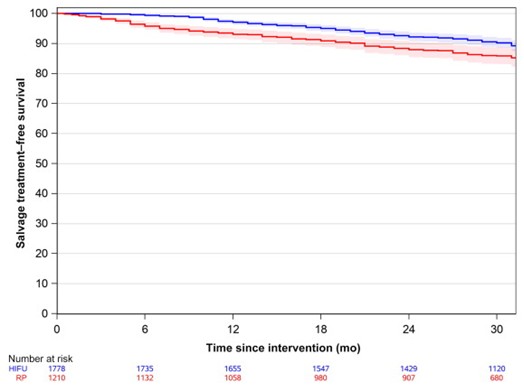
In December 2024, Ploussard G. et al. published in the peer-reviewed journal, European Urology, the full results of the HIFI study. The HIFI study is the largest prospective, comparative, multi-center, clinical study ever conducted comparing prostate cancer treatments.
The HIFI study reported results indicating that Focal One Robotic HIFU is non-inferior to surgery, meeting primary endpoint of non-inferiority for Salvage Treatment-free Survival after HIFU compared to radical prostatectomy at 30 months. The study demonstrated that patients receiving HIFU had better outcomes with respect to urinary continence and erectile function compared to patients receiving radical prostatectomy.
This seven-year study (April 2015 - March 2022) enrolled a total of 3,328 patients from 46 treatment centers: 1,967 consecutive patients were treated with EDAP’s robotic HIFU technologies, where Focal One was used for 90% of the patients, and 1,361 patients underwent radical prostatectomy surgery. All patients were followed for 30 months.
5
HIFU Compared to Surgery: the FARP Randomized Controlled Trial
The final results of the Focal Ablation Versus Radical Prostatectomy (“FARP”) study, the first Randomized Controlled Trial completed comparing ultrasound energy-based focal ablation versus robotic prostatectomy were presented at the American Urological Association (“AUA”) Annual Meeting in April 2025. The study achieved its primary endpoint and demonstrated that the rate of treatment failure in the Focal Ablation (“FA”) group is non-inferior to that in the Radical Prostatectomy (“RP”) group at the final 36-month follow-up.
Summary of FARP Trial Results (AUA Congress 2025):
| ● | A total of 213 patients were enrolled in the study; 107 were randomized to FA and 106 to RP. |
| ● | 25% (26/106) of the patients in the RP arm refused surgery and crossed over to the FA arm. |
| ● | The two arms were equivalent in terms of mean age (64 vs. 66 years, p=0.3), prostate specific antigen (“PSA”) (8.6 vs. 8.5 ng/ml, p=0.9), index tumor diameter on MRI (14.5 vs. 15.5 mm, p=0.2), prostate volume (41.3 vs. 41.7 ml, p=0.9) and Gleason Grade Group on biopsy. |
| ● | All included patients were evaluated following an intention-to-treat (“ITT”) analysis. |
| ● | The proportion of treatment failure was 6.5% in the FA group (7/107; 95% CI [3-13]) and 8.5% after RP (9/106, 95% CI [5-15]), resulting in a difference of 2% (95% CI [- 6 to 8 ]) in favor of FA. |
Conclusion:
At three-year follow-up, the rate of treatment failure in the FA group was found to be non-inferior to that in the RP group.
Following the completion of the study and the presentation of the final results, the full manuscript is expected to be submitted for publication in a peer-reviewed journal in 2026.
HIFU Compared to Radiation Therapy: the Multicenter CGRD Study
In October 2025, Yeh et al. published in the International Journal of Urology and Nephrology the 10-year oncological outcomes of external beam radiotherapy (“EBRT”) versus HIFU for stage II prostate cancer: a multicenter Chang Gung research database (“CGRD”) study with inverse-probability-of-treatment weighting (“IPTW”) analysis.
The study found that over a 10-year follow-up period, HIFU demonstrated non-inferior overall survival and cancer-specific survival compared to EBRT. Notably, patients treated with HIFU showed significantly improved overall survival in the stage IIa subgroup, suggesting a potential advantage of HIFU in early-stage prostate cancer management. This retrospective study evaluated data from 420 patients treated between 2005 and 2022 across Taiwan’s largest healthcare network, using IPTW analysis. HIFU also offers the benefit of a single treatment outpatient procedure for patients, compared to radiation therapy requiring 37 to 45 treatment visits.
Key Findings at 10-Year Follow-Up:
| ● | Overall survival (“OS”): HIFU group showed lower overall mortality (9.2%) compared to EBRT (16.7%) after IPTW adjustment. |
| ● | Cancer-specific survival (“CSS”): Similar rates between HIFU (5.4%) and EBRT (9.2%), with a trend favoring HIFU in stage IIa patients. |
| ● | Hazard ratios for OS: EBRT was associated with a 2.03–2.63× higher risk of mortality across univariate, multivariate, and IPTW-adjusted models (p < 0.05). |
Other Prostate Cancer Publications
In October 2025, Rosta G. et al. published in the journal of Cancers, their prospective multicentre study in 51 patients with localized low- or intermediate-risk prostate cancer treated with MRI-guided focal HIFU (Focal One) across three Austrian centres (2021–2024). At 24 months, failure-free survival was 94.1%, with only 5.9% requiring salvage radiotherapy, and 84% of patients with follow-up biopsy were cancer-free.
6
PSA levels fell by 69% at 3 months and remained under 3 ng/mL at 24 months.
Treatment was well tolerated, no Clavien–Dindo grade ≥ 4 events were reported. IPSS returned to or improved beyond baseline, erectile function largely recovered by 6–12 months, and only one new case of grade 2 incontinence was observed. The study concluded that MRI-guided focal HIFU provides high two-year failure-free survival with low morbidity and preserved quality of life in carefully selected patients.
In August 2025, Olivares R. et al. reported the first clinical experience of telesurgery using high-intensity focused ultrasound (HIFU) for localized prostate cancer. A 72-year-old patient with ISUP Grade Group 2 disease was treated remotely from Cleveland, USA, while located in Abu Dhabi, UAE, over 11,412 km, with no complications and minimal blood loss. This case demonstrates the safety and feasibility of HIFU telesurgery and its potential to expand access to specialized care in remote regions.
In November 2023, Rischmann P. et al. published in the journal of Progrès en Urologie their preliminary results on salvage HIFU for local recurrence after first-line radiotherapy in 531 patients. This HIFI-2 study was developed as part of the “Forfait Innovation” program to evaluate the efficacy and safety of HIFU in the salvage treatment of localized prostate cancer (“PCa”) after failure of first-line radiotherapy. This is a prospective, multicenter, open-label study within the framework of the Forfait Innovation program, promoted by the AFU. Thirty months after post-radiotherapy salvage HIFU, 72% of patients were spared hormonal treatment. Pre-therapy PSA and Gleason score data suggest a better outcome (up to 85% HT-free survival at 30 months) when, in the presence of biological recurrence after radiotherapy, a recommendation is made for earlier management. Following the completion of the study and the presentation of the final results, the full manuscript is expected to be submitted for publication in a peer-reviewed journal in 2026.
In November 2023, Mala KS, et al., from Berlin Charité University Medicine, Germany, published in the Journal of Clinical Medicine their results on their retrospective study on 57 patients with localized PCa using HIFU with Focal One. HIFU treatment was performed as focal, partial, or hemi ablative, depending on the prior histopathology. Out of 26 men that received biopsy, eight (30.8%) had in-field recurrence. The rate of post-HIFU complications was low, at 19.3%. Continence was preserved and erectile function was comparatively better than with radical prostatectomy. The study concluded that HIFU as a therapy option for nonmetastatic, significant prostate cancer is effective in the short term for carefully selected patients and shows a low risk of adverse events and side effects.
In October 2023, Kaufmann B et al., published in the British Journal of Urology their results on a study aiming at assessing the oncological and functional outcomes of HIFU in treating low to intermediate risk prostate cancer a
3-year prospective study was undertaken using rigid post-ablation saturation biopsies. Patients with either low (6.6%) or intermediate (93%) risk prostate cancer underwent focal ablation around the lesion(s) of interest. All patients had transperineal template saturation biopsy (>20 cores) in-conjunction with MRI guided fusion biopsy. Over half the patients underwent a follow up biopsy. The Failure-Free Survival (“PROMIS”) and salvage-free survival rate at 36 months was 65% and 81% respectively. They concluded that Focal One HIFU treatment for PCa shows excellent functional outcomes with half of the patients remaining cancer-free after three years. The in-field recurrence (GG2 disease or higher) rate is as follows: 18%, 18%, and 17% at six, 12, and 36 months, respectively. Urinary and sexual function remained unchanged per the Expanded Prostate Cancer Index Composite. In their conclusions, the authors stated: “Whole-gland treatment was avoided in 81% of patients. Early follow-up biopsies are crucial to change or continue the treatment modality at the right time, while the use of MRI and PSA in detecting PCa recurrence is uncertain.”
In September 2023, Debard C et Al., from CHU de Pellegrin, Bordeaux, France published in the journal Progrès en Urologie their results on their retrospective and multicenter study on 137 patients with low- or intermediate-risk localized prostate cancer treated with Focal One. 70% of patients had clinical stage T2, 64% had an ISUP score of 2 or 3 on initial biopsies and 61% were treated with “targeted” ablation. According to the authors, the selection of patients treated with focal therapy is a key point for the success of the technique and the inclusion criteria that varied according to the studies. The authors conclude: “Our results are in agreement with those of the literature, seeming to indicate a lower morbidity of the focal treatment by HIFU compared to the radical treatments while offering an acceptable oncological control.”
7
In December 2022, Jung G, et al., from Seoul National University Bundang Hospital, South Korea, published in the journal of Prostate International their results on their propensity score-matched retrospective study on 685 patients who underwent Partial Gland HIFU Ablation (“PGA”) using HIFU with Focal One (137 patients) versus
robot-assisted radical prostatectomy (548 patients) with a median follow-up period of 22 months. The authors confirmed that PGA HIFU preserves urinary and erectile functions, with a slight/minor loss of efficiency, which remained however very satisfactory (80% success rate efficacy). The results concluded that 5.8% underwent salvage treatment with postoperative incontinence and erectile dysfunction being more favorable in PGA compared to
robot-assisted radical prostatectomy.
In October 2022, De Luca et al., from San Luigi Gonzaga University Hospital, Italy published in the Minerva Urology and Nephrology journal their results on their prospective study on 100 patients with low- to intermediate-risk prostate cancer that received customized HIFU ablation by Focal One with 12 months of follow up: 15 patients underwent total ablation, 50 patients hemi-ablation and 35 patients focal ablation. Control biopsy at 12 months of the
HIFU-treated zone was negative in 80% for total ablation, 84% for partial and 80% for focal ablation with in-field reoccurrence being less than 10% after hemi-ablation. Patients had postoperative excellent quality of life with lower rate of irritative symptoms and negligible impact on voiding and erectile function scores. 100% of patients that received focal and partial HIFU ablation retained potency.
In February 2022, Hong et al., from Seoul National University Bundang Hospital, South Korea, published in the Journal of Society Urological Oncology their results on their retrospective study on 163 patients who underwent PGA by Focal One with a median follow up period of 17 months. The results concluded that the PGA with HIFU was safe and showed good preservation of functional outcomes as well as satisfactory oncological control.
Endometriosis Publications
In August 2025, Dubernard G. et al. from Croix Rousse Hospital, Lyon, France, published a comparative retrospective bicentric study in Int J Gynecol Obstet. evaluating high-intensity focused ultrasound (HIFU) versus surgery for rectal endometriosis in 120 patients (60 per group). At 6 months, HIFU was associated with significantly lower complication rates (Clavien–Dindo grade 2: 3.3% vs 21.7%; grade 3: 0% vs 10%) and shorter hospitalization (1 vs 3 days). Both groups showed significant improvement in pain, bowel, and urinary symptoms, as well as in FSFI, KESS, and Wexner scores and overall health status. HIFU provided comparable symptom relief and quality-of-life outcomes to surgery while markedly reducing postoperative morbidity in patients with a single rectal lesion.
In May 2024, Dubernard G. et al, from Croix Rousse Hospital, Lyon, France, published in Human Reproduction journal, the results of a prospective multicenter cohort study. This study was conducted between 2020 and 2022 with 60 patients with symptomatic rectal endometriosis. The study demonstrated the safety of a 30% increase in the intensity of HIFU in the treatment of rectal endometriosis, with no Clavien–Dindo Grade III complications overall, and namely no rectovaginal fistulae.
In September 2020, Philip CA et al, from Croix Rousse Hospital, Lyon, France, published in Ultrasound Obstetric Gynecology journal, the results of the treatment of 20 patients with deep recto vaginal endometriosis using Focal One HIFU. This EDAP-sponsored study is the first study on the use of HIFU in this indication. The authors reported very promising results with low morbidity and significant efficiency on intestinal and gynecological symptoms as well as in the quality of life.
Research and Development
Our research and development (“R&D”) efforts are focused on expanding the capabilities, clinical applications, and technology portfolio of the Focal One i System. Our strategy is centered on three pillars: (1) advancing imaging and targeting precision, (2) integrating next-generation automation and software intelligence, and (3) expanding into new urologic and non-urologic therapeutic indications.
Advancing Image-Guided Precision and Robotic Performance
At the core of our R&D philosophy is the continual enhancement of targeting precision and procedure reproducibility. The Focal One Robotic Positioning System provides five degrees of freedom with automatic safety features, enabling controlled delivery of HIFU energy in a minimally invasive, incision-free manner.
8
Our proprietary HIFUsion® software allows physicians to import and elastically fuse MRI and 3D biopsy maps directly into the intraoperative workflow, designed to assist physicians in lesion visualization and identification of surrounding anatomical structures.
R&D initiatives in this area include:
| ● | Enhancing MRI–ultrasound fusion algorithms to improve lesion margin detection. |
| ● | Optimizing the Dynamic Focusing Probe, which integrates real-time ultrasound imaging with precise HIFU energy delivery to increase reach, reduce treatment time, and improve uniformity of energy deposition. |
These initiatives are intended to expand procedural reproducibility and workflow standardization across clinical settings.
Next-Generation Imaging, Software Intelligence, and AI-Enabled Automation
We continue to invest in expanding the underlying imaging and software capabilities of the Focal One system. In 2025, the FDA granted 510(k) clearance for new ultrasound imaging and workflow enhancements, adding advanced real-time visualization, streamlined treatment planning, and an updated user interface. These enhancements may support the future development of AI-based features, such as automated visualization tools and treatment assessment support, subject to regulatory review and clearance where required.
We are evaluating potential applications of AI within our platform, and our R&D teams are developing architectures that can support:
| ● | Automated lesion segmentation and treatment-zone prediction; |
| ● | Real-time ablation progress tracking using ultrasound signal interpretation; and |
| ● | Predictive models combining imaging, thermal parameters, and clinical outcomes. |
These advancements are intended to expand the functionality of our Focal One i System and support long-term differentiation in a market that increasingly favors intelligent, automation-assisted surgical technologies.
Platform Evolution and Product Roadmap
We continue to develop the Focal One i platform, which incorporates next-generation imaging hardware and simplified workflows designed to reduce procedure time and increase adoption. The 2025 FDA clearance reflects regulatory authorization of specific enhancements to the Focal One i System, positioning our platform for scalability and differentiation in the evolving market for focal therapy technologies.
Our long-term roadmap includes:
| ● | Progressively integrating AI-driven automation; |
| ● | Expanding theranostic capabilities through multi-modal imaging integration; |
| ● | Developing next-generation probes with improved depth, speed, and acoustic efficiency; and |
| ● | Enabling broader interoperability with hospital imaging archives and robotic systems. |
Our R&D investment strategy is intended to create a durable innovation cycle that supports clinical leadership, regulatory expansion, and commercial adoption. With increasing physician demand for non-invasive, tissue-sparing prostate therapy, a rapidly growing evidence base, and expanding capabilities in precision robotics and AI, we believe our R&D strategy is focused on advancing our Focal One i System and expanding its potential clinical applications over time.
9
Intellectual Property
HIFU Technology
Our intellectual property portfolio consists of a broad and expanding collection of patents, patent applications, trademarks, copyrights, trade secrets and other proprietary rights that support our HIFU technologies, systems and associated software.
As of December 31, 2025, our HIFU division held 71 granted patents and 11 pending patent applications across major jurisdictions worldwide, spanning 14 patent families covering core innovations in therapeutic ultrasound principles, system architecture and control, and the software used to plan, monitor and deliver ultrasound-based therapy. Our issued patents are scheduled to expire between 2026 and 2045, although we continually seek to expand and refresh our patent portfolio through new filings and continuation applications.
Our ongoing research and development objectives are to maintain our leadership position in the treatment of prostate cancer and to extend the HIFU technology to new applications and minimally invasive systems. These research projects are conducted in cooperation with the French National Institute for Health and Medical Research (“INSERM”) which collaboration gives rise in some cases to the filing of patent applications, followed by the grant of co-owned patents. We have entered into license agreements with INSERM related to certain patents co-owned with INSERM whereby we commit to pay an amount of royalties to INSERM based on a fixed rate of the net revenues generated from the sales of HIFU devices using co-owned patents. Under these agreements, which last for the life of each co-owned patent, we have the exclusive right to the commercial use of the co-owned patents, including the right to out-license such commercial rights. We have an option to obtain an exclusive license from INSERM relating to other patents co-owned with INSERM.
Although we believe that our HIFU patents are valid and should be enforceable against third parties and that our patent applications should, if successfully pursued, result in the issuance of additional enforceable patents, there can be no assurance that any or all of these patents or patent applications, if issued, will provide effective protection for the HIFU division’s proprietary rights in such technology. HIFU devices, as they are currently or may in the future be designed, may also be subject to claims of infringement of patents owned by third parties, which could result in an adverse effect on our ability to market HIFU systems. See Item 1A, “Risk Factors—Risks Relating to Intellectual Property Rights.”
ESWL Technology
As of December 31, 2025, our ESWL division held 15 granted patents across major jurisdictions worldwide, spanning 4 patent families covering technologies relating to ESWL systems and associated software capabilities, including both piezoelectric and electroconductive technologies associated with ESWL generators, localization systems, and device design. Our issued patents are scheduled to expire between 2027 and 2031.
Markets and Customers
Our Market
Prostate cancer is among the most commonly diagnosed cancers in men globally and is a leading cause of cancer-related mortality. In the United States, the American Cancer Society estimates the number of new prostate cancers to be diagnosed in 2026 to be approximately 333,830, of which approximately 70% are diagnosed with localized stage prostate cancer. Additionally, we estimate, based on figures provided by the World Health Organization, that the worldwide incidence of localized prostate cancer is approximately 1.5 million new cases every year. A more effective diagnostic method for prostate cancer, the PSA test, has increased public awareness of the disease in developed countries since its introduction. PSA levels jump sharply when cancer is present. Prostate cancer is an age-related disease, and its incidence in developed countries is expected to increase as the population ages.
According to the Focused Ultrasound Foundation, HIFU has the potential to transform the treatment of a variety of serious medical conditions. All indicators point toward the evolution of HIFU into a robust medical field, including numerous medical conditions, including cardiovascular, neurological, urological or women’s health.
10
BPH, another widespread prostate condition, is potentially addressable with the same approach and Focal One platform. According to the Urologic Clinics of North America Journal, as many as 15 million men in the United States have symptoms of BPH and it is estimated that more than 400,000 surgical procedures are performed every year to treat these symptoms.
The endorectal approach currently delivered by the Focal One Robotic HIFU system is being evaluated for potential application. The European Society of Human Reproduction and Embryology estimates that endometriosis affects approximately 10% of women of reproductive age. Among them, 5-12% are affected by digestive endometriosis, of which 90% suffer from infiltration of the rectum. As such, we estimate that 1% of the women of reproductive age could possibly benefit from a minimally invasive HIFU treatment.
Our Customers
Our customers are located worldwide and include academic, public, and private hospitals as well as clinics. We primarily market to urologists who treat patients with prostate cancer and other urological conditions. As a result of our expansion to new clinical indications, we are now starting to market to gynecologists in select markets on the potential of Focal One in the treatment of DIE. No single customer represents a significant portion of our HIFU installed base.
We operate globally, with sales in the United States, Europe, Asia and other international markets.
We believe potential long-term growth may be influenced by factors including expanded clinical evidence, increased adoption of non-surgical approaches, broader reimbursement coverage, and continued penetration of the U.S. market as well as other major international territories.
Sales and Marketing
We market and sell our core Focal One i System and related products through our own direct marketing and sales channels as well as through select third-party distributors and agents in several countries. Using our direct subsidiaries or representative offices networks, we maintain a direct marketing and sales force in the United States, France, Germany, United Kingdom, Switzerland, Scandinavia, Malaysia and South Korea, which currently represent our largest markets. Additionally, we market and sell our products through our network of distribution partners in the rest of Europe, Latin America, Middle East, Asia and Southeast Asia.
We also market and support non-core, legacy urology product lines, including ESWL systems and related accessories and services mainly using our direct subsidiaries or representative offices network in Japan, South Korea and Malaysia.
Our sales and marketing strategy emphasizes:
| ● | Peer-to-peer clinical education and training; |
| ● | Evidence-based marketing initiatives; |
| ● | Comprehensive ongoing customer support, including clinical application and reimbursement education; |
| ● | Engagement with key opinion leaders and development of reference centers; and |
| ● | Collaboration with physicians and hospitals to drive awareness. |
Competition
We compete in markets for the treatment of localized prostate cancer and other urological and gynecological conditions, including the treatment of endometriosis in certain European markets. The treatment landscape for prostate cancer includes a range of established and emerging therapies. Current standard therapies for localized prostate cancer include radical prostatectomy (including robotic-assisted approaches), external beam radiation therapy, brachytherapy, cryotherapy, and active surveillance. Active surveillance, in which patients with low-risk or favorable intermediate-risk disease defer active treatment in favor of ongoing monitoring, has grown significantly in recent years and represents a substantial portion of newly diagnosed prostate cancer patients.
11
While these therapies are widely adopted, supported by established clinical guidelines and significant physician familiarity, and in many cases reimbursed by public and private payors, they are associated with side effects that may significantly affect a patient’s quality of life. Radiation-based therapies may carry risks of bowel and bladder toxicity and may limit future treatment options. Cryotherapy has been associated with variable efficacy outcomes as well as urinary and erectile side effects. Surgical approaches, including robotic-assisted prostatectomy, while refined over time, retain the inherent morbidity associated with invasive surgery.
Focal One Robotic HIFU competes across this full spectrum of treatment modalities as a non-invasive ablative alternative. We believe that HIFU offers patients an effective option for managing localized prostate cancer while minimizing treatment-related side effects. We also believe Focal One is well positioned to address demand for focal therapy — sometimes referred to as partial or zonal treatment — which targets cancerous tissue rather than the entire gland, potentially reducing treatment-related morbidity compared to radical approaches. However, focal therapy remains a relatively nascent treatment paradigm, and we face ongoing challenges related to physician education and market adoption.
We also face head-on competition from other companies developing and commercializing HIFU technologies and other energy-based or image-guided ablation technologies. Competitors in the HIFU space include:
| ● | Sonablate Corporation, a U.S. company that markets the Sonablate® system for ablation of prostatic tissue; |
| ● | Profound Medical Corp., a Canadian company that markets the TULSA-PRO® system for transurethral ultrasound ablation of prostate tissue; |
| ● | Insightec Ltd., an Israeli company that markets the Exablate® system for the treatment of uterine fibroids, painful bone metastases, essential tremor and other brain disorders, and prostate tissue; and |
Additional competitors include Haifu, a Chinese company commercializing HIFU products for various oncologic applications, as well as companies developing alternative focal therapy approaches including laser ablation, irreversible electroporation, and other image-guided or energy-based technologies. New entrants or technological advances could further intensify competition across these modalities.
Competition in our markets is based on a number of factors, including clinical performance and safety outcomes, the level and quality of supporting clinical evidence, regulatory approvals and labeled indications, reimbursement coverage and payment levels, capital equipment costs and ongoing consumable costs, physician familiarity and training infrastructure, installed base and service support capabilities, and technological innovation and product features.
Certain of our existing and potential competitors have significantly greater financial, technical, marketing, and other resources than we do, and may have longer operating histories and more extensive commercial infrastructures. These competitors may be able to devote greater resources to research and development, clinical trials, regulatory submissions, marketing and sales, and pricing strategies.
We believe that future market adoption of HIFU and focal therapy will depend, in part, on continued clinical evidence development, physician training, reimbursement expansion, and technological innovation. However, there can be no assurance that HIFU-based therapies will achieve broader acceptance relative to established treatment modalities or that our products will remain competitive.
Reimbursement
Reimbursement coverage for our products is an important factor in the commercial adoption of Focal One Robotic HIFU. We have made significant progress in securing reimbursement in the United States and key European markets, and we continue to pursue expanded coverage across additional geographies and indications.
United States — Prostate Cancer
In the United States, the American Medical Association (“AMA”) established a Category I Current Procedural Terminology (“CPT”) code — CPT 55880 — for the ablation of malignant prostate tissue with transrectal HIFU technology. The Centers for Medicare & Medicaid Services (“CMS”) finalized payment rules for hospitals, facilities, and physicians effective January 1, 2021.
12
Facility Reimbursement. The 2026 Hospital Outpatient Prospective Payment System (“OPPS”) final rule renewed the assignment of CPT 55880 to the Urology Ambulatory Payment Classification (“APC”) level 6, establishing a national average facility reimbursement of $9,671 per procedure for Medicare patients, adjusted locally based on the wage index. This represents a 4.6% increase compared to 2025. CMS updates hospital payment rates annually.
Physician Reimbursement. CMS established physician payment for HIFU procedures in 2021. Under the 2026 Physician Fee Schedule Final Rule, CMS set total facility Relative Value Units (“RVUs”) for CPT 55880 at 26.33, translating to a national average physician payment of $884 for a urologist performing a HIFU procedure on a Medicare patient in a facility setting. This compares favorably to alternative ablative treatments for prostate cancer under the same conditions in 2026: cryotherapy (CPT 55873) yields total facility RVUs of 20.71, translating to $692; irreversible electroporation (CPT 55877) yields 20.10 RVUs, translating to $675; and transurethral thermal ultrasound ablation (CPT 55882) yields 15.80 RVUs, translating to $530. A laparoscopic or robotic radical prostatectomy yields 32.38 RVUs and $1,087 under the same conditions.
United States — Benign Prostatic Hyperplasia (BPH)
On December 30, 2024, the AMA established a new CPT Category III code, CPT 0950T, to report the use of transrectal HIFU for the treatment of BPH, effective July 1, 2025. In the 2026 OPPS final rule, CMS assigned CPT 0950T to Urology APC level 6, establishing a national average facility reimbursement of $9,671 per procedure for Medicare patients, adjusted locally based on the wage index. We believe this reimbursement pathway for BPH represents a meaningful opportunity to expand the addressable market for Focal One in the United States.
France
In September 2025, the French Ministry of Health awarded reimbursement for HIFU procedures for the treatment of prostate cancer, with coverage effective September 1, 2025. Reimbursement specifically covers use of Focal One Robotic HIFU as a primary treatment for localized prostate cancer and as a salvage treatment option following radiotherapy. This followed a favorable opinion issued in December 2023 by the French National Authority for Health (“HAS”) to include HIFU under the national universal health system, Sécurité Sociale, based on results of the HIFI Study sponsored by the French Urology Association.
For 2026, the French national healthcare system has established bundled payment rates for HIFU in the public sector ranging from €7,762.50 for level 1 to €13,082.72 for level 4, depending on procedure complexity and patient comorbidities. In the private sector, facility payment rates range from €6,061.53 for level 1 to €8,601.91 for level 4. These rates compare favorably to radical prostatectomy reimbursement in France, with HIFU reimbursement exceeding surgical rates at the level 1 and level 2 complexity tiers in the public sector and exceeding surgical rates at all levels in the private sector.
Rest of Europe
In the rest of Europe, Focal One HIFU procedures are currently reimbursed in Italy, Germany, the United Kingdom (where procedures are partially reimbursed by public healthcare systems or private insurers), and Switzerland under certain conditions. We continue to pursue reimbursement coverage in additional European markets.
Reimbursement Risk
Reimbursement coverage and payment levels vary significantly by geography, payor, and indication, and there can be no assurance that current reimbursement levels will be maintained or that coverage will be expanded to additional markets or indications. A reduction in reimbursement rates or a failure to obtain coverage in additional markets could adversely affect adoption of our products and our results of operations. For a further discussion of reimbursement-related risks, see “Risk Factors.”
Manufacturing
Our current manufacturing operations consist of assembling medical products in our facility, which is FDA-registered and certified under the International Organization for Standardization (“ISO”) 13485:2016 standard and Medical Device Single Audit Program (“MDSAP”) program.
13
We manufacture our own products through our operational subsidiary, EDAP TMS France.
We perform final assembly and quality control processes and maintain production standards. We purchase most of the components used in our products from several suppliers, but for certain components we rely on a single source. Most components are secured through contract or dual-sourcing manufacturing strategies, and we conduct regular quality audits of our suppliers’ manufacturing facilities. Our principal suppliers are located in France, Germany, Denmark, and Lithuania. Critical components supplied to us include therapeutic ultrasound transducers, imaging ultrasound systems, and integrated ultrasound system components. To date, we have not experienced material disruptions affecting our ability to deliver systems and services.
Suppliers provide us with key materials and components that can expose us to the risk of supply shortage, obsolescence, or interruption if a supplier is unable to manufacture in accordance with our quality standards or encounters other challenges. We continuously evaluate our supply chain to mitigate concentration risk, including through identification of alternative suppliers for critical components. From time to time, we also experience challenges obtaining certain materials and components, including electronic parts and mechanical components, due to global supply chain and logistics disruptions. To address these risks, we have implemented safety stock programs and modified our order management processes for long lead-time critical components. See Item 1A, “Risk Factors — Risks Related to Our Organization and Operations.”
Quality and Design Control
The manufacturing operations of EDAP TMS France are required to comply with applicable regulatory requirements in the jurisdictions in which we market our products, including the FDA’s Quality System Regulation (“QSR”), which establishes current good manufacturing practice (“GMP”) requirements for medical device manufacturers. In February 2026, the FDA’s Quality Management System Regulation (“QMSR”) became effective, replacing the QSR and aligning U.S. requirements with ISO 13485:2016 standards. EDAP TMS France’s facilities are subject to periodic inspections by the FDA and other regulatory authorities. EDAP TMS France is certified to ISO 13485:2016 and participates in the MDSAP, which involves periodic audits of its quality management system. EDAP TMS France has obtained CE Marking for certain products and maintains processes designed to comply with applicable regulatory requirements of the European Union. Our manufacturing site is also subject to regulatory requirements in Taiwan, Japan, Canada, Brazil, and South Korea.
Regulatory Matters
Government regulation in our major markets, particularly the United States, the European Union, is a significant factor in the development, manufacture and marketing of our products and in our ongoing R&D activities. Our products and operations are subject to regulation by the FDA and regulatory authorities in the countries where we market our products. We are required to comply with requirements governing the design, manufacture, sourcing, testing, certification, packaging, installation, marketing, use and disposal (including recycling) of our products.
Regulation in the United States
Our products are regulated in the United States by the FDA under several statutes, including the Federal Food, Drug, and Cosmetic Act (“FDC Act”). Pursuant to the FDC Act, the FDA regulates the preclinical and clinical testing, manufacturing, labeling, distribution, sale, marketing, advertising and promotion of medical devices in the United States.
Medical devices are classified in the United States into one of three classes—Class I, II or III—based on the controls reasonably necessary to ensure their safety and effectiveness. Class I devices are those whose safety and effectiveness can be ensured through general controls, such as establishment registration, medical device listing, FDA-mandated current good manufacturing practices and labeling. Most Class I devices are exempt from premarket notification (“510(k)”). Class II devices are those whose safety and effectiveness can reasonably be ensured using general controls and “special controls,” such as special labeling requirements, mandatory performance standards and post-market surveillance. Class II medical devices typically require submission and clearance of a 510(k) application demonstrating substantial equivalence to a legally marketed predicate device. For novel devices that present low to moderate risk but lack a suitable predicate device, the FDA may permit marketing through the De Novo classification process.
14
Class III devices generally require submission and approval of a pre-market approval (“PMA”) application, a process that is expensive, time-consuming and may not result in approval. Our Focal One HIFU system is classified by the FDA as a Class II device.
The FDC Act also regulates quality and manufacturing procedures by requiring compliance with the FDA’s QMSR. Our manufacturing facilities are subject to periodic FDA inspections to determine compliance with the QMSR and other regulatory requirements.
Advertising and promotional activities in the United States are subject to regulation by the FDA and the U.S. Federal Trade Commission.
Healthcare Fraud and Abuse; Transparency
Our U.S. operations are also subject to extensive healthcare fraud and abuse and transparency laws and regulations that may apply to our sales, marketing, contracting, training and educational programs, and other interactions with healthcare professionals (“HCPs”), hospitals and other customers.
These laws include, among others:
| ● | the federal Anti-Kickback Statute, which prohibits knowingly and willfully offering, paying, soliciting or receiving remuneration to induce or reward referrals or the purchase, lease or recommendation of items or services reimbursable under federal healthcare programs; |
| ● | the federal Physician Self-Referral Law (“Stark Law”), which generally prohibits physicians from referring certain designated health services reimbursable by Medicare or Medicaid to an entity with which the physician or an immediate family member has a financial relationship, unless an exception applies; |
| ● | the federal False Claims Act, which imposes liability for knowingly presenting, or causing to be presented, false or fraudulent claims for payment to the federal government, including claims resulting from violations of other healthcare laws; |
| ● | the Civil Monetary Penalties Law and related regulations administered by the U.S. Department of Health and Human Services Office of Inspector General; and |
| ● | federal and state transparency laws, including the Physician Payments Sunshine Act (the “Sunshine Act”), which requires reporting of certain payments and transfers of value to physicians and teaching hospitals. |
Violations of these laws may result in substantial civil, criminal and administrative penalties, including fines, damages, exclusion from participation in federal healthcare programs, reputational harm and additional compliance obligations.
Privacy, Data Protection and Information Security
We are subject to various U.S. and international laws relating to the privacy, protection and security of personal information. In the United States, these laws may include, among others, the Health Insurance Portability and Accountability Act of 1996 (“HIPAA”), as amended, to the extent applicable, as well as state privacy and data protection laws and data breach notification requirements.
These laws may impose obligations regarding the collection, use, disclosure, storage and safeguarding of personal information and may require implementation of administrative, technical and physical safeguards, contractual protections with third parties, and notification to regulators and affected individuals in the event of certain data security incidents. Compliance with evolving privacy and data protection requirements may increase our compliance costs and require changes to our business practices and systems.
Regulation in the European Union
In the European Union, we annually perform ISO 13485:2016 and MDSAP certification audits, demonstrating compliance with applicable standards for quality assurance, manufacturing and design control.
15
In 2017, the European Union enacted the Medical Device Regulation (“MDR”), which replaced the prior Medical Device Directive (“MDD”). The MDR introduces significant changes to the regulation of medical devices in the European Union, including expanded technical documentation requirements, enhanced post-market surveillance obligations and more stringent clinical evidence requirements. Transitional provisions allow certain devices previously certified under the MDD to remain on the market until December 31, 2028, subject to compliance with specified conditions. We implemented a quality management system compliant with MDR requirements and obtained MDR Quality Management System (“QMS”) certification in September 2024. Devices manufactured by us have obtained MDR certification.
Medical devices marketed in the European Union must bear the “CE Marking”, demonstrating conformity with applicable regulatory requirements. Devices are classified into different risk classes, which determine the conformity assessment procedures and the degree of involvement of a notified body. Our currently marketed devices fall within Classes I, IIa and IIb.
In addition, we are subject to the European Union’s General Data Protection Regulation (“GDPR”), which imposes comprehensive requirements regarding the processing and transfer of personal data and provides for significant administrative fines for non-compliance.
Regulation in Japan
The import and sale of medical devices in Japan are regulated by the Japanese Ministry of Health, Labour and Welfare (“MHLW”) under the Pharmaceuticals and Medical Devices Act. Our Japanese subsidiary holds the required Marketing Authorization Holder license and specific product approvals to import and market our products in Japan. The MHLW also administers national health insurance programs and establishes reimbursement prices for certain medical devices. Inclusion on the reimbursement list is required for coverage under national health insurance programs.
Trade Compliance; Export Controls and Sanctions
We operate internationally and are subject to U.S. and non-U.S. trade laws and regulations, including export controls, economic sanctions, customs laws and anti-boycott regulations. U.S. export control laws and regulations administered by the U.S. Department of Commerce, as well as economic sanctions laws administered by the U.S. Department of the Treasury’s Office of Foreign Assets Control, may restrict the export, reexport or transfer of certain products, software, technology or services to specified countries, entities or individuals and may require export licenses in certain circumstances. Similar laws apply in the European Union and other jurisdictions in which we operate.
Violations of applicable trade laws and regulations could result in civil and criminal penalties, restrictions on our ability to export products or conduct international operations, reputational harm and increased compliance costs.
Human Capital
Overview
Our employees are an important component of our business and contribute to the execution of our strategy and operations. We seek to attract, develop, and retain a skilled workforce to support our commercial, R&D, manufacturing, and administrative activities. In 2025, we continued to focus on recruitment, retention, professional development, compliance, and employee wellbeing.
As of December 31, 2025, we employed 289 employees worldwide, with approximately 24% based in the United States and the remainder located internationally.
Only our employees located in France are represented by a labor union, and we have not experienced any work stoppages or interruptions due to labor disputes worldwide. We believe our employee relations are positive.
16
Employee Talent and Retention
Our future operating results depend, in part, on our ability to attract and retain qualified employees, including members of senior management and key personnel. Competition for talent in our industry is significant, and the loss of services of key employees could adversely affect our business.
Our compensation programs are designed to be competitive and aligned with market practices. We periodically review and benchmark compensation to support our ability to attract and retain employees. Employees are encouraged to raise compensation-related concerns with management, Human Resources, or, if preferred, confidentially through our whistleblower hotline.
In addition to base compensation, our total rewards programs may include incentive compensation, equity-based awards, and employee benefits intended to support employee health, financial security, and overall wellbeing.
Culture and Ethics
We seek to promote a high-performance culture that emphasizes collaboration, accountability, and integrity. Our Code of Conduct and related policies address ethical behavior, legal compliance, and workplace standards.
Employees are encouraged to report suspected violations of Company policies or applicable laws to management or Human Resources, or confidentially and anonymously through our whistleblower reporting mechanisms. We are committed to maintaining processes intended to allow employees to raise concerns without fear of retaliation.
Talent Development and Training
We provide training and development opportunities intended to support employee effectiveness, professional growth, and compliance with applicable laws and regulations. These programs include onboarding, role-specific training, leadership development, and compliance and ethics training.
Our commercial organization participates in structured onboarding and ongoing training programs designed to reinforce core competencies, enhance skills, and align execution with commercial strategy. We also provide training programs for global commercial leaders and distribution partners to support consistent execution of our sales processes.
In addition, employees participate in specialized technical, regulatory, and quality-related training, as appropriate to their roles, to support product quality, regulatory compliance, and operational effectiveness.
Health, Safety and Wellness
Protecting the health, safety, and well-being of our employees is an important priority. We maintain workplace health and safety programs across our sites designed to comply with applicable occupational health and safety laws and regulations.
We offer employee benefit programs intended to support physical health, mental health, and overall wellbeing. These programs are periodically reviewed and adapted to address the evolving needs of our workforce, including benefits related to time away from work, family care, and financial wellbeing.
Available Information
Our investor website address is http://investor.focalone.com. We make available on our website, free of charge, our Annual Reports on Form 10-K, our Quarterly Reports on Form 10-Q and our Current Reports on Form 8-K and any amendments to those reports filed or furnished pursuant to Section 13(a) or 15(d) of the Securities Exchange Act of 1934, as amended (the “Exchange Act”), as soon as reasonably practicable after we electronically file such material with, or furnish it to, the Securities and Exchange Commission (the “SEC”). The SEC maintains a website that contains reports, proxy and information statements and other information regarding our filings at www.sec.gov. Information contained on or accessible through our website is not a part of our Annual Report on Form 10-K, and the inclusion of our website address in this Annual Report on Form 10-K is an inactive textual reference only. The information found on our website is not incorporated by reference into this Annual Report on Form 10-K or any other report we file with or furnish to the SEC.
17
Item 1A. Risk Factors.
In addition to the other information contained in this annual report, the following risk factors should be carefully considered in evaluating us and our business. These statements are intended to highlight the material risk factors that may cause actual financial, business, research or operating results to differ materially from expectations disclosed in this annual report. See also factors disclosed under “Cautionary statement on forward-looking information.”
SUMMARY RISK FACTORS
Our business and our industry are subject to numerous risks described in the following risk factorsand elsewhere in this annual report, Investors should carefully consider these risks before making a decision to invest in our securities.
The main risk factors relating to the Company and its business operations are grouped into the eight categories listed below. The risks described below are not the only risks facing us.
Risks Related to our Business, Financial Position and Capital Needs
| ● | If we are unable to obtain additional financing when needed, our ability to continue could be adversely affected. |
| ● | Our future revenue and income growth depends, among other things, on implementing our business strategy, which largely depends on the success of our HIFU technology. |
| ● | Changes in U.S. trade policy, including the imposition of tariffs and the resulting consequences, may have a material adverse impact on our business and results of operations. |
| ● | Our cash flow is highly dependent on cyclical demand for our products. |
| ● | Our results of operations have fluctuated significantly from quarter to quarter in the past and may continue to do so in the future. |
Risks Related to our Indebtedness
| ● | We have incurred substantial debt, which could impair our flexibility and access to capital and adversely affect our financial position. |
| ● | Servicing our debt requires a significant amount of cash, and we may not have sufficient cash flow from our business to pay our substantial debt. |
| ● | Exercise of the warrants issued to the European Investment Bank may dilute the ownership interest of our shareholders or may otherwise depress the market price of our ADSs. |
Risks Related to our Product Candidates and the Industry in which we Operate
| ● | If we do not optimize our sales channels and maintain high product quality, our operating results may be negatively impacted. |
| ● | New device developments and introductions may adversely impact our financial results. |
| ● | Potential issues in the adoption and use of AI in our product offerings may result in reputational harm or liability. |
| ● | Our future success depends on obtaining and maintaining government regulatory approval of our products. |
| ● | Our business depends on the success of our clinical trials related to products using HIFU technology. |
| ● | The commercial success of our products depends on whether our products are eligible for reimbursement by national health authorities and third-party payers. |
| ● | HIFU technology may not be widely adopted by the medical community and may never become a standard of care. |
| ● | There is a substantial risk our products or service offerings could become obsolete or uncompetitive. |
18
Risks Related to our Organization and Operations
| ● | Our revenue may be disrupted due to our strategic shift to focus on HIFU activities away from our legacy non-HIFU activities. |
| ● | We may face a significant risk of exposure to product liability claims linked to the misuse of our products. |
| ● | We depend on a single site to manufacture our products, and any interruption of operations could impact our business. |
| ● | We depend on a small number of suppliers who may fail to deliver sufficient supplies to us or increase the cost of items supplied, which would interrupt our production processes or negatively impact our results of operations. |
| ● | We utilize distributors for our sales abroad, which subjects us to a number of risks that could harm our business. |
| ● | We are a relatively small company and sales fluctuations and employee turnover may adversely affect our business. |
| ● | The loss of key members of our executive management team could adversely affect our business. |
| ● | We may have difficulties in attracting and recruiting highly qualified experts in hardware, software, AI, design and development of high technology devices. |
| ● | We are exposed to risks related to cybersecurity threats and incidents. |
| ● | The expansion of social media platforms and new technologies present risks and challenges for our business and reputation. |
Risks Related to Intellectual Property Rights
| ● | Our success largely depends on our ability to establish and protect the intellectual property rights related to our medical devices. |
| ● | We may encounter disruption in our intellectual property protections due to expiring patents and lack of updated filings. |
| ● | U.S. laws relating to the patentability of certain inventions in medical technology industry are uncertain and rapidly changing, which may adversely impact our existing patents or our ability to obtain patents in the future. |
| ● | We may not be able to protect or enforce our intellectual property rights throughout the world. |
| ● | Our use of “open source” software could negatively affect our ability to sell our products and subject us to possible litigation. |
Risks Related to Our Status as a French Company
| ● | Our French and international operations expose us to additional costs, legal and regulatory risks, which could have a material adverse effect on our business, financial condition and results of operations. |
| ● | We sell our products in many parts of the world, as a result, our business is affected by fluctuations in currency exchange rates. |
| ● | Our by-laws and French corporate law contain provisions that may delay or discourage a takeover attempt. |
| ● | The rights of shareholders in companies subject to French corporate law differ in material respects from the rights of shareholders of corporations incorporated in the United States or other countries. |
| ● | French law may limit the amount of dividends we are able to distribute, and we do not currently intend to pay dividends. |
| ● | Judgments of U.S. courts, including those predicated on the civil liability provisions of the federal securities laws of the United States, may not be enforceable in French courts. |
Risks Related to Ownership of our Ordinary Shares and the ADSs
| ● | Our securities may be affected by volume fluctuations, and may fluctuate significantly in price, causing investors to lose some or all of their investment. |
| ● | Holders of ADSs have fewer rights than direct shareholders and must act through The Bank of New York Mellon (the “Depositary”) to exercise those rights. |
| ● | If securities or industry analysts do not publish research, or publish inaccurate or unfavorable research, about our market or business, our ADS price and trading volume could decline. |
19
| ● | We are subject to different corporate disclosure standards that may limit the information available to holders of our ADSs. |
| ● | Preferential subscription rights may not be available for U.S. persons. |
General Risk Factors
| ● | Our results of operations and financial condition could be adversely affected by adverse economic changes, political, social and geopolitical developments, financial changes, and the impact of climate change. |
| ● | Global potential inflation may have a material adverse effect on our business, results of operations and financial condition. |
| ● | We may issue additional securities that may be dilutive to our existing shareholders, in view of funding our new developments and accelerating our business expansion. |
| ● | We may in the future be the target of securities class action or other litigation, which could be costly and time consuming to defend. |
Risks Related to Our Business, Financial Position and Capital Needs
If we are unable to obtain additional financing when needed, our ability to continue as a company could be adversely affected.
We have a history of operating losses and expect such losses to continue in the foreseeable future. As of December 31, 2025, we had $20.5 million in cash and cash equivalents, a decrease of $10.5 million from December 31, 2024. We intend to draw down Tranche B of the €36.0 million credit facility agreement (the “Credit Facility”) with European Investment Bank (“EIB”) for €12.0 million in April 2026 on the basis that EDAP believes it has or is able to satisfy to all condition precedents to draw this second tranche at the date this annual report is issued (refer to Notes 1-24 and 16-1-1 to our consolidated financial statements for further discussion on the Credit Facility and the Company’s debt). With these additional proceeds, we believe we will have sufficient funds to support our operations for at least a period of twelve months from the date of issue of this annual report. We may need to seek additional capital in the future to support the expansion of our business, continued research and development activities, and potential commercialization initiatives. Provided certain operational thresholds have been satisfied, following our draw of the Tranche B borrowings, we will be permitted to make one additional draw of €13 million in Tranche C under the Credit Facility, provided we satisfy the conditions precedent. We may not be able to meet the necessary operational thresholds to draw additional amounts under the Credit Facility or raise additional financing on acceptable terms or at all. Management is exploring various alternatives, including seeking additional funding through the debt and equity capital markets, cost-cutting measures, and restructuring opportunities, but there is no assurance that these efforts will be successful or sufficient to address these liquidity needs. If we are unable to raise capital when needed on acceptable terms, or at all, we may be forced to restructure our business or delay, reduce, or terminate our research and product development programs, future commercialization efforts or other operations.
Our future revenue and income growth depends, among other things, on implementing our business strategy, which largely depends on the success of our HIFU technology, and our capacity to scale our operations to manage and sustain our future growth.
Our business strategy depends on the success of our HIFU technology for future revenue growth and net profit generation. We are dependent on the successful development and commercialization of other product lines, such as devices based on HIFU but not limited to the Focal One System, to generate significant additional revenues and to achieve and sustain profitability in the future. To implement our business strategy, we need (among other things) to develop new applications for our HIFU technology, to improve our products and service offerings, and to educate physicians and patients about the clinical and cost benefits of our products, all of which we believe could increase patients’ wellbeing and acceptance of our products. Our focus is to expand our HIFU business in the U.S. and worldwide to accelerate Focal One HIFU adoption and to further grow our HIFU global activity. Although we are particularly dependent on the success of our HIFU technology to grow our business through our HIFU division, other revenues, generated by our ESWL division and our distribution division directly linked to the distribution of other complementary products on behalf of third-party medical companies, contributed to our global revenue in 2024. In 2025, we discontinued new system sales in our ESWL business, while continuing to support and service our existing installed base.
20
This strategic decision resulted in a decline in revenue related to ESWL in 2025, which we expect will continue to decline going forward. In addition, some distribution agreements with third parties expired in December 2024 and 2025 and were not renewed; the termination of these commitments from such third parties will have a material adverse effect on our revenue, financial condition and results of operations.
In addition, there can be no assurance that we will be able to manage our future growth efficiently or profitably, and revenue may be less than expected. If we are unable to scale our production capabilities efficiently or maintain pricing, we may fail to achieve expected operating margins, which would have a material and adverse effect on our operating results. Growth may also stress our ability to adequately manage our operations, quality of products, safety, and regulatory compliance. Failure to implement necessary internal quality controls, procedures, equipment, or processes or to hire the necessary personnel in a timely and effective manner could result in higher costs or an inability to meet market demand and could have a material adverse impact on our business, results of operations, financial condition, and prospects. Additionally, our future growth will increase the demands placed on our third-party suppliers, and there is no guarantee that our suppliers will be able to support our anticipated growth. If growth significantly changes, it can negatively impact our cash reserves, and we may be required to obtain additional financing, which may increase indebtedness or result in dilution to shareholders. Further, there can be no assurance that we would be able to obtain additional financing on acceptable terms, if at all.
We incurred operating losses in each of our fiscal years since 2021. We expect that our marketing, selling and R&D expenses will increase as we attempt to further develop and commercialize our HIFU devices. In this respect, we may not generate a sufficient level of revenue to offset these expenses and may not be able to adjust spending in a timely manner to respond to any unanticipated decline in revenue. We cannot guarantee that we will realize sufficient revenue to achieve profitability in the future.
Changes in U.S. trade policy, including the imposition of tariffs and the resulting consequences, may have a material adverse impact on our business and results of operations.
As a result of new administration and associated policy changes or shifting proposals by the U.S. government, there may be greater restrictions and economic disincentives on international trade. Changes in U.S. trade policy, including the potential imposition of tariffs or other trade restrictions on imported medical devices or components, could increase the cost of importing our products into the United States. Such measures could adversely affect our cost structure, pricing, demand for our products, and overall financial performance. These tariffs and other changes in U.S. trade policy have in the past and could continue to trigger retaliatory actions by affected countries, and certain foreign governments have instituted or are considering imposing retaliatory measures on certain U.S. goods. Foreign governments may also adopt other protectionist measures that could limit our ability to offer our products and services outside of the U.S. The ultimate impact of any tariffs or restrictions on international trade will depend on various factors, including if any tariffs are ultimately implemented, the timing of implementation, and the amount, scope, nature of the tariffs, and corresponding actions by foreign governments. Our U.S.-based subsidiary imports our systems from our manufacturing site in France and is currently impacted by U.S. tariffs. Therefore, increased tariffs increase the cost of our products and the components and raw materials that go into making them. These increased costs may adversely impact the gross margin that we earn on our products, which could make our products less competitive and reduce consumer demand. As such, the increase of tariffs, the adoption and expansion of trade restrictions, the occurrence of a trade war, or other governmental action related to tariffs or trade agreements or policies has the potential to adversely impact demand for our products, our costs, our customers, our suppliers, and the United States economy, which in turn could have an adverse effect on our business, financial condition and results of operations.
Our operating cash flow is highly dependent on cyclical demand for our products.
Our operating cash flow has historically been subject to significant fluctuations over the course of any given fiscal year due to cyclical demand for medical devices, in particular with hospital budgets being mostly spent at year-end, and the resulting annual and quarterly fluctuations in trade and other receivables and inventories. This has in the past resulted in significant variations in working capital requirements and operating cash flows. Since, in addition to raising additional funding, we anticipate relying on cash flow from operating activities to meet our liquidity requirements, a decrease in the demand for our products, or the inability of our customers or distributors to meet their financial obligations to us, would reduce the funds available to us. In the future, our liquidity may be constrained, and our cash flows may be uncertain, negative or significantly different from period to period.
21
Our cash flow is affected by increased expenses in clinical trials, sales efforts and other market costs related to implementing our expanded U.S. and global strategy, which requires significant additional resources. However, there is no assurance that this will result in an increase in the demand for our products and services.
Our results of operations have fluctuated significantly from quarter to quarter in the past and may continue to do so in the future as we experience long and variable product sales cycles, which are long and seasonal and are partly dependent on access to sufficient financing.
Our results of operations have fluctuated in the past and may continue to fluctuate from quarter to quarter depending upon numerous factors, including, but not limited to, the timing and results of clinical trials, changes in healthcare reimbursement policies, cyclicality of demand for our products, changes in pricing policies by us or our competitors, new product announcements by us or our competitors, customer order deferrals in anticipation of new or enhanced products offered by us or our competitors, product quality problems and exchange rate fluctuations. Furthermore, because our main products have relatively high unit prices, the amount and timing of individual orders can have a substantial effect on our results of operations in any given quarter.
The sales cycle of our products is lengthy as our products are high value capital items for our customers to purchase and often require the approval of multiple levels of management or boards of hospitals, purchasing groups and, in some cases, government authorities. In addition, some sales are subject to a public tender offer process with many approvals which could be lengthy to obtain, and, as a result, hospitals may delay their purchase orders according to their timelines and budget allocations. It is difficult to predict the exact timing for closing product sales directly linked to the length of capital expenditure cycles.
In addition, our customers may rely on the credit markets to obtain lease financing to purchase or lease our equipment. Limited availability of such financing may restrict their ability to complete these transactions and may adversely affect our equipment sales. Furthermore, prevailing macroeconomic conditions, including elevated or rising interest rates compared to prior periods, may make lease financing less attractive or more difficult to obtain, further impacting demand for our products.
Risks Related to our Indebtedness
We have incurred substantial debt, which could impair our flexibility and access to capital and adversely affect our financial position, and our business would be adversely affected if we are unable to service our debt obligations and are subject to default.
As of December 31, 2025, we had total indebtedness of $24.5 million, which consists of $6.0 million of short-term borrowings and $18.5 million long-term debt and obligations under the finance lease, which long-term debt includes those amounts outstanding under the Credit Facility. Our substantial indebtedness may:
| ● | limit our ability to use our cash flow or borrow additional funds for working capital, capital expenditures, acquisitions, investments or other general business purposes; |
| ● | require us to use a substantial portion of our cash flow from operations to make debt service payments; |
| ● | limit our flexibility to plan for, or react to, changes in our business and industry, or our ability to take specified actions to take advantage of certain business opportunities that may be presented to us; |
| ● | place us at a competitive disadvantage compared to our less leveraged competitors; and |
| ● | increase our vulnerability to the impact of adverse economic and industry conditions. |
Our ability to make payments of principal or interest on our indebtedness depends on our future performance, which is subject to economic, financial, competitive and other factors beyond our control. If the assumptions underlying our cash flow guidance are incorrect, our business may not continue to generate cash flow from operations in the future sufficient to service our indebtedness and make necessary capital expenditures. If we are unable to generate cash flow sufficient to service our indebtedness and make necessary capital expenditures, we may be required to adopt one or more alternatives, such as selling assets, restructuring debt or issuing additional equity, equity-linked or debt instruments on terms that may be onerous or highly dilutive.
22
If our cash flows and capital resources are insufficient to fund our debt service obligations, we may be forced to reduce or delay investments and capital expenditures, seek additional capital or restructure or refinance our debt. These alternative measures may not be successful and may not permit us to meet debt service obligations. In the absence of such cash flows and resources, we could face substantial liquidity problems and might be required to dispose of material assets or operations to meet our debt service and other obligations. If we do not make the required payments when due, either at maturity, or at applicable installment payment dates, or if we breach the agreement or become insolvent, the lender could elect to declare all amounts outstanding, together with accrued and unpaid interest, and other payments, to be immediately due and payable. If our indebtedness is accelerated, we cannot assure you that we will have sufficient assets to repay the indebtedness. Any default under our indebtedness would have a material adverse effect on our financial condition and our ability to continue our operations.
Our ability to access future funds under the Credit Facility is subject to conditions that may not be satisfied.
Our ability to access additional liquidity under the Credit Facility is not committed beyond amounts already drawn. We intend to draw on the Tranche B borrowings, whereupon the Credit Facility will have Tranche C borrowings of €13 million undrawn. Tranche C borrowings are available only if we satisfy specified conditions precedent and ongoing requirements—such as financial or operational milestones, regulatory or project deliverables, representations and covenants, absence of default, and timing within defined availability windows. If we do not meet these conditions, EIB has no obligation to fund, and the Tranche C commitments may lapse.
Certain conditions also require corporate actions, including issuing warrants to EIB and providing subsidiary guarantees. Failure to complete these actions or remain in compliance when the Tranche C draw is requested would prevent access to that tranche. If we cannot draw when needed, we may have to seek alternative financing on unfavorable terms or delay, reduce, or eliminate planned initiatives. There can be no assurance we will satisfy the conditions for any future disbursement or that funding will be available when required.
Exercise of the warrants issued to EIB may dilute the ownership interest of our shareholders or may otherwise depress the market price of our ADSs.
Concurrent with our entrance into the Credit Facility, we entered into a warrant agreement (the “Warrant Agreement”) with EIB, which established the terms of the warrants (the “Warrants”) to be issued to EIB prior to the receipt of borrowings under each tranche of the Credit Facility. The exercise of some or all of the Warrants may dilute the ownership interests of our shareholders and any sales in the public market of our ADSs representing the ordinary shares issuable upon such exercise could adversely affect prevailing market prices of our ADSs.
Risks Related to our Product Candidates and the Industry in which we Operate
If we do not successfully optimize our sales, marketing, and potential future distribution channels or do not effectively expand and update our infrastructure, or maintain high product quality and reliability, our operating results may be negatively impacted.
If we do not adequately predict market demand or otherwise optimize and operate our sales, marketing and potential future distribution channels successfully, it could result in excess or insufficient inventory or fulfillment capacity, increased costs, or immediate shortages in product or component supply, or harm our business in other ways. In addition, if we do not maintain adequate infrastructure to enable us to, among other things, manage our purchasing and inventory levels, it could negatively impact our cash flow and operating results.
Moreover, our future success will depend largely on our ability to continue to hire, train, retain and motivate skilled sales representatives or distributors with significant technical and clinical knowledge about our products. New hires require training, supervision and take time to achieve full productivity. If we fail to train and supervise new hires adequately, or if we experience a high turnover in our sales force or trained professionals in the future, we cannot be certain that we will maintain or increase our sales. If we are unable to expand our sales and marketing capabilities, we may not be able to effectively commercialize our HIFU devices or our other products and service offerings in development, which would adversely affect our business, results of operations, and financial condition.
23
Our success depends on the quality and reliability of our products. While we subject our devices to stringent quality specifications and processes, our products incorporate mechanical parts, electrical components and computer software, any of which may contain errors or exhibit failures, especially when devices are first introduced. Component failures, manufacturing flaws, design defects, or inadequate disclosure of product-related risks with respect to our products could result in an unsafe condition or injury to, or death of, the patient. In addition, new devices or developments may contain undetected errors or performance problems that, despite testing, are discovered only after commercial placement. Any of the foregoing would adversely affect our business, results of operations, and financial condition.
New device developments and introductions may adversely impact our financial results.
From time to time, we may develop and introduce new devices, hardware and software, with enhanced features. These developments may extend a product’s capabilities, targeting new clinical applications or improving existing approaches. The success of new device introductions depends on a number of factors including, but not limited to, timely and successful R&D, receipt of regulatory clearances or approvals, pricing, competition, market and consumer acceptance, manufacturing and supply costs, and the risk that new devices may have quality or other defects.
We invest in various R&D projects to expand our product offerings. Our R&D efforts are critical to our success, and our R&D projects may not be successful. We may be unable to develop and market new products successfully, and the products we invest in and develop may not be well received by customers or meet our expectations. Our R&D investments may not generate significant operating income or contribute to our future operating results for several years, and such contributions may not meet our expectations or even cover the costs of such investments. If we fail to effectively develop new products, obtain regulatory clearances or approvals and manage new product introductions in the future, our business, financial condition, results of operations, or cash flows could be materially and adversely impacted.
Potential issues in the adoption and use of AI in our product offerings may result in reputational harm or liability.
We are building AI into our future product offerings and we expect this element of our business to be a driver for our future growth. We envision a future in which AI operates in our new devices, hardware and software. As with many disruptive innovations, AI presents risks and challenges that could affect its adoption, and, therefore, our business. Our products and services incorporating AI may not be adopted by our users or customers. AI algorithms may be flawed and datasets may be insufficient or contain biased information. Inappropriate or controversial data practices by us or others could impair the acceptance of our AI products or solutions.
We operate in a highly regulated industry and our future success depends on obtaining and maintaining government regulatory approval of our products, which we may not receive or be able to maintain or which may be delayed for a significant period of time.
Government regulation significantly impacts the development and marketing of our products, particularly in the United States, European Union and Japan. We are regulated in each of our major markets with respect to preclinical and clinical testing, manufacturing, labeling, distribution, sale, marketing, advertising and promotion of our products. To market and sell products, we are required to obtain approval or clearance from the relevant regulatory agencies, including the FDA with respect to the United States. The process of applying for regulatory approval or clearance is often lengthy and requires the expenditure of substantial resources. Further, there can be no assurance that we will receive the required approvals or clearance for our products from the required regulatory authorities or, if we do receive the required approvals, that we will receive them on a timely basis, on the conditions and for the indications we seek, or that we will otherwise be able to satisfy the conditions of such approval, if any.
The regulatory agencies may not act favorably or quickly in their review of our submissions, or we may encounter significant difficulties in our efforts to obtain their clearance or approval, or to maintain our existing approvals, all of which could delay or preclude the sale of new or existing products in the related territories. Our manufacturing operations must comply with regulations established by regulatory agencies in the United States, the European Union and other countries, and in particular with the cGMP and other standards for quality assurance and manufacturing process control under applicable regulatory authorities. Such standards may change or evolve, requiring that we change or evolve our manufacturing operations. We may not always comply with all applicable standards and, as a result, would be unable to manufacture our products for commercial sale or for clinical trial supply.
24
Our manufacturing facilities are subject to inspection by regulatory authorities at any time. If any inspection by the regulatory authorities reveals deficiencies in manufacturing, we could be required to take immediate corrective or remedial actions, suspend production or close the current and future production facilities, which would disrupt our manufacturing processes. Accordingly, failure to comply with these regulations could have a material adverse effect on our business, financial condition and results of operations.
In the European Union, medical devices are regulated under the EU Medical Device Regulation (EU) 2017/745 (“MDR”), which imposes more stringent requirements on the conformity assessment, clinical evidence, post-market surveillance, and commercialization of medical devices. The MDR includes transitional provisions for certain legacy devices, with compliance deadlines that vary depending on device classification and other factors, and may extend to as late as December 31, 2028. The extension of the period during which devices may be placed on the market is subject to certain conditions.
To continue to market our products in the European Union, we have implemented a quality management system (“QMS”) and are executing an MDR compliance program designed to support compliance with applicable requirements within relevant timelines. We continue to implement operational measures and conduct internal audits to support ongoing compliance and enable distribution of our products in the European and international markets, where applicable. However, evolving regulatory requirements, increased scrutiny from notified bodies, and our ability to maintain ongoing compliance with MDR requirements may adversely affect our business, financial condition, and results of operations.
Even if regulatory approval to market a product is granted, it may include limitations on the indicated uses for which the product may be marketed. Failure to comply with regulatory requirements can result in fines, suspension or withdrawal of regulatory approvals, product recalls, seizure of products, operating restrictions, and criminal prosecutions. Regulatory policy may change, and additional government regulations may be established that could prevent or delay regulatory approval of our products. Any delay, failure to receive regulatory approval, or the loss of previously received approvals could have a material adverse effect on our business, financial condition, and results of operations.
Our clinical trials related to products using HIFU technology may not be successful, and we may not be able to obtain regulatory approvals necessary for commercialization of all of our HIFU products.
Before obtaining regulatory approvals or clearance for the commercial sale of any of our devices under development, we must demonstrate through preclinical testing and clinical trials that the device is safe and effective in each intended use. Product development, including pre-clinical studies and clinical trials, is a long, expensive and uncertain process, and is subject to delays and failures at any stage. We or the relevant regulatory authorities may suspend or terminate clinical trials at any time and regulating agencies may even refuse to grant exemptions to pursue clinical trials. The results from preclinical testing and early clinical trials may not predict the results that will be obtained in large-scale clinical trials. We could suffer significant setbacks in later-stage clinical trials, even after promising results in earlier trials. Furthermore, data obtained from a trial might be insufficient to demonstrate that our products are safe, and effective. The commencement, continuation or completion of any of our clinical trials may be delayed or halted, or inadequate to support approval of an application to regulatory authorities for numerous reasons including, but not limited to:
| ● | that regulatory authorities do not approve a clinical trial protocol or a clinical trial, or place a clinical trial on hold, discussions with regulatory authorities to improve our clinical protocols may prove difficult and lengthy; |
| ● | slower than expected rates of patient recruitment and enrollment; |
| ● | inability to adequately monitor patients during or after treatment; |
| ● | failure of patients to complete the clinical trial; |
| ● | prevalence and severity of adverse events and other unforeseen safety issues; |
| ● | third-party organizations not performing data collection and analysis in a timely and accurate manner; |
| ● | governmental and regulatory delays or changes in regulatory requirements, policies or guidelines; and |
| ● | that regulatory authorities conclude that our trial design is inadequate to demonstrate safety and efficacy. |
The data we collect from our preclinical studies, current clinical trials, and other clinical trials may not be sufficient to support requested regulatory approval. Additionally, certain regulatory authorities may disagree with our interpretation of the data from our preclinical studies and clinical trials, or may find the clinical trial design, conduct or results inadequate to prove safety or efficacy, and may require us to pursue additional preclinical studies or clinical trials, which would increase costs and could further delay the approval of our products.
25
If we are unable to demonstrate the safety and/or efficacy of our products in our clinical trials, we will be unable to obtain regulatory approval to market our products.
Moreover, we may also be required to abandon previous strategies for regulatory approval or clearance, despite having made significant financial and time investments, or refocus our efforts on alternative regulatory strategies, resulting in increased costs and efforts from management, without any guarantee of success, which could materially adversely affect our business, financial condition and results of operations.
The commercial success of our products depends on whether procedures performed using those products are eligible for reimbursement approved by national health authorities and third-party payers.
Our success depends, among other things, on the extent to which reimbursement can be obtained from healthcare payers for procedures performed with our products. In the United States, we are dependent upon favorable coverage and benefit decisions by CMS for Medicare reimbursement, state Medicaid agencies, individual managed care organizations, private insurers and other payers. With the support of the American Urological Association and the American Association of Clinical Urologists, the AMA established a new Category 1 CPT code for the ablation of malignant prostate tissue with HIFU technology, effective January 1, 2021. In late 2022, CMS published its final rules for the calendar year 2023 for APC procedures and physician fee schedule, which established reimbursement rates that recognize both facility or hospital payment and physician professional service payments for HIFU procedures. CMS final rule included a reimbursement level close to surgery, effective on January 1, 2023.
The 2026 final rule maintained APC 6 payment level. For private insurers, policy coverage decisions supporting coverage and reimbursement related to HIFU procedures are limited given that HIFU is a new technology. With expanded third party coverage decisions, our Focal One HIFU procedure will have broader market access in the United States. However, public or private payors may decide to limit coverage or reimbursement of HIFU technologies that are available to individuals, including potentially modifying existing guidance to further limit available coverage. Changes to coverage decisions, which may be revised from time to time, could positively or negatively impact reimbursement for procedures performed using our devices and may result in a material adverse effect on our business, financial condition and results of operations. Outside the United States, and in particular in the European Union and Japan, third-party reimbursement is generally conditioned upon decisions by national health authorities, and we cannot guarantee that a definitive reimbursement will be granted.
We cannot assure investors that expanded coverage decisions or additional reimbursement approvals will be obtained in the near future, if ever. If payor coverage or reimbursement for procedures related to our products is unavailable, limited in scope or amount, or if certain levels of public or private payor reimbursement or coverage policies change, it could have a material adverse effect on our business, financial condition and results of operations.
HIFU technology may not be widely adopted by the medical community and may never become a standard of care, and we may be unable to generate sufficient revenue to sustain our business.
Our success depends on the market’s confidence that our HIFU devices can provide reliable, high-quality results or treatments and we believe that physicians are likely to be particularly sensitive to any test defects and errors in our devices. Our robotic HIFU devices represent innovative therapies for the conditions that they are designed to treat. Notwithstanding any positive clinical results that our HIFU devices may have achieved or may achieve in the future in terms of safety and efficacy and any marketing approvals that we have obtained or may obtain in the future, there can be no assurance that such products will gain adoption by the medical community. Physician adoption depends, among other things, on evidence of the cost effectiveness of a therapy as compared to existing therapies and on adequate coverage policies supporting reimbursement from healthcare payers. Furthermore, acceptance by patients depends in part on physician recommendations, as well as other factors, including the degree of invasiveness, the rate and severity of complications and other side effects associated with the therapy as compared to other therapies.
If our robotic HIFU devices do not achieve an adequate level of acceptance by physicians, patients, health care payers and the medical community and never become a standard of care, we may not generate or maintain positive cash flows and we may not become profitable or be able to sustain profitability.
26
The failure of our current HIFU devices to perform as expected would significantly impair our reputation. If we do achieve market acceptance of our products, we may not be able to sustain it or otherwise achieve it to a degree which would support the ongoing viability of our operations.
Competition in the markets in which we operate is intense and is expected to increase in the future, and there is a substantial risk our products or service offerings could become obsolete or uncompetitive.
Competition in the markets in which we operate is intense and is expected to increase in the future. In each of our main businesses, we face competition both directly from other manufacturers of medical devices that apply the same technologies that we use, as well as indirectly from existing or emerging therapies for the treatment of urological disorders.
In the markets that we target for our robotic HIFU products, competition comes from new market entrants and alternative therapies, as well as from current manufacturers of robotic medical devices. In the HIFU market, the Focal One system competes with all current treatments for localized tumors, including surgery, external beam radiotherapy, brachytherapy, irreversible electroporation and cryotherapy.
Many of our competitors have significantly greater financial, technical, research, marketing, sales, distribution and other resources than we have and may have more experience in developing, manufacturing, marketing and supporting new medical devices. In addition, our future success will depend in large part on our ability to maintain a leading position in technological innovation, and we cannot assure investors that we will be able to develop new products or enhance our current ones to compete successfully with new or existing technologies. Rapid technological development by competitors may result in our products becoming obsolete before we recover a significant portion of the research, development and commercialization expenses incurred with respect to those products.
Risks Related to our Organization and Operations
We may experience revenue disruption due to our strategic shift to focus on HIFU activities and away from legacy non-HIFU activities.
We recently made a strategic shift to increase investments in our core proprietary growth HIFU activities and place less emphasis on our non-HIFU distribution and ESWL business activities. As part of this strategy, certain existing distribution agreements with third-party partners have been terminated or may not be renewed. While this strategy aligns with our long-term strategic goals, it carries inherent risks, including:
| ● | a potential reduction in our global near-term revenue as we scale back our distribution activities; |
| ● | a possible decline in stock price, particularly if investors perceive the shift as a risk to short-term revenues, if investors do not agree with the strategic change, or if the transition does not proceed as smoothly as anticipated; and |
| ● | strained relationships with investors and stakeholders who may be concerned about the potential negative financial and reputational impact of this strategic change, including the potential loss of revenue streams from non-HIFU activities. |
While we believe that this strategic focus will position us for stronger, sustainable growth, the execution of this transition may involve significant risks that could materially impact our financial performance and shareholder value in the short term.
We face a significant risk of exposure to product liability claims in the event that the use of our products results in personal injury or death and our insurance coverage may be inadequate.
Our products are designed to be used safely in the treatment of severe afflictions and conditions. Despite the use of our products, patients may suffer personal injury or death, and we may, as a result, face significant product liability claims. We maintain separate product liability insurance policies for the United States and Canada and for the other markets in which we sell our products. Product liability insurance is expensive and there can be no assurance that it will continue to be available on commercially reasonable terms or at all. In addition, our insurance may not cover certain product liability claims or our liability for any claims may exceed our coverage limits.
27
A product liability claim or series of claims brought against us with respect to uninsured liabilities or in excess of our insurance coverage, or any claim or product recall that results in significant cost to or adverse publicity against us could have a material adverse effect on our business, financial condition and results of operations. Also, if any of our products prove to be defective, we may be required to recall or redesign the product which could result in costly corrective actions and harm to our business reputation, which could materially affect our business, financial condition and results of operations.
We depend on a single site to manufacture our products, and any interruption of operations could have a material adverse effect on our business.
Most of our manufacturing currently takes place in a single facility located in Vaulx-en-Velin, near Lyon, France. Our facility is GMP certified. In the event of a significant interruption in the operations of our sole facility for any reason, such as fire, cyber attack, supply disruption on a critical component, weather conditions, or other natural disasters or potential future pandemics, or a failure to obtain or maintain required regulatory approvals, we would have no other means of manufacturing our products until we would be able to restore the manufacturing capabilities at our facility or develop alternative facilities, which could take considerable time and resources and have a material adverse effect on our business, financial condition and results of operations.
For certain components or services, we depend on a small number of suppliers who, due to events beyond our control may fail to deliver sufficient supplies to us or may increase the cost of items supplied, which would interrupt our production processes or negatively impact our results of operations.
We purchase most of the components used in our products from a number of suppliers but rely on a small number of suppliers or even one single supplier for some key components. In addition, we rely on a small number of suppliers for certain services. If the supply of these components or services were interrupted for any reason, including geopolitical tensions or instability, global supply chain failures, weather conditions, large-scale cyberattack or infrastructure disruption, a pandemic and implied restrictions, our manufacturing and marketing of the affected products would be delayed. Certain of these key suppliers may be exposed to variations in the costs of raw materials and components, and, consequently, may suffer issues or delays in sourcing these components, which would harm their business and operations. These delays could be extensive, especially in situations where a component substitution would require regulatory approval. In addition, such suppliers could decide unilaterally to increase the price of supplied items for any reason, including higher energy, raw material or component prices, therefore causing additional charges for us and impacting our margins. We expect to continue to depend upon our suppliers for the foreseeable future, while we explore new sourcing alternatives. Failure to obtain adequate supplies of components or services in a timely manner and at an acceptable price could have a material adverse effect on our business, financial condition and results of operations.
We utilize distributors for our sales abroad, which subjects us to a number of risks that could harm our business.
We have developed strategic relationships with a number of distributors for sales and service of our devices in certain foreign countries where we are not directly represented by a subsidiary. If these relationships are terminated and not replaced, our revenues and/or ability to market or service our devices in the related territories could be adversely affected. Our distributors’ actions may affect our ability to effectively market our devices in certain foreign countries if, for example, a distributor holds the regulatory authorizations in such countries and causes, by action or inaction, the suspension of such regulatory authorizations or sanctions for non-compliance. It may be difficult, expensive, and time-consuming for us to re-establish reputation, market access or regulatory compliance in such cases. Moreover, our distributors must be in compliance with all anti-corruption laws and applicable sanctions, such as the U.S. Foreign Corrupt Practices Act (“FCPA”), sanctions imposed by the U.S. Department of the Treasury’s Office of Foreign Assets Control, the European Union, His Majesty’s Treasury, or other governmental or supranational entities, and other local laws prohibiting improper payments to governmental officials or to customers and we may not be able to trace or be kept informed of such improper payments. In addition, we may be named as a defendant in lawsuits against our distributors related to sales or service of our devices performed by these distributors.
28
We are a relatively small company with a limited number of products and staff. Sales fluctuations and employee turnover may adversely affect our business.
We are a relatively small company. Consequently, compared to larger companies, sales fluctuations could have a greater impact on our revenue and profitability on a quarter-to-quarter and year-to-year basis and delays in customer orders could cause our operating results to vary significantly from quarter-to-quarter and year-to-year. In addition, as a small company we have limited staff and are heavily reliant on certain key personnel to operate our business. If a key employee were to leave our company it could have a material impact on our business and the results of operations as we might not have sufficient depth in our staffing to fill the role that was previously being performed. A delay in filling the vacated position could put a strain on existing personnel or result in a failure to satisfy our contractual obligations or to effectively implement our internal controls and materially harm our business.
The loss of key members of our executive management team could adversely affect our business.
Our success in implementing our business strategy depends largely on the skills, experience and performance of key members of our executive management team and others in key management positions. The collective efforts of each of these people, and others collaborating with them as a team, are critical to us. As a result of the difficulty in locating qualified personnel and new management, the loss or incapacity of existing members of our executive management team could adversely affect our operations. If we were to lose one or more of these key employees, we could experience difficulties in finding qualified successors, competing effectively, developing our technologies and implementing our business strategy.
In addition, we rely on collaborators, consultants and advisors, including scientific and clinical advisors, to assist us in formulating our R&D and commercialization strategy. Our collaborators, consultants and advisors are generally employed by employers other than us and may have commitments, or conflict of interest, or be subject to other agreements with other entities that may limit their availability to us.
We may have difficulties in attracting and recruiting highly qualified experts in hardware, software, AI, design and development of high technology devices.
Our devices require highly qualified individuals with a high level of expertise and experience in design, software, AI, mechanics and electronics. We are highly dependent on our ability to attract and retain qualified personnel and engineers to develop our devices. In addition, the learning curve required to master our systems is lengthy and, if we do not find qualified experts and engineers, we may not be able to meet our development schedule and obtain market approval in due time, which in time may delay market introduction of new products. Failure to recruit and attract experts in a timely manner may have a material adverse effect on our development, business, financial condition and results of operations.
We are exposed to risks related to cybersecurity threats and incidents.
In the conduct of our business, we collect, use, transmit and store data on information technology systems. This data includes confidential information belonging to some of our customers and business partners, as well as personally identifiable information of individuals. We also store data related to our clinical trials on our information technology systems. We also rely in part on the reliability of certain tested third parties’ cybersecurity measures, including firewalls, virus solutions and backup solutions. Cybersecurity incidents, such as breaches of data security, disruptions of information technology systems and cyber threats, may result in business disruption, the misappropriation, corruption or loss of confidential information and critical data (ours or that of third parties), reputational damage, litigation with third parties, diminution in the value of our investment in R&D, data privacy issues and increased cybersecurity protection and remediation costs. Like many companies, we have experienced nonmaterial cybersecurity incidents in the past and may in the future experience some of these incidents given that the external cyberattack threat continues to grow in part due to a perceived increased vulnerability associated with partly remote working conditions. While we have protocols in place to protect against such threats, we may fail to identify all threats like fraudulent payment requests that we may receive in the future and may inadvertently provide payment in connection with such requests, which may have a material adverse effect on our business, financial condition or results of operations.
29
We devote significant resources to network security, data encryption and other measures to protect our systems and data from unauthorized access or misuse, including meeting certain information security standards that may be required by our customers, all of which increases cybersecurity protection costs. As these threats and incidents, and government and regulatory oversight of associated risks, continue to grow, we may be required to expend additional resources to enhance or expand upon the security measures we currently maintain.
There can be no assurance that our efforts or those of our third-party service providers to implement adequate security and control measures would be sufficient to protect against breakdowns, service disruption, data deterioration or loss in the event of a system malfunction, or prevent data from being stolen or corrupted in the event of a cyberattack, security breach, industrial espionage attacks or insider threat attacks which could result in financial, legal, business or reputational harm. Future cybersecurity breaches or incidents or further increases in cybersecurity protection costs may have a material adverse effect on our business, financial condition or results of operations. In this context, we have a cyber insurance policy at a group level with coverage to mitigate some of our cyber security risks.
The expansion of social media platforms and new technologies present risks and challenges for our business and reputation.
We increasingly rely on social media and new technologies to communicate about our products and technologies. The use of these media requires specific attention. Unauthorized communications, such as press releases or posts on social media, purported to be issued by the Company, may contain information that is false or otherwise damaging and could have an adverse impact on our stock price. Negative or inaccurate posts or comments about the Company, our business, directors or officers on any social networking website could seriously damage our reputation. In addition, our employees and partners may use social media and mobile technologies inappropriately, which may give rise to liability for the Company, or which could lead to breaches of data security, loss of trade secrets or other intellectual property or public disclosure of sensitive information, including information about our employees, clinical trials or customers. Such uses of social media, mobile technologies, or information technology more generally could have a material adverse effect on our reputation, business, financial condition and results of operations.
30
In prior periods we have identified material weaknesses in our internal control over financial reporting with respect to our U.S. subsidiary. If we experience additional material weaknesses in the future or otherwise fail to maintain an effective system of internal controls, we may not be able to report our financial results accurately or timely. In addition, the trading price of our securities may be adversely affected.
As a publicly traded company, we are subject to the reporting requirements of the Exchange Act and the Sarbanes-Oxley Act of 2002. We have incurred, and expect to continue to incur, significant continuing costs, including accounting fees and staffing costs, to maintain compliance with the internal control requirements of the Sarbanes-Oxley Act of 2002. Although we have not identified any material weaknesses in our internal control over financial reporting as of December 31, 2025 we have identified material weaknesses in prior periods, which have since been remediated.
The ongoing requirements of the Sarbanes-Oxley Act may place a strain on our systems and resources. Our management is required to evaluate the effectiveness of our internal control over financial reporting as of each year-end, and we are required to disclose management’s assessment of the effectiveness of our internal control over financial reporting, including any material weakness in our internal control over financial reporting.
Our internal control over financial reporting has been designed to provide our management and Board of Directors with reasonable assurance regarding the preparation and fair presentation of our consolidated financial statements. On an on-going basis, we are reviewing, documenting and testing our internal control procedures. To maintain and improve the effectiveness of our disclosure controls and procedures and internal control over financial reporting, and as our business develops, additional resources and management oversight may be required.
Any failure to complete our assessment of our internal control over financial reporting, to remediate any material weaknesses that we identify in the future, and any failure to implement new or improved controls, or difficulties encountered in their implementation, could harm our operating results, cause us to fail to meet our reporting obligations or result in material misstatements in our financial statements. Any failure to maintain adequate internal controls over financial reporting and provide accurate financial statements may subject us to litigation, render future financings more difficult or expensive, and could cause the trading price of our securities to decrease substantially. Inferior controls and procedures could cause investors to lose confidence in our reported financial information, which may give rise to securities claims and have a negative effect on the value of our securities. Any such failure could also adversely affect the results of the periodic management evaluations of our internal controls.
Based on the remediation activities performed and the results of the testing conducted during 2025, management concluded that the previously identified material weaknesses were remediated as of December 31, 2025.
Risks Related to Intellectual Property Rights
Our success largely depends on our ability to establish and protect the intellectual property rights related to our medical devices, and any dispute with respect to these rights could be costly and have an uncertain outcome and may prevent or delay our development and commercialization efforts.
Our success depends in large part on our ability to develop proprietary products and technologies and to establish and protect the related intellectual property rights, without infringing the intellectual property rights of third parties. We or our licensors may be subject to claims that former employees, collaborators or other third parties have an interest in our owned or in-licensed patents, trade secrets or other intellectual property as an inventor or co-inventor. The validity and scope of claims covered in medical technology patents involve complex legal and factual questions and, therefore, the outcome of such claims may be highly uncertain. The medical device industry has been characterized by extensive patents and other intellectual property rights litigation. We may receive letters from third parties drawing our attention to their patent rights, or patent grant contestations may be filed. Third parties also may challenge our patents before administrative bodies in the United States or abroad. Such mechanisms include re-examination, post-grant review, inter partes review, interference proceedings, derivation proceedings, and equivalent proceedings in foreign jurisdictions (e.g., opposition proceedings). Such proceedings could result in the revocation or cancellation or amendment to our patents in such a way that they no longer cover our product candidates and existing products or provide any competitive advantage.
31
The outcome of future such challenges is unpredictable, and the loss of patent protection could have a material adverse impact on our business, financial condition and results of operations.
If third parties, including our competitors, believe that our products or technologies infringe, misappropriate or otherwise violate their intellectual property rights, such third parties may seek to enforce against us their intellectual property rights, including patent rights, by filing against us an intellectual property-related lawsuit, including a patent infringement lawsuit. Even if we believe third-party intellectual property claims are without merit, there is no assurance that a court would find in our favor on questions of infringement, validity, enforceability, or priority. If any third parties were to assert these or any other patents against us and we are unable to successfully defend against any such assertions, we may be required, including by court order, to cease the development and commercialization of the infringing products or technology and we may be required to redesign such products and technologies so they do not infringe such patents, which may not be possible or may require substantial monetary expenditures and time.
We could also be required to pay damages, which could be significant, including treble damages and attorneys’ fees if we are found to have willfully infringed such patents. We could also be required to obtain a license for such patents to continue the development and commercialization of the infringing product or technology. However, such a license may not be available on commercially reasonable terms or at all, including because certain of these patents may be held by or exclusively licensed to our competitors. Even if such a license were available, it may require substantial payments or cross-licenses under our intellectual property rights, and it may only be available on a nonexclusive basis, in which case third parties, including our competitors, could use the same licensed intellectual property to compete with us. Any of the foregoing could have a material adverse effect on our business, financial condition, results of operation and prospects.
Our products, including our HIFU devices, may be subject to litigation involving claims of patent infringement or violation of other intellectual property rights of third parties. The defense and prosecution of intellectual property suits, patent opposition proceedings and related legal and administrative proceedings are both costly and time consuming and may result in a significant diversion of effort and resources by our technical and management personnel. In addition to being costly, drawn-out litigation to defend or prosecute intellectual property rights could cause our customers or potential customers to defer or limit their purchase or use of our products until the litigation is resolved.
We own or co-own patents covering several of our technologies and have additional patent applications pending in the United States, the European Union, Japan and elsewhere. The process of seeking patent protection can be long and expensive and there can be no assurance that our patent applications will result in the issuance of patents. We also cannot assure investors that our current or future patents are or will be sufficient to provide meaningful protection or commercial advantage to us. Our patents or patent applications could be challenged, invalidated or circumvented in the future. Failure to maintain or obtain necessary patents, licenses or other intellectual property rights from third parties on acceptable terms or the invalidation or cancellation of material patents could have a material adverse effect on our business, financial condition or results of operations. Litigation may be necessary to enforce patents issued to us or to determine the enforceability, scope and validity of the proprietary rights of others. Our competitors, many of which have substantial resources and have made substantial investments in competing technologies, may apply for and obtain patents that will interfere with our ability to make, use or sell certain products, either in the United States or in foreign markets.
Patents have a limited lifespan. In the United States, if all maintenance fees are timely paid, the natural expiration of a utility patent is generally 20 years from its earliest U.S. non-provisional filing date. While extensions may be available, the life of a patent, and the protection it affords, is limited, and certain of our patents may also expire and fall into the public domain, as has already occurred with certain patents in the HIFU division’s patent portfolio.
As is common in the life sciences and medical industry, we engage the services of consultants and independent contractors to assist us in the development of our products. We rely on trade secrets and proprietary know-how, which we seek to protect through non-disclosure agreements with employees, consultants and other parties. It is possible, however, that those non-disclosure agreements will be breached, that we will not have adequate remedies for any such breach, or that our trade secrets will become known to, or independently developed by, competitors. We also rely on copyright protection. Litigation may be necessary to protect trade secrets, know-how or copyrights owned by us. In addition, effective copyright and trade secret protection may be unavailable or limited in certain countries.
32
The occurrence of any of the foregoing could have a material adverse effect on our business, financial condition and results of operations.
We may encounter disruption in our Intellectual Property protection due to expiring patents and lack of updated filings.
Our intellectual property portfolio, including patents, is critical to our competitive position. Certain key global patents included in the HIFU division’s patent portfolio are set to expire in the near future, which could expose us to increased competition or the risk of similar products entering the market. Moreover, our ability to maintain a competitive edge is strengthened by our capacity to file new patent applications and keep our existing patent protection up to date. A lapse in our patent coverage or a failure to secure new patents could impact our ability to prevent competitors from copying our current HIFU technology and to maintain or enhance our market position. While we continuously evaluate opportunities for Intellectual Property protection, the failure to timely update or extend our patent coverage could significantly affect our business.
In addition, the disclosure and management of sensitive intellectual property matters, including pending or expired patents, requires careful consideration to avoid unintentionally exposing possible vulnerabilities or weaknesses in our patent portfolio. We rely on our outside Intellectual Property legal counsel and other third-party service providers to assist in navigating these risks and ensure that any filings, updates, or communications related to our patents are strategically crafted and properly implemented. However, there can be no assurance that our current patent strategy will adequately mitigate these risks or that we will be able to secure new patent protections as needed.
U.S. laws relating to the patentability of certain inventions in the life sciences and medical technology industry are uncertain and rapidly changing, which may adversely impact our existing patents or our ability to obtain patents in the future.
Changes in either the patent laws or interpretation of the patent laws in the United States or in other jurisdictions could increase the uncertainties and costs surrounding the prosecution of patent applications and the enforcement or defense of issued patents. For instance, under the Leahy-Smith America Invents Act (the “America Invents Act”), enacted in September 2011, the United States transitioned to a first inventor to file system in which, assuming that other requirements for patentability are met, the first inventor to file a patent application is entitled to the patent on an invention regardless of whether a third party was the first to invent the claimed invention. These changes include allowing third-party submission of prior art to the United States Patent and Trademark Office (“USPTO”) during patent prosecution and additional procedures to challenge the validity of a patent through USPTO administered post-grant proceedings, including post-grant review, inter partes review, and derivation proceedings.
Various courts, including the U.S. Supreme Court, have rendered decisions that impact the scope of patentability of certain inventions or discoveries relating to life sciences and medical technology. Specifically, these decisions stand for the proposition that patent claims that recite laws of nature, natural phenomena, and abstract ideas are not themselves patentable unless those patent claims have sufficient additional features that provide practical assurance that the processes are genuine inventive applications of those laws, phenomena, and abstract ideas. What constitutes a “sufficient” additional feature is somewhat uncertain. Furthermore, in view of these decisions, since December 2014, the USPTO has published and continues to publish revised guidelines for patent examiners to apply when examining process claims for patent eligibility.
In addition, U.S. Supreme Court rulings have narrowed the scope of patent protection available in certain circumstances and weakened the rights of patent owners in certain situations. In addition to some degree of uncertainty with regard to the Company’s ability to obtain patents in the future, this combination of events has created a degree of uncertainty with respect to the value of patents, once obtained. Depending on relevant laws enacted by the U.S. Congress, and decisions by the federal courts and the USPTO, the laws and regulations governing patents could change in unpredictable ways that may have a material adverse effect on our ability to obtain new patents and to defend and enforce our existing patents and patents that we might obtain in the future.
Our patent portfolio may be negatively impacted by current uncertainties in the state of the law, new court rulings or changes in guidance or procedures issued by the USPTO or other similar patent offices around the world.
33
From time to time, the U.S. Supreme Court, other federal courts, the U.S. Congress or the USPTO may change the standards of patentability, scope and validity of patents within the life sciences and medical technology and any such changes, or any similar adverse changes in the patent laws of other jurisdictions, could have a negative impact on our business, financial condition, prospects and results of operations.
We may not be able to protect or enforce our intellectual property rights throughout the world.
Filing, prosecuting and defending patents and trademarks on all of our current or our planned products throughout the world would be prohibitively expensive to us. Competitors may use our technologies in jurisdictions where we have not obtained patent protection to develop their own products and, further, may export otherwise infringing products to territories where we have patent protection but where enforcement is not as strong as in the U.S. or France. These products may compete with our products in jurisdictions where we do not have any issued patents, and our patent claims or other intellectual property rights may not be effective or sufficient to prevent them from competing. Many companies have encountered significant problems in protecting and defending intellectual property rights in foreign jurisdictions. The legal systems of certain countries, particularly certain developing countries, do not favor the enforcement of patents and other intellectual property protection, particularly those relating to the healthcare sector, which could make it difficult for us to stop the infringement of our patents or marketing of competing products in violation of our patents or other intellectual property. Proceedings to enforce our patent rights in foreign jurisdictions could result in substantial costs and divert our efforts and attention from other aspects of our business.
Our use of “open-source” software could negatively affect our ability to sell our products and subject us to possible litigation.
Our products incorporate so-called “open-source” software, and we may incorporate additional open-source software in the future. Open-source software is generally licensed by its authors or other third parties under open-source licenses. According to certain of these licenses, we may be subject to certain conditions, including requirements that we offer our products that incorporate the open source software for no cost, that we make available source code for modifications or derivative works we create based upon, incorporating or using the open source software and/or that we license such modifications or derivative works under the terms of the particular open source license. If an author or other third party that distributes such open source software were to allege that we had not complied with the conditions of one or more of these licenses, we could be required to incur significant legal expenses defending against such allegations and could be subject to significant damages, enjoined from the sale of our products that contained the open source software and required to comply with the foregoing conditions, which could disrupt the distribution and sale of our products.
Risks Related to Being a French Company
Our French and international operations expose us to additional costs, legal and regulatory risks, which could have a material adverse effect on our business, financial condition and results of operations.
We have significant French and international operations. We have direct distribution channels in almost fifty countries outside of France, our country of incorporation, and through our foreign subsidiaries. Compliance with complex foreign and French laws and regulations that apply to our international operations increases our cost of doing business. These regulations include, among others, U.S. laws such as FCPA and other U.S. federal laws and regulations established by the Office of Foreign Asset Control, laws such as the UK Bribery Act 2010 or other local laws, which prohibit improper payments to governmental officials or certain payments or remunerations to customers. We have adopted a Code of Ethics that requires employees to comply with applicable laws and regulations and particularly with the applicable provisions of the French law known as the Sapin II law, and the related implementing decrees, and notably the requirements of Article 8 of the law, which requires the establishment of a whistle-blowing policy. EDAP employees can raise any issue by reporting on our hotline at alerteprofessionnelle@edap-tms.com. These numerous and sometimes conflicting laws and regulations include, among others, data privacy requirements, labor relations laws, tax laws, anti-competition regulations, “Know Your Customer” requirements, import and trade restrictions and export requirements.
We are also subject to healthcare laws and regulations pertaining to physician payment transparency, privacy, and data protection regulations.
34
These regulations include, but are not limited to (i) HIPAA, as amended by the Health Information Technology for Economic and Clinical Health Act, which governs the conduct of certain electronic healthcare transactions and protects the security and privacy of protected health information; (ii) the Sunshine Act, which requires manufacturers of medical devices for which payment is available under Medicare, Medicaid, to report annually to the CMS information related to payments or other “transfers of value” made to physicians, (iii) two main sets of laws enacted in France about transparency requirements: “The French Anti-Gift Law,” which regulates the provision of gifts, discounts and other incentives to physicians and the “Bertrand law,” which imposes disclosure obligations on companies relating to benefits and remunerations granted to, and agreements concluded with, physicians and (iv) the provisions of the French Public Health Code relating to the processing and/or hosting of health-related personal data. Any failure to comply with these regulations may have a material adverse effect on our business, financial condition and results of operations.
Furthermore, in addition to HIPAA we are subject to other data privacy and protection laws and regulations that apply to the collection, transmission, storage and use of personally identifying information, which, among other things, impose certain requirements relating to the privacy, security and transmission of personal information. The legislative and regulatory landscape for privacy and data protection continues to evolve in jurisdictions worldwide, and there has been an increasing focus on privacy and data protection issues with the potential to affect our business. There are numerous European, French, U.S. federal and U.S. state laws and regulations related to the privacy and security of personal information. For example, in the European Union, the collection and use of personal data is governed by the provisions of the General Data Protection Regulation (“GDPR”), which took effect in May 2018. GDPR significantly increases the level of data protection and imposes a greater compliance burden on companies. In particular, it treats clinical data as personal data, requiring us or our subcontractors to implement more extensive procedures in the collection and processing of clinical trial data. Furthermore, the GDPR significantly increases the level of sanctions for non-compliance. The European Union data protection authorities have the power to impose administrative fines of up to a maximum of €20 million or 4% of our consolidated revenues for the preceding fiscal year, whichever is higher. GDPR is also supplemented by the provisions of the French data protection act (Law No. 78-17 of January 6, 1978), in particular in respect of the processing of personal data in the field of healthcare.
Given the high level of complexity of these laws, and the fact that we do business in regions where regulatory compliance is less robust, including in Russia and parts of Asia, there is a risk that we may inadvertently breach some provisions, for example, through fraudulent or negligent behavior of individual employees or business partners, our failure to comply with certain formal documentation requirements, or otherwise. Our success depends, in part, on our ability to anticipate these risks and manage these challenges. We have a decentralized international sales organization, and this structure may make it more difficult for us to ensure that our international selling operations comply with our global policies and procedures.
Violations of these laws and regulations could result in fines, criminal sanctions against us, our officers or our employees, requirements to obtain export licenses, cessation of business activities in sanctioned countries and prohibitions on the conduct of our business. Violations of laws and regulations also could result in prohibitions on our ability to offer our products in one or more countries and could materially damage our reputation, our brand, our international expansion efforts, our ability to attract and retain employees, or our business, results of operations and financial condition.
We sell our products in many parts of the world and, as a result, our business is affected by fluctuations in currency exchange rates.
We are exposed to foreign currency exchange rate risk because the mix of currencies in which our costs are denominated differs from the mix of currencies in which we earn revenue. Our operating profitability could be materially adversely affected by large fluctuations in the rate of exchange between the euro and other currencies, particularly the U.S. dollar and the Japanese yen. While we periodically enter into foreign exchange forward contracts to hedge against these fluctuations, there can be no assurance that such hedging activities will limit the effect of exchange rate movements on our results of operations. Exchange rate fluctuations will also affect the U.S. dollar equivalent of any euro-denominated dividends received by holders of ADSs. For more information concerning our exchange rate exposure, see Item 7A, “Quantitative and Qualitative Disclosures About Market Risk.”
35
Our by-laws and French corporate law contain provisions that may delay or discourage a takeover attempt.
Provisions contained in our bylaws and French corporate law could make it more difficult for a third party to acquire our company, even if doing so might be beneficial to its shareholders. In addition, provisions of its bylaws impose various procedural and other requirements, which could make it more difficult for shareholders to affect certain corporate actions. These provisions include the following:
| ● | under French law, a non-resident of France, as well as any French entity controlled by non-residents of France, may have to file a declaration for statistical purposes with the Bank of France (Banque de France) within 20 working days following the date of certain direct foreign investments in us, including any purchase of our ADSs. Such filings are required in connection with investments exceeding €15,000,000 that lead to the acquisition of at least 10% of our share capital or voting rights or cross such 10% threshold; |
| ● | under French law, certain investments in a French company relating to certain strategic industries by individuals or entities not residents in a Member State of the European Union are subject to prior authorization of the Ministry of Economy; |
| ● | a merger (i.e., in a French law context, a share for share exchange following which our company would be dissolved into the acquiring entity and our shareholders would become shareholders of the acquiring entity) of our company into a company incorporated in the European Union would require the approval of the Company’s Board of Directors, as well as a two-thirds majority of the votes held by the shareholders present, represented by proxy or voting by mail at the relevant meeting; |
| ● | a merger of our company into a company incorporated outside of the European Union would require 100% of our shareholders to approve it; |
| ● | under French law, a cash merger is treated as a share purchase and would require the consent of each participating shareholder; |
| ● | our shareholders may in the future grant our Board of Directors broad authorizations to increase our share capital or to issue additional ordinary shares or other securities (for example, warrants) to our shareholders, the public or qualified investors, including as a possible defense following the launching of a tender offer for our ordinary shares; |
| ● | our shareholders have preferential subscription rights proportional to their shareholding in our company on the issuance by us of any additional shares or securities giving the right, immediately or in the future, to new shares for cash or a set-off of cash debts, which rights may only be waived by the extraordinary general meeting (by a two-thirds majority vote) of our shareholders or on an individual basis by each shareholder; |
| ● | our Board of Directors can only be convened by its chair or, when no Board meeting has been held for more than two consecutive months, by directors representing at least one-third of the total number of directors; |
| ● | our Board of Directors has the right to appoint members to fill a vacancy created by the resignation or death of a member of the Board for the remaining duration of such member’s term of office, and subject to the approval by the shareholders of such appointment at the next shareholders’ meeting, which prevents shareholders from having the sole right to fill vacancies on our Board of Directors; |
| ● | approval of at least a majority of the votes held by shareholders present, represented by a proxy, or voting by mail at the relevant ordinary shareholders’ general meeting is required to remove members of the Board of Directors with or without cause; |
| ● | pursuant to French law, our by-laws, including the sections relating to the number of members of the Board of Directors, and election and removal of members of the Board of Directors from office may only be modified by a resolution adopted by two-thirds of the votes of our shareholders present, represented by a proxy or voting by mail at the meeting. |
The rights of shareholders in companies subject to French corporate law differ in material respects from the rights of shareholders of corporations incorporated in the United States.
We are a French company with limited liability. Our corporate affairs are governed by our by-laws and by the laws governing companies incorporated in France. The rights of shareholders and the responsibilities of members of our Board are in many ways different from the rights and obligations of shareholders in companies governed by the laws of U.S. jurisdictions. For example, in the performance of its duties, our Board of Directors is required by French law to consider the interests of our company, our shareholders, our employees and other stakeholders, rather than solely our shareholders and/or creditors.
36
It is possible that some of these parties will have interests that are different from, or in addition to, the interests of our shareholders.
French law may limit the amount of dividends we are able to distribute, and we do not intend to pay cash dividends for the foreseeable future.
We currently intend to retain our future earnings, if any, to finance the further development and expansion of our business and do not intend to pay cash dividends in the foreseeable future. Any future determination to pay dividends will be at the discretion of our Board of Directors and will depend on our financial condition, results of operations, capital requirements, and future agreements and financing instruments, business prospects and such other factors as our Board of Directors deems relevant.
Further, under French law, the determination of whether we have been sufficiently profitable to pay dividends is made based on our statutory financial statements prepared and presented in accordance with applicable French regulations. Moreover, pursuant to French law, we must allocate 5% of our unconsolidated net profit for each year, if any, to our legal reserve fund before dividends until the amount in the legal reserve is equal to 10% of the aggregate nominal value of our issued and outstanding share capital. Therefore, we may be more restricted in our ability to declare dividends than companies not based in France. Finally, payment of such dividends may subject us to additional taxes.
We became a U.S. Domestic Issuer and a smaller reporting company on January 1, 2026, which will likely result in significant additional costs and expenses.
As of June 30, 2025, we no longer qualified as a foreign private issuer and, as a result, are required to comply with the reporting requirements applicable to U.S. domestic issuers beginning January 1, 2026. The regulatory and compliance obligations and costs to us under U.S. securities laws as a U.S. domestic issuer will likely be significantly more than the obligations and costs we previoulsy incurred as a foreign private issuer. We are now required to file periodic reports, including quarterly reports on Form 10-Q, and registration statements on U.S. domestic issuer forms with the SEC, which are more detailed and extensive in certain respects than the forms available to a foreign private issuer. We were required under current SEC and Nasdaq rules to modify certain of our policies to comply with corporate governance practices associated with U.S. domestic issuers. In addition, we lost our ability to rely upon exemptions from certain corporate governance requirements on U.S. stock exchanges that are available to foreign private issuers and exemptions from procedural requirements related to the solicitation of proxies.
In addition, we now qualify as a “smaller reporting company” under Rule 12b-2 of the Exchange Act and will remain a smaller reporting company until we have (i) a non-affiliate public float of at least $250 million and annual revenues of at least $100 million or (ii) a non-affiliate public float of at least $700 million, each as determined on an annual basis. As a smaller reporting company, we are not required to include a compensation discussion and analysis section and we will provide only two years of audited financial statements. We also will have other “scaled” disclosure requirements that are less comprehensive than issuers that are not smaller reporting companies. Because we will be subject to ongoing public reporting requirements that are less rigorous than Exchange Act rules for companies that are not smaller reporting companies, our shareholders could receive less information than they might expect to receive from other U.S. domestic public companies. We cannot predict if investors will find our ADSs less attractive if we elect to rely on these exemptions, or if taking advantage of these exemptions would result in less active trading or more volatility in the market price of our ADSs.
Judgments of U.S. courts, including those predicated on the civil liability provisions of the federal securities laws of the United States, may not be enforceable in French courts.
An investor in the United States may find it difficult to:
| ● | effect service of process upon or obtain jurisdiction over us or our non-U.S. resident directors and officers in the United States; |
| ● | enforce U.S. court judgments based upon the civil liability provisions of the U.S. federal securities laws against us and our non-U.S. resident directors and officers in France or the United States; or |
37
| ● | bring an original action in a French court to enforce liabilities based upon the U.S. federal securities laws against us and our non-U.S. resident directors and officers. |
Risks Related to Ownership of our Ordinary Shares and the ADSs
Our securities may be affected by volume fluctuations, and may fluctuate significantly in price, causing investors to lose some or all of their investment.
Our ADSs, each of which represents one ordinary share, are traded on Nasdaq. The average daily trading volume of our ADSs in 2025 was approximately 80,000, the high and low bid price of our ADSs for the last two fiscal years ended on December 31, 2025, and December 31, 2024, was $3.45 and $8.50, and $1.21 and $2.12, respectively. Our ADSs have experienced, and are likely to experience in the future, significant price and volume fluctuations, which could adversely affect the market price of our ADSs without regard to our operating performance. For example, the average daily trading volume of our ADSs in December 2025 was 62,959 as opposed to 235,289 for the same period of 2024. The price of our securities and our ADSs in particular, may fluctuate as a result of a variety of factors, including changes in our business, operations and prospects, and factors beyond our control, including regulatory considerations, results of clinical trials of our products or those of our competitors, developments in patents and other proprietary rights, general market and economic conditions and results of operations being below analysts’ or investors’ expectations. Any downward pressure on the price of ADSs caused by the sale of ADSs could also encourage short sales of our ADS by third parties. In a short sale, a prospective seller borrows shares from a shareholder or broker and sells the borrowed shares. The prospective seller hopes that the share price will decline, at which time the seller can purchase shares at a lower price for delivery back to the lender. The seller profits when the share price declines because it is purchasing shares at a price lower than the sale price of the borrowed shares. Such sales could place downward pressure on the price of our ADSs by increasing the number of ADSs being sold, which could further contribute to any decline in the market price of our ADSs.
These broad market and industry factors may adversely affect the market price of our ADSs, regardless of our operating performance. If investors invest in our ADSs, investors could lose some or all of their investment. In addition, periods of volatility in the market price of a company’s securities often trigger securities class action litigation. Any additional litigation, if instituted, causes and could cause us to incur substantial costs and our management resources are and could be diverted to defending such litigation, which could adversely affect our financial condition or results of operations.
Holders of ADSs have fewer rights than shareholders and must act through the Depositary to exercise those rights.
Holders of ADSs do not have the same rights as shareholders and accordingly cannot exercise the rights of shareholders against us. The Depositary is the registered shareholder of the deposited shares underlying the ADSs, and therefore holders of ADSs will generally have to exercise the rights attached to those shares through the Depositary. We have used and will continue to use reasonable efforts to request that the Depositary notify the holders of ADSs of upcoming votes and ask for voting instructions from them. If a holder fails to return a voting instruction card to the Depositary by the date established by it for receipt of such voting instructions, or if the Depositary receives an improperly completed or blank voting instruction card, or if the voting instructions included in the voting instruction card are illegible or unclear, then such holder will be deemed to have instructed the Depositary to vote its shares and the Depositary shall vote such shares in favor of any resolution proposed or approved by our Board of Directors and against any resolution not so proposed or approved.
If securities or industry analysts do not publish research, or publish inaccurate or unfavorable research, about our market or business, our ADS price and trading volume could decline.
The trading market for our ADSs will depend, in part, on the research and reports that securities or industry analysts publish about us or our business. If one or more of the analysts who cover us downgrade our securities or publish inaccurate or unfavorable research about our business, our ADS price would likely decline. In addition, if our operating results fail to meet the expectations of our investors or forecasts of research analysts, our ADS price would likely decline. If one or more of these analysts cease coverage of our company or fail to publish reports on us regularly, demand for our ADSs could decrease, which might cause our ADS price and trading volume to decline.
38
Preferential subscription rights may not be available for U.S. persons.
Under French law, shareholders have preferential rights to subscribe for cash issuances of new shares or other securities giving rights to acquire additional shares on a pro rata basis. U.S. holders of our securities may not be able to exercise preferential subscription rights for their shares unless a registration statement under the Securities Act is effective with respect to such rights or an exemption from the registration requirements imposed by the Securities Act is available. We may, from time to time, issue new shares or other securities giving rights to acquire additional shares (such as warrants) at a time when no registration statement is in effect and no Securities Act exemption is available. If so, U.S. holders of our securities will be unable to exercise their preferential rights, and their interests will be diluted. We are under no obligation to file any registration statement in connection with any issuance of new shares or other securities.
For holders of ADSs, the Depositary may make these rights or other distributions available to holders after we instruct it to do so and provide it with evidence that it is legal to do so. If we fail to do this and the Depositary determines that it is impractical to sell the rights, it may allow these rights to lapse. In that case, the holders of ADSs will receive no value for them.
General Risk Factors
Our results of operations and financial condition could be adversely affected by the adverse economic changes, political, social and geopolitical developments, financial changes, and the impact of climate change.
Political, social and geopolitical conditions in the markets in which our products are sold have been and could continue to be difficult to predict, resulting in adverse effects on our business. Global conflicts, potential global conflicts, as well as current global geopolitical situations, may affect regional stability and economic growth throughout the world.
It is difficult to predict the consequences and outcomes of global conflicts, and potential global conflicts, which will depend on developments outside of our control, including, but not limited to the duration and severity of the conflicts, and the consequences of the ongoing and additional financial and economic sanctions imposed by governments in response. As the situation is evolving, and additional sanctions may be implemented, such new restrictions could adversely affect the global economy, prices and energy supply, financial markets, supply chains, and could adversely affect our business, financial condition, and results of operations.
As we evaluated the impact of the consequences related to the conflict between Russia and Ukraine on our business, in 2022, we decided to definitively close our representative office in Moscow to avoid further difficulties in maintaining a direct administrative and operational activity in Russia. Net sales in Russia are not significant as they represented approximately 1.0% in 2024 and 0.5% in 2025 of our consolidated revenues. Our sales in Russia are historically subject to significant variation and long purchase order periods. We have an established exclusive distribution agreement with a business partner with significant experience in marketing and distributing medical equipment in Russia. This partnership will allow us to continue offering a HIFU solution to Russian patients and to maintain our existing installed base in Russia. To date, we have not experienced material disruptions that have impacted our consolidated financial results as a result of these developments.
In addition, changes to applicable laws and regulations that have been announced, proposed, and/or adopted, or could be made or expanded in the future, may result in new or expanded trade restrictions by the United States and/or other countries, including, but not limited to, tariffs or import taxes being applied to imported goods and services that could affect our operations and exports into the United States. Other countries may implement trade restrictions and/or retaliatory measures as well.
Moreover, uncertain global climate change may result in certain types of more intense and more frequent natural disasters including, but not limited to hurricanes, wildfires or flooding or sustained periods of extreme weather. Such extreme disasters could imply risks to our facilities and disrupt our supply chain or our final customers’ sites and may cause us to incur additional operational costs. Such intense events may also trigger internet security threats or damage to global communication networks that would harm our global operations and our customers’ operations. Climate change may also result in new regulatory or legal obligations to address the effects of climate change on the environment or the effect of our operations and those of other companies on the environment. Such new obligations could cause increased compliance costs to meet any new regulatory or legal requirements and may adversely affect sourcing, manufacturing operations (such as eco-design), and the distribution of our products.
39
Such natural disasters could have a material adverse impact on our business, financial condition, results of operations, or cash flows.
Global potential inflation may have a material adverse effect on our business, results of operations and financial condition.
Current geopolitical instability including global conflicts, potential global conflicts, their related sanctions, and other factors including, but not limited to, global supply chain constraints, key components sourcing issues, increase in prices and disruptions of energy supply, and labor shortages, have led to higher worldwide inflation, which is likely, in turn, to lead to an increase in costs and may cause additional changes in tax and governmental policies. We may be unable to raise the prices of our devices and services in a higher inflationary environment and keep up with the rate of inflation. Such inflationary pressures may materially impact our business. We may not be able to adjust pricing, reduce our costs or implement counter measures quickly enough to offset cost increases. Our customers (i.e., hospitals and clinics) are also experiencing financial and operational pressures directly related to this inflationary environment, which may impact their ability or willingness to spend on capital equipment and this may have an adverse impact on our business, financial condition, results of operations, or cash flows.
We may issue additional securities that may be dilutive to our existing shareholders, in view of funding our new developments and accelerating our business expansion.
Our operations have consumed substantial amounts of cash since inception. We expect to use our cash resources to develop and further commercialize our products, develop new products, and for working capital and general corporate purposes. We may require additional capital to further develop and commercialize our products and to develop new products. In addition, our operating plans may change because of many factors that may currently be unknown to us, and we may need to seek additional funds sooner than planned.
On June 27, 2025, our shareholders renewed and extended resolutions allowing the Board of Directors to issue new shares in an aggregate maximum amount of 20 million shares in order to meet any fundraising opportunities that may be necessary to finance our further developments and to address any potential strategic opportunities for our long-term growth. As of December 31, 2025, no shares have been issued related to this resolution.
We cannot guarantee that future financing will be available in sufficient amounts or on terms acceptable to us, if at all. The issuance of additional ordinary shares, including any additional ordinary shares issuable pursuant to the exercise of preferential subscription rights that may not be available to all of our shareholders, would reduce the proportionate ownership and voting power of the then-existing shareholders. Moreover, the availability of additional capital, whether debt or equity from private capital sources (including banks) or the public capital markets, fluctuates as our financial condition and industry or market conditions change generally. There may be times when the private capital markets and the public debt or equity markets lack sufficient liquidity or when our securities cannot be sold at attractive prices, in which case we would not be able to access capital from these sources on favorable terms, if at all. We can give no assurance as to the terms or availability of additional capital.
On October 17, 2025, we requested the Tranche A borrowings under the Credit Facility and issued 2,624,421 Tranche A Warrants to EIB. Each Tranche A Warrant entitles EIB, upon exercise, to subscribe for one ordinary share. In addition, we intend to request disbursement of Tranche B borrowings under the Credit Facility, prior to which we will issue Tranche B Warrants to EIB.
On June 27, 2025, our shareholders also adopted resolutions allowing the Board of Directors to issue 2,000,000 new shares under the form of subscription options and 600,000 free shares (equivalent to Restricted Stock Units “RSUs”) to motivate and reward the teams dedicated to successfully implementing our worldwide activities. These new resolutions superseded previous resolutions. Based on June 27, 2025, resolutions, a total of 106,000 subscription options were granted to certain employees in late 2025 and 493,000 subscription options were granted in the first half of 2025 based on previous resolutions, under certain conditions. As of December 31, 2025, we had 4,889,380 subscription options outstanding. No free shares were granted to employees in 2025 under June 28, 2024, resolutions. Under French law, only our employees with an employment contract and corporate officers, such as the Chief Executive Officer and the Chairman of the Board of Directors (mandataires sociaux) may receive free shares or stock-options.
40
Non-executive directors may not receive free shares nor stock-options.
We may in the future be the target of securities class action or other litigation, which could be costly and time consuming to defend.
In the past, securities class action litigation has often been brought against companies following a decline in the market price of their securities. This risk is especially relevant for us because innovative life sciences and medical device companies have experienced significant stock price volatility in recent years.
Any litigation, if instituted, could cause us to incur substantial costs and our management resources may be diverted to defending such litigation, which could adversely affect our financial condition or results of operations.
Item 1B. Unresolved Staff Comments.
None.
41
Item 1C. Cybersecurity.
Risk Management and Strategy
We have developed and implemented a cybersecurity risk management program designed to safeguard sensitive information, protect our information systems, and ensure the integrity and continuity of our operations. Our cybersecurity program is integrated into our overall enterprise risk management processes and includes governance, risk assessment, mitigation, detection, response, and recovery procedures that are designed to be commensurate with the size and complexity of our operations.
Our cybersecurity risk management framework addresses risks relating to network security, data protection, encryption, access controls, system monitoring, and other technical and organizational measures intended to protect our systems and data from unauthorized access, disruption, or misuse. We also implement information security measures designed to meet contractual and regulatory requirements applicable to our business and, where applicable, the information security standards required by certain customers.
To protect our systems and information from cybersecurity threats, we use a combination of internal resources and external service providers, as well as commercially available security tools and technologies generally utilized by companies of our size and industry.
Our cybersecurity risk management processes include, among other things:
| ● | an incident response plan designed to detect, contain, mitigate, and remediate cybersecurity incidents, and to escalate material matters to senior management and the Board of Directors, as appropriate; |
| ● | periodic cybersecurity risk assessments, including vulnerability assessments and penetration testing; |
| ● | risk management criteria tailored to identified cybersecurity risks, incorporating lessons learned from prior incidents and evolving threat intelligence; |
| ● | ongoing monitoring, evaluation, and upgrading of information technology systems and security controls; |
| ● | business continuity and disaster recovery processes designed to support continued operations in the event of a cybersecurity incident; |
| ● | engagement of independent third-party firms to conduct periodic assessments of our cybersecurity policies, procedures, and controls; |
| ● | oversight of third-party service providers with access to our information systems or data, including contractual security requirements and monitoring practices; and |
| ● | periodic cybersecurity awareness training for employees and targeted training for personnel with cybersecurity-related responsibilities, as well as for members of senior management. |
We evaluate the materiality of cybersecurity incidents in accordance with applicable securities law standards, taking into account quantitative and qualitative factors, including the potential impact on our business operations, financial condition, results of operations, reputation, and relationships with customers and other stakeholders.
As of the date of this Annual Report, we have not identified any risks from known cybersecurity threats, including as a result of any prior cybersecurity incidents, that have materially affected, or are reasonably likely to materially affect, the Company, including our business strategy, results of operations, or financial condition. However, cybersecurity threats continue to evolve, and future incidents could materially adversely affect us.
Governance
Board Oversight
Our Board of Directors oversees cybersecurity risk as part of its overall risk oversight responsibilities and has delegated primary responsibility for oversight of our cybersecurity risk management program to the Audit Committee. The Audit Committee receives periodic updates regarding our cybersecurity risk profile, significant threat developments, control enhancements, and any significant cybersecurity incidents.
42
The Chair of the Audit Committee reports to the full Board of Directors regarding cybersecurity matters, including any significant incidents and related remediation efforts.
Management’s Role and Expertise
Management is responsible for assessing and managing material risks from cybersecurity threats. Oversight of our cybersecurity risk management program is led by our Vice President of Information Technology, who is responsible for the implementation and operation of our cybersecurity controls and reports regularly to senior management, including our Chief Executive Officer, Chief Financial Officer, and General Counsel. Our Vice President of Information Technology brings over 20 years of experience in information technology leadership, with expertise spanning enterprise systems, cybersecurity controls, data analytics, and IT infrastructure development.
The Company performs periodic assessments and testing of its cybersecurity controls, including through internal resources and third-party service providers. Findings are reported to senior management, and material matters are escalated to the Audit Committee as appropriate.
Senior management provides periodic updates to the Audit Committee regarding cybersecurity risks and mitigation efforts, and material cybersecurity matters are escalated to the Board of Directors as appropriate.
Item 2. Properties.
We maintain our principal manufacturing and administrative facility in Vaulx-en-Velin, near Lyon, France. We lease approximately 4,150 square meters of office and manufacturing space at this location pursuant to a renewable commercial lease agreement that originally became effective on July 1, 2015. The lease was renewed in November 2024 for a nine-year term effective July 1, 2025. The lease permits termination at the end of the third and sixth years of the renewed term. This facility serves as our primary site for the manufacturing of our medical device systems and related consumables, as well as certain administrative functions. We believe the terms of this lease reflect current market conditions.
In addition, we lease office and/or warehouse facilities in Kuala Lumpur, Malaysia; Flensburg, Germany; Wollerau, Switzerland; Austin, Texas and Los Altos, California, United States; Seoul, South Korea; and Fukuoka, Osaka, Sapporo and Tokyo, Japan. These facilities support our sales, service, distribution and administrative operations in their respective regions.
We believe that our existing facilities are suitable and adequate for our current operations and that appropriate additional or substitute space will be available on commercially reasonable terms as needed. We are not aware of any environmental conditions relating to our leased properties that would materially adversely affect our business or the utilization of such facilities.
Item 3. Legal Proceedings.
From time to time, we may become involved in legal proceedings or be subject to claims arising in the ordinary course of our business. Regardless of the outcome, litigation can have an adverse impact on us because of defense and settlement costs, diversion of management resources and other factors. We do not have any pending legal proceedings.
Item 4. Mine Safety Disclosures.
Not applicable.
43
PART II
Item 5. Market for Registrant’s Common Equity, Related Stockholder Matters and Issuer Purchases of Equity Securities.
Market Information
Since July 31, 1997, our ADSs are traded on The Nasdaq Global Market under the symbol “EDAP.”
Stockholders
As of February 27, 2026, there were 20 participants in DTC that held our ADSs and four holders of record of our ordinary shares. The actual number of holders is greater and includes beneficial owners whose ADSs are held in street name by brokers and other nominees. The number of holders of record and DTC participants also does not include holders whose shares may be held in trust by other entities.
Unregistered Sales of Securities
On October 17, 2025, we issued 2,624,421 Tranche A Warrants to EIB in connection with the closing of Tranche A under the Finance Contract.
Issuer Purchases of Equity Securities
None.
Dividend Policy
The payment and amount of dividends depend on our earnings and financial condition and such other factors that our Board of Directors deems relevant. Dividends are subject to recommendations by the Board of Directors and a vote by the shareholders at the shareholders’ ordinary general meeting. Dividends, if any, would be paid in euro and, with respect to ADSs, would be converted at the then-prevailing exchange rate into U.S. dollars. Holders of ADSs will be entitled to receive payments in respect of dividends on the underlying shares in accordance with the deposit agreement dated as of July 31, 1997, as amended and restated as of April 7, 2008, among our company, The Bank of New York Mellon, as Depositary, and all owners and beneficial owners from time to time of ADSs issued thereunder (the “Deposit Agreement”).
No dividends have ever been paid to shareholders and we do not anticipate paying any dividends for the foreseeable future. Thereafter, any declaration of dividends on our shares as well as the amount and payment will be determined by a majority vote of the holders of our shares at an ordinary general meeting, following the recommendation of our Board of Directors. Such declaration will depend upon, among other things, future earnings, if any, the operating and financial condition of our business, our capital requirements, general business conditions and such other factors as our Board of Directors deems relevant in its recommendation to the shareholders.
Item 6. [Reserved]
Item 7. Management’s Discussion and Analysis of Financial Condition and Results of Operations.
You should read the following discussion of our consolidated financial condition and results of operations in conjunction with the financial statements and the notes thereto included elsewhere in this report. The following discussion contains forward-looking statements that reflect our plans, estimates and beliefs. Our actual results could differ materially from those discussed in the forward-looking statements. Factors that could cause or contribute to these differences include those discussed below and elsewhere in this Current Report, particularly in “Risk Factors.” See “Special Note Regarding Forward-Looking Statements” for more information. This section generally discusses the results of our operations for the year ended December 31, 2025, compared to the year ended December 31, 2024. For a discussion of the year ended December 31, 2024 compared to the year ended December 31, 2023, please refer to Part I,
44
Item 5, “Management’s Discussion and Analysis of Financial Condition and Results of Operations” in our Annual Report on Form 20-F for the year ended December 31, 2024, as filed with the SEC on March 27, 2025.
The following discussion contains certain forward-looking statements that involve risks and uncertainties. Actual results may differ materially from those contained in such forward-looking statements. See “Cautionary Statement on Forward-Looking Information” at the beginning of this annual report.
Operating Results
Overview
Our activities are organized into three divisions: HIFU, ESWL and Distribution. Recently, we have shifted to a growth strategy focused on developing our core proprietary HIFU activities and placing less emphasis on our non-HIFU distribution and ESWL business activities. This new strategy has impacted, and we expect it will continue to impact our operating results. See “Risk Factors.”
Our total revenues include sales of our medical devices and sales of disposables (“sales of goods”), sales of RPPs and leases, and sales of spare parts and services, all net of third-party distributor and agent commissions, as well as other revenues.
Sales of goods have historically been comprised of net sales of medical devices and net sales of disposables. The sale price of our medical devices is subject to variation based on a number of factors, including market competition, warranties and payment terms. Consequently, a particular sale of a medical device may, depending on its terms, result in significant fluctuations in the average unit sale price of the product for a given period, which may not be indicative of a market trend.
Sales of RPP and leases include the revenues recorded in the HIFU division from the sale of Focal One treatment procedures and from leasing Focal One devices or treatment probes. In the U.S. and in certain jurisdictions, we provide Focal One system for a defined period under an operating lease with the intent to convert to a capital sale at the end of the defined period. In Europe, we provide Focal One systems to clinics and hospitals for a limited duration under an RPP model. Under this model, we are able to make Focal One treatments available to a larger number of hospitals and clinics, which we believe should serve to create more long-term interest in the product. We expect this business model to generate a smaller, although more predictable, stream of revenue.
Regarding the ESWL division, and in line with our new strategy, we have made the decision to stop selling the Sonolith i-move lithotripsy product line. Final system sales were concluded in the second half of calendar year 2025. This resulted in a decline in revenue related to ESWL in 2025. Going forward, we will continue to service our installed base of ESWL systems by providing consumable electrodes, spare parts and repair services to customers on active service agreements as well as customers purchasing electrodes, parts and services outside of standard service agreements.
Revenues recorded in our Distribution division included sales of complementary products such as lasers, micro-ultrasound systems and other products from third parties, including the associated disposables and maintenance contracts.
Sales of spare parts and services include revenues arising from maintenance services provided by the Company for the installed base of ESWL lithotripters, HIFU systems and complementary products from third parties.
We derive a significant portion of net sales of medical devices and disposables from our operations in the U.S. Net sales derived from our operations in the U.S. represented 40% of our total consolidated net sales in 2025 compared to 28% in 2024, primarily driven by an increase in HIFU system sales in the U.S. relative to the rest of the world. Net sales derived from our operations in the rest of the world represented 60% of our total consolidated net sales in 2025 compared to 72% in 2024. This decline was primarily driven by a strategic shift from the ESWL and Distribution businesses. See Item 8 - Financial Statements and Supplementary Data. See Item 3, “Risk Factors—We sell our products in many parts of the world and, as a result, our business is affected by fluctuations in currency exchange rates”.
45
Consolidated research and development expenses include all costs related to the development of new technologies and products and the enhancement of existing products, including the costs of organizing clinical trials and of obtaining patents and regulatory approvals. We do not capitalize any of our research and development expenses, except for the expenses relating to the production of machines to be used in clinical trials and that have alternative future uses as equipment or components for future research projects.
Fiscal Year Ended December 31, 2025 Compared to Fiscal Year Ended December 31, 2024
Noted below are Net Sales and Profit (Loss) of our divisions. See Note 29 of Item 8 - Financial Statements and Supplementary Data.
(in millions of US dollars) |
|
2025 |
|
2024 |
|
Total revenues |
|
70.5 |
|
69.4 |
|
Total net sales |
|
70.5 |
|
69.4 |
|
HIFU |
|
37.4 |
|
25.8 |
|
ESWL |
|
7.5 |
|
9.7 |
|
DISTRIBUTION |
|
25.7 |
|
33.9 |
|
Total cost of sales |
|
(40.5) |
|
(40.7) |
|
Gross profit |
|
30.0 |
|
28.7 |
|
Gross profit as a percentage of total net sales |
|
42.54 |
% |
41.42 |
% |
Total operating expenses |
|
(54.7) |
|
(51.0) |
|
Loss from operations |
|
(24.7) |
|
(22.2) |
|
HIFU |
|
(20.7) |
|
(18.9) |
|
ESWL |
|
2.1 |
|
1.3 |
|
DISTRIBUTION |
|
(0.8) |
|
(0.6) |
|
Net loss |
|
(29.2) |
|
(20.6) |
|
Total revenues
Our total revenues increased 1.6% from $69.4 million in 2024 to $70.5 million in 2025.
HIFU Division
The HIFU division’s total revenues increased by 44.8% from $25.8 million in 2024 to $37.4 million in 2025, reflecting growth of equipment sales and treatment-driven revenue.
The HIFU division’s net sales of medical devices increased 72.1% with $18.1 million in 2025, with 35 Focal One units sold (including 20 in the U.S.), as compared to $10.5 million in 2024, with 22 Focal One units sold (including 12 in the U.S.). Treatment-driven revenue, which includes net sales of RPP & leases, net sales of disposables and treatments related services, increased by 24.9% to $16.1 million in 2025.
Net sales of HIFU maintenance services increased by 31.2% to $3.1 million in 2025.
As a result of this growth, the HIFU division represented an increasing share of our total revenues in 2025 compared to the prior year, consistent with our strategic focus on expanding our higher-margin HIFU business while revenues from legacy Distribution and ESWL activities continue to represent a smaller portion of total revenues over time.
ESWL Division
The ESWL division’s total revenues decreased 23.2% from $9.7 million in 2024 to $7.5 million in 2025, primarily due to the decrease in sales of equipment, consistent with our strategic shift to de-emphasize our ESWL division and the end of manufacturing of ESWL device in 2024.
The ESWL division’s net sales of medical devices decreased 71.4% from $2.7 million in 2024 to $0.8 million in 2025 with 4 ESWL devices sold in 2025 compared to 13 ESWL units sold in 2024.
46
Net sales of ESWL-related consumables, spare parts, supplies, RPP, leasing and services decreased 4.3% from $7.0 million in 2024 to $6.7 million in 2025.
Distribution Division
The Distribution division’s total revenues decreased 24.1% from $33.9 million in 2024 to $25.7 million in 2025, primarily due to the termination of distribution agreements.
The Distribution division’s net sales of medical devices decreased 14.4% from $16.2 million in 2025 to $13.9 million in 2025, consistent with our strategy to de-emphasize our Distribution division.
Net sales of Distribution-related consumables, spare parts, supplies, leasing and services decreased 33.0% from $17.7 million in 2024 to $11.8 million in 2025, reflecting the termination of distribution agreements.
Cost of Sales and Gross Margin
Cost of sales decreased 0.3% from $40.7 million in 2024 to $40.5 million in 2025 and represented 57.5% as a percentage of net sales in 2025, down from 58.6% as a percentage of net sales in 2024. Gross margin increased to 42.5% during the year ended December 31, 2025, compared to 41.4% for the year ended December 31, 2024. The increase in gross margin was primarily attributable to the growth in HIFU unit sales which drives higher gross margins and favorable absorption of our fixed costs due to higher production volumes, partially offset by impact of tariffs and higher excess and obsolete inventory charges.
Operating Expenses
Operating expenses increased 7.3%, or $3.7 million, from $51.0 million in 2024 to $54.7 million in 2025.
Marketing and sales expenses were stable compared to 2024, at $27.3 million in 2025.
Research and development (“R&D”) expenses increased 15.5% to $9.7 million in 2025 from $8.4 million in 2024, primarily due to the increase in research and development activities associated with our HIFU development programs and clinical studies. R&D expenses are net of R&D grants and tax credits of $0.4 million in 2025 and $0.6 million in 2024.
General and administrative expenses increased $2.5 million or 16.3% to $17.7 million in 2025, primarily driven by the expansion in the U.S.
Financial (Expense) Income, Net
Net financial expense was $3.1 million in 2025, compared with a net financial income of $0.6 million in 2024.
The financial expense was primarily driven by the variation of the fair value of the warrants we issued to EIB of $2.6 million and the interest expense of the EIB loan of $0.3 million, each in 2025.
Foreign Currency Exchange Gain (Loss), Net
In 2025, we recorded a net foreign currency exchange loss of $1.0 million, mainly due to the variation of the U.S. Dollar against the Euro and the Japanese Yen, compared to a gain of $1.3 million in 2024.
Income Taxes
Income tax expenses in the consolidated statement of operations remained relatively flat at $0.4 million in 2025, compared to $0.3 million in 2024.
47
Net Loss
As a result of the above, we recorded a consolidated net loss of $29.2 million in 2025 compared with a consolidated net loss of $20.6 million in 2024.
For comparison between the fiscal year ended December 31, 2024 and the fiscal year ended December 31, 2023, please refer to our annual report on Form 20-F filed with the SEC on March 27, 2025.
Effect of Inflation
In 2025 and 2024, geopolitical instability and other factors have led to worldwide inflation, leading to a global increase in costs. We are constantly addressing this cost increase by mitigating the impact on our margins, in particular by adjusting our prices, reducing our costs or implementing counter measures to ensure the minimum residual impact.
Liquidity and Capital Resources
Our primary sources of capital from inception through December 31, 2025, have been from ongoing operations, proceeds from our public and private securities offerings and the incurrence of indebtedness.
As of December 31, 2025, our total indebtedness, comprised of short term borrowings, long term debt and obligations under finance lease, was $24.5 million, of which $8.3 million is classified as current in our Consolidated Balance Sheet. As of December 31, 2025, we had $6.9 million outstanding under our EIB Loan (as defined below) and 2,624,421 Tranche A Warrants issued to EIB. The fair value of outstanding Warrants as of December 31, 2025 was $8.1 million.
As of December 31, 2025, we had $20.5 million in cash and cash equivalents, a decrease of $10.5 million from December 31, 2024. We intend to draw Tranche B of its Credit Facility with EIB for €12 million in April 2026 on the basis that we believe that we have or are able to satisfy to all condition precedents at the date of this annual report (refer to Notes 1-24 and 16-1-1 to our consolidated financial statements for further discussion on the Credit Facility and Company’s debt). With these additional proceeds, we believe we will have sufficient funds to support our operations for at least a period of twelve months from the date of issue of this annual report.
Our primary short-term needs for capital for our planned operations, which are subject to change, include:
| ● | continued commercialization efforts and expansion of our sales and marketing infrastructure and programs to drive anticipated sales growth in the United States and elsewhere; and |
| ● | expanding our research and development initiatives to improve our existing products and develop new products and solutions. |
We have based our short-term capital needs and planned operating requirements on assumptions that may prove to be incorrect and we may use all our available capital resources sooner than we expect. We may require additional financing to fund our operations and planned growth. We may also seek additional financing opportunistically. We may seek to raise any additional capital through public or private equity offerings or debt financings, credit or loan facilities or a combination of one or more of these funding sources. Additional funds may not be available to us on acceptable terms or at all. If we fail to obtain necessary capital when needed on acceptable terms, or at all, we could be forced to delay, limit, reduce or terminate our product development programs, commercialization efforts or other operations. If we raise additional funds by issuing equity securities, our stockholders will suffer dilution and the terms of any financing may adversely affect the rights of our stockholders. In addition, as a condition to providing additional funds to us, future investors may demand, and may be granted, rights superior to those of existing stockholders. If we raise additional capital through collaborations agreements, licensing arrangements or marketing and distribution arrangements, we may have to relinquish valuable rights to our technologies, future revenue streams, research programs or product or grant licenses that may not be favorable to us. Debt financing, if available, may involve restrictive covenants limiting our flexibility in conducting future business activities, and, in the event of insolvency, debt holders would be repaid before holders of our equity securities received any distribution of our corporate assets. In addition, market conditions impacting financial institutions could impact our ability to access some or all of our cash, cash equivalents and marketable securities, and we may be unable to obtain alternative funding when and as needed on acceptable terms, if at all.
48
EIB Obligations
Finance Contract
On October 17, 2025 (the “Effective Date”), we entered into a €36.0 million credit facility agreement (the “Finance Contract”) with the European Investment Bank (“EIB”, and such credit facility, the “Credit Facility”). We plan to use the proceeds from the Credit Facility to further our research and development projects relating to our robotic medical technology using high-intensity focused ultrasound to treat various medical conditions such as prostate cancer and endometriosis (the “Project”).
The Credit Facility is comprised of three tranches: €11.0 million for the first tranche (“Tranche A”), €12.0 million for the second tranche (“Tranche B”), and €13.0 million for the third tranche (“Tranche C”, and collectively, the “Tranches”). Each Tranche has and will have a maturity date of five years following disbursement of borrowings. The disbursement of borrowings for each Tranche is subject to certain conditions.
On October 17, 2025, we requested the Tranche A borrowings and issued 2,624,421 Tranche A Warrants to EIB. Each Tranche A Warrant entitles EIB, upon exercise, to subscribe for one ordinary share, representing a share capital increase for the Company of a maximum nominal amount of €341,174.73, at a strike price (issue premium included) of €1.51 per ordinary share. The Tranche A €11.0 million borrowings were disbursed by EIB early November 2025. The Tranche A borrowings will mature five years from the disbursement date and interest on the Tranche A borrowings shall be payable on the maturity date of Tranche A, and shall capitalize annually by increasing the principal amount of Tranche A. Interest will accrue on Tranche A borrowing at a fixed rate of 8% per annum.
We are entitled and intend to request for disburement of Tranche B borrowings for €12.0 million in April 2026 on the basis that we believe we have or are able to satisfy to all condition precedents to draw this second tranche at the date this annual report is issued. Those conditions include, among other things:
| ● | issuance of the Tranche B Warrants (defined below); |
| ● | achievement of certain revenue and EBITDA thresholds; and |
| ● | achievement of certain manufacturing and clinical milestones. |
We are entitled to, and may request, disbursement of Tranche C borrowings at any time in the 30 months following the Effective Date upon the occurrence of certain conditions, including, among other things:
| ● | issuance of the Tranche C Warrants (defined below); |
| ● | achievement of certain revenue and EBITDA thresholds; and |
| ● | achievement of certain manufacturing and commercialization milestones. |
Interest will accrue on Tranche A and Tranche B borrowings at a fixed rate of 8% per annum and 7% per annum, respectively, payable on an annual basis; however, such interest is permitted to be deferred, such that it is payable at the maturity date of each such Tranche. Interest will accrue on Tranche C borrowings at a fixed rate of 6% per annum, payable on an annual basis until the Tranche C maturity date.
Subject to certain terms and conditions, upon the occurrence of certain events, EIB may (i) demand immediate repayment of all or part of the outstanding borrowings, depending on the specific event, together with accrued interest, and all other accrued or outstanding amounts payable to EIB under the Finance Contract and/or cancel any undisbursed Tranches and (ii) accelerate the vesting of the Warrants and EIB’s exercisability of its put right with respect to the Warrants. The Finance Contract also includes a customary event of default.
As a condition precedent to the disbursement of Tranche A, we had to provide to EIB guarantee agreements of certain of our subsidiaries wherein such subsidiaries provided guarantees with respect to the Company’s obligations towards EIB under the Finance Contract.
49
During 2026 we obtained a waiver from the EIB relating to an Event of Default triggered by a non-compliance under a separate credit facility. See Note 16-3 Debt Covenants to the consolidated financial statements.
Warrant Agreement
Concurrent with the execution of the Finance Contract, we entered into a warrant agreement (the “Warrant Agreement”) with EIB, which establishes the terms of certain warrants (the “Warrants”) to be issued by us to EIB prior to the receipt of borrowings under each Tranche. The Warrant Agreement contains certain customary representations and warranties by us and is governed by French law. As of March 17, 2026, we have issued 2,624,421 Warrants to EIB in connection with borrowings under Tranche A.
The number of Warrants to be issued in connection with our borrowings under Tranche B and Tranche C will be calculated by dividing the corresponding Tranche borrowings (€12.0 million for Tranche B and €13.0 million for Tranche C) by the euro equivalent 90-day average Nasdaq closing price of our ADSs, multiplied by an increasing factor (3 and 4.2, respectively). The exercise price for each Warrant under each Tranche is determined by taking 90 percent of the euro equivalent 90-day average Nasdaq closing price of our ADSs as of the day prior to issuance of the Warrants for the applicable Tranche, as reduced by a 10% discount.
Each Warrant shall be exercisable for one ordinary share, subject to the anti-dilution adjustments described below. The Warrants have a maturity of twenty years, and outstanding Warrants are exercisable upon the earliest to occur of (i) the maturity date of the applicable Tranche, and (ii) the occurrence of certain events (each an “Exercise Event”), including, (a) the disposal of assets, or shares of subsidiaries holding assets, related to research and development projects, (b) a change of control of our company, (c) the maturity date of the last Tranche disbursed under the Finance Contract, (d) the prepayment of any principal amount due under the Finance Contract, or (e) an event of default.
Following any Exercise Event and until expiration of the applicable Warrants, EIB may exercise a put option pursuant to which EIB may require us to repurchase all or part of such then-exercisable Warrants at the fair market value, up to a number of Warrants that would result in the put option price being no higher than €20 million in respect of all then-exercisable Warrants.
The Warrants are not transferable except to certain affiliates of EIB or, following an Exercise Event, to any third parties. We have a right of first refusal to repurchase Warrants that are offered for sale on the same terms and conditions of such offer except in case of a transfer of the Warrants to certain affiliates of EIB, promotional banks or finance agencies set up by one or more member states of the European Union or any transferees of the Credit Facility, or otherwise with our prior written approval.
The Warrant Agreement provides for anti-dilution adjustments triggered by the occurrence of certain events, including: (i) a financial transaction that includes the issuance of new instruments with or without preferential subscription rights of the shareholders (other than the issuance of Warrants in connection with our borrowings under Tranche B and Tranche C), (ii) a free distribution of shares to shareholders, a share split or reverse share split, (iii) an increase of the par value of the shares by incorporation into the share capital of reserves, profits or premiums, (iv) a distribution of reserves or premiums in cash or in kind, (v) a free distribution to our shareholders of any instrument other than our shares, (vi) a repurchase by our company of our own shares at a price higher than the market price (other than a repurchase of our own shares from EIB or its affiliates), (vii) a change in profit distribution, including through the creation of preferred shares, (viii) a reduction or redemption of our share capital, (ix) a dividend distribution, (x) the issuance of any instrument (with or without preferential subscription rights), including by way of dividend distribution or capitalization of profits or reserves (including share premium account and any capital redemption reserve), or (xi) a merger or demerger of our company with or into another entity or other similar operation as a result of which we do not survive, or a spin-off. Such anti-dilution adjustments are subject to certain carve-outs, including (y) the issuance of shares at a price higher than the applicable exercise prices of the Warrants or equity-linked securities with conversion or exercise prices higher than the applicable exercise prices of the Warrants and (z) the grant of equity incentive instruments following the date of the Warrant Agreement in an amount not to exceed 10% of the fully diluted capitalization of our company. For more information on the accounting impact of EIB debt and Warrants on the Financial Statements, see Note 1-24 and Note 16-1-1.
50
Material Contractual Obligations
The following table discloses aggregate information about material contractual obligations recorded in our consolidated balance sheet as of December 31, 2025, and periods in which they were due as of that date (in thousands of dollars).
|
|
Due by Period |
||||||||
|
|
Total |
|
Less than 1 year |
|
1-3 years |
|
4-5 years |
|
More than 5 years |
Short-Term Borrowings |
|
5,986 |
|
5,986 |
|
— |
|
— |
|
— |
Long-Term Debt |
|
18,023 |
|
2,120 |
|
846 |
|
15,058 |
|
— |
Financing Lease Obligations |
|
536 |
|
182 |
|
272 |
|
49 |
|
34 |
Operating Leases Obligations |
|
3,138 |
|
1,063 |
|
1,426 |
|
209 |
|
439 |
The commitment amounts in the table above are associated with contracts that are enforceable and legally binding and that specify all significant terms, excluding future interest based on effective interest rate, in long-term debt. Future events could cause actual payments to differ from these estimate. Long term debts represent $18.0 million in obligations as of December 31, 2025. This is primarily related to: (i) Tranche A of the Credit Facility for an amortized cost of $6.9 million (in the principal amount of €11.0 million at inception) and the Warrants issued under the Warrant Agreement for their fair value of $8.1 million; (ii) the remaining $0.7 million balances of two Covid-related loans from French banks in August 2020; and (iii) the remaining $1.3 million balance of an additional French bank loan issued in December 2024 for a total principal amount of €2.2 million at inception, to finance the purchase of ultrasound technology. See Note 16-1 to Item 8 - Financial Statements and Supplementary Data.
Operating and financing leases represent $3.7 million in obligations as of December 31, 2025. These obligations have a maturity date no later than 2031.
Cash Flows
The following table sets forth the primary sources and uses of cash for the periods presented below:
(in thousands of US dollars) |
|
2025 |
|
2024 |
Net cash generated by/(used in) in operating activities |
|
(16,409) |
|
(14,703) |
Net cash generated by/(used in) in investing activities |
|
(5,715) |
|
(4,459) |
Net cash generated by/(used in) in financing activities |
|
8,610 |
|
5,016 |
Net effect of exchange rate changes |
|
2,972 |
|
(2,894) |
Net increase/(decrease) in cash and cash equivalents |
|
(10,543) |
|
(17,039) |
Cash and cash equivalents at the beginning of the year |
|
30,995 |
|
48,034 |
Cash and cash equivalents at the end of the year |
|
20,452 |
|
30,995 |
Net Cash Used in Operating Activities
Net cash used in operating activities for the year ended December 31, 2025, was $16.4 million, consisting of net loss of $29.2 million off-set by non-cash expenses of $9.9 million and positive changes in working capital of $2.9 million. These non-cash expenses primarily consisted of $3.4 million of depreciation and amortization, $2.6 million of stock-based compensation expense, and $2.9 million related to the change in the fair value of the Tranche A Warrants. The changes in working capital are primarily comprised of a net decrease in inventory of $6.8 million and a decrease in accounts payable of $3.0 million and an increase in accounts receivable of $0.6 million.
Net cash used in operating activities for the year ended December 31, 2024, was $14.7 million, consisting of a net loss of $20.6 million, and negative changes in working capital of $2.1 million, partially offset by non-cash expenses of $8.0 million. These non-cash expenses primarily consisted of $2.8 million of depreciation and amortization, $3.6 million of stock-based compensation expense, $1.0 million in allowance for doubtful accounts and slow-moving inventory. The changes in working capital are primarily comprised of a net increase in inventory of $4.4 million and a increase in accounts payable of $1.3 million, a decrease in accounts receivable of $0.2 million and in increases un accrued expenses of $1.7 million.
51
Net Cash Used in Investing Activities
Net cash used in investing activities for the year ended December 31, 2025, was $5.7 million, consisting primarily of investments of $3.7 million in capitalized assets, investment of $1.2 million in property and equipment, and investment of $0.8 million in intangible assets.
Net cash used in investing activities for the year ended December 31, 2024, was $4.5 million, consisting primarily of investments of $2.8 million in capitalized assets, investment of $1.4 million in property and equipment, and investment of $0.2 million in intangible assets.
Net Cash Provided by Financing Activities
Net cash provided by financing activities for the year ended December 31, 2025, was $8.6 million, consisting primarily of the net proceeds of $12.4 million from borrowings under the Credit Facility, repayments of long-term borrowings and financing leases for $2.9 million and a decrease of short-term borrowings of $0.9 million.
Net cash provided by financing activities for the year ended December 31, 2024, was $5.0 million, consisting of the net proceeds of $0.1 million from the exercise of stock options, the net proceeds of $2.8 million from long term borrowings, the repayments of long-term borrowings and financing leases for $1.9 million and an increase of short-term borrowings of $4.0 million.
Critical Accounting Policies
See “Note 1. Summary of Significant Accounting Policies —” of the Notes to consolidated financial statements for a description of significant accounting policies.
Critical Accounting Estimates
Management has not identified any estimates made in accordance with generally accepted accounting principles that involve a significant level of estimation uncertainty and have had or are reasonably likely to have a material impact on the financial condition or results of operations of the registrant.
Recent Accounting Pronouncements
See “Note 1. Summary of Significant Accounting Policies —1.25 Recent Accounting Pronouncements” of the Notes to consolidated financial statements for a description of recent accounting pronouncements including the respective expected dates of adoption and estimated effects, if any, on our Consolidated Financial Statements.
Off-Balance Sheet Arrangements
At December 31, 2025, we had no off-balance sheet arrangements.
Item 7A. Quantitative and Qualitative Disclosures About Market Risk.
As a Smaller Reporting Company, we are not required to provide the information under Item 7A.
52
Item 8. Financial Statements and Supplementary Data.
INDEX TO FINANCIAL STATEMENTS
|
Report of Independent Registered Public Accounting Firm on the Consolidated Financial Statements (KPMG S.A., Lyon, France, PCAOB ID 1253) |
F-2 |
F-4 |
|
F-5 |
|
F-6 |
|
F-7 |
|
F-8 |
|
F-9 |
F-1
Report of Independent Registered Public Accounting Firm
To the Shareholders and Board of Directors
EDAP TMS S.A.
Opinion on the Consolidated Financial Statements
We have audited the accompanying consolidated balance sheets of EDAP TMS S.A. and subsidiaries (the Company) as of December 31, 2025 and 2024, the related consolidated statements of operations, comprehensive loss, shareholders’ equity, and cash flows for the years then ended, and the related notes (collectively, the consolidated financial statements). In our opinion, the consolidated financial statements present fairly, in all material respects, the financial position of the Company as of December 31, 2025 and 2024, and the results of its operations and its cash flows for the years then ended, in conformity with U.S. generally accepted accounting principles.
Basis for Opinion
These consolidated financial statements are the responsibility of the Company’s management. Our responsibility is to express an opinion on these consolidated financial statements based on our audits. We are a public accounting firm registered with the Public Company Accounting Oversight Board (United States) (PCAOB) and are required to be independent with respect to the Company in accordance with the U.S. federal securities laws and the applicable rules and regulations of the Securities and Exchange Commission and the PCAOB.
We conducted our audits in accordance with the standards of the PCAOB. Those standards require that we plan and perform the audit to obtain reasonable assurance about whether the consolidated financial statements are free of material misstatement, whether due to error or fraud. The Company is not required to have, nor were we engaged to perform, an audit of its internal control over financial reporting. As part of our audits, we are required to obtain an understanding of internal control over financial reporting but not for the purpose of expressing an opinion on the effectiveness of the Company’s internal control over financial reporting. Accordingly, we express no such opinion.
Our audits included performing procedures to assess the risks of material misstatement of the consolidated financial statements, whether due to error or fraud, and performing procedures that respond to those risks. Such procedures included examining, on a test basis, evidence regarding the amounts and disclosures in the consolidated financial statements. Our audits also included evaluating the accounting principles used and significant estimates made by management, as well as evaluating the overall presentation of the consolidated financial statements. We believe that our audits provide a reasonable basis for our opinion.
Critical Audit Matter
The critical audit matter communicated below is a matter arising from the current period audit of the consolidated financial statements that was communicated or required to be communicated to the audit committee and that: (1) relates to accounts or disclosures that are material to the consolidated financial statements and (2) involved our especially challenging, subjective, or complex judgments. The communication of a critical audit matter does not alter in any way our opinion on the consolidated financial statements, taken as a whole, and we are not, by communicating the critical audit matter below, providing a separate opinion on the critical audit matter or on the accounts or disclosures to which it relates.
Revenue recognition – Identification of distinct performance obligations in multiple-element arrangements related to sales of medical devices produced by the Company
As discussed in Note 1-5 to the consolidated financial statements, the Company’s sale arrangements may contain multiple elements, including medical devices produced by the Company, consumables, and services such as maintenance or warranty extensions. The Company identifies goods or services within the contract that constitute distinct performance obligations.
F-2
We identified the identification of distinct performance obligations included in the contracts with customers for the sales of medical devices produced by the Company as a critical audit matter, because each customer contract is a specific contract, with distinct performance obligations. Challenging auditor judgment was required in evaluating the impact of the terms and conditions in contracts with multiple elements to assess the identification of distinct performance obligations.
The following are the primary procedures we performed to address this critical audit matter. We evaluated the design and tested the operating effectiveness of certain internal controls over the Company’s revenue recognition process related to the identification of distinct performance obligations included in multiple-element arrangements. For certain medical device sales, we obtained and read the executed contracts and assessed the Company’s identification of distinct performance obligations.
We have served as the Company’s auditor since 2018.
Lyon, March 25, 2026
KPMG S.A.
Stéphane Gabriel Devin
Partner
.
F-3
EDAP TMS S.A. AND SUBSIDIARIES
CONSOLIDATED BALANCE SHEETS
As of December 31, 2025 and 2024
(in thousands of U.S. dollars unless otherwise noted)
ASSETS |
|
Notes |
|
2025 |
|
2024 |
Current assets |
|
|
|
|
|
|
Cash and cash equivalents |
|
2 |
|
20,452 |
|
30,995 |
Current portion of net trade accounts and notes receivable |
|
3 |
|
21,286 |
|
19,324 |
Other receivables |
|
4 |
|
1,297 |
|
1,753 |
Inventories |
|
5 |
|
12,830 |
|
19,213 |
Other assets, current portion |
|
6 |
|
1,299 |
|
1,307 |
Total current assets |
|
|
|
57,164 |
|
72,591 |
Non-current assets |
|
|
|
|
|
|
Property and equipment, net |
|
7 |
|
10,394 |
|
8,085 |
Operating lease right-of-use assets |
|
8 |
|
3,111 |
|
2,653 |
Intangible assets, net |
|
9 |
|
1,796 |
|
1,127 |
Goodwill |
|
9 |
|
2,834 |
|
2,505 |
Deposits and other non-current assets |
|
10 |
|
2,059 |
|
1,581 |
Deferred tax assets |
|
23‑3 |
|
1,094 |
|
865 |
Net Trade accounts and notes receivable, non-current |
|
3 |
|
546 |
|
— |
Total assets |
|
|
|
78,997 |
|
89,407 |
LIABILITIES AND SHAREHOLDERS’ EQUITY |
|
|
|
|
|
|
Current liabilities |
|
|
|
|
|
|
Trade accounts and notes payable |
|
11 |
|
11,783 |
|
13,101 |
Deferred revenues, current portion |
|
12 |
|
7,098 |
|
6,899 |
Social security and other payroll withholdings taxes |
|
|
|
2,138 |
|
2,331 |
Employee absences compensation |
|
|
|
1,189 |
|
1,020 |
Income taxes payable |
|
|
|
193 |
|
(8) |
Other accrued liabilities |
|
13 |
|
5,389 |
|
5,737 |
Short-term borrowings |
|
15 |
|
5,986 |
|
6,485 |
Current obligations under finance leases |
|
14‑1 |
|
182 |
|
175 |
Current portion of operating lease obligations |
|
14‑2 |
|
1,063 |
|
1,038 |
Current portion of long-term debt |
|
16‑1 |
|
2,120 |
|
2,503 |
Total current liabilities |
|
|
|
37,141 |
|
39,280 |
Non-current liabilities |
|
|
|
|
|
|
Deferred revenues, non-current |
|
12 |
|
966 |
|
372 |
Obligations under finance leases |
|
14‑1 |
|
355 |
|
364 |
Operating lease obligations, non-current |
|
14‑2 |
|
2,075 |
|
1,650 |
Long-term debt, non-current |
|
16‑1 |
|
15,903 |
|
2,246 |
Other long-term liabilities |
|
17 |
|
3,145 |
|
3,010 |
Total liabilities |
|
|
|
59,584 |
|
46,922 |
Shareholders’ equity |
|
|
|
|
|
|
Common stock at €0.13, or $0.15 at closing rate par value; 37,751,519 shares authorized and issued and 37,481,986 shares outstanding at December 31, 2025 €0.13 or $0.14 at closing rate par value 37,661,619 shares authorized and issued and 37,392,086 shares outstanding at December 31, 2024 |
|
|
|
6,071 |
|
6,058 |
Additional paid-in capital |
|
|
|
151,314 |
|
148,768 |
Accumulated deficit |
|
|
|
(128,616) |
|
(99,370) |
Cumulative other comprehensive loss |
|
|
|
(8,337) |
|
(11,952) |
Treasury stock, at cost 269,533 shares at December 31, 2025 and 269,533 shares at December 31, 2024 |
|
18 |
|
(1,019) |
|
(1,019) |
Total shareholders’ equity |
|
18 |
|
19,413 |
|
42,485 |
Total liabilities and shareholders’ equity |
|
|
|
78,997 |
|
89,407 |
The accompanying notes are an integral part of the consolidated financial statements.
F-4
EDAP TMS S.A. AND SUBSIDIARIES
CONSOLIDATED STATEMENTS OF OPERATIONS
For the years ended December 31, 2025 and 2024
(in thousands of U.S. dollars except share and per share data)
|
|
Note |
|
2025 |
|
2024 |
Sales of goods |
|
|
|
48,896 |
|
47,664 |
Sales of RPPs & leases |
|
|
|
10,289 |
|
8,237 |
Sales of spare parts and services |
|
|
|
11,342 |
|
13,495 |
Total revenues |
|
19 |
|
70,527 |
|
69,395 |
|
|
|
|
|
|
|
Cost of goods |
|
|
|
(27,150) |
|
(26,625) |
Cost of RPPs & leases |
|
|
|
(6,243) |
|
(5,372) |
Cost of spare parts and services |
|
|
|
(7,133) |
|
(8,654) |
Total cost of sales |
|
20 |
|
(40,526) |
|
(40,652) |
|
|
|
|
|
|
|
Gross profit |
|
|
|
30,001 |
|
28,744 |
|
|
|
|
|
|
|
Research and development expenses |
|
21 |
|
(9,661) |
|
(8,363) |
Selling and marketing expenses |
|
|
|
(27,315) |
|
(27,363) |
General and administrative expenses |
|
|
|
(17,720) |
|
(15,243) |
|
|
|
|
|
|
|
Income (loss) from operations |
|
|
|
(24,694) |
|
(22,225) |
Financial (expense) income, net |
|
22 |
|
(3,110) |
|
606 |
Foreign currency exchange gain (loss), net |
|
|
|
(1,003) |
|
1,348 |
|
|
|
|
|
|
|
Loss before taxes |
|
23‑1 |
|
(28,808) |
|
(20,271) |
Income tax expense |
|
23‑2 |
|
(438) |
|
(313) |
Loss |
|
|
|
(29,246) |
|
(20,584) |
Basic loss per share |
|
24 |
|
(0.78) |
|
(0.55) |
Diluted loss per share |
|
24 |
|
(0.78) |
|
(0.55) |
Basic Weighted average shares outstanding |
|
24 |
|
37,442,155 |
|
37,286,446 |
Diluted Weighted average shares outstanding |
|
24 |
|
37,442,155 |
|
37,286,446 |
The accompanying notes are an integral part of the consolidated financial statements.
F-5
EDAP TMS S.A. AND SUBSIDIARIES
CONSOLIDATED STATEMENTS OF COMPREHENSIVE LOSS
For the years ended December 31, 2025 and 2024
(in thousands of U.S. dollars unless otherwise noted)
|
|
|
|
2025 |
|
2024 |
Net loss |
|
|
|
(29,246) |
|
(20,584) |
Other comprehensive loss |
|
|
|
|
|
|
Foreign currency translation adjustments |
|
18‑6 |
|
3,322 |
|
(3,602) |
Provision for retirement indemnities |
|
18‑6 |
|
232 |
|
74 |
Deferred tax for retirement indemnities |
|
18‑6 |
|
62 |
|
21 |
Comprehensive loss, net of tax |
|
|
|
(25,631) |
|
(24,091) |
The accompanying notes are an integral part of the consolidated financial statements.
F-6
EDAP TMS S.A. AND SUBSIDIARIES
CONSOLIDATED STATEMENTS OF SHAREHOLDERS’ EQUITY
For the years ended December 31, 2025, 2024 and 2023
(in thousands of U.S. dollars unless otherwise noted)
|
|
|
|
|
|
Additional |
|
Retained |
|
Other |
|
|
|
|
|
|
Number |
|
Common |
|
paid-in |
|
Earnings / |
|
comprehensive |
|
Treasury |
|
|
|
|
of shares |
|
stock |
|
capital |
|
Accumulated deficit |
|
income (loss) |
|
stock |
|
Total |
Balance as of December 31, 2023 |
|
37,103,779 |
|
6,017 |
|
145,129 |
|
(78,786) |
|
(8,445) |
|
(1,019) |
|
62,897 |
Net loss |
|
— |
|
— |
|
— |
|
(20,584) |
|
— |
|
— |
|
(20,584) |
Translation adjustment |
|
— |
|
— |
|
— |
|
— |
|
(3,602) |
|
— |
|
(3,602) |
Stock-based compensation |
|
— |
|
— |
|
3,554 |
|
— |
|
— |
|
— |
|
3,554 |
Capital increase |
|
288,307 |
|
41 |
|
85 |
|
0 |
|
— |
|
— |
|
125 |
Provision for retirement indemnities |
|
— |
|
— |
|
— |
|
— |
|
74 |
|
— |
|
74 |
Deferred tax for retirement indemnities |
|
— |
|
— |
|
— |
|
— |
|
21 |
|
— |
|
21 |
Balance as of December 31, 2024 |
|
37,392,086 |
|
6,058 |
|
148,768 |
|
(99,370) |
|
(11,952) |
|
(1,019) |
|
42,485 |
Net loss |
|
— |
|
— |
|
— |
|
(29,246) |
|
— |
|
— |
|
(29,246) |
Translation adjustment |
|
— |
|
— |
|
— |
|
— |
|
3,322 |
|
— |
|
3,322 |
Stock-based compensation |
|
— |
|
— |
|
2,560 |
|
— |
|
— |
|
— |
|
2,560 |
Capital increase |
|
89,900 |
|
14 |
|
(14) |
|
— |
|
— |
|
— |
|
0 |
Provision for retirement indemnities |
|
— |
|
— |
|
— |
|
— |
|
232 |
|
— |
|
232 |
Deferred tax for retirement indemnities |
|
— |
|
— |
|
— |
|
— |
|
62 |
|
— |
|
62 |
Balance as of December 31, 2025 |
|
37,481,986 |
|
6,072 |
|
151,314 |
|
(128,617) |
|
(8,337) |
|
(1,019) |
|
19,413 |
The accompanying notes are an integral part of the consolidated financial statements.
F-7
EDAP TMS S.A. AND SUBSIDIARIES
CONSOLIDATED STATEMENTS OF CASH FLOWS
For the years ended December 31, 2025 and 2024
(in thousands of U.S. dollars unless otherwise noted)
|
|
2025 |
|
2024 |
Cash flows from operating activities |
|
|
|
|
Net loss |
|
(29,246) |
|
(20,584) |
Adjustments to reconcile net loss to net cash generated by (used in) operating activities: |
|
|
|
|
Depreciation and amortization |
|
3,407 |
|
2,777 |
Share based compensation |
|
2,560 |
|
3,554 |
Change in allowances for doubtful accounts & slow-moving inventories |
|
919 |
|
1,034 |
Change in Fair Value on EIB Warrants and Loan amortization |
|
2,865 |
|
— |
Change in long-term provisions |
|
(140) |
|
187 |
Net capital loss on disposals of assets |
|
529 |
|
558 |
Deferred tax expense (benefit) |
|
(231) |
|
(105) |
Operating cash flow before changes in working capital |
|
(19,338) |
|
(12,580) |
Increase/Decrease in operating assets and liabilities: |
|
|
|
|
Decrease (Increase) in trade accounts and notes and other receivables |
|
(567) |
|
(150) |
Decrease (Increase) in inventories |
|
6,849 |
|
(4,374) |
Decrease (Increase) in other assets |
|
72 |
|
(620) |
(Decrease) Increase in trade accounts and notes payable |
|
(2,964) |
|
1,338 |
(Decrease) Increase in accrued expenses, other current liabilities |
|
(462) |
|
1,683 |
Net change in operating assets and liabilities |
|
2,929 |
|
(2,123) |
Net cash generated by (used in) operating activities |
|
(16,409) |
|
(14,703) |
Cash flows from investing activities: |
|
|
|
|
Additions to capitalized assets produced by the Company |
|
(3,716) |
|
(2,766) |
Acquisitions of property and equipment |
|
(1,211) |
|
(1,423) |
Acquisitions of intangible assets |
|
(832) |
|
(249) |
Decrease (Increase) of other financial assets |
|
(0) |
|
— |
Decrease (Increase) in deposits and guarantees |
|
43 |
|
(21) |
Net cash generated by (used in) investing activities |
|
(5,715) |
|
(4,459) |
Cash flow from financing activities: |
|
|
|
|
Proceeds from stock-option exercise |
|
— |
|
125 |
Proceeds from long term borrowings, net of financing costs |
|
12,416 |
|
2,798 |
Repayment of long term borrowings |
|
(2,718) |
|
(1,677) |
Repayment of obligations under financing leases |
|
(205) |
|
(251) |
Increase (decrease) in bank overdrafts and short-term borrowings |
|
(883) |
|
4,022 |
Net cash generated by (used in) financing activities |
|
8,610 |
|
5,016 |
Net effect of exchange rate changes on cash and cash equivalents |
|
2,972 |
|
(2,894) |
Net increase (decrease) in cash and cash equivalents |
|
(10,543) |
|
(17,039) |
Cash and cash equivalents at beginning of year |
|
30,995 |
|
48,034 |
Cash and cash equivalents at end of year |
|
20,452 |
|
30,995 |
The accompanying notes are an integral part of the consolidated financial statements.
F-8
EDAP TMS S.A. AND SUBSIDIARIES
CONSOLIDATED FINANCIAL STATEMENTS
(In thousands of U.S. dollars unless otherwise noted, except per share data)
1— SUMMARY OF SIGNIFICANT ACCOUNTING POLICIES
1-1 Nature of operations
EDAP TMS S.A. and its subsidiaries (‘‘the Company’’) are engaged in the development, manufacturing, promotion and distribution of advanced non-invasive ultrasound technologies for both diagnosis and treatment various diseases. The Company’s technologies are primarily used in urology, with a current focus on the treatment of prostate cancer. The Company is conducting clinical development activities to support potential expanded indications in urology and women’s health. The Company realigned its business to focus exclusively on applications leveraging our proprietary High Intensity Focused Ultrasound ("HIFU") technology, driven commercially by its flagship product, Focal One® Robotic HIFU. This realignment is intended to position Focal One HIFU as a differentiated, higher-margin growth platform with a leadership role in the focal therapy market and the potential to expand into clinical indications beyond prostate cancer treatment. The Company has introduced the Focal One system around the world and the latest generation of Focal One platform, the “Focal One i”, launched in the second quarter of 2025, and is now commercially available in the United States, Europe and other select international markets.
The Company also markets and supports non-core, legacy urology product lines, including extracorporeal shock wave lithotripsy (“ESWL”) systems and related accessories and services in select markets as well as distribution of third-party products such as lasers and urodynamics systems. These offerings contribute to the Company’s installed base, service revenue, and long-standing relationships with urology customers.
Net sales consist primarily of direct sales to hospitals and clinics in France and Europe, export sales to third-party distributors and agents, and export sales through subsidiaries based in Germany, the United States and Asia. The Company’s new growth strategy is to develop our core proprietary HIFU activities and place less emphasis on its non-HIFU distribution and ESWL business activities.
The Company purchases the majority of the components used in its products from a number of suppliers but for some components, relies on a single source. Delay would be caused if the supply of these components or other components was interrupted and these delays could be extended in certain situations where a component substitution may require regulatory approval. Failure to obtain adequate supplies of these components in a timely manner could have a material adverse effect on the Company’s business, financial position and results of operations.
1-2 Basis of preparation and financial condition
Effective January 1, 2026, the Company no longer qualified as a “Foreign Private Issuer” as defined in Rule 3b-4 under the Securities Exchange Act of 1934, as amended (the “Exchange Act”). Consequently, the Company became a U.S. domestic issuer on that date. The company also qualifies as smaller reporting company (“SRC”) as defined under the rules of the U.S. Securities and Exchange Commission (“SEC”).
As a U.S. domestic issuer, the Company is now required to comply with the reporting requirements applicable to U.S. domestic companies, including the filing of Annual Reports on Form 10-K. Accordingly, these consolidated financial statements included in this Item 8 have been prepared in accordance with accounting principles generally accepted in the United States (“U.S. GAAP”) and are presented in U.S. dollar. Previously, as a foreign private issuer, the Company filed its annual reports on Form 20-F and reported its financial results in Euros. All prior period financial information presented herein has been recast to conform the presentation requirements of a U.S. domestic issuer.
The Company has a history of operating losses and expect such losses to continue in the foreseeable future. As of December 31, 2025, the Company had $20.5 million in cash and cash equivalents, a decrease of $10.5 million from December 31, 2024. The Company intends to draw Tranche B of its Credit Facility with EIB for €12 million in April 2026 on the basis that the Company believes that it has or is able to satisfy to all condition precedents to draw this second tranche at the date these financial statements are issued (refer to Notes 1-24 and 16-1-1 for further discussion on the Credit Facility and Company’s debt). With these additional proceeds, the Company believes it will have sufficient funds to support its operations for at least a period of twelve months from the date of issue of these consolidated financial statements.
F-9
EDAP TMS S.A. AND SUBSIDIARIES
CONSOLIDATED FINANCIAL STATEMENTS
(In thousands of U.S. dollars unless otherwise noted, except per share data)
However, the Company will need to raise substantial additional financing in order to meet its cash flow needs in the subsequent period and until it achieves profitability. The Company may not be able to raise additional financing on acceptable terms or at all and this condition may in the future raise uncertainty regarding its ability to continue as a going concern. Management is actively exploring various alternatives, including seeking additional funding through the debt and equity capital markets, cost-cutting measures, and restructuring opportunities, but there is no assurance that these efforts will be successful or sufficient to address these liquidity concerns. If the Company is unable to raise capital when needed on acceptable terms, or at all, the Company may be forced to restructure its business or delay, reduce, or terminate its research and product development programs, future commercialization efforts or other operations
1-3 Management estimates
The preparation of financial statements in conformity with U.S. GAAP requires management to make estimates and assumptions, such as business plans, stock price volatility, duration of standard warranty per market, duration and interest rate of operating leases, price of maintenance contracts used to determine the amount of revenue to be deferred and life duration of our range of products. These estimates and assumptions affect the reported amounts of assets and liabilities and disclosure of contingent assets and liabilities at the date of the financial statements and the reported amounts of revenues and expenses during the reporting period.
1-4 Consolidation
The accompanying consolidated financial statements include the accounts of EDAP TMS S.A. and all its domestic and foreign owned subsidiaries after elimination of intercompany balances and transactions. We do not have any significant interests in any variable interest entities.
1-5 Revenue recognition
The Company’s revenue consists of:
- Sales of goods (devices and consumables), where invoicing generally takes place upon delivery. Consumables revenues included in sales contracts are deferred until delivery.
- Revenue-per-Procedures (“RPP”) and leases: they comprise (i) revenues on a per treatment basis which are invoiced after each treatment, or in advance, or on a periodic basis, (ii) leases of devices, which are generally invoiced on a monthly or quarterly basis, and (iii) lease components arising from multiple-element arrangements, where specific sales terms are negotiated in accordance with each customer’s individual requirements and which are generally invoiced based on contract terms,
- Sales of spare parts and services (maintenance, upgrades, mobility and others). Spare parts are invoiced when delivered. Regarding services, invoicing is performed either on a subscription basis (in advance or at the end of the period) or when performed.
- Sales of our medical devices and sales of disposables, sales of RPPs and leases, and sales of spare parts and services, are all net of third-party distributor and agent commissions.
The Company invoices its customers based on the billing schedules in its sales arrangements. Payments are generally due between one to three months from date of invoice.
The Company accounts for a contract with a customer when there is a legally enforceable contract between the Company and its customer, the rights of the goods or services and their payment terms can be identified, the contract has commercial substance, collectability of the contract consideration is probable, it is approved and the parties are committed to their obligations.
Our sale arrangements may contain multiple elements, including device(s), consumables and services. For these multiple-element arrangements, the Company accounts for individual goods and services as separate performance obligations: (i) if a customer can benefit from the good or service on its own or with other resources that are readily available to the customer, and (ii) if they are a distinct good or service that is separately identifiable from other items in the multiple-element arrangement.
F-10
EDAP TMS S.A. AND SUBSIDIARIES
CONSOLIDATED FINANCIAL STATEMENTS
(In thousands of U.S. dollars unless otherwise noted, except per share data)
The Company’s sale arrangements may include a combination of the following performance obligations: device(s), consumables, leases and services (such as, but not limited to, warranty extension).
For multiple-element arrangements, revenue is allocated to each performance obligation based on its relative standalone selling price. Standalone selling prices are based on observable prices at which the Company separately sells the goods or services. If a standalone selling price is not directly observable, then the Company estimates the standalone selling price considering market conditions and entity-specific factors including, but not limited to, features and functionality of the goods and services, geographies, and type of customer. The Company regularly reviews standalone selling prices and updates these estimates as necessary.
The Company recognizes revenue when the performance obligations are satisfied by transferring control over the goods or service to a customer.
The Company’s revenue consists of the following:
Sales of goods:
Sales of goods are and have historically been comprised of sales net of commission of medical devices (ESWL lithotripters and HIFU devices) and net sales of disposables (mostly Focalpaks in the HIFU division and electrodes in the ESWL division). Sales of goods also include products such as urology lasers and urodynamics devices distributed through our agents and third-party distributors.
For devices and disposables, revenue is recognized when the Company transfers control to the customer (i.e. when the customer has the ability to direct the use of, and obtain substantially all of the remaining benefit from, the device or disposables), which is generally at the point of delivery, depending on the terms of the arrangement (i.e. when the customer can use the goods to provide services or sell or exchange the good), and based on contractual incoterms. Installation-related costs are immaterial in the context of the contract with the customer and do not constitute a distinct performance obligation.
The Company’s sales arrangements do not provide a right of return. The goods are generally covered by a period of one to two years standard warranty upon installation depending on the geographic area. Over this standard one to two-year period, it is considered as an extension of such warranty period and constitutes a distinct performance obligation. The Company also provides training associated with the sales of goods; such training-related costs are immaterial in the context of the contract with the customer and do not constitute a distinct performance obligation.
Sales of RPPs and leases:
Sales of RPP and leases include the revenues from the sale of treatment procedures and from the leasing of machines. For RPP, we provide machines to clinics and hospitals at no cost for a limited period, rather than selling the devices. These hospitals and clinics perform treatments using the devices and usually pay us based on the number of individual treatments provided.
Revenues related to the sale of treatments invoiced on a RPP basis are recognized when the treatment procedure has been completed. Revenues from devices leased to customers under operating leases are recognized on a straight-line basis.
Regarding multiple-element arrangements with a lease component, a portion of the contract is allocated to the lease component on the basis of observable market prices applied by the Company for similar devices under operating leases. The lease component is recognized on a straight line basis over the contractual period. Other immaterial components under the contract are recognized in accordance with their nature.
F-11
EDAP TMS S.A. AND SUBSIDIARIES
CONSOLIDATED FINANCIAL STATEMENTS
(In thousands of U.S. dollars unless otherwise noted, except per share data)
Sales of spare parts and services:
Revenues related to spare parts are recognized when spare parts are delivered to distributors who perform their own maintenance services. Spare parts used in the performance of the Company’s own maintenance and repair services are generally not recognized separately, unless a type of spare part is specifically excluded from the maintenance contract terms.
Revenues related to Services mainly consist of maintenance contracts which rarely exceed one year and are recognized on a straight line basis over the term of the service period as the customer benefits from the service equally throughout the service contract period. For services rendered when no maintenance contract is in place or for services not included in the scope of a maintenance contract, revenues are recorded when services are performed.
The Company recognizes revenue for extended warranties included in the multiple-element arrangements as a separate performance obligation in Sales of services on a straight-line basis over the extended warranty period. In the majority of countries in which the Company operates, the statutory warranty period is one to two years and the extended warranty covers periods beyond this statutory period. Standard warranties do not constitute a separate performance obligation. The Company accrues for the warranty costs at the time of sale of the device through the multiple-element arrangement.
Distributors:
As part of its sale process in countries other than continental France, when the Company does not have a local subsidiary, sales of goods to end-customers are performed through agents and distributors. Such agents and distributors are primarily responsible for the sales’ process, bear the inventory risk, and are free to determine the sale prices. Sales of goods to agents and distributors are recognized when the control is transferred to the related agent or distributor which generally occurs based on contractual incoterms.
Deferred revenue:
Deferred revenue for the periods presented primarily relates to service contracts where the service fees are billed up-front, generally quarterly or annually, prior to those services having been performed, and consists primarily of billing or cash receipts in advance of services due under maintenance contracts or extended warranty contracts. The associated deferred revenue is generally recognized ratably over the service period.
Disaggregation of revenue:
Disaggregation by primary geographical market, and timing of revenue recognition is reported in Note 19.
Contract Balances:
Details on contract liabilities are reported on Note 12.
The Company applies the practical expedient in paragraph 606-10-50-14 and does not disclose information about remaining performance obligations that have original expected durations of one year or less. This relates mainly to maintenance services.
1-6 Costs of sales
Costs of sales include all direct product costs, costs related to shipping, handling, duties and importation fees, as well as certain indirect costs such as service and supply chain departments expenses. Indirect costs are allocated by type of sales (goods, RPP and leases, spare parts and services) using an allocation method determined by management by type of costs and segment activities and reviewed on an annual basis.
1-7 Shipping and handling costs
Shipping and handling costs are not considered as performance obligations. Shipping and handling costs are recorded as a component of cost of sales.
F-12
EDAP TMS S.A. AND SUBSIDIARIES
CONSOLIDATED FINANCIAL STATEMENTS
(In thousands of U.S. dollars unless otherwise noted, except per share data)
1-8 Cash equivalents and short term investments
Cash equivalents are cash investments which are highly liquid and have initial maturities of 90 days or less.
Cash investments with a maturity higher than 90 days are classified as short-term investments. There are no short-term investments at December 31, 2025.
1-9 Accounts Receivable
The Company maintains an allowance for doubtful accounts for estimated losses inherent in its accounts receivable portfolio. In establishing the required allowance, management considers historical losses adjusted to take into account current market conditions and the Company’s customers’ financial condition, the amount of receivables in dispute, and the current receivables aging and current payment patterns. The Company reviews its allowance for doubtful accounts quarterly. Past due balances over 90 days and over a specified amount are reviewed individually for collectability. Account balances are charged off against the allowance after all means of collection have been exhausted and the potential for recovery is considered remote. Write-offs for 2025 and 2024 amounted to $64 thousand and none, respectively. The Company does not have any off-balance-sheet credit exposure related to its customers.
1-10 Inventories
Inventories are valued at the lower of cost and net realizable value. Cost is either the manufacturing cost, which is principally comprised of components and labor costs for our own manufactured products, or purchase price for urology products we distribute. Cost is determined on a first-in, first-out basis for components and spare parts and by specific identification for finished goods (medical devices). The Company establishes reserves for inventory estimated to be obsolete, unmarketable or slow moving, first based on a detailed comparison between quantity in inventory and historical consumption and then based on case-by-case analysis of the difference between the cost of inventory and the related estimated market value.
1-11 Property and equipment
Property and equipment is stated at historical cost, net of accumulated depreciation and impairment. Depreciation of property and equipment is calculated using the straight-line method over the estimated useful life of the related assets, as follows:
Leasehold improvements (in years) |
|
|
|
10 or lease term if shorter |
|
|
Equipment (in years) |
|
3 |
|
— |
|
10 |
Furniture, fixtures, fittings and other (in years) |
|
2 |
|
— |
|
10 |
Equipment includes industrial equipment and research equipment that has alternative future uses. Equipment also includes devices and treatment probes that are manufactured by the Company and leased to customers through operating leases related to RPP transactions. This equipment is generally depreciated over a period of five to seven years.
1-12 Long-lived assets
The Company reviews the carrying value of its long-lived assets, including fixed assets and intangible assets, for impairment whenever events or changes in circumstances indicate that the carrying amount of such assets may not be fully recoverable. Recoverability of long-lived assets is assessed by a comparison of the carrying amount of the assets (or the Group of assets, including the asset in question, that represents the lowest level of separately-identifiable cash flows) to the total estimated undiscounted cash flows expected to be generated by the asset or group of assets. If the future net undiscounted cash flows is less than the carrying amount of the asset or group of assets, the asset or group of assets is considered impaired and an expense is recognized equal to the amount required to reduce the carrying amount of the asset or group of assets to its then fair value. Fair value is determined by discounting the cash flows expected to be generated by the assets, when the quoted market prices are not available for the long-lived assets. Estimated future cash flows are based on assumptions and are subject to risk and uncertainty.
F-13
EDAP TMS S.A. AND SUBSIDIARIES
CONSOLIDATED FINANCIAL STATEMENTS
(In thousands of U.S. dollars unless otherwise noted, except per share data)
1-13 Goodwill and intangible assets
Goodwill represents the excess of purchase price over the fair value of identifiable net assets of businesses acquired. Goodwill is not amortized but instead tested annually for impairment or more frequently when events or change in circumstances indicate that the assets might be impaired.
When impairment indicators are identified, the impairment test is performed by comparing the fair value of a reporting unit with its carrying amount, including goodwill. An impairment charge should be recognized for the amount by which the carrying amount exceeds the reporting unit’s fair value; however, the loss recognized should not exceed the total amount of goodwill allocated to that reporting unit. For the purpose of any impairment test, the Company relies upon projections of future undiscounted cash flows and takes into account assumptions regarding the evolution of the market and its ability to successfully develop and commercialize its products.
Changes in market conditions could have a major impact on the valuation of these assets and could result in additional impairment losses.
Intangible assets consist primarily of purchased patents relating to lithotripters, purchased licenses, a purchased trade name and a purchased trademark. The basis for valuation of these assets is their historical acquisition cost. Amortization of intangible assets is calculated by the straight-line method over the shorter of the contractual or estimated useful life of the assets, as follows:
Patents (in years) |
|
5 |
SAP Licenses (in years) |
|
10 |
Other licenses (in years) |
|
5 |
Trade name and trademark (in years) |
|
7 |
1-14 Treasury Stocks
Treasury stock purchases are accounted for at cost. The sale of treasury stocks is accounted for using the first in first out method. Gains on the sale or retirement of treasury stocks are accounted for as additional paid-in capital whereas losses on the sale or retirement of treasury stock are recorded as additional paid-in capital to the extent that previous net gains from sale or retirement of treasury stocks are included therein; otherwise the losses shall be recorded to accumulated benefit (deficit) account. Gains or losses from the sale or retirement of treasury stock do not affect reported results of operations. Treasury stocks held by a company cannot exceed 10% of the total number of shares issued.
1-15 Warranty expenses
The Company provides customers with a warranty for each product sold and accrues warranty expense at time of sale based upon historical claims experience. Standard warranty period may vary from 1 year to 2 years depending on the market. The warranty expense is incurred at time of accrual and not when paid. Warranty expense amounted to $182 thousand and $56 thousand for the years ended December 31, 2025, and 2024, respectively.
1-16 Income taxes
The Company accounts for income taxes in accordance with ASC 740, ‘‘Accounting for Income Taxes’’ Under ASC 740, deferred tax assets and liabilities are determined based on differences between the financial reporting and tax basis of assets and liabilities and are measured by applying enacted tax rates and laws to taxable years in which such differences are expected to reverse. A valuation allowance is established if, based on the weight of available evidence, it is more likely than not that some portion, or all of the deferred tax assets, will not be realized. In accordance with ASC740, no provision has been made for income or withholding taxes on undistributed earnings of foreign subsidiaries, such undistributed earnings being permanently reinvested.
Under ASC740, the measurement of a tax position that meets the more-likely-that-not recognition threshold must take into consideration the amounts and probabilities of the outcomes that could be realized upon ultimate settlement using the facts, circumstances and information available at the reporting date.
F-14
EDAP TMS S.A. AND SUBSIDIARIES
CONSOLIDATED FINANCIAL STATEMENTS
(In thousands of U.S. dollars unless otherwise noted, except per share data)
1-17 Research and development costs
Research and development costs are recorded as an expense in the period in which they are incurred.
The French government provides tax credits to companies for innovative research and development. This tax credit is calculated based on a percentage of eligible research and development costs and it can be refundable in cash and is not contingent on future taxable income. As such, the Company considers the research tax credits as a grant, offsetting research and development expenses.
1-18 Advertising costs
Advertising costs are recorded as an expense in the period in which they are incurred and are included in selling and administrative expenses in the accompanying consolidated statements of operations. Advertising costs amounted to $1,954 thousand and $1,883 thousand for the years ended December 31, 2025 and 2024, respectively.
1-19 Foreign currency translation and transactions
Translation of the financial statements of consolidated companies
The reporting currency of EDAP TMS S.A. for all years presented is the U.S. dollar ($) while its functional currency is the euro (€). The functional currency of each subsidiary is its local currency. In accordance with ASC 830, all accounts in the financial statements are translated into U.S. dollar from the functional currency at the following exchange rates:
| ● | assets and liabilities are translated at year-end exchange rates; |
| ● | shareholders’ equity is translated at historical exchange rates (as of the date of contribution); |
| ● | statement of operations items are translated at average exchange rates for the year; and |
| ● | translation gains and losses are recorded in a separate component of shareholders’ equity. |
Foreign currencies transactions
Transactions involving foreign currencies are translated into the functional currency using the exchange rate prevailing at the time of the transactions. Receivables and payables denominated in foreign currencies are translated at year-end exchange rates. The resulting unrealized exchange gains and losses are recorded in the statement of operations.
Presentation in the Statement of Operations
Aggregate foreign currency transactions gains and losses are disclosed in a single caption in the Statement of Operations under section “Foreign currency exchange gain (loss), net”.
1-20 Earnings per share
Basic earnings per share is computed by dividing income available to common shareholders by the weighted average number of shares of common stock outstanding for the period. Diluted earnings per share reflect potential dilution that could occur if securities or other contracts to issue common stock were exercised or converted into common stock or resulted in the issuance of common stock that then shared in the earnings of the Company. The dilutive effects of the Company’s common stock options and warrants is determined using the treasury stock method to measure the number of shares that are assumed to have been repurchased using the average market price during the period, which is converted from U.S. dollar at the average exchange rate for the period.
1-21 Derivative instruments
ASC 815 requires the Company to recognize all of its derivative instruments as either assets or liabilities in the statement of financial position at fair value. The accounting for changes in the fair value (i.e., gains or losses) of a derivative instrument depends on whether it has been designated and qualifies as part of a hedging relationship and further, on the type of hedging relationship. For those derivative instruments that are designated and qualify as hedging instruments, the Company must classify the hedging instrument, based upon the exposure being hedged, as fair value hedge, cash flow hedge or a hedge of a net investment in a foreign operation.
F-15
EDAP TMS S.A. AND SUBSIDIARIES
CONSOLIDATED FINANCIAL STATEMENTS
(In thousands of U.S. dollars unless otherwise noted, except per share data)
Gains and losses from derivative instruments are recorded in the Statement of Operations. As of December 31, 2025, there is one derivative instrument, EIB Warrants.
The fair value measurement of the warrants issued to EIB is based on Black & Scholes option valuation model which makes assumptions about complex and subjective variables. These variables include the value of the Company’s ordinary shares, the expected volatility of the share price over the lifetime of the instrument, and the present and future behavior of holder of those instruments. There is a high inherent risk of subjectivity when using an option valuation model to measure the fair value of derivative instruments and of the equity instruments.
The valuation assumptions utilized are disclosed in Note 16-1-1 – Long term debt
1-22 Employee stock option and free shares plan
The accounting for stock-based awards is based on the fair value of the award measured at the grant date. Accordingly, stock-based compensation cost is recognized in the consolidated statements of operations and comprehensive loss as an operating expense over the requisite service period. The fair value of stock options is determined using the Black-Scholes option-pricing model. The Company determines the fair value of stock option awards on the date of grant using assumptions regarding expected term, share price volatility over the expected term of the awards, risk-free interest rate, and dividend rate. The fair value of free shares is measured using the fair value of the Company's shares as if the free shares were vested and issued on the grant date. Forfeited stock-options and free shares are recognized as they occur, in accordance with ASU 2016-09. The Company recognizes compensation cost for employee awards with only service conditions that have a graded vesting schedule on a straight-line basis over the requisite service period for each separately vesting portion of the award as if the award was, in-substance, multiple awards.
At December 31, 2025, the Company had five stock-based employee compensation plans and three free shares plans.
1-23 Leases
Leases as a Lessee
In accordance with ASC 842, Leases, and as from January 1, 2019, the Company classifies all leases at the inception of a contract and assesses whether the contract is, or contains, a lease. The assessment is based on: (1) whether the contract involves the use of a distinct identified asset, (2) whether the company controls the use of the identified asset (e.g. whether the company has the right to obtain substantially all of the economic benefits from the use of the asset throughout the period, and whether the company has the right to direct the use of the asset).
Leases are classified as either finance leases or operating leases. Substantially all our operating leases are comprised of office space leases, and substantially all our finance leases are comprised of office furniture and technology equipment.
The Company recognizes a right-of-use (“ROU”) assets and a lease liability at the lease commencement date. The right-of-use asset is initially measured at cost, which primarily comprises the initial amount of the lease liability, plus any initial direct costs incurred, plus prepaid lease payments, less any lease incentives received. All ROU assets are reviewed for impairment. For operating leases, the lease liability is initially measured at the present value of the unpaid lease payments at lease commencement date, discounted using the incremental borrowing rate for assets of same duration or characteristics. For finance leases the lease liability is initially measured in the same manner and date as for operating leases and is subsequently measured at amortized cost using the effective interest method
For operating leases, the ROU asset is subsequently measured throughout the lease term at the carrying amount of the lease liability, plus initial direct costs, plus (minus) any prepaid (accrued) lease payments, less the unamortized balance of lease incentives received.
F-16
EDAP TMS S.A. AND SUBSIDIARIES
CONSOLIDATED FINANCIAL STATEMENTS
(In thousands of U.S. dollars unless otherwise noted, except per share data)
Lease expense for lease payments is recognized on a straight-line basis over the lease term.
For finance leases, the ROU asset is subsequently amortized using the straight-line method from the lease commencement date to the earlier of the end of its useful life or the end of the lease term unless the lease transfers ownership of the underlying asset to the Company or the Company is reasonably certain to exercise an option to purchase the underlying asset. In those cases, the ROU asset is amortized over the useful life of the underlying asset. Amortization of the ROU asset is recognized and presented separately from interest expense on the lease liability.
Lease payments included in the measurement of the lease liability comprise the following: the fixed payments, including in-substance fixed payments over the lease term (which includes termination penalties the Company would owe if the lease term assumes the Company’s exercise of a termination option), variable lease payments that depend on an index or rate payments for optional renewal periods where it is reasonably certain the renewal period will be exercised, the exercise price of an option to purchase the underlying asset if the company is reasonably certain to exercise the option, and amounts expected to be payable under a Company provided residual value guarantee. The company assesses the discount rate by requesting credit simulation from certain banks.
Variable lease payments associated with the Company’s leases are recognized when the event, activity, or circumstance in the lease agreement on which those payments are assessed occurs. Variable lease payments are presented as operating expenses in the Company’s consolidated statements of operations in the same line item as expenses arising from fixed lease payments (operating leases) or amortization of the ROU asset (finance leases).
Our real estate leases generally include non-lease maintenance services. The consideration in the contract is allocated to the lease and non-lease components based on standalone selling prices.
Some of our real estate leases contain variable lease payments, including payments based on an index or rate. Variable lease payments based on an index or rate are initially measured using the index or rate in effect at lease commencement, and changes to index and rate-based variable lease payments are recognized in profit or loss in the period of the change. Variable payments that do not depend on an index or rate, such as rental payments based on the use of the underlying asset or property taxes and insurance reimbursement, are recorded as operating expenses when incurred. Lease modifications result in remeasurement of the lease payments when that modification is not accounted for as a separate contract.
Lease expense for operating leases consists of the lease payments plus any initial direct costs, primarily brokerage commissions, and is recognized on a straight-line basis over the lease term. Included in lease expense are any variable lease payments incurred in the period that were not included in the initial lease liability. Lease expense for finance leases consists of the amortization of the right-of-use asset on a straight-line basis over the lease term and interest expense determined on an amortized cost basis. The lease payments are allocated between a reduction of the lease liability and interest expense.
The lease term for all of the Company’s leases includes the non-cancellable period of the lease plus any additional periods covered by either a Company option to extend (or not to terminate) the lease that the Company is reasonably certain to exercise, or an option to extend (or not to terminate) the lease controlled by the lessor .
We have elected not to recognize right-of-use assets and lease liabilities for short-term leases that have a term of 12 months or less. The effect of short-term leases on our right-of-use asset and lease liability was not material. We have elected not to review the classification for expired or existing leases, prior to January 1, 2019.
Leases as a Lessor:
A lessor shall classify a lease as a sales-type lease when the lease meets any of the following criteria at lease commencement:
| ● | The lease transfers ownership of the underlying asset to the lessee by the end of the lease term. |
| ● | The lease grants the lessee an option to purchase the underlying asset that the lessee is reasonably certain to exercise. |
F-17
EDAP TMS S.A. AND SUBSIDIARIES
CONSOLIDATED FINANCIAL STATEMENTS
(In thousands of U.S. dollars unless otherwise noted, except per share data)
| ● | The lease term is for the major part of the remaining economic life of the underlying asset. However, if the commencement date falls at or near the end of the economic life of the underlying asset, this criterion shall not be used for purposes of classifying the lease. |
| ● | The present value of the sum of the lease payments and any residual value guaranteed by the lessee that is not already reflected in the lease payments in accordance with paragraph 842-10-30-5(f) equals or exceeds substantially all of the fair value of the underlying asset. |
| ● | The underlying asset is of such a specialized nature that it is expected to have no alternative use to the lessor at the end of the lease term. |
When none of the criteria are met:
A lessor shall classify the lease as either a direct financing lease or an operating lease. A lessor shall classify the lease as an operating lease unless both of the following criteria are met, in which case the lessor shall classify the lease as a direct financing lease:
| ● | The present value of the sum of the lease payments and any residual value guaranteed by the lessee that is not already reflected in the lease payments in accordance with paragraph 842-10-30-5(f) and/or any other third party unrelated to the lessor equals or exceeds substantially all of the fair value of the underlying asset; |
| ● | It is probable that the lessor will collect the lease payments plus any amount necessary to satisfy a residual value guarantee. |
1-24 EIB Credit Facility
On October 17 2025 (the “Effective Date”), EDAP entered into a finance contract (the “Finance Contract”) with EIB for up to €36 million to support R&D development of Robotics HIFU programs. The Finance Contract provides funding in three tranches : € 11 million (Tranche A), €12 million (Tranche B) and € 13 million (Tranche C) subject to satisfaction of condition precedents. In connection with the Finance Contract, the Company also agreed to issue warrants (“Warrants”) for each tranche in accordance with the terms and conditions of a warrant agreement (the “Warrant Agreement”).
The disbursement of Tranche A was subject to financial and business conditions :
| ● | Issuance of Tranche A Warrants |
| ● | Total revenue at least €58 million |
| ● | Business conditions: direct presence in UK/Sweden, CE Mark for Endometriosis and First Focal One telecollaboration |
As a condition precedent to the disbursement of Tranche A, the Company had to provide to EIB guarantee agreements of certain of our subsidiaries whereby such subsidiaries provided guarantees with respect to the Company’s obligations towards EIB under the Finance Contract.
Following the satisfaction of these conditions, the Tranche A amount of €11 million was disbursed on October 17, 2025 and the Company issued 2,624,421 warrants to EIB.
All Warrants of a Tranche shall vest at at the maturity date of the applicable Tranche borrowings, or earlier in case of occurrence of specific events, including but not limited to a change of control, a group asset sale, or an event of default.
The Warrants shall be exercisable for a period of twenty years following the earliest to occur of (i) a change of control event, (ii) the maturity date of the first tranche, (iii) an event of default under the Finance Contract, or (iv) a repayment demand by EIB under the Finance Contract. The Warrants shall automatically be deemed null and void if they are not exercised after 20 years from the disbursement date.
Subject to certain terms and conditions, each Warrant will entitle EIB to one of our ordinary shares in exchange for the exercise price. The exercise price will be equal to 90% of the volume weighted average of the trading price of our ordinary shares over an agreed upon period.
F-18
EDAP TMS S.A. AND SUBSIDIARIES
CONSOLIDATED FINANCIAL STATEMENTS
(In thousands of U.S. dollars unless otherwise noted, except per share data)
EIB is entitled to a put option to require the Company to purchase back all or part of the Warrants, at an amount equal to the fair market value of the Warrants subject to certain terms and conditions including but not limited to a change of control, a group asset sale, or an event of default, and up to €20 million in respect of all then-exercisable Warrants. Furthermore, the Company is entitled to a call option under certain circumstances to require EIB to sell to the Company all shares and other securities, including the Warrants, and a right of first refusal to buy back any Warrants that are offered for sale to a third party, subject to certain terms and conditions.
Subject to certain terms and conditions, including but not limited to investment cost reduction, certain change events and events of default, EIB may demand immediate repayment of all or part of the outstanding borrowings, depending on the specific event, together with accrued interest, and all other accrued or outstanding amounts payable to EIB under the Finance Contract and/or cancel any undisbursed Tranches upon the occurrence of certain events. The Finance Contract also includes a customary events of default provision.
The Company intends to request disbursement of €12 million in Tranche B in April 2026 on the basis that the Company believes that it has or is able to satisfy to all condition precedents to draw this second tranche, including, among other things:
| ● | issuance of the Tranche B Warrants; |
| ● | achievement of certain revenue and EBITDA thresholds; and |
| ● | achievement of certain manufacturing and clinical milestones. |
The Company are entitled to, and may request, disbursement of Tranche C borrowings at any time in the 30 months following the Effective Date upon the occurrence of certain conditions, including, among other things:
| ● | issuance of the Tranche C Warrants; |
| ● | achievement of certain revenue and EBITDA thresholds; and |
| ● | achievement of certain manufacturing and commercialization milestones. |
Refer to Note 16-1-1 for the accounting treatment and impact on the 2025 financial statements.
1-25 Recent accounting pronouncements
Recently Adopted Accounting Pronouncements
In December 2023, the FASB issued ASU 2023-09, Income Taxes (Topic 740): Improvements to Income Tax Disclosures, which enhances transparency by requiring additional disclosures related to income taxes. The amendments primarily require:
| • | A tabular reconciliation of the effective tax rate to the statutory rate, including both dollar amounts and percentages, with separate disclosure of items that are equal to or greater than 5% of the statutory rate. |
| • | Disaggregation of income taxes paid between federal, state, and foreign jurisdictions, and identification of any individual jurisdiction that accounts for 5% or more of total income taxes paid. |
The guidance is effective for annual periods beginning after December 15, 2024, with early adoption permitted. The Company applied the ASU retrospectively by providing the revised disclosures for the year ended December 31, 2024.
Accounting Pronouncements issued not yet adopted
In November 2024, the FASB issued ASU 2024-03, Income Statement - Reporting Comprehensive Income Topic 220 — Expense Disaggregation Disclosures. The guidance requires disclosure of additional information about specific expense categories in the notes to financial statements at interim and annual reporting periods. The disclosure requirements will be applied on a prospective basis, with the option to apply it retrospectively. For SEC filers, this ASU is effective for fiscal years beginning after December 15, 2026, and interim periods within fiscal years beginning after December 15, 2027.
F-19
EDAP TMS S.A. AND SUBSIDIARIES
CONSOLIDATED FINANCIAL STATEMENTS
(In thousands of U.S. dollars unless otherwise noted, except per share data)
Management evaluated the impact of adopting ASU 2024-03 and determined that its adoption will result on expanded disclosures on the Company’s consolidated financial statements.
In December 2025, the FASB issued ASU 2025-12, Codification Improvements, which includes a series of technical corrections, clarifications, and minor improvements to existing guidance across various Topics in the FASB Accounting Standards Codification. The amendments are not expected to significantly affect current accounting practices. ASU 2025-12 is effective for annual and interim reporting periods beginning after December 15, 2026. The Company does not expect the adoption of this ASU to have a material impact on its consolidated financial statements.
In December 2025, the FASB also issued ASU 2025-11, Interim Reporting (Topic 270): Narrow-Scope Improvements, which clarifies the scope and applicability of interim reporting guidance, enhances the organization and navigability of required interim disclosures, and introduces a disclosure principle requiring entities to disclose material events or changes that occur after the most recent annual reporting period. For public business entities, the ASU is effective for interim reporting periods in fiscal years beginning after December 15, 2027. Early adoption is permitted. The Company is currently evaluating the impact of this ASU on its interim reporting disclosures and does not expect it to have a material impact on its consolidated financial statements.
In December 2025, the FASB issued ASU 2025-10, Government Grants (Topic 832): Accounting for Government Grants Received by Business Entities, which establishes authoritative U.S. GAAP guidance for the recognition, measurement, presentation, and disclosure of government grants received by business entities. The amendments are effective for public business entities for annual reporting periods beginning after December 15, 2028, including interim periods within those annual periods, with early adoption permitted. The Company is evaluating the potential impact of adopting this guidance on its consolidated financial statements and does not expect it to have a material impact on its consolidated financial statements.
Other accounting standards that have been issued or proposed by the FASB or other standards-setting bodies that do not require adoption until a future date are not expected to have a material impact on the Company’s Consolidated Financial Statements upon adoption.
2— CASH EQUIVALENTS
Cash equivalents at December 31, 2025 and 2024 only comprise cash investments which are highly liquid and have initial maturities of 90 days or less.
|
|
December 31, |
||
|
|
2025 |
|
2024 |
Total cash and cash equivalents |
|
20,452 |
|
30,995 |
Short term investment |
|
— |
|
— |
Total cash and cash equivalents |
|
20,452 |
|
30,995 |
See Note 15 – Short-term borrowings and Note 16-1 – Long-term debt as $3,316 thousand of indebtedness tied to investments for which the Company has access at all times.
F-20
EDAP TMS S.A. AND SUBSIDIARIES
CONSOLIDATED FINANCIAL STATEMENTS
(In thousands of U.S. dollars unless otherwise noted, except per share data)
3— TRADE ACCOUNTS AND NOTES RECEIVABLE, NET
Trade accounts and notes receivable consist of the following:
|
|
December 31, |
||
|
|
2025 |
|
2024 |
Trade accounts receivable |
|
22,087 |
|
19,392 |
Notes receivable |
|
255 |
|
318 |
Less: allowance for doubtful accounts |
|
(510) |
|
(387) |
Total |
|
21,832 |
|
19,324 |
Less current portion |
|
(21,286) |
|
(19,324) |
Total long-term portion |
|
546 |
|
— |
Notes receivable usually represent commercial bills of exchange with initial maturities of 90 days or less.
Bad debt expenses amount to a net cost of $143 thousand, and a net cost of $124 thousand, respectively for the years ended December 31, 2025 and 2024.
F-21
EDAP TMS S.A. AND SUBSIDIARIES
CONSOLIDATED FINANCIAL STATEMENTS
(In thousands of U.S. dollars unless otherwise noted, except per share data)
4— OTHER RECEIVABLES
Other receivables consist of the following:
|
|
December 31, |
||
|
|
2025 |
|
2024 |
Settlement fees |
|
— |
|
1,039 |
Grants |
|
265 |
|
201 |
Value-added taxes receivable |
|
879 |
|
385 |
Other receivables from Government and public authorities |
|
82 |
|
19 |
Others |
|
72 |
|
109 |
Total |
|
1,297 |
|
1,753 |
Settlement fees for the year ended December 31, 2024, are linked to the termination agreement signed with Boston Scientific. These fees were settled in two payments upon fulfilled terms and conditions by the Company. In the Consolidated Statements of Operations, these settlement fees are allocated to the respective lines of expenses generated by the Settlement agreement.
5— INVENTORIES
|
|
December 31, |
||
|
|
2025 |
|
2024 |
Components, spare parts |
|
9,239 |
|
14,350 |
Work-in-progress |
|
1,517 |
|
1,059 |
Finished goods – own manufactured products |
|
1,670 |
|
2,891 |
Finished goods – distribution products |
|
1,889 |
|
3,047 |
Total gross inventories |
|
14,314 |
|
21,347 |
Less: allowance for slow-moving inventory and net realizable value |
|
(1,484) |
|
(2,134) |
Total |
|
12,830 |
|
19,213 |
The provision for slow moving inventory relates to components and spare parts. The increase in the allowance for slow moving inventory (excluding exchange rate impact), which are classified within cost of sales, amounted to $233 thousand for the year ended December 31, 2025, and $876 thousand for the year ended December 31, 2024. The $650 thousand decrease in the allowance for slow moving inventory for the year ended December 31, 2025, relates mainly to the write-off of Boston Scientific’s inventory further to the termination of the distribution contract with Boston Scientific in the year.
6— OTHER ASSETS
Other assets consist of the following:
|
|
December 31, |
||
|
|
2025 |
|
2024 |
Prepaid expenses, current portion |
|
1,299 |
|
1,307 |
Total |
|
1,299 |
|
1,307 |
Prepaid expenses mainly consist of rental and future congresses and conferences expenses.
F-22
EDAP TMS S.A. AND SUBSIDIARIES
CONSOLIDATED FINANCIAL STATEMENTS
(In thousands of U.S. dollars unless otherwise noted, except per share data)
7— PROPERTY AND EQUIPMENT, NET
Property and equipment consist of Property and equipment purchased or capitalized by the Company and finance leases for 2025 and 2024.
7-1 Property and Equipment, net
Property and equipment consist of the following:
|
|
December 31, |
||
|
|
2025 |
|
2024 |
Equipment |
|
19,217 |
|
14,154 |
Furniture, fixture, and fittings and other |
|
4,638 |
|
4,333 |
Total gross value |
|
23,855 |
|
18,486 |
Less: accumulated depreciation and amortization |
|
(13,973) |
|
(10,918) |
Total |
|
9,882 |
|
7,569 |
Depreciation expense related to property and equipment (inclusive of depreciation expense on equipment leased to customers) amounted to $2,908 thousand and $2,346 thousand for the years ended December 31, 2025 and 2024, respectively.
Assets leased to customers:
Capitalized costs on equipment leased to customers of $3,620 thousand and $1,602 thousand are included in property and equipment at December 31, 2025 and 2024, respectively. Accumulated amortization of these assets leased to third parties was $510 thousand and $365 thousand, at December 31, 2025 and 2024, respectively.
Depreciation expense on equipment leased to customers amounted to $129 thousand and $141 thousand for the years ended December 31, 2025 and, 2024 respectively.
7-2 Finance leases
Finance lease right-of-use assets in 2025 and previous years consist of the following:
|
|
December 31, |
||
|
|
2025 |
|
2024 |
Facilities |
|
— |
|
— |
Equipment |
|
259 |
|
229 |
Vehicles and IT equipment |
|
1,071 |
|
1,055 |
Total gross value |
|
1,329 |
|
1,283 |
Less: accumulated depreciation and amortization |
|
(817) |
|
(768) |
Total |
|
512 |
|
516 |
Depreciation expense related to finance lease right-of-use assets amounted to $204 thousand and $212 thousand for the years ended December 31, 2025 and 2024, respectively.
F-23
EDAP TMS S.A. AND SUBSIDIARIES
CONSOLIDATED FINANCIAL STATEMENTS
(In thousands of U.S. dollars unless otherwise noted, except per share data)
8— OPERATING LEASE RIGHT-OF-USE ASSETS
Operating lease right-of-use assets consist of the following:
|
|
December 31, |
||
|
|
2025 |
|
2024 |
Facilities |
|
2,701 |
|
2,425 |
Equipment |
|
11 |
|
11 |
Furniture, fixture, and fittings and other |
|
399 |
|
217 |
Total net operating lease right of use |
|
3,111 |
|
2,653 |
Operating lease cost amounted to $1,238 thousand and $1,047 thousand for the years ended December 31, 2025 and 2024, respectively.
Variable lease costs related to above contracts amounted to $169 thousand and $196 thousand for the years ended December 31, 2025 and 2024, respectively.
Non-recognized lease liabilities for short term leases amounted to $78 thousand and $71 thousand for the years ended December 31, 2025 and 2024, respectively.
9— GOODWILL AND INTANGIBLE ASSETS
As discussed in Note 1-13, ASC 350 requires that goodwill not be amortized but instead be tested at least annually for impairment, or more frequently when events or change in circumstances indicate that the asset might be impaired, by comparing the carrying value to the fair value of the reporting unit to which they are assigned. The Company considers its ASC 280 operating segments — High Intensity Focused Ultrasound (HIFU), Lithotripsy (ESWL) and Distribution services (DIST) — to be its reporting units for purposes of testing for impairment. Goodwill amounts to $583 thousand for the ESWL division, $1,493 thousand for the DIST division and to $757 thousand for the HIFU division, at December 31, 2025.
The Company completed the required annual impairment test in the fourth quarter of 2025 . To determine the fair value of the Company’s reporting units, the Company used the discounted cash flow approach for each of the three reportable units. In all three cases, the fair value of the reporting unit was in excess of the reporting unit’s book value, which resulted in no goodwill impairment.
Intangible assets consist of the following:
|
|
December 31, |
||
|
|
2025 |
|
2024 |
Licenses |
|
3,564 |
|
2,412 |
Trade name and trademark |
|
333 |
|
332 |
Patents |
|
484 |
|
428 |
Organization costs |
|
264 |
|
234 |
Total gross value |
|
4,644 |
|
3,405 |
Accumulated amortization for licenses |
|
(1,721) |
|
(1,287) |
Accumulated amortization for trade name and trademark |
|
(379) |
|
(330) |
Accumulated amortization for patents |
|
(484) |
|
(428) |
Accumulated amortization for organization costs |
|
(264) |
|
(234) |
Less: Total accumulated amortization |
|
(2,848) |
|
(2,278) |
Total |
|
1,796 |
|
1,127 |
Amortization expenses related to intangible assets amounted to $304 thousand and $238 thousand, for the years ended December 31, 2025 and 2024, respectively. In 2025, Licences also includes implementation costs for SAP in the United States for $761 thousand.
F-24
EDAP TMS S.A. AND SUBSIDIARIES
CONSOLIDATED FINANCIAL STATEMENTS
(In thousands of U.S. dollars unless otherwise noted, except per share data)
For the five coming years, the annual estimated amortization expense will consist of the following:
|
|
December 31, |
|
|
2025 |
2026 |
|
268 |
2027 |
|
248 |
2028 |
|
138 |
2029 |
|
107 |
2030 |
|
100 |
2031 and thereafter |
|
209 |
Total |
|
1,071 |
10— DEPOSITS AND OTHER NON-CURRENT ASSETS
Deposits and other non-current assets consist of the following:
|
|
December 31, |
||
|
|
2025 |
|
2024 |
Deposits |
|
656 |
|
678 |
Research and development tax credit receivable from the French State |
|
1,402 |
|
903 |
Other non-current assets |
|
1 |
|
1 |
Total |
|
2,059 |
|
1,581 |
11— TRADE ACCOUNTS AND NOTES PAYABLE
Trade accounts and notes payable consist of the following:
|
|
December 31, |
||
|
|
2025 |
|
2024 |
Trade accounts payable |
|
11,721 |
|
13,045 |
Notes payable |
|
62 |
|
56 |
Total |
|
11,783 |
|
13,101 |
Trade accounts payable usually represent invoices with a due date of 90 days or less and invoices to be received.
Notes payable represent commercial bills of exchange (drafts) with initial maturities of 90 days or less.
12— DEFERRED REVENUES
Deferred revenues consist of the following:
|
|
December 31, |
||
|
|
2025 |
|
2024 |
Deferred revenues on maintenance contracts |
|
2,748 |
|
2,425 |
Deferred revenue on RPP |
|
611 |
|
693 |
Deferred revenue on sale of devices |
|
147 |
|
142 |
Deferred revenue on extension of warranty, included in sales contracts |
|
822 |
|
523 |
Deferred revenue on treatment probe lease and other |
|
3,735 |
|
3,487 |
Total |
|
8,063 |
|
7,271 |
Less long term portion |
|
(966) |
|
(372) |
Current portion |
|
7,098 |
|
6,899 |
F-25
EDAP TMS S.A. AND SUBSIDIARIES
CONSOLIDATED FINANCIAL STATEMENTS
(In thousands of U.S. dollars unless otherwise noted, except per share data)
Deferred revenue on extension of warranty will be recognized over the following periods:
|
|
December 31, |
|
|
2025 |
2026 |
|
229 |
2027 |
|
35 |
2028 |
|
84 |
2029 |
|
104 |
2030 |
|
81 |
2031 and thereafter |
|
289 |
Total |
|
822 |
Changes in deferred revenue on extension of warranty are as follows:
|
|
Total |
Balance as of December 31, 2023 |
|
654 |
New extension of warranty |
|
182 |
Recognition of revenue |
|
(274) |
Exchange rate impact |
|
(39) |
Balance as of December 31, 2024 |
|
523 |
New extension of warranty |
|
418 |
Recognition of revenue |
|
(187) |
Exchange rate impact |
|
69 |
Balance as of December 31, 2025 |
|
822 |
13— OTHER ACCRUED LIABILITIES
Other accrued liabilities consist of the following:
|
|
December 31, |
||
|
|
2025 |
|
2024 |
Retirement indemnities |
|
2,388 |
|
2,413 |
Provision for warranty costs |
|
198 |
|
131 |
Accruals for payroll and associated taxes |
|
3,449 |
|
3,442 |
Conditional government advances |
|
512 |
|
453 |
Value added tax payable |
|
844 |
|
950 |
Advances received from customers |
|
249 |
|
496 |
Provision for Asset Retirement Obligation (Japan) |
|
166 |
|
207 |
Provision for employee termination indemnities (Korea) |
|
215 |
|
175 |
Others |
|
514 |
|
479 |
Total |
|
8,534 |
|
8,747 |
Less non-current portion |
|
(3,145) |
|
(3,010) |
Current portion |
|
5,389 |
|
5,737 |
Conditional government advances are linked to prospecting sales insurance that is financially sponsored by French government. Maturity of the repayment is conditioned by the sales projections over five years after the end of the prospection period.
F-26
EDAP TMS S.A. AND SUBSIDIARIES
CONSOLIDATED FINANCIAL STATEMENTS
(In thousands of U.S. dollars unless otherwise noted, except per share data)
Conditional advances as of December 31, 2025, mature as follows:
2026 |
|
66 |
2027 |
|
— |
2028 |
|
— |
2029 |
|
— |
2030 |
|
446 |
2031 and thereafter |
|
— |
Total |
|
512 |
Changes in the provision for warranty costs are as follows:
|
|
2025 |
|
2024 |
Beginning of year |
|
131 |
|
190 |
Amount used during the year |
|
(115) |
|
(116) |
New warranty expenses |
|
182 |
|
56 |
End of year |
|
198 |
|
131 |
Less current portion |
|
(62) |
|
(112) |
Long term portion |
|
136 |
|
19 |
14— LEASE OBLIGATIONS
14-1 Financing leases
The Company leases certain of its equipment under finance leases. At December 31, 2025, the corresponding liability associated with this lease equipment amounts to $536 thousand for vehicles and other IT equipment.
Maturities of finance leases liabilities for the years ended December 31, 2025 and 2024 are as follows:
|
|
December 31, |
|
|
2025 |
2026 |
|
201 |
2027 |
|
158 |
2028 |
|
122 |
2029 |
|
50 |
2030 |
|
23 |
2031 and thereafter |
|
11 |
Total undiscounted minimum lease payments |
|
564 |
Less: amount representing interest |
|
(28) |
Present value of minimum lease payments |
|
536 |
Less: current portion |
|
(182) |
Long-term portion |
|
355 |
F-27
EDAP TMS S.A. AND SUBSIDIARIES
CONSOLIDATED FINANCIAL STATEMENTS
(In thousands of U.S. dollars unless otherwise noted, except per share data)
|
|
December 31, |
|
|
2024 |
2025 |
|
194 |
2026 |
|
162 |
2027 |
|
117 |
2028 |
|
83 |
2029 |
|
15 |
2030 and thereafter |
|
1 |
Total undiscounted minimum lease payments |
|
572 |
Less: amount representing interest |
|
(33) |
Present value of minimum lease payments |
|
539 |
Less: current portion |
|
(175) |
Long-term portion |
|
364 |
Interest paid under finance lease obligations was $17 thousand and $18 thousand for the years ended December 31, 2025 and 2024 respectively.
The weighted average remaining lease term and the weighted average discount rate for finance leases were respectively 3.01 years and 3.73% at December 31, 2025 and 3.85 years and 3.37% at December 31, 2024.
14-2 Operating leases
Maturities of operating lease liabilities consist of the following amounts:
|
|
December 31, |
|
|
2025 |
2026 |
|
1,063 |
2027 |
|
973 |
2028 |
|
453 |
2029 |
|
115 |
2030 |
|
94 |
2031 and thereafter |
|
439 |
Total undiscounted minimum lease payments |
|
3,138 |
Less: current portion |
|
(1,063) |
Long-term portion |
|
2,075 |
|
|
December 31, |
|
|
2024 |
2025 |
|
1,038 |
2026 |
|
757 |
2027 |
|
670 |
2028 |
|
224 |
2029 |
|
— |
2030 and thereafter |
|
— |
Total undiscounted minimum lease payments |
|
2,688 |
Less: current portion |
|
(1,038) |
Long-term portion |
|
1,650 |
The weighted average remaining lease term and the weighted average discount rate for operating leases 4.46 years and 4.01% at December 31, 2025 and 3.12 years and 5.02% at December 31, 2024.
Total rent expenses under operating leases amounted to $1,242 thousand and $1,372 thousand for the years ended December 31, 2025 and 2024, respectively. These total rent expenses are related to office rentals, office equipment and car rentals.
F-28
EDAP TMS S.A. AND SUBSIDIARIES
CONSOLIDATED FINANCIAL STATEMENTS
(In thousands of U.S. dollars unless otherwise noted, except per share data)
15— SHORT-TERM BORROWINGS
As of December 31, 2025 and 2024, short-term borrowings consist mainly of $3,667 thousand and $4,667 thousand of factored account receivables and for which the Company maintains the effective control, respectively.
|
2025 |
|
2024 |
Japanese and France Factored account |
3,667 |
|
4,667 |
USA Credit line |
2,000 |
|
1,500 |
Japanese Other Short-term borrowings |
319 |
|
319 |
Total |
5,986 |
|
6,485 |
The U.S. credit line is tied to an investment for which the Company has access at all times for an amount equal to $2,400,000. If the investment is not maintained, the principal amount loaned along with interest and all amounts due to the lender for any reason will become immediately due and payable.
16— LONG TERM DEBT
16-1 Long-term debt:
|
|
December 31, |
||
|
|
2025 |
|
2024 |
France term loan |
|
17,980 |
|
4,603 |
Including EIB Loan |
|
6,943 |
|
— |
Including EIB warrants |
|
8,115 |
|
— |
Japanese term loan |
|
44 |
|
143 |
Korea term loan |
|
— |
|
3 |
Total long-term debt |
|
18,023 |
|
4,749 |
Less current portion |
|
(2,120) |
|
(2,503) |
Total long-term portion |
|
15,903 |
|
2,246 |
16-1-1 EIB Credit Facility and Warrants
The Tranche A borrowings and the Tranche A Warrants are each defined as freestanding financial instruments in accordance with ASC 480-10-20. At inception, the proceeds are allocated between i) the Warrants at their initial fair value and ii) a debt component for the residual amount. Subsequently, the Warrants are remeasured at fair value with changes in fair value reflected in earnings and the debt component is accounted for at amortized cost.
EIB – Tranche A Warrants
On October 17, 2025, the Company issued 2,624,421 Warrants to EIB as a condition to the financing of Tranche A.
The Warrant Agreement includes a put option: EIB may request the Company to buy back the Warrants in cash for their fair market value as determined in accordance with the valuation principles set out in the Warrant Agreement.. The amount is capped at $23.5 million, and EIB may exercise the Warrants for which they did not exercise the put option.
Puttable warrants that permit the counterparty to require the issuer to pay cash to settle the warrant or to purchase the shares obtained upon exercise of the warrants, freestanding warrants and other similar instruments on shares that are redeemable require liability classification under ASC 480.
Thus, Tranche A Warrants have been classified as a liability at inception (on October 17, 2025) and then changes in fair value are recognized in earnings in subsequent periods. The fair value of the Tranche A Warrants amounted to $5.4 million on their issuance date and then the closing value at December 31, 2025 amounted to $8.1 million, resulting in $2.7 million of financial expense.
F-29
EDAP TMS S.A. AND SUBSIDIARIES
CONSOLIDATED FINANCIAL STATEMENTS
(In thousands of U.S. dollars unless otherwise noted, except per share data)
EIB Credit Facility Tranche A Warrants |
At inception |
|
Dec 31, 2025 |
Number of Warrants outstanding |
2,624,421 |
|
2,624,421 |
Number of shares per Warrant |
1,610,074 |
|
797,696 |
Share price |
1.63 |
|
3.29 |
Volatility |
66% |
|
68% |
Maturity (years) |
20 |
|
20 |
Faire value |
5,438,290 |
|
8,114,572 |
EIB Credit Facility – Tranche A – Financial debt at amortized cost
Tranche A borrowings of $12.4 million were recognized as financial debt for the residual amount of $6.6 million at the issuance date, which takes into account the fair value of the derivative instrument (warrants) at inception and the borrowing costs of $0.8 million. The amortized cost of the loan amounts to $6.9 million at December 31, 2025, with an effective interest rate of 21.63%.
The carrying value of the EIB borrowings and Warrants is as follows at inception and on December 31, 2025:
EIB Tranche A |
At inception |
|
Dec 31, 2025 |
Gross Debt component |
7,486,710 |
|
|
Expenses |
846,448 |
|
|
Debt component - net value |
6,640,262 |
|
6,943,195 |
Warrants |
5,438,290 |
|
8,114,572 |
Total net value |
12,078,552 |
|
15,057,766 |
16-1-2 Other Loans
As of December 31, 2025 and 2024, long-term debt in Japan consists of two loans denominated in Yen and subscribed with the following conditions:
|
|
Initial |
|
|
|
|
|
Frequency of |
|
|
Amount |
|
Maturity |
|
Fixed Interest rate |
|
principal payments |
EDAP Technomed Co. Ltd |
|
80,000,000 |
|
August 2, 2026 |
|
1.98 |
% |
Monthly installment |
EDAP Technomed Co. Ltd |
|
50,000,000 |
|
April 2, 2025 |
|
1.8 |
% |
Monthly installment |
As of December 31, 2025, long-term debt in France consists of two loans denominated in euro, which were originally subscribed in 2020 which terms and maturity were amended, with a loan denominated in euro, which was subscribed in 2021, and three loans denominated in euro, which were subscribed in 2024, with the following terms:
|
|
Initial |
|
|
|
|
|
Frequency of |
|
|
Amount |
|
Maturity |
|
Fixed Interest rate |
|
principal payments |
EDAP TMS FRANCE |
|
2,200,000 |
|
December 18, 2026 |
|
3.60 |
% |
Monthly installment |
This loan, denominated in euro, is tied to an investment for which the Company has access at all times for an amount equal to the countervalue of €1,100,000 in USD. This loan is related to the advanced purchasing of ultrasound technology. If the investment is not maintained, the principal amount loaned along with interest and all amounts due to the lender for any reason will become immediately due and payable.
F-30
EDAP TMS S.A. AND SUBSIDIARIES
CONSOLIDATED FINANCIAL STATEMENTS
(In thousands of U.S. dollars unless otherwise noted, except per share data)
|
|
Initial |
|
|
|
|
|
Frequency of |
|
|
Amount |
|
Maturity |
|
Fixed Interest rate |
|
principal payments |
EDAP TMS FRANCE |
|
56,000 |
|
August 5, 2028 |
|
4.16 |
% |
Monthly installment |
This loan, denominated in euro, is related to the acquisition of a medical equipment for ESWL mobile RPP.
|
|
Initial |
|
|
|
|
|
Frequency of |
|
|
Amount |
|
Maturity |
|
Fixed Interest rate |
|
principal payments |
EDAP TMS SA |
|
328,650 |
|
December 31, 2027 |
|
4.60 |
% |
Full reimbursement at termination date |
This loan, denominated in euro, is related to the Research and development tax credit receivable from the French State.
|
|
Initial |
|
|
|
|
|
Frequency of |
|
|
Amount |
|
Maturity |
|
Fixed Interest rate |
|
principal payments |
EDAP TMS SA |
|
367,000 |
|
December 31, 2028 |
|
3.45 |
% |
Full reimbursement at termination date |
This loan, denominated in euro, is related to the Research and development tax credit receivable from the French State.
|
|
Initial |
|
|
|
|
|
Frequency of |
|
|
Amount |
|
Maturity |
|
Fixed Interest rate |
|
principal payments |
EDAP TMS FRANCE |
|
2,000,000 |
|
July 30, 2026 |
|
0.73 |
% |
Monthly installment |
This loan, denominated in euro, is a COVID-related loan guaranteed by the French government entered into in 2020 with an initial one-year repayment term subsequently extended to six years.
|
|
Initial |
|
|
|
|
|
Frequency of |
|
|
Amount |
|
Maturity |
|
Fixed Interest rate |
|
principal payments |
EDAP TMS FRANCE |
|
2,000,000 |
|
August 4, 2026 |
|
0.73 |
% |
Monthly installment |
This loan, denominated in euro, is a COVID-related loan guaranteed by the French government in 2020 with an initial one year repayment term subsequently extended to six years.
As of December 31, 2024, long-term debt in France consists of two loans denominated in euro, which were originally subscribed in 2020 which terms and maturity were amended with a loan denominated in euro, which was subscribed in 2021, and three loans denominated in euros which were subscribed in 2024, with the following terms:
|
|
Initial |
|
|
|
|
|
Frequency of |
|
|
Amount |
|
Maturity |
|
Fixed Interest rate |
|
principal payments |
EDAP TMS FRANCE |
|
2,200,000 |
|
December 18, 2026 |
|
3.60 |
% |
Monthly installment |
F-31
EDAP TMS S.A. AND SUBSIDIARIES
CONSOLIDATED FINANCIAL STATEMENTS
(In thousands of U.S. dollars unless otherwise noted, except per share data)
This loan, denominated in euro, is tied to an investment for which the Company has access at all times for an amount equal to the countervalue of €1,100,000 in USD. This loan is related to the advanced purchasing of ultrasound technology. If the investment is not maintained, the principal amount loaned along with interest and all amounts due to the lender for any reason will become immediately due and payable.
|
|
Initial |
|
|
|
|
|
Frequency of |
|
|
Amount |
|
Maturity |
|
Fixed Interest rate |
|
principal payments |
EDAP TMS FRANCE |
|
56,000 |
|
August 5, 2028 |
|
4.16 |
% |
Monthly installment |
This loan, denominated in euro, is related to the acquisition of a medical equipment for ESWL mobile RPP.
|
|
Initial |
|
|
|
|
|
Frequency of |
|
|
Amount |
|
Maturity |
|
Fixed Interest rate |
|
principal payments |
EDAP TMS SA |
|
328,650 |
|
December 31, 2027 |
|
4.60 |
% |
Full reimbursement at termination date |
This loan, denominated in euro, is related to the Research and development tax credit receivable from the French State.
|
|
Drawn |
|
|
|
|
|
Frequency of |
|
|
Amount |
|
Maturity |
|
Fixed Interest rate |
|
principal payments |
EDAP TMS FRANCE |
|
1,066,081 |
|
July 1, 2025 |
|
0.99 |
% |
Monthly installment |
This loan is pledged against the Company’s cash in USD for an amount equal to the countervalue of the loan in USD. This loan constitutes a complete financial package of €1,530,000, of which €1,066,081 was drawn to finance HIFU treatment probes. This drawn amount has been reimbursed over three years until July 1, 2025.
|
|
Initial |
|
|
|
|
|
Frequency of |
|
|
Amount |
|
Maturity |
|
Fixed Interest rate |
|
principal payments |
EDAP TMS FRANCE |
|
2,000,000 |
|
July 30, 2026 |
|
0.73 |
% |
Monthly installment |
This loan, denominated in euro, is a COVID-related loan guaranteed by the French government entered into in 2020 with an initial one-year repayment term subsequently extended to six years.
|
|
Initial |
|
|
|
|
|
Frequency of |
|
|
Amount |
|
Maturity |
|
Fixed Interest rate |
|
principal payments |
EDAP TMS FRANCE |
|
2,000,000 |
|
August 4, 2026 |
|
0.73 |
% |
Monthly installment |
This loan, denominated in euro, is a COVID-related loan guaranteed by the French government in 2020 with an initial one-year repayment term subsequently extended to six years.
16-2 Long-term debt maturity:
Long-term debt carried at amortized cost at December 31, 2025 matures as follows:
2026 |
|
2,120 |
2027 |
|
403 |
2028 |
|
443 |
2029 |
|
— |
2030 |
|
15,058 |
2031 and thereafter |
|
— |
Total |
|
18,023 |
F-32
EDAP TMS S.A. AND SUBSIDIARIES
CONSOLIDATED FINANCIAL STATEMENTS
(In thousands of U.S. dollars unless otherwise noted, except per share data)
16-3 Debt Covenants:
Pursuant to a Credit Agreement with Banque Palatine (the “Banque Palatine Credit Agreement”), EDAP TMS France, a subsidiary of the Company, is required on December 31 of each year, to comply with a certain equity ratio covenant (the “Equity Ratio Covenant”). A failure to comply with the Equity Ratio Covenant triggers the right for Banque Palatine to demand early repayment of the outstanding amount ($1.3 million as of December 31, 2025), which is set to mature in December 2026 under the Banque Palatine Credit Agreement. Further, a breach of the Equity Ratio Covenant qualifies as an event of default under the EIB Finance Contract and triggers the right for EIB to demand early repayment of outstanding borrowings under the Finance Contract, which amount to €11 million ($12.9 million) as of December 31, 2025. In addition, a prepayment under the Finance Contract triggers an immediate vesting of the Warrants and the ability for EIB to early exercise the put option on all their outstanding warrants.
On December 31, 2025, EDAP TMS France did not comply with the Equity Ratio Covenant. On March 6, 2026, the Banque Palatine: (i) waived their right to early repayment under Banque Palatine Credit Agreement and (ii) with respect to all Banque Palatine loans, agreed to substitute the existing Equity Ratio Covenant with a clause limiting the Group's debt to €10.5 million (excluding the amounts owed under the Credit Facility with EIB), effective retroactively to December 20, 2025 (the “Banque Palatine Waiver”). The Banque Palatine Waiver did not modify the stated maturity of the Banque Palatine Credit Agreement or other substantive terms. Further, on March 16, 2026, EIB agreed to waive the event of default under the Finance Contract (the “EIB Waiver”).
Based on the EIB Waiver and management’s assessment of expected future compliance, the outstanding EIB indebtedness and warrants continue to be classified as long-term debt at December 31, 2025.
The EIB Waiver also allows the Company to satisfy one of the conditions precedents required to draw the Tranche B borrowings.
17— OTHER LONG-TERM LIABILITIES
Other long-term liabilities consist of the following:
|
|
December 31, |
||
|
|
2025 |
|
2024 |
Provision for retirement indemnities (Japan & France), less current portion |
|
2,105 |
|
2,263 |
Provision for employee termination indemnities (Korea) less current portion |
|
215 |
|
175 |
Provision for Asset Retirement Obligation (Japan) less current portion |
|
166 |
|
32 |
Provision for warranty costs, less current portion |
|
136 |
|
19 |
Provision for guarantee given to customer, less current portion |
|
78 |
|
69 |
Conditional government advances, less current portion |
|
446 |
|
453 |
Accrued interest less current portion |
|
— |
|
— |
Total |
|
3,145 |
|
3,010 |
Provision for asset retirement obligation in Japan is related to subsidiary’s offices and warehouses.
Pension, post-retirement and post-employment benefits for most of the Company’s employees are sponsored by European governments. In addition to government-sponsored plans, subsidiaries in Japan and France have defined benefit retirement plans in place. The provision for retirement indemnities at December 31, 2025 represents an accrual for lump-sum retirement benefit payments to be paid at the time an employee retires if he or she is still present at the Company at the date of retirement.
F-33
EDAP TMS S.A. AND SUBSIDIARIES
CONSOLIDATED FINANCIAL STATEMENTS
(In thousands of U.S. dollars unless otherwise noted, except per share data)
This provision has been calculated taking into account the estimated payment at retirement (discounted to the current date), turnover and salary increases.
The provision is management’s best estimate based on the following assumptions as of year-end:
|
|
Retirement indemnities France |
|
||
|
|
2025 |
|
2024 |
|
Discount rate |
|
4.00% |
|
3.35% |
|
Salary increase |
|
2.50% |
|
3.00% |
|
Retirement age |
|
65 |
|
65 |
|
Average retirement remaining service period |
|
23 |
|
23 |
|
|
|
Retirement indemnities Japan |
|
||
|
|
2025 |
|
2024 |
|
Discount rate |
|
2.80% |
|
1.70% |
|
Salary increase |
|
2.50% |
|
2.50% |
|
Retirement age |
|
60 |
|
60 |
|
Average retirement remaining service period |
|
14 |
|
14 |
|
The discount rate retained is determined by reference to the high quality rates for AA- rated corporate bonds for a duration equivalent to that of the obligations.
At December 31, 2025, the provision which represents the projected benefit obligation in accordance with ASC 718 consists of:
|
|
France |
|
Japan |
Non-current liabilities |
|
1,057 |
|
1,048 |
Current liabilities |
|
138 |
|
145 |
Total projected benefit obligation |
|
1,195 |
|
1,193 |
At December 31, 2024, the provision which represents the projected benefit obligation in accordance with ASC 718 consists of:
|
|
France |
|
Japan |
Non-current liabilities |
|
1,167 |
|
1,096 |
Current liabilities |
|
— |
|
151 |
Total projected benefit obligation |
|
1,167 |
|
1,247 |
The Company does not have a funded benefit plan. A detailed reconciliation of pension cost components (in thousands of U.S dollar) during fiscal year for each of the three years ending December 31, 2025 is as follows:
France |
|
2025 |
|
2024 |
Change in benefit obligations: |
|
|
|
|
Projected Benefit obligations at beginning of year |
|
1,167 |
|
1,126 |
Service cost |
|
89 |
|
78 |
Interest cost |
|
44 |
|
36 |
Net loss or (gain) |
|
— |
|
— |
Actuarial (gain) or loss |
|
(170) |
|
(20) |
Amortization of net prior service cost |
|
— |
|
— |
Benefits paid |
|
(88) |
|
(53) |
Exchange rate impact |
|
153 |
|
— |
Projected Benefit obligations at end of year (1) |
|
1,195 |
|
1,167 |
Unrecognized actuarial (gain) loss (2) |
|
(358) |
|
(170) |
Unrecognized prior service cost (2) |
|
12 |
|
12 |
F-34
EDAP TMS S.A. AND SUBSIDIARIES
CONSOLIDATED FINANCIAL STATEMENTS
(In thousands of U.S. dollars unless otherwise noted, except per share data)
| (1) | The accumulated benefit obligation was $969 thousand and $856 thousand at December 31, 2025 and 2024 respectively. |
| (2) | The amount in accumulated other comprehensive loss to be recognized as components of net periodic benefit costs in 2025 is $346 thousand. |
Japan |
|
2025 |
|
2024 |
Change in benefit obligations: |
|
|
|
|
Projected Benefit obligations at beginning of year |
|
1,247 |
|
1,274 |
Service cost |
|
112 |
|
114 |
Interest cost |
|
20 |
|
15 |
Amortization of net loss |
|
— |
|
— |
Actuarial (gain) / loss |
|
(51) |
|
(37) |
Benefits paid |
|
— |
|
(67) |
Plan Amendments |
|
— |
|
— |
Settlements |
|
(136) |
|
— |
Exchange rate impact |
|
2 |
|
(53) |
Projected Benefit obligations at end of year (1) |
|
1,193 |
|
1,247 |
Unrecognized actuarial (gain) loss (2) |
|
(6) |
|
44 |
Unrecognized prior service cost (2) |
|
58 |
|
66 |
| (1) | The accumulated benefit obligation was $1,021 thousand and $1,050 thousand at December 31, 2025 and 2024, respectively. |
| (2) | The amount in accumulated other comprehensive loss to be recognized as components of net periodic benefit costs in 2025 is $52 thousand. |
The benefits expected to be paid in each of the next five fiscal years, and in the aggregate for the five fiscal years thereafter, are detailed in the table below:
|
|
France |
|
Japan |
2026 |
|
140 |
|
147 |
2027 |
|
138 |
|
68 |
2028 |
|
82 |
|
46 |
2029 |
|
— |
|
17 |
2030 |
|
100 |
|
58 |
2031-2035 |
|
597 |
|
1,301 |
|
|
1,058 |
|
1,638 |
18— SHAREHOLDERS’ EQUITY
18-1 Common stock
As of December 31, 2025, EDAP TMS S.A.’s common stock consisted of 37,751,519 issued shares fully paid and with a par value of $0.15 or €0.13 as they are set in euros, each. 37,481,986 of the shares were outstanding.
18-2 Pre-emptive subscription rights
Shareholders have preemptive rights to subscribe on a pro rata basis for additional shares issued by the Company for cash. Shareholders may waive such preemptive subscription rights at an extraordinary general meeting of shareholders under certain circumstances. Preemptive subscription rights, if not previously waived, are transferable during the subscription period relating to a particular offer of shares.
18-3 Dividend rights
Dividends may be distributed from the statutory retained earnings, subject to the requirements of French law and the Company’s by-laws. The Company has not distributed any dividends since its inception as the result of an accumulated statutory deficit of $22,574 thousand. Dividend distributions, if any, will be made in euros. The Company has no plans to distribute dividends in the foreseeable future.
F-35
EDAP TMS S.A. AND SUBSIDIARIES
CONSOLIDATED FINANCIAL STATEMENTS
(In thousands of U.S. dollars unless otherwise noted, except per share data)
18-4 Treasury stock
As of December 31, 2025, all 269,533 shares held as treasury stock consisted of (i), 89,243 shares acquired between August and December 1998 and (ii) 180,290 shares acquired in June and July 2001 for a total of $693 thousand. All treasury stocks have been acquired to cover stock purchase options (see Note 18-5).
18-5 Stock-option and free share plans
18-5-1 Stock Option Plans
As of December 31, 2025, EDAP TMS S.A. sponsored five stock purchase and subscription option plans open to employees of EDAP TMS group:
On February 18, 2016, the shareholders authorized the Board of Directors to grant up to 1,000,000 options to subscribe to 1,000,000 new shares at a fixed price to be set by the Board of Directors.
Conforming this February 18, 2016 stock option plan, the Board of Directors granted options to subscribe to new shares to certain employees as follows
Grant Date |
Options Granted |
Exercise Price ($) |
Vesting Terms |
Contractual Term |
Fair Value at Grant Date ($ in thousands)(1) |
April 26, 2016 |
575,000 |
3.64 |
Vest ratably over four years beginning one year after the date of grant |
10 years |
1,083 |
April 25, 2017 |
260,000 |
2.59 |
Vest ratably over four years beginning one year after the date of grant |
10 years |
363 |
August 29, 2018 |
165,000 |
3.10 |
Vest ratably over four years beginning one year after the date of grant |
10 years |
257 |
April 4, 2019 |
155,000 |
4.38 |
Vest ratably over four years beginning one year after the date of grant |
10 years |
337 |
(1)This non-cash compensation expense was recognized in the Company’s operating expenses over a period of 48 months (using the graded vesting method).
The Company did not record any compensation expense in 2025, for this February 18, 2016 Plan (the “2016 Plan”).
Under the 2016 Plan, 281,080 options are outstanding and are exercisable at December 31, 2025.
On June 28, 2019, the shareholders authorized the Board of Directors to grant up to a maximum of 358,528 options to purchase pre-existing shares and to grant 1,000,000 options to subscribe to 1,000,000 new shares at a fixed price to be set by the Board of Directors. Conforming to this June 28, 2019 stock option plan, the Board of Directors granted options to purchase pre-existing shares and to subscribe to new shares to certain employees as follows:
Grant Date |
Options Granted |
Exercise Price ($) |
Vesting Terms |
Contractual Term |
Fair Value at Grant Date ($ in thousands)(4) |
June 11, 2021 |
1,000,000(1)(3) |
6.81 |
Vest ratably over three years beginning six months after the date of grant |
10 years |
2,886 |
June 11, 2021 |
292,428(2) |
6.81 |
Vest ratably over three years beginning six months after the date of grant |
10 years |
844 |
(1) Options to subscribe to new shares
(2) Options to purchase pre-existing shares
(3) On March 29, 2023, the vesting of 270,000 of these options was accelerated and such options may vest immediately.
F-36
EDAP TMS S.A. AND SUBSIDIARIES
CONSOLIDATED FINANCIAL STATEMENTS
(In thousands of U.S. dollars unless otherwise noted, except per share data)
(4) This non-cash compensation expense is recognized in the Company’s operating expenses over a period of 36 months (using the graded vesting method).
The Company did not record compensation expense in 2025, for this June 28, 2019 Plan (the “2019 Plan”).
Under the 2019 Plan, 810,000 options are outstanding and are exercisable at December 31, 2025.
On June 30, 2021, the shareholders authorized the Board of Directors to grant up to a maximum of 2,000,000 options to subscribe to 2,000,000 new shares at a fixed price to be set by the Board of Directors. Conforming to this June 30, 2021 stock-option plan, the Board of Directors granted options to subscribe to new shares as follows:
Grant Date |
Options Granted |
Exercise Price ($) |
Vesting Terms |
Contractual Term |
Fair Value at Grant Date ($ in thousands)(1) |
November 17, 2021 |
100,000 |
5.88 |
Vest ratably over three years beginning six months after the date of grant |
10 years |
261 |
May 17, 2022 |
144,000 |
6.68 |
Vest ratably over three years beginning six months after the date of grant |
10 years |
469 |
November 8, 2022 |
32,000 |
10.31 |
Vest ratably over three years beginning six months after the date of grant |
10 years |
161 |
December 15, 2022 |
395,000 |
10.59 |
Vest ratably over three years beginning six months after the date of grant |
10 years |
1,979 |
April 5, 2023 |
125,000 |
10.86 |
Vest ratably over three years beginning six months after the date of grant |
10 years |
749 |
May 2, 2023 |
200,000 |
11.09 |
Vest ratably over three years beginning six months after the date of grant |
10 years |
1,300 |
May 31, 2023 |
50,000 |
10.01 |
Vest ratably over three years beginning six months after the date of grant |
10 years |
290 |
August 23, 2023 |
177,000 |
8.20 |
Vest ratably over three years beginning six months after the date of grant |
10 years |
843 |
September 20, 2023 |
80,000 |
6.51 |
Vest ratably over three years beginning six months after the date of grant |
10 years |
317 |
November 8, 2023 |
20,000 |
7.10 |
Vest ratably over three years beginning six months after the date of grant |
10 years |
86 |
December 6, 2023 |
34,000 |
5.39 |
Vest ratably over three years beginning six months after the date of grant |
10 years |
111 |
Januray 18, 2024 |
154,000 |
5.75 |
Vest ratably over three years beginning six months after the date of grant |
10 years |
567 |
February 28, 2024 |
12,000 |
5.93 |
Vest ratably over three years beginning six months after the date of grant |
10 years |
42 |
March 26, 2024 |
160,000 |
7.40 |
Vest ratably over three years beginning six months after the date of grant |
10 years |
683 |
F-37
EDAP TMS S.A. AND SUBSIDIARIES
CONSOLIDATED FINANCIAL STATEMENTS
(In thousands of U.S. dollars unless otherwise noted, except per share data)
June 3, 2024 |
167,000 |
5.95 |
Vest ratably over three years beginning six months after the date of grant |
10 years |
513 |
(1) This non-cash compensation expense is recognized in the Company’s operating expenses over a period of 36 months (using the graded vesting method)
The Company recorded compensation expense of $2,665 thousand and $1,126 thousand in 2024 and 2025, respectively, for this June 30, 2021 Plan (the “2021 Plan”).
Under the 2021 Plan, 1,516,300 options are outstanding at December 31, 2025 and 1,218,467 are exercisable.
F-38
EDAP TMS S.A. AND SUBSIDIARIES
CONSOLIDATED FINANCIAL STATEMENTS
(In thousands of U.S. dollars unless otherwise noted, except per share data)
On June 28, 2024, the shareholders authorized the Board of Directors to grant up to a maximum of 2,000,000 options to subscribe to 2,000,000 new shares at a fixed price to be set by the Board of Directors. Conforming to this June 28, 2024 authorization, the Board of Directors granted options to subscribe to new shares as follows:
Grant Date |
Options Granted |
Exercise Price ($) |
Vesting Terms |
Contractual Term |
Fair Value at Grant Date ($ in thousands)(1) |
August 22, 2024 |
34,000 |
4.21 |
Vest ratably over three years beginning six months after the date of grant |
10 years |
82 |
November 6, 2024 |
72,000 |
2.76 |
Vest ratably over three years beginning six months after the date of grant |
10 years |
122 |
March 26, 2025 |
172,000 |
2.06 |
Vest ratably over three years beginning six months after the date of grant |
10 years |
202 |
April 15, 2025 |
780,000 |
1.38 |
Vest ratably over three years beginning six months after the date of grant |
10 years |
609 |
May 14, 2025 |
54,000 |
2.18 |
Vest ratably over three years beginning six months after the date of grant |
10 years |
67 |
June 20, 2025 |
888,000 |
1.70 |
Vest ratably over three years beginning six months after the date of grant |
10 years |
874 |
(1) This non-cash compensation expense is recognized in the Company’s operating expenses over a period of 36 months (using the graded vesting method).
The Company recorded compensation expense of $39 thousand and $940 thousand in 2024 and 2025, respectively, for this June 28, 2024 Plan (the “2024 Plan”).
Under the 2024 Plan, 1,973,000 options are outstanding on December 31, 2025 and 409,111 are exercisable.
On June 27, 2025, the shareholders authorized the Board of Directors to grant up to a maximum of 2,000,000 options to subscribe to 2,000,000 new shares at a fixed price to be set by the Board of Directors. Conforming to this June 28, 2024 authorization, the Board of Directors granted options to subscribe to new shares as follows:
Grant Date |
Options Granted |
Exercise Price ($) |
Vesting Terms |
Contractual Term |
Fair Value at Grant Date ($ in thousands)(1) |
September 30, 2025 |
213,000 |
2.40 |
Vest ratably over three years beginning six months after the date of grant |
10 years |
283 |
November 4, 2025 |
52,000 |
2.12 |
Vest ratably over three years beginning six months after the date of grant |
10 years |
63 |
December 18, 2025 |
56,000 |
2.65 |
Vest ratably over three years beginning six months after the date of grant |
10 years |
97 |
(1) This non-cash compensation expense is recognized in the Company’s operating expenses over a period of 36 months (using the graded vesting method).
The company recorded compensation expense of $73 thousand in 2025, for this 27 June, 2025 Plan (the “2025 Plan”).
Under the 2025 Plan, 309,000 options are outstanding on December 31, 2025 and none are exercisable.
F-39
EDAP TMS S.A. AND SUBSIDIARIES
CONSOLIDATED FINANCIAL STATEMENTS
(In thousands of U.S. dollars unless otherwise noted, except per share data)
The fair value of each stock option granted during the year is estimated at the date of grant using the Black-Scholes option pricing model with the following assumptions:
|
|
Dec-25 |
|
Nov-25 |
|
Sep-25 |
|
Jun-25 |
|
May-25 |
|
Apr-25 |
|
Mar-25 |
|
Weighted-average expected life (years) |
|
5.79 |
|
5.79 |
|
5.79 |
|
5.79 |
|
5.79 |
|
5.79 |
|
5.79 |
|
Expected volatility rates(1) |
|
64.86 |
% |
63.59 |
% |
61.53 |
% |
59.41 |
% |
59.05 |
% |
59.02 |
% |
58.24 |
% |
Expected dividend yield |
|
0 |
% |
0 |
% |
0 |
% |
0 |
% |
0 |
% |
0 |
% |
0 |
% |
Risk-free interest rate |
|
3.75% |
% |
3.77% |
% |
3.82% |
% |
4.05% |
% |
4.25% |
% |
4.07% |
% |
4.16% |
% |
Weighted-average exercise price ($) |
|
2.65 |
|
2.12 |
|
2.40 |
|
1.70 |
|
2.18 |
|
1.38 |
|
2.06 |
|
Weighted-average fair value of options granted during the year ($) |
|
1.73 |
|
1.21 |
|
1.33 |
|
0.98 |
|
1.25 |
|
0.78 |
|
1.17 |
|
| (1) | Historical volatility calculated over the weighted-average expected life. |
As of December 31, 2025, a summary of stock option activity to purchase or to subscribe to shares under these plans is as follows:
|
|
2025 |
|
2024 |
||
|
|
Options |
Weighted |
|
Options |
Weighted |
|
|
|
average |
|
|
average |
|
|
|
exercice |
|
|
exercice |
|
|
|
price ($) |
|
|
price ($) |
Outstanding on January 1, |
|
3,030,913 |
6.67 |
|
3,198,913 |
6.92 |
Exchange rate impact |
|
|
0.52 |
|
|
(0.41) |
Granted |
|
2,215,000 |
1.73 |
|
599,000 |
5.55 |
Exercised |
|
— |
— |
|
(24,584) |
4.89 |
Forfeited |
|
(233,878) |
5.45 |
|
(742,416) |
5.11 |
Expired |
|
— |
— |
|
— |
— |
Outstanding on December 31, |
|
5,012,035 |
4.11 |
|
3,030,913 |
6.67 |
Exercisable on December 31, |
|
2,849,313 |
6.43 |
|
2,130,107 |
6.41 |
As of December 31, 2025, 1,679,000 options to subscribe to new shares are available for future grants.
F-40
EDAP TMS S.A. AND SUBSIDIARIES
CONSOLIDATED FINANCIAL STATEMENTS
(In thousands of U.S. dollars unless otherwise noted, except per share data)
The following table summarizes information about options to purchase existing shares held by the Company, or to subscribe to new shares, at December 31, 2025:
|
|
Outstanding options |
|
Fully vested options (1) |
||||||||||
|
|
|
|
Weighted |
|
Weighted |
|
|
|
|
|
Weighted |
|
|
|
|
|
|
average |
|
average |
|
Aggregate |
|
|
|
average |
|
Aggregate |
|
|
|
|
remaining |
|
exercise |
|
Intrinsic |
|
|
|
exercise |
|
Intrinsic |
|
|
|
|
contractual |
|
price |
|
Value |
|
|
|
price |
|
Value |
Exercise price ($) |
|
Options |
|
life |
|
($) |
|
(2) |
|
Options |
|
($) |
|
(2) |
11.09 |
|
200,000 |
|
7.3 |
|
11.09 |
|
— |
|
172,222 |
|
11.09 |
|
— |
10.86 |
|
69,000 |
|
7.3 |
|
10.86 |
|
— |
|
61,333 |
|
10.86 |
|
— |
10.59 |
|
375,000 |
|
7.0 |
|
10.59 |
|
— |
|
375,000 |
|
10.59 |
|
— |
10.31 |
|
20,000 |
|
6.8 |
|
10.31 |
|
— |
|
20,000 |
|
10.31 |
|
— |
10.01 |
|
50,000 |
|
7.4 |
|
10.01 |
|
— |
|
43,056 |
|
10.01 |
|
— |
8.20 |
|
130,000 |
|
7.7 |
|
8.20 |
|
— |
|
101,111 |
|
8.20 |
|
— |
7.40 |
|
160,000 |
|
8.3 |
|
7.40 |
|
— |
|
93,333 |
|
7.40 |
|
— |
7.10 |
|
10,000 |
|
7.8 |
|
7.10 |
|
— |
|
6,944 |
|
7.10 |
|
— |
6.81 |
|
932,655 |
|
5.4 |
|
6.81 |
|
— |
|
932,655 |
|
6.81 |
|
— |
6.68 |
|
60,000 |
|
6.3 |
|
6.68 |
|
— |
|
60,000 |
|
6.68 |
|
— |
6.51 |
|
33,000 |
|
7.8 |
|
6.51 |
|
— |
|
24,750 |
|
6.51 |
|
— |
5.95 |
|
167,000 |
|
8.5 |
|
5.95 |
|
— |
|
83,500 |
|
5.95 |
|
— |
5.93 |
|
12,000 |
|
8.2 |
|
5.93 |
|
— |
|
7,333 |
|
5.93 |
|
— |
5.88 |
|
83,300 |
|
5.8 |
|
5.88 |
|
— |
|
83,300 |
|
5.88 |
|
— |
5.75 |
|
123,000 |
|
8.1 |
|
5.75 |
|
— |
|
78,583 |
|
5.75 |
|
— |
5.39 |
|
24,000 |
|
7.9 |
|
4.98 |
|
— |
|
16,000 |
|
4.98 |
|
— |
4.38 |
|
50,000 |
|
3.8 |
|
4.38 |
|
— |
|
50,000 |
|
4.38 |
|
— |
4.21 |
|
34,000 |
|
8.7 |
|
4.21 |
|
— |
|
15,111 |
|
4.21 |
|
— |
3.64 |
|
105,000 |
|
0.3 |
|
3.64 |
|
— |
|
105,000 |
|
3.64 |
|
— |
3.10 |
|
55,000 |
|
2.7 |
|
3.10 |
|
170,500 |
|
55,000 |
|
3.10 |
|
170,500 |
2.76 |
|
60,000 |
|
8.8 |
|
2.76 |
|
165,600 |
|
21,667 |
|
2.76 |
|
59,800 |
2.65 |
|
56,000 |
|
10.0 |
|
2.65 |
|
148,400 |
|
— |
|
— |
|
— |
2.59 |
|
71,080 |
|
1.3 |
|
2.59 |
|
184,097 |
|
71,080 |
|
2.59 |
|
184,097 |
2.40 |
|
201,000 |
|
9.8 |
|
2.40 |
|
482,400 |
|
— |
|
— |
|
— |
2.18 |
|
54,000 |
|
9.5 |
|
2.18 |
|
117,720 |
|
10,500 |
|
2.18 |
|
22,890 |
2.12 |
|
52,000 |
|
9.8 |
|
2.12 |
|
110,240 |
|
— |
|
— |
|
— |
2.06 |
|
172,000 |
|
9.3 |
|
2.06 |
|
353,761 |
|
43,000 |
|
2.06 |
|
88,440 |
1.70 |
|
873,000 |
|
9.5 |
|
1.70 |
|
1,484,100 |
|
145,500 |
|
1.70 |
|
247,350 |
1.38 |
|
780,000 |
|
9.4 |
|
1.38 |
|
1,076,400 |
|
173,333 |
|
1.38 |
|
239,200 |
1.38 to 11.09 |
|
5,012,035 |
|
7.3 |
|
0.86 |
|
4,293,218 |
|
2,849,313 |
|
0.36 |
|
1,012,277 |
| (1) | Fully vested options are all exercisable options. |
| (2) | The aggregate intrinsic value represents the total pre-tax intrinsic value, based on the Company’s closing stock price of $3.29 at December 31, 2025, which would have been received by the option holders had all in-the-money option holders exercised their options as of that date. If closing stock price is under exercise price, then the aggregate intrinsic value is not considered. |
F-41
EDAP TMS S.A. AND SUBSIDIARIES
CONSOLIDATED FINANCIAL STATEMENTS
(In thousands of U.S. dollars unless otherwise noted, except per share data)
A summary of the status of the non-vested options to purchase shares or to subscribe to new shares as of December 31, 2025, and changes during the two years ended December 31, 2025, is presented below:
|
|
|
|
Weighted average |
|
|
|
|
Grant-Date Fair |
|
|
Options |
|
Value ($) |
Non-vested at December 31, 2023 |
|
1,201,247 |
|
4.57 |
Granted |
|
599,000 |
|
3.35 |
Vested |
|
(461,526) |
|
4.77 |
Forfeited |
|
(437,916) |
|
3.44 |
Non-vested at December 31, 2024 |
|
900,806 |
|
4.22 |
Granted |
|
2,215,000 |
|
0.99 |
Vested |
|
(821,083) |
|
2.93 |
Forfeited |
|
(132,000) |
|
3.49 |
Non-vested at December 31, 2025 |
|
2,162,722 |
|
0.60 |
As of December 31, 2025, there were €1,455 thousand of total unrecognized compensation expenses related to non-vested stock-options, over a period of 2.9 years.
On June 30, 2022, the shareholders authorized the Board of Directors to grant up to 600,000 free shares. This new resolution superseded the June 30, 2021 resolution, cancelling the unused portion of the 2021 resolution. Conforming to this June 30, 2022 authorization, the Board of Directors granted RSU / free shares as follows:
Grant Date |
RSU Granted |
Beneficiaries |
Vesting Terms |
Expense Recognition Method |
Fair Value at Grant Date ($ in thousands) |
November 8, 2022 |
291,500 |
Certain employees |
Vest ratably over three years beginning six months after the date of grant |
As operating expenses over 36 months using graded vesting method |
3,008 |
March 29, 2023 |
150,000 |
CEO of the company |
Will be definitely acquired 12 months after the date of grant followed by a 12-months conservation period |
As operating expenses upon allocation |
1,673 |
May 2, 2023 |
50,000 |
President of EDAP TMS France SAS |
Vest ratably over three years beginning six months after the date of grant |
As operating expenses over 36 months using graded vesting method |
557 |
Under the 2022 Plan, 8,334 free shares are outstanding at December 31, 2025.
F-42
EDAP TMS S.A. AND SUBSIDIARIES
CONSOLIDATED FINANCIAL STATEMENTS
(In thousands of U.S. dollars unless otherwise noted, except per share data)
On June 30, 2024, the shareholders authorized the Board of Directors to grant up to 600,000 free shares. Conforming to this June 30, 2024 authorization, the Board of Directors granted RSU / free shares as follows:
Grant Date |
RSU Granted |
Beneficiaries |
Vesting Terms |
Expense Recognition Method |
Fair Value at Grant Date ($ in thousands) |
June 20, 2025 |
117,500 |
Certain French employees |
Vest ratably over three years beginning six months after the date of grant |
As operating expenses over 36 months using graded vesting method |
200 |
June 20, 2025 |
482,500 |
Certain U.S. ecmployees |
Vest ratably over three years beginning two years after the date of grant |
As operating expenses over 36 months using graded vesting method |
819 |
Under the 2024 Plan, there are no free shares outstanding at December 31, 2025
On June 27, 2025, the shareholders authorized the Board of Directors to grant up to 600,000 free shares. Under this authorization, no free shares have been granted.
18-6 Accumulated other comprehensive income (loss)
The components of accumulated other comprehensive income (loss) net of tax, for the years ended December 31, 2025, and 2024, are as follows:
|
|
Year Ended December 31, 2025 |
||||
|
|
Foreign currency |
|
Provision for |
|
|
|
|
translation |
|
retirement indemnities |
|
|
|
|
adjustment |
|
(net of tax) |
|
Total |
Beginning balance |
|
(12,009) |
|
57 |
|
(11,952) |
Other comprehensive income (loss) before reclassifications |
|
— |
|
— |
|
— |
Reclassified from accumulated other comprehensive loss |
|
— |
|
— |
|
— |
Net current-period other comprehensive income (loss) |
|
3,322 |
|
294 |
|
3,615 |
Ending balance |
|
(8,687) |
|
350 |
|
(8,337) |
|
|
Year Ended December 31, 2024 |
||||
|
|
Foreign currency |
|
Provision for |
|
|
|
|
translation |
|
retirement indemnities |
|
|
|
|
adjustment |
|
(net of tax) |
|
Total |
Beginning balance |
|
(8,407) |
|
(38) |
|
(8,445) |
Other comprehensive income (loss) before reclassifications |
|
— |
|
— |
|
— |
Reclassified from accumulated other comprehensive loss |
|
— |
|
— |
|
— |
Net current-period other comprehensive income (loss) |
|
(3,602) |
|
95 |
|
(3,507) |
Ending balance |
|
(12,009) |
|
57 |
|
(11,952) |
F-43
EDAP TMS S.A. AND SUBSIDIARIES
CONSOLIDATED FINANCIAL STATEMENTS
(In thousands of U.S. dollars unless otherwise noted, except per share data)
19— TOTAL SALES
Amount of net sales derived from our operations in Asia, France, the United States. and other geographical areas, are as follows:
|
|
Year Ended December 31, |
||
Primary geographical markets ($) |
|
2025 |
|
2024 |
Asia |
|
19,567 |
|
20,610 |
France |
|
4,589 |
|
12,166 |
United States |
|
28,525 |
|
19,721 |
Others geographical areas |
|
17,845 |
|
16,898 |
Total net sales |
|
70,527 |
|
69,395 |
The amount of net sales is recognized following the timing below:
|
|
Year Ended December 31, |
||
Timing of revenue recognition |
|
2025 |
|
2024 |
Products transferred at a point in time |
|
55,159 |
|
54,788 |
Products and services transferred over time |
|
15,368 |
|
14,607 |
Total net sales |
|
70,527 |
|
69,395 |
20— COSTS OF SALES
Costs of sales consist of the following:
|
|
Year Ended December 31, |
||
|
|
2025 |
|
2024 |
Direct costs of sales |
|
(24,108) |
|
(25,862) |
Indirect costs of sales |
|
(16,417) |
|
(14,789) |
Total costs of sales |
|
(40,526) |
|
(40,652) |
21— RESEARCH AND DEVELOPMENT EXPENSES
Research and development expenses consist of the following:
|
|
Year Ended December 31, |
||
|
|
2025 |
|
2024 |
Gross research and development expenses |
|
(10,096) |
|
(9,107) |
Research Tax Credit |
|
367 |
|
496 |
Grants |
|
69 |
|
248 |
Net Research and development expenses |
|
(9,661) |
|
(8,363) |
In 2024, grants consisted mainly of national grants for the assessment and optimization of the focal treatments of prostate cancer (Perfuse development project).
Research and development costs are expensed as incurred and include amortization and depreciation of assets, costs of prototypes, salaries, benefits and other headcount related costs, contract and other outside service fees, and facilities and overhead costs.
F-44
EDAP TMS S.A. AND SUBSIDIARIES
CONSOLIDATED FINANCIAL STATEMENTS
(In thousands of U.S. dollars unless otherwise noted, except per share data)
22— FINANCIAL (EXPENSE) INCOME, NET
Financial (expense) income, net consists of the following:
|
|
Year Ended December 31, |
||
|
|
2025 |
|
2024 |
Interest income |
|
252 |
|
861 |
Interest expense |
|
(789) |
|
(256) |
Change in the Fair Value of EIB Warrants |
|
(2,574) |
|
— |
Total |
|
(3,110) |
|
606 |
23— INCOME TAXES
23-1 Income / (Loss) before income taxes
Income / (loss) before income taxes is comprised of the following:
|
|
Year Ended December 31, |
||
|
|
2025 |
|
2024 |
France |
|
(15,513) |
|
(5,630) |
Other countries |
|
(13,295) |
|
(14,641) |
Total |
|
(28,808) |
|
(20,271) |
23-2 Income tax (expense)/ benefit
Income tax (expense)/benefit consists of the following:
|
|
Year Ended December 31, |
||
|
|
2025 |
|
2024 |
Current income tax expense: |
|
|
|
|
France |
|
(45) |
|
(50) |
Other countries |
|
(558) |
|
(384) |
Sub-total current income tax expense |
|
(603) |
|
(434) |
Deferred income tax (expense) benefit: |
|
|
|
|
France |
|
2 |
|
5 |
Other countries |
|
163 |
|
116 |
Sub-total deferred income tax (expense) benefit |
|
165 |
|
121 |
Total |
|
(438) |
|
(313) |
F-45
EDAP TMS S.A. AND SUBSIDIARIES
CONSOLIDATED FINANCIAL STATEMENTS
(In thousands of U.S. dollars unless otherwise noted, except per share data)
23-3 Deferred income taxes:
Deferred income taxes reflect the impact of temporary differences between the amounts of assets and liabilities reported for financial reporting purposes and such amounts as measured in accordance with tax laws. The tax effects of temporary differences which give rise to significant deferred tax assets (liabilities) are as follows by nature:
|
|
2025 |
|
2024 |
Net operating loss carry forwards |
|
29,392 |
|
21,551 |
Elimination of intercompany profit in inventory |
|
351 |
|
469 |
Elimination of intercompany profit in fixed assets |
|
596 |
|
428 |
Provisions for retirement indemnities |
|
780 |
|
716 |
Capital leases treated as operating leases for tax |
|
9 |
|
8 |
Other items |
|
552 |
|
369 |
Total deferred tax assets |
|
31,679 |
|
23,542 |
Total deferred tax liabilities |
|
— |
|
— |
Net deferred tax assets |
|
31,679 |
|
23,542 |
Valuation allowance for deferred tax assets |
|
(30,585) |
|
(22,677) |
Deferred tax assets (liabilities), net of allowance |
|
1,094 |
|
865 |
Net operating loss carryforwards available amount to $129,037 thousand as of December 31, 2025, of which $54,135 thousand relates to EDAP TMS SA, $73,160 thousand relates to Edap Technomed Inc., $735 thousand relates to Edap TMS Gmbh and $1,007 thousand relates to Edap Technomed Co Ltd Japan. These net operating losses generate deferred tax assets of $29,392 thousand as at December 31, 2025. Realization of these tax assets is contingent on future taxable earnings in the applicable tax jurisdictions. As of December 31, 2025, $128,030 thousand out of these $129,037 thousand net operating loss carry-forwards have no expiration date but the amount of the net operating loss carry-forward, which can be used each year to offset taxable earnings, is limited in all jurisdictions. The remaining tax loss carry-forwards expire in 2025. In accordance with ASC 740, a valuation allowance is established if, based on the weight of available evidence, it is more-likely-than-not that some portion or all of the deferred tax asset will not be realized.
23-4 Effective tax income (expense)
A reconciliation of differences between the statutory French income tax rate and the Company’s effective tax income (loss) is as follows:
|
|
2025 |
|
2024 |
||
Theoretical income tax (expense) benefit at French statutory tax rate |
|
7,202 |
25.0% |
|
5,068 |
25.0% |
Income of foreign subsidiaries taxed at different tax rates |
|
(589) |
(2.0)% |
|
(591) |
(2.9)% |
Effect of net operating loss carry-forwards and valuation allowances |
|
(6,185) |
(21.5)% |
|
(4,796) |
(23.7)% |
Non-taxable debt fair value variation |
|
(622) |
(2.2)% |
|
— |
0.0% |
Permanent differences |
|
(184) |
(0.6)% |
|
(305) |
(1.5)% |
Effect of cancellation of intra-group positions |
|
(1) |
0.0% |
|
289 |
1.4% |
French business tax included in income tax (CVAE) |
|
(34) |
(0.1)% |
|
(44) |
(0.2)% |
Other |
|
(25) |
(0.1)% |
|
67 |
0.3% |
Effective income tax (expense) benefit |
|
(438) |
(1.5)% |
|
(313) |
(1.5)% |
The valuation allowances for deferred taxes presented on the line "Effect of net operating loss carry-forwards and valuation allowances" include some additional categories compared to note 23-3 and include mainly R&D tax credit, stock options and foreign exchange rates.
23-5 Uncertainty in Income Taxes
According to ASC 740, the Company reviewed the tax positions of each subsidiary. On December 31, 2025 the Company believes that there is no significant uncertainty in the Company’s tax positions.
F-46
EDAP TMS S.A. AND SUBSIDIARIES
CONSOLIDATED FINANCIAL STATEMENTS
(In thousands of U.S. dollars unless otherwise noted, except per share data)
The Company remains subject to examination by major tax jurisdictions.
Interest and penalties on income taxes are classified as a component of the provision for income taxes. There were no interest or penalties in 2025 and 2024.
24— LOSS PER SHARE
|
|
|
Year Ended December 31, |
|||
|
|
2025 |
|
2024 |
||
Loss available to common shareholders (in US dollar) |
|
$ |
(29,246,182) |
|
$ |
(20,584,271) |
Weighted average number of shares for the computation of basic EPS |
|
|
37,442,155 |
|
|
37,286,446 |
Basic EPS (in US dollar) |
|
$ |
(0.78) |
|
$ |
(0.55) |
Effect of dilutive securities |
|
|
1,887,997 |
|
|
903,889 |
Weighted average number of shares for the computation of diluted EPS |
|
|
37,442,155 |
|
|
37,286,446 |
Diluted EPS loss (in US dollar) |
|
$ |
(0.78) |
|
$ |
(0.55) |
Diluted EPS loss available to common shareholders is computed including all dilutive securities that are in the money.
The effects of dilutive securities for the years ended December 31, 2025 and 2024 were excluded from the calculation of diluted earnings per share as a net loss was reported in this period.
25— COMMITMENTS AND CONTINGENCIES
25-1 Commitments
The Company currently has commitments regarding its operating leases as described in Note 14-2.
25-2 Contingencies
The Company currently has contingencies relating to standard warranties provided to customers for products as described in Note 1-15 and Note 13.
26— FAIR VALUE OF FINANCIAL INSTRUMENTS
The following disclosure of the estimated fair value of financial instruments was made in accordance with the requirements of ASC 820 ‘‘Disclosure about fair value of financial instruments’’ and indicates the fair value hierarchy of the valuation techniques utilized to determine such fair value.
ASC 820 defines three levels of inputs that may be used to measure fair value and requires that the assets or liabilities carried at fair value be disclosed by the input level under which they were valued. The input levels are defined as follows:
Level 1: Quoted (unadjusted) prices in active markets for identical assets and liabilities that the reporting entity can access at the measurement date.
Level 2: Inputs other than quoted prices included within Level 1 that are observable for the asset or liability, either directly or indirectly.
Level 3: Unobservable inputs for the asset or liability.
The recorded amount of cash and cash equivalents, accounts receivable, accounts payable, accrued liabilities and short-term borrowings are a reasonable estimate of their fair value due to the short-term maturities of these instruments. As of December 31, 2025 the Warrants are measured at fair value. In December 31, 2024, the Company did not have any other asset or liability measured at fair value.
F-47
EDAP TMS S.A. AND SUBSIDIARIES
CONSOLIDATED FINANCIAL STATEMENTS
(In thousands of U.S. dollars unless otherwise noted, except per share data)
27— CONCENTRATION OF CREDIT RISK
Financial instruments, which potentially subject the Company to concentrations of credit risk, consist principally of cash and cash equivalents and trade accounts and notes receivable from customers, primarily located in France, Japan and the United States. The Company maintains cash deposits with major banks. Management periodically assesses the financial condition of these institutions and believes that credit risk is limited.
The Company has implemented procedures to monitor the creditworthiness of its customers. The Company obtains bank guarantees for first time or infrequent unknown customers, and in certain cases obtains insurance against the risk of a payment default by the customer. The Company reviewed individual customer balances considering current and historical loss experience and general economic conditions in determining the allowance for doubtful accounts receivable of $0.5 million and $0.4 million, for the years ended December 31, 2025 and 2024, respectively.
Actual losses may vary from the current estimates, and any adjustments are reported in earnings in the periods in which they become known.
In 2025 and 2024, the Company did not generate more than 10% revenue with a single customer.
28— FOREIGN CURRENCY TRANSACTIONS
The Company generates a significant percentage of its revenues, and of its operating expenses, in currencies other than the U.S. dollar. The Company’s operating profitability could be materially adversely affected by large fluctuations in the rate of exchange between the euro and such other currencies. The Company may engage in foreign exchange hedging activities when deemed necessary, but there can be no assurance that hedging activities will be offset by the impact of movements in exchange rates on the Company’s results of operations. As of December 31, 2025, there were no outstanding hedging instruments.
29— DIVISION INFORMATION (SEGMENT REPORTING)
Our activity is organized into three reportable segments corresponding to our three divisions: HIFU, ESWL (including lithotripsy activities) and Distribution. Through these three divisions, we develop, produce, market and distribute non-invasive medical devices, mainly for urological diseases. HIFU division includes sales of Focal One, and related consumables and services, ESWL division includes revenues generated by the existing Sonolith range of lithotripters and, Distribution division includes the sale of complimentary products such as lasers, micro-ultrasound systems and other products from third parties.
The organization of our activities into three divisions better clarified our vision and enhanced our financial reporting of our three businesses HIFU, ESWL and Distribution. This new structure also allows for an improved measurement of our business progress.
The business in which the Company operates is the development, production and distribution of non-invasive medical devices, primarily for the treatment of urological diseases. The divisions s derive their revenues from this activity.
The following tables set forth the key Statement of loss figures, by division for fiscal years 2025 and 2024 and the key balance sheet figures, by division, for fiscal years 2025 and 2024. Division operating profit or loss and division assets are determined in accordance with the same policies as those described in the summary of significant accounting policies and they are reviewed by the CODM, who is the CEO. The CODM uses operating income (loss) as the measure of profit or loss to allocate resources, assess performance, and monitor budgets against actual results.
F-48
EDAP TMS S.A. AND SUBSIDIARIES
CONSOLIDATED FINANCIAL STATEMENTS
(In thousands of U.S. dollars unless otherwise noted, except per share data)
Interest income and expense, current and deferred income taxes are not allocated to individual divisions. A reconciliation of division operating profit or loss to consolidated net loss is as follows:
|
|
Year Ended December 31, |
||
|
|
2025 |
|
2024 |
Division operating loss |
|
(24,694) |
|
(22,225) |
Financial (expense) income, net |
|
(3,110) |
|
606 |
Foreign Currency exchange (losses) gains, net |
|
(1,003) |
|
1,348 |
Income tax (expense) benefit |
|
(438) |
|
(313) |
Consolidated net loss |
|
(29,246) |
|
(20,584) |
A summary of the Company’s operations by division is presented below for years ended December 31, 2025 and 2024:
|
|
HIFU |
|
ESWL |
|
DISTRIB |
|
Reconciling |
|
Total |
2025 |
|
Division |
|
Division |
|
Division |
|
Items |
|
consolidated |
Sales of goods |
|
24,857 |
|
1,711 |
|
22,328 |
|
— |
|
48,896 |
Sales of RPPs & leases |
|
8,791 |
|
1,159 |
|
340 |
|
— |
|
10,289 |
Sales of spare parts and services |
|
3,703 |
|
4,593 |
|
3,045 |
|
— |
|
11,342 |
Total sales |
|
37,351 |
|
7,463 |
|
25,712 |
|
— |
|
70,527 |
External other revenues |
|
— |
|
— |
|
— |
|
— |
|
— |
Total revenues |
|
37,351 |
|
7,463 |
|
25,712 |
|
— |
|
70,527 |
Total COS |
|
(19,373) |
|
(4,017) |
|
(17,135) |
|
— |
|
(40,526) |
Gross profit |
|
17,978 |
|
3,446 |
|
8,577 |
|
— |
|
30,001 |
R&D expenses |
|
(8,909) |
|
(191) |
|
(561) |
|
— |
|
(9,661) |
Selling and marketing expenses |
|
(20,153) |
|
(647) |
|
(6,514) |
|
— |
|
(27,315) |
G&A expenses |
|
(9,594) |
|
(509) |
|
(2,311) |
|
(5,305) |
|
(17,720) |
Total expenses |
|
(38,657) |
|
(1,347) |
|
(9,386) |
|
(5,305) |
|
(54,695) |
Operating income (loss) from operations |
|
(20,679) |
|
2,099 |
|
(809) |
|
(5,305) |
|
(24,694) |
Total Assets |
|
36,908 |
|
8,935 |
|
22,701 |
|
10,453 |
|
78,997 |
Net cash generated by (used in) investing activities |
|
5,165 |
|
89 |
|
462 |
|
— |
|
5,715 |
Non-current assets |
|
13,790 |
|
2,250 |
|
5,794 |
|
— |
|
21,834 |
Goodwill |
|
757 |
|
583 |
|
1,493 |
|
— |
|
2,834 |
|
|
HIFU |
|
ESWL |
|
DISTRIB |
|
Reconciling |
|
Total |
2024 |
|
Division |
|
Division |
|
Division |
|
Items |
|
consolidated |
Sales of goods |
|
16,046 |
|
3,768 |
|
27,850 |
|
— |
|
47,664 |
Sales of RPPs & leases |
|
6,789 |
|
1,118 |
|
329 |
|
— |
|
8,237 |
Sales of spare parts and services |
|
2,967 |
|
4,836 |
|
5,691 |
|
— |
|
13,495 |
Total sales |
|
25,803 |
|
9,722 |
|
33,871 |
|
— |
|
69,395 |
External other revenues |
|
— |
|
— |
|
— |
|
— |
|
— |
Total revenues |
|
25,803 |
|
9,722 |
|
33,871 |
|
— |
|
69,395 |
Total COS |
|
(12,519) |
|
(5,949) |
|
(22,184) |
|
— |
|
(40,652) |
Gross profit |
|
13,283 |
|
3,773 |
|
11,687 |
|
— |
|
28,744 |
R&D expenses |
|
(7,245) |
|
(395) |
|
(723) |
|
— |
|
(8,363) |
Selling and marketing expenses |
|
(16,827) |
|
(1,412) |
|
(9,124) |
|
— |
|
(27,363) |
G&A expenses |
|
(8,109) |
|
(656) |
|
(2,458) |
|
(4,020) |
|
(15,243) |
Total expenses |
|
(32,180) |
|
(2,464) |
|
(12,305) |
|
(4,020) |
|
(50,969) |
Operating income (loss) from operations |
|
(18,897) |
|
1,310 |
|
(618) |
|
(4,020) |
|
(22,225) |
Total Assets |
|
31,118 |
|
12,074 |
|
34,043 |
|
12,171 |
|
89,407 |
Net cash generated by (used in) investing activities |
|
3,351 |
|
331 |
|
777 |
|
— |
|
4,459 |
Non-current assets |
|
10,214 |
|
1,524 |
|
5,078 |
|
— |
|
16,816 |
Goodwill |
|
670 |
|
515 |
|
1,320 |
|
— |
|
2,505 |
F-49
EDAP TMS S.A. AND SUBSIDIARIES
CONSOLIDATED FINANCIAL STATEMENTS
(In thousands of U.S. dollars unless otherwise noted, except per share data)
30— VALUATION ACCOUNTS
|
|
Allowance |
|
Allowance |
|
|
|
|
|
|
for deferred |
|
for doubtful |
|
Slow-moving |
|
Warranty |
|
|
tax assets |
|
accounts |
|
inventory |
|
reserve |
Balance as of December 31, 2023 |
|
19,602 |
|
248 |
|
1,395 |
|
190 |
Charges to costs and expenses |
|
4,274 |
|
152 |
|
841 |
|
54 |
Deductions: write-off and others |
|
(26) |
|
2 |
|
(18) |
|
(102) |
Exchange rate impact |
|
(1,173) |
|
(15) |
|
(83) |
|
(11) |
Balance as of December 31, 2024 |
|
22,677 |
|
387 |
|
2,134 |
|
131 |
Charges to costs and expenses |
|
4,746 |
|
212 |
|
243 |
|
190 |
Deductions: write-off and others |
|
192 |
|
(140) |
|
(1,172) |
|
(139) |
Exchange rate impact |
|
2,971 |
|
51 |
|
280 |
|
17 |
Balance as of December 31, 2025 |
|
30,585 |
|
510 |
|
1,484 |
|
198 |
31— SUPPLEMENTAL DISCLOSURES OF CASH FLOW INFORMATION
Interest and income taxes paid are as follows:
|
|
Year Ended December 31, |
||
|
|
2025 |
|
2024 |
Income taxes paid (refunds received) |
|
366 |
|
408 |
Interest paid |
|
562 |
|
300 |
Interest received |
|
250 |
|
862 |
Non-cash transactions:
|
|
Year Ended December 31, |
||
|
|
2025 |
|
2024 |
Financing lease obligations incurred |
|
164 |
|
151 |
Operating lease obligations incurred |
|
1,386 |
|
2,072 |
Cash paid for amounts included in the measurement of lease liabilities:
|
|
Year Ended December 31, |
||
|
|
2025 |
|
2024 |
Operating cash flow used in operating leases |
|
1,247 |
|
1,162 |
Operating cash flow used in finance leases |
|
17 |
|
19 |
Financing cash flow used in finance leases |
|
205 |
|
251 |
F-50
EDAP TMS S.A. AND SUBSIDIARIES
CONSOLIDATED FINANCIAL STATEMENTS
(In thousands of U.S. dollars unless otherwise noted, except per share data)
32— RELATED PARTY TRANSACTIONS
On August 19, 2019, EDAP Technomed Co. Ltd. (Japan) contracted a loan amounting to JPY 80,000,000. As a current practice in Japan, this loan required a personal warranty from the representative director, President and CEO of the subsidiary Mr. Jean-François Bachelard. EDAP TMS S.A., as the parent company, counter-warranted this personal loan and agreed to indemnify Mr. Bachelard, in an indemnification letter dated September 12, 2019 expiring upon loan maturity date of August 26, 2026.
On April 22, 2020, EDAP Technomed Co. Ltd (Japan) contracted another loan amounting to JPY 50,000,000 requiring a personal warranty from the representative director, president and CEO of the subsidiary Mr. Jean-François Bachelard. EDAP TMS S.A., as the parent company, counter-warranted this personal loan and agreed to indemnify Mr. Bachelard, in an indemnification letter dated June 2, 2020, expiring upon loan maturity date of April 2, 2025.
33— SUBSEQUENT EVENTS
Refer to note 16.3 for bank waivers obtained after year-end.
F-51
Item 9. Changes in and Disagreements With Accountants on Accounting and Financial Disclosure.
None.
Item 9A. Controls and Procedures.
The Company’s management, with the participation of the Chief Executive Officer and Chief Financial Officer, conducted an evaluation, pursuant to Rule 13a-15(e) promulgated under the Exchange Act, of the effectiveness of the Company’s disclosure controls and procedures as of December 31, 2025.
Based on this evaluation, the Chief Executive Officer and Chief Financial Officer concluded that the Company’s disclosure controls and procedures were effective as of December 31, 2025.
Disclosure controls and procedures means controls and other procedures that are designed to ensure that information required to be disclosed by the Company in the reports that the Company files or submits under the Exchange Act is recorded, processed, summarized and reported, within the time periods specified in the SEC’s rules and forms, and that such information required to be disclosed by the Company in the reports that it files or submits under the Exchange Act is accumulated and communicated to the Company’s management, including its principal executive and principal financial officers, or persons performing similar functions, as appropriate to allow timely decisions regarding required disclosures. The Company’s disclosure controls and procedures are designed to provide reasonable, not absolute, assurance that the objectives of its disclosure control system are met. Because of inherent limitations in all control systems, no evaluation of controls can provide absolute assurance that all control issues, if any, within a company have been detected.
As described below, the Company previously identified material weaknesses in internal control over financial reporting as of December 31, 2024. During 2025, management implemented remediation actions designed to address these material weaknesses and strengthen the Company’s internal control environment.
Management’s Annual Report on Internal Control Over Financial Reporting
Management is responsible for establishing and maintaining adequate internal control over financial reporting.
Management is responsible for establishing and maintaining adequate internal control over financial reporting (as defined in Rules 13a 15(f) and 15d 15(f) under the Exchange Act) and for the assessment of the effectiveness of our internal control over financial reporting. Internal control over financial reporting is a process designed to provide reasonable assurance regarding the reliability of financial reporting and the preparation of financial statements for external purposes in accordance with generally accepted accounting principles.
The Company’s internal controls over financial reporting include those policies and procedures that:
| ● | Pertain to the maintenance of records that in reasonable detail accurately and fairly reflect the transactions and dispositions of the assets of the Company; |
| ● | Provide reasonable assurance that transactions are recorded as necessary to permit preparation of financial statements in accordance with generally accepted accounting principles, and that receipts and expenditures of the Company are being made only in accordance with authorizations of the Company’s management and directors; and |
| ● | Provide reasonable assurance regarding prevention or timely detection of unauthorized acquisition, use or disposition of the Company’s assets that could have a material effect on the financial statements. |
Because of inherent limitations, internal controls over financial reporting may not prevent or detect misstatements. Projections of any evaluation of effectiveness to future periods are subject to the risk that controls may become inadequate because of changes in conditions, or that the degree of compliance with the policies or procedures may deteriorate.
Management assessed the effectiveness of the Company’s internal control over financial reporting as of December 31, 2025 based on the COSO 2013 Internal Control Framework.
Based on this assessment, management concluded that the Company’s internal control over financial reporting was effective as of December 31, 2025.
53
As described below, material weaknesses were previously identified as of December 31, 2024 within the Company’s U.S. subsidiary, EDAP Technomed Inc.
Previously Identified Material Weaknesses
As previously disclosed, management identified two material weaknesses in internal control over financial reporting within the Company’s U.S. subsidiary, EDAP Technomed Inc., as of December 31, 2024, related to:
| ● | Ineffective design and implementation of certain controls within the accounts payable process, specifically related to the recording and review of third-party vendor invoices. |
| ● | Limitations in the subsidiary’s information technology systems, including system configuration limitations that did not sufficiently ensure data integrity, enforce segregation of duties, or prevent unauthorized or erroneous changes to accounting entries. |
As a result of these deficiencies, management concluded that the Company’s internal control over financial reporting was not effective as of December 31, 2024.
Remediation of the Material Weaknesses
During 2025, in continuation with the actions initiated in 2024, management implemented remediation actions designed to address the previously identified material weaknesses, including:
| ● | Hiring additional accounting and IT personnel with internal control experience, including (i) a Vice President of Information Technology with over 20 years of experience in information technology leadership and expertise spanning enterprise systems, cybersecurity controls, data analytics, and IT infrastructure development and (ii) a U.S. Controller with over 25 years of experience in finance and accounting with expertise spanning internal control design, SOX compliance and technical accounting, |
| ● | Engaging external advisors to assist with the design, implementation and testing of internal controls, |
| ● | Implementing improvements to internal control documentation and review procedures, |
| ● | Implementing SAP, an enterprise resource planning (ERP) system designed to strengthen data integrity and enforce segregation of duties. |
Management completed the implementation of the remediation actions and performed testing of the redesigned controls throughout the calendar year.
Based on the remediation activities performed and the results of the testing conducted during 2025, management concluded that the previously identified material weaknesses were remediated as of December 31, 2025.
Financial Statement Reliability Statement
The previously identified material weaknesses did not result in a material misstatement of the Company’s consolidated financial statements, and no restatement of previously issued financial statements was required.
Change in Internal Control Over Financial Reporting
During the year ended December 31, 2025, management implemented remediation actions designed to address the previously identified material weaknesses in the Company’s internal control over financial reporting.
Other than these remediation activities, there were no changes in the Company’s internal control over financial reporting during the year ended December 31, 2025 that materially affected, or are reasonably likely to materially affect, the Company’s internal control over financial reporting.
Item 9B. Other Information.
Rule 10b5-1 Trading Arrangements
None of our directors or executive officers adopted, modified or terminated a “Rule 10b5-1 trading arrangement” or “non-Rule 10b5-1 trading arrangement,” as each term is defined in Item 408(a) of Regulation S-K, during the fiscal quarter ended December 31, 2025.
54
Adoption of Executive Severance Plan
On March 24, 2026, upon the recommendation of the compensation committee of the Board of Directors, the Board of Directors unanimously approved and adopted, effective as of March 24, 2026, the EDAP TMS S.A. Executive Severance Plan (the “Severance Plan”). The Severance Plan, without duplicating any other severance protections that may be available to an individual, and which supersedes any existing severance arrangements for chosen participants, applies to separations that occur on and after March 24, 2026. It provides for the payment of certain severance benefits to certain officers and employees who are designated as Tier 1 Participants, Tier 2 Participants or Tier 3 Participants, each as defined in the Severance Plan and as designated by the Board (or the compensation committee, if applicable), in the event of an involuntary termination of employment by the Company and its subsidiaries without “Cause” or by the participant for “Good Reason” (in each case as described in the Severance Plan). These benefits include:
| ● | cash severance equal to the participant’s base salary, multiplied by (ii) a “Non-CIC Severance Factor” (as designated by the Board of Directors (or the compensation committee, if applicable)), paid in equal installments in accordance with the Company’s payroll practices over a period of years equal to the participant’s Non-CIC Severance Factor; |
| ● | in the case of Tier 1 Participants and Tier 2 Participants, a lump sum payment equal to monthly estimated COBRA premiums for a number of months equal to (i) 12, multiplied by (ii) the participant’s Non-CIC Severance Factor; |
| ● | a pro-rated bonus for the calendar year in which the participant’s termination of employment occurs, based on actual performance for the full year and the number of days that the participant was employed during such year; and |
| ● | to the extent permitted under applicable law and the terms of the awards, and to the extent the treatment would not result in adverse tax consequences, accelerated vesting credit equal to 6 months (for Tier 3 Participants) or 12 months (for Tier 1 Participants and Tier 2 Participants) with respect to outstanding equity awards held by the participant. |
If such termination occurs within 3 months prior to (or within 12 months after) the consummation of a “change in control” (as defined in the Severance Plan) severance benefits shall instead include:
| ● | a lump sum payment equal to (i) the sum of base salary plus target annual bonus, multiplied by (ii) a “CIC Severance Factor” (as designated by the Board of Directors (or the compensation committee, if applicable)); |
| ● | in the case of Tier 1 Participants and Tier 2 Participants, a lump sum payment equal to monthly estimated COBRA premiums for a number of months equal to (i) 12, multiplied by (ii) the participant’s CIC Severance Factor; and |
| ● | to the extent permitted under applicable law and the terms of the awards, and to the extent the treatment would not result in adverse tax consequences, accelerated vesting treatment in full for outstanding equity awards. |
If the participant’s employment is terminated due to death or Disability (as defined in the Severance Plan), the participant will be eligible to receive a pro-rated bonus for the calendar year in which the participant’s termination of employment occurs, based on actual performance for the full calendar year and the number of days that the participant was employed during such year.
The Company’s obligation to provide these benefits (whether before or after a change in control) is generally conditioned on the participant’s satisfaction of certain conditions, including the execution and non-revocation of a customary release of claims in favor of the Company and its affiliates.
The Severance Plan may be amended or terminated at any time, provided that any amendment or termination that would be adverse to a participant requires the participant’s consent, unless the Company provides four months’ advance written notice.
55
As of the date of this Annual Report on Form 10-K, the Company’s then-serving named executive officers and certain other senior management employees (as designated by the Board of Directors from time to time) have been designated to participate in the Severance Plan. The Non-CIC Severance Factor applicable to Tier 1 Participants (which is Mr. Rhodes, the Chief Executive Officer of the Company and EDAP Technomed, Inc.) and Tier 2 Participants (which include Mr. Mobeck, the Chief Financial Officer of the Company and EDAP Technomed, Inc., and Mr. Annen, Executive Vice President, Marketing and Product Management) is currently 1.0, and the Non-CIC Severance Factor applicable to Tier 3 Participants is currently 0.5. The CIC Severance Factor for Tier 1 Participants, Tier 2 Participants and Tier 3 Participants is currently 2.0, 1.5 and 1.0, respectively.
Item 9C. Disclosure Regarding Foreign Jurisdictions that Prevent Inspections.
Not applicable.
56
PART III
Item 10. Directors, Executive Officers and Corporate Governance.
Board of Directors
Our business affairs are managed under the direction of our Board of Directors, which is currently composed of five members. Since May 1, 2023, we have separated the offices of Chairman of the Board of Directors and Chief Executive Officer. None of the directors have service contracts with the Company or any of its subsidiaries providing for benefits upon termination of employment, except for those related to Mr. Rhodes’s current position as Chief Executive Officer as provided under his employment agreement. The mandate of our directors is a period of two years.
The following sets forth biographical information for each member of our Board of Directors as of the date of this Annual Report:
Ryan Rhodes, age 64. Mr. Rhodes was appointed as Chief Executive Officer of the Company in May 2023 and as a member of the Board of Directors in August 2023. He has also served as Chief Executive Officer of EDAP’s U.S. subsidiary since June 2021. Mr. Rhodes has over 30 years of leadership experience in market development in the medical device industry, including 20 years dedicated to medical robotics. Prior to joining EDAP, Mr. Rhodes served as the Chief Executive Officer of Restoration Robotics, a global leader in robotic aesthetic medicine, where he led the company to a successful merger with Venus Concept Inc. in 2019. Prior to Restoration Robotics, Mr. Rhodes spent over 13 years at Intuitive Surgical, the global leader in medical robotics, where he was a key architect of the company’s multi-procedure market focus and development efforts, including the successful launch of the global Urology franchise. Prior to Intuitive Surgical, he spent over 11 years in various management positions in sales, marketing, professional education, and market development at Ethicon Inc., a Johnson & Johnson company. Mr. Rhodes holds a B.A. in Public Administration from San Diego State University. Mr. Rhodes’s term expires in 2026.
Lance Willsey, M.S., M.D., age 64, Chairman of the Board. Dr. Willsey joined the Board of Directors in December 2023 and was appointed Chairman of the Board of Directors in September 2024. Dr. Willsey is a urologist who has 36 years of private and public board experience focused in the area of cancer diagnostics and therapeutics. He completed his surgical and urology training at the Massachusetts General Hospital and additional postgraduate training in the Steele Lab, Harvard University and the Dana Farber Cancer Institute. Dr. Willsey is a founding Partner of the healthcare fund DCF Capital. He also served as a director of Exact Sciences from 1999 to 2009 and of Exelixis from 1997 to 2023, and has extensive experience in corporate governance, having served on audit, compensation, finance and scientific advisory committees. Dr. Willsey holds an M.S. and M.D. from Wayne State University. Dr. Willsey’s term expires in 2026.
Fran Schulz, age 62. Ms. Schulz joined the Board of Directors in June 2024. Ms. Schulz is a seasoned executive with over 35 years of experience with EY who has spent her career working with large public and emerging private companies in the life sciences industry. Ms. Schulz also has significant experience working on U.S. SEC and International Financial Reporting Standards matters. She is qualified to serve as a financial expert under SEC, NYSE and Nasdaq rules. Ms. Schulz currently also serves as a Board Member of Senti Biosciences and Menlo College. Previously, she served as a Board Member for the National Board of Women in Bio (2013 to 2023) and for the California Life Sciences Industry Association. Ms. Schulz is a licensed certified public accountant (CPA) in California and received her B.S. in Business Administration from Menlo College. Ms. Schulz’s term expires in 2026.
Josh Levine, age 65. Mr. Levine joined the Board of Directors in December 2024. From 2012 to 2022, Mr. Levine served as President, Chief Executive Officer, and Director of Accuray Incorporated. Concurrent with his Accuray roles, Mr. Levine served as an independent director from 2018 to 2022 and later as Non-Executive Chairman of the board of Natus Medical from 2022 to 2023. Prior to that, Mr. Levine served as President, Chief Executive Officer, and Board Member of Immucor, Inc. in 2011. From 2004 to 2010, Mr. Levine served as President, Chief Executive Officer and Board Member of Mentor Corporation, where he played an instrumental role in repositioning the company through a strategic transformation. Mr. Levine has completed executive management programs at UCLA Anderson School of Business, Stanford University, and the University of Pennsylvania, and received his bachelor’s degree in communications from the University of Arizona. Mr. Levine’s term expires in 2026.
57
David Horn, age 58. Mr. Horn was appointed as a member of the Board of Directors in February 2026. Mr. Horn has served as President and Chief Financial Officer of Seer, Inc. since 2023, having originally joined the company as Chief Financial Officer in 2020, where he oversees finance and operational functions and works closely with the board and management team on strategic planning, capital markets execution, and long-term value creation. Prior to joining Seer, Mr. Horn spent more than 20 years at Morgan Stanley, where he served as a Managing Director in the Healthcare Investment Banking Group, leading Morgan Stanley’s global Life Science Tools and Diagnostics practice and overseeing the firm’s Western Region Healthcare practice, advising public and private healthcare companies on capital markets transactions, mergers and acquisitions, and strategic initiatives. Earlier in his career, Mr. Horn served as Vice President of Business Development at RITA Medical Systems and previously in the same role at Chemdex Corporation. Mr. Horn holds an A.B. from Princeton University and an M.B.A. from the Stanford University Graduate School of Business. Mr. Horn’s term expires in 2026.
Family Relationships
There are no family relationships among any of our executive officers or directors.
Executive Officers
The following sets forth biographical information for each of our executive officers as of the date of this Annual Report:
Ryan Rhodes, age 64, Chief Executive Officer. Biographical information for Mr. Rhodes is set forth above under “Board of Directors.”
Kenneth Mobeck, age 55, Chief Financial Officer. Mr. Mobeck was appointed as the Company’s Chief Financial Officer in January 2024. Prior to that position, he held the position of Chief Financial Officer of EDAP’s U.S. subsidiary since joining the company in December 2022. Mr. Mobeck is a seasoned corporate and operational finance executive with extensive experience in MedTech and technology organizations leading finance and administrative functions. Prior to joining EDAP, Mr. Mobeck served as Vice President of Finance and Investor Relations at medical device manufacturer Accuray Inc., a leading global radiation therapy company. During his tenure, he was responsible for driving several key initiatives tied to improving the company’s operating performance and strategic growth objectives. Before Accuray, he spent over two decades in positions with increasing levels of responsibility at Lumentum, Silicon Graphics, Hewlett Packard, KLA, and Intel Corporation. Mr. Mobeck holds an MBA and a BSC in Finance from the Leavey School of Business at Santa Clara University.
François Dietsch, age 50, Chief Accounting Officer. Mr. Dietsch was appointed as the Company’s Chief Accounting Officer in January 2024. Prior to that position, Mr. Dietsch held the position of Chief Financial Officer of the Company since July 2015. Mr. Dietsch joined EDAP in 2005 as Internal Audit and Consolidation Manager and in 2012 was promoted to Group Financial Control Manager and Finance Manager of EDAP’s French subsidiary. Prior to joining EDAP, he held finance positions at Valeo, a leading global supplier of components and systems to the automotive industry. He holds master’s degrees in Management and Corporate Finance from the University of Paris Dauphine.
Steven Annen, age 62, Executive Vice President, Marketing and Product Management. Mr. Annen was appointed as the Company’s Executive Vice President of Marketing and Product Management in December 2025. Prior to that position, Mr. Annen held the position of Senior Vice President of Marketing and Product Management of the Company since August 2023. Mr. Annen has over 30 years of experience in surgical robotics and instruments, radiation therapy, and image-guided industrial robotic systems. Prior to joining EDAP, Mr. Annen served as Senior Vice President of Global Marketing and Product Management at ViewRay, a leading provider of MR-guided radiation therapy for four years, and as Vice President of Product Management and Strategy at Invuity, a provider of surgical instruments for breast cancer surgery. Prior to these roles, Mr. Annen led the product marketing function at Intuitive Surgical and held positions of increasing levels of responsibility in marketing and strategy at Grabit, Veeco Instruments and Adept Technology. Mr. Annen holds a Master’s degree in Mechanical Engineering from the University of Wisconsin-Madison and a Bachelor’s degree in Mechanical Engineering from Rutgers University.
Sanket Shah, Age 43, General Counsel and Corporate Secretary. Mr. Shah was appointed as the Company’s General Counsel and Corporate Secretary in September 2025. Mr. Shah brings more than 15 years of legal and business leadership experience supporting high-growth companies, including those in the medical device industry. Prior to joining EDAP, Mr. Shah served as Deputy General Counsel and Assistant Corporate Secretary at Paragon 28, Inc., a medical device company that specialized exclusively in foot and ankle orthopedic solutions.
58
Earlier, Mr. Shah spent four years at ViewRay, a leading provider of MRI-guided radiation therapy systems, where he was appointed as General Counsel and Corporate Secretary. Before joining ViewRay, Mr. Shah served as counsel in highly regulated industries where he advised on complex commercial, compliance, and regulatory matters involving medical devices and global operations. Mr. Shah holds a B.S. in Business Administration from the Ohio State University and a J.D. from the University of Illinois Chicago School of Law.
Board Leadership and Corporate Governance
Dr. Lance Willsey serves as Chairman of the Board of Directors. Our governance framework provides the Board of Directors with flexibility to select the appropriate board leadership structure for the Company. Our Board of Directors believes that it is in the best interest of the Company and its shareholders for Dr. Willsey to continue to serve as Chairman of the Board of Directors.
Because the Board of Directors currently has an independent chairman, the Board of Directors does not currently utilize a lead independent director.
Although our Chairman and Chief Executive Officer positions are currently separated, our Board of Directors does not have a policy that requires the combination or separation of these roles. Given the dynamic and competitive environment in which we operate, the Board of Directors continues to believe that retaining the flexibility to vary the leadership structure as appropriate based on certain circumstances over time is in the best interests of the Company and its shareholders at this time.
Our corporate governance framework enables our Board of Directors and management to pursue our goals and strategic objectives in seeking to maximize long-term shareholder value. Our Board of Directors has adopted corporate governance guidelines that set forth the role of our Board of Directors, board composition and structure (including independence requirements), board membership criteria, and other governance policies. In addition, our Board of Directors has adopted written charters for its standing committees (audit, compensation, and nomination), as well as certain other policies, as detailed below. The Board of Directors is committed to sound corporate governance and regularly evaluates its practices to ensure alignment with our strategy and execution and seek opportunities for improvement. Annually, the Board of Directors considers updates to our corporate governance framework based on shareholder feedback, results from the annual general shareholders meeting, the Board of Directors and committees’ self-assessments, governance best practices, and regulatory developments.
Our Board of Directors has adopted corporate governance guidelines, written charters for its standing committees (audit, compensation, and nominations), and the following governance policies, each of which is available on our website at https://investor.focalone.com/corporate-governance: Code of Business Conduct and Ethics; Corporate Governance Guidelines; Related Party Transactions Policy; Shareholder Communications Policy; Regulation FD Policy; Disclosure Controls Policy; Clawback Policy; Insider Trading Policy; Compensation Committee Charter; Audit Committee Charter; and Nominations Committee Charter.
Code of Business Conduct and Ethics
We have adopted a Code of Business Conduct and Ethics (the “Code of Conduct”) that is applicable to all of our directors, officers (including the principal executive officer, principal financial officer and principal accounting officer), employees, consultants, independent contractors and agents. A copy of the Code of Conduct is available on our website at https://investor.focalone.com/corporate-governance. The audit committee is responsible for overseeing the Code of Conduct. Any waiver of any part of the Code of Conduct must be approved by our Chief Executive Officer or Chief Financial Officer, or in the case of officers (as such term is defined in Rule 16a-1(f) of the Exchange Act) and directors, the vote of a majority of the disinterested members of the Board of Directors or audit committee. We expect that any amendments to the Code of Conduct or waivers of its requirements required to be disclosed under the rules of the SEC or Nasdaq will be disclosed on our website.
Insider Trading and Anti-Hedging/Pledging Policies
We have an Insider Trading Policy that provides guidelines with respect to transactions in the securities of the Company and its subsidiaries and the handling of material nonpublic information about the Company and the companies with which the Company has a business relationship or with which the Company is discussing a potential transaction. The Insider Trading Policy applies to any director, officer, employee, associate, or independent contractor or consultant of the Company who receives, directly or indirectly, material nonpublic information about the Company and the companies with which the Company has a business relationship or with which the Company is discussing a potential transaction, or any other person designated by the Company’s General Counsel.
59
We believe that our Insider Trading Policy is reasonably designed to promote compliance with federal, state and foreign securities laws that prohibit certain persons who are aware of material nonpublic information about the Company and any company with whom the Company has a business relationship or with whom the Company is discussing a potential transaction from (i) trading in securities of that company; or (ii) providing material nonpublic information to other persons who may trade on the basis of that information. In addition, with regards to the Company’s trading in its own securities, it is the policy of the Company to comply with applicable U.S. securities laws and exchange listing requirements.
Additionally, our Insider Trading Policy makes clear that all subject persons are prohibited from engaging in hedging or monetization transactions, including those accomplished using financial instruments such as prepaid variable forwards, equity swaps, collars and exchange funds. A copy of our Insider Trading Policy was filed as Exhibit 19.1 to this Annual Report.
Director Independence
Our nominations committee and our Board of Directors have undertaken a review of the independence of the directors using the current standards for “independence” established by Nasdaq and considered whether any director has a material relationship with us that could compromise his or her ability to exercise independent judgment in carrying out the responsibilities of a director. As a result of this review, our Board of Directors determined that Mr. David Horn, who was provisionally appointed to the Board of Directors on February 11, 2026 and is subject to ratification by our shareholders at our Annual General Meeting, Dr. Lance Willsey, Ms. Fran Schulz and Mr. Josh Levine, who currently serve on our Board of Directors, are “independent directors” as that term is defined under the applicable rules and regulations of the SEC and Nasdaq. In making these determinations, our Board of Directors considered the relationships that each non-employee director has with us and all other facts and circumstances our Board of Directors deemed relevant in determining the director’s independence, including the number of Ordinary Shares beneficially owned by the director and his or her affiliated entities, if any. For more information, see “Certain Relationships and Related Transactions-Other Relationships.”
Shares beneficially owned by the director and his or her affiliated entities, if any. For more information, see “Certain Relationships and Related Transactions-Other Relationships.”
Role of the Board in Risk Oversight
The Board of Directors and its committees have an active role in overseeing management of the Company’s risks. The Board of Directors regularly reviews information regarding the Company’s credit, liquidity and operations, as well as the risks associated with each. The Board of Directors is also responsible for overseeing management’s review and implementation of appropriate cybersecurity, privacy and cyber risk mitigation measures, including any to ensure compliance with any applicable laws, rules and regulations.
The Company’s compensation committee is responsible for overseeing the management of risks relating to the Company’s executive compensation plans and arrangements. The audit committee oversees management of financial risks. The nominations committee manages risks associated with the independence of the Board of Directors and potential conflicts of interest. Although each committee is responsible for evaluating certain risks and overseeing the management of such risks, the entire Board of Directors is regularly informed through committee reports about such risks.
While our Board of Directors oversees our risk management, our management is responsible for day-to-day risk management processes. We believe this division of responsibilities is the most effective approach for addressing the risks we face.
Board Committees
The Board of Directors has established an audit committee, a compensation committee and a nominations committee, each of which operates pursuant to a separate charter adopted by our Board of Directors. The charters of each of the Company’s board committees and other governance materials can be accessed on our website at https://investor.focalone.com/corporate-governance. The composition and functioning of all of our committees complies with all applicable requirements of the French Commercial Code, the Exchange Act, and Nasdaq and SEC rules and regulations.
60
In accordance with French law, committees of our Board of Directors only have an advisory role for matters falling into the competence of the Board of Directors under French law and can only make recommendations to our Board of Directors in this respect. As a result, such decisions are made by our Board of Directors taking into account non-binding recommendations of the relevant board committee. In addition, special ad hoc committees of the Board of Directors may be created from time to time to assist the Board of Directors with special projects and other matters, including M&A and other strategic options.
Audit Committee
Membership
The Board of Directors’ audit committee is comprised of the following independent members of the Board: Ms. Fran Schulz, acting as Chairperson of the audit committee and financial expert, Mr. Josh Levine and Mr. David Horn. Our Board of Directors has determined that each member of the audit committee is independent within the meaning of applicable Nasdaq and SEC rules and the independence requirements contemplated by Rule 10A-3 under the Exchange Act.
Description and Responsibilities
The primary purpose of the audit committee is to assist the Board of Directors in fulfilling their oversight responsibility to the shareholders, potential shareholders, the investment community and others relating to:
| ● | the integrity of the Company’s financial statements; |
| ● | the Company’s compliance with legal and regulatory requirements; |
| ● | the accounting practices and financial reporting processes of the Company; |
| ● | the effectiveness of the Company’s disclosure controls and procedures and internal control over financial reporting; |
| ● | the independent auditor’s qualifications and independence; |
| ● | the performance of the Company’s internal audit function and independent auditor; and |
| ● | the compliance by the Company with legal and regulatory requirements related to financial reporting. |
In addition, the audit committee prepares the report required by the rules of the SEC to be included in this proxy statement.
The audit committee held four meetings in 2025.
Nasdaq rules require that the audit committee have the specific audit committee responsibilities and authority necessary to comply with Rule 10A-3(b)(2), (3), (4) and (5) under the Exchange Act, which requires, among other things, that the audit committee have direct responsibility for the appointment, compensation, retention and oversight of our auditors, establishment of procedures for complaints made and selection of consultants with respect to its duties. However, Rule 10A-3 provides that if the laws of a company’s home country prohibit the full Board of Directors from delegating such responsibilities to the audit committee, the audit committee’s powers with respect to such matters may instead be advisory. Under French law, our audit committee may only have an advisory role and make recommendations to our Board of Directors for matters falling into the competence of the Board of Directors under French law. Moreover, Rule 10A-3 also provides that its audit committee’s requirements do not conflict with any laws of a company’s home country that require shareholder approval of such matters. Under French law, our shareholders must appoint, or renew the appointment of, the statutory auditors once every six fiscal years. In accordance with the applicable requirements of the French Commercial Code, we have two statutory auditors.
Compensation Committee
Membership
The compensation committee is comprised of the following independent members: Dr. Lance Willsey, Mr. Josh Levine and Ms. Fran Schulz.
61
Description and Responsibilities
Our compensation committee assists our Board of Directors in reviewing, making recommendations to our Board of Directors regarding, and overseeing matters related to, the compensation of our executive officers and directors, including establishing and overseeing the Company’s compensation philosophy, policies, plans and programs. The compensation committee gathers at least once a year to review the compensation of our Chief Executive Officer and to propose to the Board of Directors any changes to the Chief Executive Officer’s compensation. The Chief Executive Officer is not present when the compensation committee reviews his compensation. The compensation committee operates pursuant to a charter.
The compensation committee held four meetings in 2025.
The principal duties and responsibilities of our compensation committee include, but are not limited to:
| ● | help the Board of Directors oversee the Company’s compensation policies, plans, and programs with a goal to attract, incentivize, retain and reward top quality executive management, directors and employees; |
| ● | review and make recommendations to the Board of Directors for its determination and approval of the compensation to be paid to the Company’s executive officers and directors; |
| ● | when required, review and discuss with management the Company’s compensation disclosures (including the “Compensation Discussion and Analysis” section if applicable) to be included in the Company’s annual reports, registration statements and proxy statements filed with the SEC; |
| ● | make recommendations and proposals to the Board of Directors in order for the Board of Directors to adopt, amend, terminate, and administer the Company’s equity awards, pension, and profit sharing plans, bonus plans, benefit plans and other similar programs; |
| ● | review and evaluate with the Board of Directors and the Chief Executive Officer the succession plans for the Company’s executive officers and make recommendations to the Board of Directors with respect to the selection of appropriate individuals to succeed these positions; and |
| ● | when required, prepare and review the compensation committee report on executive compensation included in the Company’s annual proxy statement. |
The charter for our compensation committee allows the compensation committee, in certain circumstances, to delegate its authority to subcommittees, as appropriate.
The compensation of our executive officers is determined by the Board of Directors, taking into account recommendations from our compensation committee. In the case of executive officers other than our Chief Executive Officer, our Board of Directors also takes into account recommendations from our Chief Executive Officer.
Under French law, we must obtain shareholder approval at a general meeting of shareholders in order to authorize the Board of Directors to grant equity compensation. Generally, we ask shareholders to give our Board of Directors the authority to decide on the specific terms of the equity awards, within the limits of the shareholders’ authorization.
Nominations Committee
Membership
The nominations committee is comprised of the following independent members: Mr. Josh Levine, Ms. Fran Schulz and Mr. David Horn.
Description and Responsibilities
The nominations committee provides assistance to the Board of Directors by evaluating potential candidates qualified to serve as executive officers or directors on the Board. The nominations committee recommends and proposes to the Board of Directors, executive officers and director candidates to submit to the vote of shareholders at a general meeting and candidates to fill vacancies on the Board.
The nominations committee operates pursuant to a charter, the terms of which apply to the Board of Directors when considering director nominees, including in the evaluation of potential candidates and in recommendations to the Board of Directors prior to submitting the candidates to the vote of shareholders.
62
The principal duties and responsibilities of our nominations committee include, but are not limited to:
| ● | develop and recommend to the Board of Directors appropriate criteria for the selection of individual director candidates (such as, independence, industry knowledge, fields of expertise, ability to serve as “financial expert,” leadership, diversity, etc.) and executive officers; |
| ● | identify individuals qualified to become members of the Board of Directors; |
| ● | evaluate director candidates in light of appropriate criteria and conduct all necessary and appropriate inquiries into the backgrounds and qualifications of potential candidates; |
| ● | recommend to the Board of Directors director candidates to be presented for shareholder approval and/or to fill vacancies on the Board of Directors; |
| ● | assist the Board of Directors in evaluating director candidates proposed or recommended by shareholders or other stakeholders; |
| ● | make recommendations to the Board of Directors concerning the size and composition of the Board of Directors in order to ensure it has the necessary expertise and composition; |
| ● | assist the Board of Directors in evaluating director independence, conflicts of interest and re-election of current directors; |
| ● | make recommendations to the Board of Directors concerning appointees to be selected by the Board of Directors for service on other committees or removal of any member of any committee; |
| ● | assist the Board of Directors in ensuring adequate succession planning for our executive bodies, in particular, through the establishment of a succession plan for the chairman and Chief Executive Officer so that adequate replacement solutions may be proposed in the event of unplanned vacancies; |
| ● | to review and discuss with management disclosure of the Company’s corporate governance practices, including information regarding the operations of the nominations committee and other committees of the Board of Directors, director independence and the director nominations process, and to recommend that this disclosure be included in the Company’s proxy statement or annual report on Form 10-K, as applicable; |
| ● | review shareholder proposals and recommend proposed Company responses for inclusion in the proxy statement or otherwise; |
| ● | recommend improvements to the functioning and effectiveness of the Board of Directors; |
| ● | establish and administer a periodic assessment procedure relating to the performance of the Board of Directors as a whole; and |
| ● | assist the Board of Directors with any other related matters it so requests. |
Delinquent Section 16(a) Reports
Section 16(a) of the Exchange Act requires our directors, executive officers, and persons who own more than 10% of our ordinary shares to file with the SEC initial reports of ownership and reports of changes in ownership of our ordinary shares. During the fiscal year 2025, our directors, executive officers, and persons who own more than 10% of our ordinary shares were not subject to the reporting requirements of Section 16(a) of the Exchange Act due to our status as a foreign private issuer at that time. As a domestic issuer beginning January 1, 2026, our directors and executive officers are subject to the reporting requirements of Section 16(a) going forward.
Item 11. Executive Compensation.
The following is a discussion of compensation arrangements of our named executive officers. As a “smaller reporting company,” as defined under SEC rules, we are not required to include a Compensation Discussion and Analysis section and have elected to comply with the scaled disclosure requirements applicable to smaller reporting companies.
Named Executive Officers
Our named executive officers (“NEOs”) for the fiscal year ended December 31, 2025 are:
| ● | Ryan Rhodes, Chief Executive Officer |
| ● | Kenneth Mobeck, Chief Financial Officer |
| ● | Steven Annen, Executive Vice President, Marketing and Product Management |
63
2025 Summary Compensation Table
The following table and related footnotes set forth information regarding compensation awarded to, earned by or paid to the Company’s NEOs for the fiscal years ended December 31, 2025 and December 31, 2024:
|
|
|
|
|
|
|
|
|
|
|
|
Non-Equity |
|
|
|
|
|
|
|
|
|
|
|
|
Stock |
|
Option |
|
Incentive Plan |
|
All Other |
|
|
Name and Principal |
|
|
|
Salary |
|
Bonus |
|
Awards |
|
Awards |
|
Compensation |
|
Compensation |
|
Total |
Position |
|
Year |
|
($)(1) |
|
($) |
|
($)(2) |
|
($)(2) |
|
($)(3) |
|
($)(4) |
|
($) |
Ryan Rhodes, |
|
2025 |
|
673,100 |
|
— |
|
283,900 |
|
390,000 |
|
379,657 |
|
14,000 |
|
1,742,648 |
Chief Executive Officer |
|
2024 |
|
673,100 |
|
— |
|
— |
|
427,000 |
|
180,590 |
|
1,122 |
|
1,281,812 |
Kenneth S. Mobeck, |
|
2025 |
|
460,000 |
|
— |
|
93,687 |
|
280,500 |
|
158,559 |
|
14,000 |
|
1,007,577 |
Chief Financial Officer |
|
2024 |
|
460,000 |
|
— |
|
— |
|
368,000 |
|
211,292 |
|
13,800 |
|
1,053,092 |
Steven Annen, Executive Vice President, |
|
2025 |
|
336,184 |
|
— |
|
70,363 |
|
210,375 |
|
70,057 |
|
11,740 |
|
713,380 |
Marketing and Product Management(1) |
|
2024 |
|
327,796 |
|
— |
|
— |
|
— |
|
83,377 |
|
11,882 |
|
423,055 |
| (1) | Mr. Annen was promoted to Executive Vice President, Marketing and Product Management effective December 16, 2025. In connection with this promotion, his annual base salary was increased to $400,000. The salary reported reflects this increase. |
| (2) | Represents the aggregate grant date fair value of stock and option awards computed in accordance with Financial Accounting Standards Board Codification Topic 718, Compensation--Stock Compensation, or ASC 718. For fiscal year 2025, the “Stock Awards” column reflects the grant date fair value of RSUs granted in 2025 and the “Option Awards” column reflects the value of stock options granted in 2025 that is based on the Black-Scholes option pricing model. The assumptions used in calculating these values are described in Note 18 to the consolidated financial statements included in this Annual Report on Form 10-K. |
| (3) | The amounts reported for fiscal year 2025 represent annual bonuses relating to the performance period ending on December 31, 2025, which are scheduled to be paid in May 2026. |
| (4) | The amounts reported in “All Other Compensation” represent Company matching contributions under the Company’s 401(k) plan for each of the NEOs. |
Employment Agreements with NEOs
Ryan Rhodes
EDAP Technomed Inc. entered into an amended and restated employment agreement with Mr. Rhodes on May 1, 2023, which provides for his continued service as the Chief Executive Officer of EDAP Technomed Inc. and his service as the Chief Executive Officer of the Company.
Pursuant to his employment agreement, Mr. Rhodes receives an annual base salary, which was $673,100 for 2025, and he is eligible to participate in EDAP Technomed Inc.’s employee benefit plans as well as earn an annual performance bonus based on the achievement of performance objectives established by the compensation committee of the Board of Directors. Although the employment agreement provides that Mr. Rhodes’s target bonus opportunity was equal to 70% of his base salary, in June 2025, the compensation committee approved an increase to his target bonus opportunity to 90% of his base salary beginning on January 1, 2025. The employment agreement also provides that Mr. Rhodes is eligible to receive equity-based compensation under the Company’s equity incentive plans.
Mr. Rhodes’s employment may be terminated by EDAP Technomed Inc. or by Mr. Rhodes at any time and without advance notice (except in the event of a termination by Mr. Rhodes for “good reason” (as defined in his employment agreement)). If EDAP Technomed Inc. terminates Mr. Rhodes’s employment other than for “cause” (as defined in his employment agreement) or Mr. Rhodes terminates his employment for “good reason,” Mr. Rhodes will receive the following compensation and benefits, subject to his executing and not revoking a release of claims against EDAP Technomed Inc. and its affiliates: (i) a lump sum cash payment equal to the sum of 12 months of his base salary and a pro-rata portion of his target annual bonus opportunity for the year of termination; (ii) 12 months of additional vesting credit for outstanding equity awards; and (iii) payment of, or reimbursement for, the COBRA premium payments of Mr. Rhodes and his covered dependents (less the amount of Mr. Rhodes’s monthly premium contributions for such coverage prior to his termination of employment) for 12 months (or until Mr. Rhodes becomes eligible for coverage under another medical plan, whichever occurs first).
On March 24, 2026, Mr. Rhodes was designated as a Tier 1 Participant in the Severance Plan that provides severance benefits upon a qualifying termination of employment (as defined in the Severance Plan) that are generally similar to those described above but which, as of March 24, 2026, supersede and replace the severance benefits under Mr. Rhodes’s employment agreement and provides additional benefits following a change in control (as defined in the Severance Plan). See Item 9B of this Annual Report on Form 10-K for a description of the material terms of the EDAP TMS S.A. Executive Severance Plan.
64
Kenneth Mobeck
EDAP Technomed Inc. entered into an employment agreement with Mr. Mobeck in October 2022 in connection with his appointment as Chief Financial Officer of the Company’s U.S. operations. His employment agreement provides for an annual base salary, which was $460,000 for 2025, eligibility to receive a target bonus opportunity, participation in the Company’s employee benefit plans and eligibility to receive equity-based compensation under the Company’s equity incentive plans.
In January 2024, the Company approved a promotion and compensation adjustment for Mr. Mobeck, pursuant to which he was appointed as the Chief Financial Officer of the Company. In connection with this promotion, Mr. Mobeck’s annual base salary increased to $460,000, and he became eligible to receive an annual performance bonus opportunity of up to 55% of his base salary, based on the achievement of performance objectives established by the Company, effective as of January 1, 2024.
Under the terms of Mr. Mobeck’s employment agreement, if his employment is terminated by EDAP Technomed Inc. without “Cause” or by him for “Good Reason,” (each as defined in his employment agreement) and subject to his execution of a general release of claims against EDAP Technomed Inc. and its affiliates, he is entitled to receive (i) a lump sum payment equal to twelve months of base salary, (ii) 12 months of additional vesting credit for outstanding equity awards and (iii) payment of, or reimbursement for, the COBRA premium payments of Mr. Mobeck and his covered dependents (less the amount of Mr. Mobeck’s monthly premium contributions for such coverage prior to his termination of employment) for 12 months (or until Mr. Mobeck becomes eligible for coverage under another medical plan, whichever occurs first).
In addition, upon a qualifying termination within 3 months prior to, or 12 months following, a change in control (as such term is defined in his agreement), Mr. Mobeck is entitled to full acceleration of vesting of his outstanding equity awards (rather than an additional 12 months of vesting credit).
On March 24, 2026, Mr. Mobeck was designated as a Tier 2 Participant in the Severance Plan that provides severance benefits upon a qualifying termination of employment (as defined in the Severance Plan) that are generally similar to those described above but which, as of March 24, 2026, supersede and replace the severance benefits under Mr. Mobeck’s employment agreement and provides additional benefits following a change in control (as defined in the Severance Plan). See Item 9B of this Annual Report on Form 10-K for a description of the material terms of the EDAP TMS S.A. Executive Severance Plan.
Steven Annen
Mr. Annen’s compensation is governed by an offer letter and subsequent promotion letter from EDAP Technomed Inc. As of December 16, 2025, his annual base salary is $400,000, and he is eligible to receive an annual performance-based bonus with a target of up to 40% of his base salary. His employment is at-will and he is eligible to participate in EDAP Technomed Inc.’s standard employee benefit plans.
In connection with his initial employment in 2023, Mr. Annen received an option to purchase 80,000 shares of the Company’s common stock, subject to Board approval and the terms of the Company’s equity incentive plan.
On March 24, 2026, Mr. Annen was designated as a Tier 2 Participant in the Severance Plan that provides severance benefits to Mr. Annen upon a qualifying termination of employment (as defined in the Severance Plan) that occurs before and after a change in control (to be as defined in the Severance Plan). See Item 9B of this Annual Report on Form 10-K for a description of the material terms of the EDAP TMS S.A. Executive Severance Plan.
2025 Short-Term Incentive Compensation
The Company’s short-term incentive compensation program for 2025 was based on a combination of financial and strategic performance metrics, with a target bonus opportunity expressed as a percentage of each executive’s base salary.
65
For 2025, the program was weighted as follows: 75% of the payout was based on financial performance and 25% of the payout was based on strategic objectives.
The financial component was based on key business performance indicators, including revenue growth, procedure volume trends, and profitability. Each metric included threshold, target, and maximum performance levels, with payouts ranging from 50% to 150% of target for the financial component.
Each strategic objective was assigned a fixed weighting of 5%, with payouts based on the achievement of specified milestones.
For 2025, financial performance resulted in a funding level of approximately 43%, while performance against strategic objectives resulted in a funding level of approximately 20%. Overall, short-term incentive funding for 2025 was approximately 63% of target performance.
Payment of short-term incentive compensation for the performance period ending December 31, 2025, is expected to be made in May 2026, following final review and approval by the compensation committee.
Policies and Practices Related to the Grant of Certain Equity Awards
The Board approves equity awards granted to the NEOs on or before the grant date and the Board does not take material nonpublic information into account when determining the timing and terms of such equity awards. We have not timed the disclosure of material nonpublic information for the purpose of affecting the value of executive compensation. In 2025, we did not award any stock options to the NEOs during any period beginning four business days before the filing of a periodic report on Form 6-K or Form 20-F or one business day after filing such report.
2025 Executive Equity-Based Compensation
Under French law, we must obtain shareholder approval at a general shareholder meeting in order to authorize the Board of Directors to adopt equity plans and grant equity compensation thereunder. On June 28, 2024, our shareholders authorized the Board to grant stock options and restricted stock unit awards (“RSUs”), and consequently, the Board of Directors adopted the 2024 Share Subscription Option Plan (the “2024 Option Plan”) and the 2025 Restricted Stock Unit (Free Share) Plan (the “2025 RSU Plan”) on August 21, 2024 and May 14, 2025, respectively. All options and RSUs authorized under, and issued pursuant to these plans were granted in April 2025 or June 2025. In addition, after shareholders authorized new stock option and RSU grants on June 27, 2025, the Board of Directors adopted the 2025 Share Subscription Option Plan (the “2025 Option Plan”) and the 2025-2 Restricted Stock Unit (Free Share) Plan (the “2025-2 RSU Plan”) on September 30, 2025.
The 2024 Option Plan allowed grants of stock options to eligible employees and officers of up to 2 million shares until August 28, 2027. Such authorization was replaced by the 2025 Option Plan, which similarly allows grants of stock options to eligible employees and certain officers of up to a total of 2 million shares until August 27, 2028. The 2025-2 RSU Plan permits the Board of Directors to make RSU grants of up to a total of 600,000 shares to eligible employees and officers until the applicable shareholders’ authorization expires under French law. As of December 31, 2025, there were 1,679,000 shares available for future issuance under the 2025 Option Plan, and 600,000 shares available for future issuance under the 2025-2 RSU Plan.
Each of our NEOs was granted stock options in 2025 pursuant to our 2024 Option Plan. Mr. Rhodes was granted 500,000 stock options on April 15, 2025 under our 2024 Option Plan, and Mr. Mobeck and Mr. Annen were granted 165,000 options and 123,750 options, respectively, on June 20, 2025 pursuant to our 2024 Option Plan. All of such options vest over a 36-month period as follows: one-sixth of the options vest on the six-month anniversary of the date of grant and the remaining options vest on a monthly basis thereafter through the third anniversary of the date of grant, subject to the applicable NEO’s continued employment through such vesting dates. Unless the Board of Directors determines otherwise, all unvested options will vest in full upon a Change in Control (as defined in the relevant plan).
On June 20, 2025, the Company granted RSUs to each of our NEOs pursuant to our 2025 RSU Plan. The RSUs vest as follows: four-sixths of the RSUs vest on the second anniversary of the date of grant and the remaining two-sixths vest in equal installments on each of December 20, 2027, and June 20, 2028, respectively, subject to the applicable NEO’s continued employment through such vesting dates.
66
Under the terms of the 2025 RSU Plan, vesting accelerates upon the NEO’s death or disability or in the event a Change in Control (as defined in the 2025 RSU Plan) occurs on or after the first anniversary of the grant date. The NEOs received the following number of RSUs in 2025: 167,000 RSUs for Mr. Rhodes, 55,110 RSUs for Mr. Mobeck, and 41,390 RSUs for Mr. Annen.
67
Outstanding Equity Awards at 2025 Fiscal Year-End
The following table sets forth the outstanding equity awards held by our named executive officers as of December 31, 2025.
|
|
|
|
Option awards |
|
Stock Awards1 |
||||||||||||
|
|
|
|
|
|
|
|
Equity |
|
|
|
|
|
|
|
|
|
|
|
|
|
|
|
|
|
|
incentive plan |
|
|
|
|
|
|
|
|
|
|
|
|
|
|
|
|
|
|
awards: |
|
|
|
|
|
|
|
Market |
||
|
|
|
|
Number of |
|
Number of |
|
Number of |
|
|
|
|
|
Number of |
|
value of |
||
|
|
|
|
securities |
|
securities |
|
securities |
|
|
|
|
|
shares or |
|
shares or |
||
|
|
|
|
underlying |
|
underlying |
|
underlying |
|
|
|
|
|
units of |
|
units of |
||
|
|
|
|
unexercised |
|
unexercised |
|
unexercised |
|
Option |
|
Option |
|
stock that |
|
stock that |
||
|
|
|
|
options (#) |
|
options (#) |
|
unearned |
|
Exercise |
|
Expiration |
|
have not |
|
have not |
||
Name |
|
Grant Date |
|
exercisable |
|
unexercisable |
|
options (#) |
|
Price ($)(1) |
|
Date |
|
vested (#) |
|
vested ($)(2) |
||
Ryan Rhodes |
|
6/11/2021 |
|
800,000 |
(3) |
— |
|
— |
|
$ |
6.57 |
|
6/11/2031 |
|
|
|
|
|
|
|
5/2/2023 |
|
172,222 |
(3) |
27,778 |
|
— |
|
$ |
11.87 |
|
5/2/2033 |
|
— |
|
|
— |
|
|
3/26/2024 |
|
58,333 |
(3) |
41,667 |
|
— |
|
$ |
8.03 |
|
3/26/2034 |
|
— |
|
|
— |
|
|
4/15/2025 |
|
111,111 |
(3) |
388,889 |
|
— |
|
$ |
1.42 |
|
4/15/2035 |
|
— |
|
|
— |
|
|
6/20/2025 |
|
— |
|
— |
|
— |
|
|
— |
|
— |
|
167,000 |
(4) |
$ |
549,430 |
Ken Mobeck |
|
12/15/2022 |
|
375,000 |
(3) |
— |
|
— |
|
$ |
11.68 |
|
12/15/2032 |
|
— |
|
|
— |
|
|
1/18/2024 |
|
63,889 |
(3) |
36,111 |
|
— |
|
$ |
6.22 |
|
1/18/2034 |
|
— |
|
|
— |
|
|
6/20/2025 |
|
27,500 |
(3) |
137,500 |
|
— |
|
$ |
1.74 |
|
6/20/2035 |
|
— |
|
|
— |
|
|
6/20/2025 |
|
— |
|
— |
|
— |
|
|
— |
|
— |
|
55,110 |
(4) |
$ |
181,312 |
Steve Annen |
|
8/23/2023 |
|
62,222 |
(3) |
17,778 |
|
— |
|
$ |
8.85 |
|
8/23/2033 |
|
— |
|
|
— |
|
|
6/20/2025 |
|
20,625 |
(3) |
103,125 |
|
— |
|
$ |
1.74 |
|
6/20/2035 |
|
— |
|
|
— |
|
|
6/20/2025 |
|
— |
|
— |
|
— |
|
|
— |
|
— |
|
41,390 |
(4) |
$ |
136,173 |
| (1) | All options are issued with exercise prices expressed in EUR. The exercise prices have been converted using the year-end spot exchange rate as of December 31, 2025, which was 1.1749 or approximately EUR 1.00 to USD 1.17. |
| (2) | The market value of the RSUs is calculated by multiplying the number of RSUs that have not yet vested by the closing market price of our common stock ($3.29) as reported on NASDAQ as of the close of business on December 31, 2025. |
| (3) | Options vest over 36 months as follows: one-sixth of the options vest on the six-month anniversary of the date of grant and the remaining five-sixths of the options vest on a monthly basis through the three-year anniversary of the date of grant, subject to applicable NEO being employed by EDAP through each vesting date. |
| (4) | RSUs vest over 36 months as follows: four-sixths of the RSUs vest on the second anniversary of the date of grant and the remaining two-sixths vest in two equal installments on December 20, 2027 and June 20, 2028, respectively, subject to the NEOs being employed by EDAP through each vesting date. |
Retirement Plan
The Company maintains a 401 (k) defined contribution retirement plan for eligible U.S. employees (the “401(k) Plan”). Employees may contribute a portion of their eligible compensation to the plan on a pre-tax basis and/or Roth basis, subject to applicable U.S. Internal Revenue Code limits.
The Company provides matching contributions under a safe harbor formula equal to 100% of the first 3% of employee contributions and 50% of the next 2% of contributions. Employer matching contributions are fully vested upon contribution. The Company may also make discretionary profit-sharing contributions, which vest over time in accordance with the terms of the plan.
The Company’s matching contributions to the 401(k) Plan for fiscal years 2025 and 2024 are included in the “All Other Compensation” column of the Summary Compensation Table.
2025 Director Compensation
Our non-employee directors receive compensation for their service on the Board of Directors. Directors who are employees of the Company do not receive any additional compensation for service on our Board of Directors.
We provide all of our non-employee directors with an annual cash retainer. For 2025, the amount of the annual cash retainer was EUR 45,000 which was paid to each director in USD, in quarterly installments. In addition, the following Board positions received the following additional annual fees (paid in USD and in quarterly installments): Chairman of the Board, EUR 25,000; Audit Committee Chair, EUR 18,000; and Audit Committee member, EUR 7,000.
68
In addition, because French law does not permit non-employee directors to receive equity compensation except for the Chairman of the Board of Directors, only Dr. Willsey received equity compensation in 2025 in the form of a stock option grant. Dr. Willsey’s stock option grant typically vests one-sixth on the six-month anniversary of the date of grant and the remainder becomes exercisable on a monthly basis through the third anniversary of the date of grant. The Company does not grant equity awards to non-employee directors on an annual basis, but when they are granted, they are typically granted following the Board of Directors approving annual accounts.
The following table and related footnotes show the compensation paid to our non-employee directors during fiscal year 2025. Mr. Rhodes, who served as Chief Executive Officer and as a member of the Board of Directors during 2025, is not included in this table as he was not entitled to director compensation due to his service as an executive officer. The compensation received by Mr. Rhodes for 2025 is described under the section above titled “Executive Compensation.”
|
|
Fees Earned |
|
|
|
|
|
|
|
|
|
|
or Paid in |
|
Stock |
|
Option |
|
All Other |
|
|
Name |
|
Cash ($)(1) |
|
Awards ($) |
|
Awards ($)(2) |
|
Compensation ($) |
|
Total ($) |
Dr. Lance Willsey |
|
72,050 |
|
— |
|
218,400 |
|
— |
|
290,450 |
Fran Schulz |
|
61,133 |
|
— |
|
— |
|
— |
|
61,133 |
Joshua H. Levine |
|
40,406 |
|
— |
|
— |
|
— |
|
40,406 |
Glen E. French |
|
31,042 |
|
— |
|
— |
|
— |
|
31,042 |
| (1) | Each of the directors received his or her cash fees in the form of USD. The amounts for each director are shown in USD using a foreign currency exchange rate of EUR 1 to USD 1.10, EUR 1 to USD 1.17, EUR 1 to USD 1.17 and EUR 1 to USD.1.16 for the first, second, third and fourth quarterly installments, respectively. Mr. French only received fees for the portion of 2025 during which he served as a director. |
| (2) | Represents the aggregate grant date fair value of option awards granted, computed in accordance ASC 718. The value of stock options reported is based on the Black-Scholes option pricing model. See Note 18 to the consolidated financial statements included in this Annual Report on Form 10-K regarding assumptions underlying the valuation of option awards. As of December 31, 2025, Dr. Willsey was the only non-employee director who held outstanding equity awards (280,000 stock options). |
Item 12. Security Ownership of Certain Beneficial Owners and Management and Related Stockholder Matters.
Equity Compensation Plan Information
The following table provides certain information with respect to our equity compensation plans in effect as of December 31, 2025.
|
|
|
|
|
|
|
Number of securities |
|
|
|
|
|
|
|
|
remaining available |
|
|
|
|
|
Weighted-average |
|
for future issuance |
|
|
|
|
Number of securities to be |
|
exercise price |
|
under equity |
|
|
|
|
issued upon exercise |
|
of outstanding |
|
compensation plans |
|
|
|
|
of outstanding options, |
|
options, warrants |
|
(excluding securities |
|
|
Plan |
|
warrants and rights |
|
and rights |
|
reflected in column A) |
|
|
Category |
|
(A) |
|
(B) |
|
(C) |
|
|
Equity compensation plans approved by security holders (1) |
|
5,490,214 |
(2) |
$ |
5.01 |
(3) |
2,279,000 |
(4) |
Equity compensation plans not approved by security holders |
|
— |
|
|
— |
|
— |
|
Total |
|
5,490,214 |
|
$ |
5.01 |
|
2,279,000 |
|
(1) |
Consists (i) the 2025 Share Subscription Option Plan and the 2025-2 Restricted Stock Unit (Free Share) Plan, each of which was approved by our shareholders on June 27, 2025, (ii) the 2025 Restricted Stock Unit (Free Share) Plan, which was approved by our shareholders on June 28, 2024, (iii) the 2024 Share Subscription Option Plan, which was approved by our shareholders on June 28, 2024, (iv) the 2021 Share Subscription Option Plan, which was approved by our shareholders on June 30, 2021, (v) the 2019 Share Subscription Option Plan, which was approved by our shareholders on June 28, 2019, and (vi) the 2016 Share Subscription Option Plan which was approved by our shareholders on February 18, 2016. |
(2) |
This number reflects (i) 281,080 shares of common stock issuable upon the exercise of outstanding stock options granted under the 2016 Share Subscription Option Plan, (ii) 810,000 shares of common stock issuable upon the exercise of outstanding stock options granted under the 2019 Share Subscription Option Plan, (iii) 1,516,300 shares of common stock issuable upon the exercise of outstanding stock options granted under the 2021 Share Subscription Option Plan, (iv) 1,973,000 shares of common stock issuable upon the exercise of outstanding stock options granted under the 2024 Share Subscription Option Plan (v) 309,000 shares of common stock issuable upon the exercise of outstanding stock options granted under the 2025 Share Subscription Option Plan and (vi) 600,834 shares of common stock issuable upon |
69
the vesting of restricted stock units granted under the 2023 Restricted Stock Unit (Free Share) Plan and 2025 Restricted Stock Unit (Free Share) Plan.
(3) |
All options are issued with exercise prices in EUR. The weighted-average exercise price has been converted using the year-end spot exchange rate as of December 31, 2025, which was 1.1749 or approximately 1.00 EUR to 1.17 USD. This column excludes restricted stock units as they have no exercise price. |
(4) |
This number reflects (i) 1,679,000 shares of common stock that remain available under the under the 2025 Share Subscription Option Plan and (ii) 600,000 shares of common stock that remain available under the under the 2025-2 Restricted Stock Unit (Free Share) Plan. In accordance with French law, shares are no longer available for issuance under the other plans previously approved by shareholders. |
Security Ownership
The following table sets forth information with respect to the beneficial ownership of our Ordinary Shares as of February 27, 2026 (unless otherwise noted) for: each beneficial owner of more than 5% of our outstanding Ordinary Shares; each of our named executive officers, directors and director nominees; and all of our executive officers, directors and director nominees as a group.
Beneficial ownership is determined in accordance with the rules of the SEC. These rules generally attribute beneficial ownership of securities to persons who possess sole or shared voting power or investment power with respect to those securities and include ordinary shares issuable upon the exercise of share options and EIB warrants that are immediately exercisable or exercisable within 60 days after February 27, 2026, and ordinary shares issuable upon the vesting of RSUs within 60 days after February 27, 2026. Such ordinary shares are also deemed outstanding for purposes of computing the percentage ownership of the person holding the option, EIB warrant or free share, but not the percentage ownership of any other person. The percentage ownership information shown in the table is based upon 37,751,519 ordinary shares outstanding as of February 27, 2026.
Except as otherwise indicated, to our knowledge, all persons listed below have sole voting and investment power with respect to the ordinary shares beneficially owned by them, subject to applicable community property laws. The information is not necessarily indicative of beneficial ownership for any other purpose.
Except as otherwise indicated in the table below, addresses of our named executive officers, directors, director nominees, and named beneficial owners are in care of EDAP TMS S.A., Parc d’Activites la Poudrette-Lamartine, 4/6, rue du Dauphiné, 69120 Vaulx-en-Velin, France.
|
|
Shares Beneficially Owned |
||
Name of Beneficial Owner 5% Shareholders: |
|
Number |
|
% |
Soleus Private Equity Fund II, L.P. (1) |
|
7,309,254 |
|
19.36 |
Morgan Stanley (2) |
|
3,138,680 |
|
8.32 |
Named Executive Officers, Directors and Director Nominees: |
|
|
|
|
Ryan Rhodes (3) |
|
1,531,704 |
|
4.06 |
Ken Mobeck (4) |
|
605,221 |
|
1.60 |
François Dietsch (5) |
|
72,000 |
|
* |
Steven Annen (6) |
|
146,976 |
|
* |
Sanket Shah |
|
20,833 |
|
* |
Lance Willsey (7) |
|
1,335,113 |
|
3.54 |
Fran Schulz |
|
5,100 |
|
* |
Josh Levine |
|
25,000 |
|
* |
David Horn |
|
— |
|
* |
All executive officers, directors and director nominees as a group (10 persons) |
|
14,189,881 |
|
37.59 |
* |
Represents beneficial ownership of less than 1%. |
| (1) | Based on a Schedule 13G amendment filed by Soleus Private Equity GP II, LLC, Soleus Private Equity Fund II, L.P., Soleus PE GP II, LLC, Soleus Capital Master Fund, L.P., Soleus Capital, LLC, Soleus Capital Group, LLC, Soleus Capital Management, L.P., Soleus GP, LLC and Guy Levy on November 14, 2024. As reported on the Schedule 13G, 1,400,000 of the ordinary shares are directly held by Soleus Private Equity Fund II, L.P. and 5,909,254 ordinary shares are held directly by Soleus Capital Master Fund. |
| (2) | Based on a Schedule 13G amendment filed by Morgan Stanley and Morgan Stanley & Co. International plc on February 9, 2023 and includes 3,138,680 ordinary shares. |
| (3) | Includes (a) 1,531,704 ordinary shares (b) 1,230,555 ordinary shares issuable upon the exercise of stock options that are exercisable within 60 days of February 27, 2026. |
| (4) | Includes (a) 552,443 ordinary Shares and (b) 495,833 ordinary shares issuable upon the exercise of stock options that are exercisable within 60 days of of February 27, 2026. |
| (5) | Includes (a) 73,667 ordinary shares and (b) 61,667 ordinary shares issuable upon the exercise of stock options that are exercisable within 60 days of of February 27, 2026. |
70
| (6) | Includes (a) 146,976 ordinary shares and (b) 105,486 ordinary shares issuable upon the exercise of stock options that are exercisable within 60 days of of February 27, 2026. |
| (7) | Includes (a) 1,335,113 ordinary shares and (b) 93,333 ordinary shares issuable upon the exercise of stock options that are exercisable within 60 days of of February 27, 2026. |
Item 13. Certain Relationships and Related Transactions, and Director Independence.
Review and Approval of Related Person Transactions
We have adopted written procedures concerning the review, approval or ratification of transactions with our directors, executive officers and holders of more than 5% of our outstanding voting securities and their affiliates, which we refer to as our related persons. Under SEC rules, a related person is a director, executive officer, nominee for director, a holder of more than 5% of our outstanding voting securities, an immediate family member (as defined under applicable SEC rules) of any of the foregoing, or any person who was in such role at any time since the beginning of the last fiscal year. A related person transaction is any transaction, arrangement or relationship (or any series of similar transactions, arrangements or relationships) in which the Company or a subsidiary is a participant, where the amount involved exceeds $120,000 and a related person had, has or will have a direct or indirect material interest.
Directors, executive officers and nominees must complete an annual questionnaire and disclose all potential related person transactions involving themselves and their immediate family members that are known to them. Throughout the year, directors and executive officers must notify our Chief Financial Officer or General Counsel of any potential related person transactions as soon as they become aware of any such transaction. Our Chief Financial Officer or General Counsel informs the audit committee and the Board of Directors of any related person transaction of which they are aware. The Board of Directors must approve or ratify any related person transactions. The audit committee or the Board of Directors may, in its discretion, engage outside counsel to review certain related person transactions.
Related Person Transactions
During 2025, we were party to the following related person transactions:
On August 19, 2019, EDAP Technomed Co. Ltd. (Japan) contracted a loan for 80,000,000 JPY (approximately $500 thousand). As a current practice in Japan, this loan required a personal guarantee from the representative director, president and CEO of the subsidiary, Mr. Jean-François Bachelard. EDAP TMS S.A., as the parent company, counter-guaranteed this personal loan and agreed to indemnify Mr. Bachelard in an indemnification letter dated September 12, 2019, expiring upon loan maturity date of August 26, 2026.
On April 22, 2020, EDAP Technomed Co. Ltd (Japan) contracted another loan for 50,000,000 JPY (approximately $300 thousand). As a current practice in Japan, this loan required a personal guarantee from the representative director, president and CEO of the subsidiary, Mr. Jean-François Bachelard. EDAP TMS S.A., as the parent company, counter-guaranteed this personal loan and agreed to indemnify Mr. Bachelard, in an indemnification letter dated June 2, 2020, expiring upon loan maturity date of April 2, 2025.
71
Item 14. Principal Accountant Fees and Services.
Our independent registered public accounting firm, KPMG has audited the accounts and records of the Company and its subsidiaries since 2018.
The fees for professional services rendered by KPMG and joint statutory auditors in each of 2024 and 2025 were:
|
|
Year Ended December 31, |
||||
|
|
2025 |
|
2024 |
||
|
|
(in thousands) |
||||
Audit Fees(1)(2) |
|
$ |
1,323 |
|
$ |
1,210 |
Audit-Related Fees(3) |
|
$ |
23 |
|
$ |
— |
Tax Fees(4) |
|
$ |
— |
|
$ |
— |
All Other Fees(5) |
|
$ |
— |
|
$ |
— |
Total |
|
$ |
1,346 |
|
$ |
1,210 |
| (1) | As EDAP TMS S.A. is a company incorporated in France, a substantial portion of the audit fees are denominated in euros and have been translated into U.S. dollars using the average exchange rate for the period. |
| (2) | “Audit Fees” are the aggregate fees for the audit of our consolidated financial statements (including statutory financial statements for EDAP TMS S.A. and other consolidated entities, both French and foreign). This category also includes services relating to (i) procedures performed on internal controls in accordance with Section 404 of the Sarbanes-Oxley Act for FY2024 and (ii) other services that are generally provided by the independent accountant, such as consents and assistance with and review of documents filed with the SEC. |
| (3) | “Audit-Related Fees” are the aggregate fees for assurance and related services reasonably related to the performance of the audit and not reported under Audit Fees. This includes fees related to assurance services on corporate social responsibility reporting requirement, as required under the French Commercial Code, and assurance services for the issuance of a report on compliance with bank covenants. |
| (4) | “Tax Fees” are the aggregate fees for professional services rendered by the principal accountant for tax compliance, tax advice and tax planning related services. |
| (5) | “All Other Fees” are any additional amounts for products and services provided by the principal accountant. |
Our audit committee approved all audit and non-audit services provided by our independent accountant.
72
PART IV
Item 15. Exhibits, Financial Statement Schedules.
The following documents are filed as part of this report:
1.Financial Statements
Reference is made to the financial statements included in Item 8 of Part II hereof.
2.Financial Statement Schedules
All of the schedules are omitted because they are not required or the required information is included in the financial statements or notes thereto.
3.Exhibits
The exhibits filed or furnished as part of this Annual Report on Form 10-K are those listed in the following Exhibit Index.
EXHIBIT INDEX
|
|
|
|
Incorporated by Reference |
||||||
|---|---|---|---|---|---|---|---|---|---|---|
Exhibit No. |
|
Exhibit Description |
|
Form |
|
File No. |
|
Exhibit |
|
Filing Date |
3.1 |
|
By-laws (statuts) of EDAP TMS S.A. (English translation) as amended as of December 18, 2025. |
|
|
|
|
|
|
|
|
4.1 |
|
|
F-6 |
|
333-176843 |
|
1.2 |
|
09/15/2011 |
|
4.2 |
|
Form of American Depositary Receipt (included in Exhibit 4.1). |
|
|
|
|
|
|
|
|
4.3 |
|
|
|
|
|
|
|
|
|
|
10.1 |
|
|
20-F |
|
000-29374 |
|
4.1 |
|
03/27/2025 |
|
10.2† |
|
|
S-8 |
|
333-217160 |
|
4.2 |
|
04/05/2017 |
|
10.3† |
|
|
S-8 |
|
333-257142 |
|
4.2 |
|
06/16/2021 |
|
10.4† |
|
|
S-8 |
|
333-257142 |
|
4.3 |
|
06/16/2021 |
|
10.5† |
|
|
S-8 |
|
333-259857 |
|
4.2 |
|
09/28/2021 |
|
10.6† |
|
|
S-8 |
|
333-261182 |
|
4.2 |
|
11/18/2021 |
|
10.7† |
|
|
S-8 |
|
333-268265 |
|
4.2 |
|
11/09/2022 |
|
10.8† |
|
|
S-8 |
|
333-281720 |
|
4.2 |
|
08/22/2024 |
|
10.9† |
|
|
S-8 |
|
333-287270 |
|
4.2 |
|
05/14/2025 |
|
10.10† |
|
|
S-8 |
|
333-290632 |
|
4.2 |
|
09/30/2025 |
|
10.11† |
|
|
S-8 |
|
333-290632 |
|
4.3 |
|
09/30/2025 |
|
10.12 |
|
Finance Contract, dated as of October 17, 2025, between the Company and the European Investment Bank |
|
6-K |
|
000-29374 |
|
99.1 |
|
10/20/2025 |
10.13 |
|
|
6-K |
|
000-29374 |
|
99.2 |
|
10/20/2025 |
|
10.14 |
|
|
|
|
|
|
|
|
|
|
73
|
|
|
|
Incorporated by Reference |
||||||
|---|---|---|---|---|---|---|---|---|---|---|
Exhibit No. |
|
Exhibit Description |
|
Form |
|
File No. |
|
Exhibit |
|
Filing Date |
10.15 |
|
Employment Agreement, dated October 31, 2022, between EDAP Technomed Inc. and Kenneth S. Mobeck. |
|
|
|
|
|
|
|
|
10.16 |
|
Letter Agreement Regarding Employment of Kenneth S. Mobeck dated January 1, 2024. |
|
|
|
|
|
|
|
|
19.1 |
|
|
|
|
|
|
|
|
|
|
21.1 |
|
|
|
|
|
|
|
|
|
|
23.1 |
|
|
|
|
|
|
|
|
|
|
24.1 |
|
Power of Attorney (included on signature page to this Annual Report on Form 10-K). |
|
|
|
|
|
|
|
|
31.1 |
|
|
|
|
|
|
|
|
|
|
31.2 |
|
|
|
|
|
|
|
|
|
|
32.1# |
|
|
|
|
|
|
|
|
|
|
97.1 |
|
|
20-F |
|
000-29374 |
|
97.1 |
|
03/28/2024 |
|
101.INS |
|
Inline XBRL Instance Document |
|
|
|
|
|
|
|
|
101.SCH |
|
Inline XBRL Taxonomy Extension Schema Document |
|
|
|
|
|
|
|
|
101.CAL |
|
Inline XBRL Taxonomy Extension Calculation Linkbase Document |
|
|
|
|
|
|
|
|
101.DEF |
|
Inline XBRL Taxonomy Extension Definition Linkbase Document |
|
|
|
|
|
|
|
|
101.LAB |
|
Inline XBRL Taxonomy Extension Label Linkbase Document |
|
|
|
|
|
|
|
|
101.PRE |
|
Inline XBRL Taxonomy Extension Presentation Linkbase Document |
|
|
|
|
|
|
|
|
104 |
|
Cover Page Interactive Data File (formatted as inline XBRL and contained in Exhibit 101) |
|
|
|
|
|
|
|
|
† |
Indicates a management contract or any compensatory plan, contract or arrangement. |
#The certifications attached as Exhibit 32.1 that accompany this Annual Report on Form 10-K, are notdeemed filed with the Securities and Exchange Commission and are not to be incorporated by reference into any filing of EDAP TMS S.A. under the Securities Act of 1933, as amended, or the Securities Exchange Act of 1934, as amended, whether made before or after the date of this Annual Report on Form 10-K, irrespective of any general incorporation language contained in such filing.
Item 16. Form 10-K Summary.
None.
74
SIGNATURES
Pursuant to the requirements of Section 13 or 15(d) of the Securities Exchange Act of 1934, the registrant has duly caused this report to be signed on its behalf by the undersigned, thereunto duly authorized.
|
By: |
/s/ Ryan Rhodes |
Date: March 25, 2026 |
Name: |
Ryan Rhodes |
|
Title: |
Chief Executive Officer |
POWER OF ATTORNEY
KNOW ALL PERSONS BY THESE PRESENTS, that each individual whose signature appears below constitutes and appoints Ryan Rhodes and Ken Mobeck, and each of them, severally, as his or her true and lawful attorneys-in-fact and agents with the power to act, with or without the other, with full power of substitution and resubstitution, for him or her and in his or her name, place and stead, in his or her capacity as a director or officer or both, as the case may be, of the Company, to sign any and all amendments to this Annual Report on Form 10-K, and to file the same, with exhibits thereto and other documents in connection therewith, with the Securities and Exchange Commission granting unto said attorneys-in-fact and agents, and each of them, full power and authority to do and perform each and every act and thing requisite and necessary to be done, as fully to all intents and purposes as he might or could do in person, hereby ratifying and confirming all that each of said attorneys-in-fact and agents, or his substitute or substitutes may lawfully do or cause to be done by virtue hereof.
Pursuant to the requirements of the Securities Exchange Act of 1934, this report has been signed below by the following persons on behalf of the registrant and in the capacities and on the dates indicated.
Signature |
|
Title |
|
Date |
|
|
|
|
|
/s/ Ryan Rhodes |
|
Chief Executive Officer and Director |
|
March 25, 2026 |
Ryan Rhodes |
|
(Principal Executive Officer) |
|
|
|
|
|
|
|
/s/ Kenneth Mobeck |
|
Chief Financial Officer |
|
March 25, 2026 |
Kenneth Mobeck |
|
(Principal Financial Officer) |
|
|
|
|
|
|
|
/s/ François Dietsch |
|
Chief Accounting Officer |
|
March 25, 2026 |
François Dietsch |
|
(Principal Accounting Officer) |
|
|
|
|
|
|
|
/s/ Lance Willsey |
|
Chairman of the Board of Directors |
|
March 25, 2026 |
Lance Willsey |
|
|
|
|
|
|
|
|
|
/s/ Fran Schulz |
|
Director |
|
March 25, 2026 |
Fran Schulz |
|
|
|
|
|
|
|
|
|
/s/ Josh Levine |
|
Director |
|
March 25, 2026 |
Josh Levine |
|
|
|
|
|
|
|
|
|
/s/ David Horn |
|
Director |
|
March 25, 2026 |
David Horn |
|
|
|
75
EXHIBIT 3.1
EDAP TMS
A stock company (société anonyme)
with a capital of Euros 4,907,697.47
Head office: Parc d’activité- La Poudrette Lamartine
4 rue du Dauphiné
69120 Vaulx en Velin - France
MEMORANDUM AND ARTICLES OF ASSOCIATION
- BYLAWS -
Including modifications approved by
the Board of Directors held on
December 18, 2025
Articles of Association – December 18, 2025 - English translation for information purposes only |
1/14 |
TITLE I
FORMATION - PURPOSE - CORPORATE NAME
REGISTERED OFFICES - DURATION
ARTICLE 1 - FORMATION OF THE COMPANY
A stock company exists between the owners of the shares created hereinafter and those which could be created at a later stage; it is organized and exists under the laws in force and under the following bylaws.
ARTICLE 2 – CORPORATE PURPOSES
The purpose of the Company is:
- |
the taking of financial interests under whatever form in all French or foreign groups, companies or businesses which currently exist or which may be created in the future, mainly through contribution, subscription or purchasing of shares, obligations or other securities, mergers, holding companies, groups, alliances or partnerships ; |
- |
the management of such financial interests ; |
- |
the direction, management, supervision and coordination of its subsidiaries and interests ; |
- |
the provision of all administrative, financial, technical or other services ; |
- |
and generally, all operations of whatever nature, financial, commercial, industrial, civil, relating to property and real estate which may be connected directly or indirectly, in whole or in part, to the company's purposes or to any similar or related purposes which may favor the extension or development of said purpose. |
ARTICLE 3 - CORPORATE NAME
The corporate name of the Company is:
EDAP TMS
ARTICLE 4 - REGISTERED OFFICE
The registered office is fixed at: Parc d'activité La Poudrette Lamartine 4 rue du Dauphiné- (F) 69120 Vaulx en Velin - France.
It may be transferred to any other location in France by decision of the Board of Directors, subject to ratification of such decision by the next ordinary shareholders' meeting, and anywhere else by virtue of a resolution of the extraordinary shareholders' meeting.
In the event of a transfer decided by the Board of Directors, the latter is authorized to amend the articles of association and to carry out the resulting publicity and filing formalities, provided that it is stated that the transfer is subject to the ratification referred to above.
ARTICLE 5 - DURATION
The duration of the Company is sixty (60) years as of the date of incorporation of the Company recorded in the Trade and Corporate Registry unless an anticipated dissolution or a prorogation is decide as provided for in these bylaws.
TITLE II
REGISTERED CAPITAL
ARTICLE 6 - REGISTERED CAPITAL
The registered capital is fixed at the amount of four million nine hundred and seven thousand six hundred and ninety-seven euros and forty-seven cents (Euros 4,907,697.47) divided into thirty-seven million seven hundred and fifty-one thousand five hundred and nineteen (37,751,519) shares with a nominal value of thirteen cents (Euros 0.13) each, fully paid up.
Articles of Association – December 18, 2025 - English translation for information purposes only |
2/14 |
ARTICLE 7 - INCREASE OF THE REGISTERED CAPITAL
The registered capital may be increased once or several times through the creation of new shares, representing contributions in kind or contributions in cash, the transformation of available corporate reserves into shares or through any other mean by virtue of a resolution from the Extraordinary Shareholders' General Meeting. Such meeting shall fix the conditions for the issuing of new shares within the framework of the legal provisions in force, or delegate its powers for such purpose to the Board. As a representation of capital increases may be created, either shares similar to the existing ones, or shares of a totally different type which may, within the conditions provided by law, grant a preferential right or whatever privilege on the other shares. The Board has all powers to negotiate, if any, with any bank or financial syndicate to facilitate or guarantee the issuance of shares as mentioned here above complying with any legal provision, in particular as far as preferential rights of subscription for the benefit of the older shareholders are concerned.
No capital increase in shares paid up in cash may however be implemented if the existing capital has not been priorly fully paid up. Capital increases must be implemented within five years as of the date on which the Shareholders' General Meeting has taken or authorized such resolution.
Capital increases may occur through the issue of shares with a premium. That premium of which the total amount shall have to be paid at the time of the subscription of the shares shall not be regarded as a profit to be distributed under operating profit; it shall represent an additional payment to the capital in shares and shall belong exclusively to all shareholders, except otherwise provided for by the Ordinary or Extraordinary Shareholders' Meeting.
In case of an increase through the issue of shares payable in cash, and unless otherwise provided further to a resolution from the Extraordinary Shareholders' General Meeting, the owners of existing shares who have duly contributed as they were called up shall receive in proportion to the amount of these shares, a preferential right to subscribe to the new shares. The Board shall determine the manner in which that right shall be exercised and its validity period in compliance with (French) law; it shall be negotiable under the same conditions as the shares during the subscription.
Those shareholders who, due to the number of shares they hold, may not obtain a new share or a full number of new shares, shall be entitled to group to exercise their right but however no joint subscription may result from such a grouping.
ARTICLE 8 - CAPITAL REDUCTION
The Extraordinary Shareholders' General Meeting may also decide a reduction of the registered capital for whatever reason and in whatever manner, in particular through the reimbursement to the shareholders of a repurchasing of the corporate shares or the exchange of old shares by new shares, for the same or a lower number of shares, with or without the same nominal amount and, if any, the obligation of selling or buying old shares to enable the exchange or also through the payment of a balance in cash.
The General Meeting may also delegate to the Board all powers to implement the capital reduction.
The Auditors shall be informed on the project of capital reduction at least forty five days prior to the Meeting. The General Meeting shall decide on the report from the Auditors who shall provide their appreciation on the causes and the conditions of the operation.
When losses do not motivate the capital reduction, creditors may within a period of thirty days as of the date of the filing with the Clerk of the Trade Court of the minutes of the resolution from the General Meeting who decided or authorized the reduction, oppose to the reduction. The opposition is brought before the Trade Court.
Articles of Association – December 18, 2025 - English translation for information purposes only |
3/14 |
TITLE III
SHARES
ARTICLE 9 – PAYMENT OF THE SHARES
At the time of capital increase, the shares to be subscribed in cash must be paid up of at least one fourth at the time of the subscription. The balance of payments shall be paid within a maximum of five years, as of the day on which the capital increase shall have become effective, in one or several times, at the times and in the proportions determined by the Board. The calling up of capital contributions shall be communicated to the shareholders by registered letter at least fifteen days prior to the date fixed for each payment.
The shares contributed in cash as part of the capital increases may be paid up partly or totally through the compensation of a debt which is fixed, liquid and due to the company.
The Board may authorize at any time the shareholders to prepay the amount of their shares which are not yet called up.
Should the shareholders not proceed with the payments on the set dates, the interest of the amount of these payments shall run by law for each day of delay at a rate of 12% per annum as of the date of payment fixed in the registered letter above mentioned and without a claim or formal notice being necessary.
If within the period fixed at the time of calling up the capital, some shares have not been paid up from the required payments, the Company may, one month after a special formal individual notice notified to the defaulting shareholder - by registered letter or extra judicial writ – offer, to the other shareholders, the shares to be paid up by registered letter sent to each of them.
To implement this preemptive right, the Board shall have, upon the expiration of the fixed time limit, at the time of the calling up of capital, to offer to the shareholders the shares to be paid up by registered letter sent to each of them.
If several shareholders are purchasers, the shares shall be distributed among them in proportion to their rights in the Company.
If such a proportional distribution is not possible, the remaining shares shall be distributed through draw lots.
If within a time limit of one month further to the shareholders having been warned, some shares are still not paid up, the Company may sale them within the terms and conditions stipulated under Section L.228-27 of the French Commercial Code through the decree of March 23, 1967 referred to for its application.
The sale of the shares shall be carried in public auctions by a stock broker or a public notary. For such purpose, the Company shall publish in a legal gazette within the department of the registered offices, at least thirty days further to the notice scheduled in the previous paragraph, a notice concerning the sale of the shares. It shall inform the debtor and, if any, its co-debtors, of the sale by a registered letter containing indications on the date and the issue number of the gazette in which the publication has been made. The sale of the shares may not take place less than fifteen day as from the sending of the registered letter.
The Company shall be entitled to the net proceeds of the sale up to the due amount and shall be deducted from the principal amount and interests due by the defaulting shareholder before the reimbursement of the costs incurred by the company to realize the sale. The defaulting shareholder remains debtor or benefits from the difference.
Upon the expiration of the time limit as scheduled in the fifth paragraph above, the shares not paid up from the required payments shall stop permitting the admission and the voting rights in shareholders meetings and shall be deducted for the counting of the quorum. The right to the dividends and the preferential right of subscription shall be suspended. If the shareholder pays up the principal sum and its interests, he/she may ask for the payment of non prescribed dividends but he/she may not exercise an action under a preferential right of subscription to a capital increase after the expiration of the time limit fixed for the exercise of that right.
Articles of Association – December 18, 2025 - English translation for information purposes only |
4/14 |
ARTICLE 10 – LEGAL FORM AND CONDITIONS OF VALIDITY OF SHARES
The shares are compulsorily issued by the Company as registered shares and are materialized through a registration into the accounts of the Company.
The share accounts are kept under the conditions and terms provided by law, by the Company or any other authorized Agent the name or denomination and address of which shall be published in the "Bulletin des Annonces Légales Obligatoires" (Bulletin for compulsory legal announcements).
The share accounts mention:
- |
the identification data of natural persons or legal entities in the name of whom they have been opened and, if any, the legal nature of their rights or incapacities ; |
- |
the name, the category, the number and, if any, the nominal value of the registered shares; |
- |
the restrictions which may concern these shares (pledge, escrow account, etc...). |
Whenever the shares are not fully paid upon subscription, the payments on these shares are put in and witnessed as such by a certificate.
Each share gives right to a part of the ownership of the Company's assets, in proportion with the number of issued shares. Besides, it gives right to a part of profits as stipulated under Article 27 hereinafter.
Shareholders are only responsible up to the amount of shares they possess and above that amount, any calling up of capital is forbidden. They cannot be subject to any restitution of interests or dividends which were regularly distributed.
ARTICLE 11 - SHARE TRANSFERS
Shares may be freely traded under the conditions defined by law. In the event of a capital increase, the shares may be traded from the completion thereof.
Shares shall remain negotiable following the Company’s dissolution, and until the closing of its liquidation.
ARTICLE 12 - INDIVISIUM OF SHARES - SEALS
In respect of the Company the shares are indivisible. Joint owners of a share shall be represented before the Company by a single person they shall have appointed further to a common agreement.
Whenever the ownership of several existing shares shall be necessary to exercise any right whatsoever and in particular to exercise the preferential right as here above provided for, or still, in the case of exchange or attribution of the shares further to an operation such as: capital reduction, capital increase by incorporation of reserves, merger, entitling to a new share against providing existing shares, isolated shares or shares in a number lower than the one required shall grant no right to the holder against the Company ; shareholders shall be personally responsible for the regrouping of the necessary number of shares.
The heirs, representatives or creditors of a shareholder shall under no circumstances whatsoever neither call for the seals on the Company's assets and documents requesting the partition or the sale by auction of a lot held by indivisium, nor interfere in whatever manner in its management ; they must - for the exercise of their rights - refer to the corporate inventories/ books and the decisions from the General Meeting.
All shares which form or shall form the registered capital shall always be assimilated to one another as regards tax costs. Consequently, all duties and taxes which for whatever reason could - with respect to any reimbursement of capital of these shares, or more generally, any distribution of their profit become claimable for only some of them, either during the existence of the Company or during its winding-up, shall be distributed among all shares representing the capital at the time of that or those reimbursements or distributions in such a way that all current or future shares shall confer on their owners - whilst taking into account the nominal amount of shares and rights not amortized of different categories, the same effective privileges giving them the right of receiving the same net amount.
Articles of Association – December 18, 2025 - English translation for information purposes only |
5/14 |
TITLE IV
MANAGEMENT OF THE COMPANY
ARTICLE 13 – BOARD OF DIRECTORS
The Company is managed by a Board of Directors made up of individuals or legal persons whose number is determined by the Ordinary Shareholders Meeting within the limits provided for by the law.
A legal entity must, at the time of its appointment, designate an individual who will be its permanent representative at the Board of Directors. The duration of the office of this permanent representative is the same as that of the Director legal body he/she represents. In the event the legal body revokes its permanent representative, it must replace said representative immediately. The same rules apply in case of death or resignation of the permanent representative.
The Directors’ term of office is two (2) years. The tenure of a Director shall terminate at the close of the Ordinary General Shareholders Meeting that meets to vote upon the accounts of the preceding fiscal year and is held in the year during which the term of office of said Director comes to an end.
The Directors may always be re-elected, they may also be revoked at any time by the Shareholders' General Meeting.
An individual person cannot to hold more than five positions as a member of a Board of Directors or a member of a Supervisory Board in companies registered in France; the directorship held in controlled companies (as defined by Section L.233-16 of the French Commercial Code) by the Company, are not taken into account.
In case of death or resignation of one or several Director(s), the Board of Directors may make (a) provisional appointment(s), even between two General Shareholders Meetings.
Any such provisional appointment(s) made pursuant to the previous paragraph need to be ratified by the next following Ordinary Shareholders' General Meeting.
Failing ratification, the resolutions and acts approved beforehand by the Board remain nonetheless valid.
When the number of Directors falls below the compulsory legal minimum, the remaining directors must summon immediately the Ordinary General Shareholders Meeting, in order to reach the full complement of the Board.
Any Director appointed in replacement of another Director whose tenure has not expired remains in office only for the remaining duration of the tenure of his predecessor.
An employee of the Company may be appointed as a Director. His/her contract of employment must however correspond to an effective work. In this case, he/she does not loose the benefit of his/her employment contract.
The number of Directors who are also linked to the Company by an employment contract can not exceed one third of the Directors in office or five members.
Directors cannot be more than eighty five years old. In case one of the Directors reaches this limit during his/her office, the older Director is automatically considered as having resigned at the next General Shareholders Meeting.
ARTICLE 14 - MEETINGS OF THE BOARD
14.1. The Board of Directors meets as often as the interests of the Company require.
14.2. The Chairman summons the Directors to the Meetings of the Board. The notification of the Meetings may be made by all means, whether oral or written.
Furthermore, if there has not been a Board Meeting for two months, members of the Board representing at least one third of the members of the Board, or the Chief Executive Officer, may validly require the President to summon the Board. In such a case, they must indicate the agenda for the meeting.
Articles of Association – December 18, 2025 - English translation for information purposes only |
6/14 |
In case a Labor Committee exists, the representatives of this committee - appointed pursuant to the Labor Code - must be invited to every meeting of the Board.
The meeting takes place either at the registered office or at any other place in France or abroad.
14.3. For the resolutions of the Board of Directors to be valid, at least one half of its members must be present.
Within the limits provided for in Article L. 225-37, paragraph 3 of the French Commercial Code and subject to the implementation of internal regulations, the Board of Directors may decide that for the calculation of the quorum and the majority of the directors, account will be taken of the participation of one or more directors on the Board of Directors by any means of telecommunication (videoconference and teletransmission), and this, in compliance with the regulatory provisions and safe legal exceptions.
Any decision granting options to purchase new or existing shares of the Company to a Director who is also an employee, to the President or to the Chief Executive Officer of the Company (when he/she is also a Director), within the framework of an authorization given by the Extraordinary Shareholders' General Meeting, pursuant to Sections L.225-177 et seq. of the French Commercial Code, shall be taken by a majority vote among the Directors who are present or represented. The concerned Director as well as any other Director who is likely to be granted similar options cannot take part in the vote.
The resolutions of the Board shall be taken at a majority vote ; in case of a split decision, the President has casting vote.
The Board of Directors may also take the following decisions by written consultation of the directors, which fall within the Board's own powers:
· |
provisional appointment of Board members, as provided for in Article L. 225-24 of the French Commercial Code |
· |
authorization of sureties, endorsements and guarantees as provided for in the last paragraph of Article L. 225-35 of the Commercial Code, |
· |
decision taken on the basis of a delegation of powers granted by the Extraordinary Shareholders' Meeting in accordance with the second paragraph of Article L. 225-36 of the Commercial Code, to amend the bylaws to bring them into line with legal and regulatory provisions, |
· |
convening of Shareholders' Meetings, |
· |
transfer of the registered office to the same department, and |
· |
any decision that may be added to this list by virtue of a change in the legislation in force. |
When the decision is taken by written consultation, the text of the proposed resolutions accompanied by a voting form is sent by the Chairman to each member of the Board of Directors by electronic means (with acknowledgement of receipt).
The directors have a period of three working days following receipt of the text of the proposed resolutions and the voting form to complete and send to the Chairman by electronic means (with acknowledgement of receipt) the voting form, dated and signed, by ticking a single box for each resolution corresponding to the meaning of their vote.
If no box or more than one box has been ticked for the same resolution, the vote will be null and void and will not be taken into account for the calculation of the majority.
Any director who has not responded within the above time period shall be considered absent and his or her vote shall not be counted for the purpose of calculating quorum and majority.
During the response period, any director may request any additional explanations from the initiator of the consultation.
Within five working days following receipt of the last ballot, the Chairman shall draw up and date the minutes of the deliberations, to which the ballots shall be annexed and which shall be signed by the Chairman and a director having participated in the written consultation.
Articles of Association – December 18, 2025 - English translation for information purposes only |
7/14 |
14.4. Any Director may grant a proxy – even by letter, telegram, telex or fax – to any other Director to represent him/her at a Board Meeting; however, each Director is not allowed to have more than one proxy per meeting.
14.5. The copies or abstracts of the minutes of the Board of directors are certified by the Chairman of the Board, the Chief Executive Officer, the Director temporarily delegated in the duties of President or by a representative duly authorized for that purpose.
The register may be kept and the minutes drawn up in electronic form; in this case, the minutes are signed by means of an electronic signature which at least meets the requirements for an advanced electronic signature. The minutes are dated electronically by a time-stamping means offering any guarantee of proof.
The attendance register can be kept in electronic form; in this case, the register is signed by means of an electronic signature which at least meets the requirements for an advanced electronic signature. The register is dated electronically by a time-stamping means offering any guarantee of proof.
ARTICLE 15 - POWERS OF THE BOARD
The Board of Directors defines the orientations of the Company's activity and supervises their implementation. Within the limits set out by the corporate purposes, and the powers expressly granted by law to the General Shareholders Meeting, the Board may deliberate upon the business of the Company and take any decisions thereof.
ARTICLE 16 - CHAIRMAN
The Board elects one of its members as Chairman of the Board, who must be an individual. The Board determines the duration of the office of the Chairman: it cannot exceed that of his/her office as a Director. The Board may revoke the Chairman at any time. The remuneration of the Chairman is decided by the Board of Directors.
The Chairman represents the Board and organizes its work. The Chairman is responsible for the good functioning of the Company's organization and, in particular, has to check the ability of the Board members to perform their mission.
The Chairman of the Board of Directors cannot be over eighty-five years old. In case the Chairman reaches this limit during his/her tenure, he/she will automatically be considered as having resigned. However, his/her tenure is extended until the next Board of Directors Meeting, during which his/her successor shall be appointed. Subject to this provision, the Chairman of the Board may always be re-elected.
ARTICLE 16 bis - CHIEF EXECUTIVE OFFICER
The general management of the Company is performed, under his responsibility, either by the Chairman of the Board or by another individual, elected by the Board and bearing the title of Chief Executive Officer.
The choice between these two methods of management belongs to the Board and must be made as provided for by these bylaws.
Shareholders and third parties are informed of this choice under legal and regulatory conditions.
The Chief Executive Officer is vested with the most extensive powers to act under all circumstances on behalf of the Company, within the limits set out by the corporate purposes, and subject to the powers expressly granted by law to the Board of Directors and the General Shareholders Meeting.
The Chief Executive Officer represents the Company with third parties. The Company is bound by the acts of the Chief Executive Officer overcoming the corporate purposes, unless proven that the third party knew such act overcame the corporate purposes or could not ignore so in light of the circumstances; yet, the sole publication of the bylaws is not enough to constitute a sufficient evidence thereof.
Articles of Association – December 18, 2025 - English translation for information purposes only |
8/14 |
The remuneration of the Chief Executive Officer is decided by the Board of Directors. The Chief Executive Officer can be revoked at any time by the Board of Directors. If this revocation is not justified, damages may be allocated to the Chief Executive Officer, except when the Chief Executive Officer is also the Chairman of the Board.
Pursuant to Section 706-43 of the French criminal proceedings Code, the Chief Executive Officer may validly delegate to any person he/she chooses the powers to represent the Company within the framework of criminal proceedings which might be taken against the Company.
The Chief Executive Officer may not hold another position as Chief Executive Officer or member of a Supervisory Board in a company registered in France except when (i) such company is controlled (as referred to in Section L.233-16 of the French Commercial Code) by the Company and (ii) when this controlled company’s shares are not quoted on a regulated market.
The Chief Executive Officer cannot be over seventy years old. In case the Chief Executive Officer reaches this limit during his/her tenure, he/she will automatically be considered as having resigned. However, his/her tenure is extended until the next Board of Directors meeting, during which his/her successor shall be appointed.
ARTICLE 17 - DEPUTY CHIEF EXECUTIVE
Upon the Chief Executive Officer’s proposal, the Board of Directors may appoint one or several individual(s) as Deputy Chief Executive(s) with the aim of assisting the Chief Executive Officer.
The Deputy Chief Executive may be revoked at any time by the Board, upon proposal of the Chief Executive Officer.
In agreement with the Chief Executive Officer, the Board of Directors shall determine the scope and duration of the powers delegated to the Deputy Chief Executive. The remuneration of the Deputy Chief Executive is decided by the Board of Directors.
Towards third parties, the Deputy Chief Executive has the same powers as the Chief Executive Officer, among which the ability to represent the Company in court.
The Deputy Chief Executive Officer cannot be over seventy years old. In case a Deputy Chief Executive Officer would reach this limit during his/her office, he/she would automatically be considered as having resigned. However, his/her office is extended until the soonest Board of Directors meeting, during which his/her successor shall be appointed.
In any case, the maximum number of Deputy Chief Executive(s) cannot exceed five.
ARTICLE 18 - AGREEMENTS SUBJECT TO AUTHORIZATION
18.1. Securities, endorsement of drafts and guarantees provided for by the Company shall be authorized by the Board of Directors in compliance with the conditions provided for by the law.
18.2. According to the provisions of Article L. 225-38 of the French Commercial Code, any agreement to be entered into - either directly or indirectly or through an intermediary - between the Company and one of its Directors, its Chief Executive Officer or Deputy Chief Executive, one of its shareholders holding more than 10% of the voting rights or, if it is a company, the company controlling it (as referred to in the Section L. 233-3 of the French Commercial Code) is subject to a prior authorization of the Board of Directors. The same authorization applies to the agreements in which these persons are indirectly interested.
The same shall apply for agreements between the Company and another company, whenever one of the Directors, Chief Executive Officer(s) or Deputy Chief Executive(s) of the Company is the owner, a partner with unlimited liability, a manager, Director, member of the Supervisory Board or more generally an officer of said company.
However, such provisions do not apply to agreements entered into in the ordinary course of business and on arm's length terms, or to agreements entered into between two companies of which one holds, directly or
Articles of Association – December 18, 2025 - English translation for information purposes only |
9/14 |
indirectly, the entire share capital of the other, after deduction, where applicable, of the minimum number of shares required to meet the requirements of Article 1832 of the French Civil Code or Articles L. 225-1, L. 22-10-1, L. 22-10-2 and L. 226-1 of the French Commercial Code.
Pursuant to the provisions of Article L. 225-40 of the French Commercial Code, any person directly or indirectly involved in an agreement must inform the Board as soon as he or she becomes aware of an agreement to which Article L. 225-38 of the French Commercial Code is applicable. The interested party, being a member of the Board of Directors, may not take part in the deliberations or vote on the requested authorization.
The Chairman of the Board of Directors informs the Statutory Auditor, if any, of all agreements authorized and entered into, and submits them to the Shareholders' Meeting for approval.
The Statutory Auditor or, if no Statutory Auditor has been appointed, the Chairman of the Board of Directors, present a special report on these agreements to the Shareholders' Meeting, which votes on the report.
Any person directly or indirectly interested in the agreement may not take part in the vote. His/her shares are not taken into account for the calculation of the majority.
ARTICLE 19 - PROHIBITED AGREEMENTS
Directors who are not legal bodies are prohibited from taking out loans from the Company, under any form whatsoever, from getting an overdraft on a current account or otherwise, and benefiting from a guarantee from the Company for the agreements they have entered into with third parties.
The same prohibition applies to Chief Executive Officers, Deputy Chief Executives and to permanent representatives of the Directors legal bodies. It also applies to spouses, ascendants and descendants of the persons referred to in the previous paragraph, as well as to any interposed person.
TITLE V
AUDITORS
ARTICLE 20 - AUDITORS
The Ordinary General Meeting of shareholders appoints, under the conditions set by article L823-1 of the French Commercial Code, and with the mission fixed by law, the Company's Statutory Auditors.
The Auditors are appointed for six fiscal years. Their mandate ends at the time of the General Meeting deciding upon the statements of the sixth fiscal year.
The Auditor appointed to replace another shall only remain in service until the expiration of the mandate of his predecessor.
Auditors are indefinitely re-eligible.
One or several shareholders representing at least one twentieth of the registered capital may ask in court the objection to one or several Auditors appointed by the meeting and the designation of one or several other Auditors who shall provide their services replacing the objected Auditors. Under penalty of unacceptability of the request, the latter shall have to be made before the President of the Commercial Court who shall rule in chambers within a period of thirty days as from the rejected nomination.
The Auditors must be called at the Board meeting during which the accounts of the ended financial year shall be closed and at all shareholders meetings.
Articles of Association – December 18, 2025 - English translation for information purposes only |
10/14 |
ARTICLE 21 - EXPERTISE
One or several shareholders representing at least one twentieth of the registered capital may ask to the President of the Commercial Court to rule in chambers to designate an expert in charge of presenting a report on one or several management operations.
The report from the expert possibly appointed must be sent to the petitioners, to the Board, to the Ministère Public ("Attorney General"), to the Labor Committee and to the COB (French SEC) ; it shall also be attached to the report from the Auditor(s) prepared for the forthcoming General Meeting and should be granted the same advertising.
TITLE VI
GENERAL MEETINGS
ARTICLE 22 - GENERAL RULES
Collective decisions of the shareholders are taken in Ordinary, Extraordinary or Special Shareholders' Meetings depending on the nature of the decisions they are called upon to take. Ordinary, Extraordinary and Special Shareholders' Meetings exercise their respective powers in accordance with the law.
Shareholders' Meetings are convened and held in the conditions, form and timeframe set by law.
When the Company wishes to convene a meeting by electronic means instead of by mail, it must first obtain the agreement of the shareholders concerned, who must indicate their electronic address.
Meetings are held at the registered office or at any other location specified in the notice of meeting.
The right to participate in Shareholders' Meetings is governed by the legal and regulatory provisions in force.
All shareholders, regardless of the number of shares they own, have the right to attend Shareholders' Meetings and to participate in the deliberations, in person, by proxy or by remote voting, under the conditions and within the time limits provided for by the regulations in force.
Shareholders may, in accordance with the conditions laid down by the regulations in force, send in their postal voting form for any Shareholders' Meeting, either in paper form or, if the Board of Directors so decides in the notice of meeting, by remote transmission.
The Board of Directors may organize, under the conditions provided for by law and the regulations in force, the participation and voting of shareholders at Meetings by videoconference or by telecommunication means, including the Internet, allowing their identification. If the Board of Directors decides to exercise this option for a given Meeting, this decision of the Board shall be stated in the notice of meeting. Shareholders participating in the Meetings by videoconference or by any of the other means of telecommunication referred to above, at the discretion of the Board of Directors, are deemed to be present for the purposes of calculating the quorum and the majority. Shareholders who use the electronic voting form offered on the website set up by the meeting's centralizing agent are deemed to be present. The electronic form can be entered and signed directly on this site by means of an identification code and a password. The proxy or vote thus expressed before the Meeting by this electronic means, as well as the acknowledgement of receipt thereof, will be considered as non-revocable writings and binding on all.
Postal voting forms and proxies given to be represented at a Meeting may include an electronic signature of the shareholder or of his legal or judicial representative in the form of a process that complies with the requirements of
Articles of Association – December 18, 2025 - English translation for information purposes only |
11/14 |
Article 1316-4 paragraph 2 of the Civil Code, i.e. a reliable identification process that guarantees its link with the act to which it relates.
All shareholders have the right to obtain the documents necessary to enable them to make fully informed decisions on the management and operation of the Company.
The nature of these documents and the conditions under which they are sent or made available are determined by law and regulations.
Meetings are chaired by the Chairman of the Board of Directors or, in his absence, by the Chief Executive Officer, by a Chief Operating Officer if he is a director, or by a director specially delegated for this purpose by the Board. Failing this, the Meeting shall elect its own Chairman.
The functions of scrutineers are performed by the two shareholders, present and accepting these functions, who have, both by themselves and as proxies, the greatest number of votes.
The bureau appoints the secretary, who may be chosen from outside the shareholders.
An attendance sheet is kept under the conditions provided for by law.
The minutes are drawn up in accordance with the law. Copies or extracts of the minutes of the Meeting are validly certified by the Chairman of the Board of Directors, by a director exercising the functions of Chief Executive Officer or by the Secretary of the Meeting.
ARTICLE 23 - EXTRAORDINARY GENERAL MEETINGS
The Extraordinary Shareholders' Meeting convened on the first or second notice of meeting may only validly deliberate if the shareholders present or represented hold at least 33⅓ of the shares with voting rights.
Decisions of the Extraordinary Shareholders' Meeting are taken by a two-thirds majority of the votes cast by the shareholders present or represented. The votes cast do not include those attached to shares for which the shareholder has not taken part in the vote, has abstained or has voted blank or invalid.
ARTICLE 24 - ORDINARY GENERAL MEETINGS
The Ordinary Shareholders' Meeting convened on the first or second notice of meeting may only validly deliberate if the shareholders present or represented hold at least 33⅓ of the shares with voting rights.
Decisions of the Ordinary General Meeting are taken by a majority of the votes cast by the shareholders present or represented. The votes cast do not include those attached to shares for which the shareholder has not taken part in the vote, has abstained or has voted blank or invalid.
TITLE VII
INVENTORIES - PROFITS – RESERVES
ARTICLE 25 - COMPANY’S FISCAL YEAR
Each fiscal year shall cover a period of twelve months starting on January 1st and ending on next December 31st.
ARTICLE 26 - INVENTORY – ACCOUNTS
Regularly accounting of corporate operations is held in compliance with Law.
Articles of Association – December 18, 2025 - English translation for information purposes only |
12/14 |
At the end of the each fiscal year, the Board draws up an inventory and the financial statements.
A management report is prepared on the situation of the Company over the last fiscal year, its expected evolution, the major events which occurred between the date of the end of the last fiscal year and the date on which the management report is prepared and on its activities in research and development.
All these documents are made available to the Auditors disposal according the provisions set forth by the law.
ARTICLE 27 - FIXING, ALLOCATION AND DISTRIBUTION OF PROFITS
On the profit of each fiscal year subject to reduction of the amount of the previous law, an amount equal to 5 % of it shall be allocated in order to constitute the legal funds ; such allocation is no longer compulsory when the said funds amount to 10 % of the registered capital ; should the amount of the legal funds become inferior of the registered capital, such allocation should have to be implemented.
The General Meeting may allocate any amount to the appropriation of all optional, ordinary or extraordinary funds or carrying it forward.
The profit of the fiscal year reduced by the amount of previous losses and by the amount to be allocated to the reserves according any legal provisions or bylaws and increased by the amount of the carried forward profit constitutes the distributable profit.
Further to the approval on the financial statement and the determination of the distributable amounts, the General Meeting decides the amount of the dividends to be distributed to the shareholders. The General Meeting may also decide on the distribution of amounts appropriated from the reserves it has available either to provide or complete dividends or as extraordinary distribution ; in such a case, the decision shall expressly indicate the reserve items from which the distributions are made. However, the dividends have to be priorly distributed from the distributable profit of the current fiscal year.
ARTICLE 28 - PAYMENT OF DIVIDENDS
The terms and conditions of payment of dividends voted by the General Meeting are decided by the relevant meeting or, failing such decision, by the Board. However, the payment must occur within a period which can not exceed nine months from the end of the fiscal year unless a court decision authorizes an extension of such time limit for payment.
Dividends which are not claimed within five years from their maturity date shall be bared.
TITLE VIII
EXTENSION - DISSOLUTION - WINDING UP
ARTICLE 29 - EXTENSION
At least one year prior to the expiration date of the Company, the Board must convene a Extraordinary Shareholders' General Meeting to decide the prorogation of the Company; such prorogation may not exceed 99 years.
Failing such Extraordinary Shareholders' General Meeting, any shareholder may fifteen days further to a formal notice sent to the Chairman of the Board, by registered letter remaining unsuccessful, request from the courts the appointment of a Agent in charge of convening the meeting here above.
ARTICLE 30 - DISSOLUTION
The Extraordinary Shareholders' Meeting may, at any time, decide the accelerated dissolution of the Company.
If - as a consequence of the losses showed by the Company's accounts, the net assets of the Company are reduced below one half of the registered capital of the Company, the Board of Directors must, within four
Articles of Association – December 18, 2025 - English translation for information purposes only |
13/14 |
months from the approval of the accounts showing this loss, convene an Extraordinary Shareholders' General Meeting in order to decide whether the Company should be dissolved before its statutory term.
If the dissolution is not declared, the company is required to, at the latest at the closing of the second fiscal year following that which has showed the losses, restore the net assets up to an amount at least equal to one half of the capital or, subject to the legal provisions concerning the minimum capital of sociétés anonymes, reduce its capital by the necessary amount so that the amount of net assets is at least equal to one half of the capital.
If, before the expiry of the term mentioned above, the net assets have not been restored up to an amount at least equal to one half of the capital while the capital is greater than the threshold set forth by the applicable legal provisions, the company is required to, at the latest at the closing of the second fiscal year following the expiry of such term, reduce its capital, subject to the legal provisions concerning the minimum capital of sociétés anonymes, by the necessary amount so that the amount of capital is lower than or equal to this threshold.
If, pursuant to the preceding paragraph, the Company has reduced its capital without restoring its net assets, and subsequently carries out a capital increase, it will be required to comply with the provisions of the preceding paragraph before the end of the second fiscal year following that in which the capital increase took place.
Failing such meeting of the Extraordinary Shareholders' General Meeting as well as when the meeting has not been able validly to take its resolutions, any person with an interest to do so may file a claim before a court for the dissolution of the Company.
The Company is in liquidation at the time of its dissolution, whatever the reason. Its legal personality remains for the needs of the liquidation until it is closed.
During the liquidation, the General Meeting keeps the same powers as when the Company existed.
The shares remain negotiable until the liquidation is closed.
The dissolution of the Company is opposable to third parties only as from the date when the dissolution is published at the Trade and Corporate Registry.
ARTICLE 31 - WINDING UP
The winding up of the Company shall be carried out under the conditions provided for sectuions L.237-1 to L.237-31 of the French Commercial Code and under the provisions of the decree of March 23rd, 1967 referred to for their application.
Further to the extinction of the liabilities, the reimbursement of the shares nominal (registered) capital shall be carried out. The liquidation bonus shall be distributed to the shareholders in a due proportion of their respective rights.
TITLE IX
DISPUTES - ELECTION OF DOMICILE
ARTICLE 32 - DISPUTES
Any disputes arising during the existence or the winding up of the Company either between the shareholders and the company or between the shareholders themselves and related to corporate matters shall be submitted to the Courts of the location of the registered office.
Articles of Association – December 18, 2025 - English translation for information purposes only |
14/14 |
EXHIBIT 4.3
DESCRIPTION OF SECURITIES REGISTERED UNDER SECTION 12 OF THE EXCHANGE ACT
As of December 31, 2025, EDAP TMS S.A. (the “Company,” “we,” “us,” and “our”) had the following series of securities registered pursuant to Section 12(b) of the Exchange Act:
Title of Each Class |
Trading Symbol |
Name of each exchange on |
American Depositary Shares, each representing 1 share, nominal value €0.13 per share |
EDAP |
The Nasdaq Global Market |
Ordinary Shares, nominal value €0.13 per share(*) |
N/A |
The Nasdaq Global Market |
(*)Not for trading, but only in connection with the registration of American Depositary Shares.
Our ordinary shares are traded on The Nasdaq Global Market (“Nasdaq”) and represented by American Depositary Shares (“ADSs”) delivered by The Bank of New York Mellon (the “depositary”) pursuant to the deposit agreement (the “deposit agreement”) dated as of July 31, 1997, as amended and restated as of April 7, 2008, among our company, The Bank of New York Mellon, as depositary, and all owners and beneficial owners from time to time of ADSs issued thereunder. The ordinary shares are represented by ADSs. The ADSs may be uncertificated securities or certificated securities evidenced by American Depositary Receipts, or ADRs. Each ADS represents one ordinary share (or a right to receive one share) deposited with the principal Paris office of Uptevia (formerly BNP Paribas Securities Services) (the “custodian”), as custodian for the depositary under the deposit agreement. Each ADS will also represent any other securities, cash or other property that may be held by the depositary. The depositary’s corporate trust office at which the ADSs will be administered and its principal executive office are located at 240 Greenwich Street, New York, NY 10286.
Our ADSs have been listed on Nasdaq since July 1997 and are traded under the symbol “EDAP.” In connection with the Nasdaq listing (but not for trading), the ordinary shares are registered under Section 12(b) of the Exchange Act.
This exhibit contains a description of the rights of (i) the holders of shares and (ii) ADR holders. Shares underlying the ADSs are held by The Bank of New York Mellon, the depositary, and holders of ADSs will not be treated as holders of the shares.
The following summaries are not intended to be exhaustive. In the case of our ordinary shares, such summary is subject to, and qualified in its entirety by, EDAP’s by-laws and French law and, in the case of our ADSs, to the terms of the deposit agreement. Such summaries do not address all of the provisions of the by-laws or French law or of the deposit agreement, and do not purport to be complete. Our by-laws and the deposit agreement are each attached as exhibits to our Annual Report on Form 10-K for which this exhibit is provided (the “Annual Report”).
Capitalized terms not otherwise defined in this exhibit have the meanings given to them in EDAP’s Annual Report.
Ordinary Shares
The description below reflects certain terms of our by-laws and summarizes the material rights of holders of our ordinary shares under French law.
General
As of February 27, 2026, the total number of shares issued was 37,751,519 with 269,533 shares held as treasury shares, thus bringing the total number of shares outstanding to 37,481,986.
Rights, Preferences and Restrictions Attaching to Ordinary Shares
Dividend and Liquidation Rights (French Law)
Distributable profits in each fiscal year, increased or reduced, as the case may be, by any profit or loss of the Company carried forward from prior years, less any contributions to legal reserves, is available for distribution to our shareholders as dividends, subject to the requirements of French law and our by-laws.
Under French law, we are required to allocate at least 5% of our unconsolidated distributable profits in each fiscal year to a legal reserve fund before dividends may be paid with respect to that year. Such allocation is compulsory until the amount in such reserve fund is equal to 10% of the nominal amount of the registered share capital.
Our shareholders may, upon recommendation of the Board of Directors, decide to allocate all or a part of distributable profits, if any, among special or general reserves, to carry them forward to the next fiscal year as retained earnings, or to allocate them to the shareholders as dividends.
Our by-laws provide that, if so agreed by the shareholders, reserves that are available for distribution under French law and our by-laws may be distributed as dividends, subject to certain limitations.
If we have made distributable profits since the end of the preceding fiscal year (as shown on an interim income statement certified by our statutory auditors), the Board of Directors has the authority under French law, without the approval of shareholders, to distribute interim dividends to the extent of such distributable profits. We have never paid interim dividends.
Under French law, dividends are distributed to shareholders pro rata according to their respective shareholdings. Dividends are payable to holders of shares outstanding on the date of the annual shareholders’ meeting deciding on the distribution of dividends, or in the case of interim dividends, on the date of the Board of Directors meeting approving the distribution of interim dividends. However, holders of newly issued shares may have their rights to dividends limited with respect to certain fiscal years. The actual dividend payment date is decided by the shareholders in an ordinary general meeting or by the Board of Directors in the absence of such a decision by the shareholders. The payment of the dividends must occur within nine months from the end of our fiscal year. An extension of such time frame may be granted by court order. Under French law, dividends not claimed within five years of the date of payment revert to the French State.
Dividends may be paid in cash or, if the shareholders’ meeting so decides, in kind, provided that all the shareholders receive a whole number of assets of the same nature paid in lieu of cash.
Rights to Share in the Surplus in the Event of Liquidation
If the Company is liquidated, our assets remaining after payment of our debts, liquidation expenses and all of our remaining obligations will be distributed first to repay in full the nominal value of the shares, then the surplus, if any, will be distributed pro rata among the shareholders in proportion to the number of shares they hold and subject to any special rights granted to holders of priority shares, if any.
2
Liability to Further Capital Calls
Shareholders are liable for corporate liabilities only up to the par value of the shares they hold and are not liable to further capital calls of the Company.
Rights to Share in Our Profit
Under French law, each ordinary share entitles its holder to a portion of the corporate profits and assets proportional to the amount of share capital represented thereby.
Voting Rights
Each of our ordinary shares entitles its holder to vote and be represented in the shareholders’ meetings in accordance with the provisions of French law and of our by-laws. The ownership of a share implies, ipso jure, the acceptance of our by-laws and any decision of our shareholders.
Each shareholder is entitled to one vote per share at any general shareholders’ meeting.
Under French law, treasury shares or shares held by entities controlled by us are not entitled to voting rights and are not taken into account for purposes of quorum calculation.
Under French law, directors are elected at the ordinary general shareholders’ meeting by a simple majority vote, and may be removed from office, with or without cause, at any shareholders’ meeting without notice or justification, by a simple majority vote. Our by-laws provide that members of our Board of Directors are elected for a tenure of two years, with terms beginning upon the year of a director’s initial appointment. Pursuant to French law, the sections of the by-laws relating to the number of directors and election and removal of a director from office may only be modified by a resolution adopted by a two-thirds majority of the votes cast by our shareholders present, represented by a proxy or voting by mail at the meeting. The votes cast do not include votes attached to shares held by shareholders who did not take part in the vote, abstained or voted blank or null.
Repurchase of Shares (French Law)
Pursuant to French law, the Company, as a company whose shares are not admitted to trading on a regulated market subject to the provisions of Article L. 433-3 II of the French Monetary and Financial Code, may not acquire its own shares except (a) to reduce its share capital under certain circumstances with the approval of the shareholders at an extraordinary general meeting, (b) to provide shares for distribution to employees under a profit sharing, free share plan or a stock option plan, (c) to offer shares as payment in exchange for assets acquired by the Company in the context of an external growth, merger, demerger or contribution transaction and (d) to provide shares to shareholders as part of a sale procedure organized by the Company. However, the Company may not hold more than 10% of its shares then-issued and 5% for a repurchase of shares to offer them as payment or in exchange for assets acquired by the Company in the context of an external growth, merger, demerger or contribution transaction. A subsidiary of the Company is prohibited by French law from holding shares of the Company and, in the event it becomes a shareholder of the Company, such shareholder must transfer all the shares of the Company that it holds.
Sinking Fund Provisions.
Our by-laws do not provide for any sinking fund provisions.
3
Actions Necessary to Modify Shareholders’ Rights
Shareholders’ rights may be modified as allowed by French law. Shareholders are only authorized to amend any and all provisions of our by-laws at an extraordinary shareholders’ meeting. The Company may not, however, increase any of the shareholders’ commitments without the prior approval of each shareholder.
Changes in Share Capital (French Law)
Our share capital may be increased only with the approval of the shareholders voting or represented at an extraordinary general meeting, following a recommendation of the Board of Directors. The shareholders may delegate to our Board of Directors either the authority (délégation de compétence) or the power (délégation de pouvoir) to carry out any increase in share capital. If shareholders delegate authority to the Board of Directors at an extraordinary general meeting to decide a capital increase (délégation de compétence), the delegation determines the period (26 months maximum) during which the Board of Directors may decide to carry out the capital increase and the overall threshold of the capital increase. If shareholders delegate power to the Board of Directors at an extraordinary general meeting to carry out a capital increase (délégation de pouvoir) already decided by the extraordinary general meeting, the Board of Directors is granted the power to determine the terms and conditions of the capital increase within the limits set forth by the extraordinary general meeting.
Increases in the share capital may be effected either by the issuance of additional shares (including the creation of a new class of shares) or by an increase in the nominal value of existing shares or by the exercise of rights attached to securities giving access to the share capital. Additional shares may be issued for cash or for assets contributed in kind, upon the conversion of debt securities previously issued by the Company, by capitalization of profits, reserves or share premium, or, subject to certain conditions, by way of offset against indebtedness incurred by the Company. Dividends paid in the form of shares may be distributed in lieu of payment of cash dividends, as described above under “-Dividend and Liquidation Rights (French law)” in this exhibit to our Annual Report. French law permits different classes of shares to have liquidation, voting and dividend rights different from those of the outstanding ordinary shares, although we only have one class of shares.
Decisions to increase the share capital through the capitalization of reserves, profits and/or share premium require shareholders’ approval at an extraordinary general shareholders’ meeting, acting under the quorum and majority requirements applicable to ordinary shareholders’ meetings. Increases in share capital effected by an increase in the par value of shares require unanimous approval of the shareholders, unless effected by capitalization of reserves, profits or share premium. All other capital increases require shareholders’ approval at an extraordinary general shareholders’ meeting acting under the regular quorum and majority requirements for such meetings.
Our share capital may be decreased only with the approval of two-thirds of the shareholders voting or represented at an extraordinary general meeting. The share capital may be reduced either by decreasing the nominal value of the shares or by reducing the number of outstanding shares. The conditions under which the registered capital may be reduced will vary depending upon whether or not the reduction is attributable to losses incurred by the Company. The number of outstanding shares may be reduced either by an exchange of shares or by the repurchase and cancellation by the Company of its shares.
Under French law, all the shareholders in each class of shares must be treated equally unless the inequality in treatment is accepted by the affected shareholder. If the reduction is not attributable to losses incurred by us, each shareholder will be offered an opportunity to participate in such capital reduction and may decide whether or not to participate therein.
Attendance and Voting at Shareholders’ Meetings (French Law)
4
In accordance with French law, there are two types of general shareholders’ meetings, ordinary and extraordinary.
Ordinary general meetings are required for any and all decisions that do not require an extraordinary general meetings, such as the election of directors, the appointment of statutory auditors, the annual accounts and the distribution of dividends.
Extraordinary general meetings are required for approval of matters that amend, or would result in an amendment of, the Company’s by-laws, such as modification of shareholders’ rights, approval of mergers, increases or decreases in share capital (including a waiver of preferential subscription rights), the creation of a new class of shares, the authorization of the issuance of investment certificates or securities convertible or exchangeable into shares and for the sale or transfer of substantially all of the Company’s assets. Such meetings may not, however, increase shareholders’ commitments without the approval of each shareholder.
The Board of Directors is required to convene an annual ordinary general shareholders’ meeting, which must be held within six months of the end of our fiscal year, for approval of the annual accounts.
Other ordinary or extraordinary meetings may be convened at any time during the year. Shareholders’ meetings may be convened by the Board of Directors or, if the Board of Directors fails to call such a meeting, by our statutory auditors or by a court-appointed agent. The court may be requested to appoint an agent either by one or more shareholders holding at least 5% of the registered capital or by an interested party under certain circumstances, or, in case of an urgent matter, by the Work Council (Comité Social et Economique) representing the employees, if any. The notice calling a meeting must state the agenda for such meeting.
French law provides that, at least 15 days before the date set for any general meeting on first notice, and at least ten days before the date set for any general meeting on second notice, a notice of the meeting (avis de convocation) must be sent by mail to all holders of properly registered shares on the date of the notice. A preliminary written notice (avis de réunion) must be sent to each shareholder who has requested to be notified in writing. Under French law, one or several shareholders together holding a specified percentage of share capital (as calculated based on a degressive scale in accordance with French law) may propose resolutions to be submitted for approval by the shareholders at the meeting. Upon our request, The Bank of New York Mellon will send to holders of ADSs notices of shareholders’ meetings and other reports and communications that are made generally available to shareholders. The Work Council, if any, may also require the registration of resolution proposals on the agenda.
Attendance and exercise of voting rights at ordinary and extraordinary general shareholders’ meetings are subject to certain conditions. Shareholders deciding to exercise their voting rights must have their shares registered in their names in the shareholder registry maintained by or on behalf of the Company before the meeting. An ADS holder must timely and properly return its voting instruction card to the depositary to exercise the voting rights relating to the shares represented by its ADSs. The depositary will use reasonable efforts to vote the underlying shares in the manner indicated by the ADS holder. In addition, if an ADS holder does not timely return a voting instruction card or the voting instruction card received is improperly completed or blank, that holder will be deemed to have given the depositary a proxy to vote, and the depositary will vote in favor of all proposals recommended by the Board of Directors and against all proposals that are not recommended by the Board of Directors.
All shareholders who have properly registered their shares have the right to participate in general shareholders’ meetings, either in person, by proxy, or by mail, and to vote according to the number of shares they hold. Each share confers on the shareholder the right to one vote. Under French law, an entity we control, directly or indirectly, is prohibited from holding shares in the Company and, in the event it becomes a shareholder, shares held by such entity would be deprived of voting rights.
5
A proxy may be granted by a shareholder whose name is registered on our share registry to his or her spouse, his/her partner with whom he/she has entered into a civil union, to another shareholder or to a legal representative, in the case of a legal entity, or by sending a proxy to the Company without indication of the beneficiary (in which case such proxy shall be cast in favor of the resolutions supported by the Board of Directors). Under French law, a proxy that is returned without instructions will be counted as present for purposes of the quorum and will be counted (i) in favor of the adoption of the draft resolutions supported by the Board of Directors and (ii) against the adoption of all other draft resolutions that were not expressly supported by the Board of Directors.
The presence in person or by proxy of shareholders holding not less than 33⅓ of the shares entitled to vote is necessary to reach a quorum, in case of either ordinary or extraordinary general meetings. Decisions of the Ordinary General Meeting are taken by a majority of the votes cast by the shareholders present or represented. Decisions of the Extraordinary Shareholders’ Meeting are taken by a two-thirds majority of the votes cast by the shareholders present or represented.
If a quorum is not reached at any meeting, the meeting is adjourned. The quorum requirement upon reconvening of an adjourned meeting is the same as for the first meeting.
At an ordinary general meeting or an extraordinary general meeting deciding upon any capital increase by capitalization of reserves, profits and/or share premium, a simple majority of the votes of the shareholders present or represented by proxy is required to approve a resolution. At any other extraordinary general meeting, two-thirds of the votes cast is required. However, a unanimous vote is required to increase liabilities of shareholders.
Under French law, abstention from voting, blank votes and null votes by those present or those represented by proxy or voting by mail are not counted as votes against the resolution submitted to a shareholder vote at any of the two types of meetings.
In addition to his/her rights to certain information regarding the Company, any shareholder may submit questions during or in advance of a shareholders’ meeting. Questions relating to the agenda for the meeting submitted in advance must be sent to the Board of Directors in written form at least four business days prior to such meeting. The Board of Directors must respond to such questions during the meeting.
Under French law, shareholders can nominate individuals or companies for election to the Board of Directors at a shareholders’ meeting. When the nomination is part of the agenda of the shareholders’ meeting, the nomination must contain the name, age, professional references and professional activity of the nominee for the past five years, as well as the number of shares owned by such candidate, if any. In addition, if the agenda for the shareholders’ meeting includes the election of members of the Board of Directors, any shareholder may require, during the meeting, the nomination of a candidate for election at the Board of Directors at the shareholders’ meeting, even if such shareholder has not followed the nomination procedures. Under French law, shareholders cannot elect a new member of the Board of Directors at a general shareholders meeting if the agenda for the meeting does not include the election of a member of the Board of Directors, unless such nomination is necessary to fill a vacancy due to the previous dismissal of a member.
As set forth in our by-laws, shareholders’ meetings are held at the registered office of the Company or at any other locations specified in the written notice. We do not have staggered or cumulative voting arrangements for the election of directors.
Preferential Subscription Rights (French Law)
Shareholders have preferential rights to subscribe for additional shares issued by the Company for cash on a pro rata basis (or any equity securities of the Company or other securities giving a right, directly or indirectly, to equity securities issued by the Company).
6
Shareholders may waive their preferential rights, either individually or at an extraordinary general meeting by a two-third vote of our shareholders under certain circumstances. Preferential subscription rights, if not previously waived, are transferable during the subscription period relating to a particular offering of shares. U.S. holders of ADSs may not be able to exercise preferential rights for shares underlying their ADSs unless a registration statement under the Securities Act is effective with respect to such rights or an exemption from the registration requirement thereunder is available.
Form and Holding of Shares (French Law)
Form of Shares
Our by-laws provide that shares can only be held in registered form.
Holding of Shares
The shares are registered in the name of the respective owners thereof in the registry maintained by or on behalf of the Company.
Stock certificates evidencing shares, in a manner comparable to that in the United States, are not issued by French companies, but we may issue or cause to be issued confirmations of shareholdings registered in such registry to the persons in whose names the shares are registered. Pursuant to French law, such confirmations do not constitute documents of title and are not negotiable instruments.
Ownership of ADSs or Shares by Non-French Residents (French Law)
Under French law, there is no limitation on the right of non-French residents or non-French security holders to own, or where applicable, vote securities of a French company.
Nevertheless, any investment: (i) by (a) any non-French citizen, (b) any French citizen not residing in France (within the meaning of Article 4 B of the French Tax Code), (c) any non-French entity or (d) any French entity controlled by one of the aforementioned individuals or entities; (ii) that will result in the relevant investor (a) acquiring control of an entity having its registered office in France or an establishment registered in France, (b) acquiring all or part of a business line of an entity having its registered office in France, (c) for non-EU or non-EEA investors crossing, directly or indirectly, alone or in concert, a 25% threshold of voting rights in an entity having its registered office in France, or (d) crossing, directly or indirectly, alone or in concert, the threshold of 10% of the voting rights of a company incorporated under French law whose shares are admitted to trading on a regulated market; and (iii) developing activities in certain strategic industries related to: (a) activities likely to prejudice national defense interests, participating in the exercise of official authority or likely to prejudice public order and public security (including activities related to weapons, dual-use goods and technologies, IT systems, cryptology, data capturing devices, gambling, toxic agents or data storage), (b) activities relating to essential infrastructure, goods or services (including energy, water, transportation, space, telecom, public health, farm products, media or extraction, processing and recycling of critical raw materials), and (c) research and development activities related to critical technologies (including cybersecurity, artificial intelligence, robotics, additive manufacturing, semiconductors, quantum technologies, energy storage, photonics, renewable energy technologies or biotechnology) or dual-use goods and technologies, is subject to the prior authorization of the French Minister of Economy, which authorization, if granted, may be subject to certain undertakings. The abovementioned (ii)(c) and (d) do not apply either to a natural person who is a national of a Member State of the European Union or of a State party to the Agreement on the European Economic Area that has concluded an administrative assistance agreement with France to combat fraud and tax evasion and who is domiciled in one of these States, or to an entity in which all the members of the control chain, within the meaning of II of Article R. 151-1 of the French Monetary and Financial Code, are governed by the law of one of these States or are nationals of and domiciled in one of these States.
7
A “fast track” procedure is available for investors whose holdings exceed the 10% threshold but are less than the 25% threshold mentioned above.
This request for prior authorization must be filed with the French Ministry of Economy, which has 30 business days from receipt of the complete file to provide a first decision that may (i) unconditionally authorize the investment or (ii) indicate that further examination is required. In the latter case, the French Ministry of Economy must make a second decision within 45 business days from its first decision. In case of lack of response from the French Ministry of Economy within the abovementioned timeframe, the authorization will be deemed refused. If the authorization is granted, it may be subject to the signature of a letter of undertakings aimed at protecting the French national interests. If an investment requiring the prior authorization of the French Minister of Economy is completed without such authorization having been granted, the French Minister of Economy might direct the relevant investor to (i) submit a request for authorization, (ii) have the previous situation restored at its own expense, or (iii) amend the investment. In the absence of such authorization, the relevant investment shall be deemed null and void. The relevant investor might also be found criminally liable and might be sanctioned with a fine that cannot exceed the greater of: (i) twice the amount of the relevant investment, (ii) 10% of the annual turnover before tax of the target company and (iii) €5 million (for a company) or €1 million (for an individual).
The French Monetary and Financial Code (“CMF”) provides for statistical reporting requirements. Transactions by which non-French residents acquire at least 10% of the share capital or voting rights, or cross the 10% threshold, of a French resident company, are considered as foreign direct investments in France and are subject to statistical reporting requirements (Articles R. 152-1; R.152-3 and R. 152-11 of the CMF). When the investment exceeds €15,000,000, companies must declare foreign transactions directly to the Banque de France within 20 business days following the date of certain direct foreign investments in us, including any purchase of ADSs. A failure to comply with such statistical reporting requirement may be sanctioned by five years’ imprisonment and a fine of a maximum amount equal to twice the amount that should have been reported, in accordance with Article L. 165-1 of the CMF. This amount may be increased fivefold if the violation is made by a legal entity.
Differences in Corporate Law
We are a société anonyme, or S.A., incorporated under the laws of France. French sociétés anonymes differ from Delaware corporations. Set forth below is a summary of certain differences between the provisions of the French Commercial Code applicable to us and the Delaware General Corporation Law relating to shareholders’ rights and protections. This summary is not intended to be a complete discussion of the respective rights and it is qualified in its entirety by reference to Delaware law and French law.
|
|
France |
|
Delaware |
|---|---|---|---|---|
Number of Directors |
|
Under French law, a société anonyme must have at least three and may have up to 18 directors. The number of directors is fixed by or in the manner provided in the by-laws. In addition, the composition of a board of directors endeavors to seek a |
|
Under Delaware law, a corporation must have at least one director and the number of directors shall be fixed by or in the manner provided in the by-laws, unless the certificate of incorporation |
8
|
|
France |
|
Delaware |
|---|---|---|---|---|
|
|
balanced representation of women and men. Since January 1, 2017, the number of directors of each gender may not be less than 40% when the company is listed on a regulated market or when the company meets certain criteria of turnover and number of employees, if not listed on a regulated market. Any appointment made in violation of this limit that is not remedied as well as the deliberations taken by the director irregularly appointed will be null and void. The directors are appointed at the shareholders’ general meetings. |
|
fixes the number of directors. |
Director Qualifications |
|
Under French law, a corporation may prescribe qualifications for directors under its by-laws. In addition, under French law, directors of a corporation may be legal entities (with the exception of the Chairman of the board of directors), and such legal entities must designate an individual to represent them and to act on their behalf at meetings of the board of directors. |
|
Under Delaware law, a corporation may prescribe qualifications for directors under its certificate of incorporation or by-laws. Under Delaware law, only individuals may be directors |
Removal of Directors |
|
Under French law, directors may be removed from office, at any time, with or without cause, by the shareholders at any shareholders’ general meeting without notice or justification, by a simple majority vote of the shareholders present and voting at the meeting in person or by proxy. |
|
Under Delaware law, unless otherwise provided in the certificate of incorporation, directors may be removed from office, with or without cause, by a majority stockholder vote, though in the case of a corporation whose board of directors is classified, stockholders may effect such removal only for cause. |
Vacancies on the Board of Directors |
|
Under French law, vacancies on the board of directors resulting from death or resignation, provided that at least three directors remain in office, may be filled by a majority of the |
|
Under Delaware law, vacancies on a corporation’s board of directors, including those caused by an increase in the number of directors, unless otherwise provided in the |
9
|
|
France |
|
Delaware |
|
|
remaining directors pending ratification at the next shareholders’ general meeting. A shareholders’ meeting needs to be held immediately to appoint new directors if the number of directors falls below the minimum required by law. |
|
certificate of incorporation, may be filled by stockholders or by a majority of the remaining directors (even though less than a quorum). |
Annual General Meeting |
|
Under French law, the annual general meeting of shareholders shall be held at such place, on such date and at such time as decided each year by the board of directors and notified to the shareholders in the convening notice of the annual meeting, within six months following the end of the relevant fiscal year unless such period is extended by court order. |
|
Under Delaware law, the annual meeting of stockholders shall be held at such place, on such date and at such time as may be provided by the certificate of incorporation or by the by-laws, or by the board of directors if neither the certificate of incorporation or the by-laws so provide, provided that the court may order an annual meeting upon the application of a director or stockholder if a corporation has not held a meeting within 30 days of a date designated for the meeting or within 13 months after the latest of the company’s organization, the last annual meeting or the last action by written consent to elect directors. |
General Meeting |
|
Under French law, general meetings of the shareholders may be called by the board of directors or, failing that, by the statutory auditors, or by a court appointed agent (mandataire ad hoc) or liquidator in certain circumstances, or by the majority shareholder in capital or voting rights following a public tender offer or exchange offer or the transfer of a controlling block on the date decided by the board of directors or the relevant person. |
|
Under Delaware law, special meetings of the stockholders may be called by the board of directors or by such person or persons as may be authorized by the certificate of incorporation or by the by-laws. |
Notice of General Meetings |
|
French law provides that, at least 15 days before the date set for any general meeting on first notice, and at least ten days before the date set for any |
|
Under Delaware law, unless otherwise provided in the certificate of incorporation or by-laws, written notice of any meeting of the stockholders |
10
|
|
France |
|
Delaware |
|
|
general meeting on second notice, notice of the meeting (avis de convocation) must be sent by mail to all holders of properly registered shares who have held such shares on the date of the notice. A preliminary written notice (avis de réunion) must be sent to each shareholder who has requested to be notified in writing. This notice to shareholders holding registered shares may also be transmitted by electronic means of telecommunication, in lieu of any such mailing, to any shareholder requesting it beforehand by registered letter with acknowledgment of receipt in accordance with legal and regulatory requirements, specifying their e-mail address. When the shareholders’ general meeting cannot deliberate due to lack of required quorum, the second meeting must be called at least ten calendar days in advance in the same manner as used for the first notice. The notice shall specify the name of the company, its legal form, share capital, registered office address, registration number with the French Registry of Trade and Companies (registre du commerce et des sociétés), the place, date, hour and agenda of the meeting and its nature (ordinary and/or extraordinary meeting). The convening notice must also indicate the conditions under which the shareholders may vote by correspondence and the places and conditions in which they can obtain voting forms by mail. |
|
must be given to each stockholder entitled to vote at the meeting not less than ten nor more than 60 days before the date of the meeting and shall specify the place, date, hour, means of remote communication, if any, by which stockholders and proxy holders may be deemed to be present in person and vote, the record date for voting if it is different from the record date for determining notice and purpose or purposes of the meeting. |
Proxy |
|
All shareholders who have properly registered their shares have the right to participate in general shareholders’ meetings, either in person, by proxy, or by mail, and to vote according to the number of shares they hold. |
|
Under Delaware law, at any meeting of stockholders, a stockholder may designate another person to act for such stockholder by proxy, but no such proxy shall be voted or acted upon after three years |
11
|
|
France |
|
Delaware |
|
|
Each share confers on the shareholder the right to one vote. A proxy may be granted by a shareholder whose name is registered on our share registry to his or her spouse, his/her partner with whom he/she has entered into a civil union, to another shareholder or to a legal representative, in the case of a legal entity, or by sending a proxy to the company. Under French law, a proxy that is returned without instructions will be counted as present for purposes of the quorum and will be counted (i) in favor of the adoption of the draft resolutions supported by the board of directors and (ii) against the adoption of all other draft resolutions that were not expressly supported by the board of directors. The proxy is only valid for a single meeting or for successive meetings convened with the same agenda. It can also be granted for two shareholders’ general meetings, one ordinary, and the other extraordinary, held on the same day or within a period of 15 days. |
|
from its date, unless the proxy provides for a longer period. A director of a Delaware corporation may not issue a proxy representing the director’s voting rights as a director. |
Shareholder Action by Written Consent |
|
Under French law, shareholders’ action by written consent is not permitted in a société anonyme. |
|
Under Delaware law, a corporation’s certificate of incorporation (1) may permit stockholders to act by written consent if such action is signed by all stockholders, (2) may permit stockholders to act by written consent signed by stockholders having the minimum number of votes that would be necessary to take such action at a meeting or (3) may prohibit actions by written consent. |
Preemptive Rights |
|
Under French law, in case of issuance of additional shares or other securities for cash or set-off against cash debts, the |
|
Under Delaware law, unless otherwise provided in a corporation’s certificate of incorporation, a stockholder |
12
|
|
France |
|
Delaware |
|
|
existing shareholders have preferential subscription rights (droits préférentiels de souscription) to these securities on a pro rata of his/her share ownership unless such rights are waived by a two-thirds majority of the votes held by the shareholders present or represented by proxy or voting by mail at the extraordinary general meeting deciding or authorizing the capital increase. In case such preferential subscription rights have not been waived by the shareholders’ extraordinary general meeting, each shareholder may individually either exercise, assign or not exercise its preferential subscription rights. Further, preferential subscription rights may only be exercised during the subscription period. In accordance with French law, the exercise period cannot be less than five trading days in duration. Preferential subscription rights are transferable during the subscription period, but starting two business days prior to the start of the subscription period and ending two business days prior to its closing. |
|
does not, by operation of law, possess preemptive rights to subscribe to additional issuances of the corporation’s stock or to any security convertible into such stock |
Sources of Dividends |
|
Under French law, dividends may only be paid by a French société anonyme out of “distributable profits” (bénéfices distribuables) plus any distributable reserves and “distributable premium” that the shareholders decide to make available for distribution, other than those reserves that are specifically required by law. “Distributable profits” (bénéfices distribuables) consist of the unconsolidated net profits of the relevant corporation for |
|
Under Delaware law, subject to any restrictions under a corporation’s certificate of incorporation, dividends may be paid by a Delaware corporation either out of (1) surplus as defined in and computed in accordance with Delaware law or (2) in case there is no such surplus, out of its net profits for the fiscal year in which the dividend is declared and/or the preceding fiscal year, except when the capital is diminished by depreciation in the value of its |
13
|
|
France |
|
Delaware |
|
|
each fiscal year, as increased or reduced by any profit or loss carried forward from prior years, less any contributions to the reserve accounts pursuant to French law. “Distributable premium” refers to the contribution paid by the shareholders in addition to the par value of their ordinary shares for their subscription that the shareholders decide to make available for distribution. Except in case of a share capital reduction, no distribution can be made to the shareholders when the net equity is, or would become, lower than the amount of the share capital plus the reserves that cannot be distributed in accordance with the law or the company’s by-laws. |
|
property, or by losses, or otherwise, to an amount less than the aggregate amount of capital represented by issued and outstanding stock having a preference on the distribution of assets. |
Repurchase of Ordinary Shares |
|
Pursuant to French law, a company whose shares are not admitted to trading on a regulated market subject to the provisions of Article L. 433-3 II of the French Monetary and Financial Code, may not acquire its own shares except (a) to reduce its share capital under certain circumstances with the approval of the shareholders at an extraordinary general meeting, (b) to provide shares for distribution to employees under a profit sharing, a free share plan or a stock option plan, (c) to offer shares as payment in exchange for assets acquired by the company in the context of an external growth, merger, demerger or contribution transaction and (d) to provide shares to shareholders as part of a sale procedure organized by the company. However, the company may not hold more than 10% of its shares then- |
|
Under Delaware law, a corporation may generally redeem or repurchase shares of its stock unless the capital of the corporation is impaired or such redemption or repurchase would impair the capital of the corporation. |
14
|
|
France |
|
Delaware |
|
|
issued and 5% for a repurchase of shares to offer them as payment or in exchange for assets acquired by the company in the context of an external growth, merger, demerger or contribution transaction. A subsidiary of the company is prohibited by French law from holding shares of the company and, in the event it becomes a shareholder of the company, such shareholder must transfer all the shares of the company that it holds. |
|
|
|
Liability of Directors |
|
Under French law, the company’s by-laws may not include any provisions limiting the liability of directors. Civil liabilities of the directors may be sought for (1) an infringement of laws and regulations applicable to a company, (2) breach of the by-laws and (3) management failure. |
|
Under Delaware law, a corporation’s certificate of incorporation may include a provision eliminating or limiting the personal liability of a director to the corporation and its stockholders for damages arising from a breach of fiduciary duty as a director. However, no provision can limit the liability of a director for: ●
any breach of the director’s duty of loyalty to the corporation or its stockholders;
●
acts or omissions not in good faith or that involve intentional misconduct or a knowing violation of law;
●
intentional or negligent payment of unlawful dividends or stock purchases or redemptions; or
●
any transaction from which the director derives an improper personal benefit.
|
Voting Rights |
|
French law provides that, unless otherwise provided in the by-laws, each shareholder is entitled to one vote for each share of capital stock held by such shareholder. Our bylaws do not provide otherwise. |
|
Delaware law provides that, unless otherwise provided in the certificate of incorporation, each stockholder is entitled to one vote for each share of capital stock held by such stockholder. |
15
|
|
France |
|
Delaware |
Shareholder Vote on Certain Transactions |
|
Generally, under French law, completion of a merger, dissolution, sale, lease or exchange of all or substantially all of a corporation’s assets requires: ●
the approval of the board of directors; and
●
the approval by a two-thirds majority of the votes held by the shareholders present, represented by proxy or voting by mail at the relevant shareholders’ meeting or, in the case of a merger that will result in an increase of the shareholders’ commitments or with a non-EU company, approval of all shareholders of the corporation (by exception, the extraordinary general meeting of the acquiring company may delegate to the board of directors authority to decide a merger-absorption or to determine the terms and conditions of the merger plan).
|
|
Generally, under Delaware law, unless the certificate of incorporation provides for the vote of a larger portion of the stock or under certain circumstances, completion of a merger, consolidation, sale, lease or exchange of all or substantially all of a corporation’s assets or dissolution requires: ●
the approval of the board of directors; and
●
the approval by the vote of the holders of a majority of the outstanding stock or, if the certificate of incorporation provides for more or less than one vote per share, a majority of the votes of the outstanding stock of a corporation entitled to vote on the matter.
|
Dissent or Dissenters’ Appraisal Rights |
|
French law does not provide for any such right but provides that a merger is subject, depending on the circumstances of the merger, to shareholders’ approval by a two-thirds majority vote, or unanimous decisions of the shareholders, as stated above. |
|
Under Delaware law, a holder of shares of any class or series has the right, in specified circumstances, to dissent from a merger or consolidation by demanding payment in cash for the stockholder’s shares equal to the fair value of those shares, as determined by the Delaware Chancery Court in an action timely brought by the corporation or a dissenting stockholder. Unless otherwise provided in the certificate of incorporation, Delaware law grants these appraisal rights only in the case of mergers or consolidations and not in the |
16
|
|
France |
|
Delaware |
|
|
|
|
case of a sale or transfer of assets or a purchase of assets for stock. Further, no appraisal rights are available for shares of any class or series that is listed on a national securities exchange or held of record by more than 2,000 stockholders, unless the agreement of merger or consolidation requires the holders to accept for their shares anything other than: ●
shares of stock of the surviving corporation;
●
shares of stock of another corporation that are either listed on a national securities exchange or held of record by more than 2,000 stockholders;
●
cash in lieu of fractional shares of the stock described in the two preceding bullet points; or
●
any combination of the above.
In addition, appraisal rights are not available to holders of shares of the surviving corporation in specified mergers that do not require the vote of the stockholders of the surviving corporation. |
Standard of Conduct for Directors |
|
French law does not contain specific provisions setting forth the standard of conduct of a director. However, directors have a duty of loyalty, a duty to act without self-interest, on a well-informed basis and they cannot make any decision against a corporation’s corporate interest (intérêt social) taking into consideration the social and environmental aspects of their activity, where applicable. |
|
Delaware law does not contain specific provisions setting forth the standard of conduct of a director. The scope of the fiduciary duties of directors is generally determined by the courts of the State of Delaware. In general, directors have a duty to act without self-interest, on a well-informed basis and in a manner they reasonably believe to be in the best interest of the stockholders. |
17
|
|
France |
|
Delaware |
Shareholder Suits |
|
French law provides that a shareholder, or a group of shareholders, may initiate a legal action to seek indemnification from the directors of a corporation in the corporation’s corporate interest if it fails to bring such legal action itself. If so, any damages awarded by the court are paid to the corporation and legal fees relating to such action may be borne by the relevant shareholder or the group of shareholders. The plaintiff must remain a shareholder through the duration of the legal action. There is no other case where shareholders may initiate a derivative action to enforce a right of a corporation. A shareholder may alternatively or cumulatively bring individual legal action against the directors, provided he has suffered distinct damages from those suffered by the corporation. In this case, any damages awarded by the court are paid to the relevant shareholder. |
|
Under Delaware law, a stockholder may initiate a derivative action to enforce a right of a corporation if the corporation fails to enforce the right itself. The complaint must: ●
state that the plaintiff was a stockholder at the time of the transaction of which the plaintiff complains or that the plaintiff’s shares thereafter devolved on the plaintiff by operation of law; and
●
allege with particularity the efforts made by the plaintiff to obtain the action the plaintiff desires from the directors and the reasons for the plaintiff’s failure to obtain the action; or
●
state the reasons for not making the effort.
Additionally, the plaintiff must remain a stockholder through the duration of the derivative suit. The action will not be dismissed or compromised without the approval of the Delaware Court of Chancery. |
Amendment of Certificate of Incorporation |
|
Under French law, corporations are not required to file a certificate of incorporation with the French Registry of Trade and Companies (registre du commerce et des sociétés) and only have by-laws (statuts) as organizational documents. |
|
Under Delaware law, generally a corporation may amend its certificate of incorporation if: ●
its board of directors has adopted a resolution setting forth the amendment proposed and declared its advisability; and
●
the amendment is adopted by the affirmative votes of a majority (or greater percentage as may be specified by the corporation) of the voting power of the outstanding shares entitled to vote on the amendment and a majority (or greater
|
18
|
|
France |
|
Delaware |
|
|
|
|
percentage as may be specified by the corporation) of the voting power of the outstanding shares of each class or series of stock, if any, entitled to vote on the amendment as a class or series. |
Amendment of By-laws |
|
Under French law, only the extraordinary shareholders’ meeting is authorized to adopt or amend the by-laws. The board of directors can amend the by-laws to comply with legal provisions, subject to the ratification of such amendments by the next extraordinary shareholders’ meeting. The board of directors is also authorized to amend the by-laws as a result of a decision to relocate the company’s registered office in France, subject to ratification by the next ordinary shareholders’ meeting. |
|
Under Delaware law, the stockholders entitled to vote have the power to adopt, amend or repeal by-laws. A corporation may also confer, in its certificate of incorporation, that power upon the board of directors. |
American Depositary Shares
The description below reflects certain terms of the deposit agreement, and summarizes the material rights of holders of our ADSs.
You may hold ADSs either directly or indirectly through your broker or other financial institution. If you hold ADSs directly, you are an ADS holder. This description assumes you hold your ADSs directly. If you hold the ADSs indirectly, you must rely on the procedures of your broker or other financial institution to assert the rights of ADS holders described in this section. You should consult with your broker or financial institution to find out what those procedures are.
As an ADS holder, we will not treat you as one of our shareholders and you will not have shareholder rights. French law governs the rights of holders of our ordinary shares. The depositary will be the holder of the shares underlying your ADSs. As a holder of ADSs, you will have ADS holder rights. A deposit agreement among us, the depositary and you, as an ADS holder, and the beneficial owners of ADSs set out ADR holder rights as well as the rights and obligations of the depositary. New York law governs the deposit agreement and the ADRs.
We refer to the shares that are at any time deposited or deemed deposited under the deposit agreement and any and all other securities, cash and property received by the depositary or the custodian in respect thereof and at such time held under the deposit agreement as “Deposited Securities.”
19
The following is a summary of the material provisions of the deposit agreement. For more complete information, you should read the entire deposit agreement and the form of ADR.
Deposit, Transfer and Withdrawal
French law provides that ownership of shares generally be evidenced only by an inscription in an account in the name of the holder maintained by either the issuer or an authorized intermediary such as a bank. See above “Form and Holding of Shares (French law)” in this exhibit to our Annual Report. Thus, all references to the deposit, surrender and delivery of our shares refer only to book-entry transfers and do not contemplate the physical transfers of certificates representing the shares in France.
The depositary has agreed, subject to the terms and conditions of the deposit agreement, that upon notice from the custodian of deposit of our shares, or evidence of rights to receive our shares, and pursuant to appropriate instruments of transfer, it will deliver through its Corporate Trust Office to the person or persons specified by the depositor, ADSs registered in the name or names of such person or persons for the number of ADSs issuable in respect of such deposit, upon payment to the depositary of its fees and expenses and of any taxes or charges.
Upon surrender of ADSs at the Corporate Trust Office of the depositary for the purpose of withdrawal of the Deposited Securities represented by the ADSs, payment of the fees, governmental charges and taxes provided in the deposit agreement and payment of all taxes and governmental charges payable in connection with such surrender and withdrawal, and subject to the provisions of the deposit agreement, the Company’s articles of association and the Deposited Securities, the ADS holder is entitled to delivery to it or upon its order of the shares and any other Deposited Securities at the time represented by the ADSs at the Corporate Trust Office of the depositary or at the office of the custodian in Paris. The forwarding for delivery at the Corporate Trust Office of the depositary of cash, other property (other than rights) and documents of title for such delivery will be at the request, risk and expense of the ADS holder.
Dividends, Other Distributions and Rights
Subject to any restrictions imposed by applicable law, regulations or applicable permits, the depositary will be required to convert or cause to be converted into U.S. dollars, to the extent it can do so on a reasonable basis and can transfer the resulting U.S. dollars to the United States, within one business day or as promptly as practicable, all cash dividends and other cash distributions denominated in a currency other than U.S. dollars, or foreign currency, including euros, that it receives in respect of the Deposited Securities and to distribute the resulting dollar amount (net of fees and expenses of the depositary) as promptly as practicable to the owners of the ADSs entitled thereto, in proportion to the number of ADSs representing such Deposited Securities held by them. Such distribution may be made upon an averaged or other practicable basis without regard to any distinctions among owners on account of exchange restrictions or the date of delivery of any ADSs or otherwise. The amount distributed will be reduced by any amount on account of taxes to be withheld by us or the depositary.
If any foreign currency cannot be converted to U.S. dollars in whole or in part, and transferred, or if any approval or license of any government or agency thereof which is required for such conversion is denied or in the opinion of the depositary cannot be promptly obtained, the depositary shall, as to the portion of the foreign currency that is convertible, make such conversion and distribution in U.S. dollars to the extent permissible to the owners entitled thereto, and as to the non-convertible balance, distribute foreign currency received by it to each owner requesting in writing such distribution and hold the balance of such foreign currency not so distributed uninvested for the respective accounts of the owners of ADRs entitled thereto, without liability for the interest thereon.
20
If we declare a dividend in, or free distribution of, our shares, the depositary may, upon prior consultation with and approval of us, and shall if we so request, distribute to the owners, in proportion to the number of ADSs representing such Deposited Securities held by them, respectively, an aggregate number of ADSs that represents the amount of shares received as such dividend or free distribution in respect of such Deposited Securities, subject to the terms and conditions of the deposit agreement with respect to the deposit of our shares and the issuance of ADSs, including the withholding of any tax or other governmental charge and the payment of fees of the depositary. The depositary may withhold any such distribution of ADRs if it has not received satisfactory assurances from us that such distribution does not require registration under the Securities Act or is exempt from registration under the provisions of such the Securities Act. In lieu of delivering fractional ADSs in the event of any such dividend or free distribution, the depositary will sell the amount of shares represented by the aggregate of such fractions and distribute the net proceeds in accordance with the deposit agreement. Each ADS shall thenceforth also represent the additional shares distributed upon the Deposited Securities represented thereby.
If we offer or cause to be offered to the holders of any Deposited Securities any rights to subscribe for additional shares or any rights of any other nature, the depositary, after consultation with us, will have discretion as to the procedure to be followed in making such rights available to any owners of ADRs or in disposing of such rights for the benefit of any owners and making the net proceeds available to such owners or, if by the terms of such rights offering or for any other reason, the depositary may not either make such rights available to any owners or dispose of such rights and make the net proceeds available to such owners, or if by the terms of such rights offering or for any other reason, the depositary may not either make such rights available to any owners or dispose of such rights and make the net proceeds available to such owners, then the depositary shall allow the rights to lapse; provided, however, if at the time of the offering of any rights the depositary determines that it is lawful and feasible to make such rights available to all owners or to certain owners of ADSs but not to other owners, the depositary may, and at our request will, distribute to any owner to whom it determines the distribution to be lawful and feasible, in proportion to the number of ADSs held by such owner, warrants or other instruments therefor in such form as it deems appropriate.
If the depositary determines in its discretion that it is not lawful and feasible to make such rights available to all or certain owners, it may, and at our request will, sell the rights, warrants or other instruments in proportion to the number of ADSs held by the owner to whom it has determined it may not lawfully or feasibly make such rights available, and allocate the net proceeds of such sales (net of the fees of the depositary as provided in the deposit agreement, any expenses in connection with such sale and all taxes and governmental charges payable in connection with such rights and subject to the terms and conditions of the deposit agreement) for the account of such owners otherwise entitled to such rights, warrants or other instruments, upon an averaged or other practical basis without regard to any distinctions among such owners because of exchange restrictions or the date of delivery of any ADSs, or otherwise. The depositary will not be responsible for any failure to determine that it may be lawful or feasible to make such rights available to owners in general or any owner or owners in particular. See Item 3, “—Risk Factors—Risks Relating to Ownership of our Ordinary Shares and the ADSs—Preferential subscription rights may not be available for U.S. persons” in our Annual Report.
In circumstances in which rights would not otherwise be distributed, if an owner of ADSs requests the distribution of warrants or other instruments in order to exercise the rights allocable to the ADSs of such owner, the depositary will make such rights available to such owner upon written notice from us to the depositary that (a) we have elected in our sole discretion to permit such rights to be exercised and (b) such owner has executed such documents as we have determined in our sole discretion are reasonably required under applicable law.
21
If the depositary has distributed warrants or other instruments for rights, upon instruction pursuant to such warrants or other instruments to the depositary from such owner to exercise such rights, upon payment by such owner to the depositary for the account of such owner of an amount equal to the purchase price of our shares to be received upon exercise of the rights, and upon payment of the fees of the depositary as set forth in such warrants or other instruments, the depositary will, on behalf of such owner, exercise the rights and purchase the shares, and we shall cause the shares so purchased to be delivered to the depositary on behalf of such owner. As agent for such owner, the depositary will cause the shares so purchased to be deposited, and will deliver the ADSs to such owner pursuant to the deposit agreement.
The depositary will not offer rights to owners of ADSs unless both the rights and the securities to which such rights relate are either exempt from or not subject to registration under the Securities Act with respect to a distribution to all owners or are registered under the provisions of the Securities Act. Notwithstanding any terms of the deposit agreement to the contrary, we shall have no obligation to prepare and file a registration statement for any purpose. The depositary will not be responsible for any failure to determine that it may be lawful or feasible to make such rights available to owners in general or any owner or owners in particular.
Whenever the depositary shall receive any distribution other than cash, our shares or rights in respect of the Deposited Securities, the depositary will cause the securities or property received by it to be distributed to the owners entitled thereto, after deduction or upon payment of any fees and expenses of the depositary or any taxes or other governmental charges, in proportion to the respective holdings of the owners, in any manner that the depositary, after consultation with us, may reasonably deem equitable and practicable for accomplishing such distribution. If, in the opinion of the depositary, such distribution cannot be made proportionately among the owners entitled thereto, or if for any other reason (including any requirement that we or the depositary withhold an amount on account of taxes or other governmental charges or that such securities must be registered under the Securities Act in order to be distributed) the depositary deems such distribution not feasible, the depositary may, after consultation with us, adopt such method as we may reasonably deem equitable and practicable for the purpose of effecting such distribution, including, but not limited to, the public or private sale of the securities or property thus received, or any part thereof, with the net proceeds of any such sale (net of the fees of the depositary) to be distributed by the depositary to the owners of ADSs entitled thereto as in the case of a distribution received in cash.
Whenever the depositary receives notice from us that we have declared a dividend or other distribution payable in our shares or cash at the election of each holder of our shares, or as otherwise payable if no such election is made pursuant to the terms of the relevant distribution, the depositary will mail a notice to the owners of the ADSs informing them of the distribution and stating that owners of ADSs will be entitled, subject to any applicable provisions of French law, our articles of association or the relevant terms of such distribution, to instruct the depositary as to the form in which such owner elects to receive the distribution. Upon a timely written request from an owner, the depositary will endeavor, insofar as practicable, to make the requested election and distribute cash or shares, as the case may be, to such owners in accordance with the terms of the deposit agreement. If the depositary does not receive timely instructions from any owner of ADSs as to such owner’s election, the depositary will not make any election with respect to the shares represented by such owner’s ADSs and will distribute the shares or cash it receives, if any, in respect of such shares to the relevant owner.
If the depositary determines that any distribution of property other than cash (including our shares and rights to subscribe therefore) is subject to any tax or other governmental charge that the depositary is obligated to withhold, the depositary may, by public or private sale, dispose of all or a portion of such property in such amounts and in such manner as the depositary deems necessary and practicable to pay such taxes or charges and the depositary will distribute the net proceeds of any such sale after deduction of such taxes or charges to the owners of ADSs entitled thereto in proportion to the number of ADSs held by them, respectively.
22
Upon any change in nominal or par value, split-up, consolidation or any other reclassification of Deposited Securities, or upon any recapitalization, reorganization, merger or consolidation or sale of assets affecting us or to which we are a party, any securities that shall be received by the depositary or custodian in exchange for, in conversion of, or in respect of Deposited Securities will be treated as new Deposited Securities under the deposit agreement, and the ADSs will thenceforth represent, in addition to the existing Deposited Securities, the right to receive the new Deposited Securities so received in exchange or conversion, unless additional ADSs are delivered pursuant to the following sentence. In any such case the depositary may, with our approval and will if we so request, execute and deliver additional ADSs as in the case of a distribution in shares, or call for the surrender of outstanding ADSs to be exchanged for new ADSs specifically describing such new Deposited Securities.
Record Dates
Whenever any cash dividend or other cash distribution becomes payable or any distribution other than cash is made, or whenever rights shall be issued with respect to the Deposited Securities, or whenever for any reason the depositary gives effect to a change in the number of our shares that are represented by each ADS, or whenever the depositary shall receive notice of any meeting of holders of shares or other Deposited Securities, or whenever the depositary shall find it necessary or convenient, the depositary will fix a record date, which shall be the same date as for the shares or a date fixed after consultation with us and as close thereto as practicable (i) for the determination of the owners of ADRs who shall be (a) entitled to receive such dividend, distribution or rights, or the net proceeds of the sale thereof, or (b) entitled to give instructions for the exercise of voting rights at any such meeting, (ii) for fixing the date on or after which each ADS will represent the changed number of shares, all subject to the provisions of the deposit agreement or (iii) to facilitate any other matter for which the record date was set.
Voting of Deposited Securities
The procedures described herein must be followed in order for owners of ADSs to give voting instructions in respect of the underlying shares.
We will use reasonable efforts to request that the depositary notify owners of ADSs of upcoming votes and ask for voting instructions from such owners. Upon receipt by the depositary of notice of any meeting of holders of shares or other Deposited Securities, the depositary shall, at our request, mail to the owners of the ADRs (i) a copy or summary in English of the notice of such meeting sent by us, (ii) a statement that such owner as of the close of business on a record date established by the depositary pursuant to the deposit agreement will be entitled, subject to any applicable provisions of French law, our articles of association and the Deposited Securities (which provisions, if any, will be summarized in pertinent part in such statement), to instruct the depositary with regard to the exercise of the voting rights, if any, pertaining to the shares or other Deposited Securities represented by such owner’s ADSs, (iii) copies or summaries in English of any materials or other documents provided by us for the purpose of enabling such owners to give instructions for the exercise of such voting rights, and (iv) a voting instruction card setting forth the date established by the depositary for the receipt of such voting instruction card, the “Receipt Date.” The voting instruction card shall include an express indication that such instructions may be given or deemed given (as explained below) (a) if no voting instruction card is received by the depository on or before the Receipt Date, (b) if the depositary receives an improperly completed or blank voting instruction card or (c) if the voting instructions included in the voting instruction card are illegible or unclear. Voting instructions may be given only in respect of a number of ADSs representing an integral number of shares. For a discussion of certain requirements relating to an ADR holder’s right to vote, see above “Ordinary Shares—Attendance and Voting at Shareholders’ Meetings (French Law)” in this exhibit to our Annual Report.
23
Upon receipt by the depositary from an owner of ADSs of a properly completed voting instruction card on or before the Receipt Date, the depositary will either, in its discretion (i) use reasonable efforts, insofar as practical and permitted under any applicable provisions of French law and our articles of association, to vote or cause to be voted the shares represented by such ADSs in accordance with any non-discretionary instructions set forth in such voting instruction card or (ii) forward such instructions to the custodian and the custodian will use reasonable efforts, insofar as practical and permitted under any applicable provisions of French law and our articles of association, to vote or cause to be voted the shares represented by such ADSs in accordance with any non-discretionary instructions set forth in such voting instruction card. If no voting instruction card is received by the depositary from an owner with respect to any of the shares represented by such owner’s ADSs on or before the Receipt Date, or if the voting instruction card is improperly completed or blank, or if the voting instructions included in the voting instruction card are illegible or unclear, such owner shall be deemed to have instructed the depositary to vote such shares and the depositary shall vote such shares in favor of any resolution proposed or approved by our Board of Directors and against any resolution not so proposed or approved.
We and the depositary may modify or amend the abovementioned voting procedures or adopt additional voting procedures from time to time as we and the depositary determine may be necessary or appropriate to comply with French or United States law or our articles of association. There can be no assurance that such modifications, amendments or additional voting procedures will not limit the practical ability of owners and beneficial owners of ADSs to give voting instructions in respect of the shares represented by ADSs or will not include restrictions on the ability of owners and beneficial owners of ADSs to sell ADSs during a specified period of time prior to a shareholders’ meeting.
Reports and Other Communications
The depositary will make available for inspection by owners of ADSs at its Corporate Trust Office any reports, notices and other communications, including any proxy soliciting material, received from us, which are both (a) received by the depositary, the custodian or a nominee of either as the holder or the Deposited Securities and (b) transmitted to the holders of our shares or other Deposited Securities by us. The depositary will also, at our request, send to the owners copies of such reports, notices and communications when furnished by us pursuant to the deposit agreement, including English-language versions, as applicable, of any such reports, notices and communications.
Amendment and Termination of the Deposit Agreement
The form of ADSs and any provisions of the deposit agreement may at any time and from time to time be amended by agreement between us and the depositary in any respect that we and the depositary may deem necessary or desirable without the consent of the owners of ADSs. However, any amendment that imposes or increases any fees or charges (other than taxes and other governmental charges, registration fees, cable, telex or facsimile transmission costs, delivery costs or other such expenses), or which otherwise prejudices any substantial existing right of ADS owners, will not take effect as to outstanding ADSs until the expiration of 30 days after notice of any amendment has been given to the owners of outstanding ADSs. Every owner of an ADS at the time any such amendment so becomes effective, will be deemed, by continuing to hold such ADS, to consent and agree to such amendment and to be bound by the deposit agreement as amended thereby. In no event will any amendment impair the right of any owner of an ADS to surrender such ADS and receive therefor the Deposited Securities represented thereby, except to comply with mandatory provisions of applicable law.
The depositary will at any time at our direction terminate the deposit agreement by mailing notice of such termination to the owners of the ADSs then outstanding 30 days prior to the date fixed in such notice for such termination. The depositary may likewise terminate the deposit agreement by mailing notice of such termination to us and the owners of all ADSs then outstanding, if any time 60 days having expired after the depositary will have delivered to us written notice of its election to resign and a successor depositary shall not have been appointed and accepted its appointment, in accordance with the terms of the deposit agreement.
24
If any ADSs remain outstanding after the date of termination of the deposit agreement, the depositary thereafter will discontinue the registration of transfers of ADSs, will suspend the distribution of dividends to the owners thereof and will not give any further notices or perform any further acts under the deposit agreement, except the collection of dividends and other distributions pertaining to the Deposited Securities, the sale of rights and other property and the delivery of underlying shares, together with any dividends or other distributions received with respect thereto and the net proceeds of the sale of any rights or other property, in exchange for surrendered ADSs (after deducting the fees of the depositary and other expenses set forth in the deposit agreement). At any time after the expiration of one year from the date of termination, the depositary may sell the Deposited Securities then held thereunder and hold uninvested the net proceeds of such sale together with any other cash, unsegregated and without liability for interest, for the pro rata benefit of the owners that have not theretofore surrendered their ADSs, such owners thereupon becoming general creditors of the depositary with respect to such net proceeds. After making such a sale, the depositary will be discharged from all obligations under the deposit agreement, except to account for net proceeds and other cash (after deducting the fees of the depositary and other expenses set forth in the deposit agreement and any applicable taxes or other governmental charges).
Charges of Depositary
The depositary will charge any party depositing or withdrawing shares or any party surrendering ADSs or to whom ADSs are issued (including, without limitation, issuance pursuant to a stock dividend or stock split declared by the Company or an exchange of stock regarding the ADSs or Deposited Securities or a distribution of ADSs pursuant to the deposit agreement) where applicable: (1) taxes and other governmental charges; (2) such registration fees as may from time to time be in effect for the registration of transfers of shares generally on the share register of the Company (or any appointed agent of the Company for transfers and registration of shares) and applicable to transfers of shares to the name of the depositary or its nominee or the custodian or its nominee on the making of deposits or withdrawals; (3) such cable, telex and facsimile transmissions expenses as are expressly provided in the deposit agreement; (4) such expenses as are incurred by the depositary in the conversion of foreign currency pursuant to the deposit agreement; (5) a fee of $5.00 or less per 100 ADSs (or portion thereof) for the delivery and for the surrender of ADSs pursuant to the deposit agreement; (6) a fee of $0.02 or less per ADS (or portion thereof) for any cash distribution pursuant to the deposit agreement; and (7) a fee for the distribution of securities other than shares under the deposit agreement, such fee being in an amount equal to the fee for the delivery referred to above, which would have been charged as a result of the deposit of such securities and (treating all such securities as if they were shares) if they had not been instead distributed by the depositary to owners of the ADSs.
The depositary, pursuant to the deposit agreement, may own and deal in any class of our securities and in ADSs.
Liability of Owner for Taxes
If any tax or other governmental charge shall become payable by the custodian or the depositary with respect to any ADS or any Deposited Securities represented by the ADSs evidenced by such ADS, such tax or other governmental charge will be payable by the owner of such ADS to the depositary. The depositary may refuse to effect any transfer of such ADS or any withdrawal of Deposited Securities underlying such ADS and may apply such dividends, distributions or the proceeds of any such sale to pay any such tax or other governmental charge and the owner of such ADS will remain liable for any deficiency.
25
Transfer of American Depositary Shares
The ADSs are transferable on the books of the depositary, provided that the depositary may close the transfer books (when other than in the ordinary course of business in consultation with us to the extent practicable) at any time, or from time to time, when deemed expedient by it in connection with the performance of its duties or at our written request. As a condition precedent to the execution and delivery, registration of transfer, split-up, combination or surrender of any ADS, the delivery of any distribution thereon, or withdrawal of any Deposited Securities, the Company, depositary, custodian or registrar may require payment from the owner of the ADS or the depositor of the shares of a sum sufficient to reimburse it for any tax or other governmental charge and any stock transfer, registration or conversion fee with respect thereto (including any such tax or charge and fee with respect to shares being deposited or withdrawn) and payment of any applicable fees payable by the holders of ADSs.
The depositary may refuse to effect the transfer of the ADSs, to register the transfer of any ADS or to make any distribution on, or related to, shares until it has received such proof of citizenship or residence, exchange control approval or other information as it may deem necessary or proper. The delivery, transfer, registration of transfer of outstanding ADSs and surrender of ADSs generally may be suspended or refused during any period when the transfer books of the depositary, the Company and the registrar are closed or if any such action is deemed necessary or advisable by the depositary or the Company, at any time or from time to time subject to the provisions of the deposit agreement. Notwithstanding anything in the deposit agreement to the contrary, the surrender of outstanding ADSs and the withdrawal of Deposited Securities may not be suspended except as permitted in General Instruction I(A)(1) to Form F-6 (as such form may be amended from time to time) under the Securities Act, which currently permits suspension only in connection with (i) temporary delays caused by closing the transfer books of the depositary or the Company or the deposit of shares in connection with voting at a shareholders’ meeting or the payment of dividends, (ii) the payment of fees, taxes and similar charges and (iii) compliance with any U.S. or foreign laws or governmental regulations relating to the ADSs or the withdrawal of the Deposited Securities. See above “—Voting of Deposited Securities” in this exhibit to our Annual Report with respect to additional transfer restrictions.
Acquisitions of ADSs
Pursuant to the terms of the deposit agreement, all notifications and approvals required pursuant to our articles of association or under French law in connection with the acquisition of shares are applicable in all respects.
General
Neither the depositary nor we, nor our respective directors, employees, agents or controlling persons (as defined under the Securities Act) will be liable to any owner or beneficial owner of ADSs if by reason of any provision of any present or future law or regulation of the United States, France or any other country, or of any other governmental or regulatory authority or stock exchange or by reason of any provision, present or future, of our articles of association, or by reason of any act of God or war or other circumstance beyond its or our control, the depositary or us or any of its or our directors, employees, agents or controlling persons (as defined under the Securities Act) shall be prevented, delayed or forbidden from, or be subject to any civil or criminal penalty on account of, doing or performing any act or thing, which by the terms of the deposit agreement or the Deposited Securities it is provided will be done or performed; nor will we or the depositary incur any liability to any owner or beneficial owner of ADSs by reason of any nonperformance or delay, caused as aforesaid, in the performance of any act or thing, which by the terms of the deposit agreement it is provided will or may be done or performed, or by reason of any exercise of, or failure to exercise, any discretion provided for under the deposit agreement or our articles of association.
26
We and the depositary assume no obligation, nor shall either we or the depositary be subject to any liability under the deposit agreement, except that each agrees to perform their respective obligations specifically set forth therein without negligence or bad faith.
The depositary will keep books at its Corporate Trust Office in the city of New York for the registration of transfers of ADSs, which at all reasonable times will be open for inspection by the owners of ADSs, provided that such inspection will not be for the purpose of communicating with owners in the interest of a business or object other than our business or a matter related to the deposit agreement or the ADSs.
The depositary may appoint one or more co-transfer agents for the purposes of effecting transfers, combinations and split-ups of ADSs at designated transfer offices on behalf of the depositary. In carrying out its functions, a co-transfer agent may require evidence of authority and compliance with applicable laws and other requirements by owners or persons entitled to ADSs and will be entitled to protection and indemnity to the same extent as the depositary.
Governing Law
The deposit agreement and the ADSs are governed by the laws of the State of New York.
27
EXHIBIT 10.14
EDAP TECHNOMED INC.
AMENDED AND RESTATED EMPLOYMENT AGREEMENT
This Amended and Restated Employment Agreement (this “Agreement”) is entered into as of May 1, 2023 (the “Effective Date”) by and between Ryan Rhodes (“Executive”) and EDAP Technomed Inc. (the “Company”) (together referred to herein as the “Parties”). Certain capitalized terms used in this Agreement are defined in Section 10 below.
R E C I T A L S
WHEREAS, the Company and Executive currently are parties to an Employment Agreement, effective as of June 11, 2021 (the “Prior Agreement”), and the Company and Executive desire to amend and restate the Prior Agreement; and
WHEREAS, this Agreement shall supercede and completely replace the Prior Agreement as of the Effective Date.
NOW, THEREFORE, in consideration of the mutual covenants contained herein and other good and valuable consideration, the receipt and sufficiency of which are hereby acknowledged, the Parties hereto agree as follows:
1. Employment.
(a)General. The Company shall employ Executive as a full-time employee of the Company in the position set forth in this Section 1, and upon the other terms and conditions herein provided, effective as of the Effective Date and ending when either Party terminates Executive’s employment for any reason or no reason at any time. Notwithstanding anything in this Agreement to the contrary, Executive will be an at-will employee of the Company. The Company or Executive may terminate Executive’s employment with the Company at any time, without any advance notice, for any reason or no reason at all, notwithstanding anything to the contrary contained in or arising from any statements, policies or practices of the Company relating to the employment, discipline or termination of its employees. Following the termination of Executive’s employment, the Company shall pay to Executive all compensation to which Executive is entitled pursuant to Section 3. Thereafter, all obligations of the Company under this Agreement shall cease.
(b)Position and Duties. Effective on the Effective Date, Executive shall: (i) continue to serve as the Chief Executive Officer (CEO) of the Company, with responsibilities, duties and authority usual and customary for such position; (ii) serve as the the Chief Executive Officer of EDAP TMS SA (“EDAP”), with responsibilities, duties and authority usual and customary for such position; and (iii) report directly to both the Board of Directors of the Company (the “Board”) and to the Board of Directors of EDAP TMS SA (the “Parent Board”). Executive shall attend each regular meeting of the Board and the Parent Board, and such other meetings for which there is reasonable prior notice, in person except as may be otherwise agreed by the Board or the Parent Board, as applicable, prior to such meeting.
(c)Location. Executive shall be based in Hillsborough, California, except for such travel as may be necessary to fulfill Executive’s duties and responsibilities.
(d)Exclusivity. Except with the prior written approval of the Board (which the Board may grant or withhold in its reasonable discretion), Executive shall devote Executive’s entire working time, attention and energies to the business of the Company, EDAP and their subsidiaries and affiliates and shall not (i) accept any other employment or consultancy; or (ii) engage, directly or indirectly, in any other business activity (whether or not pursued for pecuniary advantage) that is or may be competitive with that of the Company, EDAP or any of its subsidiaries or affiliates. Notwithstanding the foregoing, Executive may devote reasonable time to unpaid activities such as supervision of personal investments and activities involving professional, charitable, educational, religious, civic and similar types of activities, speaking engagements and membership on committees, provided such activities do not individually or in the aggregate interfere with the performance of Executive’s duties under this Agreement, violate the Company’s standards of conduct then in effect or raise a conflict under the Company’s conflict of interest policies.
2. Compensation and Related Matters.
(a)Base Salary. Effective as of the Effective Date and while Executive is employed by the Company, Executive’s annual base salary (the “Base Salary”) will be $650,000, less payroll deductions and all required withholdings, payable bi-weekly in accordance with the Company’s normal payroll practices. The Board shall review Executive’s Base Salary periodically with the ability to make a yearly merit increase as determined in the discretion of the Board.
(b)Bonus. Effective as of the Effective Date, Executive will be eligible to receive an annual performance bonus with a target achievement of seventy percent (70%) of Executive’s then-Base Salary (the “Annual Bonus”). Any Annual Bonus amount payable shall be based on the achievement of performance goals to be established between the CEO and the Board; provided that, for the second through fourth quarters of 2023, the performance goals shall be established by the Board within sixty (60) days following the date hereof. For the avoidance of doubt, any portion of Executive’s Annual Bonus that is attributable to the first quarter of 2023 shall be based on a target achievement of fifty percent (50%) of Executive’s Base Salary as in effect immediately prior to the Effective Date and based on performance goals established for the 2023 calendar year prior to the Effective Date. Payment of any Annual Bonus will be contingent upon Executive’s continued employment through the applicable payment date, which shall be no later than April 15 of the calendar year following the calendar year in which the Annual Bonus is considered earned. Executive hereby acknowledges and agrees that nothing contained herein confers upon Executive any right to an Annual Bonus in any calendar year, and that whether the Company pays Executive an Annual Bonus will be determined by the Board in its sole reasonable discretion.
(c)Equity Awards.
(i)Stock Option. Following the Effective Date, Executive shall be granted, subject to approval by the Parent Board and pursuant to the EDAP equity incentive plan in place as of the Effective Date (the “EDAP Plan”) and an option agreement to be entered into between Executive and EDAP thereunder, an option to purchase 200,000 shares of EDAP’s common stock (the “Option”), provided that Executive is employed by the Company on the date of grant.
-2-
Subject to Executive’s continued service with the Company generally through each applicable vesting date, sixteen and two-thirds percent (16.67%) of the total number of shares subject to the Option shall vest on the 6-month anniversary of the grant date and 1/36th of the total number of shares subject to the Option will vest on each monthly anniversary of the grant date thereafter.
(ii)Additional Awards. While employed by the Company, Executive shall be eligible to participate in any long-term incentive compensation plan generally made available to senior executives of the Company. In particular, subject to approval by the Parent Board and pursuant to the EDAP Plan or any successor plan adopted by EDAP and an option agreement to be entered into between Executive and EDAP thereunder, Executive will be eligible to receive a grant of an option to purchase 200,000 shares of EDAP’s common stock in March 2024 and an option to purchase 400,000 shares of EDAP’s common stock in March 2025, provided that Executive remains employed by the Company through each such grant date (each option, an “Additional Option”). The vesting, exercise and other terms of each Additional Option will be determined in accordance with the applicable EDAP equity plan in effect at the time of such grant, but will generally mirror those of the Option to the extent permitted under applicable law.
(d)Benefits. While employed by the Company, Executive may participate in such employee and executive benefit plans and programs as the Company may from time to time offer to provide to its executives, subject to the terms and conditions of such plans. Notwithstanding the foregoing, nothing herein is intended, or shall be construed, to require the Company to institute or continue any, or any particular, plan or benefits.
(e)Vacation. Executive shall be entitled to vacation, sick leave, holidays and other paid time-off benefits provided by the Company from time to time which are applicable to the Company’s executive officers in accordance with Company policy, with a minimum of four (4) full weeks’ paid vacation per year, while employed by the Company.
(f)Business Expenses. While employed by the Company, the Company shall reimburse Executive for all reasonable, documented, out-of-pocket travel and other business expenses incurred by Executive in the performance of Executive’s duties to the Company and its subsidiaries and affiliates in accordance with the Company’s applicable expense reimbursement policies and procedures as in effect from time to time.
(g)Deemed Resignation. Upon termination of Executive’s employment for any reason, Executive shall be deemed to have resigned from all offices and directorships, if any, then held with the Company or any of its affiliates, and, at the Company’s request, Executive shall execute such documents as are necessary or desirable to effectuate such resignations.
3. Obligations upon Termination of Employment.
(a)Executive’s Obligations. Executive hereby acknowledges and agrees that all Personal Property (as defined below) and equipment furnished to, or prepared by, Executive in the course of, or incident to, Executive’s employment, belongs to the Company (and, if applicable, its subsidiaries and/or affiliates) and shall be promptly returned to the Company upon termination of Executive’s employment (and will not be kept in Executive’s possession or delivered to anyone else).
-3-
For purposes of this Agreement, “Personal Property” includes, without limitation, all books, manuals, records, reports, notes, contracts, lists, blueprints, and other documents, or materials, or copies thereof (including computer files), keys, building card keys, company credit cards, telephone calling cards, computer hardware and software, laptop computers, docking stations, cellular and portable telephone equipment, and all other proprietary information relating to the business of the Company or its subsidiaries or affiliates. Following termination, Executive shall not retain any written or other tangible material containing any proprietary information of the Company or its subsidiaries or affiliates. In addition, Executive shall continue to be subject to the Confidential Information Agreement (as defined below). The representations and warranties contained herein and Executive’s obligations under this Section 3(a) and the Confidential Information Agreement shall survive the termination of Executive’s employment and the termination of this Agreement.
(b)Payments of Accrued Obligations upon Termination of Employment. Upon a termination of Executive’s employment for any reason, Executive (or Executive’s estate or legal representative, as applicable) shall be entitled to receive, within ten (10) days after the date Executive terminates employment with the Company (or such earlier date as may be required by applicable law): (i) any portion of Executive’s Base Salary earned through Executive’s termination date not theretofore paid, (ii) any expenses owed to Executive under Section 2(f) above, (iii) any accrued but unused vacation pay owed to Executive pursuant to Section 2(e) above, and (iv) any amount arising from Executive’s participation in, or benefits under, any employee benefit plans, programs or arrangements under Section 2(d) above, which amounts shall be payable in accordance with the terms and conditions of such employee benefit plans, programs or arrangements.
(c)Severance Payments upon Covered Termination. If Executive experiences a Covered Termination, and if Executive executes a general release of all claims against the Company and its affiliates in a form substantially similar to that attached hereto as Exhibit A (the “Release of Claims”) that becomes effective and irrevocable within sixty (60) days, or such shorter period of time specified by the Company, following such Covered Termination, then, in addition to any accrued obligations payable under Section 3(b) above, the Company shall provide Executive with the following:
(i)Severance. Executive shall be entitled to receive a lump sum cash payment equal to the sum of (A) twelve (12) months of Executive’s Base Salary at the rate in effect immediately prior to Executive’s date of termination and (B) Executive’s annual bonus at target levels pro-rated based upon the number of days worked during the bonus period. Such payment shall be made, less applicable withholdings, on the first payroll date following the date the Release of Claims becomes effective and irrevocable.
(ii)Continued Healthcare. The Company shall notify Executive of any right to continue group health plan coverage sponsored by the Company or an affiliate of the Company immediately prior to Executive’s date of termination pursuant to the provisions of the Consolidated Omnibus Budget Reconciliation Act of 1985, as amended (“COBRA”).
-4-
If Executive elects to receive such continued healthcare coverage, the Company shall directly pay, or reimburse Executive for, the premium for Executive and Executive’ s covered dependents, less the amount of Executive’s monthly premium contributions for such coverage prior to termination, to the extent such payment or reimbursement does not result in any taxes or penalties for the Company, for the period commencing on the date of Executive’s Covered Termination through the earlier of (A) the last day of the twelfth (12th) full calendar month following the date of the Covered Termination and (B) the date Executive and Executive’s covered dependents, if any, become eligible for healthcare coverage under another employer’s plan(s). The Company shall make any such payment or reimbursement to Executive within thirty (30) days following receipt of evidence from Executive of Executive’s payment of the COBRA premium. Executive shall notify the Company immediately if Executive becomes covered by a group health plan of a subsequent employer. Executive agrees to notify the Company immediately if Executive becomes covered by a group health plan of a subsequent employer. After the Company ceases to pay premiums pursuant to the preceding sentence, Executive may, if eligible, elect to continue healthcare coverage at Executive’s expense in accordance the provisions of COBRA. It is expressly understood that the Company’s payment and reimbursement obligations under this Section 3 shall cease in the event Executive breaches any of the provisions in the Confidential Information Agreement.
(iii) Additional Vesting. Executive shall receive vesting credit with respect to those equity awards that would have become vested during the twelve (12) month period following the termination date as if Executive had remained employed by the Company though such date.
(d)No Other Severance. The provisions of this Section 3 shall supersede in their entirety any severance payment or other arrangement provided by the Company, including, without limitation, any severance plan/policy of the Company.
(e)No Requirement to Mitigate; Survival. Executive shall not be required to mitigate the amount of any payment provided for under this Agreement by seeking other employment or in any other manner. Notwithstanding anything to the contrary in this Agreement, the termination of Executive’s employment shall not impair the rights or obligations of any party.
4. Limitation on Payments.
(a)Notwithstanding anything in this Agreement to the contrary, if any payment or distribution Executive would receive pursuant to this Agreement or otherwise (“Payment”) would (i) constitute a “parachute payment” within the meaning of Section 280G of the Internal Revenue Code of 1986, as amended (the “Code”), and (ii) but for this sentence, be subject to the excise tax imposed by Section 4999 of the Code (the “Excise Tax”), then the Company shall cause to be determined, before any amounts of the Payment are paid to Executive, which of the following alternative forms of payment would maximize Executive’s after-tax proceeds: (A) payment in full of the entire amount of the Payment (a “Full Payment”), or (B) payment of only a part of the Payment so that Executive receives that largest Payment possible without being subject to the Excise Tax (a “Reduced Payment”), whichever of the foregoing amounts, taking into account the applicable federal, state and local income taxes and the Excise Tax (all computed at the highest marginal rate, net of the maximum reduction in federal income taxes which could be obtained from a deduction of such state and local taxes), results in Executive’s receipt, on an after-tax basis, of the greater amount of the Payment, notwithstanding that all or some portion the Payment may be subject to the Excise Tax.
-5-
Notwithstanding the above, prior to any reduction of benefits or amounts as outlined above, the Company will use its best efforts to conduct a vote of the Company’s shareholders with such vote giving the shareholders the opportunity to approve the amount of such Payments would otherwise trigger the Excise Tax in an effort to exempt such Payments from the Excise Tax if possible.
(b)If a Reduced Payment is made pursuant to this Section 4, (i) the Payment shall be paid only to the extent permitted under the Reduced Payment alternative, and Executive shall have no rights to any additional payments and/or benefits constituting the Payment, and (ii) reduction in payments and/or benefits will occur in the following order: (1) reduction of cash payments; (2) cancellation of accelerated vesting of equity awards other than stock options; (3) cancellation of accelerated vesting of stock options; and (4) reduction of other benefits payable to Executive. In the event that acceleration of compensation from Executive’s equity awards is to be reduced, such acceleration of vesting shall be canceled in the reverse order of the date of grant.
(c)All determinations required to be made under this Section 4 shall be made by such adviser as may be selected by the Company, provided, that the adviser’s determination shall be made based upon “substantial authority” within the meaning of Section 6662 of the Code. The adviser shall provide its determination, together with detailed supporting calculations and documentation, to Executive and the Company within fifteen (15) business days following the date of termination of Executive’s employment, if applicable, or such other time as requested by Executive (provided, that Executive reasonably believes that any of the Payments may be subject to the Excise Tax) or the Company. All reasonable fees and expenses of the adviser in reaching such a determination shall be borne solely by the Company.
5. Successors.
(a)Company’s Successors. Any successor to the Company (whether direct or indirect and whether by purchase, merger, consolidation, liquidation or otherwise) to all or substantially all of the Company’s business and/or assets shall assume the obligations under this Agreement and agree expressly to perform the obligations under this Agreement in the same manner and to the same extent as the Company would be required to perform such obligations in the absence of a succession. For all purposes under this Agreement, the term “Company” shall include any successor to the Company’s business and/or assets which executes and delivers the assumption agreement described in this Section 5(a) or which becomes bound by the terms of this Agreement by operation of law.
(b)Executive’s Successors. The terms of this Agreement and all rights of Executive hereunder shall inure to the benefit of, and be enforceable by, Executive’s personal or legal representatives, executors, administrators, successors, heirs, distributees, devisees and legatees.
6. Notices. Notices and all other communications contemplated by this Agreement shall be in writing and shall be deemed to have been duly given when personally delivered (including via electronic mail) or one day following mailing via Federal Express or similar overnight courier service. In the case of Executive, mailed notices shall be addressed to Executive at Executive’s home address that the Company has on file for Executive. In the case of the Company, mailed notices shall be addressed to its corporate headquarters, and all notices shall be directed to the attention of the General Counsel of the Company.
-6-
7. Dispute Resolution. To ensure the timely and economical resolution of disputes that arise in connection with this Agreement, Executive and the Company agree that any and all controversies, claims and disputes arising out of or relating to Executive’s employment with the Company, severance of Executive’s employment with the Company, and/or this Agreement, including, without limitation, any alleged violation of its terms, shall be resolved solely and exclusively by final and binding arbitration held in Santa Clara County, California through Judicial Arbitration & Mediation Services (“JAMS”) in conformity with the then-existing JAMS employment arbitration rules and California law. The arbitrator shall: (a) provide adequate discovery for the resolution of the dispute; and (b) issue a written arbitration decision, to include the arbitrator’s essential findings and conclusions and a statement of the award. The arbitrator shall award the prevailing Party attorneys’ fees and expert fees, if any. Notwithstanding the foregoing, it is acknowledged that it will be impossible to measure in money the damages that would be suffered if the Parties fail to comply with any of the obligations imposed on them under Section 9 hereof, including under the Confidential Information Agreement (defined in Section 9(a)), and that in the event of any such failure, an aggrieved person will be irreparably damaged and will not have an adequate remedy at law. Any such person shall, therefore, be entitled to injunctive relief, including specific performance, to enforce such obligations, and if any action shall be brought in equity to enforce any of the provisions of Section 9, including the provisions of the Confidential Information Agreement, none of the Parties hereto shall raise the defense that there is an adequate remedy at law. Executive and the Company understand that by agreement to arbitrate any claim pursuant to this Section 7, they will not have the right to have any Claim decided by a jury or a court, but shall instead have any claim decided through arbitration. Executive and the Company waive any constitutional or other right to bring claims covered by this Agreement other than in their individual capacities. Except as may be prohibited by applicable law, the foregoing waiver includes the ability to assert claims as a plaintiff or class member in any purported class or representative proceeding.
8. Section 409A. The intent of the Parties is that the payments and benefits under this Agreement comply with or be exempt from Section 409A of the Code and the Department of Treasury regulations and other interpretive guidance issued thereunder, including without limitation any such regulations or other guidance that may be issued after the Effective Date, (“Section 409A”) and, accordingly, to the maximum extent permitted, this Agreement shall be interpreted to be in compliance therewith. If the Company determines that any provision of this Agreement would cause Executive to incur any additional tax or interest under Section 409A (with specificity as to the reason therefor), the Company and Executive shall take commercially reasonable efforts to reform such provision to try to comply with or be exempt from Section 409A through good faith modifications to the minimum extent reasonably appropriate to conform with Section 409A, provided that any such modifications shall not increase the cost or liability to the Company. To the extent that any provision hereof is modified in order to comply with or be exempt from Section 409A, such modification shall be made in good faith and shall, to the maximum extent reasonably possible, maintain the original intent and economic benefit to Executive and the Company of the applicable provision without violating the provisions of Section 409A.
-7-
(a)Separation from Service. Notwithstanding any provision to the contrary in this Agreement, no amount deemed deferred compensation subject to Section 409A of the Code shall be payable pursuant to Section 3 above unless Executive’s termination of employment constitutes a “separation from service” with the Company within the meaning of Section 409A (“Separation from Service”) and, except as provided under Section 8 (b) below, any such amount shall not be paid, or in the case of installments, commence payment, until the sixtieth (60th) day following Executive’s Separation from Service. Any installment payments that would have been made to Executive during the sixty (60) day period immediately following Executive’s Separation from Service but for the preceding sentence shall be paid to Executive on the sixtieth (60th) day following Executive’s Separation from Service and the remaining payments shall be made as provided in this Agreement.
(b)Specified Employee. Notwithstanding any provision to the contrary in this Agreement, if Executive is deemed at the time of his Separation from Service to be a “specified employee” for purposes of Section 409A(a)(2)(B)(i) of the Code, to the extent delayed commencement of any portion of the benefits to which Executive is entitled under this Agreement is required in order to avoid a prohibited distribution under Section 409A(a)(2)(B)(i) of the Code, such portion of Executive’s benefits shall not be provided to Executive prior to the earlier of (i) the expiration of the six (6)-month period measured from the date of Executive’s Separation from Service or (ii) the date of Executive’s death. Upon the first day of the seventh (7th) month following the date of the Executive’s Separation from Service, all payments deferred pursuant to this Section 8(b) shall be paid in a lump sum to Executive, and any remaining payments due under this Agreement shall be paid as otherwise provided herein.
(c)Expense Reimbursements. To the extent that any reimbursements payable pursuant to this Agreement are subject to the provisions of Section 409A, any such reimbursements payable to Executive pursuant to this Agreement shall be paid to Executive no later than December 31 of the year following the year in which the expense was incurred, the amount of expenses reimbursed in one year shall not affect the amount eligible for reimbursement in any subsequent year, and Executive’s right to reimbursement under this Agreement will not be subject to liquidation or exchange for another benefit.
(d)Installments. For purposes of Section 409A (including, without limitation, for purposes of Treasury Regulation Section 1.409A-2(b)(2)(iii)), Executive’s right to receive any installment payments under this Agreement shall be treated as a right to receive a series of separate payments and, accordingly, each such installment payment shall at all times be considered a separate and distinct payment.
9. Miscellaneous Provisions.
(a)Work Eligibility; Confidentiality Agreement. As a condition of Executive’s employment with the Company, Executive will be required to provide evidence of Executive’s identity and eligibility for employment in the United States. It is required that Executive brings the appropriate documentation with Executive at the time of employment. Further, by entering into this Agreement, Executive reaffirms the terms of, and shall continue to abide, by the Confidential Information and Invention Assignment Agreement that Executive entered into with the Company on May 24, 2021 (the “Confidential Information Agreement”).
-8-
Nothing in this Agreement prevents Executive from providing, without prior notice to the Company, information to governmental authorities regarding possible legal violations or otherwise testifying or participating in any investigation or proceeding by any governmental authorities regarding possible legal violations.
(b)Withholdings and Offsets. The Company shall be entitled to withhold from any amounts payable under this Agreement any federal, state, local or foreign withholding or other taxes or charges which the Company is required to withhold. The Company shall be entitled to rely on an opinion of counsel if any questions as to the amount or requirement of withholding shall arise. If Executive is indebted to the Company at his termination date, the Company reserves the right to offset any severance payments under this Agreement by the amount of such indebtedness. Notwithstanding any other provision of this Agreement, the Company shall not be obligated to guarantee any particular tax result for Executive with respect to any payment provided to Executive hereunder, and Executive shall be responsible for any taxes imposed on Executive with respect to any such payment.
(c)Waiver. No provision of this Agreement shall be modified, waived or discharged unless the modification, waiver or discharge is agreed to in writing and signed by Executive and by an authorized director or officer of the Company (other than Executive). No waiver by either Party of any breach of, or of compliance with, any condition or provision of this Agreement by the other Party shall be considered a waiver of any other condition or provision or of the same condition or provision at another time.
(d)Whole Agreement. This Agreement and the Confidential Information Agreement (together with any equity award agreement between the Company and Executive) represent the entire understanding of the Parties hereto with respect to the subject matter hereof and supersede all prior arrangements and understandings regarding same (including, without limitation, the Prior Agreement).
(e)Amendment. This Agreement cannot be amended or modified except by a written agreement signed by Executive and an authorized member of the Company.
(f)Choice of Law. The validity, interpretation, construction and performance of this Agreement shall be governed by the laws of the State of California.
(g)Severability. The finding by a court of competent jurisdiction of the unenforceability, invalidity or illegality of any provision of this Agreement shall not render any other provision of this Agreement unenforceable, invalid or illegal. Such court shall have the authority to modify or replace the invalid or unenforceable term or provision with a valid and enforceable term or provision which most accurately represents the intention of the Parties hereto with respect to the invalid or unenforceable term or provision.
(h)Interpretation; Construction. The headings set forth in this Agreement are for convenience of reference only and shall not be used in interpreting this Agreement. This Agreement has been drafted by legal counsel representing the Company, but Executive has been encouraged to consult with, and has consulted with, Executive’s own independent counsel and tax advisors with respect to the terms of this Agreement.
-9-
The Parties hereto acknowledge that each Party hereto and its counsel has reviewed and revised, or had an opportunity to review and revise, this Agreement, and any rule of construction to the effect that any ambiguities are to be resolved against the drafting Party shall not be employed in the interpretation of this Agreement.
(i)Representations; Warranties. Executive represents and warrants that Executive is not restricted or prohibited, contractually or otherwise, from entering into and performing each of the terms and covenants contained in this Agreement, and that Executive’s execution and performance of this Agreement will not violate or breach any other agreements between Executive and any other person or entity and that Executive has not engaged in any act or omission that could be reasonably expected to result in or lead to an event constituting “Cause” for purposes of this Agreement.
(j)Counterparts. This Agreement may be executed in counterparts, each of which shall be deemed an original, but all of which together will constitute one and the same instrument.
(k)Acknowledgement. Notwithstanding anything in this Agreement to the contrary, Executive acknowledges and agrees that this Agreement and any other compensation provided to Executive by the Company or any of its subsidiaries or affiliates are subject to the terms and conditions of the Company and/or EDAP’s clawback policies (if any) as may be in effect from time to time including specifically to implement Section 10D of the Securities Exchange Act of 1934, as amended, and any applicable rules or regulations promulgated thereunder (including applicable rules and regulations of any national securities exchange on which the shares of EDAP may be traded) (collectively, the “Compensation Recovery Policy”), and that applicable sections of this Agreement and any related documents or other documents relating to any other compensation provided to Executive shall be deemed superseded by and subject to the terms and conditions of the Compensation Recovery Policy from and after the effective date thereof.
10.Definition of Terms. The following terms referred to in this Agreement shall have the following meanings:
(a) Cause. “Cause” means a termination of Executive’s employment by the Company due to: (i) Executive’s conviction of a felony or fraud or Executive’s entering a plea of nolo contendere to a felony or fraud; (ii) Executive’s recklessness, dishonesty, willful malfeasance, gross negligence or gross misconduct in connection with Executive’s employment duties hereunder that result in material harm to the Company; (iii) conduct by Executive that brings the Company or any subsidiary or affiliate of the Company into substantial public disgrace or disrepute; (iv) Executive’s breach of a material employment policy of the Company or code of conduct of the Company, which is not cured within three (3) days after written notice thereof to Executive; (v) Executive’s insubordination or willful failure to perform the duties assigned to Executive pursuant to the terms hereof and Executive’s failure to correct within thirty (30) days of receiving written notice; or (vii) any other breach by Executive of this Agreement or the Confidentiality Information Agreement or Equity Awards Agreements with the Company or its affiliates.
-10-
(b)Covered Termination. “Covered Termination” shall mean the termination of Executive’s employment either (i) by the Company other than for Cause; or (ii) by Executive for Good Reason.
(c)Good Reason. “Good Reason” means Executive’s resignation from all positions he then holds with the Company that is effective within one-hundred twenty (120) days after the occurrence, without Executive’s written consent, of any of the following: (i) a material reduction in Executive’s Base Salary as in effect immediately prior to such reduction (other than in connection with a general reduction of base salaries applicable to all employees in similar positions not to exceed 10%); (ii) the relocation of Executive’s primary work location to a facility or a location more than thirty-five (35) miles from Executive’s then present location; (iii) a material reduction by the Company in the kind or level of employee benefits (which, for the avoidance of doubt, does not include any bonus or equity incentive opportunity) to which Executive was entitled immediately prior to such reduction with the result that Executive’s overall benefits package is significantly reduced (other than in connection with a general reduction of benefits applicable to all employees in similar positions); or (iv) the substantial reduction of Executive’s title, duties, authority or responsibilities (taken as a whole), relative to Executive’s duties, authority or responsibilities as in effect immediately prior to such reduction. Notwithstanding the foregoing, a resignation shall not constitute a resignation for “Good Reason” unless Executive has provided the Company with written notice of the Company’s alleged actions constituting Good Reason within thirty (30) days after the initial existence of any such alleged actions and the Company has not cured any such alleged actions constituting Good Reason within thirty (30) days of the Company’s receipt of such written notice; provided further, that a termination by Executive for Good Reason shall not be deemed to have occurred unless the termination occurs within six (6) months after the initial existence of any of the conditions specified above.
(Signature page follows)
-11-
IN WITNESS WHEREOF, each of the Parties has executed this Agreement, in the case of the Company by its duly authorized member, as of the day and year set forth below.
|
EDAP TECHNOMED INC. |
|
|
|
|
|
By: |
/s/ KEN MOBECK |
|
|
|
|
Title: |
Chief Financial Officer |
|
|
|
|
Date: |
2/13/25 |
|
|
|
|
|
|
|
EXECUTIVE |
|
|
/s/ RYAN RHODES |
|
|
|
|
|
Name: |
Ryan Rhodes |
|
|
|
|
Date: |
2/13/25 |
Signature Page to Employment Agreement
EXHIBIT A
SEPARATION AGREEMENT AND RELEASE
This SEPARATION AGREEMENT AND RELEASE (this “Agreement”) is made by and between EDAP Technomed Inc. (the “Company”), and Ryan Rhodes (the “Employee”) (referred to herein individually as a “Party,” and collectively as the “Parties”) as of the Effective Date defined herein.
RECITALS
WHEREAS, Employee was employed by the Company as its Chief Executive Officer;
WHEREAS, Employee signed an Employment Agreement dated May 1, 2023 (the “Employment Agreement”);
WHEREAS, Section 3 of the Employment Agreement provided for potential severance benefits to Employee in the event of the termination of Employee’s employment;
WHEREAS, Employee signed the Proprietary Information and Inventions Agreement dated May 24, 2021 (the “Confidentiality Agreement”), detailing various additional terms and conditions related to Employee’s employment with the Company;
WHEREAS, Employee’s last day of employment with the Company was [Date] (the “Separation Date”); and
WHEREAS, the Parties wish to end their employment relationship amicably, pursuant to the terms set forth herein, and to resolve any and all disputes, claims, complaints, grievances, charges, actions, petitions, and demands that the Employee may have against the Company and any of the Releasees as defined below, including, but not limited to, any and all claims arising out of or in any way related to Employee’s employment with or separation from the Company.
NOW, THEREFORE, in consideration of the mutual promises made herein, the Company and Employee hereby agree as follows:
AGREEMENT
1.Consideration. In consideration of Employee’s execution and non-revocation of this Agreement and Employee’s fulfillment of all of its terms and conditions, and compliance with all other obligations arising from any other agreement with the Company that survive Employee’s employment termination, including the Confidentiality Agreement, the Company agrees to provide the following separation benefits to Employee (the “Separation Benefits”):
(a)Separation Benefits.
(i)The Company agrees to provide Employee a separation payment in the total gross amount of [$XXXXX)] (the “Separation Payment”) equal to the sum of (A) twelve (12) months of Employee’s Base Salary at the rate in effect immediately prior to Employee’s date of termination and (B) Employee’s annual bonus at target levels pro-rated based upon the number of days worked during the bonus period. Such payment shall be made, less applicable withholdings, as a lump sum cash payment on the first payroll date following the date the Release of Claims becomes effective and irrevocable. The Separation Payment shall be subject to all required local, state and federal taxes and withholdings. The Company’s provision of the Separation Payment does not constitute, and will not be treated for any purpose as, an extension of Employee’s employment beyond the Separation Date.
(ii)In addition, if Employee elects to receive such continued healthcare coverage, the Company shall directly pay, or reimburse Employee for, the premium for Employee and Employee’s covered dependents, less the amount of Employee’s monthly premium contributions for such coverage prior to termination, to the extent such payment or reimbursement does not result in any taxes or penalties for the Company, for the period commencing on the date of Employee’s termination through the earlier of (A) the last day of the twelfth (12th) full calendar month following the date of Employee’s termination and (B) the date Employee and Employee’s covered dependents, if any, become eligible for healthcare coverage under another employer’s plan(s). The Company shall make any such payment or reimbursement to Executive within thirty (30) days following receipt of evidence from Executive of Executive’s payment of the COBRA premium.
(iii)In addition, to the extent that any of the stock options granted to the Employee are unvested on the Separation Date, Employee shall receive vesting credit with respect to those equity awards that would have become vested during the twelve (12) month period following the termination date as if Employee had remained employed by the Company though such date.
(b)General. Employee acknowledges and agrees that the consideration described in this paragraph 1: (i) is contingent on (A) Employee signing and not revoking this Agreement (as described in paragraph 5) and (B) Employee’s continued compliance with the terms and conditions of this Agreement; (ii) constitutes adequate and sufficient consideration for Employee’s execution of this Agreement; and (iii) fully satisfies and exceeds the Company’s obligations pursuant to the Employment Agreement, if any.
2.Payment of Salary and Receipt of All Compensation and Continued Benefits. Employee acknowledges and agrees that Employee has received payment of all compensation earned by Employee during the final pay period of Employee’s employment with the Company. Employee also acknowledges, agrees, and represents that (other than the consideration set forth in paragraph 1 the Company has paid or provided any and all salary, wages, commissions, bonuses, vacation pay, premiums, leaves, housing allowances, relocation costs, interest, severance pay, outplacement costs, fees, reimbursable expenses, shares, options, restricted share units and any and all other benefits and compensation due to Employee by virtue of Employee’s employment with the Company.
3.Release of Claims. Employee agrees that the foregoing consideration represents settlement in full of all outstanding obligations owed to Employee by the Company, EDAP TMS SA, and their respective current and former parent companies, subsidiaries, affiliates, successors and assigns and each of their respective current and former insurers, officers, managers, directors, members, employees, agents, investors, attorneys, shareholders, administrators, benefit plans, plan administrators and trustees (collectively, the “Releasees”). Employee, on Employee’s own behalf and on behalf of Employee’s respective heirs, family members, executors, agents, and assigns, hereby and forever releases the Releasees from, and agrees not to sue concerning, or in any manner to institute, prosecute, or pursue, any claim, complaint, charge, duty, obligation, or cause of action relating to any matters of any kind, whether presently known or unknown, suspected or unsuspected, that Employee may possess against any of the Releasees arising from any omissions, acts, facts, or damages that have occurred up until and including the Effective Date of this Agreement, including, without limitation:
(a)any and all claims relating to or arising from Employee’s employment relationship with the Company and the termination of that relationship, including without limitation any claim arising under the Employment Agreement or any other written or oral agreement with, or representation by, the Company (including without limitation any claims to commissions, bonuses, severance pay, or any other forms of compensation or benefits);
(b)any and all claims relating to, or arising from, Employee’s right to purchase, or actual purchase of shares of stock of the Company, including, without limitation, any claims for breach of contract (whether premised on the Employment Agreement, stock option agreements, or any other written or oral agreement, with, or representation by, the Company), fraud, misrepresentation, breach of fiduciary duty, breach of duty under applicable state corporate law, and securities fraud under any state or federal law;
(c)any and all claims for wrongful discharge of employment; constructive discharge; termination in violation of public policy; discrimination; harassment; retaliation; breach of contract, both express and implied; breach of covenant of good faith and fair dealing, both express and implied; promissory estoppel; negligent or intentional infliction of emotional distress; fraud; negligent or intentional misrepresentation; negligent or intentional interference with contract or prospective economic advantage; unfair business practices; defamation; libel; slander; negligence; personal injury; assault; battery; invasion of privacy; false imprisonment; conversion; and disability benefits;
(d)any claims arising under the California Fair Employment and Housing Act, the California Labor Code, Title VII of the Civil Rights Act of 1964, as amended, 42 U.S.C. Section 1981, the Worker Adjustment and Retraining Notification Act, the Americans with Disabilities Act, the Equal Pay Act, the National Labor Relations Act, the Pregnancy Discrimination Act, the Immigration Reform and Control Act, the Employee Retirement Income Security Act of 1974, Sections 503 and 504 of the Rehabilitation Act of 1973, the Occupational Safety and Health Act, the Family and Medical Leave Act, and any other laws and regulations relating to employment;
(e)any and all claims for violation of the federal or any state constitution; (f)any claim for any loss, cost, damage, or expense arising out of any dispute over the non-withholding or other tax treatment of any of the proceeds received by Employee as a result of this Agreement; and
(g)any and all claims for attorneys’ fees and costs.
Employee agrees that the release set forth in this section shall be and remain in effect in all respects as a complete general release as to the matters released. This release does not extend to any obligations incurred under this Agreement. This release does not release claims that cannot be released as a matter of law, including, but not limited to, Employee’s right to file a charge with or participate in an investigation by the Equal Employment Opportunity Commission (“EEOC”), the California Department of Fair Employment and Housing , Civil Rights Division, the Securities and Exchange Commission, or any other local, state, or federal administrative body or government agency that is authorized to enforce or administer laws related to employees, against the Company (with the understanding that any such filing or participation does not give Employee the right to recover any monetary damages against the Company and Employee’s release of claims herein bars Employee from recovering such monetary relief from the Company, provided that this Agreement does not, and is not intended to, interfere with or seek any waiver of any awards from any government agency or administrative body that are available pursuant to laws intended to encourage employees to report unlawful conduct).
4.Waiver of Unknown Claims. If I am a California resident, I expressly waive Section 1542 of the California Civil Code, which provides that "A general release does not extend to claims that the creditor or releasing party does not know or suspect to exist in his or her favor at the time of executing the release and that, if known by him or her, would have materially affected his or her settlement with the debtor or released party." If I am a resident of another state, I agree to waive the benefits of any statute similar in terms and effect to this provision.
5.Consideration and Revocation Periods. Following delivery of this Agreement, Employee has twenty one (21) days to consider this Agreement, after which time the offer of this Agreement will expire and may no longer be accepted. Employee may accept this Agreement before expiration of the twenty one (21) days, in which case Employee will waive the remainder of the consideration period. To accept, Employee must execute and deliver the Agreement via email to the Company to the attention of the Chief Financial Officer of the Company. The parties agree that any changes to this Agreement will not require an additional twenty one (21) day review period. Employee has a period of seven (7) days after signing the Agreement to revoke acceptance of the Agreement. To revoke, Employee must deliver a timely written notice revoking Employee’s acceptance to the above-referenced contact. This Agreement will become effective upon the eighth calendar day after the timely execution of the Agreement by Employee (the “Effective Date”), provided that Employee has not revoked the Agreement. Employee affirms and warrants that, between the time Employee received this Agreement for review and the Effective Date of the Agreement, Employee has complied with all of Employee’s obligations set forth in this Agreement as well as all of Employee’s obligations pursuant to the Confidentiality Agreement.
6.No Pending or Future Lawsuits. Employee represents that Employee has no lawsuits, claims, or actions pending in Employee’s name, or on behalf of any other person or entity,
against the Company or any of the other Releasees. Employee also represents that Employee does not intend to bring any claims on Employee’s own behalf or on behalf of any other person or entity against the Company or any of the other Releasees.
7.Confidentiality. Employee has maintained, and agrees to maintain, in complete confidence the existence of this Agreement, the contents and terms of this Agreement, and the consideration for this Agreement (hereinafter collectively referred to as “Separation Information”). Except as required by law, in court in any proceedings to enforce the terms of this Agreement, and/or to the EEOC or other federal, state, or local department or agency in connection with any investigation conducted by such agency, Employee may disclose Separation Information only to Employee’s immediate family members, Employee’s counsel, and Employee’s accountant and any professional tax advisor (to the extent that they need to know the Separation Information in order to provide advice on tax treatment or to prepare tax returns), and any and each such person must prevent disclosure of any Separation Information to any other third parties. Employee agrees that Employee will not publicize, directly or indirectly, any Separation Information.
8.Trade Secrets and Confidential Information/Company Property. Employee reaffirms and agrees to observe and abide by the terms of the Confidentiality Agreement, and specifically including the provisions regarding nondisclosure of the Company’s trade secrets and confidential and proprietary information, and any restrictive covenants contained therein. Employee’s signature below constitutes Employee’s certification under penalty of perjury that Employee has returned all documents and other items provided to Employee by the Company, developed or obtained by Employee in connection with Employee’s employment with the Company, or otherwise belonging to the Company. Employee specifically certifies under penalty of perjury that Employee has returned all confidential information belonging to or involving the Company that is or was at any time in Employee’s possession or under Employee’s control, whether prior to or during Employee’s term of employment with the Company, and that Employee has destroyed any copies of such confidential information. This representation includes, but is not limited to, any files retained on any computer utilized by Employee at any time, whether located at Employee’s current or former residences or otherwise. Employee further agrees (a) to promptly perform a thorough search of Employee’s personal files and items in Employee’s possession or under Employee’s control and (b) to promptly return any additional Company property that may be located now or at any time in the future. Pursuant to the Defend Trade Secrets Act of 2016, Employee is advised that an individual may not be held criminally or civilly liable under any federal or state trade secret law for the disclosure of a trade secret that: (i) is made (A) in confidence to a federal, state, or local government official, either directly or indirectly, or to an attorney; and (B) solely for the purpose of reporting or investigating a suspected violation of law; or (ii) is made in a complaint or other document that is filed under seal in a lawsuit or other proceeding. Further, an individual who files a lawsuit for retaliation by an employer for reporting a suspected violation of law may disclose the employer’s trade secrets to the attorney and use the trade secret information in the court proceeding if the individual: (x) files any document containing the trade secret under seal; and (y) does not disclose the trade secret, except pursuant to court order.
9.No Cooperation. Employee agrees that Employee will not knowingly encourage, counsel, or assist any attorneys or their clients in the investigation, presentation or pursuit of any disputes, differences, grievances, claims, charges, or complaints by any private (i.e., non-governmental) third party against any of the Releasees, unless under a subpoena or other court order to do so.
Employee agrees both to immediately notify the Company upon receipt of any such subpoena or court order relating to any such matter, and to furnish, within three (3) business days of its receipt, a copy of such subpoena or other court order. If approached by anyone for counsel or assistance in the investigation, presentation or pursuit of any disputes, differences, grievances, claims, charges, or complaints by any such party against any of the Releasees, Employee shall state no more than that Employee cannot provide counsel or assistance. The foregoing shall not apply to Employee’s filing of a complaint with, or participation in any investigation conducted by, the EEOC or other federal, state, or local department or agency.
10.Cooperation with Company. Employee agrees that Employee shall cooperate fully with the Company in the resolution of any matters in which Employee was involved during the course of Employee’s employment or about which Employee has knowledge, where Employee’s knowledge is necessary for the defense or prosecution, of any claims or actions now in existence or which may be brought or threatened in the future against or on behalf of the Company, including any claims or actions against its officers, directors and employees.
Employee’s cooperation in connection with such matters, actions and claims shall include, without limitation, being available to consult with the Company regarding matters in which Employee has been involved or has knowledge; to assist the Company in preparing for any proceeding (including, without limitation, depositions, consultation, discovery or trial); to provide affidavits reflecting truthful written testimony; to assist with any audit, inspection, proceeding or other inquiry; and to act as a witness to provide truthful testimony in connection with any litigation or other legal proceeding affecting the Company. For a period of two (2) years after the Effective Date of this Agreement, Employee agrees to keep the Company apprised of Employee’s current contact information, including telephone numbers, home address, and email address, and to promptly respond to communications from the Company in connection with this paragraph 10. Employee further agrees that should Employee be contacted by any person or entity (excluding any governmental entity or agency) that has indicated, or that Employee knows or reasonably believes to be, adverse to the Company, or any representative of such person or entity, Employee shall promptly, and no later than within 48 hours of such contact, notify the Chief Financial Officer of the Company. Employee shall be reimbursed for any documented and reasonable costs and expenses incurred in connection with providing such cooperation under this paragraph 10.
11.Non-Disparagement. The Parties further mutually acknowledge that any and all claims released herein have been amicably resolved. Accordingly, Employee agrees to refrain from any disparagement, defamation, libel, or slander of any of the Releasees (including, without limitation, in any social media forum) and agrees to refrain from any tortious interference with the contracts and relationships of any of the Releasees. The agreement set forth in this section shall not apply to responses to any governmental agency or court inquiries, or testimony under oath. Employee shall direct any inquiries by potential future employers to the Chief Financial Officer of the Company who shall confirm only the Employee’s last position and dates of employment.
12.Breach. In addition to the rights provided under paragraph 20, Employee acknowledges and agrees that any material breach of this Agreement, or of any provision of the Confidentiality Agreement, shall entitle the Company to seek to recover damages, except as may be otherwise provided by law.
13.No Admission of Liability. Employee understands and acknowledges that this Agreement constitutes a compromise and settlement of any and all actual or potential disputed claims by Employee. No action taken by the Company hereto, either previously or in connection with this Agreement, shall be deemed or construed to be (a) an admission of the truth or falsity of any actual or potential claims or (b) an acknowledgment or admission by the Company of any fault or liability whatsoever to Employee or to any third party.
14.Costs. The Parties shall each bear their own costs, attorneys’ fees, and other fees incurred in connection with the preparation of this Agreement.
15.Authority. The Company represents and warrants that the undersigned has the authority to act on behalf of the Company and to bind the Company and all who may claim through it to the terms and conditions of this Agreement. Employee represents and warrants that Employee has the capacity to act on Employee’s own behalf and on behalf of all who might claim through Employee to bind them to the terms and conditions of this Agreement. Each Party warrants and represents that there are no liens or claims of lien or assignments in law or equity or otherwise of or against any of the claims or causes of action released herein.
16.No Representations. Employee represents that Employee has had an opportunity to consult with an attorney, and has carefully read and understands the scope and effect of the provisions of this Agreement. Employee has not relied upon any representations or statements made by the Company that are not specifically set forth in this Agreement.
17.No Waiver. The failure of the Company to insist upon the performance of any of the terms and conditions in this Agreement, or the failure to prosecute any breach of any of the terms or conditions of this Agreement, shall not be construed thereafter as a waiver of any such terms or conditions. This entire Agreement shall remain in full force and effect as if no such forbearance or failure of performance had occurred.
18.Severability. In the event that any provision or any portion of any provision hereof or any surviving agreement made a part hereof becomes or is declared by a court of competent jurisdiction or arbitrator to be illegal, unenforceable, or void, such provision shall be amended so it is no longer illegal, unenforceable, or void, and, if such amendment is not possible, it shall be deemed severed from the Agreement and the remainder of this Agreement shall continue in full force and effect without said provision or portion of provision.
19.Tolling. If Employee violates any of the post-termination obligations in this Agreement or in the Confidentiality Agreement that are subject to any time limitation, the applicable time period of the obligation at issue will run from the first date on which the Employee ceases to be in violation of such obligation. Further, the obligation shall not expire and remains in effect during any period of the Employee’s violation.
20.Attorneys’ Fees. In the event that either Party brings an action to enforce or effect its rights under this Agreement, the prevailing Party shall be entitled to recover its costs and expenses, including the costs of mediation, arbitration, litigation, court fees, and reasonable attorneys’ fees incurred in connection with such an action, except where otherwise required by law.
21.Entire Agreement. This Agreement represents the entire agreement and understanding between the Company and Employee concerning the subject matter of this Agreement and Employee’s employment with and separation from the Company and the events leading thereto and associated therewith, and supersedes and replaces any and all prior agreements and understandings concerning the subject matter of this Agreement and Employee’s relationship with the Company, with the exception of the Confidentiality Agreement and any stock option agreements entered into with EDAP TMS SA.
22.No Oral Modification. This Agreement may only be amended in a writing signed by Employee and the Chief Financial Officer of the Company.
23.Governing Law. This Agreement shall be governed by the laws of the State of California, without regard for choice-of-law provisions. Employee consents to personal and exclusive jurisdiction and venue in the State of California.
24.Counterparts. This Agreement may be executed in counterparts and by facsimile, and each counterpart and facsimile shall have the same force and effect as an original and shall constitute an effective, binding agreement on the part of each of the undersigned.
25.409A Compliance. This Agreement is intended to comply with Section 409A of the Internal Revenue Code of 1986, as amended (“Section 409A”), or an exemption thereunder and shall be construed and administered in accordance with Section 409A. Notwithstanding any other provision of this Agreement, payments provided under this Agreement may only be made upon an event and in a manner that complies with Section 409A or an applicable exemption. Any payments under this Agreement that may be excluded from Section 409A either as separation pay due to an involuntary separation from service or as a short-term deferral shall be excluded from Section 409A to the maximum extent possible. For purposes of Section 409A, each installment payment provided under this Agreement shall be treated as a separate payment. Any payments to be made under this Agreement upon a termination of employment shall only be made if such termination of employment constitutes a “separation from service” under Section 409A. Notwithstanding the foregoing, the Company makes no representations that the payments and benefits provided under this Agreement comply with Section 409A and in no event shall the Company be liable for all or any portion of any taxes, penalties, interest or other expenses that may be incurred by the Employee on account of non-compliance with Section 409A.
26.Voluntary Execution of Agreement. Employee understands and agrees that:
(a)Employee has carefully read this Agreement and finds that it is written in a manner that Employee understands;
(b)Employee knows the contents of this Agreement;
(c)Employee is and has been advised to consult with Employee’s personal attorney before signing this Agreement and has done so or has knowingly and voluntarily waived the right to do so; (d)Employee understands that this Agreement is waiving any potential claims under the Age Discrimination in Employment Act and other discrimination statutes, except as provided in this Agreement;
(e)Employee has been advised that Employee is not barred from filing or prosecuting a charge with any administrative agency (such as the EEOC) or from participating in an investigation or proceeding conducted by the EEOC or another administrative agency;
(f)Employee has had at least 21 days to review and analyze this Agreement and has been given 7 days to revoke acceptance;
(g)Employee did not rely upon any representation or statement concerning the subject matter of this Agreement, except as expressly stated in the Agreement;
(h)Employee is fully aware of the legal and binding effect of this Agreement; and
(i)Employee has signed the Agreement as Employee’s free and voluntary act.
IN WITNESS WHEREOF, the Parties have executed this Agreement on the respective dates set forth below.
|
EMPLOYEE: |
|
COMPANY: |
|
|
|
|
|
Signature: |
|
Signature: |
|
|
|
|
|
/s/ RYAN RHODES |
|
/s/ KEN MOBECK |
|
Print Name: |
|
Print Name: |
|
|
|
Title: |
|
|
|
|
|
|
|
|
|
Dated: 2/13/25 |
|
Dated:2/13/25 |
EXHIBIT 10.15
EDAP TECHNOMED INC.
EMPLOYMENT AGREEMENT
This Employment Agreement (the “Agreement”) is made and entered into by and between Ken Mobeck (“Executive”) and EDAP Technomed Inc. (the “Company”) (together referred to herein as the “Parties”), dated as of October _31_, 2022 and effective as of the Effective Date (as defined below).
R E C I T A L S
A. The Company desires to assure itself of the services of Executive by engaging Executive to perform services under the terms hereof.
B. Executive desires to provide services to the Company on the terms herein provided commencing on __December 5___, 2022, the “Effective Date”.
C. Certain capitalized terms used in this Agreement are defined in Section 10 below.
In consideration of the foregoing, and for other good and valuable consideration, including the respective covenants and agreements set forth below, the receipt and sufficiency of which are hereby acknowledged, the Parties hereto agree as follows:
1. Employment.
(a)General. The Company shall employ Executive as a full-time employee of the Company in the position set forth in this Section 1, and upon the other terms and conditions herein provided., effective as of the Effective Date and ending when either Party terminates Executive’s employment for any reason or no reason at any time. Notwithstanding anything in this Agreement to the contrary, Executive will be an at-will employee of the Company. The Company or Executive may terminate Executive’s employment with the Company at any time, without any advance notice, for any reason or no reason at all, notwithstanding anything to the contrary contained in or arising from any statements, policies or practices of the Company relating to the employment, discipline or termination of its employees. Following the termination of Executive’s employment, the Company shall pay to Executive all compensation to which Executive is entitled pursuant to Section 3. Thereafter, all obligations of the Company under this Agreement shall cease.
(b)Position and Duties. Effective on the Effective Date, Executive: (i) shall serve as the Chief Financial Officer (CFO) of the Company, with responsibilities, duties and authority usual and customary for such position, subject to direction by the Chief Executive Officer of the Company; and (ii) shall report directly to Ryan Rhodes (the “CEO”). Executive may attend each regular meeting of the Board of Directors of the Company (the “Board”), and such other meetings for which there is reasonable prior notice, in person except as may be otherwise agreed by the Board prior to such meeting.
(c)Location. Executive shall be based in _San Francisco Bay Area___, California, except for such travel as may be necessary to fulfill Executive’s duties and responsibilities.
(d)Exclusivity. Except with the prior written approval of the CEO (which the CEO may grant or withhold in its reasonable discretion), Executive shall devote Executive’s entire working time, attention and energies to the business of the Company and shall not (i) accept any other employment or consultancy; or (ii) engage, directly or indirectly, in any other business activity (whether or not pursued for pecuniary advantage) that is or may be competitive with that of the Company or any of its subsidiaries or affiliates. Notwithstanding the foregoing, Executive may devote reasonable time to unpaid activities such as supervision of personal investments and activities involving professional, charitable, educational, religious, civic and similar types of activities, speaking engagements and membership on committees, provided such activities do not individually or in the aggregate interfere with the performance of Executive’s duties under this Agreement, violate the Company’s standards of conduct then in effect or raise a conflict under the Company’s conflict of interest policies.
2. Compensation and Related Matters.
(a)Base Salary. Executive’s annual base salary (the “Base Salary”) will be $375,000, less payroll deductions and all required withholdings, payable bi-weekly in accordance with the Company’s normal payroll practices.
(b)Bonus. Executive will be eligible to receive an annual performance bonus with a target achievement of forty percent (40%) of Executive’s then-Base Salary (the “Annual Bonus”). Any Annual Bonus amount payable shall be based on the achievement of performance goals to be established 2023, the performance goals shall be established by the CEO within sixty (60) days following the date hereof. Payment of any Annual Bonus will be contingent upon Executive’s continued employment through the applicable payment date, which shall be no later than April 15 of the calendar year following the calendar year in which the Annual Bonus is considered earned. Executive hereby acknowledges and agrees that nothing contained herein confers upon Executive any right to an Annual Bonus in any calendar year, and that whether the Company pays Executive an Annual Bonus will be determined by the between the CFO and the CEO; provided that, for calendar year CEO in his sole reasonable discretion.
(c)Equity Awards.
(i)Incentive Stock Options (ISOs). Following the Effective Date, Executive shall be granted, subject to approval by the Board of Directors of EDAP TMS SA (“EDAP”) and pursuant to the EDAP equity incentive plan (the “EDAP Plan”) and an option agreement to be entered into between Executive and EDAP thereunder, an option to purchase 350,000 shares of EDAP’s common stock (the “Option”). Subject to Executive’s continued service with the Company through each applicable vesting date, twenty-five percent (25%) of the total number of shares subject to the Option shall vest on the 12-month anniversary of the grant date and 1/36th of the total number of shares remaining subject to the Option will vest on each monthly anniversary of the grant date thereafter. For the purposes of this Agreement, “Fully Diluted Shares” shall be calculated by adding the number of outstanding shares of capital stock of EDAP plus the number of shares of EDAP common stock subject to issuance under outstanding options and warrants plus the number of shares of EDAP common stock that is reserved for future issuance (but not yet issued) under the EDAP Plan, in each case, as of the Effective Date.
-2-
(ii)Additional Awards. While employed by the Company, Executive shall be eligible to participate in any long-term incentive compensation plan generally made available to senior executives of the Company.
(d)Benefits. Executive may participate in such employee and executive benefit plans and programs as the Company may from time to time offer to provide to its executives, subject to the terms and conditions of such plans. Notwithstanding the foregoing, nothing herein is intended, or shall be construed, to require the Company to institute or continue any, or any particular, plan or benefits.
(e)Vacation. Executive shall be entitled to vacation, sick leave, holidays and other paid time-off benefits provided by the Company from time to time which are applicable to the Company’s executive officers in accordance with Company policy, with a minimum of four (4) full weeks’ paid vacation per year.
(f)Business Expenses. The Company shall reimburse Executive for all reasonable, documented, out-of-pocket travel and other business expenses incurred by Executive in the performance of Executive’s duties to the Company in accordance with the Company’s applicable expense reimbursement policies and procedures as in effect from time to time.
(g)Deemed Resignation. Upon termination of Executive’s employment for any reason, Executive shall be deemed to have resigned from all offices and directorships, if any, then held with the Company or any of its affiliates, and, at the Company’s request, Executive shall execute such documents as are necessary or desirable to effectuate such resignations.
3. Obligations upon Termination of Employment.
(a)Executive’s Obligations. Executive hereby acknowledges and agrees that all Personal Property (as defined below) and equipment furnished to, or prepared by, Executive in the course of, or incident to, Executive’s employment, belongs to the Company and shall be promptly returned to the Company upon termination of Executive’s employment (and will not be kept in Executive’s possession or delivered to anyone else). For purposes of this Agreement, “Personal Property” includes, without limitation, all books, manuals, records, reports, notes, contracts, lists, blueprints, and other documents, or materials, or copies thereof (including computer files), keys, building card keys, company credit cards, telephone calling cards, computer hardware and software, laptop computers, docking stations, cellular and portable telephone equipment, and all other proprietary information relating to the business of the Company or its subsidiaries or affiliates. Following termination, Executive shall not retain any written or other tangible material containing any proprietary information of the Company or its subsidiaries or affiliates. In addition, Executive shall continue to be subject to the Confidential Information Agreement (as defined below). The representations and warranties contained herein and Executive’s obligations under this Section 3(a) and the Confidential Information Agreement shall survive the termination of Executive’s employment and the termination of this Agreement.
-3-
(b)Payments of Accrued Obligations upon Termination of Employment. Upon a termination of Executive’s employment for any reason, Executive (or Executive’s estate or legal representative, as applicable) shall be entitled to receive, within ten (10) days after the date Executive terminates employment with the Company (or such earlier date as may be required by applicable law): (i) any portion of Executive’s Base Salary earned through Executive’s termination date not theretofore paid, (ii) any expenses owed to Executive under Section 2(f) above, (iii) any accrued but unused vacation pay owed to Executive pursuant to Section 2(e) above, and (iv) any amount arising from Executive’s participation in, or benefits under, any employee benefit plans, programs or arrangements under Section 2(d) above, which amounts shall be payable in accordance with the terms and conditions of such employee benefit plans, programs or arrangements.
(c)Severance Payments upon Covered Termination. If Executive experiences a Covered Termination, and if Executive executes a general release of all claims against the Company and its affiliates in a form substantially similar to that attached hereto as Ex. A (the “Release of Claims”) that becomes effective and irrevocable within sixty (60) days, or such shorter period of time specified by the Company, following such Covered Termination, then, in addition to any accrued obligations payable under Section 3(b) above, the Company shall provide Executive with the following:
(i)Severance. If the Covered Termination occurs within the first 12 months after the Effective Date of this Agreement, Executive shall be entitled to receive a lump sum cash payment equal to six (6) months of Executive’s Base Salary at the rate in effect immediately prior to Executive’s date of termination. If the Covered Termination occurs subsequent to 12 months after the Effective Date of this Agreement, Executive shall be entitled to receive a lump sum cash payment equal to twelve (12) months of Executive’s Base Salary at the rate in effect immediately prior to Executive’s date of termination. Such payment shall be made, less applicable withholdings, on the first payroll date following the date the Release of Claims becomes effective and irrevocable.
(ii)Continued Healthcare. The Company shall notify Executive of any right to continue group health plan coverage sponsored by the Company or an affiliate of the Company immediately prior to Executive’s date of termination pursuant to the provisions of the Consolidated Omnibus Budget Reconciliation Act of 1985, as amended (“COBRA”). If Executive elects to receive such continued healthcare coverage, the Company shall directly pay, or reimburse Executive for, the premium for Executive and Executive’ s covered dependents, less the amount of Executive’s monthly premium contributions for such coverage prior to termination, to the extent such payment or reimbursement does not result in any taxes or penalties for the Company, for the period commencing on the date of Executive’s Covered Termination through the earlier of (A) the last day of the twelfth (12th) full calendar month following the date of the Covered Termination and (B) the date Executive and Executive’s covered dependents, if any, become eligible for healthcare coverage under another employer’s plan(s). Executive shall notify the Company immediately if Executive becomes covered by a group health plan of a subsequent employer. Executive agrees to notify the Company immediately if Executive becomes covered by a group health plan of a subsequent employer.
-4-
After the Company ceases to pay premiums pursuant to the preceding sentence, Executive may, if eligible, elect to continue healthcare coverage at Executive’s expense in accordance the provisions of COBRA. It is expressly understood that the Company’s payment and reimbursement obligations under this Section 3 shall cease in the event Executive breaches any of the provisions in the Confidential Information Agreement.
(iii) Additional Vesting. Executive shall receive vesting credit with respect to those equity awards that would have become vested during the twelve (12) month period following the termination date as if Executive had remained employed by the Company through such date.
(d)Acceleration Upon a Change in Control. If Executive experiences a Covered Termination within the period three (3) months prior to through twelve (12) months following a Change in Control (as defined in the EDAP Plan), and if Executive executes a general release of all claims against the Company and its affiliates in a form substantially similar to that attached hereto as Ex. A (the “Release of Claims”) that becomes effective and irrevocable within sixty (60) days, or such shorter period of time specified by the Company, following such Covered Termination, then, in addition to any accrued obligations payable under Section 3(b) and 3(c) above, all outstanding unvested equity shall fully vest.
(e)No Other Severance. The provisions of this Section 3 shall supersede in their entirety any severance payment or other arrangement provided by the Company, including, without limitation, any severance plan/policy of the Company.
(f)No Requirement to Mitigate; Survival. Executive shall not be required to mitigate the amount of any payment provided for under this Agreement by seeking other employment or in any other manner. Notwithstanding anything to the contrary in this Agreement, the termination of Executive’s employment shall not impair the rights or obligations of any party.
4. Limitation on Payments.
(a)Notwithstanding anything in this Agreement to the contrary, if any payment or distribution Executive would receive pursuant to this Agreement or otherwise (“Payment”) would (i) constitute a “parachute payment” within the meaning of Section 280G of the Internal Revenue Code of 1986, as amended (the “Code”), and (ii) but for this sentence, be subject to the excise tax imposed by Section 4999 of the Code (the “Excise Tax”), then the Company shall cause to be determined, before any amounts of the Payment are paid to Executive, which of the following alternative forms of payment would maximize Executive’s after-tax proceeds: (i) payment in full of the entire amount of the Payment (a “Full Payment”), or (ii) payment of only a part of the Payment so that Executive receives that largest Payment possible without being subject to the Excise Tax (a “Reduced Payment”), whichever of the foregoing amounts, taking into account the applicable federal, state and local income taxes and the Excise Tax (all computed at the highest marginal rate, net of the maximum reduction in federal income taxes which could be obtained from a deduction of such state and local taxes), results in Executive’s receipt, on an after-tax basis, of the greater amount of the Payment, notwithstanding that all or some portion the Payment may be subject to the Excise Tax. Notwithstanding the above, prior to any reduction of benefits or amounts as outlined above, the Company will use its best efforts to conduct a vote of the Company’s shareholders with such vote giving the shareholders the opportunity to approve the amount of such Payments would otherwise trigger the Excise Tax in an effort to exempt such Payments from the Excise Tax if possible.
-5-
(b)If a Reduced Payment is made pursuant to this Section 4, (i) the Payment shall be paid only to the extent permitted under the Reduced Payment alternative, and Executive shall have no rights to any additional payments and/or benefits constituting the Payment, and (ii) reduction in payments and/or benefits will occur in the following order: (1) reduction of cash payments; (2) cancellation of accelerated vesting of equity awards other than stock options; (3) cancellation of accelerated vesting of stock options; and (4) reduction of other benefits payable to Executive. In the event that acceleration of compensation from Executive’s equity awards is to be reduced, such acceleration of vesting shall be canceled in the reverse order of the date of grant.
(c)All determinations required to be made under this Section 4 shall be made by such adviser as may be selected by the Company, provided, that the adviser’s determination shall be made based upon “substantial authority” within the meaning of Section 6662 of the Code. The adviser shall provide its determination, together with detailed supporting calculations and documentation, to Executive and the Company within fifteen (15) business days following the date of termination of Executive’s employment, if applicable, or such other time as requested by Executive (provided, that Executive reasonably believes that any of the Payments may be subject to the Excise Tax) or the Company. All reasonable fees and expenses of the adviser in reaching such a determination shall be borne solely by the Company.
5. Successors.
(a)Company’s Successors. Any successor to the Company (whether direct or indirect and whether by purchase, merger, consolidation, liquidation or otherwise) to all or substantially all of the Company’s business and/or assets shall assume the obligations under this Agreement and agree expressly to perform the obligations under this Agreement in the same manner and to the same extent as the Company would be required to perform such obligations in the absence of a succession. For all purposes under this Agreement, the term “Company” shall include any successor to the Company’s business and/or assets which executes and delivers the assumption agreement described in this Section 5(a) or which becomes bound by the terms of this Agreement by operation of law.
(b)Executive’s Successors. The terms of this Agreement and all rights of Executive hereunder shall inure to the benefit of, and be enforceable by, Executive’s personal or legal representatives, executors, administrators, successors, heirs, distributees, devisees and legatees.
6. Notices. Notices and all other communications contemplated by this Agreement shall be in writing and shall be deemed to have been duly given when personally delivered or one day following mailing via Federal Express or similar overnight courier service. In the case of Executive, mailed notices shall be addressed to Executive at Executive’s home address that the Company has on file for Executive. In the case of the Company, mailed notices shall be addressed to its corporate headquarters, and all notices shall be directed to the attention of the General Counsel of the Company.
-6-
7. Dispute Resolution. To ensure the timely and economical resolution of disputes that arise in connection with this Agreement, Executive and the Company agree that any and all controversies, claims and disputes arising out of or relating to Executive’s employment with the Company, severance of Executive’s employment with the Company, and/or this Agreement, including, without limitation, any alleged violation of its terms, shall be resolved solely and exclusively by final and binding arbitration held in Santa Clara County, California through Judicial Arbitration & Mediation Services (“JAMS”) in conformity with the then-existing JAMS employment arbitration rules and California law. The arbitrator shall: (a) provide adequate discovery for the resolution of the dispute; and (b) issue a written arbitration decision, to include the arbitrator’s essential findings and conclusions and a statement of the award. The arbitrator shall award the prevailing Party attorneys’ fees and expert fees, if any. Notwithstanding the foregoing, it is acknowledged that it will be impossible to measure in money the damages that would be suffered if the Parties fail to comply with any of the obligations imposed on them under Section 9 hereof, including under the Confidential Information Agreement (defined in Section 9(a) , and that in the event of any such failure, an aggrieved person will be irreparably damaged and will not have an adequate remedy at law. Any such person shall, therefore, be entitled to injunctive relief, including specific performance, to enforce such obligations, and if any action shall be brought in equity to enforce any of the provisions of Section 9, including the provisions of the Confidential Information Agreement, none of the Parties hereto shall raise the defense that there is an adequate remedy at law. Executive and the Company understand that by agreement to arbitrate any claim pursuant to this Section 7, they will not have the right to have any Claim decided by a jury or a court, but shall instead have any claim decided through arbitration. Executive and the Company waive any constitutional or other right to bring claims covered by this Agreement other than in their individual capacities. Except as may be prohibited by applicable law, the foregoing waiver includes the ability to assert claims as a plaintiff or class member in any purported class or representative proceeding.
8. Section 409A. The intent of the Parties is that the payments and benefits under this Agreement comply with or be exempt from Section 409A of the Code and the Department of Treasury regulations and other interpretive guidance issued thereunder, including without limitation any such regulations or other guidance that may be issued after the Effective Date, (“Section 409A”) and, accordingly, to the maximum extent permitted, this Agreement shall be interpreted to be in compliance therewith. If the Company determines that any provision of this Agreement would cause Executive to incur any additional tax or interest under Section 409A (with specificity as to the reason therefor), the Company and Executive shall take commercially reasonable efforts to reform such provision to try to comply with or be exempt from Section 409A through good faith modifications to the minimum extent reasonably appropriate to conform with Section 409A, provided that any such modifications shall not increase the cost or liability to the Company. To the extent that any provision hereof is modified in order to comply with or be exempt from Section 409A, such modification shall be made in good faith and shall, to the maximum extent reasonably possible, maintain the original intent and economic benefit to Executive and the Company of the applicable provision without violating the provisions of Section 409A.
(a)Separation from Service. Notwithstanding any provision to the contrary in this Agreement, no amount deemed deferred compensation subject to Section 409A of the Code shall be payable pursuant to Section 3 above unless Executive’s termination of employment constitutes a “separation from service” with the Company within the meaning of Section 409A (“Separation from Service”) and, except as provided under Section 8(b) below, any such amount shall not be paid, or in the case of installments, commence payment, until the sixtieth (60th) day following Executive’s Separation from Service.
-7-
Any installment payments that would have been made to Executive during the sixty (60) day period immediately following Executive’s Separation from Service but for the preceding sentence shall be paid to Executive on the sixtieth (60th) day following Executive’s Separation from Service and the remaining payments shall be made as provided in this Agreement.
(b)Specified Employee. Notwithstanding any provision to the contrary in this Agreement, if Executive is deemed at the time of his Separation from Service to be a “specified employee” for purposes of Section 409A(a)(2)(B)(i) of the Code, to the extent delayed commencement of any portion of the benefits to which Executive is entitled under this Agreement is required in order to avoid a prohibited distribution under Section 409A(a)(2)(B)(i) of the Code, such portion of Executive’s benefits shall not be provided to Executive prior to the earlier of (i) the expiration of the six (6)-month period measured from the date of Executive’s Separation from Service or (ii) the date of Executive’s death. Upon the first day of the seventh (7th) month following the date of the Executive’s Separation from Service, all payments deferred pursuant to this Section 8(b) shall be paid in a lump sum to Executive, and any remaining payments due under this Agreement shall be paid as otherwise provided herein.
(c)Expense Reimbursements. To the extent that any reimbursements payable pursuant to this Agreement are subject to the provisions of Section 409A, any such reimbursements payable to Executive pursuant to this Agreement shall be paid to Executive no later than December 31 of the year following the year in which the expense was incurred, the amount of expenses reimbursed in one year shall not affect the amount eligible for reimbursement in any subsequent year, and Executive’s right to reimbursement under this Agreement will not be subject to liquidation or exchange for another benefit.
(d)Installments. For purposes of Section 409A (including, without limitation, for purposes of Treasury Regulation Section 1.409A-2(b)(2)(iii)), Executive’s right to receive any installment payments under this Agreement shall be treated as a right to receive a series of separate payments and, accordingly, each such installment payment shall at all times be considered a separate and distinct payment.
9. Miscellaneous Provisions.
(a)Work Eligibility; Confidentiality Agreement. As a condition of Executive’s employment with the Company, Executive will be required to provide evidence of Executive’s identity and eligibility for employment in the United States. It is required that Executive brings the appropriate documentation with Executive at the time of employment. As a further condition of Executive’s employment with the Company, Executive shall enter into and abide by the Company’s Confidential Information and Invention Assignment Agreement (the “Confidential Information Agreement”).
(b)Withholdings and Offsets. The Company shall be entitled to withhold from any amounts payable under this Agreement any federal, state, local or foreign withholding or other
-8-
taxes or charges which the Company is required to withhold. The Company shall be entitled to rely on an opinion of counsel if any questions as to the amount or requirement of withholding shall arise. If Executive is indebted to the Company at his termination date, the Company reserves the right to offset any severance payments under this Agreement by the amount of such indebtedness. Notwithstanding any other provision of this Agreement, the Company shall not be obligated to guarantee any particular tax result for Executive with respect to any payment provided to Executive hereunder, and Executive shall be responsible for any taxes imposed on Executive with respect to any such payment.
(c)Waiver. No provision of this Agreement shall be modified, waived or discharged unless the modification, waiver or discharge is agreed to in writing and signed by Executive and by an authorized director or officer of the Company (other than Executive). No waiver by either Party of any breach of, or of compliance with, any condition or provision of this Agreement by the other Party shall be considered a waiver of any other condition or provision or of the same condition or provision at another time.
(d)Whole Agreement. This Agreement and the Confidential Information Agreement (together with any equity award agreement between the Company and Executive) represent the entire understanding of the Parties hereto with respect to the subject matter hereof and supersede all prior arrangements and understandings regarding same.
(e)Amendment. This Agreement cannot be amended or modified except by a written agreement signed by Executive and an authorized member of the Company.
(f)Choice of Law. The validity, interpretation, construction and performance of this Agreement shall be governed by the laws of the State of California.
(g)Severability. The finding by a court of competent jurisdiction of the unenforceability, invalidity or illegality of any provision of this Agreement shall not render any other provision of this Agreement unenforceable, invalid or illegal. Such court shall have the authority to modify or replace the invalid or unenforceable term or provision with a valid and enforceable term or provision which most accurately represents the intention of the Parties hereto with respect to the invalid or unenforceable term or provision.
(h)Interpretation; Construction. The headings set forth in this Agreement are for convenience of reference only and shall not be used in interpreting this Agreement. This Agreement has been drafted by legal counsel representing the Company, but Executive has been encouraged to consult with, and has consulted with, Executive’s own independent counsel and tax advisors with respect to the terms of this Agreement. The Parties hereto acknowledge that each Party hereto and its counsel has reviewed and revised, or had an opportunity to review and revise, this Agreement, and any rule of construction to the effect that any ambiguities are to be resolved against the drafting Party shall not be employed in the interpretation of this Agreement.
(i)Representations; Warranties. Executive represents and warrants that Executive is not restricted or prohibited, contractually or otherwise, from entering into and performing each of the terms and covenants contained in this Agreement, and that Executive’s execution and performance of this Agreement will not violate or breach any other agreements between Executive and any other person or entity and that Executive has not engaged in any act or omission that could be reasonably expected to result in or lead to an event constituting “Cause” for purposes of this Agreement.
-9-
(j)Counterparts. This Agreement may be executed in counterparts, each of which shall be deemed an original, but all of which together will constitute one and the same instrument.
10.Definition of Terms. The following terms referred to in this Agreement shall have the following meanings:
(a) Cause. “Cause” means a termination of Executive’s employment by the Company due to: (i) Executive’s conviction of a felony or fraud or Executive’s entering a plea of nolo contendere to a felony or fraud; (ii) Executive’s recklessness, dishonesty, willful malfeasance, gross negligence or gross misconduct in connection with Executive’s employment duties hereunder that result in material harm to the Company; (iii) conduct by Executive that brings the Company or any subsidiary or affiliate of the Company into substantial public disgrace or disrepute; (iv) Executive’s breach of a material employment policy of the Company or code of conduct of the Company, which is not cured within three (3) days after written notice thereof to Executive; (v) Executive’s insubordination or willful failure to perform the duties assigned to Executive pursuant to the terms hereof and Executive’s failure to correct within thirty (30) days of receiving written notice; or (vii) any other breach by Executive of this Agreement or the Confidentiality and Proprietary Information Agreement or Equity Awards Agreements with the Company or its affiliates.
(b)Covered Termination. “Covered Termination” shall mean the termination of Executive’s employment either (i) by the Company other than for Cause; or (ii) by Executive for Good Reason.
(c)Good Reason. “Good Reason” means Executive’s resignation from all positions he then holds with the Company that is effective within one-hundred twenty (120) days after the occurrence, without Executive’s written consent, of any of the following: (i) a material reduction in Executive’s Base Salary as in effect immediately prior to such reduction (other than in connection with a general reduction of base salaries applicable to all employees in similar positions not to exceed 10%); (ii) the relocation of Executive’s primary work location to a facility or a location more than thirty-five (35) miles from Executive’s then present location; (iii) a material reduction by the Company in the kind or level of employee benefits (which, for the avoidance of doubt, does not include any bonus or equity incentive opportunity) to which Executive was entitled immediately prior to such reduction with the result that Executive’s overall benefits package is significantly reduced (other than in connection with a general reduction of benefits applicable to all employees in similar positions); or (iv) the substantial reduction of Executive’s title, duties, authority or responsibilities (taken as a whole), relative to Executive’s duties, authority or responsibilities as in effect immediately prior to such reduction. Notwithstanding the foregoing, a resignation shall not constitute a resignation for “Good Reason” unless you have provided the Company with written notice of the Company's alleged actions constituting Good Reason within thirty (30) days after the initial existence of any such alleged actions and the Company has not cured any such alleged actions constituting Good Reason within thirty (30) days of the Company's receipt of such written notice; provided further, that a termination by you for Good Reason shall not be deemed to have occurred unless the termination occurs within six (6) months after the initial existence of any of the conditions specified above.
-10-
(Signature page follows)
-11-
IN WITNESS WHEREOF, each of the Parties has executed this Agreement, in the case of the Company by its duly authorized member, as of the day and year set forth below.
|
EDAP TECHNOMED INC. |
|
|
|
|
|
|
|
|
By: |
/s/ RYAN RHODES |
|
|
|
|
Title: |
CEO |
|
|
|
|
Date: |
11/3/22 |
|
|
|
|
|
|
|
EXECUTIVE |
|
|
/s/ KENNETH S. MOBECK |
|
|
|
|
|
Name: |
Kenneth S. Mobeck |
|
|
|
|
Date: |
11/3/22 |
Signature Page to Employment Agreement
EXHIBIT 10.16

January 1, 2024
PERSONAL AND CONFIDENTIAL
Kenneth Mobeck
2349 Walden Square
San Jose, CA 95124
(408) 391-2513
Re: Promotion | Employment Agreement October 31, 2022
Dear Ken,
We are delighted to promote you within EDAP Technomed, Inc. This letter confirms the terms of your promotion. All terms of your employment agreement dated October 31, 2022, remain in effect except for new job title, annual base salary, bonus, and additional stock options.
Job Title. We offer you the full-time position of Chief Financial Officer (CFO), EDAP Technomed, Inc. / EDAP TMS S.A., an exempt position reporting to Ryan Rhodes, Chief Executive Officer, EDAP TMS S.A.
Start Date. Your promotion will commence on January 1, 2024.
Wages. Your annual base salary is $460,000, payable in accordance with normal payroll practices, usually semi-monthly, and subject to applicable withholdings and deductions.
Bonus. You will have the opportunity to receive a bonus of up to 55% of your base salary. Any bonus shall be based on the achievement of performance goals to be established by the CEO.
Stock Options. Following your promotion date, you shall be granted the option to purchase 100,000 shares of the company’s stock, subject to approval by the Board of Directors of EDAP TMS and pursuant to the EDAP TMS equity incentive plan.
Technology Stipend, and Benefits. Remain the same.
Congratulations Ken on your well-deserved promotion!
|
Warm Regards, |
|
/s/ RYAN RHODES________________ |
|
Ryan Rhodes |
|
Chief Executive Officer, EDAP TMS S.A. |
EXHIBIT 19.1
EDAP TMS S.A.
Insider Trading Policy
Adopted and Effective January 1, 2026
This Insider Trading Policy (the “Policy”) provides guidelines with respect to transactions in the securities of EDAP TMS S.A. and its subsidiaries (the “Company”) and the handling of Material Nonpublic Information (as defined by Section 4) about the Company and the companies with which the Company has a business relationship or with whom the Company is discussing a potential transaction (“Company Business Partners”). The Company and any Company Business Partner is a “Covered Company.”
The Company’s board of directors (the “Board”) has adopted this Policy to promote compliance with federal, state and foreign securities laws that prohibit certain persons who are aware of Material Nonpublic Information about a company from: (i) trading in securities of that company; or (ii) providing Material Nonpublic Information to other persons who may trade on the basis of that information. Strict adherence to this Policy will help safeguard the Company’s reputation and will further ensure that the Company conducts its business with the highest level of integrity and in accordance with the highest ethical standards.
This Policy applies to any director, officer, employee, associate, or independent contractor or consultant of the Company who receives, directly or indirectly, Material Nonpublic Information about a Covered Company, or any other person designated by the Chief Compliance Officer (as defined in Section 6) (each, a “Covered Person”). Covered Persons are responsible for ensuring that their spouses, children, and members of their households also comply with this Policy. This Policy also applies to any entities controlled by individuals subject to the Policy, including any corporations, partnerships or trusts, and transactions by these entities should be treated for the purposes of this Policy and applicable securities laws as if they were for the individual’s own account.
This Policy applies to all transactions involving a Covered Company’s securities, including their ordinary shares, American Depositary Shares (“ADSs”), free shares, options to purchase ordinary shares or any other type of securities that a Covered Company may issue, including (but not limited to) preferred stock, convertible debentures, senior notes and warrants, as well as derivative securities that are not issued by the Covered Company, such as exchange-traded put or call options or swaps relating to their ordinary shares or ADSs (collectively, the “Company Securities”). Transactions subject to this Policy include purchases, sales and bona fide gifts of Company Securities.
“Material Nonpublic Information” is any material information about a Covered Company that has not
yet become publicly available.
Information is “material” if a reasonable investor would consider it important in deciding to buy, hold or sell securities. Any information that could be expected to affect the Covered Company’s ADS trading price, whether it is positive or negative, should be considered material. Financial information is frequently material, even if it covers only part of a fiscal period or less than all of a company’s operations, since either of these might convey enough information about a company’s consolidated results to be considered material information.
While it is not possible to define all categories of material information, some examples of Company or Company Business Partner information that ordinarily would be regarded as material are:
b. |
Major pending or proposed strategic transactions, including joint ventures, mergers, acquisitions, dispositions or restructurings; |
c. |
Significant related-party transactions; |
d. |
A change in dividend policy, the declaration of a stock split, an offering of additional securities or the adoption of a repurchase program for securities; |
e. |
Bank loans or other financing transactions out of the ordinary course of business; |
f. |
Significant changes in sales volumes, market share, production scheduling, product pricing, mix of sales, strategic plans or liquidity; |
g. |
The gain or loss of a significant customer, or supplier; |
h. |
A change in key management personnel or directors; |
i. |
A change in auditors or notification that the auditor’s reports may no longer be relied upon; |
j. |
Development of a significant new product, process, or service; |
k. |
Pending or threatened significant litigation, or the resolution of such litigation; |
l. |
Government investigations and threatened or actual regulatory action; |
m. |
Impending bankruptcy or the existence of severe liquidity problems; |
n. |
Changes in credit ratings, whether positive or negative; |
o. |
A significant cybersecurity breach or incident; or |
p. |
A significant impairment of, or write-down in, assets. |
Information that has not been widely disseminated to the public is generally considered to be nonpublic information. Once information is widely disseminated, it is still necessary to provide the investing public with sufficient time to absorb the information (usually after one to two business days after the release of the information, depending on size of the company).
5. |
Individual Responsibility |
Covered Persons have an ethical and legal obligation to maintain the confidentiality of information about the Company and Company Business Partners and to not engage in transactions in Company Securities while in possession of Material Nonpublic Information. In all cases, the responsibility for determining whether a Covered Person is in possession of Material Nonpublic Information rests with that individual, and any action on the part of the Company or its employees or directors pursuant to this Policy (or otherwise) does not in any way constitute legal advice or insulate an individual from liability under applicable securities laws.
Violations of the insider trading laws can result in severe civil and criminal sanctions. For example, under U.S. securities laws, individuals may be subject to imprisonment for up to 20 years, criminal fines of up to $5 million and civil fines of up to three times the profit gained or loss avoided.
2
Failure to comply with this policy may also subject you to penalties imposed by the Company, up to and including immediate dismissal for cause, whether or not your failure to comply with this policy results in a violation of law.
6. |
Administration of the Policy |
The Company’s General Counsel shall serve as the “Chief Compliance Officer” for the purposes of this Policy, and in his or her absence, another employee designated by the Chief Compliance Officer or the Board shall be responsible for administration of this Policy. All determinations and interpretations by the Chief Compliance Officer shall be final and not subject to further review. The Chief Compliance Officer shall facilitate the review of this policy at least every two years to properly reflect the law and best practices on insider trading.
7. |
Statement of Policy |
Except as otherwise specified below, no Covered Person shall, directly or indirectly, engage in any transactions (including gifts) involving any Company Securities during any period commencing on the date that the Covered Person first possesses Material Nonpublic Information concerning the Covered Company and ending at the earlier of (a) the beginning of the second trading day after the public disclosure of that information (such as a Form 8-K or press release) or (b) such time as that nonpublic information is no longer material.
Prohibition Against Tipping Material Nonpublic Information. In addition, it is the policy of the Company that no Covered Person may communicate or tip Material Nonpublic Information to any third party (a “Tippee”). Tippees inherit an insider’s duties and may be liable for trading on Material Nonpublic Information illegally tipped to them by an insider. Tippees can obtain Material Nonpublic Information by receiving overt tips from others or through, among other things, conversations at social, business or other gatherings. Therefore, any person who is subject to this Policy must keep all Material Nonpublic Information relating any Covered Company strictly confidential.
Policy Also Applies to Trading in Other Securities. It is generally impermissible to trade in securities of any company if trading is based upon information that you obtained under an obligation of confidentiality to the Company. While the origin and nature of the duty of confidentiality may present complex legal questions, you should resolve any uncertainty in favor of treating information as confidential where the information is material and nonpublic and the original source of the information has not given express permission to use the information to engage in a securities transaction. Each Covered Person must treat Material Nonpublic Information about Company Business Partners with the same care required with respect to the Company’s Material Nonpublic Information.
8. |
Transactions Under Company Plans |
This Policy does not apply in the case of the following transactions, except as specifically noted:
a. |
Restricted Stock and Free Share Awards. This Policy does not apply to the acquisition of ordinary shares upon vesting of restricted stock or free shares or the exercise of a tax withholding right pursuant to which the Company withholds ordinary shares to satisfy tax withholding requirements upon the vesting of any restricted stock or free shares. The Policy does apply, however, to any market sale of vested shares of restricted stock or free shares. |
3
b. |
Stock Option Exercises. This Policy does not apply to the exercise of stock options acquired pursuant to the Company’s plans or to the exercise of a tax withholding right pursuant to which the Company withholds shares subject to an option to satisfy tax withholding requirements. This Policy does apply, however, to any sale of stock as part of a broker-assisted cashless exercise of an option, or any other market sale for the purpose of generating the cash needed to pay the exercise price of an option. |
c. |
Other Similar Transactions. Any other purchase of Company Securities from the Company or sales of Company Securities to the Company are not subject to this Policy. |
9. |
Special and Prohibited Transactions |
The Company has determined that there is a heightened legal risk and/or the appearance of improper or inappropriate conduct if the persons subject to this Policy engage in certain types of transactions. It therefore is the Company’s policy that Covered Persons may not engage in any of the following transactions or should otherwise consider the Company’s preferences as described below:
a. |
Short Sales. Covered Persons may not engage in short-sales of Company Securities, except to the extent those sales are made in accordance with the exceptions of Section 16(c) of the Exchange Act. |
b. |
Hedging Transactions. Covered Persons are prohibited from engaging in hedging or monetization transactions, including those accomplished using financial instruments such as prepaid variable forwards, equity swaps, collars and exchange funds. |
c. |
Margin Accounts, Pledged Securities and Share Lending Programs. Covered Persons are prohibited from holding Company Securities in a margin account, pledging Company Securities as collateral for a loan or lending Company Securities to others in exchange for a fee paid to such Covered Person. |
d. |
Short-Term Trading. Short-term trading of Company Securities may be distracting to the person and may unduly focus the person on the Company’s short-term stock market performance instead of the Company’s long-term business objectives. For these reasons, any Covered Person who purchases Company Securities in the open market may not sell any Company Securities of the same class during the six months following the purchase (or vice versa). Likewise, Covered Persons should avoid trading Company options, even when those trades do not otherwise violate this Policy. |
e. |
Standing and Limit Orders. Standing and limit orders (except standing and limit orders under approved Rule 10b5-1 Plans, as described below) create heightened risks for insider trading violations similar to the use of margin accounts. There is no control over the timing of purchases or sales that result from standing instructions to a broker, and as a result the broker could execute a transaction when a Covered Person is in possession of Material Nonpublic Information. The Company therefore discourages placing standing or limit orders on Company Securities. If a person subject to this Policy determines that they must use a standing order or limit order, the order should be limited to short duration and should otherwise comply with the restrictions and procedures outlined below under Section 10. |
4
10. |
Additional Procedures |
The Company has established additional procedures to assist the Company in the administration of this Policy, to facilitate compliance with laws prohibiting insider trading while in possession of Material Nonpublic Information and to avoid the appearance of any impropriety. These additional procedures are applicable only to those individuals described below:
a. |
Pre-Clearance Procedures. Directors, named executive officers, and Company employees designated by the Chief Compliance Officer (each a “Restricted Person”) may not engage in any transaction in Company Securities without first obtaining pre-clearance. A Restricted Person’s request for pre-clearance should be submitted by email to the Chief Compliance Officer at least three business days in advance of the proposed transaction. The Chief Compliance Officer is under no obligation to approve a transaction submitted for pre-clearance and may determine not to permit the transaction. If the response is affirmative, the Restricted Person must complete the proposed trade by the earliest to occur of (i) 5:00 pm Eastern Time on the fifth business day after receiving the affirmative response (with the day you receive the response being the first business day), (ii) the start of the Blackout Period (as defined below) and (iii) the Restricted Person becoming aware of Material Nonpublic Information. The Restricted Person is responsible for confirming whether and when the trading window will be closed and for advising their broker of the restrictions applicable to such Restricted Person pursuant to this Policy. If for any reason, the proposed trade is not completed within the specified time period, the Restricted Person is required to repeat the pre-clearance approval process. If the response is a denial, the Restricted Person should refrain from initiating any transaction in Company Securities and should not inform any other person of the restriction. When a request for pre-clearance is made, the requestor should carefully consider whether he or she may be aware of any Material Nonpublic Information about the Company and should describe fully those circumstances to the Chief Compliance Officer. The requestor should also indicate whether he or she has effected any transactions within the past six months that are the opposite way of the proposed transaction, such as recent purchases when sale transactions are requested for pre-clearance, and should also be prepared to report the proposed transaction on an appropriate Form 4 or Form 5 if the requestor is subject to Section 16 reporting. The requestor should also be prepared to comply with SEC Rule 144 and file Form 144, if necessary, at the time of any sale. All questions regarding pre-clearance procedures should be directed to the Chief Compliance Officer. |
b. |
Quarterly Trading Restrictions. Restricted Persons may not conduct any transactions involving the Company’s Securities (other than as specified by this Policy) during a “Blackout Period” beginning at the close of business of the 15th day of the last month of each fiscal quarter and ending at the beginning of the third trading day following the date of the public release of the Company’s earnings results for that quarter. In other words, Restricted Persons may only conduct transactions in Company Securities during the “Window Period” beginning on the third trading day following the public release of the Company’s quarterly earnings and ending on the 15th day of the last month of the next fiscal quarter. |
c. |
Event-Specific Trading Restriction Periods. From time to time, an event may occur that is material to the Company and is known by only a few Covered Persons. So long as the event remains material and nonpublic, these Covered Persons designated by the |
5
Chief Compliance Officer may not trade Company Securities. In addition, the Company’s financial results may be sufficiently material in a particular fiscal quarter that, in the judgment of the Chief Compliance Officer, these designated Covered Persons should refrain from trading in Company Securities even sooner than the typical Blackout Period described above. In that situation, the Chief Compliance Officer may notify these Company Persons that they should not trade in Company Securities without disclosing the reason for the restriction. The existence of an event-specific trading restriction period or extension of a Blackout Period will not be announced to the Company as a whole and should not be communicated to any other person. Even if the Chief Compliance Officer has not designated you as a person who should not trade due to an event-specific restriction, you should not trade while aware of Material Nonpublic Information. Exceptions will not be granted during an event-specific trading restriction period.
d. |
Exceptions. The quarterly trading restrictions and event-driven trading restrictions do not apply to those transactions to which this Policy does not apply, as described in Section 8. Further, the requirement for pre-clearance, the quarterly trading restrictions and event-driven trading restrictions do not apply to transactions conducted pursuant to Rule 10b5-1 plans approved pursuant to the Rule 10b5-1 Plan Policy affixed as Appendix A hereto. |
11. |
Post-Termination Transactions |
This Policy continues to apply to transactions in Company Securities even after termination of service to the Company: if a Covered Person is in possession of Material Nonpublic Information when his or her service terminates, that Covered Person may not trade in Company Securities until that information has become public or is no longer material. The pre-clearance procedures specified in Section 10, however, will cease to apply to transactions in Company Securities upon the expiration of any Blackout Period or other Company-imposed trading restrictions applicable at the time of the termination of service.
12. |
Company Assistance |
Any person subject to this Policy who has a question about this Policy or its application to any proposed transaction may obtain additional guidance from the Chief Compliance Officer, who can be reached by telephone at +1 720 610 7603 or by e-mail at sanket.shah@FocalOne.com. Any guidance the Chief Compliance Officer provides is not intended as legal advice to the Covered Person, who is responsible for his or her own compliance with this Policy and should seek his or her own legal counsel if such advice is desired.
If you have a concern that you may have violated this Policy or you have a good faith suspicion that another Company employee is in violation of this Policy, you should report this to your manager or a Human Resources representative who shall refer the report for investigation and resolution or to the Chief Compliance Officer directly.
6
ACKNOWLEDGEMENT AND CERTIFICATION
The undersigned does hereby acknowledge receipt of the Company’s Insider Trading Policy. The undersigned has read and understands (or has had explained) such Policy and agree to be governed by such Policy at all times in connection with the purchase and sale of securities and the confidentiality of Material Nonpublic Information.
|
|
|
|
(Printed Name) |
|
|
|
|
|
|
|
|
(Signature) |
|
|
|
|
|
|
|
|
(Date) |
|
7
Appendix A
1. |
Rule 10b5-1 Plans. Rule 10b5-1 promulgated under the Exchange Act provides a defense from insider trading liability. In order to be eligible to rely on this defense, a person subject to this Policy must enter into a Rule 10b5-1 Plan for transactions in Company Securities that meets the requirements of Rule 10b5-1 (a “Rule 10b5-1 Plan”). If the Rule 10b5-1 Plan meets such requirements, Company Securities may be purchased or sold without regard to certain insider trading restrictions. To comply with this Policy, Rule 10b5-1 Plans must be approved by the Company’s General Counsel. Any Rule 10b5-1 Plan must be submitted to the Company’s General Counsel for approval five business days prior to the entry into the Rule 10b5-1 Plan. Subsequent modifications to any Rule 10b5-1 Plan must also be pre-approved by the Company’s General Counsel. Once a Rule 10b5-1 Plan is approved, no further pre-approval of transactions conducted pursuant to the Rule 10b5-1 Plan is required. |
a. |
No Knowledge of Material Nonpublic Information. A Rule 10b5-1 Plan must be entered into at a time when (i) the person entering into the plan is not aware of Material Nonpublic Information and (ii) a Blackout Period is not in effect. Once a Rule 10b5-1 Plan is adopted, the person must not exercise any influence over the amount of securities to be traded, the price at which they are to be traded or the date of the trade. A Rule 10b5-1 Plan cannot be modified when the person is aware of Material Nonpublic Information. |
b. |
Amount, Pricing and Timing. The Rule 10b5-1 Plan must either specify the amount, pricing and timing of transactions in advance or delegate discretion on these matters to an independent third party. |
c. |
Cooling Off. All Rule 10b5-1 Plans for directors and officers must contain a mandatory cooling off period following adoption or modification of a plan that begins on the date of plan adoption or modification and ends the later of (i) 90 days following plan adoption or modification and (ii) two business days following the filing of a Form 10-Q or Form 10-K by the Company covering the financial reporting period in which the plan was adopted or modified (but not to exceed 120 days following plan adoption or modification) before any trading can commence. A cooling off period of 30 days after adoption or modification of the Rule 10b5-1 Plan is required for persons other than the Company as the issuer, directors and officers before any trading can commence. |
d. |
Certification. All Rule 10b5-1 Plans for directors and officers must contain a representation certifying that at the time of the adoption of a new or modified plan the individual is (i) not aware of Material Nonpublic Information and (ii) adopting the plan in good faith and not as part of a plan to evade the prohibition against illegal insider trading and prohibitions of Rule 10b5-1. |
e. |
SEC Disclosure. The Company is required to disclose in its periodic reports to the SEC (i) any Rule 10b5-1 Plans which are adopted, modified or terminated and (ii) a |
description of certain material terms of such plans entered into by the Company directors and officers.
f. |
No Overlapping Plans. The use of multiple overlapping Rule 10b5-1 Plans by anyone other than the Company is prohibited. There are limited exceptions, including in connection with satisfying tax obligations relating to certain equity compensation such as “sell to cover” tax withholding Rule 10b5-1 Plans that are permitted in connection with the vesting of incentive compensation with the exception of stock option exercises. |
g. |
Single-Trade Plan Limit. The use of the affirmative defense for a single-trade Rule 10b5-1 Plan during any rolling 12-month period by anyone other than the Company is prohibited, though there are limited exceptions that may be granted by the General Counsel. |
h. |
Good Faith. All persons entering into a Rule 10b5-1 Plan must act in good faith with respect to that Rule 10b5-1 Plan throughout the duration of the Rule 10b5-1 Plan. |
EXHIBIT 21.1
EDAP TMS S.A. SUBSIDIARIES
Name of Subsidiary |
|
Jurisdiction of Incorporation |
|
|
|
EDAP TMS France S.A.S. |
|
France |
EDAP Technomed, Inc. |
|
United States |
EDAP Technomed Co. Ltd. |
|
Japan |
EDAP Technomed Sdn Bhd |
|
Malaysia |
EDAP TMS GmbH |
|
Germany |
EDAP TMS Switzerland |
|
Switzerland |
EXHIBIT 23.1
Consent of Independent Registered Public Accounting Firm
The Board of Directors,
We consent to the incorporation by reference in the registration statements No. 333-290632, No. 333-287270, No. 333-281720, No. 333-268265, No. 333-261182, No. 333-259857, No. 333-257142 and No. 333-217160 on Form S-8 of our report dated March 25, 2026, with respect to the consolidated financial statements of EDAP TMS S.A. and subsidiaries.
Lyon, March 25, 2026
KPMG S.A.
Stephane Gabriel Devin
Partner
EXHIBIT 31.1
Certification by the Principal Executive Officer pursuant to Securities Exchange Rules 13a-14(a) and 15d-
14(a), as adopted pursuant to Section 302 of the Sarbanes-Oxley Act of 2002
I, Ryan Rhodes, certify that:
1.I have reviewed this annual report on Form 10-K of EDAP TMS S.A.;
2.Based on my knowledge, this report does not contain any untrue statement of a material fact or omit to state a material fact necessary to make the statements made, in light of the circumstances under which such statements were made, not misleading with respect to the period covered by this report;
3.Based on my knowledge, the financial statements, and other financial information included in this report, fairly present in all material respects the financial condition, results of operations and cash flows of the company as of, and for, the periods presented in this report;
4.The company’s other certifying officer and I are responsible for establishing and maintaining disclosure controls and procedures (as defined in Exchange Act Rules 13a-15(e) and 15d-15(e)) and internal control over financial reporting (as defined in Exchange Act Rules 13a-15(f) and 15d-15(f)) for the company and have:
a) |
Designed such disclosure controls and procedures, or caused such disclosure controls and procedures to be designed under our supervision, to ensure that material information relating to the company, including its consolidated subsidiaries, is made known to us by others within those entities, particularly during the period in which this report is being prepared; |
b) |
Designed such internal control over financial reporting, or caused such internal control over financial reporting to be designed under our supervision, to provide reasonable assurance regarding the reliability of financial reporting and the preparation of financial statements for external purposes in accordance with generally accepted accounting principles; |
c) |
Evaluated the effectiveness of the company’s disclosure controls and procedures and presented in this report our conclusions about the effectiveness of the disclosure controls and procedures, as of the end of the period covered by this report based on such evaluation; and |
d) |
Disclosed in this report any change in the company’s internal control over financial reporting that occurred during the company's most recent fiscal quarter (the company's fourth fiscal quarter in the case of an annual report) that has materially affected, or is reasonably likely to materially affect, the company’s internal control over financial reporting; and |
5.The company’s other certifying officer and I have disclosed, based on our most recent evaluation of internal control over financial reporting, to the company’s auditors and the audit committee of the company’s board of directors (or persons performing the equivalent functions):
a) |
All significant deficiencies and material weaknesses in the design or operation of internal control over financial reporting which are reasonably likely to adversely affect the company’s ability to record, process, summarize and report financial information; and |
b) |
Any fraud, whether or not material, that involves management or other employees who have a significant role in the company’s internal control over financial reporting. |
Dated: March 25, 2026 |
/s/ RYAN RHODES |
|
|
Title: Chief Executive Officer (Principal Executive Officer) |
|
EXHIBIT 31.2
Certification by the Principal Financial Officer pursuant to Securities Exchange Rules 13a-14(a) and 15d-
14(a), as adopted pursuant to Section 302 of the Sarbanes-Oxley Act of 2002
I, Ken Mobeck, certify that:
1.I have reviewed this annual report on Form 10-K of EDAP TMS S.A.;
2.Based on my knowledge, this report does not contain any untrue statement of a material fact or omit to state a material fact necessary to make the statements made, in light of the circumstances under which such statements were made, not misleading with respect to the period covered by this report;
3.Based on my knowledge, the financial statements, and other financial information included in this report, fairly present in all material respects the financial condition, results of operations and cash flows of the company as of, and for, the periods presented in this report;
4.The company’s other certifying officer and I are responsible for establishing and maintaining disclosure controls and procedures (as defined in Exchange Act Rules 13a-15(e) and 15d-15(e)) and internal control over financial reporting (as defined in Exchange Act Rules 13a-15(f) and 15d-15(f)) for the company and have:
a) |
Designed such disclosure controls and procedures, or caused such disclosure controls and procedures to be designed under our supervision, to ensure that material information relating to the company, including its consolidated subsidiaries, is made known to us by others within those entities, particularly during the period in which this report is being prepared; |
b) |
Designed such internal control over financial reporting, or caused such internal control over financial reporting to be designed under our supervision, to provide reasonable assurance regarding the reliability of financial reporting and the preparation of financial statements for external purposes in accordance with generally accepted accounting principles; |
c) |
Evaluated the effectiveness of the company’s disclosure controls and procedures and presented in this report our conclusions about the effectiveness of the disclosure controls and procedures, as of the end of the period covered by this report based on such evaluation; and |
d) |
Disclosed in this report any change in the company’s internal control over financial reporting that occurred during the company's most recent fiscal quarter (the company's fourth fiscal quarter in the case of an annual report) that has materially affected, or is reasonably likely to materially affect, the company’s internal control over financial reporting; and |
5.The company’s other certifying officer and I have disclosed, based on our most recent evaluation of internal control over financial reporting, to the company’s auditors and the audit committee of the company’s board of directors (or persons performing the equivalent functions):
a) |
All significant deficiencies and material weaknesses in the design or operation of internal control over financial reporting which are reasonably likely to adversely affect the company’s ability to record, process, summarize and report financial information; and |
b) |
Any fraud, whether or not material, that involves management or other employees who have a significant role in the company’s internal control over financial reporting. |
Dated: March 25, 2026 |
/s/ KEN MOBECK |
|
|
Title: Chief Financial Officer (Principal Financial Officer) |
|
EXHIBIT 32.1
Certification by the Principal Executive Officer and Principal Financial Officer pursuant to 18 U.S.C.
Section 1350, as adopted pursuant to pursuant to Section 906 of the Sarbanes-Oxley Act of 2002
Pursuant to Section 906 of the Sarbanes-Oxley Act of 2002 (subsections (a) and (b) of Section 1350, Chapter 63 of Title 18, United States Code), each of the undersigned officers of EDAP TMS S.A. (the “Company”), does hereby certify, to such officer's knowledge, that:
The Annual Report on Form 10-K for the year ended December 31, 2025 (the “Annual Report”) of the Company fully complies with the requirements of section 13(a) or 15(d) of the Securities Exchange Act of 1934 and the information contained in the Annual Report fairly presents, in all material respects, the financial condition and results of operations of the Company.
Dated: March 25, 2026 |
/s/ RYAN RHODES |
|
|
Ryan Rhodes |
|
|
Chief Executive Officer (Principal Executive Officer) |
|
Dated: March 25, 2026 |
/s/ KEN MOBECK |
|
|
Ken Mobeck |
|
|
Chief Financial Officer (Principal Financial Officer) |
|
A signed original of this written statement required by Section 906 of the Sarbanes-Oxley Act has been provided to EDAP TMS S.A. and will be retained by EDAP TMS S.A. and furnished to the Securities and Exchange Commission or its staff upon request.