エドガーで原本を確認する
UNITED STATES
SECURITIES AND EXCHANGE COMMISSION
Washington, D.C. 20549
FORM 10-K
(Mark One)
⌧ |
ANNUAL REPORT PURSUANT TO SECTION 13 OR 15(d) OF THE SECURITIES EXCHANGE ACT OF 1934 |
For the fiscal year ended December 31, 2025
◻ |
TRANSITION REPORT PURSUANT TO SECTION 13 OR 15(d) OF THE SECURITIES EXCHANGE ACT OF 1934 |
For the transition period from __________ to ___________
Commission File Number: 001-34857

Gold Resource Corporation
(Exact name of registrant as specified in its charter)
|
|
Colorado |
84-1473173 |
(State or other jurisdiction of |
(I.R.S. Employer |
7900 E. Union Ave, Suite 320, Denver, Colorado 80237
(Address of Principal Executive Offices) (Zip Code)
(303) 320-7708
(Registrant’s telephone number including area code)
Securities registered pursuant to Section 12(b) of the Act:
|
||
|---|---|---|
|
||
Title of each class |
Trading Symbol |
Name of each exchange on which registered |
Common Stock, $0.001 par value |
GORO |
NYSE American |
Securities registered pursuant to Section 12(g) of the Act:
None
Indicate by check mark if the registrant is a well-known seasoned issuer, as defined in Rule 405 of the Securities Act. Yes ◻ No ⌧
Indicate by check mark if the registrant is not required to file reports pursuant to Section 13 or Section 15(d) of the Act. Yes ◻ No ⌧
Indicate by check mark whether the registrant (1) has filed all reports required to be filed by Section 13 or 15(d) of the Securities Exchange Act of 1934 during the preceding 12 months (or for such shorter period that the registrant was required to file such reports), and (2) has been subject to such filing requirements for the past 90 days. Yes ⌧ No ◻
Indicate by check mark whether the registrant has submitted electronically every Interactive Data File required to be submitted pursuant to Rule 405 of Regulation S-T (§232.405 of this chapter) during the preceding 12 months (or for such shorter period that the registrant was required to submit such files). Yes ⌧ No ◻
Indicate by check mark whether the registrant is a large accelerated filer, an accelerated filer, a non-accelerated filer, smaller reporting company, or an emerging growth company. See definition of “large accelerated filer,” “accelerated filer”, “smaller reporting company”, and “emerging growth company” in Rule 12b-2 of the Exchange Act.
Large accelerated filer |
◻ |
Accelerated filer |
◻ |
|
|
|
|
Non-accelerated filer |
⌧ |
Smaller reporting company |
⌧ |
|
|
|
|
|
|
Emerging growth company |
☐ |
If an emerging growth company, indicate by check mark if the registrant has elected not to use the extended transition period for complying with any new or revised financial accounting standards provided pursuant to Section 13(a) of the Exchange Act ◻
Indicate by check mark whether the registrant has filed a report on and attestation to its management’s assessment of the effectiveness of its internal control over financial reporting under Section 404(b) of the Sarbanes-Oxley Act (15 U.S.C.7262(b)) by the registered public accounting firm that prepared or issued its audit report. ◻
If securities are registered pursuant to Section 12(b) of the Act, indicate by check mark whether the financial statements of the registrant included in the filing reflect the correction of an error to previously issued financial statements. ◻
Indicate by check mark whether any of those error corrections are restatements that required a recovery analysis of incentive-based compensation received by any of the registrant’s executive officers during the relevant recovery period pursuant to §240.10D-1(b). ◻
Indicate by check mark whether registrant is a shell company (as defined in Rule 12b-2 of the Exchange Act). Yes ◻ No ⌧
The aggregate market value of the common stock of Gold Resource Corporation held by non-affiliates as of June 30, 2025, the last business day of the registrant’s most recently completed second fiscal quarter, was $83,177,835 based on the closing price of the common stock of $0.61 as reported on the NYSE American.
As of March 16, 2026, there were 161,858,849 shares of the registrant’s common stock outstanding.
DOCUMENTS INCORPORATED BY REFERENCE:
Portions of the Definitive Proxy Statement to be filed pursuant to Regulation 14A for the registrant’s 2026 annual meeting of shareholders will be filed no later than 120 days after the close of Registrant’s fiscal year ended December 31, 2025, and are incorporated by reference into Part III of this Form 10-K.
TABLE OF CONTENTS
|
|
|
Page |
|
|
2 |
|
|
|
|
|
|
|
|
|
|
6 |
||
|
12 |
||
|
27 |
||
|
27 |
||
|
29 |
||
|
45 |
||
|
45 |
||
|
|
|
|
|
|
|
|
|
|
|
|
|
46 |
||
|
46 |
||
Management’s Discussion and Analysis of Financial Condition and Results of Operations |
|
47 |
|
|
65 |
||
|
67 |
||
Changes in and Disagreements with Accountants on Accounting and Financial Disclosure |
|
105 |
|
|
105 |
||
|
106 |
||
Disclosures Regarding Foreign Jurisdictions that Prevent Inspections |
|
106 |
|
|
|
|
|
|
|
|
|
|
|
|
|
|
107 |
||
|
107 |
||
Security Ownership of Certain Beneficial Owners and Management and Related Stockholder Matters |
|
107 |
|
Certain Relationships and Related Transactions, and Director Independence |
|
107 |
|
|
107 |
||
|
|
|
|
|
|
|
|
|
|
|
|
|
108 |
||
|
110 |
||
|
|
111 |
Gold Resource Corporation
1
2025 SUMMARY
Milestones for the full-year ended December 31, 2025 are included below and discussed further under Item 7—Management’s Discussion and Analysis of Financial Condition and Results of Operations:
Don David Gold Mine:
| ● | Production substantially improved, as the Company began receiving newly acquired equipment at the end of the third quarter. The additional equipment, combined with the strategic use of third-party contractors, enabled an increase in available production headings and a subsequent improvement in production. |
| ● | DDGM produced and sold a total of 23,125 gold equivalent ounces, comprising of 4,944 gold ounces and 1,461,898 silver ounces, sold at an average price per ounce of $3,657 and $45.48, respectively. DDGM total cash costs after co-product credits per gold equivalent (“AuEq”)1 ounce sold and DDGM all-in sustaining cost per AuEq ounce sold for the year were $2,205 and $2,807, respectively. See Item 7. Management’s Discussion and Analysis of Financial Condition and Results of Operations—Non-GAAP Measures below for a reconciliation of non-GAAP measures to applicable GAAP measures. |
| ● | DDGM received the Mexican Empresa Socialmente Responsable (“ESR”) award in 2025 for the eleventh consecutive year. |
| ● | During 2025, the Company’s exploration program focused on underground grade-control and infill drilling in support of near-term production, primarily in the Three Sisters and Arista vein systems. At Three Sisters, drilling targeted the Sandy and Sadie vein sets to refine and validate the geologic model for production planning. Additional definition drilling was completed on multiple veins within the Arista system, including Splay 31, Candelaria, Marena, Santa Helena, Viridiana, and Marena North, as well as the Soledad South vein in the Switchback vein system. Exploration-related underground development advanced throughout the year, positioning the Company to continue expansion drilling in early 2026. In addition, limited surface infill drilling also commenced at the Alta Gracia mine in the fourth quarter, focusing on the Mirador vein system. |
Corporate and Financial:
| ● | The Company closed the year with a $25.0 million cash and cash equivalents balance at December 31, 2025. The increase of $23.4 million from December 31, 2024 is the result of the Company’s focus on improving its cash position, mostly through the issuance of debt and equity in 2025, as well as improved production and higher metal prices. |
| o | The Company raised $2.5 million through a registered direct offering in January 2025. In September 2025, the Company closed on a second registered direct offering of $11.4 million for the sale of 25,315,954 shares of the Company’s common stock at a price of $0.45 per share. The Company issued 14,204,846 of these shares, for the fair value of approximately $6.4 million, to fully pay off the term loan received in June 2025, as a non-cash equity settlement. |
| o | The Company raised $8.6 million through its At-The-Market Offering Program (the “ATM Program”), after deducting the agent’s commissions and other expenses. |
| o | In February 2025, the Company sold its interest in Green Light Metals for $0.9 million in proceeds. |
| o | On May 7, 2025, the Company received a tax refund of 79.6 million pesos (approximately $4.0 million) related to DDGM taxes paid in 2023. |
| ● | Working capital at December 31, 2025, was $32.0 million, a 1,424% increase from the December 31, 2024 working capital of $2.1 million. The increase is primarily driven by the increase in cash and cash equivalents. |
1 Gold equivalent is determined by taking gold ounces produced and sold, plus silver ounces produced and sold, converted to gold equivalent ounces using the gold to silver average realized price ratio for the period.
Gold Resource Corporation
2
Liquidity Update
The Company has significantly improved its financial position in 2025. Although tonnes produced from the mining operations at DDGM in full year 2025 remained lower than in the previous year, production substantially improved in the fourth quarter of 2025. Due to the age and condition of some of the critical mining equipment used at the mine, the Company started to encounter significant issues with equipment availability in 2024. To overcome this issue, the Company engaged a third-party contract miner during the third quarter of 2025 and also started to upgrade its mining fleet. As a result, by the end of the third quarter, the Company was able to increase production from a number of production headings.
The Company believes that the mine has the potential to generate positive cash flow based on the information to date from the new Three Sisters area, as well as other zones that have been discovered near existing headings. The Company started developing access to and drill-defining these new areas. With the improvements mentioned above, the Company had an improved operating income in the fourth quarter of 2025 and expects 2026 to result in positive operating income.
In 2025, the Company focused on improving its cash position, mostly through the issuance of debt and equity. The Company raised $2.5 million through a registered direct offering in January 2025. In February 2025, the Company sold its interest in Green Light Metals for $0.9 million in proceeds. On May 7, 2025, the Company received a tax refund of 79.6 million pesos (approximately $4.0 million) related to DDGM taxes paid in 2023. In September 2025, the Company closed on a second registered direct offering of $11.4 million for the sale of 25,315,954 shares of the Company’s common stock at a price of $0.45 per share. The Company issued 14,204,846 of these shares, for the fair value of approximately $6.4 million, to fully pay off the term loan received in June 2025 as a non-cash equity settlement. During 2025, the Company raised approximately $8.6 million through its ATM Program, after deducting the agent’s commissions and other expenses.
Gold Resource Corporation
3
FORWARD-LOOKING STATEMENTS
This report contains “forward-looking statements” within the meaning of Section 27A of the Securities Act of 1933 and Section 21E of the Securities Exchange Act of 1934. The Company uses the words “anticipate,” “continue,” “likely,” “estimate,” “expect,” “may,” “could,” “will,” “project,” “should,” “believe,” and similar expressions (including negative and grammatical variations) to identify forward looking statements. Such forward-looking statements include, without limitation, statements regarding:
| ● | The Company’s ability to satisfy its financial and contractual obligations and other potential cash requirements over the next twelve months; |
| ● | The Company’s anticipated near-term capital requirements and potential sources of capital; |
| ● | Expectations regarding 2026 general and administrative costs; |
| ● | The Company’s expectations regarding whether dividends will be paid in the future; |
| ● | Compliance with existing legal and regulatory requirements, including future asset reclamation costs; |
| ● | The Company’s strategy for significant future investment in Oaxaca, Mexico, and in Michigan, USA, for development and exploration activities; |
| ● | Expectations regarding capital investment, exploration spending, and general and administrative costs, including the Company’s near-term estimates for the cost of additional mining equipment, mill upgrades, and working capital; |
| ● | The Company’s expectations regarding future grades and recoveries from mining at DDGM; and its expectations regarding its ability to generate positive cash flow from future production at DDGM; |
| ● | Future exploration plans at DDGM, including vein systems targeted for future exploration activity; |
| ● | Estimates of Mineral Resources and Mineral Reserves; |
| ● | The sufficiency of the Company’s water rights; |
| ● | The Company’s expectation for the outcome of the 2015 DDGM tax audit; |
| ● | Expectations regarding 2026 DDGM and Back Forty capital investments; |
| ● | The expected timetable for and completion of the potential Transaction (as defined in Item 1. Business—Recent Developments); and |
| ● | The expected timing and success of the Back Forty Project with respect to additional feasibility study work, engineering, permitting, and project financing. |
Forward-looking statements are neither historical facts nor assurances of future performance. Rather, they are based only on the Company’s current beliefs, expectations, and assumptions regarding the future of its business, future plans and strategies, projections, anticipated events and trends, the economy, and other future conditions. Because forward-looking statements relate to the future, they are subject to inherent uncertainties, risks, and changes in circumstances that are difficult to predict, and many of which are outside of the Company’s control. The Company’s actual results and financial condition may differ materially from those indicated in the forward-looking statements. Therefore, you should not rely on any of these forward-looking statements. Important factors that could cause the Company’s actual results and financial condition to differ materially from those indicated in the forward-looking statements include, among others, the following:
| ● | Risks associated with the Company’s ability to complete the proposed Transaction on the terms anticipated or at all; |
| ● | Whether the Company is able to raise the necessary capital required to continue its business on terms acceptable to it or at all; |
| ● | The possibility of unforeseen production or processing challenges at DDGM, such as mechanical breakdowns, staffing shortages, weather events, unexpected decreases in grade, lower than anticipated production at existing mining faces, or inability or delays in the access and development of new mining faces; |
| ● | Commodity price fluctuations; |
| ● | Mine protests and work stoppages; |
| ● | Rock formations, faults and fractures, water flow and possible CO2 gas exhalation, or other unanticipated geological challenges; |
Gold Resource Corporation
4
| ● | Unexpected changes in business and economic conditions, including supply chain challenges, the rate of inflation, fuel price, and their impact on operating and capital costs; |
| ● | Changes in interest rates and currency exchange rates; |
| ● | Adverse technological changes and cybersecurity threats; |
| ● | Unanticipated increases in the Company’s operating costs and other costs of doing business; |
| ● | Access to land and availability of materials, equipment, supplies, labor and supervision, power, and water; |
| ● | Results of current and future feasibility studies; |
| ● | Interpretation of drill hole results and the geology, grade, and continuity of mineralization; |
| ● | Litigation by private parties or regulatory action by governmental entities; |
| ● | Acts of God, such as excessively wet weather, floods, earthquakes, and any other natural disasters; |
| ● | Changes in investor perception of the Company and/or the mining industry; |
| ● | The inherent uncertainty of Mineral Resources and Mineral Reserves estimates; |
| ● | The Company’s internal controls over financial reporting; and |
| ● | Such other factors are discussed below under Item 1A. Risk Factors. |
Many of these factors are beyond the Company’s ability to control or predict. Although the Company believes that the expectations reflected in its forward-looking statements are based on reasonable assumptions, such expectations may prove to be materially incorrect due to known and unknown risks and uncertainties. You should not unduly rely on any of the Company’s forward-looking statements. These statements speak only as of the date of this annual report on Form 10-K. Except as required by law, the Company is not obligated to publicly release any revisions to these forward-looking statements to reflect future events or developments. All subsequent written and oral forward-looking statements attributable to the Company and persons acting on its behalf are qualified in their entirety by the cautionary statements contained in this section and elsewhere in this annual report on Form 10-K.
Gold Resource Corporation
5
PART I
ITEM 1. |
BUSINESS |
History and Organization
In this report, “Company” and “GRC” refer to Gold Resource Corporation together with its subsidiaries, unless the context otherwise requires. See Item 2. Properties—Glossary for additional definitions.
The Company was organized under the laws of Colorado, USA on August 24, 1998. Since 2010, the Company has produced gold and silver doré and copper, lead, and zinc concentrates in Oaxaca, Mexico at its subsidiary, Don David Gold Mexico S.A. de C.V. (“Don David Gold Mine” or “DDGM”). The Don David Gold Mine holds six properties located in what is known as the San Jose structural corridor. The Company’s properties span 55 continuous kilometers of this structural corridor, which include three historic mining districts in Oaxaca.
On December 10, 2021, the Company successfully completed the acquisition of all the issued and outstanding common shares of Aquila Resources Inc. (“Aquila”). Aquila’s principal asset is its 100% interest in the Back Forty Project located in Menominee County, Michigan, USA. The Back Forty Project has a polymetallic (gold, silver, copper, lead, and zinc) Volcanogenic Massive Sulfide deposit. The Back Forty Project controls surface and mineral rights through ownership and leases with the State of Michigan. Optimization work related to metallurgy and the economic model was completed during the third quarter of 2023, and the Company released the Back Forty Project Technical Report Summary, effective as of September 30, 2023, on October 26, 2023 (the “Back Forty Project Technical Report Summary”). Results of the work indicate a more robust economic project with no planned impacts to wetlands that is more protective of the environment, which should facilitate a successful mine permitting process. The Company is currently in discussions to complete a feasibility study and to move forward with the permitting process for the Back Forty Project.

Gold Resource Corporation
6
Mexico Production Stage Properties:
The primary production stage properties at DDGM commenced operations in 2010. Current operations include the Arista underground mine and the DDGM processing facility, which produces metal concentrates from ore mined at the Arista Mine. The Arista Mine was expanded in 2016 with the development of the Switchback vein system and again in 2025 with the development and initial production of the Three Sisters vein system. The Arista Mine portal is located approximately two kilometers from the processing facility. Additionally, underground mining was conducted from 2017 to 2019 at the Alta Gracia Mine, where limited surface drilling recommenced in the fourth quarter of 2025. Alta Gracia is approximately 32 kilometers from the DDGM processing facilities.
The Arista and Alta Gracia Mines include a total of approximately 30,000 hectares of mining concessions, access roads from a major highway, haul roads, a processing facility and adjoining buildings, an assay lab, a now depleted open pit, underground mines, tailings facilities, and other infrastructure. Please see Item 2. Properties for additional information.
Mexico Exploration Prospects:
The Company’s current land package sits within the highly prospective 55-kilometer-long San Jose structural corridor, in Oaxaca, Mexico. Multiple volcanic domes of various scales, and likely non-vented intrusive domes, dominate the district geology. These volcanogenic features are imposed on a pre-volcanic basement of sedimentary rocks. Gold and silver, as well as base metal mineralization in this district is related to the manifestations of this classic volcanogenic system and is considered epithermal in character. The Company intends to advance organic growth and to unlock the value of the mine, existing infrastructure, and its large property position by continuing to invest in exploration and development. Please see Item 2. Properties for additional information.
|
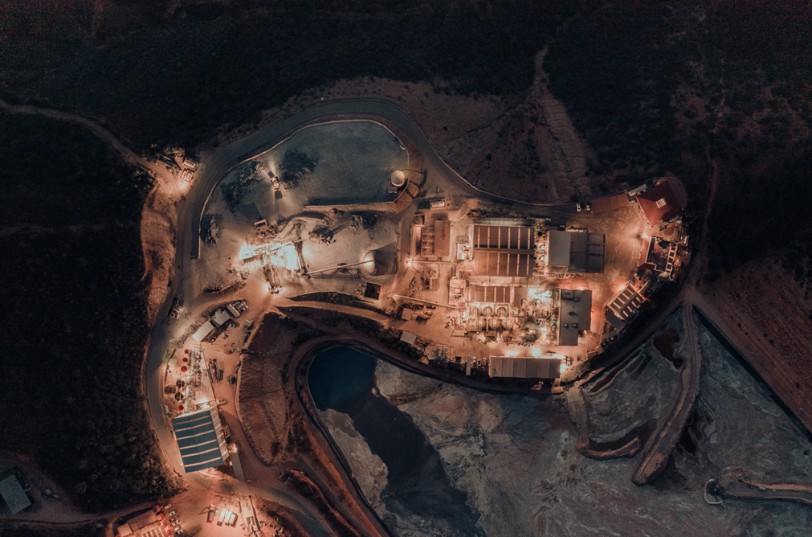
Processing Plant at Night |
Gold Resource Corporation
7
Back Forty Project:
There is a long history of exploration at the Back Forty Project. After the acquisition of Aquila and the Back Forty Project by the Company in 2021, optimization work was initiated to address the mine’s footprint, potential for an underground mine, wetland mitigation, and other key construction and design decisions. This optimization work related to a change in mine design, tailings relocation, and metallurgy. The economic model was completed, and the Company released the Back Forty Project Technical Report Summary on October 26, 2023. Results of the work indicate a more robust economic project with no planned impacts to wetlands that are more protective of the environment, which should facilitate a successful mine permitting process expected to start in 2026. With much higher metal prices since the Back Forty Project Technical Report Summary was completed, the Board actively evaluates the options that could lead to the successful development of the project. Please see Item 2. Properties for additional information.
Before the Aquila acquisition, Aquila’s common shares were traded on the Toronto Stock Exchange (“TSX”) under the ticker symbol AQA. Effective December 10, 2021, Aquila ceased to be a reporting issuer in British Columbia, Alberta, Saskatchewan, Ontario, and Nova Scotia. At the same time, GRC became a reporting issuer in British Columbia, Alberta, Saskatchewan, Ontario, and Nova Scotia by virtue of the completion of the acquisition. As a Canadian reporting issuer, GRC is now required to file reports on the System for Electronic Document Analysis and Retrieval (“SEDAR”) in Canada. All financial statements filed on SEDAR conform to United States generally accepted accounting principles (“U.S. GAAP”).
Administrative Offices:
The Company’s principal executive offices are located at 7900 E. Union Ave, Suite 320, Denver, Colorado 80237, and its telephone number is (303) 320-7708. The Company maintains a website at www.goldresourcecorp.com. Information on its website is not incorporated into this annual report on Form 10-K and is not a part of this report. The U.S. Securities and Exchange Commission (“SEC”) maintains an internet site (www.sec.gov) on which the reports that the Company files with the SEC are available to review. The SEC filings can also be accessed through the Company’s website.
Gold Resource Corporation
8
2025 Development Highlights
For the year ended December 31, 2025, the Company reported a net loss of $6.5 million. Despite the net loss reported for the year, the Company’s operating mine is showing improvements and a turnaround in performance that is mainly attributable to higher metal prices and improved production as a result of acquired new equipment, as well as the use of a third-party mining contractor, allowing the development of higher-grade areas of the deposit. Financial results for 2025 include revenue of $99.8 million and mine gross profit of $26.8 million. The Company’s production results for the year totaled 5,300 gold ounces, 1,594,300 silver ounces, 264 copper tonnes, 1,192 lead tonnes, and 3,613 zinc tonnes.

For the eleventh consecutive year, DDGM received the prestigious ESR award from the Mexican Center for Philanthropy (“CEMEFI”). Awards are given to organizations that demonstrate a commitment to supporting social and environmental protection programs within their local communities.
The Company’s exploration activities focused on underground drilling within the Arista, Switchback, and Three Sisters vein systems of the Arista mine, along with limited surface drilling at the Alta Gracia deposit beginning in the fourth quarter. During the year, the Company completed a total of 111 diamond drill holes totaling 14,539 meters, consisting of 33 infill holes totaling 5,982 meters, and 78 grade-control holes totaling 8,557 meters. Of the infill drilling, six holes totaling 1,121 meters were completed from surface at Alta Gracia. The Company also completed more than 485 meters of underground drift development in 2025 to support ongoing infill and grade-control drilling and to facilitate planned expansion drilling in 2026.
Exploration efforts were primarily dedicated to underground drilling on multiple high-grade, polymetallic epithermal veins within the Three Sisters vein system, particularly the Sandy and Sadie vein sets, and within the Arista vein system, including the down-dip and northern extension of the Viridiana and Marena veins, as well as the northern extensions of the Splay 31 and Marena North veins. The 2025 drilling program was designed to support Mineral Reserve definition and to define additional Mineral Resources. The Three Sisters vein system lies between and north of the Arista and Switchback systems and is located near existing mine infrastructure. Following focused infill and grade-control drilling during the year, a total of 24 distinct veins and vein segments, including the Gloria vein, have now been delineated. Both the Three Sisters and northern Arista vein systems remain the primary targets for infill and expansion drilling in 2026. Updated 2025 resource models for all three vein systems incorporated tighter geologic and economic constraints, resulting in more selective and geologically constrained estimates. In particular, drilling within the Three Sisters and Arista systems resulted in an upgrade of a portion of the previously reported Inferred Mineral Resources to Measured and Indicated categories; increasing confidence in those areas. All vein systems remain open for further expansion drilling both up- and down-dip, as well as along strike to the northwest.
Surface exploration during 2025 included the initiation of a limited surface infill drilling program at Alta Gracia in mid-November. By year-end, six infill holes totaling 1,121 meters had been completed, targeting the upgrade of previously defined Inferred Mineral Resources in the upper southwestern portion of the Mirador vein. The Company also continued evaluating and prioritizing advanced-stage exploration targets within the approximately 551 square kilometer land package controlled by DDGM surrounding the Arista Mine. These activities included the reprocessing and integration of historical geologic information, including mapping, sampling, geophysical surveys, and drill data, from several projects, including Rey, Alta Gracia, Margaritas, El Fuego, Chamizo, and Jabali. Prospective areas proximal to the Arista Mine were also re-evaluated for near-term exploration potential with the objective of defining additional near-mine drill targets. These ongoing efforts support the Company’s long-term exploration strategy and continued operational presence in Oaxaca, Mexico.
Gold Resource Corporation
9
In connection with the Back Forty Project, the Company continues to monitor the U.S. Army Corps of Engineers’ (“USACE”) review of a petition by the Menominee Indian Tribe of Wisconsin (“MITW”) requesting that the Menominee River be designated as navigable under Section 10 of the Rivers and Harbor Act. The USACE has previously concluded, based on prior studies, that the relevant reach of the Menominee River in the project area does not meet the federal definition of navigability. The MITW has requested that the Environmental Protection Agency and the USACE evaluate whether federal agencies, rather than the State of Michigan, should exercise regulatory authority over certain activities potentially requiring federal permits. Based on the current project design and permitting framework, the Company does not presently anticipate the need for additional federal permits related to navigability of the river corridor, however any change in jurisdictional determinations could affect future permitting requirements. In response to the MITW petition, the USACE is updating its navigability study for the Menominee River, which was expected to be completed in 2023, but it’s still under final administrative review.
Recent Developments
On January 26, 2026, the Company announced that it has entered into a definitive arrangement agreement and plan of merger (the “Arrangement Agreement”) with Goldgroup Mining Inc. (“Goldgroup”), whereby Goldgroup has agreed to acquire all of the issued and outstanding shares of the Company’s common stock (the “Transaction”).
Pursuant to the Arrangement Agreement, the Company’s stockholders will receive 1.4476 common shares of Goldgroup for each share of the Company’s common stock (adjusted to 0.3619 common shares of Goldgroup for each share of the Company’s common stock as a result of a four-for-one share consolidation to be completed by Goldgroup prior to closing). The proposed Transaction will occur by way of a reverse triangular merger in which the Company will merge with a wholly owned subsidiary of Goldgroup under Colorado law and a plan of arrangement under the Business Corporations Act (British Columbia), with the Company surviving as a wholly owned subsidiary of Goldgroup. Upon completion of the Transaction, the Company’s stockholders are expected to own approximately 40% of the combined company on a fully diluted in-the-money basis.
The Transaction was unanimously approved by the boards of directors of the Company and Goldgroup. The Transaction is expected to close in the second quarter of 2026, subject to customary closing conditions (including approval by the stockholders of each of the Company and Goldgroup and approval by the Mexican National Antitrust Commission). Upon closing, the board of directors of Goldgroup will be comprised of three directors selected by Goldgroup and two directors selected by the Company. The parties anticipate that the executive management team of the Company will become the officers of the combined company.
Dividends
In February 2023, to conserve cash for development and equipment expenses, the Company announced the suspension of its quarterly dividend until such time that it may become practicable to reinstate such dividend. Please see Item 5. Market for Registrant’s Common Equity, Related Stockholder Matters and Issuer Purchase of Equity Securities for additional information regarding the Company’s dividend policy.
Insurance
The Company’s business is capital intensive and requires ongoing investment for the replacement, modernization, or expansion of equipment and facilities. For more information, please see Item 7. Management’s Discussion and Analysis of Financial Condition and Results of Operations—Liquidity and Capital Resources below. The Company maintains insurance policies against property loss and business interruption and insure against most risks that are typical in the operation of its business in amounts that the Company believes to be reasonable. Such insurance, however, contains exclusions and limitations on coverage, particularly with respect to property loss, environmental liability, and political risk. There can be no assurance that claims would be paid under such insurance policies in connection with a particular event. Please see Item 1A. Risk Factors below for additional information.
Gold Resource Corporation
10
Competitive Business Conditions
The acquisition of gold and silver properties is subject to intense competition. Identifying and evaluating potential mining prospects is a costly and time-consuming endeavor. In 2021, the Company successfully acquired the Back Forty Project as discussed above. The Company expects to continue significant investment in exploration and growth activities in the future; however, competition for acquiring mineral prospects will continue to be intense.
Government Regulations and Permits
In connection with mining, milling, and exploration activities in Mexico, the Company is subject to Mexican federal, state, and local laws and regulations governing the protection of the environment, including laws and regulations relating to the protection of air and water quality, hazardous waste management, mine reclamation, as well as the protection of endangered or threatened species. The government department responsible for environmental protection in Mexico is Secretaria de Medio Ambiente y Recursos Naturales (“SEMARNAT”). SEMARNAT has broad authority over environmental regulations and standards. Potential areas of environmental consideration for mining companies include, but are not limited to, acid rock drainage, cyanide containment and handling, contamination of water sources, dust, and noise.
For operations at the Don David Gold Mine, the Company has secured and continues to maintain various regulatory permits from federal, state, and local agencies. These governmental and regulatory permits generally govern the processes being used to operate, the stipulations concerning air quality, water issues, hazardous materials and waste management, and the plans and obligations for reclamation of the properties at the conclusion of operations. These laws and regulations are continually changing and are generally becoming more restrictive.
The Company’s production stage mines in Mexico have reclamation plans in place that it believes meet all applicable legal and regulatory requirements. As of December 31, 2025, $10.2 million has been accrued on the Company’s Consolidated Balance Sheets for reclamation costs relating to its production and exploration stage properties in Mexico. In addition, the Company accrued $0.1 million for drill-hole plugging on the Company’s Consolidated Balance Sheets for reclamation costs relating to its exploration stage property in Michigan.
The State of Michigan has been delegated authority under federal environmental law to issue all necessary environmental permits required for the Back Forty Project. The State of Michigan’s “Natural Resource Environmental Protection Act” provides rules and regulations for the State Department of Environment, Great Lakes and Energy (EGLE) to issue permits for mining, treated wastewater discharge, air emissions, and related environmental permits necessary for the Back Forty Project.
Customers
During the year ended December 31, 2025, two customers accounted for 99% of the Company’s revenue from DDGM. In the event that the Company’s relationship with any of its customers is interrupted for any reason, the Company believes that it would be able to locate another entity to purchase its products in a timely manner on substantially similar terms. However, any interruption could temporarily disrupt the sale of the Company’s principal products and materially adversely affect its operating results. The Company periodically reviews its options for alternative sales outlets to mitigate the concentration of risk in case of any unforeseen disruptions.
Human Capital Resources
The Company values excellence and recognizes that embracing the diverse backgrounds, skills, and perspectives of the local workforce will lead to a competitive advantage. The Company is committed to leading by example and maintaining a fair and inclusive work environment built on mutual respect and integrity. Diversity means understanding, accepting, respecting, and valuing differences among people regardless of age, gender, race, ethnicity, culture, religion or spiritual practices, disabilities, sexual orientation, gender identity, family status, or veteran status.
Gold Resource Corporation
11
The Company believes it has good morale and a dedicated workforce. The Company’s human capital resources objectives include, as applicable, identifying, recruiting, retaining, incentivizing, and integrating its existing employees and new hires. The principal purposes of the Company’s equity incentive plans are to attract, retain, and motivate selected employees and directors by granting stock-based compensation awards that align employee compensation with shareholder returns.
|
DDGM Employee Housing |
As of December 31, 2025, the Company had 485 employees at DDGM. There were 12 full-time corporate employees, two of whom serve as executive officers, and three full-time employees in Michigan who are fully dedicated to progressing the Back Forty Project.
ITEM 1A.RISK FACTORS
The Company’s business, and the mining industry in general, is influenced by significant risks and uncertainties. These risks include those described below and may include additional risks and uncertainties not presently known or currently deemed immaterial. The Company’s business, financial condition, and results of operations could be materially adversely affected by any of these risks, and the trading price of the Company’s common stock could decline by virtue of these risks. These risks should be read in conjunction with the other information in this annual report on Form 10-K.
Financial Risks
The Company’s results of operations, cash flows, and the value of its properties are highly dependent on the market prices of gold, silver, and certain base metals, and these prices can be volatile.
The profitability of the Company’s mining operations and the value of its mining properties are directly related to the market price of gold, silver, copper, lead, and zinc. The price of gold and silver may also significantly influence the market price of the Company’s common stock. The market prices of these metals historically have fluctuated significantly and are affected by numerous factors beyond the Company’s control, including (i) global or regional consumption patterns; (ii) supply of and demand for gold, silver, and base metals on a worldwide basis; (iii) speculative and hedging activities; (iv) expectations for inflation; (v) political and economic conditions; (vi) supply of, and demand for, consumables required for extraction and processing of metals, and (vii) general economic conditions worldwide.
Gold Resource Corporation
12
Over the last five years (as reported on the London Bullion Market Association using the London PM Fix for gold and silver), gold prices have fluctuated from a low of $1,629 per ounce to a high of $4,449 per ounce, and silver prices have fluctuated from a low of $17.77 per ounce to a high of $74.84 per ounce. On December 31, 2025, the London PM Fix gold price was $4,368 per ounce, and the London PM silver price was $71.99 per ounce.
Currently, the Company does not use hedging transactions with respect to any of its metal production. Accordingly, the Company is fully exposed to price fluctuations in precious metals. In the event metal prices decline or remain low for prolonged periods of time, the Company might be unable to develop its exploration properties, which may materially adversely affect its results of operations, financial performance, and cash flows. An asset impairment charge may result from the occurrence of unexpected adverse events that impact the Company’s estimates of expected cash flows generated from its mining operations or the market value of its non-producing properties, including a material diminution in the price of metals.
The Company may not achieve profitability.
The Company’s only production-stage property that produces revenue is DDGM in Mexico, and it may not generate sufficient cash flow to cover the Company’s operating, development, exploration, general and administrative, and other costs due to certain risk factors. Unexpected interruptions in the mining business may cause the Company to incur losses, or the revenue that is generated from extraction may not be sufficient to fund continuing operations, including exploration and mine development costs. The Company’s failure to generate future profits may materially adversely affect the price of its common stock, and stockholders may lose all or part of their investment. Metal prices and foreign currency rates have a significant impact on the Company’s profit margin, and there is no assurance that the Company will be profitable in the future. Please see Item 1A. Risk Factors—Financial Risks—The Company’s results of operations, cash flows, and the value of its properties are highly dependent on the market prices of gold, silver, and certain base metals and these prices can be volatile.
The Company requires access to additional capital in order to finance its business plans, and there is no guarantee the Company will have access to that capital on favorable terms, or at all.
The Company requires significant funds to develop, access, and determine if Mineral Reserves exist at any of its non-producing properties, continue exploration, and if warranted, develop existing properties and identify and acquire additional properties to diversify its property portfolio.
The Company’s ability to obtain necessary funding for these purposes, in turn, depends upon several factors, including historical and prospective results of operations, the status of the national and worldwide economy, the price of gold, silver, and other metals, the condition of the debt and equity markets, the costs associated with extracting and acquiring minerals, and the market value for its common stock. The Company may not be successful in generating or obtaining the required financing, or if it can obtain such financing, such financing may not be on terms that are favorable to the Company and its shareholders. The Company also may be unable to obtain funding by monetizing additional non-core exploration or other assets at an acceptable price.
The Company cannot provide assurance it will be able to obtain financing to fund its general and administrative costs and other working capital needs to fund continuing business activities in the future on favorable terms, or at all. Failure to obtain funds could result in delay or indefinite postponement of further mining operations, exploration, and construction, as well as the possible partial or total loss of the Company’s interest in its properties.
Gold Resource Corporation
13
The Company’s ability to recognize the benefits of deferred tax assets is dependent on future cash flows and taxable income.
The Company recognizes deferred tax assets when the tax benefit is more likely than not to be realized; otherwise, a valuation allowance is applied against deferred tax assets. Assessing the recoverability of deferred tax assets requires management to make significant estimates related to expectations of future taxable income. Estimates of future taxable income are based on forecasted cash flows from operations and the application of existing tax laws in each jurisdiction. To the extent that future cash flows and taxable income differ significantly from estimates, the Company’s ability to realize the deferred tax assets could be impacted, if applicable. Additionally, future changes in tax laws could limit the Company’s ability to realize the future tax benefits represented by its deferred tax assets.
The Company’s accounting and other estimates may be imprecise.
Preparing financial statements requires management to make estimates and assumptions that affect the reported amounts and related disclosure of assets, liabilities, revenue, and expenses at the date of the consolidated financial statements and reporting periods. The more significant areas requiring the use of management assumptions and estimates relate to:
| ● | Mineral Resources that are the basis for future potential income and cash flow estimates; |
| ● | Mineral Reserves that are the basis for units-of-production depreciation, depletion, and amortization calculations; |
| ● | Future mine plans, ore grades, throughput, and recoveries; |
| ● | Future metals prices; |
| ● | Future capital and operating costs; |
| ● | Environmental, reclamation, and closure obligations; |
| ● | The Back Forty Project Gold and Silver Stream Agreements with Osisko Bermuda Limited (“Osisko”); |
| ● | Contingent Consideration Liabilities; |
| ● | Permitting and other regulatory considerations; |
| ● | Asset impairments; |
| ● | The valuation of the Company’s investments in equity securities; |
| ● | Asset acquisition accounting, including the valuation of the transaction and related instruments; |
| ● | Future foreign exchange rates, inflation rates, and applicable tax rates; and |
| ● | Deferred tax asset valuation allowance. |
Future estimates and actual results may differ materially from these estimates as a result of using different assumptions or conditions. For additional information, see Item 7. Management’s Discussion and Analysis of Financial Condition and Results of Operations.
The Company’s subsidiary, Aquila Resource Inc., may be required to repay a significant amount if it defaults under certain gold and silver stream agreements.
In connection with the Aquila acquisition, the Company acquired Aquila Resource Inc. which had substantial liabilities related to the Gold and Silver Stream Agreements with Osisko (now called OR Royalties Inc.) (the “Osisko Stream Agreements”). Under the Osisko Stream Agreements, Osisko deposited a total of $37.2 million upfront in exchange for a portion of the future gold and silver production from the Back Forty Project. The Osisko Stream Agreements contain customary provisions regarding default and security. In the event that the Company’s subsidiary, Aquila Resource Inc., defaults under the Osisko Stream Agreements, including by failing to acquire the required permits and achieve commercial production by the agreed upon dates, it may be required to repay the deposit plus accumulated interest at a rate agreed with Osisko. If the subsidiary fails to do so, Osisko may elect to enforce its remedies as a secured party and take possession of the assets that comprise the Back Forty Project.
Gold Resource Corporation
14
The Company’s revenues are concentrated among a select few customers. Any interruption in the Company’s relationship with such customers could materially affect the Company’s operating results.
During the year ended December 31, 2025, two customers accounted for 99% of the Company’s revenue from DDGM. In the event that the Company’s relationship with any of its customers is interrupted for any reason, the Company believes that it would be able to locate another entity to purchase its products in a timely manner on substantially similar terms. However, any interruption could temporarily disrupt the sale of the Company’s principal products and materially adversely affect its operating results.
Operational Risks
The Company’s production is derived from a single operating unit, and any interruptions or stoppages in its mining activities at that operating unit would materially adversely affect revenue.
The Company is dependent on revenues from a single operating unit to fund its operations. Any interruption in the Company’s ability to mine this location, such as a labor strike, natural disaster, or loss of permits would negatively impact its ability to generate revenue following such interruption. Additionally, if the Company is unable to develop additional mines economically, it will eventually deplete the body of mineralized material and will no longer generate cash flow sufficient to fund its operations. A decrease in, or cessation of, the Company’s mining operations at this operating unit would materially adversely affect its financial performance and may eventually cause the Company to cease operations.
Since the Company’s current property portfolio is limited to one operating unit, its ability to be profitable over the long-term will depend on the Company’s ability to (1) expand the known Arista, Switchback and Three Sisters vein systems and /or identify, explore, and develop additional properties in Mexico, (2) successfully develop the Back Forty Project in Michigan, USA, or (3) acquire and develop an alternative project.
Gold and silver producers must continually replace reserves depleted by production to maintain production levels over the long-term and provide a return on invested capital. Depleted reserves can be replaced in several ways, including expanding known ore bodies, locating new deposits, or acquiring interests in reserves from third parties. Exploration is highly speculative in nature, capital intensive, involves many risks, and frequently unproductive. The Company’s current or future exploration programs may not result in new mineralization. Even if significant mineralization is discovered, it will likely take many years from the initial phases of exploration until commencement of production, during which time the economic feasibility of production may change.
From time to time, the Company may acquire mineral interests from other parties. Such acquisitions are based on an analysis of a variety of factors, including historical exploration results, estimates and assumptions regarding the extent of mineralized material and/or reserves, the timing of production from such reserves, and cash and other operating costs. In addition, the Company may rely on data and reports prepared by third parties, which may contain information or data that the Company would be unable to independently verify or confirm. All of these factors are uncertain and may impact the Company’s ability to develop the mineral interests.
As a result of these uncertainties, the Company’s exploration programs and any acquisitions which it may pursue may not result in the expansion or replacement of its current production with new ore reserves or operations, which could have a material adverse effect on the Company’s business, prospects, results of operations, and financial position.
Gold Resource Corporation
15
Increasing operating and capital costs may materially adversely impact the Company’s results of operations.
Costs at the Company’s mining properties are subject to fluctuation due to a number of factors, such as variable ore grade, changing metallurgy, and revisions to mine plans in response to the physical shape and location of the ore body, as well as the age and utilization rates for the mining and processing-related facilities and equipment. In addition, costs are affected by the price and availability of input commodities, such as fuel, electricity, labor, chemical reagents, explosives, steel, concrete, and mining and processing related equipment and facilities. Commodity costs are often subject to volatile price movements, including increases that could make mineral extraction less profitable. Further, changes in laws and regulations can affect commodity prices, uses, and transport. Reported costs may also be affected by changes in accounting standards. Increases in costs materially adversely impacted the Company’s results of operations and operating cash flow in the past and may continue to do so in the future.
The Company could have significant increases in capital and operating costs over the next several years in connection with developing new projects in challenging jurisdictions and sustaining and/or expanding existing mining and processing operations. Costs associated with capital expenditures may increase in the future as a result of factors beyond the Company’s control, such as inflation. Increased capital expenditures may have an adverse effect on the results of operations and cash flow generated from existing operations, as well as the economic returns anticipated from new projects, or may make the development of future projects uneconomic.
Competition in the mining industry is intense, and the Company has limited financial and personnel resources with which to compete.
In the mining industry, competition for desirable properties, investment capital, and human capital is intense. Numerous companies headquartered in the United States, Canada, and worldwide compete for properties and human capital on a global basis. The Company is a small participant in the mining industry due to its limited financial and human capital resources. The Company presently operates with a limited number of people, and it anticipates operating in the same manner going forward. The Company competes with other companies in its industry to hire qualified employees and consultants when needed to operate its mines successfully and to advance its exploration properties. The Company may be unable to attract the necessary human capital to fully explore, and if warranted, develop its properties and be unable to acquire other desirable properties. The Company believes that competition for acquiring mineral properties, as well as the competition to attract and retain qualified human capital, will continue to be intense in the future.
Estimates of Proven and Probable Mineral Reserves and Measured and Indicated Mineral Resources include some uncertainty, such that the volume and grade of ore actually recovered may vary from the Company’s estimates.
The Proven and Probable Mineral Reserves stated in this report represent the amount of gold, silver, copper, lead, and zinc that the Company estimated at December 31, 2025 that could be economically and legally extracted or produced at the time of the reserve determination. Estimates of Proven and Probable Mineral Reserves and Measured and Indicated Mineral Resources are subject to considerable uncertainty. Such estimates are largely based on the prices of gold, silver, copper, lead, and zinc, as well as interpretations of geologic data obtained from drill holes and other exploration techniques. These prices and interpretations are subject to change. If the Company determines that certain estimated Mineral Reserves or Mineral Resources have become uneconomic, it may be forced to reduce its estimates. Actual production from Proven and Probable Mineral Reserves may be significantly less than the Company expects. There can be no assurance that estimates of Mineral Resources will be upgraded to Mineral Reserves or may ultimately be extracted.
Any material changes in Mineral Resources and Mineral Reserves estimates and grades of mineralization may affect the economic viability of the Company’s current operations, a decision to place a new property into production, and/or such property’s return on capital. There can be no assurance that mineral recoveries in small-scale laboratory tests will be duplicated in a large-scale on-site operation in a production environment. Declines in market prices for contained metals may render portions of the Company’s Mineral Resources and Mineral Reserves estimates uneconomic and result in reduced reported mineralization or materially adversely affect the commercial viability of one or more of the Company’s properties.
Gold Resource Corporation
16
Any material reductions in estimates of mineralization, or of the Company’s ability to extract this mineralization, could have a material adverse effect on its results of operations or financial condition.
Products processed from the Company’s operating mines or other mines in the future could contain higher than expected contaminants, thereby negatively impacting the Company’s financial condition.
Contracts for treatment charges paid to smelters and refineries include penalties for certain deleterious elements that exceed contract limits. If the material mined from the Company’s operating mines includes higher than expected contaminants, the Company would incur higher treatment expenses and penalty charges that could increase costs and negatively impact the business, financial condition, and results of operations. This could occur due to unexpected variations in the occurrence of these elements in the material mined, problems occurring during blending of material from various locations in the mine prior to processing, and other unanticipated events.
Continuation of the Company’s mining and processing activities is dependent on the availability of sufficient water supplies to support its mining activities.
Water is critical to the Company’s business, and the increasing pressure on water resources requires the Company to consider both current and future conditions in its management approach. Across the globe, water is a shared and regulated resource. Mining operations require significant quantities of water for mining, ore processing, and related support facilities. Many of the Company’s properties in Mexico are in areas where water is scarce, and competition among users for continuing access to water is significant. Continuous production and mine development depend on the Company’s ability to acquire and maintain water rights and defeat claims adverse to current water use in legal proceedings. Although the Company believes that its operations currently have sufficient water rights and claims to cover operating demands, it cannot predict the potential outcome of future legal proceedings relating to water rights, claims, and uses. Water shortages may also result from weather or environmental and climate impacts beyond the Company’s control. Shortages in water supply could result in production and processing interruptions. In addition, the scarcity of water in certain regions could result in increased costs to obtain sufficient quantities of water to conduct the Company’s operations. The loss of some or all water rights, in whole or in part, ongoing shortages of water to which the Company has rights, or significantly higher costs to obtain sufficient quantities of water (or the failure to procure sufficient quantities of water) could result in the Company’s inability to maintain mineral extraction at current or expected levels, require the Company to curtail or shut down mining operations, and prevent it from pursuing expansion or any development opportunities. Laws and regulations may be introduced in some jurisdictions where the Company operates, which could also limit access to sufficient water resources, thus materially adversely affecting its operations.
The nature of mineral exploration, mining, and processing activities involves significant hazards, a high degree of risk, and the possibility of uninsured losses.
Exploration for and the production of minerals is highly speculative and involves greater risk than many other businesses. Many exploration programs do not result in the discovery of mineralization, and any mineralization discovered may not be of sufficient quantity or quality to be profitably mined. The Company’s operations are, and any future mining operations or construction that may be conducted will be, subject to all of the operating hazards and risks normally incident to exploring for and mining of mineral properties, such as, but not limited to:
| ● | Fluctuation in production costs that make mining uneconomic; |
| ● | Fluctuation in commodity prices; |
| ● | Social, community, or labor force disputes resulting in work stoppages or delays, or related loss of social acceptance of community support; |
| ● | Changes to legal and regulatory requirements; |
| ● | Unanticipated variations in grade and other geologic problems; |
| ● | Environmental hazards, noxious fumes, and gases; |
| ● | Ground and water conditions; |
Gold Resource Corporation
17
| ● | Difficult surface or underground conditions; |
| ● | Industrial accidents; |
| ● | Security incidents; |
| ● | Failure of unproven or evolving technologies or loss of information integrity or data; |
| ● | Metallurgical and other processing problems; |
| ● | Mechanical and equipment performance problems; |
| ● | Failure of pit walls, dams, declines, drifts, and shafts; |
| ● | Unusual or unexpected rock formations; |
| ● | Personal injury; |
| ● | Pandemics, tariffs, and wars that could affect input costs and revenues; |
| ● | Fire, flooding, cave-ins, seismic activity, landslides, or other inclement weather conditions, including those impacting operations or the ability to access and supply sites; and |
| ● | Decrease in the value of mineralized material due to lower gold, silver, and metal prices. |
These occurrences could result in damage to—or destruction of—mineral properties, processing facilities, and equipment; personal injury or death; environmental damage; reduced extraction and processing; delays in mining; asset write-downs; monetary losses; and possible legal liability. Although the Company maintains insurance in amounts that it considers reasonable for general commercial liability claims, physical assets at its Arista and Alta Gracia Mines, and risks inherent in the conduct of its business, this insurance contains exclusions and limitations on coverage and will not cover all potential risks associated with mining and exploration activities. As such, the related liabilities might exceed policy limits. As a result of any or all of the foregoing, the Company could incur significant liabilities and costs that may exceed the limits of its insurance coverage or that it may elect not to insure against because of unreasonable premium costs or other reasons, which could materially adversely affect its results of operations and financial condition. The Company may also not be insured against all interruptions to its operations. Losses from these or other events may cause the Company to incur significant costs which could materially adversely affect its financial condition and its ability to fund activities on its properties. A significant loss could force the Company to reduce or suspend its operations and development.
Revenue from the sale of metal concentrate may be materially adversely affected by loss or damage during shipment and storage at the Company’s buyer’s facilities.
The Company relies on third-party transportation companies to transport its metal concentrate to each buyer’s facilities for processing and further refining. The terms of the Company’s sales contracts with the buyers require the Company to rely, in part, on assay results from samples of its metal concentrate that are obtained at the buyer’s warehouse to determine the final sales value for metals. Once the metal concentrate leaves the processing facility, the Company no longer have direct custody and control of these products. Theft, loss, road accidents, improper storage, fire, natural disasters, tampering, or other unexpected events while in transit or at the buyer’s location may lead to the loss of all or a portion of the Company’s metal concentrate products. Such losses may not be covered by insurance and may lead to a delay or interruption in revenue, and as a result, the Company’s operating results may be materially adversely affected.
A significant delay or disruption in sales of doré or concentrates as a result of the unexpected disruption in services provided by smelters or refiners could have a material adverse effect on results of operations.
The Company relies on third-party smelters and refiners to refine and process and, in some cases, purchase, the gold and silver doré and copper, lead, and zinc concentrate produced from its mines. Access to smelters and refiners on economic terms is critical to the Company’s ability to sell its products to buyers and generate revenues. The Company periodically enters into agreements with smelters and refiners, some of which operate their smelting or refining facilities outside the United States, and it believes it currently has contractual arrangements with a sufficient number of smelters and refiners so that the loss of any one refiner or smelter would not significantly or materially impact the Company’s operations or its ability to generate revenues. Nevertheless, services provided by a refiner or smelter may be disrupted by operational issues; new or increased tariffs, duties, or other cross-border trade barriers; the bankruptcy or insolvency of one or more smelters or refiners; or the inability to agree on acceptable commercial or legal terms with a refiner or smelter.
Gold Resource Corporation
18
Such an event or events may disrupt an existing relationship with a refiner or smelter or result in the inability to create a contractual relationship with a refiner or smelter, which may leave the Company with limited, uneconomical, or no access to smelting or refining services for short or long periods of time. Any such delay or loss of access may significantly impact the Company’s ability to sell doré and concentrate products. The Company cannot ensure that alternative smelters or refiners would be available or offer comparable terms if the need for them arose or that it would not experience delays or disruptions in sales that would materially adversely affect the results of operations.
The Company relies on contractors to conduct a significant portion of the Company’s exploration, development, and construction projects.
A significant portion of the Company’s development and construction projects are currently conducted in whole or in part by contractors. As a result, the Company’s operations are subject to a number of risks, some of which are outside of its control, including:
| ● | Negotiating agreements with contractors on acceptable terms; |
| ● | New foreign or domestic legislation limiting or altering the ability to utilize contractors or outsourced resources; |
| ● | The difficulty and inherent delay in replacing a contractor and its equipment in the event that either party terminates the agreement; |
| ● | Reduced control and oversight over those aspects of the work which are the responsibility of the contractor; |
| ● | Failure of a contractor to perform under its agreement; |
| ● | Interruption of development and construction or increased costs in the event that a contractor ceases its business due to insolvency or other unforeseen events; |
| ● | Injuries or fatalities on the job as a result of the failure to implement or follow adequate safety measures; |
| ● | Failure of a contractor to comply with applicable legal and regulatory requirements, to the extent it is responsible for such compliance; and |
| ● | Problems of a contractor managing its workforce, labor unrest, or other related employment issues. |
In addition, the Company may incur liability to third parties as a result of the actions of its contractors. The occurrence of one or more of these risks could materially adversely affect the Company’s results of operations and financial position.
Gold Resource Corporation
19
Risks Related to the Company’s Exploration Activities
The exploration of the Company’s mineral properties is highly speculative in nature, involves substantial expenditures, and is frequently non-productive.
| ● | Identifying suitable candidates for acquisition and negotiating acceptable terms; |
| ● | Obtaining approval from regulatory authorities and potentially the Company’s shareholders; |
| ● | Implementing the Company’s standards, controls, procedures, and policies at the acquired business and addressing any pre-existing liabilities or claims involving the acquired business; and |
| ● | To the extent the acquired operations are in a country where the Company has not operated historically, understanding the regulations and challenges of operating in that new jurisdiction. |
Gold Resource Corporation
20
Regulatory and Geopolitical Risks
The Company’s operations are subject to ongoing permitting requirements, which could result in the delay, suspension, or termination of its operations.
The Company’s operations, including ongoing exploration drilling programs and mining, require ongoing permits from governmental and local authorities. The Company may also be required to obtain certain property rights to access or use its properties. Obtaining or renewing licenses and permits and acquiring property rights can be complex and time-consuming processes. There can be no assurance that the Company will be able to acquire all required licenses, permits, or property rights on reasonable terms or in a timely manner, or at all, and that such terms will not be adversely changed; that required extensions will be granted; or that the issuance of such licenses, permits or property rights will not be challenged by third parties. If the Company cannot obtain or maintain the necessary permits, or if there is a delay in receiving future permits, its timetable and business plan will be materially adversely affected.
The Company’s operating properties located in Mexico are subject to changes in political or economic conditions and regulations in that country.
The risks with respect to operating in Mexico or other developing countries include, but are not limited to, nationalization of properties, military repression, extreme fluctuations in currency exchange rates, increased security risks, labor instability or militancy, mineral title irregularities, and high rates of inflation. Furthermore, the Company’s operations in Mexico may be subject to increased political and security risks stemming from civic unrest. Incidents of high-profile civic unrest—including cartel-related violence, extortion, and threats to personnel and infrastructure—could disrupt operations, increase security-related expenditures, and pose risks to the safety of employees and contractors.
Changes in mining or investment policies or shifts in political attitudes in Mexico may also materially adversely affect the Company’s business. The Company may be affected in varying degrees by government regulation concerning restrictions on production, price controls, export controls, income taxes, expropriation of property, maintenance of claims, environmental legislation, land use, land claims of local people, opposition from non-governmental organizations, labor legislation, water use, and mine safety. The effect of these factors cannot be accurately predicted and may adversely impact the Company’s operations.
Most of the Company’s properties are subject to extensive environmental laws and regulations, which could materially adversely affect its business.
The Company’s exploration and mining operations are subject to extensive laws and regulations governing land use and the protection of the environment, which control the exploration and mining of mineral properties and their effects on the environment, including air and water quality, mine reclamation, waste generation, handling and disposal, the protection of different species of flora and fauna, and the preservation of lands. These laws and regulations require the Company to acquire permits and other authorizations for conducting certain activities. In many countries, there is relatively new comprehensive environmental legislation, and the permitting and the authorization process may not be established or predictable. The Company may not be able to acquire necessary permits or authorizations on a timely basis, if at all. Delays in acquiring any permit or authorization could increase the cost of the Company’s projects and could suspend or delay the commencement of extraction and processing of mineralized material.
Environmental legislation in Mexico and in many other countries is evolving in a manner that will require stricter standards and enforcement, increased fines and penalties for non-compliance, more stringent environmental assessments of proposed projects, and a heightened degree of responsibility for companies and their officers, directors, and employees. Future changes in environmental regulation in the jurisdictions where the Company’s properties are located may materially adversely affect its business, make the business prohibitively expensive, or prohibit it altogether. The Company cannot predict what environmental legislation or regulations will be enacted or adopted in the future or how future laws and regulations will be administered or interpreted.
Gold Resource Corporation
21
Compliance with more stringent laws and regulations, as well as potentially more vigorous enforcement policies, stronger regulatory agencies, or stricter interpretation of existing laws, may (i) necessitate significant capital outlays, (ii) cause the Company to delay, terminate, or otherwise change its intended activities with respect to one or more projects, or (iii) materially adversely affect future exploration activities.
Climate change and climate change legislation or regulations could impact the Company’s business.
The Company is subject to physical risks associated with climate change, which could seriously harm its results of operations and increase costs and expenses. The occurrence of severe adverse weather conditions, including increased temperatures and droughts, fires, longer wet or dry seasons, increased precipitation, floods, hail, snow, or more severe storms may have a potentially devastating impact on the Company’s operations. Adverse weather may result in physical damage to operations, instability of the Company’s infrastructure and equipment, washed-out roads to its properties, and altered water and electricity supply to projects. Increased temperatures may also decrease worker productivity at the Company’s projects and raise ventilation and cooling costs. Changes in the quantity of water, whether in excess or deficient amounts, may impact exploration and development activities, mining and processing operations, water storage and treatment facilities, tailings storage facilities, closure and reclamation efforts, and may increase levels of dust in dry conditions, and land erosion and slope stability in case of prolonged wet conditions. Should the impacts of climate change be material in nature or occur for lengthy periods of time in the areas in which the Company operates, financial condition or results of operations could be materially adversely affected.
The Company’s continuing reclamation obligations at its operations could require significant additional expenditure.
The Company is responsible for the reclamation obligations related to disturbances located on all of its properties and have recorded a liability on its Consolidated Balance Sheets to cover the estimated reclamation obligation. However, there is a risk that any reserve could be inadequate to cover the actual costs of reclamation when carried out. Continuing reclamation obligations will require a significant amount of capital. There is a risk that the Company will be unable to fund these obligations and that the regulatory authorities may increase reclamation requirements to such a degree that it would not be commercially reasonable to continue mining and exploration activities, which may materially adversely affect results of operations, financial performance, and cash flows.
The Company’s ability to develop its Mexican properties is subject to the rights of the Ejido (agrarian cooperatives), and violations of such rights could result in the Company’s loss of title in the subject properties, which would have a materially adverse effect on the Company’s business and financials.
Mining concessions in Mexico give exclusive exploration and exploitation rights to the minerals located in the concessions but do not include surface rights to the real property, which requires that the Company negotiates the necessary agreements with surface landowners. Many of the mining properties are subject to the Mexican Ejido system, which are groups of local inhabitants who were granted rights to conduct agricultural activities on the property, for access and surface disturbances, requiring the Company to contract with the local communities surrounding the properties in order to obtain surface rights to land needed in connection with mining exploration activities. The Company’s ability to mine minerals is subject to maintaining satisfactory arrangements and relationships with the Ejido.
The Company must negotiate and maintain a satisfactory arrangement with these residents in order to disturb or discontinue their rights to farm. While the Company has successfully negotiated and signed such agreements related to the DDGM operations, its inability to maintain these agreements or consummate similar agreements for new projects could impair or impede the ability to successfully explore, develop, and mine the properties, which in turn could materially adversely affect the Company’s future cash flow.
In February 2020, a local Ejido community (who claim to be an indigenous community) filed an injunction against the Mexican federal government alleging failure to conduct a prior consultation before granting mining concessions and seeking cancellation of several concessions, including certain concessions granted to DDGM. A federal suspension was issued in February 2020 prohibiting certain mining activities on the named concessions. DDGM’s operations are conducted on a concession that was not part of the original lawsuit, and DDGM does not presently perform such works in the concessions in lands of the indigenous community named in the injunction.
Gold Resource Corporation
22
The lawsuit is filed with the First District Courthouse in the state of Oaxaca and the case remains pending. If the lawsuit is successful, affected concessions, including the concession where DDGM currently operates, could be cancelled, and the Company would need to complete a consultation process and reapply for the concessions, which would have a materially adverse effect on its operations and financial condition. Please see Item 1A. Risk Factors—Regulatory Risks—Title to mineral properties can be uncertain and disputes regarding the title to the Company’s Mexican properties require the Company to litigate such disputes in Mexico, where it faces unfamiliar laws and procedures.
Title to mineral properties can be uncertain and disputes regarding the title to the Company’s Mexican properties require the Company to litigate such disputes in Mexico, where it faces unfamiliar laws and procedures.
The Company’s ability to explore and operate its properties depends on the validity of its title to that property. Uncertainties inherent in mineral properties relate to such things as the sufficiency of mineral discovery, proper posting and marking of boundaries, assessment work and possible conflicts with other claims not determinable from public record. There may be valid challenges to the title to the Company’s properties which, if successful, could impair development and/or operations. The resolution of disputes in foreign countries can be costly and time consuming. In a foreign country, the Company faces the additional burden of understanding unfamiliar laws and procedures. Not like in the U.S., the Company may not be entitled to a jury trial. Further, to litigate in Mexico, the Company is faced with the necessity of hiring lawyers and other professionals who are familiar with the Mexican laws. For these reasons, the Company may incur additional unforeseen costs to resolve its disputes in Mexico.
Under the laws of Mexico, Mineral Resources belong to the United States of Mexico, and government concessions are required to explore for or exploit Mineral Reserves. Mineral rights derive from concessions granted—on a discretionary basis—by the Ministry of Economy, pursuant to the Mexican mining law and regulations thereunder. Additionally, in 2014, new mining concessions became subject to additional review and approval by the Mexico Ministry of Energy, and in recent years, the federal government has been reluctant to issue new mining concessions.
The Company’s concessions in Mexico are subject to continuing government regulation, and failure to adhere to such regulations will result in the termination of such concessions. A title defect could result in losing all or a portion of the Company’s right, title, and interest in and to the properties to which the title defect relates. Furthermore, failure to comply with applicable laws and regulations relating to mineral right applications and tenure could result in loss, reduction or expropriation of entitlements, or the imposition of additional local or foreign parties as joint venture partners. Any such loss, reduction, or imposition of partners could have a material adverse effect on the Company’s financial condition, results of operations, and prospects.
A significant amount of the Company’s mining properties are subject to exchange control policies, the effects of inflation, and currency fluctuations between the U.S. dollar and the Mexican peso.
The Company’s revenue and external funding are primarily denominated in U.S. dollars. However, certain mining, processing, maintenance, and exploration costs are denominated in Mexican pesos. These costs principally include electricity, labor, water, maintenance, local contractors, and fuel. The appreciation of the peso against the U.S. dollar increases expenses and the cost of purchasing capital assets in U.S. dollar terms in Mexico, which can adversely impact the Company’s operating results and cash flows. Conversely, the depreciation of the Mexican peso decreases operating costs and capital asset purchases in U.S. dollar terms. When inflation in Mexico increases without a corresponding devaluation of the Mexican peso, the Company’s financial position, results of operations, and cash flows could be materially adversely affected. The annual average inflation rate in Mexico was approximately 3.82% in 2025 and 4.72% in 2024. Current and future inflationary effects may be driven by, among other things, supply chain disruptions, governmental stimulus or fiscal policies, and geopolitical instability. For additional information, please see Item 1A. Risk Factors—General Risks— Global and regional political and economic conditions could adversely impact the Company’s business. Continuing increases in inflation could increase the costs of labor and other costs related to the business, which could have an adverse impact on the Company’s business, financial position, results of operations, and cash flows.
Gold Resource Corporation
23
At the same time, the peso has been subject to fluctuation, which may not have been proportionate to the inflation rate and may not be proportional to the inflation rate in the future. The value of the peso increased by 12.8% in 2025 and decreased by 16.7% in 2024. In addition, fluctuations in currency exchange rates may have a significant impact on the Company’s financial results. There can be no assurance that the Mexican government will maintain its current policies with regard to the peso or that the peso’s value will not fluctuate significantly in the future. The Company cannot assure you that currency fluctuations, inflation, and exchange control policies will not have an adverse impact on its financial condition, results of operations, earnings, and cash flows.
Lack of infrastructure could forestall or prevent further exploration and advancement.
Exploration activities, as well as any advancement activities, depend on adequate infrastructure. Reliable roads, bridges, power sources, and water supply are important factors that affect capital and operating costs and the feasibility and economic viability of a project. Unanticipated or higher than expected costs and unusual or infrequent weather phenomena, or government or other interference in the maintenance or provision of such infrastructure, could materially adversely affect the Company’s business, financial condition, and results of operations.
Risks Related to the Company’s Common Stock
Volatility in the Company’s stock price could result in shareholders losing part or all of their investment.
In addition to other risk factors identified in this annual report on Form 10-K, and due to volatility associated with equity securities in general, the value of a shareholder’s investment could decline due to the impact of numerous factors upon the market price of the Company’s common stock, including divergence between its actual or anticipated financial results and published expectations of analysts or the expectations of the market, the gain or loss of customers, announcements that the Company, its competitors or its customers may make regarding their operating results and other factors that are beyond the Company’s control, such as market conditions in the Company’s or its customers’ industry, new market entrants, technological innovations, and economic and political conditions or events.
Stock markets in general have experienced extreme price and volume fluctuations, and the market prices of individual securities have been highly volatile. These fluctuations are often unrelated to operating performance and may materially adversely affect the market price of the Company’s common stock. As a result, shareholders may be unable to sell their shares at a desired price.
Past payments of dividends on the Company’s common stock are not a guaranty of future payments of dividends.
In 2010, the Company began paying cash dividends to the holders of its common stock, but in February 2023, in order to conserve cash for future development and exploration, the Company announced the suspension of quarterly dividends. The Company’s ability to pay dividends in the future will depend on a number of factors, including free cash flow, expected operational performance, mine construction requirements and strategies, other acquisition and/or construction projects, spot metal prices, taxation, government-imposed royalties, and general market conditions. Further, a portion of the Company’s cash flow is expected to be retained to finance operations, explorations, and development of mineral properties. There is no assurance that the Board will elect to re-institute a dividend payment in the near-term or at all.
Issuances of the Company’s stock in the future could dilute existing shareholders and materially adversely affect the market price of its common stock.
The Company has the authority to issue up to 200,000,000 shares of common stock, 5,000,000 shares of preferred stock, and to issue options and warrants to purchase shares of its common stock, in some cases without shareholder approval. As of March 16, 2026, there were 161,858,849 shares of common stock outstanding. Future issuances of the Company’s securities could be at prices substantially below the price paid for its common stock by current shareholders. The Company can issue significant blocks of its common stock without further shareholder approval. Because the Company has issued less common stock than many of its larger peers, the issuance of a significant amount of common stock may have a disproportionately large impact on share price compared to larger companies.
Gold Resource Corporation
24
General Risks
The failure to complete our announced Transaction with Goldgroup could have a material adverse effect on our business, results of operations, financial condition, cash flows and stock price.
On January 26, 2026, the Company announced that it entered into the Arrangement Agreement with Goldgroup, whereby Goldgroup has agreed to acquire all of the issued and outstanding shares of the Company’s common stock. The proposed Transaction will occur by way of a reverse triangular merger in which the Company will merge with a wholly owned subsidiary of Goldgroup under Colorado law and a plan of arrangement under the Business Corporations Act (British Columbia), with the Company surviving as a wholly owned subsidiary of Goldgroup. The Transaction is expected to close in the second quarter of 2026, subject to customary closing conditions (including approval by the stockholders of each of the Company and Goldgroup and approval by the Mexican National Antitrust Commission). There is no assurance that all of the conditions of the Arrangement Agreement will be satisfied, or that the Transaction will be completed on the announced terms, within the expected timeframe or at all. The closing of the Transaction may be delayed, or the Transaction may not be completed, due to a number of factors, including as a result of the failure to obtain regulatory approval or to satisfy any other requisite closing conditions.
If the Transaction does not close, the Company could suffer consequences that may have an adverse effect on its business, financial condition, operating results, cash flows and stock price. To the extent that the market price of the Company’s common stock reflects the assumption that the Transaction will be completed in the second quarter of 2026 or at all, the price of our stock could decline. The Company may experience adverse effects or changes to relationships with customers, employees, suppliers or other parties resulting from the failure to complete the Transaction. Additionally, there may be potential litigation relating to the Merger that could be instituted against the Company.
The Company’s operations may be disrupted, and its financial results may be materially adversely affected by any future pandemic.
Any pandemic may pose a risk to the business and operations. If a significant portion of the Company’s workforce becomes unable to work or travel to the operations due to illness or state or federal government restrictions (including travel restrictions and “shelter-in-place” and similar orders restricting certain activities that may be issued or extended by authorities), the Company may be forced to reduce or suspend operations, exploration activities, and/or development projects, which may impact liquidity and financial results. These restrictions have significantly disrupted economic activity in both the world, national, and local economies and have caused volatility in capital markets.
To the extent any pandemic materially adversely affects the Company’s business and financial results, as discussed above, it may also have the effect of heightening many of the other risks described in this “Risk Factors” section, such as those relating to operation, indebtedness, and financing. The Company is unable to predict the ultimate adverse impact of any pandemic on the business, which will depend on numerous evolving factors and future developments, including the pandemic’s ongoing effect on the demand for silver and gold, as well as the response of the overall economy and the financial markets after the pandemic and response measures come to an end, the timing of which remains highly unpredictable.
Gold Resource Corporation
25
Global and regional political and economic conditions could adversely impact the Company’s business.
Political and economic shifts, both domestic and international, may create uncertainty and pose risks to the Company’s operations. Policies related to populism, protectionism, economic nationalism, and attitudes toward multinational corporations could result in regulatory changes, trade barriers, or investment restrictions. Additionally, international trade disputes—including tariffs, counter-tariffs, export controls, sanctions, and currency regulations—may increase costs and disrupt supply chain, operating model, and customer relationships.
Further, market volatility, driven by shifts in U.S. and foreign trade policies, fluctuating interest rates, or currency controls may affect gold prices, capital availability, and investor confidence. Even the perception of these risks could lead to reduced investment, higher production costs, and operational challenges. If such trends continue, they may have a material adverse effect on the business and financial performance.
The Company may not be able to operate successfully if it is unable to recruit, hire, retain, and develop key personnel and maintain a qualified and diverse workforce. In addition, the Company is dependent upon its employees being able to safely perform their jobs, but there is risk of physical injuries or illness.
The Company depends upon the services of a number of key executives and management personnel. These individuals include executive officers and other key employees. If any of these individuals were to die, become disabled, or leave the Company, the Company would be forced to identify and retain individuals to replace them but may be unable to hire a suitable replacement on favorable terms should that become necessary.
The Company’s success is also dependent on the contributions of its highly skilled and experienced workforce. The Company’s ability to achieve its operating goals depend upon the ability to recruit, hire, retain, and develop qualified and diverse personnel to execute on its strategy. There continues to be competition over highly skilled personnel in the industry. If the Company loses key personnel or one or more members of senior management team; or if it fails to develop adequate succession plans; or if it fails to hire, retain, and develop qualified and diverse employees; the business, financial condition, results of operations, and cash flows could be harmed.
The Company is dependent on information technology systems, which are subject to certain risks, including cybersecurity risks, data leakage risks, and risks associated with implementation and integration.
The Company is dependent upon information technology systems in the conduct of its business. Any significant breakdown, invasion, virus, cyberattack, security breach, destruction, or interruption of these systems by employees, others with authorized access to its systems, or unauthorized persons could negatively impact the business. To the extent any invasion, cyberattack, or security breach results in disruption to the business, such as loss or disclosure of, or damage to data or confidential information; business reputation, results of operations, and financial condition could be materially adversely affected. The Company has implemented various measures to manage the risks related to information technology systems and network disruptions. However, given the unpredictability of the timing, nature, and scope of information technology disruptions, the Company could potentially be subject to production downtimes, operational delays, the compromising of confidential or otherwise protected information, destruction or corruption of data, security breaches, other manipulation or improper use of its systems, and networks or financial losses from remedial actions, any of which could have a material adverse effect on cash flows, competitive position, financial condition, or results of operations. The Company’s systems and insurance coverage for protecting against cyber security risks may not be sufficient. Although to date the Company has not experienced any material losses relating to cyberattacks, it may suffer such losses in the future. The Company may be required to expend significant additional resources to continue to modify or enhance protective measures. The Company also may be subject to significant litigation, regulatory investigation, and remediation costs associated with any information security vulnerabilities, cyberattacks, or security breaches.
The Company may also be materially adversely affected by system or network disruptions if new or upgraded information technology systems are defective, not installed properly, or not properly integrated into its operations.
Gold Resource Corporation
26
If the Company is unable to successfully implement system upgrades or modifications, it may have to rely on manual reporting processes and controls over financial reporting that have not been planned, designed, or tested. Various measures have been implemented to manage the risks related to the system upgrades and modifications, but system upgrades and modification failures could have a material adverse effect on the business, financial condition, and results of operations and could, if not successfully implemented, adversely impact the effectiveness of internal controls over financial reporting.
The Company’s business is subject to the U.S. Foreign Corrupt Practices Act and similar worldwide anti-bribery laws, a breach or violation of which could lead to civil and criminal fines and penalties, loss of licenses or permits, and reputational harm.
The Company operates in certain jurisdictions that have experienced some degree of governmental and private sector corruption, and in certain circumstances, strict compliance with anti-bribery laws may conflict with certain local customs and practices. The U.S. Foreign Corrupt Practices Act and anti-bribery laws in other jurisdictions generally prohibit companies and their intermediaries from making improper payments for the purpose of obtaining or retaining business or other commercial advantages. The Company’s Code of Ethics and other corporate governance mandate compliance with these anti-bribery laws, which often carry substantial penalties. However, there can be no assurance that internal control policies and procedures will always protect the Company from recklessness, fraudulent behavior, dishonesty, or other inappropriate acts committed by affiliates, employees, contractors, or agents. As such, the corporate policies and processes may not prevent all potential breaches of law or other governance practices. Violations of these laws, or allegations of such violations, could lead to civil and criminal fines and penalties, litigation, loss of operating licenses or permits, and may damage the Company’s reputation, which could have a material adverse effect on the business, financial position, and results of operations, or cause the market value of common stock to decline.
ITEM 1B.UNRESOLVED STAFF COMMENTS
None.
ITEM 1C.CYBERSECURITY
Risk Management and Strategy
The Company has established policies and processes for assessing, identifying, and managing material risk from cybersecurity threats and have integrated these processes into its overall risk management systems and processes. The Company routinely assesses material risks from cybersecurity threats, including any potential unauthorized occurrence on or conducted through its information systems that may result in adverse effects on the confidentiality, integrity, or availability of information systems or any information residing therein.
The Company conducts periodic risk assessments to identify cybersecurity threats, as well as assessments in the event of a material change in business practices that may affect information systems that are vulnerable to such cybersecurity threats. These risk assessments include identification of reasonably foreseeable internal and external risks, the likelihood and potential damage that could result from such risks, and the sufficiency of existing policies, procedures, systems, and safeguards in place to manage such risks.
Governance
One of the key functions of the Board is informed oversight of the risk management process, including risks from cybersecurity threats. The Board is responsible for monitoring and assessing strategic risk exposure, and management is responsible for the day-to-day management of any material risks that may arise. The Board receives periodic updates from management regarding cybersecurity matters and is notified between such updates regarding any significant new cybersecurity threats or incidents. The Company does not believe that there are currently any known risks from cybersecurity threats that are reasonably likely to materially affect it or its business strategy, results of operations, or financial condition. For more information regarding the expertise of the Board as it relates to cybersecurity, see the section entitled “Governance” in the Company’s definitive proxy statement relating to the 2025 Annual Meeting of Stockholders filed with the SEC on April 25, 2025.
Gold Resource Corporation
27
Management is responsible for the operational oversight of company-wide cybersecurity strategy, policy, and standards across relevant departments to assess and help prepare the Company to address cybersecurity risks. As part of the overall risk management system, the Company monitors and tests safeguards and trains employees on these safeguards. Personnel at all levels and departments are made aware of the cybersecurity policies through training.
Cybersecurity Threats
As of December 31, 2025, the Company has not identified an indication of a cybersecurity incident that would have a material impact on the Company’s business and consolidated financial statements. For further discussion of cybersecurity risks, please refer to Item 1A. Risk Factors.
Gold Resource Corporation
28
ITEM 2. PROPERTIES
Glossary.
The following terms used in this report shall have the following meanings:
Andesite: |
An extrusive igneous, volcanic rock, of intermediate composition, with aphanitic to porphyritic texture characteristic of subduction zones, such as the western margin of South America. |
|
|
Concentrate: |
A product from a mineral processing facility, such as gravity separation or flotation, in which the valuable constituents have been upgraded and unwanted gangue materials rejected as waste. |
|
|
Cut and Fill: |
A mining method where ore is removed in horizontal slices, and each mined-out area is backfilled before mining the next level. The fill provides support and a working platform. This method is highly selective and works well in narrow, steep, or irregular ore bodies. Ore is typically loaded and hauled using load, haul, dump machine (“LHD”) equipment. |
|
|
Doré: |
Composite gold and silver bullion, usually consisting of approximately 90% precious metals that will be further refined to separate pure metals. |
|
|
Drift: |
A horizontal tunnel generally driven within or alongside an ore body and aligned parallel to the long dimension of the ore. |
|
|
Epithermal: |
Used to describe gold deposits found on or just below the surface close to vents or volcanoes, formed at low temperature and pressure. |
|
|
Exploration: |
Prospecting, sampling, mapping, diamond-drilling, and other work involved in locating the presence of economic deposits and establishing their nature, shape, and grade. |
|
|
Grade: |
The concentration of an element of interest expressed as relative mass units (percentage, ounces per ton, grams per tonne (“g/t”), etc.). |
|
|
Hectare: |
A metric unit of measurement, for surface area. One hectare equals 1/200th of a square kilometer, 10,000 square meters, or 2.47 acres. A hectare is approximately the size of a soccer field. |
|
|
Long-hole Stoping: |
Mining method which uses holes drilled by a production drill to a predetermined pattern by a mining engineer. Long-hole stoping is a highly selective and productive method of mining and can cater for varying ore thicknesses and dips (0 - 90 degree). Blasted rock is designed to fall into a supported drawpoint or be removed with remote control LHD. |
|
|
|
Net Smelter Return (“NSR”): |
The net revenue that the owner of a mining property receives from the sale of the mine’s metal products, less transportation and refining costs. As a royalty, it refers to the fraction of net smelter return that a mine operator is obligated to pay the owner of the royalty agreement. |
|
|
Mineral Deposit: |
Rocks that contain economic amounts of minerals in them and that are expected to be profitably mined. |
|
|
Tonne: |
A metric ton. One tonne equals 1000 kg. It is equal to approximately 2,204.62 pounds. |
|
|
Volcanogenic: |
Of volcanic origin. |
Gold Resource Corporation
29
|
|
Volcanic domes: |
These are mounds that form when viscous lava erupts slowly and piles up over the vent, rather than moving away as lava flow. The sides of most domes are very steep and typically are mantled with unstable rock debris formed during or shortly after dome emplacement. Most domes are composed of silica-rich lava, which may contain enough pressurized gas to cause explosions during dome extrusion. |
Overview
The Company classifies its mineral properties into three categories: “Production Stage Properties,” “Development Stage Properties,” and “Exploration Stage Properties.” Production Stage Properties are properties for which the Company operates a producing mine.
At the Don David Gold Mine, the Company currently has 100% interest in six properties, including two Production Stage Properties and four Exploration Stage Properties, located in Oaxaca, Mexico, along the San Jose structural corridor. Because of their proximity and relatively integrated operations, the Company collectively refers to the six properties as the Don David Gold Mine. The two Production Stage Properties are the only two of the six properties that make up the Don David Gold Mine that the Company considers to be independently material at this time. Please see Item 2. Properties —Don David Gold Mine for further discussion of the properties.
The Company also has 100% interest in the Back Forty Project, an advanced Exploration Stage Property, located in Menominee County, Michigan, USA. The Company does not consider the Back Forty Project to be independently material to the Company at this time. Please see Item 2. Properties— Back Forty Project for further discussion of the property.
Mineral Resources
Under Regulation S-K 1300, a “Mineral Resource” is defined as a concentration or occurrence of material of economic interest in or on the Earth’s crust in such form, grade or quality, and quantity that there are reasonable prospects for economic extraction. A Mineral Resource is estimated based on geological evidence and sampling and considers relevant factors such as cut-off grade, mining method, mining dimensions, metallurgical recovery, location, and continuity, under assumed and justifiable technical and economic conditions. Mineral Resources do not have demonstrated economic viability.
Gold Resource Corporation
30
The following tables summarize the estimated Mineral Resources at DDGM and at Back Forty:
Don David Gold Mine – Summary of Gold, Silver, and Base Metal Mineral Resources
at December 31, 2025(1)(2)(3)(4)(5)(6)
Description |
|
Tonnes (k/t) |
|
Gold (g/t) |
|
Silver (g/t) |
|
Copper (%) |
|
Lead (%) |
|
Zinc (%) |
|
Cut-off grade |
|
Metallurgical Recovery (%) |
||||||||
Arista |
|
|
|
|
|
|
|
|
|
|
|
|
|
$/Tonne |
|
Au |
|
Ag |
|
Cu |
|
Pb |
|
Zn |
Measured Mineral Resources |
|
3 |
|
1.40 |
|
192.3 |
|
0.32 |
|
1.04 |
|
4.22 |
|
150 |
|
71.3 |
|
85.0 |
|
58.9 |
|
65.8 |
|
76.3 |
Indicated Mineral Resources |
|
60 |
|
1.66 |
|
248.6 |
|
0.27 |
|
1.78 |
|
5.41 |
|
150 |
|
71.3 |
|
85.0 |
|
58.9 |
|
65.8 |
|
76.3 |
Measured + Indicated |
|
63 |
|
1.65 |
|
245.7 |
|
0.28 |
|
1.74 |
|
5.35 |
|
150 |
|
71.3 |
|
85.0 |
|
58.9 |
|
65.8 |
|
76.3 |
Inferred Mineral Resources |
|
1,366 |
|
0.84 |
|
128.0 |
|
0.23 |
|
1.25 |
|
3.69 |
|
150 |
|
71.3 |
|
85.0 |
|
58.9 |
|
65.8 |
|
76.3 |
Alta Gracia |
|
|
|
|
|
|
|
|
|
|
|
|
|
AuEq (g/t) |
|
|
|
|
|
|
|
|
|
|
Measured Mineral Resources |
|
27 |
|
0.81 |
|
370.6 |
|
- |
|
- |
|
- |
|
2.35 |
|
85.0 |
|
72.0 |
|
- |
|
- |
|
- |
Indicated Mineral Resources |
|
141 |
|
0.49 |
|
270.0 |
|
- |
|
- |
|
- |
|
2.35 |
|
85.0 |
|
72.0 |
|
- |
|
- |
|
- |
Measured + Indicated |
|
168 |
|
0.54 |
|
286.1 |
|
- |
|
- |
|
- |
|
2.35 |
|
85.0 |
|
72.0 |
|
- |
|
- |
|
- |
Inferred Mineral Resources |
|
148 |
|
0.62 |
|
295.6 |
|
- |
|
- |
|
- |
|
2.35 |
|
85.0 |
|
72.0 |
|
- |
|
- |
|
- |
Notes on Mineral Resources:
| 1. | Mineral Resources estimated at December 31, 2025 are based on $3,000/oz for gold, $38.00/oz for silver, $4.54/pound for copper, $0.95/pound for lead and $1.25/pound for zinc. The metal prices used are based on conservative estimates of the average median consensus prices for each of the three years starting in 2026 through 2028 as provided by Bloomberg’s consensus commodity price forecast as at November 21, 2025. The 2028 consensus was used for the remaining life of mine. |
| 2. | The definitions for Mineral Resources in S-K 1300 were followed, which are consistent with definitions outlined by the Canadian Institute of Mining’s Definition Standards for Mineral Resources & Mineral Reserves (“CIM (2014)”) and are exclusive of Mineral Reserves. |
| 3. | The Arista Mine cut-off grade applied to Mineral Resources estimated at December 31, 2025 is $150/tonne NSR. |
| 4. | No appreciable amounts of base metals are present in the Alta Gracia veins identified to date. A breakeven cut-off grade of 2.35 g/t AuEq was |
used for Mineral Resources using gold and silver only to calculate gold equivalencies.
| 5. | Mineral Resources that are not Mineral Reserves are materials of economic interest with reasonable prospects for economic extraction. |
| 6. | Rounding of tonnes, average grades, and contained ounces may result in apparent discrepancies with total rounded tonnes, average grades, and total contained ounces. |
For comparison, as at December 31, 2024, DDGM’s estimates of Mineral Resources, exclusive of Mineral Reserves, are provided in the table below.
Don David Gold Mine – Summary of Gold, Silver, and Base Metal Mineral Resources
at December 31, 2024(1)(2)(3)(4)(5)(6)
Description |
|
Tonnes (k/t) |
|
Gold (g/t) |
|
Silver (g/t) |
|
Copper (%) |
|
Lead (%) |
|
Zinc (%) |
|
Cut-off grade |
|
Metallurgical Recovery (%) |
||||||||
Arista |
|
|
|
|
|
|
|
|
|
|
|
|
|
$/Tonne |
|
Au |
|
Ag |
|
Cu |
|
Pb |
|
Zn |
Measured Mineral Resources |
|
4 |
|
0.54 |
|
79.4 |
|
0.31 |
|
1.35 |
|
5.14 |
|
120 |
|
79.5 |
|
91.4 |
|
73.9 |
|
71.8 |
|
83.2 |
Indicated Mineral Resources |
|
201 |
|
1.02 |
|
164.5 |
|
0.29 |
|
0.94 |
|
2.54 |
|
120 |
|
79.5 |
|
91.4 |
|
73.9 |
|
71.8 |
|
83.2 |
Measured + Indicated |
|
205 |
|
1.01 |
|
163.0 |
|
0.29 |
|
0.95 |
|
2.59 |
|
120 |
|
79.5 |
|
91.4 |
|
73.9 |
|
71.8 |
|
83.2 |
Inferred Mineral Resources |
|
1,838 |
|
1.03 |
|
100.3 |
|
0.23 |
|
1.29 |
|
3.62 |
|
120 |
|
79.5 |
|
91.4 |
|
73.9 |
|
71.8 |
|
83.2 |
Alta Gracia |
|
|
|
|
|
|
|
|
|
|
|
|
|
AuEq (g/t) |
|
|
|
|
|
|
|
|
|
|
Measured Mineral Resources |
|
27 |
|
0.81 |
|
370.6 |
|
- |
|
- |
|
- |
|
2.35 |
|
85.0 |
|
72.0 |
|
- |
|
- |
|
- |
Indicated Mineral Resources |
|
141 |
|
0.49 |
|
270.0 |
|
- |
|
- |
|
- |
|
2.35 |
|
85.0 |
|
72.0 |
|
- |
|
- |
|
- |
Measured + Indicated |
|
168 |
|
0.54 |
|
286.1 |
|
- |
|
- |
|
- |
|
2.35 |
|
85.0 |
|
72.0 |
|
- |
|
- |
|
- |
Inferred Mineral Resources |
|
148 |
|
0.62 |
|
295.6 |
|
- |
|
- |
|
- |
|
2.35 |
|
85.0 |
|
72.0 |
|
- |
|
- |
|
- |
Notes on Mineral Resources:
| 1. | Mineral Resources estimated at December 31, 2024 are based on $2,200/oz for gold, $28.00/oz for silver, $4.52/pound for copper, $1.00/pound for lead and $1.22/pound for zinc. The metal prices used are based on conservative estimates of the average median consensus prices for each of the three years starting in 2025 through 2027 as provided by Bloomberg’s consensus commodity price forecast as at January 7, 2025. The 2027 consensus was used for the remaining life of mine. |
| 2. | The definitions for Mineral Resources in S-K 1300 were followed, which are consistent with definitions outlined by the CIM (2014) and are exclusive of Mineral Reserves. |
| 3. | The Arista Mine cut-off grade applied to Mineral Resources estimated at December 31, 2024 is $120/tonne NSR. |
| 4. | No appreciable amounts of base metals are present in the Alta Gracia veins identified to date. A breakeven cut-off grade of 2.35 g/t AuEq was |
used for Mineral Resources using gold and silver only to calculate gold equivalencies.
| 5. | Mineral Resources that are not Mineral Reserves are materials of economic interest with reasonable prospects for economic extraction. |
| 6. | Rounding of tonnes, average grades, and contained ounces may result in apparent discrepancies with total rounded tonnes, average grades, and total contained ounces. |
Gold Resource Corporation
31
During 2025, the Company completed an updated evaluation of its geological interpretations, block models, metallurgical recoveries, and economic assumptions supporting the Mineral Resource estimate at DDGM to enhance the reliability of mine planning and forecasting. Mining methods, ground control, and other parameters were also reviewed. As a result of this review, measured and indicated Mineral Resources decreased from approximately 0.37 million tonnes at December 31, 2024 to approximately 0.23 million tonnes at December 31, 2025. The primary factor for this decrease was the increase in the NSR cutoff grade from $120/tonne to $150/tonne, reflecting updated cost and economic assumptions. In addition, 2025 plant metallurgical recoveries were incorporated in the NSR calculations and more restrictive resource modelling parameters were applied. The total inferred Mineral Resources decreased from approximately 1.99 million tonnes at December 31, 2024 to approximately 1.51 million tonnes at December 31, 2025. The decrease in inferred Mineral Resources primarily reflects the updated geologic interpretation, the higher NSR cut-off grade, and the absence of step-out or expansion drilling during 2025.
More information regarding the assumptions, methodologies, and procedures utilized in the estimation of Mineral Resources at DDGM can be found in the updated Don David Gold Mine Technical Report Summary, effective as of December 31, 2025, which is incorporated by reference as Exhibit 96.2 to this Form 10-K (the “DDGM Technical Report Summary”).
Back Forty Project – Summary of Gold, Silver, and Base Metal Mineral Resources
at December 31, 2024 and 2025(1) (2) (3) (4)
Description |
|
Tonnes |
|
Gold |
|
Silver |
|
Copper |
|
Lead |
|
Zinc |
|
Cut-off grade |
Back Forty - Open Pit |
|
|
|
|
|
|
|
|
|
|
|
|
|
$/Tonne |
Measured Mineral Resources |
|
- |
|
- |
|
- |
|
- |
|
- |
|
- |
|
- |
Indicated Mineral Resources |
|
9,360 |
|
2.41 |
|
28.1 |
|
0.36 |
|
- |
|
3.74 |
|
33 |
Measured + Indicated |
|
9,360 |
|
2.41 |
|
28.1 |
|
0.36 |
|
- |
|
3.74 |
|
33 |
Inferred Mineral Resources |
|
566 |
|
2.70 |
|
48.8 |
|
0.35 |
|
- |
|
1.31 |
|
33 |
Back Forty - Underground |
|
|
|
|
|
|
|
|
|
|
|
|
|
AuEq (g/t) |
Measured Mineral Resources |
|
- |
|
- |
|
- |
|
- |
|
- |
|
- |
|
- |
Indicated Mineral Resources |
|
5,137 |
|
1.86 |
|
24.1 |
|
0.41 |
|
- |
|
2.65 |
|
73 |
Measured + Indicated |
|
5,137 |
|
1.86 |
|
24.1 |
|
0.41 |
|
- |
|
2.65 |
|
73 |
Inferred Mineral Resources |
|
627 |
|
2.00 |
|
26.1 |
|
0.37 |
|
- |
|
2.89 |
|
73 |
Notes on Mineral Resources:
1. |
Mineral Resources estimated at December 31, 2024 and 2025 are based on metal price assumptions of $1,800/oz for gold, $23.30/oz for silver, $3.90/pound for copper, $0.95/pound for lead and $1.25/pound for zinc. These prices are derived from the average median consensus price forecasts for the period 2024 through 2028, as provided by the Bank of Montreal in June 2023, and have not been updated to reflect economic changes. The median price was based on the price estimates contributed by 38 participating financial institutions. These prices are also very similar to the three-year average. |
2. |
The definitions for Mineral Resources in S-K 1300 were followed, which are consistent with definitions outlined by CIM (2014) and are exclusive of Mineral Reserves. |
3. |
Mineral Resources that are not Mineral Reserves are materials of economic interest with reasonable prospects for economic extraction. |
4. |
Rounding of tonnes, average grades, and contained ounces may result in apparent discrepancies with total rounded tonnes, average grades, and total contained ounces. |
Following the completion of the optimization work for the Back Forty Project, the Company published an update on indicated and inferred Mineral Resources in the Back Forty Project Technical Report Summary released in October 2023. A measured Mineral Resource estimate or a Mineral Reserve estimate have yet to be established for the Back Forty Project.
Gold Resource Corporation
32
More information regarding the assumptions, methodologies, and procedures utilized in the estimation of Mineral Resources at Back Forty can be found in the Back Forty Project Technical Report Summary, which is incorporated by reference as Exhibit 96.1 to this Form 10-K.
Mineral Reserves
Under Regulation S-K 1300, a “Mineral Reserve” is defined as “an estimate of tonnage and grade or quality of measured and indicated Mineral Resources that, in the opinion of the qualified person, can be the basis of an economically viable project.”
The following tables summarize the estimated Mineral Reserves at DDGM:
Don David Gold Mine – Summary of Gold, Silver and Base Metal Mineral Reserves
at December 31, 2025 (1) (2) (3) (4)
|
|
|
|
|
|
|
|
|
|
|
|
|
|
|
|
Recovery (%) |
||||||||
Description |
|
Tonnes |
|
Gold |
|
Silver |
|
Cu (%) |
|
Pb (%) |
|
Zn (%) |
|
Cut-off Grade (2) |
|
Au (%) |
|
Ag (%) |
|
Cu (%) |
|
Pb (%) |
|
Zn (%) |
Don David Gold Mine |
|
|
|
|
|
|
|
|
|
|
|
|
|
|
|
|
|
|
|
|
|
|
|
|
Arista Mine (2) |
|
|
|
|
|
|
|
|
|
|
|
|
|
$/Tonne |
|
|
|
|
|
|
|
|
|
|
Proven Mineral Reserves |
|
26 |
|
1.91 |
|
475.7 |
|
0.22 |
|
0.81 |
|
1.90 |
|
150 |
|
71.3 |
|
85.0 |
|
58.9 |
|
65.8 |
|
76.3 |
Probable Mineral Reserves |
|
626 |
|
1.16 |
|
183.9 |
|
0.18 |
|
0.82 |
|
2.52 |
|
150 |
|
71.3 |
|
85.0 |
|
58.9 |
|
65.8 |
|
76.3 |
Arista Mine Total |
|
652 |
|
1.19 |
|
195.7 |
|
0.18 |
|
0.82 |
|
2.49 |
|
|
|
|
|
|
|
|
|
|
|
|
Alta Gracia Mine (3) |
|
|
|
|
|
|
|
|
|
|
|
|
|
AuEq (g/t) |
|
|
|
|
|
|
|
|
|
|
Proven Mineral Reserves |
|
- |
|
- |
|
- |
|
- |
|
- |
|
- |
|
- |
|
- |
|
- |
|
|
|
|
|
|
Probable Mineral Reserves |
|
- |
|
- |
|
- |
|
- |
|
- |
|
- |
|
- |
|
- |
|
- |
|
|
|
|
|
|
Alta Gracia Mine Total |
|
- |
|
- |
|
- |
|
|
|
|
|
|
|
|
|
|
|
|
|
|
|
|
|
|
Don David Gold Mine Total |
|
652 |
|
1.19 |
|
195.7 |
|
|
|
|
|
|
|
|
|
|
|
|
|
|
|
|
|
|
Notes on Mineral Reserves:
| 1. | Mineral Reserves estimated at December 31, 2025 are based on metal price assumptions of $3,000/oz for gold, $38.00/oz for silver, $4.54/pound for copper, $0.95/pound for lead and $1.25/pound for zinc. The metal prices used are based on conservative estimates of the average median consensus prices for each of the three years starting in 2026 through 2028 as provided by Bloomberg’s consensus commodity price forecast as at November 21, 2025. The 2028 consensus was used for the remaining life of mine. |
| 2. | The Arista Mine NSR cut-off grades for Mineral Reserves are $150/tonne. |
| 3. | Alta Gracia Mineral Reserves reported as of December 31, 2022 were reclassified as Mineral Resources as of December 31, 2023 and remain classified as Mineral Resources as of December 31, 2025. |
| 4. | Rounding of tonnes, average grades, and contained ounces may result in apparent discrepancies with total rounded tonnes, average grades, and total contained ounces. |
Gold Resource Corporation
33
For comparison, as at December 31, 2024, DDGM’s estimates of Mineral Reserves are presented in the table below.
Don David Gold Mine – Summary of Gold, Silver and Base Metal Mineral Reserves
at December 31, 2024 (1) (2) (3) (4)
|
|
|
|
|
|
|
|
|
|
|
|
|
|
|
|
Recovery (%) |
||||||||
Description |
|
Tonnes |
|
Gold |
|
Silver |
|
Cu (%) |
|
Pb (%) |
|
Zn (%) |
|
Cut-off Grade (2) |
|
Au (%) |
|
Ag (%) |
|
Cu (%) |
|
Pb (%) |
|
Zn (%) |
Don David Gold Mine |
|
|
|
|
|
|
|
|
|
|
|
|
|
|
|
|
|
|
|
|
|
|
|
|
Arista Mine (2) |
|
|
|
|
|
|
|
|
|
|
|
|
|
$/Tonne |
|
|
|
|
|
|
|
|
|
|
Proven Mineral Reserves |
|
60 |
|
2.25 |
|
276.2 |
|
0.24 |
|
1.20 |
|
3.14 |
|
120 |
|
79.5 |
|
91.4 |
|
73.9 |
|
71.8 |
|
83.2 |
Probable Mineral Reserves |
|
1,057 |
|
1.21 |
|
135.6 |
|
0.17 |
|
0.70 |
|
2.19 |
|
120 |
|
79.5 |
|
91.4 |
|
73.9 |
|
71.8 |
|
83.2 |
Arista Mine Total |
|
1,117 |
|
1.26 |
|
143.1 |
|
0.18 |
|
0.73 |
|
2.24 |
|
|
|
|
|
|
|
|
|
|
|
|
Alta Gracia Mine (3) |
|
|
|
|
|
|
|
|
|
|
|
|
|
AuEq (g/t) |
|
|
|
|
|
|
|
|
|
|
Proven Mineral Reserves |
|
- |
|
- |
|
- |
|
- |
|
- |
|
- |
|
- |
|
- |
|
- |
|
|
|
|
|
|
Probable Mineral Reserves |
|
- |
|
- |
|
- |
|
- |
|
- |
|
- |
|
- |
|
- |
|
- |
|
|
|
|
|
|
Alta Gracia Mine Total |
|
- |
|
|
|
|
|
|
|
|
|
|
|
|
|
|
|
|
|
|
|
|
|
|
Don David Gold Mine Total |
|
1,117 |
|
1.26 |
|
143.1 |
|
|
|
|
|
|
|
|
|
|
|
|
|
|
|
|
|
|
Notes on Mineral Reserves:
| 1. | Mineral Resources estimated at December 31, 2024 are based on $2,200/oz for gold, $28.00/oz for silver, $4.52/pound for copper, $1.00/pound for lead and $1.22/pound for zinc. The metal prices used are based on conservative estimates of the average median consensus prices for each of the three years starting in 2025 through 2027 as provided by Bloomberg’s consensus commodity price forecast as at January 7, 2025. The 2027 consensus was used for the remaining life of mine. |
| 2. | The Arista Mine NSR cut-off grades for Mineral Reserves are $120/tonne. |
| 3. | Alta Gracia Mineral Reserves reported at December 31, 2022 have been downgraded to Mineral Resources as of December 31, 2023 and remained classified as Mineral Resources as of December 31, 2024. |
| 4. | Rounding of tonnes, average grades, and contained ounces may result in apparent discrepancies with total rounded tonnes, average grades, and total contained ounces. |
Proven and probable Mineral Reserves decreased from 1.12 million tonnes at December 31, 2024 to 0.65 million tonnes at December 31, 2025. This decrease was primarily due to depletion of 0.27 million tonnes from 2025 mining activities and an additional reduction of 0.49 million tonnes resulting from engineering deductions, including an increase in the cut-off grade from $120/t to $150/t NSR, removal of orphaned ore blocks, and tightening of the geologic model at the Arista mine. These reductions were partially offset by the reclassification of 0.30 million tonnes of Mineral Resources to Proven and Probable Mineral Reserves, driven by the results from the 2025 infill and grade-control drilling program at the Three Sisters and Arista vein systems and detailed engineering.
More information regarding the assumptions, methodologies, and procedures utilized in the estimation of Mineral Reserves can be found in the DDGM Technical Report Summary incorporated by reference as Exhibit 96.2 to this Form 10-K.
Gold Resource Corporation
34
Don David Gold Mine
The Company’s portfolio of properties comprising DDGM is located along a 55-kilometer, north-west trending stretch of the San Jose structural corridor within the Sierra Madre del Sur mountain range in the state of Oaxaca, Mexico. The property package covers approximately 551 square kilometers of contiguous mineral concessions and encompasses three historic mining centers. Within this land package, the Company continues to conduct strategic planning and prioritization of regional surface exploration activities across multiple properties, including Alta Gracia, Margaritas, Chamizo, Rey, Jabali and Fuego. The map below shows the general location of the DDGM property areas.
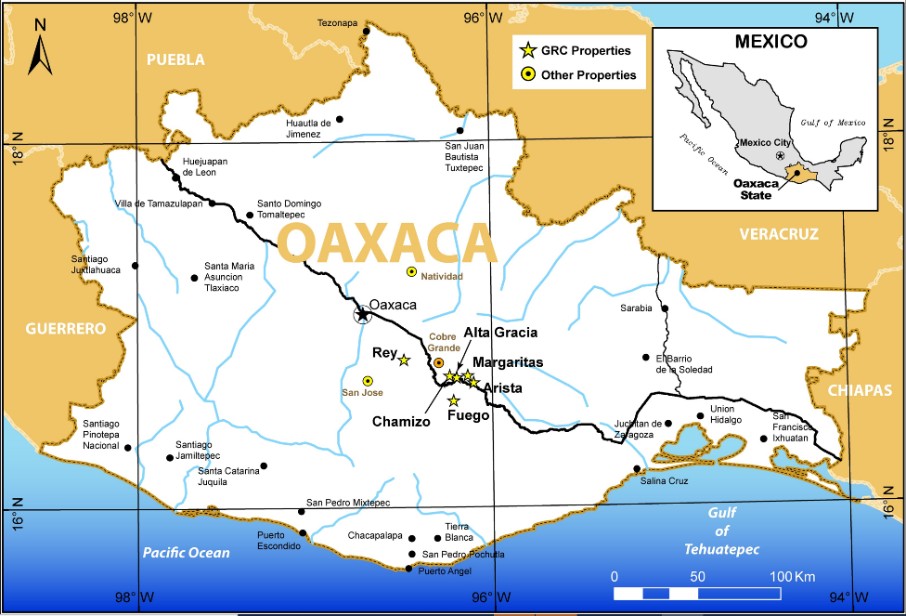
The Company was granted concessions from the Mexican federal government to explore and mine the properties in Mexico. Please see below Item 2. Properties—Mining Concessions and Regulations in Mexico for additional information. The Company holds certain properties as the concession holder and lease other properties from third parties. The Company is required to pay concession fees to the Mexican government to maintain its interest in these concessions, and it pays concession fees for all the mineral properties, including those which are subject to the third-party lease.
Gold Resource Corporation
35
The table below details information related to the mining concessions that comprise the properties in Oaxaca, Mexico:
|
|
Total Number of Concessions |
|
Total Size |
|
Acquisition Date Range |
|
|
2025 Maintenance Fees Paid |
|
|
|
|
(in hectares) |
|
|
|
(in thousands) |
|||
Production Stage Properties: |
|
|
|
|
|
|
|
|
||
Arista |
|
18 |
|
24,372 |
|
2002 to 2016 |
|
$ |
565 |
|
Alta Gracia |
|
3 |
|
5,175 |
|
2008 |
|
|
119 |
|
Total Production Stage Properties: |
|
|
|
29,547 |
|
|
|
$ |
684 |
|
Exploration Stage Properties: |
|
|
|
|
|
|
|
|
||
Rey |
|
4 |
|
2,335 |
|
2002 to 2009 |
|
$ |
54 |
|
Chamizo |
|
2 |
|
19,758 |
|
2011 to 2013 |
|
|
462 |
|
Margaritas |
|
1 |
|
925 |
|
2002 |
|
|
21 |
|
Fuego |
|
1 |
|
2,554 |
|
2013 |
|
|
60 |
|
Total Exploration Stage Properties: |
|
|
|
25,572 |
|
|
|
$ |
597 |
|
|
|
|
|
|
|
|
|
|
|
|
Total: |
|
29 |
|
55,119 |
|
|
|
$ |
1,281 |
|
Production Stage Properties
Arista & Alta Gracia Mines
History: The Arista and Alta Gracia Mines are located within the regional Tlacolula mining district in the state of Oaxaca, in southern Mexico. According to the Mexican Geological Survey, the Servicio Geologico Mexicano (“SGM”), mining activity in the Tlacolula district began in the early 1880s and resulted in the production of approximately 300,000 ounces of gold and silver from an ore shoot in the La Leona mine. However, no separate production amounts were reported for each metal. According to the SGM, in 1892, two smelters were built and operated (Magdalena Teitipac and O’Kelly) near the village of Tlacolula to process ores from the Alta Gracia La Soledad, San Ignacio y Anexas, La Leona, La Victoria, and San Rafael silver mines. Subsequently, in 1911, Mr. Sken Sanders investigated the Totolapam mining region with particular interest in the Margaritas mine. Many of these historical mines are located within mining concessions currently controlled by the Company.
Although the DDGM Arista Mine and Alta Gracia Mine are situated within the smaller mining subdistricts of San Jose de Gracia and Alta Gracia, respectively, only small-scale artisanal mining was historically conducted in these areas. No reliable production records exist for the historic production from within the Arista and Alta Gracia Project areas.
Arista Mine
Background: The Arista Mine consists of 18 mining concessions totaling 24,372 hectares.
In 2002, the Company entered into lease agreements for three initial concessions from a third-party. Two of these concessions form part of the Arista Mine, while the third concession comprises the Margaritas property. In November 2023, the royalty terms associated with the lease agreement were renegotiated, reducing the net smelter return (“NSR”) royalty from 4% to 3% for production sold in the form of gold/silver doré, and from 5% to 3% for production sold in concentrate form. Subject to meeting minimum exploration requirements, there is no expiration term for the lease. The Company may terminate the lease at any time upon written notice to the lessor, and the lessor may terminate the lease if the subsidiary fails to fulfill any of its obligations, which primarily consist of paying the appropriate royalty to the lessor.
Gold Resource Corporation
36
Initial drilling and exploration activities commenced at the Arista Mine in August 2003. As of December 31, 2025, the Company has completed 1,992 diamond drill holes (including both surface and underground programs) totaling 509,570 meters. In addition, 166 reverse circulation drill holes have been completed for a total of 14,367 meters. Cumulatively, the Company has drilled 2,158 holes totaling 523,937 meters across the Arista Mine, Alta Gracia, Rey, and Margaritas properties.
|
DDGM Ore Terminal |
In 2010, the Company acquired additional concessions from a third-party at no additional cost, which are subject to a 2% royalty. The Company also filed for and received additional concessions from the Mexican government that are not part of the concessions leased or acquired from the third-party. Of these, two concessions are considered part of the Arista Mine.
Location and Access: The Arista Mine is located in the Sierra Madre del Sur Mountains of southern Mexico, in the central part of the state of Oaxaca. The property lies along a major paved highway approximately 120 kilometers southeast of Oaxaca City, the state capital, and approximately four kilometers northwest of the village of San Jose de Gracia. The Company has constructed gravel and paved access roads from the village to the mine and processing facility, providing adequate access to the property.
The climate in the Arista Mine area is dry and warm to very warm, with most rainfall occurring between June and September and average annual precipitation of 432 millimeters. The average annual temperature is 26.6 degrees Celsius. The terrain is rocky and characterized by arid vegetation. Subsistence farming is practiced locally, with agave cactus cultivated as the primary agricultural crop for the production of mezcal.
Gold Resource Corporation
37
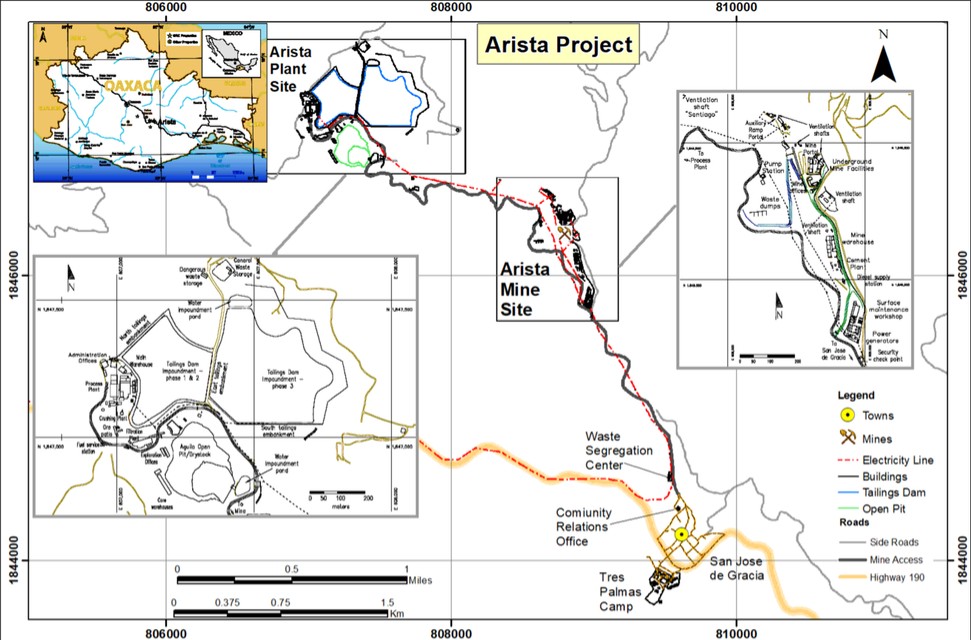
Geology and Mineralization: The Arista Mine is located within the San Jose de Gracia mining district in the state of Oaxaca, Mexico. District-scale geology is dominated by multiple volcanic domes of varying scales, including likely non-vented intrusive domes, which overlie a pre-volcanic sedimentary rock basement. Gold and silver mineralization within the district is related to the manifestations of this classic volcanogenic system and is classified as epithermal in character.
Historically, the Company produced ore from two locations at the Arista Mine: an open pit operation and an underground mine. Mineralization mined from the open pit is interpreted as low-sulfidation epithermal in style, consisting predominantly of gold with some silver and no significant base metal content. In 2011, mining activities were completed in the open pit, and the pit is currently being backfilled and reclaimed using filtered dry-stack tailings deposition. Mineralization at the Arista underground mine is interpreted as intermediate-sulphidation epithermal in style and contains gold, silver, copper, lead, and zinc. The principal host rock for the three vein systems (Arista, Switchback and Three Sisters) that comprise the Arista mine is primarily andesite.
Facilities: The processing facility and other infrastructure at the Arista Mine was constructed for approximately $35.0 million in 2009, and the processing facility was expanded in 2012 and 2013 for an additional $23.0 million. The flotation mill expansion, completed at the end of 2013, increased the number of flotation cells, added a second ball mill to allow for additional processing capacity, and added a Knelson gravity concentrator. In 2014, a doré processing facility was completed. In 2019, an increase in pumping capacity to the cyclones in the plant resulted in plant capacity increasing to nominal 2,000 tonnes per day. The DDGM processing facility is flexible in its ability to process several types of mineralization. It has a differential flotation section capable of processing polymetallic ore and producing up to three separate concentrate products. The facility also has an agitated leach circuit capable of producing gold and silver doré.
Gold Resource Corporation
38
The Company obtained water rights from the Mexican government for an amount of water that it believes is sufficient to meet its operating requirements and pump it approximately five kilometers to the site from a permitted well located near the Totolapam River.
Additional improvements at the site include electrical power lines connecting to the Mexican national power grid, installation of backup diesel generation power plants and switch gear, paving a three-kilometer section of the road from the mine to the processing facility, construction of a surface maintenance garage and fuel station, construction of haul roads from the mine site to the processing facility, office space at the processing facility, an assay lab, an exploration office, tailings impoundment facilities and lift, a paste fill plant, mine camp facilities, the filtration plant, the dry stack facility, and other infrastructure.
Exploration Activities: In 2025, the Company successfully completed an underground diamond drilling program at the Arista Mine, consisting of 105 diamond drill holes totaling 13,418 meters. The program included 78 underground grade-control drill holes totaling 8,557 meters, which were focused on upgrading Mineral Resources to Mineral Reserves within multiple veins of the Arista, Three Sisters and Switchback vein systems. In addition, 27 underground infill drill holes totaling 4,861 meters were completed to upgrade previously defined Inferred Mineral Resources to Measured and Indicated Mineral Resource categories. This drilling further delineated and refined multiple sub-parallel veins within the Three Sisters and Arista vein systems and upgraded several high-grade zones up- and down-dip and along strike from existing workings, within and adjacent to existing Mineral Resources.
Underground expansion drilling activities at the Arista Mine remained suspended during 2025 in order to prioritize drilling in support of near-term production, primarily within the Arista and Three Sisters vein systems. During the year, the Company completed more than 485 meters of underground drift development at the Arista Mine to support infill and grade-control drilling and to prepare for planned expansion drilling in 2026. Expansion drilling is expected to focus on the Three Sisters vein system, including the Gloria vein, along strike to the northwest and down-dip, as well as on the northern and down-dip extensions of the Marena North and Splay 31 veins within the Arista vein system.
The Arista and Switchback vein systems each extend for more than 1.5 kilometers along strike and remain open along strike, and both up- and down-dip. The Three Sisters vein system, which currently comprises 24 veins and vein segments, including the Gloria vein, is located at the northern extent of the Arista Mine underground workings, between the Switchback and Arista systems. The Three Sisters system has a defined strike length of more than 750 meters and remains open along strike and both up- and down-dip. Infill and expansion drilling planned for 2026 will continue to prioritize resource expansion within the Three Sisters system, as well as the northern extensions of veins within the Arista system.
Surface exploration activities during 2025 in the Arista project area focused on the evaluation and prioritization of advanced-stage exploration targets within the approximately 551 square kilometer land package controlled by DDGM surrounding the Arista Mine. These activities included the re-processing and integration of historical geologic information, including mapping, sampling, geophysical surveys, and drill data, from several projects, including Rey, Margaritas, Chamizo, Jabali and Alta Gracia. Prospective areas proximal to the Arista Mine are in the process of being re-evaluated for near-term exploration potential, with the objective of defining additional near-mine drill targets.
Please see Item 7. Management’s Discussion and Analysis of Financial Condition and Results of Operations for additional information concerning mining operations at the Alta Gracia project.
Alta Gracia Mine
Background: In 2008, the Company was granted mineral claims adjacent to the Margaritas property in the Alta Gracia mining district through the filing of three mining concessions known as David Fracción I, David Fracción II, and La Herradura, totaling 5,175 hectares.
Gold Resource Corporation
39
As of December 31, 2016, Proven and Probable Mineral Reserves had been established for the Mirador vein at the Alta Gracia Mine. In July 2017, mine development reached the economic ore zone of the Mirador vein, and underground mining commenced. Mining activities were suspended in 2019, and no Mineral Reserves are currently reported for the Alta Gracia Mine.
Location and Access: The Alta Gracia project is approximately 20 kilometers northeast of the village of San Pedro Totolapam, in the Municipality of San Pedro Totolapam, Oaxaca. Access to the project is by a gravel road that departs the paved highway approximately 13 kilometers east of the village of San Pedro Totolapam. The haulage distance by road from Alta Gracia to the DDGM processing facility is approximately 32 kilometers.
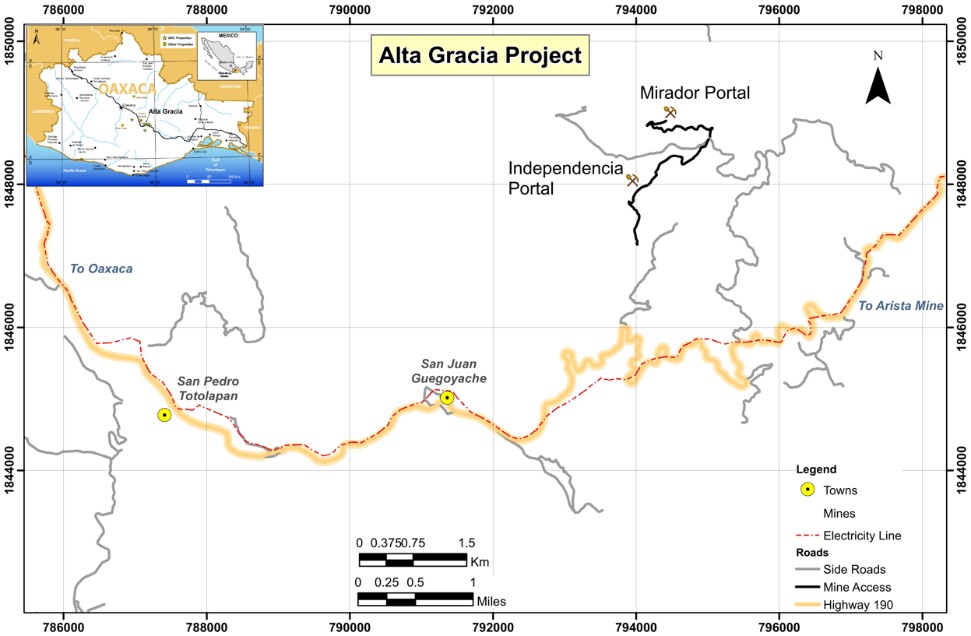
Geology and Mineralization: The sedimentary and volcanic units mapped at Alta Gracia closely resemble those at the Arista Mine. The district is characterized by Tertiary-age rhyolite flows and tuffs, underlain by andesite flows and tuffs. Granodiorite and other felsic intrusive rocks crop out north and east of the Mirador vein. Known vein occurrences at Alta Gracia are primarily hosted within andesite and rhyolite units. Mineralization is interpreted as low sulfidation epithermal, with economic metals currently limited to gold and silver.
Facilities: In 2016, the Company received an operating permit authorizing production from the Mirador vein at Alta Gracia. During 2017, two mine portals were developed to provide access to the Mirador vein and supporting infrastructure, including mine site offices and a mobile equipment maintenance shop, was established. A diesel power generation plant, a compressed air system, and a mine water pumping station were also constructed and commissioned. In 2018, historic workings were rehabilitated to create a second access portal to the Independecia vein system, located approximately 500 meters southwest of the Mirador portal. Underground development was advanced to access the mineralization delineated by drilling completed in 2018 and 2019 on the Independencia vein.
Gold Resource Corporation
40
Ore from the Alta Gracia Mine, primarily silver-bearing material, was transported by contracted haul trucks to the DDGM processing facility, where it was processed through the agitated leach plant to produce doré as a final product.
Exploration Activities: In 2025, surface exploration activities at the Alta Gracia project focused on advancing drill-ready targets and initiating a limited surface diamond drilling program in mid-November. This program targeted the southwest extension of the Mirador vein, where six holes totaling 1,121 meters were completed by year’s end. Early year work included the review and reinterpretation of historical surface mapping and rock and soil geochemical datasets, with particular emphasis on the Aguacatillo prospect area, located southwest, west, and northwest of the Independencia and Mirador vein systems, and the La Fundación prospect, situated immediately south-southeast of these vein systems. This analysis identified multiple gold- and silver-in-soil anomalous zones that will guide follow-up detailed mapping and expanded geochemical sampling to refine near-mine drill targets.
To support drill planning and resource evaluation, historical Vulcan-modeled solids were reconstructed in Leapfrog Geo and integrated with existing geological and resource block models. This work improved drill targeting within the Mirador, Independencia and Victoria vein systems and supported the selection of priority infill drill sites in the upper southwestern portion of the Mirador vein. Surface drilling in this area commenced in mid-November 2025, with the objective of upgrading previously defined inferred Mineral Resources. Additional detailed mapping, geochemical sampling, and target refinement activities are planned to support future surface and underground drilling campaigns.
Exploration Properties
Margaritas Property
The Margaritas property is made up of the La Tehuana concession, which is approximately 925 hectares and is located within the 55-kilometer San Jose structural corridor, adjacent to the Arista Mine.
During 2025, the Company continued to review and interpret results from previous surface drilling, surveying, detailed geological mapping, soil sampling, and rock chip channel sampling conducted on the Margaritas property. Activities during the year focused on maintaining the mineral concessions and analyzing the spectral and geophysical datasets to identify and prioritize additional exploration targets. The Company anticipates conducting a similar level of exploration and concession-maintenance work in 2026, subject to budgetary and operational considerations.
Chamizo Property
In June 2011, the Company acquired the Chamizo exploration concession from the Mexican government, covering approximately 17,898 hectares. In March 2013, the Company acquired the San Pedro Fraccion 2 concession from Almaden Minerals, Ltd. (“Almaden”), consisting of approximately 1,860 hectares and including the Cerro Colorado (also known as Jabali) prospect. The Cerro Colorado (Jabali) prospect is surrounded by the Chamizo concession and is considered part of the broader Chamizo property. The Chamizo Property is adjacent to the Alta Gracia project. Any future production from the San Pedro Fraccion 2 concession would be subject to a 2% net smelter return royalty payable to Almaden.
In 2022, limited surface geologic mapping and geochemical rock and soil sampling were completed within the Jabali prospect area of the San Pedro Fraccion 2 concession. The results of this work were reviewed and analyzed during 2023 to support geological interpretation and preliminary target evaluation. The Company continues to evaluate exploration targets within the Chamizo property using available historical and compiled datasets while also focusing on identifying opportunities to strengthen relationships in the local communities.
Gold Resource Corporation
41
Fuego Property
In March 2013, the Company acquired the San Pedro Fraccion 1 concession from Almaden, consisting of approximately 2,554 hectares including the Fuego property. Any future production from this concession would be subject to a 2% net smelter return royalty payable to Almaden. The Fuego property, which is located south of the Alta Gracia and Chamizo properties, was included in a property-wide airborne geophysical survey conducted in 2013.
Prior to the Company’s acquisition of the Fuego property, Almaden completed limited historical diamond drilling on the property during 2005 and 2006, consisting of 15 diamond drill holes totaling 2,262 meters. This work contributed to the geological understanding of the property and confirmed subsurface continuity of the vein system. Geologic mapping and surface sampling have also been completed historically on the Fuego property to satisfy the minimum work requirements necessary to maintain the concession. No field-based exploration activities were conducted on the Fuego property during 2025. The Company does not anticipate significant exploration activities at the Fuego property during 2026 and expects to limit work to concession maintenance and ongoing evaluation of historical surface and drill data.
Rey Property
The Rey property consists of a group of mineral concessions located at the northwestern end of the 55-kilometer San Jose structural corridor in the State of Oaxaca. The concessions include El Rey, El Virrey, La Reyna, and El Marquez, and collectively cover approximately 2,335 hectares. The Company acquired the El Virrey concession from a third party, which is subject to a 2% net smelter return royalty, and obtained the remaining concessions through staking and filings with the Mexican government.
The Rey property is located approximately 64 kilometers by road from the Arista Mine. There are no processing facilities or permanent mining infrastructure on the Rey property. If future exploration activities were to advance to development, any mineralized material would likely be extracted using underground mining methods and transported by truck to the DDGM processing facility.
Between 2007 and 2008, the Company completed surface diamond drilling at the Rey property consisting of 48 drill holes totaling approximately 5,273 meters. In early 2012, the Company refurbished and extended an existing shaft on the property in preparation for potential underground exploratory drilling, however no underground drilling was conducted. Exploration activities were subsequently suspended following requests to obtain additional approvals from local community agencies and advancement of further exploration work has remained constrained due to the absence of community permissions required to conduct additional field activities.
The Company continues to hold the Rey property and to maintain the mineral concessions in good standing. Evaluation of historical surface and drill data continues, and the Company will reassess opportunities for additional exploration activities if access conditions and community approvals permit.
Mining Concessions and Regulations in Mexico
Mineral rights in Mexico belong to the Mexican federal government and are administered pursuant to Article 27 of the Mexican Constitution. All of the mining concessions are exploitation concessions, which may be granted or transferred to Mexican citizens and corporations. The Company’s leases or concessions are held by the Mexican subsidiary DDGM. Exploitation concessions have a term of 50 years and can be renewed for another 50 years. Concessions grant the Company the right to explore and exploit all minerals found in the ground. Maintenance of concessions requires the semi-annual payment of mining duties (due in January and July) and the performance of assessment work, on a calendar year basis, with assessment work reports required to be filed in the month of May for the preceding calendar year. The amount of mining duties and annual assessments are set by regulation, may increase over the life of the concession, and include periodic adjustments for inflation. Failure to pay the mining duties can lead to the cancelation of the relevant concession.
Gold Resource Corporation
42
Mexican mining law does not require payment of finder’s fees to the government, except for a discovery premium in connection with national Mineral Reserves, concessions and claims, or allotments contracted directly from the Mexican Geological Survey. None of the claims held by DDGM are under such a discovery premium regime.
Ejido Lands and Surface Right Acquisitions in Mexico
Surface lands within DDGM are Ejido lands (agrarian cooperative lands granted by the federal government to groups of Campesinos pursuant to Article 27 of the Mexican Constitution of 1917). Prior to January 1, 1994, Ejidos could not transfer Ejido lands into private ownership. Amendments to Article 27 of the Mexican Constitution in 1994 now allow individual property ownership within Ejidos and allow Ejidos to enter into commercial ventures with individuals or entities, including foreign corporations. The Company has an agreement with the local San Pedro Totolapam Ejido, allowing exploration and exploitation of mineralization at the Arista Mine and some of the surrounding properties.
Mexican law recognizes mining as a land use generally superior to agriculture. However, the law also recognizes the rights of the Ejidos to compensation in the event mining activity interrupts or discontinues their use of the agricultural lands. Compensation is typically made in the form of a cash payment to the holder of the agricultural rights. The amount of such compensation is generally related to the perceived value of the agricultural rights as negotiated in the first instance between the Ejidos and the owner of the mineral rights. If the parties are unable to reach an agreement on the amount of the compensation, the decision can be referred to the government.
The Company has established surface rights agreements with the San Pedro Totolapam Ejido and the individuals impacted by the proposed operations which allow disturbance of the surface where necessary for the exploration activities and mining operations.
Office Facilities
The Company constructed an administrative office building adjacent to the DDGM processing facility and a mine office adjacent to the Arista Mine portal. The Company also leases approximately 3,000 square feet of office space in Oaxaca City, Oaxaca. The lease commenced in 2012 and was renewed in December 2024 through the end of 2027.
Gold Resource Corporation
43
Back Forty Project
The Back Forty Project is an advanced Exploration Stage Property located in Menominee County, Michigan, USA in the mineral rich Penokean Volcanic Belt. The property comprises approximately 1,304 hectares (3,222 acres) of private and public (State of Michigan) mineral lands and is centered at 46°27’ North and longitude 87°51’ West. As an exploration-stage property, the Company does not currently consider the Back Forty Project to be independently material to its operations.

Background: On December 10, 2021, the Company successfully completed the acquisition of all issued and outstanding common shares of Aquila. Aquila’s principal asset is its 100% interest in the Back Forty Project located in Menominee County, Michigan, USA. The Back Forty Project hosts a volcanogenic massive sulfide (“VMS”) deposit containing gold, silver, copper, lead, and zinc. The Company controls surface and mineral rights through a combination of ownership, leases with the State of Michigan, and royalty agreements with private parties.
Optimization work related to metallurgy and the economic model for the Back Forty Project was completed in 2023, and the Company issued an updated Back Forty Project Technical Report Summary in October 2023. The updated study demonstrated improved project economics relative to prior assessments, as reflected in the Back Forty Project Technical Report Summary, resulting from both metallurgical improvements and project design modifications. Certain design modifications also reduced potential environmental impacts, including the avoidance of direct impacts to wetlands. Since completion of the 2023 Back Forty Project Technical Report Summary, no additional technical studies or material project advancements have been completed. The Company is currently in discussions to complete a feasibility study and to move forward with the permitting process for the Back Forty Project in 2026. Please see Item 2. Properties for additional information.
Permitting: Permitting for the Back Forty Project is governed and regulated by the State of Michigan.
Gold Resource Corporation
44
Community: Engagement with Tribal governments and local stakeholders has been an ongoing component of the Back Forty Project, particularly in relation to cultural resources in the project area. Outreach to local Tribes, including the Menominee Indian Tribe of Wisconsin, began in 2010. Aquila completed extensive archeological studies across areas potentially affected by the project as well as adjacent areas. In coordination with regulatory authorities, areas for permanent protection were identified and appropriate buffer zones established.
Office Facilities: In Michigan, the Company owns and operates an administrative office building in Stephenson, Michigan, and maintains a field office near the location of the potential future mine facilities. The Company also maintains an industrial-grade core storage, logging, and sampling facility near the Back Forty Project site.
ITEM 3.LEGAL PROCEEDINGS
In February 2020, a local Ejido community (who claim to be an indigenous community) filed an injunction against the Mexican federal government alleging failure to conduct a prior consultation before granting mining concessions and seeking cancellation of several concessions, including certain concessions granted to DDGM. A federal suspension was issued in February 2020 prohibiting certain mining activities on the named concessions. DDGM’s operations are conducted on a concession that was not part of the original lawsuit, and DDGM does not presently perform such works in the concessions in lands of the indigenous community named in the injunction. The lawsuit is filed with the First District Courthouse in the state of Oaxaca and the case remains pending. If the lawsuit is successful, affected concessions, including the concession where DDGM currently operates, could be cancelled, and the Company would need to complete a consultation process and reapply for those concessions.
ITEM 4.MINE SAFETY DISCLOSURES
Not applicable.
Gold Resource Corporation
45
PART II
ITEM 5. |
MARKET FOR REGISTRANT’S COMMON EQUITY, RELATED STOCKHOLDER MATTERS, AND ISSUER PURCHASES OF EQUITY SECURITIES |
Market Information
The Company’s common stock trades on the NYSE American under the symbol “GORO”.
On March 16, 2026, there were 161,858,849 outstanding shares of Gold Resource Corporation, which were held by approximately 200 holders of record.
Transfer Agent
Computershare Trust Company, N.A. is the transfer agent for the common stock. The principal office of Computershare is located at 6200 S. Quebec St., Greenwood Village, CO 80111, and its telephone number is (303) 262-0600. Correspondence should be mailed to P.O. Box 43078, Providence, RI 02940-3078 or couriered to 150 Royall St., Suite 101, Canton, MA 02021.
Dividend Policy
Approximately $123.0 million in dividends have been returned to shareholders since commercial production began at DDGM in July 2010. As of February 13, 2023, to conserve cash for future project development, capital expenditures, and exploration, the Company suspended the quarterly dividend payments until such time that it may become practicable to reinstate them.
ITEM 6.
RESERVED.
Gold Resource Corporation
46
ITEM 7. |
MANAGEMENT’S DISCUSSION AND ANALYSIS OF FINANCIAL CONDITION AND RESULTS OF OPERATIONS |
Except for the historical information, the following discussion contains forward-looking statements that are subject to risks and uncertainties. The Company cautions you not to put undue reliance on any forward-looking statements, which speak only as of the date of this report. See “Forward-Looking Statements” above. The Company’s actual future results or actions may differ materially from these forward-looking statements for many reasons, including but not limited to the risks described in “Item 1A. Risk Factors” and elsewhere in this annual report and other reports filed by the Company with the SEC. This discussion and analysis of the financial condition and results of operations should be read in conjunction with the audited consolidated financial statements and related notes included in this report and with the understanding that the actual future results may be materially different from what the Company currently expects.
Introduction
Gold Resource Corporation is a mining company that pursues gold and silver projects that are expected to achieve both low operating costs and high returns on capital. Through its wholly owned subsidiary, DDGM, the Company holds six properties and does mineral production primarily from the Arista underground mine. The Company produces gold and silver doré and metal concentrates which contain precious metals of gold and silver and base metals of copper, lead, and zinc.
The following discussion summarizes the results of operations for the two fiscal years ended December 31, 2025 and 2024 and the financial condition as of December 31, 2025 and 2024, with a particular emphasis on the year ended December 31, 2025.
The discussion also presents certain non-GAAP financial measures that are important to management in its evaluation of the operating results and which are used by management to compare the performance with what the Company perceives to be peer group mining companies and is relied on as part of management’s decision-making process. Management believes these measures may also be important to investors in evaluating the Company’s performance. For a detailed description of each of the non-GAAP financial measures, please see the discussion under Item 7. Management’s Discussion and Analysis of Financial Condition and Results of Operations below.
In the financial statements, the Company reports the sale of all precious and base metals as revenue, and it periodically reviews revenue streams to ensure that this treatment remains appropriate. The Company considers precious metals to be the long-term primary driver of its economic decisions and believes that base metals are secondary products for non-GAAP financial measures.
Gold equivalent is determined by taking gold ounces produced and sold, plus silver ounces produced and sold, converted to gold equivalent ounces using the gold to silver average realized price ratio for the period.
Recent Developments
On January 26, 2026, the Company announced that it has entered into a definitive arrangement agreement and plan of merger with Goldgroup Mining Inc., whereby Goldgroup has agreed to acquire all of the issued and outstanding shares of the Company’s common stock. For additional information, please see Item 1. Business—Recent Developments and Item 8. Financial Statements—Note 24. Subsequent Events.
Gold Resource Corporation—Management’s Discussion and Analysis of Financial Condition and Results of Operations
47
Results of Operations
Don David Gold Mine
Production Statistics
Mine activities during 2025 included development and ore extraction from the Arista Mine. The following table summarizes certain production statistics about the Don David Gold Mine for the periods indicated:
|
|
For the year ended December 31, |
||||
|
|
2025 |
|
2024 |
||
Arista Mine |
|
|
|
|
|
|
Milled |
|
|
|
|
|
|
Tonnes Milled |
|
|
271,404 |
|
|
356,633 |
Tonnes Milled per Day (1) |
|
|
1,191 |
|
|
1,277 |
Grade |
|
|
|
|
|
|
Average Gold Grade (g/t) |
|
|
0.85 |
|
|
1.13 |
Average Silver Grade (g/t) |
|
|
217 |
|
|
92 |
Average Copper Grade (%) |
|
|
0.16 |
|
|
0.26 |
Average Lead Grade (%) |
|
|
0.69 |
|
|
1.10 |
Average Zinc Grade (%) |
|
|
1.75 |
|
|
2.70 |
Recoveries |
|
|
|
|
|
|
Average Gold Recovery (%) |
|
|
71.5 |
|
|
76.6 |
Average Silver Recovery (%) |
|
|
84.4 |
|
|
87.5 |
Average Copper Recovery (%) |
|
|
62.0 |
|
|
68.5 |
Average Lead Recovery (%) |
|
|
63.5 |
|
|
68.4 |
Average Zinc Recovery (%) |
|
|
76.1 |
|
|
81.1 |
Metal production |
|
|
|
|
|
|
Gold (ozs.) |
|
|
5,300 |
|
|
9,906 |
Silver (ozs.) |
|
|
1,594,300 |
|
|
919,836 |
Copper (tonnes) |
|
|
264 |
|
|
642 |
Lead (tonnes) |
|
|
1,192 |
|
|
2,682 |
Zinc (tonnes) |
|
|
3,613 |
|
|
7,805 |
Metal produced and sold |
|
|
|
|
|
|
Gold (ozs.) |
|
|
4,944 |
|
|
8,598 |
Silver (ozs.) |
|
|
1,461,898 |
|
|
817,333 |
Copper (tonnes) |
|
|
240 |
|
|
641 |
Lead (tonnes) |
|
|
1,014 |
|
|
2,173 |
Zinc (tonnes) |
|
|
2,940 |
|
|
6,286 |
Percentage payable metal (2) |
|
|
|
|
|
|
Gold (%) |
|
|
93 |
|
|
87 |
Silver (%) |
|
|
92 |
|
|
89 |
Copper (%) |
|
|
91 |
|
|
100 |
Lead (%) |
|
|
85 |
|
|
81 |
Zinc (%) |
|
|
81 |
|
|
81 |
| (1) | Based on actual days the mill operated during the period. |
| (2) | The difference between what the Company reports as “ounces/tonnes produced” and “payable ounces/tonnes sold” is attributable to the difference between the quantities of metals contained in the concentrates it produces versus the portion of those metals actually paid for according to the terms of the sales contracts. Differences can also arise from inventory changes incidental to shipping schedules, or variances in ore grades and recoveries, which impacts the amount of metals contained in concentrates produced and sold. |
Gold Resource Corporation—Management’s Discussion and Analysis of Financial Condition and Results of Operations
48
Full-year 2025 compared to full-year 2024
Key drivers in the production and financial results for the year ended December 31, 2025, as compared to 2024, relate to the lower tonnes mined, lower metal grades (with the exception of silver), lower recoveries, and higher metal prices. Although lower production results were expected in accordance with the 2025 mine plan, additional offsetting factors were the higher metal prices, especially for gold and silver.
Grades & Recoveries
During the year ended December 31, 2025, the Company processed ore with an average gold grade of 0.85 g/t, as compared to 1.13 g/t for 2024. The lower full-year average gold grade in 2025 was approximately 25% lower than in the prior year and primarily reflects mine sequencing into zones characterized by lower gold grades and higher silver grades, following an increased level of infill and grade-control drilling completed during the year that more fully defined silver-rich portions of the Three Sisters vein system. Recovery for gold declined 7% in 2025, primarily due to lower grades processed.
The average silver grade for the year ending 2025 increased 136% to 217 g/t. While silver grades increased, silver recovery was lower by 4% than in the prior year, reflecting the processing of mineralization with locally variable and previously uncharacterized mineralogical characteristics, including increased silica and carbonate components. As shown in the DDGM Technical Report Summary, gold and silver grades are projected, based on current life-of-mine planning assumptions, to trend toward the average grades outlined in the Mineral Resources and Mineral Reserves estimates. As grades decline, recoveries are also expected to decline; however, recoveries may also be influenced by mineralogical characteristics, ore blending strategies, and processing conditions.
The base metal average grades for the year ended December 31, 2025 were 0.16% for copper, 0.69% for lead, and 1.75% for zinc, compared to 0.26% for copper, 1.10% for lead, and 2.70% for zinc in 2024. Copper, lead, and zinc grades for the year ended December 31, 2025 declined by 38%, 37%, and 35%, respectively. These lower base metal grades in 2025 primarily reflect mine sequencing into portions of the mineralized system containing proportionally higher precious metal content relative to base metals, compared to the prior year. Recoveries for all base metals also decreased during 2025, largely due to the lower grades processed. As shown in the DDGM Technical Report Summary, future base metal grades and recoveries are projected, based on current life-of-mine planning assumptions, to be in line with the life of mine averages presented in the Mineral Resources and Mineral Reserves tables.
Production
For the year ended December 31, 2025, the Oaxaca operations processed 271,404 tonnes of ore at an average rate of 1,191 tonnes per day, representing a decrease of 24% in total material processed and a decrease of 7% in average daily throughput compared to the prior year. Production for the year totaled 5,300 gold ounces and 1,594,300 silver ounces, reflecting a decrease of 46% in gold production and an increase of 73% in silver production compared to 2024.
The decrease in gold production during 2025 primarily reflects lower gold grades and recoveries relative to the prior year. The increase in silver production reflects mine sequencing into silver-rich zones mainly within the Three Sisters vein system that were more fully defined through an increased level of infill and grade-control drilling completed during the year, resulting in higher silver grades processed. Production of copper, lead, and zinc decreased by 59%, 56%, and 54%, respectively, for the year ended December 31, 2025 compared to 2024. These decreases primarily reflect mine sequencing into portions of the mineralized system characterized by proportionally higher precious metal content and lower base metal content relative to the prior year.
Metals produced and sold are lower than total metals produced because a portion of the metal content contained in shipped concentrates is withheld by the purchaser under the terms of the Company’s sales contracts. The percentage payable metal—the amount of metal sold as a percent of the metal produced—were higher for all metals with the exception of copper for the year ended December 31, 2025 compared to 2024, primarily reflecting mineralogical characteristics and concentrate quality of the material processed.
Gold Resource Corporation—Management’s Discussion and Analysis of Financial Condition and Results of Operations
49
Sales Statistics
The following table summarizes certain sales statistics about the Don David Gold Mine operations for the periods indicated:
|
|
For the year ended December 31, |
||||
|
|
2025 |
|
2024 |
||
Net sales (in thousands) |
|
|
|
|
|
|
Gold |
|
$ |
17,813 |
|
$ |
19,774 |
Silver |
|
|
66,062 |
|
|
23,146 |
Copper |
|
|
2,436 |
|
|
5,827 |
Lead |
|
|
1,977 |
|
|
4,402 |
Zinc |
|
|
8,360 |
|
|
17,313 |
Less: Treatment and refining charges |
|
|
(3,392) |
|
|
(5,706) |
Realized and unrealized gain - embedded derivative, net |
|
|
6,503 |
|
|
970 |
Total sales, net |
|
$ |
99,759 |
|
$ |
65,726 |
Metal produced and sold |
|
|
|
|
|
|
Gold (ozs.) |
|
|
4,944 |
|
|
8,598 |
Silver (ozs.) |
|
|
1,461,898 |
|
|
817,333 |
Copper (tonnes) |
|
|
240 |
|
|
641 |
Lead (tonnes) |
|
|
1,014 |
|
|
2,173 |
Zinc (tonnes) |
|
|
2,940 |
|
|
6,286 |
Average metal prices realized (1) |
|
|
|
|
|
|
Gold ($ per oz.) |
|
$ |
3,657 |
|
$ |
2,354 |
Silver ($ per oz.) |
|
$ |
45.48 |
|
$ |
28.75 |
Copper ($ per tonne) |
|
$ |
10,181 |
|
$ |
9,223 |
Lead ($ per tonne) |
|
$ |
1,938 |
|
$ |
2,034 |
Zinc ($ per tonne) |
|
$ |
2,817 |
|
$ |
2,804 |
Gold equivalent ounces sold |
|
|
|
|
|
|
Gold Ounces |
|
|
4,944 |
|
|
8,598 |
Gold Equivalent Ounces from Silver |
|
|
18,181 |
|
|
9,982 |
Total AuEq oz |
|
|
23,125 |
|
|
18,580 |
| (1) | Average metal prices realized vary from the market metal prices due to final settlement adjustments from provisional invoices when they are settled. The average metal prices realized will therefore differ from the market average metal prices in most cases. |
Full-year 2025 compared to full-year 2024
Metal produced and sold
During the year ended December 31, 2025, the Company had gold sales of 4,944 ounces, silver sales of 1,461,898 ounces, copper sales of 240 tonnes, lead sales of 1,014 tonnes, and zinc sales of 2,940 tonnes. While metals produced and sold for gold, copper, lead, and zinc decreased by 42%, 63%, 53%, and 53%, respectively, silver produced and sold increased by 79%, as compared to 2024. Most of these decreases were expected due to mine sequencing, but the issues the Company experienced at the first half of 2025 with equipment availability due to the age and condition of some of the critical mining equipment, also resulted in lower amount of metals produced and available for sale.
Average metal prices realized
During the year ended December 31, 2025, the average metal prices were $3,657 per ounce for gold, $45.48 per ounce for silver, $10,181 per tonne for copper, $1,938 per tonne for lead, and $2,817 per tonne for zinc. Compared to 2024, the average metal price for gold, silver, copper, and zinc increased by 55%, 58%, 10%, and less than 1%, respectively, due to strong demand for these metals in the international markets. The average metal price for lead decreased by 5%.
Gold Resource Corporation—Management’s Discussion and Analysis of Financial Condition and Results of Operations
50


Gold Resource Corporation—Management’s Discussion and Analysis of Financial Condition and Results of Operations
51
Financial Measures
The following table summarizes certain financial data of the Company for the periods indicated:
|
|
For the year ended December 31, |
||||
|
|
2025 |
|
2024 |
||
|
|
(in thousands) |
||||
Doré and concentrate sales |
|
$ |
96,648 |
|
$ |
70,462 |
Less: Treatment and refining charges |
|
|
(3,392) |
|
|
(5,706) |
Realized/unrealized derivatives, net |
|
|
6,503 |
|
|
970 |
Sales, net |
|
|
99,759 |
|
|
65,726 |
Total cost of sales |
|
|
72,979 |
|
|
86,217 |
Mine gross profit (loss) |
|
|
26,780 |
|
|
(20,491) |
Other costs and expenses, including taxes |
|
|
33,239 |
|
|
36,010 |
Net loss |
|
$ |
(6,459) |
|
$ |
(56,501) |
Full-year 2025 compared to full-year 2024
Sales, net
DDGM net sales of $99.8 million for the year ended December 31, 2025 increased by $34.0 million, or 52%, when compared to 2024. The increase in the 2025 net sales is the result of higher gold, silver, copper, and zinc average realized prices.
Treatment and refining charges
Treatment charges for the year ended December 31, 2025, were $3.4 million, or $809 per tonne of base metal produced and sold, as compared to $5.7 million, or $627 per tonne of base metal produced and sold for the same period in 2024. The 41% decrease in treatment and refining charges is due to fewer base metals produced and sold in 2025 as compared to the same period in 2024, partially offset by higher refining charges. The 29% cost increase in the per tonne of base metal produced and sold is due to the higher refining charges realized in 2025 across all concentrate material due to the application of higher metal prices to contracted refining rates.
Total cost of sales
Total cost of sales of $73.0 million for the year ended December 31, 2025 decreased by $13.2 million, or 15%, compared to 2024. The primary driver is the $5.3 million, or 8%, decrease in production costs from $65.6 million in 2024 to $60.3 million in 2025, and a $6.9 million, or 38%, decrease in depreciation expense. The decrease in production costs is related to lower production in 2025.
Mine gross profit (loss)
For the year ended December 31, 2025, mine gross profit and mine gross profit percent totaled $26.8 million and 27%, respectively, as compared to a mine gross loss and mine gross loss percent of $20.5 million and 31% for 2024. This is an increase in mine gross profit and mine gross profit percent of $47.3 million and 58%, respectively, when compared to 2024.
Gold Resource Corporation—Management’s Discussion and Analysis of Financial Condition and Results of Operations
52
The mine gross profit or loss maintains a limited correlation to tonnes of ore processed; however, multiple factors will impact the net sales and operating costs figures contained within the mine gross profit or loss in comparison to the tonnes of ore processed. For example, concerning net sales, attributes of the tonnes of ore processed (including ore grade and processing recoveries) along with metal commodity prices can result in lower or higher sales. Mine operating costs include variable costs that maintain a correlation to the tonnes both mined and processed (i.e., equipment usage, reagents, inventory consumables, royalties etc.) and further include fixed costs which maintain a lower correlation to the tonnes of ore processed (i.e. payroll, utilities, insurance, mining concessions, etc.).
The increase in the mine gross profit between 2025 and 2024 as shown in the table above is primarily explained by the higher net sales as a result of higher metals prices in 2025 compared to 2024 and lower production cost and depreciation due to lower production in 2025.
The Company expects grades to vary from period to period based on the annual mine plan. The gold grades are expected to trend upwards over time, toward the average grade of 1.26 g/t (exclusive of silver, copper, lead, and zinc contained grades), reflected in the Mineral Reserves estimate. However, as capital intensive mine development progresses and infill drilling occurs, opportunities to refine mining methods and eliminate dilution may have a favorable impact on future mined grades.
One component of gross profit or loss is the concentrate treatment charges, which are netted against concentrate sales. During 2025, the Company negotiated treatment and refining charge agreements with buyers on both annual and spot terms. The 41% decrease in treatment and refining charges is due to the lower base metals produced and sold in 2025 as compared to the same period in 2024, partially offset by higher refining charges. The 29% cost increase in the per tonne of base metal produced and sold is due to the higher refining charges realized in 2025 across all concentrate material due to the application of higher metal prices to contracted refining rates.
Net loss
For the year ended December 31, 2025, the Company recorded a net loss of $6.5 million, as compared to $56.5 million net loss during 2024. The change was attributable to the factors noted above.
Other Costs and Expenses, Including Taxes
|
|
For the year ended December 31, |
||||
|
|
2025 |
|
2024 |
||
|
|
(in thousands) |
||||
Other costs and expenses: |
|
|
|
|
|
|
General and administrative expenses |
|
$ |
4,258 |
|
$ |
4,283 |
Mexico exploration expenses |
|
|
1,857 |
|
|
1,959 |
Michigan Back Forty Project expenses |
|
|
793 |
|
|
378 |
Stock-based compensation |
|
|
1,147 |
|
|
677 |
Other expense, net |
|
|
21,775 |
|
|
19,452 |
Total other costs and expenses |
|
|
29,830 |
|
|
26,749 |
Income tax provision |
|
|
3,409 |
|
|
9,261 |
Total other costs and expenses, including taxes |
|
$ |
33,239 |
|
$ |
36,010 |
Full-year 2025 compared to full-year 2024
General and administrative expenses: For the year ended December 31, 2025, general and administrative expenses totaled $4.3 million, in line with expenses for 2024.
Gold Resource Corporation—Management’s Discussion and Analysis of Financial Condition and Results of Operations
53
Mexico exploration expenses: For the year ended December 31, 2025, the DDGM exploration expenses totaled $1.9 million as compared to $2.0 million for the year ended December 31, 2024. In both years, exploration expenses were limited due to the availability of cash and the focus on upgrading some mining equipment.
Michigan Back Forty Project expenses: For the year ended December 31, 2025, the Back Forty Project expenses totaled $0.8 million, as compared to $0.4 million for the year ended December 31, 2024. Costs were higher in 2025 due to increases in property taxes and increases in liability estimates related to Back Forty drillhole plugging accrued as consulting expense.
Stock-based compensation: For the year ended December 31, 2025, stock-based compensation expense totaled $1.1 million as compared to $0.7 million for the year ended December 31, 2024. The increase in stock-based compensation is mainly due to the higher share price used in 2025 for mark-to-market adjustment for the cash-settled instruments.
Other expense, net: For the year ended December 31, 2025, the Company recorded other expense, net, of $21.8 million compared to $19.5 million during the year ended December 31, 2024. The $2.3 million increase from 2024 was mainly due to the $3.3 million higher interest expense on the streaming liabilities, the $1.7 million higher other expenses, and the $0.5 million loss on the loan payoff in 2025, partially offset by the $3.0 million lower net realized and unrealized investment loss in 2025. Please see Item 8. Financial Statements—Note 19. Other Expense, Net for additional information.
Income tax provision: For the year ended December 31, 2025, income tax expense was $3.4 million, a decrease of $5.9 million from a $9.3 million income tax expense for 2024. This decrease is primarily driven by the valuation allowance recorded during 2024 on the deferred tax assets of DDGM. Please see Item 8. Financial Statements—Note 6. Income Taxes for additional information.
Other Non-GAAP Financial Measures
Certain non-GAAP financial measures are discussed below. For a detailed description of each of these measures and a reconciliation to GAAP financial measures, please see the discussion under Item 7. Management’s Discussion and Analysis of Financial Condition and Results of Operations—Non-GAAP Measures below.
The following table summarizes certain non-GAAP financial data of the Company for the periods indicated:
|
|
For the year ended December 31, |
||||
|
|
2025 |
|
2024 |
||
Other Non-GAAP Financial Measures: |
|
(in thousands) |
||||
Total cash cost after co-product credits per AuEq oz sold (1) |
|
$ |
2,205 |
|
$ |
2,330 |
Total consolidated all-in sustaining cost after co-product credits per AuEq oz sold (1) |
|
$ |
3,041 |
|
$ |
3,200 |
Total all-in cost after co-product credits per AuEq oz sold (1) |
|
$ |
3,540 |
|
$ |
3,325 |
| (1) | For a detailed description of each of the non-GAAP financial measures and a reconciliation to GAAP financial measures, please see the discussion under Item 7. Management’s Discussion and Analysis of Financial Condition and Results of Operations—Non-GAAP Measures below. |
Full-year 2025 compared to full-year 2024
Total cash cost after co-product credits per AuEq oz sold: For the year ended December 31, 2025, the total cash cost after co-product credits per AuEq oz sold was $2,205 compared to $2,330 for 2024. This 5% decrease is because although there was an 18% higher total cash cost after co-product credits in 2025, the total number of AuEq ounces sold increased by 24%. The higher total cash cost after co-product credits is the result of the 55% lower amount of co-product credits the Company received during the year ended December 31, 2025. Although production costs were lower for the year ended December 31, 2025, compared to the same period last year, the increased energy costs negatively impacted production costs and, therefore, the cost per tonne processed and the total cash cost after co-product credits per AuEq oz sold.
Gold Resource Corporation—Management’s Discussion and Analysis of Financial Condition and Results of Operations
54

Total consolidated all-in sustaining cost after co-product credits per AuEq oz sold: For the year ended December 31, 2025, the total consolidated all-in sustaining cost after co-product credits per AuEq oz sold was $3,041 compared to $3,200 for 2024. The 5% decrease is because although there was an 18% higher total cash cost after co-product credits combined with a 44% increase in sustaining capital expenditures in 2025, the total number of AuEq ounces sold increased by 24%.
Total all-in cost after co-product credits per AuEq oz sold: For the year ended December 31, 2025, the total all-in cost after co-product credits per AuEq oz sold was $3,540 compared to $3,325 for 2024. The 6% increase is due to the higher non-sustaining exploration expenditures in 2025.
For a detailed description of each of the non-GAAP financial measures and a reconciliation to GAAP financial measures, please see the discussion below under Item 7. Management’s Discussion and Analysis of Financial Condition and Results of Operations—Non-GAAP Measures.
Gold Resource Corporation—Management’s Discussion and Analysis of Financial Condition and Results of Operations
55
2025 Capital and Exploration Investment Summary
|
|
For the year ended December 31, 2025 |
||||
|
|
2025 |
|
2024 |
||
|
|
|
|
|
|
|
Sustaining Investments: |
|
|
|
|
|
|
Underground Development |
|
$ |
3,243 |
|
$ |
4,634 |
Other Sustaining Capital |
|
|
6,149 |
|
|
2,970 |
Infill Drilling |
|
|
1,289 |
|
|
977 |
Surface and Underground Exploration Development & Other |
|
|
1,746 |
|
|
65 |
Subtotal of Sustaining Investments: |
|
|
12,427 |
|
|
8,646 |
Growth Investments: |
|
|
|
|
|
|
DDGM growth: |
|
|
|
|
|
|
Surface Exploration / Other |
|
|
1,857 |
|
|
1,921 |
Underground Exploration Drilling |
|
|
- |
|
|
38 |
Underground Exploration Development |
|
|
8,906 |
|
|
- |
Back Forty growth: |
|
|
|
|
|
|
Back Forty Project Optimization & Permitting |
|
|
793 |
|
|
378 |
Subtotal of Growth Investments: |
|
|
11,556 |
|
|
2,337 |
Total Capital and Exploration: |
|
$ |
23,983 |
|
$ |
10,983 |
The Company’s capital investment in Mexico totaled $21.3 million in 2025. The investment in Mexico is focused on favorably impacting the Company’s environmental, social, and governance programs while creating operational efficiencies and longevity. At the Back Forty Project, $0.4 million was spent in 2024 to wrap up the optimization work and to release the Back Forty Project Technical Report Summary, which is incorporated by reference as Exhibit 96.1 to this Form 10-K. Since completion of the 2023 Back Forty Project Technical Report Summary, no additional technical studies or material project advancements have been completed.
Underground and Exploration Development: Mine development during 2025 included ramps and accesses to different areas of the deposit, vertical shafts, and exploration development drifts. A total of 4,178 meters of underground development and exploration development, at a cost of $13.9 million, was completed during the year, including access to new exploration drill stations for grade-control, infill and expansion programs.
Back Forty Feasibility and Permitting: Optimizing work related to metallurgy and the economic model for the Back Forty Project was completed during the third quarter of 2023, and the Company issued an updated Back Forty Project Technical Report Summary in October 2023. The updated study demonstrated improved project economics relative to prior assessments and incorporated project design modifications intended to reduce potential environmental impacts, including the avoidance of direct impacts to wetlands.
During 2024 and 2025, work was focused on maintaining the project in good standing. The Company is currently in discussions to complete a feasibility study and to move forward with the permitting process for the Back Forty Project. The Board of Directors actively evaluates the options that could lead to the successful development of the project.
Non-GAAP Measures
Throughout this report, the Company has provided information prepared or calculated according to U.S. GAAP and has referenced some non-GAAP performance measures which the Company believes will assist with understanding the performance of the business. These measures are based on precious metal gold equivalent ounces sold and include cash cost before co-product credits per ounce, total cash cost after co-product credits per ounce, and total all-in sustaining cost per ounce (“AISC”). Because the non-GAAP performance measures do not have any standardized meaning prescribed by U.S. GAAP, they may not be comparable to similar measures presented by other companies. Accordingly, these measures should not be considered in isolation or as a substitute for measures of performance prepared in accordance with U.S.
Gold Resource Corporation—Management’s Discussion and Analysis of Financial Condition and Results of Operations
56
GAAP. These non-GAAP measures are not necessarily indicative of operating profit or cash flow from operations as determined under GAAP.
For financial reporting purposes, the Company reports the sale of base metals as part of its revenue. Revenue generated from the sale of base metals in concentrates is considered a co-product of gold and silver production for the purpose of the total cash cost after co-product credits for the Don David Gold Mine. The Company periodically reviews its revenues to ensure that the reporting of primary products and co-products remains appropriate. Because the Company considers copper, lead, and zinc to be co-products of its precious metal production, the value of these metals continues to be applied as a reduction to total cash costs in the calculation of total cash cost after co-product credits per gold equivalent ounce sold. Gold equivalent is determined by taking gold ounces produced and sold, plus silver ounces produced and sold, converted to gold equivalent ounces using the gold to silver average realized price ratio for the period. The Company believes the identification of copper, lead, and zinc as co-product credits is appropriate because of their lower individual economic value compared to gold and silver and due to the fact that gold and silver are the primary products the Company intends to produce.
Total cash cost, after co-product credits, is a measure developed by the Gold Institute in an effort to provide a uniform standard for comparison purposes. AISC is calculated based on the current guidance from the World Gold Council.
Total cash cost before co-product credits includes all direct and indirect production costs related to the production of metals (including mining, milling, and other plant facility costs, royalties, and site general and administrative costs) less stock-based compensation allocated to production costs plus treatment and refining costs.
Total cash cost after co-product credits includes total cash cost before co-product credits, less co-product credits (revenues earned from base metals).
AISC includes total cash cost after co-product credits plus other costs related to sustaining production, including sustaining allocated general and administrative expenses and sustaining capital expenditures. The Company determined sustaining capital expenditures as those capital expenditures that are necessary to maintain current production and execute the current mine plan.
Cash cost before co-product credits per ounce, total cash cost after co-product credits per ounce, and AISC are calculated by dividing the relevant costs, as determined using the cost elements noted above, by precious metal gold equivalent ounces sold for the periods presented.
Gold Resource Corporation—Management’s Discussion and Analysis of Financial Condition and Results of Operations
57
Reconciliations to U.S. GAAP
The table below present reconciliations between the most comparable GAAP measure of Total cost of sales to the non-GAAP measures of Cash cost after co-product credits, All-in sustaining cost after co-product credits for DDGM and for the Company, and All-in Cost after co-product credits for the years ended December 31, 2025 and 2024:
|
Item 8. Financial Statements Note # |
|
For the year ended December 31, |
||||
|
|
|
2025 |
|
2024 |
||
|
|
|
|
|
|
|
|
|
|
|
|
|
|
|
|
Total cost of sales (1) |
|
|
$ |
72,979 |
|
$ |
86,217 |
Less: Depreciation and amortization (1) |
|
|
|
(11,197) |
|
|
(18,120) |
Less: Reclamation and remediation (1) |
|
|
|
(1,499) |
|
|
(2,545) |
Refining charges for Doré sales |
4 |
|
|
10 |
|
|
6 |
Treatment and refining charges for Concentrate sales |
4 |
|
|
3,382 |
|
|
5,700 |
Co-product credits: |
|
|
|
|
|
|
|
Concentrate sales - Copper |
4 |
|
|
(2,436) |
|
|
(5,827) |
Concentrate sales - Lead |
4 |
|
|
(1,977) |
|
|
(4,402) |
Concentrate sales - Zinc |
4 |
|
|
(8,360) |
|
|
(17,313) |
Realized gain for embedded derivatives - Copper |
21 |
|
|
(4) |
|
|
(83) |
Realized loss (gain) for embedded derivatives - Lead |
21 |
|
|
10 |
|
|
(18) |
Realized loss (gain) for embedded derivatives - Zinc |
21 |
|
|
79 |
|
|
(316) |
Total cash cost after co-product credits |
|
|
$ |
50,987 |
|
$ |
43,299 |
Gold equivalent (AuEq) ounces sold (oz) |
|
|
|
23,125 |
|
|
18,580 |
Total cash cost after co-product credits per AuEq oz sold |
|
|
$ |
2,205 |
|
$ |
2,330 |
|
|
|
|
|
|
|
|
Total cash cost after co-product credits from above |
|
|
$ |
50,987 |
|
$ |
43,299 |
Sustaining Investments - Capital: |
|
|
|
|
|
|
|
Underground Development (2) |
|
|
|
3,243 |
|
|
4,634 |
Other Sustaining Capital (2) |
|
|
|
6,149 |
|
|
2,970 |
Sustaining Investments - Capitalized Exploration: |
|
|
|
|
|
|
|
Infill Drilling (2) |
|
|
|
1,289 |
|
|
977 |
Surface and Underground Exploration Development & Other (2) |
|
|
|
1,746 |
|
|
65 |
Reclamation and remediation (1) |
|
|
|
1,499 |
|
|
2,545 |
DDGM all-in sustaining cost after co-product credits |
|
|
$ |
64,913 |
|
$ |
54,490 |
AuEq ounces sold (oz) |
|
|
|
23,125 |
|
|
18,580 |
DDGM all-in sustaining cost after co-product credits per AuEq oz sold |
|
|
$ |
2,807 |
|
$ |
2,933 |
|
|
|
|
|
|
|
|
DDGM all-in sustaining cost after co-product credits from above |
|
|
$ |
64,913 |
|
$ |
54,490 |
Corporate Sustaining Expenses: |
|
|
|
|
|
|
|
General and administrative expenses (1) |
|
|
|
4,258 |
|
|
4,283 |
Stock-based compensation (1) |
|
|
|
1,147 |
|
|
677 |
Consolidated all-in sustaining cost after co-product credits |
|
|
$ |
70,318 |
|
$ |
59,450 |
AuEq ounces sold (oz) |
|
|
|
23,125 |
|
|
18,580 |
Total consolidated all-in sustaining cost after co-product credits per AuEq oz sold |
|
|
$ |
3,041 |
|
$ |
3,200 |
|
|
|
|
|
|
|
|
Consolidated all-in sustaining cost after co-product credits from above |
|
|
$ |
70,318 |
|
$ |
59,450 |
Underground Exploration Development (2) |
|
|
|
8,906 |
|
|
- |
Growth Investments - Exploration: |
|
|
|
|
|
|
|
Mexico exploration expenses (1) |
|
|
|
1,857 |
|
|
1,959 |
Michigan Back Forty Project expenses (1) |
|
|
|
793 |
|
|
378 |
Total all-in cost after co-product credits |
|
|
$ |
81,874 |
|
$ |
61,787 |
AuEq ounces sold (oz) |
|
|
|
23,125 |
|
|
18,580 |
Total all-in cost after co-product credits per AuEq oz sold |
|
|
$ |
3,540 |
|
$ |
3,325 |
| (1) | Refer to Item 8—Financial Statements: Consolidated Statements of Operations. |
| (2) | Refer to Item 7—Management’s Discussion and Analysis of Financial Condition and Results of Operations—2025 Capital and Exploration Investment Summary. |
Gold Resource Corporation—Management’s Discussion and Analysis of Financial Condition and Results of Operations
58
Trending Highlights
|
2024 |
|
2025 |
||||||
|
Q1 |
Q2 |
Q3 |
Q4 |
|
Q1 |
Q2 |
Q3 |
Q4 |
Operating Data |
|
|
|
|
|
|
|
|
|
Total tonnes milled |
98,889 |
93,687 |
83,690 |
80,367 |
|
56,906 |
63,479 |
65,131 |
85,888 |
Average Grade |
|
|
|
|
|
|
|
|
|
Gold (g/t) |
1.89 |
1.27 |
0.54 |
0.64 |
|
0.70 |
0.56 |
1.11 |
0.96 |
Silver (g/t) |
88 |
102 |
83 |
94 |
|
169 |
115 |
250 |
298 |
Copper (%) |
0.37 |
0.26 |
0.19 |
0.20 |
|
0.18 |
0.13 |
0.16 |
0.16 |
Lead (%) |
1.25 |
1.00 |
1.01 |
1.12 |
|
0.72 |
0.88 |
0.63 |
0.58 |
Zinc (%) |
2.82 |
2.59 |
2.63 |
2.73 |
|
1.68 |
2.72 |
1.57 |
1.22 |
Metal production (before payable metal deductions) |
|
|
|
|
|
|
|
|
|
Gold (ozs.) |
4,757 |
2,947 |
944 |
1,258 |
|
903 |
758 |
1,646 |
1,993 |
Silver (ozs.) |
251,707 |
263,023 |
194,525 |
210,581 |
|
257,285 |
196,435 |
453,057 |
687,523 |
Copper (tonnes) |
280 |
181 |
93 |
88 |
|
54 |
50 |
73 |
87 |
Lead (tonnes) |
812 |
616 |
576 |
678 |
|
272 |
373 |
241 |
306 |
Zinc (tonnes) |
2,310 |
2,020 |
1,741 |
1,734 |
|
699 |
1,380 |
784 |
750 |
Metal produced and sold |
|
|
|
|
|
|
|
|
|
Gold (ozs.) |
3,557 |
2,724 |
1,357 |
960 |
|
859 |
878 |
1,422 |
1,785 |
Silver (ozs.) |
216,535 |
234,560 |
181,434 |
184,804 |
|
230,320 |
150,365 |
417,710 |
663,503 |
Copper (tonnes) |
264 |
197 |
98 |
82 |
|
50 |
43 |
67 |
80 |
Lead (tonnes) |
667 |
491 |
467 |
548 |
|
277 |
272 |
212 |
253 |
Zinc (tonnes) |
1,682 |
1,771 |
1,473 |
1,360 |
|
617 |
1,060 |
645 |
618 |
Average metal prices realized |
|
|
|
|
|
|
|
|
|
Gold ($ per oz.) |
$ 2,094 |
$ 2,465 |
$ 2,561 |
$ 2,706 |
|
$ 2,956 |
$ 3,350 |
$ 3,546 |
$ 4,234 |
Silver ($ per oz.) |
$ 23.29 |
$ 30.49 |
$ 30.61 |
$ 31.11 |
|
$ 32.54 |
$ 34.35 |
$ 41.39 |
$ 55.06 |
Copper ($ per tonne) |
$ 8,546 |
$ 10,428 |
$ 8,832 |
$ 8,969 |
|
$ 9,656 |
$ 9,619 |
$ 9,690 |
$ 11,224 |
Lead ($ per tonne) |
$ 1,977 |
$ 2,235 |
$ 2,065 |
$ 1,897 |
|
$ 1,950 |
$ 1,887 |
$ 1,937 |
$ 1,981 |
Zinc ($ per tonne) |
$ 2,483 |
$ 2,871 |
$ 2,854 |
$ 3,062 |
|
$ 2,710 |
$ 2,607 |
$ 2,841 |
$ 3,258 |
Gold equivalent ounces sold |
|
|
|
|
|
|
|
|
|
Gold Ounces |
3,557 |
2,724 |
1,357 |
960 |
|
859 |
878 |
1,422 |
1,785 |
Gold Equivalent Ounces from Silver |
2,408 |
2,901 |
2,169 |
2,125 |
|
2,535 |
1,542 |
4,876 |
8,628 |
Total AuEq oz |
5,965 |
5,625 |
3,526 |
3,085 |
|
3,394 |
2,420 |
6,298 |
10,413 |
Gold Resource Corporation—Management’s Discussion and Analysis of Financial Condition and Results of Operations
59
Liquidity and Capital Resources
As of December 31, 2025, working capital was $32.0 million, an increase of $29.9 million from $2.1 million at December 31, 2024. The increase in the Company’s working capital balance at December 31, 2025 is mainly attributable to the $23.4 million increase in cash and cash equivalents, the $11.1 million higher accounts receivable, the $1.3 million higher inventory balance, and the $3.9 million lower accounts payable. The increase of $23.4 million of cash and cash equivalents from December 31, 2024 is attributable to a cash inflow of $21.7 million from operating activities in 2025 and a $22.1 million cash inflow from financing activities due to the sales of common stock through registered direct offerings and through the ATM Program, partially offset by a cash outflow of $20.2 million for capital investments, as reported in the Consolidated Statements of Cash Flows. The cash inflow from operating activities is mainly attributable to the higher net sales as a result of higher metal prices. The working capital balance fluctuates as the Company uses cash to fund operations, financing, and investing activities, including exploration and mine development. Please see Item 8. Financial Statements—Note 15. Shareholders’ Equity in for additional information about the ATM Program.
The actual amount of cash receipts that the Company receives during the period from operations may vary significantly from the planned amounts due to, among other things: (i) unanticipated variations in grade, (ii) unexpected challenges associated with the proposed mining plan, (iii) decreases in commodity prices below those used in calculating the estimates shown above, (iv) variations in expected recoveries, or (v) interruptions in mining at DDGM. The actual amount of cash expenditures that the Company incurs during the twelve-month period ending December 31, 2026 may vary significantly from the planned amounts and will depend on a number of factors, including, among other things: (i) unexpected challenges in operations, including exploration and development, (ii) increases in operating costs above those used in calculating the estimates shown above, (iii) possible strategic transactions, and (iv) continued inflationary pressure. Likewise, if cash expenditures are greater than anticipated or if cash receipts are less than anticipated, the Company may need to take certain actions to adjust spending over the next twelve months.
Long-term liabilities assumed with the Aquila acquisition, capital requirements to develop the Back Forty Project, and potential project financing may have an impact on liquidity in the long term. These long-term liabilities are contingent upon the Back Forty Project securing project financing and achieving commercial production. Project financing requirements will not be determined until the Company’s Board of Directors approve a decision to proceed with the Back Forty Project. The Company is currently in discussions to complete a feasibility study and to move forward with the permitting process for the Back Forty Project. The Board of Directors actively evaluates the options that could lead to the successful development of the project.
Cash and cash equivalents as of December 31, 2025 increased to $25.0 million from $1.6 million as of December 31, 2024, a net increase in cash of $23.4 million. The increase is primarily due to the $22.1 million cash inflow from financing activities.
Net cash provided by operating activities for the year ended December 31, 2025 was $21.7 million, compared to net cash used in operating activities of $0.6 million in 2024. The increase in the net cash provided by operating activities is mainly attributable to the higher net sales as a result of higher metal prices, resulting in a lower net loss.
Net cash used in investing activities for the year ended December 31, 2025 was $20.2 million compared to $6.4 million during 2024. The increase in investing activities is mainly attributed to the increased capital expenditure to replace some of the old mining equipment and an increased mine development in 2025.
Net cash provided in financing activities for the year ended December 31, 2025 was $22.1 million compared to $2.7 million in 2024. The increase in cash inflows from financing activities is attributable to the registered direct offerings and the increased ATM Program sales compared to 2024.
While current macro risk factors, such as economic uncertainties and supply chain interruptions have not had a significant adverse impact on exploration plans, results of operations, financial position, and cash flows during the current fiscal year, future impacts are unknown.
Gold Resource Corporation—Management’s Discussion and Analysis of Financial Condition and Results of Operations
60
Although tonnes produced from the mining operations at DDGM for 2025 remained lower than in the previous year, production substantially improved in the fourth quarter of 2025. Due to the age and condition of some of the critical mining equipment used at the mine, the Company started to encounter significant issues with equipment availability in 2024. To overcome this issue, the Company engaged a third-party contract miner during the third quarter of 2025 and also started to upgrade its mining fleet. As a result, by the end of the third quarter, the Company was able to increase production from a number of production headings that also included higher grade ore.
The Company believes that the mine has the potential to generate positive cash flow based on the information to date from the new Three Sisters area, as well as other zones that have been discovered near existing headings. The Company started developing access to and drill-defining these new areas. With the improvements mentioned above, the Company had an improved operating income in the fourth quarter in 2025 and expects 2026 to result in positive operating income.
In 2025, the Company has been focused on improving its cash position through the issuance of debt and equity. The Company raised $2.5 million through a registered direct offering in January 2025. In February 2025, the Company sold its interest in Green Light Metals for $0.9 million in proceeds. On May 7, 2025, the Company received a tax refund of 79.6 million pesos (approximately $4.0 million) related to DDGM taxes paid in 2023. In September 2025, the Company closed on a second registered direct offering of $11.4 million for the sale of 25,315,954 shares of the Company’s common stock at a price of $0.45 per share. The Company issued 14,204,846 of these shares, for the fair value of approximately $6.4 million, to fully pay off the term loan received in June 2025 as a non-cash equity settlement. During 2025, the Company raised approximately $8.6 million through its ATM Program, after deducting the agent’s commissions and other expenses.
Although the Company believes that it has adequate cash in place to cover the planned underground development and equipment improvements in DDGM and to make some progress on the Back Forty Project in 2026, there can be no assurances that the Company will achieve its plans, including preparing a definitive feasibility study and obtaining the necessary permits for the Back Forty Project.
Off-Balance Sheet Arrangements
As of December 31, 2025, the Company has off-balance sheet arrangements related to equipment purchase obligations of $4.3 million.
Accounting Developments
For a discussion of recently adopted and recently issued accounting pronouncements, please see Item 8. Financial Statements —Note 2. New Accounting Pronouncements below.
Critical Accounting Estimates
The preparation of financial statements in conformity with U.S. GAAP requires management to make estimates and assumptions that affect the reported amount of assets, liabilities, and contingencies at the date of the financial statements, as well as the reported amounts of revenues and expenses during the reporting period. As a result, management is required to routinely make judgments and estimates about the effects of matters that are inherently uncertain. Actual results may differ from these estimates under different conditions or assumptions. The following discussion pertains to accounting estimates management believes are most critical to the presentation of the Company’s financial position and results of operations that require management’s most difficult, subjective, or complex judgments.
Future Metals Prices
Metals prices are key components in estimates that determine the valuation of some of the Company’s significant assets and liabilities, including properties, plant and equipment, deferred tax assets, and certain accounts receivable. Metals prices are also an important component in the estimation of reserves. As shown above in Item 1. – Business, metals prices have historically been volatile. Gold demand arises primarily from investment and consumer demand. Silver demand arises from investment demand, particularly in exchange-traded funds, industrial demand, and consumer demand.
Gold Resource Corporation—Management’s Discussion and Analysis of Financial Condition and Results of Operations
61
Investment demand for gold and silver can be influenced by several factors, including: the value of the U.S. dollar and other currencies, changing U.S. budget deficits, widening availability of exchange-traded funds, interest rate levels, the health of credit markets, and inflationary expectations. The investments in the construction industry, rising electrical and electronics production, and demand for industrial equipment are some of the major factors driving the demand for base metals and their prices.
Mineral Resources and Mineral Reserves
Critical estimates are inherent in the process of determining Mineral Resources and Mineral Reserves. The Mineral Resources and Mineral Reserves are affected largely by the assessment of future metals prices, as well as by engineering and geological estimates of ore grade, accessibility, and production costs. Metals prices used in estimating Mineral Resources and Mineral Reserves for the Company’s Production Stage Properties are based on conservative estimates of the average median consensus prices for each of the three years starting in 2026 through 2028 as provided by Bloomberg’s consensus commodity price forecast as at November 21, 2025. The 2028 consensus was used for the remaining life of mine. The Company’s assessment of Mineral Resources and Mineral Reserves at producing locations occurs at least annually. Mineral Reserves are a key component in the valuation of property, equipment, mine development, and related depletion and depreciation rates.
Mineral Reserve estimates are used in determining appropriate rates of units-of-production depreciation, with net book value of many assets depreciated over remaining estimated reserves. Mineral Resources and Mineral Reserves are also key components in forecasts of estimated future cash flows, which the Company compares to current asset values in an effort to ensure that carrying values are reported appropriately, as well as assessment of the recoverability of deferred tax assets related to expectations of future taxable income. Mineral Resources and Mineral Reserves are a culmination of many estimates and are not guarantees that the Company will recover the indicated quantities of metals or that it will do so at a profitable level.
Revenue
Concentrate sales are initially recorded based on 100% of the provisional sales prices, net of treatment and refining charges, at the time of delivery to the customer, at which point the performance obligations are satisfied and control of the product is transferred to the customer. Adjustments to the provisional sales prices are made to take into account the mark-to-market changes based on the forward prices of metals until final settlement occurs. The changes in price between the provisional sales price and final sales price are considered an embedded derivative that is required to be separated from the host contract for accounting purposes. The host contract is the receivable from the sale of the concentrates at the quoted metal prices at the time of delivery. The embedded derivative, which does not qualify for hedge accounting, is adjusted to market through revenue each period prior to final settlement. Market changes in the prices of metals between the delivery and final settlement dates will result in adjustments to revenues related to previously recorded sales of concentrate. Sales are recorded net of charges for treatment charges, refining costs, smelting losses, and other charges negotiated with the buyer. These charges are estimated upon delivery of concentrates based on contractual terms and adjusted to reflect actual charges at final settlement. Historically, actual charges have not varied materially from the Company’s initial estimates.
Doré sales are recognized upon the satisfaction of performance obligations, which occurs when price and quantity are agreed upon with the customer. Doré sales are recorded using quoted metal prices, net of refining charges.
Depreciation and Amortization
Capitalized costs are depreciated or amortized using the straight-line method or unit-of-production (“UOP”) method at rates sufficient to depreciate such costs over the shorter of estimated productive lives of such assets or the useful life of the individual assets. Significant judgment is involved in the determination of the estimated life of the assets. The Company’s estimates for Mineral Reserves is used in determining the UOP rates. The Company’s estimates of proven and probable ore reserves may change, possibly in the near term, resulting in changes to depreciation, depletion, and amortization rates in future reporting periods. Productive lives of the assets range from 1 to 15 years, but do not exceed the useful life of the individual asset. Please see Item 8. Financial Statements —Note 1. Nature of Operations and Summary of Significant Accounting Policies for depreciation rates of major asset categories.
Gold Resource Corporation—Management’s Discussion and Analysis of Financial Condition and Results of Operations
62
Carrying Value of Stockpiles
Stockpiles represent ore that has been extracted from the mine and is available for further processing. Mine sequencing may result in mining material at a faster rate than can be processed. The Company generally processes the highest ore grade material first to maximize metal production; however, a blend of gold ore stockpiles may be processed to balance hardness and/or metallurgy in order to maximize throughput and recovery. Processing of lower grade stockpiled ore may continue after mining operations are completed. Stockpiles are measured by estimating the number of tonnes added and removed from the stockpile, the number of contained ounces (based on assay data), and the estimated metallurgical recovery rates. Stockpile ore tonnages are verified by periodic surveys. Costs are added to stockpiles based on current mining costs, including applicable overhead, depreciation, and amortization relating to mining operations and removed at each stockpile’s average cost per recoverable unit as material is processed.
The Company records stockpiles at the lower of average cost or net realizable value, and carrying values are evaluated at least quarterly. Net realizable value represents the estimated future sales price based on short-term and long-term metals price assumptions that are applied to expected short-term (12 months or less) and long-term sales from stockpiles, less estimated costs to complete production and bring the product to sale. The primary factors that influence the need to record write-downs of stockpiles include declines in short-term or long-term metals prices, increases in costs of production inputs such as labor, fuel and energy, materials and supplies, as well as realized ore grades and recovery rates.
Rarely, in instances where material new information is discovered, management may utilize other assumptions such as future operating and capital costs, metal recoveries, production levels, commodity prices, Mineral Resource and Mineral Reserve quantities, engineering data, and other factors unique to each operation based on the life of mine plans. If short-term and long-term commodity prices decrease, estimated future processing costs increase, or other negative factors occur, it may be necessary to record a write-down of ore on stockpiles. A high degree of judgment is involved in determining such assumptions and estimates and no assurance can be given that actual results will not differ significantly from those estimates and assumptions.
Impairment of Long-Lived Assets
The Company evaluates the carrying value of long-lived assets to be held and used using a fair-value based approach when events and circumstances indicate that the related carrying amount of its assets may not be recoverable, such as changes in future metals prices, production levels, and costs. The economic environment and commodity prices may be considered as impairment indicators for the purposes of these impairment assessments. In accordance with U.S. GAAP, the carrying value of a long-lived asset or asset group is considered impaired when the anticipated undiscounted cash flows from such asset or asset group are less than its carrying value. In that event, a loss will be recorded in the Consolidated Statements of Operations based on the difference between book value and the estimated fair value of the asset or asset group computed using discounted estimated future cash flows, or the application of an expected fair value technique in the absence of an observable market price. Future cash flows include estimates of recoverable quantities to be produced from estimated Mineral Resources and Mineral Reserves, commodity prices (considering current and historical prices, price trends, and related factors), production quantities, production costs, and capital expenditures, all based on life-of-mine plans and projections. In estimating future cash flows, assets are grouped at the lowest level for which identifiable cash flows exist that are largely independent of cash flows from other asset groups. It is possible that actual future cash flows will be significantly different than the estimates, as actual future quantities of recoverable minerals, gold and other commodity prices, production levels and costs, and capital are each subject to significant risks and uncertainties.
Asset Retirement Obligation/Reclamation and Remediation Costs
The Company’s mining and exploration activities are subject to various laws and regulations, including legal and contractual obligations to reclaim, remediate, or otherwise restore properties at the time the property is removed from service. Accounting for reclamation and remediation obligations requires management to make estimates of the future costs that the Company will incur to complete the work required to comply with existing laws and regulations. Actual costs may differ from the amounts estimated. Reclamation costs are allocated to expense over the life of the related assets and are periodically adjusted to reflect changes in the estimated present value resulting from the passage of time and revisions to the estimates of either the timing or amount of the reclamation and remediation costs.
Gold Resource Corporation—Management’s Discussion and Analysis of Financial Condition and Results of Operations
63
Also, future changes to environmental laws and regulations could increase the extent of reclamation and remediation work required.
Income Taxes
In preparing the consolidated financial statements, the Company estimates the actual amount of taxes currently payable or receivable, as well as deferred tax assets and liabilities attributable to temporary differences between the financial statement carrying amounts of existing assets and liabilities and their respective tax bases. Deferred income tax assets and liabilities are measured using enacted tax rates expected to apply to taxable income in the years in which these temporary differences are expected to be recovered or settled. Changes in deferred tax assets and liabilities generally have a direct impact on earnings in the period of the changes. Mining taxes represent federal and state taxes levied on mining operations. As the mining taxes are calculated as a percentage of mining profits, the Company classifies them as income taxes. Where applicable tax laws and regulations are either unclear or subject to varying interpretations, it is possible that changes in these estimates could occur that materially affect the amounts of deferred income tax assets and liabilities recorded in the consolidated financial statements.
Each period, the Company evaluates the likelihood of whether some portion or all of each deferred tax asset will be realized and provide a valuation allowance for those deferred tax assets for which it is more likely than not that the related benefits will not be realized. When evaluating the valuation allowance, the Company considers historical and future expected levels of taxable income, the pattern and timing of reversals of taxable temporary timing differences that give rise to deferred tax liabilities, and tax planning initiatives. Levels of future taxable income are affected by, among other things, market gold and silver prices, production costs, quantities of Mineral Resources and Mineral Reserves, interest rates, federal and local legislation, and foreign currency exchange rates. If the Company determines that all or a portion of the deferred tax assets will not be realized, a valuation allowance is recorded with a charge to income tax expense. Conversely, if the Company determines that it will ultimately be able to realize all or a portion of the related benefits for which a valuation allowance has been provided, all or a portion of the related valuation allowance will be reduced with a credit to income tax expense.
In addition, the calculation of income tax expense involves significant management estimation and judgment involving a number of assumptions. In determining these amounts, management interprets tax legislation in each of the jurisdictions in which the Company operates and makes estimates of the expected timing of the reversal of future tax assets and liabilities. The Company makes assumptions about future earnings, tax planning strategies, and the extent to which potential future tax benefits will be used. The Company is also subject to assessments by various taxation authorities, which may interpret tax legislation differently, which could affect the final amount or the timing of tax payments.
In October 2023, the Company received a notification from the Mexican Tax Administration Services (“SAT”) with a sanction of 331 million pesos (approximately $18.4 million) as the result of a 2015 tax audit that began in 2021. The 2015 tax audit performed by SAT encompassed various tax aspects, including but not limited to intercompany transactions, mining royalty tax, and extraordinary mining tax. Management is in process of disputing this tax notification and sent a letter of protest to the tax authorities along with providing all requested documentation. Management intends to use all legal avenues of protest, including filing a lawsuit with the Mexico court system if needed, to see that these adjustments are removed. Management believes the 2015 tax return was prepared correctly and that, as of December 31, 2025, the Company has no liability. Please also see Item 8. Financial Statements—Note 6. Income Taxes.
Gold Resource Corporation—Management’s Discussion and Analysis of Financial Condition and Results of Operations
64
ITEM 7A. |
QUANTITATIVE AND QUALITATIVE DISCLOSURES ABOUT MARKET RISK |
The Company’s exposure to market risks includes, but is not limited to, the following risks: changes in commodity prices, foreign currency exchange rates, provisional sales contract risks, changes in interest rates, and equity price risks. Currently, the Company does not use derivative financial instruments as part of an overall strategy to manage market risk. However, the Company may consider such arrangements in the future as it evaluates its business and financial strategy.
Commodity Price Risk
The results of the Company’s operations, cash flows, and financial condition largely depend upon the market prices of gold, silver, copper, lead, and zinc. Metal prices fluctuate widely and are affected by numerous factors beyond the Company’s control. The level of interest rates, the rate of inflation, government fiscal and monetary policy, the stability of exchange rates, and the world supply of and demand for gold, silver, and other metals, among other factors, can all cause significant fluctuations in commodity prices. Such external economic factors are, in turn, influenced by changes in international investment patterns, monetary systems, and political developments. The metal price markets have fluctuated widely in recent years, and future price declines could cause a mineral project to become uneconomic, thereby having a material adverse effect on the Company’s business and financial condition. Currently, the Company is not utilizing derivative contracts to protect the selling price for gold, silver, copper, lead, or zinc. The Company may, in the future, more actively manage its exposure through additional derivative contracts, although the Company has no intention of doing so in the near term.
In addition to materially adversely affecting the Company’s reserve estimates, results of operations and/or its financial condition, declining gold and silver prices could require a reassessment of the feasibility of a project. Even if a project is ultimately determined to be economically viable, the need to conduct such a reassessment may cause delays in the implementation of a project.
Foreign Currency Risk
The Company’s foreign operation sells its gold, silver, copper, lead, and zinc production based on U.S. dollar metal prices. Fluctuations in foreign currency exchange rates do not have a material impact on the Company’s revenue since gold, silver, copper, lead, and zinc are sold worldwide in U.S. dollars.
Foreign currency exchange rate fluctuations can increase or decrease the Company’s costs to the extent that it pays costs in currencies other than the U.S. dollar. The Company is primarily impacted by Mexican peso rate changes relative to the U.S. dollar, as the Company incurs some costs in the Mexican peso. When the value of the peso rises in relation to the U.S. dollar, some of the Company’s costs in Mexico may increase, thus materially adversely affecting the Company’s operating results. Alternatively, when the value of the peso drops in relation to the U.S. dollar, peso-denominated costs in Mexico will decrease in U.S. dollar terms. Future fluctuations may give rise to foreign currency exposure, which may affect the Company’s financial results. Approximately 40% to 50% of expenses are paid in currencies other than the U.S. dollar.
Gold Resource Corporation—Management’s Discussion and Analysis of Financial Condition and Results of Operations
65
As of December 31, 2025, the Company held approximately 0.6 million Mexican pesos (or $32,000) and approximately 18,000 Canadian dollars (“C$”) (or $13,000). The Company has not utilized market-risk sensitive instruments to manage its exposure to foreign currency exchange rates. However, the Company may, in the future, actively manage its exposure to foreign currency exchange rate risk.
Provisional Sales Contract Risk
The Company enters into concentrate sales contracts which, in general, provide for a provisional payment to it based upon provisional assays and prices. The provisionally priced sales contracts contain an embedded derivative that is required to be separated from the host contract for accounting purposes. The host contract is the receivable from the sale of concentrates determined at the quoted metal prices at the time of shipment. The embedded derivative, which does not qualify for hedge accounting, is adjusted to market through revenue each period prior to settlement. Changes in the prices of metals between the shipment and the final settlement date will result in adjustments to revenues related to the sales of concentrate previously recorded upon shipment. Please see Item 8. Financial Statements—Note 16. Derivatives for additional information.
Interest Rate Risk
The Company considers its interest rate risk exposure to be insignificant at this time.
Equity Price Risk
The Company has, in the past, and may in the future, seek to acquire additional funding by sale of common stock and other equity. The price of the Company’s common stock has been volatile in the past and may also be volatile in the future. As a result, there is a risk that the Company may not be able to sell its common stock at an acceptable price should the need for new equity funding arise.
Gold Resource Corporation—Management’s Discussion and Analysis of Financial Condition and Results of Operations
66
ITEM 8. |
FINANCIAL STATEMENTS |
|
Page |
||
|---|---|---|---|
|
Index to Financial Statements: |
|
||
|
Report of Independent Registered Public Accounting Firm (BDO USA, P.C.; Spokane, Washington; PCAOB ID#243) |
|
68 |
|
|
70 |
|
|
Consolidated Statements of Operations for the years ended December 31, 2025 and 2024 |
|
71 |
|
|
72 |
|
|
Consolidated Statements of Cash Flows for the years ended December 31, 2025 and 2024 |
|
73 |
|
|
74 |
|
Gold Resource Corporation—Audited Consolidated Financial Statements and Notes
67
Report of Independent Registered Public Accounting Firm
Shareholders and Board of Directors
Gold Resource Corporation
Denver, Colorado
Opinion on the Consolidated Financial Statements
We have audited the accompanying consolidated balance sheets of Gold Resource Corporation (the “Company”) as of December 31, 2025 and 2024, the related consolidated statements of operations, changes in shareholders’ equity, and cash flows for each of the years then ended, and the related notes (collectively referred to as the “consolidated financial statements”). In our opinion, the consolidated financial statements present fairly, in all material respects, the financial position of the Company at December 31, 2025 and 2024, and the results of its operations and its cash flows for the years then ended, in conformity with accounting principles generally accepted in the United States of America.
Basis for Opinion
These consolidated financial statements are the responsibility of the Company’s management. Our responsibility is to express an opinion on the Company’s consolidated financial statements based on our audits. We are a public accounting firm registered with the Public Company Accounting Oversight Board (United States) (PCAOB) and are required to be independent with respect to the Company in accordance with the U.S. federal securities laws and the applicable rules and regulations of the Securities and Exchange Commission and the PCAOB.
We conducted our audits in accordance with the standards of the PCAOB. Those standards require that we plan and perform the audit to obtain reasonable assurance about whether the consolidated financial statements are free of material misstatement, whether due to error or fraud. The Company is not required to have, nor were we engaged to perform, an audit of its internal control over financial reporting. As part of our audits we are required to obtain an understanding of internal control over financial reporting but not for the purpose of expressing an opinion on the effectiveness of the Company’s internal control over financial reporting. Accordingly, we express no such opinion.
Our audits included performing procedures to assess the risks of material misstatement of the consolidated financial statements, whether due to error or fraud, and performing procedures that respond to those risks. Such procedures included examining, on a test basis, evidence regarding the amounts and disclosures in the consolidated financial statements. Our audits also included evaluating the accounting principles used and significant estimates made by management, as well as evaluating the overall presentation of the consolidated financial statements. We believe that our audits provide a reasonable basis for our opinion.
Critical Audit Matter
The critical audit matter communicated below is a matter arising from the current period audit of the consolidated financial statements that was communicated or required to be communicated to the audit committee and that: (1) relates to accounts or disclosures that are material to the consolidated financial statements and (2) involved our especially challenging, subjective, or complex judgments. The communication of the critical audit matter does not alter in any way our opinion on the consolidated financial statements, taken as a whole, and we are not, by communicating the critical audit matter below, providing a separate opinion on the critical audit matter or on the accounts or disclosures to which it relates.
Revenue Recognition – Concentrate sales
As described in Notes 1 and 4 to the consolidated financial statements, the Company recognized $92.0 million of revenue from concentrate sales, $0.6 million and $5.9 million of realized and unrealized gains, respectively, on embedded derivatives for the year ended December 31, 2025. Concentrate sales are initially recorded based on provisional sales prices, net of treatment and refining changes, at the time of delivery to the customer, at which point the performance obligations are satisfied and control of the product is transferred to the customer. Adjustments to the provisional sales prices are made to take into account the mark-to-market changes based on the forward prices of metal until final settlement occurs.
Gold Resource Corporation—Audited Consolidated Financial Statements and Notes
68
The changes in price between the provisional sales price and final sale prices are considered an embedded derivative that is required to be separated from the host contract for accounting purposes. The embedded derivative is adjusted to market through revenue each period prior to final settlement.
We identified revenue recognition of concentrate sales as a critical audit matter. The principal consideration for our determination is the judgment in estimating the value of consideration for concentrate sales, specifically the changes in metals prices between the time of delivery and final settlement. Auditing this judgment and estimate involved especially challenging and subjective auditor judgment due to the nature and extent of audit effort required to address the matter, including the need to involve personnel with specialized knowledge and skills.
The primary procedures we performed to address this critical audit matter included:
• |
Testing the design and operating effectiveness of the Company’s internal controls over revenue recognition of concentrate sales. |
• |
Utilizing personnel with specialized skill and knowledge in valuation to obtain published forward metals pricing. |
• |
Assessing the reasonableness of management’s estimate for changes in metal prices between the time of delivery and final settlement with the customer by comparing it to the published forward metals pricing for the contracted quotational period of the customer contract. |
/s/ BDO USA, P.C.
We have served as the Company's auditor since 2022.
Spokane, Washington
March 18, 2026
Gold Resource Corporation—Audited Consolidated Financial Statements and Notes
69
GOLD RESOURCE CORPORATION
CONSOLIDATED BALANCE SHEETS
(U.S. dollars in thousands, except share and per share amounts)
|
|
As of |
|
As of |
||
|
|
December 31, |
|
December 31, |
||
|
Note |
2025 |
|
2024 |
||
ASSETS |
|
|
|
|
|
|
Current assets: |
|
|
|
|
|
|
Cash and cash equivalents |
|
$ |
25,011 |
|
$ |
1,628 |
Accounts receivable, net |
|
|
13,253 |
|
|
2,184 |
Inventories, net |
5 |
|
8,234 |
|
|
6,940 |
Prepaid expenses and other current assets |
7 |
|
2,784 |
|
|
5,828 |
Total current assets |
|
|
49,282 |
|
|
16,580 |
Property, plant, and mine development, net |
8 |
|
134,656 |
|
|
128,389 |
Other non-current assets |
9 |
|
124 |
|
|
905 |
Total assets |
|
$ |
184,062 |
|
$ |
145,874 |
LIABILITIES AND SHAREHOLDERS’ EQUITY |
|
|
|
|
|
|
Current liabilities: |
|
|
|
|
|
|
Accounts payable |
|
$ |
7,360 |
|
$ |
11,258 |
Mining royalty taxes payable, net |
|
|
2,860 |
|
|
195 |
Accrued expenses and other current liabilities |
10 |
|
7,043 |
|
|
3,031 |
Total current liabilities |
|
|
17,263 |
|
|
14,484 |
Reclamation and remediation liabilities |
12 |
|
10,184 |
|
|
10,669 |
Gold and silver stream agreements liability |
11 |
|
90,930 |
|
|
74,432 |
Deferred tax liabilities, net |
6 |
|
15,527 |
|
|
14,041 |
Contingent consideration |
14 |
|
3,554 |
|
|
3,389 |
Other non-current liabilities |
10 |
|
2,575 |
|
|
1,576 |
Total liabilities |
|
|
140,033 |
|
|
118,591 |
|
|
|
|
|
|
|
Commitments and contingencies |
14 |
|
|
|
|
|
|
|
|
|
|
|
|
Shareholders’ equity: |
|
|
|
|
|
|
|
Common stock - $0.001 par value, 200,000,000 shares authorized: 161,767,412 and 95,324,949 shares outstanding at December 31, 2025 and December 31, 2024, respectively |
|
|
162 |
|
|
96 |
Additional paid-in capital |
|
|
138,458 |
|
|
115,319 |
Accumulated deficit |
|
|
(87,536) |
|
|
(81,077) |
Treasury stock at cost, 336,398 shares |
|
|
(5,884) |
|
|
(5,884) |
Accumulated other comprehensive loss |
|
|
(1,171) |
|
|
(1,171) |
Total shareholders’ equity |
|
|
44,029 |
|
|
27,283 |
Total liabilities and shareholders’ equity |
|
$ |
184,062 |
|
$ |
145,874 |
The accompanying notes are an integral part of these consolidated financial statements.
Gold Resource Corporation—Audited Consolidated Financial Statements and Notes
70
GOLD RESOURCE CORPORATION
CONSOLIDATED STATEMENTS OF OPERATIONS
for the years ended December 31, 2025 and 2024
(U.S. dollars in thousands, except share and per share amounts)
|
|
|
For the year ended |
||||
|
|
|
December 31, |
||||
|
Note |
|
2025 |
|
2024 |
||
|
|
|
|
|
|
|
|
Sales, net |
4 |
|
$ |
99,759 |
|
$ |
65,726 |
Cost of sales: |
|
|
|
|
|
|
|
Production costs |
|
|
|
60,283 |
|
|
65,552 |
Depreciation and amortization |
|
|
|
11,197 |
|
|
18,120 |
Reclamation and remediation |
|
|
|
1,499 |
|
|
2,545 |
Total cost of sales |
|
|
|
72,979 |
|
|
86,217 |
Mine gross profit (loss) |
|
|
|
26,780 |
|
|
(20,491) |
Costs and expenses: |
|
|
|
|
|
|
|
General and administrative expenses |
|
|
|
4,258 |
|
|
4,283 |
Mexico exploration expenses |
|
|
|
1,857 |
|
|
1,959 |
Michigan Back Forty Project expenses |
|
|
|
793 |
|
|
378 |
Stock-based compensation |
18 |
|
|
1,147 |
|
|
677 |
Other expense, net |
19 |
|
|
21,775 |
|
|
19,452 |
Total costs and expenses |
|
|
|
29,830 |
|
|
26,749 |
Loss before income taxes |
|
|
|
(3,050) |
|
|
(47,240) |
Income tax provision |
6 |
|
|
3,409 |
|
|
9,261 |
Net loss |
|
|
$ |
(6,459) |
|
$ |
(56,501) |
Net loss per common share: |
|
|
|
|
|
|
|
Basic and diluted loss per common share |
20 |
|
$ |
(0.05) |
|
$ |
(0.61) |
|
|
|
|
|
|
|
|
Weighted average shares outstanding: |
|
|
|
|
|
|
|
Basic and diluted |
20 |
|
|
137,319,804 |
|
|
91,949,110 |
The accompanying notes are an integral part of these consolidated financial statements.
Gold Resource Corporation—Audited Consolidated Financial Statements and Notes
71
GOLD RESOURCE CORPORATION
CONSOLIDATED STATEMENTS OF CHANGES IN SHAREHOLDERS’ EQUITY
for the years ended December 31, 2025 and 2024
(U.S. dollars in thousands, except share amounts)
|
|
Number of |
|
Par Value of |
|
Additional Paid- |
|
Accumulated Deficit |
|
Treasury |
|
Accumulated |
|
Total |
||||||
Balance, December 31, 2023 |
|
89,030,436 |
|
$ |
89 |
|
$ |
111,970 |
|
$ |
(24,576) |
|
$ |
(5,884) |
|
$ |
(1,171) |
|
$ |
80,428 |
Stock-based compensation |
|
- |
|
|
- |
|
|
647 |
|
|
- |
|
|
- |
|
|
- |
|
|
647 |
Common stock issued for vested restricted stock units |
|
196,991 |
|
|
- |
|
|
- |
|
|
- |
|
|
- |
|
|
- |
|
|
- |
Issuance of common stock, net of issuance costs (1) |
|
6,510,914 |
|
|
7 |
|
|
2,733 |
|
|
- |
|
|
- |
|
|
- |
|
|
2,740 |
Surrender of common stock for taxes due on vesting |
|
(76,994) |
|
|
- |
|
|
(31) |
|
|
- |
|
|
- |
|
|
- |
|
|
(31) |
Net loss |
|
- |
|
|
- |
|
|
- |
|
|
(56,501) |
|
|
- |
|
|
- |
|
|
(56,501) |
Balance, December 31, 2024 |
|
95,661,347 |
|
$ |
96 |
|
$ |
115,319 |
|
$ |
(81,077) |
|
$ |
(5,884) |
|
$ |
(1,171) |
|
$ |
27,283 |
Stock-based compensation |
|
- |
|
|
- |
|
|
344 |
|
|
- |
|
|
- |
|
|
- |
|
|
344 |
Common stock issued for vested restricted stock units |
|
504,810 |
|
|
- |
|
|
- |
|
|
- |
|
|
- |
|
|
- |
|
|
- |
Issuance of common stock, net of issuance costs (1) |
|
25,139,655 |
|
|
25 |
|
|
8,615 |
|
|
- |
|
|
- |
|
|
- |
|
|
8,640 |
Surrender of common stock for taxes due on net settlement |
|
(284,529) |
|
|
- |
|
|
(93) |
|
|
- |
|
|
- |
|
|
- |
|
|
(93) |
Equity settlement of PSUs and DSUs (2) |
|
141,573 |
|
|
- |
|
|
42 |
|
|
- |
|
|
- |
|
|
- |
|
|
42 |
Registered Direct Offering (1) |
|
26,736,108 |
|
|
27 |
|
|
7,468 |
|
|
- |
|
|
- |
|
|
- |
|
|
7,495 |
Issuance of equity to settle the loan (1) |
|
14,204,846 |
|
|
14 |
|
|
6,378 |
|
|
- |
|
|
- |
|
|
- |
|
|
6,392 |
Warrants |
|
- |
|
|
- |
|
|
385 |
|
|
- |
|
|
- |
|
|
- |
|
|
385 |
Net loss |
|
- |
|
|
- |
|
|
- |
|
|
(6,459) |
|
|
- |
|
|
- |
|
|
(6,459) |
Balance, December 31, 2025 |
|
162,103,810 |
|
$ |
162 |
|
$ |
138,458 |
|
$ |
(87,536) |
|
$ |
(5,884) |
|
$ |
(1,171) |
|
$ |
44,029 |
| (1) | Please also see Note—15 Shareholder’s Equity for additional information. |
| (2) | Please also see Note—18 Stock-Based Compensation for additional information. |
The accompanying notes are an integral part of these consolidated financial statements.
Gold Resource Corporation—Audited Consolidated Financial Statements and Notes
72
GOLD RESOURCE CORPORATION
CONSOLIDATED STATEMENTS OF CASH FLOWS
for the years ended December 31, 2025 and 2024
(U.S. dollars in thousands)
|
|
For the year ended December 31, |
||||
|
Note |
2025 |
|
2024 |
||
Cash flows from operating activities: |
|
|
|
|
|
|
Net loss |
|
$ |
(6,459) |
|
$ |
(56,501) |
Adjustments to reconcile net loss to net cash provided by (used in) operating activities: |
|
|
|
|
|
|
Deferred income tax expense |
|
|
1,408 |
|
|
9,131 |
Depreciation and amortization |
|
|
12,202 |
|
|
19,877 |
Stock-based compensation |
|
|
1,147 |
|
|
677 |
Interest on streaming liabilities |
|
|
16,498 |
|
|
13,245 |
Other operating adjustments, net |
22 |
|
3,363 |
|
|
6,245 |
Changes in operating assets and liabilities: |
|
|
|
|
|
|
Accounts receivable |
|
|
(11,069) |
|
|
2,151 |
Inventories |
|
|
(1,486) |
|
|
1,822 |
Prepaid expenses and other current assets |
|
|
(563) |
|
|
(470) |
Other non-current assets |
|
|
319 |
|
|
42 |
Accounts payable and other accrued liabilities |
|
|
(271) |
|
|
3,815 |
Cash settled liability awards |
|
|
(33) |
|
|
(67) |
Mining royalty and income taxes payable, net |
|
|
6,648 |
|
|
(594) |
Net cash provided by (used in) operating activities |
|
|
21,704 |
|
|
(627) |
|
|
|
|
|
|
|
Cash flows from investing activities: |
|
|
|
|
|
|
Capital expenditures |
|
|
(21,060) |
|
|
(7,621) |
Proceeds from the sale of investments |
|
|
854 |
|
|
1,178 |
Net cash used in investing activities |
|
|
(20,206) |
|
|
(6,443) |
Cash flows from financing activities: |
|
|
|
|
|
|
Net proceeds from note payable |
13 |
|
6,114 |
|
|
- |
Proceeds from ATM Program sales, net of issuance costs |
|
|
8,640 |
|
|
2,740 |
Net proceeds from the Registered Direct Offerings |
|
|
7,495 |
|
|
- |
Other financing activities |
|
|
(138) |
|
|
(33) |
Net cash provided by financing activities |
|
|
22,111 |
|
|
2,707 |
Effect of exchange rate changes on cash and cash equivalents |
|
|
(226) |
|
|
(263) |
|
|
|
|
|
|
|
Net increase (decrease) in cash and cash equivalents |
|
|
23,383 |
|
|
(4,626) |
Cash and cash equivalents at beginning of period |
|
|
1,628 |
|
|
6,254 |
Cash and cash equivalents at end of period |
|
$ |
25,011 |
|
$ |
1,628 |
|
|
|
|
|
|
|
|
|
|
|
|
|
|
Supplemental Cash Flow Information |
|
|
|
|
|
|
Income and mining taxes (refunded) paid |
|
$ |
(4,134) |
|
$ |
1,104 |
Non-cash investing or financing activities: |
|
|
|
|
|
|
Value of common shares issued for share-based compensation redemption |
|
$ |
161 |
|
$ |
49 |
Value of common shares issued to extinguish term loan |
|
$ |
6,397 |
|
$ |
- |
Balance of capital expenditures in accounts payable |
|
$ |
1,012 |
|
$ |
495 |
Balance of equipment financing |
|
$ |
500 |
|
$ |
744 |
Change in estimate for asset retirement costs |
|
$ |
(2,634) |
|
$ |
512 |
The accompanying notes are an integral part of these consolidated financial statements.
Gold Resource Corporation
73
GOLD RESOURCE CORPORATION
NOTES TO CONSOLIDATED FINANCIAL STATEMENTS
December 31, 2025 and 2024
1. Nature of Operations and Summary of Significant Accounting Policies
Nature of Operations
Gold Resource Corporation (the “Company”) was organized under the laws of the State of Colorado on August 24, 1998. The Company is a producer of doré containing gold and silver and metal concentrates that contain gold, silver, copper, lead, and zinc in Oaxaca, Mexico. The Company also has 100% interest in the Back Forty Project, an advanced Exploration Stage Property, located in Menominee County, Michigan, USA.
Recent Developments
On January 26, 2026, the Company announced that it has entered into a definitive arrangement agreement and plan of merger with Goldgroup Mining Inc., whereby Goldgroup has agreed to acquire all of the issued and outstanding shares of the Company’s common stock. For additional information, please see Item 1. Business—Recent Developments and Item 8. Financial Statements—Note 24. Subsequent Events.
Significant Accounting Policies
Basis of Presentation
The Consolidated Financial Statements included herein are expressed in United States dollars and conform to accounting principles generally accepted in the United States of America (“U.S. GAAP”). The Consolidated Financial Statements include the accounts of the Company, its Mexican subsidiary, Don David Gold Mexico S.A. de C.V., and Aquila Resources Inc (“Aquila”) and its subsidiaries. Intercompany accounts and transactions have been eliminated in consolidation.
Segment Reporting
The Company has two reporting segments, based on geographic regions. Oaxaca, Mexico represents the Company’s only operating segment with a production stage property. The Company’s other reporting segment is Michigan, U.S.A., with an advanced exploration stage property. The Company’s business activities that are not considered production stage or advanced exploration stage properties are included in Corporate and Other. Please see Item 8. Financial Statements—Note 23. Segment Reporting below for additional information.
Use of Estimates
The preparation of financial statements in conformity with U.S. GAAP requires management to make estimates and assumptions that affect the reported amount of assets and liabilities, the disclosure of contingent assets and liabilities at the date of the financial statements, and the reported amounts of revenues and expenses during the reporting periods. The more significant areas requiring the use of management estimates and assumptions relate to Mineral Resources and Mineral Reserves that are the basis for future cash flow estimates utilized in impairment calculations and units-of-production depreciation calculations; future ore grades, throughput, and recoveries; future metal prices; future capital and operating costs; environmental remediation, reclamation and closure obligations; the Back Forty Project Gold and Silver Stream Agreements with Osisko Bermuda Limited (“Osisko”); contingent consideration liabilities; permitting and other regulatory considerations; asset impairments; the valuation of the Company’s investments in equity securities; future foreign exchange rates, inflation rates, and applicable tax rates; and deferred tax asset valuation and allowances. Management routinely makes judgments and estimates about the effects of matters that are inherently uncertain and bases its estimates and judgments on historical experience and on various other factors that are believed to be reasonable under the circumstances.
Gold Resource Corporation
74
Actual results could differ from these estimates.
Cash and Cash Equivalents
Cash and cash equivalents consist of all cash balances and highly liquid investments with a remaining maturity of three months or less when purchased. Cash held in Mexican pesos or Canadian dollars is converted to U.S. dollars at the closing exchange rate at year end.
Accounts Receivable, net
Accounts receivable consists of trade receivables, which are recorded net of allowance for credit losses from the sale of doré and metals concentrates, as well as net of an embedded derivative based on mark-to-market adjustments for outstanding provisional invoices based on forward metal prices. Please see Item 8. Financial Statements—Note 16. Derivatives and Item 8. Financial Statements—Note 21. Fair Value Measurement for additional information related to the embedded derivative. As of both December 31, 2025 and 2024, the allowance for credit losses was nil.
Inventories
The major inventory categories are set forth below:
Stockpile Inventories: Stockpile inventories represent ore that has been mined and is available for further processing. Stockpiles are measured by estimating the number of tonnes added and removed from the stockpile, an estimate of the contained metals (based on assay data), and the estimated metallurgical recovery rates. Costs are allocated to stockpiles based on relative values of material stockpiled and processed using current mining costs incurred, including applicable overhead, depreciation, and amortization relating to mining operations. Material is removed at each stockpile’s average cost per tonne. Stockpiles are carried at the lower of average cost or net realizable value. Net realizable value represents the estimated future sales price of the product based on current and long-term metals prices, less the estimated costs to complete production and to bring the product to sale.
Concentrate Inventories: Concentrate inventories include metal concentrates located either at the Company’s facilities or in transit to its customer’s port. Inventories consist of copper, lead, and zinc metal concentrates, which also contain gold and silver mineralization. Concentrate inventories are carried at the lower of cost of production or net realizable value based on current metals prices.
Doré Inventory: Doré includes gold and silver doré bars held at the Company’s facility. Doré inventories are carried at the lower of cost of production or net realizable value based on current metals prices.
Materials and Supplies Inventories: Materials and supplies inventories consist of chemical reagents, parts, fuels, and other materials and supplies. Cost includes applicable taxes and freight. Materials and supplies inventory is carried at the lower of average cost or net realizable value.
Write-downs of inventory, when needed, are charged to production costs on the Consolidated Statements of Operations.
Property, Plant, and Mine Development
Land and Mineral Interests: The costs of acquiring land, mineral rights, and mineral interests are considered tangible assets. Administrative and holding costs to maintain an exploration property are expensed as incurred. If a mineable mineral deposit is discovered, such capitalized costs are amortized when production begins using the units of production (“UOP”) method. If no mineable mineral deposit is discovered, or such rights are otherwise determined to have diminished value, costs are expensed in the period in which this determination is made.
Gold Resource Corporation
75
Mine Development: This includes the cost of engineering and metallurgical studies; drilling and other related costs to delineate an ore body; and the cost of building access ways, shafts, lateral access, drifts, ramps, and other infrastructure. Costs incurred before mineralization is classified as Mineral Resources are expensed and classified as exploration expenses. Capitalization of mine development project costs that meet the definition of an asset begins once mineralization is classified as Mineral Resources.
Drilling costs incurred during the production phase for operational ore control are recorded as mine development and amortized using UOP. All other drilling and related costs are expensed as incurred.
Mine development costs are amortized using the UOP method based on estimated recoverable ounces in Mineral Reserves.
Property and Equipment: All items of property and equipment are carried at cost. Normal maintenance and repairs are expensed as incurred, while expenditures for major maintenance and improvements are capitalized. Gains or losses on disposition are recognized in other expense, net.
Construction in Progress: Expenditures for new facilities or equipment are capitalized and recorded at cost. Once completed and ready for its intended use, the asset is transferred to property and equipment to be depreciated or amortized.
Depreciation and Amortization: Capitalized costs are depreciated or amortized using the straight-line or UOP method at rates sufficient to depreciate such costs over the shorter of estimated productive lives of such assets or the useful life of the individual assets. The estimates for Mineral Reserves are a key component in determining the UOP depreciation rates. The estimates of Mineral Reserves may change, possibly in the near term, resulting in significant changes to depreciation and amortization rates in future reporting periods. The following are the estimated economic lives of depreciable assets:
|
|
|
|
|
Range of Lives |
|
|
Asset retirement costs |
|
UOP |
|
Furniture, computer and office equipment |
|
3 to 10 years |
|
Light vehicles and other mobile equipment |
|
4 years |
|
Machinery and equipment |
|
UOP to 8 years |
|
Mill facilities and related infrastructure |
|
UOP to 4 years |
|
Mine development and mineral interests |
|
UOP |
|
Buildings and infrastructure |
|
UOP to 15 years |
|
Impairment of Long-Lived Assets
The Company evaluates its long-lived assets for impairment when events or changes in circumstances indicate that the related carrying amounts may not be recoverable. Asset impairment is considered to exist if the total estimated future cash flows on an undiscounted basis are less than the carrying amount of the asset. If an impairment is indicated, a determination is made whether an impairment has occurred. Impairment losses are measured either 1) as the excess of carrying value over the total discounted estimated future cash flows, or 2) as the excess of carrying value over the fair value, using the expected fair value technique in the absence of an observable market price. Losses are charged to expense on the Company’s Consolidated Statements of Operations. In estimating future cash flows, assets are grouped at the lowest level for which there are identifiable cash flows that are largely independent of future cash flows from other asset groups.
Existing Mineral Resources and Mineral Reserves are included when estimating the fair value in determining whether the assets are impaired. The Company’s estimates of future cash flows are based on numerous assumptions, including expected gold and other commodity prices, production levels and costs, processing recoveries, capital requirements, and estimated salvage values. It is possible that actual future cash flows will be significantly different from the estimates, as actual future quantities of recoverable minerals, gold and other commodity prices, production levels and costs, and capital requirements are each subject to significant risks and uncertainties.
Gold Resource Corporation
76
Fair Value of Financial Instruments
The recorded amounts of cash and cash equivalents, receivables from provisional concentrate sales, and accounts payable approximate fair value because of the short maturity of those instruments. The Company elected the fair value measurement option as the measurement basis for the equity investment in the common shares of Green Light Metals. This investment was sold in 2025.
Treasury Stock
Treasury stock represents shares of the Company’s common stock which have been repurchased on the open market at the prevailing market price at the time of purchase and have not been canceled. Treasury stock is shown at cost as a separate component of shareholders’ equity.
Revenue Recognition
The Company recognizes revenue from doré and concentrate sales.
Doré sales: Doré sales are recognized upon the satisfaction of performance obligations, which occurs upon delivery of doré and when the price and quantity are agreed with the customer. Doré sales are recorded using quoted metal prices, net of refining charges.
Concentrate sales: Concentrate sales are initially recorded based on 100% of the provisional sales prices, net of treatment and refining charges, at the time of delivery to the customer, at which point the performance obligations are satisfied and control of the product is transferred to the customer. Adjustments to the provisional sales prices are made to take into account the mark-to-market changes based on the forward prices of metals until final settlement occurs. The changes in price between the provisional sales price and final sales price are considered an embedded derivative that is required to be separated from the host contract for accounting purposes. The host contract is the receivable from the sale of the concentrates at the quoted metal prices at the time of delivery. The embedded derivative, which does not qualify for hedge accounting, is adjusted to market through revenue each period prior to final settlement. Market changes in the prices of metals between the delivery and final settlement dates will result in adjustments to revenues related to previously recorded sales of concentrate. Sales are recorded net of charges for treatment, refining, smelting losses, and other charges negotiated with the buyer. These charges are estimated upon delivery of concentrates based on contractual terms and adjusted to reflect actual charges at final settlement, which normally occurs within three months. Historically, actual charges have not varied materially from the Company’s initial estimates.
Production Costs
Production costs include labor and benefits, royalties, concentrate and doré shipping costs, mining costs, fuel and lubricants, legal and professional fees related to mine operations, stock-based compensation attributable to mine workers, materials and supplies, repairs and maintenance, explosives, site support, housing and food, insurance, reagents, travel, medical services, security equipment, office rent, tools, and other costs that support mining operations.
Exploration Costs
Exploration costs are charged to expense as incurred. Costs to identify new Mineral Resources and to evaluate potential Mineral Resources are considered exploration costs. Exploration activities conducted within the defined Mineral Resources are capitalized.
Stock-Based Compensation
The Company accounts for stock-based compensation under the fair value recognition and measurement provisions of U.S. GAAP. Those provisions require all stock-based payments, including grants of stock options, restricted stock units (“RSUs”), performance share units (“PSUs”), and deferred share units (“DSUs”) to be measured based on the grant date fair value of the awards, with the resulting expense generally recognized on a straight-line basis in the Consolidated Statements of Operations over the period during which services are performed in exchange for the award.
Gold Resource Corporation
77
The majority of the awards are earned over a service period of three years. DSUs are earned immediately at grant and are expected to be paid out in cash in the future. PSUs and DSUs are considered liability instruments and marked-to-market each reporting period. The Company’s estimates may be impacted by certain variables including, but not limited to, stock price volatility, employee stock option exercise behaviors, additional stock option grants, and estimates of forfeitures.
Reclamation and Remediation Costs
Reclamation costs are allocated to expense over the life of the related assets and are periodically adjusted to reflect changes in the estimated present value resulting from the passage of time and revisions to the estimates of either the timing or amount of the reclamation and remediation costs. Reclamation obligations are based in part on when the spending for an existing environmental disturbance will occur. The Company reviews the reclamation obligation at least on an annual basis.
In 2014, the Company became a production stage company and therefore, started capitalizing asset retirement costs along with the asset retirement obligation. Please see Item 8. Financial Statements—Note 12. Reclamation and Remediation for additional information.
Accounting for reclamation and remediation obligations requires management to make estimates unique to each mining operation of the future costs expected to be incurred to complete the reclamation and remediation work required to comply with existing laws and regulations. Actual costs incurred in future periods could differ from the amounts estimated. Additionally, future changes to environmental laws and regulations could increase the extent of reclamation and remediation work required. Any such increases in future costs could materially impact the amounts charged to operations for reclamation and remediation.
Accumulated Other Comprehensive Loss
Accumulated other comprehensive loss is presented in the Consolidated Statements of Changes in Shareholders’ Equity. Accumulated other comprehensive loss is composed of foreign currency translation adjustment effects related to the historical adjustment when the functional currency was the Mexican peso for the Mexico subsidiary. This loss will remain on the Consolidated Balance Sheets until the sale or dissolution of the Mexico subsidiary.
Income and Mining Royalty Taxes
Income and Mining Royalty Taxes are computed using the asset and liability method. Deferred income taxes reflect the net tax effects of temporary differences between the carrying amounts of assets and liabilities for financial and tax reporting purposes and the effect of net operating loss and foreign tax credit carryforwards using enacted tax rates in effect in the years in which the differences are expected to reverse. Deferred tax assets and liabilities are evaluated to determine if it is more likely than not that they will be realized. Deferred tax liabilities and deferred tax assets attributable to different tax-paying components of the entity or to different tax jurisdictions are not netted against each other. Please see Item 8. Financial Statements—Note 6. Income Taxes for additional information.
Net Loss Per Share
Basic loss per share is calculated based on the weighted average number of common shares outstanding for the period. Diluted loss per share reflects the dilution that could occur if potentially dilutive securities, as determined using the treasury stock method, are converted into common stock. Potentially dilutive securities are excluded from the calculation when their inclusion would be anti-dilutive, such as periods when a net loss is reported or when the exercise price of the instrument exceeds the average fair market value of the underlying common stock.
Foreign Currency
The functional currency for all of the Company’s subsidiaries is the United States dollar (“U.S. dollar”).
Gold Resource Corporation
78
Concentration of Credit Risk
The Company has considered and assessed the credit risk resulting from its concentrate sales and doré sales arrangements with its customers. In the event that the Company’s relationships with its customers are interrupted for any reason, the Company believes that it would be able to locate another entity to purchase its metals concentrates and doré bars; however, any interruption could temporarily disrupt the Company’s sale of its products and materially adversely affect operating results.
Currently 100% of the Company’s total net sales from operations are coming from the Arista and Alta Gracia Mines at DDGM, the Company’s Oaxaca, Mexico business segment. Sales revenues from significant customers as a percentage of sales for the years ended December 31, 2025 and 2024 were the following:
|
|
For the year ended |
||||
|
|
December 31, |
||||
|
|
2025 |
|
2024 |
||
Customer A |
|
87 |
% |
|
19 |
% |
Customer B |
|
12 |
% |
|
48 |
% |
Customer C |
|
- |
% |
|
24 |
% |
The following table shows accounts receivable from significant customers as a percentage of total accounts receivable as of December 31, 2025 and 2024:
|
|
As of |
|
As of |
||
|
|
December 31, |
|
December 31, |
||
|
|
2025 |
|
2024 |
||
Customer A |
|
100 |
% |
|
28 |
% |
Customer B |
|
- |
% |
|
48 |
% |
Customer C |
|
- |
% |
|
24 |
% |
Some of the Company’s operating cash balances are maintained in accounts that currently exceed federally insured limits. The Company believes that the financial strength of the depositing institutions mitigates the underlying risk of loss. To date, these concentrations of credit risk have not had a significant impact on the Company’s financial position or results of operations.
Streaming Liabilities
The Company presented the Back Forty Project gold and silver streaming liabilities initially at fair value and subsequently accreting it using a fixed market rate of interest, which is reviewed quarterly if there are any contractual amendments relating to the Osisko Stream Agreements. The interest rate is the Company’s estimated incremental borrowing rate and considers company specific factors, such as the probability for obtaining necessary permits and the completion of the mine facilities. Interest expense is recorded to the Consolidated Statements of Operations in other expense, net, and the accretion in the gold and silver stream agreements liability recorded on the Consolidated Balance Sheets.
Gold Resource Corporation
79
2. New Accounting Pronouncements
Recently adopted accounting pronouncements
The FASB issued ASU 2023-09, Income Taxes (Topic 740): Improvement to Income Tax Disclosures in December 2023, amending income tax disclosure requirements for the effective tax rate reconciliation and income taxes paid. The amendments in ASU 2023-09 are effective for fiscal years beginning after December 15, 2024, and are applied prospectively with retrospective application permitted. The Company has retrospectively adopted the income tax disclosures required under this amendment in the year ended December 31, 2025 financial statements.
Recently issued Accounting Standards Updates to become effective in future periods
In November 2024, the FASB issued ASU 2024-03, Income Statement—Reporting Comprehensive Income—Expense Disaggregation Disclosures (Subtopic 220-40) to improve the disclosures about a public business entity’s expense and provide more detailed information about the types of expenses included in certain expense captions in the consolidated financial statements. The amendments in this update are effective for annual reporting periods beginning after December 15, 2026, and interim reporting periods beginning after December 15, 2027. Early adoption is permitted and the amendments in this update should be applied either prospectively or retrospectively. The Company is evaluating the impact this guidance will have on the disclosures in the consolidated financial statements.
3. Liquidity
The Company evaluated whether there are conditions and events, considered in the aggregate, that raise substantial doubt about the Company’s ability to continue as a going concern within one year after the date on which these financial statements are issued. The accompanying consolidated financial statements have been prepared assuming that the Company will continue as a going concern. Based on the Company’s current business plan, expectations, and assumptions considering current macroeconomic conditions, as well as based on the Company’s current forecasts, the Company believes that its existing cash and cash equivalents and cash flows from operations will be sufficient to meet its anticipated operating cash needs for at least the next twelve months from the issuance date of these financial statements.
To improve its cash position, during the year ended December 31, 2025, the Company raised $2.5 million through a registered direct offering in January 2025. In February 2025, the Company sold its interest in Green Light Metals for $0.9 million in proceeds. On May 7, 2025, the Company received a tax refund of 79.6 million pesos (approximately $4.0 million) related to DDGM taxes paid in 2023. In September 2025, the Company closed on a second registered direct offering of $11.4 million for the sale of 25,315,954 shares of the Company’s common stock at a price of $0.45 per share. The Company issued 14,204,846 of these shares, for the fair value of approximately $6.4 million, to fully pay off the term loan received in June 2025 as a non-cash equity settlement. Please see Item 8. Financial Statements—Note 13. Loan Payable for additional information. During 2025, the Company raised approximately $8.6 million through its ATM Program, after deducting the agent’s commissions and other expenses. In connection with the loan agreement described in Item 8. Financial Statements—Note 13. Loan Payable, the Company has issued a common stock purchase warrant to an affiliate of one of the private investors for the purchase of up to 1,500,000 shares of the Company’s common stock at an exercise price per share of $0.65, the aggregate exercise proceeds of which may provide additional funds for the Company.
Gold Resource Corporation
80
4. Revenue
The Company derives its revenue from the sale of doré and concentrates. The following table presents the Company’s net sales disaggregated by source:
|
|
For the year ended December 31, |
||||
|
|
2025 |
|
2024 |
||
|
|
(in thousands) |
||||
Doré sales, net |
|
|
|
|
|
|
Gold |
|
$ |
1,213 |
|
$ |
24 |
Silver |
|
|
54 |
|
|
1 |
Less: Refining charges |
|
|
(10) |
|
|
(6) |
Total doré sales, net |
|
|
1,257 |
|
|
19 |
Concentrate sales |
|
|
|
|
|
|
Gold |
|
|
16,600 |
|
|
19,750 |
Silver |
|
|
66,008 |
|
|
23,145 |
Copper |
|
|
2,436 |
|
|
5,827 |
Lead |
|
|
1,977 |
|
|
4,402 |
Zinc |
|
|
8,360 |
|
|
17,313 |
Less: Treatment and refining charges |
|
|
(3,382) |
|
|
(5,700) |
Total concentrate sales, net |
|
|
91,999 |
|
|
64,737 |
Realized gain - embedded derivative, net (1) |
|
|
602 |
|
|
1,231 |
Unrealized gain (loss) - embedded derivative, net |
|
|
5,901 |
|
|
(261) |
Total sales, net |
|
$ |
99,759 |
|
$ |
65,726 |
| (1) | Copper, lead, and zinc are co-products. In the realized gain - embedded derivative, net, there are $0.1 million loss and $0.4 million gain, respectively, related to these co-products for the years ended December 31, 2025 and 2024. |
5. Inventories, net
At December 31, 2025 and 2024, inventories consisted of the following:
|
|
As of |
|
As of |
||
|
|
December 31, |
|
December 31, |
||
|
|
2025 |
|
2024 |
||
|
|
(in thousands) |
||||
Stockpiles - underground mine |
|
$ |
491 |
|
$ |
73 |
Concentrates |
|
|
2,301 |
|
|
902 |
Doré, net |
|
|
- |
|
|
169 |
Subtotal - product inventories |
|
|
2,792 |
|
|
1,144 |
Materials and supplies (1) |
|
|
5,442 |
|
|
5,796 |
Total |
|
$ |
8,234 |
|
$ |
6,940 |
| (1) | Net of reserve for obsolescence of $1.1 million and $0.7 million as of December 31, 2025 and 2024, respectively. |
Gold Resource Corporation
81
6. Income Taxes
The Company accounts for income taxes in accordance with the provisions of ASC 740, “Income Taxes” (“ASC 740”) on a tax jurisdictional basis.
For financial reporting purposes, total loss before income taxes includes the following components:
|
|
Years Ended December 31, |
||||
|
|
2025 |
|
2024 |
||
|
|
(in thousands) |
||||
U.S. operations |
|
$ |
(6,889) |
|
$ |
(8,257) |
Foreign operations |
|
|
|
|
|
|
Mexico |
|
|
21,366 |
|
|
(38,983) |
Canada |
|
|
(17,527) |
|
|
- |
Total loss before income taxes |
|
$ |
(3,050) |
|
$ |
(47,240) |
The Company’s total income tax provision consists of the following:
|
|
Years ended December 31, |
||||
|
|
2025 |
|
2024 |
||
|
|
(in thousands) |
||||
Current taxes: |
|
|
||||
U.S. Federal income tax |
|
$ |
(7) |
|
$ |
- |
U. S. State income tax |
|
|
52 |
|
|
- |
Foreign |
|
|
|
|
|
|
Mexico income and mining taxes |
|
|
1,964 |
|
|
67 |
Canada income tax |
|
|
(8) |
|
|
71 |
Total current taxes |
|
$ |
2,001 |
|
$ |
138 |
|
|
|
|
|
|
|
Deferred taxes: |
|
|
|
|
|
|
U.S. Federal income tax |
|
$ |
(603) |
|
$ |
(663) |
Foreign |
|
|
|
|
|
|
Mexico income and mining taxes |
|
|
2,011 |
|
|
9,786 |
Total deferred tax provision |
|
$ |
1,408 |
|
$ |
9,123 |
Total income tax provision |
|
$ |
3,409 |
|
$ |
9,261 |
The Company made the following income and mining tax payments, net of refunds:
|
|
Years Ended December 31, |
||||
|
|
2025 |
|
2024 |
||
|
|
(in thousands) |
||||
United States |
|
$ |
(7) |
|
$ |
- |
Mexico |
|
|
(4,056) |
|
|
978 |
Canada |
|
|
(71) |
|
|
126 |
Total income and mining taxes (refunded) paid |
|
$ |
(4,134) |
|
$ |
1,104 |
Gold Resource Corporation
82
The provision for income taxes for the years ended December 31, 2025 and 2024 differs from the amount of income tax determined by applying the applicable United States statutory federal income tax rate to pre-tax income from operations as a result of the following differences:
|
|
For the year ended December 31, |
|
||||||
|
|
2025 |
|
2024 |
|
||||
|
|
(in thousands) |
% |
|
(in thousands) |
% |
|
||
|
|
|
|
|
|
|
|
|
|
Tax at U.S. federal statutory tax rate |
|
$ |
(640) |
21.0 |
|
$ |
(9,946) |
21.0 |
|
State and local income taxes, net of federal income tax effect |
|
|
38 |
(1.2) |
|
|
18 |
- |
|
Foreign tax effects |
|
|
|
|
|
|
|
|
|
Mexico |
|
|
|
|
|
|
|
|
|
Rate differential between Mexico and United States |
|
|
1,923 |
(63.0) |
|
|
(2,290) |
4.8 |
|
Change in valuation allowances |
|
|
(6,294) |
206.4 |
|
|
18,864 |
(39.9) |
|
Deduction for inflation in Mexico |
|
|
(1,275) |
41.8 |
|
|
(1,217) |
2.6 |
|
Foreign exchange adjustments |
|
|
219 |
(7.2) |
|
|
112 |
(0.2) |
|
Non-taxable or non-deductible items |
|
|
1,482 |
(48.6) |
|
|
770 |
(1.6) |
|
Mining taxes |
|
|
3,387 |
(111.0) |
|
|
(683) |
1.4 |
|
Other |
|
|
48 |
(1.7) |
|
|
(351) |
0.7 |
|
Canada |
|
|
|
|
|
|
|
|
|
Rate differential between Canada and United States |
|
|
1,052 |
(34.5) |
|
|
819 |
(1.7) |
|
Change in valuation allowances |
|
|
2,587 |
(84.8) |
|
|
2,084 |
(4.4) |
|
Other |
|
|
33 |
(1.1) |
|
|
28 |
(0.1) |
|
Tax credits |
|
|
|
|
|
|
|
|
|
Foreign tax credit expirations |
|
|
859 |
(28.2) |
|
|
- |
- |
|
Changes in valuation allowance |
|
|
(136) |
4.4 |
|
|
939 |
(2.0) |
|
Nontaxable or nondeductible items |
|
|
|
|
|
|
|
|
|
Share-based payment awards |
|
|
107 |
(3.5) |
|
|
158 |
(0.3) |
|
Other adjustments |
|
|
19 |
(0.6) |
|
|
(44) |
0.1 |
|
Tax provision at effective tax rate |
|
$ |
3,409 |
(111.8) |
|
$ |
9,261 |
(19.6) |
|
Gold Resource Corporation
83
The following table sets forth deferred tax assets and liabilities:
|
|
As of December 31, |
||||
|
|
2025 |
|
2024 |
||
|
|
|
(in thousands) |
|||
Deferred tax assets: |
|
|
|
|
|
|
Tax loss carryforward |
|
$ |
34,161 |
|
$ |
34,073 |
Property, plant, and mine development |
|
|
8,085 |
|
|
8,221 |
Share-based compensation |
|
|
171 |
|
|
90 |
Foreign tax credits |
|
|
1,112 |
|
|
1,971 |
Inventory |
|
|
429 |
|
|
230 |
Foreign Mining Tax |
|
|
595 |
|
|
- |
Accrued Expenses |
|
|
2,461 |
|
|
1,442 |
Gold and silver stream agreements liability |
|
|
15,663 |
|
|
11,248 |
Asset retirement obligations |
|
|
3,857 |
|
|
4,082 |
Accounts payable |
|
|
89 |
|
|
497 |
Unrealized loss on investments |
|
|
- |
|
|
675 |
Other |
|
|
1,331 |
|
|
211 |
Total deferred tax assets |
|
$ |
67,954 |
|
$ |
62,740 |
Valuation allowance |
|
|
(58,500) |
|
|
(56,510) |
Deferred tax assets after valuation allowance |
|
$ |
9,454 |
|
$ |
6,230 |
Deferred tax liabilities: |
|
|
|
|
|
|
Property, plant, and mine development |
|
|
(19,844) |
|
|
(19,426) |
Unbilled revenue |
|
|
(2,833) |
|
|
(834) |
Other |
|
|
(2,304) |
|
|
(11) |
Total deferred tax liabilities |
|
$ |
(24,981) |
|
$ |
(20,271) |
Net deferred tax liability |
|
$ |
(15,527) |
|
$ |
(14,041) |
In accordance with ASC 740, the Company presents deferred tax assets net of its deferred tax liabilities on its Consolidated Balance Sheets on a jurisdictional basis. The net deferred tax liability of $15.5 million as of December 31, 2025 shown in the table above is comprised of a $12.9 million deferred tax liability related to the U.S. entities and a $2.6 million deferred tax liability related to Don David Gold Mine S.A. de C.V. (“DDGM”) in Mexico. No net deferred tax balances exist in Canada due to the existence of a full valuation allowance.
The Company evaluates the evidence available to determine whether a valuation allowance is required on deferred tax assets. In accordance with applicable accounting rules, a valuation allowance is recorded when it is more likely than not that some portion of the deferred tax assets will not be realized, after considering all available evidence, both positive and negative. As of December 31, 2025 and 2024, the Company determined that a valuation allowance of $58.5 million and $56.5 million, respectively, was necessary due to the uncertain utilization of specific deferred tax assets, with $20.4 million and $20.2 million in U.S., $16.1 million and $18.9 million in Mexico, and $22.0 million and $17.4 million in Canada, respectively. As of December 31, 2025 and 2024, respectively, $32.2 million and $28.0 million is related to Aquila in the U.S. and Canada.
With respect to the Mexico corporate income tax, in 2024, the Company recorded a valuation allowance on the Mexico corporate income tax net deferred tax assets for $18.9 million due primarily to recent losses at the Mexico mine. In 2025, the Company utilized $3.0 million of its Mexico net operating loss deferred tax asset to offset corporate taxable income from its Mexico operations. The full valuation allowance of all remaining Mexico corporate income tax net deferred tax assets remains in place primarily due to cumulative losses in recent years. If the Mexico mine continues to operate profitably and cumulative losses in recent years is no longer present, the Company will evaluate whether reversing the full valuation allowance is appropriate at such time.
As discussed in the Mexico Mining Taxation section below, Mexico imposes a mining tax that is treated as an income tax. The Mexico mining tax is determined separately from corporate income tax. As of December 31, 2025, the Company recorded a partial valuation allowance of $0.9 million on the related deferred tax asset based on the nature of that asset. The remaining Mexico mining tax deferred tax assets are more likely than not expected to be realized through existing deferred tax liabilities associated with the Mexico mining tax.
Gold Resource Corporation
84
The following table shows the changes in the Company’s valuation allowance balances:
|
|
Years Ended December 31, |
||||
|
|
2025 |
|
2024 |
||
|
|
(in thousands) |
||||
Valuation allowance - beginning balance |
|
$ |
56,510 |
|
$ |
32,808 |
Additions charged to income tax expense |
|
|
5,791 |
|
|
4,967 |
Increase due to initial valuation allowance placed on Mexico income tax |
|
|
- |
|
|
18,864 |
Increase related to Mexico foreign exchange rates |
|
|
2,706 |
|
|
- |
Decrease due to utilization of Mexico net operating loss carryforwards |
|
|
(3,005) |
|
|
- |
Additional allowances taken or written off |
|
|
(3,502) |
|
|
(129) |
Valuation allowance - ending balance |
|
$ |
58,500 |
|
$ |
56,510 |
Of the total valuation allowance of $58.5 million and $56.5 million as of December 31, 2025 and 2024, respectively, $31.2 and $28.0 was primarily due to the uncertain utilization of net operating loss carryforwards, with $18.1 million and $17.2 million in U.S., $6.2 million and $7.9 million in Mexico, and $6.3 million and $6.1 million in Canada, respectively. As of December 31, 2025 and 2024, $15.6 million and $15.8 million, respectively, is related to Aquila in the U.S. and Canada.
At December 31, 2025, the Company has U.S. federal loss carryforwards of $87.6 million, of which $67.0 million have no expiration date, and $20.6 million that expire at various dates between 2027 and 2037; U.S. Foreign Tax Credits of $1.1 million that expire in 2026; state of Colorado tax loss carryforwards of $59.8 million, of which $29.1 million expire at various dates between 2026 and 2037 and $30.6 million that have no expiration; state of Michigan tax loss carryforwards of $20.6 million expiring at various dates between 2026 and 2035; Wisconsin tax loss carryforwards of $4.0 million expiring in 2042; Mexico tax loss carryforwards of $20.7 million expiring between 2033 and 2034; and Canadian tax loss carryforwards of $23.6 million that expire at various dates between 2026 and 2045.
Mexico Mining Taxation
Mining entities in Mexico are subject to two mining duties, in addition to the 30% Mexico corporate income tax: (i) a “special” mining duty of 8.5% of taxable income as defined under Mexican tax law (also referred to as “mining royalty tax”) on extraction activities performed by concession holders, and (ii) the “extraordinary” mining duty of 1.0% on gross revenue from the sale of gold, silver, and platinum. The mining royalty tax is generally applicable to earnings before income tax, depreciation, depletion, amortization, and interest. In calculating the mining royalty tax, there are no deductions related to depreciable costs from operational fixed assets, but prospecting and exploration expenses are amortized at 10% annually. Both duties are tax deductible for income tax purposes. As a result, the effective tax rate applicable to the Company’s Mexican operations is substantially higher than Mexico’s statutory rate.
On November 15, 2024, the Mexican government signed into law a rate increase of the “special” mining duty from 7.5% to 8.5% of the applicable taxable income, and for the “extraordinary” mining duty an increase from 0.5% to 1% on applicable gross revenue. The new tax rates became effective January 1, 2025.
The Company periodically transfers funds from its Mexican wholly owned subsidiary to the U.S. in the form of dividends. According to the existing U.S. – Mexico tax treaty, the dividend withholding tax between these countries is reduced to 5% or 0% if certain requirements are met. In 2024, the Company paid $0.1 million withholding tax on dividends received from Mexico. At the end of 2024, the Company determined that it met requirements for a 0% withholding tax on dividends received from Mexico, and as a result, no dividend withholding taxes were required in 2025.
Other Tax Disclosures
On July 4, 2025, the One Big Beautiful Bill Act (the “OBBBA”) was enacted in the U.S. The OBBBA permanently extends multiple tax provisions of the 2017 Tax Cuts and Jobs Act, as well as repeals, modifies, and introduces various other tax provisions. The legislation has multiple effective dates, with certain provisions effective in 2025 and others implemented through 2027.
Gold Resource Corporation
85
The Company does not anticipate the bill will have a material impact on the consolidated financial statements.
The Company files U.S. and various state income tax returns, as well as foreign income tax returns in Canada and Mexico, with varying statutes of limitations. In general, the statute of limitations is three years in the United States and in Canada. However, the Company has net operating loss and tax credit carryforward balances beginning in the tax year ended December 31, 2007 for the United States and in the tax year ended December 31, 2006 for Canada. As a result, all tax years since 2007 remain open to examination in the United States and all tax years since 2006 remain open to examination in Canada. In Mexico, the statute of limitations is generally five years, which currently is 2019 and forward. The Company is under audit in Mexico for the tax year ended December 31, 2015. All other years are closed to inspection outside of the standard statute of limitations window in Mexico.
In October 2023, the Company received a notification from the Mexican Tax Administration Services (“SAT”) with a sanction of 331 million pesos (approximately $18.4 million as of December 31, 2025) as the result of a 2015 tax audit that began in 2021. The 2015 tax audit performed by SAT encompassed various tax aspects, including but not limited to intercompany transactions, mining royalty tax, and extraordinary mining tax. Management is in process of disputing this tax notification and sent a letter of protest to the tax authorities along with providing all requested documentation. If necessary, management intends to pursue legal avenues of protest, including filing a lawsuit with the Mexico court system, if necessary, to ensure that these adjustments are removed. Management believes the position taken on the 2015 income tax return meets the more-likely-than-not threshold and that as of December 31, 2025 and December 31, 2024, the Company has no liability for uncertain tax positions. If the Company were to determine there was an unrecognized tax benefit, the Company would recognize the liability and related interest and penalties within income tax (benefit) provision.
7. Prepaid Expenses and Other Current Assets
At December 31, 2025 and 2024, prepaid expenses and other current assets consisted of the following:
|
|
As of |
|
As of |
||
|
|
December 31, |
|
December 31, |
||
|
|
2025 |
|
2024 |
||
|
|
(in thousands) |
||||
Advances to suppliers |
|
$ |
1,080 |
|
$ |
46 |
Prepaid insurance |
|
|
1,106 |
|
|
1,121 |
Prepaid income tax |
|
|
- |
|
|
3,906 |
Other current assets |
|
|
598 |
|
|
755 |
Total |
|
$ |
2,784 |
|
$ |
5,828 |
IVA taxes receivable, net is a value added (“IVA”) tax in Mexico assessed on purchases of materials and services and sales of products. Likewise, businesses owe IVA taxes as the business sells a product and collects IVA taxes from its customers. Businesses are generally entitled to recover the taxes they have paid related to purchases of materials and services, either as a refund or credit to IVA tax payable. Amounts recorded as IVA taxes in the consolidated financial statements represent the net estimated IVA tax receivable or payable, since there is a legal right of offset of IVA taxes. As of December 31, 2025, this resulted in a liability balance of $1.4 million, which is included in taxes payable, net within the table in Item 8. Financial Statements —Note 10. Accrued Expenses and Other Liabilities, and as of December 31, 2024, this resulted in an asset balance of $0.5 million, which is included in other current assets in the table above.
Gold Resource Corporation
86
8. Property, Plant and Mine Development, net
At December 31, 2025 and 2024, property, plant and mine development consisted of the following:
|
|
As of |
|
As of |
||
|
|
December 31, |
|
December 31, |
||
|
|
2025 |
|
2024 |
||
|
|
(in thousands) |
||||
Asset retirement costs (“ARO asset”) |
|
$ |
4,106 |
|
$ |
6,740 |
Construction-in-progress |
|
|
4,020 |
|
|
1,165 |
Furniture and office equipment |
|
|
1,855 |
|
|
1,722 |
Land |
|
|
9,033 |
|
|
9,033 |
Mineral interest |
|
|
79,543 |
|
|
79,543 |
Light vehicles and other mobile equipment |
|
|
2,371 |
|
|
2,118 |
Machinery and equipment |
|
|
47,582 |
|
|
44,858 |
Mill facilities and infrastructure |
|
|
36,524 |
|
|
36,463 |
Mine development |
|
|
136,089 |
|
|
120,906 |
Software and licenses |
|
|
1,554 |
|
|
1,554 |
Subtotal |
|
|
322,677 |
|
|
304,102 |
Accumulated depreciation and amortization |
|
|
(188,021) |
|
|
(175,713) |
Total |
|
$ |
134,656 |
|
$ |
128,389 |
An asset retirement adjustment of $2.6 million was recognized on December 31, 2025 due to changes in estimates in the reclamation model, also decreasing the asset retirement obligations. Please see Item 8. Financial Statements —Note 12. Reclamation and Remediation for additional information.
Gold Resource Corporation
87
9. Other Non-current Assets
At December 31, 2025 and 2024, other non-current assets consisted of the following:
|
|
As of |
|
As of |
||
|
|
December 31, |
|
December 31, |
||
|
|
2025 |
|
2024 |
||
|
|
(in thousands) |
||||
Investment in Green Light Metals |
|
|
- |
|
|
852 |
Other non-current assets |
|
|
124 |
|
|
53 |
Total |
|
$ |
124 |
|
$ |
905 |
Investment in Green Light Metals
On December 28, 2022, the Company received 12.25 million common shares of Green Light Metals as a settlement for a promissory note receivable acquired with the Aquila acquisition. This represented approximately 28.5% ownership in Green Light Metals at the time. In the first quarter of 2025, through its subsidiary, Aquila Resources USA Inc., the Company entered into a share purchase agreement with multiple purchasers to sell all of its interest in the Green Light Metals shares, for $0.10 Canadian dollars (“C$”) per share, for total net proceeds of C$1.2 million ($0.9 million), which was received on February 11, 2025. As of December 31, 2024, the fair value of this investment was $0.9 million.
10. Accrued Expenses and Other Liabilities
At December 31, 2025 and 2024, accrued expenses and other current and non-current liabilities consisted of the following:
|
|
As of |
|
As of |
||
|
|
December 31, |
|
December 31, |
||
|
|
2025 |
|
2024 |
||
|
|
(in thousands) |
||||
Accrued royalty payments |
|
$ |
800 |
|
$ |
650 |
Accrual for short-term incentive plan |
|
|
835 |
|
|
701 |
Liability for Aquila drillhole plugging |
|
|
8 |
|
|
8 |
Share-based compensation liability - current |
|
|
- |
|
|
33 |
Equipment financing |
|
|
437 |
|
|
744 |
Taxes payable, net (1) |
|
|
1,407 |
|
|
- |
Employee profit sharing obligation |
|
|
880 |
|
|
5 |
Employee withholdings and taxes payable |
|
|
2,597 |
|
|
846 |
Other payables |
|
|
79 |
|
|
44 |
Total accrued expenses and other current liabilities |
|
$ |
7,043 |
|
$ |
3,031 |
|
|
|
|
|
|
|
Accrued non-current labor obligation |
|
$ |
1,431 |
|
$ |
1,251 |
Stock-based compensation liability |
|
|
1,032 |
|
|
318 |
Other lease liability |
|
|
49 |
|
|
- |
Other long-term liabilities |
|
|
63 |
|
|
7 |
Total other non-current liabilities |
|
$ |
2,575 |
|
$ |
1,576 |
| (1) | Taxes payable, net includes IVA tax in Mexico, assessed on purchases of materials and services and sales of products. Likewise, businesses owe IVA taxes as they sell a product and collect IVA taxes from their customers. Businesses are generally entitled to recover the taxes they have paid related to purchases of materials and services, either as a refund or credit to IVA tax payable. Amounts recorded as IVA taxes in the consolidated financial statements represent the net estimated IVA tax receivable or payable, since there is a legal right of offset of IVA taxes. As of December 31, 2025, this resulted in a liability balance of $1.4 million, which is included in accrued expenses and other liabilities in the table above, and as of December 31, 2024, this resulted in an asset balance of $0.5 million, which is included in other current assets, within the table in Item 8. Financial Statements —Note 7. Prepaid Expenses and Other Current Assets. |
Gold Resource Corporation
88
Under Mexican law, employees are entitled to receive statutory profit sharing (Participacion a los Trabajadores de las Utilidades or “PTU”) payments. The required cash payment to employees in the aggregate is equal to 10% of their employer’s profit subject to PTU, which differs from profit determined under U.S. GAAP.
As of December 31, 2025, $0.9 million was recorded for PTU payments in current liabilities and production costs, as well as $1.4 million for statutory employee severance benefits in other long-term liabilities and other expenses. As of December 31, 2024, $5 thousand was recorded for PTU payments in current liabilities and production costs, as well as $1.3 million for statutory employee severance benefits in other long-term liabilities and other expenses.
PSU and DSU awards contain a cash settlement feature and are therefore classified as liability instruments and are marked to fair value each reporting period. Please see Item 8. Financial Statements —Note 18. Stock-Based Compensation for additional information.
11. Gold and Silver Stream Agreements
The following table presents the Company’s liabilities related to the Osisko Stream Agreements as of December 31, 2025 and 2024:
|
|
As of |
|
As of |
||
|
|
December 31, |
|
December 31, |
||
|
|
2025 |
|
2024 |
||
|
|
(in thousands) |
||||
Liability related to the Osisko Gold Stream Agreement |
|
$ |
40,397 |
|
$ |
33,067 |
Liability related to the Osisko Silver Stream Agreement |
|
|
50,533 |
|
|
41,365 |
Total liability |
|
$ |
90,930 |
|
$ |
74,432 |
The Osisko Stream Agreements contain customary provisions regarding default and security. In the event that the Company’s subsidiary, Aquilla Resources Inc., defaults under the Osisko Stream Agreements, including by failing to acquire the required permits and achieve commercial production by the agreed upon dates, it may be required to repay the deposit plus accumulated interest at a rate agreed with Osisko. If the subsidiary fails to do so, Osisko may elect to enforce its remedies as a secured party and take possession of the assets that comprise the Back Forty Project.
Gold Streaming Agreement
In November 2017, Aquila entered into a stream agreement with Osisko, pursuant to which Osisko agreed to commit approximately $55.0 million to Aquila through a gold stream purchase agreement (the “Osisko Gold Stream Agreement”). In June 2020, Aquila amended the Osisko Gold Stream Agreement, reducing the total committed amount to $50.0 million, as well as adjusting certain milestone dates under the gold stream to align with the current project development timeline. Aquila received a total of $20.0 million of the funds committed at the time of the Company’s acquisition. Remaining deposits from Osisko are $5.0 million upon receipt of permits required for the development and operation of the Back Forty Project and $25.0 million upon the first drawdown of an appropriate project debt finance facility. Osisko has been provided a general security agreement over the Back Forty Project, which consists of the subsidiaries of Gold Resource Acquisition Sub. Inc., a 100% owned subsidiary of the Company. The initial term of the Osisko Gold Stream Agreement is for 40 years, automatically renewable for successive ten-year periods. The Osisko Gold Stream Agreement is subject to certain operating and financial covenants, which are in good standing as of December 31, 2025. In March 2024, the Company secured an amendment to the Osisko Gold Stream Agreement that deferred the required completion of certain operational milestones related to permitting from 2024 to 2026. The amended Osisko Gold Stream Agreement requires the Company’s subsidiary to obtain all material permits necessary for the construction and operation of the Back Forty Project by June 20, 2026, with a grace period through November 30, 2026. If such permits are not obtained on time, the Company’s subsidiary may default on the streaming agreement and all funds, including interest, become due immediately or Osisko may be entitled to enforce its remedies as a secured party and take possession of the assets that comprise the Back Forty Project.
Gold Resource Corporation
89
The $20.0 million received from Osisko pursuant to the Osisko Gold Stream Agreement through December 31, 2025 is shown as a long-term liability on the Consolidated Balance Sheets. A periodic interest expense is calculated based on a fixed market rate of interest, which is reviewed quarterly if there are any contractual amendments relating to the Osisko Stream Agreements. The fixed interest rate is applied on the Osisko advance payments and calculated on the total expected life-of-mine production to be deliverable and was 22.2% per annum at December 31, 2025 and 2024. As the remaining $30.0 million deposit is subject to the completion of specific milestones and the satisfaction of certain other conditions, this amount is not reflected on the Consolidated Balance Sheets.
Per the terms of the Osisko Gold Stream Agreement, Osisko will purchase 18.5% of the refined gold from Back Forty (the “Threshold Stream Percentage”) until the Company’s subsidiary has delivered 105,000 gold ounces (the “Production Threshold”). Upon satisfaction of the Production Threshold, the Threshold Stream Percentage will be reduced to 9.25% of the refined gold (the “Tail Stream”). In exchange for the refined gold delivered under the Stream Agreement, Osisko will pay the Company’s subsidiary ongoing payments equal to 30% of the spot price of gold on the day of delivery, subject to a maximum payment of $600 per ounce. Where the market price of gold is greater than the price paid, the difference realized from the sale of the gold will be applied against the deposit received from Osisko. Please see Item 8. Financial Statements —Note 14. Commitments and Contingencies for additional information.
Silver Stream Agreement
Through a series of contracts, Aquila executed a silver stream agreement with Osisko to purchase 85% of the silver produced and sold at the Back Forty Project (the “Osisko Silver Stream Agreement”). A total of $17.2 million has been advanced under the Osisko Silver Stream Agreement as of December 31, 2025. There are no future deposits remaining under the Osisko Silver Stream Agreement. The initial term of the Osisko Silver Stream Agreement is for 40 years, automatically renewable for successive ten-year periods. The Osisko Silver Stream Agreement is subject to certain operating and financial covenants, which are in good standing as of December 31, 2025. In March 2024, the Company secured an amendment to the Osisko Silver Stream Agreement that deferred the required completion of certain operational milestones related to permitting from 2024 to 2026. The amended Osisko Silver Stream Agreement requires the Company’s subsidiary to obtain all material permits necessary for the construction and operation of the Back Forty Project by June 20, 2026, with a grace period through November 30, 2026. If such permits are not obtained on time, the Company’s subsidiary may default on the streaming agreement and all funds, including interest, become due immediately or Osisko may be entitled to enforce its remedies as a secured party and take possession of the assets that comprise the Back Forty Project.
Per the terms of the Osisko Silver Stream Agreement, Osisko will purchase 85% of the silver produced from the Back Forty Project at a fixed price of $4.00 per ounce of silver. Where the market price of silver is greater than $4.00 per ounce, the difference realized from the sale of the silver will be applied against the deposit received from Osisko.
The $17.2 million received from Osisko pursuant to the Osisko Silver Stream Agreement through December 31, 2025 is shown as a long-term liability on the Consolidated Balance Sheets. A periodic interest expense is calculated based on a fixed market rate of interest, which is reviewed quarterly if there are any contractual amendments relating to the Osisko Stream Agreements. The fixed interest rate is applied on the Osisko advance payments and calculated on the total expected life-of-mine production to be deliverable and was 22.2% per annum at December 31, 2025 and 2024. Please see Item 8. Financial Statements—Note 14. Commitments and Contingencies for additional information.
Gold Resource Corporation
90
12. Reclamation and Remediation
The following table presents the changes in the Company’s reclamation and remediation obligations for the years ended December 31, 2025 and 2024:
|
|
2025 |
|
2024 |
||
|
|
(in thousands) |
||||
Reclamation liabilities – balance at beginning of period |
|
$ |
1,839 |
|
$ |
2,233 |
Foreign currency exchange loss (gain) |
|
|
260 |
|
|
(394) |
Reclamation liabilities – balance at end of period |
|
|
2,099 |
|
|
1,839 |
|
|
|
|
|
|
|
Asset retirement obligation – balance at beginning of period |
|
|
8,838 |
|
|
9,562 |
Changes in estimate (1) |
|
|
(2,634) |
|
|
512 |
Liability for Aquila drillhole plugging |
|
|
98 |
|
|
(329) |
Accretion |
|
|
499 |
|
|
793 |
Foreign currency exchange loss (gain) |
|
|
1,292 |
|
|
(1,700) |
Asset retirement obligation – balance at end of period |
|
|
8,093 |
|
|
8,838 |
Total period end balance |
|
$ |
10,192 |
|
$ |
10,677 |
| (1) | In 2025, the Company updated its closure plan study, which resulted in a $2.6 million decrease in the estimated liability and ARO asset. In 2024, the Company updated its closure plan study to include current disturbances, which resulted in a $0.5 million increase in the estimated liability and ARO asset. |
The following table presents the reclamation and remediation obligations as of December 31, 2025 and December 31, 2024:
|
|
As of |
|
As of |
||
|
|
December 31, |
|
December 31, |
||
|
|
2025 |
|
2024 |
||
|
|
(in thousands) |
||||
Current reclamation and remediation liabilities (1) |
|
$ |
8 |
|
$ |
8 |
Non-current reclamation and remediation liabilities |
|
|
10,184 |
|
|
10,669 |
Total |
|
$ |
10,192 |
|
$ |
10,677 |
| (1) | The current portion of reclamation and remediation liabilities related to drill hole plugging in Aquila, Michigan, are included in Accrued expenses and other current liabilities. Please see Item 8. Financial Statements—Note 10. Accrued Expenses and Other Liabilities for additional information. |
The Company’s undiscounted reclamation liabilities of $2.1 million and $1.8 million as of December 31, 2025 and 2024, respectively, are related to DDGM in Mexico. These represent reclamation liabilities that were expensed through 2013 before proven and probable Mineral Reserves were established and the Company was considered to be a development stage entity; therefore, most of the costs, including asset retirement costs, were not allowed to be capitalized as part of the property, plant, and mine development.
The Company’s asset retirement obligations reflect the additions to the asset for reclamation and remediation costs in property, plant, and mine development, post-2013 development stage status, which were discounted using a credit adjusted risk-free rate of 9%. As of December 31, 2025 and 2024, the Company’s asset retirement obligation was $8.1 million and $8.8 million, respectively.
13. Loan Payable
On June 26, 2025, the Company executed a loan agreement in the amount of $6.28 million, to be used for working capital. The loan bears a simple interest at a rate per annum equal to the sum of (i) the published Secured Overnight Financing Rate for a 1-month interest period (“SOFR”) plus (ii) five percent (5.0%), with the initial interest rate of 9.32%. Principal and all interest are due and payable on December 26, 2026, but the Company repaid it without penalty in September from the proceeds of the Registered Direct Offering.
Gold Resource Corporation
91
In connection with the loan agreement, the Company has issued a common stock purchase warrant to an affiliate of one of the private investors for the purchase of up to 1,500,000 shares of the Company’s common stock at an exercise price per share of $0.65. These warrants qualified for equity accounting and were valued using a Black-Scholes model. The loan and warrants were recorded on a relative fair value basis.
On September 3, 2025, the Company fully paid its outstanding term loan liability balance of $5.9 million, along with applicable interest, by issuing 14,204,846 shares of its common stock. The common stock issued had an aggregate fair value of approximately $6.4 million, based on the average spot price of the Company’s common stock on August 20, 2025. As a result, the Company recognized a loss on the extinguishment of the debt of $0.5 million, recognized in other expense, net. Please see Item 8. Financial Statements—Note 19. Other Expense, Net for additional information.
14. Commitments and Contingencies
As of December 31, 2025 and 2024, the Company had equipment purchase commitments aggregating approximately $4.3 million and $1.5 million, respectively.
Contingent Consideration
With the Aquila acquisition, the Company assumed a contingent consideration. On December 30, 2013, Aquila’s shareholders approved the acquisition of 100% of the shares of HudBay Michigan Inc. (“HMI”), a subsidiary of HudBay Minerals Inc. (“HudBay”), effectively giving Aquila 100% ownership in the Back Forty Project (the “HMI Acquisition”). Pursuant to the HMI Acquisition, HudBay’s 51% interest in the Back Forty Project was acquired in consideration for the issuance of common shares of Aquila, future milestone payments tied to the development of the Back Forty Project and a 1% net smelter return royalty on production from certain land parcels in the Back Forty Project. The issuance of shares and 1% net smelter obligations were settled before the Company acquired Aquila.
The contingent consideration is composed of the following:
The value of future installments is based on C$9.0 million tied to the development of the Back Forty Project as follows:
| a. | C$3.0 million payable on completion of any form of financing for purposes including the commencement of construction of Back Forty, up to 50% of the C$3 million can be paid, at the Company’s option in Gold Resource Corporation shares with the balance payable in cash; |
| b. | C$2.0 million payable in cash 90 days after the commencement of commercial production; |
| c. | C$2.0 million payable in cash 270 days after the commencement of commercial production; and |
| d. | C$2.0 million payable in cash 450 days after the commencement of commercial production. |
Initially, the Company intended to pay the first C$3.0 million in 2023 to prevent HudBay’s 51% buy-back option in the Back Forty Project. Management later decided that it was more likely than not that HudBay would not exercise its buy-back option, and consequently, this amount was not paid. Additionally, since financing of the Back Forty Project was not expected in 2024, this liability was reclassified to long-term. As of the end of January 2024, by the contractual deadline, HudBay did not exercise its buy-back option, and thus, it is forfeited.
The total value of the contingent consideration as of December 31, 2025 and 2024 was $3.6 million and $3.4 million, respectively. The contingent consideration is adjusted for the time value of money and the likelihood of the milestone payments. While the likelihood of milestone payments did not change from the year ended December 31, 2024 to December 31, 2025, the timing of expected commercial production was extended by one year, thus the timing of the payments was likewise shifted to begin one year later. Any future change in the value of the contingent consideration is recognized in other expense, net, in the Consolidated Statements of Operations.
Gold Resource Corporation
92
The following table shows the change in the balance of the contingent consideration for the year ended December 31, 2025 and for the year ended December 31, 2024:
|
|
2025 |
|
2024 |
||
|
|
(in thousands) |
||||
Beginning Balance of contingent consideration: |
|
|
|
|
|
|
Non-current contingent consideration |
|
$ |
3,389 |
|
$ |
3,404 |
|
|
|
|
|
|
|
Change in value of contingent consideration - non-current |
|
|
165 |
|
|
(15) |
|
|
|
|
|
|
|
Ending Balance of contingent consideration: |
|
|
|
|
|
|
Non-current contingent consideration |
|
$ |
3,554 |
|
$ |
3,389 |
Other Contingencies
The Company has certain other contingencies resulting from litigation, claims, and other commitments and is subject to a variety of environmental and safety laws and regulations incident to the ordinary course of business. The Company currently has no basis to conclude that any or all of such contingencies will materially affect its financial position, results of operations, or cash flows. However, in the future, there may be changes to these contingencies, or additional contingencies may occur, any of which might result in an accrual or a change in current accruals recorded by the Company, and there can be no assurance that their ultimate disposition will not have a material adverse effect on the Company’s financial position, results of operations or cash flow.
On December 10, 2021, the Company acquired Aquilla Resource Inc which had substantial liabilities that relate to the Osisko Stream Agreements. Under the agreements, Osisko deposited a total of $37.2 million upfront in exchange for a portion of the future gold and silver production from the Back Forty Project. The Osisko Stream Agreements contain customary provisions regarding default and security. In the event that the Company’s subsidiary defaults under the Osisko Stream Agreements, including failing to obtain the required permits or achieve commercial production at a future date, Aquila Resource Inc. may be required to repay the deposit plus accumulated interest at a rate agreed with Osisko. If Aquila fails to do so, Osisko may be entitled to enforce its remedies as a secured party and take possession of the assets that comprise the Back Forty Project.
15. Shareholders’ Equity
The Company’s At-The-Market Offering Agreement with H.C. Wainwright & Co., LLC (the “Agent”), which was entered into in November 2019, was renewed in June 2023, pursuant to which the Agent agreed to act as the Company’s sales agent with respect to the offer and sale from time to time of the Company’s common stock having an aggregate gross sales price of up to $75.0 million (the “ATM Program”). During the year ended December 31, 2025, an aggregate of 25,139,655 shares of the Company’s common stock were sold and settled through the ATM Program for net proceeds to the Company of $8.6 million after deducting agent’s commissions and other fees. During the year ended December 31, 2024, 6,510,914 shares of the Company’s common stock were sold and settled through the ATM Program for net proceeds to the Company of $2.7 million after deducting agent’s commissions and other fees.
On January 21, 2025, the Company closed on a registered direct offering for the purchase of 15,625,000 shares of the Company’s common stock at a price of $0.16 per share, resulting in total gross proceeds to the Company of approximately $2.5 million. On September 3, 2025, the Company closed on a second registered direct offering of $11.4 million for the sale of 25,315,954 shares of the Company’s common stock at a price of $0.45 per share. The Company issued 14,204,846 of these shares, for the fair value of approximately $6.4 million, to fully pay off the term loan received in June 2025 as a non-cash equity settlement.
In connection with the loan the Company received on June 26, 2025, the Company issued 1,500,000 common stock purchase warrants for the purchase of up to 1,500,000 shares of the Company’s common stock at an exercise price per share of $0.65, subject to adjustment as provided in the warrant agreement. The warrants will expire on June 26, 2027.
Gold Resource Corporation
93
These warrants qualified for equity accounting and were valued using a Black-Scholes model, with the significant input assumptions being an expected term of 2 years, 96.2% annualized volatility, 3.7% risk-free interest rate, and 0% dividend yield.
16. Derivatives
Embedded Derivatives
Concentrate Sales
Concentrate sales contracts contain embedded derivatives due to the provisional pricing terms for shipments pending final settlement. At the end of each reporting period, the Company records an adjustment to accounts receivable and revenue to reflect the mark-to-market adjustments for outstanding provisional invoices based on forward metal prices. Please see Item 8. Financial Statements —Note 21. Fair Value Measurement for additional information.
The following table summarizes the Company’s unsettled sales contracts at December 31, 2025, with the quantities of metals under contract subject to final pricing occurring through March 2026:
|
|
|
|
|
|
|
|
|
|
|
|
|
|
|
|
|
|
|
|
|
Gold |
|
Silver |
|
Copper |
|
Lead |
|
Zinc |
|
|
Total |
|||||
|
|
(ounces) |
|
(ounces) |
|
(tonnes) |
|
(tonnes) |
|
(tonnes) |
|
|
|
|||||
Under contract |
|
|
2,508 |
|
|
909,332 |
|
|
107 |
|
|
317 |
|
|
1,290 |
|
|
|
Average forward price (per ounce or tonne) |
|
$ |
4,038 |
|
$ |
51.53 |
|
$ |
10,865 |
|
$ |
1,960 |
|
$ |
3,025 |
|
|
|
Unsettled sales contracts value (in thousands) |
|
$ |
10,127 |
|
$ |
46,858 |
|
$ |
1,163 |
|
$ |
621 |
|
$ |
3,902 |
|
$ |
62,671 |
The Company manages credit risk by entering into arrangements with counterparties believed to be financially strong, and by requiring other credit risk mitigants, as appropriate. The Company actively evaluates the implicit creditworthiness of its counterparties, and monitors credit exposures.
17. Employee Benefits
Effective October 2012, the Company adopted a profit-sharing plan (the “Plan”) which covers all U.S. employees. The Plan meets the requirements of a qualified retirement plan pursuant to the provisions of Section 401(k) of the Internal Revenue Code. The Plan also provides eligible employees the opportunity to make tax deferred contributions to a retirement trust account up to 90% of their qualified wages, subject to the IRS annual maximums.
On April 23, 2021, a decree that reforms labor outsourcing in Mexico was published in the Federation’s Official Gazette. This decree amended the outsourcing provisions, whereby operating companies can no longer source their labor resources used to carry out the core business functions from service entities or third-party providers. Under Mexican law, employees are entitled to receive statutory profit sharing PTU payments. The required cash payment to employees in the aggregate is equal to 10% of their employer’s profit subject to PTU, which differs from profit determined under U.S. GAAP. Please see Item 8. Financial Statements —Note 10. Accrued Expenses and Other Liabilities for additional information.
18. Stock-Based Compensation
The Company’s compensation program comprises three main elements: base salary, an annual short-term incentive plan (“STIP”) cash award, and long-term equity-based incentive compensation (“LTIP”) in the form of stock options, RSUs, PSUs, and DSUs.
The Gold Resource Corporation 2016 Equity Incentive Plan (the “Incentive Plan”) allows for the issuance of up to 5.0 million shares of common stock in the form of incentive and non-qualified stock options, stock appreciation rights, RSUs, stock grants, stock units, performance shares, PSUs, and performance cash. Effective January 1, 2021, the Company’s Board of Directors, on the recommendation of the Compensation Committee, implemented a program to issue DSUs, which are qualifying instruments under the terms of the Company’s Incentive Plan, to eligible directors.
Gold Resource Corporation
94
Additionally, pursuant to the terms of the Incentive Plan, any award outstanding under the prior plan that is terminated, expired, forfeited, or canceled for any reason, will be available for grant under the Incentive Plan.
The Company’s STIP provides for an annual cash bonus payable upon achievement of specified performance metrics for its management team. As of December 31, 2025, the Company accrued $0.5 million in accrued expenses and other current liabilities related to the STIP program. As of December 31, 2024, the Company accrued $0.7 million in accrued expenses and other current liabilities related to the program.
Stock-Based Compensation Expense
Stock-based compensation expense for stock options, RSUs, PSUs, and DSUs is as follows:
|
For the year ended December 31, |
||||
|
2025 |
|
2024 |
||
|
(in thousands) |
||||
Stock options |
$ |
- |
|
$ |
22 |
Restricted stock units |
|
344 |
|
|
625 |
Performance share units |
|
190 |
|
|
50 |
Deferred share units |
|
613 |
|
|
(20) |
Total |
$ |
1,147 |
|
$ |
677 |
The estimated unrecognized stock-based compensation expense from unvested RSUs, as of December 31, 2025, was $0.2 million and is expected to be recognized over the weighted average remaining periods of 0.88 years. As DSUs are vested immediately at grant, the full amount of fair value is recognized as expense at the time of grant. In addition, a mark-to-market adjustment due to fluctuation of share price is recognized at the end of each period related to the DSUs. The fair value of the PSUs is recognized over their vesting period of three years, and similarly to the DSUs, a mark-to-market adjustment due to fluctuation of the share price, as well as due to changes in the performance, is recognized at the end of each period related to the proportionate number of units based on passage of time.
Stock Options
A summary of stock option activity under the Incentive Plan for the years ended December 31, 2025 and 2024 is presented below:
|
|
Stock |
|
Weighted |
|
|
Weighted Average |
|
Aggregate |
||
Outstanding as of December 31, 2023 |
|
840,612 |
|
$ |
2.99 |
|
|
7.36 |
|
$ |
- |
Granted, Exercised, Expired, or Forfeited |
|
- |
|
|
- |
|
|
|
|
|
|
Outstanding as of December 31, 2024 |
|
840,612 |
|
$ |
2.99 |
|
|
6.37 |
|
$ |
- |
Expired |
|
(80,204) |
|
|
2.41 |
|
|
|
|
|
|
Outstanding as of December 31, 2025 |
|
760,408 |
|
$ |
3.05 |
|
|
5.28 |
|
$ |
- |
|
|
|
|
|
|
|
|
|
|
|
|
Vested and exercisable as of December 31, 2025 |
|
760,408 |
|
$ |
3.05 |
|
|
5.28 |
|
$ |
- |
During the years ended December 31, 2025 and 2024, no stock options were granted or exercised.
Gold Resource Corporation
95
The following table summarizes information about stock options outstanding as of December 31, 2025:
|
|
Outstanding |
|
Exercisable |
||||||||
Range of Exercise Prices |
|
Number of |
|
Weighted Average |
|
Weighted |
|
Number of |
|
Weighted |
||
$0.00 - $2.50 |
|
160,408 |
|
6.22 |
|
$ |
2.41 |
|
160,408 |
|
$ |
2.41 |
$2.51 -$5.00 |
|
600,000 |
|
5.03 |
|
$ |
3.22 |
|
600,000 |
|
$ |
3.22 |
|
|
760,408 |
|
5.28 |
|
$ |
3.05 |
|
760,408 |
|
$ |
3.05 |
Restricted Stock Units
A summary of RSU activity under the Incentive Plan for the years ended December 31, 2025 and 2024 is presented below:
|
|
Restricted |
|
Fair |
|
|
Weighted Average |
|
Weighted Average |
||
Nonvested as of December 31, 2023 |
|
847,255 |
|
$ |
319 |
|
|
1.93 |
|
$ |
1.17 |
Granted |
|
832,091 |
|
|
|
|
|
|
|
|
0.56 |
Granted in lieu of bonus |
|
637,929 |
|
|
|
|
|
|
|
|
0.56 |
Vested but not redeemed (deferred) |
|
(134,257) |
|
|
|
|
|
|
|
|
1.46 |
Vested and redeemed |
|
(119,997) |
|
|
|
|
|
|
|
|
1.21 |
Vested and withheld for net settlement |
|
(76,994) |
|
|
|
|
|
|
|
|
1.26 |
Forfeited |
|
(54,769) |
|
|
|
|
|
|
|
|
0.95 |
Nonvested as of December 31, 2024 |
|
1,931,258 |
|
$ |
444 |
|
|
1.78 |
|
$ |
0.69 |
Vested but not redeemed (deferred) |
|
(256,004) |
|
|
|
|
|
|
|
|
0.60 |
Vested and redeemed |
|
(295,614) |
|
|
|
|
|
|
|
|
0.87 |
Vested and withheld for net settlement |
|
(209,196) |
|
|
|
|
|
|
|
|
0.91 |
Forfeited |
|
(387,861) |
|
|
|
|
|
|
|
|
0.63 |
Nonvested as of December 31, 2025 |
|
782,583 |
|
$ |
648 |
|
|
0.88 |
|
$ |
0.61 |
RSUs of nil and 1,470,020, respectively, were granted during the years ended December 31, 2025 and 2024. The weighted average grant date fair value per share of RSUs granted during the years ended December 31, 2025 and 2024 was nil and $0.56, respectively. The grant date fair value of RSUs is determined by the 20-day volume-weighted average price of the Company’s common shares at grant date. During the years ended December 31, 2025 and 2024, 760,814 and 331,248 RSUs vested, with a fair value of $0.2 million and $0.1 million, respectively.
Gold Resource Corporation
96
Performance Stock Units
A summary of PSU activity under the Incentive Plan for the years ended December 31, 2025 and 2024 is presented below:
|
|
Performance |
|
|
Liability Balance |
|
Weighted Average |
|
Outstanding as of December 31, 2023 |
|
880,926 |
|
$ |
164 |
|
$ |
1.45 |
Granted |
|
682,367 |
|
|
|
|
|
0.56 |
Redeemed |
|
(201,258) |
|
|
|
|
|
2.10 |
Forfeited |
|
(33,113) |
|
|
|
|
|
0.90 |
Outstanding as of December 31, 2024 (1) |
|
1,328,922 |
|
$ |
148 |
|
$ |
0.91 |
Redeemed (2) |
|
(283,460) |
|
|
|
|
|
1.75 |
Withheld for net settlement |
|
(48,066) |
|
|
|
|
|
0.90 |
Forfeited |
|
(262,228) |
|
|
|
|
|
0.61 |
Outstanding as of December 31, 2025 (1) |
|
735,168 |
|
$ |
248 |
|
$ |
0.69 |
| (1) | As of December 31, 2023, the 0.9 million outstanding PSUs included 0.3 million PSUs that were vested in 2023 but redeemed only in 2024. As of December 31, 2024, the 1.3 million outstanding PSUs included 0.2 million PSUs that were vested in 2024 but redeemed only in 2025. As of December 31, 2025, the 0.7 million outstanding PSUs included 0.3 million PSUs that were vested in 2025 but not yet redeemed. |
| (2) | In connection with the departure of Alberto Reyes, the Company’s former Chief Operating Officer, 90,331 of PSUs held by Mr. Reyes as of the date of his separation were immediately vested and paid out to Mr. Reyes in shares of the Company’s common stock in the amount equal to the value of such PSUs to which Mr. Reyes would have been entitled as if 100% of the target performance measures related to such PSUs were achieved. The PSUs were settled by issuing 42,265 shares of common stock, with 48,066 PSUs forfeited for taxes. |
Starting in 2022, the Company’s Board of Directors approved granting PSUs to the Company’s management team. PSUs cliff vest in three years based on the relative total shareholder return of a predetermined peer group and are expected to be settled in cash. These awards contain a cash settlement feature and are therefore classified as liability and are marked to fair value each reporting period based on the relative total shareholder return of a predetermined peer group and the Company’s stock price. As of December 31, 2025 and 2024, the Company has liability of $0.2 million and $0.1 million, respectively, related to PSUs.
PSUs of nil and 682,367, respectively, were granted during the years ended December 31, 2025 and 2024, with weighted average grant date fair value of nil and $0.56 per unit, respectively. The grant date fair value of PSUs is determined by the 20-day volume-weighted average price of the Company’s common shares at grant date. During the year ended December 31, 2025, 283,460 PSUs were redeemed, with a cash payout of $0.1 million, which was the fair value. During the year ended December 31, 2024, 201,258 PSUs were redeemed, with a cash payout of $0.1 million, which was the fair value. PSUs of 262,228 and 33,113, respectively, were forfeited during the years ended December 31, 2025 and 2024.
Gold Resource Corporation
97
Deferred Stock Units
A summary of DSU activity under the Incentive Plan for the years ended December 31, 2025 and 2024 are presented below:
|
|
Deferred |
|
|
Liability Balance |
|
Weighted Average |
|
Outstanding as of December 31, 2023 |
|
586,291 |
|
$ |
223 |
|
$ |
1.36 |
Granted in lieu of board fees |
|
297,093 |
|
|
|
|
|
0.32 |
Outstanding as of December 31, 2024 |
|
883,384 |
|
$ |
203 |
|
$ |
1.01 |
Granted in lieu of board fees |
|
115,228 |
|
|
|
|
|
0.68 |
Redeemed (1) |
|
(23,975) |
|
|
|
|
|
0.90 |
Withheld for net settlement |
|
(27,267) |
|
|
|
|
|
0.90 |
Outstanding as of December 31, 2025 |
|
947,370 |
|
$ |
784 |
|
$ |
0.97 |
| (1) | In connection with the departure of Alberto Reyes, the Company’s former Chief Operating Officer, 51,242 outstanding DSUs were paid out to Mr. Reyes in shares of the Company’s common stock by issuing 23,975 common shares, with 27,267 DSUs forfeited for taxes. |
Effective January 1, 2021, the Company’s Board of Directors, on the recommendation of the Compensation Committee, implemented a program to issue deferred stock units to members of the Company’s Board of Directors. Additionally, members of the Board may elect, at the beginning of each year, that a portion of their board fees be paid in DSUs rather than in cash. DSUs are qualifying instruments under the terms of the Company’s Incentive Plan, and therefore, do not require additional shareholder approval. The vesting and settlement terms of the DSUs are determined by the Compensation Committee at the time the DSUs are awarded.
DSUs are vested immediately at grant and are redeemable in cash or shares—at the discretion of the Company—at the earlier of 10 years or upon the eligible directors’ termination and expected to be paid in cash. Termination is deemed to occur on the earliest of (1) the date of voluntary resignation or retirement of the director from the Board; (2) the date of death of the director; or (3) the date of removal of the director from the Board whether by shareholder resolution, failure to achieve re-election, or otherwise; and on which date the director is not a director or employee of the Company or any of its affiliates. These awards contain a cash settlement feature and are therefore classified as a liability and are marked to fair value each reporting period. As of December 31, 2025 and 2024, the Company has $0.8 million and $0.2 million, respectively, of other non-current liability related to the DSUs, based on the fair value of the Company’s stock price.
DSUs of 115,228 and 297,093 were granted to the Board of Directors in lieu of board fees at their request during the years ended December 31, 2025 and 2024, respectively. The weighted average grant date fair value per share of DSUs granted during the years ended December 31, 2025 and 2024 was $0.68 and $0.32, respectively. The grant date fair value of DSUs is determined by the 20-day volume-weighted average price of the Company’s common shares at grant date. During the year ended December 31, 2025, 23,975 DSUs were redeemed with a fair value of $0.1 million, and no DSUs were redeemed during the year ended December 31, 2024.
Gold Resource Corporation
98
19. Other Expense, net
During the years ended December 31, 2025 and 2024, other expense, net consisted of the following:
|
|
For the year ended December 31, |
||||
|
|
2025 |
|
2024 |
||
|
|
(in thousands) |
||||
Unrealized currency exchange loss |
|
$ |
1,769 |
|
$ |
2,225 |
Realized currency exchange loss |
|
|
646 |
|
|
245 |
Realized and unrealized gain from gold and silver rounds, net |
|
|
(92) |
|
|
(34) |
Realized and unrealized loss from sale of investments (1) |
|
|
1 |
|
|
3,001 |
Loss on disposal of fixed assets |
|
|
3 |
|
|
4 |
Interest on streaming liabilities (2) |
|
|
16,498 |
|
|
13,245 |
Severance |
|
|
459 |
|
|
674 |
Interest on note payable |
|
|
181 |
|
|
- |
Loss on loan payoff |
|
|
479 |
|
|
- |
Other expense |
|
|
1,831 |
|
|
92 |
Total |
|
$ |
21,775 |
|
$ |
19,452 |
| (1) | In the first quarter of 2025, through its subsidiary, Aquila Resources USA Inc., the Company entered into a share purchase agreement with multiple purchasers to sell all of its interest in the Green Light Metals shares, for C$0.10 per share, for total net proceeds of C$1.2 million ($0.9 million), which was received on February 11, 2025. As of December 31, 2024, the fair value of the investment was $0.9 million. Further, on September 23, 2024, all the common shares of Maritime were sold in a private placement transaction for C$0.034 per share to a related party, Dundee Corporation, for total proceeds of C$1.6 million (or $1.2 million). |
| (2) | Periodic interest expense is based on a fixed market rate of interest which is reviewed quarterly if there are any contractual amendments relating to the Osisko Stream Agreements. |
20. Net Loss per Common Share
Basic loss per common share is calculated based on the weighted average number of shares of common stock outstanding for the period. Diluted Loss per common share is calculated based on the assumption that stock options outstanding, which have an exercise price less than the average market price of the Company’s common stock during the period, would have been exercised on the later of the beginning of the period or the date granted and that the funds obtained from the exercise were used to purchase common shares at the average market price during the period. All of the Company’s restricted stock units are considered to be anti-dilutive because of the net loss. As of December 31, 2025 and 2024, restricted stock units of 1.3 million and 2.2 million, respectively, with no exercise price were outstanding but had no dilutive effect due to the net loss. Deferred share units and performance share units are accounted for as liability instruments, as the Company is expecting to settle these in cash. However, the Company has the option to elect to settle the deferred share units and performance share units in equity. As of December 31, 2025 and 2024, deferred share units of 0.9 million and 0.9 million, respectively, with no exercise price were outstanding but had no dilutive effect due to the net loss. As of December 31, 2025 and 2024, performance share units of 0.7 million and 1.3 million, respectively, with no exercise price were outstanding but had no dilutive effect due to the net loss. As of December 31, 2025, the Company had outstanding warrants of 1.5 million, with a weighted average exercise prices of $0.65, which had no dilutive effect due to the net loss. As of December 31, 2024, the Company had no outstanding warrants.
The effect of the Company’s dilutive securities is calculated using the treasury stock method, and only those instruments that result in a reduction in net income per common share are included in the calculation. Options to purchase 0.8 million shares of common stock at weighted average exercise prices of $3.05 were outstanding as of December 31, 2025 but had no dilutive effect due to the net loss. Options to purchase 0.8 million shares of common stock at weighted average exercise prices of $2.99 were outstanding as of December 31, 2024 but had no dilutive effect due to the net loss. Additionally, the exercise price of the options exceeded the average price of the Company’s common stock during both of those periods, and therefore those options were anti-dilutive.
Gold Resource Corporation
99
Basic and diluted net loss per common share is calculated as follows:
|
For the year ended |
||||
|
December 31, |
||||
|
2025 |
|
2024 |
||
Numerator: |
|
|
|
|
|
Net loss (in thousands) |
$ |
(6,459) |
|
$ |
(56,501) |
|
|
|
|
|
|
Denominator: |
|
|
|
|
|
Basic and diluted weighted average common shares outstanding |
|
137,319,804 |
|
|
91,949,110 |
|
|
|
|
|
|
Basic and diluted net loss per common share |
$ |
(0.05) |
|
$ |
(0.61) |
21. Fair Value Measurement
Fair value accounting establishes a fair value hierarchy that prioritizes the inputs to valuation techniques used to measure fair value. The hierarchy gives the highest priority to unadjusted quoted prices in active markets for identical assets or liabilities (Level 1 measurements) and the lowest priority to unobservable inputs (Level 3 measurements). The three levels of the fair value hierarchy are described below:
Level 1 |
Unadjusted quoted prices in active markets that are accessible at the measurement date for identical, unrestricted assets or liabilities; |
Level 2 |
Quoted prices in markets that are not active, or inputs that are observable, either directly or indirectly, for substantially the full term of the asset or liability; and |
Level 3 |
Prices or valuation techniques that require inputs that are both significant to the fair value measurement and unobservable (supported by little or no market activity.) |
As required by accounting guidance, assets and liabilities are classified in their entirety based on the lowest level of input that is significant to the fair value measurement. These assets and liabilities are remeasured for each reporting period. The following tables set forth certain of the Company’s assets and liabilities measured at fair value by level within the fair value hierarchy as of December 31, 2025 and 2024:
|
|
As of |
|
As of |
|
|
||
|
|
December 31, |
|
December 31, |
|
Input Hierarchy Level |
||
|
|
2025 |
|
2024 |
|
|
||
|
|
(in thousands) |
|
|
||||
Cash equivalents |
|
$ |
22,141 |
|
$ |
20 |
|
Level 1 |
Accounts receivable, net |
|
$ |
13,253 |
|
$ |
2,184 |
|
Level 2 |
Investment in equity securities-Green Light Metals |
|
$ |
- |
|
$ |
852 |
|
Level 3 |
The following methods and assumptions were used to estimate the fair value of each class of financial instrument:
Cash equivalents: Cash equivalents primarily consist of a sweep account into money market funds, which are held at cost, which approximates fair value.
Accounts receivable, net: Accounts receivable, net include amounts due to the Company for deliveries of concentrates and doré sold to customers. Concentrate sales contracts provide for provisional pricing as specified in such contracts. These sales contain an embedded derivative related to the provisional pricing mechanism which is bifurcated and accounted for as a derivative. At the end of each reporting period, the Company records an adjustment to sales to reflect the mark-to-market of outstanding provisional invoices based on the forward price curve. Because these provisionally priced sales have not yet settled as of the reporting date, the mark-to-market adjustment related to these invoices is included in accounts receivable as of each reporting date. At December 31, 2025 and 2024, the Company had an unrealized gain of $5.9 million and an unrealized loss of $7 thousand, respectively, included in its accounts receivable on the accompanying Consolidated Balance Sheets related to mark-to-market adjustments.
Gold Resource Corporation
100
Please see Item 8. Financial Statements —Note 16. Derivatives for additional information.
Investment in equity securities—Green Light Metals: Upon maturity on December 28, 2022, the Company received 12,250,000 private shares of Green Light Metals, which settled the promissory note receivable from Green Light Metals. The shares received represented approximately 28.5% ownership at the time. In the first quarter of 2025, through Aquila, the Company entered into a share purchase agreement with multiple purchasers to sell all of its interest in the Green Light Metals shares, for C$0.10 per share, for total net proceeds of C$1.2 million ($0.9 million), which was received on February 11, 2025. As of December 31, 2024, the value of this equity investment was $0.9 million.
Gains and losses related to changes in the fair value of embedded derivates (in thousands) in accounts receivable were included in the Company’s Consolidated Statements of Operations as shown in the following:
|
|
|
For the year ended December 31, |
|
Statements of Operations Classification |
||||
|
|
|
2025 |
|
2024 |
|
|
||
|
Note |
|
|
|
|
|
|
|
|
Realized and unrealized derivative gain, net |
16 |
|
$ |
6,503 |
|
$ |
970 |
|
Sales, net |
Realized/Unrealized Derivatives
The following tables summarize the Company’s realized/unrealized derivatives, net (in thousands):
|
|
|
|
|
|
|
|
|
|
|
|
|
|
|
|
|
|
|
|
|
Gold |
|
Silver |
|
Copper |
|
Lead |
|
Zinc |
|
Total |
||||||
For the year ended December 31, 2025 |
|
|
|
|
|
|
|
|
|
|
|
|
|
|
|
|
|
|
Realized gain (loss) |
|
$ |
267 |
|
$ |
421 |
|
$ |
4 |
|
$ |
(10) |
|
$ |
(79) |
|
$ |
603 |
Unrealized gain |
|
|
338 |
|
|
5,504 |
|
|
34 |
|
|
20 |
|
|
4 |
|
|
5,900 |
Total realized/unrealized derivatives, net |
|
$ |
605 |
|
$ |
5,925 |
|
$ |
38 |
|
$ |
10 |
|
$ |
(75) |
|
$ |
6,503 |
|
|
|
|
|
|
|
|
|
|
|
|
|
|
|
|
|
|
|
|
|
Gold |
|
Silver |
|
Copper |
|
Lead |
|
Zinc |
|
Total |
||||||
For the year ended December 31, 2024 |
|
|
|
|
|
|
|
|
|
|
|
|
|
|
|
|
|
|
Realized gain |
|
$ |
463 |
|
$ |
351 |
|
$ |
83 |
|
$ |
18 |
|
$ |
316 |
|
$ |
1,231 |
Unrealized (loss) gain |
|
|
(46) |
|
|
(47) |
|
|
(29) |
|
|
8 |
|
|
(147) |
|
|
(261) |
Total realized/unrealized derivatives, net |
|
$ |
417 |
|
$ |
304 |
|
$ |
54 |
|
$ |
26 |
|
$ |
169 |
|
$ |
970 |
Gold Resource Corporation
101
22. Supplementary Cash Flow Information
During the years ended December 31, 2025 and 2024, other operating adjustments and write-downs within the net cash provided by operations on the Consolidated Statements of Cash Flows consisted of the following:
|
|
For the year ended December 31, |
||||
|
|
2025 |
|
2024 |
||
|
|
(in thousands) |
||||
Unrealized gain on gold and silver rounds |
|
$ |
(92) |
|
$ |
(31) |
Unrealized foreign currency exchange loss |
|
|
1,769 |
|
|
2,225 |
Unrealized loss on investments |
|
|
- |
|
|
2,446 |
Loss on disposition of fixed assets |
|
|
3 |
|
|
4 |
Increase in reserve for inventory |
|
|
422 |
|
|
168 |
Other, net |
|
|
1,261 |
|
|
1,433 |
Total other operating adjustments, net |
|
$ |
3,363 |
|
$ |
6,245 |
23. Segment Reporting
The Company has organized its operations into two operating segments: Oaxaca, Mexico, and Michigan, U.S.A. Oaxaca, Mexico represents the Company’s only operating segment with a production stage property that produces gold and silver doré and copper, lead, and zinc concentrates that also contain gold and silver. Michigan, U.S.A. is an advanced exploration stage property with no current metal production. Intercompany revenue and expense amounts have been eliminated within each segment in order to report the net income (loss) before income taxes on the basis that the chief operating decision maker (“CODM”) uses internally for evaluating segment performance. The Company’s business activities that are not considered distinct segments are included in the reconciliation under the title Corporate and Other.
The Company’s operating segments reflect the way in which internally-reported financial information is used to make decisions and allocate resources. The Chief Executive Officer, who is considered to be the CODM, reviews financial information presented on both a consolidated and an operating segment basis for purposes of making decisions and assessing financial performance. Net income or loss before income taxes is the measure of segment profit or loss that is regularly reviewed and is most consistent with the measurement principles used in the consolidated financial statements. The significant expenses reviewed by the CODM are production costs, depreciation and amortization, reclamation and remediation, exploration expense, and other expense, net. The CODM uses this information to assess current and/or future performance expectations, and the result of this assessment may be a reallocation of financial and/or non-financial resources among the reportable segments.
Gold Resource Corporation
102
The following tables provide a summary of financial information related to the Company’s segments (in thousands):
|
|
Oaxaca, |
|
Michigan, |
|
Total |
|
Corporate |
|
Total |
|||||
For the year ended December 31, 2025 |
|
|
|
|
|
|
|
|
|
|
|
|
|
|
|
Sales, net |
|
$ |
99,759 |
|
$ |
- |
|
$ |
99,759 |
|
$ |
- |
|
$ |
99,759 |
Production costs |
|
|
60,283 |
|
|
- |
|
|
60,283 |
|
|
- |
|
|
60,283 |
Depreciation and amortization |
|
|
11,085 |
|
|
104 |
|
|
11,189 |
|
|
8 |
|
|
11,197 |
Reclamation and remediation |
|
|
1,499 |
|
|
- |
|
|
1,499 |
|
|
- |
|
|
1,499 |
Exploration expense |
|
|
1,857 |
|
|
793 |
|
|
2,650 |
|
|
- |
|
|
2,650 |
G&A expenses, including Stock-based compensation |
|
|
- |
|
|
- |
|
|
- |
|
|
5,405 |
|
|
5,405 |
Other expense, net (1) |
|
|
3,669 |
|
|
16,644 |
|
|
20,313 |
|
|
1,462 |
|
|
21,775 |
Income (loss) before income taxes |
|
$ |
21,366 |
|
$ |
(17,541) |
|
$ |
3,825 |
|
$ |
(6,875) |
|
$ |
(3,050) |
|
|
|
|
|
|
|
|
|
|
|
|
|
|
|
|
Total assets as of December 31, 2025 |
|
$ |
71,877 |
|
$ |
89,383 |
|
$ |
161,260 |
|
$ |
22,802 |
|
$ |
184,062 |
Expenditures for long-lived assets |
|
$ |
21,333 |
|
$ |
- |
|
$ |
21,333 |
|
$ |
- |
|
$ |
21,333 |
|
|
|
|
|
|
|
|
|
|
|
|
|
|
|
|
|
|
Oaxaca, |
|
Michigan, |
|
Total |
|
Corporate |
|
Total |
|||||
For the year ended December 31, 2024 |
|
|
|
|
|
|
|
|
|
|
|
|
|
|
|
Sales, net |
|
$ |
65,726 |
|
$ |
- |
|
$ |
65,726 |
|
$ |
- |
|
$ |
65,726 |
Production costs |
|
|
65,552 |
|
|
- |
|
|
65,552 |
|
|
- |
|
|
65,552 |
Depreciation and amortization |
|
|
17,982 |
|
|
109 |
|
|
18,091 |
|
|
29 |
|
|
18,120 |
Reclamation and remediation |
|
|
2,545 |
|
|
- |
|
|
2,545 |
|
|
- |
|
|
2,545 |
Exploration expense |
|
|
1,959 |
|
|
378 |
|
|
2,337 |
|
|
- |
|
|
2,337 |
G&A expenses, including Stock-based compensation |
|
|
- |
|
|
- |
|
|
- |
|
|
4,960 |
|
|
4,960 |
Other expense, net (1) |
|
|
3,013 |
|
|
16,078 |
|
|
19,091 |
|
|
361 |
|
|
19,452 |
Loss before income taxes |
|
$ |
(25,325) |
|
|
(16,565) |
|
$ |
(41,890) |
|
$ |
(5,350) |
|
$ |
(47,240) |
|
|
|
|
|
|
|
|
|
|
|
|
|
|
|
|
Total assets as of December 31, 2024 |
|
$ |
54,999 |
|
$ |
90,378 |
|
$ |
145,377 |
|
$ |
497 |
|
$ |
145,874 |
Expenditures for long-lived assets |
|
$ |
8,646 |
|
$ |
- |
|
$ |
8,646 |
|
$ |
- |
|
$ |
8,646 |
| (1) | Please see Item 8. Financial Statements—Note 19. Other Expense, net for additional information. |
Gold Resource Corporation
103
24. Subsequent Events
On January 26, 2026, the Company announced that it has entered into a definitive arrangement agreement and plan of merger (the “Arrangement Agreement”) with Goldgroup Mining Inc. (“Goldgroup”), whereby Goldgroup has agreed to acquire all of the issued and outstanding shares of the Company’s common stock (the “Transaction”).
Pursuant to the Arrangement Agreement, the Company’s stockholders will receive 1.4476 common shares of Goldgroup for each share of the Company’s common stock (adjusted to 0.3619 common shares of Goldgroup for each share of the Company’s common stock as a result of a four-for-one share consolidation to be completed by Goldgroup prior to closing).
The Transaction is expected to close in the second quarter of 2026, subject to customary closing conditions (including approval by the stockholders of each of the Company and Goldgroup and approval by the Mexican National Antitrust Commission).
Gold Resource Corporation
104
ITEM 9. |
CHANGES IN AND DISAGREEMENTS WITH ACCOUNTANTS ON ACCOUNTING AND FINANCIAL DISCLOSURE |
None.
ITEM 9A.CONTROLS AND PROCEDURES
Evaluation of Disclosure Controls and Procedures
The Company’s disclosure controls and procedures are designed to ensure that information required to be disclosed in the reports that the Company files under the Securities Exchange Act of 1934, as amended (the “Exchange Act”), is recorded, processed, summarized, and reported within the time periods specified in the rules and forms of the Securities and Exchange Commission, and that such information is accumulated and communicated to management, including the Chief Executive Officer and Chief Financial Officer, as appropriate, to allow timely decisions regarding required disclosure. The Chief Executive Officer and the Chief Financial Officer, with assistance from management, have evaluated the effectiveness of disclosure controls and procedures as of December 31, 2025. Based on that evaluation, the Chief Executive Officer and the Chief Financial Officer have concluded that the material weakness reported in the Annual Report on Form 10-K for the year ended December 31, 2024 on April 8, 2025 was remediated and the disclosure controls and procedures were effective as of December 31, 2025.
Management’s Report on Internal Control over Financial Reporting
Management is responsible for establishing and maintaining adequate internal control over financial reporting and for the assessment of the effectiveness of internal control over financial reporting as defined in Rules 13a-15(f) and 15d-15(f) under the Exchange Act. Because of its inherent limitations, any system of internal control over financial reporting, no matter how well designed, may not prevent or detect misstatements due to the possibility that a control can be circumvented or overridden or that misstatements due to error or fraud may occur that are not detected. Also, because of changes in conditions, internal control effectiveness may vary over time. Management, with the participation of the Chief Executive Officer and the Chief Financial Officer, assessed the effectiveness of the Company’s internal control over financial reporting as of December 31, 2025 based on the framework set forth by the Committee of Sponsoring Organizations of the Treadway Commission (“COSO”) in Internal Control-Integrated Framework (2013) and concluded that, after implementing the remediation plan as described below, the Company has maintained effective internal control over financial reporting as of December 31, 2025 based on the COSO criteria.
Remediation of Previously Reported Material Weakness
As previously disclosed in Item 9A of the Company’s Annual Report on Form 10-K for the year ended December 31, 2024, management identified a material weakness in its internal control over financial reporting as management did not have adequate policies and procedures to maintain effective internal control over the accounting treatment of complex areas. During the year ended December 31, 2025, the Company implemented the following measures designed to improve its internal control over financial reporting and to remediate the deficiencies that led to this material weakness:
| ● | The Company designed and implemented controls over the evaluation of non-routine, unusual, or complex transactions that are subject to technical accounting standards and significant judgment or differences in interpretation in reaching technical accounting conclusions, including the involvement of outside third-party accounting experts. |
| ● | The Company designed and implemented controls over its technical accounting conclusions to require various quality control reviews prior to finalization for non-routine, unusual, or complex transactions that are subject to significant judgment or differences in interpretation. |
Management has completed its testing of the design and operating effectiveness of these newly implemented controls. Based on this testing, the Company has concluded that these controls are operating effectively and that the previously identified material weakness has been remediated as of December 31, 2025.
Gold Resource Corporation
105
Changes in Internal Control over Financial Reporting
Other than discussed above, there have been no changes in internal control over financial reporting (as defined in Rule 13a-15(f) under the Exchange Act) that occurred during the fourth quarter of the year ended December 31, 2025 that have materially affected, or are reasonably likely to materially affect, the Company’s internal control over financial reporting.
ITEM 9B.OTHER INFORMATION
Rule 10b5-1 Trading Arrangements
During the three months ended December 31, 2025, no director or Section 16 officer of the Company adopted, modified or terminated a “Rule 10b5-1 trading arrangement” or “non-Rule 10b5-1 trading arrangement,” as each term is defined in Item 408(a) of Regulation S-K.
ITEM 9C. |
DISCLOSURE REGARDING FOREIGN JURISDICTIONS THAT PREVENT INSPECTIONS |
None.
Gold Resource Corporation
106
PART III
ITEM 10.DIRECTORS, EXECUTIVE OFFICERS, AND CORPORATE GOVERNANCE
The information required by this item is incorporated by reference from the information to be contained in the Proxy Statement for the 2026 Annual Meeting of Shareholders (“2026 Proxy Statement”), which the Company will file within 120 days after the end of the fiscal year ended December 31, 2025.
Code of Ethics
The Company has adopted a code of ethics that applies to all of employees, including the principal executive officer, principal financial officer, principal accounting officer, and those of officers performing similar functions. The full text of the code of ethics can be found on the Corporate Governance page on the Company’s website. In the event the Board of Directors approves an amendment to or waiver from any provision of the code of ethics, the Company will disclose the required information pertaining to such amendment or waiver on its website.
Insider Trading Policy
The Company has also adopted an insider trading policy, which is available on the Company’s website and filed as Exhibit 19.1 to this Form 10-K. The Company’s insider trading policy specifically prohibits all directors and employees from engaging in short sales, publicly traded options, puts and calls, forward sale contracts, and other swap, hedging and derivative transactions relating to securities of the Company. The policy also specifically prohibits the Company’s executive officers and directors from holding securities of the Company in margin accounts or pledging securities of the Company as collateral for loans.
ITEM 11. EXECUTIVE COMPENSATION
The information required by this item is incorporated by reference from the information to be contained in the 2026 Proxy Statement.
ITEM 12. |
SECURITY OWNERSHIP OF CERTAIN BENEFICIAL OWNERS AND MANAGEMENT AND RELATED STOCKHOLDER MATTERS |
The information required by this item is incorporated by reference from the information to be contained in the 2026 Proxy Statement.
ITEM 13. |
CERTAIN RELATIONSHIPS AND RELATED TRANSACTIONS, AND DIRECTOR INDEPENDENCE |
The information required by this item is incorporated by reference from the information to be contained in the 2026 Proxy Statement.
ITEM 14.PRINCIPAL ACCOUNTING FEES AND SERVICES
The information required by this item is incorporated by reference from the information to be contained in the 2026 Proxy Statement.
Gold Resource Corporation
107
PART IV
ITEM 15. |
EXHIBITS AND FINANCIAL STATEMENT SCHEDULES |
|
|
The following exhibits are filed with or incorporated by referenced in this report: | |
|
|
Item No. |
Description |
|
|
2.1 |
|
|
|
3.1 |
|
|
|
3.1.1 |
|
|
|
3.1.2 |
|
|
|
3.1.3 |
|
|
|
3.2 |
|
|
|
3.2.1 |
|
|
|
3.2.2 |
|
|
|
3.2.3 |
|
|
|
4.1 |
|
|
|
10.1 |
|
|
|
10.2 |
|
|
|
Gold Resource Corporation
108
10.3 |
|
|
|
10.4# |
|
|
|
10.5# |
|
|
|
10.6# |
|
|
|
10.7# |
|
|
|
10.8# |
|
|
|
10.9 |
|
|
|
10.10# |
|
|
|
10.11# |
|
|
|
10.12# |
|
|
|
10.13 |
|
|
|
10.14 |
|
|
|
10.15 |
|
|
|
10.16 |
|
|
|
10.17 |
|
|
|
19.1 |
|
|
|
21* |
|
|
|
Gold Resource Corporation
109
23.1* |
Consent of BDO USA, P.C., Independent Registered Public Accounting Firm. |
|
|
23.2* |
|
|
|
23.3* |
|
|
|
23.4* |
|
|
|
23.5* |
|
|
|
31.1* |
Certification pursuant to Section 302 of the Sarbanes-Oxley Act of 2002 of Chief Executive Officer. |
|
|
31.2* |
Certification pursuant to Section 302 of the Sarbanes-Oxley Act of 2002 of Chief Financial Officer. |
|
|
32* |
|
|
|
96.1 |
|
|
|
96.2* |
Technical Report Summary for the Don David Gold Mine effective as of December 31, 2025. |
|
|
97.1 |
|
|
|
101* |
The following items from the Annual Report on Form 10-K for the year ended December 31, 2025 are furnished herewith, formatted in inline XBRL: (A) Cybersecurity; (B) the following financial statements: (i) the Consolidated Balance Sheets, (ii) the Consolidated Statements of Operations, (iii) the Consolidated Statements of Changes in Shareholders’ Equity, (iv) the Consolidated Statements of Cash Flows, and (v) the Notes to the Consolidated Financial Statements; (C) Insider Trading Policy; and (D) Rule 10b5-1 Trading Arrangements. |
|
|
104 |
Cover Page Interactive Data File (embedded within the XBRL document). |
* |
Filed herewith |
# |
Indicates management contract or compensatory plan, contract or arrangement. |
ITEM 16. |
FORM 10-K SUMMARY |
None.
Gold Resource Corporation
110
SIGNATURES
Pursuant to the requirements of Section 13 or 15(d) of the Securities Exchange Act of 1934, the registrant has duly caused this report to be signed on its behalf by the undersigned, thereunto duly authorized.
|
|
|
GOLD RESOURCE CORPORATION |
|
|
|
|
|
Date: March 18, 2026 |
/s/ Allen Palmiere |
|
By: Allen Palmiere, Chief Executive Officer, |
|
Pursuant to the requirements of the Securities Exchange Act of 1934, this report has been signed below by the following persons on behalf of the registrant and in the capacities and on the dates indicated.
/s/ Allen Palmiere |
|
Chief Executive Officer, President and Director |
|
March 18, 2026 |
|
Allen Palmiere |
|
(Principal Executive Officer) |
|
|
|
|
|
|
|
|
|
/s/ Chet Holyoak |
|
Chief Financial Officer |
|
March 18, 2026 |
|
Chet Holyoak |
|
(Principal Financial and Accounting Officer) |
|
|
|
|
|
|
|
|
|
/s/ Ron Little |
|
Director |
|
March 18, 2026 |
|
Ron Little |
|
|
|
|
|
|
|
|
|
|
|
/s/ Lila Murphy |
|
Director |
|
March 18, 2026 |
|
Lila Murphy |
|
|
|
|
|
|
|
|
|
|
|
/s/ Peter Gianulis |
|
Director |
|
March 18, 2026 |
|
Peter Gianulis |
|
|
|
|
|
|
|
|
|
|
|
|
|
|
|
|
|
|
|
|
|
|
|
|
|
|
|
|
|
|
|
|
|
|
|
|
|
|
|
|
|
|
|
|
|
|
|
|
|
|
|
|
|
Gold Resource Corporation
111
Exhibit 21
Gold Resource Corporation and Subsidiaries

Exhibit 23.1
Consent of Independent Registered Public Accounting Firm
We hereby consent to the incorporation by reference in the Registration Statements on Form S-3 (No. 333-271913) and Form S-8 (Nos. 333-214958 and 333-171779) of Gold Resource Corporation of our report dated March 18, 2026, relating to the consolidated financial statements, which appears in this Annual Report on Form 10-K.
/s/ BDO USA, P.C.
Spokane, Washington
March 18, 2026
Exhibit 23.2
CONSENT OF QUALIFIED PERSON
I, Rodrigo Simidu, in connection with the Current Report on Form 10-K for the year ended December 31, 2025 and any amendments or supplements and/or exhibits thereto (collectively, the Form 10-K), consent to:
| ● | the filing and use of the Technical Report Summary for the Don David Gold Mine with an effective date of December 31, 2025, as an exhibit to the Form 10-K; |
| ● | the use of and references to my name, including my status as an expert or “qualified person” (as defined in Subpart 1300 of Regulation S-K promulgated by the U.S. Securities and Exchange Commission), in connection with the Form 10-K and the Technical Report Summary; and |
| ● | the use of information derived, summarized, quoted, or referenced from the Technical Report Summary, or portions thereof, that was prepared by me, that I supervised the preparation of and/or that was reviewed and approved by me, that is included or incorporated by reference in the Form 10-K. |
I am the qualified person responsible for authoring the following sections of the Technical Report Summary: 1, 2, 4, 5, 12,13, 15, 16, 17, 18, 19, 22, 23, 24, and 25.
I also consent to the incorporation by reference of the above items in the registration statements of Gold Resource Corporation filed on Form S-3 (No. 333-271913) and Form S-8 (Nos. 333-214958 and 333-171779).
Dated March 18, 2026
By: |
/s/ Rodrigo Simidu |
Name: |
Rodrigo Simidu, P.Eng. |
Title: |
Principal Mining Engineer |
Exhibit 23.3
CONSENT OF QUALIFIED PERSON
I, Marcelo Zangrandi, in connection with the Current Report on Form 10-K for the year ended December 31, 2025 and any amendments or supplements and/or exhibits thereto (collectively, the Form 10-K), consent to:
| ● | the filing and use of the Technical Report Summary for the Don David Gold Mine with an effective date of December 31, 2025, as an exhibit to the Form 10-K; |
| ● | the use of and references to my name, including my status as an expert or “qualified person” (as defined in Subpart 1300 of Regulation S-K promulgated by the U.S. Securities and Exchange Commission), in connection with the Form 10-K and the Technical Report Summary; and |
| ● | the use of information derived, summarized, quoted, or referenced from the Technical Report Summary, or portions thereof, that was prepared by me, that I supervised the preparation of and/or that was reviewed and approved by me, that is included or incorporated by reference in the Form 10-K. |
I am the qualified person responsible for authoring the following sections of the Technical Report Summary: 1, 8, 9, 11, 22, and 23.
I also consent to the incorporation by reference of the above items in the registration statements of Gold Resource Corporation filed on Form S-3 (No. 333-271913) and Form S-8 (Nos. 333-214958 and 333-171779).
Dated March 18, 2026
By: |
/s/ AMBA Consultoria do Brasil Ltda. |
/s/ Marcelo Zangrandi |
|
Name: |
AMBA Consultoria do Brasil Ltda. |
Marcelo Zangrandi, MAIG |
|
Title: |
|
Principal Consultant |
|
Exhibit 23.4
CONSENT OF QUALIFIED PERSON
I, David Turner, in connection with the Current Report on Form 10-K for the year ended December 31, 2025 and any amendments or supplements and/or exhibits thereto (collectively, the Form 10-K), consent to:
| ● | the filing and use of the Technical Report Summary for the Don David Gold Mine with an effective date of December 31, 2025, as an exhibit to the Form 10-K; |
| ● | the use of and references to my name, including my status as an expert or “qualified person” (as defined in Subpart 1300 of Regulation S-K promulgated by the U.S. Securities and Exchange Commission), in connection with the Form 10-K and the Technical Report Summary; and |
| ● | the use of information derived, summarized, quoted, or referenced from the Technical Report Summary, or portions thereof, that was prepared by me, that I supervised the preparation of and/or that was reviewed and approved by me, that is included or incorporated by reference in the Form 10-K. |
I am the qualified person responsible for authoring the following sections of the Technical Report Summary: 1, 3, 5, 6, 7, 8, 9, 20, 21, 22, 23, and 24.
I also consent to the incorporation by reference of the above items in the registration statements of Gold Resource Corporation filed on Form S-3 (No. 333-271913) and Form S-8 (Nos. 333-214958 and 333-171779).
Dated March 18, 2026
By: |
/s/ David Turner |
Name: |
David Turner, MAIG |
Title: |
Director of Geology |
Exhibit 23.5
CONSENT OF QUALIFIED PERSON
I, Christian Laroche, in connection with the Current Report on Form 10-K for the year ended December 31, 2025 and any amendments or supplements and/or exhibits thereto (collectively, the Form 10-K), consent to:
| ● | the filing and use of the Technical Report Summary for the Don David Gold Mine with an effective date of December 31, 2025, as an exhibit to the Form 10-K; |
| ● | the use of and references to my name, including my status as an expert or “qualified person” (as defined in Subpart 1300 of Regulation S-K promulgated by the U.S. Securities and Exchange Commission), in connection with the Form 10-K and the Technical Report Summary; and |
| ● | the use of information derived, summarized, quoted, or referenced from the Technical Report Summary, or portions thereof, that was prepared by me, that I supervised the preparation of and/or that was reviewed and approved by me, that is included or incorporated by reference in the Form 10-K. |
I am the qualified person responsible for authoring the following sections of the Technical Report Summary: 1, 10, 14, 22, and 23.
I also consent to the incorporation by reference of the above items in the registration statements of Gold Resource Corporation filed on Form S-3 (No. 333-271913) and Form S-8 (Nos. 333-214958 and 333-171779).
Dated March 18, 2026
By: |
/s/ Synectiq |
/s/ Christian Laroche |
Name: |
Synectiq |
Christian Laroche, P.Eng. |
Title: |
|
VP Metallurgy |
Exhibit 31.1
CERTIFICATION
PURSUANT TO SECTION 302 OF THE SARBANES-OXLEY ACT OF 2002
I, Allen Palmiere, certify that:
1. I have reviewed this Form 10-K of Gold Resource Corporation;
2. Based on my knowledge, this report does not contain any untrue statement of a material fact or omit to state a material fact necessary to make the statements made, in light of the circumstances under which such statements were made, not misleading with respect to the period covered by this report;
3. Based on my knowledge, the financial statements, and other financial information included in this report, fairly present in all material respects the financial condition, results of operations and cash flows of the registrant as of, and for, the periods presented in this report;
4. The registrant’s other certifying officer(s) and I are responsible for establishing and maintaining disclosure controls and procedures (as defined in Exchange Act Rules 13a-15(e) and 15d-15(e)) and internal control over financial reporting (as defined in Exchange Act Rules 13a-15(f) and 15d-15(f)) for the registrant and have:
a. Designed such disclosure controls and procedures, or caused such disclosure controls and procedures to be designed under our supervision, to ensure that material information relating to the registrant, including its consolidated subsidiaries, is made known to us by others within those entities, particularly during the period in which this report is being prepared;
b. Designed such internal control over financial reporting, or caused such internal control over financial reporting to be designed under our supervision, to provide reasonable assurance regarding the reliability of financial reporting and the preparation of financial statements for external purposes in accordance with generally accepted accounting principles;
c. Evaluated the effectiveness of the registrant’s disclosure controls and procedures and presented in this report our conclusions about the effectiveness of the disclosure controls and procedures, as of the end of the period covered by this report based on such evaluation; and
d. Disclosed in this report any change in the registrant’s internal control over financial reporting that occurred during the registrant’s most recent fiscal quarter (the registrant’s fourth fiscal quarter in the case of an annual report) that has materially affected, or is reasonably likely to materially affect, the registrant’s internal control over financial reporting; and
5. The registrant’s other certifying officer(s) and I have disclosed, based on our most recent evaluation of internal control over financial reporting, to the registrant’s auditors and the audit committee of the registrant’s board of directors (or persons performing the equivalent functions):
a. All significant deficiencies and material weaknesses in the design or operation of internal control over financial reporting which are reasonably likely to adversely affect the registrant’s ability to record, process, summarize and report financial information; and
b. Any fraud, whether or not material, that involves management or other employees who have a significant role in the registrant’s internal control over financial reporting.
|
|
Date: March 18, 2026 |
/s/ Allen Palmiere |
Allen Palmiere |
Chief Executive Officer, President and Director I, Chet Holyoak, certify that:
(Principal Executive Officer)
Exhibit 31.2
CERTIFICATION
PURSUANT TO SECTION 302 OF THE SARBANES-OXLEY ACT OF 2002
1. I have reviewed this Form 10-K of Gold Resource Corporation;
2. Based on my knowledge, this report does not contain any untrue statement of a material fact or omit to state a material fact necessary to make the statements made, in light of the circumstances under which such statements were made, not misleading with respect to the period covered by this report;
3. Based on my knowledge, the financial statements, and other financial information included in this report, fairly present in all material respects the financial condition, results of operations and cash flows of the registrant as of, and for, the periods presented in this report;
4. The registrant’s other certifying officer(s) and I are responsible for establishing and maintaining disclosure controls and procedures (as defined in Exchange Act Rules 13a-15(e) and 15d-15(e)) and internal control over financial reporting (as defined in Exchange Act Rules 13a-15(f) and 15d-15(f)) for the registrant and have:
a. Designed such disclosure controls and procedures, or caused such disclosure controls and procedures to be designed under our supervision, to ensure that material information relating to the registrant, including its consolidated subsidiaries, is made known to us by others within those entities, particularly during the period in which this report is being prepared;
b. Designed such internal control over financial reporting, or caused such internal control over financial reporting to be designed under our supervision, to provide reasonable assurance regarding the reliability of financial reporting and the preparation of financial statements for external purposes in accordance with generally accepted accounting principles;
c. Evaluated the effectiveness of the registrant’s disclosure controls and procedures and presented in this report our conclusions about the effectiveness of the disclosure controls and procedures, as of the end of the period covered by this report based on such evaluation; and
d. Disclosed in this report any change in the registrant’s internal control over financial reporting that occurred during the registrant’s most recent fiscal quarter (the registrant’s fourth fiscal quarter in the case of an annual report) that has materially affected, or is reasonably likely to materially affect, the registrant’s internal control over financial reporting; and
5. The registrant’s other certifying officer(s) and I have disclosed, based on our most recent evaluation of internal control over financial reporting, to the registrant’s auditors and the audit committee of the registrant’s board of directors (or persons performing the equivalent functions):
a. All significant deficiencies and material weaknesses in the design or operation of internal control over financial reporting which could adversely affect the registrant’s ability to record, process, summarize and report financial information; and
b. Any fraud, whether or not material, that involves management or other employees who have a significant role in the registrant’s internal control over financial reporting.
|
Date: March 18, 2026 |
/s/ Chet Holyoak |
Chet Holyoak |
Chief Financial Officer
(Principal Financial and Accounting Officer)
Exhibit 32
CERTIFICATION
PURSUANT TO SECTION 906 OF THE SARBANES-OXLEY ACT OF 2002
I, Allen Palmiere, Chief Executive Officer, President and Director, and I, Chet Holyoak, Chief Financial Officer of Gold Resource Corporation (the “Company”) certify that:
1. The Report complies fully with the requirements of Section 13(e) or 15(d) of the Securities Exchange Act of 1934; and
2. Based on my knowledge, the financial statements, and other financial information included in this annual report, fairly present in all material respects the financial condition, results of operations and cash flows of the Company as of, and for, the period presented in this annual report.
|
|
Date: March 18, 2026 |
|
/s/ Allen Palmiere |
Allen Palmiere |
|
Chief Executive Officer, President and Director (Principal Executive Officer) |
|
Date: March 18, 2026 |
|
/s/ Chet Holyoak |
Chet Holyoak |
Chief Financial Officer
(Principal Financial and Accounting Officer)
Exhibit 96.2

S-K 1300 Technical Report Summary on the
Don David Gold Mine Project, Oaxaca, Mexico

|
Report prepared for: |
|
Report Date: |
GOLD RESOURCE CORPORATION |
|
March 18, 2026 |
|
|
|
|
Report prepared by: |
|
Effective Date: |
Rodrigo Simidu, P.Eng. |
|
December 31, 2025 |
|
Marcelo Zangrandi, MAIG Christian Laroche, P.Eng. |
|
|
David Turner, MAIG |
|
|
|
|
|
Table of Contents
|
|
|
Page No |
|---|---|---|---|
1 |
|||
|
1 |
||
|
1 |
||
|
3 |
||
|
3 |
||
|
4 |
||
|
4 |
||
|
5 |
||
|
5 |
||
|
6 |
||
|
7 |
||
|
8 |
||
|
9 |
||
|
10 |
||
|
10 |
||
|
10 |
||
|
11 |
||
|
11 |
||
|
11 |
||
|
12 |
||
|
12 |
||
12 |
|||
|
12 |
||
|
12 |
||
|
13 |
||
|
13 |
||
|
13 |
||
14 |
|||
|
14 |
||
|
17 |
||
|
17 |
||
|
18 |
||
|
18 |
||
|
18 |
||
|
18 |
||
Accessibility, Climate, Local Resources, Infrastructure and Physiography |
19 |
||
|
19 |
||
|
19 |
||
|
19 |
||
|
19 |
||
|
20 |
||
|
20 |
||
21 |
|||
|
21 |
||
|
21 |
||
|
21 |
||
|
21 |
||
23 |
|||
|
23 |
||
|
|
|
Page No |
|---|---|---|---|
|
25 |
||
|
27 |
||
|
34 |
||
|
40 |
||
|
41 |
||
41 |
|||
|
41 |
||
|
42 |
||
|
48 |
||
|
49 |
||
|
71 |
||
|
71 |
||
|
71 |
||
72 |
|||
|
72 |
||
|
73 |
||
|
73 |
||
|
75 |
||
|
76 |
||
|
77 |
||
78 |
|||
|
78 |
||
|
78 |
||
|
79 |
||
79 |
|||
|
Metallurgical Assessment of new El Aguila Mining Zone (ALS, 2022) |
79 |
|
|
80 |
||
|
80 |
||
|
80 |
||
|
81 |
||
|
88 |
||
|
89 |
||
|
89 |
||
|
90 |
||
90 |
|||
|
90 |
||
|
91 |
||
|
92 |
||
|
125 |
||
|
129 |
||
|
139 |
||
140 |
|||
|
140 |
||
|
140 |
||
|
140 |
||
|
140 |
||
|
142 |
||
|
143 |
||
|
143 |
||
|
147 |
||
|
148 |
||
|
148 |
||
|
|
|
Page No |
|---|---|---|---|
|
148 |
||
149 |
|||
|
149 |
||
|
149 |
||
|
150 |
||
|
151 |
||
|
157 |
||
|
158 |
||
165 |
|||
|
165 |
||
|
168 |
||
|
168 |
||
|
170 |
||
|
170 |
||
|
172 |
||
182 |
|||
|
182 |
||
|
182 |
||
|
183 |
||
|
183 |
||
|
183 |
||
|
183 |
||
|
184 |
||
|
185 |
||
|
186 |
||
|
187 |
||
|
187 |
||
187 |
|||
|
187 |
||
|
188 |
||
|
188 |
||
|
188 |
||
|
189 |
||
190 |
|||
|
190 |
||
|
194 |
||
|
194 |
||
|
194 |
||
|
197 |
||
|
197 |
||
|
198 |
||
|
200 |
||
200 |
|||
|
200 |
||
|
201 |
||
202 |
|||
|
202 |
||
|
204 |
||
205 |
|||
|
205 |
||
|
205 |
||
205 |
|||
|
|
|
Page No |
|---|---|---|---|
205 |
|||
|
205 |
||
|
205 |
||
|
206 |
||
|
208 |
||
|
209 |
||
|
209 |
||
|
210 |
||
|
210 |
||
|
211 |
||
|
211 |
||
|
212 |
||
|
Environmental Studies, Permitting, Social and Community Impact |
212 |
|
|
212 |
||
|
213 |
||
|
213 |
||
214 |
|||
|
214 |
||
|
214 |
||
|
214 |
||
|
214 |
||
|
216 |
||
|
216 |
||
217 |
|||
220 |
|||
List of Tables
List of Figures
135 |
||
137 |
||
Comparison of 12/31/2025 to 12/31/2024 Arista Mineral Resources. |
138 |
|
Comparison of 12/31/2025 to 12/31/2024 Arista Inferred Mineral Resources. |
139 |
|
141 |
||
142 |
||
143 |
||
148 |
||
151 |
||
Three-Dimensional Schematic of the Overhand Mechanized Cut-and-Fill (CAF) Mining Method. |
155 |
|
Longitudinal View of Cut-and-fill (CAF) Mining Method Using a Jumbo. |
155 |
|
Schematic Vertical Longitudinal Projection of Typical Long-hole stope Design. |
156 |
|
157 |
||
Ventilation Fans and Raise Bore Holes Installed at the Arista Underground Mine. |
161 |
|
Three-Dimensional View of the Arista Mine Ventilation System. |
162 |
|
162 |
||
163 |
||
164 |
||
166 |
||
167 |
||
168 |
||
169 |
||
170 |
||
171 |
||
171 |
||
172 |
||
172 |
||
174 |
||
174 |
||
175 |
||
175 |
||
176 |
||
176 |
||
177 |
||
177 |
||
178 |
||
178 |
||
179 |
||
179 |
||
180 |
||
180 |
||
181 |
||
182 |
||
185 |
||
186 |
||
187 |
GOLD RESOURCE CORPORATION (NYSE American: GORO) is a registrant with the United States Securities and Exchange Commission (“SEC”). GORO must report its exploration results, Mineral Resources, and Mineral Reserves using the mining disclosure standards of Subpart 229.1300 of Regulation S-K Disclosure by Registrants Engaged in Mining Operations (“S-K 1300”).
This report is a Technical Report Summary (“Technical Report”) in accordance with the SEC S-K 1300 for Don David Gold Mexico S.A. de C.V. (“DDGM” or “Don David Gold Mine” or “Don David Mine” or the “Project”), a wholly owned subsidiary of Gold Resource Corporation (“GRC”). DDGM is an underground gold, silver, and base-metal production stage property with exploration prospects in Oaxaca, Mexico. This report supports the historical, scientific, and technical information concerning the Project, effective as of December 31, 2025. This report does not purport to reflect new information regarding the Project arising after such date.
DDGM adopted S-K 1300 standards for the December 31, 2021 Technical Report. The adoption applied a new methodology focused on geological interpretations, improved grade estimation, better variable anisotropy, channel sampling, and improved grade-control models. This approach creates greater confidence in the reliability of the Mineral Resources and Mineral Reserves. Gold and silver ounces are reported in troy ounces converted using 31.1035 grams per troy ounce. Unless otherwise stated, all currency is in U.S. dollars (“$”).
The Qualified Persons (“QPs”) preparing this report are mining industry professionals and specialists trained in diverse technical backgrounds, including but not limited to geology, exploration, environmental, cost estimation, and mineral economics. A QP, defined under SEC S-K 1300 instructions, is a mineral industry professional with at least five years of relevant work experience in the type of mineralization and deposit like DDGM and an eligible member or licensee in good standing of a recognized professional organization.
By their education, experience, and professional association, the following individuals are considered QPs for this report and are members in good standing of relevant professional institutions/organizations. As noted below, two of the QPs are GRC employees; and therefore, such individuals are not independent of DDGM.
1
Table 1-1 Summary of QP Qualifications.
QP NAME & BIOGRAPHY |
SITE VISIT |
RESPONSIBLE SECTIONS |
|
Rodrigo Simidu, P.Eng. (GRC employee) | |||
Mr. Rodrigo Simidu graduated with a degree in Mining Engineering from the University of Sao Paulo, Brazil, in 2008. He is a Professional Engineer (P. Eng.) registered with Engineers & Geoscientists British Columbia (EGBC). Mr. Simidu has over 17 years of practical experience as a mining engineer in several mining methods for hard rock mines, with a strong background in mine planning. He is currently the principal Mining Engineer for GRC, and his relevant experience includes operational, planning, corporate technical support, and consulting in Canada, USA, Mexico, Australia, South Africa, and Ghana. Prior to joining GRC, Mr. Simidu was a Manager, Mine Planning at Worley, a global engineering company. |
Multiple times in 2025; most recently from September 9 to 17, 2025. |
1, 2, 4, 5, 12, 13, 15, 16, 17, 18, 19, 22, 23, 24 and 25 |
|
Marcelo Zangrandi, MAIG (AMBA employee) | |||
Mr. Marcelo Zangrandi holds a Bachelor´s degree in Geology from Universidad Nacional de San Juan (1998) and a Graduate’s degree in Geostatistical Evaluation of Ore Deposits from Universidad de Chile (2012). He is a member in good standing of the Australian Institute of Geoscientists (AIG). Mr. Zangrandi has over 30 years of practical experience in the mining industry and related research (geostatistics), mainly in exploration projects, open pit and underground mines, with gold, silver and copper, among other commodities. He is a senior geologist of AMBA Consultoria Ltda. (“AMBA”), a Brazilian consulting company. He has held various roles in geological exploration and mine operations, from the greenfield exploration to the resource estimation, mainly at Snowden Consulting (Brazil) and Barrick Gold (Argentina, Chile and Dominican Republic). |
November 5 to 14, 2025 |
1, 8, 9, 11, 22, and 23 |
|
Christian Laroche, P.Eng. (Synectiq employee) | |||
Mr. Christian Laroche graduated from Laval University with a degree in Metallurgical Engineering. He is registered at Ordre Ingénieur du Québec (OIQ). Mr. Laroche worked as a Process Engineer for BBA, as an engineering consultant and as Corporate Director of Metallurgy for Compagnie Minière Osisko. He spent 8 years as Director of Metallurgy at Osisko Gold Royalty and 3 years as Vice-President Metallurgy at Falco Resources. He was the GRC Technical Service Director of Metallurgy from 2022 to May 2024. He is currently a consulting metallurgist with Synectiq. |
Most recently October 16 to 27, 2024 |
1, 10, 14, 22, and 23 |
|
David Turner MAIG (GRC employee) | |||
Mr. David Turner graduated from Colorado State University, Fort Collins, Colorado where he earned his Bachelor of Science degree in Geology in 1992. He is a Member in good standing of the Australian Institute of Geoscientists (AIG) and a long-standing member of the Society of Economic Geologists (SEG). Mr. Turner has worked continuously for over 32 years in the exploration and mining industry, focused on precious and base metal exploration and development, on projects ranging from grassroots to advanced-stage exploration, and in operations at both underground and open pit mines in the USA, Mexico, El Salvador, Honduras, Nicaragua, Brazil and Bolivia for companies including BHP, Kinross, Yamana Gold, Mineros, Electrum Group and New Pacific Metals, amongst others. He is currently the Director of Geology for GRC. |
November 3 to 14, 2025 |
1, 3, 5, 6, 7, 8, 9, 20, 21, 22, 23, and 24 |
|
Technical data and information used in preparing this report also included documents from third-party contractors. The authors sourced information from referenced documents as cited in the text and listed in the References section of this report.
2
1.3Property Description, Location, and Ownership
GRC holds a 100% interest in six properties that collectively comprise the Don David Gold Mine, including two production stage properties and four exploration stage properties, located in Oaxaca, Mexico, along the San Jose structural corridor. The Project is in the Sierra Madre Sur Mountains of southern Mexico, in the southwestern part of the State of Oaxaca. The Project is a significant precious and base metals epithermal deposit positioned along a major paved highway approximately 120 kilometers (km) southeast of Oaxaca City, the capital city of the State of Oaxaca. Because of their proximity and relatively integrated operations, we refer collectively to the six properties as the Don David Gold Mine. The two production stage properties are the only two of the six properties that make up the Don David Gold Mine that we consider to be independently material at this time. As of December 31, 2025, DDGM controlled twenty-nine mining concessions in Oaxaca State totaling 55,119 hectares and permits necessary to sustain mining operations. Expiration dates associated with the Project concessions range from August 30, 2049, to February 22, 2073.
Table 1-2: Summary of DDGM Properties.
DDGM PROJECTS |
SEC STAGE |
DEPOSITS |
VEIN SYSTEMS |
Arista Project |
Producing |
Arista |
Arista Three Sisters Gloria |
Alta Gracia Project |
Producing |
Alta Gracia |
Mirador |
El Rey |
Exploration |
||
Chamizo |
Exploration |
||
Margaritas |
Exploration |
||
Fuego |
Exploration |
|
The Arista Project, a production stage property, has a relatively small surface infrastructure consisting of a processing plant made up of an 1,800 tonnes per day (“tpd”) flotation plant, 250 tpd leaching plant, electrical power station (connected to the national electric power grid), water storage facilities, paste plant, filtration plant and dry stack facilities, stockpiles, and workshop facilities, all connected by sealed and unsealed roads. Additional structures located at the Project include offices, dining halls, a laboratory, core logging, and core storage warehouses. The tailings facilities are located approximately 500 meters (m) northeast of the flotation plant.
DDGM must pay surface rights for concessions to the Mexican government to maintain its interest in the DDGM concessions. In 2025, DDGM satisfied these concessions' investment and assessment work requirements based on its work programs and past work completed. The annual concession tax paid for the mining concessions controlled by DDGM in 2025 was $1.28 million. DDGM concession payments are in good standing.
DDGM has established surface rights agreements with several neighboring communities. The most significant agreement is with the San Pedro Totolapam Ejido, and the individuals impacted by current and proposed operations, which allow surface disturbance, where necessary, for DDGM's exploration activities and mining operations.
The Arista and Alta Gracia Projects are in the regional Tlacolula mining district in the State of Oaxaca, in south-west Mexico. According to the Mexican Geological Survey, the Servicio Geologico Mexicano (“SGM”) mining activity was initiated in the early 1880s in the Tlacolula mining district, producing some 300,000 ounces of gold and silver from an ore shoot of the La Leona mine. However, no separate reported amounts of production were reported for each metal. SGM says that in 1892 two smelters were built and operated (Magdalena Teitipac and O'Kelly) near the village of Tlacolula for processing ores from the Alta Gracia, La Soledad, San Ignacio y Anexas, La Leona, La Victoria, and San Rafael silver mines. Subsequently, in 1911, Mr. Sken Sanders investigated the Totolapam mining region with a particular interest in the Margaritas mine. Most of these historical mines are within DDGM's mining concessions.
While the DDGM Arista and Alta Gracia Projects are in the smaller mining subdistricts of San Jose de Gracia and Alta Gracia, respectively, only small-scale artisanal mining was historically conducted in these areas' subdistricts. No reliable production records exist for the historic production performed in the area.
3
In 1998 and 1999, Arista Project concessions were leased to Apex Silver Corporation (“Apex”). Apex carried out an exploration program involving geologic mapping, surface sampling, and an eleven (11) hole reverse circulation (RC) drilling program comprised of 1,242 m into the flat-lying vein, manto-style deposit (“Manto vein”).
GRC has conducted continuous exploration since 2003, including extensive surface and underground drilling programs. Initial production at the Arista Project began from an open pit in 2010 and continued through 2011. Underground mining commenced in the Arista vein system in 2011, followed by the Switchback vein system in 2017 and the Three Sisters vein system in 2025. Underground production from the Arista, Switchback and Three Sisters systems continued in 2025.
Since the commencement of production from the Don David Gold Mine in 2010, DDGM has produced 394,219 ounces of gold and 28,409,892 ounces of silver from the 6,620,105 tonnes shipped to the DDGM Processing Facility. In addition, 17,511 tonnes of copper, 73,457 tonnes of lead, and 201,692 tonnes of zinc have been produced from the plant.
1.5Geology Setting, Mineralization, and Deposit
The DDGM Project area is predominantly comprised of volcanic rocks of presumed Miocene age, which overlay and intrude into basement rocks consisting of Cretaceous marine sediments. This district's gold and silver mineralization is related to a volcanogenic system and is considered epithermal in character. The DDGM Project mineralization occurs as structurally controlled epithermal deposits in veins and stockwork zones. It consists of concentrations of sulfides containing gold, silver, lead, copper, and zinc. Primary sulfide mineralization consists of pyrite, galena, sphalerite, chalcopyrite, and different minor amounts of argentite and silver sulfosalts. The mineralization is associated with gangue minerals such as quartz, calcite, and other minor elements.
DDGM exploration efforts have primarily focused on the Arista Project mineral deposit, which includes the Manto vein, Arista, Switchback, and Three Sisters vein systems, and includes significant veins such as Arista, Baja, Soledad, Sandy’s and Gloria, along with multiple ancillary structures. Historically, the principal hosts of mineralization have been the Arista and Switchback vein systems, known from drilling and underground workings in the Arista underground mine. More recently, exploration and underground development have also advanced the Three Sisters vein system. The Switchback deposit is approximately 500 m northeast of the Arista deposit, and the Three Sisters system is located immediately north of, and between the Switchback and Arista systems. All three vein systems are hosted in andesitic rocks, rhyolite dikes, and structural contacts with the basement sedimentary rocks. Mineralization in these systems is intermediate sulfidation with precious and base metals at economic grades. All three vein systems trend northwesterly, although locally vein orientations can range from north-south to east-west.
The second zone of interest is the Alta Gracia Project, where low sulfidation epithermal, predominantly silver mineralized, veins are hosted in andesitic and rhyolitic rocks. This property has been investigated by drilling as well as surface and underground mapping of historical and recent workings. The Mirador and Independencia vein systems, which DDGM has mined, are one of several predominantly northeast trending vein systems on the property.
Other mineralized zones and properties have been investigated, including preliminary drilling in areas such as Escondida, Chacal, and Salina Blanca on the Arista Project, as well as the Margaritas and El Rey properties. The Margaritas and El Rey properties host low sulfidation epithermal veins with volcanic associations.
Don David Gold Mine properties include several mining sub-districts that had minimal exploration by modern methods before DDGM activity. DDGM acquired its Oaxaca mining concessions in 2003 and began exploring the Manto vein at the Arista Project, including drilling. Commencing in 2005, DDGM has carried out a continuous drilling program on other historical mine targets. The 2007 drill program included the discovery of the Arista vein and was the last RC drilling used. Since 2007, the continuous drilling programs have used wireline core drilling with 2.5 inches or 63.5-millimeter (mm) and 1.875 inches or 47.6 mm (“HQ” and “NQ”) core diameters. Underground drilling began in 2011. In 2013, step-out drilling from underground stations in the Arista mine identified the first intersections of the Switchback vein system. By 2017, step-out drilling from underground stations in the Arista mine revealed the first intersections of what has now developed into the Three Sisters vein system. Drill programs have also targeted other zones of interest in the Arista mine, as well as epithermal vein systems in the Alta Gracia Project along with the Margaritas and El Rey properties. The Arista mine is located near the south-eastern limit of the 55 km long, northwest-trending San Jose structural corridor.
DDGM continues an aggressive exploration program along the 55 km corridor that includes extensive surface and underground drilling and underground mine development. Mine development includes access ramps, drifts, and crosscuts to support drilling and underground access in the Arista, Switchback, and Three Sisters vein systems within the Arista mine area, and the Mirador and Independencia vein systems within the Alta Gracia mine area. Exploration techniques include airborne and ground geophysics, stream, soil and rock geochemical sampling, geologic mapping, petrographic and fluid inclusion studies, and drilling.
4
These activities have identified multiple exploration targets, with recent work focused on the Arista and Alta Gracia zones due to proximity and ease of access to the DDGM processing facilities. Exploration drilling (core and RC) completed by DDGM through December 31, 2025 totals 2,158 drill holes for 523,937 m. The 2025 district exploration work program included 105 underground and six surface drill holes totaling 14,539 m of diamond drilling at a cost of $1.29 million. This total includes infill and grade-control drilling. Exploration mine development in 2025 totaled 485 m at a cost of $1.51 million. Other district surface exploration work totaled $1.86 million.
The drill core is logged, sampled, and stored at the on-site exploration facilities within the DDGM operational site, using standard industry practices. All pulps, and selected coarse reject material, are recovered from an external laboratory and also stored in the DDGM exploration storage facilities.
Since 2006, exploration samples have been analyzed by ALS Global (“ALS”) at their ISO/IEC 17025:2017 and ISO 9001:2015 accredited laboratory in Vancouver, Canada. Initially, sample preparation was completed at ALS’s Guadalajara laboratory in Mexico. In 2023, sample preparation was transferred to ALS’s Santiago de Queretaro laboratory in Mexico, and since June 2024 sample preparation has been carried out at ALS’s Hermosillo laboratory in Mexico.
All exploration samples are subject to strict quality assurance and quality control (“QA/QC”) protocols that include inserting certified reference materials (standards and blanks) and duplicate sampling. Mine channel samples and narrow diameter production core are assayed at the laboratory located at the DDGM processing facilities.
The DDGM staff follow stringent data storage and validation procedures and perform data verification continuously. The DDGM database manager last performed preliminary database validation in November 2025. The on-site database has a series of automated import, export, and validation tools to minimize potential errors. Any inconsistencies are corrected during the validation process before being handed over for final review and validation. The QPs visited the site in November 2025 to review data collection storage and undertake validation. The data verification procedures performed by the QPs involved the following:
| ● | Inspection of selected drill core to assess the nature of the mineralization and to confirm geological descriptions. |
| ● | Inspection of geology and mineralization in underground workings of the Arista, Switchback and Three Sisters vein systems. |
| ● | Verification that the collar coordinates coincide with underground workings or the topographic surface. |
| ● | Verification that downhole survey bearing, and inclination values display consistency. |
| ● | Evaluation of minimum and maximum grade values. |
| ● | Investigation of minimum and maximum sample lengths. |
| ● | Randomly selecting assay data from the databases and comparing the stored grades to the original assay certificates. |
| ● | Assessing spelling or coding inconsistences (typographic and case sensitivity errors). |
| ● | Ensuring full data entry and that a specific data type (collar, survey, lithology, and assay) is present. |
| ● | Assessing sample gaps or overlaps. |
1.8Mineral Processing and Metallurgical Testing
Metallurgical testing completed by ALS in 2014, 2018, 2020 and 2022 supports the DDGM processing methodology. As exploration continues and additional mining areas are developed, additional metallurgical testing may be completed as needed to confirm metallurgical response for new ore types and domains. In addition, DDGM completed an October 2025 SEM-based mineralogical characterization of copper, lead, and zinc concentrate samples to support identification of the principal mineral carriers of payable metals and the occurrence of potential contaminants.
Deleterious elements in the concentrate products are predominantly non-liberated sulfide and non-sulfide gangue, with cadmium and silica occurring within the zinc concentrate.
During 2025, metallurgical recoveries at the DDGM processing facility for ore produced from the Arista mine averaged 71.5% for gold, 84.4% for silver, 62.3% for copper, 63.4% for lead, and 76.1% for zinc. Ore grades processed in 2025 were lower than those historically processed, and Three Sisters ore was processed for the first time in 2025.
5
Based on metallurgical monitoring to date, metal recoveries have generally followed historical trends.
The DDGM processing facility has a good body of metallurgical information comprising of historic test work supported by ALS studies. The metallurgical samples tested, and the ore presently treated in the plant, are considered representative of the material included in the life-of-mine (“LOM”) plan with regards to grade and metallurgical response.
1.9Commodity Price Projections
To estimate the Mineral Reserves and Mineral Resources in this report, the QP utilized prices based on conservative estimates (“Resource & Reserve Price Deck”) of the average median consensus prices for each of the three years starting 2026 through 2028 as provided by Bloomberg’s consensus commodity price forecast as at November 21, 2025. The median price was based on price estimates contributed by participating financial institutions (gold: $3,567 per ounce, silver: $40.80 per ounce, copper: $4.88 per pound, zinc: $1.26 per pound, lead: $0.95 per pound).
Table 1-3: Mineral estimation Commodity Price Projections.
Metal |
Measure |
Base Case |
36-month average (as per Bloomberg Consensus) |
Au |
$/oz |
3,000 |
3,567 |
Ag |
$/oz |
38.00 |
40.80 |
Cu |
$/lb |
4.54 |
4.88 |
Zn |
$/lb |
1.25 |
1.26 |
Pb |
$/lb |
0.95 |
0.95 |
For the Economic Analysis, the QP utilized the median consensus prices for each of the two years starting from 2026 through 2027 as provided by Bloomberg’s consensus commodity price forecast as at February 17, 2026. The Economic Analysis provides for a remaining mine life of two years as based on current Mineral Reserves only. The Economic Analysis Price Deck is set forth in the below table:
Table 1-4: Economic Analysis Commodity Price Projections.
Metal |
Measure |
2026 |
2027 |
24-month average |
Au |
$/oz |
4,543 |
4,100 |
4,365 |
Ag |
$/oz |
64.13 |
58.50 |
61.92 |
Cu |
$/lb |
5.49 |
5.21 |
5.31 |
Zn |
$/lb |
1.36 |
1.27 |
1.30 |
Pb |
$/lb |
0.92 |
0.95 |
0.94 |
The actual metal prices can change, either positively or negatively, from the assumptions above. If the assumed metal prices are not realized, this could have a negative impact on the operation’s financial outcome. At the same time, higher than predicted metal prices could have a positive impact. Gold equivalencies are determined by taking the price for gold and silver and converting them to gold equivalent ratio for the respective remaining life of mine periods (average is 70.5 silver : 1 gold).
6
1.10Mineral Resources Estimates
The modeling and estimation of Mineral Resources presented herein are based on technical data and information available as of December 31, 2025 (drilling database close November 1, 2025). DDGM models and estimates Mineral Resources from available technical details before generating Mineral Reserves.
Marcelo Zangrandi, from AMBA Consultoria Ltda. (“AMBA”), completed the Mineral Resource estimate using Vulcan software. Wireframes for geology and mineralization were constructed by DDGM geology staff using Leapfrog Geo, based on underground mappings, assay results, lithological information from drill holes, and structural data. The model incorporates all significant vein systems identified to date: a total of 24 veins were interpreted and modelled for the Three Sisters system, 31 veins for the Switchback system, and 44 veins for the Arista system of the Arista mine; as well as 14 veins for the Independencia and Mirador systems of the Alta Gracia mine. Assays were composited to 1 m lengths and capped to various levels based on exploratory data analysis for each vein. For the Arista model, wireframes were filled with blocks of 10 m by 1 m by 10 m (x,y,z), which were sub-celled at wireframe boundaries (minimum sub-celling size 2.5 m by 0.5 m by 2.5 m (x,y,z). For the Three Sisters and Switchback models, the parent block size used was 5 m by 1 m by 10 m (x,y,z) and the minimum sub-cell size was 0.5 m by 0.5 m by 0.5 m (x,y,z) for Three Sisters and 2.5 m by 0.5 m by 2.5 m for Switchback. Block grades were interpolated using the ordinary kriging (“OK”) interpolation algorithm. Block estimates were validated using industry-standard validation techniques. Classification of blocks used information distance-based criteria related to the spatial continuity of mineralization. Satisfying adequate minimum mining size continuity criteria and using a breakeven net smelter return (“NSR”) cutoff grade of $150 per tonne for the Arista mine (Arista, Three Sisters and Switchback vein systems) and a gold equivalent (“AuEq”) of 2.35 grams per tonne (g/t) for the Alta Gracia mine (See Section 12.7 for more discussion on cutoff grade).
A summary of the Don David Gold Mine Mineral Resources, exclusive of Mineral Reserves, for the Arista mine, is shown in Table 1-5. Table 1-6 shows the Mineral Resources for the Alta Gracia mine. NSR cutoff values for the Mineral Resources were established using a zinc price of $1.25/pound (lb), a lead price of $0.95/lb, a copper price of $4.54/lb, a silver price of $38.00/ounce (oz) and a gold price of $3,000/oz.
Mineral Resources have been classified under the definitions for Mineral Resources in S-K 1300, which are consistent with the Canadian Institute of Mining, Metallurgy and Petroleum (CIM) Definition Standards for Mineral Resources and Mineral Reserves (CIM (2014) definitions).
7
Table 1-5: Don David Gold Mine (Arista Mine) - Summary of Gold, Silver and Base Metal Mineral Resources, exclusive of Mineral Reserves at December 31, 2025.
Tonnes |
Grades |
Cut-off grade |
|||||
Arista |
(kt) |
Au (g/t) |
Ag (g/t) |
Cu (%) |
Pb (%) |
Zn (%) |
($/tonne) |
Measured mineral resources |
3 |
1.4 |
192 |
0.32 |
1.04 |
4.22 |
150 |
Indicated mineral resources |
60 |
1.7 |
249 |
0.27 |
1.78 |
5.41 |
150 |
Measured + Indicated mineral resources |
63 |
1.7 |
246 |
0.28 |
1.74 |
5.35 |
150 |
Inferred mineral resources |
1,366 |
0.8 |
128 |
0.23 |
1.25 |
3.69 |
150 |
Table 1-6: Don David Gold Mine (Alta Gracia Mine) - Summary of Gold, Silver and Base Metal Mineral Resources, exclusive of Mineral Reserves at December 31, 2025.
Tonnes |
Grades |
Cut-off grade |
||
Altagracia |
(kt) |
Au (g/t) |
Ag (g/t) |
(AuEq g/t) |
Measured mineral resources |
27 |
0.8 |
371 |
2.35 |
Indicated mineral resources |
141 |
0.5 |
270 |
2.35 |
Measured + Indicated mineral resources |
168 |
0.5 |
286 |
2.35 |
Inferred mineral resources |
148 |
0.6 |
296 |
2.35 |
Notes on Mineral Resources:
| 1. | Mineral Resource estimated at December 31, 2025. |
| 2. | The definitions for Mineral Resources in S-K 1300 were followed for Mineral Resources, which are consistent with CIM (2014) definitions. |
| 3. | Metal prices used in the estimate were $3,000/oz Au, $38.00/oz Ag, $4.54/lb Cu, $0.95/lb Pb, and $1.25/lb Zn. See Section 1.9 for a discussion of the metal prices used. |
| 4. | Mineral Resources are exclusive of Mineral Reserves. |
| 5. | Mineral Resources that are not Mineral Reserves are materials of economic interest with reasonable prospects for economic extraction. |
| 6. | Mining, processing, and overhead costs were based on 2025 actual costs for the Don David Gold Mine. |
| 7. | An exchange rate of 19.5 Mexican Pesos (“MXP”) to 1 U.S. dollar is applied to peso-denominated costs. |
| 8. | Rounding of tonnes, average grades, and contained ounces may result in discrepancies with total rounded tonnes, average grades, and total contained ounces. |
| 9. | Metallurgical recoveries are based on historical milling results and are 71.3% for Au, 85.0% for Ag, 58.9% for Cu, 65.8% for Pb, and 76.3% for Zn for Arista. For Altagracia, recoveries are 85.0% for Au and 72.0% for Ag. |
1.11Mineral Reserves Estimates
The Arista and Alta Gracia underground mine Mineral Reserve estimates follow standard industry practices, considering Measured and Indicated Mineral Resources. Only these categories have sufficient geological confidence to be considered Mineral Reserves. Subject to the application of modifying factors, Measured Resources may become Proven Reserves, and Indicated Resources may become Probable Reserves. Mineral Reserves are reconciled quarterly against production to validate dilution and recovery factors. The reserve estimate is based on technical data and information available as of December 31, 2025.
Mineral Reserves are classified as Proven and Probable (“P&P”). Mine designs incorporate all modifying factors and must meet cutoff grade requirements to be considered feasible and economical for extraction.
DDGM uses a breakeven NSR cutoff grade, considering actual metal prices, total mining, milling, general administration, smelting/refining costs, and plant recoveries for P&P Reserve estimations. The cutoff grade calculation does not include either exploration or capital costs, and the average operating costs used for reserve calculations are net of base metal credits and royalty payments.
8
Plant recoveries used are the average of actual recoveries reported by the plant during the twelve months of 2025.
The 2025 breakeven NSR cutoff grade for the Arista underground mine is based on a $150/t NSR. Gold, silver, copper, lead, and zinc metal price assumptions established in Section 1.9 were utilized to calculate the NSR value.
The P&P Mineral Reserves for the Arista mine as of December 31, 2025, are summarized in Table 17.
Table 1-7: Don David Gold Mine – Summary of Gold, Silver and Base Metal Mineral Reserves at December 31, 2025(1)(4).
Description |
Tonnes |
Grades |
Cut-off Grade |
Metallurgical Recovery (%) |
||||||||||||||||
Arista |
(kt) |
Au (g/t) |
Ag (g/t) |
Cu (%) |
Pb (%) |
Zn (%) |
($/tonne) |
Au |
Ag |
Cu |
Pb |
Zn |
||||||||
Proven Mineral Reserves |
26 |
1.9 |
476 |
0.22 |
0.81 |
1.90 |
150 |
71.3 |
85.0 |
58.9 |
65.8 |
76.3 |
||||||||
Probable Mineral Reserves |
626 |
1.2 |
184 |
0.18 |
0.82 |
2.52 |
150 |
71.3 |
85.0 |
58.9 |
65.8 |
76.3 |
||||||||
Arista Mine Total |
652 |
1.2 |
196 |
0.18 |
0.82 |
2.49 |
|
|
|
|
|
|||||||||
Notes on Mineral Reserves in Tables 1-7:
| 1. | Metal prices used for P&P reserves were $3,000 per ounce of gold, $38.00 per ounce of silver, $4.54 per pound of copper, $0.95 per pound of lead and $1.25 per pound of zinc. See Section 1.9 for a discussion of metal prices used. |
| 2. | A breakeven NSR cutoff grade of $150/t was used for estimations of P&P reserves at the Arista Underground Mine. The term “cut-off grade” means the lowest NSR value considered economic to process. |
| 3. | Mining, processing, and overheads were based on 2025 actual costs for the Don David Gold Mine. |
| 4. | P&P reserves are diluted and factored for expected mining recovery. |
| 5. | An exchange rate of 19.5 Mexican Pesos (“MXP”) to 1 U.S. dollar is applied to peso-denominated costs. |
| 6. | Rounding of tonnes, average grades, and contained ounces may result in apparent discrepancies with total rounded tonnes, average grades, and total contained ounces. |
In 2010, DDGM began developing an underground mine to access the Arista and Baja veins, part of the Arista vein system. The Arista underground mine is approximately three kilometers from the DDGM processing facilities. In March 2011, DDGM began transitioning to processing the underground mineralization. Conventional drill and blast methods are currently used to extract ore from the Arista underground mine. Currently, DDGM uses long-hole open stopping (“LHOS”) and Cut and Fill (“CAF”).
Since commercial production was declared at the Don David Gold Mine on July 1, 2010, through December 31, 2025, the plant has processed a total of 6,620,105 tonnes of open pit and underground ore to recover 394,219 ounces of gold and 28,409,892 ounces of silver.
This Technical Report concludes that:
| ● | The mining methods being used are appropriate for the deposit being mined. The underground mine design, stockpiles, tailings facilities, and equipment fleet selection are appropriate for the operation. |
| ● | The mine plan is based on historical mining and planning methods practiced at the operation for the previous years and presents a low risk. |
| ● | Inferred Mineral Resources are not included in the mine plan and were sent to waste. |
| ● | The mobile equipment fleet presented is based on the actual present-day mining operations, which is known to achieve the production targets set out in the LOM. |
| ● | All mine infrastructure and supporting facilities meet the needs of the current mine plan and production rate. |
9
| ● | Production from the Don David Gold Mine has proven that the Project has the grade and continuity required to justify continued development and mining. The known veins and other Don David Gold Mine targets are underexplored by drilling. If DDGM maintains its exploration programs, excellent potential exists for reserves to maintain or grow. |
1.13Processing and Recovery Methods
During 2009 and 2010, DDGM constructed a processing plant and infrastructure at the Arista mine. The processing plant has a differential flotation section capable of processing polymetallic ores and producing up to three separate concentrate products for sale and an agitated leach circuit capable of producing gold and silver doré for purchase. The DDGM mill's flotation circuit has undergone modifications in the circuit, higher capacity pumps and extra floatation cells that increased name plate capacity to 2,000 tpd (1,800 sulfides and 200 oxides). There is no indication that the characteristics of the material planned for mining will change, and therefore the recovery assumptions applied for future mining are considered reasonable for the LOM.
All material mine and process infrastructure and supporting facilities are included in the current general layout to ensure that they meet the needs of the mine plan and production rate and notes that:
| ● | The Don David Gold Mine is 114 km, or two hours by road from Oaxaca City, the main service center for the operation, with good year-round access. |
| ● | A flotation tailings impoundment was constructed in a valley just below the process plant site. The impoundment is double lined with the first liner made of clay and synthetic material that acts as a leak prevention system with an effective absorption equal to approximately 3 m of clay. The second liner is 1.5 mm Linear Low-Density Polyethylene (“LLDPE”), a permitting requirement. The method of subsequent embankment construction to obtain total capacity was downstream. |
| ● | Construction of a filtration plant and dry stack facility commenced in September 2020 and was commissioned in March 2022. The filtration plant and existing paste plant (commissioned in October 2019) handle 100% of current reserves tailings production. |
| ● | Up until 2018, the site was powered by diesel generators. In 2019, DDGM successfully connected a power line to its Arista Project from the Mexican Federal Electricity Commission's (Comisión Federal de Electricidad or CFE) power grid. Before this connection, the DDGM project operated 100% from electricity generated from more expensive and higher emission diesel fuel. In 2021, there was an increase in power consumption due to ventilation and dewatering pumps requiring the installation of capacitors that improved and stabilized the power supply. In 2021, DDGM also initiated conversations with CFE to expand further the load delivered to stabilize the energy supply. |
| ● | Water requirements to process ore are primarily sourced from water pumped to the surface from the underground dewatering system. Water in the tailings facility is recycled to the DDGM processing plant, and the excess water pumped from the underground workings is discharged at the surface into decantation ponds. DDGM has the necessary permits to discharge underground mine water at the surface. Water sampling from rivers and creeks is conducted regularly and sent to an external laboratory for analysis. |
| ● | All process buildings and offices for operating the mine have been constructed. Camp facilities in San Jose de Gracia were built with recycled materials. |
1.15Market Studies and Contracts
Since the operation commenced commercial production in July 2010, a corporate decision was made to sell the concentrate on the open market. All commercial terms entered into between the buyer and DDGM are confidential but are considered within standard industry norms.
10
The information provided by GRC on marketing, contracts, metal price projections, and exchange rate forecasts is consistent with the information publicly available and within industry norms.
1.16 |
Environmental Studies, Permitting and Plans, Negotiations, or Agreements with Local Individuals or Groups |
In connection with mining, milling, and exploration activities, DDGM is subject to all Mexican federal, state, and local laws and regulations governing the protection of the environment. Laws and regulations include the protection of air and water quality, hazardous waste management, mine reclamation and protection of endangered or threatened species. Additional areas of environmental consideration for mining companies (including DDGM) include, but are not limited to, acid rock drainage, cyanide containment and handling, contamination of water sources, dust, and noise.
All mining and environmental activities in México are regulated by the Dirección General de Minas (“DGM”) and by the Secretaría de Medio Ambiente y Recursos Naturales (“SEMARNAT”) from México City, under the corresponding laws and regulations. The environmental impact and risk relating to atmosphere emissions and hazardous waste produced and treated operate under a unique environmental license (“Licencia Ambiental Unica” or “LAU”). This environmental license is issued after approval by the Evaluación del Impacto Ambiental (“EIA”). Special permits are also required for new developments such as expansions, tailings dams, etc. DDGM must also obtain various permits for surface and underground water use including waste-water discharge. The permissions are granted by the Comisión Nacional del Agua (“CONAGUA”), the administrative, technical advisory commission of SEMARNAT. CONAGUA administers national waters, manages and controls the country's hydrological system, and promotes social development.
DDGM is required to prepare a mine closure plan for the possible future abandonment of the Arista and Alta Gracia Mines. WSP Grupo Mexico S.A. de C.V. (“WSP”) has prepared a mine closure plan and reclamation budgets. The total estimated closure and reclamation cost for the Arista and Alta Gracia Mines, according to the information provided in 2025, amounts to $14.5 million (excluding taxes). This amount was calculated with the assumptions of the technical information available during the assessment.
1.17Capital and Operating Costs
The support for capital and operating costs is based on realized costs, quotations, and estimates in 2025 dollars. The estimated capital expenditures, excluding mine closure costs and operating costs, are to a feasibility level of accuracy (15%) and excludes a contingency estimate due to two-year remaining life of mine, as based on Mineral Reserves only. The mine closure costs include a contingency range of 10% to 15% for each component in the closure plan, with an average of 10% applied between the Arista and Alta Gracia projects. No inflation factors or changes to exchange rates have been used in the economic projections.
Total Don David Gold Mine life of mine (“LOM”) capital expenditures, including mine closure costs, are estimated to be $39.6 million, and excludes any contingency as applied to sustaining capital expenditures costs and includes an average of 10% contingency as applied to mine closure costs.
Operating costs are estimated based on an evaluation of actual historical and current expenditure for labor, consumables, and established DDGM contracts. The operating costs have a fixed and variable component and are estimated at $247/t and exclude any contingency estimate. The total operating costs are based on applying the estimated unit costs to the estimated total ore tonnes of 0.7 million tonnes to be processed over the two-year remaining LOM.
The capital and operating costs estimated for the Don David Gold Mine are reasonable based on industry-standard practices and actual costs observed for 2025.
The Don David Gold Mine has a two-year LOM given the Mineral Reserves as described in this Report. Assumptions underlying the determination of Free Cash Flow and Net Present Value (“NPV”) include:
| ● | Capital and operating costs as summarized above and in Section 1.17 and below in Section 18. Of note, mine closure costs of $14.8 million are included in the Economic Analysis, which consists of the Arista, Alta Gracia and other nearby project areas. |
| ● | Metals prices over the remaining LOM are based on the Economic Analysis Price Deck summarized above in Section 1.9 and below in Section 16. |
11
| ● | No inflation factors have been used in economic projections; however, no contingency estimate has been applied to sustaining capital expenditures and operating costs, and an average of 10% contingency has been applied to mine closure costs only and a 5% discount rate applied for NPV. |
| ● | An exchange rate of 18.5 Mexican Pesos (“MXP”) exchange rate to 1 U.S. dollar is applied to peso-denominated costs, which is a conservative estimate to the approximate spot price as at November 21, 2025. |
| ● | Revenues are estimates based on the Economic Analysis Price Deck mentioned earlier and the terms established in the doré and concentrate contracts discussed in Section 16. |
| ● | Only material in the Reserves has been considered in the life of mine plan. |
| ● | Optimized mine that assumes full depletion of the Arista Reserves through 2027. |
Based on Mineral Reserves only, the free cash flow is estimated at $74.8 million, and the NPV is estimated at $71.7 million.
1.19Interpretations and Conclusions
This Technical Report represents the most reasonable interpretation of the available Mineral Resource and Mineral Reserve as of the effective date. The conversion of Mineral Resources to Mineral Reserves was undertaken using industry-recognized methods and estimated operational costs, capital costs, and plant performance data. Likewise, the processing facilities and related infrastructure are appropriately designed to convert the minerals into a saleable product. Thus, it is considered to be representative of future operating conditions. This Technical Report has been prepared with the latest environmental and closure cost requirements. DDGM has obtained, or is in the process of applying for, the required Environmental Impact Studies and permits to continue operating in accordance with Mexican Laws and Regulations.
Recommendations for the next phase of work have been broken into those related to ongoing exploration activities and those related to additional technical studies focused on operational improvements. A detailed list of recommendations is described in the "Recommendations" section. Recommended work programs are independent and can be conducted concurrently unless otherwise stated.
This Technical Report was prepared for Gold Resource Corporation (“GRC”) as a Technical Report in accordance with SEC S-K 1300 for the Don David Gold Mine, a wholly owned subsidiary of GRC. DDGM is an underground gold, silver, and base-metal production and exploration stage project in Oaxaca, Mexico.
The report contains estimates of Mineral Reserves and Mineral Resources for the Project, effective as of December 31, 2025, prepared following S-K 1300 guidelines. These estimates supersede and replace the corresponding Mineral Reserve and Mineral Resource estimates for the Project contained in the DDGM Technical Report in accordance with SEC S-K 1300 and disclosed in the GRC Form 10-K for the year ended December 31, 2024. The quality of information, conclusions, and estimates presented in this report are consistent with the level of effort by the QPs, based on:
A Qualified Person (“QP”), as defined in Regulation S-K Subpart 1300, is a mineral industry professional with at least five years of relevant experience related to the type of mineralization and deposit type represented at DDGM, and who is an eligible member or licensee in good standing of a recognized professional organization. The QPs responsible for this Technical Report are specialists in geology and exploration; mineral resource and mineral reserve estimation and classification; underground and surface mining; geotechnical; environmental and permitting; metallurgical testing and mineral processing (including process design); capital and operating cost estimation; and mineral economics. See Section 1.2 for additional details regarding the QPs for this Technical Report.
12
Technical data and information used in the preparation of this Technical Report include information and documents prepared by third-party contractors. The QPs have relied upon referenced documents as cited in the text and listed in Section 24, “References”.
The effective date of this Report is December 31, 2025.
DDGM has previously filed technical reports on the Don David Gold Mine, listed in chronological order:
| ● | Lopez, Noble, Jaacks, 2012. NI 43-101 Technical Report for Mineral Resources for the El Arista project, Oaxaca State, Mexico, prepared by Pincock, Allen & Holt, effective date July 10, 2012 |
| ● | Devlin & Alvarado, 2013. Report on the Reserve Estimate for the La Arista Underground Mine at the El Arista project, Oaxaca, Mexico, prepared by Gold Resource Corp., effective date October 1, 2013 |
| ● | Devlin & Alvarado, 2014. Report on the Reserve Estimate for the La Arista Underground Mine at the El Arista project, Oaxaca, Mexico, prepared by Gold Resource Corp., effective date December 1, 2013 |
| ● | Devlin, 2015. Report on Estimates of Reserves and Measured and Indicated Mineralized Material at the El Arista project, Oaxaca, Mexico, prepared by Gold Resource Corp., effective date December 31, 2014 |
| ● | Devlin, 2016. Report on Estimates of Reserves and Mineralized Material at the Arista project, Oaxaca, Mexico, prepared by Gold Resource Corp., effective date December 31, 2015 |
| ● | Devlin, 2017. Report on Estimates of Reserves and Mineralized Material at the Oaxaca Mining Unit, Oaxaca, Mexico, prepared by Gold Resource Corp., effective date December 31, 2016 |
| ● | Brown & Devlin, 2018. Report on Estimates of Reserves and Mineralized Material at the Oaxaca Mining Unit, Oaxaca, Mexico, prepared by Gold Resource Corp., effective date December 31, 2017 |
| ● | Brown, Garcia, Devlin & Lester, 2019. Report on the Estimate of Mineral Resources and Mineral Reserves for the Oaxaca Mining Unit, Oaxaca, Mexico, prepared by Gold Resource Corp., effective date December 31, 2018 |
| ● | Brown, Garcia, Devlin & Lester, 2020. Report on the Estimate of Mineral Resources and Mineral Reserves for the Oaxaca Mining Unit, Oaxaca, Mexico, prepared by Gold Resource Corp., effective date December 31, 2019 |
| ● | Brown, Garcia & Devlin, 2021. Report on the Estimates of Mineral Resources and Mineral Reserves for the Don David Mine, Oaxaca, Mexico, prepared by Gold Resource Corp., effective date December 31, 2020 |
| ● | Brown, Garcia, Zangrandi, Lachapelle & Reyes 2021. NI 43-101 Technical Report for Mineral Resources, Oaxaca State, Mexico, prepared by Gold Resource Corp., effective date December 31, 2020 |
| ● | Simidu, Zangrandi & Lachapelle 2022. S-K 1300 Technical Report for Mineral Resources, Oaxaca State, Mexico, prepared by Gold Resource Corp., effective date December 31, 2021 |
| ● | Simidu, Zangrandi, Frenette & Laroche 2023. S-K 1300 Technical Report for Mineral Resources, Oaxaca State, Mexico, prepared by Gold Resource Corp., effective date December 31, 2022 |
| ● | Simidu, Zangrandi, Turner, Frenette & Laroche 2024. S-K 1300 Technical Report for Mineral Resources, Oaxaca State, Mexico, prepared by Gold Resource Corp., effective date December 31, 2023 |
| ● | Simidu, Zangrandi, Turner & Laroche 2025. S-K 1300 Technical Report for Mineral Resources, Oaxaca State, Mexico, prepared by Gold Resource Corp., effective date December 31, 2024 |
2.5Information Sources and References
The primary information source referenced in this Report is the 2024 Technical Report:
| ● | Simidu, Zangrandi, Turner, Frenette & Laroche 2025. S-K 1300 Technical Report for Mineral Resources, Oaxaca State, Mexico, prepared by Gold Resource Corp., effective date December 31, 2024 |
The QPs also used the other reports and documents noted in Section 24, "References", in preparing this report.
The metric system for weights and units has been used throughout this report. Mass is reported in metric tons (“tonnes or t”) consisting of 1,000 kilograms per tonne. Gold and silver are reported as grams per tonne (“g/t”). Copper, lead, and zinc are reported as percentages (“%”).
Gold and silver ounces are reported in troy ounces converted using 31.1035 grams per troy ounce. Unless otherwise stated, all currency is in U.S. dollars (“$”).
13
3.PROPERTY DESCRIPTION AND LOCATION
The Project is comprised of six properties. The Arista and Alta Gracia Projects are located in southern Mexico’s Sierra Madre del Sur Mountains, in the central part of the State of Oaxaca (Figure 31). The Projects are along a paved highway approximately 90 to 120 km southeast of the capital city of Oaxaca. Oaxaca has daily passenger airline service to Mexico City, Guadalajara, Los Angeles, California and Houston, Texas, USA serviced by Xoxocotlan International airport. The approximate center of the Project area is N16.68°, W96.17° (Figure 31). The El Rey, Chamizo, Margaritas and Fuego properties are exploration-stage properties within the Project.

Figure 3-1: General Location of the six Properties Comprising the Don David Mine.
DDGM currently holds an interest in twenty-nine (29) mining concessions in Oaxaca State totaling 55,119 hectares (Table 31, Figure 32). Expiration dates associated with the Don David Mine mining concessions range from August 30, 2049 to February 22, 2073.
14
Table 3-1: Mining Concessions Owned by Don David Gold Mexico, S.A. de C.V.
Number |
Concession Name |
Title Number |
Hectares |
Term of Mining Concession |
|
From |
To |
||||
1 |
MINA DEL AIRE |
158272 |
72.00 |
2/23/1973 |
2/22/2073 |
2 |
EL AGUILA |
222844 |
899.06 |
9/9/2004 |
9/8/2054 |
3 |
LA TEHUANA |
210029 |
925.00 |
8/31/1999 |
8/30/2049 |
4 |
EL CHACAL |
232628 |
375.00 |
9/26/2008 |
9/25/2058 |
5 |
EL PILON |
232629 |
1,070.35 |
9/26/2008 |
9/25/2058 |
6 |
PITAYO FRACCIÓN 1 |
231124 |
429.63 |
1/17/2008 |
1/16/2058 |
7 |
PITAYO FRACCIÓN 2 |
231125 |
22.05 |
1/17/2008 |
1/16/2058 |
8 |
PITAYO FRACCIÓN 3 |
231126 |
113.31 |
1/17/2008 |
1/16/2058 |
9 |
PITAYO FRACCIÓN 4 |
231127 |
2.82 |
1/17/2008 |
1/16/2058 |
10 |
EL TALAJE |
231128 |
1,015.95 |
1/17/2008 |
1/16/2058 |
11 |
LA HERRADURA |
231129 |
3,628.85 |
1/17/2008 |
1/16/2058 |
12 |
DAVID FRACCIÓN 1 |
232851 |
625.59 |
10/30/2008 |
10/29/2052 |
13 |
DAVID FRACCIÓN 2 |
232852 |
920.76 |
10/30/2008 |
10/29/2052 |
14 |
SAN LUIS |
246866 |
2,820.07 |
12/12/2008 |
12/11/2052 |
15 |
EL COYOTE |
246864 |
2,799.55 |
3/12/2010 |
2/11/2060 |
16 |
EL ZORRITO |
246922 |
8,836.42 |
11/12/2009 |
11/11/2059 |
17 |
LA CURVA |
246825 |
1,940.28 |
3/12/2010 |
2/11/2060 |
18 |
EL CHAMIZO |
246865 |
17,897.54 |
9/23/2011 |
9/22/2061 |
19 |
ZOPI |
246934 |
504.00 |
11/8/2011 |
11/7/2061 |
20 |
LA REYNA |
225401 |
692.00 |
8/31/2005 |
8/30/2055 |
21 |
EL REY |
225373 |
172.00 |
8/26/2005 |
8/25/2055 |
22 |
EL VIRREY |
226269 |
36.00 |
12/2/2005 |
12/1/2055 |
23 |
EL MARQUEZ |
246863 |
1,434.89 |
6/5/2009 |
6/4/2059 |
24 |
SAN MIGUEL FRACCIÓN 2 |
241818 |
1,122.84 |
3/27/2013 |
3/26/2063 |
25 |
SAN PEDRO FRACCIÓN 1 |
233694 |
2,554.00 |
3/30/2009 |
2/23/2054 |
26 |
SAN PEDRO FRACCIÓN 2 |
233693 |
1,860.21 |
3/30/2009 |
2/23/2054 |
27 |
EL AGUILA III |
246842 |
2,250.00 |
12/16/2013 |
12/16/2063 |
28 |
CORRECAMINOS |
246834 |
97.81 |
8/25/2015 |
8/24/2065 |
29 |
TLACUACHE |
245147 |
1.04 |
11/8/2016 |
11/7/2066 |
TOTAL |
55,119.02 |
|
|
||
15
Figure 3-2: Don David Mine Concessions (concession numbers are listed in Table 3-1).

Mineral rights in Mexico belong to the Mexican federal government and are administered according to Article 27 of the Mexican Constitution. Concessions grant the right to explore and exploit all minerals found in the ground. All mining concessions comprising the Don David Gold Mine are exploitation concessions, which may be granted or transferred to Mexican citizens and corporations. Mexican subsidiaries of GRC hold the leases or concessions. Exploitation concessions have a term of 50 years and can be renewed for another 50 years. Maintenance of concessions requires the semi-annual payment of mining duties (due in January and July) and the submission of confirmation of work reports on a calendar year basis. The confirmation of work reports are required to be filed in May for the preceding calendar year. The number of mining duties and annual assessment are set by regulation and may increase over the life of the concession and include periodic adjustments for inflation. Mining concessions are registered at the Public Registry of Mining in Mexico City and regional offices in Mexico.
Mexican mining law does not require payment of finder’s fees or royalties to the government, except for a discovery premium connected with national mineral reserves, concessions, and claims or allotments contracted directly from the Mexican Geological Survey. None of the claims held by GRC’s subsidiaries are under any such discovery premium regime.
DDGM is required to pay concession surface fees to the Mexican government twice annually (January and July), calculated based on the number of hectares held, to maintain its mining concessions in good standing. In 2025, the total concession surface fees paid for the mining concessions controlled by DDGM was $1.28 million, and all payments were current as of December 31, 2025.
In 2025, DDGM satisfied the investment and assessment of work requirements based on its annual work programs and past work completed. DDGM concession payments are in good standing.
16
Table 3-2: Don David Gold Mine Concession Maintenance Fees by Property.
TOTAL NUMBER OF CONCESSIONS |
TOTAL SIZE |
ACQUISITION DATE RANGE |
2025 MAINTENANCE FEES PAID |
||||||
|
|
|
(in hectares) * |
|
|
|
|
||
Production Stage Properties: |
|
|
|
|
|
|
|
||
Arista |
|
18 |
|
24,372 |
|
2002 to 2016 |
|
$ |
565,498 |
Alta Gracia |
|
3 |
|
5,175 |
|
2008 |
|
|
118,503 |
Subtotal |
|
|
|
29,547 |
|
|
|
$ |
684,001 |
Exploration Stage Properties: |
|
|
|
|
|
|
|
||
Rey |
|
4 |
|
2,335 |
|
2002 to 2009 |
|
$ |
54,167 |
Chamizo |
|
2 |
|
19,758 |
|
2011 to 2013 |
|
|
462,078 |
Margaritas |
|
1 |
|
925 |
|
2002 |
|
|
21,181 |
Fuego |
|
1 |
|
2,554 |
|
2013 |
|
|
59,731 |
Subtotal |
|
|
|
25,572 |
|
|
|
|
597,157 |
Total: |
|
29 |
|
55,119 |
|
|
|
$ |
1,281,158 |
In 2013, the Mexican federal government enacted a tax reform package effective January 1, 2014. The reform introduced several significant changes. The planned corporate income tax rate reductions (29% in 2014 and 28% thereafter) were repealed, and the corporate tax rate remains at 30%. The tax base for income tax was broadened, with certain limitations placed on deductions. The business flat tax (“IETU”), which had been effective from 2008 to 2013, was repealed in 2014. A special mining royalty tax of 7.5% was applied to net profits of a property concession holder derived from the sale or transfer of extraction-related activities. Net profits for this royalty are determined using the general taxable income calculation, with exceptions for deductions related to investments in fixed assets and interest. Effective 2021, deductions for amounts paid for surface rights related to mining concessions were no longer allowed. In addition, owners of mining concessions are required to pay an additional 0.5% extraordinary royalty fee on gross revenue derived from the sale of gold, silver, and/or platinum. Starting in 2025 and going forward, the Mexican federal government increased the special mining royalty tax from 7.5% to 8.5%, and the extraordinary royalty fee was increased from 0.5% to 1.0%. A further 10% withholding tax on dividend distributions was also introduced. However, the tax treaty between the United States and Mexico to avoid double taxation reduces this withholding tax up to 5%. The Company has determined that it qualifies for an exemption or a 0% Mexico Dividend withholding rate through the US-Mexico tax treaty as the beneficial owner owns at least 80% of the voting shares.
In this Technical Report, all mining concessions containing Mineral Resources and Mineral Reserves are controlled by DDGM. Further, DDGM has secured and maintained the necessary permits for the Don David Gold Mine’s exploration, development, and production.
On October 14, 2002, DDGM leased its first three mining concessions from a former consultant to the company. These concessions are El Aguila, Mina Del Aire, and La Tehuana, totaling approximately 1,896 hectares. The El Aguila and Mina Del Aire concessions are now part of DDGM's Arista mine, and the La Tehuana concession comprises the Margaritas property.
The initial lease agreement with the former consultant was subject to a 4% net smelter return royalty where production is sold in the form of gold/silver doré and 5% for production sold in concentrate form. These royalty terms were renegotiated with a new agreement signed on November 9, 2023, reducing the net smelter return royalty for producing gold/silver doré and production sold in concentrate form to 3%. Subject to meeting minimum exploration requirements, the lease has no expiration term. DDGM may terminate the lease at any time upon written notice to the lessor, and the lessor may terminate it if DDGM fails to fulfill any of its obligations, primarily of paying the appropriate royalty to the lessor.
In 2010, DDGM subsequently acquired, at no additional cost, two additional concessions from the former consultant: El Chacal and El Pilon, totaling approximately 1,445 hectares, each is subject to a 2% royalty to the consultant but is not subject to the lease.
17
DDGM has since filed for and received additional concessions for the Project that total approximately 45,029 hectares referred to as: El Pitayo Fracción 1 to 4, El Talaje, El Coyote, El Zorrito, San Luis, La Curva, La Herradura, David Fracción 1 and 2, El Chamizo, Zopi, San Miguel Fracción 2, El Aguila III, Correcaminos and Tlacuache. These additional concessions are not part of the concessions leased or acquired from DDGM’s former consultant.
The Don David Gold Mine also includes the El Rey property, which adjoins DDGM's El Chamizo concession on the west side. These concessions are El Rey, El Virrey, La Reyna, and El Márquez. DDGM acquired the El Virrey concession from the former consultant, and it is subject to a 2% net smelter return royalty payable to the consultant. DDGM obtained the remaining concessions by staking claims and filing for concessions with the Mexican government. These concessions total approximately 2,335 hectares.
In March 2013, DDGM acquired the San Pedro Fracción 1 and San Pedro Fracción 2 concessions from Almaden Minerals Ltd. (“Almaden”), subject to a 2% net smelter return royalty. The San Pedro Fracción 1 concession consists of 2,554 hectares and is located south of DDGM’s Alta Gracia and El Chamizo properties. The San Pedro Fracción 2 concession consists of approximately 1,860 hectares and is surrounded by DDGM's El Chamizo concession and is included as part of the El Chamizo property. Any future production from the San Pedro Fracción 1 and San Pedro Fracción 2 concession is subject to Almaden's 2% net smelter return royalty.
3.4.1Mine Closure
DDGM is required to prepare a mine closure plan for the possible future abandonment of the Arista and Alta Gracia Projects. WSP has prepared a Mine Closure Plan and Reclamation Budgets for the Arista mine. The closure cost estimate includes funds covering the tailings ponds, waste rock stockpiles ("tepetateras"), and securing and cleaning up the other surface and underground mine facilities. The total estimated closure and reclamation cost for the Arista and Alta Gracia Mines is estimated to be $14.5 million. WSP prepared its report in December 2025.
See Section 17, “Environmental Studies, Permitting and Social or Community Impact” for additional information on the environmental regulation of the Project.
DDGM has obtained, or is in the process of applying for, the required environmental impact assessments and permits necessary to continue operating in accordance with Mexican Laws and Regulations.
3.6Other Significant Factors and Risks
We are not aware of other significant factors and risks that may affect access, title or right, or ability to perform work at the mine.
In the opinion of the QPs:
| ● | GRC was provided with a legal opinion that supported that the mining concessions held by DDGM for the Don David Gold Mine are valid and that GRC has a legal right to mine the deposit. |
| ● | GRC was provided with a legal opinion that supported that the surface rights held by DDGM for the Don David Gold Mine are in good standing. The surface rights are sufficient in the area for the mining operation infrastructure and tailings facilities. |
| ● | GRC received a legal opinion outlining royalties payable for the concessions held by DDGM. |
| ● | The information discussed in this section supports the declaration of Mineral Resources, Mineral Reserves and the development of a mine plan with accompanying financial analysis. |
18
4.ACCESSIBILITY, CLIMATE, LOCAL RESOURCES, INFRASTRUCTURE AND PHYSIOGRAPHY
DDGM’s primary operations are located near the village of San José de Gracia, within the Municipality of San Pedro Totolapam. The Municipality of San Pedro Totolapam is located in the Region of the Central Valleys, 89 km southeast of Oaxaca City, and is part of the District of Tlacolula. Access to the Project area from Oaxaca City is via the paved federal Highway 190, which passes through the village of San José de Gracia.
The Don David Gold Mine is approximately 4 km northwest of the village of San José de Gracia. Gravel and paved roads have been constructed from the village to the mine and mill sites, supporting adequate property access by small and large vehicles.
The Alta Gracia Project is approximately 20 km northeast of San Pedro Totolapam, the seat of the municipal government. The Project is accessible by a gravel road that departs the paved highway approximately 13 km east of San Pedro Totolapam. The haulage distance by road from Alta Gracia to the DDGM Processing Facility, where the ore is processed, is about 32 km.
The climate of the DDGM area is temperate, semi-dry, and warm to hot. Most rainfall occurs in the summer months (June – August), and the annual average precipitation in the Project area is approximately 400 mm, with significant fluctuations occurring. The recent average yearly temperature on the mine site is 22 degrees centigrade (°C); measurements at the Totolapam station from 1975 to 2008 showed an annual average of 24.2°C. Minimum yearly temperatures generally occur in January, while maximum temperatures typically occur in March through May; the yearly temperature range is generally between 9°C and 33°C. Mining operations are conducted on a year-round basis.
4.3Topography, Elevation, And Vegetation
The Don David Gold Mine is in the state of Oaxaca in southern Mexico, which is bordered by the states of Puebla, Veracruz, Chiapas, and Guerrero, with the Pacific Ocean to the south. The DDGM Project areas are in the physiographic sub-province of Tierras Altas de Oaxaca, part of the Sierra Madre del Sur physiographic province, in the south-western part of Mexico.
Oaxaca has one of the most rugged terrains in Mexico, with mountain ranges that abruptly transition into the sea. Oaxaca has several mountain chains with elevations varying from sea level to more than 3,700 meters above sea level (masl). Between these mountains are primarily narrow valleys, canyons, and ravines. The mountains are formed mainly by the convergence of the Sierra Madre del Sur, Sierra Madre de Oaxaca and Sierra Atravesada into what is referred to as the Oaxaca Complex (Complejo Oaxaqueño).
The Arista and Alta Gracia Projects of the Don David Gold Mine are located within the municipality of San Pedro Totolapam. The municipality's surface is irrigated by the Rio Grande River, with many tributary rivers also irrigating other project areas. The majority of watercourses (arroyos) are dry throughout most of the year. Elevations range from 660 to 2,480 masl in GRC’s Project areas with somewhat lower elevations found in the Arista and Alta Gracia Projects (up to 1,680 masl). The area is rugged with generally steep slopes (up to 30°) although more vertical cliffs are also present. The area is very rocky with thorn bushes and stunted deciduous temperate vegetation typical of dry savannah climates. Locally, cacti, both columnar and candlestick types, are a prominent vegetation feature. Subsistence farming occurs in the area, and the main agricultural crop is agave cacti, which are cultivated to produce mezcal.
The current general layout includes all mine, process infrastructure, and supporting facilities to ensure that they meet the needs of the mine plan and production rate.
The Don David Gold Mine is 114 km, or two hours by road from Oaxaca City, the main service center for the operation, with good year-round access. A workforce familiar with mining and the necessary support facilities is present in the region. The company provides transportation to and from their local home bases. The village of San Jose de Gracia supplies some of the crew for the mine, while other workers come from Oaxaca City or other nearby villages.
The processing plant has a differential flotation circuit capable of processing polymetallic ores and producing up to three separate concentrate products for sale and an agitated leach circuit capable of producing gold and silver doré for purchase. The DDGM mill flotation circuit and agitated leach processing capacities provide for a nominal 2,000 tpd.
A flotation tailings impoundment was constructed in a valley just below the process plant site.
19
The impoundment is double lined with the first liner made of clay and synthetic material that acts as a leak prevention system with an effective absorption equal to approximately three meters of clay.
The second liner is a welded High-Density Polyethylene (HDPE), which was a permitting requirement. The method of subsequent embankment construction to obtain total capacity was upstream.
Construction of a filtration plant and dry stack facility commenced in September 2020 and was completed in early 2022. The filtration plant and existing paste plant (commissioned in October 2019) handle 100% of current tailings production.
DDGM has several permitted waste-rock disposal areas at the Arista and Alta Gracia Projects. These waste disposal areas were designed mainly as valley fill sites.
Up until 2018, diesel generators mainly provided power at the site. In 2019, DDGM successfully connected a power line to its Arista mine from the Mexican Federal Electricity Commission’s (Comisión Federal de Electricidad or “CFE”) power grid. Before this connection, the Project operated 100% from electricity generated from more expensive, higher-emission diesel fuel. The mine and plant can remain operational using the diesel generators maintained for backup use. In 2021, there was an increase in power consumption due to ventilation and dewatering pumps requiring the installation of capacitors that improved and stabilized the power supply. In 2021, DDGM also initiated conversations with CFE to expand the load delivered to stabilize the energy supply. In 2022, the capacitors were installed and commissioned, and CFE expanded the load delivered to attend to the higher demand on site.
Water requirements to process ore are primarily sourced from water pumped to the surface from the underground mine dewatering system. Previously, some water was sourced from the local river for which payment was made to the National Water Commission (Comisión Nacional del Agua, or “CONAGUA”); however, this consumption is now minimal, and river water is only used for the camp facilities. DDGM has the necessary permits to discharge underground mine water at the surface. Water in the tailings facility is recycled to the DDGM processing plant, and the excess water pumped from the underground workings is discharged at the surface into decantation ponds. Water sampling from rivers and creeks is conducted regularly and sent to an external laboratory for analysis.
All process buildings and offices for operating the mine have been constructed. Camp facilities are in the village of San Jose de Gracia.
Plan drawings and more detailed information regarding the property infrastructure are provided in the Project Infrastructure section of this report.
4.5Sufficiency of Surface Rights
This report's mineral resources and mineral reserves are located on mining concessions controlled by DDGM. The mine's processing facility and supporting infrastructure are within the area of surface rights and mineral tenure owned by the Don David Gold Mine.
It is the opinion of the QPs that there are sufficient mineral tenure and surface rights to support the LOM mining operations due to the following:
20
The Arista and Alta Gracia Projects are in the regional Tlacolula mining district in the state of Oaxaca, in south-west Mexico. According to the Mexican Geological Survey, the Servicio Geologico Mexicano (“SGM”) mining activity was initiated in the early 1880s in the Tlacolula mining district, producing some 300,000 ounces of gold and silver from an ore shoot in the La Leona mine. However, no separate amounts of production were reported for each metal. SGM states that in 1892 two smelters were built and operated (Magdalena Teitipac and O’Kelly) near the village of Tlacolula for processing ores from the Alta Gracia, La Soledad, San Ignacio y Anexas, La Leona, La Victoria, and San Rafael silver mines. Subsequently, in 1911, Mr. Sken Sanders investigated the Totolapam mining region with a particular interest in the Margaritas mine. Most of these historical mines are situated within DDGM’s mining concessions.
The Arista and Alta Gracia Projects are in the smaller mining sub-districts of San Jose de Gracia and Alta Gracia, respectively. Only small-scale artisanal mining has been historically conducted in these sub-districts. No reliable production records exist for the historic production performed in the Arista and Alta Gracia Project areas.
The Arista Project mining district had been inactive since the 1950s, and the Alta Gracia Project mining district since the 1980s, until Apex Silver Corporation (“Apex”) began exploration work in the 1990s. Subsequently, GRC initiated geologic reconnaissance through its Mexican subsidiaries in search of precious metal deposits.
As of December 31, 2025, DDGM holds an interest in 29 mining concessions in Oaxaca State totaling 55,119 hectares. Concession expiration dates range from August 30, 2049 to February 22, 2073.
GRC has carried out a continuous drilling program since 2003, when the company took control of the Arista Project mining concessions, now part of GRC’s Don David Gold Mine. GRC continues an aggressive exploration program that includes underground mine development, such as access ramps, drifts, and crosscuts to support drilling and access in the Arista, Switchback, Three Sisters and Alta Gracia vein systems.
In the 1940s, exploration audits were mined into the Manto vein; however, the results of this activity were not reported. In the 1980s, mining took place in the Alta Gracia Project area. Again, no information on exploration activity is available.
In 1998 - 1999, prior to GRC’s involvement, several DDGM concessions were leased to Apex. Apex conducted an exploration program involving geologic mapping, surface sampling, and an 11-hole (1,242 m) RC drilling program targeting the Manto vein, a shallow-dipping manto-style deposit.
GRC exploration and drilling activities are discussed in the relevant sections of this Technical Report.
5.3.Prior Mineral Resources and Mineral Reserves
All previously reported Mineral Resource and Mineral Reserve estimates are regarded as prior estimates and are superseded by the current Mineral Resources and Mineral Reserves presented in this report.
The Arista and Alta Gracia Project areas are located within the smaller mining sub-districts of San Jose de Gracia and Alta Gracia, respectively. Historically, only small-scale artisanal mining has been conducted in these sub-districts, and no reliable production records exist for historic production in the Arista and Alta Gracia Project areas.
Modern mining at the Arista Project commenced from an open pit in 2010 and continued through 2011. Underground mining commenced in the Arista vein system in 2011, followed by the Switchback deposit vein system in 2017 and the Three Sisters vein system in 2025. Underground production from these vein systems continued in 2025. In addition, DDGM mined and/or processed ore from the Alta Gracia Project (Mirador and Independencia vein systems) from 2017 through 2020.
Since the commencement of production from the Don David Gold Mine in 2010, DDGM has produced 394,219 ounces of gold and 28,409,892 ounces of silver from the 6,620,105 tonnes shipped to the DDGM Processing Facility (Table 51). In addition, 17,511 tonnes of copper, 73,457 tonnes of lead, and 201,692 tonnes of zinc have been produced from the plant.
21
Table 5-1: Don David Mine Production 2010 through 2025.
YEAR |
MILLED |
GOLD |
SILVER |
COPPER |
LEAD |
ZINC |
TONNES |
OZ |
OZ |
TONNES |
TONNES |
TONNES |
|
2010 |
166,237 |
10,493 |
111,316 |
|||
2011 |
214,215 |
21,586 |
2,180,309 |
620 |
1,840 |
3,730 |
2012 |
282,120 |
34,417 |
2,996,743 |
986 |
3,374 |
9,115 |
2013 |
316,270 |
33,942 |
3,032,841 |
926 |
2,742 |
7,452 |
2014 |
375,623 |
35,552 |
3,297,204 |
1,254 |
4,555 |
13,195 |
2015 |
413,626 |
29,644 |
2,506,337 |
1,310 |
4,174 |
13,900 |
2016 |
450,221 |
27,628 |
1,857,658 |
1,035 |
4,049 |
14,302 |
2017 |
449,177 |
28,117 |
1,773,263 |
1,141 |
5,365 |
16,301 |
2018 |
611,670 |
26,838 |
1,672,034 |
1,652 |
7,280 |
19,808 |
2019 |
693,173 |
29,435 |
1,722,852 |
1,859 |
9,202 |
23,683 |
2020 |
565,346 |
20,473 |
1,189,366 |
1,593 |
7,725 |
19,696 |
2021 |
501,978 |
26,438 |
1,200,291 |
1,506 |
7,544 |
17,696 |
2022 |
493,241 |
34,122 |
1,213,404 |
1,436 |
6,665 |
17,943 |
2023 |
459,171 |
20,328 |
1,142,138 |
1,287 |
5,068 |
13,513 |
2024 |
356,633 |
9,906 |
919,836 |
642 |
2,682 |
7,745 |
2025 |
271,404 |
5,300 |
1,594,300 |
264 |
1,192 |
3,613 |
Totals |
6,620,105 |
394,219 |
28,409,892 |
17,511 |
73,457 |
201,692 |
22
6.GEOLOGICAL SETTING AND MINERALIZATION AND DEPOSIT
The regional geology of the Don David Gold Mine area is dominated by volcanic rocks of presumed Miocene age that vary in composition from rhyolitic to andesitic, which occur as flows, tuffs, agglomerates, and ignimbrites, as well as intrusive units. These units overlay and intrude basement rocks consisting of Cretaceous marine sediments.
The DDGM property encompasses mineral deposits distributed along a 55-km NW–SE mineralized trend, hosted by volcanic, sedimentary, igneous, and metamorphic rocks ranging in age from Cenozoic to Cretaceous. The regional geology lies within the Cuicateco, or Juarez, tectonostratigraphic terrane. The Juarez terrane is a west-dipping, fault-bounded prism of variably deformed Jurassic and Cretaceous arc-volcanic and oceanic rocks. Cenozoic volcanism and subsequent structural overprint are interpreted to be related to subduction along the predominantly convergent southern Mexico plate boundary (Figure 61).
Figure 62 shows the DDGM concession boundaries and regional geology for the DDGM area, taken from SGM (formerly the CRM; Sánchez Rojas et al., 2000).
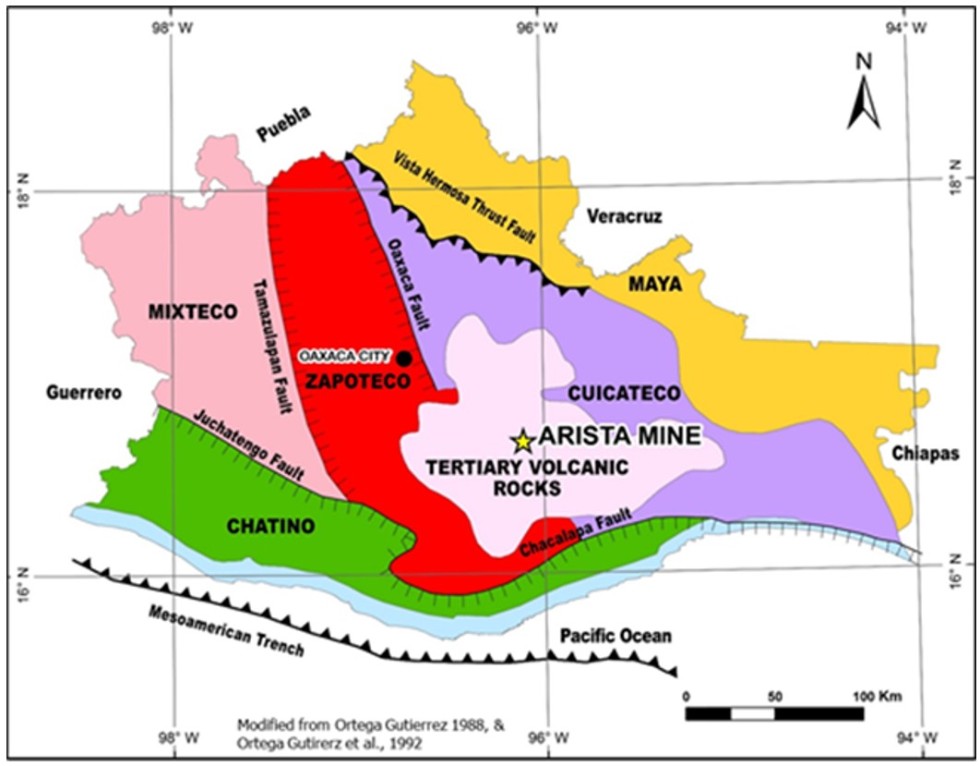
Figure 6-1: Map of Oaxaca State showing tectonostratigraphic terranes.
23

Figure 6-2: Concession boundaries in yellow (Geology after Sánchez Rojas et al., 2000; map insert from INEGI 2019).
24
The DDGM area is underlain by thick sequences of andesitic to rhyolitic volcanic and volcaniclastic rocks, with intercalated minor sedimentary units, of presumed Miocene age (Ferrusquía-Villafranca and McDowell, 1991). The youngest volcanic units may be Pliocene age. Multiple predominantly rhyolitic volcanic domes at various scales have been identified within the district, and it is suspected that additional non-vented domes also occur. These units are unconformably underlain by basement rocks of Cretaceous marine sediments that are locally calcareous.
Figure 64 shows the stratigraphic column for the rock units shown in Figure 63, corresponding to DDGM’s local geologic investigations.

Figure 6-3: Geologic Map of the Arista Project and Arista Underground Mine Area.
25
Multiple volcanic domes of various scales dominate the Don David Mine area, and it is suspected that non-vented intrusive domes are also present. These volcanogenic features overly, and are intruded into, a pre-volcanic basement of sedimentary rocks. Gold, silver, and base metal mineralization in this district is related to the volcanogenic system and is considered epithermal in character.
6.3.1Arista Project
A semi-detailed regional geologic map of the area at a scale of 1:5000 was initiated in 2007 by DDGM’s on-site geologic staff (Figure 63). The information recorded includes lithology, structural, alteration zone features, and hand sample locations. Data based on aerial photographic interpretation and field data were incorporated into the geologic map, continually updated based on new observations.
The Arista Project area is underlain by a Cretaceous sedimentary lithic sequence, composed of fine-grained sandstones intercalated with shale, siltstone, and calcareous rocks. These rocks have been identified in outcrops in the central part of the Arista Project area surrounding the Cerro Colorado peak and in drill hole intercepts (Figure 63). Younger andesitic to rhyolitic volcanic and volcaniclastic units, intrusive dikes, and small stocks of granitic to granodiorite composition crop out within the area and have been intercepted in drill holes. The intrusive rocks may be associated with structural conditions favorable for subsequent deposition of mineralization along dikes, faults, and breccia zones and may be related to possible replacement and skarn deposits in good contact zones with the sedimentary sequence.
The mineralized structures appear to be associated with a trans-tensional structural system intersecting an interpreted Cenozoic-aged volcanic “caldera.”
6.3.1.1 Stratigraphy
The stratigraphy of the Arista Project area can be divided into a Cretaceous basement and overlying Tertiary units, as shown in Figure 64. The Cretaceous units are composed of rocks of sedimentary origin, weakly to moderately metamorphosed and often intensely deformed. These rocks are unconformably overlain by the Cenozoic units comprised mainly of subaerial volcanic rocks. The rocks of the Cenozoic cover have experienced only extensional deformation and, in some places, are gently tilted. The Cenozoic-aged rocks correspond to a period of tectonism accompanied by volcanism, sedimentation, and intrusive magmatic activity associated with the north north-east subduction of the Guadalupe plate under southern Mexico (Morán-Zenteno et al., 1999). According to geologic investigations by DDGM’s on-site staff and numerous consultants, the predominant rocks identified within the Arista Project area include volcanic rocks of intermediate to acid composition (andesite to rhyolite)
Below is a summary of the central stratigraphic units determined by GRC geologists.
Rocks of Cretaceous Age:
Black Breccia (Ksm Ar-Lu) - The basement rocks within the Arista Project area consist of the Late Cretaceous formation locally referred to as "Black Breccia". This formation consists of lithic sedimentary rocks composed of carbonaceous shale, fine-grained sandstone, siltstone, and calcareous rocks, including some layers of argillaceous limestone. The Black Breccia strata occur in thicknesses that vary from 2 - 80 cm, while sandstone beds may reach 1.0 m in thickness. The formation hosts rounded to sub-rounded lithic fragments of a few millimeters up to 1.0 m in diameter, composed of the same host formation that may have originated due to tectonic events. This formation occurs in the area surrounding Cerro Colorado peak. According to the SGM (Carta Geológico Minera Totolapan E14-D69, 2003), its thickness is about 300 to 400 m, and it is of Albian–Maastrichtian age (Mid–Late Cretaceous) based on fossil identification.
Rocks of Cenozoic Age:
The Cenozoic units consist of a series of volcanoclastic deposits interbedded with volcanic rocks of andesitic composition (volcano-sedimentary series) overlain by a succession of andesitic to rhyolitic volcanic rocks occurring as flows, tuffs, ignimbrites, and agglomerates; the units have been classified as follows:
Volcanic Sediments with Andesites (Tm An-Sed) - consists of intercalated sandstones, tuffaceous sandstones, siltstones, and andesite flows and tuffs. The andesitic flow units occur near the base of the sequence associated with volcaniclastics. This is considered to be grouped within the Laollaga formation and is differentiated from the Tm Tan-An unit by sediments. While currently distinguished, this and the following unit may prove to be a single more diverse unit.
27
Andesite (Tm Tan-An) - This unit was dated by Petróleos Mexicanos (Murillo and Torres, 1987) as Late Oligocene – Early Miocene age (26.4 ± 1.3 million years, Ma to 19.0 ± 0.95 Ma); while SGM dated this unit as Middle to Late Miocene (15.3 to 17.32 Ma). This unit is classified as a member of the Laollaga Formation and consists of a series of andesite flows, tuffs, and breccia zones with complex contacts between occurrences. The unit crops out in about 60 percent of the Arista Project area proximal to and capping Cerro Colorado Peak.
Rhyolite (Tm Ry) - Consists of rhyolite flows with some pyroclastic phases hosting abundant phenocrysts of plagioclase and quartz crystals (“eyes”). Outcrops are noted in the northeastern and southeastern parts of the Project area and overlie the andesite with discordant and structural contacts. In drill holes, it can appear as lithic tuff (e.g., DH-107021). SGM dated this unit as Middle Miocene (16.57 to 15.82 Ma). This rock unit constitutes the core of the Cerro Pilón dome.
Pyroclastic Rhyolite (Tm PclRy – Ry) - This unit crops out within the open pit, around the western slope of Cerro Pilón, and on the slopes and top of Cerro Colorado. The unit consists of a sequence of strata with 10 - 30 cm thick beds, exhibiting clastic textures enclosing rock fragments composed of shale and coarse-grained sandstone within a fine-grained matrix. The unit indicates substantial alteration, including silicification, argillization, and oxidation. This unit may be part of an underlying breccia unit. It has been identified in drill holes 105023, 106005, and 106009 with a thickness of 70 to 135 m, dated to the Middle Miocene age.
Rhyolite Tuff – Ignimbrite (Tm Try – Ig) - This unit occurs on the north-western part of the Arista underground mine area. It consists of pyroclastic units occurring as lithic tuffs with different degrees of consolidation. Typically, outcrops are present in the Chacal Creek area, appearing as thin to massive strata 25 to 30 cm thick. The unit contains abundant lithoclasts enclosed by fine-grained matrix hosting quartz “eyes.” It has been considered to be of the Middle Miocene age. According to Lipman (2011), this rock unit may be regarded as an intra-caldera unit due to its significant thickness (260 m) intercepted on the southwestern slope of Cerro Pilón (drill hole 111001).
Rhyolitic Tuff – Agglomerate (Tm Try – Agl) - This unit occurs as a mesa on the Tablón mountain to the northeast of San José de Gracia, consisting of a sequence of stratified lithic tuffs with intercalated ignimbrite beds of up to 5 m in thickness. These rocks contain quartz crystals, feldspars, and abundant rounded and sub-rounded, poorly classified, slightly consolidated fragments of ignimbrites. The unit has a thickness of about 200 m at the top of the Tablón Mountain. This unit’s physical characteristics, such as stratification including cross-stratification and rounded to sub-rounded fragments, indicate a volcano-sedimentary sequence where the deposition was interrupted by volcanic events that caused deposition of intercalated beds of ignimbrites, rhyolites, and tuffs. It has been defined as of Late Miocene age.
Andesite (TPl An) - This unit consists of massive dark-grey aphanitic andesite with occasional plagioclase crystals. The thickness is estimated at 100 m and is believed to be Pliocene age. Some dikes and sills of this unit intrude the Rhyolite Tuff – Ignimbrite unit at Chacal creek.
Intrusive Rocks:
Granite – Porphyry Rhyolite – Felsic Rhyolite (Tm Gr, Tm PR, Tm Ry-Fel) - A few small outcrops of this unit have been observed within the Arista Project area; notably on the eastern side of the Arista underground mine, and on the upper parts of the Cerro Colorado peak. These rocks are thought to be from the Middle Miocene age. In outcrop form, they appear as granular holocrystalline rocks composed of white feldspar with quartz. These units have been intercepted as dikes in some Arista mine area drill holes. The unit appears to be related to other regional rhyolite intrusions and may have played a role in the uplift of the Cerro Colorado dome.
Other Rocks of Quaternary Age:
The youngest rocks identified in the Arista Project area include surficial deposits of alluvium, colluvium, and gravel as products of weathering of the surrounding pre-existing units. Locally and particularly near Salina Blanca, active travertine deposition occurs due to infiltration and deposition of carbonate-bearing water, which may indicate a dynamic hydrothermal system and dissolution of carbonate sedimentary rocks.
6.3.1.2 Structural Geology
The Arista Project shows a complex structural system with numerous lineaments and geologic structures, many of which were first identified through satellite images and aerial photographs and later verified during field observations and drilling. Figure 63 highlights the prominent structures discussed below.
28
The identified structures have been used to define a possible regional transtensional wrench-fault system determined by relative movements and inter-relations between the various individual structures. A transpressional system has also been proposed. The most significant regional structures within the Arista Project area are summarized as follows:
Río Grande System - Identified along the valley of the Río Grande River in the southern part of the area and is represented by a series of sub-parallel faults, oriented ENE - WSW with a complementary or conjugate sub-perpendicular system with an NW-SE orientation. This fault system seems to represent the regional trace of a right-lateral strike-slip fault.
Aire Lineament - Occurs as strong quartz vein (Aire vein) within the Arista mine, along the Aire creek and adjacent to the Arista mine road, striking N25˚W cutting the local andesite and rhyolite units. In the Arista mine area, this lineament changes orientation to the north and appears to intersect two other lineaments, Quiatoni and Higo.
Quiatoni Lineament - This lineament is oriented N60˚E and is located at the eastern side of the Arista mine. It cuts through andesite and a lithic agglomerate tuff unit. Other sub-parallel structures have been identified to the north of the Quiatoni structure, indicating a solid and broad structural system.
Switchback Lineament - Occurs as a sub-parallel structure to the Aire Lineament oriented at N17˚W. It is enclosed by pyroclastic volcanic rocks and rhyolite that constitute the Pilón dome. This lineament was intersected in drill hole 108030 as a significant fault zone.
Higo Lineament - Occurs along the Higo creek oriented N78˚W and is projected from the Arista underground mine to the Arista open pit mine. Outcrops exhibit quartz veins and veinlets along with fractures within the lineament system.
Arista Vein System - Consists of up to 40 cm thick vein exposed along Arista ridge oriented N45°W, 70°NE. Drilling has defined this significant vein system to a depth of more than 500 m and extending at least 650 m along strike with a thickness varying from 3 to 5 m. The vein corresponds to high-grade mineralization in the Arista underground mine workings.
Salina Blanca System - Composed of two parallel faults oriented N39°W with fault surfaces dipping to the NE bound sub-parallel structures. These are exposed on the northeast side of Cerro Colorado peak. The structure exhibits lateral and vertical movement, solid silicification, and stockwork quartz veins and often shows disseminated oxidation.
Crestón Fault - Exposed as a sub-vertical structure on the NW flank of Cerro Colorado, it strikes between N55°W to N70°W, with fault surface dipping to the SW. This structure is subparallel to the Escondida and Vista Hermosa fault systems, all of which define the SW flank of a horst structure defined by Cerro Colorado peak.
Escondida Fault - Occurs on the western side of Cerro Colorado peak as a normal fault-oriented N40˚W, dipping to the SW. At the Escondida mine area, where several small mine workings follow narrow veins, this fault is associated with a quartz vein and a rhyolitic dike and base metal mineralization.
Vista Hermosa System - Consists of a group of sub-parallel normal faults with an average strike of N40˚W, dipping to the SW. It is considered part of the “en echelon” fault system that includes Creston and Escondida in the southwestern area of Cerro Colorado peak. This system shows vertical movement and hosts quartz veining with associated mineralization.
Cerro Colorado Fault - Occurs as a curvilinear normal fault orientation N7˚E, N30˚E, and N70˚E on the western and north-western sides of Cerro Colorado peak, respectively. Quartz veins and mineralization are associated with the fault zone, an area nominated as the “Red Zone.”
Chacal Fault - Occurs on the northern side of the Chacal creek oriented N25˚E and exhibits evidence of lateral movement. This fault appears to have been displaced by the Escondida and Vista Hermosa structural systems.
6.3.1.3 Local Structures
A detailed structural examination from underground mine workings, surface exposures, and drill core intercepts (in the regional regime context) provides evidence of transtensional wrench-faulting as the dominant structural control at the Arista Project.
29
Consultants of SRK (Canada) performed site visits and subsequent desktop studies at the Project in 2012 and 2013, examining the kinematics and overall structural system (Vos et al., 2012; Couture, 2012; Kramer and Couture 2013). Their conclusions support previous conceptual models and are summarized below (Figure 65 and Figure 66):
| ● | The Arista Fault is a northwest-striking, steeply northeast-dipping fault zone that comprises breccia and colloform veins and exhibits evidence for sinistral strike-slip fault movement. It comprises two main segments oriented at 305° and 280° (100°). |
| ● | The Alta vein and Vein 3 are northwest-striking, sub-vertical fault zones comprising breccia and colloform veins and exhibit evidence for sinistral strike-slip fault movement with minor components dip-slip movement; additional post mineralization offset is oriented at 345°. |
| ● | The 100 vein, renamed as Vein 1 (Arista NW trend transitioning to Santiago vein), is a 100° (280°)-striking, sub-vertical extensional vein that comprises breccia colloform veins, and exhibits evidence for normal-dextral movement along with a rare sub-fault bounding the vein. |
| ● | The Baja vein is a 320°-striking, sub-vertical extensional vein that comprises mainly colloform veins and limited breccia and exhibits only a narrow fault zone along its walls. |
| ● | Post Mineral Faults - approximately 345° (165°) striking, sub-vertical sinistral strike-slip faults offset gold-silver-lead-zinc-bearing veins and are interpreted to post-date mineralization. |
Late structural events are suspected of playing a significant role in the current configuration of vein positions (Figure 66), with the most prominent trend-oriented 340-350° (sinistral strike-slip, ± oblique thrust). Many veins, including Baja, exhibit internal deformation (multiphase concurrent with mineralization and post mineralization), and several veins and splays, including Arista and Vein 3, are suspected of having been juxtaposed side-by-side by the post mineralizing events, such that an artificial thickening of veins results from transposition or “stacking.” To support this interpretation, evidence has been documented on measurable fault surfaces exposed in the upper levels of current mine workings on the Arista fault vein, Vein 3, and Baja vein. Likewise, bonanza grades have been attributed to these intersecting structural sites.

Figure 6-5: Simplified early structural framework for the Arista System highlighting fault-vein geometries; inset photo illustrates outcrop expression of dilation jog as favorable sites for vein/mineralization (mod. from Vos et al., 2012).
30

Figure 6-6: Generalized late structural framework, Arista System; shows post-mineralization deformation of the Arista vein system (mod. from Vos et al., 2012).
A consultant geologist performed additional structural work in 2018 (Hohbach, 2018) on the Switchback vein system, where similar transposition features are also seen in the principal veins. Hohbach identified four main mineralized structural orientations, which are, from oldest to youngest:
Hohbach also identified several preferred post-mineralization orientations, namely: FN0°, F60°, F90° (which can be confused with the mineralized set and can have notable offsets), and F325-330°, which can manifest as significant fault zones with significant gouge thicknesses. All can have fault gouge and show minimal mineral alteration.
Most of the mineralized orientations correlate to directions identified by SRK for the Arista vein system.
31
6.3.2Alta Gracia Project
Since April 2010, DDGM’s on-site geologic staff has reviewed available information and conducted geological reconnaissance and semi-detailed surface and underground geological mapping on the Alta Gracia Project (Figure 67). The recorded information included lithology, structural, alteration zone features, and hand sample locations. Previous information based on aerial photographic interpretation and field data were incorporated in the geologic map.
6.3.2.1 Stratigraphy
The sedimentary and volcanic units mapped at Alta Gracia are like those observed at the Arista Project. Known vein occurrences are mainly hosted in andesitic and rhyolitic units of the Cenozoic age.
The rock units mapped on the Alta Gracia Project can be divided as follows:
Cretaceous-age basement sedimentary rocks (Ksm Ar-Lu) - consist mainly of sandstone and calcareous sandstone units. These units are deformed with numerous folds in moderate to thinly bedded strata. Thick Cenozoic volcano-sedimentary cover also unconformably overlies the Cretaceous sedimentary units. Basement rocks can only be observed in the roadcuts of the Pan-American Highway 190 in the vicinity of the town of San Juan Guegoyache. These rocks possibly correlate with the unit informally named “Black Breccia” of the Arista Project. The basement rocks have not been encountered in DDGM’s drill holes, possibly due to the elevation difference between the zone where the basement crops out (1,100 masl) and the drilling area (1,600 masl).
Cenozoic-age volcano-sedimentary units - consist mainly of pseudostratified tuffs of intermediate composition that vary from ash tuffs to volcanic breccias, medium to coarse-grained texture, and contain principally subangular clasts. Pyroclastic units are locally intercalated with porphyritic andesite flows (Tm Tan-Sed) that are possibly up to 400 m in thickness. The texture is generally aphanitic with the presence of quartz and feldspars. The thickness varies and ranges from one to a few meters up to 150 m, based on observations in drill holes completed to date. Also present are localized, possible calcareous horizons with interbeds of colloidal silica within the volcano-sedimentary units. These “exhalative” horizons can easily be confused with limestones interbedded with chert. Rhyolitic flows generally overly the pyroclastic and andesite units and crown the tops of the hills that make up the Alta Gracia area in the vicinity of historic mine workings. Rhyolite flows are typically white but become either yellow or brown when weathered.
Intrusive dikes of possible granodioritic and felsic composition (Tm Gr, Tm Ry-Fel) - are also present in Aguacatillo Creek (arroyo). In some drill holes, hypabyssal rocks of probable monzonitic composition have been encountered.
6.3.2.2 Structures
The structural geology of the Alta Gracia area is somewhat masked at the surface by the presence of expansive soils and vegetation. However, numerous quartz veins are in accessible underground workings and prospect pits at Alta Gracia. Veins are mainly hosted in rhyolite at the surface, and andesite was developed in deeper underground mine workings. Two dominant vein trends have been mapped: N30°E dipping 65° - 85°NW and N50°E dipping 65° - 85°NW. Vein widths generally average from 0.2 to just over 2 m (true width). At least nine significant veins/vein systems have been identified at Alta Gracia that include the following:
Mirador Vein - The Mirador vein is a fissure filling vein hosted in andesite with a bearing 240°-250°, a dip of 60°-80°NW and a variable thickness of 0.80 m to 1.80 m. The Mirador vein is offset by a system of transverse faults bearing 340°-350°, dipping 45°-60°NE, with displacements of 1 to 11 m.
Huaje Veins - Two principal parallel veins, separated by 25 to 75 m, comprise the Huaje vein system. These veins strike from 230°-240° with a dip of 65°-70°NW and variable thicknesses from 0.80 to 0.90 m. The Huaje veins occur along faults hosted in andesite.
San Juan Veins - The San Juan and at least five subparallel ancillary veins, strike 200°-210° with a dip of 60°-80° NW and a variable thickness of 0.30 m to 1.20 m. The veins are hosted in rhyolitic flows.
Victoria Vein - The Victoria vein strikes 210°-225°, dipping 70°-80°NW, and has a variable width from 0.15 m to 0.60 m. It is hosted in rhyolite flows.
32
Independencia Vein - The Independencia vein has a bearing of 240°-250°, a dip of 60°-80°NW and average thickness of 0.40 m to 1.20 m with intervals of up to 10 m (pinch and swell). It is mainly hosted in rhyolitic flows.
Aguacatillo Veins - The Aguacatillo area is comprised of two vein systems with very similar strikes of 040°-050°, dipping 80°-85°SE, and thicknesses varying between 0.25 m to 0.50 m. Rhyolitic flows host veins to the west and the east. They occur in andesitic tuff.
Chamizo Vein - The Chamizo vein has a bearing of 260°-280° and dips 45°- 70°NW. The vein contains good base metal values over very narrow widths (0.10 - 0.30 m). The Chamizo vein is hosted in andesitic tuff.
Navajas Veins - Navajas veins consist of a system of subparallel veins of variable thickness (0.20 - 0.30 m) with a bearing of 030°-040°, a dip of 70°-80°SE and contain significant levels of gold and silver. The veins are hosted in rhyolitic flows.
Base Metal Prospect - A prospective area with significant base metal showings in the southwest part of Alta Gracia. Mineralization is hosted at the rhyolite tuff and andesite contact with abundant carbonate flooding and local fault gouge. Geologic mapping indicates that the zone lies at the intersection of three structures. The intersection coincides roughly with an N45°E trending fault/contact between andesite and rhyolite.
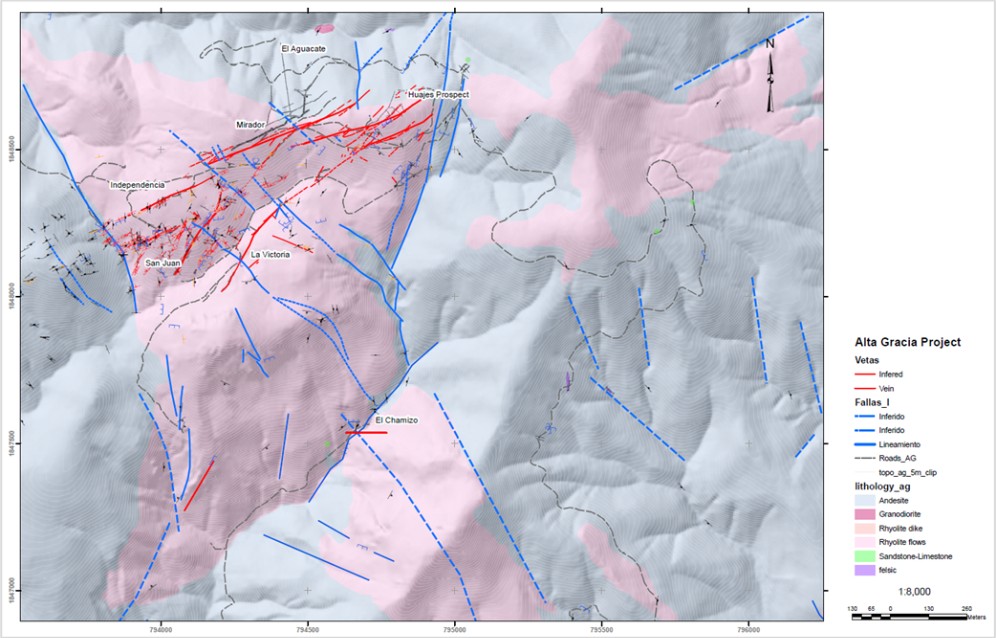
Figure 6-7: Plan Map Showing Geology and Vein Targets/Prospects at the Alta Gracia Project.
33
6.4Description of Mineralized Zones
DDGM area mineralization occurs as structurally controlled epithermal deposits in veins and stockwork zones consisting of concentrations of sulfides containing gold, silver, lead, copper, and zinc, associated with gangue minerals such as quartz calcite and other minor minerals. The economic mineralization at the Arista mine is gold, silver, copper, lead, and zinc. Structurally controlled epithermal veins and stockwork zones at the Alta Gracia Project (Mirador and Independencia vein systems) contain mainly silver-gold bearing sulfides. The economic mineralization currently exploited at the Alta Gracia Project is only gold and silver.
Primary sulfide mineralization within the mineralized structures contains pyrite, galena, sphalerite, argentite, chalcopyrite, and other silver sulfosalts associated with quartz and calcite as gangue minerals, which are found at depth.
Weathering of the mineralization has caused oxidization and shallow secondary enrichment zones containing halides (cerargyrite), sulfosalts (pyrargyrite, stephanite), carbonates (cerussite, hydrozincite), sulfates (anglesite), silicates (hemimorphite, willemite), and iron oxides (hematite, limonite, goethite, etc.) that may reach depths of up to 150 m from the surface outcrops. Other mineralization indicators recorded in the rocks, such as alteration-replacement events, include the presence of alunite-natrojarosite-jarosite and widespread sericitization and potassium alteration (adularia), especially at the Margaritas and Trenes properties.
A petrographic study (Hansley, 2014) indicated additional species of silver sulfosalts and sulfides, including miargyrite, freibergite, and acanthite, associated with mineralization, particularly at the Alta Gracia Project. Samples from Splay 5 at the Arista mine exhibited abundant gold intimately associated with chalcopyrite, pyrite, and galena. Other vital observations included:
| ● | Alteration assemblages such as widespread sericitization and potassium alteration (including adularia) at the Margaritas and Trenes properties, and |
34

Figure 6-8: Arista Mine Schematic Cross-Section View Looking Northwest at the Arista and Switchback Vein Systems.
Economic concentrations of precious metals are present in “shoots” distributed vertically and laterally between non-mineralized segments of the veins. Vein intersections are the local site of important historic bonanza mineralization. Overall, the style of mineralization is pinch-and-swell, with some flexures resulting in closures and others generating broad cymoidal breccia zones. A schematic cross-section through the Arista mine illustrates the general geologic configuration based on drilling intercepts (Figure 68). Historic production from the Arista underground mine (part of the Arista Project) was mainly extracted from two principal veins, the Arista and Baja, and related splays within the Arista vein system. In recent years, and prior to 2024, production mainly focused on the Switchback vein system with extraction principally from the Soledad vein and associated splays and faulted offset segments, including the Selene and Susana veins. During 2024, production at the Arista underground mine occurred from both the Arista and Switchback vein systems. In 2025, underground production continued from the Arista and Switchback systems and also included initial mining from the Three Sisters vein system.
Other significant veins and deposits at Arista include the historically exploited Aire and Aguila Manto veins as well as the Three Sisters vein system (including the Sandy 1, Sandy 2, Sasha 1, Sasha 2, Sadie 1, and Sadie 2 veins), located between Arista and Switchback. In 2023, exploration drilling discovered the Gloria vein system situated immediately northwest of and associated with the basal portion of the Three Sisters system. Historic (pre-GRC) underground production was also extracted from the Mirador and other veins at the Alta Gracia Project. DDGM production at Alta Gracia has been from the Mirador and Independencia vein systems.
35
6.4.1Arista Mine
6.4.1.1 Arista Vein
The Arista vein consists of multiple parallel veins and splays of varying lengths and widths associated with the predominant fault bounded structure. The vein is partially enclosed in strongly silicified rhyolite breccia, including stockwork zones related to the vein. The veining is also associated with the structural contact between hypabyssal andesitic rocks and Cretaceous sediments (Black Breccia). Mineralization is multi-phase (related to discrete structural and leaching events within the bounding fault), and restricted mineralogy is associated with variable grades and textures from fault contacts inward. Mineralization occurs within a range/mix of breccia, colloform banded quartz, crustiform quartz, and multi-phase banded sulfides with coarse-grained quartz intergrowths. Base-metal sulfides include massive galena, sphalerite, and chalcopyrite; ± disseminated remnants of pyrite; ± trace rhodochrosite; later quartz veins cut through sulfides; other trace sulfides include euhedral arsenopyrite overgrowths on dendritic native silver, magnetite, pyrrhotite, pyrite, acanthite, bornite, and tetrahedrite-tennantite. Areas of secondary sericite, clay, and microcrystalline quartz are often observed in petrographic analysis with complex intermixtures of hydrothermal, metasomatic, and retrograde minerals, including cordierite diopside, albite, calcite, epidote, adularia, chlorite, and clay. EM-EDX analyses confirmed the presence of argentite and freibergite associated with the leaching of base metals. Gold and silver are suggested to occur late in the paragenetic sequence (after base metal sulfides and after a leaching/fracturing event). Gold occurs as micron-size “inclusions” in “recrystallized” arsenopyrite around vugs; antimony also appears related to gold based on petrographic evidence (Hansley, 2012).
Underground production and exploration of the Arista vein have been developed for more than 600 m of ore grade mineralization along strike and on multiple levels. The surface expression of the Arista vein consists of a narrow zone of silicified outcrop with a very weakly mineralized quartz vein of 20-25 cm width. The Arista vein was first accessed by cross-cutting on Level 2 at 872 masl, where it occurs as a narrow vein (35 to 40 cm). In the mine at Level 4 (831 masl), the vein has a 5.5 m true width. Figure 6-9 illustrates typical vein morphology in underground workings at the Arista mine.
36

Figure 6-9: Typical Colloform Banded Style of the Arista Vein; Arista Mine Level 6. Vein is nearly 5 m wide from foot of miner to upper right of photo as indicated by yellow arrows.
6.4.1.2 Baja Vein
The Baja vein was discovered during an exploration drilling program on the Arista vein and generally hosts high-grade silver mineralization. The Baja vein occurs as a 1.0 to 1.5+ m wide mineralized structure with mineralization hosted within fractures and associated with crustiform features filling opened spaces. The vein comprises several splays and parallel veins of varying lengths and widths, including Splay 66. The general orientation is 310°-320°, dipping 70°SW to vertical, and has been developed, to date, by underground workings in the Arista mine between 460-800 masl elevations. It has a strike length (defined through drilling) of at least 500 m. The vein typically consists of multi-phase vuggy textured, crustiform banded, coarse-grained quartz, with some quartz replacement of carbonate; in addition, adularia replaced by carbonate has also been noted. Sulfides include fine to very fine-grained and banded occurrences, often disseminated at vein contacts. These are characteristics: bladed galena (possibly replacing carbonate), massive sphalerite, coarse stibnite, fine-grained and disseminated chalcopyrite, and pyrite. Other significant sulfides include proustite (Ag3AsS3), pyrargyrite (Ag3SbS3), and other silver minerals. Petrography has identified sub microscopic gold and argentite (after base metal sulfides), antimony associated with gold, and trace amounts of kyanite, corundum, and garnet.
6.4.1.3 Aire Vein
The Aire vein is located about 100 m west of the Arista vein and is oriented 345°, dipping 70° SW to vertical. It is hosted mainly by andesite, with some rhyolite occurring to the east of the vein. The Aire vein has been traced for over 400 m along the strike. Mineralization styles are similar to those veins previously described with abundant vuggy, replacement (after carbonate), coarse and cruciform quartz (locally recrystallized). Sulfides often occur as massive masses and include sphalerite, galena, proustite (microveinlets in sphalerite), disseminated arsenopyrite, and native silver.
37
Accessory minerals include abundant corundum (inclusions in quartz), adularia (as microveinlets) replaced by alunite, rhodochrosite rhombs (suggested as late-stage or post-event), calcite, sillimanite and kaolinite, fine-grained K-spar and rounded zircon. While not economically significant, its exploration led to the discovery of the Arista mine.
6.4.1.4 Soledad Vein (Switchback Vein System)
Surface mapping in the ‘’Switchback’’ Hill area, approximately 500 m northeast of the Arista underground mine, indicated the presence of an NNW-SSE trending porphyritic felsic dike with associated intense sulfate (gypsum) alteration and minor quartz-amethyst veining, sub-parallel to the Arista vein system. Geochemical rock chip samples taken by DDGM geologists from this altered zone returned base metal anomalies with weakly elevated silver values. Subsequent holes drilled from the Arista mine underground workings along the strike to the south of this area intercepted multiple zones of well-mineralized vein material associated with a strongly porphyritic felsic dike.
Like the Arista vein system, the Switchback vein system consists of subparallel veins, faulted offsets and splays of varying length and width. The principal vein for economic exploitation is the Soledad vein along with associated splays, and faulted offsets, which have been locally named separate veins (e.g., Selene and Silvia). To date, several significant veins have been identified: Soledad, Selene, Silvia, Sofia, Sagrario and Susana. The quartz +/- minor calcite/dolomite/ankerite veins are hosted in andesite and associated with altered rhyolite porphyry dikes, and contacts to the Cretaceous sediments (“Black Breccia”), characteristics similar to the Arista vein. The host rocks of sediments/hornfels, andesite and rhyolite are often strongly silicified and pyritized with locally intense quartz stockwork veining. Rhyolite dykes are observed to be both pre- and post-mineral; strong evidence that they are coeval and have an association with mineralization.
The Soledad vein is generally NW to NNW striking, and 55-70°NE dipping. However, notable flexures occur along strike and along dip, with sectors of the vein being almost EW or NS striking, while vein dips can be vertical or locally up to 70°SW dipping (in the central NW section of the vein). In the SE, the vein is more regularly NE dipping with azimuths of 320°-350° predominating. In the NW sector azimuths of the vein vary from 270°-360° and dips from 70°SW to 60°NE. The vein appears to have developed along several sigmoidal structural zones, with the principal sigmoid associated with the strongest mineralization. The Soledad vein is typically brecciated with fragments of quartz and variably bleached, silicified andesite wall rock fragments with a multi-phase quartz matrix. Carbonates are generally a minor component of the veins. Colloform and/or crustiform textures are common with bands of quartz, sphalerite and galena in places encrusting breccia fragments. Bands of white or amethyst quartz are also present, the latter being both an early and late feature. The breccia matrix mainly consists of fine-grained, dark grey quartz; the dark color due to the presence of very fine-grained pyrite. Small, drusy quartz crystals filling vugs are observed locally.
Abrupt changes in styles of veining are evidence for transposition and multiple mineralization events.
The vein mineralization comprises of pyrite with varying amounts of sphalerite and galena, commonly banded (where crustiform textures dominate) or disseminated in the breccia zone, as well as chalcopyrite. Semi-massive sulfides are locally observed. On a microscopic scale, patches and massive zones of sulfides as well as banded zones, notably sphalerite, show dendritic textures (Gissler, 2020 pers. comm.). Gold mineralization occurs at various levels of exploitation. Stronger gold mineralization, especially at deeper levels, is associated with intersections with other vein structures, e.g., the NNW Sofia vein, or structural flexures. Gold mineralization is generally stronger in the upper levels of exploitation. Silver enrichment is generally associated with zones of gold enrichment although there is no intimate relationship; a well-defined zone of silver enrichment is in the south-central section of the vein.
The wall rocks have been altered by silicification, carbonation, and pervasive argillization (smectite-illite-sericite). Hansley (2014) found pyrophyllite and kaolinite as alteration minerals in a rhyolitic dike associated with veining and cut in hole 513028, an indication of acid-sulphate alteration at the time of mineralization.
6.4.2Arista Manto Vein
The Manto vein consists of shallow dipping near-surface epithermal quartz vein oriented 070°, dipping 30° SW. It is composed of sugary to coarse-grained quartz hosted in volcanic hydrothermal breccia (consisting of large blocks of volcanic fragments and tuff). The host rock consists of pyroclastic rhyolitic deposits with bedded structure and textures varying from breccia tuff to lapilli and ash tuff, which is highly silicified and cut by quartz veinlets generating a stockwork, and with strong oxidation after pyrite and marcasite. Some of the fragments within the breccia zone are un-silicified and include fragments of basement sedimentary rocks. Typical mineralization is microcrystalline to coarse and vuggy quartz hosting dominantly “horn silver” cerargyrite (AgCl), with the sulfosalts jamesonite and boulangerite present in vugs. In thin polished section, gold appears exclusively within the “horn silver” and occurs with traces of pyrite, electrum, native silver, chalcopyrite, covellite, ± galena. Large black to red oxides are also associated with antimony (bindheimite) and traces of native gold. Accessory minerals include disseminated calcite or aragonite and microcrystalline quartz, jarosite (after pyrite), illite (associated with quartz), leucoxene, and anatase (Hansley, 2008).
38
6.4.3Alta Gracia Veins
The Alta Gracia Project hosts multiple sub-parallel veins and splays of varying length and width. Visible silver mineralization observed in the Alta Gracia veins includes accessory sulfide and sulfosalts such as pyrargyrite-proustite, arsenopyrite, abundant (3-5%) high color euhedral, and disseminated pyrite, sphalerite, traces of covellite, jamesonite, tetrahedrite, stibnite, and galena. Vein textures include carbonate coatings on quartz, bladed carbonate replacement by silica, banding/cockade white to grey quartz, drusy quartz coatings, massive amethyst, and open space voids and clay fillings. Other evidence for the presence of mineralization includes minerals such as malachite-azurite, limonite-hematite, and other oxides; argillization alteration as pervasive kaolinite, sericite, and illite, as well as zones with vuggy silica flooding.
Locally abundant pervasive silicification is present and commonly associated with disseminated pyrite. Examples of mineralized quartz veins at DDGM are shown in Figure 610.

Figure 6-10: Examples of mineralized quartz veins at DDGM.
A) Colloform banded and crustiform quartz and banded sulfides of the Arista deposit from mine Level 5 - note red banded mineralization in center (and throughout) is coarse ruby silver bordering banded quartz; view 0.5 m wide.
B) Underground photo of narrow, low-sulfidation quartz vein from the Alta Gracia Project.
C) Drill core from Alta Gracia showing banded white to dark-gray quartz, open-space drusy quartz coatings, sulfides of pyrite, silver sulfosalts and arsenopyrite.
39
The San Jose de Gracia and Alta Gracia gold-silver sub-districts within the DDGM area are characterized by epithermal vein deposits with low- to intermediate-sulfidation mineralization and quartz-adularia-sericite alteration. The veins are typical of most epithermal gold-silver vein deposits in Mexico with respect to the volcanic and/or sedimentary host rocks, paragenesis and mineralization tenor. Mineralization at Alta Gracia is consistent with a low-sulfidation epithermal deposit (Corbett, 2008; Figure 611). The Arista mine vein systems are intermediate-sulfidation in nature, consistent with deposit styles described for Mexican epithermal systems (Camprubí & Albinson, 2007) and classified as polymetallic Ag-Au by Corbett.

Figure 6-11: Conceptual model illustrating different styles of epithermal, magmatic arc mineralization (From Corbett, 2008).
Epithermal systems form at shallow crustal levels, commonly associated with hot-spring environments, and typically extend to depths of a few hundred meters. Hydrothermal processes are driven by residual heat related to volcanic activity. As thermal waters rising through permeable structures, they may reach pressures low enough to induce boiling. Boiling is an important control on metal precipitation and can limit the vertical extent of mineralization where boiling and deposition are confined to a relatively narrow range of thermal and hydrostatic conditions. In many systems, however, repeated healing and re-opening of structures can occur, resulting in episodic vertical migration of the boiling zone and mineralization that spans a broader elevation range.
Because epithermal mineralization is largely controlled by the filling of open space and fractures, vein geometry and continuity are strongly influenced by the permeability, orientation and kinematics of the host structures. Mineralization commonly focuses in dilatant zones where fractures branch, intersect or change orientation, and may also be influenced by wall-rock competency contrasts and the mechanical behavior of individual lithological units.
Low- to intermediate-sulfidation deposits formed from hydrothermal fluids that are near neutral in pH, typically resulting in limited acidic alteration of the host rock. Hydrothermal fluids may be focused within discrete fractures forming vein deposits or may migrate through permeable lithologies such as poorly welded ignimbrites, where precious metals can be deposited in a disseminated manner.
40
Characteristic alteration assemblages include quartz, illite, sericite, and adularia, typically developed within veins and/or in adjacent wall rocks. Prominent DDGM veins commonly exhibit silicification halos.
Epithermal gold-silver deposits in Mexico commonly exhibit a sub-horizontal ore horizon that may extend approximately 300 to 1,000 m vertically. High-grade ore shoots are commonly associated with boiling hydrothermal fluids. The ultimate minimum and maximum elevations of the mineralized horizons at DDGM have not yet been established. Recent production spans an approximate range of 465 m in the Arista vein system (875 to 410 masl), 320 m in the Switchback system (640 to 320 masl), and 80 m in the Three Sisters system (860 to 780 masl). Drilling has extended the interpreted mineralized horizon in the Switchback system by an additional 200 m vertically, to approximately 175 masl.
Similar geologic characteristics are present in other mining districts in Oaxaca. One example is the San José mine (near Oaxaca City), where mineralization has been reported to span vertical elevation ranges greater than 600 m.
In the opinion of the QPs, the current understanding of the Arista and Alta Gracia vein systems/mineralized zones, the geologic setting, lithologies, and structural and alteration controls, is sufficient to support Mineral Resource estimation.
The Alta Gracia Project is characteristic of a low-sulfidation epithermal system, while mineralization within the Arista mine is characteristic of intermediate-sulfidation epithermal systems with significant base metal components.
Overall, the geologic understanding and epithermal deposit models for the Arista Project (including the Arista mine) and the Alta Gracia Project are considered adequate to support mine planning and ongoing exploration.
GRC acquired its first Arista Project properties in 2003 and initiated exploration the same year, with initial work focused on the Manto vein (Aguila deposit). The Aguila and Arista deposits occur within historic mining districts that were largely inactive since the 1950s (Lopez et al., 2012). The Alta Gracia Project is located in a separate sub-district and has seen limited modern activity prior to GRC’s involvement. Numerous small-scale workings and prospect sites occur across the district, including underground adits developed on shallow-dipping, manto-style mineralization.
From 1998 to 1999, prior to GRC’s involvement, Apex Silver Mines Corporation (“Apex”) conducted geologic mapping and surface sampling and completed an 11-hole reverse circulation (“RC”) drilling program totaling 1,242 m targeting the Aguila shallow dipping manto-style deposit. Limited information from this work is available.
Exploration at DDGM has applied a range of techniques, including soil and rock-chip geochemical sampling, geologic mapping (regional and detailed), structural mapping and interpretation, petrographic and fluid inclusion studies, geophysical surveys at multiple scales, specialized technical reviews, and drilling. Initial RC drilling was completed on the Manto vein in 2003. Since 2005, GRC has maintained near-continuous drilling activity, predominantly diamond drilling, and drilling is discussed in more detail in subsequent sections.
DDGM exploration has focused primarily on two areas: (i) the Arista Project Area, including the Aguila open pit and Arista underground mine areas, which host the Manto and Arista-Baja veins and the Arista, Switchback, and Three Sisters vein systems, along with related ancillary structures; and (ii) the Alta Gracia Project area, including the Mirador and Independencia vein systems and associated targets. Additional mineralized zones and properties have also been evaluated, including reconnaissance and/or preliminary drilling at Escondida, Chacal, Salina Blanca, and Pilón within the Arista Project area, as well as targets on the Margaritas and Rey properties.
Primary exploration objectives include delineating extensions of known vein mineralization along strike and at depth and other identifying additional sub-parallel veins and outlying targets within the contiguous claim blocks that comprise the Arista and Alta Gracia Projects. Continued exploration is expected to focus on identifying economically viable mineralization to support mine life extension. As with all exploration programs, uncertainties and risks remain associated with testing new areas and extensions to known mineralization. Many gold and silver-bearing veins within the DDGM concessions have not been fully explored, and mineralized veins are also known on the Fuego property immediately south of the main concession block, which warrants additional evaluation. To date, most detailed work has focused on the Arista, Switchback and Three Sisters vein systems within the Arista Project and the Mirador, Independencia and other veins within the Alta Gracia Project.
41
7.2Non-Drilling Exploration Methods
7.2.1Mapping
Geologic mapping, including compilation and integration of various data sources for the Arista Project, has provided a cohesive base for exploration targeting. During initial exploration, period published maps and geologic investigations (including isotopic and geochemical analyses; petrographic, structural, and mineral resource studies; regional lithologic definition and correlation and aerial photographic interpretation) were compiled and incorporated into maps, and local definition of lithologic units for both surface and mine geology was established. From 2003 to 2007, GRC geologic staff and consultants completed semi-detailed geologic mapping of the Arista Project area at a scale of 1:5,000. Mapping information, including lithologic, structural, and alteration features, was recorded digitally using handheld GPS-enabled devices and the GeoInfomobile™ and TerraMapper™ software platforms. These data were stored in a Microsoft® Access® database and imported into ArcGIS™ software for analysis and visualization. Beginning in January 2024, DDGM migrated its exploration and geology data management from the legacy GeoInfo Tools/Microsoft® Access® environment to Seequent’s MX Deposit platform. Detailed mapping has also included examination of accessible historic mines and other surface workings. Mapping together with rock chip sampling, has aided in delineating individual veins and splays at surface, defining associated altered zones for follow-up drill targeting, and identifying host rock units related to mineralization.
7.2.2Geochemistry
Surface geochemical programs have been fundamental to exploration at DDGM. Stream sediment sampling and rock chip sampling have been completed across much of the project area, supplemented by systematic-grid soil sampling and trenching in selected target areas. Geochemical results have been used in combination with mapping and other datasets to prioritize targets, delineate altered and mineralized corridors, and support drill planning.
7.2.2.1 Stream Sediment Geochemistry
The discovery of the Arista deposit was aided by a regional stream sediment geochemical survey completed across the property in 2006. The study results were reviewed by Jaacks (2007) and indicated a strong gold anomaly in the drainage downstream from the Aguila Open Pit and extending toward the Arista deposit area (Anomaly #1). Anomalous Ag, As, Sb, and Hg were shown to accompany the Au anomaly and extends at least 1.5 km downstream from the deposit. In addition, the discrimination of seven other potentially anomalous catchment basins was noted within the property (Figure 71), and nearly all were shown to be associated with the occurrence of a rhyolite host rock. The regional anomalies are summarized in Table 71, and the related geochemistry from this study is shown in Table 72.
The initial investigation determined that stream sediment sampling can detect known mineralization, with Au dispersion extending between 0.8 and 2.0 km2 down-drainage from mineralized areas. Additional areas for detailed exploration were also identified along a regional west-northwest trending corridor believed to control gold mineralization.
Follow-up work consisted of infill stream sediment sampling along the regional structural corridor (with up to 4-6 samples per km2), local detailed rock chip sampling, and denser grid-based soil sampling within anomalous catchment basins to better define anomalies and prioritize targets for additional investigation, including drilling.
42
Table 7-1: Regional Anomalies – Location and Geology (Jaacks, 2007).
ANOMALY |
SAMPLE |
E- UTM14N |
N- UTM14N |
LOCATION |
LITHOLOGY |
ALTERATION |
# |
# |
|||||
Table 7-2: Regional Anomalies Geochemistry (Jaacks, 2007).
ANOMALY |
SAMPLE |
AU |
AG |
AS |
BI |
CU |
HG |
MO |
PB |
SB |
SE |
TE |
TL |
W |
ZN |
|
# |
# |
PPB |
PPM |
PPM |
PPM |
PPM |
PPM |
PPM |
PPM |
PPM |
PPM |
PPM |
PPM |
PPM |
PPM |
|
Jaacks (2007) also applied basic statistics, element-correlation analysis, and geochemical modeling to evaluate element associations and concluded that several distinct mineralizing signatures are represented in the data. Within the Arista Project, precious and base metals were interpreted to reflect two mineralizing events: (i) an earlier skarn event at depth, followed by (ii) the main epithermal event responsible for precious- and base-metal mineralization (Jaacks, 2007).
Geochemical sampling indicated a skarn-related signature characterized by the association of Au + Ag + As + Sb + Hg + Cu + Pb + Zn + Mo + Bi + W, consistent with Au-Ag-base metal veins developed in a skarn setting peripheral to an intrusion (Jaacks, 2007). A second, more restricted element suite of Au + Ag + As + Sb + Hg, suggests a signature typical of a volcanic-hosted epithermal Au-Ag vein system (Jaacks, 2007). Subsequent studies indicate that veins may be zoned from silicate/sulfide-dominant assemblages at shallower levels to increasing amounts of calc-silicate minerals at depth (e.g., Hansley, 2009 & 2012).
A third gold association consists of elements Au + Ag + Hg + Mo + Te + Bi, identified in an adjacent catchment basin on the Margaritas property. This association is interpreted to reflect a higher-level volcanic-hosted epithermal gold system that is chemically distinct from the Arista systems.
43
7.2.2.2 Soil Sample Geochemistry
GRC has undertaken soil sampling programs over several areas, with most work undertaken on the Margaritas property and Alta Gracia Project areas. All samples from soil geochemistry programs have been submitted to ALS for analysis. Samples were prepared at ALS Labs Mexico (drying and -80 mesh sieve fraction). Analytical methods were performed on the pulps at ALS Vancouver utilizing 25g aqua regia digestion with an ICP-MS finish for Au. This analysis also included a suite of 51 elements with ICP finish (Method ME-MS41L). A summary of soil geochemistry programs undertaken by GRC on its concessions is given in Table 73.
Table 7-3: Summary of Soil Geochemistry programs undertaken by GRC from 2012 to 2023.
PROJECT |
YEAR |
LINE ORIENTATION |
LINE SPACING (M) |
SAMPLE SPACING (M) |
TOTAL |
PROGRAM AREA (HA) |
|
El Rey |
2011 |
0-180° |
(N-S) |
30 |
10 |
206 |
6.4 |
Las Margaritas |
2012 |
90-270° |
(E-W) |
50 |
50 |
24 |
8 |
2013 |
90-270° |
(E-W) |
50 |
50 |
249 |
61 |
|
2014 |
35-215° |
(NE-SW) |
100 |
30 |
1,495 |
447 |
|
2015 |
30-210° |
(NE-SW) |
100 |
30 |
1,657 |
521.6 |
|
2016 |
30-210° |
(NE-SW) |
100 |
30 |
859 |
270.4 |
|
2018 |
30-210° |
(NE-SW) |
100 |
30 |
574 |
216 |
|
Alta Gracia |
2019 |
310-130° |
(NW-SE) |
100 |
30 |
288 |
85 |
2020 |
310-130° |
(NW-SE) |
100 |
30 |
426 |
148.4 |
|
2022 |
320-140° |
(NW-SE) |
100 |
100 |
974 |
922.8 |
|
2023 |
220-040° |
(SW-NE) |
100 |
100 |
65 |
45.4 |
|
7.2.3Geophysics
Geophysical investigations aimed to delimit possible mineral concentrations or favorable structural settings related to mineable resources were undertaken progressively at the Arista Project and over DDGM’s concession area. These examinations have included airborne and ground magnetometry, airborne radiometry, and ground surveys of induced polarization and magnetotellurics. Specific geophysical programs completed include:
| ● | Ground magnetic survey performed by Zonge Engineering and Research Organization; Inc. completed in 2007. |
| ● | Ground magnetic survey performed by Zonge Engineering and Research Organization; Inc. completed in 2011 & 2012: Follow-up to 2007 survey. |
| ● | Titan-24 Direct Current (DC)/Induced Polarization (IP)/Magnetotelluric (MT) ground survey performed by Quantec Geoscience completed 2010. |
| ● | New-Sense Geophysics Limited performed airborne magnetometry and radiometry in 2013. |
Most geophysical surveys were completed along northeast-southwest oriented lines, perpendicular to the dominant structural trends. Delineation and interpretation of the source of geophysical anomalies were evaluated with respect to mapped geologic features. Extreme value contrast areas (i.e., with adjacent high and low magnetic responses), primarily if associated with lineaments, were primary targets, as they were related to alteration and potential mineralization. Magnetic responses of the Manto vein and the Arista zones were used as guides to identify other potential zones of interest.
Regional structural lineaments (including some vein systems) and other local structural fabric orientations were interpreted from detailed magnetic contrasts and often supported by corresponding MT and IP signatures. Radiometric signatures of uranium, thorium, and potassium helped follow up larger high-response magnetic delineated areas and often correlated well with intrusive or more intensely altered volcanic rocks.
45
Potassium was considered a key indicator of hydrothermal alteration based on its association with the Arista and Manto deposits.
Interpreting the airborne magnetic data using standard digital image processing techniques and inversion modeling helped extend the interpretations of known mineralized structures and identify areas of potential magnetite destructive alteration and skarn mineralization (Ellis, 2013). The magnetic highs were generally related to buried intrusions, such as the sizeable magnetic anomaly outlined in Figure 72 for the Arista Project area. Integrating 3D modeling with geology helped define drilling targets at the mine scale and better understand the regional geology. For example, a distinct magnetic low is associated with the Arista epithermal deposit, whereas peripheral magnetic highs typically indicate mixed intrusive rocks and related skarn (Figure 73). It is noteworthy that the subsequently discovered Switchback deposit is associated with a magnetic low anomaly.

Figure 7-2: Aerial magnetic survey of the Don David Mine properties.
In Figure 72 magnetic highs (red and magenta colors) are interpreted to be generally related to buried intrusions. A possible intrusion is interpreted to lie below the Arista project area – see black outline (Ellis, 2013).
46

Figure 7-3: 3D Voxel model section view.
Figure 73 shows the amplitude component of the magnetic susceptibility inversion model from aerial magnetic survey in the Arista Project area (looking west). Red is high susceptibility and blue is low susceptibility. The Arista vein system is shown as black shapes (Ellis, 2013). In computer-based modeling or graphic simulation, a voxel is an array of elements of volume that constitute a notional three-dimensional space, especially each of an array of discrete elements into which a representation of a three-dimensional object is divided.
7.2.4Petrographic, Fluid Inclusion and Other Studies
Numerous investigators have been contracted to help characterize the geology and mineralization of the Don David Mine Projects in Oaxaca. Most studies have focused on the Arista Project itself, but work has also been undertaken on the Alta Gracia Project as well as on the Margaritas and El Rey properties.
Much work has focused on petrographic studies, with a summary of petrographic description studies given in Table 74. It should be noted that many studies contain only descriptions with no formal report.
In addition, fluid inclusion work on Arista and Alta Gracia veins has been undertaken by various researchers/authors, including Reynolds (2011, 2012), who noted that, “The nature of the quartz and the fluid inclusion textures within the quartz all indicate that the environment of precipitation is intermediate-sulfidation epithermal. Many different types of quartz are present in the core samples, and the highest temperature inclusions were found in the euhedral quartz crystals with homogenization temperatures of about 250°C and salinities of 1 wt% NaCl eq.”
He also stated, “Boiling fluids at such temperatures require that pressures during trapping of the inclusions were about 40 bars, corresponding to a depth of about 400 m from the water table. Furthermore, comparing these data with other Mexican intermediate-sulfidation (IS) type of deposits of Camprubí and Albinson in GSA Special Paper 442, 2007. It is possible that significant base and precious metal mineralization could continue for hundreds of more meters below the current level of exploration.” Two other notable studies are those by Cabrera Roa (2019) and Garrett D. Gissler (2023).
47
Table 7-4: Summary of Petrographic Thin and Polished section Studies.
* Includes Arista, Switchback and Manto deposits.
** Excludes samples of unknown provenance, or lacking detailed information (e.g. Cabrera Roa, 2019).
On-site field studies have been undertaken by authors such as Hedenquist (2008 & 2010) and Meinert (2010) on epithermal and skarn characterization, respectively, Jones (2008, 2013), who undertook work on the definition of possible calderas, and Lipman (2011) on an additional volcanic definition.
During 2020, petrographic and fluid inclusion studies were started as part of a doctoral study by Gissler (2023) of the Arista mine mineralization system. These studies were delayed with 2020 – 2021 advance affected by the COVID-19 pandemic but were completed in 2023 and made available in 2024.
7.3 Exploration Activities 2025
7.3.1Arista Project
Drilling during 2025 focused on underground infill and grade-control drilling within the Arista mine, primarily targeting the Arista and Three Sisters vein systems, with limited drilling in the Switchback vein system. The Arista and Switchback systems extend for over 1,500 m along strike and remain open along strike as well as up- and down-dip, with ongoing exploration continuing to expand their footprints.
Underground drilling at the Three Sisters system, located between the Arista and Switchback systems, has defined mineralization over approximately 750 m of strike length. Drilling in 2025 focused on infill and grade-control drilling to refine the geologic model and improve confidence in continuity and grade distribution within the Three Sisters vein system, which remains open along strike to the north-west as well as up- and down-dip. The nearby Gloria vein system, discovered in early 2023 and located immediately northwest and basal to the Three Sisters system, remains an important exploration feature, however no additional drilling was completed in 2025 to further refine its geometry or evaluate its economic potential. The Gloria vein system is a primary target for proposed infill and expansion drilling in 2026. Further details on drilling are reviewed in later sections of this report.
Limited surface geologic mapping and rock-chip sampling (La Milpa zone) in the immediate vicinity and north-west of the Arista mine (immediately west of the historic Aguila pit) were completed to support structural interpretation and to identify near-mine, near-surface oxide zones that could be considered for future mining and processing. No underground expansion (step-out) drilling or surface drilling was undertaken within the Arista Project area in 2025.
7.3.2Alta Gracia Project
In 2025, surface exploration activities on the Alta Gracia Project continued to focus on reviewing and interpreting geologic mapping and geochemical sampling campaigns completed in 2022 - 2023, including the Aguacatillo prospect soil geochemistry and rock-chip sampling program and the regional soil sampling program completed in late 2022 in the La Fundicion prospect area. These programs identified anomalous zones and clusters of gold- and silver-in-soil anomalies that warrant follow-up detailed mapping, rock-chip sampling and drill targeting. In 2025, historic Alta Gracia wireframes/solids, originally constructed in Vulcan, were imported into Leapfrog Geo to initiate detailed review and drill targeting and to provide a platform for future model refinement and upgrades.
48
In mid-November 2025, limited surface diamond drilling recommenced at the Alta Gracia Project. A total of six surface diamond drill holes totaling 1,121 m were completed targeting the southwest extension of the Mirador vein system toward the Independencia vein system. Results will inform future surface and underground exploration planning at Alta Gracia.
The subsurface investigation by drilling has been a primary exploration tool at DDGM’s properties. To date, it has aided in defining three deposits mined on the Arista Project and two deposits mined on the Alta Gracia Project. Initially, in the 1990s, shallow testing (<100 m) was undertaken by RC drilling methods, prior to GRC’s involvement in the Project, to examine the sub-cropping, historic Aguila shallow-dipping, manto-vein deposit. During the early 2000s, a combination of RC and core drilling further defined the mineralization of the Manto deposit. In 2005-2006 drilling had succeeded in determining the early indications of the Arista deposit. In 2007, the “discovery drill hole” into the Arista deposit (hole 107080) was completed, and additional core and RC drilling confirmed the presence of significant mineralization. Subsequent drilling led to the definition of the heart of the Arista vein system, and by 2010, DDGM had declared official production at the Arista mine. By 2013, drilling had intercepted more than ten significant veins, most notably the Arista and Baja veins, and an equal number of vein splays of the Arista system. Other drill testing included flanking areas on the Arista Project, such as Escondida, Salina Blanca, Cerro Colorado, Fossil Bend, Chacal – Red Zone, Pilon, and other regional exploration targets, such as El Rey.
During 2013, the synthesis of exploration information led company geologists to examine a new area, the Switchback target, following up a suspected parallel structure about 500 m to the north-east of the Arista deposit. Favorable indications from geologic mapping and surface investigations of a hilly area along a narrow switchback road had intrigued the team, as it exhibited similarities to the Arista vein system, including the presence of an NNW-SSE trending porphyritic rhyolite dike along with gypsum (sulfate alteration), quartz vein fragments, minor quartz-amethyst veining, moderate-intense argillic and patchy intense iron oxide alteration all following a subparallel structural orientation, albeit offset to the northeast. Geochemical rock chips from this altered zone returned base metal anomalies with weakly elevated silver values. However, due to limited surface access, it was decided to utilize the nearest underground location in the Arista mine, some 500 m to the south-west, for drill testing. The initial drill program consisted of holes drilled from the Arista mine at shallow dips across to the Switchback target zone more than 500 m below and 700 m to the south-east of the mapped surface indications. The discovery drill holes included 513016 (the main hole) and drill holes 513023, 513024, and 513028 (wedge holes off the main hole). Continued drilling identified sufficient mineralization to justify development access into the Switchback deposit. Mining of the Switchback vein system began in 2017. Drilling of the Switchback vein system has been ongoing, and mineralization has been extended by drilling along strike as well as up- and down-dip.
Initial drill intercepts into what is now referred to as the Three Sisters vein system, were first encountered in 2017 from underground drill stations in the Arista vein system while testing for northern extensions of Switchback-related structures. Significant progress in defining the Three Sisters system occurred in 2022 and 2023 through targeted underground exploration drilling guided by geologic reinterpretation. In 2024, the geologic model for the Three Sisters and related Gloria vein systems was refined using available underground drilling data in support of the year-end resource update. In December 2024, DDGM initiated underground development on Level 3 to provide access for drilling and mining within the Three Sisters system, and initial production from Three Sisters commenced in 2025. The Three Sisters (and related Gloria) vein systems remain open to the northwest, up-dip, and at depth.
Drilling of targets outside the Arista Project area, which hosts the Arista, Switchback and Three Sisters deposits, has resulted in the definition of mineralization which has been mined on the Alta Gracia Project, with operations developed on both the Mirador and Independencia deposits, as well as defining the La Tapada vein on the Margaritas property. DDGM continues to prioritize drill targets based on field results and interpretation.
Total exploration drilling by DDGM as of December 31, 2025 amounts to 523,937 m in 2,158 drill holes (Table 75). Surface drill holes completed through December 31, 2025, at DDGM are shown in Figure 74, with all underground drill holes shown in Figure 75.
49
Table 7-5: Don David Mine Exploration Drilling Activity through December 31, 2025.
PROJECT & YEAR |
RC - SURFACE |
CORE - SURFACE |
CORE - UNDERGROUND |
TOTAL |
||||
NO. OF |
METERS |
NO. OF |
METERS |
NO. OF |
METERS |
NO. OF |
METERS |
|
HOLES |
HOLES |
HOLES |
HOLES |
|||||
Arista (includes Manto, Arista, Switchback & Three Sisters vein systems) | ||||||||
2003 |
63 |
3,840 |
5 |
52 |
0 |
0 |
68 |
3,892 |
2005 |
0 |
0 |
37 |
2,808 |
0 |
0 |
37 |
2,808 |
2006 |
0 |
0 |
13 |
1,688 |
0 |
0 |
13 |
1,688 |
2007 |
103 |
10,527 |
93 |
15,195 |
0 |
0 |
196 |
25,722 |
2008 |
0 |
0 |
46 |
17,220 |
0 |
0 |
46 |
17,220 |
2009 |
0 |
0 |
12 |
7,394 |
0 |
0 |
12 |
7,394 |
2010 |
0 |
0 |
36 |
14,000 |
0 |
0 |
36 |
14,000 |
2011 |
0 |
0 |
43 |
21,026 |
44 |
5,182 |
87 |
26,208 |
2012 |
0 |
0 |
62 |
32,204 |
78 |
8,994 |
140 |
41,198 |
2013 |
0 |
0 |
94 |
36,688 |
64 |
14,819 |
158 |
51,507 |
2014 |
0 |
0 |
69 |
29,999 |
25 |
10,753 |
94 |
40,752 |
2015 |
0 |
0 |
58 |
15,491 |
41 |
12,011 |
99 |
27,502 |
2016 |
0 |
0 |
0 |
0 |
53 |
15,535 |
53 |
15,535 |
2017 |
0 |
0 |
0 |
0 |
41 |
13,021 |
41 |
13,021 |
2018 |
0 |
0 |
0 |
0 |
28 |
12,308 |
28 |
12,308 |
2019 |
0 |
0 |
0 |
0 |
35 |
11,094 |
35 |
11,094 |
2020 |
0 |
0 |
7 |
3,180 |
38 |
9,471 |
45 |
12,651 |
2021 |
0 |
0 |
30 |
9,929 |
112 |
25,104 |
142 |
35,033 |
2022 |
0 |
0 |
0 |
0 |
183 |
35,102 |
183 |
35,102 |
2023 |
0 |
0 |
0 |
0 |
168 |
36,350 |
168 |
36,350 |
2024 |
0 |
0 |
0 |
0 |
87 |
12,761 |
87 |
12,761 |
2025 |
0 |
0 |
0 |
0 |
105 |
13,418 |
105 |
13,418 |
Arista Total |
166 |
14,367 |
605 |
206,874 |
1,102 |
235,923 |
1,873 |
457,164 |
El Rey | ||||||||
2007 |
0 |
0 |
12 |
1,276 |
0 |
0 |
12 |
1,276 |
2008 |
0 |
0 |
36 |
3,997 |
0 |
0 |
36 |
3,997 |
Rey Total |
0 |
0 |
48 |
5,273 |
0 |
0 |
48 |
5,273 |
Alta Gracia | ||||||||
2011 |
0 |
0 |
37 |
8,270 |
0 |
0 |
37 |
8,270 |
2012 |
0 |
0 |
12 |
3,262 |
0 |
0 |
12 |
3,262 |
2014 |
0 |
0 |
39 |
7,614 |
0 |
0 |
39 |
7,614 |
2015 |
0 |
0 |
9 |
2,554 |
0 |
0 |
9 |
2,554 |
2017 |
0 |
0 |
44 |
9,939 |
0 |
0 |
44 |
9,939 |
2018 |
0 |
0 |
20 |
4,279 |
0 |
0 |
20 |
4,279 |
2019 |
0 |
0 |
18 |
3,162 |
0 |
0 |
18 |
3,162 |
2025 |
0 |
0 |
6 |
1,121 |
0 |
0 |
6 |
1,121 |
Alta Gracia Total |
0 |
0 |
185 |
40,201 |
0 |
0 |
185 |
40,201 |
Margaritas | ||||||||
2012 |
0 |
0 |
15 |
5,002 |
0 |
0 |
15 |
5,002 |
2013 |
0 |
0 |
9 |
3,033 |
0 |
0 |
9 |
3,033 |
2015 |
0 |
0 |
23 |
10,409 |
0 |
0 |
23 |
10,409 |
2016 |
0 |
0 |
5 |
2,855 |
0 |
0 |
5 |
2,855 |
Margaritas Total |
0 |
0 |
52 |
21,299 |
0 |
0 |
52 |
21,299 |
GRAND TOTAL |
166 |
14,367 |
890 |
273,647 |
1,102 |
235,923 |
2,158 |
523,937 |
51
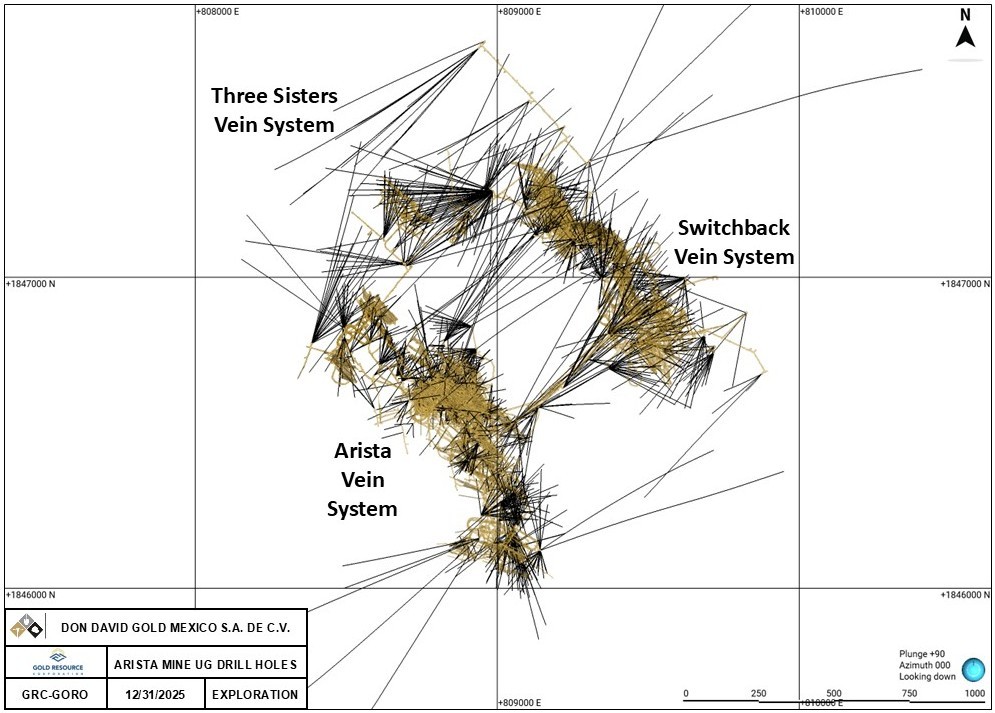
Figure 7-5: Drill hole traces (black lines) for completed underground drilling through December 31, 2025.
7.4.1Core Drilling Methods
Several drilling contractors have performed exploration drilling for DDGM, including Alta Drilling International S. de R. L. de C.V., Detector Drilling Co. (part of Detector Exploraciones, S.A. de C.V.), GeoDrill S.A. de C.V., Grupo Drilcor S.A. de C.V., Major Drilling de Mexico S.A. de C.V., and Maza Diamond Drilling S.A. de C.V. These contractors operate from bases in various locations throughout México.
As of the end of 2025, at the Arista mine, DDGM utilized two contracted underground diamond drill rigs for infill drilling (Drilcor S.A. de C.V. and Detector Drilling Co.) and one DDGM-owned and operated Ingetrol EXPLORER-75E rig used principally for grade-control drilling. At the Alta Gracia Project, one surface diamond drill rig operated by Detector was active during 2025, for a total of four diamond drill rigs.
The majority of all drill holes since 2008 have been drilled by wireline diamond drill coring. Core size produced is typically 2.5 inches or 63.5 mm (HQ) and to a lesser extent 1.875 inches or 47.6 mm (NQ). The contractors use conventional core handling methods and place recovered core into labeled, reusable foldable plastic core boxes for collection and storage. Core runs are typically 3 m or 1.5 m. In longer holes in non-mineralized zones, runs of 6 m may be used to increase drill productivity. In fractured ground, the blocky nature of the core can result in considerably shorter runs, with core recovery being the priority. The drill crews insert wooden blocks to mark the end of each core run, with hole depth, drilled interval, and the driller´s recovery estimate marked on the blocks. Both surface and underground drill holes are cased at their start.
52
7.4.2Geological and geotechnical logging procedures
The core obtained from both surface and underground exploration drilling is logged, sampled, and stored at a central core facility at the Arista mine. Core from diamond drilling is placed in boxes and transported to the core facility by the drill contractor personnel. Sample handling at the core facility follows a standard industry-accepted procedure. Depth markers are verified, and the boxes checked for correct labeling and interval information. The core is then organized, cleaned, photographed and logged for recovery and rock quality designation (“RQD”) for each drill hole.
The geology of the core is logged and the geologist marks potential mineralized zones for sampling. Sample lengths are determined, where possible, by mineralogical or lithological characteristics. The geologists take samples where there is a reasonable chance of obtaining significant results and where sampling is required for continuity of assay data. The core is generally not sampled over the entire drill hole length. The sampling crew then splits the core with a diamond saw, as indicated by the geologist, and one-half of the core is placed in a numbered bag with its corresponding sample tag and sent to the laboratory for analysis. The other half of the core is returned to the core boxes for storage. Generally, the samples represent core lengths of less than 1.50 m with the minimum sample length being 0.30 m. Sample tags are also stapled inside the boxes. All core is photographed before and after sampling.
Bulk density measurements are routinely collected on whole-core samples from each potentially mineralized vein and adjacent wall rock. Samples are selected by geologists as part of the standard core logging procedure. Beginning in July 2024, bulk density has been measured at the on-site density laboratory located within the DDGM core logging facility using a wax-coated immersion method consistent with ASTM C914. Prior to July 2024, density measurements were carried out at the DDGM analytical laboratory using a volume displacement method.
The planning, supervision, monitoring, surveying, and logging of DDGM surface and underground exploration and infill drill holes, as well as grade-control drill holes, are carried out by DDGM technical staff. Exploration and infill drilling are supervised by the DDGM exploration department. Grade-control drilling is overseen by the mine geological team, with logging and sampling support provided by the exploration department. All surface and underground drill core is received and processed at the DDGM exploration office and core processing facility.
7.4.3Drill core recovery
All drill core recovery and RQD measurements are manually recorded and uploaded to DDGM’s geology database. Until April 2025, these data were maintained in parallel in the legacy GeoInfo Tools database and in Seequent’s MX Deposit database management system. Since April 2025, all new drill core recovery and RQD data have been uploaded to MX Deposit as the primary database of record. Ground conditions are generally good, resulting in excellent core recovery. Core recovery is typically high within mineralized zones across all Projects due to the association with silicification and the preferred use of HQ diameter core. Where localized poor recovery is encountered, drill holes may be wedged and/or re-drilled as needed to improve core recovery and the quality of geologic information.
7.4.4Extent of drilling
To date, drilling on the Arista vein system has been conducted over a strike length of approximately 1,700 m, with the maximum depth extent to the 0 masl elevation, about 930 m below the surface. The Switchback vein system drilling has been conducted over a strike length of approximately 1,600 m with the maximum depth extent to the 50 masl elevation, about 950 m below the surface. The Three Sisters vein system drilling has been conducted over a strike length of approximately 750 m with the maximum depth extent to the 400 masl elevation, about 625 m below the surface.
Drilling of the Alta Gracia mineralized zones has been conducted over a strike length of approximately 1,300 m with a maximum depth extent to the 1,150 masl elevation, about 450 m below the surface.
7.4.5Drill hole collar surveys
Surface drill hole collars were surveyed using total station and differential GPS survey methods. Concrete monuments are constructed for each surface drill hole with the drill hole name, total depth, azimuth, and inclination labelled. Underground drill holes collars are surveyed using total station methods. The World Geodetic System 1984 (“WGS84”) is used to record all Project survey data in the UTM grid.
7.4.6Downhole surveys
Downhole surveys are undertaken on all diamond core drill holes. Early RC drill holes in the Aguila pit area were not downhole surveyed. For most drillholes, surveys are taken approximately every 50 m downhole, except for narrow-core definition drill holes performed by the mine geology department.
53
Since 2017, Company policy has been to record an additional survey at approximately 17 m depth (beyond the limit of casing effects), with the depth extended if necessitated by casing depth. Most surveys are performed using a Reflex™ EZ-TRACK, and some holes were surveyed using a Reflex™ FlexIT Smart tool. The drilling contractor carries out all surveys. Downhole survey data are downloaded to CSV files using Reflex™ proprietary software and loaded into the DDGM geology database. Starting in January 2024, downhole survey data were also uploaded into MX Deposit. GeoInfo Tools and MX Deposit were used in parallel until April 2025, after which all new downhole survey data were uploaded only into MX Deposit.
7.4.7Drill Campaigns
7.4.7.1 1999 Apex Silver Corporation RC Drill Campaign
During 1998-1999, Apex undertook an 11-hole RC drilling program (1,242 m). No information from this drill program is in GRC´s database apart from location and hole lengths. All holes are reported as being vertical in the database.
7.4.7.2 2003 Drill Campaign
During 2003, GRC completed a total of 68 RC drill holes (3,840 m) in the vicinity of the shallow-dipping, manto-style vein. The maximum hole depth was 90 m, with most drill holes less than 60 m. RC drill holes were sampled and logged every 2 m. In addition, five shallow diamond-core drill holes were completed for 51.5 m of drilling, using a man-portable Winkie drill; core size is not recorded, although this drill is typically configured for “A” or ”E” drilling string (± 2.5 cm diameter). The maximum hole depth was 20 m. These drill holes were nominally sampled every 2 m, with sample ranges from 0.7 to 3 m; no lithological information is recorded for these five drill holes. RC results from this campaign were sufficiently encouraging for GRC to continue exploring the Arista Project area.
7.4.7.3 2005-2006 Drill Campaigns
During 2005 and 2006, GRC undertook its first major diamond drill campaign at the Arista Project with a total of 35 drill holes completed for 3,207.15 m of coring focused on the Manto target and some drilling on the upper part of Cerro Colorado. A further 15 core drill holes (1,288.35 m) targeted areas close to the historically mined Aire vein in the vicinity of what is now the Arista mine. All samples from 2005 were analyzed by the Servicio Geológico de México laboratory in Oaxaca City for gold and silver using the fire assay method. In 2006, all samples were analyzed by ALS and subsequent to this, all exploration samples were analyzed by ALS. The 2005-2006 campaign succeeded in defining the early indications of the Arista deposit as the exploration footprint expanded to test other nearby historic surface workings as well as step out holes on targets derived from the ongoing surface exploration work.
7.4.7.4 2007 Drill Campaign
In 2007, both RC and diamond drill core programs were undertaken, with both the Manto vein and the Arista mine area (known as the Aire zone at the time) being targeted. The Manto vein mineralization continued to be defined with 72 RC drill holes (6,234.3 m) and 34 diamond core holes (4,124 m) completed. In the Arista mine area, a total of 31 RC drill holes (4,292.7 m) and 59 diamond core drill holes (11,070.64 m) were completed. During the 2007 campaign, the Arista deposit “discovery drill hole” 107080 was completed. This drill hole intercepted three mineralized zones over a total intercept length of 35 m averaging 2.81 g/t Au, 137 g/t Ag, 0.38% Cu, 1.54% Pb, and 5.58% Zn, including a higher-grade interval averaging 8.01 g/t Au, 329 g/t Ag, 0.76% Cu, 1.92% Pb and 9.92% Zn over 7.5 m. This discovery occurred while drilling beneath a small quartz vein outcrop associated with the historic Aire vein prospect. The 2007 RC drill campaign was the last time that this method was used at the Don David Mine properties.
In 2007, a small diamond drill core program was undertaken on the El Rey property with 12 drill holes (1,276 m) completed. This drilling confirmed the potential for significant gold mineralization in two east-west trending quartz veins approximately 50 km north-west of the Arista Project.
7.4.7.5 2008 - 2009 Drill Campaigns
The 2008 drill campaign focused on the newly discovered Arista vein and defined multiple sub-parallel veins within the system.
During 2008, a total of 46 core diamond drill holes (17,219.59 m) were completed. At this time, the significant Baja vein in the footwall of the Arista vein was defined. In 2009, drilling continued to follow up on the growing Arista deposit, albeit at a reduced tempo. In 2009, a total of 12 drill holes (7,393.57 m) were completed.
54
During 2008, additional drilling was undertaken on the El Rey property, with 36 drill holes completed for 3,996.85 m of coring. Three (3) drill holes in this campaign had intercepted 1 to 3 m quartz vein widths, with average gold grades over 30 g/t and silver grades over 44 g/t.
7.4.7.6 2010 Drill Campaign
In 2010, drilling focused on testing additional targets at the Arista Project defined by surface mapping and sampling. Most drilling was undertaken to follow up on targets on the Cerro Colorado peak and its flanks. Four drill holes also tested the Salina Blanca zone, almost two (2) km to the southwest of the Arista system. The non-mine Arista Project exploration program comprised of 29 drill holes for 10,496.85 m of coring. In addition, seven drill holes (3,503.4 m) were completed in the Arista vein system.
7.4.7.7 2011 Drill Campaign
During 2011, drilling focused on the Arista system, with both surface and underground drilling completed. Underground exploration drilling was performed by contract drills and an in-house Termite drill; the latter was used for shorter definition drill holes. A total of 23 underground exploration drill holes were undertaken (4,120.1 m), with 21 Termite drill holes also completed (1,062.31 m). All Termite drill holes were logged and sampled by the exploration group. Forty-two drill holes were completed from the surface targeting the Arista vein system for 20,613.68 m of coring. In addition, one surface drill hole (412.3 m) was drilled into the Chacal exploration target to the northwest of Cerro Colorado peak.
During 2011, GRC initiated drilling at its Alta Gracia Project, where targets were defined from numerous historic workings combined with geologic mapping and sampling. A total of 37 drill holes (8,269.7 m) were completed on the Alta Gracia Project in 2011.
7.4.7.8 2012 Drill Campaign
In 2012, drilling was performed from the surface and underground into the Arista deposit. From surface, a total of 43 drill holes were completed (26,819.4 m) along with a total of 29 underground exploration drill holes (6,417.16 m) and 49 narrow diameter core Termite drill holes were completed (2,576.79 m) during the year. All Termite drill holes were logged and sampled by the exploration group. Additional surface drilling on the surrounding surface areas was undertaken at depth below the Manto vein open pit, and into the southern flank of Cerro Pilon, a rhyolitic dome north of the Manto vein with a total of 9 drill holes completed (4,943.5 m).
In 2012, a small follow-up drilling program was undertaken on the Alta Gracia Project with 12 drill holes completed (3,262.25 m) exploring previously drilled structures and new targets.
The Margaritas property is another area with well-known historic workings that were mainly exploited in the late nineteenth to early twentieth century. The drilling of targets on the Margaritas property was initiated in 2012. A total of 15 holes were completed (5,002 m).
In addition, ten geotechnical drill holes for the tailings dam expansion were undertaken at the Arista mine, with 440.9 m of drilling completed. The holes were logged and the data was included in the geological database.
7.4.7.9 2013 Drill Campaign
While drilling continued at the Arista deposit in 2013, the year was most notable for discovering the Switchback vein system. The discovery drill holes included drill hole 513016 (the main hole) and drill holes 513023, 513024, and 513028 (wedge holes off the main hole). During 2013, a total of 10 drill holes (5,553.75 m), including the three wedges off the first hole, were undertaken in the Switchback zone. Drilling of the Arista deposit continued from surface and underground. The program consisted of 24 underground exploration holes (7,659.05 m) and 30 Termite holes (1,606 m), as well as 49 surface drill holes (23,783.15 m), including some testing for possible extensions to the south-east and south-west. All Termite drill holes were logged and sampled by the exploration group. Drilling on surrounding surface areas focused on the Salina Blanca target (1.8 km south-west of the Arista mine) and testing objectives under and adjacent to the tailings dam expansion at the Arista mine; a total of 45 drill holes (12,905.2 m) were drilled on Arista exploration targets.
In addition, nine drill holes (3,033.25 m) were completed on the Margaritas property, primarily focused on the San Ignacio target.
55
7.4.7.10 2014 Drill Campaign
In 2014, drilling continued at the Arista and Switchback vein systems in the Arista mine. On the Arista system, a total of 33 surface drill holes (12,244.25 m) and 15 underground exploration drill holes (4,749.7 m) were undertaken. In addition, 41 underground Termite drill holes (2,478.34 m) for mine definition were completed. On the Switchback system, a total of 10 drill holes (6,003.75 m), drilled from the Arista workings, were completed. From 2014 onwards, Termite drill holes were logged by the mine geologists. On the surrounding Arista Project area, a total of 36 drill holes (17,755 m) were completed. Most drilling was undertaken in the vicinity of the Manto vein with additional work on the Salina Blanca, Chacal, and Cerro Colorado targets.
The Alta Gracia Project drilling in 2014 focused on four veins systems: Mirador, Huajes, Independencia, and San Juan where a total of 39 drill holes (7,614.35 m) were completed.
7.4.7.11 2015 Drill Campaign
During 2015, underground drilling on the Arista and Switchback vein systems continued. A total of 16 underground exploration drill holes (8,005.95 m) were undertaken on the Switchback veins and 25 underground exploration drill holes (4,004.92 m) on the Arista veins. In addition, 73 Termite drill holes (5,212.07 m) for mine definition were completed. Ten surface drill holes (3,631.31 m) were completed on the Arista system, exploring the Santiago vein. Forty-eight drill holes (11,860 m) were conducted on the Manto vein, Chacal, Salina Blanca, and Cerro Colorado areas on the nearby surrounding surface areas.
During 2015, drilling was also undertaken on the Alta Gracia Project and on the Margaritas property. At Alta Gracia, a total of 9 drill holes (2,554.15 m) were completed with efforts focused on the Mirador vein. On the Margaritas property, a total of 23 drill holes (10,408.78 m) were completed, with drilling focused on the La Tapada and Victoria targets.
7.4.7.12 2016 Drill Campaign
During 2016, the underground exploration drilling carried on from the previous year’s program, with increased exploration focused on the Switchback vein system. A total of 29 exploration drill holes (10,156.4 m) were undertaken on the Switchback veins, including three drill holes drilled primarily for geotechnical evaluation but also sampled for mineralization. On the Arista veins, 24 exploration drill holes (5,378.25 m) were undertaken. In addition, 58 underground Termite drill holes (2,511.77 m) for definition drilling were undertaken. No surface drilling was completed on the Arista Project (the Arista and Switchback deposits) during 2016.
A limited exploration surface drilling program was undertaken at the Margaritas property on the Trenes zone, with five drill holes (2,855.25 m) completed.
7.4.7.13 2017 Drill Campaign
During 2017, mine development entered the Switchback vein system to begin mining the known veins. Consequently, some drilling of this zone was possible from footwall locations considerably closer to the veins than had been possible for previous drill holes. During 2017, a total of 26 underground exploration drill holes (9,723.84 m) were completed into the Switchback system. In addition, 32 Termite drill holes (880.1 m) were completed for vein definition. On the Arista veins, a total of 15 drill holes (3,296.94 m) targeting the recently discovered Splay 31 vein were completed. In addition, 20 Termite drill holes (1,215.8 m) were completed.
Surface drilling during 2017 was undertaken at the Alta Gracia Project with 44 drill holes (9,939.15 m) completed. In addition, a total of 8 Termite drill holes (295.95 m) were completed into the Mirador vein system in support of mining development.
7.4.7.14 2018 Drill Campaign
During 2018, exploration drilling continued to focus on extending the mineralization of the known deposits being actively mined: Arista, Switchback, and Alta Gracia. This year, the mine also acquired a skid-mounted, portable Ingetrol drill rig allowing for longer and larger diameter definition drill holes.
On the Switchback deposit, a total of 17 exploration underground drill holes (7,892.4 m) and 44 mine definition drill holes (1,861.65 m) were completed. On the Arista deposit, a total of 11 exploration underground drill holes (4,415.1 m) and 14 mine definition drill holes (743.7 m) were completed.
On the Alta Gracia Project, exploration drill holes targeted veins proximal to the Mirador deposit and other vein systems on the Project. A total of 20 surface exploration drill holes (4,278.8 m) were completed on the Alta Gracia Project, and 24 mine definition drill holes (1,236 m) were completed on the Mirador deposit.
56
7.4.7.15 2019 Drill Campaign
In 2019, the underground exploration drilling on the Switchback deposit focused on the north-west zone of mine development. A total of 16 underground exploration drill holes (6,830.15 m) were completed on the Switchback deposit, with 16 mine development drill holes (1,707.55 m) also drilled. On the Arista deposit, a total of 17 underground exploration drill holes (4,264.15 m) were completed, with ten mine development drill holes (1,012.1 m) drilled.
In Alta Gracia, exploration drilling focused on the Independencia deposit, which had become the focus of mining activities on the Project. Exploration was undertaken from the surface and an underground drill station (13 drill holes) on the access ramp. A total of 18 exploration drill holes were completed for 3,162.25 m of drilling and 34 mine definition drill holes (2,902.4 m) were completed on the Independencia deposit. All exploration drilling was included in the surface exploration program and is reported as such.
7.4.7.16 2020 Drill Campaign
Underground drilling during 2020 continued to explore extensions of veins currently in production in the Arista mine, including the Soledad, Selene, Sadie, and Sasha veins in the Switchback vein system and the Baja Candelaria, Mercedes, Splay 66, and Splay 31 veins of the Arista vein system.
Twenty-four (24) underground diamond drill holes totaling 6,721.55 m were completed on the Switchback deposit and related structures. Fourteen (14) underground drill holes totaling 2,479.7 m were completed on the Arista deposit. In addition, two mine definition drill holes (94 m) were completed on the Switchback deposit and 40 definition drill holes (4,351 m) were completed on the Arista deposit. On the surrounding surface areas, seven surface diamond drill holes totaling 3,180.15 m were completed during 2020.
From two underground exploration drill stations located in a footwall development ramp of the mine’s Switchback vein system, 11 drill holes confirmed up-dip extensions of the Switchback vein system in its thicker central – northwest sector and narrow vein mineralization near its south-eastern limits.
From an underground exploration drill station located in a footwall development ramp of the mine’s Switchback vein system, five drill holes confirmed the up-dip extensions of the Switchback vein system approximately 35 m (two mine levels) above the 2020 mine workings.
7.4.7.17 2021 Drill Campaign
In 2021, both surface and underground drilling focused on the Arista Project continuing to explore extensions of veins currently in production in the Arista mine. This effort was combined with significant infill drilling for Reserve definition. Drilling was predominantly focused on the Switchback vein system, while also including the Arista and the emerging Three Sisters vein systems.
The drilling of the Switchback vein system consisted of both step-out expansion programs and infill definition drilling. Thirty-one (31) underground exploration drill holes were undertaken in 2021 in the Switchback vein system totaling 9,881.3 m of core. Eleven (11) holes targeted the Three Sisters vein system for 3,618.45 m of drilling, which primarily targeted northwest extensions of the Sandy vein. One (1) exploration hole (hole 521006) drilled to the northeast of the Switchback system, along with one additional hole started in 2020 (hole 520038), was completed on this target, totaling 1,917.90 m between the two holes. Additionally, an infill Reserve definition drill program was undertaken on the Switchback vein system with 57 holes completed for 7,982.7 m of drilling. On the Arista vein system, a total of 11 infill Reserve definition drill holes were completed in 2021 for 1,704.1 m of drilling on the Splay 5 vein.
Underground mine production definition drilling was also performed on veins in the Arista and Switchback vein systems. In Arista production areas, core drilling focused on the Splay 5, Baja, and Candelaria veins with a total of 53 production definition drill holes completed, totaling 3,579.45 m. In the Switchback system, 21 production holes were drilled for 1,673.6 m.
Surface drilling in the Arista Project included five holes totaling 2,056.6 m on the Santiago vein and seven exploration holes totaling 4,931.75 m testing for a southeasterly extension of the Arista vein system as well as on targets in the Cero Pilon and Chacal zones. In addition, a condemnation drill program was undertaken below the Manto vein open pit before the construction of the dry stack facility. These holes confirmed there was insufficient mineralization to support additional mining in this area. A total of 18 condemnation holes were completed for 2,941.1 m of drilling.
The infill drilling programs successfully defined additional Reserves within existing Resources. They extended the Resource limits in the Switchback and Three Sisters vein systems, most notably up- and down-dip in the south-eastern part of the Soledad vein.
57
In the latter part of the year, infill Reserve definition drilling began on the Splay 5 vein in the Arista system. Expansion drilling confirmed the presence of significant mineralization up to 100 m below mining operations. Down-dip drilling in the north-western sector of Soledad in the Switchback system also identified potential for additional Reserves.
Exploration drilling of the Switchback system was undertaken from footwall drill stations in access developments on Levels 20 and 27 of the Switchback system for the infill programs as well as from stations in dedicated drill development at the northern and southern limits of the Switchback system. Drill Development North (DDN) was continued as a NW heading development initiated from a NE heading cross-cut ramp from the Arista system on Level 3. The drilling of the Three Sisters vein system was from a drill station between the Arista and Switchback systems on Level 3 in DDN and focused on the Sandy veins.
7.4.7.18 2022 Drill Campaign
In 2022, underground drilling focused on the Arista Project. Underground drilling continued to explore extensions of veins currently in production in the Arista mine with significant infill drilling for Reserve definition. Drilling was predominantly focused on the Arista vein system, although both the Switchback and Three Sisters vein systems were also drilled. During 2022, a total of 182 exploration drill holes were completed for 34,829.0 m of drilling. Also, one geotechnical hole of 272.80 m included in the exploration database was drilled, as well as 31 production holes which produced 1,527.45 m of core. No surface drilling was undertaken during 2022.
Drilling of the Arista system focused on infill definition programs, although some step-out expansion drilling was undertaken. Five (5) exploration drill holes were completed targeting the Marena system to the NW and below current workings, for a total of 2,328.40 m of drilling. Infill definition drilling was completed on the Splay 5, Splay 31, Luz, Splay 66, Baja, Candelaria, Marena, Santa Helena, Viridiana, Chuy, Veta 1 and Veta 3 veins and associated structures. In the Arista system a total of 117 infill Reserve definition drill holes were completed with 17,079.30 m of core drilled in 2022.
Drilling of the Switchback vein system consisted of both step-out expansion programs and infill definition drilling. Thirteen (13) underground exploration drill holes were completed in 2022 in the Switchback system totaling 7,154.15 m of core. Six (6) holes targeted the Three Sisters vein system for 2,486.55 m of drilling, which primarily targeted northwest extensions of the Sandy vein. Additionally, infill Reserve definition drilling was undertaken on the Switchback vein system with 41 holes completed for 5,780.60 m of drilling.
The infill drilling programs successfully defined additional Reserves within existing Resources. The infill drilling in the Arista system targeted several veins. In the early part of the year drilling was undertaken at the northerly and southern extremes of the Arista deposit on the Splay 31 and Splay 5 veins, respectively; both associated with high grade silver mineralization. A major focus of infill drilling was the Marena through to Veta 1 veins in the central part of the Arista deposit. In addition to confirming and adding to known mineralization in several veins, the drilling confirmed that the Arista system is open down-dip in this zone. Other veins targeted for infill drilling in 2022 were the west north-west trending Luz and Candelaria veins and the Baja-Splay 66 vein system in the southern part of the mine. Infill drill stations in the Arista system are typically located in the footwall of the veins (Marena and Splay 5), although in many veins hanging wall stations are also available (Splay 31, Baja-Splay 66, and Luz).
While expansion Resource drilling focused on the Switchback system, drilling into the northern extension of the Arista Marena system (from a footwall station located in the Switchback deposit) confirmed that mineralization is open to the northwest. The expansion drilling in the Switchback SE zone, from the Drill Development South (DDS) heading, confirmed that mineralization is open down-dip, although narrower and lower grade along strike to the south-east. Drilling to the north-west in both the Switchback and Three Sisters systems was limited by delays in advancing exploration development in the Level 3 Drill Development North (DDN) heading. In this area both systems remain open along strike to the north-west and up- and down-dip. Exploration in the Switchback and Three Sisters systems was predominantly undertaken from drill stations built in dedicated exploration development headings located in the hanging wall of the vein systems. Infill drilling was undertaken from both hanging wall and footwall drilling stations, the latter taking advantage of existing mine development. In the northern area of the Switchback system, several new veins were identified and confirmed by infill drilling, such as the Sarabi, with high grade gold ore-shoots, and Salamanca veins. The infill drilling also enabled re-interpretation of existing structures, resulting in improved geological vein models.
7.4.7.19 2023 Drill Campaign
In 2023, underground drilling at DDGM focused on the Arista Project. Underground drilling explored extensions of veins currently in production in the Arista mine for additional Resource definition along with significant infill drilling for Reserve definition. Drilling was predominantly focused on the Switchback vein system, although veins in Arista, the Three Sisters vein system and the newly discovered Gloria vein system were also drilled.
58
During 2023, a total of 168 exploration diamond drill holes were completed producing a total of 36,349.90 m of core. This drilling includes 18 step-out expansion drill holes totaling 10,293.15 m and 150 infill drill holes totaling 26,056.75 m in the Arista mine. In addition to exploration drilling, a total of 520 m of drift development was completed during the year in support of both the step-out expansion and infill drilling programs. No surface drilling was undertaken in 2023.
During 2023, exploration was strategically directed towards the infill and step-out expansion drilling of multiple high-grade, polymetallic epithermal veins within the Switchback vein system, both up- and down-dip and along strike of existing workings, as well as in the Three Sisters vein system and newly discovered Gloria vein system (step-out hole 523007) to define additional Mineral Reserves and Mineral Resources. The Gloria vein system, located immediately north-west of the Three Sisters vein system and near existing mine infrastructure, is comprised of at least three distinct veins with estimated true widths locally greater than 6 m.
The 2023 step-out expansion drilling program also successfully targeted the extension of the Arista vein system along strike to the north-west with particular focus on the Splay 31, Santa Cecilia and Marena North veins, defining additional Mineral Resources. In the Arista system, a combination of infill and step-out expansion holes were drilled from a drill station located on Level 4 at the northern limit of the Arista mine workings. This drilling successfully identified the north-west extensions of the Splay 31, Santa Cecilia and Marena North veins an additional 100 m north-west from previous drilling.
Drilling of the Switchback vein system in 2023 (including the Three Sisters and Gloria vein systems) consisted of both step-out expansion Resource definition programs and infill Reserve definition drilling. Thirteen (13) underground step-out expansion drill holes totaling 7,747.95 m of core were completed in the Switchback system from drill stations located on Level 3, specifically targeting the Three Sisters and Gloria vein systems. Step-out expansion holes here targeted north-west extensions along strike and down-dip in the Sandy 1 and Sandy 2 veins of the Three Sisters vein system, along with definition of the newly discovered Gloria vein system (Gloria, Gloria Footwall and Splay Gloria veins) located in the footwall of the Three Sisters vein system.
Additionally, infill Reserve definition drilling was undertaken on the Switchback vein system with 107 holes completed for 15,757.90 m of drilling where infill drilling was primarily focused at depth on the Soledad North and South, Sagrario, and Susana North and South veins from drill stations located on Levels 27 and 28. Infill drilling was also completed on the Three Sisters vein system with 16 infill holes for a total of 4,338.0 m of drilling. Infill Reserve definition drilling at the Three Sisters system was focused on the upper-central areas of the Sandy 1 and Sandy 2 veins from drill stations located on Level 3.
Drilling of the Arista vein system in 2023 consisted of both step-out expansion programs and infill definition drilling. Five (5) underground step-out expansion drill holes were completed in the Arista system, totaling 2,545.20 m of drilling, targeting northwest extensions of the Splay 31, Santa Cecilia and Marena North veins to the north of existing workings. Two (2) of the five Arista step-out expansion drill holes (523056 and 523065) were extended to intersect the Gloria and Three Sisters vein systems located to the north-east of Arista.
Although the primary focus of infill Reserve definition drilling in 2023 was on the Switchback system, infill Reserve definition drilling was undertaken in the Arista vein system with 27 holes completed for 5,960.85 m of drilling. In the first half of the year drilling was undertaken from drill stations located on Level 21 focusing on the deep, northern portion of the Arista deposit, specifically the lower Veta 1, Veta 3, Chuy 2 and Viridiana vein zones. Drilling continued to add and confirm mineralization in this area of Arista as well as showing continuation of the veins at depth and along strike to the north. In late-2023, definition infill drilling using the DDGM owned and operated Ingetrol drill was focused on defining Reserves in the upper-central zones of the Splay 31 and Aire veins from drill stations located on Level 1 of the Arista mine. The infill drilling programs at the Arista, Switchback and Three Sisters systems was successful in defining additional Reserves within existing Resources.
7.4.7.20 2024 Drill Campaign
In 2024, drilling at DDGM focused on the Arista Project, with all drilling activities conducted underground. Infill and step-out expansion drilling targeted veins in the Three Sisters and North Arista vein systems (Splay 31 and Marena North veins) to define additional Resources and upgrade previously identified inferred Resources to the measured and indicated categories. Other diamond drilling at DDGM in 2024 included underground grade-control (reserve definition) drilling of veins currently in production as well as identifying additional near-term production opportunities in veins of both the Arista and Switchback systems of the Arista mine.
During 2024, in the Arista mine a total of 87 diamond drill holes were completed producing 12,760.75 m of core. This drilling included one step-out expansion drill hole totaling 323.60 m, 22 infill drill holes totaling 7,347.85 m, 63 grade-control drill holes totaling 4,974.30 m, and one geo-technical hole for a ventilation raise totaling 115.00 m. All holes were logged and sampled by the exploration department and are included in the geologic database.
59
Additionally, 19 m of drift development was completed during the year in support of the expansion and infill drilling programs, along with 7 m of drift development in support of grade-control drilling. No surface drilling was undertaken in 2024.
During the year, exploration focused primarily on infill and step-out expansion drilling of multiple high-grade, polymetallic epithermal veins within the Three Sisters vein system, including the recently discovered Gloria vein. Drilling was conducted both up- and down-dip and along strike of existing workings. The Three Sisters vein system, located between and to the north of the Arista and Switchback vein systems and near existing mine infrastructure, is comprised of at least ten distinct veins with estimated true widths locally greater than 6 m.
In 2024, one step-out expansion drill hole (524029) totaling 323.60 m, was completed which successfully intersected the up-dip extension of the Sadie 2 vein within the Three Sisters vein system, identifying additional Mineral Resources. This expansion drill hole confirmed the up-dip potential an additional 80 m vertically above previously defined limits. Also, infill drill holes 524037 and 524042 confirmed the up-dip mineralized extensions of the Sandy 1 and Sandy 2 veins, approximately 40 m up-dip and to the north-west of previous drilling. These newly identified mineralized up-dip extensions of the Three Sisters vein system remain open.
In 2024, a total of 16 infill definition drill holes totaling 5,822.65 m, were completed in the Three Sisters vein system from a drill station located on Level 3. Upon completion of the 2024 drilling, the geologic model for the Three Sisters vein system was reviewed in detail, aided by interpreted hand-drawn cross sections. These sections were later digitized using Leapfrog Geo to create the three-dimensional solids used in the 2024 resource update. The updated Three Sisters geologic model provided an improved model to build on for future drilling campaigns. Exploration drilling in 2024 successfully upgraded previously identified inferred resources to the measured and/or indicated resource categories in the Gloria, Splay Gloria, Sandy 1, Sandy 2, Sasha 2, Sadie 2, Sadie HW and Sadie FW veins in the Three Sisters vein system.
In 2024, six infill definition drill holes totaling 1,525.20 m, were completed from a second drill station on Level 3, targeting the northern extensions of the Splay 31 and Marena North veins in the Arista vein system, 175 m north of existing workings. These holes were successful in defining additional Mineral Reserves and Mineral Resources in this zone. The Splay 31 and Marena North veins both are open up- and down-dip as well as along strike to the north-west. No exploration drilling was completed in the Switchback system in 2024.
In 2024, a total of 63 grade-control diamond drill holes were completed using the DDGM owned and operated Ingetrol drill, primarily focusing on infill Reserve definition drilling in the Arista and Switchback vein systems. Of this total, 45 holes targeted veins in the Arista system, specifically the Aire, Arista and Splay 31 veins from Level 1, the Splay 5 vein from Level 19.5, and the Chuy vein from Levels 21 and 25. Meanwhile, 18 holes targeted veins in the Switchback system, specifically the SolRam 5, Selene and Sarabi veins from Level 14.5 and the Sofia vein from Level 28. These grade-control holes aided in Reserve definition and tested zones adjacent to known Reserves to identify additional near-term production opportunities.
7.4.7.21 2025 Drill Campaign
In 2025, drilling at DDGM focused on underground infill and grade-control drilling within the Arista Project, with drilling conducted at the Arista, Three Sisters and Switchback vein systems at the Arista Mine. No underground step-out expansion drilling was completed during the year. The 2025 drilling program was designed to support the year-end Mineral Resource and Mineral Reserve estimate by refining the geologic model, improving confidence in vein continuity and grade distribution, and supporting near-term mine planning within areas proximal to existing underground infrastructure. In November 2025, limited surface diamond infill drilling was initiated at the Alta Gracia Project.
During 2025, a total of 111 underground diamond drill holes totaling 14,539 meters were completed by DDGM, consisting of 33 infill holes totaling 5,982 meters, and 78 grade-control holes totaling 8,557 meters. Of the infill drilling, six holes totaling 1,121 meters were completed from surface at the Alta Gracia project. Drilling at the Arista mine consisted of underground infill and grade-control holes within active and near-mine areas of the Three Sisters, Arista and Switchback systems. All drill holes were logged, sampled, and incorporated into the Company’s geologic database by the exploration department. No surface drilling was undertaken within the Arista Project area during 2025.
Infill drilling during the first half of 2025 was concentrated within the Three Sisters vein system from multiple underground drill stations on Levels 3 and 4. This program enabled refinements to the geologic model along approximately 350 meters of strike and resulted in the identification and modelling of two additional veins, increasing the number of modelled veins from 10 to 12 during H1 2025. Drilling further defined the continuity of mineralization within several veins of the Three Sisters system, including the Sandy, Sadie and Sasha vein sets, and improved confidence in grade distribution and vein geometry.
60
During the second half of 2025, drilling emphasized closely spaced infill and grade-control holes within the Three Sisters system (Levels 3 and 4), as well as definition drilling within established veins of the Arista system, including Santa Helena, Marena, Viridiana (drilled from Levels 17, 24 and 25), Marena North and Splay 31 (Levels 3 and 4), and associated splays. Limited drilling was also conducted within the Switchback system, targeting the Susana South and Soledad South veins from Level 30. Continued refinement of the three-dimensional geologic model during H2 2025 increased the number of modelled veins and vein segments within the Three Sisters and Gloria systems from 12 at the end of H1 2025 to 24 by year-end.
Drilling throughout 2025 was conducted both up- and down-dip and along strike of known mineralized structures to refine vein geometries and improve continuity within the geologic model. Results from the 2025 infill and grade-control program contributed to the conversion of Inferred Mineral Resources to Proven and Probable Mineral Reserves at year-end through improved structural interpretation, tighter wireframing of mineralized solids, and removal of isolated or low-confidence blocks, resulting in a more robust reserve estimate.
In support of the 2025 drilling campaign, more than 485 meters of underground exploration development were completed to improve drill access within the Three Sisters and Gloria vein systems and along the north-west extension of the Arista system. Underground development at Three Sisters intersected the Sandy and Sadie vein sets on multiple levels, providing improved access for grade-control drilling and near-term production planning.
In mid-November 2025, limited surface exploration drilling recommenced at the Alta Gracia Project. A total of six surface diamond drill holes totaling 1,121 meters were completed, targeting the south-west extension of the Mirador vein system toward the Independencia vein system. This initial program is designed to evaluate the continuity and grade distribution of mineralized structures identified through prior mapping, sampling and data compilation. Results from this drilling will inform both future surface and underground exploration planning at Alta Gracia.
Total infill and grade-control meters completed in 2025 are reported in Table 7-5, and all underground diamond drill holes completed in 2025 at the Arista mine are shown in Figure 7-6. Notable drill intersections from the 2025 program are summarized in Table 7-6.

Figure 7-6: Plan view of the Arista, Switchback and Three Sisters vein systems showing diamond drill holes completed in 2025.
61
A plan view and cross-section showing the northwestern portion of the Arista, Three Sisters and Switchback vein systems with 2025 drilling results are shown in Figure 7-7 and Figure 7-8. Figure 7-9 shows a representative cross-section of the Three Sisters vein system with 2025 drilling results.

Figure 7-7: Plan view of the north-western Arista mine showing the Arista, Three Sisters and Switchback vein systems with diamond drilling completed in 2025.
62

Figure 7-8: Cross section (A–A’) looking north-west through the Arista and Three Sisters vein systems of the Arista mine showing 2025 drilling results.
63

Figure 7-9: Cross section (B–B’) looking north-west through the Arista vein system of the Arista mine showing 2025 drilling results.
Representative drill sections displaying mineralized interpretations of the Arista and Switchback deposits in the Arista mine are shown in Figure 710 and Figure 711. Two sections of the Mirador and Independencia mineralized zones on the Alta Gracia Project are shown in Figure 712 and Figure 713. Sectional interpretations are initially based on drill sections and then refined using systematic sections. Due to logistical and access issues, drilling along systematic sections is difficult. Most drilling has been undertaken using fan patterns in plan and vertical sections with targeting based on long section impact spacing. Typical systematic drill sections, as presented in this report section, often only show partial traces of drill holes, which fall within section corridors.
64

Figure 7-10: Arista Mine, Arista Deposit section displaying mineralization, modelled vein solids and lithology.
65

Figure 7-11: Arista Mine, Switchback Deposit section displaying mineralization, modelled vein solids and lithology.
66

Figure 7-12: Alta Gracia Project, Mirador Deposit section displaying mineralization, modelled vein solids and lithology.
67

Figure 7-13: Alta Gracia Project, Independencia Deposit section displaying mineralization, modelled vein solids and lithology.
7.4.9Summary of Drill Intercepts
A selection of significant drill intercepts from zones drilled during 2025 is presented in this section. The intercepts summarized represent a subset of mineralized intervals considered representative of the 2025 drilling program at the Arista, Three Sisters and Switchback vein systems within the Arista Project and are not intended to represent all mineralized intervals encountered. All drill results presented were received prior to the Mineral Resource estimation data cut-off date and have been incorporated into the 2025 year-end Mineral Resource estimate. Complete drill results are maintained in the Company’s geologic database.
Exploration results presented in this section have been or will be used to support Mineral Resource estimation for identified veins where geological continuity and grade distribution are considered sufficient. Other vein results may be incorporated into future Mineral Resource estimates as additional drilling and interpretation warrant. Early-stage exploration activities described in previous sections will require further drilling prior to consideration for Mineral Resource estimation.
Significant drill intercepts from 2025 drilling are summarized in Table 76. Significant intercepts are defined as intervals where Net Smelter Return (“NSR”) in $/t multiplied by Estimated True Width (“ETW”) in meters, equals or exceeds 300. Intercepts not meeting this threshold are not presented in Table 7-6 but are included in the geologic database and were considered in the Mineral Resource estimate.
68
Table 7-6: Significant 2025 Drilling Results for the Arista Mine.
HOLE |
SYSTEM |
VEIN |
FROM |
TO |
INTERVAL |
ETW* |
AU |
AG |
CU |
PB |
ZN |
|---|---|---|---|---|---|---|---|---|---|---|---|
ID |
(m) |
(m) |
(m) |
(m) |
( g/t ) |
( g/t ) |
( % ) |
( % ) |
( % ) |
||
525001 |
ART |
Marena |
34.72 |
37.33 |
2.60 |
2.26 |
0.75 |
328 |
1.54 |
6.03 |
15.72 |
525001 |
ART |
Viridiana |
48.60 |
50.52 |
1.90 |
1.80 |
1.59 |
36 |
0.40 |
1.95 |
6.44 |
525002 |
ART |
Sta Helena |
42.26 |
43.52 |
1.26 |
1.18 |
0.24 |
41 |
1.23 |
5.40 |
23.12 |
525002 |
ART |
Viridiana |
51.91 |
53.27 |
1.36 |
1.28 |
1.46 |
104 |
0.26 |
4.45 |
14.90 |
525005 |
ART |
Sta Helena |
59.34 |
61.73 |
2.39 |
1.69 |
3.94 |
119 |
0.29 |
1.75 |
11.26 |
525006 |
ART |
Sta Helena |
54.45 |
56.44 |
1.99 |
1.96 |
1.83 |
221 |
0.61 |
4.83 |
15.94 |
525007 |
ART |
Marena |
38.64 |
40.24 |
1.60 |
1.45 |
0.67 |
46 |
0.75 |
2.44 |
14.53 |
525008 |
ART |
Viridiana |
82.97 |
86.12 |
3.15 |
2.96 |
0.04 |
277 |
0.03 |
0.62 |
3.76 |
525010 |
3SG |
Sadie 3 |
41.84 |
46.75 |
4.91 |
4.25 |
1.26 |
153 |
0.12 |
0.54 |
0.57 |
525010 |
3SG |
Sasha 1 |
101.00 |
108.80 |
7.80 |
5.98 |
0.79 |
252 |
0.11 |
0.34 |
0.76 |
525011 |
3SG |
Sadie 1 |
62.29 |
67.34 |
5.05 |
4.97 |
3.64 |
870 |
0.23 |
0.37 |
0.86 |
525012 |
3SG |
Sandy 1 |
37.37 |
39.67 |
2.30 |
2.08 |
2.22 |
97 |
0.17 |
0.64 |
1.97 |
525013 |
3SG |
Sandy 2 |
42.39 |
44.94 |
2.60 |
2.21 |
2.28 |
306 |
0.14 |
0.40 |
0.96 |
525014 |
3SG |
Sandy 2 |
43.67 |
46.10 |
2.43 |
2.10 |
0.81 |
150 |
0.14 |
0.28 |
0.60 |
525014 |
3SG |
Sandy 4 |
67.31 |
69.22 |
1.90 |
1.65 |
1.55 |
238 |
0.11 |
0.32 |
0.98 |
525016 |
3SG |
Sandy 1 |
36.80 |
40.50 |
3.70 |
3.64 |
1.32 |
80 |
0.09 |
1.59 |
2.47 |
525017 |
3SG |
Sandy 1 |
43.50 |
46.63 |
3.13 |
2.94 |
4.25 |
30 |
0.15 |
0.91 |
2.34 |
525018 |
3SG |
Sandy 5 |
146.95 |
153.78 |
6.83 |
4.83 |
1.92 |
2103 |
0.47 |
0.74 |
1.55 |
525018 |
3SG |
Sandy 1 |
164.50 |
167.25 |
2.75 |
2.25 |
0.96 |
120 |
0.19 |
0.15 |
0.36 |
525019 |
3SG |
Sadie 2 |
35.04 |
38.22 |
3.18 |
2.88 |
0.93 |
116 |
0.02 |
0.05 |
0.11 |
525019 |
3SG |
Sadie 1 |
60.83 |
65.36 |
4.53 |
4.26 |
0.92 |
220 |
0.05 |
0.30 |
0.64 |
525020 |
3SG |
Sandy 5 |
137.89 |
142.48 |
4.60 |
3.52 |
2.05 |
1691 |
0.48 |
0.39 |
1.01 |
525023 |
3SG |
Sadie 4 |
54.77 |
56.63 |
1.86 |
1.80 |
0.49 |
396 |
0.03 |
0.03 |
0.08 |
525024 |
3SG |
Sandy 5 |
120.22 |
126.90 |
6.68 |
4.72 |
0.88 |
538 |
0.15 |
0.34 |
0.66 |
525024 |
3SG |
Sandy 1 |
159.24 |
163.08 |
3.84 |
3.33 |
1.11 |
607 |
0.22 |
0.67 |
1.48 |
525025 |
3SG |
Sadie 1 |
60.93 |
62.19 |
1.26 |
1.18 |
6.99 |
361 |
0.03 |
0.07 |
0.25 |
525026 |
3SG |
Sandy 5 |
127.50 |
134.70 |
7.20 |
5.18 |
1.50 |
822 |
0.17 |
0.56 |
1.20 |
525026 |
3SG |
Sandy 2 |
147.60 |
151.47 |
3.87 |
2.95 |
0.68 |
808 |
0.17 |
0.18 |
0.51 |
525026 |
3SG |
Sandy 1 |
170.17 |
173.25 |
3.08 |
2.41 |
1.95 |
506 |
0.18 |
0.67 |
1.60 |
525027 |
3SG |
Sasha 1 |
105.40 |
109.50 |
4.10 |
3.36 |
0.14 |
168 |
0.05 |
0.08 |
0.22 |
525028 |
3SG |
Sandy 2 |
193.65 |
200.37 |
6.72 |
5.15 |
0.45 |
154 |
0.02 |
0.06 |
0.16 |
525028 |
3SG |
Sandy 1 |
203.57 |
207.85 |
4.28 |
3.28 |
0.52 |
312 |
0.01 |
0.11 |
0.20 |
525029 |
3SG |
Sadie 2 |
34.70 |
36.53 |
1.83 |
1.80 |
0.89 |
817 |
0.07 |
0.31 |
0.98 |
525029 |
3SG |
Sadie 3 |
41.84 |
48.05 |
6.21 |
6.12 |
0.92 |
224 |
0.05 |
0.09 |
0.25 |
525029 |
3SG |
Sadie 1 |
89.93 |
92.22 |
2.30 |
1.75 |
1.33 |
248 |
0.16 |
0.49 |
1.01 |
525029 |
3SG |
Sasha 1 |
98.20 |
100.60 |
2.40 |
1.84 |
0.70 |
430 |
0.22 |
0.79 |
2.91 |
525030 |
3SG |
Sandy 1 |
146.96 |
150.78 |
3.82 |
3.60 |
1.86 |
245 |
0.12 |
0.53 |
1.19 |
69
HOLE |
SYSTEM |
VEIN |
FROM |
TO |
INTERVAL |
ETW* |
AU |
AG |
CU |
PB |
ZN |
|---|---|---|---|---|---|---|---|---|---|---|---|
ID |
(m) |
(m) |
(m) |
(m) |
( g/t ) |
( g/t ) |
( % ) |
( % ) |
( % ) |
||
525031 |
3SG |
Sadie 2 |
32.27 |
34.74 |
2.47 |
2.32 |
0.28 |
174 |
0.04 |
0.05 |
0.12 |
525031 |
3SG |
Sadie 3 |
39.60 |
42.02 |
2.40 |
2.10 |
1.30 |
932 |
0.20 |
0.14 |
0.29 |
525031 |
3SG |
Sadie 5 |
64.05 |
66.88 |
2.83 |
2.45 |
0.43 |
261 |
0.04 |
0.15 |
0.41 |
525032 |
3SG |
Sandy 2 |
140.26 |
143.00 |
2.74 |
2.57 |
1.11 |
91 |
0.12 |
0.62 |
1.39 |
525033 |
3SG |
Sadie 2 |
34.31 |
37.59 |
3.30 |
2.84 |
0.94 |
854 |
0.08 |
0.38 |
0.91 |
525035 |
3SG |
Sadie 3 |
57.54 |
60.64 |
3.10 |
2.37 |
0.37 |
244 |
0.02 |
0.04 |
0.11 |
525036 |
3SG |
Sandy 6 |
37.93 |
40.65 |
2.72 |
2.08 |
1.07 |
89 |
0.28 |
1.55 |
2.44 |
525036 |
3SG |
Sandy 1 |
141.71 |
146.36 |
4.65 |
4.49 |
1.86 |
151 |
0.28 |
0.98 |
2.49 |
525037 |
3SG |
Sadie FW |
42.78 |
44.94 |
2.16 |
2.03 |
0.74 |
227 |
0.02 |
0.05 |
0.11 |
525038 |
3SG |
Sandy 2 |
148.58 |
151.52 |
2.94 |
2.66 |
1.28 |
245 |
0.14 |
0.37 |
0.88 |
525040 |
3SG |
Sandy 1 |
163.14 |
166.90 |
3.76 |
3.53 |
3.72 |
1187 |
0.68 |
1.14 |
2.34 |
525041 |
ART |
Splay 31 RM3 |
89.27 |
92.66 |
3.39 |
2.60 |
1.18 |
183 |
0.36 |
1.27 |
1.34 |
525042 |
3SG |
Sandy 1 |
167.10 |
174.33 |
7.23 |
6.79 |
0.56 |
412 |
0.49 |
1.03 |
2.48 |
525044 |
3SG |
Sandy 1 |
165.63 |
169.40 |
3.77 |
3.54 |
5.83 |
169 |
0.52 |
1.17 |
2.33 |
525044 |
3SG |
Sandy 4 |
171.49 |
175.13 |
3.64 |
3.15 |
2.32 |
52 |
0.27 |
1.26 |
2.74 |
525046 |
3SG |
Sandy 1 |
180.74 |
183.13 |
2.39 |
2.07 |
0.61 |
167 |
0.01 |
0.03 |
0.07 |
525049 |
3SG |
Sandy 1 |
167.22 |
168.51 |
1.29 |
1.21 |
7.03 |
2417 |
0.40 |
1.04 |
3.27 |
525051 |
3SG |
Sandy 2 |
154.95 |
156.00 |
1.05 |
1.03 |
3.52 |
1414 |
0.30 |
0.77 |
1.27 |
525051 |
3SG |
Sandy 1 |
164.94 |
167.80 |
2.86 |
2.69 |
1.81 |
547 |
0.10 |
0.45 |
1.10 |
525052 |
ART |
Candelaria |
69.63 |
72.93 |
3.30 |
2.84 |
0.95 |
577 |
0.12 |
0.21 |
0.38 |
525059 |
ART |
Viridiana |
50.62 |
53.02 |
2.40 |
2.30 |
0.02 |
74 |
0.01 |
1.47 |
10.31 |
525060 |
3SG |
Sandy 3 |
180.30 |
184.79 |
4.49 |
4.43 |
2.46 |
152 |
0.19 |
1.06 |
2.94 |
525061 |
ART |
Marena North |
95.83 |
102.58 |
6.75 |
5.23 |
3.21 |
169 |
0.40 |
2.88 |
4.92 |
525061 |
ART |
Splay 31 |
186.85 |
190.40 |
3.55 |
3.10 |
3.11 |
93 |
0.15 |
2.68 |
5.13 |
525062 |
ART |
Viridiana |
43.75 |
47.00 |
3.25 |
3.05 |
0.14 |
159 |
0.01 |
1.04 |
9.06 |
525064 |
ART |
Sta. Helena |
82.85 |
87.40 |
4.55 |
4.28 |
0.75 |
44 |
0.02 |
1.51 |
3.54 |
525064 |
ART |
Viridiana |
90.45 |
92.10 |
1.65 |
1.64 |
0.11 |
156 |
0.04 |
1.85 |
6.32 |
525066 |
ART |
Sta. Helena |
88.70 |
91.45 |
2.75 |
2.38 |
0.07 |
48 |
0.09 |
1.48 |
7.39 |
525066 |
ART |
Viridiana |
96.35 |
101.25 |
4.90 |
4.20 |
0.13 |
171 |
0.03 |
5.13 |
17.06 |
525068 |
ART |
Sta. Helena |
102.85 |
108.75 |
5.90 |
4.17 |
0.29 |
143 |
0.35 |
1.98 |
13.38 |
525068 |
ART |
Viridiana |
112.15 |
119.15 |
7.00 |
5.50 |
0.05 |
299 |
0.02 |
3.27 |
12.76 |
525069 |
SWB |
Soledad South |
56.05 |
57.75 |
1.70 |
1.60 |
0.13 |
411 |
0.54 |
1.13 |
12.09 |
525072 |
ART |
Sta. Helena |
91.00 |
93.40 |
2.40 |
2.36 |
0.12 |
21 |
0.14 |
1.13 |
9.37 |
525072 |
ART |
Viridiana |
94.70 |
99.05 |
4.35 |
4.28 |
0.11 |
128 |
0.02 |
1.79 |
5.80 |
525075 |
ART |
Viridiana |
98.90 |
102.80 |
3.90 |
3.38 |
0.03 |
84 |
0.00 |
1.51 |
5.02 |
525078 |
ART |
Viridiana |
110.40 |
112.35 |
1.95 |
1.83 |
0.04 |
75 |
0.00 |
0.41 |
9.41 |
525079 |
SWB |
Susana South |
55.60 |
59.45 |
3.85 |
3.33 |
0.29 |
47 |
0.04 |
1.42 |
3.74 |
70
HOLE |
SYSTEM |
VEIN |
FROM |
TO |
INTERVAL |
ETW* |
AU |
AG |
CU |
PB |
ZN |
|---|---|---|---|---|---|---|---|---|---|---|---|
ID |
(m) |
(m) |
(m) |
(m) |
( g/t ) |
( g/t ) |
( % ) |
( % ) |
( % ) |
||
525079 |
SWB |
Soledad South |
66.70 |
68.50 |
1.80 |
1.48 |
0.06 |
148 |
0.36 |
0.91 |
10.69 |
525080 |
3SG |
Sasha 1 |
153.05 |
160.75 |
7.70 |
6.31 |
0.62 |
443 |
0.03 |
0.06 |
0.16 |
525080 |
3SG |
Sandy 4 |
160.75 |
171.75 |
11.00 |
8.43 |
0.43 |
515 |
0.05 |
0.09 |
0.26 |
525082 |
ART |
Viridiana |
111.80 |
114.35 |
2.55 |
2.21 |
0.01 |
169 |
0.13 |
1.49 |
9.01 |
525085 |
ART |
Viridiana |
125.15 |
129.75 |
4.60 |
2.95 |
0.02 |
267 |
0.12 |
2.92 |
28.40 |
525086 |
3SG |
Sadie 1 |
158.10 |
160.60 |
2.50 |
1.90 |
13.49 |
931 |
0.07 |
0.28 |
0.75 |
525088 |
ART |
Viridiana |
125.75 |
130.55 |
4.80 |
3.10 |
0.03 |
124 |
0.07 |
1.79 |
19.83 |
525090 |
3SG |
Sadie 1 |
112.60 |
121.00 |
8.40 |
6.43 |
0.46 |
245 |
0.01 |
0.05 |
0.11 |
525091 |
ART |
Viridiana |
164.00 |
169.00 |
5.00 |
2.50 |
0.01 |
79 |
0.00 |
0.31 |
4.88 |
525091 |
ART |
Viridiana RM2 |
188.00 |
194.00 |
6.00 |
3.44 |
0.01 |
50 |
0.01 |
0.30 |
10.20 |
525094 |
3SG |
Sadie 1 FW |
124.10 |
127.90 |
3.80 |
2.91 |
0.45 |
339 |
0.02 |
0.05 |
0.13 |
525095 |
3SG |
Sasha 1 |
159.10 |
162.15 |
3.05 |
2.34 |
1.18 |
349 |
0.02 |
0.07 |
0.22 |
525096 |
ART |
Candelaria |
65.20 |
66.95 |
1.75 |
1.34 |
1.63 |
294 |
0.36 |
1.97 |
4.68 |
525097 |
ART |
Viridiana |
145.65 |
148.55 |
2.90 |
2.22 |
0.02 |
148 |
0.08 |
3.07 |
23.48 |
525099 |
3SG |
Sasha 1 |
180.95 |
186.00 |
5.05 |
3.57 |
0.74 |
938 |
0.05 |
0.13 |
0.40 |
525100 |
ART |
Viridiana |
116.90 |
120.70 |
3.80 |
3.29 |
0.04 |
187 |
0.03 |
2.83 |
16.61 |
525104 |
3SG |
Sadie 1 |
109.60 |
117.15 |
7.55 |
7.09 |
0.52 |
365 |
0.03 |
0.06 |
0.17 |
*Estimated True Width, based on core intersection (alpha) angle methodology (Marjoribanks, 2010).
7.5Other Exploration Activities
Numerous regional and local geological studies have been undertaken at DDGM, including geochemical and geophysical investigations conducted during past exploration programs. These studies provide the basis for four principal exploration target areas: Arista, Alta Gracia, Margaritas, and El Rey. In 2022, satellite derived ASTER and Landsat OLI 8 SWIR and NIR data were analyzed for the Arista Project and the Margaritas property. This study confirmed previously identified targets and delineated additional areas for follow-up ground exploration and potential future drill testing. Exploration datasets for these projects are reviewed and updated on an ongoing basis.
The DDGM properties remain prospective for additional mineralization. To date, exploration activities have largely focused on near-mine areas. Ongoing evaluation includes both brownfield and greenfield targets within the Company’s Oaxaca land package. Recent exploration efforts, as described in previous sections of this report, have focused on early-stage targets identified through geological mapping and geochemical sampling. Additional drilling and technical evaluation will be required to determine whether these targets have the potential to support the delineation of Mineral Resources.
In the opinion of the QP:
| ● | The mineralization style and setting of the DDGM area are sufficiently well understood to support Mineral Resource and Mineral Reserve estimation. |
| ● | Exploration methods employed are consistent with industry practice and are adequate to support ongoing exploration and Mineral Resource estimation. |
| ● | Exploration results support DDGM’s interpretation of the geological setting and controls on mineralization. |
71
| ● | Continued exploration has the potential to identify additional mineralization that may support future Mineral Resource estimation. |
The QP has the following observations and conclusions regarding drilling conducted at the Property:
| ● | Data was collected using industry-standard practices. |
| ● | Drill hole orientations are appropriate relative to the interpreted orientation of the mineralization in areas used for Mineral Resource estimation. |
| ● | Core logging meets industry standards for epithermal-style deposits. Geotechnical logging is adequate to support Mineral Resource and Mineral Reserve estimation. |
| ● | Collar surveys were completed using industry-standard instrumentation and procedures. |
| ● | Downhole surveys were completed using industry-standard instrumentation and procedures. |
| ● | Drilling information is sufficient to support the Mineral Resource and Mineral Reserve estimates. |
8.SAMPLE PREPARATION, ANALYSES, AND SECURITY
Samples used in the Mineral Reserve estimates include both diamond drill core and underground chip/channel samples. Routine sampling at DDGM also includes process, tailings and concentrate samples. In addition to supporting operating performance, these samples are used for reconciliation of production to Mineral Reserves and for validation of reserve assumptions, as applicable. DDGM maintains sample preparation and laboratory facilities at the DDGM Processing Facility.
All exploration samples are analyzed by an external laboratory. Since 2006, the exploration department has used ALS Global Group (“ALS”) for assaying. Exploration samples are analyzed at ALS’s Vancouver, Canada laboratory, which is accredited to ISO 9001:2015 and ISO/IEC 17025:2017 for the analytical methods used for DDGM samples.
8.1.Exploration and Drill Hole Samples
Since 2006, all DDGM surface exploration rock and soil samples of rock and soil and surface and underground exploration drill core have been bagged and tagged at the DDGM core facility. Initially, these samples were shipped to the ALS preparation facility in Guadalajara, Mexico. In 2023, sample preparation was transferred to the ALS facility in Santiago de Queretaro, Mexico and since June 2024 samples have been prepared at the ALS facility in Hermosillo, Mexico. After preparation, samples are shipped to the ALS laboratory in Vancouver, Canada for analysis. All samples are logged into the ALS Laboratory Information Management System (LIMS), which enables tracking of sample custody and status. Core sample lengths generally range from 0.3 m to 1.5 m, with occasional longer samples. Surface exploration rock and soil samples are analyzed as described in the section on soil sampling.
Drill samples are dried and jaw crushed to 70% passing -10 mesh at the ALS preparation facility in both Santiago de Queretaro and Hermosillo. A 250 g subsample is pulverized using a ring pulverizer and then sent to ALS in Vancouver for assaying. Preparation (crush) duplicates and analytical (pulp) duplicates are split from the samples at the crushing and pulverization phases of sample preparation, respectively. Certified reference materials (standards and blanks) are inserted into the sample stream by DDGM exploration staff prior to submittal to ALS, and ALS is requested to analyze samples in the sequence submitted.
In Vancouver, ALS analyzes the samples for gold using 30 g fire assay digestion with an atomic absorption finish (Method Au-AA23). Silver is analyzed by multiple methods depending upon the grade of the sample. All samples are analyzed for silver using aqua regia digestion of a 0.5 g sample with an ICP-AES finish (Method ME-ICP41). Samples exceeding 100 ppm silver was reanalyzed using an aqua regia digestion of a 0.4 g of the sample with an ICP-AES finish (Method Ag-OG46). Samples exceeding 1,500 ppm silver are reanalyzed using a 30 g fire assay with a gravimetric finish (Method Ag-GRA21). Samples are also analyzed for an additional 34 elements including copper, lead, and zinc using aqua regia digestion of a 0.5 g sample with an ICP-AES finish (Method ME-ICP41). Any samples with copper, lead, or zinc concentrations exceeding 10,000 ppm are reanalyzed using aqua regia digestion of a 0.4 g sample with an ICP-AES finish (Method OG46). Samples with lead concentrations exceeding 20,000 ppm and zinc concentrations exceeding 30,000 ppm are reanalyzed using four-acid digestion with titrated endpoints to determine lead and zinc concentrations.
Check assaying of underground channel samples is performed by ALS. Underground development drill core samples are analyzed at DDGM’s in-house laboratory at the Arista Project. Samples are crushed using jaw crushers to 90% passing -12 mesh. The crushed material is split to obtain a 200 g subsample, which is pulverized using ring pulverizers to get a 90% passing -100 mesh sample used for analyses.
72
After analysis, pulp duplicates and coarse rejects are collected by exploration personnel and stored with exploration pulp and coarse reject material for six months and then discarded. Oxide samples are analyzed for gold and silver by fire assay (approximately 30 g). Sulfide material is analyzed by fire assay for gold and silver, with copper, lead and zinc analyzed by atomic absorption spectrophotometry following two-acid digestion.
The mine geologists manage the chip/channel sampling process. After each blast round, the mine geology department collects underground channel samples from mineralized zones, hanging walls, and footwall exposures in development faces.
Chip/channel sampling is conducted along sublevel drifts within mineralized zones and represents the primary sampling method in the mine. Channel samples are typically taken horizontally across drifts and other working faces, across the back, and occasionally from sidewalls. In development headings, sampling is generally completed from the footwall of the vein structure to the hanging wall, with the entire face sampled in production headings. Historically, some samples were collected perpendicular to the vein structure, but this is not current practice.
Channel samples are taken using a rotary percussive drill, or occasionally using chisel and hammer, and are collected on a canvas tarp and transferred into numbered sample bags for transport to the laboratory. The tarp is cleaned between samples, and in fractured ground, the face is cleaned after each sample to avoid contamination. Samples are labelled and sealed in plastic bags with a plastic tie prior to delivery to the DDGM Arista laboratory.
Sampling crews typically take channel samples at regular intervals of approximately 4 to 5 m along active working, depending on daily mine development. On new openings (i.e., drifts, crosscuts, ramps, and stopes), five to eight samples are typically collected along every sample channel “line.” Multiple underground openings are present along veins in the Arista, Switchback and Three Sisters systems. In general, 10 to 20 channel samples are taken per day from mine development and stoping areas in the Arista underground mine. Each sample typically weighs approximately 3 kg.
Channel samples are taken in consecutive lengths of no less than 0.3 m and no more than 1.5 m. Sample widths are defined based on geologic features such as wall rock type, mineralization type and intensity, quartz characteristics, silicification, veinlets, stockwork zones, and related features. Where multiple veins are present or mineralized intervals are separated by waste rock, each interval is sampled separately. The geologist marks and numbers the channel locations on the drift wall for orientation and identification. Individual channel sample assays are composited to determine average grade along each channel.
Where practical, sample locations are surveyed by underground surveyors. More commonly, sample locations are established by chaining from a mine survey point using a 30 m or 50 m tape measure. Elevation relative to the survey point and sample orientation relative to the wall are also recorded.
Sample location data are entered into the sample database and treated as a string of samples in a drillhole-style database. Historically, the start and end points for each sample were surveyed and stored as a single sample string in the database similar to a drill hole. Sample locations are plotted on stope plans using various software applications. The sample numbers and location data were historically recorded in GeoInfo Tools (Microsoft SQL Server with Microsoft Access interface) and, since January 2024, are also maintained in an MX Deposit database. Upon receipt of assay results, technicians and geologists prepare reports for day-to-day monitoring and grade control.
Assaying at the DDGM Arista Laboratory uses the same techniques described in the previous section for core samples. Pulp duplicates are retained, and selected samples are submitted to ALS for QA/QC.
DDGM maintains the DDGM Processing Facility's sample preparation and laboratory facilities for process samples, concentrate, mine production samples, chip samples, and core from underground production drilling. The facilities are located within the plant compound and guarded 24 hours per day. The Arista assay laboratory is set up in a building near the plant. Plant samples are shown in Table 81, and the sample points within the process are located as shown in Figure 81.
73
Table 8-1: List of routine process sampling, the analysis performed, and reporting frequency.
SAMPLE NAME |
TYPE |
FREQUENCY OF |
ANALYSIS |
REPORT |
Head grade sample (Cyclone Overflow sample, Cu flotation feed) |
Composite |
1000 grams / 6 hours |
Ag, Au, Cu, Pb, Zn and Fe |
Two per Shift |
Cu Concentrate Samples |
Composite |
500 grams / 6 hours |
Ag, Au, Cu, Pb, Zn and Fe |
Two per Shift |
Pb Concentrate Samples |
Composite |
500 grams / 6 hours |
Ag, Au, Cu, Pb, Zn and Fe |
Two per Shift |
Zn Concentrate Samples |
Composite |
500 grams / 6 hours |
Ag, Au, Cu, Pb, Zn and Fe |
Two per Shift |
Final Tail (Zn Floatation Underflow) |
Composite |
1000 grams / 6 hours |
Ag, Au, Cu, Pb, Zn and Fe |
Two per Shift |
Cu Concentrate Shipments Samples (Truck Sampling) |
Lot |
80 Kg / truck |
Ag, Au, Cu, Pb, Zn and Fe |
Per Shipment |
Pb Concentrate Shipments Samples (Truck Sampling) |
Lot |
80 Kg / truck |
Ag, Au, Cu, Pb, Zn and Fe |
Per Shipment |
Zn Concentrate Shipments Samples (Truck Sampling) |
Lot |
80 Kg / truck |
Ag, Au, Cu, Pb, Zn and Fe |
Per Shipment |
Head grade sample (ore feed to oxide mill) |
Composite |
1500 grams/ shift |
Ag, Au, Cu, Pb, Zn and Fe |
One Per Shift |
Final Tail Solid (Clarifier 5 Underflow) |
Composite |
1500 grams/ shift |
Ag, Au, Cu, Pb, Zn and Fe |
One Per Shift |
Final Tail Liquid (Clarifier 5 Underflow) |
Composite |
10 liters/ shift |
Ag, Au, Cu, Pb, Zn and Fe |
One Per Shift |
Pregnant Solution (Merrill-Crowe Feed) |
Composite |
20 liters/ shift |
Ag and Au |
One Per Shift |
Barren Solution (Merrill-Crowe Tail) |
Composite |
20 liters/ shift |
Ag and Au |
One Per Shift |
Merril-Crowe Precipitate |
Lot |
1000 grams/lot |
Ag, Au, Cu, Pb, Zn and Fe |
One Per Lot |
Ingot Bar Dore |
Per ingot bar |
2 grams/ bar |
Ag, Au, Cu, Pb, Zn and Fe |
One Per Ingot Bar |
8.4.Sample Security and Chain of Custody
Grade-control and processing-plant production samples are managed by DDGM geology and mining operations personnel, including the in-house drill crew. Exploration samples are collected and managed by DDGM exploration personnel and drilling contractors.
Underground chip/channel samples are delivered from underground operations to the DDGM laboratory. Face channels are sampled by sample technicians and transported to surface, then delivered to the sample room where control samples are inserted and batches are assembled. A delivery/reception sheet is completed for each batch, listing the number of samples, the origin, sample type, requested analysis, and any relevant observations. Upon delivery of samples (core or rock chips) to the laboratory, receiving personnel verify that samples listed on the dispatch/submittal sheets match those received. This verification is documented by signatures of both the person delivering and the person receiving the samples.
After the sample assays are completed, pulps received from the laboratory are stored in a designated pulp box in a shipping container reserved for this purpose. Pulps are organized by work order with work order records maintained and visible. Pulps are retained for six months and then discarded.
Exploration drillhole samples and surface exploration samples are the responsibility of the exploration department. Core and non-core surface samples are stored in a secure area within the exploration facilities until shipment to an external laboratory for assay.
75
Drill core is transported in sealed core boxes from the drill site to the Company's core logging facilities adjacent to the exploration office by drilling contractors or in-house drilling crews. Drillers record hole identification and sequential core box information during drilling. Logging and storage areas are located within the Company's operational facilities and are patrolled by security guards.
Once logging and sampling are completed, exploration core and selected production core are transferred to the permanent on-site core storage facility. Core is stored on metal shelves and organized chronologically and by project, with location plans maintained. Narrow-diameter (i.e. BQ) production core, when produced, is sampled in its entirety over intervals of interest, and the remaining core is discarded after temporary storage. All core drilled in 2025 was of NQ and HQ diameter. Pulps from the exploration core are returned from ALS and stored on metal shelves in dedicated, dry, secure storage facilities. Selected coarse reject samples are also returned from ALS and retained in the core storage area.
Exploration samples are stored in a dry, locked storage facility until shipment to ALS. Prior to 2024, ALS managed transport was used to collect samples at site and deliver them to ALS sample preparation facilities, and to return pulps and coarse rejects. Beginning in 2024, DDGM exploration personnel organized sample shipments on wooden pallets, shrink-wrapped in plastic. The pallets, together with official ALS sample submittal forms, are transported by DDGM logistics personnel to Paquetexpress, S.A. de C.V. (“Paquetexpress”), in Oaxaca City, under ALS pre-paid shipping arrangements. Samples are shipped via Paquetexpress to ALS sample preparation facilities in Hermosillo, Mexico and shipment progress can be tracked using the Paquetexpress online tracking system. Pulps and coarse rejects are returned from Hermosillo to Oaxaca City via Paquetexpress and then delivered to DDGM exploration storage facilities by DDGM logistics personnel. ALS is responsible for shipment of sample pulps to the ALS laboratory in Vancouver, Canada for analysis.
Sample security relies on the samples being in the custody of DDGM personnel, stored in locked on-site facilities, delivered directly to the on-site DDGM laboratory, or transferred to Paquetexpress under documented dispatch. Each sample is assigned a unique identification number, and dispatch/submittal sheets and database records are used to track sample custody and status and to confirm receipt by the laboratory.
A QA/QC program has been established for exploration programs conducted at DDGM. Drill core sampling is subject to a QA/QC program administered by the Company, including submission of blind blank samples, duplicate split samples of quarter core, duplicate pulp splits, certified reference material (CRM) standards, and analysis of check samples. DDGM’s QA/QC practices for exploration at DDGM comprise a minimum of one standard, one blank, one pulp duplicate, and one coarse duplicate introduced per batch of 40 samples to the sample stream, resulting in at least 10% quality control samples. Underground grade-control drilling involves the insertion of one standard and one control blank for every 40 samples. Where narrow-diameter (i.e., BQ) core is produced, whole core may be sampled and there is no opportunity to collect coarse duplicate samples. For underground chip/channel samples, one standard, one blank, and one duplicate are introduced per batch of 40 samples.
In addition, internal laboratory reporting of QA/QC sampling is monitored by mine staff on an ongoing basis. The primary independent assay laboratory used is ALS, with sample preparation at its facility in Hermosillo, Mexico, and analysis at its laboratory in Vancouver, Canada. CRM standards and blanks are obtained from CDN Resource Laboratories Ltd. (CDN) of Langley, British Columbia, Canada. CRM standards are received in individually vacuum-sealed, tin-top kraft bags containing approximately 60 g of pulverized blended material. All exploration core is subject to data verification procedures through the insertion of duplicate and control samples into the sample stream at the targeted rate described above.
Preparation reproducibility is measured using duplicate crush splits collected after crushing the sample. Analytical reproducibility is measured by analyzing duplicate pulp splits collected after pulverizing the sample. For the DDGM drilling program, sampling reproducibility is evaluated using quarter-core duplicate analyses.
Quarter-core duplicate samples are taken from the remaining half-core by re-splitting to one-quarter size; therefore, in these cases, one-quarter of the core remains in the box for future reference.
The Arista laboratory’s quality control includes using primary and/or secondary reference materials certified for analysis by fire assay, atomic absorption, and X-ray fluorescence. These reference materials are analyzed routinely (including at month-end), and results are reviewed to evaluate analytical performance. Selected duplicate samples are submitted to ALS for external check assaying.
76
STANDARD SAMPLES
CRM samples are materials of known values used to check and quantify the analytical accuracy of laboratories.
CRM samples were purchased from CDN, where reference material was prepared after a 14-laboratory round robin. At DDGM commercially available standards are used. The average value and standard deviation (SD) from the round robins are certified. The variation from the standard’s mean value, expressed in standard deviations, defines the QA/QC variance and is used to determine the acceptability of the standard sample assay. Approximately 100 g of material is submitted per QA/QC sample.
The expected values of the CRM used at DDGM range from 0.01 ppm gold to 18.34 ppm gold and from 0.01 ppm silver to 2,684 ppm silver. Standard samples are inserted into the sample stream at a ratio of 1:40 for surface exploration and underground production samples.
The criteria for pass or failure are as follows:
• Assay value < certified mean ±2 SD → Pass
• Assay value ≥ certified mean ±2 SD → Warning/Failure
A failure is declared when the same standard exceeds two consecutive ±2 SD warnings.
The geologist in charge is notified when a standard failure occurs. The geologist then determines if the failure can be accepted (e.g., located in an unmineralized zone or a verified CRM swap). If the geologist rejects the batch, the laboratory re-runs the failed batch.
BLANK SAMPLES
A blank control sample is a material with negligible (near zero) gold content. Blanks are inserted to assess sample preparation and to identify potential “grade smearing” or sample carryover into subsequent samples caused by contamination during preparation, as well as to evaluate analytical background.
The blank material used by DDGM is also purchased from CDN. The following criteria are used to evaluate analytical results received for blank samples:
| ● | Assay result less than 2 SD of the analyte’s certificate mean = Pass |
| ● | Assay result equal to or greater than 2 SD of the analyte’s certificate mean = Failure |
The geologist in charge is notified when a blank failure occurs. The geologist then determines whether the failure can be accepted or whether the batch should be re-run. Examples where a blank failure may be accepted include:
| ● | The blank sample was accidentally switched with a CRM or non-QA/QC sample. |
| ● | The failure occurs within a known waste interval distal from mineralization. |
| ● | Laboratory procedures include cleaning of the sample preparation circuit after sample batches. |
DUPLICATE SAMPLES
Duplicate samples of coarse rejects provide information on sample preparation and overall precision, while duplicate pulp samples are used to evaluate analytical precision. Duplicate assay results are evaluated using scatter plots and relative difference plots comparing the difference between paired results to the mean grade of the pair. The pass/fail criteria used by DDGM for duplicate pulp samples are nominal ± 15% and 30% for coarse duplicates.
OUTSIDE CHECK SAMPLES
On a periodic basis, selected pulps and/or coarse rejects are submitted to ALS for external check assaying, and the results are reviewed by DDGM personnel as part of the QA/QC program.
The QPs consider that the drilling and chip/channel sampling programs meet industry standards and have been reviewed and confirmed in sufficient detail to permit the inclusion of the information in the DDGM database.
In the opinion of the QPs, the current QA/QC protocols and reporting meet industry-standard practice and provide the necessary controls to identify potential analytical problems and allow corrective follow-up and re-analysis when required.
77
The DDGM staff follow stringent procedures for data storage and validation, performing verification of data on an ongoing basis. The operation employs a Database Manager responsible for overseeing data entry, verification, and database maintenance.
Data used for Mineral Resource estimation are stored in one database relating to the mine, mainly channel samples and diamond drilling results from both exploration and in-mine in-fill drilling. DDGM uses MX Deposit, the Seequent cloud-based database management system.
The database administrator regularly maintains the resource database by using database validation routines and periodically checks the drill hole and channels data on-screen. The MX Deposit database management system has a series of automated import, export, and validation tools to minimize potential errors, including real-time flagging of common data entry and import issues.
The updated database for the Mineral Resource estimation includes all historical data (drill holes and channels) and new drill holes and channels completed by November 1, 2025. Before using this database for Mineral Resource estimation, the database manager reviewed the data for geologic consistency and checked against the original information. Any inconsistencies were corrected during the analysis. The databases were handed over for final review and validation by Mr. Marcelo Zangrandi, an independent QP for this Technical Report.
During the QPs’ site visit between November 3 and November 14, 2025, the QPs reviewed plans and sections, visited the core shack, examined drill core, and mineralized exposures in the underground mine, reviewed core logging, QA/QC procedures and the database management system, and held discussions with DDGM personnel.
As part of the data verification process, the QPs inspected drill holes in section and plan view in review of the updated geological interpretation related to the drill hole and channel database and found a good correlation. The QPs also reviewed QA/QC data collected by DDGM. The data verification procedures involved the following:
| ● | Inspection of selected drill core to assess the nature of the mineralization and to confirm geological descriptions. |
| ● | Inspection of geology and mineralization in underground workings of the Arista, Switchback and Three Sisters vein systems. |
| ● | Verification that collar coordinates coincide with underground workings or the topographic surface. |
| ● | Verification of unique headers in the database. |
| ● | Validation of overlapping intervals. |
| ● | Verification that downhole survey bearing and inclination values display consistency. |
| ● | Evaluation of minimum and maximum grade values. |
| ● | Investigation of minimum and maximum sample lengths. |
| ● | Randomly selecting assay data from the databases and comparing the stored grades to the original assay certificates. |
| ● | Assessing inconsistencies in spelling or coding (typographic and case sensitivity errors). |
| ● | Ensuring full data entry and that a specific data type (collar, survey, lithology, and assay) is not missing. |
| ● | Assessing sample gaps or overlaps. |
| ● | All inconsistencies were corrected. |
78
9.3.Opinion of Qualified Person
The QPs found that the assay database is well maintained and meets industry standards. The QPs are of the opinion that the assay database and database verification procedures for DDGM comply with industry standards and are adequate for the estimation of Mineral Resources and Mineral Reserves.
10.MINERAL PROCESSING AND METALLURGICAL TESTING
Mineralization processed from the Arista underground mine consists entirely of sulfides. The principal economic components are gold, silver, and zinc; however, the ores also contain economically significant amounts of copper and lead. Differential flotation is the primary metallurgical recovery method selected for processing the Arista sulfide mineralization. The DDGM Processing Facility flotation circuit is designed to produce three concentrates for sale:
| ● | A copper concentrate with gold-silver; |
| ● | A lead concentrate with gold-silver; and |
| ● | A zinc concentrate with gold-silver. |
In addition, the process includes a gravity concentrate circuit with Gekko intensive leach to recover coarse gold from the grinding circuit.
In 2022, a sulfur flotation cell system was installed after the zinc flotation circuit to recover the remaining gold associated with sulfur. Bulk sulfide flotation concentrate is leached in agitated leach circuit and recovered using Merril-Crowe process.
10.1Metallurgical Assessment of new El Aguila Mining Zone (ALS, 2022)
A sample collected from a new zone within the Arista underground mine was submitted to ALS Metallurgy in 2022 to evaluate its metallurgical performance in a flotation circuit like the one used in the DDGM El Aguila processing plant. The test program results are documented in ALS report KM6536. Different options to flotation were also evaluated.
The chemical and mineral contents of the new zone sample were comparable to historical ore processed. Copper sulfides, galena and sphalerite liberation were also similar to past plant measurements. Chalcopyrite remains the dominant copper sulfide mineral.
A maximum limiting grade-recovery curve for copper indicated a 5% reduction in recovery if the same concentrate grade of 25% is obtained. Inclusion of a regrinding in the copper circuit would alleviate this limitation so higher recovery and/or concentrate grade could be achieved as shown in Figure 101.

79
Bond work index measures ore resistance to crushing and grinding and is determined using a Bond Grindability Test, which SGS Laboratories performed. Figure 102 below graphically illustrates the test results. Report SGS-23-18 completed September 19, 2018, concludes a Bond work index ranges from 14.5-15.4 at a cut size of 150 mesh. Sulfide specifically had a Bond work Index of 15.0 and represents what DDGM was currently processing in 2021.

Figure 10-2: Feed and Product Size Distribution.
A flotation study (ALS report KM6252) was conducted by ALS Metallurgy in August 2020. The results, documented in the ALS report dated December 21, 2020, identified opportunities to reduce impurities and improve recoveries in the Cu, Pb, and Zn concentrates through reagent adjustments and reduction of liberation size through regrinding.
An estimated 3% improvement in copper concentrate grade and an 8% improvement in recovery is expected if regrinding can be accomplished to achieve 80-95% liberation, which currently ranges between 55-75%.
Similarly, for lead, regrinding to 80% passing 30 microns is expected to improve the grade by 5% and recovery by 8%.
Zinc concentrate improvements in grade are possible with process parameter changes such as increasing pH to 11.5 at the cleaning stage while reducing the SIPX dosage.
Guided by the recommendations in ALS report KM6252, operational adjustments and process optimization initiatives were implemented during 2021, resulting in improved metallurgical recoveries.
A Thickening and Filtering study was conducted by Pocock Industrial (Lyntek) and published in August 2012. The scope of the study included:
| ● | Particle Size Analysis |
| ● | Flocculant Screening and Evaluation |
| ● | Static Thickening Tests |
| ● | Dynamic High-Rate Thickening Tests |
| ● | Pulp Rheology Studies |
| ● | Pressure Filtration Studies |
The concentrate products exhibited P80 particle sizes of 40 µm (Cu), 31 µm (Pb), and 52 µm (Zn).
80
Hychem AF304 containing a medium to a high molecular weight of 15% charge density anionic polyacrylamide was found to be the most effective flocculent at the following dosages:
| ● | 10-15 g/MT for Cu concentrate |
| ● | 15-20 g/MT for Pb and Zn concentrates |
The local supplier equivalent is Asfloc 034 SH (Asfin Internacional), which is currently being used.
Static (for conventional thickening) and dynamic (high rate) thickening tests were performed. Static test results indicate an optimal 20-25% feed solids rate. Therefore, the recommended minimum unit area is 0.125-0.150 m2/MTPD for Cu and Zn and 0.135-0.160 m2/MTPD for Pb. Dynamic test results were also included but not relevant as conventional thickeners were installed in the process—recommended underflow density range from 65%-69% for Cu and Zn, and 58%-62% for Pb.
Pulp Rheology Studies determined pulp densities at which each concentrate pulp yielded mostly Newtonian behavior to predict flowability.
The Pressure Filtration Study results are shown below in Table 101 and were used to determine the sizing of the filtration equipment within the process.
Table 10-1: Concentrate Pressure Filtration Study Results (from Lyntek).

A filtered tailings method is being implemented to expand the tailings handling capacity of the DDGM site, with commissioning in 2022. Paterson and Cooke were retained to complete the filtered tailings study and provide a detailed design of the filter plant.
81
The filtered tailings study was conducted by Paterson and Cooke and is contained within Report 31-1048-00-TW-REP-0001 Rev A published on July 28, 2020. It can be broken down into four sections. Analysis of the slurry, analysis of the process water, the measure of flowability/moisture limits, and pressure filtration tests.
The slurry analysis results are contained in Table 102 below.
Parameter |
Value |
Slurry solids concentration (%m) |
52.6 |
Slurry pH |
8.9 |
Slurry conductivity (mS/cm) |
9.18 |
Temperature (⁰C) |
20.0 |
Liquid density (kg/m3) |
1008.0 |
Dissolved solids by mass (ppm) |
13,020 |
Solids density (kg/m³) |
2695 ± 2 |
Solids mass concentration (%m) |
70.0%m |
Test temperature (°C) |
19.3 |
Zero free water solids mass concentration (%m) |
80.8 ± 0.3%m |
Solids mass concentration (%m) |
10%m |
Test temperature (⁰C) |
19.1 |
Average zeta potential (mV) |
-1.4 ± 0.2 |
82
Slurry analysis includes particle size analysis and minerology of the slurry solids which are graphically shown below in Figure 103 and tabulated in Table 103.

Figure 10-3: Slurry Particle Analysis.
Table 10-3: Slurry Solids Minerology.
Mineral |
Percentage |
Quartz |
81% |
Sphalerite |
3% |
Dolomite |
3% |
Pyrite |
<2% |
K-Feldspar |
<2% |
|
Total Clay Illite (% of total) Kaolinite (% of total) |
13% 12% 1% |
Illite |
95% |
Kaolinite |
5% |
The process water constituents and characteristics were also determined in the analysis and are listed below in Table 104.
83
Table 10-4: Process Water Constituents and Characteristics.
|
|
Element |
Concentration |
Aluminum (mg/l) |
<0.1 |
Boron (mg/l) |
14.9 |
Calcium (mg/l) |
459.3 |
Iron (mg/l) |
0.2 |
Magnesium (mg/l) |
58.1 |
Potassium (mg/l) |
154.7 |
Sodium (mg/l) |
3,420.0 |
Bicarbonate as CaCO₃ (mg/l) |
96.5 |
Chloride (mg/l) |
4,019.6 |
Nitrogen, Nitrate (mg/l) |
1.2 |
Sulfate (mg/l) |
4,001.7 |
Total Dissolved Solids (mg/l) |
11,826 |
Total Suspended Solids (mg/l) |
60 |
Specific Conductivity (mS/cm) |
17.2 |
pH |
7.4 |
Analyzed ionic balance (cations/anions) |
0.9 |
Calcium: Sodium Ratio |
0.1 |
Flow moisture point (FMP) and transportable moisture limit were measured to assist in determining the better method of transporting the filtered tailings. The results are shown in Table 105 below.
Table 10-5: Test Result for Flowability.
|
|
Parameter |
Percentage |
Flow moisture point (% moisture) |
15.5% |
Transportable moisture limit (% moisture) |
13.9% |
The initial test results were required to initiate the final series of pressure filtration test work. Target FMP (Flowability Moisture Point) of 15% and preliminary geotechnical target of 14% were provided by the client for these tests and were conducted for a range of chamber widths. The purpose of the tests was to provide information for the selection of the appropriate filter press by establishing equations/graphs for the following characteristics:
84
The resulting relationships were determined and represented in Table 106, Table 107, Table 108, and Table 109.
Table 10-6: Pressure Filtration – Dry Specific Cake Weight as a Function of Cake Thickness.
|
|
Parameter |
Value |
Dry specific cake weight (kg/m²) |
W = a(h) + b |
a |
0.80 |
b |
-0.98 |
Applicable chamber width range (mm) |
25 to 60 |
Applicable pressure (kPa) |
1500 |
Table 10-7: Pressure Filtration – Form Time as a Function of Dry Specific Cake Weight.
|
|
Parameter |
Value |
Log of the form time (min) |
Tf = a(W)+b |
a |
1.40 |
b |
-1.67 |
Applicable double-sided chamber width range (mm) |
25 to 60 |
Applicable form pressure (kPa) |
1,500 |
85
Table 10-8: Pressure Filtration – Form Cake Moisture Content as a Function of Form Time.
|
|
Parameter |
Value |
Form cake moisture content (%m) |
Tf = a ln(F) + b |
a |
-0.07 |
b |
0.03 |
Applicable form time factors (min m²/kg) |
0.07 to 0.10 |
Applicable pressure (kPa) |
1500 |
Table 10-9: Pressure Filtration – Dry Time Factor as a Function of Final Dry Cake Moisture Content.
|
|
Parameter |
Value |
Dry time factor (min.m²/kg) |
D = (a)10-9e(Tf) |
a |
1.8 x 10¹² |
b |
-179 |
Applicable dry filter cake moisture (%m) |
14.4%m to 17.1%m |
Applicable pressure (kPa) |
600 |
Summary of Findings for Report 31-1048-00-TW-REP-0001 Rev A determined the graphs and equations required for the selection and sizing of the equipment for the full-scale pressure filtration plant and that the operational and preliminary geotechnical targets were achievable at all chamber widths.
As part of the filtered tailings study, 31-1048-00-HY-TEC-0001 Rev A report was also completed by Paterson and Cooke on May 6, 2020. The scope of the report included a steady-state hydraulic evaluation of the tailings feed pipeline; filtration return water pipeline and paste plant transfer pipeline. Figure 104 and Figure 105 illustrate the piping runs.
86

Figure 10-5: Pipeline Route from Filter Plant to Paste Plant.
The report provided the required analysis to determine the filtration plant's engineered specifications of the filtration, and the process water return line. It also concluded that the installed pipe is suitable for the paste plant transfer pipeline in a new condition.
10.6Deleterious Elements – Copper Concentrate
The primary contaminant in the Copper concentrate is lead. Approximately 70 percent of galena is liberated, and there is potential to improve rejection of the lead with increased lead depressant in the copper circuit, such as MBS.
Sphalerite, pyrite, and non-sulfide gangue measured more typical concentrate dilution liberation, measuring between 46-50%. With the high locking of these minerals with copper sulfides, both in binary and multiphase, removing more of these minerals from the concentrate without regrinding would be difficult.
Antimony and arsenic are also present. Most antimony was included in copper and silver mineral structures, like in previous measurement periods. However, about half the arsenic was contained in arsenopyrite, which could be rejected similarly to pyrite.
88
Table 10-10: Characteristics of the Copper Concentrate, Minerals Content.
Element |
Units |
Content - percent |
Minerals |
Content - percent |
||||||
2013 |
2018 |
2020 |
2024 |
2013 |
2018 |
2020 |
2024 |
|||
Copper |
% |
27.20 |
23.10 |
25.30 |
20.28 |
Silver Bearing Minerals |
4.20 |
3.30 |
2.90 |
0.48 |
Lead |
% |
7.90 |
10.70 |
12.60 |
21.70 |
Copper Sulfides |
73.10 |
63.30 |
67.90 |
72.90 |
Zinc |
% |
3.11 |
3.66 |
4.63 |
3.20 |
Galena |
9.90 |
13.20 |
11.60 |
13.00 |
Silver |
g/t |
11,653 |
3,743 |
2,197 |
4,455 |
Sphalerite |
4.50 |
4.70 |
6.50 |
3.80 |
Gold |
g/t |
243.00 |
55.00 |
28.00 |
68.30 |
Pyrite |
2.90 |
9.50 |
5.10 |
5.44 |
Antimony |
% |
1.01 |
0.82 |
1.20 |
0.67 |
Non-sulfide Gangue |
5.50 |
6.10 |
6.00 |
4.38 |
Arsenic |
% |
0.25 |
0.20 |
0.21 |
0.17 |
Total |
100.0 |
100.0 |
100.0 |
100.0 |
Sulphur |
% |
31.80 |
30.90 |
31.50 |
32.10 |
Sizing - µm K80 |
59 |
67 |
62 |
75 |
10.7Deleterious Elements – Lead Concentrate
Zinc and quartz are deleterious elements within the lead concentrate. Both sphalerite and non-sulfide gangue are over 63 percent liberated, and it should be possible to improve the rejection of both, to some extent, by enhancing the flowsheet or chemical conditions. The non-sulfide gangue, primarily quartz, is not considered hydrophobic, with a third-sized finer than 8 µm suggesting it is recovered via entrainment. Additional cleaning stages would reduce the recovery via entrainment. Redirecting the copper circuit cleaner tailing to the lead first cleaner may help reduce recovery of non-sulfide gangue to the lead concentrate. It might be possible to reduce sphalerite recovery by using increased depressant dosages (such as sodium cyanide and zinc sulphate).
Table 10-11: Characteristics of the Lead Concentrate, Minerals Content.
Element |
Units |
Content - percent |
Minerals |
Content - percent |
||||||
2013 |
2018 |
2020 |
2024 |
2013 |
2018 |
2020 |
2024 |
|||
Copper |
% |
1.78 |
1.23 |
1.11 |
2.30 |
Silver Bearing Minerals |
0.60 |
0.10 |
0.50 |
0.05 |
Lead |
% |
48.10 |
48.40 |
53.50 |
38.52 |
Copper Sulfides |
5.10 |
3.40 |
3.30 |
5.26 |
Zinc |
% |
8.00 |
8.87 |
10.80 |
9.40 |
Galena |
55.50 |
52.70 |
58.30 |
51.10 |
Silver |
g/t |
2,540 |
1,177 |
1,488 |
1,822 |
Sphalerite |
11.90 |
13.80 |
15.30 |
12.70 |
Gold |
g/t |
47.70 |
7.11 |
6.30 |
9.10 |
Pyrite |
16.30 |
13.30 |
6.20 |
14.10 |
Antimony |
% |
0.14 |
0.10 |
0.24 |
0.01 |
Non-sulfide Gangue |
10.60 |
16.80 |
16.50 |
16.79 |
Arsenic |
% |
0.14 |
0.09 |
0.12 |
0.03 |
Total |
100.0 |
100.0 |
100.0 |
100.0 |
Sulphur |
% |
22.80 |
20.30 |
17.10 |
20.50 |
Sizing - µm K80 |
62 |
43 |
47 |
49 |
10.8Deleterious Elements – Zinc Concentrate
In 2024, pyrite was the main diluent in the zinc concentrate, at 10.1 percent. About a third of this non-sulfide gangue was measured in binary with sphalerite, explaining its presence in the zinc concentrate. Further, another one-third sized finer than 10 µm and was likely recovered via froth entrainment. The use of froth wash water to reduce entrainment may reduce this component.
Pyrite liberation, however, is higher, and there is potential scope to reduce the recovery of liberated pyrite to the zinc concentrate. Raising the pH to 11.5 in the zinc cleaners and reducing SIPX dosages (while increasing CuSO4 dosage) may help lower the zinc concentrate's pyrite dilution.
89
Table 10-12: Characteristics of the Zinc Concentrate, Minerals Content.
Element |
Units |
Content - percent |
Minerals |
Content - percent |
||||||
2013 |
2018 |
2020 |
2024 |
2013 |
2018 |
2020 |
2024 |
|||
Copper |
% |
0.18 |
0.23 |
0.21 |
0.30 |
Silver Bearing Minerals |
0.10 |
<0.1 |
<0.1 |
0.01 |
Lead |
% |
1.29 |
1.79 |
0.88 |
1.45 |
Copper Sulfides |
0.50 |
0.60 |
0.60 |
0.59 |
Zinc |
% |
51.50 |
49.90 |
57.30 |
49.16 |
Galena |
1.60 |
2.00 |
1.00 |
1.41 |
Silver |
g/t |
110 |
68 |
44 |
115 |
Sphalerite |
76.40 |
76.20 |
80.20 |
82.30 |
Gold |
g/t |
4.08 |
1.64 |
0.95 |
1.80 |
Pyrite |
9.40 |
12.70 |
6.50 |
10.10 |
Antimony |
% |
0.01 |
0.01 |
0.01 |
0.08 |
Non-sulfide Gangue |
12.10 |
8.40 |
11.80 |
5.59 |
Arsenic |
% |
0.22 |
0.19 |
0.11 |
0.03 |
Total |
100.0 |
100.0 |
100.0 |
100.0 |
Sulphur |
% |
30.30 |
31.50 |
30.70 |
32.90 |
Sizing - µm K80 |
78 |
72 |
69 |
68 |
10.9Opinion of Qualified Person
Based on the findings of ALS Metallurgy report KM65236 (December 21, 2020), subsequent metallurgical test work including ALS report KM6536 (2022), and a review of DDGM operating data from the past two years, regrinding of the copper rougher concentrate improved concentrate grade by 10% and increased copper recovery by 4%. Modifications to the plant to introduce regrind of the copper rougher concentrate should be analyzed. In addition, according to flotation test work results, reagent dosage and reagent addition points should be reviewed to minimize metal misplacement.
The Mineral Resource estimate for the Don David Gold Mine, as of December 31, 2025, using all data available as of November 1, 2025, was completed by Marcelo Zangrandi, from AMBA Consultoria Ltda, an independent QP for this Technical Report.
The Mineral Resource estimate was completed using Vulcan software. Wireframes for geology and mineralization were constructed by DDGM geology staff using Leapfrog Geo, based on underground mappings, assay results, lithological information from drill holes, and structural data. Assays were composited to 1 m lengths and capped to various levels based on exploratory data analysis for each vein. Wireframes were filled with blocks (parent cell size of 10 m by 1m by 10 m (x,y,z) for and Arista, and 5 m by 1 m by 10 m for Switchback and Three Sisters), which were sub-celled at wireframe boundaries (sub-cell minimum size 2.5 m by 0.5 m by 2.5 m (x,y,z) for Switchback and Arista, 0.5 m by 0.5 m by 0.5 m for Three Sisters). Block grades were interpolated using ordinary kriging (OK) interpolation algorithm. Classification of blocks used distance-based criteria related to the spatial continuity of the mineralization. Block estimates were validated using industry-standard validation techniques. After the depletion of the Mineral Reserves, the remaining material is constrained within resource shapes generated in Deswik software, using a breakeven NSR cutoff grade of $150/t for the Arista mine (Arista, Switchback and Three Sisters vein systems). For the Alta Gracia mine an AuEq of 2.35 g/t was used, without any other restrictions.
A summary of the Don David Gold Mine Mineral Resources, exclusive of Mineral Reserves, for the Arista mine, is shown in Table 11-1. Table 11-2 shows the Mineral Resources for the Alta Gracia mine. NSR cutoff values for the Mineral Resources were established using a zinc price of $1.25/lb, a lead price of $0.95/lb, a copper price of $4.54/lb, a silver price of $38.00/oz, and a gold price of $3,000/oz. See Section 1.9 for an explanation of the metal prices used.
The definitions have classified Mineral Resources and Mineral Reserves in S-K 1300, which are consistent with the Canadian Institute of Mining, Metallurgy, and Petroleum (CIM) Definition Standards for Mineral Resources and Mineral Reserves (CIM (2014) definitions).
90
Table 11-1: Don David Gold Mine (Arista Mine) - Summary of Gold, Silver and Base Metal Mineral Resources, exclusive of Reserves at December 31, 2025.
Tonnes |
Grades |
Cut-off grade |
|||||
Arista |
(kt) |
Au (g/t) |
Ag (g/t) |
Cu (%) |
Pb (%) |
Zn (%) |
$/tonne |
Measured mineral resources |
3 |
1.40 |
192.3 |
0.32 |
1.04 |
4.22 |
150 |
Indicated mineral resources |
60 |
1.66 |
248.6 |
0.27 |
1.78 |
5.41 |
150 |
Measured + Indicated mineral resources |
63 |
1.65 |
245.7 |
0.28 |
1.74 |
5.35 |
150 |
Inferred mineral resources |
1,366 |
0.84 |
128.0 |
0.23 |
1.25 |
3.69 |
150 |
Table 11-2: Don David Gold Mine (Alta Gracia Mine) - Summary of Gold, Silver and Base Metal Mineral Resources, exclusive of Reserves at December 31, 2025.
Resources |
||||
Tonnes |
Grades |
Cut-off grade |
||
Altagracia |
(kt) |
Au (g/t) |
Ag (g/t) |
AuEq (g/t) |
Measured mineral resources |
27 |
0.81 |
370.6 |
2.35 |
Indicated mineral resources |
141 |
0.49 |
270.0 |
2.35 |
Measured + Indicated mineral resources |
168 |
0.54 |
286.1 |
2.35 |
Inferred mineral resources |
148 |
0.62 |
295.6 |
2.35 |
Notes
| 1. | Mineral Resource estimated at December 31, 2025. |
| 2. | The definitions for Mineral Resources in S-K 1300 were followed for Mineral Resources, which are consistent with CIM (2014) definitions. |
| 3. | Metal prices used in the estimate were $3,000/oz Au, $38.00/oz Ag, $4.54/lb Cu, $0.95/lb Pb, and $1.25/lb Zn. See Section 1.9 for a discussion of the metal prices used. |
| 4. | Mineral Resources are exclusive of Mineral Reserves. |
| 5. | Mineral Resources that are not Mineral Reserves are materials of economic interest with reasonable prospects for economic extraction. |
| 6. | Mining, processing, and overhead costs were based on 2025 actual costs for DDGM. An exchange rate of 18.5 Mexican Pesos (“MXP”) to 1 U.S. dollar is applied to peso-denominated costs. |
| 7. | Rounding of tonnes, average grades, and contained ounces may result in discrepancies with total rounded tonnes, average grades, and total contained ounces. |
| 8. | Metallurgical recoveries are based on historical milling results and are 71.3% for Au, 85.0% for Ag, 58.9% for Cu, 65.8% for Pb, and 76.3% for Zn for Arista. For Altagracia, recoveries are 85.0% for Au and 72.0% for Ag. |
With consideration of the recommendations summarized in Section 1 and Section 23, the QP believes that any issues relating to all relevant technical and economic factors likely to influence the prospect of economic extraction can be resolved with further work.
The QP responsible for Section 11 of this Technical Report has relied on other experts regarding permitting, legal, title, taxation, socio-economic, marketing, political, or other relevant factors that could materially affect the Mineral Resource Estimate.
11.2.1. Known Issues That Materially Affect Mineral Resources
The QP is not aware of any issues that affect the Mineral Resource estimates materially. These conclusions are based on the following:
91
Environmental |
DDGM complies with Environmental Regulations and Standards set in Mexican Law as detailed in Section 20 |
Permitting |
DDGM has represented that those permits are in good standing |
Legal |
DDGM has represented that there are no outstanding legal issues; no legal actions, and injunctions pending against the Project. |
Title |
DDGM has represented that the mineral and surface rights have secure title |
Taxation |
No known issues |
Socio-economic |
DDGM has represented that the operation has community support from the local town of San Jose de Gracia |
Marketing |
No known issues |
Political |
DDGM believes that the current government is supportive of the operation |
Other relevant issues |
No known issue |
Mining |
No known issues |
Metallurgical |
DDGM presently and successfully treats ore extracted from the Don David Mine in the onsite processing plant to produce concentrates with gold, silver, and base metals. This work has been described in Section 13 |
Infrastructure |
No known issues |
11.3.1. Resource Database
DDGM maintains the entire database at the mine site in MX Deposit (Seequent´s database management system). All data is centrally stored on the Arista Project server, backed up every night at 3:00 am. DDGM company policy includes Windows personal computer folder backup that automatically synchronizes Microsoft Desktop, Documents, and Pictures folders to a OneDrive cloud storage.
The DDGM resource database comprises 1,878 drill holes for a total of 405,717 m and 22,477 underground channels for a total of 81,027 m. The resource database contains drilling information and analytical results up to November 1, 2025. Information received after this date was not used in the Mineral Resource estimate. Data was delivered to AMBA in the form of Excel spreadsheets containing collar locations, down-hole survey data, lithology codes, sampling intervals, and assay results for gold, silver, copper, lead, and zinc, and a total of 12,665 rock density measurements. Analytical quality control data was also received, including assays for blanks, duplicates, and standards inserted into the sample stream as described and discussed in Section 9.
The coordinate reference system used is WGS84 UTM Zone 14N. Drill hole data has been reported in metric units. Gold and silver grades are in grams of metal per metric tonne, and copper, zinc, and lead grades are expressed in percentage metal.
Data was amalgamated, parsed as required, and imported by AMBA into Maptek’s Vulcan (“Vulcan”) software.
The drill hole and channel database is comprised of coordinate, length, azimuth, dip, lithology, density, and assay data. The channel sample data was converted into drill hole data for interpretation and Mineral Resource estimation. For grade estimation, unsampled intervals within mineralization wireframes were replaced with -9. Detection limit text values (e.g., “<0.05”) were replaced with numerical values that were half of the analytical detection limit.
Figure 111 illustrates drill hole locations and block model limits for each of the three vein systems.
92

Figure 11-1: 3D view of block model limits and drill holes.
For the Mineral Resource estimate, the drill hole data was limited to those assays located inside the mineralization wireframes (veins). Summary statistics were tabulated for the assay data, including gold, silver, copper, lead, and zinc grades (Table 113).
93
Table 11-3: Summary Assay Statistics.
PROJECT |
AU_COUNT |
AU_MEAN |
AG_COUNT |
AG_MEAN |
CU_COUNT |
CU_MEAN |
PB_COUNT |
PB_MEAN |
ZN_COUNT |
ZN_MEAN |
Switchback |
29,207 |
1.8 |
29,207 |
78.45 |
29,207 |
0.42 |
29,207 |
1.53 |
29,207 |
4.39 |
Arista |
37,792 |
2.92 |
37,792 |
288.65 |
37,792 |
0.39 |
37,792 |
1.62 |
37,792 |
4.32 |
Three Sisters |
2,128 |
1.74 |
2,128 |
351.66 |
2,128 |
0.17 |
2,128 |
0.72 |
2,128 |
1.45 |
Alta Gracia |
3,714 |
0.7 |
3,714 |
269.7 |
3,695 |
0.01 |
3,696 |
0.14 |
3,696 |
0.25 |
The QP conducted several checks on the Mineral Resource database as discussed in Section 9, Data Verification. The database was interrogated for inconsistencies in naming conventions or analytical units, duplicate entries, interval, length, or distance values less than or equal to zero, blank, or zero-value assay results, out-of-sequence intervals, intervals, or distances more significant than the reported drill hole length, inappropriate collar locations, and missing interval and coordinate fields. The QP believes that the database is of good quality and appropriate to support Mineral Resource estimation.
11.3.2. Bulk Density
Historical Measurement Methodology
Historically, DDGM measured the bulk density of representative mineralized vein and wall rock samples using the water displacement method.
| ● | Sample Selection: Samples consisted of 10 to 15 cm lengths of selected dry, whole drill core, or irregular rock fragments from underground workings. |
| ● | Procedure: Mine laboratory technicians determined the sample mass using a conventional scale. The volume was then determined by submerging the sample in a known volume of water and measuring the volumetric displacement. Bulk density was calculated by dividing the sample mass by its displaced volume. |
| ● | Porosity Considerations: Samples were not coated in paraffin wax; however, the selected core was generally competent and solid with very minimal porosity. |
2024 Data Review and Statistical Analysis
In 2024, the AMBA Qualified Person conducted a statistical review comparing different sample sources and lithologies, including mineralized veins and wall rocks.
During this review, a systematic bias was observed in the underground samples, which was likely related to the receptacle used to measure water displacement. Consequently, further bulk density analysis was restricted to drill hole samples, with a specific focus on the mineralized veins.
To limit the influence of extreme outlier values in the lower and upper tails of the density distributions, the AMBA QP applied low and high capping values to the measurements (Figure 11-2 and Figure 11-3). A summary of the capping levels is shown in Table 11-4. After capping, the average densities for the mineralized domains were:
| ● | Arista: 2.83 t/m³ |
| ● | Switchback: 2.77 t/m³ |
These post-capping density values align closely with those used in previous resource estimations and historical mine production.
94
Table 11-4: Density Capping Values.
DENSITY |
LOWER CAPPING (T/M3) |
UPPER CAPPING (T/M3) |
Arista |
2.46 |
4.14 |
Switchback |
2.31 |
3.59 |

Figure 11-2: Density Capping Analysis for Arista.
95

Figure 11-3: Density Capping Analysis for Switchback.
Updated Methodology and Current Database
To improve data quality, the exploration geology staff established a new laboratory in 2024 dedicated to collecting density samples using the industry-standard wax immersion method and a precision balance.
As of the database close-out date on November 1, 2025, the updated bulk density database contains the following sample counts:
| ● | Three Sisters: 3,019 samples |
| ● | Arista: 5,333 samples |
| ● | Switchback: 4,313 samples |
Conclusions and Applied Density Values
Despite the increased number of samples from the new laboratory, the QP noted a need to refine the lithological and mineralogical descriptions of the dataset. Currently, the logging descriptions are insufficient to accurately differentiate between sulfide-rich vein segments, poorly mineralized zones, and barren wall rock.
While a preliminary correlation between metal content and density has been observed, it requires further refinement through more detailed sample logging. Due to the lack of definitive conclusions from the new dataset and the uncertainties related to the historical water displacement method, the QP has elected to maintain the historically applied density values for the current Mineral Resource estimation. This decision is supported by ongoing mine production reconciliation, which shows no significant variances that would invalidate the use of these historical values.
96
Future Work
Once a sufficiently large and representative dataset with detailed mineralogical descriptions is available, the density values used in the block model will be reassessed. The ultimate objective is to transition to estimating density using geostatistical methods, similar to the methodology used for estimating mineral grades.
11.3.3. Geological Interpretation
Structural data was used to help define the orientation of mineralization. Previous models were developed using successive polylines constructed in cross-section and oriented perpendicular to the overall trend of mineralization. In 2021, DDGM changed its modeling approach based on a defined economic cutoff. The defined economic cutoff determined the outlines of the polylines with demonstrated continuity between sections. The updated geological wireframes model veins or definable mineralized structures based on the geological description of the channels and drill holes, underground mapping, and a reference assay threshold. Some drill hole intercepts below NSR cutoff were included to maintain geological continuity.
At the Arista mine, the overall mineralization strike is approximately 300° azimuth, although individual veins can vary between 280° and 350° azimuth; mineralization extends over 1,450 m of strike length.
11.3.4. Wire-Frame Modeling
DDGM performed geological modeling of the Arista, Switchback, and Three Sisters vein systems, as well as the Alta Gracia vein systems using Leapfrog Geo. All mineralized veins were modeled based on the drilling and channel sampling geological descriptions and structural and lithological controls observed in underground workings and captured on level plan geological maps. The model incorporates all significant vein systems identified to date: a total of 24 veins were interpreted and modelled for the Three Sisters system, 31 veins for the Switchback system, 44 veins for the Arista system, and 14 veins for the Alta Gracia system. Where available, underground mapping was used to guide the modeling, and 3D polylines were used to control better contacts where data was sparse.
The modeled mineralized veins were exported to Vulcan software to encode the block model and provide statistical analysis and compositing limits. Figure 114 is a three-dimensional view of the wireframe solids of the veins modeled for the Arista and Switchback vein systems. Figure 115 is a three-dimensional view of the wireframe solids of the veins modeled for the Alta Gracia system.
97

Figure 11-4: Three-dimensional view of the wire frame solids of the veins modeled for the Arista, Switchback and Three Sisters vein systems.

Figure 11-5: Three-dimensional view of the wire frame solids of the veins modeled for Resource estimation for the Alta Gracia Vein Systems.
Each vein is treated as a separate estimation domain, respecting the directions of continuity identified and modeled for each of them. The domains are numbered sequentially in order of priority as they were modeled. The domain (vein) codes are listed in Table 115. All wireframes enclosing mineralized domains were incorporated into the block model; a sub-blocking process was used to fill the domains adequately.
98
Table 11-5: Vein codes used in wireframes, composites and block models.
Switchback |
Code |
Arista |
Code |
Alta Gracia |
Code |
3 Sisters |
Code |
SELENE |
1 |
AIRE |
1 |
huaje1_fw |
1 |
SADIE-2 |
21 |
SILVIA |
13 |
ALTA |
2 |
huaje1_hw |
2 |
SADIE-1 |
23 |
SOLEDAD-S |
14 |
ARISTA |
3 |
huaje2 |
3 |
SASHA-1 |
25 |
SOLRAM5 |
15 |
BAJA-RM1 |
4 |
ind_s_rm1 |
4 |
SANDY-2 |
26 |
SOLEDAD-N |
16 |
BAJA |
5 |
ind_m1 |
5 |
SANDY-1 |
30 |
SUSANA-N |
17 |
CANDELARIA |
6 |
ind_m2 |
6 |
GLORIA |
44 |
SAGRARIO |
18 |
CHUY1 |
7 |
jarillas1 |
7 |
SANDY-3 |
52 |
SOFIA |
19 |
CHUY2 |
8 |
mirador |
8 |
SANDY-4 |
53 |
SAM2 |
20 |
ESTE-NORTE |
9 |
san_juan |
9 |
SANDY-5 |
54 |
SARA |
22 |
ESTE-SUR-RM1 |
10 |
san_juan_fw |
10 |
SADIE-3 |
55 |
SBN1 |
24 |
ESTE-SUR |
11 |
san_juan_nw |
11 |
SADIE-4 |
57 |
SAGRAM1 |
27 |
GISELA |
12 |
victoria1 |
12 |
SANDY-6 |
58 |
SAM1 |
28 |
LUZ |
13 |
victoria_ne |
13 |
SADIE-2-RM1 |
59 |
SAMARINDA |
29 |
MARENA |
14 |
ind_w |
14 |
SANDY-4-RM1 |
60 |
SOLRAM1 |
34 |
MERCEDES |
15 |
|
|
SADIE-1-RM1 |
61 |
SOLRAM2 |
35 |
SANTIAGO-RM1 |
16 |
|
|
SADIE-5 |
63 |
SOLRAM3 |
36 |
SANTIAGO |
17 |
|
|
CATALINA |
64 |
SOLRAM4 |
37 |
SPLAY05-RM1 |
18 |
|
|
SADIE-1-RM2 |
65 |
SUSANA-S |
39 |
SPLAY05 |
19 |
|
|
SAN-1 |
66 |
SARABI |
40 |
SPLAY06-SUR |
20 |
|
|
SAN-2 |
67 |
SAI |
41 |
SPLAY06 |
21 |
|
|
SANTA-1 |
68 |
SALAMANCA |
42 |
SPLAY-31_RM1 |
22 |
|
|
SADIE-1-RM3 |
69 |
SUSOL |
43 |
SPLAY-31_RM2 |
23 |
|
|
SANDY5-RM1 |
70 |
MANTO_RAM5 |
47 |
SPLAY-31 |
26 |
|
|
SANDRA |
71 |
MANTO-SOLEDAD |
48 |
SPLAY66-RM1 |
27 |
|
|
|
|
SOLEDAD BAJA |
49 |
SPLAY-66 |
28 |
|
|
|
|
MANTO SOLEDAD 2 |
50 |
STA-CECILIA |
29 |
|
|
|
|
SARABI_2 |
52 |
STA-CLARA |
30 |
|
|
|
|
SBN2 |
53 |
STA-HELENA |
31 |
|
|
|
|
SAU |
54 |
STA-LUCIA |
32 |
|
|
|
|
RAMAL_SALOME_6 |
55 |
VETA-01 |
33 |
|
|
|
|
|
|
VETA-03 |
34 |
|
|
|
|
|
|
VIRIDIANA-RM1 |
35 |
|
|
|
|
|
|
VIRIDIANA-RM2 |
36 |
|
|
|
|
|
|
VIRIDIANA |
37 |
|
|
|
|
|
|
CANDELARIA-RM1 |
38 |
|
|
|
|
|
|
SPLAY31-RM5 |
40 |
|
|
|
|
|
|
SPLAY5-RM2 |
41 |
|
|
|
|
|
|
DAIRA |
44 |
|
|
|
|
|
|
ARGELIA |
45 |
|
|
|
|
|
|
MARENA-NORTE |
46 |
|
|
|
|
|
|
CHUY-RM1 |
47 |
|
|
|
|
|
|
SPLAY-31_RM3 |
49 |
|
|
|
|
|
|
SPLAY_66_SUR |
62 |
|
|
|
99
11.3.5. Resource Assays
The basic drill hole data was flagged with the wireframes for each mineralized domain and assessed through exploratory data analysis (EDA), including univariate statistics, histograms, cumulative probability plots, and box plots to compare geology domain statistics, verify the data distributions and assess the need for using a top-cut.
Table 116 and Table 117 list composited univariate statistics for zinc, copper, lead, silver, and gold by estimation domain for the prominent mineralized veins from Switchback and Three Sisters vein systems.
Table 11-6: Univariate statistics of the major mineralized veins of Switchback vein system.
Domain |
1 Selene |
13 Silvia |
14 Soledad Sur |
15 Soledad_RM5 |
16 Soledad Norte |
Au (g/t) - Count |
2923 |
695 |
7081 |
2897 |
8914 |
Au (g/t) - Mean |
3.2 |
5.03 |
1.26 |
3.18 |
1.41 |
Au (g/t) - Minimum |
0.0002 |
0.0002 |
0.0002 |
0.0002 |
0.0002 |
Au (g/t) -Maximum |
89.74 |
62.78 |
174.62 |
88.76 |
112.84 |
Au (g/t) - Std. Dev. |
5.72 |
5.93 |
3.88 |
4.25 |
2.79 |
Au (g/t) - CV |
1.73 |
1.27 |
3.1 |
1.35 |
1.91 |
Ag (g/t) - Count |
2923 |
695 |
7081 |
2897 |
8914 |
Ag (g/t) - Mean |
63.95 |
121 |
91.32 |
114 |
71.9 |
Ag (g/t) - Minimum |
0.01 |
0.01 |
0.01 |
0.01 |
0.01 |
Ag (g/t) -Maximum |
5762.79 |
5420 |
15272 |
8934 |
5032 |
Ag (g/t) - Std. Dev. |
144 |
246.7 |
283.43 |
288.45 |
168.04 |
Ag (g/t) - CV |
2.84 |
2.19 |
3.13 |
2.89 |
2.28 |
Cu (%) - Count |
2923 |
695 |
7081 |
2897 |
8914 |
Cu (%) - Mean |
0.3 |
0.48 |
0.48 |
0.42 |
0.4 |
Cu (%) - Minimum |
0.001 |
0.001 |
0.001 |
0.001 |
0.001 |
Cu (%) -Maximum |
4.41 |
3.22 |
11.72 |
7.26 |
7.65 |
Cu (%) - Std. Dev. |
0.28 |
0.36 |
0.57 |
0.37 |
0.32 |
Cu (%) - CV |
0.92 |
0.79 |
1.2 |
0.86 |
0.83 |
Pb (%) - Count |
2923 |
695 |
7081 |
2897 |
8914 |
Pb (%) - Mean |
1.46 |
2.87 |
1.38 |
2.31 |
1.62 |
Pb (%) - Minimum |
0.0008 |
0.0025 |
0.0001 |
0.0025 |
0.0015 |
Pb (%) -Maximum |
54.56 |
52.67 |
60.45 |
59.8 |
42.1 |
Pb (%) - Std. Dev. |
2.88 |
3.52 |
2.04 |
3.52 |
2.74 |
Pb (%) - CV |
1.85 |
1.32 |
1.49 |
1.48 |
1.61 |
Zn (%) - Count |
2923 |
695 |
7081 |
2897 |
8914 |
Zn (%) - Mean |
3.33 |
8.64 |
4.7 |
5.56 |
5.01 |
Zn (%) - Minimum |
0.004 |
0.005 |
0.0004 |
0.005 |
0.003 |
Zn (%) -Maximum |
36.39 |
34.57 |
50.75 |
37.22 |
58.71 |
Zn (%) - Std. Dev. |
4.73 |
6.38 |
5.01 |
5.51 |
5.24 |
Zn (%) - CV |
1.25 |
0.79 |
1.06 |
0.96 |
1 |
100
Table 11-7: Univariate statistics of the major mineralized veins of the Three Sisters vein system.
Domain |
53 Sandy4 |
23 Sadie1 |
30 Sady1 |
26 Sandy2 |
44 Gloria |
Au (g/t) - Count |
718 |
247 |
152 |
219 |
128 |
Au (g/t) - Mean |
1.938 |
1.250080972 |
2.014903355 |
1.474276667 |
1.390507813 |
Au (g/t) - Minimum |
0.003 |
0.01 |
0.01 |
0.025 |
0.007 |
Au (g/t) -Maximum |
33.800 |
16.76 |
20.755 |
8.52 |
17.05 |
Au (g/t) - Std. Dev. |
3.242 |
1.758401405 |
2.630131728 |
1.445562941 |
2.682408482 |
Au (g/t) - CV |
1.673 |
1.41 |
1.31 |
0.98 |
1.93 |
Ag (g/t) - Count |
718 |
247 |
152 |
219 |
128 |
Ag (g/t) - Mean |
427.05 |
447.11 |
216.58 |
300.75 |
114.54 |
Ag (g/t) - Minimum |
0.10 |
1.50 |
2.50 |
2.50 |
0.60 |
Ag (g/t) -Maximum |
20638.00 |
3475.00 |
3002.00 |
3385.28 |
2930.00 |
Ag (g/t) - Std. Dev. |
1322.21 |
670.09 |
438.40 |
497.39 |
397.78 |
Ag (g/t) - CV |
3.10 |
1.50 |
2.02 |
1.65 |
3.47 |
Cu (%) - Count |
718 |
247 |
152 |
219 |
128 |
Cu (%) - Mean |
0.20 |
0.13 |
0.17 |
0.14 |
0.28 |
Cu (%) - Minimum |
0.0004 |
0.0010 |
0.0100 |
0.0040 |
0.0037 |
Cu (%) -Maximum |
2.18 |
1.08 |
1.42 |
0.81 |
2.60 |
Cu (%) - Std. Dev. |
0.28 |
0.16 |
0.19 |
0.14 |
0.34 |
Cu (%) - CV |
1.39 |
1.27 |
1.09 |
0.97 |
1.20 |
Pb (%) - Count |
718 |
247 |
152 |
219 |
128 |
Pb (%) - Mean |
0.88 |
0.39 |
0.83 |
0.52 |
1.15 |
Pb (%) - Minimum |
0.001 |
0.004 |
0.009 |
0.009 |
0.005 |
Pb (%) -Maximum |
26.43 |
5.63 |
6.32 |
10.03 |
16.95 |
Pb (%) - Std. Dev. |
1.63 |
0.57 |
0.88 |
0.76 |
2.06 |
Pb (%) - CV |
1.85 |
1.45 |
1.06 |
1.46 |
1.80 |
Zn (%) - Count |
718 |
247 |
152 |
219 |
128 |
Zn (%) - Mean |
1.55 |
0.95 |
1.74 |
1.07 |
2.72 |
Zn (%) - Minimum |
0.007 |
0.016 |
0.025 |
0.025 |
0.024 |
Zn (%) -Maximum |
12.47 |
12.82 |
7.96 |
4.69 |
16.95 |
Zn (%) - Std. Dev. |
1.86 |
1.40 |
1.38 |
0.84 |
3.00 |
Zn (%) - CV |
1.20 |
1.48 |
0.80 |
0.78 |
1.10 |
The basic statistics of the domain-coded data indicated that the domains were characterized by mixed populations (due to the incorporation of low-grade internal waste) and strongly skewed distributions (due to the presence of extreme elevated values), which was reflected in their high coefficients of variation. The coefficient of variation (“CV”) is the ratio of the standard deviation to the mean. It is a relative measurement of sample variability and, if the ratio is much higher than 1, care should be taken during estimation using a linear Kriging algorithm. CV ratios significantly higher than one indicate skewed underlying statistical distributions. The influence of high grades during Kriging interpolation should be controlled to avoid unrealistic smearing of high assay values.
101
The composite statistics in Table 116 and Table 117 show that the CV ratios for the major mineralized domains are higher than one (1), mainly for gold and silver, copper, lead, and zinc in some mineralized veins. The influence of high grades during estimation needs to be carefully controlled.
11.3.6. Compositing
A statistical review of the raw sample lengths indicates that most samples were collected at a nominal core length of approximately 1 m. Figure 116 presents histograms of sample lengths for all domains combined for Switchback (left), Three Sisters (center), and Arista (right) vein systems. The distributions indicate average sample lengths of approximately 1.0 m for Switchback, 0.9 m for Three Sisters, and 0.9 m for Arista. A small number of samples have longer intervals, with a maximum recorded sample length of 7.0 m in Arista; however, this interval corresponds to an empty intersection.

Figure 11-6: Histograms of raw sample lengths in all samples from the Switchback (left), Three Sisters (center) and Arista (right) vein systems.
AMBA´s QP composited the assays to 1 m with a 0.5 m tolerance, beginning at the collars. The compositing process respects the limits of the mineralized veins. Small intervals were merged with the previous interval. Composite lengths range from 0.1 m to 1.49 m.
The majority of composites (90%) had a length from 70 cm to 1.4 m, and 1% of the composites had a length less than 0.5 m. The composite length corresponds to the size of the parent block in the direction of the width of the veins.
11.3.7. Treatment of High-Grade Assays
Where the assay distribution is skewed positively or approaches log-normal, erratic high-grade values can have a disproportionate effect on the average grade of a deposit. One method of treating these outliers, in order to reduce their influence on the average grade, is to cut or cap them at a specific grade level. Another possibility is to limit the range of influence using a restricted search radius for these samples considered outliers.
AMBA´s QP applied a general high-grade capping to Au, Ag, Cu, Pb and Zn assays to a very small amount of outlier values located in the upper tail of the metal distributions. These extreme values are very erratic, do not seem to correspond with the grade distribution, and, in some situations, could even be sampling errors.
102

Figure 11-8: General capping for all Arista vein domains.
A summary of general capping is shown in Table 118 with the number of composites capped for each metal. Composite samples above these thresholds were capped prior to estimation.
Table 11-8: Summary of general capping for Arista and Switchback.
Arista |
Grade capped |
Number of composites capped |
Au(g/t) |
190.5 |
4 |
Ag (g/t) |
15,618.80 |
9 |
Cu(%) |
14.33 |
2 |
Pb(%) |
40 |
4 |
Zn(%) |
47 |
4 |
Switchback |
Grade capped |
Number of composites capped |
Au(g/t) |
78 |
3 |
Ag (g/t) |
5,000 |
9 |
Cu(%) |
8 |
2 |
Pb(%) |
40 |
4 |
Zn(%) |
40 |
6 |
104
A second capping analysis was performed individually for each vein. To determine the appropriate capping thresholds, composite sample population statistics, histograms and lognormal probability plots were examined for each modeled vein. An example of the Selene vein is shown in Figure 119.

Figure 11-9: Log probability plots for Au, Ag, Cu, Pb and Zn, for the Selene vein showing the capping criteria.
Log probability plots commonly show outliers at the 98th to 99th percentile (disintegration of the upper tail of the cumulative distribution). The final outlier threshold was selected between these percentiles to adjust the capping levels with grade reconciliation with the mine and process, and to reduce global bias.
Each one of the thresholds defined for capping each vein was applied during the grade estimation, limiting the search range, in order to use the capped grades for estimation, but restricting their influence to a few blocks next to the composite.
105
Table 11-9: Composite Capping Values Inside Wire-Framed Veins of the Don David Mine.
n.a.= not applicable
SYSTEM |
VEIN |
AU |
AG |
CU |
PB |
ZN |
SYSTEM |
VEIN |
AU |
AG |
CU |
PB |
ZN |
G/T |
G/T |
% |
% |
% |
G/T |
G/T |
% |
% |
% |
||||
Switchback |
selene |
50 |
700 |
1.5 |
22 |
n.a. |
Arista |
CHUY2 |
6.4 |
500 |
0.9 |
9 |
22 |
Switchback |
silvia |
22 |
575 |
1.6 |
11 |
24 |
Arista |
ESTE-NORTE |
6 |
300 |
2 |
6 |
11 |
Switchback |
soledad_s |
14 |
900 |
4.5 |
11 |
28 |
Arista |
ESTE-SUR-RM1 |
n.a. |
95 |
n.a. |
n.a. |
3 |
Switchback |
soledad_rm5 |
20 |
1000 |
1.8 |
17 |
25 |
Arista |
ESTE-SUR |
45 |
4500 |
8 |
10 |
13 |
Switchback |
soledad_n |
25 |
1250 |
2.3 |
23 |
31 |
Arista |
GISELA |
0.37 |
1000 |
n.a. |
10 |
18 |
Switchback |
susana_n |
n.a. |
n.a. |
n.a. |
n.a. |
n.a. |
Arista |
LUZ |
35 |
3500 |
2.7 |
8 |
10 |
Switchback |
sagrario |
15 |
400 |
2.1 |
10 |
14 |
Arista |
MARENA |
15 |
2500 |
3.5 |
5 |
10 |
Switchback |
sofia |
24 |
250 |
2.4 |
10 |
16 |
Arista |
MERCEDES |
5 |
550 |
3 |
11 |
28 |
Switchback |
sam2 |
3 |
200 |
1.5 |
2 |
7 |
Arista |
SANTIAGO-RM1 |
n.a. |
11 |
0.15 |
2.1 |
5 |
Switchback |
sara |
16 |
700 |
0.9 |
7 |
9 |
Arista |
SANTIAGO |
30 |
900 |
1.2 |
8 |
13 |
Switchback |
sbn1 |
2.5 |
90 |
0.9 |
8 |
10 |
Arista |
SPLAY05-RM1 |
20 |
2700 |
0.8 |
15 |
14 |
Switchback |
sagram1 |
1.35 |
110 |
1 |
3.5 |
3.5 |
Arista |
SPLAY5 |
70 |
14000 |
1.25 |
14 |
14.5 |
Switchback |
sam1 |
3.5 |
22 |
1 |
2.5 |
10.5 |
Arista |
SPLAY06-SUR |
0.5 |
93 |
n.a. |
n.a. |
n.a. |
Switchback |
samarinda |
n.a. |
n.a. |
n.a. |
n.a. |
n.a. |
Arista |
SPLAY06 |
5 |
700 |
0.6 |
2.5 |
1.8 |
Switchback |
soledad_rm1 |
10 |
800 |
1.2 |
8 |
20 |
Arista |
SPLAY31-RM1 |
4 |
1300 |
1.4 |
3.5 |
n.a. |
Switchback |
soledad_rm2 |
3 |
110 |
1 |
2.1 |
8 |
Arista |
SPLAY31-RM2 |
3.5 |
1700 |
0.7 |
1.45 |
5.4 |
Switchback |
soledad_rm3 |
3 |
800 |
n.a. |
12 |
14 |
Arista |
SPLAY31 |
35 |
3300 |
2.6 |
13 |
21 |
Switchback |
soledad_rm4 |
0.35 |
35 |
0.75 |
2.6 |
15 |
Arista |
SPLAY66-RM1 |
30 |
3000 |
2.5 |
10 |
27 |
Switchback |
susana_s |
2.5 |
800 |
1 |
11 |
15 |
Arista |
SPLAY66 |
50 |
5000 |
5 |
16 |
40 |
Switchback |
sarabi |
30 |
800 |
1 |
7 |
8 |
Arista |
STA-CECILIA |
10.5 |
250 |
2 |
9.5 |
14 |
Switchback |
sai |
0.02 |
2.5 |
0.1 |
0.1 |
0.45 |
Arista |
STA-CLARA |
2.5 |
680 |
1.6 |
11 |
15 |
Switchback |
salamanca |
7.5 |
300 |
1 |
3 |
8 |
Arista |
STA-HELENA |
30 |
600 |
5.5 |
18 |
30.5 |
Switchback |
susol |
5 |
161 |
2.5 |
3 |
7 |
Arista |
STA-LUCIA |
40 |
2400 |
2.6 |
11 |
15 |
Switchback |
manto_rm5 |
10 |
1000 |
n.a. |
3 |
6 |
Arista |
VETA01 |
40 |
2200 |
2.25 |
17 |
26 |
Switchback |
manto_soledad |
15 |
1000 |
1.45 |
8 |
13 |
Arista |
VETA03 |
60 |
2500 |
4.8 |
20 |
40 |
Switchback |
soledad_baja |
10 |
150 |
1 |
2 |
4.5 |
Arista |
VIRIDIANA-RM1 |
80 |
4000 |
10 |
12 |
12 |
Switchback |
manto_soledad2 |
6 |
45 |
0.5 |
2 |
8 |
Arista |
VIRIDIANA-RM2 |
16.5 |
310 |
n.a. |
5 |
17 |
Switchback |
sarabi2 |
n.a. |
350 |
n.a. |
0.3 |
0.35 |
Arista |
VIRIDIANA |
35 |
2100 |
5.5 |
20 |
37 |
Switchback |
sbn2 |
n.a. |
n.a. |
n.a. |
n.a. |
0.26 |
Arista |
CANDELARIA-RM1 |
4 |
160 |
0.61 |
2 |
n.a. |
Switchback |
sau |
n.a. |
n.a. |
n.a. |
n.a. |
n.a. |
Arista |
SPLAY31-RM5 |
25 |
170 |
1.9 |
11 |
2 |
Switchback |
ramal_salome6 |
6 |
200 |
1.4 |
5 |
11 |
Arista |
SPLAY05-RM2 |
4 |
640 |
n.a. |
0.5 |
1 |
Arista |
AIRE |
5 |
710 |
0.5 |
4.5 |
7 |
Arista |
DAIRA |
0.5 |
15 |
n.a. |
2.5 |
3.5 |
Arista |
ALTA |
45 |
1400 |
2.9 |
20 |
28 |
Arista |
ARGELIA |
6 |
400 |
n.a. |
4 |
6 |
106
Arista |
ARISTA |
70 |
7950 |
4.8 |
25 |
28.5 |
Arista |
MARENA_NORTE |
1.9 |
100 |
0.4 |
4.5 |
7.5 |
Arista |
BAJA-RM1 |
22 |
700 |
1.5 |
12 |
28 |
Arista |
CHUY1_RM1 |
60 |
290 |
6.5 |
4.5 |
11 |
Arista |
BAJA |
60 |
5200 |
4 |
13 |
28 |
Arista |
SPLAY31_RM3 |
1.15 |
300 |
0.55 |
2 |
2 |
Arista |
CANDELARIA |
50 |
6000 |
5 |
15 |
12 |
Arista |
SPLAY66_SUR |
55 |
3720 |
5 |
14 |
22 |
Arista |
CHUY1 |
60 |
1200 |
6 |
15 |
35 |
|
|
|
|
|
|
|

Figure 11-10: Exclusion of distant high yield samples in Vulcan, for Ag grades estimation, Selene vein.
11.3.8. Trend Analysis - Variography
A variogram is a geostatistical tool that describes the spatial continuity of the data as a function of distance and direction. The experimental variogram is a discrete function calculated using a measure of variability between pairs of points at various distances and directions. A variogram parameter is thus a vector describing grade spatial variability in space. The spatial variability model should be compatible with accepted geologic knowledge. Therefore, variography is closely related to the understanding of the mineralization and its geological parameters. For example, the modeled anisotropies should be consistent with the spatial distribution of known geologic controls, and the variances and ranges of the models should be consistent with the overall variability observed in the data (Rossi & Deutsch, 2014).
The mineralized veins that control the continuity of the mineralization show a wide variability in their spatial orientation, both in azimuth and dip. Experimental variograms were calculated for each vein using length-weighted composites.
Analysis of the spatial distribution of Au, Ag, Cu, Pb and Zn grades consisted of variography maps and the modeling of directional grade variograms. Directional variograms were modelled to obtain the variogram models to be used for estimation process. Variogram analyses started with the definition of the three main directions of continuity, following the main directions of known geological continuity (spatial orientation of the veins) for each domain, with the support of the variographic maps. Experimental variograms were obtained for each direction of continuity. Experimental variograms were modelled, generally using one exponential and one spherical structure or two spherical structures. Figure 11-11 and Figure 11-12 show examples of variograms for Ag for Selene (Switchback) and Au for Sandy 4 (Three Sisters), respectively. For veins with insufficient composite data to define spatial models for the mineralization as a separate domain, variogram continuity parameters were assumed to be the same as a spatially proximal vein with similar geological, orientation and/or mineralization characteristics.
107
108
109
Table 11-10: Summary of parameters describing grade continuity for major estimation domains.
Vein |
Element |
Nugget |
Model Type |
Sill |
Bearing |
Plunge |
Dip |
Major Axis |
Semi Axis |
Minor Axis |
Model Type |
Sill |
Bearing |
Plunge |
Dip |
Major Axis |
Semi Axis |
Minor Axis |
1 |
Au |
0.05 |
Exp |
0.56 |
vein_bear |
0 |
vein_dip |
9.6 |
21.4 |
2.4 |
Sph |
0.39 |
vein_bear |
0 |
vein_dip |
57 |
23.6 |
2.8 |
Selene |
Ag |
0.1 |
Exp |
0.49 |
vein_bear |
0 |
vein_dip |
5.2 |
6.6 |
3.6 |
Sph |
0.41 |
vein_bear |
0 |
vein_dip |
61 |
77.6 |
5 |
|
Cu |
0.11 |
Sph |
0.53 |
vein_bear |
0 |
vein_dip |
5.4 |
14.4 |
3.8 |
Sph |
0.36 |
vein_bear |
0 |
vein_dip |
83 |
79 |
5.6 |
|
Pb |
0.15 |
Exp |
0.56 |
vein_bear |
0 |
vein_dip |
8.8 |
13.8 |
3.8 |
Sph |
0.29 |
vein_bear |
0 |
vein_dip |
54.2 |
52 |
6.6 |
|
Zn |
0.07 |
Exp |
0.48 |
vein_bear |
0 |
vein_dip |
4.6 |
7.8 |
3.8 |
Sph |
0.45 |
vein_bear |
0 |
vein_dip |
102.2 |
55 |
6.6 |
13 |
Au |
0.08 |
Sph |
0.34 |
vein_bear |
0 |
vein_dip |
4.6 |
5.4 |
2 |
Sph |
0.58 |
vein_bear |
0 |
vein_dip |
75 |
40 |
7 |
Silvia |
Ag |
0.05 |
Sph |
0.48 |
vein_bear |
0 |
vein_dip |
15 |
24 |
6 |
Sph |
0.47 |
vein_bear |
0 |
vein_dip |
86 |
39 |
8 |
|
Cu |
0.04 |
Exp |
0.5 |
vein_bear |
0 |
vein_dip |
3 |
13 |
2.6 |
Sph |
0.46 |
vein_bear |
0 |
vein_dip |
28 |
24 |
8 |
|
Pb |
0.1 |
Exp |
0.61 |
vein_bear |
0 |
vein_dip |
4.8 |
19.6 |
3.6 |
Sph |
0.29 |
vein_bear |
0 |
vein_dip |
29 |
23 |
8 |
|
Zn |
0.09 |
Exp |
0.62 |
vein_bear |
0 |
vein_dip |
10.6 |
21.8 |
5 |
Sph |
0.29 |
vein_bear |
0 |
vein_dip |
67 |
41 |
6.4 |
14 |
Au |
0.1 |
Exp |
0.78 |
vein_bear |
0 |
vein_dip |
7.4 |
18 |
2.6 |
Sph |
0.12 |
vein_bear |
0 |
vein_dip |
36 |
55 |
3.8 |
Soledad |
Ag |
0.08 |
Exp |
0.61 |
vein_bear |
0 |
vein_dip |
5 |
28 |
2.6 |
Sph |
0.31 |
vein_bear |
0 |
vein_dip |
49 |
40 |
5.4 |
Sur |
Cu |
0.1 |
Exp |
0.56 |
vein_bear |
0 |
vein_dip |
2.6 |
17 |
3.8 |
Sph |
0.34 |
vein_bear |
0 |
vein_dip |
46.4 |
40.4 |
8.2 |
|
Pb |
0.07 |
Exp |
0.58 |
vein_bear |
0 |
vein_dip |
4 |
13.6 |
4.4 |
Sph |
0.35 |
vein_bear |
0 |
vein_dip |
51.4 |
56.6 |
6.6 |
|
Zn |
0.05 |
Exp |
0.55 |
vein_bear |
0 |
vein_dip |
7 |
28 |
3.5 |
Sph |
0.4 |
vein_bear |
0 |
vein_dip |
57.6 |
40.4 |
4 |
16 |
Au |
0.07 |
Exp |
0.57 |
vein_bear |
0 |
vein_dip |
6.4 |
7.4 |
5 |
Sph |
0.36 |
vein_bear |
0 |
vein_dip |
59 |
20 |
5.2 |
Soledad |
Ag |
0.1 |
Exp |
0.58 |
vein_bear |
0 |
vein_dip |
3.4 |
3.2 |
5 |
Sph |
0.22 |
vein_bear |
0 |
vein_dip |
70 |
30.6 |
5.4 |
Norte |
Cu |
0.04 |
Exp |
0.7 |
vein_bear |
0 |
vein_dip |
4.4 |
4.2 |
7.5 |
Sph |
0.26 |
vein_bear |
0 |
vein_dip |
52.2 |
49 |
7.8 |
|
Pb |
0.09 |
Exp |
0.58 |
vein_bear |
0 |
vein_dip |
6.4 |
4.2 |
5 |
Sph |
0.33 |
vein_bear |
0 |
vein_dip |
42.4 |
30 |
5.2 |
|
Zn |
0.04 |
Exp |
0.57 |
vein_bear |
0 |
vein_dip |
3.8 |
2.6 |
3.4 |
Sph |
0.39 |
vein_bear |
0 |
vein_dip |
83.4 |
20.8 |
4.8 |
21 |
Au |
0.12 |
Exp |
0.51 |
vein_bear |
0 |
vein_dip |
9.2 |
34.6 |
4.4 |
Sph |
0.37 |
vein_bear |
0 |
vein_dip |
59.4 |
47 |
4.4 |
Sadie_2 |
Ag |
0.08 |
Exp |
0.4 |
vein_bear |
0 |
vein_dip |
4.2 |
20.4 |
2.2 |
Sph |
0.52 |
vein_bear |
0 |
vein_dip |
13.6 |
35 |
3.2 |
|
Cu |
0.08 |
Exp |
0.35 |
vein_bear |
0 |
vein_dip |
7.4 |
34.8 |
2.2 |
Sph |
0.57 |
vein_bear |
0 |
vein_dip |
31.6 |
43 |
4.4 |
|
Pb |
0.08 |
Sph |
0.34 |
vein_bear |
0 |
vein_dip |
32 |
20 |
3.6 |
Sph |
0.58 |
vein_bear |
0 |
vein_dip |
88.2 |
30 |
5.4 |
|
Zn |
0.1 |
Sph |
0.34 |
vein_bear |
0 |
vein_dip |
7.4 |
34.8 |
5.2 |
Sph |
0.56 |
vein_bear |
0 |
vein_dip |
106.4 |
43 |
7 |
26 |
Au |
0.1 |
Sph |
0.14 |
vein_bear |
0 |
vein_dip |
30.8 |
34 |
2 |
Sph |
0.76 |
vein_bear |
0 |
vein_dip |
40 |
35 |
4 |
Sandy_2 |
Ag |
0.08 |
Sph |
0.2 |
vein_bear |
0 |
vein_dip |
43.4 |
8.2 |
2 |
Sph |
0.72 |
vein_bear |
0 |
vein_dip |
50 |
30 |
3 |
|
Cu |
0.08 |
Sph |
0.17 |
vein_bear |
0 |
vein_dip |
5.6 |
13.4 |
2 |
Sph |
0.75 |
vein_bear |
0 |
vein_dip |
65 |
36.2 |
4 |
|
Pb |
0.08 |
Sph |
0.41 |
vein_bear |
0 |
vein_dip |
20.6 |
11.4 |
2 |
Sph |
0.51 |
vein_bear |
0 |
vein_dip |
35.2 |
32.8 |
4 |
|
Zn |
0.09 |
Exp |
0.6 |
vein_bear |
0 |
vein_dip |
19.2 |
18.8 |
2 |
Sph |
0.31 |
vein_bear |
0 |
vein_dip |
52 |
33 |
4 |
37 |
Au |
0.1 |
Exp |
0.78 |
vein_bear |
0 |
vein_dip |
7.4 |
18.6 |
2.6 |
Sph |
0.12 |
vein_bear |
0 |
vein_dip |
36.2 |
54.6 |
3.8 |
Viridiana |
Ag |
0.08 |
Exp |
0.61 |
vein_bear |
0 |
vein_dip |
5.6 |
28 |
2.6 |
Sph |
0.31 |
vein_bear |
0 |
vein_dip |
48.6 |
39.8 |
5.4 |
|
Cu |
0.1 |
Exp |
0.56 |
vein_bear |
0 |
vein_dip |
2.6 |
16.8 |
3.8 |
Sph |
0.34 |
vein_bear |
0 |
vein_dip |
46.4 |
40.4 |
8.2 |
|
Pb |
0.07 |
Exp |
0.58 |
vein_bear |
0 |
vein_dip |
4 |
13.6 |
4.4 |
Sph |
0.35 |
vein_bear |
0 |
vein_dip |
51.4 |
56.6 |
6.6 |
|
Zn |
0.05 |
Exp |
0.55 |
vein_bear |
0 |
vein_dip |
7 |
28 |
3.5 |
Sph |
0.4 |
vein_bear |
0 |
vein_dip |
57.6 |
40.4 |
4 |
14 |
Au |
0.1 |
Exp |
0.78 |
vein_bear |
0 |
vein_dip |
5.8 |
7.4 |
18.6 |
2.6 |
0.12 |
vein_bear |
0 |
vein_dip |
36.2 |
54.6 |
3.8 |
Marena |
Ag |
0.08 |
Exp |
0.61 |
vein_bear |
0 |
vein_dip |
5.6 |
28 |
2.6 |
Sph |
0.31 |
vein_bear |
0 |
vein_dip |
48.6 |
39.8 |
5.4 |
|
Cu |
0.1 |
Exp |
0.56 |
vein_bear |
0 |
vein_dip |
2.6 |
16.8 |
3.8 |
Sph |
0.34 |
vein_bear |
0 |
vein_dip |
46.4 |
40.4 |
8.2 |
|
Pb |
0.07 |
Exp |
0.58 |
vein_bear |
0 |
vein_dip |
4 |
13.6 |
4.4 |
Sph |
0.35 |
vein_bear |
0 |
vein_dip |
51.4 |
56.6 |
6.6 |
|
Zn |
0.05 |
Exp |
0.55 |
vein_bear |
0 |
vein_dip |
7 |
28 |
3.5 |
Sph |
0.4 |
vein_bear |
0 |
vein_dip |
57.6 |
40.4 |
4 |
110
11.3.9. Block Models
Base block models were constructed in Maptek Vulcan software using the vein systems wireframes for Arista, Switchback, Three Sisters and Alta Gracia, with empty or blank values assigned to the individual blocks/sub-blocks prior to modeling. For this resource update, a separate block model was generated for the Three Sisters vein system. Although this vein system had already been modeled and included in previous updates as part of Switchback block model, it was deemed appropriate to treat it as a separate model, primarily due to the observed change in vein orientation compared to the Switchback system.
Table 1111 provides a listing of block model extents and orientations, and the sub-blocking parameters are used to define the volume of the wireframes within the models. The block models were rotated to the average strike of the vein systems.
Table 1112 provides a listing of the standard block model parameters, their data type, default values and a descriptive comment on value estimation or assignment.
111
Table 11-11: Block Model Specifications – Switchback, Arista, Three Sisters and Alta Gracia models.
SWITCHBACK |
EASTING (M) |
NORTHING (M) |
RL (M) |
Minimum Coordinates |
808,150 |
1,847,350 |
100 |
Maximum Coordinates |
809,950 |
1,848,350 |
950 |
Model Extent |
1,800 |
1,000 |
850 |
Parent Block Size |
5 |
1 |
10 |
Sub-block Size |
2.5 |
0.5 |
2.5 |
Rotation (degrees, following left hand rule) |
135 |
0 |
0 |
ARISTA |
EASTING (M) |
NORTHING (M) |
RL (M) |
Minimum Coordinates |
807,845 |
1,847,007 |
150.0 |
Maximum Coordinates |
809,645 |
1,847,907 |
950.0 |
Model Extent |
1,800 |
900 |
800.0 |
Parent Block Size |
10 |
1 |
10 |
Sub-block Size |
2.5 |
0.5 |
2.5 |
Rotation (degrees, following left hand rule) |
135 |
0 |
0 |
THREE SISTERS |
EASTING (M) |
NORTHING (M) |
RL (M) |
Minimum Coordinates |
807,850 |
1,847,250 |
200 |
Maximum Coordinates |
809,650 |
1,848,250 |
1,200 |
Model Extent |
1,800 |
1,000 |
1,000 |
Parent Block Size |
5 |
1 |
10 |
Sub-block Size |
0.5 |
0.5 |
0.5 |
Rotation (degrees, following left hand rule) |
120 |
0 |
0 |
ALTA GRACIA |
EASTING (M) |
NORTHING (M) |
RL (M) |
Minimum Coordinates |
794,100 |
1,847,700 |
1,200 |
Maximum Coordinates |
795,400 |
1,848,450 |
1,700 |
Model Extent |
1,300 |
750 |
500 |
Parent Block Size |
2.5 |
750 |
2.5 |
Sub-block Size |
2.5 |
0.5 |
2.5 |
Rotation (degrees, following left hand rule) |
50 |
0 |
0 |
112
Table 11-12: Block Model Variables – Switchback, Arista, Three Sisters and Alta Gracia models.
VARIABLE |
DATA TYPE |
DEFAULT |
DESCRIPTION |
au_ok |
Float (Real * 4) |
-9 |
Kriged Au grade |
ag_ok |
Float (Real * 4) |
-9 |
Kriged Ag grade |
zn_ok |
Float (Real * 4) |
-9 |
Kriged Zn grade |
cu_ok |
Float (Real * 4) |
-9 |
Kriged Cu grade |
pb_ok |
Float (Real * 4) |
-9 |
Kriged Pb grade |
categ |
Integer (Integer * 4) |
0 |
resource class (1=Measured, 2=Indicated, 3=Inferred) |
dist_au_ok |
Float (Real * 4) |
-9 |
distance to the closest sample Au estimation |
dist_ag_ok |
Float (Real * 4) |
-9 |
distance to the closest sample Ag estimation |
dist_zn_ok |
Float (Real * 4) |
-9 |
distance to the closest sample Zn estimation |
dist_cu_ok |
Float (Real * 4) |
-9 |
distance to the closest sample Cu estimation |
dist_pb_ok |
Float (Real * 4) |
-9 |
distance to the closest sample Pb estimation |
flag_au_ok |
Integer (Integer * 4) |
-9 |
Au estimation pass |
flag_ag_ok |
Integer (Integer * 4) |
-9 |
Ag estimation pass |
flag_zn_ok |
Integer (Integer * 4) |
-9 |
Zn estimation pass |
flag_cu_ok |
Integer (Integer * 4) |
-9 |
Cu estimation pass |
flag_pb_ok |
Integer (Integer * 4) |
-9 |
Pb estimation pass |
nsamples_au_ok |
Integer (Integer * 4) |
-9 |
Number of samples Au estimation |
nsamples_ag_ok |
Integer (Integer * 4) |
-9 |
Number of samples Ag estimation |
nsamples_zn_ok |
Integer (Integer * 4) |
-9 |
Number of samples Zn estimation |
nsamples_cu_ok |
Integer (Integer * 4) |
-9 |
Number of samples Cu estimation |
nsamples_pb_ok |
Integer (Integer * 4) |
-9 |
Number of samples Pb estimation |
densidad |
Float (Real * 4) |
2.79 |
Density |
au_eqv |
Float (Real * 4) |
-9 |
calculated au equivalent |
vein |
Integer (Integer * 4) |
-9 |
vein domain code |
nsr |
Float (Real * 4) |
-9 |
calculated nsr |
ag_nn |
Float (Real * 4) |
-9 |
ag nn assignment |
au_nn |
Float (Real * 4) |
-9 |
au nn assignment |
cu_nn |
Float (Real * 4) |
-9 |
cu nn assignment |
pb_nn |
Float (Real * 4) |
-9 |
pb nn assignment |
zn_nn |
Float (Real * 4) |
-9 |
zn nn assignment |
minada |
Integer (Integer * 4) |
0 |
mined out = 1 |
vein_bear |
Float (Real * 4) |
-9 |
vein bearing |
vein_dip |
Float (Real * 4) |
-9 |
vein dip |
vein_plunge |
Float (Real * 4) |
-9 |
vein plunge |
minor |
Float (Real * 4) |
-9 |
minor anisotropy direction |
The sub-celled block model accurately represents the volume and tonnage contained within the constraining wireframes. Table 1113 shows the block model tonnage compared with the tonnage of the wireframes, for the major mineralized veins.
113
Table 11-13: Comparison between wireframes and block model tonnages.
VEIN |
BM TONNAGE |
WIREFRAMES TONNAGE |
% DIFFERENCE |
17_SANTIAGO |
608,987 |
609,417 |
0.07% |
29_STA_CECILIA |
306,124 |
305,348 |
-0.25% |
37_VIRIDIANA |
962,297 |
961,528 |
-0.08% |
28_SP-66 |
230,541 |
230,542 |
0.00% |
05_BAJA |
633,749 |
634,699 |
0.15% |
01_SELENE |
606,023 |
606,182 |
0.03% |
13_SILVIA |
89,132 |
88,936 |
-0.22% |
14_SOLEDAD_SUR |
1,570,718 |
1,569,756 |
-0.06% |
16_SOLEDAD_NORTE |
2,145,536 |
2,144,433 |
-0.05% |
21_SADIE2 |
5,120 |
5,099 |
-0.41% |
25_SASHA1 |
70,726 |
70,767 |
0.06% |
26_SADIE1 |
77,034 |
77,066 |
0.04% |
30_SANDY1 |
13,666 |
13,655 |
-0.08% |
55_SADIE-3 |
19,375 |
19,380 |
0.03% |
44_GLORIA |
1,480,953 |
1,480,887 |
0.00% |
The block model limits are shown relative to drilling and mineralized vein wireframes at Arista, Switchback and Three Sisters in Figure 1113. Figure 1114 shows a corresponding view of the Alta Gracia block model limits.
114

Figure 11-13: Block Model locations, orientations and dimensions for the Arista, Switchback, and Three Sisters Vein Systems at the Arista Underground Mine.
115

Figure 11-14: Block Model Location, orientation, and dimension for the Alta Gracia Vein Systems.
11.3.10. Search Strategy and Grade Interpolation Parameters
Prior to grade estimation, the raw drillhole data set was coded (“flagged”) with the domain (vein) code delimited using the modelled wireframes. The result of this flagging was visually checked. The samples were subsequently composited to 1 m length, respecting the flagged domain code limits for each individual domain. Length-weighted compositing was performed for each metal used for resource modeling (Au, Ag, Cu, Pb and Zn). For a listing of domain codes refer to Table 115 that shows the coding of the individual wireframes. The numeric codes for the wireframes, for the composites and for the mineralized domains in the block model, are identical and unique for each vein.
Ordinary Kriging (“OK”) was selected as the method for the estimation for Au, Ag, Cu, Pb and Zn grades. Block Kriging was done with a discretization of the parent cell into a 4x1x4 grid for Arista, Three Sisters and Switchback estimation and 2x2x2 grid for Alta Gracia estimation. All search directions were based on Vulcan’s dynamic anisotropy, which varies search ellipsoid orientations according to the trend of the mineralization domain (Figure 1115).
116

Figure 11-15: Vertical cross-section of Soledad Sur vein with Ag search ellipsoids showing variable anisotropy.
All available 1 m drillhole composites with a variable top-cut for each domain (as described in Section 11.3.7) were used in the model estimation. The variogram parameters and the ranges of influence as described in Section 11.3.8 were used for the estimation of each vein.
The block grade estimation was completed in three passes of expanding search ellipsoids, with only blocks not estimated in an earlier pass available for estimation during the next pass. Pass 1 uses a search radius equal to the variogram range corresponding to 80% of the total variance; Pass 2 uses a search radius equal to the variogram range corresponding to 90% of the total variance (Figure 1116); and Pass 3 uses a search radius of 80 m in the major and semi-major axis and 15 m in the minor axis (this is normally 2 to 3 times the range of the variogram). Search parameters examples are listed in Table 1114 for some domains in Switchback, Three Sisters and Arista.
117

Figure 11-16: Example of relationship between variogram range and search radii (Soledad Sur, continuity models for gold).
118
Table 11-14: Example of search parameters.
ESTIMATION |
PASS |
ROTATION ANGLES BM |
SEARCH ELLIPSE RADIO (M) |
THRESHOLD |
HIGH YIELD LIMITS (RADII |
# OF |
MAX # |
MAX |
|||||||
DOMAIN |
VARIABLE |
HIGH YIELD |
FOR CAPPING) |
COMPOSITES |
OF |
SAMPLE |
|||||||||
|
|
GRADES |
|
|
COMP |
PER |
|||||||||
|
|
|
|
|
PER |
OCTANT |
|||||||||
|
BEARING |
PLUNGE |
DIP |
MAJOR |
SEMI- |
MINOR |
|
MAJOR |
SEMI-MAJOR |
MINOR |
MIN |
MAX |
DH |
|
|
|
MAJOR |
|
|
|
|||||||||||
16 |
1 |
vein_bear |
0 |
Vein_dip |
10 |
10 |
3 |
1250 |
10 |
10 |
2 |
5 |
12 |
2 |
2 |
Soledad |
2 |
vein_bear |
0 |
Vein_dip |
25 |
15 |
10 |
1250 |
10 |
10 |
2 |
3 |
12 |
2 |
2 |
Norte - Ag |
3 |
vein_bear |
0 |
Vein_dip |
80 |
80 |
15 |
1250 |
10 |
10 |
2 |
2 |
12 |
1 |
- |
16 |
1 |
vein_bear |
0 |
Vein_dip |
18 |
10 |
3 |
25 |
15 |
10 |
2 |
5 |
12 |
2 |
2 |
Soledad |
2 |
vein_bear |
0 |
Vein_dip |
30 |
15 |
10 |
25 |
15 |
10 |
2 |
3 |
12 |
2 |
2 |
Norte - Au |
3 |
vein_bear |
0 |
Vein_dip |
80 |
80 |
15 |
25 |
15 |
10 |
2 |
2 |
12 |
1 |
- |
21 |
1 |
vein_bear |
0 |
Vein_dip |
10 |
25 |
3 |
500 |
10 |
10 |
3 |
4 |
6 |
2 |
2 |
Sadie2 |
2 |
vein_bear |
0 |
Vein_dip |
15 |
35 |
10 |
500 |
10 |
10 |
3 |
3 |
6 |
2 |
2 |
Ag |
3 |
vein_bear |
0 |
Vein_dip |
80 |
65 |
15 |
500 |
8 |
8 |
2 |
2 |
5 |
1 |
- |
30 |
1 |
vein_bear |
0 |
Vein_dip |
30 |
25 |
3 |
6 |
8 |
8 |
3 |
4 |
12 |
2 |
2 |
Sandy1 |
2 |
vein_bear |
0 |
Vein_dip |
40 |
35 |
10 |
6 |
8 |
8 |
3 |
3 |
12 |
2 |
2 |
Au |
3 |
vein_bear |
0 |
Vein_dip |
80 |
65 |
15 |
6 |
6 |
6 |
2 |
2 |
8 |
1 |
- |
5 |
1 |
vein_bear |
0 |
Vein_dip |
10 |
15 |
3 |
- |
- |
- |
- |
5 |
15 |
2 |
2 |
Baja - Ag |
2 |
vein_bear |
0 |
Vein_dip |
15 |
20 |
10 |
- |
- |
- |
- |
3 |
15 |
2 |
2 |
|
3 |
vein_bear |
0 |
Vein_dip |
80 |
80 |
15 |
5200 |
10 |
15 |
2 |
2 |
15 |
1 |
- |
5 |
1 |
vein_bear |
0 |
Vein_dip |
10 |
10 |
3 |
- |
- |
- |
- |
5 |
15 |
2 |
2 |
Baja - Au |
2 |
vein_bear |
0 |
Vein_dip |
20 |
20 |
10 |
- |
- |
- |
- |
3 |
15 |
2 |
2 |
|
3 |
vein_bear |
0 |
Vein_dip |
80 |
80 |
15 |
60 |
15 |
15 |
2 |
2 |
15 |
1 |
- |
Octant search was applied for the two first passes, with a maximum of 2 (two) samples per octant.
The minimum number of samples in the first pass is set at 5, decreasing to 3 and 2 composites in the second and third pass respectively, using a maximum number of composites of 20. In some veins of limited extent, with a small number of composites, a greater restriction for the maximum composites was applied, to avoid over-smoothing of the estimated grades. Estimation is into parent cell size. For the first two passes, a maximum of 2 composites were allowed to be derived from one drillhole. Estimation takes place within each mineralized domain using hard boundaries as defined by the wireframes and the data flagging. Therefore, only composites within a domain will be used for the estimation of resources within the domain.
After the block grades estimation, individual estimated metal grades were used to calculate an NSR value and/or an AuEq grade. Nearest Neighbor (“NN”) block grades were also assigned for validation and comparative purposes using the same search parameters.
11.3.11. Block Model Validation
Block model validation was completed using the following procedures:
| ● | Comparison of means between OK and NN block grades, per domain; |
| ● | Swath plots; and |
| ● | Visual inspection of composite versus block grades. |
119
AMBA´s QP compared the OK grade estimates with NN mean grades, per domain. The block model estimates were checked for global bias by comparing the average metal grades to Nearest Neighbor model means for Measured and Indicated mineral resources Table 1115. A Nearest Neighbor estimator produces a theoretically unbiased estimate of the average value when no cutoff grade is imposed and is a reasonable basis for checking the performance of different estimation methods (typically the target comparison should be less than 5%). Overall, the differences were below 5% for the comparison between the OK and NN grades.
Table 11-15: Measured and Indicated OK vs NN estimates comparison.
DOMAIN |
AG_OK Mean |
AG_NN Mean |
AG_OK vs AG_NN (% DIFF) |
AU_OK Mean |
AU_NN Mean |
AU_OK vs AU_NN (% DIFF) |
CU_OK Mean |
CU_NN Mean |
CU_OK vs CU_NN (% DIFF) |
PB_OK Mean |
PB_NN Mean |
PB_OK vs PB_NN (% DIFF) |
ZN_OK |
ZN_NN |
ZN_OK vs ZN_NN (% DIFF) |
All Switchback |
66.9 |
67.39 |
-0.7% |
1.48 |
1.47 |
0.7% |
0.39 |
0.39 |
0.0% |
1.35 |
1.36 |
-0.7% |
3.93 |
3.93 |
0.0% |
All Arista |
192.26 |
191.83 |
0.2% |
2.19 |
2.22 |
-1.4% |
0.32 |
0.31 |
1.9% |
1.38 |
1.35 |
2.2% |
4.01 |
3.98 |
0.7% |
All Alta Gracia |
222.9 |
224.2 |
-0.6% |
0.49 |
0.48 |
2.1% |
- |
- |
- |
- |
- |
- |
- |
- |
- |
All Three Sisters |
268.71 |
268.98 |
-0.1% |
1.36 |
1.41 |
-3.7% |
0.16 |
0.16 |
0.6% |
0.57 |
0.59 |
-2.1% |
1.34 |
1.39 |
-3.7% |
Swath plots are constructed slicing through the block model along Easting, Northing and Elevation and comparing average NN grades against average OK block grades. Swath plots show acceptable agreement between NN and OK estimates. Figure 11-17, Figure 11-18, and Figure 11-19 show swath plots comparing OK and NN estimates, for Au, Ag, Cu, Pb, and Zn, using slicing of 10 m width, perpendicular to the average strike of the veins, for the Three Sisters, Arista, and Switchback vein systems, respectively.
120
121
123
The visual inspection of composite and block grades, in successive section lines, revealed that the spatial grade correlation is good, with the model reliably reflecting the distribution of high-grade and low-grade assay values. Figure 1120, Figure 1121, and Figure 1122 show examples of the visual validation conducted for each block model.

Figure 11-20: Arista longitudinal vertical section showing Ag blocks versus composite grades.

Figure 11-21: Switchback longitudinal vertical section showing Zn blocks versus composite grades.
124

Figure 11-22: Three Sisters vertical cross section showing Au blocks versus composite grades.
AMBA validation results suggest that the grade estimates for gold, silver, zinc, copper, and lead are reasonable, and that the block model is suitable to support the Mineral Resource and Mineral Reserve estimation.
SK1300 defines a mineral resource to mean “a concentration or occurrence of material of economic interest in or on the Earth’s crust in such form, grade or quality, and quantity that there are reasonable prospects for economic extraction”. Definitions for resource categories used in this report are those defined by S-K 1300. Mineral Resources are classified into Measured, Indicated, and Inferred categories. S-K 1300 defines:
| ● | An Inferred Mineral Resources as “that part of a mineral resource for which quantity and grade or quality are estimated on the basis of limited geological evidence and sampling”. |
| ● | An Indicated Mineral Resource as “that part of a mineral resource for which quantity and grade or quality are estimated on the basis of adequate geological evidence and sampling”. |
| ● | A Measured Mineral Resource as “that part of a mineral resource for which quantity and grade or quality are estimated on the basis of conclusive geological evidence and sampling”. |
Mineral Resource classification for the Arista, Switchback and Alta Gracia is based on the distances determined by variogram ranges that are indicative of grade continuity, and geological continuity.
Search ranges for each grade estimation pass were defined as a function of the variogram range, as mentioned in Section 11.3.8. Flagging of the blocks by estimation pass was performed during the estimation process, for each metal.
The classification of the Mineral Resource estimate was applied, using a Vulcan script, as follows:
Measured Mineral Resources: Measured blocks were defined as those blocks in which all 5 elements (Au, Ag, Cu, Pb, Zn) were estimated in the first estimation pass. The following additional minimum criteria were also met; the search radii are equal to the range of the variogram for the 80% of the total variance and at least 5 composites from a minimum of 3 drill holes were used for the block estimation. Measured Resources are supported with data of a low level of uncertainty as follows:
| ● | Drilling, sampling, and sample preparation and assay procedures follow industry standards and best practices. |
125
| ● | Reliability of sampling data: excellent database integrity and representativity based on AMBA´s independent data verification and validation, as well as no significant bias observed in QAQC analysis results. |
| ● | Confidence in interpretation and modeling of geological and estimation domains: veins wireframes show good agreement with the drill holes and underground mapping. |
| ● | Geology and grade continuity: based on drilling and underground mapping, trend analysis and variography. |
| ● | Confidence in estimation of block grades: block grades correlate well with composite data, statistically and spatially, locally and globally. |
| ● | Well supported drilling spacing criteria: based on three drill holes. |
Indicated Mineral Resources: Indicated blocks were defined as those blocks in which at least 3 elements were estimated in the first or second estimation pass. The following additional minimum criteria were also met; the search radius are equal to the range of the variogram for the 90% of the total variance and at least 3 composites from a minimum of 2 drill holes were used for the block estimation. Indicated Resources are supported with data of a low and/or medium level of uncertainty as follows:
| ● | Drilling, sampling, and sample preparation and assay procedures follow industry standards and best practices. |
| ● | Reliability of sampling data: excellent database integrity and representativity based on AMBA´s independent data verification and validation, as well as no significant bias observed in QAQC analysis results. |
| ● | Confidence in interpretation and modeling of geological and estimation domains: veins wireframes show good agreement with the drill holes and underground mapping and show relatively acceptable agreement with the drill holes and underground mapping where the density of drill holes is less, particularly at the mineralization edges. |
| ● | Geology and grade continuity: based on drilling and underground mapping, trend analysis and variography. |
| ● | Confidence in estimation of block grades: block grades correlate well with composite data, statistically and spatially, locally, and globally. |
| ● | Well supported drilling spacing criteria: based on two drill holes. |
Inferred Mineral Resources: Inferred blocks were defined as those blocks that were estimated in the third estimation pass, or in first or second passes but did not meet the conditions for Measured or Indicated Mineral Resource categorization. Inferred Resources are supported with data of a low and/or medium and/or high level of uncertainty as follows:
| ● | Drilling, sampling, and sample preparation and assay procedures follow industry standards and best practices. |
| ● | Reliability of sampling data: Excellent database integrity and representativity based on AMBA´s independent data verification and validation, as well as no significant bias observed in QAQC analysis results. Less data is available at the mineralization edges. |
| ● | Confidence in interpretation and modeling of geological and estimation domains: veins wireframes show good agreement with the drill holes and underground mapping and show relatively acceptable agreement with the drill holes and underground mapping where the density of drill holes is less, particularly at the mineralization edges. |
| ● | Geology and grade continuity: based on drilling and underground mapping, trend analysis and variography. |
| ● | Confidence in estimation of block grades: block grades correlate reasonably well with composite data, statistically and spatially, locally, and globally. |
126
| ● | Infill drilling: more drilling is required to determine continuity of mineralization in areas of wide drill spacing in order to upgrade Inferred Resources to Indicated. |
Figure 1123, Figure 1124, and Figure 1125 show histogram validations of the classification based on the average distance of each block to the samples used for estimation of each Resource category: Green (value 1) show Measured Resources, Blue (value 2) shows Indicated Resources and Red (value 3) shows Inferred Resources.
Figure 1126, Figure 1127, and Figure 1128 show a plan view of the final model classification for the Arista, Switchback and Three Sisters models, respectively, using the same color and value criteria.

Figure 11-23: Validation of Classification Arista.

127

Figure 11-25: Validation of Classification Three Sisters.

Figure 11-26: Arista vertical cross section view showing the final model classification.
128

Figure 11-27: Switchback vertical cross section view showing the final model classification.

Figure 11-28: Three Sisters vertical cross section view showing the final model classification.
The classification is considered appropriate for the style of mineralization and information available, however, it is recommended monitoring the production data to ensure that the selected drill spacing is appropriate to support detailed mine planning, especially in narrow veins, as these domains show less grade and geological continuity than the wider veins.
The definitions for Mineral Resources used in this report have been classified in accordance with the definitions for Mineral Resources in subpart 1300 of SEC Regulation S-K, which are consistent with Canadian Institute of Mining, Metallurgy and Petroleum (CIM) Definition Standards for Mineral Resources and Mineral Reserves dated May 10, 2014 (CIM (2014) definitions).
The Mineral Resources for the Arista mine underground operation (Arista, Switchback and Three Sisters vein systems) and for the Alta Gracia mine as of December 31, 2025, exclusive of Mineral Reserves, are summarized respectively. Following the depletion of Mineral Reserves at the Arista mine, the reporting of Mineral Resources involves incorporating all remaining material constrained within resource shapes generated in Deswik software.
129
This includes adherence to minimum mining size, mineralization continuity criteria, and application of an NSR cut-off value of US$150/t. In the case of the Alta Gracia mine, the Mineral Resource is reported constrained only by a AuEq cut-off grade of 2.35 g/t (Figure 11-29). Measured and Indicated Mineral Resources that are not Mineral Reserves do not have demonstrated economic viability. Arista and Alta Gracia Mineral Resources are in compliance with the S-K 1300 resource definition requirement of “reasonable prospects for economic extraction”.
Also, wireframe models for the underground mining completed at Arista and Alta Gracia as of December 31, 2025 were prepared to remove the portions of the mineralized zones that had been mined before the resource and reserve stopes were generated.
The sub-blocking functions of the Deswik software package were employed to maximize the accuracy of the mined-out limits.
DDGM also generated solids for non-recoverable areas (“not possible” or “condemned” solids) due to poor ground conditions and inaccessibility, to remove these zones from the Mineral Resources and Mineral Reserves.
In the AMBA QP’s opinion, the assumptions, parameters, and methodology used for the Arista and Alta Gracia Mineral Resource estimates are appropriate for the style of mineralization and mining methods.
The AMBA QP is of the opinion that, with consideration of the recommendations summarized in Section 1 and Section 23, any issues relating to all relevant technical and economic factors likely to influence the prospect of economic extraction can be resolved with further work.
130
131
11.5.1. Mineral Resource Estimate Sensitivity
The sensitivity of the mineral resources inventory to changes in cutoff grade was also examined by summarizing tonnes and NSR value at varying NSR cutoff values for Resources exclusive of Mineral Reserves for each vein system separately.
Table 11-16: Grade and tonnages at incremental cutoff grades for Arista.
Arista Measured + Indicated |
|
Arista Inferred |
||||
Cutoff |
NSR $/t |
KTonnes |
|
Cutoff |
NSR $/t |
KTonnes |
30 |
404.8 |
50.8 |
|
30 |
332.24 |
433 |
40 |
405.43 |
50.7 |
|
40 |
332.3 |
433 |
50 |
406.1 |
50.6 |
|
50 |
332.34 |
432 |
60 |
406.52 |
50.5 |
|
60 |
332.47 |
432 |
70 |
406.58 |
50.5 |
|
70 |
333.02 |
431 |
80 |
407.33 |
50.4 |
|
80 |
333.24 |
431 |
90 |
407.83 |
50.3 |
|
90 |
334.04 |
430 |
100 |
408.32 |
50.2 |
|
100 |
334.51 |
429 |
110 |
409.96 |
50.0 |
|
110 |
335.7 |
427 |
120 |
411.62 |
49.7 |
|
120 |
337.11 |
424 |
130 |
413.76 |
49.3 |
|
130 |
338.87 |
420 |
140 |
417.77 |
48.6 |
|
140 |
341.25 |
415 |
150 |
424.78 |
47.4 |
|
150 |
345.12 |
407 |
160 |
431.05 |
46.3 |
|
160 |
350.7 |
396 |
170 |
434.37 |
45.7 |
|
170 |
358.17 |
380 |
180 |
438.28 |
45.1 |
|
180 |
365.09 |
367 |
190 |
442.48 |
44.3 |
|
190 |
376.98 |
344 |
200 |
447.69 |
43.4 |
|
200 |
387.85 |
324 |
132
Table 11-17: Grade and tonnages at incremental cutoff grades for Switchback.
Switchback Measured + Indicated |
|
Switchback Inferred |
||||
Cutoff |
NSR $/t |
KTonnes |
|
Cutoff |
NSR $/t |
KTonnes |
30 |
298.37 |
0.73 |
|
30 |
305.56 |
231 |
40 |
298.37 |
0.73 |
|
40 |
305.56 |
231 |
50 |
298.37 |
0.73 |
|
50 |
305.56 |
231 |
60 |
298.37 |
0.73 |
|
60 |
305.57 |
231 |
70 |
298.37 |
0.73 |
|
70 |
305.62 |
231 |
80 |
306.63 |
0.71 |
|
80 |
305.64 |
231 |
90 |
345.19 |
0.60 |
|
90 |
306.06 |
230 |
100 |
360.38 |
0.57 |
|
100 |
306.5 |
230 |
110 |
368.4 |
0.55 |
|
110 |
306.77 |
229 |
120 |
376.85 |
0.53 |
|
120 |
307.31 |
229 |
130 |
376.85 |
0.53 |
|
130 |
308.63 |
227 |
140 |
376.85 |
0.53 |
|
140 |
309.94 |
225 |
150 |
376.85 |
0.53 |
|
150 |
311.61 |
223 |
160 |
376.85 |
0.53 |
|
160 |
313.63 |
220 |
170 |
376.85 |
0.53 |
|
170 |
316.01 |
217 |
180 |
376.85 |
0.53 |
|
180 |
318.44 |
213 |
190 |
376.85 |
0.53 |
|
190 |
323.01 |
206 |
200 |
376.85 |
0.53 |
|
200 |
326.4 |
201 |
134
Table 11-18: Grade and tonnages at incremental cutoff grades for Three Sisters.
Three Sisters Measured + Indicated |
|
Three Sisters Inferred |
||||
Cutoff |
NSR $/t |
KTonnes |
|
Cutoff |
NSR $/t |
KTonnes |
30 |
506.1 |
11.84 |
|
30 |
368.73 |
309 |
40 |
506.1 |
11.84 |
|
40 |
369.43 |
309 |
50 |
506.1 |
11.84 |
|
50 |
369.81 |
308 |
60 |
506.1 |
11.84 |
|
60 |
369.91 |
308 |
70 |
506.1 |
11.84 |
|
70 |
370.15 |
308 |
80 |
506.1 |
11.84 |
|
80 |
370.51 |
307 |
90 |
506.18 |
11.84 |
|
90 |
371.09 |
307 |
100 |
506.18 |
11.84 |
|
100 |
372.15 |
306 |
110 |
506.18 |
11.84 |
|
110 |
373.1 |
305 |
120 |
506.45 |
11.83 |
|
120 |
375.54 |
302 |
130 |
508.95 |
11.75 |
|
130 |
377.39 |
300 |
140 |
509.29 |
11.74 |
|
140 |
380.32 |
296 |
150 |
509.34 |
11.74 |
|
150 |
384.25 |
291 |
160 |
512.07 |
11.65 |
|
160 |
395.95 |
277 |
170 |
514.28 |
11.58 |
|
170 |
415.96 |
255 |
180 |
518.13 |
11.45 |
|
180 |
430.49 |
240 |
190 |
520.95 |
11.35 |
|
190 |
440.18 |
231 |
200 |
522.4 |
11.30 |
|
200 |
450.76 |
222 |
136

Figure 11-32: Grade tonnage curves for Three Sisters.
11.5.2. Comparison to Previous Mineral Resource Estimates
A comparison of the December 31, 2025 Mineral Resource estimate, exclusive of Mineral Reserves, to the previous December 31, 2024 Mineral Resource estimate is presented for both the Arista and Alta Gracia mines, in Table 1119, Table 1120 and Table 1121, and Figure 1133 and Figure 1134, respectively. The differences are primarily due to the following changes:
| ● | Metal price and exchange rate assumptions; |
| ● | Addition by exploration and conversion to Reserves; |
| ● | Changes in local interpretations of mineralization geometry and continuity of mineralized zones; and |
| ● | Use of more restrictive parameters for creation of resource shapes, similar to ones used for reserves, with a $150/t NSR cut-off (DSOs) instead of $120/t. |
137
Table 11-19: Comparison of 12/31/2025 Versus 12/31/2024 Arista Mine Mineral Resources.
2024 YE Arista M+I Resources |
Kt |
205 |
Conversion and addition |
Kt |
-153.9 |
Cut-off grade |
Kt |
-32.8 |
Metal prices |
Kt |
45.1 |
2025 YE Arista M+I Resources |
Kt |
63.4 |
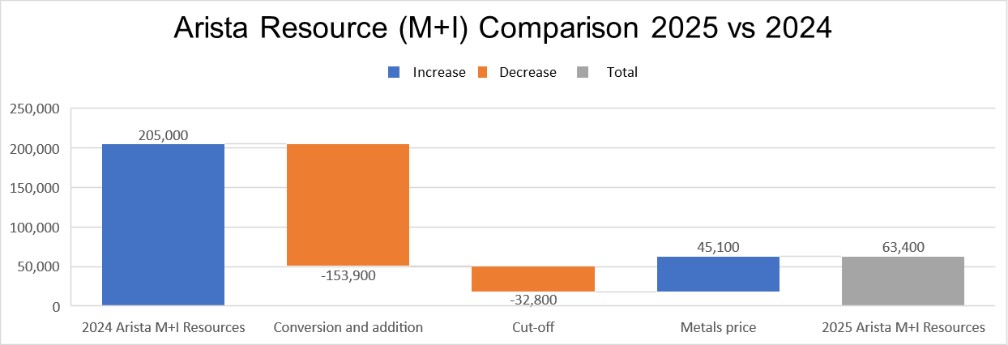
Figure 11-33: Comparison of 12/31/2025 to 12/31/2024 Arista Mineral Resources.
Table 11-20: Comparison of 12/31/2025 Versus 12/31/2024 Arista Mine Inferred Mineral Resources.
2024 YE Arista M+I Resources |
Kt |
1,838 |
Cut-off grade |
Kt |
-606.5 |
Conversion and addition |
Kt |
-931.4 |
Metal Prices |
Kt |
1,066 |
2025 YE Arista M+I Resources |
Kt |
1,366 |
138

Figure 11-34: Comparison of 12/31/2025 to 12/31/2024 Arista Inferred Mineral Resources.
Table 11-21: Comparison of 12/31/2025 Versus 12/31/2024 Alta Gracia Mineral Resources.
2024 YE Altagracia M+I Resources |
tonnes |
168,000 |
2025 YE Altagracia M+I Resources |
tonnes |
168,000 |
11.5.3. Risk Factors
Relevant factors which may affect the estimation of mineral resources include changes to the geological, geotechnical, and geo-metallurgical models, infill drilling to convert material to a higher classification, drilling to test for extensions to known mineral resources, collection of additional bulk density data and significant changes to commodity prices. It should be noted that these and other factors pose potential risks and opportunities, of greater or lesser degree to the estimate, since the model is based on currently available data. Risks associated with key estimation parameters include the following:
| ● | Survey errors associated with channel samples may locate some assay results outside the modeled vein structures; |
| ● | Complex structural geology can make it difficult to assign high-grade drill hole samples to the correct vein; |
| ● | High variance in on-site assay results may artificially bias local estimates; and |
| ● | Lack of a robust reconciliation program implemented at the mine makes comparison of estimated grades and tonnages to the actuals difficult. |
The QP responsible for Section 11 of this Technical Report considers that:
| ● | Protocols for drilling, sampling preparation and analysis, verification, and security meet industry standard practices and are appropriate for the purposes of a Mineral Resource estimate. |
| ● | The QAQC program as designed and implemented by DDGM is adequate, with no significant bias, to support the resource database. The resource database was verified by AMBA and is suitable for Mineral Resource estimation. |
| ● | The geological models are reasonably constructed using available geological information and are appropriate for Mineral Resource estimation. |
| ● | The assumptions, parameters, and methodology used for the Mineral Resource estimate are appropriate for the style of mineralization and proposed mining methods. |
139
A Mineral Reserve is the economically mineable part of a Measured or Indicated Mineral Resource. It includes diluting materials and allowances for losses which may occur when the material is mined. Appropriate assessments have been carried out and include consideration of and modification by realistically assumed mining, metallurgical, economic, marketing, legal, environmental, social, and governmental factors. These assessments demonstrate at the time of reporting that extraction is reasonably justified. Mineral Reserves are subdivided in order of increasing confidence into Probable Mineral Reserves and Proven Mineral Reserves.
Upon receipt of the block model, a review was conducted to confirm the Mineral Resource was reported correctly and to validate the various fields in the model.
A breakeven NSR cutoff grade of $150/t was used for estimations of Proven and Probable reserves at the Arista Underground Mine. The term “cutoff grade” means the lowest NSR value considered economic to process.
In 2023, the reserves at the Alta Gracia Underground Mine were converted back into resources due to higher cutoff grade applied and the lack of geological and engineering work undertaken in the past 4 years. Production from the Mirador Mine was temporarily halted in June 2020, as such, an updated economic assessment is required in order to properly classify Reserves.
The Mineral Reserve estimate for the Arista Underground Mine is based on technical data and information available as of December 31, 2025, mainly using results of underground chip channel and drill hole sampling, available as of September 30, 2025. The current Mineral Reserve estimate was prepared by the QPs described in Section 2 with contributions provided by DDGM Project technical staff.
12.2Mineral Reserve Confidence
Reserve classification considers several aspects affecting confidence in reserve estimations, such as:
| ● | Geological continuity (including geological understanding and complexity) |
| ● | Data density and orientation |
| ● | Data accuracy and precision |
| ● | Grade continuity (including spatial continuity of mineralization) |
There is substantial information to support a good understanding of the geological continuity of the primary veins at the Arista Underground Mine. Development and exploration drilling have defined the geological continuity along strike and up and down dip of the primary veins currently in production, mainly the Soledad and Sagrario veins at Switchback, the Marena and Splay 5 veins in the Arista vein system and Sandy and Gloria in the Three Sisters vein system.
Confidence in the geological continuity of secondary veins and splays is lower as there tend to be fewer intercepts. The uncertainty in the geology of the secondary veins has been considered during Mineral Reserve classification.
Understanding of the vein systems has been greatly increased by the presence of extensive underground workings allowing detailed mapping of the geology.
Underground observations have increased the ability to accurately model the mineralization. The proximity of Mineral Reserves to underground workings has been considered during Mineral Reserve classification.
12.3Reserve Estimation Methodology
The following describes DDGM’s Mineral Reserve estimation methodology conducted during December 2025 based on Mineral Resource block models created as of November 30, 2025. Reserves reported reflect mining depletion as of December 31, 2025. The Mineral Reserve estimation was performed in Deswik software.
The Mineral Reserve estimation process for the Arista Underground Mine first involves a review of Mineral Resource block models created from the 3D vein wire-framed solids. The NSR values are calculated for each block and used as a reference for the mine design.
140
The Block Model is prepared to be used for the reserve definition process. Other than a statistical check and a review in the tons and grade curve, the main changes are the overwriting of all grades to zero for Inferred blocks (CLASS = 3) and the subsequent calculation of NSR for each block.
The design and evaluation of stopes solids are currently done in Deswik Software utilizing the Deswik Stope Optimizer (DSO). The block model filtered to blocks above the COG is used as a reference for the stope design. The stope parameters are summarized in Table 121.
Description |
Value |
Minimum Stope width (m) |
1.5 |
Maximum Stope width (m) |
15 |
Stope along Strike (m) |
15 |
Minimum Hanging wall and Footwall angle |
60 |
The DSO creates stopes that respects the design parameters listed in the table above and also the NSR COG value. Using the stope design as reference, the development design is added. The mine design for the Arista mine is shown in Figure 12-1 and Figure 12-2.

Figure 12-1: Arista Mine Design – Switchback and Three Sisters Deposits.
141
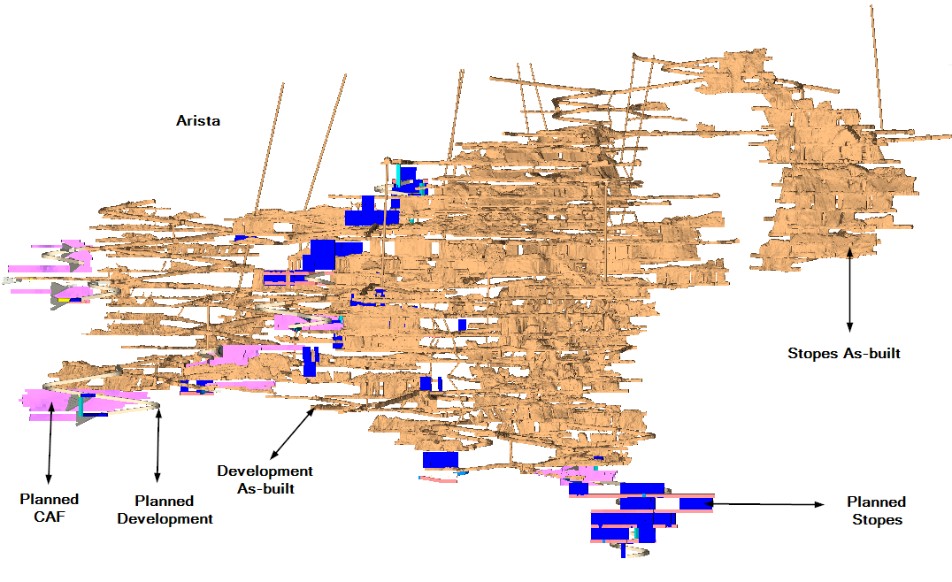
Figure 12-2: Arista Mine Design – Arista Deposit.
DDGM uses available information upon which to estimate actual dilution in the development headings, stopes, and transport system. Dilution is a function of many factors including workmanship, heading design, vein width, mining method, extraction, and transport. Misclassification of economic material and waste by mine operations personnel due to a variety of factors also contributes to variations in dilution.
DDGM uses different dilution and mining recovery factors depending on the underground mining method employed. Dilution and minimum mining width assumptions are made for tonnes and grades based on factors estimated by DDGM’s geology and mine planning departments. Three sources of dilution are usually considered: internal (planned), external (unplanned) and loading (mucking) dilution. Figure 123 illustrates the basic components of the applied dilution in an underground mine (loading dilution not shown on this illustration).
During the mine design, the material that is outside of the economic limits is incorporated as applied dilution. Waste material is considered to contain no mineralization, with gold, silver and base metal grades set at zero value.
In the Long Hole Stopes, the external dilution was applied in DSO as Equivalent Linear Overbreak Slough (ELOS) in both Hanging wall and Footwall. The ELOS value is based on historical data observed on site. Back fill is considered to contain no mineralization with gold, silver and base metal grades set at zero value. Table 122 summarizes the external dilution factors used in the design criteria.
Table 12-2: External Mine Dilution.
Description |
Value |
Long Hole Hanging wall ELOS (m) |
0.75 |
Long Hole Footwall ELOS (m) |
0.25 |
Development Overbreak (%) |
10 |
142

Figure 12-3: Conceptual Model Illustrating the Basic Contributing Components of the Applied Dilution in an Underground Mine.
DDGM uses available information upon which to estimate actual mining recovery in the development headings, stopes, and transport system. Mining recoveries are functions of many factors including workmanship, heading design, vein width, mining method, extraction, and transport. Misclassification of economic material and waste by mine operations personnel due to a variety of factors also contributes to variations in mining recovery.
Mine recovery factor estimation is based on the mine design and whether pillars are required in ore blocks for ground support, and ore recovery inefficiencies due to losses in stopes that can occur from inefficient drilling and blasting and remote-control mucking resulting in ore being left behind in stopes. Overall mining recoveries are estimated at 90% for LHOS.
In order to represent the base metal contribution, DDGM uses an economic breakeven NSR cutoff grade for Mineral Resources and Mineral Reserves estimations.
The NSR cutoff grade calculation considers:
| ● | Direct mining, |
| ● | Milling, and |
| ● | Overhead costs. |
The NSR calculation considers:
| ● | Metal prices as per the Resource and Reserve Price Deck, |
| ● | Plant recoveries, |
| ● | Treatment charges, |
| ● | Smelting and refining costs, |
| ● | Metal price participation and penalties by the smelters, and |
| ● | Royalties to private royalty holders. |
143
Plant recoveries used are the average of actual recoveries reported by the plant during the twelve months of 2025. Historical doré and concentrate contracts outlined in Section 16 were used to determine treatment charges, smelting and refining costs, metal price participation and penalties. The breakeven NSR cutoff grade is determined by the actual unit costs for DDGM for the nine-month period from January through October 2025. Cost improvement initiatives related to headcount reductions, improvements to maintenance planning and other efficiency opportunities identified throughout the operations.
Table 12-3: Mine Site Cash Operating Costs Used for Breakeven NSR Cutoff Grade Calculations.
Description |
Value $ per tonne milled |
Mining |
89 |
Plant |
45 |
Overheads |
16 |
Total Mine Site Operating Cash Cost |
150 |
The NSR breakeven cutoff calculation excludes exploration, sustaining capital, capital development, indirect, or one-off, costs such as insurance, community agreements and one-off studies and taxes, furthermore the calculations of breakeven cutoff grade contain no profit assumptions (hence the “breakeven” designation). These expenditures have been included in the economic analysis in Section 19. Of note, an exchange rate of 18.5 Mexican Pesos (“MXP”) exchange rate to 1 U.S. dollar is applied to peso-denominated costs.
A sensitivity analysis of the NSR breakeven cutoff grade calculation was performed, considering a 13% increase from the $150 per tonne milled and therefore resulting in a $170 per tonne milled sensitivity value. The calculated NSR breakeven cutoff grade calculation using $170 per tonne milled would result in lowered Mineral Reserves of 568,600 tonnes.
Parameters used for estimation of the NSR value are in Table 12-4. The NSR multiplier values calculated for each product, which takes into consideration the commercial terms for 2025 are detailed in Table 12-5. For each reserve block, gold, silver, copper, lead and zinc grades are multiplied by their respective NSR multiplier value and then summed together to determine the total NSR value for the block. If the total NSR value (diluted) is above the breakeven NSR cutoff grade of $150/t, then the reserve block is further evaluated for economic extraction.
144
Table 12-4: Parameters Used for Breakeven NSR Cutoff Grade Calculations.
ITEM |
UNIT |
VALUE |
|
UNIT |
VALUE |
SOURCE / COMMENTS |
||||||
Metal Prices | ||||||||||||
Copper |
$/lb |
4.54 |
$/t |
10,008 |
See Section 16.4 |
|||||||
Zinc |
$/lb |
1.25 |
$/t |
2,755 |
See Section 16.4 |
|||||||
Lead |
$/lb |
0.95 |
$/t |
2,094 |
See Section 16.4 |
|||||||
Silver |
$/oz |
38.00 |
$/g |
1.22 |
See Section 16.4 |
|||||||
Gold |
$/oz |
3,000 |
$/g |
96.46 |
See Section 16.4 |
|||||||
Item |
Unit |
Cu |
Zn |
Pb |
Knelson |
Source / Comments |
||||||
Concentrate |
Concentrate |
Concentrate |
Concentrate |
|||||||||
Flotation Recovery | ||||||||||||
Ag |
% |
42.9% |
6.3% |
35.8% |
0% |
Historical Data 2025 |
||||||
Au |
% |
3.6% |
8.8% |
18.8% |
0.0% |
Historical Data 2025 |
||||||
Cu |
% |
58.9% |
4.3% |
15.2% |
0% |
Historical Data 2025 |
||||||
Pb |
% |
0.2% |
6.7% |
65.8% |
0% |
Historical Data 2025 |
||||||
Zn |
% |
0.9% |
76.3% |
5.6% |
0% |
Historical Data 2025 |
||||||
Concentrate Grade | ||||||||||||
Ag |
g/t |
10,670.85 |
230.75 |
3,074.52 |
0.0 |
Historical Data 2025 |
||||||
Au |
g/t |
113.23 |
3.36 |
16.87 |
0.0 |
Historical Data 2025 |
||||||
Cu |
% |
21.06 |
0.22 |
1.88 |
0.0 |
Historical Data 2025 |
||||||
Pb |
% |
14.93 |
1.43 |
33.42 |
0.0 |
Historical Data 2025 |
||||||
Zn |
% |
4.22 |
52.17 |
9.07 |
0.0 |
Historical Data 2025 |
||||||
Moisture content | ||||||||||||
% |
6.30% |
9.90% |
7.10% |
0% |
2022 Metal Sales |
|||||||
Smelter Payables | ||||||||||||
Ag payable |
% |
95.0% |
70% |
95% |
99.25% |
2025 contract terms |
||||||
Au payable |
% |
96.5% |
70% |
95% |
99.93% |
2025 contract terms |
||||||
Cu payable |
% |
96.50% |
|
|
|
2025 contract terms |
||||||
Pb payable |
% |
|
|
95% |
|
2025 contract terms |
||||||
Zn payable |
% |
|
85% |
10% |
|
2025 contract terms |
||||||
145
Minimum Deductions | ||||||
Ag |
g/t in conc |
50 |
93.3 |
50 |
2025 contract terms |
|
Au |
g/t in conc |
1 |
1 |
1 |
2025 contract terms |
|
Cu |
% dry net weight of con |
1% |
2025 contract terms |
|||
Pb |
% dry net weight of con |
3% |
2025 contract terms |
|||
Zn |
% dry net weight of con |
8% |
8% |
2025 contract terms |
||
Treatment Charges/Refining Charges | ||||||
Base Treatment Charge |
$/dmt conc or oz metal received |
125 |
125 |
160 |
0.75 |
2025 contract terms |
Ag |
$/pay oz |
0.80 |
2025 contract terms |
|||
Au |
$/pay oz |
15.0 |
15.0 |
1.00 |
2025 contract terms |
|
Cu |
$/lb |
0.07 |
2025 contract terms |
|||
Pb |
$/lb |
2025 contract terms |
||||
Zn |
$/lb |
2025 contract terms |
||||
Deleterious Element Penalties | ||||||
2023 Conc Produced |
dmt conc |
|
||||
Se penalty |
$/dmt conc |
2025 contract terms |
||||
Pb+Zn penalty |
$/dmt conc |
2025 contract terms |
||||
Bi Penalty |
|
0.0 |
2025 contract terms |
|||
Sb Penalty |
|
2025 contract terms |
||||
As Penalty |
$/dmt conc |
2025 contract terms |
||||
Fe Penalty |
$/dmt conc |
1.5 |
2025 contract terms |
|||
SiO2 Penalty |
$/dmt conc |
1.5 |
2025 contract terms |
|||
Cd Penalty |
$/dmt conc |
1.0 |
2025 contract terms |
|||
Rollback |
$/dmt conc |
|
20.0 |
40.0 |
|
2025 contract terms |
F + CL Penalty |
$/dmt conc |
2.0 |
2025 contract terms |
|||
Total Penalty Unit Cost |
$/dmt conc |
6.0 |
2025 contract terms |
|||
Transport Costs | ||||||
Transport to smelter |
$/wmt |
211.0 |
127.44 |
211.0 |
2025 contract terms |
|
Doré fixed transport fee |
$/bar |
|||||
Table 12-5: NSR Multiplier Values used for Breakeven Cutoff Grade Calculations.
Metal (Units) |
NSR Multiplier |
Gold ($ /g) |
58.04 |
Silver ($ /g) |
0.89 |
Copper ($ /%) |
62.98 |
Lead ($ /%) |
11.92 |
Zinc ($ /%) |
13.61 |
146
The mineral reserve estimate for the Don David Gold Mine is presented in Table 126. These Mineral Reserves are contained in the Measured and Indicated Mineral Resources estimated for the deposit.
As of December 31, 2025, Mineral Reserves for the Arista Underground Mine totaled 652,000 tonnes grading 1.19 g/t Au, 195.7 g/t Ag, 0.18% Cu, 0.82% Pb and 2.49% Zn. Contained ounces of Proven and Probable reserves totaled approximately 24,900 gold ounces and 4,102,000 silver ounces.
Proven and Probable reserves for the Arista mine as of December 31, 2025 is summarized in Table 12-6.
Table 12-6: Don David Gold Mine – Summary of Gold, Silver and Base Metal Mineral Reserves at December 31, 2025.
Description |
Tonnes |
Grades |
Cutoff Grade |
Metallurgical Recovery (%) |
||||||||
Arista |
(kt) |
Au (g/t) |
Ag (g/t) |
Cu (%) |
Pb (%) |
Zn (%) |
$/tonne |
Au |
Ag |
Cu |
Pb |
Zn |
Proven Mineral Reserves |
26 |
1.91 |
475.7 |
0.22 |
0.81 |
1.90 |
150 |
71.3 |
85.0 |
58.9 |
65.8 |
76.3 |
Probable Mineral Reserves |
626 |
1.16 |
183.9 |
0.18 |
0.82 |
2.52 |
150 |
71.3 |
85.0 |
58.9 |
65.8 |
76.3 |
Arista Mine Total |
652 |
1.19 |
195.7 |
0.18 |
0.82 |
2.49 |
|
|
|
|
|
|
Notes on Mineral Reserves in Table 12-6:
1. Metal prices used for P&P reserves were $3,000 per ounce of gold, $38.00 per ounce of silver, $4.54 per pound of copper, $0.95 per pound of lead and $1.25 per pound of zinc. See Section 1.9 for a discussion of metal prices used.
2. A breakeven NSR cutoff grade of $150/t was used for estimations of P&P reserves at the Arista Underground Mine. The term “cutoff grade” means the lowest NSR value considered economic to process.
3. Mining, processing, and overheads were based on 2025 actual costs for DDGM.
4. P&P reserves are diluted and factored for expected mining recovery.
5. An exchange rate of 18.5 Mexican Pesos (“MXP”) to 1 U.S. dollar is applied to peso-denominated costs
6. Rounding of tonnes, average grades, and contained ounces may result in apparent discrepancies with total rounded tonnes, average grades, and total contained ounces.
Factors that may affect the estimates include:
| ● | Metal price and exchange rate assumptions |
| ● | Assumptions used to generate the cutoff grade |
| ● | Changes in local interpretations of mineralization geometry and continuity of mineralized zones |
| ● | Changes to geological and mineralization shape and geological and grade continuity assumptions |
| ● | Changes to geotechnical, mining, dilution, and metallurgical recovery assumptions |
| ● | Assumptions as to the continued ability to access the site, retain mineral and surface rights titles, maintain environment and other regulatory permits, and maintain the social license to operate. |
To the best of the QP’s knowledge, there are no other known environment, legal, title, taxation, socioeconomic, marketing, political or other relevant factors that would materially affect the estimation of Mineral Reserves that are not discussed in this Report.
147
A comparison between the December 31, 2024 and December 31, 2025 Mineral Reserves inventory was performed, and the results are presented in Figure 12-4. The previous year Mineral Reserves are presented in Table 12-7 and the current Mineral Reserve is presented in Table 12-6. For the Arista mine, at 12/31/2024, the total reserves amounted to 1.12 million tonnes. During 2025, 271,404 tonnes were depleted due to production, approximately 296,177 tonnes were added from the increase in metal prices, and approximately 489,773 tonnes were removed due to the change (increased) of cutoff value calculations and changes in the geological interpretation. The final comparison shows that 2025 total reserves is approximately 465,000 tonnes lower than the 2024 total reserves.
Table 12-7: Don David Gold Mine – Summary of Gold, Silver and Base Metal Mineral Reserves at December 31, 2024.
Description |
Tonnes |
Grades |
Cutoff Grade |
Metallurgical Recovery (%) |
||||||||
Arista |
(kt) |
Au (g/t) |
Ag (g/t) |
Cu (%) |
Pb (%) |
Zn (%) |
$/tonne |
Au |
Ag |
Cu |
Pb |
Zn |
Proven Mineral Reserves |
60 |
2.25 |
276.2 |
0.24 |
1.20 |
3.14 |
120 |
79.5 |
91.4 |
73.9 |
71.8 |
83.2 |
Probable Mineral Reserves |
1,057 |
1.21 |
135.6 |
0.17 |
0.70 |
2.19 |
120 |
79.5 |
91.4 |
73.9 |
71.8 |
83.2 |
Arista Mine Total |
1,117 |
1.3 |
143 |
0.18 |
0.73 |
2.24 |
|
|
|
|
|
|

Figure 12-4: Arista Mine Reserves Comparison.
12.10Production Reconciliation
Production reconciliation is the process of comparing, balancing and adjusting production estimates between mine and plant for consistency in reporting. Reserve models are also used for short and long-term mine planning, mining selectivity, dilution, losses and ore allocation records, stockpile records, plant feed records and production results. A comparison can then be made of what is planned versus what is actually mined. GRC currently maintains records of reserves, mine production and plant processing for tonnage and grade reconciliation.
12.11Opinion of the Qualified Person
In the opinion of the QP responsible for this Section 12 of this Technical Report, Mineral Reserves are reported appropriately with the application of reasonable mining recovery and dilution factors based on operational observations and a transparent breakeven NSR cutoff grade based on actual mining, processing and smelting costs; actual metallurgical recoveries achieved in the plant; and reasonable metal prices.
The QP responsible for Section 12 of this Technical Report is of the opinion that the Proven and Probable Mineral Reserve estimate has been undertaken with reasonable care and has been classified in accordance with SEC S-K 1300. Furthermore, it is their opinion that Mineral Reserves are unlikely to be materially affected by mining, metallurgical, infrastructure, permitting or other factors, as these have all been well established over the past ten years of mining.
148
Mining method selection is critical as it impacts dilution, recoveries, productivity, development, backfilling and ventilation requirements. All mine planning, hydrological, geotechnical assessment, mine services, ventilation and electric power supply evaluations are undertaken by the Mine Technical Services department at DDGM.
Based on information generated, collected and interpreted by mine technical staff and various consultants (e.g., SRK 2015), it has been possible to characterize the water encountered at the mine underground workings. The chemical composition of groundwater shows that it is water with a high degree of evolution within a hydrothermal flow system.
The underground water flow direction estimated in the interior of the mine is NW-SE, similar to the regional flow direction determined by CONAGUA in 2009 for the entire aquifer. The main vein structures are the water conductors.
Due to its location, the Arista Project is within a barrier zone, which in turn represents the main recharging zone. In its study CONAGUA considers the calcareous formations, that surface mainly to the north of the aquifer, as a potential source of groundwater. However, it is recognized that complementary studies are required to know their extension under the granular materials of the valley and that according to the springs that emerge to the north of the area, they can supply considerable volumes to increase human development (CONAGUA, 2009).
The system receives recharge by superficial infiltration and lateral flow; however, the majority is upwards from a deep geothermal source, this is observed in the increase in water temperatures and chemical concentrations at depth. The concentration of total dissolved solids varies from 300 ppm in the foothills of the Sierra, to 4,000 ppm in the southern portion of the right bank of the Tehuantepec River.
The original water table at the Arista mine reached Level 12, approximately 682 masl, with an average drainage volume of 580 gpm. SRK in 2015 noted the increase in temperature and water flow with the increase in depth of the underground workings.
Based on the above referenced hydrogeological studies, the estimated groundwater inflows to the proposed areas of the underground mine reach a nominal 1,200 gpm. This value has been used for the design of the mine dewatering system which is discussed in Section 13.6.7.
It is a standard procedure throughout the mine to install systematic ground control, which is carried out using a combination of split sets, mesh, w-straps, shotcrete, and other methods. The type of support varies according to the conditions encountered, but split sets are most common and are complemented as needed with mesh and/or W-straps.
The upper levels of the mine are relatively dry. Water inflows are a factor in the lowest development levels where they are collected, pumped, and distributed to help supply the mine’s needs for water.
Based on the structural evidence available, the Arista veins have formed in a dilatant jog along a regional fault zone striking at 280°; the veins are a combination of fault-veins and filled extension fractures. The model is based on a paleo-stress axis trend of about 315°; this direction corresponds to the orientation of sigma1 (or sigma 1 max-horiz) at the time of formation (Ross-Brown and Levy, 2012).
DDGM also uses a rock mass quality classification system for engineering design and rock stability analysis. This system is based on empirical relations between rock mass parameters and engineering applications, such as underground mine workings.
The objectives of rock mass quality classifications are to:
| ● | Identify the most significant parameters influencing the behavior of a rock mass. |
| ● | Divide a particular rock mass formulation into groups of similar behavior – rock mass classes of varying quality. |
| ● | Provide a basis of understanding the characteristics of each rock mass class. |
| ● | Relate the experience of rock conditions at one site to the conditions and experience encountered at others. |
| ● | Derive quantitative data and guidelines for engineering design. |
| ● | Provide common basis for communication between engineers and geologists. |
The main benefits of rock mass classifications:
| ● | Improving the quality of site investigations by calling for the minimum input data as classification parameters. |
149
| ● | Providing quantitative information for design purposes. |
| ● | Enabling better engineering judgment and more effective communication on a project. |
DDGM has also conducted Triaxial shear tests, a common method used to measure the mechanical properties of many deformable solids (e.g., quartz veins and andesite host rock). In 2016, CFE performed in situ stress measurements of the rock at Level 22, which is 500 masl or 400 m below the mine portal entrance. The technique used to do this measurement was overcoring using a triaxial cell developed by CSIRO. It was determined that the relation between horizontal and vertical stresses (h/v) was 1.5 for the north-south direction and 1.2 for the east-west direction. This data was important to collect for its use in subsequent studies.
In 2017, based on geotechnical drilling and core logging data, INGEROC consultants calculated GSI, Q, RMR Bieniawski and RMR Laubscher values for rock mass characterization of the Switchback veins system at the Arista underground mine. Numerical models were also developed for stability analysis.
The study concluded that in areas where the veins exceed 10 m in width, a transversal long hole stoping mining method is recommended. The addition of paste backfill to the mining cycle in 2019 contributed to the safe mining of Switchback through primary and secondary stoping methods.
In 2021, INGEROC consultants reviewed and audited the geotechnical procedures in place at DDGM including the characterization of the rock mass, operational geotechnical control, geotechnical design of stopes and validation of the information used as input for the geotechnical procedures. The study gave recommendations on each point mentioned above and some improvement opportunities which are currently being in development.
In 2022 and 2023, Langston and Associates reviewed and audited the geotechnical procedures in place at DDGM including the Ground Control Management Plan, characterization of the rock mass, operational geotechnical practices. The study gave recommendations on each point mentioned above which has been developed.
DDGM declared commercial production at the Arista mine on July 1, 2010. Mineral production during 2010 consisted of processing Mineral Resources from the open pit located approximately 0.5 km from the mill (Figure 131).
DDGM developed and mined the shallow-dipping accessible portion of the Manto vein by open pit methods, while the projection of the vein to depth indicated additional underground mine potential. Initially, tonnes and grade minded from the open pit Manto vein were approximately 345,000 tonnes at an average grade of 4.4 g/t gold and 43 g/t silver.
Initial mining of the open pit Mineral Resource was essentially completed in 2010. A low-grade stockpile of open pit material estimated at approximately 60,000 tonnes grading 1.4 g/t Au and 19 g/t Ag was processed through the Agitated Leach circuit at the DDGM processing facility during 2016 and 2017. Open pit mining resumed on the Manto vein in 2017. During 2019, DDGM commenced underground mining of the Manto vein exposed in the high wall of the open pit. From 2017 through 2020, approximately 157,400 tonnes of Mineral Resource grading 1.7 g/t Au and 40 g/t Ag on the Manto vein was mined by open pit/underground and processed through the DDGM agitated leach circuit.
150

Figure 13-1: Surface Layout Map for Underground and Open Pit Mines, Process Plant and Tailings Ponds of DDGM’s Arista project.
Substantial development was completed during 2010-2011 to access the Mineral Resources within the Arista vein system and to provide ancillary access for further exploration and development. In addition, mining within the Arista vein system was undertaken to assess the mineability of the orebody and to optimize appropriate extraction methods. The principal exploration access and haulage decline ramp were opened at surface positioned along Aire Creek. The portal opening is located at an elevation at 902 (masl) accessing the mineralized area of the Arista vein system. The decline was driven as a spiral with a minus 10 percent grade in the footwall of the mineralized area. Underground mine planning and exploitation is based on a typical vertical separation of mine levels of approximately 20 m.
To date, DDGM has advanced the primary decline ramp down to Level 32, approximately 6,000 m ramp distance from the mine portal. DDGM has also constructed a safety/ventilation decline ramp in conjunction with the primary decline ramp along with various drifts, raises and stopes encompassing approximately 500 m vertically and 1,300 m along strike length.
In 2025, DDGM advanced the development of the Three Sisters deposit from Level 3 of the Arista mine using a contractor for the mine development. The Three Sisters deposit is currently active, producing ore from both long-hole stopes and CAF.
In 2017, in addition to the Arista underground mine, DDGM completed development of the Mirador Mine at the Alta Gracia Project and began delivering development ore to the Arista processing facility. Two mine portals were developed to provide access to the Mirador vein. Mine site offices and mobile equipment maintenance facilities were established adjacent to the mine portals. Additionally, a diesel power generation plant, compressed air and a mine water pumping stations were developed. Operations at the Mirador Alta Gracia mine were temporarily halted in June 2020.
151
Access to the mining areas is provided mainly by ramps. Mine development headings are either drilled by jumbo or by jackleg. The dimensions of the different development sections are as follows:
| ● | Main Ramps: 5 W x 5 H meters |
| ● | Accesses: 4.5 W x 4 H meters |
| ● | Sill in Mineral 4.5 W x 4 H meters (if wider width of structure) |
| ● | Raise: 3 x 3 meters |
| ● | Bore Holes Raise: 3.1 meters diameter |
| ● | Cut and Fill drift: 4 W x 3 H meters or 3 W x 3 H meters |
Compressed air for mechanized tool operation is supplied to the mine by compressors which are all located in different areas on surface. The choice of equipment is generally guided by the anticipated vein widths, stoping method, and equipment availability.
Table 131 indicates the various mine levels for the Arista Underground Mine, including Switchback, and corresponding elevations shown as meters above sea level (masl). Table 132 indicates the mine levels for the Mirador Underground Mine and corresponding elevations (masl).
152
Table 13-1: Arista Underground Mine Levels and Corresponding Elevation.
MINE LEVELS | ||
LEVEL |
ELEVATION- METERS ABOVE SEA LEVEL (MASL) |
|
Ramp Collar |
902.0 |
|
1 |
884.0 |
|
2 |
874.0 |
|
3 |
855.5 |
|
4 |
831.5 |
|
5 |
813.6 |
|
6 |
795.1 |
|
7 |
775.8 |
|
8 |
753.6 |
|
9 |
735.9 |
|
10 |
717.5 |
|
11 |
691.1 |
|
12 |
677.3 |
|
13 |
659.3 |
|
14 |
644.9 |
|
15 |
628.5 |
|
16 |
619.8 |
|
17 |
600.4 |
|
18 |
566.8 |
|
19 |
555.3 |
|
20 |
533.5 |
|
21 |
513.5 |
|
22 |
496.0 |
|
23 |
480.0 |
|
24 |
460.0 |
|
25 |
440.0 |
|
26 |
420.0 |
|
27 |
400.0 |
|
28 |
380.0 |
|
29 |
360.0 |
|
30 |
340.0 |
|
31 |
320.0 |
|
32 |
300.0 |
|
153
Table 13-2: Mirador Underground Mine Levels and Corresponding Elevation.
MINE LEVELS | ||
LEVEL |
ELEVATION- METERS ABOVE SEA LEVEL (MASL) |
|
1500 |
1,500 |
|
1485 |
1,485 |
|
1470 (Aguacate) |
1,470 |
|
Conventional drill and blast methods are used to extract the Mineral Resources from the Arista mine at the Arista Project.
Historically, the Arista mine used two main mining methods: 1) overhand mechanized cut and fill (“CAF”) and 2) long-hole open stoping (“LHOS”) with delayed fill. Paste fill, cemented rock fill and uncemented rock fill are applied to long-hole stoping areas in order to increase extraction levels (removal of rib pillars), CAF, uses uncemented rock fill as a backfill method.
For the stoping methods, a crosscut from the main ramp intersects the vein, from which an initial drift is excavated perpendicularly in both directions along the strike length of the vein. Once the economic limits of the vein have been reached the production cycle starts.
13.4.1. Overhand Mechanized Cut and Fill (CAF)
The following describes the method utilized in the CAF areas. A CAF stope is started by means of a short (40 to 60 meter) negative 15 percent access ramp usually in the footwall of the vein to provide access to the bottom of the mining block (Figure 13-2). The ore is then mined in 3-meter horizontal slices using a Jumbo drill (Figure 13-3). The jumbo will drill 4-meter long essentially parallel and horizontal 1-3/4-inch holes that will later be charged with explosives to “breast down” and break the ore.
The length of these mining blocks can vary from 50 to 250 m in strike length. After the first slice or cut is complete, the void will be filled with loose waste rock to form the floor of the next cut. Access to the second and subsequent cuts is gained from the access ramp by changing its grade to reach the higher elevation.
For CAF stoping, upper holes are sometimes drilled using a jackleg. In this case, geologists will mark up the vein, and the stope is drilled and blasted accordingly. In some cases, the drill holes on the vein are blasted first. After the ore has been mucked, the holes drilled in waste are then blasted to achieve the dimensions required to work in the next production lift. Currently both mining methods are utilized in the Arista mine.
154

Figure 13-2: Three-Dimensional Schematic of the Overhand Mechanized Cut-and-Fill (CAF) Mining Method.

Figure 13-3: Longitudinal View of Cut-and-fill (CAF) Mining Method Using a Jumbo.
155
13.4.2. Long Hole Open Stoping (LHOS)
DDGM targets long-hole open-stoping as its primary long-term stoping method (Figure 134).
The mineralized vein is developed using an electric hydraulic drill, or jumbo. The tunnel size is 4.0 m in height, with a minimum width of 3.2 m to accommodate mining equipment. Ground or rock support is installed during vein development to match the prevailing rock or ground conditions, as specified by the staff rock mechanics engineer. This artificial support may consist of split set bolts, resin rebar bolts, screen and/or shotcrete. The ore development or drill levels have a 20-meter floor to floor interval. The mineralized vein is broken by drilling 3-inch diameter holes from the top level to the bottom level. Drill lengths are approximately 14 m, depending on the angle or dip of the vein. These drill holes are then charged with explosives and detonated. The broken rock is extracted from the bottom level using a 6-yard articulated loader (scoop). For safety reasons, the scoop is operated remotely at a safe distance from the brow of the open stope and any rock that could slough off the walls. As mining progresses in a bottom-up sequence (lower level mined first), the lower mining block is filled with paste fill or loose waste development rock to form the floor of the next stope. The stoping sequence is then repeated on the mining block above the previously mined-out block.
For long-hole open stoping DDGM utilizes a Stopemaster HX long-hole drilling machine.

Figure 13-4: Schematic Vertical Longitudinal Projection of Typical Long-hole stope Design.
156
For areas where the orebody is thicker than 10 m across strike the stopes are mined in a transversal direction with a primary and secondary extraction sequence. Currently, all long-hole stopes are mined using a longitudinal direction with a center access. Figure 13-5 shows the mine design for the longitudinal mining sequence.

Figure 13-5: Stope design for a transverse mining sequence.
Mineral Reserves will sustain a two-year LOM for a mill throughput of approximately 1,000 tpd. (Table 13-3). The LOM total reserves production will be approximately 24.9 koz of gold and 4.1 Moz of silver on an average head grade of 1.2 g/t Au and 196 g/t Ag. Inferred Mineral Resources are not taken into consideration in the LOM evaluation.
157
Table 13-3: Don David Mine Life-of-Mine Production Summary.
LOM PLAN - DETAILS |
UNITS |
TOTAL |
2026 |
2027 |
Lateral Development Meters |
Meters |
14,548 |
9,325 |
5,222 |
Lateral Development (m) CAPEX |
Meters |
8,241 |
6,450 |
1,791 |
Lateral Development (m) OPEX |
Meters |
6,108 |
2,676 |
3,431 |
Total Vertical Development Meters |
Meters |
407 |
316 |
91 |
Exploration Drift Meters |
Meters |
199 |
199 |
- |
Waste Tonnes |
t |
652,744 |
415,708 |
237,036 |
Ore Tonnes |
t |
651,994 |
333,149 |
318,845 |
Ore Tonnes per Day |
913 |
874 |
||
Silver Grade |
g/t |
196 |
232 |
157 |
Gold Grade |
g/t |
1.2 |
1.4 |
1.0 |
Copper Grade |
% |
0.2 |
0.1 |
0.2 |
Lead Grade |
% |
0.8 |
0.6 |
1.0 |
Zinc Grade |
% |
2.5 |
1.8 |
3.2 |
Contained Metal |
||||
Ag (oz) |
oz |
4,101,384 |
2,491,572 |
1,609,812 |
Au (oz) |
oz |
24,898 |
14,474 |
10,424 |
Cu (lb) |
lb |
2,652,082 |
1,008,224 |
1,643,858 |
Pb (lb) |
lb |
11,802,245 |
4,503,692 |
7,298,554 |
Zn (lb) |
lb |
35,806,536 |
13,368,048 |
22,438,488 |
Waste Rock Backfill |
t |
466,170 |
229,765 |
236,404 |
Paste fill Placed |
t |
- |
- |
- |
Note: Above Production Table assumes full depletion of Reserves by end of 2027.
13.6Equipment, Manpower, and Services
As of December 31, 2025, DDGM had a total workforce of 485 full-time workers distributed across different departments (Table 13-4). This workforce consists of salaried professional staff and members of two local trade unions (Sindicatos): Sección 02 del Sindicato de Trabajadores de la Construcción, Similares y Conexos del Estado de Oaxaca, C.T.M. and Sindicato de Trabajadores de la Construcción, Similares y Conexos del Estado de Oaxaca, C.T.M. The former represents the truck drivers hauling ore and concentrates and the latter is the trade union for the miners, laborers and construction-related workers.
158
Table 13-4: Full-time, Direct Employees for the Oaxaca Mining Unit.
AREAS |
TOTALS |
Mine |
150 |
Technical Services, Geology-Planning |
37 |
Plant |
94 |
Mine Maintenance |
69 |
Mill Maintenance |
32 |
Safety & Health |
17 |
Projects |
6 |
Environment |
9 |
Logistics |
17 |
Mine Accounting |
2 |
Human Resources & Training |
15 |
Information Technology |
4 |
Community |
2 |
Overhead Oaxaca |
16 |
Commercial |
2 |
Total Operations |
472 |
Exploration |
13 |
Total Oaxaca Mining Unit |
485 |
13.6.1. Mining Equipment
DDGM has its own mining equipment and also uses an underground mining contractor for selected areas. The current owner mining fleet consists of the following main equipment:
| ● | Five Scooptrams of 6yd3 capacity |
| ● | Six Scooptrams of 2.5yd3 capacity |
| ● | Four electric hydraulic bolter jumbos |
| ● | Four electric hydraulic jumbos |
| ● | Two Stopemaster longhole drills |
| ● | One top hammer longhole drill |
| ● | Five trucks of 17 m3 capacity |
| ● | Six trucks of 10 m3 capacity |
| ● | Two scissor lifts |
| ● | Two loaders |
| ● | One utility truck (diesel-oil) |
| ● | One Boom Truck |
| ● | Two Agitator trucks |
| ● | Two Shotcrete trucks |
159
13.6.2. Mine Manpower
DDGM estimates a total of 485 employees are required for operation related activities in 2026. Efficiency opportunities are being explored to determine if headcount reductions are warranted with similar numbers maintained over the next two years. See Table 13-4.
13.6.3. Underground Drilling
The underground mine uses several different drilling techniques and equipment including:
| ● | Mechanized drilling for horizontal and decline drifts using electro-hydraulic jumbos |
| ● | Mechanized drilling for long hole stoping and vertical raises using stope masters and top hammer drills |
| ● | Mechanized bolting with the use of three bolter jumbos |
| ● | Exploration, infill and ore definition drilling |
13.6.4. Ore and Waste Handling
Haulage of ore and waste is done via main and secondary ramps by trucks with a 17 m3 and 10 m3 capacity. The 10 m3 trucks are normally used to haul material from the face to a remuck located in level or a central stockpile underground and the 17 m3 truck haul the material from the remuck to surface.
13.6.5. Mine Ventilation
Air requirements at the mine have been analyzed in accordance with local and international best practices and standards. The ventilation at the mine considers the main and auxiliary ventilation systems (for stopes and blind developments).
The current air flow at the Arista mine enters through the access ramp and designated raise bore holes. It moves down to the lower part of the mine and exhausts through the remaining raise bore holes in the ventilation system. The system encompasses six 2.4-meter diameter, and three 3.1-meter diameter raise bore holes from surface to various points in the mine and access ramps. At present, DDGM has four extractor fans at the top of four raise bore holes with a total mine ventilation system capacity of 600,000 cubic feet per minute CFM (Figure 136). This capacity considers the total number of people working inside and the diesel equipment being used to achieve the daily production targets.
160

Figure 13-6: Ventilation Fans and Raise Bore Holes Installed at the Arista Underground Mine.
The normal ventilation system for the mine must be continually improved to minimize the risk of an underground fire, improve environmental working conditions, and improve production levels. There are three major components to the planned improvements to the ventilation system: 1) purchasing ventilation equipment; 2) increasing electrical power capacity; and 3) increasing the number of raise bore holes dedicated to ventilation in strategic locations. Since 2014, DDGM has engaged SRK as an ongoing consultant for ventilation design support and training of its mine ventilation engineers.
In 2020, SRK conducted a site visit with the objective to assess existing systems and determine options that could improve conditions in the Switchback zone. The recommendations are currently being developed.
161

Figure 13-7: Three-Dimensional View of the Arista Mine Ventilation System.
13.6.6. Backfill Method
DDGM uses different kinds of backfill; waste rock backfill generated during underground mining, paste fill and cemented rock fill. All primary stopes use paste fill and waste rock is used on secondary stopes, longitudinal stopes and other stopes that do not require a free-standing face to mine next to them. Cemented rock fill is used locally on some occasions if paste fill is not available (Figure 138).

Figure 13-8: Schematic of cemented and uncemented rock filled stope.
162
The paste fill is comprised of a mixture of the concentrator plant tailings, cement, and water. The paste has a solid content of between 60 and 68% that ensures consistency and a rheology that allows it to be pumped through the underground pipe reticulation system at the Arista mine (Figure 13-9). The added cement helps to dry the mixture and ensure that the fill sets to a specified minimum level of strength within a reasonable timeframe. Thickened tailings coming from the flotation plant are stored in a continuously agitated tank. The pulp has an average density of 1470 g/l, equivalent to a solids content of 50%. These thickened tailings are filtered in filter press and a cake with a solids content of 86% is produced. Cement is supplied via a 200-tonne silo and represents between 3% to 6% of the dry solids of the tailings depending on the targeted strength in the mix. Water is supplied from the pulp in the agitated tank. Paste design resistance is based on operational requirements and varies between 120 kPa and 300 kPa. It is advisable to wait a minimum of thirty days before mucking to ensure the paste fill can handle the weight of the scoop trams. Paste fill is used for transverse stopes method in the primary stopes to give support for the secondary stopes and control dilution. Currently, DDGM only employs longitudinal stopes method which does not require paste backfill.

Figure 13-9: Schematic showing the components of a backfilled stope and the stress field distribution (after Belem and Benzaazoua, 2004).
13.6.7. Mine Dewatering System
The pumping system at the Don David Mine is used to avoid the accumulation of water that is encountered underground or generated during drilling activities. Underground water is pumped to the surface by two primary, eight secondary and 14 tertiary pumping pools and stations.
Primary: Pumping stations at Levels 11.5 and 19. It uses 400-450 hp pumps and a 12-inch pipeline; the average pumped flow is 4,000 m3 /day.
Secondary: Sumps at Levels 5.5, 15, 21, 24, 25, 26.5, 27 and 28. It uses 140 hp pumps and its primary purpose is to retain around 80% of solids contained in the water. The cleaning of these solids is by mud pumps and scooptrams.
Tertiary: This is the pumping of water (pneumatic pumps), from production headings, stopes, drifts and development ramps to the secondary pools. The main function of the tertiary pumping bays is to accumulate the greatest number of solids to avoid them getting into the primary and secondary pumping stages.
The pumping station at Level 19.5 has three decantation pools from which water overflows into the suction pools. Flocculants and coagulants are added to accelerate this process; the decantation pools have an approximate volume of 200 m3 each. The suction pools have an approximate total capacity of 600 m3.
The pumping system and water distribution work as follows:
| ● | Surface Sump: Receives water from Level 11.5 and supplies water to mine operations, paste plant and flotation plant. |
163
| ● | Level 11.5 Sump: Receives water from Levels 10, 15 and 19 and supplies water to the pool at Level 13. |
| ● | Level 19 Sump: Receives water from Levels 21, 24 and 25. |
The Switchback pumping system currently has a 6-inch pipeline to pump water to Level 19. The internal area has a 4-inch pipeline to pump water from Level 25 to Level 19.
The industrial water required by the operation of the mine is recovered from the pumped water to the surface pool. Water returns to the mine through a 4-inch pipeline in the main ramps and a 2-inch pipeline in ore drift to supply the various drilling requirements (Figure 1310).

Figure 13-10: Schematic showing the mine dewatering system.
13.6.8. Maintenance Facilities
The Don David Mine has a well-equipped workshop on surface and a small mobile equipment maintenance and repair shop underground at Level 6.
The workshop on surface is for major, minor, and preventive maintenance. The workshop area is approximately 1,250 m2 in area and includes the following:
| ● | Maintenance office |
| ● | Maintenance area for jumbos and scoops |
| ● | Washing area for mechanical equipment |
| ● | Spare parts warehouse |
| ● | Welding area |
| ● | Utility area |
| ● | Grease trap |
| ● | Lunchroom |
| ● | Sanitary facilities |
13.6.9. Power Distribution
The mining unit is fed from the Mitla electrical substation on an overhead distribution line of the Comision Federal de Electricidad (“CFE”) with a length of 68 km, three Phase-4 Wire with a voltage of 34500 volts with an ACSR 266 conductor.
164
The distribution line reaches a main transformer with a capacity of 10 Mva - 34500/13200 volts. The distribution is carried out in three branch circuits of 13200 volts.
Circuit 01 feeds the beneficiation plant with an overhead distribution line of 13,200 volts with a trajectory of 2.7 km with an ACSR 266 conductor:
| ● | Substation 2000 kva-13,200/4160 (1040 hp Mill) |
| ● | Substation 2000 kva-13,200 / 4160 volts (800 hp Mill) |
| ● | 4000 kva substation 13,200/480 Volts (Crushing, Flotation, Thickening, Workshops, Laboratory and offices) |
| ● | 750 kva substation 13,200/480 volts Tailings Dam |
| ● | 1500 kva substation 13,200/480 volts Filtering Area. |
Circuit 02 feeds the South ramp sector with an overhead distribution line of 13,200 volts with a trajectory of 1 km:
| ● | Main substation 2000 kva-13,200/4160 volts |
| ● | Secondary substation 1000 kva-13,200/480 Volts (400 hp Howden fan) |
| ● | Secondary substation 1500 kva-13,200/480 volts (Paste plant) |
| ● | Secondary substation 1500 kva 4160/480 Volts (underground mine sector Level 17). |
Circuit 03 feeds the North ramp sector with an overhead distribution line of 13,200 volts with a trajectory of 1.3 km:
| ● | Main substation 4000 kva-13,200/4160 volts (located inside mine Level 11) |
| ● | There are 6 substations 1500 kva 4160 / 480 volts type in the underground mine that feed the main pumping stations of Level 11, pumping of Level 20, Switchback district, Level 3, secondary ventilation and secondary pumping. |
There are six Caterpillar 3516b generators with a total installed capacity of 6.56 MW as backup for a continuous operation.
13.6.10. Other Services and Infrastructure
Explosive storage
The underground explosive storage is comprised of two separate areas that meet the safety and security requirements established by Mexican Federal Regulations. The facilities are designed to store explosives and blasting accessories separately.
Refuge station and mine rescue facilities
Safety is of prime importance at the Don David Mine. A network of vertical manway exits has been built to ensure that if a major incident occurred the workforce can escape. Additionally, a permanent refuge station is located on Level 4, and two mobile refuge stations are installed at different strategic points of the underground mine.
DDGM currently mills and processes the Arista, Switchback and Three Sisters underground mine’s ore through the flotation circuit at the DDGM Processing Facility (Figure 141). The Arista processing plant was built near the mine site and consists of both a sequential flotation (sulfide) circuit and an agitated cyanide leach (oxide) circuit. The flotation circuit produces three separate saleable concentrate products (gold-copper, silver-lead and zinc) from polymetallic ore extracted from the Arista/Switchback underground mines (Figure 142). The Aguila open pit was depleted in May 2021 and is now accepting thickened tailings. The gravity concentrator receives feed material from the cyclone underflow and utilizes the principles of a centrifuge to enhance the gravitational force experienced by feed particles to effect separation based on particle density. In 2014, a Gekko Systems InLine Leach Reactor™ (ILR) and zinc dust precipitation circuit was installed to upgrade the gravity concentrate to doré. Concentrates are sold to various concentrate buyers located in Mexico. DDGM sells its doré to various precious metals refiners and mints, currently Asahi Refining USA, Inc. A flotation circuit was installed at the tail of the zinc flotation circuit in 2022. The new flotation circuit is floating the remaining sulfur associated with gold. Sulphur concentrate recovered from the circuit is leached in the agitated cyanide circuit previously used for oxide leaching (Figure 143).
165
Mining and milling operations at the DDGM Project commenced in 2010. Initial production processed ore from the open pit of the Manto vein. Subsequently, after their discovery, a new underground mine was developed to access the Arista and Baja veins composing the heart of the Arista vein system. The Arista mine was developed via a decline and spiral ramps utilizing rubber-tired vehicles and conventional drill and blast methods to extract the ore. Mining methods are mainly overhand mechanized cut and fill and long-hole open stoping with most mining voids backfilled with waste rock. In 2019, a surface paste fill plant was constructed and now in addition to waste rock backfill, a slurry containing about 30% of mill tailings are mixed with cement and pumped back underground. The dried cake filtered tailings are transported overland by conveyors and trucks, deposited, and compacted into a stable, unsaturated tailings residue.

Figure 14-1: The DDGM Processing Facility.
Schematic flow sheets for the differential flotation circuit and the agitated leach circuit processing plant at the Arista processing plant are shown in Figure 142 and Figure 143, respectively.
In summary, the principal stages of the DDGM Plant are as follows:
Flotation Circuit |
Agitated Leach Circuit |
Crushing and Milling |
Milling of sulfur flotation concentrate |
Gravity Concentration |
Leaching |
Differential Flotation (Cu, Pb, Zn) |
Counter Current Decantation (CCD) |
Sulphur Flotation |
Merrill Crowe Zinc Precipitation |
Thickening, filtering, and shipping |
Bullion Furnace/Doré |
For 2025, gravity circuit and intensive leaching have been decommissioned. Sulphur flotation agitated leach tank and Merril-Crowe circuit have also been decommissioned. The mill processed 271,404 metric tonnes of ore were processed yielding 5,300 oz of Au, 1,594,301 oz of Ag, 264 metric tonnes of Cu, 1,192 metric tonnes of Pb, and 3,613 metric tonnes of Zn. The average production rate of the DDGM processing plant was 1,189 tpd in 2025. Metallurgical recoveries at the DDGM plant for ore produced from the Arista mine averaged 71.46% for gold, 84.4% for silver, 62.3% for copper, 63.4% for lead and 76.1% for zinc. Overall production grades for 2025 for the Arista, Switchback and Three Sisters deposit have averaged approximately 0.85 g/t Au, 216.52 g/t Ag, 0.156% Cu, 0.69% Pb and 1.75% Zn.
166

Figure 14-2: Simplified flowsheets for the production circuits of the Arista processing sequential flotation (sulfide) circuit with Knelson Semi-Continuous Concentrator™.
167
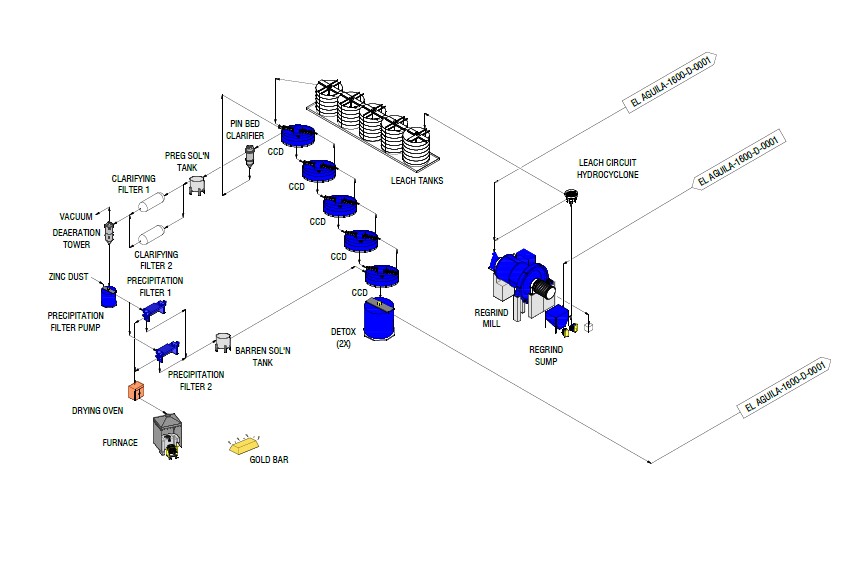
Figure 14-3: Simplified flowsheets for the production circuits of the Arista processing agitated tank leaching, counter current decantation and zinc dust precipitation circuit.
Ore is trucked from the mine and discharged onto ground. Ore is fed in a primary jaw crusher using a front head loader. Crushed ore from the primary crusher is screened onto a double deck screen. The first deck product is crushed by the secondary cone crusher. Crushed material is recirculated to feed the double deck screen. In the second deck, screened oversized products are crushed by a tertiary cone crusher. The tertiary cone crusher material is also recirculated to the feed of double deck screen. Finally, the double deck fine particle (-9.5 mm) is stockpiled before being fed into the ball mills. The maximum crushing rate for this plant is about 110 tonnes per hour. The fine ore is stockpiled before being fed into the crusher and ball mills.
The fine crushed ore is transported via conveyor belts to the flotation plant grinding circuit. Grinding circuit consists of two parallel ball mills. Each mill is in close circuit hydrocyclones, with cyclone overflow reporting to flotation circuit. A portion of the cyclone underflow reports to the gravity circuit, while the remainder of the cyclone underflow and gravity circuit tailing reports to the ball mill for further grinding. One ball mill is 3.2 m diameter and 4.29 m length driven by 798 kW motor. The second ball mill is 3.2 m diameter and 3.68 m length driven by 597 kW motor.
Most of the underground ore from the Arista vein system consists of very clean, primary sulfides, which have high recoveries in the differential flotation circuit. The principal economic components are gold, zinc, and silver; however, the ores also contain economically significant amounts of lead and copper. The flotation plant produces three concentrates for sale: a copper concentrate with gold-silver, a lead concentrate with gold-silver, and a zinc concentrate with gold-silver.
Cyclone overflow gravity feeds the conditioning tank for reagent additions. Slurry flows to a row of four copper rougher cells followed by four copper scavenger cells. Concentrate from copper scavenger cells is pumped back to the copper rougher flotation feed. Concentrate from copper rougher is pumped to the copper 2nd cleaner circuit. Concentrate from copper 2nd cleaner is pumped to the copper 3rd cleaner.
168
Tailings from copper 2nd cleaner gravity flow into the copper 1st cleaner cell. The concentrate from the 1st cleaner is pumped to copper 2nd cleaner and copper 1st cleaner tailings are pumped directly to the lead concentrate thickener due to high lead grade. Concentrate from copper 3rd cleaner is pumped to the concentrate thickener. Thickened copper concentrate is filtered in a pressure filter to produce a final saleable product.
Copper scavenger tailings feed the lead circuit rougher. Lead rougher concentrate is pumped to lead 1st cleaner circuit. Lead rougher tailings gravity feed the lead scavenger cells. Lead scavenger concentrate is pumped back to the lead rougher feed and lead scavenger tailings are pumped to the zinc circuit. Lead 1st cleaner concentrate is pumped to the lead 2nd cleaner cell while lead 1st cleaner tailing is pumped back to the lead rougher feed. Tailings from lead 2nd cleaner is pumped back to the lead rougher feed. Lead 2nd cleaner concentrate gravity feeds the lead concentrate thickener. Thickened lead concentrate is filtered in a pressure filter to produce a final saleable concentrate.
Tailings from the lead scavenger are pumped to the zinc conditioning tank. From the zinc conditioning tank, slurry gravity feeds the zinc rougher cells. Concentrate from the first two rougher cells is pumped to the zinc 2nd cleaner cell while concentrate from the last 2 zinc rougher cells is pumped to the zinc 1st cleaner cell. Concentrate from the zinc 1st cleaner cell is pumped to the zinc 2nd cleaner cell. Tailings from the zinc 1st cleaner cell is pumped to the zinc conditioning tank. Concentrate from the zinc 2nd cleaner is pumped to the zinc 3rd cleaner cell. Tailings from the zinc 2nd cleaner gravity feeds the zinc 1st cleaner circuit. Tailings from the zinc 3rd cleaner gravity feeds the zinc 2nd cleaner cell, while the zinc 3rd cleaner concentrate is pumped to the zinc concentrate thickener and the thickened zinc concentrate is filtered in the pressure filter to produce a final saleable concentrate.
Tailings from the zinc rougher gravity feeds the first scavenger cell. Concentrate from these cells is pumped to the zinc circuit conditioner tank while the tailings are pumped to the second zinc scavenger cells. Tailings from the second zinc scavenger cell pass through a trash screen prior to pumping to the sulfur flotation cell.
The three concentrates are stored separately in a shed. Concentrates are bulk shipped on contracted tractor-trailer trucks.
The flotation cells for the DDGM Processing Facility are shown in Figure 144.

Figure 14-4: Banks of Flotation Cells at the DDGM Processing Facility.
169
After trash removal of the tailing second zinc scavenger cell onto the static screen, slurry is pumped into bulk sulfur flotation rougher circuit. Concentrate from the sulfur flotation is reground into the old oxide circuit ball mill. Regrind ball mill is a closed circuit with hydrocyclone. Hydrocyclone underflow is returning to the mill for additional grinding while hydrocyclone overflow is feeding the pre-aeration tank. Regrind size of 50 microns is targeted for leaching. Leaching is performed using sodium cyanide and lime to control slurry pH. Leaching circuit consists of five agitated tanks with a capacity of 170 m3, with air injection (Figure 145). When leaching is completed, slurry gravity flows through five counter current wash clarifiers. Washed solution is pumped to clarifying filter for additional removal of solid in solution. Clear solution is pumped to deaeration tower to decrease the oxygen in solution and zinc powder is added for precipitation. Humidity from precipitated sludge is removed through the press filter. Concentrate then calcinates in the drying oven and is melted in a furnace to be poured in the cascade stand. Gold doré is then produced. Solid tailing from clarifier circuit is pumped to cyanide destruction circuit and pumped back to zinc scavenger cell. The agitated leach circuit was decommissioned in 2023 but could be restarted if required.

Figure 14-5: Agitated Leach Circuit of the DDGM Processing Facility.
14.5Tailings and Water Management
Tailings from the rougher sulfur flotation is pumped to the tailings thickener. Tailings are pumped from the thickener underflow of the processing plant at ~50% solid. Slurry is distributed into two parallel holding tanks which keeps the pulp mixed while providing temporary storage and continuous supply to both filter presses. The temporary storage mixing tanks also supply the paste plant as required. The dry stack filtering plant has been designed to operate with three parallel vertical plate press filters. Only two of the three filters have been installed. The two parallel vertical plate and frame filter presses (see Figure 147 below) can process 50-60 tph of solid tailings combined. The process water and rinse water collected at the filter press is recycled back to the processing plant while the cake containing ~14% moisture is deposited onto conveyors and then routed to a single stacker conveyor. The radial stacker conveyor layers the thickened tailings in the depleted open pit area where it naturally dewaters further and is compacted for stability. When the underground mine needs paste backfill, thickened slurry is pumped to paste backfill plant (Figure 148) rather than to the dry stack filter press (Figure 146). A third filter has been purchased. It will be installed in Q2 2026 and commissioned Q3 2026. The third filter will give contingency for the tailings dewatering and reduce the pressure on the equipment especially during maintenance.
170

Figure 14-6: DDGM Tailings Filtration Plant.
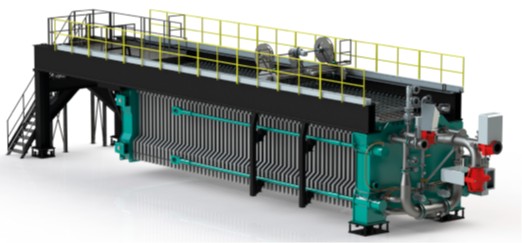
Figure 14-7: Diemme Filtration – Aqseptence GHT-F Filter Press.
171

Figure 14-8: DDGM’s Paste Plant.
DDGM has designed and constructed a laboratory for assaying samples and metallurgical testing (Figure 149). The laboratory staff currently consists of 23 employees for sample preparation, assaying and metallurgical testing. The Arista Laboratory prepares about 100 samples per day and assays (Atomic Adsorption and Fire Assay) of greater than 400 samples per day. In addition, the laboratory conducts between 5 and 10 metallurgical tests per day.
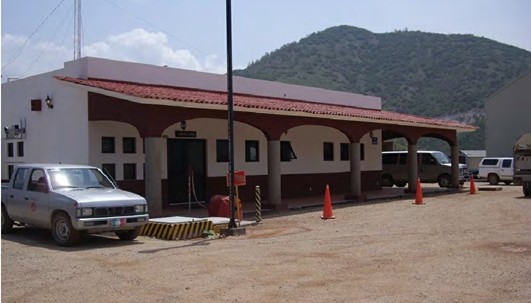
172
The Don David Gold Mine laboratory sample preparation consists of the following stages:
| ● | Reception and identification of the samples |
| ● | Drying |
| ● | Primary, secondary, and tertiary crushing to particle about 4 mm |
| ● | Homogenization (mixing) |
| ● | Sample splitting (Jones splitter) |
| ● | Pulverization in Spray rings to 100% <100 mesh sample for analysis |
| ● | Sample control and analysis |
The fire assaying procedures employed at the Don David Gold Mine laboratory are as follows:
| ● | Fusion: Fusion is carried outweighing 5 to 20 grams of sample depending on the source, mixed with lead-based flux, fusion performed at 1050° C for 50 minutes. |
| ● | Cupellation: it starts with cleaning of lead button hammered, then the cups are placed in the oven at 940 ° C, then place the button of lead inside the cups for 45 minutes. |
| ● | Dissolution: brown button obtained weighed, the next step is dissolved in nitric acid for 25 minutes. After dissolving the silver buttercup washed and calcinations. |
| ● | The button of gold is weighed on a microbalance. |
X-Ray fluorescence (“XRF”) is the emission of characteristic "secondary" (or fluorescent) X-rays from a material that has been excited by bombarding with high-energy X-rays or gamma rays. The phenomenon is widely used for elemental analysis and chemical analysis, particularly in the investigation of metals and for research in geochemistry.
This analysis is performed by mixing the sample with wax, then forming a compressed tablet. It is then placed in the auto-sampler Brucker Ranger. The analysis time depends on the origin of the samples; it takes 3 to 5 minutes to read per sample.
Atomic absorption spectroscopy (AAS) is a spectroanalytical technique used for the quantitative determination of chemical elements by measuring the absorption of optical radiation by free atoms in the gaseous state. In analytical chemistry, the technique is used for determining the concentration of a particular element (the analyte) in a sample. AAS can be used to determine more than 70 different elements either in solution or directly in solid samples.
DDGM has two atomic absorption units for the analysis of gold, silver and base metals. Samples are analyzed for mainly gold and silver, as well as copper, lead, zinc and arsenic. The analysis is performed with partial digestion in a microwave oven with mixer acids (hydrochloric and nitric).
DDGM has completed and continues to conduct the following metallurgical tests at the Aguila laboratory:
The Don David Gold Mine laboratory’s quality controls include the use of a primary or secondary standard sample which is certified for analysis in fire assay, atomic absorption and X-ray fluorescence. These standard samples are analyzed at the end of each month, evaluating the assay results.
173
The lab is currently not accredited. Work instructions have been developed for all lab analysis and QA/QC controls have been put in place to quantify the confidence level of the analysis.
Duplicate analysis has been established since January 2020 with over 523 duplicates performed (30-40 per month). Results are consistent, which has built confidence in the Aguila Laboratory analysis capability. Figure 1410 to Figure 1424 illustrate the details of the duplicate analysis.

Figure 14-10: Au Duplicate Vs Original Scatter.

Figure 14-11: Au Relative Difference Plot Versus Mean PMM Analysis.
174

Figure 14-12: Au Relative Difference Versus Population of Data.
| ● | 80% of the Au analysis fell under 20% relative error. |

Figure 14-13: Ag Duplicate Vs Original Scatter.
175

Figure 14-14: Ag Relative Difference Plot Versus Mean PMM Analysis.

Figure 14-15: Ag Relative Difference Versus Population of Data.
| ● | 80% of the Ag analysis fell under 10% relative error. |
176

Figure 14-16: Cu Duplicate Vs Original Scatter.

Figure 14-17: Cu Relative Difference Plot Versus Mean PMM Analysis.
177

Figure 14-18: Cg Relative Difference Versus Population of Data.
| ● | 80% of the Cu analysis fell under 9% relative error. |

178

Figure 14-20: Pb Relative Difference Plot Versus Mean PMM Analysis.

Figure 14-21: Pb Relative Difference Versus Population of Data.
| ● | 80% of the Pb analysis fell under 10% relative error. |
179

Figure 14-22: Duplicate Vs Original Scatter.

Figure 14-23: Zn Relative Difference Plot Versus Mean PMM Analysis.
180

Figure 14-24: Zn Relative Difference Versus Population of Data.
·80% of the Zn analysis fell under 6% relative error.
The primary equipment utilized in the Aguila laboratory consists of the following:
181
The Arista Project is on paved Mexican Federal Highway No. 190, 115 km from the capital city of Oaxaca. The highway, which is a leg of the Pan American Highway system, runs through the nearby village of San José de Gracía. The road distances from San José de Gracía to the mine and plant sites are 2.4 km and 6.0 km, respectively.
The operation has a relatively small surface infrastructure consisting primarily of the flotation and leaching plants, electrical power station, water storage facilities, paste plant, stockpiles, and workshop facilities, all connected by sealed and unsealed roads.
15.2Tailings Disposal Facilities
The Tailings Storage Facility (“TSF”) is in a valley below and south of the process plant site. The tailings facility was constructed using international standards that exceed Mexican permit requirements. The TSF is formed by two rock-filled dams that have been raised once by 10 m using the downstream construction method. The TSF is double lined with the first liner made of clay and synthetic material that acts as a leak prevention system with the effective absorption equivalent to approximately 3 m of clay. The second liner is made of 1.5 mm Linear Low-Density Polyethylene (“LLDPE”), which was a permitting requirement.
The TSF is zero discharge with the process water being recycled to the plant. Additional make-up water for the flotation process comes from mine discharge water.
Construction of a filtration plant and dry stack facility was completed in 2022. The filtration plant and existing paste plant (commissioned in October of 2019) will handle 100% of Reserves tailings production.

Figure 15-1: Site Map Including Tailings Storage Facilities.
182
The mine currently has one waste stockpile used for storing waste material that could not be effectively disposed of underground. The waste is generated mainly from mine development activities and is not expected to increase significantly over the life of the mine unless some additional infrastructure or new mine areas are incorporated into the Mineral Reserves.
The Oaxaca Mining Unit maintains small stockpiles underground and at the mine entrance in order to manage continuous ore haulage. Mined ore for processing is also stockpiled on a large patio (capacity 30,000 to 40,000 tonnes) near the crushing plant. The mined ore undergoes a rigorous blending program to ensure a homogeneous feed is sent to the plant.
15.5Concentrate Transportation
As the final products consist of metal concentrates, and because the property and facilities are easily connected to the paved Pan American highway (and from there to major cities by means of the national paved road system), there is no need for construction of new external processing facilities.
Tractor trailers that can transport two 26-tonne trailers each are used to transport concentrate. The containers must be made of stainless steel. Each container is registered and weighed at the mine scales before the loading, sampling, and weighing process of the concentrate is performed, prior to the unit being sealed and registered. The concentrate is then transported by road to a port in Mexico for subsequent shipping to purchasers in 400, 600 and 1,200 tonne lots for copper, lead, and zinc concentrates, respectively. Concentrate trucks are formed into convoys and escorted by contracted security personnel during the entire trip to the purchaser’s warehouse.
Up until 2018, power was mainly provided by diesel generators at the site. In 2019, DDGM successfully connected a power line to its Arista Project from the Mexican Federal Electricity Commission’s (Comisión Federal de Electricidad or CFE) power grid. Prior to this connection, the Arista project operated 100% from electricity generated from more expensive and higher emission diesel fuel.
The mining unit is fed from the Mitla electrical substation on an overhead distribution line of the Comision Federal de Electricidad with a length of 68 km, 3 Phase-4 Wire with a voltage of 34,500 volts with an ACSR 266 conductor.
The distribution line reaches a main transformer with a capacity of 10 Mva – 34,500/13,200 volts. The distribution is carried out in 3 branch circuits of 13,200 volts.
Circuit 01 feeds the beneficiation plant with an overhead distribution line of 13,200 volts with a trajectory of 2.7 km with an ACSR 266 conductor:
| ● | Substation 2000 kva-13,200/4160 (1040 hp Mill) |
| ● | Substation 2000 kva-13,200 / 4160 volts (800 hp Mill) |
| ● | 4000 kva substation 13,200/480 Volts (Crushing, Flotation, Thickening, Workshops, Laboratory and offices) |
| ● | 750 kva substation 13,200/480 volts Tailings Dam |
| ● | 1500 kva substation 13,200/480 volts Filtering Area. |
Circuit 02 feeds the South ramp sector with an overhead distribution line of 13,200 volts with a trajectory of 1 km:
| ● | Main substation 2000 kva 13200 -4160 volts |
| ● | Secondary substation 1000 kva-13,200/480 Volts (400 hp Howden fan) |
| ● | Secondary substation 1500 kva-13,200/480 volts (Paste plant) |
| ● | Secondary substation 1500 kva 4160/480 Volts (underground mine sector Level 17). |
Circuit 03 feeds the North ramp sector with an overhead distribution line of 13,200 volts with a trajectory of 1.3 km:
| ● | Main substation 4000 kva 13,200 -4160 volts (located inside mine Level 11) |
183
| ● | There are six substations 1500 kva 4160 / 480 volts type in the underground mine that feed the main pumping stations of Level 11, pumping of Level 20, Switchback district, Level 3, secondary ventilation, and secondary pumping. |
There are six Caterpillar 3516b generators with a total installed capacity of 6.56 MW as backup for a continuous operation. In 2021, there was an increase in power consumption due to ventilation and dewatering pumps requiring the installation of capacitors that improved and stabilized the power supply. In 2021, DDGM also initiated conversations with CFE for the expansion of the load delivered to further stabilize the energy supply. In 2022, the capacitors were installed and commissioned and CFE expanded the load delivered to attend to the higher demand on site.
DDGM has a permit granted by the Mexican federal water authority, Comisión Nacional del Agua (CONAGUA) for the usage of 150,000 cubic meters annually. However, water requirements to process ore are primarily sourced from water pumped to the surface from the underground dewatering system. Water in the tailings facility is recycled to the Arista processing plant and the excess water pumped from the underground workings is discharged at the surface into decantation ponds. DDGM has the necessary permits to discharge underground mine water at the surface. Water sampling from rivers and creeks is conducted regularly and sent for analysis to an external laboratory.
184
DDGM has constructed substantial infrastructure to support the DDGM operations. The main administration and offices are in the vicinity of the processing facilities. The mine office is located two km to the southeast, near the entrance to the Arista underground mine ramp. Nearly all the administrative personnel and activities are currently conducted from these offices.

185
The underground mine site has a small mobile equipment maintenance and repair shop, a parts and supply warehouse, dining hall, offices and workspace for engineering, geology, and mine administration. Most building construction consists of concrete-block buildings, although the shop structures are steel frame buildings with steel sheet cladding. DDGM has also constructed exploration offices near the lower end of the open pit. These are similar block buildings with patios covered with steel structures, roofed with steel sheets.
DDGM has constructed good quality housing, recreation, and dining hall facility, called “Tres Palmas’’, in the town of San José de Gracía, which is situated in the Rio Grande River valley (Figure 153). Buildings are constructed of concrete blocks, and all are designed for the tropical climate. This housing area is mainly for salaried employees and their families, and there are more than 50 employees housed in the facility. In addition, DDGM rents numerous houses in the village of San José de Gracía, as well as a local hotel, where about 30 employees are housed.
Mexican government medical services (Servicios de La Secretaría de Salúd) are near the operation in the villages of El Camerón (first aid), and Nejapa de Madero (hospitalization, surgery, etc.). DDGM has an ambulance at the mine site available to transport injured or sick employees to one of these facilities.

Figure 15-3: Recreation and Dining Hall Facility for Oaxaca Mining Unit (Tres Palmas) in the Town of San José de Gracia.
In 2015, DDGM began construction of a permanent core storage facility to store the thousands of meters of diamond drill core collected during past drilling programs (Figure 154). The core storage facility is located near the Exploration Office, above the Aguila open pit and near the DDGM Processing Facility.
186

Figure 15-4: Core Storage Facility for the Arista Project.
The telecommunications service is rented from Telefonos de México S.A. de C.V. (“Telmex”); this company provides the Don David Mine with Internet and Telephone services in the same communication channel (optical fiber), with a contracted Business Internet Service synchronous band width of 100 MB, received through router.
These services are then distributed in the LAN by a star-type network linked by Cisco switches; in the case of distribution to the local population (with whom DDGM shares the internet service) and to the mine camp, it is done through AirFiber wireless links in a 2.4 GHZ band, mounted on communication towers.
In the case of the underground mine, IP telephone and network services are distributed through optical fiber to the levels where the operation requires it.
The main communication on the ramp and levels inside the mine is done through a Leaky Feeder radio system. It is a communication system in a VHF band, which is distributed through a special coaxial cable that distributes communication from the base to all wired areas. Due to operational demands, two communication channels are managed, channel 9 exclusively for traffic and channel 8 for operations.
The telephone system is received at the SITE by means of an E1 service, it is connected to an IP switch that distributes the service to 107 extensions.
15.11Opinion of Qualified Person
Infrastructure required to support the LOM is in place and is operational. The filtration plant and dry stack facility was completed in 2022 providing sufficient space for LOM requirements.
16.MARKET STUDIES AND CONTRACTS
Since 2010, DDGM has produced and sold doré containing gold and silver and metal concentrates that contain gold, silver, copper, lead and zinc from the Arista and Alta Gracia Projects of the Don David Gold Mine. Shipments of doré and concentrates are contracted to be sold to various Buyers. Sale prices are obtained based on either world spot or London Metals Exchange (“LME”) market pricing and payment terms are typical within the industry. During and at end of the 2025 period, no contracts with Buyers extend beyond twelve (12) months.
This practice is consistent with industry norms and can be used in mine planning and financial analysis for the Don David Gold Mine in the context of this Technical Report.
187
DDGM contracts services to run the mining operations, construct projects and treat, refine and sell doré and concentrates. The costs of such contracts are accounted for in the capital and operating expenditures depending on the nature of the work performed. Contracts are negotiated and renewed as needed. Contract terms are typical of similar contracts in Mexico that DDGM is familiar with.
On April 23, 2021, a decree that reforms labor outsourcing in Mexico was published in the Federation’s Official Gazette. This new decree amends the outsourcing provisions; whereby operating companies will no longer be able to source their labor resources used to carry out the core business functions from service entities or third-party providers. Under Mexican law, employees are entitled to receive statutory profit sharing (Participacion a los Trabajadores de las Utilidades or “PTU”) payments. The required cash payment to employees in the aggregate is equal to 10% of their employer’s profit subject to PTU, which differs from profit determined under U.S. GAAP. DDGM continues to contract specialized services with registered service providers.
For the 2025 period, DDGM had a contract to refine or treat and sell to the following Buyers:
| o | Just Refiners (USA) Inc. |
| o | Trafigura Mexico, S.A. de C.V. (a subsidiary of Trafigura Group Pte. Ltd. or “Trafigura”) |
| o | Metagri S.A. de C.V. (a subsidiary of Glencore or “Glencore”) |
| o | Trafigura Mexico, S.A. de C.V. (a subsidiary of Trafigura Group Pte. Ltd. or “Trafigura”) |
| o | Trafigura Mexico, S.A. de C.V. (a subsidiary of Trafigura Group Pte. Ltd. or “Trafigura”) |
Concentrates produced at DDGM are transported to our contracted customers on highway trucks operated by Sección 02 del Sindicato de Trabajadores de la Construcción, Similares y Conexos del Estado de Oaxaca, C.T.M. (“C.T.M.”).
The Company maintained short term contracts for zinc concentrate with Trafigura starting November 2024 and extended through May 2025. The Company then awarded a zinc contract to Trafigura, for the period of June 2025 to May 2026. Treatment charges are based on spot and benchmark prices. No penalties are assessed in the most recent contract.
The copper contract with Glencore was awarded in May 2024 and extended through June 2025. The Company then awarded a copper contract to Trafigura, for the period of July 2025 to June 2026. Treatment charges are based on spot and benchmark prices. No penalties are assessed in the most recent contract.
The Company maintained short term contracts for lead concentrate with Trafigura starting from November 2024 and extended through May 2025. The Company then awarded a lead contract to Trafigura, for the period June 2025 to May 2026. Treatment charges are based on spot and benchmark prices. Penalties are assessed if the iron, silicon dioxide, cadmium, fluorine and chlorine content is above an agreed tolerance.
The Company awarded a spot contract for the sale of a single shipment of doré to Just Refiners (USA) Inc. in April 2025.
The sales contract for all concentrates is combined with the smelting and trade agreements. Representatives and umpires provide settlement assistance services from time to time. DDGM has arranged financially settled forward contracts for approximately 95% of provisional sales. During 2025, pricing for each payable element within the concentrate was based on the market price of one month after delivery to the warehouse (M +1). Rates and charges are within industry norms.
16.4Commodity Price Projections
Since 2010, DDGM has produced and sold doré containing gold and silver and metal concentrates that contain gold, silver, copper, lead and zinc from the Arista and Alta Gracia Projects of the Don David Gold Mine. Shipments of doré and concentrates are contracted to be sold to various Buyers. Sale prices are obtained based on either world spot or London Metals Exchange market pricing and payment terms are typical within the industry.
188
This practice is consistent with industry norms and can be used in mine planning and financial analyses for the Don David Gold Mine in the context of this Technical Report.
For the purpose of estimating the Mineral Reserves and Mineral Resources in this report, the QP utilized prices based on conservative estimates (“Resource & Reserve Price Deck”) of the average median consensus prices for each of the three years starting 2026 through 2028 as provided by Bloomberg’s consensus commodity price forecast as at November 21, 2025. The 2028 consensus was used for the remaining life of mine. The median price was based on price estimates contributed by participating financial institutions (Gold: $3,567 per ounce, Silver: $40.80 per ounce, Copper: $4.88 per pound, Zinc: $1.26 per pound, Lead: $0.95 per pound).
Table 16-1: 2025 Resource and reserves metal prices.
Metal |
Measure |
Base Case |
36-month average as per Bloomberg Consensus |
Au |
$/oz |
3,000 |
3,567 |
Ag |
$/oz |
38.00 |
40.80 |
Cu |
$/lb |
4.54 |
4.88 |
Zn |
$/lb |
1.25 |
1.26 |
Pb |
$/lb |
0.95 |
0.95 |
For the Economic Analysis, the QP utilized the median consensus prices for each of the two years starting from 2026 through 2027 as provided by Bloomberg’s consensus commodity price forecast as at February 17, 2026. The Economic Analysis provides for a remaining mine life of two years as based on current Mineral Reserves only. The Economic Analysis Price Deck is set forth in the table below:
Table 16-2: Consensus metal prices 2026-2027.
Metal |
Measure |
2026 |
2027 |
24-month average |
Au |
$/oz |
4,543 |
4,100 |
4,365 |
Ag |
$/oz |
64.13 |
58.50 |
61.92 |
Cu |
$/lb |
5.49 |
5.21 |
5.31 |
Zn |
$/lb |
1.36 |
1.27 |
1.30 |
Pb |
$/lb |
0.92 |
0.95 |
0.94 |
The actual metal prices can change, either positively or negatively, from both the Resource and Reserve Price Deck and the Economic Analysis Price Deck. If the assumed metal prices are not realized, this could have a negative impact on the operation’s financial outcome. At the same time, higher than predicted metal prices could have a positive impact. Gold equivalencies are determined by taking the Resource and Reserve Price Deck for gold and silver and converting them to a gold equivalent ratio for the period (average is 70.5 silver: 1 gold).
The QPs have reviewed the information provided by GRC on marketing, contracts, concentrate sales and commodity price projections. The QPs note that the information provided is consistent with the source documents used, and that the information is consistent with what is publicly available on industry norms. The information can be used in mine planning and financial analysis for the Don David Gold Mine in the context of this Report.
Metal price assumptions used in the Economic Analysis (Section 19 of this report) are based on the Economic Analysis Price Deck (refer to Section 16.4) for gold, silver, copper, lead and zinc. The actual metal prices can change, either positively or negatively from the Economic Analysis Price Deck. If the assumed metal prices are not realized, this could have a negative impact on the operation’s financial outcome. At the same time, higher than predicted metal prices could have a positive impact. QPs have reviewed the information provided by GRC on marketing, contracts, concentrate sales and commodity price projections. The QPs note that the information provided is consistent with the source documents used, and that the information is consistent with what is publicly available on industry norms.
189
The information can be used in mine planning and financial analyses for the Don David Gold Mine in the context of this Report.
17.ENVIRONMENTAL STUDIES, PERMITTING, PLANS, NEGOTIATIONS OR AGREEMENTS WITH LOCAL INDIVIDUALS OR GROUPS
17.1.Environmental Compliance and Considerations
Following the mining, milling and exploration activities, DDGM is subject to all Mexican federal, state, and local laws and regulations governing the protection of the environment, including laws and regulations relating to the protection of air and water quality, hazardous waste management and mine reclamation as well as the protection of endangered or threatened species. Potential areas of environmental consideration for mining companies include, but are not limited to, acid rock drainage, cyanide containment and handling, contamination of watercourses, dust and noise.
All mining and environmental activities in México are regulated by the Dirección General de Minas (“DGM”) and by the Secretaría de Medio Ambiente y Recursos Naturales (“SEMARNAT”), both representing the Mexican Federal Government, under the corresponding laws and regulations. DDGM's mining operations are subject to environmental regulation by SEMARNAT. Regulations governing the advancement of new projects or significant changes to existing projects require an environmental impact statement, known in Mexico as a Manifiesto de Impacto Ambiental (“MIA”). DDGM is also required to submit proof of local community support for a project to obtain final approval.
The DDGM operations in Mexico operate under a unique environmental license (“LAU”), which covers the environmental impact and risk of atmosphere emissions, hazardous waste production and treatment. This environmental license was issued after approval of the Evaluación del Impacto Ambiental (“EIA”). Also, special permits are issued for certain types of expansions, tailings dams, etc., as required.
DDGM obtained various permits for surface and underground water use and discharge. The permissions are granted by the Comisión Nacional del Agua (“CONAGUA”), an administrative and technical advisory branch of SEMARNAT. CONAGUA administers national waters, manages, and controls the country's hydrological system, and promotes social development.
DDGM currently operates under the permits and status as indicated in Table 17-1 and Table 17-2. The document description and code are based on the information contained in the documents registered with the appropriate authority. Table 17-3 defines the codes used to describe the permits outlined in Table 17-1 and Table 17-2. The El Aire concessions renewal is complete; the documents were registered and DDGM is waiting for renewal confirmation from SEMARNAT.
190
Table 17-1: Don David Mine Environmental Permits and Issuing Agencies for Arista.
ARISTA PROJECT | |||||||
|---|---|---|---|---|---|---|---|
PERMIT NUMBER |
DESCRIPTION |
CODE |
AREA |
CONCESSIONS |
DATE |
EXPIRATION |
STATUS |
|
SEMARNAT-SGPA-DIRA- 049-2008 SEMARNAT-SGPA-DIRA- 413-2008 SEMARNAT-SGPA-DIRA- 1212-2009 SEMARNAT-SGPA-DIRA-716-2012 SEMARNAT-UGA-1312-2019 |
Process plant Environmental Impact permit |
AIA |
9.4 ha |
El Aguila. |
2008 |
2024 |
Full compliance. Pending renewal confirmation from SEMARNAT |
|
SEMARNAT-SGPA-AR- 1246-2008 SEMARNAT-SGPA-AR- 0654-2008 |
Process plant Land Use Modification permit |
ACS |
9.4 ha |
El Aguila. |
2008 |
2024 |
Full compliance |
SEMARNAT-SGPA-DIRA- 1010/2008 |
TSF phase I-II Environmental Impact permit |
AIA |
12.1 Ha |
El Aguila |
13/11/2008 |
2016 |
Renewal in progress |
|
SEMARNAT-SGPA-AR-0390-2009 SEMARNAT-SGPA-AR-0800-2011 |
Open pit Land Use Modification Permit |
ACS |
9.186 ha |
El Aguila |
07/06/2012 |
05/03/2026 |
Full compliance |
|
SEMARNAT-SGPA-DIRA- 1310-2009 SEMARNAT-SGPA-DIRA- 1423-2011 |
Open pit Environmental Impact permit |
AIA |
10.5297 ha |
El Aguila |
06/03/2018 |
05/03/2026 |
Full compliance |
|
SEMARNAT-SGPA-DIRA- 474-2010 SEMARNAT-SGPA-DIRA- 858-2010 |
UG access ramp Environmental Impact permit. |
AIA |
6.3 Ha |
El Aire |
18/05/2010 |
2021 |
Full compliance pending renewal confirmation from SEMARNAT |
SEMARNAT-SGPA-AR- 1825/2010 |
UG access ramp Land Use Modification permit |
ACS |
2.44 ha |
El Aire |
01/11/2010 |
2021 |
Full compliance Renewal in progress |
SEMARNAT-SGPA-DIRA- 035-2012 |
“Tepetatera 4” Environmental Impact permit |
AIA |
4.0 Ha |
El Aire |
11/1/2012 |
2014 |
Full compliance |
SEMARNAT-SGPA-UGA-1304-2015 |
“Tepetatera 5” and Robbins Environmental Impact permit |
AIA |
2.1208 Ha |
El Aguila |
18/09/2015 |
18/01/24 |
Full compliance |
SEMARNAT-SGPA-DIRA- 152-2010 |
“El Águila” Environmental Impact Preventive Report |
AIP |
2,062.5 Ha |
El Chacal, El Pilón ,Pitayo 3, and El Pitayo 4. |
08/04/2010 |
NA |
Full compliance |
|
20/EV-0167/01/10 20/HR-0142/04/21 20-PMG-I.2005-2016 20-PMM-I-0151-2016 |
Hazardous waste management permits |
GIR |
**** |
El Aguila |
2010 |
2026 |
Full compliance |
191
ARISTA PROJECT | |||||||
|---|---|---|---|---|---|---|---|
PERMIT NUMBER |
DESCRIPTION |
CODE |
AREA |
CONCESSIONS |
DATE |
EXPIRATION |
STATUS |
|
05OAX137811/22FADA13 05OAX137811/22FSDA16 |
Underground water use and treated wastewater discharges permit |
DIV |
150, 000 m3/year |
El Aguila |
27/07/2015 |
30/09/2024 |
Full compliance. pending renewal confirmation from CONAGUA |
|
SEMARNAT-SGPA-DMIC-039-2017 20/COW0151/06/21 |
Environmental License (LAU in Spanish) |
LAU |
This is a global report of all environmental permits |
El Aguila |
15/11/2017 |
NA |
Full compliance |
|
SEMARNAT.SGPA-DIRA-1514-2014 SEMARNAT.SGPA-UGA-1685-2017 |
TSF phase 3 and ampliation Environmental Impact Permit |
AIA |
16.7022 ha |
El Aguila |
04/10/2017 |
31/08/2022 |
Full compliance |
|
SEMARNAT.SGPA-AR-1781/2014 SEMARNAT.SGPA-AR-1551-2017 |
TSF phase 3 and ampliation Land Use Modification Permit |
ACS |
11.54 ha |
El Aguila |
03/08/2017 |
15/08/2018 |
Full compliance |
SEMARNAT-UGA-1469-2019 |
Environmental impact No requirement for “Horno de cal” exploration project |
NRIA |
1 drilling site |
El Aguila |
28/10/2019 |
2024 |
Full compliance |
SEMARNAT-UGA-1470-2019 |
Environmental impact No requirement for “Cerro Colorado” exploration project |
NRIA |
1 drilling site |
El Águila |
28/10/2019 |
2024 |
Full compliance |
Table 17-2: Don David Mine Environmental Permits and Issuing Agencies for Alta Gracia.
ALTA GRACIA PROJECT | |||||||
PERMIT NUMBER |
DESCRIPTION |
CODE |
AREA |
CONCESSIONS |
DATE |
EXPIRATION |
STATUS |
20/IP-0002/11/10/ SEMARNAT-SGPA-DIRA- 844-2010 |
Environmental Impact Preventive Report for the Alta Gracia Exploration Area |
AIP |
67.45 Ha |
La Herradura and David Fraction 1. |
23/11/2010 |
NA |
Full compliance |
SEMARNAT-SGPA-UGA-2411-2015 SEMARNAT-UGA-1313-2019 |
Environmental Impact for Alta Gracia project |
DIV |
1 waste rock dump 651.73 m2 no change in land use 13 blasthole Mining |
Alta Gracia project |
15/02/16 |
16/07/2018 31/03/2021 |
Full compliance |
SEMARNAT.SGPA-UGA-AR-1411-2017 |
Environmental Impact for Tepetatera Alicia |
AIA |
0.337 ha |
Alta Gracia Project |
10/07/2017 |
14/01/2018 |
Full compliance |
192
SEMARNAT.SGPA-AR-0682-2017 |
Environmental Impact for exploration project “Camino 10 Alta Gracia” |
AIA |
0.179 ha |
Alta Gracia project |
27/04/2017 |
27/04/2018 |
Full compliance |
SEMARNAT-SGPA-DIRA-0318-2017 |
Environmental impact No requirement “Alta Gracia phase II” exploration project |
NRIA |
14 drilling sites |
Alta Gracia project |
16/06/2017 |
2024 |
Exploration in process |
SEMARNAT-SGPA-UGA-0484-2018 |
Environmental impact No requirement “Alta Gracia phase III” exploration project |
NRIA |
3 drilling sites |
Alta Gracia project |
31/05/2018 |
2024 |
Exploration in process |
SEMARNAT-SGPA-UGA-0485-2018 |
Environmental impact No requirement “Alta Gracia Zona Victoria” exploration project |
NRIA |
3 drilling sites |
Alta Gracia project |
31/05/2018 |
2024 |
Exploration in process |
SEMARNAT-UGA-1468-2019 |
Environmental impact No requirement “Trenes phase II, Barreno Capilla Alta Gracia” exploration project |
NRIA |
3 drilling sites |
Alta Gracia Project |
28/10/2019 |
2024 |
Exploration in process |
Table 17-3: Description of Information and Codes for DDGM’s Environmental Documents.
Code |
Description |
AIA |
Environmental Impact Authorization |
ACS |
Land Use Change Authorization. |
AIP |
Exploration Preventive Report Authorization. |
ETJ |
Technical Justification Study (land use change study) |
MIA |
Environmental Impact Statement (study for environmental impact valuation) |
IP |
Preventive Reports (exploration mining claims) |
ERA |
Environmental Risk Valuation |
PPE |
Plans, Programs and Studies |
PFP |
PROFEPA (Documentation related to administrative records we have with Profepa) |
GIR |
Waste (Information related to integrated waste management) |
DIV |
Miscellaneous. |
NRIA |
Environmental Impact No requirement |
LAU |
Environmental Single License |
193
The process plant, underground mine, and mine camp have individual sewage treatment plants. The treatment systems are biochemical tanks and filtration. The treated water is returned to the soil through an absorption well.
All waste generated in the unit is separated, characterized, and disposed of according to national and international standards in temporary warehouses where a supplier with the appropriate accreditations oversees its final disposal according to the law. Waste with commercial value is separated for reintegration into the production system and the circular economy. This includes waste generated in communities, and we support them in collecting and disposing of it. Currently, 60% of the domestic waste generated by mining operations and camps is allocated for recycling.
DDGM has established strict procedures of operation and monitoring water and air quality following accepted standards.
The process plant, underground mine, and mine camp have individual sewage treatment plants. The treatment systems are biochemical tanks and filtration. The treated water is returned to the soil through an absorption well. This treatment is for service water (toilets, dining room, bedrooms). Discharge is authorized by CONAGUA.
The tailing facilities require primary environmental and operation control. Water in the tailings facility is recycled to the Arista processing plant.
Some water pumped from the underground workings is discharged at the surface into decantation ponds. Special attention is focused on reducing the possibility of an incident regarding any potential contamination. DDGM has established strict protocols including:
| ● | Quarterly testing of water into rivers near the tailings dams for pollutants. |
| ● | Testing of discharge sewage pollutants. |
| ● | Testing of running water in the intermittent streams within the property for mineral elements and contaminants. |
| ● | Testing of the combustion gases from laboratory chimneys and foundry and lead exposure to the lab's personnel. |
Sampling of surface waters in rivers and creeks is conducted on a quarterly basis, and the same schedule is followed for the sampling of underground water. The water samples are sent for analysis to an accredited laboratory (Intertek, Mexico City), which has been accredited by the Mexican Entity of Accreditations (“EMA”).
Air quality monitoring, including suspended particulate matter and lead, is being carried out at the mining unit on a semi-annual basis. In 2025, an air quality monitoring was carried out in the community of San José de Gracia. The objective is to provide evidence that the operation does not generate impact on the air quality of the community.
DDGM is required to prepare a mine closure plan for the possible future abandonment of the Arista and Alta Gracia Projects. In compliance with environmental obligations, DDGM is required to consider two levels of care:
| ● | Works and actions that are specifically identified in the current environmental regulations, or in case of modifications or new regulations arising and, |
| ● | Those terms and conditions listed in the permissions, registers, or certificates, as established in the authorization in terms of environmental impact and land use change (CUS), and although not specifically identified in any order, are the result of case-specific analysis. |
The environmental authority in all cases, however, makes it clear that individual or project specific conditions are additional to what the legislation requires. In this case, it is necessary to maintain constant reviews and updates of the information related to either new regulations or other legal instruments that affects DDGM, including that Mexican law principle is such that the lack of knowledge does not imply exemption from its obligation.
The environmental study presented here is mainly an exercise in self-environmental evaluation involving monitoring and systematic review of the facilities and business processes, in terms of their environmental practices and procedures, in order to check the level of compliance with both matters governed by the laws, regulations, and existing standards, that affect the good performance and process improvement in the permits that have been granted by SEMARNAT, PROFEPA and CONAGUA.
194
To be compliant, any mine closure activities should broadly consist of the following:
| ● | Prevent erosion in all areas where authorized land use changes involve placing containment structures such as buttresses, retaining walls, rock gabions and balances. There shall be a buffer zone of native vegetation around the perimeter of polygons of various facilities such as Processing Plant, Open Pit Mine, Plant Access Road, Ramp, waste dumps (No.’s 3 & 4, etc.), at least a 4.0 m width. |
| ● | Consider within the main points, installing wells to monitor water quality in the pits and tailings dams in order to analyze whether the runoff from these areas alter the quality of surface water, soil, or subsoil in the rainy season. Perform technical and environmental examinations that determined the location of these wells, likewise, attach the graphic material showing its location relative to mine workings. Integrate the results of the trimestral monitoring of the wells in the Annual Technical Report of Environmental Monitoring, and finally, record the results of these actions in the field logbook including description of activities. |
| ● | Determine the Ecological Restoration Program plans and actions for the conservation of soil, which must be proposed according to the parameters that the petitioner stated in Soil Management Program and considering the Ecological Restoration Program; must conform to functional and operational integration in space and time to provide continuity-discontinuity of the processes of nature and thus, improve the basic benefit-cost ratio to ensure the achievement of sustainable development. |
| ● | Maintain the equipment in good condition in such a way that the emissions are within permissible limits. Maintain the equipment units to prevent spills on the floor, draining or dumping into water bodies present in the area, including waste fats, oils, solvents and any substance or hazardous waste encountered at different stages of the project. |
17.4.1 2025 Estimate of Current Closure Costs
For 2025, WSP has prepared a Mine Closure Plan and Reclamation Budget. The closure cost estimate includes funds to cover tailings dam, waste rock stockpiles (tepetateras), to remove, demolish or clean up the other surface and underground facilities at the mine. In December 2025, WSP provided an assessment of the existing closure cost liabilities at the Arista mine and Alta Gracia Projects and prepared a schedule of the direct costs of the various tasks in accordance with a mine plan provided by DDGM.
The estimated base cost of the 2025 ARO for the Arista and Alta Gracia mines (without taxes), subject to the assumptions, exclusions and caveats provided in the Technical Memorandum provided by WSP amounts to US$14,525,680. The breakdown of costs is presented in the following table.
Summaries of conceptual closure and reclamation costs for the Arista and Alta Gracia Projects prepared by WSP are shown in Table 17-4.
195
Table 17-4: Conceptual Mine Closure and Reclamation Cost Summary for the Arista project.
DDGM ARO 2024 Closure Costs, as of December 2025 Arista Project |
|
Closure Components |
Scheduled Closure (2028) |
Infrastructural aspects |
$4,221,917 |
Mining aspects |
$5,119,681 |
General surface reclamation |
$181,285 |
Water management |
$29,183 |
Sub-Total 1 |
$9,552,066 |
Post-Closure Aspects |
|
Surface water monitoring |
$531,988 |
Groundwater monitoring |
$638,385 |
Rehabilitation Monitoring & Care and maintenance |
$568,073 |
Contingencies for post-closure aspects |
$347,689 |
Sub-Total 2 |
$2,086,135 |
Additional Allowances |
|
Preliminary and general |
$1,247,909 |
Contingencies |
$1,247,909 |
Additional studies |
$ - |
Sub-Total 3 |
$2,495,818 |
Grand Total |
$14,134,019 |
|
|
DDGM ARO 2024 Closure Costs, as of December 2025 Alta Gracia Project |
|
Closure Components |
|
Infrastructure aspects |
$53,508 |
Mining aspects |
$164,537 |
General surface reclamation |
- |
Water management |
- |
Sub-Total 1 |
$218,045 |
Post Closure Aspects |
|
Surface water monitoring |
$50,566 |
Groundwater monitoring |
$20,266 |
Rehabilitation Monitoring & Care and maintenance |
$19,236 |
Contingencies for post-closure aspects |
$18,034 |
Sub-Total 2 |
$108,202 |
Additional Allowances |
|
Preliminary and general |
$32,707 |
Contingencies |
$32,707 |
Sub-Total 3 |
$65,414 |
|
Gran Total Excl.VAT. (Sub-total 1 + 2 + 3) |
$391,661 |
196
The estimated costs are currently based on changes on disturbed areas. The volume costs related to earthworks and distances to borrow sources, if any, are not currently considered.
In addition to the Arista and Alta Gracia projects, the Company has identified and recorded ARO related costs in 2025 for other nearby project areas, including Aguacate and San Ignacio, for infrastructure aspects in the total amount of $230,000.
17.5.Ejido Lands and Surface Rights Acquisitions
Surface lands of the DDGM mining properties are Ejido lands (agrarian cooperative lands granted by the federal government to groups of Campesinos [farmers] pursuant to Article 27 of the Mexican Constitution of 1917). Prior to January 1, 1994, Ejidos could not transfer Ejido lands into private ownership. Amendments to Article 27 of the Mexican Constitution in 1994 now allow individual property ownership within Ejidos and allow Ejidos to enter into commercial ventures with individuals or entities, including foreign corporations.
The Ejidos have legal status and their own patrimony. They are owners of the lands that were endowed to them by sentence, decrees, or presidential resolution, as well as those that they have acquired by any other title.
The Ejidos operate in accordance with their internal regulations which must be registered in the National Agrarian Registry and must have the general basis for the economic and social organization of the Ejido that they freely adopt, as well as rules for the use of the lands of common use.
The exploitation of land for common use may be adopted by an Ejido when the assembly (supreme organ of the Ejido) decides, in which case the provisions relating to the way of organizing work and the exploitation of resources must be established in advance.
Mexican legislation recognizes mining as a generally superior land use to agriculture. However, the agrarian law recognizes the rights of the Ejidos and empowers them to enter into contracts and agreements that have as their object the use or enjoyment of third parties for the use of parceled or common use lands, these contracts can have a duration not longer than thirty years extendable.
For the conclusion of these contracts, a representative of the Agrarian Prosecutor's Office must be present, as well as a Public Notary, to guarantee compliance with the contract or agreement that is made.
In case of any breach by any of the parties, the agrarian court will oversee resolving.
DDGM has established agreements for the exploration and exploitation of common use lands with the Ejido San Pedro Totolapam and with the Ejido lands that allow current and proposed operations for the modification of the surface when necessary for the exploration activities and mining operations of DDGM.
While Mexican law recognizes mining as a land use generally superior to agricultural, law also recognizes the rights of the Ejidos to compensation in the event mining activity interrupts or discontinues their use of the agricultural lands. Compensation is typically made in the form of a cash payment to the holder of the agricultural rights. The amount of such compensation is generally related to the perceived value of the agricultural rights as negotiated in the first instance between the Ejidos and the owner of the mineral rights. If the parties are unable to reach agreement on the amount of the compensation, the decision will be referred to the government.
DDGM has established surface rights agreements with several neighboring communities with the most significant agreement being with the San Pedro Totolapam Ejido and the individuals impacted by current and proposed operations which allow disturbance of the surface where necessary for DDGM’s exploration activities and mining operations.
17.6.Social or Community Impact
DDGM considers nearby communities as essential stakeholders; as such, the company pays special attention to their problems and needs. A good neighbor and open-door policy characterize the relations with the communities inside and around the area of operations. Our Community Relations department interacts with the local authorities frequently.
DDGM has a policy of social responsibility based on community development. The tactic used to achieve this strategic principle is focused on:
| ● | Encouraging sustainable self-development of communities for a positive legacy. |
197
| ● | Systematically promoting human rights quality of life conditions that ensure ongoing successful operation of the company in the locality. |
| ● | Respect for the uses and customs of the communities, as well as the protection of the environment. |
DDGM follows internal due diligence with protocols and procedures intended to channel the demands and grievances of the local communities, assess, evaluate, and prioritize their needs. All donations are coordinated by the communities involved and are destined to programs that improve their quality of life. DDGM is interested in maintaining a social license to operate by working together with the communities, providing communication support in resolving problems, promoting good practices in social solidarity through a work plan with the localities, and aiming for sustainability in all its actions.
DDGM works respectfully and in coordination with the established leaders in the surrounding communities, local authorities, educational institutions, and government agencies to achieve sustainable development. The company promotes education, sports, culture, health, and environmental care.
Our community relations department, in collaboration with the security and environment teams, conducted training sessions in various communities’ schools on topics such as waste management, water care, biodiversity, first aid, and breast cancer prevention.
In 2025, and for the twelfth consecutive year, DDGM received the Socially Responsible Company (ESR) distinction, awarded by the Mexican Center for Philanthropy (Cemefi) and the Mexican Alliance for Corporate Social Responsibility (AliaRSE). This recognition certifies that the company is voluntarily and publicly committed to social responsibility as an integral part of its organizational culture and business management strategy.
The guided mine tour program aimed at students from local educational institutions, municipal authorities, and other stakeholders, recorded 44 visitors. This initiative seeks to strengthen transparency and stakeholder engagement by showcasing our operational standards and the benefits that mining activities generate for community development.
DDGM invested approximately $171,000 USD per month in local communities through agreements and social programs, strengthening the local economic fabric through responsible procurement from local and regional suppliers, generating opportunities and shared growth.
In 2025, we continued to enhance our community programs, with a focus on collective well-being and sustainable community development.
In 2025, 78 requests were received from the different host communities, mainly the requests were in response to memorable days (Mother's Day, Children's Day, etc.), community festivities, donation of waste, materials for schools, materials for authorities local and sport activities. A total of 64% of applications were accepted with an annual investment of $34,000 USD.
17.7.Community Actions for Social Welfare and Development
17.7.1. Education
DDGM promotes progress in education, motivating young people to continue with their studies, allocating monthly financial contributions aim at scholarships distributed according to the educational level in San Jose de Gracia and San Pedro Totolapam. 2025 Scholarship provided for the community are described in the table below.
Table 17-5: 2025 Scholarship provided for the community.
COMMUNITY |
ELEMENTARY SCHOOL |
MIDDLE SCHOOL |
HIGH SCHOOL |
UNIVERSITY |
TOTAL |
ANNUAL |
San José de Gracia |
24 |
11 |
13 |
9 |
57 |
$ 61,550 |
San Pedro Totolapam |
3 |
7 |
11 |
16 |
38 |
$ 54,857 |
17.7.2. Infrastructure
Social development of the communities where we have a presence is essential for the company, and our social programs are designed to meet the needs of each community.
198
In 2025, DDGM collaborated with the local authorities of San José de Gracia on the construction of a community kitchen, enabling local cooks to prepare meals for community celebrations and cultural events, as well as the construction of restroom facilities for the community church. The project represented a significant investment of approximately $40,000 USD.
During the 2025 rainy season, ongoing maintenance was carried out on local roads, and machinery support was provided to improve the community’s public lighting infrastructure, contributing to enhanced safety, mobility, and overall well-being for residents.
17.7.3. Cultural and Social Activities
Every year, DDGM carries out social activities for the celebrations of the Day of the Dead celebrations and patron saint festivals of the surrounding communities, with an investment of approximately $5,000 USD, strengthening cultural ties and supporting local traditions. We offered summer courses for children in San José de Gracia, San Pedro Totolapam, and San Juan Guegoyache, aimed at promoting positive social interaction and continuous learning. A total of 100 children participated in these activities.
17.7.4. Health
As part of its commitment to promoting health and safety, DDGM delivered first aid workshops in San Pedro Totolapam and San José de Gracia, benefiting 55 participants and promoting prevention and emergency preparedness in our communities.
In coordination with the Health and Safety Department and the Community Relations Department, a Road Safety Campaign was held in San José de Gracia to promote responsible driving and prevent accidents, covering topics such as defensive driving, road signs, and the effects of alcohol while driving.
17.7.5. Employment in Host Communities
Employment in Host Communities is a core component of our social responsibility strategy. We prioritize local hiring to generate economic opportunities, strengthen local capacities, and promote inclusive growth. By integrating community members into our workforce, we contribute to regional development while fostering long-term, mutually beneficial relationships.
The company's commitment to investment in the community is presented below in Table 177:
Table 17-6: Full-time, Direct Employees for the Oaxaca Mining Unit by Community.
No. |
Community |
Employees 2025 |
1 |
San José de Gracia |
58 |
2 |
San Pedro Totolapam |
92 |
3 |
Las Margaritas |
5 |
4 |
El Camarón Yautepec |
64 |
5 |
San Juan Guegoyachi |
2 |
6 |
San Carlos Yautepec |
6 |
|
TOTAL Employees of neighboring communities |
227 |
Table 17-7: Investment in the community.
No. |
Community |
Contribution 2024 |
Contribution 2025 |
Budget 2026 |
1 |
Community Assembly |
$ 655,755 |
$745,672 |
$ 808,504 |
2 |
San José de Gracia Agency |
$ 60,000 |
$70,564 |
$71,385 |
3 |
San Pedro Totolapam Municipio |
$ 63,704 |
$ 65,932 |
$68,524 |
4 |
San Pedro Totolapam Ejido |
$ 992,752 |
$ 963,621 |
$808,504 |
199
5 |
San Juan Guegoyache |
$ 86,699 |
$ 90,329 |
$93,878 |
|
TOTAL USD |
$ 1,858,910 |
$1,936,118 |
$1,850,795 |
17.8.Opinion of Qualified Person
It is the opinion of the QPs that the appropriate environmental, social and community impact studies have been conducted to date. DDGM has maintained the necessary permits that are prerequisites for construction of the Project infrastructure and the maintenance of mining activities.
18.CAPITAL AND OPERATING COSTS
The support for capital and operating costs are based on realized costs, quotations, and estimates in 2025 dollars. No inflation factors or changes to exchange rates have been used in the economic projections. The estimated capital and operating costs are to a feasibility level of accuracy (within 15%) and exclude a contingency estimate as applied to capital, exploration and operating costs due to a remaining two-year life of mine as based on Mineral Reserves only. The mine closure costs include a contingency range of 10% to 15% for each component in the closure plan, with an average of 10% applied between the Arista and Alta Gracia projects.
18.1.Life-of-Mine Capital Costs
A summary of total estimated capital expenditures for the Don David Mine is presented in Table 181. There are no growth capital projects currently planned for DDGM. As the Economic Analysis for this technical report considers Mineral Reserves and is exclusive of Mineral Resources, the capital to be incurred at DDGM relates to both underground development which is critical for advancing mining efforts and sustaining capital which relates to mobile equipment purchases and/or repairs, process plant equipment, tailings dam engineering and facilities activities, and limited infrastructure upgrades. Due to the two-year life of mine, as based on Mineral Reserves only, normal capitalized sustaining activities, including exploration (drift development, infill drilling, underground and surface exploration) and other sustaining activities (including expansions to infrastructure, equipment, and IT costs) are excluded as capital costs and rather either identified as operating costs for the purposes of this Economic Analysis or are not expected to be spent. However, an inclusion of Mineral Resources to the Economic Analysis would require additional related capital expenditures for these categories. Concerning mine closure, details or a breakdown of the related costs can be found in Section 17.
The capital costs are based on realized costs as well as vendor and specialist quotations. Due to the remaining two-year life of mine, no contingency estimate has been applied to the Capital and Exploration costs, and an average of 10% contingency has been applied to the Mine Closure costs to compensate for any unintentional omissions or oversights. Total estimated capital costs for the next two years total $24.9 million and capital costs for the remainder of the life of mine total $39.6 million, including closure cost estimates. An exchange rate of 18.5 Mexican Pesos (“MXP”) exchange rate to 1 U.S. dollar is applied to peso-denominated costs, which is based on the approximate spot price as at November, 21, 2025.
Table 18-1: Don David Mine Life-of-Mine Capital Cost Summary (in thousands).
Description |
Type |
2026 |
2027 |
2 Year Total |
LOM Total |
Capital |
Underground Development |
10,954 |
4,477 |
15,431 |
15,431 |
|
Other Sustaining |
9,446 |
- |
9,446 |
9,446 |
|
Non-Sustaining |
- |
- |
- |
- |
Exploration |
Sustaining |
- |
- |
- |
- |
|
Non-Sustaining |
- |
- |
- |
- |
Sub-Total |
Sustaining |
20,400 |
4,477 |
24,877 |
24,877 |
|
Non-Sustaining |
- |
- |
- |
- |
Mine Closure |
|
- |
- |
- |
14,756 |
Total Capital Costs |
|
20,400 |
4,477 |
24,877 |
39,632 |
Note: Mine closure LOM Total includes costs after 2027
200
18.2.Life-of-Mine Operating Costs
Operating costs were estimated based on evaluating the actual historical and current costs for labor, consumables and established DDGM contracts. The operating costs have a fixed and variable component. Variable components are affected by the volume of ore and waste material mined and volume of ore processed through the processing facilities.
The variable mining costs relate to ore and waste activities such as drilling, blasting, loading, and hauling, ground support, fuel, energy and maintenance. The primary fixed costs are related to labor and machinery rentals.
Processing costs are largely variable and based on actual processing costs incurred historically, adjusted for current knowledge on reagent consumption at current prices and understanding of wear and replacement parts.
Overheads primarily relate to current supervisory, administrative support, insurance, community agreements, environmental studies, and compliance matters. Staff numbers are sufficient to efficiently handle the administrative, technical and management functions required for the operations. Provisions for health and safety, security, training, and other regulatory mandated functions are also included.
Transportation, refining and treatment charge costs relate to those costs required to sell the copper, lead and zinc concentrates. These sales costs are included as deductions in the NSR calculation.
Labor is allocated to the major cost categories and makes up 30% of total operating costs. Operating and sales costs have been estimates for the LOM in Table 18-2. Due to the remaining two-year life of mine, no contingency estimate has been added to operating costs.
Mining, processing, and overhead costs were based on 2025 actual costs. An exchange rate of 18.5 Mexican Pesos (“MXP”) exchange rate to 1 U.S. dollar is applied to peso-denominated costs, which is based on the approximate spot price as at November 21, 2025.
Table 18-2: Don David Mine Life-of-Mine Cost of Sale Summary (in thousands).
Description |
% Costs |
Value $ per tonne milled |
|
Fixed |
Variable |
||
Mining |
26% |
74% |
96.69 |
Plant |
22% |
78% |
41.97 |
Site G&A |
58% |
42% |
65.02 |
Total Mine Site Operating Cash Cost |
35% |
65% |
203.68 |
Transportation Cost |
0% |
100% |
10.33 |
Royalties |
0% |
100% |
8.94 |
Refining & Treatment Charges |
0% |
100% |
24.07 |
Total Operating Cash Cost |
24% |
76% |
247.03 |
201
Below is a summary of the economic viability for the DDGM Mineral Reserves, exclusive of Mineral Resources.
The Don David Gold Mine has a two-year life of mine given the Mineral Reserves as described in this report. Capital and operating costs are based on realized costs, quotations and estimates in 2025 dollars. No inflation factors have been used in economic projections. The analysis assumes metal prices applied as per the Economic Analysis Price Deck, as discussed in Section 16, over the remaining life of mine.
Don David Life-of-Mine gross sales used in the economic analysis is summarized in Table 191.
Table 19-1: Don David Life-of-Mine Gross Sales (dollars in thousands).
Description |
2026 |
2027 |
TOTAL |
Gold payable (oz) |
9,298 |
6,227 |
15,525 |
Gold Price ($/oz) |
$4,543 |
$4,100 |
$4,365 |
Revenue from Gold ($) |
$42,235 |
$25,532 |
$67,767 |
Silver payable (oz) |
1,955,639 |
1,259,829 |
3,215,468 |
Silver Price ($/oz) |
$64.13 |
$58.50 |
$61.92 |
Revenue from Silver ($) |
$125,413 |
$73,700 |
$199,113 |
Gold Equivalent Ounces |
36,917 |
24,203 |
61,119 |
Cu payable (tonne) |
219 |
380 |
599 |
Cu Price ($/lb) |
$5.49 |
$5.21 |
$5.31 |
Revenue from Cu ($) |
$2,650 |
$4,367 |
$7,017 |
Pb payable (tonne) |
1,075 |
1,716 |
2,791 |
Pb Price ($/lb) |
$0.92 |
$0.95 |
$0.94 |
Revenue from Pb ($) |
$2,172 |
$3,594 |
$5,766 |
Zn payable (tonne) |
3,531 |
6,094 |
9,625 |
Zn Price ($/lb) |
$1.36 |
$1.27 |
$1.30 |
Revenue from Zn ($) |
$10,566 |
$17,062 |
$27,627 |
|
|
|
|
TOTAL SALES |
$183,036 |
$124,254 |
$307,290 |
Based on Mineral Reserves, excluding Mineral Resources, after-taxes, the net cash flow is $74.8 million, at a discount rate of 5%, the Net Present Value (NPV) is $71.7 million. The following provides the basis of the Don David Mine LOM plan and economics.
| ● | A remaining mine life of two years as based on current Mineral Reserves only. |
| ● | Optimized mine that assumes full depletion of Arista Reserves through 2027. |
| ● | An average operating and selling cost of $247/t milled (excluding contingency estimate) |
| ● | Capital costs of $39.6 million through end of life of mine, including mine closure costs. |
| ● | An exchange rate of 18.5 Mexican Pesos (“MXP”) exchange rate to 1 U.S. dollar is applied to peso-denominated costs, which is based on the approximate spot price as at November 21,2025. |
| ● | Analysis does not include any allowance for end of mine salvage value. |
202
Table 19-2: Don David Life-of-Mine Cash Flow Forecast (dollars in thousands).
Cash Flow Forecast ($ 000's) |
TOTAL |
2026 |
2027 |
2028-LOM |
|
Precious Metals |
Gold |
$67,767 |
$42,235 |
$25,532 |
$0 |
|
Silver |
$199,113 |
$125,413 |
$73,700 |
$0 |
Co-Product |
Copper |
$7,017 |
$2,650 |
$4,367 |
$0 |
|
Lead |
$5,766 |
$2,172 |
$3,594 |
$0 |
|
Zinc |
$27,627 |
$10,566 |
$17,062 |
$0 |
Net Revenue |
$307,290 |
$183,036 |
$124,254 |
$0 |
|
Production Costs |
Mining |
($63,043) |
($31,329) |
($31,714) |
$0 |
|
Processing |
($27,361) |
($14,110) |
($13,251) |
$0 |
|
Site G&A |
($42,394) |
($22,429) |
($19,965) |
$0 |
Total - Production Costs |
($132,798) |
($67,868) |
($64,930) |
$0 |
|
|
Transportation Cost |
($6,738) |
($3,670) |
($3,067) |
$0 |
|
Royalties |
($5,832) |
($3,488) |
($2,344) |
$0 |
|
Refining & Treatment Charges |
($15,693) |
($8,653) |
($7,041) |
$0 |
Total - Operating Costs |
($161,061) |
($83,679) |
($77,382) |
$0 |
|
Operating Surplus / (Deficit) |
$146,229 |
$99,357 |
$46,872 |
$0 |
|
Capital Costs |
Growth |
$0 |
$0 |
$0 |
$0 |
|
Sustaining |
($24,877) |
($20,400) |
($4,477) |
$0 |
|
Mine Closure |
($14,756) |
$0 |
$0 |
($14,756) |
Total - Capital Costs |
($39,632) |
($20,400) |
($4,477) |
($14,756) |
|
|
Employee Profit Sharing |
($5,675) |
($2,837) |
($2,837) |
$0 |
Net Cash Flow Before Tax |
$100,922 |
$76,120 |
$39,557 |
($14,756) |
|
|
Tax |
($26,118) |
($23,912) |
($2,206) |
$0 |
Net Cash Flow After Tax |
$74,804 |
$52,208 |
$37,351 |
($14,756) |
|
|
|
|
|
|
|
After-Tax NPV 5% |
$71,674 |
$49,722 |
$32,270 |
($10,317) |
|
A sensitivity analysis was performed to evaluate the resulting financial impact to free cash flow and net present value (at 5% discount) as per shown in the Economic Analysis from the application of lower metal prices, lower resource grades, increased operating & selling costs unit prices and increased capital costs. Table 193 summarizes the results of the sensitivity analysis; most scenarios apply a 10% unfavorable change and further consider the resulting financial impact to royalty and tax calculations.
203
Table 19-3: Don David Life-of-Mine Sensitivity Analysis.
Sensitivity Scenario |
Economic Analysis Value (2 Yr Avg of Price Deck) |
Sensitivity Value |
Financial Impact |
Financial Impact |
Lower Metal Prices (10%) |
||||
Gold |
$4,365/oz |
$3,928/oz |
($4.7) |
($4.4) |
Silver |
$61.92/oz |
$55.73/oz |
($10.1) |
($9.3) |
Copper |
$5.31/lb |
$4.78/lb |
($0.6) |
($0.5) |
Lead |
$0.94/lb |
$0.85/lb |
($0.5) |
($0.4) |
Zinc |
$1.30/lb |
$1.17/lb |
($2.4) |
($2.1) |
Lower Resource Grades (10%) |
||||
Gold |
1.19 g/t |
1.07 g/t |
($6.6) |
($6.4) |
Silver |
195.7 g/t |
176.1 g/t |
($18.7) |
($18.5) |
Copper |
0.18% |
0.16% |
($0.8) |
($0.7) |
Lead |
0.82% |
0.74% |
($0.5) |
($0.4) |
Zinc |
2.49% |
2.24% |
($2.4) |
($1.9) |
Increased Operating & Selling Unit Costs (10%) |
$247/t milled |
$271/t milled |
($15.4) |
($14.0) |
Increased Capital Costs (10%) |
$39.6 M |
$43.6 M |
($4.0) |
($3.4) |
Note: Operating & Capital costs exclude contingency estimate. Operating & Selling Unit Costs further excludes unit costs relating to Royalties. Capital Costs include mine closure costs.
In Mexico, value added (“IVA”) taxes are assessed on purchases of materials and services and sales of products. Likewise, businesses owe IVA taxes as the business sells a product and collects IVA taxes from its customers. Businesses are generally entitled to recover the taxes they have paid related to purchases of materials and services, either as a refund or credit to IVA tax payable.
Mining entities in Mexico are subject to two mining duties, in addition to the 30% Mexico corporate income tax: (i) a “special” mining duty of 8.5% of taxable income as defined under Mexican tax law (also referred to as “mining royalty tax”) on extraction activities performed by concession holders, and (ii) the “extraordinary” mining duty of 1.0% on gross revenue from the sale of gold, silver and platinum. The mining royalty tax is generally applicable to earnings before income tax, depreciation, depletion, amortization, and interest. In calculating the mining royalty tax, there are no deductions related to depreciable costs from operational fixed assets, but exploration and prospecting depreciable costs are deductible when incurred. Both duties are tax deductible for income tax purposes. As a result, our effective tax rate applicable to the Company’s Mexican operations is substantially higher than Mexico statutory rate.
The Company periodically transfers funds from its Mexican wholly owned subsidiary to the U.S. in the form of dividends. Mexico requires a 10% withholding tax on dividends on all post-2013 earnings. According to the existing U.S. – Mexico tax treaty, the dividend withholding tax between these countries is limited to 5% if certain requirements are met. The Company determined that it qualifies for an exemption or a 0% Mexico Dividend withholding rate through the US-Mexico tax treaty as the beneficial owner owns at least 80% of the voting shares.
204
DDGM holds an interest in a group of 29 mining concessions that comprise the Don David Gold Mine property in Oaxaca State. The concessions total 55,119 hectares (551 km2) and cover numerous historic mine workings and exploration targets. The property includes 18 contiguous mining concessions surrounding the Arista Project. These concessions are registered with the Dirección General de Minas in the name of DDGM. Based on the legal opinion by DDGM’s legal advisers, the mining concessions are currently in good standing.
Many old mine workings in Oaxaca have been in operation intermittently since the seventeenth century, when many of the Mexican mining districts were discovered, such as Zacatecas, Guanajuato, Fresnillo, San Martín, Taxco, Sombrerete, Tayoltita, etc. Historic silver and gold production from the Arista Project area is not known.
Several historic mining districts, including El Rey, La Escondida, El Aguila, El Aire, Cerro Colorado, Mirador, Tapada, and other workings, are located in mining concessions held by DDGM.
As of December 31, 2025, the Qualified Persons are not aware of any adjacent operating mineral properties within the immediate vicinity of the Don David Gold Mine.
21.OTHER RELEVANT DATA AND INFORMATION
To the best of the Qualified Persons’ knowledge, there is no material relevant data or information, as of the effective date, which has not been included in this Technical Report.
22.INTERPRETATION AND CONCLUSIONS
22.1Property Description, Location and Ownership
The Don David Gold Mine, located in Oaxaca State, México, is wholly owned by GRC. DDGM acquired its first mining concessions in 2003 and has subsequently acquired additional concessions totaling 55,119 hectares held under 29 mining concessions. DDGM has obtained all the corresponding Environmental Impact Studies, authorizations and permits necessary to support ongoing operations in accordance with applicable Mexican Laws and Regulations. The physiography, climate and topography of the region are well understood and are considered amenable to the exploration, mining and processing activities described in this Technical Report.
In the opinion of the QPs:
| ● | GRC was provided with legal opinions concluding that the mining concessions held by DDGM are valid and that GRC/DDGM has the legal right to mine within the concession areas. |
| ● | GRC was provided with legal opinions concluding that the surface rights held by DDGM are in good standing and sufficient in area to support mine infrastructure and tailings facilities. |
| ● | GRC was provided with legal opinions describing royalties payable on the concessions held by DDGM. |
The information discussed in this section supports the declaration of Mineral Resources and Mineral Reserves and the development of a mine plan with an accompanying economic analysis. In the opinion of the QPs, existing infrastructure and the availability of staff, power, water, and communications, transportation methods, and any planned modifications and supporting studies are either well established, or well understood, and are adequate to support the life-of-mine (“LOM”) plan and the declaration of Mineral Resources and Mineral Reserves. Mineral tenure and surface rights are considered sufficient to support planned LOM operations.
22.2Geology and Mineralization
The Don David Gold Mine area is dominated by volcanic rocks of presumed Miocene age that overlay and intrude basement rocks consisting of Cretaceous marine sediments. Gold and silver mineralization in the district is spatially related to volcanic domes and an associated volcanogenic system and is considered epithermal in character. DDGM mineralization occurs as structurally controlled epithermal deposits in veins and stockwork zones containing sulfides with gold, silver, lead, copper, and zinc, associated with gangue minerals including quartz, calcite, and other minor elements.
205
Primary sulfide mineralization consists mainly of pyrite, galena, sphalerite, and chalcopyrite, with minor amounts of argentite and silver sulfosalts.
DDGM exploration has primarily focused on the Arista Project, which includes the Aguila Manto vein, and the Arista, Switchback and Three Sisters vein systems, and includes the significant Arista, Baja and Soledad veins along with multiple ancillary structures. The principal hosts of mineralization at the Arista underground mine are the Arista, Switchback and Three Sisters vein systems, which are known from drilling and underground development. The Switchback vein system is located approximately 500 m northeast of the Arista vein system, and the Three Sisters vein system lies immediately north of, and between, the Arista and Switchback systems. These vein systems are associated with andesitic host rocks, rhyolite dikes and structural contacts with the basement sedimentary rocks. Mineralization in these systems is intermediate sulfidation in style and contains precious and base metals at economic grades. The Arista, Switchback and Three Sisters vein systems trend predominantly northwest, although local vein orientations can range from north-south to east-west.
A second area of interest is the Alta Gracia Project, where low-sulfidation epithermal veins, predominantly silver-bearing, are hosted in andesitic and rhyolitic rocks. This project has been investigated by drilling and by surface and underground mapping of historic and recent workings. The Mirador and Independencia vein systems, which have been mined by DDGM, are two of several predominantly northeast trending vein systems on the property.
Other mineralized zones and properties have been investigated, including preliminary drilling at Escondida, Chacal and Salina Blanca within the Arista Project area, as well as targets on the Margaritas and El Rey properties. The Margaritas and El Rey properties are interpreted to host low sulfidation epithermal veins with volcanic associations.
In the opinion of the QPs, the current understanding of the Arista and Alta Gracia mineralization, the settings, lithologies, and structural and alteration controls, is sufficient to support Mineral Resource estimation.
22.3Exploration, Drilling and Sampling
DDGM began exploring the Manto deposit in 2003. Since that time, the Arista, Switchback and Three Sisters vein systems, have been defined through exploration and drilling. Exploration has also identified satellite deposits and zones that have contributed to mine production, including the Aguila open pit (Manto vein) and the Alta Gracia deposits. DDGM continues to actively explore a 55 km structural corridor using a range of techniques that include airborne and ground geophysics, stream sediment, soil and rock geochemistry, geologic mapping, petrographic and fluid inclusion studies, and drilling. These activities have identified multiple exploration targets. Exploration has focused on the Arista and Alta Gracia zones due to proximity and ease of access to the DDGM processing facilities. However, more advanced exploration has also been undertaken at the Margaritas and El Rey properties, the latter located near the northwestern portion of the identified structural corridor.
DDGM continues the development of an aggressive exploration program that includes extensive surface and underground drilling, along with underground mine development (including access ramps, drifts and crosscuts) to support drilling and access in the Arista, Switchback, Three Sisters and Alta Gracia vein systems. Total exploration drilling (core and RC, including geotechnical holes, and grade-control drill holes, but excluding production drilling) completed by DDGM through December 31, 2025 totals 2,158 drill holes for 523,937 m.
Since 2006, exploration samples have been analyzed by ALS Global (“ALS”) at its Vancouver, Canada laboratory, with sample preparation initially completed at the ALS Guadalajara, Mexico facility, transferred in 2023 to the ALS Santiago de Queretaro, Mexico facility, and since June 2024 completed at the ALS Hermosillo, Mexico facility. ALS’s analytical and sample preparation facilities are ISO/IEC 17025:2017 and ISO 9001:2015 accredited/certified. Each assay batch is subject to QA/QC protocols using certified reference materials (standards and blanks), and field and pulp duplicates. Production channel and drill samples are analyzed at the DDGM mine-site laboratory, with selected production samples submitted to ALS for check assaying. Bulk density measurements are performed on site at the DDGM exploration density laboratory.
22.3.1. 2025 District Exploration Expenditure
DDGM allocated an exploration budget for 2025 to continue drilling and evaluating targets within the DDGM property where potential for high-grade precious metal mineralization has been identified. Table 221 summarizes expenditures for surface and underground exploration activities during 2025, including underground mine development allocated to exploration. The program was managed by DDGM’s exploration and mine geology staff, with support from DDGM operations as needed.
The 2025 district exploration work program included 50 contract drill holes totaling 9,260 m, comprising underground infill drilling at the Arista Mine and limited surface infill drilling at the Alta Gracia Project, for total contract drilling expenditures of $1.29 million. Contract drilling costs averaged approximately $139 per meter. Exploration mine development in 2025 totaled 485 m at a total cost of $1.51 million.
206
Table 22-1: Summary of Exploration Expenditure 2025 Exploration.
DESCRIPTION | |
Surface Exploration | |
Total Surface Exploration, Admin & Other |
$ 1,856,331 |
Total Surface Infill Drilling |
$ 173,308 |
Total Surface Exploration 1 |
$ 2,029,639 |
Surface Drill Meters |
1,121 |
Surface Drill Cost / Meter |
$ 155 |
Underground Exploration | |
Total Underground Expansion Drilling |
$ 0 |
Total Underground Infill Drilling |
$ 1,116,158 |
Total Underground Exploration |
$ 1,116,158 |
Underground Expansion + Infill Drill Meters |
8,139 |
Underground Drill Cost / Meter |
$ 137 |
Underground Exploration Development | |
Total Expansion Underground Development |
$ 408,228 |
Total Infill Underground Development |
$ 1,097,257 |
Total Underground Development |
$ 1,505,485 |
Underground Development Meters |
485 |
Underground Development Cost / Meter |
$ 3,103 |
Total Exploration Expenditure |
$4,651,282 |
1 Surface Exploration costs are considered as overheads and not as per meter drilling costs.
Diamond drilling at the Arista mine in 2025 also included 61 underground grade-control drill holes completed by DDGM’s owned and operated Ingetrol drill, totaling 5,279 m. Expenditures for this grade-control drilling totaled $0.34 million, resulting in an average drilling cost of approximately $65 per meter. In total, DDGM’s 2025 diamond drilling program amounted to 111 drill holes totaling 14,539 m, for an average drilling cost of approximately $112 per meter. Grade-control and production drill holes are not included in the exploration budget and are accounted for as operating expense (OPEX).
The 2025 exploration program focused on underground infill and grade-control drilling within areas proximal to existing underground infrastructure to support the year-end Mineral Resource and Mineral Reserve estimate by refining the geologic model, improving confidence in vein continuity and grade distribution and supporting near-term mine planning. No step-out (expansion) drilling was completed during 2025. Expansion drilling is planned to continue in 2026 with the goal of expanding the resource limits. Drilling results from infill and grade-control diamond drill programs were incorporated into the Mineral Resource and Mineral Reserve estimates presented in this Technical Report.
In 2025, additional surface exploration work included geologic mapping and geochemical sampling to identify and better define prospects and drill targets adjacent to the Arista mine. In addition, historic exploration data from the El Rey and Margaritas properties and from the Alta Gracia Project were reviewed and interpreted.
22.3.2. 2025 Arista Project Area Exploration
The exploration program at the Arista Project during 2025 focused on underground infill and grade-control drilling within the Arista, Switchback and Three Sisters vein systems at the Arista mine. Exploration and development of these vein systems remain the highest exploration priority.
Drilling from multiple underground stations, primarily on Levels 3 and 4, supported refinement of the three-dimensional model within the Three Sisters and Gloria systems along approximately 350 m of strike, improved continuity and grade distribution within the Sandy, Sadie, and Sasha vein sets, and contributed to the year-end modelling of 24 veins and vein segments. Additional definition drilling tested established veins within the Arista system (including Santa Helena, Marena, Viridiana, Marena North and Splay 31 and associated splays), and limited drilling within the Switchback system targeted the Susana South and Soledad South veins. No surface drilling was undertaken within the Arista Project area in 2025. Limited surface geologic mapping and rock chip sampling in the La Milpa zone, located in the immediate vicinity and northwest of the Arista mine (immediately west of the historic Aguila pit), were completed to support structural interpretation and to identify near-mine, near-surface oxide zones that could be considered for future mining and processing.
22.3.3. 2025 Alta Gracia Project Area
The Alta Gracia Project Area experienced small-scale artisanal mining in the past but has limited historical exploration. Previous surface sampling and geologic mapping have identified several structural targets containing gold and silver mineralization, including high-grade polymetallic veins that outcrop near historic workings.
207
Including the 2025 drilling program, a total of 185 diamond drill holes totaling 40,201 m have been completed at Alta Gracia and more than 49 veins have been identified and modelled including veins within the Mirador and Independencia vein systems previously mined by DDGM.
In 2025, work at Alta Gracia included continued review and interpretation of historic exploration datasets and targeting information generated from prior surface mapping and soil and rock-chip geochemistry programs (including the Aguacatillo prospect program and La Fundicion regional soil sampling programs completed in 2022) to refine targets for follow up mapping, sampling and drilling. In mid-November 2025, limited surface drilling recommenced at Alta Gracia, comprising six surface diamond drill holes totaling 1,121 m targeting the southwest extension of the Mirador vein system toward the Independencia vein system. Results will inform future surface and underground exploration planning at Alta Gracia.
22.3.4. Exploration, Drilling and Sampling Conclusions
The QPs have the following observations and conclusions regarding exploration conducted at the Project since 2003:
| ● | The mineralization style and geologic setting of the DDGM area are sufficiently well understood to support Mineral Resource and Mineral Reserve estimation. |
| ● | Exploration methods are consistent with industry practices and are adequate to support continuing exploration and Mineral Resource estimation. |
| ● | Exploration results support DDGM’s interpretation of the geological setting and mineralization. |
| ● | Continuing exploration may identify additional mineralization that could support Mineral Resource estimation. |
The QPs have the following observations and conclusions regarding drilling conducted at the Project through December 31, 2025:
| ● | Data was collected using industry standard practices. |
| ● | Drill orientations are appropriate relative to the orientation of the mineralization for the majority of the areas where Mineral Resources have been estimated (see Section 7.5 and Section 10.9 for representative cross-sections showing geology and mineralization, respectively). |
| ● | Core logging meets industry standards for exploration of epithermal-style deposits, and geotechnical logging is sufficient to support Mineral Resource estimation. |
| ● | Collar surveys have been performed using industry-standard instrumentation. |
| ● | Downhole surveys have been carried out using industry-standard instrumentation. |
| ● | Drilling information is sufficient to support the Mineral Reserve and Mineral Resource estimates. |
The QPs consider that the drilling and chip/channel sampling programs meet industry standards and have been reviewed and verified in sufficient detail to permit inclusion of the information in the DDGM database.
In the opinion of the QPs, the current QA/QC protocols and reporting meet industry-standard practice and provide the necessary controls to identify potential analytical problems and allow corrective follow-up and re-analysis when required.
DDGM staff follow a stringent set of procedures for data storage and validation and perform data verification on an on-going basis throughout the year. In preparation for the 2025 Mineral Resource and Mineral Reserve update, the DDGM database manager initiated the formal year-end database validation in October 2025. The site database has a series of automated import, export, and validation tools designed to minimize potential errors. Any inconsistencies identified during validation were corrected prior to final review and delivery of the database for use in the year-end estimation. The QPs visited the site in November 2025 to review data collection, storage practices and undertake data validation. Data verification procedures included the following:
| ● | Inspection of selected drill core to assess mineralization and confirm geological descriptions. |
| ● | Inspection of geology and mineralization in underground workings of the Arista, Switchback and Three Sisters vein systems. |
208
| ● | Verification that collar coordinates coincide with underground workings or the topographic surface. |
| ● | Verification that downhole survey bearing, and inclination values are consistent. |
| ● | Evaluation of minimum and maximum grade values. |
| ● | Investigation of minimum and maximum sample lengths. |
| ● | Random selection of assay data from the database and comparison of stored grades to original assay certificates. |
| ● | Review for inconsistences in spelling or coding (typographic and case sensitivity errors). |
| ● | Confirmation of complete data entry and that key data types (collar, survey, lithology and assay) are not missing. |
| ● | Review for sample gaps or overlaps. |
Investigations of current and historical data quality indicate that the information is suitable for Mineral Resource and Mineral Reserve estimation.
22.5Mineral Processing and Metallurgical Testing
Metallurgical testing performed by ALS in 2014, 2018, and more recently in 2020, supports the Arista Project processing methodology. As exploration continues, additional metallurgical testing will be required if the constituents of the ore should change.
Deleterious elements in the concentrate products are predominantly non-liberated sulfide, except for Antimony within the Copper concentrate and Quartz in the zinc concentrate.
During 2025, metallurgical recoveries at the DDGM Processing Facility for ore produced from the Arista mine averaged 71.5% for gold, 84.4% for silver, 62.3% for copper, 63.4% for lead, and 76.1% for zinc. Ore from the Three Sisters vein system, processed for the first time in 2025, has to date, demonstrated metallurgical performance generally consistent with historical recovery trends under the current flowsheet configuration and reagent dosage.
The modeling and estimation of Mineral Resources presented herein is based on technical data and information available as of November 1, 2025. DDGM models and estimates Mineral Resources using the available technical information before generating Mineral Reserves.
A Mineral Resource is a concentration or occurrence of material of intrinsic economic interest in or on the Earth’s crust (a deposit) in such form, grade or quality, and quantity that there are reasonable prospects for eventual economic extraction. The location, quantity, grade, geological characteristics, and continuity of a Mineral Resource are known, estimated or interpreted from specific geological evidence and knowledge. Mineral Resources are sub-divided, in order of increasing geological confidence, into Inferred, Indicated and Measured categories. Portions of a deposit that do not have reasonable prospects for eventual economic extraction must not be included in a Mineral Resource.
Three-dimensional models were constructed by DDGM staff as triangulated irregular network wireframes defining the extent of underground workings and mineralized structures and incorporate all significant vein systems identified to date. A total of 44 individual wireframes were reported for the Arista system, 31 for the Switchback system, 24 for the Three Sisters system, and 14 for the Alta Gracia system. Measured, Indicated, and Inferred mineral resources exclusive of Mineral Reserves reported for the Don David Gold Mine as of December 31, 2025, are summarized in Table 111.
The QP considers that the drill hole database supplied is suitable for Mineral Resource estimation, and that the drilling program results meet industry standards for drilling and QA/QC measures. Drilling results have been reviewed and confirmed in sufficient detail to permit the generation of Measured and Indicated mineral resource estimates. The quality assurance/quality control (QA/QC) program as designed and implemented by DDGM is adequate, with no significant bias, to support the resource database. The geological models are reasonably constructed using available geological information and are appropriate for Mineral Resource estimation. The assumptions, parameters, and methodology used for the Mineral Resource estimate are appropriate for the style of mineralization and proposed mining methods.
209
The Arista and Mineral Reserve estimates follow standard industry practices, considering only Measured and Indicated Mineral Resources as only these categories have sufficient geological confidence to be considered Mineral Reserves. Subject to the application of modifying factors, Measured Resources may become Proven Reserves and Indicated Resources may become Probable Reserves. Mineral Reserves are reconciled quarterly against production to validate dilution and recovery factors. The reserve estimate is based on technical data and information available as of December 31, 2025.
Mineral Reserve blocks that meet dilution and cutoff grade requirements, and that are deemed feasible and economic for extraction in a life-of-reserve mine plan, are classified as Proven and Probable, respectively, after further adjustment of tonnage for expected mining recovery. Mining dilution is applied to in situ tonnes depending on the mining method employed.
DDGM uses a breakeven NSR cutoff grade, which considers metal prices, total direct mining, milling and general administration, smelting/refining costs and plant recoveries for Proven and Probable Reserve estimations. The cutoff grade calculation does not include either exploration or capital costs and the average operating costs used for reserve calculations are net of base metal credits and royalty payments. Plant recoveries used are the average of actual recoveries reported by the plant during the twelve months of 2025.
The 2025 breakeven NSR cutoff grade for the Arista underground mine is based on a $150/t NSR using gold, silver, copper, lead, and zinc metal prices as per the Resources & Reserves Price Deck to calculate the NSR value.
In the opinion of the QP responsible for this Section of this Technical Report, Mineral Reserves are reported appropriately with the application of reasonable mining recovery and dilution factors based on operational observations and a transparent breakeven NSR cutoff grade based on actual mining, processing, and smelting costs; actual metallurgical recoveries achieved in the plant; and reasonable metal prices.
The QP responsible for the Mineral Reserves section of this Technical Report is of the opinion that the Proven and Probable Mineral Reserve estimate has been undertaken with reasonable care and has been classified using the SEC S-K 1300 Definition Standards. Furthermore, it is their opinion that Mineral Reserves are unlikely to be materially affected by mining, metallurgical, infrastructure, permitting or other factors, as these have all been well established over the past ten years of mining.
DDGM commenced mining and milling operations at the Arista Project on July 1, 2010. Mineral production during 2010 consisted of processing Mineral Resources from the open pit mine, located approximately 0.5 km from the plant. DDGM developed and mined the shallow-dipping accessible portion of the Manto vein by open pit methods.
During 2010, DDGM began developing an underground mine to access two veins called the Arista and Baja veins, part of the “Arista vein system”. The underground mine is approximately three (3) km from the plant. In March 2011, DDGM began transitioning from processing the open pit to the underground mineralization. Conventional drill and blast methods are currently used to extract the Proven and Probable reserves from the Arista underground mine. Historically, the Arista mine used two main mining methods: 1) overhand mechanized cut and fill (“CAF”); and 2) long-hole open stopping (“LHOS”) with delayed fill. Currently, the Arista mine used the LHOS method exclusively.
Production from the Don David Gold Mine has proven that the Project has the grade and continuity required to justify continued development and mining. The known veins and other targets on the Don David Gold Mine are underexplored by drilling. If DDGM maintains its exploration programs, estimation of additional Mineral Resources, or upgrade in Mineral Resources confidence categories, there is good potential for Mineral Reserves to maintain or grow.
This Report concludes that:
| ● | The mining methods being used are appropriate for the deposit being mined. The underground mine design, stockpiles, tailings facilities, and equipment fleet selection are appropriate for the operation. The mine plan is based on historical mining and planning methods practiced at the operation for the previous years and presents low risk. The mine plan is appropriately developed to maximize mining efficiencies, based on the current knowledge of geotechnical, hydrological, mining and processing information on the Project. |
| ● | The mine plan is based on historical mining and planning methods practiced at the operation for the previous years and presents low risk. |
| ● | Inferred Mineral Resources are not included in the mine plan and were set to waste. |
210
| ● | The mobile equipment fleet presented is based on the actual present-day mining operations, which is known to achieve the production targets set out in the LOM. |
| ● | All mine infrastructure and supporting facilities meet the needs of the current mine plan and production rate Production from the Don David Gold Mine has proven that the Project has the grade and continuity required to justify continued development and mining. The known veins and other targets on the Don David Gold Mine are underexplored by drilling. If DDGM maintains its exploration programs, excellent potential exists for reserves to maintain or grow. |
As part of day-to-day operations, Don David Mine will continue to undertake reviews of the mine plan and considerations of alternatives to and variations within the plan. Alternative scenarios and reviews may be based on ongoing or future mining considerations, evaluation of different potential input factors and assumptions, and corporate directives.
During 2009 and 2010, DDGM constructed the processing plant and associated infrastructure for the Arista Project. The plant includes a differential flotation circuit designed to process polymetallic ores and produce up to three saleable concentrate products. The DDGM mill’s flotation circuit and agitated leach processing capacity is a nominal 1,500 tpd.
Ore from the Three Sisters vein system was processed for the first time in 2025. Based on operational performance to date, the existing process flowsheet configuration and reagent dosage have produced recoveries generally consistent with historical trends.
All material mine and process infrastructure and supporting facilities are included in the present general layout to ensure that they meet the needs of the mine plan and production rate and notes that:
| ● | The Don David Gold Mine is located 114 km, or two hours by road from the city of Oaxaca, the main service center for the operation, with good year-round access. |
| ● | A flotation tailings impoundment was constructed in a valley just below the process plant site. The impoundment is double lined with the first liner made of a clay and synthetic material that acts as a leak prevention system with the effective absorption equal to approximately 3 m of clay. The second liner is made of 1.5 mm Linear Low-Density Polyethylene (LLDPE), which was a permitting requirement. The method of subsequent embankment construction to obtain full capacity was downstream. |
| ● | Construction of a filtration plant and dry stack facility commenced in September of 2020 and was completed in 2022. The filtration plant and existing paste plant (commissioned in October of 2019) will handle 100% of Reserves tailings production. |
| ● | Up until 2018, power was mainly provided by diesel generators at the site. In 2019, DDGM successfully connected a power line to its Arista project from the Mexican Federal Electricity Commission’s (Comisión Federal de Electricidad or CFE) power grid. Prior to this connection, the Arista Project operated 100% from electricity generated from more expensive and higher emission diesel fuel. In 2021, there was an increase in power consumption due to ventilation and dewatering pumps requiring the installation of capacitors that improved and stabilized the power supply. In 2021, DDGM also initiated conversations with CFE for the expansion of the load delivered to further stabilize the energy supply. In 2022, the capacitors were installed and commissioned and CFE expanded the load delivered to attend to the higher demand on site. |
| ● | Water requirements to process ore is primarily sourced from water pumped to the surface from the underground dewatering system. Water in the tailings facility is recycled to the Arista processing plant and the excess water pumped from the underground workings is discharged at the surface into decantation ponds. DDGM has the necessary permits to discharge underground mine water at the surface. Water sampling from rivers and creeks is conducted regularly and sent to an external laboratory for testing. |
211
| ● | All process buildings and offices for operating the mine have been constructed. Camp facilities are located in the village of San Jose de Gracia. |
| ● | Infrastructure required to support the LOM plan is in place and is operational. |
22.11Market Studies and Contracts
Since the operation commenced into commercial production in July 2010, a corporate decision was made to sell the concentrate on the open market. All commercial terms entered between the buyer and DDGM are regarded as confidential but are within standard industry norms.
The information provided by DDMG on marketing, contracts, metal price projections and exchange rate forecasts and notes that the information provided support the assumptions used in this Report and are consistent with the source documents, and that the information is consistent with what is publicly available within industry norms.
The QPs have reviewed the information provided by DDGM on marketing, contracts and concentrate sales. The QPs note that the information provided is consistent with the source documents used, and that the information is consistent with what is publicly available on industry norms. The information can be used in mine planning and financial analysis for the Don David Gold Mine in the context of this Technical Report.
Metal price assumptions used in the Economic Analysis are based on the Economic Analysis Price Deck (refer to Section 16) for gold, silver, copper, lead and zinc. The actual metal prices can change, either positively or negatively, from the assumed prices. If the assumed metal prices are not realized, this could have a negative impact on the operation’s financial outcome. At the same time, higher than predicted metal prices could have a positive impact.
22.12Environmental Studies, Permitting, Social and Community Impact
In connection with mining, milling and exploration activities, DDGM is subject to all Mexican federal, state, and local laws and regulations governing the protection of the environment, including laws and regulations relating to protection of air and water quality, hazardous waste management and mine reclamation as well as the protection of endangered or threatened species. Potential areas of environmental consideration for mining companies, including DDGM, include, but are not limited to, acid rock drainage, cyanide containment and handling, contamination of water courses, dust, and noise.
All mining and environmental activities in México are regulated by the Dirección General de Minas (DGM) and by the Secretaría de Medio Ambiente y Recursos Naturales (SEMARNAT) from México City, under the corresponding laws and regulations. Mining operations in México operate under a unique environmental license (Licencia Ambiental Unica). This environmental license is issued after approval of the Evaluación del Impacto Ambiental (EIA). Also, special permits are issued for certain new developments such as expansions, tailings dams, etc. DDGM is also required to obtain various permits for surface and underground water use and discharge of waste-water discharge. The permissions are granted by the Comisión Nacional del Agua (CONAGUA), the administrative, technical advisory commission of SEMARNAT. CONAGUA administers national waters, manages, and controls the country's hydrological system, and promotes social development.
DDGM is required to prepare a mine closure plan for the possible future abandonment of the Arista and Alta Gracia Projects. A Mine Closure Plan and Reclamation Budgets have been prepared by WSP. The closure cost estimate includes funds for covering the tailings ponds, waste rock stockpiles, and for securing, and cleaning up the other surface and underground mine facilities. The total estimated closure and reclamation cost for the Arista mine and Alta Gracia Project is estimated to be $14.5 million (excluding taxes).
It is the opinion of the QP that the appropriate environmental, social, and community impact studies have been conducted to date. DDGM has maintained all necessary environmental permits that are prerequisites for construction of project infrastructure and the maintenance of mining activities. The QP was provided and relayed on legal opinion that supported the mining concessions, surface rights and concessions royalties held by DDGM.
22.13Capital and Operating Costs
The capital and operating costs in this report have been adequately accounted for using the following assumption:
| ● | All capital and operating costs have been updated to full-year 2025 US dollars. |
| ● | No contingency estimate was applied to capital and operating costs, excluding mine closure costs. Mine closure costs include a contingency range of 10% to 15% for each component in the closure plan, with an average of 10% applied between Arista and Alta Gracia. |
212
| ● | Total Don David Gold Mine LOM capital expenditures are estimated to be US$24.9 million excluding mine closure costs and US$39.6 million including mine closure costs. |
| ● | Mine closure costs have been included as per the WSP Report issued in December 2025. |
| ● | The operating costs have a fixed and variable component and are estimated at $247/t. |
| ● | An exchange rate of 18.5 Mexican Pesos (“MXP”) exchange rate to 1 U.S. dollar is applied to peso-denominated costs, which is a conservative estimate to the approximate spot price as at November 21, 2025. |
The economic analysis is supportive of current Mineral Resources and Mineral Reserves to feasibility level accuracy. The following assumptions were made to support the economic analysis:
| ● | All capital and operating costs have been updated to full-year 2025 US dollars. Costs were based on 2025 actual costs. |
| ● | Optimized mine that assumes full depletion of Arista Reserves through 2027. |
| ● | An exchange rate of 18.5 Mexican Pesos (“MXP”) exchange rate to 1 U.S. dollar is applied to peso-denominated costs, which is a conservative estimate to the approximate spot price as at November 21, 2025. |
| ● | Using the assumptions set out in this report, including the metal prices at the Economic Analysis Price Deck, the after-tax net present value at a discount rate of 5% is $71.7 million excluding a contingency estimate and including mine closure costs in which an average of 10% contingency is applied. The cumulative undiscounted after-tax cash flow value is $74.8 million. |
| ● | Sensitivity Analysis has been performed on gold, silver, copper, lead and zinc prices, resource grades, operating costs, and capital costs to determine the most sensitive variations. Gold, copper and zinc price are less sensitive and to a lesser degree capital costs. Changes to silver metal prices, silver resource grades and operating costs provide greater sensitivity on cash flow impacts. |
This Report represents the most accurate interpretation of the Mineral Reserve and Mineral Resource available as of the effective date of this report. The conversion of Mineral Resources to Mineral Reserves was undertaken using industry-recognized methods, and estimated operational costs, capital costs, and plant performance data. This Report has been prepared with the latest information regarding environmental and closure cost requirements.
Both the Arista and Switchback vein systems remain open up- and down-dip and along strike, indicating potential for additional Mineral Resources and Reserves through further drilling. Drilling has also identified the potential for previously unknown mineralization to be added to Mineral Resources and Reserves. These resources can be expanded with additional exploration drilling, particularly along the northern extension of the Arista vein system (Splay 31 and Marena North veins) as well as in the Three Sisters vein system, where a significant discovery was made in 2023 and continued to expand in 2024.
Improvements in mining efficiency can be obtained by increased infill drilling and improved geotechnical assessment of ground conditions.
The narrow nature of many of the remaining veins are more variable in their mineralization resulting in increased possibility of more erratic mineralization. In places, drilling or sampling support may not be appropriate for Resource categorization which was designed for wider more robust veins.
Reconciliation studies up to December 31, 2025 provided better information on mine stope dilution and of the reconciliation of the Mineral Resource and Mineral Reserve estimates on a mining unit scale. While models appear to have been reliable on a global scale to date, improved analysis is currently being undertaken and may identify issues which will need to be addressed. Ground stability issues can affect the production of Mineral Reserves.
213
The Project implemented new criteria and methodologies with the adoption of S-K 1300 and NI 43-101 standards for the December 31, 2022 Technical Report. The new methodology focused on geological interpretations, improved grade estimation, better variable anisotropy, inclusion of channel sampling and improved grade-control models. This approach creates greater confidence in the reliability of the Mineral Resources and Mineral Reserves.
The information set forth in this Technical Summary Report continues to demonstrate that the Don David Gold Mine is a technically and economically viable operation.
Recommendations for the next phase of work have been broken into those related to ongoing exploration activities and those related to additional technical studies focused on operational improvements. Unless otherwise stated, recommended work programs are independent and may be conducted concurrently.
Continue utilizing the newly implemented MOS program to expand metallurgical understanding, improve recoveries, and reduce operating costs. Installation of the third dewatering filter is expected to support higher and more sustainable mill throughput.
The DDGM processing team should optimize metal recoveries and concentrate grades to maximize payable metal in each concentrate product, considering metal prices and applicable smelter terms.
Review of geotechnical standard procedures and geotechnical reports that will facilitate the creation of a geotechnical model that takes all the input parameters and historical information in order to have better control on the ground support requirements, reconciliation, mine development advance rates and stope dilution control.
Review and implementation of adequate emergency exits and ventilation for new and future areas to be developed in order to minimize delays in production and provide a safe working environment.
Exploration in 2025 focused primarily on underground infill and grade-control drilling within the Arista Project to support Mineral Resource and Mineral Reserve estimation, along with associated geologic model refinements and near-term target generation. Field mapping, geochemical sampling and geophysical surveys have also been used across the DDGM property to identify anomalous areas considered worthy of follow-up work, including drilling. Exploration recommendations for 2026 build upon the 2025 results and continue to advance and prioritize targets generate from previous programs.
23.4.1. Recommended and Proposed District Exploration 2026
DDGM’s 2025 exploration program was successful in supporting reserve definition and improving the geologic model within the Arista mine area, particularly within the Three Sisters vein system, while also identifying near-term targets for follow-up evaluation. A budget of $8.9 million has been proposed for 2026. The program is expected to continue focusing on Reserve definition drilling within the Arista mine’s Arista, Switchback, and Three Sisters vein systems and to include expansion drilling to test extensions of known structures, primarily within the Three Sisters vein system and the northwestern extension of the Arista vein system, with the objective of generating additional inferred Mineral Resources. Surface and underground exploration at the Alta Gracias Project is also expected to continue with both infill and expansion drilling in support of near-term Reserve definition and evaluation of extensions of known mineralized structures. The primary long-term goal of this program is to expand known mineralization and identify new areas of interest. Included within this budget is underground mine development required to access drill areas.
The proposed exploration program shall focus on the highest priority targets, to support the year-end 2026 Mineral Resource and Mineral Reserve update. DDGM exploration budgetary priority targets for 2026 are listed in Table 231.
Exploration expenditures may vary from those listed below depending on factors including, but not limited to, metal prices, expenditures, operating results and available cash flows.
214
Table 23-1: Don David Mine Exploration Budget Priority Targets – 2026.
DESCRIPTION |
US $ |
Surface Exploration | |
Total - Surface Arista (includes 4,900 m of drilling) |
$696,927 |
Total - Surface El Rey |
$6,000 |
Total - Surface Alta Gracia (includes 2,610 m of drilling) |
$371,220 |
Total - Surface Margaritas |
$12,000 |
Total - Surface Trenes |
$6,000 |
Total - Surface Jabali |
$0 |
Total - Surface Rio Grande |
$0 |
Total - Land Holdings Tax + Admin |
$2,067,265 |
Summary - Surface Exploration |
$3,159,412 |
Underground Exploration | |
Total - Underground Arista |
$1,012,678 |
Total - Underground Switchback |
$588,121 |
Total - Underground Three Sisters |
$1,070,281 |
Total - Underground Alta Gracia |
$364,109 |
Summary - Underground Exploration |
$3,035,189 |
Underground Drilling Meters |
21,340 |
Underground Drilling Cost per Meter (includes analytical) |
$142 |
Surface Drilling Meters |
7,510 |
Surface Drilling Cost per Meter (includes analytical) |
$142 |
Exploration Mine Development | |
Total Underground Arista |
$1,185,987 |
Total Underground Switchback |
$577,123 |
Total Underground Three Sisters |
$952,252 |
Summary Exploration Mine Development |
$2,715,361 |
Total Exploration & Development Cost |
$8,909,962 |
23.4.2. Surface Exploration Program 2026
The 2026 surface exploration program will focus on compilation and evaluation of previous stream sediment, soil and rock geochemistry, geologic mapping, and drilling results to identify targets and prioritize projects on properties surrounding the Arista Project and within the Alta Gracia Project area. Additional fieldwork will prioritize the El Rey and the Margaritas-Trenes properties. Follow-up work will also be considered at the Fundicion prospect within the Alta Gracia Project area based on positive soil geochemistry anomalies. Field activities will continue to advance targets identified during previous field programs and refine existing areas of interest. At the Arista Project, a total of 4,900 m of surface expansion drilling is planned in 2026, targeting the Santiago vein of the Arista vein system as well as the Isabel vein, located immediately west of the Arista vein system, along with other near-mine targets, with a budget of $0.70 million. At the Alta Gracia Project, a total of 2,610 m of surface infill and expansion drilling is planned in 2026, targeting veins of the Mirador and Independencia vein systems, and the southern, subparallel Victoria vein system, with a budget of $0.37 million. The total DDGM surface exploration budget also includes administrative costs, primarily exploration staff salaries and concession holding costs. The total surface exploration budget for 2026 is $2.46 million (Table 231).
23.4.3. Underground Exploration Program 2026
The main objectives of the Arista underground exploration program are to increase reserves on known veins, as well as add additional resources along extensions of known structures, and discover new vein structures. At the Arista Project, a total of 15,080 m of infill drilling and 3,700 m of expansion drilling is planned for 2026 with a budget of $2.67 million (Table 231). This drilling program will be conducted from existing underground workings in the Arista mine and from new drilling stations to be constructed. Targets include veins in the Three Sisters and Gloria systems, veins along the northwest extension of the Arista system, and veins in the southern portion of the Switchback system. At the Alta Gracia Project, a total of 1,610 m of infill drilling and 950 m of expansion drilling is planned for 2026 with a budget of $0.36 million (Table 23-1). This drilling will be conducted from existing underground workings and will target the Independencia and San Juan vein systems.
215
23.4.4. Underground Exploration Mine Development Program 2026
To support underground exploration drilling, the 2026 exploration budget includes underground exploration development to provide access and drill platforms. A total of 941 m of exploration mine development is scheduled for 2026, with a budget of $2.72 million (Table 231). New drill stations will be constructed to enable infill and step-out drilling to the northwest targeting veins in the Three Sisters system (including the Gloria vein), veins along the northwest extension of the Arista vein system (including Marena North and Splay 31) and veins in the southern portion of the Switchback system (including Soledad South and Sagrario).
23.4.5. Additional Recommendations for 2026
Additional evaluation is recommended to assess the ability of the geologic and estimation models to reflect mineralization, including more detailed reconciliation studies in conjunction with the mining operations. Results of these studies may inform Mineral Resource classification and support ongoing model refinement.
Continued infill drilling is recommended to further define mineralization continuity and widths for mine planning and estimation and to support conversion of Mineral Resources to Mineral Reserves. Expansion drilling should continue to test extensions of known structures and to define additional Mineral Resources that may, with additional drilling, be converted to Mineral Reserves.
Ongoing geological modeling of non-mineralized features, such as structural blocks and alteration parameters, for the Arista, Switchback, Three Sisters and Alta Gracia vein systems should continue, with additional interpretation aimed at identifying new mineralized structures and extensions of known mineralization.
The density database for each deposit should continue to be expanded to support estimation inputs. This work is ongoing using the density laboratory at the exploration logging facility, which employs the wax immersion method consistent with ASTM C914.
DDGM should elevate the scope, requirements, and benefits of pursuing ISO accreditation for the mine-site laboratory for selected analytical methods to further improve confidence in internal sampling results.
A revision of the conceptual closure plan reflects the already offline status of Phase 1 and 2 tailings dam, the Phase 3 tailings dam conclusion of its operation cycle in 2022, and the Alta Gracia Waste Rock Dump (WRD) as out of operation. This effort should include re-calculation of the closure costs estimate including earthwork, borrow material requirements, and other closure related design elements.
The Project will be adopting new methodologies and systems to improve recoveries and efficiencies. This includes but is not limited to the Gold Recovery project and the continued roll out of a Management Operating System (MOS) to improve communication and strategy execution.
216
Aguayo, A., Castillo, Y. 2025. 2025 Asset Retirement Obligation (ARO) Cost Analysis, Don David Gold Mine. Internal technical report, 14 pgs.
Brown, F. H. & Devlin, B. D., 2018. Report on Estimates of Reserves and Mineralized Material at the Oaxaca Mining Unit, Oaxaca, Mexico for Gold Resource Corporation; Internal company report, 264 pgs.
Brown, F. H., Garcia, J. R., and Devlin, B.D., 2021. Report on the Estimates of Mineral Resources and Mineral Reserves for the Don David Mine, Oaxaca, Mexico for Don David Gold Mexico, S.A. de C.V. (a wholly owned subsidiary of Gold Resource Corp.), Internal Company report, 184 pgs.
Brown, F. H., Garcia, J. R., 2021. NI43-101 Technical Report - DDGM Resource and Reserve Update, 259 pgs.
Brown, F. H., Garcia, J. R., Devlin, B. D., and Lester, J. L., 2019. Report on the estimate of mineral resources and mineral reserves for the Oaxaca Mining Unit, Oaxaca, Mexico for Don David Gold Mexico, S.A. de C.V. (a wholly owned subsidiary of Gold Resource Corp.), Internal Company report, 247 pgs.
Brown, F. H., Garcia, J. R., Devlin, B. D., and Lester, J. L., 2020. Report on the estimate of mineral resources and mineral reserves for the Oaxaca Mining Unit, Oaxaca, Mexico for Don David Gold Mexico, S.A. de C.V. (a wholly owned subsidiary of Gold Resource Corp.), Internal company report, 201 pgs.
Cabrera-Roa, M. A., 2019. Caracterización Mineralógica e Inclusiones Fluidas del Proyecto El Águila, Distrito Tlacolula, Oaxaca; Tésis para optar por el grado de maestro en ciencia de la tierra (petrología y geoquímica), Universidad Autonomía de Mexico, 136 pgs.
Camprubí, A. & Albinson, T., 2007. Epithermal Deposits in México – Update of current knowledge, and an empirical reclassification. In - Geology of México: Celebrating the Centenary of the Geological Society of Mexico, Eds. Alaniz-Álvarez, S.A., Nieto-Samaniego, A.F., Geological Society of America Special Paper 422, pp. 377-415.
Chen, J., Coombs, H., and Sloan, R., 2022. Metallurgical Assessment of a New El Aguila Mining Zone, Don David Gold Mexico, ALS Metallurgy, KM6536, 141 pgs.
Coombs, H. and Sloan, R., 2020. A Mineralogical Assessment of Plant Performance and Metallurgical Testing of Plant Tailings August 2020 El Aguila Mill, ALS Metallurgy, KM6262, 190 pgs.
Corbett, G.J., 2008. Influence of magmatic arc geothermal systems on porphyry-epithermal Au-Cu-Ag exploration models: Terry Leach Symposium, Australian Institute of Geoscientists, Bulletin 48, pp. 25-43.
Couture, J-F., 2012. Site Visit Report-Memo La Arista Mine, Oaxaca, Mexico June 2012; SRK Consulting (Canada Inc.), Project/Report 3CA031.000, 7 pgs.
Devlin, B. D., 2015. Report on Estimates of Reserves and Measured and Indicated Mineralized Material at the El Arista Project, Oaxaca, Mexico for Gold Resource Corporation; Internal company report, 215 pgs.
Devlin, B. D., 2016. Report on Estimates of Reserves and Mineralized Material at the Arista Project, Oaxaca, Mexico for Gold Resource Corporation; Internal company report, 215 pgs.
Devlin, B. D., 2017. Report on Estimates of Reserves and Mineralized Material at the Oaxaca Mining Unit, Oaxaca, Mexico for Gold Resource Corporation; Internal company report, 249 pgs.
Devlin, B. D. & Alvarado-Chaparro, I., 2013. Report on the Reserve Estimate for the La Arista underground mine at the El Arista Project, Oaxaca, Mexico for Gold Resource Corporation; Internal company report, 181 pgs.
Devlin, B. D. & Alvarado-Chaparro, I., 2014. Report on the Reserve Estimate for the La Arista underground mine at the El Arista Project, Oaxaca, Mexico for Gold Resource Corporation; Internal company report, 194 pgs.
Ellis R. B., 2013. Interpretation of Aeromagnetic and Radiometric Survey for the La Arista Project for Don David Gold Mexico S.A. de C.V. Oaxaca State, Mexico, 20 pgs.
Ferrusquía-Villafranca, I. and McDowell, F. W., 1991. The Cenozoic sequence of selected areas in southeastern Mexico; its bearing in understanding regional basin development there. In: Convención Sobre la Evolución Geológica de México y Primer Congreso Mexicano de Mineralogía, Pachuca, Hgo., México. Memoria, pp. 45-50.
217
Gissler, G. D., 2023. Mineral Deposition in epithermal deposits formed through flash vaporization and implications for improved understanding of the Arista intermediate sulfidation epithermal deposit in southern Mexico; Colorado School of Mines Doctorate thesis, 166 pgs.
Hansley, P. 2008. Petrography of Volcanic, Skarn, and Clastic Breccia Samples, Oaxaca, Mexico; Petrographic Consultants International, Inc. (Colorado, USA), 27 pgs.
Hansley, P. 2012. Petrography of Sulfides and Precious Metals, Quartz-Sulfide Veins, La Fortuna Mine [El Arista Project], Oaxaca, Mexico; Feb 18, 2012; Petrographic Consultants International, Inc. (Colorado, USA), 72 pgs.
Hansley, P. 2014. Petrography of 30 Samples for Gold Resource Corporation, December 10, 2014, Petrographic Consultants International, Inc. (Colorado, USA), 61 pgs.
Hedenquist, J. W., 2008. Observations on epithermal mineralization at El Aguila and La Arista-El Aire, Oaxaca, Mexico, Report for: Gold Resource Corporation, Hedenquist Consulting, Inc., 26 pgs.
Hedenquist, J. W., 2010. Comments on the epithermal systems in the El Aguila district, Oaxaca, Mexico, Report for: Gold Resource Corporation, Hedenquist Consulting, Inc., 23 pgs.
Hohbach, P. 2018. Brief Report on October 2018 UG Mapping & Structural Geology at the Arista Mine, 30 pgs.
Lund, M., Martin, A. K., Frenette, P., Laroche, C. and Foley, M. J., 2023. S-K 1300 Technical Report Summary on the Initial Assessment for the Back Forty Mine Project, Michigan, USA, Gold Resource Corporation, 370 pgs.
Jaacks J. A., 2007. Evaluation of the 2006 stream sediment program at the El Aguila Property, Oaxaca, Mexico; Geochemical Applications International Inc. (Colorado, USA), 25 pgs.
Jones, D. M., 2008. Geologic review and investigative mapping at the El Aguila-La Arista Project, Oaxaca, Mexico, 18 pgs.
Jones, D. M., 2013. May 2013 site visit to the El Arista Project, Oaxaca, Mexico, Internal company memorandum, 11 pgs.
Kramer, J. B. and Couture, J. F. 2013. Structural Geology Review El Arista Project, Oaxaca, Mexico; SRK Consulting (Canada Inc.) Project 3UD012_002, 46 pgs.
Lester, J., 2020. Distribution and Controls for Ag-Au Mineralization Andesite Hill-Salina Blanca-Rio Grande Area, Oaxaca Mining Unit, DDGM, Internal company report, p. 48 pgs.
Lipman, P. 2011. Observations on Regional Volcanic Framework of the El Aguila –La Arista Mine Area, Oaxaca Volcanic Field, Mexico; GEOHAZ Consulting (Colorado and California, USA), 32 pgs.
Lopez, L., Noble, A. C. and Jaacks, J. A., 2012. NI-43-101 Technical Report for Mineral Resources for the El Arista Project, Oaxaca State, Mexico; Report # DE-00186, Pincock, Allen and Holt, (Colorado, USA), 150 pgs.
Meinart, L. D., 2010. Observations on Skarn Potential of the Aguila-Arista district, Oaxaca, Mexico, Compiled for: Dave Reid, Gold Resource Corporation, 13 pgs.
Mendieta G., Talonia U. and Castellanos V., 2016. Informe de la Medicion de Esfuerzos In situ en la Mina Don David Gold, Estado de Oaxaca, Comision Federal de Electricidad (CFE), 23 pgs.
Morán-Zenteno, D. J., Tolson, G., Martínez-Serrano, R. G., Martiny, B., Schaaf, P., Silva-Romo, G., Macías-Romo, C., Alba-Aldave, L., Hernández-Bernal, M. S., Solís-Pichardo, G. N., 1999. Tertiary arc magmatism of the Sierra Madre del Sur, Mexico, and its transition to the volcanic activity of the Trans-Mexican Volcanic Belt: Journal of South American Earth Sciences, 12, pp. 513 – 535.
Miskelly, N., 2003. Progress on International Standards for Reporting of Mineral Resources and Reserves by Norman Miskelly, Chairman, Combined Reserves International Reporting Standards Committee (CRIRSCO) dated September 20, 2003, 22 pgs.
Murillo, G. and Torres R., 1987. Mapa Petrogenetico y Radiometrico de la República Mexicana. Instituto Mexicano del Petroleo (IMP); Projecto C-120g.
Perez, A., 2021. Findings of Closure Plan Review and FY 2021 Cost Estimate for Asset Retirement Obligation, El Aguila and Alta Gracia Properties, Oaxaca, Mexico, internal report by SRK Consulting, Project #369200.070 (Colorado, USA), 11 pgs.
Perez, A. and Cope L., 2015. Hydrogeological Study, Arista Mine, Dewatering Phase I, Don David Gold, Oaxaca, Mexico; SRK Consulting Mexico, 152 pgs.
218
Reveles E., J. F., Gonzalez M., T. J., Vargas, D. B., 2025. Don David Gold Concentrado Cu / Concentrado Pb / Concentrado Zn; Estudio Mineralogico SLCM-2025-079, Frisco Investigacion y Desarollo, Mexico, 40 pgs.
Reynolds, J. T., 2011. Memorandum, Survey of Fluid Inclusions Petrography from La Fortuna. Prepared for Mr. David Reid, Gold Resource, December 27.
Ross-Brown, D. and Levy, M., 2012. Preliminary Geotechnical Assessment for Underground Mine Design of the Arista Deposit [Memo], Project# 373200.010, SRK Consulting, Colorado USA, 16 pgs.
Rossi, M. E. and Deutsch, C. V., 2014. Mineral Resource Estimation, Springer, Berlin Heidelberg, Germany, 332 pgs.
Sánchez Rojas, L. E., Aranda Osorio, J. N., Zárate López, J. and Castro Rodríguez, M. G., 2000. [Geologic Map] Carta Geológico-Minera ZAACHILA E14-12, Oaxaca; Scale 1:250,000, Servicio Geologico Mexicano (SGM).
Van Diest, J., 2020. Technical Memorandum – Ventilation review DDGM Site Visit; SRK Consulting (USA) Report #373200.060, 9 pgs.
Villarroel, R. and Bascur, R, 2017. Switchback Mining Study, Project # P-IDR-356-317-17-02-00, INGEROC SPA, 65 pgs.
Villarroel, R. and Merino, P, 2021. Auditoria geomecanica operaciones Don David Gold, Oaxaca, Mexico, Project # P-IDR-563-317-21-0, INGEROC SPA, 33 pgs.
Vos, I., Kramer, J. B., and Couture, J. F., 2012. Structural Geology Review of the La Arista Deposit, Oaxaca, Mexico; SRK Consulting (Canada Inc.) Report # 3UD012.001, 38 pgs.
219
25.RELIANCE ON INFORMATION PROVIDED BY THE REGISTRANT
The QPs have relied on input from GRC, DDGM and qualified independent consulting companies in preparing this report. The QPs’ responsibility was to ensure that this SEC S-K 1300 Technical Report met the required guidelines and standards considering that certain information reviewed, in connection with the preparation hereof, was contributed by certain external consultants for GRC. Table 251 provides a detailed list of information provided by the registrant for matters discussed in this report.
The information, conclusions, opinions, and estimates contained herein are also based on data, reports, and other information supplied by GRC and other third-party sources, including those referenced in Section 24 “References”.
Table 25-1: Information Provided by Registrant.
Category |
TRS Section |
Reliance |
Legal Matters |
Section 3 and Section 17 |
Information and Documentation regarding mineral titles, Surface, land agreements, current permit status, royalties and other agreements provided by Gold Resource Corp. |
General Information |
Section 4 and Section 5 |
Physical and historical information was provided by Gold Resource Corp., primarily previous technical reports. |
Technical Information |
Section 17.5 |
“2025 Asset Retirement Obligation (ARO) Cost Analysis, Don David Mine.” Authored by WSP and provided by Gold Resource Corp. |
Technical Information |
Section 18 and 19 |
Economic analysis and Cost estimates assumptions was provided by Gold Resource Corp. |
|
|
|
220
26DATE AND SIGNATURE PAGE
This report titled “S-K 1300 Technical Report Summary on the Don David Gold Mine Project, Oaxaca, Mexico” is current as of December 31, 2025. It was prepared and signed by the below QP’s for their respective sections of the responsibility for the report.
/s/ Rodrigo Simidu |
|
March 18, 2026 |
|||||
Rodrigo Simidu, P.Eng. (GRC employee) |
|
Date |
|||||
Sections: |
|
|
|||||
|
1, 2, 4, 5, 12, 13, 15, 16, 17, 18, 19, 22, 23, 24 and 25 |
|
|
|||||
/s/ Marcelo Zangrandi |
|
March 18, 2026 |
|||||
Marcelo Zangrandi, MAIG (AMBA Employee) |
|
Date |
|||||
Sections: |
|
|
|||||
1, 8, 9, 11, 22, and 23 |
|
|
|||||
|
|
|
|||||
|
/s/ Christian Laroche |
|
March 18, 2026 |
|||||
Christian Laroche, P.Eng. (Synectiq Employee) |
|
Date |
|||||
Sections: |
|
|
|||||
|
1, 10, 14, 22, and 23 /s/ David Turner |
|
March 18, 2026 |
|||||
David Turner, MAIG (GRC Employee) |
|
Date |
|||||
Sections: |
|
|
|||||
1, 3, 5, 6, 7, 8, 9, 20, 21, 22, 23, and 24 |
|
|
|||||
221