エドガーで原本を確認する
UNITED STATES
SECURITIES AND EXCHANGE COMMISSION
Washington, DC 20549
FORM 8-K
CURRENT REPORT
Pursuant to Section 13 OR 15 (d)
of the Securities Exchange Act of 1934
Date of Report (Date of Earliest Event Reported): January 15, 2026
OCUGEN, INC.
(Exact Name of Registrant as Specified in its Charter)
| Delaware | 001-36751 | 04-3522315 | ||
| (State or Other Jurisdiction of Incorporation) |
(Commission File Number) |
(I.R.S. Employer Identification Number) |
11 Great Valley Parkway
Malvern, Pennsylvania 19355
(484) 328-4701
(Addresses, including zip code, and telephone numbers, including area code, of principal executive offices)
N/A
(Former Name or Former Address, if Changed Since Last Report)
Check the appropriate box below if the Form 8-K filing is intended to simultaneously satisfy the filing obligation of the registrant under any of the following provisions (see General Instruction A.2. below):
| ¨ | Written communications pursuant to Rule 425 under the Securities Act (17 CFR 230.425) |
| ¨ | Soliciting material pursuant to Rule 14a-12 under the Exchange Act (17 CFR 240.14a-12) |
| ¨ | Pre-commencement communications pursuant to Rule 14d-2(b) under the Exchange Act (17 CFR 240.14d-2(b)) |
| ¨ | Pre-commencement communications pursuant to Rule 13e-4(c) under the Exchange Act (17 CFR 240.13e-4(c)) |
Securities registered pursuant to Section 12(b) of the Act:
| Title of each class | Trading Symbol(s) | Name of each exchange on which registered | ||
| Common Stock, $0.01 par value per share | OCGN |
The Nasdaq Stock Market LLC (The Nasdaq Capital Market) |
Indicate by check mark whether the registrant is an emerging growth company as defined in Rule 405 of the Securities Act of 1933 (§230.405 of this chapter) or Rule 12b-2 of the Securities Exchange Act of 1934 (§240.12b-2 of this chapter).
Emerging growth company ¨
If an emerging growth company, indicate by check mark if the registrant has elected not to use the extended transition period for complying with any new or revised financial accounting standards provided pursuant to Section 13(a) of the Exchange Act. ¨
Item 8.01. Other Events.
On January 15, 2026, Ocugen, Inc. (the “Company”) issued a press release announcing positive preliminary 12-month data from both its Phase 1 and Phase 2 ArMaDa trials evaluating OCU410 (AAV5-RORA), its novel modifier gene therapy for geographic atrophy secondary to dry age-related macular degeneration. A copy of the press release is filed as Exhibit 99.1 to this Current Report on Form 8-K and is incorporated herein by reference, other than the seventh, eighth, and ninth paragraphs thereof.
Attached as Exhibit 99.2 hereto and incorporated herein by reference is a presentation that the Company will post on its website on January 15, 2026 and may use from time to time in presentations or discussions with investors, analysts, other parties.
Cautionary Note Regarding Forward Looking Statements
This Current Report on Form 8-K contains forward-looking statements that involve estimates, assumptions, risks and uncertainties. Forward-looking statements include, but are not limited to, statements related to the risks that preliminary, interim and top-line clinical trial results may not be indicative of, and may differ from, final clinical data; the ability of OCU400 or OCU410ST to perform in humans in a manner consistent with nonclinical, preclinical or previous clinical study data; that unfavorable new clinical trial data may emerge in ongoing clinical trials or through further analyses of existing clinical trial data; that earlier non-clinical and clinical data and testing of may not be predictive of the results or success of later clinical trials; and that that clinical trial data are subject to differing interpretations and assessments, including by regulatory authorities as well as other risks detailed from time to time in the Company’s filings with the U.S. Securities and Exchange Commission, including in its Annual Report on Form 10-K for the year ended December 31, 2024 and subsequent filings. These documents contain important factors that could cause actual results to differ from current expectations and from the forward-looking statements contained in this Current Report on Form 8-K. These forward-looking statements speak only as of the date of this Current Report on Form 8-K and the Company undertakes no obligation to publicly update any forward-looking statements to reflect new information, events or circumstances after the date of this Current Report on Form 8-K.
Item 9.01 Financial Statements and Exhibits.
(d) Exhibits
The following exhibits are being filed herewith:
| Exhibit No. |
Document | |
| 99.1 | Press Release, dated January 15, 2026. | |
| 99.2 | Corporate Presentation, dated January 15, 2026. | |
| 104 | Cover Page Interactive Data File (embedded within the Inline XBRL document). | |
SIGNATURES
Pursuant to the requirements of the Securities Exchange Act of 1934, as amended, the registrant has duly caused this report to be signed on its behalf by the undersigned hereunto duly authorized.
Date: January 15, 2026
| OCUGEN, INC. | ||
| By: | /s/ Shankar Musunuri | |
| Name: Shankar Musunuri | ||
| Title: Chairman, Chief Executive Officer, & Co-Founder | ||
Exhibit 99.1
Ocugen Announces Positive Preliminary Phase 2 Data from OCU410 Modifier Gene Therapy
for Geographic Atrophy Secondary to Dry Age-Related Macular Degeneration
| · | Phase 2 (~50% of patients evaluated to date at 12 months) shows 46% lesion growth reduction vs. control |
| · | There are no OCU410-related serious adverse events reported across the Phase 1 and Phase 2 clinical trials to date |
MALVERN, Pa., January 15, 2026 (Globe Newswire) — Ocugen, Inc. (Ocugen or the Company) (NASDAQ: OCGN), a pioneering biotechnology leader in gene therapies for blindness diseases, today announced positive preliminary 12-month data (~50% of patients evaluated to date) from the Phase 2 ArMaDa clinical trial evaluating OCU410 (AAV5-RORA), its novel modifier gene therapy for geographic atrophy (GA) secondary to dry age-related macular degeneration (dAMD). The global prevalence of dAMD is 266 million worldwide, and GA – the late stage of dAMD – affects approximately 2-3 million people in the United States (U.S.) and Europe.
There are limited options for patients with dAMD in the U.S. and current therapies involve frequent (monthly or every other month) injections and have unwanted side effects that can affect vision. Outside of the U.S., there are no approved products available, leaving approximately 2 million patients in Europe without a treatment option.
Key findings from Phase 2 include:
| · | 46% lesion growth reduction (medium + high dose vs. control; p=0.015; N=23) at 12 months |
| · | Medium dose achieved 54% lesion reduction (p=0.02; N=10) vs. high dose 36% (p=0.05; N=8) compared to control |
| · | 50% responder rate with patients achieving >50% lesion size reduction vs. control |
| · | Subgroup (N=14, subjects with ≥7.5 mm2 at baseline) showed 57% greater reduction in lesion size compared to control |
New findings from Phase 1 (N=9) include:
| · | In evaluable subjects (N=7) ellipsoid zone (EZ) loss was 60% slower in OCU410-treated eyes compared to untreated fellow eyes at 12 months |
| · | EZ-RPE complex loss reduced in treated eyes versus fellow eyes, demonstrating photoreceptor + RPE preservation |
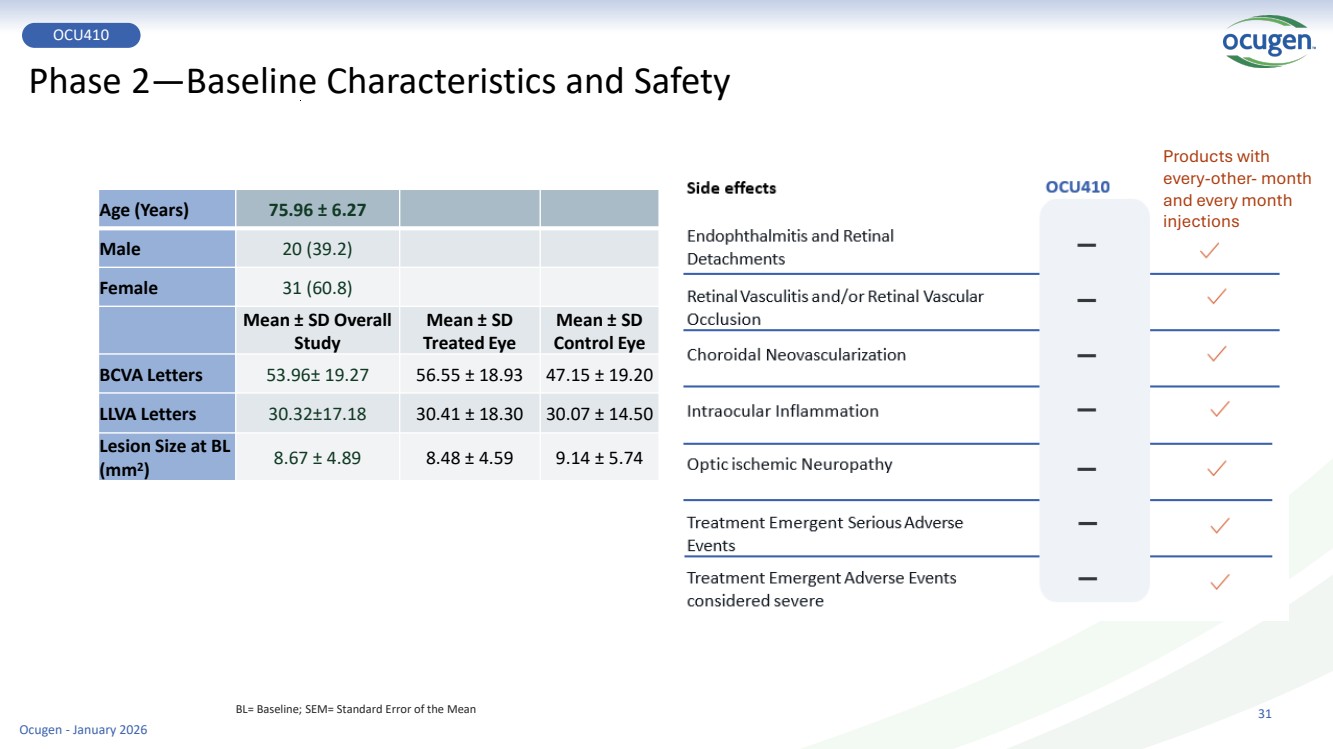
In both the Phase 1 and Phase 2 clinical trials no OCU410-related serious adverse events were observed and no cases of endophthalmitis, retinal detachment, vasculitis, choroidal neovascularization, or optic ischemic neuropathy have been reported to date.
GA is a multifactorial disease with a complex etiology that involves genetic and environmental factors. The current treatment options for GA in the U.S. are limited to those targeting a single mechanism—the complement pathway—requiring frequent intravitreal injections, either monthly or every other month. By contrast, OCU410 is a multifunctional modifier gene therapy, which targets multiple pathways associated with GA.
"The OCU410 Phase 1 and Phase 2 results mark a pivotal moment for Ocugen's modifier gene therapy platform and GA patients worldwide," said Dr. Shankar Musunuri, Chairman, CEO, and Co-founder of Ocugen. "Delivering 60% slower EZ loss in Phase 1 and 46% lesion growth reduction in the Phase 2 preliminary analysis demonstrates the capability of our multi-pathway RORA approach. We look forward to reporting full data from the OCU410 Phase 2 clinical trial later this quarter and initiating Phase 3 in 2026.”
"The clinical development journey of OCU410 has been remarkable," said Dr. Huma Qamar, Chief Medical Officer of Ocugen. "Our Phase 2 randomized trial delivered robust anatomic efficacy that was statistically significant across multiple analyses.
Critically, our safety data across 60 patients has shown no drug-related serious adverse events, no inflammation signals, and no injection complications to date, supporting a favorable risk-benefit profile." “As a practicing retinal specialist, OCU410's clinical profile is genuinely exciting for geographic atrophy patients - including a reduction in ellipsoid zone loss observed in Phase 1, which may serve as a potential marker of retinal health, and a reduction in lesion growth seen in Phase 2,” said Lejla Vajzovic, MD, FASRS, Director, Duke Surgical Vitreoretinal Fellowship Program, Professor of Ophthalmology with Tenure, Adult and Pediatric Vitreoretinal Surgery and Disease, Duke University Eye Center, and Retina Scientific Advisory Board Chair of Ocugen. With these promising results, I believe OCU410 has the potential to set a new standard of care with a single treatment for life.”
In the Phase 2 study, the safety and efficacy of OCU410 in patients with GA secondary to dAMD are being assessed. Fifty-one (51) patients were randomized 1:1:1 into either of two treatment groups (medium or high dose) or a control group. In the treatment groups, subjects received a single subretinal 200-µL administration of 5 x 10¹⁰ vector genomes (vg)/mL (medium dose) or 1.5 x 10¹¹ vg/mL (high dose), while the control group remained untreated. The Company remains on track for a Biologics License Application (BLA) filing for OCU410 in 2028, aligned with its strategy to advance three regulatory submissions for marketing authorization in three years.
About dAMD and Geographic Atrophy
Geographic atrophy is an advanced form of dAMD characterized by progressive degeneration of the macula, leading to irreversible central vision loss. Millions of patients worldwide are affected by GA, with a particularly high burden in aging populations in the United States and Europe. Despite recent approvals, treatment options remain limited and require chronic intravitreal injections, underscoring the need for innovative, durable therapies that address multiple disease mechanisms. dAMD affects approximately 10 million Americans and more than 266 million people worldwide. It is characterized by the thinning of the macula, the portion of the retina responsible for clear vision in one’s direct line of sight. dAMD involves the slow deterioration of the retina with submacular drusen (small white or yellow dots on the retina), atrophy, loss of macular function, and central vision impairment. dAMD accounts for 85-90% of all AMD cases.
About OCU410
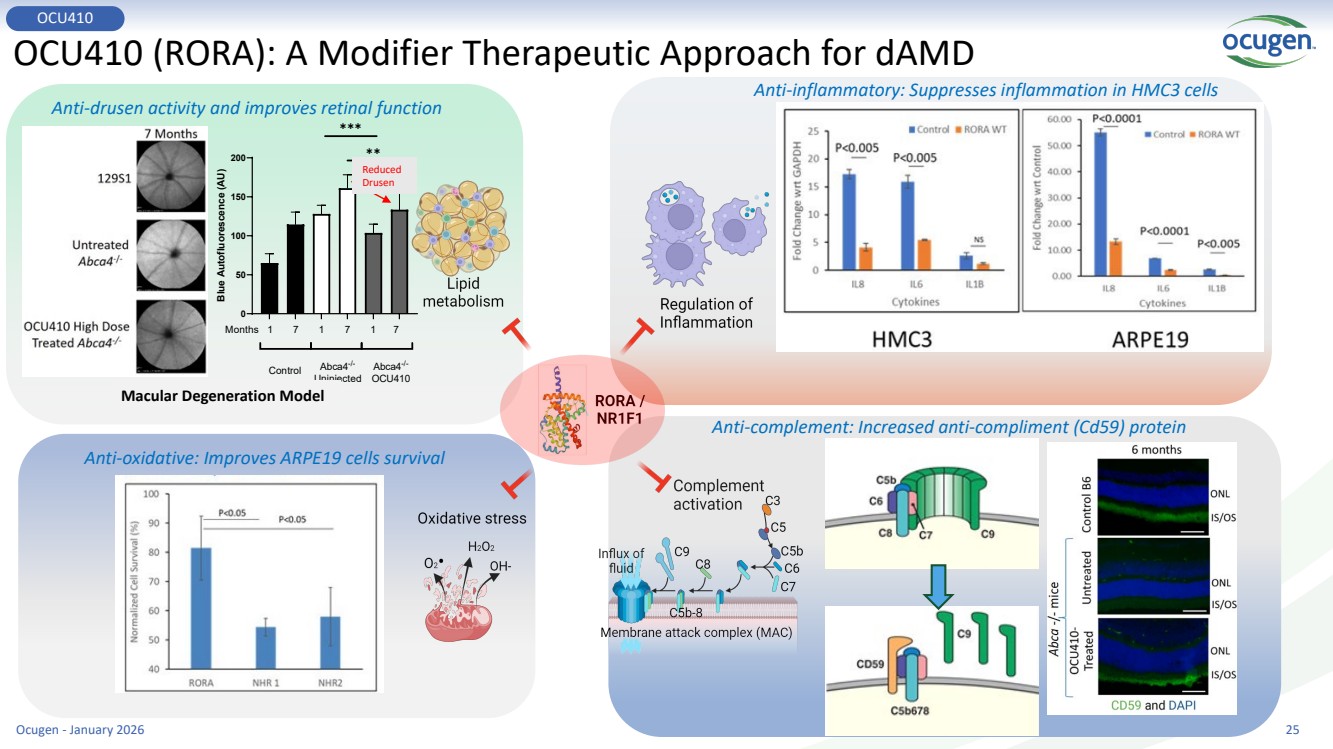
OCU410 is an investigational, intravitreally administered, AAV5-based gene therapy that delivers RORA (retinoid-related orphan receptor alpha), a nuclear receptor that regulates key pathways involved in retinal homeostasis, including oxidative stress response, complement regulation, inflammation, and lipid metabolism. OCU410 is being developed as a one-time gene therapy for patients with GA secondary to dry AMD. OCU410 has received Advanced Therapy Medicinal Product (ATMP) classification from the European Medicines Agency.
About Ocugen, Inc.
Ocugen, Inc. is a biotechnology company focused on discovering, developing, and commercializing novel gene therapies to address major blindness diseases and offer hope for patients across the globe. We are making an impact on patient’s lives through courageous innovation—forging new scientific paths that harness our unique intellectual and human capital. Our breakthrough modifier gene therapy platform has the potential to address significant unmet medical need for large patient populations through our gene-agnostic approach. Discover more at www.ocugen.com and follow us on X and LinkedIn.
Cautionary Note on Forward-Looking Statements
This press release contains forward-looking statements within the meaning of The Private Securities Litigation Reform Act of 1995, including, but not limited to, statements regarding qualitative assessments of available data, potential benefits, expectations for ongoing clinical trials, anticipated regulatory filings and anticipated development timelines, which are subject to risks and uncertainties. We may, in some cases, use terms such as “predicts,” “believes,” “potential,” “proposed,” “continue,” “estimates,” “anticipates,” “expects,” “plans,” “intends,” “may,” “could,” “might,” “will,” “should,” or other words that convey uncertainty of future events or outcomes to identify these forward-looking statements. Such statements are subject to numerous important factors, risks, and uncertainties that may cause actual events or results to differ materially from our current expectations, including, but not limited to, the risks that preliminary, interim and top-line clinical trial results may not be indicative of, and may differ from, final clinical data; the ability of OCU410 to perform in humans in a manner consistent with nonclinical, preclinical or previous clinical study data; that unfavorable new clinical trial data may emerge in ongoing clinical trials or through further analyses of existing clinical trial data; that earlier non-clinical and clinical data and testing of may not be predictive of the results or success of later clinical trials; and that that clinical trial data are subject to differing interpretations and assessments, including by regulatory authorities. These and other risks and uncertainties are more fully described in our periodic filings with the Securities and Exchange Commission (SEC), including the risk factors described in the section entitled “Risk Factors” in the quarterly and annual reports that we file with the SEC. Any forward-looking statements that we make in this press release speak only as of the date of this press release. Except as required by law, we assume no obligation to update forward-looking statements contained in this press release whether as a result of new information, future events, or otherwise, after the date of this press release.
Contact:
Tiffany Hamilton
AVP, Head of Communications
Tiffany.Hamilton@ocugen.com
Exhibit 99.2
|
Courageous Innovation Dedicated to Bringing Game-Changing Gene Therapies to Market and Working Even Harder to Provide Access to Patients Globally |
|
2 This presentation contains forward-looking statements within the meaning of The Private Securities Litigation Reform Act of 1995, including, but not limited to, strategy, business plans and objectives for Ocugen’s clinical programs, plans and timelines for the preclinical and clinical development of Ocugen’s product candidates, including the therapeutic potential, clinical benefits and safety thereof, expectations regarding timing, success and data announcements of current ongoing preclinical and clinical trials, the ability to initiate new clinical programs, statements regarding qualitative assessments of available data, potential benefits, expectations for ongoing clinical trials, anticipated regulatory filings and anticipated development timelines, which are subject to risks and uncertainties. We may, in some cases, use terms such as “predicts,” “believes,” “potential,” “proposed,” “continue,” “estimates,” “anticipates,” “expects,” “plans,” “intends,” “may,” “could,” “might,” “will,” “should,” or other words that convey uncertainty of future events or outcomes to identify these forward-looking statements. Such statements are subject to numerous important factors, risks, and uncertainties that may cause actual events or results to differ materially from our current expectations, including, but not limited to, the risks that preliminary, interim and top-line clinical trial results may not be indicative of, and may differ from, final clinical data; that unfavorable new clinical trial data may emerge in ongoing clinical trials or through further analyses of existing clinical trial data; that earlier non-clinical and clinical data and testing of may not be predictive of the results or success of later clinical trials; and that that clinical trial data are subject to differing interpretations and assessments, including by regulatory authorities. These and other risks and uncertainties are more fully described in our annual and periodic filings with the Securities and Exchange Commission (SEC), including the risk factors described in the section entitled “Risk Factors” in the quarterly and annual reports that we file with the SEC. Any forward-looking statements that we make in this presentation speak only as of the date of this presentation. Except as required by law, we assume no obligation to update forward-looking statements contained in this presentation whether as a result of new information, future events, or otherwise, after the date of this presentation. Forward Looking Statement COcugen - January 2026 |
|
Pioneering biotechnology company leading the way to address major blindness diseases with novel modifier gene therapy Leader in Ophthalmology Gene Therapy |
|
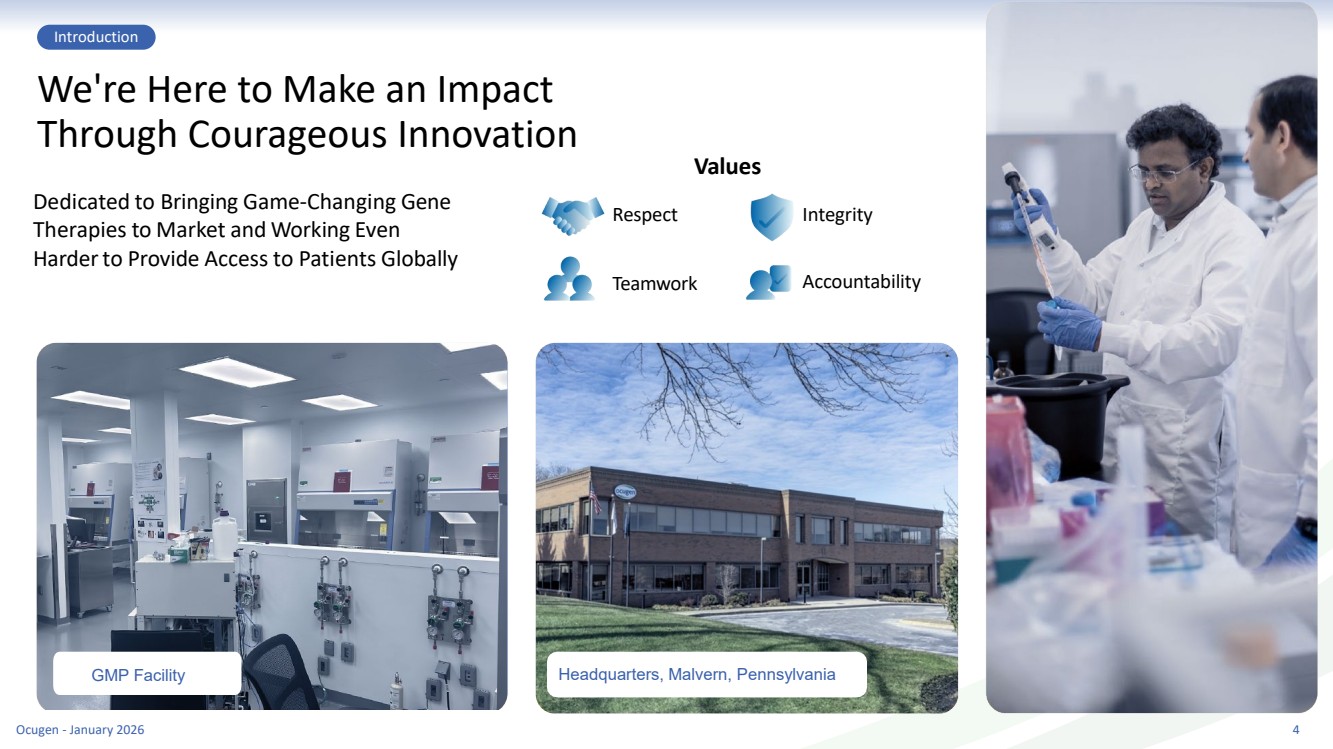
4 Introduction We're Here to Make an Impact Through Courageous Innovation Dedicated to Bringing Game-Changing Gene Therapies to Market and Working Even Harderto Provide Access to Patients Globally Respect Integrity Teamwork Accountability GMP Facility Headquarters, Malvern, Pennsylvania Values Ocugen - January 2026 |
|
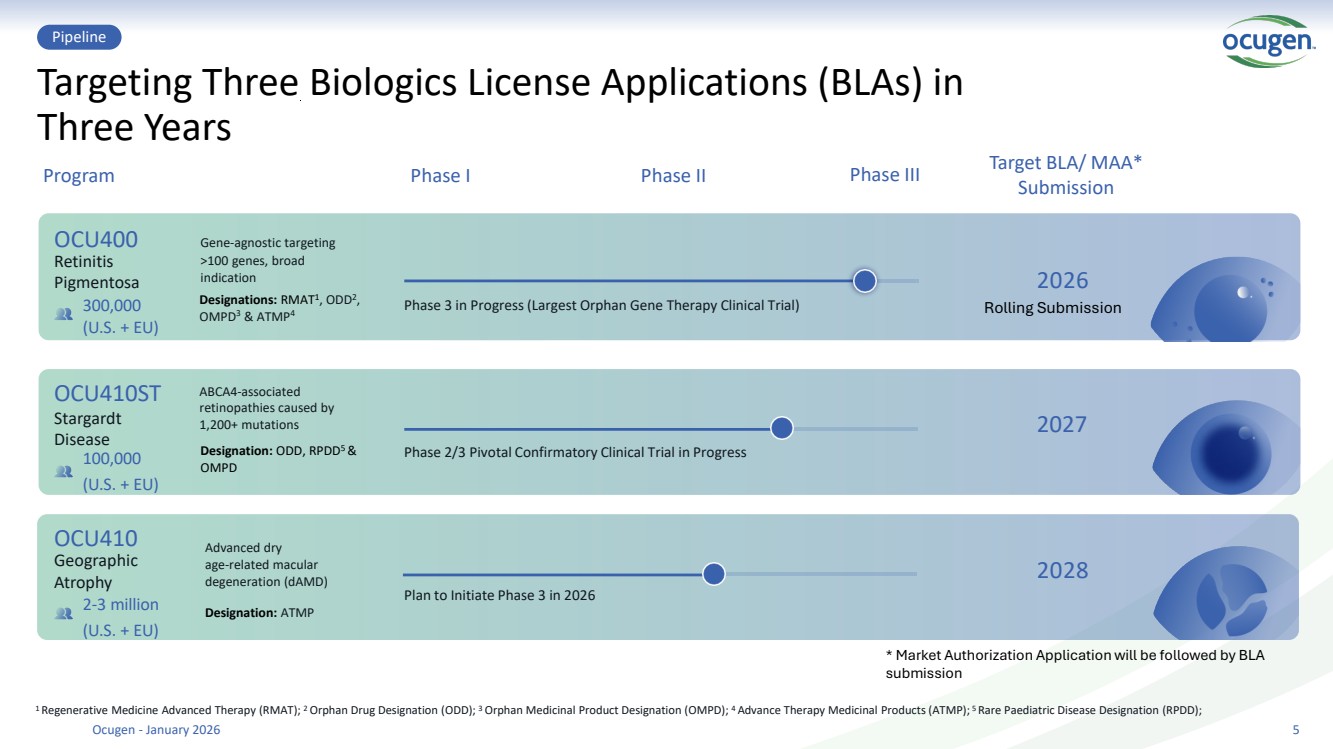
5 Targeting Three Biologics License Applications (BLAs) in Three Years Pipeline Phase I Phase II Phase III Target BLA/ MAA* Submission Program 300,000 (U.S. + EU) Gene-agnostic targeting >100 genes, broad indication ABCA4-associated retinopathies caused by 1,200+ mutations Advanced dry age-related macular degeneration (dAMD) Phase 3 in Progress (Largest Orphan Gene Therapy Clinical Trial) Phase 2/3 Pivotal Confirmatory Clinical Trial in Progress Plan to Initiate Phase 3 in 2026 2026 2027 2028 100,000 (U.S. + EU) 2-3 million (U.S. + EU) Retinitis Pigmentosa Stargardt Disease Geographic Atrophy OCU400 OCU410ST OCU410 Designations: RMAT1, ODD2, OMPD3 & ATMP4 Designation: ODD, RPDD5& OMPD Designation: ATMP 1 Regenerative Medicine Advanced Therapy (RMAT); 2 Orphan Drug Designation (ODD); 3 Orphan Medicinal Product Designation (OMPD); 4 Advance Therapy Medicinal Products (ATMP); 5 Rare Paediatric Disease Designation (RPDD); Rolling Submission * Market Authorization Application will be followed by BLA submission Ocugen - January 2026 |
|
Breakthrough technology designed to address many rare diseases as well as complex diseases that affect millions Modifier Gene Therapy Platform |
|
7 Problem 3million+ people living with retinal disease globally Most retinal therapies treat symptoms ortarget single genes, leaving millions with progressive vision loss and no effective, lasting treatment options. No therapy available for many retinal diseases, specially inherited retinal diseases such as RP, Stargardt and others Diseased retina Healthy retina ONL ONL INL OS OPL INL GCL 1 Jones BW, Marc RE, Pfeiffer RL. Retinal Degeneration, Remodeling and Plasticity. 2016 Oct 28. In: Kolb H, Fernandez E, Nelson R, editors. Webvision: The Organization of the Retina and Visual System [Internet]. Salt Lake City (UT): University of Utah Health Sciences Center; 1995-. Available from: https://www.ncbi.nlm.nih.gov/books/NBK482309/ 2 https://www.nature.com/articles/s41434-024-00440-6 Ocugen - January 2026 |
|
Traditional therapy has limited therapeutic potential Traditional therapy can only target one single gene at a time, limiting therapeutic potential. Problem 8 of all human proteins are expressed in the retina genes are highly specialized to it, interacting through complex pathways mutations affecting the retina have already been identified 65% 785 250+ Photoreceptor development Inflammation and cell survival Phototransduction Cone cell development Metabolism Ocugen - January 2026 |
|
9 The Solution is a Gene-Agnostic Approach Solution Our breakthrough technology is designed to address rare diseases and complex diseases Targeting master regulators Master regulators control entire gene networks. By targeting them, Ocugen’s gene therapy platform addresses the root cause of IRDs and multifactorial diseases (e.g dAMD). Gene-Agnostic Multifactorial Durable Effect Broad Impact Ocugen - January 2026 |
|
10 The Platform Modifier Gene Therapy Platform AAV5 Carries Modifier Gene (M)* 1. Modifier Gene (M) Regulation of target gene Expression 2. Molecular Reset of the Gene Network Restoration of Molecular and cellular homeostasis 3. Retina Increased survival of retinal cells 4. * Modifier Genes: NR2E3 or RORA Single subretinal injection Ocugen - January 2026 |
|
Key Attributes of AAV5 vector: • Non-integrating Vector • Enhanced Tissue Specificity • High Transduction Efficiency • Long Term Gene Expression • Low Immunogenicity The Platform Product Highlights: • Novel Gene Agnostic Therapy • Broad Patient Eligibility • Durable Benefit • Favorable Safety & Tolerability Profile • Proven Clinical Efficacy Modifier Gene Therapy: A Platform Technology Based on AAV5 Vector and Nuclear Hormone Receptor Genes Ocugen - January 2026 11 |
|
OCU400 Retinitis Pigmentosa (RP) Broad indication, gene-agnostic, targets 100+ genes |
|
13 OCU400 First-in-Class Gene Therapy for Retinitis Pigmentosa Retinitis Pigmentosa Retinitis Pigmentosa (RP) is a group of rare, inherited retinal diseases caused by mutations in over 100 genes, leading to progressive vision loss and, in many cases, blindness. 1.6 million 2,000 1 Market Potential U.S. + EU globally suffer from RP approved treatment avaliable $52M peak annual sales Luxturna® only addresses one gene (RPE65) Regulatory Milestones (Anticipated) One product for all 100 genes delivered via a single, subretinal injection Designations OCU400 Phase 3 trial underway — largest orphan gene therapy trial for RP Manufacturing process validation Rolling Submission U.S. (BLA) Followed by EU (MAA) FDA (RMAT + ODD) EMA (ATMP+ OMPD) Patients going untreated 298,000 Regenerative Medicine Advanced Therapy (RMAT); Orphan Drug Designation (ODD); Orphan Medicinal Product Designation (OMPD); EAP= Expanded Access Program 2026 Ocugen - January 2026 |
|
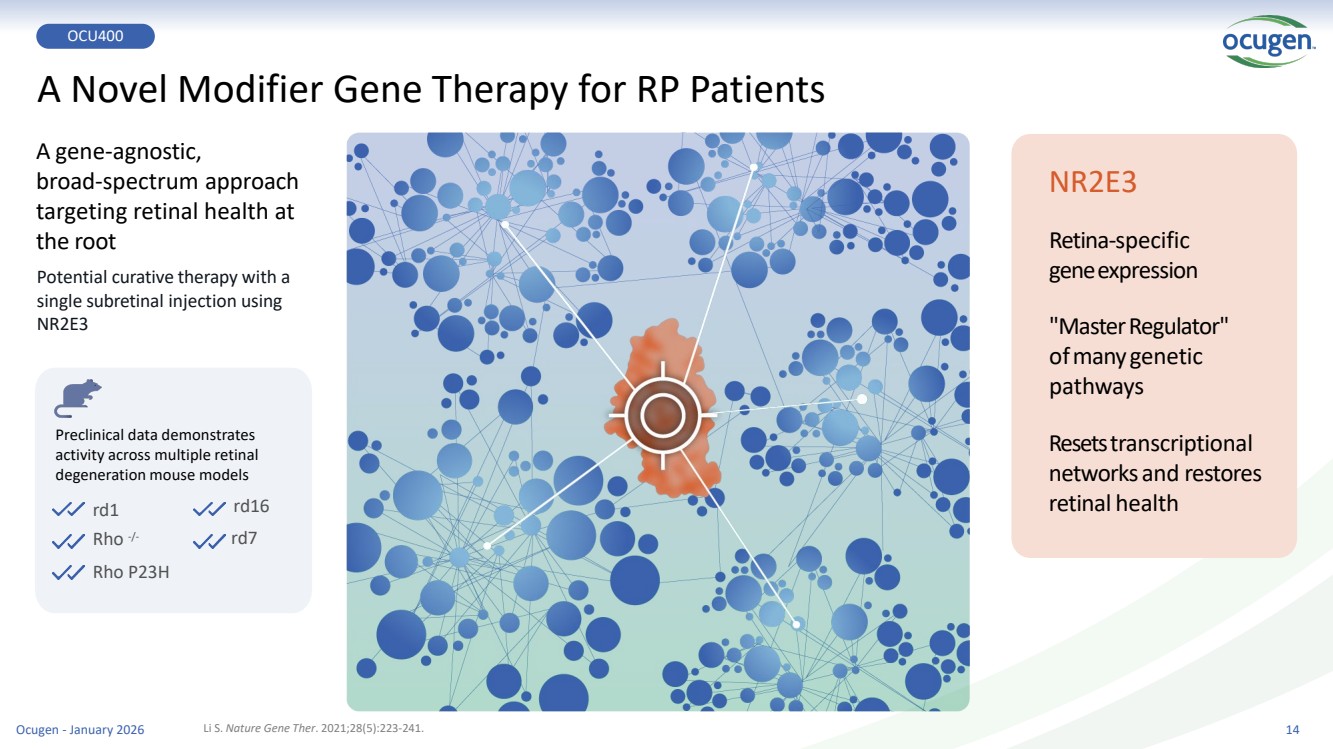
14 A Novel Modifier Gene Therapy for RP Patients OCU400 A gene-agnostic, broad-spectrum approach targeting retinal health at the root Potential curative therapy with a single subretinal injection using NR2E3 rd1 Rho -/- Rho P23H Preclinical data demonstrates activity across multiple retinal degeneration mouse models NR2E3 Retina-specific geneexpression "MasterRegulator" ofmanygenetic pathways Resetstranscriptional networks and restores rd16 retinal health rd7 Ocugen Li S. Nature Gene Ther. 2021;28(5):223-241. - January 2026 |
|
Preclinical studies demonstrating MOA Immunofluorescence (IF) Electroretinography Biomarkers: Molecular Reset Fundus Imaging Histology Ocugen - January 2026 15 |
|
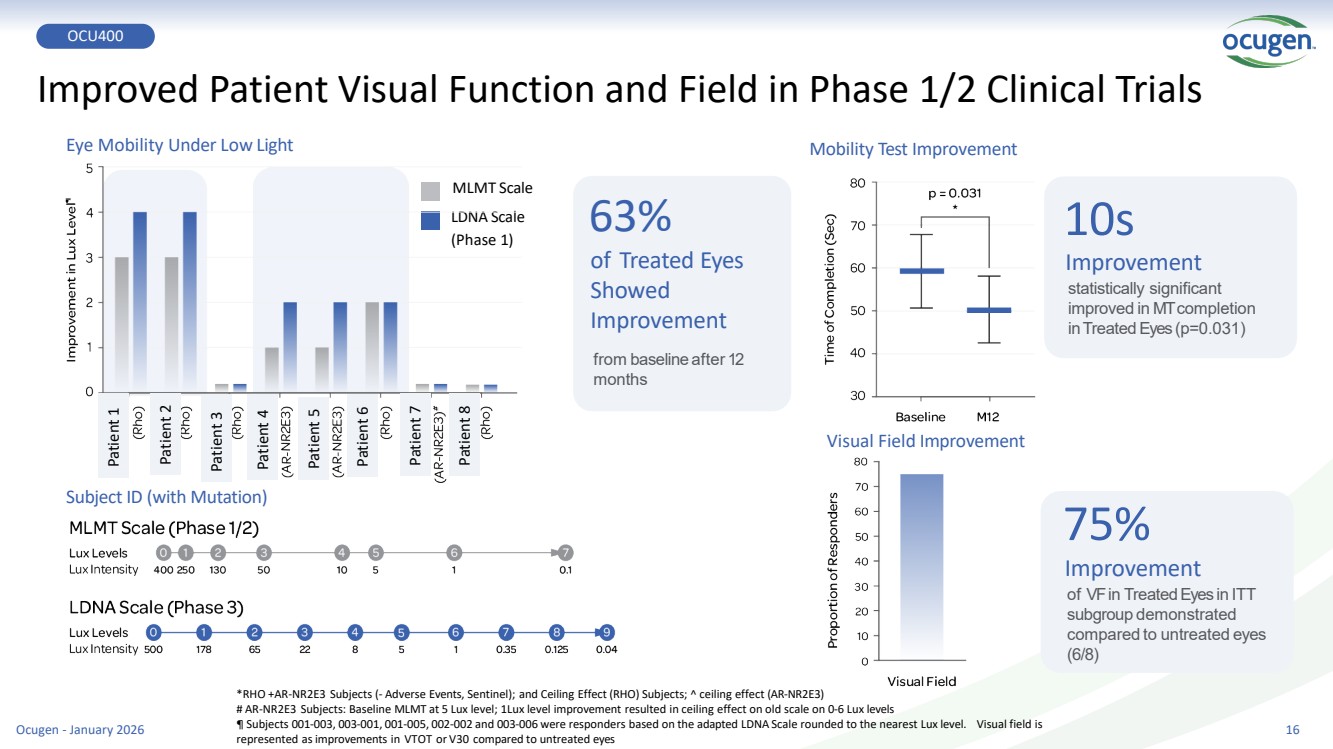
16 Improved Patient Visual Function and Field in Phase 1/2 Clinical Trials OCU400 *RHO +AR-NR2E3 Subjects (- Adverse Events, Sentinel); and Ceiling Effect (RHO) Subjects; ceiling effect (AR-NR2E3) # AR-NR2E3 Subjects: Baseline MLMT at 5 Lux level; 1Lux level improvement resulted in ceiling effect on old scale on 0-6 Lux levels ¶ Subjects 001-003, 003-001, 001-005, 002-002 and 003-006 were responders based on the adapted LDNA Scale rounded to the nearest Lux level. Visual field is represented as improvements in VTOT or V30 compared to untreated eyes 63% of Treated Eyes Showed Improvement from baseline after 12 months 10s Improvement statistically significant improved in MTcompletion inTreatedEyes (p=0.031) 75% Improvement of VFin TreatedEyes in ITT subgroup demonstrated compared to untreated eyes (6/8) Eye Mobility Under Low Light Subject ID (with Mutation) Mobility Test Improvement Visual Field Improvement (Phase 1) MLMT Scale LDNA Scale Patient 1 Patient 2 Patient 3 Patient 4 Patient 5 Patient 6 Patient 7 Patient 8 Ocugen - January 2026 |
|
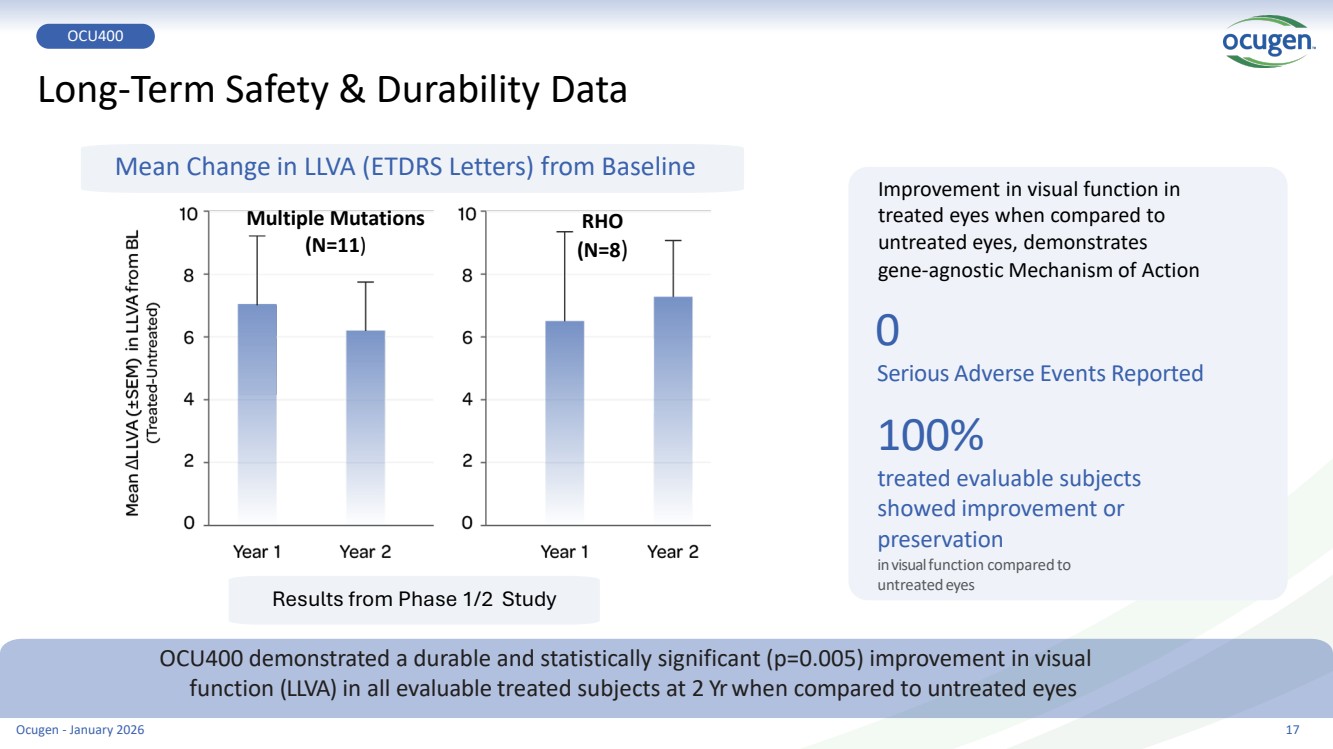
17 Long-Term Safety & Durability Data OCU400 Improvement in visual function in treated eyes when compared to untreated eyes, demonstrates gene-agnostic Mechanism of Action 0 Serious Adverse Events Reported 100% treated evaluable subjects showed improvement or preservation invisualfunction compared to untreatedeyes OCU400 demonstrated a durable and statistically significant (p=0.005) improvement in visual function (LLVA) in all evaluable treated subjects at 2 Yr when compared to untreated eyes Multiple Mutations (N=11) RHO (N=8) Mean Change in LLVA (ETDRS Letters) from Baseline Results from Phase 1/2 Study Ocugen - January 2026 |
|
18 Phase 3 liMeliGhT Trial—Largest RP Data Set OCU400 Phase 3 Study Design Endpoints MTD Determined in Phase 1/2 Control Group No Treatment Treatment Group 2.5×10¹⁰ vg per eye 250 µL 100+ RP patients 2:1 ratio Visual function improvement in treated eye vs. control eye Assessed by Low Luminance Visual Acuity (LLVA) Target Population Early- to late-stage disease in broad RP population Including pediatrics (5+ years) 12-month change in Function Vision assessed by LDNA* Improvement in Lux Level in LDNA from baseline to 12 months Primary Secondary 2 1 *LDNA= Luminance Dependent Navigation Assessment is a mobility test administered on a maze under different lux levels Ocugen - January 2026 |
|
OCU410ST Stargardt Disease ABCA4 -associated retinopathies >1,200 mutations |
|
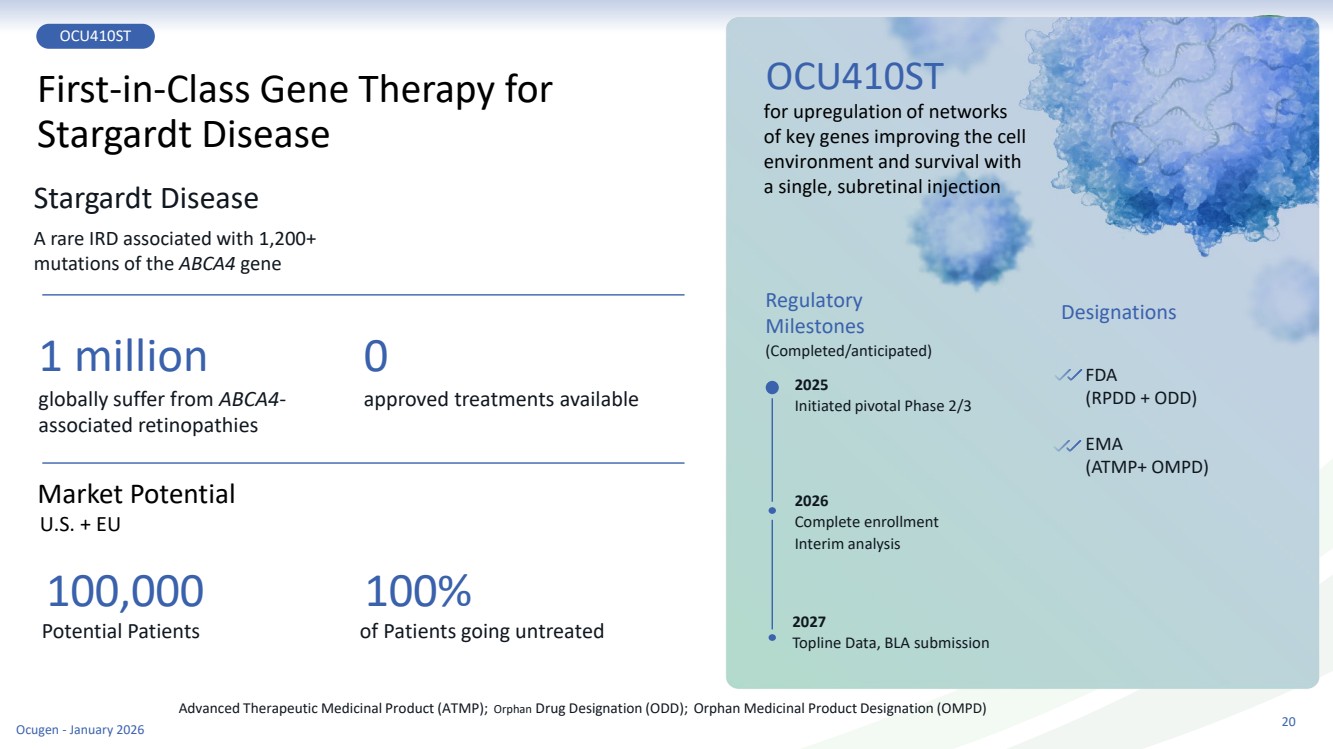
OCU410ST First-in-Class Gene Therapy for Stargardt Disease Stargardt Disease A rare IRD associated with 1,200+ mutations of the ABCA4 gene 1 million 0 Market Potential U.S. + EU globally suffer from ABCA4- approved treatments available associated retinopathies Regulatory Milestones (Completed/anticipated) for upregulation of networks of key genes improving the cell environment and survival with a single, subretinal injection Designations OCU410ST 2025 Initiated pivotal Phase 2/3 2027 Topline Data, BLA submission FDA (RPDD + ODD) EMA (ATMP+ OMPD) 100% of Patients going untreated 100,000 Potential Patients Advanced Therapeutic Medicinal Product (ATMP); Orphan Drug Designation (ODD); Orphan Medicinal Product Designation (OMPD) 2026 Complete enrollment Interim analysis 20 Ocugen - January 2026 |
|
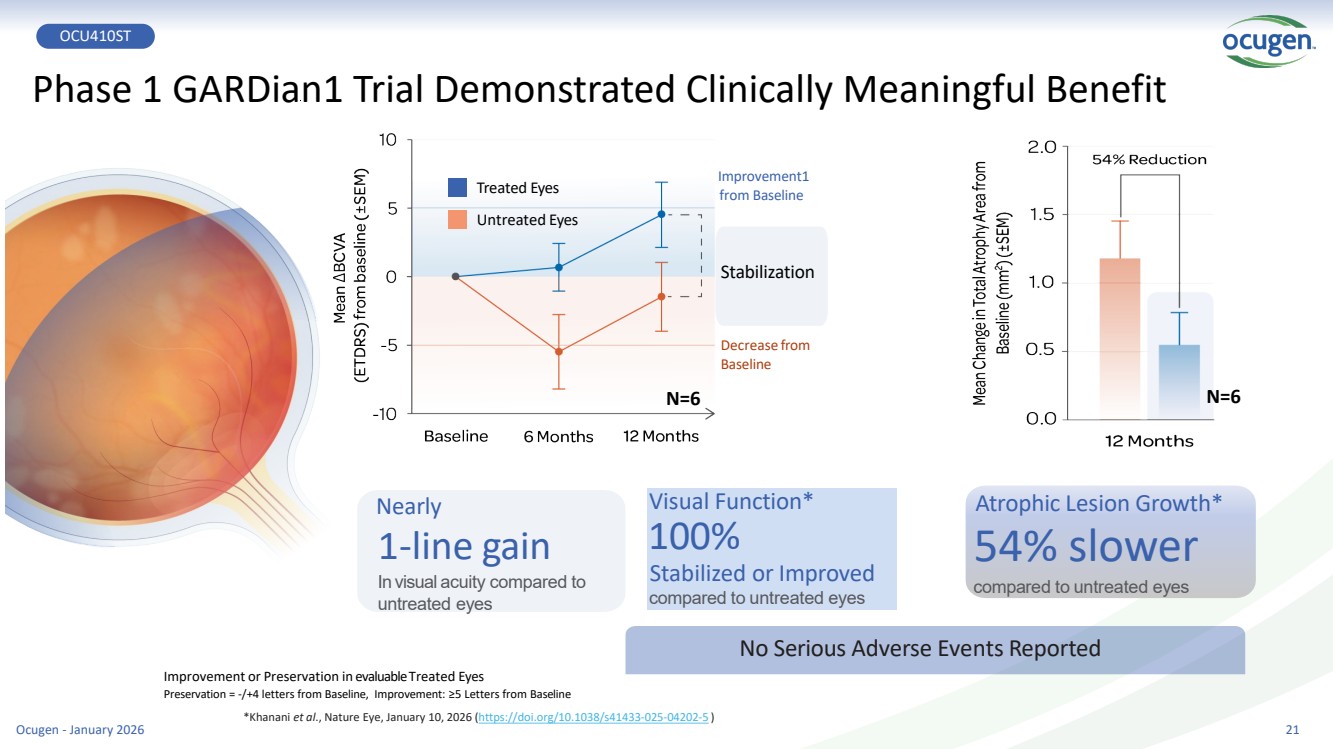
21 Phase 1 GARDian1 Trial Demonstrated Clinically Meaningful Benefit OCU410ST Treated Eyes Untreated Eyes Atrophic Lesion Growth* 54% slower compared to untreated eyes Visual Function* 100% Stabilized or Improved compared to untreated eyes Nearly 1-line gain In visual acuity compared to untreated eyes Improvement1 from Baseline Decrease from Baseline Stabilization Improvement or Preservation in evaluable Treated Eyes Preservation = -/+4 letters from Baseline, Improvement: ≥5 Letters from Baseline No Serious Adverse Events Reported N=6 N=6 *Khanani et al., Nature Eye, January 10, 2026 (https://doi.org/10.1038/s41433-025-04202-5 ) Ocugen - January 2026 |
|
22 GARDian 3- Phase 2/3 Pivotal Confirmatory Trial OCU410ST Trial Design Endpoints Randomized 2:1 (N=51) DSMB 4-week Data Reviews Functional improvement in vision vs. control eye Assessed by LLVA and BCVA Target Population Early- to late-stage disease population Including pediatrics (3+ years) 12-month change in atrophic lesion size from baseline vs. control Measured in mm2 by fundus autofluorescence (FAF) 34 Treatment Group 3×10¹⁰ vg per eye in 200 µL 17 Control Group No Treatment First Second 17 17 All M Subjects TD Established in Phase 1 Primary Secondary Adaptive Design with Sample size re-estimation [Mid-2026] Interim Analysis: 24 subjects complete 8 Months post OCU410ST (16 treated and 8 controls) DMC Interim-Data Analysis Ocugen - January 2026 |
|
OCU410 Geographic Atrophy Advanced dry age-related macular degeneration (dAMD) |
|
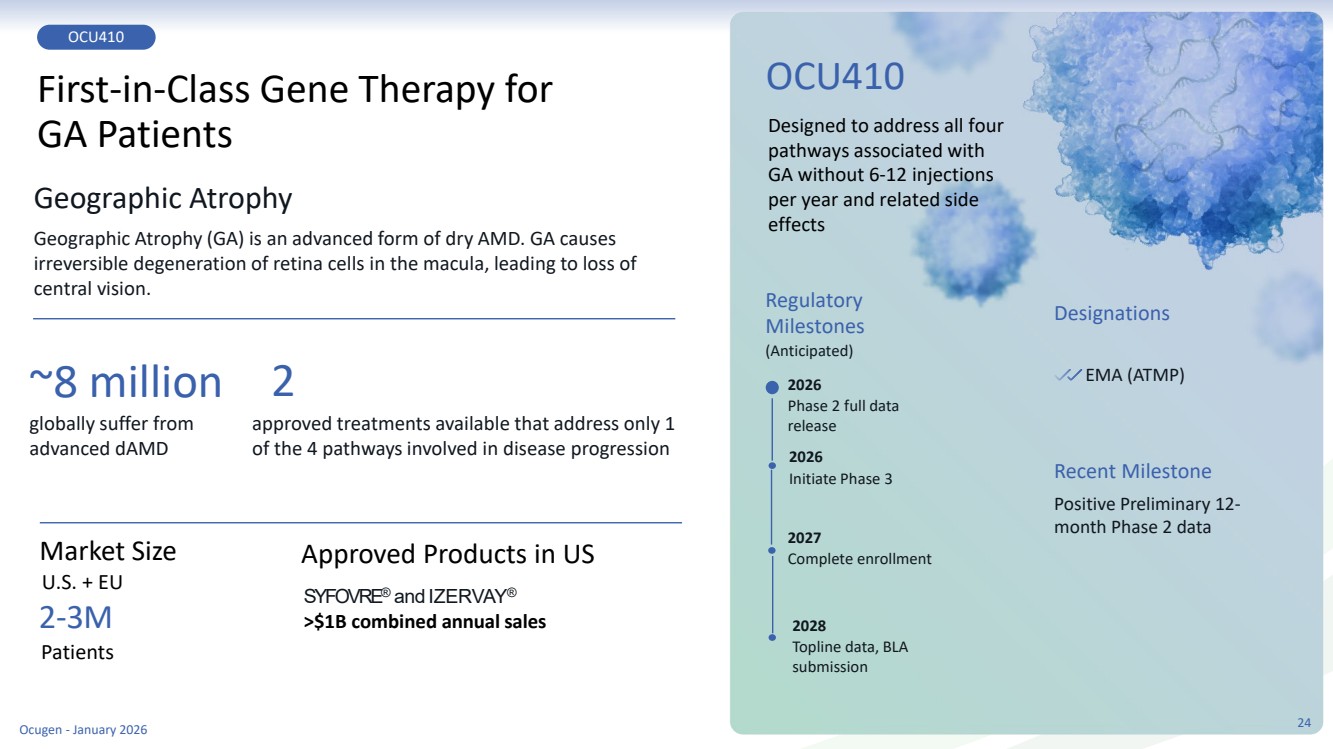
24 OCU410 First-in-Class Gene Therapy for GA Patients Geographic Atrophy Geographic Atrophy (GA) is an advanced form of dry AMD. GA causes irreversible degeneration of retina cells in the macula, leading to loss of central vision. ~8 million 2 Market Size U.S. + EU approved treatments available that address only 1 of the 4 pathways involved in disease progression globally suffer from advanced dAMD Regulatory Milestones (Anticipated) Designed to address all four pathways associated with GA without 6-12 injections per year and related side effects Designations OCU410 2026 Initiate Phase 3 2028 Topline data, BLA submission EMA (ATMP) SYFOVRE® and IZERVAY® 2-3M >$1B combined annual sales Patients Recent Milestone Positive Preliminary 12- month Phase 2 data Approved Products in US 2026 Phase 2 full data release 2027 Complete enrollment 24 Ocugen - January 2026 |
|
Anti-oxidative: Improves ARPE19 cells survival Anti-complement: Increased anti-compliment (Cd59) protein Anti-inflammatory: Suppresses inflammation in HMC3 cells Anti-drusen activity and improves retinal function 0 50 100 150 200 Blue Autofluorescence (AU) Months 1 7 1 7 1 7 Control Abca4-/- Uninjected Abca4-/- OCU410 ✱✱ ✱✱✱ Macular Degeneration Model Reduced Drusen OCU410 (RORA): A Modifier Therapeutic Approach for dAMD OCU410 Ocugen - January 2026 25 |
|
Phase 1 ArMaDa Trial OCU410 Trial Design Endpoints Dose Escalation (1:1:1) DSMB 4-week post-OCU410 Safety Reviews First Second 3 3 All Subjects 9 • Safety, AEs and SAEs •Indirect ophthalmoscopy •IOP Primary • Humoral/cellular immune response • Vector shedding Secondary 3 Medium Dose Group 5x 10¹⁰ vg/ml in 200µL (or 1x 10¹⁰ vg per eye) 3 High Dose Group 1.5x 10¹¹ vg/ml in 200 µL (or 3x 10¹⁰ vg per eye) Target Population GA secondary to dAMD Exploratory • Indirect ophthalmoscopy • Fundus Autofluorescence • Drusen volume (mm3) measured by SD-OCT • Incidence of conversion to wet AMD • MAIA • Patient Reported Outcomes (NEI-VFQ25) 3 Low Dose Group 2.5x 10⁹ vg/ml in 200µL (or 5x 10⁹ vg per eye ) CNV in fellow eye was not exclusionary 26 Ocugen - January 2026 |
|
OCU410 Phase 1—Baseline Characteristics and Safety No adverse or severe adverse events related to the study drug were reported including: • No development of exudation • No infectious endophthalmitis • No intraocular Inflammation • No anterior ischemic optic neuropathy (AION) • No vasculitis Mean ± SEM Study Eye Mean ± SEM Fellow Eye Age (Years) 79 ± 8 BCVA Letters 46.89 ± 5.98 59.67 ± 8.07 LLVA Letters 34.78 ±5 .71 41.89 ±7 .59 Lesion Size at BL (mm2) 7.74 ± 1.54 8.19 ± 1.81 OCU410 BL= Baseline; SEM= Standard Error of the Mean 27 Ocugen - January 2026 |
|
Phase 1—OCU410 Treatment shows reduction in GA Lesion Growth 28 Data points at 12M (N=7, 3 Low Dose, 2 Med Dose, 2 High Dose) 1 High dose subject with loss-to-follow up, and 1 Med dose subject with foveal detachment during surgery were not included in the analysis GA= Geographic Atrophy, SQRT= square root; SEM= standard error or mean 12 Months 0.0 0.1 0.2 0.3 0.4 0.5 GA Lesion Area SQRT (mm) FAF Mean(±SEM) Change from Baseline Treated Eyes Untreated Fellow Eyes 20.2% Baseline 6M 12M 0.00 0.05 0.10 0.15 0.20 0.25 0.30 0.35 0.40 GA Lesion Area SQRT (mm) FAF Mean Change(±SEM) from Baseline Treated Eyes Untreated Fellow Eyes Months -20.2% OCU410 Lesion Size 20.2% Reduction compared to untreated fellow eye Disease Progression Slower Atrophy Growth compared to untreated fellow eye N=7 Ocugen - January 2026 |
|
Phase 1—Treatment Provides Retinal Structural Preservation by Reducing EZ Loss & Photoreceptor Degeneration 29 M=Months Data points at 12M (N=7, 3 Low Dose, 2 Med Dose, 2 High Dose) 1 High dose subject with loss-to-follow up, and 1 Med dose subject with foveal detachment during surgery were not included in the analysis Preservation= reduction in the loss of EZ and EZ/RPE (photoreceptors) as a treatment outcome M12 0 1 2 3 4 5 6 EZ area loss (mm 2 ) Mean (±SEM) change from BL Treated Eyes Untreated Fellow Eyes OCU410 BL M12 BL M12 0.0 0.5 1.0 1.5 2.0 2.5 EZ/RPE atrophy ratio Mean (±SEM) Treated Eye Untreated Fellow Eye EZ loss 60% slower compared to untreated fellow eyes EZ-RPE loss Reduced compared to untreated fellow eyes potential treatment effect Ocugen - January 2026 |
|
Trial Design Endpoints Randomization 1:1:1 DSMB 4-week Safety Reviews Change in LLVA from baseline at 12M Preservation of retinal tissue around areas of atrophy Change in GA lesion size Measured in mm2 by fundus autofluorescence (FAF) First Second 17 17 All Subjects 51 MTD Determined in Phase 1 17 Control Group No Treatment Primary Secondary 17 Medium Dose Group 5x 10¹⁰ vg/ml in 200µL (or 1x 10¹⁰ vg per eye) 17 High Dose Group 1.5x 10¹¹ vg/ml in 200 µL (or 3x 10¹⁰ vg per eye) Phase 2 ArMaDa Trial OCU410 Target Population Geographic atrophy secondary to Dry AMD 30 Ocugen - January 2026 |
|
Phase 2—Baseline Characteristics and Safety Age (Years) 75.96 ± 6.27 Male 20 (39.2) Female 31 (60.8) Mean ± SD Overall Study Mean ± SD Treated Eye Mean ± SD Control Eye BCVA Letters 53.96± 19.27 56.55 ± 18.93 47.15 ± 19.20 LLVA Letters 30.32±17.18 30.41 ± 18.30 30.07 ± 14.50 Lesion Size at BL (mm2) 8.67 ± 4.89 8.48 ± 4.59 9.14 ± 5.74 OCU410 BL= Baseline; SEM= Standard Error of the Mean Products with every-other- month and every month injections 31 Ocugen - January 2026 |
|
12 Months 0 1 2 3 4 GA Lesion Area (mm 2 ) Mean (±SEM) change from BL Control Treatment (OCU410) -46% BL M6 M12 0 1 2 3 4 GA Lesion Area (mm 2 ) Mean (±SEM) change from BL Control Treatment (OCU410) 46% Includes both foveal and subfoveal GA: geographic atrophy; Treated Eyes that received OCU410 Medium dose and OCU410 High Dose were combined for analysis Data points for Control, N=5; Treated Medium Dose, N=10; Treated High-Dose, N=8 Phase 2—Treatment Demonstrates Reduction in GA Lesion Growth at 12 Months p=0.015 N=23 OCU410 Lesion Size 46% Reduction in treatment group compared to controls Disease Progression Slower Atrophy Growth compared to controls M12 32 Ocugen - January 2026 |
|
BL M6 M12 0 1 2 3 4 Timeline (Months) Control OCU410 - Medium Dose OCU410 - High Dose GA Lesion Area (mm 2 ) Mean (±SEM) change from BL -36% -54% 12 Months 0 1 2 3 4 GA Lesion Area (mm 2 ) Mean (±SEM) change from BL Control OCU410 - Medium Dose OCU410 - High Dose -54% -36% Greater reduction observed in subjects with ≥7.5 mm2 at BL Phase 2—OCU410 demonstrates reduction in GA Lesion Growth at 12 Months Includes both foveal and sub foveal GA: geographic atrophy, Data points for Control, N=5; Treated Medium Dose, N=10; Treated High-Dose, N=8 p=0.05 p=0.02 N=23 OCU410 Lesion Size 54% vs 36% Lesion reduction in medium dose and high dose compared to controls Disease Progression Slower Lesion Growth in both dose groups compared to controls 33 Baseline 6M 12M 0 1 2 3 4 5 GA Lesion Area (mm2 ) Mean (±SEM) Change from BL Control Treatment (OCU410) Timeline (Months) -57% Lesion Size 57% Reduction in treated eyes compared to controls N=14 Data points for Control, N=3; Treated Medium Dose, N=5; Treated High-Dose, N=6 No difference observed between doses Ocugen - January 2026 |
|
Phase 2—Demonstrates Superior Clinical Effects in GA Patients Significant Lesion Size Reduction Compared to Control Responder Rate to OCU410 Treatment 46% 22% OCU410 Approved Therapies with monthly injections1 Percentage Reduction in GA Lesion Growth (Treatment vs Control) Approved therapies benchmark 12 M 24 M OCU410 Oaks and Derby Study reports are obtained from Heier e tal., 2023, PMID:37865470 1 Data presented are based on package inserts of approved therapies. OCU410 remains investigational, and no head-to-head trials have been conducted. 34 Ocugen - January 2026 |
|
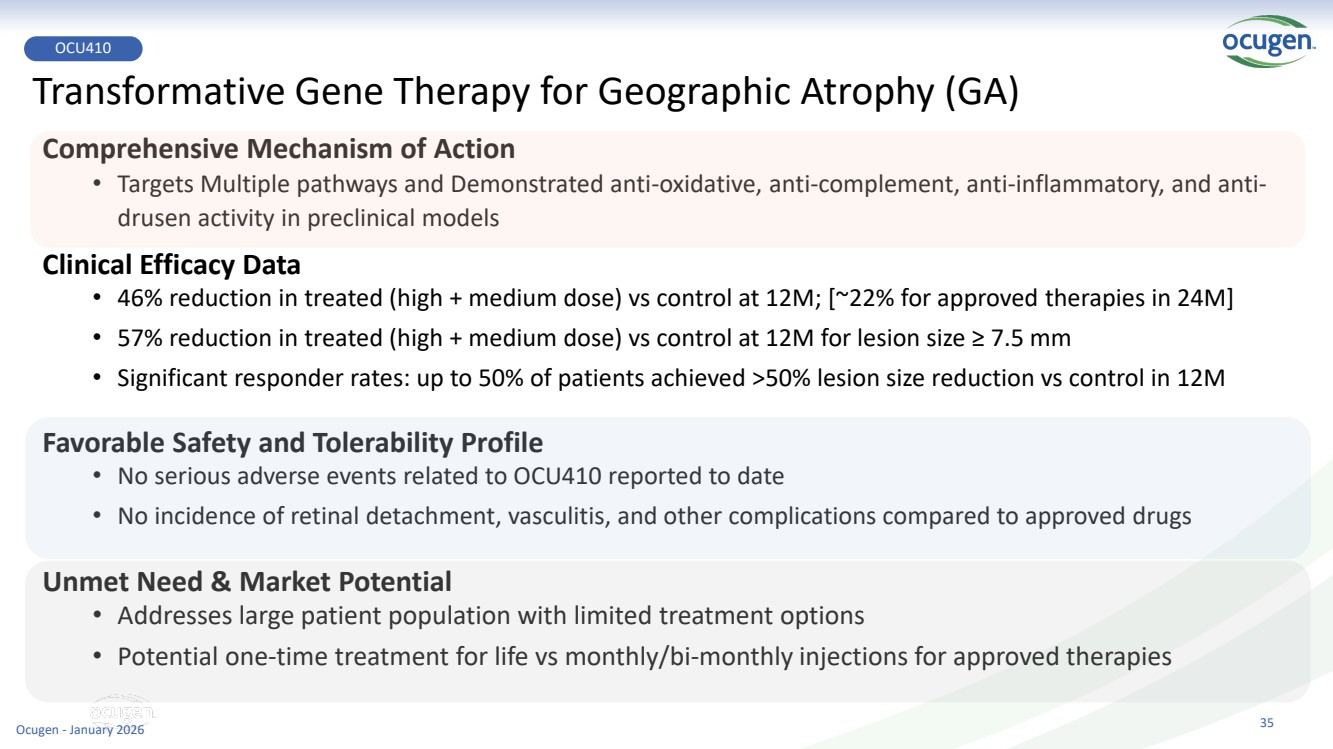
35 OCU410 Transformative Gene Therapy for Geographic Atrophy (GA) Comprehensive Mechanism of Action • Targets Multiple pathways and Demonstrated anti-oxidative, anti-complement, anti-inflammatory, and anti-drusen activity in preclinical models Clinical Efficacy Data • 46% reduction in treated (high + medium dose) vs control at 12M; [~22% for approved therapies in 24M] • 57% reduction in treated (high + medium dose) vs control at 12M for lesion size ≥ 7.5 mm • Significant responder rates: up to 50% of patients achieved >50% lesion size reduction vs control in 12M Favorable Safety and Tolerability Profile • No serious adverse events related to OCU410 reported to date • No incidence of retinal detachment, vasculitis, and other complications compared to approved drugs Unmet Need & Market Potential • Addresses large patient population with limited treatment options • Potential one-time treatment for life vs monthly/bi-monthly injections for approved therapies Ocugen - January 2026 |
|
36 Executive Summary Anticipated Near-Term Targeted Milestones RP Stargardt Disease GA OCU400 OCU410ST OCU410 100% Enrollment Completion Interim data Initiate Rolling BLA Submission Phase 3 topline data Phase 2 Study Results Initiate Phase 3 2026 2027 1Q 2Q 3Q 4Q 1Q 2Q Phase 3 top line data BLA Submission Ocugen - January 2026 |
|
We’re advancing blindness cures. Seeking partners who share our vision. Reach Out BD@ocugen.com |