株探米国株
日本語 英語
エドガーで原本を確認する
false000091591300009159132025-02-122025-02-120000915913us-gaap:CommonStockMember2025-02-122025-02-120000915913us-gaap:SeriesAPreferredStockMember2025-02-122025-02-12

UNITED STATES
SECURITIES AND EXCHANGE COMMISSION
WASHINGTON, D.C. 20549
 
_________________________________
FORM 8-K
_________________________________
 
CURRENT REPORT
PURSUANT TO SECTION 13 OR 15(d) OF THE
SECURITIES EXCHANGE ACT OF 1934

Date of Report (Date of earliest event reported) February 12, 2025
 
_________________________________
ALBEMARLE CORPORATION
(Exact name of Registrant as specified in charter)
_________________________________
Virginia 001-12658 54-1692118
(State or other jurisdiction
of incorporation)
(Commission
file number)
(IRS employer
identification no.)
4250 Congress Street, Suite 900
Charlotte, North Carolina 28209
(Address of principal executive offices) (Zip Code)
Registrant’s telephone number, including area code
(980) 299-5700
Not applicable
(Former name or former address, if changed since last report)
_________________________________

Check the appropriate box below if the Form 8-K filing is intended to simultaneously satisfy the filing obligation of the registrant under any of the following provisions (see General Instruction A.2. below):
☐ Written communications pursuant to Rule 425 under the Securities Act (17 CFR 230.425)
☐ Soliciting material pursuant to Rule 14a- 12 under the Exchange Act (17 CFR 240.14a-12)
☐ Pre-commencement communications pursuant to Rule 14d-2(b) under the Exchange Act (17 CFR 240.14d-2(b))
☐ Pre-commencement communications pursuant to Rule 13e-4(c) under the Exchange Act (17 CFR 240.13e-4(c))
Securities registered pursuant to Section 12(b) of the Act:
Title of each class Trading Symbol Name of each exchange on which registered
COMMON STOCK, $.01 Par Value ALB New York Stock Exchange
DEPOSITARY SHARES, each representing a 1/20th interest in a share of 7.25% Series A Mandatory Convertible Preferred Stock ALB PR A New York Stock Exchange
Indicate by check mark whether the registrant is an emerging growth company as defined in Rule 405 of the Securities Act of 1933 (17 CFR 230.405) or Rule 12b-2 of the Securities Exchange Act of 1934 (17 CFR 240.12b-2)
Emerging growth company
If an emerging growth company, indicate by check mark if the registrant has elected not to use the extended transition period for complying with any new or revised financial accounting standards provided pursuant to Section 13(a) of the Exchange Act. ☐


Section 8 - Other Events

Item 8.01.    Other Events.
Technical Report Summaries
Albemarle Corporation (“Albemarle” or the “Company”) is filing this Current Report on Form 8-K to provide the Technical Report Summaries (“TRS”) relating to the lithium mineral resources and reserves at the Company’s Greenbushes property, Wodgina property, Salar de Atacama property and Silver Peak property, and its bromine mineral resources and reserves at the Company’s Jordan Bromine Operation and Magnolia properties, and the related qualified person consents. The TRS and related qualified person consents filed as exhibits hereto will be incorporated into the Company's Annual Report on Form 10-K for the year ended December 31, 2024 by reference to this filing.
Section 9 - Financial Statements and Exhibits

Item 9.01.    Financial Statements and Exhibits.

    (d) Exhibits.
Exhibit
Number Exhibit
23.1
23.2
23.3
23.4
23.5
96.1
96.2
96.3
96.4
96.5
96.6
104 Cover Page Interactive Data File (embedded within the Inline XBRL document)


SIGNATURE

Pursuant to the requirements of the Securities Exchange Act of 1934, the Registrant has duly caused this report to be signed on its behalf by the undersigned hereunto duly authorized.

Date: February 12, 2025

ALBEMARLE CORPORATION

By: /s/ Neal R. Sheorey
Neal R. Sheorey
Executive Vice President and Chief Financial Officer


EX-23.1 2 exhibit23121220258-k.htm EX-23.1 Document
Exhibit 23.1
February 12, 2025

CONSENT OF QUALIFIED PERSON

SRK Consulting (U.S.), Inc. (“SRK”), in connection with Albemarle Corporation’s Annual Report on Form 10-K for the year ended December 31, 2024 (the “Form 10-K”), consents to:

•the public filing by the Company and use of:

1.the technical report titled “SEC Technical Report Summary Prefeasibility Study Salar de Atacama Region II, Chile” (the “Salar de Atacama Technical Report Summary”), with an effective date of June 30, 2024 and dated February 8, 2025; and

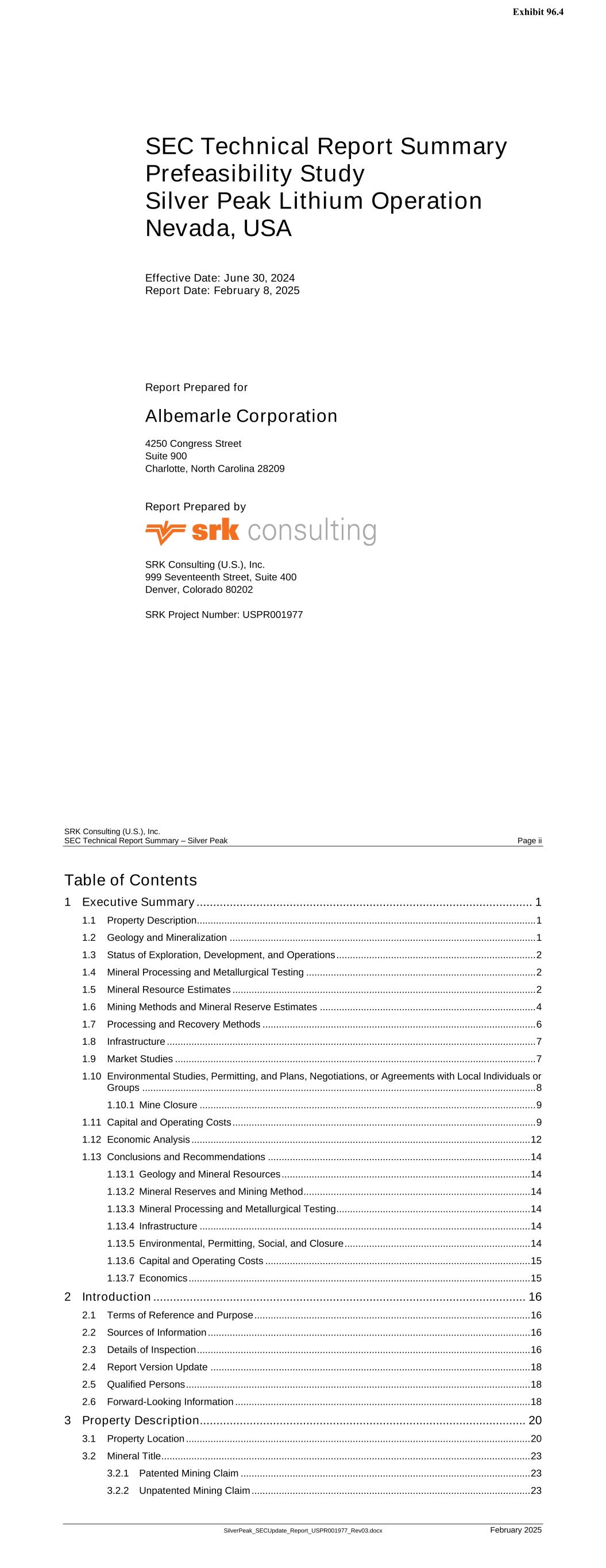
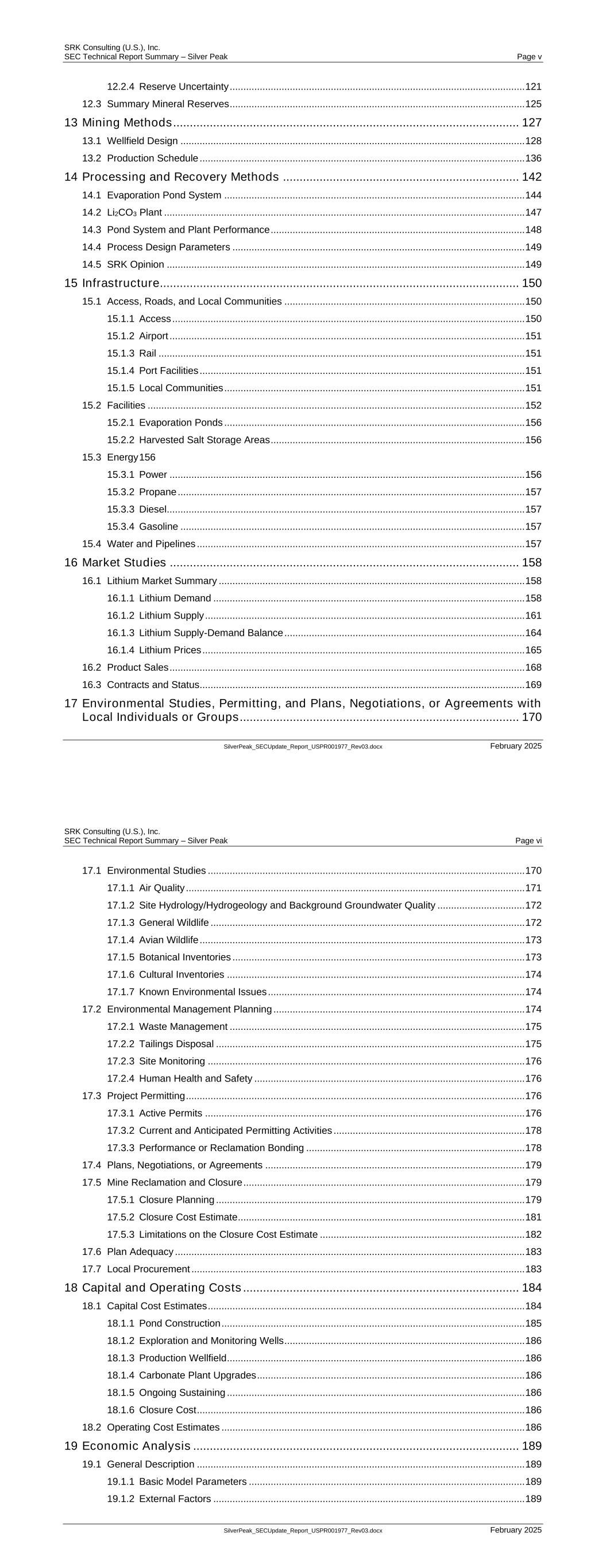
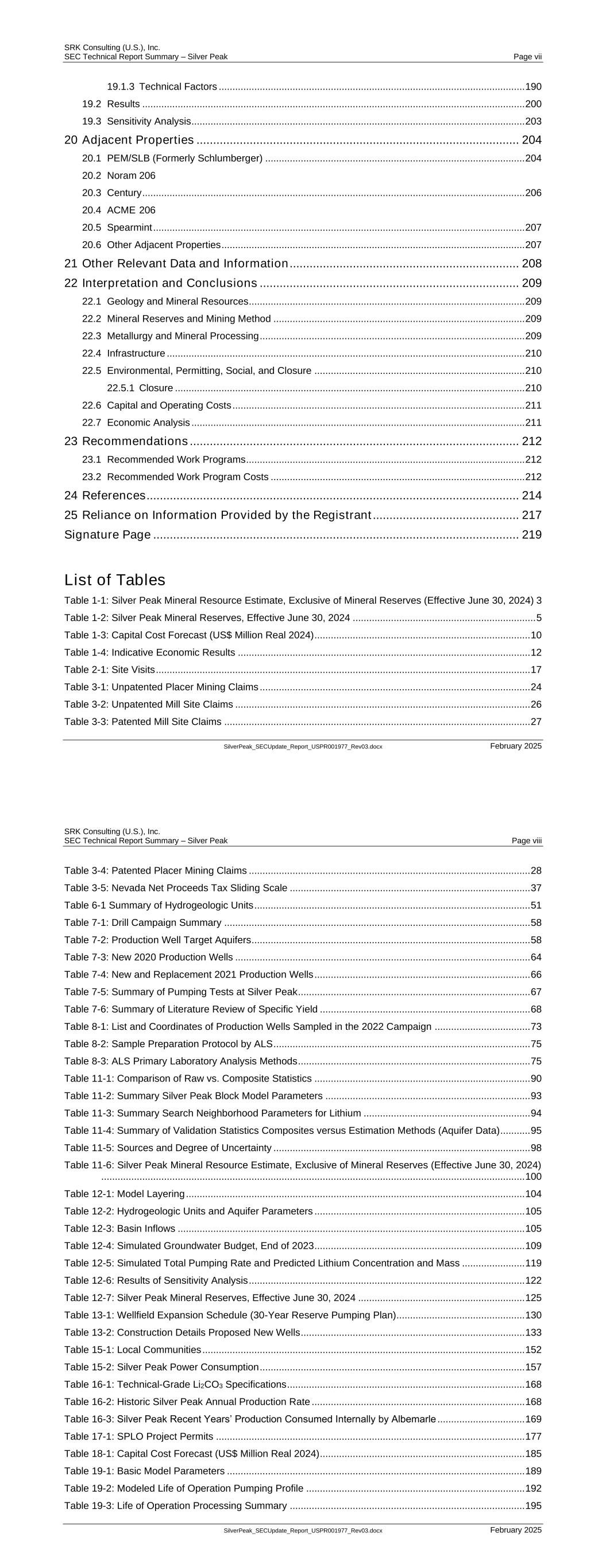
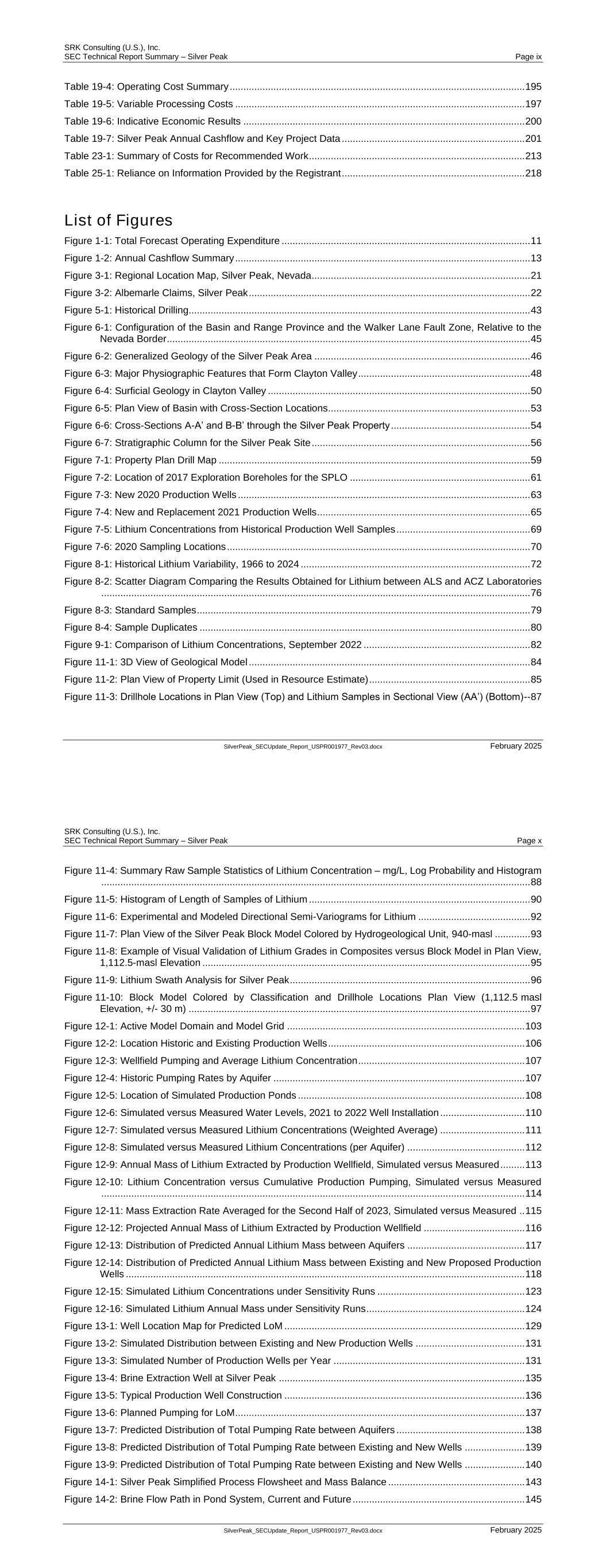
2.the technical report titled “SEC Technical Report Summary Prefeasibility Study Silver Peak Lithium Operation Nevada, USA” (the “Silver Peak Technical Report Summary” and together with the Salar de Atacama Technical Report Summary, the “Technical Report Summaries”), with an effective date of June 30, 2024 and dated February 8, 2025

that were prepared in accordance with Subpart 1300 of Regulation S-K promulgated by the U.S. Securities and Exchange Commission and filed as exhibits to this Current Report on Form 8-K (the “Form 8-K”) and referenced in the Form 10-K.

•the incorporation by reference of the Technical Report Summaries into the Company’s Registration Statement on Form S-3 (No. 333-269815) and the Registration Statements on Form S-8 (No. 333-150694, 333-166828, 333-188599, 333-223167 and 333-271578) (collectively, the “Registration Statements”);

•the use of and references to our name, including our status as an expert or “qualified person” (as defined in Subpart 1300 of Regulation S-K promulgated by the U.S. Securities and Exchange Commission), in connection with the Form 10-K, the Form 8-K, the Registration Statements and the Technical Report Summaries; and

•any extracts from or a summary of the Technical Report Summaries in the Form 10-K and incorporated by reference in the Registration Statements and the use of any information derived, summarized, quoted, or referenced from the Technical Report Summaries, or portions thereof, that was prepared by us, that we supervised the preparation of, and/or that was reviewed and approved by us, that is included or incorporated by reference in the Form 10-K and Registration Statements.

SRK is responsible for authoring, and this consent pertains to, the Technical Report Summaries. SRK certifies that it has read the Form 10-K and that it fairly and accurately represents the information in the Technical Report Summaries for which it is responsible.

/s/ SRK Consulting (U.S.), Inc.

SRK Consulting (U.S.), Inc.


EX-23.2 3 exhibit23221220258-k.htm EX-23.2 Document
Exhibit 23.2
February 12, 2025

CONSENT OF QUALIFIED PERSON

Fastmarkets Group Limited (“Fastmarkets”), in connection with Albemarle Corporation’s Annual Report on Form 10-K for the year ended December 31, 2024 (the “Form 10-K”), consents to:

•the public filing by the Company and use of:

1.the technical report titled “Technical Report Summary, Greenbushes Mine, Western Australia” (the “Greenbushes Technical Report Summary”), which contains Fastmarkets’ report on market studies in Section 16 thereof (the “Greenbushes Market Studies Report”) with an effective date of June 30, 2024 and dated February 10, 2025;

2.the technical report titled “Technical Report Summary on the Wodgina Lithium Operation” (the “Wodgina Technical Report Summary”), which contains Fastmarkets’ report on market studies in Section 16 thereof (the “Wodgina Market Studies Report”), with an effective date of June 30, 2024 and dated February 10, 2025;

3.the technical report titled “SEC Technical Report Summary Prefeasibility Study Salar de Atacama Region II, Chile” (the “Salar de Atacama Technical Report Summary”), which contains Fastmarkets’ report on market studies in Section 16 thereof (the “Salar Market Studies Report”) with an effective date of June 30, 2024 and dated February 8, 2025; and

4.the technical report titled “SEC Technical Report Summary Prefeasibility Study Silver Peak Lithium Operation Nevada, USA” (the "Silver Peak Technical Report Summary”), which contains Fastmarkets’ report on market studies in Section 16 thereof (the “Silver Peak Market Studies Report” and together with the Greenbushes Market Studies Report, the Wodgina Market Studies Report and the Salar Market Studies Report, the “Market Studies Reports”) with an effective date of June 30, 2024 and dated February 8, 2025

that were prepared in accordance with Subpart 1300 of Regulation S-K promulgated by the U.S. Securities and Exchange Commission, as exhibits to this Current Report on Form 8-K (the “Form 8-K”) and referenced in the Form 10-K.

•the incorporation by reference of the Market Studies Reports into the Company’s Registration Statement on Form S-3 (No. 333-269815) and the Registration Statements on Form S-8 (No. 333-150694, 333-166828, 333-188599, 333-223167 and 333-271578) (collectively, the “Registration Statements”);

•the use of and references to our name, including our status as an expert or “qualified person” (as defined in Subpart 1300 of Regulation S-K promulgated by the U.S. Securities and Exchange Commission), in connection with the Form 10-K, the Form 8-K, the Registration Statements and the Market Studies Reports; and

•any extracts from or a summary of the Market Studies Reports in the Form 10-K and incorporated by reference in the Registration Statements and the use of any information derived, summarized, quoted, or referenced from the Market Studies Reports, or portions thereof, that was prepared by us, that we supervised the preparation of, and/or that was reviewed and approved by us, that is included or incorporated by reference in the Form 10-K and Registration Statements.

Fastmarkets is responsible for authoring, and this consent pertains to, the Market Studies Reports. Fastmarkets certifies that it has read the Form 10-K and that it fairly and accurately represents the information in the Market Studies Reports for which it is responsible.

Fastmarkets

8 Bouverie Street
London
EC4Y 8AX

By: /s/ Brian Levich

Name: Brian Levich
Title: Consultancy Director (Fastmarkets)

EX-23.3 4 exhibit23321220258-k.htm EX-23.3 Document
Exhibit 23.3
February 12, 2025

CONSENT OF QUALIFIED PERSON

RPM Global USA, Inc. (“RPM”), in connection with Albemarle Corporation’s Annual Report on Form 10-K for the year ended December 31, 2024 (the “Form 10-K”), consents to:

•the public filing by the Company and use of:

1.the technical report titled “Technical Report Summary, Greenbushes Mine, Western Australia” (the “Greenbushes Technical Report Summary”), with an effective date of June 30, 2024 and dated February 10, 2025; and

2.the technical report titled “Technical Report Summary on the Wodgina Lithium Operation” (the “Wodgina Technical Report Summary” and together with the Greenbushes Technical Report Summary, the “Technical Report Summaries”), with an effective date of June 30, 2024 and dated February 10, 2025

that were prepared in accordance with Subpart 1300 of Regulation S-K promulgated by the U.S. Securities and Exchange Commission, as exhibits to this Current Report on Form 8-K (the “Form 8-K”) and referenced in the Form 10-K.

•the incorporation by reference of the Technical Report Summaries into the Company’s Registration Statement on Form S-3 (No. 333-269815) and the Registration Statements on Form S-8 (No. 333-150694, 333-166828, 333-188599, 333-223167 and 333-271578) (collectively, the “Registration Statements”);

•the use of and references to our name, including our status as an expert or “qualified person” (as defined in Subpart 1300 of Regulation S-K promulgated by the U.S. Securities and Exchange Commission), in connection with the Form 10-K, the Form 8-K, the Registration Statements and the Technical Report Summaries; and

•any extracts from or a summary of the Technical Report Summaries in the Form 10-K and incorporated by reference in the Registration Statements and the use of any information derived, summarized, quoted, or referenced from the Technical Report Summaries, or portions thereof, that was prepared by us, that we supervised the preparation of, and/or that was reviewed and approved by us, that is included or incorporated by reference in the Form 10-K and Registration Statements.

RPM is responsible for authoring, and this consent pertains to, the Technical Report Summaries. RPM certifies that it has read the Form 10-K and that it fairly and accurately represents the information in the Technical Report Summaries for which it is responsible.

Neither the whole nor any part of the Technical Report Summaries nor any reference thereto may be included in any other document without the prior written consent of RPM as to the form and context in which it appears.

/s/ RPM Global USA, Inc.

RPM Global USA, Inc.
7887 East Belleview Avenue, Suite 1100
Denver, Colorado, 80111 USA


EX-23.4 5 exhibit23421220258-k.htm EX-23.4 Document
Exhibit 23.4
February 12, 2025

CONSENT OF QUALIFIED PERSON

RPS Energy Canada Ltd. (“RPS”), in connection with Albemarle Corporation’s Annual Report on Form 10-K for the year ended December 31, 2024 (the “Form 10-K”), consents to:

•the public filing by the Company and use of:

•the technical report titled “Jordan Bromine Operation Technical Report Summary as of December 31, 2024” (the “Jordan Bromine Technical Report Summary”), with an effective date of December 31, 2024 and dated February 12, 2025;

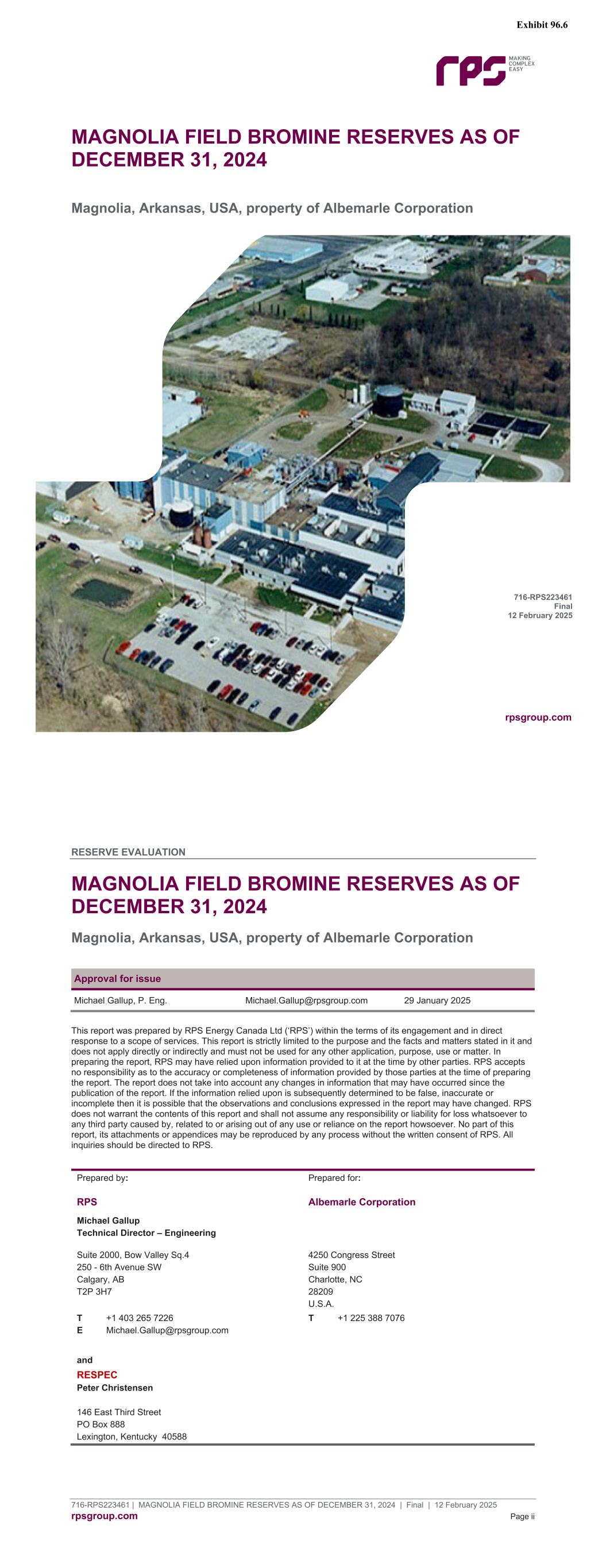
•the technical report titled “Magnolia Field Bromine Reserves as of December 31, 2024” (the “Magnolia Technical Report Summary” and together with the Jordan Bromine Technical Report Summary, the “Technical Report Summaries”), with an effective date of December 31, 2024 and dated February 12, 2025

that were prepared in accordance with Subpart 1300 of Regulation S-K promulgated by the U.S. Securities and Exchange Commission, as exhibits to this Current Report on Form 8-K (the “Form 8-K”) and referenced in the Form 10-K.

•the incorporation by reference of the Technical Report Summaries into the Company’s Registration Statement on Form S-3 (No. 333-269815) and the Registration Statements on Form S-8 (No. 333-150694, 333-166828, 333-188599, 333-223167 and 333-271578) (collectively, the “Registration Statements”);

•the use of and references to our name, including our status as an expert or “qualified person” (as defined in Subpart 1300 of Regulation S-K promulgated by the U.S. Securities and Exchange Commission), in connection with the Form 10-K, the Registration Statements and the Technical Report Summaries; and

•any extracts from or a summary of the Technical Report Summaries in the Form 10-K and incorporated by reference in the Registration Statements and the use of any information derived, summarized, quoted, or referenced from the Technical Report Summaries, or portions thereof, that was prepared by us, that we supervised the preparation of, and/or that was reviewed and approved by us, that is included or incorporated by reference in the Form 10-K and the Registration Statements.

RPS is responsible for authoring, and this consent pertains to, the Technical Report Summaries. RPS certifies that it has read the Form 10-K and that it fairly and accurately represents the information in the Technical Report Summaries for which it is responsible.

RPS Energy Canada Ltd.

By: /s/ Michael Gallup

Name: Michael Gallup
Title: Technical Director - Engineering

EX-23.5 6 exhibit23521220258-k.htm EX-23.5 Document
Exhibit 23.5
February 12, 2025

CONSENT OF QUALIFIED PERSON

RESPEC Company, LLC (“RESPEC”), in connection with Albemarle Corporation’s Annual Report on Form 10-K for the year ended December 31, 2024 (the “Form 10-K”), consents to:

•the public filing by the Company and use of:

•the technical report titled “Jordan Bromine Operation Technical Report Summary as of December 31, 2024” (the “Jordan Bromine Technical Report Summary”), with an effective date of December 31, 2024 and dated February 12, 2025;

•the technical report titled “Magnolia Field Bromine Reserves as of December 31, 2024” (the “Magnolia Technical Report Summary” and together with the Jordan Bromine Technical Report Summary, the “Technical Report Summaries”), with an effective date of December 31, 2024 and dated February 12, 2025

that were prepared in accordance with Subpart 1300 of Regulation S-K promulgated by the U.S. Securities and Exchange Commission, as exhibits to this Current Report on Form 8-K (the “Form 8-K”) and referenced in the Form 10-K.

•the incorporation by reference of the Technical Report Summaries into the Company’s Registration Statement on Form S-3 (No. 333-269815) and the Registration Statements on Form S-8 (No. 333-150694, 333-166828, 333-188599, 333-223167 and 333-271578) (collectively, the “Registration Statements”); 

•the use of and references to our name, including our status as an expert or “qualified person” (as defined in Subpart 1300 of Regulation S-K promulgated by the U.S. Securities and Exchange Commission), in connection with the Form 10-K, the Registration Statements and the Technical Report Summaries; and

•any extracts from or a summary of the Technical Report Summaries in the Form 10-K and incorporated by reference in the Registration Statements and the use of any information derived, summarized, quoted, or referenced from the Technical Report Summaries, or portions thereof, that was prepared by us, that we supervised the preparation of, and/or that was reviewed and approved by us, that is included or incorporated by reference in the Form 10-K and the Registration Statements.

RESPEC is responsible for authoring, and this consent pertains to, the Technical Report Summaries. RESPEC certifies that it has read the Form 10-K and that it fairly and accurately represents the information in the Technical Report Summaries for which it is responsible.

RESPEC Company, LLC

By: /s/ Peter Christensen

Name: Peter Christensen
Title: Principal Consultant


EX-96.1 7 exhibit961greenbushes202.htm EX-96.1 exhibit961greenbushes202
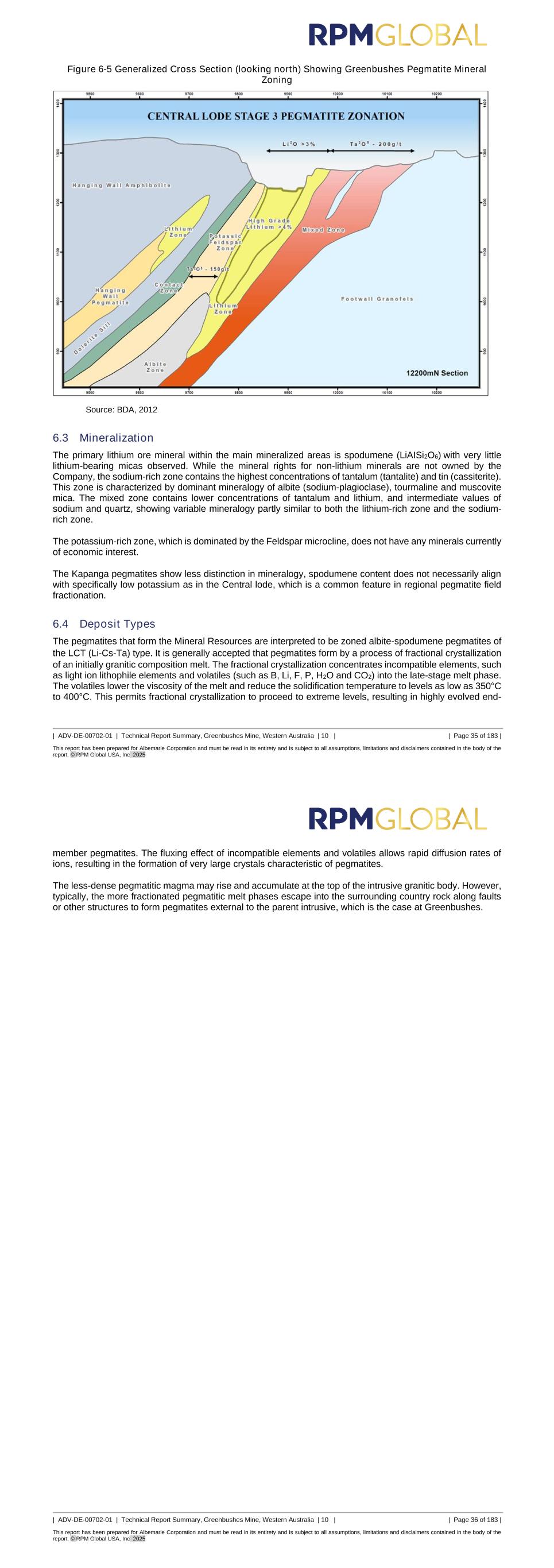
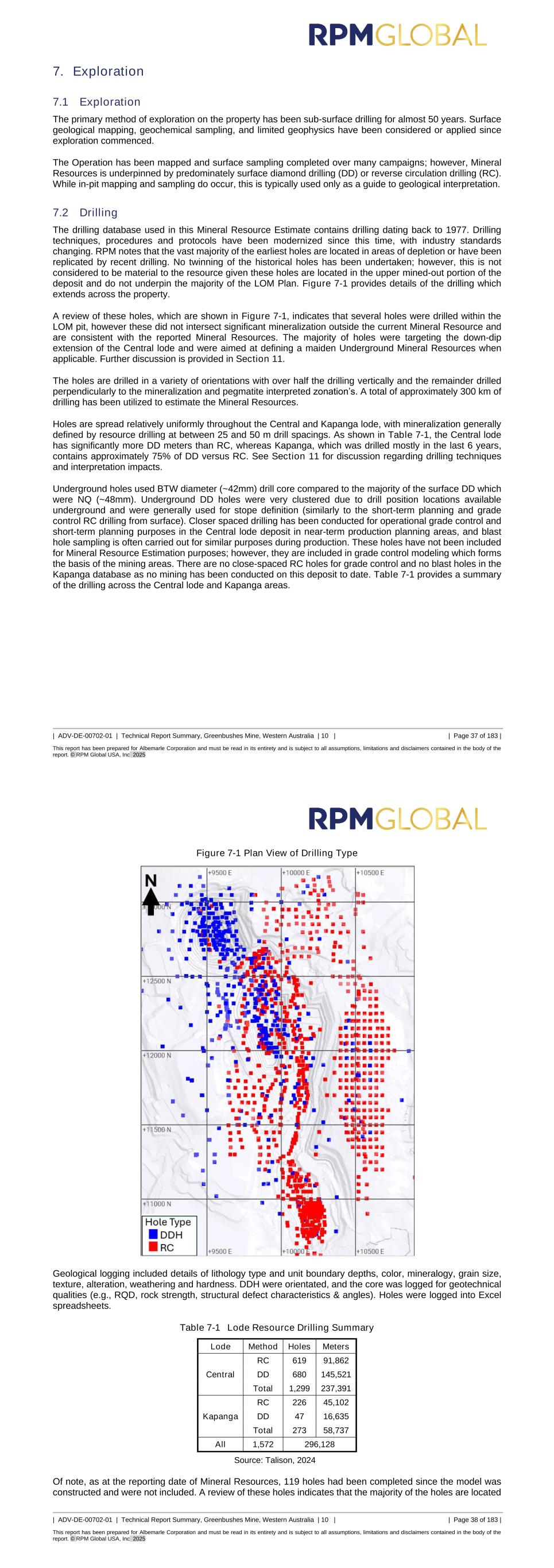
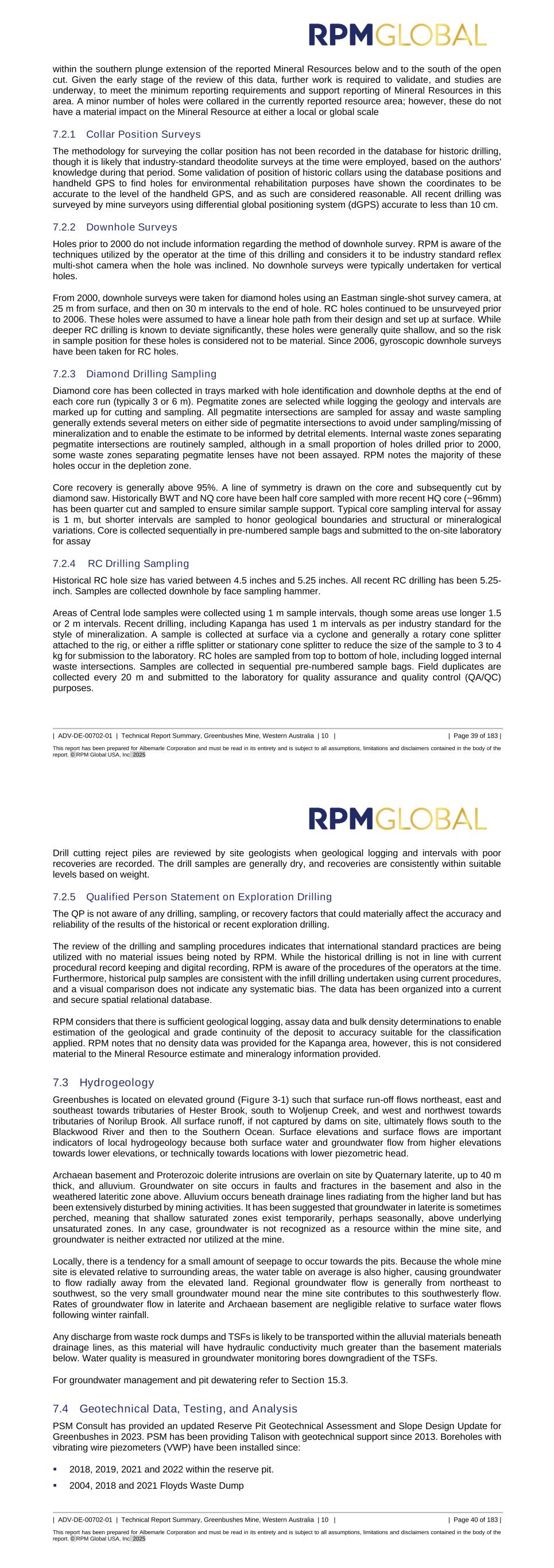
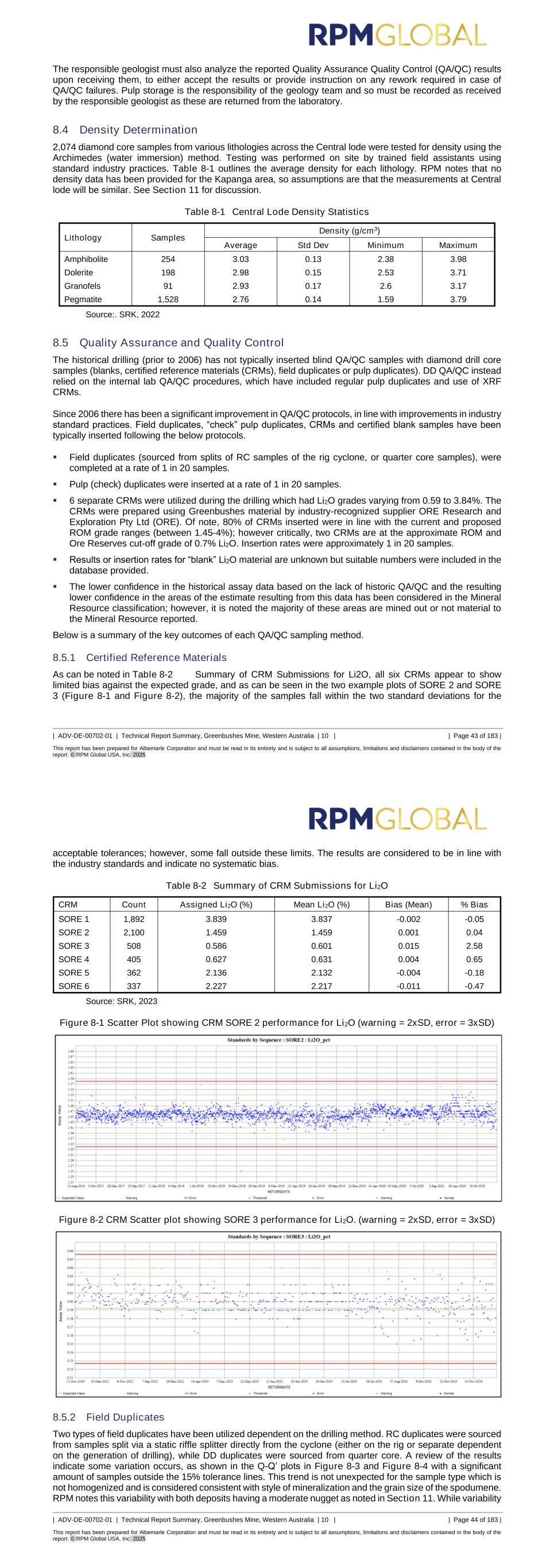
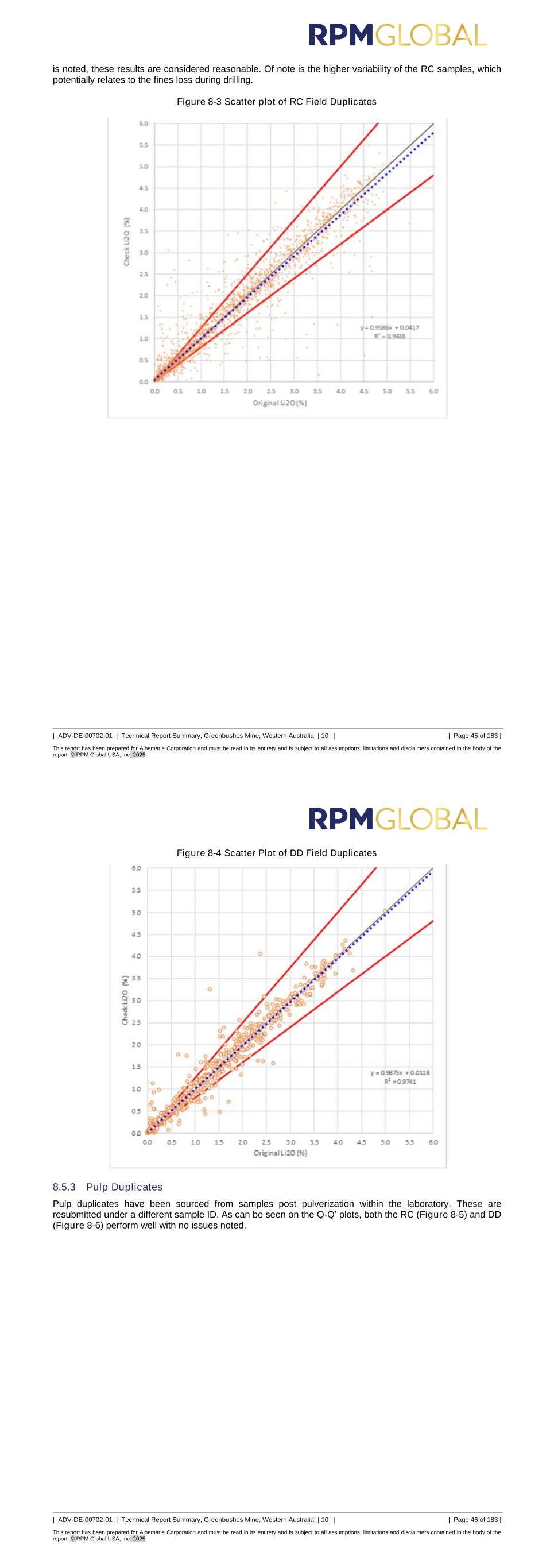
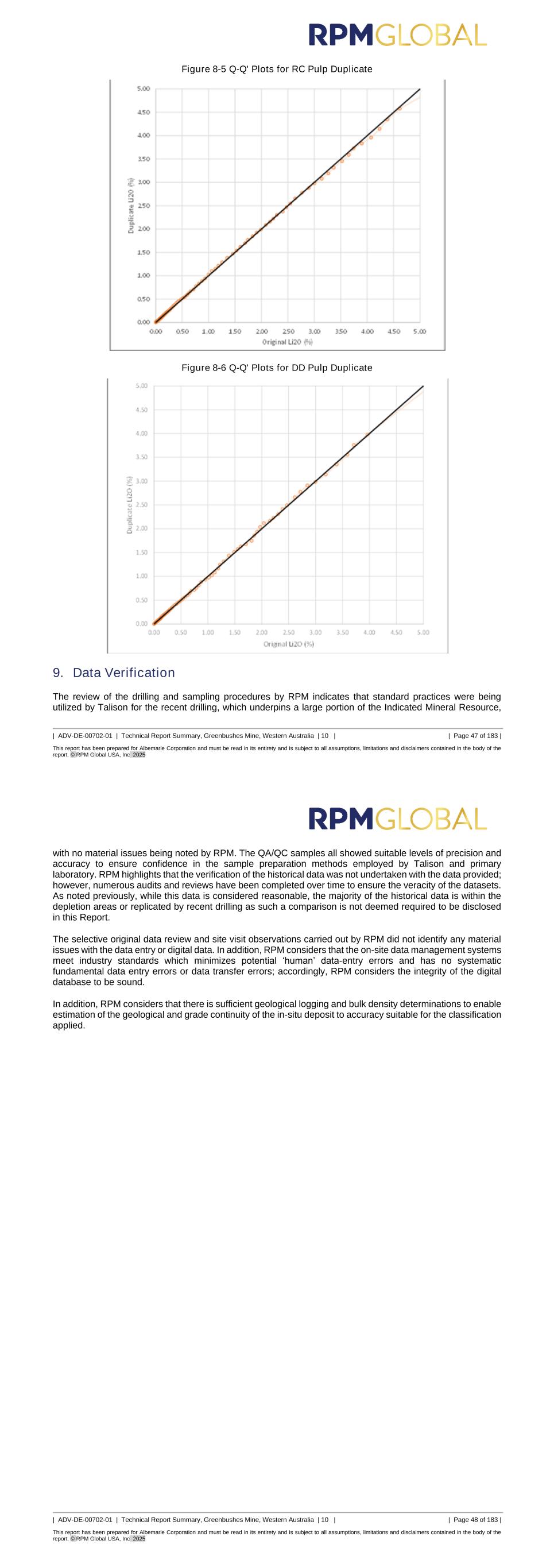
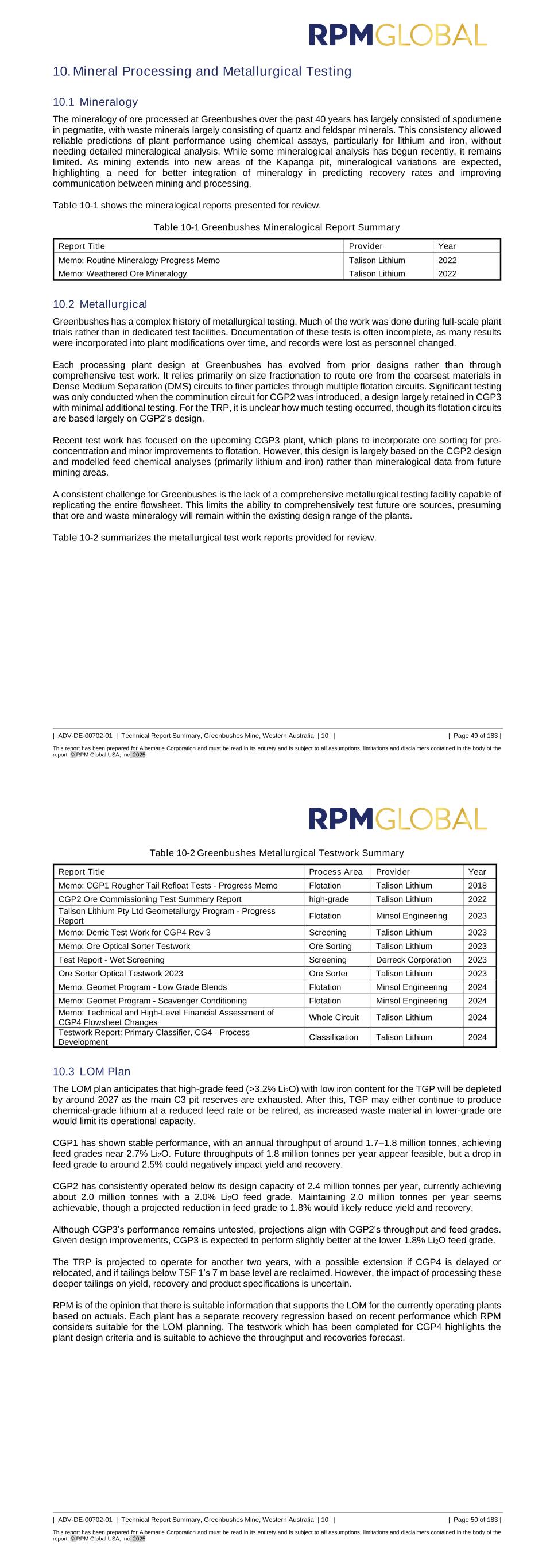
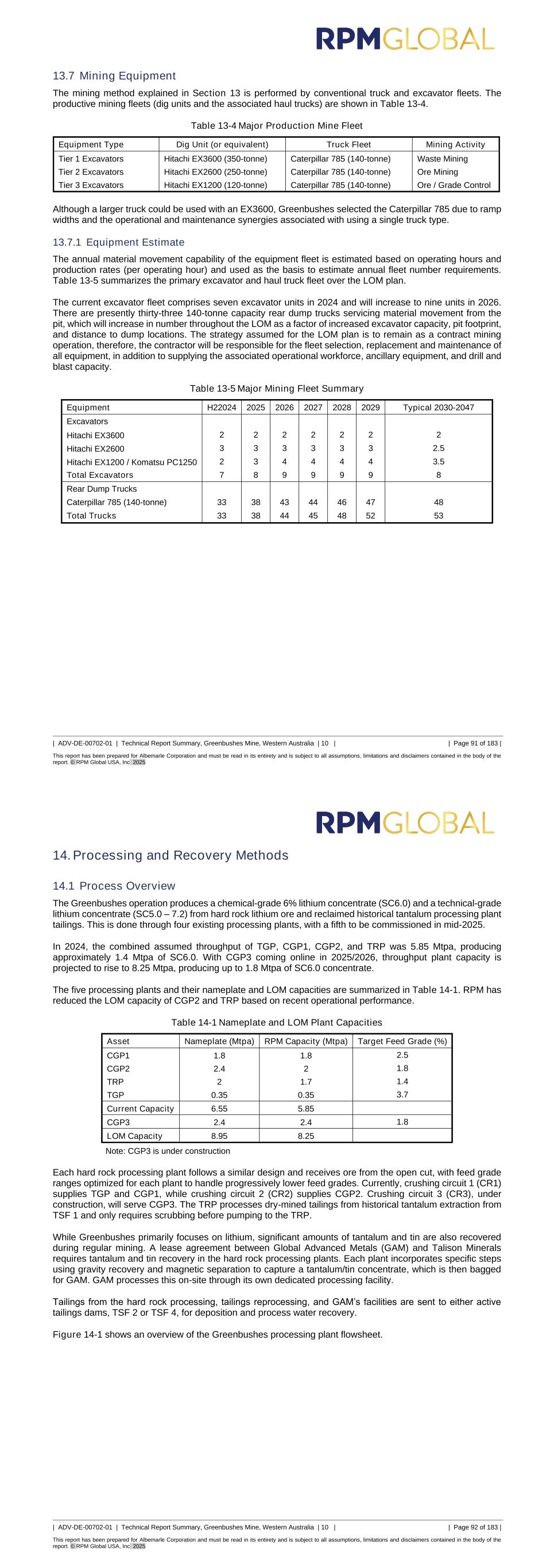
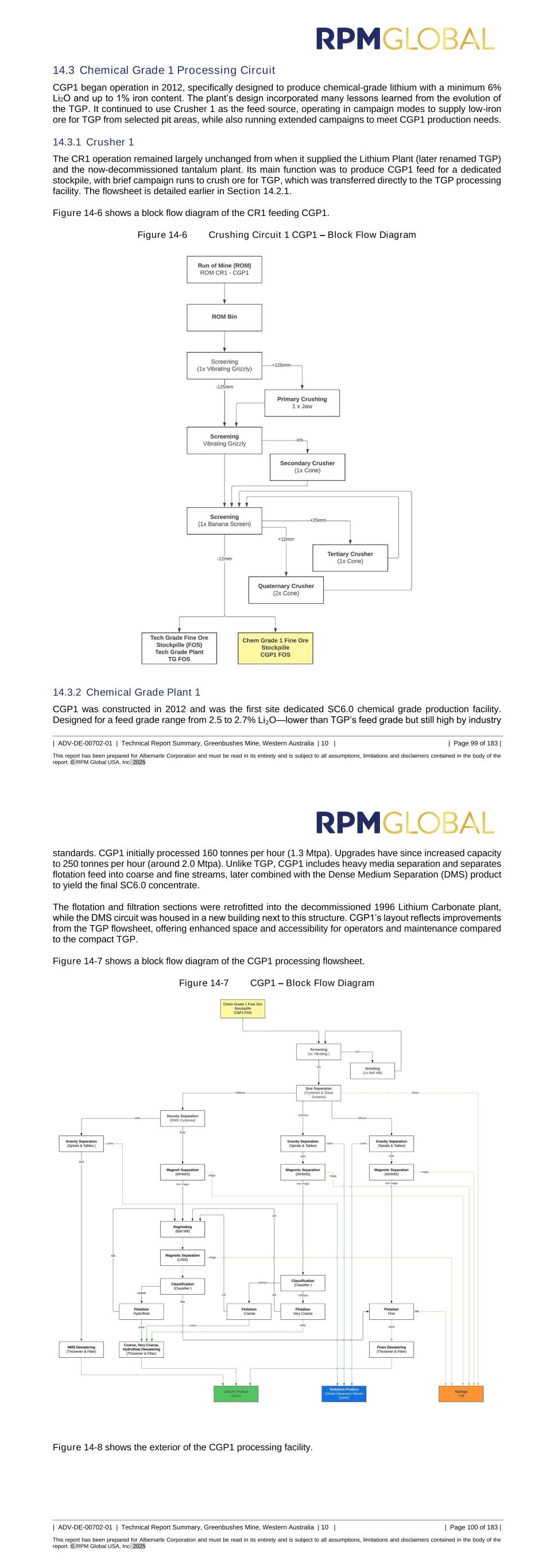
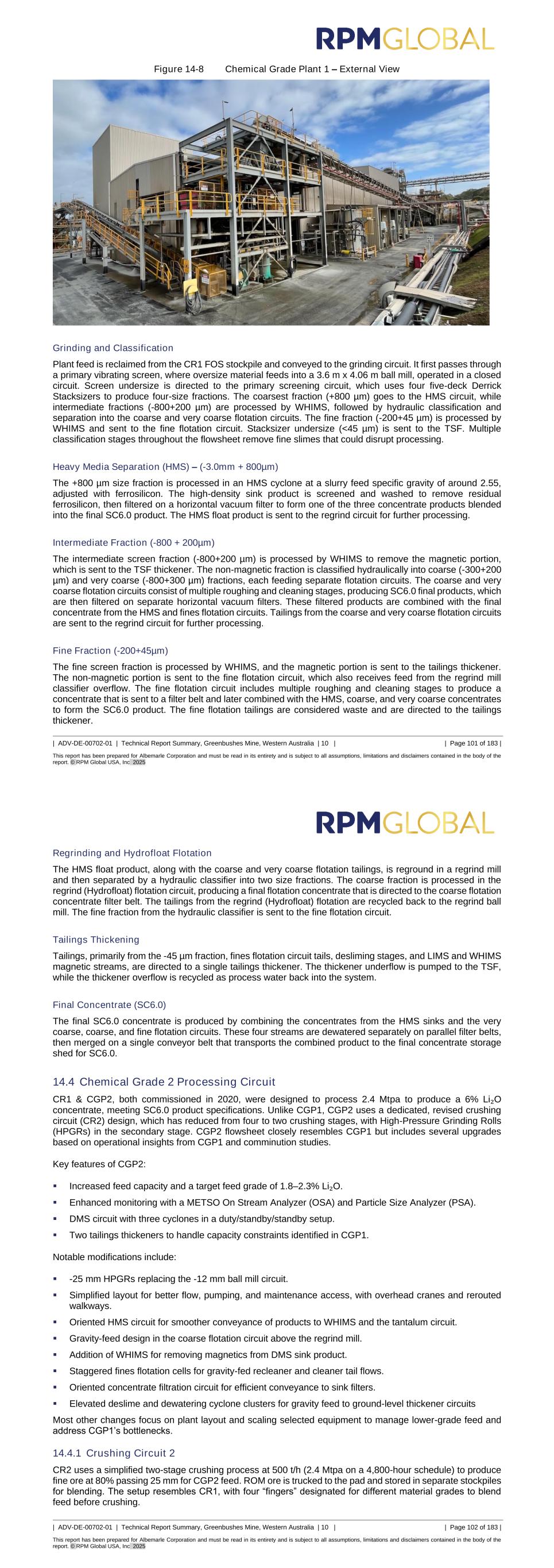
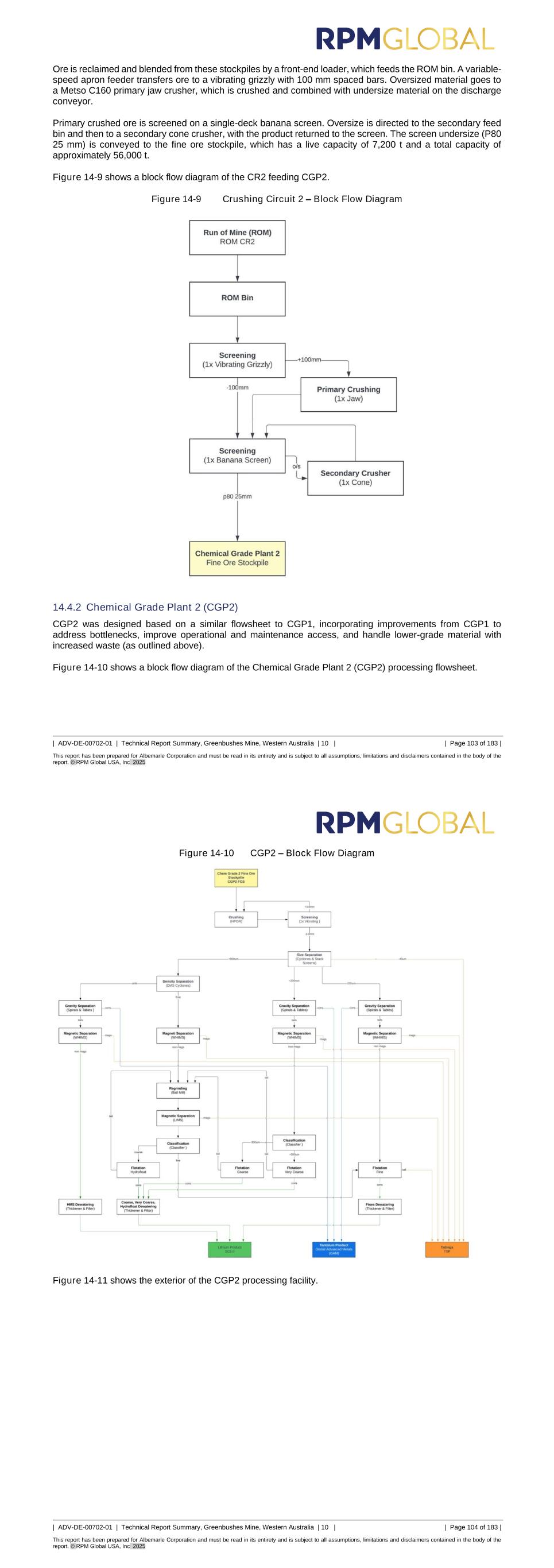
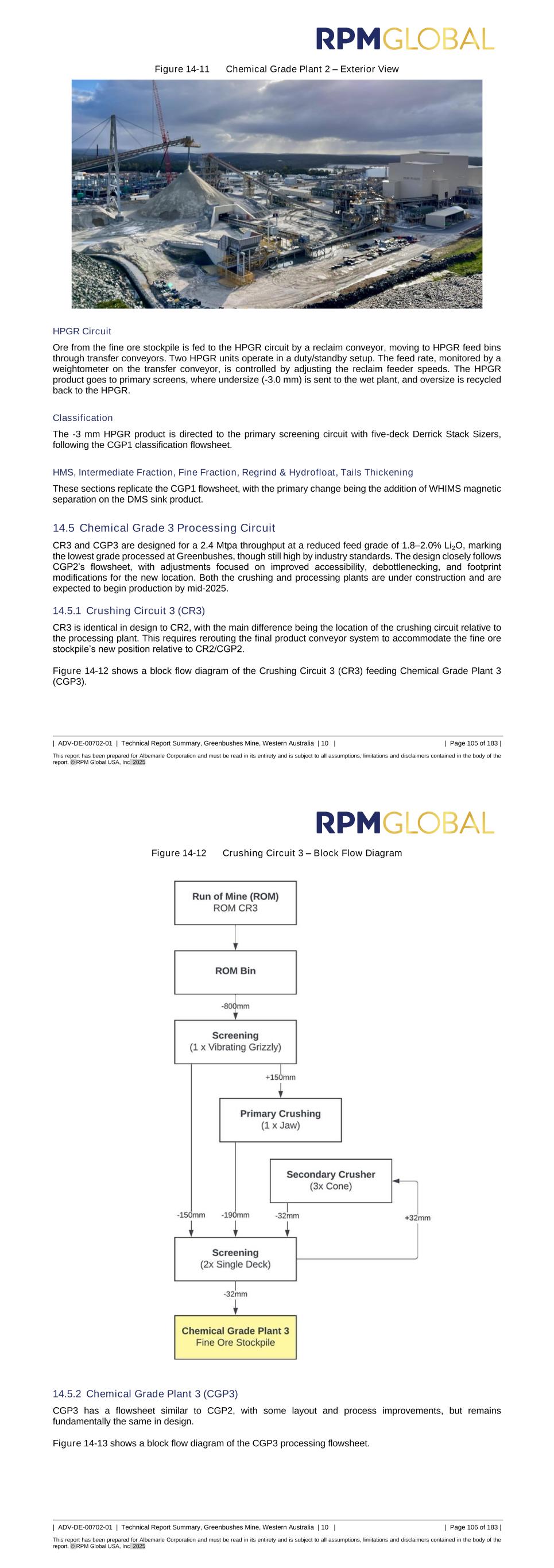
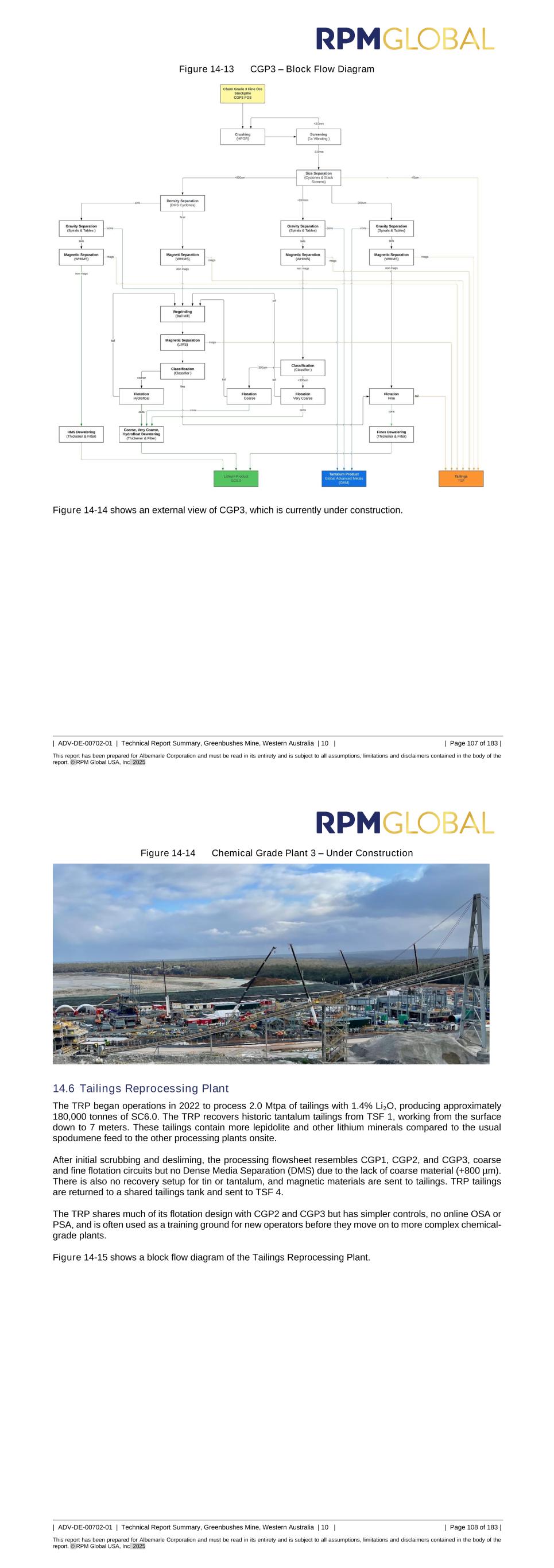
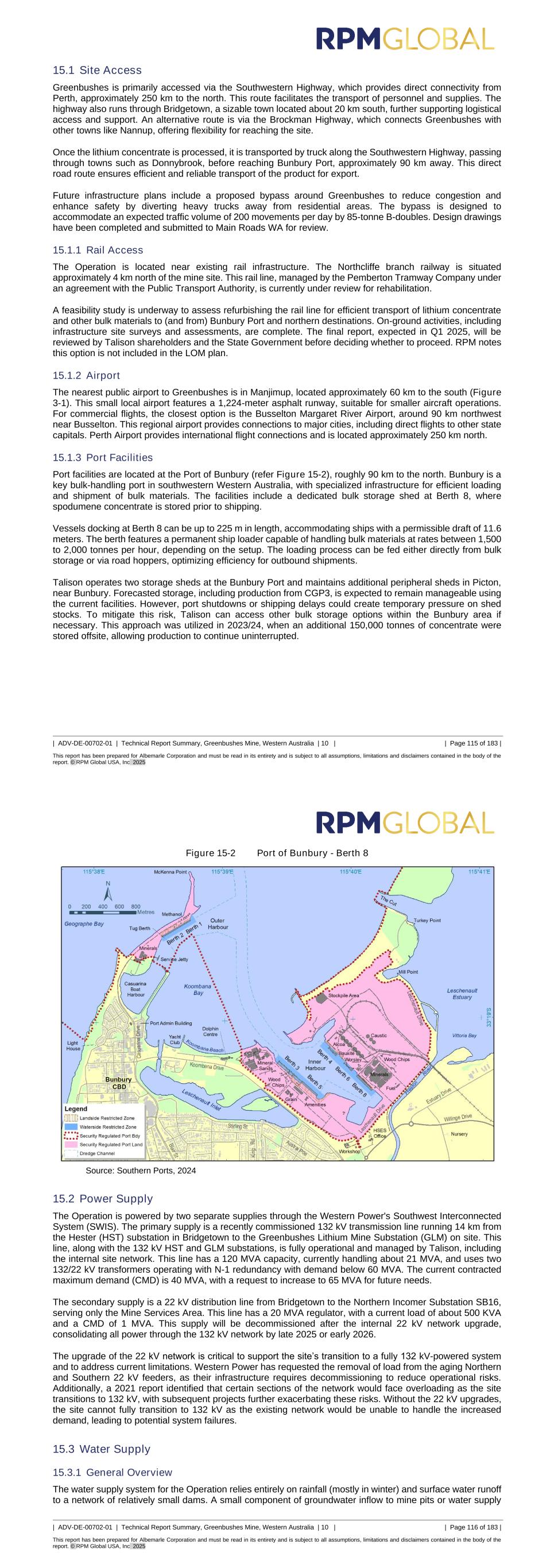
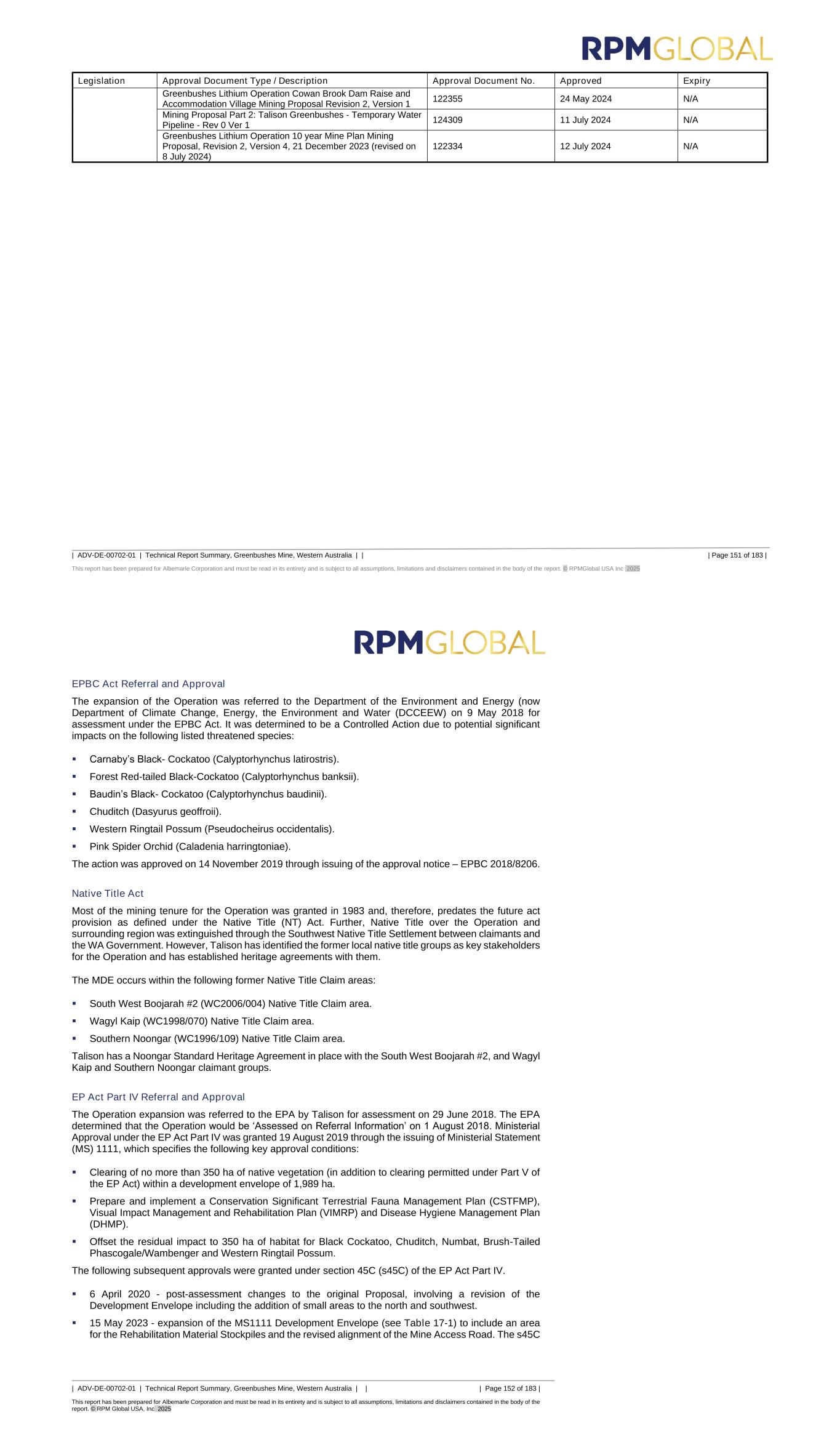
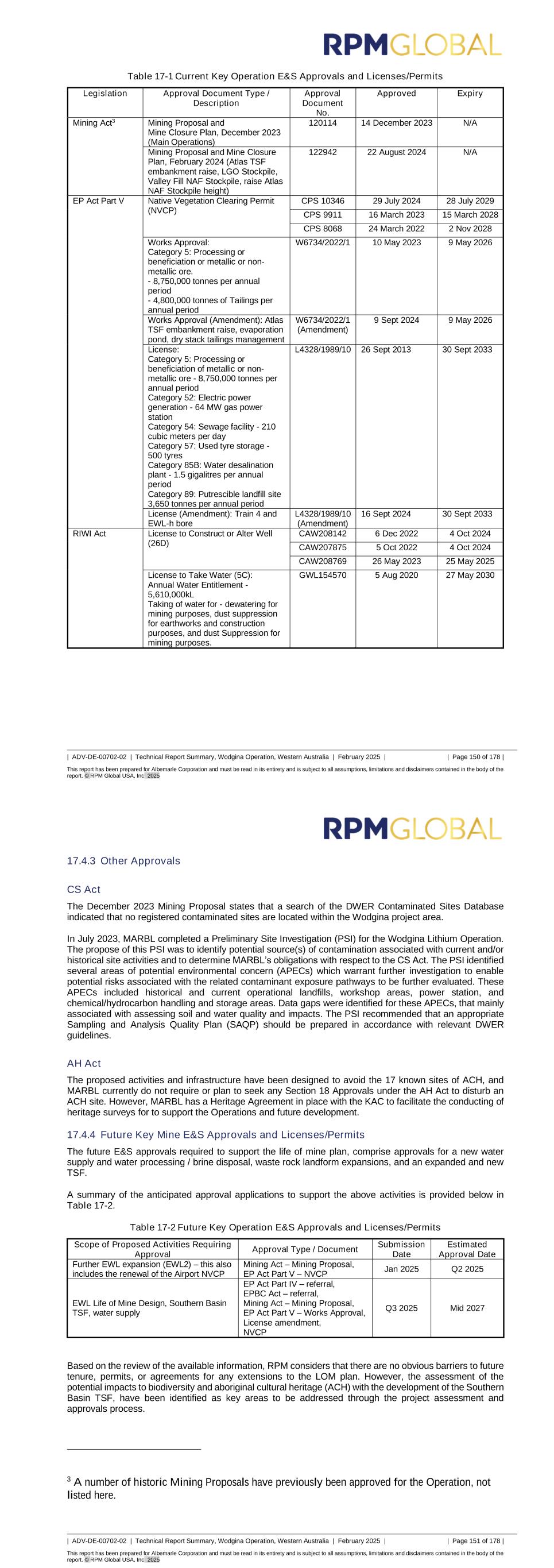
Technical Report Summary, Greenbushes Mine, Western Australia Albemarle Corporation Date: 10 February 2025 Exhibit 96.1 | ADV-DE-00702-01 | Technical Report Summary, Greenbushes Mine, Western Australia | | | | Page i of vii | This report has been prepared for Albemarle Corporation and must be read in its entirety and is subject to all assumptions, limitations and disclaimers contained in the body of the report. © RPM Global USA, Inc 2025 TABLE OF CONTENTS 1. EXECUTIVE SUMMARY .................................................................................................................. 1 1.1 Report Scope ..................................................................................................................................... 1 1.2 Property Description and Location .................................................................................................... 1 1.3 Geology and Mineralization ............................................................................................................... 2 1.4 Exploration Status ............................................................................................................................. 2 1.5 Development and Operations ............................................................................................................ 2 1.6 Mineral Resources and Mineral Reserves ........................................................................................ 4 1.7 Market Studies................................................................................................................................... 6 1.8 Environmental, Permitting, and Social Considerations ..................................................................... 6 1.9 Economic Evaluation ......................................................................................................................... 7 1.10 Recommendations ............................................................................................................................ 9 1.11 Key Risks ......................................................................................................................................... 10 2. INTRODUCTION ............................................................................................................................. 11 2.1 Report Scope ................................................................................................................................... 11 2.2 Site Visits ......................................................................................................................................... 11 2.3 Sources of Information .................................................................................................................... 11 2.4 Forward-Looking Statements .......................................................................................................... 12 2.5 List of Abbreviations ........................................................................................................................ 12 2.6 Independence .................................................................................................................................. 16 2.7 Inherent Mining Risks ...................................................................................................................... 16 3. PROPERTY DESCRIPTION AND LOCATION .............................................................................. 17 3.1 Location ........................................................................................................................................... 17 3.2 Land Tenure .................................................................................................................................... 19 3.3 Surface Rights and Easement ......................................................................................................... 24 3.4 Material Government Consents ....................................................................................................... 24 3.5 Significant Limiting Factors ............................................................................................................. 24 4. ACCESSIBILITY, CLIMATE, LOCAL RESOURCES, INFRASTRUCTURE AND PHYSIOGRAPHY 25 4.1 Accessibility ..................................................................................................................................... 25 4.2 Climate ............................................................................................................................................ 25 4.3 Local Resources .............................................................................................................................. 25 4.4 Infrastructure ................................................................................................................................... 25 4.5 Physiography ................................................................................................................................... 26 5. HISTORY ......................................................................................................................................... 27 5.1 Past Production ............................................................................................................................... 27 5.2 Exploration and Development of Previous Owners or Operators ................................................... 28 6. GEOLOGICAL SETTING, MINERALIZATION AND DEPOSIT .................................................... 29 6.1 Regional Geology ............................................................................................................................ 29 6.2 Local Geology .................................................................................................................................. 29 6.3 Mineralization .................................................................................................................................. 35 6.4 Deposit Types .................................................................................................................................. 35 7. EXPLORATION............................................................................................................................... 37 7.1 Exploration ....................................................................................................................................... 37 7.2 Drilling .............................................................................................................................................. 37


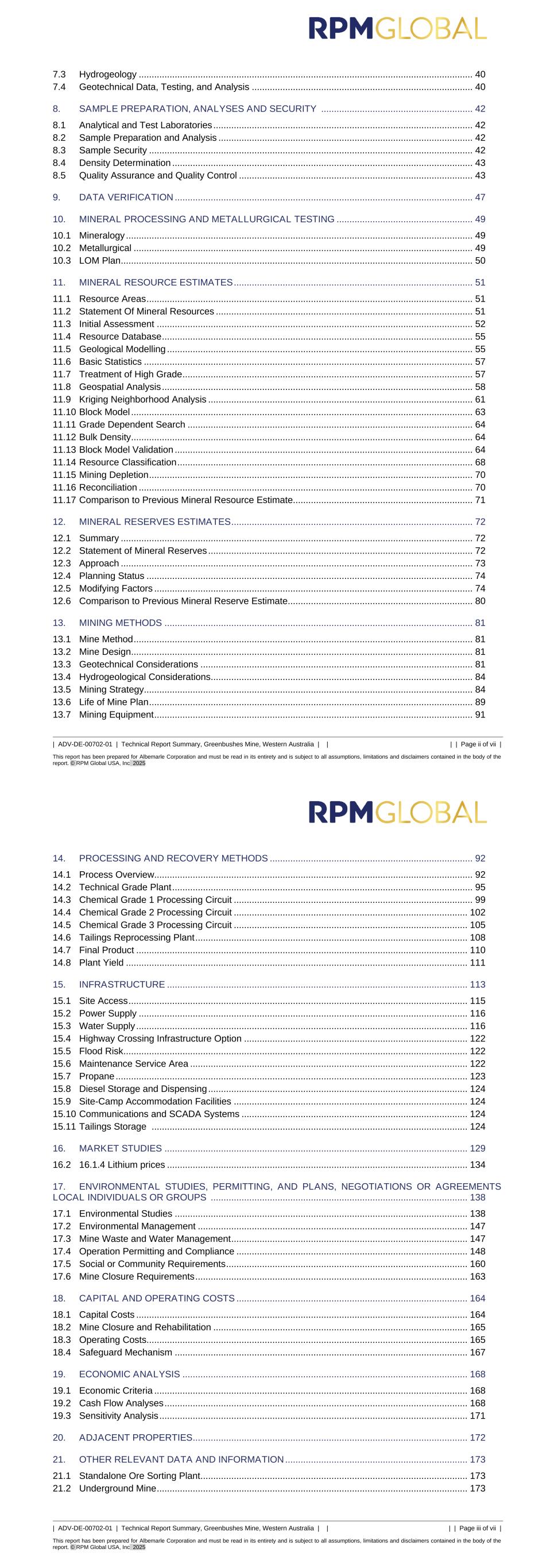
| ADV-DE-00702-01 | Technical Report Summary, Greenbushes Mine, Western Australia | | | | Page ii of vii | This report has been prepared for Albemarle Corporation and must be read in its entirety and is subject to all assumptions, limitations and disclaimers contained in the body of the report. © RPM Global USA, Inc 2025 7.3 Hydrogeology .................................................................................................................................. 40 7.4 Geotechnical Data, Testing, and Analysis ...................................................................................... 40 8. SAMPLE PREPARATION, ANALYSES AND SECURITY ........................................................... 42 8.1 Analytical and Test Laboratories ..................................................................................................... 42 8.2 Sample Preparation and Analysis ................................................................................................... 42 8.3 Sample Security .............................................................................................................................. 42 8.4 Density Determination ..................................................................................................................... 43 8.5 Quality Assurance and Quality Control ........................................................................................... 43 9. DATA VERIFICATION .................................................................................................................... 47 10. MINERAL PROCESSING AND METALLURGICAL TESTING ..................................................... 49 10.1 Mineralogy ....................................................................................................................................... 49 10.2 Metallurgical .................................................................................................................................... 49 10.3 LOM Plan ......................................................................................................................................... 50 11. MINERAL RESOURCE ESTIMATES ............................................................................................. 51 11.1 Resource Areas ............................................................................................................................... 51 11.2 Statement Of Mineral Resources .................................................................................................... 51 11.3 Initial Assessment ........................................................................................................................... 52 11.4 Resource Database ......................................................................................................................... 55 11.5 Geological Modelling ....................................................................................................................... 55 11.6 Basic Statistics ................................................................................................................................ 57 11.7 Treatment of High Grade ................................................................................................................. 57 11.8 Geospatial Analysis ......................................................................................................................... 58 11.9 Kriging Neighborhood Analysis ....................................................................................................... 61 11.10 Block Model ..................................................................................................................................... 63 11.11 Grade Dependent Search ............................................................................................................... 64 11.12 Bulk Density ..................................................................................................................................... 64 11.13 Block Model Validation .................................................................................................................... 64 11.14 Resource Classification ................................................................................................................... 68 11.15 Mining Depletion .............................................................................................................................. 70 11.16 Reconciliation .................................................................................................................................. 70 11.17 Comparison to Previous Mineral Resource Estimate...................................................................... 71 12. MINERAL RESERVES ESTIMATES .............................................................................................. 72 12.1 Summary ......................................................................................................................................... 72 12.2 Statement of Mineral Reserves ....................................................................................................... 72 12.3 Approach ......................................................................................................................................... 73 12.4 Planning Status ............................................................................................................................... 74 12.5 Modifying Factors ............................................................................................................................ 74 12.6 Comparison to Previous Mineral Reserve Estimate ........................................................................ 80 13. MINING METHODS ........................................................................................................................ 81 13.1 Mine Method .................................................................................................................................... 81 13.2 Mine Design ..................................................................................................................................... 81 13.3 Geotechnical Considerations .......................................................................................................... 81 13.4 Hydrogeological Considerations ...................................................................................................... 84 13.5 Mining Strategy................................................................................................................................ 84 13.6 Life of Mine Plan .............................................................................................................................. 89 13.7 Mining Equipment ............................................................................................................................ 91 | ADV-DE-00702-01 | Technical Report Summary, Greenbushes Mine, Western Australia | | | | Page iii of vii | This report has been prepared for Albemarle Corporation and must be read in its entirety and is subject to all assumptions, limitations and disclaimers contained in the body of the report. © RPM Global USA, Inc 2025 14. PROCESSING AND RECOVERY METHODS ............................................................................... 92 14.1 Process Overview............................................................................................................................ 92 14.2 Technical Grade Plant ..................................................................................................................... 95 14.3 Chemical Grade 1 Processing Circuit ............................................................................................. 99 14.4 Chemical Grade 2 Processing Circuit ........................................................................................... 102 14.5 Chemical Grade 3 Processing Circuit ........................................................................................... 105 14.6 Tailings Reprocessing Plant .......................................................................................................... 108 14.7 Final Product ................................................................................................................................. 110 14.8 Plant Yield ..................................................................................................................................... 111 15. INFRASTRUCTURE ..................................................................................................................... 113 15.1 Site Access .................................................................................................................................... 115 15.2 Power Supply ................................................................................................................................ 116 15.3 Water Supply ................................................................................................................................. 116 15.4 Highway Crossing Infrastructure Option ....................................................................................... 122 15.5 Flood Risk ...................................................................................................................................... 122 15.6 Maintenance Service Area ............................................................................................................ 122 15.7 Propane ......................................................................................................................................... 123 15.8 Diesel Storage and Dispensing ..................................................................................................... 124 15.9 Site-Camp Accommodation Facilities ........................................................................................... 124 15.10 Communications and SCADA Systems ........................................................................................ 124 15.11 Tailings Storage ........................................................................................................................... 124 16. MARKET STUDIES ...................................................................................................................... 129 16.2 16.1.4 Lithium prices ..................................................................................................................... 134 17. ENVIRONMENTAL STUDIES, PERMITTING, AND PLANS, NEGOTIATIONS OR AGREEMENTS LOCAL INDIVIDUALS OR GROUPS .................................................................................................... 138 17.1 Environmental Studies .................................................................................................................. 138 17.2 Environmental Management ......................................................................................................... 147 17.3 Mine Waste and Water Management ............................................................................................ 147 17.4 Operation Permitting and Compliance .......................................................................................... 148 17.5 Social or Community Requirements .............................................................................................. 160 17.6 Mine Closure Requirements .......................................................................................................... 163 18. CAPITAL AND OPERATING COSTS .......................................................................................... 164 18.1 Capital Costs ................................................................................................................................. 164 18.2 Mine Closure and Rehabilitation ................................................................................................... 165 18.3 Operating Costs............................................................................................................................. 165 18.4 Safeguard Mechanism .................................................................................................................. 167 19. ECONOMIC ANALYSIS ............................................................................................................... 168 19.1 Economic Criteria .......................................................................................................................... 168 19.2 Cash Flow Analyses ...................................................................................................................... 168 19.3 Sensitivity Analysis ........................................................................................................................ 171 20. ADJACENT PROPERTIES ........................................................................................................... 172 21. OTHER RELEVANT DATA AND INFORMATION ....................................................................... 173 21.1 Standalone Ore Sorting Plant ........................................................................................................ 173 21.2 Underground Mine ......................................................................................................................... 173


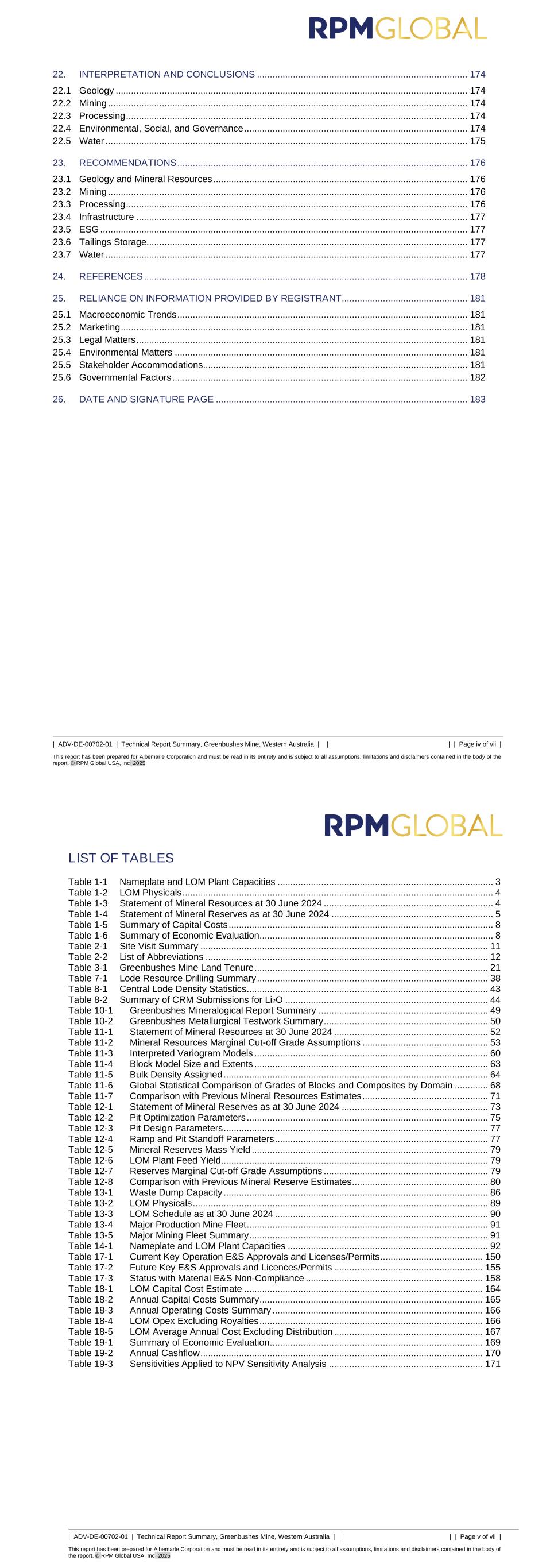
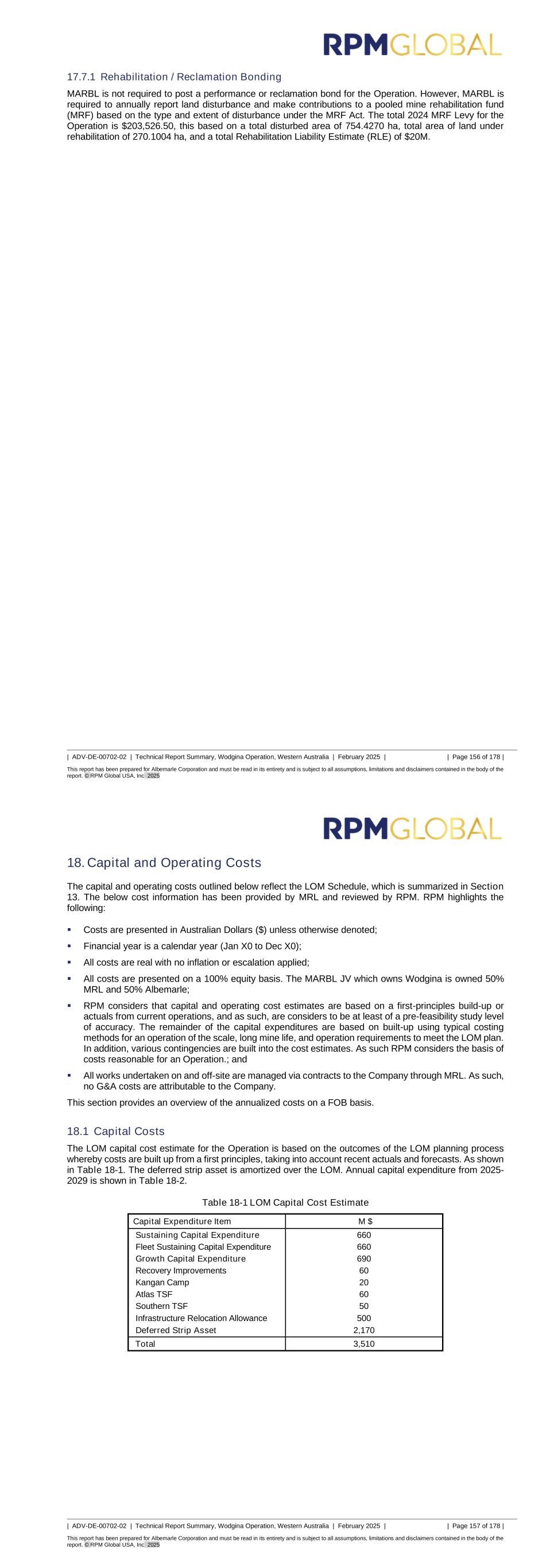
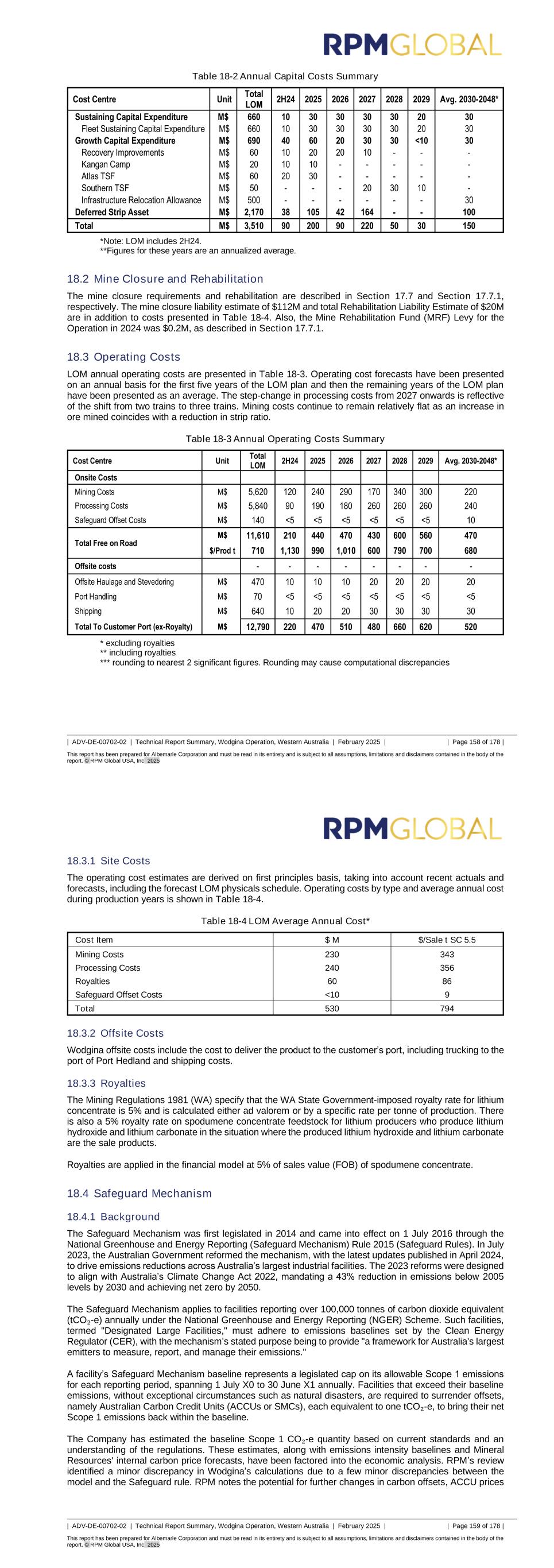
| ADV-DE-00702-01 | Technical Report Summary, Greenbushes Mine, Western Australia | | | | Page iv of vii | This report has been prepared for Albemarle Corporation and must be read in its entirety and is subject to all assumptions, limitations and disclaimers contained in the body of the report. © RPM Global USA, Inc 2025 22. INTERPRETATION AND CONCLUSIONS .................................................................................. 174 22.1 Geology ......................................................................................................................................... 174 22.2 Mining ............................................................................................................................................ 174 22.3 Processing ..................................................................................................................................... 174 22.4 Environmental, Social, and Governance ....................................................................................... 174 22.5 Water ............................................................................................................................................. 175 23. RECOMMENDATIONS ................................................................................................................. 176 23.1 Geology and Mineral Resources ................................................................................................... 176 23.2 Mining ............................................................................................................................................ 176 23.3 Processing ..................................................................................................................................... 176 23.4 Infrastructure ................................................................................................................................. 177 23.5 ESG ............................................................................................................................................... 177 23.6 Tailings Storage............................................................................................................................. 177 23.7 Water ............................................................................................................................................. 177 24. REFERENCES .............................................................................................................................. 178 25. RELIANCE ON INFORMATION PROVIDED BY REGISTRANT ................................................. 181 25.1 Macroeconomic Trends ................................................................................................................. 181 25.2 Marketing ....................................................................................................................................... 181 25.3 Legal Matters ................................................................................................................................. 181 25.4 Environmental Matters .................................................................................................................. 181 25.5 Stakeholder Accommodations ....................................................................................................... 181 25.6 Governmental Factors ................................................................................................................... 182 26. DATE AND SIGNATURE PAGE .................................................................................................. 183 | ADV-DE-00702-01 | Technical Report Summary, Greenbushes Mine, Western Australia | | | | Page v of vii | This report has been prepared for Albemarle Corporation and must be read in its entirety and is subject to all assumptions, limitations and disclaimers contained in the body of the report. © RPM Global USA, Inc 2025 LIST OF TABLES Table 1-1 Nameplate and LOM Plant Capacities .................................................................................... 3 Table 1-2 LOM Physicals ......................................................................................................................... 4 Table 1-3 Statement of Mineral Resources at 30 June 2024 .................................................................. 4 Table 1-4 Statement of Mineral Reserves as at 30 June 2024 ............................................................... 5 Table 1-5 Summary of Capital Costs ....................................................................................................... 8 Table 1-6 Summary of Economic Evaluation ........................................................................................... 8 Table 2-1 Site Visit Summary ................................................................................................................ 11 Table 2-2 List of Abbreviations .............................................................................................................. 12 Table 3-1 Greenbushes Mine Land Tenure ........................................................................................... 21 Table 7-1 Lode Resource Drilling Summary .......................................................................................... 38 Table 8-1 Central Lode Density Statistics .............................................................................................. 43 Table 8-2 Summary of CRM Submissions for Li2O ............................................................................... 44 Table 10-1 Greenbushes Mineralogical Report Summary .................................................................. 49 Table 10-2 Greenbushes Metallurgical Testwork Summary ................................................................ 50 Table 11-1 Statement of Mineral Resources at 30 June 2024 ............................................................ 52 Table 11-2 Mineral Resources Marginal Cut-off Grade Assumptions ................................................. 53 Table 11-3 Interpreted Variogram Models ........................................................................................... 60 Table 11-4 Block Model Size and Extents ........................................................................................... 63 Table 11-5 Bulk Density Assigned ....................................................................................................... 64 Table 11-6 Global Statistical Comparison of Grades of Blocks and Composites by Domain ............. 68 Table 11-7 Comparison with Previous Mineral Resources Estimates ................................................. 71 Table 12-1 Statement of Mineral Reserves as at 30 June 2024 ......................................................... 73 Table 12-2 Pit Optimization Parameters .............................................................................................. 75 Table 12-3 Pit Design Parameters ....................................................................................................... 77 Table 12-4 Ramp and Pit Standoff Parameters ................................................................................... 77 Table 12-5 Mineral Reserves Mass Yield ............................................................................................ 79 Table 12-6 LOM Plant Feed Yield ........................................................................................................ 79 Table 12-7 Reserves Marginal Cut-off Grade Assumptions ................................................................ 79 Table 12-8 Comparison with Previous Mineral Reserve Estimates ..................................................... 80 Table 13-1 Waste Dump Capacity ....................................................................................................... 86 Table 13-2 LOM Physicals ................................................................................................................... 89 Table 13-3 LOM Schedule as at 30 June 2024 ................................................................................... 90 Table 13-4 Major Production Mine Fleet .............................................................................................. 91 Table 13-5 Major Mining Fleet Summary ............................................................................................. 91 Table 14-1 Nameplate and LOM Plant Capacities .............................................................................. 92 Table 17-1 Current Key Operation E&S Approvals and Licenses/Permits ........................................ 150 Table 17-2 Future Key E&S Approvals and Licences/Permits .......................................................... 155 Table 17-3 Status with Material E&S Non-Compliance ..................................................................... 158 Table 18-1 LOM Capital Cost Estimate ............................................................................................. 164 Table 18-2 Annual Capital Costs Summary ....................................................................................... 165 Table 18-3 Annual Operating Costs Summary .................................................................................. 166 Table 18-4 LOM Opex Excluding Royalties ....................................................................................... 166 Table 18-5 LOM Average Annual Cost Excluding Distribution .......................................................... 167 Table 19-1 Summary of Economic Evaluation ................................................................................... 169 Table 19-2 Annual Cashflow .............................................................................................................. 170 Table 19-3 Sensitivities Applied to NPV Sensitivity Analysis ............................................................ 171


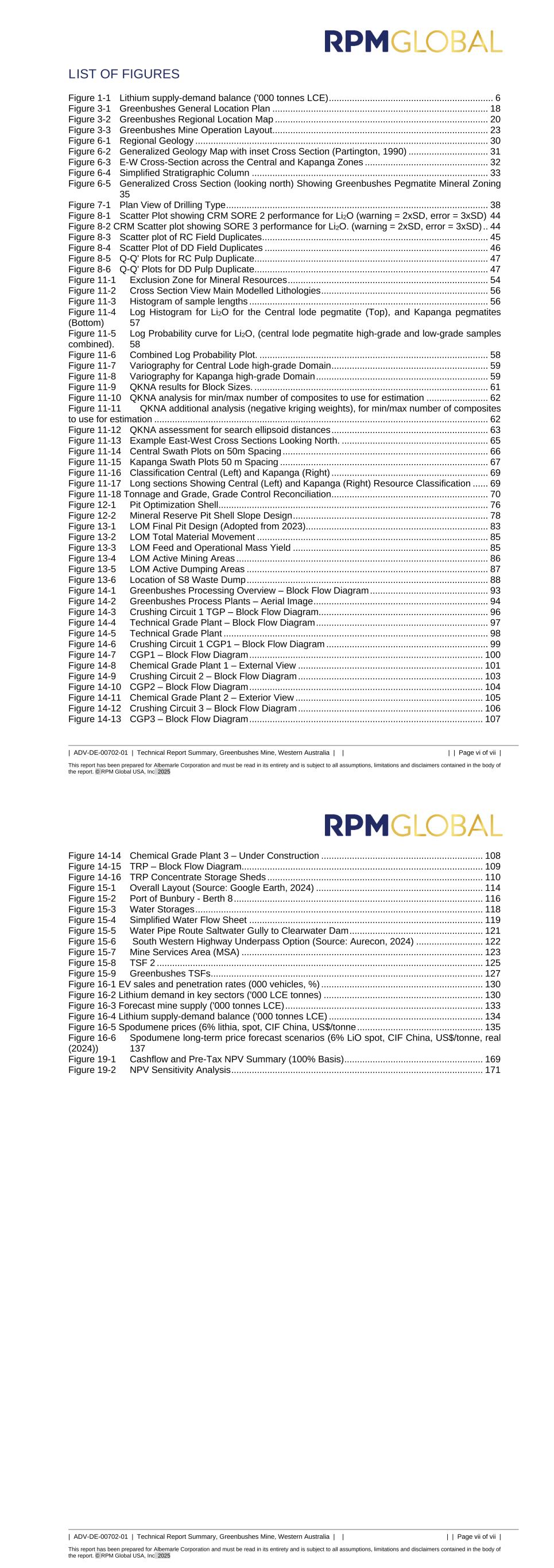
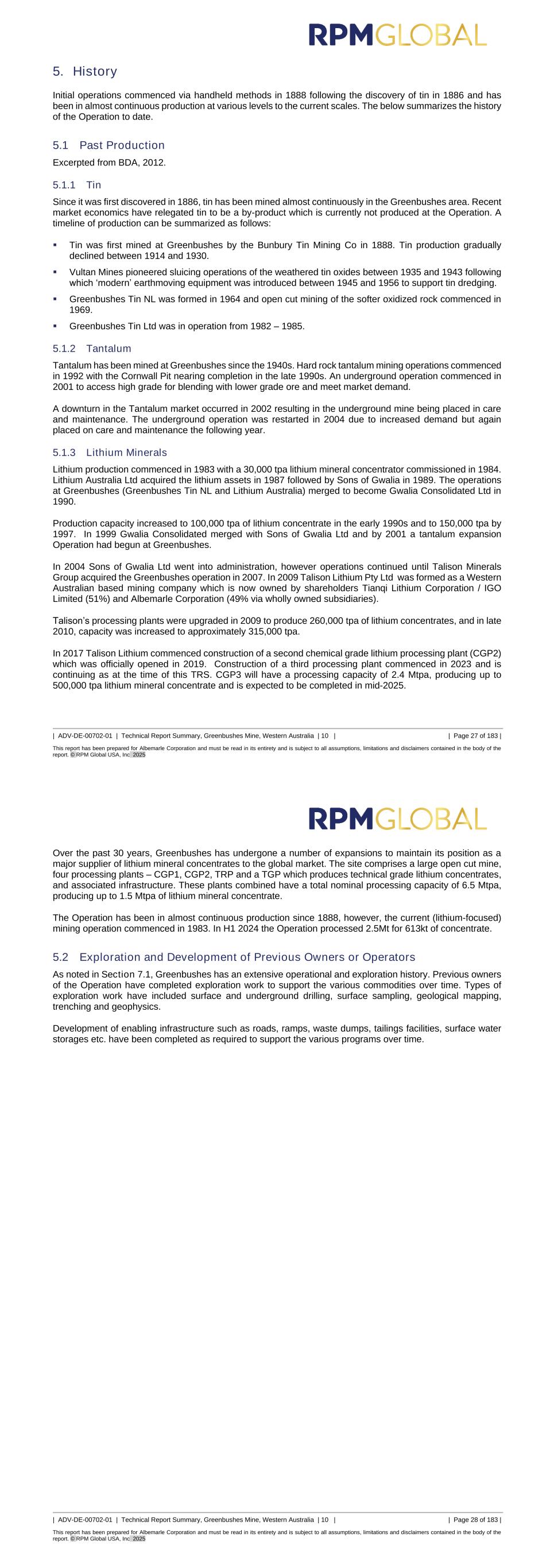
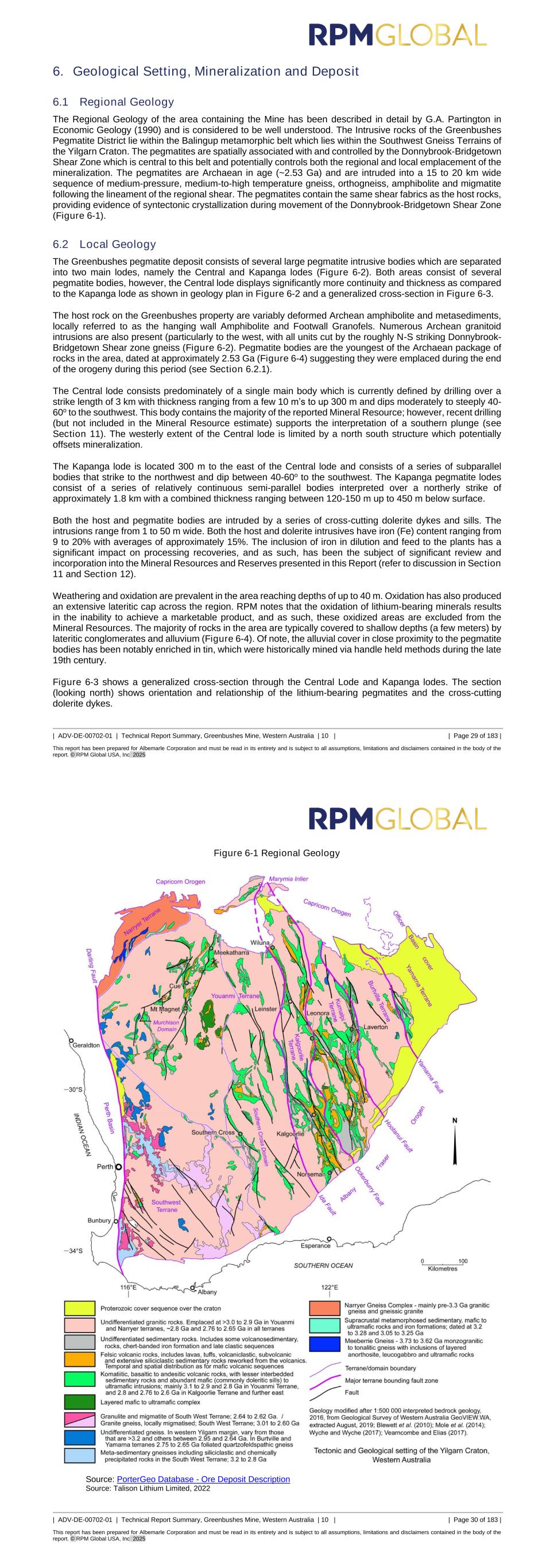
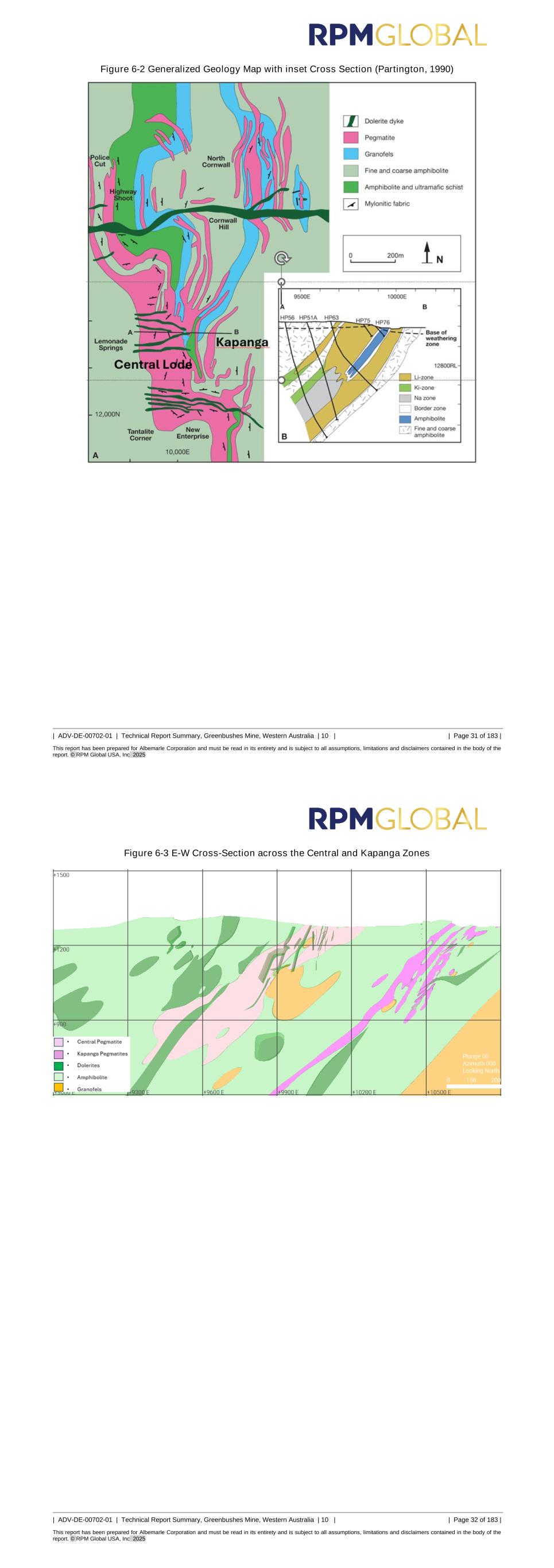
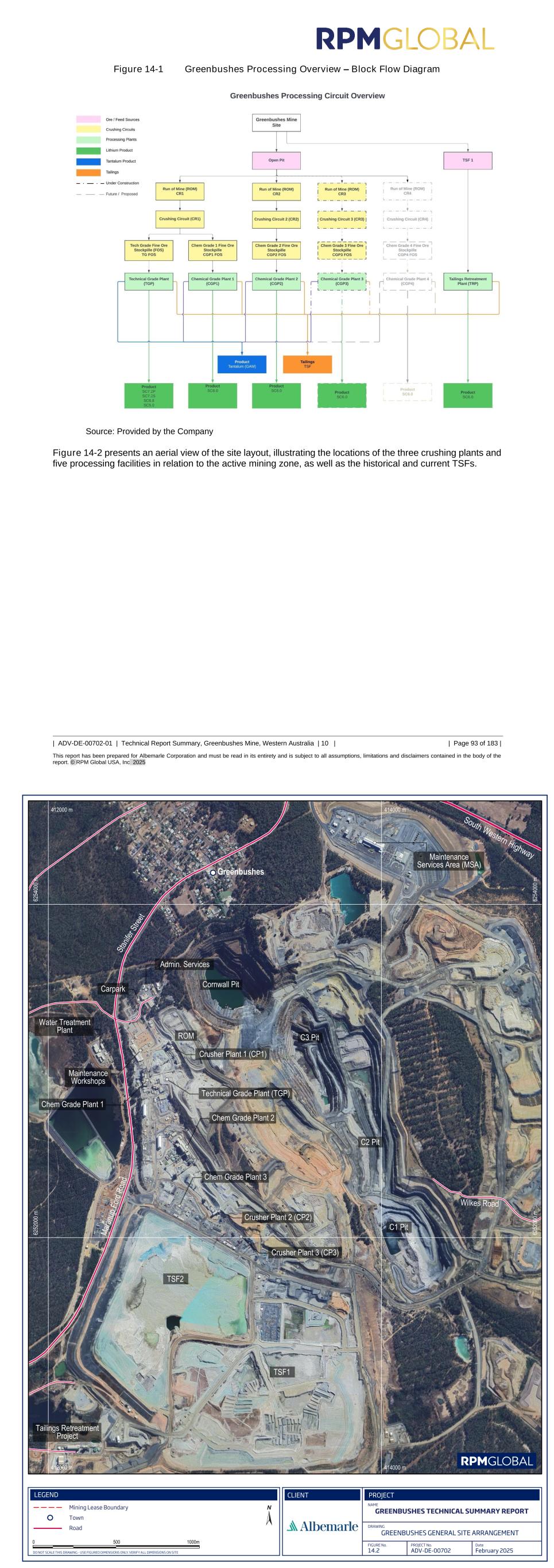
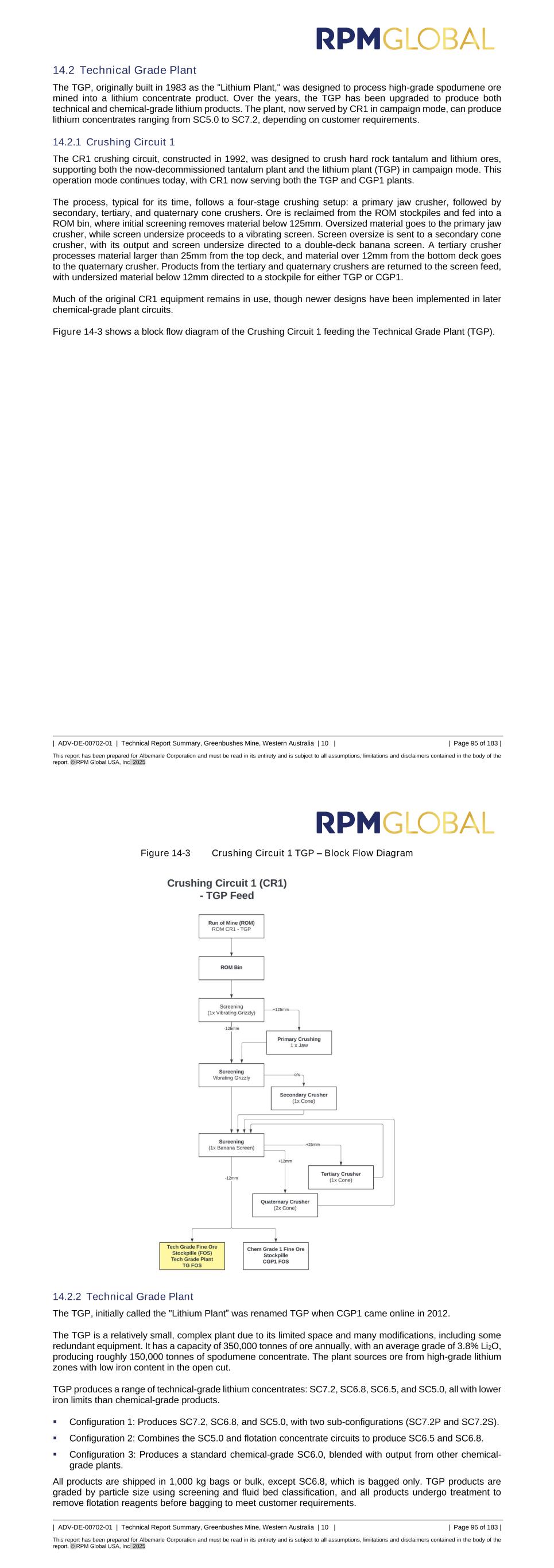
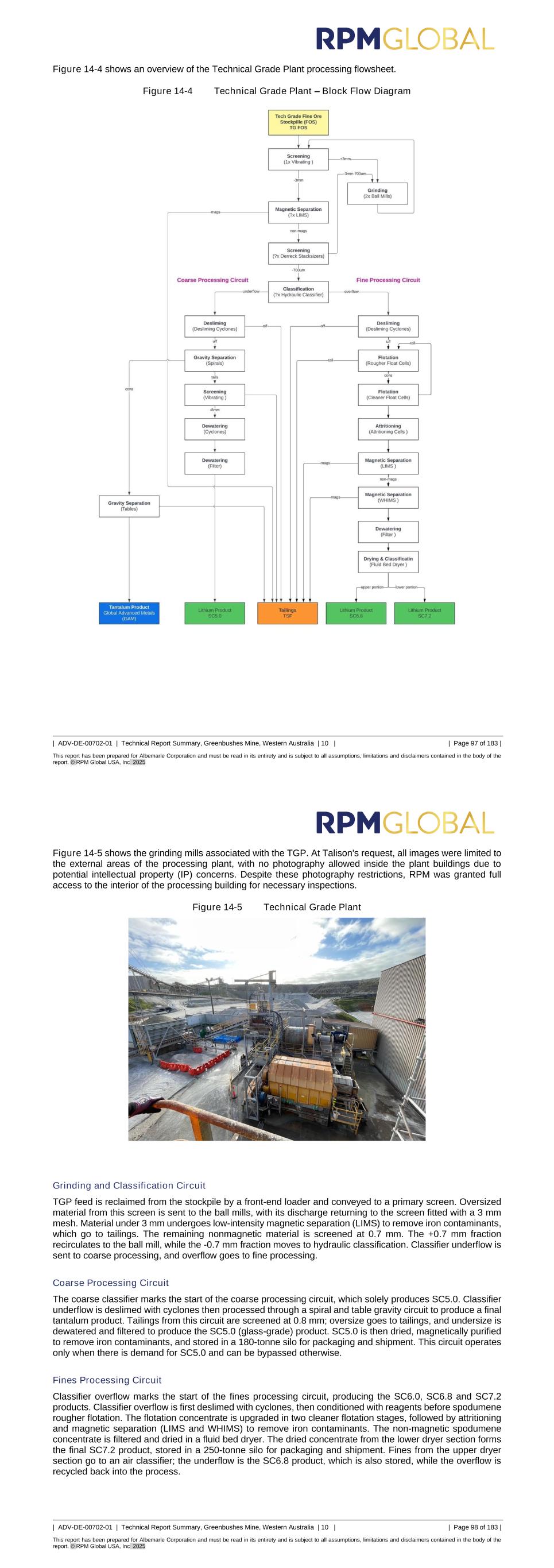
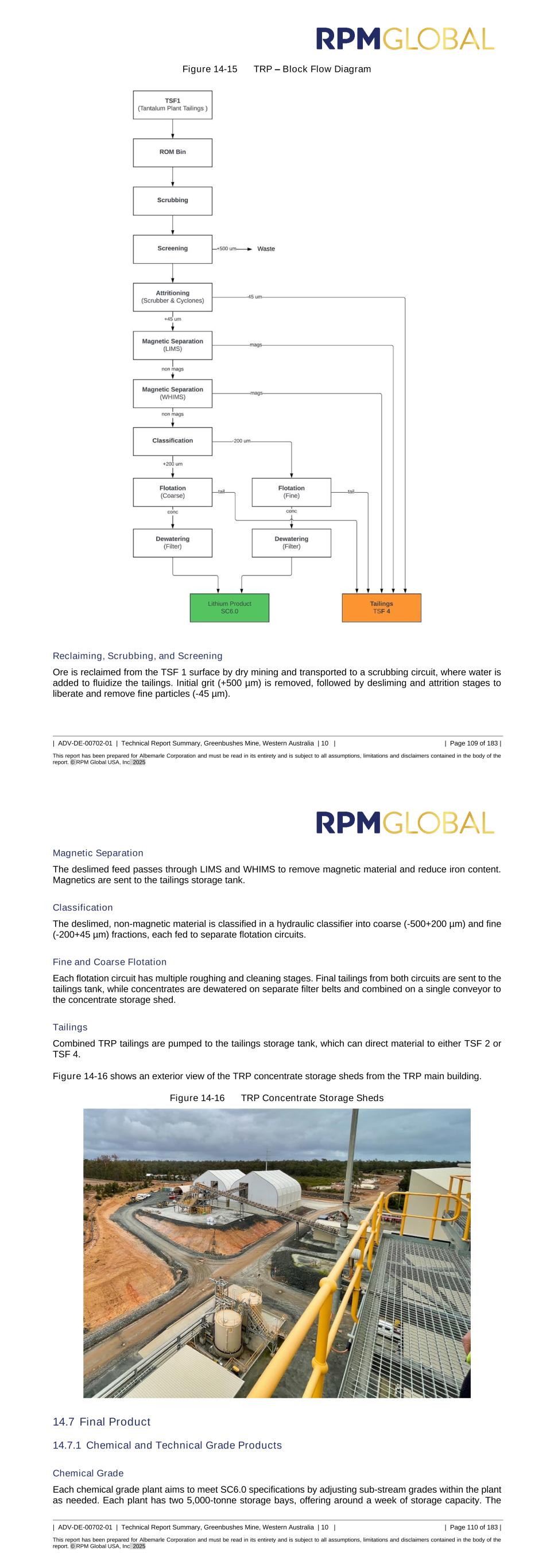
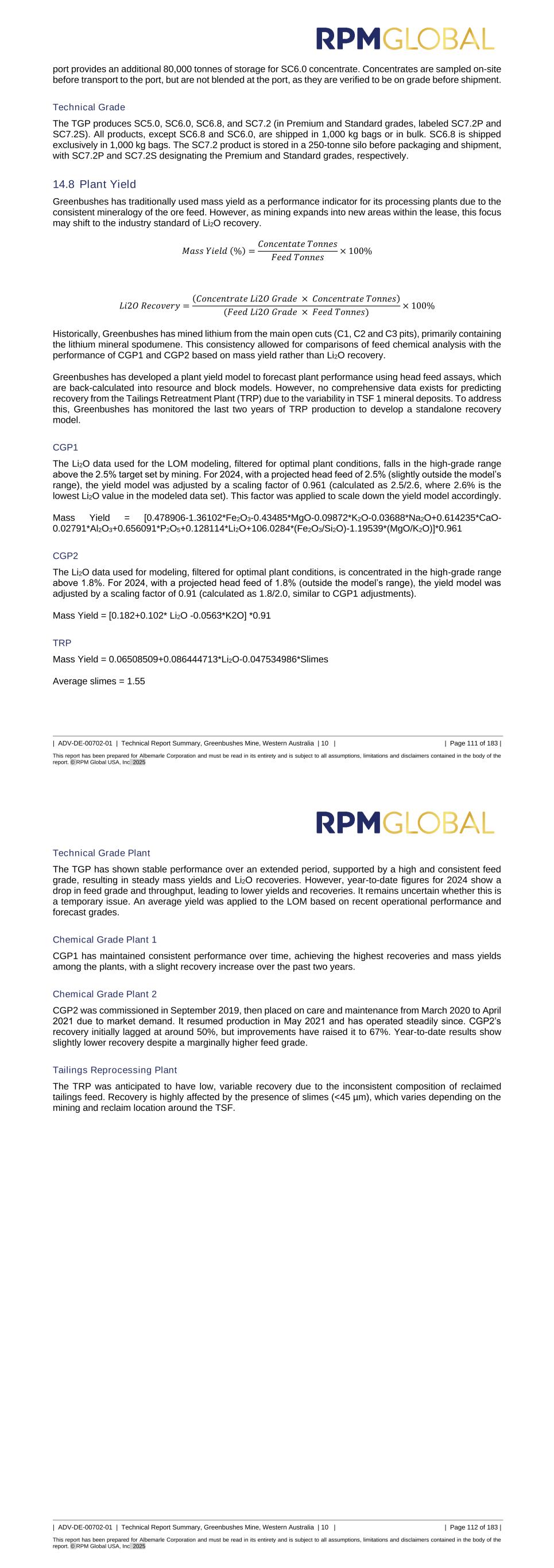
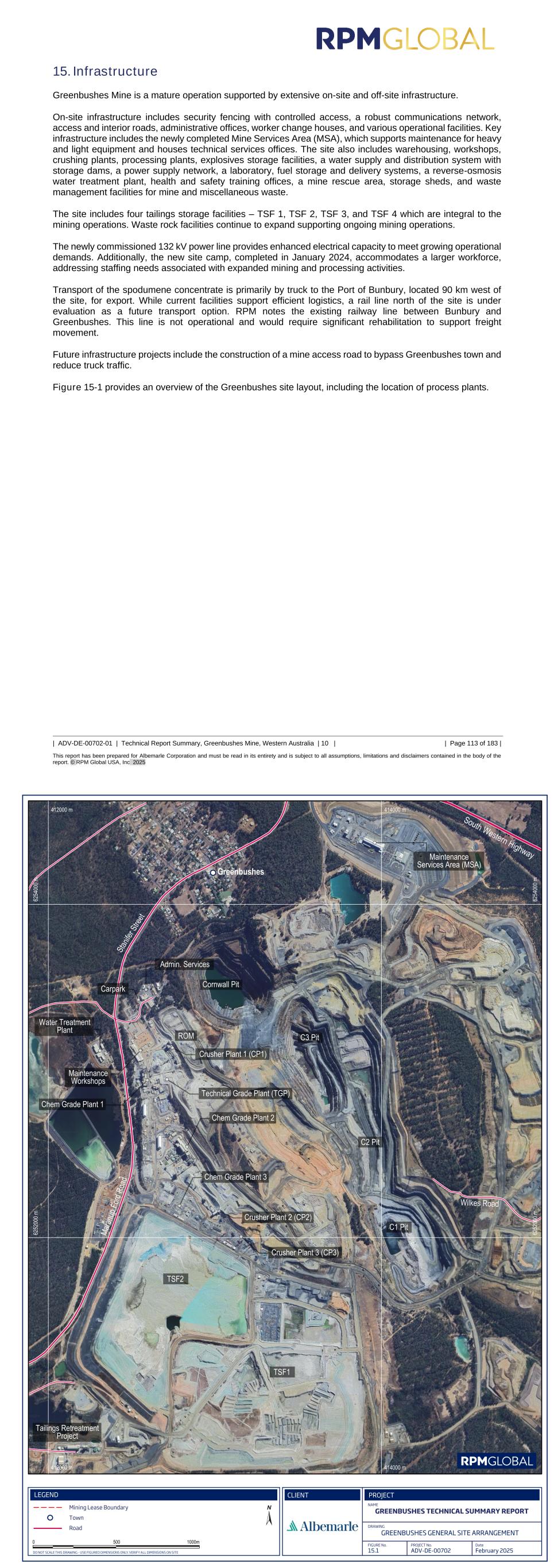
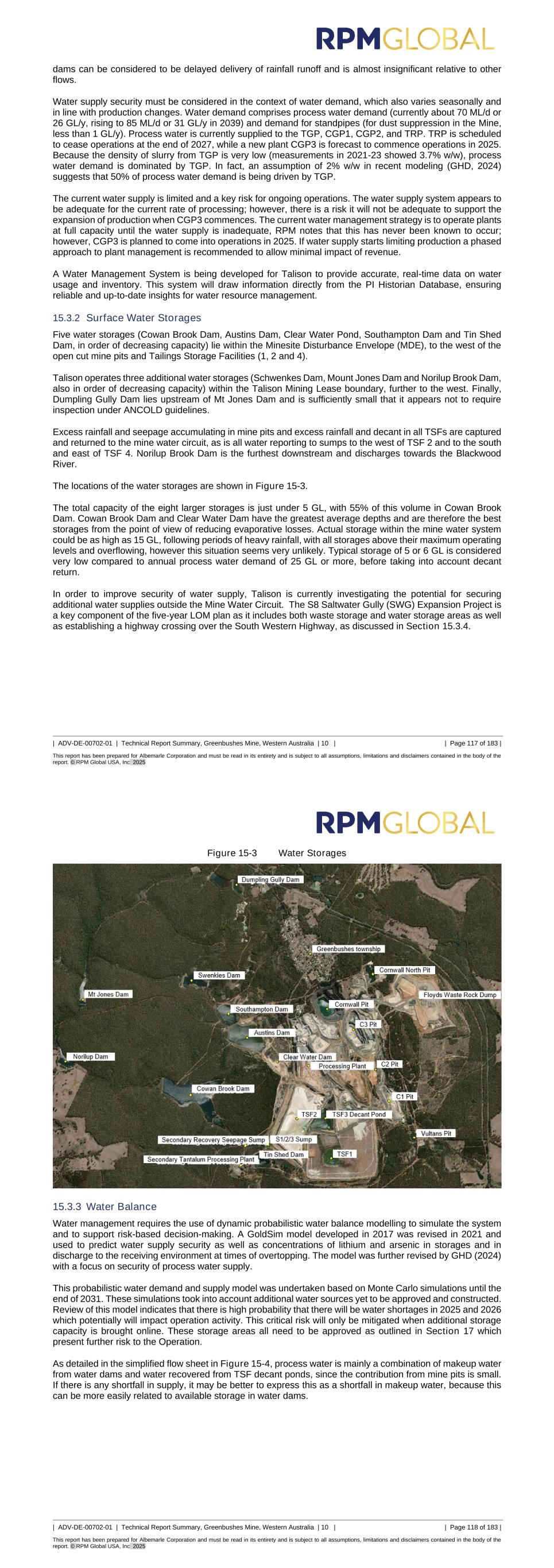
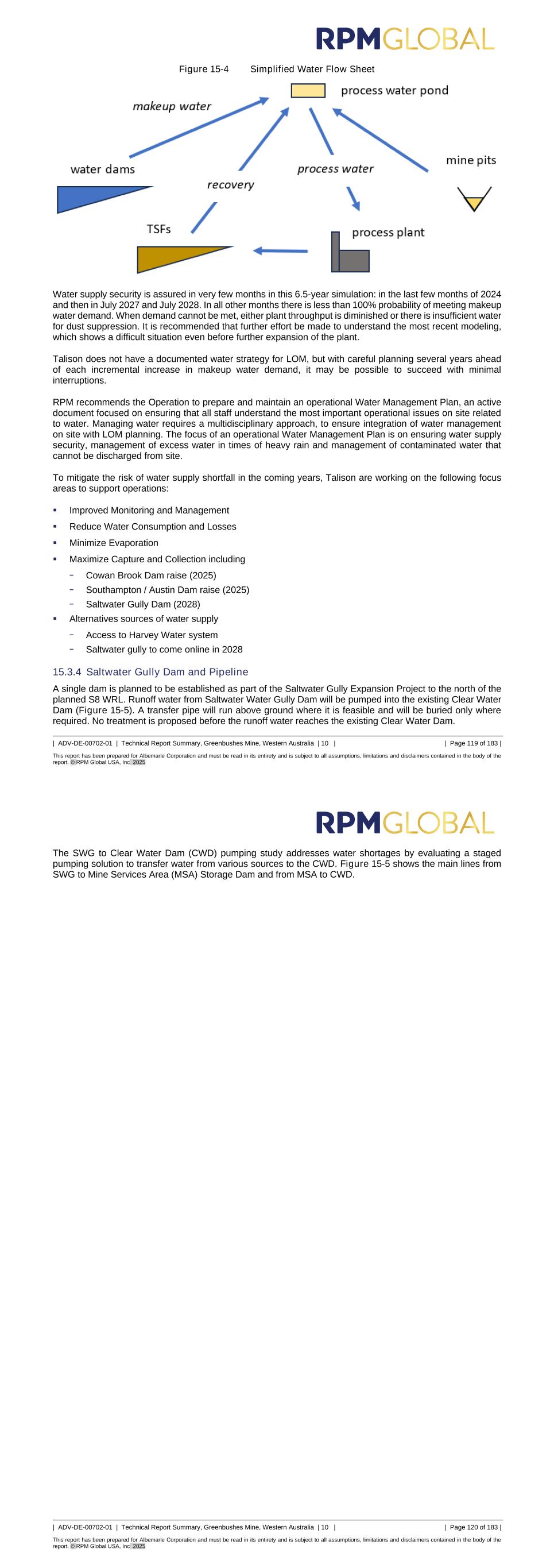
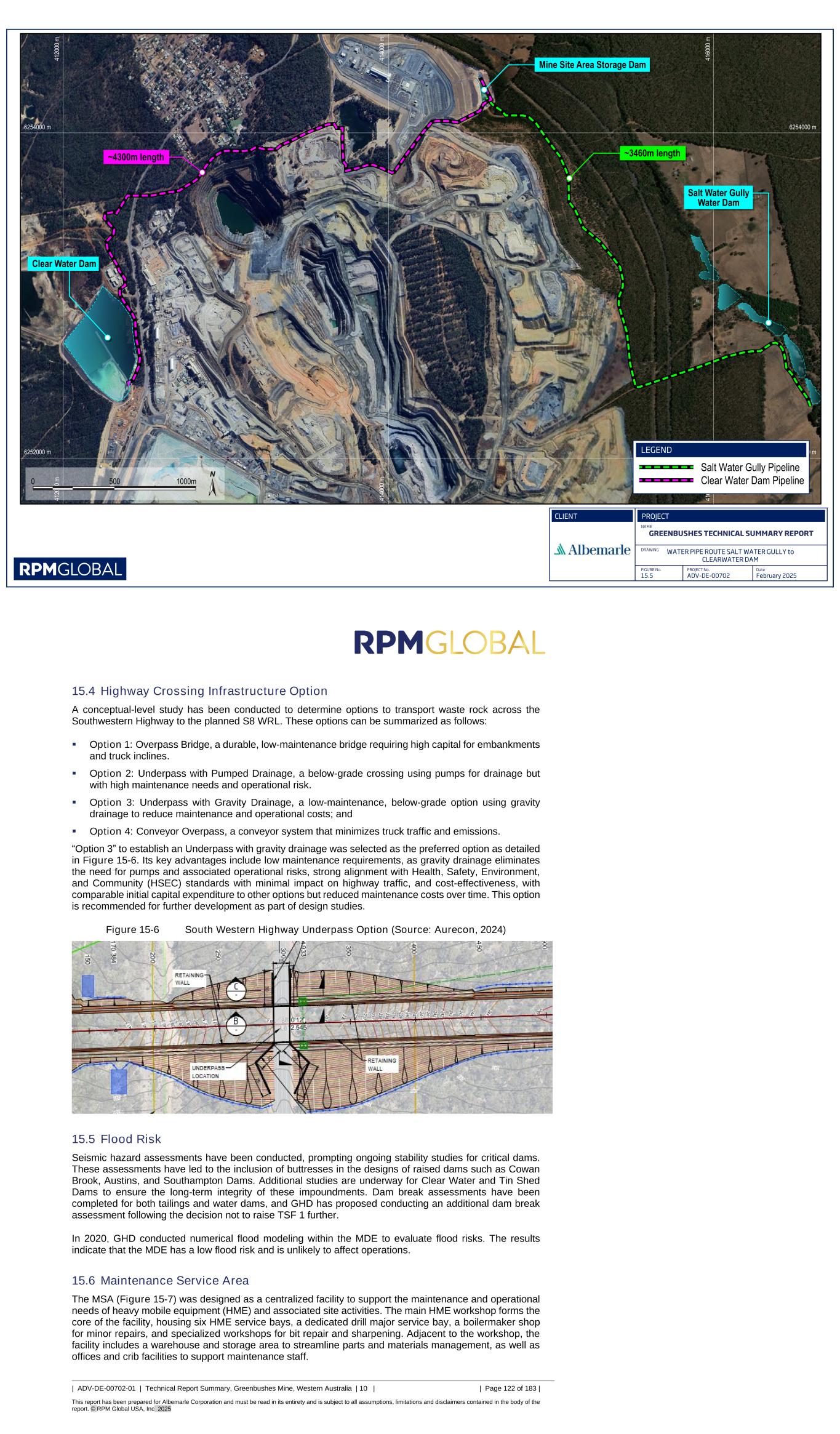
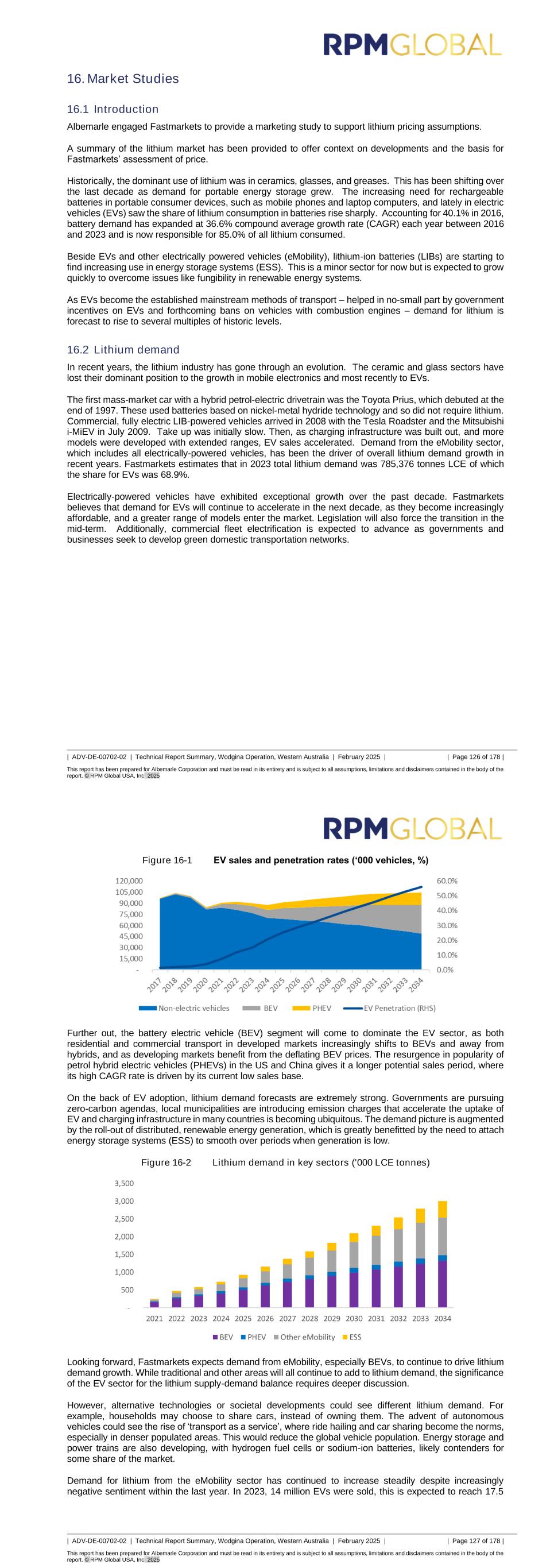
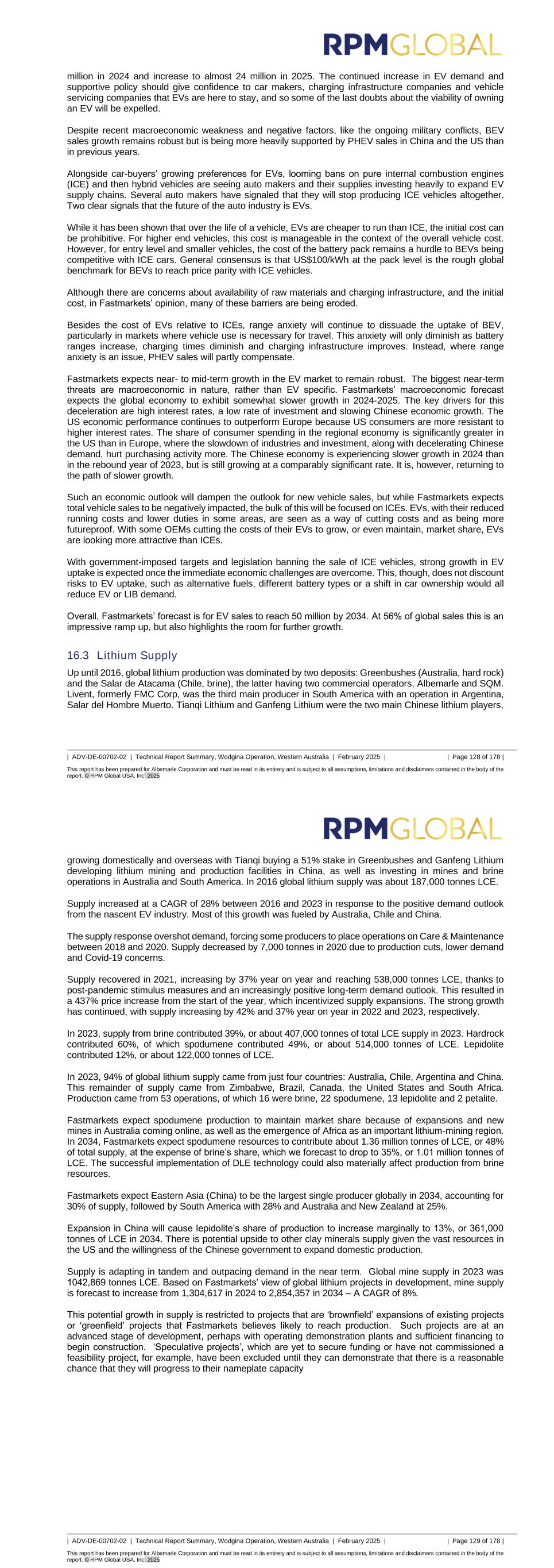
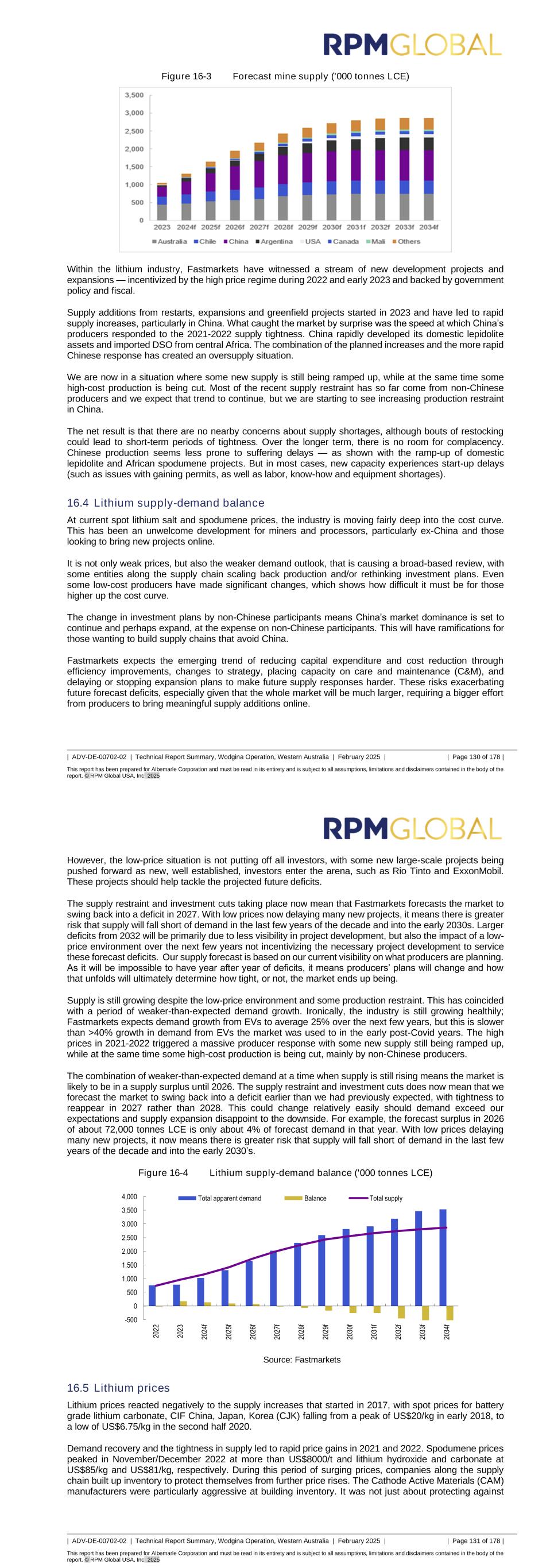
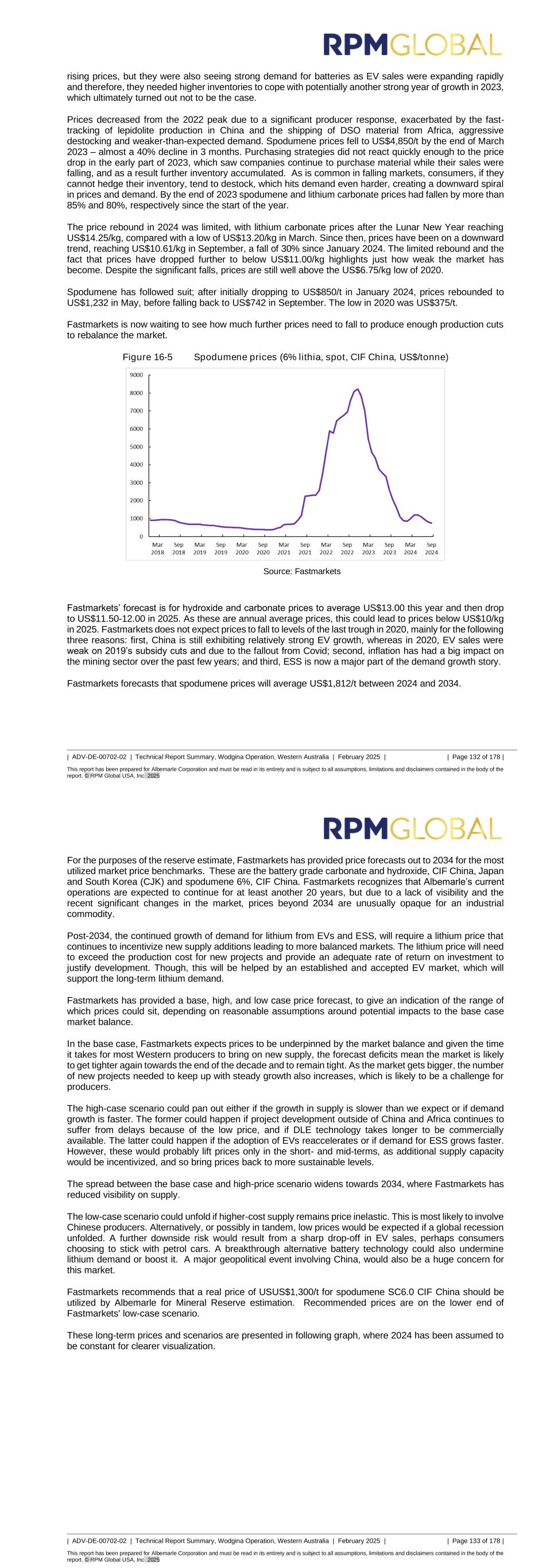
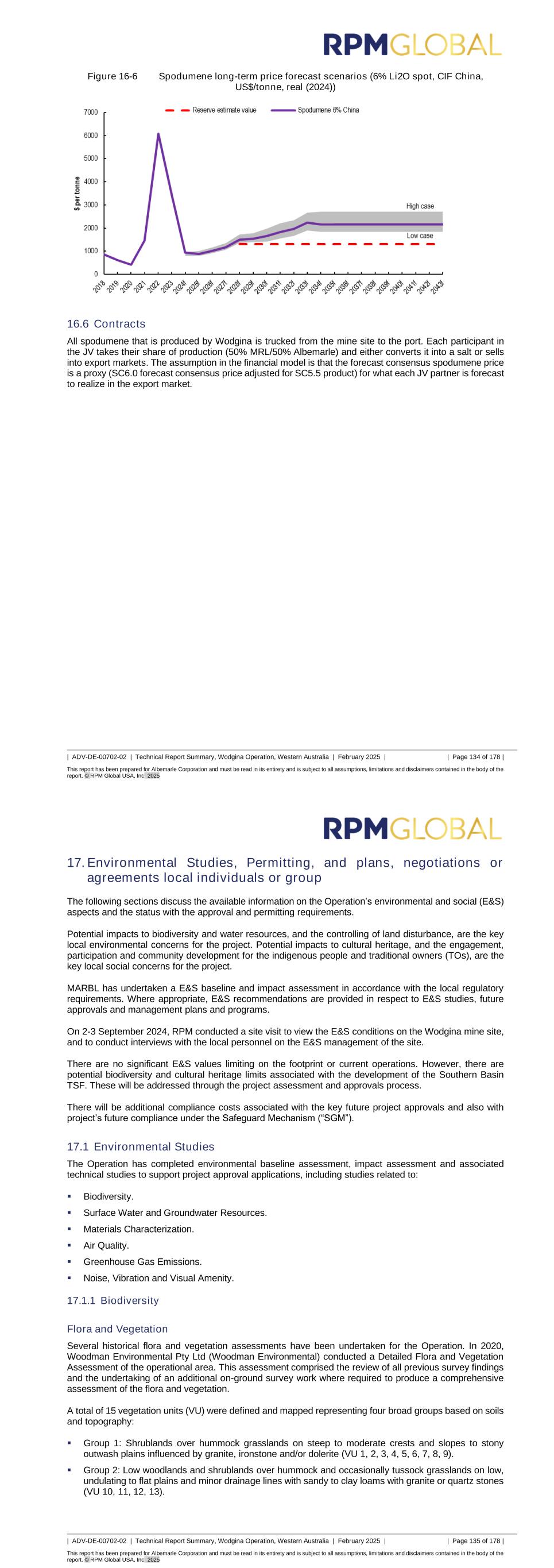
| ADV-DE-00702-01 | Technical Report Summary, Greenbushes Mine, Western Australia | | | | Page vi of vii | This report has been prepared for Albemarle Corporation and must be read in its entirety and is subject to all assumptions, limitations and disclaimers contained in the body of the report. © RPM Global USA, Inc 2025 LIST OF FIGURES Figure 1-1 Lithium supply-demand balance ('000 tonnes LCE) ................................................................ 6 Figure 3-1 Greenbushes General Location Plan .................................................................................... 18 Figure 3-2 Greenbushes Regional Location Map ................................................................................... 20 Figure 3-3 Greenbushes Mine Operation Layout .................................................................................... 23 Figure 6-1 Regional Geology .................................................................................................................. 30 Figure 6-2 Generalized Geology Map with inset Cross Section (Partington, 1990) ............................... 31 Figure 6-3 E-W Cross-Section across the Central and Kapanga Zones ................................................ 32 Figure 6-4 Simplified Stratigraphic Column ............................................................................................ 33 Figure 6-5 Generalized Cross Section (looking north) Showing Greenbushes Pegmatite Mineral Zoning 35 Figure 7-1 Plan View of Drilling Type ...................................................................................................... 38 Figure 8-1 Scatter Plot showing CRM SORE 2 performance for Li2O (warning = 2xSD, error = 3xSD) 44 Figure 8-2 CRM Scatter plot showing SORE 3 performance for Li2O. (warning = 2xSD, error = 3xSD) .. 44 Figure 8-3 Scatter plot of RC Field Duplicates ........................................................................................ 45 Figure 8-4 Scatter Plot of DD Field Duplicates ....................................................................................... 46 Figure 8-5 Q-Q' Plots for RC Pulp Duplicate ........................................................................................... 47 Figure 8-6 Q-Q' Plots for DD Pulp Duplicate ........................................................................................... 47 Figure 11-1 Exclusion Zone for Mineral Resources .............................................................................. 54 Figure 11-2 Cross Section View Main Modelled Lithologies ................................................................. 56 Figure 11-3 Histogram of sample lengths ............................................................................................. 56 Figure 11-4 Log Histogram for Li2O for the Central lode pegmatite (Top), and Kapanga pegmatites (Bottom) 57 Figure 11-5 Log Probability curve for Li2O, (central lode pegmatite high-grade and low-grade samples combined). 58 Figure 11-6 Combined Log Probability Plot. ......................................................................................... 58 Figure 11-7 Variography for Central Lode high-grade Domain ............................................................. 59 Figure 11-8 Variography for Kapanga high-grade Domain ................................................................... 59 Figure 11-9 QKNA results for Block Sizes. ........................................................................................... 61 Figure 11-10 QKNA analysis for min/max number of composites to use for estimation ........................ 62 Figure 11-11 QKNA additional analysis (negative kriging weights), for min/max number of composites to use for estimation .................................................................................................................................. 62 Figure 11-12 QKNA assessment for search ellipsoid distances ............................................................. 63 Figure 11-13 Example East-West Cross Sections Looking North. ......................................................... 65 Figure 11-14 Central Swath Plots on 50m Spacing ................................................................................ 66 Figure 11-15 Kapanga Swath Plots 50 m Spacing ................................................................................. 67 Figure 11-16 Classification Central (Left) and Kapanga (Right) ............................................................. 69 Figure 11-17 Long sections Showing Central (Left) and Kapanga (Right) Resource Classification ...... 69 Figure 11-18 Tonnage and Grade, Grade Control Reconciliation ............................................................. 70 Figure 12-1 Pit Optimization Shell ......................................................................................................... 76 Figure 12-2 Mineral Reserve Pit Shell Slope Design ............................................................................ 78 Figure 13-1 LOM Final Pit Design (Adopted from 2023) ....................................................................... 83 Figure 13-2 LOM Total Material Movement .......................................................................................... 85 Figure 13-3 LOM Feed and Operational Mass Yield ............................................................................ 85 Figure 13-4 LOM Active Mining Areas .................................................................................................. 86 Figure 13-5 LOM Active Dumping Areas .............................................................................................. 87 Figure 13-6 Location of S8 Waste Dump .............................................................................................. 88 Figure 14-1 Greenbushes Processing Overview – Block Flow Diagram .............................................. 93 Figure 14-2 Greenbushes Process Plants – Aerial Image .................................................................... 94 Figure 14-3 Crushing Circuit 1 TGP – Block Flow Diagram.................................................................. 96 Figure 14-4 Technical Grade Plant – Block Flow Diagram ................................................................... 97 Figure 14-5 Technical Grade Plant ....................................................................................................... 98 Figure 14-6 Crushing Circuit 1 CGP1 – Block Flow Diagram ............................................................... 99 Figure 14-7 CGP1 – Block Flow Diagram ........................................................................................... 100 Figure 14-8 Chemical Grade Plant 1 – External View ........................................................................ 101 Figure 14-9 Crushing Circuit 2 – Block Flow Diagram ........................................................................ 103 Figure 14-10 CGP2 – Block Flow Diagram ........................................................................................... 104 Figure 14-11 Chemical Grade Plant 2 – Exterior View ......................................................................... 105 Figure 14-12 Crushing Circuit 3 – Block Flow Diagram ........................................................................ 106 Figure 14-13 CGP3 – Block Flow Diagram ........................................................................................... 107 | ADV-DE-00702-01 | Technical Report Summary, Greenbushes Mine, Western Australia | | | | Page vii of vii | This report has been prepared for Albemarle Corporation and must be read in its entirety and is subject to all assumptions, limitations and disclaimers contained in the body of the report. © RPM Global USA, Inc 2025 Figure 14-14 Chemical Grade Plant 3 – Under Construction ............................................................... 108 Figure 14-15 TRP – Block Flow Diagram.............................................................................................. 109 Figure 14-16 TRP Concentrate Storage Sheds .................................................................................... 110 Figure 15-1 Overall Layout (Source: Google Earth, 2024) ................................................................. 114 Figure 15-2 Port of Bunbury - Berth 8 ................................................................................................. 116 Figure 15-3 Water Storages ................................................................................................................ 118 Figure 15-4 Simplified Water Flow Sheet ........................................................................................... 119 Figure 15-5 Water Pipe Route Saltwater Gully to Clearwater Dam .................................................... 121 Figure 15-6 South Western Highway Underpass Option (Source: Aurecon, 2024) .......................... 122 Figure 15-7 Mine Services Area (MSA) .............................................................................................. 123 Figure 15-8 TSF 2 ............................................................................................................................... 125 Figure 15-9 Greenbushes TSFs .......................................................................................................... 127 Figure 16-1 EV sales and penetration rates (000 vehicles, %) ............................................................... 130 Figure 16-2 Lithium demand in key sectors ('000 LCE tonnes) .............................................................. 130 Figure 16-3 Forecast mine supply ('000 tonnes LCE) ............................................................................. 133 Figure 16-4 Lithium supply-demand balance ('000 tonnes LCE) ............................................................ 134 Figure 16-5 Spodumene prices (6% lithia, spot, CIF China, US$/tonne ................................................. 135 Figure 16-6 Spodumene long-term price forecast scenarios (6% LiO spot, CIF China, US$/tonne, real (2024)) 137 Figure 19-1 Cashflow and Pre-Tax NPV Summary (100% Basis) ...................................................... 169 Figure 19-2 NPV Sensitivity Analysis .................................................................................................. 171


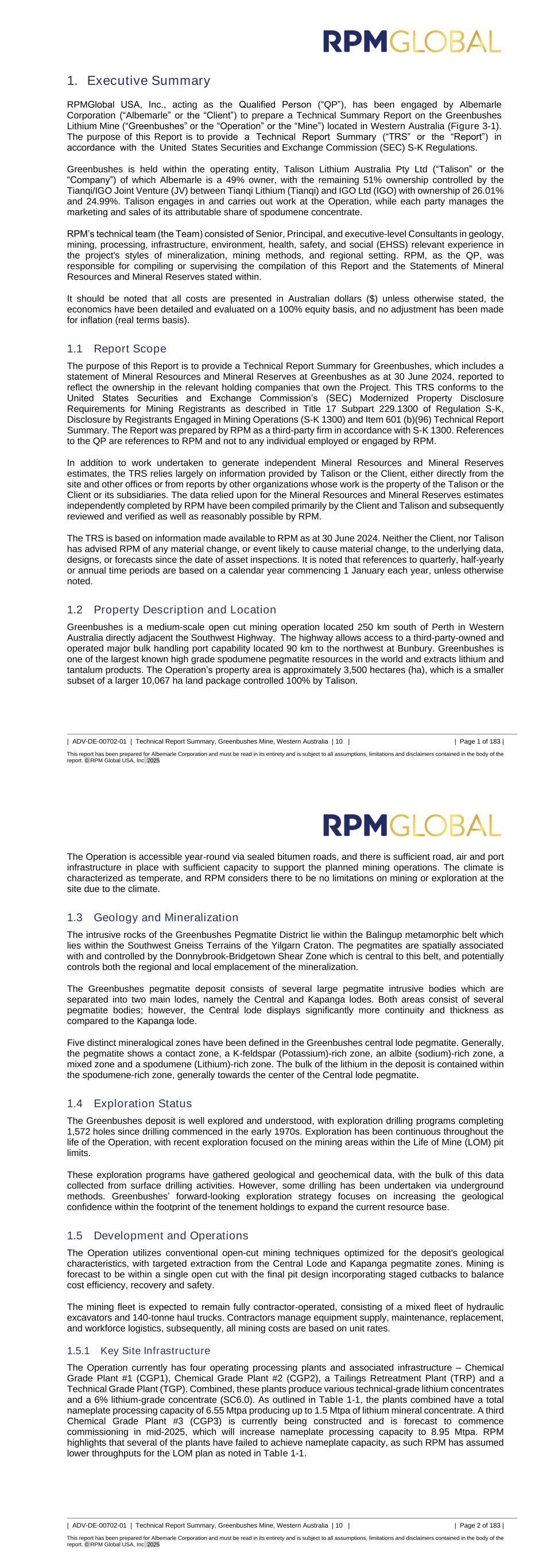
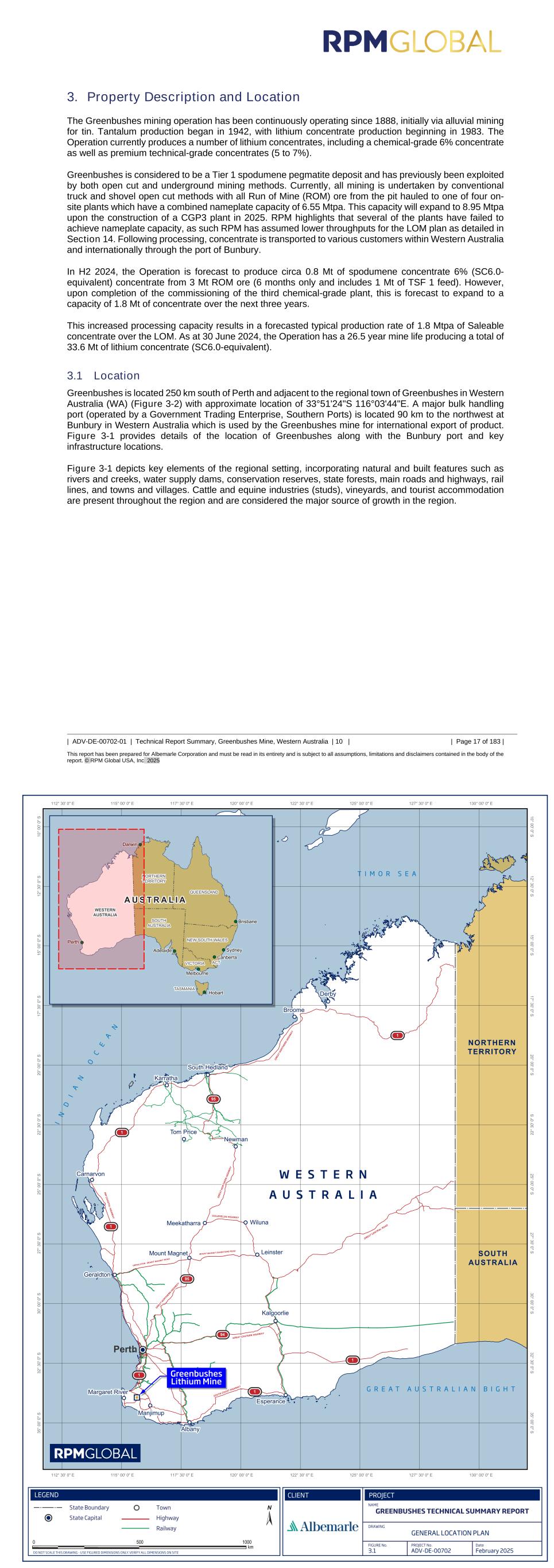
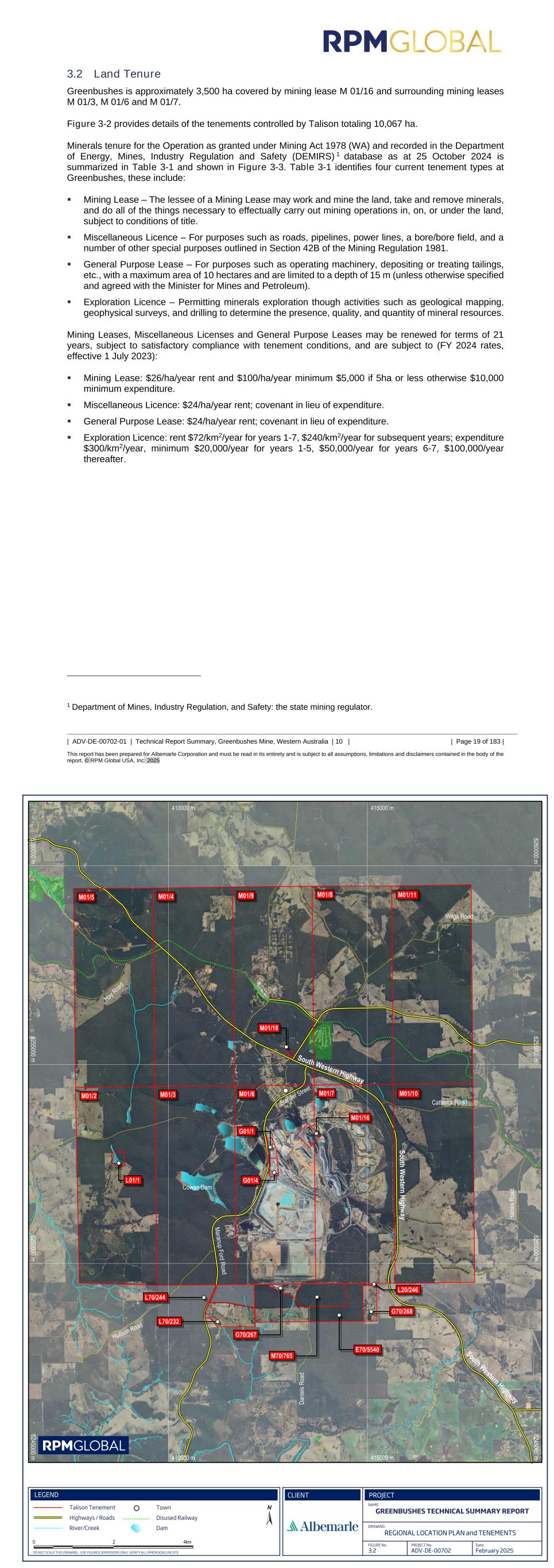
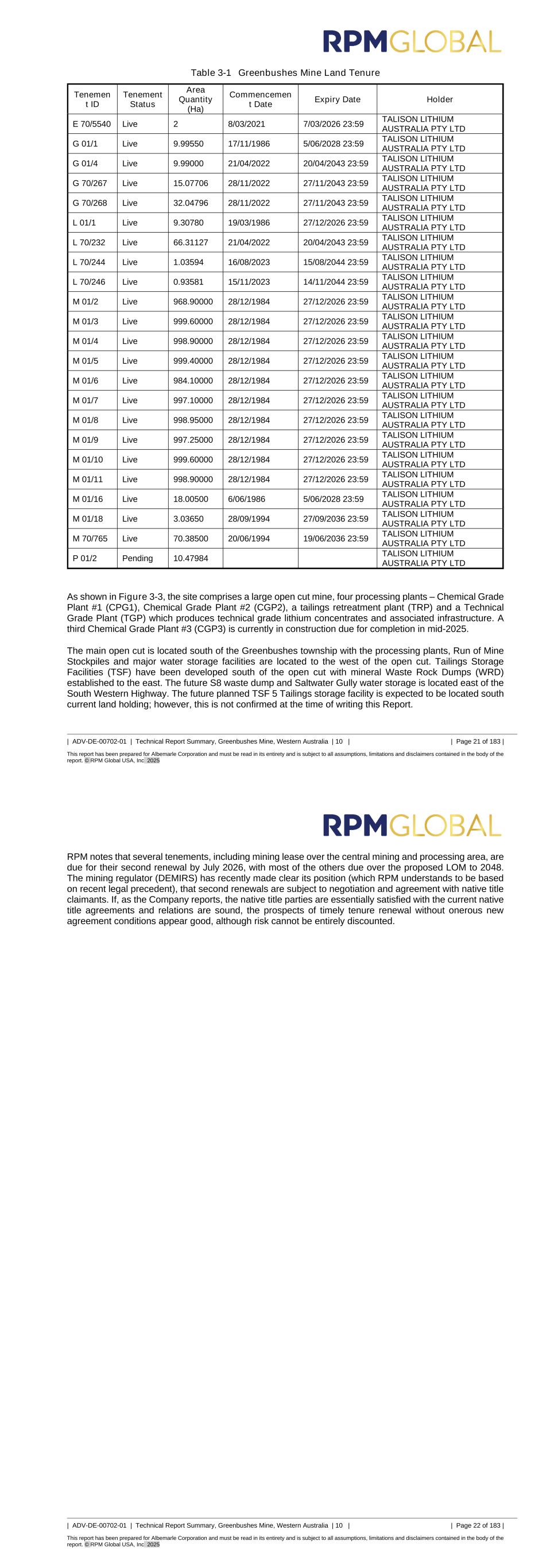
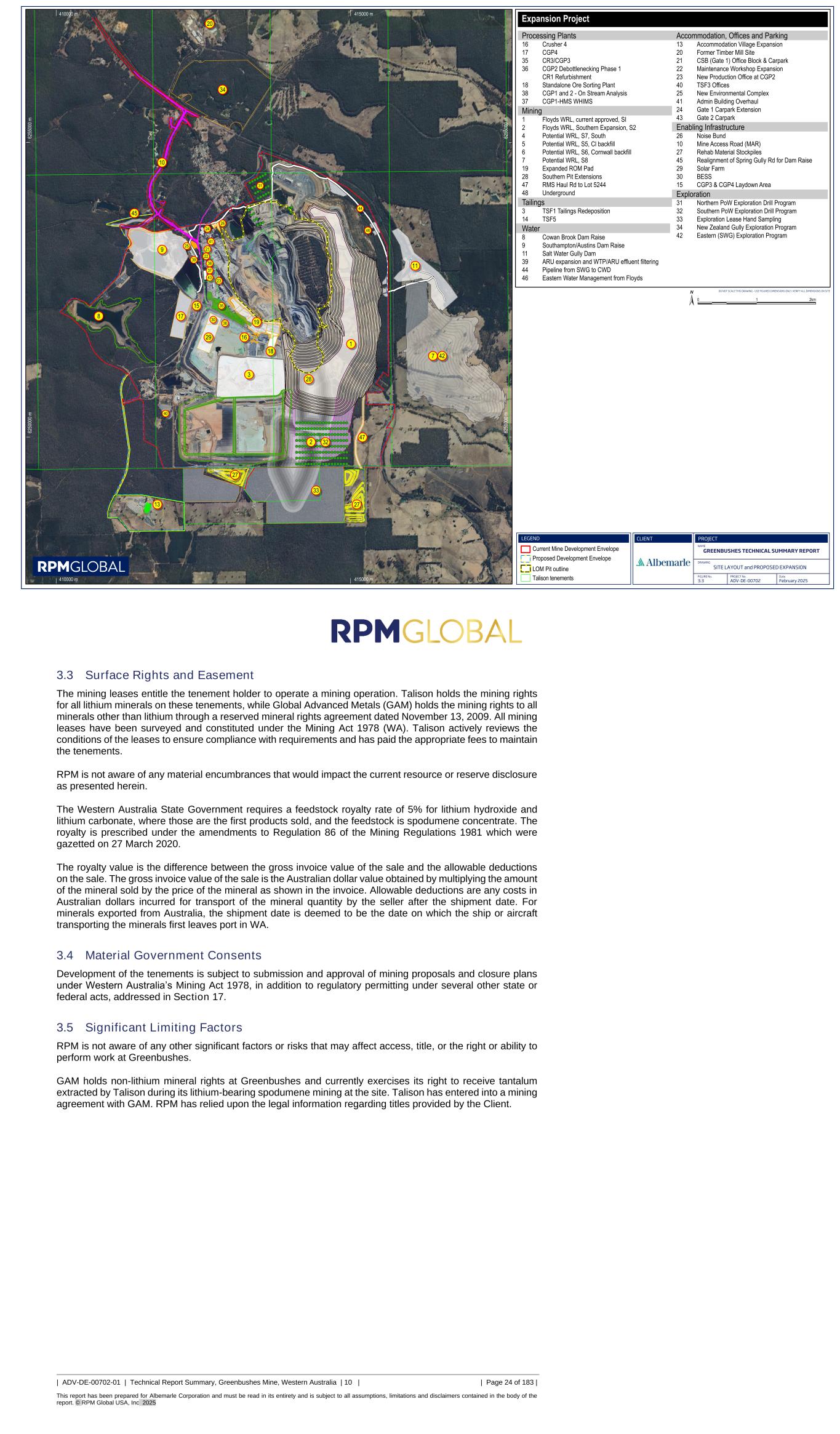
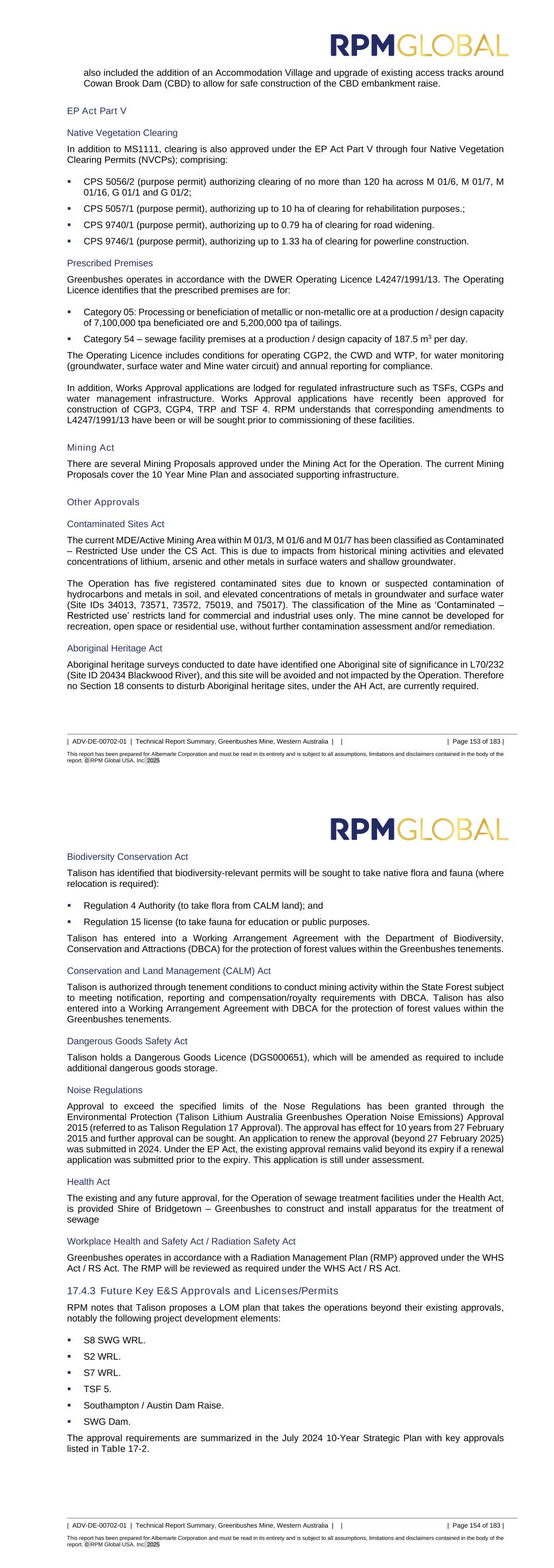
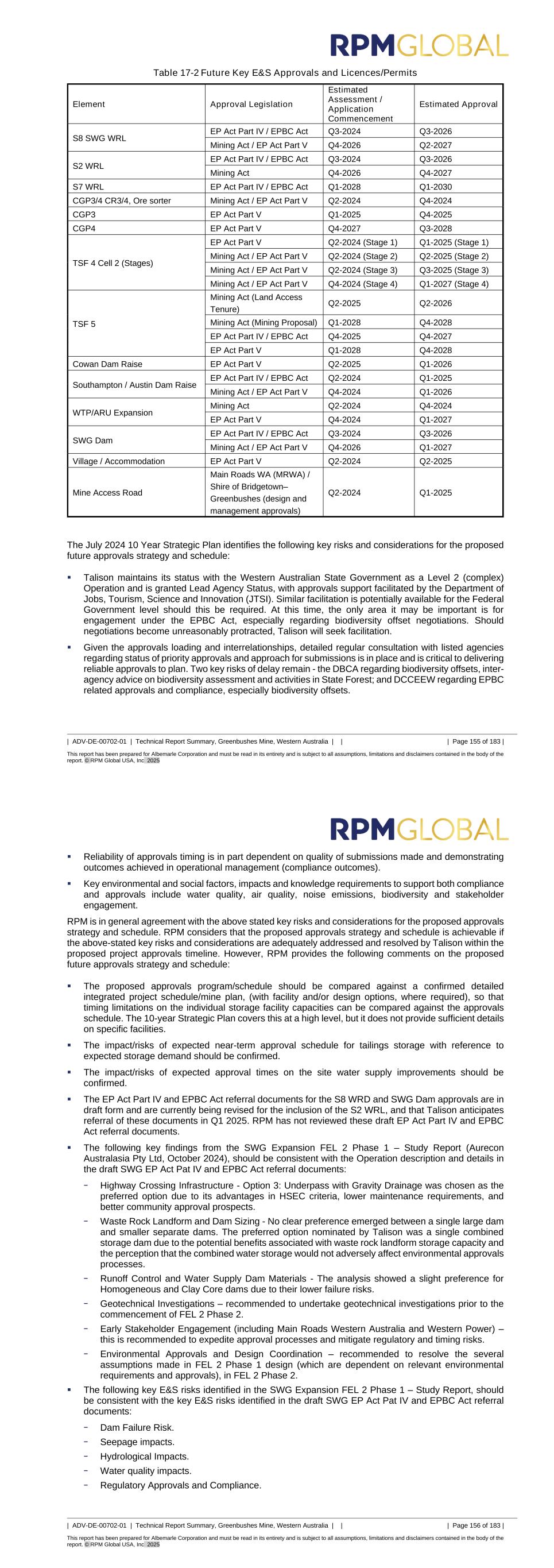
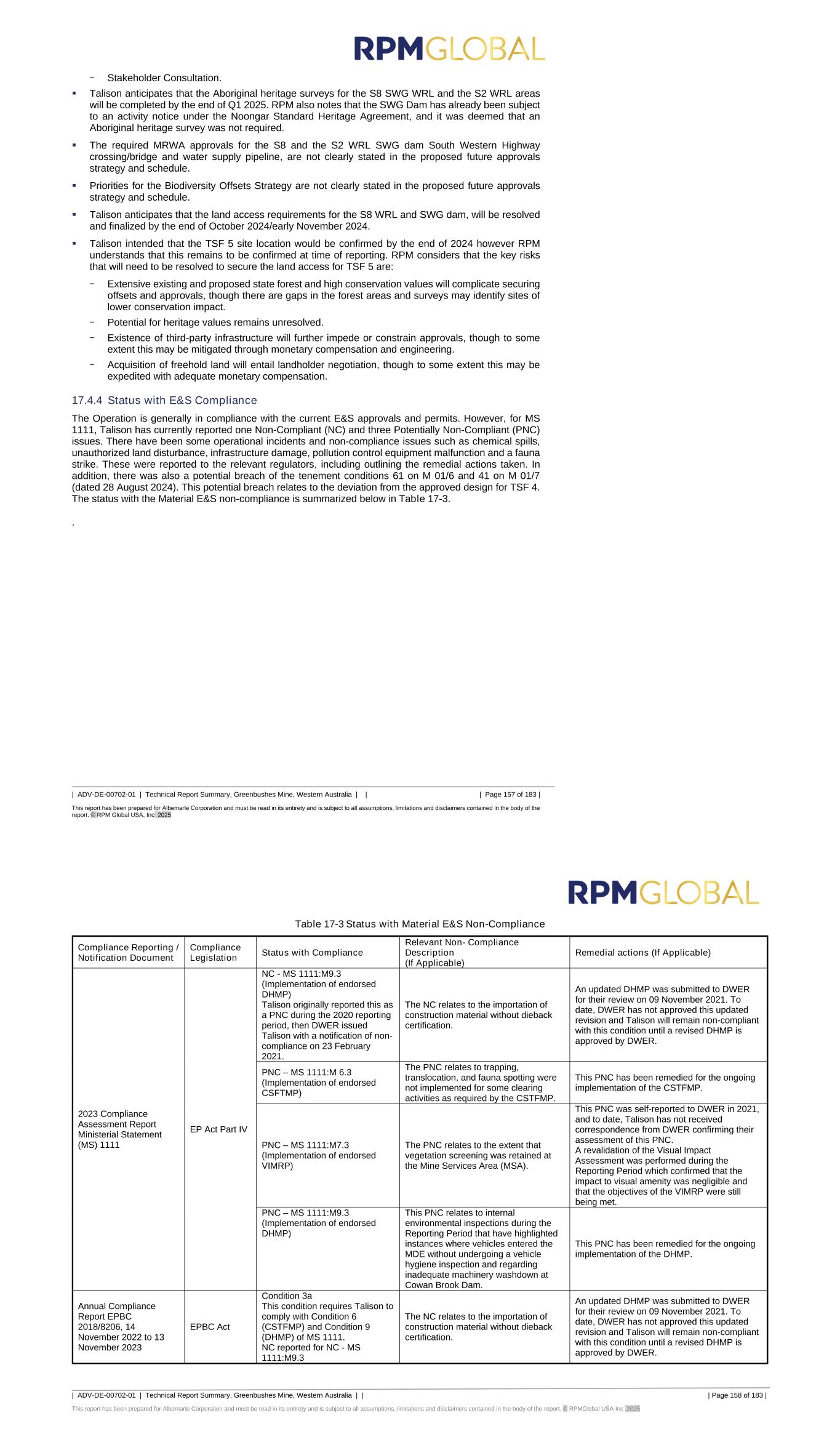
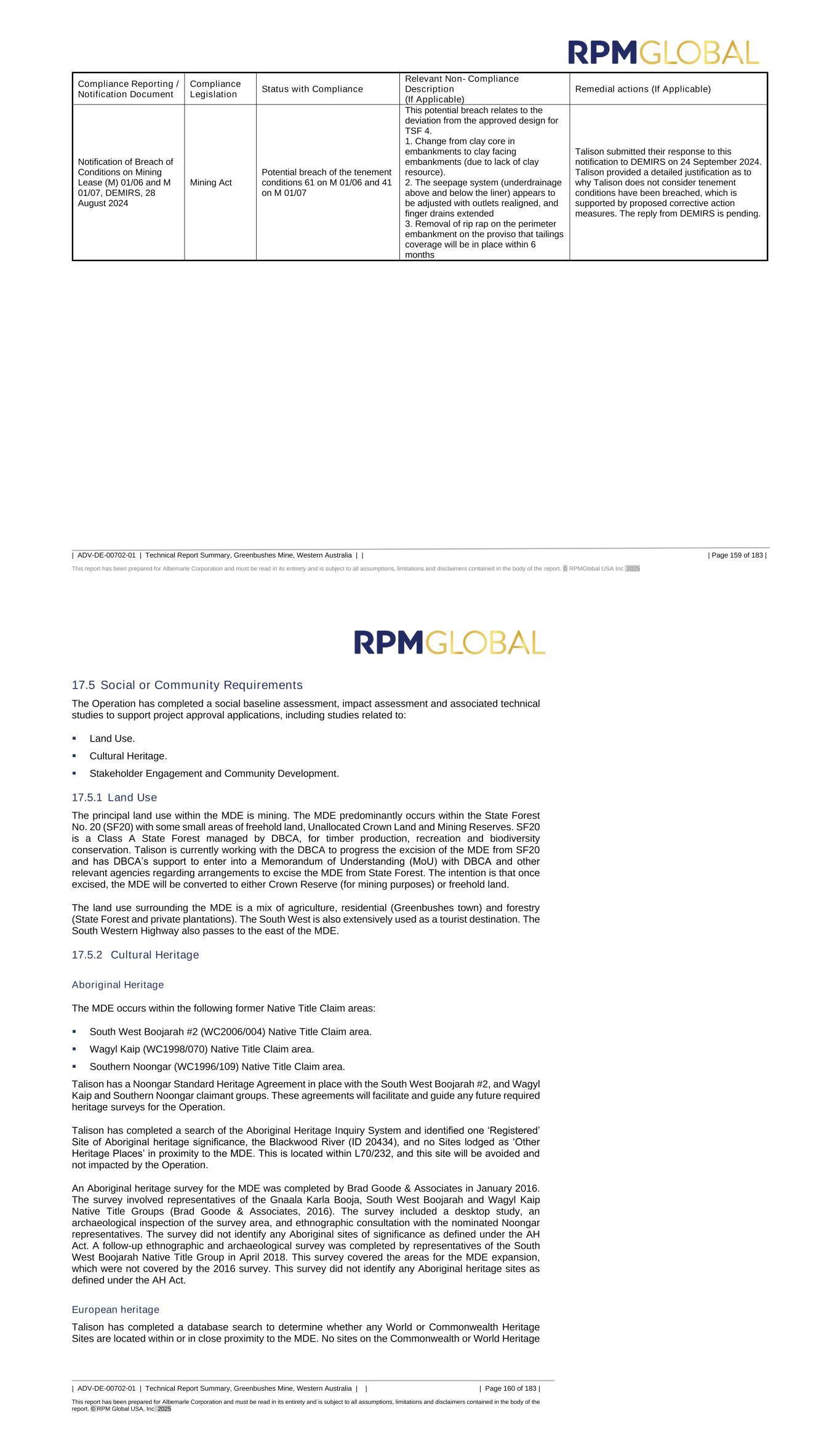
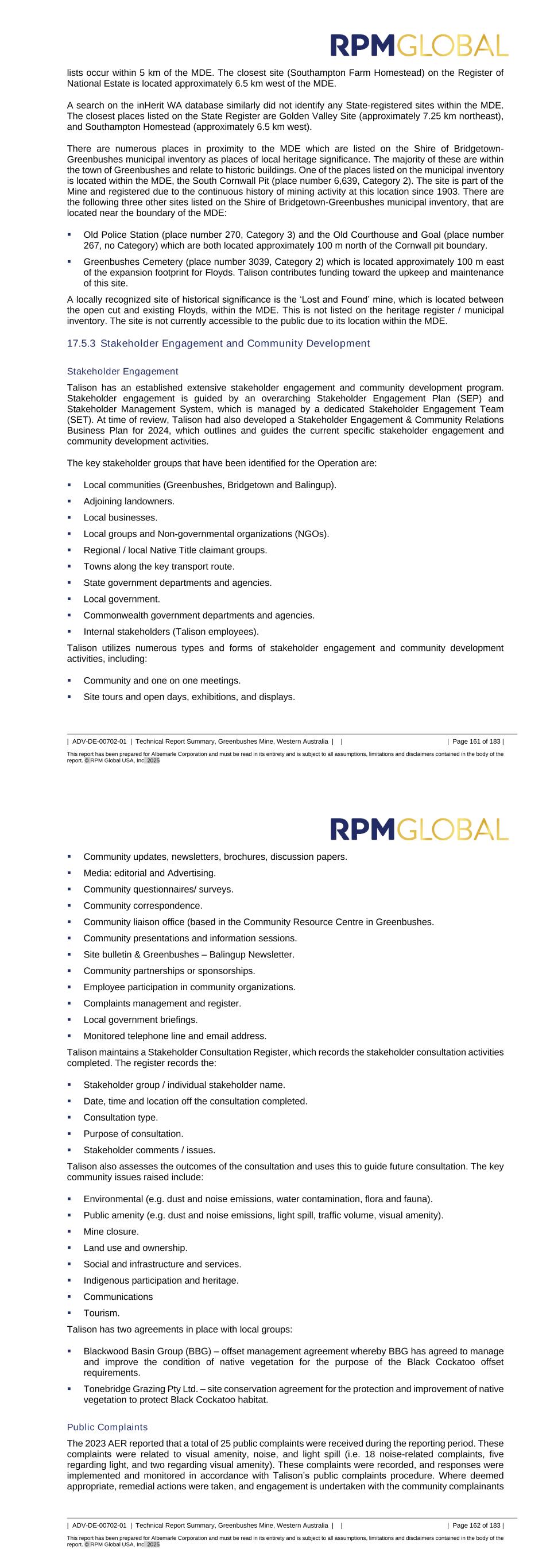
| ADV-DE-00702-01 | Technical Report Summary, Greenbushes Mine, Western Australia | 10 | | Page 1 of 183 | This report has been prepared for Albemarle Corporation and must be read in its entirety and is subject to all assumptions, limitations and disclaimers contained in the body of the report. © RPM Global USA, Inc 2025 1. Executive Summary Greenbushes is held within the operating entity, Talison Lithium Australia Pty Ltd (“Talison” or the “Company”) of which Albemarle is a 49% owner, with the remaining 51% ownership controlled by the Tianqi/IGO Joint Venture (JV) between Tianqi Lithium (Tianqi) and IGO Ltd (IGO) with ownership of 26.01% and 24.99%. Talison engages in and carries out work at the Operation, while each party manages the marketing and sales of its attributable share of spodumene concentrate. RPM’s technical team (the Team) consisted of Senior, Principal, and executive-level Consultants in geology, mining, processing, infrastructure, environment, health, safety, and social (EHSS) relevant experience in the project's styles of mineralization, mining methods, and regional setting. RPM, as the QP, was responsible for compiling or supervising the compilation of this Report and the Statements of Mineral Resources and Mineral Reserves stated within. It should be noted that all costs are presented in Australian dollars ($) unless otherwise stated, the economics have been detailed and evaluated on a 100% equity basis, and no adjustment has been made for inflation (real terms basis). 1.1 Report Scope The purpose of this Report is to provide a Technical Report Summary for Greenbushes, which includes a statement of Mineral Resources and Mineral Reserves at Greenbushes as at 30 June 2024, reported to reflect the ownership in the relevant holding companies that own the Project. This TRS conforms to the United States Securities and Exchange Commission’s (SEC) Modernized Property Disclosure Requirements for Mining Registrants as described in Title 17 Subpart 229.1300 of Regulation S-K, Disclosure by Registrants Engaged in Mining Operations (S-K 1300) and Item 601 (b)(96) Technical Report Summary. The Report was prepared by RPM as a third-party firm in accordance with S-K 1300. References to the QP are references to RPM and not to any individual employed or engaged by RPM. In addition to work undertaken to generate independent Mineral Resources and Mineral Reserves estimates, the TRS relies largely on information provided by Talison or the Client, either directly from the site and other offices or from reports by other organizations whose work is the property of the Talison or the Client or its subsidiaries. The data relied upon for the Mineral Resources and Mineral Reserves estimates independently completed by RPM have been compiled primarily by the Client and Talison and subsequently reviewed and verified as well as reasonably possible by RPM. The TRS is based on information made available to RPM as at 30 June 2024. Neither the Client, nor Talison has advised RPM of any material change, or event likely to cause material change, to the underlying data, designs, or forecasts since the date of asset inspections. It is noted that references to quarterly, half-yearly or annual time periods are based on a calendar year commencing 1 January each year, unless otherwise noted. 1.2 Property Description and Location Greenbushes is a medium-scale open cut mining operation located 250 km south of Perth in Western Australia directly adjacent the Southwest Highway. The highway allows access to a third-party-owned and operated major bulk handling port capability located 90 km to the northwest at Bunbury. Greenbushes is one of the largest known high grade spodumene pegmatite resources in the world and extracts lithium and tantalum products. The Operation’s property area is approximately 3,500 hectares (ha), which is a smaller subset of a larger 10,067 ha land package controlled 100% by Talison. RPMGlobal USA, Inc., acting as the Qualified Person (“QP”), has been engaged by Albemarle Corporation (“Albemarle” or the “Client”) to prepare a Technical Summary Report on the Greenbushes Lithium Mine (“Greenbushes” or the “Operation” or the “Mine”) located in Western Australia (Figure 3-1). The purpose of this Report is to provide a Technical Report Summary (“TRS” or the “Report”) in accordance with the United States Securities and Exchange Commission (SEC) S-K Regulations. | ADV-DE-00702-01 | Technical Report Summary, Greenbushes Mine, Western Australia | 10 | | Page 2 of 183 | This report has been prepared for Albemarle Corporation and must be read in its entirety and is subject to all assumptions, limitations and disclaimers contained in the body of the report. © RPM Global USA, Inc 2025 The Operation is accessible year-round via sealed bitumen roads, and there is sufficient road, air and port infrastructure in place with sufficient capacity to support the planned mining operations. The climate is characterized as temperate, and RPM considers there to be no limitations on mining or exploration at the site due to the climate. 1.3 Geology and Mineralization The intrusive rocks of the Greenbushes Pegmatite District lie within the Balingup metamorphic belt which lies within the Southwest Gneiss Terrains of the Yilgarn Craton. The pegmatites are spatially associated with and controlled by the Donnybrook-Bridgetown Shear Zone which is central to this belt, and potentially controls both the regional and local emplacement of the mineralization. The Greenbushes pegmatite deposit consists of several large pegmatite intrusive bodies which are separated into two main lodes, namely the Central and Kapanga lodes. Both areas consist of several pegmatite bodies; however, the Central lode displays significantly more continuity and thickness as compared to the Kapanga lode. Five distinct mineralogical zones have been defined in the Greenbushes central lode pegmatite. Generally, the pegmatite shows a contact zone, a K-feldspar (Potassium)-rich zone, an albite (sodium)-rich zone, a mixed zone and a spodumene (Lithium)-rich zone. The bulk of the lithium in the deposit is contained within the spodumene-rich zone, generally towards the center of the Central lode pegmatite. 1.4 Exploration Status The Greenbushes deposit is well explored and understood, with exploration drilling programs completing 1,572 holes since drilling commenced in the early 1970s. Exploration has been continuous throughout the life of the Operation, with recent exploration focused on the mining areas within the Life of Mine (LOM) pit limits. These exploration programs have gathered geological and geochemical data, with the bulk of this data collected from surface drilling activities. However, some drilling has been undertaken via underground methods. Greenbushes’ forward-looking exploration strategy focuses on increasing the geological confidence within the footprint of the tenement holdings to expand the current resource base. 1.5 Development and Operations The Operation utilizes conventional open-cut mining techniques optimized for the deposit's geological characteristics, with targeted extraction from the Central Lode and Kapanga pegmatite zones. Mining is forecast to be within a single open cut with the final pit design incorporating staged cutbacks to balance cost efficiency, recovery and safety. The mining fleet is expected to remain fully contractor-operated, consisting of a mixed fleet of hydraulic excavators and 140-tonne haul trucks. Contractors manage equipment supply, maintenance, replacement, and workforce logistics, subsequently, all mining costs are based on unit rates. 1.5.1 Key Site Infrastructure The Operation currently has four operating processing plants and associated infrastructure – Chemical Grade Plant #1 (CGP1), Chemical Grade Plant #2 (CGP2), a Tailings Retreatment Plant (TRP) and a Technical Grade Plant (TGP). Combined, these plants produce various technical-grade lithium concentrates and a 6% lithium-grade concentrate (SC6.0). As outlined in Table 1-1, the plants combined have a total nameplate processing capacity of 6.55 Mtpa producing up to 1.5 Mtpa of lithium mineral concentrate. A third Chemical Grade Plant #3 (CGP3) is currently being constructed and is forecast to commence commissioning in mid-2025, which will increase nameplate processing capacity to 8.95 Mtpa. RPM highlights that several of the plants have failed to achieve nameplate capacity, as such RPM has assumed lower throughputs for the LOM plan as noted in Table 1-1.


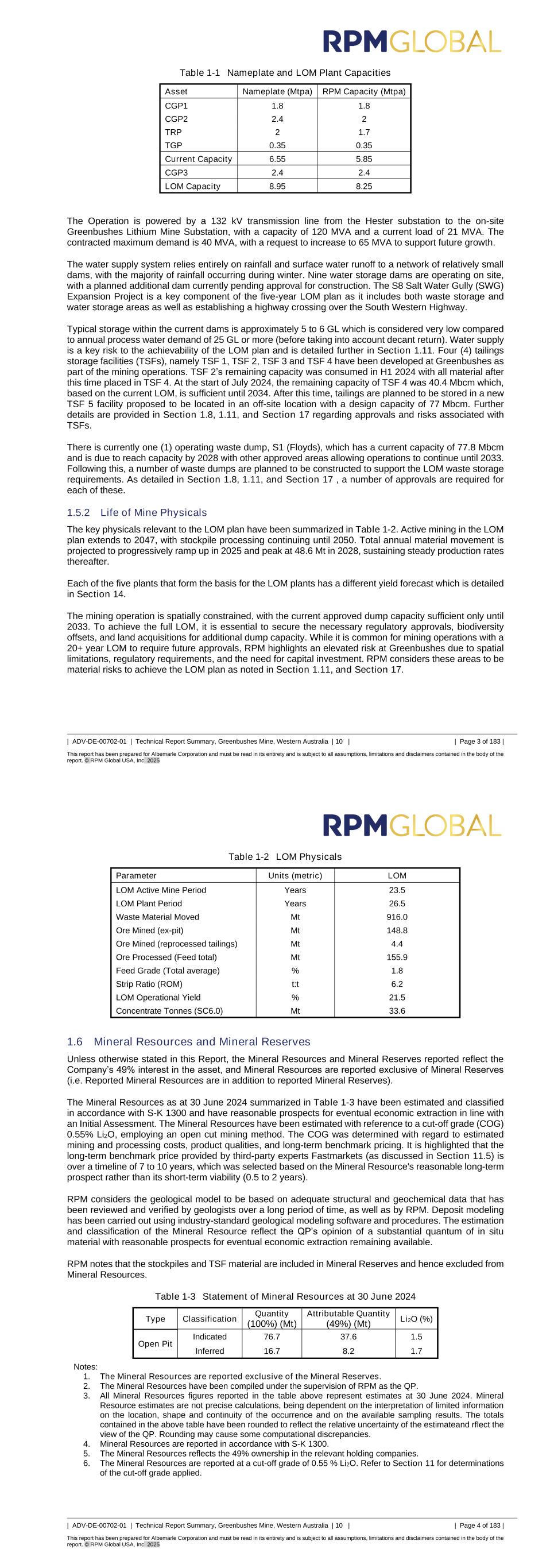
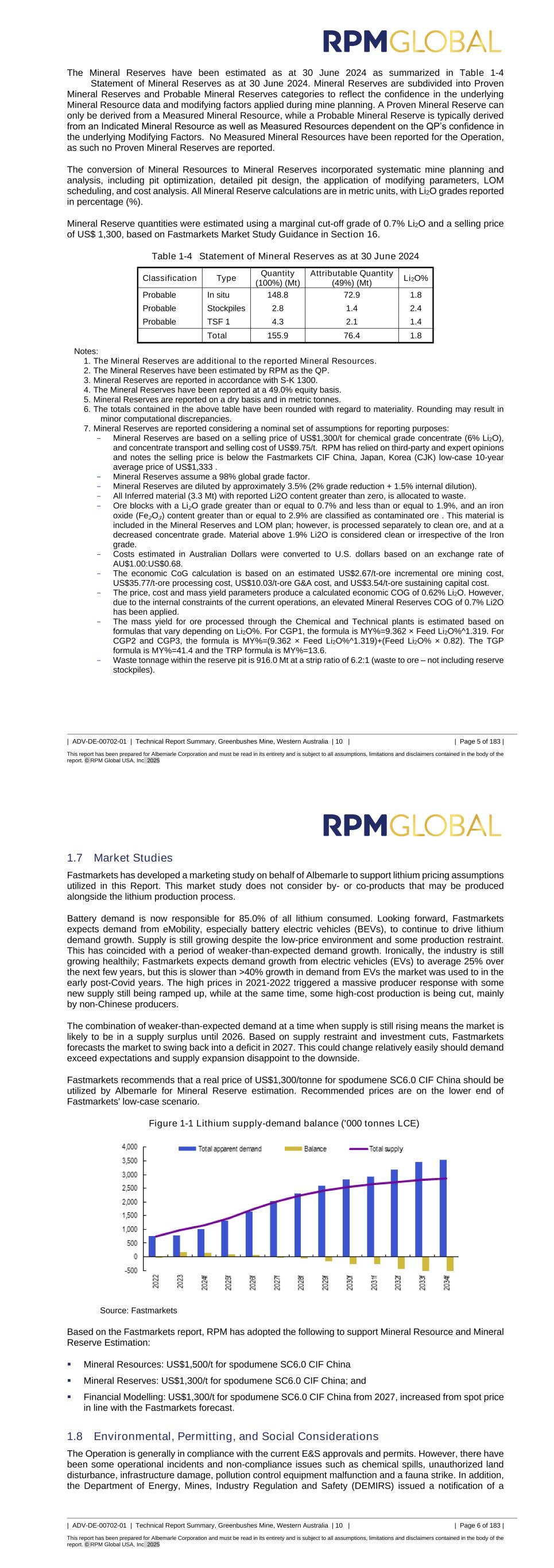
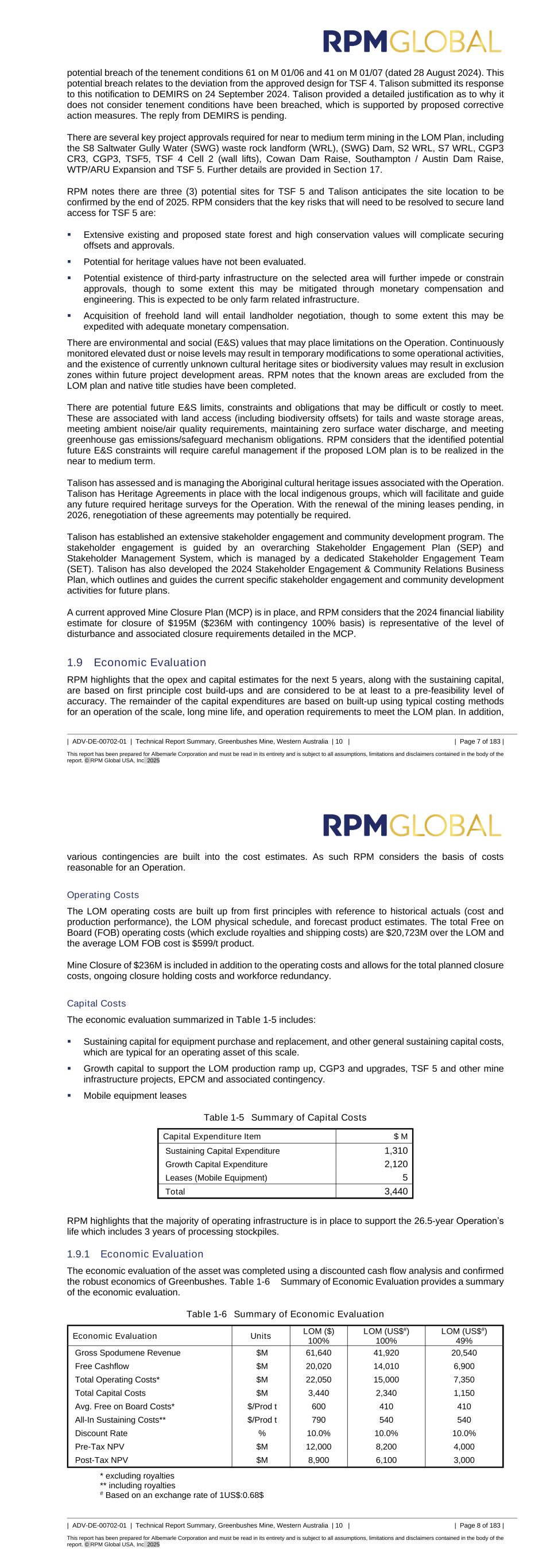
| ADV-DE-00702-01 | Technical Report Summary, Greenbushes Mine, Western Australia | 10 | | Page 3 of 183 | This report has been prepared for Albemarle Corporation and must be read in its entirety and is subject to all assumptions, limitations and disclaimers contained in the body of the report. © RPM Global USA, Inc 2025 Table 1-1 Nameplate and LOM Plant Capacities Asset Nameplate (Mtpa) RPM Capacity (Mtpa) CGP1 1.8 1.8 CGP2 2.4 2 TRP 2 1.7 TGP 0.35 0.35 Current Capacity 6.55 5.85 CGP3 2.4 2.4 LOM Capacity 8.95 8.25 The Operation is powered by a 132 kV transmission line from the Hester substation to the on-site Greenbushes Lithium Mine Substation, with a capacity of 120 MVA and a current load of 21 MVA. The contracted maximum demand is 40 MVA, with a request to increase to 65 MVA to support future growth. The water supply system relies entirely on rainfall and surface water runoff to a network of relatively small dams, with the majority of rainfall occurring during winter. Nine water storage dams are operating on site, with a planned additional dam currently pending approval for construction. The S8 Salt Water Gully (SWG) Expansion Project is a key component of the five-year LOM plan as it includes both waste storage and water storage areas as well as establishing a highway crossing over the South Western Highway. Typical storage within the current dams is approximately 5 to 6 GL which is considered very low compared to annual process water demand of 25 GL or more (before taking into account decant return). Water supply is a key risk to the achievability of the LOM plan and is detailed further in Section 1.11. Four (4) tailings storage facilities (TSFs), namely TSF 1, TSF 2, TSF 3 and TSF 4 have been developed at Greenbushes as part of the mining operations. TSF 2’s remaining capacity was consumed in H1 2024 with all material after this time placed in TSF 4. At the start of July 2024, the remaining capacity of TSF 4 was 40.4 Mbcm which, based on the current LOM, is sufficient until 2034. After this time, tailings are planned to be stored in a new TSF 5 facility proposed to be located in an off-site location with a design capacity of 77 Mbcm. Further details are provided in Section 1.8, 1.11, and Section 17 regarding approvals and risks associated with TSFs. There is currently one (1) operating waste dump, S1 (Floyds), which has a current capacity of 77.8 Mbcm and is due to reach capacity by 2028 with other approved areas allowing operations to continue until 2033. Following this, a number of waste dumps are planned to be constructed to support the LOM waste storage requirements. As detailed in Section 1.8, 1.11, and Section 17 , a number of approvals are required for each of these. 1.5.2 Life of Mine Physicals The key physicals relevant to the LOM plan have been summarized in Table 1-2. Active mining in the LOM plan extends to 2047, with stockpile processing continuing until 2050. Total annual material movement is projected to progressively ramp up in 2025 and peak at 48.6 Mt in 2028, sustaining steady production rates thereafter. Each of the five plants that form the basis for the LOM plants has a different yield forecast which is detailed in Section 14. The mining operation is spatially constrained, with the current approved dump capacity sufficient only until 2033. To achieve the full LOM, it is essential to secure the necessary regulatory approvals, biodiversity offsets, and land acquisitions for additional dump capacity. While it is common for mining operations with a 20+ year LOM to require future approvals, RPM highlights an elevated risk at Greenbushes due to spatial limitations, regulatory requirements, and the need for capital investment. RPM considers these areas to be material risks to achieve the LOM plan as noted in Section 1.11, and Section 17. | ADV-DE-00702-01 | Technical Report Summary, Greenbushes Mine, Western Australia | 10 | | Page 4 of 183 | This report has been prepared for Albemarle Corporation and must be read in its entirety and is subject to all assumptions, limitations and disclaimers contained in the body of the report. © RPM Global USA, Inc 2025 Table 1-2 LOM Physicals Parameter Units (metric) LOM LOM Active Mine Period Years 23.5 LOM Plant Period Years 26.5 Waste Material Moved Mt 916.0 Ore Mined (ex-pit) Mt 148.8 Ore Mined (reprocessed tailings) Mt 4.4 Ore Processed (Feed total) Mt 155.9 Feed Grade (Total average) % 1.8 Strip Ratio (ROM) t:t 6.2 LOM Operational Yield % 21.5 Concentrate Tonnes (SC6.0) Mt 33.6 1.6 Mineral Resources and Mineral Reserves Unless otherwise stated in this Report, the Mineral Resources and Mineral Reserves reported reflect the Company’s 49% interest in the asset, and Mineral Resources are reported exclusive of Mineral Reserves (i.e. Reported Mineral Resources are in addition to reported Mineral Reserves). The Mineral Resources as at 30 June 2024 summarized in Table 1-3 have been estimated and classified in accordance with S-K 1300 and have reasonable prospects for eventual economic extraction in line with an Initial Assessment. The Mineral Resources have been estimated with reference to a cut-off grade (COG) 0.55% Li2O, employing an open cut mining method. The COG was determined with regard to estimated mining and processing costs, product qualities, and long-term benchmark pricing. It is highlighted that the long-term benchmark price provided by third-party experts Fastmarkets (as discussed in Section 11.5) is over a timeline of 7 to 10 years, which was selected based on the Mineral Resource's reasonable long-term prospect rather than its short-term viability (0.5 to 2 years). RPM considers the geological model to be based on adequate structural and geochemical data that has been reviewed and verified by geologists over a long period of time, as well as by RPM. Deposit modeling has been carried out using industry-standard geological modeling software and procedures. The estimation and classification of the Mineral Resource reflect the QP’s opinion of a substantial quantum of in situ material with reasonable prospects for eventual economic extraction remaining available. RPM notes that the stockpiles and TSF material are included in Mineral Reserves and hence excluded from Mineral Resources. Table 1-3 Statement of Mineral Resources at 30 June 2024 Type Classification Quantity (100%) (Mt) Attributable Quantity (49%) (Mt) Li2O (%) Open Pit Indicated 76.7 37.6 1.5 Inferred 16.7 8.2 1.7 Notes: 1. The Mineral Resources are reported exclusive of the Mineral Reserves. 2. The Mineral Resources have been compiled under the supervision of RPM as the QP. 3. All Mineral Resources figures reported in the table above represent estimates at 30 June 2024. Mineral Resource estimates are not precise calculations, being dependent on the interpretation of limited information on the location, shape and continuity of the occurrence and on the available sampling results. The totals contained in the above table have been rounded to reflect the relative uncertainty of the estimateand rflect the view of the QP. Rounding may cause some computational discrepancies. 4. Mineral Resources are reported in accordance with S-K 1300. 5. The Mineral Resources reflects the 49% ownership in the relevant holding companies. 6. The Mineral Resources are reported at a cut-off grade of 0.55 % Li2O. Refer to Section 11 for determinations of the cut-off grade applied.


| ADV-DE-00702-01 | Technical Report Summary, Greenbushes Mine, Western Australia | 10 | | Page 5 of 183 | This report has been prepared for Albemarle Corporation and must be read in its entirety and is subject to all assumptions, limitations and disclaimers contained in the body of the report. © RPM Global USA, Inc 2025 The Mineral Reserves have been estimated as at 30 June 2024 as summarized in Table 1-4 Statement of Mineral Reserves as at 30 June 2024. Mineral Reserves are subdivided into Proven Mineral Reserves and Probable Mineral Reserves categories to reflect the confidence in the underlying Mineral Resource data and modifying factors applied during mine planning. A Proven Mineral Reserve can only be derived from a Measured Mineral Resource, while a Probable Mineral Reserve is typically derived from an Indicated Mineral Resource as well as Measured Resources dependent on the QP’s confidence in the underlying Modifying Factors. No Measured Mineral Resources have been reported for the Operation, as such no Proven Mineral Reserves are reported. The conversion of Mineral Resources to Mineral Reserves incorporated systematic mine planning and analysis, including pit optimization, detailed pit design, the application of modifying parameters, LOM scheduling, and cost analysis. All Mineral Reserve calculations are in metric units, with Li2O grades reported in percentage (%). Mineral Reserve quantities were estimated using a marginal cut-off grade of 0.7% Li2O and a selling price of US$ 1,300, based on Fastmarkets Market Study Guidance in Section 16. Table 1-4 Statement of Mineral Reserves as at 30 June 2024 Classification Type Quantity (100%) (Mt) Attributable Quantity (49%) (Mt) Li2O% Probable In situ 148.8 72.9 1.8 Probable Stockpiles 2.8 1.4 2.4 Probable TSF 1 4.3 2.1 1.4 Total 155.9 76.4 1.8 Notes: 1. The Mineral Reserves are additional to the reported Mineral Resources. 2. The Mineral Reserves have been estimated by RPM as the QP. 3. Mineral Reserves are reported in accordance with S-K 1300. 4. The Mineral Reserves have been reported at a 49.0% equity basis. 5. Mineral Reserves are reported on a dry basis and in metric tonnes. 6. The totals contained in the above table have been rounded with regard to materiality. Rounding may result in minor computational discrepancies. 7. Mineral Reserves are reported considering a nominal set of assumptions for reporting purposes: - Mineral Reserves are based on a selling price of US$1,300/t for chemical grade concentrate (6% Li2O), and concentrate transport and selling cost of US$9.75/t. RPM has relied on third-party and expert opinions and notes the selling price is below the Fastmarkets CIF China, Japan, Korea (CJK) low-case 10-year average price of US$1,333 . - Mineral Reserves assume a 98% global grade factor. - Mineral Reserves are diluted by approximately 3.5% (2% grade reduction + 1.5% internal dilution). - All Inferred material (3.3 Mt) with reported Li2O content greater than zero, is allocated to waste. - Ore blocks with a Li₂O grade greater than or equal to 0.7% and less than or equal to 1.9%, and an iron oxide (Fe₂O₃) content greater than or equal to 2.9% are classified as contaminated ore . This material is included in the Mineral Reserves and LOM plan; however, is processed separately to clean ore, and at a decreased concentrate grade. Material above 1.9% Li2O is considered clean or irrespective of the Iron grade. - Costs estimated in Australian Dollars were converted to U.S. dollars based on an exchange rate of AU$1.00:US$0.68. - The economic CoG calculation is based on an estimated US$2.67/t-ore incremental ore mining cost, US$35.77/t-ore processing cost, US$10.03/t-ore G&A cost, and US$3.54/t-ore sustaining capital cost. - The price, cost and mass yield parameters produce a calculated economic COG of 0.62% Li2O. However, due to the internal constraints of the current operations, an elevated Mineral Reserves COG of 0.7% Li2O has been applied. - The mass yield for ore processed through the Chemical and Technical plants is estimated based on formulas that vary depending on Li2O%. For CGP1, the formula is MY%=9.362 × Feed Li2O%^1.319. For CGP2 and CGP3, the formula is MY%=(9.362 × Feed Li2O%^1.319)+(Feed Li2O% × 0.82). The TGP formula is MY%=41.4 and the TRP formula is MY%=13.6. - Waste tonnage within the reserve pit is 916.0 Mt at a strip ratio of 6.2:1 (waste to ore – not including reserve stockpiles). | ADV-DE-00702-01 | Technical Report Summary, Greenbushes Mine, Western Australia | 10 | | Page 6 of 183 | This report has been prepared for Albemarle Corporation and must be read in its entirety and is subject to all assumptions, limitations and disclaimers contained in the body of the report. © RPM Global USA, Inc 2025 1.7 Market Studies Fastmarkets has developed a marketing study on behalf of Albemarle to support lithium pricing assumptions utilized in this Report. This market study does not consider by- or co-products that may be produced alongside the lithium production process. Battery demand is now responsible for 85.0% of all lithium consumed. Looking forward, Fastmarkets expects demand from eMobility, especially battery electric vehicles (BEVs), to continue to drive lithium demand growth. Supply is still growing despite the low-price environment and some production restraint. This has coincided with a period of weaker-than-expected demand growth. Ironically, the industry is still growing healthily; Fastmarkets expects demand growth from electric vehicles (EVs) to average 25% over the next few years, but this is slower than >40% growth in demand from EVs the market was used to in the early post-Covid years. The high prices in 2021-2022 triggered a massive producer response with some new supply still being ramped up, while at the same time, some high-cost production is being cut, mainly by non-Chinese producers. The combination of weaker-than-expected demand at a time when supply is still rising means the market is likely to be in a supply surplus until 2026. Based on supply restraint and investment cuts, Fastmarkets forecasts the market to swing back into a deficit in 2027. This could change relatively easily should demand exceed expectations and supply expansion disappoint to the downside. Fastmarkets recommends that a real price of US$1,300/tonne for spodumene SC6.0 CIF China should be utilized by Albemarle for Mineral Reserve estimation. Recommended prices are on the lower end of Fastmarkets' low-case scenario. Figure 1-1 Lithium supply-demand balance ('000 tonnes LCE) Source: Fastmarkets Based on the Fastmarkets report, RPM has adopted the following to support Mineral Resource and Mineral Reserve Estimation: ▪ Mineral Resources: US$1,500/t for spodumene SC6.0 CIF China ▪ Mineral Reserves: US$1,300/t for spodumene SC6.0 CIF China; and ▪ Financial Modelling: US$1,300/t for spodumene SC6.0 CIF China from 2027, increased from spot price in line with the Fastmarkets forecast. 1.8 Environmental, Permitting, and Social Considerations The Operation is generally in compliance with the current E&S approvals and permits. However, there have been some operational incidents and non-compliance issues such as chemical spills, unauthorized land disturbance, infrastructure damage, pollution control equipment malfunction and a fauna strike. In addition, the Department of Energy, Mines, Industry Regulation and Safety (DEMIRS) issued a notification of a


| ADV-DE-00702-01 | Technical Report Summary, Greenbushes Mine, Western Australia | 10 | | Page 7 of 183 | This report has been prepared for Albemarle Corporation and must be read in its entirety and is subject to all assumptions, limitations and disclaimers contained in the body of the report. © RPM Global USA, Inc 2025 potential breach of the tenement conditions 61 on M 01/06 and 41 on M 01/07 (dated 28 August 2024). This potential breach relates to the deviation from the approved design for TSF 4. Talison submitted its response to this notification to DEMIRS on 24 September 2024. Talison provided a detailed justification as to why it does not consider tenement conditions have been breached, which is supported by proposed corrective action measures. The reply from DEMIRS is pending. There are several key project approvals required for near to medium term mining in the LOM Plan, including the S8 Saltwater Gully Water (SWG) waste rock landform (WRL), (SWG) Dam, S2 WRL, S7 WRL, CGP3 CR3, CGP3, TSF5, TSF 4 Cell 2 (wall lifts), Cowan Dam Raise, Southampton / Austin Dam Raise, WTP/ARU Expansion and TSF 5. Further details are provided in Section 17. RPM notes there are three (3) potential sites for TSF 5 and Talison anticipates the site location to be confirmed by the end of 2025. RPM considers that the key risks that will need to be resolved to secure land access for TSF 5 are: ▪ Extensive existing and proposed state forest and high conservation values will complicate securing offsets and approvals. ▪ Potential for heritage values have not been evaluated. ▪ Potential existence of third-party infrastructure on the selected area will further impede or constrain approvals, though to some extent this may be mitigated through monetary compensation and engineering. This is expected to be only farm related infrastructure. ▪ Acquisition of freehold land will entail landholder negotiation, though to some extent this may be expedited with adequate monetary compensation. There are environmental and social (E&S) values that may place limitations on the Operation. Continuously monitored elevated dust or noise levels may result in temporary modifications to some operational activities, and the existence of currently unknown cultural heritage sites or biodiversity values may result in exclusion zones within future project development areas. RPM notes that the known areas are excluded from the LOM plan and native title studies have been completed. There are potential future E&S limits, constraints and obligations that may be difficult or costly to meet. These are associated with land access (including biodiversity offsets) for tails and waste storage areas, meeting ambient noise/air quality requirements, maintaining zero surface water discharge, and meeting greenhouse gas emissions/safeguard mechanism obligations. RPM considers that the identified potential future E&S constraints will require careful management if the proposed LOM plan is to be realized in the near to medium term. Talison has assessed and is managing the Aboriginal cultural heritage issues associated with the Operation. Talison has Heritage Agreements in place with the local indigenous groups, which will facilitate and guide any future required heritage surveys for the Operation. With the renewal of the mining leases pending, in 2026, renegotiation of these agreements may potentially be required. Talison has established an extensive stakeholder engagement and community development program. The stakeholder engagement is guided by an overarching Stakeholder Engagement Plan (SEP) and Stakeholder Management System, which is managed by a dedicated Stakeholder Engagement Team (SET). Talison has also developed the 2024 Stakeholder Engagement & Community Relations Business Plan, which outlines and guides the current specific stakeholder engagement and community development activities for future plans. A current approved Mine Closure Plan (MCP) is in place, and RPM considers that the 2024 financial liability estimate for closure of $195M ($236M with contingency 100% basis) is representative of the level of disturbance and associated closure requirements detailed in the MCP. 1.9 Economic Evaluation RPM highlights that the opex and capital estimates for the next 5 years, along with the sustaining capital, are based on first principle cost build-ups and are considered to be at least to a pre-feasibility level of accuracy. The remainder of the capital expenditures are based on built-up using typical costing methods for an operation of the scale, long mine life, and operation requirements to meet the LOM plan. In addition, | ADV-DE-00702-01 | Technical Report Summary, Greenbushes Mine, Western Australia | 10 | | Page 8 of 183 | This report has been prepared for Albemarle Corporation and must be read in its entirety and is subject to all assumptions, limitations and disclaimers contained in the body of the report. © RPM Global USA, Inc 2025 various contingencies are built into the cost estimates. As such RPM considers the basis of costs reasonable for an Operation. Operating Costs The LOM operating costs are built up from first principles with reference to historical actuals (cost and production performance), the LOM physical schedule, and forecast product estimates. The total Free on Board (FOB) operating costs (which exclude royalties and shipping costs) are $20,723M over the LOM and the average LOM FOB cost is $599/t product. Mine Closure of $236M is included in addition to the operating costs and allows for the total planned closure costs, ongoing closure holding costs and workforce redundancy. Capital Costs The economic evaluation summarized in Table 1-5 includes: ▪ Sustaining capital for equipment purchase and replacement, and other general sustaining capital costs, which are typical for an operating asset of this scale. ▪ Growth capital to support the LOM production ramp up, CGP3 and upgrades, TSF 5 and other mine infrastructure projects, EPCM and associated contingency. ▪ Mobile equipment leases Table 1-5 Summary of Capital Costs Capital Expenditure Item $ M Sustaining Capital Expenditure 1,310 Growth Capital Expenditure 2,120 Leases (Mobile Equipment) 5 Total 3,440 RPM highlights that the majority of operating infrastructure is in place to support the 26.5-year Operation’s life which includes 3 years of processing stockpiles. 1.9.1 Economic Evaluation The economic evaluation of the asset was completed using a discounted cash flow analysis and confirmed the robust economics of Greenbushes. Table 1-6 Summary of Economic Evaluation provides a summary of the economic evaluation. Table 1-6 Summary of Economic Evaluation Economic Evaluation Units LOM ($) 100% LOM (US$#) 100% LOM (US$#) 49% Gross Spodumene Revenue $M 61,640 41,920 20,540 Free Cashflow $M 20,020 14,010 6,900 Total Operating Costs* $M 22,050 15,000 7,350 Total Capital Costs $M 3,440 2,340 1,150 Avg. Free on Board Costs* $/Prod t 600 410 410 All-In Sustaining Costs** $/Prod t 790 540 540 Discount Rate % 10.0% 10.0% 10.0% Pre-Tax NPV $M 12,000 8,200 4,000 Post-Tax NPV $M 8,900 6,100 3,000 * excluding royalties ** including royalties # Based on an exchange rate of 1US$:0.68$


| ADV-DE-00702-01 | Technical Report Summary, Greenbushes Mine, Western Australia | 10 | | Page 9 of 183 | This report has been prepared for Albemarle Corporation and must be read in its entirety and is subject to all assumptions, limitations and disclaimers contained in the body of the report. © RPM Global USA, Inc 2025 The economic model was tested for sensitivity regarding lithium prices, and capital and operating cost estimates. The results of this analysis indicate that profitability is most sensitive to variations in price and operating costs and least sensitive to changes in capital costs. 1.9.2 Conclusions The Greenbushes deposit is well explored with exploration drilling programs having been conducted since the early 1940s and more systematically in 1970. RPM considers that the geological model is based on adequate geological and geochemical data and has been sufficiently reviewed and verified. RPM has determined that the estimation and classification of the Mineral Resources have reasonable prospects for eventual economic extraction in line with an Initial Assessment. Greenbushes is an established open cut mine that is a conventional truck and shovel operation employing industry-standard mining methods. RPM considers the major mining fleet assumptions to be reasonable when benchmarked to industry standards and historical performance. RPM is of the opinion that the Mineral Reserves and associated equipment fleet numbers are reasonable to achieve the forecasts and reflect an appropriate level of accuracy. The geological model, detailed mine plans, and technical studies that underpin the LOM plan are supported by historical performance, well-documented systems and processes, and reconciliation and review. Where available, RPM has reviewed this data and determined it to be adequate to support the Statements of Mineral Resources and Mineral Reserves reported in this TRS. Tenure critical to the declared Mineral Resources and Mineral Reserves, the associated infrastructure and the LOM plan are currently in good standing and are subject to routine renewal processes. However, additional approvals and land acquisition are required to achieve the LOM plan. The surface area of the existing Operation is almost wholly owned by the Company, and RPM is of the opinion that there are no material surface rights and easement issues, with the exception of the required additional areas for future development plans beyond 2033. All key permits and approvals are in place for mining to continue until June 2028, however several minor approvals are required. Receipt of approvals is a key risk associated with achieving the LOM plan. Documents associated with approvals required for ongoing works beyond 2028 have been submitted, and RPM is of the opinion that these approvals have fair prospects to be granted in line with the required timeframe to allow ongoing operations. If a delay occurs in granting these approvals, the LOM plan as presented in this Report will need to be revised. 1.10 Recommendations RPM has the following key recommendations ▪ Approvals: Carefully monitor and amend as required, the implementation of the proposed future approval strategy and schedule. Taking into consideration the comments that RPM has made on the proposed future approval strategy and schedule in this review. − Compare the proposed future approval program/schedule against a confirmed detailed integrated project schedule/mine plan, so that timing limitations on the individual storage facility capacities can be compared against the approvals schedule. ▪ Water: Complete and execute the design to expand water storage and distribution, including the Salt Water Gully Dam expansion. There is still a high probability of water shortages, and the Operation needs to continue to focus on improving water supply security. The most recent analysis suggests that the probability of water demand exceeding supply is high, starting as early as the first half of 2025, with shortfalls continuing even after additional water supplies are included. ▪ TSF: RPM recommends increasing planning and design confidence of TSF5, as well as land acquisition to ensure sufficient tailings storage capacity is available for the current processing needs and for the LOM plan. This planning needs to thoroughly consider the storage capacity of TSF 1 and TSF 4 as well as other alternative technology such as dry stack of tailings. ▪ Ore Sorters: Complete geotechnical studies for the placement of mechanical ore sorters and assess the potential economic benefits of processing mineralized waste with grades between 0.5% and 0.7% | ADV-DE-00702-01 | Technical Report Summary, Greenbushes Mine, Western Australia | 10 | | Page 10 of 183 | This report has been prepared for Albemarle Corporation and must be read in its entirety and is subject to all assumptions, limitations and disclaimers contained in the body of the report. © RPM Global USA, Inc 2025 Li2O as well as contaminated ore. RPM notes that a technical feasibility study has been completed with geotechnical studies required to ensure they can be incorporated into the LOM to support Mineral Reserves. RPM notes material between 0.5% to 0.7% Li2O is currently stockpiled. ▪ Fleet Productivity: RPM notes the Operation is ramping up production to meet the requirements of the plants. This ramp up allows optimization of the fleet management and productivity systems to ensure the LOM can be achieved. ▪ Strategic studies: a number of studies are recommended to both optimize the Operation and mitigate key risks associated with waste and tail storage: − Review TSF1 and TSF 2, along with the TRP (when completed) for potential location of waste and TSFs to offset off-site requirements. − Investigate raising TSF 4 beyond the planned height. − Progress the underground mining study, including open cut underground trade off studies which are currently at a conceptual level. The inclusion of an underground operation has the potential to offset waste mining and TSF requirements through paste fill. 1.11 Key Risks ▪ Approvals: granting of approvals is a key risk for the continued operations to achieve the LOM plan. Key milestones for achieving the LOM plan include securing regulatory approvals for various WRLs and TSFs at critical intervals. S2 WRL construction must be completed by 2028, S8 WRL with biodiversity offsets by 2033, and S7 WRL with biodiversity offsets by 2037. Additional approvals include backfilling TSF 1 by 2033, TSF 5 construction by 2037, and raising S2 and S7 WRLs by 2044. Further, the current consents do not permit mining in some areas and otherwise constrain mining in others that are critical to the LOM plan. The approvals risk to the Operation are: − If the mine is unable to meet the necessary conditions for constructing the S8 WRL and the additional dump lift at S2 and S7, the LOM ore production, and consequently the Mineral Reserves, would decrease by 84.9 Mt (100% basis). ▪ Land acquisition: Landholder acquisitions are necessary for S7, S8 WRLs, and TSF 5. While provisions have been included in the economic evaluation, these may change for various reasons and could result in material changes to the capital required. ▪ Water Supply: Dynamic probabilistic water balance modeling was used to simulate the system and to support risk-based decision-making. A GoldSim model was revised by GHD (2024) with a focus on security of process water supply. − The analysis suggests that the probability of water demand exceeding supply is high, starting as early as the first half of 2025, with shortfalls continuing even after additional water supplies are included. With dry climatic conditions (a 10% chance of being drier) the annual water shortfall could be as much as 8 to 12 GL. Such an occurrence would have an immediate impact on production and financial forecasts for the Operation. − Increased water supply capacity is critical to the ongoing operations, of which Saltwater Gully serving as the medium-term solution. As noted above, approvals are required, as June 2024 these are at an early stage of progression. ▪ Forecast Production Rates: Achieving planned truck productivity rates is critical to meeting waste and ore targets, and failure to do so will result in increased operating costs. Of note is the critical waste movement until 2026, if this is not achieved potential feed source to the plants will be compromised. RPM notes that the TRS is at an effective date of 30 June 2024, and while additional information was incorporated beyond this date until October 2024, RPM is aware changes to key management positions have taken place in H2 2024. These changes have instigated a complete review of the Operation, expenses and costs, production requirements, along with the strategic planning. While RPM has no visibility over the outcomes of this review, during recent discussions RPM has been made aware the above risks identified by RPM are a key focus of the Company with mitigation plan underdevelopment.


| ADV-DE-00702-01 | Technical Report Summary, Greenbushes Mine, Western Australia | 10 | | Page 11 of 183 | This report has been prepared for Albemarle Corporation and must be read in its entirety and is subject to all assumptions, limitations and disclaimers contained in the body of the report. © RPM Global USA, Inc 2025 2. Introduction RPM, acting as the QP, has been engaged by Albemarle Corporation to prepare a Technical Summary Report on the Greenbushes Lithium Mine located in Western Australia (Figure 3-1). The purpose of this Report is to provide a Technical Report Summary (“TRS”, or the “Report”) in accordance with the Securities and Exchange Commission (SEC) S-K Regulations. Greenbushes is held by the operating entity, Talison Lithium Australia Pty Ltd (Talison) which is owned by Albemarle (49%) with the remaining 51% ownership controlled by Tianqi/IGO Joint Venture. 2.1 Report Scope This Report has been prepared for Albemarle to provide an independent view of Greenbushes in the form of relevant public disclosure documentation. This Technical Report conforms to United States Securities and Exchange Commission’s (SEC) Modernized Property Disclosure Requirements for Mining Registrants as described in Subpart 229.1300 of Regulation S-K, Disclosure by Registrants Engaged in Mining Operations (S-K 1300) and Item 601 (b)(96) Technical Report Summary. This Report was prepared by RPM at the request of Albemarle and is intended for use by the Registrant subject to the terms and conditions of the contract with RPM and relevant securities legislation. The contract permits Albemarle to file this Report as a Technical Report Summary with the SEC. Except for the purposes legislated under United States securities law, any other uses of this Report by any third party are at that party’s sole risk. The Report was prepared by RPM representatives as a third-party firm consisting of mining, geology, processing and E&S experts in accordance with S-K 1300. RPM has used appropriate QPs to prepare the content summarized in this Report. References to the Qualified Person or QP are references to RPM and not to any individual employed or engaged by RPM. This Report is not considered to be an update to any previous report filed by Albemarle. 2.2 Site Visits RPM’s team of specialists completed a site visit of the Greenbushes from the 27 to 29 August 2024. Table 2-1 provides further details. Table 2-1 Site Visit Summary Technical Discipline Details of Inspection Resource / Geology Site Overview, meeting with resource / geology team, pit inspection, review of core, site laboratory Mining / Reserves Site Overview, meeting with mining / reserves team, pit inspection, inspection of area infrastructure Metallurgy / Process Site Overview, meeting with processing team, pit inspection, inspection of CGP1, CGP2, TRP, Tailings Storage Facility and projects overview Infrastructure / Water / Tailings Site Overview, meeting with infrastructure / TSF 4 project team / CGP3 team, pit inspection, Tailings Storage Facility and projects overview. Inspection of the buttress at TSF 2 under drainage on the west side of TSF 2 to capture seepage. Visited Cowan Brook Dam. Overview of the Water Treatment Plants. Water capture points at Floyds waste dump. Environmental, Social, Governance, Closure Site Overview, meeting with ESG team, pit inspection, inspection of processing facilities, Tailings storage facility, water infrastructure and future expansion areas, town monitoring areas. 2.3 Sources of Information RPM's review was based on various reports, plans and tabulations provided by the Client either directly from the mine site and other offices, or from reports by other organizations whose work is the property of the Client, as cited throughout this Report and listed in Section 24 and Section 25. | ADV-DE-00702-01 | Technical Report Summary, Greenbushes Mine, Western Australia | 10 | | Page 12 of 183 | This report has been prepared for Albemarle Corporation and must be read in its entirety and is subject to all assumptions, limitations and disclaimers contained in the body of the report. © RPM Global USA, Inc 2025 The types of information used to develop the Report include feasibility studies, plans, maps, technical reports, independently verified test results, emails, memorandums, presentations and meetings completed with company personnel. The Client has not advised RPM of any material change, or event likely to cause material change, to the operations or forecasts since the date of assets inspections. The Report has been produced by RPM in good faith using information that was available to RPM as at the date stated on the cover page. 2.4 Forward-Looking Statements This TRS contains forward-looking statements within the meaning of Section 27A of the U.S. Securities Act of 1933 and Section 21E of the U.S. Securities Exchange Act of 1934, that are intended to be covered by the safe harbor created by such sections. Such forward-looking statements include, without limitation, statements regarding Albemarle‘s expectation for the Operation and any related development or expansions, including estimated cash flows, production, revenue, EBITDA, costs, taxes, capital, rates of return, mine plans, material mined and processed, recoveries and grade, future mineralization, future adjustments and sensitivities and other statements that are not historical facts. Forward-looking statements address activities, events, or developments that Albemarle expects or anticipates will or may occur in the future and are based on current expectations and assumptions. Although Albemarle’s management believes that its expectations are based on reasonable assumptions, it can give no assurance that these expectations will prove correct. Such assumptions include, but are not limited to: (i) there being no significant change to current geotechnical, metallurgical, hydrological and other physical conditions; (ii) permitting, development, operations and expansion of operations and projects being consistent with current expectations and mine plans, including, without limitation, receipt of export approvals; (iii) political developments in any jurisdiction in which Albemarle operates being consistent with its current expectations; (iv) certain exchange rate assumptions being approximately consistent with current levels; (v) certain price assumptions for lithium ore; (vi) prices for key supplies being approximately consistent with current levels; and (vii) other planning assumptions. Important factors that could cause actual results to differ materially from those in the forward-looking statements include, among others, risks that estimates of Mineral Reserves and Mineral Resources are uncertain and the volume and grade of ore actually recovered may vary from our estimates, risks relating to fluctuations in commodity prices; risks due to the inherently hazardous nature of mining-related activities; risks related to the jurisdictions in which the Mine operates, uncertainties due to health and safety considerations, including COVID-19, uncertainties related to environmental considerations, including, without limitation, climate change, uncertainties relating to obtaining approvals and permits, including renewals, from governmental regulatory authorities; and uncertainties related to changes in law; as well as those factors discussed in Albemarle’s filings with the U.S. Securities and Exchange Commission, including the factors described under the heading “Risk Factors” contained in Part I, Item 1A. in Albemarle’s latest Annual Report on Form 10-K for the period ended December 31, 2023, which is available on albemarle.com. Albemarle does not undertake any obligation to publicly release revisions to any “forward-looking statement,” including, without limitation, outlook, to reflect events or circumstances after the date of this document, or to reflect the occurrence of unanticipated events, except as may be required under applicable securities laws. Investors should not assume that any lack of update to a previously issued “forward-looking statement” constitutes a reaffirmation of that statement. Continued reliance on “forward-looking statements” is at investors’ own risk. 2.5 List of Abbreviations A list of abbreviations used throughout the Report is presented in Table 2-2 List of Abbreviations. The units of measurement conform to the metric system. All currency in this Report is Australian dollars ($) unless otherwise noted. Table 2-2 List of Abbreviations Abbreviation Description µ micron(s) µg microgram(s) µm micrometre(s) % percent


| ADV-DE-00702-01 | Technical Report Summary, Greenbushes Mine, Western Australia | 10 | | Page 13 of 183 | This report has been prepared for Albemarle Corporation and must be read in its entirety and is subject to all assumptions, limitations and disclaimers contained in the body of the report. © RPM Global USA, Inc 2025 Abbreviation Description º Degrees a Annum A Ampere AAS Atomic Absorption Spectroscopy AC air core AHD Australian Height Datum (m) ANZECC Australian and New Zealand Environment and Conservation Council AQ diamond drill core with a nominal diameter of 27 mm ARMCANZ Agriculture and Resource Management Council of Australia and New Zealand AUD/$ Australian Dollar(s) B Boron bgl below ground level BTW diamond drill core with a nominal diameter of 48 mm BQ diamond drill core with a nominal diameter of 36.5 mm °C degrees Celsius CAPEX capital expenditure CIF Cost, Insurance and Freight CIM Categorical Indicator Modelling CJK China, Japan and Korea cm centimetre(s) cm2 square centimetre(s) CO2 Carbon dioxide CO2eq Carbon dioxide equivalent CPG Chemical Grade Plant CRM Certified Reference Materials Cs Cesium CV Coefficient of Variation d Day D Disturbance Factor (Hoek-Brown) dB decibel(s) DD diamond drill DDH diamond drill hole(s) dGPS Differential Global Positioning System DMIRS/DEMIRS Department of Mines, Industry Regulation and Safety / Department of Energy, Mines, Industry Regulation and Safety (Western Australia) dmt dry metric tonne(s) DMS dense media separation DN diameter (nominal) mm DPIRD Department of Primary Industries and Regional Development (Western Australia) DTM Digital Terrain Model DSO Direct Shipping Ore E East F Fluorine Fe Iron FIFO fly-in/fly-out FOB Free on Board g gram(s) g/m3 grams per cubic meter | ADV-DE-00702-01 | Technical Report Summary, Greenbushes Mine, Western Australia | 10 | | Page 14 of 183 | This report has been prepared for Albemarle Corporation and must be read in its entirety and is subject to all assumptions, limitations and disclaimers contained in the body of the report. © RPM Global USA, Inc 2025 Abbreviation Description G giga (billion) Ga giga-annum (billion years) GC grade control GL/yr gigalitre(s) per year GPS Global Positioning System GSI Geological Strength Index (Hoek-Brown) H1 Half one (first half of the calendar year) H2 Half two (second half of the calendar year) H2O Water hr Hour HQ diamond drill core with a nominal diameter of 63.5 mm HQ3 diamond drill core with a nominal diameter of 61.1 mm HV high voltage ISO International Organization for Standardization K Potassium k kilo (thousand) kg kilogram(s) km kilometre(s) km2 square kilometre(s) km/h kilometres per hour kN/m3 kilonewton(s) per cubic meter kt kilotonne(s) (thousand tonne(s)) ktpa kilotonne(s) (thousand tonne(s)) per annum (year) kVA kilovolt-ampere(s) kW kilowatt(s) kWh kilowatt-hour(s) L litre(s) LCT lithium-cesium-tantalum L/s litres per second Li lithium Li2O lithium oxide LIMS Laboratory Information Management System LOM life of mine Lithium Resources Lithium Resources Pty Ltd M mega (million) Mt million tonne(s) Mtpa million tonne(s) per annum (year) m meter(s) m2 square meter(s) m3 cubic meter(s) m3/h cubic meters per hour mASL meters above sea level Max. Maximum mE meters East mN meters North Mg Magnesium mi Material constant (Hoek-Brown)


| ADV-DE-00702-01 | Technical Report Summary, Greenbushes Mine, Western Australia | 10 | | Page 15 of 183 | This report has been prepared for Albemarle Corporation and must be read in its entirety and is subject to all assumptions, limitations and disclaimers contained in the body of the report. © RPM Global USA, Inc 2025 Abbreviation Description min minute(s) Min. Minimum mm millimetre(s) m/m meters per minute MPa megapascal(s) MRD Waste Rock Dumps MRF Mining Rehabilitation Fund mRL Metres Relative Level (i.e., elevation) MVA megavolt-amperes MW megawatt MWh megawatt-hour N North Na Sodium NAF non-acid forming NAGROM NAGROM Laboratory, Perth Ni Nickel NPV net present value NQ diamond drill core with a nominal diameter of 47.6 mm NQ3 diamond drill core with a nominal diameter of 45 mm OPEX operating expenditure P Phosphorus PAF potentially acid forming PEC Priority Ecological Community ppb parts per billion ppm parts per million PQ diamond drill core with a nominal diameter of 85 mm PQ3 diamond drill core with a nominal diameter of 83 mm Q1 Quarter one (first quarter of the calendar year) Q2 Quarter two (second quarter of the calendar year) Q3 Quarter three (third quarter of the calendar year) Q4 Quarter four (fourth quarter of the calendar year) QAQC Quality Assurance/Quality Control QP Qualified Person RC Reverse Circulation RF Revenue Factor RL relative elevation RLE rehabilitation liability estimate ROM run-of-mine RQD Rock-quality Designation S South s second(s) SC 6 eq spodumene concentrate 6% Sn Tin SRM Standard Reference Materials t metric tonne(s) Ta Tantalum TARP Trigger Action Response Plans TEC Threatened Ecological Community | ADV-DE-00702-01 | Technical Report Summary, Greenbushes Mine, Western Australia | 10 | | Page 16 of 183 | This report has been prepared for Albemarle Corporation and must be read in its entirety and is subject to all assumptions, limitations and disclaimers contained in the body of the report. © RPM Global USA, Inc 2025 Abbreviation Description TGP Technical Grade Plant tpa metric tonnes(s) per annum (year) tpd metric tonnes(s) per day TRP tailings retreatment plant TSF tailings storage facility UCS Unconfined compressive strength USD/US$ United States Dollar(s) UTM Universal Transverse Mercator V volt(s) W watt(s) W West WA Western Australia wmt wet metric tonne(s) WRL waste rock landform wt% weight percent XRF X-Ray Fluorescence yr year(s) 2.6 Independence RPM provides advisory services to the mining and finance sectors. Within its core expertise, it provides independent technical reviews, resource evaluation, mining engineering and mine valuation services to the resources and financial services industries. RPM as the Qualified Person have independently assessed the Operation by reviewing pertinent data, including Mineral Resources, Mineral Reserves, manpower requirements and the life of mine plans relating to productivity, production, operating costs and capital expenditures. All opinions, findings and conclusions expressed in this Report are those of RPM, the Qualified Persons and specialist advisors. Drafts of this Report were provided to the Client, but only for the purpose of confirming the accuracy of factual material and the reasonableness of assumptions relied upon in this Report. RPM has been paid, and has agreed to be paid, professional fees for the preparation of this Report. The remuneration for this Report is not dependent upon the findings of this Report. RPM has no economic or beneficial interest (present or contingent) in the Operation or in securities of the companies associated with the Operation or the Client. 2.7 Inherent Mining Risks Mining is carried out in an environment where not all events are predictable. Whilst an effective management team can identify the known risks and take measures to manage and mitigate those risks, there is still the possibility for unexpected and unpredictable events to occur. It is therefore not possible to totally remove all risks or state with certainty that an event that may have a material impact on the operation of a mine will not occur. It is therefore not possible to state with certainty, forward-looking production and economic targets, as they are dependent on numerous factors that are beyond the control of RPM and cannot be fully anticipated by RPM. These factors include but are not limited to, site-specific mining and geological conditions, the capabilities of management and employees, availability of funding to properly operate and capitalize the operation, variations in cost elements and market conditions, developing and operating the mine in an efficient manner. Unforeseen changes in legislation and new industry developments could also substantially alter the performance of any mining operation.


| ADV-DE-00702-01 | Technical Report Summary, Greenbushes Mine, Western Australia | 10 | | Page 17 of 183 | This report has been prepared for Albemarle Corporation and must be read in its entirety and is subject to all assumptions, limitations and disclaimers contained in the body of the report. © RPM Global USA, Inc 2025 3. Property Description and Location The Greenbushes mining operation has been continuously operating since 1888, initially via alluvial mining for tin. Tantalum production began in 1942, with lithium concentrate production beginning in 1983. The Operation currently produces a number of lithium concentrates, including a chemical-grade 6% concentrate as well as premium technical-grade concentrates (5 to 7%). Greenbushes is considered to be a Tier 1 spodumene pegmatite deposit and has previously been exploited by both open cut and underground mining methods. Currently, all mining is undertaken by conventional truck and shovel open cut methods with all Run of Mine (ROM) ore from the pit hauled to one of four on- site plants which have a combined nameplate capacity of 6.55 Mtpa. This capacity will expand to 8.95 Mtpa upon the construction of a CGP3 plant in 2025. RPM highlights that several of the plants have failed to achieve nameplate capacity, as such RPM has assumed lower throughputs for the LOM plan as detailed in Section 14. Following processing, concentrate is transported to various customers within Western Australia and internationally through the port of Bunbury. In H2 2024, the Operation is forecast to produce circa 0.8 Mt of spodumene concentrate 6% (SC6.0- equivalent) concentrate from 3 Mt ROM ore (6 months only and includes 1 Mt of TSF 1 feed). However, upon completion of the commissioning of the third chemical-grade plant, this is forecast to expand to a capacity of 1.8 Mt of concentrate over the next three years. This increased processing capacity results in a forecasted typical production rate of 1.8 Mtpa of Saleable concentrate over the LOM. As at 30 June 2024, the Operation has a 26.5 year mine life producing a total of 33.6 Mt of lithium concentrate (SC6.0-equivalent). 3.1 Location Greenbushes is located 250 km south of Perth and adjacent to the regional town of Greenbushes in Western Australia (WA) (Figure 3-2) with approximate location of 33°51'24"S 116°03'44"E. A major bulk handling port (operated by a Government Trading Enterprise, Southern Ports) is located 90 km to the northwest at Bunbury in Western Australia which is used by the Greenbushes mine for international export of product. Figure 3-1 provides details of the location of Greenbushes along with the Bunbury port and key infrastructure locations. Figure 3-1 depicts key elements of the regional setting, incorporating natural and built features such as rivers and creeks, water supply dams, conservation reserves, state forests, main roads and highways, rail lines, and towns and villages. Cattle and equine industries (studs), vineyards, and tourist accommodation are present throughout the region and are considered the major source of growth in the region. CLIENT PROJECT NAME GENERAL LOCATION PLAN DRAWING FIGURE No. PROJECT No. ADV-DE-007023.1 February 2025 Date LEGEND DO NOT SCALE THIS DRAWING - USE FIGURED DIMENSIONS ONLY. VERIFY ALL DIMENSIONS ON SITE N 0 500 1000 km State Boundary State Capital Railway Town Highway 10 ° 0 0' 0 " S 12 ° 3 0' 0 " S 15 ° 0 0' 0 " S 17 ° 3 0' 0 " S 20 ° 0 0' 0 " S 22 ° 3 0' 0 " S 25 ° 0 0' 0 " S 27 ° 3 0' 0 " S 30 ° 0 0' 0 " S 35 ° 0 0' 0 " S 32 ° 3 0' 0 " S 10° 00' 0" S 12° 30' 0" S 15° 00' 0" S 17° 30' 0" S 20° 00' 0" S 22 ° 3 0' 0 " S 25° 00' 0" S 27° 30' 0" S 30° 00' 0" S 35° 00' 0" S 32° 30' 0" S 117° 30' 0" E115° 00' 0" E112° 30' 0" E 125° 00' 0" E122° 30' 0" E120° 00' 0" E 130° 00' 0" E127° 30' 0" E 117° 30' 0" E115° 00' 0" E112° 30' 0" E 125° 00' 0" E122° 30' 0" E120° 00' 0" E 130° 00' 0" E127° 30' 0" E Perth Kalgoorlie Albany Esperance Manjimup Margaret River Geraldton WilunaMeekatharra Mount Magnet Leinster Carnarvon Tom Price Karratha South Hedland Broome Derby Newman I N D I A N O C E A N 1 G R E A T A U S T R A L I A N B I G H T T I M O R S E A 95 95 94 1 1 1 1 1 SOUTH AUSTRALIA NORTHERN TERRITORY GREAT CENTRAL ROAD GOLDFIELDS HIGHWAY GREAT N ORTH ERN H IG HW AY G RE AT N O RT HE RN H IG HW AY GR EA T NO RT HE RN H IG HW AY NW CO ASTAL HIG HW AY GREAT EASTERN HIGHWAY SOUTH COAST HIGHWAY MOUNT MAGNET-SANDSTONE ROAD GERALDTON - MOUNT MAGNET ROAD W E S T E R N A U S T R A L I A Greenbushes Lithium Mine Darwin Perth Adelaide Melbourne Canberra Sydney Brisbane Hobart A U S T R A L I A TASMANIA NORTHERN TERRITORY WESTERN AUSTRALIA SOUTH AUSTRALIA QUEENSLAND NEW SOUTH WALES VICTORIA ACT GREENBUSHES TECHNICAL SUMMARY REPORT


| ADV-DE-00702-01 | Technical Report Summary, Greenbushes Mine, Western Australia | 10 | | Page 19 of 183 | This report has been prepared for Albemarle Corporation and must be read in its entirety and is subject to all assumptions, limitations and disclaimers contained in the body of the report. © RPM Global USA, Inc 2025 3.2 Land Tenure Greenbushes is approximately 3,500 ha covered by mining lease M 01/16 and surrounding mining leases M 01/3, M 01/6 and M 01/7. Figure 3-2 provides details of the tenements controlled by Talison totaling 10,067 ha. Minerals tenure for the Operation as granted under Mining Act 1978 (WA) and recorded in the Department of Energy, Mines, Industry Regulation and Safety (DEMIRS) 1 database as at 25 October 2024 is summarized in Table 3-1 and shown in Figure 3-3. Table 3-1 identifies four current tenement types at Greenbushes, these include: ▪ Mining Lease – The lessee of a Mining Lease may work and mine the land, take and remove minerals, and do all of the things necessary to effectually carry out mining operations in, on, or under the land, subject to conditions of title. ▪ Miscellaneous Licence – For purposes such as roads, pipelines, power lines, a bore/bore field, and a number of other special purposes outlined in Section 42B of the Mining Regulation 1981. ▪ General Purpose Lease – For purposes such as operating machinery, depositing or treating tailings, etc., with a maximum area of 10 hectares and are limited to a depth of 15 m (unless otherwise specified and agreed with the Minister for Mines and Petroleum). ▪ Exploration Licence – Permitting minerals exploration though activities such as geological mapping, geophysical surveys, and drilling to determine the presence, quality, and quantity of mineral resources. Mining Leases, Miscellaneous Licenses and General Purpose Leases may be renewed for terms of 21 years, subject to satisfactory compliance with tenement conditions, and are subject to (FY 2024 rates, effective 1 July 2023): ▪ Mining Lease: $26/ha/year rent and $100/ha/year minimum $5,000 if 5ha or less otherwise $10,000 minimum expenditure. ▪ Miscellaneous Licence: $24/ha/year rent; covenant in lieu of expenditure. ▪ General Purpose Lease: $24/ha/year rent; covenant in lieu of expenditure. ▪ Exploration Licence: rent $72/km2/year for years 1-7, $240/km2/year for subsequent years; expenditure $300/km2/year, minimum $20,000/year for years 1-5, $50,000/year for years 6-7, $100,000/year thereafter. 1 Department of Mines, Industry Regulation, and Safety: the state mining regulator. CLIENT PROJECT NAME REGIONAL LOCATION PLAN and TENEMENTS DRAWING FIGURE No. PROJECT No. ADV-DE-007023.2 February 2025 Date LEGEND DO NOT SCALE THIS DRAWING - USE FIGURED DIMENSIONS ONLY. VERIFY ALL DIMENSIONS ON SITE N 0 2 4km GREENBUSHES TECHNICAL SUMMARY REPORTTalison Tenement Highways / Roads River/Creek Town Disused Railway Dam 6255000 m 6260000 m 6250000 m 6245000 m 6255000 m 6260000 m 6250000 m 6245000 m415000 m410000 m 415000 m410000 m Wilga Road Hay Road South Western Highway Stanifer Street Catterick Road Maranup Ford Road Cowan Dam Ha ine s R oa d ya wh gi H nr et se W ht uo S Huitson Road Da nie ls Ro ad South Western Highway L70/244 G70/268 L20/246 L01/1 M01/18 M01/16 G01/4 G01/1 M01/2 M01/3 M01/6 M01/7 M01/10 M01/5 M01/4 M01/9 M01/8 M01/11 L70/232 M70/765 E70/5540 G70/267


| ADV-DE-00702-01 | Technical Report Summary, Greenbushes Mine, Western Australia | 10 | | Page 21 of 183 | This report has been prepared for Albemarle Corporation and must be read in its entirety and is subject to all assumptions, limitations and disclaimers contained in the body of the report. © RPM Global USA, Inc 2025 Table 3-1 Greenbushes Mine Land Tenure Tenemen t ID Tenement Status Area Quantity (Ha) Commencemen t Date Expiry Date Holder E 70/5540 Live 2 8/03/2021 7/03/2026 23:59 TALISON LITHIUM AUSTRALIA PTY LTD G 01/1 Live 9.99550 17/11/1986 5/06/2028 23:59 TALISON LITHIUM AUSTRALIA PTY LTD G 01/4 Live 9.99000 21/04/2022 20/04/2043 23:59 TALISON LITHIUM AUSTRALIA PTY LTD G 70/267 Live 15.07706 28/11/2022 27/11/2043 23:59 TALISON LITHIUM AUSTRALIA PTY LTD G 70/268 Live 32.04796 28/11/2022 27/11/2043 23:59 TALISON LITHIUM AUSTRALIA PTY LTD L 01/1 Live 9.30780 19/03/1986 27/12/2026 23:59 TALISON LITHIUM AUSTRALIA PTY LTD L 70/232 Live 66.31127 21/04/2022 20/04/2043 23:59 TALISON LITHIUM AUSTRALIA PTY LTD L 70/244 Live 1.03594 16/08/2023 15/08/2044 23:59 TALISON LITHIUM AUSTRALIA PTY LTD L 70/246 Live 0.93581 15/11/2023 14/11/2044 23:59 TALISON LITHIUM AUSTRALIA PTY LTD M 01/2 Live 968.90000 28/12/1984 27/12/2026 23:59 TALISON LITHIUM AUSTRALIA PTY LTD M 01/3 Live 999.60000 28/12/1984 27/12/2026 23:59 TALISON LITHIUM AUSTRALIA PTY LTD M 01/4 Live 998.90000 28/12/1984 27/12/2026 23:59 TALISON LITHIUM AUSTRALIA PTY LTD M 01/5 Live 999.40000 28/12/1984 27/12/2026 23:59 TALISON LITHIUM AUSTRALIA PTY LTD M 01/6 Live 984.10000 28/12/1984 27/12/2026 23:59 TALISON LITHIUM AUSTRALIA PTY LTD M 01/7 Live 997.10000 28/12/1984 27/12/2026 23:59 TALISON LITHIUM AUSTRALIA PTY LTD M 01/8 Live 998.95000 28/12/1984 27/12/2026 23:59 TALISON LITHIUM AUSTRALIA PTY LTD M 01/9 Live 997.25000 28/12/1984 27/12/2026 23:59 TALISON LITHIUM AUSTRALIA PTY LTD M 01/10 Live 999.60000 28/12/1984 27/12/2026 23:59 TALISON LITHIUM AUSTRALIA PTY LTD M 01/11 Live 998.90000 28/12/1984 27/12/2026 23:59 TALISON LITHIUM AUSTRALIA PTY LTD M 01/16 Live 18.00500 6/06/1986 5/06/2028 23:59 TALISON LITHIUM AUSTRALIA PTY LTD M 01/18 Live 3.03650 28/09/1994 27/09/2036 23:59 TALISON LITHIUM AUSTRALIA PTY LTD M 70/765 Live 70.38500 20/06/1994 19/06/2036 23:59 TALISON LITHIUM AUSTRALIA PTY LTD P 01/2 Pending 10.47984 TALISON LITHIUM AUSTRALIA PTY LTD As shown in Figure 3-3, the site comprises a large open cut mine, four processing plants – Chemical Grade Plant #1 (CPG1), Chemical Grade Plant #2 (CGP2), a tailings retreatment plant (TRP) and a Technical Grade Plant (TGP) which produces technical grade lithium concentrates and associated infrastructure. A third Chemical Grade Plant #3 (CGP3) is currently in construction due for completion in mid-2025. The main open cut is located south of the Greenbushes township with the processing plants, Run of Mine Stockpiles and major water storage facilities are located to the west of the open cut. Tailings Storage Facilities (TSF) have been developed south of the open cut with mineral Waste Rock Dumps (WRD) established to the east. The future S8 waste dump and Saltwater Gully water storage is located east of the South Western Highway. The future planned TSF 5 Tailings storage facility is expected to be located south current land holding; however, this is not confirmed at the time of writing this Report. | ADV-DE-00702-01 | Technical Report Summary, Greenbushes Mine, Western Australia | 10 | | Page 22 of 183 | This report has been prepared for Albemarle Corporation and must be read in its entirety and is subject to all assumptions, limitations and disclaimers contained in the body of the report. © RPM Global USA, Inc 2025 RPM notes that several tenements, including mining lease over the central mining and processing area, are due for their second renewal by July 2026, with most of the others due over the proposed LOM to 2048. The mining regulator (DEMIRS) has recently made clear its position (which RPM understands to be based on recent legal precedent), that second renewals are subject to negotiation and agreement with native title claimants. If, as the Company reports, the native title parties are essentially satisfied with the current native title agreements and relations are sound, the prospects of timely tenure renewal without onerous new agreement conditions appear good, although risk cannot be entirely discounted.


CLIENT PROJECT NAME SITE LAYOUT and PROPOSED EXPANSION DRAWING FIGURE No. PROJECT No. ADV-DE-007023.3 February 2025 Date LEGEND DO NOT SCALE THIS DRAWING - USE FIGURED DIMENSIONS ONLY. VERIFY ALL DIMENSIONS ON SITE GREENBUSHES TECHNICAL SUMMARY REPORT 1 2 28 32 3 7 8 9 10 11 13 15 30 16 17 18 19 20 21 22 23 24 25 26 29 31 33 34 27 27 35 36 38 37 39 41 40 42 43 45 44 47 46 62 55 00 0 m 62 50 00 0 m 62 55 00 0 m 62 50 00 0 m 415000 m410000 m 415000 m410000 m Expansion Project Processing Plants 16 Crusher 4 17 CGP4 35 CR3/CGP3 36 CGP2 Debottlenecking Phase 1 CR1 Refurbishment 18 Standalone Ore Sorting Plant 38 CGP1 and 2 - On Stream Analysis 37 CGP1-HMS WHIMS Mining 1 Floyds WRL, current approved, SI 2 Floyds WRL, Southern Expansion, S2 4 Potential WRL, S7, South 5 Potential WRL, S5, Cl backfill 6 Potential WRL, S6, Cornwall backfill 7 Potential WRL, S8 19 Expanded ROM Pad 28 Southern Pit Extensions 47 RMS Haul Rd to Lot 5244 48 Underground Tailings 3 TSF1 Tailings Redeposition 14 TSF5 Water 8 Cowan Brook Dam Raise 9 Southampton/Austins Dam Raise 11 Salt Water Gully Dam 39 ARU expansion and WTP/ARU effluent filtering 44 Pipeline from SWG to CWD 46 Eastern Water Management from Floyds Accommodation, Offices and Parking 13 Accommodation Village Expansion 20 Former Timber Mill Site 21 CSB (Gate 1) Office Block & Carpark 22 Maintenance Workshop Expansion 23 New Production Office at CGP2 40 TSF3 Offices 25 New Environmental Complex 41 Admin Building Overhaul 24 Gate 1 Carpark Extension 43 Gate 2 Carpark Enabling Infrastructure 26 Noise Bund 10 Mine Access Road (MAR) 27 Rehab Material Stockpiles 45 Realignment of Spring Gully Rd for Dam Raise 29 Solar Farm 30 BESS 15 CGP3 & CGP4 Laydown Area Exploration 31 Northern PoW Exploration Drill Program 32 Southern PoW Exploration Drill Program 33 Exploration Lease Hand Sampling 34 New Zealand Gully Exploration Program 42 Eastern (SWG) Exploration Program Current Mine Development Envelope Proposed Development Envelope LOM Pit outline Talison tenements N 0 1 2km | ADV-DE-00702-01 | Technical Report Summary, Greenbushes Mine, Western Australia | 10 | | Page 24 of 183 | This report has been prepared for Albemarle Corporation and must be read in its entirety and is subject to all assumptions, limitations and disclaimers contained in the body of the report. © RPM Global USA, Inc 2025 3.3 Surface Rights and Easement The mining leases entitle the tenement holder to operate a mining operation. Talison holds the mining rights for all lithium minerals on these tenements, while Global Advanced Metals (GAM) holds the mining rights to all minerals other than lithium through a reserved mineral rights agreement dated November 13, 2009. All mining leases have been surveyed and constituted under the Mining Act 1978 (WA). Talison actively reviews the conditions of the leases to ensure compliance with requirements and has paid the appropriate fees to maintain the tenements. RPM is not aware of any material encumbrances that would impact the current resource or reserve disclosure as presented herein. The Western Australia State Government requires a feedstock royalty rate of 5% for lithium hydroxide and lithium carbonate, where those are the first products sold, and the feedstock is spodumene concentrate. The royalty is prescribed under the amendments to Regulation 86 of the Mining Regulations 1981 which were gazetted on 27 March 2020. The royalty value is the difference between the gross invoice value of the sale and the allowable deductions on the sale. The gross invoice value of the sale is the Australian dollar value obtained by multiplying the amount of the mineral sold by the price of the mineral as shown in the invoice. Allowable deductions are any costs in Australian dollars incurred for transport of the mineral quantity by the seller after the shipment date. For minerals exported from Australia, the shipment date is deemed to be the date on which the ship or aircraft transporting the minerals first leaves port in WA. 3.4 Material Government Consents Development of the tenements is subject to submission and approval of mining proposals and closure plans under Western Australia’s Mining Act 1978, in addition to regulatory permitting under several other state or federal acts, addressed in Section 17. 3.5 Significant Limiting Factors RPM is not aware of any other significant factors or risks that may affect access, title, or the right or ability to perform work at Greenbushes. GAM holds non-lithium mineral rights at Greenbushes and currently exercises its right to receive tantalum extracted by Talison during its lithium-bearing spodumene mining at the site. Talison has entered into a mining agreement with GAM. RPM has relied upon the legal information regarding titles provided by the Client.


| ADV-DE-00702-01 | Technical Report Summary, Greenbushes Mine, Western Australia | 10 | | Page 25 of 183 | This report has been prepared for Albemarle Corporation and must be read in its entirety and is subject to all assumptions, limitations and disclaimers contained in the body of the report. © RPM Global USA, Inc 2025 4. Accessibility, Climate, Local Resources, Infrastructure and Physiography 4.1 Accessibility Greenbushes township is located adjacent to the Southwestern Highway between Bunbury and Bridgetown. The Southwestern Highway is a major road constructed to a high standard and is maintained and owned by the Western Australian government. It is an established heavy haulage route with the Operation accessed by the Maranup Ford Road within the Greenbushes township. The Perth International Airport is approximately 250 km north of the Mine and connects to all major centers in Australia as well as international destinations. Port access is available at Bunbury (90 km), Fremantle (250 km) and a smaller facility located at Albany (150 km). The Operation does not utilize a rail network; however, there is an existing railway line between Bunbury and Greenbushes. This line is not in operation and would require significant rehabilitation to support freight movements. Heavy vehicles routinely service the South Western Highway with well-defined transport corridors to ports and regional centers. 4.2 Climate Greenbushes and the surrounding region have a temperate climate with the area experiencing a distinct dry summer and wet winter season: ▪ January is the hottest month with a mean maximum temperature of 30ºC. ▪ July is the coldest month with a mean minimum temperature of 4.8ºC. ▪ The majority of rainfall occurs during May to October. July has the highest mean rainfall at 165 mm. February typically receives the lowest mean rainfall at 15.7 mm. Median rainfall for the area is 918 mm per annum with historical records (1893-2024) confirming a range between 471 mm to 1,687 mm. Mining and processing operations at Greenbushes operate 24 hours per day throughout the year. 4.3 Local Resources Talison has an established workforce with skilled labor. Greenbushes is located within the Bridgetown - Greenbushes shire. Skilled labor to support the operation is located within local communities at Greenbushes, Bridgetown and Balingup, which are within a 30 minutes’ drive of the operation. Talison has established camps to accommodate additional workforce from outside the region. The current labor levels are approximately 1,350 people with over 700 additional construction contractors. Plant material and supplies are readily available within the local area and regions surrounding the operations. Vendors are well established and supported by regular freight routes through the region, state and nation. 4.4 Infrastructure 4.4.1 Water Water is supplied to the Greenbushes Mine through developed water storage dams located within the operational footprint. The storage dams capture rainfall and runoff from local catchments. In addition, water is reclaimed from Tailings Storage Facilities and pumped to the water storage dams. The operation of the water storage dams is discussed separately in Section 15.3. | ADV-DE-00702-01 | Technical Report Summary, Greenbushes Mine, Western Australia | 10 | | Page 26 of 183 | This report has been prepared for Albemarle Corporation and must be read in its entirety and is subject to all assumptions, limitations and disclaimers contained in the body of the report. © RPM Global USA, Inc 2025 A series of sumps have been developed at the base of tailings storage facilities and waste rock dumps which support pumping to water storage dams. In addition, water is reclaimed from the Cornwall open cut as required and pumped to the water treatment plants and storage dams as required. An extensive pipe and pump network has been developed to convey water around the Operation to support ongoing activities. No mine water is sourced directly from groundwater aquifers, bore systems or dewatering wells, nor from local rivers or spring-fed water storage. Potable water is supplied by the Greenbushes town supply. 4.4.2 Power Western Power maintains and operates a 132 kV network within the Southwest region. Power to Greenbushes is provided by utility line power from the existing Western Power Southwest Interconnected System (SWIS). The primary supply is a 132 kV transmission line from Bridgetown's Hester (HST) substation, spanning 14 km to the Greenbushes Lithium Mine Substation (GLM) on site. Greenbushes manages this transmission line and the internal site network. This line has a 120 MVA capacity, currently handling about 21 MVA, and uses two 132/22 kV transformers with redundancy. The current contracted maximum demand (CMD) is 40 MVA, with a request to increase to 65 MVA for future needs. RPM notes with the Collie power station forecast to close in 2026, baseload power will be required from alternate sources. As all power is provided by the statewide grid, additional power is expected to be provided by the third-party operator to meet the required demands. The secondary supply is a 22 kV distribution line from Bridgetown to the Northern Incomer Substation SB16, serving only the Mine Services Area. This line has a current load of about 500 kVA and a CMD of 1 MVA. This supply will be decommissioned after the internal 22 kV network upgrade, consolidating all power through the 132 kV network by late 2025 or early 2026. 4.5 Physiography Greenbushes is located within the Southwest Australia Woodlands ecoregion. The land use surrounding Greenbushes is characterized by farming, State Forests and timber reserves. The dominant overstory tree within the forests is typically Jarrah, with an open understory. Marri is a prevalent canopy species, and the Jarrah forest is commonly called Jarrah-Marri forest. Blackwood River is located West of the Greenbushes township and Mine. Blackwood River is the largest river in the Southwest region. The river begins at the junction of Arthur River and Balgarup River near Quelarup. It travels in a southwesterly direction until it discharges into the Southern Ocean.


| ADV-DE-00702-01 | Technical Report Summary, Greenbushes Mine, Western Australia | 10 | | Page 27 of 183 | This report has been prepared for Albemarle Corporation and must be read in its entirety and is subject to all assumptions, limitations and disclaimers contained in the body of the report. © RPM Global USA, Inc 2025 5. History Initial operations commenced via handheld methods in 1888 following the discovery of tin in 1886 and has been in almost continuous production at various levels to the current scales. The below summarizes the history of the Operation to date. 5.1 Past Production Excerpted from BDA, 2012. 5.1.1 Tin Since it was first discovered in 1886, tin has been mined almost continuously in the Greenbushes area. Recent market economics have relegated tin to be a by-product which is currently not produced at the Operation. A timeline of production can be summarized as follows: ▪ Tin was first mined at Greenbushes by the Bunbury Tin Mining Co in 1888. Tin production gradually declined between 1914 and 1930. ▪ Vultan Mines pioneered sluicing operations of the weathered tin oxides between 1935 and 1943 following which ‘modern’ earthmoving equipment was introduced between 1945 and 1956 to support tin dredging. ▪ Greenbushes Tin NL was formed in 1964 and open cut mining of the softer oxidized rock commenced in 1969. ▪ Greenbushes Tin Ltd was in operation from 1982 – 1985. 5.1.2 Tantalum Tantalum has been mined at Greenbushes since the 1940s. Hard rock tantalum mining operations commenced in 1992 with the Cornwall Pit nearing completion in the late 1990s. An underground operation commenced in 2001 to access high grade for blending with lower grade ore and meet market demand. A downturn in the Tantalum market occurred in 2002 resulting in the underground mine being placed in care and maintenance. The underground operation was restarted in 2004 due to increased demand but again placed on care and maintenance the following year. 5.1.3 Lithium Minerals Lithium production commenced in 1983 with a 30,000 tpa lithium mineral concentrator commissioned in 1984. Lithium Australia Ltd acquired the lithium assets in 1987 followed by Sons of Gwalia in 1989. The operations at Greenbushes (Greenbushes Tin NL and Lithium Australia) merged to become Gwalia Consolidated Ltd in 1990. Production capacity increased to 100,000 tpa of lithium concentrate in the early 1990s and to 150,000 tpa by 1997. In 1999 Gwalia Consolidated merged with Sons of Gwalia Ltd and by 2001 a tantalum expansion Operation had begun at Greenbushes. In 2004 Sons of Gwalia Ltd went into administration, however operations continued until Talison Minerals Group acquired the Greenbushes operation in 2007. In 2009 Talison Lithium Pty Ltd was formed as a Western Australian based mining company which is now owned by shareholders Tianqi Lithium Corporation / IGO Limited (51%) and Albemarle Corporation (49% via wholly owned subsidiaries). Talison’s processing plants were upgraded in 2009 to produce 260,000 tpa of lithium concentrates, and in late 2010, capacity was increased to approximately 315,000 tpa. In 2017 Talison Lithium commenced construction of a second chemical grade lithium processing plant (CGP2) which was officially opened in 2019. Construction of a third processing plant commenced in 2023 and is continuing as at the time of this TRS. CGP3 will have a processing capacity of 2.4 Mtpa, producing up to 500,000 tpa lithium mineral concentrate and is expected to be completed in mid-2025. | ADV-DE-00702-01 | Technical Report Summary, Greenbushes Mine, Western Australia | 10 | | Page 28 of 183 | This report has been prepared for Albemarle Corporation and must be read in its entirety and is subject to all assumptions, limitations and disclaimers contained in the body of the report. © RPM Global USA, Inc 2025 Over the past 30 years, Greenbushes has undergone a number of expansions to maintain its position as a major supplier of lithium mineral concentrates to the global market. The site comprises a large open cut mine, four processing plants – CGP1, CGP2, TRP and a TGP which produces technical grade lithium concentrates, and associated infrastructure. These plants combined have a total nominal processing capacity of 6.5 Mtpa, producing up to 1.5 Mtpa of lithium mineral concentrate. The Operation has been in almost continuous production since 1888, however, the current (lithium-focused) mining operation commenced in 1983. In H1 2024 the Operation processed 2.5Mt for 613kt of concentrate. 5.2 Exploration and Development of Previous Owners or Operators As noted in Section 7.1, Greenbushes has an extensive operational and exploration history. Previous owners of the Operation have completed exploration work to support the various commodities over time. Types of exploration work have included surface and underground drilling, surface sampling, geological mapping, trenching and geophysics. Development of enabling infrastructure such as roads, ramps, waste dumps, tailings facilities, surface water storages etc. have been completed as required to support the various programs over time.


| ADV-DE-00702-01 | Technical Report Summary, Greenbushes Mine, Western Australia | 10 | | Page 29 of 183 | This report has been prepared for Albemarle Corporation and must be read in its entirety and is subject to all assumptions, limitations and disclaimers contained in the body of the report. © RPM Global USA, Inc 2025 6. Geological Setting, Mineralization and Deposit 6.1 Regional Geology The Regional Geology of the area containing the Mine has been described in detail by G.A. Partington in Economic Geology (1990) and is considered to be well understood. The Intrusive rocks of the Greenbushes Pegmatite District lie within the Balingup metamorphic belt which lies within the Southwest Gneiss Terrains of the Yilgarn Craton. The pegmatites are spatially associated with and controlled by the Donnybrook-Bridgetown Shear Zone which is central to this belt and potentially controls both the regional and local emplacement of the mineralization. The pegmatites are Archaean in age (~2.53 Ga) and are intruded into a 15 to 20 km wide sequence of medium-pressure, medium-to-high temperature gneiss, orthogneiss, amphibolite and migmatite following the lineament of the regional shear. The pegmatites contain the same shear fabrics as the host rocks, providing evidence of syntectonic crystallization during movement of the Donnybrook-Bridgetown Shear Zone (Figure 6-1). 6.2 Local Geology The Greenbushes pegmatite deposit consists of several large pegmatite intrusive bodies which are separated into two main lodes, namely the Central and Kapanga lodes (Figure 6-2). Both areas consist of several pegmatite bodies, however, the Central lode displays significantly more continuity and thickness as compared to the Kapanga lode as shown in geology plan in Figure 6-2 and a generalized cross-section in Figure 6-3. The host rock on the Greenbushes property are variably deformed Archean amphibolite and metasediments, locally referred to as the hanging wall Amphibolite and Footwall Granofels. Numerous Archean granitoid intrusions are also present (particularly to the west, with all units cut by the roughly N-S striking Donnybrook- Bridgetown Shear zone gneiss (Figure 6-2). Pegmatite bodies are the youngest of the Archaean package of rocks in the area, dated at approximately 2.53 Ga (Figure 6-4) suggesting they were emplaced during the end of the orogeny during this period (see Section 6.2.1). The Central lode consists predominately of a single main body which is currently defined by drilling over a strike length of 3 km with thickness ranging from a few 10 m’s to up 300 m and dips moderately to steeply 40- 60o to the southwest. This body contains the majority of the reported Mineral Resource; however, recent drilling (but not included in the Mineral Resource estimate) supports the interpretation of a southern plunge (see Section 11). The westerly extent of the Central lode is limited by a north south structure which potentially offsets mineralization. The Kapanga lode is located 300 m to the east of the Central lode and consists of a series of subparallel bodies that strike to the northwest and dip between 40-60o to the southwest. The Kapanga pegmatite lodes consist of a series of relatively continuous semi-parallel bodies interpreted over a northerly strike of approximately 1.8 km with a combined thickness ranging between 120-150 m up to 450 m below surface. Both the host and pegmatite bodies are intruded by a series of cross-cutting dolerite dykes and sills. The intrusions range from 1 to 50 m wide. Both the host and dolerite intrusives have iron (Fe) content ranging from 9 to 20% with averages of approximately 15%. The inclusion of iron in dilution and feed to the plants has a significant impact on processing recoveries, and as such, has been the subject of significant review and incorporation into the Mineral Resources and Reserves presented in this Report (refer to discussion in Section 11 and Section 12). Weathering and oxidation are prevalent in the area reaching depths of up to 40 m. Oxidation has also produced an extensive lateritic cap across the region. RPM notes that the oxidation of lithium-bearing minerals results in the inability to achieve a marketable product, and as such, these oxidized areas are excluded from the Mineral Resources. The majority of rocks in the area are typically covered to shallow depths (a few meters) by lateritic conglomerates and alluvium (Figure 6-4). Of note, the alluvial cover in close proximity to the pegmatite bodies has been notably enriched in tin, which were historically mined via handle held methods during the late 19th century. Figure 6-3 shows a generalized cross-section through the Central Lode and Kapanga lodes. The section (looking north) shows orientation and relationship of the lithium-bearing pegmatites and the cross-cutting dolerite dykes. | ADV-DE-00702-01 | Technical Report Summary, Greenbushes Mine, Western Australia | 10 | | Page 30 of 183 | This report has been prepared for Albemarle Corporation and must be read in its entirety and is subject to all assumptions, limitations and disclaimers contained in the body of the report. © RPM Global USA, Inc 2025 Figure 6-1 Regional Geology Source: PorterGeo Database - Ore Deposit Description Source: Talison Lithium Limited, 2022


| ADV-DE-00702-01 | Technical Report Summary, Greenbushes Mine, Western Australia | 10 | | Page 31 of 183 | This report has been prepared for Albemarle Corporation and must be read in its entirety and is subject to all assumptions, limitations and disclaimers contained in the body of the report. © RPM Global USA, Inc 2025 Figure 6-2 Generalized Geology Map with inset Cross Section (Partington, 1990) | ADV-DE-00702-01 | Technical Report Summary, Greenbushes Mine, Western Australia | 10 | | Page 32 of 183 | This report has been prepared for Albemarle Corporation and must be read in its entirety and is subject to all assumptions, limitations and disclaimers contained in the body of the report. © RPM Global USA, Inc 2025 Figure 6-3 E-W Cross-Section across the Central and Kapanga Zones


CLIENT PROJECT NAME SIMPLIFIED STRATIGRAPHIC COLUMN DRAWING FIGURE No. PROJECT No. ADV-DE-007026.4 February 2025 Date DO NOT SCALE THIS DRAWING - USE FIGURED DIMENSIONS ONLY. VERIFY ALL DIMENSIONS ON SITE Dolerite Intrusions Pe gm at ite G ro up In tr us io n (2 .5 3 Ga ) Time (Ga) 0.0025 1.1? 2.53 2.61 - 2.58 3.1 Age Units Pegmatite Mineralisation Q ua te rn ar y Pr ot er oz oi c A rc he an Ductile - Shear Zone Gneiss Amphiboles and Metasediments Bridgetown Gneiss Granitoid Intrusions Alluvium Older Alluvium Laterite GREENBUSHES TECHNICAL SUMMARY REPORT | ADV-DE-00702-01 | Technical Report Summary, Greenbushes Mine, Western Australia | 10 | | Page 34 of 183 | This report has been prepared for Albemarle Corporation and must be read in its entirety and is subject to all assumptions, limitations and disclaimers contained in the body of the report. © RPM Global USA, Inc 2025 6.2.1 Structure The emplacement of pegmatites is controlled by the Donnybrook-Bridgetown Shear zone, within the broader Balingup Metamorphic Belt (Figure 6-1). Shear fabrics in the pegmatites are mostly developed at margins and in albite-rich zones which is consistent with the emplacement method. Shear-parallel fabrics are evidence for syntectonic emplacement of the intrusives with this deformational event. Late-stage Sn-Ta-Ni mineralization in dilational zones from folding are noted in the albite-rich zone, showing that folding was still occurring at the late stages of Pegmatite intrusion. Much younger, discordant structures such as the “Footwall Fault”, (sub vertical, striking north south) impact the continuity of the mineralization. The intensity of the damage zone surrounding this planar feature varies significantly from some heavily jointed dares to locally disintegrated rock greater than 30 m in width. Some localized oxidation and weathering controlled by structures such as this have led to local depletion of lithium by the breakdown and leaching of soluble lithium ions. 6.2.2 Pegmatite Zonation Five distinct mineralogical zones have been defined in the Greenbushes central lode pegmatite. Generally, the pegmatite shows a contact zone, a K-feldspar (Potassium)-rich zone, an albite (sodium)-rich zone, a mixed zone and a spodumene (Lithium)-rich zone. The bulk of the lithium in the deposit is contained within the spodumene-rich zone, generally towards the center of the Central lode pegmatite. Similar to other major lithium-bearing pegmatites in Western Australia, the zonation is not concentric from outside to inside, but does occur conformably to the overall pegmatite trends, both along strike and down dip. These zonation’s often interfinger along strike and down dip and can occur on small 1 m sized scales. During the site visit, these zones were observed within recent drilling, and while this fractionation zonation can be used as a guide, variations do occur, which potentially impact processing. Within the thinner stacked Kapanga pegmatites, zonation varies as expected for the style of mineralization. Generally, these pegmatites are less fractionated, with only three distinct zones defined. The elevated spodumene (lithium-rich), zones in individual pegmatite lenses are generally located near the footwall contacts (and to a lesser extent the hanging wall contacts), usually a K-feldspar rich zone occurs close to the hanging wall contact with the core regions generally being albite rich zones. Variation and zonation in mineralogy (and importantly in spodumene), between individual lenses within the Kapanga group of pegmatites is also evident, with the higher lithium concentrations generally in the upper part (hanging wall). Figure 6-5 details a generalized cross-section looking north.


| ADV-DE-00702-01 | Technical Report Summary, Greenbushes Mine, Western Australia | 10 | | Page 35 of 183 | This report has been prepared for Albemarle Corporation and must be read in its entirety and is subject to all assumptions, limitations and disclaimers contained in the body of the report. © RPM Global USA, Inc 2025 Figure 6-5 Generalized Cross Section (looking north) Showing Greenbushes Pegmatite Mineral Zoning Source: BDA, 2012 6.3 Mineralization The primary lithium ore mineral within the main mineralized areas is spodumene (LiAISi2O6) with very little lithium-bearing micas observed. While the mineral rights for non-lithium minerals are not owned by the Company, the sodium-rich zone contains the highest concentrations of tantalum (tantalite) and tin (cassiterite). This zone is characterized by dominant mineralogy of albite (sodium-plagioclase), tourmaline and muscovite mica. The mixed zone contains lower concentrations of tantalum and lithium, and intermediate values of sodium and quartz, showing variable mineralogy partly similar to both the lithium-rich zone and the sodium- rich zone. The potassium-rich zone, which is dominated by the Feldspar microcline, does not have any minerals currently of economic interest. The Kapanga pegmatites show less distinction in mineralogy, spodumene content does not necessarily align with specifically low potassium as in the Central lode, which is a common feature in regional pegmatite field fractionation. 6.4 Deposit Types The pegmatites that form the Mineral Resources are interpreted to be zoned albite-spodumene pegmatites of the LCT (Li-Cs-Ta) type. It is generally accepted that pegmatites form by a process of fractional crystallization of an initially granitic composition melt. The fractional crystallization concentrates incompatible elements, such as light ion lithophile elements and volatiles (such as B, Li, F, P, H2O and CO2) into the late-stage melt phase. The volatiles lower the viscosity of the melt and reduce the solidification temperature to levels as low as 350°C to 400°C. This permits fractional crystallization to proceed to extreme levels, resulting in highly evolved end- | ADV-DE-00702-01 | Technical Report Summary, Greenbushes Mine, Western Australia | 10 | | Page 36 of 183 | This report has been prepared for Albemarle Corporation and must be read in its entirety and is subject to all assumptions, limitations and disclaimers contained in the body of the report. © RPM Global USA, Inc 2025 member pegmatites. The fluxing effect of incompatible elements and volatiles allows rapid diffusion rates of ions, resulting in the formation of very large crystals characteristic of pegmatites. The less-dense pegmatitic magma may rise and accumulate at the top of the intrusive granitic body. However, typically, the more fractionated pegmatitic melt phases escape into the surrounding country rock along faults or other structures to form pegmatites external to the parent intrusive, which is the case at Greenbushes.


| ADV-DE-00702-01 | Technical Report Summary, Greenbushes Mine, Western Australia | 10 | | Page 37 of 183 | This report has been prepared for Albemarle Corporation and must be read in its entirety and is subject to all assumptions, limitations and disclaimers contained in the body of the report. © RPM Global USA, Inc 2025 7. Exploration 7.1 Exploration The primary method of exploration on the property has been sub-surface drilling for almost 50 years. Surface geological mapping, geochemical sampling, and limited geophysics have been considered or applied since exploration commenced. The Operation has been mapped and surface sampling completed over many campaigns; however, Mineral Resources is underpinned by predominately surface diamond drilling (DD) or reverse circulation drilling (RC). While in-pit mapping and sampling do occur, this is typically used only as a guide to geological interpretation. 7.2 Drilling The drilling database used in this Mineral Resource Estimate contains drilling dating back to 1977. Drilling techniques, procedures and protocols have been modernized since this time, with industry standards changing. RPM notes that the vast majority of the earliest holes are located in areas of depletion or have been replicated by recent drilling. No twinning of the historical holes has been undertaken; however, this is not considered to be material to the resource given these holes are located in the upper mined-out portion of the deposit and do not underpin the majority of the LOM Plan. Figure 7-1 provides details of the drilling which extends across the property. A review of these holes, which are shown in Figure 7-1, indicates that several holes were drilled within the LOM pit, however these did not intersect significant mineralization outside the current Mineral Resource and are consistent with the reported Mineral Resources. The majority of holes were targeting the down-dip extension of the Central lode and were aimed at defining a maiden Underground Mineral Resources when applicable. Further discussion is provided in Section 11. The holes are drilled in a variety of orientations with over half the drilling vertically and the remainder drilled perpendicularly to the mineralization and pegmatite interpreted zonation’s. A total of approximately 300 km of drilling has been utilized to estimate the Mineral Resources. Holes are spread relatively uniformly throughout the Central and Kapanga lode, with mineralization generally defined by resource drilling at between 25 and 50 m drill spacings. As shown in Table 7-1, the Central lode has significantly more DD meters than RC, whereas Kapanga, which was drilled mostly in the last 6 years, contains approximately 75% of DD versus RC. See Section 11 for discussion regarding drilling techniques and interpretation impacts. Underground holes used BTW diameter (~42mm) drill core compared to the majority of the surface DD which were NQ (~48mm). Underground DD holes were very clustered due to drill position locations available underground and were generally used for stope definition (similarly to the short-term planning and grade control RC drilling from surface). Closer spaced drilling has been conducted for operational grade control and short-term planning purposes in the Central lode deposit in near-term production planning areas, and blast hole sampling is often carried out for similar purposes during production. These holes have not been included for Mineral Resource Estimation purposes; however, they are included in grade control modeling which forms the basis of the mining areas. There are no close-spaced RC holes for grade control and no blast holes in the Kapanga database as no mining has been conducted on this deposit to date. Table 7-1 provides a summary of the drilling across the Central lode and Kapanga areas. | ADV-DE-00702-01 | Technical Report Summary, Greenbushes Mine, Western Australia | 10 | | Page 38 of 183 | This report has been prepared for Albemarle Corporation and must be read in its entirety and is subject to all assumptions, limitations and disclaimers contained in the body of the report. © RPM Global USA, Inc 2025 Figure 7-1 Plan View of Drilling Type Geological logging included details of lithology type and unit boundary depths, color, mineralogy, grain size, texture, alteration, weathering and hardness. DDH were orientated, and the core was logged for geotechnical qualities (e.g., RQD, rock strength, structural defect characteristics & angles). Holes were logged into Excel spreadsheets. Table 7-1 Lode Resource Drilling Summary Lode Method Holes Meters Central RC 619 91,862 DD 680 145,521 Total 1,299 237,391 Kapanga RC 226 45,102 DD 47 16,635 Total 273 58,737 All 1,572 296,128 Source: Talison, 2024 Of note, as at the reporting date of Mineral Resources, 119 holes had been completed since the model was constructed and were not included. A review of these holes indicates that the majority of the holes are located


| ADV-DE-00702-01 | Technical Report Summary, Greenbushes Mine, Western Australia | 10 | | Page 39 of 183 | This report has been prepared for Albemarle Corporation and must be read in its entirety and is subject to all assumptions, limitations and disclaimers contained in the body of the report. © RPM Global USA, Inc 2025 within the southern plunge extension of the reported Mineral Resources below and to the south of the open cut. Given the early stage of the review of this data, further work is required to validate, and studies are underway, to meet the minimum reporting requirements and support reporting of Mineral Resources in this area. A minor number of holes were collared in the currently reported resource area; however, these do not have a material impact on the Mineral Resource at either a local or global scale 7.2.1 Collar Position Surveys The methodology for surveying the collar position has not been recorded in the database for historic drilling, though it is likely that industry-standard theodolite surveys at the time were employed, based on the authors' knowledge during that period. Some validation of position of historic collars using the database positions and handheld GPS to find holes for environmental rehabilitation purposes have shown the coordinates to be accurate to the level of the handheld GPS, and as such are considered reasonable. All recent drilling was surveyed by mine surveyors using differential global positioning system (dGPS) accurate to less than 10 cm. 7.2.2 Downhole Surveys Holes prior to 2000 do not include information regarding the method of downhole survey. RPM is aware of the techniques utilized by the operator at the time of this drilling and considers it to be industry standard reflex multi-shot camera when the hole was inclined. No downhole surveys were typically undertaken for vertical holes. From 2000, downhole surveys were taken for diamond holes using an Eastman single-shot survey camera, at 25 m from surface, and then on 30 m intervals to the end of hole. RC holes continued to be unsurveyed prior to 2006. These holes were assumed to have a linear hole path from their design and set up at surface. While deeper RC drilling is known to deviate significantly, these holes were generally quite shallow, and so the risk in sample position for these holes is considered not to be material. Since 2006, gyroscopic downhole surveys have been taken for RC holes. 7.2.3 Diamond Drilling Sampling Diamond core has been collected in trays marked with hole identification and downhole depths at the end of each core run (typically 3 or 6 m). Pegmatite zones are selected while logging the geology and intervals are marked up for cutting and sampling. All pegmatite intersections are sampled for assay and waste sampling generally extends several meters on either side of pegmatite intersections to avoid under sampling/missing of mineralization and to enable the estimate to be informed by detrital elements. Internal waste zones separating pegmatite intersections are routinely sampled, although in a small proportion of holes drilled prior to 2000, some waste zones separating pegmatite lenses have not been assayed. RPM notes the majority of these holes occur in the depletion zone. Core recovery is generally above 95%. A line of symmetry is drawn on the core and subsequently cut by diamond saw. Historically BWT and NQ core have been half core sampled with more recent HQ core (~96mm) has been quarter cut and sampled to ensure similar sample support. Typical core sampling interval for assay is 1 m, but shorter intervals are sampled to honor geological boundaries and structural or mineralogical variations. Core is collected sequentially in pre-numbered sample bags and submitted to the on-site laboratory for assay 7.2.4 RC Drilling Sampling Historical RC hole size has varied between 4.5 inches and 5.25 inches. All recent RC drilling has been 5.25- inch. Samples are collected downhole by face sampling hammer. Areas of Central lode samples were collected using 1 m sample intervals, though some areas use longer 1.5 or 2 m intervals. Recent drilling, including Kapanga has used 1 m intervals as per industry standard for the style of mineralization. A sample is collected at surface via a cyclone and generally a rotary cone splitter attached to the rig, or either a riffle splitter or stationary cone splitter to reduce the size of the sample to 3 to 4 kg for submission to the laboratory. RC holes are sampled from top to bottom of hole, including logged internal waste intersections. Samples are collected in sequential pre-numbered sample bags. Field duplicates are collected every 20 m and submitted to the laboratory for quality assurance and quality control (QA/QC) purposes. | ADV-DE-00702-01 | Technical Report Summary, Greenbushes Mine, Western Australia | 10 | | Page 40 of 183 | This report has been prepared for Albemarle Corporation and must be read in its entirety and is subject to all assumptions, limitations and disclaimers contained in the body of the report. © RPM Global USA, Inc 2025 Drill cutting reject piles are reviewed by site geologists when geological logging and intervals with poor recoveries are recorded. The drill samples are generally dry, and recoveries are consistently within suitable levels based on weight. 7.2.5 Qualified Person Statement on Exploration Drilling The QP is not aware of any drilling, sampling, or recovery factors that could materially affect the accuracy and reliability of the results of the historical or recent exploration drilling. The review of the drilling and sampling procedures indicates that international standard practices are being utilized with no material issues being noted by RPM. While the historical drilling is not in line with current procedural record keeping and digital recording, RPM is aware of the procedures of the operators at the time. Furthermore, historical pulp samples are consistent with the infill drilling undertaken using current procedures, and a visual comparison does not indicate any systematic bias. The data has been organized into a current and secure spatial relational database. RPM considers that there is sufficient geological logging, assay data and bulk density determinations to enable estimation of the geological and grade continuity of the deposit to accuracy suitable for the classification applied. RPM notes that no density data was provided for the Kapanga area, however, this is not considered material to the Mineral Resource estimate and mineralogy information provided. 7.3 Hydrogeology Greenbushes is located on elevated ground (Figure 3-1) such that surface run-off flows northeast, east and southeast towards tributaries of Hester Brook, south to Woljenup Creek, and west and northwest towards tributaries of Norilup Brook. All surface runoff, if not captured by dams on site, ultimately flows south to the Blackwood River and then to the Southern Ocean. Surface elevations and surface flows are important indicators of local hydrogeology because both surface water and groundwater flow from higher elevations towards lower elevations, or technically towards locations with lower piezometric head. Archaean basement and Proterozoic dolerite intrusions are overlain on site by Quaternary laterite, up to 40 m thick, and alluvium. Groundwater on site occurs in faults and fractures in the basement and also in the weathered lateritic zone above. Alluvium occurs beneath drainage lines radiating from the higher land but has been extensively disturbed by mining activities. It has been suggested that groundwater in laterite is sometimes perched, meaning that shallow saturated zones exist temporarily, perhaps seasonally, above underlying unsaturated zones. In any case, groundwater is not recognized as a resource within the mine site, and groundwater is neither extracted nor utilized at the mine. Locally, there is a tendency for a small amount of seepage to occur towards the pits. Because the whole mine site is elevated relative to surrounding areas, the water table on average is also higher, causing groundwater to flow radially away from the elevated land. Regional groundwater flow is generally from northeast to southwest, so the very small groundwater mound near the mine site contributes to this southwesterly flow. Rates of groundwater flow in laterite and Archaean basement are negligible relative to surface water flows following winter rainfall. Any discharge from waste rock dumps and TSFs is likely to be transported within the alluvial materials beneath drainage lines, as this material will have hydraulic conductivity much greater than the basement materials below. Water quality is measured in groundwater monitoring bores downgradient of the TSFs. For groundwater management and pit dewatering refer to Section 15.3. 7.4 Geotechnical Data, Testing, and Analysis PSM Consult has provided an updated Reserve Pit Geotechnical Assessment and Slope Design Update for Greenbushes in 2023. PSM has been providing Talison with geotechnical support since 2013. Boreholes with vibrating wire piezometers (VWP) have been installed since: ▪ 2018, 2019, 2021 and 2022 within the reserve pit. ▪ 2004, 2018 and 2021 Floyds Waste Dump


| ADV-DE-00702-01 | Technical Report Summary, Greenbushes Mine, Western Australia | 10 | | Page 41 of 183 | This report has been prepared for Albemarle Corporation and must be read in its entirety and is subject to all assumptions, limitations and disclaimers contained in the body of the report. © RPM Global USA, Inc 2025 The geotechnical data collected is suitable to provide coverage of the LOM pit designs. Nine geotechnical boreholes were completed in 2022. Acoustic and Optical Televiewer imaging and interpretation have been completed for each borehole. Detailed geotechnical logs were developed including Rock Quality Designation, Field estimated strength, Weathering, Lithology and defects. Geomechanical Laboratory Testing was completed for consolidated undrained triaxial tests, uniaxial compressive strength and defect direct shear tests. Additional nested VWP were installed in 4 boreholes. Two major structures have been identified which may impact on slope stability including discontinuities (around pegmatite, granofels, amphibolite and diorite) and faults / shears. Discontinuities between geological units strike parallel to pit walls and dip to the west. There are two primary zones where the structures impact the pit wall including the Northern wall, including the Northern Dolerite Sill fault, and the pegmatite shear zone. PSM has highlighted the following key risks: ▪ Groundwater conditions in the weathered zone. ▪ Undercutting of pegmatite left in the pit wall. ▪ The orientation of major structures may impact on slope design. ▪ Bench scale instabilities are located within Dolerite sill and major structures. ▪ Underground voids. PSM has made recommendations for future work including the following: ▪ Field work to ground-truth major geological structures. ▪ Geotechnical mapping to verify joint sets and foliation. ▪ Review of pit slope stability against major structures identified. ▪ Development of a detailed model of Pegmatite Shear Zone. ▪ Field work to improve the understanding of pore pressure conditions associated with pit wall depressurization. ▪ Installation of additional nested VWP drilled into each pit wall to target specific major structures. ▪ Update of the hydrogeological conceptual model and pore pressure assessment as more VWP data is collected. RPM considers that while additional test work and studies are required, the geotechnical information is suitable to support the LOM plan. RPM notes the slope angles used in the pit design reflect the known structures and differ from the pit optimization. | ADV-DE-00702-01 | Technical Report Summary, Greenbushes Mine, Western Australia | 10 | | Page 42 of 183 | This report has been prepared for Albemarle Corporation and must be read in its entirety and is subject to all assumptions, limitations and disclaimers contained in the body of the report. © RPM Global USA, Inc 2025 8. Sample Preparation, Analyses and Security 8.1 Analytical and Test Laboratories All sample preparation and analytical work for the resource models is undertaken at Greenbushes’ on-site laboratory, which is ISO 9001: 2008 certified. Greenbushes internal laboratory also has participated in round- robin interlaboratory check analyses with other certified and trusted independent laboratories to test their internal procedures and analytical processes. A review of the results indicates these are in line with expectations and indicate no material issues. All sample preparation and analysis are carried out by suitably trained employees, utilizing set and documented laboratory procedures. 8.2 Sample Preparation and Analysis Samples are submitted, accompanied by a sample submission form, and entered into the Laboratory Information Management System (LIMS). The lab issues a work order and report to cross-check against the original sample submission form. Any discrepancies noted are dealt with by back-and-forth communication between the laboratory and the responsible geologists until both are satisfied with the sample numbers received. Barcodes are printed out for each sample and scanned at various points in the sample preparation and analysis to avoid, as much as possible, re-ordering (swapping) of samples, which is a common cause of errors in analytical data. The sample preparation procedure for analysis is summarized as follows: ▪ All samples are dried in ovens for at least 12 hours at a nominal 110ºC. ▪ DD samples are passed through a primary crusher to obtain -10 mm maximum particle size. RC samples are generally coarse crushed by the drilling and face sampling methodology, with a nominal maximum particle size of approximately 20 mm. RC samples skip the primary crusher step. ▪ All samples pass through a secondary crusher to 80% passing -5 mm particle size. ▪ A rotary splitter is used to obtain a nominal 1 kg sub-sample. Coarse reject material from this split is generally discarded unless there is a specific immediate requirement for any duplicate work. ▪ The sub-sample is then pulverized for approximately two minutes in a ring mill to obtain 90% passing 100 µm. Historically, ferrous steel bowls were utilized, but recently the procedure has been updated to utilize nonferrous tungsten carbide grinding media to reduce the likelihood of iron contamination. ▪ Metadata about the method for analysis (including its accuracy, precision and any potential bias), does not exist for the older historic analyses. The current standard analytical procedures have been confirmed to have been in place since at least 2006. ▪ Generally, two sets of analyses are performed, a set of 36 elements analyzed by X-ray fluorescence (XRF) following fusion with lithium metaborate, and Li2O, which is analyzed by Atomic Absorption Spectroscopy (AAS), following sodium peroxide fusion. Each analysis requires 2 g or less subsample of the pulverized material. ▪ Unused pulverized material is retained in well-labeled and accessible storage in case of requirement for verification or further testing. ▪ Some of the lower detection limits of the methods have changed slightly due to refinements in the technologies, but this is not material as these are not close to the grades being considered for evaluation for the Mineral Resource Estimate. 8.3 Sample Security Samples do not leave the Greenbushes mine property for sample preparation and analysis. Core and RC samples are received from the contractor at the core yard or rig respectively. Samples remain under the control of the geology team from this point until samples are received, entered into the LIMS system at the laboratory, cross-checked against the sample submission form and accepted by means of creation of a work order to complete the preparation and analysis, which is sent to the geology team to signify this handover.


| ADV-DE-00702-01 | Technical Report Summary, Greenbushes Mine, Western Australia | 10 | | Page 43 of 183 | This report has been prepared for Albemarle Corporation and must be read in its entirety and is subject to all assumptions, limitations and disclaimers contained in the body of the report. © RPM Global USA, Inc 2025 The responsible geologist must also analyze the reported Quality Assurance Quality Control (QA/QC) results upon receiving them, to either accept the results or provide instruction on any rework required in case of QA/QC failures. Pulp storage is the responsibility of the geology team and so must be recorded as received by the responsible geologist as these are returned from the laboratory. 8.4 Density Determination 2,074 diamond core samples from various lithologies across the Central lode were tested for density using the Archimedes (water immersion) method. Testing was performed on site by trained field assistants using standard industry practices. Table 8-1 outlines the average density for each lithology. RPM notes that no density data has been provided for the Kapanga area, so assumptions are that the measurements at Central lode will be similar. See Section 11 for discussion. Table 8-1 Central Lode Density Statistics Lithology Samples Density (g/cm3) Average Std Dev Minimum Maximum Amphibolite 254 3.03 0.13 2.38 3.98 Dolerite 198 2.98 0.15 2.53 3.71 Granofels 91 2.93 0.17 2.6 3.17 Pegmatite 1,528 2.76 0.14 1.59 3.79 Source:. SRK, 2022 8.5 Quality Assurance and Quality Control The historical drilling (prior to 2006) has not typically inserted blind QA/QC samples with diamond drill core samples (blanks, certified reference materials (CRMs), field duplicates or pulp duplicates). DD QA/QC instead relied on the internal lab QA/QC procedures, which have included regular pulp duplicates and use of XRF CRMs. Since 2006 there has been a significant improvement in QA/QC protocols, in line with improvements in industry standard practices. Field duplicates, “check” pulp duplicates, CRMs and certified blank samples have been typically inserted following the below protocols. ▪ Field duplicates (sourced from splits of RC samples of the rig cyclone, or quarter core samples), were completed at a rate of 1 in 20 samples. ▪ Pulp (check) duplicates were inserted at a rate of 1 in 20 samples. ▪ 6 separate CRMs were utilized during the drilling which had Li2O grades varying from 0.59 to 3.84%. The CRMs were prepared using Greenbushes material by industry-recognized supplier ORE Research and Exploration Pty Ltd (ORE). Of note, 80% of CRMs inserted were in line with the current and proposed ROM grade ranges (between 1.45-4%); however critically, two CRMs are at the approximate ROM and Ore Reserves cut-off grade of 0.7% Li2O. Insertion rates were approximately 1 in 20 samples. ▪ Results or insertion rates for “blank” Li2O material are unknown but suitable numbers were included in the database provided. ▪ The lower confidence in the historical assay data based on the lack of historic QA/QC and the resulting lower confidence in the areas of the estimate resulting from this data has been considered in the Mineral Resource classification; however, it is noted the majority of these areas are mined out or not material to the Mineral Resource reported. Below is a summary of the key outcomes of each QA/QC sampling method. 8.5.1 Certified Reference Materials As can be noted in Table 8-2 Summary of CRM Submissions for Li2O, all six CRMs appear to show limited bias against the expected grade, and as can be seen in the two example plots of SORE 2 and SORE 3 (Figure 8-1 and Figure 8-2), the majority of the samples fall within the two standard deviations for the | ADV-DE-00702-01 | Technical Report Summary, Greenbushes Mine, Western Australia | 10 | | Page 44 of 183 | This report has been prepared for Albemarle Corporation and must be read in its entirety and is subject to all assumptions, limitations and disclaimers contained in the body of the report. © RPM Global USA, Inc 2025 acceptable tolerances; however, some fall outside these limits. The results are considered to be in line with the industry standards and indicate no systematic bias. Table 8-2 Summary of CRM Submissions for Li2O CRM Count Assigned Li2O (%) Mean Li2O (%) Bias (Mean) % Bias SORE 1 1,892 3.839 3.837 -0.002 -0.05 SORE 2 2,100 1.459 1.459 0.001 0.04 SORE 3 508 0.586 0.601 0.015 2.58 SORE 4 405 0.627 0.631 0.004 0.65 SORE 5 362 2.136 2.132 -0.004 -0.18 SORE 6 337 2.227 2.217 -0.011 -0.47 Source: SRK, 2023 Figure 8-1 Scatter Plot showing CRM SORE 2 performance for Li2O (warning = 2xSD, error = 3xSD) Figure 8-2 CRM Scatter plot showing SORE 3 performance for Li2O. (warning = 2xSD, error = 3xSD) 8.5.2 Field Duplicates Two types of field duplicates have been utilized dependent on the drilling method. RC duplicates were sourced from samples split via a static riffle splitter directly from the cyclone (either on the rig or separate dependent on the generation of drilling), while DD duplicates were sourced from quarter core. A review of the results indicate some variation occurs, as shown in the Q-Q’ plots in Figure 8-3 and Figure 8-4 with a significant amount of samples outside the 15% tolerance lines. This trend is not unexpected for the sample type which is not homogenized and is considered consistent with style of mineralization and the grain size of the spodumene. RPM notes this variability with both deposits having a moderate nugget as noted in Section 11. While variability


| ADV-DE-00702-01 | Technical Report Summary, Greenbushes Mine, Western Australia | 10 | | Page 45 of 183 | This report has been prepared for Albemarle Corporation and must be read in its entirety and is subject to all assumptions, limitations and disclaimers contained in the body of the report. © RPM Global USA, Inc 2025 is noted, these results are considered reasonable. Of note is the higher variability of the RC samples, which potentially relates to the fines loss during drilling. Figure 8-3 Scatter plot of RC Field Duplicates | ADV-DE-00702-01 | Technical Report Summary, Greenbushes Mine, Western Australia | 10 | | Page 46 of 183 | This report has been prepared for Albemarle Corporation and must be read in its entirety and is subject to all assumptions, limitations and disclaimers contained in the body of the report. © RPM Global USA, Inc 2025 Figure 8-4 Scatter Plot of DD Field Duplicates 8.5.3 Pulp Duplicates Pulp duplicates have been sourced from samples post pulverization within the laboratory. These are resubmitted under a different sample ID. As can be seen on the Q-Q’ plots, both the RC (Figure 8-5) and DD (Figure 8-6) perform well with no issues noted.


| ADV-DE-00702-01 | Technical Report Summary, Greenbushes Mine, Western Australia | 10 | | Page 47 of 183 | This report has been prepared for Albemarle Corporation and must be read in its entirety and is subject to all assumptions, limitations and disclaimers contained in the body of the report. © RPM Global USA, Inc 2025 Figure 8-5 Q-Q' Plots for RC Pulp Duplicate Figure 8-6 Q-Q' Plots for DD Pulp Duplicate 9. Data Verification The review of the drilling and sampling procedures by RPM indicates that standard practices were being utilized by Talison for the recent drilling, which underpins a large portion of the Indicated Mineral Resource, | ADV-DE-00702-01 | Technical Report Summary, Greenbushes Mine, Western Australia | 10 | | Page 48 of 183 | This report has been prepared for Albemarle Corporation and must be read in its entirety and is subject to all assumptions, limitations and disclaimers contained in the body of the report. © RPM Global USA, Inc 2025 with no material issues being noted by RPM. The QA/QC samples all showed suitable levels of precision and accuracy to ensure confidence in the sample preparation methods employed by Talison and primary laboratory. RPM highlights that the verification of the historical data was not undertaken with the data provided; however, numerous audits and reviews have been completed over time to ensure the veracity of the datasets. As noted previously, while this data is considered reasonable, the majority of the historical data is within the depletion areas or replicated by recent drilling as such a comparison is not deemed required to be disclosed in this Report. The selective original data review and site visit observations carried out by RPM did not identify any material issues with the data entry or digital data. In addition, RPM considers that the on-site data management systems meet industry standards which minimizes potential ‘human’ data-entry errors and has no systematic fundamental data entry errors or data transfer errors; accordingly, RPM considers the integrity of the digital database to be sound. In addition, RPM considers that there is sufficient geological logging and bulk density determinations to enable estimation of the geological and grade continuity of the in-situ deposit to accuracy suitable for the classification applied.


| ADV-DE-00702-01 | Technical Report Summary, Greenbushes Mine, Western Australia | 10 | | Page 49 of 183 | This report has been prepared for Albemarle Corporation and must be read in its entirety and is subject to all assumptions, limitations and disclaimers contained in the body of the report. © RPM Global USA, Inc 2025 10. Mineral Processing and Metallurgical Testing 10.1 Mineralogy The mineralogy of ore processed at Greenbushes over the past 40 years has largely consisted of spodumene in pegmatite, with waste minerals largely consisting of quartz and feldspar minerals. This consistency allowed reliable predictions of plant performance using chemical assays, particularly for lithium and iron, without needing detailed mineralogical analysis. While some mineralogical analysis has begun recently, it remains limited. As mining extends into new areas of the Kapanga pit, mineralogical variations are expected, highlighting a need for better integration of mineralogy in predicting recovery rates and improving communication between mining and processing. Table 10-1 shows the mineralogical reports presented for review. Table 10-1 Greenbushes Mineralogical Report Summary Report Title Provider Year Memo: Routine Mineralogy Progress Memo Talison Lithium 2022 Memo: Weathered Ore Mineralogy Talison Lithium 2022 10.2 Metallurgical Greenbushes has a complex history of metallurgical testing. Much of the work was done during full-scale plant trials rather than in dedicated test facilities. Documentation of these tests is often incomplete, as many results were incorporated into plant modifications over time, and records were lost as personnel changed. Each processing plant design at Greenbushes has evolved from prior designs rather than through comprehensive test work. It relies primarily on size fractionation to route ore from the coarsest materials in Dense Medium Separation (DMS) circuits to finer particles through multiple flotation circuits. Significant testing was only conducted when the comminution circuit for CGP2 was introduced, a design largely retained in CGP3 with minimal additional testing. For the TRP, it is unclear how much testing occurred, though its flotation circuits are based largely on CGP2’s design. Recent test work has focused on the upcoming CGP3 plant, which plans to incorporate ore sorting for pre- concentration and minor improvements to flotation. However, this design is largely based on the CGP2 design and modelled feed chemical analyses (primarily lithium and iron) rather than mineralogical data from future mining areas. A consistent challenge for Greenbushes is the lack of a comprehensive metallurgical testing facility capable of replicating the entire flowsheet. This limits the ability to comprehensively test future ore sources, presuming that ore and waste mineralogy will remain within the existing design range of the plants. Table 10-2 summarizes the metallurgical test work reports provided for review. | ADV-DE-00702-01 | Technical Report Summary, Greenbushes Mine, Western Australia | 10 | | Page 50 of 183 | This report has been prepared for Albemarle Corporation and must be read in its entirety and is subject to all assumptions, limitations and disclaimers contained in the body of the report. © RPM Global USA, Inc 2025 Table 10-2 Greenbushes Metallurgical Testwork Summary Report Title Process Area Provider Year Memo: CGP1 Rougher Tail Refloat Tests - Progress Memo Flotation Talison Lithium 2018 CGP2 Ore Commissioning Test Summary Report high-grade Talison Lithium 2022 Talison Lithium Pty Ltd Geometallurgy Program - Progress Report Flotation Minsol Engineering 2023 Memo: Derric Test Work for CGP4 Rev 3 Screening Talison Lithium 2023 Memo: Ore Optical Sorter Testwork Ore Sorting Talison Lithium 2023 Test Report - Wet Screening Screening Derreck Corporation 2023 Ore Sorter Optical Testwork 2023 Ore Sorter Talison Lithium 2023 Memo: Geomet Program - Low Grade Blends Flotation Minsol Engineering 2024 Memo: Geomet Program - Scavenger Conditioning Flotation Minsol Engineering 2024 Memo: Technical and High-Level Financial Assessment of CGP4 Flowsheet Changes Whole Circuit Talison Lithium 2024 Testwork Report: Primary Classifier, CG4 - Process Development Classification Talison Lithium 2024 10.3 LOM Plan The LOM plan anticipates that high-grade feed (>3.2% Li2O) with low iron content for the TGP will be depleted by around 2027 as the main C3 pit reserves are exhausted. After this, TGP may either continue to produce chemical-grade lithium at a reduced feed rate or be retired, as increased waste material in lower-grade ore would limit its operational capacity. CGP1 has shown stable performance, with an annual throughput of around 1.7–1.8 million tonnes, achieving feed grades near 2.7% Li2O. Future throughputs of 1.8 million tonnes per year appear feasible, but a drop in feed grade to around 2.5% could negatively impact yield and recovery. CGP2 has consistently operated below its design capacity of 2.4 million tonnes per year, currently achieving about 2.0 million tonnes with a 2.0% Li2O feed grade. Maintaining 2.0 million tonnes per year seems achievable, though a projected reduction in feed grade to 1.8% would likely reduce yield and recovery. Although CGP3’s performance remains untested, projections align with CGP2’s throughput and feed grades. Given design improvements, CGP3 is expected to perform slightly better at the lower 1.8% Li2O feed grade. The TRP is projected to operate for another two years, with a possible extension if CGP4 is delayed or relocated, and if tailings below TSF 1’s 7 m base level are reclaimed. However, the impact of processing these deeper tailings on yield, recovery and product specifications is uncertain. RPM is of the opinion that there is suitable information that supports the LOM for the currently operating plants based on actuals. Each plant has a separate recovery regression based on recent performance which RPM considers suitable for the LOM planning. The testwork which has been completed for CGP4 highlights the plant design criteria and is suitable to achieve the throughput and recoveries forecast.


| ADV-DE-00702-01 | Technical Report Summary, Greenbushes Mine, Western Australia | 10 | | Page 51 of 183 | This report has been prepared for Albemarle Corporation and must be read in its entirety and is subject to all assumptions, limitations and disclaimers contained in the body of the report. © RPM Global USA, Inc 2025 11. Mineral Resource Estimates This section of the Report summarizes the main considerations in relation to the preparation of the Greenbushes Mineral Resource estimate and provides references to the sections of the study where more detailed discussions of particular aspects are covered. Detailed technical information provided in this section relates specifically to this Mineral Resource estimate and forms the basis of the Mineral Reserve estimate as reported in Section 12. A “Mineral Resource” is defined in S-K 1300 as “a concentration or occurrence of material of economic interest in or on the Earth’s crust in such form, grade or quality, and quantity that there are reasonable prospects for economic extraction”. The location, quantity, grade (or quality), continuity and other geological characteristics of a Mineral Resource are known, estimated or interpreted from specific geological evidence and knowledge, including sampling. Mineral Resources are subdivided, in order of increasing geological confidence, into Inferred, Indicated and Measured categories. Mineral Resource estimates are not precise calculations, depending on the interpretation of limited information on the location, shape and continuity of the occurrence of mineralization and on the available sampling results. The Mineral Resource estimates were compiled with reference to S-K 1300 by RPM acting as the QP in accordance with S-K 1300. For a Mineral Resource to be reported, it must be considered by the QP to meet the following criteria: ▪ There are reasonable prospects for eventual economic extraction. ▪ Data collection methodology and record-keeping for geology, assay, bulk density and other sampling information are relevant to the style of mineralization, and quality checks have been carried out to ensure confidence in the data. ▪ Geological interpretation of the resource and its continuity has been well defined. ▪ Estimation methodology that is appropriate to the deposit and reflects internal grade variability, sample spacing and selective mining units. ▪ Classification of the Mineral Resource has taken into account varying confidence levels and assessment, and whether the appropriate account has been taken for all relevant factors, i.e., relative confidence in tonnage/grade, computations, confidence in the continuity of geology and grade, quantity and distribution of the data and the results reflect the view of the QP. ▪ Further discussion on conversion of Mineral Resource to Mineral Reserves is presented in Section 12.2. 11.1 Resource Areas The reported Mineral Resource can be separated into three areas: ▪ Open Pit in situ Pegmatites: These Mineral Resources are the material within the ground with no mining occurring as yet. This consists of the Central and Kapanga lodes within a Resource pit shell. No underground Mineral Resources are reported. ▪ Tailings storage facilities: TSF 1 has been the subject of drilling and is currently being reprocessed through the Tailings Retreatment Plant. ▪ Ore stockpiles: several stockpiles occur within the Operation, which have been the subject of grade control. RPM notes that the Indicated Mineral Resources within the TSF and ore stockpiles are included in the Mineral Reserves, hence are not presented in Table 11-1, which excludes Mineral Reserves. 11.2 Statement Of Mineral Resources The Mineral Resources statement includes both 100% and 49%, reflecting Albemarle’s ownership in the relevant holding companies. Results of the Mineral Resources estimate for the Operation are tabulated in the Statement of Mineral Resources in Table 11-1, which are reported in line with the requirements of S-K 1300; | ADV-DE-00702-01 | Technical Report Summary, Greenbushes Mine, Western Australia | 10 | | Page 52 of 183 | This report has been prepared for Albemarle Corporation and must be read in its entirety and is subject to all assumptions, limitations and disclaimers contained in the body of the report. © RPM Global USA, Inc 2025 as such, the Statement of Mineral Resources is suitable for public reporting. Table 11-1 presents the Mineral Resources exclusive of and additional to the Mineral Reserves presented in Section 12. The stated Mineral Resources account for mining depletion and stockpile movements that have occurred during the period to 30 June 2024. Albemarle’s attributable portion of Mineral Resources is 49%. The in situ Mineral Resource is reported at a cut-off grade of 0.55% Li2O within the open cut. The cut-off grade is based on estimated mining and processing costs and recovery factors. It is highlighted that the long-term price (as discussed in Section 11.15) of US$1,500 tonne of product over a timeline of 7 to 10 years is well above the current spot price and was selected based on the reasonable long-term prospect of the Mineral Resource rather than the short-term viability (0.5 to 2 years). This price was provided by independent experts Fastmarkets. Table 11-1 Statement of Mineral Resources at 30 June 2024 Type Classification Quantity (100%) (Mt) Attributable Quantity (49%) (Mt) Li2O (%) Open Pit Indicated 76.7 37.6 1.5 Inferred 16.7 8.2 1.7 Notes: 1. The Mineral Resources are reported exclusive of the Mineral Reserves. 2. The Mineral Resources have been compiled under the supervision of RPM as the QP. 3. All Mineral Resources figures reported in the table above represent estimates at 30 June 2024. Mineral Resource estimates are not precise calculations, being dependent on the interpretation of limited information on the location, shape and continuity of the occurrence and on the available sampling results. The totals contained in the above table have been rounded to reflect the relative uncertainty of the estimate. Rounding may cause some computational discrepancies. 4. Mineral Resources are reported in accordance with S-K 1300. 5. The Mineral Resources reflects the 49% ownership in the relevant holding companies. 6. Refer to Section 11 for determinations of the cut-off grade applied. 11.3 Initial Assessment The Open Pit Mineral Resource is reported at a cut-off grade of 0.55% Li2O within a combination of the LOM Mineral Reserves pit design reported, as well as a pit shell at a US$1,500 price. Both the LOM pit design and the US$1,500 pit shell were restricted by several areas as shown by the red line on Figure 11-1. These include: ▪ All current infrastructure to remain in place ▪ The northern extension of the pit is limited by the current tenement boundary ▪ The southern extension is limited to the TSF 1 area only, with planned waste dump and TSF 4 not included. A US$1,500 pit shell was utilized to report the Mineral Resources, along with the LOM pit design which as detailed in Section 12). RPM notes the LOM pit design incorporated additional areas outside the US$ 1,500 pit shell due to the geotechnical parameters as noted in Section 12. The cut-off grades were based on estimated mining and processing costs and recovery factors as detailed below, along with a price of US$1,500 per tonne of product. It is highlighted that the long-term price is considered over a timeframe of 7 to 10 years, as is consistent with the style of mineralization and typically accepted to justify reasonable prospects for economic extraction based on an Initial Assessment. While a pit design was utilized, RPM highlights that the Operation is in production producing a saleable product from within the currently defined Mineral Resources and has a long life Mineral Reserves defined as reported in this Report from a pit design. As such, is considered to be well advanced beyond an Initial Assessment as defined by S-K 1300. 11.3.1 Reportable Cut-off Grade The reporting cut-off grade (COG), for open cut mineable Mineral Resources is based on assumptions as well as a significant amount of actual performance of the operation for costs and productivity as noted in Table 11-2.


| ADV-DE-00702-01 | Technical Report Summary, Greenbushes Mine, Western Australia | 10 | | Page 53 of 183 | This report has been prepared for Albemarle Corporation and must be read in its entirety and is subject to all assumptions, limitations and disclaimers contained in the body of the report. © RPM Global USA, Inc 2025 Table 11-2 Mineral Resources Marginal Cut-off Grade Assumptions Parameter Units Value Incremental Ore Mining Cost US$/t Ore 2.67* Processing Cost US$/t Ore 35.77 G&A Cost US$/t Ore 10.03 Sustaining Capital Cost US$/t Ore 3.54 Selling Cost US$/t Ore 9.75 Mass Yield Regression 9.362*Li2O%1.319# Selling Price US$/t of 6% Li2O Conc. 1,500 Note: *RPM estimated based on 10% of total mining cost # average of all Chemical Grade Plants Full mining costs (drill and blast, load/haul/dump) were not included in the COG calculation but were included in the pit optimization. | ADV-DE-00702-01 | Technical Report Summary, Greenbushes Mine, Western Australia | 10 | | Page 54 of 183 | This report has been prepared for Albemarle Corporation and must be read in its entirety and is subject to all assumptions, limitations and disclaimers contained in the body of the report. © RPM Global USA, Inc 2025 Figure 11-1 Exclusion Zone for Mineral Resources


| ADV-DE-00702-01 | Technical Report Summary, Greenbushes Mine, Western Australia | 10 | | Page 55 of 183 | This report has been prepared for Albemarle Corporation and must be read in its entirety and is subject to all assumptions, limitations and disclaimers contained in the body of the report. © RPM Global USA, Inc 2025 11.4 Resource Database The drill information is stored in an AcQuire geological database which is managed by the site geologists. A total of 1,572 holes have been utilized within the Mineral Resource estimate as at the time of construction. RPM notes that due to their extreme clustering and especially due to (by design) being concentrated in the highest-grade portions of the depleted pegmatite areas, the RC Grade control drilling has been omitted from use in the Mineral Resource Estimate. Of note, as at the reporting date of Mineral Resources, 119 holes had been completed since the model was constructed and were not included. A review of these holes indicates that the majority of the holes are located within the southern plunge extension of the reported Mineral Resources below and to the south of the open cut. Given the early stage of the review of this data, further work is required to validate, and studies are underway, to meet the minimum reporting requirements and support reporting of Mineral Resources in this area. A minor number of holes were collared in the currently reported resource area; however, these do not have a material impact on the Mineral Resource at either a local or global scale. 11.5 Geological Modelling 11.5.1 Lithology Modelling The geological model was based on lithologies, alteration and mineralization logged in the drill holes. This information was used to guide the interpretation; however, logged structures, surface and in-pit mapping, plans and cross-sections provided by Talison, and multi-element geochemical data were also used to support the interpretation. Logging from non-resource holes was also used to guide the creation of the geological model; however, it was not used in the estimation of grade within the model. Lithology modelling was completed in Leapfrog Geo software. Lithological units were modeled, along with alteration, internal zonation/mineralization within the pegmatite, weathering/oxidation surfaces (oxide, transition, fresh). Faults and other structural features such as shears were not modeled, but the structural information was used in modeling of other contacts. The following geology domains were created. ▪ Fill (unconsolidated backfilled material): these volumes were created based on positive variations between consecutive detailed surface surveys. ▪ Saprolite: based on weathering logging. Because of the effect of weathering on leaching of Li2O, pegmatite models used for estimation are truncated against this weathering surface. ▪ Dolerite: modeled from a combination of detailed in-pit mapping and drill hole logging, two orientations are modeled, striking E-W and N-S. Thicknesses and confidence in these dykes vary significantly. Dykes are often discontinuous both up and down dip and along strike. Because of the similarities in behavior and thin and generally planar to ribbon-like nature, these were modeled using the vein modeling tool in Leapfrog rather than the intrusive modeling. ▪ Pegmatite: the pegmatite bodies were interpreted based on lithology only, with no differentiation based on grade. Two groups of pegmatite bodies were interpreted, these include: − Central lode pegmatite: modeled using the in-pit mapping and lithology logging. Intrusive modeling tool in leapfrog was used due to the more significant thickness and behavior of these intrusives as compared to the thinner dolerite dykes. − Kapanga pegmatite: modeled using the detailed surface mapping and lithology logging. Despite being significantly thinner than the Central lode pegmatites, these were still deemed to be better modeled using the intrusive modeling tool rather than the vein modeling. Interpreted trends were added to improve the implicitly modeled geological continuity directions and lengths. ▪ Amphibolite: was modeled using the surface and in-pit mapping and lithology and structural logging. ▪ Granofels: The granofels was set as the host rock background from which all the other modeled lithologies were excised. A cross-section view of the main modeled lithology units is shown Figure 11-2. | ADV-DE-00702-01 | Technical Report Summary, Greenbushes Mine, Western Australia | 10 | | Page 56 of 183 | This report has been prepared for Albemarle Corporation and must be read in its entirety and is subject to all assumptions, limitations and disclaimers contained in the body of the report. © RPM Global USA, Inc 2025 Figure 11-2 Cross Section View Main Modelled Lithologies 11.5.2 Weathering Surfaces As noted in Section 7.2 logging was suitably undertaken to underpin interpretation of the weathering profile. To simplify the interpretation, two zones were interpreted: the extreme- and highly oxidized logging was grouped as “Weathered”, and the moderately-oxidized, weakly-oxidized and fresh core was grouped together as “Fresh”. Some minor discrepancies were noted but not considered material. 11.5.3 Compositing The majority of sampling at both deposits has been completed at a 1 m sample interval, however, 1.5 m, 2 m and some 3 m or longer intervals have been utilized. A frequency histogram (Figure 11-3) shows the variation in the samples. Due to this variation samples were composited to 3 m lengths. Figure 11-3 Histogram of sample lengths


| ADV-DE-00702-01 | Technical Report Summary, Greenbushes Mine, Western Australia | 10 | | Page 57 of 183 | This report has been prepared for Albemarle Corporation and must be read in its entirety and is subject to all assumptions, limitations and disclaimers contained in the body of the report. © RPM Global USA, Inc 2025 11.6 Basic Statistics The composites were imported into statistical software to analyze the variability of the assays within the mineralized envelopes per domain. Summary statistics for the combined basal, upper and vein domains are provided in Table 11-2. Basic Statistical analysis on raw sample data within the pegmatite wireframes indicated a bimodal population of Li2O both at Central lode pegmatite (Figure 11-4), and at the Kapanga pegmatite (Figure 11-4). Based on this analysis a 0.5% Li2O threshold was utilized to define mineralization, see Section 11.9 for a discussion of the estimation approach. Figure 11-4 Log Histogram for Li2O for the Central lode pegmatite (Top), and Kapanga pegmatites (Bottom) The bimodal distribution is consistent with the style of mineralization and interpretation that the pegmatites are internally fractionated resulting in zonation and mineralogical differences. Figure 6-3 shows a cross-section and plan view of the 3D modeled domains at Central lode and Kapanga pegmatites. 11.7 Treatment of High Grade The statistical analysis of the composited samples inside the domains was used to determine the high-grade cuts that were applied to the grades in the mineralized objects before they were used for grade interpolation. This is done to eliminate any high-grade outliers in the assay populations, which would result in conditional bias within the Mineral Resource estimate. As noted in Section 11.6, lithium has a positively skewed distribution. A log probability plot for Central lode pegmatite (Figure 11-5), shows potential breaks in the population at 5.3%, 5.9% and 6.6% (vs a maximum value of 7.14%). Even with >75,000 samples, the 5.3% cap would affect only 52 samples, spread fairly randomly, though mostly throughout the high-grade domain. The choice between 6.6% cap (which would affect 4 samples) and a 5% cap (which would affect 167 samples), has very little effect on the mean grade or | ADV-DE-00702-01 | Technical Report Summary, Greenbushes Mine, Western Australia | 10 | | Page 58 of 183 | This report has been prepared for Albemarle Corporation and must be read in its entirety and is subject to all assumptions, limitations and disclaimers contained in the body of the report. © RPM Global USA, Inc 2025 Coefficient of Variation (CoV). The decision may make some difference locally, but very minor. A 6.0% top cap was chosen. Mean and CoV analysis shows that these are not sensitive to choice of capping above 5% Li2O. Figure 11-5 Log Probability curve for Li2O, (central lode pegmatite high-grade and low-grade samples combined). A log probability curve for Kapanga (Figure 11-6) shows potential breaks in the population at 5.2%, 5.75% and 6.2% (vs a maximum value of 6.80). A cap of 5.2% Li2O would affect 38 samples and drop the mean grade by 0.001% Li2O. Mean and CoV analysis shows that these are not sensitive to choice of capping above 5% Li2O. A cap of 5.75% Li2O was chosen. Figure 11-6 Combined Log Probability Plot. 11.8 Geospatial Analysis For each domain, a geospatial analysis was undertaken to determine the spatial variability of each element. Three orthogonal directions (axes) of the ellipsoid were set using variogram fans of composite data and an understanding of the geological orientation of each domain. A mathematical model was interpreted for each domain to best fit the shape of the calculated variogram in each of the orthogonal directions. Three components were defined for each mathematic model: the nugget effect, the sill, and the range. Downhole variograms showed very low nugget values, as is expected for the style of mineralization. Robust variography was completed for the high-grade domains both at Central Lode and Kapanga. Low-grade domain variography was considered less robust but still deemed adequate for use in OK estimation for the MRE. Example variograms used for the estimation of the two high-grade domains are given below. RPM found the directions of continuity to be consistent with the trends seen in 3D in the raw data, both in the modeled domains and in the grade trends, which is always a good validation. Continuity is very high, and anisotropy is not particularly strong, as is expected for this style of mineralization and deposit type. RPM was able to reproduce


| ADV-DE-00702-01 | Technical Report Summary, Greenbushes Mine, Western Australia | 10 | | Page 59 of 183 | This report has been prepared for Albemarle Corporation and must be read in its entirety and is subject to all assumptions, limitations and disclaimers contained in the body of the report. © RPM Global USA, Inc 2025 similar variograms, and with the level of continuity and anisotropy within the main plain of pegmatite mineralization, estimation is not expected to be sensitive to small differences in variography Figure 11-7 Variography for Central Lode high-grade Domain Figure 11-8 Variography for Kapanga high-grade Domain | ADV-DE-00702-01 | Technical Report Summary, Greenbushes Mine, Western Australia | | | Page 60 of 183| This report has been prepared for Albemarle Corporation and must be read in its entirety and is subject to all assumptions, limitations and disclaimers contained in the body of the report. © RPMGlobal USA Inc 2025 Table 11-3 Interpreted Variogram Models Domain Structure Nugget Structure 1 Structure 2 Sill Major Semi- Major Minor Dip Dip Azi. Pitch Sill Major Semi- Major Minor Dip Dip Azi. Pitch Central high-grade Spheroidal 0.05 0.21 26.13 26.54 23.97 45 260 28 0.74 318.3 219.9 111.8 45 260 28 Central low-grade Spherical 0.05 0.48 42.58 42.97 40.47 45 260 28 0.46 329.3 224.9 57.83 45 260 28 Kapanga high-grade Spheroidal 0.05 0.21 26.13 26.54 23.97 45 260 28 0.74 318.3 219.9 111.8 45 260 28 Kapanga low-grade Spherical 0.05 0.48 42.58 42.97 40.47 45 260 28 0.46 329.3 224.9 57.83 45 260 28


| ADV-DE-00702-01 | Technical Report Summary, Greenbushes Mine, Western Australia | | | Page 61 of 183 | This report has been prepared for Albemarle Corporation and must be read in its entirety and is subject to all assumptions, limitations and disclaimers contained in the body of the report. © RPM Global USA, Inc 2025 11.9 Kriging Neighborhood Analysis Quantitative Kriging neighborhood analysis (QKNA) is conducted to minimize the conditional bias that occurs during grade estimation as a function of estimating block grades from point data. Conditional bias typically presents as overestimation of low-grade blocks and underestimation of high-grade blocks due to the use of non-optimal estimation parameters and can be minimized by optimizing parameters. 11.9.1 Block sizes QKNA assessment was compared for various block sizes from a maximum of 20 x 20 x 20 m down to a minimum of 5 x 5 x 5 m, and various permutations in between. Previous models had been completed at 15x15x15 m blocks. However, the QKNA showed that the best balance between producing high slope of regression and also high kriging efficiency was shown with a block size of 10 x 10 x 10 m, so the block size was adjusted. Figure 11-9 QKNA results for Block Sizes. 11.9.2 Number of Samples The minimum and maximum number of samples to use in estimation was assessed in a similar manner, with estimation using between 2 and 25 composites compared. The minimum number of samples was chosen based on the lowest number of samples that could produce a slope of regression of better than 0.95 on average, which turned out to be 5 samples. The maximum number of samples was chosen from where results for the kriging efficiency and slope of regression stopped improving and also where the sum of negative kriging weights started to fall below 0. A maximum of 15 samples were chosen based on these criteria. A maximum of three composites per hole was also chosen to closely reflect the parent block size (3 x 3 m composites = 9 m, block sizes are 10 m). The combination of the number of comps used and the number of comps per hole means that at least 2 holes are used to estimate grade into any block and a maximum of 15 holes (in practice, most blocks are used between 2 and 8 holes). | ADV-DE-00702-01 | Technical Report Summary, Greenbushes Mine, Western Australia | | | Page 62 of 183 | This report has been prepared for Albemarle Corporation and must be read in its entirety and is subject to all assumptions, limitations and disclaimers contained in the body of the report. © RPM Global USA, Inc 2025 Figure 11-10 QKNA analysis for min/max number of composites to use for estimation Figure 11-11 QKNA additional analysis (negative kriging weights), for min/max number of composites to use for estimation 11.9.3 Search Distances QKNA was completed on the search ranges, with range values of the three primary orientations of (major, semi major, minor), 45 x 35 x 10 m up to 540 x 375 x 75 m tested. Search distances of 180 x 150 x 25 m were chosen for Central lode and 180 x 125 x 25 m for Kapanga. A 2-pass search was implemented, with the majority of blocks filled by the first search. The first pass also implemented a quadrant search, ensuring that samples from at least 3 of 4 quadrants were used for estimation. The second pass doubled the distances in all directions, as well as removing the quadrant requirement and reducing the minimum number of samples required from 5 to 1, all to ensure that all blocks are filled in the second pass.


| ADV-DE-00702-01 | Technical Report Summary, Greenbushes Mine, Western Australia | | | Page 63 of 183 | This report has been prepared for Albemarle Corporation and must be read in its entirety and is subject to all assumptions, limitations and disclaimers contained in the body of the report. © RPM Global USA, Inc 2025 Figure 11-12 QKNA assessment for search ellipsoid distances 11.10 Block Model A Leapfrog block model was created to encompass the full extent of the reported Mineral Resources. The block dimensions used in the model included 10 x 10 x 10 m, which was chosen on balance of several parameters based on the QKNA analysis in Section 11.9. Sub-blocking to a minimum of 2.5 x 2.5 x 2.5 m was undertaken to follow the domain wireframes and surfaces. Table 11-4 Block Model Size and Extents Type Northing Easting Elevation Min Coordinate (m) 9,450 8,760 530 Maximum Coordinate (m) 13,500 11,090 2,420 Parent Block Size (m) 10 10 10 Min Block Size (m) 2.5 2.5 2.5 Rotation 0 0 0 11.10.1 Estimation Parameters Grade estimation was completed using Ordinary Kriging (OK) in the Leapfrog Edge block modeling software. Blocks were estimated in a 2-pass process. The first pass used strict parameters, searching to ~50% of the variogram ranges (~80% variance), a minimum of 5 and maximum of 18 composites, and an octant search, ensuring that no more than 5 composites were used from any one octant (i.e. a 3D ellipsoid cut in half in the three continuity planes, 8 pieces of ellipsoid). This ensures that all composites are not being drawn from one direction containing clustered data. The high- grade composites were also clamped at a distance of 5% of the search (clamping to 5.5% Li2O for central and 3.0% Li2O for Kapanga). This method for controlling the influence of high-grade composites allows them to influence grades very locally, (9 m x 7.5 m x 1.25 m at both Central and Kapanga), to honor the grades very close to drilling, but on a global scale (for the remaining 95% of the search distance) the “clamped” grade acts as the capping grade. | ADV-DE-00702-01 | Technical Report Summary, Greenbushes Mine, Western Australia | | | Page 64 of 183 | This report has been prepared for Albemarle Corporation and must be read in its entirety and is subject to all assumptions, limitations and disclaimers contained in the body of the report. © RPM Global USA, Inc 2025 The second pass is designed to ensure that all blocks are estimated. It removes the stricter parameters imposed to ensure high confidence estimation in the first pass, and therefore any blocks estimated in the second pass are deemed lower confidence, which is dealt with during classification. The maximum search distance is doubled from the first pass, searching out to the full range (100% variance). A minimum of 1 and a maximum of 15 composites are used in estimation, and the octant restrictions are removed for this pass. The high-grade clamping remains at the same distances and thresholds as the first pass. Search ellipse orientations were variable, to take into account the short-scale variability in the strike and dip of the pegmatite bodies. Several “trend surfaces” were created to mimic the lithology and mineralization trends throughout the deposit, and the local orientation of these trend surfaces at the point closest to the block being estimated was used as the basis for the ellipse orientation for that block. Continuity directions are not affected in the same way, and the ellipses do not curve with the shape of the trend surfaces. Given the size of the search ellipse, estimation is highly unlikely to have been affected by this choice. 11.11 Grade Dependent Search In addition to this capping, a grade-dependent search was also utilized, which included composites used at their capped grade to a certain distance from the sample of 5% of the search distance for both deposits. At distances greater than 5% of the search ellipse, the high-grade composites were further reduced to 5.5% at Central and to 3.0% at Kapanga. Using the analysis completed for the capping, this additional clamping would not have a material effect at Central, effectively dropping the capping another 0.5%, but at Kapanga, effectively dropping the capping another 2.55% has not been adequately assessed for potential metal loss. At this level of reduction of the influence of high-grade samples, a significant loss of metal would be expected. A cap of 3.0% at Kapanga would affect a 0.11% drop in the mean sample grade. The clamping would have a very similar effect, and likely ~5% metal reduction (within this small part of the resource). 11.12 Bulk Density A total of 2,074 density determinations from the pegmatites, amphibolite, granofels and dolerite lithologies have been undertaken to date. A review of the data indicates that variation does occur within the pegmatites which is assumed to be directly related to spodumene content. As noted in Section 6.3, all lithium is assumed to be in spodumene as such, a regression to Li2O was undertaken. Alluvial and Fill were assigned an assumed value of 1.8 g/cm3 and 1.5 g/cm3 respectively. Table 11-5 Bulk Density Assigned Lithology Bulk Density (g/cm3) Count Mean SG Standard Deviation CV Minimum Maximum All varied 2,074 2.81 0.17 0.06 1.59 3.98 Amphibolite 3.03 254 3.03 0.13 0.04 2.38 3.98 Dolerite 2.98 198 2.98 0.15 0.05 2.53 3.71 Granofels 2.93 91 2.93 0.17 0.06 2.6 3.17 pegmatite 2.59+(0.071xLi2O% 1,528 2.76 0.14 0.05 1.59 3.79 Alluvial 1.8 NA Fill 1.5 NA Source: provided by the Company 11.13 Block Model Validation A multi-step process was used to validate the estimation for the pegmatites, which includes: ▪ Drill Hole Plan and Section Review: A visual review of section and plans of model grades versus assay data identifies there is a good spatial correlation across the deposit. ▪ Composite versus Model Statistics with the average Li2O grade in the database and in the model are similar at <5%. - Declustered data was compared with the block model on an individual block-by-block basis. Correlation and distribution plots show the expected decrease in variance from data to block model;


| ADV-DE-00702-01 | Technical Report Summary, Greenbushes Mine, Western Australia | | | Page 65 of 183 | This report has been prepared for Albemarle Corporation and must be read in its entirety and is subject to all assumptions, limitations and disclaimers contained in the body of the report. © RPM Global USA, Inc 2025 however, they have an almost identical mean. This is as expected with the smoothing of the OK algorithm. ▪ Swath Plots. - Swath plots have been prepared by easting, northing and level. All produced acceptable results, as expected. Statistical validations including checks on estimation quality parameters were completed. Parameters checked included the number of samples used, average distance to samples, slope of regression, number of negative sample weights, Kriging efficiency and Kriging Variance. These validations were also used in the classification process to show the confidence in the block estimation. Figure 11-13 Example East-West Cross Sections Looking North. Swath plots in the northing direction for the Central high-grade, Central low-grade, Kapanga high-grade and Kapanga low-grade domains are shown below which indicates that Li2O composite grades are quite variable to the block estimates, however, the OK estimate is similar to the nearest neighbor (NN) results. This result highlights the clustering of the data within this high-grade core of the deposit. Of note is the smoothing within the estimates as presented in Figure 11-14. The cross-section at 11000N above shows a significant area with high-grade samples and no associated blocks. | ADV-DE-00702-01 | Technical Report Summary, Greenbushes Mine, Western Australia | | | Page 66 of 183 | This report has been prepared for Albemarle Corporation and must be read in its entirety and is subject to all assumptions, limitations and disclaimers contained in the body of the report. © RPM Global USA, Inc 2025 Figure 11-14 Central Swath Plots on 50m Spacing


| ADV-DE-00702-01 | Technical Report Summary, Greenbushes Mine, Western Australia | | | Page 67 of 183 | This report has been prepared for Albemarle Corporation and must be read in its entirety and is subject to all assumptions, limitations and disclaimers contained in the body of the report. © RPM Global USA, Inc 2025 Figure 11-15 Kapanga Swath Plots 50 m Spacing | ADV-DE-00702-01 | Technical Report Summary, Greenbushes Mine, Western Australia | | | Page 68 of 183 | This report has been prepared for Albemarle Corporation and must be read in its entirety and is subject to all assumptions, limitations and disclaimers contained in the body of the report. © RPM Global USA, Inc 2025 Table 11-6 Global Statistical Comparison of Grades of Blocks and Composites by Domain Domain Composites (Li2O %) Estimate (Li2O %) Raw De-clustered OK NN Central high-grade 1.81 1.64 1.66 1.71 Central low-grade 0.42 0.45 0.35 0.34 Kapanga high-grade 1.29 1.08 1.3 1.39 Kapanga low-grade 0.29 0.3 0.3 0.24 11.14 Resource Classification Mineral Resources were classified in accordance with S-K 1300. The Mineral Resource was classified as Indicated Mineral Resources and Inferred Mineral Resources on the basis of a range of criteria including geological continuity, data quality, drill hole spacing, modelling technique, and estimation derived properties including search strategy, number of informing data points and distance of data points from blocks. Below is a summary for each Resource area reported. A number of factors were considered in the classification of the resources, including the confidence in the underlying data, the confidence in modeling of the geological complexities, the method and rate of mining (to understand what resolution and at what scale is required for short and medium term planning), data density and the quality of the estimation, for which factors such as the number of samples and drill holes used to estimate the blocks, average distance to samples, slope of regression, kriging variance and statistical and visual validation compared to surrounding drilling were all used to get an idea on the quality of estimation on a local scale for classification. High-grade domains: ▪ Estimated using at least three drill holes. ▪ Average distance to samples is less than 180m. ▪ Slope of regression is greater than 0.5. Low-grade domains ▪ Estimated using at least three drill holes. ▪ Average distance to samples is less than 40m. ▪ Slope of regression is greater than 0.2. These preliminary classifications were then further refined and smoothed considering other factors mentioned and to give larger more continuous zones of consistently classified material.


| ADV-DE-00702-01 | Technical Report Summary, Greenbushes Mine, Western Australia | | | Page 69 of 183 | This report has been prepared for Albemarle Corporation and must be read in its entirety and is subject to all assumptions, limitations and disclaimers contained in the body of the report. © RPM Global USA, Inc 2025 Figure 11-16 Classification Central (Left) and Kapanga (Right) Figure 11-17 Long sections Showing Central (Left) and Kapanga (Right) Resource Classification | ADV-DE-00702-01 | Technical Report Summary, Greenbushes Mine, Western Australia | | | Page 70 of 183 | This report has been prepared for Albemarle Corporation and must be read in its entirety and is subject to all assumptions, limitations and disclaimers contained in the body of the report. © RPM Global USA, Inc 2025 11.15 Mining Depletion The model was depleted based on the mining surface as at the end of June 2024. In addition, the historical underground mining in the northern portion of the Central lode was depleted based on survey shapes. RPM notes the author is aware of the survey procedures during the time of mining and considers them suitable to ensure accurate representation of the underground voids with the classification employed. 11.16 Reconciliation Limited reconciliation data has been provided for the resource estimate reported in this Report, however grade control to truck counts and mine call comparisons have been provided. As can be seen below the reconciliation over the months prior to 30 June 2024 has been challenging with a consistent under call from the mine on the grade as compared to the grade control and typically increased tonnages. While no details are available these challenges and causes are likely not isolated and exist across the mine value chain, so no single factor contributes to the variances observed. RPM was provided with no breakdowns on the monthly reconciliation, rather than a global reconciliation. Figure 11-18 Tonnage and Grade, Grade Control Reconciliation


| ADV-DE-00702-01 | Technical Report Summary, Greenbushes Mine, Western Australia | | | Page 71 of 183 | This report has been prepared for Albemarle Corporation and must be read in its entirety and is subject to all assumptions, limitations and disclaimers contained in the body of the report. © RPM Global USA, Inc 2025 11.17 Comparison to Previous Mineral Resource Estimate In February 2024, Albemarle published a Statement of Mineral Resources dated 31st December 2023 in accordance with S-K 1300 on the New York Stock Exchange (NYSE). A summary of the total Mineral Resources published in these statements in comparison to this Report is presented in Table 11-7. Note that the below Table 11-7 has been weighted by the 49% equity proportion owned by Albemarle. Table 11-7 Comparison with Previous Mineral Resources Estimates Effective Date COG Li2O % QP Measured Indicated Inferred Total Mt % Li2O Mt % Li2O Mt % Li2O Mt % Li2O 31 December 2023 0.7 SRK n/a n/a 37.1 1.5 5.8 1.2 42.9 1.5 30 June 2024 0.55 RPM n/a n/a 37.6 1.5 8.2 1.7 45.8 1.5 Note: values have been weight-averaged based on reported tonnages. # Effective date refers to the date of the Statement (depletion) not the public release date There are no material differences between 30 June 2023 and the Mineral Resources reported in the TSR in 2024; however, there is a slightly higher tonnage and grade for Inferred. The difference between the Mineral Resources (2023) estimate and the Mineral Resources (2024) estimate was the result of the following: ▪ Depletion of approximately 4 Mt of ore from the in-situ pit material predominately in the Indicated class. RPM notes the changes below with respect to the indicated resources. ▪ While additional drilling was undertaken, no additional drilling was incorporated into the block model and the same block model was utilized to report in 2024. As outlined in Section 11 of the TRS the new drilling focused on areas outside of the mineral resource and is planned to be included in an updated estimate in 2025. ▪ Lowering the cut-off grade (COG) from 0.7 to 0.55% Li2O reflects current mining practices and stockpiling for potential future processing. This resulted in the addition of 2.4 Mt to the 2024 Mineral Resource. ▪ Changing the pit shell utilized to report the quantities. As noted in Section 11.3, a US$ 1,500 pit shell was utilized, which was slightly lower than the US$ 1,525 pit shells used to report in 2023. RPM notes that this price was based on independent expert advice provided by Fastmarkets and is an increase in the US$ 1,300 used to report Mineral Reserves. However, the pit shell also incorporated the area to the south of the Mineral Reserves pit design and in situ material beneath TSF1, which was not included in the 2023 estimate. This is in addition to the TSF1 material which is being reprocessed and included in the Mineral Reserves. This resulted in the addition of approximately 5.5 Mt of predominantly inferred material. | ADV-DE-00702-01 | Technical Report Summary, Greenbushes Mine, Western Australia | | | Page 72 of 183 | This report has been prepared for Albemarle Corporation and must be read in its entirety and is subject to all assumptions, limitations and disclaimers contained in the body of the report. © RPM Global USA, Inc 2025 12. Mineral Reserves Estimates 12.1 Summary This section of the Report summarizes the main considerations in relation to the preparation of the Mineral Reserve estimate and provides references to the sections of the Report where more detailed discussions of particular aspects are covered. Detailed technical information provided in this section relates specifically to this Mineral Reserve estimate and is based on the Mineral Resource model and estimates as reported in Section 11. The Mineral Reserve estimate has been independently reported by RPM as the QP in accordance with S-K 1300. A “Mineral Reserve” is defined in S-K 1300 as “the economically mineable part of a Measured and/or Indicated Mineral Resource, which includes diluting materials and allowances for losses that may occur when the material is mined or extracted”. Appropriate assessments and studies have been carried out and include consideration of and modification by realistically assumed mining, metallurgical, economic, marketing, legal, environmental, social and governmental factors. These assessments demonstrate at the time of reporting that extraction could reasonably be justified. Mineral Reserves are sub-divided in order of increasing confidence into Probable Mineral Reserves and Proven Mineral Reserves. For a Mineral Reserve to be reported, it must be considered by the QP to meet the following criteria: ▪ Measured and/or Indicated Mineral Resources have been estimated for the Operation. ▪ The Operation is at a minimum of a pre-feasibility study level, demonstrating that at the time of reporting, extraction could reasonably be justified. (RPM considers the capital and operating cost estimates to be of a pre-feasibility study level of accuracy) ▪ There is a mine design and a mine plan in place. ▪ There is technical and economic viability of the Operation after the application of Modifying Factors (e.g. assessment of mining, processing, metallurgical, infrastructure, economic, marketing, legal, environmental, social and governmental factors, etc.) ▪ Classification of the Mineral Reserves takes into account varying Mineral Resource confidence levels and assessment, and whether appropriate account has been taken for all relevant factors (e.g. tonnage/grade, computations, etc.) to reflect the view of the QP. Having noted the above, RPM highlights that Greenbushes is an operating asset, and as such while further improvements are planned, all the required infrastructure is in place to support the current production requirements. Historical data has been utilized in the Mineral Reserves estimate, including operating costs, processing recoveries and production requirements. As such, the basis of the Mineral Reserves is considered to be of a pre-feasibility study level of accuracy. 12.2 Statement of Mineral Reserves Mineral Resources are reported exclusive of Mineral Reserves (that is, Mineral Reserves are additional to Mineral Resources). Mineral Reserves are subdivided into Proven Mineral Reserves and Probable Mineral Reserves categories to reflect the confidence in the underlying Mineral Resource data and modifying factors applied during mine planning. A Proven Mineral Reserve can only be derived from a Measured Mineral Resource, while a Probable Mineral Reserve is typically derived from an Indicated Mineral Resource as well as Measured Resources dependent on the QP’s confidence in the underlying Modifying Factors. Only Probable Mineral Reserves can be declared for Greenbushes as no Measured Mineral Resources are reported. The Mineral Reserve estimate is based on technical data and information available as at 30 June 2024 and is summarized in Table 12-1. The Mineral Reserves are estimated based on a revision of Talison’s LOM plan, LOM modifying factors, Mineral Resource classification, and supporting financial model and reported at 0.7% Li2O Cut-off Grade.


| ADV-DE-00702-01 | Technical Report Summary, Greenbushes Mine, Western Australia | | | Page 73 of 183 | This report has been prepared for Albemarle Corporation and must be read in its entirety and is subject to all assumptions, limitations and disclaimers contained in the body of the report. © RPM Global USA, Inc 2025 Table 12-1 Statement of Mineral Reserves as at 30 June 2024 Classification Type Quantity (100%) (Mt) Attributable Quantity (49%) (Mt) Li2O% Probable In situ 148.8 72.9 1.8 Probable Stockpiles 2.8 1.4 2.4 Probable TSF 1 4.4 2.1 1.4 Total 155.9 76.4 1.8 Notes: 1. The Mineral Reserves are additional to the reported Mineral Resources. 2. Albemarle’s attributable portion of Mineral Resources andMineral Reserves is 49%. 3. The Mineral Reserves have been estimated by RPM as the QP. 4. Mineral Reserves are reported in accordance with S-K 1300. 5. Mineral Reserves are reported on a dry basis and in metric tonnes. 6. The totals contained in the above table have been rounded with regard to materiality. Rounding may result in minor computational discrepancies. 7. Mineral Reserves are reported considering a nominal set of assumptions for reporting purposes: - Mineral Reserves are based on a selling price of US$1,300/t for chemical grade concentrate (6% Li2O), and concentrate transport and selling cost of US$9.75/t. RPM has relied on third-party and expert opinions and notes the selling price is below the Fastmarkets CIF China, Japan, Korea (CJK) low-case 10-year average price of US$1,333 . - Mineral Reserves assume a 98% global grade factor. - Mineral Reserves are diluted by approximately 3.5% (2% grade reduction + 1.5% internal diilution). - All Inferred material (3.3 Mt) with reported Li2O content greater than zero, is allocated to waste. - Ore blocks with a Li₂O grade greater than or equal to 0.7% and less than or equal to 1.9%, and an iron oxide (Fe₂O₃) content greater than or equal to 2.9% are classified as contaminated ore . This material is included in the Mineral Reserves and LOM plan; however, is processed separately to clean ore, and at a decreased concentrate grade. Material above 1.9% is treated as direct ore feed irrespective of the iron grade. - Costs estimated in Australian Dollars were converted to U.S. dollars based on an exchange rate of AU$1.00:US$0.68. - The economic CoG calculation is based on an estimated US$2.67/t-ore incremental ore mining cost, US$35.77/t-ore processing cost, US$10.03/t-ore G&A cost, and US$3.54/t-ore sustaining capital cost. - The price, cost and mass yield parameters produce a calculated economic COG of 0.62% Li2O. However, due to the internal constraints of the current operations, an elevated Mineral Reserves COG of 0.7% Li2O has been applied. - The mass yield for ore processed through the Chemical and Technical plants is estimated based on formulas that vary depending on Li2O%. For CGP1, the formula is MY%=9.362 × Feed Li2O%^1.319. For CGP2 and CGP3, the formula is MY%=(9.362 × Feed Li2O%^1.319)+(Feed Li2O% × 0.82). The TGP formula is MY%=41.4 and the TRP formula is MY%=13.6. - Waste tonnage within the reserve pit is 916.0 Mt at a strip ratio of 6.2:1 (waste to ore – not including reserve stockpiles). RPM is of the opinion that the Mineral Reserves and the underlying modifying factors are supported by suitable studies to at least a pre-feasibility study level of accuracy with the classification applied. The economics of the Operation, as noted in Section 19, are most sensitive to price variation; however, RPM is of the opinion that the economics of the Operation are robust, and variation would not result in material changes to the Mineral Reserves reported. However, material risks of approvals for waste and tailings storage are prevalent as well as water shortages. If approvals are not granted in the timeframes required, these will have a material impact on the Mineral Reserves as noted in Section 1.11 and Section 17. 12.3 Approach Mineral Reserves were estimated and reviewed by RPM using a suite of specialized open cut mine planning software packages. The input parameters reviewed by RPM are based on the review of the mining studies, actuals from mining and processing operations, discussions with site personnel, and site visit observations. To enable the estimation of Mineral Reserves, RPM has: ▪ Identified any physical constraints to mining, for example, tenement boundaries, infrastructure, protected zones (flora, rivers, roads and road easements). ▪ Reviewed approach, assumptions and outcomes from the Company mine planning studies, including the operating and capital cost forecasts. | ADV-DE-00702-01 | Technical Report Summary, Greenbushes Mine, Western Australia | | | Page 74 of 183 | This report has been prepared for Albemarle Corporation and must be read in its entirety and is subject to all assumptions, limitations and disclaimers contained in the body of the report. © RPM Global USA, Inc 2025 ▪ Reviewed information on historical and current mine performance, including operating costs and processing recoveries. ▪ Reviewed the mining method and current LOM designs (ultimate designs and stage designs). ▪ Reviewed the methodology used to estimate ore processing parameters in the model. ▪ Reviewed and verified LOM operating and capital costs; and ▪ Reviewed and verified the Operation economic model for the LOM schedule which included Measured and Indicated Mineral Resources only. 12.4 Planning Status Greenbushes follows a structured and systematic mine planning process. The mine plan supporting the Mineral Reserves is reported on an annual basis and is completed to a pre-feasibility study level of accuracy and incorporates current operational productivity assumptions and costs. The plan outlines an average annual ROM ore production of 6.6 Mtpa between 2025 and 2047. Mining from tailings will be completed in 2027, while active open-pit mining will continue until 2047, followed by three years of stockpile processing, extending the mine's lifespan until 2050. RPM notes that the LOM plan underpinning the Mineral Reserves estimate is an independent assessment of the LOM plan based on the Talison proposed schedule. As the QP, RPM modified various aspects of the plan to align with suitable approvals and practical approach of the Operation. These changes include the approach to waste dump sequencing, production throughput, and capital expenditure. RPM considers the estimation methodology to align with industry standards. RPM considers the underlying studies, as well as capital and operating cost estimates, to be of a pre-feasibility level of accuracy. 12.5 Modifying Factors The in situ Mineral Resources used to define the Mineral Reserves are based on the block model as described in Section 11 of this Report. The block model is depleted to 30 June 2024. 12.5.1 Pit Optimization Talison conducted an economic pit limit analysis as part of its previous 2023 LOM, utilizing the GEOVIA Whittle pit optimizer software. This tool applies the Lerchs-Grossman algorithm to determine economically feasible extraction boundaries based on the parameters specified in Table 12-2. RPM highlights the notes below for reference on verification of the pit shell used as the basis for the Pit Design. The resulting pit shell, derived from optimization, serves as the basis for the final pit design. This design ultimately sets the boundary for converting Mineral Resources to Mineral Reserves. Indicated Mineral Resources within this boundary may qualify as Mineral Reserves if they satisfy the relevant classification and cut-off grade criteria.


| ADV-DE-00702-01 | Technical Report Summary, Greenbushes Mine, Western Australia | | | Page 75 of 183 | This report has been prepared for Albemarle Corporation and must be read in its entirety and is subject to all assumptions, limitations and disclaimers contained in the body of the report. © RPM Global USA, Inc 2025 Table 12-2 Pit Optimization Parameters Parameter Unit Value Mining Cost Ore Material US$/BCM -0.0023 × bench RL + 16.969 Waste Material US$/BCM -0.0045 × bench RL +19.072 Processing Cost Chemical Grade Plant US$/t Ore 52 Technical Grade Plant US$/t Ore 32 G&A Cost US$/t Ore 11 Sustaining Capital Cost US$/t Ore 4 Mass Yield Chemical Grade Plant 1 % 16.255 × Li2O – 10.081 Chemical Grade Plant 2,3,4 % 12.697 × Li2O – 1.526 Technical Grade Plant % 38.2% Tech Grade Product Tech Grade Product Sales Price US$/t 3,032 Tech Grade Product Selling Cost US$/t 251 Chemical Grade Product Selling Costs US$/t 306 Minerals Conversion Costs US$/t 2,522 Lithium Chemicals – net price US$/t 22,921 Conversion Factor US$/t 7.56 Chemical Grade Product US$/t 3,032 Selling Cost US$/t 193 Exchange Rate AU$/US$ 0.75 Material with a grade less than 0.7% Li2O has been considered as waste for the reserve optimization because of the limited knowledge of processing of lower grade spodumene ore. Further metallurgical testing would be required to confirm if a grade of 0.5 to 0.7% Li2O could be processed. Whittle pit optimizer software was used to generate optimized pit shells based on Revenue Factor (RF) for the Greenbushes deposit. The results of the Whittle analysis were used to better understand the relative economics of the Greenbushes resource areas and to inform the development of mine designs and pit development strategies. The final pit shell and pit limits were determined by the Company through an assessment of the Whittle optimizer results and considerable surface constraints. The Company has selected an RF 0.3 pit shell which RPM has reviewed and agrees is suitable based on all pit surface constraints and market conditions. Of note, the pit limits are restricted by the surface infrastructure to the west and southwest, the Greenbushes township to the north and waste stripping to the east. These limits are shown in Figure 12- 1. Figure 12-1 outlines the pit limits. The figure includes annotations that further describe surface features and constraints that determine pit limits, including topographical lease boundaries and existing infrastructure. The metal price used in this pit optimization is higher than the current prices; however, the selected whittle optimization shell is at a RF of 0.3. RF 0.3 of the current optimization yields a metal price which the QP considers as a reasonable assumption. Based on this pit shell selection the metals prices used in this pit optimization are consistent with those in the economic analysis, which the QP considers a reasonable assumption. Additional details are provided in Section 16 on price selection. CLIENT PROJECT NAME GREENBUSHES PIT OPTIMISATION SHELL DRAWING FIGURE No. PROJECT No. ADV-DE-0070212-1 February 2025 Date LEGEND DO NOT SCALE THIS DRAWING - USE FIGURED DIMENSIONS ONLY. VERIFY ALL DIMENSIONS ON SITE N 0 500 1000m GREENBUSHES TECHNICAL SUMMARY REPORTMining Lease Boundary Town Road M01/16 M01/6 M01/7 M01/9 M01/8 G01/4 G01/1 Greenbushes Sta nif er Str ee t South Western Highway Cornwall Pit TSF1 TSF2 ROM Tailings Retreatment Project Water Treatment Plant Maintenance Services Area (MSA) Maintenance Workshops Wilkes Road Ma ran up Fo rd Ro ad 62 54 00 0 m 62 52 00 0 m 62 54 00 0 m 62 52 00 0 m 412000 m 414000 m 412000 m 414000 m Admin. Services Crusher Plant 1 (CP1) Crusher Plant 3 (CP3) Crusher Plant 2 (CP2) Chem Grade Plant 3 Chem Grade Plant 2 Chem Grade Plant 1 Technical Grade Plant (TGP) Carpark


| ADV-DE-00702-01 | Technical Report Summary, Greenbushes Mine, Western Australia | | | Page 77 of 183 | This report has been prepared for Albemarle Corporation and must be read in its entirety and is subject to all assumptions, limitations and disclaimers contained in the body of the report. © RPM Global USA, Inc 2025 12.5.2 Dilution and Recovery For open cut mine planning and Mineral Reserve reporting, the block model was regularized after estimation to a Selective Mining Unit (SMU) size of 5.0 m x 5.0 m x 5.0 m to achieve a whole-block grade by factoring in the volume inclusion percentage, with dilution set to a zero Li2O % grade. This regularization method averages the grade according to the volume of sub-blocks or parts of sub-blocks that fit within the SMU dimensions. RPM has applied a 98% grade factor to the Mineral Reserves. The 98% grade factor accounts for dilution introduced during mining across all ore blocks. The regularized block model accounts for 1.50% internal dilution across all Indicated Mineral Resource sub-blocks (size of 2.5 x by 2.5 x by 2.5 m) within the final pit shell. Therefore, the total block dilution rate was set at 3.5% (2% external dilution + 1.5% internal dilution). RPM has considered historical information, plant processing performance and the most recent operational information and applied the following modifying adjustments as part of the Mineral Reserve estimation: ▪ All Inferred material (3.3 Mt) with reported Li2O content greater than zero is allocated to waste. ▪ Ore blocks with a Li₂O grade greater than or equal to 0.7% and less than or equal to 1.9%, and an iron oxide (Fe₂O₃) content greater than or equal to 2.9% are classified as contaminated ore . This material is included in the Mineral Reserves and LOM plan; however, is processed separately to clean ore, and at a decreased concentrate grade. This material is termed ‘contaminated ore’, see below. RPM highlights that ore with iron oxide grade exceeding 2% negatively affects processing performance, with the impact intensifying as iron content increases. As part of the Mineral Reserves and LOM plan, material between 2% and 2.9% iron can be blended to achieve the recoveries forecast, any material over 2.9% iron is considered contaminated and stockpiled separately. In practice onsite, as part of the ore mining procedure material estimated (during digging) to contain over 15% dilution is diverted to a separate stockpile. RPM notes that the primary host rock contains an average iron oxide content of 14%, as such, as such the inclusion of 15% waste material increased the iron grade to approximately 2.9% iron and is considered contaminated ore to align with the LOM plan. 12.5.3 Pit Design and Geotechnical Parameters The Mineral Reserves pit design parameters, including berm widths, face angles, berm spacing, and haul road gradients and widths are summarized in Table 12-3 and Table 12-4. The pit design is based on the optimized pit shell (RF 0.3), with the slope design parameters are based on the Company’s updated geotechnical study completed in 2023. Table 12-3 Pit Design Parameters Maximum Inter-Ramp Angle Bench Height (m) Minimum Berm Width (m) Bench Face Angle Weathered Zone 26° 20 12 35° North Wall (NW) 52° 20 8.5 70° East Wall (EW) 46° 20 10 65° South Wall (SW) 59° 20 8.5 80° West Wall (WW) 55° 20 8.5 75° Table 12-4 Ramp and Pit Standoff Parameters Design Parameter Road Width 40 m Road Gradient 10% Floyd Waste Dump Offset to EW Crest 35 m RPM notes that the pit design is slightly larger than the optimized pit shell (RF 0.3), based on geotechnical recommendations to mine out the eastern footwall sheared pegmatite contact zone. Ultimately, the pit design is considered to be a more conservative outcome, with additional waste. | ADV-DE-00702-01 | Technical Report Summary, Greenbushes Mine, Western Australia | | | Page 78 of 183 | This report has been prepared for Albemarle Corporation and must be read in its entirety and is subject to all assumptions, limitations and disclaimers contained in the body of the report. © RPM Global USA, Inc 2025 Figure 12-2 Mineral Reserve Pit Shell Slope Design


| ADV-DE-00702-01 | Technical Report Summary, Greenbushes Mine, Western Australia | | | Page 79 of 183 | This report has been prepared for Albemarle Corporation and must be read in its entirety and is subject to all assumptions, limitations and disclaimers contained in the body of the report. © RPM Global USA, Inc 2025 12.5.4 Processing Recovery Mineral Resources were converted to Mineral Reserves using three mass yield regressions, provided by the Company (Table 12-5). The regressions depend on the Li2O% and are based on regressions of actual plant data. Greenbushes produces both a chemical and technical-grade product, although the technical grade product only accounts for a very small quantity (1.6%) of total ore mined. Processing recovery is further discussed in Section 14. Please note these Mass Yields vary from those used in the pit optimization and reflect the current operational performance. Table 12-5 Mineral Reserves Mass Yield Processing Plant Mass Yield (MY) Equation (%) Chemical Grade Plant 1 (CGP1) 9.362 × Feed Li2O%^1.319 Chemical Grade Plants 2 and 3 (CGP2 and CGP3) (9.362 × Feed Li2O%^1.319) +(Feed Li2O% × 0.82) Technical Plant (TGP1) 41.4 Table 12-6 summarizes the LOM Mass Yield and average plant feed. Table 12-6 LOM Plant Feed Yield Plant* Average Feed Grade (Li2O %) Average Plant Yield (%) CGP1 2.5 31.7 CGP2 1.6 19.0 CGP3 1.5 17.3 TGP 3.9 40.0 TRP 1.4 13.6 *Where CCP is Chemical Grade Plant, TGP is Technical Grade Plant, and TRP is Tailings Reprocessing Plant. 12.5.5 Cut-off Grade For reporting of the Mineral Reserves, the marginal COG was estimated to be 0.62% Li2O based on recent actual costs, historical data, and performance assumptions. Marginal COG utilizes an incremental ore mining cost to determine whether an already mined block is treated as waste or ore. This should not be confused with a break-even cut-off grade that includes the cost of waste stripping. Although the calculated marginal COG is 0.62% Li2O, based on operational constraints and historical performance, a nominal 0.7% Li2O marginal COG was applied for the purpose of reporting Mineral Reserves. The parameters used in the marginal COG are outlined in Table 12-7. Table 12-7 Reserves Marginal Cut-off Grade Assumptions Parameter Units Value Incremental Ore Mining Cost US$/t Ore 2.67* Processing Cost US$/t Ore 35.77 G&A Cost US$/t Ore 10.03 Sustaining Capital Cost US$/t Ore 3.54 Selling Cost US$/t Ore 9.75 Mass Yield Regression 9.362*Li2O%1.319# Selling Price US$/t of 6% Li2O Conc. 1,300 Note: *RPM estimated based on 10% of total mining cost # Based on the average of all the Chemical Grade Plants | ADV-DE-00702-01 | Technical Report Summary, Greenbushes Mine, Western Australia | | | Page 80 of 183 | This report has been prepared for Albemarle Corporation and must be read in its entirety and is subject to all assumptions, limitations and disclaimers contained in the body of the report. © RPM Global USA, Inc 2025 12.6 Comparison to Previous Mineral Reserve Estimate In March 2024, Albemarle published a Statement of Mineral Resources dated 31st December 2023 in accordance with S-K 1300 on the New York Stock Exchange (NYSE). A summary of the total Mineral Reserves published in these statements in comparison to this Report is presented in Table 12-8. Note that Table 12-8 compares the in situ Mineral Reserves only and has been weighted by the 100% equity basis of which Albemarle holds 49%. The Mineral Reserves are estimated based on a revision of Talison's Life Of Mine (LOM) plan, LOM modifying factors, Mineral Resource, and supporting financial model are reported at 0.7% Li2O cut-off Grade. Note that the table below compares the in situ Mineral Reserves only as no Mineral Reserves were declared for TSF1 in 2023. Table 12-8 Comparison with Previous Mineral Reserve Estimates Effective Date# COG Li2O % QP Proved Probable Total Mt % Li2O Mt % Li2O Mt % Li2O 31 December 2023 0.7 SRK n/a n/a 148.3 1.8 148.3 1.8 30 June 2024 0.7 RPM n/a n/a 151.6 1.8 151.6 1.8 Note: values have been weight-averaged based on reported tonnages. # Effective date refers to the date of the Statement (depletion) not the public release date As noted in Table 12-8, there are only minor variations in quantities between the reporting of the 2023 and 2024 Mineral Reserves. These variations can be attributed to the following: ▪ The Pit Design was changed to incorporate additional material in the Kapanga areas; however, this resulted in the addition of material waste movement. ▪ Minor changes to the application of ore loss and dilution factors within both the central and Kapanga lodes (Section 12.5.2). This was based on known issues with the contact zones and Fe contamination of the clean pegmatite ore. This contamination is expected to increase within the Kapanga lode as compared to the Central lode, resulting in an adjustment in the factors applied. ▪ Depletion via mining of approximately 3.7Mt from in-situ material and 0.2Mt from within the stockpiles. ▪ The remaining difference is due to changes in the application of ore loss and SMU practices.


| ADV-DE-00702-01 | Technical Report Summary, Greenbushes Mine, Western Australia | | | Page 81 of 183 | This report has been prepared for Albemarle Corporation and must be read in its entirety and is subject to all assumptions, limitations and disclaimers contained in the body of the report. © RPM Global USA, Inc 2025 13. Mining Methods Greenbushes is an open cut lithium mining asset that has been in operation since 1983. The Mine produces both chemical and technical grade spodumene concentrates derived from its Mineral Reserves containing economic quantities of Li2O. The LOM open cut targets two spodumene mineralization zones within two main pegmatitic orebodies, referred to as Central lode and Kapanga. RPM highlights that the modifying factors used in estimating the Mineral Reserves are discussed in Section 12.5. RPM notes all quantities discussed within Section 13 are reported on a 100% equity basis. 13.1 Mine Method The physical characteristics of the Greenbushes deposit are amenable to traditional open cut metalliferous mining methods. The Greenbushes pegmatites are mineralogically zoned in a lenticular interfingering style, and the spodumene ore is mined from fresh, un-weathered zones. The ultimate pit design and staged cut-back designs have been selected on the basis that they offer highest recovery methods suited to the physical characteristics of the deposit. Mining operations are performed exclusively by a mining contractor, and the open cut mining method relies on 10 m working benches on predominately 5 m flitches, with all waste rock and ore being hauled to various stockpiles. The contractor equipment selection includes utilizing drill and blast and small- to medium-sized hydraulic excavators in backhoe configuration. The excavators are paired with a fleet of suitably matched rear dump haul trucks, and the separation of ore and waste occurs as directed by the grade control model. Ore is hauled to the ROM pad, where it is stockpiled in separated stockpiles based on ore characteristics and grade. This method and equipment class are appropriate for this deposit and typically employed at other similar operations. 13.2 Mine Design The pit design parameters, including berm widths, wall and batter angles, berm spacing and haul road gradients and widths, are detailed in Section 12.5.3 of this Report. 13.3 Geotechnical Considerations The scope and quality of geotechnical studies conducted are sufficient and comparable to those of similar operations and ore bodies. Slope geotechnical design parameters were updated in April 2023 by reputable geotechnical consultants for the combined Central lode and Kapanga pits. This same consultant also undertook a high-level review of the previous 2023 pit design (Figure 13-1) and confirmed that the LOM design at the time conformed with the design recommendations. The collected raw data, coupled with a long mining history and considerable local knowledge, leads to a high degree of confidence across the geotechnical structures, rock mass parameters and hazard control requirements within the current active mining areas. In 2023, Greenbushes updated its structural model, utilizing geological wireframes, acoustic televiewer interpretation, core defect data, photogrammetry and geotechnical mapping. The major structures identified include: ▪ Faults and shears; and ▪ Discontinuities at or near the contact between the pegmatite and granofels, and the amphibolite and diorite. Structural domains, rock mass characteristics, and intact strength assessments were also updated in the April 2023 geotechnical work. Historic underground workings exist at Greenbushes, located adjacent to and immediately below the historic Cornwall Pit and below the current C3 Pit. The underground workings are assumed to still be open voids and have not been backfilled. The current LOM design will largely mine through the known underground voids below the C3 Pit, which the operation and additional external expert reviewers will manage. | ADV-DE-00702-01 | Technical Report Summary, Greenbushes Mine, Western Australia | | | Page 82 of 183 | This report has been prepared for Albemarle Corporation and must be read in its entirety and is subject to all assumptions, limitations and disclaimers contained in the body of the report. © RPM Global USA, Inc 2025 Greenbushes has adopted several control measures and external expert recommendations to ensure safe ore extraction and a stable mine plan. These controls include: ▪ Maintaining a void management plan. ▪ Maintaining a Principal Hazard Management Plan (PHMP) and risk register for ground control. ▪ Utilizing prism, inclinometers and live slope stability radar for high-risk areas. ▪ Use of rockfall protection systems. ▪ Trim blast or pre-splitting of final walls. ▪ Mine through (remove) the sheared pegmatite contact zone running along the C1 Pit Footwall, by expanding the east wall an additional 10 m; and, ▪ Implementation of Trigger Action Response Plans (TARP) for radar monitoring and rainfall. RPM has reviewed the pit design and confirms the design parameters are consistent with the geotechnical recommendations across the final pit design and mining solids.


| ADV-DE-00702-01 | Technical Report Summary, Greenbushes Mine, Western Australia | | | Page 83 of 183 | This report has been prepared for Albemarle Corporation and must be read in its entirety and is subject to all assumptions, limitations and disclaimers contained in the body of the report. © RPM Global USA, Inc 2025 Figure 13-1 LOM Final Pit Design (Adopted from 2023) | ADV-DE-00702-01 | Technical Report Summary, Greenbushes Mine, Western Australia | | | Page 84 of 183 | This report has been prepared for Albemarle Corporation and must be read in its entirety and is subject to all assumptions, limitations and disclaimers contained in the body of the report. © RPM Global USA, Inc 2025 13.4 Hydrogeological Considerations Greenbushes has a conceptual hydrogeological model demonstrating the resource-hosting rocks exhibit low hydraulic conductivity and lack substantial aquifer storage, which reduces operational challenges for mine dewatering. To date, dewatering has been handled through in-pit sumps and pumping, effectively managing passive groundwater inflow and precipitation from storm events. Current groundwater inflow is under 10 L/s, though additional refinement of inflow estimates will be needed as the operational pit shell expands. It is anticipated that the primary method of pit dewatering via in-pit sumps will remain adequate across the LOM. Although pore pressure could pose a risk due to the low hydraulic conductivity, it has been operationally managed thus far. Based on the available data, geotechnical analyses indicate that the proposed pit expansion does not impact the effectiveness of the current inflow management strategy or the adequacy of the existing approach. 13.5 Mining Strategy Several mine development strategies have been reviewed and implemented as part of the Company's annual LOM planning process. The selected strategy forms the basis of the LOM plan presented in this Report. 13.5.1 Key Operation Deliverables and Milestones The key projects and deliverables critical to achieving the LOM plan include the following. ▪ Regulatory approvals: − S2 ex-pit Waste Rock Landform (WRL) approval is required ahead of scheduled construction in 2028. − S8 ex-pit WRL approval, biodiversity offsets, and installation of a road crossing are required ahead of scheduled construction in 2033. − S7 ex-pit WRL approval and biodiversity offsets are required ahead of scheduled construction in 2037. − Approval to backfill TSF 1 required by 2033. − Approval of TSF 5 is required by 2037. − Approval to raise S2 and S7 WRL by an additional lift required by 2044. ▪ Land acquisitions: − Construction of S7 and S8 WRLs, and the TSF 5 require landholder acquisitions. ▪ Commencement of Kapanga Pit pre-stripping in 2026 to enable Kapanga ore mining to commence in 2028. 13.5.2 Production Ramp Up The LOM plan involves progressively ramping up total annual material movement to 49.5 Mt in 2025, then 57.2 Mt in 2026 and remains above 50.0 Mt until 2030, when it decreases slightly to 46.8 Mt. Ore production follows a similar trend to total material movement, ramping up to 5.2 Mtpa ore mined in 2025, then reaching a steady state of 7.5 Mtpa (ROM) in 2026, continuing through to 2030. From 2031 through 2045, average production reduces to 6.5 Mtpa before progressively decreasing ahead of mine closure in 2047. From 2027 through 2046, the mine largely operates in a steady state plant throughput, averaging 46.5 Mt total movement per annum (fluctuating between 22.5 Mt and 54.7 Mt during this period) and feeding an average plant throughput of 6.1 Mt (fluctuating between 4.8 Mt and 6.5 Mt). In later stages of the LOM, total material movement decreases slightly, as a result of grade and constrained stockpile capacities, before ramping down in 2045 in anticipation of end-of-life mine closure in 2047. Although active pit operations cease in 2047, the plant continues to process the remaining stockpiles through to 2050. Total waste movement across the LOM is 322.2 Mbcm (916.0 Mt), and total ore mined ex-pit is 54.6 Mbcm (148.8 Mt) ROM. There is a further 4.4 Mt of mined tailings reprocessed and fed to the plant in years 2024 to 2026, bringing total ore production to 153.1 Mt. Figure 13-2 shows the annual LOM production profile for waste, ROM ore and strip ratio commencing 30 June 2024.


| ADV-DE-00702-01 | Technical Report Summary, Greenbushes Mine, Western Australia | | | Page 85 of 183 | This report has been prepared for Albemarle Corporation and must be read in its entirety and is subject to all assumptions, limitations and disclaimers contained in the body of the report. © RPM Global USA, Inc 2025 Figure 13-2 LOM Total Material Movement The average operational mass yield over the LOM period is 21.6%. Yield fluctuates between 18.8% and 26.9% between 2024 and 2046 as a function of grade, recovery, dilution and plant performance and decreases in 2047 as the pit and stockpiles near depletion (Figure 13-3). Figure 13-3 LOM Feed and Operational Mass Yield 13.5.3 Mining Sequence Various pit areas and cutbacks are managed as an integrated mining operation. Production and equipment allocation is optimized between the active pits as required. Figure 13-4 shows the LOM active mining areas. 2.0 4.0 .0 .0 10.0 12.0 14.0 10.0 20.0 30.0 40.0 50.0 0.0 70.0 2 0 2 4 2 0 2 5 2 0 2 2 0 2 7 2 0 2 2 0 2 9 2 0 3 0 2 0 3 1 2 0 3 2 2 0 3 3 2 0 3 4 2 0 3 5 2 0 3 2 0 3 7 2 0 3 2 0 3 9 2 0 4 0 2 0 4 1 2 0 4 2 2 0 4 3 2 0 4 4 2 0 4 5 2 0 4 2 0 4 7 S tr ip R a ti o M in e d T o n n e s ( M t) Waste Ore Strip Ratio | ADV-DE-00702-01 | Technical Report Summary, Greenbushes Mine, Western Australia | | | Page 86 of 183 | This report has been prepared for Albemarle Corporation and must be read in its entirety and is subject to all assumptions, limitations and disclaimers contained in the body of the report. © RPM Global USA, Inc 2025 Figure 13-4 LOM Active Mining Areas 13.5.4 Waste Dumping Capacity Greenbushes is spatially constrained, making the mine's longevity highly dependent on obtaining necessary approvals, securing land acquisitions, and establishing biodiversity offsets in the coming years to ensure adequate waste rock capacity (see Section 13.5.1 and Section 17.4). There is currently one operating waste dump, S1 (Floyds) WRL, which has a capacity of 88.2 Mbcm at July 2024 and is due to reach capacity by 2028. Following this, a number of waste dumps are planned to be constructed to support the LOM waste storage requirements. These are shown in Figure 13-6 and Table 13-1 and are outlined below: ▪ S2/S7 (Floyd’s extension). Located to the south of the pit adjacent to, and to south of the TSF facilities with a capacity of 212.9 Mbcm. Upon completion of the waste facility, which is currently undergoing approval processes, it is planned to undertake a raise to allow increased capacity of 34.0 Mbcm. This raise will require additional approvals beyond that being sought in the current application. ▪ S8 – Located on the opposite side of the Southwestern Highway with a capacity of 70.0 Mbcm. See below for further details. ▪ TSF 1 backfill – Following completion mining of the TSF 1 tails through the retreatment plant, is it planned to construct a facility on the same location with a capacity of 4.8 Mbcm. This will require removal of the original remaining TSF area and approvals as outlined in Section 17.4. ▪ Based on information from Talison, all dumps are assumed to have an average compacted swell factor of 27%. Table 13-1 Waste Dump Capacity Dump Name Capacity (Mbcm) S1 WRL 88.2 S2 WRL 90.7 TSF 1 Backfill 4.8 S8 WRL 70.0 S7 WRL 122.3 S2/S7 Dump Raise 34.0 Total 410.0 S8 Waste Dump / SWG Expansion Project The Salt Water Gully (SWG) Expansion Project is designed to increase waste rock storage, install a highway crossing to facilitate rock transport across the South Western Highway to proposed S8 dump (Section 15.4) and provide additional water storage and associated pipelines (Section 15.3). 2 02 4 2 02 5 2 02 6 2 02 7 2 02 8 2 02 9 2 03 0 2 03 1 2 03 2 2 03 3 2 03 4 2 03 5 2 03 6 2 03 7 2 03 8 2 03 9 2 04 0 2 04 1 2 04 2 2 04 3 2 04 4 2 04 5 2 04 6 2 04 7 Central Cutback 32 1 1 Central Cutback 16 1 1 1 Central Cutback 17 1 1 1 1 1 1 1 1 1 1 Central Cutback 18 1 1 1 1 1 1 1 1 1 1 1 1 1 1 1 1 1 1 1 Kapanga Cutback 41 1 1 1 1 1 1 Kapanga Cutback 44 1 1 1 1 1 1 1 1 1 1 Kapanga Cutback 46 1 1 1 1 1 1 1 1 1 1 Kapanga Cutback 42 1 1 1 Kapanga Cutback 43 1 1 1 Kapanga Cutback 45 1 1 1 1 1 1 1 1 Central Cutback 19 1 1 1 1 1 1


| ADV-DE-00702-01 | Technical Report Summary, Greenbushes Mine, Western Australia | | | Page 87 of 183 | This report has been prepared for Albemarle Corporation and must be read in its entirety and is subject to all assumptions, limitations and disclaimers contained in the body of the report. © RPM Global USA, Inc 2025 As part of the SWG Project, plans to acquire freehold land located east of the mining operation on the opposite side of the Southwestern Highway (Figure 13-5). It will be adjacent to Saltwater Gully Dam (Section 15) which is currently owned by the Company. At the time of writing this Report, Talison was seeking to finalize the purchase of this property. A high-level design and costing have been undertaken to support the Mineral Reserves with Talison in the process of finalizing engineering designs and obtaining approval to commence deposition of waste rock into S8. Further details on approvals are provided in Section 17.4. RPM notes that several approvals and land acquisitions are required to allow this facility to be constructed and commence operation, including the approval for a highway crossing to transfer water and waste materials. Dumping sequence A number of aspects of the LOM plan, associated approvals, and timeline for the required facilities to become operational were considered by RPM to determine the optimal and most risk adverse dumping sequence. As a result of complexity with approvals for S8, RPM has prioritized the S2 WRL and TSF 1 waste backfill over the S8 WRL to allow additional time for securing the required approvals, completing land acquisitions, and addressing the highway crossing. Figure 13-5 shows the LOM active dumping areas. RPM highlights this sequence differs from the Company’s current LOM in the following areas: ▪ The Company had S8 coming online following completion of S1 in 2028. RPM has prioritized S2/S7 as noted above. ▪ The S2/S7 raises and the TSF 1 WRLs are not in the Company’s plan and are included to ensure capacity for the full LOM plan requirements. Figure 13-5 LOM Active Dumping Areas 2 02 4 2 02 5 2 02 6 2 02 7 2 02 8 2 02 9 2 03 0 2 03 1 2 03 2 2 03 3 2 03 4 2 03 5 2 03 6 2 03 7 2 03 8 2 03 9 2 04 0 2 04 1 2 04 2 2 04 3 2 04 4 2 04 5 2 04 6 2 04 7 S1 WRL 1 1 1 1 1 S2 WRL 1 1 1 1 1 1 TSF1 Backfill 1 S8 WRL 1 1 1 1 1 S7 WRL 1 1 1 1 1 1 1 1 S2/S7 Dump Raise 1 1 1 1 CLIENT PROJECT NAME WASTE DUMP LOCATIONS DRAWING FIGURE No. PROJECT No. ADV-DE-0070213.6 February 2025 Date DO NOT SCALE THIS DRAWING - USE FIGURED DIMENSIONS ONLY. VERIFY ALL DIMENSIONS ON SITE GREENBUSHES TECHNICAL SUMMARY REPORT 62 50 00 0 m 62 50 00 0 m 415000 m410000 m 415000 m410000 m LEGEND Current Mine Development Envelope Proposed Development Envelope LOM Pit outline Talison tenements N0 1 2km SWG Water Dam S1 Extension S2 TSF1 S7 S1 S8


| ADV-DE-00702-01 | Technical Report Summary, Greenbushes Mine, Western Australia | | | Page 89 of 183 | This report has been prepared for Albemarle Corporation and must be read in its entirety and is subject to all assumptions, limitations and disclaimers contained in the body of the report. © RPM Global USA, Inc 2025 13.5.5 Ore Stockpiling Given spatial limitations and operational considerations, RPM has capped the clean ore ROM stockpile capacity at 5 Mt. This constraint reduces annual total material movement starting around 2035 and results in a slight decrease in concentrate production. In the LOM plan, contaminated ore is assumed to be temporarily stockpiled, for processing towards the end of the LOM. An alternative opportunity exists to stockpile contaminated ore on TSF 1, after its backfilling. 13.6 Life of Mine Plan The LOM plan assumes an active mine life of 23.5 years, with active mining being completed in 2047 and the processing of remaining stockpiles to be completed in 2050. The key physicals relevant to the LOM plan have been summarized in Table 13-2. RPM notes that the LOM plan includes Indicated only with Inferred material included as waste. Table 13-2 LOM Physicals Parameter Units (metric) LOM LOM Active Mine Period Years 23.5 LOM Plant Period Years 26.5 Waste Material Moved Mbcm 322.2 Ore Mined (ex-pit) Mt 148.8 Ore Mined (reprocessed tailings) Mt 4.4 Ore Processed (Feed total) Mt 155.9 Feed Grade (Total average) % 1.8 Strip Ratio (ROM) t:t 6.2 LOM Operational Yield % 21.6 Concentrate Tonnes (SC6.0) Mt 33.6 The key outcomes of the LOM mining and production schedule are shown in Table 13-3, which includes the annualized LOM production schedule for the first five and a half years, and then an average of the remaining mine life. Table 13-3 also outlines the emissions intensity baseline, calculated in accordance with the current Australian Federal Government’s Safeguard Mechanism requirements for emissions reductions and the goal of achieving net zero emissions by 2050. This yearly emission intensity reduction trajectory aligns with the goal of achieving Australia’s net zero emissions by 2050. Refer to Section 17 for further details. | ADV-DE-00702-01 | Technical Report Summary, Greenbushes Mine, Western Australia | | | Page 90 of 183 | This report has been prepared for Albemarle Corporation and must be read in its entirety and is subject to all assumptions, limitations and disclaimers contained in the body of the report. © RPMGlobal USA Inc 2025 Table 13-3 LOM Schedule as at 30 June 2024 Units Total LOM 2024 (Jul - Dec) 2025 2026 2027 2028 2029 2030 2031 2032 2033 2034 2035 2036 Mining Total Waste mined Mt 916 20.3 42.6 48 45.4 45 43.2 39.3 38.4 37.1 42.2 46.6 37.5 37.5 Ore Mined (tailings) Mt 4.4 1 1.7 1.7 0 - - - - - - - - - Ore Mined (ex-pit) Mt 148.8 1.6 5.2 7.5 7.5 7.5 7.5 7.5 6.5 6.5 6.5 6.5 6.5 6.5 Ore Mined Grade (ex-pit average) % 1.8 2.3 1.9 1.9 2 2 2.2 1.9 1.8 1.9 1.7 1.8 1.7 1.7 Ore Mined Total Mt 153.1 2.6 6.9 9.2 7.5 7.5 7.5 7.5 6.5 6.5 6.5 6.5 6.5 6.5 Total Strip Ratio (ex-pit) Waste t/Ore t 6.2 12.5 8.1 6.4 6.1 6 5.8 5.2 5.9 5.7 6.5 7.2 5.8 5.8 Plant Ore Processed (tailings) Mt 4.4 1.0 1.7 1.7 - - - - - - - - - - Ore Processed (ex-pit & stockpile) Mt 151.5 2.1 4.8 6.3 6.2 6.4 6.5 6.3 5.9 6.5 6.3 6.2 5.9 6.1 Ore Processed Total Mt 155.9 3 6.5 8 6.2 6.4 6.5 6.3 5.9 6.5 6.3 6.2 5.9 6.1 Feed Grade (total average) % 1.8 2.1 2 1.9 2.1 2.2 2.2 2.1 1.9 2 1.9 1.8 1.8 1.8 Operational Yield (Product t / Feed t) % 21.6 25.8 23.1 23.2 26.8 26.9 26.9 25.6 22.2 23.8 22.6 22.1 21.7 21.4 Concentrate Product Mt 33.6 0.8 1.5 1.9 1.7 1.7 1.8 1.6 1.3 1.6 1.4 1.4 1.3 1.3 Environmental Emissions Intensity Baseline kt CO2e Na 50 100 100 100 100 100 100 100 100 100 100 100 100 Units 2037 2038 2039 2040 2041 2042 2043 2044 2045 2046 2047 2048 2049 2050 Mining Total Waste mined Mt 37.5 40.3 43.5 38.9 40.8 43.1 46.4 48.6 29.9 16.3 7.6 0 0 0 Ore Mined (tailings) Mt - - - - - - - - - - - - - - Ore Mined (ex-pit) Mt 6.5 6.5 6.5 7.5 7.5 5.7 5.4 6.1 6.2 6.2 1.3 0 0 0 Ore Mined Grade (ex-pit average) % 1.7 1.4 1.6 1.7 1.5 1.8 1.7 1.7 1.7 2.1 1.9 0 0 0 Ore Mined Total Mt 6.5 6.5 6.5 7.5 7.5 5.7 5.4 6.1 6.2 6.2 1.3 0 0 0 Total Strip Ratio (ex-pit) Waste t/Ore t 5.8 6.2 6.7 5.2 5.4 7.6 8.5 8 4.8 2.6 5.8 Plant Ore Processed (tailings) Mt - - - - - - - - - - - - - - Ore Processed (ex-pit & stockpile) Mt 5.9 4.8 5.5 6.2 5.7 6.2 5.9 6.2 6.2 6.3 4.4 4.4 4.4 3.6 Ore Processed Total Mt 5.9 4.8 5.5 6.2 5.7 6.2 5.9 6.2 6.2 6.3 4.4 4.4 4.4 3.6 Feed Grade (total average) % 1.8 1.6 1.7 1.8 1.7 1.7 1.7 1.7 1.7 2 1.3 1.1 1.1 1.1 Operational Yield (Product t / Feed t) % 21.1 18.8 20.3 21.5 19.7 20.9 20.2 20.6 20.7 25.3 15 11.2 11 12.1 Concentrate Product Mt 1.2 0.9 1.1 1.3 1.1 1.3 1.2 1.3 1.3 1.6 0.7 0.5 0.5 0.4 Environmental Emissions Intensity Baseline kt CO2e 100 100 100 100 100 100 100 100 100 100 100 100 100 100 Note : Rounding may cause computational errors Under the Safeguard Mechanism’s Rule, Part 3, Division 1, s. 10 of the baseline emissions number – special rule, once the calculated Safeguard baseline for each financial year remains below 100 kt CO2, the default baseline for the facility will remain at 100 kt Co2.


| ADV-DE-00702-01 | Technical Report Summary, Greenbushes Mine, Western Australia | 10 | | Page 91 of 183 | This report has been prepared for Albemarle Corporation and must be read in its entirety and is subject to all assumptions, limitations and disclaimers contained in the body of the report. © RPM Global USA, Inc 2025 13.7 Mining Equipment The mining method explained in Section 13 is performed by conventional truck and excavator fleets. The productive mining fleets (dig units and the associated haul trucks) are shown in Table 13-4. Table 13-4 Major Production Mine Fleet Equipment Type Dig Unit (or equivalent) Truck Fleet Mining Activity Tier 1 Excavators Hitachi EX3600 (350-tonne) Caterpillar 785 (140-tonne) Waste Mining Tier 2 Excavators Hitachi EX2600 (250-tonne) Caterpillar 785 (140-tonne) Ore Mining Tier 3 Excavators Hitachi EX1200 (120-tonne) Caterpillar 785 (140-tonne) Ore / Grade Control Although a larger truck could be used with an EX3600, Greenbushes selected the Caterpillar 785 due to ramp widths and the operational and maintenance synergies associated with using a single truck type. 13.7.1 Equipment Estimate The annual material movement capability of the equipment fleet is estimated based on operating hours and production rates (per operating hour) and used as the basis to estimate annual fleet number requirements. Table 13-5 summarizes the primary excavator and haul truck fleet over the LOM plan. The current excavator fleet comprises seven excavator units in 2024 and will increase to nine units in 2026. There are presently thirty-three 140-tonne capacity rear dump trucks servicing material movement from the pit, which will increase in number throughout the LOM as a factor of increased excavator capacity, pit footprint, and distance to dump locations. The strategy assumed for the LOM plan is to remain as a contract mining operation, therefore, the contractor will be responsible for the fleet selection, replacement and maintenance of all equipment, in addition to supplying the associated operational workforce, ancillary equipment, and drill and blast capacity. Table 13-5 Major Mining Fleet Summary Equipment H22024 2025 2026 2027 2028 2029 Typical 2030-2047 Excavators Hitachi EX3600 2 2 2 2 2 2 2 Hitachi EX2600 3 3 3 3 3 3 2.5 Hitachi EX1200 / Komatsu PC1250 2 3 4 4 4 4 3.5 Total Excavators 7 8 9 9 9 9 8 Rear Dump Trucks Caterpillar 785 (140-tonne) 33 38 43 44 46 47 48 Total Trucks 33 38 44 45 48 52 53 | ADV-DE-00702-01 | Technical Report Summary, Greenbushes Mine, Western Australia | 10 | | Page 92 of 183 | This report has been prepared for Albemarle Corporation and must be read in its entirety and is subject to all assumptions, limitations and disclaimers contained in the body of the report. © RPM Global USA, Inc 2025 14. Processing and Recovery Methods 14.1 Process Overview The Greenbushes operation produces a chemical-grade 6% lithium concentrate (SC6.0) and a technical-grade lithium concentrate (SC5.0 – 7.2) from hard rock lithium ore and reclaimed historical tantalum processing plant tailings. This is done through four existing processing plants, with a fifth to be commissioned in mid-2025. In 2024, the combined assumed throughput of TGP, CGP1, CGP2, and TRP was 5.85 Mtpa, producing approximately 1.4 Mtpa of SC6.0. With CGP3 coming online in 2025/2026, throughput plant capacity is projected to rise to 8.25 Mtpa, producing up to 1.8 Mtpa of SC6.0 concentrate. The five processing plants and their nameplate and LOM capacities are summarized in Table 14-1. RPM has reduced the LOM capacity of CGP2 and TRP based on recent operational performance. Table 14-1 Nameplate and LOM Plant Capacities Asset Nameplate (Mtpa) RPM Capacity (Mtpa) Target Feed Grade (%) CGP1 1.8 1.8 2.5 CGP2 2.4 2 1.8 TRP 2 1.7 1.4 TGP 0.35 0.35 3.7 Current Capacity 6.55 5.85 CGP3 2.4 2.4 1.8 LOM Capacity 8.95 8.25 Note: CGP3 is under construction Each hard rock processing plant follows a similar design and receives ore from the open cut, with feed grade ranges optimized for each plant to handle progressively lower feed grades. Currently, crushing circuit 1 (CR1) supplies TGP and CGP1, while crushing circuit 2 (CR2) supplies CGP2. Crushing circuit 3 (CR3), under construction, will serve CGP3. The TRP processes dry-mined tailings from historical tantalum extraction from TSF 1 and only requires scrubbing before pumping to the TRP. While Greenbushes primarily focuses on lithium, significant amounts of tantalum and tin are also recovered during regular mining. A lease agreement between Global Advanced Metals (GAM) and Talison Minerals requires tantalum and tin recovery in the hard rock processing plants. Each plant incorporates specific steps using gravity recovery and magnetic separation to capture a tantalum/tin concentrate, which is then bagged for GAM. GAM processes this on-site through its own dedicated processing facility. Tailings from the hard rock processing, tailings reprocessing, and GAM’s facilities are sent to either active tailings dams, TSF 2 or TSF 4, for deposition and process water recovery. Figure 14-1 shows an overview of the Greenbushes processing plant flowsheet.


| ADV-DE-00702-01 | Technical Report Summary, Greenbushes Mine, Western Australia | 10 | | Page 93 of 183 | This report has been prepared for Albemarle Corporation and must be read in its entirety and is subject to all assumptions, limitations and disclaimers contained in the body of the report. © RPM Global USA, Inc 2025 Figure 14-1 Greenbushes Processing Overview – Block Flow Diagram Source: Provided by the Company Figure 14-2 presents an aerial view of the site layout, illustrating the locations of the three crushing plants and five processing facilities in relation to the active mining zone, as well as the historical and current TSFs. CLIENT PROJECT NAME GREENBUSHES GENERAL SITE ARRANGEMENT DRAWING FIGURE No. PROJECT No. ADV-DE-0070214.2 February 2025 Date LEGEND DO NOT SCALE THIS DRAWING - USE FIGURED DIMENSIONS ONLY. VERIFY ALL DIMENSIONS ON SITE N 0 500 1000m GREENBUSHES TECHNICAL SUMMARY REPORTMining Lease Boundary Town Road Greenbushes Sta nif er Str ee t South Western Highway Cornwall Pit C3 Pit C2 Pit C1 Pit TSF1 TSF2 ROM Tailings Retreatment Project Water Treatment Plant Maintenance Services Area (MSA) Maintenance Workshops Wilkes Road Ma ran up Fo rd Ro ad 62 54 00 0 m 62 52 00 0 m 62 54 00 0 m 62 52 00 0 m 412000 m 414000 m 412000 m 414000 m Admin. Services Crusher Plant 1 (CP1) Crusher Plant 3 (CP3) Crusher Plant 2 (CP2) Chem Grade Plant 3 Chem Grade Plant 2 Chem Grade Plant 1 Technical Grade Plant (TGP) Carpark


| ADV-DE-00702-01 | Technical Report Summary, Greenbushes Mine, Western Australia | 10 | | Page 95 of 183 | This report has been prepared for Albemarle Corporation and must be read in its entirety and is subject to all assumptions, limitations and disclaimers contained in the body of the report. © RPM Global USA, Inc 2025 14.2 Technical Grade Plant The TGP, originally built in 1983 as the "Lithium Plant," was designed to process high-grade spodumene ore mined into a lithium concentrate product. Over the years, the TGP has been upgraded to produce both technical and chemical-grade lithium products. The plant, now served by CR1 in campaign mode, can produce lithium concentrates ranging from SC5.0 to SC7.2, depending on customer requirements. 14.2.1 Crushing Circuit 1 The CR1 crushing circuit, constructed in 1992, was designed to crush hard rock tantalum and lithium ores, supporting both the now-decommissioned tantalum plant and the lithium plant (TGP) in campaign mode. This operation mode continues today, with CR1 now serving both the TGP and CGP1 plants. The process, typical for its time, follows a four-stage crushing setup: a primary jaw crusher, followed by secondary, tertiary, and quaternary cone crushers. Ore is reclaimed from the ROM stockpiles and fed into a ROM bin, where initial screening removes material below 125mm. Oversized material goes to the primary jaw crusher, while screen undersize proceeds to a vibrating screen. Screen oversize is sent to a secondary cone crusher, with its output and screen undersize directed to a double-deck banana screen. A tertiary crusher processes material larger than 25mm from the top deck, and material over 12mm from the bottom deck goes to the quaternary crusher. Products from the tertiary and quaternary crushers are returned to the screen feed, with undersized material below 12mm directed to a stockpile for either TGP or CGP1. Much of the original CR1 equipment remains in use, though newer designs have been implemented in later chemical-grade plant circuits. Figure 14-3 shows a block flow diagram of the Crushing Circuit 1 feeding the Technical Grade Plant (TGP). | ADV-DE-00702-01 | Technical Report Summary, Greenbushes Mine, Western Australia | 10 | | Page 96 of 183 | This report has been prepared for Albemarle Corporation and must be read in its entirety and is subject to all assumptions, limitations and disclaimers contained in the body of the report. © RPM Global USA, Inc 2025 Figure 14-3 Crushing Circuit 1 TGP – Block Flow Diagram 14.2.2 Technical Grade Plant The TGP, initially called the "Lithium Plant” was renamed TGP when CGP1 came online in 2012. The TGP is a relatively small, complex plant due to its limited space and many modifications, including some redundant equipment. It has a capacity of 350,000 tonnes of ore annually, with an average grade of 3.8% Li2O, producing roughly 150,000 tonnes of spodumene concentrate. The plant sources ore from high-grade lithium zones with low iron content in the open cut. TGP produces a range of technical-grade lithium concentrates: SC7.2, SC6.8, SC6.5, and SC5.0, all with lower iron limits than chemical-grade products. ▪ Configuration 1: Produces SC7.2, SC6.8, and SC5.0, with two sub-configurations (SC7.2P and SC7.2S). ▪ Configuration 2: Combines the SC5.0 and flotation concentrate circuits to produce SC6.5 and SC6.8. ▪ Configuration 3: Produces a standard chemical-grade SC6.0, blended with output from other chemical- grade plants. All products are shipped in 1,000 kg bags or bulk, except SC6.8, which is bagged only. TGP products are graded by particle size using screening and fluid bed classification, and all products undergo treatment to remove flotation reagents before bagging to meet customer requirements.


| ADV-DE-00702-01 | Technical Report Summary, Greenbushes Mine, Western Australia | 10 | | Page 97 of 183 | This report has been prepared for Albemarle Corporation and must be read in its entirety and is subject to all assumptions, limitations and disclaimers contained in the body of the report. © RPM Global USA, Inc 2025 Figure 14-4 shows an overview of the Technical Grade Plant processing flowsheet. Figure 14-4 Technical Grade Plant – Block Flow Diagram | ADV-DE-00702-01 | Technical Report Summary, Greenbushes Mine, Western Australia | 10 | | Page 98 of 183 | This report has been prepared for Albemarle Corporation and must be read in its entirety and is subject to all assumptions, limitations and disclaimers contained in the body of the report. © RPM Global USA, Inc 2025 Figure 14-5 shows the grinding mills associated with the TGP. At Talison's request, all images were limited to the external areas of the processing plant, with no photography allowed inside the plant buildings due to potential intellectual property (IP) concerns. Despite these photography restrictions, RPM was granted full access to the interior of the processing building for necessary inspections. Figure 14-5 Technical Grade Plant Grinding and Classification Circuit TGP feed is reclaimed from the stockpile by a front-end loader and conveyed to a primary screen. Oversized material from this screen is sent to the ball mills, with its discharge returning to the screen fitted with a 3 mm mesh. Material under 3 mm undergoes low-intensity magnetic separation (LIMS) to remove iron contaminants, which go to tailings. The remaining nonmagnetic material is screened at 0.7 mm. The +0.7 mm fraction recirculates to the ball mill, while the -0.7 mm fraction moves to hydraulic classification. Classifier underflow is sent to coarse processing, and overflow goes to fine processing. Coarse Processing Circuit The coarse classifier marks the start of the coarse processing circuit, which solely produces SC5.0. Classifier underflow is deslimed with cyclones then processed through a spiral and table gravity circuit to produce a final tantalum product. Tailings from this circuit are screened at 0.8 mm; oversize goes to tailings, and undersize is dewatered and filtered to produce the SC5.0 (glass-grade) product. SC5.0 is then dried, magnetically purified to remove iron contaminants, and stored in a 180-tonne silo for packaging and shipment. This circuit operates only when there is demand for SC5.0 and can be bypassed otherwise. Fines Processing Circuit Classifier overflow marks the start of the fines processing circuit, producing the SC6.0, SC6.8 and SC7.2 products. Classifier overflow is first deslimed with cyclones, then conditioned with reagents before spodumene rougher flotation. The flotation concentrate is upgraded in two cleaner flotation stages, followed by attritioning and magnetic separation (LIMS and WHIMS) to remove iron contaminants. The non-magnetic spodumene concentrate is filtered and dried in a fluid bed dryer. The dried concentrate from the lower dryer section forms the final SC7.2 product, stored in a 250-tonne silo for packaging and shipment. Fines from the upper dryer section go to an air classifier; the underflow is the SC6.8 product, which is also stored, while the overflow is recycled back into the process.


| ADV-DE-00702-01 | Technical Report Summary, Greenbushes Mine, Western Australia | 10 | | Page 99 of 183 | This report has been prepared for Albemarle Corporation and must be read in its entirety and is subject to all assumptions, limitations and disclaimers contained in the body of the report. © RPM Global USA, Inc 2025 14.3 Chemical Grade 1 Processing Circuit CGP1 began operation in 2012, specifically designed to produce chemical-grade lithium with a minimum 6% Li2O and up to 1% iron content. The plant’s design incorporated many lessons learned from the evolution of the TGP. It continued to use Crusher 1 as the feed source, operating in campaign modes to supply low-iron ore for TGP from selected pit areas, while also running extended campaigns to meet CGP1 production needs. 14.3.1 Crusher 1 The CR1 operation remained largely unchanged from when it supplied the Lithium Plant (later renamed TGP) and the now-decommissioned tantalum plant. Its main function was to produce CGP1 feed for a dedicated stockpile, with brief campaign runs to crush ore for TGP, which was transferred directly to the TGP processing facility. The flowsheet is detailed earlier in Section 14.2.1. Figure 14-6 shows a block flow diagram of the CR1 feeding CGP1. Figure 14-6 Crushing Circuit 1 CGP1 – Block Flow Diagram 14.3.2 Chemical Grade Plant 1 CGP1 was constructed in 2012 and was the first site dedicated SC6.0 chemical grade production facility. Designed for a feed grade range from 2.5 to 2.7% Li₂O—lower than TGP’s feed grade but still high by industry | ADV-DE-00702-01 | Technical Report Summary, Greenbushes Mine, Western Australia | 10 | | Page 100 of 183 | This report has been prepared for Albemarle Corporation and must be read in its entirety and is subject to all assumptions, limitations and disclaimers contained in the body of the report. © RPM Global USA, Inc 2025 standards. CGP1 initially processed 160 tonnes per hour (1.3 Mtpa). Upgrades have since increased capacity to 250 tonnes per hour (around 2.0 Mtpa). Unlike TGP, CGP1 includes heavy media separation and separates flotation feed into coarse and fine streams, later combined with the Dense Medium Separation (DMS) product to yield the final SC6.0 concentrate. The flotation and filtration sections were retrofitted into the decommissioned 1996 Lithium Carbonate plant, while the DMS circuit was housed in a new building next to this structure. CGP1’s layout reflects improvements from the TGP flowsheet, offering enhanced space and accessibility for operators and maintenance compared to the compact TGP. Figure 14-7 shows a block flow diagram of the CGP1 processing flowsheet. Figure 14-7 CGP1 – Block Flow Diagram Figure 14-8 shows the exterior of the CGP1 processing facility.


| ADV-DE-00702-01 | Technical Report Summary, Greenbushes Mine, Western Australia | 10 | | Page 101 of 183 | This report has been prepared for Albemarle Corporation and must be read in its entirety and is subject to all assumptions, limitations and disclaimers contained in the body of the report. © RPM Global USA, Inc 2025 Figure 14-8 Chemical Grade Plant 1 – External View Grinding and Classification Plant feed is reclaimed from the CR1 FOS stockpile and conveyed to the grinding circuit. It first passes through a primary vibrating screen, where oversize material feeds into a 3.6 m x 4.06 m ball mill, operated in a closed circuit. Screen undersize is directed to the primary screening circuit, which uses four five-deck Derrick Stacksizers to produce four-size fractions. The coarsest fraction (+800 µm) goes to the HMS circuit, while intermediate fractions (-800+200 µm) are processed by WHIMS, followed by hydraulic classification and separation into the coarse and very coarse flotation circuits. The fine fraction (-200+45 µm) is processed by WHIMS and sent to the fine flotation circuit. Stacksizer undersize (<45 µm) is sent to the TSF. Multiple classification stages throughout the flowsheet remove fine slimes that could disrupt processing. Heavy Media Separation (HMS) – (-3.0mm + 800µm) The +800 µm size fraction is processed in an HMS cyclone at a slurry feed specific gravity of around 2.55, adjusted with ferrosilicon. The high-density sink product is screened and washed to remove residual ferrosilicon, then filtered on a horizontal vacuum filter to form one of the three concentrate products blended into the final SC6.0 product. The HMS float product is sent to the regrind circuit for further processing. Intermediate Fraction (-800 + 200µm) The intermediate screen fraction (-800+200 µm) is processed by WHIMS to remove the magnetic portion, which is sent to the TSF thickener. The non-magnetic fraction is classified hydraulically into coarse (-300+200 µm) and very coarse (-800+300 µm) fractions, each feeding separate flotation circuits. The coarse and very coarse flotation circuits consist of multiple roughing and cleaning stages, producing SC6.0 final products, which are then filtered on separate horizontal vacuum filters. These filtered products are combined with the final concentrate from the HMS and fines flotation circuits. Tailings from the coarse and very coarse flotation circuits are sent to the regrind circuit for further processing. Fine Fraction (-200+45µm) The fine screen fraction is processed by WHIMS, and the magnetic portion is sent to the tailings thickener. The non-magnetic portion is sent to the fine flotation circuit, which also receives feed from the regrind mill classifier overflow. The fine flotation circuit includes multiple roughing and cleaning stages to produce a concentrate that is sent to a filter belt and later combined with the HMS, coarse, and very coarse concentrates to form the SC6.0 product. The fine flotation tailings are considered waste and are directed to the tailings thickener. | ADV-DE-00702-01 | Technical Report Summary, Greenbushes Mine, Western Australia | 10 | | Page 102 of 183 | This report has been prepared for Albemarle Corporation and must be read in its entirety and is subject to all assumptions, limitations and disclaimers contained in the body of the report. © RPM Global USA, Inc 2025 Regrinding and Hydrofloat Flotation The HMS float product, along with the coarse and very coarse flotation tailings, is reground in a regrind mill and then separated by a hydraulic classifier into two size fractions. The coarse fraction is processed in the regrind (Hydrofloat) flotation circuit, producing a final flotation concentrate that is directed to the coarse flotation concentrate filter belt. The tailings from the regrind (Hydrofloat) flotation are recycled back to the regrind ball mill. The fine fraction from the hydraulic classifier is sent to the fine flotation circuit. Tailings Thickening Tailings, primarily from the -45 µm fraction, fines flotation circuit tails, desliming stages, and LIMS and WHIMS magnetic streams, are directed to a single tailings thickener. The thickener underflow is pumped to the TSF, while the thickener overflow is recycled as process water back into the system. Final Concentrate (SC6.0) The final SC6.0 concentrate is produced by combining the concentrates from the HMS sinks and the very coarse, coarse, and fine flotation circuits. These four streams are dewatered separately on parallel filter belts, then merged on a single conveyor belt that transports the combined product to the final concentrate storage shed for SC6.0. 14.4 Chemical Grade 2 Processing Circuit CR1 & CGP2, both commissioned in 2020, were designed to process 2.4 Mtpa to produce a 6% Li₂O concentrate, meeting SC6.0 product specifications. Unlike CGP1, CGP2 uses a dedicated, revised crushing circuit (CR2) design, which has reduced from four to two crushing stages, with High-Pressure Grinding Rolls (HPGRs) in the secondary stage. CGP2 flowsheet closely resembles CGP1 but includes several upgrades based on operational insights from CGP1 and comminution studies. Key features of CGP2: ▪ Increased feed capacity and a target feed grade of 1.8–2.3% Li₂O. ▪ Enhanced monitoring with a METSO On Stream Analyzer (OSA) and Particle Size Analyzer (PSA). ▪ DMS circuit with three cyclones in a duty/standby/standby setup. ▪ Two tailings thickeners to handle capacity constraints identified in CGP1. Notable modifications include: ▪ -25 mm HPGRs replacing the -12 mm ball mill circuit. ▪ Simplified layout for better flow, pumping, and maintenance access, with overhead cranes and rerouted walkways. ▪ Oriented HMS circuit for smoother conveyance of products to WHIMS and the tantalum circuit. ▪ Gravity-feed design in the coarse flotation circuit above the regrind mill. ▪ Addition of WHIMS for removing magnetics from DMS sink product. ▪ Staggered fines flotation cells for gravity-fed recleaner and cleaner tail flows. ▪ Oriented concentrate filtration circuit for efficient conveyance to sink filters. ▪ Elevated deslime and dewatering cyclone clusters for gravity feed to ground-level thickener circuits Most other changes focus on plant layout and scaling selected equipment to manage lower-grade feed and address CGP1’s bottlenecks. 14.4.1 Crushing Circuit 2 CR2 uses a simplified two-stage crushing process at 500 t/h (2.4 Mtpa on a 4,800-hour schedule) to produce fine ore at 80% passing 25 mm for CGP2 feed. ROM ore is trucked to the pad and stored in separate stockpiles for blending. The setup resembles CR1, with four “fingers” designated for different material grades to blend feed before crushing.


| ADV-DE-00702-01 | Technical Report Summary, Greenbushes Mine, Western Australia | 10 | | Page 103 of 183 | This report has been prepared for Albemarle Corporation and must be read in its entirety and is subject to all assumptions, limitations and disclaimers contained in the body of the report. © RPM Global USA, Inc 2025 Ore is reclaimed and blended from these stockpiles by a front-end loader, which feeds the ROM bin. A variable- speed apron feeder transfers ore to a vibrating grizzly with 100 mm spaced bars. Oversized material goes to a Metso C160 primary jaw crusher, which is crushed and combined with undersize material on the discharge conveyor. Primary crushed ore is screened on a single-deck banana screen. Oversize is directed to the secondary feed bin and then to a secondary cone crusher, with the product returned to the screen. The screen undersize (P80 25 mm) is conveyed to the fine ore stockpile, which has a live capacity of 7,200 t and a total capacity of approximately 56,000 t. Figure 14-9 shows a block flow diagram of the CR2 feeding CGP2. Figure 14-9 Crushing Circuit 2 – Block Flow Diagram 14.4.2 Chemical Grade Plant 2 (CGP2) CGP2 was designed based on a similar flowsheet to CGP1, incorporating improvements from CGP1 to address bottlenecks, improve operational and maintenance access, and handle lower-grade material with increased waste (as outlined above). Figure 14-10 shows a block flow diagram of the Chemical Grade Plant 2 (CGP2) processing flowsheet. | ADV-DE-00702-01 | Technical Report Summary, Greenbushes Mine, Western Australia | 10 | | Page 104 of 183 | This report has been prepared for Albemarle Corporation and must be read in its entirety and is subject to all assumptions, limitations and disclaimers contained in the body of the report. © RPM Global USA, Inc 2025 Figure 14-10 CGP2 – Block Flow Diagram Figure 14-11 shows the exterior of the CGP2 processing facility.


| ADV-DE-00702-01 | Technical Report Summary, Greenbushes Mine, Western Australia | 10 | | Page 105 of 183 | This report has been prepared for Albemarle Corporation and must be read in its entirety and is subject to all assumptions, limitations and disclaimers contained in the body of the report. © RPM Global USA, Inc 2025 Figure 14-11 Chemical Grade Plant 2 – Exterior View HPGR Circuit Ore from the fine ore stockpile is fed to the HPGR circuit by a reclaim conveyor, moving to HPGR feed bins through transfer conveyors. Two HPGR units operate in a duty/standby setup. The feed rate, monitored by a weightometer on the transfer conveyor, is controlled by adjusting the reclaim feeder speeds. The HPGR product goes to primary screens, where undersize (-3.0 mm) is sent to the wet plant, and oversize is recycled back to the HPGR. Classification The -3 mm HPGR product is directed to the primary screening circuit with five-deck Derrick Stack Sizers, following the CGP1 classification flowsheet. HMS, Intermediate Fraction, Fine Fraction, Regrind & Hydrofloat, Tails Thickening These sections replicate the CGP1 flowsheet, with the primary change being the addition of WHIMS magnetic separation on the DMS sink product. 14.5 Chemical Grade 3 Processing Circuit CR3 and CGP3 are designed for a 2.4 Mtpa throughput at a reduced feed grade of 1.8–2.0% Li₂O, marking the lowest grade processed at Greenbushes, though still high by industry standards. The design closely follows CGP2’s flowsheet, with adjustments focused on improved accessibility, debottlenecking, and footprint modifications for the new location. Both the crushing and processing plants are under construction and are expected to begin production by mid-2025. 14.5.1 Crushing Circuit 3 (CR3) CR3 is identical in design to CR2, with the main difference being the location of the crushing circuit relative to the processing plant. This requires rerouting the final product conveyor system to accommodate the fine ore stockpile’s new position relative to CR2/CGP2. Figure 14-12 shows a block flow diagram of the Crushing Circuit 3 (CR3) feeding Chemical Grade Plant 3 (CGP3). | ADV-DE-00702-01 | Technical Report Summary, Greenbushes Mine, Western Australia | 10 | | Page 106 of 183 | This report has been prepared for Albemarle Corporation and must be read in its entirety and is subject to all assumptions, limitations and disclaimers contained in the body of the report. © RPM Global USA, Inc 2025 Figure 14-12 Crushing Circuit 3 – Block Flow Diagram 14.5.2 Chemical Grade Plant 3 (CGP3) CGP3 has a flowsheet similar to CGP2, with some layout and process improvements, but remains fundamentally the same in design. Figure 14-13 shows a block flow diagram of the CGP3 processing flowsheet.


| ADV-DE-00702-01 | Technical Report Summary, Greenbushes Mine, Western Australia | 10 | | Page 107 of 183 | This report has been prepared for Albemarle Corporation and must be read in its entirety and is subject to all assumptions, limitations and disclaimers contained in the body of the report. © RPM Global USA, Inc 2025 Figure 14-13 CGP3 – Block Flow Diagram Figure 14-14 shows an external view of CGP3, which is currently under construction. | ADV-DE-00702-01 | Technical Report Summary, Greenbushes Mine, Western Australia | 10 | | Page 108 of 183 | This report has been prepared for Albemarle Corporation and must be read in its entirety and is subject to all assumptions, limitations and disclaimers contained in the body of the report. © RPM Global USA, Inc 2025 Figure 14-14 Chemical Grade Plant 3 – Under Construction 14.6 Tailings Reprocessing Plant The TRP began operations in 2022 to process 2.0 Mtpa of tailings with 1.4% Li₂O, producing approximately 180,000 tonnes of SC6.0. The TRP recovers historic tantalum tailings from TSF 1, working from the surface down to 7 meters. These tailings contain more lepidolite and other lithium minerals compared to the usual spodumene feed to the other processing plants onsite. After initial scrubbing and desliming, the processing flowsheet resembles CGP1, CGP2, and CGP3, coarse and fine flotation circuits but no Dense Media Separation (DMS) due to the lack of coarse material (+800 µm). There is also no recovery setup for tin or tantalum, and magnetic materials are sent to tailings. TRP tailings are returned to a shared tailings tank and sent to TSF 4. The TRP shares much of its flotation design with CGP2 and CGP3 but has simpler controls, no online OSA or PSA, and is often used as a training ground for new operators before they move on to more complex chemical- grade plants. Figure 14-15 shows a block flow diagram of the Tailings Reprocessing Plant.


| ADV-DE-00702-01 | Technical Report Summary, Greenbushes Mine, Western Australia | 10 | | Page 109 of 183 | This report has been prepared for Albemarle Corporation and must be read in its entirety and is subject to all assumptions, limitations and disclaimers contained in the body of the report. © RPM Global USA, Inc 2025 Figure 14-15 TRP – Block Flow Diagram Reclaiming, Scrubbing, and Screening Ore is reclaimed from the TSF 1 surface by dry mining and transported to a scrubbing circuit, where water is added to fluidize the tailings. Initial grit (+500 µm) is removed, followed by desliming and attrition stages to liberate and remove fine particles (-45 µm). | ADV-DE-00702-01 | Technical Report Summary, Greenbushes Mine, Western Australia | 10 | | Page 110 of 183 | This report has been prepared for Albemarle Corporation and must be read in its entirety and is subject to all assumptions, limitations and disclaimers contained in the body of the report. © RPM Global USA, Inc 2025 Magnetic Separation The deslimed feed passes through LIMS and WHIMS to remove magnetic material and reduce iron content. Magnetics are sent to the tailings storage tank. Classification The deslimed, non-magnetic material is classified in a hydraulic classifier into coarse (-500+200 µm) and fine (-200+45 µm) fractions, each fed to separate flotation circuits. Fine and Coarse Flotation Each flotation circuit has multiple roughing and cleaning stages. Final tailings from both circuits are sent to the tailings tank, while concentrates are dewatered on separate filter belts and combined on a single conveyor to the concentrate storage shed. Tailings Combined TRP tailings are pumped to the tailings storage tank, which can direct material to either TSF 2 or TSF 4. Figure 14-16 shows an exterior view of the TRP concentrate storage sheds from the TRP main building. Figure 14-16 TRP Concentrate Storage Sheds 14.7 Final Product 14.7.1 Chemical and Technical Grade Products Chemical Grade Each chemical grade plant aims to meet SC6.0 specifications by adjusting sub-stream grades within the plant as needed. Each plant has two 5,000-tonne storage bays, offering around a week of storage capacity. The


| ADV-DE-00702-01 | Technical Report Summary, Greenbushes Mine, Western Australia | 10 | | Page 111 of 183 | This report has been prepared for Albemarle Corporation and must be read in its entirety and is subject to all assumptions, limitations and disclaimers contained in the body of the report. © RPM Global USA, Inc 2025 port provides an additional 80,000 tonnes of storage for SC6.0 concentrate. Concentrates are sampled on-site before transport to the port, but are not blended at the port, as they are verified to be on grade before shipment. Technical Grade The TGP produces SC5.0, SC6.0, SC6.8, and SC7.2 (in Premium and Standard grades, labeled SC7.2P and SC7.2S). All products, except SC6.8 and SC6.0, are shipped in 1,000 kg bags or in bulk. SC6.8 is shipped exclusively in 1,000 kg bags. The SC7.2 product is stored in a 250-tonne silo before packaging and shipment, with SC7.2P and SC7.2S designating the Premium and Standard grades, respectively. 14.8 Plant Yield Greenbushes has traditionally used mass yield as a performance indicator for its processing plants due to the consistent mineralogy of the ore feed. However, as mining expands into new areas within the lease, this focus may shift to the industry standard of Li2O recovery. 𝑀𝑎𝑠𝑠 𝑌𝑖𝑒𝑙𝑑 (%) = 𝐶𝑜𝑛𝑐𝑒𝑛𝑡𝑎𝑡𝑒 𝑇𝑜𝑛𝑛𝑒𝑠 𝐹𝑒𝑒𝑑 𝑇𝑜𝑛𝑛𝑒𝑠 × 100% 𝐿𝑖2𝑂 𝑅𝑒𝑐𝑜𝑣𝑒𝑟𝑦 = (𝐶𝑜𝑛𝑐𝑒𝑛𝑡𝑟𝑎𝑡𝑒 𝐿𝑖2𝑂 𝐺𝑟𝑎𝑑𝑒 × 𝐶𝑜𝑛𝑐𝑒𝑛𝑡𝑟𝑎𝑡𝑒 𝑇𝑜𝑛𝑛𝑒𝑠) (𝐹𝑒𝑒𝑑 𝐿𝑖2𝑂 𝐺𝑟𝑎𝑑𝑒 × 𝐹𝑒𝑒𝑑 𝑇𝑜𝑛𝑛𝑒𝑠) × 100% Historically, Greenbushes has mined lithium from the main open cuts (C1, C2 and C3 pits), primarily containing the lithium mineral spodumene. This consistency allowed for comparisons of feed chemical analysis with the performance of CGP1 and CGP2 based on mass yield rather than Li2O recovery. Greenbushes has developed a plant yield model to forecast plant performance using head feed assays, which are back-calculated into resource and block models. However, no comprehensive data exists for predicting recovery from the Tailings Retreatment Plant (TRP) due to the variability in TSF 1 mineral deposits. To address this, Greenbushes has monitored the last two years of TRP production to develop a standalone recovery model. CGP1 The Li2O data used for the LOM modeling, filtered for optimal plant conditions, falls in the high-grade range above the 2.5% target set by mining. For 2024, with a projected head feed of 2.5% (slightly outside the model’s range), the yield model was adjusted by a scaling factor of 0.961 (calculated as 2.5/2.6, where 2.6% is the lowest Li2O value in the modeled data set). This factor was applied to scale down the yield model accordingly. Mass Yield = [0.478906-1.36102*Fe2O3-0.43485*MgO-0.09872*K2O-0.03688*Na2O+0.614235*CaO- 0.02791*Al2O3+0.656091*P2O5+0.128114*Li2O+106.0284*(Fe2O3/Si2O)-1.19539*(MgO/K2O)]*0.961 CGP2 The Li2O data used for modeling, filtered for optimal plant conditions, is concentrated in the high-grade range above 1. %. For 2024, with a projected head feed of 1. % (outside the model’s range), the yield model was adjusted by a scaling factor of 0.91 (calculated as 1.8/2.0, similar to CGP1 adjustments). Mass Yield = [0.182+0.102* Li2O -0.0563*K2O] *0.91 TRP Mass Yield = 0.06508509+0.086444713*Li2O-0.047534986*Slimes Average slimes = 1.55 | ADV-DE-00702-01 | Technical Report Summary, Greenbushes Mine, Western Australia | 10 | | Page 112 of 183 | This report has been prepared for Albemarle Corporation and must be read in its entirety and is subject to all assumptions, limitations and disclaimers contained in the body of the report. © RPM Global USA, Inc 2025 Technical Grade Plant The TGP has shown stable performance over an extended period, supported by a high and consistent feed grade, resulting in steady mass yields and Li2O recoveries. However, year-to-date figures for 2024 show a drop in feed grade and throughput, leading to lower yields and recoveries. It remains uncertain whether this is a temporary issue. An average yield was applied to the LOM based on recent operational performance and forecast grades. Chemical Grade Plant 1 CGP1 has maintained consistent performance over time, achieving the highest recoveries and mass yields among the plants, with a slight recovery increase over the past two years. Chemical Grade Plant 2 CGP2 was commissioned in September 2019, then placed on care and maintenance from March 2020 to April 2021 due to market demand. It resumed production in May 2021 and has operated steadily since. CGP2’s recovery initially lagged at around 50%, but improvements have raised it to 67%. Year-to-date results show slightly lower recovery despite a marginally higher feed grade. Tailings Reprocessing Plant The TRP was anticipated to have low, variable recovery due to the inconsistent composition of reclaimed tailings feed. Recovery is highly affected by the presence of slimes (<45 µm), which varies depending on the mining and reclaim location around the TSF.


| ADV-DE-00702-01 | Technical Report Summary, Greenbushes Mine, Western Australia | 10 | | Page 113 of 183 | This report has been prepared for Albemarle Corporation and must be read in its entirety and is subject to all assumptions, limitations and disclaimers contained in the body of the report. © RPM Global USA, Inc 2025 15. Infrastructure Greenbushes Mine is a mature operation supported by extensive on-site and off-site infrastructure. On-site infrastructure includes security fencing with controlled access, a robust communications network, access and interior roads, administrative offices, worker change houses, and various operational facilities. Key infrastructure includes the newly completed Mine Services Area (MSA), which supports maintenance for heavy and light equipment and houses technical services offices. The site also includes warehousing, workshops, crushing plants, processing plants, explosives storage facilities, a water supply and distribution system with storage dams, a power supply network, a laboratory, fuel storage and delivery systems, a reverse-osmosis water treatment plant, health and safety training offices, a mine rescue area, storage sheds, and waste management facilities for mine and miscellaneous waste. The site includes four tailings storage facilities – TSF 1, TSF 2, TSF 3, and TSF 4 which are integral to the mining operations. Waste rock facilities continue to expand supporting ongoing mining operations. The newly commissioned 132 kV power line provides enhanced electrical capacity to meet growing operational demands. Additionally, the new site camp, completed in January 2024, accommodates a larger workforce, addressing staffing needs associated with expanded mining and processing activities. Transport of the spodumene concentrate is primarily by truck to the Port of Bunbury, located 90 km west of the site, for export. While current facilities support efficient logistics, a rail line north of the site is under evaluation as a future transport option. RPM notes the existing railway line between Bunbury and Greenbushes. This line is not operational and would require significant rehabilitation to support freight movement. Future infrastructure projects include the construction of a mine access road to bypass Greenbushes town and reduce truck traffic. Figure 15-1 provides an overview of the Greenbushes site layout, including the location of process plants. CLIENT PROJECT NAME GREENBUSHES GENERAL SITE ARRANGEMENT DRAWING FIGURE No. PROJECT No. ADV-DE-0070215.1 February 2025 Date LEGEND DO NOT SCALE THIS DRAWING - USE FIGURED DIMENSIONS ONLY. VERIFY ALL DIMENSIONS ON SITE N 0 500 1000m GREENBUSHES TECHNICAL SUMMARY REPORTMining Lease Boundary Town Road Greenbushes Sta nif er Str ee t South Western Highway Cornwall Pit C3 Pit C2 Pit C1 Pit TSF1 TSF2 ROM Tailings Retreatment Project Water Treatment Plant Maintenance Services Area (MSA) Maintenance Workshops Wilkes Road Ma ran up Fo rd Ro ad 62 54 00 0 m 62 52 00 0 m 62 54 00 0 m 62 52 00 0 m 412000 m 414000 m 412000 m 414000 m Admin. Services Crusher Plant 1 (CP1) Crusher Plant 3 (CP3) Crusher Plant 2 (CP2) Chem Grade Plant 3 Chem Grade Plant 2 Chem Grade Plant 1 Technical Grade Plant (TGP) Carpark


| ADV-DE-00702-01 | Technical Report Summary, Greenbushes Mine, Western Australia | 10 | | Page 115 of 183 | This report has been prepared for Albemarle Corporation and must be read in its entirety and is subject to all assumptions, limitations and disclaimers contained in the body of the report. © RPM Global USA, Inc 2025 15.1 Site Access Greenbushes is primarily accessed via the Southwestern Highway, which provides direct connectivity from Perth, approximately 250 km to the north. This route facilitates the transport of personnel and supplies. The highway also runs through Bridgetown, a sizable town located about 20 km south, further supporting logistical access and support. An alternative route is via the Brockman Highway, which connects Greenbushes with other towns like Nannup, offering flexibility for reaching the site. Once the lithium concentrate is processed, it is transported by truck along the Southwestern Highway, passing through towns such as Donnybrook, before reaching Bunbury Port, approximately 90 km away. This direct road route ensures efficient and reliable transport of the product for export. Future infrastructure plans include a proposed bypass around Greenbushes to reduce congestion and enhance safety by diverting heavy trucks away from residential areas. The bypass is designed to accommodate an expected traffic volume of 200 movements per day by 85-tonne B-doubles. Design drawings have been completed and submitted to Main Roads WA for review. 15.1.1 Rail Access The Operation is located near existing rail infrastructure. The Northcliffe branch railway is situated approximately 4 km north of the mine site. This rail line, managed by the Pemberton Tramway Company under an agreement with the Public Transport Authority, is currently under review for rehabilitation. A feasibility study is underway to assess refurbishing the rail line for efficient transport of lithium concentrate and other bulk materials to (and from) Bunbury Port and northern destinations. On-ground activities, including infrastructure site surveys and assessments, are complete. The final report, expected in Q1 2025, will be reviewed by Talison shareholders and the State Government before deciding whether to proceed. RPM notes this option is not included in the LOM plan. 15.1.2 Airport The nearest public airport to Greenbushes is in Manjimup, located approximately 60 km to the south (Figure 3-1). This small local airport features a 1,224-meter asphalt runway, suitable for smaller aircraft operations. For commercial flights, the closest option is the Busselton Margaret River Airport, around 90 km northwest near Busselton. This regional airport provides connections to major cities, including direct flights to other state capitals. Perth Airport provides international flight connections and is located approximately 250 km north. 15.1.3 Port Facilities Port facilities are located at the Port of Bunbury (refer Figure 15-2), roughly 90 km to the north. Bunbury is a key bulk-handling port in southwestern Western Australia, with specialized infrastructure for efficient loading and shipment of bulk materials. The facilities include a dedicated bulk storage shed at Berth 8, where spodumene concentrate is stored prior to shipping. Vessels docking at Berth 8 can be up to 225 m in length, accommodating ships with a permissible draft of 11.6 meters. The berth features a permanent ship loader capable of handling bulk materials at rates between 1,500 to 2,000 tonnes per hour, depending on the setup. The loading process can be fed either directly from bulk storage or via road hoppers, optimizing efficiency for outbound shipments. Talison operates two storage sheds at the Bunbury Port and maintains additional peripheral sheds in Picton, near Bunbury. Forecasted storage, including production from CGP3, is expected to remain manageable using the current facilities. However, port shutdowns or shipping delays could create temporary pressure on shed stocks. To mitigate this risk, Talison can access other bulk storage options within the Bunbury area if necessary. This approach was utilized in 2023/24, when an additional 150,000 tonnes of concentrate were stored offsite, allowing production to continue uninterrupted. | ADV-DE-00702-01 | Technical Report Summary, Greenbushes Mine, Western Australia | 10 | | Page 116 of 183 | This report has been prepared for Albemarle Corporation and must be read in its entirety and is subject to all assumptions, limitations and disclaimers contained in the body of the report. © RPM Global USA, Inc 2025 Figure 15-2 Port of Bunbury - Berth 8 Source: Southern Ports, 2024 15.2 Power Supply The Operation is powered by two separate supplies through the Western Power's Southwest Interconnected System (SWIS). The primary supply is a recently commissioned 132 kV transmission line running 14 km from the Hester (HST) substation in Bridgetown to the Greenbushes Lithium Mine Substation (GLM) on site. This line, along with the 132 kV HST and GLM substations, is fully operational and managed by Talison, including the internal site network. This line has a 120 MVA capacity, currently handling about 21 MVA, and uses two 132/22 kV transformers operating with N-1 redundancy with demand below 60 MVA. The current contracted maximum demand (CMD) is 40 MVA, with a request to increase to 65 MVA for future needs. The secondary supply is a 22 kV distribution line from Bridgetown to the Northern Incomer Substation SB16, serving only the Mine Services Area. This line has a 20 MVA regulator, with a current load of about 500 KVA and a CMD of 1 MVA. This supply will be decommissioned after the internal 22 kV network upgrade, consolidating all power through the 132 kV network by late 2025 or early 2026. The upgrade of the 22 kV network is critical to support the site’s transition to a fully 132 kV-powered system and to address current limitations. Western Power has requested the removal of load from the aging Northern and Southern 22 kV feeders, as their infrastructure requires decommissioning to reduce operational risks. Additionally, a 2021 report identified that certain sections of the network would face overloading as the site transitions to 132 kV, with subsequent projects further exacerbating these risks. Without the 22 kV upgrades, the site cannot fully transition to 132 kV as the existing network would be unable to handle the increased demand, leading to potential system failures. 15.3 Water Supply 15.3.1 General Overview The water supply system for the Operation relies entirely on rainfall (mostly in winter) and surface water runoff to a network of relatively small dams. A small component of groundwater inflow to mine pits or water supply


| ADV-DE-00702-01 | Technical Report Summary, Greenbushes Mine, Western Australia | 10 | | Page 117 of 183 | This report has been prepared for Albemarle Corporation and must be read in its entirety and is subject to all assumptions, limitations and disclaimers contained in the body of the report. © RPM Global USA, Inc 2025 dams can be considered to be delayed delivery of rainfall runoff and is almost insignificant relative to other flows. Water supply security must be considered in the context of water demand, which also varies seasonally and in line with production changes. Water demand comprises process water demand (currently about 70 ML/d or 26 GL/y, rising to 85 ML/d or 31 GL/y in 2039) and demand for standpipes (for dust suppression in the Mine, less than 1 GL/y). Process water is currently supplied to the TGP, CGP1, CGP2, and TRP. TRP is scheduled to cease operations at the end of 2027, while a new plant CGP3 is forecast to commence operations in 2025. Because the density of slurry from TGP is very low (measurements in 2021-23 showed 3.7% w/w), process water demand is dominated by TGP. In fact, an assumption of 2% w/w in recent modeling (GHD, 2024) suggests that 50% of process water demand is being driven by TGP. The current water supply is limited and a key risk for ongoing operations. The water supply system appears to be adequate for the current rate of processing; however, there is a risk it will not be adequate to support the expansion of production when CGP3 commences. The current water management strategy is to operate plants at full capacity until the water supply is inadequate, RPM notes that this has never been known to occur; however, CGP3 is planned to come into operations in 2025. If water supply starts limiting production a phased approach to plant management is recommended to allow minimal impact of revenue. A Water Management System is being developed for Talison to provide accurate, real-time data on water usage and inventory. This system will draw information directly from the PI Historian Database, ensuring reliable and up-to-date insights for water resource management. 15.3.2 Surface Water Storages Five water storages (Cowan Brook Dam, Austins Dam, Clear Water Pond, Southampton Dam and Tin Shed Dam, in order of decreasing capacity) lie within the Minesite Disturbance Envelope (MDE), to the west of the open cut mine pits and Tailings Storage Facilities (1, 2 and 4). Talison operates three additional water storages (Schwenkes Dam, Mount Jones Dam and Norilup Brook Dam, also in order of decreasing capacity) within the Talison Mining Lease boundary, further to the west. Finally, Dumpling Gully Dam lies upstream of Mt Jones Dam and is sufficiently small that it appears not to require inspection under ANCOLD guidelines. Excess rainfall and seepage accumulating in mine pits and excess rainfall and decant in all TSFs are captured and returned to the mine water circuit, as is all water reporting to sumps to the west of TSF 2 and to the south and east of TSF 4. Norilup Brook Dam is the furthest downstream and discharges towards the Blackwood River. The locations of the water storages are shown in Figure 15-3. The total capacity of the eight larger storages is just under 5 GL, with 55% of this volume in Cowan Brook Dam. Cowan Brook Dam and Clear Water Dam have the greatest average depths and are therefore the best storages from the point of view of reducing evaporative losses. Actual storage within the mine water system could be as high as 15 GL, following periods of heavy rainfall, with all storages above their maximum operating levels and overflowing, however this situation seems very unlikely. Typical storage of 5 or 6 GL is considered very low compared to annual process water demand of 25 GL or more, before taking into account decant return. In order to improve security of water supply, Talison is currently investigating the potential for securing additional water supplies outside the Mine Water Circuit. The S8 Saltwater Gully (SWG) Expansion Project is a key component of the five-year LOM plan as it includes both waste storage and water storage areas as well as establishing a highway crossing over the South Western Highway, as discussed in Section 15.3.4. | ADV-DE-00702-01 | Technical Report Summary, Greenbushes Mine, Western Australia | 10 | | Page 118 of 183 | This report has been prepared for Albemarle Corporation and must be read in its entirety and is subject to all assumptions, limitations and disclaimers contained in the body of the report. © RPM Global USA, Inc 2025 Figure 15-3 Water Storages 15.3.3 Water Balance Water management requires the use of dynamic probabilistic water balance modelling to simulate the system and to support risk-based decision-making. A GoldSim model developed in 2017 was revised in 2021 and used to predict water supply security as well as concentrations of lithium and arsenic in storages and in discharge to the receiving environment at times of overtopping. The model was further revised by GHD (2024) with a focus on security of process water supply. This probabilistic water demand and supply model was undertaken based on Monte Carlo simulations until the end of 2031. These simulations took into account additional water sources yet to be approved and constructed. Review of this model indicates that there is high probability that there will be water shortages in 2025 and 2026 which potentially will impact operation activity. This critical risk will only be mitigated when additional storage capacity is brought online. These storage areas all need to be approved as outlined in Section 17 which present further risk to the Operation. As detailed in the simplified flow sheet in Figure 15-4, process water is mainly a combination of makeup water from water dams and water recovered from TSF decant ponds, since the contribution from mine pits is small. If there is any shortfall in supply, it may be better to express this as a shortfall in makeup water, because this can be more easily related to available storage in water dams.


| ADV-DE-00702-01 | Technical Report Summary, Greenbushes Mine, Western Australia | 10 | | Page 119 of 183 | This report has been prepared for Albemarle Corporation and must be read in its entirety and is subject to all assumptions, limitations and disclaimers contained in the body of the report. © RPM Global USA, Inc 2025 Figure 15-4 Simplified Water Flow Sheet Water supply security is assured in very few months in this 6.5-year simulation: in the last few months of 2024 and then in July 2027 and July 2028. In all other months there is less than 100% probability of meeting makeup water demand. When demand cannot be met, either plant throughput is diminished or there is insufficient water for dust suppression. It is recommended that further effort be made to understand the most recent modeling, which shows a difficult situation even before further expansion of the plant. Talison does not have a documented water strategy for LOM, but with careful planning several years ahead of each incremental increase in makeup water demand, it may be possible to succeed with minimal interruptions. RPM recommends the Operation to prepare and maintain an operational Water Management Plan, an active document focused on ensuring that all staff understand the most important operational issues on site related to water. Managing water requires a multidisciplinary approach, to ensure integration of water management on site with LOM planning. The focus of an operational Water Management Plan is on ensuring water supply security, management of excess water in times of heavy rain and management of contaminated water that cannot be discharged from site. To mitigate the risk of water supply shortfall in the coming years, Talison are working on the following focus areas to support operations: ▪ Improved Monitoring and Management ▪ Reduce Water Consumption and Losses ▪ Minimize Evaporation ▪ Maximize Capture and Collection including − Cowan Brook Dam raise (2025) − Southampton / Austin Dam raise (2025) − Saltwater Gully Dam (2028) ▪ Alternatives sources of water supply − Access to Harvey Water system − Saltwater gully to come online in 2028 15.3.4 Saltwater Gully Dam and Pipeline A single dam is planned to be established as part of the Saltwater Gully Expansion Project to the north of the planned S8 WRL. Runoff water from Saltwater Water Gully Dam will be pumped into the existing Clear Water Dam (Figure 15-5). A transfer pipe will run above ground where it is feasible and will be buried only where required. No treatment is proposed before the runoff water reaches the existing Clear Water Dam. | ADV-DE-00702-01 | Technical Report Summary, Greenbushes Mine, Western Australia | 10 | | Page 120 of 183 | This report has been prepared for Albemarle Corporation and must be read in its entirety and is subject to all assumptions, limitations and disclaimers contained in the body of the report. © RPM Global USA, Inc 2025 The SWG to Clear Water Dam (CWD) pumping study addresses water shortages by evaluating a staged pumping solution to transfer water from various sources to the CWD. Figure 15-5 shows the main lines from SWG to Mine Services Area (MSA) Storage Dam and from MSA to CWD.


CLIENT PROJECT NAME WATER PIPE ROUTE SALT WATER GULLY to CLEARWATER DAM DRAWING FIGURE No. PROJECT No. ADV-DE-0070215.5 February 2025 Date GREENBUSHES TECHNICAL SUMMARY REPORT 6254000 m 6252000 m 6254000 m 6252000 m 41 20 00 m 41 40 00 m 41 60 00 m 41 20 00 m 41 40 00 m 41 60 00 m Salt Water Gully Water Dam Mine Site Area Storage Dam ~3460m length~4300m length Clear Water Dam LEGEND Salt Water Gully Pipeline Clear Water Dam PipelineN 0 500 1000m | ADV-DE-00702-01 | Technical Report Summary, Greenbushes Mine, Western Australia | 10 | | Page 122 of 183 | This report has been prepared for Albemarle Corporation and must be read in its entirety and is subject to all assumptions, limitations and disclaimers contained in the body of the report. © RPM Global USA, Inc 2025 15.4 Highway Crossing Infrastructure Option A conceptual-level study has been conducted to determine options to transport waste rock across the Southwestern Highway to the planned S8 WRL. These options can be summarized as follows: ▪ Option 1: Overpass Bridge, a durable, low-maintenance bridge requiring high capital for embankments and truck inclines. ▪ Option 2: Underpass with Pumped Drainage, a below-grade crossing using pumps for drainage but with high maintenance needs and operational risk. ▪ Option 3: Underpass with Gravity Drainage, a low-maintenance, below-grade option using gravity drainage to reduce maintenance and operational costs; and ▪ Option 4: Conveyor Overpass, a conveyor system that minimizes truck traffic and emissions. “Option 3” to establish an Underpass with gravity drainage was selected as the preferred option as detailed in Figure 15-6. Its key advantages include low maintenance requirements, as gravity drainage eliminates the need for pumps and associated operational risks, strong alignment with Health, Safety, Environment, and Community (HSEC) standards with minimal impact on highway traffic, and cost-effectiveness, with comparable initial capital expenditure to other options but reduced maintenance costs over time. This option is recommended for further development as part of design studies. Figure 15-6 South Western Highway Underpass Option (Source: Aurecon, 2024) 15.5 Flood Risk Seismic hazard assessments have been conducted, prompting ongoing stability studies for critical dams. These assessments have led to the inclusion of buttresses in the designs of raised dams such as Cowan Brook, Austins, and Southampton Dams. Additional studies are underway for Clear Water and Tin Shed Dams to ensure the long-term integrity of these impoundments. Dam break assessments have been completed for both tailings and water dams, and GHD has proposed conducting an additional dam break assessment following the decision not to raise TSF 1 further. In 2020, GHD conducted numerical flood modeling within the MDE to evaluate flood risks. The results indicate that the MDE has a low flood risk and is unlikely to affect operations. 15.6 Maintenance Service Area The MSA (Figure 15-7) was designed as a centralized facility to support the maintenance and operational needs of heavy mobile equipment (HME) and associated site activities. The main HME workshop forms the core of the facility, housing six HME service bays, a dedicated drill major service bay, a boilermaker shop for minor repairs, and specialized workshops for bit repair and sharpening. Adjacent to the workshop, the facility includes a warehouse and storage area to streamline parts and materials management, as well as offices and crib facilities to support maintenance staff.


| ADV-DE-00702-01 | Technical Report Summary, Greenbushes Mine, Western Australia | 10 | | Page 123 of 183 | This report has been prepared for Albemarle Corporation and must be read in its entirety and is subject to all assumptions, limitations and disclaimers contained in the body of the report. © RPM Global USA, Inc 2025 The broader MSA infrastructure includes light vehicle workshops, welding shops, wash bays, lube storage and dispensing systems, tire handling and storage areas, laydown yards, and dedicated parking for mining equipment. Diesel storage and integrated refueling systems are strategically placed to ensure efficient fueling operations. The facility also incorporates Administration and Technical Services Offices with shared common areas and parking for employees and contractors. Supporting infrastructure includes a potable water supply, surface water drainage systems, and a wastewater treatment plant to maintain environmental compliance. Future-proofing has been integrated into the MSA design to accommodate expansion. Provisions allow for the addition of two HME service bays, an extra boilermaker workshop bay, and one additional HME wash- down bay, ensuring scalability to meet the demands of a growing mining fleet. Figure 15-7 Mine Services Area (MSA) Source: Google, 2024 15.7 Propane Propane, referred to as LPG in Australia, is utilized across the site for various functions, including drying processes in the technical-grade processing (TGP) plant, powering laboratory sample furnaces, and floor- sweeping on the shipping floor. Annual propane consumption is approximately 1.2 million liters. Storage is managed on-site with a 118 kL bulk tank positioned near the TGP, along with a 210 kg cylinder bank at the laboratory. Additionally, two smaller 45 kg cylinders are used for sweeping operations. Bulk propane is delivered routinely to site by purpose-built trucks. | ADV-DE-00702-01 | Technical Report Summary, Greenbushes Mine, Western Australia | 10 | | Page 124 of 183 | This report has been prepared for Albemarle Corporation and must be read in its entirety and is subject to all assumptions, limitations and disclaimers contained in the body of the report. © RPM Global USA, Inc 2025 15.8 Diesel Storage and Dispensing Diesel fuel storage consists of two tanks, each with a 220 kL capacity, and an additional 220 kL tank is planned for installation in 2025. The majority of diesel consumption supports the mining fleet, and the supply is maintained through regular road deliveries. 15.9 Site-Camp Accommodation Facilities A 500-person accommodation camp is located adjacent to the Operation. This facility, located southwest of the main project area, was completed and certified for occupancy in January 2024. 15.10 Communications and SCADA Systems Greenbushes is equipped with advanced communications and control systems to support its operations. The site has a fixed fiber network, ensuring robust and reliable connectivity, with physical separation maintained between Corporate/IT and Operational Technology (OT) systems for enhanced security and functionality. Additionally, a private LTE network for high-speed wireless communication is in place. It can be used for cellular communication in smartphones, tablets, and IoT devices, and primarily serving mobile equipment across the site. Control systems for each plant and facility utilize an AVEVA Plant SCADA system, integrated with Rockwell control hardware, providing efficient and centralized management of operational processes. 15.11 Tailings Storage 15.11.1 General Overview Four TSFs, namely TSF 1, TSF 2, TSF 3 and TSF 4 have been developed at Greenbushes as part of the mining operations. TSF 2’s remaining capacity has been consumed in H1 2024. TSF 4 capacity as at July 2024 was 40.4 Mbcm with an additional offsite TSF planned to support the LOM plan requirements. TSF 1 The TSF 1 starter embankment is understood to have been constructed around 1970 but may have been used for tailings deposition more than 20 years earlier. There was likely dredging or other mining in the area associated with tin mining extending back over 100 years. TSF 1 is the largest of the TSFs at Greenbushes with a footprint area of approximately 110 Ha. The perimeter embankment is approximately 4 km in length and crest elevation of approximately RL 1282 m. TSF 1 was put into care and maintenance in 2006 and is currently being mined and reprocessed in the TRP. Remining is planned to be executed to a depth of 7 m. Backfilling of TSF 1 with mine waste rock was to be undertaken after the remining with the backfill not exceeding the pre-remining tailings levels of RL 1275 m in the south and RL 1280 m in the north. TSF 2 The deposition into TSF 2 to RL 1280 m was completed in December 2023, based on a design executed in 2021, which incorporated ground improvement and stability assessment. Updates to the 2021 design were executed in 2023 following geotechnical site investigations of the existing structure executed in 2023. These updates included incorporation of ground improvement works executed to the western wall foundation, dam- break modeling, which resulted in assignment of a higher consequence category for TSF 2, necessitating increased seismic loading and a seismic hazard assessment, revised deposition schedule, changes to infrastructure around the facility and additional detailing of the embankment design including the interface with TSF 1. The increased seismic loading reduces the Factor of Safety for stability and requires additional control of the phreatic line which is to be achieved by maintaining the operating pond away from the southern and western embankments. To maintain the pond at least 200 m from the embankments, the maximum operating level (MOL) is reduced to RL 1278.3 m. The updated results, assuming the MOL is not exceeded,


| ADV-DE-00702-01 | Technical Report Summary, Greenbushes Mine, Western Australia | 10 | | Page 125 of 183 | This report has been prepared for Albemarle Corporation and must be read in its entirety and is subject to all assumptions, limitations and disclaimers contained in the body of the report. © RPM Global USA, Inc 2025 demonstrate that the stability of the TSF design is expected to remain satisfactory under long-term, post- seismic and post-static liquefaction conditions. Figure 15-8 shows TSF 2. Figure 15-8 TSF 2 Source: Talison TSF 2 Operation and Maintenance Manual, 2023 TSF 3 TSF 3 (decommissioned) is a small 8.5 ha facility formed by a single cross-valley dam that pre-dates 1943 and was historically used to dispose of slimes from the Tin Shed tantalum operations, which were located 300 m to the south-west of TSF 2. There is limited information on the design details of TSF 3 and it is estimated that the facility currently contains about 800,000 tonnes of process waste. Anecdotal information indicates that deposition ceased around the late 1980s or early 1990s; however, observations from satellite data indicate that TSF 3 maintained a decant pond until 1999. The facility was listed as “active but with no tailings deposition” for a number of years although the Tailings Storage Data Sheet for TSF 3 records the “year deposition complete” as being 200 . It appears that this refers to small amounts of lithium tailings that were deposited between 2006 and 2008 to raise the internal level before capping. The facility was capped with clayey soil and rehabilitation trials were established in 2011 where the upper surface was shaped, ripped, and seeded. TSF 2 | ADV-DE-00702-01 | Technical Report Summary, Greenbushes Mine, Western Australia | 10 | | Page 126 of 183 | This report has been prepared for Albemarle Corporation and must be read in its entirety and is subject to all assumptions, limitations and disclaimers contained in the body of the report. © RPM Global USA, Inc 2025 TSF 4 TSF 4 comprises Cells 1 (eastern cell) and Cell 2 (western cell), which is the current active facility. The design for TSF 4 has the external walls constructed using the centerline construction method with a vertical clay core and waste rockfill for downstream zones. A starter dam up to 20 m high will provide for approximately the first two years of operation, followed by 5 m raises at approximately yearly intervals. The final crest level was designed as RL 1295 m, resulting in a maximum embankment height of approximately 45 m. The starter embankment varies in height from natural ground to 15 m and consists of an upstream clay/Bituminous Geomembrane (BGM) subgrade facing over a mine waste rock embankment. The TSF 4 starter embankment design includes a containment system (floor and embankments) to minimize seepage from the facility. In Cell 1, the containment system comprises a combination of clay liner (80%) and BGM (20%). In Cell 2, the containment system consists entirely of BGM. A divider embankment separates TSF 4 into two cells that are built from mine waste using the centerline construction method. The starter embankment varies in height from natural ground to 15 m and consists of an upstream clay/BGM liner. The eastern cell is designed such that the central decant will be accessed from the southern TSF 1 embankment, where the BGM over the clay blanket acts as a water barrier. The western cell only partly rests against TSF 1 and is designed to have a central decant. Decant water will be recovered by skid- mounted pumps with floating suctions. Figure 15-9 shows the layout of TSF 1, TSF 2, and TSF 4.


| ADV-DE-00702-01 | Technical Report Summary, Greenbushes Mine, Western Australia | 10 | | Page 127 of 183 | This report has been prepared for Albemarle Corporation and must be read in its entirety and is subject to all assumptions, limitations and disclaimers contained in the body of the report. © RPM Global USA, Inc 2025 Figure 15-9 Greenbushes TSFs Source: Google Earth, 2024 TSF 5 Talison has identified construction of TSF 5 is required to provide LOM tailings storage capacity. The capacity of TSF 5 is being targeted at 100 Mm3. This volume is considered sufficient to contain all tailings for the current life of mine, forecast to be 77 Mm3. Basis of Design for application to the scoping study for TSF 5 has been prepared by Klohn Crippen Berger (KCB) with the intent of identifying and assessing options for providing tailings storage capacity for approximately 140 Mt of tailings to align with current production forecasts beyond calendar year (CY) 2028, i.e., deposition commences in CY 2032. However, as at the reporting date, Talison has not secured ownership of the land to accommodate TSF 5. TSF 2 TSF 4 Cell 1 TSF 4 Cell 2 TSF 1 | ADV-DE-00702-01 | Technical Report Summary, Greenbushes Mine, Western Australia | 10 | | Page 128 of 183 | This report has been prepared for Albemarle Corporation and must be read in its entirety and is subject to all assumptions, limitations and disclaimers contained in the body of the report. © RPM Global USA, Inc 2025 15.11.2 Design Responsibilities and Engineer of Record The designs for TSF 1, TSF 2 and TSF 4 have all been produced by GHD and have been executed in accordance with the: ▪ Western Australian Department of Mines and Petroleum (2013). ‘Code of Practice, Tailings Storage Facility in Western Australia’ ▪ Western Australian Department of Mines and Petroleum (2015). ‘Guide to the preparation of a design report for tailings storage facilities (TSFs)’. ▪ Australian National Committee on Large Dams (ANCOLD) ‘Guidelines on Planning, Operation and Closure of Tailings Dams (2019)’. The TSFs have been audited by GHD. It is assumed, in the absence of formal appointment documentation, that the role of Engineer of Record (EoR) for TSFs is performed by GHD who have provided qualified staff, experienced in tailings management, dams design, and construction, to execute the works.


| ADV-DE-00702-01 | Technical Report Summary, Greenbushes Mine, Western Australia | 10 | | Page 129 of 183 | This report has been prepared for Albemarle Corporation and must be read in its entirety and is subject to all assumptions, limitations and disclaimers contained in the body of the report. © RPM Global USA, Inc 2025 16. Market Studies RPM considers that understanding the market in which Talison operates is critical to understanding the opportunities and complexities within the operation. As such, a brief overview of those markets is presented below which was supplied to RPM in August 2024. This information is supplied by Albemarle and its third-party marketing specialist Fastmarkets. RPM presents this information for reference purposes only and is not a marketing expert. Albemarle Corporation (Albemarle) retained Fastmarkets to provide it with support in developing reserve price estimates for its lithium business for public reporting purposes. This report covers Albemarle’s hard rock mines and concentrators and summarizes data from the preliminary market study, as applicable to the estimate of mineral reserves. Although Fastmarkets notes that Albemarle owns downstream processing and conversion facilities, Fastmarkets has limited the market analysis to the primary spodumene battery- grade production. The preliminary market study and summary detail contained herein present a forward-looking price forecast for applicable lithium products; this includes forward-looking assumptions around supply and demand. Fastmarkets notes that as with any forward-looking assumptions, the eventual future outcome may deviate significantly from the forward-looking assumptions. The preliminary market study is in accordance with the S-K 1300 requirement for a pre-feasibility level study. Finally, Fastmarkets also notes that there are secondary products produced from several of the operations. For example, Greenbushes produces tantalum. Regarding the tantalum production, Fastmarkets understands the rights to this product is held by a third party and therefore Albemarle does not receive any economic benefit from this product, and it can be excluded. Therefore, Albemarle has not tasked Fastmarkets with including a market study for this product or any other byproduct from the operations under the rationale this revenue is not material, and a market study is not justified. 16.1.1 Lithium Market Summary A summary of the lithium market has been provided to offer context on developments and the basis for Fastmarkets’ assessment of price. Historically, the dominant use of lithium was in ceramics, glasses, and greases. This has been shifting over the last decade as demand for portable energy storage grew. The increasing need for rechargeable batteries in portable consumer devices, such as mobile phones and laptop computers, and lately in electric vehicles (EVs) saw the share of lithium consumption in batteries rise sharply. Accounting for 40.1% in 2016, battery demand has expanded at 36.6% compound average growth rate (CAGR) each year between 2016 and 2023 and is now responsible for 85.0% of all lithium consumed. Beside EVs and other electrically powered vehicles (eMobility), lithium-ion batteries (LIBs) are starting to find increasing use in energy storage systems (ESS). This is a minor sector for now but is expected to grow quickly to overcome issues like fungibility in renewable energy systems. As EVs become the established mainstream methods of transport – helped in no-small part by government incentives on EVs and forthcoming bans on vehicles with combustion engines – demand for lithium is forecast to rise to several multiples of historic levels. 16.1.2 Lithium demand In recent years, the lithium industry has gone through an evolution. The ceramic and glass sectors have lost their dominant position to the growth in mobile electronics and most recently to EVs. The first mass-market car with a hybrid petrol-electric drivetrain was the Toyota Prius, which debuted at the end of 1997. These used batteries based on nickel-metal hydride technology and so did not require lithium. Commercial, fully electric LIB powered vehicles arrived in 2008 with the Tesla Roadster and the Mitsubishi i-MiEV in July 2009. Take up was initially slow. Then, as charging infrastructure was built out, as more models were developed and as ranges extended, EV sales accelerated. Demand from the eMobility sector, which includes all electrically powered vehicles, has been the driver of overall lithium demand growth in | ADV-DE-00702-01 | Technical Report Summary, Greenbushes Mine, Western Australia | 10 | | Page 130 of 183 | This report has been prepared for Albemarle Corporation and must be read in its entirety and is subject to all assumptions, limitations and disclaimers contained in the body of the report. © RPM Global USA, Inc 2025 recent years. Fastmarkets estimates that in 2023 total lithium demand was 785,376 tonnes LCE of which the share for EVs was 68.9%. Electrically powered vehicles have exhibited exceptional growth over the past decade. Fastmarkets believes that demand for EVs will continue to accelerate in the next decade, as they become increasingly affordable, and a greater range of models enter the market. Legislation will also force the transition in the mid-term. Additionally, commercial fleet electrification is expected to advance as governments and businesses seek to develop green domestic transportation networks. Figure 16-1 EV sales and penetration rates (000 vehicles, %) Further out, the BEV segment will come to Figure 16-2 Lithium demand in key sectors ('000 LCE tonnes) Looking forward, Fastmarkets expects demand from eMobility, especially battery electric vehicles (BEVs), to continue to drive lithium demand growth. While traditional and other areas will all continue to add to lithium demand, the significance of the EV sector for the lithium supply-demand balance requires deeper discussion. - 500 1,000 1,500 2,000 2,500 3,000 3,500 2021 2022 2023 2024 2025 2026 2027 2028 2029 2030 2031 2032 2033 2034 BEV PHEV Other eMobility ESS 0.0% 10.0% 20.0% 30.0% 40.0% 50.0% 60.0% - 15,000 30,000 45,000 60,000 75,000 90,000 105,000 120,000 Non-electric vehicles BEV PHEV EV Penetration (RHS) Further out, the battery electric vehicle (BEV) segment will come to dominate the EV sector, as both residential and commercial transport in developed markets increasingly shifts to BEVs and away from hybrids, and as developing markets benefit from the deflating BEV prices. The resurgence in popularity of PHEVs in the US and China gives it a longer potential sales period, where its high CAGR rate is driven by its current low sales base. On the back of EV adoption, lithium demand forecasts are extremely strong. Governments are pursuing zero-carbon agendas, local municipalities are introducing emission charges that accelerate the uptake of EV and charging infrastructure in many countries is becoming ubiquitous. The demand picture is augmented by the roll-out of distributed, renewable energy generation, which is greatly benefitted by the need to attach energy storage systems (ESS) to smooth over periods when generation is low.


| ADV-DE-00702-01 | Technical Report Summary, Greenbushes Mine, Western Australia | 10 | | Page 131 of 183 | This report has been prepared for Albemarle Corporation and must be read in its entirety and is subject to all assumptions, limitations and disclaimers contained in the body of the report. © RPM Global USA, Inc 2025 However, alternative technologies or societal developments could see different lithium demand. For example, households may choose to share cars, instead of owning them. The advent of autonomous vehicles could see the rise of ‘transport as a service’, where ride hailing and car sharing become the norms, especially in denser populated areas. This would reduce the global vehicle population. Energy storage and power trains are also developing, with hydrogen fuel cells or sodium-ion batteries, likely contenders for some share of the market. Demand for lithium from the eMobility sector has continued to increase steadily despite increasingly negative sentiment within the last year. In 2023, 14 million EVs were sold, this is expected to reach 17.5 million in 2024 and increase to almost 24 million in 2025. The continued increase in EV demand and supportive policy should give confidence to car makers, charging infrastructure companies and vehicle servicing companies that EVs are here to stay, and so some of the last doubts about the viability of owning an EV will be expelled. Despite recent macroeconomic weakness and negative factors, like the ongoing military conflicts, BEV sales growth remains robust but is being more heavily supported by PHEV sales in China and the US than in previous years. Alongside car-buyers’ growing preferences for EVs, looming bans on pure-ICE and then hybrid vehicles are seeing auto makers and their supplies investing heavily to expand EV supply chains. Several auto makers have signaled that they will stop producing ICE vehicles altogether. Two clear signals that the future of the auto industry is EVs. While it has been shown that over the life of a vehicle, EVs are cheaper to run than ICE, the initial cost can be prohibitive. For higher end vehicles, this cost is manageable in the context of the overall vehicle cost. However, for entry level and smaller vehicles, the cost of the battery pack remains a hurdle to BEVs being competitive with ICE cars. General consensus is that US$100/kWh at the pack level is the rough global benchmark for BEVs to reach price parity with ICE vehicles. Although there are concerns about availability of raw materials and charging infrastructure, and the initial cost, in Fastmarkets’ opinion, many of these barriers are being eroded. Besides the cost of EVs relative to ICEs, range anxiety will continue to dissuade the uptake of BEV, particularly in markets where vehicle use is necessary for travel. This anxiety will only diminish as battery ranges increase, charging times diminish and charging infrastructure improves. Instead, where range anxiety is an issue, PHEV sales will partly compensate. Fastmarkets expects near- to mid-term growth in the EV market to remain robust. The biggest near-term threats are macroeconomic in nature, rather than EV specific. Fastmarkets’ macroeconomic forecast expects the global economy to exhibit somewhat slower growth in 2024-2025. The key drivers for this deceleration are high interest rates, a low rate of investment and slowing Chinese economic growth. The US economic performance continues to outperform Europe because US consumers are more resistant to higher interest rates. The share of consumer spending in the regional economy is significantly greater in the US than in Europe, where the slowdown of industries and investment, along with decelerating Chinese demand, hurt purchasing activity more. The Chinese economy is experiencing slower growth in 2024 than in the rebound year of 2023, but is still growing at a comparably significant rate. It is, however, returning to the path of slower growth. Such an economic outlook will dampen the outlook for new vehicle sales, but while Fastmarkets expects total vehicle sales to be negatively impacted, the bulk of this will be focused on ICEs. EVs, with their reduced running costs and lower duties in some areas, are seen as a way of cutting costs and as being more futureproof. With some OEMs cutting the costs of their EVs to grow, or even maintain, market share, EVs are looking more attractive than ICEs. With government-imposed targets and legislation banning the sale of ICE vehicles, strong growth in EV uptake is expected once the immediate economic challenges are overcome. This, though, does not discount risks to EV uptake, such as alternative fuels, different battery types or a shift in car ownership would all reduce EV or LIB demand. | ADV-DE-00702-01 | Technical Report Summary, Greenbushes Mine, Western Australia | 10 | | Page 132 of 183 | This report has been prepared for Albemarle Corporation and must be read in its entirety and is subject to all assumptions, limitations and disclaimers contained in the body of the report. © RPM Global USA, Inc 2025 Overall, Fastmarkets’ forecast is for EV sales to reach 50 million by 2034. At 56% of global sales this is an impressive ramp up, but also highlights the room for further growth. 16.1.3 Lithium Supply Up until 2016, global lithium production was dominated by two deposits: Greenbushes (Australia, hard rock) and the Salar de Atacama (Chile, brine), the latter having two commercial operators, Albemarle and SQM. Livent, formerly FMC Corp, was the third main producer in South America with an operation in Argentina, Salar del Hombre Muerto. Tianqi Lithium and Ganfeng Lithium were the two main Chinese lithium players, growing domestically and overseas with Tianqi buying a 51% stake in Greenbushes and Ganfeng Lithium developing lithium mining and production facilities in China, as well as investing in mines and brine operations in Australia and South America. In 2016 global lithium supply was about 187,000 tonnes LCE. Supply increased at a CAGR of 28% between 2016 and 2023 in response to the positive demand outlook from the nascent EV industry. Most of this growth was fueled by Australia, Chile and China. The supply response overshot demand, forcing some producers to place operations on Care & Maintenance between 2018 and 2020. Supply decreased by 7,000 tonnes in 2020 due to production cuts, lower demand and Covid-19 concerns. Supply recovered in 2021, increasing by 37% year on year and reaching 538,000 tonnes LCE, thanks to post-pandemic stimulus measures and an increasingly positive long-term demand outlook. This resulted in a 437% price increase from the start of the year, which incentivized supply expansions. The strong growth has continued, with supply increasing by 42% and 37% year on year in 2022 and 2023, respectively. In 2023, supply from brine contributed 39%, or about 407,000 tonnes of total LCE supply in 2023. Hardrock contributed 60%, of which spodumene contributed 49%, or about 514,000 tonnes of LCE. Lepidolite contributed 12%, or about 122,000 tonnes of LCE. In 2023, 94% of global lithium supply came from just four countries: Australia, Chile, Argentina and China. This remainder of supply came from Zimbabwe, Brazil, Canada, the United States and South Africa. Production came from 53 operations, of which 16 were brine, 22 spodumene, 13 lepidolite and 2 petalite. Fastmarkets expect spodumene production to maintain market share because of expansions and new mines in Australia coming online, as well as the emergence of Africa as an important lithium-mining region. In 2034, Fastmarkets expect spodumene resources to contribute about 1.36 million tonnes of LCE, or 48% of total supply, at the expense of brine’s share, which we forecast to drop to 35%, or 1.01 million tonnes of LCE. The successful implementation of DLE technology could also materially affect production from brine resources. Fastmarkets expect Eastern Asia (China) to be the largest single producer globally in 2034, accounting for 30% of supply, followed by South America with 28% and Australia and New Zealand at 25%. Expansion in China will cause lepidolite’s share of production to increase marginally to 13%, or 3 1,000 tonnes of LCE in 2034. There is potential upside to other clay minerals supply given the vast resources in the US and the willingness of the Chinese government to expand domestic production. Supply is adapting in tandem and outpacing demand in the near term. Global mine supply in 2023 was 1042,869 tonnes LCE. Based on Fastmarkets’ view of global lithium projects in development, mine supply is forecast to increase from 1,304,617 in 2024 to 2,854,357 in 2034 – A CAGR of 8%. This potential growth in supply is restricted to projects that are ‘brownfield’ expansions of existing projects or ‘greenfield’ projects that Fastmarkets believes likely to reach production. Such projects are at an advanced stage of development, perhaps with operating demonstration plants and sufficient financing to begin construction. ‘Speculative projects’, which are yet to secure funding or have not commissioned a feasibility project, for example, have been excluded until they can demonstrate that there is a reasonable chance that they will progress to their nameplate capacity


| ADV-DE-00702-01 | Technical Report Summary, Greenbushes Mine, Western Australia | 10 | | Page 133 of 183 | This report has been prepared for Albemarle Corporation and must be read in its entirety and is subject to all assumptions, limitations and disclaimers contained in the body of the report. © RPM Global USA, Inc 2025 Figure 16-3 Forecast mine supply ('000 tonnes LCE) Within the lithium industry, Fastmarkets have witnessed a stream of new development projects and expansions — incentivized by the high price regime during 2022 and early 2023 and backed by government policy and fiscal. Supply additions from restarts, expansions and greenfield projects started in 2023 and have led to rapid supply increases, particularly in China. What caught the market by surprise was the speed at which China’s producers responded to the 2021-2022 supply tightness. China rapidly developed its domestic lepidolite assets and imported DSO from central Africa. The combination of the planned increases and the more rapid Chinese response has created an oversupply situation. We are now in a situation where some new supply is still being ramped up, while at the same time some high-cost production is being cut. Most of the recent supply restraint has so far come from non-Chinese producers and we expect that trend to continue, but we are starting to see increasing production restraint in China. The net result is that there are no nearby concerns about supply shortages, although bouts of restocking could lead to short-term periods of tightness. Over the longer term, there is no room for complacency. Chinese production seems less prone to suffering delays — as shown with the ramp-up of domestic lepidolite and African spodumene projects. But in most cases, new capacity experiences start-up delays (such as issues with gaining permits, as well as labor, know-how and equipment shortages). 16.1.4 Lithium supply-demand balance At current spot lithium salt and spodumene prices, the industry is moving fairly deep into the cost curve. This has been an unwelcome development for miners and processors, particularly ex-China and those looking to bring new projects online. It is not only weak prices, but also the weaker demand outlook, that is causing a broad-based review, with some entities along the supply chain scaling back production and/or rethinking investment plans. Even some low-cost producers have made significant changes, which shows how difficult it must be for those higher up the cost curve. The change in investment plans by non-Chinese participants means China’s market dominance is set to continue and perhaps expand, at the expense on non-Chinese participants. This will have ramifications for those wanting to build supply chains that avoid China. Fastmarkets expects the emerging trend of reducing capital expenditure and cost reduction through efficiency improvements, changes to strategy, placing capacity on care and maintenance (C&M), and delaying or stopping expansion plans to make future supply responses harder. These risks exacerbating future forecast deficits, especially given that the whole market will be much larger, requiring a bigger effort from producers to bring meaningful supply additions online. | ADV-DE-00702-01 | Technical Report Summary, Greenbushes Mine, Western Australia | 10 | | Page 134 of 183 | This report has been prepared for Albemarle Corporation and must be read in its entirety and is subject to all assumptions, limitations and disclaimers contained in the body of the report. © RPM Global USA, Inc 2025 However, the low-price situation is not putting off all investors, with some new large-scale projects being pushed forward as new, well established, investors enter the arena, such as Rio Tinto and ExxonMobil. These projects should help tackle the projected future deficits. The supply restraint and investment cuts taking place now mean that Fastmarkets forecasts the market to swing back into a deficit in 2027. With low prices now delaying many new projects, it means there is greater risk that supply will fall short of demand in the last few years of the decade and into the early 2030s. Larger deficits from 2032 will be primarily due to less visibility in project development, but also the impact of a low- price environment over the next few years not incentivizing the necessary project development to service these forecast deficits. Our supply forecast is based on our current visibility on what producers are planning. As it will be impossible to have year after year of deficits, it means producers’ plans will change and how that unfolds will ultimately determine how tight, or not, the market ends up being. Supply is still growing despite the low-price environment and some production restraint. This has coincided with a period of weaker-than-expected demand growth. Ironically, the industry is still growing healthily; Fastmarkets expects demand growth from EVs to average 25% over the next few years, but this is slower than >40% growth in demand from EVs the market was used to in the early post-Covid years. The high prices in 2021-2022 triggered a massive producer response with some new supply still being ramped up, while at the same time some high-cost production is being cut, mainly by non-Chinese producers. The combination of weaker-than-expected demand at a time when supply is still rising means the market is likely to be in a supply surplus until 2026. The supply restraint and investment cuts does now mean that we forecast the market to swing back into a deficit earlier than we had previously expected, with tightness to reappear in 2027 rather than 2028. This could change relatively easily should demand exceed our expectations and supply expansion disappoint to the downside. For example, the forecast surplus in 2026 of about 72,000 tonnes LCE is only about 4% of forecast demand in that year. With low prices delaying many new projects, it now means there is greater risk that supply will fall short of demand in the last few years of the decade and into the early 2030s. Figure 16-4 Lithium supply-demand balance ('000 tonnes LCE) Source: Fastmarkets 16.2 16.1.4 Lithium prices Lithium prices reacted negatively to the supply increases that started in 2017, with spot prices for battery grade lithium carbonate, CIF China, Japan, Korea (CJK) falling from a peak of US$20/kg in early 2018, to a low of US$6.75/kg in the second half 2020. Demand recovery and the tightness in supply led to rapid price gains in 2021 and 2022. Spodumene prices peaked in November/December 2022 at more than US$8,000 per tonne and lithium hydroxide and carbonate at US$85 per kg and US$81 per kg, respectively. During this period of surging prices, companies along the supply chain built up inventory to protect themselves from further price rises. The CAM manufacturers were particularly aggressive at building inventory. It was not just about protecting against -500 0 500 1,000 1,500 2,000 2,500 3,000 3,500 4,000 20 22 20 23 20 24 f 20 25 f 20 26 f 20 27 f 20 28 f 20 29 f 20 30 f 20 31 f 20 32 f 20 33 f 20 34 f Total apparent demand Balance Total supply


| ADV-DE-00702-01 | Technical Report Summary, Greenbushes Mine, Western Australia | 10 | | Page 135 of 183 | This report has been prepared for Albemarle Corporation and must be read in its entirety and is subject to all assumptions, limitations and disclaimers contained in the body of the report. © RPM Global USA, Inc 2025 rising prices, but they were also seeing strong demand for batteries as EV sales were expanding rapidly and therefore, they needed higher inventories to cope with potentially another strong year of growth in 2023, which ultimately turned out not to be the case. Prices decreased from the 2022 peak due to a significant producer response, exacerbated by the fast- tracking of lepidolite production in China and the shipping of DSO material from Africa, aggressive destocking and weaker-than-expected demand. Spodumene prices fell to US$4850 per tonne by the end of March 2023 – almost a 40% decline in 3 months. Purchasing strategies did not react quickly enough to the price drop in the early part of 2023, which saw companies continue to purchase material while their sales were falling, and as a result further inventory accumulated. As is common in falling markets, consumers, if they cannot hedge their inventory, tend to destock, which hits demand even harder, creating a downward spiral in prices and demand. By the end of 2023 spodumene and lithium carbonate prices had fallen by more than 85% and 80%, respectively since the start of the year. The price rebound in 2024 was limited, with lithium carbonate prices after the Lunar New Year reaching US$14.25 per kg, compared with a low of US$13.20 per kg in March. Since then, prices have been on a downward trend, reaching US$10.61 in September, a fall of 30% since January 2024. The limited rebound and the fact that prices have dropped further to below US$11.00 per kg highlights just how weak the market has become. Despite the significant falls, prices are still well above the US$6.75 per kg low of 2020. Spodumene has followed suit; after initially dropping to US$850 per tonne in January 2024, prices rebounded to US$1,232 in May, before falling back to US$742 in September. The low in 2020 was US$375 per tonne. Fastmarkets is now waiting to see how much further prices need to fall to produce enough production cuts to rebalance the market. Figure 16-5 Spodumene prices (6% lithia, spot, CIF China, US$/tonne Source: Fastmarkets Fastmarkets’ forecast is for hydroxide and carbonate prices to average US$13.00 this year and then drop to US$11.50-12.00 in 2025. As these are annual average prices, this could lead to prices below US$10 per kg in 2025. Fastmarkets does not expect prices to fall to levels of the last trough in 2020, mainly for the following three reasons: first, China is still exhibiting relatively strong EV growth, whereas in 2020, EV sales were weak on 2019’s subsidy cuts and due to the fallout from Covid; second, inflation has had a big impact on the mining sector over the past few years; and third, ESS is now a major part of the demand growth story. Fastmarkets forecasts that spodumene prices will average US$1,812 per tonne between 2024 and 2034. | ADV-DE-00702-01 | Technical Report Summary, Greenbushes Mine, Western Australia | 10 | | Page 136 of 183 | This report has been prepared for Albemarle Corporation and must be read in its entirety and is subject to all assumptions, limitations and disclaimers contained in the body of the report. © RPM Global USA, Inc 2025 For the purposes of the reserve estimate, Fastmarkets has provided price forecasts out to 2034 for the most utilised market price benchmarks. These are the battery grade carbonate and hydroxide, CIF China, Japan and South Korea (CJK) and spodumene 6%, CIF China. Fastmarkets recognizes that Albemarle’s current operations are expected to continue for at least another 20 years, but due to a lack of visibility and the recent significant changes in the market, prices beyond 2034 are unusually opaque for an industrial commodity. Post-2034, the continued growth of demand for lithium from EVs and ESS, will require a lithium price that continues to incentivize new supply additions leading to more balanced markets. The lithium price will need to exceed the production cost for new projects and provide an adequate rate of return on investment to justify development. Though, this will be helped by an established and accepted EV market, which will support the long-term lithium demand. Fastmarkets has provided a base, high, and low case price forecast, to give an indication of the range of which prices could sit, depending on reasonable assumptions around potential impacts to the base case market balance. In the base case, Fastmarkets expects prices to be underpinned by the market balance and given the time it takes for most Western producers to bring on new supply, the forecast deficits mean the market is likely to get tighter again towards the end of the decade and to remain tight. As the market gets bigger, the number of new projects needed to keep up with steady growth also increases, which is likely to be a challenge for producers. The high-case scenario could pan out either if the growth in supply is slower than we expect or if demand growth is faster. The former could happen if project development outside of China and Africa continues to suffer from delays because of the low price, and if DLE technology takes longer to be commercially available. The latter could happen if the adoption of EVs reaccelerates or if demand for ESS grows faster. However, these would probably lift prices only in the short- and mid-terms, as additional supply capacity would be incentivized, and so bring prices back to more sustainable levels. The spread between the base case and high-price scenario widens towards 2034, where Fastmarkets has reduced visibility on supply. The low-case scenario could unfold if higher-cost supply remains price inelastic. This is most likely to involve Chinese producers. Alternatively, or possibly in tandem, low prices would be expected if a global recession unfolded. A further downside risk would result from a sharp drop-off in EV sales, perhaps consumers choosing to stick with petrol cars. A breakthrough alternative battery technology could also undermine lithium demand or boost it. A major geopolitical event involving China, would also be a huge concern for this market. Fastmarkets recommends that a real price of US$1,300/tonne for spodumene SC6 CIF China should be utilized by Albemarle for reserve estimation. Recommended prices are on the lower end of Fastmarkets' low-case scenario. These long-term prices and scenarios are presented in following graph, where 2024 has been assumed to be constant for clearer visualization.


| ADV-DE-00702-01 | Technical Report Summary, Greenbushes Mine, Western Australia | 10 | | Page 137 of 183 | This report has been prepared for Albemarle Corporation and must be read in its entirety and is subject to all assumptions, limitations and disclaimers contained in the body of the report. © RPM Global USA, Inc 2025 Figure 16-6 Spodumene long-term price forecast scenarios (6% LiO spot, CIF China, US$/tonne, real (2024)) 0 1000 2000 3000 4000 5000 6000 7000 $ p er t o n n e Reserve estimate value Spodumene 6% China High case Low case | ADV-DE-00702-01 | Technical Report Summary, Greenbushes Mine, Western Australia | 10 | | Page 138 of 183 | This report has been prepared for Albemarle Corporation and must be read in its entirety and is subject to all assumptions, limitations and disclaimers contained in the body of the report. © RPM Global USA, Inc 2025 17. Environmental Studies, Permitting, and plans, negotiations or agreements local individuals or groups The following sections discuss the available information on the Operation’s environmental and social (E&S) aspects and the status of the Operation's approvals and permitting requirements. Potential impacts on biodiversity and surface water resources, and the controlling of land disturbance, are the key local environmental concerns for the project. Potential impacts on public amenity (dust and noise emissions) and cultural heritage, and the engagement, participation and community development for the local community and indigenous people/ traditional owners (TOs), are the key local social concerns for the project. Talison has undertaken an Operation E&S baseline and impact assessment in accordance with the local regulatory requirements. W RPM conducted a site visit from 27 to 29 August 2024 to view the E&S conditions on the Greenbushes mine site and to conduct interviews with the local personnel on the E&S management of the site. There are E&S values that may place limitations on the Operation. Continuously recorded elevated dust or noise levels may result in temporary modifications to some operational activities, and the existence of cultural heritage sites may result in exclusion zones within future project development areas. There are potential future limits, constraints and obligations that may be difficult or costly to meet. These are associated with land access (including biodiversity offsets), meeting ambient noise/air quality requirements, maintaining zero surface water discharge, and meeting greenhouse gas emissions and Safeguard Mechanism obligations. Of these, meeting ambient noise/air quality requirements has the most potentially significant consequences for breaches. RPM considers that the identified potential future E&S constraints will require careful management if the proposed LOM plan is to be realized in the near to medium term. There will be additional compliance costs associated with the key future project approvals and also with the Operation’s future compliance under the Safeguard Mechanism (“SGM”). There is also a potential for additional compliance costs associated with the management of site dust and noise emissions. 17.1 Environmental Studies The Operation has completed environmental baseline assessment, impact assessment and associated technical studies to support project approval applications, including studies related to: ▪ Biodiversity. ▪ Surface Water and Groundwater Resources. ▪ Materials Characterisation. ▪ Air Quality. ▪ Greenhouse Gas Emissions. ▪ Noise, Vibration and Visual Amenity. 17.1.1 Biodiversity Flora and Vegetation Several historical flora and vegetation assessments have been undertaken within the Operation mine lease areas between 2012 and 2022 by Onshore Environmental Consultants Pty Ltd (Onshore) including detailed assessments of the Mining Leases and MDE and reconnaissance surveys of the mine access road, proposed village, additional water storage areas and rehabilitation material stockpiles.


| ADV-DE-00702-01 | Technical Report Summary, Greenbushes Mine, Western Australia | 10 | | Page 139 of 183 | This report has been prepared for Albemarle Corporation and must be read in its entirety and is subject to all assumptions, limitations and disclaimers contained in the body of the report. © RPM Global USA, Inc 2025 The dominant vegetation types comprise Jarrah (E. marginata) / Marri (C. calophylla) forest. There are no Groundwater Dependent Ecosystems (GDEs) within the MDE and no operational or closure impacts to GDEs have been identified. The extensive field assessments undertaken did not identify any Threatened Ecological Communities (TECs) listed under the Commonwealth Environment Protection and Biodiversity Conservation Act 1999 (EPBC Act) or the Western Australian Biodiversity Conservation Act 2016 (EPBC Act), or State-listed Priority Ecological Communities (PECs) within the Greenbushes mining leases and MDE. One (1) Environmentally Sensitive Area (ESA) was identified within tenement M 01/3 approximately 560 m west of the south-west boundary of the MDE. The ESA incorporates a winter-wet dampland supporting a population of Threatened Flora Pink Spider Orchid (Caladenia harringtoniae). No threatened flora listed under the Federal or State legislation have been recorded within the MDE. One “priority 4”2 Wattle species (Acacia semitrullata) was recorded in M 01/3, M 01/6 and M 01/7, within the northwest and central-southern sector of the MDE, adjacent to State Forest. The is a relatively high diversity of weeds within the MDE and surrounding area which reflects the long mining history of the Greenbushes area and close proximity to surrounding agricultural land. Three Declared Plants listed under the Biosecurity and Agriculture Management Act 2007 (BAM Act) have been recorded in the MDE. Talison undertakes an annual program of weed control to prevent increases in weed abundance and diversity within the MDE. Areas of Dieback (Phytophthora cinnamomi) have been identified within the MDE and this is managed through the Disease Hygiene Management Plan. Fauna and Habitat Numerous terrestrial fauna studies have been undertaken within the Operation area, from 2011 to 2022 covering vertebrate fauna, short-range endemic (SRE) fauna and subterranean fauna. Specific targeted surveys have been conducted for conservation of significant species including black cockatoos and the Western Ringtail Possum. The following fauna species listed under the EPBC Act and/or BC Act, or listed as “Priority” species in WA have been recorded in the MDE: ▪ Mammals: − Western Quoll / Chuditch (Dasyurus geoffroii) – listed as Vulnerable under the EPBC Act and the BC Act. − Wambenger Brush- tailed Phascogale (Phascogale tapoatafa wambenger) – listed as Conservation Dependent under the BC Act. − Southern Brown Bandicoot (Isoodon fusciventer) – listed as Priority 4 (P4). − Western Brush Wallaby (Notamacropus irma) – listed as P4. − Western Ringtail Possum (Pseudocheirus occidentalis) – possibly recorded through secondary evidence – listed as Critically Endangered under the EPBC Act and the BC Act. ▪ Birds: − Baudin’s Cockatoo (Calyptorhynchus baudinii) – listed as Endangered under the EPBC Act and the BC Act. − Carnaby’s Cockatoo (Calyptorhynchus latirostris) – listed as Endangered under the EPBC Act and the BC Act. − Forest Red-tailed Black Cockatoo (Calyptorhynchus banksia naso) – listed as Vulnerable under the EPBC Act and the BC Act. 2 Identified by the Western Australian environmental regulator as of conservation concern, but not listed for protection under legislation. | ADV-DE-00702-01 | Technical Report Summary, Greenbushes Mine, Western Australia | 10 | | Page 140 of 183 | This report has been prepared for Albemarle Corporation and must be read in its entirety and is subject to all assumptions, limitations and disclaimers contained in the body of the report. © RPM Global USA, Inc 2025 Talison has developed and are implementing a Conservation Significant Terrestrial Fauna Management Plan (CSTFMP), to manage the Operation’s conservation significant fauna. Talison is also required under the current Operational approval to offset the residual impact to 350 ha of habitat for Black Cockatoo, Chuditch, Numbat, Brush-Tailed Phascogale/Wambenger and Western Ringtail Possum. The SRE assessment concluded that the SRE habitat zones (Jarrah/Marri forest and Jarrah/Marri forest over Banksia) present in the Operational area is well represented outside the MDE, and that it is reasonable to assume that the potential SRE fauna present within the MDE may also occur within the surrounding area. No aquatic fauna has been recorded in the MDE. However, the monitoring of regional aquatic fauna diversity and abundance is undertaken as part of annual Creek line Studies, required under the Operation’s Mine Operating Licence. The shallow superficial aquifers within the MDE may provide suitable habitat for subterranean fauna depending on the extent and saturation of the aquifers. However, the aquifers are unlikely to support rich subterranean fauna communities. The superficial aquifers are expected to have very limited potential habitat for troglofauna due to likely filling of subterranean spaces, the limited extent of the aquifers and their historic reduction due to dredging for tin mining. 17.1.2 Surface Water A hydrological assessment was undertaken by GHD in 2019 together with an assessment of surface water characterisation and flood risk assessment. Hydrological Setting The Greenbushes region has a Mediterranean climate, with warm dry summers and cool wet winters, with average annual rainfall of 820 mm, mainly falling between April and September. The majority of the MDE is located in the Middle Blackwood Surface Water Area, within the Norilup Brook sub-area, the upper reaches of the Hester Brook sub-area and the upper reaches of the Woljenup Creek sub-area. Watercourses within these sub-areas are all tributaries of the Blackwood River. The Blackwood River Catchment is the largest in the Southwest of WA. It covers an area of approximately 13,720 km2, arising some 300 km inland of where it discharges to the Hardy Inlet in Augusta. The MDE is not located within a proclaimed surface water area under the WA Rights in Water and Irrigation Act 1914 (RIWI Act). A minor intersect (approximately 100 m wide) occurs between the northern boundary of the MDE and the Greenbushes Public Drinking Water Source Area although no mining activity is proposed within this area. Local Catchment Characteristics There are two sub-catchments in the Operation. The Norilup Brook sub-catchment area and the Hester Brook sub-catchment. The Woljenup Creek watercourse originates within the TSF 4 footprint within the MDE and drains in a southerly direction. It discharges to the Blackwood River approximately 5 km downstream of the MDE. The local surface water ultimately drains to Hester Brook, via Floyds Gully and Saltwater Gully. Downstream surface water users consist of private rural holdings and State Forest 20. Typical water use is for stock, pasture, and garden irrigation. Norilup Brook and Waljenup Creek are not relied upon as a water resource, and the higher salinity of Hester Brook indicates potential for seasonal stock water use only. The two major catchments within the MDE are the Western Catchment (located within the Norilup Brook sub-catchment) and the Eastern Catchment (located within the Hester Brook sub-catchment. Surface Water Storage and Quality Water is stored in a series of dams and pit voids within the MDE (Section 15.3). During winter overflow periods, excess water within the western sub-catchment is directed towards the Cowan Brook Dam, which can overflow to Norilup Brook and subsequently, the Blackwood River however permit conditions currently do not authorize overflows (discharges) to occur from Cowan Brook Dam and Southampton Dam.


| ADV-DE-00702-01 | Technical Report Summary, Greenbushes Mine, Western Australia | 10 | | Page 141 of 183 | This report has been prepared for Albemarle Corporation and must be read in its entirety and is subject to all assumptions, limitations and disclaimers contained in the body of the report. © RPM Global USA, Inc 2025 The Norilup Brook watercourse is fresh (500 -1,500 μS/cm), while the Hester Brook watercourse has elevated salinity (1,000 - 5,000 μS/cm). Surface water quality is currently monitored at 60 surface water sites around the operations. Monitoring frequency varies, however a subset of the 60 monitoring sites are required to be monitored on a quarterly basis as part of the Mine Operating Licence conditions. The collected water quality data is reviewed and reported on an annual basis within the Annual Environmental Report (AER). The following key water surface quality trends have been identified based on review of monitoring data: ▪ Water quality in the mine water circuit has been declining (increasing metals); however, management measures have sufficiently controlled discharges of poor-quality water from the site, in line with the relevant Licence water quality limits. ▪ Surface water from Floyds WRL reports higher concentrations of lithium, sulphate and nickel, compared to other undisturbed areas of the eastern catchment. As such, expansion of Floyds WRL presents a higher risk of downstream water quality impacts. Surface water in the western catchment is stored in several dams that are part of the mine water circuit and that are impacted by mine waters; the Clean Water Dam, Austin’s Dam, Southampton Dam and Cowan Brook Dam. Water from within the western catchment is currently not permitted to be discharged outside the MDE. The eastern catchment contains Floyds WRL which impacts the surface water. Discharges are permitted from Floyds Gully (below Floyds WRL) to Salt Water Gully which flows to the Hester Brook and onto the Blackwood River. Water quality monitoring at locations adjacent to Floyds WRL currently indicates surface water concentrations of arsenic (0.005-0.010 mg/L) and lithium (0.9-1.3 mg/L) below irrigation water quality guidelines. Site Flood Risk Assessment In 2020, GHD undertook numerical modeling of flooding within the MDE to assess the risk of flooding within the Mine. The modeling indicates that: ▪ Flooding over the MDE will be confined to Mine pits, dams and depressions in the TSFs and otherwise be in localized pockets within the MDE. ▪ The MDE is not subject to significant flooding from any creek lines or drains, thus any flood runoff is limited to that generated from the MDE sub catchments rather than from off-site catchments. ▪ Flood water levels within and adjacent to the mine pits will not result in overtopping of the abandonment bund (i.e. flood waters will not flow into or out of the mine pits). Based on the modeling results, the MDE is not expected to be at a high risk of flooding and therefore unlikely to impact mine operations or the closure landforms. 17.1.3 Groundwater In 2018 GHD completed a hydrogeological assessment of the MDE together with an assessment of dewatering for the expanded open cut. There are no significant groundwater resources in the Greenbushes area. The Archaean host rocks of the Greenbushes region are generally considered as relatively low-yielding groundwater sources. The permeability of the fresh fractured rock and the saprolite clays within the mine area is very low, and the rate of ingress of groundwater into the existing Cornwall pit is low (at around 5 L/s). As such, mine dewatering is made through in pit sump pumping. Groundwater quality is variable across the site, with the following generalized groundwater water quality: ▪ pH ranges from to 5.5 to 6.5 (slightly acidic). | ADV-DE-00702-01 | Technical Report Summary, Greenbushes Mine, Western Australia | 10 | | Page 142 of 183 | This report has been prepared for Albemarle Corporation and must be read in its entirety and is subject to all assumptions, limitations and disclaimers contained in the body of the report. © RPM Global USA, Inc 2025 ▪ Chloride concentrations range from 300 to 3,000 mg/L, commensurate with similar sodium concentrations. ▪ Lithium concentrations ranging from below limits of reporting up to 0.2 mg/L. ▪ Other metals are generally below detection limit, excluding Arsenic, Nickel, manganese (Mn), iron (Fe), phosphorus (P), with lesser occurrences of cobalt (Co), cadmium (Cd), which from time to time exceed the guidelines (Australian and New Zealand Environment and Conservation Council [ANZECC] drinking water and/or fresh water guidelines). Groundwater quality from TSF 4 seepage monitoring (i.e. located down hydraulic gradient within the flow path of the existing TSF 1 and TSF 2), has the following generalized water quality: ▪ Near neutral pH. ▪ Dominated by sodium (45 to 248 mg/L) and bicarbonate (92 to 591 mg/L). ▪ Variable chloride concentrations (46 to 326 mg/L) ▪ Variable sulphate concentrations (10 to 50 mg/L). ▪ Lithium concentrations less than 0.1 mg/L. Groundwater quality monitored from sites to the north-east, east and south-east of the Floyds WRL has water quality reflective of background groundwater conditions. 17.1.4 Waste Rock and Tailings Characterisation Numerous historical waste rock and tailings characterization studies have been undertaken for the Operation. GHD has completed the following recent materials characterization study for the Operation, which included a review of the historical waste rock and tailings characterization studies: ▪ 2018 Talison Assessment of Acid and Metalliferous Drainage. ▪ 2019 Talison Leaching Study – Stage 2 AMD Testing. ▪ 2022 Waste Rock Landform Leaching Risk Assessment. ▪ 2023 Short Term Tailings Leach Testing Results (LEAF 1313-1314). Waste Rock Characterization The waste rock characterization studies show that the waste rock is predominantly Non-Acid Forming (NAF), with the average sulfur concentration within the waste rock being low (0.04%). Elevated sulfur concentrations are generally associated with contacts of the pegmatite ore and waste rock or where inclusions of dolerite occur as pods within pegmatite material. There is some potential for low volumes (estimated to be 1%) of Potentially Acid Forming (PAF) waste rock to occur where the sulfur concentration is greater than 0.3%. Talison implements a Waste Rock Management Plan and Environmentally Hazardous Waste Rock Management Procedure for the Operation. Waste rock is monitored for the presence of PAF sulfides and waste containing greater than 0.25% is selectively handled and co-located with calcite veined amphibolite within internal areas of Floyds WRL to prevent the formation of Acid Mine Drainage (AMD). Geochemical testing of the waste rock to determine short and long-term weathering effects on trace-sulfides has supported the use of this cut-off for management of sulfides. Long-term kinetic tests have been undertaken on seven waste rock samples over a two-and-a-half-year period. The tests include column leach testing and analysis of the leach waters as well as sulfur analysis. The results indicate that there is a large excess of acid neutralizing capacity (ANC) compared with potential acid production (MPA) for the waste rock. The results also indicate that after an initial period of sulphate production derived from granofels rock, the rates of sulfur oxidation and bicarbonate production stabilized resulting in circum-neutral pH. This indicates there is an excess of carbonate (as confirmed through ANC tests) which appears to be adequate to neutralize acid produced by sulphide weathering in the long term. The 2019 leaching study showed that the leaching and mobilization of metals under acidic conditions should not occur within the waste rock given that the risk of net acid production is considered low to negligible. The


| ADV-DE-00702-01 | Technical Report Summary, Greenbushes Mine, Western Australia | 10 | | Page 143 of 183 | This report has been prepared for Albemarle Corporation and must be read in its entirety and is subject to all assumptions, limitations and disclaimers contained in the body of the report. © RPM Global USA, Inc 2025 leachable analysis indicates there is potential for leaching of some metals from waste rock under neutral pH conditions. Arsenic and antimony may leach at concentrations above drinking water or irrigation water guidelines. An assessment of the physical characteristics of the four waste rock types (dolerite, amphibolite, granofels and pegmatite), show that the hardness recorded as being strong to very strong under the International Society for Rock Mechanics hardness codes system. Based on the hardness and mineralogy of the waste rocks, the lack of weathering observed on exposed rock faces and the limited timeframe for exposure prior to covering with caprock and vegetation, the vulnerability of waste rock to accelerated weathering is expected to be low. Tailings Characterization The tailings characterization studies show that the tailings are NAF, with the average sulfur concentration within the tailings being low (average 0.04%). The cumulative tailings leaching results supports that the tailings solids should not contribute to dissolved metals at concentrations above the relevant guidelines (freshwater aquatic and drinking water) once the residual decant is flushed from the pore spaces. In addition, the risk of elevated concentrations of saline drainage leaching from the tailings is considered low. Soils Being an operational site, Greenbushes has already disturbed ground and has salvaged and stockpiled topsoil. The Operation Mine Closure Plan (MCP) has identified the availability and suitability of topsoil stockpiled for use in rehabilitation activities. The following three general soil profiles have been defined within the MDE: ▪ Lateritic crests and upper hill slopes (topsoil). ▪ Lateritic mid and lower slopes (subsoil). ▪ Sandy lower slopes and flats (subsoil). These soil profiles range in depth from 450 mm to 1,100 mm and are underlain by laterite caprock. Two soil types within the MDE have been characterized as ironstone gravelly soils and pale sands. In 2020, Landloch Pty Ltd (Landloch) completed the study - Greenbushes Erodibility Testing and Erosion Modelling, which assessed the physical characteristics of topsoil, subsoil and caprock samples for use on Floyds WRL. Landloch found that the topsoil, subsoil and caprock materials are prone to structural decline, with a very high fine sand, silt and clay fraction. The caprock also had very low salinity and a high Exchangeable Sodium Percentage (ESP), with potential for dispersion that could be ameliorated by addition of gypsum. Landloch considered the materials to have reasonable fertility, though the materials would benefit from addition of nitrogen and the topsoil/subsoil would benefit from addition of sulfur. Landloch recommended that Floyds WRL berms use hard, non-dispersive waste rock on the outer crest of the berms and crest bund of the waste dump to mitigate the risk of tunnel erosion. A review of the Australian Soil Resource Information System (ASRIS) indicates that there is ‘Extremely low probability of occurrence’ of Acid Sulphate Soils within the majority of the MDE. This is with the exception of one area in the location of the TSFs (including TSF 4) which is classified as ‘High Probability of Occurrence’. This area is not considered a high risk for exposure of these soils as the majority of the zone classed as ‘High Probability of Occurrence’ occurs within the area covered by TSF 1 and TSF 2 therefore will not require disturbance. Excavation works within TSF 4 will be limited and any excavation undertaken will be filled with tailings, waste rock or clay soon after, limiting the potential for oxidation to occur. No specific assessment or management of Acid Sulphate Soils is therefore proposed. | ADV-DE-00702-01 | Technical Report Summary, Greenbushes Mine, Western Australia | 10 | | Page 144 of 183 | This report has been prepared for Albemarle Corporation and must be read in its entirety and is subject to all assumptions, limitations and disclaimers contained in the body of the report. © RPM Global USA, Inc 2025 Radioactive Materials In 2018 and 2019, Talison and GHD completed an assessment of the radioactive materials for the Operation. The pegmatite ore contains trace elements of uranium and thorium which are typically below detectable limits. Uranium and thorium are present as the minerals uranium microlite and uraninite and concentrated through the processing plants at detectable levels. The AMD testing indicates the content of uranium and thorium is on average less than the average abundance in the Earth’s crust. The Stage 2 AMD testing included radioactivity screening of waste rock and pegmatite materials. The radioactivity screening data indicates that levels of radioactivity are below the limit of reporting, and which is deemed safe at 0.5 Becquerel per gram (Bq/g). Low levels of radioactivity are associated with the pegmatite materials (average 1.5 Bq/g) and the tailings samples (average 0.8 Bq/g). The radioactivity levels are considered below that which poses an unacceptable risk, and which requires on site management. Within the tailings decant, the radioactivity levels are below the ANZECC Irrigation and Drinking Water Guidelines. Studies into the potential for radionuclides within the waste rock and ore samples have returned results that show trace levels that are below trigger values. However, where there is a potential for personnel exposure to radionuclide-contaminated dust, personnel are provided with powered air-purifying respirators (PAPR) or P3 respirators. Ongoing water monitoring for Radium-226 (Ra-226), and Radium-228 (Ra-228) is undertaken in accordance with the Operation Mine Operating Licence. Talison also operates the Operation in accordance with an approved Radiation Management Plan (RMP), prepared in accordance with the DEMIRS Health and Safety requirements. 17.1.5 Air Quality Talison has been monitoring air quality since 1999. These results have found that the Operation has the greatest influence on local air quality (dust emissions), followed by surrounding agricultural activities. The key local sensitive receptors for the Operation’s air emissions are the town of Greenbushes, located on the northern boundary of the MDE and several rural residences nearby. The Greenbushes primary school is located approximately 100 m north of the Cornwall pit and has been identified as a key local sensitive receptor monitoring site. Dust emissions are currently minimized through the implementation of the Dust Management Plan and regulated through the EP Act Part V Mine Operating Licence (L4247/1991/13) The Dust Management Plan provides a dust management framework with abatement measures for normal operations (current and expanded operations) and construction activities related to the expansion, to reduce dust impacts on the surrounding environment and at nearby sensitive receptors. Conditions of the license include continuous dust monitoring (PM10 – particulate matter less than or equal to 10 microns in diameter), at two locations, the northern boundary (between the mine and Greenbushes), and the southeastern boundary (between Floyds expansion and the Southwestern Highway). The limit values placed on these two sites are PM10 (24-hour average) of 50 μg/m3. Any exceedances of the PM10 Licence limit at this location are required to be reported to DWER as soon as practicable but no later than 5pm the next working day. The trigger values for management response actions are PM10 (15-minute rolling average) of 100 μg/m3. These management response actions comprise conducting an investigation to determine any potential causes of the trigger value exceedance, and where the dust source is identified, implement immediate dust abatement measures, including but not limited to the application of additional dust suppression methods at the dust source. Talison has a Trigger Action Response Plan in place for air quality. The average maximum 24-hour PM10 concentration based on monthly average monitoring results since monitoring commenced is 2 μg/m3. Seasonal trends are evident in the monitoring results with the average maximum 24-hour PM10 concentration during the winter months being around 17 μg/m3 and increasing to around 35 μg/m3 during the summer months. There are currently no reported exceedances of the Mine Operating Licence limit of PM10 (24-hour average) of 50 μg/m3, or the trigger values for management response actions are PM10 (15-minute rolling average) of 100 μg/m3. However, historically there have been rare exceedances that have been attributed to other external dust sources, such as bushfires and earthworks.


| ADV-DE-00702-01 | Technical Report Summary, Greenbushes Mine, Western Australia | 10 | | Page 145 of 183 | This report has been prepared for Albemarle Corporation and must be read in its entirety and is subject to all assumptions, limitations and disclaimers contained in the body of the report. © RPM Global USA, Inc 2025 17.1.6 Greenhouse Gas Emissions The Operation’s Greenhouse Gas (GHG) Scope 1 emissions (direct site emissions) for the 2021-2022 financial year (FY) were 47,170 tonnes carbon dioxide equivalent (tCO₂-e), and the annual Scope 2 GHG emissions (indirect emissions through off site energy usage) were 109,320 CO2-e. The combined Scope 1 and Scope 2 GHG emissions for the 2021 - 2022 FY were 156,490 t CO2-e. Overview of the Safeguard Mechanism The Safeguard Mechanism was first legislated in 2014 and came into effect on 1 July 2016 through the National Greenhouse and Energy Reporting (Safeguard Mechanism) Rule 2015 (Safeguard Rules). In July 2023, the Australian Government reformed the mechanism, with the latest updates published in April 2024, to drive emissions reductions across Australia’s largest industrial facilities. These reforms are aimed at helping Australia meet its climate targets and maintain competitiveness in a decarbonizing global economy. The Safeguard Mechanism applies to facilities reporting over 100,000 tCO₂-e (Scope 1) annually under the National Greenhouse and Energy Reporting (NGER) Scheme. Such facilities, termed "Designated Large Facilities," must adhere to emissions intensity baselines set by the Clean Energy Regulator (CER), with the mechanism’s stated purpose being to provide "a framework for Australia's largest emitters to measure, report, and manage their emissions." A facility’s emissions intensity baseline is the reference point against which net emissions are assessed. Net emissions are the covered emissions from the operation of the facility plus any Australian Carbon Credit Units (ACCUs) issued in relation to abatement activities occurring at the facility, less any ACCUs or Safeguard Mechanism Credits (SMCs) surrendered for the facility, for that year. A facility’s Safeguard Mechanism baseline represents a legislated cap on its allowable Scope 1 emissions for each reporting period, spanning 1 July to 30 June annually. Facilities that exceed their baseline emissions without exceptional circumstances such as natural disasters —are required to surrender offsets, namely ACCUs, each equivalent to one tCO₂-e, to bring their net Scope 1 emissions back within the baseline. Impact of the Safeguard Mechanism on Greenbushes The recent updates to the Safeguard Mechanism apply specific baseline emissions requirements to "existing facilities"—those operational before 1 July 2023. Consequently, Greenbushes Lithium applied to the CER for a site-specific Emission Intensity (EI) determination “existing facility” and subject to specific baseline emissions calculations and reduction requirements under the mechanism. Under the reformed Safeguard Mechanism, existing facilities are required to reduce their baseline emissions by 4.9% annually, beginning from the 2023-2024 financial year, to support Australia’s decarbonization goals. This decline rate is scheduled to continue through 2030, after which new five-year decline rates will be established in alignment with Australia’s Nationally Determined Contributions (NDC) under the Paris Agreement. RPM has projected a consistent 4.9% decline rate through 2035, pending future updates. RPM utilized a report from RepuTex Energy, published in August 2023 for the Climate Change Authority, titled "Modelling Results & Impacts: Australian Carbon Credit Unit Market Analysis," to forecast ACCU prices through 2035. Data provided to RPM ▪ Talison Group High-Level Forecast 2024 v8 ▪ Greenbushes Safeguard EI Determination BOP FINAL (3264087) ▪ Greenbushes Site-Specific Emission Intensity Calculation Workbook_V2 ▪ Safeguard Mechanism – EID Application (signed) RPM reviewed Greenbushes' ACCU liability calculations, using provided data and independent emissions projections under the Safeguard Mechanism. RPM’s analysis indicated a % higher ACCU liability than Greenbushes’ forecast. This discrepancy is deemed non-material and aligns with expected ACCU price | ADV-DE-00702-01 | Technical Report Summary, Greenbushes Mine, Western Australia | 10 | | Page 146 of 183 | This report has been prepared for Albemarle Corporation and must be read in its entirety and is subject to all assumptions, limitations and disclaimers contained in the body of the report. © RPM Global USA, Inc 2025 trends and the annual 4.9% baseline reduction, supporting Greenbushes’ compliance strategy under the Safeguard Mechanism through 2035. 17.1.7 Noise, Vibration and Visual Amenity Noise and Vibration The existing noise environment within the vicinity of the MDE is dominated by the operations and traffic on the South Western Highway. The primary noise sources that have been identified at the Operation include blasting, operation of mining equipment and vehicles, rock breaking on the ROM, crushing and processing activities. Due to the mine being in close proximity to sensitive receptors (i.e. primarily the Greenbushes town), the Operation does not meet the noise limits specified by the Environmental Protection (Noise) Regulations 1997 (Noise Regulations). Approval to exceed the specified limits has been granted through the Environmental Protection (Talison Lithium Australia Greenbushes Operation Noise Emissions) Approval 2015 (referred to as Talison Regulation 17 Approval). GAM’s tantalum operations also operate under an identical approval Environmental Protection (Global Advanced Metals Greenbushes Operation Noise Emissions) Approval 2015 and as a result, when both companies are operating, the combined noise emissions can’t exceed the noise limits specified below: ▪ A highly sensitive area: − 0700 to 1900 hours all days – 71 dB. − 1900 to 2200 hours all days – 69 dB. − 2200 to 0700 hours all days – 68 dB. ▪ A noise-sensitive premise other than a highly sensitive area / Commercial premises – All hours – 80 dB. Monitoring and management of noise emissions is currently undertaken in accordance with a Noise Management Plan (NMP) to prevent exceedance of the Regulation 17 Approval Limits. In accordance with the NMP continuous noise monitoring is undertaken at the ‘Sound Wall’, a noise bund, originally established at the northern end of the MDE, to reduce noise impact when mining and processing activity was occurring closer to the Greenbushes townsite. Measured noise levels have started to increase over the past two years as a result of increased mining activity and construction of new processing infrastructure at the mine but are still well within the Regulation 17 Approval limits. RPM notes the current Mine Operating Licence (L4247/1991/13) does not specify any noise emission or vibration monitoring limits or triggers, but it does specify two noise quality monitoring locations, the northern boundary noise bund, and a blast monitor within the Greenbushes townsite. RPM also notes that NMP also refers to an interval vibration threshold trigger of 0.15 mm/sec. Herring Storer Acoustics (HSA) developed and maintain the initial “SoundPlan” noise model for the Operation which is used to predict the likely noise levels. In 2018, An update to the noise model and acoustic assessment was undertaken by HSA to predict noise levels associated with the Operation. Modeling results indicated noise levels from the Operation currently comply with the criteria specified in the Talison Regulation 17 Approval, and that with continued implementation of management measures and the installation of the extension of the Sound Wall between the Mine and the townsite of Greenbushes, compliance can also be achieved for the expanded Operation. Light and Visual Amenity The Operation light emissions to the Greenbushes townsite are obscured from the town by the safety/sound barrier. However, some rural residences to the south and east of the Operation may be potentially subject to the Operation light emission impacts.


| ADV-DE-00702-01 | Technical Report Summary, Greenbushes Mine, Western Australia | 10 | | Page 147 of 183 | This report has been prepared for Albemarle Corporation and must be read in its entirety and is subject to all assumptions, limitations and disclaimers contained in the body of the report. © RPM Global USA, Inc 2025 Several rural residences located east of the MDE are subject to visual amenity impacts (primarily from Floyds WRL). This is addressed in the Operation’s Ministerial Statement approval (MS 1111), which requires the following visual amenity management measures: ▪ Progressive rehabilitation of the Floyds Waste Rock Landform occurs over the life of the project to achieve a stable and functioning landform that is compatible with the end land use. ▪ Undertake operations in a manner that minimizes visual impacts (including but not limited to light spill) from implementation of the proposal on land, as far as practicable. ▪ Prepare a Visual Impact Management and Rehabilitation Plan that: − Identifies land within a 5 km radius of the Floyds WRL from which the mine expansion is visible. − Detail the screening and rehabilitation practices to be implemented over the life of the operations (including, but not limited to, the planting of indigenous vegetation) for Floyds WRL. − Specifies the short- and long-term measures to be taken to address visual impacts from Floyds WRL. − Specifies the short- and long-term measures to be taken to address light spill from nighttime operational work. − Specifies management actions and timeframes for the implementation of all screening and rehabilitation measures. 17.2 Environmental Management The Company operates under an Environmental Management System (EMS) that is certified to the International Standard ISO 14001:2015 Environmental Management Systems requirements. The following are the key management plans that fall under the EMS and are currently being implemented by Talison: ▪ Dust Management Plan. ▪ Conservation Signifiant Terrestriel Fauna Management Plan. ▪ Disease Hygiene Management Plan. ▪ Visual Impact Management and Rehabilitation Plan. ▪ Compliance Assessment Plan. ▪ Heritage Management Plan. ▪ Noise Management Plan. ▪ Water Management Plan. ▪ Waste Minimization and Management Plan. ▪ Integrated Pest Management Plan. ▪ Integrated Mining and Rehabilitation Plan. ▪ Hydrocarbon Management (Storage, Disposal and Maintenance and Cleanup Plans). ▪ Emergency Management Plan (and location-specific Emergency Response Plans). ▪ Waste Rock Management Plan. 17.3 Mine Waste and Water Management 17.3.1 Waste Rock Management Waste rock from the Central lode pit is hauled to Floyds WRL or used for approved construction of other landforms (e.g. TSF 4 embankments). Floyds WRL is currently approved to a maximum 330 m AHD. The Operation’s waste rock is managed under a Waste Rock Management Plan and Environmentally Hazardous Waste Rock Management Procedure. Waste rock with a sulphide content greater than 0.25% | ADV-DE-00702-01 | Technical Report Summary, Greenbushes Mine, Western Australia | 10 | | Page 148 of 183 | This report has been prepared for Albemarle Corporation and must be read in its entirety and is subject to all assumptions, limitations and disclaimers contained in the body of the report. © RPM Global USA, Inc 2025 or with a content greater than 1.000 ppm, is segregated and co-located with calcite veined amphibolite within internal areas of Floyds WRL to prevent the formation of AMD. The Waste Rock Management Plan also includes erosion and sedimentation control measures. The embankments of the Floyds WRL are progressively rehabilitated through re-grading to 18 degrees and covered with topsoil. 17.3.2 Tailings Management Four TSFs have been constructed within the MDE (Section 15.11) and the current operational status for these are summarized below: ▪ TSF 1 – put into care and maintenance in 2006. Talison proposed to commence with the remining of tailings in TSF 1 in 2022, with completion planned for the end of 2026. In 2024 Talison also proposed that backfilling of TSF 1 with mine waste rock was to be undertaken after the remining, and that TSF 1 was to be repurposed for the construction of mine infrastructure, including an ore sorter, conveyor system and lay-down area. ▪ TSF 2 – deposition was completed in December 2023 and the facility is not currently operational. ▪ TSF 3 – decommissioned facility which, in 2011 was capped with clayey soil and rehabilitation trials were established (i.e. where the upper surface was shaped, ripped, and seeded). ▪ TSF 4 – current operational TSF at the Greenbushes Mine as part of the mining operations. Talison also proposes to develop TSF 5 and is undertaking a site assessment and selection study which is expected to be completed by early 2025. The operational TSFs are managed through Talison’s Operating Manual for Tailings Storage Facilities. The TSFs are designed, constructed and operated in accordance with the Australian National Committee on Large Dams (ANCOLD) ‘Guidelines on Planning, Operation and Closure of Tailings Dams (2019)’, and the relevant WA regulatory requirements. 17.3.3 Surface Water Management The Operation is reliant on surface water for water supply and operates under a Water Management Plan (WMP). The site water management operates on closed system, with several water storage dams as set out in Section 15.3. Decant water is also collected from the operating TSFs. Other surface water flows are captured through the site drainage system and sedimentation ponds. A Water Treatment Plant (WTP) is located at the Clear Water Dam for the treatment of lithium and arsenic in the collected surface water. Treatment is through reverse osmosis. Surface water quality and dam water levels are monitored in accordance with Mine Operating Licence L4247/1991/13. 17.3.4 Groundwater Management As there are no significant groundwater resources in the Greenbushes area and groundwater is not a resource for the Operation, there are minimal groundwater management requirements for the LOM plan. The key groundwater management measure for the Operation is groundwater water quality through the Operation groundwater monitoring network. Groundwater monitoring focuses on the potential contamination to groundwater through TSF/WRL seepage, overflows from the water circuit, and through spills of chemicals or hydrocarbons. Groundwater quality is monitored in accordance with Mine Operating Licence L4247/1991/13. 17.4 Operation Permitting and Compliance 17.4.1 Legislative Framework The primary project approvals are governed by the following Commonwealth (federal) and the Western Australian (WA) State legislation:


| ADV-DE-00702-01 | Technical Report Summary, Greenbushes Mine, Western Australia | 10 | | Page 149 of 183 | This report has been prepared for Albemarle Corporation and must be read in its entirety and is subject to all assumptions, limitations and disclaimers contained in the body of the report. © RPM Global USA, Inc 2025 ▪ Commonwealth: − Environment Protection and Biodiversity Conservation Act 1999 (EPBC Act) – a Controlled Action under the EPBC Act includes activities or projects that have (or are likely to have) a significant impact on a Matters of National Environmental Significance (MNES). − Native Title Act 1993 (NT Act) – albeit noting that native title is extinguished over the Operation Mining Leases and surrounding areas through the South-West Native Title Settlement. ▪ State (WA): − Mining Act 1978 (Mining Act). − Environmental Protection Act 1986 (EP Act) – Part IV (Project assessment and approvals) and Part V (Project regulation and operational permitting and clearing of native vegetation). − Aboriginal Heritage Act 1972 (AH Act). In addition to the above primary environmental and social legislation, secondary approvals and permits are also required under the following State legislation: ▪ Biodiversity Conservation Act 2016 (BC Act). ▪ Conservation and Land Management Act 1984 (CALM Act). ▪ Contaminated Sites Act 2003 (CS Act). ▪ Dangerous Goods Safety Act 2004 (DG Act). ▪ Health Act 1911 (Health Act). ▪ Environmental Protection (Noise) Regulations 1997 (Noise Regulations). ▪ Work Health and Safety Act 2020. ▪ Radiation Safety Act 1975 (RS Act). The MDE is not located within a proclaimed groundwater or surface water area therefore no approvals are required under the Rights in Water and Irrigation Act 1914 (RIWI Act). 17.4.2 Standing Key Operation E&S Approvals and Licenses/Permits Approvals Summary of Current Key Operation E&S Approvals and Licenses/Permits The E&S approvals and the licenses/permits for Greenbushes are summarized below in Table 17-1. | ADV-DE-00702-01 | Technical Report Summary, Greenbushes Mine, Western Australia | | | Page 150 of 183 | This report has been prepared for Albemarle Corporation and must be read in its entirety and is subject to all assumptions, limitations and disclaimers contained in the body of the report. © RPMGlobal USA Inc 2025 Table 17-1 Current Key Operation E&S Approvals and Licenses/Permits Legislation Approval Document Type / Description Approval Document No. Approved Expiry EPBC Act Controlled Action EPBC 2018/8206 EPBC 2013/6904 14 November 2019 15 November 2016 1 November 2060 31 December 2037 EP Act Part IV Ministerial Statement MS1111 19 August 2019 N/A EP Act Part V Mine Operating Licence L4247/1991/13 14 December 2013 (Amended – 1 August 2024) 13 December 2026 Works Approval W6283/2019/1 2 April 2020 1 April 2028 W6618/2021/1 8 March 2022 7 March 2026 W6773/2023/1 26 April 2023 25 April 2026 W6795/2023/1 28 June 2023 28 June 2026 W6832/2023/1 17 November 2023 17 November 2026 W6835/2023/1 21 November 2023 20 November 2026 W6843/2023/1 5 December 2023 4 December 2026 W6849/2023/1 20 March 2024 19 March 2029 W6901/2024/1 22 July 2024 22 July 2029 Permit to Clear Native Vegetation CPS 5056/2 6 December 2014 27 December 2026 CPS 5057/1 18 August 2012 27 December 2026 CPS 9740/1 24 September 2022 24 September 2037 CPS 9746/1 8 October 2022 8 October 2027 Mining Act3 Mining proposal - Temporary Accommodation Camp 115051 9 February 2023 N/A Greenbushes Lithium Operation Cowan Brook Dam Raise and Accommodation Village Mining Proposal - Revision 1 Version 2 115689 13 June 2023 N/A Greenbushes Lithium Operation – Tailings Facility #4 and Re- Mining Tailings Facility #1 Mining Proposal – Revision 6 Version 2 119573 30 August 2023 N/A Mining Proposal and Mine Closure Plan, December 2023 (Main Operations) 120114 14 December 2023 N/A Talison Greenbushes Project - Solar Array and RMS Haul Road - Revision 0 Version 1 121641 14 May 2024 N/A 3 Authorisations listed for the Mining Act are a subset only showing the most recent authorisations granted to Talison, not the full list of valid authorisations.


| ADV-DE-00702-01 | Technical Report Summary, Greenbushes Mine, Western Australia | | | Page 151 of 183 | This report has been prepared for Albemarle Corporation and must be read in its entirety and is subject to all assumptions, limitations and disclaimers contained in the body of the report. © RPMGlobal USA Inc 2025 Legislation Approval Document Type / Description Approval Document No. Approved Expiry Greenbushes Lithium Operation Cowan Brook Dam Raise and Accommodation Village Mining Proposal Revision 2, Version 1 122355 24 May 2024 N/A Mining Proposal Part 2: Talison Greenbushes - Temporary Water Pipeline - Rev 0 Ver 1 124309 11 July 2024 N/A Greenbushes Lithium Operation 10 year Mine Plan Mining Proposal, Revision 2, Version 4, 21 December 2023 (revised on 8 July 2024) 122334 12 July 2024 N/A | ADV-DE-00702-01 | Technical Report Summary, Greenbushes Mine, Western Australia | | | Page 152 of 183 | This report has been prepared for Albemarle Corporation and must be read in its entirety and is subject to all assumptions, limitations and disclaimers contained in the body of the report. © RPM Global USA, Inc 2025 EPBC Act Referral and Approval The expansion of the Operation was referred to the Department of the Environment and Energy (now Department of Climate Change, Energy, the Environment and Water (DCCEEW) on 9 May 2018 for assessment under the EPBC Act. It was determined to be a Controlled Action due to potential significant impacts on the following listed threatened species: ▪ Carnaby’s Black- Cockatoo (Calyptorhynchus latirostris). ▪ Forest Red-tailed Black-Cockatoo (Calyptorhynchus banksii). ▪ Baudin’s Black- Cockatoo (Calyptorhynchus baudinii). ▪ Chuditch (Dasyurus geoffroii). ▪ Western Ringtail Possum (Pseudocheirus occidentalis). ▪ Pink Spider Orchid (Caladenia harringtoniae). The action was approved on 14 November 2019 through issuing of the approval notice – EPBC 2018/8206. Native Title Act Most of the mining tenure for the Operation was granted in 1983 and, therefore, predates the future act provision as defined under the Native Title (NT) Act. Further, Native Title over the Operation and surrounding region was extinguished through the Southwest Native Title Settlement between claimants and the WA Government. However, Talison has identified the former local native title groups as key stakeholders for the Operation and has established heritage agreements with them. The MDE occurs within the following former Native Title Claim areas: ▪ South West Boojarah #2 (WC2006/004) Native Title Claim area. ▪ Wagyl Kaip (WC1998/070) Native Title Claim area. ▪ Southern Noongar (WC1996/109) Native Title Claim area. Talison has a Noongar Standard Heritage Agreement in place with the South West Boojarah #2, and Wagyl Kaip and Southern Noongar claimant groups. EP Act Part IV Referral and Approval The Operation expansion was referred to the EPA by Talison for assessment on 29 June 2018. The EPA determined that the Operation would be ‘Assessed on Referral Information’ on 1 August 201 . Ministerial Approval under the EP Act Part IV was granted 19 August 2019 through the issuing of Ministerial Statement (MS) 1111, which specifies the following key approval conditions: ▪ Clearing of no more than 350 ha of native vegetation (in addition to clearing permitted under Part V of the EP Act) within a development envelope of 1,989 ha. ▪ Prepare and implement a Conservation Significant Terrestrial Fauna Management Plan (CSTFMP), Visual Impact Management and Rehabilitation Plan (VIMRP) and Disease Hygiene Management Plan (DHMP). ▪ Offset the residual impact to 350 ha of habitat for Black Cockatoo, Chuditch, Numbat, Brush-Tailed Phascogale/Wambenger and Western Ringtail Possum. The following subsequent approvals were granted under section 45C (s45C) of the EP Act Part IV. ▪ 6 April 2020 - post-assessment changes to the original Proposal, involving a revision of the Development Envelope including the addition of small areas to the north and southwest. ▪ 15 May 2023 - expansion of the MS1111 Development Envelope (see Table 17-1) to include an area for the Rehabilitation Material Stockpiles and the revised alignment of the Mine Access Road. The s45C


| ADV-DE-00702-01 | Technical Report Summary, Greenbushes Mine, Western Australia | | | Page 153 of 183 | This report has been prepared for Albemarle Corporation and must be read in its entirety and is subject to all assumptions, limitations and disclaimers contained in the body of the report. © RPM Global USA, Inc 2025 also included the addition of an Accommodation Village and upgrade of existing access tracks around Cowan Brook Dam (CBD) to allow for safe construction of the CBD embankment raise. EP Act Part V Native Vegetation Clearing In addition to MS1111, clearing is also approved under the EP Act Part V through four Native Vegetation Clearing Permits (NVCPs); comprising: ▪ CPS 5056/2 (purpose permit) authorizing clearing of no more than 120 ha across M 01/6, M 01/7, M 01/16, G 01/1 and G 01/2; ▪ CPS 5057/1 (purpose permit), authorizing up to 10 ha of clearing for rehabilitation purposes.; ▪ CPS 9740/1 (purpose permit), authorizing up to 0.79 ha of clearing for road widening. ▪ CPS 9746/1 (purpose permit), authorizing up to 1.33 ha of clearing for powerline construction. Prescribed Premises Greenbushes operates in accordance with the DWER Operating Licence L4247/1991/13. The Operating Licence identifies that the prescribed premises are for: ▪ Category 05: Processing or beneficiation of metallic or non-metallic ore at a production / design capacity of 7,100,000 tpa beneficiated ore and 5,200,000 tpa of tailings. ▪ Category 54 – sewage facility premises at a production / design capacity of 187.5 m3 per day. The Operating Licence includes conditions for operating CGP2, the CWD and WTP, for water monitoring (groundwater, surface water and Mine water circuit) and annual reporting for compliance. In addition, Works Approval applications are lodged for regulated infrastructure such as TSFs, CGPs and water management infrastructure. Works Approval applications have recently been approved for construction of CGP3, CGP4, TRP and TSF 4. RPM understands that corresponding amendments to L4247/1991/13 have been or will be sought prior to commissioning of these facilities. Mining Act There are several Mining Proposals approved under the Mining Act for the Operation. The current Mining Proposals cover the 10 Year Mine Plan and associated supporting infrastructure. Other Approvals Contaminated Sites Act The current MDE/Active Mining Area within M 01/3, M 01/6 and M 01/7 has been classified as Contaminated – Restricted Use under the CS Act. This is due to impacts from historical mining activities and elevated concentrations of lithium, arsenic and other metals in surface waters and shallow groundwater. The Operation has five registered contaminated sites due to known or suspected contamination of hydrocarbons and metals in soil, and elevated concentrations of metals in groundwater and surface water (Site IDs 34013, 73571, 73572, 75019, and 75017). The classification of the Mine as ‘Contaminated – Restricted use’ restricts land for commercial and industrial uses only. The mine cannot be developed for recreation, open space or residential use, without further contamination assessment and/or remediation. Aboriginal Heritage Act Aboriginal heritage surveys conducted to date have identified one Aboriginal site of significance in L70/232 (Site ID 20434 Blackwood River), and this site will be avoided and not impacted by the Operation. Therefore no Section 18 consents to disturb Aboriginal heritage sites, under the AH Act, are currently required. | ADV-DE-00702-01 | Technical Report Summary, Greenbushes Mine, Western Australia | | | Page 154 of 183 | This report has been prepared for Albemarle Corporation and must be read in its entirety and is subject to all assumptions, limitations and disclaimers contained in the body of the report. © RPM Global USA, Inc 2025 Biodiversity Conservation Act Talison has identified that biodiversity-relevant permits will be sought to take native flora and fauna (where relocation is required): ▪ Regulation 4 Authority (to take flora from CALM land); and ▪ Regulation 15 license (to take fauna for education or public purposes. Talison has entered into a Working Arrangement Agreement with the Department of Biodiversity, Conservation and Attractions (DBCA) for the protection of forest values within the Greenbushes tenements. Conservation and Land Management (CALM) Act Talison is authorized through tenement conditions to conduct mining activity within the State Forest subject to meeting notification, reporting and compensation/royalty requirements with DBCA. Talison has also entered into a Working Arrangement Agreement with DBCA for the protection of forest values within the Greenbushes tenements. Dangerous Goods Safety Act Talison holds a Dangerous Goods Licence (DGS000651), which will be amended as required to include additional dangerous goods storage. Noise Regulations Approval to exceed the specified limits of the Nose Regulations has been granted through the Environmental Protection (Talison Lithium Australia Greenbushes Operation Noise Emissions) Approval 2015 (referred to as Talison Regulation 17 Approval). The approval has effect for 10 years from 27 February 2015 and further approval can be sought. An application to renew the approval (beyond 27 February 2025) was submitted in 2024. Under the EP Act, the existing approval remains valid beyond its expiry if a renewal application was submitted prior to the expiry. This application is still under assessment. Health Act The existing and any future approval, for the Operation of sewage treatment facilities under the Health Act, is provided Shire of Bridgetown – Greenbushes to construct and install apparatus for the treatment of sewage Workplace Health and Safety Act / Radiation Safety Act Greenbushes operates in accordance with a Radiation Management Plan (RMP) approved under the WHS Act / RS Act. The RMP will be reviewed as required under the WHS Act / RS Act. 17.4.3 Future Key E&S Approvals and Licenses/Permits RPM notes that Talison proposes a LOM plan that takes the operations beyond their existing approvals, notably the following project development elements: ▪ S8 SWG WRL. ▪ S2 WRL. ▪ S7 WRL. ▪ TSF 5. ▪ Southampton / Austin Dam Raise. ▪ SWG Dam. The approval requirements are summarized in the July 2024 10-Year Strategic Plan with key approvals listed in Table 17-2.


| ADV-DE-00702-01 | Technical Report Summary, Greenbushes Mine, Western Australia | | | Page 155 of 183 | This report has been prepared for Albemarle Corporation and must be read in its entirety and is subject to all assumptions, limitations and disclaimers contained in the body of the report. © RPM Global USA, Inc 2025 Table 17-2 Future Key E&S Approvals and Licences/Permits Element Approval Legislation Estimated Assessment / Application Commencement Estimated Approval S8 SWG WRL EP Act Part IV / EPBC Act Q3-2024 Q3-2026 Mining Act / EP Act Part V Q4-2026 Q2-2027 S2 WRL EP Act Part IV / EPBC Act Q3-2024 Q3-2026 Mining Act Q4-2026 Q4-2027 S7 WRL EP Act Part IV / EPBC Act Q1-2028 Q1-2030 CGP3/4 CR3/4, Ore sorter Mining Act / EP Act Part V Q2-2024 Q4-2024 CGP3 EP Act Part V Q1-2025 Q4-2025 CGP4 EP Act Part V Q4-2027 Q3-2028 TSF 4 Cell 2 (Stages) EP Act Part V Q2-2024 (Stage 1) Q1-2025 (Stage 1) Mining Act / EP Act Part V Q2-2024 (Stage 2) Q2-2025 (Stage 2) Mining Act / EP Act Part V Q2-2024 (Stage 3) Q3-2025 (Stage 3) Mining Act / EP Act Part V Q4-2024 (Stage 4) Q1-2027 (Stage 4) TSF 5 Mining Act (Land Access Tenure) Q2-2025 Q2-2026 Mining Act (Mining Proposal) Q1-2028 Q4-2028 EP Act Part IV / EPBC Act Q4-2025 Q4-2027 EP Act Part V Q1-2028 Q4-2028 Cowan Dam Raise EP Act Part V Q2-2025 Q1-2026 Southampton / Austin Dam Raise EP Act Part IV / EPBC Act Q2-2024 Q1-2025 Mining Act / EP Act Part V Q4-2024 Q1-2026 WTP/ARU Expansion Mining Act Q2-2024 Q4-2024 EP Act Part V Q4-2024 Q1-2027 SWG Dam EP Act Part IV / EPBC Act Q3-2024 Q3-2026 Mining Act / EP Act Part V Q4-2026 Q1-2027 Village / Accommodation EP Act Part V Q2-2024 Q2-2025 Mine Access Road Main Roads WA (MRWA) / Shire of Bridgetown– Greenbushes (design and management approvals) Q2-2024 Q1-2025 The July 2024 10 Year Strategic Plan identifies the following key risks and considerations for the proposed future approvals strategy and schedule: ▪ Talison maintains its status with the Western Australian State Government as a Level 2 (complex) Operation and is granted Lead Agency Status, with approvals support facilitated by the Department of Jobs, Tourism, Science and Innovation (JTSI). Similar facilitation is potentially available for the Federal Government level should this be required. At this time, the only area it may be important is for engagement under the EPBC Act, especially regarding biodiversity offset negotiations. Should negotiations become unreasonably protracted, Talison will seek facilitation. ▪ Given the approvals loading and interrelationships, detailed regular consultation with listed agencies regarding status of priority approvals and approach for submissions is in place and is critical to delivering reliable approvals to plan. Two key risks of delay remain - the DBCA regarding biodiversity offsets, inter- agency advice on biodiversity assessment and activities in State Forest; and DCCEEW regarding EPBC related approvals and compliance, especially biodiversity offsets. | ADV-DE-00702-01 | Technical Report Summary, Greenbushes Mine, Western Australia | | | Page 156 of 183 | This report has been prepared for Albemarle Corporation and must be read in its entirety and is subject to all assumptions, limitations and disclaimers contained in the body of the report. © RPM Global USA, Inc 2025 ▪ Reliability of approvals timing is in part dependent on quality of submissions made and demonstrating outcomes achieved in operational management (compliance outcomes). ▪ Key environmental and social factors, impacts and knowledge requirements to support both compliance and approvals include water quality, air quality, noise emissions, biodiversity and stakeholder engagement. RPM is in general agreement with the above stated key risks and considerations for the proposed approvals strategy and schedule. RPM considers that the proposed approvals strategy and schedule is achievable if the above-stated key risks and considerations are adequately addressed and resolved by Talison within the proposed project approvals timeline. However, RPM provides the following comments on the proposed future approvals strategy and schedule: ▪ The proposed approvals program/schedule should be compared against a confirmed detailed integrated project schedule/mine plan, (with facility and/or design options, where required), so that timing limitations on the individual storage facility capacities can be compared against the approvals schedule. The 10-year Strategic Plan covers this at a high level, but it does not provide sufficient details on specific facilities. ▪ The impact/risks of expected near-term approval schedule for tailings storage with reference to expected storage demand should be confirmed. ▪ The impact/risks of expected approval times on the site water supply improvements should be confirmed. ▪ The EP Act Part IV and EPBC Act referral documents for the S8 WRD and SWG Dam approvals are in draft form and are currently being revised for the inclusion of the S2 WRL, and that Talison anticipates referral of these documents in Q1 2025. RPM has not reviewed these draft EP Act Part IV and EPBC Act referral documents. ▪ The following key findings from the SWG Expansion FEL 2 Phase 1 – Study Report (Aurecon Australasia Pty Ltd, October 2024), should be consistent with the Operation description and details in the draft SWG EP Act Pat IV and EPBC Act referral documents: − Highway Crossing Infrastructure - Option 3: Underpass with Gravity Drainage was chosen as the preferred option due to its advantages in HSEC criteria, lower maintenance requirements, and better community approval prospects. − Waste Rock Landform and Dam Sizing - No clear preference emerged between a single large dam and smaller separate dams. The preferred option nominated by Talison was a single combined storage dam due to the potential benefits associated with waste rock landform storage capacity and the perception that the combined water storage would not adversely affect environmental approvals processes. − Runoff Control and Water Supply Dam Materials - The analysis showed a slight preference for Homogeneous and Clay Core dams due to their lower failure risks. − Geotechnical Investigations – recommended to undertake geotechnical investigations prior to the commencement of FEL 2 Phase 2. − Early Stakeholder Engagement (including Main Roads Western Australia and Western Power) – this is recommended to expedite approval processes and mitigate regulatory and timing risks. − Environmental Approvals and Design Coordination – recommended to resolve the several assumptions made in FEL 2 Phase 1 design (which are dependent on relevant environmental requirements and approvals), in FEL 2 Phase 2. ▪ The following key E&S risks identified in the SWG Expansion FEL 2 Phase 1 – Study Report, should be consistent with the key E&S risks identified in the draft SWG EP Act Pat IV and EPBC Act referral documents: − Dam Failure Risk. − Seepage impacts. − Hydrological Impacts. − Water quality impacts. − Regulatory Approvals and Compliance.


| ADV-DE-00702-01 | Technical Report Summary, Greenbushes Mine, Western Australia | | | Page 157 of 183 | This report has been prepared for Albemarle Corporation and must be read in its entirety and is subject to all assumptions, limitations and disclaimers contained in the body of the report. © RPM Global USA, Inc 2025 − Stakeholder Consultation. ▪ Talison anticipates that the Aboriginal heritage surveys for the S8 SWG WRL and the S2 WRL areas will be completed by the end of Q1 2025. RPM also notes that the SWG Dam has already been subject to an activity notice under the Noongar Standard Heritage Agreement, and it was deemed that an Aboriginal heritage survey was not required. ▪ The required MRWA approvals for the S8 and the S2 WRL SWG dam South Western Highway crossing/bridge and water supply pipeline, are not clearly stated in the proposed future approvals strategy and schedule. ▪ Priorities for the Biodiversity Offsets Strategy are not clearly stated in the proposed future approvals strategy and schedule. ▪ Talison anticipates that the land access requirements for the S8 WRL and SWG dam, will be resolved and finalized by the end of October 2024/early November 2024. ▪ Talison intended that the TSF 5 site location would be confirmed by the end of 2024 however RPM understands that this remains to be confirmed at time of reporting. RPM considers that the key risks that will need to be resolved to secure the land access for TSF 5 are: − Extensive existing and proposed state forest and high conservation values will complicate securing offsets and approvals, though there are gaps in the forest areas and surveys may identify sites of lower conservation impact. − Potential for heritage values remains unresolved. − Existence of third-party infrastructure will further impede or constrain approvals, though to some extent this may be mitigated through monetary compensation and engineering. − Acquisition of freehold land will entail landholder negotiation, though to some extent this may be expedited with adequate monetary compensation. 17.4.4 Status with E&S Compliance The Operation is generally in compliance with the current E&S approvals and permits. However, for MS 1111, Talison has currently reported one Non-Compliant (NC) and three Potentially Non-Compliant (PNC) issues. There have been some operational incidents and non-compliance issues such as chemical spills, unauthorized land disturbance, infrastructure damage, pollution control equipment malfunction and a fauna strike. These were reported to the relevant regulators, including outlining the remedial actions taken. In addition, there was also a potential breach of the tenement conditions 61 on M 01/6 and 41 on M 01/7 (dated 28 August 2024). This potential breach relates to the deviation from the approved design for TSF 4. The status with the Material E&S non-compliance is summarized below in Table 17-3. . | ADV-DE-00702-01 | Technical Report Summary, Greenbushes Mine, Western Australia | | | Page 158 of 183 | This report has been prepared for Albemarle Corporation and must be read in its entirety and is subject to all assumptions, limitations and disclaimers contained in the body of the report. © RPMGlobal USA Inc 2025 Table 17-3 Status with Material E&S Non-Compliance Compliance Reporting / Notification Document Compliance Legislation Status with Compliance Relevant Non- Compliance Description (If Applicable) Remedial actions (If Applicable) 2023 Compliance Assessment Report Ministerial Statement (MS) 1111 EP Act Part IV NC - MS 1111:M9.3 (Implementation of endorsed DHMP) Talison originally reported this as a PNC during the 2020 reporting period, then DWER issued Talison with a notification of non- compliance on 23 February 2021. The NC relates to the importation of construction material without dieback certification. An updated DHMP was submitted to DWER for their review on 09 November 2021. To date, DWER has not approved this updated revision and Talison will remain non-compliant with this condition until a revised DHMP is approved by DWER. PNC – MS 1111:M 6.3 (Implementation of endorsed CSFTMP) The PNC relates to trapping, translocation, and fauna spotting were not implemented for some clearing activities as required by the CSTFMP. This PNC has been remedied for the ongoing implementation of the CSTFMP. PNC – MS 1111:M7.3 (Implementation of endorsed VIMRP) The PNC relates to the extent that vegetation screening was retained at the Mine Services Area (MSA). This PNC was self-reported to DWER in 2021, and to date, Talison has not received correspondence from DWER confirming their assessment of this PNC. A revalidation of the Visual Impact Assessment was performed during the Reporting Period which confirmed that the impact to visual amenity was negligible and that the objectives of the VIMRP were still being met. PNC – MS 1111:M9.3 (Implementation of endorsed DHMP) This PNC relates to internal environmental inspections during the Reporting Period that have highlighted instances where vehicles entered the MDE without undergoing a vehicle hygiene inspection and regarding inadequate machinery washdown at Cowan Brook Dam. This PNC has been remedied for the ongoing implementation of the DHMP. Annual Compliance Report EPBC 2018/8206, 14 November 2022 to 13 November 2023 EPBC Act Condition 3a This condition requires Talison to comply with Condition 6 (CSTFMP) and Condition 9 (DHMP) of MS 1111. NC reported for NC - MS 1111:M9.3 The NC relates to the importation of construction material without dieback certification. An updated DHMP was submitted to DWER for their review on 09 November 2021. To date, DWER has not approved this updated revision and Talison will remain non-compliant with this condition until a revised DHMP is approved by DWER.


| ADV-DE-00702-01 | Technical Report Summary, Greenbushes Mine, Western Australia | | | Page 159 of 183 | This report has been prepared for Albemarle Corporation and must be read in its entirety and is subject to all assumptions, limitations and disclaimers contained in the body of the report. © RPMGlobal USA Inc 2025 Compliance Reporting / Notification Document Compliance Legislation Status with Compliance Relevant Non- Compliance Description (If Applicable) Remedial actions (If Applicable) Notification of Breach of Conditions on Mining Lease (M) 01/06 and M 01/07, DEMIRS, 28 August 2024 Mining Act Potential breach of the tenement conditions 61 on M 01/06 and 41 on M 01/07 This potential breach relates to the deviation from the approved design for TSF 4. 1. Change from clay core in embankments to clay facing embankments (due to lack of clay resource). 2. The seepage system (underdrainage above and below the liner) appears to be adjusted with outlets realigned, and finger drains extended 3. Removal of rip rap on the perimeter embankment on the proviso that tailings coverage will be in place within 6 months Talison submitted their response to this notification to DEMIRS on 24 September 2024. Talison provided a detailed justification as to why Talison does not consider tenement conditions have been breached, which is supported by proposed corrective action measures. The reply from DEMIRS is pending. | ADV-DE-00702-01 | Technical Report Summary, Greenbushes Mine, Western Australia | | | Page 160 of 183 | This report has been prepared for Albemarle Corporation and must be read in its entirety and is subject to all assumptions, limitations and disclaimers contained in the body of the report. © RPM Global USA, Inc 2025 17.5 Social or Community Requirements The Operation has completed a social baseline assessment, impact assessment and associated technical studies to support project approval applications, including studies related to: ▪ Land Use. ▪ Cultural Heritage. ▪ Stakeholder Engagement and Community Development. 17.5.1 Land Use The principal land use within the MDE is mining. The MDE predominantly occurs within the State Forest No. 20 (SF20) with some small areas of freehold land, Unallocated Crown Land and Mining Reserves. SF20 is a Class A State Forest managed by DBCA, for timber production, recreation and biodiversity conservation. Talison is currently working with the DBCA to progress the excision of the MDE from SF20 and has DBCA’s support to enter into a Memorandum of Understanding (MoU) with DBCA and other relevant agencies regarding arrangements to excise the MDE from State Forest. The intention is that once excised, the MDE will be converted to either Crown Reserve (for mining purposes) or freehold land. The land use surrounding the MDE is a mix of agriculture, residential (Greenbushes town) and forestry (State Forest and private plantations). The South West is also extensively used as a tourist destination. The South Western Highway also passes to the east of the MDE. 17.5.2 Cultural Heritage Aboriginal Heritage The MDE occurs within the following former Native Title Claim areas: ▪ South West Boojarah #2 (WC2006/004) Native Title Claim area. ▪ Wagyl Kaip (WC1998/070) Native Title Claim area. ▪ Southern Noongar (WC1996/109) Native Title Claim area. Talison has a Noongar Standard Heritage Agreement in place with the South West Boojarah #2, and Wagyl Kaip and Southern Noongar claimant groups. These agreements will facilitate and guide any future required heritage surveys for the Operation. Talison has completed a search of the Aboriginal Heritage Inquiry System and identified one ‘Registered’ Site of Aboriginal heritage significance, the Blackwood River (ID 20434), and no Sites lodged as ‘Other Heritage Places’ in proximity to the MDE. This is located within L70/232, and this site will be avoided and not impacted by the Operation. An Aboriginal heritage survey for the MDE was completed by Brad Goode & Associates in January 2016. The survey involved representatives of the Gnaala Karla Booja, South West Boojarah and Wagyl Kaip Native Title Groups (Brad Goode & Associates, 2016). The survey included a desktop study, an archaeological inspection of the survey area, and ethnographic consultation with the nominated Noongar representatives. The survey did not identify any Aboriginal sites of significance as defined under the AH Act. A follow-up ethnographic and archaeological survey was completed by representatives of the South West Boojarah Native Title Group in April 2018. This survey covered the areas for the MDE expansion, which were not covered by the 2016 survey. This survey did not identify any Aboriginal heritage sites as defined under the AH Act. European heritage Talison has completed a database search to determine whether any World or Commonwealth Heritage Sites are located within or in close proximity to the MDE. No sites on the Commonwealth or World Heritage


| ADV-DE-00702-01 | Technical Report Summary, Greenbushes Mine, Western Australia | | | Page 161 of 183 | This report has been prepared for Albemarle Corporation and must be read in its entirety and is subject to all assumptions, limitations and disclaimers contained in the body of the report. © RPM Global USA, Inc 2025 lists occur within 5 km of the MDE. The closest site (Southampton Farm Homestead) on the Register of National Estate is located approximately 6.5 km west of the MDE. A search on the inHerit WA database similarly did not identify any State-registered sites within the MDE. The closest places listed on the State Register are Golden Valley Site (approximately 7.25 km northeast), and Southampton Homestead (approximately 6.5 km west). There are numerous places in proximity to the MDE which are listed on the Shire of Bridgetown- Greenbushes municipal inventory as places of local heritage significance. The majority of these are within the town of Greenbushes and relate to historic buildings. One of the places listed on the municipal inventory is located within the MDE, the South Cornwall Pit (place number 6,639, Category 2). The site is part of the Mine and registered due to the continuous history of mining activity at this location since 1903. There are the following three other sites listed on the Shire of Bridgetown-Greenbushes municipal inventory, that are located near the boundary of the MDE: ▪ Old Police Station (place number 270, Category 3) and the Old Courthouse and Goal (place number 267, no Category) which are both located approximately 100 m north of the Cornwall pit boundary. ▪ Greenbushes Cemetery (place number 3039, Category 2) which is located approximately 100 m east of the expansion footprint for Floyds. Talison contributes funding toward the upkeep and maintenance of this site. A locally recognized site of historical significance is the ‘Lost and Found’ mine, which is located between the open cut and existing Floyds, within the MDE. This is not listed on the heritage register / municipal inventory. The site is not currently accessible to the public due to its location within the MDE. 17.5.3 Stakeholder Engagement and Community Development Stakeholder Engagement Talison has an established extensive stakeholder engagement and community development program. Stakeholder engagement is guided by an overarching Stakeholder Engagement Plan (SEP) and Stakeholder Management System, which is managed by a dedicated Stakeholder Engagement Team (SET). At time of review, Talison had also developed a Stakeholder Engagement & Community Relations Business Plan for 2024, which outlines and guides the current specific stakeholder engagement and community development activities. The key stakeholder groups that have been identified for the Operation are: ▪ Local communities (Greenbushes, Bridgetown and Balingup). ▪ Adjoining landowners. ▪ Local businesses. ▪ Local groups and Non-governmental organizations (NGOs). ▪ Regional / local Native Title claimant groups. ▪ Towns along the key transport route. ▪ State government departments and agencies. ▪ Local government. ▪ Commonwealth government departments and agencies. ▪ Internal stakeholders (Talison employees). Talison utilizes numerous types and forms of stakeholder engagement and community development activities, including: ▪ Community and one on one meetings. ▪ Site tours and open days, exhibitions, and displays. | ADV-DE-00702-01 | Technical Report Summary, Greenbushes Mine, Western Australia | | | Page 162 of 183 | This report has been prepared for Albemarle Corporation and must be read in its entirety and is subject to all assumptions, limitations and disclaimers contained in the body of the report. © RPM Global USA, Inc 2025 ▪ Community updates, newsletters, brochures, discussion papers. ▪ Media: editorial and Advertising. ▪ Community questionnaires/ surveys. ▪ Community correspondence. ▪ Community liaison office (based in the Community Resource Centre in Greenbushes. ▪ Community presentations and information sessions. ▪ Site bulletin & Greenbushes – Balingup Newsletter. ▪ Community partnerships or sponsorships. ▪ Employee participation in community organizations. ▪ Complaints management and register. ▪ Local government briefings. ▪ Monitored telephone line and email address. Talison maintains a Stakeholder Consultation Register, which records the stakeholder consultation activities completed. The register records the: ▪ Stakeholder group / individual stakeholder name. ▪ Date, time and location off the consultation completed. ▪ Consultation type. ▪ Purpose of consultation. ▪ Stakeholder comments / issues. Talison also assesses the outcomes of the consultation and uses this to guide future consultation. The key community issues raised include: ▪ Environmental (e.g. dust and noise emissions, water contamination, flora and fauna). ▪ Public amenity (e.g. dust and noise emissions, light spill, traffic volume, visual amenity). ▪ Mine closure. ▪ Land use and ownership. ▪ Social and infrastructure and services. ▪ Indigenous participation and heritage. ▪ Communications ▪ Tourism. Talison has two agreements in place with local groups: ▪ Blackwood Basin Group (BBG) – offset management agreement whereby BBG has agreed to manage and improve the condition of native vegetation for the purpose of the Black Cockatoo offset requirements. ▪ Tonebridge Grazing Pty Ltd. – site conservation agreement for the protection and improvement of native vegetation to protect Black Cockatoo habitat. Public Complaints The 2023 AER reported that a total of 25 public complaints were received during the reporting period. These complaints were related to visual amenity, noise, and light spill (i.e. 18 noise-related complaints, five regarding light, and two regarding visual amenity). These complaints were recorded, and responses were implemented and monitored in accordance with Talison’s public complaints procedure. Where deemed appropriate, remedial actions were taken, and engagement is undertaken with the community complainants


| ADV-DE-00702-01 | Technical Report Summary, Greenbushes Mine, Western Australia | | | Page 163 of 183 | This report has been prepared for Albemarle Corporation and must be read in its entirety and is subject to all assumptions, limitations and disclaimers contained in the body of the report. © RPM Global USA, Inc 2025 to address their concerns. All public complaints and contacts are logged in the Stakeholder Management System. In 2024, Talison has undertaken an assessment of the trends for stakeholder interactions from 2021 to 2024. The key findings of this assessment are: ▪ Complaints and community contacts have been increasing. ▪ Dust complaints are more common in summer, while noise complaints occur throughout the year. ▪ There was an increase in High/Medium complaints which commenced in January 2023. This coincided with the CGP3 and TSF 4 expansion projects. ▪ In early 2024, there was a focus on the Rehabilitation Material Stockpile project with several community contacts / complaints around this project. ▪ Blast complaints have increased markedly in 2024, commencing in January. ▪ Dust tends to be seasonal however in 2024 there have been more specific interactions around dust composition. ▪ Light spill complaints have increased since the construction of the MSA and the commencement of construction for the CGP3. 17.6 Mine Closure Requirements The current approved Mine Closure Plan (MCP) for the Operation was completed in September 2023 and approved by WA DEMIRS on 12 July 2024. The MCP has been developed in accordance with the DEMIRS Statutory Guidelines for Mine Closure Plans (2023) and is of a good standard. The MCP states that the current LOM is planned to be until 2031, and the MCP assumes that the mine will close in 2031, and that the closure activities will be undertaken at that time. The MCP will be updated in 2026 consistent with the DEMIRS (i.e. every three years) and as part of further approvals as the LOM is extended post 2031. The MCP has identified the knowledge gaps in areas such as biological and baseline surveys, rehabilitation research and trials, modeling of infiltration rates for WRL covers, expansion of WRL seepage monitoring, WRL seepage predictions, longer-term kinetic leach testing on waste rock and TSF materials, updates for the rehabilitation materials balance, and other site investigations and studies. A broad schedule to undertake the necessary studies, investigations and activities has been developed to address these knowledge gaps (summarized in Table 8-13 of the MCP). RPM notes that that the remaining LoM is limited (i.e. site closure is stated as being in 2031), and any delays in completing the proposed studies, investigations and activities studies could affect the site closure outcomes. A proactive, committed approach for completing these studies is therefore required by Talison in order to have a sufficiently informed MCP completed by 2031. A closure liability estimate was produced in May 2024, based on the current approved 2023 MCP. RPM considers that the methodology used to calculate the closure liability estimate is in line with industry- standard practice. The closure liability estimate model, which comprises an Excel spreadsheet titled 240529_Talison_Closure_Costs_FINAL.xlsx, uses first principles to calculate volumes, distances and productivities to build a cost estimate for closure works. RPM considers that the 2024 financial liability estimate for closure of $195M ($234M with 20% contingency) is representative of the level of current disturbance and associated closure requirements detailed in the MCP. The current closure cost model does not include future expansion works. RPM recommends that Talison develop an estimate of closure costs for the LOM and incorporate this into the LOM financial model. 17.6.1 Rehabilitation / Reclamation Bonding Talison is not required to post a performance or reclamation bond for the Operation. However, Talison annually report land disturbance and make contributions to a pooled mine rehabilitation fund (MRF) based on the type and extent of disturbance under the MRF Act. The total 2024 MRF Levy for the Operation is $477,653.12, this is based on a total disturbed area of 1,393.7120 ha, total area of land under rehabilitation of 69.8880 ha, and a total Rehabilitation Liability Estimate (RLE) of $ 47.8M. | ADV-DE-00702-01 | Technical Report Summary, Greenbushes Mine, Western Australia | | | Page 164 of 183 | This report has been prepared for Albemarle Corporation and must be read in its entirety and is subject to all assumptions, limitations and disclaimers contained in the body of the report. © RPM Global USA, Inc 2025 18. Capital and Operating Costs The capital and operating costs outlined below reflect the LOM Schedule, which is summarized in Section 13. The below cost information has been provided by Talison and reviewed by RPM. RPM highlights the following: ▪ Costs are presented in AUD ($) unless otherwise denoted; ▪ All costs are real with no inflation or escalation applied; ▪ All costs are on a 100% equity basis. Greenbushes Mine is held by the operating entity, which is Talison. Albemarle is a 49% owner with the remaining 51% ownership controlled by the Tianqi/IGO Joint Venture; and ▪ RPM considers capital and operating cost estimates are based on a first principles build-up or actuals from current operations for the next 5 years to at least be of a pre-feasibility study level of accuracy. The remainder of the capital expenditures are based on built-up using typical costing methods for an operation of the scale, long mine life, and operation requirements to meet the LOM plan. In addition, various contingencies are built into the cost estimates. As such RPM considers the basis of costs reasonable for an Operation. This section provides an overview of the annualized operating costs for Greenbushes on a FOB basis. 18.1 Capital Costs The LOM capital cost estimate for the Operation is based on the outcomes of the LOM planning process. As shown in Table 18-1, the total sustaining capital expenditure, growth capital expenditure and LOM capital expenditure is $1,314M, $2,124M and $3,442M, respectively. Sustaining capital expenditure includes: cutback preparation ($3M), tailings storage facility 1 (TSF 1, $20M), IST ($34M) and provision and contingencies ($512M). Growth capital expenditure includes: the capital expenditure including contingency associated with chemical-grade plant 3 (CGP3) ($304M, 2024-2025), and TSF 4/5, ($1,240M, 2024-2045) as well as the associated contingency. Other growth capital expenditure includes several relatively smaller projects in dollar expenditure terms. Leases relate to vehicles and mobile equipment ($5M, 2025). Annual capital expenditure for Greenbushes from 2025-2029 as shown Table 18-2Annual Capital Costs Summary. Table 18-1 LOM Capital Cost Estimate Capital Expenditure Item $ M Sustaining Capital Expenditure 1,310 Cutback Preparation <5 TSF1 20 IST 30 S8 WRL Project 200 Provision (Allowance for Future TSF) 510 Other (% Allowance on Plant & Equipment) 550 Growth Capital Expenditure 2,120 CGP3 300 TSF’s 1,240 Approvals 100 Dam Construction 70 Electrical Infrastructure 40 Combined Services Building 50 CR1 Replacement 60 Residential Properties 30 Other 230 Leases (Mobile Equipment) <5 Total 3,440 Note: Provided by the Company based on RPM’s LOM Plan


| ADV-DE-00702-01 | Technical Report Summary, Greenbushes Mine, Western Australia | | | Page 165 of 183 | This report has been prepared for Albemarle Corporation and must be read in its entirety and is subject to all assumptions, limitations and disclaimers contained in the body of the report. © RPM Global USA, Inc 2025 Table 18-2 Annual Capital Costs Summary Cost Centre Unit Total LOM 2H2-24 2025 2026 2027 2028 2029 Avg. 2030- 2050* Sustaining Capital Expenditure $M 1,310 10 70 30 70 120 60 50 Cutback Preparation $M <5 - <5 - - - - - TSF1 $M 20 - - - 20 - - - IST $M 30 <5 10 10 <10 <5 - - Provision $M 510 - - - - - - 20 Other $M 750 <10 60 10 40 120 60 20 Growth Capital Expenditure $M 2,120 370 530 170 90 30 50 40 CGP3 $M 300 140 160 - - - - - TSF4 $M 1,240 90 80 60 60 20 50 40 Other $M 580 140 290 110 30 20 - - Leases (Mobile Equipment) $M 5 - 5 - - - - - Total $M 3,440 380 600 200 150 150 110 90 *Figures for these years are an annualized average Note: Provided by the Company based on RPM’s LOM Plan RPM highlights that the capital estimates for the next 5 years along with the sustaining capital are based on first-principles cost build-ups and are considered to be at least to a pre-feasibility level of accuracy. The remainder of the capital expenditures are built up using typical costings methods for an operation of the length and operation requirements to meet the LOM plan. In addition, various contingencies are built into the cost estimates. As such, RPM considers the basis of costs reasonable for an Operation of this scale and length. 18.2 Mine Closure and Rehabilitation The mine closure requirements and rehabilitation are described in Section 17.6. The mine closure liability estimate of $236M and total Rehabilitation Liability Estimate of $48M are in addition to costs presented in Table 18-5. Also, the 2024 determined MRF Levy for the Operation in 2024 is $0.5M, as described in Section 17.6.1. 18.3 Operating Costs LOM annual operating costs for Greenbushes are presented in Table 18-3. Operating cost forecasts have been presented on an annual basis for the first five years of the LOM plan and then the remaining years of the LOM plan have been presented as an average. The rise in annual mining costs from 2025 and 2026 is driven by an increase in total material mined, partially offset by lower mining unit costs, while the rise in annual mining costs from 2026 to 2029 is predominantly driven by higher mining unit costs. Operating expenditure excluding royalties over the LOM in absolute terms, as well as per sale tonne, is summarized in Table 18-4. | ADV-DE-00702-01 | Technical Report Summary, Greenbushes Mine, Western Australia | | | Page 166 of 183 | This report has been prepared for Albemarle Corporation and must be read in its entirety and is subject to all assumptions, limitations and disclaimers contained in the body of the report. © RPM Global USA, Inc 2025 Table 18-3 Annual Operating Costs Summary Cost Centre Unit Total LOM 2H24 2025 2026 2027 2028 2029 Avg. 2030- 2050* Product Sales Sale Tonnes SC6.0eq Mt 33.6 0.8 1.5 1.9 1.7 1.7 1.8 1.2 Onsite Costs Mining Costs $M 9,170 140 260 270 310 330 330 360 Processing Costs $M 8,220 160 350 420 340 350 340 300 Safeguard Offset Costs $M 110 <5 <5 <5 <5 <5 <5 <5 Environmental and Sustainability $M 400 10 20 20 20 20 20 20 Selling & Marketing Excl. Distribution $M 10 0 0 0 0 0 0 0 Overheads $M 2,050 30 80 80 80 80 80 80 Total Free on Road $M 19,970 340 710 790 750 780 770 750 $/SC6.0-eq t 580 430 470 420 450 450 410 630 Offsite costs Logistics - Mine to Port $M 730 20 30 40 40 40 40 30 Logistics - Shipping $M 1,330 30 60 70 60 70 70 50 Product Handling $M 20 <5 <5 <5 <5 <5 <5 0 Total To Customer Port (ex-Royalty) $M 22,050 380 800 900 850 880 880 820 *Figures for these years are an annualised average Note: Provided by the Company based on RPM’s LOM Plan Table 18-4 LOM Opex Excluding Royalties Opex LOM ($M) $/Sale t Mining 9,170 270 Processing 7,750 220 G&A 2,570 70 Water Treatment 470 10 Market Development 10 0 Concentrate Shipping 2,060 60 Other Transport and Shipping Costs 20 <5 Total 22,050 640 Note: Provided by the Company based on RPM’s LOM Plan 18.3.1 Site Costs The operating cost estimates for Greenbushes are derived from a first principles basis, taking into account recent actuals and forecasts, including the forecast LOM physicals schedule. Operating costs by type and LOM average annual cost is shown in Table 18-5.


| ADV-DE-00702-01 | Technical Report Summary, Greenbushes Mine, Western Australia | | | Page 167 of 183 | This report has been prepared for Albemarle Corporation and must be read in its entirety and is subject to all assumptions, limitations and disclaimers contained in the body of the report. © RPM Global USA, Inc 2025 Table 18-5 LOM Average Annual Cost Excluding Distribution Cost Item $ M Annual $/Sale t Mining Costs 340 270 Processing Costs 310 220 Royalties 120 90 Safeguard Offset Costs <5 <5 Environmental and Sustainability 20 <10 Selling & Marketing Excl. Distribution <5 <5 Overheads 80 60 Total 860 640 Note: Provided by the Company based on RPM’s LOM Plan 18.3.2 Offsite Costs Greenbushes offsite costs include the cost to deliver product to the customer’s port of loading in Western Australia including trucking and shipping costs. 18.3.3 Royalties The Mining Regulations 1981 specify that the WA State Government imposed royalty rate for lithium concentrate is 5% and is calculated either ad valorem or by a specific rate per tonne of production. There is a 5% royalty rate on spodumene concentrate feedstock for lithium producers who produce lithium hydroxide and lithium carbonate in the situation where the produced lithium hydroxide and lithium carbonate are the sale products. The later rate offset the former if applicable. 18.4 Safeguard Mechanism As shown in Section 17.1.6, the Company has estimated the baseline Scope 1 CO2-e quantity for the Operation on an annual basis using current standards and understanding of the regulations. Using these estimates, emissions intensity baseline and Talison internal carbon price forecasts over time, the average cost to the Operation has been included in the economic analysis. RPM highlights the potential for further changes and developments in carbon offsets and availability by both the state and federal governments and regulators. While there is uncertainty, the full LOM annual costs are included in the economic analysis as presented in Section 19. RPM considers the estimates to be reasonable based on the current regulations and potential changes. | ADV-DE-00702-01 | Technical Report Summary, Greenbushes Mine, Western Australia | | | Page 168 of 183 | This report has been prepared for Albemarle Corporation and must be read in its entirety and is subject to all assumptions, limitations and disclaimers contained in the body of the report. © RPM Global USA, Inc 2025 19. Economic Analysis 19.1 Economic Criteria This Report has been based on data and assumptions from Talison and the Client. The primary method by which the economic viability of the Mineral Reserves has been determined is through a discounted cash flow model analysis. The key economic criteria applied in the cash flow model include: ▪ Diminishing value depreciation method applied to depreciable assets over an average life of 40 years with no residual value and an opening balance of $875M. (real terms), provided by the Client from 2024 to 2026. From 2027 onwards, a long-term price of US$1300/t is applied, which is below Fastmarkets’ low case 10-year average price of US$1,333/t. Mineral Reserves have also been estimated using a US$1,300/t SC 6.0 assumption. RPM is not a price forecast expert and has relied on third-party and expert opinions; however, considers the spodumene forecast prices provided to be from a reasonable source. RPM has adjusted the SC6.0 forecast prices from Fastmarkets for other grades of spodumene concentrate by calculating a grade-adjusted price on a pro-rata basis; and ▪ WA State Government royalties (Section 18.3.3) and currently understood Federal Safeguard Mechanism regulations (Section 18.4). The full LOM safeguard mechanism costs are included in the financial model calculations, however, due to the commercial sensitivity of future carbon offsets, the forecast carbon price is not disclosed in this Report. 19.2 Cash Flow Analyses The discounted cash flow model was constructed based on the LOM plan presented in Section 19 of this Report. The capital expenditure and operating expenditure estimates are as per those described in Section 18. RPM considers that capital expenditure and operating expenditure estimates are based on a first principles build-up or actuals from current operations. Based on the assumptions made in this Report regarding the achievability of the LOM plan, the results of the cash flow modeling show that positive cashflows are maintained for the majority of the duration of the operating mine life, until closure activities commence post- mining. A discount rate of 10% (real) is applied to the net cash flow after tax to estimate the discounted cash flow. The economic analysis results in the economics of Greenbushes delivering an after-tax net present value (NPV) of $8.9B (100% equity basis) or $4.3B (49% JV basis) as summarized in Table 19-1 and detailed in Table 19-2. The cumulative present value of after-tax cash flows can be seen in Figure 19-1. ▪ A corporate tax rate of 30%. ▪ Excludes debt provisions and corporate cash balance. ▪ Spodumene forecast prices (SC .0) are as per August 2024 Fastmarkets’ base case 10-year forecast ▪ All forecasts are in real terms from 1 January 2024. ▪ All cash flows are in Australian Dollars ($). ▪ A discount rate of 10% (real) and a US$:AU$ exchange of1.47, from on independent expert adivce.


| ADV-DE-00702-01 | Technical Report Summary, Greenbushes Mine, Western Australia | | | Page 169 of 183 | This report has been prepared for Albemarle Corporation and must be read in its entirety and is subject to all assumptions, limitations and disclaimers contained in the body of the report. © RPM Global USA, Inc 2025 Table 19-1 Summary of Economic Evaluation Economic Evaluation Units LOM ($) 100% LOM (US$#) 100% LOM (US$#) 49% Gross Spodumene Revenue $M 61,640 41,920 20,540 Free Cashflow $M 20,020 14,010 6,900 Total Operating Costs* $M 22,050 15,000 7,350 Total Capital Costs $M 3,440 2,340 1,150 Avg. Free on Board Costs* $/Prod t 600 410 410 All-In Sustaining Costs** $/Prod t 790 540 540 Discount Rate % 10.0% 10.0% 10.0% Pre-Tax NPV $M 12,000 8,200 4,000 Post-Tax NPV $M 8,900 6,100 3,000 * excluding royalties ** including royalties # Based on an exchage rate of 1US$:0.68$ Figure 19-1 Cashflow and Pre-Tax NPV Summary (100% Basis) (4,000) (2,000) - 2,000 4,000 6,000 8,000 10,000 12,000 14,000 (400) (200) - 200 400 600 800 1,000 1,200 1,400 1,600 2 0 2 4 2 0 2 5 2 0 2 6 2 0 2 7 2 0 2 8 2 0 2 9 2 0 3 0 2 0 3 1 2 0 3 2 2 0 3 3 2 0 3 4 2 0 3 5 2 0 3 6 2 0 3 7 2 0 3 8 2 0 3 9 2 0 4 0 2 0 4 1 2 0 4 2 2 0 4 3 2 0 4 4 2 0 4 5 2 0 4 6 2 0 4 7 2 0 4 8 2 0 4 9 2 0 5 0 2 0 5 1 C u m u la ti v e P V o f C a s h F lo w s ( A U D M ) P V o f C a s h F lo w s ( A U D M ) Calendar Year PV Pre-Tax Cash Flows (LHS) Cumulative PV of Pre-Tax Cash Flows (RHS) | ADV-DE-00702-01 | Technical Report Summary, Greenbushes Mine, Western Australia | 10 | | Page 170 of 183 | This report has been prepared for Albemarle Corporation and must be read in its entirety and is subject to all assumptions, limitations and disclaimers contained in the body of the report. © RPM Global USA, Inc 2025 Table 19-2 Annual Cashflow Cost Centre Unit Total LOM 2H24 2025 2026 2027 2028 2029 2030 2031 2032 2033 2034 2035 2036 2037 Gross Spodumene Revenue AUD M 61,640 1,070 1,880 2,670 3,060 3,320 3,350 3,060 2,520 2,970 2,730 2,600 2,460 2,500 2,380 Total Operating Costs* AUD M (22,050) (380) (800) (900) (850) (880) (880) (820) (820) (920) (860) (860) (790) (800) (790) Closure Costs AUD M (170) - - - - - - - - - - - - - - Working Capital Adjustment AUD M (2,240) 420 40 (220) (100) (10) (10) 50 120 (90) 50 30 70 (60) 20 Corporate AUD M (700) (10) (30) (30) (30) (30) (30) (30) (30) (30) (30) (30) (30) (30) (30) Royalties AUD M (3,170) (50) (100) (140) (160) (170) (170) (160) (130) (150) (140) (130) (130) (130) (120) Capital Expenditure AUD M (3,440) (380) (600) (200) (150) (150) (110) (90) - - - - - - - Tax AUD M (9,750) (130) (290) (40) (300) (810) (720) (580) (440) (440) (490) (520) (390) (400) (410) Undiscounted Project Net Cashflow** AUD M 20,020 530 110 1,100 1,500 1,300 1,400 1,500 1,200 1,300 1,200 1,000 610 1,000 980 Undiscounted Cumulative Net Cashflow** AUD M 20,020 530 640 1,740 3,240 4,540 5,940 7,440 8,640 9,940 11,140 12,140 12,750 13,750 14,730 Discounted Project Net Cashflow** AUD M 8,900 500 90 900 1,100 820 840 780 570 560 480 370 200 310 270 Discounted Cumulative Net Cashflow** AUD M 8,900 500 590 1,490 2,590 3,410 4,250 5,030 5,600 6,160 6,640 7,010 7,210 7,520 7,790 Cost Centre Unit 2038 2039 2040 2041 2042 2043 2044 2045 2046 2047 2048 2049 2050 2051 Gross Spodumene Revenue AUD M 1,740 2,140 2,560 2,150 2,490 2,280 2,430 2,460 3,050 1,200 870 860 840 - Total Operating Costs* AUD M (730) (830) (860) (810) (910) (1,370) (1,450) (1,130) (910) (530) (380) (390) (330) (40) Closure Costs AUD M - - - - - - - - - - - - - (170) Working Capital Adjustment AUD M 140 (80) (90) 90 (70) 90 (30) (2,250) (600) 310 (20) (10) (40) (20) Corporate AUD M (30) (30) (30) (30) (30) (30) (30) (30) (30) (30) (30) (30) (40) - Royalties AUD M (90) (110) (130) (110) (130) (120) (130) (130) (160) (60) (40) (40) (40) - Capital Expenditure AUD M - - - - - - - - - - - - - - Tax AUD M (300) (300) (390) (410) (380) 10,420 (12,840) 340 80 - - - - - Undiscounted Project Net Cashflow** AUD M 660 720 990 810 900 11,000 (12,000) (810) 1,400 740 330 400 390 (240) Undiscounted Cumulative Net Cashflow** AUD M 15,390 16,110 17,100 17,910 18,810 29,810 17,810 17,000 18,400 19,140 19,470 19,870 20,260 20,020 Discounted Project Net Cashflow** AUD M 160 160 210 150 150 1,700 (1,700) (100) 160 80 30 40 30 <10 Discounted Cumulative Net Cashflow** AUD M 7,950 8,110 8,320 8,470 8,620 10,320 8,620 8,520 8,680 8,760 8,790 8,830 8,860 8,850


| ADV-DE-00702-01 | Technical Report Summary, Greenbushes Mine, Western Australia | | | Page 171 of 183 | This report has been prepared for Albemarle Corporation and must be read in its entirety and is subject to all assumptions, limitations and disclaimers contained in the body of the report. © RPM Global USA, Inc 2025 19.3 Sensitivity Analysis The sensitivity analysis has confirmed that the LOM schedule is robust to changes in key project value drivers such as: technical grade (TG) lithium concentrate price, chemical grade (CG) lithium concentrate price, overall operating expenditure and overall capital expenditure. The results of the sensitivity analysis are shown in Figure 19-2 and the sensitivities applied are specified in Table 19-3. Figure 19-2 NPV Sensitivity Analysis Table 19-3 Sensitivities Applied to NPV Sensitivity Analysis Item Sensitivities Applied Spodumene Price -20% to +20% Operating Expenditure -20% to +20% Capital Expenditure -20% to +20% The sensitivity analysis shows the impact to the NPV when each of the key value drivers is adjusted by - 20% to +20%. The results indicate that the project is most sensitive to changes in the chemical grade concentrate price and least sensitive to changes in operating expenditure. RPM highlights that changes to carbon offset pricing, based on current understanding, has limited impact on the overall economics of Greenbushes. All sensitivity scenarios assessed for Greenbushes returned positive NPV results. As such, RPM considers that the quantities and grades reported are economically viable and they support the reporting of Mineral Reserves. | ADV-DE-00702-01 | Technical Report Summary, Greenbushes Mine, Western Australia | | | Page 172 of 183 | This report has been prepared for Albemarle Corporation and must be read in its entirety and is subject to all assumptions, limitations and disclaimers contained in the body of the report. © RPM Global USA, Inc 2025 20. Adjacent Properties Exploration has been completed on the Greenbushes property which has been disclosed within this Report. RPM has not identified any adjacent properties that may materially impact the study completed for the Greenbushes Mine. Further commentary is provided below on freehold land which is planned to be acquired by Talison to establish key infrastructure.


| ADV-DE-00702-01 | Technical Report Summary, Greenbushes Mine, Western Australia | | | Page 173 of 183 | This report has been prepared for Albemarle Corporation and must be read in its entirety and is subject to all assumptions, limitations and disclaimers contained in the body of the report. © RPM Global USA, Inc 2025 21. Other Relevant Data and Information The follow information has been included as it relates to future expansion options at Greenbushes. The included projects could have an impact on overall production and project economics and are NOT included in the LOM plan as presented in this Report. 21.1 Standalone Ore Sorting Plant Talison has completed a Definitive Feasibility Study (DFS) on the construction of a new 1.2 Mtpa standalone ore sorting plant (OSP) to upgrade waste-contaminated ore ahead of chemical grade plant crushing and processing. As an unavoidable and natural part of mining, contaminated ore is consistently produced. At Greenbushes, this is pegmatite material that contains waste rock in excess of what the process plants are designed to accept to achieve the target concentrate grade, but which has too much contained Li2O to dispose of as waste. Two stockpiles are currently generated of these types of materials. 1. The first is pegmatite contaminated with between 5% and 15% waste rock. This material is brought to the run-of-mine (ROM) stockpiling area, designated Fingers O and Y and blended with non-waste contaminated material to feed the chemical grade crushing and processing plants. 2. The second is pegmatite contaminated with between 15% and 80% waste rock. This material is stockpiled on the waste rock landform, designated C-Ore, incurs mining costs and is not recoverable to achieve a SC 6.0 product. Ore sorting presents a solution to waste rock-contaminated pegmatite material. Ore sorting uses camera/color-based sensing technology and pneumatically operated ejection modules to separate waste rock from pegmatite. This technology has been successfully applied at a number of contemporary lithium mining operations and test work has demonstrated that over 90% of liberated waste can be effectively separated from Greenbushes material. 21.2 Underground Mine Talison has commenced a concept study to investigate the development of an underground mine at Greenbushes. The study has focused on cut-off grade estimation, stope optimization and inventory level economics; however, is yet to be finalized. The study will deliver the following outcomes by H1 2025: ▪ Underground mine options and infrastructure, ▪ Indicative cost estimates and financial evaluation, ▪ Future project scope and management plan through to operation with risks articulated and operations team endorsement. The focus of the underground study is on material outside of the current Mineral Resources and LOM open cut shell. Pre-feasibility and definitive study phases will explore opportunities to access ore within the LOM pit shell, which may optimize waste rock movement and storage requirements. Backfill of stopes with paste fill is likely to be requisite for underground operation. The use of processing plant tailings would serve to extend the life of tailings storage facilities. | ADV-DE-00702-01 | Technical Report Summary, Greenbushes Mine, Western Australia | | | Page 174 of 183 | This report has been prepared for Albemarle Corporation and must be read in its entirety and is subject to all assumptions, limitations and disclaimers contained in the body of the report. © RPM Global USA, Inc 2025 22. Interpretation and Conclusions 22.1 Geology The Mineral Resources have been estimated with reference to a cut-off grade (COG), employing an open cut mining method. The COG was determined with regard to estimated mining and processing costs, product qualities, and long-term benchmark pricing. It is highlighted that the long-term benchmark price (as discussed in Section 11.5) over a timeline of 7 to 10 years was selected based on the reasonable long- term prospect of the Mineral Resource rather than the short-term viability (0.5 to 2 years). RPM considers the geological model is based on adequate structural and geochemical data that has been reviewed and vetted by geologists, over a long period of time, as well as RPM. Deposit modeling has been carried out using standard industry geological modeling software and procedures. The estimation and classification of the Mineral Resource reflects the QP’s opinion of a substantial quantum of in situ material, with reasonable prospects for eventual economic extraction remaining available. 22.2 Mining Greenbushes is an established open cut mine that is a conventional truck and shovel operation employing industry-standard mining methods. RPM considers the major mining fleet assumptions to be reasonable when benchmarked to industry standards and historical performance. RPM is of the opinion that the Mineral Reserves and associated equipment fleet numbers are reasonable to achieve the forecasts and reflect an appropriate level of accuracy. The geological model, detailed mine plans, and technical studies that underpin the LOM plan are supported by historical performance, well-documented systems and processes, and reconciliation and review. This data has been reviewed by RPM (where available) and determined to be adequate to support the Statements of Mineral Reserves. 22.3 Processing Greenbushes is a leader among lithium producers, processing high-grade, low-contaminant ore derived from its unique geological formation, which minimizes waste dilution. The processing plants, originally based on the first lithium plant's design, have been refined to handle premium ore efficiently through proven flowsheets and an innovative approach that segregates ore streams into narrow size ranges before dense media separation and flotation. This approach enables the production of high-quality lithium products that set Greenbushes apart in the industry. As at 2024, Greenbushes operates four processing plants, with a fifth, CGP3, scheduled to begin operations in 2025. Combined, the current plants are forecast to process 5.85 Mtpa producing 1.4 Mtpa of SC6.0, with CGP3 expected to boost throughput to 8.25 Mtpa and SC6.0 production to 1.8 Mtpa. However, ore feed grades are declining, particularly impacting CGP2 and TRP, leading to reduced Li2O recoveries to maintain SC6.0 quality. Average feed grades of 2.2% Li2O and a recovery rate of 66.7% in early 2024, while strong compared to industry standards, reflect a gradual decline that is expected to continue. Future challenges include transitioning mining to zones with lower-grade ore, potentially impacting CGP1, CGP2, and CGP3. Decisions are also required on adapting or decommissioning aging facilities like TGP, and addressing TRP’s limited lifespan tied to the finite tantalum tailings resource in TSF 1. Additionally, the potential for minor element penalties in concentrate agreements poses a growing risk. As Greenbushes moves to process new deposits, the uncertainty surrounding ore processability raises concerns about maintaining recovery rates and product quality in the long term. 22.4 Environmental, Social, and Governance There are significant local environmental and social (E&S) concerns that may place limitations on the Operation. There are also potential future E&S limits, constraints and obligations that may be difficult or costly to meet. Talison are aware of these potential future E&S limits, constraints and obligations, and they have E&S operational programs in place for their management. RPM considers that the identified potential


| ADV-DE-00702-01 | Technical Report Summary, Greenbushes Mine, Western Australia | | | Page 175 of 183 | This report has been prepared for Albemarle Corporation and must be read in its entirety and is subject to all assumptions, limitations and disclaimers contained in the body of the report. © RPM Global USA, Inc 2025 future E&S constraints will require careful management if the proposed LOM plan is to be realized in the near to medium term. A key component of this careful management is the ongoing implementation of the stakeholder engagement program. The Operation has the required E&S approvals and the licenses/permits for the current operations and is generally operating in compliance with these current E&S approvals and permits. There are a range of key future project approvals required in the near to medium term. Talison has developed a future project approvals timeline that incorporates the key risks and considerations for the proposed strategy and schedule. RPM considers that the proposed future approvals strategy and schedule is achievable if the stated key risks and considerations are adequately addressed and resolved by Talison within the proposed project approvals timeline. However, RPM recommends that the proposed future approvals program/schedule should be compared against a confirmed detailed integrated project schedule/mine plan, so that timing limitations on the individual storage facility capacities can be compared against the approvals schedule. 22.5 Water The water supply system for the Operation relies entirely on rainfall (predominantly during winter) and surface water runoff to a network of relatively small dams. A small component of groundwater inflow to mine pits or water supply dams can be considered to be delayed delivery of rainfall runoff and is insignificant relative to other flows. The current water supply is limited. The water supply system is only just adequate for the current rate of processing with projects underway to be able to support expansion of production when CGP3 comes online. The current water management strategy is to operate plants at full capacity until the water supply is unable to meet demand. This presents a material risk to the LOM plan. | ADV-DE-00702-01 | Technical Report Summary, Greenbushes Mine, Western Australia | | | Page 176 of 183 | This report has been prepared for Albemarle Corporation and must be read in its entirety and is subject to all assumptions, limitations and disclaimers contained in the body of the report. © RPM Global USA, Inc 2025 23. Recommendations 23.1 Geology and Mineral Resources ▪ Complete a detailed review of the fractionation and zonation of the pegmatites and compare to both grade profile and geometallurgical ore types. ▪ Review the reconciliation performance against the geological model to determine key issues and shortfalls outside of the typical norms of the style of mineralization. ▪ Update the geological model based on the new drilling each year; of note is the drilling completed outside the current LOM Pit. Upon update of this model additional drilling is recommended if the outcomes of the mining studies are positive. 23.2 Mining ▪ Conduct further analysis to evaluate strip ratio optimizations by investigating the potential for steepening pit batters and enhancing the eastern footwall sheared pegmatite contact zone. ▪ Develop a scope to evaluate the feasibility of mechanical ore sorters and assess the potential economic benefits of processing contaminated ore with grades between 0.5% and 0.7%. ▪ Establish an operational excellence steering committee to guide and oversee improvements in operational efficiency and support the LOM ramp-up of production. ▪ Develop a scope for assessing operational rain immunity projects to mitigate the effects of wet weather on production and site performance. ▪ Finalize the underground mining studies and undertake open cut and underground trade-off studies. 23.3 Processing ▪ Undertake a comprehensive geometallurgical drilling program using full-core diamond drilling across future ore sources. Analyze drill core samples through detailed geometallurgical evaluation, including mineralogical detection techniques (e.g., scanning electron microscopy and X-ray diffraction), comminution studies, and multi-element scanning. The program should aim to develop a geometallurgical model that supports future ore characterisation and processing optimization. ▪ Create a detailed geometallurgical model for current and future processing areas. Move beyond standard chemical analysis by incorporating mineralogical data to classify ore types, waste, and contact zones. Integrate these insights with geological and mining models to predict process plant impacts and identify opportunities to optimize recovery, reduce costs, and increase throughput. ▪ Identify and address "low-hanging fruit" opportunities in each processing facility to improve plant performance and marginal revenue. If bottlenecks involve equipment, develop business cases for upgrades. Alternatively, engage external consultants to review operations and recommend ways to enhance efficiency, reduce costs, and increase marginal revenue. ▪ Form a dedicated team to optimize water recovery from processing circuits. Explore options such as upgrading, replacing, or duplicating tailings thickeners at all processing plants, and adding dedicated thickeners before active tailings dams. These initiatives should aim to reduce water losses across the site. ▪ Conduct regular mass balance surveys of each processing plant, incorporating minor element assays and mineralogical analysis of feed, product, and tailings streams. Use this data to benchmark performance and develop a real-time digital twin model for enhanced process control and simulation. ▪ Perform regular end-of-month mineralogical and elemental analyses of plant feed, product, and tailings streams. Use these results to provide feedback to mining teams and identify optimization opportunities within processing circuits. ▪ Engage with downstream customers to understand current and future quality expectations. Anticipate changes in concentrate offtake agreements, including potential limits or penalties, and adjust processing strategies to meet evolving requirements.


| ADV-DE-00702-01 | Technical Report Summary, Greenbushes Mine, Western Australia | | | Page 177 of 183 | This report has been prepared for Albemarle Corporation and must be read in its entirety and is subject to all assumptions, limitations and disclaimers contained in the body of the report. © RPM Global USA, Inc 2025 23.4 Infrastructure ▪ Complete and execute the design to expand water storage and distribution. There is still a high probability of water shortages, and the mine needs to continue to focus on improving water supply security. The most recent analysis suggests that the probability of water demand exceeding supply is high, starting as early as the first half of 2025, with shortfalls continuing even after additional water supplies are included. ▪ Execute the Salt Water Gully (SWG) Expansion Project as per Section 15.7 as it is key to the LOM plan in the 0-5 year time horizon. The Operation is required to increase waste rock storage, a highway crossing to facilitate rock transport across the South Western Highway and provide additional water storage and associated pipelines. 23.5 ESG ▪ Continue with and expand as required, the implementation of the stakeholder engagement program. ▪ Carefully monitor and amend as required, the implementation of the proposed future approval strategy and schedule. Take into consideration the comments that RPM has made on the proposed future approval strategy and schedule in this review. ▪ Compare the proposed future approval program/schedule against a confirmed detailed integrated project schedule/mine plan, so that timing limitations on the individual storage facility capacities can be compared against the approvals schedule. 23.6 Tailings Storage ▪ RPM recommends further planning and design to ensure sufficient tailings storage capacity is confirmed for the current processing needs and future expansion. This planning needs to thoroughly consider the storage capacity of TSF 1 and TSF 4 as well as other alternative technology such as dry stack of tailings. ▪ An integrated approach will ensure long-term tailings storage needs are addressed and prioritized. Current reserves are constrained by tailings and waste rock storage. The addition of CGP3 will accelerate the requirement to expand these facilities. 23.7 Water ▪ Further planning and design to ensure sufficient water is available to support the LOM plan. RPM recommends the integration of GoldSim modelling with LOM planning to accurately forecast water supply and demand. − Optimization of processing plant water usage to reduce overall water use through recycling and maximizing tailings discharge density. − Development of additional water storage. − Securing a third-party external water supply and pipeline. ▪ RPM recommends the development of a “Trigger Action Response Plan” to reflect the operating rules the Operation will apply should water security become compromised. Modeling using GoldSim can support strategic decision-making to reflect what site operations will need to do should severe water shortages occur. ▪ It would also be useful for the mine to prepare and maintain an operational Water Management Plan, a living document focused on ensuring that all staff understand the most important operational issues on site related to water. The focus of an operational Water Management Plan is on ensuring water supply security, management of excess water in times of heavy rain and management of contaminated water that cannot be discharged from site. | ADV-DE-00702-01 | Technical Report Summary, Greenbushes Mine, Western Australia | | | Page 178 of 183 | This report has been prepared for Albemarle Corporation and must be read in its entirety and is subject to all assumptions, limitations and disclaimers contained in the body of the report. © RPM Global USA, Inc 2025 24. References ▪ GHD (2024), Review of Security of Process Water Supply, Memo Report 12607061-REP-1 ▪ Studies by Biologic Environmental Survey (Biologic): − 2011 Greenbushes Level 1 Fauna Survey. − 2018 Greenbushes Targeted Vertebrate and SRE Invertebrate Fauna Survey. − 2018 Greenbushes Vertebrate, SRE and Subterranean Fauna Desktop Assessment. ▪ Studies by Tony Kirkby (Kirkby): − 2018 Black Cockatoo Survey, Talison Mining, Greenbushes. − 2018 Additional Black Cockatoo Survey at the Mine Services Area, Proposed Mining Expansion, Greenbushes. ▪ Studies by Greg Harewood (Harewood): − 2018a Greenbushes Black Cockatoo Tree Hollow Review, Talison Lithium Pty Ltd. − 2018 Greenbushes – Preliminary Western Ringtail Possum Surveys. ▪ Studies by Onshore Environmental: − 2018 Western Ringtail Possum – Desktop Regional Habitat Mapping. − 2018 Targeted Western Ringtail Possum Survey Greenbushes Mine. − Black Cockatoo Habitat Tree Assessment Greenbushes Mine Access Road. ▪ Bennelongia Environmental Consultants (Bennelongia) – 2020 Greenbushes Subterranean Fauna Desktop Review and Assessment. ▪ Fastmarkets_Lithium Market Study_Albemarle_Full_10182024 ▪ Fastmarkets_Lithium Market Study_Albemarle_Summary_Li Carbonate and Li Hydroxide_10252024 ▪ Fastmarkets_Lithium Market Study_Albemarle_Summary_Spodumene Concentrate_10252024 ▪ JMD Engineering Salt water Gully Pumping Study 2024 ▪ Aurecon Salt Water Gully Expansion FEL 2 Phase 1 – Study Report 2024 ▪ ADV-DE-702-01 Greenbushes_Infrastructure RFI (Annotated) ▪ Mine Services Area (MSA) drawings ▪ SEC Technical Report Summary, Pre-Feasibility Study, Greenbushes Mine, February 9, 2024 ▪ Albemarle supply network memorandum, August 27, 2024. ▪ 2312 - Board Paper - Upgrade 22kV Network, December 2023 ▪ TLA-BUS-CON-0520 Electricity Transfer Access Contract Western Power - Fully Signed 2024 Renewal Report Title Provider Year Mining Proposal_63657_Chem Grade 2.pdf Department of Energy, Mines, Industry Regulation & Safety 2017 Mining Proposal_747_Greenbushes Upgrade of Hard Rock Mining.pdf Department of Energy, Mines, Industry Regulation & Safety 1991 Mining Proposal_3131_Continuation of Hard Rock Mining.pdf Department of Energy, Mines, Industry Regulation & Safety 1999 Mining Proposal_3384_Underground Mining.pdf Department of Energy, Mines, Industry Regulation & Safety 2000 Mining Proposal_4870_TSF Extension.pdf Department of Energy, Mines, Industry Regulation & Safety 2004 Mining Proposal_5221_TSF 3 Rehab Trial.pdf Department of Energy, Mines, Industry Regulation & Safety 2006 Mining Proposal_15064_Lithium Carbonate Plant.pdf Department of Energy, Mines, Industry Regulation & Safety 1994


| ADV-DE-00702-01 | Technical Report Summary, Greenbushes Mine, Western Australia | | | Page 179 of 183 | This report has been prepared for Albemarle Corporation and must be read in its entirety and is subject to all assumptions, limitations and disclaimers contained in the body of the report. © RPM Global USA, Inc 2025 Report Title Provider Year Mining Proposal_15785_Expansion to IP Waste DuMining Proposal.pdf Department of Energy, Mines, Industry Regulation & Safety 1996 Mining Proposal_15942_ Extension of Tantalum Pit Wall.pdf Department of Energy, Mines, Industry Regulation & Safety 1997 Mining Proposal_45382_Continuation of Hardrock Mining III.pdf Department of Energy, Mines, Industry Regulation & Safety 2014 Mining Proposal_80328_Chem Grade 3&4 and TRP.pdf Department of Energy, Mines, Industry Regulation & Safety 2019 Mining Proposal_92728_TSF 4 and Remining TSF 1.pdf Department of Energy, Mines, Industry Regulation & Safety 2021 Mining Proposal_95694_2021 Infrastructure Propoposal.pdf Department of Energy, Mines, Industry Regulation & Safety 2021 Mining Proposal_96748_TSF 2 Butressing.pdf Department of Energy, Mines, Industry Regulation & Safety 2022 Mining Proposal_101871_ Infrastructure Proposal.pdf Department of Energy, Mines, Industry Regulation & Safety 2023 Mining Proposal_102901_TSF 4 Design.pdf Department of Energy, Mines, Industry Regulation & Safety 2023 Mining Proposal_111238_Greenbushes 10Y Mine Plan.pdf Department of Energy, Mines, Industry Regulation & Safety 2023 Mining Proposal_115689_Cowan Brook Dam Raise and Accommodation Village.pdf Department of Energy, Mines, Industry Regulation & Safety 2023 Mining Proposal_119573_TSF 4 Rev6 Ver 1.pdf Department of Energy, Mines, Industry Regulation & Safety 2023 Mining Proposal_121641_Solar Array.pdf Department of Energy, Mines, Industry Regulation & Safety 2024 Mining Proposal_122355_Cowan Brook Dam Raise and Accommodation Village.pdf Department of Energy, Mines, Industry Regulation & Safety 2024 Mining Proposal_124309_Salt Water Gully.pdf Department of Energy, Mines, Industry Regulation & Safety 2024 Memo: CGP1 Rougher Tail Refloat Tests - Progress Memo Talison Lithium 2018 CGP2 Ore Commissioning Test Summary Report Talison Lithium 2022 Talison Lithium Pty Ltd Geometallurgy Program - Progress Report Minsol Engineering 2023 Memo: Derric Test Work for CGP4 Rev 3 Talison Lithium 2023 Memo: Ore Optical Sorter Testwork Talison Lithium 2023 CGP4 Three Way Ore Sorting Mass Balance Orway Mineral Consultants 2023 Test Report - Wet Screening Derreck Corporation 2023 Ore Sorter Optical Testwork 2023 Talison Lithium 2023 Memo: Geomet Program - Low Grade Blends Minsol Engineering 2024 Memo: Geomet Program - Scavenger Conditioning Minsol Engineering 2024 Memo: Technical and High-Level Financial Assessment of CGP4 Flowsheet Changes Talison Lithium 2024 Testwork Report: Primary Classifier, CG4 - Process Development Talison Lithium 2024 Memo: Routine Mineralogy Progress Memo Talison Lithium 2022 Memo: Weathered Ore Mineralogy Talison Lithium 2022 Greenbushes Lithium Operations NI43-101 Technical Report Behre Dolbear Australia 2012 Co-Processing Agreement Global Advanced Metals 2022 Talison Lithium & Tianqi Group - Distribution Agreement (TLA03D) Talison Lithium 2014 Talison Lithium & Rockwood Lithium - Distribution Agreement (TLA81) Talison Lithium 2014 Presentation: Plant Block Flow Models Talison Lithium 2024 | ADV-DE-00702-01 | Technical Report Summary, Greenbushes Mine, Western Australia | | | Page 180 of 183 | This report has been prepared for Albemarle Corporation and must be read in its entirety and is subject to all assumptions, limitations and disclaimers contained in the body of the report. © RPM Global USA, Inc 2025 Report Title Provider Year Presentation: Yield Models Talison Lithium 2024 Spreadsheet: Process Plant Capacities Talison Lithium 2024 Spreadsheet: Greenbushes Mining 2025 Budget V1.2 Extra Mill Elements Physicals Only Talison Lithium 2024 Spreadsheet: Greenbushes Annual Production Performance – 2024 Talison Lithium 2024 Spreadsheet: 24 Yield Curves Talison Lithium 2024 Spreadsheet: 2021 Day 3 Review Charts Talison Lithium 2024 Spreadsheet: 2022 Day 3 Review Charts Talison Lithium 2024 Spreadsheet: 2023 Day 3 Review Charts Talison Lithium 2024 Spreadsheet: 2024 Day 3 Review Charts Talison Lithium 2024


| ADV-DE-00702-01 | Technical Report Summary, Greenbushes Mine, Western Australia | | | Page 181 of 183 | This report has been prepared for Albemarle Corporation and must be read in its entirety and is subject to all assumptions, limitations and disclaimers contained in the body of the report. © RPM Global USA, Inc 2025 25. Reliance on Information Provided by Registrant This Technical Report Summary has been prepared by RPM for Albemarle as the Client. The estimates, conclusions, opinions and information contained in this TRS are based on information and data provided by the Company, which was validated following industry practices and deemed appropriate for use as at the date of this Report. RPM fully relied on Albemarle or the Company for information in relation to the following subsections. RPM considers it reasonable to rely on Albemarle or the Company for this information as they have been the owner of the Operation for many years and have experience with the operation of lithium mines in Western Australia. 25.1 Macroeconomic Trends Information relating to inflation, interest rates, foreign exchange rates and taxes. This information was used in Section 19 for the economic analysis and supports the Mineral Resource Estimate in Section 11 and the Mineral Reserve Estimate in Section 12. 25.2 Marketing Information relating to marketing and sales contracts, marketing studies and strategies, product valuation, product specifications, refining and treatment charges, transportation costs, and material contracts. The information relied upon in this Report has been provided by Fastmarkets (a marketing expert). This information was used to support the Mineral Resources Estimate in Section 11 and the Mineral Reserve Estimate in Section 12. It has been used when discussing the contract information in Section 16, Commodity Price in Section 12 and analysis of the economics in Section 19 . 25.3 Legal Matters Information relating to mineral rights, approvals and permits to mine, mineral tenures (concessions, payments to retain, obligation relating to work programs), ownership interests, surface rights, easements, rights of way, violations, fines, ability and timing to obtain and renew permits, monitoring requirements, royalties, water rights and bonding requirements. This information has been used to discuss property ownership in Section 3, tenure, permits and closure matters in Section 3.2, economic analyses in Section 19 and supports the Mineral Resource Estimate in Section 11 and the Mineral Reserve Estimate in Section 12. This information was provided by Company and is confirmed reliable given the ongoing operations at the assets. 25.4 Environmental Matters Information relating to environmental permitting and monitoring requirements, ability to maintain and renew permits, emissions controls, closure planning, baseline studies for environmental permitting, closure bond and binding requirements and compliance with requirements for protected species and areas. This information has been used to discuss property ownership, tenure, permits and closure matters in Section 3.2, economic analyses in Section 19 and supports the Mineral Resource Estimate in Section 11 and the Mineral Reserve Estimate in Section 12. This information was provided by Company and is confirmed reliable given the ongoing operations at the assets.. The majority of documents were prepared by subject matter experts and can be relied upon to support the information contained in this Report. 25.5 Stakeholder Accommodations Information relating to community relations plan, non-governmental organizations, social and stakeholders baseline and supporting studies. This information is used in the social and community discussions in Section 17 and the economic analysis in Section 19. It supports the Mineral Resource estimate in Section 11 and the Mineral Reserve Estimate | ADV-DE-00702-01 | Technical Report Summary, Greenbushes Mine, Western Australia | | | Page 182 of 183 | This report has been prepared for Albemarle Corporation and must be read in its entirety and is subject to all assumptions, limitations and disclaimers contained in the body of the report. © RPM Global USA, Inc 2025 in Section 12. This information was provided by the Company and is confirmed reliable given the ongoing operations at the assets. 25.6 Governmental Factors Information relating to Government royalty and taxation and governmental monitoring, violations and enforcement action and bond requirements. This information was used in Section 4 for discussion of royalty requirements and encumbrances on the Property, the mine closure and permitting in Section 17, the economic analysis in Section 19, and supports the Mineral Resources Estimate in Section 11 and the Mineral Reserves Estimate in Section 12. This information was provided by the Company and is confirmed reliable given the ongoing operations at the assets.


| ADV-DE-00702-01 | Technical Report Summary, Greenbushes Mine, Western Australia | | | Page 183 of 183 | This report has been prepared for Albemarle Corporation and must be read in its entirety and is subject to all assumptions, limitations and disclaimers contained in the body of the report. © RPM Global USA, Inc 2025 26. Date and Signature Page The report titled ‘‘Technical Report Summary, Greenbushes Mine, Western Australia”’ with an effective date of 10 February 2025 was prepared by RPMGlobal USA Inc. (RPM) as a third-party firm in accordance with Title 17 Subpart 229.1302(b)(1) of Regulation S-K, Disclosure by Registrants Engaged in Mining Operations (S-K 1300). References to the Qualified Person or QP are references to RPM and not to any individual employed or engaged by RPM. Dated 10 February 2025 RPMGlobal USA, Inc. 7887 East Belleview Avenue, Suite 1100 Denver, Colorado, 80111 USA


EX-96.2 8 exhibit962wodgina2024trs.htm EX-96.2 exhibit962wodgina2024trs
Technical Report Summary, Wodgina Operation, Western Australia Albemarle Corporation Date: 10 February 2025 Exhibit 96.2 | ADV-DE-00702-02 | Technical Report Summary, Wodgina Operation, Western Australia | February 2025 | | Page i of vi | This report has been prepared for Albemarle Corporation and must be read in its entirety and is subject to all assumptions, limitations and disclaimers contained in the body of the report. © RPM Global USA, Inc 2025 TABLE OF CONTENTS 1. EXECUTIVE SUMMARY .................................................................................................. 1 1.1 Summary .......................................................................................................................... 1 1.2 Report Scope .................................................................................................................... 1 1.3 Property Description and Location .................................................................................... 1 1.4 Geology and Mineralization ............................................................................................... 2 1.5 Exploration Status ............................................................................................................. 2 1.6 Development and Operations ........................................................................................... 2 1.7 Mineral Resources and Mineral Reserves ......................................................................... 4 1.8 Market Studies .................................................................................................................. 5 1.9 Environmental, Permitting, and Social Considerations ...................................................... 6 1.10 Economic Evaluation ........................................................................................................ 6 1.11 Recommendations ............................................................................................................ 8 1.12 Key Risks .......................................................................................................................... 9 2. INTRODUCTION ............................................................................................................ 10 2.1 Report Scope .................................................................................................................. 10 2.2 Site Visits ........................................................................................................................ 10 2.3 Sources of Information .................................................................................................... 11 2.4 Forward-Looking Statements .......................................................................................... 11 2.5 List of Abbreviations........................................................................................................ 11 2.6 Independence ................................................................................................................. 15 2.7 Inherent Mining Risks ..................................................................................................... 15 3. PROPERTY DESCRIPTION AND LOCATION ............................................................... 16 3.1 Location .......................................................................................................................... 16 3.2 Land Tenure ................................................................................................................... 19 3.3 Surface Rights and Easement ........................................................................................ 23 3.4 Material Government Consents....................................................................................... 23 3.5 Significant Limiting Factors ............................................................................................. 23 4. ACCESSIBILITY, CLIMATE, LOCAL RESOURCES, INFRASTRUCTURE AND PHYSIOGRAPHY .................................................................................................................... 24 4.1 Accessibility .................................................................................................................... 24 4.2 Climate ........................................................................................................................... 24 4.3 Local Resources ............................................................................................................. 24 4.4 Infrastructure................................................................................................................... 25 4.5 Physiography .................................................................................................................. 25 5. HISTORY ........................................................................................................................ 27 5.1 Exploration and Development History ............................................................................. 27 5.2 Past Production .............................................................................................................. 28 6. GEOLOGICAL SETTING, MINERALIZATION AND DEPOSIT ...................................... 30 6.1 Regional Geology ........................................................................................................... 30 6.2 Local Geology ................................................................................................................. 30 6.3 Pegmatite Geology ......................................................................................................... 32


| ADV-DE-00702-02 | Technical Report Summary, Wodgina Operation, Western Australia | February 2025 | | Page ii of vi | This report has been prepared for Albemarle Corporation and must be read in its entirety and is subject to all assumptions, limitations and disclaimers contained in the body of the report. © RPM Global USA, Inc 2025 6.4 Mineralization.................................................................................................................. 36 6.5 Deposit Types ................................................................................................................. 37 7. EXPLORATION .............................................................................................................. 38 7.1 Exploration ...................................................................................................................... 38 7.2 MRL Exploration ............................................................................................................. 38 7.3 Drilling............................................................................................................................. 40 7.4 Historical Drilling ............................................................................................................. 40 7.5 MRL and Company Drilling ............................................................................................. 41 7.6 Qualified Person Statement on Exploration Drilling ......................................................... 44 7.7 Hydrogeology.................................................................................................................. 44 7.8 Geotechnical Data, Testing, and Analysis ....................................................................... 46 8. SAMPLE PREPARATION, ANALYSES AND SECURITY ............................................. 48 8.1 Density Determinations ................................................................................................... 48 8.2 Analytical and Test Laboratories ..................................................................................... 48 8.3 Sample Preparation and Analysis ................................................................................... 49 8.4 Sample Security .............................................................................................................. 49 8.5 Quality Assurance and Quality Control............................................................................ 50 8.6 Field Duplicates .............................................................................................................. 50 8.7 Laboratory Duplicates ..................................................................................................... 50 8.8 Standard Reference Material .......................................................................................... 51 8.9 Certified Reference Materials .......................................................................................... 51 9. DATA VERIFICATION .................................................................................................... 52 10. MINERAL PROCESSING AND METALLURGICAL TESTING ....................................... 53 10.1 Mineralogy ...................................................................................................................... 53 10.2 Metallurgical Test Work .................................................................................................. 54 10.3 LOM Plan ........................................................................................................................ 55 11. MINERAL RESOURCE ESTIMATES ............................................................................. 56 11.1 Resource Areas .............................................................................................................. 56 11.2 Statement Of Mineral Resources .................................................................................... 56 11.3 Resource Initial Assessment ........................................................................................... 57 11.4 Resource Database ........................................................................................................ 58 11.5 Geological Interpretation ................................................................................................. 59 11.6 Compositing .................................................................................................................... 63 11.7 Resource Assays ............................................................................................................ 64 11.8 Block Model .................................................................................................................... 71 11.9 Classification................................................................................................................... 77 11.10 Comparison to Previous Mineral Resources Estimates ................................................... 80 11.11 Exploration Potential ....................................................................................................... 81 12. MINERAL RESERVE ESTIMATES ................................................................................ 83 12.1 Summary ........................................................................................................................ 83 12.2 Statement of Mineral Reserves ....................................................................................... 83 12.3 Approach ........................................................................................................................ 84 12.4 Planning Status ............................................................................................................... 85 | ADV-DE-00702-02 | Technical Report Summary, Wodgina Operation, Western Australia | February 2025 | | Page iii of vi | This report has been prepared for Albemarle Corporation and must be read in its entirety and is subject to all assumptions, limitations and disclaimers contained in the body of the report. © RPM Global USA, Inc 2025 12.5 Modifying Factors ........................................................................................................... 85 12.6 Comparison to Previous Mineral Reserve Estimate ........................................................ 90 13. MINING METHODS ........................................................................................................ 91 13.1 Mining Method ................................................................................................................ 91 13.2 Mine Design .................................................................................................................... 91 13.3 Geotechnical Considerations .......................................................................................... 91 13.4 Hydrogeological Considerations...................................................................................... 94 13.5 Mining Strategy ............................................................................................................... 94 13.6 Life of Mine Plan ............................................................................................................. 97 13.7 Mining Equipment ........................................................................................................... 99 13.8 Equipment Estimate ........................................................................................................ 99 14. PROCESSING AND RECOVERY METHODS .............................................................. 100 14.1 Process Description ...................................................................................................... 100 14.2 Process Plant Design .................................................................................................... 109 15. INFRASTRUCTURE ..................................................................................................... 115 15.1 Site Access ................................................................................................................... 115 15.2 Airport ........................................................................................................................... 115 15.3 Port ............................................................................................................................... 115 15.4 Site Buildings ................................................................................................................ 117 15.5 Power Supply................................................................................................................ 118 15.6 Water Supply ................................................................................................................ 119 15.7 Tailings Disposal ........................................................................................................... 121 15.8 Design Responsibilities and Engineer of Record ........................................................... 123 15.9 Production Capacities and Schedule ............................................................................ 124 16. MARKET STUDIES ...................................................................................................... 126 16.1 Introduction ................................................................................................................... 126 16.2 Lithium demand ............................................................................................................ 126 16.3 Lithium Supply .............................................................................................................. 128 16.4 Lithium supply-demand balance.................................................................................... 130 16.5 Lithium prices................................................................................................................ 131 16.6 Contracts ...................................................................................................................... 134 17. ENVIRONMENTAL STUDIES, PERMITTING, AND PLANS, NEGOTIATIONS OR AGREEMENTS LOCAL INDIVIDUALS OR GROUP ............................................................. 135 17.1 Environmental Studies .................................................................................................. 135 17.2 Environmental Management ......................................................................................... 143 17.3 Mine Waste and Water Management ............................................................................ 143 17.4 Operation Permitting and Compliance........................................................................... 148 17.5 Social or Community Requirements .............................................................................. 153 17.6 Land Use ...................................................................................................................... 153 17.7 Mine Closure Requirements .......................................................................................... 155 18. CAPITAL AND OPERATING COSTS .......................................................................... 157 18.1 Capital Costs ................................................................................................................ 157 18.2 Mine Closure and Rehabilitation ................................................................................... 158


| ADV-DE-00702-02 | Technical Report Summary, Wodgina Operation, Western Australia | February 2025 | | Page iv of vi | This report has been prepared for Albemarle Corporation and must be read in its entirety and is subject to all assumptions, limitations and disclaimers contained in the body of the report. © RPM Global USA, Inc 2025 18.3 Operating Costs ............................................................................................................ 158 18.4 Safeguard Mechanism .................................................................................................. 159 19. ECONOMIC ANALYSIS ............................................................................................... 161 19.1 Economic Criteria ......................................................................................................... 161 19.2 Cash Flow Analyses ..................................................................................................... 161 19.3 Sensitivity Analysis ....................................................................................................... 164 20. ADJACENT PROPERTIES .......................................................................................... 165 21. OTHER RELEVANT DATA AND INFORMATION ........................................................ 166 22. INTERPRETATION AND CONCLUSIONS ................................................................... 167 22.1 Geology ........................................................................................................................ 167 22.2 Mining ........................................................................................................................... 167 22.3 Mineral Processing ....................................................................................................... 168 22.4 Environmental, Social, and Governance (ESG) ............................................................ 168 23. RECOMMENDATIONS ................................................................................................ 169 23.1 Geology and Mineral Resources ................................................................................... 169 23.2 Mining ........................................................................................................................... 169 23.3 Mineral Processing ....................................................................................................... 169 23.4 Environmental, Social, and Governance ....................................................................... 169 23.5 Tailings Storage ............................................................................................................ 170 24. REFERENCES ............................................................................................................. 171 25. RELIANCE ON INFORMATION PROVIDED BY REGISTRANT .................................. 176 25.1 Macroeconomic Trends ................................................................................................ 176 25.2 Marketing ...................................................................................................................... 176 25.3 Legal Matters ................................................................................................................ 176 25.4 Environmental Matters .................................................................................................. 176 25.5 Stakeholder Accommodations ...................................................................................... 176 25.6 Governmental Factors .................................................................................................. 177 26. DATE AND SIGNATURE PAGE .................................................................................. 178 | ADV-DE-00702-02 | Technical Report Summary, Wodgina Operation, Western Australia | February 2025 | | Page v of vi | This report has been prepared for Albemarle Corporation and must be read in its entirety and is subject to all assumptions, limitations and disclaimers contained in the body of the report. © RPM Global USA, Inc 2025 LIST OF TABLES Table 1-1 LOM Physicals .......................................................................................................................... 3 Table 1-2 Statement of Mineral Resources at 30 June 2024 (Albemarle Share 50%) ................................ 4 Table 1-3 Statement of Mineral Reserves as at 30 June 2024 (Albemarle Share 50%) .............................. 5 Table 1-4 Summary of Economic Evaluation ............................................................................................. 7 Table 2-1 Site Visit Summary ..................................................................................................................10 Table 2-2 List of abbreviations .................................................................................................................12 Table 3-1 Land Tenure ............................................................................................................................21 Table 5-1 Production History ...................................................................................................................29 Table 5-2 Production since restart in 2022 ...............................................................................................29 Table 7-1 Drilling summary ......................................................................................................................44 Table 8-1 Density values for material types at Wodgina ...........................................................................48 Table 8-2 Density estimates for TSF's .....................................................................................................48 Table 8-3 Elements, Units and Detection Limits for Wodgina Analyses at NAGROM ................................49 Table 8-4 Comparison of CRM analysis ...................................................................................................51 Table 10-1 Mineralogical Documentation Reviewed ...............................................................................53 Table 10-2 Geometallurgy – Mineralogy Sample Texture Selection ........................................................54 Table 10-3 Metallurgical Test Work Documentation Reviewed ...............................................................54 Table 11-1 Statement of Mineral Resources at 30 June 2024.................................................................57 Table 11-2 Summary Statistics per Domain ...........................................................................................65 Table 11-3 Variogram Interpretation.......................................................................................................67 Table 11-4 Selected Optimal Parameters ...............................................................................................68 Table 11-5 Density values for material types at Wodgina .......................................................................69 Table 11-6 Density estimates for TSF's ..................................................................................................70 Table 11-7 Block Model Parameters ......................................................................................................71 Table 11-8 Search Parameters ..............................................................................................................71 Table 11-9 Comparison with Previous Mineral Resources Estimates......................................................80 Table 12-1 Statement of Mineral Reserves as at 30 June 2024 ..............................................................84 Table 12-2 MRL Pit Optimization Parameters ........................................................................................86 Table 12-3 Applied Ore Recovery Factor ...............................................................................................88 Table 12-4 Pit Design Parameters .........................................................................................................88 Table 12-5 Pit Ramp Parameters ...........................................................................................................89 Table 12-6 LOM Plant Feed Recovery ...................................................................................................89 Table 12-7 Reserves Marginal Cutoff Grade Assumptions .....................................................................90 Table 12-8 Comparison with Previous Mineral Reserves ........................................................................90 Table 13-1 LOM Physicals .....................................................................................................................97 Table 13-2 LOM Schedule as at 30 June 2024 ......................................................................................98 Table 13-3 Wodgina Major Earth Moving Fleet.......................................................................................99 Table 13-4 Major Mining Fleet Summary ................................................................................................99 Table 14-1 Process Design Criteria .....................................................................................................109 Table 14-2 Wodgina – Mass Balance ...................................................................................................113 Table 14-3 Wodgina – Mechanical Equipment List ...............................................................................114 Table 15-1 Fine Tailings Storage Capacity ...........................................................................................124 Table 17-1 Current Key Operation E&S Approvals and Licenses/Permits .............................................150 Table 17-2 Future Key Operation E&S Approvals and Licenses/Permits ..............................................151 Table 18-1 LOM Capital Cost Estimate ................................................................................................157 Table 18-2 Annual Capital Costs Summary ..........................................................................................158 Table 18-3 Annual Operating Costs Summary .....................................................................................158 Table 18-4 LOM Average Annual Cost* ...............................................................................................159 Table 19-1 Annual Discounted Cashflow..............................................................................................162 Table 19-2 Annual Cashflow ................................................................................................................163 Table 19-3 Sensitivities Applied to NPV Sensitivity Analysis .................................................................164


| ADV-DE-00702-02 | Technical Report Summary, Wodgina Operation, Western Australia | February 2025 | | Page vi of vi | This report has been prepared for Albemarle Corporation and must be read in its entirety and is subject to all assumptions, limitations and disclaimers contained in the body of the report. © RPM Global USA, Inc 2025 LIST OF FIGURES Figure 1-1 Lithium supply-demand balance ('000 tonnes LCE) ..................................................................... 6 Figure 3-1 Wodgina Lithium Operation General Location Plan ..................................................................17 Figure 3-2 Regional Location Plan ............................................................................................................18 Figure 3-3 Wodgina Land Tenure Layout ..................................................................................................20 Figure 4-1 Overview of the Operation .......................................................................................................26 Figure 6-1 Geological map of the Wodgina greenstone belt showing distribution of pegmatite fields ..........31 Figure 6-2 Simplified local geology map of Wodgina .................................................................................32 Figure 6-3 Generalized cross-section of the Mt Cassiterite and Mt Tinstone pegmatites ............................34 Figure 6-4 Stratigraphic Column of the Pegmatite .....................................................................................35 Figure 6-5 Upper Contact of the Basal Zone .............................................................................................37 Figure 7-1 Sample locations for re-assayed RC pulp (black) and new samples (red) from 2016 ................39 Figure 7-2 Drillhole Locations ...................................................................................................................43 Figure 7-3 Foliation controlling batter stability in the East Wall ..................................................................47 Figure 10-1 Geometallurgical Program – Metallurgical Testing Flowsheet ...............................................55 Figure 11-1 Interpreted Lithology Model ..................................................................................................60 Figure 11-2 Geological interpretation of In situ Pegmatites. .....................................................................61 Figure 11-3 Wireframe surfaces of TSF top and base .............................................................................62 Figure 11-4 Log Probability by Depth ......................................................................................................63 Figure 11-5 TSF Composite Histogram ...................................................................................................69 Figure 11-6 TSF Log Probability Plot.......................................................................................................70 Figure 11-7 Plan View of Interpreted Fault Zones ....................................................................................72 Figure 11-8 Cross Section Comparison of the Drill Holes Vs the Block Model. .........................................73 Figure 11-9 Swath Plots for Basal Pegmatites. ........................................................................................74 Figure 11-10 2024 Monthly Reconciliation.................................................................................................75 Figure 11-11 Section through the TSF rock model at 7,656,500 mN ..........................................................76 Figure 11-12 Classification of the Mineral Resources ................................................................................79 Figure 11-13 Depth Extension Beneath LOM Pit .......................................................................................82 Figure 12-1 Pit Optimization Shell ...........................................................................................................87 Figure 13-1 LOM Pit Design Shell ...........................................................................................................93 Figure 13-2 LOM Total Material Movement (ex-pit + tailings rehandle) ....................................................95 Figure 13-3 LOM Active Mining Areas .....................................................................................................95 Figure 13-4 LOM EWL Dump Sequence .................................................................................................96 Figure 13-5 LOM Stockpile Inventory ......................................................................................................97 Figure 14-1 Processing Overview – Block Flow Diagram .......................................................................100 Figure 14-2 Process Plant Overview – Aerial Image ..............................................................................101 Figure 14-3 Comminution Circuit – Block Flow Diagram ........................................................................102 Figure 14-4 Crushing Circuit – Aerial View ............................................................................................103 Figure 14-5 Processing Train Example – Block Flow Diagram ...............................................................105 Figure 14-6 Processing Trains 1 to 3 – Aerial View ...............................................................................106 Figure 15-1 Lumsden Point Port ...........................................................................................................116 Figure 15-2 Port Lumsden Product Storage ..........................................................................................117 Figure 15-3 Site Layout .........................................................................................................................118 Figure 15-4 Simplified Water Flow Sheet ..............................................................................................119 Figure 15-5 Potential Bore field locations ..............................................................................................120 Figure 15-6 Tailings Storage Facilities at Wodgina ................................................................................122 Figure 15-7 TSF3E ...............................................................................................................................123 Figure 15-8 Southern Sites 1 and 2 .......................................................................................................125 Figure 16-1 EV sales and penetration rates (‘000 vehicles, %) ..............................................................127 Figure 16-2 Lithium demand in key sectors ('000 LCE tonnes) ..............................................................127 Figure 16-3 Forecast mine supply ('000 tonnes LCE) ............................................................................130 Figure 16-4 Lithium supply-demand balance ('000 tonnes LCE) ............................................................131 Figure 16-5 Spodumene prices (6% lithia, spot, CIF China, US$/tonne) ................................................132 Figure 16-6 Spodumene long-term price forecast scenarios (6% Li2O spot, CIF China, US$/tonne, real (2024)) 134 Figure 19-1 Operation Cashflow and Pre Tax NPV Summary (100% Basis) ..........................................162 Figure 19-2 NPV Sensitivity Analysis ....................................................................................................164 | ADV-DE-00702-02 | Technical Report Summary, Wodgina Operation, Western Australia | February 2025 | | Page 1 of 178 | This report has been prepared for Albemarle Corporation and must be read in its entirety and is subject to all assumptions, limitations and disclaimers contained in the body of the report. © RPM Global USA, Inc 2025 1. Executive Summary 1.1 Summary RPMGlobal USA, Inc. (RPM) was engaged by Albemarle Corporation (Albemarle, or the Client) to prepare a Technical Report Summary (TRS or the Report) on the Wodgina Lithium Operation (the Operation, or Wodgina), located approximately 110 km (by paved highway) south-southeast of Port Hedland, in the Pilbara region of the state of Western Australia, Australia. The Operation is owned by an unincorporated Joint Venture between Mineral Resources Limited (MRL) (50%) and Albemarle (50%), known as the MARBL JV Lithium Joint Venture (MARBL JV or the Company). MRL through various wholly owned subsidiaries, operates Wodgina on behalf of the MARBL JV including a life of mine crushing services. Each party individually manages the marketing and sales its attributable share of spodumene concentrate. RPM’s technical team (the Team) consisted of Senior, Principal and Executive level Consultants across geology, mining, processing, infrastructure and environment, health, safety & social (EHSS) with relevant experience in the styles of mineralization, mining method and regional setting of the Operation. RPM, as the QP, was responsible for compiling or supervising the compilation of this Report and the Statements of Mineral Resources and Mineral Reserves stated within. A single site visit was conducted by several of the Team members to the Operation, including the mine site and surface operations, to familiarize themselves with the Operation’s characteristics. The team also held a number of meetings with MRLs key operational staff in the areas of mining, processing and EHSS in Perth during the undertaking of the TRS. During the site visit and meetings, the Team had open discussions with MRLs operational personnel on technical aspects relating to the relevant issues. MRLs personnel were cooperative and open in facilitating RPM’s work. It should be noted that all costs and cashflow within this TRS are presented in Australian Dollars ($) (unless otherwise stated), the economics have been detailed and evaluated on a 100% equity basis (Albemarle 50%), and no adjustment has been made for inflation (real terms basis). 1.2 Report Scope The purpose of this Report is to provide a Technical Report Summary for Wodgina, which includes a statement of Mineral Resources and Mineral Reserves as at 30 June 2024 reported to reflect the 50% Albemarle ownership in the relevant holding companies that own the Operation. This TRS conforms to the United States Securities and Exchange Commission’s (SEC) Modernized Property Disclosure Requirements for Mining Registrants as described in Title 17 Subpart 229.1300 of Regulation S-K, Disclosure by Registrants Engaged in Mining Operations (S-K 1300) and Item 601 (b)(96) Technical Report Summary. The Report was prepared by RPM as a third-party firm in accordance with S-K 1300. References to the QP are references to RPM and not to any individual employed or engaged by RPM. In addition to work undertaken to generate independent Mineral Resources and Mineral Reserves estimates, the TRS relies largely on information provided by the Company, MRL or the Client, either directly from the sites and other offices or from reports by other organizations whose work is the property of the Company or the Client or its subsidiaries. The data relied upon for the Mineral Resources and Mineral Reserves estimates independently completed by RPM have been compiled primarily by the Client and Company and subsequently reviewed and verified as well as reasonably possible by RPM. The TRS is based on information made available to RPM as at 30 June 2024. Neither the Client, nor MRL has advised RPM of any material change, or event likely to cause material change, to the underlying data, designs, or forecasts since the date of asset inspections. It is noted that references to quarterly, half-yearly or annual time periods are based on a calendar year commencing 1 January each year, unless otherwise noted. 1.3 Property Description and Location Wodgina is a large-scale operating lithium mine that is contained within a series of adjacent concessions that contain numerous large-scale, medium-grade lithium-bearing pegmatites. The pegmatites have been the subject of multiple generations of exploration to define Mineral Resources and Mineral Reserves, as


| ADV-DE-00702-02 | Technical Report Summary, Wodgina Operation, Western Australia | February 2025 | | Page 2 of 178 | This report has been prepared for Albemarle Corporation and must be read in its entirety and is subject to all assumptions, limitations and disclaimers contained in the body of the report. © RPM Global USA, Inc 2025 presented in this Report. Mining operations are undertaken via conventional truck and shovel methods which feed an on-site processing facility consisting of three identical train modules. This facility produces a 5.5% Li2O concentrate (SC 5.5) which is subsequently transported to a third-party port facility in Port Hedland. MRL, and subsequently the Company, has a history of operating in the Pilbara, acquiring the Operation in 2016 and commencing Direct Shipping Ore (DSO) production and sales in 2017, prior to the establishment of the MARBL JV Joint Venture in 2019. The Operation is currently ramping up production after restarting operations in May 2022. Wodgina has undergone a number of expansions to its current total nominal processing capacity of 5.6 million tonnes per annum (Mtpa) and is forecast to produce 460 kt of SC5.5 in 2025. Wodgina operates under tenure issued by the State Government of Western Australia and granted under the provisions of the Mining Act 1978. Wodgina has a combined surface extent of 12,469.238 ha with a total of 19 Mining Leases, 1 Retention Licence, 7 General Purposes Leases, and 11 Miscellaneous Licenses. Most titles are held jointly by Albemarle Wodgina Pty Ltd and Wodgina Lithium Pty Ltd; however, four Mining Leases are held by third parties (Atlas Iron Pty Ltd and Global Advanced Metals Wodgina Pty Ltd) and used by MARBL JV under an agreement with the lease holders. The Operation is accessible year-round via sealed bitumen roads, and there is sufficient road, air, and port infrastructure in place with sufficient capacity to support the planned mining operations. RPM considers there to be no limitations on mining or exploration at the site due to the climate other than cyclonic events typical for the region. 1.4 Geology and Mineralization The Wodgina pegmatite deposit is hosted within the Wodgina Greenstone Belt of the Pilbara Craton: an Archean structural unit that is estimated to be more than 2.7 billion years old. The Pilbara Craton consists of intrusive granitic batholiths into mostly metamorphic greenstone terranes with associated tin-tantalum- lithium-beryllium pegmatites, ironstone (iron ore) formations, and gold mineralization. The Pilbara Craton was tectonically welded to other Archean cratons during the Proterozoic, eventually becoming the western half of the Australian continent (Jacobson, 2021). The Mt Cassiterite-Tinstone pegmatite sheets of Wodgina Greenstone Belt are mostly zoned, which appears to increase in complexity at depth, with mineralogy dominated by phenocrysts of spodumene (10- 30 cm long) and K-feldspar in a matrix of fine- to medium-grained albite, quartz, and muscovite. Veins of quartz up to 10 cm thick are common, as are 1 mm thick veinlets of green sericite-albite. Some mineralized zoning of the pegmatites has been observed, with higher concentrations of spodumene occurring close to the upper contact, and near-perpendicular alignment of crystals to the pegmatite contact exhibiting distinctive 'pull apart' structures. In the massive basal pegmatite, the spodumene is distributed within fine- grained quartz, feldspar, spodumene, and muscovite matrix. A weak zonation is evident in the development of finer-grained border units and occasionally in areas rich in microcline crystals. However, there is no obvious zoning associated with the minor occurrences of other minerals, including lepidolite, biotite, fluorite, white beryl, and lithium phosphate minerals. 1.5 Exploration Status The Wodgina deposit is well explored and understood, with exploration drilling programs completing 2,295 holes since drilling commenced in the early 1980s. Exploration has been continuous throughout the life of the Operation, with recent exploration focused on the mining areas within the Life of Mine (LOM) pit limits. These exploration programs have gathered geology and geochemical data, with all of this data collected from surface drilling activities. Wodgina’s forward-looking exploration strategy focuses on increasing the geological confidence within current LOM pit and drilling has recently commenced to execute this. 1.6 Development and Operations The Operation utilizes conventional open-cut mining techniques optimized for the deposit's geological characteristics, with targeted extraction from the pegmatites. Mining is forecast to be sourced from a single open cut with the final pit design incorporating staged cutbacks to balance cost efficiency, recovery and safety. | ADV-DE-00702-02 | Technical Report Summary, Wodgina Operation, Western Australia | February 2025 | | Page 3 of 178 | This report has been prepared for Albemarle Corporation and must be read in its entirety and is subject to all assumptions, limitations and disclaimers contained in the body of the report. © RPM Global USA, Inc 2025 The mining fleet is expected to remain fully owner-operated; however, managed by MRL, consisting of a mixed fleet of backhoe hydraulic excavators, 230-tonne and 140-tonne haul trucks. Contractors manage equipment supply, maintenance, replacement, and workforce logistics, and subsequently, all mining costs are based on unit rates. Wodgina is operated 24 hours a day through all seasons and is supported by infrastructure including a crushing plant, three floatation trains, laboratory, process water ponds, water bore fields, gas fired power station, natural gas pipeline, accommodation village, administration buildings, maintenance facilities, diesel storage and refueling , aviation fuel storage, access roads, dedicated airport able to service A320 jets, water storage and tailings storage facilities (TSF). The Operation features a single crushing circuit that feeds three identical flotation trains, each with a capacity of 1.85 Mtpa. Each train was designed to produce 250 ktpa of 6.0% spodumene concentrate (SC6.0), resulting in a total throughput of 5.6 Mtpa and a combined concentrate output of 750 ktpa (SC6.0); however, the Operation targets a SC5.5 concentrate for a total design capacity of approximately 810 ktpa of SC5.5. While the comminution circuit is shared, the flotation trains operate as standalone units, with a shared final concentrate destination. This provides the operation with significant flexibility and the ability to adjust processing throughput as required. The currently operating Atlas InPit TSFs, with the proposed bunding, along with the planned southern TSF have a combined storage life suitable to meeting the LOM, provided the documentation for regulatory approval is completed by MRL. There is single operating waste dump, which has a designed capacity to support the LOM. This waste dump is approved to 2030 with additional regulatory approvals required to meet the LOM. 1.6.1 Life of Mine Physicals The key physicals relevant to the LOM plan are summarized in Table 1-1. Active mining and processing in the LOM plan extend to 2048. Total annual material movement is projected to progressively ramp up in 2025 and peak at 37.7 Mt in 2027, sustaining steady production rates thereafter. The LOM as presented in this Report includes production from only two of the three trains until 2027 after which time all three trains will be in operation for the remainder of the mine life. As such, it is forecast that in 2025 440 kt of dry concentrate ramping up to 810 kt by 2029. Table 1-1 LOM Physicals Parameter Units (metric) LOM LOM Active Mine Period Years 25 LOM Plant Period Years 25 Waste Material Moved Mt 733.9 Ore Mined (ex-pit) Mt 101.0 Ore Mined (reprocessed tailings) Mt 14.8 Ore Processed (Feed total) Mt 115.8 Feed Grade (Total average) % 1.3 Strip Ratio (ROM) t:t 6.3 LOM Plant Recovery % 56.7 Concentrate Tonnes (SC5.5) dmt 16.4 The LOM plan underpinning the Mineral Reserves estimate outlined below is an independent assessment based on the estimate of Mineral Resources, and a LOM schedule and associated financial analysis completed by RPM. This LOM was based on the forecast mining sequence; however, RPM modified various aspects of the Company’s LOM plan to align with appropriate and practical modifying factors. Of note, these changes include the plant throughput during 2024 and 2026 to 2 trains only and associated capital expenditure. RPM considers the estimation methodology to align with industry standards and the achievable production in the medium to long term. RPM considers the underlying studies, as well as capital and operating cost estimates, to be of a pre-feasibility level of accuracy.


| ADV-DE-00702-02 | Technical Report Summary, Wodgina Operation, Western Australia | February 2025 | | Page 4 of 178 | This report has been prepared for Albemarle Corporation and must be read in its entirety and is subject to all assumptions, limitations and disclaimers contained in the body of the report. © RPM Global USA, Inc 2025 1.7 Mineral Resources and Mineral Reserves The Mineral Resources as at 30 June 2024 for the Operation have been summarized in Table 1-2. The Mineral Resources have been estimated with reference to a cut-off grade (COG) based on mining method; the open cut COG is 0.5%, while the underground COG is 0.75%. The COGs were determined based on estimated mining and processing costs, product qualities, and long-term benchmark pricing. It is highlighted that the long-term price (as discussed in Section 16) of US$1,500 tonne of product over a timeline of 7 to 10 years is above the current spot price and was selected based on the reasonable long- term prospect based on independent marketing study by Fastmarkets, rather than the short-term viability (0.5 to 2 years). RPM considers the geological model is based on adequate structural and geochemical data that has been reviewed and verified by geologists, over a long period of time, as well as RPM. Deposit modelling has been carried out using industry-standard geological modelling software and procedures. The estimation and classification of the Mineral Resource reflects the QP’s opinion of in situ material with reasonable prospects for eventual economic extraction. The COG of 0.5% Li2O for open cut Mineral Resources is based on estimated mining and processing costs and recovery factors; however, RPM notes that 0.5% Li2O is also the lowest grade to ensure a saleable product can be produced. RPM notes that the stockpiles and TSF material is included in Mineral Reserves, hence excluded from Mineral Resources. Table 1-2 Statement of Mineral Resources at 30 June 2024 (Albemarle Share 50%) Type Classification Quantity (100%) (Mt) Attributable Quantity (50%) (Mt) Li2O (%) Open Cut Indicated 36.2 18.1 0.6 Inferred 11.0 5.5 1.2 Underground Indicated 10.5 5.3 1.3 Inferred 15.5 7.8 1.2 TSF Indicated Inferred 2.4 1.2 0.4 Notes: 1. The Mineral Resources are reported exclusive of the Mineral Reserves. 2. The Mineral Resources have been compiled under the supervision of RPM as the QP. 3. All Mineral Resources figures reported in the table above represent estimates at 30 June 2024 based on a model completed in September 2024. Mineral Resource estimates are not precise calculations, dependent on the interpretation of limited information on the location, shape and continuity of the occurrence and on the available sampling results. The totals contained in the above table have been rounded to reflect the relative uncertainty of the estimate. Rounding may cause some computational discrepancies. 4. Mineral Resources are reported in accordance with S-K 1300. 5. The Mineral Resources reflect the 50% ownership in the relevant holding companies. 6. The Mineral Resources are reported above 0.5% Li2O cut-off for in situ pegmatites within the open cut, 0.75% within the underground, and above 0% for TSF as all material would be mined and recovered. The basis for the COG is provided in Section 11.3. Mineral Reserves were estimated using technical data available as of 30 June 2024 in accordance with the guidelines of Regulation S-K Subpart 1300 (“S-K 1300”), as summarized in Table 1-3. Mineral Resources are reported exclusive of Mineral Reserves (that is, Mineral Reserves are additional to Mineral Resources). Mineral Reserves are subdivided into Proven Mineral Reserves and Probable Mineral Reserves categories to reflect the confidence in the underlying Mineral Resource data and modifying factors applied during mine planning. A Proven Mineral Reserve can only be derived from a Measured Mineral Resource, while a Probable Mineral Reserve is typically derived from an Indicated Mineral Resource as well as Measured Resources dependent on the QP’s confidence in the underlying Modifying Factors. It is noted that no Measured Resources have been reported have been reported for the Operation and as such there are no Proven Reserves. The conversion of Mineral Resources to Mineral Reserves incorporated systematic mine planning and analysis, including pit optimization, detailed pit design, the application of modifying parameters, LOM | ADV-DE-00702-02 | Technical Report Summary, Wodgina Operation, Western Australia | February 2025 | | Page 5 of 178 | This report has been prepared for Albemarle Corporation and must be read in its entirety and is subject to all assumptions, limitations and disclaimers contained in the body of the report. © RPM Global USA, Inc 2025 scheduling, and cost analysis. All reserve calculations are in metric units, with LI2O grades reported in percentage (%). Mineral Reserve quantities were estimated using a marginal cut of grade of 0.75% Li2O and a selling price of US$1,300, based on Fastmarkets independent guidance in Section 16. Table 1-3 Statement of Mineral Reserves as at 30 June 2024 (Albemarle Share 50%) Type Classification Quantity (100%) (Mt) Attributable Quantity (50%) (Mt) Li2O (%) Open Cut Proven Probable 101.0 50.5 1.4 Stockpiles Proven Probable 0.1 0.05 1.5 TSF Proven Probable 14.8 7.4 1.0 Combined Probable 115.8 57.9 1.3 Notes: 1. The Mineral Reserves are additional to the reported Mineral Resources 2. The Mineral Reserves have been estimated by RPM as the QP. 3. Mineral Reserves are reported in accordance with S-K 1300. 4. The Mineral Reserves have been reported at a 50% equity basis. 5. Mineral Reserves are reported on a dry basis and in metric tonnes. 6. The totals contained in the above table have been rounded with regard to materiality. Rounding may result in minor computational discrepancies. 7. Mineral Reserves are reported considering a nominal set of assumptions for reporting purposes: - Mineral Reserves are based on a selling price of US$1,300/t CIF CKJ of chemical grade concentrate (benchmark 6% Li2O). - Mineral Reserves assume variable mining recoveries based on grade, oxidation, thickness, and search distance, sourced from MRL as presented in Table 12-3. - The total mining recoveries are 91.1% for the open cut pit and 100% for the TSF. - Mineral Resources were converted to Mineral Reserves using plant recovery equations, sourced from MRL and based on plant data. The plant processing recovery equations depend on the material type, weathering, and in some circumstances, the Li2O% grade of the plant feed. - Costs estimated in Australian Dollars were converted to U.S. dollars based on an exchange rate of AU$1.00:US$0.68. - The economic COG calculation is based on US$2.8/t-ore incremental ore mining cost, US$33.57/t-ore processing cost, US$15.66/t-ore G&A cost, US$3.64/t-ore sustaining capital cost and US$6.80/t ore. Incremental ore mining costs are the costs associated with the ROM loader, stockpile rehandling, grade control assays and rockbreaker. - The price, cost and mass yield parameters produce a calculated economic COG of <0.75% Li2O. However, due to the internal constraints of the current operations, an elevated Mineral Reserves COG of 0.75% Li2O has been applied. The same COG was utilized for the TSF. - Waste tonnage within the Mineral Reserve pit is 733.9 Mt at a strip ratio of 6.3:1 (waste to ore – not including stockpiles) 1.8 Market Studies Fastmarkets has developed a marketing study on behalf of Albemarle to support lithium pricing assumptions utilized in this Report. This market study does not consider by- or co-products that may be produced alongside the lithium production process. Battery demand is now responsible for 85% of all lithium consumed. Looking forward, Fastmarkets expects demand from eMobility, especially battery electric vehicles (BEVs), to continue to drive lithium demand growth. Supply is still growing despite the low-price environment and some production restraint. This has coincided with a period of weaker-than-expected demand growth. Ironically, the industry is still growing healthily; Fastmarkets expects demand growth from electric vehicles (EVs) to average 25% over the next 10 years, but this is slower than >40% growth in demand from EVs the market was used to in the early post-Covid years. The high prices in 2021-2022 triggered a massive producer response with some new supply still being ramped up, while at the same time some high-cost production is being cut, mainly by non-Chinese producers.


| ADV-DE-00702-02 | Technical Report Summary, Wodgina Operation, Western Australia | February 2025 | | Page 6 of 178 | This report has been prepared for Albemarle Corporation and must be read in its entirety and is subject to all assumptions, limitations and disclaimers contained in the body of the report. © RPM Global USA, Inc 2025 Based on Fastmarkets view in August 2024, the combination of weaker-than-expected demand at a time when supply is still rising means the market is likely to be in a supply surplus until 2026. Based on supply restraint and investment cuts, Fastmarkets forecasts the market to swing back into a deficit in 2027. This could change relatively easily should demand exceed expectations and supply expansion disappoint to the downside. Fastmarkets recommends that a real price of US$1,300/tonne for spodumene SC6.0 CIF China should be utilized by Albemarle for Mineral Reserve estimation. Recommended prices are on the lower end of Fastmarkets' low-case scenario. Figure 1-1 Lithium supply-demand balance ('000 tonnes LCE) Source: Fastmarkets Based on the Fastmarkets report, RPM has adopted the following to support Mineral Resource and Mineral Reserve Estimation: ▪ Mineral Resources: US$1,500/t for spodumene SC6.0 CIF China ▪ Mineral Reserves: US$1,300/t for spodumene SC6.0 CIF China; and ▪ Financial Modelling: US$1,300/t for spodumene SC6.0 CIF China from 2027, increased from spot price in line with the Fastmarkets forecast. 1.9 Environmental, Permitting, and Social Considerations There are no material local environmental and social (E&S) concerns for the Operation that limit the footprint or current operations; however, several approvals are required to allow execution of the full LOM as presented in this Report. Of note are the potential biodiversity and cultural heritage limits associated with the development of the Southern Basin TSF; this potential has been included in the approvals process. The Company has plans in place to address these potential E&S heritage limits through the project assessment and approvals process. The Operation has the required Environmental and Social (E&S) approvals and the licenses/permits for current operations and is generally operating in compliance with these current E&S approvals and permits with no material compliance issues noted. The future E&S approvals required to support the LOM plan comprise approvals for a new water supply and water processing / brine disposal, waste rock landform expansions, and an expanded and new TSF. MARBL JV has a plan and schedule in place to secure these future E&S approvals. RPM consider that this plan and schedule to be appropriate and achievable based on the requirements of the LOM as presented in this Report. 1.10 Economic Evaluation RPM highlights that the capital estimates for the next 5 years, along with the sustaining capital, are based on first-principles cost build-ups and are considered to be at least to a pre-feasibility level of accuracy. The | ADV-DE-00702-02 | Technical Report Summary, Wodgina Operation, Western Australia | February 2025 | | Page 7 of 178 | This report has been prepared for Albemarle Corporation and must be read in its entirety and is subject to all assumptions, limitations and disclaimers contained in the body of the report. © RPM Global USA, Inc 2025 remainder of the capital expenditures are built-up using typical costing methods for an operation of the scale, long mine life, and operational requirements to meet the LOM plan. In addition, various contingencies are built into the cost estimates. Operating Costs The LOM operating costs are built up from first principles with reference to historical actuals (cost and production performance), the LOM physical schedule, and forecast product estimates. The total Free on Board (FOB) operating costs are $12,790 over the LOM and the average FOB cost, excluding state royalties, is $926/t product. Mine Closure of $112M is included in addition to the operating costs and allows for the total planned closure costs, ongoing closure holding costs and workforce redundancy. As such, RPM considers the basis of costs reasonable for the Operation. Capital Costs The economic evaluation includes: ▪ $690M in expansion capital to support the LOM ▪ $660M in sustaining capital for equipment purchase and replacement, and other general sustaining capital costs, which are typical for an operating asset of this scale. RPM highlights that the majority of operating infrastructure is in place to support the 25-year mine life. 1.10.1 Economic Evaluation The economic evaluation of the asset was completed using a discounted cash flow analysis and confirmed the LOM economics of Wodgina is positive; however, the current market environment shows a material negative cashflow until the beginning of 2027. Table 1-4 provides a summary of the economic evaluation. Table 1-4 Summary of Economic Evaluation Economic Evaluation Units LOM (AUDM) LOM (USD#) LOM (USD#) 1 1 0.5 Gross Spodumene Revenue $M 28,010 19,050 9,520 Free Cashflow*** $M 7,010 4,670 2,330 Total Operating Costs* $M 12,790 8,700 4,350 Total Capital Costs $M 2,510 1,710 860 Avg. Free on Board Costs* $/Prod t 742 504 504 All-In Sustaining Costs** $/Prod t 907 616 616 Discount Rate % 10.0% 10.0% 10.0% Pre-Tax NPV*** $M 3,780 2,570 1,290 Post-Tax NPV*** $M 2,640 1,800 900 * excluding royalties ** including royalties *** rounding to nearest 2 significant figures. Rounding may cause computational discrepancies # Based on an exchage rate of 1USD:0.68AUD The economic model was tested for sensitivity regarding lithium prices and capital and operating cost estimates. The results indicate that the economics of the operation are most sensitive to changes in the spodumene price and least sensitive to changes in capital expenditure. All sensitivity scenarios assessed for Wodgina returned positive NPV results. The results of the cash flow modelling show negative cashflows in most quarterly time periods from July 2024 to June 2026 (cumulative discounted cash flows of -$209M across this time period), predominantly driven by elevated levels of capital expenditure and a weak spodumene price environment, followed by mostly cash flow positive quarterly time periods to the end of the LOM plan.


| ADV-DE-00702-02 | Technical Report Summary, Wodgina Operation, Western Australia | February 2025 | | Page 8 of 178 | This report has been prepared for Albemarle Corporation and must be read in its entirety and is subject to all assumptions, limitations and disclaimers contained in the body of the report. © RPM Global USA, Inc 2025 1.10.2 Conclusions The Wodgina deposit is well explored with exploration drilling programs for lithium having been conducted since 1996. RPM considers that the geological model is based on adequate geology and geochemical data and has been sufficiently reviewed and verified. RPM has determined that the estimation and classification of the Mineral Resources have reasonable prospects for eventual economic extraction in-line with an Initial Assessment. The Operation is an established open cut mine that is a conventional truck and shovel operation employing industry-standard mining methods. RPM considers the major mining fleet assumptions to be reasonable when benchmarked to industry standards and historical performance. RPM is of the opinion that the Mineral Reserves, and associated equipment fleet numbers are reasonable to achieve the forecasts and reflect an appropriate level of accuracy. The geological model, detailed mine plans, and technical studies that underpin the LOM plan are supported by historical performance, well-documented systems and processes, and reconciliation and review. Where available, RPM has reviewed this data and determined it to be adequate to support the Statements of Mineral Resources and Mineral Reserves reported in this TRS. Tenure critical to the declared Mineral Resources and Mineral Reserves, the associated infrastructure and the LOM plan are currently in good standing and are subject to routine renewal processes. However, additional approvals are required to achieve the full LOM plan. The surface area of the existing operation is almost wholly owned by the Company, and RPM is of the opinion that there are no material surface rights and easement issues, with the exception of the required additional areas for future development plans beyond 2030. All permits and approvals are in place for mining to continue until 2030. However, receipt of approvals is a key risk associated with achieving the LOM plan. Documents associated with approvals required for ongoing works beyond 2030 have been submitted, and RPM is of the opinion that these approvals have fair prospects to be granted in line with the required timeframe to allow ongoing operations. If a delay occurs in granting these approvals, the LOM plan as presented in this Report will need to be revised. 1.11 Recommendations To further support the LOM plan, RPM has the following key recommendations by area. ▪ Drilling: It is recommended to complete additional drilling targeting two main areas: − Approximately 11 Mt of Inferred material is within the final pit design in later stages of the mine life. As the pit deepens, it is recommended that this material is converted to Indicated with additional drilling. − Targeted resource and grade control drilling via diamond and reverse circulation (RC) techniques given the geology risks noted in the mining activities to date. RPM notes that all grade control is currently via blast hole sampling but recommends that RC be undertaken at least in high risk zones to minimize issues and complexities in short-term planning. Furthermore, diamond drilling will provide detailed mineralogical information to enable further understanding of the fractionation and structural complexities of the deposit. ▪ Approvals: Carefully monitor and amend as required, the implementation of the proposed future approval strategy (including waste dump and tails storage) and schedule, taking into consideration the comments that RPM has made on the proposed future approval strategy and schedule in this review. ▪ Stakeholder Engagement: Continue with the key stakeholder engagement and community development measures, to ensure ongoing good relations with the Operation’s traditional owners. ▪ Ore Sorters: Complete technical studies for the placement of ore sorters and assess the potential economic benefits of processing contaminated ore with grades between 0.5% and 0.75%. RPM notes that there is approximately 18 Mt of material between these COG’s. This material is currently stockpiled. ▪ Alternative Feed Integration: Introduce the capability to directly feed at least one processing train with alternative material, enabling isolated tailings retreatment on a single train while others process conventional ROM feed. | ADV-DE-00702-02 | Technical Report Summary, Wodgina Operation, Western Australia | February 2025 | | Page 9 of 178 | This report has been prepared for Albemarle Corporation and must be read in its entirety and is subject to all assumptions, limitations and disclaimers contained in the body of the report. © RPM Global USA, Inc 2025 ▪ Future Deposits Modelling: Conduct geometallurgical modelling for Stage 4 and Stage 5 deposits, supported by a dedicated drilling program, it is envisaged this would be undertaken during the resource and grade control drilling. ▪ Water Recovery and Chemistry: Prioritize water recovery around the processing plant and assess the impact of water chemistry on flotation performance. 1.12 Key Risks ▪ Geology uncertainty: In-pit mapping, sampling and grade control via blast holes have shown variations from the resource interpretation. While the 2024 model reflects these changes with the introduction of fault buffer zones, and ore recovery based on reconciliation factors in the Mineral Reserves, geology risk is high which reflects the classification of Inferred Mineral Resources and Indicated Mineral Resources in the estimation rather than Measured Mineral Resources. − To gain a more detailed understanding of the geology trends and performance of the resource model, a detailed end-to-end reconciliation is required to be undertaken. This will allow reviews of the interpretation, modelling practices and modifying factors applied to the Mineral Reserves. ▪ Forecast Ore Volumes: Reconciliation has shown significant variability in tonnage between the mining reserves model and actuals. While improvement has been shown in recent months following adjustments to the modifying factors, ongoing review is critical to the medium-term performance of the Operation. If ongoing variability continues and consistent feed blends are not achieved, this will impact the performance of the plants and likely decrease recoveries. ▪ Approvals: Granting of approvals is a key risk for the continued operations to achieve the LOM plan. Key milestones for achieving the LOM plan include securing regulatory approvals for the Eastern Waste Landform expansion (EWL2) dump, and the Southern Basin Tailings Storage Facility. ▪ Ore Types: While significant work has been undertaken to define the ore types within Stages 1 through to 3 of the pit sequence, additional studies and test work are required for Stages 4 to 6 to confirm no material changes are expected. RPM notes that the predominant ore type in Stage 4 to 6 are the basal lodes which are significantly thicker than with upper and vein lodes, and as such, variability in feed ore type is expected to increase on a short-term basis. Of note, the basal lode appears to have been subjected to less exploration than the upper lodes, and has only recently been exposed in the pit during mining. Recent mining indicates that reconciliation in this basal lode is reasonable; however, further work is required to confirm both the ore types and geology continuity assumed.


| ADV-DE-00702-02 | Technical Report Summary, Wodgina Operation, Western Australia | February 2025 | | Page 10 of 178 | This report has been prepared for Albemarle Corporation and must be read in its entirety and is subject to all assumptions, limitations and disclaimers contained in the body of the report. © RPM Global USA, Inc 2025 2. Introduction RPM, acting as the QP, was engaged by Albemarle to prepare a Technical Report Summary on the Wodgina Lithium Operation located in the state of WA, Australia (Figure 3-1). The purpose of this Report is to provide a Technical Report Summary (TRS, or the Report) in accordance with the Securities and Exchange Commission (SEC) S-K Regulations. The Operation is owned by an unincorporated Joint Venture between Mineral Resources Limited (MRL) (50%) and Albemarle (50%), known as the MARBL JV Lithium Joint Venture (MARBL JV or the Company). MRL through various wholly owned subsidiaries, is the operator on behalf of the MARBL JV including a life of mine crushing services. Each party individually manages the marketing and sales its attributable share of spodumene concentrate. 2.1 Report Scope This Report has been prepared for Albemarle to provide an independent view of the Wodgina Lithium Operation in the form of relevant public disclosure documentation. This Technical Report conforms to United States Securities and Exchange Commission’s (SEC) Modernized Property Disclosure Requirements for Mining Registrants as described in Subpart 229.1300 of Regulation S-K, Disclosure by Registrants Engaged in Mining Operations (S-K 1300) and Item 601 (b)(96) Technical Report Summary. This Report was prepared by RPM at the request of Albemarle and is intended for use by the Registrant subject to the terms and conditions of the contract with RPM and relevant securities legislation. The contract permits Albemarle to file this Report as a Technical Report Summary with the SEC. Except for the purposes legislated under United States securities law, any other uses of this Report by any third party are at that party’s sole risk. The Report was prepared by RPM representatives as a third-party firm consisting of mining, geology, processing and E&S experts in accordance with S-K 1300. RPM has used appropriate QPs to prepare the content summarized in this Report. References to the Qualified Person or QP are references to RPM and not to any individual employed or engaged by RPM. 2.2 Site Visits RPM’s team of specialists located in Australia completed a site visit of the Operation from 2-4 September 2024. Table 2-1 provides further details. Table 2-1 Site Visit Summary Technical Discipline Details of Inspection Resource / Geology Site Overview, meeting with resource / geology team, pit inspection, review of core, site laboratory Mining / Reserves Site Overview, meeting with mining team, pit inspection, inspection of area infrastructure and mining equipment Metallurgy / Process Site Overview, meeting with processing team, pit inspection, inspection of processing plant (3 trains), Tailings storage facility and projects overview. Pit-to-port logistics. Infrastructure / Water / Tailings Site Overview, meeting with infrastructure team, pit inspection, Tailings storage facility and proposed expansion. Inspection of road, buildings, water distribution and power system. Pit-to-port logistics. Environmental, Social Governance, Closure Site Overview, meeting with ESG team, pit inspection, inspection of processing facilities, Tailings storage facility, water infrastructure and future expansion areas. Environmental management & Mine approvals status | ADV-DE-00702-02 | Technical Report Summary, Wodgina Operation, Western Australia | February 2025 | | Page 11 of 178 | This report has been prepared for Albemarle Corporation and must be read in its entirety and is subject to all assumptions, limitations and disclaimers contained in the body of the report. © RPM Global USA, Inc 2025 2.3 Sources of Information RPM's review was based on various reports, plans and tabulations provided by the Client either directly from the mine site and other offices, or from reports by other organizations whose work is the property of the Client, as cited throughout this Report and listed in Section 24 and Section 25. The types of information used to develop the report include feasibility studies, plans, maps, technical reports, independently verified test results, emails, memorandums, presentations and meetings completed with company personnel. The Client has not advised RPM of any material change, or event likely to cause material change, to the operations or forecasts since the date of assets inspections. The Report has been produced by RPM in good faith using information that was available to RPM as at the date stated on the cover page. 2.4 Forward-Looking Statements This TRS contains forward-looking statements within the meaning of Section 27A of the U.S. Securities Act of 1933 and Section 21E of the U.S. Securities Exchange Act of 1934, that are intended to be covered by the safe harbor created by such sections. Such forward-looking statements include, without limitation, statements regarding Albemarle‘s expectation for the Operation and any related development or expansions, including estimated cash flows, production, revenue, EBITDA, costs, taxes, capital, rates of return, mine plans, material mined and processed, recoveries and grade, future mineralization, future adjustments and sensitivities and other statements that are not historical facts. Forward-looking statements address activities, events, or developments that Albemarle expects or anticipates will or may occur in the future and are based on current expectations and assumptions. Although Albemarle’s management believes that its expectations are based on reasonable assumptions, it can give no assurance that these expectations will prove correct. Such assumptions include, but are not limited to: (i) there being no significant change to current geotechnical, metallurgical, hydrological and other physical conditions; (ii) permitting, development, operations and expansion of operations and projects being consistent with current expectations and mine plans, including, without limitation, receipt of export approvals; (iii) political developments in any jurisdiction in which Albemarle operates being consistent with its current expectations; (iv) certain exchange rate assumptions being approximately consistent with current levels; (v) certain price assumptions for lithium ore; (vi) prices for key supplies being approximately consistent with current levels; and (vii) other planning assumptions. Important factors that could cause actual results to differ materially from those in the forward-looking statements include, among others, risks that estimates of Mineral Reserves and Mineral Resources are uncertain and the volume and grade of ore actually recovered may vary from our estimates, risks relating to fluctuations in commodity prices; risks due to the inherently hazardous nature of mining-related activities; risks related to the jurisdictions in which the Wodgina operates, uncertainties due to health and safety considerations, including COVID-19, uncertainties related to environmental considerations, including, without limitation, climate change, uncertainties relating to obtaining approvals and permits, including renewals, from governmental regulatory authorities; and uncertainties related to changes in law; as well as those factors discussed in Albemarle’s filings with the U.S. Securities and Exchange Commission, including the factors described under the heading “Risk Factors” contained in Part I, Item 1A. in Albemarle’s latest Annual Report on Form 10-K for the period ended December 31, 2023, which is available on albemarle.com. Albemarle does not undertake any obligation to publicly release revisions to any “forward-looking statement,” including, without limitation, outlook, to reflect events or circumstances after the date of this document, or to reflect the occurrence of unanticipated events, except as may be required under applicable securities laws. Investors should not assume that any lack of update to a previously issued “forward-looking statement” constitutes a reaffirmation of that statement. Continued reliance on “forward-looking statements” is at investors’ own risk. 2.5 List of Abbreviations A list of abbreviations used throughout the Report is presented in Table 2-2. The units of measurement conform to the metric system. All currency in this Report is Australian dollars ($) unless otherwise noted.


| ADV-DE-00702-02 | Technical Report Summary, Wodgina Operation, Western Australia | February 2025 | | Page 12 of 178 | This report has been prepared for Albemarle Corporation and must be read in its entirety and is subject to all assumptions, limitations and disclaimers contained in the body of the report. © RPM Global USA, Inc 2025 Table 2-2 List of abbreviations Abbreviation Description µ micron(s) µg microgram(s) µm micrometer(s) % Percent º Degrees a Annum A Ampere AC air core ANZECC Australian and New Zealand Environment and Conservation Council AQ diamond drill core with a nominal diameter of 27 mm ARMCANZ Agriculture and Resource Management Council of Australia and New Zealand ASL above sea level $ Australian Dollar(s) B Boron BIF Banded Iron Formation bgl below ground level BQ diamond drill core with a nominal diameter of 36.5 mm °C degrees Celsius CAPEX capital expenditure CIF Cost, insurance and freight CIM Categorical Indicator Modelling CJK China, Japan, Korea cm centimeter(s) cm2 square centimeter(s) CO2 Carbon dioxide COG cut-off grade CRM Certified Reference Materials CV Coefficient of Variation d Day D Disturbance Factor (Hoek-Brown) DD diamond drill DDH diamond drill hole(s) DEMIRS Department of Energy, Mines, Industry Regulation and Safety (Western Australia) dmt dry metric tonne(s) dmkt dry metric kilo-tonne(s) DMS dense media separation DN diameter (nominal) mm DPIRD Department of Primary Industries and Regional Development (Western Australia) DTM Digital Terrain Model dS/m deciSiemen(s) per metre DSO Direct Shipping Ore E East EC Electrical Conductivity F Fluorine FIFO fly-in/fly-out FOB Free on Board g gram(s) g/m3 grams per cubic meter | ADV-DE-00702-02 | Technical Report Summary, Wodgina Operation, Western Australia | February 2025 | | Page 13 of 178 | This report has been prepared for Albemarle Corporation and must be read in its entirety and is subject to all assumptions, limitations and disclaimers contained in the body of the report. © RPM Global USA, Inc 2025 Abbreviation Description G giga (billion) G&A General & Administration Ga giga-annum (billion years) GL/yr gigalitre(s) per year GSI Geological Strength Index (Hoek-Brown) H1 Half one (first half of the calendar year) H2 Half two (second half of the calendar year) H2O Water ha hectare(s) hr Hour HQ diamond drill core with a nominal diameter of 63.5 mm HQ3 diamond drill core with a nominal diameter of 61.1 mm HV high voltage ISO International Organization for Standardization K Potassium k kilo (thousand) kg kilogram(s) km kilometer(s) km2 square kilometer(s) km/h kilometers per hour kN/m3 kilonewton(s) per cubic meter kt kilotonne(s) (thousand tonne(s)) ktpa kilotonne(s) (thousand tonne(s)) per annum (year) kVA kilovolt-ampere(s) kW kilowatt(s) kWh kilowatt-hour(s) L liter(s) LCT lithium-cesium-tantalum L/s liters per second Li Lithium Li2O lithium oxide LOM life of mine M mega / million Mt million tonne(s) Mtpa million tonne(s) per annum (year) m meter(s) m2 square meter(s) m3 cubic meter(s) m3/d cubic meters per day m3/h cubic meters per hour mASL meters above sea level Max. Maximum mE meters East mN meters North mg Magnesium mi Material constant (Hoek-Brown) min minute(s) Min. Minimum mm millimeter(s)


| ADV-DE-00702-02 | Technical Report Summary, Wodgina Operation, Western Australia | February 2025 | | Page 14 of 178 | This report has been prepared for Albemarle Corporation and must be read in its entirety and is subject to all assumptions, limitations and disclaimers contained in the body of the report. © RPM Global USA, Inc 2025 Abbreviation Description m/m meters per minute MPa megapascal(s) MRF Mining Rehabilitation Fund mRL Meters Relative Level (i.e., elevation) MRL Mineral Resources Limited MVA megavolt-amperes MW Megawatt MWh megawatt-hour N North NAF non-acid forming NAGROM NAGROM Laboratory, Perth NPV net present value NQ diamond drill core with a nominal diameter of 47.6 mm NQ3 diamond drill core with a nominal diameter of 45 mm OPEX operating expenditure P Phosphorus PAF potentially acid forming PEC Priority Ecological Community ppb parts per billion ppm parts per million PQ diamond drill core with a nominal diameter of 85 mm PQ3 diamond drill core with a nominal diameter of 83 mm Q1 Quarter one (first quarter of the calendar year) Q2 Quarter two (second quarter of the calendar year) Q3 Quarter three (third quarter of the calendar year) Q4 Quarter four (fourth quarter of the calendar year) QA/QC Quality Assurance/Quality Control QP Qualified Person RC Reverse Circulation RF Revenue Factor RL relative elevation RLE rehabilitation liability estimate ROM run-of-mine RQD Rock-quality Designation S South s second(s) SRM Standard Reference Materials t metric tonne(s) tCO₂-e tonne(s) of carbon dioxide (equivalent) TDS Total Dissolved Solids TEC Threatened Ecological Community TJ Terajoule(s) tpa metric tonnes(s) per annum (year) tpd metric tonnes(s) per day TSF tailings storage facility UCS Unconfined compressive strength US United States US$ United States Dollar(s) UTM Universal Transverse Mercator | ADV-DE-00702-02 | Technical Report Summary, Wodgina Operation, Western Australia | February 2025 | | Page 15 of 178 | This report has been prepared for Albemarle Corporation and must be read in its entirety and is subject to all assumptions, limitations and disclaimers contained in the body of the report. © RPM Global USA, Inc 2025 Abbreviation Description V volt(s) W watt(s) W West WA Western Australia wmt wet metric tonne(s) WRL waste rock landform wt% weight percent yr year(s) 2.6 Independence RPM provides advisory services to the mining and finance sectors. Within its core expertise it provides independent technical reviews, resource evaluation, mining engineering and mine valuation services to the resources and financial services industries. RPM as the Qualified Person has independently assessed the Operation by reviewing pertinent data, including Mineral Resources, Mineral Reserves, manpower requirements and the LOM plans relating to productivity, production, operating costs and capital expenditures. All opinions, findings and conclusions expressed in this Report are those of RPM, the Qualified Persons and specialist advisors. Drafts of this Report were provided to the Client, but only for the purpose of confirming the accuracy of factual material and the reasonableness of assumptions relied upon in this Report. RPM has been paid, and has agreed to be paid, professional fees for the preparation of this Report. The remuneration for this Report is not dependent upon the findings of this Report. RPM has no economic or beneficial interest (present or contingent) in the Operation or in securities of the companies associated with the Operation or the Client. 2.7 Inherent Mining Risks Mining is carried out in an environment where not all events are predictable. Whilst an effective management team can identify the known risks and take measures to manage and mitigate those risks, there is still the possibility for unexpected and unpredictable events to occur. It is not possible therefore to totally remove all risks or state with certainty that an event that may have a material impact on the operation of a mine, will not occur. It is therefore not possible to state with certainty, forward-looking production and economic targets, as they are dependent on numerous factors that are beyond the control of RPM and cannot be fully anticipated by RPM. These factors include but are not limited to, site-specific mining and geological conditions, the capabilities of management and employees, availability of funding to properly operate and capitalize the operation, variations in cost elements and market conditions, developing and operating the mine in an efficient manner. Unforeseen changes in legislation and new industry developments could also substantially alter the performance of any mining operation.


| ADV-DE-00702-02 | Technical Report Summary, Wodgina Operation, Western Australia | February 2025 | | Page 16 of 178 | This report has been prepared for Albemarle Corporation and must be read in its entirety and is subject to all assumptions, limitations and disclaimers contained in the body of the report. © RPM Global USA, Inc 2025 3. Property Description and Location The Operation is currently ramping up production after restarting operations in May 2022. The manager of MARBL JV is MARBL JV Lithium Operations Pty Ltd; MRL operate the mine on behalf of the manager of the MARBL JV. Albemarle manages the marketing and sales of its share of spodumene concentrate (produced at Wodgina prior to care and maintenance and upon re-commencement of operations). The Operation is contained within a series of adjacent concessions that are characterized by numerous large-scale, medium-grade lithium-bearing pegmatites and has been the subject of multiple generations of exploration to define Mineral Resources and Mineral Reserves, as presented in this Report. Mining operations are undertaken via conventional truck and shovel methods which feed an on-site processing facility. This facility produces marketable Li2O concentrates. All concentrates are planned to be transported by truck 180 km (roundtrip) and subsequently transferred to a boat at a dedicated port facility at Port Hedland (Figure 3-1). The majority of infrastructure is in place to support the ramp-up of operations to full production, including a processing facility consisting of three train modules. At the effective date of this Report, all three constructed trains were operational; however, over the next 2 years only 2 trains are planned to be operated after which time all three trains will be in full production. At full production, the Operation is planned to produce up to 810 ktpa of SC 5.5 and is anticipated to accelerate production from July 2027 commensurate with an expected increase in price as forecast by independent experts Fastmarkets as set out in Section 16. While each train has a nameplate capacity of 250 ktpa (dmt) of lithium product at 6.0% Li2O concentrate (SC6.0), MARBL JV plans to continue to produce 5.5% Li2O concentrate (SC5.5). 3.1 Location The Operation is located approximately 110 km (by paved highway) south-southeast of Port Hedland, in the Pilbara region of the state of Western Australia (WA), Australia (Figure 3-1 and Figure 3-2). A major third party operated bulk handling port (operated by a Government Trading Enterprise, Pilbara Ports) is located 90 km to the Northwest in Port Hedland. Figure 3-1 provides details of the location of the Operation and key infrastructure locations. Figure 3-1 depicts key elements of the regional setting, incorporating natural and built features such as main roads and highways, rail lines, and towns and villages. The coordinates of the mine’s administration buildings are 673733 mE, 7656730 mN (UTM Zone 50K). CLIENT PROJECT NAME GENERAL LOCATION PLAN DRAWING FIGURE No. PROJECT No. ADV-DE-007023.1 February 2025 Date LEGEND DO NOT SCALE THIS DRAWING - USE FIGURED DIMENSIONS ONLY. VERIFY ALL DIMENSIONS ON SITE N 0 500 1000 km State Boundary State Capital Railway Town Highway 10 ° 0 0' 0 " S 12 ° 3 0' 0 " S 15 ° 0 0' 0 " S 17 ° 3 0' 0 " S 20 ° 0 0' 0 " S 22 ° 3 0' 0 " S 25 ° 0 0' 0 " S 27 ° 3 0' 0 " S 30 ° 0 0' 0 " S 35 ° 0 0' 0 " S 32 ° 3 0' 0 " S 10° 00' 0" S 12° 30' 0" S 15° 00' 0" S 17° 30' 0" S 20° 00' 0" S 22 ° 3 0' 0 " S 25° 00' 0" S 27° 30' 0" S 30° 00' 0" S 35° 00' 0" S 32° 30' 0" S 117° 30' 0" E115° 00' 0" E112° 30' 0" E 125° 00' 0" E122° 30' 0" E120° 00' 0" E 130° 00' 0" E127° 30' 0" E 117° 30' 0" E115° 00' 0" E112° 30' 0" E 125° 00' 0" E122° 30' 0" E120° 00' 0" E 130° 00' 0" E127° 30' 0" E Perth Kalgoorlie Albany Esperance Manjimup Margaret River Geraldton WilunaMeekatharra Mount Magnet Leinster Carnarvon Tom Price Karratha South Hedland Broome Derby Newman I N D I A N O C E A N 1 G R E A T A U S T R A L I A N B I G H T T I M O R S E A 95 95 94 1 1 1 1 1 SOUTH AUSTRALIA NORTHERN TERRITORY GREAT CENTRAL ROAD GOLDFIELDS HIGHWAY GREAT N ORTH ERN H IG HW AY G RE AT N O RT HE RN H IG HW AY GR EA T NO RT HE RN H IG HW AY NW CO ASTAL HIG HW AY GREAT EASTERN HIGHWAY SOUTH COAST HIGHWAY MOUNT MAGNET-SANDSTONE ROAD GERALDTON - MOUNT MAGNET ROAD W E S T E R N A U S T R A L I A Wodgina Lithium Mine Darwin Perth Adelaide Melbourne Canberra Sydney Brisbane Hobart A U S T R A L I A TASMANIA NORTHERN TERRITORY WESTERN AUSTRALIA SOUTH AUSTRALIA QUEENSLAND NEW SOUTH WALES VICTORIA ACT WODGINA TECHNICAL SUMMARY REPORT


CLIENT PROJECT NAME REGIONAL LOCATION PLAN DRAWING FIGURE No. PROJECT No. ADV-DE-007023.2 February 2025 Date LEGEND DO NOT SCALE THIS DRAWING - USE FIGURED DIMENSIONS ONLY. VERIFY ALL DIMENSIONS ON SITE N 0 20 40 km Wodgina Lithium Tenement Highway Road River / Creek Wodgina Pipeline Town Rail Power Yule River Turner River W odgina Gas Pipeli n e 640000E 660000E 680000E 700000E 720000E 740000E620000E 640000E 660000E 680000E 700000E 720000E 740000E620000E 76 20 00 0N 76 40 00 0N 76 60 00 0N 76 80 00 0N 77 00 00 0N 77 20 00 0N 77 40 00 0N 77 60 00 0N 76 00 00 0N 76 20 00 0N 76 40 00 0N 76 60 00 0N 76 80 00 0N 77 00 00 0N 77 20 00 0N 77 40 00 0N 77 60 00 0N 76 00 00 0N South Hedland Port Hedland Mungaroona Range Nature Reserve Utah Point / South West Creek North Bore Field Old Bore Field Breccia Bore Field Wodgina Mine Bore Field Turner River Bore Field WODGINA WODGINA to UTAH POINT HAUL ROUTE WODGINA AIRSTRIP G reat Northe rn Highw ay North W est C oasta l H ighway PORT HEDLAND AIRPORT WODGINA TECHNICAL SUMMARY REPORT | ADV-DE-00702-02 | Technical Report Summary, Wodgina Operation, Western Australia | February 2025 | | Page 19 of 178 | This report has been prepared for Albemarle Corporation and must be read in its entirety and is subject to all assumptions, limitations and disclaimers contained in the body of the report. © RPM Global USA, Inc 2025 3.2 Land Tenure The total area of the Operation is 12,469.238 ha. Minerals tenure for the Operation as granted under Mining Act 1978 (WA) and recorded in the Department of Energy, Mines, Industry Regulation and Safety (DEMIRS)0F 1 database as of 30 June 2024 is summarized in Table 3-1 and shown in Figure 3-3. Table 3-1 identifies four lease types at Wodgina, these include: ▪ Mining Leases: The lessee of a Mining Lease may work and mine the land, take and remove minerals, and do all of the things necessary to effectually carry out mining operations in, on, or under the land, subject to conditions of title. ▪ Miscellaneous Licenses: For purposes such as roads, pipelines, power lines, a bore/bore field, and a number of other special purposes outlined in Section 42B of the Mining Regulation 1981 (WA). ▪ General Purpose Leases: For purposes such as operating machinery, depositing or treating tailings, etc., with a maximum area of 10 ha and are limited to a depth of 15 m (unless otherwise specified and agreed with the Minister for Mines and Petroleum). ▪ Retention Licenses: A ‘holding’ title for a mineral resource that has been identified but is not able to be further explored or mined. Mining Leases, Miscellaneous Licenses and General Purpose Leases may be renewed for terms of 21 years, subject to satisfactory compliance with tenement conditions, and are subject to: ▪ Mining Lease: $26/ha/year rent $100/ha/year minimum expenditure. ▪ Miscellaneous Licence: $24/ha/year rent; covenant in lieu of expenditure. ▪ General Purpose Lease: $24/ha/year rent; covenant in lieu of expenditure. The term of a Retention Licence cannot exceed five years and is renewable for further periods not exceeding five years. Fees payable for a Retention License are $9.80/ha/year rent and a minimum expenditure as per the approved exploration program. MARBL JV is required to pay a royalty of 5% on sales of Li2O concentrate at the first point of sale, and a levy to the WA Mining Rehabilitation Fund (MRF) for estimated outstanding rehabilitation liabilities, presently approximately $160,000 a year, as described in Section 17.5. Most titles are held jointly by Albemarle Wodgina Pty Ltd and Wodgina Lithium Pty Ltd; however, four Mining Leases are held by third parties (Atlas Iron Pty Ltd and Global Advanced Metals Wodgina Pty Ltd) and used by MARBL JV under an agreement with the lease holders. The majority of the tenements fall within the Kariyarra determination of native title, and access and use for mining is subject to an agreement originally made in March 2001 between the Kariyarra People and Gwalia Tantalum Ltd, and has since been transferred to the current tenement holders. The agreement entails a royalty payment of $450,000 a year, indexed from 2001. The tenements also fall within the Kangan, Wallareenya, and Mundabullangana pastoral leases and are subject to agreements with the leaseholders. RPM notes that several tenements, including mining lease M 45/50-I over the central mining and processing area, are due for their second renewal by July 2026, with most of the others due over the proposed LOM to 2048. The mining regulator (DEMIRS) has recently made clear its position (which RPM understands to be based on recent legal precedent), that second renewals are subject to negotiation and agreement with native title claimants. RPM is aware that the Company has current native title agreements and relations are sound, as such the prospects of timely tenure renewal without onerous new agreement conditions appear reasonable, although risk cannot be entirely discounted. 1 Department of Mines, Industry Regulation, and Safety: the state mining regulator.


CLIENT PROJECT NAME SITE LAYOUT PLAN DRAWING FIGURE No. PROJECT No. ADV-DE-007023-3 February 2025 Date LEGEND DO NOT SCALE THIS DRAWING - USE FIGURED DIMENSIONS ONLY. VERIFY ALL DIMENSIONS ON SITE N WODGINA TECHNICAL SUMMARY REPORTWodgina Lithium Tenement Haulroad Wodgina Gas Pipeline 0 500 1000m Proposed IV PadPower Station G4500271 L4500532 M4500949 To G rea t N or the rn H igh wa y M4500254 M4500381 M4500365 M4500382 G4500269 M4500353 M4500086 M4500887 M4501252 M4500923 L4500443 L4500058 M4500050 M4500888 R4500004 M4500050 TSF2 TSF2 TSF3 TSF3E TSF1 M4500050 LOM Pit Limits Waste Dump L4500383 G4500321 M4500924 Atlas Pits G4500270 Covered Crushed Product Primary Crusher Admin. Camp MEM Original Wodgina Pit Concentrate Shed Crushed Product Stockyard Processing 674000E672000E 674000E672000E 7656000N 7658000N 7654000N 7656000N 7658000N 7654000N GLOBAL ADVANCED METALS WODGINA PTY LTD ATLAS IRON PTY LTD | ADV-DE-00702-02 | Technical Report Summary, Wodgina Operation, Western Australia | February 2025 | | Page 21 of 178 | This report has been prepared for Albemarle Corporation and must be read in its entirety and is subject to all assumptions, limitations and disclaimers contained in the body of the report. © RPM Global USA, Inc 2025 Table 3-1 Land Tenure Tenement Tenure Type Status Holder 1 Holder 2 Area (ha) Granted Ends G 45/269 GENERAL PURPOSE LEASE LIVE ALBEMARLE WODGINA PTY LTD WODGINA LITHIUM PTY LTD 9.612 27/01/2005 28/01/2026 G 45/270 GENERAL PURPOSE LEASE LIVE ALBEMARLE WODGINA PTY LTD WODGINA LITHIUM PTY LTD 9.043 27/01/2005 28/01/2026 G 45/271 GENERAL PURPOSE LEASE LIVE ALBEMARLE WODGINA PTY LTD WODGINA LITHIUM PTY LTD 9.3595 27/01/2005 28/01/2026 G 45/29 GENERAL PURPOSE LEASE LIVE ALBEMARLE WODGINA PTY LTD WODGINA LITHIUM PTY LTD 9.6505 18/07/1990 25/07/2032 G 45/290 GENERAL PURPOSE LEASE LIVE ALBEMARLE WODGINA PTY LTD WODGINA LITHIUM PTY LTD 9.945 22/01/2010 21/01/2031 G 45/291 GENERAL PURPOSE LEASE LIVE ALBEMARLE WODGINA PTY LTD WODGINA LITHIUM PTY LTD 9.677 22/01/2010 21/01/2031 G 45/321 GENERAL PURPOSE LEASE LIVE ALBEMARLE WODGINA PTY LTD WODGINA LITHIUM PTY LTD 296.55 5/10/2011 4/10/2032 L 45/105 MISCELLANEOUS LICENCE LIVE ALBEMARLE WODGINA PTY LTD WODGINA LITHIUM PTY LTD 1,682 1/06/2001 31/05/2043 L 45/108 MISCELLANEOUS LICENCE LIVE ALBEMARLE WODGINA PTY LTD WODGINA LITHIUM PTY LTD 1,560 29/06/2001 28/06/2043 L 45/437 MISCELLANEOUS LICENCE LIVE ALBEMARLE WODGINA PTY LTD WODGINA LITHIUM PTY LTD 733.23 11/04/2018 10/04/2039 L 45/441 MISCELLANEOUS LICENCE LIVE ALBEMARLE WODGINA PTY LTD WODGINA LITHIUM PTY LTD 0.82 21/11/2018 20/11/2039 L 45/443 MISCELLANEOUS LICENCE LIVE ALBEMARLE WODGINA PTY LTD WODGINA LITHIUM PTY LTD 196.40 5/11/2018 4/11/2039 L 45/451 MISCELLANEOUS LICENCE LIVE ALBEMARLE WODGINA PTY LTD WODGINA LITHIUM PTY LTD 1.674 5/02/2019 4/02/2040 L 45/452 MISCELLANEOUS LICENCE LIVE ALBEMARLE WODGINA PTY LTD WODGINA LITHIUM PTY LTD 5.992 5/02/2019 4/02/2040 L 45/58 MISCELLANEOUS LICENCE LIVE ALBEMARLE WODGINA PTY LTD WODGINA LITHIUM PTY LTD 95 9/12/1988 9/12/2028 L 45/64 MISCELLANEOUS LICENCE LIVE ALBEMARLE WODGINA PTY LTD WODGINA LITHIUM PTY LTD 1 18/05/1990 17/05/2025 L 45/9 MISCELLANEOUS LICENCE LIVE ALBEMARLE WODGINA PTY LTD WODGINA LITHIUM PTY LTD 12.5 19/10/1984 3/07/2026 L 45/93 MISCELLANEOUS LICENCE LIVE ALBEMARLE WODGINA PTY LTD WODGINA LITHIUM PTY LTD 134.9 25/03/1998 24/03/2023 M 45/254 MINING LEASE LIVE ALBEMARLE WODGINA PTY LTD WODGINA LITHIUM PTY LTD 77.97 19/10/1987 28/10/2029 M 45/353 MINING LEASE LIVE ALBEMARLE WODGINA PTY LTD WODGINA LITHIUM PTY LTD 35.395 15/05/1988 18/05/2030 M 45/365-I MINING LEASE LIVE ALBEMARLE WODGINA PTY LTD WODGINA LITHIUM PTY LTD 206.6 2/10/1988 9/10/2030 M 45/381 MINING LEASE LIVE ALBEMARLE WODGINA PTY LTD WODGINA LITHIUM PTY LTD 287.65 5/07/1988 11/07/2030 M 45/382 MINING LEASE LIVE ALBEMARLE WODGINA PTY LTD WODGINA LITHIUM PTY LTD 58.24 5/07/1988 11/07/2030 M 45/383-I MINING LEASE LIVE ALBEMARLE WODGINA PTY LTD WODGINA LITHIUM PTY LTD 110.6 5/07/1988 11/07/2030 M 45/49 MINING LEASE LIVE ALBEMARLE WODGINA PTY LTD WODGINA LITHIUM PTY LTD 85.95 28/06/1984 3/07/2026 M 45/50-I MINING LEASE LIVE ALBEMARLE WODGINA PTY LTD WODGINA LITHIUM PTY LTD 364.5 28/06/1984 3/07/2026 M 45/886 MINING LEASE LIVE ALBEMARLE WODGINA PTY LTD WODGINA LITHIUM PTY LTD 6.81 22/03/2001 21/03/2043 M 45/887-I MINING LEASE LIVE ALBEMARLE WODGINA PTY LTD WODGINA LITHIUM PTY LTD 30.575 22/03/2001 21/03/2043


| ADV-DE-00702-02 | Technical Report Summary, Wodgina Operation, Western Australia | February 2025 | | Page 22 of 178 | This report has been prepared for Albemarle Corporation and must be read in its entirety and is subject to all assumptions, limitations and disclaimers contained in the body of the report. © RPM Global USA, Inc 2025 Tenement Tenure Type Status Holder 1 Holder 2 Area (ha) Granted Ends M 45/888 MINING LEASE LIVE ALBEMARLE WODGINA PTY LTD WODGINA LITHIUM PTY LTD 12.755 22/03/2001 21/03/2043 M 45/924-I MINING LEASE LIVE ALBEMARLE WODGINA PTY LTD WODGINA LITHIUM PTY LTD 520.1 26/03/2001 25/03/2043 M 45/925-I MINING LEASE LIVE ALBEMARLE WODGINA PTY LTD WODGINA LITHIUM PTY LTD 612.55 26/03/2001 25/03/2043 M 45/949 MINING LEASE LIVE ALBEMARLE WODGINA PTY LTD WODGINA LITHIUM PTY LTD 804.15 11/07/2001 10/07/2043 M 45/950-I MINING LEASE LIVE ALBEMARLE WODGINA PTY LTD WODGINA LITHIUM PTY LTD 677.8 11/07/2001 10/07/2043 R 45/4 RETENTION LICENCE LIVE ALBEMARLE WODGINA PTY LTD WODGINA LITHIUM PTY LTD 2,469 21/07/2017 21/07/2027 M 45/1188-I MINING LEASE LIVE ATLAS IRON LIMITED 51.985 12/11/2009 11/11/2030 M 45/1252-I MINING LEASE LIVE ATLAS IRON PTY LTD 193.8 23/03/2016 22/03/2037 M 45/351-I MINING LEASE LIVE GLOBAL ADVANCED METALS WODGINA PTY LTD 362.2 15/05/1988 18/05/2030 M 45/923-I MINING LEASE LIVE GLOBAL ADVANCED METALS WODGINA PTY LTD 723.25 26/03/2001 25/03/2043 | ADV-DE-00702-02 | Technical Report Summary, Wodgina Operation, Western Australia | February 2025 | | Page 23 of 178 | This report has been prepared for Albemarle Corporation and must be read in its entirety and is subject to all assumptions, limitations and disclaimers contained in the body of the report. © RPM Global USA, Inc 2025 3.3 Surface Rights and Easement The mining leases entitle the tenement holder to operate a mining operation. As noted above, the rights all lithium minerals are jointly held on these tenements, while Global Advanced Metals (GAM) holds the mining rights to all minerals other than lithium through a reserved mineral right. All mining leases have been surveyed and constituted under the Mining Act 1978 (WA). The Company actively reviews the conditions of the leases to ensure compliance with requirements and has paid the appropriate fees to maintain the tenements. RPM is not aware of any material encumbrances that would impact the current Mineral Resource or Mineral Reserve disclosure as presented herein. The Western Australia State Government require a feedstock royalty rate of 5% for lithium hydroxide and lithium carbonate, where those are the first products sold and the feedstock is spodumene concentrate. The royalty is prescribed under the amendments to Regulation 86 of the Mining Regulations 1981 (WA) which were gazetted on 27 March 2020. The royalty value is the difference between the gross invoice value of the sale and the allowable deductions on the sale. The gross invoice value of the sale is the Australian Dollar value obtained by multiplying the amount of the mineral sold by the price of the mineral as shown in the invoice. Allowable deductions are any costs in Australian Dollars incurred for transport of the mineral quantity by the seller after the shipment date. For minerals exported from Australia, the shipment date is deemed to be the date on which the ship or aircraft transporting the minerals first leaves port in WA. 3.4 Material Government Consents Development of the tenements is subject to submission and approval of mining proposals and closure plans under Western Australia’s Mining Act 1978, in addition to regulatory permitting under several other state or federal acts, addressed in Section 17. The Operation is not subject to a State Agreement2, and RPM is not aware of any other special consent from or arrangement with the state. 3.5 Significant Limiting Factors RPM is unaware of any significant factors or risks that may affect property access, title, or the right to perform work at the Operation. RPM has relied upon the legal information regarding titles provided by MARBL JV as noted in Section 25 and is unaware of any encumbrances upon the Operation. 2 A special contract between proponents and the state of Western Australia intended to support the development of large or complex mining projects and related infrastructure.


| ADV-DE-00702-02 | Technical Report Summary, Wodgina Operation, Western Australia | February 2025 | | Page 24 of 178 | This report has been prepared for Albemarle Corporation and must be read in its entirety and is subject to all assumptions, limitations and disclaimers contained in the body of the report. © RPM Global USA, Inc 2025 4. Accessibility, Climate, Local Resources, Infrastructure and Physiography 4.1 Accessibility The Operation is located approximately 110 km (by paved highway) south-southeast of Port Hedland, in the state of WA, Australia (Figure 3-1). The Operation is in the north of WA’s Pilbara Region, known for its vast mineral deposits and active mining operations. As such, there is sufficient road, air, and port infrastructure in place for the mining operation. Road access to the Operation is via a short (6.5 km) unnamed mine access road that intersects with the Great Northern Highway (National Highway 95) – the major road that connects Port Hedland to the state’s capital city of Perth, which is just over 1,500 km to the south-southwest of the mine. All roads to the Operation are sealed bitumen. The Wodgina Airport (YWGA), operated by MRL, is a regional airport that is approximately 20 km north of the mine by road and supports the local mineral resources operations. It has a tarmac airstrip, and aircraft as large as the Airbus A320 can be used to transport mining and construction personnel from Perth. Port Hedland International Airport in Port Hedland accommodates larger aircraft and is the main center for freight and cargo to the region. Port Hedland also hosts an international deep-water port facility. The Operation is located between the Turner River (east) and Yule River (to the west) that discharge into the Indian Ocean approximately 40 and 60 km south of Port Hedland, respectively. However, both rivers are ephemeral and not sufficient for transportation. The Operation does not utilize the rail network; however, there are three major rail lines passing within 5 km of the eastern side of the Operation, operated by Fortescue Metals Group (FMG), BHP Billiton and Roy Hill Mine respectively. 4.2 Climate According to the Government of Western Australia’s Department of Primary Industries and Regional Development (DPIRD), the Pilbara region has very hot summers (average 30°C to 45°C), mild winters (average 20°C) and low and variable rainfall (300-350 mm per year). It is classified as a hot desert. In the Pilbara, tropical cyclones cause the most extreme rainfall events and can generate approximately 20– 25% of the total annual rainfall for the area near the Operation and up to 86% of summer rainfall. Historically, tropical cyclones have caused considerable damage and loss of life in the Pilbara, and as a result, modern design regulations ensure that buildings and other infrastructure are now far less susceptible to damaging winds. Even the threat of a tropical cyclone can cause substantial economic losses to the mining industry through halted production or disruptions to shipping activities. Operations at Wodgina are maintained all year round; however, they are subject to shutdowns during the summer cyclone season. 4.3 Local Resources Wodgina’s accommodation village is located within the boundaries of the mining tenure and is subject to the laws outlined in Western Australian’s Mining Act 1978 and the Mining Regulation 1981. It is managed by MRL for the exclusive use of the Operation’s employees and contractors, which are generally on fly-in/fly-out (FIFO) arrangements. The village can accommodate 750 guests; it has a dry and wet mess (meals and bar), a convenience store, and a gymnasium. The village is currently being refurbished to modernize rooms and facilities and to include Wi-Fi capabilities. A greater range of general services are available in Port Hedland, and all goods and services for the operations are brought in by road from this town. | ADV-DE-00702-02 | Technical Report Summary, Wodgina Operation, Western Australia | February 2025 | | Page 25 of 178 | This report has been prepared for Albemarle Corporation and must be read in its entirety and is subject to all assumptions, limitations and disclaimers contained in the body of the report. © RPM Global USA, Inc 2025 The mine operates on a FIFO basis from Perth with the majority of on-site personnel employed to allow for ongoing ramp-up and mining operations. Personnel is typically sourced from the broader Western Australian labor market in Perth rather than locally. However, as detailed further in Section 15, RPM is of the opinion that given the scale and size of its business, MRL as the operator has the ability to source additional personnel internally as well as externally of its group of companies. 4.4 Infrastructure A general list of infrastructure is as follows: ▪ Administration buildings. ▪ Wodgina Village accommodation camp for site personnel. ▪ Sealed access roads for site access. ▪ A dedicated airstrip (Wodgina Airport) to the north of the mine for transporting FIFO workers from Perth. ▪ Water bore fields. ▪ A gas lateral supplies gas to the on-site gas supply station. ▪ 48 MW gas power station. ▪ A fuel farm. ▪ Open cut mine. ▪ Waste rock dumps. ▪ ROM stockpiles. ▪ A three-stage crushing plant capable of sustaining 5.65 Mtpa of ore feed to the spodumene concentration plant. ▪ Three-train processing plant. ▪ Tailings storage facilities for wet tailings. ▪ Dry tailings stockpiles; and ▪ Product load-out facility. This includes all three constructed trains and the mining fleet which was newly acquired. While the camp facilities are from previous operations, these are undergoing modernization which is planned to be completed in 2025. Further details are provided in Section 15, including the capacity and state of equipment. 4.5 Physiography The topography on site varies between 150 m above sea level (ASL) and 330 m ASL and is described as rolling hills (prominent greenstone ridges) and valleys surrounded by granitic plains. The general topography and site elevation is demonstrated in Figure 4-1. The dominant vegetation recorded across Wodgina is the widespread Hummock Grasslands of Triodia species. These are not listed as Threatened Ecological Community (TEC) or Priority Ecological Community (PEC) under State or Commonwealth legislation (Purves, 2022).


| ADV-DE-00702-02 | Technical Report Summary, Wodgina Operation, Western Australia | February 2025 | | Page 26 of 178 | This report has been prepared for Albemarle Corporation and must be read in its entirety and is subject to all assumptions, limitations and disclaimers contained in the body of the report. © RPM Global USA, Inc 2025 Figure 4-1 Overview of the Operation Source: MRL, 2022 | ADV-DE-00702-02 | Technical Report Summary, Wodgina Operation, Western Australia | February 2025 | | Page 27 of 178 | This report has been prepared for Albemarle Corporation and must be read in its entirety and is subject to all assumptions, limitations and disclaimers contained in the body of the report. © RPM Global USA, Inc 2025 5. History The Wodgina and Mt Cassiterite pegmatite field was discovered in 1902. Since 1905, these pegmatites have been mined primarily for tantalum and small amounts of tin, beryl and niobium, and most recently explored for their lithium potential. The main Wodgina Pit was the primary target for tantalum extraction until mineralization was exhausted in 1994. The Mt Cassiterite Pit tantalum operations were established in 1989 and progressively expanded to encompass the Mt Tinstone Pit during the 1990s, as the Wodgina pegmatite resource became depleted. Lithium resource potential was not realized until 2016 when MRL acquired the Operation and re- assayed samples. All current in situ Mineral Resources are contained within the Mt Cassiterite and Tinstone Pit areas. 5.1 Exploration and Development History There have been numerous changes in ownership throughout the Operation’s history, owing mostly to the availability of funding, project economics and commodity price fluctuations. A summary of development activities is presented below. There have been numerous governmental and academic studies on the occurrences of pegmatite, variable mineralogy, and mineralization in the Wodgina pegmatite district. Work has included regional scale mapping by the Geological Survey of Western Australia (GSWA, 2001), scientific publications from Geoscience Australia, and various technical studies by several companies. ▪ 1901 – 1909: Francis & William Michell - Discovery of Wodgina pegmatite bodies in 1902 and the first extraction of tantalum in 1905. - Most production at Wodgina was sourced from alluvial and eluvial workings, with minor production from small underground and open cut workings from the main-lode pegmatite. ▪ Most of the cassiterite and tantalum mining at Wodgina had ceased by 1909, although minor production continued until 1918. ▪ Towards the end of the 1920s, there was a revival of interest with the discovery of new uses for tantalum that led to increased mining activity. ▪ 1925 – 1943: Tantalite Ltd - Extraction and export of tantalum ore concentrate, mainly to the United States. - Large masses of cesium-bearing white beryl were identified at the northern end of the Wodgina pegmatite in 1927. ▪ 1943 – 1945: Australian Commonwealth Government - Significant production from alluvial and eluvial deposits, as well as hard-rock pegmatite deposits. - Extraction and export of tantalum ore concentrate and beryl during wartime efforts. ▪ After the end of the Second World War, sporadic mining of tantalum continued until the mid-1980s by numerous companies: - 1945 – 1953: Tantalite Ltd. - 1953 – 1957: Northwest Tantalum Ltd. - 1957 – 1963: L. J. Wilson - 1963 – 1967: J.A. Johnson and Sons Pty Ltd. - 1967: Avela - 1968 – 1989: Goldrim Mining in partnership with Goldfield Corp (New York) and Chemalloy Minerals Ltd (Toronto) ▪ In 1988, full-scale hard-rock mining of the Wodgina main-lode pegmatite commenced (for tantalum). ▪ 1989 – 1996: Goldrim Mining and Pan West Tantalum Pty Ltd. Joint Venture - Commencement of Mt Cassiterite Pit operations in 1989. - Exhaustion of tantalum in the Wodgina Pit resources in 1994. ▪ 1996 – 2005: Sons of Gwalia - Expansion of Mt Cassiterite Pit to include Mt Tinstone Pit in 1997.


| ADV-DE-00702-02 | Technical Report Summary, Wodgina Operation, Western Australia | February 2025 | | Page 28 of 178 | This report has been prepared for Albemarle Corporation and must be read in its entirety and is subject to all assumptions, limitations and disclaimers contained in the body of the report. © RPM Global USA, Inc 2025 - Major expansion to the mine’s capacity was completed in 2002. ▪ 2005 – 2009: Talison Minerals Pty Ltd - The Operation was placed into care and maintenance in 2008. - In February 2008, Atlas purchased the iron ore rights from Talison Minerals Pty Ltd and shared the on-site processing facilities. ▪ 2009 – 2016: Global Advanced Metals (GAM; previously known as Talison Tantalum, a subsidiary of Talison Minerals) - In January 2011, GAM recommenced mining at Wodgina (in the Mt Cassiterite-Tinstone Pit). - In 2012, the mine was placed into care and maintenance. - Infill drilling of the in situ pegmatite resource continued, and a Mineral Resource Estimate of the remaining tantalum resource was carried out in September 2013 by Cube Consulting. ▪ 2016 – 2019: MRL. - In June 2016, MRL completed the acquisition of the Mt Cassiterite-Tinstone Pit from GAM, but this excluded the mineral rights for tantalum and iron ore; this signaled the conversion of operations at Wodgina from tantalum mining to spodumene mining for lithium. - Re-assaying of a limited number of in situ pegmatite samples indicated a potential for lithium extraction (spodumene). In March-April 2016, RC pulp samples held in reserve from the previous exploration were re-assayed for Li2O %. - In 2017, Atlas exhausted the nearby iron ore reserves, which provided MRL with full access to the processing facilities. MRL mined spodumene at the Mt Cassiterite–Tinstone pit and exported the product as a Direct Shipping Ore (DSO). - In 2018, a decision was made to upgrade the processing plant to produce a high-grade spodumene concentrate. - The MRL 2016-2018 drilling programs identified extensive new mineralization beneath the north- eastern end of Mt Cassiterite-Tinstone Pit. In addition, geological logging and assay from 82,800 blast holes have been used to further refine the delineation of the pegmatite bodies. ▪ 2019 – present: MARBL JV - On 1st November 2019, MRL completed a partial sale of its Operation to Albemarle and established MARBL JV, with MRL retaining a 40% interest. - Immediately after MARBL JV was formed, mining, processing, and ore shipments were suspended due to weaker lithium prices, and the Operation was put into care and maintenance. - On 5th April 2022, MRL announced it would move to a 50% ownership stake in Wodgina. This ownership change was finalized in 18 October 2023. - Production from Train 1 restarted in May 2022, with all three constructed trains fully commissioned at the effective date of this Report. 5.2 Past Production Due to the complex nature of production and limited historical data available, a high-level account of production history has been compiled from various sources and summarized in Table 5-1. | ADV-DE-00702-02 | Technical Report Summary, Wodgina Operation, Western Australia | February 2025 | | Page 29 of 178 | This report has been prepared for Albemarle Corporation and must be read in its entirety and is subject to all assumptions, limitations and disclaimers contained in the body of the report. © RPM Global USA, Inc 2025 Table 5-1 Production History Years Owner Production 1905 – 1909 Francis & William Michell Tantalum was produced mainly from alluvial and eluvial deposits totaling 231 t. Hard-rock mining from small open cuts and underground workings in the southern end of the Wodgina main-lode pegmatite produced 112 t of tantalum. The total tantalum produced during this time is estimated to be 343 t. In addition, it is estimated that 193 t of tin, 85 t of beryl and 39 t of niobium were extracted. 1925 – 1943 Tantalite Ltd 1943 – 1945 Australian Commonwealth Government 1945 – 1953 Tantalite Ltd. 1953 – 1957 Northwest Tantalum Ltd. 1957 – 1963 L. J. Wilson 1963 – 1967 J.A. Johnson and Sons Pty Ltd. 1967 Avela 1968 – 1989 Goldrim Mining, in partnership with Goldfield Corp (New York) and Chemalloy Minerals Ltd (Toronto) 1989 – 1996 Goldrim Mining and Pan West Tantalum Pty Ltd. Joint Venture Wodgina Pit was mined to produce 269 t of tantalum and exhausted in 1994. The Mt Cassiterite Pit was mined to produce 240 t of tantalum. 1996 – 2005 Sons of Gwalia Mt Cassiterite operations expanded to include the Tinstone Pit, and 442 t of tantalum concentrate was extracted. 2005 – 2009 Talison Minerals Mine was placed into care and maintenance. 2009 – 2016 Global Advanced Metals (previously known as Talison Tantalum) Approximately 317.5 t of tantalum was produced in 2011 from the Mt Cassiterite-Tinstone Pit until the mine was placed into care and maintenance in 2012. 2016 – 2019 Mineral Resources Ltd. Operations centered on spodumene extraction from the Mt Cassiterite-Tinstone Pit from April 2017. Approximately 16 Mt of ore was mined, with approximately 8.8 Mt shipped as a DSO product. 2019 – present MARBL JV (JV between Mineral Resource Ltd. and Albemarle Corp.) Mining operations recommenced in April 2022, with the first train of spodumene concentrate of 20 kt dmt shipped in June 2022. Production to the 30th June 2024 is summarized in Table 5-2. Table 5-2 Production since restart in 2022 Measure Units Calendar Year 2022 2023 H1 2024 Throughput kt 1,675 3,095 1,911 Feed Grade % 1.61 1.61 1.31 Mass Yield % 9 14.6 12.2 Concentrate Production dmkt 196 442 224


| ADV-DE-00702-02 | Technical Report Summary, Wodgina Operation, Western Australia | February 2025 | | Page 30 of 178 | This report has been prepared for Albemarle Corporation and must be read in its entirety and is subject to all assumptions, limitations and disclaimers contained in the body of the report. © RPM Global USA, Inc 2025 6. Geological Setting, Mineralization and Deposit 6.1 Regional Geology The Wodgina pegmatite deposit is hosted within the Wodgina Greenstone Belt of the Pilbara Craton: an Archean structural unit that is estimated to be more than 2.7 billion years old. The Pilbara Craton consists of intrusive granitic batholiths into mostly metamorphic greenstone terranes with associated tin-tantalum-lithium- beryllium pegmatites, ironstone (iron ore) formations, and gold mineralization. The Pilbara Craton was tectonically welded to other Archean cratons during the Proterozoic, eventually becoming the western half of the Australian continent (Jacobson, 2021). The granitoid-greenstone terrane of the Pilbara Craton has been subdivided into tectonostratigraphic domains with boundaries defined by north-northeast, south-southwest (NNE-SSW) to northeast-southwest (NE-SW) trending structural lineaments that regionally have a sinistral shear sense. The Wodgina Greenstone Belt is largely a north-to-northeast plunging synformal to monoclinal structure that is approximately 25 km long and 5 km wide. It is comprised principally of interlayered mafic and ultramafic schists and amphibolite, with subordinate komatiite, clastic sediments, band iron formation (BIF) and chert. Although the supracrustal rocks are structurally complex, the primary stratigraphic units may be correlated with nearby greenstone belts in the Pilbara. The granitoid complexes that border the greenstone belts are slightly younger (between 3.47 and 2.80 Ga). These intrusions deformed and metamorphosed the greenstone belts, and late-stage granitic intrusions resulted in the emplacement of both simple and complex pegmatite sills and barren quartz veins. A geological map of the Wodgina Greenstone Belt is presented in Figure 6-1. 6.2 Local Geology The Wodgina pegmatite field lies immediately to the east of the axial plane of the synform in the Wodgina Greenstone Belt and adjacent to and within splay structures related to a major craton-scale NE-SW trending lineament. The Wodgina pegmatite field contains three major pegmatite groups, each hosted within a different lithology and subject to different structural/rheological controls: ▪ A complex zoned group, belonging to the lepidolite sub-class of the complex pegmatite type. This pegmatite type encompasses the Wodgina main-lode, Rockhole and Camp pegmatite bodies, hosted by meta-komatiites and meta-basalts of the Kunagunarrina Formation. ▪ Variably altered, weakly zoned to internally homogeneous pegmatites of dyke and stacked-sheet morphology, belonging to the albite-spodumene pegmatite class. This pegmatite type encompasses the Mt Cassiterite and Mt Tinstone bodies as well as the Eastern Pegmatites (most probably part of the same stacked sequence of sheets); hosted within the psammitic to pelitic interbedded metasediments of the Leilira Formation. ▪ Simple zoned albite-muscovite-quartz pegmatites, with pale green beryl and columbite mineralization. They are usually of limited thickness and extent, occurring on the margins of the greenstone belt in a sheared metavolcanic to ultramafic unit. The pegmatites that have been mined in Wodgina’s history are the Wodgina main-lode pegmatite and the Mt Cassiterite and Mt Tinstone pegmatites (Figure 6-2). A major regional shear zone separates the two main pegmatite groups. Both pegmatite groups have been emplaced syntectonically into fault/shear zones, with a predominantly reverse sense of movement. The Wodgina main lode pegmatite appears to be related to a major inclined fold hinge, while the pegmatites of the Mt Cassiterite group appear to be sheets joined by a number of parasitic fold hinges. As outlined in Section 11, a geological model was constructed for the deposit based on geological logging and grade. Given the style of mineralization, this model is reflected as the pegmatite body (which hosts all the mineralization), as shown in Figure 6-3, with only minor influence from other host rocks. Further discussion as to the geological interpretation and methods is set out in Section 11. CLIENT PROJECT NAME REGIONAL GEOLOGY OF WODGINA MINE DRAWING FIGURE No. PROJECT No. ADV-DE-007026.1 February 2025 Date LEGEND DO NOT SCALE THIS DRAWING - USE FIGURED DIMENSIONS ONLY. VERIFY ALL DIMENSIONS ON SITE N WODGINA TECHNICAL SUMMARY REPORT SOURCE: Sweetapple_etal_2001_gswa2001-11 Referenda (Sn) Sn Sn (Li) Mills Find Be Stannum Sn, Be Comet Sn Bright Star Sn Numbana Be (Ta, Nb) Rock Hole Lode Ta, BeWest Wodgina Sn (Ta) Shear zone Synformal fold axis Antiformal fold axis Fault, with sense of movement Pegmatite field/group with commodities Wodgina Mine Area Mills Find Be Sifleetes Reward Sn 118 o40’ 21 o 10’ Be (Nb) Beryl pegmatite Ta (Cs) Neilsons Wodgina Mt Cassiterite Ta, Sn Older Complex Yule Granitoid Complex ‘Younger Granites’ Greenstones Metamorphosed chert, iron formation, and pelitic units Metamorphosed greywacke, sandstone, and conglomerate Metamorphosed basalt, tuff, and agglomerate Metamorphosed ultramafics Nu mb an a Gr eti na Marginal leucocratic phase Medium-grained granite to adamellite Undifferentiated porphryritic granite to adamellite Undifferentiated migmatite and gneissic granodiorite LEGEND LEGEND 0 4 8km


| ADV-DE-00702-02 | Technical Report Summary, Wodgina Operation, Western Australia | February 2025 | | Page 32 of 178 | This report has been prepared for Albemarle Corporation and must be read in its entirety and is subject to all assumptions, limitations and disclaimers contained in the body of the report. © RPM Global USA, Inc 2025 Figure 6-2 Simplified local geology map of Wodgina 6.3 Pegmatite Geology The Wodgina main-lode pegmatite strikes essentially north-south and dips 40° to 45° to the east; it is exposed over a strike length of 670 m and varies in width generally from 3 to 15 m, although at one place on the north end, it reached 91 m in width. Lithium mineralization at Wodgina is concentrated in the Mt Cassiterite-Tinstone Pit area (Figure 6-2), which contains the in situ Mineral Resources reported in this Report. The Mt Cassiterite and Mt Tinstone pegmatites, which form the basis of the Mineral Resources reported in this Report, located directly south of the historically mined Wodgina main-lode pegmatite, consist of a group of subparallel, interfingered, un-zoned albite-spodumene pegmatites that intrude the mafic volcanic and meta- sedimentary host rocks of the surrounding greenstone belt. Individual pegmatites vary in thickness (as described below), with an average dip of 22° to the southeast. These pegmatites are abundant in albite and primary spodumene with subordinate K-feldspar and minor muscovite in near-homogeneous sheeted bodies and lepidolite. The pegmatite sheets display a massive to comb-textured internal structure, which is regarded as being characteristic of albite-spodumene type pegmatites. The pegmatites can be grouped into an upper thinner swarm (10-30 m in thickness), a middle thicker swarm (30-80 m in thickness), and a thick basal unit (120-200 m in thickness) (Figure 6-3) and are typically exposed prior to mining) over an area 1,100 x 800 m. The upper sheets are generally hosted by weathered and oxidized | ADV-DE-00702-02 | Technical Report Summary, Wodgina Operation, Western Australia | February 2025 | | Page 33 of 178 | This report has been prepared for Albemarle Corporation and must be read in its entirety and is subject to all assumptions, limitations and disclaimers contained in the body of the report. © RPM Global USA, Inc 2025 meta-greywacke, whereas the lower pegmatite sheets intrude fresh pyrrhotite/pyrite-rich meta-greywacke, as noted in the stratigraphic column in Figure 6-4. In addition to the dipping pegmatites, a number of vertical to sub-vertical pegmatite dykes that trend northwest- to-southeast and northeast-to-southwest occur. These dykes vary in width from 10 to 50 m and have been interpreted to extend 600 m along strike and up to 250 m in depth. The pegmatite sheets usually have a coarse- grained (up to 1 cm) massive biotite alteration selvage up to 1 m thick along the footwall and hangingwall contacts where the contact is conformable with the country rock. However, where the contact is structural (generally along thrust-faulted contacts), this selvage zone is absent. Immediately north of the Mt Cassiterite Pit (outside of the current Mineral Resources), under the area known locally as North Hill, pegmatites intercepted in drilling are hosted in amphibolite schist and generally display thicker individual pegmatite dykes with different chemistries than those observed and previously mined in the metasediments-hosted pegmatite sheets of the Mt Cassiterite Pit. The geometry and mineralization of these bodies is under investigation and present a future opportunity for the Operation.


+ + + + + + + + + + + + + + + + + + + + + + + + + + + + + + + + + + + + + + + + + + + + + + + + + + + + + + + + + + + + + + + + + + + + + + + + + + + + + + + + + + + + + + + + + + + + + + + + + + + + + + + + + + + + + + + + + + + + + + + + + + + + + + + + + + + + + + + + + + + + + + + + + + + + + + + + + + + + + + + + + + + + + + + + + + + + + + + + + + + + + + + + + + + + + + + + + + + + + + + + + + + + + + + + + + + + + + + + + + + + + + + + + + + + + + + + + + + + + + + + + + + + + + + + + + + + + + + + + + + + + + + + + + + + + + + + + + + + + + + + + + + + + + + + + + + + + + + + + + + + + + + + + + + + + + + + + + + + + + + + + + + + + + + + + + + + + + + + + + + + + + + + + + + + + + + + + + + + + + + + + + + + + + + + + + + + + + + + + + + + + + + + + + + + + + + + + + + + + + + + + + + + + + + + + + + + + + + + + + + + + + + + + + + + + + + + + + + + + + + + + + + + + + + + + + + + + + + + + + + + + + + + + + + + + + + + + + + + + + + + + + + + + + + + + + + + + + + + + + + + + + + + + + + + + + + + + + + + + + + + + + + + + + + + + + + + + + + + + + + + + + + + + + + + + + + + + + + + + + + + + + + + + + + + + + + + + + + + + + + + + + + + + + + + + + + + + + + + + + + + + + + + + + + + + + + + + + + + + + + + + + + + + + + + + + + + + + + + + + + + + + + + + + + + + + + + + + + + + + + + + + + + + + + + + + + + + + + + + + + + + + + + + + + + + + + + + + + + + + + + + + + + + + + + + + + + + + + + + + + + + + + + + + + + + + + + + + + + + + + + + + + + + + + + + + + + + + + + + + + + + + + + + + + + + + + + + + + + + + + + + + + + + + + + + + + + + + + + + + + + + + + + + + + + + + + + + + + + + + + + + + + + + + + + + + + + + + + + + + + + + + + + + + + + + + + + + + + + + + + + + + + + + + + + + + + + + + + + + + + + + + + + + + + + + + + + + + + + + + + + + + + + + + + + + + + + + + + + + + + + + + + + + + + + + + + + + + + + + + + + + + + + + + + + + + + + + + + + + + + + + + + + + + + + + + + + + + + + + + + + + + + + + + + + + + + + + + + + + + + + + + + + + + + + + + + + + + + + + + + + + + + + + + + + + + + + + + + + + + + + + + + + + + + + + + + + + + + + + + + + + + + + + + + + + + + + + + + + + + + + + + + + + + + + + + + + + + + + + + + + + + + + + + + + + + + + + + + + + + + + + + + + + + + + + + + + + + + + + + + + + + + + + + + + + + + + + + + + + + + + + + + + + + + + + + + + + + + + + + + + + + + + + + + + + + + + + + + + + + + + + + + + + + + + + + + + + + + + + + + + + + + + + + + + + + + + + + + + + + + + + + + + + + + + + + + + + + + + + + + + + + + + + + + + + + + + + + + + + + + + + + + + + + + + + + + + + + + + + + + + + + + + + + + + + + + + + 400mRL 0mRL 200mRL 100mRL 300mRL 400mRL 0mRL 200mRL 100mRL 300mRL 100 m Basal Lenses Vein Lenses Upper Lenses CLIENT PROJECT NAME GENERALISED CROSS SECTION DRAWING FIGURE No. PROJECT No. ADV-DE-007026.3 February 2025 Date LEGEND DO NOT SCALE THIS DRAWING - USE FIGURED DIMENSIONS ONLY. VERIFY ALL DIMENSIONS ON SITE N WODGINA TECHNICAL SUMMARY REPORT 0 100 200m Drillhole Pegmatite Pit outlineOriginal land surface Metasedimentary rock (host unit) CLIENT PROJECT NAME STRATIGRAPHIC COLUMN OF THE MT CASSITERITE PEGMATITE DRAWING FIGURE No. PROJECT No. ADV-DE-007026.4 February 2025 Date LEGEND DO NOT SCALE THIS DRAWING - USE FIGURED DIMENSIONS ONLY. VERIFY ALL DIMENSIONS ON SITE N 0 200 400m WODGINA TECHNICAL SUMMARY REPORT SOURCE: Sweetapple_etal_2001_gswa2001-11 Fine-grained psammitic metasediments, with pelitic (biotite) interbeds. Fine- to medium-grained exomorphic mica (?rare alkali muscovite), randomly orientated. Fine-grained psammitic metasediments, with pelitic (biotite) interbeds. Fine- to medium-grained exomorphic mica (?rare alkali muscovite), randomly orientated. Sheared along pegmatite contact. Fine-grained annealed black quartz replacing sugary albite. Aggregates of medium-grained muscovite, associated with quartz. Coarse to megacrystic perthitic microcline, in a fine-grained albite > quartz + muscovite matrix, grading to sugary albite > muscovite. Fine-grained albite > muscovite; grading to relict perthitic microcline + quartz at the top. Basal foliated pseudo-gneissic banding and augen texture, associated with massive dark-grey quartz. Megacrystic comb-textured spodumene with pull apart structures, subordinate megacrystic microcline (concentrated toward the centre), in a matrix of fine–medium-grained quartz–albite > muscovite. Some replacement by fine-grained sugary albite. Layered fine-grained albite > quartz + muscovite. Fine-grained albite > (annealed) quartz + muscovite, grading to pseudo- gneissic texture, with perthitic microcline relicts. Zones of dark-grey strained quartz of variable size (?quartz cores), and relict microcline in matrix of fine-grained quartz > albite. 1 mApproximate vertical scale : Fine-grained albite (sugary texture) Fine- to medium-grained muscovite Pseudo-gneissic muscovite–albite Lensoidal (augen) pseudo-gneissic texture Coarse to megacrystic perthitic microcline (incl. relicts) Megacrystic spodumene with pull-apart structures Annealed quartz, replacing albite Dark-grey, massive, strained quartz 4IAS DLH23 Fine-grained recrystallized quartz > mica/albite Sugary albite > fine- grained quartz Medium- to coarse-grained disseminated quartz Fine-grained blue tourmaline (elbaite) mass Sharp internal contact Gradational internal contact Primary (aplitic) layering Source: Sweetapple et al (2001)


| ADV-DE-00702-02 | Technical Report Summary, Wodgina Operation, Western Australia | February 2025 | | Page 36 of 178 | This report has been prepared for Albemarle Corporation and must be read in its entirety and is subject to all assumptions, limitations and disclaimers contained in the body of the report. © RPM Global USA, Inc 2025 6.4 Mineralization The Mt Cassiterite-Tinstone upper pegmatite sheets are mostly un-zoned, with mineralogy dominated by phenocrysts of spodumene (10-30 cm long) and K-feldspar in a matrix of fine- to medium-grained albite, quartz, and muscovite. Zonation caused by fractionation appears to increase with depth, and varies between the three main domains used in the Mineral Resource estimate. Veins of quartz up to 10 cm thick are common, as are 1 mm thick veinlets of green sericite-albite. These secondary features often occupy parallel fractures adjacent to the main dyke swarms. Texturally the pegmatite is extremely complex, showing evidence of multiple silicification and albitization events. Some mineralized zoning of the pegmatites has been observed, with higher concentrations of spodumene occurring close to the upper contact, and near-perpendicular alignment of crystals to the pegmatite contact exhibiting distinctive 'pull apart' structures. In the massive basal pegmatite, the spodumene is distributed within fine-grained quartz, feldspar, spodumene and muscovite matrix. A weak zonation is evident in the development of finer-grained border units and occasionally in areas rich in microcline crystals. However, there is no obvious zoning associated with the minor occurrences of other minerals, including lepidolite, biotite, fluorite, white beryl and lithium phosphate minerals. RPM considers the regional geology setting within the deposit to be well understood, however given the style of mineralization, significant variability is seen on a local scale. This variability is noted within the active mining areas, particularly in the upper lenses with recent mining exposing the upper portions of the basal zone. This variability is highlighted on the contacts of the pegmatite with the host rock as shown in Figure 6-5. This contact variability results in mining difficulties, along with geological interpretation complexities when based solely on drillholes. As such, the 2024 Mineral Resource estimate has incorporated mapping, and mining observations into the interpretation. As noted in the Section 11.10 this has resulted in material changes to interpretation from previous years. Of note is the fractionation within the pegmatites which appears to be changing both with depth and within the different zones within the pegmatite field. Fractionation impacts both the mineral assemblages (spodumene, quartz feldspars, and micas) and crystal sizes, both of which impact the recovery within the plant. These variations are reflected in the classification that is applied to the Mineral Resources with no Measured Mineral Resources being reported. Further discussion is provided in Section 11.9 on impacts to the estimate. RPM understands gaining an increased understanding of the local variability is a key focus of the operators, both at a corporate and mine site level. Additional works planned include additional drilling and in-pit sampling and mapping, along with rip lines on the bench floors to guide in grade control and ore mark outs. These works are strongly recommended by RPM. | ADV-DE-00702-02 | Technical Report Summary, Wodgina Operation, Western Australia | February 2025 | | Page 37 of 178 | This report has been prepared for Albemarle Corporation and must be read in its entirety and is subject to all assumptions, limitations and disclaimers contained in the body of the report. © RPM Global USA, Inc 2025 Figure 6-5 Upper Contact of the Basal Zone Source: RPM, 2024 6.5 Deposit Types The pegmatites which form the Mineral Resources are interpreted to be relatively un-zoned albite-spodumene pegmatites in the upper portions, with increased fractionation at depth of the LCT (Li-Cs-Ta) type. It is generally accepted that pegmatites form by a process of fractional crystallization of an initially granitic composition melt. The fractional crystallization concentrates incompatible elements, such as light ion lithophile elements and volatiles (such as B, Li, F, P, H2O and CO2) into the late-stage melt phase. The volatiles lower the viscosity of the melt and reduce the solidification temperature to levels as low as 350°C to 400°C. This permits fractional crystallization to proceed to extreme levels, resulting in highly evolved end member pegmatites. The fluxing effect of incompatible elements and volatiles allows rapid diffusion rates of ions, resulting in the formation of very large crystals characteristic of pegmatites. The less-dense pegmatitic magma may rise and accumulate at the top of the intrusive granitic body. However, typically the more fractionated pegmatitic melt phases escape into the surrounding country rock along faults or other structures to form pegmatites external to the parent intrusive, which is the case at Wodgina.


| ADV-DE-00702-02 | Technical Report Summary, Wodgina Operation, Western Australia | February 2025 | | Page 38 of 178 | This report has been prepared for Albemarle Corporation and must be read in its entirety and is subject to all assumptions, limitations and disclaimers contained in the body of the report. © RPM Global USA, Inc 2025 7. Exploration Historical exploration details are presented in Section 5.1. While extensive exploration works have been completed over the Operation, Mineral Resources are only reported in the Mt Cassiterite areas; as such, the exploration of the Mt Cassiterite area is the only exploration work that is presented in this Report. 7.1 Exploration Drilling in the Mt Cassiterite area has been carried out by a number of different drilling contractors and by a variety of different methods over the years. Since Sons of Gwalia Ltd purchased the Operation in 1995, six development-drilling programs were completed at Mt Cassiterite prior to MRL acquiring the property in 2016. The first, in 1996, involved a track-mounted RC rig completing a 3,464 m drilling program. This was followed by a resource extension program during 1998-99, which comprised 17,586 m of RC drilling and 2,225 m of diamond drilling. A further resource extension program was completed in 2001 and comprised 18,694 m of RC drilling, while an RC infill-drilling program in the Mt Tinstone area was commenced in February 2002 and totaled 5,432 m. These programs were followed by further resource drilling in 2002-2003, consisting of 12,805 m of RC drilling. A continuation of this program included infill drilling, which totaled 2,948 m. Additional resource drilling, completed in March 2004, consisted of 3,866 m RC drilling and later infill-drilled for a total of 12,930 m. Following the acquisition of the Operation, MRL carried out RC drilling of 295 holes between September 2016 and August 2018 (including 10 with diamond tails) for a total of 76,849 m. Since 2018 an additional 19 diamond holes, 4 RC and 7 RC with diamond tailed have been undertaken. MRL RC drilling was carried out using a face sampling hammer and a 142 mm diameter bit. In addition to the in situ drilling, a blast hole (BH) drilling program was carried out with Atlas Copco BH rigs using a 140 mm diameter bit targeting the historical TSF. 7.2 MRL Exploration MRL commenced exploration for lithium mineralization at Wodgina in 2016 and has completed exploration on behalf of the Company since its formation as the operator. Since no previous exploration had targeted lithium, the initial stage of determining lithium prospectivity (other than desktop research) was to re-assay the RC pulps held in reserve from the drilling campaigns of previous operators as described above. To identify which samples could be used to quantify the lithium content of the remaining in situ pegmatites, the geological model previously generated for tantalum resource estimation was interrogated. The modelled pegmatites were clipped to a surveyed surface of the total mined-out area of the pit, and the drill holes that intersected the remaining pegmatites were flagged to generate a list of the samples for re-assay. A total of 3,390 samples were re-assayed by NAGROM laboratory for lithium content. Drilling for the original data set was generally on a 25 x 25 m grid; however, as shown by the black markers in Figure 7-1, the spatial extent of the samples that represent the in situ pegmatite was not consistent. There was a 200 m void in the central part of the pit and low data availability in the northeast. As such, MRL targeted new holes in these areas to assess lithium prospectivity, as represented by the red markers in Figure 7-1. MRL did not complete any geological mapping, geophysical surveys, or surface geochemistry. New exploration targets are conceptualized in the geological model and refined through drilling and further model iterations. The Company applies a staged approach to drilling these targets; initially, RC holes are used to test the structural and grade continuity, and if a second stage drilling campaign is warranted, then geometallurgy (mineralogy and ore characterization for beneficiation, etc.) and geotechnical characteristics are investigated through diamond drilling. CLIENT PROJECT NAME LOCATIONS FOR RE-ASSAYED PULP SAMPLES DRAWING FIGURE No. PROJECT No. ADV-DE-007027.1 February 2025 Date LEGEND DO NOT SCALE THIS DRAWING - USE FIGURED DIMENSIONS ONLY. VERIFY ALL DIMENSIONS ON SITE N WODGINA TECHNICAL SUMMARY REPORT 0 200 400m RC Pulp 2016 Drilling SOURCE: MRL (2017)


| ADV-DE-00702-02 | Technical Report Summary, Wodgina Operation, Western Australia | February 2025 | | Page 40 of 178 | This report has been prepared for Albemarle Corporation and must be read in its entirety and is subject to all assumptions, limitations and disclaimers contained in the body of the report. © RPM Global USA, Inc 2025 7.3 Drilling A summary of the drilling completed at Wodgina is presented in Table 7-1. 7.4 Historical Drilling For the purposes of this Report, historical drilling is considered to be all drilling completed prior to MRL acquiring the Operation. The earliest documented drilling at Wodgina was undertaken in 1989; however, this was not included in the Mineral Resource estimate reported in this Report. The following is a summary of the drilling and sampling procedures for historical drilling: ▪ The historical dataset comprises 1,691 drill holes, of which 1,510 were geologically logged in detail by operators at the time, for use in MRL’s geological interpretation. Most of the holes were drilled to explore the Mt Cassiterite-Tinstone Pit area and covered an area of approximately 1,100 x 800 m. Some holes were targeted outside of this area; however, they had no mineralization. The average hole spacing is 25 x 25 m because of six (6) different drilling campaigns. ▪ Hole coordinates were surveyed using Differential GPS (dGPS), with ±0.01 m accuracy. ▪ The hole types were mostly RC (~90%), with limited rotary air blast (RAB) (~8%) & Diamond Drilling (DDH) at HQ size (~2%). RPM highlights that the RAB holes are excluded from the Mineral Resource estimation as they occur only in the upper portions and outside the resource area. More than half of the holes were drilled with a vertical orientation, with the remainder varying between -50° and -80° to the east and west. ▪ Holes were drilled by various contractors throughout exploration history; however, all utilized similar equipment. In moist/wet ground conditions, the cyclone was washed out between sample intervals to prevent cross-contamination. The rigs had a dust collection system that involved the injection of water to prevent fines from being lost. ▪ RC recoveries were recorded as a percentage based on visual analysis and the weight of the samples, while the core recovery was physically measured for each drill run. Sample loss was noted predominantly at the start of the hole in the weathered horizon, near shear zones, or at the host rock contact. The average sample recovery was noted as nearly 100% across all historical drilling campaigns. ▪ All holes were geologically logged with detailed logging of primary and secondary (where present) rock types, contacts description, mineralization, alteration and accessory minerals. Logs were originally in hard- copy format and have been transcribed into Excel in recent years. ▪ Holes drilled prior to 2008 were downhole surveyed with single-shot Eastman’s. DDH were shot every 20 m and at the end of the hole, and RC holes were shot every 40-50 m and at the end of the hole. All shots were taken inside stainless steel starter rods. All 2010-2012 RC holes (except for a few that collapsed) were downhole surveyed using a gyroscopic tool. ▪ Prior to 2008, a riffle splitter was used in the collection of RC samples, while a cone splitter was used post- 2008. The length of sampled interval for RC holes was consistently 1 m, while diamond drilling core was sampled at 1 m spacing which honored geological boundaries. ▪ Quality control measures included the insertion of Standard Reference Material (SRM) samples at a rate of 1 in 11 samples. Laboratory repeats and splits represent 1 in 10 samples. ▪ Historical analysis was completed at the Wodgina laboratory or sent to the Greenbushes laboratory for testing; however, this did not include lithium content. Importantly, sample pulp duplicates were stored in air-tight containers at the mine site. ▪ A review of the documentation indicates that suitable procedures were utilized to collect samples from within the holes, along with a survey system to accurately position holes. While data collection methods were via paper methods at the time of exploration, RPM is aware of the procedures of MARBL JV and considers that there is no reason a systematic bias may have occurred. Importantly, pulp samples were stored in a suitable location to minimize deterioration. As such, RPM considers the underlying data to be suitable for use in a Mineral Resource estimation given the classifications applied. | ADV-DE-00702-02 | Technical Report Summary, Wodgina Operation, Western Australia | February 2025 | | Page 41 of 178 | This report has been prepared for Albemarle Corporation and must be read in its entirety and is subject to all assumptions, limitations and disclaimers contained in the body of the report. © RPM Global USA, Inc 2025 7.5 MRL and Company Drilling 7.5.1 Resource Definition Drilling Resource definition drilling by MRL commenced in 2016, and has been overseen by MRL since the formation of the Company. The following is a summary of the drilling and sampling procedures for resource definition drilling: ▪ The resource definition drilling dataset comprises 2,295 drill holes that infilled specific areas within the deposit prior to 2018. The hole types were mostly RC (~95%), with limited full DDH HQ (~1%) and RC drilling with diamond tails (4%). The average hole spacing is 25 x 25 m, with holes typically drilled at a - 60° orientation (though some holes were vertical) so as to make a perpendicular intersection with the pegmatites. Since 2018, an additional 19 diamond holes, 4 RC and 7 RC with diamond tailed have been undertaken to the date of sample cut off on the 30 June 2024 resulting in a total of 2,295 holes being used for the Mineral Resource estimate. ▪ Hole coordinates were surveyed using dGPS, with ±0.01 m accuracy. ▪ Holes were drilled by various contractors throughout exploration history with rig-mounted cyclone splitters. ▪ All 2016-2022 RC holes (except for a few minor holes that collapsed, which do not impact the reported resource areas) were downhole surveyed using a gyroscopic tool, with records taken every 5 m and at the end of the hole. North-seeking (NS) gyroscopes were used to survey both vertical and inclined drill holes. The NS gyro-surveyed data was accepted as the most accurate of the downhole surveys, and this data was loaded to assist with geological modelling. ▪ The drillers and offsiders were responsible for placing the drill core in core trays, completing depth reconciliation and recording recovery details, marking the core orientation, and marking both natural and man-made core breaks. ▪ The average sample recovery was almost always 80% based on the estimated weight of the samples. Further discussion is provided in Section 11. ▪ Geological logging included details of lithology type and unit boundary depths, color, mineralogy, grain size, texture, alteration, weathering and hardness. DDH were orientated, and the core was logged for geotechnical qualities (e.g., RQD, rock strength, structural defect characteristics & angles). Holes were logged into Excel spreadsheets. ▪ For RC sampling, a cyclone-mounted cone splitter was used to bag 10% of the sample for assay; the remaining 90% was laid on the ground for logging. Sampling of diamond drill holes was completed on quarter cores for the length of the mineralized intervals, as selected by the Senior Resource Geologist. ▪ The length of each sampled interval for RC holes was 1 m. 2 m of waste sample adjacent to the pegmatite was also collected. The sample size was generally 2-3 kg each. All RC samples are bagged in numbered calico bags, grouped into larger polyweave bags, and placed in a large bulka bag with a sample submission sheet. DDH samples are boxed for dispatch. These are transported via freight truck to Perth with a consignment note and receipted by NAGROM laboratory. ▪ The length of each sampled interval for RC holes was 1 m within the pegmatites and 2 m of waste adjacent to the pegmatite. This is an important aspect in the definition and inclusion of waste with ore is important for the mineral processing. ▪ Quality control measures included the insertion of duplicate samples at an incidence of 1 in 20. Certified Reference Materials (CRMs) represent 1 in 36 samples. Repeat analysis of field duplicates and pulps at an incidence of 1 in 20. ▪ The Database Geologist was responsible for validating the data and providing a complete dataset for import into the geological modelling software. Drilling information is stored in a structured directory and backed up on a central server in Perth. Several factors could influence the quality of the drilling and sampling to result in no systematic bias. This includes the equipment type, sample recoveries, sampling methods and sampling security prior to arrival at the laboratory. RPM is of the opinion that industry-standard methods were applied to both the drilling and sample preparation and assaying procedures which results in no identifiable systematic bias. While it is noted that low recoveries were achieved in several holes, RPM considers there to be no material concerns for systematic bias in the samples.


| ADV-DE-00702-02 | Technical Report Summary, Wodgina Operation, Western Australia | February 2025 | | Page 42 of 178 | This report has been prepared for Albemarle Corporation and must be read in its entirety and is subject to all assumptions, limitations and disclaimers contained in the body of the report. © RPM Global USA, Inc 2025 7.5.2 TSF Drilling Blast hole drilling was utilized within the historical TSFs. The following is a summary of the drilling and sampling procedures for the blast hole drilling: ▪ The TSF dataset comprises 360 blast holes covering TSF1, TSF2 and TSF3 and is approximately 1,100 x 1,700 m with an average hole spacing of 50 x 50 m (Error! Reference source not found.). ▪ Hole coordinates were surveyed using dGPS, with ±0.01 m accuracy. ▪ The holes are typically drilled vertically using an Atlas Copco D65 rig, with a nominal hole diameter of 165 mm. ▪ Sample recovery was not quantifiable; however, visually noted to be reasonably good. ▪ Geological logging was not completed, given tailings material in the TSF has no geological context or structure; however, all holes were photographed after drilling and sampling. ▪ 29 holes spaced evenly across the TSFs were selected for gamma logging by Surtron for bulk density determination. ▪ Given the vertical orientation and depth, no downhole survey was completed. ▪ The hole cuttings were cone sampled using a hand scoop, with the length of each sampled interval equivalent to 2-3 m. This varied due to the depth of each hole that was drilled to the base of the TSF. The sample weights were generally 2-3 kg each. ▪ Quality control measures included the insertion of field duplicates at approximately 1 in 4 samples; 8 SRMs have been used at an incidence of approximately 1 in 9, and laboratory repeats at approximately 1 in 11 samples. ▪ All samples are bagged in numbered calico bags, grouped into larger polyweave bags, and placed in a large bulka bag with a sample submission sheet. These are transported via freight truck to Perth with a consignment note and receipted by NAGROM laboratory. ▪ The Database Geologist was responsible for validating the data and providing a complete dataset for import into the geological modelling software. Drilling information is stored in a structured directory and backed up on a central server in Perth. CLIENT PROJECT NAME DRILLHOLE LOCATION PLAN DRAWING FIGURE No. PROJECT No. ADV-DE-007027-2 February 2025 Date LEGEND DO NOT SCALE THIS DRAWING - USE FIGURED DIMENSIONS ONLY. VERIFY ALL DIMENSIONS ON SITE N WODGINA TECHNICAL SUMMARY REPORTWodgina Lithium Tenement Haulroad Wodgina Gas Pipeline 0 500 1000m RC Hole with Diamond Tail Reverse Circulation Hole Diamond Drill Hole Rotary Air Blast Hole Proposed IV PadPower Station G4500271 L4500532 M4500949 To G rea t N or the rn H igh wa y M4500254 M4500381 M4500365 M4500382 G4500269 M4500353 M4500086 M4500887 M4501252 M4500923 L4500443 L4500058 M4500050 M4500888 R4500004 M4500050 TSF2 TSF2 TSF3 TSF3E TSF1 M4500050 Waste Dump L4500383 G4500321 M4500924 Atlas Pits G4500270 Covered Crushed Product Primary Crusher Admin. Camp MEM Original Wodgina Pit Concentrate Shed Crushed Product Stockyard Processing 674000E672000E 674000E672000E 7656000N 7658000N 7654000N 7656000N 7658000N 7654000N GLOBAL ADVANCED METALS WODGINA PTY LTD ATLAS IRON PTY LTD ROM Pit Limits


| ADV-DE-00702-02 | Technical Report Summary, Wodgina Operation, Western Australia | February 2025 | | Page 44 of 178 | This report has been prepared for Albemarle Corporation and must be read in its entirety and is subject to all assumptions, limitations and disclaimers contained in the body of the report. © RPM Global USA, Inc 2025 Table 7-1 Drilling summary Type Holes Meters RAB 289 24,224 DD 60 13,328 RC 1,934 236,092 RCD 7 3,708 RD 5 1,546 Total 2,295 278,898 Note: RC = Reverse circulation drilling; RAB = Rotary Air Blast drilling; DD = Diamond drilling; RCD/RD= RC at top of hole with diamond drilling through pegmatite 7.6 Qualified Person Statement on Exploration Drilling The QP is not aware of any drilling, sampling, or recovery factors that could materially affect the accuracy and reliability of the results of the historical or recent exploration drilling. The review of the drilling and sampling procedures indicates that international standard practices are being utilized with no material issues being noted by RPM. While the historical drilling is not in line with current procedural record keeping and digital recording, RPM was aware of the procedures of the operators at the time. Furthermore, historical pulp samples are consistent with the infill drilling undertaken using current procedures, and a visual comparison does not indicate any systematic bias. It is noted that no twin holes have been completed. RPM considers that there is sufficient geological logging, assay data and bulk density determinations to enable estimation of the geological and grade continuity of the deposit to accuracy suitable for the classification applied. RPM does however note that the majority of drilling has been undertaken by RC drilling which limits the ability to gain critical mineralogy and structural data from the drilling. RC drilling also has issues defining the boundaries of the mineralization; however, all samples are on 1m intervals. As such the impact of this is not considered material. Several DDH and diamond tails have been completed in recent years; however, the majority of these are targeted at depth. RPM recommends an increase in DDH to enable additional geological understanding of the mineralization and fractionation within the deposit. The data has been organized into a current and secure spatial relational database. The data has undergone thorough internal data verification reviews, as described in Section 9 of this TRS. 7.7 Hydrogeology The Wodgina area is a fractured rock environment, with groundwater resources being associated with bedrock aquifers. Groundwater occurs within both the greenstone and granite of the Wodgina Greenstone Belt and in the alluvium adjacent to the Turner River. Depth to groundwater is related to topographic relief; in low-lying relief, the depth to groundwater is very shallow (<10 m bgl) compared with the higher relief metasediments of the greenstone belt, where groundwater can be >40 m bgl. The Mt Cassiterite Pit is mostly dry, and water in the pit is predominantly surface water run-off from rain events. The water supply for the mine is, therefore, from the bore fields that surround the Operation. The lack of prospective groundwater targets and the distal location of water infrastructure for the Operation indicates that Wodgina itself is likely to have low permeability and porosity in the rock strata. This is supported by a very limited amount of aquifer testing conducted across the site. Groundwater drilling has targeted eight areas (listed below), and only twelve of the bores are productive in the various geological environments at Wodgina. Drilling techniques were predominantly RAB and RC, and pump testing was performed to derive yield and transmissivity for the estimation of groundwater supply potential and an indication of porosity and permeability of the aquifers. These techniques are industry-standard and are suitable for deriving information about the groundwater conditions at Wodgina. However, the derived transmissivities from production bores are biased towards the higher expected range as production bores are only completed where economically viable groundwater intersections occur. | ADV-DE-00702-02 | Technical Report Summary, Wodgina Operation, Western Australia | February 2025 | | Page 45 of 178 | This report has been prepared for Albemarle Corporation and must be read in its entirety and is subject to all assumptions, limitations and disclaimers contained in the body of the report. © RPM Global USA, Inc 2025 ▪ The Old Borefield is approximately 8 km north of the Operation and is comprised of three bores drilled in the 1980s by Main Roads WA that target fractured quartz veins. Transmissivity varies from 172-426 m2/day, which indicates high groundwater supply potential; however, the bore field is low yielding, with a proposed abstraction rate of approximately 3.4 L/s derived from pump tests. ▪ The Breccia Borefield is approximately 26 km east of the Operation and provides the Operation’s main water supply. It targets the contact zones between ultramafics, quartzites and conglomerate along Chinnamon Creek. Three operational bores were drilled in 1994, and a fourth bore was added in 1996. Yields range from 6 L/s to 14 L/s in this bore field, even though the transmissivity varies from 6-165 m2/day, which is typically designated as an intermediate potential for groundwater supply. ▪ The North Borefield is approximately 18 km to the north of the Operation and was established in 1997 to provide supplementary potable water and raw water supply for the mine. It targets fractured granite. Six holes were drilled, but only three remain operational, with an average yield of 12.5 L/s and transmissivity ranging from 408-667 m2/day, making it the most prospective aquifer for groundwater supply potential in the vicinity of Wodgina mine. ▪ The Turner River Borefield is immediately east of the Old Borefield and comprises two bores drilled in 2012 that target fractured granite. Yields are between 10 L/s and 12 L/s, with transmissivity ranging from 77-180 m2/day, indicating an intermediate potential for groundwater supply. ▪ A new borehole drilled in the 2018-2019 groundwater drilling program at Top Dump North East (TDNE) is located approximately 1 km northeast of the Mt Cassiterite Pit. This hole targets fractured mafic schist and quartzite. It was drilled near the process plant and ore stockpile so that any water supply located could be transferred to the raw water pond for use in processing, with a high yield of approximately 20 L/s. Transmissivity values range from 114-187 m2/day, indicating an intermediate potential for groundwater supply. ▪ Approximately 2 km south of the Old Borefield, a new bore was drilled at the abandoned Airstrip. This hole was part of the 2018-2019 groundwater drilling program and targeted fractured granite. Pump tests indicated a high yield of approximately 25 L/s, and transmissivity ranges from 418-575 m2/day (high potential for groundwater supply through the aquifer). ▪ Two areas make up the Southern Borefields: Referender and Carbine. Two bores in Referender (approximately 4 km southwest of Mt Cassiterite Pit) and one bore in Carbine (approximately 3 km west of the Mt Cassiterite Pit) were drilled in the 2018-2019 groundwater drilling campaign. These target fractured pegmatites, granites, mafic schists and quartzites. However, the low and/or unsustainable yields were not enough to justify the pumping distance to the mine and are not considered to be of use to the Operation. Air-lift pump results from the Referender holes were 3.8 L/s and 22 L/s respectively, with the Carbine hole not able to yield any recordable result. While it was noted that a high yield was achieved in one of the Referender holes, the TDNE site was chosen as a raw water supply source due to its proximity to the processing infrastructure. Transmissivity also ranged from 2.8-122 m2/day at Referender, indicating a low to intermediate groundwater supply potential. No transmissivity could be tested at Carbine as no groundwater flow was detected. ▪ Four monitoring bores were acquired by the Operation at Atlas Pit. These target schist, basalt and metasediments. No yields were achieved in these holes and are used to monitor drawdown only. Groundwater samples from the Old, Breccia and North bore fields have been routinely collected on an annual basis for hydrochemistry parameters and biannually for salinity, electrical conductivity, total hardness and pH. Groundwater samples were also collected from the bores drilled in the 2018-2019 drilling program. Samples were analyzed by ALS Global Environmental Division (ALS) in Perth, who is accredited in compliance with ISO/IEC 17025 - Testing standards under the National Association of Testing Authorities (NATA). Quality control reports from the laboratory indicate all duplicate sample results were within expected and acceptable ranges for reproducibility. Overall, the analysis indicates that groundwater across the region is moderately alkaline and moderately brackish. The results are compared to the thresholds indicated in the ANZECC & ARMCANZ 2000 guidelines for livestock (beef cattle) drinking water. Water used for potable purposes at the camp is treated by Reverse Osmosis (RO).


| ADV-DE-00702-02 | Technical Report Summary, Wodgina Operation, Western Australia | February 2025 | | Page 46 of 178 | This report has been prepared for Albemarle Corporation and must be read in its entirety and is subject to all assumptions, limitations and disclaimers contained in the body of the report. © RPM Global USA, Inc 2025 7.8 Geotechnical Data, Testing, and Analysis Geotechnical data, testing and analysis at Wodgina is limited as the majority of drilling completed has been via RC methods. Two geotechnical drill holes have been completed in the Mt Cassiterite Pit (DGET0604 and DGET0605), though their positions are considered sub-optimal for rock mass conditions as they intersect major structures. Therefore, geotechnical characterization has been on the basis of pit inspections and mapping only. In March 2022, MARBL JV conducted a pre-entry inspection and mapping exercise of the current Cassiterite Pit to confirm that there are no recent and/or impending failures that could impact personnel and equipment movements upon mine restart. Numerous (but manageable) geotechnical failures have been identified in pit walls. Some minor rockfalls have been induced by blasting, and the capacity of the catch berms has decreased by 30-50%. These will need to be cleaned upon restart. RPM notes the orientation of the East Wall (Figure 7-3) with respect to the dip angles of foliation and joint sets. The wall’s slope dip direction is approximately 315º (to the west). The foliation dip angle ranges from 42°- 54°, with a dip direction ranging from 318º to 346º (also to the west). Joint Set 1 is generally perpendicular to foliation. The dip angle ranges from 78º to 89º, with a dip direction ranging from 16º to 65º (to the northeast). Structural analysis suggests that these conditions are likely to result in planar and/or wedge failure of the highwall, requiring management controls to be put in place to prevent the failure. RPM is aware MARBL JV understands these issues and will address and mitigate risk during the recommencement of mining in the area and the slope angles for the pit design. Kinematic analysis of the foliation identified that batter angles of 50° will not allow planar or wedge failures to form in this wall. Therefore, to minimize the effect of foliation on pit wall stability, the pit has been designed at 40o to minimize any risk. During the site visit, a drilling campaign was also in progress to further inform the geotechnical model, improve the information from face mapping and allow the pit slope design criteria to be optimized. At the effective date of this Report, the drilling was complete, with all holes logged and awaiting geotechnical test work to be completed. While limited historical test work is available regarding soil testing and rock strength, as noted above this work is underway. These planned test studies are considered appropriate to support the planning mining activities. Further details are provided in Sections 12 and Section 13. | ADV-DE-00702-02 | Technical Report Summary, Wodgina Operation, Western Australia | February 2025 | | Page 47 of 178 | This report has been prepared for Albemarle Corporation and must be read in its entirety and is subject to all assumptions, limitations and disclaimers contained in the body of the report. © RPM Global USA, Inc 2025 Figure 7-3 Foliation controlling batter stability in the East Wall Source: Hobles, 2022


| ADV-DE-00702-02 | Technical Report Summary, Wodgina Operation, Western Australia | February 2025 | | Page 48 of 178 | This report has been prepared for Albemarle Corporation and must be read in its entirety and is subject to all assumptions, limitations and disclaimers contained in the body of the report. © RPM Global USA, Inc 2025 8. Sample Preparation, Analyses and Security 8.1 Density Determinations 8.1.1 in situ Pegmatites In May 2006, a study of bulk density was undertaken using the industry-standard Archimedes method. Specific gravity determinations were obtained from over 200 samples from diamond core drilling across the deposit to derive bulk density values for use in Mineral Resource estimations. These results were compared to core bulk density measurements and values used historically. Subsequent to this study, RPM understand MRL obtained downhole geophysical data to revise the bulk density applied to fresh pegmatites and use separate values for the Mt Cassiterite Pit and North-east Cassiterite Pit respectively. This information was not been provided to RPM as at the time of reporting. The densities assigned to the resource model are presented in Table 8-1 and are considered reasonable. Table 8-1 Density values for material types at Wodgina Material Density (g/m3) Fill 1.80 Oxide Waste 2.32 Fresh Waste 2.96 Oxide Pegmatite 2.32 Transition/Fresh Pegmatite (Cassiterite Pit) 2.73 Transition/Fresh Pegmatite (North-east Pit 2.80 Source: Widenbar, L. (2018) Given the style of mineralization and the historical mining and reconciliation, RPM considers these densities to be reasonable for the classification applied. However, additional determination from core drilling and detailed reconciliation is recommended to be undertaken to support these assumptions for future estimates. 8.1.2 Tailings storage facilities A total of 29 holes have been geophysically logged by Surtron for density. The holes represent a reasonably even spatial distribution across TSF1, TSF2 and TSF3. Density data has been collected at 10 cm intervals down the hole. These values have been statistically reviewed to determine the average density for each TSF (Table 8-2). Moisture content has been reviewed and is stated to be approximately 5% to 6%; however, the samples have been stored and transported in calico then plastic bags and have likely lost some moisture, and consequently, a value of 8% has been applied to the raw density to arrive at a dry density. Table 8-2 Density estimates for TSF's Mean Surtron Density (m3/t) Moisture (%) Estimated Dry Density (m3/t) TSF1 TSF2 TSF3 Average of All 1.88 1.90 1.80 1.88 8 1.73 Source: Widenbar, L (2018) For Mineral Resource estimation purposes, density has been rounded to 1.70 m3/t, which is considered reasonable by RPM. 8.2 Analytical and Test Laboratories Prior to 2016, all analysis was conducted using a combination of the on-site laboratories at Wodgina and Greenbushes mines. Lithium was not analyzed for any samples prior to 2016; as such, the techniques applied are not included in this Report. | ADV-DE-00702-02 | Technical Report Summary, Wodgina Operation, Western Australia | February 2025 | | Page 49 of 178 | This report has been prepared for Albemarle Corporation and must be read in its entirety and is subject to all assumptions, limitations and disclaimers contained in the body of the report. © RPM Global USA, Inc 2025 Since MRL acquired the Operation, analysis for lithium content has been completed at an external laboratory. NAGROM is a privately owned laboratory in Kelmscott, Western Australia. All of NAGROM’s analytical procedures have International Organization for Standardization (ISO) accreditation, and they participate in round-robin testing and supply of CRMs. 8.3 Sample Preparation and Analysis Sampling and quality control methods have been described in Section 7.2. Once samples are collected, the following sample preparation methods for analysis were followed (excluding the re-sampled historical holes): ▪ RC drill chips were dried at 100°C. All samples below approximately 4 kg were pulverized in an LM5 mill to nominally 85% passing a 75 μm screen. Samples generated above 4 kg were crushed to less than 6 mm, and riffle split first prior to pulverization in the LM5 mill. ▪ Samples from the TSF were crushed to break up tailings agglomerates and then riffle split in half prior to pulverization. The tails are sized at 95% passing 500 μm. ▪ Core is quartered lengthwise using a diamond core saw, with the quarter core sent for X-Ray Fluorescence (XRF) analysis. For metallurgical testing, half-core is analyzed. The length of the sample is determined by the extent of mineralization to be tested. Analytical testing is performed using a combination of inductively coupled plasma (ICP) and XRF. Table 8-3 presents the analyzed elements, units, and detection limits for analyzes at NAGROM. Table 8-3 Elements, Units and Detection Limits for Wodgina Analyses at NAGROM Element Description Method Units Detection Limit Li2O Lithium Oxide ICP005 ppm 10 Al2O3 Aluminium Oxide XRF007 % 0.001 CaO Calcium Oxide XRF007 % 0.001 Cr2O3 Chromium (III) Oxide XRF007 % 0.001 Fe Iron XRF007 % 0.001 K2O Potassium Oxide XRF007 % 0.001 MgO Magnesium Oxide XRF007 % 0.001 MnO Manganese (II) Oxide XRF007 % 0.001 Na2O Sodium Oxide XRF007 % 0.001 P Phosphorus XRF007 % 0.001 S Sulphur XRF007 % 0.001 SiO2 Silicon Dioxide XRF007 % 0.001 TiO2 Titanium Dioxide XRF007 % 0.001 V2O5 Vanadium Pentoxide XRF007 % 0.001 Ta2O5 Tantalum Pentoxide XRF007 % 0.001 Nb2O5 Niobium Pentoxide XRF007 % 0.001 Sn Selenium XRF007 % 0.001 LOI1000 Loss of Ignition at 1000°C TGA002 % 0.01 Rb Rubidium ICP005 ppm 1 Cs Cesium ICP005 ppm 1 8.4 Sample Security All drilling activities have been undertaken by contractors independent of the MRL and the Client. MRL’s personnel have mostly undertaken RC and DDH core sample handling post collection. The sample security measures undertaken include the following:


| ADV-DE-00702-02 | Technical Report Summary, Wodgina Operation, Western Australia | February 2025 | | Page 50 of 178 | This report has been prepared for Albemarle Corporation and must be read in its entirety and is subject to all assumptions, limitations and disclaimers contained in the body of the report. © RPM Global USA, Inc 2025 ▪ Samples for the Mineral Resource estimates have been derived from surface drilling. The independent drilling crews are responsible for delivering the core to the storage facilities, and MARBL JV’s personnel are responsible for cutting the core and placing the cut core in bags for delivery to the preparation laboratory facilities, which is also managed by MARBL JV’s Geology Department. Together with the cores and RC samples, the geology staff provide to the laboratory a report with the amount and the numbers of samples and sample tickets to each core is provided. Prior to submission, duplicate and CRMs were included in the batches and documented within the sample runs. Batches are sent to the analytical laboratories with a report detailing the analysis method required for each element. Chain of custody is kept all the time by MARBL JV personnel. ▪ Following submission, samples are managed and prepared by independent, internationally-accredited laboratory personnel. ▪ RPM notes that although MARBL JV’s personnel are responsible for handling the samples during the sampling process, all personnel are supervised by senior site geologists. In addition, photos are taken of all core trays prior to sampling. The core is clearly labelled for sampling; a suitable paper trail of sampling can be produced, and duplicate samples are taken to ensure no sample handling issues arise. Half core rejects, core rejects and pulps are appropriately stored inside the core shed and are available for further checks. RPM considers these procedures to be industry standard and regards the sample security and the custody chain to be adequate. RPM also notes that the potential for sample degradation of historic pulps is low due to having adequate weather-proof storage on site. 8.5 Quality Assurance and Quality Control Quality Assurance and Quality Control (QA/QC) programs were applied during all types and stages of data acquisition during the MRL/Company exploration and resource drilling programs. They include written MARBL JV-defined protocols for sample location, logging and core handling, sampling procedures, laboratories and analysis, and data management and reporting. The procedures detail measures to ensure sample numbers correspond with metre number and hole ID, that there is a standardized method for drill chip collection and preparation, chip tray annotation, dealing with wet samples or no sample recovery, rate of insertion of quality control checks such as standards and duplicates, sample selection and tracking for analysis, and the method of data capture for upload to MARBL JV database. In addition to material handling and sample collection, QA/QC programs were designed to assess the quality of analytical assay results for accuracy, precision and bias. This is accomplished through the regular submission of SRM and/or CRM and field duplicates with regular batches of samples submitted to the laboratory. Quality control procedures were described in Section 7.2 as they related to the sampling procedures. Below is a summary of the outcomes of the sample analysis for the post 2016 drilling only. RPM has not been provided with the earlier data. As expected, precision improves as duplicates and repeats are taken further along the preparation process due to sample material becoming more homogenised with each advancing stage of preparation. Overall, RPM considers that the QA/QC regime is in line with industry standards. The level of accuracy and precision of the assay determination is considered to be sufficient to form the basis for the Mineral Resource estimation and is reflected in the classification levels proposed in the Mineral Resource estimate. 8.6 Field Duplicates Field duplicates have been used to monitor for contamination. The field duplicates (split off the cyclone) have a low-moderate level of precision, with the majority of duplicate Li2O grades differing by no more than 30% from the original samples. The majority of outliers occur where the grade was analyzed to be less than 1%. 8.7 Laboratory Duplicates Laboratory duplicates were prepared for each of the samples. With increasing preparation, the coarseness of the sample decreases and becomes more homogenous, and there is a decreased risk that spodumene crystal size will have an impact on the results. Both coarse repeats and pulp repeats of the laboratory duplicates for | ADV-DE-00702-02 | Technical Report Summary, Wodgina Operation, Western Australia | February 2025 | | Page 51 of 178 | This report has been prepared for Albemarle Corporation and must be read in its entirety and is subject to all assumptions, limitations and disclaimers contained in the body of the report. © RPM Global USA, Inc 2025 all lithium assay programs at Wodgina have a high level of precision, with the majority of samples showing no more than a 5% difference from the original samples; and where there is a deviation, the relative difference is no more than 10% of the original sample result. As such, these results are considered reasonable and in line with expectations for the style of the mineralization, and no systematic bias has been displayed. 8.8 Standard Reference Material SRMs have been used to quantify analytical bias during the re-assay of historical pulps and the TSF sample analysis. Two SRMs were used for the historical pulps; however, these were not industry supplied. No recommended mean or standard deviation values were provided, though there appears to be no significant bias or erratic data in the set of standards. Eight SRMs were used for the TSF campaign, and similarly, these were not industry supplied. As such, no recommended mean or standard deviation values were provided, though there appears to be no significant bias or erratic data for the standard used to assess bias in the TSF samples. 8.9 Certified Reference Materials CRMs have been used to quantify analytical bias during MRL/Company’s resource drilling campaign. Three CRM samples were used for Wodgina lithium assay campaigns, comprised of ore sourced from the Mt Cattlin Spodumene Mine, situated at Ravensthorpe – 430 km east-southeast of Perth in Western Australia. Table 8-4 presents the mean results of the analysis at NAGROM compared with the manufacturer’s specifications. Table 8-4 Comparison of CRM analysis Sample ID Description of Li2O grade Manufacturer’s Mean Li2O grade NAGROM Mean Li2O grade % of samples outside of 1 SD 2 SD 3 SD AMIS0339 High Grade 2.15% 2.23% 28% 0.4% 0.4% AMIS0340 Medium Grade 1.43% 1.39% 10% 0% 0% AMIS0343 Low Grade 0.70% 0.71% 3% 0% 0% *SD = Standard Deviation All of the samples (except for one outlier) returned results within two standard deviations, but the majority of the results were within one standard deviation of the expected mean. This is well within the limitations stipulated by the manufacturer of the CRMs. Slight variations in analytical procedures between the CRM manufacturer and NAGROM are the likely cause of the slight bias observed (i.e., the difference in mean Li2O %). Overall, RPM considers that the QA/QC regime is in line with industry standards. While some issues were noted, the level of accuracy and precision of the assay determination is considered to be sufficient to form the basis for the Mineral Resource estimation and is reflected in the classification levels proposed in the Mineral Resource estimate.


| ADV-DE-00702-02 | Technical Report Summary, Wodgina Operation, Western Australia | February 2025 | | Page 52 of 178 | This report has been prepared for Albemarle Corporation and must be read in its entirety and is subject to all assumptions, limitations and disclaimers contained in the body of the report. © RPM Global USA, Inc 2025 9. Data Verification Further information on the drilling and sampling procedures is provided in Section 7.5. The original RC pulps were subject to stringent QA/QC and laboratory preparation procedures and are considered reliable for the purposes for which they are being used. The level of accuracy and precision of the assay determination is considered to be sufficient to form the basis for the Mineral Resource estimation and is reflected in the Mineral Resource classification. While the historical drilling is not in line with current procedural record keeping and digital recording, RPM is aware of the procedures of the operators at the time. Furthermore, these pulp samples are consistent with the infill drilling undertaken using current procedures, and a visual comparison does not indicate any systematic bias. The review of the drilling and sampling procedures by RPM indicates that standard practices were being utilized by MRL for the recent drilling, which underpins a large portion of the Indicated Mineral Resource, with no material issues being noted by RPM. The QA/QC samples all showed suitable levels of precision and accuracy to ensure confidence in the sample preparation methods employed onsite and the primary laboratory and notes that re-sampling programs have been completed by MRL on previous drilling programs to ensure accuracy. The selective original data review and site visit observations carried out by RPM did not identify any material issues with the data entry or digital data. In addition, RPM considers that the on-site data management systems meet industry standards which minimizes potential ‘human’ data-entry errors and has no systematic fundamental data entry errors or data transfer errors; accordingly, RPM considers the integrity of the digital database to be sound. In addition, RPM considers that there is sufficient geological logging and bulk density determinations to enable estimation of the geological and grade continuity of the in situ deposit to accuracy suitable for the classification applied. | ADV-DE-00702-02 | Technical Report Summary, Wodgina Operation, Western Australia | February 2025 | | Page 53 of 178 | This report has been prepared for Albemarle Corporation and must be read in its entirety and is subject to all assumptions, limitations and disclaimers contained in the body of the report. © RPM Global USA, Inc 2025 10. Mineral Processing and Metallurgical Testing The Wodgina process department has established an ongoing geometallurgical testing program to predict how Wodgina ore will perform in the processing plant. Using drill core samples from a 2021 metallurgical campaign, primarily from Stages 1, 2, and 3 of the pit sequencing, the program assessed mineralogy, geochemistry, lithology and alteration to select samples for grinding and flotation tests. Test results were correlated with ore body characteristics to forecast processing performance. Both diamond and geotechnical cores were analyzed, with a focus on pegmatite intersections. The program predicts outcomes up to and including Stage 3, with data for Stages 4 and 5 awaiting further drilling. Details of the pit stages are provided in Section 12 and 13. 10.1 Mineralogy The mineralogy of the ore and host rocks was poorly understood before the construction and initial operation of processing facilities. Challenges during commissioning and early operations in achieving nameplate recovery highlighted the need for a detailed geometallurgical model, with a strong focus on mineralogical aspects. This program is in its early stages, aiming to improve the understanding of how mineralogy affects processing performance. Mineralogical testing has been integrated with geometallurgical studies, using duplicate samples for metallurgical testing. The mineralogical component employs advanced analytical methods, including core logging, Laser Ablation Inductively-Coupled Plasma Mass Spectrometry (LA-ICP-MS), hyperspectral logging, X-Ray Diffraction (XRD), and Scanning Electron Microscope (SEM) to study mineralogical and textural properties. These analyzes reveal how mineralogy and texture influence processing, helping to build a comprehensive geometallurgical model. While ongoing, the program is expected to significantly improve ore processing efficiency and recovery outcomes. Table 10-1 shows a list of the mineralogy documentation reviewed. Table 10-1 Mineralogical Documentation Reviewed Report Title Provider Year Lithium content in various minerals in eight samples for ALS University of Tasmania 2023 Wodgina Flotation Report JK Tech 2023 A23533 / A25001 Wodgina Test Work ALS 2024 Key findings from the geometallurgical program include the classification of samples from four drill holes into three textures: Coarse to fine acicular spodumene in a grey quartz matrix, Fine granulated pegmatite, and Megacrysts in a mixed stockwork/graphic complex. Table 10-2 shows a summary samples selection and textures.


| ADV-DE-00702-02 | Technical Report Summary, Wodgina Operation, Western Australia | February 2025 | | Page 54 of 178 | This report has been prepared for Albemarle Corporation and must be read in its entirety and is subject to all assumptions, limitations and disclaimers contained in the body of the report. © RPM Global USA, Inc 2025 Table 10-2 Geometallurgy – Mineralogy Sample Texture Selection Spodumene, the primary lithium-bearing mineral, constitutes about 20% of mineralized material by weight and hosts 95% of the lithium. Gangue silicates include quartz, albite, and K-feldspar, with minor contributions from micas. Variations in spodumene composition, particularly in Stage 3 samples, show higher iron content, which lowers the α-β conversion temperature during calcination and increases fragmentation risks. Lithium is also found in host rocks, primarily in holmquisite and trace amounts in other amphiboles. Micas are more common near the surface but decrease in abundance in deeper samples. Mineralogical testing is ongoing and will be updated with future planned drilling in Stages 4 and 5 of the LOM plan. 10.2 Metallurgical Test Work Wodgina has actively pursued metallurgical testing and process optimization since commissioning when it became clear the process plant could not meet nameplate recovery and concentrate grade targets. Although the concentrate grade was adjusted from SC6.0 to SC5.5, and some recovery improvements were achieved, the design recovery target remained unmet. Ongoing site-level testing, supported by external consultants, highlighted the need to advance geometallurgical program samples alongside metallurgical testing to guide capital projects and retrofits for improving recovery, stability, and product grade. Table 10-3 shows a list of the metallurgical test work documentation reviewed. Table 10-3 Metallurgical Test Work Documentation Reviewed Report Title Process Area Provider Year Wodgina Flotation Report Flotation JK Tech 2023 Wodgina Modelling and Simulation Report Grinding Orway Mineral Consultants 2023 Wodgina Lithium - Courier 8 Test Report On Stream Analysis Metso 2023 A23533 / A25001 Wodgina Test Work Flotation ALS 2024 Wodgina Test Work Geomet Mineral Resources Ltd 2024 The geometallurgical program has progressed from mineralogical analysis to physical testing and verification of the original Process Design Criteria. The program has also explored potential improvements, including Dense Media Separation (DMS) and optimization of grinding, desliming, and magnetic separation within the existing flowsheet. These findings have informed several approved capital projects aimed at enhancing plant stability, throughput, recovery, and concentrate quality. Given the inability of the plants to achieve product specification this program targeted increased understanding the ore types to ensure the process design criteria | ADV-DE-00702-02 | Technical Report Summary, Wodgina Operation, Western Australia | February 2025 | | Page 55 of 178 | This report has been prepared for Albemarle Corporation and must be read in its entirety and is subject to all assumptions, limitations and disclaimers contained in the body of the report. © RPM Global USA, Inc 2025 remains valid and identifying overall improvement in the performance. As noted in Section 13 the recovery forecast is consistent with recent actuals in the mid-50’s with increased based on growth projects planned. RPM is of the opinion these forecast are reasonable. Figure 10-1 shows the main geometallurgical testing program, which includes parallel mineralogical testing. Figure 10-1 Geometallurgical Program – Metallurgical Testing Flowsheet Flotation testing is ongoing, with preliminary results already being integrated into the operation of the existing flotation circuit. These tests, alongside other geometallurgical and metallurgical programs, continue to shape strategies for long-term process improvements and plant upgrades. 10.3 LOM Plan The LOM plan anticipates a feed grade exceeding both the current average and the design target of 1.25% Li₂O as Stage 2 processing concludes and Stage 3 production begins. With higher-than-design feed grades and a stable ore supply from the first two processing trains before transitioning to three, combined with insights from the geometallurgical program and targeted plant improvements, the process conditions are expected to stabilize and optimize. This should enhance Li₂O recovery while maintaining the SC5.5 concentrate grade. The LOM also projects stepwise recovery increases of 5–10% through several process improvement projects, including On-Stream Analysis (OSA), Particle Size Determination (PSD), High-Intensity Conditioning (HIC), and other initiatives. Successfully achieving these process improvements and recovery gains will require a consistent supply of high-quality ore to fully maximize the benefits of these enhancements. RPM is of the opinion that the plant recoveries forecast are reasonable and achieved based on the test work completed and the operations since restart in 2022.


| ADV-DE-00702-02 | Technical Report Summary, Wodgina Operation, Western Australia | February 2025 | | Page 56 of 178 | This report has been prepared for Albemarle Corporation and must be read in its entirety and is subject to all assumptions, limitations and disclaimers contained in the body of the report. © RPM Global USA, Inc 2025 11. Mineral Resource Estimates This section of the Report summarizes the main considerations in relation to the preparation of the Wodgina Mineral Resource estimate and provides references to the sections of the study where more detailed discussions of particular aspects are covered. Detailed technical information provided in this section relates specifically to this Mineral Resource estimate and forms the basis of the Mineral Reserve estimate as reported in Section 12. A “Mineral Resource” is defined in S-K 1300 as “a concentration or occurrence of material of economic interest in or on the Earth’s crust in such form, grade or quality, and quantity that there are reasonable prospects for economic extraction”. The location, quantity, grade (or quality), continuity and other geological characteristics of a Mineral Resource are known, estimated or interpreted from specific geological evidence and knowledge, including sampling. Mineral Resources are sub-divided, in order of increasing geological confidence, into Inferred, Indicated and Measured categories. Mineral Resource estimates are not precise calculations, being dependent on the interpretation of limited information on the location, shape and continuity of the occurrence of mineralization and on the available sampling results. The Mineral Resource estimates were compiled with reference to S-K 1300 by RPM acting as the QP in accordance with S-K 1300. For a Mineral Resource to be reported, it must be considered by the QP to meet the following criteria: ▪ There are reasonable prospects for eventual economic extraction. ▪ Data collection methodology and record-keeping for geology, assay, bulk density and other sampling information is relevant to the style of mineralization, and quality checks have been carried out to ensure confidence in the data. ▪ Geological interpretation of the resource and its continuity has been well defined. ▪ Estimation methodology that is appropriate to the deposit and reflects internal grade variability, sample spacing and selective mining units. ▪ Classification of the Mineral Resource has taken into account varying confidence levels and assessment, and whether the appropriate account has been taken for all relevant factors, i.e., relative confidence in tonnage/grade, computations, confidence in the continuity of geology and grade, quantity and distribution of the data and the results reflect the view of the QP. For discussion on conversion of Mineral Resource to Mineral Reserves are presented in Section 12.2. 11.1 Resource Areas The reported Mineral Resource can be separated into three areas: ▪ in situ Pegmatites: These Mineral Resources are the material within the ground with no mining occurring as yet. ▪ Tailings storage facilities: Three TSFs have been the subject of drilling, two small TSFs (TSF1 and TSF2) and a larger TSF3 (Figure 3-3). ▪ Ore stockpiles: several stockpiles occur within the Operation. 11.2 Statement Of Mineral Resources Results of the Mineral Resources estimate for the Operation are tabulated in the Statement of Mineral Resources in Table 11-1, which are reported in line with the requirements of S-K 1300; as such, the Statement of Mineral Resources is suitable for public reporting. Table 11-1 presents the Mineral Resources exclusive of and additional to the Mineral Reserves presented in Section 12. The stated Mineral Resources account for mining depletion and stockpile movements that have occurred during the period to 30th June 2024 based on a | ADV-DE-00702-02 | Technical Report Summary, Wodgina Operation, Western Australia | February 2025 | | Page 57 of 178 | This report has been prepared for Albemarle Corporation and must be read in its entirety and is subject to all assumptions, limitations and disclaimers contained in the body of the report. © RPM Global USA, Inc 2025 resource model completed in September 2024 and depleted using the mining surface. The Mineral Resources are reported to reflect the 50% Albemarle ownership in the relevant holding companies. The in situ Mineral Resource is reported at a COG based on the mining method; the open cut COG is 0.5% Li2O and the underground COG is 0.75%. The COGs are based on estimated mining and processing costs and recovery factors; however, RPM notes that 0.5% Li2O is also the lowest grade to ensure a saleable product can be produced. It is highlighted that the price (as discussed in Section 11.3) of US$1,500/t of SC6.0 product was utilized based on independent expert advice provided by Fastmarkets. This price is over a timeline of 7 to 10 years and well above the current spot price and was selected based on the reasonable prospect of the Mineral Resource rather than the short-term viability (0.5 to 2 years) as defined by the Initial Assessment. This price differs from the price used for Mineral Reserves. Table 11-1 Statement of Mineral Resources at 30 June 2024. Type Classification Quantity (100%) (Mt Attributable Quantity (50%) (Mt) Li2O (%) Open Cut Indicated 36.2 18.1 0.6 Inferred 11.0 5.5 1.2 Underground Indicated 10.5 5.3 1.3 Inferred 15.5 7.8 1.2 TSF Indicated - - - Inferred 2.4 1.2 0.4 Notes: 1. The Mineral Resources are reported exclusive of the Mineral Reserves. 2. The Mineral Resources have been compiled under the supervision of RPM as the QP. 3. All Mineral Resources figures reported in the table above represent estimates at 30 June 2023. Mineral Resource estimates are not precise calculations, being dependent on the interpretation of limited information on the location, shape and continuity of the occurrence and on the available sampling results. The totals contained in the above table have been rounded to reflect the relative uncertainty of the estimate. Rounding may cause some computational discrepancies. 4. Mineral Resources are reported in accordance with S-K 1300. 5. The Mineral Resources reflects the 50% Albemarle ownership 6. The Mineral Resources are reported above 0.5% Li2O cut-off for in situ pegmatites within the open cut, 0.75% within the underground, and above 0% for TSF as all material would be mined and recovered. The basis for the COG is provided in Section 11.3. 11.3 Resource Initial Assessment 11.3.1 in situ Pegmatites Open Pit The reporting COG for open cut mineable resources is based on some assumptions as well as a significant amount of actual performance of the operation for costs and productivity.. The following assumptions have been utilized to calculate the COG: ▪ Mining costs (drill and blast, load/haul/dump, incr. depth) – US$5.70/t ore. ▪ Processing costs (incl. overheads) – US$33.57/ore ▪ General and Administration – US$15.66/t ore ▪ Selling Costs – US$6.80/t ▪ Payable Metal – 98% ▪ Selling Price – US$1,500/t SC6.0 ▪ Processing recovery – 56.7% ▪ 5% royalty


| ADV-DE-00702-02 | Technical Report Summary, Wodgina Operation, Western Australia | February 2025 | | Page 58 of 178 | This report has been prepared for Albemarle Corporation and must be read in its entirety and is subject to all assumptions, limitations and disclaimers contained in the body of the report. © RPM Global USA, Inc 2025 The open cut Mineral Resource is reported at a COG of 0.5% Li2O within the pit designed for Mineral Reserves estimates detailed in Section 12 and 13. The Mineral Reserves LOM pit design was utilized due to infrastructure and heritage impediments at the Operation; an increase in pit size would be material cost as it would require the relocation of critical infrastructure. RPM highlights that the Operation is in production producing a saleable product from within the currently defined Mineral Resources, and has a long life Mineral Reserve defined as reported in this Report. As such, is considered to be well advanced beyond an Initial Assessment as defined by S-K 1300. Underground The underground Mineral Resource is reported at a COG of 0.75% Li2O in areas of >10 m thickness below the open cut Mineral Resources. The COG is based on estimated mining costs of $40/t-ore and all other costs and factors as noted above. While no stope optimization was utilized, the Underground Mineral Resource was restricted to areas of the basal pegmatite which displays geological continuity and thickness >10 m. Given the proximity to mining and processing infrastructure and that 0.75% Li2O is considered suitable for an underground Mineral Resource, RPM is of the opinion that the reporting of the Mineral Resources meets the criteria for an Initial Assessment. 11.3.2 Tailings Storage Facilities A significant number of drill holes further supported by trenches were used to estimate the TSF Mineral Resource (see Section 11.4.2). A composite sample was analyzed to determine the mineral content of the TSFs. Spodumene is estimated to make up approximately 11% of the sampled mass with quartz (25%), albite (25%), K-feldspar (13%), muscovite and biotite (11%), and a complex group of iron silicates dominated by grunerite (7%) making up much of the remainder of the sample. Assay data indicates that up to 10% of the lithium may be hosted in other minerals, with XRD data indicating that lepidolite, polylithionite, zinnwaldite, lunijianlaite, holmquisite and/or lithium-bearing cordierite may be present. Based on this analysis, it can be interpreted that lithium mineralization is similar to the ore types within the in situ material, albeit at a smaller fraction size. As such, based on the information available, it is expected that lower recoveries will be achieved, which is estimated to be 25% as outlined in Section 12. As the deposit is a TSF, deposition of the material is via pipes and pumps in slurry form. While some form of gravitation separation is likely, deposition typically occurs layer over layer until the TSF is full. A statistical review indicates there is minimal grade variability between the top, middle and bottom portions of the TSFs. Furthermore, given the mining method will not likely be able to separate the material into ore and waste, no Li2O cut-off grade is applied to Mineral Resource estimates for the TSFs. RPM notes that during 2022 and 2023, up to 200 kt of tailings material has been processed, with saleable product being produced and sold to market. While variability is known to occur within the TSF, given that production shows a saleable product is able to be produced, RPM is of the opinion that the TSF material is suitable quality to be reported and classified as a Mineral Resource. 11.4 Resource Database All drilling data which is collected directly through field activities or provided by third parties have been validated and uploaded for storage within the acQuire database; however, the historical data was reviewed and uploaded through a validation process. The final dataset used for the Resource model was downloaded from the acQuire database on 30 June 2024. Collar, downhole survey, geology and assay interval data were imported into the Vulcan software platform. The data has been validated and checked in Vulcan, using the following procedures: ▪ Checks for duplicate collars. ▪ Checks for missing samples. ▪ Checks for downhole from-to interval consistency. ▪ Checks for overlapping samples; and ▪ Checks for samples beyond hole depth. | ADV-DE-00702-02 | Technical Report Summary, Wodgina Operation, Western Australia | February 2025 | | Page 59 of 178 | This report has been prepared for Albemarle Corporation and must be read in its entirety and is subject to all assumptions, limitations and disclaimers contained in the body of the report. © RPM Global USA, Inc 2025 There were no validation issues with the dataset. The following stoichiometric element to oxide and oxide to element conversion factors were used: ▪ Li_ppm * 0.00021527 = Li2O_pct ▪ Fe2O3_pct / 1.4297 = Fe_pct ▪ P2O5_pct / 2.2916 = P_pct ▪ SO3_pct / 2.4972 = S_pct ▪ Ta_ppm * 0.00012211 = Ta2O5_pct 11.4.1 In situ Pegmatites The dataset provided to RPM comprised 2,295 RC and DDH drill holes, of which 85% were geologically logged in detail for use in the geological interpretation. In addition, all grade control and mapping was included in the model dataset, with samples from 82,886 blast holes utilized. Importantly these blast hole samples only supported the material that is already mined out and not reported in this Report. 11.4.2 Tailings storage facilities A total of 360 holes for a total of 6,197 m were utilized in the Mineral Resource estimate, resulting in 1,011 samples in the assays across the 3 TSFs. RPM notes that in addition to the drill holes, seven (7) trenches with a total of 78 assays were completed; however, these were not included in the Mineral Resource estimate. RPM considers this to be suitable, given the trenches are not representative of the full TSF profile. 11.4.3 Stockpiles No drilling has been undertaken on the stockpiles with volumes and grade based on mining actuals. 11.5 Geological Interpretation 11.5.1 In situ Pegmatites Geological interpretation was carried out using Leapfrog implicit modelling for the upper and intermediate domains. The basal domains were created using numeric modelling with assigned trend and dip based on the overall trend of the upper domains. The pegmatite domains were assigned using lithology logging in combination with SiO2 and MgO analyte grades to pinpoint the pegmatite-waste boundary in each drill hole. To be defined as pegmatite, SiO2 must be >65%. Based on their orientation, position and style, the pegmatites were grouped into Vein (minzones 1000 and 2000), Upper (minzone 3000), Intermediate (minzone 4000), Basal Pegmatites (minzones 5000, 5500), and Feeder (minzone 6000) (Figure 11-2). The pegmatite shapes were snapped to each assigned domain on all drillholes that fully pass through the domain. The pegmatite-waste boundary has been treated as ‘hard’, with lithium, iron and magnesium values changing abruptly across the boundary. Waste rock was divided into sedimentary, mafic and ultramafic rocks based on geological logging and regional mapping. Leapfrog implicit modelling was used to create the lithological domains (Figure 11-1). The pegmatite interpretation was constructed with a minimum intercept of 1 m and a maximum internal waste intercept of 3 m. Where internal waste is continuous both along and across drill lines, internal waste was excluded from the mineralization envelope. Lateral extents were limited to half the nominal drill spacing where the mineralization remains open in that given direction. The numeric domains were limited using a ratio of 3:1 (length : width). The lithological waste rock model was divided into sedimentary, mafic and ultramafic rocks was also created using Leapfrog implicit modelling. Lithology logging and regional mapping was used to define the rock types. Two surfaces have been created: one for the base of complete oxidation (BOCO) which separates oxidized material from transitional material, and a second for the top of fresh rock (TOFR) which separates transitional material from fresh material. There are only minor quantities of oxidized and transitional pegmatite remaining


| ADV-DE-00702-02 | Technical Report Summary, Wodgina Operation, Western Australia | February 2025 | | Page 60 of 178 | This report has been prepared for Albemarle Corporation and must be read in its entirety and is subject to all assumptions, limitations and disclaimers contained in the body of the report. © RPM Global USA, Inc 2025 within the mine plan, with the majority of the pegmatite being fresh rock due to the resistance of the pegmatite to weathering. In general, the depth of weathering is shallow for the pegmatites (20 to 30 m) and more pronounced for the volcanic country rock where it can reach depths of up to 50 m. Figure 11-1 Interpreted Lithology Model 11.5.2 Tailings storage facilities As the deposit is a tailing dump, there is no geological interpretation, rather wireframe surfaces have been constructed to represent the top and base of the tailings material – the source data is a Digital Terrain Model (DTM) of the natural surface at the location of the TSF and the current TSF level (Figure 11-2). Based on the information provided, the basal surface for all the TSF material was not surveyed accurately or currently available; as such, is considered an uncertainty. For example, TSF1 was already in place on the earliest survey plans available. This is reflected in the Mineral Resource categorization (in Section 11.9). In addition, as would be expected during the construction of the TSF, several changes were made to the natural surface, such as the formation of bunds, etc. As a result, while the original survey was provided, the base of TSF3 has been re-interpreted following the basal DTM where it appears correct; however, it also takes into account hole depths (holes stopped at the base of tailings) and the likely location of bunds at the edges of the tailings. In addition, a nominal 1 m layer has been excluded from the top surface to account for the variability in the surfaces as a result of probable surficial sheeting and material movements. In addition to the TSF top and basal surfaces, based on the known material movement, a surface fill surface was created for known material on top of the current TSF3. CLIENT PROJECT NAME GEOLOGICAL INTERPRETATION OF IN SITU PEGMATITES WITH DOMAINS DRAWING FIGURE No. PROJECT No. ADV-DE-0070211.2 February 2025 Date LEGEND DO NOT SCALE THIS DRAWING - USE FIGURED DIMENSIONS ONLY. VERIFY ALL DIMENSIONS ON SITE N Plan View of Domains Typical Cross Section 0 400 800m WODGINA TECHNICAL SUMMARY REPORT


CLIENT PROJECT NAME WIREFRAME SURFACES OF TSF TOP AND BASE DRAWING FIGURE No. PROJECT No. ADV-DE-0070211.3 February 2025 Date LEGEND DO NOT SCALE THIS DRAWING - USE FIGURED DIMENSIONS ONLY. VERIFY ALL DIMENSIONS ON SITE N 0 500 1000m TSF Natural Surface TSF Current Surface Source: Widenbar, L (2016) Source: Widenbar, L (2016) WODGINA TECHNICAL SUMMARY REPORT | ADV-DE-00702-02 | Technical Report Summary, Wodgina Operation, Western Australia | February 2025 | | Page 63 of 178 | This report has been prepared for Albemarle Corporation and must be read in its entirety and is subject to all assumptions, limitations and disclaimers contained in the body of the report. © RPM Global USA, Inc 2025 It is noted that the mineralization is highly variable on a local scale, as seen in recent mining activities. This is difficult to incorporate into the estimate with the drill spacing on a resource model scale, which is common for this style of mineralization. Furthermore, mining and processing to date has shown that the state of oxidation has direct implications for the beneficiation process, with oxidized and transitional country rock passing through the plant without issue, however, fresh country rock causes, specifically the inclusion of iron (Fe), reflects issues in the flotation circuit and the recoveries. Specifically, when the density of the fresh waste rock is equal to or greater than the density of the spodumene crystals, the flotation circuit is unable to separate spodumene crystals from waste rock at the same recovery, with both ore and waste reporting to the ore concentrate stockpile. This waste rock inclusion has resulted in the introduction of ‘contact ore’ in the mine planning process to allow for incorporation into the LOM. This is further discussed in the Section 10, Section 12 and Section 13. 11.6 Compositing 11.6.1 in situ Pegmatites The sets of mineralized wireframes (objects or mineralized domains) were used to code the assay database to allow for the identification of the resource intersections. A review of the assay sample lengths shows that approximately 89% are 1 m in length, 11% between to 0-6 m in length. As such, a 1 m composite length was selected. The samples inside the domains were then composited to 1 m lengths, and Vulcan software was used to extract the composites. Separate composite files were generated for each resource object and checked visually for spatial correlation with the wireframed mineralized objects. 11.6.2 Tailings Storage Facilities Compositing the entire drill hole was undertaken for each drill hole within the TSF samples due to the style of deposition. That is, the overall thickness of the TSF Mineral Resource and the likely non-selective mining method would result in the entire vertical thickness being mined in one bench. To verify that this method does not have a material impact on the Mineral Resource estimate, the Li2O content data has also been reviewed by depth in the TSFs, i.e., top, middle and base layers of the TSF (based on sample location in the drill holes). As can be seen in Figure 11-4, there is no significant difference in the grade of material from the top, middle and base layers of the tailings. While some variability would be expected, RPM does not consider this a material issue given the likely mining method and classification applied. Figure 11-4 Log Probability by Depth


| ADV-DE-00702-02 | Technical Report Summary, Wodgina Operation, Western Australia | February 2025 | | Page 64 of 178 | This report has been prepared for Albemarle Corporation and must be read in its entirety and is subject to all assumptions, limitations and disclaimers contained in the body of the report. © RPM Global USA, Inc 2025 11.7 Resource Assays While other elements have been estimated, the below focused on the primary Li2O content only. 11.7.1 In Situ Pegmatites Unfolding An “unfolding” process has been applied to both the composite data and the rock model blocks prior to geostatistical analysis, variography and interpolation. This process is used to handle situations where there are complex and varying dip and or plunge orientations in the mineralization body. Some pegmatites at Wodgina change in dip by up to 60° or 70°. While the process is termed “unfolding”, it is effectively a way to introduce continuously variable search ellipse orientations. Statistical Analysis The composites were imported into statistical software to analyze the variability of the assays within the mineralized envelopes per domain. Summary statistics for the combined basal, upper and vein domains are provided in Table 11-2. Overall, population peaks are roughly symmetrical unimodal for the larger data sets (mean approximates the median) and satisfy the assumption of normality required for the modelling purposes. The combined Basal domain contains spatially localized zones of pegmatite depleted in Li2O content, resulting in bimodal populations. This could also be attributed to internal country rock xenoliths. Given the spatially localized nature of the Li2O depletion, no special treatment has been applied to the estimation of these domains. The estimation process has faithfully honored the Li2O sample composite grades with respect to the block model grades, transitioning from high to low Li2O grades as one transects from the mineralized zone into the un-mineralized zone. Mineralized ‘boundary’ composite samples composed of pegmatite and waste rock with elevated MgO or Fe values exceeding 1.5% or 2% have been placed into the Mafic or Ultramafic domains | ADV-DE-00702-02 | Technical Report Summary, Wodgina Operation, Western Australia | February 2025 | | Page 65 of 178 | This report has been prepared for Albemarle Corporation and must be read in its entirety and is subject to all assumptions, limitations and disclaimers contained in the body of the report. © RPM Global USA, Inc 2025 Table 11-2 Summary Statistics per Domain Minzone Raw Data (Li2O %) Composite Data (Li2O %) Variable Count Min Max Mean Count Min Max Mean Mean % 6000 Al2O3 11,545 0.2 23.8 15.4 11,452 0.2 23.8 15.6 100.7 Fe 11,544 0.2 34.4 1.7 11,452 0.2 34.4 1.4 87.1 Li2O 10,679 0.0 8.0 1.0 10,473 0.0 8.0 1.0 101.1 SiO2 11,545 0.0 98.7 72.2 11,452 0.0 98.7 72.4 100.3 Ta2O5 11,212 0.0 0.2 0.0 11,207 0.0 0.2 0.0 99.7 5500 Al2O3 3,689 0.7 24.6 15.0 3,747 0.7 24.6 15.0 99.9 Fe 3,689 0.4 31.7 1.4 3,747 0.4 31.7 1.5 101.6 Li2O 3,625 0.0 8.3 0.5 3,687 0.0 8.3 0.5 99.7 SiO2 3,689 0.0 97.4 71.6 3,747 0.0 97.4 71.6 100.0 Ta2O5 3,680 0.0 0.3 0.0 3,739 0.0 0.3 0.0 98.7 5000 Al2O3 12,327 0.0 34.4 15.4 12,299 0.0 34.4 15.4 100.1 Fe 12,327 0.1 35.0 1.5 12,299 0.2 35.0 1.5 97.4 Li2O 11,707 0.0 9.9 1.2 11,603 0.0 9.9 1.2 100.1 SiO2 12,327 0.0 97.7 65.3 12,299 0.0 97.7 65.4 100.2 Ta2O5 11,722 0.0 0.3 0.0 11,705 0.0 0.6 0.0 100.1 4000 Al2O3 4,527 24.9 0.1 14.6 4,487 0.1 24.9 14.5 99.3 Fe 4,527 35.5 0.1 3.1 4,487 0.1 35.5 3.1 102.2 Li2O 3,385 7.4 0.0 1.0 3,253 0.0 8.5 1.0 99.7 SiO2 4,527 95.5 0.0 66.8 4,487 0.0 95.5 66.8 99.9 Ta2O5 4,415 1.3 0.0 0.0 4,399 0.0 1.3 0.0 97.8 3000 Al2O3 30,653 0.1 30.0 15.5 30,210 0.1 30.0 15.5 100.5 Fe 30,649 0.0 54.2 2.5 30,206 0.0 54.2 2.3 92.6 Li2O 4,812 0.0 6.2 1.3 4,619 0.0 6.2 1.3 100.0 SiO2 30,653 0.3 97.5 68.5 30,210 0.3 97.5 68.8 100.5 Ta2O5 30,533 0.0 2.1 0.0 30,081 0.0 2.1 0.0 98.8 2000 Al2O3 10,495 0.2 68.6 15.1 10,521 0.2 68.6 15.1 99.7 Fe 10,494 0.1 45.6 2.6 10,520 0.1 45.6 2.7 103.6 Li2O 3,774 0.0 7.7 0.9 3,776 0.0 7.7 0.9 98.9 SiO2 10,495 0.0 93.2 68.7 10,521 0.0 93.2 68.7 99.9 Ta2O5 10,366 0.0 4.8 0.0 10,378 0.0 4.8 0.0 100.7 1000 Al2O3 633 0.8 21.2 14.5 642 0.8 21.2 14.6 100.8 Fe 633 0.3 36.9 2.3 642 0.2 36.9 2.2 92.7 Li2O 106 0.0 3.4 0.4 101 0.0 3.4 0.4 100.0 SiO2 633 27.9 84.8 69.7 642 27.9 84.8 69.9 100.3 Ta2O5 633 0.0 0.1 0.0 642 0.0 0.1 0.0 98.3 Treatment of High-Grade Assays The statistical analysis of the composited samples inside the domains were used to determine the high-grade cuts that were applied to the grades in the mineralized objects before they were used for grade interpolation. This is done to eliminate any high-grade outliers in the assay populations, which would result in conditional bias within the Mineral Resource estimate. Based on analysis of the probability plots and statistical analysis, no high-grade cuts were applied.


| ADV-DE-00702-02 | Technical Report Summary, Wodgina Operation, Western Australia | February 2025 | | Page 66 of 178 | This report has been prepared for Albemarle Corporation and must be read in its entirety and is subject to all assumptions, limitations and disclaimers contained in the body of the report. © RPM Global USA, Inc 2025 Geospatial Analysis For each domain, a geospatial analysis was undertaken to determine the spatial variability of each element. Three orthogonal directions (axes) of the ellipsoid were set using variogram fans of composite data and an understanding of the geological orientation of each domain. RPM notes that the variogram models generated were based on the June 2024 data in unfolded space, using Isatis geostatistical software. A mathematical model was interpreted for each domain to best-fit the shape of the calculated variogram in each of the orthogonal directions. Three components were defined for each mathematic model: the nugget effect, the sill, and the range. For simplicity, the modelled variogram components per analyte within the parameter files tabulated in Table 11-3 have been normalized to a value of 1. Evaluation was carried out on traditional variograms rather than using normal score variograms. The dataset skews per domain for the Li2O analyte were considered acceptable with variograms providing reasonably clear views of the range of continuity. The variograms show reasonable structure, with a relatively low nugget effect (ranging between 10 and 20%), and have been used to define parameters for an Ordinary Kriging Estimation Methodology. Of note is the relatively short range for the first structure and significantly longer range for structure 2. This is consistent with the variability observed in the local geology, particularly in respect to the fractionation. RPM notes that the geospatial analysis was undertaken only on Li2O; however, similar trends are observed within the other elements. RPM does not consider this to be material to the estimate; within the pegmatite the detrital elements are minimal with the exception of silica. The key detrital elements of iron and magnesium result from the inclusion of the host rock in the feed to the plants and has significant impacts on the product recoveries and quality. The increased grades of these elements within the pegmatite bodies are the result of the primary use of RC drilling. RPM notes the contact zone results in complexities during mining, as such is scheduled differently and stockpiled. As noted in Section 6, this contact zone is separated from the clean ore. | ADV-DE-00702-02 | Technical Report Summary, Wodgina Operation, Western Australia | February 2025 | | Page 67 of 178 | This report has been prepared for Albemarle Corporation and must be read in its entirety and is subject to all assumptions, limitations and disclaimers contained in the body of the report. © RPM Global USA, Inc 2025 Table 11-3 Variogram Interpretation Structures Direction 1 Direction 2 Direction 3 MINZONE Nugget Sill 1 Sill 2 Azi/Dip Range 1 (m) Range 2 (m) Azi/Dip Range 1 (m) Range 2 (m) Azi/Dip Range 1 (m) Range 2 (m) Feeder 0.1 0.7 0.2 300/ 45 65 160 300/ 45 85 72 300/ 45 80 20 Basal Lenses 0.2 0.5 0.3 130 / 25 60 120 130 / 25 25 50 130/ 25 12 45 Intermediate 0.2 0.2 0.35 130 / 15 25 70 130/ 15 40 80 130/ 15 5 40 Lenses Upper Lenses 0.1 0.55 0.35 40 / 15 70 250 40/ 15 35 105 40/ 15 5 35 Vein Lenses 0.1 0.55 0.35 50 / 90 80 200 50 / 90 20 70 50 / 90 30 50


| ADV-DE-00702-02 | Technical Report Summary, Wodgina Operation, Western Australia | February 2025 | | Page 68 of 178 | This report has been prepared for Albemarle Corporation and must be read in its entirety and is subject to all assumptions, limitations and disclaimers contained in the body of the report. © RPM Global USA, Inc 2025 Kriging Neighborhood Analysis Kriging neighborhood analysis (KNA) is conducted to minimize the conditional bias that occurs during grade estimation as a function of estimating block grades from point data. Conditional bias typically presents as overestimation of low-grade blocks and underestimation of high-grade blocks due to the use of non-optimal estimation parameters and can be minimized by optimizing estimation parameters. The following estimation parameters have been analyzed using KNA: ▪ Minimum/maximum number of samples; and ▪ Discretization configuration. To analyze the minimum and maximum number of samples, the following parameters were fixed: ▪ Samples from a minimum of two (2) holes, a maximum of four (4) samples per drill hole, kriging parameters and search ellipse were setup based on the total sill and a discretization configuration of 3 x 3 x 2. To analyze discretization configuration, the following parameters were fixed: ▪ Samples from a minimum of two (2) holes, a maximum of four (4) samples per drill hole, kriging parameters and search ellipse set up based on the total sill range and directions listed in Table 11-3, a minimum of 8 samples for both domains, a maximum of 24 samples . The degree of conditional bias present in a model can be quantified by computing the theoretical regression slope and kriging efficiency of estimation at multiple test locations within the region of estimation. These locations are selected to represent portions of the deposit with excellent, moderate and poor drill (sample) coverage. KNA was conducted on the Wodgina pegmatite to inform the Mineral Resource estimation. Analysis was carried out on a single unfolded block. The KNA has looked at variations in discretization and sample numbers used in estimation and assessed the optimal values on the basis of minimizing Kriging Variance, maximizing Kriging Efficiency, and achieving a Slope of Regression close to 1. The outcome of KNA indicated the parameters listed in Table 11-4 should be applied to the estimation grade interpolation pegmatites. Table 11-4 Selected Optimal Parameters Parameter Pass 1 Pass 2 Pass 3 Maximum Samples 40 40 40 Minimum Samples 12 10 8 Maximum Samples Per Octant 5 5 No Octants Maximum Samples Per Hole 5 5 5 Block Discretization Configuration 3X by 3Y by 2Z Bulk Density In May 2006, a study of bulk density was undertaken using the industry-standard Archimedes method. Specific gravity determinations were obtained from over 200 samples from diamond core drilling across the deposit to derive bulk density values for use in Mineral Resource estimations. These results were compared to core bulk density measurements and values used historically. Subsequent to this study, the Company obtained downhole geophysical data to revise the bulk density applied to fresh pegmatites and use separate values for the Mt Cassiterite Pit and North-east Cassiterite Pit respectively. The densities assigned to the resource model are presented in Table 11-5. | ADV-DE-00702-02 | Technical Report Summary, Wodgina Operation, Western Australia | February 2025 | | Page 69 of 178 | This report has been prepared for Albemarle Corporation and must be read in its entirety and is subject to all assumptions, limitations and disclaimers contained in the body of the report. © RPM Global USA, Inc 2025 Table 11-5 Density values for material types at Wodgina Material Density (g/m3) Fill 1.80 Oxide Waste 2.32 Fresh Waste 2.96 Oxide Pegmatite 2.32 Transition/Fresh Pegmatite (Cassiterite Pit) 2.73 Transition/Fresh Pegmatite (North-east Pit 2.80 Source: Widenbar, L. (2018) Given the style of mineralization and the historical mining and reconciliation, RPM considers these densities to be reasonable for the classification applied. 11.7.2 Tailings storage facilities Statistical Analysis A histogram of Li2O composites is presented in Figure 11-5. Two populations can be interpreted as a high- grade population with an average of around 1% and a low-grade population with an average of 0.3% to 0.4%. Investigation of the log probability plots, grouped by TSF, shows that the high- and low-grade populations relate to the different TSFs. The lower-grade material is present in TSF1 and TSF2, whereas the higher-grade material is present in TSF3 (Figure 11-6). Figure 11-5 TSF Composite Histogram Source: Widenbar L (2016)


| ADV-DE-00702-02 | Technical Report Summary, Wodgina Operation, Western Australia | February 2025 | | Page 70 of 178 | This report has been prepared for Albemarle Corporation and must be read in its entirety and is subject to all assumptions, limitations and disclaimers contained in the body of the report. © RPM Global USA, Inc 2025 Figure 11-6 TSF Log Probability Plot Source: Widenbar L (2016) Treatment of High-Grade Assays No grade capping is used as there are no significant outliers in the distributions. Geospatial Analysis Although Li2O assays within the tailings cannot be strictly considered as “regionalized variables” in a geostatistical sense, a clear northwest-southeast directional trend has been produced in variography. Bulk Density A total of 29 holes have been geophysically logged by Surtron for density. The holes represent a reasonably even spatial distribution across TSF1, TSF2 and TSF3. Density data has been collected at 10 cm intervals down the hole. These values have been statistically reviewed to determine the average density for each TSF (Table 11-6). Moisture content has been reviewed and is stated to be approximately 5% to 6%; however, the samples have been stored and transported in calico then plastic bags and have likely lost some moisture, and consequently, a value of 8% has been applied to the raw density to arrive at a dry density. Table 11-6 Density estimates for TSF's Mean Surtron Density (m3/t) Moisture (%) Estimated Dry Density (m3/t) TSF1 TSF2 TSF3 Average of All 1.88 1.90 1.80 1.88 8 1.73 Source: Widenbar, L (2018) For Mineral Resource estimation purposes, density has been rounded to 1.70 m3/t, which is considered reasonable by RPM. | ADV-DE-00702-02 | Technical Report Summary, Wodgina Operation, Western Australia | February 2025 | | Page 71 of 178 | This report has been prepared for Albemarle Corporation and must be read in its entirety and is subject to all assumptions, limitations and disclaimers contained in the body of the report. © RPM Global USA, Inc 2025 11.8 Block Model 11.8.1 in situ Pegmatites A Vulcan block model was created to encompass the full extent of the Wodgina resource area as currently defined by drilling. Note that for modelling purposes, the model framework is extended to the west and north to allow for pit slope requirements (though no pegmatite is included in this area). The block dimensions used in the model were 20 m NS by 10 m EW by 5.0 m vertically, with sub-cells of 1 m by 1 m by 0.5 m used to follow the wireframes and topographic surfaces. The model framework is rotated 41° to align with the geological strike; this aligns the 10 m northing block with the along-strike direction. The block model origin, extent and attributes are shown in Table 11-7. Table 11-7 Block Model Parameters Min Block Size Max. Centre East: 0 10 2,685 North: 0 20 2,700 Elevation 0 5 650 Rock Model An “empty” rock model has been constructed within the pegmatite wireframes and flagged in the block model. A relatively small volume of remnant mineralized pegmatite can be classified as transitional or oxidized (3% of total tonnes), with the vast majority (97%) of remaining mineralized pegmatite flagged as fresh. All blocks above the final mined topographical surface have been excluded from the model. Fill material lies in and around the pit on top of the final mined surface topography, and to the northeast, there is dump material overlying the original topography. The fill has been defined by site surveys, and this material, flagged in the block model as attribute fill = 1, has no grade attributes. Grade Interpolation The Ordinary Kriging (OK) algorithm was selected for grade interpolation within the wireframes. The OK algorithm was selected to minimize smoothing within the estimate and to give a more reliable weighting of clustered samples. Li2O Al2O3, CaO, Cs, Fe, K2O, MgO, MnO, Na2O, Nb2O5, P, Rb, S, SiO2, Sn, SO3, Ta2O5, TiO2, WO3 and LOI were all estimated. An orientated anisotropic ‘ellipsoid’ search was used to select data for the interpolation within the unfolded space. The ellipsoid was oriented to align with the interpreted variogram. The search orientation for the pegmatite used the “unfolded” coordinates. The interpolation was carried out in three search passes to ensure effective searches in the areas of different sample data spacing. The search parameters are presented in Table 11-8. Table 11-8 Search Parameters Lenses Pass Variogram Bearing Bearing x y z Octant Max Octant Min Sample Max Sample All 1 40 40 80 80 40 Yes 4 8 24 2 40 40 120 120 60 no - 6 24 3 40 40 300 300 150 no - 4 24 Local varying anisotropy (LVA) is an “unfolding” process that is applied to both the domain coded composite data and the rock model blocks prior to geostatistical analysis, variography and interpolation. Hanging wall and footwall surfaces were created for the basal domains, upper domains and vein domains to guide the LVA in the pegmatite lenses. This “unfolding” allows samples to be searched for, following irregular paths such as folded or faulted structures. In other words, the shortest path may no longer be a straight line or even follow a


| ADV-DE-00702-02 | Technical Report Summary, Wodgina Operation, Western Australia | February 2025 | | Page 72 of 178 | This report has been prepared for Albemarle Corporation and must be read in its entirety and is subject to all assumptions, limitations and disclaimers contained in the body of the report. © RPM Global USA, Inc 2025 continuous route. LVA can improve grade estimations in datasets that are directionally dependent, or anisotropic. Fault Buffer Zones Based on recent mining activities it was noted several faults impact the continuity of the pegmatites. In-pit mapping and drillhole data was used to interpret several fault zones. As shown in Figure 11-7, two trends were interpreted: a north by north-east and an east by north-east. These faults were expanded to a nominal 5m width and used to deplete the mineralized pegmatite in accordance with grade control observations. Areas within these zones have been reset to 0.5% Li2O, and as such, are not reported as Mineral Reserves. Figure 11-7 Plan View of Interpreted Fault Zones Block Model Validation A multi-step process was used to validate the estimation for the Wodgina pegmatites, which includes: ▪ Drill Hole Plan and Section Review − A visual review of section and plans of model grades versus assay data identifies there is a good spatial correlation across the deposit. | ADV-DE-00702-02 | Technical Report Summary, Wodgina Operation, Western Australia | February 2025 | | Page 73 of 178 | This report has been prepared for Albemarle Corporation and must be read in its entirety and is subject to all assumptions, limitations and disclaimers contained in the body of the report. © RPM Global USA, Inc 2025 Figure 11-8 Cross Section Comparison of the Drill Holes Vs the Block Model. ▪ Composite versus Model Statistics − The average Li2O grade in the database and in the model are identical at 1.04%. - De-clustered data was compared with the block model on an individual block-by-block basis. Correlation and distribution plots show the expected decrease in variance from data to block model; however, they have an almost identical mean. This is as expected with the smoothing of the OK algorithm. ▪ Swath Plots - Swath plots have been prepared by easting, northing and level. All produce reasonable results, as expected. An example of the swath plots, as shown for the Basal Pegmatites is shown in Figure 11- 9. As can be seen, a degree of smoothing is observed which is considered suitable for the accuracy of the model and the classification applied.


| ADV-DE-00702-02 | Technical Report Summary, Wodgina Operation, Western Australia | February 2025 | | Page 74 of 178 | This report has been prepared for Albemarle Corporation and must be read in its entirety and is subject to all assumptions, limitations and disclaimers contained in the body of the report. © RPM Global USA, Inc 2025 Figure 11-9 Swath Plots for Basal Pegmatites. Reconciliation The Company reports that the reconciliation at Wodgina over the past 12 months has been challenging as it mines through the oxide and transitional zones in the upper benches of Stage 2 and Stage 3. There are measurement and practice challenges identified through a recent reconciliation project that is underway. These challenges exist across the mine value chain, so no single factor contributes to the variances observed. RPM was provided with no breakdowns on the monthly reconciliation as shown in Figure 11-10, rather a global reconciliation, which shows a significant variation from -20 to +20% decrease in the actuals to the mining model for total ore tonnage. Grade appears to behave significantly better and within industry standards. | ADV-DE-00702-02 | Technical Report Summary, Wodgina Operation, Western Australia | February 2025 | | Page 75 of 178 | This report has been prepared for Albemarle Corporation and must be read in its entirety and is subject to all assumptions, limitations and disclaimers contained in the body of the report. © RPM Global USA, Inc 2025 Figure 11-10 2024 Monthly Reconciliation RPM acknowledges the reconciliation process is in early stage of implementation and the complexity of dealing with oxide and transition ores; however, limited breakdown was provided to RPM on how the monthly global numbers were calculated. Reconciliation is crucial to continual improvement of mining and estimation processes. RPM is aware that this is a key focus of the geology and engineering teams in the near future given the known variability on the contacts of the orebody and variations between the reserves and grade control models. 11.8.2 Tailing storage facilities A Micromine block model was created to encompass the full extent of the TSF1, TSF2 and TSF3. The block dimensions used in the model were 25 NS by 25 m EW by 2.50 m vertically, with sub-cells of 2.5 m by 2.5 m by 0.5 m used to follow surfaces created.. Rock Model A rock model has been generated using the various surfaces to represent the tailings material, interpreted underlying rock, and other fill (bund) and dump material (see example in Figure 11-11).


| ADV-DE-00702-02 | Technical Report Summary, Wodgina Operation, Western Australia | February 2025 | | Page 76 of 178 | This report has been prepared for Albemarle Corporation and must be read in its entirety and is subject to all assumptions, limitations and disclaimers contained in the body of the report. © RPM Global USA, Inc 2025 Figure 11-11 Section through the TSF rock model at 7,656,500 mN Source: Widenbar L (2016) Grade Interpolation Block model grade estimates have been generated using Inverse Distance Squared interpolation. Search and sample number parameters have been set up so that the interpolation is almost polygonal, with minor influence from neighboring samples. The interpolation was carried out in two search passes to ensure effective searches in the areas of different sample data spacing. The first pass search had a search radius of 60 m and the second pass had a search radius of 120 m. The assay data has been averaged by hole to produce a single point at the center of each drill hole. Block Model Validation A multi-step process was used to validate the estimation for the TSFs. All validation methods have produced acceptable results. ▪ Drill Hole Plan and Section Review - A visual review of sections and plans of model grades versus assay data identifies there is good agreement between the raw data and model grades. ▪ Data versus Model Statistics - The average Li2O grade in the database and in the model are almost identical at an overall average of 0.97% in the data and 0.96% in the model. Minor variations are observed when the data is reviewed for each TSF:  TSF1: 0.46% in the data versus 0.45% in the model  TSF2: 0.38% in the data versus 0.36% in the model  TSF3: 1.02% in the data versus 1.02% in the model ▪ Interpolation using alternative data and parameters - Several alternative interpolation regimes have been tested and compared to the final model grades. − The nearest neighbor estimate finds the nearest average hole grade and assigns that to blocks. This results in an average grade of 0.958% compared with 0.960% in the original estimate using Inverse Distances Squared. | ADV-DE-00702-02 | Technical Report Summary, Wodgina Operation, Western Australia | February 2025 | | Page 77 of 178 | This report has been prepared for Albemarle Corporation and must be read in its entirety and is subject to all assumptions, limitations and disclaimers contained in the body of the report. © RPM Global USA, Inc 2025 − The individual sample estimate uses the raw assay data with typically three or four individual samples per hole. This results in an average grade of 0.961% compared with 0.960% in the original estimate using Inverse Distance Squared. 11.9 Classification Mineral Resources were classified in accordance with S-K 1300. The Mineral Resource was classified as Indicated Mineral Resources and Inferred Mineral Resources on the basis of a range of criteria has been considered in determining the Mineral Resource classification, including geological continuity, data quality, drill hole spacing, modelling technique, and estimation derived properties including search strategy, number of informing data points and distance of data points from blocks. Below is a summary for each Resource area reported. 11.9.1 In situ Pegmatites The classification process is a two-phase process, with the initial classification based on geostatistical and technical criteria. The second phase of classification is a review of the geostatistical and technical classification to arrive at the final classified Mineral Resource based on an additional consideration for Initial Assessment and Reasonable Prospects for Eventual Economic Extraction (RPEEE). The second phase of classification review also includes consideration for the regional context of geological controls and complexity, deposit morphology and the economic modifying factors. Please note that the consideration of the economic modifying factors is only to support the conclusion that the Initial Assessment is reasonable, and do not themselves constitute an economic assessment. A range of criteria has been considered over two passes of review in determining the Resource classification. The first pass of classification was more numerically driven and included considerations for geological continuity, data quality, drill hole spacing, modelling technique, and estimation properties including search strategy, number of informing data points and distance of data points from blocks. The second and final classification pass additionally included considerations for the familiarity of the team involved in the interpretation of geological and mineralization envelopes, and structural controls on mineralization, which was developed over several iterations of previous external and internal models. The conversion history from previous models of Inferred Mineral Resources to Indicated Mineral Resources also formed part of the final classification decision. Drilling from the ongoing resource development program which were not used in the estimation of grade as the holes were logged but data had not yet been returned from the assay laboratory, were also considered in the final classification decisions. These drillholes were used to guide the interpretation, and to support definition of limits of some extrapolated portions of the geological and mineralization envelope. These drillholes also informed the final classification decisions. ▪ Indicated Mineral Resource: First pass envelope was based on a 50 mE x 50 mN grid or better and supported by acceptable down hole survey. The first pass Indicated Mineral Resource envelope beyond the limits of the drilling was nominally restricted to an extrapolation distance of 20-30m from the nearest informing composite data point. The final envelope was smoothed for practical considerations for mineability. ▪ Inferred Mineral Resource: Nominally limited to a down-dip extrapolation distance of less than 80 m from the nearest informing drill hole. Mineralization continuity was assumed based on geological continuity, and data that could only be spatially located with limited confidence due to lack of down the hole survey control. The interpreted wireframe envelope used to classify blocks as Inferred Mineral Resources was also smoothed for practical considerations for mining. A plan views of the resource classification scheme for the 30 June 2024 Mineral Resource estimate is shown in Figure 11-12.


| ADV-DE-00702-02 | Technical Report Summary, Wodgina Operation, Western Australia | February 2025 | | Page 78 of 178 | This report has been prepared for Albemarle Corporation and must be read in its entirety and is subject to all assumptions, limitations and disclaimers contained in the body of the report. © RPM Global USA, Inc 2025 11.9.2 Tailings storage facilities TSF3 has been predominantly classified as an Indicated Mineral Resource, with minor areas with wider spaced drilling classified as Inferred Mineral Resources. TSF1 and TSF2 have been classified in the Inferred Mineral Resource category due to poor knowledge of the basal topography and more erratic drill hole spacing. CLIENT PROJECT NAME CLASSIFICATION OF THE MINERAL RESOURCES FOR WODGINA PEGMATITES DRAWING FIGURE No. PROJECT No. ADV-DE-0070211.12 February 2025 Date LEGEND DO NOT SCALE THIS DRAWING - USE FIGURED DIMENSIONS ONLY. VERIFY ALL DIMENSIONS ON SITE N WODGINA TECHNICAL SUMMARY REPORT Source: MRL (2024) Measured Indicated Inferred 0 200 400 m


| ADV-DE-00702-02 | Technical Report Summary, Wodgina Operation, Western Australia | February 2025 | | Page 80 of 178 | This report has been prepared for Albemarle Corporation and must be read in its entirety and is subject to all assumptions, limitations and disclaimers contained in the body of the report. © RPM Global USA, Inc 2025 11.10 Comparison to Previous Mineral Resources Estimates The most recently published Mineral Resource Statement for Wodgina was to the Australian Securities Exchange (ASX) on 22 September 2023 and was in accordance with the JORC Code (2012) by Mineral Resources Limited (MRL) as at 30 June 2023. Albemarle published a Statement of Mineral Resources dated 31st December 2023 in accordance with S-K 1300 on the New York Stock Exchange (NYSE). RPM notes this Mineral Resource has been reported based on depletion from a previous model reported in 2022. A summary of the total Mineral Resources published in these statements in comparison to this Report is presented in Table 11-9. Note that the below table has been weighted on a 100% equity basis. All Mineral Resources are reported at a COG of 0.5% Li2O. Table 11-9 Comparison with Previous Mineral Resources Estimates Effective Date Entity QP Measured Indicated Inferred Total Note: values have been weight-averaged based on reported tonnages. # Effective date refers to the date of the Statement (depletion) not the public release date The Mineral Resources are inclusive of Mineral Reserves and are presented as such to allow a direct comparison. While the TRS reports Mineral Resources exclusive of Mineral Reserves it is important to note that the Mineral Reserves, while based on the Mineral Resource estimate, include various modifying factors which results in changes to the tonnage and grade in line with mining practices and forecast production including ore loss and dilution factors. As such, simply adding the Mineral Resources (exclusive of reserves) and the Mineral Reserves will not reflect the Table 11-9 quantities and grades. The difference between the Mineral Resources reported by MRL in September 2023 and in the TRS are not considered to be material, with a reduction in the overall tonnage of 6 Mt. There are, however, numerous changes on a local scale which are the result of the following critical aspects: ▪ Over 90 additional holes have been completed since the 2023 Mineral Resource was reported. This led to a material update and reinterpretation of the geology and pegmatite zones, particularly in Stages 3 through 6 at depth. This interpretation, while not having a material impact on the global Mineral Resources, resulted in material changes in the location of the host pegmatites, which materially impacted the Mineral Reserves, as noted below. ▪ Mining and reconciliation have resulted in a further understanding of continuity and, in some cases, the lack of it. Of note is the introduction of fault zone buffers within the estimate with pit observations; note these faults impact the mineralization on a local scale, which cannot be interpreted using drilling. The declassification of these zones is considered suitable by RPM and is incorporated into the reported Mineral Resources via the decrease in grade to 0.5 % Li2O, which results in the material being reported in the Mineral Resources but excluded from the Mineral Reserves. ▪ Depletion of approximately 4 Mt. ▪ Of note is minimal variation in the global tonnages; upon review, it was noted that material changes in the location of the mineralization occurred, which impacted the changes in the Mineral Reserves. There is, however, a material difference between the estimates reported in the TRS, MRL's ASX JORC Code reported number in 2023, and the estimates reported by Albemarle's technical advisor, SRK, in 2023. In comparison to the TRS in 2023, Albemarle has reported a lower level of Mineral Resources by 28.2 Mt, which represents just over 14% of the total 2024 Mineral Resource. Furthermore, Albemarle reported a materially higher average Li2O grade for Indicated Mineral Resources, and almost 90% was downgraded to Inferred Mineral Resources. The 2023 SRK report noted several reasons for the downgrade of the material from Indicated Mineral Resources to Inferred Mineral Resources; however, upon independent review, RPM notes the following: Mt % Li2O Mt % Li2O Mt % Li2O Mt % Li2O 30 June 2023 MRL MRL n/a n/a 182.2 1.1 35.4 1.2 217.4 1.2 31 Dec 2023 Albemarle SRK n/a n/a 17.4 1.3 163.4 1.1 180.8 1.1 30 June 2024 Albemarle RPM n/a n/a 180.0 1.1 29.0 1.2 209.0 1.2 | ADV-DE-00702-02 | Technical Report Summary, Wodgina Operation, Western Australia | February 2025 | | Page 81 of 178 | This report has been prepared for Albemarle Corporation and must be read in its entirety and is subject to all assumptions, limitations and disclaimers contained in the body of the report. © RPM Global USA, Inc 2025 ▪ Significantly more information (including production) is available currently than that included in the 2022 SRK report and subsequent, including additional metallurgical testwork on both the in situ pegmatite and TSF material, production history, along with further drilling in critical areas. This has resulted in a significantly increased geological understanding of the pegmatite bodies and grade and mineral composition variations across the deposit. Of note is the inclusion of the TSF in the 2024 Mineral Resources. ▪ Throughout the review and site visit, RPM had several discussions regarding the mineralogy observed within the Mineral Resources, mineralogical testwork undertaken, and production performance since recommencing operations. Importantly, recent drilling has highlighted that mineralogically, the spodumene crystal size does not vary significantly, and the lepidolite content appears to decrease at depth. These two characteristics, while not comprehensive enough to confirm, provide RPM with a suitable level of confidence that ore types defined in the Mineral Reserves will not change materially over the mine life other than that defined and detailed in Section 14. However, if changes are encountered, they can be managed using blending or 'batching' through one of the three trains planned to be in operation, given the stockpiles forecast to be produced over the life of the Operation. ▪ As discussed in Section 6 of the Report, RPM notes that the samples used for the pulp re-assays were of suitable quality with no signs of oxidation within the deeper packages. As such, this is not considered a risk to the accuracy of the assays. Numerous density studies have been completed within the Mineral Resource area, including density determinations in 2016, bulk comparisons to historical mining during 2019, and downhole geophysical logs. While RPM notes that density is always a key area for a Mineral Resource estimation, suitable studies have been undertaken to support the values used in line with the style of mineralization and the classifications applied. This has been verified by reconciliation studies undertaken since mining and processing recommenced. 11.11 Exploration Potential The majority of drilling to date has focused on the definition of the pegmatites within the open cut mining area; however, recent drilling has highlighted the down-dip continuity of the mineralization which provide good exploration upside. Of note, as shown in Figure 11-13, the drilling has intersected significant thicknesses, which is potentially amenable to underground mining methods. As noted previously, on a local scale the pegmatite fractionation changes and is interpreted to decrease with depth within the Basal pegmatite. This impacts the pegmatite volume, which increases with depth and type of mineral assemblage. This decrease in fractionation is highlighted by change in mineral assemblages which is a reflected in elemental composition. The Upper and Vein Zones have elevated Sn, Ta and Cs as compared to the Basal zone which displays a much lower degree of mineral variability. This is yet to be confirmed within mining operations; however, this interpretation is consistent to the style of mineralization, and is likely to continue at depth. This interpretation is of importance to the exploration potential and continuity of potentially economic mineralization at depth. In the QP’s experience, fractionation is related to emplacement methods and this is true of the Wodgina Pegmatite field, with the less fractionated pegmatites (Basal Zone) being thicker and less variable on the contacts. If this trend continues at depth it is expected that similar or thicker pegmatites bodies may be intersected.


| ADV-DE-00702-02 | Technical Report Summary, Wodgina Operation, Western Australia | February 2025 | | Page 82 of 178 | This report has been prepared for Albemarle Corporation and must be read in its entirety and is subject to all assumptions, limitations and disclaimers contained in the body of the report. © RPM Global USA, Inc 2025 Figure 11-13 Depth Extension Beneath LOM Pit It is also highlighted that the source intrusive has not be identified, nor has a ‘feeder’ system. With the interpretation of decreasing fractionation at depth, this suggests that the distance to the source is lowering with depth. If a feeder zone can be identified, this could result in significant upside for the project, as observed at other projects in WA, notably Mt Marion. | ADV-DE-00702-02 | Technical Report Summary, Wodgina Operation, Western Australia | February 2025 | | Page 83 of 178 | This report has been prepared for Albemarle Corporation and must be read in its entirety and is subject to all assumptions, limitations and disclaimers contained in the body of the report. © RPM Global USA, Inc 2025 12. Mineral Reserve Estimates 12.1 Summary This section of the Report summarizes the main considerations in relation to the preparation of the Mineral Reserves estimate and provides references to the sections of the study where more detailed discussions of particular aspects are covered. Detailed technical information provided in this section relates specifically to this Mineral Reserves estimate and is based on the Mineral Resource model and estimates as reported in Section 11. The Mineral Reserve estimate has been independently reported by RPM as the QP in accordance with S-K 1300. A “Mineral Reserve” is defined in S-K 1300 as “the economically mineable part of a Measured and/or Indicated Mineral Resource, which includes diluting materials and allowances for losses that may occur when the material is mined or extracted”. Appropriate assessments and studies have been carried out and include consideration of and modification by realistically assumed mining, metallurgical, economic, marketing, legal, environmental, social and governmental factors. These assessments demonstrate at the time of reporting that extraction could reasonably be justified. Mineral Reserves are sub-divided in order of increasing confidence into Probable Mineral Reserves and Proven Mineral Reserves. Mineral Reserve estimates are not precise calculations, being dependent on a geological model that is based on the interpretation of limited information on the location, shape and continuity of the occurrence of mineralization and on the available sampling results. For a Mineral Reserve to be reported, it must be considered by the QP to meet the following criteria: ▪ Measured and/or Indicated Mineral Resources have been estimated. ▪ The Operation is at a minimum of pre-feasibility study level, demonstrating that at the time of reporting, extraction could reasonably be justified. ▪ There is a mine design and a mine plan in place. ▪ There is technical and economic viability of the Operation after the application of Modifying Factors (e.g., assessment of mining, processing, metallurgical, infrastructure, economic, marketing, legal, environment, social and governmental factors, etc.); and ▪ Classification of the Mineral Reserves takes into account varying Mineral Resource confidence levels and assessment, and whether appropriate account has been taken for all relevant factors (e.g., tonnage/grade, computations, etc.) to reflect the view of the QP. Having noted the above, RPM highlights that Wodgina is an operating asset, and as such, while further improvements are planned, all the required infrastructure is in place to support the current production requirements. Historical data has been utilized in the Mineral Reserves estimate, including operating costs, processing recoveries and production requirements. As such, the basis of the Mineral Reserves is considered to be of a pre-feasibility study level of accuracy. 12.2 Statement of Mineral Reserves Mineral Resources are reported exclusive of Mineral Reserves (that is, Mineral Reserves are additional to Mineral Resources). Mineral Reserves are subdivided into Proven Mineral Reserves and Probable Mineral Reserves categories to reflect the confidence in the underlying Mineral Resource data and modifying factors applied during mine planning. A Proven Mineral Reserve can only be derived from a Measured Mineral Resource, while a Probable Mineral Reserve is typically derived from an Indicated Mineral Resource as well as Measured Resources dependent on the QP’s confidence in the underlying Modifying Factors. Only Probable Mineral Reserves can be declared for Wodgina as no Measured Mineral Resources are reported. The Mineral Reserves have been estimated as at 30 June 2024 as summarized in Table 12-1. The Mineral Reserves are estimated based the Mineral Resources block model and on a revision of MRL’s LOM plan, LOM


| ADV-DE-00702-02 | Technical Report Summary, Wodgina Operation, Western Australia | February 2025 | | Page 84 of 178 | This report has been prepared for Albemarle Corporation and must be read in its entirety and is subject to all assumptions, limitations and disclaimers contained in the body of the report. © RPM Global USA, Inc 2025 modifying factors, Mineral Resource classification, and supporting financial model and reported at 0.75% Li2O COG. Table 12-1 Statement of Mineral Reserves as at 30 June 2024 Type Classification Quantity (100%) (Mt) Attributable Quantity (50%) (Mt) Li2O (%) Open Cut Proved - - - Probable 101.0 50.5 1.4 Stockpiles Proved - - - Probable 0.1 0.05 1.5 TSF Proved - - - Probable 14.8 7.4 1.0 Total Probable 115.8 57.9 1.3 Notes: 1. The Mineral Reserves are additional to the reported Mineral Resources 2. The Mineral Reserves have been estimated by RPM as the QP. 3. Mineral Reserves are reported in accordance with S-K 1300. 4. The Mineral Reserves have been reported at a 50% equity basis. 5. Mineral Reserves are reported on a dry basis and in metric tonnes. 6. The totals contained in the above table have been rounded with regard to materiality. Rounding may result in minor computational discrepancies. 7. Mineral Reserves are reported considering a nominal set of assumptions for reporting purposes: - Mineral Reserves are based on a selling price of US$1,300/t CIF CKJ of chemical grade concentrate (benchmark 6% Li2O). - Mineral Reserves assume variable mining recoveries based on grade, oxidation, thickness, and search distance, sourced from the Company as presented in Table 12-3. - The total mining recoveries are 91.1% for the open cut pit and 100% for the TSF. - Mineral Resources were converted to Mineral Reserves using plant recovery equations, sourced from the Company and based on plant data. The plant processing recovery equations depend on the material type, weathering, and in some circumstances, the Li2O% grade of the plant feed. - Costs estimated in Australian Dollars were converted to U.S. dollars based on an exchange rate of AU$1.00:US$0.68. - The economic COG calculation is based on US$2.8/t-ore incremental ore mining cost, US$33.57/t- ore processing cost, US$15.66/t-ore G&A cost, US$3.64/t-ore sustaining capital cost and US$6.80/t ore. Incremental ore mining costs are the costs associated with the ROM loader, stockpile rehandling, grade control assays and rockbreaker. - The price, cost and mass yield parameters produce a calculated economic COG of <0.75% Li2O. However, due to the internal constraints of the current operations, an elevated Mineral Reserves COG of 0.75% Li2O has been applied. The same COG was utilized for the TSF. - Waste tonnage within the Mineral Reserve pit is 733.9 Mt at a strip ratio of 6.3:1 (waste to ore – not including stockpiles) RPM is of the opinion that the Mineral Reserves and the underlying modifying factors are supported by suitable studies aligned to at least a pre-feasibility level of accuracy with the classification applied. The economics of the Operation, as noted in Section 19, are most sensitive to price variation; however, RPM is of the opinion that the economics of the Operation are robust and variation would not result in material changes to the Mineral Reserves reported. However, material risks of approvals for waste and tails storage are prevalent. If approvals are not granted in the timeframes required these will have a material impact on the Mineral Reserves as noted in Section 1.12. 12.3 Approach Mineral Reserves were fully re-estimated by RPM based on the Company’s LOM plan using RPM’s in-house OPMS open cut mine planning software packages. The input parameters reviewed by RPM are based on the review of the mining studies, actuals from mining and processing operations, discussions with site personnel, and site visit observations. To enable the estimation of Mineral Reserves, RPM has: ▪ Identified any physical constraints to mining, for example, tenement boundaries, infrastructure, protected zones (flora, rivers, roads and road easements). | ADV-DE-00702-02 | Technical Report Summary, Wodgina Operation, Western Australia | February 2025 | | Page 85 of 178 | This report has been prepared for Albemarle Corporation and must be read in its entirety and is subject to all assumptions, limitations and disclaimers contained in the body of the report. © RPM Global USA, Inc 2025 ▪ Reviewed approach, assumptions and outcomes from the Company mine planning studies, including the operating and capital cost forecasts. ▪ Reviewed information on historical and current mine performance, including operating costs and processing recoveries. ▪ Reviewed the mining method and LOM designs (ultimate designs and stage designs) and associated study documents; ▪ Reviewed the methodology used to estimate ore processing parameters in the model. ▪ Reviewed and verified LOM operating and capital costs. ▪ Completed an independent LOM plan utilizing RPM’s in-house OPMS software. This LOM plan was based on the Company’s pit sequencing and various production changes as noted below, and ▪ Compiled an economic model based on the LOM schedule which included Indicated Mineral Resources only. 12.4 Planning Status Wodgina follows a structured and systematic mine planning process. The mine plan supporting the Mineral Reserves is reported on an annual basis and is completed to a pre-feasibility study level of accuracy , incorporating current operational productivity assumptions and costs. The plan outlines an average annual ex- pit ore production of 4.8 Mtpa, with active mining and processing continuing until 2048. The LOM plan underpinning the Mineral Reserves estimate is an independent assessment based on the estimate of Mineral Resources, and a LOM schedule and associated financial analysis completed by RPM. This LOM was based on the forecast mining sequence; however, RPM modified various aspects of the Company’s LOM plan to align with appropriate and practical modifying factors. Of note, these changes include the plant throughput during 2024 to 2026 to two (2) trains only, and associated capital expenditure with all three (3) trains commencing production in 2027. RPM considers the estimation methodology to align with industry standards and the production forecast to be achievable in the medium to long term. RPM considers the underlying studies, as well as capital and operating cost estimates, to be of a pre-feasibility level of accuracy. 12.5 Modifying Factors The in situ Mineral Resources used to define the Mineral Reserves are based on the block model as described in Section 11 of this Report. The block model was depleted to 30 June 2024. 12.5.1 Pit Optimization The Company conducted an economic pit limit analysis as part of its previous LOM planning, utilizing the GEOVIA Whittle pit optimizer software based on the 2023 block model, which materially varies from the Mineral Resources as reported in this Report (see Section 12.6). RPM highlights the notes below for reference on verification of the pit shell used as the basis for the pit design. Whittle pit optimizer software applies the Lerchs-Grossman algorithm to determine economically feasible extraction boundaries based on the parameters specified in Table 12-2. The resulting pit shell, derived from optimization, serves as the basis for the final pit design (Figure 12-1). This design ultimately sets the boundary for converting Mineral Resources to Mineral Reserves. Indicated Mineral Resources within this boundary may qualify as Mineral Reserves if they satisfy the relevant classification and COG criteria.


| ADV-DE-00702-02 | Technical Report Summary, Wodgina Operation, Western Australia | February 2025 | | Page 86 of 178 | This report has been prepared for Albemarle Corporation and must be read in its entirety and is subject to all assumptions, limitations and disclaimers contained in the body of the report. © RPM Global USA, Inc 2025 Table 12-2 MRL Pit Optimization Parameters Parameter Unit Value Ore Material US$/BCM MAX(6.31-(Vert.m × 0.02),4.65) Waste Material US$/BCM MAX(6.31-(Vert.m × 0.02),4.65) Processing Cost US$/t Ore 35.33 Selling Cost Concentrate (5.5%) Price US$/t US$/t 25.3 1,811.92 Whittle pit optimizer software was used to generate optimized pit shells based on a Revenue Factor (RF). The results of the Whittle analysis were used to better understand the relative economics of the Operation and to inform the development of mine designs and pit development strategies. The final pit shell and pit limits were determined by the Company and reviewed by thorough assessment of the Whittle optimizer results and surface constraints in early 2024. The Company has selected an RF 0.7 pit shell. RPM agrees with this approach as the basis for the LOM pit design, although notes the below in regard to the block model changes: ▪ The block model that underpins the pit optimization and subsequent pit design, and which forms the basis of the Mineral Resources was completed in 2023. As noted in Section 11.10 this model varies significantly to the 2024 model, as does the construction of the mining model (discussed below). RPM notes the Company has developed an updated Whittle optimization in 2024, based on new pricing, costs and model inputs; however, at the time of reporting no pit design or LOM plan had been developed. ▪ For estimation of Mineral Reserves, RPM has used 2023 pit design which is based on the above pit optimization. To ensure no material issues would result with using the 2023 pit design, RPM completed a detailed comparison of the 2024 0.7 RF factor pit shell which was based on the Mineral Resource model to the 2023 pit design. This review highlighted that various changes occur on the south-east wall and particularly the depth extent. The 2023 pit design incorporates additional waste with no material increase in ore tonnes. As such, the use of the 2023 pit design is considered conservative and an updated pit design would optimize the LOM plan and result in potential upside to the Operations LOM economics. RPM further notes that these changes would largely be beyond 5 years and in the final stages on the pit sequencing. ▪ The metal price used in this pit optimization is higher than the current prices; however, the selected Whittle optimization shell is at a revenue factor of 0.7. Revenue factor 0.7 of the optimization input metal price yields a metal price which the QP considers as a reasonable assumption. Based on this pit shell selection, the metals prices used in this pit optimization are consistent with those in the economic analysis, which the QP considers a reasonable assumption. Additional details are provided in Section 16 on price selection. Further to this, the pit design limit is restricted by critical infrastructure (processing plants) and heritage zones. As such, the use of a higher price does not materially change the Mineral Reserves contained within the pit. CLIENT PROJECT NAME OPTIMISER PIT SHELL DRAWING FIGURE No. PROJECT No. ADV-DE-0070212-1 February 2025 Date LEGEND DO NOT SCALE THIS DRAWING - USE FIGURED DIMENSIONS ONLY. VERIFY ALL DIMENSIONS ON SITE N WODGINA TECHNICAL SUMMARY REPORTWodgina Lithium Tenement Haulroad Wodgina Gas Pipeline 0 500 1000m Proposed IV Pad Power Station M4500365 M4500353 M4500086 M4500887 M4501252 M4500888 M4500050 TSF2 TSF2 TSF3 TSF3E TSF1 M4500050 L4500383 M4500924 Atlas Pits Covered Crushed Product Primary Crusher Admin.MEM Original Wodgina Pit Concentrate Shed ROM Pit Limits Crushed Product Stockyard Processing 67 40 00 E 674000E 7656000N 7658000N 7656000N 7658000N ATLAS IRON PTY LTD Wodgina Optimiser Shell


| ADV-DE-00702-02 | Technical Report Summary, Wodgina Operation, Western Australia | February 2025 | | Page 88 of 178 | This report has been prepared for Albemarle Corporation and must be read in its entirety and is subject to all assumptions, limitations and disclaimers contained in the body of the report. © RPM Global USA, Inc 2025 12.5.2 Dilution and Recovery For open cut mine planning and Mineral Reserve reporting, the block model was regularized after estimation to a Selective Mining Unit (SMU) size of 10.0 m x 10.0. m x 5.0 m which accounts for mining loss and dilution. This regularization method averages the grade according to the volume of sub-blocks or parts of sub-blocks that fit within the SMU dimensions. An ore recovery factor has been applied to the block model. This recovery factor is variable and based on grade, oxidation, thickness, and search distance. The classification for the applied recovery factor is given in Table 12-3 below. Ore loss due to mining recovery has been converted to waste. Table 12-3 Applied Ore Recovery Factor Rock Oxidation Grade Thickness Search Recovery (%) Peg 0 Peg Oxide Low/ High Grade Thick All 70 Peg Oxide Low/ High Grade Thin <80 70 Peg Oxide Low/ High Grade Thin >80 0 Peg Oxide Marginal Ore Thick All 40 Peg Oxide Marginal Ore Thin <80 40 Peg Oxide Marginal Ore Thin >80 0 Peg Fresh Low/ High Grade Thick <40 100 Peg Fresh Low/ High Grade Thick <80 90 Peg Fresh Low/ High Grade Thick >80 80 Peg Fresh Low/ High Grade Thin <40 90 Peg Fresh Low/ High Grade Thin <80 80 Peg Fresh Low/ High Grade Thin >80 0 Peg Fresh Marginal Ore Thick All 40 Peg Fresh Marginal Ore Thin <80 40 Peg Fresh Marginal Ore Thin >80 0 Total mining recovery for the open cut and TSF is 91.1% and 100% respectively. 12.5.3 Pit Design and Geotechnical Parameters The Mineral Reserves pit design parameters, including berm widths, face angles, berm spacing, and haul road gradients and widths are summarized in Table 12-4. The designed pit shell is based on the Company’s slope design parameters from the geotechnical study completed in 2023. Table 12-4 Pit Design Parameters Weathered Zone Slope bearing (°)(Strike - Right hand rule) Slope dip direction (°) Max. Bench Height (m) Max. Batter Angle (°) Min. Berm Width (m) IRA Angle (°) Weathered Zone 015 to 090 285 to 360 10 50 6.5 33.88 Weathered Zone 091 to (through north) 014 001 to (through north) 284 10 75 6.5 47.45 Non Weathered Zone 015 to 090 285 to 360 20 45 8.5 35.06 Non Weathered Zone 091 to (through north) 014 001 to (through north) 284 20 75 8.5 55.28 Fill ALL All 20 35 8.5 28.35 | ADV-DE-00702-02 | Technical Report Summary, Wodgina Operation, Western Australia | February 2025 | | Page 89 of 178 | This report has been prepared for Albemarle Corporation and must be read in its entirety and is subject to all assumptions, limitations and disclaimers contained in the body of the report. © RPM Global USA, Inc 2025 Table 12-5 Pit Ramp Parameters Design Parameter Road Width 35m Road Gradient 10% 12.5.4 Processing Recovery Mineral Resources were converted to Mineral Reserves using plant recovery equations, sourced from the Company (Section 14) as at 30 June 2024. The plant processing recovery equations depend on the material type, weathering, and in some circumstances, the Li2O% grade of the plant feed. Processing recovery is further discussed in Section 14. Table 12-6 LOM Plant Feed Recovery Ore Type Material Weathering Expression Contact Ore Expression Grade Processing Recovery Factor Fresh_HG Fresh Li2O >= 1.4 (0.18 x Li2O) + 0.225 (Max 65%) Fresh_LG Fresh Li2O >= 0.75 and Li2O < 1.4 (-0.021 x Li2O) + 0.52 Fresh_HGLG_Basal Fresh Li2O >= 0.75 0.52 Fresh_HGLG_MicaVeins Mica Fresh Li2O >= 0.75 0.37 Fresh_HGLG_MicaUpper Mica Fresh Li2O >= 0.75 0.42 CF50 Fresh Contact Ore Li2O >= 0.75 0.45 Fresh_Contact Fresh Contact Ore Li2O >= 0.75 0.47 OxideTrans_Contact Oxide/Transitional Contact Ore Li2O >= 0.75 0.42 OxideTrans Oxide/Transitional Li2O >= 0.75 0.45 Fresh_MW Fresh Li2O >= 0.5 and Li2O < 0.75 0.37 Oxide_MW Oxide/Transitional Li2O >= 0.5 and Li2O < 0.75 0.27 12.5.5 Cut-off Grade For reporting of the Mineral Reserves, the marginal COG was estimated to be 0.54% Li2O based on recent actual costs, historical data, and performance assumptions. Marginal COG utilizes an incremental ore mining cost to determine whether an already mined block is treated as waste or ore. This should not be confused with a break-even cutoff grade that includes the cost of waste stripping. Although the calculated marginal COG is 0.54% Li2O, based on operational constraints and historical performance, a nominal 0.75% Li2O marginal COG was applied for the purpose of reporting Mineral Reserves. The parameters used in the marginal COG are outlined in Table 12-7. The COG calculation’s average process (metallurgical) recovery was set at 56.9%. RPM only had access to the total mining cost (not separated by waste and ore activities), so the incremental mining cost was assumed to be 10% of the total mining cost. This assumption represents the cost of additional grade control and rehandling associated with ore mining. The AUD:US$ exchange rate was 0.68.


| ADV-DE-00702-02 | Technical Report Summary, Wodgina Operation, Western Australia | February 2025 | | Page 90 of 178 | This report has been prepared for Albemarle Corporation and must be read in its entirety and is subject to all assumptions, limitations and disclaimers contained in the body of the report. © RPM Global USA, Inc 2025 Table 12-7 Reserves Marginal Cutoff Grade Assumptions Parameter Units Value Incremental Ore Mining Cost US$/t Ore 2.80 Processing Cost US$/t Ore 33.57 G&A Cost US$/t Ore 15.66 Sustaining Capital Cost US$/t Ore 3.64 Selling Cost US$/t Ore 6.80 Processing Recovery % 56.9 Selling Price* US$/t of 6% Li2O Conc. 1,300 Note: * RPM notes that the Operation produced SC5.5. pricing in the Economic Analysis is prorated from SC6.0 12.6 Comparison to Previous Mineral Reserve Estimate RPM notes that this is the maiden Mineral Reserves reported by Albemarle; as such, the only comparison can be made against those reported by MRL. On 22 September 2023, MRL published a Statement of Ore Reserves dated 30 June 2023 in accordance with JORC 2012 on the Australian Stock Exchange (ASX). A summary of the total Ore Reserves published in these statements in comparison to the TRS is presented in Table 12-8. Note that the table below compares the in-situ Mineral Reserves only, reported on a 100% basis and excludes the TSF. Table 12-8 Comparison with Previous Mineral Reserves Effective Date# COG Li2O % QP Proved Probable Total Mt % Li2O Mt % Li2O Mt % Li2O Note: values have been weight-averaged based on reported tonnages. # Effective date refers to the date of the Statement (depletion) not the public release date As noted in Table 12-8, there is a material difference between the reporting of the 2023 and 2024 Mineral Reserves. These differences can be attributed to the following: ▪ Changes in COG from 0.5% in 2023 to 0.75% Li2O in 2024 resulted in approximately 18.1 Mt of mineralized material removed from the reported Mineral Reserves. The key driver for this change in COG was input on cost and processing recoveries and yield. Of note, the current mining practice utilizes a COG grade of 0.75% for direct feed with material between 0.5% and 0.75%. ▪ Implementation of additional ore loss factors by ore type (Section 12.5.2) based on operational performance and reconciliation. This is a material change from the 2023 estimate, resulting in approximately 9.8 Mt of ore removed. ▪ Inclusion of the fault zone buffer which resulted in all material within these zones being decreased below the Mineral Reserves COG. ▪ Depletion via mining of approximately 4 Mt above 0.5% and 2.7 Mt above 0.75%. ▪ The remaining difference is due to significant changes to the block model (as discussed in Section 11) and slight modifications to the pit design. 30 June 2023 0.5 MRL 0.4 1.2 164.3 1.2 164.6 1.2 30 June 2024 0.75 RPM - - 115.8 1.3 115.8 1.3 | ADV-DE-00702-02 | Technical Report Summary, Wodgina Operation, Western Australia | February 2025 | | Page 91 of 178 | This report has been prepared for Albemarle Corporation and must be read in its entirety and is subject to all assumptions, limitations and disclaimers contained in the body of the report. © RPM Global USA, Inc 2025 13. Mining Methods Mining activities focus on one primary pit with planned mining undertaken via six cutbacks increasing depth. RPM highlights that the modifying factors used in estimating the Mineral Reserves are discussed in Section 12.5. RPM notes all quantities discussed within Section 13 are reported on a 100% equity basis. Only Indicated Mineral Resources are included in the LOM plan; all Inferred material is considered waste. 13.1 Mining Method The physical characteristics of the deposit are amenable to conventional open cut metalliferous mining methods. The pegmatite group primarily consists of two sets of stacked sheets, each ranging from 5 to 80 meters thick. These sheets generally dip 20 to 25° to the southeast but occasionally "roll over," dipping at 15 to 20° to the southwest in localized areas. The ultimate pit design and staged cut-back designs have been selected on the basis that they offer the lowest cost and highest recovery methods suited to the physical characteristics of the deposit. The open cut mining method relies on 5 m working benches on 2.5 m flitches, with all waste rock and ore being hauled to ex-pit stockpiles. The Operation utilizes drill and blast, and small-to-medium sized hydraulic excavators in backhoe configuration. Like most similar mines, the mining is staged, with Stages 1 to 3 underway. The excavators are paired with a fleet of suitably matched rear dump haul trucks, and the separation of ore and waste occurs as directed by the Operation’s grade control model. Ore is hauled to the ROM pad, where it is stockpiled in separated stockpiles based on ore characteristics and grade. This method and equipment class are appropriate for this deposit and typically employed at other similar operations. MRL via various subsidiaries, performs and manages all mining operations, including the crushing and processing plant. 13.2 Mine Design The pit design parameters, including berm widths, wall and batter angles, berm spacing and haul road gradients and widths, are detailed in Section 12.5.3 of this Report. 13.3 Geotechnical Considerations The scope and quality of geotechnical studies conducted are sufficient and comparable to those of similar operations and ore bodies. The slope stability assessment utilizes kinematic structural stability analysis for bench angles and the Limit Equilibrium Method (LEM) analysis for inter-ramp scale stability on selected sections. Design standards prioritize minimizing operational risk, strip ratio, and the need for stabilization, following MRL’s Geotechnical Design Acceptance Criteria. Slope angles are determined based on rock mass and structural characteristics, derived from slope performance within the pit and rock core assessments. For slightly weathered and fresh rock, bench-scale kinematics form the basis for slope stability design, with parameters adjusted per results from the pit and diamond drill core data. The kinematic analysis identifies the principal failure mechanisms as planar sliding and wedge formation, especially in weathered areas above the 200 mRL. Shear strength on foliation and joint surfaces was estimated using the Barton defect shear strength model, with friction angles updated based on recent shear testing. Rocscience SLIDE was used to model inter-ramp and overall slope stability, employing critical surface search methods, analyzing 50,000 slip surfaces for minimum Factor of Safety (FoS). Models were then run under standard conditions, incorporating groundwater and blast disturbance for sensitivity testing. The slope stability assessment at Wodgina uses 200 mRL as the base groundwater level, with a sensitivity analysis adjusting this to 250 mRL to account for seasonal water level rises. Structural features, rather than groundwater, have been the primary stability control due to the fractured, well-drained nature of the rock. The pit design largely relies on historical performance, as structural impacts on the north, south, and west walls have been minimal.


| ADV-DE-00702-02 | Technical Report Summary, Wodgina Operation, Western Australia | February 2025 | | Page 92 of 178 | This report has been prepared for Albemarle Corporation and must be read in its entirety and is subject to all assumptions, limitations and disclaimers contained in the body of the report. © RPM Global USA, Inc 2025 Future design optimizations may include adjusting berm width or modifying batter height and angle based on actual slope performance and conformance with design tolerances. MRL reports that historic underground workings exist at Wodgina, with some already being excavated. Additional interactions are anticipated as final part of Stage 2 cutback, and directly behind the northern pit slope of Pit. MRL also reports that waste dump positioning sits outside the zone of instability prescribed by the current pit designs based on five years of mining. The Company reports that is has adopted several control measures and external expert recommendations to ensure safe ore extraction and a stable mine plan. Some of these controls include maintaining a void management plan, maintaining a Ground Control Management Plan (GCMP) and risk register for ground control, and use of operational controls. RPM has reviewed the recent pit design and considers the design parameters to be consistent with the recommended geotechnical design parameters. CLIENT PROJECT NAME WODGINA ULTIMATE PIT DESIGN DRAWING FIGURE No. PROJECT No. ADV-DE-0070213-1 February 2025 Date LEGEND DO NOT SCALE THIS DRAWING - USE FIGURED DIMENSIONS ONLY. VERIFY ALL DIMENSIONS ON SITE N 0 500 1000m WODGINA TECHNICAL SUMMARY REPORT 67 30 00 m 67 40 00 m 67 50 00 m 67 60 00 m 67 30 00 m 67 40 00 m 67 50 00 m 67 60 00 m 7656000 m 7655000 m 7654000 m 7656000 m 7655000 m 7654000 m Wodgina Ultimate Pit Wodgina Waste Dump


| ADV-DE-00702-02 | Technical Report Summary, Wodgina Operation, Western Australia | February 2025 | | Page 94 of 178 | This report has been prepared for Albemarle Corporation and must be read in its entirety and is subject to all assumptions, limitations and disclaimers contained in the body of the report. © RPM Global USA, Inc 2025 13.4 Hydrogeological Considerations Various hydrogeological studies have been undertaken in the area over the past two decades. Studies have focused on identifying and managing groundwater resources to support mining operations. The Company reports that groundwater tends to be compartmentalized, with depth to groundwater varying considerably across the Operation. This is evidenced by recent exploration drilling within and adjacent to Cassiterite Pit. 13.4.1 Regional Hydrology The northern Pilbara region's groundwater is derived from three primary aquifer systems: ▪ Alluvial and Colluvial Aquifers: High-yield aquifers along major river channels. ▪ Fractured Basement Aquifers: Moderate yields with increased permeability and storage from fractures. ▪ Low-Yielding Basement Aquifers: Limited yield due to low permeability and minimal fracturing. Groundwater generally flows northwards towards the coast, with recharge occurring minimally during rainfall, primarily along creeks and inundated areas (Wodgina Lithium Mine In-Pit TSF Seepage Assessment Atlas Iron Pits, 2022). 13.4.2 Local Hydrogeology Below is a summary of the local hydrology: ▪ Aquifers: The project area lies within the East Pilbara Groundwater Subarea, targeting the Pilbara – Fractured Rock Aquifer. ▪ Groundwater Levels and Flows: Mining near Cassiterite Pit has created a "cone of depression" in the water table, pulling groundwater towards the pit. Depth to groundwater varies significantly, with shallower levels (<10 m) on flat terrain and deeper levels (>40 m) in elevated areas of the greenstone belt. ▪ Groundwater Quality: Groundwater near Cassiterite Pit is marginal to brackish (3,500 mg/L TDS), circum- neutral in pH (6.5-7.5), and dominated by sodium, magnesium, calcium, and sulfate. These characteristics indicate ion exchange processes, rather than active recharge (Cassiterite Pit Dewatering and Post Closure Pit Lake Assessment, 2022). Regular monitoring ensures compliance with site approvals and evaluates potential impacts from mining on groundwater quality. At present, Wodgina manages operational pit water through in-pit sumps and pumping. In 2021, the Operation developed a water exploration program to identify production bore locations and inform the most suitable locations for Atlas Pit seepage bores; however, RPM has not reviewed this information. MRL undertook groundwater investigations in 2021 and 2022 in the active Cassiterite Pit and to the northeast. Water table elevation was recorded between 217 mRL and 94 mRL in the Cassiterite Pit. 13.5 Mining Strategy Several mine development strategies are reviewed and implemented as part of the Company's annual LOM planning process. The selected strategy forms the basis of the LOM plan presented in this Report. 13.5.1 Key Mine Deliverables and Milestones The key projects and deliverables critical to achieving the LOM plan include the following. ▪ Regulatory approvals: − Approval required for construction of the Eastern Waste Landform 2 expansion. − Approval required to construct the Southern Basin TSF. Further information on approvals is discussed in Section 17.4.4. | ADV-DE-00702-02 | Technical Report Summary, Wodgina Operation, Western Australia | February 2025 | | Page 95 of 178 | This report has been prepared for Albemarle Corporation and must be read in its entirety and is subject to all assumptions, limitations and disclaimers contained in the body of the report. © RPM Global USA, Inc 2025 13.5.2 Production Ramp Up The LOM plan involves progressively ramping up ore production from 3.3 Mtpa in 2025 to 10.8 Mtpa in 2028. From 2030 to 2044, average ore production decreases to 5.6 Mtpa (fluctuating between 1.8 Mtpa and 19.8 Mtpa during this period). Total material movement ramps up from 36.5 Mtpa in 2025 to 38.4 Mtpa in 2029 and remains reasonably steady-state from 2030 through to 2044, averaging 32.5 Mtpa. In 2045, production and total material movement progressively decrease in anticipation of mine closure in 2048. Total waste movement across the LOM is 733.9 Mt, and total ore mined ex-pit is 101.0 Mt ROM. A further 14.8 Mt of historical tailings is also mined (rehandled), for reprocessing. The total feed grade LOM average is 1.3% Figure 13-2 shows the annual LOM production profile for waste, ROM ore and total product ore. The average operational mass yield and metallurgical plant recovery over the LOM period are 15.4% and 56.7%, respectively. RPM notes the drop in ore movement in 2045 and 2046, during this period, stockpiles feed the plant as shown in Table 13-2. Figure 13-2 LOM Total Material Movement (ex-pit + tailings rehandle) 13.5.3 Mining Sequence The various pit cutbacks are managed as an integrated mining operation. Production and equipment allocation is optimized between the active areas as required. Figure 13-3 shows the LOM operating period for the five primary active mining areas referred to as Stage 2 through Stage 6, in addition to TSF mining. Figure 13-3 LOM Active Mining Areas 20 24 20 25 20 26 20 27 20 28 20 29 20 30 20 31 20 32 20 33 20 34 20 35 20 36 20 37 20 38 20 39 20 40 20 41 20 42 20 43 20 44 20 45 20 46 20 47 20 48 O re (W M t) W a st e W M t) Stage2 4.6 6.2 1 1 1 Stage3 28.4 105.9 1 1 1 1 1 1 1 1 Stage4 40.5 198.7 1 1 1 1 1 1 1 1 1 1 1 1 1 1 1 Stage5 22.3 273.8 1 1 1 1 1 1 1 1 1 1 1 1 1 Stage6 5.3 143.0 1 1 1 1 1 1 1 1 1 1 1 1 1 TSF3 14.8 6.5 1 1 Total 115.8 733.9 16.3 36.3 38.1 37.7 38.4 32.9 30.6 33.1 34.4 34.2 37.5 38.7 38.3 39.0 42.1 41.3 42.2 42.0 41.6 41.4 33.4 27.8 21.8 19.0 11.5


| ADV-DE-00702-02 | Technical Report Summary, Wodgina Operation, Western Australia | February 2025 | | Page 96 of 178 | This report has been prepared for Albemarle Corporation and must be read in its entirety and is subject to all assumptions, limitations and disclaimers contained in the body of the report. © RPM Global USA, Inc 2025 13.5.4 Dumping Sequence Wodgina is planned to have a single waste rock dump, referred to as the Eastern Waste Landform (EWL). Across the LOM, 733.9 Mt of waste is placed in the EWL, and 12 Mt of mineralized waste is placed in temporary stockpiles near the ROM. RPM has assumed a 25% swell factor and the design capacity suitable to meet the requirements of the LOM. RPM notes that dry stacking of tails via co-mingling is undertaken. RPM confirms there is suitable capacity to meet the LOM plan of the waste and tails dry stacking. Regulatory approval of the Eastern Waste Rock Expansion, referred to as EWL2 by the Company is required for achieving the LOM by 2030. Please refer to Section 17 for discussion on approvals. Figure 13-4 shows the LOM mining stages being placed in the EWL by stage cutback. Figure 13-4 LOM EWL Dump Sequence 13.5.5 Ore Stockpiling Figure 13-5 shows the annualized stockpile inventory for material above 0.75% Li2O. RPM notes that mineralized waste with a grade of 0.5% to 0.75% will not be processed as part of the LOM plan, and will be temporarily stockpiled outside the ROM and is not included in the below figure. Mineralized waste or Inferred Mineral Resource are not included in the LOM stockpile inventory below or the Mineral Reserves. Of note Figure 13-5 shows graphically the ore types as outlined in Table 12-6. . | ADV-DE-00702-02 | Technical Report Summary, Wodgina Operation, Western Australia | February 2025 | | Page 97 of 178 | This report has been prepared for Albemarle Corporation and must be read in its entirety and is subject to all assumptions, limitations and disclaimers contained in the body of the report. © RPM Global USA, Inc 2025 Figure 13-5 LOM Stockpile Inventory 13.6 Life of Mine Plan The LOM plan assumes an active mine life of 25 years, with active mining and processing being completed until 2048. The key physicals relevant to the LOM plan have been summarized in Table 13-1. RPM notes that the LOM plan includes Indicated Mineral Resources only, with Inferred Mineral Resources included as waste. Table 13-1 LOM Physicals Parameter Units (metric) LOM LOM Active Mine Period Years 25 LOM Plant Period Years 25 Waste Material Moved Mt 733.9 Ore Mined (ex-pit) Mt 101.0 Ore Mined (reprocessed tailings) Mt 14.8 Ore Processed (Feed total) Mt 115.8 Feed Grade (Total average) % 1.3 Strip Ratio (ROM) t:t 6.3 LOM Plant Recovery % 56.7 Concentrate Tonnes (SC5.5) dmt 16.4 The key outcomes of the LOM mining and production schedule are shown in Table 13-2, which includes the annualized LOM production schedule for the first five and a half years, and then an average of the remaining mine life. The emissions intensity baseline shown in Table 13-2 is calculated based on the current Australian Federal Government requirements for emissions reductions to 2050 under the Safeguard Mechanism. This results in a decrease in the emissions baseline beyond 2030. Refer to Section 17 for further details.


| ADV-DE-00702-02 | Technical Report Summary, Wodgina Operation, Western Australia | February 2025 | | Page 98 of 178 | This report has been prepared for Albemarle Corporation and must be read in its entirety and is subject to all assumptions, limitations and disclaimers contained in the body of the report. © RPM Global USA, Inc 2025 Table 13-2 LOM Schedule as at 30 June 2024 Units Total LOM 2024 (Jul - Dec) 2025 2026 2027 2028 2029 2030 2031 2032 2033 2034 2035 Mining Total Waste mined Mt 733.9 14.5 33.0 33.4 33.1 27.5 25.8 25.3 27.2 29.7 25.9 34.4 32.2 Ore Mined (tailings) Mt 14.8 0.0 0.0 0.0 0.0 0.0 0.0 0.0 0.0 0.0 0.0 0.0 0.0 Ore Mined (ex-pit) Mt 101.0 1.7 3.3 4.7 4.6 10.9 7.1 5.4 5.9 4.7 8.3 3.1 6.5 Ore Mined Grade (ex-pit average) % 1.38 1.3 1.3 1.3 1.3 1.4 1.4 1.5 1.4 1.3 1.3 1.5 1.6 Ore Mined Total Mt 115.8 1.7 3.3 4.7 4.6 10.9 7.1 5.4 5.9 4.7 8.3 3.1 6.5 Total Strip Ratio Waste t/Ore t 6.3 8.4 10.0 7.1 7.2 2.5 3.6 4.7 4.6 6.3 3.1 11.0 5.0 Plant Ore Processed (tailings) Mt 14.8 0.0 0.0 0.0 0.0 0.0 0.0 0.0 0.0 0.0 0.0 0.0 0.0 Ore Processed (ex-pit) Mt 101.0 1.5 3.5 3.5 5.2 5.3 5.3 5.3 5.3 5.3 5.3 5.3 5.3 Ore Processed Total Mt 115.8 1.5 3.5 3.5 5.2 5.3 5.3 5.3 5.3 5.3 5.3 5.3 5.3 Feed Grade (total average) % 1.3 1.3 1.3 1.3 1.3 1.3 1.4 1.4 1.4 1.4 1.4 1.4 1.5 Plant Recovery % 56.7 50.3 51.8 56.3 58.3 59.4 59.6 59.6 59.4 59.5 59.6 59.7 59.7 Operational Yield (Product t / Feed t) % 15.4 13.0 13.7 14.5 15.1 15.9 16.7 17.4 16.6 16.3 16.4 17.1 18.6 Concentrate Tonnes (SC5.5) M dmt 16.4 0.2 0.4 0.5 0.7 0.8 0.8 0.8 0.8 0.8 0.8 0.8 0.9 Environmental Emissions Intensity Baseline kt CO2e - 100 132 166 158 100 100 100 100 100 100 100 100 Units 2036 2037 2038 2039 2040 2041 2042 2043 2044 2045 2046 2047 2048 Mining Total Waste mined Mt 36.6 36.3 37.6 37.6 38.7 34.7 32.6 33.4 29.5 27.3 21.4 16.1 9.9 Ore Mined (tailings) Mt 0.0 0.0 1.5 1.1 2.0 2.4 2.2 2.2 3.3 0.0 0.0 0.0 0.0 Ore Mined (ex-pit) Mt 1.7 2.7 3.0 2.6 1.5 4.9 6.8 5.8 0.5 0.5 0.3 2.9 1.6 Ore Mined Grade (ex-pit average) % 1.6 1.5 1.4 1.4 1.2 1.3 1.3 1.3 1.5 1.6 1.6 1.4 1.6 Ore Mined Total Mt 1.7 2.7 4.5 3.7 3.5 7.3 9.0 8.0 3.9 0.5 0.3 2.9 1.6 Total Strip Ratio Waste t/Ore t 21.9 13.4 8.4 10.1 11.2 4.8 3.6 4.1 7.6 54.4 62.1 5.6 6.4 Plant Ore Processed (tailings) Mt 0.0 0.0 0.0 0.9 3.5 1.0 0.0 0.0 1.9 4.8 2.7 0.0 0.0 Ore Processed (ex-pit) Mt 5.3 5.3 5.3 4.4 1.6 4.2 5.3 5.3 3.3 0.5 0.4 2.5 2.0 Ore Processed Total Mt 5.3 5.3 5.3 5.3 5.1 5.1 5.3 5.3 5.3 5.3 3.0 2.5 2.0 Feed Grade (total average) % 1.6 1.6 1.4 1.3 1.1 1.2 1.2 1.4 1.2 1.1 1.1 1.3 1.6 Plant Recovery % 59.9 59.9 56.5 52.2 45.4 56.3 59.8 59.7 53.3 41.3 41.8 59.9 59.8 Operational Yield (Product t / Feed t) % 18.9 18.9 16.3 14.2 10.5 13.8 15.0 16.4 13.2 9.6 9.7 16.0 19.4 Concentrate Tonnes (SC5.5) M dmt 0.9 0.9 0.8 0.7 0.5 0.7 0.7 0.8 0.6 0.5 0.3 0.4 0.4 Environmental Emissions Intensity Baseline kt CO2e - 100 100 100 100 100 100 100 100 100 100 100 100 | ADV-DE-00702-02 | Technical Report Summary, Wodgina Operation, Western Australia | February 2025 | | Page 99 of 178 | This report has been prepared for Albemarle Corporation and must be read in its entirety and is subject to all assumptions, limitations and disclaimers contained in the body of the report. © RPM Global USA, Inc 2025 13.7 Mining Equipment Mining is performed exclusively by truck and excavator fleets. The productive mining fleets (dig units and the associated haul truck) have been detailed in Table 13-3. Table 13-3 Wodgina Major Earth Moving Fleet Equipment Type Dig Unit Truck Fleet Mining Activity Tier 1 Excavators Liebherr R9600 (600-tonne) Komatsu 830E (230-tonne) Waste Mining Tier 2 Excavators Liebherr R9400 (350-tonne) Komatsu 830E (230-tonne) Waste / Ore Mining Tier 3 Excavators Liebherr R9200 (200-tonne) Komatsu HD1500 (140-tonne) Ore / Grade Control Front End Loader Caterpillar 992 (FEL) Komatsu HD1500 (140-tonne) Rehandle 13.8 Equipment Estimate The annual material movement capability of the equipment fleet is estimated with regard to operating hours and production rate (per operating hour) and used as a basis to estimate annual fleet number requirements. Table 13-4 summarizes the primary excavator and haul truck fleet over the LOM plan. The Wodgina LOM assumes that the current mining strategy of owner-operator will continue, so RPM has reviewed the equipment life and replacement requirements across the LOM. MRL as the operator is also responsible for supplying the mine workforce and labor requirements. The excavator fleet will comprise five (5) units in 2024 (excluding front-end loader) and maintain that capacity until 2029, when one of the two 200-tonne excavators is not required until 2034. In 2024, the operation requires 10x Komatsu HD1500 and 7x Komatsu 830E truck fleets, which increase and decrease with production and haulage requirements. The maximum number of rear dump trucks is 40 units in 2042. In addition to the major mining equipment, there is a significant ancillary fleet, including front-end loaders, graders, water carts, dozers, as well as fuel, lube and service trucks. In 2024, the ancillary fleet (excluding drills) includes 44 units. Table 13-4 Major Mining Fleet Summary Equipment 2024 2025 2026 2027 2028 2029 Typical 2030-2048 Excavators Liebherr R9600 (600-tonne) 1 1 1 1 1 1 1 Liebherr R9400 (350-tonne) 1 1 1 1 1 1 1 Liebherr R9200 (200-tonne) 2 2 2 2 2 1 2 Caterpillar 992 (FEL) 1 1 1 1 1 1 1 Total Excavators 5 5 5 5 5 4 5 Rear Dump Trucks Komatsu 830E (230-tonne) 6 13 13 13 14 9 15 Komatsu HD1500 (140-tonne) 10 10 10 10 10 10 10 Total Trucks 16 23 23 23 24 19 25


| ADV-DE-00702-02 | Technical Report Summary, Wodgina Operation, Western Australia | February 2025 | | Page 100 of 178 | This report has been prepared for Albemarle Corporation and must be read in its entirety and is subject to all assumptions, limitations and disclaimers contained in the body of the report. © RPM Global USA, Inc 2025 14. Processing and Recovery Methods 14.1 Process Description The Wodgina processing plant was originally designed to process ROM ore, with an average grade of ~1.25% Li₂O, into a 6.0% Li₂O spodumene concentrate (SC6.0) using a whole-of-ore flotation process. The plant features a shared crushing circuit that feeds three identical flotation trains, each with a capacity of 1.85 Mtpa. Each train was designed to produce 250 ktpa of SC6.0 concentrate, resulting in a total throughput of 5.6 Mtpa and a combined concentrate output of 750 ktpa. While the comminution circuit is shared, the flotation trains operate as standalone units, but with a common feed source and a shared final concentrate destination. Train 1 began initial operations in 2019 for commissioning, successfully producing spodumene concentrate before the site entered care and maintenance due to economic challenges. At that time, Trains 2 and 3 were still under partial construction. The site was recommissioned in 2022, with Train 1 resuming operations and construction of Trains 2 and 3 completed in the following years. All three trains are now operational, pending sufficient ore availability to sustain full capacity. Upon recommencing operations, it became evident that the flotation trains could not consistently achieve design recovery rates at the SC6.0 target grade. Following contractual negotiations, the concentrate grade target was lowered to 5.5% Li₂O (SC5.5), which remains the current production standard for the final concentrate product. Figure 14-1 shows an overview of the Wodgina processing plant flowsheet. Figure 14-1 Processing Overview – Block Flow Diagram Figure 14-2 shows an aerial view of the processing plant, highlighting key areas such as the crushing section (dry plant) and the concentrate shed. It also indicates the three flotation trains (wet plant), numbered 1, 2, and 3 from right to left. The discussion and descriptions below outline the design criteria for each component. RPM considers that the equipment capacities and designs are suitable to achieve the forecast LOM; however, has not been provided actual performance information for detailed review. Of note is the decrease in the concentrate from SC 6.0 to SC 5.5 which is a direct result of performance and increased understand of the orebody and | ADV-DE-00702-02 | Technical Report Summary, Wodgina Operation, Western Australia | February 2025 | | Page 101 of 178 | This report has been prepared for Albemarle Corporation and must be read in its entirety and is subject to all assumptions, limitations and disclaimers contained in the body of the report. © RPM Global USA, Inc 2025 shortcoming of the original plant designs. RPM notes that growth and improvement projects underway to increase recoveries to meet forecasts. RPM considers these project suitable. Figure 14-2 Process Plant Overview – Aerial Image 14.1.1 Comminution Circuit The comminution circuit is designed to process ROM ore and reduce its particle size for the flotation circuits. It uses a three-stage crushing process to produce ore smaller than 4 mm, which is then stored in an undercover stockpile. The ore is reclaimed by underground conveyors and fed into a common grinding feed bin. Additional feed, such as reclaimed lithium-rich tantalite tailings from historic dams, is delivered by truck to an uncovered bypass stockpile. This material bypasses the crushing circuit and is fed directly into the grinding circuit feed bins. Crushed ore or reclaimed tailings then overflow into individual grinding mill feed bins for each processing train, producing a final product with a grind size of P80, 180 µm.


| ADV-DE-00702-02 | Technical Report Summary, Wodgina Operation, Western Australia | February 2025 | | Page 102 of 178 | This report has been prepared for Albemarle Corporation and must be read in its entirety and is subject to all assumptions, limitations and disclaimers contained in the body of the report. © RPM Global USA, Inc 2025 Figure 14-3 shows a process Block Flow Diagram of the common crushing circuit Figure 14-3 Comminution Circuit – Block Flow Diagram Figure 14-4 shows an aerial view of the common crushing circuit. | ADV-DE-00702-02 | Technical Report Summary, Wodgina Operation, Western Australia | February 2025 | | Page 103 of 178 | This report has been prepared for Albemarle Corporation and must be read in its entirety and is subject to all assumptions, limitations and disclaimers contained in the body of the report. © RPM Global USA, Inc 2025 Figure 14-4 Crushing Circuit – Aerial View Crushing The crushing circuit consists of a three-stage process using a primary gyratory crusher, secondary cone crushers, tertiary High-Pressure Grinding Rolls (HPGRs), and double-deck banana sizing screens, as described below. Primary Crusher Ore is fed into a Metso 60-89 gyratory crusher with a 150 mm open side setting. The primary crushed ore is conveyed to double-deck banana sizing screens with apertures of 40 mm on the top deck and 7.5 mm on the bottom deck. Secondary Crusher Oversize material from the top deck is conveyed to two 7’ Symons SXHD cone crushers with a 25 mm closed side setting. The secondary crushed ore is then sent back to the double-deck screen for further sizing. Tertiary Crusher Oversize material from the bottom deck is conveyed to three 1.4 x 1.0m HPGR units. Tertiary crushed ore is also sent back to the double-deck screens for sizing. Sizing Screen Crushed ore from the primary, secondary, and tertiary circuits is conveyed to the double-deck banana sizing screen. Oversize from the top deck is sent to the secondary crushers, while oversize from the bottom deck is sent to the tertiary crushers. Undersize material (<4 mm) from the bottom deck is conveyed to the crushed ore stockpile. Crushed Ore Stockpile Crushed ore is stored in an undercover stockpile with a capacity of 90,000 t, equivalent to around 98 hours of crushing circuit operation. Five (5) reclaim feeders beneath the stockpile transfer the ore to a single conveyor that feeds into the Fine Ore Bin. COS Bypass Stockpile A COS Bypass uncovered stockpile area and recovery system were included in the original design to bypass the coarse ore stockpile and send material directly to the conveyor feeding the grinding circuit as an


| ADV-DE-00702-02 | Technical Report Summary, Wodgina Operation, Western Australia | February 2025 | | Page 104 of 178 | This report has been prepared for Albemarle Corporation and must be read in its entirety and is subject to all assumptions, limitations and disclaimers contained in the body of the report. © RPM Global USA, Inc 2025 alternative to the COS. This system consists of a loading hopper for reclaiming stockpiled ore, located adjacent to the undercover shed, where ore is loaded by a front-end loader. The stockpile area has been used during the processing of reclaimed tailings material or when maintenance is required on the coarse ore stockpile shed and conveyor system. Grinding The milling circuit marks the division of the process plant into three (3) separate processing trains. Fine Ore Bin The Fine Ore Bin is a single bin divided into three sections. Crushed ore is primarily fed into the Train 1 section, with overflow directed to the Train 2 and Train 3 compartments. Ball Mills Each section of the Fine Ore Bin feeds into identical processing trains. Each train is equipped with a 4.57 x 6.49 m ball mill. The ball mills operate in closed circuit with a cyclone cluster, maintaining a recirculating load of 250% to produce a cyclone overflow product with a particle size of 180 µm. 14.1.2 Beneficiation Circuit The beneficiation circuit processes the grinding circuit product with a P80 of 180 microns. It begins with desliming cyclones to remove clay and iron-rich slimes sent to tailings. A magnetic separation circuit follows, extracting a magnetic tantalum-rich stream that is further processed by gravity separation to produce a tantalum product. The non-magnetic stream then passes through a pre-flotation circuit to remove sulphide minerals, mainly pyrite, followed by a conventional flotation circuit to concentrate Li2O into a flotation concentrate product. The resulting barren flotation tailings are either dry-stacked or sent to a TSF. Ore body knowledge and operational experience has significantly improved the performance of this portion of the plant which operates as needed. Of note is the knowledge base of processing ‘contact ore’ which is impacted by sulphide content. Figure 14-5 shows a block flow diagram of the common design used for Trains 1, 2, & 3. | ADV-DE-00702-02 | Technical Report Summary, Wodgina Operation, Western Australia | February 2025 | | Page 105 of 178 | This report has been prepared for Albemarle Corporation and must be read in its entirety and is subject to all assumptions, limitations and disclaimers contained in the body of the report. © RPM Global USA, Inc 2025 Figure 14-5 Processing Train Example – Block Flow Diagram Figure 14-6 shows an aerial overview of the processing Trains 1, 2 &3, the concentrate storage shed, and the tailings screening area. The figure also shows the potential future location of Train 4, adjacent of Train 3.


| ADV-DE-00702-02 | Technical Report Summary, Wodgina Operation, Western Australia | February 2025 | | Page 106 of 178 | This report has been prepared for Albemarle Corporation and must be read in its entirety and is subject to all assumptions, limitations and disclaimers contained in the body of the report. © RPM Global USA, Inc 2025 Figure 14-6 Processing Trains 1 to 3 – Aerial View Desliming The milled product is pumped through two stages of desliming cyclones. The final cyclone overflow (<10 microns) is sent to the tailings thickener, while the underflow moves to the magnetic separation circuit. Magnetic Separation Deslimed ore first passes through Low Intensity Magnetic Separators (LIMS) followed by Wet High Intensity Magnetic Separators (WHIMS). The magnetic stream from the LIMS is discarded to tailings, while the non- magnetic fraction is sent to the WHIMS. The WHIMS magnetic product stream is sent to gravity separation for tin and tantalum recovery. The non-magnetic stream from the WHIMS is directed to the pre-flotation circuit. This component is to be upgraded as part of the growth project forecast by MRL. RPM agrees with this approach. Gravity Separation The magnetic product is further upgraded via gravity separation using spiral separators and shaking wet tables. The dense concentrate stream is recovered and sent to the GAM bagging plant, while the middlings and tailings from the final shaking tables are sent to the tailings thickeners. Flotation The flotation circuit upgrades the Li2O content, producing both a concentrate and a tailings stream. Pre-Flotation The pre-flotation circuit removes sulphide minerals typically found in metasediment waste from contact ore zones. This circuit can be bypassed when processing low-contact waste ores. The pre-flotation section consists of four RSC40HD and three RSC5HD flotation cells per train. Non-selective sulphide flotation reagents are used to separate sulphide minerals into the tailings stream, while the remaining material moves on to the Li2O rougher flotation. Pre-float concentrate is sent to the tailings thickeners, and the tailings stream proceeds to the lithium flotation circuit. RPM notes that the pre-floatation is used when required at of processing ‘contact ore’. A key to the plant is the consistent blend required to ensure recoveries are met. This is a noted path of the LOM plan, with plants operating via stockpiles. | ADV-DE-00702-02 | Technical Report Summary, Wodgina Operation, Western Australia | February 2025 | | Page 107 of 178 | This report has been prepared for Albemarle Corporation and must be read in its entirety and is subject to all assumptions, limitations and disclaimers contained in the body of the report. © RPM Global USA, Inc 2025 Rougher & Scavenger Flotation Tailings from pre-flotation are sent to rougher flotation cells. Rougher concentrate moves to the first cleaner cells, while rougher tailings proceed to scavenger cells. Scavenger concentrate is returned to the rougher stage, and scavenger tailings are sent to the final tailings circuit. The rougher flotation circuit includes four RSC40HD flotation cells per train, and four scavenger per train as noted in Table 14-3. Cleaner Flotation Rougher concentrate moves to the first cleaner cells, which include three RSC40HD flotation cells per train. The first cleaner concentrate moves to the second cleaner circuit, while tailings return to the rougher/scavenger circuit. The second cleaner circuit consists of four RSC40HD flotation cells per train. The second cleaner concentrate moves to the third cleaner stage, and tailings return to the first cleaner circuit. The third cleaner stage, with two RSC40HD flotation cells per train, produces the final concentrate sent to the dewatering circuit. Tailings from the third stage return to the second cleaner circuit. 14.1.3 Concentrate Processing The flotation concentrate from the third cleaning circuit of each process train is sent to its respective concentrate dewatering circuit. Each dewatering circuit includes thickening and filtering stages. The filtered concentrate from each train is transferred via a shared conveyor to a single storage shed for later transport to the port. Dewatering Thickening Concentrate from the third cleaner cells is directed to a 15 m diameter thickener for each train. The thickener underflow is pumped to the filters, while the overflow is returned to the process water circuit. Thickener underflow is then sent to the associated train's concentrate filter belt. Filtering The thickener underflow is pumped to a JORD belt filter, which produces a final concentrate with less than 10% moisture. The filter cake is deposited onto a shared conveyor belt that transports the final concentrate to the storage shed. If the concentrate is suspected to be off-grade, it can be diverted to a second conveyor that discharges outside the storage shed. While previous moisture content has varied, including above product specification, this is expected to consolidate based on recent performance. Storage & Shipment Storage Shed (Covered) The concentrate storage shed has five open bays with a concrete base and a total capacity of 15,754 tonnes. A front-end loader rehandles concentrate into quad road train trucks for transfer to an intermediate staging storage yard managed by the haulage contractor or directly to the port for shipment. Storage Shed (Uncovered) The area around the storage shed has been concreted since the plant's original construction, increasing the available storage space. However, this additional area is uncovered, requiring rehandling of concentrate material initially deposited in the concentrate storage shed via a conveyor. 14.1.4 Tailings Processing The tailings circuit is designed to process the combined tailings from all three operational trains. The tailings can be further separated into coarse and fine fractions, enabling the coarse fraction to be dry-stacked on waste dumps, while the fine fraction is directed to the TSF (Tailings Storage Facility). Each flotation train generates a tailings stream, which is thickened in individual thickeners on the process trains. These are then either combined and sent to the desand plant and screens, or directly transferred to the TSF. The tailings stream consists predominantly of flotation tailings, with a small magnetic fraction removed in the


| ADV-DE-00702-02 | Technical Report Summary, Wodgina Operation, Western Australia | February 2025 | | Page 108 of 178 | This report has been prepared for Albemarle Corporation and must be read in its entirety and is subject to all assumptions, limitations and disclaimers contained in the body of the report. © RPM Global USA, Inc 2025 magnetic separation stage, along with cyclone overflow from the desliming stage, which removes clay- bearing and iron-rich clay materials. Combined Tailings Tailings from the desliming circuits, WHIMS magnetic fraction, tantalite shaking table middlings and tailings fractions, scavenger flotation circuit, pre-flotation concentrate, dewatering cyclone overflow, and concentrate thickener overflow all report to a 26 m diameter thickener circuit for each processing train. Tailings Screening Tailings from the combined stream may also be directed to dewatering cyclones before entering a dedicated desanding screening circuit. Each train utilizes nine 250 mm cyclones to generate a coarse tailings product, which is fed to three tailings screens with apertures ranging from 300 to 500 µm, producing a dry stackable tailings product with approximately 20% moisture. The designed split of screen oversize to undersize is around 60% for the coarse, dry-stacked tailings and 40% for undersize tailings sent to the TSF, though this ratio may shift to around 50:50 depending on the ore types processed. The screen oversize represents the final coarse or dry-stacked tailings, which are conveyed and transported via mining trucks to the waste dumps. The screen undersize is sent to a common pump hopper for disposal. Final Tailings The screen undersize is combined in a common pump hopper and pumped to the active TSF. Alternatively, if the coarse tailings screening plant is not in operation, the combined tailings stream can be sent directly to the designated TSF. 14.1.5 Reagents The reagents for the three processing trains are nearly identical, as each train receives the same feed material from the crushing circuit, meaning they all process similar, if not identical, material. The reagents can be broadly categorized into grinding media, flotation reagents, and dewatering agents. Grinding The original design for the grinding circuit included 50/65 mm high-chrome steel balls in the ball mills. However, usage rates have varied as operational knowledge and experience have increased over time. Flotation The pre-flotation circuit was initially designed to use Sodium Isobutyl Xanthate (SIBX) for the non-selective flotation of sulphide minerals. However, this circuit can be bypassed if the sulphide content is insufficient. In the combined flotation circuit, which includes scavenger and cleaner flotation stages, each train utilizes pine oil as a frother, Tall Oil Fatty Acid (Oleic acid) as a collector, and soda ash for pH adjustment. Reagent dosages have been adjusted over time based on ore quality and ongoing plant optimization. Dewatering A dry flocculant powder is mixed in a flocculant preparation station before being added to the concentrate thickener at approximately 5 g/t and to the tailings thickener at around 50 g/t. Water Each process plant train depends on recycled water from within the process and water returned from the tailings dam. Water quality is crucial for the flotation process, with most water treated through dedicated Reverse Osmosis (RO) plants. | ADV-DE-00702-02 | Technical Report Summary, Wodgina Operation, Western Australia | February 2025 | | Page 109 of 178 | This report has been prepared for Albemarle Corporation and must be read in its entirety and is subject to all assumptions, limitations and disclaimers contained in the body of the report. © RPM Global USA, Inc 2025 14.2 Process Plant Design The processing plant was designed to use whole ore flotation as the sole method for Li2O recovery, without incorporating Dense Media Separation (DMS), which is commonly used as part of a hybrid DMS/flotation approach in similar operations. MRL contributed to the design, drawing on expertise from its in-house companies, Crushing Services International (CSI) and Process Minerals International (PMI). However, the process design was largely developed by the Minnovo process engineering group, with key documents such as the Process Design Criteria (PDC), Mass Balance (MBAL), Process Flowsheet Diagrams (PFD), and Equipment Lists sourced from Minnovo. The plant design includes a common crushing section that feeds three identical processing trains, each with a capacity of 1.85 Mtpa, producing 250 ktpa of 6% Li2O concentrate per train. This results in a total feed of 5.6 Mtpa and a total concentrate output of 750 ktpa. Although all three processing trains are operationally available, the plant has not been able to consistently run more than two trains, with one typically on standby. This limitation has been due to several factors, including delays in external approvals, an inadequate supply of raw and RO water, insufficient ore feed to the crushing plant, and restricted crushing plant production rates. 14.2.1 Process Design Criteria Table 14-1 shows a simplified version of the Process Design Criteria as sourced by the Minnovo document P037-DCR-PR-001. Table 14-1 Process Design Criteria Parameter Units Combined Train 1 Train 2 Train 3 Overview Feed Tonnes Mtpa 5.55 1.85 1.85 1.85 Li2O Feed Grade % 1.25 1.25 1.25 1.25 Li2O Concentrate Grade % 6.0 6.0 6.0 6.0 Li2O Concentrate Production t/y 750,000 250,000 250,000 250,000 Li2O Recovery % 65.0 65.0 65.0 65.0 Ore CWI kWh/t 15 UCS Mpa 200-300 Ore SG Average t/m³ 2.7 Bulk Density Crushed Ore t/m³ 1.65 Ore Moisture Content - Average % 3.0 Abrasion Index - Testwork g 0.36 Abrasion Index - Design g 0.38 Bond Ball Mill Work Index - Nominal kWh/t 14.8 Bond Ball Mill Work Index - Design kWh/t 15.2 Crusher Nominal Throughput t/y 5,538,462 Available Operating Hours Per Year h 8760 Plant Utilization % 68.5 Effective Operating Hours h/y 6000 Concentrator Nominal Throughput t/y 5,538,462 1,846,154 1,846,154 1,846,154 Plant Utilization % 91.3 91.3 91.3 91.3 Effective Operating Hours h/y 7998 7998 7998 7998 Nominal Feed Rate t/h 693 231 231 231


| ADV-DE-00702-02 | Technical Report Summary, Wodgina Operation, Western Australia | February 2025 | | Page 110 of 178 | This report has been prepared for Albemarle Corporation and must be read in its entirety and is subject to all assumptions, limitations and disclaimers contained in the body of the report. © RPM Global USA, Inc 2025 Parameter Units Combined Train 1 Train 2 Train 3 Ore Characteristics ROM F100 mm 1200 Crushing Plant Primary Crushing Feed Rate - Design t/h 1,125 Feed Rate - Nominal t/h 923 Type Gyratory Number # 1 Open Side Setting mm 150 Secondary Crushing Feed Rate - Nominal t/h 1012 Type Cone Crusher Number # 2 Closed Side Setting mm 150 Tertiary Crushing Feed Rate - Nominal t/h 1380 Type HPGR Number # 3 Sizing Screen Feed Rate - Nominal t/h 3514 Type Double Deck Banana Number # 3 Aperture - Top Deck mm 40 Aperture - Bottom Deck mm 7.5 Crushed ore stockpile Capacity t 90,000 Capacity (crushing time) h 98 Grinding Plant Feed F80 mm 3.5 3.5 3.5 3.5 Product P80 - Average um 180 180 180 180 Product P80 - Design um 212 212 212 212 Mills Feed Rate t/h 693 231 231 231 Type Ball mill Ball mill Ball mill Number # 1 1 1 1 Size (Inside Shell Diameter x EGL) m 4.57 x 6.49 4.57 x 6.49 4.57 x 6.49 Recirc Load % 250 250 250 Deslime Cyclones Stage 1 - Overflow P80 um 20 20 20 Stage 1 - Overflow P80 um 10 10 10 Flotation Roughing Feed t/h 651 217 217 217 Solids concentration % 30 30 30 Number of conditioning tanks # 5 5 5 | ADV-DE-00702-02 | Technical Report Summary, Wodgina Operation, Western Australia | February 2025 | | Page 111 of 178 | This report has been prepared for Albemarle Corporation and must be read in its entirety and is subject to all assumptions, limitations and disclaimers contained in the body of the report. © RPM Global USA, Inc 2025 Parameter Units Combined Train 1 Train 2 Train 3 Concentrate grade % 4.0 4.0 4.0 Recovery % 80 80 80 Scavenging Feed t/h 558 186 186 186 Grade % 2.5 2.5 2.5 Cleaner 1 Feed t/h 222 74 74 74 Grade % 5.0 5.0 5.0 Cleaner 2 Feed t/h 183 61 61 61 Concentrate grade % 5.5 5.5 5.5 Cleaner 3 Feed t/h 129 43 43 43 Concentrate grade % 6.0 6.0 6.0 Concentrate Dewatering Concentrate Thickener Diameter m 15 15 15 Design Feed Rate - Nominal t/h 93.9 31.3 31.3 31.3 Concentrate Filter Type Belt Belt Belt Cake Moisture % <10 <11 <12 Concentrate Storage (Shed) t 15,754 Concentrate Storage (Shed) days 7 Tails Dewatering Thickener Number # 1 1 1 Size (Diameter) m 26 26 26 Design Feed Rate (full plant case) t/h 597.9 199.3 199.3 199.3 Design Feed Rate (split tails) t/h 254.4 84.8 84.8 84.8 Cyclones Size (Diameter) mm 250 250 250 Number # 9 9 9 Design Feed Rate t/h 594 198 198 198 Screen Number # 3 3 3 Feed rate t/h 405 135 135 135 Aperture um 300 - 500 301 - 500 302 - 500 Screen oversize t/h 345 115 115 115 Tailings Dry stack offline t/h 597.9 199.3 199.3 199.3 Dry stack t/h 345 115 115 115 Fine Tails t/h 252.9 84.3 84.3 84.3 Water Raw Water Demand m3/h 270 90 90 90 GL/a 2.5


| ADV-DE-00702-02 | Technical Report Summary, Wodgina Operation, Western Australia | February 2025 | | Page 112 of 178 | This report has been prepared for Albemarle Corporation and must be read in its entirety and is subject to all assumptions, limitations and disclaimers contained in the body of the report. © RPM Global USA, Inc 2025 Parameter Units Combined Train 1 Train 2 Train 3 Storage m3 1,064 RW to Proc water make up m3/h 46.5 15.5 15.5 15.5 Process Water Storage m3 5,000 Demand m3/h 6,600 2,200 2,200 2,200 Reagents Flocculant Cons Thickener Dose Rate g/t 5 5 5 Tailings Thickener Dose Rate g/t 50 50 50 Storage days 7 Oleic Acid Dose Rate g/t 2,947 2,947 2,947 Storage days 7 Soda Ash Dose Rate g/t 735 735 735 Storage days 9 Pine Oil Dose Rate g/t 20 20 20 Storage days 7 14.2.2 Mass Balance Table 14-2 shows a simplified version of the Mass Balance as sourced by the Minnovo document P037- CAL-PR-001. As noted, the plants have not achieved designed criteria for several reason, of note is the change in product specification from SC6.0 to SC5.5 to minimize the impact of the design issues. | ADV-DE-00702-02 | Technical Report Summary, Wodgina Operation, Western Australia | February 2025 | | Page 113 of 178| This report has been prepared for Albemarle Corporation and must be read in its entirety and is subject to all assumptions, limitations and disclaimers contained in the body of the report. © RPM Global USA, Inc 2025 Table 14-2 Wodgina – Mass Balance Stream Comminution Deslime Iron Removal Pre Flotation Lithium Flotation Description Units Crushing Grinding Cyclone O/F Cyclone Overflow Cyclone Underflow Combined Mags Non Mags Concentrate Tailings Concentrate Tailings Solids dt/h 923.1 230.8 13.7 217.1 18.2 198.9 1.7 197.2 31.3 165.9 SG t/m3 2.70 2.70 2.70 2.70 3.50 2.64 2.75 2.64 3.10 2.57 m3/h 341.9 85.5 5.1 80.4 5.2 75.3 0.6 74.7 10.1 64.6 Water t/h 28.5 428.7 792.8 130.5 413.5 448.2 10.1 453.1 3.5 452.9 SG t/m3 1.00 1.00 1.00 1.00 1.00 1.00 1.00 1.00 1.00 1.00 m3/h 28.5 428.7 792.8 130.5 413.5 448.2 10.1 453.1 3.5 452.9 Slurry t/h 951.6 659.5 806.5 347.6 431.7 647.1 11.8 650.3 34.8 618.8 % solids 97.0% 35.0% 1.7% 62.5% 4.2% 30.7% 14.4% 30.3% 89.9% 26.8% m3/h 370.4 514.2 797.9 210.9 418.7 523.5 10.7 527.8 13.6 517.5 SG t/m3 2.57 1.28 1.01 1.65 1.03 1.24 1.10 1.23 2.56 1.20 Li2O % 1.25 1.25 1.03 1.26 2.99 1.16 1.09 1.16 6.00 0.25 Units 1,154 289 14 274 44 231 2 229 188 41 Recovery 100% 5% 95% 15% 80% 1% 79% 65% 14%


| ADV-DE-00702-02 | Technical Report Summary, Wodgina Operation, Western Australia | February 2025 | | Page 114 of 178 | This report has been prepared for Albemarle Corporation and must be read in its entirety and is subject to all assumptions, limitations and disclaimers contained in the body of the report. © RPM Global USA, Inc 2025 14.2.3 Equipment List Table 14-3 shows a summarized version of the Mechanical Equipment list as sourced by the Minnovo document P037-LST-ME-001. Table 14-3 Wodgina – Mechanical Equipment List Description Vendor Model Units Primary Crusher Metso 60-89 MK 11 Superior Gyratory 1 Secondary Crusher Symons 7" Cone Crusher 2 Tertiary Crusher CSI HPGR 4 Screen Schenk Double Deck 3 Ball Mill CITIC 2.6MW Mill - Ø4.57 x 6.49m EGL 3 Deslime Cyclone Clusters Weir 150CVX10 / 250CVX10 CAVEX 6 LIMS Steinert 1200x3050 Wet Drum 6 WHIMS Longi Magnet Co LGS-3000 6 Spiral Separator Banks 6 Shaking Tables 6 Primary Cyclone Cluster Weir 650CVX-BP CAVEX 3 Pre-Flotation Rougher Cells Metso RCS40HD 12 Pre-Flotation Cleaner Flotation Cells Metso RCS5HD 9 Rougher Flotation Cells Metso RCS40HD 12 Scavenger Flotation Cells Metso RCS40HD 12 First Cleaner Flotation Cells Metso RCS40HD 9 Second Cleaner Flotation Cells Metso RCS40HD 12 Third Cleaner Flotation Cells Metso RCS40HD 6 Concentrate Belt Filter JORD J305 4V24 3 Concentrate Thickener Outotec 15m Diam HRT 3 Tailings Dewatering Cyclone Pack Weir 12x250CVX10 CAVEX 3 Tailings Thickener Outotec 26m Diam HRT 3 RO Plants Osmoflo 3 Flocculant Blower BASF Greenco 1 Flotation Air Blowers Metso ES126-5P 9 Air Compressor Atlas Copco G200 2 | ADV-DE-00702-02 | Technical Report Summary, Wodgina Operation, Western Australia | February 2025 | | Page 115 of 178 | This report has been prepared for Albemarle Corporation and must be read in its entirety and is subject to all assumptions, limitations and disclaimers contained in the body of the report. © RPM Global USA, Inc 2025 15. Infrastructure Wodgina is operated 24 hours a day through all seasons and is supported by significant infrastructure including crushing plant, spodumene concentrator trains, water bore fields, natural gas pipeline and power station, accommodation camp, administration buildings, maintenance facilities, diesel storage, aviation fuel storage, access roads, dedicated airport able to service Airbus A320 jets, water storage and tailings storage facilities. 15.1 Site Access The Operation is primarily accessed via the Great Northern Highway, which provides direct connectivity from Port Hedland, approximately 120 km to the north. This route facilitates the transport of goods and services to and from site. Once the lithium concentrate is processed, it is transported by truck along the fully sealed Great Northern Highway, before reaching the port in Port Hedland. This direct road route ensures efficient and reliable transport of the product for export. On site, the roads are mostly gravel, while sealed bitumen roads surround the processing plant. 15.2 Airport The Wodgina airport, owned by the MARBL Joint Venture but operated by a wholly owned subsidiary of MRL, currently has approximately six flights a week from Perth. The Airport Agreement between PMI (wholly owned subsidiary of MRL), includes management and operation of the airport facility, booking of flights, transport to the airport, liaising with incoming and outgoing flights and checking in and checking out travelers. The nearest large regional airport is located in Port Hedland. 15.3 Port Concentrate produced is transported by road to Port Hedland, which hosts an international deep-water port facility for export to global markets. The Pilbara Port Authority (PPA) is currently developing the Lumsden Point multi-user minerals concentrate facility detailed in Figure 15-1. The future operational plan for the Lumsden Port Precinct is to provide an alternative to currently operating Berths 1 and 2 at the Eastern side of the harbor and to reduce traffic movements in the town of Port Hedland. The facility will be capable of receiving break bulk consignments as well as providing capacity for bulk materials exports in the form of minerals concentrates.


| ADV-DE-00702-02 | Technical Report Summary, Wodgina Operation, Western Australia | February 2025 | | Page 116 of 178 | This report has been prepared for Albemarle Corporation and must be read in its entirety and is subject to all assumptions, limitations and disclaimers contained in the body of the report. © RPM Global USA, Inc 2025 Figure 15-1 Lumsden Point Port Source: The Company, 2024 The Minerals Precinct includes a Wodgina storage shed, Pilbara Minerals storage shed and two PPA multi- user storage sheds, all with a common outload system feeding a new berth (PH5 bulk cargo and PH6 mineral concentrate). The PPA are targeting PH5 completion in December 2025 and PH6 in December 2026. RPM notes that this project is being undertaken by the port operator is to replace and increase the current port facilities. The Wodgina storage shed (Figure 15-2) basis of design has included: ▪ Annual Throughput: 1.75 Mtpa ▪ Inloading rate: 2000 tph ▪ Outloading rate: 3,500 tph (aligned to PPA ship loader capacity, HandyMax / UltraMax) ▪ Truck Configuration: RAV10 quad road train with a 140 t payload ▪ Product Storage Requirements: targeting 160 kt for a single stockpile | ADV-DE-00702-02 | Technical Report Summary, Wodgina Operation, Western Australia | February 2025 | | Page 117 of 178 | This report has been prepared for Albemarle Corporation and must be read in its entirety and is subject to all assumptions, limitations and disclaimers contained in the body of the report. © RPM Global USA, Inc 2025 Figure 15-2 Port Lumsden Product Storage 15.4 Site Buildings The on-site buildings include workshop facilities, an accommodation camp, stores, fuel storage and refueling facilities, explosive magazine compounds, process water ponds, a laboratory, administration facilities, offices, and ablution facilities (Figure 15-3).


| ADV-DE-00702-02 | Technical Report Summary, Wodgina Operation, Western Australia | February 2025 | | Page 118 of 178 | This report has been prepared for Albemarle Corporation and must be read in its entirety and is subject to all assumptions, limitations and disclaimers contained in the body of the report. © RPM Global USA, Inc 2025 Figure 15-3 Site Layout Source: Google Earth, 2024 The accommodation village on-site currently houses 700 people. A new camp (Kangan camp) is currently being built with an additional 200-room capacity (Figure 3-1). The works are expected to be completed by the end of 2025. The Accommodation Camp Agreement includes the operation and management of the accommodation camp, catering services, janitorial services and waste management. Accommodation camp rates are based on per-person-day rates that reflect the level of camp occupancy. 15.5 Power Supply The Operation’s power supply is generated by an on-site gas-fired power station, which MARBL JV owns and MRL operates on behalf of the MARBL JV. The power station has an installed capacity of 48 MW and supplies energy to the entire Operation through an extensive distribution network. The gas is delivered to site via a lateral pipeline connected to the Pilbara Energy Pipeline, with the necessary transport agreements in place to facilitate this supply. The gas required to run the station is sourced from multiple suppliers under rolling annual contracts. For 2024, a firm supply of 43.9 TJ per day was secured through an agreement between the Company and Shell Energy Australia Pty Ltd. The Company also has an agreement with Gas Trading Pty Ltd, allowing them to purchase additional gas on the spot market as required. | ADV-DE-00702-02 | Technical Report Summary, Wodgina Operation, Western Australia | February 2025 | | Page 119 of 178 | This report has been prepared for Albemarle Corporation and must be read in its entirety and is subject to all assumptions, limitations and disclaimers contained in the body of the report. © RPM Global USA, Inc 2025 15.6 Water Supply 15.6.1 General Overview Wodgina is located in the Pilbara region of north-western Western Australia, approximately 110 km west of Marble Bar and 100 km south of Port Hedland. The hot desert climate is known for its very hot summers, with most rainfall occurring during the summer, sometimes with intense short-term rainfall due to tropical cyclones. Annual average rainfall at Marble Bar is a 300-350 mm, but annual pan evaporation approaches 4,000 mm. In this environment, Wodgina relies on groundwater as its primary source of water supply. The hydrogeology at the Operation is described in Section 7.7; however, groundwater inflows into the operating Cassiterite Pit have been estimated by simple modelling to be of the order of 0.9 l/s or 80 kl/d. In such a hot climate, this rate of inflow is often almost invisible, as seepage reports to the base of pit walls and sometimes to the pit floor, at a rate less than the evaporation rate. The only provision for mine pit dewatering is sump pumps, which are likely to be needed only after heavy rain directly into the pit. No information has been provided about the frequency with which such rainfall and dewatering occurs, but the volume of water pumped would contribute little towards water demand for processing and other uses. Water supply security for Wodgina must be considered in the context of water demand, which is driven by mineral processing (with some water ultimately exported in spodumene concentrate, but mostly contained in tailings in TSFs), dust suppression and potable water requirements. At any stage of development of processing capacity, the demand is relatively constant, but demand will obviously increase as the plant expands to three trains. There appears not to be a Water Management Plan for site that summarizes water requirements, reports on historical water usage or makes predictions of future water requirements. It seems that the water supply system operates "on demand”, with minimal storage on site and additional groundwater is simply pumped when required. Figure 15-4 shows a simplified flow sheet for water supply on site. The break tank is like a raw water pond, accepting water from multiple sources, including seepage from the TSFs and pumping from the old Wodgina Pit which acts as a small water reservoir on site. Before use in the process plant, water is treated by reverse osmosis, currently with two RO plants and a small RO plant for potable water supply (drinking water, gland water etc.). Brine from the RO plants and some other poor quality sources on site are used to supply a water cart for dust suppression. The TSF3E and Atlas pit are operated with a decant ponds and efforts are made to return supernatant to the process pond. The simplified flowsheet does not show RO rejects which accounts for approximately 30% of the throughflow and are disposed of by evaporation in lined evaporation ponds. The two larger RO plants are currently approved to produce 0.82 Gl/y of reject water. Figure 15-4 Simplified Water Flow Sheet


| ADV-DE-00702-02 | Technical Report Summary, Wodgina Operation, Western Australia | February 2025 | | Page 120 of 178 | This report has been prepared for Albemarle Corporation and must be read in its entirety and is subject to all assumptions, limitations and disclaimers contained in the body of the report. © RPM Global USA, Inc 2025 15.6.2 Borefields Groundwater is currently pumped from multiple bore fields within and beyond the Operation’s footprint. Groundwater is drawn from three main bore fields in fractured rock aquifers offsite: the Old borefield 8 km to the north of the Operation, the North borefield 18 km to the north and Breccia borefield 25 km to the east; have capacities of 10 L/s, 30 L/s and 35 L/s, respectively. In addition, the Pipeline borefield consists of bores located along the pipeline between the Breccia borefield and site; and supplies 20 L/s. The Atlas borefield to the south of current mining area is near the old Atlas pits (current TSF) and has a capacity of 20 L/s. The Airstrip borefield, just to north of site, supplies 15 L/s. Combined these six sources supply 130 L/s or 11.2 ML/d. In addition to the above borefields, late in 2023, five additional bores were developed, two of them inside the mining area supplying 10 L/s and three along the Breccia pipeline providing another 20 L/s. Two new bores along the Airport road will soon supply 10 L/s. When these sources are tied in, the overall capacity of the water supply system will be 180 L/s or 15.6 ML/d. As noted in Section 17, the Operation has approved licenses allowing abstraction of 15.4 ML/d or 5.61 GL/y. While 130 L/s can support two trains in the process plant along with site requirements, and 180 L/s can support three trains, the Company has been actively working to identify additional sources. Options include the installation of additional bores within existing borefields along the Breccia Branch corridor, in the Northern Plains, in L 45/501 & L 45/502 (also known as Breccia south) and in a paleochannel considerably further to the north. These potential sites are shown in Figure 15-5. Studies and negotiations are also underway to assess the viability of purchasing water from third parties with adjacent tenure, some of whom may have excess water. Highly transmissive groundwater resources in the region are well described in a report by Golder in 2019. There is a wealth of experience in development of new groundwater sources in this area, and the operator’s confidence in meeting demands by adaptive management is considered justifiable. The operating team has experience and appears to understand the expansion plans, the time required to gain approval for exploration and the time required to develop and gain approval to take additional groundwater resources. RPM notes there is some evidence that the yield of existing bores is decreasing slightly, but such decreases can be compensated for by adding an additional bore when necessary. RPM highlights that the LOM presented in this Report includes the addition of a third train in 2027 allowing the Company suitable time if additional water sources are required. Figure 15-5 Potential Bore field locations Source: The Company, 2024 | ADV-DE-00702-02 | Technical Report Summary, Wodgina Operation, Western Australia | February 2025 | | Page 121 of 178 | This report has been prepared for Albemarle Corporation and must be read in its entirety and is subject to all assumptions, limitations and disclaimers contained in the body of the report. © RPM Global USA, Inc 2025 15.6.3 Water Balance Available reports do not provide detailed information to identify all flows in the simplified flowsheet. Annual environmental reports are focused on reporting the water quality in pumping and monitoring bores rather than the volumes that have been pumped and how the water has been used. RPM is however of the opinion that the Operation does not require dynamic water balance modelling since flows are relatively steady and controlled by plant throughput and tailings slurry density; however, it is recommended to ensure no shortages occur in the future. It appears that the water demand of each train is approximately 50 L/s and that about 30 L/s is needed for dust suppression and potable water. While there are suitable plans to supply sufficient water for the LOM, RPM recommends that the Operation prepare and maintain an operational Water Management Plan (WMP), a living document focused on ensuring that all staff understand the most important operational issues on site related to water. Managing water requires a multidisciplinary approach, preferably with a leader nominated by the Mine Manager to ensure proper integration of water management on site. The focus of an operational WMP is on ensuring water supply security, management of excess water in times of heavy rain and management of contaminated water that cannot be discharged from site. Implementing such a plan often leads automatically to compliance with regulatory requirements, but the focus of the document is quite different, it is an internal document and is not part of an outwardly focused Environmental Management Plan. 15.7 Tailings Disposal 15.7.1 General Overview The tailings are split into either the coarse stream or fine stream in the ore processing plant. The coarse tailings (approximately 55% of the total tailings produced) from the ore processing are dewatered to a moisture content of approximately 25% (by weight) before being trucked to the Eastern Waste Landform for co-mingling with waste rock. The remaining (approximately 45%) conventionally thickened fine tailings were pumped to TSF3E and deposited into the In-Pit TSFs southwest of the Eastern Waste Landform; however, all tailings are pumped to the Altas in-pit TSF. There are four (4) existing tailings storage facilities (TSFs) including TSF 1,2 3 (and 3E), and the Atlas in- pit TSF referred to in Figure 15-6.


| ADV-DE-00702-02 | Technical Report Summary, Wodgina Operation, Western Australia | February 2025 | | Page 122 of 178 | This report has been prepared for Albemarle Corporation and must be read in its entirety and is subject to all assumptions, limitations and disclaimers contained in the body of the report. © RPM Global USA, Inc 2025 Figure 15-6 Tailings Storage Facilities at Wodgina Source: CMW Additional TSF Options, 2023 TSF1 is a paddock-type storage facility with TSF2 and TSF3 constructed as valley storage facilities. TSF1 and TSF2 are decommissioned and have had infrastructure built on top, while TSF3 is inactive and has had a capping applied as a dust mitigation measure. TSF3 was partially remined and is planned to be reprocessed as part of the LOM Plan. The above three facilities have been capped and are utilized for other purposes such as: ▪ Heavy Mining Equipment (HME) Workshop, Stores and Offices. ▪ ROM Pad, Skyway, and Fixed and mobile crushing areas. ▪ Dry stack load out, Fuel Storage and refueling. ▪ Laydown Areas, Monitoring Bores. ▪ ERT Training, Stockpiles, and Infrastructure corridors. TSF3E was designed to store 3.0 Mt of tailings solids (based on 1.5 t/m3 dry density), with an approximate tailings surface area of 13 ha and a maximum embankment height of 37 m. TSF3E is located in a steep- sided valley at the upstream south wall of existing TSF 3. The TSF3E embankment is partly founded on the southern embankment of TSF 3, which has been raised from the RL 260 m crest level to RL 275 m crest level. The downstream raise of TSF 3 embankment extends into the TSF3E footprint (noting the embankment is not supported on tailings), onto the natural rock slope at the left (west) abutment and onto the existing mine waste pile at the right (east) abutment. A bituminous geomembrane (BGM) liner over geotextile (Bidim A34) was installed on the upstream face of the embankment to reduce seepage losses. An 8 m zone of compacted select mine waste forms the tailings storage side of the embankment. This zone was constructed to extend the embankment onto the mine | ADV-DE-00702-02 | Technical Report Summary, Wodgina Operation, Western Australia | February 2025 | | Page 123 of 178 | This report has been prepared for Albemarle Corporation and must be read in its entirety and is subject to all assumptions, limitations and disclaimers contained in the body of the report. © RPM Global USA, Inc 2025 waste dumps at the eastern side of the facility, with the BGM liner extended along the eastern side of the embankment. The decant access ramp that separates the main embankment from the eastern embankment is not lined with BGM. The decant pump infrastructure is positioned on the access ramp to recover water for mineral processing. The upstream toe of TSF3E embankment incorporates a keyway trench excavated to 'rock' in order to reduce seepage losses. Sub-aerial tailings deposition from a single point discharge (two adjacent tailings delivery pipelines) was positioned at the head of this cross-valley TSF. Tailings deposition into TSF3E ceased on 25 July 2023. Tailings deposition into the Atlas in-pit TSFs (Constellation, Dragon, Arvo and Anson) commenced on 26 July 2023. Figure 15-7 shows TSF3E in August 2023. Figure 15-7 TSF3E Source: Red Earth Engineering, 2023 As the respective pits fill with tailings, the discharge point is moved as required, with the decant pond and pump progressively moved up the respective haul ramps. The tailings deposition plan calls for tailings deposition to be cycled between the pits, such that the pits are filled concurrently. Anson and Arvo Pits are planned to receive tailings 84% of the time, with Dragon and Constellation Pits receiving tailings 10% and 6% of the time, respectively, (i.e. 3 and 2 days per month, respectively). The intent of this deposition strategy is to optimize the consolidation of the tailings during operations to decrease tailings permeability and reduce seepage losses from the pits. 15.8 Design Responsibilities and Engineer of Record The TSF designs for the Atlas In-Pit TSFs (Constellation, Dragon, Arvo and Anson) were executed by CMW Geosciences Pty Ltd (CMW) in July 2022 in accordance with the: ▪ Western Australian Department of Mines and Petroleum (2013). ‘Code of Practice, Tailings Storage Facility in Western Australia’ ▪ Western Australian Department of Mines and Petroleum (2015). ‘Guide to the preparation of a design report for tailings storage facilities (TSFs).


| ADV-DE-00702-02 | Technical Report Summary, Wodgina Operation, Western Australia | February 2025 | | Page 124 of 178 | This report has been prepared for Albemarle Corporation and must be read in its entirety and is subject to all assumptions, limitations and disclaimers contained in the body of the report. © RPM Global USA, Inc 2025 Chris Hogg from CMW has been involved for many years, since the late 1990s/early 2000s and is known to have completed the annual TSF audits in 2019, 2020 and 2022. He has over 35 years of tailings management, dams design and construction experience. Todd Armstrong, Principal Tailings Engineer with Red Earth Engineering (REE) executed the annual TSF audit in August 2023. Todd has over 25 years of tailings management, dams design, and construction experience. The cover designs for the Atlas Pits were completed by O’Kane Consultants Pty Limited in August 2023. The report titled ‘Atlas In-Pit Tailings Storage Facility Above-Ground Expansion’, dated 19 January 2024, has been prepared by REE in accordance with the Western Australian regulatory requirements listed above. In addition to these requirements, REE conducted a Consequence Category Assessment (CCA) for the Atlas TSF based on the Australian National Committee on Large Dams (ANCOLD) ‘Guidelines on Planning, Operation and Closure of Tailings Dams (2019)’. This design provides an additional 6.22 Mm3 of storage above the approved 3.54 Mm3 of storage. The TSFs are managed directly by operations personnel. The WLP Production/Processing Manager has overall operational accountability for the TSFs. It is understood that MRL has employed qualified staff, experienced in tailings management, dams design, and construction internally managing the tailings aspects of their business, with the design and independent auditing of tailings facilities outsourced to external tailings consultants (CMW, REE). It is assumed, in the absence of documentation, that the role of Engineer of Record (EoR) for the Wodgina TSFs is performed by MRL personnel with assistance from WLP, with the design and annual TSF audit being executed by independent entities, CMW and REE. 15.9 Production Capacities and Schedule Details from the CMW 2019 Strategy Study are presented in Table 15-1 below. These details are based on an annual tailings production of 4.79 Mtpa (dry) and storage volume requirement of 3.42 Mm3 pa. Table 15-1 Fine Tailings Storage Capacity Facility Wet Tailings Storage Volume (Mm3) Storage Life (years) Atlas TSF (with bunds to RL 285 m) 8.82 2.6 Atlas TSF (with bunds to RL 290 m) 10.79 3.2 Southern TSF Site 1 36.57 10.7 Southern TSF Site 2 72.14 21.09 Totals 128.32 37.7 Source: CMW Strategy Study, 2019 Figure 15-8 shows proposed location of the Southern TSF’s from the CMW 2019 Strategy Study. | ADV-DE-00702-02 | Technical Report Summary, Wodgina Operation, Western Australia | February 2025 | | Page 125 of 178 | This report has been prepared for Albemarle Corporation and must be read in its entirety and is subject to all assumptions, limitations and disclaimers contained in the body of the report. © RPM Global USA, Inc 2025 Figure 15-8 Southern Sites 1 and 2 Source: CMW Strategy Study, 2019 The Wodgina coarse tailings will continue to be co-mingled within the mine waste dumps. The details presented above demonstrate adequate future storage capacity for the fine tailings; however, RPM notes additional approvals are required for the Southern TSFs, as discussion in Section 17.


| ADV-DE-00702-02 | Technical Report Summary, Wodgina Operation, Western Australia | February 2025 | | Page 126 of 178 | This report has been prepared for Albemarle Corporation and must be read in its entirety and is subject to all assumptions, limitations and disclaimers contained in the body of the report. © RPM Global USA, Inc 2025 16. Market Studies 16.1 Introduction Albemarle engaged Fastmarkets to provide a marketing study to support lithium pricing assumptions. A summary of the lithium market has been provided to offer context on developments and the basis for Fastmarkets’ assessment of price. Historically, the dominant use of lithium was in ceramics, glasses, and greases. This has been shifting over the last decade as demand for portable energy storage grew. The increasing need for rechargeable batteries in portable consumer devices, such as mobile phones and laptop computers, and lately in electric vehicles (EVs) saw the share of lithium consumption in batteries rise sharply. Accounting for 40.1% in 2016, battery demand has expanded at 36.6% compound average growth rate (CAGR) each year between 2016 and 2023 and is now responsible for 85.0% of all lithium consumed. Beside EVs and other electrically powered vehicles (eMobility), lithium-ion batteries (LIBs) are starting to find increasing use in energy storage systems (ESS). This is a minor sector for now but is expected to grow quickly to overcome issues like fungibility in renewable energy systems. As EVs become the established mainstream methods of transport – helped in no-small part by government incentives on EVs and forthcoming bans on vehicles with combustion engines – demand for lithium is forecast to rise to several multiples of historic levels. 16.2 Lithium demand In recent years, the lithium industry has gone through an evolution. The ceramic and glass sectors have lost their dominant position to the growth in mobile electronics and most recently to EVs. The first mass-market car with a hybrid petrol-electric drivetrain was the Toyota Prius, which debuted at the end of 1997. These used batteries based on nickel-metal hydride technology and so did not require lithium. Commercial, fully electric LIB-powered vehicles arrived in 2008 with the Tesla Roadster and the Mitsubishi i-MiEV in July 2009. Take up was initially slow. Then, as charging infrastructure was built out, and more models were developed with extended ranges, EV sales accelerated. Demand from the eMobility sector, which includes all electrically-powered vehicles, has been the driver of overall lithium demand growth in recent years. Fastmarkets estimates that in 2023 total lithium demand was 785,376 tonnes LCE of which the share for EVs was 68.9%. Electrically-powered vehicles have exhibited exceptional growth over the past decade. Fastmarkets believes that demand for EVs will continue to accelerate in the next decade, as they become increasingly affordable, and a greater range of models enter the market. Legislation will also force the transition in the mid-term. Additionally, commercial fleet electrification is expected to advance as governments and businesses seek to develop green domestic transportation networks. | ADV-DE-00702-02 | Technical Report Summary, Wodgina Operation, Western Australia | February 2025 | | Page 127 of 178 | This report has been prepared for Albemarle Corporation and must be read in its entirety and is subject to all assumptions, limitations and disclaimers contained in the body of the report. © RPM Global USA, Inc 2025 Figure 16-1 EV sales and penetration rates (‘000 vehicles, %) Further out, the battery electric vehicle (BEV) segment will come to dominate the EV sector, as both residential and commercial transport in developed markets increasingly shifts to BEVs and away from hybrids, and as developing markets benefit from the deflating BEV prices. The resurgence in popularity of petrol hybrid electric vehicles (PHEVs) in the US and China gives it a longer potential sales period, where its high CAGR rate is driven by its current low sales base. On the back of EV adoption, lithium demand forecasts are extremely strong. Governments are pursuing zero-carbon agendas, local municipalities are introducing emission charges that accelerate the uptake of EV and charging infrastructure in many countries is becoming ubiquitous. The demand picture is augmented by the roll-out of distributed, renewable energy generation, which is greatly benefitted by the need to attach energy storage systems (ESS) to smooth over periods when generation is low. Figure 16-2 Lithium demand in key sectors ('000 LCE tonnes) Looking forward, Fastmarkets expects demand from eMobility, especially BEVs, to continue to drive lithium demand growth. While traditional and other areas will all continue to add to lithium demand, the significance of the EV sector for the lithium supply-demand balance requires deeper discussion. However, alternative technologies or societal developments could see different lithium demand. For example, households may choose to share cars, instead of owning them. The advent of autonomous vehicles could see the rise of ‘transport as a service’, where ride hailing and car sharing become the norms, especially in denser populated areas. This would reduce the global vehicle population. Energy storage and power trains are also developing, with hydrogen fuel cells or sodium-ion batteries, likely contenders for some share of the market. Demand for lithium from the eMobility sector has continued to increase steadily despite increasingly negative sentiment within the last year. In 2023, 14 million EVs were sold, this is expected to reach 17.5 - 500 1,000 1,500 2,000 2,500 3,000 3,500 2021 2022 2023 2024 2025 2026 2027 2028 2029 2030 2031 2032 2033 2034 BEV PHEV Other eMobility ESS


| ADV-DE-00702-02 | Technical Report Summary, Wodgina Operation, Western Australia | February 2025 | | Page 128 of 178 | This report has been prepared for Albemarle Corporation and must be read in its entirety and is subject to all assumptions, limitations and disclaimers contained in the body of the report. © RPM Global USA, Inc 2025 million in 2024 and increase to almost 24 million in 2025. The continued increase in EV demand and supportive policy should give confidence to car makers, charging infrastructure companies and vehicle servicing companies that EVs are here to stay, and so some of the last doubts about the viability of owning an EV will be expelled. Despite recent macroeconomic weakness and negative factors, like the ongoing military conflicts, BEV sales growth remains robust but is being more heavily supported by PHEV sales in China and the US than in previous years. Alongside car-buyers’ growing preferences for EVs, looming bans on pure internal combustion engines (ICE) and then hybrid vehicles are seeing auto makers and their supplies investing heavily to expand EV supply chains. Several auto makers have signaled that they will stop producing ICE vehicles altogether. Two clear signals that the future of the auto industry is EVs. While it has been shown that over the life of a vehicle, EVs are cheaper to run than ICE, the initial cost can be prohibitive. For higher end vehicles, this cost is manageable in the context of the overall vehicle cost. However, for entry level and smaller vehicles, the cost of the battery pack remains a hurdle to BEVs being competitive with ICE cars. General consensus is that US$100/kWh at the pack level is the rough global benchmark for BEVs to reach price parity with ICE vehicles. Although there are concerns about availability of raw materials and charging infrastructure, and the initial cost, in Fastmarkets’ opinion, many of these barriers are being eroded. Besides the cost of EVs relative to ICEs, range anxiety will continue to dissuade the uptake of BEV, particularly in markets where vehicle use is necessary for travel. This anxiety will only diminish as battery ranges increase, charging times diminish and charging infrastructure improves. Instead, where range anxiety is an issue, PHEV sales will partly compensate. Fastmarkets expects near- to mid-term growth in the EV market to remain robust. The biggest near-term threats are macroeconomic in nature, rather than EV specific. Fastmarkets’ macroeconomic forecast expects the global economy to exhibit somewhat slower growth in 2024-2025. The key drivers for this deceleration are high interest rates, a low rate of investment and slowing Chinese economic growth. The US economic performance continues to outperform Europe because US consumers are more resistant to higher interest rates. The share of consumer spending in the regional economy is significantly greater in the US than in Europe, where the slowdown of industries and investment, along with decelerating Chinese demand, hurt purchasing activity more. The Chinese economy is experiencing slower growth in 2024 than in the rebound year of 2023, but is still growing at a comparably significant rate. It is, however, returning to the path of slower growth. Such an economic outlook will dampen the outlook for new vehicle sales, but while Fastmarkets expects total vehicle sales to be negatively impacted, the bulk of this will be focused on ICEs. EVs, with their reduced running costs and lower duties in some areas, are seen as a way of cutting costs and as being more futureproof. With some OEMs cutting the costs of their EVs to grow, or even maintain, market share, EVs are looking more attractive than ICEs. With government-imposed targets and legislation banning the sale of ICE vehicles, strong growth in EV uptake is expected once the immediate economic challenges are overcome. This, though, does not discount risks to EV uptake, such as alternative fuels, different battery types or a shift in car ownership would all reduce EV or LIB demand. Overall, Fastmarkets’ forecast is for EV sales to reach 50 million by 2034. At 56% of global sales this is an impressive ramp up, but also highlights the room for further growth. 16.3 Lithium Supply Up until 2016, global lithium production was dominated by two deposits: Greenbushes (Australia, hard rock) and the Salar de Atacama (Chile, brine), the latter having two commercial operators, Albemarle and SQM. Livent, formerly FMC Corp, was the third main producer in South America with an operation in Argentina, Salar del Hombre Muerto. Tianqi Lithium and Ganfeng Lithium were the two main Chinese lithium players, | ADV-DE-00702-02 | Technical Report Summary, Wodgina Operation, Western Australia | February 2025 | | Page 129 of 178 | This report has been prepared for Albemarle Corporation and must be read in its entirety and is subject to all assumptions, limitations and disclaimers contained in the body of the report. © RPM Global USA, Inc 2025 growing domestically and overseas with Tianqi buying a 51% stake in Greenbushes and Ganfeng Lithium developing lithium mining and production facilities in China, as well as investing in mines and brine operations in Australia and South America. In 2016 global lithium supply was about 187,000 tonnes LCE. Supply increased at a CAGR of 28% between 2016 and 2023 in response to the positive demand outlook from the nascent EV industry. Most of this growth was fueled by Australia, Chile and China. The supply response overshot demand, forcing some producers to place operations on Care & Maintenance between 2018 and 2020. Supply decreased by 7,000 tonnes in 2020 due to production cuts, lower demand and Covid-19 concerns. Supply recovered in 2021, increasing by 37% year on year and reaching 538,000 tonnes LCE, thanks to post-pandemic stimulus measures and an increasingly positive long-term demand outlook. This resulted in a 437% price increase from the start of the year, which incentivized supply expansions. The strong growth has continued, with supply increasing by 42% and 37% year on year in 2022 and 2023, respectively. In 2023, supply from brine contributed 39%, or about 407,000 tonnes of total LCE supply in 2023. Hardrock contributed 60%, of which spodumene contributed 49%, or about 514,000 tonnes of LCE. Lepidolite contributed 12%, or about 122,000 tonnes of LCE. In 2023, 94% of global lithium supply came from just four countries: Australia, Chile, Argentina and China. This remainder of supply came from Zimbabwe, Brazil, Canada, the United States and South Africa. Production came from 53 operations, of which 16 were brine, 22 spodumene, 13 lepidolite and 2 petalite. Fastmarkets expect spodumene production to maintain market share because of expansions and new mines in Australia coming online, as well as the emergence of Africa as an important lithium-mining region. In 2034, Fastmarkets expect spodumene resources to contribute about 1.36 million tonnes of LCE, or 48% of total supply, at the expense of brine’s share, which we forecast to drop to 35%, or 1.01 million tonnes of LCE. The successful implementation of DLE technology could also materially affect production from brine resources. Fastmarkets expect Eastern Asia (China) to be the largest single producer globally in 2034, accounting for 30% of supply, followed by South America with 28% and Australia and New Zealand at 25%. Expansion in China will cause lepidolite’s share of production to increase marginally to 13%, or 361,000 tonnes of LCE in 2034. There is potential upside to other clay minerals supply given the vast resources in the US and the willingness of the Chinese government to expand domestic production. Supply is adapting in tandem and outpacing demand in the near term. Global mine supply in 2023 was 1042,869 tonnes LCE. Based on Fastmarkets’ view of global lithium projects in development, mine supply is forecast to increase from 1,304,617 in 2024 to 2,854,357 in 2034 – A CAGR of 8%. This potential growth in supply is restricted to projects that are ‘brownfield’ expansions of existing projects or ‘greenfield’ projects that Fastmarkets believes likely to reach production. Such projects are at an advanced stage of development, perhaps with operating demonstration plants and sufficient financing to begin construction. ‘Speculative projects’, which are yet to secure funding or have not commissioned a feasibility project, for example, have been excluded until they can demonstrate that there is a reasonable chance that they will progress to their nameplate capacity


| ADV-DE-00702-02 | Technical Report Summary, Wodgina Operation, Western Australia | February 2025 | | Page 130 of 178 | This report has been prepared for Albemarle Corporation and must be read in its entirety and is subject to all assumptions, limitations and disclaimers contained in the body of the report. © RPM Global USA, Inc 2025 Figure 16-3 Forecast mine supply ('000 tonnes LCE) Within the lithium industry, Fastmarkets have witnessed a stream of new development projects and expansions — incentivized by the high price regime during 2022 and early 2023 and backed by government policy and fiscal. Supply additions from restarts, expansions and greenfield projects started in 2023 and have led to rapid supply increases, particularly in China. What caught the market by surprise was the speed at which China’s producers responded to the 2021-2022 supply tightness. China rapidly developed its domestic lepidolite assets and imported DSO from central Africa. The combination of the planned increases and the more rapid Chinese response has created an oversupply situation. We are now in a situation where some new supply is still being ramped up, while at the same time some high-cost production is being cut. Most of the recent supply restraint has so far come from non-Chinese producers and we expect that trend to continue, but we are starting to see increasing production restraint in China. The net result is that there are no nearby concerns about supply shortages, although bouts of restocking could lead to short-term periods of tightness. Over the longer term, there is no room for complacency. Chinese production seems less prone to suffering delays — as shown with the ramp-up of domestic lepidolite and African spodumene projects. But in most cases, new capacity experiences start-up delays (such as issues with gaining permits, as well as labor, know-how and equipment shortages). 16.4 Lithium supply-demand balance At current spot lithium salt and spodumene prices, the industry is moving fairly deep into the cost curve. This has been an unwelcome development for miners and processors, particularly ex-China and those looking to bring new projects online. It is not only weak prices, but also the weaker demand outlook, that is causing a broad-based review, with some entities along the supply chain scaling back production and/or rethinking investment plans. Even some low-cost producers have made significant changes, which shows how difficult it must be for those higher up the cost curve. The change in investment plans by non-Chinese participants means China’s market dominance is set to continue and perhaps expand, at the expense on non-Chinese participants. This will have ramifications for those wanting to build supply chains that avoid China. Fastmarkets expects the emerging trend of reducing capital expenditure and cost reduction through efficiency improvements, changes to strategy, placing capacity on care and maintenance (C&M), and delaying or stopping expansion plans to make future supply responses harder. These risks exacerbating future forecast deficits, especially given that the whole market will be much larger, requiring a bigger effort from producers to bring meaningful supply additions online. | ADV-DE-00702-02 | Technical Report Summary, Wodgina Operation, Western Australia | February 2025 | | Page 131 of 178 | This report has been prepared for Albemarle Corporation and must be read in its entirety and is subject to all assumptions, limitations and disclaimers contained in the body of the report. © RPM Global USA, Inc 2025 However, the low-price situation is not putting off all investors, with some new large-scale projects being pushed forward as new, well established, investors enter the arena, such as Rio Tinto and ExxonMobil. These projects should help tackle the projected future deficits. The supply restraint and investment cuts taking place now mean that Fastmarkets forecasts the market to swing back into a deficit in 2027. With low prices now delaying many new projects, it means there is greater risk that supply will fall short of demand in the last few years of the decade and into the early 2030s. Larger deficits from 2032 will be primarily due to less visibility in project development, but also the impact of a low- price environment over the next few years not incentivizing the necessary project development to service these forecast deficits. Our supply forecast is based on our current visibility on what producers are planning. As it will be impossible to have year after year of deficits, it means producers’ plans will change and how that unfolds will ultimately determine how tight, or not, the market ends up being. Supply is still growing despite the low-price environment and some production restraint. This has coincided with a period of weaker-than-expected demand growth. Ironically, the industry is still growing healthily; Fastmarkets expects demand growth from EVs to average 25% over the next few years, but this is slower than >40% growth in demand from EVs the market was used to in the early post-Covid years. The high prices in 2021-2022 triggered a massive producer response with some new supply still being ramped up, while at the same time some high-cost production is being cut, mainly by non-Chinese producers. The combination of weaker-than-expected demand at a time when supply is still rising means the market is likely to be in a supply surplus until 2026. The supply restraint and investment cuts does now mean that we forecast the market to swing back into a deficit earlier than we had previously expected, with tightness to reappear in 2027 rather than 2028. This could change relatively easily should demand exceed our expectations and supply expansion disappoint to the downside. For example, the forecast surplus in 2026 of about 72,000 tonnes LCE is only about 4% of forecast demand in that year. With low prices delaying many new projects, it now means there is greater risk that supply will fall short of demand in the last few years of the decade and into the early 2030’s. Figure 16-4 Lithium supply-demand balance ('000 tonnes LCE) Source: Fastmarkets 16.5 Lithium prices Lithium prices reacted negatively to the supply increases that started in 2017, with spot prices for battery grade lithium carbonate, CIF China, Japan, Korea (CJK) falling from a peak of US$20/kg in early 2018, to a low of US$6.75/kg in the second half 2020. Demand recovery and the tightness in supply led to rapid price gains in 2021 and 2022. Spodumene prices peaked in November/December 2022 at more than US$8000/t and lithium hydroxide and carbonate at US$85/kg and US$81/kg, respectively. During this period of surging prices, companies along the supply chain built up inventory to protect themselves from further price rises. The Cathode Active Materials (CAM) manufacturers were particularly aggressive at building inventory. It was not just about protecting against -500 0 500 1,000 1,500 2,000 2,500 3,000 3,500 4,000 20 2 2 20 2 3 20 2 4f 20 2 5f 20 2 6f 20 2 7f 20 2 8f 20 2 9f 20 3 0f 20 3 1f 20 3 2f 20 3 3f 20 3 4f Total apparent demand Balance Total supply


| ADV-DE-00702-02 | Technical Report Summary, Wodgina Operation, Western Australia | February 2025 | | Page 132 of 178 | This report has been prepared for Albemarle Corporation and must be read in its entirety and is subject to all assumptions, limitations and disclaimers contained in the body of the report. © RPM Global USA, Inc 2025 rising prices, but they were also seeing strong demand for batteries as EV sales were expanding rapidly and therefore, they needed higher inventories to cope with potentially another strong year of growth in 2023, which ultimately turned out not to be the case. Prices decreased from the 2022 peak due to a significant producer response, exacerbated by the fast- tracking of lepidolite production in China and the shipping of DSO material from Africa, aggressive destocking and weaker-than-expected demand. Spodumene prices fell to US$4,850/t by the end of March 2023 – almost a 40% decline in 3 months. Purchasing strategies did not react quickly enough to the price drop in the early part of 2023, which saw companies continue to purchase material while their sales were falling, and as a result further inventory accumulated. As is common in falling markets, consumers, if they cannot hedge their inventory, tend to destock, which hits demand even harder, creating a downward spiral in prices and demand. By the end of 2023 spodumene and lithium carbonate prices had fallen by more than 85% and 80%, respectively since the start of the year. The price rebound in 2024 was limited, with lithium carbonate prices after the Lunar New Year reaching US$14.25/kg, compared with a low of US$13.20/kg in March. Since then, prices have been on a downward trend, reaching US$10.61/kg in September, a fall of 30% since January 2024. The limited rebound and the fact that prices have dropped further to below US$11.00/kg highlights just how weak the market has become. Despite the significant falls, prices are still well above the US$6.75/kg low of 2020. Spodumene has followed suit; after initially dropping to US$850/t in January 2024, prices rebounded to US$1,232 in May, before falling back to US$742 in September. The low in 2020 was US$375/t. Fastmarkets is now waiting to see how much further prices need to fall to produce enough production cuts to rebalance the market. Figure 16-5 Spodumene prices (6% lithia, spot, CIF China, US$/tonne) Source: Fastmarkets Fastmarkets’ forecast is for hydroxide and carbonate prices to average US$13.00 this year and then drop to US$11.50-12.00 in 2025. As these are annual average prices, this could lead to prices below US$10/kg in 2025. Fastmarkets does not expect prices to fall to levels of the last trough in 2020, mainly for the following three reasons: first, China is still exhibiting relatively strong EV growth, whereas in 2020, EV sales were weak on 2019’s subsidy cuts and due to the fallout from Covid; second, inflation has had a big impact on the mining sector over the past few years; and third, ESS is now a major part of the demand growth story. Fastmarkets forecasts that spodumene prices will average US$1,812/t between 2024 and 2034. | ADV-DE-00702-02 | Technical Report Summary, Wodgina Operation, Western Australia | February 2025 | | Page 133 of 178 | This report has been prepared for Albemarle Corporation and must be read in its entirety and is subject to all assumptions, limitations and disclaimers contained in the body of the report. © RPM Global USA, Inc 2025 For the purposes of the reserve estimate, Fastmarkets has provided price forecasts out to 2034 for the most utilized market price benchmarks. These are the battery grade carbonate and hydroxide, CIF China, Japan and South Korea (CJK) and spodumene 6%, CIF China. Fastmarkets recognizes that Albemarle’s current operations are expected to continue for at least another 20 years, but due to a lack of visibility and the recent significant changes in the market, prices beyond 2034 are unusually opaque for an industrial commodity. Post-2034, the continued growth of demand for lithium from EVs and ESS, will require a lithium price that continues to incentivize new supply additions leading to more balanced markets. The lithium price will need to exceed the production cost for new projects and provide an adequate rate of return on investment to justify development. Though, this will be helped by an established and accepted EV market, which will support the long-term lithium demand. Fastmarkets has provided a base, high, and low case price forecast, to give an indication of the range of which prices could sit, depending on reasonable assumptions around potential impacts to the base case market balance. In the base case, Fastmarkets expects prices to be underpinned by the market balance and given the time it takes for most Western producers to bring on new supply, the forecast deficits mean the market is likely to get tighter again towards the end of the decade and to remain tight. As the market gets bigger, the number of new projects needed to keep up with steady growth also increases, which is likely to be a challenge for producers. The high-case scenario could pan out either if the growth in supply is slower than we expect or if demand growth is faster. The former could happen if project development outside of China and Africa continues to suffer from delays because of the low price, and if DLE technology takes longer to be commercially available. The latter could happen if the adoption of EVs reaccelerates or if demand for ESS grows faster. However, these would probably lift prices only in the short- and mid-terms, as additional supply capacity would be incentivized, and so bring prices back to more sustainable levels. The spread between the base case and high-price scenario widens towards 2034, where Fastmarkets has reduced visibility on supply. The low-case scenario could unfold if higher-cost supply remains price inelastic. This is most likely to involve Chinese producers. Alternatively, or possibly in tandem, low prices would be expected if a global recession unfolded. A further downside risk would result from a sharp drop-off in EV sales, perhaps consumers choosing to stick with petrol cars. A breakthrough alternative battery technology could also undermine lithium demand or boost it. A major geopolitical event involving China, would also be a huge concern for this market. Fastmarkets recommends that a real price of USUS$1,300/t for spodumene SC6.0 CIF China should be utilized by Albemarle for Mineral Reserve estimation. Recommended prices are on the lower end of Fastmarkets' low-case scenario. These long-term prices and scenarios are presented in following graph, where 2024 has been assumed to be constant for clearer visualization.


| ADV-DE-00702-02 | Technical Report Summary, Wodgina Operation, Western Australia | February 2025 | | Page 134 of 178 | This report has been prepared for Albemarle Corporation and must be read in its entirety and is subject to all assumptions, limitations and disclaimers contained in the body of the report. © RPM Global USA, Inc 2025 Figure 16-6 Spodumene long-term price forecast scenarios (6% Li2O spot, CIF China, US$/tonne, real (2024)) 16.6 Contracts All spodumene that is produced by Wodgina is trucked from the mine site to the port. Each participant in the JV takes their share of production (50% MRL/50% Albemarle) and either converts it into a salt or sells into export markets. The assumption in the financial model is that the forecast consensus spodumene price is a proxy (SC6.0 forecast consensus price adjusted for SC5.5 product) for what each JV partner is forecast to realize in the export market. | ADV-DE-00702-02 | Technical Report Summary, Wodgina Operation, Western Australia | February 2025 | | Page 135 of 178 | This report has been prepared for Albemarle Corporation and must be read in its entirety and is subject to all assumptions, limitations and disclaimers contained in the body of the report. © RPM Global USA, Inc 2025 17. Environmental Studies, Permitting, and plans, negotiations or agreements local individuals or group The following sections discuss the available information on the Operation’s environmental and social (E&S) aspects and the status with the approval and permitting requirements. Potential impacts to biodiversity and water resources, and the controlling of land disturbance, are the key local environmental concerns for the project. Potential impacts to cultural heritage, and the engagement, participation and community development for the indigenous people and traditional owners (TOs), are the key local social concerns for the project. MARBL has undertaken a E&S baseline and impact assessment in accordance with the local regulatory requirements. Where appropriate, E&S recommendations are provided in respect to E&S studies, future approvals and management plans and programs. On 2-3 September 2024, RPM conducted a site visit to view the E&S conditions on the Wodgina mine site, and to conduct interviews with the local personnel on the E&S management of the site. There are no significant E&S values limiting on the footprint or current operations. However, there are potential biodiversity and cultural heritage limits associated with the development of the Southern Basin TSF. These will be addressed through the project assessment and approvals process. There will be additional compliance costs associated with the key future project approvals and also with project’s future compliance under the Safeguard Mechanism (“SGM”). 17.1 Environmental Studies The Operation has completed environmental baseline assessment, impact assessment and associated technical studies to support project approval applications, including studies related to: ▪ Biodiversity. ▪ Surface Water and Groundwater Resources. ▪ Materials Characterization. ▪ Air Quality. ▪ Greenhouse Gas Emissions. ▪ Noise, Vibration and Visual Amenity. 17.1.1 Biodiversity Flora and Vegetation Several historical flora and vegetation assessments have been undertaken for the Operation. In 2020, Woodman Environmental Pty Ltd (Woodman Environmental) conducted a Detailed Flora and Vegetation Assessment of the operational area. This assessment comprised the review of all previous survey findings and the undertaking of an additional on-ground survey work where required to produce a comprehensive assessment of the flora and vegetation. A total of 15 vegetation units (VU) were defined and mapped representing four broad groups based on soils and topography: ▪ Group 1: Shrublands over hummock grasslands on steep to moderate crests and slopes to stony outwash plains influenced by granite, ironstone and/or dolerite (VU 1, 2, 3, 4, 5, 6, 7, 8, 9). ▪ Group 2: Low woodlands and shrublands over hummock and occasionally tussock grasslands on low, undulating to flat plains and minor drainage lines with sandy to clay loams with granite or quartz stones (VU 10, 11, 12, 13).


| ADV-DE-00702-02 | Technical Report Summary, Wodgina Operation, Western Australia | February 2025 | | Page 136 of 178 | This report has been prepared for Albemarle Corporation and must be read in its entirety and is subject to all assumptions, limitations and disclaimers contained in the body of the report. © RPM Global USA, Inc 2025 ▪ Group 3: Low woodlands and shrublands over hummock and tussock grassland on clay to sandy loams on major drainage lines (VU 14). ▪ Group 4: Shrublands over hummock grasslands on stony plains with saline influence (VU 15). No Threatened Ecological Communities (TECs) listed under the Commonwealth Environment Protection and Biodiversity Conservation Act 1999 (EPBC Act) or State-listed Priority Ecological Communities (PECs), were recorded within the operational area. Available evidence indicates vegetation that is groundwater water dependent is not extensive throughout Wodgina. The depth to groundwater within elevated locations is generally at least 20 m from the surface and therefore not accessible to any occurrences of Vegetation Unit 14 in these areas. A total of six conservation significant flora species listed under the Western Australian Biodiversity Conservation Act 2016 (BC Act), have been recorded in the Operation’s area including five Priority species and one species considered significant due to being potentially undescribed: ▪ Abutilon aff. hannii (Potentially undescribed). ▪ Euphorbia clementii (Priority - P3). ▪ Heliotropium muticum (Priority - P3). ▪ Terminalia supranitifolia (Priority - P3). ▪ Triodia chichesterensis (Priority - P3). ▪ Vigna triodiophila (Priority P3). No threatened flora species were recorded in the area. A further eleven species of conservation significance have been identified that have the potential to occur in the Operation’s area. An assessment of the habitat types concluded that eight of these species were unlikely to inhabit the area, with the remaining three identified as possibly occurring. The 2020 flora and vegetation assessment concluded it was unlikely these three remaining species were actually present as no specimens were identified during the intense targeted searches in the appropriate habitat types throughout the footprint. The flora surveys undertaken within the Operation area identified 11 introduced flora species. Only one of these species, Calotropis procera (Calotrope), is considered a Declared Pest under the WA Biosecurity and Agriculture Management Act 2007. Opuntia stricta (Common Prickly Pear) is a Declared Pest and listed as a Weed of National Significance (WoNS), and although it has not been recorded in the Operation area, does occur in the region. Fauna and Habitat Western Wildlife Pty Ltd (Western Wildlife) were commissioned by MARBL in 2019 to undertake a Level 2 Vertebrate Fauna Survey over the Operation. The study assessed previous surveys with additional field work and assessment in areas not previously surveyed. A total of six fauna habitats have been recorded over the Operation, namely Ironstone Ridgetop, Rocky Ridge and Gorge, Rocky Foothills, Stony Rises, Spinifex Stony Plain and Drainage Line. All habitats are considered widespread in the region with the exception of Ironstone Ridgetop and Rocky Ridge and Gorge habitats, which are both considered to be limited in extent. A number of species classified as Threatened or Priority, under the EPBC Act and/or the BC Act, have been identified as having the potential to occur or have been recorded through one of the many fauna surveys at the Operation. The conservation significant species known to occur in the general area are: ▪ Dasyurus hallucatus (Northern Quoll) – Endangered under the EPBC Act. ▪ Rhinonicteris aurantia (Pilbara Leaf-nosed Bat) – Threatened under the EPBC Act and the BC Act | ADV-DE-00702-02 | Technical Report Summary, Wodgina Operation, Western Australia | February 2025 | | Page 137 of 178 | This report has been prepared for Albemarle Corporation and must be read in its entirety and is subject to all assumptions, limitations and disclaimers contained in the body of the report. © RPM Global USA, Inc 2025 ▪ Macroderma gigas (Ghost Bat) – Vulnerable under the EPBC Act. ▪ Tringa glareola (Wood Sandpiper) – Least Concern under the EPBC Act. ▪ Tringa hypoleucos (Common Sandpiper) – Least Concern under the EPBC Act. ▪ Lagorchestes conspicillatus (Spectacled Hare-wallaby) – Vulnerable under the EPBC Act. ▪ Sminthopsis longicaudata (Long-tailed Dunnart) – Least Concern under the EPBC Act. ▪ Pseudomys chapmani (Western Pebble-mound Mouse) – Least Concern under the EPBC Act and the BC Act. ▪ Apus pacificus (Fork-tailed Swift) – Least Concern under the EPBC Act and the BC Act.. Two Short Range Endemic (SRE) surveys were conducted in 2009 and 2010. An undescribed terrestrial snail from the Camaenidae family was recorded across five sites around the Operation and consequently was considered to be a potential SRE species. Outback Ecology was commissioned in 2010 to undertake a targeted terrestrial snail survey to determine the distribution of the undescribed camaenid in the surrounding area. Outback Ecology concluded the Operation was unlikely to substantially impact the species as it was widely distributed in habitats which are widely distributed outside of the Operation. Bennelongia Environmental Consultants Pty Ltd (Bennelongia) was commissioned to undertake a pilot survey and desktop assessment in 2018 to assess the potential impacts of groundwater abstraction on stygofauna species in the Operation. The results suggested a rich stygofaunal community was present across the Operation and further studies were required to assess the impact. Bennelongia conducted a second stygofauna survey in 2019, consisting of two rounds of sampling which was undertaken in February and June 2019 to assess the occurrence of stygofauna at sites both inside and outside the area of significant groundwater drawdown). A total of 1,467 stygofauna specimens belonging to at least 37 species were captured during the field surveys. Groups occurring in the Operation include copepods (11 species), syncarids (nine species), oligochaete worms (seven species), amphipods (five species), ostracods (three species), isopods (one species) and nematode worms (at least one species, however is not included in the environmental impact assessments). Some of the identified species are known throughout the Pilbara region, with 27 species currently only known from the Operation. A total of seven (7) species were collected from single bores, with five of these collected from outside the impact area. The two species collected from a single bore within the impact area are the syncarid Bathynellidae and the copepod Parastenocarididae n. gen. Bennelongia were unable to draw conclusions about the likely range of these species due to the difficulty of extrapolating from a single record. However, as they were recorded from the very eastern edge of the predicted impact zone, it is highly likely they extend outside of the impact area. There is likely habitat for both species below the predicted extent of dewatering and the species should be able to persist during borefield operations. Bennelongia concluded groundwater drawdown as a result of operational abstraction activities, is unlikely to have a significant impact on either species composition or the persistence of individual species at the Operation. A two-phase troglofauna assessment was conducted by Outback Ecology in 2009 over the Operation. All specimens identified were either winged or had winged reproductive stages and are not troglofaunal. Following this, a desktop risk assessment was completed over an increased study area by analyzing 20 diamond core drill holes from Constellation, Dragon and Anson Pits. The cores were screened and did not identify any potential troglofaunal habitat. Troglofauna require a humid environment with interconnecting cavities which occur in areas that intercept the water table in the Pilbara region. Pisolite Channel Iron Deposits with drainage lines provide the humid environment that troglofauna require. However, no potential alluvial habitats are located within the proposed disturbance areas, therefore no troglofauna are considered present.


| ADV-DE-00702-02 | Technical Report Summary, Wodgina Operation, Western Australia | February 2025 | | Page 138 of 178 | This report has been prepared for Albemarle Corporation and must be read in its entirety and is subject to all assumptions, limitations and disclaimers contained in the body of the report. © RPM Global USA, Inc 2025 17.1.2 Surface Water The following hydrology studies have been conducted at Wodgina: ▪ Conducted by AQ2: − Wodgina Surface Water Baseline Study (2020). − Surface Water Assessment. Wodgina Mine Site. Expansion of Cassiterite Pit, Eastern Waste Landform (EWL) and Atlas Waste Dumps (2022). − Surface Water Assessment – Wodgina Mine Site - 5 Year Mine Plan (2023). − Wodgina Surface Water Assessment 5YMP – EWL Redesign Addendum (2023). ▪ Conducted by BG&E – Surface Water Assessment – Wodgina Lithium Mine (2023). Hydrological Setting The Operation lies on the catchment divide of the Turner River West catchment (to the east of the Operation) and Yule River catchment (to the west of the Operation). The confluence of the Turner River West and greater Turner River is approximately 9 km downstream (to the north) of the Operation. The Operation infrastructure predominantly lies within the Turner River West catchment, with surface runoff draining to the north and east of the Operation area. There are only small areas of the Operation located across the catchment divide in the Yule River catchment draining to the west. River and creek systems in the Pilbara generally only flow for a very short duration immediately following larger rainfall events, i.e. potentially limited to events for periods of a few days, predominantly occurring in the wet season (December through to March) with extended periods of no flow through the dry season. Multiple flood events are recorded for many years while in low rainfall years, or years where large rainfall events are absent, there may not be any flow responses in the main river/creek systems. There are no perennial surface water systems in the Wodgina area, although small semi-permanent pools may occur from time to time following heavy rainfall events. All drainage systems are classified as “losing streams” and when surface water flow occurs, it has the potential to seep through the base of the stream channel and recharge the groundwater system. Local Catchment Characteristics Key local catchment areas within the Operation have been broadly categorized as internally draining or as externally draining catchments. The main area/facilities that fall with the internally draining catchments are the pit areas, TSF3, water storage dam, beneficiation plant (northern section) and the Atlas Waste Rock Dump (WRD) (central section). The main area/facilities that fall with the externally draining catchments are the plant site, beneficiation plant (southern section), Atlas WRD (western and eastern sections) and the general site infrastructure. Surface Water Quality The Operation’s surface water quality was defined as part of the 2020 Surface Water Baseline Study. Runoff in the region is generally fresh in the creeks (TDS <500 mg/L) and moderately saline in the Water Storage Dam (TDS 950-2,100 mg/L) with neutral to basic pH (7.8 to 9). 17.1.3 Groundwater The following hydrogeological studies have been conducted at Wodgina: ▪ Groundwater Monitoring Summary (Burton S., 2018). ▪ Hydrogeological Characterization of Wodgina Mine Site (Golder Associates, 2018). ▪ Wodgina Lithium Mine. Seepage Assessment for the Atlas Pits Tailings Storage Facility and Contingency Water Disposal (Golder Associates, 2019). | ADV-DE-00702-02 | Technical Report Summary, Wodgina Operation, Western Australia | February 2025 | | Page 139 of 178 | This report has been prepared for Albemarle Corporation and must be read in its entirety and is subject to all assumptions, limitations and disclaimers contained in the body of the report. © RPM Global USA, Inc 2025 ▪ Wodgina Lithium Mine – H2 Level Hydrogeological Assessment (Golder Associates, 2019a). ▪ Wodgina Lithium Mine – Cassiterite Pit Dewatering and Post Closure Pit Lake Assessment (AQ2, 2022). ▪ Wodgina Lithium Mine – In-Pit TSF Seepage Assessment – Atlas Iron Pits (AQ2, 2022). ▪ Wodgina Lithium Mine – Cassiterite Pit Dewatering and Post Closure Pit Lake Assessment – 5 Year Mine Plan (AQ2, 2023). Aquifer Characteristics The Wodgina area is a fractured rock environment, with groundwater resources being associated with bedrock aquifers including major fault systems, fractured rocks and well-developed weathering profiles. Zones of brittle deformation develop enhanced porosity and permeability, and can receive, store and transmit water. Areas of relatively unfractured bedrock dominate the sub-surface and form boundaries to the water resources stored in fractured zones. Minor aquifers also occur in localized alluvium and colluvium in drainage lines and, in some areas, may support groundwater dependent vegetation (e.g. along the Turner River). These aquifers are thin, readily drained and have limited storage capacity – they host the water table near the drainage lines and drain vertically into underlying fractured rock aquifers. The retention of runoff water in the alluvial aquifers from intense rainfall events forms an important recharge mechanism for the fractured rock aquifers as the hydroperiod (i.e. the period of saturation) for the streams and alluvial aquifers is likely to directly affect the quantity of recharge available to the fractured rock aquifer. A limited amount of aquifer testing has been conducted around the Operation. As the rocks comprise metamorphosed siliciclastic, volcanic and igneous rocks with shallow colluvium and alluvium cover in an arid environment, there is little local prospect for large groundwater supplies of economic significance. The lack of prospective groundwater targets and the distal location of water supply infrastructure located on the granitic peneplain indicate that the fractured rock environment at Wodgina is likely to be mostly of low permeability and primary porosity. Depth to groundwater is related to topographic relief. The depth to groundwater surrounding the greenstone belt on the relatively flat granitic peneplain is <10 m from the natural ground surface. Within the greenstone belt the depth to groundwater varies from very shallow, in low lying relief <10 m to >40 m bgl on the higher relief metasediment outcrop. Groundwater Quality Groundwater samples have been collected for hydrochemistry parameters on an annual basis, while salinity, electrical conductivity, total hardness and pH have been collected from the operating bores biannually. The analysis used the Australian and New Zealand Environment and Conservation Council (ANZECC) Water Quality guidelines (2000) to compare the results. The Breccia and North Borefield supply water for Rangeland cattle with water at the Wodgina accommodation camp treated through a RO unit. The results of the sampling showed: ▪ TSF3-MB-1 recorded a TDS value higher than the threshold (5,700 mg/L against the 4000 mg/L threshold in the ANZECC Water Quality guidelines). ▪ Four samples (MB-DG-1, TSF3-MB-1, TDNE6a and TDNE3) had sulphate concentrations above the 1000 mg/L threshold suggested by the guidelines. ▪ The samples from the Breccia, North and Old Borefields had results within the thresholds suggested by the guidelines. ▪ Overall, the water samples analyzed indicated that the groundwater is moderate alkaline and moderately brackish. Groundwater is particularly hard at TSF3-MB-1, TDNE6a and TDNE3.


| ADV-DE-00702-02 | Technical Report Summary, Wodgina Operation, Western Australia | February 2025 | | Page 140 of 178 | This report has been prepared for Albemarle Corporation and must be read in its entirety and is subject to all assumptions, limitations and disclaimers contained in the body of the report. © RPM Global USA, Inc 2025 17.1.4 Waste Rock and Tailings Characterization Waste Rock Characterization Extensive waste rock characterization studies have been undertaken across the different waste rock types present at Wodgina from 2002 to 2023. The following summarizes the waste rock characterization for the respective project areas: ▪ Cassiterite Pit: − No fibrous minerals or radioactive material have been characterized. − No sufficient dispersive and/or erosive material have been characterized. − Historically a high proportion (up to 68% in some stages) of Cassiterite Pit was considered Potentially Acid Forming (PAF). Currently approximately 44% of waste mined from Cassiterite pit is expected to be PAF. − Where encountered, PAF will be placed within designated areas of the EWL in accordance with the LOM design. PAF will be co-mingled with dry / coarse tailings and Non Acid Forming (NAF) material, and further encapsulated by a 5-metre thick NAF cover on outer surfaces. ▪ Wodgina Pit: − No fibrous minerals or radioactive material have been characterized detected. − No sufficient dispersive and/or erosive material have been characterized. − All material has been characterized as NAF. ▪ Tinstone Pit: − No fibrous minerals or radioactive material have been characterized detected. − No sufficient dispersive and/or erosive material have been characterized. − PAF waste material from Cassiterite Pit has been actively backfilled into Tinstone South. The historic Tinstone Pit is the same geology as the Cassiterite Pit and is expected to be PAF. ▪ Hercules Pit North: − No fibrous minerals or radioactive material have been characterized detected. − No sufficient dispersive and/or erosive material have been characterized. − All material has been characterized as NAF. ▪ Hercules Pit South: − No fibrous minerals or radioactive material have been characterized detected. − No sufficient dispersive and/or erosive material have been characterized. − All material has been characterized as NAF. Tailings Characterization Tailings characterization studies have been undertaken from 2017 to 2019, and the following summarizes the findings of these studies: ▪ The acid forming potential of tailings is classified as NAF, with additional testing indicating no potential for net acid formation with circum-neutral conditions under oxidative conditions. ▪ No radiation risk to human health due to extremely low total activity concentrations of uranium, thorium and rubidium relative to applicable limits. ▪ Tailings is absent of asbestiform materials. ▪ Water soluble concentrations of lithium and fluoride were very low, with long-term leaching not expected to present any adverse risks to the surrounding environment. ▪ Very low concentrations or below reporting limits of environmentally significant metals and metalloids. | ADV-DE-00702-02 | Technical Report Summary, Wodgina Operation, Western Australia | February 2025 | | Page 141 of 178 | This report has been prepared for Albemarle Corporation and must be read in its entirety and is subject to all assumptions, limitations and disclaimers contained in the body of the report. © RPM Global USA, Inc 2025 ▪ Significant dust effects from dry/coarse tailings are not expected, with only 2% of the tailings volume in the very fine fraction (< 10 μm). Soils Characterization The soils characterization soils for the Operation are summarized as follows: ▪ Atlas Pits Mine Area: − Surface soils are consistently shallow and dominated by coarse material (>2 mm). Little variation in the particle size distribution of surface soils between sample sites and landforms with most classed as sandy loams or sandy clay loams. − Soils exhibited a tendency to slake; however, were non-dispersive. − Plant available nutrients were variable with nitrogen and phosphorus being low, potassium generally reported as medium to high, and sulfur being generally low. − Soil pH ranged from slightly acidic to neutral. − Soil Electrical Conductivity (EC) values ranged from 0.005 to 0.035 dS/m and therefore classed as non-saline. − All samples were classified as non-sodic with the highest Exchangeable Sodium Percentage (ESP) value sampled on the low-hills slope landform at 4.47%. − Variable levels of arsenic, cadmium, chromium, copper, lead, nickel, zinc and mercury were detected with most samples below the detectable limit. Chromium, copper, nickel and zinc were regularly detected at an analytically reportable level. ▪ Hercules Mine Area: − Ridge top: consists of soils formed on narrow ridges with the surface characterized by outcropping rock. Surface soils are typically shallow with high amounts of coarse material and a low nutrient status. Soils are slightly acidic with loamy sand to sandy loam texture and low ‘non-saline’ EC values. − Rock slope: consists of soils developed from colluvial material on steep, scree-dominated slopes generally occurring below breakaways. Soils are similar to ‘Ridge top’ soils dominated by coarse material and outcropping rock with low nutrient status; and − Low hills: consists of soils developed on low undulating to gently undulating plateau adjacent to prominent high relief ridge. Soils are relatively similar to rock soils associated with ‘Ridge top’ and ‘Rocky slopes’, being typically shallow, non-saline, and neutral to moderately alkaline. 17.1.5 Air Quality There is a potential for the Operation’s dust emissions to smother vegetation, thereby reducing the plants’ ability to photosynthesize, and to become a nuisance to native fauna and the employees of the Operation. Due to the remoteness of the site, there is no significant potential of site public amenity impacts from the dust emissions. There are no air quality / dust emissions monitoring requirements in the DWER EP Act Part V license. However, depositional dust monitoring on vegetation is undertaken to monitor any potential adverse dust impacts to vegetation. The key sources for site dust emissions are from: ▪ Excavation and haulage of ore and waste materials. ▪ Windblown dust from TSFs, ▪ Vehicle movement on unsealed roads. Dust emissions will be managed via a number of industry standard dust suppression activities on site including water carts and sprinklers and minimizing the areas of open clearing.


| ADV-DE-00702-02 | Technical Report Summary, Wodgina Operation, Western Australia | February 2025 | | Page 142 of 178 | This report has been prepared for Albemarle Corporation and must be read in its entirety and is subject to all assumptions, limitations and disclaimers contained in the body of the report. © RPM Global USA, Inc 2025 17.1.6 Greenhouse Gas Emissions The Operation’s Greenhouse Gas (GHG) Emissions for the 2022-2023 financial year were reported under the Commonwealth National Greenhouse and Energy Reporting Act 2007 (NGER Act). Overview of the Safeguard Mechanism The Safeguard Mechanism was first legislated in 2014 and came into effect on 1 July 2016 through the National Greenhouse and Energy Reporting (Safeguard Mechanism) Rule 2015 (Safeguard Rules). In July 2023, the Australian Government reformed the mechanism, with the latest updates published in April 2024, to drive emissions reductions across Australia’s largest industrial facilities. These reforms are aimed at helping Australia meet its climate targets and maintain competitiveness in a decarbonizing global economy. The Safeguard Mechanism applies to facilities reporting over 100,000 tCO₂-e annually under the National Greenhouse and Energy Reporting (NGER) Scheme. Such facilities, termed "Designated Large Facilities," must adhere to emissions intensity baselines set by the Clean Energy Regulator (CER), with the mechanism’s stated purpose being to provide "a framework for Australia's largest emitters to measure, report, and manage their emissions”. A facility’s emissions intensity baseline is the reference point against which net emissions are assessed. Net emissions are the covered emissions from the operation of the facility plus any Australian Carbon Credit Units (ACCUs) issued in relation to abatement activities occurring at the facility, less any ACCUs or Safeguard Mechanism Credits (SMCs) surrendered for the facility, for that year. A facility’s Safeguard Mechanism baseline represents a legislated cap on its allowable Scope 1 emissions for each reporting period, spanning 1 July to 30 June annually. Facilities that exceed their baseline emissions without exceptional circumstances such as natural disasters —are required to surrender offsets, namely ACCUs or SMCs, each equivalent to one tCO₂-e, to bring their net Scope 1 emissions back within the baseline. Impact of the Safeguard Mechanism on the Operation The recent updates to the Safeguard Mechanism apply specific baseline emission requirements to "existing facilities"—those operational before 1 July 2023. Consequently, Wodgina applied to the CER for a site- specific Emission Intensity (EI) determination “existing facility” and subject to specific baseline emissions calculations and reduction requirements under the mechanism. Under the reformed Safeguard Mechanism, existing facilities are required to reduce their baseline emissions by 4.9% annually, beginning from the 2023-2024 financial year, to support Australia’s decarbonization goals. This decline rate is scheduled to continue through 2030, after which new five-year decline rates will be established in alignment with Australia’s Nationally Determined Contributions (NDC) under the Paris Agreement. RPM has projected a consistent 4.9% decline rate through 2035, pending future updates. A facility-specific EI was calculated for the Wodgina facility, as part of the Emissions Intensity Determination (EID) application, and audited by an external assurance provider, prior to submission to the Clean Energy Regulator on 06 September 2024. MARBL were awaiting a decision as to whether a facility-specific EI or an industry average EI applies to the Wodgina facility as at the effective date of June 2024. Under the SGM, facilities must reduce their baseline emissions by 4.9% per annum to 2030, falling to 3.285% from 2031. Facilities will either: ▪ Exceed their baseline: purchase and surrender domestic offsets in the form of Australian Carbon Credit Units (ACCUs or SMCs). ▪ Fall below the baseline: generate Safeguard Mechanism Credits (SMCs), which can be sold to other Safeguard facilities to meet compliance obligations or held for future use. Once the baseline is determined by the Clean Energy Regulator, MARBL will forecast the emissions liability at the Wodgina facility to 2030. From this, MARBL will develop a strategy to ensure a Least Cost Compliance approach for SGM compliance. | ADV-DE-00702-02 | Technical Report Summary, Wodgina Operation, Western Australia | February 2025 | | Page 143 of 178 | This report has been prepared for Albemarle Corporation and must be read in its entirety and is subject to all assumptions, limitations and disclaimers contained in the body of the report. © RPM Global USA, Inc 2025 The decarbonization options that are being assed at Wodgina include, purchase or onsite renewable electricity generation, hybridization of diesel-electric haulage fleet; and establishing a Fleet Management System. MARBL will continue to ensure annual compliance obligations under NGERS and SGM. The first year of SGM reporting under the reformed legislation is for FY24, due by 31 October 2024 and any resulting liabilities, to be offset by 31 March 2025. 17.1.7 Noise, Vibration and Visual Amenity Site noise and vibration emissions are not significant issues due to the remoteness of the Operation. There are no specific noise and vibration management and monitoring requirements for the Operation. However, industry standard occupational health and safety noise management and monitoring measures are employed at the Operation. Visual amenity is also not significant issues due to the remoteness of the site. There are no specific visual amenity management requirements for the Operation. However, the surrounding topography / landscape is considered in the final landform design, such that the design compatible with the surrounding topography / landscape. 17.2 Environmental Management Wodgina operates under an overarching Environmental Management System (EMS), and the following supporting E&S standards: ▪ Mine Planning. ▪ Hazard Identification and Risk Management. ▪ Legal and Other Obligations. ▪ Objectives Targets and Plans. ▪ Responsibility and Accountability. ▪ Competence Training and Awareness. ▪ Operational Controls and Maintenance. ▪ Management of Change. ▪ Emergency Planning response and Recovery. ▪ Non-Conformance Incident and Action. The EMS also includes a Mine Environmental Management Plan (EMP) and the following key E&S management plans / procedures: ▪ Wastewater Management Plan. ▪ Waste Rock Management Procedure. ▪ Stakeholder Engagement Management Plan. ▪ Care and Maintenance Management Plan. 17.3 Mine Waste and Water Management 17.3.1 Waste Rock Management The summary of the Operation’s waste rock landforms (WRLs) and the associated waste rock characteristics are as follows: ▪ Eastern Waste Landform (EWL):


| ADV-DE-00702-02 | Technical Report Summary, Wodgina Operation, Western Australia | February 2025 | | Page 144 of 178 | This report has been prepared for Albemarle Corporation and must be read in its entirety and is subject to all assumptions, limitations and disclaimers contained in the body of the report. © RPM Global USA, Inc 2025 − The EWL is the primary waste rock landform (WRL) for Wodgina and receives waste from Cassiterite Pit. The Cassiterite Pit has historically contained a large amount of PAF waste rock, and as such the design of the EWL has been based on ensuring adequate management of any PAF material. − The EWL is to provide for long term disposal of all PAF and NAF waste material from the Cassiterite Pit, comingled with coarse, dry tailings produced from the beneficiation plant. − PAF will be placed within designated areas of the EWL in accordance with the LOM design. PAF will be co-mingled with dry / coarse tailings and NAF and further encapsulated by a 5-metre thick NAF cover on outer surfaces. ▪ Atlas NAF WRD – NAF materials are unlikely to be dispersive due to low clay content and low sodicity. Facility will only receive NAF material for the purpose of temporary storage. NAF material to be used for rehabilitation activities in later stages of the Operation: ▪ Inactive WRDs: − Atlas WRD – all NAF and non-dispersive materials. No fibrous minerals or radioactive materials. − Hercules WRD – all NAF and non-dispersive materials. No fibrous minerals or radioactive materials. − Land Bridge WRD Dump – all non-dispersive materials. No fibrous minerals or radioactive materials. PAF material will be utilized to construct the Land bridge waste dump. The landform will be capped with NAF to reduce oxygen and water infiltration. The waste dump abuts existing operational landforms and haul roads and traverse the Tinstone Pit. Due to its design and location all runoff would be immediately contained. − Valley WRD - all NAF and non-dispersive materials. No fibrous minerals or radioactive materials. MRL implements a company-wide Waste Rock Management procedure to ensure waste rock is managed in a safe, stable and non-polluting manner. The purpose of this document is to provide guidelines and procedures to implement industry standard practices for managing mining waste rock and minimize environmental impacts from WRLs. This procedure describes: ▪ Pre-mining sampling and test work to categorize waste rock types and incorporate data into resource and mining models. ▪ Ongoing sampling and test work during mining to validate models and progressively update the associated management strategies. ▪ General waste rock disposal options and erosion considerations. ▪ Reconciling and routine update of mining models. ▪ Landform monitoring during and after final construction. 17.3.2 Tailings Management The key management recommendations arising from the tailings characterization are as follows: ▪ Wet/fine tailings have a higher potential for dust generation and should remain wet during operations; and ▪ The co-mingling or co-disposal of PAF waste rock and coarse tailings in the EWL is beneficial to PAF management practices by: − Reducing the permeability of the encapsulation cells. − Lowering seepage volume from the encapsulation cells. − Reducing the amount of time PAF rock is exposed to oxidizing conditions prior to encapsulation. − Improving the quality of seepage to be similar or better in terms of concentrations of aluminum, fluoride, lithium and other elements of potential environmental concern. | ADV-DE-00702-02 | Technical Report Summary, Wodgina Operation, Western Australia | February 2025 | | Page 145 of 178 | This report has been prepared for Albemarle Corporation and must be read in its entirety and is subject to all assumptions, limitations and disclaimers contained in the body of the report. © RPM Global USA, Inc 2025 Tailings Storage Facilities TSF1 is a paddock-type storage facility with TSF2 and TSF3 constructed as valley storage facilities. TSF1 and TSF2 are decommissioned, while TSF3 is inactive and has had a capping applied as a dust mitigation measure. All three TSFs have been capped and are currently utilized for other infrastructure purposes. TSF3E is located in a steep-sided valley immediately upstream and to the south of TSF3 and is currently an operational TSF at the Operation. The southern embankment of TSF3 forms the northern boundary of TSF3E. The embankment was raised from an existing crest of 260 mAHD to a final crest of 275 mAHD. A lining system comprising a bituminous membrane liner over a geotextile was installed on the upstream face of the embankment to reduce seepage losses. A compacted select mine waste zone was also constructed along the WRD on the eastern side of the facility, with the lining system extended along the eastern side of the site along the WRD. Tailings in the form of slurry are piped to TSF3E and discharged via a single point discharge up the southern valley. Scour pits occur at points of low elevation along the tailings pipeline alignment. Tailings deposition occurs such that a supernatant pond is maintained around the decant pump within the northern section of the facility near the main embankment of TSF3E. Water is removed from the facility and pumped back to the processing plant. Operation of the decant continues for the LOM, at which point the closure spillway will be constructed. The minimum operational freeboard for the TSF under normal operating conditions is 0.5 m, plus an allowance for temporary storage of the 1% average exceedance probability (AEP) 72-hour storm event whilst maintaining required freeboard. The following proposed tailings management areas are covered under the TSF3 existing approvals: ▪ Excavation of tails material from TSF3 for feed: − Tailings material in TSF3 is a viable lithium resource. − Excavation of 240 kt of tailings material. − The excavation is adjacent to the existing natural surface ridge line clear of the toe and removed from the main embankment. − The excavation will be 2-6 m in depth and will maintain a slope angle of less than 26º which will provide stability assurance during mining activities. − The excavation will be approximately 745 m long and 105 m wide, which will ensure it can be kept at a shallow depth mitigating any geotechnical concerns around the stability of the tails. − The excavation will be at a minimum 7 m and a maximum 25 m inside the western perimeter of TSF3. − The capping of the exposed tails left by the excavation, and therefore covering any exposed tails, will occur within one month of the project being deemed complete with backfill to occur within six months. ▪ Proposed revisions to the excavation of tails material from TSF3 for Direct Shipping offsite will comprise the reprocessing on-site to maximize lithium recovery from the historic tailings. ▪ Operation and raise of the facility to the 275 mAHD: − Current TSF3 embankments are at the 255.5 mAHD – 260 mAHD. − Raise will occur in three 5-metre lift stages to ensure sufficient controls are maintained. − The TSF3E embankment has already been raised to the 275 mAHD. ▪ TSF3 material to be used as feed for the processing plant. ▪ Removal of the 240 kt tailings material excavation limit imposed under Mining Proposal Reg ID 62607. ▪ Excavations within TSF allowed within the TSF 1, 2 and 3 Key Mine Activity area (limited to 2-6m in depth and maintain a slope angle of less than 26º).


| ADV-DE-00702-02 | Technical Report Summary, Wodgina Operation, Western Australia | February 2025 | | Page 146 of 178 | This report has been prepared for Albemarle Corporation and must be read in its entirety and is subject to all assumptions, limitations and disclaimers contained in the body of the report. © RPM Global USA, Inc 2025 MARBL currently operate the Atlas In-Pit TSF which involves the storage of tailings in the following inactive open pits at the Atlas project area: ▪ Constellation Pit ‘B’. ▪ Dragon Pits ‘A’, ‘B’ and ‘C’. ▪ Anson Pit ‘A’ and ‘B’ (Anson Pit ‘B’ also known as Arvo Pit). MARBL propose to increase the capacity of the currently approved Atlas In-Pit TSF by approximately 6.2 Mm3 by expanding part of the TSF above ground, herein referred to as the ‘Atlas In-Pit TSF Above-Ground Expansion’. MARBL are in the process of acquiring tenements M4 5/1188 and M 45/1252 from Atlas and have executed a Rehabilitation Assumption Agreement. This agreement will facilitate the expansion of the TSF into all the historical Anson pits, including Anson Pit ‘C’. The expansion design for the western area combines the Anson A, B and C pits with an embankment constructed to an elevation of 290 mAHD expanding the tailings storage of the pits to above ground. The eastern area combines the Dragon A, B and C pit by construction of the Dragon Saddle embankment on the east to an elevation of RL 275 m. An increase in Constellation Pit B of the final tailings deposition level from 286 mAHD to 290 mAHD is proposed. 17.3.3 Surface Water Management Crown Reserves – Water The Minister for Mines has provided consent to mine on the Water Reserves 10746 and 10747 on M45/381, 10303 on M45/888, 12069 on M45/924-l, and 13886 on M45/50I. Surface Water Quality Monitoring The Operation has a preliminary Surface Water Quality Monitoring program for the purpose of collecting further background data for the site, and to monitor for potential impacts from the site relating to sediment pollution, the potential for AMD from waste landforms and hydrocarbon releases within disturbance areas. The surface water quality parameters to be monitored include: ▪ General water quality parameter suite. ▪ Total Suspended Solids (TSS). ▪ Metals suite. ▪ Hydrocarbons. Due to the ephemeral nature of the drainage surrounding the Operation, attempts to collect water quality samples would occur when daily rainfall exceeds 30 mm as recorded at local telemetered weather stations positioned across the Wodgina site. Drainage and Flood Modelling The baseline flood characteristics of the Operation and surrounding catchments were mapped previously by creating a 2D (two-dimensional) flood model for the area using the Hydrologic Engineering Centre’s (CEIWR-HEC) River Analysis System (HECRAS). The 2D model was developed to predict inundation extents resulting from the 1% AEP estimated design event. BG&E reviewed the previous modelling completed and identified that the variable Manning’s n values used to represent roughness across the domain (Site = 0.03, Ridge = 0.1, Floodplain = 0.06) may not be appropriate for the use of a Rain-on-Grid approach. A comparison was therefore done with a value of 0.1 | ADV-DE-00702-02 | Technical Report Summary, Wodgina Operation, Western Australia | February 2025 | | Page 147 of 178 | This report has been prepared for Albemarle Corporation and must be read in its entirety and is subject to all assumptions, limitations and disclaimers contained in the body of the report. © RPM Global USA, Inc 2025 applied across the model domain, which found an increase in maximum of approximately 0.05 m at the downstream end of the model, and an increase in water depth in the central site area of approximately 0- 0.1 m, and the mode noticeable increase being 0.1-0.2 m in channels downstream of the site. As the purpose of the modelling at this time is to develop a conceptual understanding of surface water flows and management measures across the Operation, the more conservative Mannings n value of 0.1 across the model domain has been adopted by BG&E. It should be noted however that this is likely to predict conservatively high-water depths in defined channels and the model results should not be used for detailed design of infrastructure. In addition, it is recommended that the modelling be revised as more current underlying terrain data becomes available. The 1% AEP event flood depths in relation to the activities under this Proposal, screened to only show areas where flow depths exceed 0.05 m. Post-Development Hydrology Changes BG&E assessed the hydrological changes at Wodgina compared with the 2020 Surface Water Baseline Study Baseline Assessment, based on the following activities: ▪ Expansion of Cassiterite Pit. ▪ Expansion of Eastern Waste Landform (EWL). ▪ Construction of the following infrastructure: − Haul road connecting the Pit and EWL and Low-grade Ore Stockpile. − Atlas NAF Stockpile. − Atlas TSF Expansion. − Train 4. − Evaporation Pond. − Kangan Camp. The major changes from the baseline catchments include the following: ▪ The internally draining Cassiterite Pit catchment is increased due to the pit footprint expansion, incorporating an area that was previously classified as Turner River catchment and reducing this catchment by 0.6 km2. The Plant area, which was previously classified as having potential runoff externally, will also be prevented from doing this, thus also removing this 0.6 km2 catchment from draining to the Turner River. ▪ Expansion of the EWL increases the size of the EWL Catchment, which is classified as having potential runoff externally, and therefore increases the area of catchment reporting to the Turner River that is disturbed by mining. In addition, 0.6 km2 is now classified as internally draining and removed from the Turner River catchment. Addition of a catchment for the haul road and stockpile, as there is the potential that additional catchment now flows through/adjacent to mine disturbance activities due to the location of the haul road and stockpile. This increases the area of the Turner River catchment that is potentially disturbed by mining by 1.3 km2. ▪ The development of the Atlas NAF Stockpile modifies the catchment boundaries in this location as runoff would partially drain to the Atlas Pits and TSF and partially to the Yule River. The estimated increase in catchment area of the Yule River is 0.05 km2. ▪ The addition of the Atlas TSF Embankment, which serves to retain surface water and tailings, will reduce the catchment area draining externally to the Turner River by 0.1 km2. ▪ The changes in terrain associated with development of Train 4 has a minimal impact on the area draining externally to the Turner River. ▪ The Evaporation Pond is likely to remove an area from the Turner River catchment. The catchment for this area was not defined for the baseline assessment; however, it is recommended that this impact is assessed in the future when the design has been finalized. ▪ The location of the proposed Kangan Camp (area previously cleared and utilized as a mine camp, currently a laydown area) is likely to result on removal of catchment area to the Turner River in the order


| ADV-DE-00702-02 | Technical Report Summary, Wodgina Operation, Western Australia | February 2025 | | Page 148 of 178 | This report has been prepared for Albemarle Corporation and must be read in its entirety and is subject to all assumptions, limitations and disclaimers contained in the body of the report. © RPM Global USA, Inc 2025 of the size of the footprint of the camp itself (0.05 km2). It is recommended that this impact is assessed in the future when the design has been finalized. The main impact of these changes is a reduction in the catchment area draining to the Turner River, along with an increase in area within this catchment that flows through/adjacent to mine disturbance activities. However, the reduction in total catchment areas reporting to the Turner and Yule Rivers is insignificant, given the sizes of their catchments. Sediment Control Where runoff from the EWL and stockpiles can discharge to the environment, capture bunding is installed to collect runoff and direct it to sedimentation traps. The EWL batter faces will also be designed to minimize runoff erosion and the transport of sediment downstream. Sediment traps will be located at key positions on the downstream sides of the disturbance areas to treat the surface water runoff prior to discharge to the natural watercourse. In general, “dirty” runoff should be treated close to the source disturbance area, to reduce the volume of runoff requiring treatment and maintain separation from clean runoff deriving from external catchment areas. 17.3.4 Groundwater Management Mine Dewatering Requirements In 2023, AQ2 modelled the predicted inflows to Cassiterite Pit during the proposed operations to December 2026 to a maximum depth of 90 mAHD. The predicted total groundwater inflows to the Cassiterite Pit from the surrounding aquifer (base case prediction) is on average 80 m3/d (0.9 L/s); ranging between 50 m3/d (0.6 L/s) to 100 m3/d (1.2 L/s). At worst, assuming the mine intersects ground with a bulk aquifer permeability 50% higher than the calibrated permeability, the model indicates total inflows of 140 m3/d (1.6 L/s). However, evaporation from the pit sumps and pit walls will remove some of these groundwater inflows, and net residual groundwater inflow will therefore be less than predicted. AQ2 concluded that, in the absence of any identified major aquifer zones (faults) outside the expanded Cassiterite Pit and the predicted relatively low groundwater inflows into the pit, the continuation of pit floor sump pumping is the most practical and cost-effective water management strategy, as it will be able to manage all inflows including any rainfall runoff inflows. Groundwater Monitoring A monitoring and seepage bore network exists across the Wodgina site and is monitored in accordance with the DWER EP Act Part V environmental licensing conditions. 17.4 Operation Permitting and Compliance 17.4.1 Legislative Framework The primary project approvals are governed by the following Commonwealth (federal) and the Western Australian (WA) State legalization: ▪ Commonwealth: − Environment Protection and Biodiversity Conservation Act 1999 (EPBC Act) – a Controlled Action under the EPBC Act includes activities or projects that have (or is likely to have) a significant impact on a Matters of National Environmental Significance (MNES). − Native Title Act 1993 (NT Act). ▪ State (WA): − Mining Act 1978 (Mining Act). − Environmental Protection Act 1986 (EP Act) – Part IV (Mine assessment and approvals) and Part V (Mine regulation and operational permitting, and Clearing of Native Vegetation). | ADV-DE-00702-02 | Technical Report Summary, Wodgina Operation, Western Australia | February 2025 | | Page 149 of 178 | This report has been prepared for Albemarle Corporation and must be read in its entirety and is subject to all assumptions, limitations and disclaimers contained in the body of the report. © RPM Global USA, Inc 2025 − Aboriginal Heritage Act 1972 (AH Act). In addition to the above primary E&S legislation, secondary approvals and permits are also required under the following State legislation: ▪ Biodiversity Conservation Act 2016 (BC Act). ▪ Rights in Water and Irrigation Act 1914 (RIWI Act). ▪ Contaminated Sites Act 2003 (CS Act). ▪ Dangerous Goods Safety Act 2004 (DG Act). ▪ Health Act 1911 (Health Act). 17.4.2 Current Key Mine E&S Approvals and Licenses/Permits The E&S approvals and the licenses/permits for the current operations at the Wodgina Lithium Mine (Wodgina) are summarized below in Table 17-1. EPBC Act Referrals The following project expansions have been referred to the Department of the Environment and Energy (now Department of Climate Change, Energy, the Environment and Water (DCCEW), under the EPBC Act: ▪ Wodgina TSF expansion (2008) – not a Controlled Action. ▪ Wodgina Direct Ship Iron Ore Mine (2010) – Controlled Action. ▪ Wodgina Direct Shipping Iron Ore Mine Stage 3 (Hercules Deposit - 2013) – not a Controlled Action. ▪ Wodgina Lithium Mine Expansion (2018) – not a Controlled Action NT Act The Operation primarily falls within the Kariyarra people's registered native title claim determination area (NT Claim - WC1999/003 / WAD6169/1998). The Kariyarra Aboriginal Corporation (KAC) is the Registered Native Title Body Corporate representing the interests of the Kariyarra People. There is an original Indigenous Land Use Agreement (ILUA) between the Kariyarra People and Gwalia Tantalum dated 8 March 2001. This has had supplemental agreements and deeds of assignment to subsequent owners of Wodgina. These agreements provide for the grant of tenure, provision of benefits (financial and non-financial) to the Kariyarra People and the protection of Aboriginal heritage. The relevant area covered by these agreements includes the open pits, TSF, administration and accommodation facilities, and gas pipeline. MARBL is currently negotiating with KAC for the assignment of the Wodgina agreements to MARBL which is proposed as part of a wider process of modernizing the native title agreement relevant to the site.". In addition to the Kariyarra people's native title determination area, the Nyamal People have an unregistered native title overlap claim area (NT Claim - WC2018/011 / WAD289/2018), which intersects with sections of the water infrastructure and exploration. The Nyamal People are represented by Nyamal Aboriginal Corporation (NAC). MARBL are in advanced discussions with the NAC about a heritage agreement to facilitate the conduct of heritage surveys to support water exploration and infrastructure. Once executed, this agreement will cover the tenure associated with Wodgina’s water infrastructure within the Nyamal People native title area, being L45/105, L45/501 and L45/502. EP Act Part IV Referrals The Wodgina project has not been formally referred under Part IV of the EP Part IV, on advice from the Department of Water and Environmental Regulation (DWER).


| ADV-DE-00702-02 | Technical Report Summary, Wodgina Operation, Western Australia | February 2025 | | Page 150 of 178 | This report has been prepared for Albemarle Corporation and must be read in its entirety and is subject to all assumptions, limitations and disclaimers contained in the body of the report. © RPM Global USA, Inc 2025 Table 17-1 Current Key Operation E&S Approvals and Licenses/Permits Legislation Approval Document Type / Description Approval Document No. Approved Expiry Mining Act3 Mining Proposal and Mine Closure Plan, December 2023 (Main Operations) 120114 14 December 2023 N/A Mining Proposal and Mine Closure Plan, February 2024 (Atlas TSF embankment raise, LGO Stockpile, Valley Fill NAF Stockpile, raise Atlas NAF Stockpile height) 122942 22 August 2024 N/A EP Act Part V Native Vegetation Clearing Permit (NVCP) CPS 10346 29 July 2024 28 July 2029 CPS 9911 16 March 2023 15 March 2028 CPS 8068 24 March 2022 2 Nov 2028 Works Approval: Category 5: Processing or beneficiation or metallic or non- metallic ore. - 8,750,000 tonnes per annual period - 4,800,000 tonnes of Tailings per annual period W6734/2022/1 10 May 2023 9 May 2026 Works Approval (Amendment): Atlas TSF embankment raise, evaporation pond, dry stack tailings management W6734/2022/1 (Amendment) 9 Sept 2024 9 May 2026 License: Category 5: Processing or beneficiation of metallic or non- metallic ore - 8,750,000 tonnes per annual period Category 52: Electric power generation - 64 MW gas power station Category 54: Sewage facility - 210 cubic meters per day Category 57: Used tyre storage - 500 tyres Category 85B: Water desalination plant - 1.5 gigalitres per annual period Category 89: Putrescible landfill site 3,650 tonnes per annual period L4328/1989/10 26 Sept 2013 30 Sept 2033 License (Amendment): Train 4 and EWL-h bore L4328/1989/10 (Amendment) 16 Sept 2024 30 Sept 2033 RIWI Act License to Construct or Alter Well (26D) CAW208142 6 Dec 2022 4 Oct 2024 CAW207875 5 Oct 2022 4 Oct 2024 CAW208769 26 May 2023 25 May 2025 License to Take Water (5C): Annual Water Entitlement - 5,610,000kL Taking of water for - dewatering for mining purposes, dust suppression for earthworks and construction purposes, and dust Suppression for mining purposes. GWL154570 5 Aug 2020 27 May 2030 | ADV-DE-00702-02 | Technical Report Summary, Wodgina Operation, Western Australia | February 2025 | | Page 151 of 178 | This report has been prepared for Albemarle Corporation and must be read in its entirety and is subject to all assumptions, limitations and disclaimers contained in the body of the report. © RPM Global USA, Inc 2025 17.4.3 Other Approvals CS Act The December 2023 Mining Proposal states that a search of the DWER Contaminated Sites Database indicated that no registered contaminated sites are located within the Wodgina project area. In July 2023, MARBL completed a Preliminary Site Investigation (PSI) for the Wodgina Lithium Operation. The propose of this PSI was to identify potential source(s) of contamination associated with current and/or historical site activities and to determine MARBL’s obligations with respect to the CS Act. The PSI identified several areas of potential environmental concern (APECs) which warrant further investigation to enable potential risks associated with the related contaminant exposure pathways to be further evaluated. These APECs included historical and current operational landfills, workshop areas, power station, and chemical/hydrocarbon handling and storage areas. Data gaps were identified for these APECs, that mainly associated with assessing soil and water quality and impacts. The PSI recommended that an appropriate Sampling and Analysis Quality Plan (SAQP) should be prepared in accordance with relevant DWER guidelines. AH Act The proposed activities and infrastructure have been designed to avoid the 17 known sites of ACH, and MARBL currently do not require or plan to seek any Section 18 Approvals under the AH Act to disturb an ACH site. However, MARBL has a Heritage Agreement in place with the KAC to facilitate the conducting of heritage surveys for to support the Operations and future development. 17.4.4 Future Key Mine E&S Approvals and Licenses/Permits The future E&S approvals required to support the life of mine plan, comprise approvals for a new water supply and water processing / brine disposal, waste rock landform expansions, and an expanded and new TSF. A summary of the anticipated approval applications to support the above activities is provided below in Table 17-2. Table 17-2 Future Key Operation E&S Approvals and Licenses/Permits Scope of Proposed Activities Requiring Approval Approval Type / Document Submission Date Estimated Approval Date Further EWL expansion (EWL2) – this also includes the renewal of the Airport NVCP Mining Act – Mining Proposal, EP Act Part V – NVCP Jan 2025 Q2 2025 EWL Life of Mine Design, Southern Basin TSF, water supply EP Act Part IV – referral, EPBC Act – referral, Mining Act – Mining Proposal, EP Act Part V – Works Approval, License amendment, NVCP Q3 2025 Mid 2027 Based on the review of the available information, RPM considers that there are no obvious barriers to future tenure, permits, or agreements for any extensions to the LOM plan. However, the assessment of the potential impacts to biodiversity and aboriginal cultural heritage (ACH) with the development of the Southern Basin TSF, have been identified as key areas to be addressed through the project assessment and approvals process. 3 A number of historic Mining Proposals have previously been approved for the Operation, not listed here.


| ADV-DE-00702-02 | Technical Report Summary, Wodgina Operation, Western Australia | February 2025 | | Page 152 of 178 | This report has been prepared for Albemarle Corporation and must be read in its entirety and is subject to all assumptions, limitations and disclaimers contained in the body of the report. © RPM Global USA, Inc 2025 Detailed flora and vegetation and detailed fauna assessments, in line with EPA Technical Guidance, to address proposed expansion projects commenced in 2023 and are ongoing in 2025. These studies include: ▪ Detailed Flora and Vegetation Assessment, Umwelt Australia. ▪ Detailed Fauna and Short-Range Endemic Species Assessment, Phoenix Environmental Consultants. ▪ Subterranean Fauna Assessment, Bennelongia Environmental Consultants. The Wodgina project area has been the subject of numerous biological surveys, providing a clear understanding of the environmental values of the area. Conservation significant species identified to potentially occur in the Southern Basin TSF project area include: ▪ Dasyurus hallucatus (Northern Quoll). ▪ Rhinonicteris aurantia (Pilbara Leaf-nosed Bat). ▪ Macroderma gigas (Ghost Bat). ▪ Pseudomys chapmani (Western Pebble-mound Mouse). ▪ Apus pacificus (Fork-tailed Swift). Two habitats that may be critical to these significant fauna species occur in the project area: Rocky Ridge Habitat and Drainage Line Habitat. Disturbance to these habitats is avoided or minimized as far as practicable. All caves identified to be critical to the significant bat species are also avoided. Impacts to these species are managed in accordance with the conditions and commitments of NVCPs and Mining Proposals. The proposed activities and infrastructure for the Southern Basin TSF have been located to avoid known sites of ACH. However, there is a potential for unknown sites of ACH to be identified during the project assessment and development phase. MARBL will, in conjunction with the Operation TOs, conduct ACH surveys of the Southern Basin TSF area, and undertake associated TO engagement, as part of the Operation assessment and development. 17.4.5 Status with Operation E&S Compliance The Operation is generally in compliance with the current E&S approvals and permits. However, there have been some operational incidents and non-compliance such as chemical spills, unauthorized land disturbance, infrastructure damage, pollution control equipment malfunction and a fauna strike. These were reported to the relevant regulators including outlining the remedial actions taken. One unauthorized land disturbance incident also resulted MARBL issuing a notification of breach of tenement conditions 24 for M 45/365-I (All ground disturbance approved by a Mining Proposal submitted on or after 3 March 2020 to be undertaken within the disturbance), to Department of Energy, Mines, Industry Regulation and Safety (DEMIRS) on 31 October 2023. The details and remedial actions taken for this incident are summarized as follows: ▪ On 14 October 2023, a review of aerial imagery of the Cassiterite Pit extension identified material outside of the disturbance envelope in the latest approved Wodgina Lithium Mine Mining Proposal (REG ID 113904, 28 March 2023). As an excavator worked along the windrow edge, loose material fell down the natural rill breaching the mining disturbance envelope. Drone images captured of the work area indicate that the incident occurred between 11 August and 29 August 2023. ▪ On 8 August 2023, MRL submitted a Mining Proposal revision (REG ID 120114) for approval including the expansion of the Cassiterite Pit footprint by 1.1 Ha. The disturbance outside the disturbance envelope is located within the proposed expansion area. Mining Proposal (REG ID 120114) was approved on 14 December 2023. ▪ Mine designs have been modified to allow adequate buffers to complete works within approval boundaries. ▪ Site education has been undertaken through toolbox talks and information sessions on Land Disturbance Permits, including on-ground delineation of clearing areas, supervisors and operators made aware of exclusion zones pre-clearing and spotters where required. | ADV-DE-00702-02 | Technical Report Summary, Wodgina Operation, Western Australia | February 2025 | | Page 153 of 178 | This report has been prepared for Albemarle Corporation and must be read in its entirety and is subject to all assumptions, limitations and disclaimers contained in the body of the report. © RPM Global USA, Inc 2025 There will be additional compliance costs associated with the key future project approvals and also with project’s future compliance under the SGM. 17.5 Social or Community Requirements The Operation has completed social baseline assessment and impact assessment and associated technical studies to support project approval applications, including studies related to: ▪ Land Use and Community. ▪ Cultural Heritage ▪ Stakeholder Engagement and Community Development. 17.6 Land Use The Operation local community groups/land users are the Kariyarra People and the pastoral leaseholders (Kangan Pastoral Station, Wallareenya Pastoral Station, Indee Pastoral Station and Mundabullangana Pastoral Station). The current relationship with these local community groups is good and this is evidenced through the existence of respective agreements and ongoing community engagement. There are no current recorded serious or recurring public/community complaints with material consequences. 17.6.1 Pastoral Stations A significant proportion of the Operation occurs within the Kangan Pastoral Lease, leased to the Aboriginal Prospecting Company and managed by the Yandeyarra Aboriginal Community. The Wallareenya (Tabba Tabba) Pastoral Lease is impacted by borefield infrastructure and the Indee and Mundabullangana pastoral leases are impacted by gas pipeline infrastructure connected to Wodgina. MARBL is a party to an Agreement with Kangan Pastoral Station, originally entered into on 26 September 2011 between Atlas Iron Limited and Aboriginal Prospecting Co. Pty Ltd. This Agreement includes consent from the occupier of the land (Kangan Pastoral Station) exercising all rights under the relevant tenements on the pastoral lease. MARBL has an Agreement with Wallareenya Pastoral Station, which has been executed by MARBL and is being circulated in counterparty to Wallareenya Pastoral Lessees for signing. This Agreement includes consent from the occupier of the land (Wallareenya Pastoral Lease) to exercise all rights under the relevant tenements on the Pastoral Lease. 17.6.2 Crown Reserve - Aboriginal Reserve Management of Reserve 22895 for the purposes of “Use and Benefit of Aboriginal People” was vested in the Kariyarra Lands Aboriginal Corporation (KLAC) in 2018 (prior to this, the Reserve was for an Aerial Landing Ground and managed by the Department of Planning, Lands and Heritage (DPLH). This Reserve is overlapped by L 45/93, which is used for a water pipeline from North Borefield and the access road from the airstrip. The water pipeline and access road were constructed prior to MARBL’s acquisition of the Operation in 2016. A letter from KAC to DMIRS (dated 22 March 2021) stated that KALC and KAC had the same directorship, and that KAC managed native title rights across all of the Kariyarra Determination Area. This letter confirmed an existing agreement with Wodgina Lithium and provided consent to grant and operate L 45/93. 17.6.3 Cultural Heritage The December 2023 Mining Proposal states that a search of the DPLH Aboriginal Cultural Heritage Inquiry System (AHIS) was undertaken on in August 2023, and 17 ACH places were found that relate to the Mine Development Envelope (MDE). The proposed activities and infrastructure have been designed to avoid known sites of ACH. MARBL has a Heritage Agreement in place with the main TOs, the Kariyarra People to facilitate the conducting of heritage surveys for to support the Operations and future development. MARBL are also in advanced discussions with the Nyamal People about a heritage agreement to facilitate the conduct of heritage surveys to support


| ADV-DE-00702-02 | Technical Report Summary, Wodgina Operation, Western Australia | February 2025 | | Page 154 of 178 | This report has been prepared for Albemarle Corporation and must be read in its entirety and is subject to all assumptions, limitations and disclaimers contained in the body of the report. © RPM Global USA, Inc 2025 water exploration and infrastructure. Once executed, this agreement will cover the tenure associated with the Operation’s water infrastructure within the Nyamal People native title area, being L 45/105, L 45/501 and L 45/502. Ongoing ACH protection measures for the Operation include: ▪ Avoidance of known heritage sites. ▪ Buffers and exclusion zones of known heritage sites. ▪ Blast management for vibration sensitive heritage places. ▪ Land Activity Permit and Internal reviews and approvals prior to access and any new disturbance, or in high traffic areas. ▪ Cultural awareness training and inclusion into site inductions. ▪ Demarcation of heritage sites in proximity to operational areas. ▪ Effective incident management processes. There is currently no requirement for the operation to produce an Aboriginal Cultural Heritage Management Plan (ACHMP) as advised by MRL. 17.6.4 Stakeholder Engagement and Community Development The key local groups and land connected indigenous stakeholders for the Operation are the Traditional Owners (TOs) the Kariyarra People (for the main mine and site infrastructure), and the Nyamal People (for sections of Wodgina’s water infrastructure and exploration). MARBL is currently negotiating with KAC for the assignment of the Operation’s existing ILUA (dated 8 March 2001) and subsequent agreements and deeds to and then to Wodgina Lithium Pty. However, MARBL has a Heritage Agreement in place with the KAC to facilitate the conducting of heritage surveys for to support the operations and future development. MARBL are in advanced discussions with the NAC about a heritage agreement to facilitate the conduct of heritage surveys to support water exploration and infrastructure. Once executed, this agreement will cover the tenure associated with the Operation’s water infrastructure within the Nyamal People native title area. In addition to the Kariyarra People and the Nyamal People, MARBL has also identified the following land connected indigenous stakeholders: ▪ Yandeyarra / Mugarinya community – represented by Mugarinya Community Assoc Inc. ▪ Kangan Pastoral Lease, leased to the Aboriginal Prospecting Company and managed by the Yandeyarra Aboriginal Community. MARBL has an active community engagement and development program. All MARBL stakeholder engagements are planned in line with the Stakeholder Engagement Management Plan (SEMP) and recorded Stakeholder engagement Register. For the purpose of establishing targeted stakeholder engagement, MARBL has placed the Kariyarra People, Nyamal People and the Yandeyarra / Mugarinya community, as the Local Community/Land Users Stakeholder Group. MARBL’s community engagement approach aligns with both its legal and social obligations, and encompasses the following key areas: ▪ Providing positive community economic participation outcomes – through employment and business opportunity, and the Indigenous business facility. ▪ Strategic community economic empowerment and development – through Community Grants, corporate partnerships, and in-kind contributions. ▪ Community engagement and consultation – through genuine commitment to transparent, two-way community engagement and consultation, and dedicated native title, heritage, community and Indigenous engagement teams. | ADV-DE-00702-02 | Technical Report Summary, Wodgina Operation, Western Australia | February 2025 | | Page 155 of 178 | This report has been prepared for Albemarle Corporation and must be read in its entirety and is subject to all assumptions, limitations and disclaimers contained in the body of the report. © RPM Global USA, Inc 2025 ▪ Creating a culturally respectful and inclusive workplace – with a commitment to Reconciliation, ongoing cultural awareness training and recognizing and celebrating key events, such as NAIDOC and National Reconciliation Week. ▪ Strong native title and cultural heritage governance frameworks – to comply with applicable laws and regulations and build trust and credibility. MARBL’s community and social development program, comprises the following key areas: ▪ Social Investment Programs – on annual basis, contribute to financial and in-kind support, particularly to host communities impacted by our operations and activities, through our social investment programs. Our community investment priority areas include health and wellbeing, strengthening local communities and economic empowerment. ▪ Community Grants – eligible organizations can apply for up to $10,000 per quarterly funding round. The grants are targeted at supporting programs and events that help to create strong, happy and healthy communities. ▪ Local Employment – recruit and retain Indigenous employees and promote a culturally safe working environment. In FY24, the Operation’s indigenous participation reached 3.68%, with 310 Indigenous employees currently engaged. MARBL is committed to developing career pathways for local Indigenous people. This includes regular community based Indigenous employment sessions to provide a mechanism for local jobseekers to secure career pathways within the Operation. ▪ Culturally Respectful and Safe Workplace – MARBL aims to develop its workforce’s understanding, respect and appreciation of the local Indigenous Australians’ lore and culture, both within and outside of business activities, through the implementation of mandatory native title party endorsed and delivered cultural awareness training (CAT) sessions for Operation employees. ▪ Indigenous Business Development – support Indigenous contractors to secure contracts with the Operation. ▪ Indigenous Business Financial Support Strategy – MARBL offer a start-up grant of up to a maximum value of $10,000, for indigenous startup businesses. For indigenous businesses past their initial development stages, offers of further financial support are provided through assisting in the purchasing of mobile assets. This assistance takes the form of a guaranteed finance facility. 17.7 Mine Closure Requirements The current approved Mine Closure Plan (MCP) for the Operation was completed in February 2024 and approved by DEMIRS on 22 August 2024. The MCP has been developed in accordance with the DEMIRS Statutory Guidelines for Mine Closure Plans (2023) and is of a good standard. The MCP states that the estimated date for completion of mining is 2048, in line with the current LOM estimation of 30 years (2048). DEMIRS requires that the MCP be revised and re-submitted for approval by the end of October 2028, in accordance with the relevant tenement conditions. The MCP has identified knowledge gaps in areas such as stakeholder engagement, landform design, water management and rehabilitation trials and procedures. The MCP includes an appropriate forward work program to undertake the necessary studies to address these identified knowledge gaps. Given the long LOM (2048), RPM considers that the proposed schedule to complete these studies is reasonable. A full financial year 2024 (FY24) closure liability estimate was produced in July 2024, based on the current approved MCP. A memorandum was provided by MARBL that summaries that methodology described to calculate the closure liability estimate, the general updates undertaken for the FY24 full-year estimate, and the FY24 closure liability estimate. The Wodgina closure cost estimate has been developed using the Standard Reclamation Cost Estimator (Version 2.0) (SRCE), provided by the Nevada Standardized Unit Cost (NSUC) Mine. This closure cost model is a sophisticated calculator that is globally recognized as one of the more comprehensive, publicly available cost models. It is important to note that the accuracy of any closure cost estimate is dependent on having an associated mine closure plan of an acceptable standard. A high-level cross-examination was undertaken between the provisions of the Wodgina 2024 MCP and the SRCE. The overall provisions calculated in the SRCE are broadly aligned with those discussed in the MCP. RPM considers that the resulting FY24 $112.23M liability estimate is representative of the level of disturbance and associated closure requirements.


| ADV-DE-00702-02 | Technical Report Summary, Wodgina Operation, Western Australia | February 2025 | | Page 156 of 178 | This report has been prepared for Albemarle Corporation and must be read in its entirety and is subject to all assumptions, limitations and disclaimers contained in the body of the report. © RPM Global USA, Inc 2025 17.7.1 Rehabilitation / Reclamation Bonding MARBL is not required to post a performance or reclamation bond for the Operation. However, MARBL is required to annually report land disturbance and make contributions to a pooled mine rehabilitation fund (MRF) based on the type and extent of disturbance under the MRF Act. The total 2024 MRF Levy for the Operation is $203,526.50, this based on a total disturbed area of 754.4270 ha, total area of land under rehabilitation of 270.1004 ha, and a total Rehabilitation Liability Estimate (RLE) of $20M. | ADV-DE-00702-02 | Technical Report Summary, Wodgina Operation, Western Australia | February 2025 | | Page 157 of 178 | This report has been prepared for Albemarle Corporation and must be read in its entirety and is subject to all assumptions, limitations and disclaimers contained in the body of the report. © RPM Global USA, Inc 2025 18. Capital and Operating Costs The capital and operating costs outlined below reflect the LOM Schedule, which is summarized in Section 13. The below cost information has been provided by MRL and reviewed by RPM. RPM highlights the following: ▪ Costs are presented in Australian Dollars ($) unless otherwise denoted; ▪ Financial year is a calendar year (Jan X0 to Dec X0); ▪ All costs are real with no inflation or escalation applied; ▪ All costs are presented on a 100% equity basis. The MARBL JV which owns Wodgina is owned 50% MRL and 50% Albemarle; ▪ RPM considers that capital and operating cost estimates are based on a first-principles build-up or actuals from current operations, and as such, are considers to be at least of a pre-feasibility study level of accuracy. The remainder of the capital expenditures are based on built-up using typical costing methods for an operation of the scale, long mine life, and operation requirements to meet the LOM plan. In addition, various contingencies are built into the cost estimates. As such RPM considers the basis of costs reasonable for an Operation.; and ▪ All works undertaken on and off-site are managed via contracts to the Company through MRL. As such, no G&A costs are attributable to the Company. This section provides an overview of the annualized costs on a FOB basis. 18.1 Capital Costs The LOM capital cost estimate for the Operation is based on the outcomes of the LOM planning process whereby costs are built up from a first principles, taking into account recent actuals and forecasts. As shown in Table 18-1. The deferred strip asset is amortized over the LOM. Annual capital expenditure from 2025- 2029 is shown in Table 18-2. Table 18-1 LOM Capital Cost Estimate Capital Expenditure Item M $ Sustaining Capital Expenditure 660 Fleet Sustaining Capital Expenditure 660 Growth Capital Expenditure 690 Recovery Improvements 60 Kangan Camp 20 Atlas TSF 60 Southern TSF 50 Infrastructure Relocation Allowance 500 Deferred Strip Asset 2,170 Total 3,510


| ADV-DE-00702-02 | Technical Report Summary, Wodgina Operation, Western Australia | February 2025 | | Page 158 of 178 | This report has been prepared for Albemarle Corporation and must be read in its entirety and is subject to all assumptions, limitations and disclaimers contained in the body of the report. © RPM Global USA, Inc 2025 Table 18-2 Annual Capital Costs Summary Cost Centre Unit Total LOM 2H24 2025 2026 2027 2028 2029 Avg. 2030-2048* Sustaining Capital Expenditure M$ 660 10 30 30 30 30 20 30 Fleet Sustaining Capital Expenditure M$ 660 10 30 30 30 30 20 30 Growth Capital Expenditure M$ 690 40 60 20 30 30 <10 30 Recovery Improvements M$ 60 10 20 20 10 - - - Kangan Camp M$ 20 10 10 - - - - - Atlas TSF M$ 60 20 30 - - - - - Southern TSF M$ 50 - - - 20 30 10 - Infrastructure Relocation Allowance M$ 500 - - - - - - 30 Deferred Strip Asset M$ 2,170 38 105 42 164 - - 100 Total M$ 3,510 90 200 90 220 50 30 150 *Note: LOM includes 2H24. **Figures for these years are an annualized average. 18.2 Mine Closure and Rehabilitation The mine closure requirements and rehabilitation are described in Section 17.7 and Section 17.7.1, respectively. The mine closure liability estimate of $112M and total Rehabilitation Liability Estimate of $20M are in addition to costs presented in Table 18-4. Also, the Mine Rehabilitation Fund (MRF) Levy for the Operation in 2024 was $0.2M, as described in Section 17.7.1. 18.3 Operating Costs LOM annual operating costs are presented in Table 18-3. Operating cost forecasts have been presented on an annual basis for the first five years of the LOM plan and then the remaining years of the LOM plan have been presented as an average. The step-change in processing costs from 2027 onwards is reflective of the shift from two trains to three trains. Mining costs continue to remain relatively flat as an increase in ore mined coincides with a reduction in strip ratio. Table 18-3 Annual Operating Costs Summary Cost Centre Unit Total LOM 2H24 2025 2026 2027 2028 2029 Avg. 2030-2048* Onsite Costs Mining Costs M$ 5,620 120 240 290 170 340 300 220 Processing Costs M$ 5,840 90 190 180 260 260 260 240 Safeguard Offset Costs M$ 140 <5 <5 <5 <5 <5 <5 10 Total Free on Road M$ 11,610 210 440 470 430 600 560 470 $/Prod t 710 1,130 990 1,010 600 790 700 680 Offsite costs - - - - - - - - Offsite Haulage and Stevedoring M$ 470 10 10 10 20 20 20 20 Port Handling M$ 70 <5 <5 <5 <5 <5 <5 <5 Shipping M$ 640 10 20 20 30 30 30 30 Total To Customer Port (ex-Royalty) M$ 12,790 220 470 510 480 660 620 520 * excluding royalties ** including royalties *** rounding to nearest 2 significant figures. Rounding may cause computational discrepancies | ADV-DE-00702-02 | Technical Report Summary, Wodgina Operation, Western Australia | February 2025 | | Page 159 of 178 | This report has been prepared for Albemarle Corporation and must be read in its entirety and is subject to all assumptions, limitations and disclaimers contained in the body of the report. © RPM Global USA, Inc 2025 18.3.1 Site Costs The operating cost estimates are derived on first principles basis, taking into account recent actuals and forecasts, including the forecast LOM physicals schedule. Operating costs by type and average annual cost during production years is shown in Table 18-4. Table 18-4 LOM Average Annual Cost* Cost Item $ M $/Sale t SC 5.5 Mining Costs 230 343 Processing Costs 240 356 Royalties 60 86 Safeguard Offset Costs <10 9 Total 530 794 18.3.2 Offsite Costs Wodgina offsite costs include the cost to deliver the product to the customer’s port, including trucking to the port of Port Hedland and shipping costs. 18.3.3 Royalties The Mining Regulations 1981 (WA) specify that the WA State Government-imposed royalty rate for lithium concentrate is 5% and is calculated either ad valorem or by a specific rate per tonne of production. There is also a 5% royalty rate on spodumene concentrate feedstock for lithium producers who produce lithium hydroxide and lithium carbonate in the situation where the produced lithium hydroxide and lithium carbonate are the sale products. Royalties are applied in the financial model at 5% of sales value (FOB) of spodumene concentrate. 18.4 Safeguard Mechanism 18.4.1 Background The Safeguard Mechanism was first legislated in 2014 and came into effect on 1 July 2016 through the National Greenhouse and Energy Reporting (Safeguard Mechanism) Rule 2015 (Safeguard Rules). In July 2023, the Australian Government reformed the mechanism, with the latest updates published in April 2024, to drive emissions reductions across Australia’s largest industrial facilities. The 2023 reforms were designed to align with Australia’s Climate Change Act 2022, mandating a 43% reduction in emissions below 2005 levels by 2030 and achieving net zero by 2050. The Safeguard Mechanism applies to facilities reporting over 100,000 tonnes of carbon dioxide equivalent (tCO₂-e) annually under the National Greenhouse and Energy Reporting (NGER) Scheme. Such facilities, termed "Designated Large Facilities," must adhere to emissions baselines set by the Clean Energy Regulator (CER), with the mechanism’s stated purpose being to provide "a framework for Australia's largest emitters to measure, report, and manage their emissions." A facility’s Safeguard Mechanism baseline represents a legislated cap on its allowable Scope 1 emissions for each reporting period, spanning 1 July X0 to 30 June X1 annually. Facilities that exceed their baseline emissions, without exceptional circumstances such as natural disasters, are required to surrender offsets, namely Australian Carbon Credit Units (ACCUs or SMCs), each equivalent to one tCO₂-e, to bring their net Scope 1 emissions back within the baseline. The Company has estimated the baseline Scope 1 CO₂-e quantity based on current standards and an understanding of the regulations. These estimates, along with emissions intensity baselines and Mineral Resources' internal carbon price forecasts, have been factored into the economic analysis. RPM’s review identified a minor discrepancy in Wodgina’s calculations due to a few minor discrepancies between the model and the Safeguard rule. RPM notes the potential for further changes in carbon offsets, ACCU prices


| ADV-DE-00702-02 | Technical Report Summary, Wodgina Operation, Western Australia | February 2025 | | Page 160 of 178 | This report has been prepared for Albemarle Corporation and must be read in its entirety and is subject to all assumptions, limitations and disclaimers contained in the body of the report. © RPM Global USA, Inc 2025 and regulations by state and federal governments, adding uncertainty to the estimates. Despite this, the full LOM annual costs have been included in the economic analysis, as presented in Section 19. | ADV-DE-00702-02 | Technical Report Summary, Wodgina Operation, Western Australia | February 2025 | | Page 161 of 178 | This report has been prepared for Albemarle Corporation and must be read in its entirety and is subject to all assumptions, limitations and disclaimers contained in the body of the report. © RPM Global USA, Inc 2025 19. Economic Analysis 19.1 Economic Criteria This Report has been based on data and assumptions from MRL and assumptions from Albemarle. The primary method by which the economic viability of the Mineral Reserves has been determined is through a discounted cash flow model analysis. The key economic criteria applied in the cash flow model includes: ▪ Only Indicated Mineral Resources are included in the cashflow analysis. Inferred material is considered waste. ▪ All forecasts are in real terms from 1 July 2024; ▪ Financial year is a calendar year (Jan X0 to Dec X0); ▪ All cash flows are in Australian Dollars ($); ▪ Discount rate of 10% (real) and a US$:AU$ exchange approximately 1.47, based on independent expert advice; ▪ Diminishing value depreciation method, excluding resource-linked capital expenditure and deferred strip assets, over an average life of 5 years with no residual value and a nil opening balance; ▪ A corporate tax rate of 30%; ▪ Spodumene forecast prices (SC6.0) are as per August 2024 Fastmarkets’ base case 10-year forecast (real terms), from 2024 to 2026. From 2027 onwards, a long-term price of US$1,300/t is applied, which is below Fastmarkets’ low case 10-year average price of US$1,333/t. Mineral Reserves have also been estimated using a US$1,300/t assumption. RPM is not a price forecast expert and has relied on third- party and expert opinions; however, considers the spodumene forecast prices provided to be from a reasonable source. RPM has adjusted the SC6.0 forecast prices from Fastmarkets for other grades of spodumene concentrate by calculating a grade-adjusted price on a pro-rata basis; and ▪ WA State Government royalties (Section 18.3.3) and currently understood Federal Safeguard Mechanism regulations (Section 18.4). The full LOM safeguard mechanism costs are included in the financial model calculations; however, due to the commercial sensitivity of future carbon offsets, the forecast carbon price is not disclosed in this Report. 19.2 Cash Flow Analyses The discounted cash flow model was constructed based on the LOM plan presented in Section 12.6 of this Report. The capital expenditure and operating expenditure estimates are as per those described in Section 18. Further to this, the forecast costs associated with the SGM are included in the full LOM cashflow per year. RPM considers that capital expenditure and operating expenditure estimates are based on a first principles build-up or actuals from current operations. Based on the assumptions made in this Report regarding the achievability of the LOM plan, the results of the cash flow modelling show negative cashflows in most quarterly time periods from July 2024 to December 2026 (cumulative undiscounted cash flows of -$179M across this time period), predominantly driven by elevated levels of capital expenditure and a weak spodumene price environment, followed by mostly cash flow positive quarterly time periods to the end of the LOM plan. A discount rate of 10% (real) is applied to the net cash flow after-tax to estimate the discounted cash flow. The economic analysis confirmed the economics of Wodgina which delivers an after-tax net present value (NPV) of $2.64B (100% equity basis) or $1.32B (50% JV basis) as summarized in Table 19-1 and detailed in Table 19-2. The cumulative present value of after-tax cash flows can be seen in Figure 19-1.


| ADV-DE-00702-02 | Technical Report Summary, Wodgina Operation, Western Australia | February 2025 | | Page 162 of 178 | This report has been prepared for Albemarle Corporation and must be read in its entirety and is subject to all assumptions, limitations and disclaimers contained in the body of the report. © RPM Global USA, Inc 2025 Table 19-1 Annual Discounted Cashflow Economic Evaluation Units LOM (AUDM) LOM (USD#) LOM (USD#) 1 1 0.5 Gross Spodumene Revenue $M 28,010 19,050 9,520 Free Cashflow*** $M 7,010 4,670 2,330 Total Operating Costs* $M 12,790 8,700 4,350 Total Capital Costs $M 2,510 1,710 860 Avg. Free on Board Costs* $/Prod t 742 504 504 All-In Sustaining Costs** $/Prod t 907 616 616 Discount Rate % 10.0% 10.0% 10.0% Pre-Tax NPV*** $M 3,780 2,570 1,290 Post-Tax NPV*** $M 2,640 1,800 900 * excluding royalties ** including royalties *** rounding to nearest 2 significant figures. Rounding may cause computational discrepancies # Based on an exchage rate of 1USD:0.68AUD Figure 19-1 Operation Cashflow and Pre Tax NPV Summary (100% Basis) | ADV-DE-00702-02 | Technical Report Summary, Wodgina Operation, Western Australia | February 2025 | | Page 163 of 178 | This report has been prepared for Albemarle Corporation and must be read in its entirety and is subject to all assumptions, limitations and disclaimers contained in the body of the report. © RPM Global USA, Inc 2025 Table 19-2 Annual Cashflow Cost Centre Unit Total LOM 2H24 2025 2026 2027 2028 2029 2030 2031 2032 2033 2034 2035 2036 Gross Spodumene Revenue M$ 28,010 230 520 640 1,250 1,340 1,410 1,470 1,410 1,380 1,390 1,450 1,570 1,600 Total Operating Costs* M$ (12,790) (220) (470) (510) (480) (660) (620) (610) (620) (560) (640) (490) (590) (430) Rehabilitation Costs M$ (200) - - - - - - - - - - - - - Working Capital Adjustment M$ 40 60 (20) 20 (100) 50 (10) (10) 10 10 - (60) 40 (50) Corporate M$ - - - - - - - - - - - - - - Royalties M$ (1,400) (10) (30) (30) (60) (70) (70) (70) (70) (70) (70) (70) (80) (80) Capital Expenditure M$ (3,510) (90) (190) (90) (220) (50) (30) (30) (20) (100) (30) (440) (360) (270) Tax M$ (3,130) - - - (20) (170) (180) (220) (210) (200) (190) (190) (190) (190) Undiscounted Project Net Cashflow** M$ 7,010 (40) (190) 40 360 450 500 530 480 460 460 190 410 570 Undiscounted Cumulative Net Cashflow** M$ 7,010 (40) (230) (190) 170 610 1,110 1,640 2,130 2,580 3,050 3,240 3,650 4,220 Discounted Project Net Cashflow** M$ 2,640 (40) (170) 30 270 300 300 300 250 210 190 70 140 180 Discounted Cumulative Net Cashflow** M$ 2,640 (40) (210) (180) 90 390 690 990 1,240 1,450 1,640 1,710 1,850 2,040 Cost Centre Unit 2037 2038 2039 2040 2041 2042 2043 2044 2045 2046 2047 2048 Gross Spodumene Revenue M$ 1,600 1,380 1,190 830 1,130 1,270 1,390 1,090 750 440 640 610 Total Operating Costs* M$ (510) (590) (540) (510) (650) (680) (690) (560) (340) (210) (330) (260) Rehabilitation Costs M$ - - - - - - - - - - (200) - Working Capital Adjustment M$ - 70 - 20 (20) - (20) 50 (40) 20 (30) 30 Corporate M$ - - - - - - - - - - - - Royalties M$ (80) (70) (60) (40) (60) (60) (70) (50) (40) (20) (30) (30) Capital Expenditure M$ (200) (120) (160) (180) (40) (30) (30) (90) (270) (250) (100) (90) Tax M$ (220) (200) (160) (70) (50) (150) (160) (190) (20) (40) - (100) Undiscounted Project Net Cashflow** M$ 600 480 280 60 320 340 420 250 30 (70) (60) 160 Undiscounted Cumulative Net Cashflow** M$ 4,820 5,290 5,570 5,630 5,940 6,290 6,700 6,950 6,980 6,910 6,850 7,010 Discounted Project Net Cashflow** M$ 170 120 70 10 60 60 70 40 - (10) (10) 20 Discounted Cumulative Net Cashflow** M$ 2,210 2,330 2,400 2,410 2,470 2,530 2,600 2,640 2,640 2,630 2,630 2,640


| ADV-DE-00702-02 | Technical Report Summary, Wodgina Operation, Western Australia | February 2025 | | Page 164 of 178 | This report has been prepared for Albemarle Corporation and must be read in its entirety and is subject to all assumptions, limitations and disclaimers contained in the body of the report. © RPM Global USA, Inc 2025 19.3 Sensitivity Analysis The sensitivity analysis has confirmed that the LOM schedule is robust to changes in key project value drivers such as: spodumene price, overall operating expenditure and overall capital expenditure. The results of the sensitivity analysis are shown in Figure 19-2 and the sensitivities applied are specified in Table 19-3. Figure 19-2 NPV Sensitivity Analysis Table 19-3 Sensitivities Applied to NPV Sensitivity Analysis Item Sensitivities Applied Spodumene Price -20% to +20% Operating Expenditure -20% to +20% Capital Expenditure -20% to +20% The sensitivity analysis shows the impact to the NPV when each of the key value drivers is adjusted by -20% to +20%. The results indicate that the Operation is most sensitive to changes in the spodumene price and least sensitive to changes in capital expenditure. RPM highlights that changes to carbon offset pricing, based on current understanding, has limited impact on the overall economics of Wodgina. All sensitivity scenarios assessed for Wodgina returned positive NPV results. As such, RPM considers that the quantities and quality reported are economically viable and they support the reporting of the Mineral Reserves. | ADV-DE-00702-02 | Technical Report Summary, Wodgina Operation, Western Australia | February 2025 | | Page 165 of 178 | This report has been prepared for Albemarle Corporation and must be read in its entirety and is subject to all assumptions, limitations and disclaimers contained in the body of the report. © RPM Global USA, Inc 2025 20. Adjacent Properties There is no information from adjacent properties that is relevant to the Wodgina mine site.


| ADV-DE-00702-02 | Technical Report Summary, Wodgina Operation, Western Australia | February 2025 | | Page 166 of 178 | This report has been prepared for Albemarle Corporation and must be read in its entirety and is subject to all assumptions, limitations and disclaimers contained in the body of the report. © RPM Global USA, Inc 2025 21. Other Relevant Data and Information No relevant information. | ADV-DE-00702-02 | Technical Report Summary, Wodgina Operation, Western Australia | February 2025 | | Page 167 of 178 | This report has been prepared for Albemarle Corporation and must be read in its entirety and is subject to all assumptions, limitations and disclaimers contained in the body of the report. © RPM Global USA, Inc 2025 22. Interpretation and Conclusions 22.1 Geology The Mt Cassiterite and Mt Tinstone pegmatites, which form the Mineral Resources reported in this Report, consist of a group of subparallel, interfingered, un-zoned albite-spodumene pegmatites that intrude the mafic volcanic and meta-sedimentary host rocks of the surrounding greenstone belt. Individual pegmatites vary in thickness and dip an average of 22o to the southeast. These pegmatites are abundant in albite and primary spodumene with subordinate K-feldspar, minor muscovite in near-homogeneous sheeted bodies, and lepidolite. The pegmatite sheets display a massive to comb-textured internal structure, which is regarded as being characteristic of albite-spodumene type pegmatites. The pegmatites can be grouped into an upper thinner swarm (10-30 m in thickness), a middle thicker swarm (30-80 m in thickness), and a thick basal unit (120-200 m in thickness) and are typically exposed prior to mining over an area 1,100 m by 800 m. The upper sheets are generally hosted by weathered and oxidized meta-greywacke, whereas the lower pegmatite sheets intrude fresh pyrrhotite/pyrite-rich meta-greywacke. The review of the drilling and sampling procedures indicates that standard practices were being utilized by MRL for the recent drilling, which underpins a large portion of the Indicated Mineral Resource, with no material issues being noted by RPM. The QA/QC samples all showed suitable levels of precision and accuracy to ensure confidence in the sample preparation methods employed by MARBL JV and primary laboratory and notes that re-sampling programs have been completed by MRL on previous MARBL JV drilling programs to ensure accuracy. RPM notes that while the historical drilling procedures were not in line with current procedural record keeping and digital recording, RPM was aware of the procedures of the operators at the time during the 1990’s and early 2000’s. Furthermore, the pulp samples taken from the remaining material are consistent with the infill drilling undertaken using current procedures, and a visual comparison does not indicate any systematic bias nor an issue with storage and oxidation of the material prior to re-assay. RPM considers there to be excellent potential to expand the current Mineral Resource through successful exploration, including the high-priority area directly to the north of the current operations and pit and the depth extension, which are potentially amenable to underground mining methods. 22.2 Mining Wodgina is an established open-pit mine operating as a conventional truck-and-shovel operation utilizing industry-standard mining methods. RPM considers the assumptions for the major mining fleet reasonable. In RPM's opinion, the Mineral Reserves and associated equipment fleet numbers are reasonable to achieve forecast production. The LOM plan supporting the Mineral Reserves is reported on an annual basis and incorporates current operational productivity assumptions and costs. Of note, there is a negative cashflow in the next two (2) years, based on the forecast. RPM has reviewed the available data and determined it to be adequate for supporting the Mineral Reserve statement. The LOM plan forecasts an average annual ex-pit ore production of 4.8 Mtpa, with mining and processing operations expected to continue until 2048. The LOM plan underpinning the Mineral Reserves estimate is an independent assessment based on the estimate of Mineral Resources, and a LOM schedule and associated financial analysis completed by RPM. This LOM was based on the forecast mining sequence; however, RPM modified various aspects of the Company’s LOM plan to align with appropriate and practical modifying factors. Of note these changes include the plant throughput during 2024 and 2026 to two (2) trains only (and associated capital expenditure). RPM considers the estimation methodology to align with industry standards and the achievable production in the medium to long term. RPM considers the underlying studies, as well as capital and operating cost estimates, to be of a pre-feasibility level of accuracy.


| ADV-DE-00702-02 | Technical Report Summary, Wodgina Operation, Western Australia | February 2025 | | Page 168 of 178 | This report has been prepared for Albemarle Corporation and must be read in its entirety and is subject to all assumptions, limitations and disclaimers contained in the body of the report. © RPM Global USA, Inc 2025 22.3 Mineral Processing ▪ The Wodgina processing plant was designed to process 5.5 Mtpa of 1.25% Li2O ore through a common comminution circuit, feeding three identical processing trains to produce 750,000 t/y of SC6.0 concentrate. ▪ The plant includes a single 3-stage crushing circuit feeding three parallel flotation trains that reject waste and tin/tantalum minerals through desliming, magnetics, and density removal, followed by multistage flotation to produce lithium concentrate. ▪ Despite having three processing trains, the system functions as a single circuit with shared feed and product discharge conveyors. ▪ Operations resumed in 2022 after a care-and-maintenance period (2019–2022), with a revised product concentrate grade of 5.5% (SC5.5), increasing the production target to ~300,000 t/y per train; however, only 810,000 t/y is achieved in the LOM presented in this Report. ▪ Inconsistent and variable feedstock from the ROM, caused by limited storage and blending capacity, has hampered processing plant performance. The LOM plan includes significant stockpiles to be built during the mine life allowing flexibility in the blending requirements of the plant. ▪ The processing design has inherent limitations from the original whole-of-ore flowsheet, but targeted improvement projects are addressing these, focusing on online analysis, process control optimization, ore conditioning, and flotation cell upgrades. ▪ Processing operations are slightly below two-train capacity due to feed and water constraints. Ongoing projects aim to secure sufficient water and feed material to enable increased train operation. 22.4 Environmental, Social, and Governance (ESG) There are no significant local environmental and social (E&S) concerns for the project that limit footprint or current operations. However, there are potential biodiversity and cultural heritage limits associated with the development of the Southern Basin TSF. MRL (as the operator) has plans in place to address these potential E&S heritage limits through the project assessment and approvals process. The Operation has the required Environmental and Social (E&S) approvals and the licenses/permits for the current operations and the mine is generally operating in compliance with these current E&S approvals and permits. The future E&S approvals required to support the LOM plan include approvals for a new water supply and water processing / brine disposal, waste rock landform expansions, and an expanded and new TSF. MARBL has a plan and schedule in place to secure these future E&S approvals. RPM consider this plan and schedule to be appropriate and achievable. | ADV-DE-00702-02 | Technical Report Summary, Wodgina Operation, Western Australia | February 2025 | | Page 169 of 178 | This report has been prepared for Albemarle Corporation and must be read in its entirety and is subject to all assumptions, limitations and disclaimers contained in the body of the report. © RPM Global USA, Inc 2025 23. Recommendations 23.1 Geology and Mineral Resources It is recommended to complete additional drilling, targeting two main areas: ▪ Approximately 6 Mt of Inferred Mineral Resource is contained within the final pit design which will be mined in the later years of the LOM. It is recommended that infill drilling be completed as the pit deepens to allow for the Inferred material to be converted to Indicated Mineral Resources and incorporated into the Mineral Reserves. ▪ Targeted Resource and Grade control drilling via DDH and RC methods, given the geology risks noted in the mining activities to date. RPM notes that all grade control is currently via blast hole sampling; it is recommended that RC be undertaken at least in geologically complex zones to minimize issues and complexities in short term planning. Furthermore, diamond drilling will provide details mineralogical information to enable further understanding of the fractionation and structural complexities of the deposit. 23.2 Mining ▪ Conduct further analysis to evaluate strip ratio optimizations by investigating the potential for steepening pit batters and enhancing the eastern footwall sheared pegmatite contact zone. ▪ Develop a scope to evaluate the feasibility of mechanical ore sorters and assess the potential economic benefits of processing contaminated ore with grades between 0.5% and 0.75%. ▪ Secure the necessary regulatory approvals to expand the Eastern Waste Rock Landform (EWL2). 23.3 Mineral Processing ▪ Enhance feed capacity and consistency: address feed constraints by improving ROM storage and blending capabilities to minimize variability and ensure consistent material feed to the plant. This will enable more stable operations and improve plant performance by allowing operating conditions to be optimized to the known ore source. ▪ Optimize ball mill circuit: upgrade the existing ball mill circuit to address current bottlenecks and improve its capacity to sustain continuous operation of all three processing trains. This includes reviewing equipment sizing and implementing modifications to increase throughput. ▪ Expand water supply: develop projects to ensure sufficient water availability for processing operations. This is critical to enable the operation of all three processing trains simultaneously and achieve higher production targets. ▪ Improve processing plant performance: focus on targeted improvement projects to optimize the plant, including enhancements in online analysis, process control, ore conditioning, and flotation cell performance. These upgrades will help overcome the limitations of the original whole-of-ore flowsheet design. ▪ Optimize processing train utilization: increase operational efficiency by resolving feed and water constraints, allowing the consistent use of all three processing trains. This includes close collaboration with the mining department to ensure adequate feedstock supply. ▪ Improve process plant flexibility: implement systems and strategies to enable better adaptation to ore variability, including enhancing the flexibility of the crushing and flotation circuits to accommodate different ore characteristics. ▪ Water recovery: prioritize projects that improve water recovery and utilization efficiency within the plant to ensure sustainable operations while supporting increased capacity. 23.4 Environmental, Social, and Governance RPM recommends that MARBL:


| ADV-DE-00702-02 | Technical Report Summary, Wodgina Operation, Western Australia | February 2025 | | Page 170 of 178 | This report has been prepared for Albemarle Corporation and must be read in its entirety and is subject to all assumptions, limitations and disclaimers contained in the body of the report. © RPM Global USA, Inc 2025 ▪ Review and update future approvals plan accordingly to the outcomes of the baseline studies and associated stakeholder engagement. ▪ Continue with the stated TO stakeholder engagement and community development measures, to ensure ongoing good relations with the Operation TOs. 23.5 Tailings Storage ▪ RPM recommends that the Engineer on Record role be clarified. ▪ RPM recommends that the works required to facilitate the regulatory approval of the Southern TSF be executed in a timely manner to ensure a smooth changeover from the current active TSF (Atlas InPit TSFs with bunding). | ADV-DE-00702-02 | Technical Report Summary, Wodgina Operation, Western Australia | February 2025 | | Page 171 of 178 | This report has been prepared for Albemarle Corporation and must be read in its entirety and is subject to all assumptions, limitations and disclaimers contained in the body of the report. © RPM Global USA, Inc 2025 24. References ▪ Fastmarkets_Lithium Market Study_Albemarle_Full_10182024 ▪ Fastmarkets_Lithium Market Study_Albemarle_Summary_Li Carbonate and Li Hydroxide_10252024 ▪ Fastmarkets_Lithium Market Study_Albemarle_Summary_Spodumene Concentrate_10252024 Report Title Area Provider Year Lithium content in various minerals in eight samples for ALS Mineralogy University of Tasmania 2023 Wodgina Flotation Report Mineralogy JK Tech 2023 A23533 / A25001 Wodgina Test Work Mineralogy ALS 2024 Wodgina Flotation Report Metallurgical Test Work JK Tech 2023 Wodgina Modelling and Simulation Report Metallurgical Test Work Orway Mineral Consultants 2023 Wodgina Lithium - Courier 8 Test Report Metallurgical Test Work Metso 2023 A23533 / A25001 Wodgina Test Work Metallurgical Test Work ALS 2024 Wodgina Test Work Metallurgical Test Work Mineral Resources Ltd 2024 Wodgina Process Flow Diagram - Version 11 Process Design Mineral Resources Ltd 2024 Process Design Criteria - B831-EG-DSG-0001_0 IFU Process Design Minovo 2018 Mechanical Equipment List - B831-MH-LST-0002_6 Process Design Mineral Resources Ltd 2019 Mass Balance - B831-EG-CAL-0003_0 IFU Process Design Minovo 2018 Asset Register Process Design Mineral Resources Ltd 2024 Wodgina Plant Assessment Summary Report Process Improvements Minsol Engineering 2023 Wodgina Recovery (Recovery Projects) Process Improvements Mineral Resources Ltd 2024 SEC Technical Report Summary Initial Assessment Wodgina, Western Australia SK 1300 Report 31-Dec-21 SRK Consulti ng Environmental Management Plan (Rev 04) Operational EMP – initial? 19-Sep Mineral Resourc es Limited ('MRL') Wodgina - Environmental Management Plan (Rev 01) Operational EMP 18-Dec MRL REVERSE OSMOSIS (RO) PLANT WASTEWATER DISPOSAL STRATEGY PLAN Operational EMP 19-May MRL WODGINA APPROVALS Internal briefing document Undated (current 2024) MRL Mining Proposal – Wodgina Lithium Project Version 1.4 (Ref: MP_120114) - M45/49, M45/50, M45/254, M45/351-I, M45/353, M45/365-I, M45/381, M45/382, M45/383-I, M45/886, M45/887-I, M45/888, M45/923-I, M45/924-I, M45/925-I, M45/949, M45/950-I, M45/1188-I, M45/1252-I, G45/290, G45/291, G45/321, L45/9, L45/58, L45/93, L45/105, L45/108, L45/437, L45/441, L45/443, L45/451, L45/452 & L45/501 Mining Proposal 8-Dec-23 MRL Wodgina Lithium Project, Mine Closure Plan 2023 (Version 3.2), Appendix B of MP_120114 - M45/49, M45/50-I, M45/254, M45/351-I, M45/353, M45/365-I, M45/381, MCP 8-Dec-23 MRL M45/382, M45/383-I, M45/886, M45/887-I, M45/888, M45/923-I, M45/924-


| ADV-DE-00702-02 | Technical Report Summary, Wodgina Operation, Western Australia | February 2025 | | Page 172 of 178 | This report has been prepared for Albemarle Corporation and must be read in its entirety and is subject to all assumptions, limitations and disclaimers contained in the body of the report. © RPM Global USA, Inc 2025 Report Title Area Provider Year I, M45/925-I, M45/949, M45/950-I, M45/1252-I, G45/290, G45/291, G45/321, L45/9, L45/58, L45/93, L45/105, L45/108, L45/437, L45/441, L45/443, L45/451, L45/452 & L45/501 APPROVAL FOR MINING PROPOSAL – WODGINA LITHIUM PROJECT, REGISTRATION ID: 120114, ENVIRONMENTAL GROUP SITE NAME: WODGINA LITHIUM, ENVIRONMENTAL GROUP SITE: S0231317 DEMIRS approval notice 14-Dec-23 Departm ent of Energy, Mines, Industry Regulati on and Safety (DEMIR S) DWER Licence - L4328/1989/10, Wodgina Lithium Project issued to MARBL Lithium Operations Pty Ltd, M45/49, M45/50, M45/254, M45/353, M45/365, M45/381, M45/382, M45/383, M45/886, M45/887, M45/888, M45/950, M45/923, M45/924, M45/925, M45/949, M45/1188, M45/1252, General Purpose Lease G45/290, G45/291 and G45/321 DWER Licence 01/10/2013 to DWER Category 5: Processing or beneficiation of metallic or non-metallic ore 8,750,000 tonnes per annual period ######## Category 52: Electric power generation 64 MW gas power station Date of issue - Category 54: Sewage facility 210 cubic metres per day ######## Category 57: Used tyre storage 500 tyres Date of amendment - 14/02/2024 Category 85B: Water desalination plant 1.5 gigalitres per annual period Category 89: Putrescible landfill site 3,650 tonnes per annual period Application for Works Approval Amendment Decision Report, Works Approval Number W6734/2022/1, Works Approval Holder MARBL Lithium Operations Pty Ltd, Wodgina Operations DWER WA amendment decision report 1-Feb-24 DWER L45/443, M45/383, M45/923, M45/1188, M45/1252, G45/321. Condition 2 - Reference to monitoring bore EWL-h removed from Table 2. Condition 14 - TLO period of 180 calendar days deleted and condition updated to stipulate “for a period not exceeding 24 March 2025” The Premises relates to category 5 activities and the assessed production/design capacity under Schedule 1 of the Environmental Protection Regulations 1987 (EP Regulations) which are defined in existing Works Approval W6734/2022/1. On 08 January 2024, the Works Approval Holder submitted an application to the department to amend Works Approval W6734/2022/1 under section 59B of the Environmental Protection Act 1986 (EP Act). The Atlas in-pit Tailings Storage Facility is currently operating in time limited operation (TLO) which is valid until the 24 March 2024. Due to the necessary replacement of new thickener pumps and pipelines, the Works Approval Holder has requested a time extension of the TLO for an additional 12 months. Furthermore, the Works Approval Holder requested on 31 January 2024 to remove the monitoring bore EWL-h from condition 2, Table 2 for consistency with licence L4328/1989/10. | ADV-DE-00702-02 | Technical Report Summary, Wodgina Operation, Western Australia | February 2025 | | Page 173 of 178 | This report has been prepared for Albemarle Corporation and must be read in its entirety and is subject to all assumptions, limitations and disclaimers contained in the body of the report. © RPM Global USA, Inc 2025 Report Title Area Provider Year This amendment is limited only to extending the TLO period in condition 14 until the 24 March 2025 and to removing the monitoring bore EWL-h from condition 2, Table 2. PART V LICENCE AMENDMENT APPLICATION DWER Licence application supporting technical report 1-May-24 MRL ATTACHMENT 3B – SUPPORTING DOCUMENTATION, MARBL LITHIUM OPERATIONS, VERSION 00 Native Vegetation Clearing Permit (NVCP) – Purpose Permit CPS 8068/2, Wodgina Lithium Pty Ltd, Land on which clearing is to be done ML 45/50, ML 45/381, ML 45/949 and L45/108 NVCP From 3 November 2018 to 2 November 2028 DWER/ DEMIR S Clearing authorised (purpose) - The Permit Holder is authorised to clear native vegetation for the purpose of a gas pipeline and supporting infrastructure. Area of Clearing - The Permit Holder must not clear more than 293 hectares of native vegetation NVCP – Purpose Permit CPS 9911/1, MARBL Lithium Operations Pty Ltd, Land on which clearing is to be done - M45/50, M45/353, M45/365, M45/381, M45/383, M45/887, M45/888, M45/923, M45/924, M45/1252, NVCP From 16 March 2023 to 15 March 2028 DWER/ DEMIR S Clearing authorised (purpose) - The Permit Holder is authorised to clear native vegetation for the purpose of mineral production. Area of Clearing - The Permit Holder must not clear more than 113.8 hectares of native vegetation NVCP – Purpose Permit CPS 10346/1, MARBL Lithium Operations Pty Ltd, Land on which clearing is to be done - G45/290, G45/291, G45/321, M45/49, M45/50, M45/254, M45/353, M45/365, M45/381, M45/382, M45/383, M45/887, M45/888, M45/923, M45/924, M45/925, M45/949, M45/950, M45/1188I, M45/1252, L45/443 From 29 July 2024 to 28 July 2029 Clearing authorised (purpose) - The Permit Holder is authorised to clear native vegetation for the purpose of mineral production. Area of Clearing - The Permit Holder must not clear more than 448.36 hectares of native vegetation LICENCE TO TAKE WATER - GWL154570(20), issued to MARBL Lithium Operations Pty Ltd, Annual Water Entitlement - 5,610,000kL, Location of Water Source - L45/105, L45/451, L45/452, L45/58, L45/93, M45/382, M45/49 and M45/50 GWL From 5 August 2020 to 27 May 2030 DWER LICENCE TO CONSTRUCT OR ALTER WELL - CAW207875(1), issued to Wodgina Lithium Pty Ltd, Location of Water Source - L45/58 GWL From 5 October 2022 to 4 October 2024 DWER L45/93 and M45/49, Construct as many as required wells - supply (non-artesian), monitoring and exploratory LICENCE TO CONSTRUCT OR ALTER WELL - CAW208142(1), issued to Wodgina Lithium Pty Ltd, Location of Wells - L45/443, M45/382 and M45/887, Construct as many as required wells - supply (non- artesian), monitoring and exploratory GWL From 6 December 2022 to 4 October 2024 DWER LICENCE TO CONSTRUCT OR ALTER WELL - CAW208769(1), issued to MARBL Lithium Operations Pty Ltd, Location of Wells Source - G45/290, G45/291, G45/321, L45/108, M45/1188, M45/254, M45/351, M45/381, GWL From 26 May 2023 to 25 May 2025 DWER M45/383, M45/886, M45/924, M45/949, M45/950 and R45/4, Construct as many as required wells - supply (non-artesian), monitoring and exploratory


| ADV-DE-00702-02 | Technical Report Summary, Wodgina Operation, Western Australia | February 2025 | | Page 174 of 178 | This report has been prepared for Albemarle Corporation and must be read in its entirety and is subject to all assumptions, limitations and disclaimers contained in the body of the report. © RPM Global USA, Inc 2025 Report Title Area Provider Year List of Notices (Regulator Non-Compliance Notices - Excel spreadsheet) Internal register document Undated MRL List of Reportable Incidents (Regulatory Non- Compliance incidents - Excel spreadsheet) Internal register document Undated MRL Annual Environmental Report (AER) 2023, MARBL Lithium Operations Pty Ltd, L4328/1989/10, Part V of the Environmental Protection Act, DEWR Licence – AER 28-Oct-23 MRL Annual Environmental Report - Project: J00720 Wodgina Mining Assets / Mineral Resources, Reference ID: AER- 793-54925, Period Finish: Sep/2023, Environmental Group Site (Site): S0231317 Wodgina Lithium Environmental Group DEMIRS - Environmental Assessment and Regulatory System (EARS) - Compliance Reporting 27-Feb-24 DEMIR S Wodgina Land and Tenure Internal briefing document Undated (current 2024) MRL Schedule of Wodgina Agreements (Excel spreadsheet) Internal register document Undated (current 2024) MRL EMS Documents (Excel spreadsheet) Internal register document Undated (current 2024) MRL Wodgina Lithium Project, H2 Level Hydrogeological Assessment Technical Report 19-May Golder Associat es Pty Ltd (Golder) Wodgina conceptual water circuit FY23 v02, Ground Control and Water (Flowchart Figure) Water Usage Flowchart 25-Mar-22 MRL Surface Water Assessment Wodgina Mine Site Technical Report 23-Jul AQ2 5 Year Mine Plan Wodgina Surface Water Assessment 5YMP – EWL Redesign Addendum Technical Memo 20-Jul-23 AQ2 Wodgina Lithium Project, Cassiterite Pit Dewatering and Post Closure Pit Lake Assessment - 5 Year Mine Plan Technical Report 23-Jul AQ2 Preliminary Site Investigation (PSI) Wodgina Lithium Operations, Western Australia PSI under the CS Act 27 July 203 Senvers a Wodgina Lithium Project, Mine Closure Plan 2023 (Version 3.2), Appendix B of MP_120114 - M45/49, M45/50-I, M45/254, M45/351-I, M45/353, M45/365-I, M45/381, MCP 8-Dec-23 MRL M45/382, M45/383-I, M45/886, M45/887-I, M45/888, M45/923-I, M45/924- I, M45/925-I, M45/949, M45/950-I, M45/1252-I, G45/290, G45/291, G45/321, L45/9, L45/58, L45/93, L45/105, L45/108, L45/437, L45/441, L45/443, L45/451, L45/452 & L45/501 Closure Cost Liabilities Review (Wodgina) – Full-Year FY24 Internal Memorandum – Closure Cost Estimate 1-Jul-24 MRL HSEC - General Risks, SITE RISK REGISTER Internal risk summary register Undated MRL Emergency Response Site Risk Register (Excel spreadsheet) Internal risk summary register Undated MRL Metals Wodgina – Communities and Heritage Internal briefing document Undated MRL Stakeholder Engagement Management Plan (Rev 00) SEP 20-Jun MRL Wodgina Mining Model Update Mining MRL 2024 | ADV-DE-00702-02 | Technical Report Summary, Wodgina Operation, Western Australia | February 2025 | | Page 175 of 178 | This report has been prepared for Albemarle Corporation and must be read in its entirety and is subject to all assumptions, limitations and disclaimers contained in the body of the report. © RPM Global USA, Inc 2025 Report Title Area Provider Year Wodgina Five year approvals - Geotechnical Assessment – Stages 3 and 4 Mining MRL 2023 Wodgina Two year approvals - Geotechnical Assessment – Stages 1, 2 and 4 Mining MRL 2022 Wodgina Open Pit Geotechnical Review of Final Stage Slope Designs Mining Geotechnical Consulting Pty Ltd 2007


| ADV-DE-00702-02 | Technical Report Summary, Wodgina Operation, Western Australia | February 2025 | | Page 176 of 178 | This report has been prepared for Albemarle Corporation and must be read in its entirety and is subject to all assumptions, limitations and disclaimers contained in the body of the report. © RPM Global USA, Inc 2025 25. Reliance on Information Provided by Registrant This Technical Report Summary has been prepared by RPM for Albemarle as the Client and Lithium Resources Limited as the Registrant. The estimates, conclusions, opinions and information contained in this TRS are based on information and data provided by the Registrant and the Company, which was validated following industry practices and deemed appropriate for use as at the date of this Report. RPM fully relied on the Company, MARBL JV and the Registrant for information in relation to the following subsections. RPM considers it reasonable to rely on the Registrant and the Company for this information as they have been the owner of the Operation for many years and have experience with the operation of lithium mines in Western Australia. 25.1 Macroeconomic Trends Information relating to inflation, interest rates, foreign exchange rates and taxes. This information was used in Section 19 for the economic analysis and supports the Mineral Resource Estimate in Section 11 and the Mineral Reserve Estimate in Section 12. 25.2 Marketing Information relating to marketing and sales contracts, marketing studies and strategies, product valuation, product specifications, refining and treatment charges, transportation costs, and material contracts. The information relied upon in this Report has been provided by Fastmarkets (a marketing expert). This information was used to support the Mineral Resources Estimate in Section 11 and the Mineral Reserve Estimate in Section 12. It has been used when discussing the contract information in Section 16, Commodity Price in Section 12 and analysis of the economics in Section 19. 25.3 Legal Matters Information relating to mineral rights, approvals and permits to mine, mineral tenures (concessions, payments to retain, obligation relating to work programs), ownership interests, surface rights, easements, rights of way, violations, fines, ability and timing to obtain and renew permits, monitoring requirements, royalties, water rights and bonding requirements. This information has been used to discuss property ownership, tenure, permits and closure matters in Section 3, economic analyses in Section 19 and supports the Mineral Resource Estimate in Section 11 and the Mineral Reserve Estimate in Section 12. This information was provided by MARBL JV and is confirmed reliable given the ongoing operations at the assets. 25.4 Environmental Matters Information relating to environmental permitting and monitoring requirements, ability to maintain and renew permits, emissions controls, closure planning, baseline studies for environmental permitting, closure bond and binding requirements and compliance with requirements for protected species and areas. This information is used when discussing tenure and property ownership in Section 3, the permitting and closure discussions in Section 17, and the economic analysis in Section 19. It supports the Mineral Resource estimate in Section 11 and the Mineral Reserve estimate in Section 12. This information was provided by MARBL JV and is confirmed reliable given the ongoing operations at the assets. The majority of documents were prepared by subject matter experts and can be relied upon to support the information contained in this Report. 25.5 Stakeholder Accommodations Information relating to community relations plan, non-governmental organizations, social and stakeholders baseline and supporting studies. | ADV-DE-00702-02 | Technical Report Summary, Wodgina Operation, Western Australia | February 2025 | | Page 177 of 178 | This report has been prepared for Albemarle Corporation and must be read in its entirety and is subject to all assumptions, limitations and disclaimers contained in the body of the report. © RPM Global USA, Inc 2025 This information is used in the social and community discussions in Section 17 and the economic analysis in Section 19. It supports the Mineral Resource estimate in Section 11 and the Mineral Reserve Estimate in Section 12. This information was provided by MARBL JV and is confirmed reliable given the ongoing operations at the assets. 25.6 Governmental Factors Information relating to Government royalty and taxation and governmental monitoring, violations and enforcement action and bond requirements. This information was used in Section 3 for discussion of royalty requirements and encumbrances on the Property, the mine closure and permitting in Section 17, the economic analysis in Section 19 and supports the Mineral Resources Estimate in Section 11 and the Mineral Reserves Estimate in Section 12. This information was provided by MARBL JV and is confirmed reliable given the ongoing operations at the assets.


| ADV-DE-00702-02 | Technical Report Summary, Wodgina Operation, Western Australia | February 2025 | | Page 178 of 178 | This report has been prepared for Albemarle Corporation and must be read in its entirety and is subject to all assumptions, limitations and disclaimers contained in the body of the report. © RPM Global USA, Inc 2025 26. Date and Signature Page The report titled ‘‘Technical Report Summary, Wodgina Operation, Western Australia”’ with an effective date of 10 February 2025 was prepared by RPM USA Inc. (RPM) as a third-party firm in accordance with Title 17 Subpart 229.1302(b)(1) of Regulation S-K, Disclosure by Registrants Engaged in Mining Operations (S- K 1300). References to the Qualified Person or QP are references to RPM and not to any individual employed or engaged by RPM. Dated 10 February 2025 RPM USA, Inc. 7887 East Belleview Avenue, Suite 1100 Denver, Colorado, 80111 USA


EX-96.3 9 exhibit963salardeatacama.htm EX-96.3 exhibit963salardeatacama
SEC Technical Report Summary Prefeasibility Study Salar de Atacama Región II, Chile Effective Date: June 30, 2024 Report Date: February 8, 2025 Report Prepared for Albemarle Corporation 4250 Congress Street Suite 900 Charlotte, North Carolina 28209 Report Prepared by SRK Consulting (U.S.), Inc. 999 Seventeenth Street, Suite 400 Denver, CO 80202 SRK Project Number: USPR001976 Exhibit 96.3 SRK Consulting (U.S.), Inc. SEC Technical Report Summary – Salar de Atacama Page ii SalardeAtacama_SECUpdate_Report_USPR001976_Rev02.docx February 2025 Table of Contents 1 Executive Summary ..................................................................................................... 1 1.1 Property Description............................................................................................................................ 1 1.2 Geology and Mineralization ................................................................................................................ 2 1.3 Status of Exploration, Development, and Operations ......................................................................... 3 1.4 Mineral Processing and Metallurgical Testing .................................................................................... 3 1.5 Mineral Resource Estimate ................................................................................................................. 3 1.6 Mining Methods and Mineral Reserve Estimates ............................................................................... 6 1.7 Processing and Recovery Methods .................................................................................................... 9 1.8 Infrastructure ..................................................................................................................................... 10 1.9 Market Studies .................................................................................................................................. 10 1.10 Environmental Studies, Permitting, and Plans, Negotiations, or Agreements with Local Individuals or Groups .............................................................................................................................................. 11 1.11 Capital and Operating Costs ............................................................................................................. 12 1.12 Economic Analysis ............................................................................................................................ 15 1.13 Conclusions and Recommendations ................................................................................................ 17 1.13.1 Geology and Mineral Resources ........................................................................................... 17 1.13.2 Mineral Reserves and Mining Method ................................................................................... 17 1.13.3 Mineral Processing and Metallurgical Testing....................................................................... 17 1.13.4 Infrastructure ......................................................................................................................... 18 1.13.5 Environmental, Permitting, Social, and Closure .................................................................... 18 1.13.6 Capital and Operating Costs ................................................................................................. 19 1.13.7 Economics ............................................................................................................................. 19 2 Introduction ................................................................................................................ 20 2.1 Terms of Reference and Purpose ..................................................................................................... 20 2.2 Sources of Information ...................................................................................................................... 20 2.3 Details of Inspection .......................................................................................................................... 20 2.4 Report Version Update ..................................................................................................................... 21 2.5 Qualified Persons .............................................................................................................................. 21 2.6 Forward-Looking Information ............................................................................................................ 21 3 Property Description.................................................................................................. 23 3.1 Property Area .................................................................................................................................... 23 3.2 Mineral Title ....................................................................................................................................... 26 3.3 Encumbrances .................................................................................................................................. 28 3.4 Royalties or Similar Interest .............................................................................................................. 28 4 Accessibility, Climate, Local Resources, Infrastructure, and Physiography ....... 30 SRK Consulting (U.S.), Inc. SEC Technical Report Summary – Salar de Atacama Page iii SalardeAtacama_SECUpdate_Report_USPR001976_Rev02.docx February 2025 4.1 Topography, Elevation, and Vegetation ............................................................................................ 30 4.2 Means of Access ............................................................................................................................... 30 4.3 Climate and Length of Operating Season ......................................................................................... 31 4.4 Infrastructure Availability and Sources.............................................................................................. 32 5 History......................................................................................................................... 33 5.1 Previous Operations.......................................................................................................................... 33 5.2 Exploration and Development of Previous Owners or Operators ..................................................... 34 6 Geological Setting, Mineralization, and Deposit ..................................................... 38 6.1 Regional, Local, and Property Geology ............................................................................................ 38 6.1.1 Regional Geology .................................................................................................................. 38 6.1.2 Local Geology ....................................................................................................................... 41 6.1.3 Property Geology .................................................................................................................. 41 6.2 Mineral Deposit ................................................................................................................................. 49 6.3 Stratigraphic Column and Local Geology Cross-Section.................................................................. 49 7 Exploration ................................................................................................................. 51 7.1 Exploration Work (Other Than Drilling) ............................................................................................. 51 7.1.1 TEM Survey ........................................................................................................................... 52 7.1.2 Seismic Reflection ................................................................................................................. 53 7.1.3 Borehole Geophysics ............................................................................................................ 53 7.1.4 Nuclear Magnetic Resonance ............................................................................................... 56 7.1.5 Significant Results and Interpretation ................................................................................... 56 7.2 Exploration Drilling ............................................................................................................................ 56 7.2.1 Drilling Type and Extent ........................................................................................................ 56 7.2.2 Drilling Campaigns ................................................................................................................ 57 7.2.3 Drilling Results and Interpretation ......................................................................................... 60 7.3 Hydraulic Tests ................................................................................................................................. 60 7.3.1 2016 Campaign ..................................................................................................................... 60 7.3.2 2018 to 2019 Testing Campaign ........................................................................................... 63 7.3.3 2020 to 2023 Testing Campaign ........................................................................................... 64 7.3.4 Packer Testing Campaign ..................................................................................................... 65 7.3.5 Pumping Test Reanalysis by SRK in 2020 ........................................................................... 66 7.3.6 Data Summary ...................................................................................................................... 67 7.4 Brine Sampling .................................................................................................................................. 68 8 Sample Preparation, Analysis, and Security ........................................................... 71 8.1 Sample Collection ............................................................................................................................. 71 8.1.1 Historical Sampling ................................................................................................................ 71 8.1.2 2018 and 2019 Campaign ..................................................................................................... 72 SRK Consulting (U.S.), Inc. SEC Technical Report Summary – Salar de Atacama Page iv SalardeAtacama_SECUpdate_Report_USPR001976_Rev02.docx February 2025 8.1.3 2022 Campaign ..................................................................................................................... 75 8.2 Sample Preparation, Assaying, and Analytical Procedures ............................................................. 77 8.2.1 Historical Sampling ................................................................................................................ 77 8.2.2 2018 to 2019 Campaign ........................................................................................................ 77 8.2.3 2022 Campaign ..................................................................................................................... 81 8.3 QA/QC Procedures ........................................................................................................................... 85 8.3.1 Control Laboratories .............................................................................................................. 85 8.3.2 Correlation Between Lithium Grades of Different Invariant Laboratories of the Sampling Type 86 8.3.3 Standards, Blanks, and Duplicates ....................................................................................... 89 8.4 Opinion on Adequacy ........................................................................................................................ 91 9 Data Verification ......................................................................................................... 92 9.1 Data Verification Procedures ............................................................................................................ 92 9.2 Limitations ......................................................................................................................................... 93 9.3 Opinion on Data Adequacy ............................................................................................................... 93 10 Mineral Processing and Metallurgical Testing ........................................................ 95 10.1 Metallurgical Test Work and Analysis ............................................................................................... 95 10.1.1 Bischofite Treatment Testing................................................................................................. 95 10.1.2 Lithium-Carnallite Treatment Testing .................................................................................... 96 10.1.3 SYIP Test Commentary ......................................................................................................... 97 10.2 Opinion on Adequacy ........................................................................................................................ 97 11 Mineral Resource Estimates ..................................................................................... 98 11.1 Key Assumptions, Parameters, and Methods Used ......................................................................... 98 11.1.1 Geological Model ................................................................................................................... 98 11.1.2 Exploratory Data Analysis ................................................................................................... 100 11.1.3 Drainable Porosity or Specific Yield .................................................................................... 103 11.2 Mineral Resource Estimates ........................................................................................................... 106 11.2.1 Domains .............................................................................................................................. 106 11.2.2 Capping and Compositing ................................................................................................... 107 11.2.3 Spatial Continuity Analysis .................................................................................................. 111 11.2.4 Block Model ......................................................................................................................... 112 11.2.5 Estimation Methodology ...................................................................................................... 113 11.2.6 Estimate Validation .............................................................................................................. 117 11.3 CoG Estimates ................................................................................................................................ 120 11.4 Resources Classification and Criteria ............................................................................................. 120 11.5 Uncertainty ...................................................................................................................................... 121 11.6 Summary Mineral Resources .......................................................................................................... 122


 
SRK Consulting (U.S.), Inc. SEC Technical Report Summary – Salar de Atacama Page v SalardeAtacama_SECUpdate_Report_USPR001976_Rev02.docx February 2025 11.7 Recommendations and Opinion ...................................................................................................... 125 12 Mineral Reserve Estimates ...................................................................................... 126 12.1 Key Assumptions, Parameters, and Methods Used ....................................................................... 126 12.1.1 Numerical Groundwater Model ........................................................................................... 126 12.1.2 Model Domain and Grid ...................................................................................................... 126 12.1.3 Flow Boundary Conditions .................................................................................................. 127 12.1.4 Hydraulic and Solute Transport Properties ......................................................................... 134 12.1.5 Model Calibration ................................................................................................................ 139 12.1.6 Predictive Simulations ......................................................................................................... 151 12.2 Mineral Reserves Estimates ........................................................................................................... 158 12.2.1 CoGs Estimates .................................................................................................................. 160 12.2.2 Reserves Classification and Criteria ................................................................................... 161 12.2.3 Summary Mineral Reserves ................................................................................................ 161 13 Mining Methods ........................................................................................................ 167 13.1 Wellfield Design .............................................................................................................................. 169 13.2 Production Schedule ....................................................................................................................... 172 14 Processing and Recovery Methods ....................................................................... 175 14.1 Salar de Atacama Processing ......................................................................................................... 177 14.1.1 Solar Evaporation ................................................................................................................ 178 14.1.2 SYIP .................................................................................................................................... 181 14.2 La Negra Plant ................................................................................................................................ 183 14.2.1 Boron Removal .................................................................................................................... 186 14.2.2 Calcium and Magnesium Removal ..................................................................................... 188 14.2.3 Li2CO3 Precipitation (Carbonation) and Packaging ............................................................. 190 14.2.4 Thermal Evaporation ........................................................................................................... 192 14.3 DLE 193 14.4 Process Design Parameters ........................................................................................................... 193 14.4.1 Process Consumables ........................................................................................................ 194 14.5 SRK Opinion ................................................................................................................................... 194 15 Infrastructure ............................................................................................................ 195 15.1 Access, Roads, and Local Communities ........................................................................................ 195 15.1.1 Access ................................................................................................................................. 195 15.1.2 Airport .................................................................................................................................. 196 15.1.3 Rail ...................................................................................................................................... 196 15.1.4 Port Facilities ....................................................................................................................... 196 15.1.5 Local Communities .............................................................................................................. 199 15.2 Facilities .......................................................................................................................................... 201 SRK Consulting (U.S.), Inc. SEC Technical Report Summary – Salar de Atacama Page vi SalardeAtacama_SECUpdate_Report_USPR001976_Rev02.docx February 2025 15.2.1 Salar Plant ........................................................................................................................... 201 15.2.2 La Negra Plant .................................................................................................................... 203 15.3 Energy 205 15.3.1 Power .................................................................................................................................. 205 15.3.2 Natural Gas ......................................................................................................................... 206 15.3.3 Fuel ...................................................................................................................................... 209 15.4 Water and Pipelines ........................................................................................................................ 209 16 Market Studies ......................................................................................................... 210 16.1 Lithium Market Summary ................................................................................................................ 210 16.1.1 Lithium Demand .................................................................................................................. 210 16.1.2 Lithium Supply ..................................................................................................................... 213 16.1.3 Lithium Supply-Demand Balance ........................................................................................ 216 16.1.4 Lithium Prices ...................................................................................................................... 217 16.2 Product Sales .................................................................................................................................. 220 16.3 Contracts ......................................................................................................................................... 222 16.3.1 CCHEN and CORFO Agreements ...................................................................................... 222 17 Environmental Studies, Permitting, and Plans, Negotiations, or Agreements with Local Individuals or Groups .................................................................................... 225 17.1 Environmental Studies .................................................................................................................... 225 17.1.1 General Background ........................................................................................................... 225 17.1.2 La Negra .............................................................................................................................. 226 17.1.3 Salar de Atacama ................................................................................................................ 228 17.1.4 Tailing Disposal ................................................................................................................... 233 17.1.5 Waste Management ............................................................................................................ 234 17.1.6 Water Management ............................................................................................................. 235 17.1.7 Monitoring ............................................................................................................................ 236 17.1.8 Air Quality ............................................................................................................................ 240 17.1.9 Human Health and Safety ................................................................................................... 240 17.2 Project Permitting ............................................................................................................................ 241 17.2.1 Environmental Permits ........................................................................................................ 241 17.2.2 Operating Permits ............................................................................................................... 243 17.2.3 Water Rights ........................................................................................................................ 245 17.3 Plans, Negotiations, or Agreements ............................................................................................... 245 17.3.1 La Negra .............................................................................................................................. 245 17.3.2 Salar de Atacama ................................................................................................................ 245 17.4 Mine Reclamation and Closure ...................................................................................................... 246 17.4.1 Closure Planning ................................................................................................................. 246 SRK Consulting (U.S.), Inc. SEC Technical Report Summary – Salar de Atacama Page vii SalardeAtacama_SECUpdate_Report_USPR001976_Rev02.docx February 2025 17.4.2 Closure Cost Estimate ......................................................................................................... 247 17.4.3 Performance or Reclamation Bonding ................................................................................ 248 17.4.4 Limitations on the Cost Estimate ......................................................................................... 251 17.5 Plan Adequacy ................................................................................................................................ 251 17.6 Local Procurement .......................................................................................................................... 252 18 Capital and Operating Costs ................................................................................... 253 18.1 Capital Cost Estimates .................................................................................................................... 253 18.2 Operating Cost Estimates ............................................................................................................... 254 19 Economic Analysis .................................................................................................. 257 19.1 General Description ........................................................................................................................ 257 19.1.1 Basic Model Parameters ..................................................................................................... 257 19.1.2 External Factors .................................................................................................................. 257 19.1.3 Technical Factors ................................................................................................................ 258 19.2 Results ............................................................................................................................................ 268 19.3 Sensitivity Analysis.......................................................................................................................... 271 20 Adjacent Properties ................................................................................................. 272 20.1 Adjacent Production ........................................................................................................................ 272 20.1.1 SQM Lithium Resources and Reserves .............................................................................. 274 20.2 Water Rights of Other Companies .................................................................................................. 275 21 Other Relevant Data and Information ..................................................................... 278 22 Interpretation and Conclusions .............................................................................. 279 22.1 Geology and Mineral Resources ..................................................................................................... 279 22.2 Mineral Reserves and Mining Method ............................................................................................ 279 22.3 Metallurgy and Mineral Processing ................................................................................................. 279 22.4 Infrastructure ................................................................................................................................... 280 22.5 Environmental, Permitting, Social, and Closure ............................................................................. 280 22.5.1 Environmental Studies ........................................................................................................ 280 22.5.2 Environmental Management Planning ................................................................................ 281 22.5.3 Environmental Monitoring.................................................................................................... 281 22.5.4 Permitting ............................................................................................................................ 281 22.5.5 Closure ................................................................................................................................ 281 22.6 Capital and Operating Costs ........................................................................................................... 281 22.7 Economic Analysis .......................................................................................................................... 282 23 Recommendations ................................................................................................... 283 23.1 Recommended Work Programs ...................................................................................................... 283 23.1.1 Geology, Resources, and Reserves ................................................................................... 283 SRK Consulting (U.S.), Inc. SEC Technical Report Summary – Salar de Atacama Page viii SalardeAtacama_SECUpdate_Report_USPR001976_Rev02.docx February 2025 23.1.2 Mineral Processing and Metallurgical Testing..................................................................... 283 23.1.3 Environmental/Closure ........................................................................................................ 284 23.2 Recommended Work Program Costs ............................................................................................. 284 24 References ................................................................................................................ 285 25 Reliance on Information Provided by the Registrant ............................................ 291 Signature Page .............................................................................................................. 293 List of Tables Table 1-1: Salar de Atacama Mineral Resource Estimate, Exclusive of Mineral Reserves (Effective June 30, 2024) ...................................................................................................................................................... 5 Table 1-2: Salar de Atacama Mineral Reserves, Effective June 30, 2024 ......................................................... 7 Table 1-3: Capital Cost Forecast (US$ Million Real 2024) ............................................................................... 13 Table 1-4: Indicative Economic Results ........................................................................................................... 15 Table 2-1: Site Visits ......................................................................................................................................... 21 Table 3-1: OMA Mining Concessions ............................................................................................................... 26 Table 3-2: Albemarle Mining Concessions ....................................................................................................... 27 Table 3-3: CORFO Royalty Scheme for Albemarle in Atacama ....................................................................... 29 Table 7-1: Summary of Exploration Work ......................................................................................................... 52 Table 7-2: 2017 through 2023 Drilling Types and Meters ................................................................................ 57 Table 7-3: Summary of Measured Hydraulic Conductivity Values ................................................................... 67 Table 7-4: Summary of Measured Groundwater Storage Values (Sy) ............................................................. 68 Table 8-1: List and Coordinates of Production Wells Sampled for the 2018 to 2019 Campaign ..................... 73 Table 8-2: List and Coordinates of Production and Observation Wells Sampled during the 2022 to 2023 Campaign ............................................................................................................................................ 76 Table 8-3: Analytical Methods by Laboratory, 2018 to 2019 Campaign .......................................................... 78 Table 8-4: List of Samples in the 2018 to 2019 Campaign .............................................................................. 80 Table 8-5: Analytical Methods by Laboratory, 2022 Campaign........................................................................ 82 Table 8-6: List of Samples in 2022 Campaign ................................................................................................. 84 Table 11-1: Atacama Lithological Units .......................................................................................................... 100 Table 11-2: Drainable Porosity (Specific Yield) Raw Data, Upper Halite West and Volcano-Sedimentary Units ........................................................................................................................................................... 103 Table 11-3: Drainable Porosity (Specific Yield) Values Used for Other Lithological Units ............................. 104 Table 11-4: Drainable Porosity (Specific Yield) Estimation Results, Upper Halite West and Volcano- Sedimentary Units ............................................................................................................................. 106 Table 11-5: Comparison of Raw versus Composite Statistics (Non-Weighted) ............................................. 111 Table 11-6: Summary of Atacama Block Model Parameters ......................................................................... 113 Table 11-7: Summary Search Neighborhood Parameters for Specific Yield (Upper Halite West and Volcano- Sedimentary Lithologies) ................................................................................................................... 117


 
SRK Consulting (U.S.), Inc. SEC Technical Report Summary – Salar de Atacama Page ix SalardeAtacama_SECUpdate_Report_USPR001976_Rev02.docx February 2025 Table 11-8: Summary of Validation Statistics Composites versus Estimation Methods (Lithium-Aquifer Data) ........................................................................................................................................................... 118 Table 11-9: Sources and Degree of Uncertainty ............................................................................................ 122 Table 11-10: Salar de Atacama Mineral Resource Estimate, Exclusive of Mineral Reserves (Effective June 30, 2024) .................................................................................................................................................. 124 Table 12-1: Recharge Rates and Lateral Inflows Under Natural Conditions ................................................. 129 Table 12-2: Conceptual Rates of Groundwater Discharges into the Lagoon/Stream Systems ..................... 131 Table 12-3: Hydraulic Conductivity Values Used in the Numerical Model Compared with Measured Data .. 136 Table 12-4: Specific Yield and Effective Porosity Values Used in the Numerical Model Compared with Measured Data .................................................................................................................................. 138 Table 12-5: Simulated Other Solute Transport Properties ............................................................................. 139 Table 12-6: Simulated Hydrologic Fluxes for Steady-State Conditions ......................................................... 140 Table 12-7: Statistics of Transient Model Calibration to Observed Water Levels, 2023 (Average) ............... 144 Table 12-8: Water Balance at End of Transient Calibration (August 2023) ................................................... 146 Table 12-9: Statistics of Transient Model Calibration to Lithium Concentrations, 2023 Average .................. 148 Table 12-10: Average Lithium Mass Transfer Rate for Calibration Period ..................................................... 151 Table 12-11: Simulated Predictive Freshwater Withdrawals .......................................................................... 154 Table 12-12: Groundwater Balance Summary (L/s) ....................................................................................... 154 Table 12-13: Predicted Lithium and Brine Extractions ................................................................................... 159 Table 12-14: Salar de Atacama Mineral Reserves, Effective June 30, 2024 ................................................. 162 Table 13-1: Wellfield Development Schedule ................................................................................................ 170 Table 14-1: La Negra Mass Balance .............................................................................................................. 186 Table 14-2: Current Process Consumables ................................................................................................... 194 Table 15-1: Regional Community Information for the Salar Plant .................................................................. 199 Table 15-2: Salar Plant Electricity Consumption by Load Center .................................................................. 206 Table 15-3: La Negra Primary Electrical Loads .............................................................................................. 206 Table 15-4: Primary Natural Gas Loads ......................................................................................................... 208 Table 16-1: Technical grade Li2CO3 Specifications ........................................................................................ 220 Table 16-2: Battery grade Li2CO3 Specifications ............................................................................................ 220 Table 16-3: Historic La Negra Annual Production Rates ................................................................................ 221 Table 16-4: Current La Negra Production Capacity by Product ..................................................................... 221 Table 16-5: 2024 de Atacama Product Consumption .................................................................................... 221 Table 16-6: CORFO Royalty/Commission Rates ........................................................................................... 224 Table 17-1: La Negra Water Monitoring Parameters ..................................................................................... 236 Table 17-2: Salar de Atacama Environmental Monitoring Points ................................................................... 238 Table 17-3: Salar de Atacama Biodiversity Monitoring Plan .......................................................................... 240 Table 17-4: Albemarle Projects in the Antofagasta Region with Environmental License .............................. 242 Table 17-5: Operational Permits for Albemarle’s La Negra and Salar de Atacama Facilities ........................ 244 SRK Consulting (U.S.), Inc. SEC Technical Report Summary – Salar de Atacama Page x SalardeAtacama_SECUpdate_Report_USPR001976_Rev02.docx February 2025 Table 17-6: La Negra Plant Facilities ............................................................................................................. 246 Table 17-7: Salar de Atacama Plant Facilities................................................................................................ 246 Table 17-8: La Negra and Salar de Atacama Closure Costs ......................................................................... 248 Table 18-1: Capital Cost Forecast ($M Real 2024) ........................................................................................ 254 Table 18-2: Key Assumptions, Variable Cost Model ...................................................................................... 255 Table 19-1: Basic Model Parameters ............................................................................................................. 257 Table 19-2: CORFO Royalty Scale ................................................................................................................ 258 Table 19-3: Modeled Life of Operation Pumping Profile ................................................................................ 260 Table 19-4: Life-of-Operation Processing Summary ...................................................................................... 263 Table 19-5: Operating Cost Summary ............................................................................................................ 263 Table 19-6: Variable Processing Costs (2025 Onward) ................................................................................. 266 Table 19-7: R&D Costs ................................................................................................................................... 266 Table 19-8: Indicative Economic Results ....................................................................................................... 268 Table 19-9: Annual Cashflow ......................................................................................................................... 269 Table 20-2: SQM’s Summary of Lithium Resources, Exclusive of Reserves ................................................. 275 Table 20-2: SQM’s Summary of Lithium Reserves ........................................................................................ 275 Table 20-3: Flow Rates Granted According to the Nature of the Water ......................................................... 275 Table 20-4: Concessioned Water Rights by Water Use ................................................................................. 277 Table 23-1: Summary of Costs for Recommended Work ............................................................................... 284 Table 25-1: Reliance on Information Provided by the Registrant ................................................................... 292 List of Figures Figure 1-1: Total Forecast Operating Expenditure (Real 2024 Basis) ............................................................. 14 Figure 1-2: Annual Cashflow Summary ............................................................................................................ 16 Figure 3-1: Location Map .................................................................................................................................. 23 Figure 3-2: Mining Claims in Salar de Atacama ............................................................................................... 25 Figure 3-3: Albemarle Mining Concessions ...................................................................................................... 28 Figure 4-1: Property Access ............................................................................................................................. 31 Figure 5-1: First Installations, 1981 .................................................................................................................. 34 Figure 5-2: Locations of Wells Drilled during the 1974 to 1979 Campaigns (Foote Mineral Company) .......... 35 Figure 5-3: Locations of TEM and NanoTEM Surveys in the 2013 and 2014 Field Campaign (Rockwood) ... 36 Figure 5-4: Locations of Well and Piezometers Drilled in 2013 and 2014 Field Campaign (Rockwood) ......... 37 Figure 6-1: Regional Geology Map ................................................................................................................... 40 Figure 6-2: Generalized Conceptual Geologic Plan View along a North-to-South Transect ........................... 47 Figure 6-3: Generalized Conceptual Geologic Cross-Sections along a North-to-South Transect ................... 48 Figure 6-4: Stratigraphic Column ...................................................................................................................... 50 SRK Consulting (U.S.), Inc. SEC Technical Report Summary – Salar de Atacama Page xi SalardeAtacama_SECUpdate_Report_USPR001976_Rev02.docx February 2025 Figure 7-1: Location of Exploration at the Albemarle Atacama ........................................................................ 51 Figure 7-2: Example of Results from the Geophysical Profile TEM ................................................................. 53 Figure 7-3: Example of Geophysical Log in Well CLO-100 .............................................................................. 55 Figure 7-4: Location Map of 2017 to 2023 Drilling Considered to Update the Hydrostratigraphic Model ........ 59 Figure 7-5: Location of the Production Wells Drilled, 2013 through 2016 Campaigns .................................... 61 Figure 7-6: Location of Observation Wells or Piezometers Drilled in the 2013 through 2016 Campaigns ...... 62 Figure 7-7: Location Map of the Long-Term Pumping Tests: Deep Pumping Wells ........................................ 63 Figure 7-8: Location Map of Hydraulic Tests Performed from 2020 to 2023 ................................................... 65 Figure 7-9: Map of the Location of the Wells Tested by the Double Packer System ....................................... 66 Figure 7-10: Historical Sampling Points Location, 1999 to 2019 ..................................................................... 69 Figure 7-11: Measured Lithium Concentration from Historical Database, 1999 to 2023 ................................. 69 Figure 8-1: Historical Lithium Variability, 1999 to 2023 .................................................................................... 72 Figure 8-2: Production Wells Sampled ............................................................................................................. 74 Figure 8-3: Sampling Points, 2018 to 2019 Campaign ..................................................................................... 79 Figure 8-4: Samples Used in This Study .......................................................................................................... 85 Figure 8-5: Scatter Diagram Comparing the Results Obtained for Lithium between Albemarle’s Atacama Salar Plant and K-UTEC Laboratories .......................................................................................................... 86 Figure 8-6: Scatter Diagram Comparing the Results Obtained for Lithium between Albemarle’s Atacama Salar Plant and Alex Stewart Laboratories ................................................................................................... 87 Figure 8-7: Scatter Diagram Comparing the Results Obtained for Lithium between Alex Stewart and K-UTEC Laboratories ......................................................................................................................................... 88 Figure 8-8: Scatter Diagram Comparing the Results Obtained for Lithium between Bureau Veritas S.A. and K- UTEC Laboratories .............................................................................................................................. 89 Figure 8-9: Standard Samples .......................................................................................................................... 90 Figure 9-1: Comparison of Historical Lithium Concentrations and 2022 Campaign (K-UTEC) ....................... 93 Figure 11-1: Geological Model Extent, 3D View and Cross-Section ................................................................ 99 Figure 11-2: Distribution of Lithium Samples in Plan View (Top) and Section View A-A’ (Bottom, Looking to North-to-Northwest) ........................................................................................................................... 101 Figure 11-3: Summary of Raw Sample Length Weighted Statistics of Lithium Concentration Log Probability and Histogram ................................................................................................................................... 102 Figure 11-4: Specific Yield Samples in Plan View .......................................................................................... 103 Figure 11-5: Specific Yield Probability Plots of Specific Yield, Upper Halite West and Volcano-Sedimentary Lithology Units ................................................................................................................................... 105 Figure 11-6: Spatial Distribution of HG Sub-Domain ...................................................................................... 107 Figure 11-7: Capping Analysis (Probability Plot of Lithium) and Table of Impact of Capping (Statistics-Length Weighted), HG Sub-Domain .............................................................................................................. 108 Figure 11-8: Capping Analysis (Probability Plot of Lithium) and Table of Impact of Capping (Statistics-Length Weighted), LG Sub-Domain .............................................................................................................. 109 Figure 11-9: Histogram of Length of Samples of Lithium (mg/L), LG Domain ............................................... 110 Figure 11-10: Experimental Directional Semi-Variogram for Lithium, LG Sub-Domain (Normal Score Transformed Data) and Back-Transformed Variogram Model .......................................................... 112 SRK Consulting (U.S.), Inc. SEC Technical Report Summary – Salar de Atacama Page xii SalardeAtacama_SECUpdate_Report_USPR001976_Rev02.docx February 2025 Figure 11-11: Plan View of the Atacama Block Model Colored by Lithology (2,287.5 masl) ......................... 113 Figure 11-12: Histogram of Number of Drillholes Used to Estimate the Block Model .................................... 114 Figure 11-13: Histogram of Number of Composites Used to Estimate the Block Model ............................... 115 Figure 11-14: Histogram of Average Distance from Blocks to Composites Used in Estimation .................... 116 Figure 11-15: Example of Visual Validation of Lithium Grades in Composites versus Block Model Horizontal Section, Plan View (2,262.5 masl Elevation) ..................................................................................... 117 Figure 11-16: Lithium (mg/L), LG Domain, Swath Analysis at Atacama (X and Y Coordinates) ................... 119 Figure 11-17: Model Horizontal Section, Plan View, Blocks Colored by Classification (2,262.5 masl Elevation) ........................................................................................................................................................... 121 Figure 12-1: Oblique 3D View of Numerical Groundwater Model .................................................................. 127 Figure 12-2: Zones of Direct Recharge and Lateral Groundwater Inflow ....................................................... 128 Figure 12-3: Zones of Simulated Maximum ET Rate ..................................................................................... 130 Figure 12-4: Location of Pumping Wells and Artificial Recharge Zones (Historical) ...................................... 132 Figure 12-5: Solute-Transport Boundary Conditions ...................................................................................... 134 Figure 12-6: Pumping Rates Used for Transient Calibration.......................................................................... 142 Figure 12-7: Comparison of Simulated and Observed Water Levels in 2023 (Average Data) ...................... 143 Figure 12-8: Water Level Comparison Hydrographs in Select Wells ............................................................. 145 Figure 12-9: Observed versus Simulated Lithium Concentrations ................................................................. 147 Figure 12-10: Comparison of Measured and Simulated A) Cumulative Lithium Mass Extraction, B) Average Lithium Concentration, and C) Sulfate/Calcium Ratio ....................................................................... 150 Figure 12-11: Simulated Brine Total Planned Pumping Rates for the Albemarle and SQM Properties ........ 152 Figure 12-12: Location of the Pumping Wells at the Albemarle and SQM Properties Used for Predictive Simulations ........................................................................................................................................ 153 Figure 12-13: Components of Water Balance for All Simulated Periods ....................................................... 155 Figure 12-14: Components of Lithium Mass Transfer Rate for All Simulated Periods ................................... 157 Figure 12-15: Simulated Lithium Concentration Map Over Time ................................................................... 157 Figure 12-16: Projected Wellfield Average Lithium Concentration ................................................................. 158 Figure 12-17: Projected Annual Mass of Lithium Extracted by Production Wellfield ..................................... 160 Figure 12-18: Comparison of Predicted Extracted Lithium Concentration between Base Case and Sensitivity Scenarios ........................................................................................................................................... 166 Figure 13-1: Pumping Well Installation ........................................................................................................... 168 Figure 13-2: Surface Pumping Equipment ..................................................................................................... 169 Figure 13-3: Predicted LoM Well Location Map and Average Pumping Rate ................................................ 171 Figure 13-4: Production Wells’ Operation Schedule ...................................................................................... 173 Figure 13-5: Pumped Volume and Predicted Lithium Concentration ............................................................. 174 Figure 14-1: Salar Process Flowsheet ........................................................................................................... 176 Figure 14-2: La Negra Process Flowsheet ..................................................................................................... 177 Figure 14-3: Evaporation Ponds ..................................................................................................................... 178 Figure 14-4: Lithium Brine Evaporation Stages .............................................................................................. 178


 
SRK Consulting (U.S.), Inc. SEC Technical Report Summary – Salar de Atacama Page xiii SalardeAtacama_SECUpdate_Report_USPR001976_Rev02.docx February 2025 Figure 14-5: Aerial View of ALB Evaporation Ponds ...................................................................................... 180 Figure 14-6: SYIP Facility Layout Design ....................................................................................................... 182 Figure 14-7: SYIP Completed Facility ............................................................................................................ 183 Figure 14-8: La Negra Flowsheet ................................................................................................................... 185 Figure 14-9: Boron Removal Scheme by SX.................................................................................................. 187 Figure 14-10: Scheme Removal of Calcium and Magnesium by Precipitation with Calcium Oxide and Sodium Carbonate .......................................................................................................................................... 189 Figure 14-11: Method of Obtaining Li2CO3 by Precipitation with Sodium Carbonate .................................... 191 Figure 14-12: Method of Thermal Evaporation for Lithium and Water Recovery ........................................... 192 Figure 15-1: General Project Major Facility Location ..................................................................................... 196 Figure 15-2: Angamos Port/Antofagasta Port ................................................................................................ 197 Figure 15-3: Angamos Port/Antofagasta Port ................................................................................................ 198 Figure 15-4: Regional Communities Near the Salar ....................................................................................... 200 Figure 15-5: Salar Plant Facilities ................................................................................................................... 202 Figure 15-6: La Negra Plant Facilities ............................................................................................................ 204 Figure 16-1: EV Sales and Penetration Rates ............................................................................................... 211 Figure 16-2: Lithium Demand in Key Sectors ................................................................................................. 212 Figure 16-3: Forecast Mine Supply ................................................................................................................ 215 Figure 16-4: Lithium Supply-Demand Balance ............................................................................................... 217 Figure 16-5: Lithium Battery Material Prices .................................................................................................. 218 Figure 16-6: Lithium Battery Materials Long-Term Forecast Scenarios ......................................................... 220 Figure 17-1: La Negra Water Quality Monitoring Points ................................................................................. 227 Figure 17-2: Sensitive Ecosystems in Salar de Atacama ............................................................................... 230 Figure 17-3: La Negra and Salar de Atacama Approved Financial Bonding Program .................................. 250 Figure 18-1: Total Forecast OPEX (Real 2024 Basis) ................................................................................... 256 Figure 19-1: Salar de Atacama Pumping Profile ............................................................................................ 259 Figure 19-2: Modeled Processing Profile ....................................................................................................... 261 Figure 19-3: Modeled Production Profile ........................................................................................................ 262 Figure 19-4: Life-of-Operation Operating Cost Summary .............................................................................. 264 Figure 19-5: Life-of-Operation Operating Cost Contributions......................................................................... 265 Figure 19-6: Sustaining Capital Profile ........................................................................................................... 267 Figure 19-7: Annual Cashflow Summary ........................................................................................................ 270 Figure 19-8: Relative Sensitivity Analysis ....................................................................................................... 271 Figure 20-1: Authorized Brine Extraction Areas at Salar de Atacama ........................................................... 273 Figure 20-2: Spatial Distribution of Concessioned Water Rights in the Salar de Atacama Basin.................. 276 SRK Consulting (U.S.), Inc. SEC Technical Report Summary – Salar de Atacama Page xiv SalardeAtacama_SECUpdate_Report_USPR001976_Rev02.docx February 2025 List of Abbreviations The metric system has been used throughout this report. Tonnes are metric of 1,000 kg, or 2,204.6 lb. All currency is in U.S. dollars (US$) unless otherwise stated. Abbreviation Definition % percent < less than > greater than °C degrees Celsius µS/cm microsiemens per centimeter 2D two-dimensional 3D three-dimensional A/P accounts payable A/R accounts receivable ADI Indigenous Development Area Al aluminum Albemarle Albemarle Corporation APVC Altiplano-Puna volcanic complex B boron Ba barium BEV battery electric vehicle C&M care and maintenance Ca calcium CaCl2 calcium chloride CaCO3 calcium carbonate CAGR compound average growth rate CAM cathode active material CAPEX capital expenditure CASEME Carlos Sáez – Eduardo Morales Echeverría CCHEN Chilean Nuclear Energy Commission CIF cost, insurance, and freight CISL Igneous-Sedimentary Complex of the Cordón de Lila CJK China, Japan, and Korea Cl chlorine cm centimeter CMZ Minera Zaldívar CO2 carbon dioxide CO3 carbonate CoG cut-off grade CONAF National Forestry Corporation Consejo de Defensa del Estado Chilean State Defense Council COREMA Comisión Regional del Medio Ambiente CORFO the Chilean economic development agency (Corporación de Fomento de la Producción or Production Development Corporation of Chile) CPA Council of Atacameños Peoples CV coefficient of variation DGA General Water Directorate (Dirección General de Aguas) Di Lila Formation DIA Environmental Impact Declaration (Declaración de Impacto Ambiental) DLE direct lithium extraction DO dissolved oxygen DSO direct shipped ore EC electrical conductivity EIA environmental impact assessment (estudio de impacto ambiental) SRK Consulting (U.S.), Inc. SEC Technical Report Summary – Salar de Atacama Page xv SalardeAtacama_SECUpdate_Report_USPR001976_Rev02.docx February 2025 Abbreviation Definition eMobility electrically powered vehicles EPP equivalent pumping point ESI Environmental Simulations, Inc. ESS energy storage system EV electric vehicle EWMP environmental water monitoring plan EWP early warning plan FCAB Ferrocarril de Antofagasta a Bolivia Fe iron Fe2O3 iron(III) oxide G&A general and administrative H2SO4 sulfuric acid ha hectare Ha alluvial Hac colluvial HCl hydrochloric acid HCO3 bicarbonate HDPE high-density polyethylene HG high lithium concentration HU hydrogeological unit ICE internal combustion engine ICMM International Council on Mining and Metals ICP inductively coupled plasma ID2 inverse distance squared IDW inverse distance weighted IDW3 inverse distance weighting cubed K potassium K permeability K-Ar potassium-argon KCl potash kg kilogram kg/d kilograms per day Kh horizonal hydraulic conductivity km kilometer km2 square kilometer kt thousand tonnes K-UTEC K-UTEC AG Salt Technologies kV kilovolt kVA kilovolt-ampere kW kilowatt kWh kilowatt hour L liter L/s liters per second LAN 1 La Negra 1 LAN 2 La Negra 2 LAN 3 La Negra 3 LCE lithium carbonate equivalent LG low lithium concentration Li lithium Li2CO3 lithium carbonate LIB lithium-ion battery LiCl lithium chloride LiOH lithium hydroxide LME lithium metal equivalent LoM life-of-mine m meter SRK Consulting (U.S.), Inc. SEC Technical Report Summary – Salar de Atacama Page xvi SalardeAtacama_SECUpdate_Report_USPR001976_Rev02.docx February 2025 Abbreviation Definition m/d meters per day m2 square meter m3 cubic meter m3/h cubic meters per hour m3/y cubic meters per year Ma million years ago masl meters above sea level mbar millibar MBtu/h thousand British thermal units per hour MEL Minera Escondida MEL Minera Escondida Mg magnesium Mg(OH)2 magnesium hydroxide mg/L milligrams per liter mm millimeter mm/y millimeters per year Mn manganese MNT Monturaqui-Negrillar-Tilopozo MOP muriate of potash MPga Ancient Gravel Deposits MRE mineral resource estimate MsPlc Campamento Formation Mt million tonnes MVA megavolt-ampere MW megawatt Na sodium NaCl sodium chloride NDVI normalized difference vegetation index Nm3/h normal cubic meters per hour NMR nuclear magnetic resonance NN nearest neighbor NO3 nitrate NPV net present value NPV 10% net present value using a 10% discount rate Ocisl Igneous-Sedimentary Complex of the Cordón de Lila OK ordinary kriging OMA mining concessions in Salar de Atacama owned by CORFO OMet Tiocalar Strata OMsp San Pedro Formation OPEX operational cost Oqg Quebrada Grande Formation Pecn Cerro Negro Strata PFS prefeasibility study PHEV plug-in hybrid electric vehicle Pit Tucúcaro Ignimbrite Planta Salar Albemarle's laboratories Plfet El Tambo Formation Plgm Modern Gravel Deposits PM10 particulate matter of 10 microns PM2.5 particulate matter of 2.5 microns PMB biodiversity environmental monitoring plan PPE personal protective equipment ppm parts per million Project Salar de Atacama lithium-rich brine deposit controlled by Albemarle, its associated brine concentration facilities, and La Negra lithium processing facilities owned by Albemarle psi pounds per square inch


 
SRK Consulting (U.S.), Inc. SEC Technical Report Summary – Salar de Atacama Page xvii SalardeAtacama_SECUpdate_Report_USPR001976_Rev02.docx February 2025 Abbreviation Definition PVC polyvinyl chloride QA/QC quality assurance/quality control QP Qualified Person R&D research and development RAMSAR Convention on Wetlands RCA Resolución de Calificación Ambiental RMSE root mean square error RPEE reasonable prospects for economic extraction Salar Plant extracting/processing facilities at Salar de Atacama SCL Chilean Society of Limited Lithium SEA Environmental Assessment Service SEC Securities and Exchange Commission SEIA Chilean Environmental Impact System SEP Sistema de Empresas SERNAGEOMIN National Geology and Mining Service (Servicio Nacional de Geología y Minería) SFS Solar Fault System SGA SGA Ambiental Si silicon SIGEA Salar de Atacama's management of regulatory and environmental obligations monitoring platform SING Norte Grande Interconnected System S-K 1300 S-K regulations (Title 17, Part 229, Items 601 and 1300 until 1305) SMA Environmental Superintendence SO4 sulfate SP spontaneous potential SPR single-point resistance Sqa Silurian Quebrada Ancha Formation SQM Sociedad Química y Minera de Chile S.A. Sr strontium SRK SRK Consulting (U.S.), Inc. Ss specific storage STD standard deviation Suez Suez Medioambiente Chile SA SX solvent extraction Sy specific yield SYIP Salar Yield Improvement Program T transmissivity t/y tonnes per year TBP tributyl phosphate TDS total dissolved solids TEM transient electromagnetic Th/U thorium/uranium Trc Cas Formation Trcn Cerro Negros Formation Trp Peine Formation TRS Technical Report Summary t tonne UF Unidades de Fomento US gph United States gallons per hour UTM Universal Transverse Mercator VAI VAI Groundwater Solutions WGS84 World Geodetic System 1984 ZOIT Zone of Tourist Interest SRK Consulting (U.S.), Inc. SEC Technical Report Summary – Salar de Atacama Page 1 SalardeAtacama_SECUpdate_Report_USPR001976_Rev02.docx February 2025 1 Executive Summary This report was prepared as a prefeasibility study (PFS)-level Technical Report Summary (TRS) in accordance with the Securities and Exchange Commission (SEC) S-K regulations (Title 17, Part 229, Items 601 and 1300 until 1305) (S-K 1300) for Albemarle Corporation (Albemarle) by SRK Consulting (U.S.), Inc. (SRK). This TRS is for the portion of the Salar de Atacama lithium (Li)-rich brine deposit controlled by Albemarle, its associated brine concentration facilities, and La Negra lithium processing facilities owned by Albemarle (collectively referred to as the Project) located in Region II, Chile. The purpose of this TRS is to support public disclosure of Albemarle’s mineral resources and mineral reserves for the Salar de Atacama for Albemarle’s public disclosure purposes. This technical report is an update of the previous report titled, "SEC Technical Report Summary, Pre-Feasibility Study, Salar de Atacama, Region II, Chile, dated February 14, 2023.” 1.1 Property Description Albemarle is 100 percent (%) owner of the Salar de Atacama and La Negra operations. The Salar de Atacama Basin is located in the commune of San Pedro de Atacama, with the operations approximately 100 kilometers (km) to the south of this commune in the extreme east of the Antofagasta Region and close to the border with the republics of Argentina and Bolivia. In a regional context, the Salar is located in a remote area, with the nearest city (Calama) located approximately 190 km to the northwest by road. The regional capital (Antofagasta), which is also located near the La Negra processing facilities, is located approximately 280 km to the west by road. Albemarle's mining properties within the Salar de Atacama include two groups of exploitation concessions: Carlos Sáez – Eduardo Morales Echeverría (CASEME) and mining concessions in Salar de Atacama owned by the Chilean economic development agency (Corporación de Fomento de la Producción or Production Development Corporation of Chile (CORFO)) (OMA), which cover a total of 5,227 mining properties. The properties are comprised of approximately 25 km at the widest zone in the east-to-west direction and 12 km in the widest north-to-south zone. For the purpose of the reserve estimate, the OMA concessions are those that are relevant. The CASEME concessions include 1,883 properties and the same number of hectares (ha). The OMA concessions include 3,344 mining properties of 5 ha each, which corresponds to 16,720 ha. Albemarle owns the land on which the extraction/processing facilities at Salar de Atacama (Salar Plant) and the processing facility at La Negra operate. However, the ownership of the land at the Salar de Atacama will revert to the Chilean government once all amounts of lithium remaining under Albemarle’s contracts with the Chilean government are sold (the ownership of the land and fixed assets at La Negra will remain unchanged). Albemarle’s mineral rights at the Salar de Atacama in Chile consist of the right to extract lithium brine, pursuant to a long-term contract with the Chilean government, originally entered into in 1980 by Foote Minerals, a predecessor of Albemarle. This contract has been subsequently amended and restated. Albemarle’s predecessor’s initial contract with the Chilean government will remain in effect until the date on which it has produced and sold 200,000 tonnes (t) of lithium metal equivalent (LME) (although the lithium can be produced in any of its forms) from the Salar de Atacama. As of June 30, 2024, the remaining amount of lithium from the initial contract equals approximately 105,455 t LME. On November 25, 2016, CORFO and Albemarle entered into an annex to the initial agreement adding an SRK Consulting (U.S.), Inc. SEC Technical Report Summary – Salar de Atacama Page 2 SalardeAtacama_SECUpdate_Report_USPR001976_Rev02.docx February 2025 additional 262,132 t LME to the total quota and setting an expiration for production of the quota of January 1, 2044 (i.e., any remaining quota after this date will be forfeited). As of June 30, 2024, the remaining amount of lithium from the second quota equals 204,581 t LME; as of the effective date of this TRS, June 30, 2024, Albemarle has a remaining quota of 310,036 t LME, expiring January 1, 2044. Additionally, on April 26, 2024, CORFO and Albemarle entered into an addendum to the initial agreement and its amendments, adding two additional quotas: i) “Additional Quota” for 34,776-t LME that Albemarle may exploit in the event that a new battery grade lithium hydroxide (LiOH) plant is constructed or an existing lithium carbonate (Li2CO3) plant is expanded; and ii) the option of a “New Technologies Quota” for up to 240,000 t LME that Albemarle may exploit based on lithium extracted using new technologies in addition to the total remaining quota. SRK notes that while Albemarle is researching new technologies (like direct lithium extraction (DLE)), neither the new technologies nor plans for a lithium hydroxide plant are developed sufficiently; therefore, this additional 274,776-t LME quota has not been included in any reserve statements. 1.2 Geology and Mineralization Salar de Atacama is located in the Central Andes of Chile, a region which is host to some of the most prolific lithium brine deposits in the world. The Central Andean Plateau and the Atacama Desert are two important physiographic features that contribute to the generation of lithium brines in the Central Andes. In these environments, the combination of hyper-arid climate, closed basins, volcanism, and hydrothermal activity has led to extensive deposition of evaporite deposits since approximately 15 million years ago (Ma) (Alonso et al., 1991). The size and longevity of these closed basins is favorable for lithium-rich brine generation, particularly where thick evaporite deposits (halite, gypsum, and, less commonly, borates) have removed ions from solution and further concentrated lithium. Basin fill materials at the Salar de Atacama are dominated by the Vilama Formation and modern evaporite and clastic materials currently being deposited in the basin. In the Albemarle operation area, the halite, Volcano-Sedimentary, and sedimentary units host the producing aquifer system. These units can be observed in the outcrop along the Salar margin and in drill cores from the Albemarle project site. Lithium-rich brines are produced from a halite aquifer within the Salar nucleus. In addition to the evaporative concentration processes, the distillation of lithium from geothermal heating of fluids may further concentrate lithium in these brines and provide prolonged replenishment of brines that are in production. Since many lithium-rich brines exist over (or in close proximity to) relatively shallow magma chambers, the late-stage magmatic fluids and vapors may have pathways through faults and fractures to migrate into the closed basin. Waters in the Salar de Atacama basin and the adjacent Andean arc vary in lithium concentration from approximately 0.05 to 5 milligrams per liter (mg/L) Li in the Andean inflow waters, 5 to 100 mg/L Li in shallow groundwaters in the south and east flanks of the basin, and may exceed 5,000 mg/L Li in some brines in the nucleus (Munk et al., 2018). These values indicate that the lithium-rich brine in the basin is concentrated by up to five orders of magnitude compared to water entering the basin; this is a hydrogeochemical circumstance unique to the Salar compared to other lithium brine systems. SRK Consulting (U.S.), Inc. SEC Technical Report Summary – Salar de Atacama Page 3 SalardeAtacama_SECUpdate_Report_USPR001976_Rev02.docx February 2025 1.3 Status of Exploration, Development, and Operations Exploration at Atacama started in 1974 and included surface geological and structural mapping, surface geophysics and downhole geophysics, diamond drilling with core recovery, packer and double packer tests, pumping tests, and pumping well drilling. Albemarle periodically collects brine samples for chemical analysis to obtain lithium concentrations. The historical and recent information is the basis for the construction of a robust geological model and the lithium mineral resource estimate presented in this report. Albemarle continues brine extraction and lithium production at the Project. 1.4 Mineral Processing and Metallurgical Testing Albemarle's operations in Chile are developed in two areas: Salar de Atacama and La Negra. The Salar de Atacama operation extracts lithium brines from deep (greater than (>) 50 meters (m) in depth) and shallow (less than (<) 50 m) groundwater wells. These brines are then discharged to solar evaporation ponds to concentrate the lithium brine, which is then transferred to the La Negra plant for processing. The La Negra plant refines and purifies the lithium brines, producing technical- and battery grade Li2CO3 (and historically lithium chloride (LiCl), although this is not forecast for future production). These operations have been in production for approximately 40 years, and most of the data relied upon to forecast operational performance relies upon experience with historic production. However, Albemarle recently modified its flowsheet at the Salar to improve lithium process yields in the evaporation ponds. Albemarle refers to this process as the Salar Yield Improvement Program (SYIP). The SYIP aims to improve this process recovery through mechanical grinding and washing of byproduct salts in two new plants: the bischofite and the lithium-carnallite plants. Based on test work performed in 2017 by K-UTEC AG Salt Technologies (K-UTEC) on the proposed SYIP flowsheet, Albemarle has assumed evaporation pond yield improves up to an average of around 60%. Current operations have a 40% recovery and are increasing. SRK has generally accepted this assumption, although SRK has modified the yield to be variable based on lithium concentration in the raw brine when the sulfate-to-calcium (Ca) ratio is sufficiently low. Beginning in 2025, SRK’s pumping plan predicts that the ratio of sulfate to calcium will increase in the raw brine, potentially reducing evaporation pond yields. To offset this potential future imbalance, SRK has assumed addition of a liming plant to increase calcium levels in the ponds and reduce lithium losses, which could be solved in the future by optimizing the annual pumping plan. SRK notes that the latest pumping plan has deferred the liming plant to 2031. Optimization and operational effectiveness could reduce the sulfate- to-calcium ratio, resulting in further deferring the liming plant and increased recovery rates >60%. However, this opportunity is highly speculative; therefore, SRK has assumed a conservative fixed 60% evaporation pond yield for all years where the predicted sulfate-to-calcium ratio is high. 1.5 Mineral Resource Estimate SRK has estimated the mineral resources. SRK generated a three-dimensional (3D) geological model informed by various data types (drillhole, geophysical data, surface geologic mapping, interpreted cross-sections, and surface/downhole structural observations) to constrain and control the shapes of aquifers that host the lithium. Lithium concentration data from the brine sampling exploration data set was composited to equal lengths for consistent sample support. Lithium grades were interpolated into a block model using ordinary kriging (OK) and inverse distance weighting cubed (IDW3) methods. Results were validated
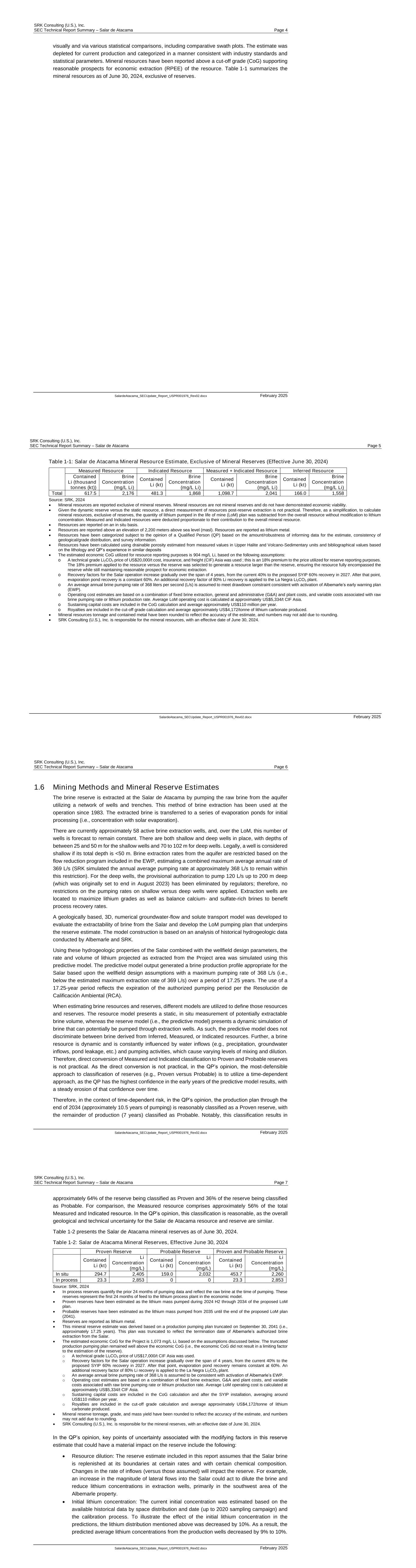

 
SRK Consulting (U.S.), Inc. SEC Technical Report Summary – Salar de Atacama Page 4 SalardeAtacama_SECUpdate_Report_USPR001976_Rev02.docx February 2025 visually and via various statistical comparisons, including comparative swath plots. The estimate was depleted for current production and categorized in a manner consistent with industry standards and statistical parameters. Mineral resources have been reported above a cut-off grade (CoG) supporting reasonable prospects for economic extraction (RPEE) of the resource. Table 1-1 summarizes the mineral resources as of June 30, 2024, exclusive of reserves. SRK Consulting (U.S.), Inc. SEC Technical Report Summary – Salar de Atacama Page 5 SalardeAtacama_SECUpdate_Report_USPR001976_Rev02.docx February 2025 Table 1-1: Salar de Atacama Mineral Resource Estimate, Exclusive of Mineral Reserves (Effective June 30, 2024) Measured Resource Indicated Resource Measured + Indicated Resource Inferred Resource Contained Li (thousand tonnes (kt)) Brine Concentration (mg/L Li) Contained Li (kt) Brine Concentration (mg/L Li) Contained Li (kt) Brine Concentration (mg/L Li) Contained Li (kt) Brine Concentration (mg/L Li) Total 617.5 2,176 481.3 1,868 1,098.7 2,041 166.0 1,558 Source: SRK, 2024 • Mineral resources are reported exclusive of mineral reserves. Mineral resources are not mineral reserves and do not have demonstrated economic viability. • Given the dynamic reserve versus the static resource, a direct measurement of resources post-reserve extraction is not practical. Therefore, as a simplification, to calculate mineral resources, exclusive of reserves, the quantity of lithium pumped in the life of mine (LoM) plan was subtracted from the overall resource without modification to lithium concentration. Measured and Indicated resources were deducted proportionate to their contribution to the overall mineral resource. • Resources are reported on an in situ basis. • Resources are reported above an elevation of 2,200 meters above sea level (masl). Resources are reported as lithium metal. • Resources have been categorized subject to the opinion of a Qualified Person (QP) based on the amount/robustness of informing data for the estimate, consistency of geological/grade distribution, and survey information. • Resources have been calculated using drainable porosity estimated from measured values in Upper Halite and Volcano-Sedimentary units and bibliographical values based on the lithology and QP’s experience in similar deposits • The estimated economic CoG utilized for resource reporting purposes is 904 mg/L Li, based on the following assumptions: o A technical grade Li2CO3 price of US$20,000/t cost, insurance, and freight (CIF) Asia was used ; this is an 18% premium to the price utilized for reserve reporting purposes. The 18% premium applied to the resource versus the reserve was selected to generate a resource larger than the reserve, ensuring the resource fully encompassed the reserve while still maintaining reasonable prospect for economic extraction. o Recovery factors for the Salar operation increase gradually over the span of 4 years, from the current 40% to the proposed SYIP 60% recovery in 2027. After that point, evaporation pond recovery is a constant 60%. An additional recovery factor of 80% Li recovery is applied to the La Negra Li2CO3 plant. o An average annual brine pumping rate of 368 liters per second (L/s) is assumed to meet drawdown constraint consistent with activation of Albemarle’s early warning plan (EWP). o Operating cost estimates are based on a combination of fixed brine extraction, general and administrative (G&A) and plant costs, and variable costs associated with raw brine pumping rate or lithium production rate. Average LoM operating cost is calculated at approximately US$5,334/t CIF Asia. o Sustaining capital costs are included in the CoG calculation and average approximately US$110 million per year. o Royalties are included in the cut-off grade calculation and average approximately US$4,172/tonne of lithium carbonate produced. • Mineral resources tonnage and contained metal have been rounded to reflect the accuracy of the estimate, and numbers may not add due to rounding. • SRK Consulting (U.S.), Inc. is responsible for the mineral resources, with an effective date of June 30, 2024. SRK Consulting (U.S.), Inc. SEC Technical Report Summary – Salar de Atacama Page 6 SalardeAtacama_SECUpdate_Report_USPR001976_Rev02.docx February 2025 1.6 Mining Methods and Mineral Reserve Estimates The brine reserve is extracted at the Salar de Atacama by pumping the raw brine from the aquifer utilizing a network of wells and trenches. This method of brine extraction has been used at the operation since 1983. The extracted brine is transferred to a series of evaporation ponds for initial processing (i.e., concentration with solar evaporation). There are currently approximately 58 active brine extraction wells, and, over the LoM, this number of wells is forecast to remain constant. There are both shallow and deep wells in place, with depths of between 25 and 50 m for the shallow wells and 70 to 102 m for deep wells. Legally, a well is considered shallow if its total depth is <50 m. Brine extraction rates from the aquifer are restricted based on the flow reduction program included in the EWP, estimating a combined maximum average annual rate of 369 L/s (SRK simulated the annual average pumping rate at approximately 368 L/s to remain within this restriction). For the deep wells, the provisional authorization to pump 120 L/s up to 200 m deep (which was originally set to end in August 2023) has been eliminated by regulators; therefore, no restrictions on the pumping rates on shallow versus deep wells were applied. Extraction wells are located to maximize lithium grades as well as balance calcium- and sulfate-rich brines to benefit process recovery rates. A geologically based, 3D, numerical groundwater-flow and solute transport model was developed to evaluate the extractability of brine from the Salar and develop the LoM pumping plan that underpins the reserve estimate. The model construction is based on an analysis of historical hydrogeologic data conducted by Albemarle and SRK. Using these hydrogeologic properties of the Salar combined with the wellfield design parameters, the rate and volume of lithium projected as extracted from the Project area was simulated using this predictive model. The predictive model output generated a brine production profile appropriate for the Salar based upon the wellfield design assumptions with a maximum pumping rate of 368 L/s (i.e., below the estimated maximum extraction rate of 369 L/s) over a period of 17.25 years. The use of a 17.25-year period reflects the expiration of the authorized pumping period per the Resolución de Calificación Ambiental (RCA). When estimating brine resources and reserves, different models are utilized to define those resources and reserves. The resource model presents a static, in situ measurement of potentially extractable brine volume, whereas the reserve model (i.e., the predictive model) presents a dynamic simulation of brine that can potentially be pumped through extraction wells. As such, the predictive model does not discriminate between brine derived from Inferred, Measured, or Indicated resources. Further, a brine resource is dynamic and is constantly influenced by water inflows (e.g., precipitation, groundwater inflows, pond leakage, etc.) and pumping activities, which cause varying levels of mixing and dilution. Therefore, direct conversion of Measured and Indicated classification to Proven and Probable reserves is not practical. As the direct conversion is not practical, in the QP’s opinion, the most-defensible approach to classification of reserves (e.g., Proven versus Probable) is to utilize a time-dependent approach, as the QP has the highest confidence in the early years of the predictive model results, with a steady erosion of that confidence over time. Therefore, in the context of time-dependent risk, in the QP’s opinion, the production plan through the end of 2034 (approximately 10.5 years of pumping) is reasonably classified as a Proven reserve, with the remainder of production (7 years) classified as Probable. Notably, this classification results in SRK Consulting (U.S.), Inc. SEC Technical Report Summary – Salar de Atacama Page 7 SalardeAtacama_SECUpdate_Report_USPR001976_Rev02.docx February 2025 approximately 64% of the reserve being classified as Proven and 36% of the reserve being classified as Probable. For comparison, the Measured resource comprises approximately 56% of the total Measured and Indicated resource. In the QP’s opinion, this classification is reasonable, as the overall geological and technical uncertainty for the Salar de Atacama resource and reserve are similar. Table 1-2 presents the Salar de Atacama mineral reserves as of June 30, 2024. Table 1-2: Salar de Atacama Mineral Reserves, Effective June 30, 2024 Proven Reserve Probable Reserve Proven and Probable Reserve Contained Li (kt) Li Concentration (mg/L) Contained Li (kt) Li Concentration (mg/L) Contained Li (kt) Li Concentration (mg/L) In situ 294.7 2,405 159.0 2,032 453.7 2,260 In process 23.3 2,853 0 0 23.3 2,853 Source: SRK, 2024 • In process reserves quantify the prior 24 months of pumping data and reflect the raw brine at the time of pumping. These reserves represent the first 24 months of feed to the lithium process plant in the economic model. • Proven reserves have been estimated as the lithium mass pumped during 2024 H2 through 2034 of the proposed LoM plan. • Probable reserves have been estimated as the lithium mass pumped from 2035 until the end of the proposed LoM plan (2041). • Reserves are reported as lithium metal. • This mineral reserve estimate was derived based on a production pumping plan truncated on September 30, 2041 (i.e., approximately 17.25 years). This plan was truncated to reflect the termination date of Albemarle’s authorized brine extraction from the Salar. • The estimated economic CoG for the Project is 1,073 mg/L Li, based on the assumptions discussed below. The truncated production pumping plan remained well above the economic CoG (i.e., the economic CoG did not result in a limiting factor to the estimation of the reserve). o A technical grade Li2CO3 price of US$17,000/t CIF Asia was used. o Recovery factors for the Salar operation increase gradually over the span of 4 years, from the current 40% to the proposed SYIP 60% recovery in 2027. After that point, evaporation pond recovery remains constant at 60%. An additional recovery factor of 80% Li recovery is applied to the La Negra Li2CO3 plant. o An average annual brine pumping rate of 368 L/s is assumed to be consistent with activation of Albemarle’s EWP. o Operating cost estimates are based on a combination of fixed brine extraction, G&A and plant costs, and variable costs associated with raw brine pumping rate or lithium production rate. Average LoM operating cost is calculated at approximately US$5,334/t CIF Asia. o Sustaining capital costs are included in the CoG calculation and after the SYIP installation, averaging around US$110 million per year. o Royalties are included in the cut-off grade calculation and average approximately US$4,172/tonne of lithium carbonate produced. • Mineral reserve tonnage, grade, and mass yield have been rounded to reflect the accuracy of the estimate, and numbers may not add due to rounding. • SRK Consulting (U.S.), Inc. is responsible for the mineral reserves, with an effective date of June 30, 2024. In the QP’s opinion, key points of uncertainty associated with the modifying factors in this reserve estimate that could have a material impact on the reserve include the following: • Resource dilution: The reserve estimate included in this report assumes that the Salar brine is replenished at its boundaries at certain rates and with certain chemical composition. Changes in the rate of inflows (versus those assumed) will impact the reserve. For example, an increase in the magnitude of lateral flows into the Salar could act to dilute the brine and reduce lithium concentrations in extraction wells, primarily in the southwest area of the Albemarle property. • Initial lithium concentration: The current initial concentration was estimated based on the available historical data by space distribution and date (up to 2020 sampling campaign) and the calibration process. To illustrate the effect of the initial lithium concentration in the predictions, the lithium distribution mentioned above was decreased by 10%. As a result, the predicted average lithium concentrations from the production wells decreased by 9% to 10%.


 
SRK Consulting (U.S.), Inc. SEC Technical Report Summary – Salar de Atacama Page 8 SalardeAtacama_SECUpdate_Report_USPR001976_Rev02.docx February 2025 • Seepage from processing ponds: The predictive simulations did not consider potential seepage of concentrated brine from the processing pond. Such seepage may have two opposing effects: on one hand, loss of lithium mass between extraction from groundwater and production of Li2CO3 at the end of the concentration process, and on the other hand, replenishing groundwater with lithium that could be captured by extraction wells. SRK completed a sensitivity simulation that predicts that pond seepage would result in average lithium concentration increase from the production wells of approximately 10% at the end of production as compared to the base case (for the conditions evaluated in the sensitivity analysis). • Freshwater/brine mixing: The numerical model implicitly simulated the density separation of lateral freshwater recharge and Salar brine by imposing a low-conductivity zone at the brine- freshwater interface. It is possible that lateral recharge of freshwater into the Salar may increase without this restriction, as the water table declines as a result of pumping and reducing the amount of freshwater lost to evaporation at the periphery of the Salar. SRK completed a sensitivity analysis where the hydraulic conductivity at the freshwater/brine interface was increased by half an order of magnitude. This scenario resulted in no material change compared to the base case. • Hydrogeological assumptions: Factors (such as specific yield (Sy), hydraulic conductivity, and dispersivity) play a key role in estimating the volume of brine available for extraction in the wellfield and the rate it can be extracted. Actual contacts between hydrogeological units may not be exactly as represented in the numerical model. These factors are variable through the Salar and are difficult to measure directly. Hydraulic conductivities and specific yields lower than assumed in the numerical model would result in reduced pumpability and reduced lithium mass extraction. Specific yields and porosities lower than assumed in the model would lead to faster migration of fresh/brackish water from the edges of the Salar and dilution of lithium concentrations in extraction wells. The following scenarios were evaluated: o Scenario 5: The hydraulic conductivity in the Silt, Clay, and Salt unit (UH-2) was reduced by 50%. This scenario shows minimal changes in the average lithium concentration and the predicted total mass. o Scenario 6: Dispersion coefficient values were reduced by 50% in the entire model domain. This scenario resulted in a decrease of <4% in the average lithium concentrations and annual total mass. o Scenario 8: The Intermediate Halite unit (UH-3) was reduced from 5% to 2.5%. This scenario resulted in a reduction in lithium concentration and annual total mass of <1.6% at the end of production (compared to the base case). o Scenario 9: The Volcano-Sedimentary unit (UH-4) was reduced from 10% to 7.5%. This scenario resulted in a reduction in lithium concentration and annual total mass of <2.1% at the end of production (compared to the base case). o Scenario 10: The Volcano-Sedimentary unit (UH-4) was reduced from 10% to 7.5% and from 8% to 6% in different sensitive zones. This scenario resulted in a reduction in lithium concentration and annual total mass of <4.1% at the end of production (compared to the base case). • Li2CO3 price: Although the pumping plan remains above the economic CoG, commodity prices can have significant volatility, which could result in a shortened reserve life. SRK Consulting (U.S.), Inc. SEC Technical Report Summary – Salar de Atacama Page 9 SalardeAtacama_SECUpdate_Report_USPR001976_Rev02.docx February 2025 • Change to the Sociedad Química y Minera de Chile S.A. (SQM) pumping plan: The numerical model makes certain assumptions regarding the SQM pumping plan (which terminates at the end of 2030). Overall, SQM has extracted and is expected to extract brines at greater rates than Albemarle. Increased pumping by SQM or an extension of their pumping period beyond 2030 may have two effects: reduce available resource in the Salar and draw freshwater at greater rate from the periphery of the Salar (dilution effect). Conversely, reduced extraction by SQM would increase available resources for Albemarle and reduce dilution. Simulating the extension of SQM’s pumping period shows a total mass decreased by 2.5% at the end of production for Albemarle’s operations. • Process recovery: The ability to extract the full lithium production quota within the defined production period relies upon the ability to increase recovery rates of lithium in the evaporation ponds from current levels of approximately 40% to a target of approximately 60%. This increase is assumed based on the implementation of the SYIP processing facilities at the Salar to reduce lithium losses to precipitated salts. In the QP’s opinion, the assumed recovery rates are reasonable; however, there remains uncertainty in performance of the new process, and any material underperformance to these targets could limit Albemarle’s ability to extract its full lithium quota prior to expiration of the quota. • Lithium production quota: The current production quota acts as a hard stop on the estimated reserve. It is important to note that the expiration date for production of this lithium is the end of 2043. If raw brine grades, pumping rates, or process recoveries underperform forecasts and Albemarle cannot produce the full quota by 2043, this potential reserve will be lost (i.e., Albemarle cannot recover lost production in later years and cannot pump faster than the regulatory limit of 442 L/s (currently reduced to the estimated limit of 369 L/s based on the flow reduction program included in the EWP) to offset any underperformance. Conversely, with lithium grades well above economic cut-off and approximately 30% of the estimated mineral resource converting to reserve, the potential to negotiate an additional production quota with the government of Chile presents an opportunity to increase the current reserve, which is artificially constrained by the current quota. 1.7 Processing and Recovery Methods Albemarle's operations in Chile are developed in two areas: Salar de Atacama and La Negra. At the Salar, a lithium-rich chloride brine is extracted from groundwater production wells. This brine is pumped to ponds where it goes through a concentration process utilizing solar evaporation. The objective of the concentration process is to obtain a concentrated lithium chloride brine of around 6% Li that is largely depleted of impurities (such as sulfate, sodium (Na), calcium, potassium (K), and magnesium (Mg)). This concentrated brine is transported to the La Negra chemical plant by tanker truck for further processing. The SYIP facility was recently constructed and placed into operation at the Salar, where bischofite and lithium-carnallite salts are reprocessed to recover entrained lithium and increase the overall lithium recovery of the Salar. There is also a potash (KCl) plant for byproduct potash production at the Salar. Albemarle also harvests halite and bischofite salts from the evaporation ponds as byproduct production for third-party sales. The La Negra plant receives the concentrated brine from the Salar, where the brine is further refined and purified followed by the conversion of the lithium from a chloride to Li2CO3. The La Negra plant SRK Consulting (U.S.), Inc. SEC Technical Report Summary – Salar de Atacama Page 10 SalardeAtacama_SECUpdate_Report_USPR001976_Rev02.docx February 2025 produces both technical- and battery grade Li2CO3. Albemarle has also historically produced a lithium chloride product at La Negra but has no intentions of producing this product in the future. 1.8 Infrastructure The Project is a mature functioning operation with two separate sites that contain key facilities. Access is fully developed, with the majority accessible by paved major highways and local improved roadways on-site. A local air strip services the Salar operations. The Antofagasta airport is the nearest major commercial airport servicing the La Negra operation (the Calama airport is the closet major commercial airport to the Salar). The infrastructure is in place, operating, and provides all necessary support for ongoing operations, as summarized in this report. The Salar site contains the brine well fields, brine supply water pipelines to evaporation ponds, primary processing facilities to create a concentrated brine, a phosphate plant that creates a potassium chloride product, camps (including a new camp that is in place and functional with an expansion phase designed and approved if needed in the future), airfield, access and internal roads, substation and powerline connected to the local Chilean power system, backup and supplemental diesel power generation supply and power distribution system, water supply and distribution, shop and warehouse facilities, administrative offices, change houses, waste salt storage areas, fuel storage systems, security, and communications systems. The concentrated brine product is trucked approximately 260 km to the La Negra facility. The La Negra plant purifies the lithium brine from the Salar Plant and converts the brine into Li2CO3 and LiCl. Facilities at the site include the trucked brine delivery system, boron (B) removal plant, calcium and magnesium removal plant, Li2CO3 conversion plants, LiCl plant, evaporation sedimentation ponds, solid waste storage, product warehousing and shipping, administrative facilities, cafeterias, and an off-site area where raw materials are warehoused and combined as needed in the processing facilities. Power to the facility is provided by the regional power company via a 110-kilovolt (kV) transmission line and distributed throughout the plant to load centers. Piped natural gas provides the energy for heating and steam needs at the facilities. The Project is security protected and has a full communication system installed. Final products from the La Negra plant are packaged into large bags and then delivered to clients by truck, rail, or through port facilities in the region. 1.9 Market Studies Fastmarkets has developed a marketing study on behalf of Albemarle to support lithium pricing assumptions. This market study does not consider byproducts or co-products that may be produced alongside the lithium production process. Battery demand is now responsible for 85.0% of all lithium consumed. Looking forward, Fastmarkets expects demand from eMobility, especially battery electric vehicles (BEV), to continue to drive lithium demand growth. Supply is still growing despite the low-price environment and some production restraint; this has coincided with a period of weaker-than-expected demand growth. Ironically, the industry is still growing healthily; Fastmarkets expects demand growth from electric vehicles (EV) to average 15% over the next 10 years, with additional growth coming from the energy storage system (ESS) sector. The high prices in 2021 to 2022 triggered a massive producer response, with some new SRK Consulting (U.S.), Inc. SEC Technical Report Summary – Salar de Atacama Page 11 SalardeAtacama_SECUpdate_Report_USPR001976_Rev02.docx February 2025 supply still being ramped up, while at the same time, some high-cost production is being cut, mainly by non-Chinese producers. Based on Fastmarkets’s view in August 2024, the combination of weaker-than-expected demand at a time when supply is still rising means the market is likely to be in a supply surplus until 2026. Considering supply restraint and investment cuts, Fastmarkets forecasts the market to swing back into a deficit in 2027; this could change relatively easily should demand exceed expectations and supply expansion disappoint to the downside. Fastmarkets recommends that a real price of US$17/kilogram (kg) for technical grade lithium carbonate CIF China, Japan, and Korea (CJK) should be utilized by Albemarle for reserve estimation. Recommended prices are on the lower end of Fastmarkets' low-case scenario. 1.10 Environmental Studies, Permitting, and Plans, Negotiations, or Agreements with Local Individuals or Groups Baseline studies in both operational areas have been developed since the first environmental studies for permitting were submitted (1998 in La Negra and 2000 at Salar de Atacama) with ongoing monitoring programs in both locations. Environmental studies, such as hydrogeology and biodiversity, are regularly updated. The Salar de Atacama basin presents a unique system due to the biodiversity associated with wetland systems that depend on the hydrogeological conditions of the area. There are also indigenous areas and communities in the sector. As such, the key environmental issues at Salar de Atacama include biodiversity, hydrogeology, and socioeconomics. La Negra is located within an industrial area which is in saturation conditions for the daily and annual standard of inhalable particulate matter (particulate matter of 10 microns (PM10)). Although there are no surface water courses, there is an aquifer that could be affected by potential infiltrations from the plant facilities. As such, a water quality monitoring program is in place. Air quality, hydrogeology, and water quality have been deemed as key environmental characteristics of the La Negra area. Albemarle’s operations have adequate plans to address and follow up on the most sensitive and relevant environmental issues, such as hydrogeological/biodiversity issues and those associated with the indigenous communities in the Salar de Atacama area. Albemarle adequately follows up on issues related to water quality in La Negra as well as fluctuations in the water table and potential effects on the sensitive ecosystems around the Salar de Atacama, including analysis of possible cumulative effects given the multiplicity of actors that extract brine and freshwater in the area. The aim of the EWP is to promptly detect any deviation from what was indicated in the initial environmental assessment, preventing unforeseen impacts from occurring. In this context, Albemarle has been in compliance with the EWP, with two activations during the period from 2023 to 2024 that have triggered reduction of the extraction of brine (20% of the approved flow). Notwithstanding the above, Salar de Atacama is a complex system and requires constant updating of management tools based on the results of the monitoring programs and attention to requirements or new tools that the authority may incorporate. Albemarle has the environmental permits for an operation with an average brine extraction rate of 442 L/s per permit year (from October to September), a production of 250,000 cubic meters per year
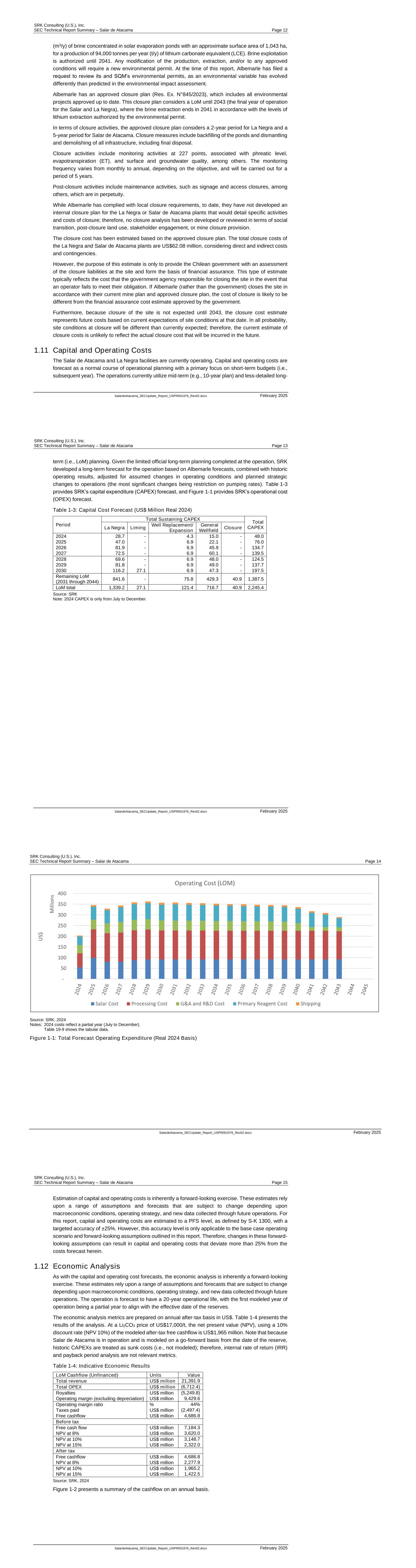

 
SRK Consulting (U.S.), Inc. SEC Technical Report Summary – Salar de Atacama Page 12 SalardeAtacama_SECUpdate_Report_USPR001976_Rev02.docx February 2025 (m3/y) of brine concentrated in solar evaporation ponds with an approximate surface area of 1,043 ha, for a production of 94,000 tonnes per year (t/y) of lithium carbonate equivalent (LCE). Brine exploitation is authorized until 2041. Any modification of the production, extraction, and/or to any approved conditions will require a new environmental permit. At the time of this report, Albemarle has filed a request to review its and SQM’s environmental permits, as an environmental variable has evolved differently than predicted in the environmental impact assessment. Albemarle has an approved closure plan (Res. Ex. N°845/2023), which includes all environmental projects approved up to date. This closure plan considers a LoM until 2043 (the final year of operation for the Salar and La Negra), where the brine extraction ends in 2041 in accordance with the levels of lithium extraction authorized by the environmental permit. In terms of closure activities, the approved closure plan considers a 2-year period for La Negra and a 5-year period for Salar de Atacama. Closure measures include backfilling of the ponds and dismantling and demolishing of all infrastructure, including final disposal. Closure activities include monitoring activities at 227 points, associated with phreatic level, evapotranspiration (ET), and surface and groundwater quality, among others. The monitoring frequency varies from monthly to annual, depending on the objective, and will be carried out for a period of 5 years. Post-closure activities include maintenance activities, such as signage and access closures, among others, which are in perpetuity. While Albemarle has complied with local closure requirements, to date, they have not developed an internal closure plan for the La Negra or Salar de Atacama plants that would detail specific activities and costs of closure; therefore, no closure analysis has been developed or reviewed in terms of social transition, post-closure land use, stakeholder engagement, or mine closure provision. The closure cost has been estimated based on the approved closure plan. The total closure costs of the La Negra and Salar de Atacama plants are US$62.08 million, considering direct and indirect costs and contingencies. However, the purpose of this estimate is only to provide the Chilean government with an assessment of the closure liabilities at the site and form the basis of financial assurance. This type of estimate typically reflects the cost that the government agency responsible for closing the site in the event that an operator fails to meet their obligation. If Albemarle (rather than the government) closes the site in accordance with their current mine plan and approved closure plan, the cost of closure is likely to be different from the financial assurance cost estimate approved by the government. Furthermore, because closure of the site is not expected until 2043, the closure cost estimate represents future costs based on current expectations of site conditions at that date. In all probability, site conditions at closure will be different than currently expected; therefore, the current estimate of closure costs is unlikely to reflect the actual closure cost that will be incurred in the future. 1.11 Capital and Operating Costs The Salar de Atacama and La Negra facilities are currently operating. Capital and operating costs are forecast as a normal course of operational planning with a primary focus on short-term budgets (i.e., subsequent year). The operations currently utilize mid-term (e.g., 10-year plan) and less-detailed long- SRK Consulting (U.S.), Inc. SEC Technical Report Summary – Salar de Atacama Page 13 SalardeAtacama_SECUpdate_Report_USPR001976_Rev02.docx February 2025 term (i.e., LoM) planning. Given the limited official long-term planning completed at the operation, SRK developed a long-term forecast for the operation based on Albemarle forecasts, combined with historic operating results, adjusted for assumed changes in operating conditions and planned strategic changes to operations (the most significant changes being restriction on pumping rates). Table 1-3 provides SRK’s capital expenditure (CAPEX) forecast, and Figure 1-1 provides SRK’s operational cost (OPEX) forecast. Table 1-3: Capital Cost Forecast (US$ Million Real 2024) Period Total Sustaining CAPEX Total CAPEX La Negra Liming Well Replacement/ Expansion General Wellfield Closure 2024 28.7 - 4.3 15.0 - 48.0 2025 47.0 - 6.9 22.1 - 76.0 2026 81.9 - 6.9 45.9 - 134.7 2027 72.5 - 6.9 60.1 - 139.5 2028 69.6 - 6.9 48.0 - 124.5 2029 81.8 - 6.9 49.0 - 137.7 2030 116.2 27.1 6.9 47.3 - 197.5 Remaining LoM (2031 through 2044) 841.6 - 75.8 429.3 40.9 1,387.5 LoM total 1,339.2 27.1 121.4 716.7 40.9 2,245.4 Source: SRK Note: 2024 CAPEX is only from July to December. SRK Consulting (U.S.), Inc. SEC Technical Report Summary – Salar de Atacama Page 14 SalardeAtacama_SECUpdate_Report_USPR001976_Rev02.docx February 2025 Source: SRK, 2024 Notes: 2024 costs reflect a partial year (July to December). Table 19-9 shows the tabular data. Figure 1-1: Total Forecast Operating Expenditure (Real 2024 Basis) SRK Consulting (U.S.), Inc. SEC Technical Report Summary – Salar de Atacama Page 15 SalardeAtacama_SECUpdate_Report_USPR001976_Rev02.docx February 2025 Estimation of capital and operating costs is inherently a forward-looking exercise. These estimates rely upon a range of assumptions and forecasts that are subject to change depending upon macroeconomic conditions, operating strategy, and new data collected through future operations. For this report, capital and operating costs are estimated to a PFS level, as defined by S-K 1300, with a targeted accuracy of ±25%. However, this accuracy level is only applicable to the base case operating scenario and forward-looking assumptions outlined in this report. Therefore, changes in these forward- looking assumptions can result in capital and operating costs that deviate more than 25% from the costs forecast herein. 1.12 Economic Analysis As with the capital and operating cost forecasts, the economic analysis is inherently a forward-looking exercise. These estimates rely upon a range of assumptions and forecasts that are subject to change depending upon macroeconomic conditions, operating strategy, and new data collected through future operations. The operation is forecast to have a 20-year operational life, with the first modeled year of operation being a partial year to align with the effective date of the reserves. The economic analysis metrics are prepared on annual after-tax basis in US$. Table 1-4 presents the results of the analysis. At a Li2CO3 price of US$17,000/t, the net present value (NPV), using a 10% discount rate (NPV 10%) of the modeled after-tax free cashflow is US$1,965 million. Note that because Salar de Atacama is in operation and is modeled on a go-forward basis from the date of the reserve, historic CAPEXs are treated as sunk costs (i.e., not modeled); therefore, internal rate of return (IRR) and payback period analysis are not relevant metrics. Table 1-4: Indicative Economic Results LoM Cashflow (Unfinanced) Units Value Total revenue US$ million 21,391.9 Total OPEX US$ million (6,712.4) Royalties US$ million (5,249.8) Operating margin (excluding depreciation) US$ million 9,429.6 Operating margin ratio % 44% Taxes paid US$ million (2,497.4) Free cashflow US$ million 4,686.8 Before tax Free cash flow US$ million 7,184.3 NPV at 8% US$ million 3,620.0 NPV at 10% US$ million 3,148.7 NPV at 15% US$ million 2,322.0 After tax Free cashflow US$ million 4,686.8 NPV at 8% US$ million 2,277.9 NPV at 10% US$ million 1,965.2 NPV at 15% US$ million 1,422.5 Source: SRK, 2024 Figure 1-2 presents a summary of the cashflow on an annual basis.
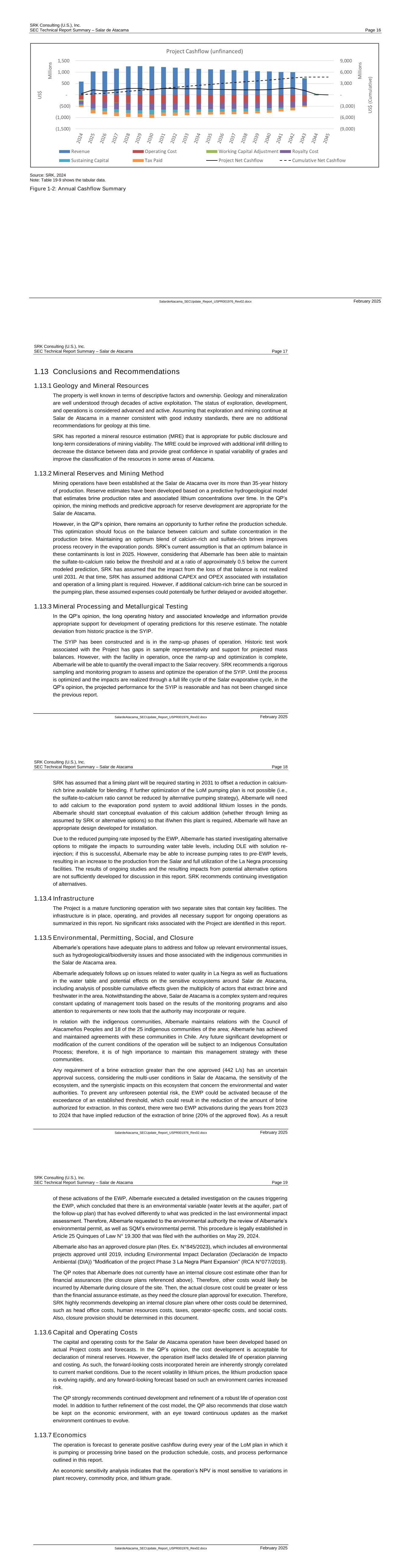

 
SRK Consulting (U.S.), Inc. SEC Technical Report Summary – Salar de Atacama Page 16 SalardeAtacama_SECUpdate_Report_USPR001976_Rev02.docx February 2025 Source: SRK, 2024 Note: Table 19-9 shows the tabular data. Figure 1-2: Annual Cashflow Summary SRK Consulting (U.S.), Inc. SEC Technical Report Summary – Salar de Atacama Page 17 SalardeAtacama_SECUpdate_Report_USPR001976_Rev02.docx February 2025 1.13 Conclusions and Recommendations 1.13.1 Geology and Mineral Resources The property is well known in terms of descriptive factors and ownership. Geology and mineralization are well understood through decades of active exploitation. The status of exploration, development, and operations is considered advanced and active. Assuming that exploration and mining continue at Salar de Atacama in a manner consistent with good industry standards, there are no additional recommendations for geology at this time. SRK has reported a mineral resource estimation (MRE) that is appropriate for public disclosure and long-term considerations of mining viability. The MRE could be improved with additional infill drilling to decrease the distance between data and provide great confidence in spatial variability of grades and improve the classification of the resources in some areas of Atacama. 1.13.2 Mineral Reserves and Mining Method Mining operations have been established at the Salar de Atacama over its more than 35-year history of production. Reserve estimates have been developed based on a predictive hydrogeological model that estimates brine production rates and associated lithium concentrations over time. In the QP’s opinion, the mining methods and predictive approach for reserve development are appropriate for the Salar de Atacama. However, in the QP’s opinion, there remains an opportunity to further refine the production schedule. This optimization should focus on the balance between calcium and sulfate concentration in the production brine. Maintaining an optimum blend of calcium-rich and sulfate-rich brines improves process recovery in the evaporation ponds. SRK’s current assumption is that an optimum balance in these contaminants is lost in 2025. However, considering that Albemarle has been able to maintain the sulfate-to-calcium ratio below the threshold and at a ratio of approximately 0.5 below the current modeled prediction, SRK has assumed that the impact from the loss of that balance is not realized until 2031. At that time, SRK has assumed additional CAPEX and OPEX associated with installation and operation of a liming plant is required. However, if additional calcium-rich brine can be sourced in the pumping plan, these assumed expenses could potentially be further delayed or avoided altogether. 1.13.3 Mineral Processing and Metallurgical Testing In the QP’s opinion, the long operating history and associated knowledge and information provide appropriate support for development of operating predictions for this reserve estimate. The notable deviation from historic practice is the SYIP. The SYIP has been constructed and is in the ramp-up phases of operation. Historic test work associated with the Project has gaps in sample representativity and support for projected mass balances. However, with the facility in operation, once the ramp-up and optimization is complete, Albemarle will be able to quantify the overall impact to the Salar recovery. SRK recommends a rigorous sampling and monitoring program to assess and optimize the operation of the SYIP. Until the process is optimized and the impacts are realized through a full life cycle of the Salar evaporative cycle, in the QP’s opinion, the projected performance for the SYIP is reasonable and has not been changed since the previous report. SRK Consulting (U.S.), Inc. SEC Technical Report Summary – Salar de Atacama Page 18 SalardeAtacama_SECUpdate_Report_USPR001976_Rev02.docx February 2025 SRK has assumed that a liming plant will be required starting in 2031 to offset a reduction in calcium- rich brine available for blending. If further optimization of the LoM pumping plan is not possible (i.e., the sulfate-to-calcium ratio cannot be reduced by alternative pumping strategy), Albemarle will need to add calcium to the evaporation pond system to avoid additional lithium losses in the ponds. Albemarle should start conceptual evaluation of this calcium addition (whether through liming as assumed by SRK or alternative options) so that if/when this plant is required, Albemarle will have an appropriate design developed for installation. Due to the reduced pumping rate imposed by the EWP, Albemarle has started investigating alternative options to mitigate the impacts to surrounding water table levels, including DLE with solution re- injection; if this is successful, Albemarle may be able to increase pumping rates to pre-EWP levels, resulting in an increase to the production from the Salar and full utilization of the La Negra processing facilities. The results of ongoing studies and the resulting impacts from potential alternative options are not sufficiently developed for discussion in this report. SRK recommends continuing investigation of alternatives. 1.13.4 Infrastructure The Project is a mature functioning operation with two separate sites that contain key facilities. The infrastructure is in place, operating, and provides all necessary support for ongoing operations as summarized in this report. No significant risks associated with the Project are identified in this report. 1.13.5 Environmental, Permitting, Social, and Closure Albemarle’s operations have adequate plans to address and follow up relevant environmental issues, such as hydrogeological/biodiversity issues and those associated with the indigenous communities in the Salar de Atacama area. Albemarle adequately follows up on issues related to water quality in La Negra as well as fluctuations in the water table and potential effects on the sensitive ecosystems around Salar de Atacama, including analysis of possible cumulative effects given the multiplicity of actors that extract brine and freshwater in the area. Notwithstanding the above, Salar de Atacama is a complex system and requires constant updating of management tools based on the results of the monitoring programs and also attention to requirements or new tools that the authority may incorporate or require. In relation with the indigenous communities, Albemarle maintains relations with the Council of Atacameños Peoples and 18 of the 25 indigenous communities of the area; Albemarle has achieved and maintained agreements with these communities in Chile. Any future significant development or modification of the current conditions of the operation will be subject to an Indigenous Consultation Process; therefore, it is of high importance to maintain this management strategy with these communities. Any requirement of a brine extraction greater than the one approved (442 L/s) has an uncertain approval success, considering the multi-user conditions in Salar de Atacama, the sensitivity of the ecosystem, and the synergistic impacts on this ecosystem that concern the environmental and water authorities. To prevent any unforeseen potential risk, the EWP could be activated because of the exceedance of an established threshold, which could result in the reduction of the amount of brine authorized for extraction. In this context, there were two EWP activations during the years from 2023 to 2024 that have implied reduction of the extraction of brine (20% of the approved flow). As a result SRK Consulting (U.S.), Inc. SEC Technical Report Summary – Salar de Atacama Page 19 SalardeAtacama_SECUpdate_Report_USPR001976_Rev02.docx February 2025 of these activations of the EWP, Albemarle executed a detailed investigation on the causes triggering the EWP, which concluded that there is an environmental variable (water levels at the aquifer, part of the follow-up plan) that has evolved differently to what was predicted in the last environmental impact assessment. Therefore, Albemarle requested to the environmental authority the review of Albemarle’s environmental permit, as well as SQM’s environmental permit. This procedure is legally established in Article 25 Quinques of Law N° 19.300 that was filed with the authorities on May 29, 2024. Albemarle also has an approved closure plan (Res. Ex. N°845/2023), which includes all environmental projects approved until 2019, including Environmental Impact Declaration (Declaración de Impacto Ambiental (DIA)) “Modification of the project Phase 3 La Negra Plant Expansion” (RCA N°077/2019). The QP notes that Albemarle does not currently have an internal closure cost estimate other than for financial assurances (the closure plans referenced above). Therefore, other costs would likely be incurred by Albemarle during closure of the site. Then, the actual closure cost could be greater or less than the financial assurance estimate, as they need the closure plan approval for execution. Therefore, SRK highly recommends developing an internal closure plan where other costs could be determined, such as head office costs, human resources costs, taxes, operator-specific costs, and social costs. Also, closure provision should be determined in this document. 1.13.6 Capital and Operating Costs The capital and operating costs for the Salar de Atacama operation have been developed based on actual Project costs and forecasts. In the QP’s opinion, the cost development is acceptable for declaration of mineral reserves. However, the operation itself lacks detailed life of operation planning and costing. As such, the forward-looking costs incorporated herein are inherently strongly correlated to current market conditions. Due to the recent volatility in lithium prices, the lithium production space is evolving rapidly, and any forward-looking forecast based on such an environment carries increased risk. The QP strongly recommends continued development and refinement of a robust life of operation cost model. In addition to further refinement of the cost model, the QP also recommends that close watch be kept on the economic environment, with an eye toward continuous updates as the market environment continues to evolve. 1.13.7 Economics The operation is forecast to generate positive cashflow during every year of the LoM plan in which it is pumping or processing brine based on the production schedule, costs, and process performance outlined in this report. An economic sensitivity analysis indicates that the operation’s NPV is most sensitive to variations in plant recovery, commodity price, and lithium grade.


 
SRK Consulting (U.S.), Inc. SEC Technical Report Summary – Salar de Atacama Page 20 SalardeAtacama_SECUpdate_Report_USPR001976_Rev02.docx February 2025 2 Introduction This TRS was prepared in accordance with the SEC S-K regulations (Title 17, Part 229, Items 601 and 1300 through 1305) for Albemarle by SRK on Salar de Atacama. Associated lithium processing facilities at the La Negra operation are included in this report, as they are critical to the production of a final, commercially salable product. Albemarle is 100% owner of the Salar de Atacama and La Negra operations. 2.1 Terms of Reference and Purpose The quality of information, conclusions, and estimates contained herein are consistent with the level of effort involved in SRK’s services, based on i) information available at the time of preparation and ii) the assumptions, conditions, and qualifications set forth in this report. This report is intended for use by Albemarle subject to the terms and conditions of its contract with SRK and relevant securities legislation. The contract permits Albemarle to file this report as a TRS pursuant to the SEC S-K regulations, more specifically Title 17, Subpart 229.600, item 601(b)(96) - TRS and Title 17, Subpart 229.1300 - Disclosure by Registrants Engaged in Mining Operations. Any other uses of this report by any third party is at that party’s sole risk. The responsibility for this disclosure remains with Albemarle. The purpose of this TRS is to report mineral resources and mineral reserves for Salar de Atacama. This report is prepared to a prefeasibility standard, as defined by S-K 1300. This technical report is an update of the previous report titled, "SEC Technical Report Summary, Pre-Feasibility Study, Salar de Atacama, Region II, Chile. Report Date February 14, 2023.” The effective date of this report is June 30, 2024. 2.2 Sources of Information This report is based in part on internal company technical reports, previous feasibility studies, maps, published government reports, company letters and memoranda, and public information as cited throughout this report and listed in Section 24. Section 25 lists reliance upon information provided by the registrant, where applicable. 2.3 Details of Inspection Table 2-1 summarizes the details of the personal inspections on the property by each QP or, if applicable, the reason why a personal inspection has not been completed. SRK Consulting (U.S.), Inc. SEC Technical Report Summary – Salar de Atacama Page 21 SalardeAtacama_SECUpdate_Report_USPR001976_Rev02.docx February 2025 Table 2-1: Site Visits Expertise Date(s) of Visit Details of Inspection Reason Why a Personal Inspection Has Not Been Completed Process Several, most recently in August 2024 Site visit with inspection of evaporation ponds, Salar processing facilities, and La Negra plant and packaging area Resource and Exploitation Multiple, most recently in August 2024 Site visit with inspection of drillholes, core review, exploration procedures, production wells, packer testing, evaporation ponds, site facilities, laboratory, and trucking facilities at the Salar Infrastructure August 2024 Site visit with inspection of evaporation ponds, administration complex, utilities supplies, laboratories, processing facilities, access roads, and waste facilities at both the Salar and La Negra plant Environment August 2024 Site visit with inspection of operations and environmental impacts at the Salar and La Negra plant Source: SRK, 2024 2.4 Report Version Update The user of this document should ensure that this is the most recent TRS for the property. This technical report is an update of the previous report titled, "SEC Technical Report Summary, Pre- Feasibility Study, Salar de Atacama, Region II, Chile. Report Date February 14, 2023.” 2.5 Qualified Persons This report was prepared by SRK Consulting (U.S.), Inc., a third-party firm comprising mining experts in accordance with § 229.1302(b)(1). The lithium market summary sections of the report (Sections 1.9 and 16), were prepared by Fastmarkets, a third-party firm with lithium market expertise in accordance with § 229.1302(b)(1). Albemarle has determined that SRK and Fastmarkets meet the qualifications specified under the definition of QP in § 229.1300. References to the QP in this report are references to SRK Consulting (U.S.), Inc. and Fastmarkets, respectively, and not to any individual employed at either QP. 2.6 Forward-Looking Information This report contains forward-looking information and forward-looking statements within the meaning of applicable United States securities legislation, which involve a number of risks and uncertainties. Forward-looking information and forward-looking statements include, but are not limited to, statements with respect to the future prices of copper and gold, the estimation of mineral resources and reserves, the realization of mineral estimates, the timing and amount of estimated future production, costs of production, CAPEX, costs (including capital costs, operating costs, and other costs), timing of the LoM, rates of production, annual revenues, requirements for additional capital, and government regulation of mining operations. Often, but not always, forward-looking statements can be identified by the use of words such as plans, expects, does not expect, is expected, budget, scheduled, estimates, forecasts, intends, anticipates, SRK Consulting (U.S.), Inc. SEC Technical Report Summary – Salar de Atacama Page 22 SalardeAtacama_SECUpdate_Report_USPR001976_Rev02.docx February 2025 does not anticipate, believes, variations of such words and phrases, or statements that certain actions, events, or results may, could, would, might, or will be taken, occur, or be achieved. Forward-looking statements are based on the opinions, estimates, and assumptions of contributors to this report. Certain key assumptions are discussed in more detail. Forward-looking statements involve known and unknown risks, uncertainties, and other factors, which may cause the actual results, performance, or achievements of Albemarle to be materially different from any other future results, performance, or achievements expressed or implied by the forward-looking statements. Such factors include, among others: the actual results of current development activities; conclusions of economic evaluations; capital and operating cost forecasts; changes in project parameters as plans continue to be refined; future prices of gold, copper, and other metals; possible variations in mineral grade or recovery rates; failure of plant, equipment, or processes to operate as anticipated; accidents, labor disputes, climate change risks, and other risks of the mining industry; delays in obtaining governmental approvals or financing or in the completion of development or construction activities; shortages of labor and materials; changes to regulatory or governmental royalty and tax rates; environmental risks and unanticipated reclamation expenses; the impact on the supply chain and other complications associated with pandemics, including global health crises; title disputes or claims and timing and possible outcome of pending legal or regulatory proceedings; and those risk factors discussed or referred to in this report and in Albemarle’s documents filed from time to time with the securities regulatory authorities. There may be other factors than those identified that could cause actual actions, events, or results to differ materially from those described in forward-looking statements. There may be other factors that cause actions, events, or results not to be anticipated, estimated, or intended. There can be no assurance that forward-looking statements will prove to be accurate, as actual results and future events could differ materially from those anticipated in such statements. Accordingly, readers are cautioned not to place undue reliance on forward-looking statements. Unless required by securities laws, the authors undertake no obligation to update the forward-looking statements if circumstances or opinions should change. SRK Consulting (U.S.), Inc. SEC Technical Report Summary – Salar de Atacama Page 23 SalardeAtacama_SECUpdate_Report_USPR001976_Rev02.docx February 2025 3 Property Description The Salar de Atacama Basin is located in the commune of San Pedro de Atacama, with the Albemarle operations approximately 100 km to the south of this location, in the extreme east of the Antofagasta Region and close to the border with the republics of Argentina and Bolivia, as shown on Figure 3-1. The communal area is 23,439 square kilometers (km2) and has an approximate population of 11,000 inhabitants, which are mainly distributed in the populated areas of San Pedro de Atacama, Toconao, Socaire, and Peine. Source: SRK, 2021 Figure 3-1: Location Map In a regional context, the Salar is located in a remote area, with the nearest city (Calama) approximately 190 km to the northwest by road. The regional capital (Antofagasta), which is also located near the La Negra processing facilities, is located approximately 250 km to the west by road. 3.1 Property Area Albemarle's mining properties within the Salar de Atacama include two groups of exploitation concessions: CASAME (private) and OMA (mining properties in Salar de Atacama owned by CORFO), which cover a total of 5,227 mining properties. The properties span approximately 25 km at the widest zone in the east-to-west direction and 12 km in the widest north-to-south zone. For the purpose of the reserve estimate, the OMA concessions are those that are relevant.


 
SRK Consulting (U.S.), Inc. SEC Technical Report Summary – Salar de Atacama Page 24 SalardeAtacama_SECUpdate_Report_USPR001976_Rev02.docx February 2025 The CASEME concessions include 1,883 properties and the same number of hectares. The OMA concessions include 3,344 mining properties of 5 ha each, which corresponds to 16,720 ha. Figure 32 shows the location of the Albemarle concessions at the southern end of the Salar de Atacama (in dark green), the rest of the OMA properties belonging to CORFO (in light green), and the location of SQM's properties (in green bars) in the Salar. Albemarle has additional mining concessions (named Lila) that include 1,755 properties covering 1,755 ha of exploitation concessions and 17 properties covering 7,400 ha of exploration concessions. However, for the purpose of the reserve estimate, only the OMA concessions are relevant, and therefore the detail of the Lila concessions have not been included. SRK Consulting (U.S.), Inc. SEC Technical Report Summary – Salar de Atacama Page 25 SalardeAtacama_SECUpdate_Report_USPR001976_Rev02.docx February 2025 Source: Albemarle, 2025 Figure 3-2: Mining Claims in Salar de Atacama SRK Consulting (U.S.), Inc. SEC Technical Report Summary – Salar de Atacama Page 26 SalardeAtacama_SECUpdate_Report_USPR001976_Rev02.docx February 2025 3.2 Mineral Title Albemarle’s mineral rights at Salar de Atacama consist of the right to extract lithium brine, pursuant to a long-term contract with the Chilean government originally entered into in 1980 by Foote Minerals, a predecessor of Albemarle. This contract has been subsequently amended and restated. This agreement is discussed in more detail in Section 16.3.1, although key details follow. Albemarle’s predecessor’s initial contract with the Chilean government will remain in effect until the date on which it has produced and sold 200,000 t LME (although the lithium can be produced in any of its forms) from the Salar de Atacama. As of June 30, 2024, the remaining amount of lithium from the initial contract equals approximately 105,455 t LME. On November 25, 2016, CORFO and Albemarle entered into an annex to the initial agreement adding an additional 262,132 t LME to the total quota and setting an expiration for production of the quota of January 1, 2044 (i.e., any remaining quota after this date will be forfeited). As of June 30, 2024, the remaining amount of lithium from the second quota equals 204,581 t. Combined, as of the effective date of this TRS (June 30, 2024), Albemarle has a remaining quota of 310,036 t LME, expiring January 1, 2044. Additionally, on April 26, 2024, CORFO and Albemarle entered into an addendum to the initial agreement and its amendments, adding the option of a “New Technologies Quota” in addition to the total quota and the Additional Quota, for up to 240,000 t LME that Albemarle may exploit based on lithium extracted using new technologies. The size of the area at Salar de Atacama covered by Albemarle’s OMA mining concessions (those relevant to the current reserve estimate) is 16,720 ha. Table 3-1 describes these OMA concessions. Albemarle also currently owns the land on which the extraction facility at Salar de Atacama and the processing facility at La Negra operate. However, the ownership of the land at Salar de Atacama will revert to the Chilean government once all amounts of lithium remaining under Albemarle’s contract with the Chilean government are sold (the ownership of the land and fixed assets at La Negra will remain unchanged). Table 3-1: OMA Mining Concessions Concession Name National Role Page Number Year Area (ha) Property of Albemarle Limitada Oma 1 Al 59820 02303-0007-0 408 11 1977 16,720 Property of CORFO Oma 1 Al 59820 02301-5148-2 408 11 1977 6,850 Source: Albemarle, 2024b Section 17 provides a summary of the existing environmental permits and under which Albemarle operates. The rights to use existing water and the agreements with the communities are also summarized. In addition to the mining properties located in the nucleus of Salar de Atacama (although not covering the area relevant to the resource and reserve reported herein), Albemarle has mining properties located in the extreme north of the Cordón de Lila (called CASEME, LILA, and others), as shown in Table 3-2 and Figure 3-3. SRK Consulting (U.S.), Inc. SEC Technical Report Summary – Salar de Atacama Page 27 SalardeAtacama_SECUpdate_Report_USPR001976_Rev02.docx February 2025 Table 3-2: Albemarle Mining Concessions Role Number Concession Name Pages (Fojas) Number Year Properties Area (ha) CASEME mining concessions 023030381-9 Caseme uno 1 al 100 394 119 2004 100 100 023030382-7 Caseme dos 1 al 100 387 118 2004 100 100 023030383-5 Caseme tres 1 al 75 401 120 2004 75 75 023030384-3 Caseme cuatro 1 al 100 408 121 2004 100 100 023030385-1 Caseme cinco 1 al 97 416 122 2004 97 97 023030386-K Caseme seis 1 al 100 424 123 2004 100 100 023030401-7 Caseme siete 1 al 100 432 124 2004 100 100 023030402-5 Caseme ocho 1 al 100 440 125 2004 100 100 023030388-6 Caseme nueve 1 al 95 448 126 2004 95 95 023030389-4 Caseme diez 1 al 100 456 127 2004 100 100 023030387-8 Caseme once 1 al 46 464 128 2004 46 46 023030390-8 Caseme doce 1 al 90 471 129 2004 90 90 023030391-6 Caseme trece 1 al 90 479 130 2004 90 90 023030392-4 Caseme catorce 1 al 65 556 140 2004 65 65 023030393-2 Caseme quince 1 al 90 563 141 2004 90 90 023030394-0 Caseme dieciseis 1 al 20 570 142 2004 20 20 023030395-9 Caseme diecisiete 1 al 90 487 131 2004 90 90 023030396-7 Caseme dieciocho 1 al 90 495 132 2004 90 90 023030397-5 Caseme diecinueve 1 al 90 503 133 2004 90 90 023030398-3 Caseme veinte 1 al 90 511 134 2004 90 90 023030399-1 Caseme veintiuno 1 al 65 519 135 2004 65 65 023030400-9 Caseme veintidos 1 al 90 526 136 2004 90 90 Total 1,883 1,883 Role Number Concession Name Pages (Fojas) Number Year Area (ha) Lila mining concessions 02303-D968-0 Lila 1 C 1,952 1,136 2022 400 02303-D975-3 Lila 2 C 1,953 1,137 2022 400 02303-D969-9 Lila 3 C 1,954 1,138 2022 400 02303-D976-1 Lila 4 C 1,955 1,139 2022 200 02303-D970-2 Lila 5 C 1,956 1,140 2022 600 02303-D966-4 Lila 6 C 1,957 1,141 2022 600 02303-D977-K Lila 7 C 1,959 1,142 2022 600 02303-D971-0 Lila 8 C 1,960 1,143 2022 600 02303-D978-8 Lila 9 C 1,961 1,144 2022 600 02303-D972-9 Lila 10 C 1,962 1,145 2022 600 02303-D981-8 Lila 12 C 1,963 1,146 2022 400 02303-D979-6 Lila 13 C 1,965 1,147 2022 400 02303-D973-7 Lila 14 C 1,966 1,148 2022 400 02303-D967-2 Lila 15 C 1,967 1,149 2022 600 02303-D980-K Lila 16 C 1,969 1,150 2022 100 02303-4040-4 Lila 19, 1 al 400 633 115 2021 400 02303-D974-5 Lila 20 C 4,900 2,935 2022 300 02303-E598-2 Lila 21 C 2,456 1,607 2023 200 02303-4210-5 Lila 11 B, 1 AL 600 77 15 2024 600 02303-4211-3 Lila 12 B, 1 AL 200 89 16 2024 200 02303-4212-1 Lila 13 B, 1 AL 200 98 17 2024 200 02303-4213-K Lila 14 B, 1 AL 200 106 18 2024 200 02303-4214-8 Lila 17 B, 1 AL 400 115 19 2024 400 Total 9,400 Role Number Concession name Pages Number Year Area (ha) Other mining concessions 02201-T741-6 Laura 2 B (Prórroga) 3,024 1,693 2020 200 02201-W9520 Laura 3 2,869 1,565 2023 300 02201-9055-2 Levedad 1 al 6 598 185 2019 6 02203-1854-0 Lucia 1 A, 1 al 30 273 105 2023 30 02203-3611-5 Lucia 1 B 216 86 2023 200 02203-1855-9 Lucia 2 A, 1 al 39 281 107 2023 54 02203-3609-3 Lucia 3 B 222 88 2023 100 02203-3608-5 Lucia 4 B 225 89 2023 100 02201-8666-0 Marce I 1/40 570 150 2017 194 02201-8667-9 Marce II 1/8 581 152 2017 35 02201-8086-7 Minero III 1/2 3,319 576 2014 2 02201-8474-9 Pacifíco Norte II 1/6 3,129 1,129 2016 6 02201-8800-0 Piscis 1/86 16 3 2018 86 02201-8674-1 Salome I 1/3 587 153 2017 3 02201-8675-K Salome II 1/3 592 154 2017 3 02201-8676-8 Salome III 1/4 597 155 2017 4 Total 1,323 Source: Albemarle, 2024b


 
SRK Consulting (U.S.), Inc. SEC Technical Report Summary – Salar de Atacama Page 28 SalardeAtacama_SECUpdate_Report_USPR001976_Rev02.docx February 2025 Source: Albemarle, 2024b Figure 3-3: Albemarle Mining Concessions Section 17 of this report provides a summary of the existing environmental permits and under which Albemarle operates. The rights to use existing water and the agreements with the communities are also summarized. Since 2000, numerous Environmental Impact Declarations and Environmental Impact Studies have been approved by the Environmental Assessment Service (SEA) for both the La Negra plant and the Salar Plant. In addition, 10 Pertinence Queries to the SEA have been entered. Albemarle has wells located in the Tilopozo, Peine, and Tucúcaro areas, which have groundwater rights. 3.3 Encumbrances There are no encumbrances to the property other than the previously mentioned contract with CORFO. 3.4 Royalties or Similar Interest CORFO owned the concessions (which are currently operated by Albemarle and SQM) in Salar de Atacama prior to 1979 under specific contracts with limits to lithium extraction in time and/or quantity. The role of the corporation in is to safeguard its rights in contracts and collect agreed payments, which it exercises through the Sistema de Empresas (SEP). In Albemarle’s case, only one royalty payment for potassium is contemplated, since the usage of the concessions granted by CORFO was recognized as a contribution to the constitution of the initial company. SRK Consulting (U.S.), Inc. SEC Technical Report Summary – Salar de Atacama Page 29 SalardeAtacama_SECUpdate_Report_USPR001976_Rev02.docx February 2025 Albemarle’s 2016 agreement with CORFO added an additional royalty payment to the state development agency according to the sales price for both carbonate and lithium hydroxide. Table 3-3 presents this royalty schedule. Table 3-3: CORFO Royalty Scheme for Albemarle in Atacama Lithium Carbonate Lithium Hydroxide Price Range (US$/t) Progressive Commission Rate (%) Price Range (US$/t) Progressive Commission Rate (%) 0 to 4,000 6.8 0 to 4,000 6.8 4,000 to 5,000 8.0 4,000 to 5,000 8.0 5,000 to 6,000 10.0 5,000 to 6,000 10.0 6,000 to 7,000 17.0 6,000 to 9,000 17.0 7,000 to 10,000 25.0 9,000 to 11,000 25.0 Over 10,000 40.0 Over 11,000 40.0 Source: CORFO, 2024 Albemarle Limitada is the Chilean entity. Albemarle owns 100% of Albemarle Limitada. Albemarle Limitada also contributes 3.5% of its annual sales to the communities (Council of Atacameños Peoples (CPA)), which contributes to their development. SRK Consulting (U.S.), Inc. SEC Technical Report Summary – Salar de Atacama Page 30 SalardeAtacama_SECUpdate_Report_USPR001976_Rev02.docx February 2025 4 Accessibility, Climate, Local Resources, Infrastructure, and Physiography The Salar del Atacama basin is located within the Pre-Andean Depression, limited to the east by the Andes Mountains and to the west by the Domeyko Mountains. While located within the Andes, the Salar itself is flat over an extensive area. The elevation of the Salar is approximately 2,300 masl and has an area of approximately 3,500 km2. The Salar has an elliptical surface with a north-to-south orientation and a slight slope towards the south. The Salar is made up of 75% saline deposits that give it a flat and rough surface. 4.1 Topography, Elevation, and Vegetation The main climatic feature of the region is its aridity. The most extreme aridity (in fact, the driest location on Earth) is located to the west of the Salar between the coastal range and the Andes, where there is no maritime influence. The extreme aridity in this intermediate zone and the scarce existing vegetation defines a natural landscape known as the Atacama Desert. 4.2 Means of Access From Antofagasta (with the La Negra facilities located in this area), access to the Salar de Atacama basin is possible along the regional highway Route 5 North, which connects with the local B-385 route, which enters the basin from the west and the south of the Salar, where the Albemarle operations are located; this is the primary transport route for concentrated brine from the Salar to La Negra and is approximately 250 km by road. From Calama, access is via the regional highway 23-CH, which connects the city of Calama with the international Sico pass on the border with Argentina. This route passes on the northern margin of the Salar with access to the site again on the local B-385 route, passing along the eastern margin of the Salar and entering to the south. The distance from the operation on the Salar to Calama is around 190 km (Figure 4-1). At the local level, the entrance to Albemarle's properties is located in the south of the communal territory of San Pedro de Atacama and is approximately 100 km away from this location by road. SRK Consulting (U.S.), Inc. SEC Technical Report Summary – Salar de Atacama Page 31 SalardeAtacama_SECUpdate_Report_USPR001976_Rev02.docx February 2025 Source: GWI, 2019 Figure 4-1: Property Access 4.3 Climate and Length of Operating Season The climate is high-altitude marginal desert, which presents a greater quantity and volume of rainfall in the summer months, between 20 and 60 millimeters per year (mm/y). The desert environment (low rainfall and high evaporation rates), combined with limited natural water courses, has resulted in the formation of numerous salars, among which Salar de Atacama stands out for its extension. Rainfall occurs mainly from January to March (as a result of the humidity transported from the Amazon basin (Bolivian winter)) and, to a lesser extent, between April and August (due to the displacement of cold fronts from Antarctica). The rainfall decreases from 300 mm/y in the Andes Mountains to about 10 to 20 mm/y in the Domeyko mountain range and on the Salar itself, with a statistical average of about 12 mm/y for the Salar. Maximum temperatures occur during the months of December to March (coinciding with the summer season), and the minimum temperatures are seen in winter between the months of June and August. The highest temperatures reach values close to 35 degrees Celsius (°C), while the minimum temperatures reach values close to -5°C. The average difference between the minimum and maximum temperatures is observed to be constant throughout the historical temperature series, having a value of approximately 20°C between day and night.


 
SRK Consulting (U.S.), Inc. SEC Technical Report Summary – Salar de Atacama Page 32 SalardeAtacama_SECUpdate_Report_USPR001976_Rev02.docx February 2025 Evaporation also shows a seasonal variation, where the highest evaporation rates were measured in the months from December to February (summer) and the lowest evaporation rates were measured between the months of June and August (winter). These results are consistent with the temperature variations between the different seasons of the year. 4.4 Infrastructure Availability and Sources As a mature operation, adequate infrastructure is in place to support operations at both the Salar de Atacama and La Negra processing facilities. Section 14 describes the infrastructure in detail. The La Negra facilities are located 20 km southeast of the city of Antofagasta (the regional capital), which has power, water, highway, airport, and port facilities, as well as adequate local population to support operations. At the La Negra plant, the purification of lithium brine coming from the Salar Plant is carried out for its subsequent conversion into Li2CO3 and LiCl. The following facilities are operating at the plant: boron removal plant, calcium and magnesium removal plant, Li2CO3 conversion plants, LiCl plant, evaporation-sedimentation ponds, an off-site area where the raw materials are housed and the inputs used in the process are prepared, and a dry area where the different products are prepared. The Salar is located in a much more remote location, although existing road infrastructure is in place, as previously described. The Salar relies upon a camp to support workers, which are sourced regionally. In general, the Antofagasta/Calama region is a major mining hub with adequate support systems for both La Negra and the Salar. The infrastructure facilities at the Salar are extraction wells, evaporation and concentration ponds, SYIP plant, Carnallite Plants 1 and 2, potash plant, drying plant, service area, and general areas, including waste salts stockpiles. The service sector is made up of various buildings, such as the change room, dining room, administrative office building, operations building, laboratory, and others. Road transport to and from the Salar is important for the movement of supplies, personnel, and consumables (e.g., reagents). In addition, the Salar produces a concentrated brine (approximately 6% Li), which must be transported by truck to the La Negra facilities. SRK Consulting (U.S.), Inc. SEC Technical Report Summary – Salar de Atacama Page 33 SalardeAtacama_SECUpdate_Report_USPR001976_Rev02.docx February 2025 5 History 5.1 Previous Operations In the early 1960s, William E. Rudolph, a geologist at Anaconda Company, conducted surveys in northern Chile for new water sources for the Chuquicamata operation and found water with high concentrations of salts in the Salar de Atacama Basin. In the mid-1960s, the report on the results of the brine obtained in Salar de Atacama reached the hands of Foote Mineral Company. Later in 1970, these reports were also published in The Mining Journal of London and The Christian Science Monitor. On August 13, 1980, CORFO signed an agreement with Foote Mineral Company (currently Albemarle US Inc.) to develop a lithium project in Salar de Atacama on the OMA mining leases incorporated by CORFO in 1977. In this context, Foote Mineral Company and CORFO created the Chilean Society of Limited Lithium (SCL) with a 55% and 45% stake in the share capital, respectively. The duration of the company was agreed in a term equal to that necessary to exploit, produce, and sell the indicated amount of LME approved for extraction (i.e., 30 years), automatically renewable for successive terms of 5 years each. CORFO contributed the OMA mining leases to the company. This contribution was subject to the condition that such leases are returned free of charge and in full right to CORFO upon the fulfillment of the agreement. Between 1988 and 1989, CORFO sold its 45% stake in SCL to Foote Mineral Company. In 1998, Chemetall purchased Foote Mineral Company, creating Chemetall-Foote Corporation. Subsequently, in 2004, Chemetall-Foote was acquired by Rockwood Lithium Inc., and in 2016, the latter was acquired by Albemarle US Inc., changing ownership of the Salar and La Negra plants to Albemarle Ltda. On November 25, 2016, CORFO and Albemarle US Inc. modified the original lithium production agreement through which its duration was modified, extending it and adding an additional 262,132 t of production rights. This extension is valid until the original and expanded production rights have been exploited, processed, and sold or January 1, 2044, whichever comes first. In 1981, the first construction of evaporation ponds in Salar de Atacama began. The following year, the construction of the Li2CO3 plant in the La Negra sector in Antofagasta began, which treats and transforms the concentrated brines coming from the Salar Plant into Li2CO3 and LiCl. Figure 5-1 provides a photograph of the first installations. SRK Consulting (U.S.), Inc. SEC Technical Report Summary – Salar de Atacama Page 34 SalardeAtacama_SECUpdate_Report_USPR001976_Rev02.docx February 2025 Source: GWI, 2019 Figure 5-1: First Installations, 1981 Initially, SCL constructed a solar pond system at the Salar and a Li2CO3 plant with 6,350 t/y of Li2CO3 capacity was constructed at La Negra. Production started in 1984. In 1990, the Salar operations were expanded with a new well system, and the capacity of the Li2CO3 plant at La Negra was expanded to approximately 11,000 t/y Li2CO3. In 1998, the LiCl plant started operating at La Negra. In the early 1990s, potash also began to be recovered as a byproduct from the sylvinite harvested from their solar ponds. Operations at the Salar and La Negra have subsequently been expanded, and current production rates are around 70,000 t/y LCE (combined Li2CO3 and LiCl). 5.2 Exploration and Development of Previous Owners or Operators The first exploration campaign was completed from 1974 to 1979 (Foote Mineral Company, 1979). The first two pumping wells were drilled and tested in 1975 (CL-1 and CL-2). In June 1977, an exploration program was undertaken that was designed to define the distribution of lithium over the entire Salar. The drilling program can be summarized as follows: • 32 exploration holes about 2 inches in diameter with depths ranging from 2.6 to 4.6 m • Four 6-inch exploration holes from 25 to 185 m in depth (CL-3, CL-4, CL-5, and CL-8) • Four 12-inch-diameter wells from 20 to 30 m in depth (CL-6, CL-7, CL-9, and CL-10) In 1979, 15 6-inch exploration wells were drilled in the Chepica Peninsula area (CL-11 to CL-20) and in the south of the southwestern arm of the Salar (S1 to S5) (Figure 5-2). Upon completion of the drilling program, all the producing wells were subjected to pumping tests. SRK Consulting (U.S.), Inc. SEC Technical Report Summary – Salar de Atacama Page 35 SalardeAtacama_SECUpdate_Report_USPR001976_Rev02.docx February 2025 Source: SRK, 2021 (modified from Foote Mineral Company, 1979) Figure 5-2: Locations of Wells Drilled during the 1974 to 1979 Campaigns (Foote Mineral Company) In 2012 and 2013, Geodatos conducted surface geophysical surveys (transient electromagnetic (TEM) and NanoTEM) for Rockwood in the southern part of the Salar (Figure 5-3). Following this survey, 25 wells and piezometers were drilled in the same area in 2013 and 2014 (Figure 5-4). Few data regarding the drilling campaigns from 1980 to 2016 were available from Rockwood (previous owner). However, Albemarle reported that at least 27 wells and 20 observation wells or piezometers were drilled from 2013 to 2016; no further details were obtained.


 
SRK Consulting (U.S.), Inc. SEC Technical Report Summary – Salar de Atacama Page 36 SalardeAtacama_SECUpdate_Report_USPR001976_Rev02.docx February 2025 Source: SGA Ambiental (SGA), 2015 Figure 5-3: Locations of TEM and NanoTEM Surveys in the 2013 and 2014 Field Campaign (Rockwood) SRK Consulting (U.S.), Inc. SEC Technical Report Summary – Salar de Atacama Page 37 SalardeAtacama_SECUpdate_Report_USPR001976_Rev02.docx February 2025 Source: SGA, 2015a Note: Green indicates wells and piezometers drilled in 2013, and blue indicates wells and piezometers drilled in 2014. Figure 5-4: Locations of Well and Piezometers Drilled in 2013 and 2014 Field Campaign (Rockwood) SRK Consulting (U.S.), Inc. SEC Technical Report Summary – Salar de Atacama Page 38 SalardeAtacama_SECUpdate_Report_USPR001976_Rev02.docx February 2025 6 Geological Setting, Mineralization, and Deposit 6.1 Regional, Local, and Property Geology 6.1.1 Regional Geology The Salar de Atacama corresponds to a mature salt flat and is part of the group of salt flats found in the Altiplano-Puna (Houston et al., 2011). The Salar is formed by a core of chlorides in the center, while sulfate salts and carbonates predominate toward the edges (marginal zone). The marginal zone is mainly on the eastern edge of the salt flat and extends from north to south. The saline deposits are included within the Saline Deposits unit of the Salar de Atacama according to Becerra et al., (2014) of Pleistocene-Holocene age. The nucleus is mainly affected by the Salar Fault System (SFS) and the Horse Fault System. Both structures are inversely kinematic and have a north-to-south to northwest- to-southeast strike that creates a division of the subsurface into two blocks: West block has a thickness of between 625 and 750 m, and East block has the maximum thickness recorded in seismic profiles of 900 to 1,500 m (Jordan et al., 2007). The oldest rocks that outcrop in the study area date back to the Paleozoic and are mainly distributed in the Cordón de Lila Range, corresponding to sedimentary sequences that were deposited in environments ranging from deep marine during the Lower Ordovician to fluvial conditions during the Permian. The formations of this period are: Igneous-sedimentary complex of the Cordón de Lila, Quebrada Grande Formation, Quebrada Ancha Formation, Lila Formation, and Estratos de Cerro Negro. Two strips of intrusive rocks are also distinguished, the first dating from the Ordovician period and the second from the Permian. These strips represent the presence of a volcanic arc for each period. The sedimentary sequences (in conjunction with the intrusives) have been interpreted as an accretion prism and active magmatic arc at the edge of the supercontinent Gondwana. These rocks would form the geological basement of the Salar de Atacama basin (Niemeyer, 2013). During the Permian-Triassic, an event of deformation and intense volcanism began, evidenced in the rock units exposed on the east and west margins of the salt flat, where angular unconformity between the Paleozoic materials and the overlying Triassic materials has been recognized. The units deposited during the Triassic-Early Jurassic are characterized by large thicknesses of volcanic material interspersed with sedimentary sequences deposited in a transitional environment. During this period, dioritic and granitic bodies were emplaced. The Andean tectonic cycle began in the Jurassic, which is currently still active. The few outcrops of this period are found to the west of the basin, in Cerro de Caracoles hills (Basso and Mpodozis, 2012), belonging to the Caracoles Group. The facies are characteristic of a shallow-shelf marine environment, including abundant fossil fauna. Important compressive deformation events occurred in the Middle Cretaceous as part of the tectonic event called Peruvian phase (Steinman, 1929) that constituted the beginnings of the formation of the mountain ranges Cordillera de la Costa and Cordillera de Domeyko. Rocks from this period outcrop in the Domeyko Mountain Range, although few outcrops are also found south of the Lilac Range. These Cretaceous units are affected by structures such as the Barros Arana syncline in the northwest of the basin. The units present facies typical of braided and alluvial fluvial systems interspersed with evaporitic, aeolian, and lacustrine sedimentation, characteristic of arid to semi-arid environments (Bascuñán et al., 2016). SRK Consulting (U.S.), Inc. SEC Technical Report Summary – Salar de Atacama Page 39 SalardeAtacama_SECUpdate_Report_USPR001976_Rev02.docx February 2025 During the Paleocene, an intrusion event occurred that is still accompanied by the compressive deformation that began in the Cretaceous. This event corresponds to a second period of exhumation of the Domeyko Mountain Range that occurred between 65 and 50 Ma (Henríquez et al., 2019). Rocks from this period correspond to the Naranja Formation and outcrop discontinuously to the west of the Llano de la Paciencia flat. To the east of Cerro Negro, this unit is affected by chevron-like folds (Cortés, J., 2012). The Naranja Formation has proximal alluvial facies that grade to distal; this was interpreted as a sequence of post-tectonic sedimentation to a pulse of compressive deformation that affected the Domeyko Cordillera (Mpodozis et al., 2005). In the Eocene-Oligocene, the final phase of uplift of the Domeyko Cordillera (50 to 28 Ma) was generated (Henríquez et al., 2019). The Loma Amarilla Formation (Eocene-Oligocene sequences) characteristic of this period corresponds to a sedimentary unit with alluvial facies that outcrop to the west of the Llano Paciencia flat. The formation is affected by the syncline of the same name and is interpreted as a sequence of synthectonic sedimentation from the Inca Phase, which affected the Domeyko Mountain Range (Mpodozis et al., 2005). In this period, the exhumation of morphostructural elements (such as the Precordillera and the Cordón de Lila) also began. The Oligocene-Early Miocene period was characterized by an extensive (possibly transtensional) tectonic event, allowing the accommodation of sedimentary units of significant thickness, forming the Paciencia Group (Pananont et al., 2004). These units outcrop in the Cordillera de la Sal area and are affected by multiple synclines and anticlines (Becerra, et al., 2014). The units present facies characteristic of lacustrine, beach, and evaporite deposits (San Pedro Formation) and alluvial (Tambores Formation). The Estratos de Tilocalar is another sedimentary sequence from this period (gravel, sand, and silt), which outcrops in the southern part of the salt flat to the west of the Lomas de Tilocalar. Units deposited in Miocene correspond to sedimentary and volcanic rocks with evaporites (Campamento Formation) and poorly consolidated clastic deposits (Vilama Formation and Alluvial Deposits) that outcrop in the Cordillera de la Sal area. In the southwest of the Cordón de Lila and on the southeastern margin of the salt flat, gravels from this period also emerge (Niemeyer, 2013). The comprehensive regime would be maintained during the Pliocene-Pleistocene and would be accompanied by important flows of ignimbrites, which outcrop to the east of the basin in the area of the volcanic arc. It is also possible to observe the flows in the Cordón de Lila up to the peninsula of Chépica and the Lomas de Tilocalar hills; this exerts a first-order control over the morphologies found in the south of the basin, in the Lomas de Tilocalar sector (Niemeyer, 2013), and in the volcanic arc. Figure 6-1 shows the regional geology in Atacama salt flat.


 
SRK Consulting (U.S.), Inc. SEC Technical Report Summary – Salar de Atacama Page 40 SalardeAtacama_SECUpdate_Report_USPR001976_Rev02.docx February 2025 Source: Albemarle 2024 (elaborated by Albemarle for the EIA and this report) Figure 6-1: Regional Geology Map SRK Consulting (U.S.), Inc. SEC Technical Report Summary – Salar de Atacama Page 41 SalardeAtacama_SECUpdate_Report_USPR001976_Rev02.docx February 2025 6.1.2 Local Geology As described in GWI, 2019: The Salar basin is divided into two distinct morphological zones. In the north, the eastern slope is characterized by monoclinal folding blanketed by thick ignimbrite deposits and alluvial fans (e.g., Reutter et al., 2006; Jordan et al., 2010). To the south, a series of large fold and thrust belts form a series of ridges and troughs that delineate sedimentary deposition and groundwater flow (Ramirez and Gardeweg, 1982; Aron et al., 2008). Alluvial fans around the Salar are important for transporting fluid to the marginal zones (Mather and Hartley, 2005), but large aquifer systems are not well defined. The largest aquifer is the Monturaqui-Negrillar- Tilopozo (MNT) system in the south. Unwelded to moderately welded ignimbrites in the basin have high infiltration capacity and permeability, while welded ignimbrites may act as confining units (Lameli, 2011; Houston, 2009). Recent and ongoing work on a set of sediment cores from the south part of the basin and the halite nucleus indicate a complex hydrostratigraphy of sand and gravel, ash and ignimbrite and evaporites (Munk et al., 2014). The low permeability Peine block (Lameli, 2011) diverts groundwater flow to the north and south, while the zone of monoclinal folding is expected to be more conducive to regional groundwater flow based on laterally extensive strata dipping towards the Salar (Jordan et al., 2002a, 2002b). The blind, high-angle, down-to-the-east north- south trending reverse SFS, which cuts across the Salar, accommodates over 1 km of offset basin fill strata (Jordan et al., 2007; Lowenstein et al., 2003). The southeastern slope of the Salar, south of the Tumisa volcano and east of the Cordon de Lila, is bounded to the southwest by the MNT trough, a 60 km long N–S oriented depression bounded to the east by the Toloncha fault (Aron et al., 2008). This trough contains several folds and thrust belts including the prominent Tilocalar ridge. The Miscanti fault and fold to the east separates the basin from the Andes and controls the development of the intra-arc Miñiques and Miscanti lakes (Rissmann et al., 2015; Aron et al., 2008). A large lithospheric block of Paleozoic rock, bounded by the N-S trending Toloncha Fault System and Peine fault is interposed in the center of the southeastern slope forming a major hydrogeologic feature that likely diverts groundwater as well as generally restricting groundwater flow through this zone (Breitkreuz, 1995; Jordan et al., 2002a; Reutter et al., 2006; Gonzalez et al., 2009; Boutt et al., 2018). The fold and thrust belt architecture of the basin slope is responsible for the development of several other thrust fault systems of varying depths and length but which generally trend N-S, parallel to the salt pan margin. These faults are thought to be major conduits for groundwater flow to the surface as evidenced by the spring complexes emerging along or in the immediate vicinity of these fault zones (Aron et al., 2008; Jordan et al., 2002b). 6.1.3 Property Geology SRK and Albemarle defined lithostratigraphic units for the Salar deposits based on numerous diamond drillholes, geophysics, and outcrop observations. The following sections describe the lithological units. SRK Consulting (U.S.), Inc. SEC Technical Report Summary – Salar de Atacama Page 42 SalardeAtacama_SECUpdate_Report_USPR001976_Rev02.docx February 2025 Intrusive and Volcano-Sedimentary Rocks of the Cordón de Lila This unit comprises stratified and plutonic rocks of Paleozoic age that are widely distributed in the Cordón de Lila. The Ordovician is represented by the Igneous-Sedimentary Complex of the Cordón de Lila (CISL) (Ocisl) formed by 2,500 m of basaltic lavas, dacitic lavas, and submarine breccia tuffs with intercalations of turbidites and by the Quebrada Grande Formation (Oqg), which corresponds to 569 m of conglomerates, sandstones, and siltstones. Meanwhile, the Ordovician intrusive rocks constitute a complex of plutons and roof-pendants of various compositions that intrude the CISL. Overlying the CISL in angular unconformity is the Silurian Quebrada Ancha Formation (Sqa), which consists of 100 m of fine-grained quartz conglomerates and 200 m of quartz arenites. Meanwhile, in the vicinity of Quebrada de Tucúcaro, the Lila Formation (DI) represents the Lower Devonian, composed of 1,680 m of quartz arenites, siltstones, and conglomerates. Above this formation, there is a succession of sedimentary and volcanic rocks 450 m thick called the Cerro Negro Strata (Pecn) of Permian age, which extends in the middle part of the Cordón de Lila along the western flank of the Quebrada Tucúcaro basin. Along the Cordón de Chinquilchoro, a complex of plutons ranging in age from the Middle Permian to the boundary with the Triassic outcrops (Niemeyer, 2013). Within the Albemarle area, intrusive rocks of syenogranitic and monzogranitic composition have been recognized in three diamond drillholes (CLO-113A, CLO-245, and CLO-310). Although the available information is insufficient to correlate the drillholes to one of the previously described units, due to their proximity, it could be assumed that they correspond to intrusive bodies or clasts from the CISL. Volcano-Sedimentary Rocks of the Eastern Border This unit includes Triassic continental stratified rocks, mainly located in the eastern area of the Salar. The Peine Formation (Trp) outcrops in the northeast of Peine locality, which is composed of 610 m of andesites, andesitic breccias, shales, sandstones, and continental tuffs. Above this formation (in angular unconformity) lies the Cas Formation (Trc); it corresponds to a sequence of lavas, breccias, and tuffs of andesitic to dacitic composition with intercalations of sandstones and shales. The Cerro Negros Formation (Trcn) outcrops between the localities of Peine and Tulán; their sequences of sandstones and andesites are visible in the hills of the same name. All these Triassic formations are intruded by small stocks located between the northwest of Cerro Chunar and the west of Cerro Negro (Niemeyer, 2013). San Pedro Formation The San Pedro Formation (OMsp) is distributed in the western part of the Salar. This formation from the Upper Oligocene-Lower Miocene age is composed of basal evaporitic and lacustrine members and upper members of clastic, fluvial, and lacustrine facies that together total 3,100 m in thickness (Becerra et al., 2014). The formation contains grayish-brown siltstones, claystones, and sandstones, with intercalations of gypsum and crystalline and botryoidal halite (Niemeyer, 2013). Based on seismic interpretation (Rubilar et al., 2017), it is possible to deduce that the top of this unit reaches depths of approximately 300 m (near the Chépica sector), increasing towards the northwest to depths of approximately 700 m west of the Salar fault and 1,200 m east of the Salar fault. SRK Consulting (U.S.), Inc. SEC Technical Report Summary – Salar de Atacama Page 43 SalardeAtacama_SECUpdate_Report_USPR001976_Rev02.docx February 2025 Tilocalar Strata The Tilocalar Strata geological unit (OMet) corresponds to 365 m of red-colored gravels, sands, and silts that lie unconformably below the Tucúcaro ignimbrite in the Tilocalar Hills area (Niemeyer, 2013), filling an irregular paleo-topography (Minera Escondida (MEL), 2017). González et al. (2009) assigned the strata to the Oligocene-Miocene. These sequences are generally matrix-supported (fine sands and silts), with a variable degree of compaction, presenting highly friable zones. Geological cores described by MEL allow for a subdivision based on compaction and cementation properties (Upper Tilocalar, Main Tilocalar, and Lower Tilocalar). The Upper Tilocalar unit has an approximate thickness of 50 m and is characterized by carbonate cement in its matrix; the Main Tilocalar unit is composed of coarse clastic sequences (gravelly to silty sands) that are uncemented, with low to medium compaction, reaching a thickness up to 300 m; and the Lower Tilocalar unit presents high compaction and a greater amount of fines (MEL, 2018). Old Gravels This unit contains the Ancient Gravel Deposits (MPga), which are exposed at the mouths of the current ravines. The unit is slightly inclined towards the northwest, north, and northeast of the relief formed by the Lila and Chilquinchoro Ranges and towards the west in the Peine Hills. The unit lies unconformably over all the pre-Cenozoic units that outcrop in the area. This unit contains light brown polymictic matrix- supported gravels, with angular clasts without imbrication. Based on a volcanic ash layer, these deposits were dated to an upper Miocene age (Niemeyer, 2013). In Albemarle’s area, gravels with similar characteristics to this unit have been identified in wells CLO-141A and CLO-115; these present intrusive and volcanic clasts ranging from 0.5 to 5 centimeters (cm) in size, with a gradation from clast-supported to matrix-supported. The matrix consists of medium to coarse sands. Ignimbrite The Ignimbrite unit mainly contains the Tucúcaro Ignimbrite (Pit), which lithologically corresponds to a moderately welded tuff, pinkish-brown in outcrop and white-grayish in cut (Niemeyer, 2013). In core samples mapped by Albemarle, the unit commonly presents biotite crystals and veins filled with fine gypsum. In some cases, fiammes with orientation and voids (as well as fracturing) are observed. The Tucúcaro Ignimbrite occupies extensive outcrop areas, mainly on the edges of the Cordón de Lila, Peninsula de Chepica, and the Callejones de Tilomonte and Tilocalar sectors. On the edges of the Cordón de Lila, the ignimbrite lies over Paleozoic rocks and ancient gravel deposits. In Península, the ignimbrite overlies the Volcano-Sedimentary unit. In the Tilopozo-Tilomonte sector, the ignimbrite lies unconformably over the Tilocalar Strata. According to Ramírez and Gardeweg (1982), the unit has an average thickness of 10 to 20 m, which increases as it fills depressions. Based on a potassium-argon (K-Ar) dating in biotite from a sample in the Callejón de Tilopozo, it is possible to assign this unit a Pliocene age. Campamento Formation The Campamento Formation (MsPlc) corresponds to a continental sedimentary unit, including clastic and evaporitic sequences that outcrop along the eastern edge of the Cordillera de la Sal and lies unconformably over the San Pedro Formation. Two facies can be identified. The first facies correspond


 
SRK Consulting (U.S.), Inc. SEC Technical Report Summary – Salar de Atacama Page 44 SalardeAtacama_SECUpdate_Report_USPR001976_Rev02.docx February 2025 to a sequence of poorly consolidated claystones and evaporites, interdigitated with alluvial and saline deposits. The second facies correspond to sandstones, claystones, and halite crystals with detritus, with significant dissolution cavities (Becerra et al., 2014). The work of Ramírez and Gardeweg (1982) estimated a deposition age ranging from the Upper Miocene to the Pleistocene. Modern Gravels and Sands This unit includes the Modern Gravel Deposits (Plgm), which correspond to poorly sorted polymictic matrix-supported gravels that constitute the inactive fill of the current ravines that flow into Salar de Atacama. In the Quebrada de Tucúcaro, these deposits overlie the Tucúcaro Ignimbrite, where they reach a thickness of 10 m (Niemeyer, 2013). Wells near the Albemarle plant intersect heterometric polymictic gravels with volcanic and intrusive clasts intercalated with sequences of sands, silts, clays, and gypsum. These sequences are found at a depth of approximately 4 m in areas near the ravines of the Cordón de Lila and at approximately 40 m in wells located further from the edges. This unit overlies the Ignimbrite unit and underlies the Upper Halite and Intermediate Halite units. El Tambo Formation The El Tambo Formation (Plfet) corresponds to deposits of white to light gray limestones up to 5 m thick, which are distributed southeast of Salar de Atacama over the Tucúcaro ignimbrite west of the Tilocalar vega. The limestones are well-stratified, partly compact, and intercalated with clastic sediments; they have been dated by the thorium/uranium (Th/U) method, assigning them a Pleistocene age (Niemeyer, 2013). Alluvial Deposits This unit includes alluvial (Ha) and colluvial (Hac) deposits that fill the ravines and recent alluvial fans. The clasts are angular and frequently correspond to pumice and ignimbrite from the Tucúcaro and Patao (Niemeyer, 2013). San Pedro River Delta The delta of the San Pedro River in its northern segment of the Salar is characterized by being a narrow zone, approximately 150 m wide, with an northwest-to-southeast to northeast-to-southwest orientation, which widens in the lobe region, reaching approximately 12.5 km at the southern end. The delta is composed of fine sandy and silty facies with halite crusts, where more-abundant detritus was observed in the southern part (Becerra et al., 2014). Up to a depth of 30 m, the delta is composed of clays and silts (60%), gypsum mostly mixed with organic matter (30%), sand, and halite (10%). Towards the distal edge, strata of this composition interdigitate with gypsum strata (Bevacqua, 1994). Carbonate and Silt Zone A chloride-gypsum crust and a saline silt crust mainly characterize the carbonate and silt zone. The latter contains the finest fractions of alluvial materials and consists of extensive deposits of silts and clays with a high saline content. In areas with surface runoff, coarser materials (such as sands and gravels) are observed, partly cemented by salts. Towards the interior, there is a transition between the silty and saline units where halite increases and gypsum is subordinate. Near the boundary with the SRK Consulting (U.S.), Inc. SEC Technical Report Summary – Salar de Atacama Page 45 SalardeAtacama_SECUpdate_Report_USPR001976_Rev02.docx February 2025 sulfate zone, a region of shallow lagoons with organic silt beds is identified where the sodium chloride (NaCl) crust acquires a globular appearance (Moraga et al., 1974). Regarding depth distribution, mappings indicate a marked predominance of carbonates in the strata after the first 5 to 10 m, followed by a gradation towards silts and sands. Sulfate and Chloride Zone According to the study by Moraga et al. (1974), the sulfate and chloride zone is characterized by various types of crusts that delineate its composition and structure. Firstly, there is the gypsum crust, represented by three variants: a flat sulfate surface with a superficial gypsum layer followed by a mixture of silts and gypsum in depth; a sulfate crust with scarce chlorides, predominantly composed of gypsum with the presence of silts, clays, sands, and gravels in deeper strata; and a crust similar to the previous one but with a gradual increase in the proportion of chlorides. Additionally, there is the chloride transition crust, which surrounds the core of the area, characterized by a band of white to cream sodium chloride, with numerous dissolution-formed lagoons and edges coated with sodium chloride and gypsum crystal druses, sometimes colored with organic matter. In terms of depth, the stratigraphy of the wells reveals a predominance of gypsum and fine material with organic matter, with a lesser presence of carbonates. Upper Halite This unit represents the youngest evaporitic unit in the core of the Salar. The unit lies over silts, clays, halite, and gypsum and stratigraphically above the Intermediate halite unit, and it has an average thickness of 18 m in the west block and approximately 34 m in the east block. This layer is lithologically characterized by its predominance of coarse-grained, euhedral to subhedral halite crystals. The sediments, which comprise around 15% of the composition, mainly consist of clays and silts, typically found intracrystalline. Silts, Clays, Halite, and Gypsum The unit composed of silts, clays, halite, and gypsum is a set of lithologies that extend along the core of the Salar, both in the west block and the east block. This unit is situated below the Upper Halite and above the Intermediate Halite, and its average thickness is 2.5 meters in the west block, increasing to an average of 6 m towards the east block. Variations in the composition and distribution of sediments and evaporites are found in different areas of the Salar. In Chépica Sur, clays, silts, and crystalline gypsum are intercalated. Near the plant, gray carbonate silts are intercalated with halites containing clays, and whitish halite sections are also found. East of SFS (A3), medium-grained crystalline halite sequences are intercalated with gray carbonate silts and contain organic material. Intermediate Halite The Intermediate Halite, an evaporitic unit, is mainly located below the unit of silts, clays, halite, and gypsum, and occasionally, when the previous unit is wedged, it is in direct contact with the Upper Halite. The unit’s thickness varies significantly along the Salar, with an average of 45 m west of the SFS and 320 m towards the east. This layer is mainly composed of halite, although it also includes sediments and some intercalations of gypsum in lesser proportion. In wells of the east block and in areas near the marginal zone, halite with organic material has been observed in the first meters of depth. SRK Consulting (U.S.), Inc. SEC Technical Report Summary – Salar de Atacama Page 46 SalardeAtacama_SECUpdate_Report_USPR001976_Rev02.docx February 2025 Volcano-Sedimentary This unit combines crystalline gypsum with clastic material, such as silts, clays, sands, and intercalations of ashes. The unit is located below the Intermediate Halite unit and above the Regional Clays. According to core mappings, a sequence with a higher content of compact crystalline gypsum is identified at its base, gradually transforming into a more clastic sequence of crystalline gypsum with clays, silts, and some semi-consolidated ash sections in the upper part. In the west block, it has an average thickness of 85 m, while in the east block, it reaches approximately 110 m. Lower Halite This unit is an evaporitic unit located below the Volcano-Sedimentary unit and above the Regional Clays. The unit is mainly composed of pure halite and halite with sediments. The west block’s average thickness is 78 m, while its thickness cannot be precisely determined in the east block. Regional Clays The regional clays represent a unit of deep red clays that lie below the Volcanic-Sedimentary unit and the Lower Halite and above the San Pedro Formation. Since its base cannot be established from core mappings, the unit is defined from the top of the San Pedro Formation and interpreted through geophysics. Two principal structures can be recognized (Falla Salar and Falla Los Vientos), resulting in the development of three structural domains. Figure 6-2 shows the approximate location of these two structures. Figure 6-3 shows generalized geologic cross-section A-A’ across the Salar in plan view. Section A-A’ is oriented north-to-south on the east side of the Cordon de Lila and extends through the transition zone and the Salar nucleus. SRK Consulting (U.S.), Inc. SEC Technical Report Summary – Salar de Atacama Page 47 SalardeAtacama_SECUpdate_Report_USPR001976_Rev02.docx February 2025 Source: SRK, 2024, and Albemarle, 2024 (Leapfrog model developed for this report) Figure 6-2: Generalized Conceptual Geologic Plan View along a North-to-South Transect
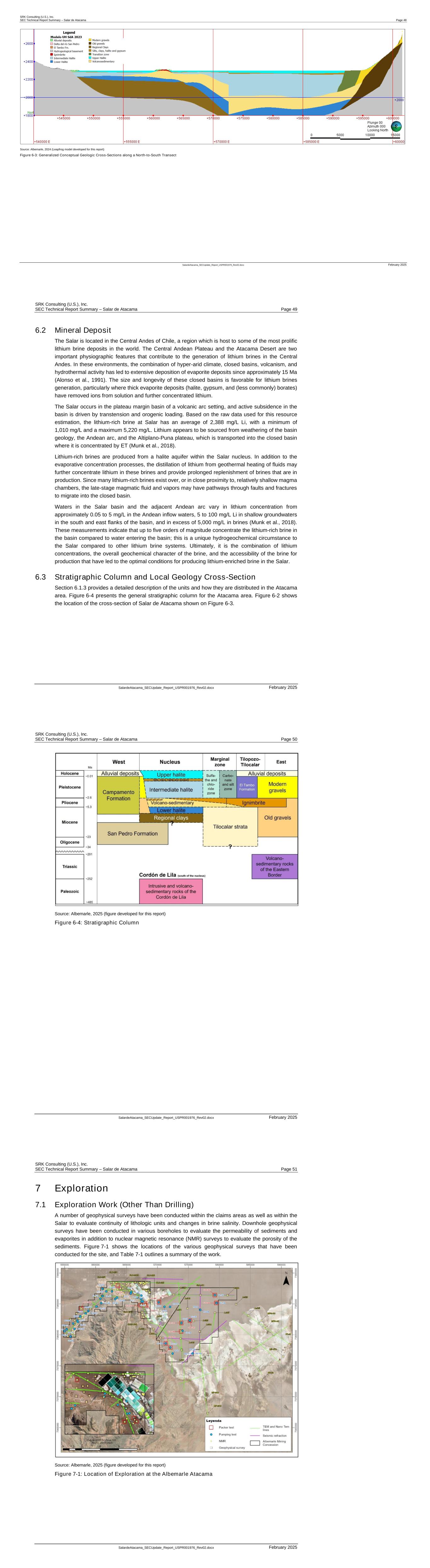

 
SRK Consulting (U.S.), Inc. SEC Technical Report Summary – Salar de Atacama Page 48 SalardeAtacama_SECUpdate_Report_USPR001976_Rev02.docx February 2025 Source: Albemarle, 2024 (Leapfrog model developed for this report) Figure 6-3: Generalized Conceptual Geologic Cross-Sections along a North-to-South Transect SRK Consulting (U.S.), Inc. SEC Technical Report Summary – Salar de Atacama Page 49 SalardeAtacama_SECUpdate_Report_USPR001976_Rev02.docx February 2025 6.2 Mineral Deposit The Salar is located in the Central Andes of Chile, a region which is host to some of the most prolific lithium brine deposits in the world. The Central Andean Plateau and the Atacama Desert are two important physiographic features that contribute to the generation of lithium brines in the Central Andes. In these environments, the combination of hyper-arid climate, closed basins, volcanism, and hydrothermal activity has led to extensive deposition of evaporite deposits since approximately 15 Ma (Alonso et al., 1991). The size and longevity of these closed basins is favorable for lithium brines generation, particularly where thick evaporite deposits (halite, gypsum, and (less commonly) borates) have removed ions from solution and further concentrated lithium. The Salar occurs in the plateau margin basin of a volcanic arc setting, and active subsidence in the basin is driven by transtension and orogenic loading. Based on the raw data used for this resource estimation, the lithium-rich brine at Salar has an average of 2,388 mg/L Li, with a minimum of 1,010 mg/L and a maximum 5,220 mg/L. Lithium appears to be sourced from weathering of the basin geology, the Andean arc, and the Altiplano-Puna plateau, which is transported into the closed basin where it is concentrated by ET (Munk et al., 2018). Lithium-rich brines are produced from a halite aquifer within the Salar nucleus. In addition to the evaporative concentration processes, the distillation of lithium from geothermal heating of fluids may further concentrate lithium in these brines and provide prolonged replenishment of brines that are in production. Since many lithium-rich brines exist over, or in close proximity to, relatively shallow magma chambers, the late-stage magmatic fluid and vapors may have pathways through faults and fractures to migrate into the closed basin. Waters in the Salar basin and the adjacent Andean arc vary in lithium concentration from approximately 0.05 to 5 mg/L in the Andean inflow waters, 5 to 100 mg/L Li in shallow groundwaters in the south and east flanks of the basin, and in excess of 5,000 mg/L in brines (Munk et al., 2018). These measurements indicate that up to five orders of magnitude concentrate the lithium-rich brine in the basin compared to water entering the basin; this is a unique hydrogeochemical circumstance to the Salar compared to other lithium brine systems. Ultimately, it is the combination of lithium concentrations, the overall geochemical character of the brine, and the accessibility of the brine for production that have led to the optimal conditions for producing lithium-enriched brine in the Salar. 6.3 Stratigraphic Column and Local Geology Cross-Section Section 6.1.3 provides a detailed description of the units and how they are distributed in the Atacama area. Figure 6-4 presents the general stratigraphic column for the Atacama area. Figure 6-2 shows the location of the cross-section of Salar de Atacama shown on Figure 6-3. SRK Consulting (U.S.), Inc. SEC Technical Report Summary – Salar de Atacama Page 50 SalardeAtacama_SECUpdate_Report_USPR001976_Rev02.docx February 2025 Source: Albemarle, 2025 (figure developed for this report) Figure 6-4: Stratigraphic Column SRK Consulting (U.S.), Inc. SEC Technical Report Summary – Salar de Atacama Page 51 SalardeAtacama_SECUpdate_Report_USPR001976_Rev02.docx February 2025 7 Exploration 7.1 Exploration Work (Other Than Drilling) A number of geophysical surveys have been conducted within the claims areas as well as within the Salar to evaluate continuity of lithologic units and changes in brine salinity. Downhole geophysical surveys have been conducted in various boreholes to evaluate the permeability of sediments and evaporites in addition to nuclear magnetic resonance (NMR) surveys to evaluate the porosity of the sediments. Figure 7-1 shows the locations of the various geophysical surveys that have been conducted for the site, and Table 7-1 outlines a summary of the work. Source: Albemarle, 2025 (figure developed for this report) Figure 7-1: Location of Exploration at the Albemarle Atacama


 
SRK Consulting (U.S.), Inc. SEC Technical Report Summary – Salar de Atacama Page 52 SalardeAtacama_SECUpdate_Report_USPR001976_Rev02.docx February 2025 Table 7-1: Summary of Exploration Work Exploration Techniques Company and Year Total Length (m) Number TEM and NanoTEM lines Geodatos 2013 189,090 18 Geodatos 2016/17 180,154 30 Seismic reflection Wellfield Services Ltda. 2018 - 7 NMR records Zelandez 2018 4,763 36 Zelandez 2023 4,321 79 Well geophysical records* Albemarle up to 2023 6,694 126 Wellfield 2017 2,050 16 Zelandez 2018 4,578 35 Zelandez 2023 670 12 Source: Albemarle, 2025 (table developed for this report) *Natural gamma, spontaneous potential (SP), single-point resistance (SPR), resistivity 16/64 (one probe), temperature, and fluid conductivity (one probe) 7.1.1 TEM Survey Geodatos completed an initial geophysical survey in 2003, including nine TEM and nine NanoTEM surveys, In 2016, Albemarle commissioned Geodatos to determine the geoelectric characteristics of the subsurface by acquiring additional data of the stratigraphic variations, both laterally and vertically, of the different lithologies present (Geodatos, 2017). Furthermore, the study was intended to determine the relative variations in porosity of the saturated strata, these being directly related to the variations in electrical resistivity. TEM geophysics have been used to identify the geometry of the Holocene evaporite units, including upper halite. The acquisition of TEM data was performed for 19 days from November 24, 2016, to January 12, 2017, and NanoTEM was performed for 26 days from November 24, 2016, to January 12, 2017. Figure 7-1 shows the locations of the measurement lines for both methodologies. The number of stations and lines, the spacing, and the type of loop used are detailed below: • TEM: 234 stations were measured on 15 lines, with the spacing between stations being approximately 400 m. TEM soundings were measured with Coincident Loop Tx = Rx of 100 square meters (m2) x 100 m2. • NanoTEM: 467 stations were measured on 15 lines, with the spacing between stations being approximately 200 m. The NanoTEM soundings were measured with a Central Loop of Tx = 50 m2 x 50 m2 and Rx = 10 m2 x 10 m2. Figure shows an example of the result of a TEM profile (the trace of which is shown in red on the lower map) made in the north of the study area. SRK Consulting (U.S.), Inc. SEC Technical Report Summary – Salar de Atacama Page 53 SalardeAtacama_SECUpdate_Report_USPR001976_Rev02.docx February 2025 Source: GWI, 2019 Figure 7-2: Example of Results from the Geophysical Profile TEM 7.1.2 Seismic Reflection In 2018, Albemarle commissioned Wellfield Services Ltda. to carry out a seismic study in the southern portion of Salar de Atacama (specifically on the Albemarle mining concession in this area) to characterize the geology. This study includes the application of the seismic reflection technique, with a vibratory energy source for accessible areas of relatively flat terrain (Wellfield Services Ltda., 2019). The topography work began on October 11, 2018, and ended on February 13, 2019. The seismic record begins on November 18, 2018, and ends on February 14, 2019. The seismic survey considered seven seismic lines, the locations of which are shown on Figure 7-1. The horizons generated in the sequence have satisfactory intensity and resolution, being able to distinguish horizontal and vertical events both at the level of the stack in the two-dimensional (2D) lines. Reflection seismic results were used to define the roof of the San Pedro Formation. 7.1.3 Borehole Geophysics During the 2017 and 2018 drilling campaign, downhole geophysical logging was carried out by Zelandez in 26 boreholes over a total lithological column recorded of approximately 2,000 m. A similar geophysical campaign was conducted by Zelandez in 2023 in 12 boreholes, recording approximately 700 m of data. SRK Consulting (U.S.), Inc. SEC Technical Report Summary – Salar de Atacama Page 54 SalardeAtacama_SECUpdate_Report_USPR001976_Rev02.docx February 2025 Geophysical logging was carried out using the following probes: • Caliper (one probe) • Natural gamma, SP, SPR, and resistivity 16/64 (one probe) • Temperature and fluid conductivity (one probe) Use of several of these probes require that the boreholes not be cased. Because the surveys were made during drilling, a complete record is not always available because it was necessary to leave certain meterage within casings as protection against instabilities of the borehole walls. Figure 7-3 shows an example of the measurement results of a borehole with the different parameters measured in the field. SRK Consulting (U.S.), Inc. SEC Technical Report Summary – Salar de Atacama Page 55 SalardeAtacama_SECUpdate_Report_USPR001976_Rev02.docx February 2025 Source: GWI, 2019 Figure 7-3: Example of Geophysical Log in Well CLO-100
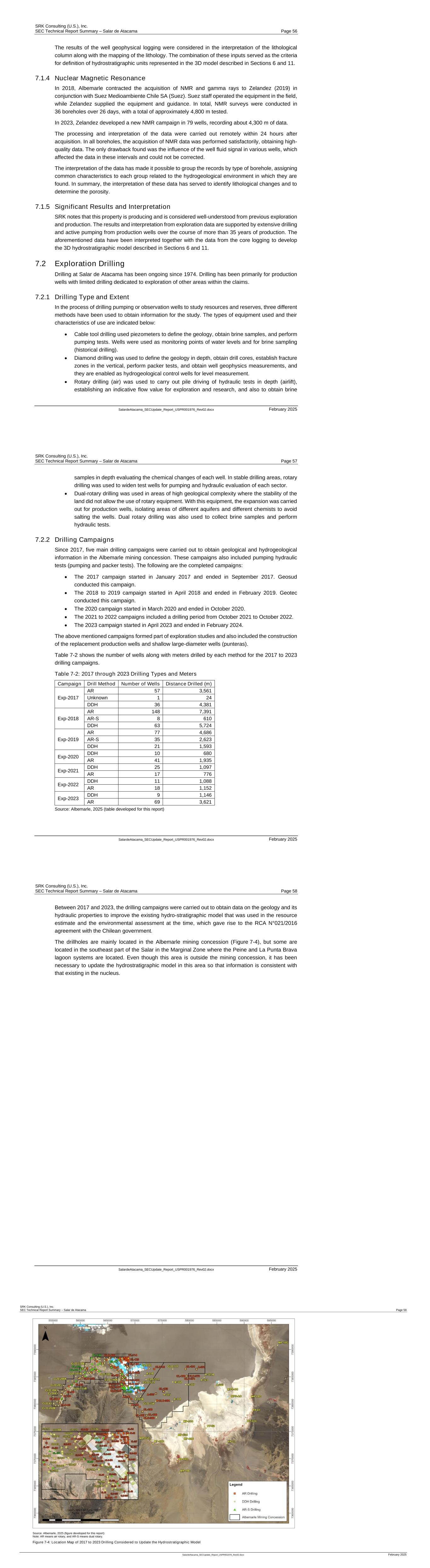

 
SRK Consulting (U.S.), Inc. SEC Technical Report Summary – Salar de Atacama Page 56 SalardeAtacama_SECUpdate_Report_USPR001976_Rev02.docx February 2025 The results of the well geophysical logging were considered in the interpretation of the lithological column along with the mapping of the lithology. The combination of these inputs served as the criteria for definition of hydrostratigraphic units represented in the 3D model described in Sections 6 and 11. 7.1.4 Nuclear Magnetic Resonance In 2018, Albemarle contracted the acquisition of NMR and gamma rays to Zelandez (2019) in conjunction with Suez Medioambiente Chile SA (Suez). Suez staff operated the equipment in the field, while Zelandez supplied the equipment and guidance. In total, NMR surveys were conducted in 36 boreholes over 26 days, with a total of approximately 4,800 m tested. In 2023, Zelandez developed a new NMR campaign in 79 wells, recording about 4,300 m of data. The processing and interpretation of the data were carried out remotely within 24 hours after acquisition. In all boreholes, the acquisition of NMR data was performed satisfactorily, obtaining high- quality data. The only drawback found was the influence of the well fluid signal in various wells, which affected the data in these intervals and could not be corrected. The interpretation of the data has made it possible to group the records by type of borehole, assigning common characteristics to each group related to the hydrogeological environment in which they are found. In summary, the interpretation of these data has served to identify lithological changes and to determine the porosity. 7.1.5 Significant Results and Interpretation SRK notes that this property is producing and is considered well-understood from previous exploration and production. The results and interpretation from exploration data are supported by extensive drilling and active pumping from production wells over the course of more than 35 years of production. The aforementioned data have been interpreted together with the data from the core logging to develop the 3D hydrostratigraphic model described in Sections 6 and 11. 7.2 Exploration Drilling Drilling at Salar de Atacama has been ongoing since 1974. Drilling has been primarily for production wells with limited drilling dedicated to exploration of other areas within the claims. 7.2.1 Drilling Type and Extent In the process of drilling pumping or observation wells to study resources and reserves, three different methods have been used to obtain information for the study. The types of equipment used and their characteristics of use are indicated below: • Cable tool drilling used piezometers to define the geology, obtain brine samples, and perform pumping tests. Wells were used as monitoring points of water levels and for brine sampling (historical drilling). • Diamond drilling was used to define the geology in depth, obtain drill cores, establish fracture zones in the vertical, perform packer tests, and obtain well geophysics measurements, and they are enabled as hydrogeological control wells for level measurement. • Rotary drilling (air) was used to carry out pile driving of hydraulic tests in depth (airlift), establishing an indicative flow value for exploration and research, and also to obtain brine SRK Consulting (U.S.), Inc. SEC Technical Report Summary – Salar de Atacama Page 57 SalardeAtacama_SECUpdate_Report_USPR001976_Rev02.docx February 2025 samples in depth evaluating the chemical changes of each well. In stable drilling areas, rotary drilling was used to widen test wells for pumping and hydraulic evaluation of each sector. • Dual-rotary drilling was used in areas of high geological complexity where the stability of the land did not allow the use of rotary equipment. With this equipment, the expansion was carried out for production wells, isolating areas of different aquifers and different chemists to avoid salting the wells. Dual rotary drilling was also used to collect brine samples and perform hydraulic tests. 7.2.2 Drilling Campaigns Since 2017, five main drilling campaigns were carried out to obtain geological and hydrogeological information in the Albemarle mining concession. These campaigns also included pumping hydraulic tests (pumping and packer tests). The following are the completed campaigns: • The 2017 campaign started in January 2017 and ended in September 2017. Geosud conducted this campaign. • The 2018 to 2019 campaign started in April 2018 and ended in February 2019. Geotec conducted this campaign. • The 2020 campaign started in March 2020 and ended in October 2020. • The 2021 to 2022 campaigns included a drilling period from October 2021 to October 2022. • The 2023 campaign started in April 2023 and ended in February 2024. The above mentioned campaigns formed part of exploration studies and also included the construction of the replacement production wells and shallow large-diameter wells (punteras). Table 7-2 shows the number of wells along with meters drilled by each method for the 2017 to 2023 drilling campaigns. Table 7-2: 2017 through 2023 Drilling Types and Meters Campaign Drill Method Number of Wells Distance Drilled (m) Exp-2017 AR 57 3,561 Unknown 1 24 DDH 36 4,381 Exp-2018 AR 148 7,391 AR-S 8 610 DDH 63 5,724 Exp-2019 AR 77 4,686 AR-S 35 2,623 DDH 21 1,593 Exp-2020 DDH 10 680 AR 41 1,935 Exp-2021 DDH 25 1,097 AR 17 776 Exp-2022 DDH 11 1,088 AR 18 1,152 Exp-2023 DDH 9 1,146 AR 69 3,621 Source: Albemarle, 2025 (table developed for this report) SRK Consulting (U.S.), Inc. SEC Technical Report Summary – Salar de Atacama Page 58 SalardeAtacama_SECUpdate_Report_USPR001976_Rev02.docx February 2025 Between 2017 and 2023, the drilling campaigns were carried out to obtain data on the geology and its hydraulic properties to improve the existing hydro-stratigraphic model that was used in the resource estimate and the environmental assessment at the time, which gave rise to the RCA N°021/2016 agreement with the Chilean government. The drillholes are mainly located in the Albemarle mining concession (Figure 7-4), but some are located in the southeast part of the Salar in the Marginal Zone where the Peine and La Punta Brava lagoon systems are located. Even though this area is outside the mining concession, it has been necessary to update the hydrostratigraphic model in this area so that information is consistent with that existing in the nucleus. SRK Consulting (U.S.), Inc. SEC Technical Report Summary – Salar de Atacama Page 59 SalardeAtacama_SECUpdate_Report_USPR001976_Rev02.docx February 2025 Source: Albemarle, 2025 (figure developed for this report) Note: AR means air rotary, and AR-S means dual rotary. Figure 7-4: Location Map of 2017 to 2023 Drilling Considered to Update the Hydrostratigraphic Model
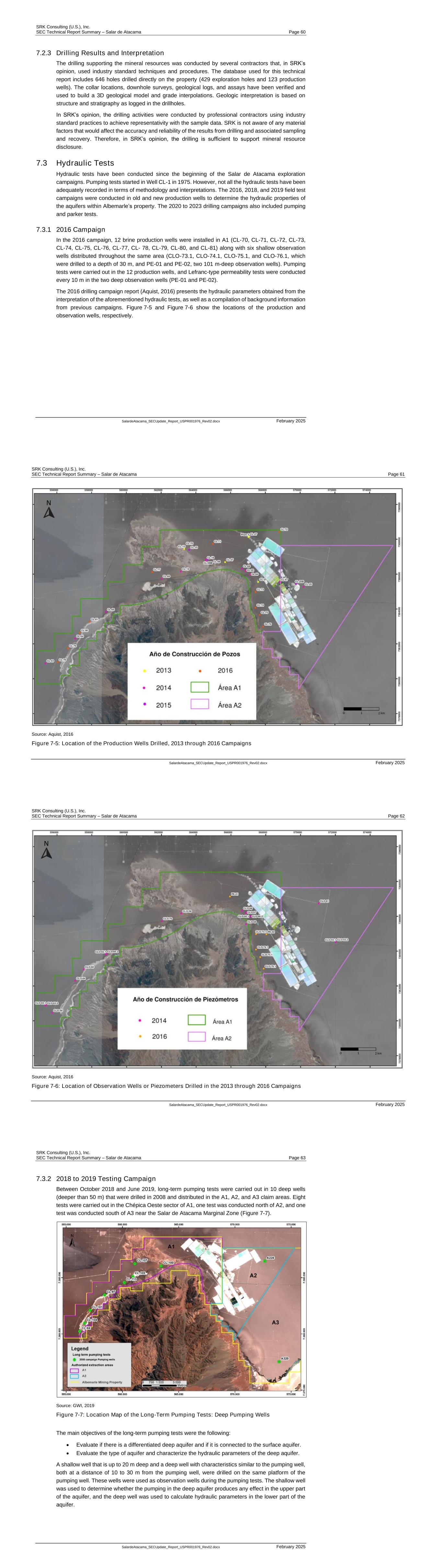

 
SRK Consulting (U.S.), Inc. SEC Technical Report Summary – Salar de Atacama Page 60 SalardeAtacama_SECUpdate_Report_USPR001976_Rev02.docx February 2025 7.2.3 Drilling Results and Interpretation The drilling supporting the mineral resources was conducted by several contractors that, in SRK’s opinion, used industry standard techniques and procedures. The database used for this technical report includes 646 holes drilled directly on the property (429 exploration holes and 123 production wells). The collar locations, downhole surveys, geological logs, and assays have been verified and used to build a 3D geological model and grade interpolations. Geologic interpretation is based on structure and stratigraphy as logged in the drillholes. In SRK’s opinion, the drilling activities were conducted by professional contractors using industry standard practices to achieve representativity with the sample data. SRK is not aware of any material factors that would affect the accuracy and reliability of the results from drilling and associated sampling and recovery. Therefore, in SRK’s opinion, the drilling is sufficient to support mineral resource disclosure. 7.3 Hydraulic Tests Hydraulic tests have been conducted since the beginning of the Salar de Atacama exploration campaigns. Pumping tests started in Well CL-1 in 1975. However, not all the hydraulic tests have been adequately recorded in terms of methodology and interpretations. The 2016, 2018, and 2019 field test campaigns were conducted in old and new production wells to determine the hydraulic properties of the aquifers within Albemarle’s property. The 2020 to 2023 drilling campaigns also included pumping and parker tests. 7.3.1 2016 Campaign In the 2016 campaign, 12 brine production wells were installed in A1 (CL-70, CL-71, CL-72, CL-73, CL-74, CL-75, CL-76, CL-77, CL- 78, CL-79, CL-80, and CL-81) along with six shallow observation wells distributed throughout the same area (CLO-73.1, CLO-74.1, CLO-75.1, and CLO-76.1, which were drilled to a depth of 30 m, and PE-01 and PE-02, two 101 m-deep observation wells). Pumping tests were carried out in the 12 production wells, and Lefranc-type permeability tests were conducted every 10 m in the two deep observation wells (PE-01 and PE-02). The 2016 drilling campaign report (Aquist, 2016) presents the hydraulic parameters obtained from the interpretation of the aforementioned hydraulic tests, as well as a compilation of background information from previous campaigns. Figure 7-5 and Figure 7-6 show the locations of the production and observation wells, respectively. SRK Consulting (U.S.), Inc. SEC Technical Report Summary – Salar de Atacama Page 61 SalardeAtacama_SECUpdate_Report_USPR001976_Rev02.docx February 2025 Source: Aquist, 2016 Figure 7-5: Location of the Production Wells Drilled, 2013 through 2016 Campaigns SRK Consulting (U.S.), Inc. SEC Technical Report Summary – Salar de Atacama Page 62 SalardeAtacama_SECUpdate_Report_USPR001976_Rev02.docx February 2025 Source: Aquist, 2016 Figure 7-6: Location of Observation Wells or Piezometers Drilled in the 2013 through 2016 Campaigns SRK Consulting (U.S.), Inc. SEC Technical Report Summary – Salar de Atacama Page 63 SalardeAtacama_SECUpdate_Report_USPR001976_Rev02.docx February 2025 7.3.2 2018 to 2019 Testing Campaign Between October 2018 and June 2019, long-term pumping tests were carried out in 10 deep wells (deeper than 50 m) that were drilled in 2008 and distributed in the A1, A2, and A3 claim areas. Eight tests were carried out in the Chépica Oeste sector of A1, one test was conducted north of A2, and one test was conducted south of A3 near the Salar de Atacama Marginal Zone (Figure 7-7). Source: GWI, 2019 Figure 7-7: Location Map of the Long-Term Pumping Tests: Deep Pumping Wells The main objectives of the long-term pumping tests were the following: • Evaluate if there is a differentiated deep aquifer and if it is connected to the surface aquifer. • Evaluate the type of aquifer and characterize the hydraulic parameters of the deep aquifer. A shallow well that is up to 20 m deep and a deep well with characteristics similar to the pumping well, both at a distance of 10 to 30 m from the pumping well, were drilled on the same platform of the pumping well. These wells were used as observation wells during the pumping tests. The shallow well was used to determine whether the pumping in the deep aquifer produces any effect in the upper part of the aquifer, and the deep well was used to calculate hydraulic parameters in the lower part of the aquifer.


 
SRK Consulting (U.S.), Inc. SEC Technical Report Summary – Salar de Atacama Page 64 SalardeAtacama_SECUpdate_Report_USPR001976_Rev02.docx February 2025 Pumping Tests Design Up to three pumping tests were carried out in each pumping well: a first trial of 1-hour duration, a second test of staggered flow between 3 and 4 hours in duration, and a third test at constant flow for 7 days. Where a flow rate >5 L/s could not be extracted, only trial and error and constant flow tests were conducted. Where a flow rate >5 L/s could be maintained, the three tests were carried out. After each test, recovery was monitored. During the constant flow pumping tests, four brine samples were collected to determine if there is a chemical evolution during the duration of pumping. 7.3.3 2020 to 2023 Testing Campaign From 2020 to 2023, hydraulic tests were performed at Albemarle’s property as part of the drilling campaigns or hydraulic studies to support the hydrogeological model. In 2020, two pumping tests were conducted in shallow wells located in Sector A1 close to the evaporation ponds. Four additional pumping tests (distributed in Sector A1) were performed in 2021: one in the southern part, two in Chepica, and one close to the evaporation ponds. In 2022, four pumping tests were conducted in Sector A1 (three in Chepica) with packer tests in three wells (two in Sector A1 and one in Sector A2). Finally, a hydrogeological field campaign was conducted in 2023, covering Sector A3, including several pumping and packer tests in seven wells. Figure 7-8 shows the location of the hydraulic tests performed from 2020 to 2023. SRK Consulting (U.S.), Inc. SEC Technical Report Summary – Salar de Atacama Page 65 SalardeAtacama_SECUpdate_Report_USPR001976_Rev02.docx February 2025 Source:: Albemarle, 2025 (figure elaborated for this report) Figure 7-8: Location Map of Hydraulic Tests Performed from 2020 to 2023 7.3.4 Packer Testing Campaign Albemarle requested that Suez and Solexperts SA carry out an exploration project using a system of inflatable shutters (packers) in wells in Salar de Atacama (Suez, 2019) during two campaigns: July 2018 and October to November 2018. The tests were carried out in seven wells distributed along areas A1, A2, and A3 in 2018 (Figure 7-8). SRK Consulting (U.S.), Inc. SEC Technical Report Summary – Salar de Atacama Page 66 SalardeAtacama_SECUpdate_Report_USPR001976_Rev02.docx February 2025 Source: Suez, 2019 Figure 7-9: Map of the Location of the Wells Tested by the Double Packer System This type of hydraulic test allows for obtaining hydraulic parameters at specific depth intervals by means of two packers that individualize the section to be tested from the rest of the vertical well column. In this way, the permeability (K) and transmissivity (T) of a given geological formation can be characterized and/or representative brine samples can be extracted from specific depths of the aquifer. The hydraulic parameters from the packer tests were obtained using the Aquifer Test software (Waterloo Hydrogeologic, 2016). Each of the companies that acquired the exploration data generated a report describing the details of the work carried out, the methods used for processing the data, and the conclusions. Albemarle’s hydrogeology team reviewed the data and subsequently provided them to SRK. Similar packer test were conducted in 2022 and 2023, as described in Section 7.3.3. 7.3.5 Pumping Test Reanalysis by SRK in 2020 The long-term constant rate pumping tests were initially analyzed to evaluate the aquifer properties specified in the objectives above, but test results were deemed inadequate due to the analysis assumptions and the aquifer conditions provided. SRK reanalyzed the tests in the summer of 2020 using the AQTESOLV™ analytical software (HydroSOLVE, Inc., 2008). Results varied by analysis since each method makes different assumptions and is subject to interpretation. Some challenges were encountered when analyzing the pumping tests and resulted in a lower level of confidence of the estimated hydraulic parameters. For example, discrete hydraulic parameters from the upper observational wells could not be calculated due to the nature of the analysis SRK Consulting (U.S.), Inc. SEC Technical Report Summary – Salar de Atacama Page 67 SalardeAtacama_SECUpdate_Report_USPR001976_Rev02.docx February 2025 methods and the largely heterogeneous aquifer conditions. Instead, only general conditions could be implied, such as the propensity for a vertical hydraulic connection between two aquifers separated by a semi-confining unit. A conceptual hydrogeologic setting of the test sites were developed with the analysis and diagnosis of the data provided; these include the following assumptions or characteristics of the aquifers: • Most tests likely took place in partially confined conditions. • Derivative analysis indicates possibly leaky, locally confining aquitards and/or constant head boundary conditions (facies changes and cordillera) in some cases. • Aquifer was not stressed long enough to transition to delayed yield. • Leaky confined conditions observe storage influence from connected systems, inflecting storage parameters. Reliable specific yields are from 4.9% to 13.0%. • Leaky confined systems calculate vertical hydraulic conductivity of the aquitard (K’), but it is often unconfirmed by upper well response. • Deep aquifer shows small variation in the transmissivity values calculated by Albemarle in 2019. • Reliable calculated hydraulic conductivity values range from 1.1 to 4.6 meters per day (m/d) in sequences of gravel, ignimbrite, and sands, average 0.26 m/d in sequences of gypsum and ash, and range from 2.9 to 3.4 m/d in layers of ash, evaporites, and gypsum. 7.3.6 Data Summary The hydrogeological data described in the previous chapters and additional information on hydraulic properties outside of the Albemarle property available from the governmental agency CORFO (SGA, 2015b, and Amphos21, 2018) and the SQM environmental report (SQM, 2020) were used as a reference to construct the dynamic groundwater model, as described in Section 12. Table 7-3 summarizes the measured hydraulic conductivity values, and Table 7-4 shows the groundwater storage values (Sy) within the hydrogeological units. Table 7-3: Summary of Measured Hydraulic Conductivity Values Hydrogeological Unit (UH) Description Measured Number of Tests Minimum Maximum Median1 UH-1E Upper Halite East 79 0.216 10,000 100 UH-1W Upper Halite West 26 0.4 500 3 UH-2 Silts, Clays, Halite, and Gypsum 14 0.096 5.456 0.895 UH-3 Intermediate Halite 72 0.002 100 0.55 UH-4 Volcano-Sedimentary 35 0.1 188 1.949 UH-5 Lower Halite 6 0.0004 0.737 0.073 UH-6 Transition Zone 63 0.001 558 3 UH-7 Alluvial Deposits 4 0.288 5.18 0.708 UH-8 Modern Gravels 16 1.19 115 14.05 UH-9 Ignimbrite 5 0.163 0.467 0.21 UH-10 Old Gravels 3 10 25.6 10.79 UH-12 Delta del Rio San Pedro 6 0.00008 0.0004 0.0002 Source: SRK, 2024 1Median is the value in the middle of a set of measurements (also called 50th percentile).


 
SRK Consulting (U.S.), Inc. SEC Technical Report Summary – Salar de Atacama Page 68 SalardeAtacama_SECUpdate_Report_USPR001976_Rev02.docx February 2025 Table 7-4: Summary of Measured Groundwater Storage Values (Sy) Hydrogeological Unit (UH) Description Number of Tests Measured Sy Minimum Maximum Average UH-1 Upper Halite East 9 0.001 0.55 0.09 Upper Halite West UH-3 Intermediate Halite 25 0.004 0.269 0.07 UH-5 Lower Halite 4 0.001 0.32 0.08 UH-6 Transition Zone - - - - UH-7 Alluvial Deposits 10 0.001 0.2 0.05 UH-8 Modern Gravels UH-4 Volcano-Sedimentary 36 0.001 0.558 0.16 UH-9 Ignimbrite UH-10 Old Gravels UH-11 El Tambo Formation UH-2 Silts, Clays, Halite, and Gypsum 19 0.003 0.554 0.11 UH-12 Delta del Rio San Pedro UH-13 Regional Clays Source: SRK, 2024 Note: Specific yield measured values over 0.6 have been discarded. 7.4 Brine Sampling In the early stages of the drilling campaign, brine samples were collected from trenches, monitoring wells, and pumping wells drilled from 1974 to 1979. However, no further details were available for SRK to review. Historical samples have been collected from production and monitoring wells and analyzed in the on-site Salar laboratory (Albemarle). The samples were systematically collected on a monthly basis since January 1999. The hydrochemistry Albemarle database (used in the groundwater model to support the reserve estimate) has records through December 2023. Albemarle also provided a secondary hydrochemistry database with records from January 1999 to August 2020; it has similar values with the database mentioned above. Albemarle does not use these records for any evaluation or future planning, and SRK used this alternative database for comparison purposes only. Figure 7-9 and Figure 7-10 show the distribution of the sampling point and the lithium concentration recorded from 1999 to 2019. SRK Consulting (U.S.), Inc. SEC Technical Report Summary – Salar de Atacama Page 69 SalardeAtacama_SECUpdate_Report_USPR001976_Rev02.docx February 2025 Source: SRK, 2021 Figure 7-10: Historical Sampling Points Location, 1999 to 2019 Source: SRK, 2024 Note: The graph only includes samples within Albemarle’s claim areas. Figure 7-11: Measured Lithium Concentration from Historical Database, 1999 to 2023 SRK Consulting (U.S.), Inc. SEC Technical Report Summary – Salar de Atacama Page 70 SalardeAtacama_SECUpdate_Report_USPR001976_Rev02.docx February 2025 In 2018 and 2019, 77 samples were collected: 12 samples from exploration wells using a packer, 32 samples during long-term pumping tests, seven samples in short-term pumping tests, and 26 samples from the production wells, extracted at 48 different points. This sampling campaign was designed to support a resource model estimate. A new brine sampling campaign was conducted in 2022 to update the resource estimate. Section 8 describes both campaigns in detail. SRK Consulting (U.S.), Inc. SEC Technical Report Summary – Salar de Atacama Page 71 SalardeAtacama_SECUpdate_Report_USPR001976_Rev02.docx February 2025 8 Sample Preparation, Analysis, and Security Samples of the host rocks and the brines themselves have been collected and analyzed from the active production wells as part of operations at Atacama since 1999. During the exploration campaign carried out between 2018 and 2019, 77 brine samples were extracted at 48 different points. Additionally, a sampling campaign was carried in 2022 in 33 production wells and 24 observation wells. Samples from existing production wells, pumping tests, and packer tests were sent to the different laboratories as outlined below as part of the quality assurance/quality control (QA/QC) process. The samples from 2018 to 2019 and 2022 to 2023 campaign were considered for the resource estimate (as they are reflective of current Salar conditions). Historical samples measured since 1999 were used for development and calibration of the numerical groundwater model to support the reserve estimate. 8.1 Sample Collection 8.1.1 Historical Sampling Lithium concentrations from historical sampling were available for 147 monitoring locations, with over 7,900 samples from January 1999 to July 2024 within Albemarle’s properties and the transition zone to the southeast. Since the beginning of the extraction of brine at the Salar Plant, samples from the pumping wells have been periodically analyzed. Since 1999, brine chemistry data have been collected on a monthly basis. These samplings are carried out to control the chemical evolution of the brine that will be pumped to the evaporation ponds. The sampling method is by means of 1- or 0.5-liter (L) plastic bottles; one sample is taken per month from each well. Until 2018, this sampling was carried out at the outlet of each high-density polyethylene (HDPE) line, when the brine was discharged into the pond. During 2018, wastewater valves began to be installed after the flowmeter, which reduces risks and improves the representativeness of the sample, as they are taken right at the wellhead. The analyses are carried out in the Salar Plant laboratory, and the following determinations are usually made: density, Li+(%), SO4 -2 (%), Ca+2(%), Mg+2(%), K+(%), Na+(%), Cl-(%), B+(%), temperature (°C), and pH. It is noted than Salar Plant laboratory is not independent of Albemarle. Figure 8-1 shows the box-and-whisker diagram of the historical variability (since 1999) of lithium concentrations in the samplings from production wells and expressed as an annual average per well.


 
SRK Consulting (U.S.), Inc. SEC Technical Report Summary – Salar de Atacama Page 72 SalardeAtacama_SECUpdate_Report_USPR001976_Rev02.docx February 2025 Source: SRK, 2024 Note: Each data point (circle) represents an average concentration at a specific location at the year shown; x symbols connected by a line represent the multi-well average of that year. Figure 8-1: Historical Lithium Variability, 1999 to 2023 As can be seen on Figure 8-2, the minimum values (established by the lower whisker) do not materially change with time, so SRK interpreted that the brine has a minimum lithium concentration that remains unchanged. It can also be seen that the median in the last 10 years remains relatively steady. The historical brine samples collected at pumping wells were used for a qualitative indication of brine grade persistence over the prolonged pumping periods. The samples were also used quantitatively in developing the grade interpolations as input to the numerical groundwater model. Historical brine samples were not used for developing the resource estimate. 8.1.2 2018 and 2019 Campaign Considering the brine is a dynamic resource, the samples to support the resource estimate need to be collected in a recent time period. The 2018 to 2019 sampling campaign was developed with that purpose in mind. The 77 samples obtained during the 2018 to 2019 campaign were collected from 12 exploration wells using a packer, 32 during long-term pumping tests, seven in short-term pumping tests, and 26 from the production wells extracted at 48 different points (Table 8-1). The following sections provide details on each of the different sampling rounds and how each dataset were used in the resource and reserve estimation process. SRK Consulting (U.S.), Inc. SEC Technical Report Summary – Salar de Atacama Page 73 SalardeAtacama_SECUpdate_Report_USPR001976_Rev02.docx February 2025 Table 8-1: List and Coordinates of Production Wells Sampled for the 2018 to 2019 Campaign Well X_UTM WGS84 Y_UTM WGS84 CL-120 568,791 7,388,180 CL-85 568,447 7,385,037 CL-92 567,679 7,385,928 CL-41 556,151 7,381,491 CL-59 555,731 7,380,459 CL-98 559,973 7,386,200 CL-99 568,048 7,384,939 CL-78 556,046 7,380,948 CL-80 557,315 7,382,635 CL-91 567,715 7,382,838 CL-90 567,488 7,383,686 CL-1 573,041 7,384,392 CL-115 566,959 7,386,256 CL-15 563,329 7,387,453 CL-19 563,132 7,386,157 CL-20 564,190 7,387,063 CL-22 566,843 7,386,203 CL-23 571,141 7,384,543 CL-24 570,070 7,382,264 CL-27 567,535 7,387,586 CL-37 565,679 7,386,693 CL-45 571,689 7,387,482 CL-60 557,531 7,382,960 CL-65 558,805 7,383,832 CL-79 556,639 7,381,750 CL-9 564,577 7,386,801 CL-97 558,413 7,383,460 Source: GWI, 2019 Packer Sampling The samples extracted with the double packer system were obtained after pumping the tested interval at a time equal to at least three times the volume of brine storage in the well plus the existing volume in the pipes that carry the brine to the surface. In this way, the extracted sample is representative of the conditions of the brine entering the well and not of the brine previously stored in it, which may have its origin in other layers of the aquifer. Therefore, the duration of each test is determined as the time necessary for the volume of brine contained in the tested interval (plus accumulated water column in the polyvinyl chloride (PVC) pipes) to be renewed ideally more than three times; this has not been possible in all cases due to the low flow that some intervals present. In some tests, the evolution of the physical-chemical parameters of the brine have been recorded during the pumping test with a HANNA HI 98194 multiparameter through the use of a flow cell. The flow cell makes it possible to measure parameters before the brine comes into contact with the atmosphere. Multi-parameter gear was only available during the first double packer system field campaign. Sampling from Pumping Test and Production Wells The sampling of the production wells was carried out in different campaigns between the months of December 2018 and April 2019. A brine sample was extracted from 27 production wells distributed throughout claim areas A1 and A2, where 23 and four wells were sampled, respectively (Table 8-1). SRK Consulting (U.S.), Inc. SEC Technical Report Summary – Salar de Atacama Page 74 SalardeAtacama_SECUpdate_Report_USPR001976_Rev02.docx February 2025 The brine samples were taken from the pipeline of each of the production wells or from a sampling valve on the pumping well pipe during the pumping test (Figure 8-2). The bottles were rinsed three times with the brine from the well and then completely filled without leaving air bubbles to avoid precipitation processes and physical-chemical changes within the container. In addition, during the sampling, physicochemical parameters of the brine (specifically pH, electrical conductivity (EC), total dissolved solids (TDS), and temperature) were measured using the Hanna HI98196, HI98192, and HI98128 multiparameter meter. A multiparameter data verification procedure was followed, and the meter was calibrated, if necessary. Source: GWI, 2019 Figure 8-2: Production Wells Sampled The bottles were labeled with the name of the well, the type of well (e.g., production well), and the date and time of sampling. The sampling information was recorded in project records. Five 1-L bottles were collected from each well. During the transport and storage of the samples, exposure to environmental conditions was prevented to avoid sudden changes in temperature that might alter the chemical composition of the sample. It was not necessary to use preservatives. Notably, the extraction flow rate and the depth of the brine level in Albemarle's production wells are monitored online by a telemetry system. SRK Consulting (U.S.), Inc. SEC Technical Report Summary – Salar de Atacama Page 75 SalardeAtacama_SECUpdate_Report_USPR001976_Rev02.docx February 2025 8.1.3 2022 Campaign A new brine sampling campaign was carried out in 2022. The targets were to update the lithium concentration data in the production wells for the resource estimate and to verify their correlation with the historical records from Albemarle’s laboratories (Planta Salar). The samples were collected from 33 production wells and 24 observation wells between June and December of 2022. The samples are located in Albemarle areas A1, A2, and A3. Table 8-2 shows the distribution and details of the samples from the 2022 campaign. The sample was collected directly from the discharge valve after the flowmeter in production wells. A pump was installed to purge at least three volumes of the well prior to taking a sample in the monitoring wells.


 
SRK Consulting (U.S.), Inc. SEC Technical Report Summary – Salar de Atacama Page 76 SalardeAtacama_SECUpdate_Report_USPR001976_Rev02.docx February 2025 Table 8-2: List and Coordinates of Production and Observation Wells Sampled during the 2022 to 2023 Campaign Well X_UTM WGS84 Y_UTM WGS84 CL-1 573,049 7,384,403 CL-100 563,437 7,386,040 CL-101 557,123 7,382,092 CL-104 556,633 7,380,959 CL-106 568,797 7,388,505 CL-107 561,110 7,386,256 CL-113 560,156 7,384,585 CL-114 568,672 7,388,530 CL-119 568,474 7,388,527 CL-128 568,577 7,387,972 CL-133 562,022 7,386,212 CL-134 562,789 7,386,481 CL-136 562,033 7,388,407 CL-137 562,139 7,387,328 CL-140 568,243 7,382,732 CL-149 567,944 7,382,746 CL-151 563,211 7,387,236 CL-154 563,962 7,386,065 CL-155 563,003 7,387,844 CL-158 562,142 7,387,327 CL-162 567,630 7,385,423 CL-163 566,038 7,387,211 CL-168 568,458 7,385,019 CL-172 567,360 7,385,803 CL-176 555,961 7,379,740 CL-19 563,132 7,386,157 CL-45 571,689 7,387,482 CL-82 568,327 7,388,254 CL-90 567,472 7,383,701 CL-91 567,715 7,382,838 CL-94 567,510 7,383,140 CL-97 558,413 7,383,460 CL-99 568,043 7,384,955 CLO-278B 567,266 7,384,759 CLO-280A 564,444 7,388,488 CLO-280B 563,332 7,388,463 CLO-283 554,962 7,381,440 CLO-103C 559,152 7,384,211 A-304 576,830 7,380,518 CLO-111 576,925 7,386,429 A-319 573,842 7,381,896 A-317 581,305 7,386,405 A-316 572,079 7,377,960 A-227 570,195 7,381,376 A-323 582,706 7,384,944 CLO-285 556,895 7,383,479 CLO-289A 559,134 7,384,177 CLO-294 566,424 7,388,502 CLO-288A 557,688 7,384,236 A-302 576,886 7,384,042 A-307 579,291 7,383,584 A-227B 570,195 7,381,376 CLO-290 560,141 7,384,581 A-321 573,916 7,377,529 A-321B 573,916 7,377,529 A-325B 575,858 7,382,268 A-325 575,862 7,382,246 Note: CL corresponds to production wells; and CLO and A series correspond to observation wells. SRK Consulting (U.S.), Inc. SEC Technical Report Summary – Salar de Atacama Page 77 SalardeAtacama_SECUpdate_Report_USPR001976_Rev02.docx February 2025 Five samples were collected in each well in 1-L bottles, which were rinsed three times with the brine from the well and then completely filled without leaving air bubbles to avoid precipitation processes and physical-chemical changes within the container. The label in the bottle included the sample ID, laboratory code, sampler, date, and time. Other details (such well ID, laboratory, type of sample, water level, and type of well) were only included in the brine sampling database for the 2022 campaign. The following parameters were taken immediately after sampling as field parameters: pH, temperature, conductivity, TDS, redox potential, salinity, and density. The measurements were taken by using the Hanna HI98192, HI98198, and HI991001 multiparameter meter devices. The instruments were calibrated daily. 8.2 Sample Preparation, Assaying, and Analytical Procedures 8.2.1 Historical Sampling Historical samples from the production wells and observation points have been collected on a monthly basis by the operators of the Salar de Atacama Plant hydrogeology department. The samples were analyzed in the on-site plant laboratory. No duplicates were collected in this process. SRK notes that while comprehensive QA/QC or independent verification of sampling has not been a continuous part of the plant laboratory, Albemarle’s operations in Salar de Atacama have been producing lithium from brines for over 25 years. Production has been consistent with reserve planning from the brine reservoir. 8.2.2 2018 to 2019 Campaign The samples obtained from the 2018 to 2019 campaign were collected during pumping tests at discrete times of 30 minutes, 24 hours, 72 hours, and 7 days from production wells and from exploration wells using packers. The brine samples were collected as follows: • Brine was pumped from inside the well up to three times its volume or the interval to be sampled, thus ensuring that the brine being sampled represented what was flowing into the well screen from the aquifer. • Each bottle (1 L) was conditioned with the freshly extracted brine. • Five 1-L increments were extracted directly from the pump flow or from the pipe into the bottles; these were stored and duly labeled in five bottles according to the previously defined chain of custody. The destination of each bottle was: o Albemarle Laboratory: La Negra, Antofagasta, Chile, Original Sample A, 100% o K-UTEC Laboratory: Germany, Sample B, 100% o Alex Stewart Laboratory: Mendoza, Argentina, Control Sample C, 30% o Chilean Nuclear Energy Commission (CCHEN) Laboratory: Control Sample D, 30% o Albemarle Laboratory (Salar Plant Laboratory): La Negra, Antofagasta, Chile, Duplícate Sample, 100% Each bottle was labeled with the following information: • Sample number • Sample interval • Well name SRK Consulting (U.S.), Inc. SEC Technical Report Summary – Salar de Atacama Page 78 SalardeAtacama_SECUpdate_Report_USPR001976_Rev02.docx February 2025 • Depth of sampling • Type of sampling (pumping tests, production wells, or packer) • Name and company of the sampler • Date of sampling The sampling control information was entered into an Excel data sheet for further processing. All samples were stored in equivalent containers duly sealed to protect against contamination during transportation. The lithium, magnesium, potassium, calcium, sodium, boron, and sulfate chemical analyses were carried out by means of inductively coupled plasma (ICP), optical, with standards, procedures, and protocols consistent between the involved laboratories. Sulfate and chloride were determined with different techniques. Table 8-3 summarizes the methods used for each of the elements analyzed. Figure 8-3 shows the sampling points used. Table 8-3: Analytical Methods by Laboratory, 2018 to 2019 Campaign Parameter Albemarle’s Investigation Laboratory, La Negra K-Utec Laboratory, Germany Alex Stewart Laboratory, Argentina B ICP ICP ICP SO4 ICP Gravimetry Gravimetry (ICP requested) (ICP requested) Mg ICP ICP ICP Li ICP ICP ICP K ICP ICP ICP Ca ICP ICP ICP Na ICP ICP ICP Density Gravimetry No information Pycnometry Chloride Titration of precipitation with a silver nitrate solution using potassium dichromate for its detection. Automatic potentiometric titration with a solution of silver nitrate in solution. Mohr's method in solutions >5% TDS and potentiometry (ion selective electrode) in solutions <5% TDS Source: GWI, 2019 SRK Consulting (U.S.), Inc. SEC Technical Report Summary – Salar de Atacama Page 79 SalardeAtacama_SECUpdate_Report_USPR001976_Rev02.docx February 2025 Source: GWI, 2019 Figure 8-3: Sampling Points, 2018 to 2019 Campaign No sample preparation was necessary, as care was taken to obtain samples of the brine in their native state. The samples were taken by the operators of the Salar hydrogeology group, while the water resources area sent them to the corresponding laboratories. During the exploration campaign carried out between 2018 and 2019, 77 samples were extracted from 48 different points with four sample bottles each. Duplicates of the 77 samples were sent to the La Negra laboratories in Antofagasta and K-Utec in Germany, Alex Stewart laboratory (Mendoza, Argentina), and the CCHEN laboratory. The analyses carried out consisted of determining the concentration of sulfate, chloride, boron, barium (Ba), calcium, iron (Fe), potassium, lithium, magnesium, manganese (Mn), sodium, strontium (Sr), and density, according to the methods indicated in the certificates of each laboratory. Table 8-4 shows the well ID, type of test in which the samples were drawn, and the laboratories to which they were sent (all includes Alex Stewart and CCHEN). It should be noted that the fourth column indicates the depth to which the sample was extracted or the time, depending on whether it was extracted during a packer test or a pump test, respectively.
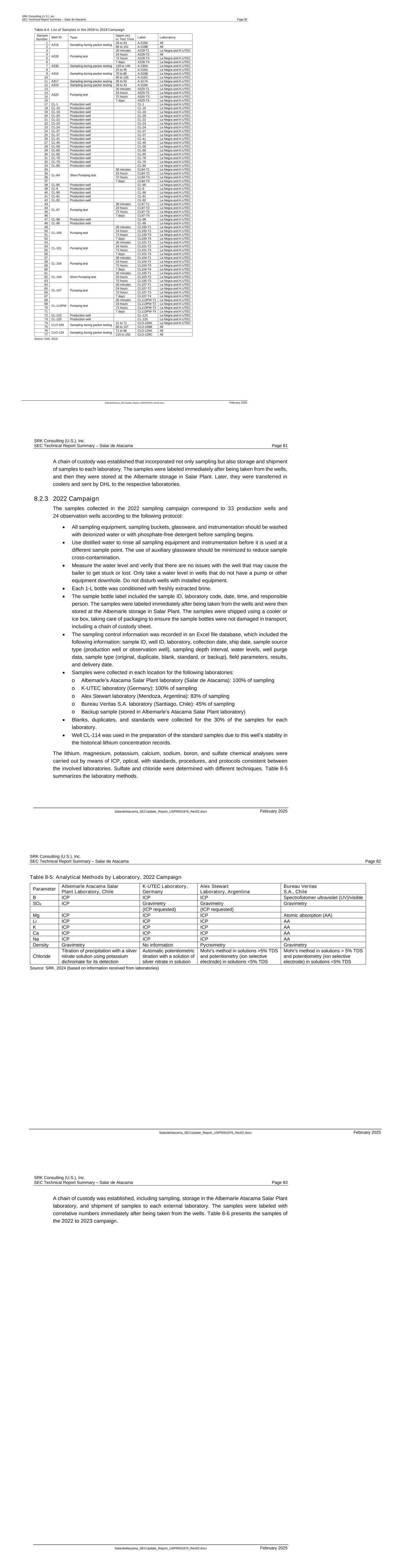

 
SRK Consulting (U.S.), Inc. SEC Technical Report Summary – Salar de Atacama Page 80 SalardeAtacama_SECUpdate_Report_USPR001976_Rev02.docx February 2025 Table 8-4: List of Samples in the 2018 to 2019 Campaign Sample Number Well ID Type Depth (m) or Test Time Label Laboratory 1 A218 Sampling during packer testing 28 to 43 A-218A All 2 86 to 101 A-218B All 3 A228 Pumping test 30 minutes A228-T1 La Negra and K-UTEC 4 24 hours A228-T2 All 5 72 hours A228-T3 La Negra and K-UTEC 6 7 days A228-T4 La Negra and K-UTEC 7 A230 Sampling during packer testing 129 to 146 A-230A La Negra and K-UTEC 8 A316 Sampling during packer testing 25 to 45 A-316A La Negra and K-UTEC 9 70 to 85 A-316B La Negra and K-UTEC 10 90 to 105 A-316C La Negra and K-UTEC 11 A317 Sampling during packer testing 35 to 50 A-317A La Negra and K-UTEC 12 A319 Sampling during packer testing 28 to 43 A-319A La Negra and K-UTEC 13 A320 Pumping test 30 minutes A320-T1 La Negra and K-UTEC 14 24 hours A320-T2 La Negra and K-UTEC 15 72 hours A320-T3 La Negra and K-UTEC 16 7 days A320-T4 La Negra and K-UTEC 17 CL-1 Production well CL-1 La Negra and K-UTEC 18 CL-15 Production well CL-15 La Negra and K-UTEC 19 CL-19 Production well CL-19 La Negra and K-UTEC 20 CL-20 Production well CL-20 La Negra and K-UTEC 21 CL-22 Production well CL-22 La Negra and K-UTEC 22 CL-23 Production well CL-23 La Negra and K-UTEC 23 CL-24 Production well CL-24 La Negra and K-UTEC 24 CL-27 Production well CL-27 La Negra and K-UTEC 25 CL-37 Production well CL-37 La Negra and K-UTEC 26 CL-41 Production well CL-41 La Negra and K-UTEC 27 CL-45 Production well CL-45 La Negra and K-UTEC 28 CL-59 Production well CL-59 La Negra and K-UTEC 29 CL-60 Production well CL-60 La Negra and K-UTEC 30 CL-65 Production well CL-65 La Negra and K-UTEC 31 CL-78 Production well CL-78 La Negra and K-UTEC 32 CL-79 Production well CL-79 La Negra and K-UTEC 33 CL-80 Production well CL-80 La Negra and K-UTEC 34 CL-84 Short Pumping test 30 minutes CL84-T1 La Negra and K-UTEC 35 24 hours CL84-T2 La Negra and K-UTEC 36 72 hours CL84-T3 La Negra and K-UTEC 37 7 days CL84-T4 La Negra and K-UTEC 38 CL-85 Production well CL-85 La Negra and K-UTEC 39 CL-9 Production well CL-9 La Negra and K-UTEC 40 CL-90 Production well CL-90 La Negra and K-UTEC 41 CL-91 Production well CL-91 La Negra and K-UTEC 42 CL-92 Production well CL-92 La Negra and K-UTEC 43 CL-97 Pumping test 30 minutes CL97-T1 La Negra and K-UTEC 44 24 hours CL97-T2 La Negra and K-UTEC 45 72 hours CL97-T3 La Negra and K-UTEC 46 7 days CL97-T4 La Negra and K-UTEC 47 CL-98 Production well CL-98 La Negra and K-UTEC 48 CL-99 Production well CL-99 La Negra and K-UTEC 49 CL-100 Pumping test 30 minutes CL100-T1 La Negra and K-UTEC 50 24 hours CL100-T2 La Negra and K-UTEC 51 72 hours CL100-T3 La Negra and K-UTEC 52 7 days CL100-T4 La Negra and K-UTEC 53 CL-101 Pumping test 30 minutes CL101-T1 La Negra and K-UTEC 54 24 hours CL101-T2 La Negra and K-UTEC 55 72 hours CL101-T3 La Negra and K-UTEC 56 7 days CL101-T4 La Negra and K-UTEC 57 CL-104 Pumping test 30 minutes CL104-T1 La Negra and K-UTEC 58 24 hours CL104-T2 La Negra and K-UTEC 59 72 hours CL104-T3 La Negra and K-UTEC 60 7 days CL104-T4 La Negra and K-UTEC 61 CL-105 Short Pumping test 30 minutes CL105-T1 La Negra and K-UTEC 62 24 hours CL105-T2 La Negra and K-UTEC 63 72 hours CL105-T3 La Negra and K-UTEC 64 CL-107 Pumping test 30 minutes CL107-T1 La Negra and K-UTEC 65 24 hours CL107-T2 La Negra and K-UTEC 66 72 hours CL107-T3 La Negra and K-UTEC 67 7 days CL107-T4 La Negra and K-UTEC 68 CL-113PW Pumping test 30 minutes CL113PW-T1 La Negra and K-UTEC 69 24 hours CL113PW-T2 La Negra and K-UTEC 70 72 hours CL113PW-T3 La Negra and K-UTEC 71 7 days CL113PW-T4 La Negra and K-UTEC 72 CL-115 Production well CL-115 La Negra and K-UTEC 73 CL-120 Production well CL-120 La Negra and K-UTEC 74 CLO-109 Sampling during packer testing 21 to 71 CLO-109A La Negra and K-UTEC 75 80 to 107 CLO-109B All 76 CLO-129 Sampling during packer testing 71 to 86 CLO-129A All 77 115 to 150 CLO-129C All Source: GWI, 2019 SRK Consulting (U.S.), Inc. SEC Technical Report Summary – Salar de Atacama Page 81 SalardeAtacama_SECUpdate_Report_USPR001976_Rev02.docx February 2025 A chain of custody was established that incorporated not only sampling but also storage and shipment of samples to each laboratory. The samples were labeled immediately after being taken from the wells, and then they were stored at the Albemarle storage in Salar Plant. Later, they were transferred in coolers and sent by DHL to the respective laboratories. 8.2.3 2022 Campaign The samples collected in the 2022 sampling campaign correspond to 33 production wells and 24 observation wells according to the following protocol: • All sampling equipment, sampling buckets, glassware, and instrumentation should be washed with deionized water or with phosphate-free detergent before sampling begins. • Use distilled water to rinse all sampling equipment and instrumentation before it is used at a different sample point. The use of auxiliary glassware should be minimized to reduce sample cross-contamination. • Measure the water level and verify that there are no issues with the well that may cause the bailer to get stuck or lost. Only take a water level in wells that do not have a pump or other equipment downhole. Do not disturb wells with installed equipment. • Each 1-L bottle was conditioned with freshly extracted brine. • The sample bottle label included the sample ID, laboratory code, date, time, and responsible person. The samples were labeled immediately after being taken from the wells and were then stored at the Albemarle storage in Salar Plant. The samples were shipped using a cooler or ice box, taking care of packaging to ensure the sample bottles were not damaged in transport, including a chain of custody sheet. • The sampling control information was recorded in an Excel file database, which included the following information: sample ID, well ID, laboratory, collection date, ship date, sample source type (production well or observation well), sampling depth interval, water levels, well purge data, sample type (original, duplicate, blank, standard, or backup), field parameters, results, and delivery date. • Samples were collected in each location for the following laboratories: o Albemarle’s Atacama Salar Plant laboratory (Salar de Atacama): 100% of sampling o K-UTEC laboratory (Germany): 100% of sampling o Alex Stewart laboratory (Mendoza, Argentina): 83% of sampling o Bureau Veritas S.A. laboratory (Santiago, Chile): 45% of sampling o Backup sample (stored in Albemarle’s Atacama Salar Plant laboratory) • Blanks, duplicates, and standards were collected for the 30% of the samples for each laboratory. • Well CL-114 was used in the preparation of the standard samples due to this well’s stability in the historical lithium concentration records. The lithium, magnesium, potassium, calcium, sodium, boron, and sulfate chemical analyses were carried out by means of ICP, optical, with standards, procedures, and protocols consistent between the involved laboratories. Sulfate and chloride were determined with different techniques. Table 8-5 summarizes the laboratory methods. SRK Consulting (U.S.), Inc. SEC Technical Report Summary – Salar de Atacama Page 82 SalardeAtacama_SECUpdate_Report_USPR001976_Rev02.docx February 2025 Table 8-5: Analytical Methods by Laboratory, 2022 Campaign Parameter Albemarle Atacama Salar Plant Laboratory, Chile K-UTEC Laboratory, Germany Alex Stewart Laboratory, Argentina Bureau Veritas S.A., Chile B ICP ICP ICP Spectrofotomer ultraviolet (UV)/visible SO4 ICP Gravimetry Gravimetry Gravimetry (ICP requested) (ICP requested) Mg ICP ICP ICP Atomic absorption (AA) Li ICP ICP ICP AA K ICP ICP ICP AA Ca ICP ICP ICP AA Na ICP ICP ICP AA Density Gravimetry No information Pycnometry Gravimetry Chloride Titration of precipitation with a silver nitrate solution using potassium dichromate for its detection Automatic potentiometric titration with a solution of silver nitrate in solution Mohr's method in solutions >5% TDS and potentiometry (ion selective electrode) in solutions <5% TDS Mohr's method in solutions > 5% TDS and potentiometry (ion selective electrode) in solutions <5% TDS Source: SRK, 2024 (based on information received from laboratories) SRK Consulting (U.S.), Inc. SEC Technical Report Summary – Salar de Atacama Page 83 SalardeAtacama_SECUpdate_Report_USPR001976_Rev02.docx February 2025 A chain of custody was established, including sampling, storage in the Albemarle Atacama Salar Plant laboratory, and shipment of samples to each external laboratory. The samples were labeled with correlative numbers immediately after being taken from the wells. Table 8-6 presents the samples of the 2022 to 2023 campaign.


 
SRK Consulting (U.S.), Inc. SEC Technical Report Summary – Salar de Atacama Page 84 SalardeAtacama_SECUpdate_Report_USPR001976_Rev02.docx February 2025 Table 8-6: List of Samples in 2022 Campaign Well Well Type Screen Interval Depth (m) Laboratory Number of Samples Top Bottom CL-1 Production 0 30 All 4 CL-100 Production 30.42 59.97 All 4 CL-101 Production 25.07 66.37 All 4 CL-104* Production 23.83 64.11 Salar 1 CL-106 Production 0 18 All 4 CL-107 Production 20.43 96.92 K-UTEC, Bureau Veritas S.A., Alex Stewart 3 CL-113 Production 30.65 77.9 All 4 CL-114 Production 0 18 All 4 CL-119 Production 0 24 All 4 CL-128 Production 0 24? K-UTEC, Alex Stewart, Salar Plant 3 CL-133 Production 31.99 93.9 All 4 CL-134 Production 36.92 95.92 All 4 CL-136 Production 32.53 76.72 All 4 CL-137 Production 35.61 76.92 All 4 CL-140 Production 54.48 86.91 All 4 CL-149 Production 33.98 86.92 All 4 CL-151 Production 11.66 40 All 4 CL-154 Production 39.22 59.43 All 4 CL-155 Production 5.79 39.9 All 4 CL-158 Production 14.4 38.1 All 4 CL-162 Production 16.29 40 All 4 CL-163 Production 13.3 39.8 All 4 CL-168 Production 0 40 K-UTEC, Alex Stewart, Salar Plant 3 CL-172 Production 23.3 46.9 All 4 CL-176 Production 29 46.9 K-UTEC, Alex Stewart, Salar Plant 3 CL-19 Production 0 30 K-UTEC, Alex Stewart, Salar Plant 3 CL-45 Production 0 30 All 4 CL-82 Production 5.4 23.1? K-UTEC, Bureau Veritas S.A., Alex Stewart 3 CL-90 Production 2.74 40 All 4 CL-91 Production 11.3 40 All 4 CL-94 Production 3.58 40 All 4 CL-97* Production 36.12 56.9 Salar 4 CL-99 Production 11.3 39.9 K-UTEC, Alex Stewart, Salar Plant 3 CLO-278B Observation Well 4.04 21.91 K-UTEC, Alex Stewart, Salar Plant 3 CLO-280A Observation Well 0 25 K-UTEC, Alex Stewart, Salar Plant 3 CLO-280B Observation Well 0 25 K-UTEC, Alex Stewart, Salar Plant 3 CLO-283* Observation Well 0 50 Salar 2 A-227 Observation Well 30 150 K-UTEC, Alex Stewart 2 A-227B Observation Well 0 30 K-UTEC, Alex Stewart 2 A-302 Observation Well 61.33 186.3 K-UTEC, Alex Stewart 2 A-304 Observation Well 77.31 155.05 K-UTEC 1 A-307 Observation Well 0 164.62 K-UTEC, Alex Stewart 2 A-316 Observation Well 71.57 113.01 K-UTEC, Alex Stewart 2 A-317 Observation Well 0 149.8 K-UTEC, Alex Stewart 2 A-319 Observation Well 64.73 123.92 K-UTEC 1 A-321 Observation Well 119.9 144.8 K-UTEC, Alex Stewart 2 A-321B Observation Well 0 30 K-UTEC, Alex Stewart 2 A-323 Observation Well 30 156.38 K-UTEC 1 A-325 Observation Well 0 30 K-UTEC 1 A-325B Observation Well 23.83 64.11 K-UTEC 1 CLO-103C Observation Well 36.12 56.9 K-UTEC, Alex Stewart 2 CLO-111 Observation Well 43.25 64.05 K-UTEC 1 CLO-285 Observation Well 0 50 K-UTEC 1 CLO-288A Observation Well 0 50 K-UTEC 1 CLO-289A Observation Well 0 43.55 K-UTEC 1 CLO-290 Observation Well 0 50 K-UTEC, Alex Stewart 2 CLO-294 Observation Well 0 50 K-UTEC 1 Source: SRK, 2024 *Not used for the final interpolation The 2022 campaign collected samples in claims areas A1, A2, and A3. Observation wells in area A3 were sampled at the end of the campaign due to problems with the pumps and the conditions of the wells. Three samples from the 2018 to 2019 campaign located in area A3 were included in the resource SRK Consulting (U.S.), Inc. SEC Technical Report Summary – Salar de Atacama Page 85 SalardeAtacama_SECUpdate_Report_USPR001976_Rev02.docx February 2025 estimate as part of the validation process. Figure 8-4 shows the location of the samples used in this study. Source: SRK, 2024 Figure 8-4: Samples Used in This Study 8.3 QA/QC Procedures QA/QC procedures are generally employed by companies to ensure accuracy and precision of the results obtained from laboratories. Generally, procedures may include independent checks (duplicates) on samples by third-party laboratories, blind blank/standard insertion into sample streams, duplicate sampling, and more. Albemarle has historically only engaged in independent third-party laboratory checks (i.e., control laboratories) of sampling, as described in Section 8.2.3 (2022 to 2023 campaign). For transparency, SRK decided to use results from one of the third-party laboratories (K-UTEC) for development of THE resource estimate. 8.3.1 Control Laboratories The procedure to control and ensure the quality of the sampling and chemical analysis performed on the samples in this study was carried out by extracting five samples from observation points. These samples were sent to Albemarle’s Atacama Salar Plant laboratory (Salar de Atacama), and the independent labs K-UTEC laboratory (Germany), Alex Stewart laboratory (Mendoza, Argentina), and Bureau Veritas S.A. laboratory (Santiago, Chile): • K-UTEC AG SALT TECHNOLOGIES (K-UTEC) is located in Sondershausen (Germany). Since 2002 has a management system certified according to DIN EN ISO 9001:2015, which include among its scope Chemical-physical process engineering and Chemical-physical analytics. Also, the department CPA / Chemical-Physical Analytics is a testing laboratory accredited according to DIN EN ISO 17025 (Accreditation DAkkS). SRK Consulting (U.S.), Inc. SEC Technical Report Summary – Salar de Atacama Page 86 SalardeAtacama_SECUpdate_Report_USPR001976_Rev02.docx February 2025 • Alex Stewart laboratory is specialized in lithium brine analyses with quality standards ISO 9001 (2015) and ISO 17025 (2017) and certified in Argentina by the OAA (Argentinian accreditation organization) for lithium and potassium ICP-OES analysis (Lab # LE187). • Bureau Veritas S.A. laboratory is certified in ISO 9001 (2015), ISO 45001, and ISO 14001. Correlation of duplicate analytical values for the same samples from independent laboratories can identify relative biases between these laboratories. In this case, the objective is not to demonstrate which laboratory is correct, as all are assumed to be high-quality laboratories using consistent analytical procedures and methods. The comparison makes it possible to review both the inherent local variability of the sampling, inconsistencies in preparation of the samples, or biases from the laboratories themselves. 8.3.2 Correlation Between Lithium Grades of Different Invariant Laboratories of the Sampling Type A comparison of the results between Albemarle’s Atacama Salar Plant laboratory and K-UTEC’s laboratory in Germany indicates a good correlation, represented by a value of 0.9789 (Figure 8-5). However, a bias can be observed between both laboratories. The K-UTEC laboratory generally results in a lower lithium concentration than Albemarle’s laboratory, especially for values >2,250 mg/L (where differences over 500 mg/L can be found). On the other hand, values below 2,250 mg/L are generally very similar (Figure 8-5). Source: SRK, 2022 Figure 8-5: Scatter Diagram Comparing the Results Obtained for Lithium between Albemarle’s Atacama Salar Plant and K-UTEC Laboratories The correlation between the Alex Stewart and Albemarle’s Atacama Salar Plant laboratories is also high (0.9788). A bias can be observed, showing a minor overestimation in the lithium concentration tested in Albemarle’s laboratory. Samples above 3,000 mg/L trends lower in Alex Stewart laboratory, SRK Consulting (U.S.), Inc. SEC Technical Report Summary – Salar de Atacama Page 87 SalardeAtacama_SECUpdate_Report_USPR001976_Rev02.docx February 2025 reaching differences up to 350 mg/L. Measured values below 3,300 mg/L are generally very similar (Figure 8-6). Source: SRK, 2024 Figure 8-6: Scatter Diagram Comparing the Results Obtained for Lithium between Albemarle’s Atacama Salar Plant and Alex Stewart Laboratories The correlation between Alex Stewart and K-UTEC laboratories is extremely good (0.995). Despite this high correlation, Alex Stewart laboratory consistently returns a slightly higher lithium concentration than K-UTEC when the values are >4,150 mg/L. Below this value, the samples are practically the same (Figure 8-7).


 
SRK Consulting (U.S.), Inc. SEC Technical Report Summary – Salar de Atacama Page 88 SalardeAtacama_SECUpdate_Report_USPR001976_Rev02.docx February 2025 Source: SRK, 2024 Figure 8-7: Scatter Diagram Comparing the Results Obtained for Lithium between Alex Stewart and K-UTEC Laboratories Finally, the Bureau Veritas S.A. laboratory shows an acceptable correlation; however, a significant bias is observed with the K-UTEC data. The lithium concentration values are consistently higher in Bureau Veritas S.A., (showing differences from 200 to 1,100 mg/L). The bias is also similar with the Alex Stewart and Albemarle’s Atacama Salar Plant laboratories. SRK Consulting (U.S.), Inc. SEC Technical Report Summary – Salar de Atacama Page 89 SalardeAtacama_SECUpdate_Report_USPR001976_Rev02.docx February 2025 Source: SRK, 2022 Figure 8-8: Scatter Diagram Comparing the Results Obtained for Lithium between Bureau Veritas S.A. and K-UTEC Laboratories In summary, Albemarle’s Atacama Salar Plant laboratory presents a good correlation but persistent bias with the rest of the laboratories, overestimating the lithium content in the high concentration interval. Bureau Veritas S.A. laboratory shows a significant overestimate in the lithium concentration compared to other laboratories. Alex Stewart laboratory shows reasonable trends and a slight bias; however, the values from K-UTEC are more consistent and conservative than the other three laboratories. 8.3.3 Standards, Blanks, and Duplicates The 2022 campaign considered blank, duplicates, and standards for approximately 30% of the samples for each laboratory. The standards were prepared by using the production well CL-114. This well presents very stable and consistent values in the historical production database. 63 standard samples were sent to the four laboratories. The standard samples analyzed from Alex Stewart, Atacama Salar Plant, and K-UTEC laboratories are consistent with the standards values (Figure 8-9). On the other hand, Bureau Veritas S.A. laboratory presents higher concentrations than the standards, confirming the bias found in the correlation between lithium grades developed in the previous section. SRK Consulting (U.S.), Inc. SEC Technical Report Summary – Salar de Atacama Page 90 SalardeAtacama_SECUpdate_Report_USPR001976_Rev02.docx February 2025 Source: SRK, 2024 STD: Standard deviation Figure 8-9: Standard Samples 57 blanks were sent to the four laboratories, and four errors were detected in the analysis: • Albemarle’s Atacama Salar Plant laboratory: two samples • K-UTEC laboratory: one sample • Alex Stewart laboratory: one sample The errors correspond to a misreading of the sample ID or the reported values being in the wrong units. Only eight duplicates collected presented errors above 5% Li concentration. SRK Consulting (U.S.), Inc. SEC Technical Report Summary – Salar de Atacama Page 91 SalardeAtacama_SECUpdate_Report_USPR001976_Rev02.docx February 2025 8.4 Opinion on Adequacy SRK used the results from the independent K-UTEC laboratory to support the development of the resource estimate. SRK utilized historical results from the Albemarle La Negra laboratory and Albemarle’s Atacama Salar Plant laboratory (Albemarle database) for the numerical groundwater model to support the reserve estimate. SRK reviewed the sample preparation, analytical, and QA/QC practices employed by consultants for 2022 campaign samples analyzed by Albemarle’s Atacama Salar Plant, and the independent laboratories K-UTEC, Bureau Veritas S.A., and Alex Stewart. In the QP’s opinion: • The QA/QC program for the 2022 campaign supports that the extraction of each sample is reproducible and auditable, and it is sufficient to support a resource estimate. The correlation between the K-UTEC and Albemarle’s Atacama Salar Plant laboratories is high; however, SRK acknowledges that there is potential for bias to exist. It is the QP’s opinion that uncertainty associated with this potential for bias is mitigated by the long history of brine extraction at consistent levels supporting historic lithium production. • The historical data supporting the mineral reserve estimates at Salar de Atacama have not been fully supported by a robust QA/QC program; this potentially introduces uncertainty in the accuracy and precision of the sample data. However, in the QP’s opinion, this uncertainty is mitigated through the consistency of results from the 2022 campaign and the historical data. In the QP’s opinion, the risk is also mitigated through the inherent confidence derived from more than 35 years of consistent feed to the processing plant producing lithium at Salar de Atacama/La Negra.


 
SRK Consulting (U.S.), Inc. SEC Technical Report Summary – Salar de Atacama Page 92 SalardeAtacama_SECUpdate_Report_USPR001976_Rev02.docx February 2025 9 Data Verification 9.1 Data Verification Procedures SRK conducted the following review and verification procedures during 2023 to support the resource and reserve estimates: • Review the original laboratory brine analysis certificates. • Review analyze historical lithium concentration data per well. Check the consistency of data in time, and identify locations alternated by evaporation (trenches) or leakage from concentration ponds. • Review and reinterpret the geological model developed by Albemarle in 2023. SRK worked in collaboration with original authors and Albemarle’s geological team (Atacama). The work included: o Review the available literature and third-party studies in Salar de Atacama. o Interpret applied geophysical studies (high-resolution seismic, TEM, and NMR), surface geological maps, and the consistency with the 3D geological units. o Review data from all Albemarle concessions and environmental permit zones. o Perform a detailed reinterpretation of the lithologies from boreholes in the Albemarle concession areas. o Evaluate the available data to provide cross-confirmation of geological and hydrostratigraphic interpretations. A 3D geological model was built in collaboration with the original authors and Albemarle’s personnel, including: • A review and recalculation of the lateral recharge from the surrounding basing to the groundwater system presented in 2019 environmental model report (SGA, 2019) • A new structural interpretation of the main faults The consistency of the historical brine data was verified against the 2022 campaign samples (K-UTEC laboratory), as described in Section 8. Figure 9-1 shows a high correlation (R2 = 0.9951) between values in 2022 analyzed at the on-site plant laboratory and the results from K-UTEC laboratory. However, a bias can be observed between both laboratories. The K-UTEC laboratory generally results in a lower lithium concentration than Albemarle’s laboratory. The average difference is about 3%, with a maximum of 11% in the highest lithium concentration values. SRK Consulting (U.S.), Inc. SEC Technical Report Summary – Salar de Atacama Page 93 SalardeAtacama_SECUpdate_Report_USPR001976_Rev02.docx February 2025 Source: SRK, 2024 Figure 9-1: Comparison of Historical Lithium Concentrations and 2022 Campaign (K-UTEC) 9.2 Limitations All the historically collected data up to 2023 could not be independently verified. However, in the QP’s opinion, verification of the brine samples collected in the 2022 campaign and analyzed by independent laboratories provided a sufficient level of confidence in the methods used and results of samples analyzed by Albemarle’s Atacama Salar Plant laboratory. In the 2023-2024 period Albemarle reviewed and recalibrated the procedures and equipments of Planta Salar lab. However, the consistent overestimate in Albemarle’s laboratory values remains, and it should be revisited and corrected in 2025. 9.3 Opinion on Data Adequacy The brine data were compiled in a standardized database under the supervision of Albemarle’s personnel. All data were converted into the same units, and the database was checked for discrepancies, errors, and missing data. SRK cross-referenced the data received from multiple sources against the Albemarle database and original laboratory certificates; Albemarle reviewed and corrected any discrepancies with respect to sample locations and depths. SRK visited the Salar operation and its on-site laboratory in June 2022. SRK verified that the stated procedures are being followed. All details and data on QA/QC methodology are as described by Albemarle’s personnel. SRK Consulting (U.S.), Inc. SEC Technical Report Summary – Salar de Atacama Page 94 SalardeAtacama_SECUpdate_Report_USPR001976_Rev02.docx February 2025 Based on review of the historical database, the consistency of the values during the history of brine extraction, and the high correlation between the historical data and the results from the 2022 campaign, in SRK’s opinion, the data used for the resource and reserve estimates are acceptable and appropriate. Historical sampling at production wellheads and at ponds supports that there has been a consistent feed to the processing plant, and the lithium produced provides additional verification of the historical data used for calibration of the numerical model. SRK Consulting (U.S.), Inc. SEC Technical Report Summary – Salar de Atacama Page 95 SalardeAtacama_SECUpdate_Report_USPR001976_Rev02.docx February 2025 10 Mineral Processing and Metallurgical Testing Albemarle's operations in Chile are developed in two areas: Salar de Atacama and La Negra. The Salar de Atacama operation extracts lithium brines from deep and shallow groundwater wells. These brines are then discharged to solar evaporation ponds to concentrate the lithium brine, which is then transferred to the La Negra plant for processing. The La Negra plant refines and purifies the lithium brines, producing a technical- and battery grade Li2CO3 (and historically LiCl, although this is not forecast for future production). The SYIP aims to improve this process recovery through mechanical grinding and washing of byproduct salts in two new plants (lithium-carnallite and bischofite plants), and testing associated with the SYIP is discussed below. 10.1 Metallurgical Test Work and Analysis Historic process yield for lithium in the evaporation ponds at Salar de Atacama have been around 50% (ranging from <40% up to the mid-50%). In 2017, Albemarle started the SYIP when they commissioned K-UTEC to evaluate opportunities to improve on this historic performance. K-UTEC proposed and evaluated six options for improvement, including performing laboratory- and pilot-scale testing on each. Based on this test work, Albemarle decided to proceed with two of the six options evaluated. The two selected opportunities for improvement follow: • Bischofite treatment plant: implementation of a continuously driven washing and comminution/ vat leaching operation for bischofite to recover the adhering brine and lithium contained in the bischofite salts • Lithium-carnallite treatment plant: implementation of a continuous lithium-carnallite decomposition by comminution and reactive step using brine 10.1.1 Bischofite Treatment Testing In past years, Albemarle placed harvested bischofite salts in drainage fields to recover entrained lithium-rich brine. While this process recovered a portion of the lithium that would otherwise be lost in this stage of processing/evaporation, there was still significant brine adhered to the bischofite salts post-drainage. The intent of the bischofite treatment process is to further wash this concentrated brine from the bischofite salt using a dilute, natural brine, as well as further dissolution of lithium precipitated in these salts. K-UTEC completed several tests related to this proposed process upgrade at their laboratory in Sondershausen, Germany. These tests included an evaluation of drainage performance of the bischofite salt as well as laboratory-level tests and pilot-scale tests on the washing/leaching of the bischofite using an agitated reactor. To complete these tests, Albemarle collected precipitated bischofite salts from the Salar operations and transported these salts to K-UTEC’s laboratory for evaluation. From a scale perspective, the bischofite drainage test utilized 100 kg of bischofite salt, the pilot-scale tests utilized 260 kg of bischofite salt, and the laboratory-scale testing utilized 1 kg of bischofite salt. These salts come from the bischofite stockpile, but due to drainage storage before arriving to Sondershausen, the LiCl was lower than data collected in the field. Therefore, drainage test work was carried out to emulate the on-site conditions. SRK is of the opinion that the bischofite tested is generally representative of bischofite from Albemarle’s Salar de Atacama operations.


 
SRK Consulting (U.S.), Inc. SEC Technical Report Summary – Salar de Atacama Page 96 SalardeAtacama_SECUpdate_Report_USPR001976_Rev02.docx February 2025 The bischofite treatment testing utilized brine from extraction wells as the wash solution. This brine is characterized as calcium-rich, but no additional information on the wash solution (e.g., lithium, calcium, sulfate, or magnesium concentrations) is presented. Therefore, this solution is likely representative of the brine that is sourced from well CL-9. The bischofite drainage testing utilized concentrated brine between pond 4A and 3A. This solution is viewed as likely representative of the brine that would typically be entrained in the bischofite salt. The results of the laboratory- and pilot-scale bischofite washing/dissolution testing included 57% Li recovery at the pilot scale and 79% Li recovery at the laboratory scale. Lithium/magnesium selectivity (i.e., preference for lithium dissolution) is reported at 85% at the pilot scale and 89% at the laboratory scale. K-UTEC also evaluated alternatives other than the agitated reactor (such as screw dissolution), although these tests were inconclusive due to poor test implementation. Notably, the pilot-scale study results include significantly lower lithium recovery in comparison to the laboratory-scale test work. K-UTEC believes that this discrepancy was due to a combination of lower performance of the centrifuge in the pilot-scale work and a lower content of lithium in the bischofite salt in the pilot test work. The final piece of the test work is the evaluation of drainage performance on the bischofite salt. This test work showed a lithium content in adhered brine of around 21% Li by weight in comparison to around 7% Li by weight in the sample received for the test work. As a result of the completed test work, Albemarle moved forward with design and construction of a bischofite salt washing plant that was commissioned in Q3 of 2023 and is discussed in further detail in Section 14.1.2. 10.1.2 Lithium-Carnallite Treatment Testing Albemarle harvests lithium carnallite salts and washes/leaches them. The key differentiator in the newly proposed lithium-carnallite plant will be the addition of comminution of the salts to increase the efficiency of the leaching. Unlike the bischofite washing, which utilizes a raw brine, the lithium carnallite washing utilizes recycled brine from the bischofite plant increasing the synergy of both new processes. This proposed process leaves a residual bischofite which is then proposed for processing in the new bischofite plant to recover any residual lithium. As with the bischofite testing, the lithium carnallite testing was completed at the laboratory and pilot scale as well as drainage testing. K-UTEC notes that as with the bischofite testing, it is believed that the lithium carnallite utilized in the testing was collected from disposal dumps that had been subject to washing with rainwater, and the sample had limited lithium-carnallite (19% with predominant bischofite). Wash solution was concentrated brine sourced from the carnallite pond discharge, which should be representative of the targeted wash solution at an operational level. The pilot testing utilized 240 kg of salt, the laboratory sample sizes were around 0.4 to 0.8 kg, and the drainage testing utilized 100 kg. Results from the lithium-carnallite laboratory testing were similar to the bischofite recovery in that the pilot-scale test reported lithium recovery of around 60% and the laboratory test reported recovery of around 76%, with lithium/magnesium selectivity of 97% for both types of tests. Drainage testing suggested adhering brine of around 16% versus 9% Li on the samples received. Similar comments SRK Consulting (U.S.), Inc. SEC Technical Report Summary – Salar de Atacama Page 97 SalardeAtacama_SECUpdate_Report_USPR001976_Rev02.docx February 2025 apply in that the lower yield was attributed by K-UTEC to lower centrifuge performance and different lithium content in salt. As a result of the completed test work, Albemarle moved forward with design and construction of a lithium-carnallite processing facility that was initially commissioned in Q4 of 2023. After four months of operation, the plant was shut down while efforts were focused on the start-up and optimization of the bischofite processing plant. Section 14.1.2 further discusses the details of the lithium-carnallite processing facility. 10.1.3 SYIP Test Commentary Based on the results of the laboratory test work, K-UTEC estimates that the implementation of the SYIP will increase lithium recovery in the Salar from current levels to around 60%. Albemarle has adopted this estimate for its assumed performance with the SYIP. In SRK’s opinion, based on the K-UTEC test data, an overall recovery in the 80% range is possible under a best-case scenario for both lithium carnallite and bischofite; however, this is ideal performance and not likely in an operating scenario, and therefore a downgrade to the assumption of K-UTEC of 60% is more realistic and a reasonable assumption to use in production forecasts. Although the improvement to 60% Li recovery assumed by K-UTEC and Albemarle is reasonable, in SRK’s opinion, the current test data had gaps and did not provide a direct correlation to this result. However, Albemarle made the decision to proceed with design and construction of the SYIP facilities. As the facilities are operated and optimized, actual plant performance will be monitored to provide information quantifying the success of the facility and quantifying the impact on the global Salar recovery. Considering the bischofite plant was started in Q3 2023 and the lithium-carnallite plant has not been operating sustainably (as of the effective date of this report), there is not sufficient information available from the impact of these facilities on the global Salar recovery. Therefore, SRK has maintained the ramp-up to 60% recovery as presented in previous TRSs. Once the facilities have been in operation sustainably for an entire Salar flow cycle (approximately 24 months), sufficient data should be available to correlate their operation to support the actual impacts to Salar recovery. When the data for at least one full pond cycle is available, adjustments can be made to the presumed recoveries for the life of the operation. 10.2 Opinion on Adequacy In SRK’s opinion, the recovery data provided by Albemarle for approximately 40 years of historic production is acceptable and representative of the ongoing operation. SRK notes that the SYIP, as described in the previous paragraphs, does have some risk but accepts that data as reasonable for use in the ongoing project. SRK Consulting (U.S.), Inc. SEC Technical Report Summary – Salar de Atacama Page 98 SalardeAtacama_SECUpdate_Report_USPR001976_Rev02.docx February 2025 11 Mineral Resource Estimates The mineral resource estimate presented herein represents the latest resource evaluation prepared for the Project in accordance with the disclosure standards for mineral resources under §§229.1300 through 229.1305 (subpart 229.1300 of Regulation S-K). Although Albemarle produces byproducts from Salar de Atacama (including potash), SRK has limited its resource estimate to the dominant economic product of lithium. 11.1 Key Assumptions, Parameters, and Methods Used This section describes the key assumptions, parameters, and methods used to estimate mineral resources. The TRS includes mineral resource estimates, effective June 30, 2024. The geologic block model is incorporating all relevant exploration data as of June 2024, and there are no additional data since that date. The resource has been depleted to June 30, 2024. The coordinate system used on this property is WGS84 UTM Zone 19S. All coordinates and units described herein are in meters and tonnes, unless otherwise noted. The database used for interpolation of brine characteristics was compiled by Albemarle from analytical information generated by third-party laboratory K-UTEC. The mineral resources stated in this report are entirely located on mineral title, surface leases, and accessible locations currently held by Albemarle as of the effective date of this report. Section 3 describes details related to the access agreements or ownership of these titles and rights. 11.1.1 Geological Model For previous estimations, SRK developed a geological model in collaboration with Albemarle’s personnel and its consultants (Dr. David Boutt and Dr. LeeAnn Munk). For this mineral resource, Albemarle and SRK updated the geological model using the recent data. Figure 11-1 shows the geological model’s extent; this was done to leverage the site-based expertise and improve the overall model consistency. Geological information supporting the development of the model was incorporated from multiple public sources, including: • CORFO • SQM • Albemarle • National Geology and Mining Service (Servicio Nacional de Geología y Minería (SERNAGEOMIN) SRK Consulting (U.S.), Inc. SEC Technical Report Summary – Salar de Atacama Page 99 SalardeAtacama_SECUpdate_Report_USPR001976_Rev02.docx February 2025 Source: Albemarle, 2024 Figure 11-1: Geological Model Extent, 3D View and Cross-Section


 
SRK Consulting (U.S.), Inc. SEC Technical Report Summary – Salar de Atacama Page 100 SalardeAtacama_SECUpdate_Report_USPR001976_Rev02.docx February 2025 The geological model is comprised of multiple features that have been modeled to either be independent of each other or (in some cases) may depend on the results from another modeling process; an example of this is the way in which a structural model may influence the results of the lithology model or the final resource boundaries. The combined 3D geological models were developed in Leapfrog Geo software (v2024.1.1). In general, model development is based on the following: • Interpreted geophysical data (historic and modern): o TEM o Seismic o Downhole borehole logging o Surface geologic mapping (historical and modern) o Interpreted cross-sections (historical and modern) o Surface/downhole structural observations o Interpreted stratigraphic polylines (surface and sub-surface 3D) The geological model construction included the construction of the updated database and integration of the information in Leapfrog, including drillholes, geophysics, geology maps, scientific articles, and hydrogeological data. 36 drillholes were remapped, and eight conceptual geological were interpreted, resulting in 19 geological units. Table 11-1 presents the lithological units and the corresponding hydrogeological units that are described in Section 6. Table 11-1: Atacama Lithological Units Geological Unit Hydrogeological Unit Upper halite Upper halite Silts, clays, halite, and gypsum Silts, clays, halite, and gypsum Intermediate halite Intermediate halite Volcano-Sedimentary Volcano-Sedimentary Lower halite Lower halite Sulfates and chlorides Marginal facies (Transitional zone) Carbonates and silts Alluvial deposits Alluvial deposits Modern gravels and sands Modern gravels and sands Ignimbrite Ignimbrite Old gravels and sands Old gravels Tilocalar strata El Tambo Formation El Tambo Formation San Pedro River Delta San Pedro River Delta Campamento Formation Regional clays Regional clays San Pedro Formation Hydrogeological basement Intrusive rocks of the Cordón de Lila Source: Albemarle, 2024 Note: Units were called hydro-stratigraphic units in previous studies. Figure 11-1 presents a 3D view and a cross-section of the geological model of Salar de Atacama. 11.1.2 Exploratory Data Analysis Lithium concentration data is collected only at certain intervals along the borehole. Figure 11-2 shows plan and section views of the updated raw lithium data (in mg/L). The spatial distribution of lithium data varies across the property and is concentrated in the claim area A1. The vertical section view of SRK Consulting (U.S.), Inc. SEC Technical Report Summary – Salar de Atacama Page 101 SalardeAtacama_SECUpdate_Report_USPR001976_Rev02.docx February 2025 Figure 11-2 shows the differences in sample size and location within boreholes. Figure 11-3 presents the log probability plot, histogram, and the table of statistics of the lithium raw data. Source: SRK, 2024 Notes: Scales in meters Borehole lithium data projected to Section A-A’ is 15x vertical exaggeration. Figure 11-2: Distribution of Lithium Samples in Plan View (Top) and Section View A-A’ (Bottom, Looking to North-to-Northwest) SRK Consulting (U.S.), Inc. SEC Technical Report Summary – Salar de Atacama Page 102 SalardeAtacama_SECUpdate_Report_USPR001976_Rev02.docx February 2025 Column Count Minimum Maximum Mean Variance STD Coefficient of Variation (CV) Li (mg/L) 54 1,010 5,220 2,388.2 1,195,230 1,093 0.5 Source: SRK, 2024 Figure 11-3: Summary of Raw Sample Length Weighted Statistics of Lithium Concentration Log Probability and Histogram SRK Consulting (U.S.), Inc. SEC Technical Report Summary – Salar de Atacama Page 103 SalardeAtacama_SECUpdate_Report_USPR001976_Rev02.docx February 2025 Similar irregular distribution and variable lengths of the lithium data are observed in the specific yield data (from hydraulic tests). A different set of data from the lithium data set was used to evaluate specific yield in each lithological unit, including historical data. Figure 11-4 shows the locations of the borehole collars that have specific yield tests on the property that did not change since the last resource estimation. Section 7.3 presents more details of specific yield by hydrogeological unit. Source: SRK, 2022 Figure 11-4: Specific Yield Samples in Plan View 11.1.3 Drainable Porosity or Specific Yield The drainable porosity or specific yield measurements do not properly cover all lithologic units, and there sufficient data to make an estimate in only two of the units (Upper Halite West and Volcano- Sedimentary), where the specific yield was estimated. Specific yield values used for the other lithologic units were based on general information, including studies in Salar de Atacama outside of Albemarle’s claim and the QP’s experience in similar deposits. Section 7 summarizes the specific yield values measured in Salar de Atacama. Table 11-2 shows the statistics of the specific yield raw data used in the block model estimations of specific yield in the Upper Halite West and Volcano-Sedimentary units. Table 11-3 presents the specific yield values assigned to the rest of the lithological units based on literature information. Figure 11-5 presents the specific yield probability plots for the Upper Halite West and the Volcano-Sedimentary units. Table 11-2: Drainable Porosity (Specific Yield) Raw Data, Upper Halite West and Volcano- Sedimentary Units Column Count Minimum Maximum Mean1 Variance STD CV Upper Halite West Sy 28 0.001 0.234 0.075 0.0061 0.078 1.04 Volcano-Sedimentary Sy 59 0.001 0.500 0.10 0.015 0.123 1.21 Source: SRK, 2024 1Unweighted statistics


 
SRK Consulting (U.S.), Inc. SEC Technical Report Summary – Salar de Atacama Page 104 SalardeAtacama_SECUpdate_Report_USPR001976_Rev02.docx February 2025 Table 11-3: Drainable Porosity (Specific Yield) Values Used for Other Lithological Units Unit Sy Modern Gravels 0.10 Alluvial Deposits 0.09 Upper Halite East 0.10 Intermediate Halite 0.05 Silts, Clays, Halite and Gypsum 0.02 Lower Halite 0.02 Ignimbrite 0.03 Old Gravels 0.09 Regional Clays 0.02 Basement 0.0 Transition Zone 0.0 Source: SRK, 2024 Note: Values were estimated based on available measured data outside of mining claim (if available), literature, comparative values with the other units, and the QP’s experience in similar deposits. SRK Consulting (U.S.), Inc. SEC Technical Report Summary – Salar de Atacama Page 105 SalardeAtacama_SECUpdate_Report_USPR001976_Rev02.docx February 2025 Source: SRK, 2024 Figure 11-5: Specific Yield Probability Plots of Specific Yield, Upper Halite West and Volcano- Sedimentary Lithology Units SRK Consulting (U.S.), Inc. SEC Technical Report Summary – Salar de Atacama Page 106 SalardeAtacama_SECUpdate_Report_USPR001976_Rev02.docx February 2025 Table 11-4 presents the results of the specific yield estimation in the Upper Halite West and Volcano- Sedimentary units. The average values were used for the non-estimated unit’s blocks. Section 11.2.5 presents a description of the estimation procedure. Table 11-4: Drainable Porosity (Specific Yield) Estimation Results, Upper Halite West and Volcano-Sedimentary Units Column Minimum Maximum Mean1 Variance STD Q1 Q3 CV Upper Halite West Sy 0.003 0.20 0.065 0.00068 0.026 0.055 0.076 0.40 Volcano-Sedimentary Sy 0.003 0.14 0.065 0.0009 0.030 0.050 0.083 0.46 Source: SRK, 2024 1Volume weighted statistics 11.2 Mineral Resource Estimates The primary factors utilized in developing a brine resource estimate include the following: • Aquifer geometry and limits (volume) • Drainable porosity (specific yield) of the hydrogeological units in the Salar • Lithium concentration 11.2.1 Domains Resource Domain Model The resource was calculated and limited to the current Albemarle claim area shown on Figure 11-2 (A1, A2, and A3). The total surface area is 16,725.58 ha, including the aquifers and aquitards present in the subsurface and excluding the bedrock. Based on the knowledge of the deposit, lithium populations analysis, and the spatial distribution of the lithium concentration in Atacama, SRK defined two sub-domains: high lithium concentration (HG) and low lithium concentration (LG). The following criteria were considered to define the limits of the HG (Figure 11-6) and LG domains: • Two populations observed in the probability plot and histogram at approximately 3,500 mg/L Li threshold • Spatial distribution of HG concentration in Peninsula de Chepica • Influence of operational ponds SRK Consulting (U.S.), Inc. SEC Technical Report Summary – Salar de Atacama Page 107 SalardeAtacama_SECUpdate_Report_USPR001976_Rev02.docx February 2025 Source: SRK, 2024 Figure 11-6: Spatial Distribution of HG Sub-Domain SRK coded the drilling and block model information into these sub-domains, which are stored in the block model. The statistical analysis and lithium estimation were completed using hard boundaries for the HG and LG sub-domains. The lithological units are not considered sub-domains, as they are not influencing lithium concentrations. 11.2.2 Capping and Compositing Capping of high-grade outlier data is normally performed where these data points are interpreted to be part of a different population. In SRK’s opinion, capping is appropriate at Salar de Atacama for dealing with high lithium concentration outlier values for the two sub-domains; this included the review of high-yield outlier data to determine whether top cutting or capping was required that may bias or skew data for statistical and geostatistical analyses. Log-probability plots (Figure 11-7 and Figure 11-8) were assessed, a cap at 5,040 mg/L Li was applied to the HG domain, and a cap at 2,930 mg/L Li was applied to the LG domain. The tables in Figure 11-7 and Figure 11-8 present the impact of the capping on the population statistics of lithium, resulting in one outlier value capped and a reduction of 0.6% and 1.4% of the mean of lithium for the input data in HG and LG sub-domains, respectively. The impact to the CV is limited to a slight reduction.


 
SRK Consulting (U.S.), Inc. SEC Technical Report Summary – Salar de Atacama Page 108 SalardeAtacama_SECUpdate_Report_USPR001976_Rev02.docx February 2025 Data Element Count Capped Li Cap (mg/L) Percentile Li Lost (Mean) Mean (mg/L) Maximum (mg/L) Variance CV Raw Li 9 4,501 5,220 277,019 0.12 Capped Li 9 1 5,040 88.9% 0.6% 4,473 5,040 241,690 0.11 Source: SRK, 2024 Figure 11-7: Capping Analysis (Probability Plot of Lithium) and Table of Impact of Capping (Statistics-Length Weighted), HG Sub-Domain SRK Consulting (U.S.), Inc. SEC Technical Report Summary – Salar de Atacama Page 109 SalardeAtacama_SECUpdate_Report_USPR001976_Rev02.docx February 2025 Data Element Count Capped Li Cap (mg/L) Percentile Li Lost (Mean) Mean (mg/L) Maximum (mg/L) Variance CV Raw Lithium 45 1,962.6 3,340 300,122 0.28 Capped Lithium 45 4 2,930 91.1% 0.9% 1,944.2 2,930 257,678 0.26 Source: SRK, 2024 Figure 11-8: Capping Analysis (Probability Plot of Lithium) and Table of Impact of Capping (Statistics-Length Weighted), LG Sub-Domain Before grade interpolation, samples need to be composited to equal lengths for consistent sample support. The raw sampling data for lithium is characterized by variable lengths and discontinuous sampling along the boreholes. Figure 11-9 presents the histogram of the raw sample lengths for the LG domain. Given the nature of the hydraulic sampling and the differences in lengths, SRK carried out a number of tests using different lengths of compositing and determined that 25 and 50 m composites SRK Consulting (U.S.), Inc. SEC Technical Report Summary – Salar de Atacama Page 110 SalardeAtacama_SECUpdate_Report_USPR001976_Rev02.docx February 2025 are appropriate for the LG and HG domains, respectively. This determination is based on the nature of sampling in brine projects, which is effectively still sampling a single horizon in which the brine concentrations are assumed to not vary within the sample interval. As a result, an increasing number of composites compared with the number of raw intervals was obtained. The compositing was performed using the compositing tool in Maptek Vulcan software. Table 11-5 shows the comparative non-weighted statistics for the raw samples and the composites. In general, SRK aims to limit the impact of the compositing to <5% change in the mean value after compositing. Total length and length- weighted statistics are equal for raw and composited data. Source: SRK, 2024 Figure 11-9: Histogram of Length of Samples of Lithium (mg/L), LG Domain SRK Consulting (U.S.), Inc. SEC Technical Report Summary – Salar de Atacama Page 111 SalardeAtacama_SECUpdate_Report_USPR001976_Rev02.docx February 2025 Table 11-5: Comparison of Raw versus Composite Statistics (Non-Weighted) Data Element Count Minimum (mg/L) Maximum (mg/L) Mean (mg/L) Variance STD CV HG Sub-Domain Samples Lithium 9 3,260 5,040 4,470 267,978 517.7 0.12 Composites (50 m) Lithium 10 3,260 5,040 4,436 251,584 501.6 0.11 LG Sub-Domain Samples Lithium 45 1,010 2,930 2,094 333,602 577.66 0.28 Composites (25 m) Lithium 83 1,010 2,930 1,958 257,408 507.4 0.26 Source: SRK, 2024 The samples cross geological boundaries, but considering that there are not impermeable barriers to limit the groundwater flow, the QP considers it unnecessary to break down by geology. Specific Yield The capping analysis was completed, including the use of probability plots (Figure 11-5) and statistical analysis of the specific yield data. As a result, the Upper Halite East and Volcano-Sedimentary specific yield data were capped to 0.35, and no capping was used for the Upper Halite West data. Composites of 25 m were used for the data to estimate specific yield into blocks for the Upper Halite and the Volcano-Sedimentary units, where there are enough data to support the estimation. 11.2.3 Spatial Continuity Analysis The spatial continuity of lithium at the Atacama property was assessed through the calculation and interpretation of variography in each sub-domain. The variogram analysis was performed in Vulcan Software (LeapfrogTM Geo, Edge software) using the capped and composited data. The following aspects were considered as part of the variography analysis: • Analysis was performed on the distribution of data via histograms. • Downhole semi-variogram was calculated and modeled to characterize the nugget effect. • Experimental semi-variograms were calculated to define directional variograms for the main directions defined from the fan variograms analysis. Results were inconclusive to define anisotropy, due in part to the spatial distribution of the samples. • Directional variograms were modeled using the nugget and sill previously defined in the downhole/directional variography. • The composites were transformed (normal score) for spatial analysis. The back-transformed variogram model was used for lithium estimation in the LG sub domain. The directional variograms were modeled for lithium estimation. Figure 11-10 provides the graphical and tabulated semi-variogram for lithium (LG sub-domain). Due to the low quantity of data in the HG sub-domain, the variography could not be appropriately completed. The lithium in the HG domain was estimated using the inverse distance squared (ID2) method.


 
SRK Consulting (U.S.), Inc. SEC Technical Report Summary – Salar de Atacama Page 112 SalardeAtacama_SECUpdate_Report_USPR001976_Rev02.docx February 2025 Source: SRK, 2024 Figure 11-10: Experimental Directional Semi-Variogram for Lithium, LG Sub-Domain (Normal Score Transformed Data) and Back-Transformed Variogram Model The nugget effect is approximately 3%, with ranges of approximately 10,000 and 7,500 m in the major and semimajor axis, respectively. Specific Yield The distribution and quantity of specific yield test samples per lithology are insufficient to support an appropriate spatial analysis per lithology. Inverse distance weighted (IDW) estimation methodology was used to estimate specific yield in the Upper Halite West and Volcano-Sedimentary lithological units. 11.2.4 Block Model A block model was constructed using Leapfrog Edge™ software (version 2024.1.1) for the purposes of interpolating grade using an Octree sub-blocked mode. The block model was sub-blocked along geological and mineral claim boundaries. The dimensions of the parent cell size used are 500 m in X, SRK Consulting (U.S.), Inc. SEC Technical Report Summary – Salar de Atacama Page 113 SalardeAtacama_SECUpdate_Report_USPR001976_Rev02.docx February 2025 500 m in Y, and 25 m in Z. The parent blocks were divided using 64 x 64 x 32 sub-blocks in X, Y, and Z. Grade interpolation was performed on parent cells. The block model limits were defined by the mineral claim polygons, with the extents of the block model shown on Figure 11-2. Blocks were visually validated against the 3D geological model and the mineral claim boundaries. Table 11-6 contains the block model parameters. Table 11-6: Summary of Atacama Block Model Parameters Dimension Origin (m) Parent Block Size (m) Number of Blocks Sub Block Count X 553,800 500 60 64 Y 7,374,850 500 29 64 Z 2,375 25 7 32 Source: SRK, 2024 The blocks were flagged with the geological units and mineral claims identifiers. Figure 11-11 presents the lithology color-coded block model. Specific yield values were assigned into the blocks according to the lithological units. For Upper Halite and the Volcanoclastic units, the specific yields were interpolated into the blocks. Source: SRK, 2024 Figure 11-11: Plan View of the Atacama Block Model Colored by Lithology (2,287.5 masl) 11.2.5 Estimation Methodology Interpolation of Lithium SRK used the composited data to interpolate the lithium grades into the block model using OK and IDW3 (second pass). Nearest neighbor (NN) estimation was performed for validation purposes only. The grade estimations were completed in Leapfrog Edge™ software (version 2024.1.1). The dimensions of the second pass are larger than the range of the lithium variogram, which is why it was used in the IDW methodology. The power of three (IDW3) was used to limit excessive dispersion of the lithium concentrations. SRK Consulting (U.S.), Inc. SEC Technical Report Summary – Salar de Atacama Page 114 SalardeAtacama_SECUpdate_Report_USPR001976_Rev02.docx February 2025 SRK completed OK estimates using the 6,000 m x 5,000 m x 50 m ellipsoid for the first pass, with a minimum of four composites and a maximum of 10 composites. IDW3 estimates for the second pass used a 12,000 m x 10,000 m x 100 m ellipsoid, with minimum of one composite and a maximum of 10 composites. A maximum of two composites per drillhole were used. IDW3 was used to avoid excessive dispersion of lithium concentrations in areas with a low quantity of data. Figure 11-12, Figure 11-13, and Figure 11-14 show the results of the estimation in terms of number of drillholes, number of composites, and the distances from the blocks to the composites used during the estimation. The majority of the blocks were estimated with four or more drillholes and between seven and 10 composites. The distance between the blocks and the composites used during the estimation has an average of 3,051 m and in most cases with distances <5,000 m; in SRK’s opinion, this provides confidence that the estimation methods are appropriate. Source: SRK, 2024 Figure 11-12: Histogram of Number of Drillholes Used to Estimate the Block Model SRK Consulting (U.S.), Inc. SEC Technical Report Summary – Salar de Atacama Page 115 SalardeAtacama_SECUpdate_Report_USPR001976_Rev02.docx February 2025 Source: SRK, 2024 Figure 11-13: Histogram of Number of Composites Used to Estimate the Block Model


 
SRK Consulting (U.S.), Inc. SEC Technical Report Summary – Salar de Atacama Page 116 SalardeAtacama_SECUpdate_Report_USPR001976_Rev02.docx February 2025 Source: SRK, 2024 Figure 11-14: Histogram of Average Distance from Blocks to Composites Used in Estimation It is the QP’s opinion that the methodology used in the lithium OK and IDW3 estimate is appropriate for resource model calculations. Interpolation of Specific Yield SRK used the 25 m composited data to interpolate the specific yields into the block model using IDW2 and a single search pass with an 8,000 m x 8,000 m x 8,000 m ellipsoid. The search ellipse size in Z is large to make sure the estimation of all the blocks inside each lithological unit is characterized by a flattened shape. Specific yields were interpolated using the data of the Volcano-Sedimentary and Upper Halite West lithological units into the blocks flagged accordingly and defining hard boundaries and using the search neighborhood parameters presented in Table 11-7. Specific yields were assigned into the blocks of the lithologies that were not interpolated according to the values presented in Table 11-2. The specific yield mean grade of the resulting interpolated blocks in the Volcano- Sedimentary and Upper Halite West units was assigned to the blocks not interpolated in those units. SRK Consulting (U.S.), Inc. SEC Technical Report Summary – Salar de Atacama Page 117 SalardeAtacama_SECUpdate_Report_USPR001976_Rev02.docx February 2025 Table 11-7: Summary Search Neighborhood Parameters for Specific Yield (Upper Halite West and Volcano-Sedimentary Lithologies) Variable Pass SDIST (m) Rotation Number of Composites X Y Z Minimum Maximum Maximum per Drillhole Upper Halite West and Volcano-Sedimentary Lithologies Sy 1 8,000 8,000 8,000 Not applicable 2 6 2 Source: SRK, 2024 11.2.6 Estimate Validation SRK undertook a validation of the interpolated model to check that the model represents the input data and the estimation parameters and that the estimate is unbiased. Different validation techniques were used, including: • Visual comparison of lithium grades between block volumes and raw borehole samples • Comparative lithium statistics of de-clustered composites and the alternative estimation methods (OK, IDW3, and NN) • Swath plots for lithium mean block and composite sample comparisons • Visual comparison and swath plots comparison for specific yield in blocks estimated using IDW2 and NN in the Volcano-Sedimentary and Upper Halite lithologies Visual Comparison Visual validation of drilling data to estimated block grades was completed in 3D. In general, estimated block grades compared well with acceptable correlation from drilling data. Figure 11-15 shows examples of the visual validations in plan view at 2,225 masl. Source: SRK, 2024 Figure 11-15: Example of Visual Validation of Lithium Grades in Composites versus Block Model Horizontal Section, Plan View (2,262.5 masl Elevation) SRK Consulting (U.S.), Inc. SEC Technical Report Summary – Salar de Atacama Page 118 SalardeAtacama_SECUpdate_Report_USPR001976_Rev02.docx February 2025 Comparative Statistics SRK performed a statistical comparison of the de-clustered composites to the estimated blocks to assess the potential for bias in the estimated lithium grades. The comparison included the review of the histograms for lithium and the mean analysis between the blocks and composites from aquifers (Table 11-8). Table 11-8: Summary of Validation Statistics Composites versus Estimation Methods (Lithium-Aquifer Data) Statistic Declustered Sample Data Li (mg/L) Block Model (OK: First Pass, ID3: Second Pass) Block Data (Volume Weighted) Li (mg/L) Inverse Distance) Near Neighbor LG domain Mean 1,877 1,879 1,872 1,874 STD 510 449 431 491 Variance 238,838 201,832 186,099 241,393 CV 0.26 0.24 0.23 0.26 HG domain Mean 4,420 4,429 4,460 4,477 STD 454 276 202 346 Variance 206,580 76,236 40,784 119,580 CV 0.10 0.06 0.05 0.08 Source: SRK, 2024 The mean interpolated lithium values by OK, IDW2, and NN are similar and are slightly lower grade than the de-clustered lithium grade. The comparison between data and the blocks is better in the areas with higher density of data, as shown in swath plots comparing the means by area. The interpolated lithium concentrations using the combined OK and IDW3 have a better correlation with the data and provides information of the interpolation error and quality. Swath Plots Figure 11-16 shows the lithium swath plots in X and Z coordinates, which represent a spatial comparison between the mean block grades interpolated using alternative methods and the de- clustered composites. The areas of higher variability between the composites and estimates at Atacama occur in the areas of the deposit with lower quantity of data. SRK Consulting (U.S.), Inc. SEC Technical Report Summary – Salar de Atacama Page 119 SalardeAtacama_SECUpdate_Report_USPR001976_Rev02.docx February 2025 Source: SRK, 2024 Figure 11-16: Lithium (mg/L), LG Domain, Swath Analysis at Atacama (X and Y Coordinates)


 
SRK Consulting (U.S.), Inc. SEC Technical Report Summary – Salar de Atacama Page 120 SalardeAtacama_SECUpdate_Report_USPR001976_Rev02.docx February 2025 The QP’s opinion is that validation through the use of visual comparison, comparative statistics, and swath plots provide a sufficient level of confidence to confirm that the model accurately represents the input data, the estimation parameters are reasonable, and that the estimate is unbiased. 11.3 CoG Estimates The CoG calculations are based on assumptions and actual performance of the Salar de Atacama operation. Pricing was selected based on a strategy of utilizing a higher resource price than is used for the reserve estimate. For the purpose of this estimate, the resource price is 18% higher than the reserve price of US$17,000/t Li2CO3, the basis for which is presented in Section 16.1.3; this results in the use of a resource price of US$20,000/t of Li2CO3. The QP considers this pricing appropriate for resource estimate considering the market study, life of project (17+ years), and current uncertainty in the market. SRK utilized the economic model to estimate the break-even CoG, as discussed in Section 12.2.1. Applying the US$20,000/t Li price to this methodology resulted in a break-even CoG of approximately 904 mg/L Li, applicable to the resource estimate. 11.4 Resources Classification and Criteria Resources have been categorized subject to the QP’s opinion based on the amount/robustness of informing data for the estimate, consistency of geological/concentration distribution, maturity of the Salar, and survey information and have been validated against long-term production information. Other criteria to support the delineation of the resource classification included the kriging variance, sample distribution, lithology (boreholes), and radius of influence from the pumping wells: • Measured resources were assigned to areas with high confidence in the aquifer, aquitard geometry, and historical production behavior. Zones interpolated with at least two drillholes and horizontal distances between data of approximately 3,500 and 50 m in vertical. The kriging variance was considered when defining the classification in conjunction with the other criteria, including the following aspects: o Samples collected in a pumping well also represent the brine surrounding at an extent proportional to the hydraulic radius of influence. o Considering that several of the production wells have been in operation over 20 years, generating a large radius of influence, the Measured resource areas were adjusted to include those zones. o Using the QP’s criteria, the distribution of the Measured resource was manually adjusted considering the coverage of boreholes, distribution of lithium samples, and the continuity of Measured blocks in 3D (Figure 11-17). • Classification of Indicated resources is only done for those domains with sufficient confidence in the aquifer and aquitard geometry and sufficient density of the lithium samples. Horizontal distances between samples during estimation of approximately 7,000 and 50 m in vertical, and the use of at least two drillholes were considered. These volumes are very well correlated with the blocks with moderated kriging variance. Local inherent variability in the geometry of the aquifers has been considered in this classification and has been manually limited in areas of greater concern. SRK Consulting (U.S.), Inc. SEC Technical Report Summary – Salar de Atacama Page 121 SalardeAtacama_SECUpdate_Report_USPR001976_Rev02.docx February 2025 • Brine-hosted aquifers with no or low drill density and no or low lithium samples have been classified as Inferred. Inferred also corresponds to the blocks with lower quality of estimation (higher kriging variance). Areas close to the border between the Salar nucleus (halite) and transition zones present less confidence in the lithium concentration's continuity; consequently, they were also classified as Inferred. Source: SRK, 2024 Figure 11-17: Model Horizontal Section, Plan View, Blocks Colored by Classification (2,262.5 masl Elevation) 11.5 Uncertainty SRK considered a number of factors of uncertainty in the classification of the mineral resource estimation: • SRK considers that the resources categorized as Measured have been estimated using a robust database and geological model, including historical exploitation information and sufficient information, collected following industry best practices. The criteria of distance of influence of the samples and number of drillholes supporting the Measured resources were based on criteria of quality of estimation, maturity of the Salar, hydrogeological characteristics, and historical exploitation information that provide sufficient confidence to these resources. The criteria and uncertainty correspond to the Low Degree of Uncertainty column in Table 11-9. • Indicated resources: Unlike the Measured resources, the Indicated category corresponds to a medium degree of uncertainty, as shown in Table 11-9, considering longer distances of samples influence. • Inferred resources: The Inferred category is limited to the resources that are in areas where the quantity and grade are estimated based on limited sampling coverage. This category is considered to have the highest levels of uncertainty, which corresponds to the High Degree of Uncertainty column in Table 11-9. SRK Consulting (U.S.), Inc. SEC Technical Report Summary – Salar de Atacama Page 122 SalardeAtacama_SECUpdate_Report_USPR001976_Rev02.docx February 2025 • The lack of availability of site-specific data for specific yields in some units results in uncertainty associated with estimates of brine volume potentially available for extraction. To mitigate this uncertainty, the values were based on literature data of similar lithology units, studies in Salar de Atacama outside of Albemarle claim areas, and considering the QP’s experience in similar deposits. Additionally, the resource area has a high density of boreholes and a good interpretation of the geology, which drives specific yield estimates. • The southeastern zone of the Albemarle claim area is close to the transition zone, which partially covers the upper halite. The presence of undetected lower lithium concentration brines is a potential risk. To mitigate this uncertainty, part of the resources calculated in this zone were classified as Inferred. Table 11-9: Sources and Degree of Uncertainty Source Degree of Uncertainty Description Drilling Low The drilling methods used by Atacama are in line with industry standards. Sampling (lithium and specific yield) Low Methodologies of the brine sampling are properly completed by Atacama. Medium There is a lack of availability of site-specific data for specific yields in some units. For these units, the specific yields were based on literature data of similar lithology units, studies in Salar de Atacama outside of Albemarle claim areas, and considering the QP’s experience in similar deposits. Geological knowledge/ geological model Low Atacama has developed robust geological knowledge, based on recent and historical drilling and geophysical studies that adequately support the geological model. QA/QC Low The QA/QC protocols are adequately implemented in Atacama, which provide confidence to the data. Database Low Atacama has a data capture and database management process that guarantees the quality of the information. Variography Low Variography was performed using 25 m composites. The ranges and structure of the semi-variograms show extensive ranges of continuity. The assumptions of lithium grades in the brine were based on this analysis and the geological knowledge of the deposit. Grade estimation Low Lithium grades and specific yields used for the grade estimation are based on good-quality information and historical knowledge based on the many years of exploitation. Drill and sample spacing Low There are a minimum of two drillholes within a drill spacing of 3,500 m horizontal and 50 m vertical. Additionally, the pumping history of the production wells in some areas supported the delineation of the Measured resources. Medium There is a minimum of two drillholes within a drill spacing of 7,000 m horizontal and 50 m vertical. The history of the production wells supported this classification. High There is a minimum of one hole at a maximum distance >7,000 m horizontal and 100 m vertical. Criteria of classification Low Distances of influence of samples supported on the good knowledge of the geology, lithium grade distribution, maturity of the Salar, and pumping history of production wells. These criteria provide reasonable support to the classification of the resources, which mitigates (to some extent) the risk associated with over-estimation of the continuity of lithium grades. Source: SRK, 2024 11.6 Summary Mineral Resources SRK reported the mineral resources for Salar de Atacama as mineral resources exclusive of reserves. The resources are reported above the elevation of 2,200 masl and below the measured water table, SRK Consulting (U.S.), Inc. SEC Technical Report Summary – Salar de Atacama Page 123 SalardeAtacama_SECUpdate_Report_USPR001976_Rev02.docx February 2025 which corresponds to the zone of brine with better coverage of sampling, geology, and specific yield data. Table 11-10 presents the mineral resources exclusive of reserves. Resource from brine is contained within the resource aquifers, with the estimated reserve deducted from the overall resource. This calculation was completed by calculating total lithium (as lithium metal) projected as being pumped from the aquifer in the reserve production forecast (SQM production is assumed to stop in 2030). This quantity of lithium (as metal) was directly subtracted from the overall mineral resource estimate. Notably, the resource grade was not changed as part of this exercise because the resource (exclusive of reserve) and reserve do not represent discrete areas of the resource due to the brine aquifer (i.e., the resource) being a dynamic system that moves, mixes, and recharges. Therefore, the resource, after extraction of the reserve, in reality would be an entirely new resource, requiring new data and a new estimate. As this is not practical with current data, in the QP’s opinion, it is more appropriate to keep the calculation simple and transparent and utilize this approach. Furthermore, as the dynamic resource precludes direct conversion of Measured/ Indicated resources to Proven/Probable reserves, in the QP’s opinion, the most reasonable and defensible approach to allocating depletion of the reserve from the resource is to deplete Measured and Indicated resource proportionate to their contribution to the combined Measured and Indicated resource. As Measured resources comprise 56% of the combined Measured an Indicated resource, 56% of the reserve depletion was allocated to Measured, with the remainder subtracted from Indicated. For comparison, Proven reserves comprise approximately 64% of the overall reserve.
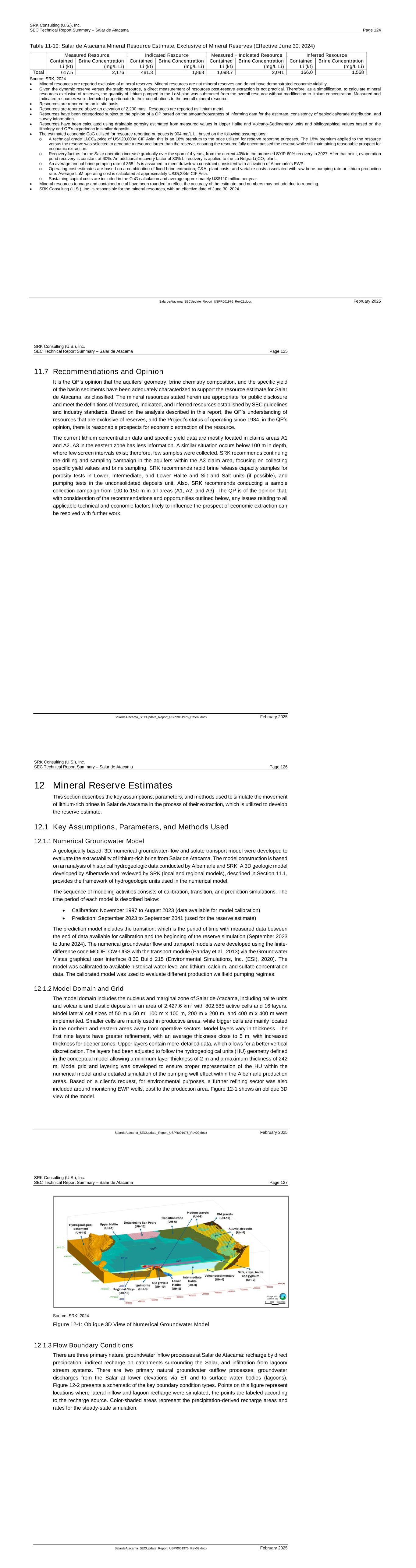

 
SRK Consulting (U.S.), Inc. SEC Technical Report Summary – Salar de Atacama Page 124 SalardeAtacama_SECUpdate_Report_USPR001976_Rev02.docx February 2025 Table 11-10: Salar de Atacama Mineral Resource Estimate, Exclusive of Mineral Reserves (Effective June 30, 2024) Measured Resource Indicated Resource Measured + Indicated Resource Inferred Resource Contained Li (kt) Brine Concentration (mg/L Li) Contained Li (kt) Brine Concentration (mg/L Li) Contained Li (kt) Brine Concentration (mg/L Li) Contained Li (kt) Brine Concentration (mg/L Li) Total 617.5 2,176 481.3 1,868 1,098.7 2,041 166.0 1,558 Source: SRK, 2024 • Mineral resources are reported exclusive of mineral reserves. Mineral resources are not mineral reserves and do not have demonstrated economic viability. • Given the dynamic reserve versus the static resource, a direct measurement of resources post-reserve extraction is not practical. Therefore, as a simplification, to calculate mineral resources exclusive of reserves, the quantity of lithium pumped in the LoM plan was subtracted from the overall resource without modification to lithium concentration. Measured and Indicated resources were deducted proportionate to their contributions to the overall mineral resource. • Resources are reported on an in situ basis. • Resources are reported above an elevation of 2,200 masl. Resources are reported as lithium metal. • Resources have been categorized subject to the opinion of a QP based on the amount/robustness of informing data for the estimate, consistency of geological/grade distribution, and survey information. • Resources have been calculated using drainable porosity estimated from measured values in Upper Halite and Volcano-Sedimentary units and bibliographical values based on the lithology and QP’s experience in similar deposits • The estimated economic CoG utilized for resource reporting purposes is 904 mg/L Li, based on the following assumptions: o A technical grade Li2CO3 price of US$20,000/t CIF Asia; this is an 18% premium to the price utilized for reserve reporting purposes. The 18% premium applied to the resource versus the reserve was selected to generate a resource larger than the reserve, ensuring the resource fully encompassed the reserve while still maintaining reasonable prospect for economic extraction. o Recovery factors for the Salar operation increase gradually over the span of 4 years, from the current 40% to the proposed SYIP 60% recovery in 2027. After that point, evaporation pond recovery is constant at 60%. An additional recovery factor of 80% Li recovery is applied to the La Negra Li2CO3 plant. o An average annual brine pumping rate of 368 L/s is assumed to meet drawdown constraint consistent with activation of Albemarle’s EWP. o Operating cost estimates are based on a combination of fixed brine extraction, G&A, plant costs, and variable costs associated with raw brine pumping rate or lithium production rate. Average LoM operating cost is calculated at approximately US$5,334/t CIF Asia. o Sustaining capital costs are included in the CoG calculation and average approximately US$110 million per year. • Mineral resources tonnage and contained metal have been rounded to reflect the accuracy of the estimate, and numbers may not add due to rounding. • SRK Consulting (U.S.), Inc. is responsible for the mineral resources, with an effective date of June 30, 2024. SRK Consulting (U.S.), Inc. SEC Technical Report Summary – Salar de Atacama Page 125 SalardeAtacama_SECUpdate_Report_USPR001976_Rev02.docx February 2025 11.7 Recommendations and Opinion It is the QP’s opinion that the aquifers' geometry, brine chemistry composition, and the specific yield of the basin sediments have been adequately characterized to support the resource estimate for Salar de Atacama, as classified. The mineral resources stated herein are appropriate for public disclosure and meet the definitions of Measured, Indicated, and Inferred resources established by SEC guidelines and industry standards. Based on the analysis described in this report, the QP’s understanding of resources that are exclusive of reserves, and the Project’s status of operating since 1984, in the QP’s opinion, there is reasonable prospects for economic extraction of the resource. The current lithium concentration data and specific yield data are mostly located in claims areas A1 and A2. A3 in the eastern zone has less information. A similar situation occurs below 100 m in depth, where few screen intervals exist; therefore, few samples were collected. SRK recommends continuing the drilling and sampling campaign in the aquifers within the A3 claim area, focusing on collecting specific yield values and brine sampling. SRK recommends rapid brine release capacity samples for porosity tests in Lower, Intermediate, and Lower Halite and Silt and Salt units (if possible), and pumping tests in the unconsolidated deposits unit. Also, SRK recommends conducting a sample collection campaign from 100 to 150 m in all areas (A1, A2, and A3). The QP is of the opinion that, with consideration of the recommendations and opportunities outlined below, any issues relating to all applicable technical and economic factors likely to influence the prospect of economic extraction can be resolved with further work. SRK Consulting (U.S.), Inc. SEC Technical Report Summary – Salar de Atacama Page 126 SalardeAtacama_SECUpdate_Report_USPR001976_Rev02.docx February 2025 12 Mineral Reserve Estimates This section describes the key assumptions, parameters, and methods used to simulate the movement of lithium-rich brines in Salar de Atacama in the process of their extraction, which is utilized to develop the reserve estimate. 12.1 Key Assumptions, Parameters, and Methods Used 12.1.1 Numerical Groundwater Model A geologically based, 3D, numerical groundwater-flow and solute transport model were developed to evaluate the extractability of lithium-rich brine from Salar de Atacama. The model construction is based on an analysis of historical hydrogeologic data conducted by Albemarle and SRK. A 3D geologic model developed by Albemarle and reviewed by SRK (local and regional models), described in Section 11.1, provides the framework of hydrogeologic units used in the numerical model. The sequence of modeling activities consists of calibration, transition, and prediction simulations. The time period of each model is described below: • Calibration: November 1997 to August 2023 (data available for model calibration) • Prediction: September 2023 to September 2041 (used for the reserve estimate) The prediction model includes the transition, which is the period of time with measured data between the end of data available for calibration and the beginning of the reserve simulation (September 2023 to June 2024). The numerical groundwater flow and transport models were developed using the finite- difference code MODFLOW-UGS with the transport module (Panday et al., 2013) via the Groundwater Vistas graphical user interface 8.30 Build 215 (Environmental Simulations, Inc. (ESI), 2020). The model was calibrated to available historical water level and lithium, calcium, and sulfate concentration data. The calibrated model was used to evaluate different production wellfield pumping regimes. 12.1.2 Model Domain and Grid The model domain includes the nucleus and marginal zone of Salar de Atacama, including halite units and volcanic and clastic deposits in an area of 2,427.6 km2 with 802,585 active cells and 16 layers. Model lateral cell sizes of 50 m x 50 m, 100 m x 100 m, 200 m x 200 m, and 400 m x 400 m were implemented. Smaller cells are mainly used in productive areas, while bigger cells are mainly located in the northern and eastern areas away from operative sectors. Model layers vary in thickness. The first nine layers have greater refinement, with an average thickness close to 5 m, with increased thickness for deeper zones. Upper layers contain more-detailed data, which allows for a better vertical discretization. The layers had been adjusted to follow the hydrogeological units (HU) geometry defined in the conceptual model allowing a minimum layer thickness of 2 m and a maximum thickness of 242 m. Model grid and layering was developed to ensure proper representation of the HU within the numerical model and a detailed simulation of the pumping well effect within the Albemarle production areas. Based on a client's request, for environmental purposes, a further refining sector was also included around monitoring EWP wells, east to the production area. Figure 12-1 shows an oblique 3D view of the model. SRK Consulting (U.S.), Inc. SEC Technical Report Summary – Salar de Atacama Page 127 SalardeAtacama_SECUpdate_Report_USPR001976_Rev02.docx February 2025 Source: SRK, 2024 Figure 12-1: Oblique 3D View of Numerical Groundwater Model 12.1.3 Flow Boundary Conditions There are three primary natural groundwater inflow processes at Salar de Atacama: recharge by direct precipitation, indirect recharge on catchments surrounding the Salar, and infiltration from lagoon/ stream systems. There are two primary natural groundwater outflow processes: groundwater discharges from the Salar at lower elevations via ET and to surface water bodies (lagoons). Figure 12-2 presents a schematic of the key boundary condition types. Points on this figure represent locations where lateral inflow and lagoon recharge were simulated; the points are labeled according to the recharge source. Color-shaded areas represent the precipitation-derived recharge areas and rates for the steady-state simulation.


 
SRK Consulting (U.S.), Inc. SEC Technical Report Summary – Salar de Atacama Page 128 SalardeAtacama_SECUpdate_Report_USPR001976_Rev02.docx February 2025 Source: SGA, 2015a, and SRK, 2024 Note: Lateral inflow locations simulated by injection wells are shown in different colors per sub-basin. Figure 12-2: Zones of Direct Recharge and Lateral Groundwater Inflow Recharge Direct recharge and lateral recharge location and rates were assumed from previous hydrogeological studies presented to the environmental agencies of Chile (SGA, 2015a and 2019) and from the third update of the Salar de Atacama groundwater model for the RCA 21/2016 (VAI, 2023). Direct recharge was simulated in the uppermost active layer as a transient boundary condition, at a monthly temporal resolution. Lateral groundwater recharge was simulated as a transient boundary condition as injection SRK Consulting (U.S.), Inc. SEC Technical Report Summary – Salar de Atacama Page 129 SalardeAtacama_SECUpdate_Report_USPR001976_Rev02.docx February 2025 wells in layers 1 through 16, depending on the lateral recharge location. Minor adjustments were made in the fluxes reported from Sub-Basins 10 and 11 to represent in more details the lateral recharge from Cordon de Lila. Figure 12-2 shows the distribution of direct recharge and the injection wells used for the lateral recharge simulation. Table 12-1 presents the infiltration rates and lateral inflows used for natural groundwater flow conditions (no pumping). Table 12-1: Recharge Rates and Lateral Inflows Under Natural Conditions Recharge Component Number of Simulated Injection Wells1 Total Inflow (L/s) Sub-Basin 6 19 200 Sub-Basin 7 41 425 Sub-Basin 8 14 41 Sub-Basin 9 22 348 Sub-Basin 10a Cone 3 31 611 Sub-Basin 10a South 7 580 Sub-Basin 10b 6 5 Sub-Basin 11 6 85.6 86.8 Sub-Basin 11a 1 0.4 Sub-Basin 11b 1 0.7 Sub-Basin 12 18 10 Sub-Basin 13 8 92 Sub-Basin 15 7 7 Northern boundary 54 684 Infiltration Peine Lagoon2 6 9.1 Infiltration Soncor Lagoon (Cola Pez) 9 25 25 Infiltration Soncor Lagoon (DSur) 9 0 Recharge from precipitation 315 Total 231 2,858.8 Sources: VAI, 2023, Albemarle, 2023, and SRK, 2024 1Recharge lateral inflows are simulated by injection wells. 2Adopted value for Peine Lagoon was extracted directly from environmental numerical model (VAI, 2023). ET ET rates and spatial distribution were initially assumed from the previous environmental model (VAI, 2023) and modified during the calibration process. ET rates varied on a monthly basis, and ET was applied from the topographic surface to an extinction depth ranging from 1 to 2 m below the ground surface according to the conceptual model. Conservatively, lithium mass was removed with ET to avoid artificial accumulation of lithium at the ground surface in the model and over-estimation of lithium availability. Figure 12-3 shows the spatial distribution of maximum ET rates in the model. SRK Consulting (U.S.), Inc. SEC Technical Report Summary – Salar de Atacama Page 130 SalardeAtacama_SECUpdate_Report_USPR001976_Rev02.docx February 2025 Source: VAI, 2023, modified by SRK, 2024 Note: Values represent average evaporation rates for natural conditions (no pumping). Figure 12-3: Zones of Simulated Maximum ET Rate Lagoon/Stream Systems Four lagoon/stream networks are identified in Salar de Atacama: Soncor, Aguas de Quelana, Peine, and La Punta – La Brava (Figure 12-2). Soncor and Peine lagoons include infiltration from the surface water corresponding to 25 and 11 L/s, respectively (SGA, 2015a, SGA, 2019, and VAI, 2023). Surface water is not thought to infiltrate from the Aguas de Quelana and La Punta – La Brava lagoons. SRK Consulting (U.S.), Inc. SEC Technical Report Summary – Salar de Atacama Page 131 SalardeAtacama_SECUpdate_Report_USPR001976_Rev02.docx February 2025 The lagoon/stream networks are simulated as drain cells. Groundwater discharge rates into the lagoon/stream networks were simulated using the conceptual water balance model (Table 12-2). Table 12-2: Conceptual Rates of Groundwater Discharges into the Lagoon/Stream Systems Lagoon/Stream System Flow (L/s) Soncor 76 Aguas de Quelana 172 Peine 79 La Punta – La Brava 113 Source: SGA, 2016 Infiltration from the Soncor and Peine lagoons into groundwater were simulated as injection wells in the top layer of the model. Lagoon and stream areas are not assigned as an evaporation zone since water evaporating through those cells is controlled by the drain cells. Figure 12-2 shows the locations of groundwater discharge zones to lagoons and infiltration from the lagoons. Pumping Wells and Artificial Recharge Simulation of the historical brine extraction and pumping from Albemarle’s and SQM’s freshwater wells is based on the construction details and historical flow rates presented in Albemarle’s and SQM’s environmental reports (SQM, 2023b, and www.sqmsenlinea.com). The Albemarle total monthly brine pumping rate varies from 23.3 to 544.7 L/s. Pumping from the deep pumping wells started in August 2018 and varied from 0.23 to 153.8 L/s. Meanwhile, SQM's monthly pumping rates range from 288.1 to 2781.5 L/s. Sections 12.1.3 and 12.1.4 provide details of the pumping rates in time for calibration and prediction. SQM brine injection was reported at monthly rates up to 384 L/s (SQM, 2023b, and www.sqmsenlinea.com). These values were simulated as injection wells in four locations within the SQM property in layers 1 through 8 of the model. Albemarle estimates that loss from operational ponds and stockpiles is up to 5% of the total brine pumping rate as leakage to the groundwater system (0.6 to 25.6 L/s). In addition, some ponds have been adjusted with no leakage as part of the calibration process. Figure 12-4 shows locations of pumping wells in Salar de Atacama (historical pumping). Figure 12-4 also shows the locations of artificial injection wells used to simulate leakage from the Albemarle ponds.


 
SRK Consulting (U.S.), Inc. SEC Technical Report Summary – Salar de Atacama Page 132 SalardeAtacama_SECUpdate_Report_USPR001976_Rev02.docx February 2025 Source: SRK, 2024 Note: SQM pumping wells are represented by Equivalent Pumping Points (EPP), which represent the equivalent pumping rate from the production wells located in a 1 km x 1 km square. Source: SRK, 2024 Figure 12-4: Location of Pumping Wells and Artificial Recharge Zones (Historical) Solute-Transport Boundary Conditions The following lithium concentration values were assumed in the recharge boundary conditions for the solute-transport simulations: • Lateral recharge from sub-basins (freshwater): 3 to 10 mg/L Li, 113 to 130 mg/L Ca, and 350 mg/L SO4 • Flows from the north boundary: 1,000 mg/L Li, 350 mg/L Ca, and 19,000 mg/L SO4 • Infiltration from the Soncor and Peine lagoons/stream systems: 700 and 320 mg/L Li, respectively, 1,000 mg/L Ca, and 3,500 mg/L SO4 The concentration values mentioned above are constant in time and are based on the hydrochemistry database presented in the environmental reports (SGA, 2019, and SQM, 2020) and in “Hydrogeochemical fluxes and processes contributing to the formation of lithium-enriched brines in a hyper-arid continental basin” (Munk et al., 2018). Other assumptions for solute transport boundary conditions are as follows: • Reinjected brines in SQM have concentrations of 1,000 mg/L Li, 10,640 mg/L Ca, and 266 mg/L SO4. Higher lithium grades are expected in SQM reinjection brines; however, SRK Consulting (U.S.), Inc. SEC Technical Report Summary – Salar de Atacama Page 133 SalardeAtacama_SECUpdate_Report_USPR001976_Rev02.docx February 2025 1,000 mg/L was chosen as a minimum value to limit the artificial lithium available for the predicted Albemarle production. • Seepage from Albemarle operational ponds has concentrations with annual averages ranging between 6,534 to 11,325 mg/L Li; 5,536 to 8,778 mg/L Ca; and 3,869 to 7,695 mg/L SO4. The adopted values correspond to the measured concentration operational records provided by Albemarle for this study. • Flows from the southern boundary condition are assumed with 500 mg/L Li, 3,000 mg/L Ca, and 2,000 mg/L SO4 using conservative values based on an initial condition interpolation explained in the next section. • The effect of the direct recharge on the lithium concentration in the Salar is negligible. • Evapotranspiration removes lithium from the model (analogous to chemical precipitation). Figure 12-5 shows the distribution of solute-transport boundary conditions. SRK Consulting (U.S.), Inc. SEC Technical Report Summary – Salar de Atacama Page 134 SalardeAtacama_SECUpdate_Report_USPR001976_Rev02.docx February 2025 Source: SRK, 2024 Note: Colors in Albemarle ponds are proportional to the leakage concentration. Figure 12-5: Solute-Transport Boundary Conditions 12.1.4 Hydraulic and Solute Transport Properties The hydrogeologic units specified in the model were derived from the conceptual hydrogeologic model developed using the Leapfrog Geo software and are described in Section 11.1. Aquifer parameters of hydraulic conductivity, specific yield, and specific storage, in addition to the transport parameter of effective porosity, are specified by HU in the model. SRK Consulting (U.S.), Inc. SEC Technical Report Summary – Salar de Atacama Page 135 SalardeAtacama_SECUpdate_Report_USPR001976_Rev02.docx February 2025 Horizontal hydraulic conductivity (Kh) values used in the model were derived from historical information from Albemarle, SQM, and CORFO presented in the 2023 SEC report (SRK, 2023) and as a result of the calibration processes. Table 12-3 shows a summary of hydraulic conductivity values measured per aquifer unit. Table 12-3 also presents the final values defined at the end of the calibration process (calibrated values).
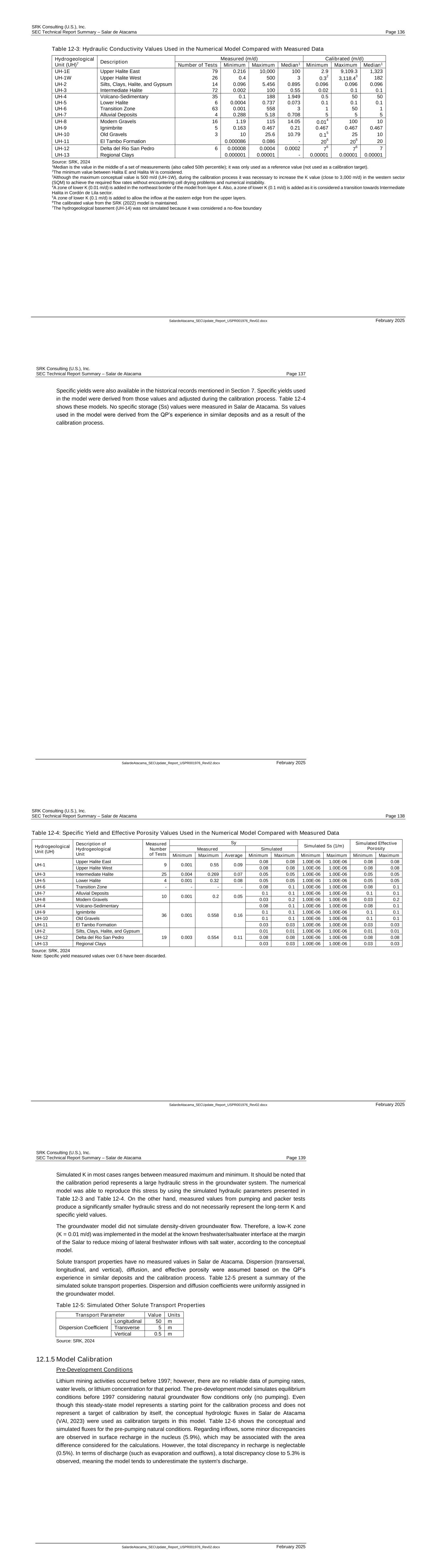

 
SRK Consulting (U.S.), Inc. SEC Technical Report Summary – Salar de Atacama Page 136 SalardeAtacama_SECUpdate_Report_USPR001976_Rev02.docx February 2025 Table 12-3: Hydraulic Conductivity Values Used in the Numerical Model Compared with Measured Data Hydrogeological Unit (UH)7 Description Measured (m/d) Calibrated (m/d) Number of Tests Minimum Maximum Median1 Minimum Maximum Median1 UH-1E Upper Halite East 79 0.216 10,000 100 2.9 9,109.3 1,323 UH-1W Upper Halite West 26 0.4 500 3 0.3 2 3,118.4 3 182 UH-2 Silts, Clays, Halite, and Gypsum 14 0.096 5.456 0.895 0.096 0.096 0.096 UH-3 Intermediate Halite 72 0.002 100 0.55 0.02 0.1 0.1 UH-4 Volcano-Sedimentary 35 0.1 188 1.949 0.5 50 50 UH-5 Lower Halite 6 0.0004 0.737 0.073 0.1 0.1 0.1 UH-6 Transition Zone 63 0.001 558 3 1 50 1 UH-7 Alluvial Deposits 4 0.288 5.18 0.708 5 5 5 UH-8 Modern Gravels 16 1.19 115 14.05 0.01 4 100 10 UH-9 Ignimbrite 5 0.163 0.467 0.21 0.467 0.467 0.467 UH-10 Old Gravels 3 10 25.6 10.79 0.1 5 25 10 UH-11 El Tambo Formation 0.000086 0.086 - 20 6 20 6 20 UH-12 Delta del Rio San Pedro 6 0.00008 0.0004 0.0002 7 6 7 6 7 UH-13 Regional Clays 0.000001 0.00001 - 0.00001 0.00001 0.00001 Source: SRK, 2024 1Median is the value in the middle of a set of measurements (also called 50th percentile); it was only used as a reference value (not used as a calibration target). 2The minimum value between Halita E and Halita W is considered. 3Although the maximum conceptual value is 500 m/d (UH-1W), during the calibration process it was necessary to increase the K value (close to 3,000 m/d) in the western sector (SQM) to achieve the required flow rates without encountering cell drying problems and numerical instability. 4A zone of lower K (0.01 m/d) is added in the northeast border of the model from layer 4. Also, a zone of lower K (0.1 m/d) is added as it is considered a transition towards Intermediate Halita in Cordón de Lila sector. 5A zone of lower K (0.1 m/d) is added to allow the inflow at the eastern edge from the upper layers. 6The calibrated value from the SRK (2022) model is maintained. 7The hydrogeological basement (UH-14) was not simulated because it was considered a no-flow boundary SRK Consulting (U.S.), Inc. SEC Technical Report Summary – Salar de Atacama Page 137 SalardeAtacama_SECUpdate_Report_USPR001976_Rev02.docx February 2025 Specific yields were also available in the historical records mentioned in Section 7. Specific yields used in the model were derived from those values and adjusted during the calibration process. Table 12-4 shows these models. No specific storage (Ss) values were measured in Salar de Atacama. Ss values used in the model were derived from the QP’s experience in similar deposits and as a result of the calibration process. SRK Consulting (U.S.), Inc. SEC Technical Report Summary – Salar de Atacama Page 138 SalardeAtacama_SECUpdate_Report_USPR001976_Rev02.docx February 2025 Table 12-4: Specific Yield and Effective Porosity Values Used in the Numerical Model Compared with Measured Data Hydrogeological Unit (UH) Description of Hydrogeological Unit Measured Number of Tests Sy Simulated Ss (1/m) Simulated Effective Porosity Measured Simulated Minimum Maximum Average Minimum Maximum Minimum Maximum Minimum Maximum UH-1 Upper Halite East 9 0.001 0.55 0.09 0.08 0.08 1.00E-06 1.00E-06 0.08 0.08 Upper Halite West 0.08 0.08 1.00E-06 1.00E-06 0.08 0.08 UH-3 Intermediate Halite 25 0.004 0.269 0.07 0.05 0.05 1.00E-06 1.00E-06 0.05 0.05 UH-5 Lower Halite 4 0.001 0.32 0.08 0.05 0.05 1.00E-06 1.00E-06 0.05 0.05 UH-6 Transition Zone - - - - 0.08 0.1 1.00E-06 1.00E-06 0.08 0.1 UH-7 Alluvial Deposits 10 0.001 0.2 0.05 0.1 0.1 1.00E-06 1.00E-06 0.1 0.1 UH-8 Modern Gravels 0.03 0.2 1.00E-06 1.00E-06 0.03 0.2 UH-4 Volcano-Sedimentary 36 0.001 0.558 0.16 0.08 0.1 1.00E-06 1.00E-06 0.08 0.1 UH-9 Ignimbrite 0.1 0.1 1.00E-06 1.00E-06 0.1 0.1 UH-10 Old Gravels 0.1 0.1 1.00E-06 1.00E-06 0.1 0.1 UH-11 El Tambo Formation 0.03 0.03 1.00E-06 1.00E-06 0.03 0.03 UH-2 Silts, Clays, Halite, and Gypsum 19 0.003 0.554 0.11 0.01 0.01 1.00E-06 1.00E-06 0.01 0.01 UH-12 Delta del Rio San Pedro 0.08 0.08 1.00E-06 1.00E-06 0.08 0.08 UH-13 Regional Clays 0.03 0.03 1.00E-06 1.00E-06 0.03 0.03 Source: SRK, 2024 Note: Specific yield measured values over 0.6 have been discarded. SRK Consulting (U.S.), Inc. SEC Technical Report Summary – Salar de Atacama Page 139 SalardeAtacama_SECUpdate_Report_USPR001976_Rev02.docx February 2025 Simulated K in most cases ranges between measured maximum and minimum. It should be noted that the calibration period represents a large hydraulic stress in the groundwater system. The numerical model was able to reproduce this stress by using the simulated hydraulic parameters presented in Table 12-3 and Table 12-4. On the other hand, measured values from pumping and packer tests produce a significantly smaller hydraulic stress and do not necessarily represent the long-term K and specific yield values. The groundwater model did not simulate density-driven groundwater flow. Therefore, a low-K zone (K = 0.01 m/d) was implemented in the model at the known freshwater/saltwater interface at the margin of the Salar to reduce mixing of lateral freshwater inflows with salt water, according to the conceptual model. Solute transport properties have no measured values in Salar de Atacama. Dispersion (transversal, longitudinal, and vertical), diffusion, and effective porosity were assumed based on the QP’s experience in similar deposits and the calibration process. Table 12-5 present a summary of the simulated solute transport properties. Dispersion and diffusion coefficients were uniformly assigned in the groundwater model. Table 12-5: Simulated Other Solute Transport Properties Transport Parameter Value Units Dispersion Coefficient Longitudinal 50 m Transverse 5 m Vertical 0.5 m Source: SRK, 2024 12.1.5 Model Calibration Pre-Development Conditions Lithium mining activities occurred before 1997; however, there are no reliable data of pumping rates, water levels, or lithium concentration for that period. The pre-development model simulates equilibrium conditions before 1997 considering natural groundwater flow conditions only (no pumping). Even though this steady-state model represents a starting point for the calibration process and does not represent a target of calibration by itself, the conceptual hydrologic fluxes in Salar de Atacama (VAI, 2023) were used as calibration targets in this model. Table 12-6 shows the conceptual and simulated fluxes for the pre-pumping natural conditions. Regarding inflows, some minor discrepancies are observed in surface recharge in the nucleus (5.9%), which may be associated with the area difference considered for the calculations. However, the total discrepancy in recharge is neglectable (0.5%). In terms of discharge (such as evaporation and outflows), a total discrepancy close to 5.3% is observed, meaning the model tends to underestimate the system's discharge.
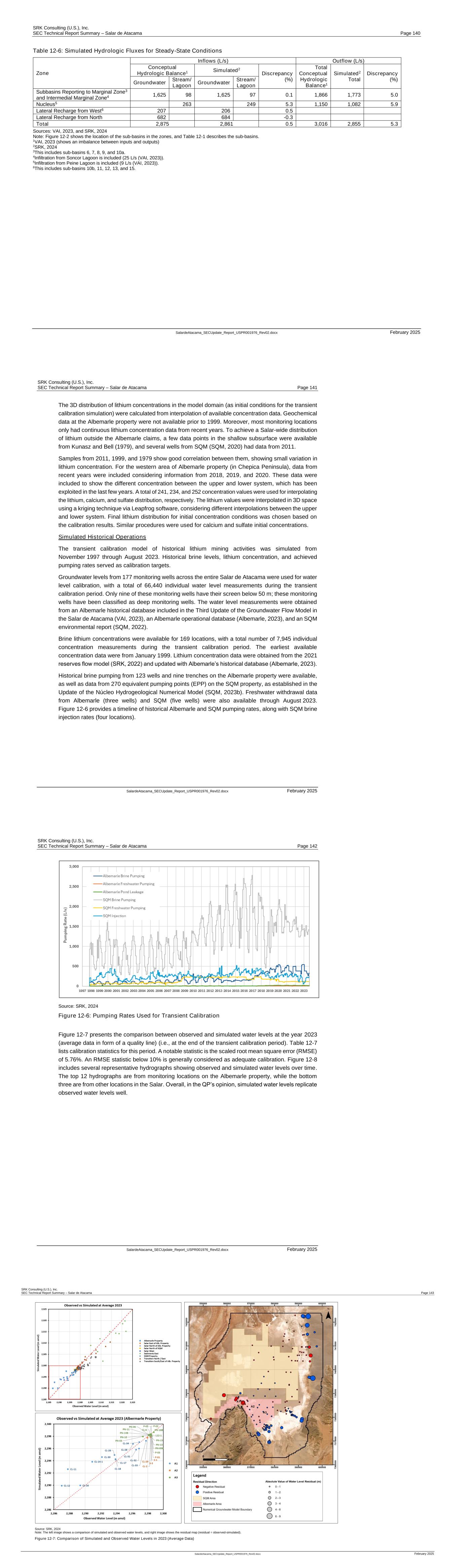

 
SRK Consulting (U.S.), Inc. SEC Technical Report Summary – Salar de Atacama Page 140 SalardeAtacama_SECUpdate_Report_USPR001976_Rev02.docx February 2025 Table 12-6: Simulated Hydrologic Fluxes for Steady-State Conditions Zone Inflows (L/s) Outflow (L/s) Conceptual Hydrologic Balance1 Simulated2 Discrepancy (%) Total Conceptual Hydrologic Balance1 Simulated2 Total Discrepancy (%) Groundwater Stream/ Lagoon Groundwater Stream/ Lagoon Subbasins Reporting to Marginal Zone3 and Intermedial Marginal Zone4 1,625 98 1,625 97 0.1 1,866 1,773 5.0 Nucleus5 263 249 5.3 1,150 1,082 5.9 Lateral Recharge from West6 207 206 0.5 Lateral Recharge from North 682 684 -0.3 Total 2,875 2,861 0.5 3,016 2,855 5.3 Sources: VAI, 2023, and SRK, 2024 Note: Figure 12-2 shows the location of the sub-basins in the zones, and Table 12-1 describes the sub-basins. 1VAI, 2023 (shows an imbalance between inputs and outputs) 2SRK, 2024 3This includes sub-basins 6, 7, 8, 9, and 10a. 4Infiltration from Soncor Lagoon is included (25 L/s (VAI, 2023)). 5Infiltration from Peine Lagoon is included (9 L/s (VAI, 2023)). 6This includes sub-basins 10b, 11, 12, 13, and 15. SRK Consulting (U.S.), Inc. SEC Technical Report Summary – Salar de Atacama Page 141 SalardeAtacama_SECUpdate_Report_USPR001976_Rev02.docx February 2025 The 3D distribution of lithium concentrations in the model domain (as initial conditions for the transient calibration simulation) were calculated from interpolation of available concentration data. Geochemical data at the Albemarle property were not available prior to 1999. Moreover, most monitoring locations only had continuous lithium concentration data from recent years. To achieve a Salar-wide distribution of lithium outside the Albemarle claims, a few data points in the shallow subsurface were available from Kunasz and Bell (1979), and several wells from SQM (SQM, 2020) had data from 2011. Samples from 2011, 1999, and 1979 show good correlation between them, showing small variation in lithium concentration. For the western area of Albemarle property (in Chepica Peninsula), data from recent years were included considering information from 2018, 2019, and 2020. These data were included to show the different concentration between the upper and lower system, which has been exploited in the last few years. A total of 241, 234, and 252 concentration values were used for interpolating the lithium, calcium, and sulfate distribution, respectively. The lithium values were interpolated in 3D space using a kriging technique via Leapfrog software, considering different interpolations between the upper and lower system. Final lithium distribution for initial concentration conditions was chosen based on the calibration results. Similar procedures were used for calcium and sulfate initial concentrations. Simulated Historical Operations The transient calibration model of historical lithium mining activities was simulated from November 1997 through August 2023. Historical brine levels, lithium concentration, and achieved pumping rates served as calibration targets. Groundwater levels from 177 monitoring wells across the entire Salar de Atacama were used for water level calibration, with a total of 66,440 individual water level measurements during the transient calibration period. Only nine of these monitoring wells have their screen below 50 m; these monitoring wells have been classified as deep monitoring wells. The water level measurements were obtained from an Albemarle historical database included in the Third Update of the Groundwater Flow Model in the Salar de Atacama (VAI, 2023), an Albemarle operational database (Albemarle, 2023), and an SQM environmental report (SQM, 2022). Brine lithium concentrations were available for 169 locations, with a total number of 7,945 individual concentration measurements during the transient calibration period. The earliest available concentration data were from January 1999. Lithium concentration data were obtained from the 2021 reserves flow model (SRK, 2022) and updated with Albemarle’s historical database (Albemarle, 2023). Historical brine pumping from 123 wells and nine trenches on the Albemarle property were available, as well as data from 270 equivalent pumping points (EPP) on the SQM property, as established in the Update of the Núcleo Hydrogeological Numerical Model (SQM, 2023b). Freshwater withdrawal data from Albemarle (three wells) and SQM (five wells) were also available through August 2023. Figure 12-6 provides a timeline of historical Albemarle and SQM pumping rates, along with SQM brine injection rates (four locations). SRK Consulting (U.S.), Inc. SEC Technical Report Summary – Salar de Atacama Page 142 SalardeAtacama_SECUpdate_Report_USPR001976_Rev02.docx February 2025 Source: SRK, 2024 Figure 12-6: Pumping Rates Used for Transient Calibration Figure 12-7 presents the comparison between observed and simulated water levels at the year 2023 (average data in form of a quality line) (i.e., at the end of the transient calibration period). Table 12-7 lists calibration statistics for this period. A notable statistic is the scaled root mean square error (RMSE) of 5.76%. An RMSE statistic below 10% is generally considered as adequate calibration. Figure 12-8 includes several representative hydrographs showing observed and simulated water levels over time. The top 12 hydrographs are from monitoring locations on the Albemarle property, while the bottom three are from other locations in the Salar. Overall, in the QP’s opinion, simulated water levels replicate observed water levels well. SRK Consulting (U.S.), Inc. SEC Technical Report Summary – Salar de Atacama Page 143 SalardeAtacama_SECUpdate_Report_USPR001976_Rev02.docx February 2025 Source: SRK, 2024 Note: The left image shows a comparison of simulated and observed water levels, and right image shows the residual map (residual = observed-simulated). Figure 12-7: Comparison of Simulated and Observed Water Levels in 2023 (Average Data)


 
SRK Consulting (U.S.), Inc. SEC Technical Report Summary – Salar de Atacama Page 144 SalardeAtacama_SECUpdate_Report_USPR001976_Rev02.docx February 2025 Table 12-7: Statistics of Transient Model Calibration to Observed Water Levels, 2023 (Average) Statistical Measure Definition Formula Value Number of observations Number of calibration targets used to guide calibration n 162 Residual mean1 (m) Arithmetic mean of head residuals R = 1 n ∑ Ri n i=1 0.49 Absolute residual mean (m) Arithmetic mean of the absolute value of head residuals |R| = 1 n ∑|Ri| n i=1 1.08 RMSE (m) Square root of the mean of squared residuals (representing the standard deviation of residual dataset) √ 1 n ∑ Ri 2 n i=1 1.72 Minimum residual (m) Minimum value of all residuals in the dataset (Hobs)min -4.82 Maximum residual (m) Maximum value of all residuals in the dataset (Hobs)max 8.86 Range in observations (m) Difference between highest and lowest observed values (Hobs)max − (Hobs)min 29.85 Scaled RMSE (%) RMSE normalized to the range in observations RMSE (Hobs)max − (Hobs)min 5.76 Source: SRK, 2024 1Where R is the residual (observed minus simulated) SRK Consulting (U.S.), Inc. SEC Technical Report Summary – Salar de Atacama Page 145 SalardeAtacama_SECUpdate_Report_USPR001976_Rev02.docx February 2025 Source: SRK, 2024 Figure 12-8: Water Level Comparison Hydrographs in Select Wells SRK Consulting (U.S.), Inc. SEC Technical Report Summary – Salar de Atacama Page 146 SalardeAtacama_SECUpdate_Report_USPR001976_Rev02.docx February 2025 Table 12-8 presents the overall groundwater budget for the end of the transient simulation. The overall water balance error is 0.03% for the transient calibration period, which support a valid solution for the numerical simulation. Table 12-8: Water Balance at End of Transient Calibration (August 2023) Flow Component Flow Rate (L/s) Inflow to groundwater system Recharge Lateral 2,381 Direct precipitation - Lagoon 83 Artificial injection/recharge SQM injection 234 Albemarle pond leakage 17 Groundwater storage release 603 Total 3,318 Outflow from groundwater system ET 1,207 Surface water outflow 45 Pumping Albemarle freshwater extraction 6 Albemarle brine extraction 326 SQM freshwater extraction 115 SQM brine extraction 1,423 Lagoon - Groundwater storage replenishment 194 Total 3,317 Percent difference 0.03% Source: SRK, 2024 Figure 12-9A presents calibration to lithium concentrations for 2023, with datapoints grouped by the monitoring location according to Albemarle’s productive properties (A1 and A2). Figure 12-9B shows circle sizes corresponding to average operational pumping rates in 2023 at each location (smallest circle sizes indicate monitoring wells without pumping). Table 12-9 provides a statistical summary for this calibration. Overall, the model tends to slightly underpredict lithium concentrations on the Albemarle property for 2023, which suggests a conservative starting point for the predictive simulations. SRK Consulting (U.S.), Inc. SEC Technical Report Summary – Salar de Atacama Page 147 SalardeAtacama_SECUpdate_Report_USPR001976_Rev02.docx February 2025 Source: SRK, 2024 A: Calibration targets on Albemarle’s property B: Targets on Albemarle’s property. Circle size shows 2023 averages. A-weighted by historical operational pumping rate. Figure 12-9: Observed versus Simulated Lithium Concentrations


SRK Consulting (U.S.), Inc. SEC Technical Report Summary – Salar de Atacama Page 148 SalardeAtacama_SECUpdate_Report_USPR001976_Rev02.docx February 2025 Table 12-9: Statistics of Transient Model Calibration to Lithium Concentrations, 2023 Average Statistical Measure Definition Formula Value Number of observations Number of calibration targets used to guide calibration n 73 Residual mean1 (mg/L) Arithmetic mean of head residuals R = 1 n ∑ Ri n i=1 249.4 Absolute residual mean (mg/L) Arithmetic mean of the absolute value of head residuals |R| = 1 n ∑|Ri| n i=1 145.6 RMSE (mg/L) Square root of the mean of squared residuals (representing the standard deviation of residual dataset) √ 1 n ∑ Ri 2 n i=1 696.8 Minimum residual (mg/L) Minimum value of all residuals in the dataset (Hobs)min -1,676.4 Maximum residual (mg/L) Maximum value of all residuals in the dataset (Hobs)max 2,264.2 Range in observations (mg/L) Difference between highest and lowest observed values (Hobs)max − (Hobs)min 4,749.9 Scaled RMSE (%) RMSE normalized to the range in observations RMSE (Hobs)max − (Hobs)min 14.7% Source: SRK, 2024 1Where R is the residual (observed minus simulated) SRK Consulting (U.S.), Inc. SEC Technical Report Summary – Salar de Atacama Page 149 SalardeAtacama_SECUpdate_Report_USPR001976_Rev02.docx February 2025 Figure 12-10A shows simulated cumulative mass of historically extracted lithium by Albemarle compared to known calculated produced mass from two water quality databases provided to SRK, showing that simulated value follows the historic accumulated mass. Figure 12-10B shows another measure of the calibration, where average lithium concentration in the extracted brine is compared in both historical and simulated. The model tends to overpredict concentrations in the beginning of the simulation, when overall pumping rates are low, and underpredicts average concentrations starting in 2014. This underestimation is interpreted to reflect a conservative starting point for the predictive simulations. Figure 12-10C presents the calibration of the sulfate/calcium ratio, where the simulated and measured curves show a high correlation. SRK Consulting (U.S.), Inc. SEC Technical Report Summary – Salar de Atacama Page 150 SalardeAtacama_SECUpdate_Report_USPR001976_Rev02.docx February 2025 Source: SRK, 2024 Note: Brinechem is the primary hydrochemical database prepared by Albemarle. Chemistry_dt is the alternative hydrochemical database prepared by Albemarle Figure 12-10: Comparison of Measured and Simulated A) Cumulative Lithium Mass Extraction, B) Average Lithium Concentration, and C) Sulfate/Calcium Ratio Table 12-10 shows the average lithium mass transfer rates in the calibration period. As expected, pumping wells represent the main loss of lithium mass from groundwater (199,784 kilograms per day SRK Consulting (U.S.), Inc. SEC Technical Report Summary – Salar de Atacama Page 151 SalardeAtacama_SECUpdate_Report_USPR001976_Rev02.docx February 2025 (kg/d)), followed by evaporation or chemical precipitation (118,296 kg/d). Sources of lithium gains in groundwater mainly come from groundwater storage, with the artificial injection and natural lateral recharge contributing to a minor degree. Table 12-10: Average Lithium Mass Transfer Rate for Calibration Period Component Mass Rate (kg/d) Lithium gain in groundwater Boundary recharge and artificial recharge (Albemarle ponds and SQM Injection) 91,894 Storage release 322,503 Total gain 414,397 Lithium loss in groundwater Pumping wells 199,784 Surface water (drain cells) 3,669 Plant uptake and chemical precipitation 118,296 Storage replenishment 92,647 Total loss 414,396 Percent difference 0.0002% Source: SRK, 2024 Calibration of the model to mass extracted by the production wellfield annually and comparison of simulated to observed lithium concentration versus cumulative production pumping are both reasonable. Calibration of the model to the mass extraction rate at August of 2023 and to the sulfate/ calcium ratio also look reasonable. It is SRK’s opinion that the numerical model adequately represents the historical and current wellfield production of lithium from the basin and can be used for future production plans to support a reserve estimate. 12.1.6 Predictive Simulations Predictive simulations include the period from September 2023 to September 2024 (where measured values are available) and a production plan period from October 2023 to September 2041. Projected Albemarle brine pumping includes up to 76 active wells from September 2023 to September 2024, with an average monthly pumping rate during this period of up to 26 L/s (CL-1). The total monthly brine pumping rate varies from 380.9 to 599.4 L/s between September 2023 and September 2024. During the predictive period (October 2024 to September 2041), 44 to 56 monthly active production wells were modeled to sustain an annual brine pumping rate of 369 L/s based on Albemarle’s production plan (Albemarle, 2024a). The pumping rate corresponds to an annual average of 291.5 L/s in extraction area A1 and an annual average of 77.5 L/s in extraction area A2. The total maximum monthly pumping reaches up to 382 L/s, while the minimum monthly pumping is 308 L/s. Note that Albemarle’s pumping plan considered a reduction from the maximum legal pumping rate (442 L/s) due to environmental restrictions, as explained in Section 17.1.3. Section 13 provides details of well locations and screen intervals. Projected SQM brine pumping rates were used in the predictive model starting in September 2023 and are scheduled to terminate at the end of December 2030 (SQM, 2022). Projected SQM brine pumping includes 270 EPPs (with 149 active EPPs) with pumping rates of up to 71 L/s for a given location. The total monthly brine pumping rate varies from 958 to 1,556 L/s for the entire system (SQM, 2023b). As of the date of this report, SQM is conducting studies to evaluate the possibility of extending the operational period of its extraction wells. This report only considers production up to December 2030.


 
SRK Consulting (U.S.), Inc. SEC Technical Report Summary – Salar de Atacama Page 152 SalardeAtacama_SECUpdate_Report_USPR001976_Rev02.docx February 2025 Figure 12-11 shows brine pumping rates for the Albemarle and SQM properties, and Figure 12-12 shows well locations. Seepage from the Albemarle processing ponds and direct brine injections at the SQM property were not included in the base case predictive simulation. Indirect brine injections at the SQM property were considered with values from 312.8 to 388.3 L/s (SQM, 2022). Source: SRK, 2024 Note: SQM pumping rate in this figure does not consider brine injections. Figure 12-11: Simulated Brine Total Planned Pumping Rates for the Albemarle and SQM Properties SRK Consulting (U.S.), Inc. SEC Technical Report Summary – Salar de Atacama Page 153 SalardeAtacama_SECUpdate_Report_USPR001976_Rev02.docx February 2025 Source: SRK, 2024 Figure 12-12: Location of the Pumping Wells at the Albemarle and SQM Properties Used for Predictive Simulations SRK Consulting (U.S.), Inc. SEC Technical Report Summary – Salar de Atacama Page 154 SalardeAtacama_SECUpdate_Report_USPR001976_Rev02.docx February 2025 Albemarle’s projected freshwater withdrawals were assumed to cease, given the settlement negotiations regarding the environmental damage lawsuit filed by the Chilean State Defense Council in 2022. However, for a conservative predictive scenario, Albemarle’s projected freshwater withdrawals were assumed to remain constant throughout the predictive simulations (18.9 L/s). SQM’s projected freshwater withdrawals correspond to a fixed monthly flow rate of 120.0 L/s. Table 12-11 lists projected freshwater pumping rates. Table 12-11: Simulated Predictive Freshwater Withdrawals Owner Projected Pumping Rate (L/s) Albemarle 18.9 SQM 120.0 Source: SRK, 2024 Table 12-12 presents a summary of groundwater inflows and outflows at the end of the transient calibration, the end of SQM’s brine pumping, and the end of Albemarle’s pumping. Recharge inputs to the groundwater system and evapotranspiration outputs vary among the time snapshots because they represent different months of the year. The increase in evapotranspiration from August 2030 to September 2041 can be attributed to the recovery of water levels in the Salar and along its margins. The water balance error averages 0.05% for the predictive model period. Figure 12-13 shows all the components of the water balance in the calibration and predictive periods. Table 12-12: Groundwater Balance Summary (L/s) Flow Component End of Transient Calibration (August 2023) End of SQM Extraction (December 2030) End of Albemarle Extraction (September 2041) Inflows to groundwater system Recharge Lateral 2,381 2,344 2,291 Direct precipitation - - - Infiltration from lagunas 83 - 53 Artificial injection/infiltration SQM injection 234 136 - Albemarle pond leakage 17 - - Groundwater storage release 603 539 103 Total 3,318 3,018 2,446 Outflows from groundwater system ET 1,207 1,530 1670 Surface water outflow 45 37 56 Lagoon - 5 - Pumping Albemarle freshwater 6 13 13 Albemarle brine 326 380 381 SQM freshwater 115 100 - SQM brine 1,423 928 - Groundwater storage replenishment 194 24 330 Total 3,317 3,017 2450 Percent difference 0.05% 0.02% -0.17% Source: SRK, 2024 SRK Consulting (U.S.), Inc. SEC Technical Report Summary – Salar de Atacama Page 155 SalardeAtacama_SECUpdate_Report_USPR001976_Rev02.docx February 2025 Source: SRK, 2024 Figure 12-13: Components of Water Balance for All Simulated Periods


 
SRK Consulting (U.S.), Inc. SEC Technical Report Summary – Salar de Atacama Page 156 SalardeAtacama_SECUpdate_Report_USPR001976_Rev02.docx February 2025 Figure 12-14 shows lithium mass flux components throughout all simulated periods, and Figure 12-15 shows the distribution of the simulated lithium concentration. Solute transport simulation presents a percent difference lower than 0.01% during calibration and predictive model periods. SRK Consulting (U.S.), Inc. SEC Technical Report Summary – Salar de Atacama Page 157 SalardeAtacama_SECUpdate_Report_USPR001976_Rev02.docx February 2025 Source: SRK, 2024 Figure 12-14: Components of Lithium Mass Transfer Rate for All Simulated Periods Source: SRK, 2024 Note: Simulated concentrations are shown in layer 10 (approximately 50 m depth). Figure 12-15: Simulated Lithium Concentration Map Over Time SRK Consulting (U.S.), Inc. SEC Technical Report Summary – Salar de Atacama Page 158 SalardeAtacama_SECUpdate_Report_USPR001976_Rev02.docx February 2025 12.2 Mineral Reserves Estimates The rate and volume of lithium projected to be extracted from the Project area was simulated using the predictive model using the hydrogeologic properties of the Salar combined with the wellfield operational design parameters. The predictive model output generated a brine production profile for the Salar based on the wellfield design assumptions, with a predicted annual average pumping of 368 L/s over a period of approximately 16 years (through September 2041). Albemarle’s pumping plan considers 369 L/s as a maximum after 2024 to meet the regulatory limits for drawdown. The use of a 16-year period reflects the timing required to extract the full, authorized quota of lithium production. Given the approximately 2-year delay in timing from pumping to final production, this is also the last year that extraction from the Salar can be reasonably expected to still result in lithium produced by the January 1, 2044, expiration of Albemarle’s production quota. Figure 12-16 plots the predicted monthly and average extracted lithium concentrations and the predicted cumulative mass of lithium extracted from groundwater at Albemarle’s property. Table 12-13 summarizes the annual-average lithium concentrations, mass lithium in extracted brine, annual- average pumping rates, and annual volumetric brine pumping. Section 13 discusses additional details on the wellfield design and pumping schedule. Source: SRK, 2024 Note: Reserve estimate considers the model prediction values from July 2024 to September 2041. Figure 12-16: Projected Wellfield Average Lithium Concentration SRK Consulting (U.S.), Inc. SEC Technical Report Summary – Salar de Atacama Page 159 SalardeAtacama_SECUpdate_Report_USPR001976_Rev02.docx February 2025 Table 12-13: Predicted Lithium and Brine Extractions Period Li Mass (t) Pumping Rate (L/s) Pumping Volume (cubic meters (m3)) Lithium Concentration (mg/L) July to December 2024 17,258 416.0 6,560,064 2,631 2025 30,597 367.6 11,591,652 2,640 2026 29,812 367.6 11,592,598 2,572 2027 29,164 367.6 11,592,556 2,516 2028 28,636 367.6 11,624,712 2,463 2029 27,950 367.6 11,590,980 2,411 2030 27,365 367.6 11,590,321 2,361 2031 26,813 367.6 11,590,337 2,313 2032 26,152 367.6 11,624,362 2,250 2033 25,688 367.6 11,592,317 2,216 2034 25,246 367.7 11,593,576 2,178 2035 24,762 367.8 11,598,145 2,135 2036 24,403 367.8 11,631,908 2,098 2037 23,858 367.9 11,600,644 2,057 2038 23,523 367.9 11,601,185 2,028 2039 23,094 368.0 11,602,427 1,990 2040 22,867 368.0 11,635,826 1,965 September 2041 16,520 363.7 8,576,902 1,926 Total/average 453,708 370.9 200,790,511 2,260 Source: SRK, 2024 SRK cautions that this prediction is a forward-looking estimate, is subject to change depending on operating approach (e.g., pumping rate and well location/depth), environmental conditions (e.g., EWP), and has inherent geological uncertainty. The schedule includes summaries for observed pumping rates and lithium concentration from September 2023 through the end of June of 2024, as this production is required to support the first 24 months of production in the economic model. This brine is currently going through the evaporation process, is treated as work-in-process inventory, and is reported separately on the reserve table for clarity. The seasonal concentration fluctuations on Figure 12-17 correspond to seasonal fluctuations in pumping rates. The predictive model simulates a decline of annual-average lithium concentrations from 2,552 mg/L in the last trimester of 2023 to 1,923 mg/L at the end of pumping (September 2041). Annual lithium mass extraction from groundwater is predicted to decline from 32,470 t in 2024 (first full year of pumping) to 22,315 t in 2041. The predicted cumulative lithium mass extraction, from September 2023 to September 2041, is 481,046 t. Figure 12-17 shows the projected annual mass of lithium extracted by production wellfield.


 
SRK Consulting (U.S.), Inc. SEC Technical Report Summary – Salar de Atacama Page 160 SalardeAtacama_SECUpdate_Report_USPR001976_Rev02.docx February 2025 Source: SRK, 2024 Figure 12-17: Projected Annual Mass of Lithium Extracted by Production Wellfield 12.2.1 CoGs Estimates Due to the extraction of lithium from the Salar (combined with inflows of low-lithium-grade brines), the concentration of lithium in brine pumped from the mineral resource decreases over time. While there is some ability to selectively extract areas of the mineral resource with higher grades by targeting the location of new extraction wells, the impact of dilution cannot be fully avoided. Therefore, as the brine concentration declines over time, the quantity of lithium production for the same pumping rate also declines. As lithium brine production operations have relatively high fixed costs, eventually the quantity of lithium contained in the extracted brine is not adequate to cover the cost of operating the business. As discussed in Section 19, the economic model provides positive operating cashflow for the entire life of the reserve, so it is clear that the entirety of the reserve estimated herein is above the economic CoG (using the assumptions described in that section); this includes the use of a long-term price assumption for Li2CO3 of US$17,000/t (see Section 16 for discussion on the basis of this assumption). While the pumping plan supporting this reserve estimate is above the economic CoG for the operation, for the purposes of disclosure and resource estimation, SRK calculated an approximate breakeven CoG for the operation. To calculate the breakeven CoG, SRK utilized the economic model and manually adjusted the input brine concentration downward until the after-tax cashflow hit a value of zero. This estimate effectively includes all operating costs in the business as well as sustaining capital with other inputs (such as lower process recovery with lower concentration) also being accounted for. Based on this modeling exercise, SRK estimates that the breakeven CoG at the assumptions outlined in Section 19 (including the reserve price of US$17,000/t of Li2CO3) is approximately 1,073 mg/L Li (for comparison, the last year of pumping in the approximately 17-year LoM plan has a lithium concentration of 1,926 mg/L). SRK Consulting (U.S.), Inc. SEC Technical Report Summary – Salar de Atacama Page 161 SalardeAtacama_SECUpdate_Report_USPR001976_Rev02.docx February 2025 12.2.2 Reserves Classification and Criteria When estimating brine resources and reserves, different models are utilized to define those resources and reserves. The resource model presents a static, in situ measurement of potentially extractable brine volume, whereas the reserve model (i.e., the predictive model) presents a dynamic simulation of brine that can potentially be pumped through extraction wells. As such, the predictive model does not discriminate between brine derived from Inferred, Measured, or Indicated resources. Further, a brine resource is dynamic and is constantly influenced by water inflows (e.g., precipitation, groundwater inflows, pond leakage, etc.) and pumping activities, which cause varying levels of mixing and dilution. Therefore, direct conversion of Measured and Indicated classification to Proven and Probable reserves is not practical. As the direct conversion is not practical, in the QP’s opinion, the most-defensible approach to classification of reserves (e.g., Proven versus Probable) is to utilize a time-dependent approach, as the QP has the highest confidence in the early years of the predictive model results, with a steady erosion of that confidence over time. Therefore, in the QP’s opinion, in the context of time-dependent risk, the production plan through the end of 2034 (approximately 10.5 years of pumping) is reasonably classified as a Proven reserve, with the remainder (6.75 years) of production classified as probable. Notably, this classification results in approximately 66% of the reserve being classified as Proven and 34% of the reserve being classified as Probable. Additionally, the reserve is bound by the terms of the quota and the quota’s expiration date for production of January 1, 2044. For comparison, the Measured resource comprises approximately 56% of the total Measured and Indicated resource. In the QP’s opinion, this classification is reasonable, as the overall geological and technical uncertainty for the Salar de Atacama resource and reserve are similar. 12.2.3 Summary Mineral Reserves The estimation of mineral reserves herein has been completed in accordance with CFR 17, Part 229 (S-K 1300). Mineral reserves were estimated utilizing a Li2CO3 price of US$17,000/t of Li2CO3. Appropriate modifying factors have been applied as discussed throughout this report. The positive economic profile of the mineral reserve is supported by the economic modeling discussed in Section 19. Table 12-14 presents the Salar de Atacama mineral reserves as of June 30, 2024. SRK Consulting (U.S.), Inc. SEC Technical Report Summary – Salar de Atacama Page 162 SalardeAtacama_SECUpdate_Report_USPR001976_Rev02.docx February 2025 Table 12-14: Salar de Atacama Mineral Reserves, Effective June 30, 2024 Proven Reserve Probable Reserve Proven and Probable Reserve Contained Li (kt) Li Concentration (mg/L) Contained Li (kt) Li Concentration (mg/L) Contained Li (kt) Li Concentration (mg/L) In situ 294.7 2,405 159.0 2,032 453.7 2,260 In process 23.3 2,853 0 0 23.3 2,853 Source: SRK, 2024 • In process reserves quantify the prior 24 months of pumping data and reflect the raw brine at the time of pumping. These reserves represent the first 24 months of feed to the lithium process plant in the economic model. • Proven reserves have been estimated as the lithium mass pumped during Years 2024 H2 through 2034 of the proposed LoM plan. • Probable reserves have been estimated as the lithium mass pumped from 2035 until the end of the proposed LoM plan (2041). • Reserves are reported as lithium metal. • This mineral reserve estimate was derived based on a production pumping plan truncated on September 30, 2041 (i.e., approximately 17.25 years). This plan was truncated to reflect the termination date of Albemarle’s authorized brine extraction from the Salar. • The estimated economic CoG for the Project is 1,073 mg/L Li, based on the assumptions discussed below. The truncated production pumping plan remained well above the economic CoG (i.e., the economic CoG did not result in a limiting factor to the estimation of the reserve): o The assumption used a technical grade Li2CO3 price of US$17,000/t CIF Asia. o Recovery factors for the Salar operation increase gradually over the span of 4 years from the current 40% to the proposed SYIP 60% recovery in 2027. After that point, evaporation pond recovery remains constant at 60%. An additional recovery factor of 80% Li is applied to the La Negra Li2CO3 plant. o An average annual brine pumping rate of 368 L/s is assumed to meet drawdown constraint consistent with activation of Albemarle’s EWP. o Operating cost estimates are based on a combination of fixed brine extraction, G&A and plant costs, and variable costs associated with raw brine pumping rate or lithium production rate. Average LoM operating cost is calculated at approximately US$5,334/t CIF Asia. o Sustaining capital costs are included in the CoG calculation and average approximately US$110 million per year. o Royalties are included in the cut-off grade calculation and average approximately US$4,172/tonne of lithium carbonate produced. • Mineral reserve tonnage, grade, and mass yield have been rounded to reflect the accuracy of the estimate, and numbers may not add due to rounding. • SRK Consulting (U.S.), Inc. is responsible for the mineral reserves with an effective date of June 30, 2024. SRK Consulting (U.S.), Inc. SEC Technical Report Summary – Salar de Atacama Page 163 SalardeAtacama_SECUpdate_Report_USPR001976_Rev02.docx February 2025 In the QP’s opinion, key points of uncertainty associated with the modifying factors in this reserve estimate that could have a material impact on the reserve include the following: • Resource dilution: The reserve estimate included in this report assumes that the Salar brine is replenished at its boundaries at certain rates and with certain chemical composition. Changes in the rate of inflows versus those assumed will impact the reserve. For example, an increase in the magnitude of lateral flows into the Salar could act to dilute the brine and reduce lithium concentrations in extraction wells, primarily in the southwest area of the Albemarle property. Figure 12-18 compares simulations with a decrease in the lithium concentration in the inflows from sub-catchment 11 (scenario 2). This scenario shows minimum changes in the predicted average lithium concentration and lithium mass (<1%). • Initial lithium concentration: The current initial concentration was estimated based on the best historical data available by space distribution and date (up to 2020 sampling campaign) and the calibration process. To illustrate the effect of the initial lithium concentration on the predictions, the lithium distribution mentioned above was decreased by 10%. As a result, the average lithium concentration and the annual total mass decreased by 9% to 10%, respectively (Figure 12-18, scenario 3). • Seepage from processing ponds: The predictive simulations did not consider potential seepage of concentrated brine from the processing pond. Such seepage may have two opposing effects: 1) loss of lithium mass between extraction from groundwater and production of Li2CO3 at the end of the concentration process, and 2) replenishing groundwater with lithium that could be captured by extraction wells. Figure 12-18 compares the annual-averaged lithium concentration in extracted brine between the base estimate (which does not include pond seepage) and a predictive simulation with pond seepage up to 5% of extracted brine (scenario 7). This example sensitivity simulation predicts that pond seepage would result in an average lithium concentration increase of approximately 10% in the lithium concentrations and annual total mass at the end of production compared to the base case. • Freshwater/brine mixing: The numerical model implicitly simulated the density separation of lateral freshwater recharge and Salar brine by imposing a low-conductivity zone at the brine- freshwater interface. It is possible that lateral recharge of freshwater into the Salar may increase without this restriction, as the water table declines as a result of pumping and reducing the amount of freshwater lost to evaporation at the periphery of the Salar. Figure 12-18 compares the base case annual-averaged lithium in extracted brine with a scenario where the hydraulic conductivity at the freshwater/brine interface was increased by half an order of magnitude (scenario 4). This scenario resulted in no material change compared to the base case. • Hydrogeological assumptions: Factors (such as specific yield, hydraulic conductivity, and dispersivity) play a key role in estimating the volume of brine available for extraction in the wellfield and the rate it can be extracted. Actual contacts between hydrogeological units may not be exactly as represented in the numerical model. These factors are variable through the Salar and are difficult to measure directly. Hydraulic conductivities and specific yields lower than assumed in the numerical model would result in reduced pumpability and reduced lithium mass extraction. Specific yields and porosities lower than assumed in the model would lead to faster migration of fresh/brackish water from the edges of the Salar and dilution of lithium concentrations in extraction wells. Figure 12-18 compares the base case estimate of annual- averaged extracted lithium with the following scenarios:


 
SRK Consulting (U.S.), Inc. SEC Technical Report Summary – Salar de Atacama Page 164 SalardeAtacama_SECUpdate_Report_USPR001976_Rev02.docx February 2025 o Scenario 5: To evaluate the importance of the Silt, Clay, and Salt unit (UH-2), the hydraulic conductivity is this unit was reduced by 50%. This scenario shows minimal changes in the average lithium concentration and the predicted total mass. o Scenario 6: Dispersion coefficient values were reduced by 50% in the entire model domain. This scenario resulted in a decrease of <4% in the average lithium concentrations and annual total mass. o Scenario 8: The Intermediate Halite unit (UH-3) was reduced from 5% to 2.5%. This scenario resulted in a reduction in lithium concentration and annual total mass of <1.6% at the end of production (compared to the base case). o Scenario 9: The Volcano-Sedimentary unit (UH-4) was reduced from 10% to 7.5%. This scenario resulted in a reduction in lithium concentration and annual total mass of <2.1% at the end of production (compared to the base case). o Scenario 10: The Volcano-Sedimentary unit (UH-4) was reduced from 10% to 7.5% and from 8% to 6% in different sensitive zones. This scenario resulted in a reduction in lithium concentration and annual total mass of <4.1% at the end of production (compared to the base case). • Li2CO3 price: Although the pumping plan remains above the economic CoG discussed in Section 12.2.1, commodity prices can have significant volatility, which could result in a shortened reserve life. • Change to SQM pumping plan: The numerical model makes certain assumptions regarding the SQM pumping plan (which terminates at the end of 2030). Overall, SQM has extracted (and is expected to extract) brines at greater rates than Albemarle. Enhanced pumping by SQM or lengthening of the pumping period may have two effects: 1) reduce available resource in the Salar, and 2) draw freshwater at greater rate from the periphery of the Salar (dilution effect). Conversely, reduced extraction by SQM would keep the resources available, reducing the dilution effect. Figure 12-18 compares the base case annual-averaged lithium in extracted brine with a scenario where the SQM pumping plan continues until September 2041. As a result, the average lithium concentration decreased by 2.4%, and the total mass decreased by 2.5% at the end of production for Albemarle’s operations.(Figure 12-18, scenario 1). • Process recovery: The ability to extract the full lithium production quota within the defined production period relies upon the ability to increase lithium recovery rates in the evaporation ponds from historic levels of approximately 40% to a target of approximately 60%. This increase will require updating the process flowsheet at the Salar to reduce lithium losses to precipitated salts. In the QP’s opinion, the assumed recovery rates are reasonable; however, there remains uncertainty in the performance of the new process, and any material underperformance to these targets could limit Albemarle’s ability to extract its full lithium quota prior to the expiration of the quota. • Lithium production quota: The current production quota acts as a hard stop on the estimated reserve, both from a total production mass and time standpoint. The expiration date for production of this lithium is December 31, 2043. If raw brine grades, pumping rates, or process recoveries underperform forecasts and Albemarle cannot produce the full quota by 2043, this potential reserve will be lost (i.e., it cannot recover lost production in later years and cannot pump faster than the regulatory limit of 442 L/s to offset any underperformance). Conversely, with lithium grades well above economic cut-off and approximately 30% of the estimated mineral resource converting to reserve, the potential to negotiate an additional production SRK Consulting (U.S.), Inc. SEC Technical Report Summary – Salar de Atacama Page 165 SalardeAtacama_SECUpdate_Report_USPR001976_Rev02.docx February 2025 quota with the government of Chile presents an opportunity to increase the current reserve, which is artificially constrained by the current quota. However, as referenced in the mineral title section (Section 3.2), CORFO has already granted an option to the “New Technologies Quota.” SRK Consulting (U.S.), Inc. SEC Technical Report Summary – Salar de Atacama Page 166 SalardeAtacama_SECUpdate_Report_USPR001976_Rev02.docx February 2025 Source: SRK, 2024 Note: The pumping plan with reduced flowrate starts in October 2024. Figure 12-18: Comparison of Predicted Extracted Lithium Concentration between Base Case and Sensitivity Scenarios SRK Consulting (U.S.), Inc. SEC Technical Report Summary – Salar de Atacama Page 167 SalardeAtacama_SECUpdate_Report_USPR001976_Rev02.docx February 2025 13 Mining Methods The extraction method for the reserve is pumping of the raw brine from the aquifer utilizing a network of wells and trenches. This method of brine extraction has been used at Salar de Atacama since 1984. As discussed in detail in Section 14, the extracted brine is concentrated using solar energy in a series of evaporation ponds prior to final processing in the Li2CO3 production plant at La Negra. The brine extraction equipment includes a number of submersible pumps installed inside the production wells whose diameter is variable (generally between 10 and 14 inches). The pumps extract a brine at a rate between 5 and 34 L/s. Shallow wells generally have a depth between 25 and 50 m with no casing or screen. The well walls are stable and have low risk of collapse, which facilitates the entry of brine into the well, thus reducing load losses. In deep wells (which typically have a depth of around 90 m), casing, screen, and a seal is normally installed in the annular space of the upper part to a depth of about 25 to 40 m. A screen section is typically installed at the bottom well interval from around 50 to 90 m. In RCA 21/2016, which authorized the rate of brine extraction to increase to 300 L/s (achieving the combined 442 L/s combined in areas A1 and A2), the position of pumping wells is not set to pre- determined coordinates. The reason that the coordinates are not fixed in advance is that as wells degrade from flow depletion, excessive dynamic levels, or operational problems, they are replaced and may be set at the same location or moved if desired to optimize pumping results. For the deep wells, the provisional authorization to pump 120 L/s up to 200 m deep (which originally was to end in August 2023) has been eliminated by regulators. Therefore, there are no restrictions on the pumping rates on shallow versus deep wells were applied. HDPE lines (typically 8 inches in diameter) from the pumping system feed the pre-concentrator ponds, which are large ponds that regulate the brine chemistry (calcium and sulfate). Another set of HDPE lines (generally 8 inches in diameter) move brine by pumping from the pre-concentration ponds to feed the five evaporation pond systems. The following elements can be found in the typical scheme of a pumping well: • Pump • Impulse pipe • Valve • Flow meter • Split valve • Backflow valve • 8-inch HDPE pipe to the ponds Additional equipment at the pump site includes a diesel generator, a pump control panel that monitors the pump's working frequency, perimeter fencing, and a telemetry system. Figure 13-1 and Figure 13-2 show the details of the pumping equipment.


 
SRK Consulting (U.S.), Inc. SEC Technical Report Summary – Salar de Atacama Page 168 SalardeAtacama_SECUpdate_Report_USPR001976_Rev02.docx February 2025 Source: GWI, 2019 Figure 13-1: Pumping Well Installation SRK Consulting (U.S.), Inc. SEC Technical Report Summary – Salar de Atacama Page 169 SalardeAtacama_SECUpdate_Report_USPR001976_Rev02.docx February 2025 Source: GWI, 2019 Figure 13-2: Surface Pumping Equipment Other equipment utilized at site to support mining operations is drilling and salt harvesting equipment. Drilling and installation of new production wells is completed by contractors, and Albemarle does not own this equipment. Approximately 250 people are assigned to the Salar operations, 100 of which are assigned directly to the processing operation. 13.1 Wellfield Design 58 to 75 production wells are modeled to support the simulated annual average brine pumping rate of 368 L/s from July 2024 to September 2041. The permit details extracting an annual average of 291.5 L/s in extraction area A1, and an annual average of 77.5 L/s in area A2. For reference, Figure 7-5 shows the A1 and A2 areas. Table 13-1 shows the schedule of active production wells. Based on information provided by Albemarle, existing production wells require periodic replacement of approximately 10 wells per year (on average) for the current wellfield (approximately 75 wells in operation). For the purposes of this reserve estimate, SRK assumed replacement of eight wells for each full year of production with 58 pumping wells in operation (2024 as a half year assumes five wells). Figure 13-3 presents a map showing the predicted locations for the LoM production wells. SRK Consulting (U.S.), Inc. SEC Technical Report Summary – Salar de Atacama Page 170 SalardeAtacama_SECUpdate_Report_USPR001976_Rev02.docx February 2025 Table 13-1: Wellfield Development Schedule Period Number of Wells Active at Start of Period Replacement Removed New Total Drilled Active at End of Year July to December 2024 75 5 17 0 5 58 2025 58 8 0 0 8 58 2026 58 8 0 0 8 58 2027 58 8 0 0 8 58 2028 58 8 0 0 8 58 2029 58 8 0 0 8 58 2030 58 8 0 0 8 58 2031 58 8 0 0 8 58 2032 58 8 0 0 8 58 2033 58 8 0 0 8 58 2034 58 8 0 0 8 58 2035 58 8 0 0 8 58 2036 58 8 0 0 8 58 2037 58 8 0 0 8 58 2038 58 8 0 0 8 58 2039 58 8 0 0 8 58 2040 58 8 0 0 8 58 2041 58 8 0 0 8 58 Source: SRK, 2024 SRK Consulting (U.S.), Inc. SEC Technical Report Summary – Salar de Atacama Page 171 SalardeAtacama_SECUpdate_Report_USPR001976_Rev02.docx February 2025 Source: SRK, 2024 Note Wells with screen intervals below 50 m in depth are considered deep wells. Figure 13-3: Predicted LoM Well Location Map and Average Pumping Rate


SRK Consulting (U.S.), Inc. SEC Technical Report Summary – Salar de Atacama Page 172 SalardeAtacama_SECUpdate_Report_USPR001976_Rev02.docx February 2025 13.2 Production Schedule 75 well locations were used to simulate brine production at Salar de Atacama. Figure 13-4 shows the pumping schedule for the simulation. Production was maintained at 58 of the wells from 2025 to end of 2041. SRK Consulting (U.S.), Inc. SEC Technical Report Summary – Salar de Atacama Page 173 SalardeAtacama_SECUpdate_Report_USPR001976_Rev02.docx February 2025 Source: SRK, 2024 Figure 13-4: Production Wells’ Operation Schedule SRK Consulting (U.S.), Inc. SEC Technical Report Summary – Salar de Atacama Page 174 SalardeAtacama_SECUpdate_Report_USPR001976_Rev02.docx February 2025 Pumping rates per well range from being turned off with no flow up to 34 L/s; 24 wells pump above 10 L/s. The yearly average total pumping rate simulated for the combined wellfield is 368 L/s. Maximum pumping occurs from September to April (up to 382 L/s), and minimum pumping in June (308 L/s). Figure 13-5 shows the pumped volume per year. Source: SRK, 2024 Figure 13-5: Pumped Volume and Predicted Lithium Concentration Factors (such as mining dilution and recovery) are implicitly captured by the predictive numerical model. Reporting these factors is not practical due to the disconnect between the static resource model and the dynamic predictive model utilized for reserve estimation, as well as other factors (such as mixing of brine during production). Simulated pumped volume generates a drawdown of <9 m in the pumping wells, includes simulated drawdown in the model cells, and accounts for corrections due to cell size and estimated well efficiency. Considering the minimum screen bottom in the shallow wells is around 25 m and that it could be deepened up to 200 m, there is a sufficient saturated thickness to support the planned pumping rate. The open drains in operation (with total bottom around 10 m in depth) must be deepened in the next 5 years to maintain their pumpability. SRK Consulting (U.S.), Inc. SEC Technical Report Summary – Salar de Atacama Page 175 SalardeAtacama_SECUpdate_Report_USPR001976_Rev02.docx February 2025 14 Processing and Recovery Methods Albemarle's operations in Chile are in two separate areas: Salar de Atacama and La Negra. The Salar de Atacama operation extracts lithium brines from groundwater wells. These brines are discharged to solar evaporation ponds to concentrate the lithium brine, which is then transferred to the La Negra plant by tanker truck for processing. The La Negra plant refines and purifies the lithium brines, producing both technical and battery-grade Li2CO3. Albemarle has also historically produced a lithium chloride product, although it does not forecast this production in the future. At the Salar, the lithium chloride brine concentration process is carried out by solar evaporation in concentration ponds and the SYIP processing facility. The objective of the process is to obtain a concentrated lithium chloride brine of around 6% Li, which is transported to the La Negra chemical plant for further processing. Figure 14-1 presents a basic flowsheet for the Salar. As seen on this figure, beyond the concentration of lithium, there is also a potash plant for byproduct potash production and bischofite and lithium-carnallite processing plants for additional lithium recovery. Albemarle also harvests halite and bischofite salts as byproduct production for third-party sales.
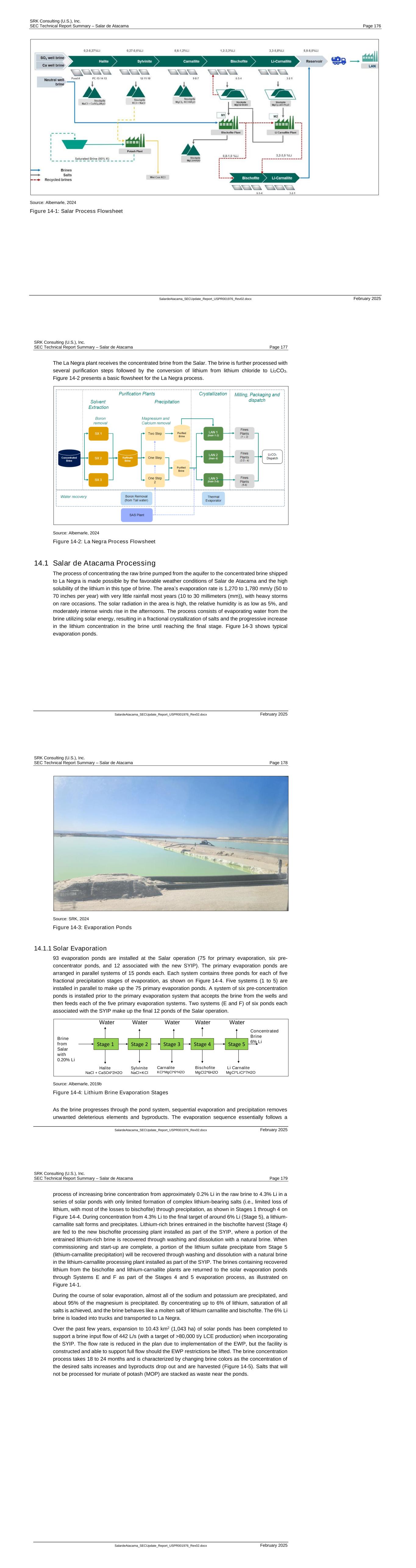

 
SRK Consulting (U.S.), Inc. SEC Technical Report Summary – Salar de Atacama Page 176 SalardeAtacama_SECUpdate_Report_USPR001976_Rev02.docx February 2025 Source: Albemarle, 2024 Figure 14-1: Salar Process Flowsheet SRK Consulting (U.S.), Inc. SEC Technical Report Summary – Salar de Atacama Page 177 SalardeAtacama_SECUpdate_Report_USPR001976_Rev02.docx February 2025 The La Negra plant receives the concentrated brine from the Salar. The brine is further processed with several purification steps followed by the conversion of lithium from lithium chloride to Li2CO3. Figure 14-2 presents a basic flowsheet for the La Negra process. Source: Albemarle, 2024 Figure 14-2: La Negra Process Flowsheet 14.1 Salar de Atacama Processing The process of concentrating the raw brine pumped from the aquifer to the concentrated brine shipped to La Negra is made possible by the favorable weather conditions of Salar de Atacama and the high solubility of the lithium in this type of brine. The area’s evaporation rate is 1,270 to 1,780 mm/y (50 to 70 inches per year) with very little rainfall most years (10 to 30 millimeters (mm)), with heavy storms on rare occasions. The solar radiation in the area is high, the relative humidity is as low as 5%, and moderately intense winds rise in the afternoons. The process consists of evaporating water from the brine utilizing solar energy, resulting in a fractional crystallization of salts and the progressive increase in the lithium concentration in the brine until reaching the final stage. Figure 14-3 shows typical evaporation ponds. SRK Consulting (U.S.), Inc. SEC Technical Report Summary – Salar de Atacama Page 178 SalardeAtacama_SECUpdate_Report_USPR001976_Rev02.docx February 2025 Source: SRK, 2024 Figure 14-3: Evaporation Ponds 14.1.1 Solar Evaporation 93 evaporation ponds are installed at the Salar operation (75 for primary evaporation, six pre- concentrator ponds, and 12 associated with the new SYIP). The primary evaporation ponds are arranged in parallel systems of 15 ponds each. Each system contains three ponds for each of five fractional precipitation stages of evaporation, as shown on Figure 14-4. Five systems (1 to 5) are installed in parallel to make up the 75 primary evaporation ponds. A system of six pre-concentration ponds is installed prior to the primary evaporation system that accepts the brine from the wells and then feeds each of the five primary evaporation systems. Two systems (E and F) of six ponds each associated with the SYIP make up the final 12 ponds of the Salar operation. Source: Albemarle, 2019b Figure 14-4: Lithium Brine Evaporation Stages As the brine progresses through the pond system, sequential evaporation and precipitation removes unwanted deleterious elements and byproducts. The evaporation sequence essentially follows a Stage 1 Stage 2 Stage 3 Stage 4 Stage 5 Brine from Salar with 0.20% Li Halite NaCl + CaSO4*2H2O Sylvinite NaCl+KCl Carnalite KCl*MgCl*6*H2O Bischofite MgCl2*6H2O Li Carnalite MgCl*LiCl*7H2O Concentrated Brine 6% Li Water Water Water Water Water 90% Initial Water is Evaporated Ev porati n Stages SRK Consulting (U.S.), Inc. SEC Technical Report Summary – Salar de Atacama Page 179 SalardeAtacama_SECUpdate_Report_USPR001976_Rev02.docx February 2025 process of increasing brine concentration from approximately 0.2% Li in the raw brine to 4.3% Li in a series of solar ponds with only limited formation of complex lithium-bearing salts (i.e., limited loss of lithium, with most of the losses to bischofite) through precipitation, as shown in Stages 1 through 4 on Figure 14-4. During concentration from 4.3% Li to the final target of around 6% Li (Stage 5), a lithium- carnallite salt forms and precipitates. Lithium-rich brines entrained in the bischofite harvest (Stage 4) are fed to the new bischofite processing plant installed as part of the SYIP, where a portion of the entrained lithium-rich brine is recovered through washing and dissolution with a natural brine. When commissioning and start-up are complete, a portion of the lithium sulfate precipitate from Stage 5 (lithium-carnallite precipitation) will be recovered through washing and dissolution with a natural brine in the lithium-carnallite processing plant installed as part of the SYIP. The brines containing recovered lithium from the bischofite and lithium-carnallite plants are returned to the solar evaporation ponds through Systems E and F as part of the Stages 4 and 5 evaporation process, as illustrated on Figure 14-1. During the course of solar evaporation, almost all of the sodium and potassium are precipitated, and about 95% of the magnesium is precipitated. By concentrating up to 6% of lithium, saturation of all salts is achieved, and the brine behaves like a molten salt of lithium carnallite and bischofite. The 6% Li brine is loaded into trucks and transported to La Negra. Over the past few years, expansion to 10.43 km2 (1,043 ha) of solar ponds has been completed to support a brine input flow of 442 L/s (with a target of >80,000 t/y LCE production) when incorporating the SYIP. The flow rate is reduced in the plan due to implementation of the EWP, but the facility is constructed and able to support full flow should the EWP restrictions be lifted. The brine concentration process takes 18 to 24 months and is characterized by changing brine colors as the concentration of the desired salts increases and byproducts drop out and are harvested (Figure 14-5). Salts that will not be processed for muriate of potash (MOP) are stacked as waste near the ponds.
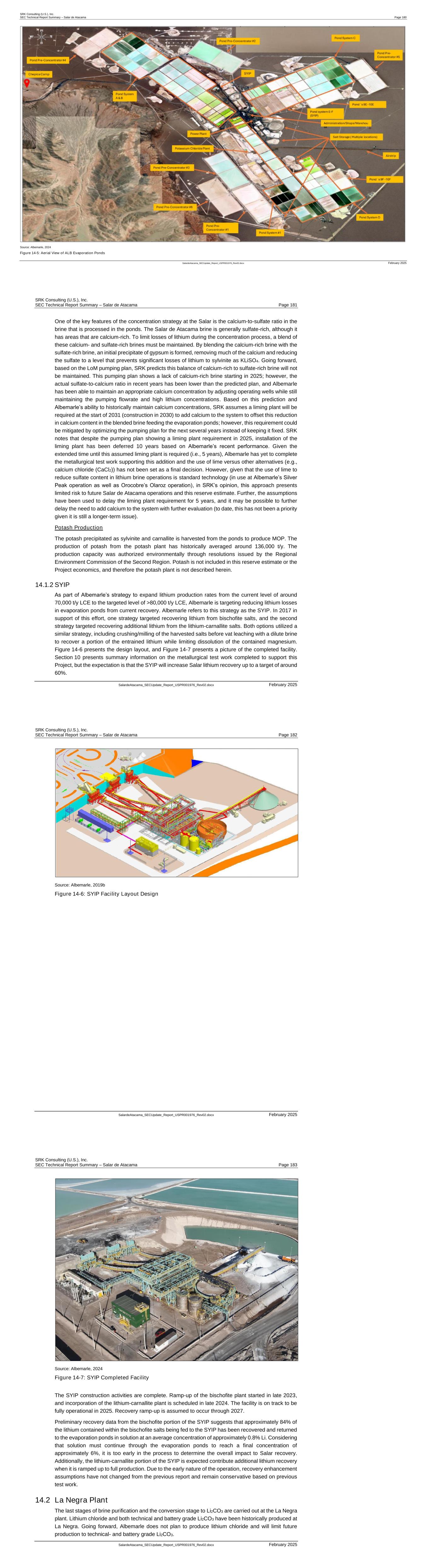

 
SRK Consulting (U.S.), Inc. SEC Technical Report Summary – Salar de Atacama Page 180 SalardeAtacama_SECUpdate_Report_USPR001976_Rev02.docx February 2025 Source: Albemarle, 2024 Figure 14-5: Aerial View of ALB Evaporation Ponds SRK Consulting (U.S.), Inc. SEC Technical Report Summary – Salar de Atacama Page 181 SalardeAtacama_SECUpdate_Report_USPR001976_Rev02.docx February 2025 One of the key features of the concentration strategy at the Salar is the calcium-to-sulfate ratio in the brine that is processed in the ponds. The Salar de Atacama brine is generally sulfate-rich, although it has areas that are calcium-rich. To limit losses of lithium during the concentration process, a blend of these calcium- and sulfate-rich brines must be maintained. By blending the calcium-rich brine with the sulfate-rich brine, an initial precipitate of gypsum is formed, removing much of the calcium and reducing the sulfate to a level that prevents significant losses of lithium to sylvinite as KLiSO4. Going forward, based on the LoM pumping plan, SRK predicts this balance of calcium-rich to sulfate-rich brine will not be maintained. This pumping plan shows a lack of calcium-rich brine starting in 2025; however, the actual sulfate-to-calcium ratio in recent years has been lower than the predicted plan, and Albemarle has been able to maintain an appropriate calcium concentration by adjusting operating wells while still maintaining the pumping flowrate and high lithium concentrations. Based on this prediction and Albemarle’s ability to historically maintain calcium concentrations, SRK assumes a liming plant will be required at the start of 2031 (construction in 2030) to add calcium to the system to offset this reduction in calcium content in the blended brine feeding the evaporation ponds; however, this requirement could be mitigated by optimizing the pumping plan for the next several years instead of keeping it fixed. SRK notes that despite the pumping plan showing a liming plant requirement in 2025, installation of the liming plant has been deferred 10 years based on Albemarle’s recent performance. Given the extended time until this assumed liming plant is required (i.e., 5 years), Albemarle has yet to complete the metallurgical test work supporting this addition and the use of lime versus other alternatives (e.g., calcium chloride (CaCl2)) has not been set as a final decision. However, given that the use of lime to reduce sulfate content in lithium brine operations is standard technology (in use at Albemarle’s Silver Peak operation as well as Orocobre’s Olaroz operation), in SRK’s opinion, this approach presents limited risk to future Salar de Atacama operations and this reserve estimate. Further, the assumptions have been used to delay the liming plant requirement for 5 years, and it may be possible to further delay the need to add calcium to the system with further evaluation (to date, this has not been a priority given it is still a longer-term issue). Potash Production The potash precipitated as sylvinite and carnallite is harvested from the ponds to produce MOP. The production of potash from the potash plant has historically averaged around 136,000 t/y. The production capacity was authorized environmentally through resolutions issued by the Regional Environment Commission of the Second Region. Potash is not included in this reserve estimate or the Project economics, and therefore the potash plant is not described herein. 14.1.2 SYIP As part of Albemarle’s strategy to expand lithium production rates from the current level of around 70,000 t/y LCE to the targeted level of >80,000 t/y LCE, Albemarle is targeting reducing lithium losses in evaporation ponds from current recovery. Albemarle refers to this strategy as the SYIP. In 2017 in support of this effort, one strategy targeted recovering lithium from bischofite salts, and the second strategy targeted recovering additional lithium from the lithium-carnallite salts. Both options utilized a similar strategy, including crushing/milling of the harvested salts before vat leaching with a dilute brine to recover a portion of the entrained lithium while limiting dissolution of the contained magnesium. Figure 14-6 presents the design layout, and Figure 14-7 presents a picture of the completed facility. Section 10 presents summary information on the metallurgical test work completed to support this Project, but the expectation is that the SYIP will increase Salar lithium recovery up to a target of around 60%. SRK Consulting (U.S.), Inc. SEC Technical Report Summary – Salar de Atacama Page 182 SalardeAtacama_SECUpdate_Report_USPR001976_Rev02.docx February 2025 Source: Albemarle, 2019b Figure 14-6: SYIP Facility Layout Design SRK Consulting (U.S.), Inc. SEC Technical Report Summary – Salar de Atacama Page 183 SalardeAtacama_SECUpdate_Report_USPR001976_Rev02.docx February 2025 Source: Albemarle, 2024 Figure 14-7: SYIP Completed Facility The SYIP construction activities are complete. Ramp-up of the bischofite plant started in late 2023, and incorporation of the lithium-carnallite plant is scheduled in late 2024. The facility is on track to be fully operational in 2025. Recovery ramp-up is assumed to occur through 2027. Preliminary recovery data from the bischofite portion of the SYIP suggests that approximately 84% of the lithium contained within the bischofite salts being fed to the SYIP has been recovered and returned to the evaporation ponds in solution at an average concentration of approximately 0.8% Li. Considering that solution must continue through the evaporation ponds to reach a final concentration of approximately 6%, it is too early in the process to determine the overall impact to Salar recovery. Additionally, the lithium-carnallite portion of the SYIP is expected contribute additional lithium recovery when it is ramped up to full production. Due to the early nature of the operation, recovery enhancement assumptions have not changed from the previous report and remain conservative based on previous test work. 14.2 La Negra Plant The last stages of brine purification and the conversion stage to Li2CO3 are carried out at the La Negra plant. Lithium chloride and both technical and battery grade Li2CO3 have been historically produced at La Negra. Going forward, Albemarle does not plan to produce lithium chloride and will limit future production to technical- and battery grade Li2CO3.


SRK Consulting (U.S.), Inc. SEC Technical Report Summary – Salar de Atacama Page 184 SalardeAtacama_SECUpdate_Report_USPR001976_Rev02.docx February 2025 There are currently three process trains in production: La Negra 1 (LAN 1), La Negra 2 (LAN 2), and La Negra 3 (LAN 3), which have a designed production capacity of approximately 84,000 t/y LCE. All three production trains utilize a similar flowsheet, as illustrated on Figure 14-2. The plant is expected to continue ramping up through 2025 as brine production limitations are de-bottlenecked and the increased recovery from the SYIP implementation is realized in the brine feeding the La Negra plant. The primary process steps that occur at La Negra include boron removal with solvent extraction, brine purification (impurity removal) through chemical precipitation, lithium carbonate precipitation (carbonation) utilizing chemical precipitation, thermal evaporation for water, and additional lithium recovery and final washing/drying/packaging (Figure 14-8). SRK Consulting (U.S.), Inc. SEC Technical Report Summary – Salar de Atacama Page 185 SalardeAtacama_SECUpdate_Report_USPR001976_Rev02.docx February 2025 Source: Albemarle, 2024 Figure 14-8: La Negra Flowsheet SRK Consulting (U.S.), Inc. SEC Technical Report Summary – Salar de Atacama Page 186 SalardeAtacama_SECUpdate_Report_USPR001976_Rev02.docx February 2025 Table 14-1 presents the mass balance for La Negra associated with Figure 14-8. Table 14-1: La Negra Mass Balance Process Figure 14-8 Reference Annual Mass Flow (t) Concentrated brine for solvent extraction (SX) A1 342,133 Hydrochloric acid (HCl) for SX A2 4,248 Solvent A3 102 Extractant A4 290 Sulfuric acid (H2SO4) for SX A5 741 Quicklime for SX A6 2,787 Water for SX A7 28,743 Refined brine, SX product A8 339,683 HCl for purification A9 2,224 Flocculant A10 30 Soda ash for purification A11 22,341 H2SO4 for purification A12 686 Quicklime for purification A13 18,540 Water for purification A14 404,259 50% sodium hydroxide (NaOH) A15 919 Purified brine, purification product A16 1,928,993 H2SO4 for carbonation A17 712 Soda ash for carbonation A18 164,119 Water for carbonation A19 593,707 Mother liquor A20 2,466,356 Lithium recovered from thermal evaporator A21 29,888 Water, thermal evaporator product A22 596,806 HCl for thermal evaporator A23 22,679 Battery grade lithium carbonate B1 82,140 Technical grade lithium carbonate B2 2,023 Tail water from SX B3 312,795 Magnesium hydroxide (Mg(OH)2) and calcium carbonate (CaCO3) from purification B4 48,500 Mother liquor purge B5 133,765 Salts from thermal evaporation B6 232,626 Source: Albemarle, 2024 14.2.1 Boron Removal The concentrated brine from the Salar is received at La Negra with a nominal concentration of 0.8% by weight of boron. Boron is considered a contaminant and this boron content needs to be reduced to a value <10 parts per million (ppm). This boron removal stage is completed utilizing a SX process (Figure 14-9). SRK Consulting (U.S.), Inc. SEC Technical Report Summary – Salar de Atacama Page 187 SalardeAtacama_SECUpdate_Report_USPR001976_Rev02.docx February 2025 Source: Albemarle, 2024 Figure 14-9: Boron Removal Scheme by SX
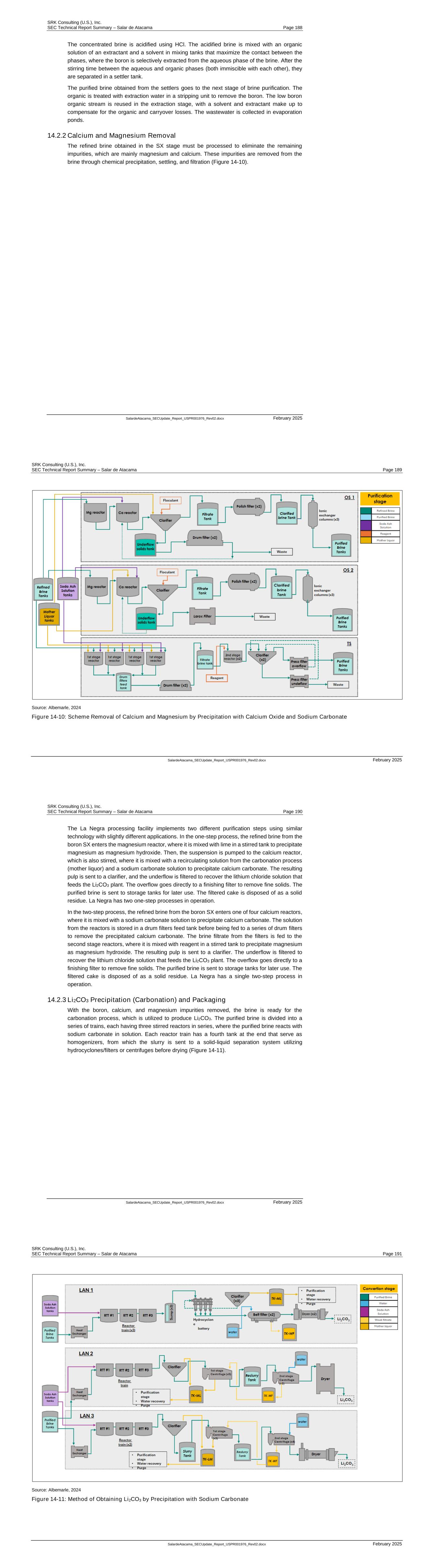

 
SRK Consulting (U.S.), Inc. SEC Technical Report Summary – Salar de Atacama Page 188 SalardeAtacama_SECUpdate_Report_USPR001976_Rev02.docx February 2025 The concentrated brine is acidified using HCl. The acidified brine is mixed with an organic solution of an extractant and a solvent in mixing tanks that maximize the contact between the phases, where the boron is selectively extracted from the aqueous phase of the brine. After the stirring time between the aqueous and organic phases (both immiscible with each other), they are separated in a settler tank. The purified brine obtained from the settlers goes to the next stage of brine purification. The organic is treated with extraction water in a stripping unit to remove the boron. The low boron organic stream is reused in the extraction stage, with a solvent and extractant make up to compensate for the organic and carryover losses. The wastewater is collected in evaporation ponds. 14.2.2 Calcium and Magnesium Removal The refined brine obtained in the SX stage must be processed to eliminate the remaining impurities, which are mainly magnesium and calcium. These impurities are removed from the brine through chemical precipitation, settling, and filtration (Figure 14-10). SRK Consulting (U.S.), Inc. SEC Technical Report Summary – Salar de Atacama Page 189 SalardeAtacama_SECUpdate_Report_USPR001976_Rev02.docx February 2025 Source: Albemarle, 2024 Figure 14-10: Scheme Removal of Calcium and Magnesium by Precipitation with Calcium Oxide and Sodium Carbonate SRK Consulting (U.S.), Inc. SEC Technical Report Summary – Salar de Atacama Page 190 SalardeAtacama_SECUpdate_Report_USPR001976_Rev02.docx February 2025 The La Negra processing facility implements two different purification steps using similar technology with slightly different applications. In the one-step process, the refined brine from the boron SX enters the magnesium reactor, where it is mixed with lime in a stirred tank to precipitate magnesium as magnesium hydroxide. Then, the suspension is pumped to the calcium reactor, which is also stirred, where it is mixed with a recirculating solution from the carbonation process (mother liquor) and a sodium carbonate solution to precipitate calcium carbonate. The resulting pulp is sent to a clarifier, and the underflow is filtered to recover the lithium chloride solution that feeds the Li2CO3 plant. The overflow goes directly to a finishing filter to remove fine solids. The purified brine is sent to storage tanks for later use. The filtered cake is disposed of as a solid residue. La Negra has two one-step processes in operation. In the two-step process, the refined brine from the boron SX enters one of four calcium reactors, where it is mixed with a sodium carbonate solution to precipitate calcium carbonate. The solution from the reactors is stored in a drum filters feed tank before being fed to a series of drum filters to remove the precipitated calcium carbonate. The brine filtrate from the filters is fed to the second stage reactors, where it is mixed with reagent in a stirred tank to precipitate magnesium as magnesium hydroxide. The resulting pulp is sent to a clarifier. The underflow is filtered to recover the lithium chloride solution that feeds the Li2CO3 plant. The overflow goes directly to a finishing filter to remove fine solids. The purified brine is sent to storage tanks for later use. The filtered cake is disposed of as a solid residue. La Negra has a single two-step process in operation. 14.2.3 Li2CO3 Precipitation (Carbonation) and Packaging With the boron, calcium, and magnesium impurities removed, the brine is ready for the carbonation process, which is utilized to produce Li2CO3. The purified brine is divided into a series of trains, each having three stirred reactors in series, where the purified brine reacts with sodium carbonate in solution. Each reactor train has a fourth tank at the end that serve as homogenizers, from which the slurry is sent to a solid-liquid separation system utilizing hydrocyclones/filters or centrifuges before drying (Figure 14-11). SRK Consulting (U.S.), Inc. SEC Technical Report Summary – Salar de Atacama Page 191 SalardeAtacama_SECUpdate_Report_USPR001976_Rev02.docx February 2025 Source: Albemarle, 2024 Figure 14-11: Method of Obtaining Li2CO3 by Precipitation with Sodium Carbonate


 
SRK Consulting (U.S.), Inc. SEC Technical Report Summary – Salar de Atacama Page 192 SalardeAtacama_SECUpdate_Report_USPR001976_Rev02.docx February 2025 Subsequently, the dry product is stored in silos and distributed in the dry area for the manufacture and packaging of the different product formats for both technical and battery grade. 14.2.4 Thermal Evaporation The thermal evaporation portion of the process uses heat to remove sodium chloride salts, recover and reuse water, and recover additional lithium from mother liquor, as illustrated on Figure 14-12. Source: Albemarle, 2024 Figure 14-12: Method of Thermal Evaporation for Lithium and Water Recovery Mother liquor collected from the carbonation stages retains a recoverable amount of lithium that is concentrated and returned to the process through the thermal evaporation process at La Negra. Mother liquor is mixed with HCl to acidify the solution and reduce carbonate ions into carbon dioxide (CO2) before being pumped through a preheater and decarbonator, where the CO2 is removed from the solution. After the CO2 is removed, NaOH is added to buffer the solution and increase the pH before being fed into the thermal evaporator crystallizer. Using recovered heat, the crystallizer evaporates water from the mother liquor solution to a super-saturated point such that NaCl crystallizes. A recirculating stream of concentrated mother liquor solution is pumped from the bottom of the crystallizer through a centrifuge to remove the solid NaCl and into a centrate tank. From the centrate tank, a portion of the solution is returned to the brine purification step (calcium and magnesium removal) to recover the entrained lithium, while the other portion is returned to the crystallizer to mix with the incoming mother liquor and continue the NaCl removal. Solid NaCl from the centrifuge is removed to the tailings and waste storage piles. Water evaporated through the crystallizer is recirculated to the crystallizer heater to heat the incoming mother liquor. The heat transfer process condenses water vapor from steam and is stored in a condensate tank before being used as a preheat solution and being returned to the process. SRK Consulting (U.S.), Inc. SEC Technical Report Summary – Salar de Atacama Page 193 SalardeAtacama_SECUpdate_Report_USPR001976_Rev02.docx February 2025 14.3 DLE With the activation of the EWP and the required reduction in pumping rate, Albemarle is researching the use of DLE at the Salar to extract lithium and reinject the resultant spent brine into the Salar such that the groundwater aquifer levels will increase, or at a minimum maintain the current levels. Considering the novelty of DLE, its limited implementation at a commercial scale, and the early-stage investigation for Albemarle, no consideration has been included in the reserve or cost estimates included herein. Albemarle intends to disclose its intentions with regard to DLE implementation at Salar de Atacama when the level and results of the study are sufficient to potentially impact the processing of lithium from the Salar. 14.4 Process Design Parameters One of the key limiting factors for Albemarle is the permitted brine extraction rate. Historically, the brine extraction permit allowed for an annual average of 142 L/s. In October 2016, a quarterly increase of 60 L/s began until the new annual average of 442 L/s was reached, which was the extraction rate until activation of the EWP. Activation of the EWP required a reduction in pumping rate to an average equal to or less than 369 L/s. The pumping plan simulation estimated an average flow rate of 368 L/s that is used in the pumping plan going forward. There is a risk that further reductions in pumping rate may be required, and Albemarle is working on mitigation and alternative processing applications to maintain and ultimately increase the pumping rate again in the future. The development of those applications are not sufficiently developed for discussion or inclusion in the plan, so the average rate of 368 L/s is used in this LoM plan. At this pumping rate, for a 365-day year, approximately 11.6 million m3 are extracted from the aquifer annually, equivalent to an average of 138 kt LCE with an average lithium concentration of 0.22%. Historically, the recovery of lithium in the Salar has been around 50%, although this has ranged from 40% to closer to 55%. For the purposes of this reserve estimate, SRK assumed the current recovery rate of 40% will be maintained through the first half of 2024. In the second half of 2024, SRK assumed the two salt treatment plants associated with the SYIP will come into operation and forecasts an incremental increase in the lithium recovery rate each year until it reaches 60% in 2027. Albemarle has previously added a process to drain the bischofite salts which was expected to improve short-term recovery beyond historic performance. However, insufficient data were available to quantify the performance increase before the bischofite processing plant associated with the SYIP was started. Therefore, SRK maintained historic recovery levels as a conservative approach. At La Negra, the current process recovery is approximately 80%, and SRK assumed that La Negra maintains this recovery rate. The production of Li2CO3 at La Negra is driven by the concentrated brine dispatched from the Salar. As noted above, the current combined LAN1, LAN2, and LAN3 production capacity is approximately 84,000 t/y LCE. Despite being on track to produce more than 70,000 t Li2CO3 in 2024, the reserve estimated production is modeled to decrease in 2025 before increasing again in 2026 through 2029. The 2025 decrease in production is directly attributed to the pumping rate decrease from the Salar between 2022 and 2023 and the assumed recovery of 40%, which is conservative and likely below what the operation will actually achieve. SRK forecasts that La Negra will not achieve full, targeted production at the plant’s capacity of 84,000 t Li2CO3. Assuming the successful continued ramp up of the SYIP and realized recovery increases from the Salar after the modeled decrease in 2025, SRK estimates production from La Negra will increase to a maximum of SRK Consulting (U.S.), Inc. SEC Technical Report Summary – Salar de Atacama Page 194 SalardeAtacama_SECUpdate_Report_USPR001976_Rev02.docx February 2025 74,500 t Li2CO3 in 2029. After 2029, production decreases steadily over the LoM due to decreasing lithium concentrations at the Salar and not as a result of plant capacity at La Negra. 14.4.1 Process Consumables Table 14-2 provides key reagents and associated forecast consumption rates. Note that these reagents are all utilized at La Negra and can vary depending upon the final product mix produced. While some reagents are consumed at the Salar, these are all currently utilized in potash production (excluded from this reserve estimate). In the future, if lime addition is required at the Salar to maintain lithium recovery rates as assumed by SRK (see Section 14.1.1), additional lime will be required beyond that reported in the table. This assumed future lime consumption is variable and based on the forecast sulfate/calcium ratio. Table 14-2: Current Process Consumables Item Consumption Rate Soda ash 2.21 t per tonne LCE sold Lime 0.25 t per tonne LCE sold HCl 0.35 t per tonne LCE sold Water 5.11 t per tonne LCE sold Source: SRK, 2024 Other reagents/consumables utilized in the process include the following: • Caustic soda • Sulfuric acid • Solvent • Extractant • Flocculants • Diatomaceous earth • Oxalic acid • Barium chloride • Carbon dioxide • LiOH Section 15.3 covers energy consumption. There are approximately 160 personnel at the Salar currently utilized in the process component of the operation, and there are approximately 480 personnel at La Negra. 14.5 SRK Opinion It is SRK’s opinion that the operating performance achieved from the existing processing facilities provides sufficient information to declare reserves. Recent additions, in particular the SYIP facilities at the Salar, should contribute to increased Salar recovery for which previous test work supported the recovery estimates. The duration of the SYIP operation is insufficient to determine operational recoveries, so previous test work assumptions have been used, which is consistent with previous analysis and reports. SRK Consulting (U.S.), Inc. SEC Technical Report Summary – Salar de Atacama Page 195 SalardeAtacama_SECUpdate_Report_USPR001976_Rev02.docx February 2025 15 Infrastructure The Project is a mature functioning operation with two separate sites that contain key facilities. Access is fully developed, with the majority accessible by paved major highways and local improved roadways on-site. A local air strip services the Salar operations. The Antofagasta airport is the nearest major commercial airport servicing the La Negra operation (the Calama airport is the closet major commercial airport to the Salar). The infrastructure is in place, operating, and provides all necessary support for ongoing operations as summarized in this report. The Salar site contains the brine well fields, brine supply water pipelines to evaporation ponds, primary processing facilities to create a concentrated brine, a phosphate plant that creates a potassium chloride product, camps (including a new camp that is in place and functional with an expansion phase designed and approved if needed in the future), airfield, access and internal roads, substation and powerline connected to the local Chilean power system, backup and supplemental diesel power generation supply and power distribution system, water supply and distribution, shop and warehouse facilities, administrative offices, change houses, waste salt storage areas, fuel storage systems, security, and communications systems. The concentrated brine product is trucked approximately 260 km to the La Negra facility. The La Negra plant purifies the lithium brine from the Salar Plant and converts the brine into Li2CO3 and LiCl. Facilities at the site include the trucked brine delivery system, boron removal plant, calcium and magnesium removal plant, Li2CO3 conversion plants, LiCl plant, evaporation sedimentation ponds, solid waste storage, product warehousing and shipping, administrative facilities, cafeterias, and an off- site area where raw materials are warehoused and combined as needed in the processing facilities. Power to the facility is provided by the regional power company via a 110-kV transmission line and distributed throughout the plant to load centers. Piped natural gas provides the energy for heating and steam needs at the facilities. The Project is security protected and has a full communication system installed. Final products from the La Negra plant are delivered to clients by truck, rail, or through port facilities in the region. 15.1 Access, Roads, and Local Communities 15.1.1 Access The Project is in north central Chile in the Antofagasta region. Primary access is from Antofagasta or Calama, the major cities in the region. The major plant facilities are at two separate sites. The refining plant site (La Negra) is closest to Antofagasta, near the small community of La Negra. Travel from Antofagasta to the La Negra refining plant site is approximately 20 km southeast on the major paved, four-lane, Chile Route 28. At La Negra, the Albemarle La Negra site is approximately 2 km north from the intersection of Route 28 on the multi-lane, paved, Chile Route 5 (the Pan-American Highway). The distance from the La Negra plant to the source of the lithium brine at Salar de Atacama (where the Albemarle Salar facilities are located) is approximately 250 km to the east. Access from La Negra is north via Route 5 for approximately 75 km and then east on paved highway B-385 for approximately 175 km. The Albemarle Salar site is on the south-central area of Salar de Atacama. Figure 15-1 shows the general location of the Project.


SRK Consulting (U.S.), Inc. SEC Technical Report Summary – Salar de Atacama Page 196 SalardeAtacama_SECUpdate_Report_USPR001976_Rev02.docx February 2025 Source: SRK, 2020 Figure 15-1: General Project Major Facility Location 15.1.2 Airport Antofagasta has an international airport, but primary flights are national, and it is the primary airport for the region. The city of Calama (located approximately 190 km to the northwest of the Salar) has the closest commercial airport to the Salar and supports regional jet traffic. A smaller airport is located at the Salar for direct access. This air strip is located at the south end of the Salar facilities. The site air strip is for smaller jets and prop planes, is approximately 2,235 m in length, and has a clay surface. 15.1.3 Rail There is a rail owned and operated by Ferrocarril de Antofagasta a Bolivia (FCAB) about 80 km south of the Salar site at Pan de Azucar that connects to La Negra (approximately 170 km away). This rail was historically used to move concentrated brine. The rail is no longer used, as all brine is trucked directly to La Negra. The La Negra facility does not have access to the rail system at this time. 15.1.4 Port Facilities Port facilities primarily used include the Mejillones Port, Antofagasta Port, and Iquique Port. The Port of Mejillones (Port Angamos) is located approximately 103 km north of La Negra. This port is focused on general cargo and containers and has four berths and the capacity to receive ships over 366 m in length, with a maximum draft of 13.7 m. The port is the only port in northern Chile that can receive new Panamax vessels. Approximately 78% of the product is transported through this port due to the connectivity and access routes to the different shipping companies. Figure 15-2 shows the general location of the primary ports. SRK Consulting (U.S.), Inc. SEC Technical Report Summary – Salar de Atacama Page 197 SalardeAtacama_SECUpdate_Report_USPR001976_Rev02.docx February 2025 Source: Google Earth/SRK, 2024 Figure 15-2: Angamos Port/Antofagasta Port The Antofagasta Port is located in Antofagasta within 20 km of the La Negra plant. The medium-size coastal breakwater port has facilities for both container and bulk transport. The port can accommodate ships over 150 m in length. Approximately 20% of the product is transported through the port. A third port (Iquique Port) is in the Tarapacá region, approximately 448 km north of La Negra. The port provides shipping for approximately 2% of the product from the Project. Figure 15-3 shows more detailed photographs of the primary port facilities. SRK Consulting (U.S.), Inc. SEC Technical Report Summary – Salar de Atacama Page 198 SalardeAtacama_SECUpdate_Report_USPR001976_Rev02.docx February 2025 Source: Google Earth/SRK, 2024 Figure 15-3: Angamos Port/Antofagasta Port SRK Consulting (U.S.), Inc. SEC Technical Report Summary – Salar de Atacama Page 199 SalardeAtacama_SECUpdate_Report_USPR001976_Rev02.docx February 2025 15.1.5 Local Communities La Negra The majority (nearly 95%) of the approximately 560 employees who work at La Negra live in the city of Antofagasta and its suburbs. Antofagasta is the regional capital and major population center, with approximately 400,000 people living there. Employees are bussed approximately 25 km to the La Negra plant. Salar Personnel who work at the Salar Plant travel from around the region. Table 15-1 shows the regional communities, population, distance to the Salar Plant, and approximate number of employees in each community. Nearly 85% of the employees live in Antofagasta, San Pedro de Atacama, or Calama. There are 27 communities in the Other Communities category where employees reside, with one to four employees living in each community. Figure 15-4 shows the communities where most employees reside. Most employees travel to the site by company bus. Table 15-1: Regional Community Information for the Salar Plant City Number of Employees Population Distance to Salar Plant (km) Antofagasta 155 400,000 250 San Pedro de Atacama 61 11,000 130 Calama 42 170,000 190 Other communities in Antofagasta region 6 Varies Varies Other regions in Chile 107 Varies Varies Total 373 Source: SRK, 2020
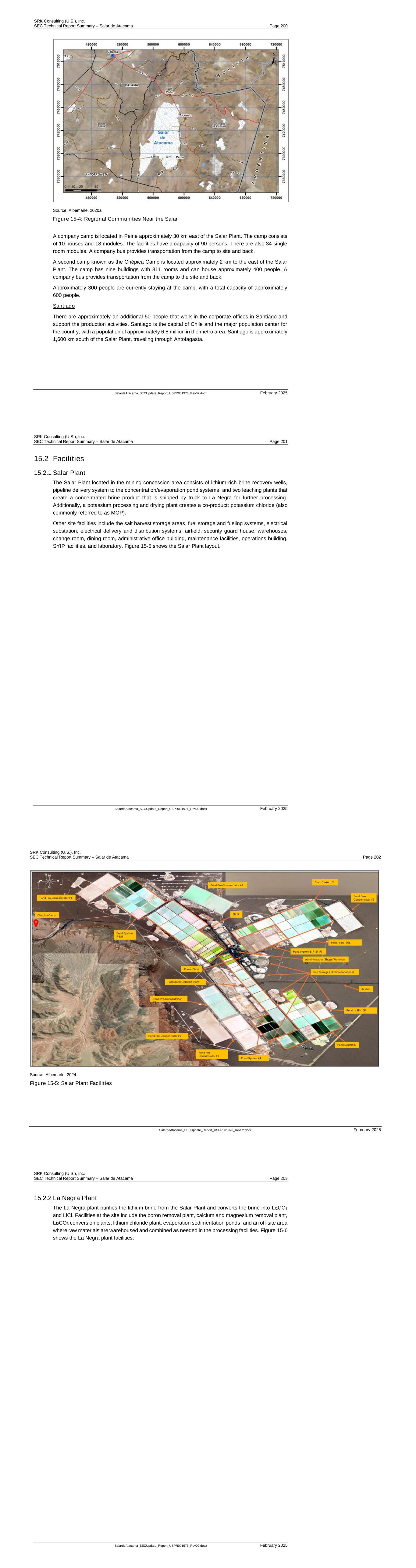

 
SRK Consulting (U.S.), Inc. SEC Technical Report Summary – Salar de Atacama Page 200 SalardeAtacama_SECUpdate_Report_USPR001976_Rev02.docx February 2025 Source: Albemarle, 2020a Figure 15-4: Regional Communities Near the Salar A company camp is located in Peine approximately 30 km east of the Salar Plant. The camp consists of 10 houses and 18 modules. The facilities have a capacity of 90 persons. There are also 34 single room modules. A company bus provides transportation from the camp to site and back. A second camp known as the Chépica Camp is located approximately 2 km to the east of the Salar Plant. The camp has nine buildings with 311 rooms and can house approximately 400 people. A company bus provides transportation from the camp to the site and back. Approximately 300 people are currently staying at the camp, with a total capacity of approximately 600 people. Santiago There are approximately an additional 50 people that work in the corporate offices in Santiago and support the production activities. Santiago is the capital of Chile and the major population center for the country, with a population of approximately 6.8 million in the metro area. Santiago is approximately 1,600 km south of the Salar Plant, traveling through Antofagasta. SRK Consulting (U.S.), Inc. SEC Technical Report Summary – Salar de Atacama Page 201 SalardeAtacama_SECUpdate_Report_USPR001976_Rev02.docx February 2025 15.2 Facilities 15.2.1 Salar Plant The Salar Plant located in the mining concession area consists of lithium-rich brine recovery wells, pipeline delivery system to the concentration/evaporation pond systems, and two leaching plants that create a concentrated brine product that is shipped by truck to La Negra for further processing. Additionally, a potassium processing and drying plant creates a co-product: potassium chloride (also commonly referred to as MOP). Other site facilities include the salt harvest storage areas, fuel storage and fueling systems, electrical substation, electrical delivery and distribution systems, airfield, security guard house, warehouses, change room, dining room, administrative office building, maintenance facilities, operations building, SYIP facilities, and laboratory. Figure 15-5 shows the Salar Plant layout. SRK Consulting (U.S.), Inc. SEC Technical Report Summary – Salar de Atacama Page 202 SalardeAtacama_SECUpdate_Report_USPR001976_Rev02.docx February 2025 Source: Albemarle, 2024 Figure 15-5: Salar Plant Facilities SRK Consulting (U.S.), Inc. SEC Technical Report Summary – Salar de Atacama Page 203 SalardeAtacama_SECUpdate_Report_USPR001976_Rev02.docx February 2025 15.2.2 La Negra Plant The La Negra plant purifies the lithium brine from the Salar Plant and converts the brine into Li2CO3 and LiCl. Facilities at the site include the boron removal plant, calcium and magnesium removal plant, Li2CO3 conversion plants, lithium chloride plant, evaporation sedimentation ponds, and an off-site area where raw materials are warehoused and combined as needed in the processing facilities. Figure 15-6 shows the La Negra plant facilities.
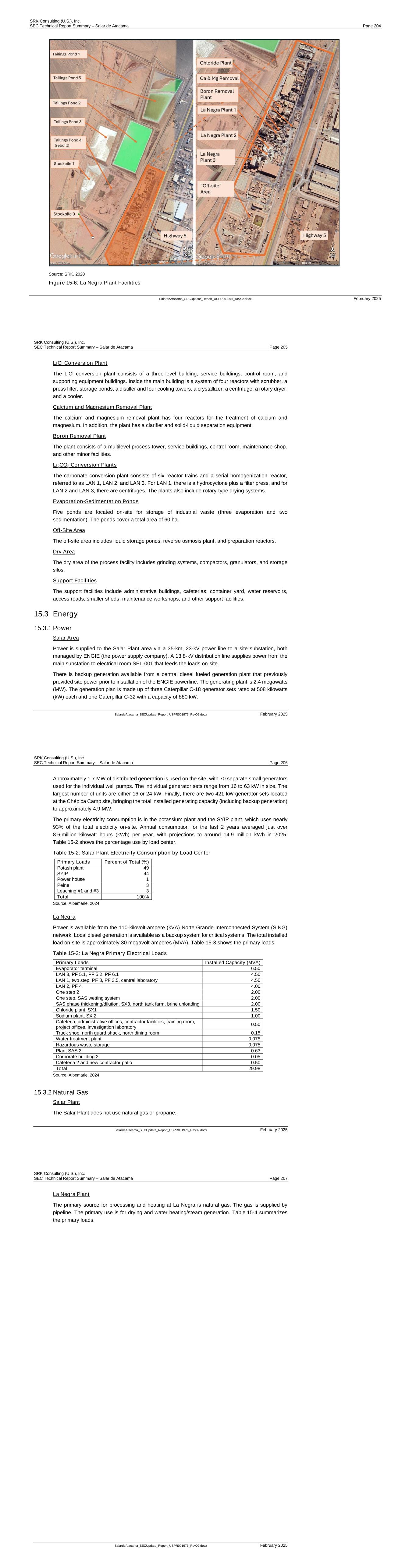

 
SRK Consulting (U.S.), Inc. SEC Technical Report Summary – Salar de Atacama Page 204 SalardeAtacama_SECUpdate_Report_USPR001976_Rev02.docx February 2025 Source: SRK, 2020 Figure 15-6: La Negra Plant Facilities SRK Consulting (U.S.), Inc. SEC Technical Report Summary – Salar de Atacama Page 205 SalardeAtacama_SECUpdate_Report_USPR001976_Rev02.docx February 2025 LiCl Conversion Plant The LiCl conversion plant consists of a three-level building, service buildings, control room, and supporting equipment buildings. Inside the main building is a system of four reactors with scrubber, a press filter, storage ponds, a distiller and four cooling towers, a crystallizer, a centrifuge, a rotary dryer, and a cooler. Calcium and Magnesium Removal Plant The calcium and magnesium removal plant has four reactors for the treatment of calcium and magnesium. In addition, the plant has a clarifier and solid-liquid separation equipment. Boron Removal Plant The plant consists of a multilevel process tower, service buildings, control room, maintenance shop, and other minor facilities. Li2CO3 Conversion Plants The carbonate conversion plant consists of six reactor trains and a serial homogenization reactor, referred to as LAN 1, LAN 2, and LAN 3. For LAN 1, there is a hydrocyclone plus a filter press, and for LAN 2 and LAN 3, there are centrifuges. The plants also include rotary-type drying systems. Evaporation-Sedimentation Ponds Five ponds are located on-site for storage of industrial waste (three evaporation and two sedimentation). The ponds cover a total area of 60 ha. Off-Site Area The off-site area includes liquid storage ponds, reverse osmosis plant, and preparation reactors. Dry Area The dry area of the process facility includes grinding systems, compactors, granulators, and storage silos. Support Facilities The support facilities include administrative buildings, cafeterias, container yard, water reservoirs, access roads, smaller sheds, maintenance workshops, and other support facilities. 15.3 Energy 15.3.1 Power Salar Area Power is supplied to the Salar Plant area via a 35-km, 23-kV power line to a site substation, both managed by ENGIE (the power supply company). A 13.8-kV distribution line supplies power from the main substation to electrical room SEL-001 that feeds the loads on-site. There is backup generation available from a central diesel fueled generation plant that previously provided site power prior to installation of the ENGIE powerline. The generating plant is 2.4 megawatts (MW). The generation plan is made up of three Caterpillar C-18 generator sets rated at 508 kilowatts (kW) each and one Caterpillar C-32 with a capacity of 880 kW. SRK Consulting (U.S.), Inc. SEC Technical Report Summary – Salar de Atacama Page 206 SalardeAtacama_SECUpdate_Report_USPR001976_Rev02.docx February 2025 Approximately 1.7 MW of distributed generation is used on the site, with 70 separate small generators used for the individual well pumps. The individual generator sets range from 16 to 63 kW in size. The largest number of units are either 16 or 24 kW. Finally, there are two 421-kW generator sets located at the Chépica Camp site, bringing the total installed generating capacity (including backup generation) to approximately 4.9 MW. The primary electricity consumption is in the potassium plant and the SYIP plant, which uses nearly 93% of the total electricity on-site. Annual consumption for the last 2 years averaged just over 8.6 million kilowatt hours (kWh) per year, with projections to around 14.9 million kWh in 2025. Table 15-2 shows the percentage use by load center. Table 15-2: Salar Plant Electricity Consumption by Load Center Primary Loads Percent of Total (%) Potash plant 49 SYIP 44 Power house 1 Peine 3 Leaching #1 and #3 3 Total 100% Source: Albemarle, 2024 La Negra Power is available from the 110-kilovolt-ampere (kVA) Norte Grande Interconnected System (SING) network. Local diesel generation is available as a backup system for critical systems. The total installed load on-site is approximately 30 megavolt-amperes (MVA). Table 15-3 shows the primary loads. Table 15-3: La Negra Primary Electrical Loads Primary Loads Installed Capacity (MVA) Evaporator terminal 6.50 LAN 3, PF 5.1, PF 5.2, PF 6.1 4.50 LAN 1, two step, PF 3, PF 3.5, central laboratory 4.50 LAN 2, PF 4 4.00 One step 2 2.00 One step, SAS wetting system 2.00 SAS phase thickening/dilution, SX3, north tank farm, brine unloading 2.00 Chloride plant, SX1 1.50 Sodium plant, SX 2 1.00 Cafeteria, administrative offices, contractor facilities, training room, project offices, investigation laboratory 0.50 Truck shop, north guard shack, north dining room 0.15 Water treatment plant 0.075 Hazardous waste storage 0.075 Plant SAS 2 0.63 Corporate building 2 0.05 Cafeteria 2 and new contractor patio 0.50 Total 29.98 Source: Albemarle, 2024 15.3.2 Natural Gas Salar Plant The Salar Plant does not use natural gas or propane. SRK Consulting (U.S.), Inc. SEC Technical Report Summary – Salar de Atacama Page 207 SalardeAtacama_SECUpdate_Report_USPR001976_Rev02.docx February 2025 La Negra Plant The primary source for processing and heating at La Negra is natural gas. The gas is supplied by pipeline. The primary use is for drying and water heating/steam generation. Table 15-4 summarizes the primary loads.
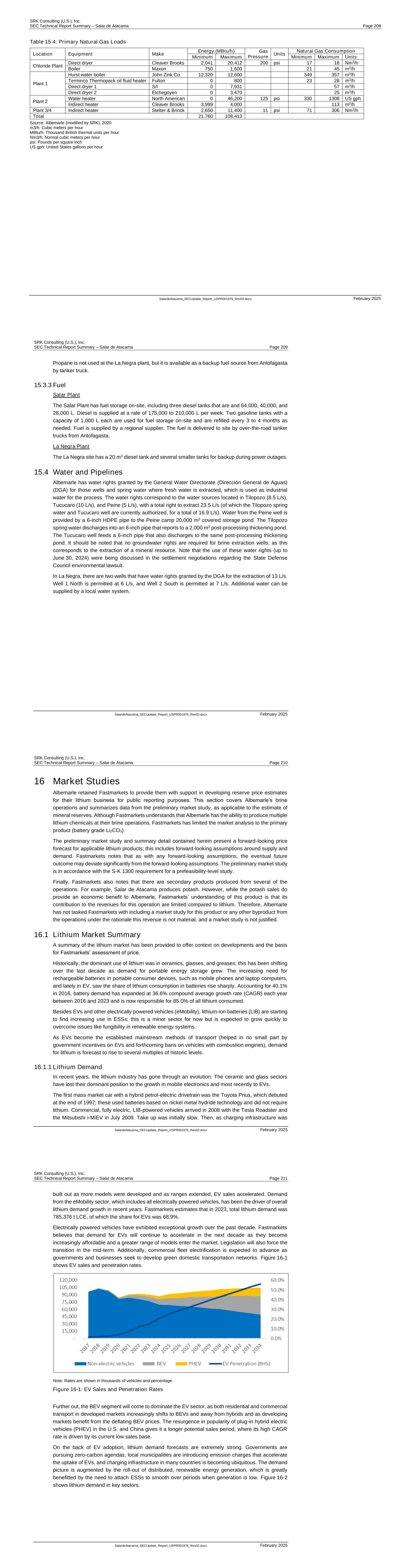

 
SRK Consulting (U.S.), Inc. SEC Technical Report Summary – Salar de Atacama Page 208 SalardeAtacama_SECUpdate_Report_USPR001976_Rev02.docx February 2025 Table 15-4: Primary Natural Gas Loads Location Equipment Make Energy (MBtu/h) Gas Pressure Units Natural Gas Consumption Minimum Maximum Minimum Maximum Units Chloride Plant Direct dryer Cleaver Brooks 2,041 20,412 200 psi 17 18 Nm3/h Boiler Maxon 750 1,600 21 45 m3/h Plant 1 Hurst water boiler John Zink Co. 12,320 12,600 349 357 m3/h Terminco Thermopack oil fluid heater Fulton 0 800 23 28 m3/h Direct dryer 1 S/I 0 7,931 57 m3/h Direct dryer 2 Etchegoyen 0 3,470 25 m3/h Plant 2 Water heater North American 0 46,200 125 psi 330 1308 US gph Indirect heater Cleaver Brooks 3,999 4,000 113 m3/h Plant 3/4 Indirect heater Stelter & Brinck 2,650 11,400 11 psi 71 306 Nm3/h Total 21,760 108,413 Source: Albemarle (modified by SRK), 2020 m3/h: Cubic meters per hour MBtu/h: Thousand British thermal units per hour Nm3/h: Normal cubic meters per hour psi: Pounds per square inch US gph: United States gallons per hour SRK Consulting (U.S.), Inc. SEC Technical Report Summary – Salar de Atacama Page 209 SalardeAtacama_SECUpdate_Report_USPR001976_Rev02.docx February 2025 Propane is not used at the La Negra plant, but it is available as a backup fuel source from Antofagasta by tanker truck. 15.3.3 Fuel Salar Plant The Salar Plant has fuel storage on-site, including three diesel tanks that are and 64,000, 40,000, and 28,000 L. Diesel is supplied at a rate of 175,000 to 210,000 L per week. Two gasoline tanks with a capacity of 1,000 L each are used for fuel storage on-site and are refilled every 3 to 4 months as needed. Fuel is supplied by a regional supplier. The fuel is delivered to site by over-the-road tanker trucks from Antofagasta. La Negra Plant The La Negra site has a 20 m3 diesel tank and several smaller tanks for backup during power outages. 15.4 Water and Pipelines Albemarle has water rights granted by the General Water Directorate (Dirección General de Aguas) (DGA) for those wells and spring water where fresh water is extracted, which is used as industrial water for the process. The water rights correspond to the water sources located in Tilopozo (8.5 L/s), Tucucaro (10 L/s), and Peine (5 L/s), with a total right to extract 23.5 L/s (of which the Tilopozo spring water and Tucucaro well are currently authorized, for a total of 16.9 L/s). Water from the Peine well is provided by a 6-inch HDPE pipe to the Peine camp 20,000 m3 covered storage pond. The Tilopozo spring water discharges into an 8-inch pipe that reports to a 2,000 m3 post-processing thickening pond. The Tucucaro well feeds a 6-inch pipe that also discharges to the same post-processing thickening pond. It should be noted that no groundwater rights are required for brine extraction wells, as this corresponds to the extraction of a mineral resource. Note that the use of these water rights (up to June 30, 2024) were being discussed in the settlement negotiations regarding the State Defense Council environmental lawsuit. In La Negra, there are two wells that have water rights granted by the DGA for the extraction of 13 L/s. Well 1 North is permitted at 6 L/s, and Well 2 South is permitted at 7 L/s. Additional water can be supplied by a local water system. SRK Consulting (U.S.), Inc. SEC Technical Report Summary – Salar de Atacama Page 210 SalardeAtacama_SECUpdate_Report_USPR001976_Rev02.docx February 2025 16 Market Studies Albemarle retained Fastmarkets to provide them with support in developing reserve price estimates for their lithium business for public reporting purposes. This section covers Albemarle’s brine operations and summarizes data from the preliminary market study, as applicable to the estimate of mineral reserves. Although Fastmarkets understands that Albemarle has the ability to produce multiple lithium chemicals at their brine operations, Fastmarkets has limited the market analysis to the primary product (battery grade Li2CO3). The preliminary market study and summary detail contained herein present a forward-looking price forecast for applicable lithium products; this includes forward-looking assumptions around supply and demand. Fastmarkets notes that as with any forward-looking assumptions, the eventual future outcome may deviate significantly from the forward-looking assumptions. The preliminary market study is in accordance with the S-K 1300 requirement for a prefeasibility-level study. Finally, Fastmarkets also notes that there are secondary products produced from several of the operations. For example, Salar de Atacama produces potash. However, while the potash sales do provide an economic benefit to Albemarle, Fastmarkets’ understanding of this product is that its contribution to the revenues for this operation are limited compared to lithium. Therefore, Albemarle has not tasked Fastmarkets with including a market study for this product or any other byproduct from the operations under the rationale this revenue is not material, and a market study is not justified. 16.1 Lithium Market Summary A summary of the lithium market has been provided to offer context on developments and the basis for Fastmarkets’ assessment of price. Historically, the dominant use of lithium was in ceramics, glasses, and greases; this has been shifting over the last decade as demand for portable energy storage grew. The increasing need for rechargeable batteries in portable consumer devices, such as mobile phones and laptop computers, and lately in EV, saw the share of lithium consumption in batteries rise sharply. Accounting for 40.1% in 2016, battery demand has expanded at 36.6% compound average growth rate (CAGR) each year between 2016 and 2023 and is now responsible for 85.0% of all lithium consumed. Besides EVs and other electrically powered vehicles (eMobility), lithium-ion batteries (LIB) are starting to find increasing use in ESSs; this is a minor sector for now but is expected to grow quickly to overcome issues like fungibility in renewable energy systems. As EVs become the established mainstream methods of transport (helped in no small part by government incentives on EVs and forthcoming bans on vehicles with combustion engines), demand for lithium is forecast to rise to several multiples of historic levels. 16.1.1 Lithium Demand In recent years, the lithium industry has gone through an evolution. The ceramic and glass sectors have lost their dominant position to the growth in mobile electronics and most recently to EVs. The first mass market car with a hybrid petrol-electric drivetrain was the Toyota Prius, which debuted at the end of 1997; these used batteries based on nickel metal hydride technology and did not require lithium. Commercial, fully electric, LIB-powered vehicles arrived in 2008 with the Tesla Roadster and the Mitsubishi i-MiEV in July 2009. Take up was initially slow. Then, as charging infrastructure was SRK Consulting (U.S.), Inc. SEC Technical Report Summary – Salar de Atacama Page 211 SalardeAtacama_SECUpdate_Report_USPR001976_Rev02.docx February 2025 built out as more models were developed and as ranges extended, EV sales accelerated. Demand from the eMobility sector, which includes all electrically powered vehicles, has been the driver of overall lithium demand growth in recent years. Fastmarkets estimates that in 2023, total lithium demand was 785,376 t LCE, of which the share for EVs was 68.9%. Electrically powered vehicles have exhibited exceptional growth over the past decade. Fastmarkets believes that demand for EVs will continue to accelerate in the next decade as they become increasingly affordable and a greater range of models enter the market. Legislation will also force the transition in the mid-term. Additionally, commercial fleet electrification is expected to advance as governments and businesses seek to develop green domestic transportation networks. Figure 16-1 shows EV sales and penetration rates. Note: Rates are shown in thousands of vehicles and percentage. Figure 16-1: EV Sales and Penetration Rates Further out, the BEV segment will come to dominate the EV sector, as both residential and commercial transport in developed markets increasingly shifts to BEVs and away from hybrids and as developing markets benefit from the deflating BEV prices. The resurgence in popularity of plug-in hybrid electric vehicles (PHEV) in the U.S. and China gives it a longer potential sales period, where its high CAGR rate is driven by its current low sales base. On the back of EV adoption, lithium demand forecasts are extremely strong. Governments are pursuing zero-carbon agendas, local municipalities are introducing emission charges that accelerate the uptake of EVs, and charging infrastructure in many countries is becoming ubiquitous. The demand picture is augmented by the roll-out of distributed, renewable energy generation, which is greatly benefitted by the need to attach ESSs to smooth over periods when generation is low. Figure 16-2 shows lithium demand in key sectors.


 
SRK Consulting (U.S.), Inc. SEC Technical Report Summary – Salar de Atacama Page 212 SalardeAtacama_SECUpdate_Report_USPR001976_Rev02.docx February 2025 Note: Values are in thousands of LCE tonnes. Figure 16-2: Lithium Demand in Key Sectors Looking forward, Fastmarkets expects demand from eMobility (especially BEVs) to continue to drive lithium demand growth. While traditional and other areas will all continue to add to lithium demand, the significance of the EV sector for the lithium supply-demand balance requires deeper discussion. However, alternative technologies or societal developments could see different lithium demand. For example, households may choose to share cars instead of owning them. The advent of autonomous vehicles could see the rise of transport as a service, where ride hailing and car sharing become the norms, especially in denser populated areas; this would reduce the global vehicle population. Energy storage and power trains are also developing, with hydrogen fuel cells or sodium-ion batteries, likely contenders for some share of the market. Demand for lithium from the eMobility sector has continued to increase steadily despite increasingly negative sentiment within the last year. In 2023, 14 million EVs were sold; this is expected to reach 17.5 million in 2024 and increase to almost 24 million in 2025. The continued increase in EV demand and supportive policy should give confidence to car makers, charging infrastructure companies, and vehicle servicing companies that EVs are here to stay, and so some of the last doubts about the viability of owning an EV will be expelled. Despite recent macroeconomic weakness and negative factors (like ongoing military conflicts), BEV sales growth remains robust but is being more heavily supported by PHEV sales in China and the U.S. than in previous years. Alongside car-buyers’ growing preferences for EVs, looming bans on pure-internal combustion engine (ICE) and then hybrid vehicles are seeing auto makers and their supplies investing heavily to expand EV supply chains. Several auto makers have signaled that they will stop producing ICE vehicles altogether. These items are two clear signals that the future of the auto industry is EVs. While it has been shown that over the life of a vehicle, EVs are cheaper to run than ICE, the initial cost can be prohibitive. For higher-end vehicles, this cost is manageable in the context of the overall vehicle SRK Consulting (U.S.), Inc. SEC Technical Report Summary – Salar de Atacama Page 213 SalardeAtacama_SECUpdate_Report_USPR001976_Rev02.docx February 2025 cost. However, for entry level and smaller vehicles, the cost of the battery pack remains a hurdle to BEVs being competitive with ICE cars. General consensus is that US$100/kWh at the pack level is the rough global benchmark for BEVs to reach price parity with ICE vehicles. Although there are concerns about availability of raw materials and charging infrastructure and the initial cost, in Fastmarkets’ opinion, many of these barriers are being eroded. Besides the cost of EVs relative to ICEs, range anxiety will continue to dissuade the uptake of BEV, particularly in markets where vehicle use is necessary for travel. This anxiety will only diminish as battery ranges increase, charging times diminish, and charging infrastructure improves. Instead, where range anxiety is an issue, PHEV sales will partly compensate. Fastmarkets expects near- to mid-term growth in the EV market to remain robust. The biggest near- term threats are macroeconomic in nature, rather than EV specific. Fastmarkets’ macroeconomic forecast expects the global economy to exhibit somewhat slower growth in 2024 to 2025. The key drivers for this deceleration are high interest rates, a low rate of investment, and slowing Chinese economic growth. The U.S. economic performance continues to outperform Europe because U.S. consumers are more resistant to higher interest rates. The share of consumer spending in the regional economy is significantly greater in the U.S. than in Europe, where the slowdown of industries and investment (along with decelerating Chinese demand) hurt purchasing activity more. The Chinese economy is experiencing slower growth in 2024 than in the rebound year of 2023 but is still growing at a comparably significant rate; however, it is returning to the path of slower growth. Such an economic outlook will dampen the outlook for new vehicle sales, but while Fastmarkets expects total vehicle sales to be negatively impacted, the bulk of this will be focused on ICEs. EVs, with their reduced running costs and lower duties in some areas, are seen as a way of cutting costs and as being more futureproof. With some original equipment manufacturers cutting the costs of their EVs to grow (or even maintain) market share, EVs are looking more attractive than ICEs. With government-imposed targets and legislation banning the sale of ICE vehicles, strong growth in EV uptake is expected once the immediate economic challenges are overcome; this, though, does not discount risks to EV uptake: alternative fuels, different battery types, or a shift in car ownership would all reduce EV or LIB demand. Overall, Fastmarkets’ forecast is for EV sales to reach 50 million by 2034; at 56% of global sales, this is an impressive ramp up, but also highlights the room for further growth. 16.1.2 Lithium Supply Up until 2016, global lithium production was dominated by two deposits: Greenbushes (Australia, hard rock) and the Salar de Atacama (Chile, brine), the latter having two commercial operators (Albemarle and SQM). Livent (formerly FMC Corp) was the third main producer in South America with an operation in Argentina (Salar del Hombre Muerto). Tianqi Lithium and Ganfeng Lithium were the two main Chinese lithium players, growing domestically and overseas, with Tianqi buying a 51% stake in Greenbushes and Ganfeng Lithium developing lithium mining and production facilities in China, as well as investing in mines and brine operations in Australia and South America. In 2016, global lithium supply was about 187,000 t LCE. Supply increased at a CAGR of 28% between 2016 and 2023 in response to the positive demand outlook from the nascent EV industry. Most of this growth was fueled by Australia, Chile, and China. SRK Consulting (U.S.), Inc. SEC Technical Report Summary – Salar de Atacama Page 214 SalardeAtacama_SECUpdate_Report_USPR001976_Rev02.docx February 2025 The supply response overshot demand, forcing some producers to place operations on care and maintenance (C&M) between 2018 and 2020. Supply decreased by 7,000 t in 2020 due to production cuts, lower demand, and COVID-19 concerns. Supply recovered in 2021, increasing by 37% year-on-year and reaching 538,000 t LCE, thanks to post-pandemic stimulus measures and an increasingly positive long-term demand outlook; this resulted in a 437% price increase from the start of the year, which incentivized supply expansions. The strong growth has continued, with supply increasing by 42% and 37% year-on-year in 2022 and 2023, respectively. In 2023, supply from brine contributed 39%, or about 407,000 t of total LCE supply in 2023. Hard rock contributed 60%, of which spodumene contributed 49%, or about 514,000 t of LCE. Lepidolite contributed 12%, or about 122,000 t of LCE. In 2023, 94% of global lithium supply came from just four countries: Australia, Chile, Argentina, and China. The remainder of supply came from Zimbabwe, Brazil, Canada, the U.S., and South Africa. Production came from 53 operations, of which 16 were brine, 22 were spodumene, 13 were lepidolite, and two were petalite. Fastmarkets expects spodumene production to maintain market share because of expansions and new mines in Australia coming online, as well as the emergence of Africa as an important lithium mining region. In 2034, Fastmarkets expects spodumene resources to contribute about 1.36 million tonnes (Mt) LCE (or 48% of total supply) at the expense of brine’s share, which Fastmarkets forecasts to drop to 35% (or 1.01 Mt LCE). The successful implementation of DLE technology could also materially affect production from brine resources. Fastmarkets expects Eastern Asia (China) to be the largest single producer globally in 2034, accounting for 30% of supply, followed by South America with 28% and Australia and New Zealand at 25%. Expansion in China will cause lepidolite’s share of production to increase marginally to 13% (or 361,000 t LCE) in 2034. There is potential upside to other clay minerals supply given the vast resources in the U.S. and the willingness of the Chinese government to expand domestic production. Supply is adapting in tandem and outpacing demand in the near term. Global mine supply in 2023 was 1,042,869 t LCE. Based on Fastmarkets’ view of global lithium projects in development, mine supply is forecast to increase from 1,304,617 in 2024 to 2,854,357 in 2034 (a CAGR of 8%). This potential growth in supply is restricted to projects that are brownfield expansions of existing projects or greenfield projects that Fastmarkets believes likely to reach production. Such projects are at an advanced stage of development, perhaps with operating demonstration plants and sufficient financing to begin construction. Speculative projects, which are yet to secure funding or have not commissioned a feasibility project, for example, have been excluded until they can demonstrate that there is a reasonable chance that they will progress to their nameplate capacity. Figure 16-3 shows the forecast mine supply. SRK Consulting (U.S.), Inc. SEC Technical Report Summary – Salar de Atacama Page 215 SalardeAtacama_SECUpdate_Report_USPR001976_Rev02.docx February 2025 Note: Values are in thousands of LCE tonnes. Figure 16-3: Forecast Mine Supply Within the lithium industry, Fastmarkets has witnessed a stream of new development projects and expansions (incentivized by the high price regime during 2022 and early 2023 and backed by government policy and fiscal). Supply additions from restarts, expansions, and greenfield projects started in 2023 and have led to rapid supply increases, particularly in China. What caught the market by surprise was the speed at which China’s producers responded to the 2021 to 2022 supply tightness. China rapidly developed its domestic lepidolite assets and imported direct shipped ore (DSO) from central Africa. The combination of the planned increases and the more-rapid Chinese response has created an oversupply situation. The current situation is that some new supply is still being ramped up, while at the same time some high-cost production is being cut. Most of the recent supply restraint has so far come from non-Chinese producers; Fastmarkets expects that trend to continue but is starting to see increasing production restraint in China. The net result is that there are no nearby concerns about supply shortages, although bouts of restocking could lead to short-term periods of tightness. Over the longer term, there is no room for complacency. Chinese production seems less prone to suffering delays, as shown with the ramp-up of domestic lepidolite and African spodumene projects. But in most cases, new capacity experiences start-up delays (such as issues with gaining permits, as well as labor, know-how, and equipment shortages).


 
SRK Consulting (U.S.), Inc. SEC Technical Report Summary – Salar de Atacama Page 216 SalardeAtacama_SECUpdate_Report_USPR001976_Rev02.docx February 2025 16.1.3 Lithium Supply-Demand Balance At current spot lithium salt and spodumene prices, the industry is moving fairly deep into the cost curve; this has been an unwelcome development for miners and processors, particularly ex-Chinese and those looking to bring new projects online. It is not only weak prices, but also the weaker demand outlook that is causing a broad-based review, with some entities along the supply chain scaling back production and/or rethinking investment plans. Even some low-cost producers have made significant changes, which shows how difficult it must be for those higher-up the cost curve. The change in investment plans by non-Chinese participants means China’s market dominance is set to continue and perhaps expand at the expense on non-Chinese participants; this will have ramifications for those wanting to build supply chains that avoid China. Fastmarkets expects the emerging trend of reducing capital expenditure and cost reduction through efficiency improvements, changes to strategy, placing capacity on C&M, and delaying or stopping expansion plans to make future supply responses harder. These risks exacerbate future forecast deficits, especially given that the whole market will be much larger, requiring a bigger effort from producers to bring meaningful supply additions online. However, the low-price situation is not putting off all investors, with some new large-scale projects being pushed forward as new, well-established investors enter the arena, such as Rio Tinto and ExxonMobil. These projects should help tackle the projected future deficits. The supply restraint and investment cuts taking place now mean that Fastmarkets forecasts the market to swing back into a deficit in 2027. Low prices now delaying many new projects means there is greater risk that supply will fall short of demand in the last few years of the decade and into the early 2030s. Larger deficits from 2032 will be primarily due to less visibility in project development but also the impact of a low-price environment over the next few years not incentivizing the necessary project development to service these forecast deficits. Fastmarkets’ supply forecast is based on current visibility on what producers are planning. As it will be impossible to have year-after-year of deficits, producers’ plans will change, and how that unfolds will ultimately determine how tight, or not, the market ends up being. Supply is still growing despite the low-price environment and some production restraint; this has coincided with a period of weaker-than-expected demand growth. Ironically, the industry is still growing healthily; Fastmarkets expects demand growth from EVs to average 25% over the next few years, but this is slower than >40% growth in demand from EVs the market was used to in the early post-COVID years. The high prices in 2021 to 2022 triggered a massive producer response, with some new supply still being ramped up, while at the same time some high-cost production is being cut, mainly by non- Chinese producers. The combination of weaker-than-expected demand at a time when supply is still rising means the market is likely to be in a supply surplus until 2026. The supply restraint and investment cuts now mean that Fastmarkets forecasts the market to swing back into a deficit earlier than previously expected, with tightness to reappear in 2027 rather than 2028; this could change relatively easily should demand exceed expectations and supply expansion disappoint to the downside. For example, the forecast surplus in 2026 of about 72,000 t LCE is only about 4% of forecast demand in that year. With low prices delaying many new projects, it now means there is greater risk that supply will fall short SRK Consulting (U.S.), Inc. SEC Technical Report Summary – Salar de Atacama Page 217 SalardeAtacama_SECUpdate_Report_USPR001976_Rev02.docx February 2025 of demand in the last few years of the decade and into the early 2030s. Figure 16-4 shows the lithium supply-demand balance. Source: Fastmarkets Note: Values are in thousands of LCE tonnes. Figure 16-4: Lithium Supply-Demand Balance 16.1.4 Lithium Prices Lithium prices reacted negatively to the supply increases that started in 2017, with spot prices for battery grade Li2CO3, CIF CJK falling from a peak of US$20/kg in early 2018 to a low of US$6.75/kg in the second half of 2020. Demand recovery and the tightness in supply led to rapid price gains in 2021 and 2022. Spodumene prices peaked in November/December 2022 at more than US$8,000/t, and LiOH and Li2CO3 peaked at US$85/kg and US$81/kg, respectively. During this period of surging prices, companies along the supply chain built up inventory to protect themselves from further price rises. The cathode active material (CAM) manufacturers were particularly aggressive at building inventory; this behavior was not just about protecting against rising prices: they were also seeing strong demand for batteries as EV sales were expanding rapidly, and, therefore, they needed higher inventories to cope with potentially another strong year of growth in 2023, which ultimately turned out not to be the case. Prices decreased from the 2022 peak due to a significant producer response, exacerbated by the fast- tracking of lepidolite production in China and the shipping of DSO material from Africa, aggressive destocking, and weaker-than-expected demand. Spodumene prices fell to US$4,850/t by the end of March 2023 (almost a 40% decline in 3 months). Purchasing strategies did not react quickly enough to the price drop in the early part of 2023, which saw companies continue to purchase material while their sales were falling, and as a result further inventory accumulated. As is common in falling markets, consumers (if they cannot hedge their inventory) tend to destock, which hits demand even harder and thus creates a downward spiral in prices and demand. By the end of 2023, spodumene and Li2CO3 prices had fallen by more than 85% and 80%, respectively, since the start of the year. SRK Consulting (U.S.), Inc. SEC Technical Report Summary – Salar de Atacama Page 218 SalardeAtacama_SECUpdate_Report_USPR001976_Rev02.docx February 2025 The price rebound in 2024 was limited, with Li2CO3 prices after the lunar new year reaching US$14.25/kg, compared with a low of US$13.20/kg in March. Since then, prices have been on a downward trend, reaching US$10.61 in September (a fall of 30% since January 2024). The limited rebound and the fact that prices have dropped further to below US$11.00/kg highlight just how weak the market has become. Despite the significant falls, prices are still well above the US$6.75/kg low of 2020. Fastmarkets is now waiting to see how much further prices need to fall to produce enough production cuts to rebalance the market. Figure 16-5 shows lithium battery material prices. Source: Fastmarkets Note: Battery grade, spot, CIF CJK, in US$/kg Figure 16-5: Lithium Battery Material Prices Fastmarkets’ forecast is for hydroxide and carbonate prices to average US$13.00 this year and then drop to US$11.50 to US$12.00 in 2025. As these are annual average prices, this could lead to prices below US$10/kg in 2025. Fastmarkets does not expect prices to fall to levels of the last trough in 2020, mainly for the following three reasons: first, China is still exhibiting relatively strong EV growth, whereas in 2020, EV sales were weak on 2019’s subsidy cuts and due to the fallout from COVID; second, inflation has had a big impact on the mining sector over the past few years; and third, ESS is now a major part of the demand growth story. Fastmarkets forecasts that hydroxide and carbonate prices will average US$22.50/kg and US$22.70/kg, respectively, between 2024 and 2034. For the purposes of the reserve estimate, Fastmarkets has provided price forecasts out to 2034 for the most utilized market price benchmarks; these are the battery grade carbonate and hydroxide, CIF CJK. Fastmarkets recognizes that Albemarle’s current operations are expected to continue for at least SRK Consulting (U.S.), Inc. SEC Technical Report Summary – Salar de Atacama Page 219 SalardeAtacama_SECUpdate_Report_USPR001976_Rev02.docx February 2025 another 20 years, but due to a lack of visibility and the recent significant changes in the market, prices beyond 2034 are unusually opaque for an industrial commodity. Post-2034, the continued growth of demand for lithium from EVs and ESS will require a lithium price that continues to incentivize new supply additions, leading to more-balanced markets. The lithium price will need to exceed the production cost for new projects and provide an adequate rate of return on investment to justify development, though this will be helped by an established and accepted EV market, which will support the long-term lithium demand. Fastmarkets has provided a base, high, and low case price forecast to give an indication of the range of which prices could sit, depending on reasonable assumptions around potential impacts to the base case market balance. In the base case, Fastmarkets expects prices to be underpinned by the market balance, and given the time it takes for most western producers to bring on new supply, the forecast deficits mean the market is likely to get tighter again towards the end of the decade and to remain tight. As the market gets bigger, the number of new projects needed to keep up with steady growth also increases, which is likely to be a challenge for producers. The high-case scenario could pan out either if the growth in supply is slower than expected or if demand growth is faster. The former could happen if project development outside of China and Africa continues to suffer from delays because of the low price and if DLE technology takes longer to be commercially available. The latter could happen if the adoption of EVs reaccelerates or if demand for ESS grows faster. However, these would probably lift prices only in the short- and mid-terms, as additional supply capacity would be incentivized and so bring prices back to more-sustainable levels. The spread between the base case and high-price scenario widens towards 2034, where Fastmarkets has reduced visibility on supply. Fastmarkets believes that prices above US$50/kg would be unsustainable over the long term, especially since more of the market is priced basis market prices and cheaper EVs are needed for mass market adoption. The low-case scenario could unfold if higher-cost supply remains price inelastic; this is most likely to involve Chinese producers. Alternatively, or possibly in tandem, low prices would be expected if a global recession unfolded. A further downside risk would result from a sharp drop-off in EV sales (e.g., consumers choosing to stick with petrol cars). A breakthrough alternative battery technology could also undermine lithium demand or boost it. A major geopolitical event involving China would also be a huge concern for this market. Between 2033 and 2043, Fastmarkets expects LiOH and Li2CO3 to be at a price parity and average US$27/kg over the period. Fastmarkets recommends that a real price of US$17.65/kg for Li2CO3 battery grade cif CJK and/or $17.00 for technical grade Li2CO3 CIF CJK should be utilized by Albemarle for reserve estimation. Recommended prices are on the lower end of Fastmarkets' low-case scenario. Figure 16-6 presents these long-term prices and scenarios, where 2024 has been assumed to be constant for clearer visualization.


 
SRK Consulting (U.S.), Inc. SEC Technical Report Summary – Salar de Atacama Page 220 SalardeAtacama_SECUpdate_Report_USPR001976_Rev02.docx February 2025 Note: Battery grade, spot, CIF CJK, in US$/kg, real (2024) Figure 16-6: Lithium Battery Materials Long-Term Forecast Scenarios 16.2 Product Sales Table 16-1 and Table 16-2 provide specifications for the technical- and battery grade Li2CO3 produced at La Negra. Table 16-1: Technical grade Li2CO3 Specifications Chemical Specification Li2CO3 Minimum 99.00% Cl Maximum 0.015% K Maximum 0.001% Na Maximum 0.084% Mg Maximum 0.007% SO4 Maximum 0.054% Iron(III) oxide (Fe2O3) Maximum 0.003% Ca Maximum 0.016% Insoluble matter Maximum 0.017% Loss at 550°C Maximum 0.744% Source: Albemarle, 2025 Table 16-2: Battery grade Li2CO3 Specifications Chemical Specification Li2CO3 Minimum 99.30% Cl Maximum 0.015% K Maximum 0.001% Na Maximum 0.065% Mg Maximum 0.007% SO4 Maximum 0.050% Magnetic impurity Maximum 0.5 ppm Ca Maximum 0.016% Particle size 50% particle size maximum 5.0 microns Source: Albemarle, 2025 SRK Consulting (U.S.), Inc. SEC Technical Report Summary – Salar de Atacama Page 221 SalardeAtacama_SECUpdate_Report_USPR001976_Rev02.docx February 2025 Table 16-3 presents historic production rates for each of these products, with brine sourced from Salar de Atacama as processed at the La Negra facility. Table 16-3: Historic La Negra Annual Production Rates 2015 2016 2017 2018 2019 2020 2021 2022 2023 2024 Technical- grade Li2CO3 (t/y) 10,945 10,581 9,822 8,628 5,658 6,829 5,514 10,189 5,515 6,874 Battery- grade Li2CO3 (t/y) 13,323 16,573 20,324 27,998 32,874 35,256 35,895 43,419 49,775 64,283 Technical- grade LiCl (t/y) 2,143 1,900 3,209 3,821 1,824 - - - - - Source: Albemarle, 2024 Note: 2015 to 2023 data reflect actual production, and 2024 production is an estimate. Looking forward, Albemarle has recently significantly expanded its production facilities at the Salar, and La Negra 3 is operational and ramping-up. Table 16-4 provides the expected production capacities for each lithium chemical. The ability to run La Negra 3 at full capacity will be dependent on restrictions imposed by the EWP and Albemarle’s ability to identify and implement sufficient mitigation plans. Based on current conditions and information available, production is not expected to reach maximum capacity at La Negra due to the restrictions incurred at the Salar. Table 16-4: Current La Negra Production Capacity by Product Current Annual Capacity (t) Technical grade Li2CO3 7,500 Battery grade Li2CO3 71,000 Technical grade LiCl 0 Source: Albemarle, 2024 To simplify the analysis for the purposes of this reserve estimate, SRK assumed that all lithium production from the combined Salar de Atacama/La Negra operation is sold as technical grade Li2CO3; this is the lowest value product forecast for production and adds a layer of conservatism to the reserve estimate. . The three lithium products from the Salar de Atacama/La Negra operation are all marketable lithium chemicals that can be sold into the open market. However, Albemarle is an integrated chemical manufacturing company that operates multiple downstream lithium processing facilities. Therefore, a proportion of the production from the Salar de Atacama/La Negra operation is utilized to source product for Albemarle’s downstream processing facilities. Table 16-5 presents a breakdown of the volume of Salar de Atacama/La Negra product that is consumed internally for further downstream processing versus sales to third parties. Table 16-5: 2024 de Atacama Product Consumption LCE Production Consumed Internally (t) LCE Production Sold to Third Parties (t) Technical grade Li2CO3 1,309 7,147 Battery grade Li2CO3 2,997 59,714 Technical grade LiCl 0 0 Source: Albemarle 2024 SRK Consulting (U.S.), Inc. SEC Technical Report Summary – Salar de Atacama Page 222 SalardeAtacama_SECUpdate_Report_USPR001976_Rev02.docx February 2025 While a portion of the production may be consumed internally, for the purposes of this reserve estimate, SRK assumed that 100% of the production from the Salar de Atacama/La Negra operation is sold to third parties. Further, as noted above, although Salar de Atacama/La Negra can and do produce higher-value technical grade Li2CO3, SRK’s assumption for the purpose of this reserve estimate is that all production is sold as the lower-value technical grade Li2CO3; this simplifies the assumptions for the estimate and does not materially impact the magnitude of the reserve estimated herein, as the reserve is contract constrained (see Section 16.3.1) and not economically constrained. 16.3 Contracts As outlined above, the lithium chemicals produced from the Salar de Atacama/La Negra operations are either consumed internally for downstream value-add production or sold to third parties. These sales may be completed in spot transactions, or the chemicals may be utilized to satisfy sales contracts for lithium chemicals held at the consolidated corporate Albemarle level or its affiliates. These contracts are not generally specific to sourcing product from Salar de Atacama/La Negra, although product sourced from other operations would need to be certified to meet customer quality requirements. Therefore, these contracts are not included in this analysis of reserves at Salar de Atacama, and this analysis instead assumes a typical market price. Salar de Atacama/La Negra sell all lithium products to its foreign related party Albemarle US Inc., where their sales and marketing teams provide instructions about specified locations where Chile should deliver the products. Extraction and sales of lithium and other products are regulated by contracts agreed with the CCHEN and CORFO. Section 16.3.1 summarizes these contracts. SRK is not aware of any other material contracts for the Salar de Atacama/La Negra operation. 16.3.1 CCHEN and CORFO Agreements Decree Law No. 2,886 (published on November 14, 1979, and effective January 1, 1979) reserved lithium extraction for the State of Chile. However, the concessions held by Albemarle for the purposes of producing lithium from Salar de Atacama were registered in 1977 and are therefore exempt from this law. Nonetheless, under Law No 16,319 (establishing CCHEN), lithium can only be mined by CCHEN or with prior authorization from CCHEN. Under this law, lithium producers are subject to a production quota that caps total production from the concessions, and Albemarle is subject to such a CCHEN production quota. CCHEN also limits the extraction rate of brine from Salar de Atacama. In 2016, CCHEN increased the allocated pumping rate for Albemarle at Salar de Atacama from the prior 142 to 442 L/s. As part of the same agreement, the CCHEN production quota was increased from 200,000 t Li (as lithium metal), inclusive of historic production to 540,240 t Li (as lithium metal). Further, CORFO was the original owner of the concessions in Salar de Atacama from which Albemarle’s resources and reserves are derived. A predecessor of Albemarle (Foote Mineral Company) entered into an agreement with CORFO in August 1980 to establish production of lithium and other products from these concessions. From this original contract, Albemarle was limited to a total production quota of 200,000 t Li (as lithium metal) without an expiration date and was not required to pay royalties on lithium production. A 1987 agreement with CORFO establishing production of potassium byproduct salts includes a royalty on the production of this product equal to 3% of the sales price for potassium products. The 1980 agreement for lithium extraction was subsequently amended in 2016 to allow for an increase in the production quota of lithium from these concessions. This SRK Consulting (U.S.), Inc. SEC Technical Report Summary – Salar de Atacama Page 223 SalardeAtacama_SECUpdate_Report_USPR001976_Rev02.docx February 2025 amendment increased the company's authorized lithium production quota by an additional 262,132 t Li (as lithium metal), of which 204,581 t LME remain (as of June 30, 2024). With approximately 105,455 t LME remaining from the original quota (as of June 30, 2024), the remaining amount from this additional quota results in a total remaining production quota of 310,036 t Li as lithium metal (1.65 Mt LCE). As the CORFO quota has less allowable lithium production than the CCHEN sales quota, SRK used the CORFO quota numbers as the limiting factor on this reserve estimate. As part of the 2016 amendment to the CORFO agreement, Albemarle agreed to additional conditions around its production of lithium, including the following: • A quota expiration of January 1, 2044 (i.e., any quota not utilized by this date will be forfeited) • Albemarle agreed to invest in a third Li2CO3 plant in Chile with a production capacity of at least 20,000 to 24,000 t/y battery grade LCE no later than December 31, 2022. If this new battery grade production facility is not in production by December 31, 2022, the new quota will be reduced from 262,132 to 43,132 t LME. In addition, the quota will expire on December 31, 2035 (i.e., any quota not utilized by this date will be forfeited). Albemarle completed the new battery grade production facility (LAN 3) and met the requirements. • Provides for an additional quota of 34,776 t (as lithium metal) to feed a LiOH plant with production capacity of at least 5,000 t/y should Albemarle construct a LiOH plant in Chile. Note that SRK has not assumed the development of a LiOH plant and therefore has not included this quota in its analysis. • Establishes royalties or commissions paid to CORFO on every tonne of product sold from Salar de Atacama/La Negra according to the schedule presented in Table 16-6 • Commencing on January 1, 2017, and continuing for approximately 5 years (until 31,559 t LME are produced), Albemarle will pay a commission on the production still remaining under the original quota. Thereafter, Albemarle will no longer pay any commissions on the lithium produced at the original 24,000 Mt carbonate plant, allowing Albemarle to produce the then- remaining tonnes of the original quota on a commission-free basis as per the terms of the original agreement with CORFO. • If Chile develops a local downstream industry that requires battery grade lithium salts, Albemarle agrees to allocate a portion of its production (up to 25%) of those salts for sale to those local downstream producers at a discounted price (relative to Albemarle's export sales price). To date, development of downstream industry has not occurred, and Albemarle is therefore not selling any production at this discounted rate. SRK has not assumed any future discounted sales associated with this clause in this TRS, as they are not aware of any planned or established downstream development. • Albemarle will annually pay into a fund that will be used to develop research and development (R&D) to benefit Atacama, the country of Chile, and local industry. This payment is a fixed amount, inflated each year through the expiration of the quota at the end of 2043. • Albemarle Limitada makes certain commitments to the local communities in Atacama to use in local development projects equal to 3.5% of sales from Chilean production. • Prohibits the sale of products with low value-add (e.g., raw brine, concentrated brine, and/or refined brine in any degree of concentration) • Royalty rates on potassium chloride will follow a sliding scale ranging from 3% to 20% of the sales price.


 
SRK Consulting (U.S.), Inc. SEC Technical Report Summary – Salar de Atacama Page 224 SalardeAtacama_SECUpdate_Report_USPR001976_Rev02.docx February 2025 • Royalty rates on magnesium chloride, bischofite, carnalites, silvenites, and halites are set at 10% of sales. Table 16-6: CORFO Royalty/Commission Rates Li2CO3 LiOH Price Range (US$/t) Progressive Commission Rate (%) Price Range (US$/t) Progressive Commission Rate (%) 0 to 4,000 6.8% 0 to 4,000 6.8% 4,000 to 5,000 8.0% 4,000 to 5,000 8.0% 5,000 to 6,000 10.0% 5,000 to 6,000 10.0% 6,000 to 7,000 17.0% 6,000 to 9,000 17.0% 7,000 to 10,000 25.0% 9,000 to 11,000 25.0% Over 10,000 40.0% Over 11,000 40.0% Source: CORFO, 2024 The royalty/commission rate agreed with CORFO on Albemarle’s lithium production (Li2CO3 and other salts, excluding LiCl sales) from the combined Salar de Atacama/La Negra operation is calculated on the weighted average of third-party sales (i.e., royalty is calculated based on end-customer price). For the purposes of this reserve estimate, SRK utilized the US$17,000/t price for technical grade Li2CO3 forecast in Section 16.1.4 and applied the above royalty formula. Note that while the combined Salar de Atacama/La Negra operation has the capacity to produce approximately 84,000 t (considering LAN 1, LAN 2, and LAN 3), for the purpose of simplifying the reserve modeling, SRK assumed all production is technical grade product. Given Albemarle’s production and that the reserve is limited by its production quota and not economic factors, in SRK’s opinion, this simplification will not impact the estimation of reserves for the operation. The 2024 amendment included some adjustments regarding the calculations of the CORFO royalty without changing the above rates and price ranges. The amendment also granted the option of the “New Technologies Quota” and the “Additional Quota”, adjusted the preferential price scheme for Specialized Producers (those who develop in Chile added value products from Chilean lithium), and included new audits, among others. SRK Consulting (U.S.), Inc. SEC Technical Report Summary – Salar de Atacama Page 225 SalardeAtacama_SECUpdate_Report_USPR001976_Rev02.docx February 2025 17 Environmental Studies, Permitting, and Plans, Negotiations, or Agreements with Local Individuals or Groups This section discusses reasonably available information on environmental, permitting, and social or community factors related to the Salar de Atacama and La Negra operations. Where appropriate, recommendations for additional investigation(s), management actions, or expansion of existing baseline data collection programs are provided. The section was developed through a desktop review and a site visit, including information provided by Albemarle, and meetings with relevant Albemarle environmental staff. A site visit was conducted to the Salar de Atacama and La Negra operations on August 26 and 27, 2024, respectively. 17.1 Environmental Studies Baseline studies of environmental conditions, in both operational areas, have been developed since the first permitting efforts were undertaken: 1998 in La Negra and 2000 at Salar de Atacama. The latest environmental baseline studies at La Negra were for the Modification Project La Negra Plant Expansion Phase 3 in 2018, and the latest studies for Salar de Atacama include the environmental impact assessment (estudio de impacto Ambiental) (EIA) for modification and improvement solar evaporation system in 2016. With the ongoing monitoring programs in both locations, environmental studies (such as hydrogeology and biodiversity) are regularly updated. 17.1.1 General Background La Negra is located in a normal desert climate, characterized by low relative humidity and large variability in daily temperatures. Average annual rainfall is <5 mm, and maximum daily rainfall is 48 mm on a return period of 100 years. Although precipitation is scarce, storm events of considerable magnitude can occur. There are no perennial streams or drainages in the La Negra area. However, some intermittent or ephemeral drainages occur in the northern area where the process facilities are located. These ephemeral drainages typically only flow following extreme precipitation events. Salar de Atacama is located in a Marginal High Desert climate. The rainfall regime corresponds to summer rains, and also cyclonic origin rains, although both cases are rare events. Due to the elevation, temperatures are generally colder, with nominal annual temperature fluctuations but larger daily low and high temperature ranges. Relative humidity is very low. Average rainfall in Salar de Atacama is around 13 mm, with a maximum daily rainfall of 45 mm on the 100-year events. The Albemarle facilities are located entirely inside Salar de Atacama, with few to no discernable surface water drainages, as rainwater quickly infiltrates the highly permeable flat saline crust. Vegetation and wildlife are scarce at La Negra. La Negra is located within an industrial area which is in saturation conditions for the daily and annual standard of inhalable particulate matter. Although there are no surface water courses, there is an aquifer that could be affected by surface water infiltration from the plant facilities. As such, a water quality monitoring program is in place. Air quality, SRK Consulting (U.S.), Inc. SEC Technical Report Summary – Salar de Atacama Page 226 SalardeAtacama_SECUpdate_Report_USPR001976_Rev02.docx February 2025 hydrogeology, and water quality have been deemed as key environmental characteristics of the La Negra area and are carried forward for additional discussion below. The Salar de Atacama basin presents a unique system due to the biodiversity associated with lake and wetland systems that depend on the hydrogeological conditions of the area. There are also indigenous areas and communities in the sector. As such, the key environmental issues at Salar de Atacama include biodiversity, hydrogeology, and socioeconomics, which have been carried forward for additional discussion below. No cultural inventories of relevance have been registered within the areas of disturbance for either La Negra or Salar de Atacama. 17.1.2 La Negra Air Quality As the La Negra plant is located in an industrial area, there are several sources of air pollutant emissions. As noted above, the general area is in saturation conditions for inhalable particulate matter in relation with the Chilean primary daily and annual standards. For the projects that have been submitted for environmental evaluation at La Negra, the concentrations of inhalable (PM10) and fine particulate matter (particulate matter of 2.5 microns (PM2.5)) and combustion gases (COx, NOx, and SOx) have been modeled, and the conclusions indicate that emissions from the La Negra plant are not significant in relation to the other activities located within the industrial area. Emissions from the La Negra plant are related to vehicle traffic and emissions from fixed sources associated with the plant's processes. Air quality is monitored at the existing Coviefi, La Negra, and Inacesa stations independent of Albemarle. Hydrogeology and Water Quality The La Negra area contains four major hydrogeological units that are composed of alluvial and fluvial deposits of varying ages and represent different types of aquifers. In the upper level, the aquifer is of the semi-confined type, and thick lithologies predominate in it with alternating levels of silts, clays, and saline layers. In the underlying unit, fines predominate in relation to the other units. In the base, the Old Gravel unit presents a high hydraulic conductivity since it is formed mainly by gravelly sands and sandy gravels, and its confinement is defined by the content of fines and the thickness of the superjacent unit in the sector. A lower sedimentary unit (corresponding to the Caleta Coloso Formation and with aquitard characteristics) outcrops mainly to the west of the fault zone and is not represented in the profiles. The aquifer system overlies a more-impermeable unit consisting of slightly fractured rocks of igneous origin belonging to La Negra Formation and Paleozoic granitic rocks. As a commitment of the environmental approval resolutions, monthly monitoring of an extensive list of physical and chemical parameters was developed, along with piezometric levels in two wells. (Figure 17-1) The monitoring points are: • La Negra well (Pozo 1), which corresponds to a groundwater exploitation well located at the La Negra plant, in compliance with the resolution of water extraction, RE N°354/1989 of the DGA SRK Consulting (U.S.), Inc. SEC Technical Report Summary – Salar de Atacama Page 227 SalardeAtacama_SECUpdate_Report_USPR001976_Rev02.docx February 2025 • Inacesa monitoring well (Pozo 4), which is located in the plant of the same name of the cement company of the same name. The well has a large diameter and is a shallow well; it is in intermittent operation. • Quebrada Carrizo, which corresponds to a surface water sampling location at the confluence of the Carrizo spring with the La Negra creek Source: Albemarle, 2024c. Informe de Seguimiento Ambiental. Monitoreo Mensual de Agua Subterránea y Superficial. Sector La Negra – Mayo 2024. (Environmental Monitoring Report. Monthly Ground Water Monitoring La Negra Area – May 2024) Figure 17-1: La Negra Water Quality Monitoring Points No anomalies or exceedances of Chilean regulations were identified. Notwithstanding this (and according to information provided by Albemarle and historical information), elevated concentrations of some parameters have been detected in the past, mainly in the Quebrada Carrizo monitoring point in La Negra Creek, where the groundwater and soils both contain elevated concentrations of several constituents (e.g., arsenic (As), boron, and lithium salts). It has not been established whether these concentrations are the result of Albemarle’s operations, third parties’ discharges, or natural sources. An ecological risk report was prepared in February 2024 (Arcadis, 2024) in La Negra Creek with the objective of assessing the existence of ecological risk to biological receptors. The results of the study


 
SRK Consulting (U.S.), Inc. SEC Technical Report Summary – Salar de Atacama Page 228 SalardeAtacama_SECUpdate_Report_USPR001976_Rev02.docx February 2025 indicate that, in general, the concentrations of alkalinity, boron, calcium, chloride, strontium, lithium, magnesium, nitrate, sodium, and uranium in the surface water and soil of La Negra Creek are above the reference values for the protection of biotic resources. However, the analysis would not necessarily indicate the presence of risk of ecological effects, but rather the need to conduct further research or to evaluate the specific effects for species present in the study area. 17.1.3 Salar de Atacama Hydrology-Hydrogeology Salar de Atacama is located in an endorheic basin with elevations ranging between 2,300 and 6,200 masl, covering an area of approximately 17,300 km2. The area of lowest elevation in the basin corresponds to the Salars (2,300 masl), which have an area of approximately 1,600 km2. Around the core, there are wetlands and lagoons that cover an area of approximately 1,100 km2. This area is known as the Marginal Zone. The lagoons are fed by limited surface runoff that reaches them through ephemeral surface drainages and groundwater springs. There are areas of high sensitivity and ecological value in the Salar de Atacama basin and the area surrounding Albemarle’s facilities. These areas are the lagoons located in the Salar's Marginal Zone. These lagoon systems mainly depend on the water contributions mostly coming from the aquifers, which are in turn recharged by the rainfall in the upper part of the basin. These sensitive areas include: • La Punta-La Brava Lagoon System • Peine Lagoon System • Quelana Lagoon System • Soncor Lagoon System The Salar de Atacama brine is currently being exploited by two mining companies: SQM (at a rate of 1,700 L/s) and Albemarle (at a rate of 442 L/s). This exploitation lowers brine water levels in the Salar, which are measured in several monitoring locations. As expected, the brine level drawdown is greatest in those areas closest to the extraction wells (reaching several meters in some cases) and decreases as the monitoring points move away. Freshwater in the basin is also exploited. The largest exploitations are linked to mining activity by companies like Minera Escondida (stopped in 2019) and Zaldívar in the Negrillar and Monturaqui aquifers in the south of the basin and SQM along the eastern edge. Albemarle's freshwater rights represent <1% of the water rights granted in the basin. Because of the sensitivity of these hydrologic systems, the environmental analysis of the EIA modification and improvement solar evaporation system required the development of a conceptual and numerical hydrogeological model (SGA, 2015a) to evaluate both the direct effects of the Project's brine extraction as well as the cumulative effects with other operations in the area. The results of the modeling effort concluded that the EIA modification and improvement solar evaporation system would not have significant effects on the sensitive areas, even under a non-favorable scenario of reduced recharge over the next 25 years. The model presented in the EIA has been updated, being the last one dated March 2023 (Third Update of the Groundwater Flow Model in the Salar de Atacama RCA 21/2012 (VAI, 2023)). In general, monitoring data of freshwater aquifer levels indicate that the levels in the system remain within their historical values, allowing for the seasonal fluctuations typical of the Marginal Zone due to SRK Consulting (U.S.), Inc. SEC Technical Report Summary – Salar de Atacama Page 229 SalardeAtacama_SECUpdate_Report_USPR001976_Rev02.docx February 2025 the seasonal variation of the evaporation rate. However, as previously mentioned, there were two EWP activations from 2023 to 2024 that have implied reduction of the extraction of brine (20% of the approved flow). As a result of these activations of the EWP and the investigation on the causes triggering the EWP, Albemarle requested to the environmental authority the review Albemarle’s environmental permit as well as SQM’s environmental permit. Biodiversity Lagoons, wetlands, and saltwater ecosystems have developed in the lower part of the Salar de Atacama basin, particularly on the margins of the Salar. These ecosystems contain a high degree of biological diversity in relation to their surroundings. These systems are made up of interconnected lagoons that possess unique characteristics and properties. The systems of La Punta-La Brava and Peine in the south and Aguas de Quelana and Soncor in the east (lagoon systems Soncor, Aguas de Quelana, Peine, La Punta, and La Brava) constitute singular areas, given their importance in reproductive terms, their richness, and proportion of species with conservation challenges, since inside these areas there occur species whose habitat requirements are restricted, presenting a high sensitivity to changes in the environment. Currently, this area has three types of protection focused on preserving different components of each system. The first is focused on the protection of flamingos and includes the Soncor and Aguas de Quelana lagoon systems; it is established as the Los Flamencos National Reserve managed by the National Forestry Corporation (CONAF), created in 1990. The second is the site protected by the Convention on Wetlands (RAMSAR), which was incorporated in 1996 and corresponds to the area of Soncor, mainly because it is a nesting area for flamingos and migratory species. And finally, the third is Resolution No. 529 of the DGA of the Antofagasta region, which protects 17 wetlands within Salar de Atacama. In Salar de Atacama, surfaces have been identified as having ecological elements and/or attributes, which could be negatively affected by any threat; these include: • Presence of biological species in conservation category • Presence of species with local and/or regional endemism • Unique components • Breeding areas of endangered species Figure 17-2 shows the ecologically important areas according to these criteria. All of the areas associated with the lagoon systems and wetlands of Salar de Atacama are highly vulnerable, as they represent a significant number of sensitive and endemic species, with the presence of breeding areas for threatened species and the presence of sensitive elements, such as the wetlands. SRK Consulting (U.S.), Inc. SEC Technical Report Summary – Salar de Atacama Page 230 SalardeAtacama_SECUpdate_Report_USPR001976_Rev02.docx February 2025 Source: Albemarle, 2024c. Plan de Plan de Seguimiento Ambiental Biótico (Biological Monitoring Plan) Figure 17-2: Sensitive Ecosystems in Salar de Atacama SRK Consulting (U.S.), Inc. SEC Technical Report Summary – Salar de Atacama Page 231 SalardeAtacama_SECUpdate_Report_USPR001976_Rev02.docx February 2025 The ecosystems and organisms found in the various wetlands are dependent on the contribution of groundwater that was structured in the Salar de Atacama basin. Therefore, any extraction that generates significant fluctuations in that water supply (particularly in the freshwater-salt aquifer) has the potential to impact these ecosystems and overall biodiversity. From the point of view of species in conservation status, the mentioned systems present a high degree of sensitivity due to the presence of threatened species (according to the regulations for the classification of wild species Supreme Decree Nº 29/2011 from the Environment Ministry). Such is the case of the aquatic snail Heleobia atacamensis (Critically Endangered), the Yanez's tree iguana (also known as Fabian’s lizard) Liolaemus fabiani (Endangered), the camelid Vicugna (Endangered), and eight species in the Vulnerable category (Lama guanicoe, Ctenomys fulvus, Vultur gryphus, Rhea pennata tarapacensis, Phoenicoparrus andinus, Phoenicopterus chilensis, Phoenicopterus jamesi, and Chroicocephalus serranus). Albemarle has developed a functional ecological model of the area, from which it has defined a biological environmental monitoring plan. In the monitoring report available for review (winter 2023 to summer 2024), the state of the ecosystem was evaluated during the August 2023 to May 2024 period, considering vegetation, surface of lagoons, and phreatic levels. The results indicate that, in general terms, there is a maintenance of the ecological state, without variations that constitute significant changes, which could be framed in the cycles of historical variation of the Salar ecosystem. In addition to the biological monitoring plan, a water monitoring plan and an EWP have also been implemented. The details of these plans are discussed in the environmental monitoring section. Social Issues and Communities Salar de Atacama is located in the Antofagasta Region, municipality of San Pedro de Atacama, southeast of the city of Calama. Albemarle’s facilities at Salar de Atacama are located within an Indigenous Development Area (ADI) called Atacama La Grande, which has a population belonging to the Atacameña ethnic group. The economy of the indigenous population is mainly based on primary and secondary economic activities: cattle raising and agriculture (linked to the ancestral uses and customs of the Atacameña ethnic group), tourism, and handicrafts. In the municipality of San Pedro de Atacama, the most representative organizations are the indigenous organizations, which have been articulated around the ancestral ayllus of the Atacama ethnicity. There are 25 indigenous communities with legal status in San Pedro de Atacama. Another category of indigenous associativity is that of indigenous associations or groups, which bring together different individuals or communities from different territories to develop areas of common interest. In general, and according to official surveys, the communities and people who live in the villages (identified as Atacameños) are below the poverty level or slightly above it. However, when making a detailed analysis of the situation in each locality, there is an important impact on the local economy produced by tourism (which provides direct resources in the villages) and, above all, by the mining activity, where the inhabitants of Toconao, Socaire, and Peine (mainly) work as employees. The town of Peine is located 27 km from the Albemarle facilities and 108 km from the town of San Pedro de Atacama at the southern end of Salar de Atacama. Peine is a town that works as a residential site and as an agricultural production area.


 
SRK Consulting (U.S.), Inc. SEC Technical Report Summary – Salar de Atacama Page 232 SalardeAtacama_SECUpdate_Report_USPR001976_Rev02.docx February 2025 The Salar de Atacama area is also a relevant sector for tourism and is part of the Zone of Tourist Interest (ZOIT) San Pedro de Atacama Area - El Tatio Geothermal Basin. Albemarle maintains agreements and relationships with the Council of Atacameños Peoples and 18 indigenous communities in the area. Considering the presence of indigenous communities in the area, the development projects (that are submitted into the environmental impact assessment system) may require the development of an Indigenous Consultation Process according to Chilean legislation and regulation. Known Environmental Issues Any requirement of a brine extraction greater than the one approved (442 L/s) has an uncertain approval success, considering the multi-user conditions in Salar de Atacama, the sensitivity of the ecosystem, and the synergistic impacts on this ecosystem which concern the environmental and water authorities. To prevent any unforeseen potential risk, the EWP could be activated because of the exceedance of an established threshold, which could result in the reduction of the amount of brine authorized for extraction. During 2023 until July 2024, there were two activations of the EWP that implied a reduction of 60 L/s (20%) in the brine exploitation. In 2022, Albemarle Limitada was sued for environmental damage by the Chilean State Defense Council (Consejo de Defensa del Estado), together with two other copper mining companies. The lawsuit sought to remedy an alleged damaged caused to a wetland area in Salar the Atacama caused by water extraction. However, this lawsuit does not jeopardize Albemarle's capacity to extract the lithium resources or reserves of Salar de Atacama. Up to June 2024, a settlement was being negotiated. In March 2022, the Superintendence of the Environment filed charges against Albemarle Limitada alleging non-compliance with conditions, standards, and measures established in the Environmental Qualification Resolution No. 21/2016. Albemarle filed a statement of defense against this accusation in April 2022, along with information that was requested by the authority. This process is still open, and on November 18, 2024, the Superintendence of Environment requested additional information to Albemarle. Neither litigation is expected to impact Albemarle’s capacity to extract the lithium resources or reserves of Salar de Atacama. In May 2024, Albemarle requested the environmental authority to review Albemarle’s and SQM’s environmental permits due to a report that has concluded that there is a variable evolving differently than was predicted. This procedure aims to determine measures to tackle any adverse effect in the environment due to the described evolution. As of the date of this report, the environmental authority has not made a decision on the admissibility of Ablemarle’s request. Environmental Management Planning The environmental management of the operations in La Negra and Salar de Atacama are developed according to their environmental commitments that have emerged from the projects evaluated and approved by the environmental authority (SEA) and supervised by the Environmental Superintendence (SMA). SRK Consulting (U.S.), Inc. SEC Technical Report Summary – Salar de Atacama Page 233 SalardeAtacama_SECUpdate_Report_USPR001976_Rev02.docx February 2025 Chilean environmental legislation does not consider additional environmental management plans, with the exception of hazardous waste management plans (required by the health authority) for operations that annually generate more than 12 t of hazardous industrial waste. According to each operation and their environmental commitments, the following are the management plans for La Negra and Salar de Atacama facilities: • La Negra: o Water quality monitoring plan o Emergency and contingency prevention plan o Hazardous waste management plan • Salar de Atacama: o Biodiversity monitoring plan o Environmental water monitoring plan o EWP o Emergency and contingency prevention plan o Hazardous waste management plan The following sections summarize the main environmental management issues for the La Negra and Salar de Atacama facilities. 17.1.4 Tailing Disposal Although Albemarle's operation does not have tailings per se, it does generate liquid waste at La Negra, which is managed as follows. The process at the La Negra plant (up to Phase 2) collects solid/liquid waste together (in a wet state) in the existing system of evaporation and sedimentation ponds. Phase 3 considers a waste disposal system that includes the segregation of liquid and solid waste. The solid waste is stored as low moisture solids (collection sites), and the liquid waste is treated as recovery waste to be recycled to the plant using the La Negra evaporation and sedimentation ponds system. The Li2CO3 plant generates liquid waste, mainly from the SX process. The operation incorporates technology to reuse the mother liquor and thus optimize the use of process water and in turn recover lithium. The water generated in the different stages of the process, including the solutions coming from the cleaning of equipment (HCl or H2SO4), is taken to the thermal evaporator and then returned to the process for reuse. The mother liquor is sent to the thermal evaporation plant or to the solar evaporation system. From the thermal system, a high-purity water stream (condensate) is recovered for recycling into the process. The byproducts of the thermal evaporation plant are NaCl (salt) and a weak LiCl brine stream that is recycled to the process. In the solar evaporation system, the water is evaporated by solar radiation, and the byproduct salt is precipitated and accumulated in ponds. The process of brine concentration by means of solar evaporation ponds generates the precipitation of waste salts that are extracted from the ponds and are currently accumulated in stockpiles (see the waste discussion). The evaporation/sedimentation ponds are lined with a low-permeability PVC geomembrane. The operation at La Negra has a system of trenches to monitor infiltration. In the event that infiltration is detected (either due to an increase in the piezometric level or changes in the chemical quality of the SRK Consulting (U.S.), Inc. SEC Technical Report Summary – Salar de Atacama Page 234 SalardeAtacama_SECUpdate_Report_USPR001976_Rev02.docx February 2025 water attributable to such infiltration), these are captured by the wells, and the relevant studies will be carried out. At the same time, the possible point of infiltration from the pond will be located to conduct repairs (as needed). 17.1.5 Waste Management La Negra Process Reagents The chemical reagents used at Salar de Atacama include HCl, methyl iso-butyl carbonyl (foaming agent), Crisamine (collector), and Cricell (depressant). These reagents are stored in warehouses authorized by the health service that comply with the conditions established in the legislation applicable to hazardous substances, where applicable. Fuels Salar de Atacama maintains a plant fuel supply (operated by an authorized outside company) that consists of a tank, which complies with the regulations for the storage of liquid fuels for self- consumption (Supreme Decree Nº 379/86 of the Ministry of Economy) and is authorized by the Superintendence of Fuels. Disposal of Non-Hazardous and Hazardous Waste Domestic solid waste is temporarily stored at a site authorized by the health service and transferred for final disposal outside the facilities to an authorized landfill in the region. Non-hazardous waste is segregated at its source and disposed of in a yard (salvage yard) authorized by the health service. From here, waste is disposed of in authorized locations or reused. Hazardous industrial waste (which includes mainly vehicle batteries, oil filters, rags contaminated with grease and oil, waste oils, paints, and contaminated personal protective equipment (PPE), among others) are temporarily disposed of in a warehouse authorized by the health service and then transported to authorized off-site disposal sites. Residual Salts The process of brine concentration by means of solar evaporation ponds generates the precipitation of waste salts that remain in the ponds. The process generates three types of solid salt wastes: • Calcium and magnesium carbonates and hydroxides from the brine purification stage • Calcium/sodium borates from the boron precipitation (removal) process • NaCl from the thermal evaporation system Salar de Atacama Process Reagents The chemical reagents used at Salar de Atacama include HCl, methyl iso-butyl carbonyl (foaming agent), Crisamine (collector), and Cricell (depressant). These chemicals are stored in warehouses authorized by the health service that comply with the conditions established in the legislation applicable to hazardous substances, where applicable. Fuels Salar de Atacama maintains a plant fuel supply (operated by an authorized outside company) that consists of a tank, which complies with the regulations for the storage of liquid fuels for self- SRK Consulting (U.S.), Inc. SEC Technical Report Summary – Salar de Atacama Page 235 SalardeAtacama_SECUpdate_Report_USPR001976_Rev02.docx February 2025 consumption (Supreme Decree Nº 379/86 of the Ministry of Economy) and is authorized by the Superintendence of Fuels. Disposal of Non-Hazardous and Hazardous Waste Domestic solid waste is temporarily stored on-site at a location authorized by the health service and later transferred off-site to an authorized landfill in the region for final disposal. Non-hazardous waste is segregated at its source and disposed of in a yard (salvage yard) authorized by the health service. From here, waste is disposed of in authorized locations or reused. Hazardous industrial waste (consisting of mainly vehicle batteries, oil filters, rags contaminated with grease and oil, used oils, paints, and contaminated PPE, among others) are temporarily stored in a warehouse authorized by the health service and then transported to authorized final disposal sites. Residual Salts At Salar de Atacama, brine is extracted from wells, and the brine concentration process is through solar evaporation ponds, where the precipitation of waste salts is generated. These waste salts are excavated from the ponds and deposited in stockpiles. As the LiCl solution is concentrated, different salts precipitate in each pond, among which include halite, bischofite, carnallite, and sylvite. The latter is entered into the potash plant to produce KCl and carnallite. Once the brine is concentrated at 6% Li, the brine is sent to the La Negra plant. 17.1.6 Water Management La Negra The industrial water used in the operation comes from water acquired from third parties and (to a lesser extent) from two existing wells at the facilities with water rights for up to 6 L/s for one and 7 L/s for the other. At La Negra, the brine from Salar de Atacama is purified for the extraction of lithium. All solutions are evaporated and/or recirculated to the process. Stormwater runoff, though infrequent, is managed through a series of diversion channels around the plant, ponds, and stockpiles areas. Salar de Atacama The freshwater used in the process at Salar de Atacama is extracted from spring water in Tilopozo and wells in Tucucaro and Peine, with a total water right granted by the DGA of 23.5 L/s. Currently, 16.9 L/s are being consumed in the process. It should be noted that this amount is considering that the EWP of the Aquifer Sector is not activated in its single phase, since in case of activation, only a maximum instantaneous flow of 10.9 L/s can be extracted as a sum of the points Veriente Pozo and Pozo Tucucaro. Albemarle exploits brine from Salar de Atacama by means of extraction wells, with an authorized exploitation extraction rate of 442 L/s. As noted above, the extraction of brine and freshwater by Albemarle and other companies in the basin has the potential to cause groundwater levels to drop, which could impact lagoon and wetland systems of high ecological value. Albemarle has an environmental water monitoring plan (EWMP), a biodiversity monitoring plan, and an EWP, oriented to follow up on critical variables and prevent unexpected effects on these systems that are being monitored. These plans are described in the monitoring section.
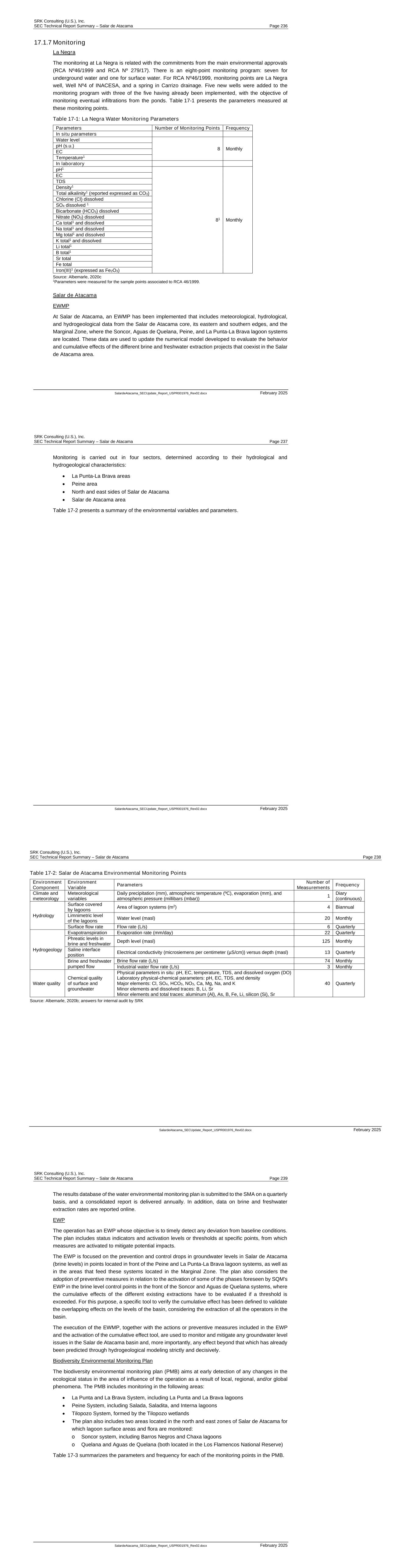

 
SRK Consulting (U.S.), Inc. SEC Technical Report Summary – Salar de Atacama Page 236 SalardeAtacama_SECUpdate_Report_USPR001976_Rev02.docx February 2025 17.1.7 Monitoring La Negra The monitoring at La Negra is related with the commitments from the main environmental approvals (RCA Nº46/1999 and RCA Nº 279/17). There is an eight-point monitoring program: seven for underground water and one for surface water. For RCA Nº46/1999, monitoring points are La Negra well, Well Nº4 of INACESA, and a spring in Carrizo drainage. Five new wells were added to the monitoring program with three of the five having already been implemented, with the objective of monitoring eventual infiltrations from the ponds. Table 17-1 presents the parameters measured at these monitoring points. Table 17-1: La Negra Water Monitoring Parameters Parameters Number of Monitoring Points Frequency In situ parameters Water level 8 Monthly pH (s.u.) EC Temperature1 In laboratory pH1 81 Monthly EC TDS Density1 Total alkalinity1 (reported expressed as CO3) Chlorine (Cl) dissolved SO4 dissolved 1 Bicarbonate (HCO3) dissolved Nitrate (NO3) dissolved Ca total1 and dissolved Na total1 and dissolved Mg total1 and dissolved K total1 and dissolved Li total1 B total1 Sr total Fe total Iron(III)1 (expressed as Fe2O3) Source: Albemarle, 2020c 1Parameters were measured for the sample points associated to RCA 46/1999. Salar de Atacama EWMP At Salar de Atacama, an EWMP has been implemented that includes meteorological, hydrological, and hydrogeological data from the Salar de Atacama core, its eastern and southern edges, and the Marginal Zone, where the Soncor, Aguas de Quelana, Peine, and La Punta-La Brava lagoon systems are located. These data are used to update the numerical model developed to evaluate the behavior and cumulative effects of the different brine and freshwater extraction projects that coexist in the Salar de Atacama area. SRK Consulting (U.S.), Inc. SEC Technical Report Summary – Salar de Atacama Page 237 SalardeAtacama_SECUpdate_Report_USPR001976_Rev02.docx February 2025 Monitoring is carried out in four sectors, determined according to their hydrological and hydrogeological characteristics: • La Punta-La Brava areas • Peine area • North and east sides of Salar de Atacama • Salar de Atacama area Table 17-2 presents a summary of the environmental variables and parameters. SRK Consulting (U.S.), Inc. SEC Technical Report Summary – Salar de Atacama Page 238 SalardeAtacama_SECUpdate_Report_USPR001976_Rev02.docx February 2025 Table 17-2: Salar de Atacama Environmental Monitoring Points Environment Component Environment Variable Parameters Number of Measurements Frequency Climate and meteorology Meteorological variables Daily precipitation (mm), atmospheric temperature (ºC), evaporation (mm), and atmospheric pressure (millibars (mbar)) 1 Diary (continuous) Hydrology Surface covered by lagoons Area of lagoon systems (m2) 4 Biannual Limnimetric level of the lagoons Water level (masl) 20 Monthly Surface flow rate Flow rate (L/s) 6 Quarterly Hydrogeology Evapotranspiration Evaporation rate (mm/day) 22 Quarterly Phreatic levels in brine and freshwater Depth level (masl) 125 Monthly Saline interface position Electrical conductivity (microsiemens per centimeter (µS/cm)) versus depth (masl) 13 Quarterly Brine and freshwater pumped flow Brine flow rate (L/s) 74 Monthly Industrial water flow rate (L/s) 3 Monthly Water quality Chemical quality of surface and groundwater Physical parameters in situ: pH, EC, temperature, TDS, and dissolved oxygen (DO) Laboratory physical-chemical parameters: pH, EC, TDS, and density Major elements: Cl, SO4, HCO3, NO3, Ca, Mg, Na, and K Minor elements and dissolved traces: B, Li, Sr Minor elements and total traces: aluminum (Al), As, B, Fe, Li, silicon (Si), Sr 40 Quarterly Source: Albemarle, 2020b; answers for internal audit by SRK SRK Consulting (U.S.), Inc. SEC Technical Report Summary – Salar de Atacama Page 239 SalardeAtacama_SECUpdate_Report_USPR001976_Rev02.docx February 2025 The results database of the water environmental monitoring plan is submitted to the SMA on a quarterly basis, and a consolidated report is delivered annually. In addition, data on brine and freshwater extraction rates are reported online. EWP The operation has an EWP whose objective is to timely detect any deviation from baseline conditions. The plan includes status indicators and activation levels or thresholds at specific points, from which measures are activated to mitigate potential impacts. The EWP is focused on the prevention and control drops in groundwater levels in Salar de Atacama (brine levels) in points located in front of the Peine and La Punta-La Brava lagoon systems, as well as in the areas that feed these systems located in the Marginal Zone. The plan also considers the adoption of preventive measures in relation to the activation of some of the phases foreseen by SQM's EWP in the brine level control points in the front of the Soncor and Aguas de Quelana systems, where the cumulative effects of the different existing extractions have to be evaluated if a threshold is exceeded. For this purpose, a specific tool to verify the cumulative effect has been defined to validate the overlapping effects on the levels of the basin, considering the extraction of all the operators in the basin. The execution of the EWMP, together with the actions or preventive measures included in the EWP and the activation of the cumulative effect tool, are used to monitor and mitigate any groundwater level issues in the Salar de Atacama basin and, more importantly, any effect beyond that which has already been predicted through hydrogeological modeling strictly and decisively. Biodiversity Environmental Monitoring Plan The biodiversity environmental monitoring plan (PMB) aims at early detection of any changes in the ecological status in the area of influence of the operation as a result of local, regional, and/or global phenomena. The PMB includes monitoring in the following areas: • La Punta and La Brava System, including La Punta and La Brava lagoons • Peine System, including Salada, Saladita, and Interna lagoons • Tilopozo System, formed by the Tilopozo wetlands • The plan also includes two areas located in the north and east zones of Salar de Atacama for which lagoon surface areas and flora are monitored: o Soncor system, including Barros Negros and Chaxa lagoons o Quelana and Aguas de Quelana (both located in the Los Flamencos National Reserve) Table 17-3 summarizes the parameters and frequency for each of the monitoring points in the PMB.
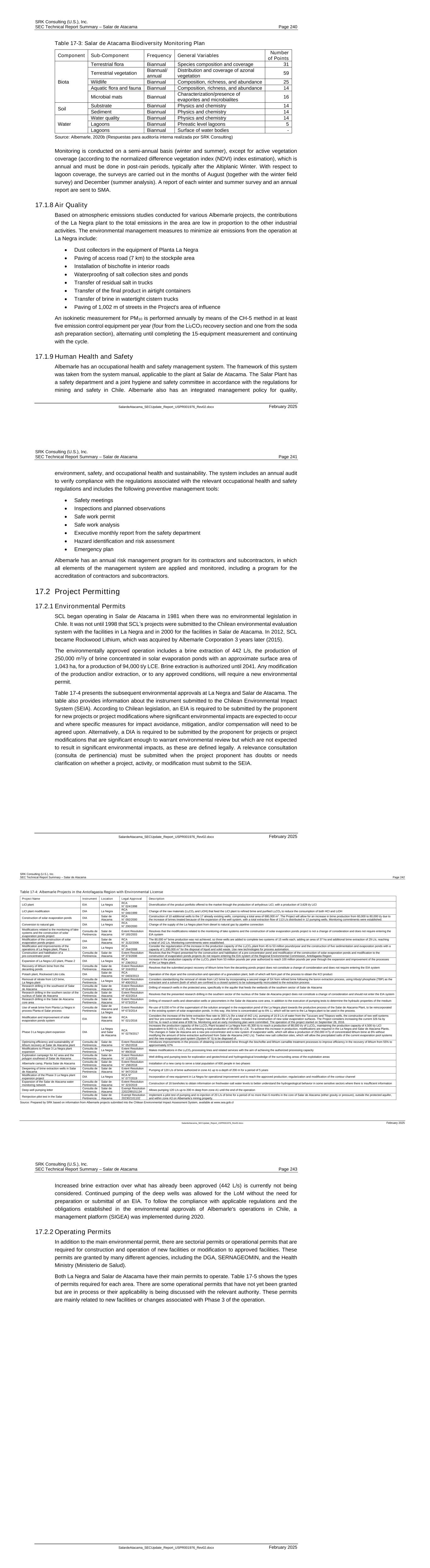

 
SRK Consulting (U.S.), Inc. SEC Technical Report Summary – Salar de Atacama Page 240 SalardeAtacama_SECUpdate_Report_USPR001976_Rev02.docx February 2025 Table 17-3: Salar de Atacama Biodiversity Monitoring Plan Component Sub-Component Frequency General Variables Number of Points Biota Terrestrial flora Biannual Species composition and coverage 31 Terrestrial vegetation Biannual/ annual Distribution and coverage of azonal vegetation 59 Wildlife Biannual Composition, richness, and abundance 25 Aquatic flora and fauna Biannual Composition, richness, and abundance 14 Microbial mats Biannual Characterization/presence of evaporites and microbialites 16 Soil Substrate Biannual Physics and chemistry 14 Sediment Biannual Physics and chemistry 14 Water Water quality Biannual Physics and chemistry 14 Lagoons Biannual Phreatic level lagoons 5 Lagoons Biannual Surface of water bodies - Source: Albemarle, 2020b (Respuestas para auditoría interna realizada por SRK Consulting) Monitoring is conducted on a semi-annual basis (winter and summer), except for active vegetation coverage (according to the normalized difference vegetation index (NDVI) index estimation), which is annual and must be done in post-rain periods, typically after the Altiplanic Winter. With respect to lagoon coverage, the surveys are carried out in the months of August (together with the winter field survey) and December (summer analysis). A report of each winter and summer survey and an annual report are sent to SMA. 17.1.8 Air Quality Based on atmospheric emissions studies conducted for various Albemarle projects, the contributions of the La Negra plant to the total emissions in the area are low in proportion to the other industrial activities. The environmental management measures to minimize air emissions from the operation at La Negra include: • Dust collectors in the equipment of Planta La Negra • Paving of access road (7 km) to the stockpile area • Installation of bischofite in interior roads • Waterproofing of salt collection sites and ponds • Transfer of residual salt in trucks • Transfer of the final product in airtight containers • Transfer of brine in watertight cistern trucks • Paving of 1,002 m of streets in the Project's area of influence An isokinetic measurement for PM10 is performed annually by means of the CH-5 method in at least five emission control equipment per year (four from the Li2CO3 recovery section and one from the soda ash preparation section), alternating until completing the 15-equipment measurement and continuing with the cycle. 17.1.9 Human Health and Safety Albemarle has an occupational health and safety management system. The framework of this system was taken from the system manual, applicable to the plant at Salar de Atacama. The Salar Plant has a safety department and a joint hygiene and safety committee in accordance with the regulations for mining and safety in Chile. Albemarle also has an integrated management policy for quality, SRK Consulting (U.S.), Inc. SEC Technical Report Summary – Salar de Atacama Page 241 SalardeAtacama_SECUpdate_Report_USPR001976_Rev02.docx February 2025 environment, safety, and occupational health and sustainability. The system includes an annual audit to verify compliance with the regulations associated with the relevant occupational health and safety regulations and includes the following preventive management tools: • Safety meetings • Inspections and planned observations • Safe work permit • Safe work analysis • Executive monthly report from the safety department • Hazard identification and risk assessment • Emergency plan Albemarle has an annual risk management program for its contractors and subcontractors, in which all elements of the management system are applied and monitored, including a program for the accreditation of contractors and subcontractors. 17.2 Project Permitting 17.2.1 Environmental Permits SCL began operating in Salar de Atacama in 1981 when there was no environmental legislation in Chile. It was not until 1998 that SCL’s projects were submitted to the Chilean environmental evaluation system with the facilities in La Negra and in 2000 for the facilities in Salar de Atacama. In 2012, SCL became Rockwood Lithium, which was acquired by Albemarle Corporation 3 years later (2015). The environmentally approved operation includes a brine extraction of 442 L/s, the production of 250,000 m3/y of brine concentrated in solar evaporation ponds with an approximate surface area of 1,043 ha, for a production of 94,000 t/y LCE. Brine extraction is authorized until 2041. Any modification of the production and/or extraction, or to any approved conditions, will require a new environmental permit. Table 17-4 presents the subsequent environmental approvals at La Negra and Salar de Atacama. The table also provides information about the instrument submitted to the Chilean Environmental Impact System (SEIA). According to Chilean legislation, an EIA is required to be submitted by the proponent for new projects or project modifications where significant environmental impacts are expected to occur and where specific measures for impact avoidance, mitigation, and/or compensation will need to be agreed upon. Alternatively, a DIA is required to be submitted by the proponent for projects or project modifications that are significant enough to warrant environmental review but which are not expected to result in significant environmental impacts, as these are defined legally. A relevance consultation (consulta de pertinencia) must be submitted when the project proponent has doubts or needs clarification on whether a project, activity, or modification must submit to the SEIA. SRK Consulting (U.S.), Inc. SEC Technical Report Summary – Salar de Atacama Page 242 SalardeAtacama_SECUpdate_Report_USPR001976_Rev02.docx February 2025 Table 17-4: Albemarle Projects in the Antofagasta Region with Environmental License Project Name Instrument Location Legal Approval Description LiCl plant EIA La Negra RCA N° 024/1998 Diversification of the product portfolio offered to the market through the production of anhydrous LiCl, with a production of 3,628 t/y LiCl LiCl plant modification DIA La Negra RCA N° 046/1999 Change of the raw materials (Li2CO3 and LiOH) that feed the LiCl plant to refined brine and purified Li2CO3 to reduce the consumption of both HCl and LiOH Construction of solar evaporation ponds DIA Salar de Atacama RCA N° 092/2000 Construction of 10 additional wells to the 17 already existing wells, comprising a total area of 680,000 m2. The Project will allow for an increase in brine production from 60,000 to 80,000 t/y due to the increase of brines treated because of the expansion of the well system, with a total extraction flow of 113 L/s distributed in 12 pumping wells. Monitoring commitments were established. Conversion to natural gas DIA La Negra RCA N° 200/2000 Change of the supply of the La Negra plant from diesel to natural gas by pipeline connection Modifications related to the monitoring of lake systems and the construction of solar evaporation ponds project Consulta de Pertinencia Salar de Atacama Extent Resolution Nº 165/2003 Resolves that the modifications related to the monitoring of lake systems and the construction of solar evaporation ponds project is not a change of consideration and does not require entering the EIA system Modification of the construction of solar evaporation ponds project DIA Salar de Atacama RCA N° 3132/2006 The 80,000 m3 brine production was not achieved, so three wells are added to complete two systems of 15 wells each, adding an area of 37 ha and additional brine extraction of 29 L/s, reaching a total of 142 L/s. Monitoring commitments were established. Modification and improvements of the operations of La Negra plant, Phase 1 DIA La Negra RCA N° 264/2008 Consider the regularization of the increase in the production capacity of the Li2CO3 plant from 45 to 53 million pounds/year and the construction of five sedimentation and evaporation ponds with a capacity of 1,330,000 m3 for the disposal of liquid and solid waste. Use new technologies for process automation. Construction and habilitation of a pre-concentrator pond Consulta de Pertinencia Salar de Atacama Extent Resolution Nº 373/2008 Resolves that the Project presented for the construction and habilitation of a pre-concentrator pond and modification of the construction of solar evaporation ponds and modification to the construction of evaporation ponds projects do not require entering the EIA system of the Regional Environmental Commission, Antofagasta Region Expansion of La Negra LiCl plant, Phase 2 DIA La Negra RCA N° 236/2012 Increase in the production capacity of the Li2CO3 plant from 53 million pounds per year authorized to reach 100 million pounds per year through the expansion and improvement of the processes of the La Negra plant. Recovery of lithium brine from the decanting ponds Consulta de Pertinencia Salar de Atacama Extent Resolution Nº 316/2012 Resolves that the submitted project recovery of lithium brine from the decanting ponds project does not constitute a change of consideration and does not require entering the EIA system Potash plant, Rockwood Litio Ltda. DIA Salar de Atacama RCA N° 0403/2013 Operation of the dryer and the construction and operation of a granulation plant, both of which will form part of the process to obtain the KCl product Removal of nitrate from LiCl brine, La Negra plant Consulta de Pertinencia La Negra Extent Resolution Nº 400/2013 Considers standardizing the removal of nitrate from LiCl brine by incorporating a second stage of SX from refined brine following the boron extraction process, using tributyl phosphate (TBP) as the extractant and a solvent (both of which are confined to a closed system) to be subsequently recirculated to the extraction process Research drilling in the southwest of Salar de Atacama Consulta de Pertinencia Salar de Atacama Extent Resolution Nº 614/2013 Drilling of research wells in the protected area, specifically in the aquifer that feeds the wetlands of the southern sector of Salar de Atacama Research drilling in the southern sector of the nucleus of Salar de Atacama Consulta de Pertinencia Salar de Atacama Extent Resolution Nº 422/2014 Resolves that the presented research drilling in the southern sector of the nucleus of the Salar de Atacama project does not constitute a change of consideration and should not enter the EIA system Research drilling in the Salar de Atacama core area Consulta de Pertinencia Salar de Atacama Extent Resolution Nº 673/2014 Drilling of research wells and observation wells or piezometers in the Salar de Atacama core area, in addition to the execution of pumping tests to determine the hydraulic properties of the medium Use of weak brine from Planta La Negra in process Planta el Salar process Consulta de Pertinencia Salar de Atacama and La Negra Extent Resolution Nº 673/2014 Re-use of 8,030 m3/m of the supernatant of the solution arranged in the evaporation pond of the La Negra plant towards the productive process of the Salar de Atacama Plant, to be reincorporated in the existing system of solar evaporation ponds. In this way, this brine is concentrated up to 6% Li, which will be sent to the La Negra plant to be used in the process. Modification and improvement of solar evaporation ponds system EIA Salar de Atacama RCA N° 021/2016 Considers the increase of the brine extraction flow rate to 300 L/s (for a total of 442 L/s), pumping of 16.9 L/s of water from the Tucucaro and Tilopozo wells, the construction of two well systems and four pre-concentration wells. The Project has a useful life of 25 years. Includes the construction of new solar evaporation surfaces. The Project considers increasing the current 326 ha by 510 ha, to reach a total area of 836 ha. Monitoring and an early monitoring plan were committed. The operation of this project started on September 28, 2016. Phase 3 La Negra plant expansion DIA La Negra and Salar de Atacama RCA N° 0279/2017 Increases the production capacity of the Li2CO3 Plant located in La Negra from 45,300 t/y to reach a production of 88,000 t/y of Li2CO3, maintaining the production capacity of 4,500 t/y LiCl (equivalent to 6,000 t/y LCE), thus achieving a total production of 94,000 t/y LCE. To achieve this increase in production, modifications are required in the La Negra and Salar de Atacama Plants. The changes in Salar de Atacama are a new pre-concentrator and a new system of evaporator wells, which will allow a production of 250,000 m3/y of concentrated lithium brine at 6% without modifying the amount of brine extraction authorized from Salar de Atacama (442 L/s). Twelve new salt collection sites, which will allow the precipitated salts of the current evaporation pool systems and the new evaporation pool system (System N° 5) to be disposed of. Optimizing efficiency and sustainability of lithium recovery at Salar de Atacama plant Consulta de Pertinencia Salar de Atacama Extent Resolution N° 052/2018 Introduces improvements in the process of obtaining concentrated brine through the bischofite and lithium carnallite treatment processes to improve efficiency in the recovery of lithium from 55% to approximately 67% Modifications to Phase 3 La Negra plant expansion Consulta de Pertinencia La Negra Extent Resolution N° 89/2018 Makes modifications in the Li2CO3 processing lines and related services with the aim of achieving the authorized processing capacity Exploration campaign for A2 area and the polygon southeast of Salar de Atacama Consulta de Pertinencia Salar de Atacama Extent Resolution N° 113/2018 Well drilling and pumping tests for exploration and geotechnical and hydrogeological knowledge of the surrounding areas of the exploitation areas Albemarle camp, Planta Salar de Atacama Consulta de Pertinencia Salar de Atacama Extent Resolution N° 158/2018 Installation of a new camp to serve a total population of 600 people in two phases Deepening of brine extraction wells in Salar de Atacama Consulta de Pertinencia Salar de Atacama Extent Resolution N° 947/2018 Pumping of 120 L/s of brine authorized in zone A1 up to a depth of 200 m for a period of 5 years Modification of the Phase 3 La Negra plant expansion project DIA La Negra RCA N° N° 077/2019 Incorporation of new equipment in La Negra for operational improvement and to reach the approved production; regularization and modification of the contour channel Expansion of the Salar de Atacama water monitoring network Consulta de Pertinencia Salar de Atacama Extent Resolution N° 323/2019 Construction of 16 boreholes to obtain information on freshwater-salt water levels to better understand the hydrogeological behavior in some sensitive sectors where there is insufficient information Deep well pumping letter Consulta de Pertinencia Salar de Atacama Exempt Resolution 2202299101134 Allows pumping 120 L/s up to 200 m deep from zone A1 until the end of the operation Reinjection pilot test in the Salar Consulta de Pertinencia Salar de Atacama Exempt Resolution 202302101102 Implement a pilot test of pumping and re-injection of 20 L/s of brine for a period of no more than 6 months in the core of Salar de Atacama (either gravity or pressure), outside the protected aquifer, and within zone A3 on Albemarle’s mining property. Source: Prepared by SRK based on information from Albemarle projects submitted into the Chilean Environmental Impact Assessment System, available at www.sea.gob.cl SRK Consulting (U.S.), Inc. SEC Technical Report Summary – Salar de Atacama Page 243 SalardeAtacama_SECUpdate_Report_USPR001976_Rev02.docx February 2025 Increased brine extraction over what has already been approved (442 L/s) is currently not being considered. Continued pumping of the deep wells was allowed for the LoM without the need for preparation or submittal of an EIA. To follow the compliance with applicable regulations and the obligations established in the environmental approvals of Albemarle's operations in Chile, a management platform (SIGEA) was implemented during 2020. 17.2.2 Operating Permits In addition to the main environmental permit, there are sectorial permits or operational permits that are required for construction and operation of new facilities or modification to approved facilities. These permits are granted by many different agencies, including the DGA, SERNAGEOMIN, and the Health Ministry (Ministerio de Salud). Both La Negra and Salar de Atacama have their main permits to operate. Table 17-5 shows the types of permits required for each area. There are some operational permits that have not yet been granted but are in process or their applicability is being discussed with the relevant authority. These permits are mainly related to new facilities or changes associated with Phase 3 of the operation.
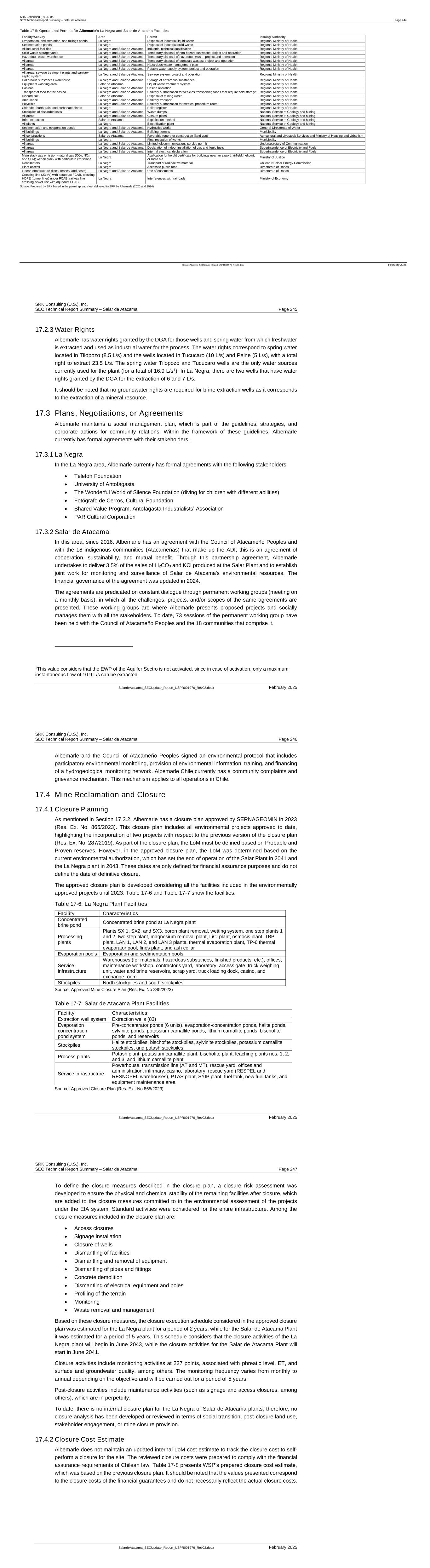

 
SRK Consulting (U.S.), Inc. SEC Technical Report Summary – Salar de Atacama Page 244 SalardeAtacama_SECUpdate_Report_USPR001976_Rev02.docx February 2025 Table 17-5: Operational Permits for Albemarle’s La Negra and Salar de Atacama Facilities Facility/Activity Area Permit Issuing Authority Evaporation, sedimentation, and tailings ponds La Negra Disposal of industrial liquid waste Regional Ministry of Health Sedimentation ponds La Negra Disposal of industrial solid waste Regional Ministry of Health All industrial facilities La Negra and Salar de Atacama Industrial technical qualification Regional Ministry of Health Solid waste storage yards La Negra and Salar de Atacama Temporary disposal of non-hazardous waste: project and operation Regional Ministry of Health Hazardous waste warehouses La Negra and Salar de Atacama Temporary disposal of hazardous waste: project and operation Regional Ministry of Health All areas La Negra and Salar de Atacama Temporary disposal of domestic wastes: project and operation Regional Ministry of Health All areas La Negra and Salar de Atacama Hazardous waste management plan Regional Ministry of Health All areas La Negra and Salar de Atacama Potable water supply system: project and operation Regional Ministry of Health All areas: sewage treatment plants and sanitary septic system La Negra and Salar de Atacama Sewage system: project and operation Regional Ministry of Health Hazardous substances warehouse La Negra and Salar de Atacama Storage of hazardous substances Regional Ministry of Health Equipment washing area Salar de Atacama Liquid waste treatment system Regional Ministry of Health Casinos La Negra and Salar de Atacama Casino operation Regional Ministry of Health Transport of food for the casino La Negra and Salar de Atacama Sanitary authorization for vehicles transporting foods that require cold storage Regional Ministry of Health Discard salt Salar de Atacama Disposal of mining waste Regional Ministry of Health Ambulance La Negra and Salar de Atacama Sanitary transport Regional Ministry of Health Polyclinic La Negra and Salar de Atacama Sanitary authorization for medical procedure room Regional Ministry of Health Chloride, fourth train, and carbonate plants La Negra Boiler register Regional Ministry of Health Stockpiles of discarded salts La Negra and Salar de Atacama Waste dumps National Service of Geology and Mining All areas La Negra and Salar de Atacama Closure plans National Service of Geology and Mining Brine extraction Salar de Atacama Exploitation method National Service of Geology and Mining All plants La Negra Electrification plant National Service of Geology and Mining Sedimentation and evaporation ponds La Negra and Salar de Atacama Hydraulics works General Directorate of Water All buildings La Negra and Salar de Atacama Building permits Municipality All constructions Salar de Atacama Favorable report for construction (land use) Agricultural and Livestock Services and Ministry of Housing and Urbanism All buildings La Negra Final reception of works Municipality All areas La Negra and Salar de Atacama Limited telecommunications service permit Undersecretary of Communication All areas La Negra and Salar de Atacama Declaration of indoor installation of gas and liquid fuels Superintendence of Electricity and Fuels All areas La Negra and Salar de Atacama Internal electrical declaration Superintendence of Electricity and Fuels Main stack gas emission (natural gas (CO2, NOx, and SO2); wet air stack with particulate emissions La Negra Application for height certificate for buildings near an airport, airfield, heliport, or radio aid Ministry of Justice Densimeters La Negra Transport of radioactive material Chilean Nuclear Energy Commission Plant access La Negra Access to public road Directorate of Roads Linear infrastructure (lines, fences, and posts) La Negra and Salar de Atacama Use of easements Directorate of Roads Crossing line (23 kV) with aqueduct FCAB, crossing HDPE (tunnel liner) under FCAB; railway line crossing sewer line with aqueduct FCAB La Negra Interferences with railroads Ministry of Economy Source: Prepared by SRK based in the permit spreadsheet delivered to SRK by Albemarle (2020 and 2024) SRK Consulting (U.S.), Inc. SEC Technical Report Summary – Salar de Atacama Page 245 SalardeAtacama_SECUpdate_Report_USPR001976_Rev02.docx February 2025 17.2.3 Water Rights Albemarle has water rights granted by the DGA for those wells and spring water from which freshwater is extracted and used as industrial water for the process. The water rights correspond to spring water located in Tilopozo (8.5 L/s) and the wells located in Tucucaro (10 L/s) and Peine (5 L/s), with a total right to extract 23.5 L/s. The spring water Tilopozo and Tucucaro wells are the only water sources currently used for the plant (for a total of 16.9 L/s1). In La Negra, there are two wells that have water rights granted by the DGA for the extraction of 6 and 7 L/s. It should be noted that no groundwater rights are required for brine extraction wells as it corresponds to the extraction of a mineral resource. 17.3 Plans, Negotiations, or Agreements Albemarle maintains a social management plan, which is part of the guidelines, strategies, and corporate actions for community relations. Within the framework of these guidelines, Albemarle currently has formal agreements with their stakeholders. 17.3.1 La Negra In the La Negra area, Albemarle currently has formal agreements with the following stakeholders: • Teleton Foundation • University of Antofagasta • The Wonderful World of Silence Foundation (diving for children with different abilities) • Fotógrafo de Cerros, Cultural Foundation • Shared Value Program, Antofagasta Industrialists’ Association • PAR Cultural Corporation 17.3.2 Salar de Atacama In this area, since 2016, Albemarle has an agreement with the Council of Atacameño Peoples and with the 18 indigenous communities (Atacameñas) that make up the ADI; this is an agreement of cooperation, sustainability, and mutual benefit. Through this partnership agreement, Albemarle undertakes to deliver 3.5% of the sales of Li2CO3 and KCl produced at the Salar Plant and to establish joint work for monitoring and surveillance of Salar de Atacama's environmental resources. The financial governance of the agreement was updated in 2024. The agreements are predicated on constant dialogue through permanent working groups (meeting on a monthly basis), in which all the challenges, projects, and/or scopes of the same agreements are presented. These working groups are where Albemarle presents proposed projects and socially manages them with all the stakeholders. To date, 73 sessions of the permanent working group have been held with the Council of Atacameño Peoples and the 18 communities that comprise it. 1This value considers that the EWP of the Aquifer Sectro is not activated, since in case of activation, only a maximum instantaneous flow of 10.9 L/s can be extracted. SRK Consulting (U.S.), Inc. SEC Technical Report Summary – Salar de Atacama Page 246 SalardeAtacama_SECUpdate_Report_USPR001976_Rev02.docx February 2025 Albemarle and the Council of Atacameño Peoples signed an environmental protocol that includes participatory environmental monitoring, provision of environmental information, training, and financing of a hydrogeological monitoring network. Albemarle Chile currently has a community complaints and grievance mechanism. This mechanism applies to all operations in Chile. 17.4 Mine Reclamation and Closure 17.4.1 Closure Planning As mentioned in Section 17.3.2, Albemarle has a closure plan approved by SERNAGEOMIN in 2023 (Res. Ex. No. 865/2023). This closure plan includes all environmental projects approved to date, highlighting the incorporation of two projects with respect to the previous version of the closure plan (Res. Ex. No. 287/2019). As part of the closure plan, the LoM must be defined based on Probable and Proven reserves. However, in the approved closure plan, the LoM was determined based on the current environmental authorization, which has set the end of operation of the Salar Plant in 2041 and the La Negra plant in 2043. These dates are only defined for financial assurance purposes and do not define the date of definitive closure. The approved closure plan is developed considering all the facilities included in the environmentally approved projects until 2023. Table 17-6 and Table 17-7 show the facilities. Table 17-6: La Negra Plant Facilities Facility Characteristics Concentrated brine pond Concentrated brine pond at La Negra plant Processing plants Plants SX 1, SX2, and SX3, boron plant removal, wetting system, one step plants 1 and 2, two step plant, magnesium removal plant, LiCl plant, osmosis plant, TBP plant, LAN 1, LAN 2, and LAN 3 plants, thermal evaporation plant, TP-6 thermal evaporator pool, fines plant, and ash cellar Evaporation pools Evaporation and sedimentation pools Service infrastructure Warehouses (for materials, hazardous substances, finished products, etc.), offices, maintenance workshop, contractor's yard, laboratory, access gate, truck weighing unit, water and brine reservoirs, scrap yard, truck loading dock, casino, and exchange room Stockpiles North stockpiles and south stockpiles Source: Approved Mine Closure Plan (Res. Ex. No 845/2023) Table 17-7: Salar de Atacama Plant Facilities Facility Characteristics Extraction well system Extraction wells (83) Evaporation concentration pond system Pre-concentrator ponds (6 units), evaporation-concentration ponds, halite ponds, sylvinite ponds, potassium carnallite ponds, lithium carnallite ponds, bischofite ponds, and reservoirs Stockpiles Halite stockpiles, bischofite stockpiles, sylvinite stockpiles, potassium carnallite stockpiles, and potash stockpiles Process plants Potash plant, potassium carnallite plant, bischofite plant, leaching plants nos. 1, 2, and 3, and lithium carnallite plant Service infrastructure Powerhouse, transmission line (AT and MT), rescue yard, offices and administration, infirmary, casino, laboratory, rescue yard (RESPEL and RESNOPEL warehouses), PTAS plant, SYIP plant, fuel tank, new fuel tanks, and equipment maintenance area Source: Approved Closure Plan (Res. Ext. No 865/2023) SRK Consulting (U.S.), Inc. SEC Technical Report Summary – Salar de Atacama Page 247 SalardeAtacama_SECUpdate_Report_USPR001976_Rev02.docx February 2025 To define the closure measures described in the closure plan, a closure risk assessment was developed to ensure the physical and chemical stability of the remaining facilities after closure, which are added to the closure measures committed to in the environmental assessment of the projects under the EIA system. Standard activities were considered for the entire infrastructure. Among the closure measures included in the closure plan are: • Access closures • Signage installation • Closure of wells • Dismantling of facilities • Dismantling and removal of equipment • Dismantling of pipes and fittings • Concrete demolition • Dismantling of electrical equipment and poles • Profiling of the terrain • Monitoring • Waste removal and management Based on these closure measures, the closure execution schedule considered in the approved closure plan was estimated for the La Negra plant for a period of 2 years, while for the Salar de Atacama Plant it was estimated for a period of 5 years. This schedule considers that the closure activities of the La Negra plant will begin in June 2043, while the closure activities for the Salar de Atacama Plant will start in June 2041. Closure activities include monitoring activities at 227 points, associated with phreatic level, ET, and surface and groundwater quality, among others. The monitoring frequency varies from monthly to annual depending on the objective and will be carried out for a period of 5 years. Post-closure activities include maintenance activities (such as signage and access closures, among others), which are in perpetuity. To date, there is no internal closure plan for the La Negra or Salar de Atacama plants; therefore, no closure analysis has been developed or reviewed in terms of social transition, post-closure land use, stakeholder engagement, or mine closure provision. 17.4.2 Closure Cost Estimate Albemarle does not maintain an updated internal LoM cost estimate to track the closure cost to self- perform a closure for the site. The reviewed closure costs were prepared to comply with the financial assurance requirements of Chilean law. Table 17-8 presents WSP’s prepared closure cost estimate, which was based on the previous closure plan. It should be noted that the values presented correspond to the closure costs of the financial guarantees and do not necessarily reflect the actual closure costs.
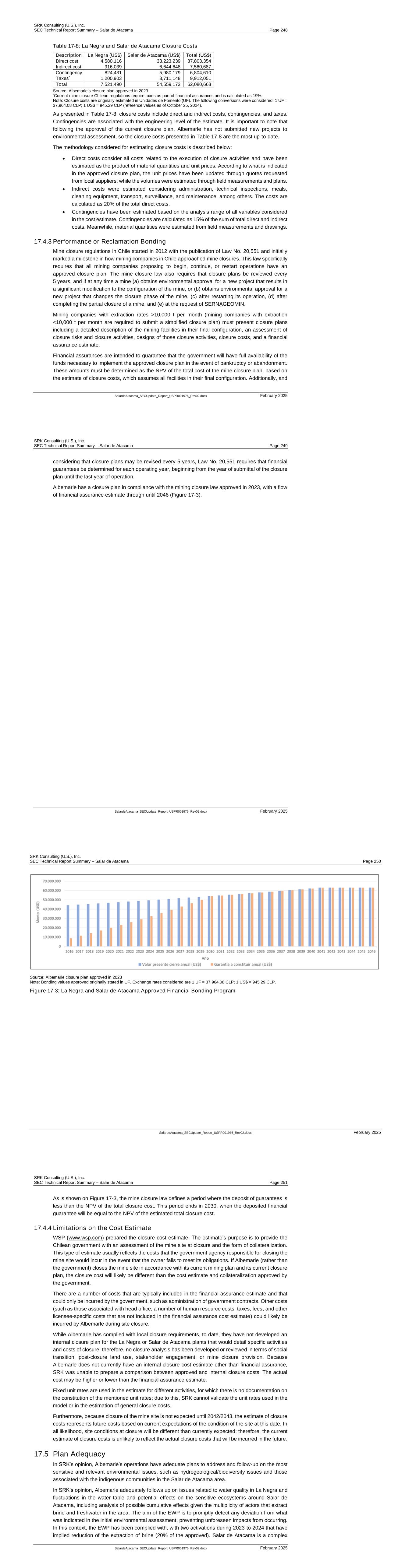

 
SRK Consulting (U.S.), Inc. SEC Technical Report Summary – Salar de Atacama Page 248 SalardeAtacama_SECUpdate_Report_USPR001976_Rev02.docx February 2025 Table 17-8: La Negra and Salar de Atacama Closure Costs Description La Negra (US$) Salar de Atacama (US$) Total (US$) Direct cost 4,580,116 33,223,239 37,803,354 Indirect cost 916,039 6,644,648 7,560,687 Contingency 824,431 5,980,179 6,804,610 Taxes* 1,200,903 8,711,148 9,912,051 Total 7,521,490 54,559,173 62,080,663 Source: Albemarle’s closure plan approved in 2023 *Current mine closure Chilean regulations require taxes as part of financial assurances and is calculated as 19%. Note: Closure costs are originally estimated in Unidades de Fomento (UF). The following conversions were considered: 1 UF = 37,964.08 CLP; 1 US$ = 945.29 CLP (reference values as of October 25, 2024). As presented in Table 17-8, closure costs include direct and indirect costs, contingencies, and taxes. Contingencies are associated with the engineering level of the estimate. It is important to note that following the approval of the current closure plan, Albemarle has not submitted new projects to environmental assessment, so the closure costs presented in Table 17-8 are the most up-to-date. The methodology considered for estimating closure costs is described below: • Direct costs consider all costs related to the execution of closure activities and have been estimated as the product of material quantities and unit prices. According to what is indicated in the approved closure plan, the unit prices have been updated through quotes requested from local suppliers, while the volumes were estimated through field measurements and plans. • Indirect costs were estimated considering administration, technical inspections, meals, cleaning equipment, transport, surveillance, and maintenance, among others. The costs are calculated as 20% of the total direct costs. • Contingencies have been estimated based on the analysis range of all variables considered in the cost estimate. Contingencies are calculated as 15% of the sum of total direct and indirect costs. Meanwhile, material quantities were estimated from field measurements and drawings. 17.4.3 Performance or Reclamation Bonding Mine closure regulations in Chile started in 2012 with the publication of Law No. 20,551 and initially marked a milestone in how mining companies in Chile approached mine closures. This law specifically requires that all mining companies proposing to begin, continue, or restart operations have an approved closure plan. The mine closure law also requires that closure plans be reviewed every 5 years, and if at any time a mine (a) obtains environmental approval for a new project that results in a significant modification to the configuration of the mine, or (b) obtains environmental approval for a new project that changes the closure phase of the mine, (c) after restarting its operation, (d) after completing the partial closure of a mine, and (e) at the request of SERNAGEOMIN. Mining companies with extraction rates >10,000 t per month (mining companies with extraction <10,000 t per month are required to submit a simplified closure plan) must present closure plans including a detailed description of the mining facilities in their final configuration, an assessment of closure risks and closure activities, designs of those closure activities, closure costs, and a financial assurance estimate. Financial assurances are intended to guarantee that the government will have full availability of the funds necessary to implement the approved closure plan in the event of bankruptcy or abandonment. These amounts must be determined as the NPV of the total cost of the mine closure plan, based on the estimate of closure costs, which assumes all facilities in their final configuration. Additionally, and SRK Consulting (U.S.), Inc. SEC Technical Report Summary – Salar de Atacama Page 249 SalardeAtacama_SECUpdate_Report_USPR001976_Rev02.docx February 2025 considering that closure plans may be revised every 5 years, Law No. 20,551 requires that financial guarantees be determined for each operating year, beginning from the year of submittal of the closure plan until the last year of operation. Albemarle has a closure plan in compliance with the mining closure law approved in 2023, with a flow of financial assurance estimate through until 2046 (Figure 17-3). SRK Consulting (U.S.), Inc. SEC Technical Report Summary – Salar de Atacama Page 250 SalardeAtacama_SECUpdate_Report_USPR001976_Rev02.docx February 2025 Source: Albemarle closure plan approved in 2023 Note: Bonding values approved originally stated in UF. Exchange rates considered are 1 UF = 37,964.08 CLP; 1 US$ = 945.29 CLP. Figure 17-3: La Negra and Salar de Atacama Approved Financial Bonding Program SRK Consulting (U.S.), Inc. SEC Technical Report Summary – Salar de Atacama Page 251 SalardeAtacama_SECUpdate_Report_USPR001976_Rev02.docx February 2025 As is shown on Figure 17-3, the mine closure law defines a period where the deposit of guarantees is less than the NPV of the total closure cost. This period ends in 2030, when the deposited financial guarantee will be equal to the NPV of the estimated total closure cost. 17.4.4 Limitations on the Cost Estimate WSP (www.wsp.com) prepared the closure cost estimate. The estimate’s purpose is to provide the Chilean government with an assessment of the mine site at closure and the form of collateralization. This type of estimate usually reflects the costs that the government agency responsible for closing the mine site would incur in the event that the owner fails to meet its obligations. If Albemarle (rather than the government) closes the mine site in accordance with its current mining plan and its current closure plan, the closure cost will likely be different than the cost estimate and collateralization approved by the government. There are a number of costs that are typically included in the financial assurance estimate and that could only be incurred by the government, such as administration of government contracts. Other costs (such as those associated with head office, a number of human resource costs, taxes, fees, and other licensee-specific costs that are not included in the financial assurance cost estimate) could likely be incurred by Albemarle during site closure. While Albemarle has complied with local closure requirements, to date, they have not developed an internal closure plan for the La Negra or Salar de Atacama plants that would detail specific activities and costs of closure; therefore, no closure analysis has been developed or reviewed in terms of social transition, post-closure land use, stakeholder engagement, or mine closure provision. Because Albemarle does not currently have an internal closure cost estimate other than financial assurance, SRK was unable to prepare a comparison between approved and internal closure costs. The actual cost may be higher or lower than the financial assurance estimate. Fixed unit rates are used in the estimate for different activities, for which there is no documentation on the constitution of the mentioned unit rates; due to this, SRK cannot validate the unit rates used in the model or in the estimation of general closure costs. Furthermore, because closure of the mine site is not expected until 2042/2043, the estimate of closure costs represents future costs based on current expectations of the condition of the site at this date. In all likelihood, site conditions at closure will be different than currently expected; therefore, the current estimate of closure costs is unlikely to reflect the actual closure costs that will be incurred in the future. 17.5 Plan Adequacy In SRK’s opinion, Albemarle’s operations have adequate plans to address and follow-up on the most sensitive and relevant environmental issues, such as hydrogeological/biodiversity issues and those associated with the indigenous communities in the Salar de Atacama area. In SRK’s opinion, Albemarle adequately follows up on issues related to water quality in La Negra and fluctuations in the water table and potential effects on the sensitive ecosystems around Salar de Atacama, including analysis of possible cumulative effects given the multiplicity of actors that extract brine and freshwater in the area. The aim of the EWP is to promptly detect any deviation from what was indicated in the initial environmental assessment, preventing unforeseen impacts from occurring. In this context, the EWP has been complied with, with two activations during 2023 to 2024 that have implied reduction of the extraction of brine (20% of the approved). Salar de Atacama is a complex


 
SRK Consulting (U.S.), Inc. SEC Technical Report Summary – Salar de Atacama Page 252 SalardeAtacama_SECUpdate_Report_USPR001976_Rev02.docx February 2025 system and requires constant updating of management tools based on the results of the monitoring programs and attention to requirements or new tools that the authority may incorporate. Albemarle maintains relations with the Council of Atacameños People and the 18 indigenous communities that comprises it, and in the QP’s opinion, has a positive relationship. Any future development or modification of the current conditions of the operation will be subject to an Indigenous Consultation Process; therefore, it is of high importance to maintain this adequate management strategy with these communities. Management of regulatory and environmental obligations are managed through a monitoring platform (SIGEA), which was implemented at the end of 2020. 17.6 Local Procurement Regarding the hiring of local labor, Albemarle does not have formal commitments with any local authority; however, currently, 84% of Albemarle workers are from the Antofagasta region, and 26% of the workers of the Salar de Atacama area are from the indigenous nearby communities. Although there is no formal agreement, in the case of Salar de Atacama, every new job opening is promoted in the area and within the communities. SRK Consulting (U.S.), Inc. SEC Technical Report Summary – Salar de Atacama Page 253 SalardeAtacama_SECUpdate_Report_USPR001976_Rev02.docx February 2025 18 Capital and Operating Costs Salar de Atacama and La Negra are currently in operation, producing technical- and battery grade Li2CO3 and byproducts. Capital and operating costs are forecast as a normal course of operational planning, with a primary focus on short-term budgets (i.e., subsequent year) and mid-term plans (e.g., 10-year plan). The long-term (i.e., LoM) plans are not detailed, although operations do evaluate conceptual long-term performance. As there is not an official LoM budget (post 10-year plan) to rely upon to support estimation of reserves, SRK developed its own long-term operating forecast through modification of existing forecasts and cost models. SRK developed this forecast based on some of the forecast data utilized at the operation with adjustments made by SRK based on historic operating results and forward-looking modifications. These forecasts account for changes in production rates associated with expansion plans that are largely complete, and SRK utilized these adjustments, including modification, as appropriate. Estimation of capital and operating costs is inherently a forward-looking exercise. These estimates rely upon a range of assumptions and forecasts that are subject to change depending upon macroeconomic conditions, operating strategy, and new data collected through future operations. For this report, capital and operating costs are estimated to a PFS level (as defined by S-K 1300) with a targeted accuracy of ±25%. However, this accuracy level is only applicable to the base case operating scenario and forward-looking assumptions outlined in this report. Therefore, changes in these forward- looking assumptions can result in capital and operating costs that deviate more than 25% from the costs forecast herein. 18.1 Capital Cost Estimates Capital cost forecasts are estimated based on (i) a baseline level of sustaining CAPEX, in-line with historic expenditure levels, adjusted for changing production rates, alignment with forward looking forecasts from the operation, and (ii) strategic planning for major CAPEX. In reviewing historical costs, there has been significant capital invested in expansion of operations at both the Salar and La Negra over the past 7 years. Associated with expanded production rates, general sustaining CAPEX has also increased. Looking forward, there are minor spends associated with debottlenecking the La Negra expansion project. At the Salar, the SYIP has been materially constructed. Costs to finalize and optimize the system are included in the estimate. On a longer-term basis (as discussed in Section 14.1.1), due to a projected change in the calcium-to- sulfate ratio in the raw brine feed, SRK assumes that a liming system will need to be added in the future to manage this ratio and maintain current lithium recovery rates in the evaporation ponds. SRK’s LoM pumping plan requires this plant to be operational by year end 2031. Therefore, SRK has assumed construction of this plant in 2030. As the need for this plant is still uncertain (i.e., further optimization of the pumping plan may better balance calcium and sulfate) and the timing is still several years away, there is no study supporting development of this plant. Therefore, SRK developed scoping-level costs based on benchmarking against recent estimated development costs for a similar plant in the region and escalated costs to current. SRK’s cost estimate is US$27.1 million for this liming plant. SRK Consulting (U.S.), Inc. SEC Technical Report Summary – Salar de Atacama Page 254 SalardeAtacama_SECUpdate_Report_USPR001976_Rev02.docx February 2025 For the estimate of replacement/rehabilitation of production wells, SRK assumed a typical cost of US$861,000 per well; at steady state, this results in approximately US$4.8 million per year in production well replacement costs. SRK reviewed the Albemarle forward-looking 10-year forecast and then developed a life-of-project forecast based on the continuation of the operation. Based on Albemarle’s mid-range forecasts, SRK has assumed a long-term average of approximately US$49.8 million per operating year in sustaining CAPEX at the Salar, inclusive of well replacement. Deducting the well replacement costs results in a non-well replacement average CAPEX of around US$42.9 million per year at the Salar. At La Negra, SRK has assumed an additional US$69.0 million per operating year based on mid-range forecasts. Table 18-1 presents capital estimates for the next 7 years and the life of the reserve. Total capital costs over this period (July 2024 to December 2044) are estimated at US$2.2 billion in 2024 real dollars. Table 18-1: Capital Cost Forecast ($M Real 2024) Period Total Sustaining CAPEX Total CAPEX La Negra Liming Well Replacement/ Expansion General Salar Closure 2024 28.7 - 4.3 15.0 - 48.0 2025 47.0 - 6.9 22.1 - 76.0 2026 81.9 - 6.9 45.9 - 134.7 2027 72.5 - 6.9 60.1 - 139.5 2028 69.6 - 6.9 48.0 - 124.5 2029 81.8 - 6.9 49.0 - 137.7 2030 116.2 27.1 6.9 47.3 - 197.5 Remaining LoM (2031 through 2044) 841.6 - 75.8 429.3 40.9 1,387.5 LoM total 1,339.2 27.1 121.4 716.7 40.9 2,245.4 Source: SRK, 2024 Note: 2024 CAPEX is only July through December. 18.2 Operating Cost Estimates Operating costs are site specific (e.g., they do not include corporate overheads, although there are overheads for Albemarle Chile). Note that for internal reporting purposes, Albemarle allocates brine production costs to the year the brine is processed (i.e., an approximate 24 month delay from the actual cost being incurred). SRK developed a cost model to reflect future production costs based on existing available cost models. To develop this cost forecast, SRK worked with site personnel (including reviewing unofficial forecasts) and developed a simplified operating cost model based on fixed and variable costs, adjusted for changes in operations, as appropriate. SRK notes that in some cases, the existing cost forecasts contained planned improvements or efficiency gains as a result of internal processes. In some cases, SRK has excluded the impact of these exercises, as the impact is not certain. In evaluating the historic costs and discussing the cost profile with Albemarle, the majority of the Salar de Atacama/La Negra costs are fixed. However, there are material changes planned for the operation that may affect the cost basis for the operation. These changes include the following: • La Negra III increased capacity (recently completed) • Electrical grid connection for the Salar (recently completed) SRK Consulting (U.S.), Inc. SEC Technical Report Summary – Salar de Atacama Page 255 SalardeAtacama_SECUpdate_Report_USPR001976_Rev02.docx February 2025 • SYIP at the Salar (recently completed) • Pumping rate restrictions • Water supply restrictions • Brine, water, and waste transport optimization • Likely long-term requirement to add a liming plant at the Salar Fixed operating costs at the Salar and the La Negra facility are expected to average US$91.1 million and US$134.6 million per year, respectively. Beyond fixed costs, SRK also applied variable unit costs to a range of cost inputs, including the following: • Raw materials: o Soda ash (modeled individually) o Lime (modeled individually) o HCl (modeled individually) o Shipping (modeled individually) For key raw materials (including soda ash, lime, HCl and packaging) and shipping, SRK individually applied unit consumption based on expected rates. Actual and short-range forecast expenditures based on expected pricing and unit consumption rates were provided by Albemarle for soda ash, lime, HCl, and brine transport and packaging. Shipping costs are estimated utilizing freight indices. Table 18-2 presents unit consumption and costs for these items. Table 18-2: Key Assumptions, Variable Cost Model Item Consumption Rate (t/t LCE) Unit Cost (US$/t) 2024 2025+ 2024 2025+ Soda ash 2.28 2.28 387.22 288.00 Lime 0.27 0.33 267.71 267.71 HCl 0.50 0.58 432.32 432.32 Shipping 1 1 126.00 126.00 Source: SRK, 2024 Note: The reported lime consumption is applicable to La Negra operations in the long term. With the assumed requirement to add liming at the Salar, the assumed consumption rate increases. As seen in Table 18-2, soda ash is the most important component of these key variable costs. Albemarle provided the long-term price assumption for soda ash, but SRK also tested the sensitivity of the Project economics to soda ash consumption, as described in Section 18. Based on this operating cost model, Figure 18-1 shows the total annual forecast operating costs for the Salar de Atacama/La Negra operations.
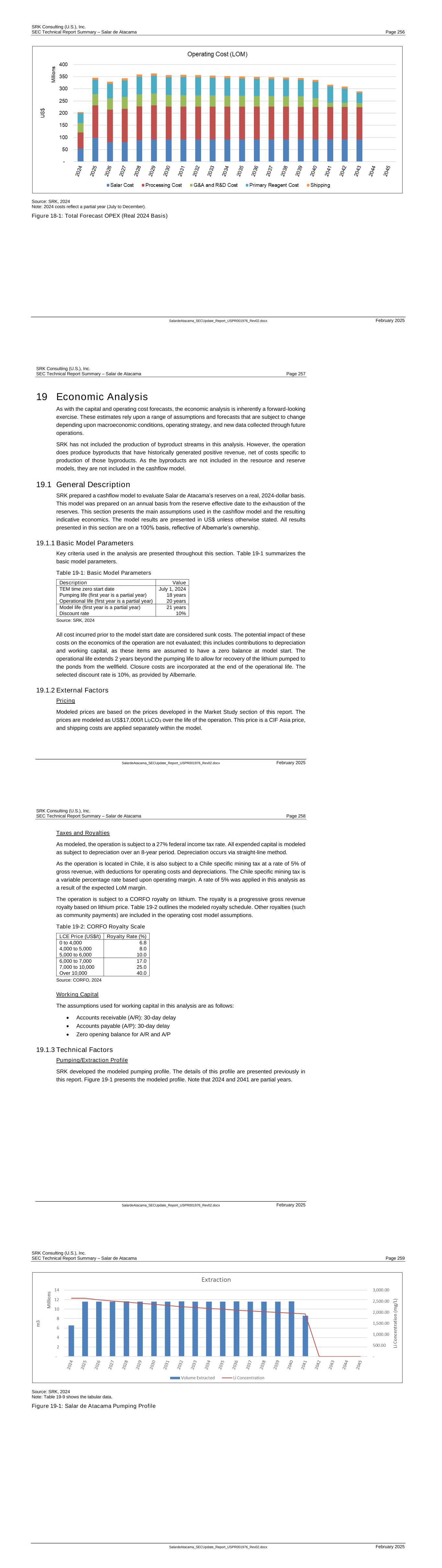

 
SRK Consulting (U.S.), Inc. SEC Technical Report Summary – Salar de Atacama Page 256 SalardeAtacama_SECUpdate_Report_USPR001976_Rev02.docx February 2025 Source: SRK, 2024 Note: 2024 costs reflect a partial year (July to December). Figure 18-1: Total Forecast OPEX (Real 2024 Basis) SRK Consulting (U.S.), Inc. SEC Technical Report Summary – Salar de Atacama Page 257 SalardeAtacama_SECUpdate_Report_USPR001976_Rev02.docx February 2025 19 Economic Analysis As with the capital and operating cost forecasts, the economic analysis is inherently a forward-looking exercise. These estimates rely upon a range of assumptions and forecasts that are subject to change depending upon macroeconomic conditions, operating strategy, and new data collected through future operations. SRK has not included the production of byproduct streams in this analysis. However, the operation does produce byproducts that have historically generated positive revenue, net of costs specific to production of those byproducts. As the byproducts are not included in the resource and reserve models, they are not included in the cashflow model. 19.1 General Description SRK prepared a cashflow model to evaluate Salar de Atacama’s reserves on a real, 2024-dollar basis. This model was prepared on an annual basis from the reserve effective date to the exhaustion of the reserves. This section presents the main assumptions used in the cashflow model and the resulting indicative economics. The model results are presented in US$ unless otherwise stated. All results presented in this section are on a 100% basis, reflective of Albemarle’s ownership. 19.1.1 Basic Model Parameters Key criteria used in the analysis are presented throughout this section. Table 19-1 summarizes the basic model parameters. Table 19-1: Basic Model Parameters Description Value TEM time zero start date July 1, 2024 Pumping life (first year is a partial year) 18 years Operational life (first year is a partial year) 20 years Model life (first year is a partial year) 21 years Discount rate 10% Source: SRK, 2024 All cost incurred prior to the model start date are considered sunk costs. The potential impact of these costs on the economics of the operation are not evaluated; this includes contributions to depreciation and working capital, as these items are assumed to have a zero balance at model start. The operational life extends 2 years beyond the pumping life to allow for recovery of the lithium pumped to the ponds from the wellfield. Closure costs are incorporated at the end of the operational life. The selected discount rate is 10%, as provided by Albemarle. 19.1.2 External Factors Pricing Modeled prices are based on the prices developed in the Market Study section of this report. The prices are modeled as US$17,000/t Li2CO3 over the life of the operation. This price is a CIF Asia price, and shipping costs are applied separately within the model. SRK Consulting (U.S.), Inc. SEC Technical Report Summary – Salar de Atacama Page 258 SalardeAtacama_SECUpdate_Report_USPR001976_Rev02.docx February 2025 Taxes and Royalties As modeled, the operation is subject to a 27% federal income tax rate. All expended capital is modeled as subject to depreciation over an 8-year period. Depreciation occurs via straight-line method. As the operation is located in Chile, it is also subject to a Chile specific mining tax at a rate of 5% of gross revenue, with deductions for operating costs and depreciations. The Chile specific mining tax is a variable percentage rate based upon operating margin. A rate of 5% was applied in this analysis as a result of the expected LoM margin. The operation is subject to a CORFO royalty on lithium. The royalty is a progressive gross revenue royalty based on lithium price. Table 19-2 outlines the modeled royalty schedule. Other royalties (such as community payments) are included in the operating cost model assumptions. Table 19-2: CORFO Royalty Scale LCE Price (US$/t) Royalty Rate (%) 0 to 4,000 6.8 4,000 to 5,000 8.0 5,000 to 6,000 10.0 6,000 to 7,000 17.0 7,000 to 10,000 25.0 Over 10,000 40.0 Source: CORFO, 2024 Working Capital The assumptions used for working capital in this analysis are as follows: • Accounts receivable (A/R): 30-day delay • Accounts payable (A/P): 30-day delay • Zero opening balance for A/R and A/P 19.1.3 Technical Factors Pumping/Extraction Profile SRK developed the modeled pumping profile. The details of this profile are presented previously in this report. Figure 19-1 presents the modeled profile. Note that 2024 and 2041 are partial years. SRK Consulting (U.S.), Inc. SEC Technical Report Summary – Salar de Atacama Page 259 SalardeAtacama_SECUpdate_Report_USPR001976_Rev02.docx February 2025 Source: SRK, 2024 Note: Table 19-9 shows the tabular data. Figure 19-1: Salar de Atacama Pumping Profile
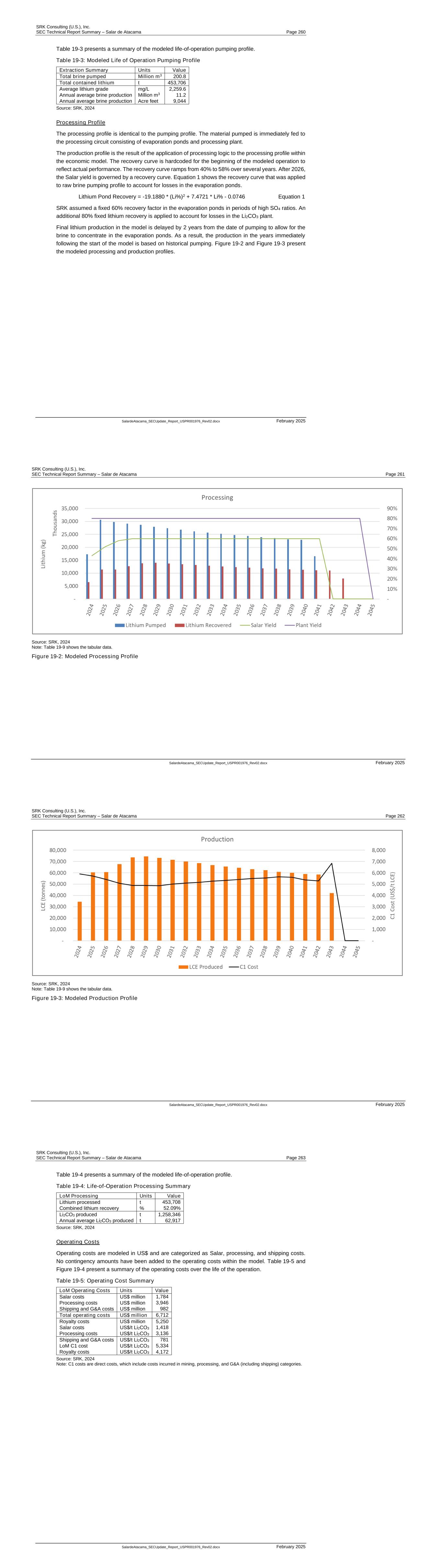

 
SRK Consulting (U.S.), Inc. SEC Technical Report Summary – Salar de Atacama Page 260 SalardeAtacama_SECUpdate_Report_USPR001976_Rev02.docx February 2025 Table 19-3 presents a summary of the modeled life-of-operation pumping profile. Table 19-3: Modeled Life of Operation Pumping Profile Extraction Summary Units Value Total brine pumped Million m3 200.8 Total contained lithium t 453,706 Average lithium grade mg/L 2,259.6 Annual average brine production Million m3 11.2 Annual average brine production Acre feet 9,044 Source: SRK, 2024 Processing Profile The processing profile is identical to the pumping profile. The material pumped is immediately fed to the processing circuit consisting of evaporation ponds and processing plant. The production profile is the result of the application of processing logic to the processing profile within the economic model. The recovery curve is hardcoded for the beginning of the modeled operation to reflect actual performance. The recovery curve ramps from 40% to 58% over several years. After 2026, the Salar yield is governed by a recovery curve. Equation 1 shows the recovery curve that was applied to raw brine pumping profile to account for losses in the evaporation ponds. Lithium Pond Recovery = -19.1880 * (Li%)2 + 7.4721 * Li% - 0.0746 Equation 1 SRK assumed a fixed 60% recovery factor in the evaporation ponds in periods of high SO4 ratios. An additional 80% fixed lithium recovery is applied to account for losses in the Li2CO3 plant. Final lithium production in the model is delayed by 2 years from the date of pumping to allow for the brine to concentrate in the evaporation ponds. As a result, the production in the years immediately following the start of the model is based on historical pumping. Figure 19-2 and Figure 19-3 present the modeled processing and production profiles. SRK Consulting (U.S.), Inc. SEC Technical Report Summary – Salar de Atacama Page 261 SalardeAtacama_SECUpdate_Report_USPR001976_Rev02.docx February 2025 Source: SRK, 2024 Note: Table 19-9 shows the tabular data. Figure 19-2: Modeled Processing Profile SRK Consulting (U.S.), Inc. SEC Technical Report Summary – Salar de Atacama Page 262 SalardeAtacama_SECUpdate_Report_USPR001976_Rev02.docx February 2025 Source: SRK, 2024 Note: Table 19-9 shows the tabular data. Figure 19-3: Modeled Production Profile SRK Consulting (U.S.), Inc. SEC Technical Report Summary – Salar de Atacama Page 263 SalardeAtacama_SECUpdate_Report_USPR001976_Rev02.docx February 2025 Table 19-4 presents a summary of the modeled life-of-operation profile. Table 19-4: Life-of-Operation Processing Summary LoM Processing Units Value Lithium processed t 453,708 Combined lithium recovery % 52.09% Li2CO3 produced t 1,258,346 Annual average Li2CO3 produced t 62,917 Source: SRK, 2024 Operating Costs Operating costs are modeled in US$ and are categorized as Salar, processing, and shipping costs. No contingency amounts have been added to the operating costs within the model. Table 19-5 and Figure 19-4 present a summary of the operating costs over the life of the operation. Table 19-5: Operating Cost Summary LoM Operating Costs Units Value Salar costs US$ million 1,784 Processing costs US$ million 3,946 Shipping and G&A costs US$ million 982 Total operating costs US$ million 6,712 Royalty costs US$ million 5,250 Salar costs US$/t Li2CO3 1,418 Processing costs US$/t Li2CO3 3,136 Shipping and G&A costs US$/t Li2CO3 781 LoM C1 cost US$/t Li2CO3 5,334 Royalty costs US$/t Li2CO3 4,172 Source: SRK, 2024 Note: C1 costs are direct costs, which include costs incurred in mining, processing, and G&A (including shipping) categories.
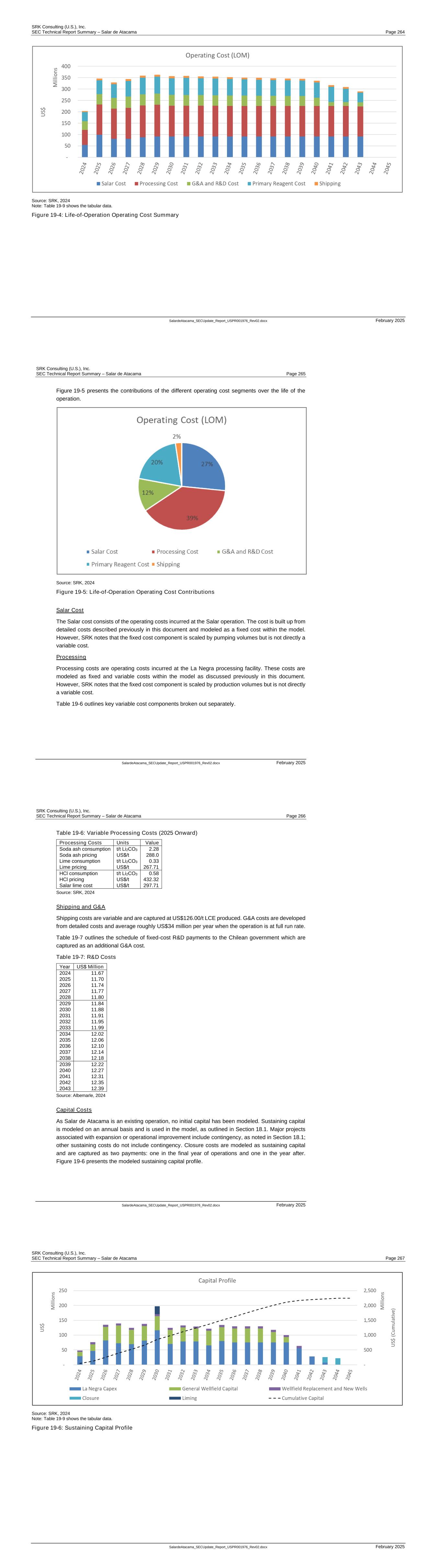

 
SRK Consulting (U.S.), Inc. SEC Technical Report Summary – Salar de Atacama Page 264 SalardeAtacama_SECUpdate_Report_USPR001976_Rev02.docx February 2025 Source: SRK, 2024 Note: Table 19-9 shows the tabular data. Figure 19-4: Life-of-Operation Operating Cost Summary SRK Consulting (U.S.), Inc. SEC Technical Report Summary – Salar de Atacama Page 265 SalardeAtacama_SECUpdate_Report_USPR001976_Rev02.docx February 2025 Figure 19-5 presents the contributions of the different operating cost segments over the life of the operation. Source: SRK, 2024 Figure 19-5: Life-of-Operation Operating Cost Contributions Salar Cost The Salar cost consists of the operating costs incurred at the Salar operation. The cost is built up from detailed costs described previously in this document and modeled as a fixed cost within the model. However, SRK notes that the fixed cost component is scaled by pumping volumes but is not directly a variable cost. Processing Processing costs are operating costs incurred at the La Negra processing facility. These costs are modeled as fixed and variable costs within the model as discussed previously in this document. However, SRK notes that the fixed cost component is scaled by production volumes but is not directly a variable cost. Table 19-6 outlines key variable cost components broken out separately. SRK Consulting (U.S.), Inc. SEC Technical Report Summary – Salar de Atacama Page 266 SalardeAtacama_SECUpdate_Report_USPR001976_Rev02.docx February 2025 Table 19-6: Variable Processing Costs (2025 Onward) Processing Costs Units Value Soda ash consumption t/t Li2CO3 2.28 Soda ash pricing US$/t 288.0 Lime consumption t/t Li2CO3 0.33 Lime pricing US$/t 267.71 HCl consumption t/t Li2CO3 0.58 HCl pricing US$/t 432.32 Salar lime cost US$/t 297.71 Source: SRK, 2024 Shipping and G&A Shipping costs are variable and are captured at US$126.00/t LCE produced. G&A costs are developed from detailed costs and average roughly US$34 million per year when the operation is at full run rate. Table 19-7 outlines the schedule of fixed-cost R&D payments to the Chilean government which are captured as an additional G&A cost. Table 19-7: R&D Costs Year US$ Million 2024 11.67 2025 11.70 2026 11.74 2027 11.77 2028 11.80 2029 11.84 2030 11.88 2031 11.91 2032 11.95 2033 11.99 2034 12.02 2035 12.06 2036 12.10 2037 12.14 2038 12.18 2039 12.22 2040 12.27 2041 12.31 2042 12.35 2043 12.39 Source: Albemarle, 2024 Capital Costs As Salar de Atacama is an existing operation, no initial capital has been modeled. Sustaining capital is modeled on an annual basis and is used in the model, as outlined in Section 18.1. Major projects associated with expansion or operational improvement include contingency, as noted in Section 18.1; other sustaining costs do not include contingency. Closure costs are modeled as sustaining capital and are captured as two payments: one in the final year of operations and one in the year after. Figure 19-6 presents the modeled sustaining capital profile. SRK Consulting (U.S.), Inc. SEC Technical Report Summary – Salar de Atacama Page 267 SalardeAtacama_SECUpdate_Report_USPR001976_Rev02.docx February 2025 Source: SRK, 2024 Note: Table 19-9 shows the tabular data. Figure 19-6: Sustaining Capital Profile
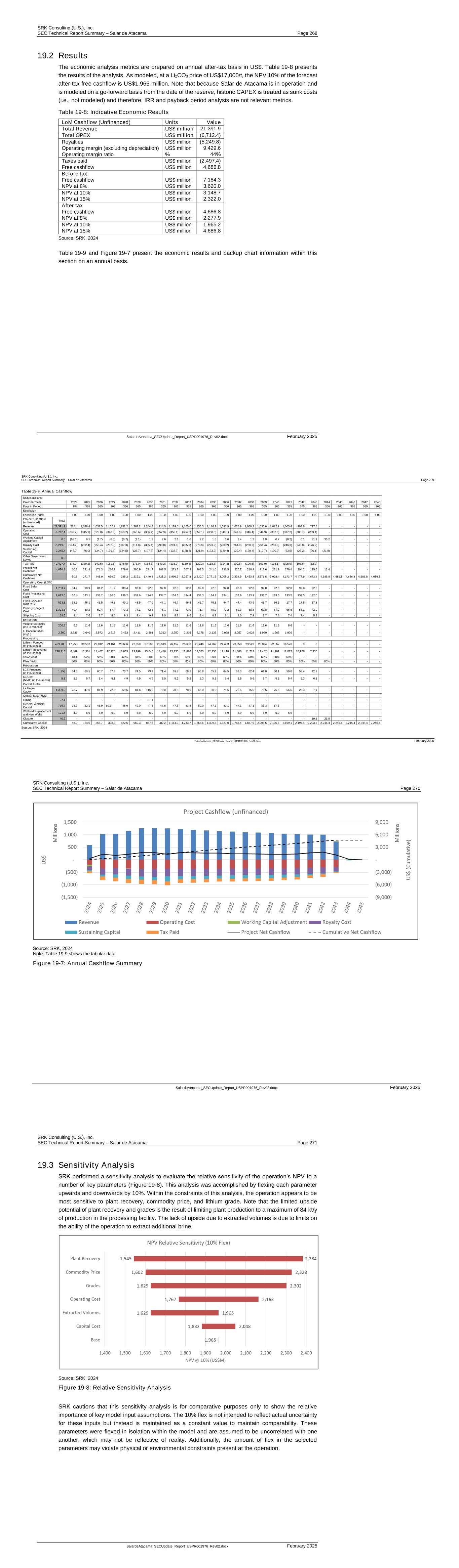

 
SRK Consulting (U.S.), Inc. SEC Technical Report Summary – Salar de Atacama Page 268 SalardeAtacama_SECUpdate_Report_USPR001976_Rev02.docx February 2025 19.2 Results The economic analysis metrics are prepared on annual after-tax basis in US$. Table 19-8 presents the results of the analysis. As modeled, at a Li2CO3 price of US$17,000/t, the NPV 10% of the forecast after-tax free cashflow is US$1,965 million. Note that because Salar de Atacama is in operation and is modeled on a go-forward basis from the date of the reserve, historic CAPEX is treated as sunk costs (i.e., not modeled) and therefore, IRR and payback period analysis are not relevant metrics. Table 19-8: Indicative Economic Results LoM Cashflow (Unfinanced) Units Value Total Revenue US$ million 21,391.9 Total OPEX US$ million (6,712.4) Royalties US$ million (5,249.8) Operating margin (excluding depreciation) US$ million 9,429.6 Operating margin ratio % 44% Taxes paid US$ million (2,497.4) Free cashflow US$ million 4,686.8 Before tax Free cashflow US$ million 7,184.3 NPV at 8% US$ million 3,620.0 NPV at 10% US$ million 3,148.7 NPV at 15% US$ million 2,322.0 After tax Free cashflow US$ million 4,686.8 NPV at 8% US$ million 2,277.9 NPV at 10% US$ million 1,965.2 NPV at 15% US$ million 4,686.8 Source: SRK, 2024 Table 19-9 and Figure 19-7 present the economic results and backup chart information within this section on an annual basis. SRK Consulting (U.S.), Inc. SEC Technical Report Summary – Salar de Atacama Page 269 SalardeAtacama_SECUpdate_Report_USPR001976_Rev02.docx February 2025 Table 19-9: Annual Cashflow US$ in millions Calendar Year 2024 2025 2026 2027 2028 2029 2030 2031 2032 2033 2034 2035 2036 2037 2038 2039 2040 2041 2042 2043 2044 2045 2046 2047 2048 Days in Period 184 365 365 365 366 365 365 365 366 365 365 365 366 365 365 365 366 365 365 365 366 365 365 365 366 Escalation Escalation Index 1.00 1.00 1.00 1.00 1.00 1.00 1.00 1.00 1.00 1.00 1.00 1.00 1.00 1.00 1.00 1.00 1.00 1.00 1.00 1.00 1.00 1.00 1.00 1.00 1.00 Project Cashflow (unfinanced) Total Revenue 21,391.9 587.4 1,028.4 1,032.5 1,152.2 1,252.2 1,267.2 1,244.3 1,214.5 1,189.0 1,165.0 1,136.3 1,116.2 1,096.9 1,075.9 1,060.3 1,036.6 1,022.1 1,003.4 993.6 717.8 - - - - - Operating Cost -6,712.4 (203.7) (345.9) (329.0) (343.5) (359.2) (363.6) (356.7) (357.9) (356.1) (354.2) (352.1) (350.6) (349.1) (347.6) (346.4) (344.9) (337.0) (317.2) (308.7) (289.1) - - - - - Working Capital Adjustment 0.0 (62.6) 6.5 (1.7) (8.6) (6.7) (1.1) 1.3 2.6 2.1 1.6 2.2 1.5 1.6 1.4 1.2 1.8 0.7 (0.2) 0.1 21.1 35.2 - - - - Royalty Cost -5,249.8 (144.2) (252.4) (253.4) (282.8) (307.3) (311.0) (305.4) (298.0) (291.8) (285.9) (278.9) (273.9) (269.2) (264.0) (260.2) (254.4) (250.8) (246.3) (243.8) (176.2) - - - - - Sustaining Capital -2,245.4 (48.0) (76.0) (134.7) (139.5) (124.5) (137.7) (197.5) (124.4) (132.7) (128.8) (121.9) (133.9) (129.4) (129.4) (129.4) (117.7) (100.0) (63.5) (28.3) (26.1) (21.8) - - - - Other Government Levies 0.0 - - - - - - - - - - - - - - - - - - - - - - - - - Tax Paid -2,497.4 (78.7) (139.2) (142.5) (161.6) (175.5) (173.0) (164.3) (149.2) (138.9) (130.4) (122.2) (118.3) (114.3) (109.5) (106.5) (103.9) (103.1) (105.9) (108.6) (52.0) - - - - - Project Net Cashflow 4,686.8 50.3 221.4 171.3 216.2 279.0 280.9 221.7 287.5 271.7 267.3 263.5 241.0 236.5 226.7 218.9 217.6 231.9 270.4 304.2 195.5 13.4 - - - - Cumulative Net Cashflow 50.3 271.7 443.0 659.2 938.2 1,219.1 1,440.8 1,728.2 1,999.9 2,267.2 2,530.7 2,771.6 3,008.2 3,234.9 3,453.8 3,671.5 3,903.4 4,173.7 4,477.9 4,673.4 4,686.8 4,686.8 4,686.8 4,686.8 4,686.8 Operating Cost (LOM) Fixed Salar Cost 1,783.7 54.2 98.9 81.2 81.2 88.4 92.0 92.0 92.0 92.0 92.0 92.0 92.0 92.0 92.0 92.0 92.0 92.0 92.0 92.0 92.0 - - - - - Fixed Processing Cost 2,623.0 66.4 133.1 133.2 136.5 139.2 139.6 134.9 134.7 134.6 134.4 134.3 134.2 134.1 133.9 133.9 133.7 133.6 133.5 133.5 132.0 - - - - - Fixed G&A and R&D Cost 823.8 38.5 46.1 46.5 49.8 49.1 48.5 47.9 47.1 46.7 46.2 45.7 45.3 44.7 44.4 43.9 43.7 36.5 17.7 17.8 17.8 - - - - - Primary Reagent Cost 1,323.3 40.4 60.2 60.4 67.4 73.3 74.1 72.8 75.1 74.1 73.0 71.7 70.9 70.2 69.3 68.8 67.8 67.2 66.5 58.1 42.0 - - - - - Shipping Cost 158.6 4.4 7.6 7.7 8.5 9.3 9.4 9.2 9.0 8.8 8.6 8.4 8.3 8.1 8.0 7.9 7.7 7.6 7.4 7.4 5.3 - - - - - Extraction Volume Extracted (m3 in millions) 200.8 6.6 11.6 11.6 11.6 11.6 11.6 11.6 11.6 11.6 11.6 11.6 11.6 11.6 11.6 11.6 11.6 11.6 8.6 - - - - - - - Li Concentration (mg/L) 2,260 2,631 2,640 2,572 2,516 2,463 2,411 2,361 2,313 2,250 2,216 2,178 2,135 2,098 2,057 2,028 1,990 1,965 1,926 - - - - - - - Processing Lithium Pumped (in thousands) 453,708 17,258 30,597 29,812 29,164 28,636 27,950 27,365 26,813 26,152 25,688 25,246 24,762 24,403 23,858 23,523 23,094 22,867 16,520 0 0 - - - - - Lithium Recovered (in thousands) 236,318 6,489 11,361 11,407 12,728 13,833 13,999 13,745 13,416 13,135 12,870 12,553 12,330 12,118 11,886 11,713 11,452 11,291 11,085 10,976 7,930 - - - - - Salar Yield 43% 52% 58% 60% 60% 60% 60% 60% 60% 60% 60% 60% 60% 60% 60% 60% 60% 60% - - - - - - - Plant Yield 80% 80% 80% 80% 80% 80% 80% 80% 80% 80% 80% 80% 80% 80% 80% 80% 80% 80% 80% 80% 80% - - - - Production LCE Produced (in thousands) 1,258 34.6 60.5 60.7 67.8 73.7 74.5 73.2 71.4 69.9 68.5 66.8 65.7 64.5 63.3 62.4 61.0 60.1 59.0 58.4 42.2 - - - - - C1 Cost ($/MT) (in thousands) 5.3 5.9 5.7 5.4 5.1 4.9 4.9 4.9 5.0 5.1 5.2 5.3 5.3 5.4 5.5 5.6 5.7 5.6 5.4 5.3 6.8 - - - - - Capital Profile La Negra Capex 1,339.2 28.7 47.0 81.9 72.5 69.6 81.8 116.2 70.0 78.5 78.5 65.0 80.0 75.5 75.5 75.5 75.5 75.5 56.6 28.3 7.1 - - - - - Growth Salar Yield - - - - - - - - - - - - - - - - - - - - - - - - - - Liming 27.1 - - - - - - 27.1 - - - - - - - - - - - - - - - - - - General Wellfield Capital 716.7 15.0 22.1 45.9 60.1 48.0 49.0 47.3 47.5 47.3 43.5 50.0 47.1 47.1 47.1 47.1 35.3 17.6 - - - - - - - - Wellfield Replacement and New Wells 121.4 4.3 6.9 6.9 6.9 6.9 6.9 6.9 6.9 6.9 6.9 6.9 6.9 6.9 6.9 6.9 6.9 6.9 6.9 - - - - - - - Closure 40.9 - - - - - - - - - - - - - - - - - - - 19.1 21.8 - - - - Cumulative Capital 48.0 124.0 258.7 398.2 522.6 660.3 857.8 982.2 1,114.9 1,243.7 1,365.6 1,499.5 1,629.0 1,758.4 1,887.9 2,005.5 2,105.6 2,169.1 2,197.4 2,223.5 2,245.4 2,245.4 2,245.4 2,245.4 2,245.4 Source: SRK, 2024 SRK Consulting (U.S.), Inc. SEC Technical Report Summary – Salar de Atacama Page 270 SalardeAtacama_SECUpdate_Report_USPR001976_Rev02.docx February 2025 Source: SRK, 2024 Note: Table 19-9 shows the tabular data. Figure 19-7: Annual Cashflow Summary SRK Consulting (U.S.), Inc. SEC Technical Report Summary – Salar de Atacama Page 271 SalardeAtacama_SECUpdate_Report_USPR001976_Rev02.docx February 2025 19.3 Sensitivity Analysis SRK performed a sensitivity analysis to evaluate the relative sensitivity of the operation’s NPV to a number of key parameters (Figure 19-8). This analysis was accomplished by flexing each parameter upwards and downwards by 10%. Within the constraints of this analysis, the operation appears to be most sensitive to plant recovery, commodity price, and lithium grade. Note that the limited upside potential of plant recovery and grades is the result of limiting plant production to a maximum of 84 kt/y of production in the processing facility. The lack of upside due to extracted volumes is due to limits on the ability of the operation to extract additional brine. Source: SRK, 2024 Figure 19-8: Relative Sensitivity Analysis SRK cautions that this sensitivity analysis is for comparative purposes only to show the relative importance of key model input assumptions. The 10% flex is not intended to reflect actual uncertainty for these inputs but instead is maintained as a constant value to maintain comparability. These parameters were flexed in isolation within the model and are assumed to be uncorrelated with one another, which may not be reflective of reality. Additionally, the amount of flex in the selected parameters may violate physical or environmental constraints present at the operation.


 
SRK Consulting (U.S.), Inc. SEC Technical Report Summary – Salar de Atacama Page 272 SalardeAtacama_SECUpdate_Report_USPR001976_Rev02.docx February 2025 20 Adjacent Properties 20.1 Adjacent Production SQM is the other major producer of lithium and potassium at Salar de Atacama (Figure 20-1). SQM produces potassium chloride, potassium sulfate, magnesium chloride salts, and lithium solutions that are then sent to SQM’s processing facilities at Salar del Carmen near Antofagasta. SRK Consulting (U.S.), Inc. SEC Technical Report Summary – Salar de Atacama Page 273 SalardeAtacama_SECUpdate_Report_USPR001976_Rev02.docx February 2025 Source: GWI, 2019 Note: The green polygon shows SQM’s pumping area, and the red polygon shows Albemarle’s pumping area. Figure 20-1: Authorized Brine Extraction Areas at Salar de Atacama SRK Consulting (U.S.), Inc. SEC Technical Report Summary – Salar de Atacama Page 274 SalardeAtacama_SECUpdate_Report_USPR001976_Rev02.docx February 2025 In 1993, SQM entered a lease agreement with CORFO, the governmental agency that owns the mineral rights in Salar de Atacama. The lease between CORFO and SQM will last until December 31, 2030, granting SQM exclusive rights to mineral resources beneath 140,000 hectares (ha) (28,054 mineral concessions) of Salar de Atacama. SQM is permitted to extract minerals from a subset of 81,920 ha (16,384 mineral concessions), corresponding to 59.5% of the total area of the leased land. The 140,000 ha of land leased by CORFO to SQM are referred to as the OMA concessions, a name devised by CORFO in 1977. SQM refers to the 81,920-ha subset where extraction can occur as the OMA Extracción (OMA Extraction) Area. The remaining 58,350 ha are termed the OMA Exploración (OMA Exploration) Area, where only mineral exploration can occur. The terms of the agreement established that CORFO will not allow any other entity aside from SQM to explore or exploit any mineral resource in the Indicated 140,000-ha area of Salar de Atacama (WSP, 2022). SQM's operational facilities in Salar de Atacama are located over the two currently authorized extraction areas (MOP and SOP). SQM’s production from Salar de Atacama is important to Albemarle in multiple ways. The brine resource in SQM’s operations is connected to Albemarle’s, which means pumping activities from SQM’s concessions impact brine characteristics and availability in Albemarle’s concessions. Further, the combined impact of SQM and Albemarle’s brine extraction on the overall Salar (as well as water extraction for other uses) is strictly monitored and evaluated for environmental and social purposes. The environmental permit (RCA N° 226/06), issued on October 19, 2006, by the regional environmental commission (Comisión Regional del Medio Ambiente or COREMA) authorized SQM to extract brines via pumping wells. That permit originally allowed SQM to increase the pumping of brine in stages up to 1,700 L/s, ending in 2030, when the lease contract of the OMA concessions with CORFO is set to expire. However, given the results of basin-wide monitoring, SQM has voluntarily agreed to a plan to reduce future pumping from the current rate of 1,166 to 822 L/s (as of 2027) during the remaining 7-year LoM. Considering the maximum net brine production rates authorized by the environmental permit and the voluntary reduction plan, a total of approximately 211 million m3 of brine, corresponding to 0.27 million t Li, is expected to be extracted from the SQM wells (SQM, 2023). 20.1.1 SQM Lithium Resources and Reserves The 20-F Report published by SQM for 2023 estimates mineral reserves of potassium and lithium in Salar de Atacama, considering modifying factors for converting mineral resources to mineral reserves, including production wellfield design and efficiency, pumping scheme, and recovery factors. The projected future brine extraction was simulated using a flow and solute transport model. Numerical modeling was supported by a detailed calibration process and hydrogeological, geological, and hydrochemical data within the exploitation concessions. SQM’s environmental permit (RCA N° 226/06) defines a maximum brine extraction until the end of the CORFO agreements (December 31, 2030). Considering the authorized maximum net brine production rates under RCA N° 226/06 and a voluntary pumping reduction plan announced by SQM from 1,166 to 822 L/s during the remaining 7-year LoM, a total of approximately 211 million m3 of brine will be extracted from the producing wells, corresponding to 0.27 Mt Li. Table 20-2 shows SQM’s estimates of lithium resources as of December 31, 2020 (which they also consider to be an adequate representation of December 31, 2023). SRK Consulting (U.S.), Inc. SEC Technical Report Summary – Salar de Atacama Page 275 SalardeAtacama_SECUpdate_Report_USPR001976_Rev02.docx February 2025 Table 20-1: SQM’s Summary of Lithium Resources, Exclusive of Reserves Lithium Resources Brine Volume (Million m3) Amount (Mt) Grades/Qualities (% by weight) CoG (% by weight) Measured 2,254 5.4 0.20 0.05 Indicated 1,435 2.8 0.16 0.05 Measured + Indicated 3,689 8.2 0.18 0.05 Inferred 1,624 2.6 0.13 0.05 Source: SQM, 2023 The quantity of mineral reserves is estimated on the basis of saleable products attributable to SQM (Table 20-2). Table 20-2: SQM’s Summary of Lithium Reserves Lithium Reserves Proven Mineral Reserves Probable Mineral Reserves Total Mineral Reserves Quantity (million m3) Grade (% Li by weight) Quantity (million m3) Grade (% Li by weight) Quantity (million m3) Grade (% Li by weight) Lithium-salts 104 0.20 107 0.20 211 0.20 Source: SQM, 2023 20.2 Water Rights of Other Companies Within the framework of the environmental evaluation of the Albemarle project modifications and improvement of the solar evaporation ponds system in the Salar de Atacama (approved by RCA No. 021/2016), an analysis of the water rights in the Salar de Atacama basin showed a total of 300 water use rights constituted within the basin, including underground and surface rights, with a total withdrawal rate of 5,107 L/s. Table 20-3 shows the average rates granted according to the nature of the water resource, where the primary exploitation of water rights comes from the underground resource (60%), leaving around 39% to the rights to use water of a superficial and current nature. Table 20-3: Flow Rates Granted According to the Nature of the Water Nature of Water Resource Total (L/s) Percent (%) Groundwater 3,075.7 60.2 Surface and current 1,972.0 38.6 Surface and detained 60.0 1.2 General total 5107.7 100 Source: SGA, 2015a Even given the vintage of the source documentation from which these rates were obtained, the relative proportions are not likely to have materially changed, with groundwater abstraction being the primary water rights uses. Authorized water rights for SQM and Albemarle remain unchanged. Figure 20-4 presents the flow data according to its supply source and its spatial distribution. It is observed that the main source that sustains the granted water use rights corresponds to the aquifer system around the town of San Pedro de Atacama, as well as the Eastern Edge of the Salar and the southern end of the basin. Regarding surface sources, the main rights are in the tributary rivers of the San Pedro and the Rio Vilama in the North sector of the basin. Other surface sources (such as streams and slopes) are mainly concentrated throughout the eastern fringe of the basin.


 
SRK Consulting (U.S.), Inc. SEC Technical Report Summary – Salar de Atacama Page 276 SalardeAtacama_SECUpdate_Report_USPR001976_Rev02.docx February 2025 Source: SGA, 2015a Figure 20-2: Spatial Distribution of Concessioned Water Rights in the Salar de Atacama Basin SRK Consulting (U.S.), Inc. SEC Technical Report Summary – Salar de Atacama Page 277 SalardeAtacama_SECUpdate_Report_USPR001976_Rev02.docx February 2025 Granted water use rights are intended to be used in the following manner: 53 files correspond to mining use with a total of 2,315 L/s, 24 files correspond to irrigation with a total of 1,572 L/s, one file corresponds to industrial use with 8.5 L/s, 28 files correspond to other uses with 388.5 L/s, two files correspond to drinking/domestic use/sanitation with a total of 5.5 L/s, and 47 records do not present information regarding this item (blank). Table 20-4 shows this distribution of the flows granted in the Salar de Atacama basin according to the use of the waters. Table 20-4: Concessioned Water Rights by Water Use Water Use Total (L/s) Percent (%) Domestic/public/sanitation 5.5 0.1 Industrial 8.5 0.2 Other 388.5 7.6 Agricultural 1,572.8 30.8 Mining 2,315.3 45.3 Not defined (blank) 817.1 16 General total 5,107.7 100 Source: SGA, 2015a The companies Minera Escondida (MEL), Minera Zaldívar (CMZ), SQM, and Albemarle have rights to use water constituted in the brackish aquifer of the eastern and southern edge of the Salar. These data are reported to different authorities. In the cases of MEL and CMZ and the extraction of water in the south of the basin, both companies have a collaboration agreement that allows MEL to access the extraction information carried out by CMZ. MEL concentrates this activity in the Monturaqui sector, and CMZ carries it out in the Negrillar sector. According to the information obtained from the DGA and after analyzing both the names of the applicants and the spatial location specified in the files, it was determined that the water use rights granted in total identified for both companies are close to 1,720 L/s. SQM, for its part, has committed, as part of the Salar de Atacama Compliance Program, to gradually reduce the maximum brine extraction limit to 822 L/s as of 2027, slightly less than 50 percent of the authorized extraction of 1,166 L/s, and reduce the total industrial water flow to 120 L/s, equivalent to a reduction of 50 percent of the authorized flow. (SQM Annual Report 2023) SRK Consulting (U.S.), Inc. SEC Technical Report Summary – Salar de Atacama Page 278 SalardeAtacama_SECUpdate_Report_USPR001976_Rev02.docx February 2025 21 Other Relevant Data and Information SRK is not aware of other relevant data and information that are not included elsewhere in this report. SRK Consulting (U.S.), Inc. SEC Technical Report Summary – Salar de Atacama Page 279 SalardeAtacama_SECUpdate_Report_USPR001976_Rev02.docx February 2025 22 Interpretation and Conclusions 22.1 Geology and Mineral Resources The property is well known in terms of descriptive factors and ownership. Geology and mineralization are well understood through decades of active mining, and the new geological model has been improved with recent data. The status of exploration, development, and operations is advanced and active. Assuming that exploration and mining continue at Salar de Atacama in the way that they are currently being done, there are no additional recommendations at this time. Lithium concentration data from the brine sampling exploration data set was regularized to equal lengths for constant sample support (compositing). Lithium grades were interpolated into a block model using OK and IDW3 methods. Results were validated visually and via various statistical comparisons, including visual validation and statistical comparisons with input data. The estimate was depleted for current production, categorized in a manner consistent with industry standards and statistical parameters. Mineral resources have been reported above a CoG supporting reasonable potential for economic extraction of the resource. SRK reported a mineral resource estimation (resources are reported above 2,200 masl), which, in SRK’s opinion, is appropriate for public disclosure and accounts for long-term considerations of mining viability. The mineral resource estimation could be improved with an additional infill program (drilling and brine sampling). 22.2 Mineral Reserves and Mining Method Mining operations have been established at Salar de Atacama over its more than 35-year history of operation. Reserve estimates have been developed based on a predictive hydrogeological model that estimates brine production rates and associated lithium concentrations over time. In the QP’s opinion, the mining methods and predictive approach for reserve development are appropriate for Salar de Atacama. However, in the QP’s opinion, there remains opportunity to further refine the production schedule. This optimization should focus on the balance between calcium and sulfate concentration in the production brine. Maintaining an optimum blend of calcium- and sulfate-rich brine improves process recovery in the evaporation ponds. SRK’s current model suggests the optimum balance in these contaminants is lost in 2025 but has assumed Albemarle is able to maintain a reasonable ratio until 2031, when additional capital and operating cost expenditure associated with installation and operation of a liming plant is required. However, if additional calcium-rich brine can be sourced in the pumping plan, these assumed expenses could potentially be delayed or avoided altogether. 22.3 Metallurgy and Mineral Processing In the QP’s opinion, the long operating history and associated knowledge and information provide appropriate support for development of operating predictions for this reserve estimate. The notable deviation from historic practice is the implementation of the SYIP. The SYIP has been constructed and is in the ramp-up phases of operation. Historic test work associated with this Project had gaps in sample representativity and support for projected mass balances. However, with the facility in operation, once the ramp-up and optimization are complete,


 
SRK Consulting (U.S.), Inc. SEC Technical Report Summary – Salar de Atacama Page 280 SalardeAtacama_SECUpdate_Report_USPR001976_Rev02.docx February 2025 Albemarle will be able to quantify the overall impact to the Salar recovery. SRK recommends a rigorous sampling and monitoring program to assess and optimize the operation of the SYIP. Until the process is optimized and the impacts are realized through a full life cycle of the Salar evaporative cycle, in the QP’s opinion, the projected performance for the SYIP is reasonable and has not been changed since the previous report. SRK has assumed that a liming plant will be required starting in 2031 to offset a reduction in calcium- rich brine available for blending. If further optimization of the LoM pumping plan is not possible (i.e., the sulfate-to-calcium ratio cannot be reduced by alternative pumping strategy), Albemarle will need to add calcium to the evaporation pond system to avoid additional lithium losses in the ponds. Albemarle should start conceptual evaluation of this calcium addition (whether through liming as assumed by SRK or alternative options) so that if/when this plant is required, Albemarle will have an appropriate design developed for installation. Due to the reduced pumping rate imposed by the EWP, Albemarle has started to investigate alternative options to mitigate the impacts to surrounding water table levels, including DLE with solution re- injection. If this option is successful, Albemarle may be able to increase pumping rates to pre-EWP levels, resulting in an increase to the production from the Salar and full utilization of the La Negra processing facilities. The results of ongoing studies and the resulting impacts from potential alternative options are not sufficiently developed for discussion in this report. SRK recommends continuing investigation of alternatives. 22.4 Infrastructure The Project is a mature functioning operation with two separate sites that contain key facilities. The infrastructure is in place and operating and provides all necessary support for ongoing operations as summarized in this report. No significant risks associated with the Project are identified in this report. 22.5 Environmental, Permitting, Social, and Closure 22.5.1 Environmental Studies Baseline studies in both operational areas have been developed since the first environmental studies for permitting were submitted (1998 in La Negra and 2000 at Salar de Atacama). With the ongoing monitoring programs in both locations, environmental studies (such as hydrogeology and biodiversity) are regularly updated. The Salar de Atacama basin presents a unique system due to the biodiversity associated with lake and wetland systems that depend on the hydrogeological conditions of the area. There are also indigenous areas and communities in the sector. As such, the key environmental issues at Salar de Atacama include biodiversity, hydrogeology, and socioeconomics. La Negra is located within an industrial area which is in saturation conditions for the daily and annual standard of inhalable particulate matter (PM10). Although there are no surface water courses, there is an aquifer that could be affected by potential infiltrations from the plant facilities. As such, a water quality monitoring program is in place. Air quality, hydrogeology, and water quality have been deemed as key environmental characteristics of the La Negra area. SRK Consulting (U.S.), Inc. SEC Technical Report Summary – Salar de Atacama Page 281 SalardeAtacama_SECUpdate_Report_USPR001976_Rev02.docx February 2025 22.5.2 Environmental Management Planning Albemarle’s operations have adequate plans to address and follow-up on the most sensitive and relevant environmental issues, such as hydrogeological/biodiversity issues and those associated with the indigenous communities in the Salar de Atacama area. Compliance with the conditions established in the EWP is key in meeting the commitments established by Albemarle in Salar de Atacama. 22.5.3 Environmental Monitoring Albemarle adequately follows up on issues related to water quality in La Negra and fluctuations in the water table and potential effects on the sensitive ecosystems around Salar de Atacama, including analysis of possible cumulative effects given the multiplicity of actors that extract brine and freshwater in the area. The aim of the EWP is to promptly detect any deviation from what was indicated in the initial environmental assessment, preventing unforeseen impacts from occurring. In this context, the EWP has been complied with, with two activations during 2023 to 2024 that have implied reduction of the extraction of brine (20% of the approved flow). Salar de Atacama is a complex system and requires constant updating of management tools based on the results of the monitoring programs and also attention to requirements or new tools that the authority may incorporate. 22.5.4 Permitting Albemarle has the environmental permits for an operation with a brine extraction of 442 L/s, a production of 250,000 m3/y of brine concentrated in solar evaporation ponds with an approximate surface area of 1,043 ha, for a production of 94,000 t/y LCE. Brine exploitation is authorized until 2041. Albemarle’s total production is limited by the quotas agreed to with CORFO, which were increased in 2024 by 240,000 t LME if produced using new technologies (like DLE) and by an “Additional Quota” amount of 34,776 t LME that Albemarle may exploit in the event that a new battery grade lithium hydroxide plant is constructed or an existing lithium carbonate plant is expanded. Any modification of the production, extraction, and/or to any approved conditions will require a new environmental permit. 22.5.5 Closure Albemarle has also an approved closure plan (Res. Ex. N°865/2023), which includes all environmental projects approved up to date. This closure plan considers a LoM until 2041 for the Salar de Atacama operations and 2043 for La Negra. The closure cost has been estimated based on the approved closure plan. The total closure cost of the La Negra and Salar de Atacama plants is US$62.08 million, considering direct and indirect costs and contingencies. 22.6 Capital and Operating Costs The capital and operating costs for the Salar de Atacama operation have been developed based on actual Project costs and forecasts. In the QP’s opinion, the cost development is acceptable for declaration of mineral reserves. However, the operation itself lacks detailed life-of-operation planning and costing. As such, the forward-looking costs incorporated herein are inherently strongly correlated to current market conditions. Due to the recent volatility in lithium prices, the lithium production space SRK Consulting (U.S.), Inc. SEC Technical Report Summary – Salar de Atacama Page 282 SalardeAtacama_SECUpdate_Report_USPR001976_Rev02.docx February 2025 is evolving rapidly, and any forward-looking forecast based on such an environment carries increased risk. The QP strongly recommends continued development and refinement of a robust life-of-operation cost model. In addition to further refinement of the cost model, the QP also recommends that close watch be kept on the economic environment, with an eye toward continuous updates as the market environment continues to evolve. 22.7 Economic Analysis The Salar de Atacama operation is forecast to have a 20-year operational life, with the first modeled year of operation being a partial year to align with the effective date of the reserves. As modeled for this analysis, the operation is forecast to produce 62.9 kt of Li2CO3, on average, per year over its life. At a price of US$17,000/t Li2CO3, the NPV at 10% of the modeled after-tax cashflow is US$1,965 million. The operation is expected to generate positive cashflow during every full year in which it is pumping or processing brine on the schedule and at the costs and process outlined in this report, supporting the economic viability of the reserve under the assumptions evaluated. An economic sensitivity analysis indicates that the operation’s NPV is most sensitive to variations in commodity price, plant recovery, and lithium grade. SRK Consulting (U.S.), Inc. SEC Technical Report Summary – Salar de Atacama Page 283 SalardeAtacama_SECUpdate_Report_USPR001976_Rev02.docx February 2025 23 Recommendations 23.1 Recommended Work Programs 23.1.1 Geology, Resources, and Reserves • Phased re-logging of core holes: Albemarle re-logged drillholes within the concessions area based on experience, inherent knowledge, and available data, including logs, core photographs, etc. • Conduct a field campaign in the aquifers within the claim area A3, focused on collecting hydraulic testing, specific yields (through diamond drilling and core sampling), and brine samples. • The mineral resource have been reported above 2,200 masl, and SRK recommends collecting samples, including depths from 100 to 150 m in claim areas A1, A2, and A3. • Conduct a sample collection campaign in the western area of the Salar. The target is to identify the grade of dilution of lithium, calcium, and sulfate as results of the lateral recharge from southern sub-basins. • Update the groundwater numerical model with the new collected information (geology, hydrogeology, and brine concentration), recalibrate, and update the predictions. • Evaluate the opportunity to maintain a lower sulfate-to-calcium ratio in the raw brine feed to the evaporation ponds for a longer period of time (i.e., increase proportion of calcium-rich brine pumped), with a target of improving process recovery and delaying or removing the need to develop a liming plant. 23.1.2 Mineral Processing and Metallurgical Testing • In SRK’s opinion, while the assumptions for the SYIP are reasonable, there remain gaps in the supporting test data, including questions on representativity of samples and reliability of mass balances. Albemarle has constructed and started the SYIP facilities. SRK recommends a rigorous sampling and monitoring process to quantify the performance of the SYIP to support recovery and mass balance information with plant data to support future predictions. • Based on the LoM pumping plan developed by SRK, the sulfate-to-calcium ratio will reach a point in the future where sulfate cannot be adequately reduced, which will result in additional lithium losses in the evaporation ponds. To mitigate the potential for these losses, SRK has assumed the addition of a liming plant, available for operations in 2031, to add calcium to the system. While it may be possible to modify the pumping plan to delay or eliminate the need for this calcium addition, given that the currently projected requirement is approximately 5 years away, SRK recommends beginning conceptual studies for addition of this plant prior to transitioning to full characterization and development (if the production plan cannot be modified). • Activation of the EWP has resulted in reduced pumping rates and ultimately reduced reserves because of the CORFO quota time limitations to extract and produce lithium. SRK recommends continuing to investigate alternative extraction and processing methods that would allow for a return to previous pumping levels and to produce the maximum lithium allowed by the quota before the expiration date.


 
SRK Consulting (U.S.), Inc. SEC Technical Report Summary – Salar de Atacama Page 284 SalardeAtacama_SECUpdate_Report_USPR001976_Rev02.docx February 2025 23.1.3 Environmental/Closure • Considering the operation and activation of the EWP in recent years, SRK recommends the inclusion of this information in the updates of the hydrogeological model developed by Albemarle every 2 years. • SRK highly recommends developing an internal closure plan where other costs could be determined (such as head office costs, human resources costs, taxes, operator-specific costs, and social costs). Closure provision should also be determined in this document. SRK recommends following International Council on Mining and Metals (ICMM) guidelines developed for this purpose (ICMM, 2019). 23.2 Recommended Work Program Costs Table 23-1 summarizes the costs for recommended work programs. Table 23-1: Summary of Costs for Recommended Work Discipline Program Description Cost (US$ Thousands) Mineral resource estimates* Infill drilling program, including brine and porosity sampling and QA/QC controls, in areas with poor coverage of information as well as below the mineral resource depth limit of 2,200 masl; brine sampling in existing drillholes; phased relogging of core holes 5,500 to 6,000 Mineral reserve estimates Update numerical groundwater model with the 2024 production data and the additional data collected in the concession area A3; evaluate maintaining the sulfate to calcium ratio via an optimized pumping plan 150 to 200 Processing and recovery methods Investigate alternative extraction and processing methods (like DLE) to reestablish pumping rates to pre-EWP levels. Implement a rigorous sampling and monitoring program to quantify the performance of the SYIP to support recovery and mass balance information with plant data to support future predictions. SRK recommends beginning conceptual studies for addition of this plant prior to transitioning to full characterization and development (if the production plan cannot be modified) 1,000 to 2,500 Infrastructure No work programs are recommended, as this is a mature functioning Project with required infrastructure in place. Programs are already included in operating budget. 0 Cost model Continued development and refinement of a cost model in light of changing Project parameters, technological developments, and a fluctuating price environment. 40 Closure Prepare a detailed internal closure cost estimate that reflects the owner-performed cost of closure. 130 Total 6,800 to 8,900 Source: SRK, 2024 Note: Total numbers are rounded to reflect level of accuracy. *2025 budget SRK Consulting (U.S.), Inc. SEC Technical Report Summary – Salar de Atacama Page 285 SalardeAtacama_SECUpdate_Report_USPR001976_Rev02.docx February 2025 24 References Albemarle, 2018. Manual del Sistema de Gestión de Seguridad y Salud en el Trabajo, October 2018. Albemarle Corporation (Albemarle), 2019a. Plan de Manejo Biótico. Informe Anual Nº3. Monitoreo Invierno 2018 - Verano 2019. Two Volumes, 17 apéndices, August 2019. Albemarle, 2019b. SYIP Decision Support Package Define to Execute Gate, Full Investment Decision. Presentation. February 2019. Albemarle, 2020a. Informe de Seguimiento Ambiental. Monitoreo Mensual de Agua Subterránea y Superficial. Sector La Negra, Enero 2020. Albemarle, 2020b. LAN 3 & 4 2020 F12 Cost Forecast. Presentation. December 2020. Albemarle, 2020c. Informe de Seguimiento Ambiental. Monitoreo Mensual de Agua Subterránea y Superficial. Sector La Negra, Febrero 2020. Albemarle, 2020d. Electronical communications from Albermale to SRK during 2020. Water level and water quality database; pods historical operations database; pumping plan, recharge estimates and others input for the groundwater model. Albemarle, 2020e. Plan de Seguimiento Ambiental Hídrico. Informe Anual Nº4. Periodo Enero – Diciembre 2019. Two Volumes, 15 apéndices, March 2020. Albemarle, 2020f. Permisos Sectoriales Salar. Excel spreadsheet, file Salar plant sectoral permits granted 2020. Albemarle, 2022. Documentation provided by Albemarle (photographs, images, and tables). Albemarle, 2023. Documentation provided by Albemarle (photographs, images, and tables). Albemarle, 2024a. Informes de Seguimiento Monitoreo Mensual de Agua Subterránea y Superficial. Sector La Negra, Mayo 2024. (Environmental Monitoring Report. Monthly Ground Water Monitoring La Negra Area – May 2024). Albemarle, 2024b. Permisos Sectoriales La Negra. Excel spreadsheet, file La Negra sectoral permits granted 2020. Albemarle, 2024c. Plan de Seguimiento Ambiental Biótico. (Biological Monitoring Plan. Albemarle, 2024). Alonso, R. N., Jordan, T. E., and Vandervoort, D. S., 1991. Giant evaporite belts of the Neogene central Andes. Geology 19, 401–404. doi:10.1130/0091-7613(1991)019<0401:GEBOTN>2.3.CO;2. Amphos21, 2018. Estudio de modelos hidrogeológicos conceptuales integrados, para los salares de Atacama, Maricunga y Pedernales, Modelo Hidrogeológico Consolidado Cuenca Salar de Atacama. Prepared for CORFO. March 2018. Aquist, 2016. Texto explicativo de la hidrogeología del área de chépica 1:25.000. Prepared for Albemarle Ltda. Informe). Arcadis, 2024. Evaluación de Riesgo Ecológico. (Ecological Risk Assessment, Arcados 2024). Aron, F., González, G., Veloso, E., and Cembrano, J., 2008. Architecture and style of com- pressive Neogene deformation in the eastern-southeastern border of the Salar de Atacama Basin (22 30′–24 SRK Consulting (U.S.), Inc. SEC Technical Report Summary – Salar de Atacama Page 286 SalardeAtacama_SECUpdate_Report_USPR001976_Rev02.docx February 2025 15′S): a structural setting for the active volcanic arc of the Central Andes. In: 7th International Symposium on Andean Geodynamics (ISAG 2008, Nice), pp. 52–55. Arriagada, C., Cobbold, P., and Roperch, P., 2006. Salar de Atacama basin: A record of compressional tectonicsin the central Andes since the mid-Cretaceous. In: TECTONICS, VOL. 25, TC1008, doi:10.1029/2004TC001770, 2006. Bascuñan, S., Arriagada, C., Roux, J. L., & Deckart, K. (2015). Unraveling the Peruvian Phase of the Central Andes: stratigraphy, sedimentology and geochronology of the Salar de Atacama Basin (22°30–23°S), northern Chile. Basin Research, 28(3), 365-392. Basso, M.; Mpodozis, C. 2012. Carta Cerro Químal, Región de Antofagasta. Servicio Nacional de Geología y Minería, Carta Geológica de Chile, Serie Geología Básica 143: 48 p. 1 map 1:100.000. Santiago.. Becerra, J., Henríquez, S., and Arriagada, C., 2014. Geología área Salar de Atacama, Región de Antofagasta. Servicio Nacional de Geología y Minería, Carta Geológica de Chile, Serie Geología Básica 169, 1 mapa escala 1:100.000. Bevacqua, P., 1994. Descripción geológica y evolución del Delta del Río San Pedro, Salar de Atacama Chile. 7° Congreso Geológico Chileno 1994. Actas Volumen I, p 235-239. Bloomber NEF, 2020. Electric Vehicle Outlook 2020. Presentation. June 2020. Boutt, D., Corenthal, L., Munk, L. A., and Hynek, S., 2018. Imbalance in the modern hydrologic budget of topographic catchments along the western slope of the Andes (21–25 S). https://doi.org/10.31223/osf.io/p5tsq. Breitkreuz, 1995. The Late Permian Peine and Cas Formations at the eastern margin of the Salar de Atacama, northern Chile: stratigraphy, volcanic facies and tectonics. - Revista Geológica de Chile, 22, 1, pp. 3-24. DOI: http://doi.org/10.5027/andgeoV22n1-a01. Centro de Ecología Aplicada, 2015. Plan de Manejo Biotico. Prepared for Rockwood Lithium, December 2015. Corporación de Fomento de la Producción (CORFO), 2024. Certifico que el presente documento electrónico es copia fiel e íntegra de MODIFICACION ANEXO CONVENIO BASICO CORPORACION DE FOMENTO DE LA PRODUCCION Y ALBEMARLE LIMITADA Y OTRAS otorgado el 26 de Abril de 2024, reproducido en las siquientes páginas. Cortés, J. 2012. Carta Sierra Mariposa, Región de Antofagasta. Servicio Nacional de Geología y Minería, Carta Geológica de Chile, Serie Geología Básica 144: 30 p. 1 map 1:100.000. Santiago. Environmental Simulations, Inc. (ESI), 2020. Guide to using Groundwater Vistas, version 8. PA: Environmental Simulations Incorporated. Ericksen, G. E., and Salas, R., 1990. Geology and Resources of Salars in the Central Andes. Geology of the Andes and its relation to hydrocarbon and mineral resources 11, 151. Foote Mineral Company, 1979. Recovery of Lithium from The Salar de Atacama. October 1979. Geodatos, 2017. Estudio geofísico de resistividad métodos TEM y nanoTEM, sector sur Salar de Atacama. Región de Antofagasta, Chile. Prepared for Albemarle. SRK Consulting (U.S.), Inc. SEC Technical Report Summary – Salar de Atacama Page 287 SalardeAtacama_SECUpdate_Report_USPR001976_Rev02.docx February 2025 Gestión Ambiental Consultores, 2009. Estudio de Impacto Ambiental Modificaciones y Mejoramiento del Sistema de Pozas de Evaporación Solar en el Salar de Atacama. Prepared for Sociedad Chilena de Litio Ltda. May 2009. Approved by RCA Nº21/2016. Available online at: https://seia.sea.gob.cl/ expediente/expedientesEvaluacion.php?modo=ficha&id_expediente=3788682. González, G., Cembrano, J., and Shyu, J. B. H., 2009. Coeval compressional deformation and volcanism in the central Andes, case studies from northern Chile (23°S-24°S). Tectonics 28. doi:10.1029/2009TC002538. GWI, 2019. Informe Técnico de Recursos y Reservas de Litio en la concesión minera de Albemarle en el Salar de Atacama, Chile. August 2019. Hatch, 2019. Capex Estimate. Henriquez, S., DeCelles, P. G., & Carrapa, B. (2019). Cretaceous to middle Cenozoic exhumation history of the Cordillera de Domeyko and Salar de Atacama basin, northern Chile. Tectonics, 38.. Hoke, G. D., and Garzione, C. N., 2008. Paleosurfaces, paleoelevation, and the mechanisms for the late Miocene topographic development of the Altiplano plateau. Earth Planet. Sci. Lett. 271, 192–201. http://dx.doi.org/10.1016/j.epsl.2008.04.008. Houston, J., 2009. A recharge model for high altitude, arid, Andean aquifers. Hydrol. Process. 23 (16), 2383–2393. http://dx.doi.org/10.1002/hyp.7350. Houston, J., Butcher, A. S., Ehren, P., Evans, K. F., & Godfrey, L. (2011). The Evaluation of Brine Prospects and the Requirement for Modifications to Filing Standards. Economic Geology And The Bulletin Of The Society Of Economic Geologists, 106(7), 1225-1239. HydroSOLVE, Inc., 2008. AQTESOLV for Windows: HydroSOLVE, Inc., Reston, Virginia, version 4.5. International Council on Mining and Metals (ICMM), 2019. Integrated Mine Closure Good Practice Guide, 2nd Edition. Jordan, T. E., Munoz, N., Hein, M., Lowenstein, T., Godfrey, L., and Yu, J., 2002a. Active faulting and folding without topographic expression in an evaporite basin, Chile. Bull. Geol. Soc. Am. 114 (11), 1406–1421. http://dx.doi.org/10.1130/0016- 7606(2002)114<1406:AFAFWT>2.0.CO;2. Jordan, T. E., Godfrey, L. V., Munoz, N., Alonso, R. N., Lowenstein, T. K., Hoke, G. D., Peranginangin, N., Isacks, B. L., and Cathles, L., 2002b. Orogenic-scale ground water circulation in the Central Andes: evidence and consequences. In: 5th ISAG International Symposium on Andean Geodynamics. Institut de Recherche Pour le Développement, and Université Paul Sabatier, pp. 331–334. Jordan, T. E., Mpodozis, C., Muñoz, N., Blanco, N., Pananont, P., and Gardeweg, M., 2007. Cenozoic subsurface stratigraphy and structure of the Salar de Atacama Basin, northern Chile. J. S. Am. Earth Science. 23 (2–3), 122–146. http://dx.doi.org/10.1016/j. jsames.2006.09.024. Jordan, T. E., Nester, P. L., Blanco, N., Hoke, G. D., Dávila, F., and Tomlinson, A. J., 2010. Uplift of the Altiplano-Puna plateau: a view from the west. Tectonics 29 (5). http://dx.doi.org/10.1029/2010TC002661. Kunasz, I. A., and Bell, R. R., 1979. Salar de Atacama – Lithium Reserves High Calcium Brine Exploration Report. Prepared for Foote Mineral Company.


 
SRK Consulting (U.S.), Inc. SEC Technical Report Summary – Salar de Atacama Page 288 SalardeAtacama_SECUpdate_Report_USPR001976_Rev02.docx February 2025 Lameli, C. H., 2011. Informe Final Estudio Hidrogeológico Proyecto “Planta de Sulfato de Cobre Pentahidratado”. pp. 0–33. Leónidas Osses, 2019. Actualización de las Reservas de Litio en el Salar de Atacama. Unpublished. Lin, Y. S., Chuang, YiR., and Liou, YaH., 2016. Structural characteristics of an active fold-and-thrust system in the southeastern Atacama Basin, northern Chile. Tectonophysics 685, 44–59. doi:10.1016/j.tecto.2016.07.015. Lowenstein, T. K., Hein, M. C., Bobst, A. L., Jordan, T. E., Ku, T.-L., and Luo, S., 2003. An assessment of stratigraphic completeness in climate-sensitive closed-basin lake sediments: Salar de Atacama, Chile. J. Sediment. Res. 73 (1), 91–104. http://dx.doi.org/ 10.1306/061002730091. Mather, J., Hartley, A. J., Chong, G., and Houston, A. E., 2005. 150 million years of climatic stability: evidence from the Atacama Desert, northern Chile: Journal of the Geological Society, 162(3), 421- 424. K-UTEC AG Salt Technologies (K-UTEC), 2017. Scoping Study for Improvement of Albemarle’s Salar Operation for Production of MOP and Li-Brine at Salar de Atacama, Chile. Prepared for Albemarle Germany. September 2017. K-UTEC, 2017. Scoping Study for Improvement of Albemarle’s Salar Operation for Production of MOP and Li-Brine at Salar de Atacama, Chile. Appendix 1.1: Laboratory Report Preliminary. Prepared for Albemarle Germany. September 2017. K-UTEC, 2017. Scoping Study for Improvement of Albemarle’s Salar Operation for Production of MOP and Li-Brine at Salar de Atacama, Chile. Appendix 1.2: Pilot Scale Work Report Preliminary. Prepared for Albemarle Germany. September 2017. Maptek Pty Ltd., 2019. 3D Mine Design and Planning Toolset, Vulcan Envisage Version 11.0.4, Denver, Colorado, USA. Minera Escondida (MEL), 2017. Estudio de Impacto Ambiental. MEL, 2018. Respuestas al informe consolidado de solicitud de aclaraciones, rectificaciones y/o ampliaciones al Estudio de Impacto Ambiental del “Proyecto Monturaqui.” Moraga, A., Chong, G., Fortt, M. A., and Henríquez, H., 1974, Estudio Geológico del Salar de Atacama. Provincia de Antofagasta: Boletín del Instituto de Investigaciones Geológicas N° 29, 56 p. Mpodozis, C., Arriagada, C., Sanhueza, F., Roperch, P., Cobbold, P., & Reich, M. (2005). Late Mesozoic to Paleogene stratigraphy of the Salar de Atacama Basin, Antofagasta, Northern Chile: Implications for the tectonic evolution of the Central Andes. Tectonophysics, 399(1-4), 125-154. Munk, L. A., Boutt, D. F., Corenthal, L., Huff, H. A., and Hynek, S. A., 2014. Paleoenvironmental records from newly recovered sediment cores at the southeast margin of the Salar de Atacama, Chile. In: Abstract PP23C-1408 Presented at 2014 Fall Meeting, AGU, San Francisco, Calif., 15–19 Dec. Munk, L. A., Boutt, D. F., Hynek, S. A., and Moran, B. J., 2018. “Hydrogeochemical fluxes and processes contributing to the formation of lithium-enriched brines in a hyper-arid continental basin.” Chemical Geology, Vol. 493, p. 37-57. SRK Consulting (U.S.), Inc. SEC Technical Report Summary – Salar de Atacama Page 289 SalardeAtacama_SECUpdate_Report_USPR001976_Rev02.docx February 2025 Niemeyer, H., 2013. Geología del área Cerro Lila-Peine, Región de Antofagasta. Servicio Nacional de Geología y Minería, Carta Geológica de Chile, Serie Geología Básica 147, 1 mapa escala 1:100.000. Santiago. Pananont, P., Mpodozis, C., and Brown, L. D., 2004. Cenozoic evolution of the northwestern Salar de Atacama Basin, northern Chile. Tectonics 23, 1–19. doi:10.1029/2003TC001595. Panday, Sorab, Langevin, C. D., Niswonger, R. G., Ibaraki, Motomu, and Hughes, J. D., 2013. MODFLOW–USG version 1: An unstructured grid version of MODFLOW for simulating groundwater flow and tightly coupled processes using a control volume finite-difference formulation: U.S. Geological Survey Techniques and Methods, book 6, chap. A45, 66 p., https://pubs.usgs.gov/tm/06/a45. Ramírez, C., and Gardeweg, M., 1982. Hoja Toconao, Región de Antofagasta. Carta Geológica de Chile. Servicio Nacional de Geología y Minería de Chile. 54 (p. 122). Reutter, K. J., Charrier, R., Gotze, H. J., Schurr, B., Wigger, P., Scheuber, E., and Belmonte-Pool, A., 2006. The Salar de Atacama Basin: A Subsiding Block Within the Western Edge of the Altiplano-Puna Plateau. Active Subduction Orogeny, Andes, pp. 303–325. Rissmann, C., Leybourne, M., Benn, C., and Christenson, B., 2015. The origin of solutes within the groundwaters of a high Andean aquifer. Chem. Geol. 396, 164–181. http://dx. doi.org/10.1016/j.chemgeo.2014.11.029. Rubilar, J., Martínez, F., and Bascuñán, S., 2017. Structure of the Cordillera de la Sal: A key tectonic element for the Oligocene-Neogene evolution of the Salar de Atacama basin, Central Andes, northern Chile. Journal of South American Earth Sciences 87, 200–210. doi:10.1016/j.jsames.2017.11.013. Salisbury, M. J., Jicha, B. R., de Silva, S. L., Singer, B. S., Jiménez, N. C., and Ort, M. H., 2011. 40Ar/39Ar chronostratigraphy of Altiplano-Puna volcanic complex ignimbrites reveals the development of a major magmatic province, Bulletin of the Geological Society of America, vol. 123, no. 5, pp. 821840. https://doi.org/10.1130/B30280.1. Schurr, B., and Rietbrock, A., 2004. Deep seismic structure of the Atacama basin, northern Chile. Geophysical Research Letters 31. doi:10.1029/2004GL019796. SGA Ambiental (SGA), 2015. Estudio Hidrogeológico y Modelo Numérico Sector Sur del Salar de Atacama. Prepared for Rockwood Lithium, December 2015. SGA, 2015a. Plan de Seguimiento Ambiental y Plan de Alerta Temprana de los Recursos Hídricos. Prepared for Rockwood Lithium, December 2015. SGA, 2016b. Declaración de Impacto Ambiental Proyecto Ampliación Planta La Negra – Fase 3. Prepared for Rockwood Lithium. Submitted to the Chilean Environmental Impact Assessment System. November 2016. Approved by RCA Nº279/16. Available online at: https://seia.sea.gob.cl/expediente/ expedientesEvaluacion.php?modo=ficha&id_expediente=2131946967. SGA, 2018. Declaración de Impacto Ambiental Modificación Proyecto Ampliación Planta La Negra – Fase 3. Submitted to the Chilean Environmental Impact Assessment System. June 2018. Approved by RCA Nº077/19. Available online at: https://seia.sea.gob.cl/expediente/expedientesEvaluacion.php? modo=ficha&id_expediente=2140672714. SGA, 2019. Primera Actualización Del Modelo De Flujo De Agua Subterránea En El Salar De Atacama Según Rca 21/2016. Prepared for Albermale, March 2019. SRK Consulting (U.S.), Inc. SEC Technical Report Summary – Salar de Atacama Page 290 SalardeAtacama_SECUpdate_Report_USPR001976_Rev02.docx February 2025 Sociedad Química y Minera de Chile S.A. (SQM), 2020. PROYECTO ACTUALIZACIÓN PLAN DE ALERTA TEMPRANA Y SEGUIMIENTO AMBIENTAL, SALAR DE ATACAMA. April 2020. SQM, 2022. Proyecto Plan de Reducción de Extracciones en el Salar de Atacama, Salar de Atacama, Región de Antofagasta, Enero 2022. SQM, 2023. FORM 20-F: United States Securities and Exchange Commission. Washington, D.C. 20549. Annual Report corresponding to section 13 or 15 (d) of the Securities Exchange Law of 1934. For the year ended December 31, 2023. SQM S.A. SQM, 2023b. Anexo 10-1 Actualización Modelo Numérico Hidrogeológico del Núcleo. Adenda Complementaria: EIA Plan de reducción de extracciones en el Salar de Atacama. September 2023.SQM, Idaea-CSIC, 2017. Cuarta actualización del Modelo Hidrogeológico del Salar de Atacama. Developed by CSIC for SQM, Sociedad Química y Minera de Chile. SRK Consulting (U.S.), Inc. (SRK), 2020. SEC Technical Report Summary, Prefeasibility Study, Salar de Atacama, Región II, Chile. Prepared for Albemarle. SRK, 2021. Documentation prepared or collected by SRK (photographs, images, and tables). SRK, 2022. Documentation prepared or collected by SRK (photographs, images, and tables). SRK, 2023. SEC Technical Report Summary Pre-Feasibility Salar de Atacama, Región II, Chile, 294 p. SRK, 2024. Documentation prepared or collected by SRK (photographs, images, and tables). Steinman, G. 1929. Geologie von Peru. Carl Winters Universitats-Buchhandlung. 448 pp. Suez, 2019. Informe de resultados de ensayos packer en pozos del Salar de Atacama. Prepared for Albemarle. VAI Groundwater Solutions (VAI), 2021. Complemento a la Segunda Actualización del modelo de Flujo de Agua Subterránea en el Salar de Atacama RCA 21/2016. Prepared for Albermale, Junio 2021. VAI, 2023. Tercera Actualización del Modelo de Flujo de Agua Subterránea en el Salar de Atacama RCA 21/2016. (Third Update of the Groundwater Flow Model in the Salar de Atacama RCA 21/2012. VAI Groundwater Solutions, 2023). Waterloo Hydrogeologic, 2016. AquiferTest Pro, An Easy-to-Use Pumping Test and Slug Test Data Analysis Package. Wealth Minerals, 2017. 43-101 Technical Report on the Atacama Lithium Project El Loa Province Region II Republic of Chile. Wellfield Services Ltda. (2019). Proyecto sísmico Salar de Atacama – 2d. Informe final de operaciones, noviembre 2018 - febrero 2019. Prepared for Albemarle. WSP, 2022. Plan de Cierre Temporal Parcial Planta Cloruro de Litio de Planta La Negra. Prepared for Albemarle. Zelandez, 2019. Procesamiento e interpretación de registros de resonancia magnética y rayos gama. Realizado para Albemarle Ltda. Unpublished. SRK Consulting (U.S.), Inc. SEC Technical Report Summary – Salar de Atacama Page 291 SalardeAtacama_SECUpdate_Report_USPR001976_Rev02.docx February 2025 25 Reliance on Information Provided by the Registrant The Consultant’s opinion contained herein is based on information provided to the Consultants by Albemarle throughout the course of the investigations. Table 25-1 will: • Identify the categories of information provided by the registrant. • Identify the particular portions of the TRS that were prepared in reliance on information provided by the registrant pursuant to Subpart 1302 (f)(1), and the extent of that reliance. • Disclose why the QP considers it reasonable to rely upon the registrant for any of the information specified in Subpart 1302 (f)(1).
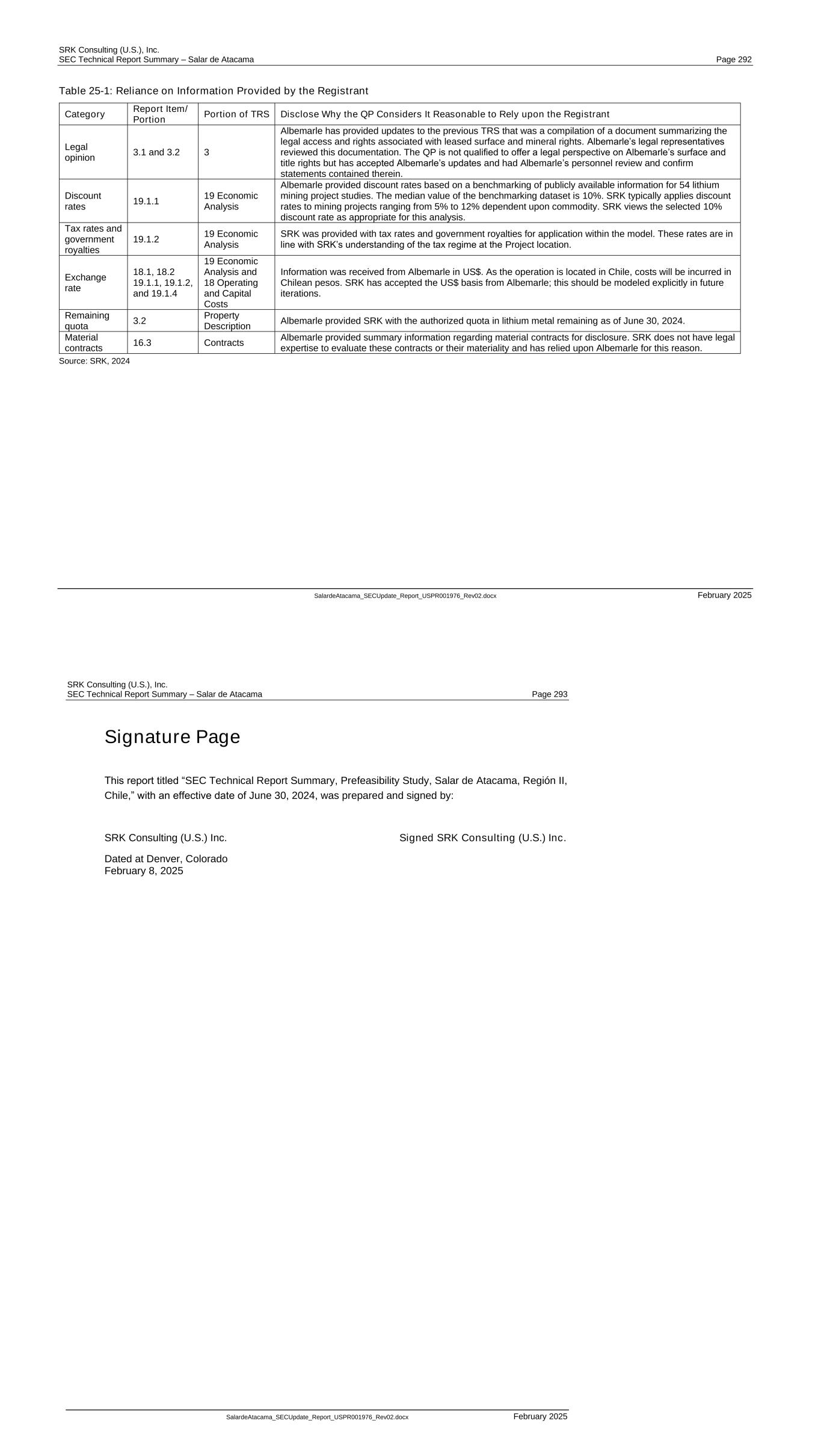

 
SRK Consulting (U.S.), Inc. SEC Technical Report Summary – Salar de Atacama Page 292 SalardeAtacama_SECUpdate_Report_USPR001976_Rev02.docx February 2025 Table 25-1: Reliance on Information Provided by the Registrant Category Report Item/ Portion Portion of TRS Disclose Why the QP Considers It Reasonable to Rely upon the Registrant Legal opinion 3.1 and 3.2 3 Albemarle has provided updates to the previous TRS that was a compilation of a document summarizing the legal access and rights associated with leased surface and mineral rights. Albemarle’s legal representatives reviewed this documentation. The QP is not qualified to offer a legal perspective on Albemarle’s surface and title rights but has accepted Albemarle’s updates and had Albemarle’s personnel review and confirm statements contained therein. Discount rates 19.1.1 19 Economic Analysis Albemarle provided discount rates based on a benchmarking of publicly available information for 54 lithium mining project studies. The median value of the benchmarking dataset is 10%. SRK typically applies discount rates to mining projects ranging from 5% to 12% dependent upon commodity. SRK views the selected 10% discount rate as appropriate for this analysis. Tax rates and government royalties 19.1.2 19 Economic Analysis SRK was provided with tax rates and government royalties for application within the model. These rates are in line with SRK’s understanding of the tax regime at the Project location. Exchange rate 18.1, 18.2 19.1.1, 19.1.2, and 19.1.4 19 Economic Analysis and 18 Operating and Capital Costs Information was received from Albemarle in US$. As the operation is located in Chile, costs will be incurred in Chilean pesos. SRK has accepted the US$ basis from Albemarle; this should be modeled explicitly in future iterations. Remaining quota 3.2 Property Description Albemarle provided SRK with the authorized quota in lithium metal remaining as of June 30, 2024. Material contracts 16.3 Contracts Albemarle provided summary information regarding material contracts for disclosure. SRK does not have legal expertise to evaluate these contracts or their materiality and has relied upon Albemarle for this reason. Source: SRK, 2024 SRK Consulting (U.S.), Inc. SEC Technical Report Summary – Salar de Atacama Page 293 SalardeAtacama_SECUpdate_Report_USPR001976_Rev02.docx February 2025 Signature Page This report titled “SEC Technical Report Summary, Prefeasibility Study, Salar de Atacama, Región II, Chile,” with an effective date of June 30, 2024, was prepared and signed by: SRK Consulting (U.S.) Inc. Signed SRK Consulting (U.S.) Inc. Dated at Denver, Colorado February 8, 2025


 
EX-96.4 10 exhibit964silverpeak2024.htm EX-96.4 exhibit964silverpeak2024
SEC Technical Report Summary Prefeasibility Study Silver Peak Lithium Operation Nevada, USA Effective Date: June 30, 2024 Report Date: February 8, 2025 Report Prepared for Albemarle Corporation 4250 Congress Street Suite 900 Charlotte, North Carolina 28209 Report Prepared by SRK Consulting (U.S.), Inc. 999 Seventeenth Street, Suite 400 Denver, Colorado 80202 SRK Project Number: USPR001977 Exhibit 96.4 SRK Consulting (U.S.), Inc. SEC Technical Report Summary – Silver Peak Page ii SilverPeak_SECUpdate_Report_USPR001977_Rev03.docx February 2025 Table of Contents 1 Executive Summary ..................................................................................................... 1 1.1 Property Description............................................................................................................................ 1 1.2 Geology and Mineralization ................................................................................................................ 1 1.3 Status of Exploration, Development, and Operations ......................................................................... 2 1.4 Mineral Processing and Metallurgical Testing .................................................................................... 2 1.5 Mineral Resource Estimates ............................................................................................................... 2 1.6 Mining Methods and Mineral Reserve Estimates ............................................................................... 4 1.7 Processing and Recovery Methods .................................................................................................... 6 1.8 Infrastructure ....................................................................................................................................... 7 1.9 Market Studies .................................................................................................................................... 7 1.10 Environmental Studies, Permitting, and Plans, Negotiations, or Agreements with Local Individuals or Groups ................................................................................................................................................ 8 1.10.1 Mine Closure ........................................................................................................................... 9 1.11 Capital and Operating Costs ............................................................................................................... 9 1.12 Economic Analysis ............................................................................................................................ 12 1.13 Conclusions and Recommendations ................................................................................................ 14 1.13.1 Geology and Mineral Resources ........................................................................................... 14 1.13.2 Mineral Reserves and Mining Method ................................................................................... 14 1.13.3 Mineral Processing and Metallurgical Testing....................................................................... 14 1.13.4 Infrastructure ......................................................................................................................... 14 1.13.5 Environmental, Permitting, Social, and Closure .................................................................... 14 1.13.6 Capital and Operating Costs ................................................................................................. 15 1.13.7 Economics ............................................................................................................................. 15 2 Introduction ................................................................................................................ 16 2.1 Terms of Reference and Purpose ..................................................................................................... 16 2.2 Sources of Information ...................................................................................................................... 16 2.3 Details of Inspection .......................................................................................................................... 16 2.4 Report Version Update ..................................................................................................................... 18 2.5 Qualified Persons .............................................................................................................................. 18 2.6 Forward-Looking Information ............................................................................................................ 18 3 Property Description.................................................................................................. 20 3.1 Property Location .............................................................................................................................. 20 3.2 Mineral Title ....................................................................................................................................... 23 3.2.1 Patented Mining Claim .......................................................................................................... 23 3.2.2 Unpatented Mining Claim ...................................................................................................... 23


SRK Consulting (U.S.), Inc. SEC Technical Report Summary – Silver Peak Page iii SilverPeak_SECUpdate_Report_USPR001977_Rev03.docx February 2025 3.3 Encumbrances .................................................................................................................................. 37 3.4 Royalties or Similar Interest .............................................................................................................. 37 3.5 Other Significant Factors and Risks.................................................................................................. 37 4 Accessibility, Climate, Local Resources, Infrastructure, and Physiography ....... 40 4.1 Topography, Elevation, and Vegetation ............................................................................................ 40 4.2 Means of Access ............................................................................................................................... 40 4.3 Climate and Length of Operating Season ......................................................................................... 40 4.4 Infrastructure Availability and Sources.............................................................................................. 41 5 History......................................................................................................................... 42 5.1 Previous Operations.......................................................................................................................... 42 5.2 Exploration and Development of Previous Owners or Operators ..................................................... 43 6 Geological Setting, Mineralization, and Deposit ..................................................... 44 6.1 Regional, Local, and Property Geology ............................................................................................ 44 6.1.1 Regional Geology .................................................................................................................. 44 6.1.2 Local and Property Geology .................................................................................................. 47 6.1.3 Geology of Basin Infill ............................................................................................................ 49 6.2 Mineral Deposit ................................................................................................................................. 51 6.3 Stratigraphic Column and Local Geology Cross-Section.................................................................. 56 7 Exploration ................................................................................................................. 57 7.1 Exploration Work (Other Than Drilling) ............................................................................................. 57 7.1.1 Significant Results and Interpretation ................................................................................... 57 7.2 Exploration Drilling ............................................................................................................................ 57 7.2.1 Drilling Type and Extent ........................................................................................................ 58 7.2.2 Drilling, Sampling, or Recovery Factors ................................................................................ 66 7.2.3 Drilling Results and Interpretation ......................................................................................... 66 7.3 Hydrogeology .................................................................................................................................... 67 7.3.1 Hydraulic Conductivity ........................................................................................................... 67 7.3.2 Specific Yield ......................................................................................................................... 67 7.4 Brine Sampling .................................................................................................................................. 69 7.4.1 Historical Sampling ................................................................................................................ 69 7.4.2 2017 Exploration Program Sampling .................................................................................... 69 7.4.3 2020 Sampling ...................................................................................................................... 70 7.4.4 2022 Sampling ...................................................................................................................... 70 8 Sample Preparation, Analysis, and Security ........................................................... 71 8.1 Sample Collection ............................................................................................................................. 71 8.1.1 Historical Sampling ................................................................................................................ 71 8.1.2 2022 Campaign ..................................................................................................................... 72 SRK Consulting (U.S.), Inc. SEC Technical Report Summary – Silver Peak Page iv SilverPeak_SECUpdate_Report_USPR001977_Rev03.docx February 2025 8.2 Sample Preparation, Assaying, and Analytical Procedures ............................................................. 74 8.3 Quality Control Procedures/Quality Assurance ................................................................................ 75 8.3.1 Historical Samples, On-Site Laboratory ................................................................................ 75 8.3.2 2022 Campaign ..................................................................................................................... 76 8.4 Opinion on Adequacy ........................................................................................................................ 80 9 Data Verification ......................................................................................................... 81 9.1 Data Verification Procedures ............................................................................................................ 81 9.2 Limitations ......................................................................................................................................... 82 9.3 Opinion on Data Adequacy ............................................................................................................... 82 10 Mineral Processing and Metallurgical Testing ........................................................ 83 11 Mineral Resource Estimates ..................................................................................... 84 11.1 Geological Model .............................................................................................................................. 84 11.2 Key Assumptions, Parameters, and Methods Used ......................................................................... 85 11.2.1 Exploratory Data Analysis ..................................................................................................... 85 11.2.2 Drainable Porosity or Specific Yield ...................................................................................... 89 11.3 Mineral Resource Estimates ............................................................................................................. 89 11.3.1 Compositing and Capping ..................................................................................................... 89 11.3.2 Spatial Continuity Analysis .................................................................................................... 91 11.3.3 Block Model ........................................................................................................................... 92 11.3.4 Estimation Methodology ........................................................................................................ 93 11.3.5 Estimate Validation ................................................................................................................ 94 11.4 CoGs Estimates ................................................................................................................................ 96 11.5 Resources Classification and Criteria ............................................................................................... 97 11.6 Uncertainty ........................................................................................................................................ 98 11.7 Summary Mineral Resources ............................................................................................................ 99 11.8 Recommendations and Opinion ...................................................................................................... 101 12 Mineral Reserve Estimates ...................................................................................... 102 12.1 Key Assumptions, Parameters, and Methods Used ....................................................................... 102 12.1.1 Numerical Model Construction ............................................................................................ 102 12.1.2 Numerical Model Grid and Boundary Conditions ................................................................ 102 12.1.3 Hydrogeologic Units and Aquifer Parameters ..................................................................... 104 12.1.4 Simulated Pre-Development Conditions ............................................................................. 105 12.1.5 Simulated Historical Development ...................................................................................... 105 12.2 Mineral Reserves Estimates ........................................................................................................... 116 12.2.1 Simulation of Reserves ....................................................................................................... 116 12.2.2 CoG Estimate ...................................................................................................................... 119 12.2.3 Reserves Classification and Criteria ................................................................................... 120


SRK Consulting (U.S.), Inc. SEC Technical Report Summary – Silver Peak Page v SilverPeak_SECUpdate_Report_USPR001977_Rev03.docx February 2025 12.2.4 Reserve Uncertainty ............................................................................................................ 121 12.3 Summary Mineral Reserves ............................................................................................................ 125 13 Mining Methods ........................................................................................................ 127 13.1 Wellfield Design .............................................................................................................................. 128 13.2 Production Schedule ....................................................................................................................... 136 14 Processing and Recovery Methods ....................................................................... 142 14.1 Evaporation Pond System .............................................................................................................. 144 14.2 Li2CO3 Plant .................................................................................................................................... 147 14.3 Pond System and Plant Performance ............................................................................................. 148 14.4 Process Design Parameters ........................................................................................................... 149 14.5 SRK Opinion ................................................................................................................................... 149 15 Infrastructure ............................................................................................................ 150 15.1 Access, Roads, and Local Communities ........................................................................................ 150 15.1.1 Access ................................................................................................................................. 150 15.1.2 Airport .................................................................................................................................. 151 15.1.3 Rail ...................................................................................................................................... 151 15.1.4 Port Facilities ....................................................................................................................... 151 15.1.5 Local Communities .............................................................................................................. 151 15.2 Facilities .......................................................................................................................................... 152 15.2.1 Evaporation Ponds .............................................................................................................. 156 15.2.2 Harvested Salt Storage Areas ............................................................................................. 156 15.3 Energy 156 15.3.1 Power .................................................................................................................................. 156 15.3.2 Propane ............................................................................................................................... 157 15.3.3 Diesel................................................................................................................................... 157 15.3.4 Gasoline .............................................................................................................................. 157 15.4 Water and Pipelines ........................................................................................................................ 157 16 Market Studies ......................................................................................................... 158 16.1 Lithium Market Summary ................................................................................................................ 158 16.1.1 Lithium Demand .................................................................................................................. 158 16.1.2 Lithium Supply ..................................................................................................................... 161 16.1.3 Lithium Supply-Demand Balance ........................................................................................ 164 16.1.4 Lithium Prices ...................................................................................................................... 165 16.2 Product Sales .................................................................................................................................. 168 16.3 Contracts and Status....................................................................................................................... 169 17 Environmental Studies, Permitting, and Plans, Negotiations, or Agreements with Local Individuals or Groups .................................................................................... 170 SRK Consulting (U.S.), Inc. SEC Technical Report Summary – Silver Peak Page vi SilverPeak_SECUpdate_Report_USPR001977_Rev03.docx February 2025 17.1 Environmental Studies .................................................................................................................... 170 17.1.1 Air Quality ............................................................................................................................ 171 17.1.2 Site Hydrology/Hydrogeology and Background Groundwater Quality ................................ 172 17.1.3 General Wildlife ................................................................................................................... 172 17.1.4 Avian Wildlife ....................................................................................................................... 173 17.1.5 Botanical Inventories ........................................................................................................... 173 17.1.6 Cultural Inventories ............................................................................................................. 174 17.1.7 Known Environmental Issues .............................................................................................. 174 17.2 Environmental Management Planning ............................................................................................ 174 17.2.1 Waste Management ............................................................................................................ 175 17.2.2 Tailings Disposal ................................................................................................................. 175 17.2.3 Site Monitoring .................................................................................................................... 176 17.2.4 Human Health and Safety ................................................................................................... 176 17.3 Project Permitting ............................................................................................................................ 176 17.3.1 Active Permits ..................................................................................................................... 176 17.3.2 Current and Anticipated Permitting Activities ...................................................................... 178 17.3.3 Performance or Reclamation Bonding ................................................................................ 178 17.4 Plans, Negotiations, or Agreements ............................................................................................... 179 17.5 Mine Reclamation and Closure ....................................................................................................... 179 17.5.1 Closure Planning ................................................................................................................. 179 17.5.2 Closure Cost Estimate ......................................................................................................... 181 17.5.3 Limitations on the Closure Cost Estimate ........................................................................... 182 17.6 Plan Adequacy ................................................................................................................................ 183 17.7 Local Procurement .......................................................................................................................... 183 18 Capital and Operating Costs ................................................................................... 184 18.1 Capital Cost Estimates .................................................................................................................... 184 18.1.1 Pond Construction ............................................................................................................... 185 18.1.2 Exploration and Monitoring Wells ........................................................................................ 186 18.1.3 Production Wellfield ............................................................................................................. 186 18.1.4 Carbonate Plant Upgrades .................................................................................................. 186 18.1.5 Ongoing Sustaining ............................................................................................................. 186 18.1.6 Closure Cost ........................................................................................................................ 186 18.2 Operating Cost Estimates ............................................................................................................... 186 19 Economic Analysis .................................................................................................. 189 19.1 General Description ........................................................................................................................ 189 19.1.1 Basic Model Parameters ..................................................................................................... 189 19.1.2 External Factors .................................................................................................................. 189


SRK Consulting (U.S.), Inc. SEC Technical Report Summary – Silver Peak Page vii SilverPeak_SECUpdate_Report_USPR001977_Rev03.docx February 2025 19.1.3 Technical Factors ................................................................................................................ 190 19.2 Results ............................................................................................................................................ 200 19.3 Sensitivity Analysis.......................................................................................................................... 203 20 Adjacent Properties ................................................................................................. 204 20.1 PEM/SLB (Formerly Schlumberger) ............................................................................................... 204 20.2 Noram 206 20.3 Century ............................................................................................................................................ 206 20.4 ACME 206 20.5 Spearmint ........................................................................................................................................ 207 20.6 Other Adjacent Properties ............................................................................................................... 207 21 Other Relevant Data and Information ..................................................................... 208 22 Interpretation and Conclusions .............................................................................. 209 22.1 Geology and Mineral Resources ..................................................................................................... 209 22.2 Mineral Reserves and Mining Method ............................................................................................ 209 22.3 Metallurgy and Mineral Processing ................................................................................................. 209 22.4 Infrastructure ................................................................................................................................... 210 22.5 Environmental, Permitting, Social, and Closure ............................................................................. 210 22.5.1 Closure ................................................................................................................................ 210 22.6 Capital and Operating Costs ........................................................................................................... 211 22.7 Economic Analysis .......................................................................................................................... 211 23 Recommendations ................................................................................................... 212 23.1 Recommended Work Programs ...................................................................................................... 212 23.2 Recommended Work Program Costs ............................................................................................. 212 24 References ................................................................................................................ 214 25 Reliance on Information Provided by the Registrant ............................................ 217 Signature Page .............................................................................................................. 219 List of Tables Table 1-1: Silver Peak Mineral Resource Estimate, Exclusive of Mineral Reserves (Effective June 30, 2024) 3 Table 1-2: Silver Peak Mineral Reserves, Effective June 30, 2024 ................................................................... 5 Table 1-3: Capital Cost Forecast (US$ Million Real 2024) ............................................................................... 10 Table 1-4: Indicative Economic Results ........................................................................................................... 12 Table 2-1: Site Visits ......................................................................................................................................... 17 Table 3-1: Unpatented Placer Mining Claims ................................................................................................... 24 Table 3-2: Unpatented Mill Site Claims ............................................................................................................ 26 Table 3-3: Patented Mill Site Claims ................................................................................................................ 27 SRK Consulting (U.S.), Inc. SEC Technical Report Summary – Silver Peak Page viii SilverPeak_SECUpdate_Report_USPR001977_Rev03.docx February 2025 Table 3-4: Patented Placer Mining Claims ....................................................................................................... 28 Table 3-5: Nevada Net Proceeds Tax Sliding Scale ........................................................................................ 37 Table 6-1 Summary of Hydrogeologic Units ..................................................................................................... 51 Table 7-1: Drill Campaign Summary ................................................................................................................ 58 Table 7-2: Production Well Target Aquifers...................................................................................................... 58 Table 7-3: New 2020 Production Wells ............................................................................................................ 64 Table 7-4: New and Replacement 2021 Production Wells ............................................................................... 66 Table 7-5: Summary of Pumping Tests at Silver Peak ..................................................................................... 67 Table 7-6: Summary of Literature Review of Specific Yield ............................................................................. 68 Table 8-1: List and Coordinates of Production Wells Sampled in the 2022 Campaign ................................... 73 Table 8-2: Sample Preparation Protocol by ALS .............................................................................................. 75 Table 8-3: ALS Primary Laboratory Analysis Methods ..................................................................................... 75 Table 11-1: Comparison of Raw vs. Composite Statistics ............................................................................... 90 Table 11-2: Summary Silver Peak Block Model Parameters ........................................................................... 93 Table 11-3: Summary Search Neighborhood Parameters for Lithium ............................................................. 94 Table 11-4: Summary of Validation Statistics Composites versus Estimation Methods (Aquifer Data)........... 95 Table 11-5: Sources and Degree of Uncertainty .............................................................................................. 98 Table 11-6: Silver Peak Mineral Resource Estimate, Exclusive of Mineral Reserves (Effective June 30, 2024) ........................................................................................................................................................... 100 Table 12-1: Model Layering ............................................................................................................................ 104 Table 12-2: Hydrogeologic Units and Aquifer Parameters ............................................................................. 105 Table 12-3: Basin Inflows ............................................................................................................................... 105 Table 12-4: Simulated Groundwater Budget, End of 2023 ............................................................................. 109 Table 12-5: Simulated Total Pumping Rate and Predicted Lithium Concentration and Mass ....................... 119 Table 12-6: Results of Sensitivity Analysis ..................................................................................................... 122 Table 12-7: Silver Peak Mineral Reserves, Effective June 30, 2024 ............................................................. 125 Table 13-1: Wellfield Expansion Schedule (30-Year Reserve Pumping Plan)............................................... 130 Table 13-2: Construction Details Proposed New Wells .................................................................................. 133 Table 15-1: Local Communities ...................................................................................................................... 152 Table 15-2: Silver Peak Power Consumption ................................................................................................. 157 Table 16-1: Technical-Grade Li2CO3 Specifications ....................................................................................... 168 Table 16-2: Historic Silver Peak Annual Production Rate .............................................................................. 168 Table 16-3: Silver Peak Recent Years’ Production Consumed Internally by Albemarle ................................ 169 Table 17-1: SPLO Project Permits ................................................................................................................. 177 Table 18-1: Capital Cost Forecast (US$ Million Real 2024) ........................................................................... 185 Table 19-1: Basic Model Parameters ............................................................................................................. 189 Table 19-2: Modeled Life of Operation Pumping Profile ................................................................................ 192 Table 19-3: Life of Operation Processing Summary ...................................................................................... 195


SRK Consulting (U.S.), Inc. SEC Technical Report Summary – Silver Peak Page ix SilverPeak_SECUpdate_Report_USPR001977_Rev03.docx February 2025 Table 19-4: Operating Cost Summary ............................................................................................................ 195 Table 19-5: Variable Processing Costs .......................................................................................................... 197 Table 19-6: Indicative Economic Results ....................................................................................................... 200 Table 19-7: Silver Peak Annual Cashflow and Key Project Data ................................................................... 201 Table 23-1: Summary of Costs for Recommended Work ............................................................................... 213 Table 25-1: Reliance on Information Provided by the Registrant ................................................................... 218 List of Figures Figure 1-1: Total Forecast Operating Expenditure ........................................................................................... 11 Figure 1-2: Annual Cashflow Summary ............................................................................................................ 13 Figure 3-1: Regional Location Map, Silver Peak, Nevada................................................................................ 21 Figure 3-2: Albemarle Claims, Silver Peak ....................................................................................................... 22 Figure 5-1: Historical Drilling............................................................................................................................. 43 Figure 6-1: Configuration of the Basin and Range Province and the Walker Lane Fault Zone, Relative to the Nevada Border ..................................................................................................................................... 45 Figure 6-2: Generalized Geology of the Silver Peak Area ............................................................................... 46 Figure 6-3: Major Physiographic Features that Form Clayton Valley ............................................................... 48 Figure 6-4: Surficial Geology in Clayton Valley ................................................................................................ 50 Figure 6-5: Plan View of Basin with Cross-Section Locations .......................................................................... 53 Figure 6-6: Cross-Sections A-A’ and B-B’ through the Silver Peak Property ................................................... 54 Figure 6-7: Stratigraphic Column for the Silver Peak Site ................................................................................ 56 Figure 7-1: Property Plan Drill Map .................................................................................................................. 59 Figure 7-2: Location of 2017 Exploration Boreholes for the SPLO .................................................................. 61 Figure 7-3: New 2020 Production Wells ........................................................................................................... 63 Figure 7-4: New and Replacement 2021 Production Wells .............................................................................. 65 Figure 7-5: Lithium Concentrations from Historical Production Well Samples ................................................. 69 Figure 7-6: 2020 Sampling Locations ............................................................................................................... 70 Figure 8-1: Historical Lithium Variability, 1966 to 2024 .................................................................................... 72 Figure 8-2: Scatter Diagram Comparing the Results Obtained for Lithium between ALS and ACZ Laboratories ............................................................................................................................................................. 76 Figure 8-3: Standard Samples .......................................................................................................................... 79 Figure 8-4: Sample Duplicates ......................................................................................................................... 80 Figure 9-1: Comparison of Lithium Concentrations, September 2022 ............................................................. 82 Figure 11-1: 3D View of Geological Model ....................................................................................................... 84 Figure 11-2: Plan View of Property Limit (Used in Resource Estimate) ........................................................... 85 Figure 11-3: Drillhole Locations in Plan View (Top) and Lithium Samples in Sectional View (AA’) (Bottom)-- 87 SRK Consulting (U.S.), Inc. SEC Technical Report Summary – Silver Peak Page x SilverPeak_SECUpdate_Report_USPR001977_Rev03.docx February 2025 Figure 11-4: Summary Raw Sample Statistics of Lithium Concentration – mg/L, Log Probability and Histogram ............................................................................................................................................................. 88 Figure 11-5: Histogram of Length of Samples of Lithium ................................................................................. 90 Figure 11-6: Experimental and Modeled Directional Semi-Variograms for Lithium ......................................... 92 Figure 11-7: Plan View of the Silver Peak Block Model Colored by Hydrogeological Unit, 940-masl ............. 93 Figure 11-8: Example of Visual Validation of Lithium Grades in Composites versus Block Model in Plan View, 1,112.5-masl Elevation ........................................................................................................................ 95 Figure 11-9: Lithium Swath Analysis for Silver Peak ........................................................................................ 96 Figure 11-10: Block Model Colored by Classification and Drillhole Locations Plan View (1,112.5 masl Elevation, +/- 30 m) ............................................................................................................................. 97 Figure 12-1: Active Model Domain and Model Grid ....................................................................................... 103 Figure 12-2: Location Historic and Existing Production Wells ........................................................................ 106 Figure 12-3: Wellfield Pumping and Average Lithium Concentration ............................................................. 107 Figure 12-4: Historic Pumping Rates by Aquifer ............................................................................................ 107 Figure 12-5: Location of Simulated Production Ponds ................................................................................... 108 Figure 12-6: Simulated versus Measured Water Levels, 2021 to 2022 Well Installation ............................... 110 Figure 12-7: Simulated versus Measured Lithium Concentrations (Weighted Average) ............................... 111 Figure 12-8: Simulated versus Measured Lithium Concentrations (per Aquifer) ........................................... 112 Figure 12-9: Annual Mass of Lithium Extracted by Production Wellfield, Simulated versus Measured ......... 113 Figure 12-10: Lithium Concentration versus Cumulative Production Pumping, Simulated versus Measured ........................................................................................................................................................... 114 Figure 12-11: Mass Extraction Rate Averaged for the Second Half of 2023, Simulated versus Measured .. 115 Figure 12-12: Projected Annual Mass of Lithium Extracted by Production Wellfield ..................................... 116 Figure 12-13: Distribution of Predicted Annual Lithium Mass between Aquifers ........................................... 117 Figure 12-14: Distribution of Predicted Annual Lithium Mass between Existing and New Proposed Production Wells .................................................................................................................................................. 118 Figure 12-15: Simulated Lithium Concentrations under Sensitivity Runs ...................................................... 123 Figure 12-16: Simulated Lithium Annual Mass under Sensitivity Runs .......................................................... 124 Figure 13-1: Well Location Map for Predicted LoM ........................................................................................ 129 Figure 13-2: Simulated Distribution between Existing and New Production Wells ........................................ 131 Figure 13-3: Simulated Number of Production Wells per Year ...................................................................... 131 Figure 13-4: Brine Extraction Well at Silver Peak .......................................................................................... 135 Figure 13-5: Typical Production Well Construction ........................................................................................ 136 Figure 13-6: Planned Pumping for LoM .......................................................................................................... 137 Figure 13-7: Predicted Distribution of Total Pumping Rate between Aquifers ............................................... 138 Figure 13-8: Predicted Distribution of Total Pumping Rate between Existing and New Wells ...................... 139 Figure 13-9: Predicted Distribution of Total Pumping Rate between Existing and New Wells ...................... 140 Figure 14-1: Silver Peak Simplified Process Flowsheet and Mass Balance .................................................. 143 Figure 14-2: Brine Flow Path in Pond System, Current and Future ............................................................... 145


SRK Consulting (U.S.), Inc. SEC Technical Report Summary – Silver Peak Page xi SilverPeak_SECUpdate_Report_USPR001977_Rev03.docx February 2025 Figure 14-3: Silver Peak Li2CO3 Plant ............................................................................................................ 147 Figure 14-4: Playa Yield versus Wellfield Lithium Input ................................................................................. 148 Figure 15-1: Silver Peak General Location..................................................................................................... 151 Figure 15-2: Infrastructure Layout Map .......................................................................................................... 153 Figure 15-3: Plant Layout Map ....................................................................................................................... 155 Figure 15-4: NV Energy Regional Transmission System ............................................................................... 156 Figure 16-1: EV Sales and Penetration Rates ............................................................................................... 159 Figure 16-2: Lithium Demand in Key Sectors ................................................................................................. 160 Figure 16-3: Forecast Mine Supply ................................................................................................................ 163 Figure 16-4: Lithium Supply-Demand Balance ............................................................................................... 165 Figure 16-5: Lithium Battery Material Prices .................................................................................................. 166 Figure 16-6: Lithium Battery Materials Long-Term Forecast Scenarios ......................................................... 168 Figure 18-1: Total Forecast OPEX ................................................................................................................. 188 Figure 19-1: Silver Peak Pumping Profile ....................................................................................................... 191 Figure 19-2: Modeled Processing Profile ....................................................................................................... 193 Figure 19-3: Modeled Production Profile ........................................................................................................ 194 Figure 19-4: Life of Operation Operating Cost Summary ............................................................................... 196 Figure 19-5: Life of Operation Operating Cost Contributions ......................................................................... 197 Figure 19-6: Silver Peak Sustaining Capital Profile ........................................................................................ 199 Figure 19-7: Annual Cashflow Summary ........................................................................................................ 202 Figure 19-8: Silver Peak NPV Sensitivity Analysis ......................................................................................... 203 Figure 20-1: Map of Claims Controlled by PEM ............................................................................................. 205 SRK Consulting (U.S.), Inc. SEC Technical Report Summary – Silver Peak Page xii SilverPeak_SECUpdate_Report_USPR001977_Rev03.docx February 2025 List of Abbreviations The metric system has been used throughout this report. Tonnes are metric of 1,000 kg, or 2,204.6 lb. All currency is in U.S. dollars (US$) unless otherwise stated. Abbreviation Definition % percent < less than > greater than ≥ greater than or equal to °C degrees Celsius °F degrees Fahrenheit A/P accounts payable A/R accounts receivable ACME ACME Lithium Inc. AES atomic emission spectroscopy AF acre-foot AFA acre-foot per year Albemarle Albemarle Corporation AOC Administrative Order on Consent APP Avian Protection Program BAPC Bureau of Air Pollution Control BAQP Bureau of Air Quality Planning BEV battery electric vehicle bgs below ground surface BLM Bureau of Land Management BMR borehole magnetic resonance BMRR Bureau of Mining Regulation and Reclamation BSMM Bureau of Sustainable Materials Management C&M care and maintenance Ca calcium Ca(OH)2 calcium hydroxide CaCO3 calcium carbonate CAD computer aided drafting CAM cathode active material CAPEX capital expenditure CaSO4 calcium sulfate CBST clear brine surge tank CDF cost data file Century Century Lithium Corp. CIF cost, insurance, and freight CJK China, Japan, and Korea CLN Connected Linear Network cm centimeter CoG cut-off grade CSAMT controlled source audio-frequency magnetotellurics CSEM controlled source electromagnetic magnetotellurics CWA Clean Water Act DI deionized DLE direct lithium extraction DOE U.S. Department of Energy


SRK Consulting (U.S.), Inc. SEC Technical Report Summary – Silver Peak Page xiii SilverPeak_SECUpdate_Report_USPR001977_Rev03.docx February 2025 Abbreviation Definition DSO direct shipped ore EA Environmental Assessment EDM EDM International, Inc. EIS Environmental Impact Statement eMobility electrically powered vehicles EMS emergency medical services EPA U.S. Environmental Protection Agency ERP emergency response plan ESCO Esmeralda County Public Works ESI Environmental Simulations Incorporated ESS energy storage system EV electric vehicle FCC Federal Communications Commission FPPC final plans for permanent closure ft foot FWS U.S. Fish and Wildlife Service g gram G&A general and administrative gal gallon GBBO Great Basin Bird Observatory GIS geographic information system gpm gallon per minute GWI Groundwater Insight Inc. ha hectare HCl hydrochloric acid HDPE high-density polyethylene HEV hybrid electric vehicle hp horsepower IAPP industrial artificial pond permit ICE internal combustion engine ICP inductively coupled plasma ID3 inverse distance cubed IP induced polarization IRR internal rate of return ISO International Organization for Standardization K potassium kg kilogram kg/d kilogram per day km2 square kilometer kt thousand tonnes kV kilovolt kWh kilowatt per hour LAS Lower Aquifer System lb pound LGA Lower Gravel Aquifer Li lithium Li2CO3 lithium carbonate LIB lithium-ion battery LiOH lithium hydroxide LoM life-of-mine SRK Consulting (U.S.), Inc. SEC Technical Report Summary – Silver Peak Page xiv SilverPeak_SECUpdate_Report_USPR001977_Rev03.docx February 2025 Abbreviation Definition LPG liquid petroleum gas LS Pond lime solids pond m meter m/d meter per day m3 cubic meter m3/d cubic meter per day m3/y cubic meter per year MAA Main Ash Aquifer masl meter above sea level Mg magnesium Mg(OH)2 magnesium hydroxide mg/L milligram per liter MGA Marginal Gravel Aquifer mi mile mi2 square mile mL milliliter MRE mineral resource estimate MSI Matrix Solutions Inc. Mt million tonnes Mt/y million tonnes per year MW megawatt Na sodium Na2CO3 soda ash NAD 1983 North American Datum of 1983 NDEP Nevada Division of Environmental Protection NDOW Nevada Department of Wildlife NDWR Nevada Division of Water Resources NELAP National Environmental Laboratory Accreditation Program NEPA National Environmental Policy Act of 1969 NMR nuclear magnetic resonance NN nearest neighbor NOI notice of intent Noram Noram Lithium Corp. NPDES National Pollutant Discharge Elimination System NPV net present value NRS Nevada Revised Statute OES optical emission spectroscopy OK ordinary kriging OPEX operating expense OSDS on-site sewage disposal system PCS petroleum contaminated soil PEM Pure Energy Minerals PFS prefeasibility study PHEV plug-in hybrid electric vehicle ppm parts per million project Silver Peak project QA/QC quality assurance/quality control QP Qualified Person R&PP Recreation and Public Purposes Act R2 Tailings Pond lime solids pond


SRK Consulting (U.S.), Inc. SEC Technical Report Summary – Silver Peak Page xv SilverPeak_SECUpdate_Report_USPR001977_Rev03.docx February 2025 Abbreviation Definition RC reverse circulation RCE Reclamation Cost Estimate RCRA Resource Conservation and Recovery Act RMSE root mean square error RoW rights-of-way S sulfur SAS Salt Aquifer System SBC strong brine complex SEC Securities and Exchange Commission Silver Peak Silver Peak production site S-K 1300 SEC S-K regulations (Title 17, Part 229, Items 601 and 1300 until 1305) SLB Schlumberger SPLO Silver Peak Lithium Operation SRCE standardized reclamation cost estimator SRK SRK Consulting (U.S.), Inc. st/y short tons per year SWCA SWCA Environmental Consultants SWReGAP Southwestern Regional Gap Analysis Program Sy specific yield t tonne t/y tonne per year TAS Tufa Aquifer System TCLP toxicity characteristic leaching procedure TDS total dissolved solids TEM transient electromagnetic TNI Tennessee-Missouri-North Dakota TPPC tentative plans for permanent closure TRS Technical Report Study USACE U.S. Army Corps of Engineers USGS United States Geological Survey UTM Universal Transverse Mercator VSQG very small quantity generator WET Western Environmental Testing WOTUS Waters of the U.S. WPCP Water Pollution Control Permit SRK Consulting (U.S.), Inc. SEC Technical Report Summary – Silver Peak Page 1 SilverPeak_SECUpdate_Report_USPR001977_Rev03.docx February 2025 1 Executive Summary This report was prepared as a prefeasibility study (PFS)-level Technical Report Summary (TRS) in accordance with the Securities and Exchange Commission (SEC) S-K regulations (Title 17, Part 229, Items 601 and 1300 until 1305) (S-K 1300) for Albemarle Corporation (Albemarle) by SRK Consulting (U.S.), Inc. (SRK) on the Silver Peak production site (Silver Peak). The purpose of this report is to support public disclosure of mineral resources and mineral reserves at Silver Peak for Albemarle’s public disclosure purposes. This report is an update of the previous report titled, "SEC Technical Report Summary, Pre-Feasibility Study, Silver Peak Lithium Operation, Nevada, USA.” 1.1 Property Description The Silver Peak Lithium Operation (SPLO) is in a rural area approximately 30 miles (mi) southwest of Tonopah, in Esmeralda County, Nevada, United States. The SPLO is located in Clayton Valley, an arid valley historically covered with dry lake beds (playas). The operation borders the small unincorporated town of Silver Peak, Nevada. Albemarle extracts lithium (Li)-rich brine from the aquifers beneath the playa at the SPLO to produce lithium carbonate (Li2CO3). Albemarle holds four types of claims in the Silver Peak area: Patented Mill Site Claims, Patented Placer Claims, Unpatented Mill Site Claims, and Unpatented Placer Claims. Albemarle’s mineral rights in Silver Peak, Nevada, consist exclusively of its right to extract lithium brine, pursuant to a settlement agreement with the U.S. government, originally entered into in June 1991 by one of its predecessors. Pursuant to this agreement, Albemarle has rights to all of the lithium that can be removed economically. Albemarle or their predecessors have been operating at the Silver Peak site since 1966. The SPLO site covers a surface of approximately 13,356 acres, 10,800 acres of which are patented mining claims owned through a subsidiary. The remaining acres are unpatented mining claims for which claim maintenance fees are paid annually. In connection with the operations at Silver Peak, Albemarle has been granted by the Nevada Division of Water Resources (NDWR) rights to pump water in the Clayton Valley Hydrographic Basin (in the Esmeralda Hydrographic Region). 1.2 Geology and Mineralization The SPLO is located in Clayton Valley. The structural geology that forms Clayton Valley and principal faults within and around the valley are influenced by two continental-scale features: • The Basin and Range province • Walker Lane fault zone The valley is located within the Basin and Range province, which extends from Canada through much of the western United States and across much of Mexico. The province is characterized by block faulting caused by extension and subsequent thinning of the Earth’s crust. In Nevada, this extensional faulting forms a region of northeast-to-southwest oriented ridges and valleys. This faulting is responsible for the overall horst and graben structure of Clayton Valley. It is hypothesized that the current levels of lithium dissolved in brine originate from relatively recent dissolution of halite by meteoric waters that have penetrated the playa in the last 10,000 years. The


SRK Consulting (U.S.), Inc. SEC Technical Report Summary – Silver Peak Page 2 SilverPeak_SECUpdate_Report_USPR001977_Rev03.docx February 2025 halite formed in the playa during the climatic periods of low precipitation and that the concentrated lithium was incorporated as liquid inclusions into the halite crystals. Lithium resource is hosted as a solute in a predominantly sodium chloride brine. As such, the term mineralization is not wholly relevant, as the brine is mobile and can be affected by pumping of groundwater and by local hydrogeological variations (e.g., localized freshwater lenses in near-surface gravel deposits being affected by rainfall, etc.). 1.3 Status of Exploration, Development, and Operations The primary mechanism of exploration on the property has been drilling (mainly production wells) for more than 50 years. Other means of exploration (such as geophysics and geological mapping) have been considered or applied over the years. Drilling methods during this time include cable tools, rotary, and reverse circulation (RC), with the results of geologic logging and brine sampling being used to support the geological model and mineral resource. For the purposes of this report, it is SRK’s opinion that active brine pumping, exploration drilling, and geophysical surveys provide the most relevant and robust exploration data to support the current geological model and the mineral resource estimation (MRE). Historical brine pumping and sampling are the most critical of the non-drilling exploration methods applied to this model and MRE. Silver Peak brine sampling continues in existing drillholes, and considering some additional core descriptions and interpretations, Albemarle has made some changes to the geological model. Lithium exploitation activities continue to date at the Silver Peak project (the project). 1.4 Mineral Processing and Metallurgical Testing Silver Peak is an operating mine with more than 50 years of production history. At this stage of operation, the facility relies upon historic operating performance to support its production projections; therefore, no metallurgical test work has been relied upon to support the estimation of reserves documented herein. 1.5 Mineral Resource Estimates SRK has estimated the mineral resources. Albemarle and SRK generated a three-dimensional (3D) geological model informed by various data types (drillhole, geophysical data, surface geologic mapping, interpreted cross-sections, and surface/downhole structural observations) to define and delimit the shapes of aquifers which host the lithium. Lithium concentration data from the brine sampling exploration dataset were regularized to equal lengths for constant sample volume (compositing) to 25 meters (m) in length. Lithium grades were interpolated into a block model using the ordinary kriging (OK) method, and inverse distance cubed (ID3) and nearest neighbor (NN) estimations were used for validation purposes. Results were validated visually and via various statistical comparisons. The estimate was depleted for current production and categorized in a manner consistent with industry standards and statistical parameters. Mineral resources have been reported using a revised pumping plan based on economic and mining assumptions to support the reasonable potential for eventual economic extraction of the resource. A cut-off grade (CoG) has been derived from these economic parameters, and the resource has been reported above this cut-off. Table 1-1 summarizes current mineral resources exclusive of reserves. SRK Consulting (U.S.), Inc. SEC Technical Report Summary – Silver Peak Page 3 SilverPeak_SECUpdate_Report_USPR001977_Rev03.docx February 2025 Table 1-1: Silver Peak Mineral Resource Estimate, Exclusive of Mineral Reserves (Effective June 30, 2024) Measured Resource Indicated Resource Measured + Indicated Resource Inferred Resource Contained Li (thousand tonnes (kt)) Brine Concentration (milligrams per liter (mg/L) Li) Contained Li (kt) Brine Concentration (mg/L Li) Contained Li (kt) Brine Concentration (mg/L Li) Contained Li (kt) Brine Concentration (mg/L Li) Total 6.6 169 10.5 155 17.1 160 102.0 130 Source: SRK, 2024 Notes: • Mineral resources are reported exclusive of mineral reserves on a 100 percent (%) ownership basis. Mineral resources are not mineral reserves and do not have demonstrated economic viability. • Given the dynamic reserve versus the static resource, a direct measurement of resources post-reserve extraction is not practical. Therefore, as a simplification, to calculate mineral resources exclusive of reserves, the quantity of lithium pumped in the life-of-mine (LoM) plan was subtracted from the overall resource without modification to lithium concentration. Measured and Indicated resource were deducted proportionate to their contribution to the overall mineral resource. • Resources are reported on an in situ basis. • Resources are reported as lithium metal. • The resources have been calculated from the block model above 740 meters above sea level (masl). • Resources have been categorized subject to the opinion of a Qualified Person (QP) based on the amount/robustness of informing data for the estimate, consistency of geological/grade distribution, and survey information. • Resources have been calculated using drainable porosity estimated from bibliographical values based on the lithology and the QP’s experience in similar deposits. • The estimated economic CoG utilized for resource reporting purposes is 63 mg/L Li, based on the following assumptions: o A technical-grade Li2CO3 price of US$20,000/tonne (t) cost, insurance, and freight (CIF) Asia; this is an 18% premium to the price utilized for reserve reporting purposes. The 18% premium applied to the resource versus the reserve was selected to generate a resource larger than the reserve, ensuring the resource fully encompassed the reserve while still maintaining reasonable prospect for economic extraction. o Recovery factors for the wellfield are = -206.23 * (Li wellfield feed)2 + 7.1903 * (wellfield Li feed) + 0.4609. An additional recovery factor of 78% Li recovery is applied to the Li2CO3 plant. o A sustainable fixed brine pumping rate of 20,000 acre-feet per year (AFA), ramped up from current levels. o Operating cost estimates are based on a combination of fixed brine extraction, general and administrative (G&A) and plant costs, and variable costs associated with raw brine pumping rate or lithium production rate. Average LoM operating costs are calculated at approximately US$6,829/t Li2CO3 CIF Asia. o Sustaining capital costs are included in the CoG calculation and include a fixed component of approximately US$284 million through the ramp-up period to sustainably pumping 20,000 AFA, then an estimated US$20.0 million per year in addition to the estimated number of wells replaced and new wells drilled per year. • Mineral resources tonnage and contained metal have been rounded to reflect the accuracy of the estimate, and numbers may not add due to rounding. • SRK Consulting (U.S.), Inc. is responsible for the mineral resources, with an effective date of June 30, 2024.


SRK Consulting (U.S.), Inc. SEC Technical Report Summary – Silver Peak Page 4 SilverPeak_SECUpdate_Report_USPR001977_Rev03.docx February 2025 1.6 Mining Methods and Mineral Reserve Estimates As a sub-surface mineral brine, the most-appropriate method for extracting the reserve is by pumping the brine from a network of wells. This method of brine extraction has been in place at Silver Peak for over 50 years. The SPLO current pond and wellfield capacity is sufficient to hold 20,000 acre-feet (AF) (as was demonstrated during the second half of 2023), but additional capacity is needed to sustainably process 20,000 AFA year over year. The Li2CO3 production plant has additional capacity over current production rates but requires some relatively minor modifications to de-bottleneck the process for consistent operation at higher inflow rates. Albemarle has water rights exceeding current pumping rates. Therefore, consistent with Albemarle’s plan for the Silver Peak operation, SRK has assumed increasing the capacity of the wellfield and the evaporation ponds along with enhancing the processing facility to sustain brine extraction rates at the maximum level of water rights held by Albemarle (20,000 AFA) for long-term conditions. Improvements are planned such that production can ramp up until reaching a sustainable 20,000 AFA in 2031. To develop a LoM production plan, SRK simulated the movement of lithium-rich brine in the alluvial sediments of Clayton Valley using a predictive numerical groundwater flow and transport model. The model was calibrated to available historical water level and lithium concentration data. The predictive model output generated a brine production profile based upon the wellfield design assumptions, with a maximum pumping rate of 20,000 AFA over a period of 30 years. To support increasing the brine pumping rate to 20,000 AFA, Albemarle increased the number of active production wells to 62. The mine plan evaluated for the reserve estimate decreases the number of active production wells from 62 to 47. This mine plan considers utilizing 40 existing and 23 proposed wells with a maximum number of 47 wells pumping simultaneously. The number of existing wells decreases due to shallower and less-productive Main Ash Aquifer (MAA) wells becoming unpumpable and replaced by deeper but more-productive Lower Gravel Aquifer (LGA) wells. As there is a disconnect between the static resource model and the dynamic predictive model utilized for reserve estimation (as well as other factors, such as the mixing of brine during production), a direct conversion of Measured and Indicated resources to Proven and Probable reserves is not possible. Therefore, given that the uncertainty and associated risk linked with the pumping plan are time- dependent (i.e., consistently increasing through the simulation period), in SRK’s opinion as the QP, the most-appropriate method to quantify the reserve and allocate Proven and Probable classifications is by taking a time-dependent approach. Based on the QP’s experience and Silver Peak’s production history, brine production through mid-2031 (approximately 7 years) can be appropriately classified as Proven reserves within a total LoM through 2052, with these remaining production years classified as Probable reserves. Truncating the mine plan at the end of 2053 results in a pumping plan that extracts approximately 82% of the lithium contained in the total Measured and Indicated mineral resource (inclusive of reserves). The application of Proven reserves through mid-2031 results in approximately 15% of the reserve being classified as Proven. For comparison, the Measured resource comprises approximately 39% of the total Measured and Indicated resource. Table 1-2 shows the Silver Peak mineral reserves as of June 30, 2024. SRK Consulting (U.S.), Inc. SEC Technical Report Summary – Silver Peak Page 5 SilverPeak_SECUpdate_Report_USPR001977_Rev03.docx February 2025 Table 1-2: Silver Peak Mineral Reserves, Effective June 30, 2024 Proven Mineral Reserves Probable Mineral Reserves Total Mineral Proven and Probable Reserves Contained Li (kt) Li Concentration (mg/L) Contained Li (kt) Li Concentration (mg/L) Contained Li (kt) Li Concentration (mg/L) In Situ 12.4 98 66.7 118 79.1 114 In Process 1.2 98 - - 1.2 98 Source: SRK, 2025 Notes: • In process reserves quantify the prior 24 months of pumping data and reflect the raw brine at the time of pumping. These reserves represent the first 24 months of feed to the lithium process plant in the economic model. • Proven reserves have been estimated as the lithium mass pumped from the existing wells from mid-2024 through mid- 2031 of the proposed LoM plan • Probable reserves have been estimated as the lithium mass pumped from existing wells from mid-2031 and from all new proposed production wells from the beginning of installation until the end of the proposed LoM plan (2053). • The in situ lithium concentration of total Proven and Probable reserves of 114.2 mg/L represents an average value for 29.5 years. The model predictions were completed for 30 years at a concentration of 113.5 mg/L. • Reserves are reported as lithium metal on a 100% ownership basis. • This mineral reserve estimate was derived based on a production pumping plan truncated at the end of the year 2053 (i.e., approximately 29.5 years). This plan was truncated to reflect the QP’s opinion on uncertainty associated with the production plan, as a direct conversion of Measured and Indicated resources to Proven and Probable reserve is not possible in the same way as a typical hard rock mining project. • The estimated economic CoG for the project is 76 mg/L Li, based on the assumptions discussed below. The production pumping plan was truncated due to technical uncertainty inherent in long-term production modeling and remained well above the economic CoG (i.e., the economic CoG did not result in a limiting factor to the estimation of the reserve): o A technical-grade Li2CO3 price of US$17,000/t CIF Asia o Recovery factors for the wellfield are = -206.23 * (Li wellfield feed)2 + 7.1903 * (wellfield Li feed) + 0.4609. An additional recovery factor of 78% Li recovery is applied to the Li2CO3 plant. o A sustainable fixed brine pumping rate of 20,000 AFA, ramped up from current levels over a period of 7 years o Operating cost estimates are based on a combination of fixed brine extraction, G&A and plant costs, and variable costs associated with raw brine pumping rate or lithium production rate. Average LoM operating costs are calculated at approximately US$6,829/t Li2CO3 CIF Asia. o Sustaining capital costs are included in the CoG calculation and include a fixed component of approximately US$281 million through the ramp up period to sustainably pumping 20,000 AFA, then an estimated US$20.0 million per year in addition to the estimated number of wells replaced and new wells drilled per year. • Mineral reserve tonnage, grade, and mass yield have been rounded to reflect the accuracy of the estimate (thousand tonnes), and numbers may not be added due to rounding. • SRK Consulting (U.S.), Inc. is responsible for the mineral reserves, with an effective date of June 30, 2024. In the QP’s opinion, key points of uncertainty associated with the modifying factors in this reserve estimate that could have a material impact on the reserve include the following: • Resource dilution: The reserve estimate included in this report assumes the brine aquifer is extracted at a rate of 20,000 AFA, in accordance with Albemarle’s maximum water rights at Silver Peak. Historic pumping rates are lower than this level (on average), and pumping at this higher rate could result in more groundwater inflow with lower lithium concentrations toward to the SPLO wellfield, increasing dilution more than predicted in the model simulation. Higher dilution levels may result in a shorter mine life (i.e., lower reserve) or require pumping at lower rates. While the same amount of lithium potentially could be extracted over a longer timeframe at the lower pumping rate, the associated reduction in lithium production on an annual basis could increase the CoG for the operation and potentially reduce the mineral reserve. • Aquifer pumpability: The pumpability of an aquifer is an assessment of the simulated water level in the model’s production wells to estimate when the well will likely no longer be operable due to water levels in the well dropping below the pump intake. The currently measured water levels in existing production wells were used to estimate future water level elevations (drawdown values simulated by the model were subtracted from the currently measured water level elevations). This approach allows for a conservative estimation of time when existing


SRK Consulting (U.S.), Inc. SEC Technical Report Summary – Silver Peak Page 6 SilverPeak_SECUpdate_Report_USPR001977_Rev03.docx February 2025 wells would no longer be operable. The new wells are proposed to be deep with sufficient allowable drawdown, including room for uncertainties in predicted water level elevations and wells' pumpability. The current sensitivity analysis includes the potential impact on aquifer pumpability from reduced or differently distributed groundwater inflow to the basin. Results indicate that certain MAA and Marginal Gravel Aquifer (MGA) wells would no longer be pumpable, and deeper Lower Aquifer System (LAS) and LGA wells would need to be installed sooner than estimated in the base scenario. Inaccurate estimates of aquifer pumpability may result in wells becoming inoperable earlier or requiring pumping at lower rates. • Hydrogeological assumptions: Factors (such as specific yield (Sy) and hydraulic conductivity) play key roles in estimating the volume of brine available for extraction in the wellfield and the rate at which it can be extracted. These factors are variable throughout the project area and are generally difficult to directly measure. Significant variability, on average, from the assumptions utilized in the predictive model could materially impact the estimate of brine available for extraction and associated concentrations of lithium. Completed model sensitivity analyses on key hydrogeological factors resulted in lithium concentrations ranging from 90% to 105% of the base scenario, with 113.5 mg/L average concentration for the 30-year reserve life. However, these analyses do not fully quantify all potential uncertainty and wider variability in these parameters or changes in other parameters may result in more significant deviation in the base case than those shown in the sensitivity analyses. • Li2CO3 price: Although the pumping plan remains above the economic CoG (Section 12.2.2), commodity prices (including Li2CO3) can have significant volatility, which could result in a shortened reserve life. 1.7 Processing and Recovery Methods The processing methodology utilizes traditional solar evaporation to concentrate and remove impurities from the lithium-rich brine extracted from the resource. This concentrated brine is then further purified in the processing facilities and chemically reacted to produce a technical-grade Li2CO3. In the pond system, the brines are concentrated by the solar evaporation of water, which leads to the precipitation of salts (primarily sodium chloride) when the saturation level of the solution is reached. Brine flows from one pond to another, typically through flow pipes installed in the dikes separating one pond from another, or pumped where elevation differential requires, as evaporation increases the total dissolved solids (TDS) content. SRK estimates the current evaporation pond capacity is adequate to support an approximate 14,500-AFA sustained brine extraction rate. However, Albemarle’s strategic plans expand this capacity, including new ponds and rehabilitating existing evaporation ponds not currently in use (by removal of existing halite mass) to increase the evaporation pond capacity to sustain approximately 20,000 AFA. When the lithium concentration reaches levels suitable for feed to the Li2CO3 plant (approximately 0.54% lithium), the brine is pumped to the carbonate plant. The concentrated brine feed goes through additional impurity removal through chemical precipitation before final precipitation of Li2CO3 in the reactor system. The final product is dried before packaging for sale. SRK Consulting (U.S.), Inc. SEC Technical Report Summary – Silver Peak Page 7 SilverPeak_SECUpdate_Report_USPR001977_Rev03.docx February 2025 Process recovery is estimated based on historical operational performance through a combination of a fixed 78% recovery rate for the Li2CO3 plant and a variable pond recovery factor (based on raw brine lithium concentration) that averages around 51% over the reserve life. Albemarle has submitted appropriate fees in line with the permitted fee category for chemically processing less than 18,250 short tons per year (st/y) that supports production of 7,500 st/y (approximately 6,800 tonnes per year (t/y)) Li2CO3. In 2018, Silver Peak demonstrated that the plant is capable of producing approximately 6,500 t Li2CO3 in a single year. De-bottlenecking and plant optimization projects have been identified, and Albemarle has plans to implement these projects and enhance the processing facilities allowing them to sustainably produce year over year at a rate closer to the submitted fee capacity in support of the planned increase in solar evaporation pond capacity and ultimately pumping rate. 1.8 Infrastructure Access to the site is by paved highway off major US highways. Employees travel to the project from various communities in the region. There is some employee housing in the unincorporated town of Silver Peak (where the project is located). The site includes large evaporation ponds, brine wells, salt storage facilities, administrative offices, change house, laboratory, processing facility, propane and diesel storage tanks, water supply and storage, utility-supplied power transmission lines, feed power substations and distribution system, liming facility, boiler and heating system, packaging and warehousing facility, miscellaneous shops, and general laydown yard. All infrastructure needed for ongoing operations is in place and functioning. There will be some additional evaporation pond capacity added in the next 3 years. 1.9 Market Studies Fastmarkets developed a marketing study on behalf of Albemarle to support lithium pricing assumptions. This market study does not consider byproducts or co-products that may be produced alongside the lithium production process. Battery demand is now responsible for 85.0% of all lithium consumed. Looking forward, Fastmarkets expects demand from electrically powered vehicles (eMobility), especially battery electric vehicles (BEV), to continue to drive lithium demand growth. Supply is still growing despite the low-price environment and some production restraint; this has coincided with a period of weaker-than-expected demand growth. Ironically, the industry is still growing healthily; Fastmarkets expects demand growth from electric vehicles (EV) to average 15% over the next 10 years, with additional growth coming from the Energy Storage Sector (ESS). The high prices in 2021 to 2022 triggered a massive producer response, with some new supply still being ramped up, while at the same time, some high-cost production is being cut, mainly by non-Chinese producers. Based on Fastmarkets’ view in August 2024, the combination of weaker-than-expected demand at a time when supply is still rising means the market is likely to be in a supply surplus until 2026. Considering supply restraint and investment cuts, Fastmarkets forecasts the market to swing back into a deficit in 2027; this could change relatively easily should demand exceed expectations and supply expansion disappoint to the downside.


SRK Consulting (U.S.), Inc. SEC Technical Report Summary – Silver Peak Page 8 SilverPeak_SECUpdate_Report_USPR001977_Rev03.docx February 2025 Fastmarkets recommends that a real price of US$17/kilogram (kg) for technical-grade Li2CO3 CIF China, Japan, and Korea (CJK) should be utilized by Albemarle for reserve estimation. Recommended prices are on the lower end of Fastmarkets' low-case scenario. 1.10 Environmental Studies, Permitting, and Plans, Negotiations, or Agreements with Local Individuals or Groups The SPLO was originally constructed and commissioned in 1964, significantly pre-dating most environmental statutes and regulations, including the federal National Environmental Policy Act of 1969 (NEPA) and subsequent water, air, and waste regulations. Baseline data collection as part of environmental impact analyses was limited, though some hydrogeological investigations were performed as part of the original project development. The U.S. Department of Energy (DOE) conducted a limited NEPA Environmental Assessment (EA) in 2010 that analyzed the impact to a limited number of environmental resources; these are supplemented by studies conducted around and within Clayton Valley, but not specifically for the SPLO. The studies have included: • Air quality • Site hydrology/hydrogeology • Groundwater quality • General wildlife • Avian wildlife • Botanical inventories • Cultural inventories In addition, the SPLO currently has a permitting action before the Bureau of Land Management (BLM) for which subsequent baseline reports have been prepared for use in a new Environmental Impact Statement (EIS) and include numerous additional baseline studies (as detailed in Section 17). There are currently no known environmental issues that could materially impact Albemarle’s ability to extract SPLO resources or reserves. Currently proposed permitting actions are likely to be approved but have the potential to impact the overall project schedule depending on the process selected by the BLM in its authorization role and disclosure requirements. Comprehensive environmental management plans have been prepared as part of both state and federal permitting authorizing mineral extraction and processing operations for the SPLO. The state environmental management plans were prepared as part of the Water Pollution Control Permit (WPCP) authorization and updated by Albemarle in 2021 as part of its renewal application. Several of the federal management plans were updated and re-submitted as part of the SPLO amended plan of operations (Albemarle, 2022(b)); most overlap with state counterparts. Site-wide monitoring of the SPLO is accomplished on multiple levels and across various regulatory programs. The site is located in U.S. Environmental Protection Agency (EPA) Region 9 and operates as a very small quantity generator under the Resource Conservation and Recovery Act (RCRA) waste regulations. The facility typically generates little or no hazardous waste. All non-hazardous solid waste generated at the plant is disposed of in a permitted on-site landfill or through municipal waste removal services. There are no known off-site properties with areas of contamination or superfund sites within the immediate vicinity of the facility. SRK Consulting (U.S.), Inc. SEC Technical Report Summary – Silver Peak Page 9 SilverPeak_SECUpdate_Report_USPR001977_Rev03.docx February 2025 While not tailings in the traditional hard rock mining sense, the SPLO does generate a solid residue that requires management during operations and closure. The lime treatment of the brines results in the production of a solid consisting principally of magnesium hydroxide (Mg(OH)2) and calcium sulfate (CaSO4), which is collected and deposited for final storage in the lime solids pond. Toxicity characteristic leaching procedure (TCLP) analysis of the lime solids conducted in October 1988 indicated below detection levels for cadmium, chromium, lead, mercury, selenium, and silver but detectable non-hazardous levels of arsenic (0.02 mg/L) and barium (0.08 mg/L). More-recent analyses are not available. The SPLO includes both public and private lands within Esmeralda County, Nevada, and therefore falls under the jurisdiction and permitting requirements of Esmeralda County, the State of Nevada, and the federal government through the BLM. All current permits and authorizations appear to be in good standing and/or are under review for renewal. Section 17 provides details. The SPLO currently controls a total underground water rights duty of 20,767.92 AFA and surface water rights of 625.51 AFA in the Clayton Valley hydrographic basin, a basin that has been designated by the NDWR but has no preferred uses. Of these quantities, 21,349.46 AFA can be used for mining and milling purposes; the remaining quantity (43.97 AFA) is designated for quasi-municipal (i.e., community well) or stockwater uses. 1.10.1 Mine Closure Albemarle/Silver Peak has approved mine reclamation closure plans prepared in accordance with both state (NAC 445A and NAC 519A) and federal (43 CFR §3809.401) regulations. The Nevada Division of Environmental Protection (NDEP) and the BLM have reviewed and approved these plans. The closure plan for the site includes activities required to create a physically and chemically stable environment that will not degrade waters of the state. Because this site is not a typical mining operation, the primary activities include closure of wells, removal of all pumps, piping, and processing facilities, closure of the evaporation ponds, demolition of buildings, and closure of roads. The site is located in a denuded salt playa, so revegetation criteria are minimal. The agencies received and approved an updated Reclamation Cost Estimate (RCE) for the SPLO on September 21, 2023, in support of a 3-year bond review and update in the amount of US$10,493,577. This estimate was based on government supplied labor rates and predefined third-party unit rates for equipment and materials; the NDEP updates these each year. 1.11 Capital and Operating Costs Silver Peak is an operating lithium mine. Capital and operating costs are forecast as a normal course of operational planning with a primary focus on short-term budgets (i.e., subsequent year). Silver Peak currently utilizes mid-term (e.g., 5 to 8 years) planning. SRK developed a long-term forecast for the operation based on historic operating results. Table 1-3 provides SRK’s capital expenditure (CAPEX) forecast, and Figure 1-1 provides SRK’s operating cost forecast.


SRK Consulting (U.S.), Inc. SEC Technical Report Summary – Silver Peak Page 10 SilverPeak_SECUpdate_Report_USPR001977_Rev03.docx February 2025 Table 1-3: Capital Cost Forecast (US$ Million Real 2024) Period Ponds Exploration/ Monitoring Wells New and Replacement Wells Carbonate Plant Upgrades Ongoing Sustaining Capital Closure Cost Total 2024 July through December - - - - 3.7 - 3.7 2025 - - - - 7.1 - 7.1 2026 19.9 5.0 - 1.0 12.0 - 37.9 2027 15.0 5.0 - 9.0 14.0 - 43.0 2028 20.0 5.0 - 10.0 17.0 - 52.0 2029 22.0 - 8.7 2.0 20.0 - 44.0 2030 12.0 - 8.7 - 20.0 - 40.7 2031 12.0 - 14.5 - 20.0 - 40.7 2032 - - 2.9 - 20.0 - 34.5 2033 - - 2.9 - 20.0 - 22.9 2034 - - 8.7 - 20.0 - 22.9 2035 - - 8.7 - 20.0 - 28.7 2036 - - 2.9 - 20.0 - 28.7 2037 - - 5.8 - 20.0 - 22.9 2038 - - 2.9 - 20.0 - 25.8 2039 - - 2.9 - 20.0 - 22.9 2040 - - 2.9 - 20.0 - 22.9 2041 - - 2.9 - 20.0 - 22.9 2042 - - 8.7 - 20.0 - 22.9 2043 - - 5.8 - 20.0 - 28.7 2044 - - 5.8 - 20.0 - 25.8 2045 - - 8.7 - 20.0 - 25.8 2046 - - 2.9 - 20.0 - 28.7 2047 - - 8.7 - 20.0 - 22.9 2048 - - 2.9 - 20.0 - 28.7 2049 - - 2.9 - 20.0 - 22.9 2050 - - 2.9 - 20.0 - 22.9 2051 - - 2.9 - 10.0 - 12.9 2052 - - 2.9 - 5.0 - 7.9 2053 - - - - 2.5 - 5.4 2054 - - - - 1.5 - 1.5 2055 - - - - - - - 2056 - - - - - 10.5 10.5 Total 100.9 15.0 130.5 22.0 512.8 10.5 791.7 Source: SRK, 2024 SRK Consulting (U.S.), Inc. SEC Technical Report Summary – Silver Peak Page 11 SilverPeak_SECUpdate_Report_USPR001977_Rev03.docx February 2025 Source: SRK, 2024 Notes: 2024 costs reflect a partial year (July to December). Table 19-7 shows tabular data. Figure 1-1: Total Forecast Operating Expenditure


SRK Consulting (U.S.), Inc. SEC Technical Report Summary – Silver Peak Page 12 SilverPeak_SECUpdate_Report_USPR001977_Rev03.docx February 2025 Estimation of capital and operating costs is inherently a forward-looking exercise. These estimates rely upon a range of assumptions and forecasts that are subject to change depending upon macroeconomic conditions, operating strategy, and new data collected through future operations. For this report, capital and operating costs are estimated to a PFS-level, as defined by S-K 1300, with a targeted accuracy of ±25%. However, this accuracy level is only applicable to the base case operating scenario and forward-looking assumptions outlined in this report. Therefore, changes in these forward- looking assumptions can result in capital and operating costs that deviate more than 25% from the costs forecast herein. 1.12 Economic Analysis As with the capital and operating cost forecasts, the economic analysis is inherently a forward-looking exercise. These estimates rely upon a range of assumptions and forecasts that are subject to change depending upon macroeconomic conditions, operating strategy, and new data collected through future operations. The operation is forecast to have a 32-year life, with the first modeled year of operation being a partial year to align with the effective date of the reserves. The economic analysis metrics are prepared on annual after-tax basis in US$. Table 1-4 presents the results of the analysis. At a Li2CO3 price of US$17,000/t, the net present value (NPV), using a 10% discount rate (NPV at 8%) of the modeled after-tax cashflow is US$71 million. Note that because Silver Peak is in operation and is modeled on a go-forward basis from the date of the reserve, historic CAPEXs are treated as sunk costs (i.e., not modeled); therefore, internal rate of return (IRR) and payback period analysis are not relevant metrics. Table 1-4: Indicative Economic Results LoM Cashflow (Unfinanced) Units Value Total revenue US$ million 2,965.1 Total operating expense (OPEX) US$ million (1,190.8) Operating margin (excluding depreciation) US$ million 1,774.3 Operating margin ratio % 60% Taxes paid US$ million (291.7) Free cashflow US$ million 690.9 Before tax Free cashflow US$ million 982.6 NPV at 8% US$ million 200.5 NPV at 10% US$ million 141.5 NPV at 15% US$ million 63.4 After tax Free cashflow US$ million 690.9 NPV at 8% US$ million 112.3 NPV at 10% US$ million 70.6 NPV at 15% US$ million 17.7 Source: SRK, 2024 Figure 1-2 presents a summary of the cashflow on an annual basis. SRK Consulting (U.S.), Inc. SEC Technical Report Summary – Silver Peak Page 13 SilverPeak_SECUpdate_Report_USPR001977_Rev03.docx February 2025 Source: SRK, 2024 Note: Table 19-7 shows tabular data. Figure 1-2: Annual Cashflow Summary


SRK Consulting (U.S.), Inc. SEC Technical Report Summary – Silver Peak Page 14 SilverPeak_SECUpdate_Report_USPR001977_Rev03.docx February 2025 1.13 Conclusions and Recommendations 1.13.1 Geology and Mineral Resources The property is well known in terms of descriptive factors and ownership. Geology and mineralization are well understood through decades of active mining. The status of exploration, development, and operations is advanced and active. Assuming exploration and mining continue at Silver Peak in the way that they are currently being made, there are no additional recommendations at this time. SRK has reported an MRE that is appropriate for public disclosure and long-term considerations of mining viability. The MRE could be improved with additional infill program (drilling, core sampling, and brine sampling). 1.13.2 Mineral Reserves and Mining Method Mining operations have been established at Silver Peak over its more than 50-year history of operation. Reserve estimates have been developed based on a predictive hydrogeological model that estimates brine production rates and associated lithium concentrations over time. In the QP’s opinion, the mining methods and predictive approach for reserve development are appropriate for Silver Peak. However, in the QP’s opinion, there are further opportunities to refine the production schedule. There are likely opportunities to increase lithium concentration in the brine by optimizing the well locations (both in the existing wellfield and with development of new wells). This optimization may include deeper extraction wells and screening of LAS and LGA units in one single well. Therefore, SRK recommends that Silver Peak evaluate these optimization opportunities to test the potential for improvement. 1.13.3 Mineral Processing and Metallurgical Testing The strong brine complex (Ponds 1E, 1W, 2, 5, 3N, 3S, and R-3) have been lined recently. Insufficient time has passed in order to confirm the benefits from lining the ponds. SRK recommends continuing data collection such that the impacts to recovery from the pond lining can be assessed and then consider lining additional evaporation ponds if the results are positive. 1.13.4 Infrastructure The infrastructure is established and functioning. There is no significant remaining infrastructure needed to support ramp up or ongoing operations, other than additional pond capacity that SPLO has been planning and for which they have initiated the permitting process, as noted in the report. 1.13.5 Environmental, Permitting, Social, and Closure While the SPLO predates all state and federal environmental statutes and regulations, the operation follows all currently required permits and authorizations. Environmental management and monitoring are an integral part of the operations and are completed on several levels across a number of permits. There are currently no known environmental issues that could materially impact Albemarle’s ability to extract SPLO resources or reserves. However, current permitting efforts could impact the overall project schedule. SRK Consulting (U.S.), Inc. SEC Technical Report Summary – Silver Peak Page 15 SilverPeak_SECUpdate_Report_USPR001977_Rev03.docx February 2025 SRK recommends that the lime solids produced during beneficiation and deposited in cells upon the playa be more comprehensively characterized under modern standard practices, as the last testing of this material was conducted in 1988. Closure Albemarle/SPLO has approved mine reclamation closure plans prepared in accordance with both state and federal regulations. The most recently approved reclamation plans and financial assurance cost estimates were approved in 2023. Because Albemarle does not currently have an internal closure cost estimate, SRK recommends Albemarle develop an independent closure plan to ascertain the cost of a comprehensive internal closure effort. Furthermore, because closure of the site is not expected until 2056, the closure cost estimate represents future costs based on current expectations of site conditions at that date. In all probability, site conditions at closure will be different than currently expected. Therefore, the current estimate of closure costs is unlikely to reflect the actual closure cost that will be incurred in the future. 1.13.6 Capital and Operating Costs Capital and operating costs were developed for the LoM project based on Albemarle actual costs and budgets as well as forward-looking estimates adjusted for the forecast production plan. The estimate represents the current view of future capital and operating costs. Estimation of capital and operating costs is inherently a forward-looking exercise. These estimates rely upon a range of assumptions and forecasts that are subject to change depending upon macroeconomic conditions, operating strategy, and new data collected through future operations. For this report, capital and operating costs are estimated to a PFS level (as defined by S-K 1300) with a targeted accuracy of ±25%. However, this accuracy level is only applicable to the base case operating scenario and forward-looking assumptions outlined in this report. Therefore, changes in these forward-looking assumptions can result in capital and operating costs that deviate more than 25% from the costs forecast herein. 1.13.7 Economics The operation is expected to generate positive cashflow during every full year in which it is pumping or processing brine on the schedule and at the costs and process outlined in this report except for 2026 to 2031, during which significant CAPEX is expected (positive operating cashflow is still generated). An economic sensitivity analysis indicates that the operation’s NPV is most sensitive to variations in Li2CO3 price, lithium recovery, and brine concentration.


SRK Consulting (U.S.), Inc. SEC Technical Report Summary – Silver Peak Page 16 SilverPeak_SECUpdate_Report_USPR001977_Rev03.docx February 2025 2 Introduction This TRS was prepared in accordance with the SEC S-K regulations (Title 17, Part 229, Items 601 and 1300 through 1305) for Albemarle by SRK on SPLO. Albemarle is 100% owner of the SPLO project. 2.1 Terms of Reference and Purpose The quality of information, conclusions, and estimates contained herein are consistent with the level of effort involved in SRK’s services, based on i) information available at the time of preparation and ii) the assumptions, conditions, and qualifications set forth in this report. This report is intended for use by Albemarle subject to the terms and conditions of its contract with SRK and relevant securities legislation. The contract permits Albemarle to file this report as a TRS pursuant to the SEC S-K regulations, more specifically Title 17, Subpart 229.600, item 601(b)(96) - TRS and Title 17, Subpart 229.1300 - Disclosure by Registrants Engaged in Mining Operations. Any other uses of this report by any third party is at that party’s sole risk. The responsibility for this disclosure remains with Albemarle. The purpose of this TRS is to report mineral resources and mineral reserves for SPLO. This report is prepared to a prefeasibility standard as defined by S-K 1300. This report is an update of the previous report titled, "SEC Technical Report Summary, Pre-Feasibility Study, Silver Peak Lithium Operation, Nevada, USA.” The effective date of this report is June 30, 2024. 2.2 Sources of Information This report is based in part on internal company technical reports, previous internal studies, maps, published government reports, company letters and memoranda, and public information as cited throughout this report and listed in the References section (Section 24). Section 25 lists reliance upon information provided by the registrant when applicable. 2.3 Details of Inspection Table 2-1 summarizes the details of the personal inspections on the property by each QP or, if applicable, the reason why a personal inspection has not been completed. SRK Consulting (U.S.), Inc. SEC Technical Report Summary – Silver Peak Page 17 SilverPeak_SECUpdate_Report_USPR001977_Rev03.docx February 2025 Table 2-1: Site Visits Expertise Date(s) of Visit Details of Inspection Reason Why a Personal Inspection Has Not Been Completed Infrastructure Multiple, with the most recent in August 2024 SRK site visit with inspection of evaporation ponds, liming area, administrative area, processing plant, and packaging area Environmental July 20, 2020 SRK site visit with inspection of evaporation ponds, liming area, administrative area, and exterior of processing plant and packaging area Mineral resources August 19 to 20, 2024 SRK site visit with inspection of exploration protocols and activities, database management, and geological model; inspection of evaporation ponds, liming area, administrative area, and core storage area; brine laboratory Mineral reserves and mining methods Multiple, with the most recent in August 2024 SRK site visit with inspection of evaporation ponds, liming area, administrative area, and core storage area Mineral process/ processing infrastructure Multiple, with the most recent in August 2024 SRK site visit with inspection of evaporation ponds, liming area, administrative area, processing plant, packaging area, inspection of sampling procedures, and SPLO laboratory analysis procedures Source: SRK, 2025


SRK Consulting (U.S.), Inc. SEC Technical Report Summary – Silver Peak Page 18 SilverPeak_SECUpdate_Report_USPR001977_Rev03.docx February 2025 2.4 Report Version Update The user of this document should ensure that this is the most recent TRS for the property. This report is an update of the previous report titled, "SEC Technical Report Summary, Pre-Feasibility Study, Silver Peak Lithium Operation, Nevada, USA.” 2.5 Qualified Persons This report was prepared by SRK Consulting (U.S.), Inc., a third-party firm comprising mining experts in accordance with § 229.1302(b)(1). The lithium market summary sections of the report (Sections 1.9 and 16.1) were prepared by Fastmarkets, a third-party firm with lithium market expertise in accordance with § 229.1302(b)(1). Albemarle has determined that SRK and Fastmarkets meet the qualifications specified under the definition of QP in § 229.1300. References to the QP in this report are references to SRK Consulting (U.S.), Inc. and Fastmarkets, respectively, and not to any individual employed at SRK. 2.6 Forward-Looking Information This report contains forward-looking information and forward-looking statements within the meaning of applicable United States securities legislation, which involve a number of risks and uncertainties. Forward-looking information and forward-looking statements include, but are not limited to, statements with respect to the future prices of copper and gold, the estimation of mineral resources and reserves, the realization of mineral estimates, the timing and amount of estimated future production, costs of production, CAPEX, costs (including capital costs, operating costs, and other costs), timing of the LoM, rates of production, annual revenues, requirements for additional capital, and government regulation of mining operations. Often, but not always, forward-looking statements can be identified by the use of words such as plans, expects, does not expect, is expected, budget, scheduled, estimates, forecasts, intends, anticipates, does not anticipate, believes, variations of such words and phrases, or statements that certain actions, events, or results may, could, would, might, or will be taken, occur, or be achieved. Forward-looking statements are based on the opinions, estimates, and assumptions of contributors to this report. Certain key assumptions are discussed in more detail. Forward-looking statements involve known and unknown risks, uncertainties, and other factors, which may cause the actual results, performance, or achievements of Albemarle to be materially different from any other future results, performance, or achievements expressed or implied by the forward-looking statements. Such factors include, among others: the actual results of current development activities; conclusions of economic evaluations; capital and operating cost forecasts; changes in project parameters as plans continue to be refined; future prices of gold, copper, and other metals; possible variations in mineral grade or recovery rates; failure of plant, equipment, or processes to operate as anticipated; accidents, labor disputes, climate change risks, and other risks of the mining industry; delays in obtaining governmental approvals or financing or in the completion of development or construction activities; shortages of labor and materials; changes to regulatory or governmental royalty and tax rates; environmental risks and unanticipated reclamation expenses; the impact on the supply chain and other complications associated with pandemics, including global health crises; title disputes or claims and timing and possible outcome of pending legal or regulatory proceedings; and those risk factors SRK Consulting (U.S.), Inc. SEC Technical Report Summary – Silver Peak Page 19 SilverPeak_SECUpdate_Report_USPR001977_Rev03.docx February 2025 discussed or referred to in this report and in Albemarle’s documents filed from time to time with the securities regulatory authorities. There may be other factors than those identified that could cause actual actions, events, or results to differ materially from those described in forward-looking statements. There may be other factors that cause actions, events, or results not to be anticipated, estimated, or intended. There can be no assurance that forward-looking statements will prove to be accurate, as actual results and future events could differ materially from those anticipated in such statements. Accordingly, readers are cautioned not to place undue reliance on forward-looking statements. Unless required by securities laws, the authors undertake no obligation to update the forward-looking statements if circumstances or opinions should change.


SRK Consulting (U.S.), Inc. SEC Technical Report Summary – Silver Peak Page 20 SilverPeak_SECUpdate_Report_USPR001977_Rev03.docx February 2025 3 Property Description 3.1 Property Location The SPLO is in a rural area approximately 30 mi southwest of Tonopah, in Esmeralda County, Nevada, United States, at the approximate coordinates of 37.751773° North and 117.639027° West. The SPLO is located in the Clayton Valley, an arid valley historically covered with dry lake beds (playas). The operation borders the small unincorporated town of Silver Peak, Nevada (Figure 3-1). Albemarle extracts lithium-rich brine from the playa at the SPLO to produce Li2CO3. The site covers approximately 13,356 acres and is dominated by large evaporation ponds on the valley floor, some of which are active and filled with brine while others are dry and inactive. Actual surface disturbance associated with the operations is 7,400 acres, primarily associated with the evaporation ponds. The manufacturing and administrative activities are confined to an approximately 20-acre area, portions of which were previously used for silver mining through the early 20th century. Figure 3-2 shows a general layout of the various types of mining claims owned or controlled by Albemarle. SRK Consulting (U.S.), Inc. SEC Technical Report Summary – Silver Peak Page 21 SilverPeak_SECUpdate_Report_USPR001977_Rev03.docx February 2025 Source: SRK, 2022 Figure 3-1: Regional Location Map, Silver Peak, Nevada


SRK Consulting (U.S.), Inc. SEC Technical Report Summary – Silver Peak Page 22 SilverPeak_SECUpdate_Report_USPR001977_Rev03.docx February 2025 Source: SRK, 2025 adapted from Albemarle, 2021 Figure 3-2: Albemarle Claims, Silver Peak SRK Consulting (U.S.), Inc. SEC Technical Report Summary – Silver Peak Page 23 SilverPeak_SECUpdate_Report_USPR001977_Rev03.docx February 2025 3.2 Mineral Title Albemarle holds the following types of claims in the Silver Peak area: • Patented Mill Site Claims • Patented Placer Mining Claims • Unpatented Mill Site Claims • Unpatented Placer Mining Claims 3.2.1 Patented Mining Claim A patented mining claim is one for which the federal government has passed its title to the claimant, essentially making it private land. A person may mine and remove minerals from a mining claim without a mineral patent. However, a mineral patent gives the owner exclusive title to the locatable minerals. The patent also gives the owner title to the surface and other resources, meaning that the owner of the patented claim owns the land as well as the minerals. 3.2.2 Unpatented Mining Claim An unpatented mining claim is a particular parcel of federal land valuable for a specific mineral deposit or deposits; it is a parcel for which an individual has asserted a right of possession. The right is restricted to the extraction and development of a mineral deposit. The rights granted by a mining claim are valid against a challenge by the United States and other claimants only after the discovery of a valuable mineral deposit, as that term is defined by case law, meaning that the owner of an unpatented claim within which a discovery of a valuable mineral deposit has been made has the right of exclusive possession for mining, including the right to extract minerals. No land ownership is conveyed. Figure 3-2 shows the general location of the different claim types. Table 3-1 through Table 3-4 summarize the claims by type.


SRK Consulting (U.S.), Inc. SEC Technical Report Summary – Silver Peak Page 24 SilverPeak_SECUpdate_Report_USPR001977_Rev03.docx February 2025 Table 3-1: Unpatented Placer Mining Claims Name of Claim BLM Serial No. Acres in Claim BLM Maintenance Fee (US$) CFC # 1 N MC 809480 20 200 CFC # 2 N MC 809481 20 200 CFC # 3 N MC 809482 20 200 CFC # 4 N MC 809483 20 200 CFC # 5 N MC 809484 20 200 CFC # 6 N MC 809485 20 200 CFC # 7 N MC 809486 20 200 CFC # 8 N MC 809487 20 200 CFC # 9 N MC 809488 20 200 CFC # 10 N MC 809489 20 200 CFC # 11 N MC 809490 20 200 CFC # 12 N MC 809491 20 200 CFC # 13 N MC 809492 20 200 CFC # 14 N MC 809493 20 200 CFC # 15 N MC 809494 20 200 CFC # 16 N MC 809495 20 200 CFC # 17 N MC 809496 20 200 CFC # 18 N MC 809497 20 200 CFC # 19 N MC 809498 20 200 CFC # 20 N MC 809499 20 200 CFC # 21 N MC 809500 20 200 CFC # 22 N MC 809501 20 200 CFC # 23 N MC 809502 20 200 CFC # 24 N MC 809503 20 200 CFC # 25 N MC 809504 20 200 CFC # 26 N MC 809505 20 200 CFC # 27 N MC 809506 20 200 CFC # 28 N MC 809507 20 200 CFC # 29 N MC 809508 20 200 CFC # 30 N MC 809509 20 200 CFC # 31 N MC 809510 20 200 CFC # 32 N MC 809511 20 200 CFC # 33 N MC 809512 20 200 CFC # 34 N MC 809513 20 200 CFC # 35 N MC 809514 20 200 CFC # 36 N MC 809515 20 200 CFC # 37 N MC 809516 20 200 CFC # 38 N MC 809517 20 200 CFC # 39 N MC 809518 20 200 CFC # 40 N MC 809519 20 200 CFC # 41 N MC 809520 20 200 CFC # 42 N MC 809521 20 200 CFC # 43 N MC 809522 20 200 CFC # 44 N MC 809523 20 200 CFC # 45 N MC 809524 20 200 CFC # 46 N MC 809525 20 200 CFC # 47 N MC 809526 20 200 CFC # 48 N MC 809527 20 200 CFC # 49 N MC 809528 20 200 CFC # 50 N MC 809529 20 200 CFC # 51 N MC 809530 20 200 CFC # 52 N MC 809531 20 200 CFC # 53 N MC 809532 20 200 CFC # 54 N MC 809533 20 200 CFC # 55 N MC 809534 20 200 CFC # 56 N MC 809535 20 200 CFC # 57 N MC 809536 20 200 CFC # 58 N MC 809537 20 200 CFC # 59 N MC 809538 20 200 SRK Consulting (U.S.), Inc. SEC Technical Report Summary – Silver Peak Page 25 SilverPeak_SECUpdate_Report_USPR001977_Rev03.docx February 2025 Name of Claim BLM Serial No. Acres in Claim BLM Maintenance Fee (US$) CFC # 60 N MC 809539 20 200 CFC # 61 N MC 809540 20 200 CFC # 62 N MC 809541 20 200 CFC # 63 N MC 809542 20 200 CFC # 67 N MC 809543 20 200 CFC # 68 N MC 809544 20 200 CFC # 69 N MC 809545 20 200 CFC # 70 N MC 809546 20 200 CFC # 71 N MC 809547 20 200 CFC # 72 N MC 809548 20 200 CFC # 73 N MC 809549 20 200 CFC # 74 N MC 809550 20 200 RLI # 79 N MC 1078344 20 200 RLI # 80 N MC 7078345 20 200 RLI # 81 N MC 1078346 20 200 RLI # 82 N MC 1078347 20 200 RLI # 83 N MC 1078348 20 200 RLI # 84 N MC 1078349 20 200 RLI # 85 N MC 1078350 20 200 RLI # 86 N MC 1078351 20 200 RLI # 87 N MC 1078352 20 200 RLI # 88 N MC 1078353 20 200 RLI # 89 N MC 1078354 20 200 RLI # 90 N MC 1078355 20 200 RLI # 91 N MC 1078356 20 200 RLI # 92 N MC 1078357 20 200 RLI # 93 N MC 1078358 20 200 RLI # 94 N MC 1078359 20 200 RLI # 95 N MC 1078360 20 200 RLI # 96 N MC 1078361 20 200 RLI # 97 N MC 1078362 20 200 RLI # 98 N MC 1078363 20 200 RLI # 99 N MC 1078364 20 200 RLI # 100 N MC 1086800 20 200 RLI # 101 N MC 1086801 20 200 RLI # 102 N MC 1086802 20 200 RLI # 103 N MC 1086803 20 200 RLI # 104 N MC 1086804 20 200 RLI # 105 N MC 1078365 20 200 RLI # 106 N MC 1078366 20 200 RLI # 107 N MC 1078367 20 200 RLI # 108 N MC 1078368 20 200 RLI # 109 N MC 1078369 20 200 RLI # 110 N MC 1078370 20 200 RLI # 111 N MC 1078371 20 200 RLI # 112 N MC 1078372 20 200 RLI # 113 N MC 1078373 20 200 RLI # 114 N MC 1078374 20 200 RLI # 115 N MC 1078375 20 200 RLI # 116 N MC 1078376 20 200 RLI # 117 N MC 1078377 20 200 RLI # 118 N MC 1078378 20 200 RLI # 119 N MC 1086805 20 200 RLI # 120 N MC 1086806 20 200 RLI # 121 N MC 1086807 20 200 RLI # 122 N MC 1086808 20 200 RLI # 123 N MC 1086809 20 200 RLI # 124 N MC 1086810 20 200 RLI # 125 N MC 1086811 20 200 RLI # 126 N MC 1086812 20 200 RLI # 127 N MC 1086813 20 200


SRK Consulting (U.S.), Inc. SEC Technical Report Summary – Silver Peak Page 26 SilverPeak_SECUpdate_Report_USPR001977_Rev03.docx February 2025 Name of Claim BLM Serial No. Acres in Claim BLM Maintenance Fee (US$) RLI # 128 N MC 1086814 20 200 RLI # 129 N MC 1086815 20 200 RLI # 130 N MC 1086816 20 200 RLI # 131 N MC 1086817 20 200 RLI # 132 N MC 1086818 20 200 RLI # 133 N MC 1086819 20 200 RLI # 134 N MC 1086820 20 200 ALB # 1 N MC 1189566 20 200 ALB # 2 N MC 1189567 20 200 ALB # 3 N MC 1189568 20 200 ALB # 4 N MC 1189569 20 200 ALB # 5 N MC 1189570 20 200 ALB # 6 N MC 1189571 20 200 ALB # 7 N MC 1189572 11.84 200 ALB # 8 N MC 1189573 11.85 200 ALB # 9 N MC 1189574 10.01 200 ALB # 10 N MC 1189575 10.05 200 ALB # 11 N MC 1189576 20 200 ALB # 12 N MC 1189577 20 200 ALB # 13 N MC 1189578 18.03 200 ALB # 14 N MC 1189579 18.06 200 ALB # 15 N MC 1189580 18.09 200 ALB # 16 N MC 1189581 18.13 200 ALB # 17 N MC 1189582 18.16 200 ALB # 18 N MC 1189583 20 200 ALB # 19 N MC 1215794 10.01 200 ALB # 20 N MC 1215795 10.05 200 Source: Albemarle, 2024 Note: Albemarle has staked an additional 783 junior unpatented placer mining claims outside of the current plan of operations boundary for which they also pay maintenance fees, but which are not included in the resource estimate. Table 3-2: Unpatented Mill Site Claims Name of Claim BLM Serial No. BLM Maintenance Fee (US$) CFC # 1M N MC 809474 200 CFC # 2M N MC 809475 200 CFC # 3M N MC 809476 200 CFC # 4M N MC 809477 200 CFC # 5M N MC 809478 200 CFC # 6M N MC 809479 200 Source: Albemarle, 2024 SRK Consulting (U.S.), Inc. SEC Technical Report Summary – Silver Peak Page 27 SilverPeak_SECUpdate_Report_USPR001977_Rev03.docx February 2025 Table 3-3: Patented Mill Site Claims Name of Claim Number Township Range FM #1 22 T2S R39E FM #2 22 T2S R39E FM #3 22 T2S R39E FM #4 22 T2S R39E FM #5 22 T2S R39E FM #6 22 T2S R39E FM #10 22 T2S R39E FM #11 22 T2S R39E FM #13 22 T2S R39E FM #14 22 T2S R39E FM #15 22 T2S R39E FM #16 22 T2S R39E FM #17 22 T2S R39E FM #18 22 T2S R39E FM #20 22 T2S R39E FM #21 22 T2S R39E FM #22 22 T2S R39E Total mill site claims 17 Source: Albemarle, 2024


SRK Consulting (U.S.), Inc. SEC Technical Report Summary – Silver Peak Page 28 SilverPeak_SECUpdate_Report_USPR001977_Rev03.docx February 2025 Table 3-4: Patented Placer Mining Claims Name of Claim Number Township Range LI-31-D 31 T1S R40E LI-31-D-CASS 31 T1S R40E LI-32-A-CASS 32 T1S R40E LI-32-A-DOE 32 T1S R40E LI-32-A-ENID 32 T1S R40E LI-32-A-FRAN 32 T1S R40E LI-32-B-CASS 32 T1S R40E LI-32-B-DOE 32 T1S R40E LI-32-C 32 T1S R40E LI-32-C-ANN 32 T1S R40E LI-32-C-BETH 32 T1S R40E LI-32-C-CASS 32 T1S R40E LI-32-C-DOE 32 T1S R40E LI-32-C-FRAN 32 T1S R40E LI-32-C-GERT 32 T1S R40E LI-32-C-HEIDI 32 T1S R40E LI-32-D 32 T1S R40E LI-32-D-ANN 32 T1S R40E LI-32-D-BETH 32 T1S R40E LI-32-D-CASS 32 T1S R40E LI-32-D-ENID 32 T1S R40E LI-32-D-FRAN 32 T1S R40E LI-32-D-GERT 32 T1S R40E LI-32-D-HEIDI 32 T1S R40E LI-33-A-BETH 33 T1S R40E LI-33-A-CASS 33 T1S R40E LI-33-A-DOE 33 T1S R40E LI-33-A-ENID 33 T1S R40E LI-33-A-FRAN 33 T1S R40E LI-33-A-GERT 33 T1S R40E LI-33-B-BETH 33 T1S R40E LI-33-B-CASS 33 T1S R40E LI-33-B-DOE 33 T1S R40E LI-33-B-ENID 33 T1S R40E LI-33-B-FRAN 33 T1S R40E LI-33-C 33 T1S R40E LI-33-C-ANN 33 T1S R40E LI-33-C-BETH 33 T1S R40E LI-33-C-CASS 33 T1S R40E LI-33-C-DOE 33 T1S R40E LI-33-C-FRAN 33 T1S R40E LI-33-C-GERT 33 T1S R40E LI-33-C-HEIDI 33 T1S R40E LI-33-D 33 T1S R40E LI-33-D-ANN 33 T1S R40E LI-33-D-BETH 33 T1S R40E LI-33-D-CASS 33 T1S R40E LI-33-D-ENID 33 T1S R40E LI-33-D-FRAN 33 T1S R40E LI-33-D-GERT 33 T1S R40E LI-33-D-HEIDI 33 T1S R40E LI-34-A 34 T1S R40E LI-34-A-BETH 34 T1S R40E LI-34-A-CASS 34 T1S R40E LI-34-A-DOE 34 T1S R40E LI-34-A-ENID 34 T1S R40E LI-34-A-FRAN 34 T1S R40E SRK Consulting (U.S.), Inc. SEC Technical Report Summary – Silver Peak Page 29 SilverPeak_SECUpdate_Report_USPR001977_Rev03.docx February 2025 Name of Claim Number Township Range LI-34-A-GERT 34 T1S R40E LI-34-A-HEIDI 34 T1S R40E LI-34-B-ANN 34 T1S R40E LI-34-B-BETH 34 T1S R40E LI-34-B-CASS 34 T1S R40E LI-34-B-DOE 34 T1S R40E LI-34-B-ENID 34 T1S R40E LI-34-B-FRAN 34 T1S R40E LI-34-B-GERT 34 T1S R40E LI-34-C 34 T1S R40E LI-34-C-ANN 34 T1S R40E LI-34-C-BETH 34 T1S R40E LI-34-C-CASS 34 T1S R40E LI-34-C-DOE 34 T1S R40E LI-34-C-FRAN 34 T1S R40E LI-34-C-GERT 34 T1S R40E LI-34-C-HEIDI 34 T1S R40E LI-34-D 34 T1S R40E LI-34-D-ANN 34 T1S R40E LI-34-D-BETH 34 T1S R40E LI-34-D-CASS 34 T1S R40E LI-34-D-ENID 34 T1S R40E LI-34-D-FRAN 34 T1S R40E LI-34-D-GERT 34 T1S R40E LI-34-D-HEIDI 34 T1S R40E LI-35-A-ENID 35 T1S R40E LI-35-A-FRAN 35 T1S R40E LI-35-A-GERT 35 T1S R40E MG-12-A-CASS 12 T2S R39E MG-12-A-DOE 12 T2S R39E MG-12-C-DOE 12 T2S R39E MG-12-D 12 T2S R39E MG-12-D-ANN 12 T2S R39E MG-12-D-BETH 12 T2S R39E MG-12-D-CASS 12 T2S R39E MG-12-D-ENID 12 T2S R39E MG-12-D-FRAN 12 T2S R39E MG-12-D-GERT 12 T2S R39E MG-13-A 13 T2S R39E MG-13-A-BETH 13 T2S R39E MG-13-A-CASS 13 T2S R39E MG-13-A-DOE 13 T2S R39E MG-13-A-FRAN 13 T2S R39E MG-13-A-GERT 13 T2S R39E MG-13-A-HEIDI 13 T2S R39E MG-13-B-ANN 13 T2S R39E MG-13-D 13 T2S R39E MG-13-D-ANN 13 T2S R39E MG-13-D-BETH 13 T2S R39E MG-13-D-CASS 13 T2S R39E MG-24-A 24 T2S R39E MG-24-A-BETH 24 T2S R39E MG-24-A-CASS 24 T2S R39E MG-24-A-DOE 24 T2S R39E MG-24-D 24 T2S R39E MG-24-D-ANN 24 T2S R39E MG-24-D-BETH 24 T2S R39E MG-24-D-CASS 24 T2S R39E


SRK Consulting (U.S.), Inc. SEC Technical Report Summary – Silver Peak Page 30 SilverPeak_SECUpdate_Report_USPR001977_Rev03.docx February 2025 Name of Claim Number Township Range MG-25-A 25 T2S R39E MG-25-A-BETH 25 T2S R39E NA-1-B 1 T2S R40E LI-35-B 35 T1S R40E LI-35-B-BETH 35 T1S R40E LI-35-B-CASS 35 T1S R40E LI-35-B-DOE 35 T1S R40E LI-35-B-ENID 35 T1S R40E LI-35-B-FRAN 35 T1S R40E LI-35-B-GERT 35 T1S R40E LI-35-C 35 T1S R40E LI-35-C-ANN 35 T1S R40E LI-35-C-BETH 35 T1S R40E LI-35-C-CASS 35 T1S R40E LI-35-C-DOE 35 T1S R40E LI-35-C-FRAN 35 T1S R40E LI-35-C-GERT 35 T1S R40E LI-35-C-HEIDI 35 T1S R40E LI-35-D-FRAN 35 T1S R40E LI-35-D-GERT 35 T1S R40E LI-35-D-HEIDI 35 T1S R40E NA-1-B-ANN 1 T2S R40E NA-1-B-FRAN 1 T2S R40E NA-1-B-GERT 1 T2S R40E NA-2-A 2 T2S R40E NA-2-LOT 6 2 T2S R40E NA-2-A-BETH 2 T2S R40E NA-2-A-CASS 2 T2S R40E NA-2-A-DOE 2 T2S R40E NA-2-A-ENID 2 T2S R40E NA-2-A-FRAN 2 T2S R40E NA-2-A-GERT 2 T2S R40E NA-2-A-HEIDI 2 T2S R40E NA-2-LOT 7 2 T2S R40E NA-2-B 2 T2S R40E NA-2-B-ANN 2 T2S R40E NA-2-B-BETH 2 T2S R40E NA-2-B-CASS 2 T2S R40E NA-2-B-DOE 2 T2S R40E NA-2-B-ENID 2 T2S R40E NA-2-B-FRAN 2 T2S R40E NA-2-B-GERT 2 T2S R40E NA-2-C 2 T2S R40E NA-2-C-ANN 2 T2S R40E NA-2-C-BETH 2 T2S R40E NA-2-C-CASS 2 T2S R40E NA-2-C-DOE 2 T2S R40E NA-2-C-FRAN 2 T2S R40E NA-2-C-GERT 2 T2S R40E NA-2-C-HEIDI 2 T2S R40E NA-2-D-ANN 2 T2S R40E NA-2-D-FRAN 2 T2S R40E NA-2-D-GERT 2 T2S R40E NA-2-D-HEIDI 2 T2S R40E NA-3-A 3 T2S R40E NA-3-A-BETH 3 T2S R40E NA-3-A-CASS 3 T2S R40E NA-3-A-DOE 3 T2S R40E SRK Consulting (U.S.), Inc. SEC Technical Report Summary – Silver Peak Page 31 SilverPeak_SECUpdate_Report_USPR001977_Rev03.docx February 2025 Name of Claim Number Township Range NA-3-A-ENID 3 T2S R40E NA-3-A-FRAN 3 T2S R40E NA-3-A-GERT 3 T2S R40E NA-3-A-HEIDI 3 T2S R40E NA-3-B 3 T2S R40E NA-3-B-ANN 3 T2S R40E NA-3-B-BETH 3 T2S R40E NA-3-B-CASS 3 T2S R40E NA-3-B-DOE 3 T2S R40E NA-3-B-ENID 3 T2S R40E NA-3-B-FRAN 3 T2S R40E NA-3-B-GERT 3 T2S R40E NA-3-C 3 T2S R40E NA-3-C-ANN 3 T2S R40E NA-3-C-BETH 3 T2S R40E NA-3-C-CASS 3 T2S R40E NA-3-C-DOE 3 T2S R40E NA-3-C-FRAN 3 T2S R40E NA-3-C-GERT 3 T2S R40E NA-3-C-HEIDI 3 T2S R40E NA-3-D 3 T2S R40E NA-3-D-ANN 3 T2S R40E NA-3-D-BETH 3 T2S R40E NA-3-D-CASS 3 T2S R40E NA-3-D-ENID 3 T2S R40E NA-3-D-FRAN 3 T2S R40E NA-3-D-GERT 3 T2S R40E NA-3-D-HEIDI 3 T2S R40E NA-4-A 4 T2S R40E NA-4-A-BETH 4 T2S R40E NA-4-A-CASS 4 T2S R40E NA-4-A-DOE 4 T2S R40E NA-4-A-ENID 4 T2S R40E NA-4-A-FRAN 4 T2S R40E NA-4-A-GERT 4 T2S R40E NA-4-A-HEIDI 4 T2S R40E NA-4-B 4 T2S R40E NA-4-B-ANN 4 T2S R40E NA-4-B-BETH 4 T2S R40E NA-4-B-CASS 4 T2S R40E NA-4-B-DOE 4 T2S R40E NA-4-B-ENID 4 T2S R40E NA-4-B-FRAN 4 T2S R40E NA-4-B-GERT 4 T2S R40E NA-4-C 4 T2S R40E NA-4-C-ANN 4 T2S R40E NA-4-C-BETH 4 T2S R40E NA-4-C-CASS 4 T2S R40E NA-4-C-DOE 4 T2S R40E NA-4-C-FRAN 4 T2S R40E NA-4-C-GERT 4 T2S R40E NA-4-C-HEIDI 4 T2S R40E NA-4-D 4 T2S R40E NA-4-D-ANN 4 T2S R40E NA-4-D-BETH 4 T2S R40E NA-4-D-CASS 4 T2S R40E NA-4-D-ENID 4 T2S R40E NA-4-D-FRAN 4 T2S R40E


SRK Consulting (U.S.), Inc. SEC Technical Report Summary – Silver Peak Page 32 SilverPeak_SECUpdate_Report_USPR001977_Rev03.docx February 2025 Name of Claim Number Township Range NA-4-D-GERT 4 T2S R40E NA-4-D-HEIDI 4 T2S R40E NA-5-A 5 T2S R40E NA-5-A-BETH 5 T2S R40E NA-5-A-CASS 5 T2S R40E NA-5-A-DOE 5 T2S R40E NA-5-A-ENID 5 T2S R40E NA-5-A-FRAN 5 T2S R40E NA-5-A-GERT 5 T2S R40E NA-5-A-HEIDI 5 T2S R40E NA-5-B-ANN 5 T2S R40E NA-5-B-BETH 5 T2S R40E NA-5-B-CASS 5 T2S R40E NA-5-B-DOE 5 T2S R40E NA-5-B-ENID 5 T2S R40E NA-5-B-FRAN 5 T2S R40E NA-5-B-GERT 5 T2S R40E NA-5-C 5 T2S R40E NA-5-C-ANN 5 T2S R40E NA-5-C-BETH 5 T2S R40E NA-5-C-CASS 5 T2S R40E NA-5-C-DOE 5 T2S R40E NA-5-C-FRAN 5 T2S R40E NA-5-C-GERT 5 T2S R40E NA-5-C-HEIDI 5 T2S R40E NA-5-D 5 T2S R40E NA-5-D-ANN 5 T2S R40E NA-5-D-BETH 5 T2S R40E NA-5-D-CASS 5 T2S R40E NA-5-D-ENID 5 T2S R40E NA-5-D-FRAN 5 T2S R40E NA-5-D-GERT 5 T2S R40E NA-5-D-HEIDI 5 T2S R40E NA-6-A-BETH 5 T2S R40E NA-6-A-CASS 6 T2S R40E NA-6-A-DOE 6 T2S R40E NA-6-A-ENID 6 T2S R40E NA-6-A-FRAN 6 T2S R40E NA-6-C-ANN 6 T2S R40E NA-6-C-BETH 6 T2S R40E NA-6-C-CASS 6 T2S R40E NA-6-C-DOE 6 T2S R40E NA-6-D 6 T2S R40E NA-6-D-ANN 6 T2S R40E NA-6-D-BETH 6 T2S R40E NA-6-D-CASS 6 T2S R40E NA-6-D-ENID 6 T2S R40E NA-6-D-FRAN 6 T2S R40E NA-6-D-GERT 6 T2S R40E NA-6-D-HEIDI 6 T2S R40E NA-7-A 6 T2S R40E NA-7-A-BETH 7 T2S R40E NA-7-A-CASS 7 T2S R40E NA-7-A-DOE 7 T2S R40E NA-7-A-ENID 7 T2S R40E NA-7-A-FRAN 7 T2S R40E NA-7-A-GERT 7 T2S R40E NA-7-A-HEIDI 7 T2S R40E SRK Consulting (U.S.), Inc. SEC Technical Report Summary – Silver Peak Page 33 SilverPeak_SECUpdate_Report_USPR001977_Rev03.docx February 2025 Name of Claim Number Township Range NA-7-B 7 T2S R40E NA-7-B-ANN 7 T2S R40E NA-7-B-BETH 7 T2S R40E NA-7-B-CASS 7 T2S R40E NA-7-B-DOE 7 T2S R40E NA-7-B-ENID 7 T2S R40E NA-7-B-FRAN 7 T2S R40E NA-7-B-GERT 7 T2S R40E NA-7-C 7 T2S R40E NA-7-C-ANN 7 T2S R40E NA-7-C-BETH 7 T2S R40E NA-7-C-CASS 7 T2S R40E NA-7-C-DOE 7 T2S R40E NA-7-C-FRAN 7 T2S R40E NA-7-C-GERT 7 T2S R40E NA-7-C-HEIDI 7 T2S R40E NA-7-D 7 T2S R40E NA-7-D-ANN 7 T2S R40E NA-7-D-BETH 7 T2S R40E NA-7-D-CASS 7 T2S R40E NA-7-D-ENID 7 T2S R40E NA-7-D-FRAN 7 T2S R40E NA-7-D-GERT 7 T2S R40E NA-7-D-HEIDI 7 T2S R40E NA-8-A 8 T2S R40E NA-8-A-BETH 8 T2S R40E NA-8-A-CASS 8 T2S R40E NA-8-A-DOE 8 T2S R40E NA-8-A-ENID 8 T2S R40E NA-8-A-FRAN 8 T2S R40E NA-8-A-GERT 8 T2S R40E NA-8-A-HEIDI 8 T2S R40E NA-8-B 8 T2S R40E NA-8-B-ANN 8 T2S R40E NA-8-B-BETH 8 T2S R40E NA-8-B-CASS 8 T2S R40E NA-8-B-DOE 8 T2S R40E NA-8-B-ENID 8 T2S R40E NA-8-B-FRAN 8 T2S R40E NA-8-B-GERT 8 T2S R40E NA-8-C 8 T2S R40E NA-8-C-ANN 8 T2S R40E NA-8-C-BETH 8 T2S R40E NA-8-C-CASS 8 T2S R40E NA-8-C-DOE 8 T2S R40E NA-8-C-FRAN 8 T2S R40E NA-8-C-GERT 8 T2S R40E NA-8-C-HEIDI 8 T2S R40E NA-8-D 8 T2S R40E NA-8-D-ANN 8 T2S R40E NA-8-D-BETH 8 T2S R40E NA-8-D-CASS 8 T2S R40E NA-8-D-ENID 8 T2S R40E NA-8-D-FRAN 8 T2S R40E NA-8-D-GERT 8 T2S R40E NA-8-D-HEIDI 8 T2S R40E NA-9-A 9 T2S R40E NA-9-A-BETH 9 T2S R40E


SRK Consulting (U.S.), Inc. SEC Technical Report Summary – Silver Peak Page 34 SilverPeak_SECUpdate_Report_USPR001977_Rev03.docx February 2025 Name of Claim Number Township Range NA-9-A-CASS 9 T2S R40E NA-9-A-DOE 9 T2S R40E NA-9-A-ENID 9 T2S R40E NA-9-A-FRAN 9 T2S R40E NA-9-A-GERT 9 T2S R40E NA-9-A-HEIDI 9 T2S R40E NA-9-B 9 T2S R40E NA-9-B-ANN 9 T2S R40E NA-9-B-BETH 9 T2S R40E NA-9-B-CASS 9 T2S R40E NA-9-B-DOE 9 T2S R40E NA-9-B-ENID 9 T2S R40E NA-9-B-FRAN 9 T2S R40E NA-9-B-GERT 9 T2S R40E NA-9-C 9 T2S R40E NA-9-C-ANN 9 T2S R40E NA-9-C-BETH 9 T2S R40E NA-9-C-CASS 9 T2S R40E NA-9-C-DOE 9 T2S R40E NA-9-C-FRAN 9 T2S R40E NA-9-C-GERT 9 T2S R40E NA-9-C-HEIDI 9 T2S R40E NA-9-D-ANN 9 T2S R40E NA-9-D-BETH 9 T2S R40E NA-9-D-CASS 9 T2S R40E NA-9-D-FRAN 9 T2S R40E NA-9-D-GERT 9 T2S R40E NA-9-D-HEIDI 9 T2S R40E NA-10-A 10 T2S R40E NA-10-A-BETH 10 T2S R40E NA-10-A-GERT 10 T2S R40E NA-10-A-HEIDI 10 T2S R40E NA-10-B 10 T2S R40E NA-10-B-ANN 10 T2S R40E NA-10-B-BETH 10 T2S R40E NA-10-B-CASS 10 T2S R40E NA-10-B-ENID 10 T2S R40E NA-10-B-FRAN 10 T2S R40E NA-10-B-GERT 10 T2S R40E NA-10-C-GERT 10 T2S R40E NA-10-C-HEIDI 10 T2S R40E NA-11-B 10 T2S R40E NA-11-B-ANN 11 T2S R40E NA-16-B 11 T2S R40E NA-16-B-FRAN 16 T2S R40E NA-16-B-GERT 16 T2S R40E NA-17-A 16 T2S R40E NA-17-A-BETH 17 T2S R40E NA-17-A-CASS 17 T2S R40E NA-17-A-DOE 17 T2S R40E NA-17-A-ENID 17 T2S R40E NA-17-A-FRAN 17 T2S R40E NA-17-A-GERT 17 T2S R40E NA-17-A-HEIDI 17 T2S R40E NA-17-B 17 T2S R40E NA-17-B-ANN 17 T2S R40E NA-17-B-BETH 17 T2S R40E NA-17-B-CASS 17 T2S R40E SRK Consulting (U.S.), Inc. SEC Technical Report Summary – Silver Peak Page 35 SilverPeak_SECUpdate_Report_USPR001977_Rev03.docx February 2025 Name of Claim Number Township Range NA-17-B-DOE 17 T2S R40E NA-17-B-ENID 17 T2S R40E NA-17-B-FRAN 17 T2S R40E NA-17-B-GERT 17 T2S R40E NA-17-C 17 T2S R40E NA-17-C-ANN 17 T2S R40E NA-17-C-BETH 17 T2S R40E NA-17-C-CASS 17 T2S R40E NA-17-C-DOE 17 T2S R40E NA-17-C-FRAN 17 T2S R40E NA-17-C-GERT 17 T2S R40E NA-17-C-HEIDI 17 T2S R40E NA-17-D-ENID 17 T2S R40E NA-17-D-FRAN 17 T2S R40E NA-17-D-GERT 17 T2S R40E NA-17-D-HEIDI 17 T2S R40E NA-18-A 18 T2S R40E NA-18-A-BETH 18 T2S R40E NA-18-A-CASS 18 T2S R40E NA-18-A-DOE 18 T2S R40E NA-18-A-ENID 18 T2S R40E NA-18-A-FRAN 18 T2S R40E NA-18-A-GERT 18 T2S R40E NA-18-A-HEIDI 18 T2S R40E NA-18-B 18 T2S R40E NA-18-B-ANN 18 T2S R40E NA-18-B-BETH 18 T2S R40E NA-18-B-CASS 18 T2S R40E NA-18-B-DOE 18 T2S R40E NA-18-B-ENID 18 T2S R40E NA-18-B-FRAN 18 T2S R40E NA-18-B-GERT 18 T2S R40E NA-18-C 18 T2S R40E NA-18-C-ANN 18 T2S R40E NA-18-C-BETH 18 T2S R40E NA-18-C-CASS 18 T2S R40E NA-18-C-DOE 18 T2S R40E NA-18-C-FRAN 18 T2S R40E NA-18-C-GERT 18 T2S R40E NA-18-C-HEIDI 18 T2S R40E NA-18-D 18 T2S R40E NA-18-D-ANN 18 T2S R40E NA-18-D-BETH 18 T2S R40E NA-18-D-CASS 18 T2S R40E NA-18-D-ENID 18 T2S R40E NA-18-D-FRAN 18 T2S R40E NA-18-D-GERT 18 T2S R40E NA-18-D-HEIDI 18 T2S R40E NA-19-A 19 T2S R40E NA-19-A-BETH 19 T2S R40E NA-19-A-CASS 19 T2S R40E NA-19-A-DOE 19 T2S R40E NA-19-A-ENID 19 T2S R40E NA-19-A-FRAN 19 T2S R40E NA-19-A-GERT 19 T2S R40E NA-19-A-HEIDI 19 T2S R40E NA-19-B 19 T2S R40E NA-19-B-ANN 19 T2S R40E


SRK Consulting (U.S.), Inc. SEC Technical Report Summary – Silver Peak Page 36 SilverPeak_SECUpdate_Report_USPR001977_Rev03.docx February 2025 Name of Claim Number Township Range NA-19-B-BETH 19 T2S R40E NA-19-B-CASS 19 T2S R40E NA-19-B-DOE 19 T2S R40E NA-19-B-ENID 19 T2S R40E NA-19-B-FRAN 19 T2S R40E NA-19-B-GERT 19 T2S R40E NA-19-C 19 T2S R40E NA-19-C-ANN 19 T2S R40E NA-19-C-BETH 19 T2S R40E NA-19-C-CASS 19 T2S R40E NA-19-C-DOE 19 T2S R40E NA-19-C-FRAN 19 T2S R40E NA-19-C-GERT 19 T2S R40E NA-19-C-HEIDI 19 T2S R40E NA-19-D 19 T2S R40E NA-19-D-ANN 19 T2S R40E NA-19-D-BETH 19 T2S R40E NA-19-D-CASS 19 T2S R40E NA-19-D-ENID 19 T2S R40E NA-19-D-FRAN 19 T2S R40E NA-19-D-GERT 19 T2S R40E NA-19-D-HEIDI 19 T2S R40E NA-20-A-ENID 20 T2S R40E NA-20-A-FRAN 20 T2S R40E NA-20-A-GERT 20 T2S R40E NA-20-A-HEIDI 20 T2S R40E NA-20-B 20 T2S R40E NA-20-B-ANN 20 T2S R40E NA-20-B-BETH 20 T2S R40E NA-20-B-CASS 20 T2S R40E NA-20-B-DOE 20 T2S R40E NA-20-B-ENID 20 T2S R40E NA-20-B-FRAN 20 T2S R40E NA-20-B-GERT 20 T2S R40E NA-20-C 20 T2S R40E NA-20-C-ANN 20 T2S R40E NA-20-C-BETH 20 T2S R40E NA-20-C-CASS 20 T2S R40E NA-20-C-DOE 20 T2S R40E NA-20-C-FRAN 20 T2S R40E NA-20-C-GERT 20 T2S R40E NA-20-C-HEIDI 20 T2S R40E NA-20-D-ENID 20 T2S R40E NA-20-D-FRAN 20 T2S R40E NA-20-D-GERT 20 T2S R40E NA-20-D-HEIDI 20 T2S R40E NA-29-B 29 T2S R40E NA-29-B-ANN 29 T2S R40E NA-29-B-BETH 29 T2S R40E NA-29-B-ENID 29 T2S R40E NA-29-B-FRAN 29 T2S R40E NA-29-B-GERT 29 T2S R40E NA-29-C 29 T2S R40E NA-29-C-FRAN 29 T2S R40E NA-29-C-GERT 29 T2S R40E NA-29-C-HEIDI 29 T2S R40E NA-30-A 30 T2S R40E NA-30-A-BETH 30 T2S R40E SRK Consulting (U.S.), Inc. SEC Technical Report Summary – Silver Peak Page 37 SilverPeak_SECUpdate_Report_USPR001977_Rev03.docx February 2025 Name of Claim Number Township Range NA-30-A-CASS 30 T2S R40E NA-30-A-DOE 30 T2S R40E NA-30-A-GERT 30 T2S R40E NA-30-A-HEIDI 30 T2S R40E NA-30-B 30 T2S R40E NA-30-B-ANN 30 T2S R40E NA-30-B-BETH 30 T2S R40E NA-30-B-GERT 30 T2S R40E NA-30-D-ANN 30 T2S R40E NA-30-D-BETH 30 T2S R40E NA-30-D-CASS 30 T2S R40E NA-31-A 30 T2S R40E NA-31-A-BETH 30 T2S R40E NA-32-B 30 T2S R40E NA-32-B-GERT 30 T2S R40E Total wellfield claims 536 Source: Albemarle, 2024 3.3 Encumbrances SRK is not aware of any encumbrances on the Silver Peak properties. 3.4 Royalties or Similar Interest The state of Nevada levies a tax against mining operations within the state which effectively functions like a royalty. The tax is called the Nevada Net Proceeds Tax. The tax operates on a slide scale and is determined by the ratio of net proceeds to the gross proceeds of the operation on an annual basis. Table 3-5 outlines the sliding tax rate scale. Table 3-5: Nevada Net Proceeds Tax Sliding Scale Net Proceeds as a Percentage of Gross Proceeds Tax Rate (%) Less than (<) 10% 2.0 Greater than or equal to (≥) 10% but <18% 2.5 ≥18% but <26% 3.0 ≥26% but <34% 3.5 ≥34% but <42% 4.0 ≥42% but <50% 4.5 ≥50% 5.0 Source: SRK, 2024 The tax is levied on net proceeds of the operation, which is obtained by deducting operating costs and depreciation expenses from gross proceeds. As Silver Peak is located in Nevada, the operation is subject to this tax. 3.5 Other Significant Factors and Risks Extraction of the brine resource from the SPLO requires state water rights. The SPLO water rights have a total combined duty for mining, milling, domestic/municipal, and stockwater purposes not to exceed 21,393.45 AFA in the Clayton Valley hydrographic basin. On December 4, 2017, all water rights were transferred to Albemarle U.S., Inc.


SRK Consulting (U.S.), Inc. SEC Technical Report Summary – Silver Peak Page 38 SilverPeak_SECUpdate_Report_USPR001977_Rev03.docx February 2025 The NDWR is responsible for quantifying existing water rights, monitoring water use, and distributing water in accordance with: • Court decrees • Reviewing water availability • Reviewing the construction and operation of dams (among other regulatory activities) Water appropriations are managed through the NDWR and the State Engineer’s office; this is important to the SPLO because the Clayton Valley hydrographic basin (Area No 143) in which the operations are located has been designated through NDWR Order No. O-127a5 but does not have preferred uses. Groundwater basins are typically designated as needing increased regulation and administration by the State Engineer when the total quantity of committed groundwater resources (water rights permits) approach or exceed the estimated perennial yield (average annual groundwater recharge) from the basin. By designating a basin, the State Engineer is granted additional authority in the administration of the groundwater resources within the designated basin. Designation of a water basin by the State Engineer does not necessarily mean that the groundwater resources are being depleted, only that the appropriated water rights exceed the estimated perennial yield. The estimated perennial yield of groundwater in Clayton Valley is 24.1 million cubic meters per year (m3/y), or approximately 20,000 AFA (NDWR, 2024). However, the total amount of groundwater allocated through water rights permits is higher, amounting to 29.27 million m3/y (23,727.02 AFA). Of this amount, 28.5 million m3/y (23,100.23 AFA) are committed for mining and milling purposes (NDWR, 2024). In light of these quantities, groundwater resources in the Clayton Valley hydrographic basin have been over appropriated, and there is no unappropriated groundwater available from the basin. While the State Engineer often considers the groundwater used for mining and milling activities to be a temporary use of water (which would not cause a permanent effect on the groundwater resource), the State Engineer has determined that for lithium production from brine, the actual mining is the mining of water and has declined to determine that such mining is a temporary use (State Engineer’s Ruling No. 6391, dated April 21, 2017, p. 11). NDWR’s report titled Nevada Statewide Assessment of Groundwater Pumpage Calendar Year 2013 indicates that 19.02 million cubic meters (m3) (15,422 AFA) were pumped in 2013 (NDWR, 2013); the exact quantity consumed or returned to the aquifer is unknown but is likely less than the reported pumping volume. Based upon this report, Clayton Valley is not currently being over drafted or over pumped; however, with Albemarle’s expected increased use to the full beneficial use of its water rights, Clayton Valley will be pumped at (or over) its perennial yield. On October 4, 2018, an Administrative Order on Consent (AOC) was made and entered into by and between the NDWR, the Office of the State Engineer, and Albemarle. The AOC found that, while Albemarle and its predecessors have proceeded in good faith and with reasonable diligence to perfect all of its water rights applications, Albemarle has not yet completed application of the totality of its water to a beneficial use. The intent of the AOC is: • Regulate the drilling and plugging of wells for water to minimize threats to the state of Nevada water resources. • Provide a path forward for Albemarle to obtain necessary permits for production wells to use its water rights and property rights. • Establish a process and schedule for Albemarle to plug inactive wells. SRK Consulting (U.S.), Inc. SEC Technical Report Summary – Silver Peak Page 39 SilverPeak_SECUpdate_Report_USPR001977_Rev03.docx February 2025 • Establish a process and schedule for Albemarle to realign its water permits and wells to obtain well permits to bring the Silver Peak operation into conformity with contemporary Nevada laws and regulations. • Document Albemarle’s due diligence during the effective period (of the AOC) for purposes of NRS § 533.380(3). • Resolve the request to investigate alleged violations and AV 209. • Ensure compliance with applicable Nevada laws and regulations. Albemarle continues to work with the NDWR and State Engineer to ensure compliance with the AOC and has stated that all inactive wells will be plugged by the end of 2025. As of the effective date of the AOC, all of Albemarle’s water rights are in good standing with the State Engineer. However, there is currently an active lawsuit challenging Albemarle’s allocation of water rights. As this is a legal matter, SRK is not in a position to comment on any risk associated with this lawsuit. SRK is not aware of any other significant factors or risk that may affect access, title, or the right or ability to perform work on the property.


SRK Consulting (U.S.), Inc. SEC Technical Report Summary – Silver Peak Page 40 SilverPeak_SECUpdate_Report_USPR001977_Rev03.docx February 2025 4 Accessibility, Climate, Local Resources, Infrastructure, and Physiography 4.1 Topography, Elevation, and Vegetation Clayton Valley contains a remnant playa that was deposited by the cyclic transgression and regression of ancient seas. The valley is a known closed basin and is structurally faulted downward, with its average elevation being lower than all the immediately surrounding basins. The Clayton Valley watershed is about 500 square miles (mi2) in area. There is a relatively flat, vegetation-free valley floor referred to as the playa, and its slope is generally less than 2 feet (ft)/mi. The playa’s area is about 20 mi2. All brine wells and solar evaporation ponds are within the vegetation-free playa area. The basic subsurface geology in the playa area consists primarily of playa, lake, and alluvial sediments composed of unconsolidated Clastic and chemical sedimentary deposits. These sediments are dominated by clay, silt, and minor occurrences of volcanic ash, halite, gypsum, and tufa. The surface geology is composed primarily of clays. There are several gravelly alluvial fans that originate from rock outcroppings at the edges of the basin and are interbedded and interfingered with the playa sediments. 4.2 Means of Access The project is located in south-central Nevada, USA, between the large cities of Reno and Las Vegas. The unincorporated town of Silver Peak (where the project is located) is accessed by paved highway from the north and by improved dirt road to the east. The project administration offices and plant are located on the south side of town. The project can also be accessed from the east from Goldfield. There are numerous dirt roads that provide access to the project from Tonopah to the north. The closest airport is located in Tonopah, with major airports in Reno and Las Vegas. The closest rail is located approximately 90 mi to the north, but it is a private rail operated by the Department of Defense. 4.3 Climate and Length of Operating Season The mean annual temperatures vary from the mid-40 degrees Fahrenheit (°F) to about 50°F. In western Nevada, the summers are short and hot, but the winters are only moderately cold. Long periods of extremely cold weather are rare, primarily because the mountains east of the Clayton Valley act as a barrier to the intensely cold continental arctic air masses. However, on occasion, a cold air mass spills over these barriers and produces prolonged cold waves. There is strong surface heating during the day and rapid nighttime cooling due to the dry air, resulting in wide daily ranges in temperature. After hot days, the nights are usually cool. The average range between the highest and the lowest daily temperatures is approximately 30°F to 35°F. Daily ranges are usually larger in summer than the winter. Summer temperatures above 100°F occur frequently. Humidity is usually low. Nevada lies on the eastern side of the Sierra Nevada Range, a mountain barrier that markedly influences the climate of the state. One of the greatest contrasts in precipitation found within a short distance in the United States occurs between the western slopes of the Sierras in California and the valleys just to the east of this range. The prevailing winds are from the west, and as the warm moist SRK Consulting (U.S.), Inc. SEC Technical Report Summary – Silver Peak Page 41 SilverPeak_SECUpdate_Report_USPR001977_Rev03.docx February 2025 air from the Pacific Ocean ascends the western slopes of the Sierra Range, the air cools, condensation takes place, and most of the moisture falls as precipitation. As the air descends the eastern slope, it is warmed by compression, and very little precipitation occurs. The effects of this mountain barrier are felt not only in the west but throughout the state, with the result that the lowlands of Nevada are largely desert or steppes. The valley floor of Clayton Valley is estimated to receive 7.6 to 12.7 centimeters (cm) (3 to 5 inches) of average annual precipitation while the highest mountain elevations are estimated to receive up to 38.1 cm (15 inches) of average annual precipitation (Rush, 1968). Monthly average evaporation rates vary seasonally. In the warmer summer months, evaporation rates are as high as 15.2 cm (6 inches) per month. In the cooler winter months, evaporation is less than 1.3 cm (0.5 inches) per month. Annual evaporation for Silver Peak is approximately 89 cm per year. 4.4 Infrastructure Availability and Sources Albemarle owns and operates two freshwater wells that provide process water to boilers, firewater system, and makeup water for process plant equipment. The wells are located approximately 2 mi southwest of Silver Peak, near the Esmeralda County Public Works (ESCO) fresh water well. The ESCO well provides potable water for the project. Electricity for the project is provided by NV Energy. Two 55-kilovolt (kV) transmission lines feed the Silver Peak substation. One line connects to the Millers substation northeast of Silver Peak, and the other line connects to Goldfield to the east through the Alkali substation. A 55-kV line continues south from the Silver Peak substation to connect to the California power system. The majority of the personnel who work at Silver Peak live locally in the communities of Silver Peak, Dyer, Tonopah, and Goldfield, with the majority living in Tonopah. Albemarle has company housing and a camp area for recreational vehicles or campers in Silver Peak. Others travel to work from other regional communities. Tonopah is the closest community with full services to support the project. Materials, supplies, and services are available locally from Tonopah. Other supplies, materials, and services are available from regional sources, including Las Vegas, Reno, and Salt Lake City.


SRK Consulting (U.S.), Inc. SEC Technical Report Summary – Silver Peak Page 42 SilverPeak_SECUpdate_Report_USPR001977_Rev03.docx February 2025 5 History 5.1 Previous Operations Albemarle and its predecessors have operated the lithium brine production facility at Silver Peak, Nevada, on a continuous basis since the mid-1960s. The array of production wells is complex because the aquifers that have provided the lithium-bearing brines are dynamic systems that have been classified into six different confined and semi-confined aquifer systems. The six aquifers have been brought online sequentially over the 50-plus years of operation. The extended operating period of the mine has provided an opportunity for long-term collection of data on brine levels and produced brine volumes and grades. The systems include the MAA, Salt Aquifer System (SAS), LAS, MGA, Tufa Aquifer System (TAS), and LGA. Throughout the history of the in situ mining operations, all of these aquifers have played important roles in the lithium brine resource, with the MAA being the most developed and highly producing aquifer system over the years. Since the MAA was the primary aquifer system developed over the first half of the mine's history, the SPLO operation assumed that the lithium concentration decline/regression trend was predominantly represented by the MAA. Any other aquifer systems producing lithium were considered supplemental and only provided a subordinate influence in lithium concentrations. The general composite lithium concentration decline/regression trend line equation, developed from historical data, would then be used to project out approximately 15 years to estimate the lithium concentrations based on similar production rates from the wellfield. In the past, this method was fairly accurate in providing conservative estimates of the longevity of the in situ mining operation before the economic lithium concentration limit was reached from the brine production. As new aquifer systems were discovered and lithium was extracted, the number of wells developed in the MAA started to decline, bringing about a less-accurate ore reserve calculation each time. By 2008, only 42% (16) of the wells in the wellfield were producing from the MAA. The MGA, LAS, and LGA also generated 42% of the wellfield wells during that time. The SPLO timeline is as follows: • 1912: Sodium (Na) and potassium (K) brine discovered in Clayton Valley, Nevada • 1936: Leprechaun Mining secures first mining and milling water rights • 1950s: Leprechaun Mining discovers lithium in groundwater • 1964: Foote Mineral Co. acquires land in Clayton Valley • 1966: Lithium mining operations begin • 1967: Li2CO3 first produced • 1981: U.S. Federal Court of Claims determines that lithium is locatable • 1988: Cyprus Amax Minerals acquires Foote Mineral Co. • 1991: BLM acknowledges that Cyprus has the right to mine lithium within the patented area • 1998: Chemetall purchases Cyprus Foote Mineral Co. • 2004: Rockwood Specialties Group buys Chemetall Foote Corp. • 2015: Albemarle buys Rockwood Lithium, Inc. SRK Consulting (U.S.), Inc. SEC Technical Report Summary – Silver Peak Page 43 SilverPeak_SECUpdate_Report_USPR001977_Rev03.docx February 2025 5.2 Exploration and Development of Previous Owners or Operators According to Zampirro (2004), the Silver Peak operation drilled several hundred exploration and production wells in the valley between 1964 and 2004, with depths ranging from 70 m (230 ft) to 355 m (1,160 ft). Figure 5-1 summarizes the historical drilling completed in the mentioned period. The exploration campaigns include exploration holes, production wells, geochemical analysis, pumping tests, and seismic, gravity, and magnetic surveys. Source: Zampirro, 2004 (modified from a figure drafted by M. W. Hardy, 1993) Figure 5-1: Historical Drilling In 1997, the United States Geological Survey (USGS) drilled five exploration holes in Clayton Valley on what is currently the patented property of the Silver Peak operations. As noted above, Silver Peak has been mined/pumped for over 50 years and features an extensive exploration and operational history. Exploration work has included drilling (rotary, RC, and diamond core), core and brine sampling, geological mapping, and geophysics. Development work has generally included construction activities related to the evaporation ponds and pumping wellfield.


SRK Consulting (U.S.), Inc. SEC Technical Report Summary – Silver Peak Page 44 SilverPeak_SECUpdate_Report_USPR001977_Rev03.docx February 2025 6 Geological Setting, Mineralization, and Deposit 6.1 Regional, Local, and Property Geology 6.1.1 Regional Geology The SPLO is located in Clayton Valley, Nevada. The structural geology that forms Clayton Valley and principal faults within and around the valley are influenced by two continental-scale features: • The Basin and Range province • Walker Lane fault zone The valley is located within the Basin and Range province, which extends from Canada through much of the western United States and across much of Mexico. The province is characterized by block faulting caused by extension and subsequent thinning of the Earth’s crust. Especially in Nevada, this extensional faulting forms a region of northeast-to-southwest-oriented ridges and valleys. This faulting is responsible for the overall horst and graben structure of Clayton Valley. The timing of major extension periods varies throughout the province. In eastern Nevada, highly extended terrains were formed during the Oligocene epoch (23 to 34 million years ago). During this period, the mountain blocks shifted, tilted, and rose along major and minor fault lines relative to valley blocks, which dropped. The dropped valleys became the focal locations for enhanced accumulation of sediments from the surrounding mountains. Closed basins like Clayton Valley became accumulation points for clastic sediments and evaporites as water accumulated in the low areas of the basins and then evaporated. The Basin and Range province is also characterized by volcanic activity caused as the thinning of the crust allowed magma to rise to the surface. In southern Nevada, the structural features of Basin and Range formation were further influenced by the Walker Lane fault zone. The Walker Lane accommodates displacement transferred inland from the margin between the Pacific and North American plates (Figure 6-1). This transfer results in a set of northwest-transcurrent faults that are estimated to account for between 20% and 25% of the relative motion between the two plates. As a result of being in this transition zone, Clayton Valley and areas to the northwest and southeast are situated in a complex zone of deformation and faulting. SRK Consulting (U.S.), Inc. SEC Technical Report Summary – Silver Peak Page 45 SilverPeak_SECUpdate_Report_USPR001977_Rev03.docx February 2025 Source: Lindsay, 2011 Figure 6-1: Configuration of the Basin and Range Province and the Walker Lane Fault Zone, Relative to the Nevada Border Figure 6-2 shows geology around Clayton Valley. The oldest rocks in the vicinity of Clayton Valley are of Precambrian age, and they are conformably overlain by Cambrian and Ordovician rocks (Davis et al., 1986). Newer rocks, which still pre-date the Basin and Range formation, include Paleozoic marine sediments and Mesozoic intrusive rocks. Tertiary volcanic rocks in the area originated from two volcanic centers. The Silver Peak Center was primarily active from 4.8 to 6 million years ago, and a center at Montezuma Peak was active as long as 17 million years ago. Tertiary sedimentary rocks are exposed around Clayton Valley to the west (Silver Peak Range), north (Weepah Hills), and low hills to the east. All these rocks are included in the Esmerelda Formation and include sandstone, shale, marl, breccia, and conglomerate; they are intercalated with volcanic rocks. These rocks were apparently deposited in several Miocene-era basins (Davis et al., 1986).


SRK Consulting (U.S.), Inc. SEC Technical Report Summary – Silver Peak Page 46 SilverPeak_SECUpdate_Report_USPR001977_Rev03.docx February 2025 Figure 6-2 (Zampirro, 2004) shows the major faults in the vicinity of Clayton Valley. Mapping by Burris includes representation of faults that are more limited in extent, as well as age and degree of certainty in delineation (Burris, 2013). Zampirro (2004) indicates the majority of basin drop and displacement has occurred at the Angel Island and Paymaster Canyon faults along the southeastern edge of the basin; he also suggests these faults are a barrier to flow into the basin and they preserve brine strength by preventing freshwater inputs. In addition, Zampirro suggests the Cross Central Fault acts as a barrier to north-to-south flow across the playa, as inferred by lithium mapping. Source: Zampirro, 2004 Figure 6-2: Generalized Geology of the Silver Peak Area SRK Consulting (U.S.), Inc. SEC Technical Report Summary – Silver Peak Page 47 SilverPeak_SECUpdate_Report_USPR001977_Rev03.docx February 2025 6.1.2 Local and Property Geology From Groundwater Insight Inc. (GWI) (2016): Physical features in the vicinity of Clayton Valley are shown in Figure 6-3, from Davis et al. (1986). The central part of the valley contains the flat-lying playa, which is approximately 10 mi long, 3 mi wide and 32 mi2 in area (Meinzer, 1917). The playa surface is at an elevation of 4,270 ft above sea level, which is lower than both the Big Smoky Valley to the northwest and the Alkali Spring Valley to the northeast. The valley itself is formed by surrounding ridges and elevated areas including the following, with reference to Figure 6-3: • Weepah Hills to the north (maximum elevation 8,500 ft. at Lone Mountain) • Paymaster Ridge and Clayton Ridge to the east; these ridges separate Clayton Valley from Alkali Spring Valley, located to the northeast • The Montezuma Range (maximum elevation 8,426 ft. at Montezuma Mountain) is located a few km east of Clayton Ridge • Palmetto Mountains to the south • Silver Peak Range to the southwest and west (maximum elevation more than 9,000 ft.) • An elevated zone of alluvium defines Clayton Valley to the northwest, and is the basis for separating Clayton Valley from Big Smoky Valley, located to the northwest and north • Between the flat-lying playa and the various ridges shown on Figure 6-3, there are relatively gentle slopes composed of alluvium, which extend onto the playa to varying degrees. The alluvial slopes are broadest to the southwest. • The flat playa surface is disrupted by several bedrock mounds (bedrock “islands”), Goat and Alcatraz Islands, in the western part of the valley that rise over 300 ft above the playa surface.


SRK Consulting (U.S.), Inc. SEC Technical Report Summary – Silver Peak Page 48 SilverPeak_SECUpdate_Report_USPR001977_Rev03.docx February 2025 Source: Davis and Vine, 1986 Figure 6-3: Major Physiographic Features that Form Clayton Valley SRK Consulting (U.S.), Inc. SEC Technical Report Summary – Silver Peak Page 49 SilverPeak_SECUpdate_Report_USPR001977_Rev03.docx February 2025 6.1.3 Geology of Basin Infill Davis et al. (1986) indicate that the basin deposits are best understood in terms of deposition in extended climatic periods of relatively high and low precipitation (pluvial and inter-pluvial). The wetter periods saw deposition of fine-grained materials (muds) in the valley center in a lake environment, grading out to fluvial and deltaic sands and muds, and then to beach sands and gravels on the valley margins. Lower-energy deposits dominated in the drier periods, with deposition of muds, silt, sand and evaporites in the center of the basin, with a relatively sharp transition to higher energy sand and gravel alluvial deposits on the boundary. Figure 6-4 shows the surficial geology of Clayton Valley. The alluvial deposits at the surface along the boundary of the valley tend to contain fresh water and are not considered a lithium bearing unit for purposes of the mineral deposit.


SRK Consulting (U.S.), Inc. SEC Technical Report Summary – Silver Peak Page 50 SilverPeak_SECUpdate_Report_USPR001977_Rev03.docx February 2025 Source: SRK, 2022, and Nevada Bureau of Mines and Geology, University of Nevada, Reno, 2020 Figure 6-4: Surficial Geology in Clayton Valley Davis and Vine (1979) suggest that throughout the Quaternary, the northeast arm of the playa was the primary location of subsidence and, therefore, of deposition; they suggest the occurrence of thick SRK Consulting (U.S.), Inc. SEC Technical Report Summary – Silver Peak Page 51 SilverPeak_SECUpdate_Report_USPR001977_Rev03.docx February 2025 evaporite layers and muds are indicative of the lake drying up during the low precipitation periods. Davis and Vine (1979) also note the lake in Clayton Valley was likely shallow, relative to historic lakes in other Great Basin valleys, which are estimated to be as deep as 650 ft. Tuff and ash beds interbedded in the basin infill materials indicate an atmospheric setting of pyroclastic material associated with large-scale volcanic eruptions along the western coast of the continent. Zampirro (2005) suggests the most likely source of the primary air falls and re-worked ash deposits is the Long Valley caldera located approximately 100 mi northwest of Clayton Valley, with the main eruption period occurring 760,000 years before present. The ash beds of the LAS represent re- sedimented ash-fall associated with multiple, older volcanic events (Davis and Vine, 1979). Table 6-1 lists the different hydrogeologic units present in Clayton Valley. The geological model used for this MRE has small changes based on recent exploration information, which was prepared by Albemarle and SRK. Table 6-1 Summary of Hydrogeologic Units Hydrogeologic Unit Description Character 1 Surficial alluvium Aquifer 2 Surficial/near surface playa sediments Aquitard 3 TAS Aquifer 4 Upper lacustrine sediments Aquitard 5 SAS Aquifer 6 Intermediate lacustrine sediments Aquitard 7 MGA Aquifer 8 Intermediate lacustrine sediments Aquitard 9 MAA Aquifer 10 Lower lacustrine sediments Aquitard 11 LAS Aquifer 12 Basal lacustrine sediments Aquitard 13 LGA Aquifer 14 Bedrock Base of playa sediment Source: SRK, 2024 Continued basin expansion during and after deposition resulted in normal faulting throughout the playa sedimentary sequence. 6.2 Mineral Deposit The lithium resource is hosted as a solute in a predominantly sodium chloride brine, and it is the distribution of this brine that is of relevance to this report. As such, the term mineralization is not wholly relevant, as the brine is mobile and can be affected by pumping of groundwater and by local hydrogeological variations. Davis et al. (1986) suggest that the current levels of lithium dissolved in brine originate from relatively recent dissolution of halite by meteoric waters that have penetrated the playa in the last 10,000 years; they suggest that the halite formed in the playa during the aforementioned climatic periods of low precipitation and that the concentrated lithium was incorporated as liquid inclusions into the halite crystals. Davis et al. (1986) are not specific about the ultimate source of the lithium. Zampirro (2004) points to the lithium-rich rhyolitic tuff on the eastern margin of the basin as a possible source of the lithium in brine (Figure 6-2). In this regard, Zampirro (2004) agrees with previous authors (Kunasz, 1970, and Price et al., 2000); he also notes the potential role of geothermal waters, either in


SRK Consulting (U.S.), Inc. SEC Technical Report Summary – Silver Peak Page 52 SilverPeak_SECUpdate_Report_USPR001977_Rev03.docx February 2025 leaching lithium from the tuff or transporting lithium from the deep-seated magma chamber that was the source for the tuff. In evaluating results from isotopic analysis of water and brine samples from throughout Clayton Valley, Munk et al. (2011) identified a complex array of processes affecting brine composition, depending on location. For brine from the Shallow Ash System, Munk et al. (2011) identified a process that was consistent with that suggested above by Davis et al. (1986); their results support a process whereby lithium was co-concentrated with chloride and then trapped in precipitated sodium chloride (halite) crystals. However, in brine samples from other locations, Munk et al. (2011) found evidence that lithium did not co-concentrate with chloride and that it was introduced to the brine at levels that were already elevated. Munk et al.’s (2011) results were consistent with lithium leached from hectorite (a lithium-bearing clay mineral), and they identified two possible mechanisms for accumulation in the basin. The first process involves contact between water and hectorite to the east of the basin, with subsequent transport into the basin. The second process involves leaching of hectorite within the basin deposits, where it formed through alteration of volcanic sediments. Previous work at the site and in Clayton Valley resulted in the definition of a six lithium-bearing aquifer system (Zampirro, 2003), as described below from depth to surface. Figure 6-5 shows the plan view and location of two cross-sections (shown on Figure 6-6) created by SRK based on its updated geological model. SRK Consulting (U.S.), Inc. SEC Technical Report Summary – Silver Peak Page 53 SilverPeak_SECUpdate_Report_USPR001977_Rev03.docx February 2025 Source: SRK, 2022 Figure 6-5: Plan View of Basin with Cross-Section Locations B B’ Claim Area Alluvium A A’


SRK Consulting (U.S.), Inc. SEC Technical Report Summary – Silver Peak Page 54 SilverPeak_SECUpdate_Report_USPR001977_Rev03.docx February 2025 Source: SRK, 2024 Figure 6-6: Cross-Sections A-A’ and B-B’ through the Silver Peak Property Basin Model Lithology/Hydrogeology Units SRK Consulting (U.S.), Inc. SEC Technical Report Summary – Silver Peak Page 55 SilverPeak_SECUpdate_Report_USPR001977_Rev03.docx February 2025 LGA The LGA is the deepest aquifer and consists of gravel with a sand and silt matrix interlayered with clean gravel; it is considered alluvial material formed from the progradation of alluvial fans into the basin. Gravel clasts are limestone, dolomite, marble, pumice, siltstone, and sandstone. Zampirro (2003) reports thicknesses from 25 to over 350 ft. Ten wells drilled in 2021 and 2022 reached the base of the LGA. Thickness of the LGA in these ten wells ranged from approximately 105 to approximately 620 ft. LAS This unit consists of air-fall and reworked ash, likely from multiple volcanic sources (Davis and Vine, 1979). The individual ash beds within the LAS are variably continuous and can occur as lenses or discontinuous beds and extensive units. Zampirro (2003) reports that this unit ranges from 350 to 1,000 ft below ground surface (bgs). The unit is interpreted to be moderately continuous north of the Cross Central Fault. An inferred origin for some of the thinner lenses may be as pluvial events carrying reworked ash possibly from surrounding highland areas into the lake environment. Permeability in the LAS is limited due to narrow lenses of ash of lesser continuity. MAA This unit consists of air-fall and reworked ash. Particles range in size from submicroscopic to several inches or more (ash to pumice). The Long Valley caldera eruption and ash from the Bishop Tuff (760,000 years before present) is presumed to be the source of the MAA. Zampirro (2003) reported thicknesses of 5 to 30 ft, and the depth to MAA ranges from 200 ft in the southwest to over 750 ft in the northeast. The MAA is considered a marker bed because of its continuity throughout the northeastern part of the playa. MGA The sediments of this unit are silt, sand, and gravel. The MGA is interpreted to be alluvial fan deposits along the east-to-northeast-trending faults (Angel Fault and Paymaster Fault) where the majority of basin drop has occurred (Figure 6-2). Gravels were presumed to erode from the bedrock in the footwall of the fault (Zampirro, 2003). The faults are interpreted to act as hydraulic barriers between the brines and freshwater. TAS The TAS lies in the northwest sector of the playa. The unit consists of travertine deposits, likely from either subaqueous vents that discharged fluid into the ancient lake or surficial hot spring terraces composed of calcium carbonate (CaCO3). Limited drillholes indicate ring-like tufa or travertine formation (Zampirro, 2003). SAS The SAS lies in the northeastern portion of the playa coincident with the lowest point of the valley. The SAS was formed by deposition in an arid lake and precipitation of salts (evaporites), primarily halite, from ponded water. The unit includes lenses of salts from fractions of an inch to 70 ft in thickness with interbeds of clay, some silt and sand, and minor amounts of gypsum, ash, and organic matter. Some dissolution caverns are present, which can develop into sinkholes when pumped. Salt likely precipitated in lowland standing water by concentration of minerals through evaporation. Deeper salt beds are more compact.


SRK Consulting (U.S.), Inc. SEC Technical Report Summary – Silver Peak Page 56 SilverPeak_SECUpdate_Report_USPR001977_Rev03.docx February 2025 6.3 Stratigraphic Column and Local Geology Cross-Section Figure 6-7 presents a simplified stratigraphic column of the hydrogeologic units listed in Table 6-1. Figure 6-6 presents the local geology vertical cross-sections A-A’ and B-B’ indicated in Figure 6-5. Sections 6.1 and 6.2 present the description of the geology and lithological units. Source: Albemarle, 2022 (digitized by SRK) Figure 6-7: Stratigraphic Column for the Silver Peak Site SRK Consulting (U.S.), Inc. SEC Technical Report Summary – Silver Peak Page 57 SilverPeak_SECUpdate_Report_USPR001977_Rev03.docx February 2025 7 Exploration 7.1 Exploration Work (Other Than Drilling) The primary mechanism of exploration on the property has been drilling (mainly production wells) for the past 50 years. Additionally, other means of exploration (such as limited geophysics) have also been applied over the years (GWI, 2017). For the purposes of the resource and reserve estimate in this report, it is SRK’s opinion that active brine pumping, exploration drilling, and geophysical surveys provide the most relevant and robust exploration data for the current MRE. Historical brine pumping and sampling are the most critical of the non-drilling exploration methods applied to this model and MRE, as detailed in Section 11. The area around the current SPLO has been mapped and sampled over several decades of modern exploration work. While other nearby exploration targets have been identified and developed over the years, they are not included in the mineral resources disclosed herein and are not relevant to this report. Previous exploration at the property was completed by Rodinia in 2009 and 2010 and by Pure Energy Minerals (PEM) in late 2014 and early 2015. The current phase of exploration by PEM includes work conducted from late 2015 through June 15, 2017. The total work program completed at the property to date has site data collection campaigns, including various geophysical methods for both surface and drillhole, which included the following: • Transient electromagnetic (TEM) • Controlled source electromagnetic magnetotellurics (CSEM) and controlled source audio- frequency magnetotellurics (CSAMT) • Resistivity and induced polarization (IP) • Gravity • Seismic reflection • Borehole magnetic resonance (BMR) and nuclear magnetic resonance (NMR) • Recent geophysical surveys include a program conducted in the summer of 2016 consisting of three seismic surveys in the southern and central portions of the Albemarle claims. Hasbrouck Geophysics Inc. collected and processed the seismic data, and Dr. LeeAnn Munk (University of Alaska Anchorage) provided geologic interpretations. Dr. Munk’s geologic and aquifer top interpretations were provided to GWI and Matrix Solutions Inc. (MSI) on October 18, 2016. 7.1.1 Significant Results and Interpretation SRK notes that this property is not at an early stage of exploration with results and interpretation from exploration data being supported in more detail by extensive drilling and active pumping from production wells. 7.2 Exploration Drilling Drilling at Silver Peak has been ongoing for over 50 years. Drilling has been primarily for production wells with limited drilling dedicated to exploration of other areas within the claims.


SRK Consulting (U.S.), Inc. SEC Technical Report Summary – Silver Peak Page 58 SilverPeak_SECUpdate_Report_USPR001977_Rev03.docx February 2025 7.2.1 Drilling Type and Extent Drilling methods during this time include cable tool, rotary, and RC, with the results of geologic logging and brine sampling being used to support the geological model and mineral resource. The drillhole database was compiled from several contracted drilling companies. The original cable tool drilling dates back to 1964, and the most current drilling in the database is as recent as 2022. Drilling by SPLO has been conducted for both exploration and production wells. Table 7-1 shows a breakdown of the number of exploration and production wells with total meters drilled. 206 of the production wells had pumping records. It is SRK’s understanding that several factors contributed to a well not being used for production after being drilled: some did not meet SPLO’s standards (concentrations too low or too many solids in the brine) or the drilling contractor did not meet the agreed upon construction requirements, so the well was abandoned and another was drilled. Table 7-1: Drill Campaign Summary Primary Purpose Number of Holes Drilled Total Meters Drilled1 Exploration 175 Greater than (>) 30,000 Production2 283 >47,000 Source: SRK, 2024 (compiled from Albemarle’s records) 1Total depth of many early drillholes was not recorded. 2Not all wells intended for production were pumped. 206 wells have pumping records. Historical Drilling Between January 1964 and December 2022, 206 production wells were used to extract brine from within the current Albemarle claims. Early on, the production wells were drilled to primarily target the MAA unit. Records for these early wells often include the target aquifer but do not always include the lithology observed during drilling or the construction information for the well. As more units were discovered, production wells were added to extract brine from those units. Table 7-2 lists the number of production wells per target aquifer. Table 7-2: Production Well Target Aquifers Target Aquifer Number of Holes Drilled MAA 107 LAS 23 SAS 19 TAS 7 LGA 12 MGA 5 MAA/LAS 12 MAA/LGA 1 MGA/MAA 10 MGA/LGA 2 LAS/LGA 7 SAS/MAA 2 Source: SRK, 2025 Figure 7-1 shows the exploration drillholes, exploration wells, and production wells drilled for the project. Exploration drillholes were drilled for aid in the design of future production wells. These exploration drillholes were not converted to exploration wells for long-term monitoring. The next section discusses the five exploration wells at Silver Peak completed in 2017. SRK Consulting (U.S.), Inc. SEC Technical Report Summary – Silver Peak Page 59 SilverPeak_SECUpdate_Report_USPR001977_Rev03.docx February 2025 Source: SRK, 2025 Figure 7-1: Property Plan Drill Map


SRK Consulting (U.S.), Inc. SEC Technical Report Summary – Silver Peak Page 60 SilverPeak_SECUpdate_Report_USPR001977_Rev03.docx February 2025 2017 Exploratory Drilling Following recommendations from the GWI/MSI CM Report (2016a), SPLO drilled five deep exploratory core holes (exploration wells) to evaluate both the hydrogeologic conditions and the groundwater chemistry of the deeper zones in the basin. The five core holes include EXP1, EXP2, EXP3, EXP4, and EXP5. The five core holes were equipped with vibrating wireline piezometers to enable future monitoring of brine piezometric levels at depth. These wells were strategically located to collect depth- specific brine samples and to verify results of seismic surveys conducted in 1981 and 2016 (Munk, 2017). Figure 7-2 shows the locations of the five EXP wells. SRK Consulting (U.S.), Inc. SEC Technical Report Summary – Silver Peak Page 61 SilverPeak_SECUpdate_Report_USPR001977_Rev03.docx February 2025 Source: SRK, 2022 Figure 7-2: Location of 2017 Exploration Boreholes for the SPLO


SRK Consulting (U.S.), Inc. SEC Technical Report Summary – Silver Peak Page 62 SilverPeak_SECUpdate_Report_USPR001977_Rev03.docx February 2025 2020 Drilling SPLO drilled four new production wells during 2020. Geology, water levels, and brine chemistry were evaluated as part of the program. The new wells are located in the northeastern and southeastern areas of mine property (Figure 7-3). Table 7-3 presents a summary of the completion information for the new wells. SRK Consulting (U.S.), Inc. SEC Technical Report Summary – Silver Peak Page 63 SilverPeak_SECUpdate_Report_USPR001977_Rev03.docx February 2025 Source: SRK, 2022 Figure 7-3: New 2020 Production Wells


SRK Consulting (U.S.), Inc. SEC Technical Report Summary – Silver Peak Page 64 SilverPeak_SECUpdate_Report_USPR001977_Rev03.docx February 2025 Table 7-3: New 2020 Production Wells Well ID Easting (m) Northing (m) Aquifer Top of Screen (m bgs) Bottom of Screen (m bgs) 3 450,206 4,177,276 MAA 112 163 8 456,119 4,183,602 MGA 47 111 15 448,350 4,179,530 MAA 70 107 22 455,303 4,185,184 TUFA 176 188 Source: SRK, 2022 2021 Drilling SPLO drilled 22 new and replacement production wells during late 2021 and early 2022. Geology, water levels, and brine chemistry were evaluated as part of the program. The new wells are located throughout the mine property (Figure 7-4). Table 7-4 presents a summary of the completion information for the new wells. SRK Consulting (U.S.), Inc. SEC Technical Report Summary – Silver Peak Page 65 SilverPeak_SECUpdate_Report_USPR001977_Rev03.docx February 2025 Source: SRK, 2022 Figure 7-4: New and Replacement 2021 Production Wells


SRK Consulting (U.S.), Inc. SEC Technical Report Summary – Silver Peak Page 66 SilverPeak_SECUpdate_Report_USPR001977_Rev03.docx February 2025 Table 7-4: New and Replacement 2021 Production Wells Well ID Easting (m) Northing (m) Aquifer Top of Screen (m bgs) Bottom of Screen (m bgs) 16E 449,822 4,179,102 MAA 101 108 109A 454,165 4,183,005 MAA 210 221 245B 448,167 4,178,171 LGA 231 268 378A 451,452 4,180,729 LAS/LGA 384 494 395B 447,566 4,178,004 LGA 152 213 405 451,957 4,181,101 MAA 104 110 406 449,934 4,180,948 MAA 69 75 412 455,080 4,183,962 MAA 219 232 415 450,871 4,181,267 MAA/LGA 224 317 256 354 416 454,684 4,185,685 MAA 71 129 417 451,684 4,180,731 MAA 125 137 418 449,386 4,180,611 LGA 439 530 419 449,727 4,181,584 MAA/LAS 58 82 70 119 420 449,512 4,182,759 MGA/LGA 356 610 421 451,623 4,182,288 MAA 99 105 422 454,789 4,182,414 MGA 361 459 423 454,080 4,182,410 LGA 759 826 425 451,131 4,182,735 MGA/LGA 403 610 586 616 426 455,712 4,183,109 LGA 750 872 427 448,777 4,181,410 LGA 399 558 428 449,285 4,178,667 MAA 91 98 430 456,259 4,183,729 MGA/MAA 183 229 201 244 Source: SRK, 2022 7.2.2 Drilling, Sampling, or Recovery Factors SRK is not aware of any material factors that would affect the accuracy and reliability of any results from drilling, sampling, and recovery. 7.2.3 Drilling Results and Interpretation The drilling supporting the MRE has been conducted by a reputable contractor using industry standard techniques and procedures. This work has confirmed the presence of lithium in the brine of Clayton Valley. The database used for this technical report includes 458 holes drilled directly on the property (175 exploration holes and 283 total production wells (with some inactive)). Four new production wells were drilled by SPLO during 2020, bringing the total number of production wells to 258. SPLO drilled 22 replacement and new production wells in late 2021 and early 2022, bringing the total number of production wells to 283 drilled to date (with some inactive). Geology, water levels, and brine chemistry were evaluated as part of the program. Drillhole collar locations, downhole surveys, geological logs, and assays have been verified and used to build a 3D geological model and in grade interpolations. Geologic interpretation is based on structure, lithology, and alteration as logged in the drillholes. In SRK’s opinion, the drilling operations were conducted by professional contractors using industry best practices to maximize representativity of the core. SRK notes that the core was handled, logged, and sampled in an acceptable manner by professional geologists and that the drilling is sufficient to support a mineral resource estimation. SRK Consulting (U.S.), Inc. SEC Technical Report Summary – Silver Peak Page 67 SilverPeak_SECUpdate_Report_USPR001977_Rev03.docx February 2025 In SRK’s opinion, historical sampling was conducted by trained staff or consultants using industry practices designed to ensure collection of samples representative of the brine being extracted by the production wells and of the brine encountered at depth during drilling of the 2017 exploration program. It is also SRK’s opinion that the 2017 exploration well sampling and the 2020 and 2022 production well sampling are sufficient to support an MRE. 7.3 Hydrogeology As described above, Clayton Valley contains six primary lithium-bearing aquifers (TAS, SAS, MGA, MAA, LAS, and LGA). The remaining sediments in the basin are lacustrine sediments or shallow alluvial sediments on the basin margins. Groundwater generally flows from the basin boundaries toward the center of the basin. Pumping via production wells to extract lithium from the brine aquifers has been ongoing for over 50 years. 7.3.1 Hydraulic Conductivity Various pumping tests have been conducted during the historical operations period to evaluate the permeability of each aquifer unit. These results were reviewed and provided initial values for use in the numerical groundwater flow and transport model. Table 7-5 provides a summary of the statistics about the historical testing. Table 7-5: Summary of Pumping Tests at Silver Peak Tested Aquifer(s) Number of Tests Minimum (meters per day ((m/d)) Maximum (m/d) Arithmetic Mean (m/d) Geometric Mean (m/d) Median (m/d) TAS 4 6.8 107 69 47 82 SAS 2 0.2 0.8 0.5 0.4 0.5 MGA 4 0.3 3.4 1.6 1.2 1.4 MGA/MAA1 4 1.4 6.2 3.7 3.1 3.7 MAA 21 0.6 21 7.2 5.3 6.4 MAA +1 3 0.2 12 4.3 1.0 0.4 MAA/LAS1 3 0.1 0.8 0.4 0.3 0.4 MAA/LGA1 1 3.2 3.2 3.2 3.2 3.2 MGA/LGA1 2 1.1 1.2 1.1 1.1 1.1 LAS 11 0.03 3.0 0.6 0.2 0.2 LAS/LGA1 4 0.2 1.3 0.6 0.5 0.5 LGA 6 0.9 3.6 2.1 1.8 1.9 Source: SRK, 2022 1Some pumping tests were conducted in wells screened across multiple aquifers. 7.3.2 Specific Yield Specific yield, or drainable porosity, has not been directly tested or analyzed by Albemarle in Clayton Valley. Literature values of specific yield for the different alluvial sediment types present in the basin were reviewed, and Table 7-6 shows these literature values. For improved defensibility of the model and of the resource estimate, a value between the mean and the minimum was used for each aquifer unit.


SRK Consulting (U.S.), Inc. SEC Technical Report Summary – Silver Peak Page 68 SilverPeak_SECUpdate_Report_USPR001977_Rev03.docx February 2025 Table 7-6: Summary of Literature Review of Specific Yield Hydrogeologic Unit Description Character Source Type Minimum (%) Maximum (%) Mean (%) Number of Analyses Drainable Porosity/Sy (Resource Model) (%) 1 Surficial alluvium Aquifer Johnson, 1967 Medium sand 15 32 26 17 20 Morris and Johnson, 1967 Medium sand 16.2 46.2 32 297 Fetter, 1988 Medium sand 15 32 26 --- 2 Surficial/near surface playa sediments Aquitard Johnson, 1967 Clay 0 5 2 15 1 Morris and Johnson, 1967 Clay 1.1 17.6 6 27 Fetter, 1988 Clay 0 5 2 --- 3 TAS Aquifer Morris and Johnson, 1967 Limestone 0.2 35.8 14 32 7 4 Upper lacustrine sediments Aquitard Same range as surficial/near surface playa sediments 0.8 5 SAS Aquifer Johnson, 1967 Clay 0 5 2 15 1 Morris and Johnson, 1967 Clay 1.1 17.6 6 27 Fetter, 1988 Clay 0 5 2 --- LAC 43-101 Salt 0 5 6 Intermediate lacustrine sediments Aquitard Same range as surficial/near surface playa sediments 0.8 7 MGA Aquifer Johnson, 1967 Silt 3 19 8 16 15 Morris and Johnson, 1967 Silt 1.1 38.6 20 266 Fetter, 1988 Silt 3 19 18 --- 8 Intermediate lacustrine sediments Aquitard Same range as surficial/near surface playa sediments 0.8 9 MAA Aquifer Morris and Johnson, 1967 Tuff 2 47 21 90 11 10 Lower lacustrine sediments Aquitard Same range as surficial/near surface playa sediments 0.8 11 LAS Aquifer Johnson, 1967 Sandy clay 3 12 7 12 5 12 Basal lacustrine sediments Aquitard Same range as surficial/near surface playa sediments 0.8 13 LGA Aquifer Johnson, 1967 Medium gravel 13 26 23 23 18 Morris and Johnson, 1967 Medium gravel 16.9 43.5 24 13 Fetter, 1988 Medium gravel 13 26 23 --- 14 Bedrock Base of playa sediment Source: Compiled by SRK from sources shown in table SRK Consulting (U.S.), Inc. SEC Technical Report Summary – Silver Peak Page 69 SilverPeak_SECUpdate_Report_USPR001977_Rev03.docx February 2025 7.4 Brine Sampling 7.4.1 Historical Sampling The majority of samples collected historically were collected from the production wells that were active during that time period. Samples were collected from sampling ports located near the wellhead of each production well. Figure 7-5 shows results of the historical samples collected from the production wells since pumping started in 1966. The different colors represent assay results from the different production wells over time. These samples were used for calibration of the numerical flow and transport model but were not used for development of the resource model. Since the historical samples were analyzed on-site, SRK chose to only use samples analyzed at an independent laboratory for the resource estimate. Source: Compiled by SRK, 2025 Figure 7-5: Lithium Concentrations from Historical Production Well Samples 7.4.2 2017 Exploration Program Sampling During the 2017 exploration drilling program, water and/or brine samples were collected with the IPI wireline packer system. Depth specific samples were collected in each borehole. The goal was to collect samples in fluid bearing zones at least 2 to 3 ft thick. Duplicate samples were collected to allow for analysis by both the SPLO laboratory (internal) and SGS Laboratory (external). These samples provided knowledge of lithium concentrations in the deeper zones of the basin. These lithium concentrations were utilized in SRK’s current resource estimate analysis.


SRK Consulting (U.S.), Inc. SEC Technical Report Summary – Silver Peak Page 70 SilverPeak_SECUpdate_Report_USPR001977_Rev03.docx February 2025 7.4.3 2020 Sampling Per SRK’s request, samples were collected from the active production wells during August 2020; 46 wells were sampled. Duplicate samples were collected to allow for analysis by both the SPLO and ALS laboratories. The 2020 samples were used for both SRK’s 2023 resource estimate (with an effective date of September 30, 2022) and for verification of the historical samples analyzed by the SPLO laboratory. Figure 7-6 shows the 2020 sampling locations. Source: SRK, 2022 Figure 7-6: 2020 Sampling Locations 7.4.4 2022 Sampling In 2022, a sampling campaign from the production wells was conducted to update the resource estimate. 298 samples were collected and analyzed in the SPLO. ALS and ACZ laboratories (discussed in further detail in Section 8). The 2022 samples were used for SRK’s current resource estimate. SRK Consulting (U.S.), Inc. SEC Technical Report Summary – Silver Peak Page 71 SilverPeak_SECUpdate_Report_USPR001977_Rev03.docx February 2025 8 Sample Preparation, Analysis, and Security 8.1 Sample Collection 8.1.1 Historical Sampling Lithium concentrations from historical sampling were available for 206 production wells, with around 27,400 samples from January 1966 to December 2023 within Albemarle’s property. Silver Peak regularly trained staff to collect brine samples in bottles at the wellhead and take them to their internal on-site laboratory (SRK noted this lab in not independent of SPLO). The collection of brine from operating production wells is performed monthly. For those wells not in operation, samples are collected once the well is operational. When a well stops operating, samples are no longer collected. The on-site laboratory analyzes monthly samples of brine from each well to determine average wellfield lithium values. Lithium values are plotted monthly to check for variation in brine being extracted by each well and by the wellfield. The sampling procedure is as follows: • Samples are collected from all operating wells: o Collect monthly sample bottles from the laboratory or at the liming plant o All bottles are labeled with the appropriate well name o While checking wells, the pond operator will collect a sample at each active well listed on the weekly well sheet o Well samples: - Open sample valve to rinse sand and built-up salt out of the sample valve. - Open sample valve all the way to wash out the valve and elbow. - Empty old brine from properly labeled sample bottle. - Rinse the bottle with brine from the well using the valve to control the flow. - Do not turn off the valve in the process until bottle is full. - Cap the bottle and put it back in the tray. - Check off the well number on the weekly well Sheet. - Put away all tools used and proceed to the next well. - Repeat the above steps for each active well. o When the samples of operating wells are collected, take the samples to the laboratory. o Turn in all paperwork to the supervisor. Brine samples are securely stored inside locked containers on the secured Albemarle site. Figure 8-1 shows the box-and-whisker diagram of the historical variability (since 1966) of lithium concentrations in the samplings from production wells expressed as an annual average per well.


SRK Consulting (U.S.), Inc. SEC Technical Report Summary – Silver Peak Page 72 SilverPeak_SECUpdate_Report_USPR001977_Rev03.docx February 2025 Source: Compiled by SRK, 2025 Figure 8-1: Historical Lithium Variability, 1966 to 2024 As can be seen on Figure 8-1, the minimum values (established by the lower whisker) do not materially change with time. It can also be seen that the median in the last 10 years remains relatively steady. The high lithium concentration in the last 10 years corresponds to anomalies in the wells 16D and 16E screened in LAS and MAA. The historical brine samples collected at pumping wells were used for a qualitative indication of brine grade persistence over the prolonged pumping periods. The samples were also used quantitatively in developing the grade interpolations as input to the numerical groundwater model. Historical brine samples were not used for developing the resource estimate. 8.1.2 2022 Campaign The samples to support the resource estimate were collected in the 2022 campaign and analyzed by SPLO labs and the independent laboratories ALS and ACZ: • ALS Geochemistry sites operate under a single Global Geochemistry Quality Manual that complies with ISO/IEC 17025:2017 and ISO 9001:2015. • ACZ Laboratories is certified under the National Environmental Laboratory Accreditation Program (NELAP), and also hold the Nevada Environmental Laboratory Certification. 55 samples were collected from 55 production wells (Table 8-1). Samples from the 2020 campaign in exploration wells were also included in the resource estimate to improve the coverage. It is important to note that lithium concentration presents minor variation between the 2020 and 2022 campaigns. The brine samples were taken from the pipeline of each of the production wells following the same procedures used in the historical sampling. The following sections provide details on each of the different sampling rounds and how each dataset was used in the resource and reserve estimation process. All brines samples were sent to ALS, ACZ and SPLO labs. SRK Consulting (U.S.), Inc. SEC Technical Report Summary – Silver Peak Page 73 SilverPeak_SECUpdate_Report_USPR001977_Rev03.docx February 2025 Table 8-1: List and Coordinates of Production Wells Sampled in the 2022 Campaign Drillhole Name Universal Transverse Mercator (UTM) (m) East North 3 448,348.5 4,179,619.5 15 449,610.5 4,179,617.5 22 449,013.5 4,179,454.5 49 449,095.5 4,181,355.7 55 449,528.6 4,182,213.9 59 449,579.0 4,177,453.5 102 452,177.5 4,181,069.0 104 453,001.9 4,181,349.1 131 450,137.0 4,178,216.9 133 449,650.1 4,175,956.3 170 454,901.2 4,185,406.8 172 454,522.0 4,185,784.0 180 454,123.6 4,185,586.8 221 455,567.0 4,183,184.1 305 455,162.0 4,182,761.0 312 451,102.0 4,182,018.0 320 448,719.0 4,178,324.0 339 452,521.5 4,181,446.0 340 452,725.0 4,181,876.0 384 454,266.9 4,183,838.4 387 448,294.0 4,181,388.0 405 451,957.0 4,181,101.1 406 449,934.0 4,180,948.0 412 455,079.7 4,183,961.8 416 454,683.9 4,185,684.8 419 449,727.0 4,181,584.0 421 451,623.0 4,182,288.0 422 454,789.0 4,182,414.0 430 456,259.4 4,183,728.5 101A 452,833.5 4,181,704.0 109A 454,172.0 4,182,975.0 10B 449,890.5 4,178,815.3 116A 454,368.1 4,182,616.7 120A 449,758.9 4,176,747.1 180A 454,185.4 4,185,667.7 23A 449,194.0 4,178,862.0 304A 453,938.0 4,182,140.0 314A 449,473.3 4,179,965.5 31B 451,066.0 4,181,227.0 333A 451,795.5 4,180,673.0 374A 449,553.8 4,181,218.3 378A 451,452.3 4,180,728.6 392A 451,639.7 4,181,822.9 394A 447,570.9 4,178,744.4 395B 447,566.2 4,178,003.8 39A 450,584.0 4,180,461.0 43A 449,758.9 4,179,897.1 48A 449,743.7 4,178,144.7 49A 449,392.0 4,181,380.0 52B 449,498.7 4,181,483.0 65A 451,647.0 4,181,767.0 8B 450,146.7 4,180,112.1 99C 450,474.0 4,180,287.9 9C 449,738.0 4,179,419.0 107* 454,978.9 4,183,231.9 109* 454,165.0 4,183,005.0 173* 454,980.5 4,186,163.9 360* 453,861.9 4,182,045.4 16D* 449,834.6 4,179,034.1 245A* 448,006.5 4,178,082.1 73A* 454,030.1 4,183,540.6 EXP1* 450,087.0 4,177,415.0 EXP2* 454,725.0 4,182,765.2 EXP3* 449,726.0 4,179,407.9 EXP4* 449,759.0 4,175,951.0 EXP5* 448,959.0 4,181,364.9 Source: SRK, 2025 Note: Sampled well 8 was not included in the resource calculation due to conflicting coordinate data. *Well sampled in 2020


SRK Consulting (U.S.), Inc. SEC Technical Report Summary – Silver Peak Page 74 SilverPeak_SECUpdate_Report_USPR001977_Rev03.docx February 2025 8.2 Sample Preparation, Assaying, and Analytical Procedures SPLO maintains an on-site laboratory for analysis of samples as part of operations. The SPLO laboratory is owned by the company and has not been certified. Analyses requiring use of a certified laboratory are sent off-site. Brine samples collected from the ponds and wells are run as needed per the department supervisor and are listed below: • Ponds: lithium, calcium (Ca), magnesium (Mg), sulfur (S), sodium, and potassium are run when requested. • Wells: lithium, calcium, magnesium, sulfur, sodium, and potassium All sample preparation and analytical work is undertaken at the operation’s on-site laboratory under the following procedures. • Pond samples: o Filter each sample using a Whatman #2 filter. o Tare a plastic 100-milliliter (mL) volumetric flask on an analytical balance. o Using a plastic transfer pipet, add approximately 0.2 grams (g) of sample to the flask. o Record the sample weight. o Using a volumetric pipet or a bottle-top dispenser, add 2 mL of concentrated hydrochloric acid (HCl) to the flask. o Dilute the flask to volume with deionized (DI) water and mix thoroughly. • Well samples: o Filter each sample using a Whatman #2 filter. o Tare a plastic 100-mL volumetric flask on an analytical balance. o Using a plastic transfer pipet, add approximately 1.0 g of sample to the flask. o Record the sample weight. o Using a volumetric pipet or a bottle-top dispenser, add 2 mL of concentrated HCl to the flask. o Dilute the flask to volume with DI water and mix thoroughly. Sample analysis performed by the on-site laboratory is outlined below: • Set up the instrument to run the SPICP method. • Standardize the method using the SPICP-1, SPICP-2, SPICP-3, SPICP-4, and SPICP-5 standards. The correlation coefficient for each element should be >0.999. The intercept for each element should be close to zero. • Enter the sample name, weight, and dilution into the sample information file. • Analyze the sample by the selected method. The SPLO laboratory uses the inductively coupled plasma (ICP)-optical emission spectroscopy (OES) method for the determination of lithium, sodium, potassium, calcium, magnesium, and sulfate in Silver Peak pond and well samples. As previously stated, the on-site SPLO laboratory is not certified. SRK visited the on-site laboratory at Silver Peak on August 18, 2020, in September 2022, and in August 2024. Despite the fact this laboratory is yet to be certified, the QP considers that the field methods and analytical procedures in this study are rigorous and appropriate for estimating resources and reserves. SRK Consulting (U.S.), Inc. SEC Technical Report Summary – Silver Peak Page 75 SilverPeak_SECUpdate_Report_USPR001977_Rev03.docx February 2025 The QP notes that the use of an uncertified laboratory is not considered to be best practice, and there will always remain a risk of lower-quality results from the laboratory. To reduce the risk, SRK recommends using external laboratories for quality control checks. The brine samples shipped to ALS were received, weighed, prepared, and assayed. Sample preparation was completed using the process detailed in Table 8-2. Table 8-2: Sample Preparation Protocol by ALS ALS Code Description WEI-21 Received sample weight LOG-22 Sample login: received without barcode SND-ALS Send samples to internal laboratory Source: ALS, 2020 Analysis completed by ALS focused on lithium but included a 15-element analysis package, as described in Table 8-3. The associated elements and detection limits are available on the ALS website and in the analytical package catalogue. Table 8-3: ALS Primary Laboratory Analysis Methods Method Code Description Instrument ME-ICP15 Lithium brine analysis: ICP-atomic emission spectroscopy (AES) ICP-AES Source: ALS, 2020 The second external laboratory (AZC) used the following analytical methods for the brine analysis: • SM 2320 B Titrimetric (alkalinity) • ICP 200.7/6010 (metals) • SM 2540 C (TDS) • SM4500-CL-E (chloride) • D 516-02/-07/-11 – Turbidimetric (sulfate) 8.3 Quality Control Procedures/Quality Assurance The mineral resource estimated and presented herein is based solely on production well samples collected in 2022 analyzed by ALS Laboratories located in Vancouver, Canada. ACZ Laboratories is accredited by the Tennessee-Missouri-North Dakota (TNI) program, which was formerly known as the National Environmental Laboratory Accreditation Program (NELAP). Both of these laboratories are independent of Albemarle. SPLO sampling is exclusively utilized for calibrating the numerical model for the estimation of reserves. 8.3.1 Historical Samples, On-Site Laboratory Operations personnel continuously collect brine samples at both wellheads and ponds. These samples are sent to the on-site laboratory for testing. Early in Silver Peak’s production, duplicates were taken for all brine samples collected from ponds and wells and sent to a third-party laboratory. Currently, the samples are only tested on-site. The historical brine samples collected at pumping wellheads were used for a qualitative indication of brine grade persistence over the prolonged pumping periods. The samples were also used quantitatively in developing the grade interpolations as input to the numerical groundwater model.


SRK Consulting (U.S.), Inc. SEC Technical Report Summary – Silver Peak Page 76 SilverPeak_SECUpdate_Report_USPR001977_Rev03.docx February 2025 SRK notes that while comprehensive quality assurance/quality control (QA/QC) or independent verification of sampling has not been a continuous part of the SPLO laboratory, the Silver Peak operation has been producing lithium from brines for over 50 years. Production has continuously been consistent with reserve planning from the brine reservoir. The QP notes that this continuous production and reasonable performance has significant weight in the confidence determination for the current mineral resource and reserve; based on this, SRK considers the supporting data and information of sufficient quality to support Measured, Indicated, and Inferred mineral resources. 8.3.2 2022 Campaign Control Laboratories The procedure to control and ensure the quality of the sampling and chemical analysis performed on the samples in this study was carried out by extracting five samples from observation points. These samples were sent to Albemarle’s SPLO laboratory, ALS Laboratory, and ACZ Laboratory. Correlation of duplicate analytical values for the same samples from independent laboratories can identify relative biases between these laboratories. In this case, the objective is not to demonstrate which laboratory is correct, as all are assumed to be high-quality laboratories using consistent analytical procedures and methods. The comparison makes it possible to review the inherent local variability of the sampling, inconsistencies in preparation of the samples, or biases from the laboratories themselves. The correlation between ALS and ACZ laboratories is extremely good (R2 = 0.9953), showing values extremely similar in both laboratories (Figure 8-2) despite this high correlation. Source: SRK, 2025 Figure 8-2: Scatter Diagram Comparing the Results Obtained for Lithium between ALS and ACZ Laboratories SRK Consulting (U.S.), Inc. SEC Technical Report Summary – Silver Peak Page 77 SilverPeak_SECUpdate_Report_USPR001977_Rev03.docx February 2025 A comparison of the results between Albemarle’s SPLO laboratory and the external ALS and ACZ laboratories also indicates a high correlation, represented by R2 values of 0.9951 and 0.9984, respectively (Figure 8-4).


SRK Consulting (U.S.), Inc. SEC Technical Report Summary – Silver Peak Page 78 SilverPeak_SECUpdate_Report_USPR001977_Rev03.docx February 2025 Source: SRK, 2025 Figure -: Scatter Diagram Comparing the Results Obtained for Lithium between Albemarle SPLO’s Laboratory and the External ALS and ACZ Laboratories SRK Consulting (U.S.), Inc. SEC Technical Report Summary – Silver Peak Page 79 SilverPeak_SECUpdate_Report_USPR001977_Rev03.docx February 2025 Standards, Blanks, and Duplicates The 2022 campaign considered blanks (11%), duplicates (18%), and standards (20%) of the samples for all laboratories. The standards were prepared by using production well 59. This well presents stable and consistent values in the historical production database. 59 standard samples were sent to the three laboratories. The standard samples analyzed from ALS and Albemarle’s SPLO laboratories are consistent with the standards values. However, ACZ laboratories showed consistently lower values (Figure 8-3). Also, a couple of standards samples from the ACZ laboratories presented an ion balance error over 10% (not included in the standard samples analysis). Source: SRK, 2025 Figure 8-3: Standard Samples Duplicate samples were collected for the three laboratories; all of them present a high correlation with the original (Figure 8-4).


SRK Consulting (U.S.), Inc. SEC Technical Report Summary – Silver Peak Page 80 SilverPeak_SECUpdate_Report_USPR001977_Rev03.docx February 2025 Source: SRK, 2025 Figure 8-4: Sample Duplicates 16 blanks were sent to both ALS and ACZ laboratories, and no errors were detected in their analysis. 8.4 Opinion on Adequacy SRK reviewed the sample preparation, analytical, and QA/QC practices employed by by Albemarle for samples analyzed by ALS Laboratory and ACZ Laboratory to support the resource estimate. SRK also reviewed the sample preparation, analytical, and QA/QC practices employed by Albemarle for samples analyzed by the on-site SPLO laboratory to support calibration of the numerical model. SRK notes that the data supporting the mineral resource and reserve estimates at Silver Peak have not been fully supported by a robust QA/QC program; this potentially introduces a risk in the accuracy and precision of the sample data. However, this risk has been mitigated through consistency of results from recent samples analyzed by both an independent third-party laboratory (ALS) and the on-site SPLO laboratory. The risk has also been mitigated through the inherent confidence derived from the 54-year history of consistent feed to the processing plant producing Li2CO3 at Silver Peak. It is the QP’s opinion that the results are therefore adequate for the intended use in the associated estimates. SRK Consulting (U.S.), Inc. SEC Technical Report Summary – Silver Peak Page 81 SilverPeak_SECUpdate_Report_USPR001977_Rev03.docx February 2025 9 Data Verification 9.1 Data Verification Procedures SRK conducted the following review and verification procedures during 2022 to support the resource and reserve estimates: • Review the original laboratory analysis certificates. • Review and analyze historical lithium concentration data per well. Check the consistency of data in time. • Review and reinterpret the geological model developed by Albemarle in 2022 (latest version). SRK worked in collaboration with original authors and Albemarle’s geological team. The work included: o Review the available literature and third-party studies in Clayton Valley. o Interpret applied geophysical studies (high-resolution seismic, TEM, and NMR), surface geological maps, and the consistency with the 3D geological units. o Revisit the reinterpretation of the lithologies from exploration and production wells in the Albemarle concession areas. o Evaluate the available data to provide cross-confirmation of geological and hydrostratigraphic interpretations. As described in Section 8, in September 2022, SRK requested that Albemarle collect an additional set of brine samples from the active production wells for independent verification of results from the on- site laboratory. These samples were collected in duplicates. One sample per well was sent to ALS Laboratory in Vancouver, Canada (an independent laboratory to the company), and its duplicate was sent to the on-site Albemarle laboratory for comparison. ALS Laboratory has extensive experience with lithium analysis for both exploration and metallurgy projects. The historical samples analyzed during the more than 50-year production period were not used for SRK’s current resource estimate analysis; they were used to calibrate the numerical flow and transport model developed to simulate a reserve estimate. These samples were used to ensure that the numerical model adequately represents changes in groundwater flow and lithium concentrations between 1966 and December 2023. There is no way to independently verify all the historical data. To verify the methods used by the SPLO laboratory, SRK requested that SPLO collect duplicate samples in September 2022 (as described in Section 8). Percent difference between lithium concentrations for each set of samples under 5.5% Li concentrations from historical samples (database) analyzed by the on-site SPLO laboratory are compared to those analyzed by the ALS laboratory (Figure 9-1). The overall match of results between the two laboratories provided confidence that the analysis methods used by the SPLO laboratory were consistent with methods used by the external laboratory (ALS) and that the SPLO laboratory yielded results adequate for use in calibrating the numerical model.


SRK Consulting (U.S.), Inc. SEC Technical Report Summary – Silver Peak Page 82 SilverPeak_SECUpdate_Report_USPR001977_Rev03.docx February 2025 Source: SRK, 2025 Figure 9-1: Comparison of Lithium Concentrations, September 2022 9.2 Limitations The primary data supporting the MRE are drilling and brine sampling. SRK was provided analytical certificates in both locked pdf format and Excel (csv) spreadsheets for 2022 brine sample data used in the MRE. Verification was completed by compiling all the spreadsheet analytical information and cross-referencing with the analytical database for the project. This comparison showed no material errors but only represents the ALS portion of the sampling dataset. All the data collected historically could not be independently verified. However, verification of the samples collected in September 2023 and analyzed by independent laboratories provided confidence in the methods used and results of samples analyzed by the on-site SPLO laboratory. 9.3 Opinion on Data Adequacy In SRK’s opinion, the data are adequate and of sufficient quality to support mineral resource and reserve estimations. Data from ACZ and ALS laboratories (independent certified laboratories with experience analyzing lithium) were used for developing the resource estimate. 55 years of historical sampling at production wellheads and at ponds that supported a consistent feed to the processing plant producing Li2CO3 provides additional verification of the historical data used for calibration of the numerical model. SRK Consulting (U.S.), Inc. SEC Technical Report Summary – Silver Peak Page 83 SilverPeak_SECUpdate_Report_USPR001977_Rev03.docx February 2025 10 Mineral Processing and Metallurgical Testing Silver Peak is an operating mine with more than 50 years of production history. At this stage of operation, the facility relies upon historic operating performance to support its production projections; therefore, no metallurgical test work has been relied upon to support the estimation of reserves documented herein. In the QP’s opinion, over 50 years of production history is adequate to define the recoveries and operating performances at the current level of study.


SRK Consulting (U.S.), Inc. SEC Technical Report Summary – Silver Peak Page 84 SilverPeak_SECUpdate_Report_USPR001977_Rev03.docx February 2025 11 Mineral Resource Estimates The MRE presented herein represents the latest resource evaluation prepared for the project in accordance with the disclosure standards for mineral resources under §§229.1300 through 229.1305 (subpart 229.1300 of Regulation S-K). 11.1 Geological Model In constraining the MRE, an updated geological model was constructed to approximate the geological features relevant to the estimation of mineral resources (to the degree possible), given the data and information generated at the current level of study. As a result, the model defined hydrogeological units based on geology and hydraulic properties. Section 6 describes the lithologies and property geology in detail. The combined 3D geological model was developed in Leapfrog Geo software (v2024.1.1). In general, model development is based on historical and modern information, including TEM, CSAMT, seismic, downhole geophysics, drillhole data, surface geologic mapping, interpreted cross-sections, surface/downhole structural observations, and interpreted polylines (surface and sub-surface 3D). In SRK’s opinion, the level of data and information collected during both the historical and modern exploration efforts is sufficient to support the updated geological model and the MRE. Figure 11-1 shows the geological model 3D view constructed in Leapfrog (hydrogeological units color code). Source: Albemarle, 2024 Note: North-to-south section, east = 450,100 m Figure 11-1: 3D View of Geological Model The resource was calculated using mining property areas (1, 2, and 3) to limit the extension of the block model. The total surface area is 5,381.9 hectares (ha) (Figure 11-2). SRK Consulting (U.S.), Inc. SEC Technical Report Summary – Silver Peak Page 85 SilverPeak_SECUpdate_Report_USPR001977_Rev03.docx February 2025 Source: Albemarle, 2024 Figure 11-2: Plan View of Property Limit (Used in Resource Estimate) 11.2 Key Assumptions, Parameters, and Methods Used This section describes the key assumptions, parameters, and methods used to estimate the mineral resources. The TRS includes MREs with an effective date of June 30, 2024. This property and MRE use the North American Datum of 1983 (NAD 1983) UTM coordinate system. All coordinates and units described herein are in meters and tonnes, unless otherwise noted; this is consistent with the coordinate systems for the project and all descriptions or measurements taken on the project. The mineral resources stated in this report are entirely located on Albemarle’s patented and unpatented mining claim property boundaries and accessible locations currently held by Albemarle as of the effective date of this report. All conceptual production wells used to estimate brine resources have been limited to within these boundaries, as well. Section 3 provides details related to the access, agreements, or ownership of these titles and rights. 11.2.1 Exploratory Data Analysis The raw dataset of lithium concentrations is characterized by sampling at certain points along the bore hole. Figure 11-3 shows the location of the drillholes in plan view and the raw lithium data (in mg/L) in


SRK Consulting (U.S.), Inc. SEC Technical Report Summary – Silver Peak Page 86 SilverPeak_SECUpdate_Report_USPR001977_Rev03.docx February 2025 the sectional view. The distribution of the information is heterogeneous across the property and is primarily focused on the southeastern margin of the playa. The plan view presented in the upper image of Figure 11-3 shows the differences in sample lengths and the distribution of them in elevation. Figure 11-4 presents the log probability plot, histogram, and statistics of the raw data of lithium. SRK Consulting (U.S.), Inc. SEC Technical Report Summary – Silver Peak Page 87 SilverPeak_SECUpdate_Report_USPR001977_Rev03.docx February 2025 Source: SRK, 2024 Note: Z-scale 3x Figure 11-3: Drillhole Locations in Plan View (Top) and Lithium Samples in Sectional View (AA’) (Bottom)--


SRK Consulting (U.S.), Inc. SEC Technical Report Summary – Silver Peak Page 88 SilverPeak_SECUpdate_Report_USPR001977_Rev03.docx February 2025 Column Count Minimum Maximum Mean Variance Standard Deviation Coefficient of Variation Li (mg/L) 105 0.25 694 157.25 11,695 108 0.69 Source: SRK, 2024 Figure 11-4: Summary Raw Sample Statistics of Lithium Concentration – mg/L, Log Probability and Histogram SRK Consulting (U.S.), Inc. SEC Technical Report Summary – Silver Peak Page 89 SilverPeak_SECUpdate_Report_USPR001977_Rev03.docx February 2025 11.2.2 Drainable Porosity or Specific Yield The drainable porosity or specific yield in Silver Peak was estimated from literature values based on each lithology and the QP’s experience in similar deposits. Table 7-6 shows the values used in the resource analysis. The Sy values were assigned to each block in the block model according to lithology. 11.3 Mineral Resource Estimates The parameters for a brine resource estimation are: • Aquifer geometry (volume) • Drainable porosity or specific yield of the hydrogeological units in the deposit • Lithium concentration Resources may be defined as the product of the three parameters listed above. Silver Peak estimated resources were defined as mineral resources exclusive of mineral reserves. Lithium concentration samples description and analysis are shown as part of the interpolation methodology used. Block model details and validation process are also described. 11.3.1 Compositing and Capping High-grade capping is normally performed where data used for an estimation are part of a different population. Capping is designed to limit the impact of these outliers by reducing the grades of outliers to some nominal value that is more comparable to the majority of the data. The capping technique is appropriate for dealing with high-grade outlier values (in this case the lithium concentration). The data were verified, and hydraulic test results were analyzed including the review of high-yield outlier data to determine whether top cutting or capping was required that may bias or skew data for statistical and geostatistical analyses. The hydrogeological aspects related to this type of lithium deposit were considered. Based on the analysis of the statistical information (log-probability plot) and due to the fact that high concentration values were considered part of the same brine system and have been registered along the historical production, SRK determined that no capping applied to the lithium data is required. Previous to the grade interpolation, samples need to be regularized to equal lengths for constant sample volume (compositing). The raw sampling data for lithium is characterized by variable lengths and discontinuous sampling along the drillholes. Figure 11-5 presents a histogram of the raw sample lengths. Given the nature of the hydraulic sampling and the differences in lengths, SRK selected a composite length of 25 m. The compositing was performed using the compositing tool in Leapfrog Geo software (v2024.1.1.).


SRK Consulting (U.S.), Inc. SEC Technical Report Summary – Silver Peak Page 90 SilverPeak_SECUpdate_Report_USPR001977_Rev03.docx February 2025 Source: SRK, 2024 Note: Units are mg/L. Figure 11-5: Histogram of Length of Samples of Lithium Most of the production wells extract brine from both aquifers and aquitards. Therefore, the sample collected in those wells represents lithium concentration from both sources. To break down by geology, the composites were flagged using the lithology 3D volumes (wireframes) differentiating the units. In these cases, the samples collected from the bedrock were not considered for lithium interpolation. Table 11-1 shows the comparative statistics for the raw samples and the resulting composites. In general, SRK aims to limit the impact of the compositing to <5% change in the mean value after compositing. A change of 3% in the mean value is observed. Table 11-1: Comparison of Raw vs. Composite Statistics Data Element Count Minimum (mg/L) Maximum (mg/L) Mean (mg/L) Variance Standard Deviation Coefficient of Variation Samples Lithium 209 0.25 694 157.2 11,945 109.3 0.70 Composites Lithium 227 0.25 694 152.7 12,395 111.3 0.73 Source: SRK, 2024 SRK Consulting (U.S.), Inc. SEC Technical Report Summary – Silver Peak Page 91 SilverPeak_SECUpdate_Report_USPR001977_Rev03.docx February 2025 11.3.2 Spatial Continuity Analysis The spatial continuity of lithium at the Silver Peak property was assessed through the calculation and interpretation of variography. The variogram analysis was performed in Leapfrog EdgeTM software (version 2024.1.1). The following aspects were considered as part of the variography analysis: • Analysis of the distribution of data via histograms • Normal score transform of data • Downhole semi-variogram was calculated and modeled to characterize the variability. • Experimental semi-variograms were calculated to define directional variograms for the main directions defined from the fan variograms analysis, although results were inconclusive. • Three perpendicular direction semi-variograms were modeled using the nugget and sill previously defined. • Back-transform the variogram model for estimation use. The QP determined the directional variograms and model (back-transformed) for lithium estimation. Figure 11-6 provides the graphical and variogram model for lithium.


SRK Consulting (U.S.), Inc. SEC Technical Report Summary – Silver Peak Page 92 SilverPeak_SECUpdate_Report_USPR001977_Rev03.docx February 2025 Source: SRK, 2024 Figure 11-6: Experimental and Modeled Directional Semi-Variograms for Lithium The variogram-provided parameters for estimation of a nugget effect is 8% with range at 2,500, 1,500, and 350 m in the major, semi-major, and minor axles, respectively. 11.3.3 Block Model A block model was constructed in Leapfrog EdgeTM software (version 2024.1.1) for the purpose of interpolating grade and tonnage. The block model was sub-blocked along geological and mineral claim boundaries. The dimensions of the parent cell size used are 500 m for X, 500 m for Y, and 50 m for Z. The minimum sub-blocks sizes used are 10 m x 10 m x 1 m. Grade interpolation was performed on parent cells. The block model limits were defined by the mineral claim polygons with the extents of the block model shown in Table 11-2. Blocks were visually validated against the 3D geological model and the mineral claim boundaries. SRK Consulting (U.S.), Inc. SEC Technical Report Summary – Silver Peak Page 93 SilverPeak_SECUpdate_Report_USPR001977_Rev03.docx February 2025 Table 11-2: Summary Silver Peak Block Model Parameters Dimension Origin (m) Parent Block Size (m) Number of Blocks Minimum Sub Blocking (m) X 443,100 250 62 10 Y 4,174,700 250 52 10 Z 1,440 25 40 1 Source: SRK, 2024 The blocks were flagged with the hydrogeological units and mineral claims identifiers. Figure 11-7 presents the hydrogeological unit color-coded block model (2024 updated geological model). Source: SRK, 2024 Figure 11-7: Plan View of the Silver Peak Block Model Colored by Hydrogeological Unit, 940-masl 11.3.4 Estimation Methodology The lithium input information was updated for the 2024 estimate. The small changes in the geological model volumes resulted in small changes in the MREs and specific yield that is assigned to each unit. SRK used the composited data flagged as aquifer to interpolate the lithium grades into the block model using OK and ID3, as indicated in Table 11-3. The grade estimations were completed in Leapfrog EdgeTM software (version 2021.1.1). Table 11-3 summarizes the neighborhood parameter used for lithium estimation. SRK used OK for the first pass and ID3 for the second and third passes. NN was also completed for validation purposes.


SRK Consulting (U.S.), Inc. SEC Technical Report Summary – Silver Peak Page 94 SilverPeak_SECUpdate_Report_USPR001977_Rev03.docx February 2025 Table 11-3: Summary Search Neighborhood Parameters for Lithium Pass/ Interpolation Method SDIST X (m) SDIST Y (m) SDIST Z (m) Rotation (Dip, dipAzim, Pitch) Minimum Number of Composites Maximum Number of Composites Maximum Number of Composites per Drillhole First pass (OK) 2,000 1,000 100 0, 0, 4.7 3 8 2 Second pass (ID3) 4,000 2,000 200 0, 0, 4.7 1 8 2 Third pass (ID3) 8,000 4,000 200 0, 0, 4.7 1 8 2 Source: SRK, 2024 It is SRK’s opinion that the methodology used in the lithium estimate is adequate and appropriate for resource model calculations. 11.3.5 Estimate Validation SRK performed a thorough validation of the interpolated model to confirm that the model represents the input data and the estimation parameters and that the estimate is not biased. Several different validation techniques were used, including: • Visual comparison of lithium grades between block volumes and drillhole samples • Comparative statistics and swath plots of de-clustered composites and the alternative estimation methods (ID3 and NN) Visual Comparison Visual validation of drilling data to estimated block grades was completed in 3D. In general, estimated block grades are compared well with acceptable correlation with the drilling data. Figure 11-8 shows examples of the visual validations in plan view at an elevation of 1,112.5 masl. SRK Consulting (U.S.), Inc. SEC Technical Report Summary – Silver Peak Page 95 SilverPeak_SECUpdate_Report_USPR001977_Rev03.docx February 2025 Source: SRK, 2024 Figure 11-8: Example of Visual Validation of Lithium Grades in Composites versus Block Model in Plan View, 1,112.5-masl Elevation Comparative Statistics The statistical comparison included the mean analysis between the lithium estimates, including the combined OK/ID3 (value used for resources reporting), ID3, OK, and NN (Table 11-4). The mean interpolated lithium values by OK/ID3 show slightly lower grades than the other alternative estimation methods. The interpolated lithium concentrations using OK and ID3 shows a good correlation with data in the statistics and visual validation. Table 11-4: Summary of Validation Statistics Composites versus Estimation Methods (Aquifer Data) Statistic Block Data (Volume Weighted) Li (mg/L) OK/ID3 OK ID3 NN Mean 129.7 132.7 130.7 133.4 Standard deviation 72.9 69.3 75.8 100.6 Variance 5,308 4,809 5,753 10,120 Coefficient of variation 0.56 0.50 0.58 0.75 Source: SRK, 2024 Swath Plots The swath plots represent a spatial comparison between the mean block grades interpolated using alternative methods. Figure 11-9 presents the lithium swath plots in X, Y, and Z coordinates. The areas of higher variability occur in the areas of the deposit with lower quantity of data where lower lithium grades are observed.


SRK Consulting (U.S.), Inc. SEC Technical Report Summary – Silver Peak Page 96 SilverPeak_SECUpdate_Report_USPR001977_Rev03.docx February 2025 Source: SRK, 2024 Note: Units are mg/L. Figure 11-9: Lithium Swath Analysis for Silver Peak The QP’s opinion is that the validation using visual comparison, comparative statistics, and swath plots provide a sufficient level of confidence to confirm that the model accurately represents the input data, the estimation parameters are reasonable, and that the estimate is not biased. 11.4 CoGs Estimates The CoG calculation is based on assumptions and actual performance of the Silver Peak operation. Pricing was selected based on a strategy of utilizing a higher resource price than would be used for a reserve estimate. For the purpose of this estimate, the resource price is 18% higher than the reserve price of US$17,000/t Li2CO3, as discussed in Section 16.1.4; this results in the use of a resource price of US$20,000/t Li2CO3. SRK utilized the economic model to estimate the break-even CoG, as discussed in Section 12.2.2. Applying the US$20,000/t Li2CO3 price to this methodology resulted in a break-even CoG of 63 mg/L, applicable to the resource estimate. SRK Consulting (U.S.), Inc. SEC Technical Report Summary – Silver Peak Page 97 SilverPeak_SECUpdate_Report_USPR001977_Rev03.docx February 2025 11.5 Resources Classification and Criteria Resources have been categorized (subject to the opinion of a QP) based on the amount/robustness of informing data for the estimate, consistency of geological/grade distribution, hydrogeological criteria, and survey information. The resource calculations have been validated against long-term mine reconciliation for the in situ volumes. The following are the criteria used to define the resources classification (Figure 11-10): • Measured resources were assigned to areas with high confidence in the aquifer and aquitard geometry and with high density of lithium samples. Zones interpolated with at least two drillholes, horizontal distances between drillholes of approximately 1,000 m, and a vertical influence of 50 m in vertical. The kriging variance was considered when defining the classification in conjunction with the other criteria, including the fact that the samples collected in a pumping well also represent the brine surrounding at an extent proportional to the hydraulic radius of influence. The production wells have been in operation for many years. Using the QP’s criteria, the distribution of the Measured resource was manually adjusted. • Based on hydrogeological aspects and the hydraulic radius of influence of the wells, the resources in areas interpolated with at least one drillhole, an influence of approximately 1,000 m, and 50-m vertical were classified as Indicated resources. These volumes are well correlated with the blocks with moderate kriging variance. Using the QP’s criteria, the classification has been manually adjusted. • Brine hosted aquifers with no or low drill density and no or low lithium samples have been classified as Inferred. Inferred also corresponds to the blocks with lower quality of estimation (higher kriging variance). Source: SRK, 2024 Figure 11-10: Block Model Colored by Classification and Drillhole Locations Plan View (1,112.5 masl Elevation, +/- 30 m)


SRK Consulting (U.S.), Inc. SEC Technical Report Summary – Silver Peak Page 98 SilverPeak_SECUpdate_Report_USPR001977_Rev03.docx February 2025 11.6 Uncertainty SRK considered a number of factors of uncertainty in the classification of mineral resources: • SRK considers that the Silver Peak resources categorized as Measured are supported by a robust database and geological model, which included recent and historical exploitation information collected following industry best practices. The criteria of distance of influence of the samples and number of drillholes supporting the Measured resources were based on criteria of quality of estimation, type of mineral deposit, hydrogeological characteristics, and historical exploitation information that provide sufficient confidence to these resources. The criteria and uncertainty correspond to a low degree of uncertainty in Table 11-5. • The Indicated category corresponds to a medium degree of uncertainty (as shown in Table 11-5), considering longer distances of samples influence. • The Inferred category is limited to the resources that are in areas where the quantity and grade are estimated based on limited sampling coverage. This category is considered to have the highest levels of uncertainty, which corresponds to a high degree of uncertainty in Table 11-5. Table 11-5: Sources and Degree of Uncertainty Source Degree of Uncertainty Description Drilling Low The drilling methods used by Silver Peak are in line with industry standards. Sampling (lithium and Sy) Low Methodologies of the brine sampling are properly completed by Silver Peak. Low The specific yield values were based on literature data of similar lithology units, studies in Silver Peak, considering the production history of the project, and the QP’s experience. Geological knowledge/ geological model Low The geological model is robust and is based on recent and historical drilling, geological investigations, and geophysical studies. QA/QC Low The QA/QC procedures of Silver Peak are adequately implemented. Database Low Silver Peak has a data capture and database management process that guarantees the quality of the information. Variography Low Variography was performed using 25-m composites and shows reasonable ranges and structure. The assumptions of lithium grades in the brine were based on this analysis and the geological knowledge of the deposit. Grade estimation Low Lithium information used for the grade estimation is based on good-quality information and historical knowledge based on the many years of exploitation. Drill and sample spacing Low A minimum of two drillholes within a horizontal spacing of 1,000 m and a vertical influence of 50 m. Additionally, the pumping history of the production wells in some areas supported the delineation of the Measured resources. Medium/ low A minimum of one drillhole with a distance of influence of approximately 1,000 m horizontal and 50 m vertical. The history of the production wells supported this classification. Medium/ high A minimum of one hole at a maximum distance of 8,000 m horizontal and 200 m vertical Criteria of classification Low Distances of influence of samples supported on the good knowledge of the geology, lithium grade distribution, and the pumping history of production wells. These criteria provide reasonable support to the classification of the resources, which mitigates (to some extent) the risk associated with over- estimation of the continuity of lithium grades. Source: SRK, 2024 SRK Consulting (U.S.), Inc. SEC Technical Report Summary – Silver Peak Page 99 SilverPeak_SECUpdate_Report_USPR001977_Rev03.docx February 2025 11.7 Summary Mineral Resources SRK reported the mineral resources for Silver Peak as mineral resources exclusive of reserves. Table 11-6 shows the mineral resources exclusive of reserves. Resource from brine is contained within the resource aquifers with the estimated reserve deducted from the overall resource. This calculation was completed by calculating total lithium (as lithium metal) projected as being pumped from the aquifer in the reserve production forecast. The resources were calculated from the block model above 740 masl and below the water table at 1,298 masl. This quantity of lithium (as metal) was directly subtracted from the overall MRE. Notably, the resource grade was not changed as part of this exercise because the resource (exclusive of reserve) and reserve do not represent discrete areas of the resource due to the brine aquifer (i.e., the resource) being a dynamic system that moves, mixes, and recharges. Therefore, the resource after extraction of the reserve would be an entirely new resource, requiring new data and a new estimate. As this practice is not practical with current data, in the QP’s opinion, it is more appropriate to keep the calculation simple and transparent and utilize this approach. Further, as the dynamic resource largely precludes direct conversion of Measured/Indicated resources to Proven/Probable reserves, in the QP’s opinion, the most reasonable and defensible approach to allocating depletion of the reserve from the resource is to deplete Measured and Indicated resources proportionate to their contribution to the combined Measured and Indicated resource. As Measured resources comprise 39% of the combined Measured and Indicated resource, 39% of the resource depletion was allocated to Measured, with the remainder subtracted from Indicated. For comparison, Proven reserves comprise approximately 16% of the overall reserve (i.e., a greater proportion and quantity of Measured resource is being deducted than the proportion and quantity of Proven reserve produced).


SRK Consulting (U.S.), Inc. SEC Technical Report Summary – Silver Peak Page 100 SilverPeak_SECUpdate_Report_USPR001977_Rev03.docx February 2025 Table 11-6: Silver Peak Mineral Resource Estimate, Exclusive of Mineral Reserves (Effective June 30, 2024) Measured Resource Indicated Resource Measured + Indicated Resource Inferred Resource Contained Li (kt) Brine Concentration (mg/L Li) Contained Li (kt) Brine Concentration (mg/L Li) Contained Li (kt) Brine Concentration (mg/L Li) Contained Li (kt) Brine Concentration (mg/L Li) Total 6.6 169 10.5 155 17.1 160 102.0 130 Source: SRK, 2024 Notes: • Mineral resources are reported exclusive of mineral reserves on a 100% ownership basis. Mineral resources are not mineral reserves and do not have demonstrated economic viability. • Given the dynamic reserve versus the static resource, a direct measurement of resources post-reserve extraction is not practical. Therefore, as a simplification, to calculate mineral resources exclusive of reserves, the quantity of lithium pumped in the LoM plan was subtracted from the overall resource without modification to lithium concentration. Measured and Indicated resources were deducted proportionate to their contribution to the overall mineral resource. • Resources are reported on an in situ basis. • Resources are reported as lithium metal. • The resources have been calculated from the block model above 740 masl. • Resources have been categorized subject to the opinion of a QP based on the amount/robustness of informing data for the estimate, consistency of geological/grade distribution, and survey information. • Resources have been calculated using drainable porosity estimated from bibliographical values based on the lithology and QP’s experience in similar deposits. • The estimated economic CoG utilized for resource reporting purposes is 63 mg/L Li, based on the following assumptions: o A Li2CO3 price of US$20,000/t CIF Asia; this is an 18% premium to the price utilized for reserve reporting purposes. The 18% premium applied to the resource versus the reserve was selected to generate a resource larger than the reserve, ensuring the resource fully encompassed the reserve while still maintaining reasonable prospect for eventual economic extraction. o Recovery factors for the wellfield are = -206.23 * (Li wellfield feed)2 + 7.1903 * (wellfield Li feed) + 0.4609. An additional recovery factor of 78% Li recovery is applied to the Li2CO3 plant. o A sustainable fixed brine pumping rate of 20,000 AFA, ramped up from current levels o Operating cost estimates are based on a combination of fixed brine extraction, G&A and plant costs, and variable costs associated with raw brine pumping rate or lithium production rate. Average LoM operating cost is calculated at approximately US$6,829/t Li2CO3 CIF Asia. o Sustaining capital costs are included in the CoG calculation and include a fixed component of approximately US$284 million through the ramp-up period to sustainably pumping 20,000 AFA, then an estimated US$20.0 million per year in addition to the estimated number of wells replaced and new wells drilled per year. • Mineral resources tonnage and contained metal have been rounded to reflect the accuracy of the estimate, and numbers may not add due to rounding. • SRK Consulting (U.S.), Inc. is responsible for the mineral resources, with an effective date of June 30, 2024. SRK Consulting (U.S.), Inc. SEC Technical Report Summary – Silver Peak Page 101 SilverPeak_SECUpdate_Report_USPR001977_Rev03.docx February 2025 11.8 Recommendations and Opinion It is the QP’s opinion that the aquifers' geometry, brine chemistry composition, and the specific yield of the basin sediments have been adequately characterized to support the resource estimate for Silver Peak, as classified. The mineral resources stated herein are appropriate for public disclosure and meet the definitions of Measured, Indicated, and Inferred resources established by SEC guidelines and industry standards. Based on the analysis described in this report, the QP’s understanding of resources that are exclusive of reserves, and the project’s status of operating since 1966, in the QP’s opinion, there is reasonable potential for economic extraction of the resource. The current lithium concentration data is mostly located in the southeastern boundary of the claims area. Aquifers in the northern and western zones have little data, generating areas of Inferred resources. A similar situation occurs in the deep aquifer LGA located at the bottom of the basin. Given its high specific yield (18%), this unit is considered prospective for lithium resources. The current geological model shows LGA below the bottom of the resource model (740 masl). However, there are still not enough deep samples for including that LGA volume in the resource estimate. SRK recommends implementing an infill drilling campaign in the aquifers within the Inferred zones and deep areas mentioned above, focused on collecting lithium concentration data.


SRK Consulting (U.S.), Inc. SEC Technical Report Summary – Silver Peak Page 102 SilverPeak_SECUpdate_Report_USPR001977_Rev03.docx February 2025 12 Mineral Reserve Estimates 12.1 Key Assumptions, Parameters, and Methods Used This section describes the key assumptions, parameters, and methods used to simulate the movement of lithium-rich brine in Clayton Valley. 12.1.1 Numerical Model Construction To simulate the movement of lithium-rich brine in the alluvial sediments of Clayton Valley, a numerical groundwater flow and transport model was developed using the finite-difference code MODFLOW- USG with the transport module (Panday et al., 2017) via the Groundwater Vistas graphical user interface 8.30 Build 215 (Environmental Simulations Incorporated (ESI), 2020). The model was calibrated to available historical water level and lithium concentration data. The calibrated model was used to evaluate different production wellfield pumping regimes. 12.1.2 Numerical Model Grid and Boundary Conditions The active model domain includes the alluvial sediments of Clayton Valley and covers an area of 392 square kilometers (km2) with 262,653 active cells over 41 layers. Model cells are uniform at 200 m x 200 m. Figure 12-1 shows the model grid and the extent of the active model domain within Clayton Valley. Model layers vary in thickness from 10 m near the land surface to 100 m for deeper zones, with a total thickness of 1,500 m. Table 12-1 shows the breakdown of model layer thicknesses. Model layering was developed to ensure proper representation of the aquifer units within the numerical model. SRK Consulting (U.S.), Inc. SEC Technical Report Summary – Silver Peak Page 103 SilverPeak_SECUpdate_Report_USPR001977_Rev03.docx February 2025 Source: SRK, 2025 Figure 12-1: Active Model Domain and Model Grid


SRK Consulting (U.S.), Inc. SEC Technical Report Summary – Silver Peak Page 104 SilverPeak_SECUpdate_Report_USPR001977_Rev03.docx February 2025 Table 12-1: Model Layering Layers Thickness (m) 1 to 18 10 19 to 24 20 25 to 36 50 36 to 41 100 Source: SRK, 2022 The basin’s alluvial sediments are surrounded by low-permeability bedrock. In the numerical model, these boundaries are represented as no-flow boundaries, except for the first 200 m where interbasin flows were simulated from Big Smoky Valley and Alkali Spring Valley as constant flow at the corresponding model boundary cells (discussed below). 12.1.3 Hydrogeologic Units and Aquifer Parameters The hydrogeologic units specified in the model were derived from the geologic model developed using the Leapfrog Geo software and is described in Section 11. Aquifer parameters of hydraulic conductivity, specific yield, and specific storage (in addition to the transport parameter of effective porosity) are specified by a hydrogeologic unit in the model. Horizontal hydraulic conductivity values used in the model were derived from the pumping tests described in Section 7.3. Table 7-5 shows the geometric mean of results from the pumping tests conducted in each aquifer unit and provided the initial values for use in calibrating the numerical groundwater flow model. Ratios of horizontal to vertical hydraulic conductivity were initially selected based on an understanding of the lithology of each aquifer and aquitard unit. Vertical hydraulic conductivity values were adjusted during calibration to best match the conceptual understanding of brine movement within the system and observed changes in the lithium concentrations. Specific yield or drainable porosity values have not been directly tested or analyzed by Albemarle in Clayton Valley. Specific yield and effective porosity values used in the model were derived from a review of the literature. Table 7-6 shows the results of the literature review for the different sediment types. For improved defensibility of the model and the resource estimate, a value between the mean and the minimum was used for each aquifer unit. These values are consistent with the QP’s experience in similar deposits. Specific storage has also not been directly tested by Albemarle in Clayton Valley. Specific storage values used in the model were derived from the QP’s experience in similar deposits. Table 12-2 shows aquifer parameters used in the model for each hydrogeologic unit. SRK Consulting (U.S.), Inc. SEC Technical Report Summary – Silver Peak Page 105 SilverPeak_SECUpdate_Report_USPR001977_Rev03.docx February 2025 Table 12-2: Hydrogeologic Units and Aquifer Parameters Hydrogeological Unit Hydraulic Conductivity (meters per day (m/d)) Sy (%) Specific Storage (1/m) Effective Porosity (%) Horizontal Vertical Surficial alluvium 10 1 20 1 x 10⁻⁶ 20 Surficial/near surface playa/sediments 0.01 0.0001 1 1 x 10⁻⁶ 1 TAS 3.4 0.0068 7 1 x 10⁻⁶ 7 SAS 0.4 0.0008 1 1 x 10⁻⁵ 1 MGA 1.2 0.002 15 1 x 10⁻⁶ 15 MAA 5.3 5.3 11 1 x 10⁻⁶ 11 LAS, Upper 60 m 0.1 0.0001 5 1 x 10⁻⁵ 5 LAS 0.1 0.0002 5 1 x 10⁻⁵ 5 LGA 1.8 0.018 18 1 x 10⁻⁶ 18 Lacustrine sediments 0.015 0.00015 1 1 x 10⁻⁶ 1 Bedrock (low permeability) 0.0001 0.0001 1 1 x 10⁻⁶ 1 Source: SRK, 2025 12.1.4 Simulated Pre-Development Conditions The pre-development model simulates equilibrium conditions (steady state) before lithium extraction mining activities. Before pumping, groundwater generally flowed from the basin boundaries toward the center of the basin and left the basin via evaporation in the central and lowest portions of the basin. Water enters the basin aquifer system via mountain front recharge and groundwater inflows. Table 12-3 shows rates of these inflows that were estimated by Rush (1968). Table 12-3: Basin Inflows Inflow Description Inflow Rate (AFA) Mountain front recharge 1,500 Interbasin groundwater inflow from Big Smoky Valley 13,000 Interbasin groundwater inflow from Alkali Spring Valley 5,000 Total 19,500 Source: Modified from Rush, 1968 Initial lithium concentrations are unknown; they were assumed and revised during transient model calibration to the measured lithium concentrations in the production wells during brine extraction. 12.1.5 Simulated Historical Development Production wells have been used to extract lithium-rich brine from the alluvial sediments of Clayton Valley since 1966. Figure 12-2 shows the location of historic and existing production wells.


SRK Consulting (U.S.), Inc. SEC Technical Report Summary – Silver Peak Page 106 SilverPeak_SECUpdate_Report_USPR001977_Rev03.docx February 2025 Source: SRK, 2025 Figure 12-2: Location Historic and Existing Production Wells SRK Consulting (U.S.), Inc. SEC Technical Report Summary – Silver Peak Page 107 SilverPeak_SECUpdate_Report_USPR001977_Rev03.docx February 2025 Figure 12-3 shows annual production rates in relation to wellfield average lithium concentration for 1966 through December 2023. Source: SRK, 2025 Figure 12-3: Wellfield Pumping and Average Lithium Concentration Figure 12-4 shows the distribution of the total historic annual pumping rate between the aquifer. Source: SRK, 2025 Note: Half-year values for 2023 are shown as annual rates for comparison purposes. Figure 12-4: Historic Pumping Rates by Aquifer The production ponds in the numerical model were simulated by applying additional recharge in the first saturated cell below them. Figure 12-5 shows the location of the ponds.


SRK Consulting (U.S.), Inc. SEC Technical Report Summary – Silver Peak Page 108 SilverPeak_SECUpdate_Report_USPR001977_Rev03.docx February 2025 Source: SRK, 2025 Figure 12-5: Location of Simulated Production Ponds SRK Consulting (U.S.), Inc. SEC Technical Report Summary – Silver Peak Page 109 SilverPeak_SECUpdate_Report_USPR001977_Rev03.docx February 2025 In 2009, SPLO staff member Jennings estimated that the amount of brine recharging the aquifer from the evaporation ponds was 6,960 cubic meters per day (m3/d) (2,060 AFA). The brine in the ponds would have been extracted the prior year (2008). The average pumping rate for the production wellfield in 2008 was 37,900 m3/d (11,217 AFA). Jennings (2010) estimated that pond recharge represents approximately 18% of the pumping from the prior year. This ratio was applied to the pumping to estimate the amount of pond recharge each year of the historical model simulation. According to current SPLO operations staff, the ponds are divided into three categories: the weak brine system, which is the initial stage of lithium extraction from brine; the strong brine complex, which involves additional steps (filtering, pressing, and drying) to increase efficiency (such as further concentrate and purify the brine); and the final pond, which is the concentration pond or lithium recovery as a last stage of the operation adequate for processing. The lithium concentration varies in the evaporation ponds depending on the feed from the wellfield and the evaporation rate. According to SPLO, in the first half of 2020, the average lithium concentration was 306 mg/L in the weak brine system (Ponds A and B in Figure 12-5) and 2,038 parts per million (ppm) in the strong brine complex (Pond C). Pond C was lined in 2021, and recharge from this pond was eliminated accordingly. Table 12-4 shows the simulated groundwater budget at the end of the historical period (December 2023). Table 12-4: Simulated Groundwater Budget, End of 2023 Parameter Value Model in (AFA) Decrease in storage 9,077 Mountain front recharge 1,500 Groundwater Inflow 18,000 Pond recharge 2,408 Total In 30,895 Model out (AFA) Increase in storage 1 Evapotranspiration 11,299 Production wells 19,687 Total out 30,986 In - out (m3/d) -1 Discrepancy (%) -0.29 Source: SRK, 2025 Historical water levels measured on-site by the SPLO were taken in the production wells. The database labels these water levels as either pumping or static. It is unclear from the records how long the pumps had been off when static water levels were measured. Therefore, in SRK’s opinion, these water levels were not suitable for use in calibrating the numerical flow model. Water levels were measured during the development of the 26 wells drilled during the last few years before they began production. SRK attempted to calibrate the model to these water levels. Figure 12-6 shows simulated versus measured water levels.


SRK Consulting (U.S.), Inc. SEC Technical Report Summary – Silver Peak Page 110 SilverPeak_SECUpdate_Report_USPR001977_Rev03.docx February 2025 Source: SRK, 2025 Figure 12-6: Simulated versus Measured Water Levels, 2021 to 2022 Well Installation The residual mean error is minus 19.9 m, and the root mean square error (RMSE) divided by the range of observed data is 38.6%. Values of scaled RMSE should be <10% for an acceptably calibrated model. SRK acknowledges that the statistics for this calibration are not ideal. The model simulates higher-than-observed water levels in the wells. SRK used the geometric mean of horizontal hydraulic conductivity values from the pumping test data (as shown in Table 12-2) for the numerical model and only adjusted the vertical hydraulic conductivity data. Figure 12-7 shows a comparison of simulated to observed average wellfield lithium concentration in time. SRK Consulting (U.S.), Inc. SEC Technical Report Summary – Silver Peak Page 111 SilverPeak_SECUpdate_Report_USPR001977_Rev03.docx February 2025 Source: SRK, 2025 Note: Lithium concentration represents the total weighted average by volume from the production wells. Figure 12-7: Simulated versus Measured Lithium Concentrations (Weighted Average) Figure 12-8 presents a comparison of simulated versus measured lithium concentrations per major aquifer.


SRK Consulting (U.S.), Inc. SEC Technical Report Summary – Silver Peak Page 112 SilverPeak_SECUpdate_Report_USPR001977_Rev03.docx February 2025 Source: SRK, 2025 Figure 12-8: Simulated versus Measured Lithium Concentrations (per Aquifer) SRK Consulting (U.S.), Inc. SEC Technical Report Summary – Silver Peak Page 113 SilverPeak_SECUpdate_Report_USPR001977_Rev03.docx February 2025 The model reasonably reproduces measured lithium concentration in TAS, MAA, LAS, and LGA, especially for the most recent conditions. The inability to match lithium concentration within SAS is due to the unclear mechanism behind their recent increase; it is most likely that they are related to additional leaching of shallow salt layers in the areas of the developed sinkholes, and the current numerical model cannot simulate this. Since production wells in the current production plan are not planned to be used in the future from this shallow aquifer, the deficiency of the model calibration for SAS is not relevant and appears to be conservative. Figure 12-9 shows a comparison of the simulated mass of lithium extracted annually by the production wellfield versus the measured mass. Source: SRK, 2025 Note: Lithium mass for the first and second half of 2023 is extrapolated for comparison purposes. Figure 12-9: Annual Mass of Lithium Extracted by Production Wellfield, Simulated versus Measured Figure 12-10 shows the simulated versus measured annually extracted lithium mass per aquifer.


SRK Consulting (U.S.), Inc. SEC Technical Report Summary – Silver Peak Page 114 SilverPeak_SECUpdate_Report_USPR001977_Rev03.docx February 2025 Source: SRK, 2025 Figure 12-10: Lithium Concentration versus Cumulative Production Pumping, Simulated versus Measured SRK Consulting (U.S.), Inc. SEC Technical Report Summary – Silver Peak Page 115 SilverPeak_SECUpdate_Report_USPR001977_Rev03.docx February 2025 Figure 12-11 shows another comparison of the simulated versus observed mass extraction rate (lithium concentration times pumping rate) for each well for the second half of 2023. The residual mean error in this comparison is 9.3 kilograms per day (kg/d), the absolute mean error is 27.1 kg/d, and the RMSE is 45.8 kg/d. The RMSE divided by the range of observed data is 11%. Source: SRK, 2025 Figure 12-11: Mass Extraction Rate Averaged for the Second Half of 2023, Simulated versus Measured In SRK’s opinion, calibration of the model to mass extracted by the production wellfield annually and comparison of simulated to observed lithium concentration within the entire system versus annual lithium production are both reasonable. Calibration of the model to the mass extraction rate during the second half of 2023 also appears to be reasonable; it conservatively simulates lithium mass extraction of 1,100 t in the second part of 2023 versus the measured 1,173 t. During that time, the average total pumping rate was 12,206 gallons per minute (gpm) (or 1,641 AFA/month), which is almost the same as proposed for the future (20,000 AFA, if the observed averaged pumping rate for 6 months is extrapolated for the entire year). In SRK’s opinion, the numerical model adequately represents the historical and current wellfield production of lithium from the basin and can be used for future production plans to support a reserve estimate.


SRK Consulting (U.S.), Inc. SEC Technical Report Summary – Silver Peak Page 116 SilverPeak_SECUpdate_Report_USPR001977_Rev03.docx February 2025 12.2 Mineral Reserves Estimates 12.2.1 Simulation of Reserves Using the hydrogeologic properties of the playa and the well field design parameters, the rate and volume of lithium projected as extracted from the project were simulated using the predictive model. The predictive model output generated a brine production profile appropriate for the playa based upon the well field design assumptions with a maximum pumping rate of 20,000 AFA (based on the maximum water rights held by Albemarle) over a period of 29.5 years. The model simulated brine extraction from the aquifer system during the 30-year LoM (prediction includes the first half of 2024). Total wellfield pumping was maintained by turning off shallow MGA and MAA wells and installing deeper LAS and LGA wells. Section 13 discusses additional details on the wellfield design and pumping schedule. Figure 12-12 shows the projected lithium mass extracted each year for the next 30 years (this mass does not include losses from pond and plant recovery). SRK cautions that this prediction is a forward-looking estimate and is subject to change depending on the operating approach (e.g., pumping rate and well location/depth) and inherent geological uncertainty. Source: SRK, 2025 Note: 2024 includes measured values for the first half of the year. Figure 12-12: Projected Annual Mass of Lithium Extracted by Production Wellfield Figure 12-13 shows the predicted lithium mass from individual aquifers. As new wells are preferentially screened in the LGA and LAS, the proportion of mass coming from these aquifers is predicted to increase. SRK Consulting (U.S.), Inc. SEC Technical Report Summary – Silver Peak Page 117 SilverPeak_SECUpdate_Report_USPR001977_Rev03.docx February 2025 Source: SRK, 2025 Note: 2024 includes measured values for the first half of the year. Figure 12-13: Distribution of Predicted Annual Lithium Mass between Aquifers Figure 12-14 shows the distribution of predicted annual lithium mass between existing and new proposed production wells and Proven reserves.


SRK Consulting (U.S.), Inc. SEC Technical Report Summary – Silver Peak Page 118 SilverPeak_SECUpdate_Report_USPR001977_Rev03.docx February 2025 Source: SRK, 2025 Note: 2024 includes measured values for the first half of the year. Figure 12-14: Distribution of Predicted Annual Lithium Mass between Existing and New Proposed Production Wells Table 12-5 summarizes the simulated total pumping rate and predicted lithium concentrations and masses. SRK Consulting (U.S.), Inc. SEC Technical Report Summary – Silver Peak Page 119 SilverPeak_SECUpdate_Report_USPR001977_Rev03.docx February 2025 Table 12-5: Simulated Total Pumping Rate and Predicted Lithium Concentration and Mass Year of Predictions Calendar Year Total Pumping Rate (AFA) Weighted Average Lithium Concentration (mg/L) Lithium Mass (t) Lithium Mass (t Lithium Carbonate Equivalent (LCE))*** 0.5 July to December 2024 12,500* 105.1 1,123** 5,977 1.5 2025 12,500 104.5 1,612 8,576 2.5 2026 13,500 101.0 1,683 8,954 3.5 2027 14,500 98.0 1,754 9,329 4.5 2028 14,500 95.8 1,715 9,125 5.5 2029 18,000 99.8 2,218 11,801 6.5 2030 19,000 107.0 2,510 13,353 7.5 2031 20,000 114.0 2,816 14,979 8.5 2032 20,000 113.8 2,810 14,948 9.5 2033 20,000 113.3 2,797 14,880 10.5 2034 20,000 115.0 2,838 15,099 11.5 2035 20,000 119.5 2,949 15,691 12.5 2036 20,000 118.2 2,919 15,530 13.5 2037 20,000 118.1 2,916 15,514 14.5 2038 20,000 117.0 2,889 15,369 15.5 2039 20,000 117.1 2,891 15,381 16.5 2040 20,000 116.0 2,865 15,242 17.5 2041 20,000 114.9 2,837 15,090 18.5 2042 20,000 119.2 2,943 15,657 19.5 2043 20,000 119.2 2,943 15,658 20.5 2044 20,000 118.2 2,918 15,526 21.5 2045 20,000 122.6 3,026 16,096 22.5 2046 20,000 121.3 2,995 15,934 23.5 2047 20,000 121.3 2,994 15,930 24.5 2048 20,000 117.8 2,909 15,475 25.5 2049 20,000 116.7 2,881 15,327 26.5 2050 20,000 115.5 2,851 15,170 27.5 2051 20,000 114.3 2,821 15,008 28.5 2052 20,000 116.0 2,864 15,234 29.5 2053 20,000 114.5 2,826 15,034 Source: SRK, 2025 *Annual rate is shown for consistency. **Lithium mass for the second half of 2024 was calculated based on estimated annual production of 69.25% for this period. ***Calculated from lithium mass using a conversion factor of 5.32 and assumes 100% recovery 12.2.2 CoG Estimate Due to the dynamic nature of brine resources and the inflow of fresh water, the concentration of lithium in brine pumped from the mineral resource decreases over time. While there is some ability to selectively extract areas of the mineral resource with higher grades by targeting the location of new extraction well locations, the impact of dilution cannot be fully avoided. Therefore, as the brine concentration declines, the quantity of lithium production for the same pumping rate also declines over time. As lithium brine production operations have relatively high fixed costs, eventually the quantity of lithium contained in the extracted brine is inadequate to cover the cost of operating the business. As discussed in Section 19, the economic model provides positive operating cashflow for the entire life of the reserve, so it is clear that the entirety of the reserve estimated herein is above the economic


SRK Consulting (U.S.), Inc. SEC Technical Report Summary – Silver Peak Page 120 SilverPeak_SECUpdate_Report_USPR001977_Rev03.docx February 2025 CoG utilizing the assumptions described in that section; this includes the use of a long-term price assumption for Li2CO3 of US$17,000/t (see Section 16 for discussion on the basis of this assumption). While the pumping plan supports this reserve (the estimate is above the economic CoG for the operation), SRK also calculated an approximate break-even CoG for the purpose of supporting the mineral resource estimate and long-term planning for Silver Peak production. To calculate the break- even CoG, SRK utilized the economic model and manually adjusted the input brine concentration downward until the NPV of the after-tax cashflow reached a value of zero. This estimate effectively includes all operating costs in the business as well as sustaining capital, with other inputs (such as lower process recovery with lower concentration) also being accounted for. Based on this modeling exercise, SRK estimates that the break-even CoG at the assumptions outlined in Section 19 (including the reserve price of US$17,000/t Li2CO3) is approximately 76 mg/L Li (for comparison, the last year of pumping in the 30-year LoM plan has a lithium concentration of 114.5 mg/L). 12.2.3 Reserves Classification and Criteria Different models are utilized to define brine resources and reserves when estimating brine resources and reserves. The resource model presents a static, in situ measurement of potentially extractable brine volume, whereas the reserve model (i.e., the predictive model) presents a dynamic simulation of brine that can potentially be pumped through extraction wells. As such, the predictive model does not discriminate between brine derived from Inferred, Measured, or Indicated resources. Further, a brine reserve is dynamic and is constantly influenced by water inflows (e.g., precipitation, groundwater inflows, pond leakage, etc.) and pumping activities, which cause varying levels of mixing and dilution. Therefore, direct conversion of Measured and Indicated classification to Proven and Probable reserves is not practical. As the direct conversion is not practical, in the QP’s opinion, the most-defensible approach to the generation of a reserve is to truncate the predictive model simulation results early and assume only a portion of the static Measured and Indicated resource is successfully produced; this is because the confidence level in the pumping plan is highest in the early years and reduces over time. In the QP’s opinion, the production plan through the middle of 2031 (approximately 7 years of pumping) is reasonably classified as a Proven reserve, with the remaining production (22.5 years) classified as Probable. Notably, this classification results in approximately 15% of the reserve being classified as Proven and 85% of the reserve being classified as Probable. For comparison, the Measured resource comprises approximately 39% of the total Measured and Indicated resource. Effectively, this assumption represents that some Measured resource would be converted to Probable reserve (if a direct conversion were practical). In the QP’s opinion, this assumption is reasonable, as the uncertainty associated with pumping and associated dilution increases overall uncertainty beyond that geologic uncertainty reflected in the resource classification. While this is a qualitative measure and subject to the opinion of the QP, it is an established industry practice. For this reserve estimate, in the QP’s opinion, a 29.5-year pumping plan is reasonable and defensible; therefore, the pumping plan was truncated at the end of 2053. Truncating the mine plan at the end of 2053 results in a pumping plan that extracts approximately 82% of the lithium contained in the total in situ Measured and Indicated mineral resource (inclusive of reserves). Beyond the in situ reserve calculation described above and given the delay in the time of pumping brine to actual production of lithium being approximately 2 years due to the extended evaporation period, the first 2 years of lithium production in the economic model are sourced from brine that is in SRK Consulting (U.S.), Inc. SEC Technical Report Summary – Silver Peak Page 121 SilverPeak_SECUpdate_Report_USPR001977_Rev03.docx February 2025 process (i.e., in the evaporation ponds). Given that these first 2 years of production are included in the economic model, in SRK’s opinion, they are also appropriately classified as a reserve component. Therefore, SRK also included this brine in the reserve, quantifying it separately from the pumping plan. Silver Peak tracks the volume and concentration of brine pumped for production purposes on an ongoing basis. Therefore, to quantify this in-process component of the reserve, SRK summarized the prior 24 months of pumping data as the in-process reserve. This component of the reserve is reported at the concentration of brine pumped, as this is the most reliable point of measurement. SRK classified this component of the reserve as Proven, given that the actual quantity of brine produced was directly measured and therefore has relatively low uncertainty. 12.2.4 Reserve Uncertainty Analysis of available data and completed modeling simulation indicates that simulated lithium concentrations depend on three groups of parameters related to initial concentrations, solute transport parameters (mainly effective porosity), and variation in lateral recharge. Table 12-6 shows eight sensitivity runs that were completed in addition to the base case.


SRK Consulting (U.S.), Inc. SEC Technical Report Summary – Silver Peak Page 122 SilverPeak_SECUpdate_Report_USPR001977_Rev03.docx February 2025 Table 12-6: Results of Sensitivity Analysis Varied Group of Parameters Description of Sensitivity Scenarios Predicted Average Li Concentration (mg/L)* Groundwater Level Residual Mean at End of 2023 (m)** Li Mass for Second Half of 2024 (Measured = 1,173 t)*** Base case 100%/0% shallow/deep**** lateral recharge; estimated by Rush (1968) 113.5 -19.9 1,100 Variation of initial lithium concentrations Li concentration of low LAS decreased from 100 to 75 mg/L. 109.8 -19.9 1,063 Li concentration of middle LGA decreased from 75 to 50 mg/L. 107.6 -19.9 1,024 Li concentration of low MGA decreased from 75 to 50 mg/L. 109.2 -19.9 1,050 Li concentration of MGA and LGA at the eastern boundary decreased by 20%. 106.2 -19.9 1,055 Variation in effective porosity Effective porosity of MAA, LAS, LGA, and MGA increased by 30%. 119.1 -19.9 1,162 Effective porosity of MAA, LAS, LGA, and MGA decreased by 30%. 102.2 -19.9 985 Variation in lateral recharge 80%/20% shallow/deep lateral recharge; estimated by Rush 106 -45 1,082 50%/50% shallow/deep lateral recharge; estimated by Rush 95.6 -81 1,081 100%/0% shallow/deep lateral recharge; estimated by Formation (2023) 115.9 29 1,095 Source: SRK, 2025 *Includes the first half of 2024 **Only in new wells measured under non-pumping conditions. Negative residual indicates simulated higher than measured. ***Lithium mass measured from July through December 2023 ****Shallow/deep corresponds to depths <200 m/>200 m. SRK Consulting (U.S.), Inc. SEC Technical Report Summary – Silver Peak Page 123 SilverPeak_SECUpdate_Report_USPR001977_Rev03.docx February 2025 The last sensitivity run represents an alternative assumption of lateral recharge distribution estimated by Formation (2023). This distribution differs from that completed by Rush (1968) and includes inflows from four different basins: Big Smoky Valley, Alkali Spring Valley, Lida Valley, and Fish Lake Valley. Total lateral recharge is estimated at 8,075 AFA, with precipitation recharge and mountain front run- on of 2,341 AFA, totaling 10,416 AFA. This total is about 53% of the recharge estimated by Rush (1968) used for the base case. SRK simulated historical and future lithium productions under the assumption of mean recharge values defined by Formation (2023). Figure 12-15 and Figure 12-16 show simulated average lithium concentrations and annual lithium mass for predictions, respectively. Source: SRK, 2025 Figure 12-15: Simulated Lithium Concentrations under Sensitivity Runs


SRK Consulting (U.S.), Inc. SEC Technical Report Summary – Silver Peak Page 124 SilverPeak_SECUpdate_Report_USPR001977_Rev03.docx February 2025 Source: SRK, 2025 Note: 2024 includes measured values for the first half of the year. Figure 12-16: Simulated Lithium Annual Mass under Sensitivity Runs It should be noted that the significant increase in lithium mass shown on Figure 12-16 relates to the increase in the total pumping rate from 12,500 to 20,000 AFA, the use of existing wells with the highest lithium concentrations, and proposed wells in the higher lithium grades. The results of the sensitivity analyses indicate: • Average lithium concentrations for sensitivity scenarios that remain likely range from 102.2 to 119.1 mg/L, with lithium mass ranging from an average of 2,394 to 3,051 t/y. • The model predictions are most sensitive to variations in effective porosity. A 30% increase or decrease in effective porosity results in an 8% increase or 15% decrease in predicted lithium concentrations and mass, respectively. The values of effective porosity are based on the interpretation of literature data and have not been directly measured by SPLO. Direct testing of effective porosity for all aquifers will increase model reliability. • The model predictions are less sensitive to variation in initial concentrations. Such variations could decrease predicted lithium concentrations by as much as 7%. • Assuming 80% shallow/20% deep and 50% shallow/50% deep recharge distributions (these two scenarios assume interbasin inflow at depths more than 200 m) results in the lowest predicted lithium concentration and the lowest predicted lithium mass (up to 7% and 19%, respectively). Results of the model calibration for these recharge distributions indicate that simulated groundwater levels are higher than observed (up to an average 81 m for 50% shallow/50% deep recharge scenario). In SRK’s opinion, these recharge distributions are not likely based on the poor calibration of groundwater levels. • Assuming a recharge distribution based on the Formation (2023) study could result in reduced pumpability for several existing wells. Up to 500 AFA of total pumping rate is predicted to be SRK Consulting (U.S.), Inc. SEC Technical Report Summary – Silver Peak Page 125 SilverPeak_SECUpdate_Report_USPR001977_Rev03.docx February 2025 at risk by the end of year 30 due to low water level elevations and larger depletion of groundwater storage with reduced lateral recharge. • Predicted lithium concentrations and masses (including their variations obtained by sensitivity analysis) are valid for the wellfield design described in Section 0. Concentrations and masses can be lower if different wellfield designs are used in the future due to significant lateral and vertical variability of lithium concentrations. 12.3 Summary Mineral Reserves The estimation of mineral reserves herein has been completed in accordance with CFR 17, Part 229 (S-K 1300). Mineral reserves were estimated utilizing a Li2CO3 price of US$17,000/t Li2CO3. Appropriate modifying factors have been applied as discussed in this report. The positive economic profile of the mineral reserve is supported by the economic modeling discussed in Section 19. Table 12-7 shows the Silver Peak mineral reserves as of June 30, 2024. Table 12-7: Silver Peak Mineral Reserves, Effective June 30, 2024 Proven Mineral Reserves Probable Mineral Reserves Total Mineral Proven and Probable Reserves Contained Li (kt) Li Concentration (mg/L) Contained Li (kt) Li Concentration (mg/L) Contained Li (kt) Li Concentration (mg/L) In situ 12.4 98 66.7 118 79.1 114 In process 1.2 98 - - 1.2 98 Source: SRK, 2025 • In process reserves quantify the prior 24 months of pumping data and reflect the raw brine at the time of pumping. These reserves represent the first 24 months of feed to the lithium process plant in the economic model. • Proven reserves have been estimated as the lithium mass pumped from the existing wells from mid-2024 through mid- 2031 of the proposed LoM plan, as shown on Figure 12-13. • Probable reserves have been estimated as the lithium mass pumped from existing wells from mid-2031 and from all new proposed production wells from the beginning of installation until the end of the proposed LoM plan (2053). • The in situ lithium concentration of total Proven and Probable reserves of 114.2 mg/L in Table 12-6 represents an average value for 29.5 years. The model predictions were completed over 30 years, and the concentration of 113.5 mg/L shown in Table 12-5 for the base case represents an average value for 30 years of predictions. • Reserves are reported as lithium metal on a 100% ownership basis. • This mineral reserve estimate was derived based on a production pumping plan truncated at the end of 2053 (i.e., approximately 29.5 years). This plan was truncated to reflect the QP’s opinion on uncertainty associated with the production plan as a direct conversion of Measured and Indicated resources to Proven and Probable reserves is not possible in the same way as a typical hard rock mining project. • The estimated economic CoG for the Silver Peak project is 76 mg/L Li, based on the assumptions discussed below. The production pumping plan was truncated due to technical uncertainty inherent in long-term production modeling and remained well above the economic CoG (i.e., the economic CoG did not result in a limiting factor to the estimation of the reserve): o A Li2CO3 price of US$17,000/t CIF Asia o Recovery factors for the wellfield are = -206.23 * (Li wellfield feed)2 + 7.1903 * (wellfield Li feed) + 0.4609. An additional recovery factor of 78% Li recovery is applied to the Li2CO3 plant. o A sustainable fixed-brine pumping rate of 20,000 AFA, ramped up from current levels over a period of 7 years o Operating cost estimates are based on a combination of fixed-brine extraction, G&A and plant costs, and variable costs associated with raw brine pumping rate or lithium production rate. The average LoM operating costs are calculated at approximately US$6,829/t Li2CO3 CIF Asia. o Sustaining capital costs are included in the CoG calculation and include a fixed component of approximately US$284 million through the ramp-up period to sustainably pumping 20,000 AFA, then an estimated US$20.0 million per year in addition to the estimated number of wells replaced and new wells drilled per year. • Mineral reserve tonnage, grade, and mass yield have been rounded to reflect the accuracy of the estimate (kt), and numbers may not add up due to rounding. • SRK Consulting (U.S.), Inc. is responsible for the mineral reserves, with an effective date of June 30, 2024.


SRK Consulting (U.S.), Inc. SEC Technical Report Summary – Silver Peak Page 126 SilverPeak_SECUpdate_Report_USPR001977_Rev03.docx February 2025 In the QP’s opinion, key points of uncertainty associated with the modifying factors in this reserve estimate that could have a material impact on the reserve include the following: • Resource dilution: The reserve estimate included in this report assumes the brine aquifer is extracted at a rate of 20,000 AFA, in accordance with Albemarle’s maximum water rights at Silver Peak. Historic pumping rates are lower (on average) than this level, and pumping at this higher rate could result in more inflow of fresh water, increasing dilution more than predicted in the model simulation. Higher dilution levels may result in a shorter mine life (i.e., lower reserve) or require pumping at lower rates. While the same amount of lithium potentially could be extracted over a longer timeframe at the lower pumping rate, the associated reduction in lithium production on an annual basis could increase the CoG for the operation and potentially reduce the mineral reserve. • Aquifer pumpability: The pumpability of an aquifer is an assessment of the simulated water level in the model’s production wells to estimate when the well will likely no longer be operable due to water levels in the well dropping below the pump intake. The currently measured water levels in existing production wells were used to estimate future water level elevations (drawdown values simulated by the model were subtracted from the currently measured water level elevations). This approach allows for a conservative estimate of the time when existing wells would no longer be operable. The new wells are proposed to be deep with sufficient allowable drawdown, including room for uncertainties in predicted water level elevations and wells' pumpabilities. The current sensitivity analysis includes the potential impact on aquifer pumpability from reduced or differently distributed groundwater inflow to the basin. Results indicate that certain MAA and MGA wells would no longer be pumpable, and deeper LAS and LGA wells would need to be installed sooner than estimated in the base scenario. Inaccurate estimates of aquifer pumpability may result in wells becoming inoperable earlier or requiring pumping at lower rates. • Hydrogeological assumptions: Factors (such as specific yield and hydraulic conductivity) play a key role in estimating the volume of brine available for extraction in the wellfield and the rate at which it can be extracted. These factors are variable through the project area and are generally difficult to measure directly. Significant variability (on average) from the assumptions utilized in the predictive model could materially impact the estimate of brine available for extraction and associated concentrations of lithium. Completed model sensitivity analyses on key hydrogeological factors resulted in lithium concentrations ranging from 90% to 105% of the base scenario (114.2 mg/L average concentration for the 29.5-year reserve life). However, these analyses do not fully quantify all potential uncertainty, and wider variability in these parameters or changes in other parameters may result in more-significant deviation in the base case than those shown in the sensitivity analyses. • Li2CO3 price: Although the pumping plan remains above the economic CoG discussed in Section 12.2.2, commodity prices (including technical-grade Li2CO3) can have significant volatility, which could result in a shortened reserve life. SRK Consulting (U.S.), Inc. SEC Technical Report Summary – Silver Peak Page 127 SilverPeak_SECUpdate_Report_USPR001977_Rev03.docx February 2025 13 Mining Methods As a sub-surface mineral brine, the most-appropriate method for extracting the reserve is by pumping the brine from a network of wells. This method of brine extraction has been in place at Silver Peak for over 50 years. As discussed in Section 14, the extracted brine is concentrated using solar energy in a series of evaporation ponds before final processing in the Li2CO3 production plant. These extraction wells and associated pumping infrastructure are the primary pieces of equipment required for brine extraction (see the following section for more discussion). Primary ancillary equipment required are drills for the development of new or replacement wells. Silver Peak utilizes a contractor for wellfield development that provides necessary drilling and well installation equipment. The extraction rate of raw brine from the aquifer can be limited by the number of wells in the wellfield, the hydraulic parameters of the aquifer, the capacity of the evaporation ponds, the capacity of the Li2CO3 production facility, or the water rights held by Albemarle. The SPLO current pond and wellfield capacity is sufficient to hold 20,000 AF (as was demonstrated during the second half of 2023), but additional capacity is needed to sustainably process 20,000 AFA year over year. The Li2CO3 production plant has additional capacity over current production rates but requires some relatively minor modifications to de-bottleneck the process for consistent operation at higher inflow rates, Albemarle has water rights exceeding current pumping rates. Therefore, consistent with Albemarle’s strategic plan for the Silver Peak operation, SRK has assumed increasing the capacity of the wellfield and the evaporation ponds along with enhancing the processing facility to sustain brine extraction rates at the maximum level of water rights held by Albemarle (20,000 AFA) for long-term conditions. Improvements are planned such that production can ramp up until reaching a sustainable 20,000 AFA in 2031. At these pumping rates, the predicted brine concentrations, and predicted evaporation pond recovery rates, the associated lithium production rate will remain under the capacity of the Li2CO3 plant. Expansion of the wellfield and rehabilitation of existing evaporation ponds to sustain this pumping rate will require significant capital investment, as discussed in Section 18.1. Predictive groundwater modeling was completed to support the mineral reserves estimate. This modeling includes: • Design the future wellfield (number of existing and new proposed wells, their location targeting aquifer, and screen intervals). • Simulate required total pumping rates and their distribution between aquifers and individual wells. • Predict water level elevations and compare them with minimum allowable elevation sufficient for brine extraction by the pumps. • Predict lithium concentrations and mass. • Conduct multi-variant model predictions and find the best wellfield pumpability scenario maximizing lithium extraction. The completed modeling and obtained results are described below.


SRK Consulting (U.S.), Inc. SEC Technical Report Summary – Silver Peak Page 128 SilverPeak_SECUpdate_Report_USPR001977_Rev03.docx February 2025 13.1 Wellfield Design Wellfield design to support the production at a pumping rate of 20,000 AFA was chosen based on the following parameters: • Keep existing wells with average and above-average lithium concentrations, allowing pump brines for some time (wells with measured water levels significantly above the top of the screen elevation). • Propose new wells in the areas where elevated lithium concentrations were observed. • Target new wells in deep aquifers, including LAS, MGA (deep parts below MAA), and LGA. • The new wells were placed in areas with more available drawdown: deeper parts of the Clayton Valley where elevated lithium concentrations were identified. 40 existing operating wells were kept at the beginning of the proposed 29.5-year future operation (36 wells will be used in 2024 and 2025, and 40 wells will be used in 2026), and 23 new wells were added to the pumping schedule starting in 2029 as needed to obtain the total pumping rate, as follows: • Years 1 to 2 (2024 to 2025): 12,500 AFA • Year 3 (2026): 13,500 AFA • Year 4 to 5 (2027 to 2028): 14,500 AFA • Year 6 (2029): 18,000 AFA • Year 7 (2030): 19,000 AFA • Years 8 to 30 (2031 to 2053): 20,000 AFA Figure 13-1 shows the locations of existing and proposed wells. SRK Consulting (U.S.), Inc. SEC Technical Report Summary – Silver Peak Page 129 SilverPeak_SECUpdate_Report_USPR001977_Rev03.docx February 2025 Source: SRK, 2025 Figure 13-1: Well Location Map for Predicted LoM Table 13-1 and Figure 13-2 show the wellfield expansion schedule.


SRK Consulting (U.S.), Inc. SEC Technical Report Summary – Silver Peak Page 130 SilverPeak_SECUpdate_Report_USPR001977_Rev03.docx February 2025 Table 13-1: Wellfield Expansion Schedule (30-Year Reserve Pumping Plan) Year Calendar Year Total Number of Wells in Production New Wells Installed per Year Existing New Total 1 2024 36 0 36 0 2 2025 36 0 36 0 3 2026 40 0 40 0 4 2027 40 0 40 0 5 2028 35 0 35 0 6 2029 39 3 42 3 7 2030 37 6 43 3 8 2031 36 10 46 4 9 2032 36 10 46 0 10 2033 36 10 46 0 11 2034 34 12 46 2 12 2035 33 14 47 2 13 2036 32 14 46 0 14 2037 31 15 46 1 15 2038 31 15 46 0 16 2039 29 15 44 0 17 2040 29 15 44 0 18 2041 29 15 44 0 19 2042 27 17 44 2 20 2043 26 18 44 1 21 2044 24 19 43 1 22 2045 23 21 44 2 23 2046 23 21 44 0 24 2047 23 23 46 2 25 2048 22 22 44 0 26 2049 22 22 44 0 27 2050 22 22 44 0 28 2051 22 22 44 0 29 2052 21 23 44 1 30 2053 21 23 44 0 Source: SRK, 2025 Notes: • More wells were in production in 2024 than the 36 wells included in the simulation. • Production during 2024 through 2028 is planned from existing wells only capable of pumping substantially at a total rate of up to 14,500 AFA. SRK Consulting (U.S.), Inc. SEC Technical Report Summary – Silver Peak Page 131 SilverPeak_SECUpdate_Report_USPR001977_Rev03.docx February 2025 Source: SRK, 2025 Note: Seven existing low-production wells (10B, 109A, 320, 394 A, 405, 417, and 428) with shallow screens were replaced in 2028 by two high-productivity deeper wells (22_2021 and 412) to avoid lowering water levels below the top of the screen elevations. These two wells were not used in production from 2024 to 2027 due to lower lithium concentrations compared to the first seven wells. Figure 13-2: Simulated Distribution between Existing and New Production Wells Figure 13-3 presents the simulated schedule of installation of new wells per year. Source: SRK, 2025 Figure 13-3: Simulated Number of Production Wells per Year


SRK Consulting (U.S.), Inc. SEC Technical Report Summary – Silver Peak Page 132 SilverPeak_SECUpdate_Report_USPR001977_Rev03.docx February 2025 New wells were distributed between aquifers as follows: • Nine wells in LAS • Two wells in MGA • 12 wells in LGA Table 13-2 shows construction details for new wells. SRK Consulting (U.S.), Inc. SEC Technical Report Summary – Silver Peak Page 133 SilverPeak_SECUpdate_Report_USPR001977_Rev03.docx February 2025 Table 13-2: Construction Details Proposed New Wells Well ID Top Screen Elevation (masl) Bottom Screen Elevation (masl) Screen Length (m) Screen Length (ft) Depth of Wells (m) Depth of Wells (ft) Pumping Rate (gpm) Year of Drilling First Year in Operation 443-LGA 652 552 100 328 748 2,454 450 2028 2029 447-LGA 556 456 100 328 844 2,770 450 2028 2029 451-LGA 505 405 100 328 895 2,936 450 2028 2029 444-LGA 1,019 799 220 722 501 1,643 450 2029 2030 450-MGA 1,006 506 500 1,640 794 2,606 130 2029 2030 441-LAS 1,190 900 290 951 400 1,312 130 2029 2030 442-LGA 1,020 900 120 394 400 1,312 450 2030 2031 448-MGA 1,005 505 500 1,640 795 2,607 130 2030 2031 437-LAS 1,180 800 380 1,247 500 1,641 130 2030 2031 438-LAS 1,063 803 260 853 497 1,631 130 2030 2031 432-LAS 1,081 601 480 1,575 699 2,295 130 2033 2034 445-LGA 553 453 100 328 847 2,778 450 2033 2034 434-LAS 1,190 800 390 1,280 500 1,639 130 2034 2035 435-LAS 1,190 900 290 951 400 1,313 130 2034 2035 446-LGA 553 453 100 328 847 2,779 450 2036 2037 440-LAS 1,103 603 500 1,640 697 2,286 130 2041 2042 452-LGA 455 406 49 162 894 2,935 450 2041 2042 453-LGA 506 305 201 658 995 3,265 450 2042 2043 454-LGA 551 401 150 492 899 2,950 450 2043 2044 431-LAS 1,120 600 520 1,706 700 2,296 130 2044 2045 455-LGA 505 305 200 656 995 3,265 450 2044 2045 436-LAS 1,063 653 410 1,345 647 2,124 130 2046 2047 456-LGA 552 402 150 492 898 2,946 450 2046 2047 Average 266 872 713 2,338 297 Source: SRK, 2025


SRK Consulting (U.S.), Inc. SEC Technical Report Summary – Silver Peak Page 134 SilverPeak_SECUpdate_Report_USPR001977_Rev03.docx February 2025 The pumping rates of individual wells were chosen as follows: • Existing wells: existing pumping rates averaged for the second half of 2023 • Proposed wells in LAS and MGA: 130 gpm (709 m3/d) • Proposed wells in LGA: 450 gpm (2,453 m3/d) The pumping rates of individual proposed wells were chosen as average rates for all existing wells installed in the appropriate aquifer. The new wells are expected to be similar in design to the Silver Peak extraction wells installed during the most-recent campaign. Figure 13-4 shows a photograph of a typical extraction well from Silver Peak. The typical well consists of a casing and screen between 12 and 16 inches in diameter with a submersible pump. The pumps extract between 125 and 4,500 m3/d. The well has valves, a backflow preventer, a flow meter, and a pump control panel. The well pumps through high-density polyethylene (HDPE) piping to the evaporation ponds. Figure 13-5 shows a cross-section of a typical extraction well. SRK Consulting (U.S.), Inc. SEC Technical Report Summary – Silver Peak Page 135 SilverPeak_SECUpdate_Report_USPR001977_Rev03.docx February 2025 Source: SRK, 2025 Figure 13-4: Brine Extraction Well at Silver Peak


SRK Consulting (U.S.), Inc. SEC Technical Report Summary – Silver Peak Page 136 SilverPeak_SECUpdate_Report_USPR001977_Rev03.docx February 2025 Source: Wood, 2018 Figure 13-5: Typical Production Well Construction The new production well design can be later modified by screening both LAS and LGA with one single well. This screening will allow SPLO to reduce the number of new production wells to maintain a total pumping rate of 20,000 AFA. 13.2 Production Schedule Section 12 details the hydrogeological model that was utilized to develop the LoM production plan. Figure 13-6 shows the associated proposed brine extraction rate from the wellfield. SRK Consulting (U.S.), Inc. SEC Technical Report Summary – Silver Peak Page 137 SilverPeak_SECUpdate_Report_USPR001977_Rev03.docx February 2025 Source: SRK, 2025 Notes: 2024 includes measured values for first half of the year. Seven existing low-production wells (10B, 109A, 320, 394 A, 405, 417, and 428) with shallow screens were replaced in 2028 by two high-productivity deeper wells (22_2021 and 412) to avoid lowering water levels below the top of the screen elevations. These two wells were not used in production from 2024 to 2027 due to lower lithium concentrations compared to the first seven wells. Figure 13-6: Planned Pumping for LoM Factors (such as mining dilution and recovery) are implicitly captured by the predictive hydrogeological model. Reporting these factors is not practical due to the disconnect between the static resource model and the dynamic predictive model utilized for reserve estimation, as well as other factors (such as mixing of brine during production). However, at a high level, on average the reserve grade for the 30 year reserve pumping plan is 113.5 mg/L in comparison to a Measured and Indicated resource grade of 160 mg/L, suggesting dilution of around 30% assuming the diluting fluid has no lithium content. In reality, the diluting fluid does contain lithium and therefore, the actual dilution volume is higher. Further, as noted in Section 12.2.1, the production plan was truncated at 30 years, which resulted in a conversion of approximately 82% of the Measured and Indicated resource to reserve. Again, this assumption is reasonable, as the uncertainty associated with pumping and associated dilution increases overall uncertainty beyond the geologic uncertainty reflected in the resource classification.


SRK Consulting (U.S.), Inc. SEC Technical Report Summary – Silver Peak Page 138 SilverPeak_SECUpdate_Report_USPR001977_Rev03.docx February 2025 The pumping schedule described above was chosen by distributing the required total pumping rate among the wells considering their possible rates and comparing predicted water levels with screen elevations. Minimal allowable water level elevations (the level at which the pump in the well can sustainably continue to extract the brines) were assumed as follows: • Existing (relatively shallow) wells: top of screen elevation • Proposed LAS/MGA wells with long screens: screen mid-point elevations • Proposed deep LGA wells: top of screen elevation The pumping schedule was obtained by a multi-iteration trial-and-error approach requiring more than 10 model predictions. The water level elevations reported in the existing wells were estimated as the currently measured water level elevations minus drawdown simulated by the groundwater flow model. This approach was used because measured water level elevations in new wells drilled in 2021 to 2022 were on average 20 m lower than simulated. The chosen approach allows for consideration of a skin effect in existing wells and lower water level elevation by additional drawdown within the aquifer simulated by the model. The water level elevations reported in the proposed new deep wells were simulated directly by the numerical model. The difference between water levels within the aquifer and the real diameter well was accounted for by the Connected Linear Network (CLN) package (Panday et al., 2017), allowing approximate real-size production well within the screen to be hydraulically connected to multiple aquifers or model layers. Figure 13-6 shows the LoM total pumping rate and active wells. Figure 13-7 shows the distribution of the predicted total pumping rate between aquifers. Source: SRK, 2025 Note: 2024 includes measured values for the first half of the year. Figure 13-7: Predicted Distribution of Total Pumping Rate between Aquifers It should be noted that model predictions were started in January 2024 assuming an average annual pumping rate of 12,500 AFA for the first year. In reality, SPLO pumped significantly less during the SRK Consulting (U.S.), Inc. SEC Technical Report Summary – Silver Peak Page 139 SilverPeak_SECUpdate_Report_USPR001977_Rev03.docx February 2025 first 3.5 months due to extreme weather conditions and flooding production ponds. Figure 13-7 shows that the contribution of flow from LGA (without counting existing wells screened in both LGA and LAS) significantly increases over time, reaching 60% in Year 30. The contribution of LAS to the total pumping rate also increases over time, while the contribution of MAA decreases. Figure 13-8 shows the distribution of the predicted total pumping rate between existing and new proposed wells. Source: SRK, 2025 Note: 2024 includes measured values for the first half of the year. Figure 13-8: Predicted Distribution of Total Pumping Rate between Existing and New Wells Figure 13-9 shows the currently measured and predicted water level elevations at the end of the pumping simulation compared to screen intervals for the existing wells that are planned to be used in the future and proposed new wells in operation at the end of pumping.


SRK Consulting (U.S.), Inc. SEC Technical Report Summary – Silver Peak Page 140 SilverPeak_SECUpdate_Report_USPR001977_Rev03.docx February 2025 Source: SRK, 2025 Figure 13-9: Predicted Distribution of Total Pumping Rate between Existing and New Wells New Wells LGALAS MGA Existing Wells SRK Consulting (U.S.), Inc. SEC Technical Report Summary – Silver Peak Page 141 SilverPeak_SECUpdate_Report_USPR001977_Rev03.docx February 2025 Figure 13-9 illustrates that predicted water level elevations at the end of pumping are above: • The top of the screen elevation for the existing wells • The mid-point screen elevation for the long new LAS and MGA wells • The top of the screen elevation for the deep new LGA wells Figure 13-9 demonstrates the pumpability from the existing and proposed new wells of the total rate shown on Figure 13-6 and Figure 13-7. Since a significant part of brine will be extracted from a deep groundwater system, the model predicts the creation of a bulb of depressurization at depth, with relatively small changes in the water table due to high vertical anisotropy and leakage from the production ponds. The model predicts at the end of 30 years of pumping additional maximum drawdowns in MAA, LAS, and LGA of 54, 343, and 385 m, respectively. Although drawdowns in the LAS and LGA are relatively large, the aquifers are predicted to remain saturated except for a small, shallow portion of the LGA in the southeastern part of the property. Maximum predicted changes in the water table are in the range from 0 to 35 m.


SRK Consulting (U.S.), Inc. SEC Technical Report Summary – Silver Peak Page 142 SilverPeak_SECUpdate_Report_USPR001977_Rev03.docx February 2025 14 Processing and Recovery Methods The processing methodology at Silver Peak utilizes traditional solar evaporation to concentrate and remove impurities from the lithium-rich brine extracted from the resource. This concentrated brine is then further purified in the processing facilities and chemically reacted to produce a technical-grade Li2CO3. Figure 14-1 provides a high-level flowsheet and mass balance for a 6,000-t/y Li2CO3 production target, summarizing the key unit operations. SRK Consulting (U.S.), Inc. SEC Technical Report Summary – Silver Peak Page 143 SilverPeak_SECUpdate_Report_USPR001977_Rev03.docx February 2025 Source: SRK, 2024 Figure 14-1: Silver Peak Simplified Process Flowsheet and Mass Balance 18 Discard Mg(OH)2/CaCO3 Lime 9 Bleed (M.L) Wash Water Bleed (M.L) 88 37 Na2CO3 Water 22 Mother Liquor Na2CO3 Thickening Filtering Drying Lithium Carbonate (Technical Grade) 17 (t/d) Strong Brine (t/d) 676 Batch Treatment Settling Filtration Heating Reaction with Soda Ash


SRK Consulting (U.S.), Inc. SEC Technical Report Summary – Silver Peak Page 144 SilverPeak_SECUpdate_Report_USPR001977_Rev03.docx February 2025 Albemarle has submitted appropriate fees in line with the permitted fee category for chemically processing <18,250 st/y that supports production of 7,500 st/y (approximately 6,800 t/y) Li2CO3. This submitted fee schedule production rate provides slightly more capacity than the approximately 6,500-t/y Li2CO3 production that is expected when the planned brine pumping rate from the wells of 20,000 AFA is reached. Silver Peak has demonstrated that the plant is capable of producing near the fee schedule rate for short periods of time and achieved its maximum single-year rate of 6,500 t/y Li2CO3 production in 2018. Since 2018, the plant has averaged significantly lower production. Albemarle has plans to enhance the facility, removing bottlenecks and improving yield such that the plant can produce near its fee schedule rate year over year when the pumping rate from the wellfield is increased. 14.1 Evaporation Pond System Lithium-bearing brines are pumped from beneath the playa surface by a series of wells designed and distributed to recover the resource from the aquifer. The range of designed operating conditions for each well is dependent upon the aquifer and individual environment of the unit, with the wellfield as a whole historically producing a maximum of 17.9 million gallons (gal) of fluid per day (annualized rate of 20,000 acre-feet) on a short-term basis. Exploration, well drilling, and aquifer development are ongoing throughout the life of the operation and are covered in more detail in Section 13. Brine produced from the extraction wells is pumped to the solar evaporating pond system. In the pond system, the brines are concentrated by the solar evaporation of water, which leads to the precipitation of salts (primarily sodium chloride) when the saturation level of the solution is reached. Brine flows from one pond to another, typically through flow pipes installed in the dikes separating one pond from another or pumped where elevation differential requires, as evaporation increases the TDS content. Figure 14-2 shows the flow through the various ponds in the current and future evaporation pond system. Management of the flow through the system consists of regular monitoring of pond levels and laboratory analysis of the contained brine concentration. The pond flow is modified over time to meet operational needs including maintenance, desalting, and production demands. SRK Consulting (U.S.), Inc. SEC Technical Report Summary – Silver Peak Page 145 SilverPeak_SECUpdate_Report_USPR001977_Rev03.docx February 2025 Source: Albemarle, 2024 (revised by SRK) Figure 14-2: Brine Flow Path in Pond System, Current and Future


SRK Consulting (U.S.), Inc. SEC Technical Report Summary – Silver Peak Page 146 SilverPeak_SECUpdate_Report_USPR001977_Rev03.docx February 2025 The rate of brine transfer from one pond to another is governed by the rate at which solids precipitate, which is a function of the evaporation rate and varies seasonally. Sampling of the pond brines for laboratory analysis is completed at a minimum of once per month and at a maximum of daily if required for management of flow between ponds. Pond levels are surveyed monthly to determine the volume of contained brine and monitored daily through visual inspection by playa supervisory personnel. In addition, there is always at least one employee on duty (10 hours per day, 365 days per year) assigned to monitor the pond system. The storage capacity for meteoric waters is a minimum of 2 ft of dike freeboard, with newer ponds being designed at more than 3 ft (which is more than four times the 100-year, 24-hour storm event). The flow through the system is adjusted and closely monitored by supervisory personnel during and after any severe storm event. Operating personnel are instructed to contact a supervisor in the event of any precipitation over the pond system, and action must be taken by the supervisor if the quantity of precipitation exceeds 1/10 inch, as described in the emergency response plan. To remove magnesium from the brines, slaked lime or calcium hydroxide (Ca(OH)2) is added as a slurry to the brine in a two-stage reactor system. The lime slaking operation is controlled by measuring the specific gravity of the slurry to ensure that the proper water-to-lime ratio is used for maximum efficiency. The lime addition rate is controlled by measuring the pH of the brine as it is discharged from the reactors. The lime treatment results in the production of a semi-solid mud, consisting mainly of Mg(OH)2 and CaSO4, which is deposited in a lime solids pond. Seasonal liming occurs during summer months (May through September). The discharged brine enters a series of nine small ponds known as the strong brine complex (SBC) for further concentration through solar evaporation. Seasonal dredging is performed during winter months following the liming season to remove the buildup of solids and prepare for the next liming season. A new lime plant was commissioned in 2023, providing additional liming capacity to support the future proposed ramp-up of brine flow through the ponds. Decant and further evaporation of the treated brine results in the continued deposition of salts in the pond bottoms. The salts are removed from the ponds and stockpiled in one of four piles located adjacent to the pond area. Salt harvesting is performed by a contractor primarily during winter months as needed depending on evaporation rates, composition of the processed brine, and salt deposition rates to restore capacity for future use. The SBC is harvested on a 3- to 5-year rotation. Salt harvesting can vary from 0.5 to 2 million tonnes per year (Mt/y) of salt depending on the factors previously mentioned. There are currently approximately 4,200 acres of active ponds in use at Silver Peak. While evaporation-based process performance can vary significantly due to factors (such as climate and salt harvesting strategy) and Silver Peak has demonstrated the ability to pump at an annualized rate of 20,000 AFA, SRK estimates these ponds are adequate to support a long-term sustained pumping rate of approximately 14,500 AFA of brine extraction. Albemarle has developed a plan to expand pond capacity to sustainably support forecasted pumping rates at 20,000 AFA. New pond construction is planned to ramp up in 2026 and continue through 2031. Part of the pond work plan includes substantial salt removal in part of the existing Pond 12S to reestablish full capacity of that pond. At the conclusion of construction in 2031, it is expected that sufficient pond capacity will be available to support sustained pumping of 20,000 AFA. SRK Consulting (U.S.), Inc. SEC Technical Report Summary – Silver Peak Page 147 SilverPeak_SECUpdate_Report_USPR001977_Rev03.docx February 2025 14.2 Li2CO3 Plant When the lithium concentration reaches levels suitable for feed to the Li2CO3 plant (approximately 0.54% Li), the brine is pumped from the SBC to the carbonate plant. Within the plant (Figure 14-3), the brine is discharged into one of two mixing tanks, where slaked lime and soda ash (Na2CO3) are added to remove any remaining magnesium and calcium. This treatment results in the production of a semi-solid sludge composed primarily of magnesium hydroxide and calcium carbonate. This sludge is periodically removed from the treatment tanks and discharged into the plant waste ditch, where it is combined with other plant waste waters and discharged onto the playa surface on Albemarle’s permitted property near the western edge of the pond system. The settled brine is decanted through one of two plate-and-frame filter presses into the clear brine surge tank (CBST). Source: Albemarle, 2018 Figure 14-3: Silver Peak Li2CO3 Plant The brine feed is pumped from the CBST on a continuous basis through heat exchangers into the reactor system for final precipitation of Li2CO3. The rate of brine feed to the plant is based on lithium concentration and production requirements. The rate is historically approximately 500 to 600 m3/d of 0.54% Li concentrate. The heat exchangers heat the brine to increase the efficiency of the precipitation of the Li2CO3. The hot brine feed is processed through a series of reactors where soda ash is added to precipitate Li2CO3. The resultant Li2CO3 slurry is pumped into a bank of cyclones for concentration of the Li2CO3 solids prior to further removal of liquids using a vacuum filter belt. Overflow from the cyclones goes to the thickener to be re-circulated, and the underflow goes to filtration and


SRK Consulting (U.S.), Inc. SEC Technical Report Summary – Silver Peak Page 148 SilverPeak_SECUpdate_Report_USPR001977_Rev03.docx February 2025 consequently drying. Mother liquor from the reactors (recovered in the cyclones and belt dryer) is pumped to the pond system for recycling so the contained lithium is not lost. The product cake from the belt filter is washed with hot, softened water to remove any contaminants left by the mother liquor. The water is removed from the cake by another vacuum pan and recycled to the Li2CO3 reactors. The washed cake is fed to a propane-fired dryer then air conveyed to the product bin and packaging warehouse for final packaging prior to shipment to customers. In the packaging facility, the product may be packaged in a number of different containers depending on sales and inventory needs. There is another on-site facility that produces anhydrous lithium hydroxide (LiOH). However, this facility does not directly source feed product from Silver Peak and has therefore been excluded from this evaluation of reserves for Silver Peak. 14.3 Pond System and Plant Performance SRK developed a mass yield model of the evaporation pond system that is used to predict concentrate mass yield and lithium recovery (based on wellfield lithium input grade) into concentrate containing 0.54% Li feeding the Li2CO3 plant. The mass yield model was developed from an analysis of the pond system performance at different feed grades. The recovery model for the pond system is given as: Yield % = -206.23 * (Li wellfield feed)2 +7.1903 * (wellfield Li feed) + 0.46099 Figure 14-4 shows predicted mass yield and lithium recoveries versus lithium feed from the wellfield. Source: SRK, 2022 Figure 14-4: Playa Yield versus Wellfield Lithium Input Albemarle has lined seven strong brine ponds (1E, 1W, 2,5, 3N, 3S, and R-3) and is investigating options to line other ponds within the system. Lining of these ponds would potentially increase the SRK Consulting (U.S.), Inc. SEC Technical Report Summary – Silver Peak Page 149 SilverPeak_SECUpdate_Report_USPR001977_Rev03.docx February 2025 lithium recovery in the pond system by 16%, taking the total pond system recovery near to 59%. SRK has not included additional recovery for pond lining in the reserves estimate, awaiting performance data from the ponds to confirm the actual pond system total recovery. Recovery at the Li2CO3 plant can be considered constant at 78% recovery, with an input concentrate from the ponds at 0.54% Li. However, SRK recognizes that the site has programs intended to improve this recovery and notes that future increases will be captured if appropriate in future updates to the report. The pond yield and plant yield are provided as part of the summary cashflow in Table 19-7 under processing, and it is the QP’s opinion that the metallurgical recovery information provided is sufficient to declare mineral reserves, which may be inferred through its use of the resulting parameters in the reserve analysis. 14.4 Process Design Parameters For its permitted capacity of 7,500 t/y Li2CO3, the Silver Peak process (ponds and Li2CO3 plant) uses the following: • Personnel: approximately 65 people at the site • Propane: average of 160 gal/t Li2CO3 produced • Electricity: an average over the last 5 years of 11.2 megawatts (MW) for the playa operations and 4.3 MW for the Li2CO3 plant • Fresh water: 90 to 130 m3 fresh water/t Li2CO3 produced • Soda ash: 2.5 t/t Li2CO3 produced • Lime: 0.81 t/t Li2CO3 produced • Salt removal: between 0.5 and 2 Mt/y for the entire pond system 14.5 SRK Opinion It is SRK’s opinion that the metallurgical test work is sufficient to declare reserves, which may be inferred through its use of the resulting parameters in the reserves analysis.


SRK Consulting (U.S.), Inc. SEC Technical Report Summary – Silver Peak Page 150 SilverPeak_SECUpdate_Report_USPR001977_Rev03.docx February 2025 15 Infrastructure Silver Peak is a mature operating lithium brine mining and concentrating project that produces Li2CO3. Access to the site is by paved highway off of major US highways. Employees travel to the project from various communities in the region. There is some employee housing in the unincorporated town of Silver Peak (where the project is located). The site covers approximately 13,356 acres and includes large evaporation ponds, brine wells, salt storage facilities, administrative offices, change house, laboratory, processing facility, propane and diesel storage tanks, water supply and storage, utility- supplied power transmission lines, feed power substations and distribution system, new liming facility, boiler and heating system, packaging and warehousing facility, miscellaneous shops, and general laydown yard. All infrastructure needed for ongoing operations is in place and functioning. Additional evaporation ponds will be reactivated and/or constructed to increase to the needed capacity for long- term production. 15.1 Access, Roads, and Local Communities 15.1.1 Access The project is located in south-central Nevada, USA, between the large cities of Reno and Las Vegas. The unincorporated town of Silver Peak (where the project is located) is by paved highway from the north and by improved dirt road to the east. For accessing the project from the north starting in Hawthorne, travel is via paved two-lane US-95, 63 mi to Coaldale. At Coaldale, continue east on US-95 approximately 6 mi to NV-265. Travel south on paved two-lane NV-265 for 21 mi to Silver Peak. The project administration offices and plant are located on the south side of town. The project can also be accessed from the east from Goldfield. Proceed north on US-95 for 5 mi to Silver Peak road and turn northwest. Travel northwest approximately 5 mi on the improved gravel road though Alkali and then south for a total of 25 mi to arrive at the project site. Silver Peak Road bisects the evaporation ponds and salt storage areas. There are numerous dirt roads that provide access to the project from Tonopah to the north. Figure 15-1 shows the general location of the project. SRK Consulting (U.S.), Inc. SEC Technical Report Summary – Silver Peak Page 151 SilverPeak_SECUpdate_Report_USPR001977_Rev03.docx February 2025 Source: SRK, 2022 Figure 15-1: Silver Peak General Location 15.1.2 Airport The nearest public airport is located approximately 9 mi east of Tonopah, south of US highway 6. The county-owned airport has two asphalt paved runways. One runway is approximately 7,200 ft long, and the other is approximately 6,200 ft long. The airport is approximately 45 to 65 mi northeast of the project depending on the chosen route. Substantial international airports are located to the north in Reno and to the south in Las Vegas. 15.1.3 Rail The nearest railroad is operated by the Department of Defense from Hawthorne, Nevada, approximately 90 mi north of Silver Peak. The rail runs north to connect to main east-to-west portion of the Union Pacific rail near Fernley, Nevada. The rail is not currently used or planned to be used by the project. 15.1.4 Port Facilities Port facilities are approximately 400 mi away from the Project. The Port of San Francisco, California, is to the east, and the ports of Los Angeles and Long Beach, California, are to the south. 15.1.5 Local Communities The processing facilities are located in the unincorporated community of Silver Peak (population 115) in Esmeralda County, Nevada. Goldfield (population 270) is the county seat of Esmeralda County and is located approximately 30 mi to the east. Three-quarters of the personnel who work at Silver Peak live locally in the communities of Silver Peak, Dyer, Tonopah, and Goldfield, with the majority living in


SRK Consulting (U.S.), Inc. SEC Technical Report Summary – Silver Peak Page 152 SilverPeak_SECUpdate_Report_USPR001977_Rev03.docx February 2025 Tonopah. Albemarle has company housing and a camp area for recreational vehicles or campers in Silver Peak. Others travel to work from other regional communities. Table 15-1 shows the population and mileage from the site to regional towns and cities. Tonopah is the closest community with full services to support the project. Table 15-1: Local Communities Community Population Distance from Silver Peak (mi) Bishop, California 3,800 102 Fernley, Nevada 24,700 189 Fallon, Nevada 9,600 162 Dyer/Fish Lake Valley, Nevada 1,300 35 Goldfield, Nevada 200 30 Las Vegas metro area, Nevada 2,950,000 214 Reno, Nevada 565,000 214 Tonopah, Nevada 2,200 58 Source: SRK, 2024 15.2 Facilities The project facilities are located in the playa, and offices and production facilities are located to the southwest near the town of Silver Peak. Figure 15-2 shows the overall site layout. The playa is the area that has the evaporation ponds, salt storage areas, new liming plant (in service in 2023), fuel tanks, wellfield maintenance facility, and Avian Rehabilitation Center. The evaporation ponds are in the playa, which also contains the brine production wells. The plant is in town north of the highway. The administrative area is across the street to the southeast. The process water supply wells are further to the southwest. SRK Consulting (U.S.), Inc. SEC Technical Report Summary – Silver Peak Page 153 SilverPeak_SECUpdate_Report_USPR001977_Rev03.docx February 2025 Source: Albemarle, 2024 (additional labeling by SRK) Figure 15-2: Infrastructure Layout Map


SRK Consulting (U.S.), Inc. SEC Technical Report Summary – Silver Peak Page 154 SilverPeak_SECUpdate_Report_USPR001977_Rev03.docx February 2025 The plant area has the Li2CO3 plant, the lithium anhydrous plant, shipping and packaging facility, reagent building, propane and diesel tanks, boiler room, warehouse facility, plant maintenance facility, electrical and instrument shop, water storage tank, firewater system, and dry and house/change house facility. The administrative area is located just north of the plant (across the street) and includes the main office/administrative building (including the laboratory, safety office, and mine office). The Silver Peak substation is located approximately 4 mi northeast of the plant and administrative facilities. Figure 15-3 shows the plant area. SRK Consulting (U.S.), Inc. SEC Technical Report Summary – Silver Peak Page 155 SilverPeak_SECUpdate_Report_USPR001977_Rev03.docx February 2025 Source: Albemarle, 2021 Figure 15-3: Plant Layout Map


SRK Consulting (U.S.), Inc. SEC Technical Report Summary – Silver Peak Page 156 SilverPeak_SECUpdate_Report_USPR001977_Rev03.docx February 2025 15.2.1 Evaporation Ponds Evaporation ponds are used to concentrate lithium. Section 14.1 discusses the ponds in detail. Figure 15-2 shows the location of the existing evaporation ponds and proposed expansion ponds. 15.2.2 Harvested Salt Storage Areas Salt is harvested from the evaporation ponds and stored in designated salt storage areas. The salt storage areas are located near the evaporation ponds. 15.3 Energy 15.3.1 Power NV Energy provides electricity. Two 55-kV transmission lines feed the Silver Peak substation. One line connects to the Millers substation northeast of Silver Peak, and the other line connects to Goldfield to the east through the Alkali substation. A 55-kV line continues south from the Silver Peak substation to connect to the California power system. Figure 15-4 shows the regional transmission system and local substations. Primary loads are the pumps in the brine wellfield (playa) and the processing plant. Table 15-2 shows the annual loads for 2017 to 2024 in megawatts. Source: NV Energy, 2017 (modified by SRK) Figure 15-4: NV Energy Regional Transmission System SRK Consulting (U.S.), Inc. SEC Technical Report Summary – Silver Peak Page 157 SilverPeak_SECUpdate_Report_USPR001977_Rev03.docx February 2025 Table 15-2: Silver Peak Power Consumption Year Playa (MW) Plant (MW) Total (MW) 2017 8.6 4.0 12.7 2018 8.7 5.1 13.9 2019 8.8 4.4 13.1 2020 10.9 3.8 14.7 2021 10.5 4.7 15.2 2022 12.5 4.4 16.9 2023 13.1 4.0 17.1 Source: Albemarle, 2024 15.3.2 Propane Propane is used for heating and drying in the process facilities. The major propane loads include an 800-horsepower (hp) Superior boiler, a 150 Johnston boiler, and a carbonate rotary dryer. Propane is supplied by a vendor located in Salt Lake City. The main propane supply tank is located on the plant site with a capacity of 20,000 gal. There are several smaller tanks with approximately 2,000 gal used for forklifts and heating at various locations on the site. Propane is supplied by 12,000-gal tanker trucks as needed four to six times per month. 15.3.3 Diesel The project has two on-site diesel storage tanks: a 15,000-gal storage tank (which fueled a now- decommissioned boiler) and a new 10,000-gal storage tank (located in the playa area near the liming facility). The playa diesel tank is permitted and is filled by tanker truck delivery in 10,000-gal loads from Las Vegas or Tonopah, Nevada. The fuel is delivered by truck typically in larger quantities during the winter months (when salt harvesting is occurring). The fuel is used for site and contractor vehicles. 15.3.4 Gasoline Gasoline is delivered in smaller quantities (typically 3,000 gal per load), stored in a 5,000-gal tank, and used for site vehicles. 15.4 Water and Pipelines ESCO provides potable water. The county water system is used at all company-provided houses or lots for general domestic purposes: office restrooms, dry house showers, restrooms, laundering, and emergency eyewash/showers throughout the processing plants. Albemarle owns and operates two freshwater wells located approximately 2 mi south of Silver Peak near the ESCO freshwater well. These wells are used to provide process water to the boilers, firewater system, and makeup water for process plant equipment. The freshwater wells are located approximately 150 ft apart in the same aquifer and are operated one at a time. The 60- and 75-hp pumps each have an approximately 672-gpm capacity based on pump tests performed in 2019. Both freshwater wells are discharged to the same 6-inch pipeline that runs to the plant water tank and on to the playa water tank located at the liming facility.


SRK Consulting (U.S.), Inc. SEC Technical Report Summary – Silver Peak Page 158 SilverPeak_SECUpdate_Report_USPR001977_Rev03.docx February 2025 16 Market Studies Albemarle retained Fastmarkets to provide them with support in developing reserve price estimates for their lithium business for public reporting purposes. This section covers Albemarle’s brine operations and summarizes data from the preliminary market study, as applicable to the estimate of mineral reserves. Although Fastmarkets understands that Albemarle has the ability to produce multiple lithium chemicals at their brine operations, Fastmarkets has limited the market analysis to the primary product (battery-grade Li2CO3). The preliminary market study and summary detail contained herein present a forward-looking price forecast for applicable lithium products; this includes forward-looking assumptions around supply and demand. Fastmarkets notes that as with any forward-looking assumptions, the eventual future outcome may deviate significantly from the forward-looking assumptions. The preliminary market study is in accordance with the S-K 1300 requirement for a prefeasibility-level study. Finally, Fastmarkets also notes that there are secondary products produced from several of the operations. For example, Salar de Atacama produces potash. However, while the potash sales do provide an economic benefit to Albemarle, Fastmarkets’ understanding of this product is that its contribution to the revenues for this operation are limited compared to lithium. Therefore, Albemarle has not tasked Fastmarkets with including a market study for this product or any other byproduct from the operations under the rationale this revenue is not material, and a market study is not justified. 16.1 Lithium Market Summary A summary of the lithium market has been provided to offer context on developments and the basis for Fastmarkets’ assessment of price. Historically, the dominant use of lithium was in ceramics, glasses, and greases; this has been shifting over the last decade as demand for portable energy storage grew. The increasing need for rechargeable batteries in portable consumer devices, such as mobile phones and laptop computers, and lately in EVs, saw the share of lithium consumption in batteries rise sharply. Accounting for 40.1% in 2016, battery demand has expanded at 36.6% compound average growth rate (CAGR) each year between 2016 and 2023 and is now responsible for 85.0% of all lithium consumed. Besides EVs and eMobility, lithium-ion batteries (LIB) are starting to find increasing use in ESS; this is a minor sector for now but is expected to grow quickly to overcome issues like fungibility in renewable energy systems. As EVs become the established mainstream methods of transport (helped in no small part by government incentives on EVs and forthcoming bans on vehicles with combustion engines), demand for lithium is forecast to rise to several multiples of historic levels. 16.1.1 Lithium Demand In recent years, the lithium industry has gone through an evolution. The ceramic and glass sectors have lost their dominant position to the growth in mobile electronics and most recently to EVs. The first mass-market car with a hybrid petrol-electric drivetrain was the Toyota Prius, which debuted at the end of 1997; these used batteries based on nickel-metal hydride technology and did not require lithium. Commercial, fully electric, LIB-powered vehicles arrived in 2008 with the Tesla Roadster and SRK Consulting (U.S.), Inc. SEC Technical Report Summary – Silver Peak Page 159 SilverPeak_SECUpdate_Report_USPR001977_Rev03.docx February 2025 the Mitsubishi i-MiEV in July 2009. Take up was initially slow. Then, as charging infrastructure was built out as more models were developed and as ranges extended, EV sales accelerated. Demand from the eMobility sector, which includes all electrically powered vehicles, has been the driver of overall lithium demand growth in recent years. Fastmarkets estimates that in 2023, total lithium demand was 785,376 t LCE, of which the share for EVs was 68.9%. Electrically powered vehicles have exhibited exceptional growth over the past decade. Fastmarkets believes that demand for EVs will continue to accelerate in the next decade as they become increasingly affordable and a greater range of models enter the market. Legislation will also force the transition in the mid-term. Additionally, commercial fleet electrification is expected to advance as governments and businesses seek to develop green domestic transportation networks. Figure 16-1 shows EV sales and penetration rates. Source: Fastmarkets, 2024 Note: Rates are shown in thousands of vehicles and percentage. Figure 16-1: EV Sales and Penetration Rates Further out, the BEV segment will come to dominate the EV sector, as both residential and commercial transport in developed markets increasingly shifts to BEVs and away from hybrids and as developing markets benefit from the deflating BEV prices. The resurgence in popularity of plug-in hybrid electric vehicles (PHEV) in the U.S. and China gives it a longer potential sales period, where its high CAGR rate is driven by its current low sales base. On the back of EV adoption, lithium demand forecasts are extremely strong. Governments are pursuing zero-carbon agendas, local municipalities are introducing emission charges that accelerate the uptake of EVs, and charging infrastructure in many countries is becoming ubiquitous. The demand picture is augmented by the roll-out of distributed, renewable energy generation, which is greatly benefitted by the need to attach ESSs to smooth over periods when generation is low. Figure 16-2 shows lithium demand in key sectors.


SRK Consulting (U.S.), Inc. SEC Technical Report Summary – Silver Peak Page 160 SilverPeak_SECUpdate_Report_USPR001977_Rev03.docx February 2025 Source: Fastmarkets, 2024 Note: Values are in kt LCE. Figure 16-2: Lithium Demand in Key Sectors Looking forward, Fastmarkets expects demand from eMobility (especially BEVs) to continue to drive lithium demand growth. While traditional and other areas will all continue to add to lithium demand, the significance of the EV sector for the lithium supply-demand balance requires deeper discussion. However, alternative technologies or societal developments could see different lithium demand. For example, households may choose to share cars instead of owning them. The advent of autonomous vehicles could see the rise of transport as a service, where ride hailing and car sharing become the norms, especially in denser populated areas; this would reduce the global vehicle population. Energy storage and power trains are also developing, with hydrogen fuel cells or sodium-ion batteries, likely contenders for some share of the market. Demand for lithium from the eMobility sector has continued to increase steadily despite increasingly negative sentiment within the last year. In 2023, 14 million EVs were sold; this is expected to reach 17.5 million in 2024 and increase to almost 24 million in 2025. The continued increase in EV demand and supportive policy should give confidence to car makers, charging infrastructure companies, and vehicle servicing companies that EVs are here to stay, and so some of the last doubts about the viability of owning an EV will be expelled. Despite recent macroeconomic weakness and negative factors (like ongoing military conflicts), BEV sales growth remains robust but is being more heavily supported by PHEV sales in China and the U.S. than in previous years. Alongside car-buyers’ growing preferences for EVs, looming bans on pure-internal combustion engine (ICE) and then hybrid vehicles are seeing auto makers and their supplies investing heavily to expand EV supply chains. Several auto makers have signaled that they will stop producing ICE vehicles altogether. These items are two clear signals that the future of the auto industry is EVs. SRK Consulting (U.S.), Inc. SEC Technical Report Summary – Silver Peak Page 161 SilverPeak_SECUpdate_Report_USPR001977_Rev03.docx February 2025 While it has been shown that over the life of a vehicle, EVs are cheaper to run than ICE, the initial cost can be prohibitive. For higher-end vehicles, this cost is manageable in the context of the overall vehicle cost. However, for entry level and smaller vehicles, the cost of the battery pack remains a hurdle to BEVs being competitive with ICE cars. General consensus is that US$100/kilowatts per hour (kWh) at the pack level is the rough global benchmark for BEVs to reach price parity with ICE vehicles. Although there are concerns about availability of raw materials and charging infrastructure and the initial cost, in Fastmarkets’ opinion, many of these barriers are being eroded. Besides the cost of EVs relative to ICEs, range anxiety will continue to dissuade the uptake of BEV, particularly in markets where vehicle use is necessary for travel. This anxiety will only diminish as battery ranges increase, charging times diminish, and charging infrastructure improves. Instead, where range anxiety is an issue, PHEV sales will partly compensate. Fastmarkets expects near- to mid-term growth in the EV market to remain robust. The biggest near- term threats are macroeconomic in nature, rather than EV specific. Fastmarkets’ macroeconomic forecast expects the global economy to exhibit somewhat slower growth in 2024 to 2025. The key drivers for this deceleration are high interest rates, a low rate of investment, and slowing Chinese economic growth. The U.S. economic performance continues to outperform Europe because U.S. consumers are more resistant to higher interest rates. The share of consumer spending in the regional economy is significantly greater in the U.S. than in Europe, where the slowdown of industries and investment (along with decelerating Chinese demand) hurt purchasing activity more. The Chinese economy is experiencing slower growth in 2024 than in the rebound year of 2023 but is still growing at a comparably significant rate; however, it is returning to the path of slower growth. Such an economic outlook will dampen the outlook for new vehicle sales, but while Fastmarkets expects total vehicle sales to be negatively impacted, the bulk of this will be focused on ICEs. EVs, with their reduced running costs and lower duties in some areas, are seen as a way of cutting costs and as being more futureproof. With some original equipment manufacturers cutting the costs of their EVs to grow (or even maintain) market share, EVs are looking more attractive than ICEs. With government-imposed targets and legislation banning the sale of ICE vehicles, strong growth in EV uptake is expected once the immediate economic challenges are overcome; this, though, does not discount risks to EV uptake: alternative fuels, different battery types, or a shift in car ownership would all reduce EV or LIB demand. Overall, Fastmarkets’ forecast is for EV sales to reach 50 million by 2034; at 56% of global sales, this is an impressive ramp up, but also highlights the room for further growth. 16.1.2 Lithium Supply Up until 2016, global lithium production was dominated by two deposits: Greenbushes (Australia, hard rock) and the Salar de Atacama (Chile, brine), the latter having two commercial operators (Albemarle and SQM). Livent (formerly FMC Corp) was the third main producer in South America with an operation in Argentina (Salar del Hombre Muerto). Tianqi Lithium and Ganfeng Lithium were the two main Chinese lithium players, growing domestically and overseas, with Tianqi buying a 51% stake in Greenbushes and Ganfeng Lithium developing lithium mining and production facilities in China, as well as investing in mines and brine operations in Australia and South America. In 2016, global lithium supply was about 187,000 t LCE.


SRK Consulting (U.S.), Inc. SEC Technical Report Summary – Silver Peak Page 162 SilverPeak_SECUpdate_Report_USPR001977_Rev03.docx February 2025 Supply increased at a CAGR of 28% between 2016 and 2023 in response to the positive demand outlook from the nascent EV industry. Most of this growth was fueled by Australia, Chile, and China. The supply response overshot demand, forcing some producers to place operations on care and maintenance (C&M) between 2018 and 2020. Supply decreased by 7,000 t in 2020 due to production cuts, lower demand, and COVID-19 concerns. Supply recovered in 2021, increasing by 37% year-on-year and reaching 538,000 t LCE, thanks to post-pandemic stimulus measures and an increasingly positive long-term demand outlook; this resulted in a 437% price increase from the start of the year, which incentivized supply expansions. The strong growth has continued, with supply increasing by 42% and 37% year-on-year in 2022 and 2023, respectively. In 2023, supply from brine contributed 39%, or about 407,000 t of total LCE supply in 2023. Hard rock contributed 60%, of which spodumene contributed 49%, or about 514,000 t of LCE. Lepidolite contributed 12%, or about 122,000 t of LCE. In 2023, 94% of global lithium supply came from just four countries: Australia, Chile, Argentina, and China. The remainder of supply came from Zimbabwe, Brazil, Canada, the U.S., and South Africa. Production came from 53 operations, of which 16 were brine, 22 were spodumene, 13 were lepidolite, and two were petalite. Fastmarkets expects spodumene production to maintain market share because of expansions and new mines in Australia coming online, as well as the emergence of Africa as an important lithium- mining region. In 2034, Fastmarkets expects spodumene resources to contribute about 1.36 million tonnes (Mt) LCE (or 48% of total supply) at the expense of brine’s share, which Fastmarkets forecasts to drop to 35% (or 1.01 Mt LCE). The successful implementation of direct lithium extraction (DLE) technology could also materially affect production from brine resources. Fastmarkets expects Eastern Asia (China) to be the largest single producer globally in 2034, accounting for 30% of supply, followed by South America with 28% and Australia and New Zealand at 25%. Expansion in China will cause lepidolite’s share of production to increase marginally to 13% (or 361,000 t LCE) in 2034. There is potential upside to other clay minerals supply given the vast resources in the U.S. and the willingness of the Chinese government to expand domestic production. Supply is adapting in tandem and outpacing demand in the near term. Global mine supply in 2023 was 1,042,869 t LCE. Based on Fastmarkets’ view of global lithium projects in development, mine supply is forecast to increase from 1,304,617 in 2024 to 2,854,357 in 2034 (a CAGR of 8%). This potential growth in supply is restricted to projects that are brownfield expansions of existing projects or greenfield projects that Fastmarkets believes likely to reach production. Such projects are at an advanced stage of development, perhaps with operating demonstration plants and sufficient financing to begin construction. Speculative projects, which are yet to secure funding or have not commissioned a feasibility project, for example, have been excluded until they can demonstrate that there is a reasonable chance that they will progress to their nameplate capacity. Figure 16-3 shows the forecast mine supply. SRK Consulting (U.S.), Inc. SEC Technical Report Summary – Silver Peak Page 163 SilverPeak_SECUpdate_Report_USPR001977_Rev03.docx February 2025 Source: Fastmarkets, 2024 Note: Values are in kt LCE. Figure 16-3: Forecast Mine Supply Within the lithium industry, Fastmarkets has witnessed a stream of new development projects and expansions (incentivized by the high price regime during 2022 and early 2023 and backed by government policy and fiscal). Supply additions from restarts, expansions, and greenfield projects started in 2023 and have led to rapid supply increases, particularly in China. What caught the market by surprise was the speed at which China’s producers responded to the 2021 to 2022 supply tightness. China rapidly developed its domestic lepidolite assets and imported direct shipped ore (DSO) from central Africa. The combination of the planned increases and the more-rapid Chinese response has created an oversupply situation. The current situation is that some new supply is still being ramped up, while at the same time some high-cost production is being cut. Most of the recent supply restraint has so far come from non-Chinese producers; Fastmarkets expects that trend to continue but is starting to see increasing production restraint in China. The net result is that there are no nearby concerns about supply shortages, although bouts of restocking could lead to short-term periods of tightness. Over the longer term, there is no room for complacency. Chinese production seems less prone to suffering delays, as shown with the ramp-up of domestic lepidolite and African spodumene projects. But in most cases, new capacity experiences start-up delays (such as issues with gaining permits, as well as labor, know-how, and equipment shortages).


SRK Consulting (U.S.), Inc. SEC Technical Report Summary – Silver Peak Page 164 SilverPeak_SECUpdate_Report_USPR001977_Rev03.docx February 2025 16.1.3 Lithium Supply-Demand Balance At current spot lithium salt and spodumene prices, the industry is moving fairly deep into the cost curve; this has been an unwelcome development for miners and processors, particularly ex-Chinese and those looking to bring new projects online. It is not only weak prices, but also the weaker demand outlook that is causing a broad-based review, with some entities along the supply chain scaling back production and/or rethinking investment plans. Even some low-cost producers have made significant changes, which shows how difficult it must be for those higher-up the cost curve. The change in investment plans by non-Chinese participants means China’s market dominance is set to continue and perhaps expand at the expense on non-Chinese participants; this will have ramifications for those wanting to build supply chains that avoid China. Fastmarkets expects the emerging trend of reducing capital expenditure and cost reduction through efficiency improvements, changes to strategy, placing capacity on C&M, and delaying or stopping expansion plans to make future supply responses harder. These risks exacerbate future forecast deficits, especially given that the whole market will be much larger, requiring a bigger effort from producers to bring meaningful supply additions online. However, the low-price situation is not putting off all investors, with some new large-scale projects being pushed forward as new, well-established investors enter the arena, such as Rio Tinto and ExxonMobil. These projects should help tackle the projected future deficits. The supply restraint and investment cuts taking place now mean that Fastmarkets forecasts the market to swing back into a deficit in 2027. Low prices now delaying many new projects means there is greater risk that supply will fall short of demand in the last few years of the decade and into the early 2030s. Larger deficits from 2032 will be primarily due to less visibility in project development but also the impact of a low-price environment over the next few years not incentivizing the necessary project development to service these forecast deficits. Fastmarkets’ supply forecast is based on current visibility on what producers are planning. As it will be impossible to have year-after-year of deficits, producers’ plans will change, and how that unfolds will ultimately determine how tight, or not, the market ends up being. Supply is still growing despite the low-price environment and some production restraint; this has coincided with a period of weaker-than-expected demand growth. Ironically, the industry is still growing healthily; Fastmarkets expects demand growth from EVs to average 25% over the next few years, but this is slower than >40% growth in demand from EVs the market was used to in the early post-COVID years. The high prices in 2021 to 2022 triggered a massive producer response, with some new supply still being ramped up, while at the same time some high-cost production is being cut, mainly by non- Chinese producers. The combination of weaker-than-expected demand at a time when supply is still rising means the market is likely to be in a supply surplus until 2026. The supply restraint and investment cuts now mean that Fastmarkets forecasts the market to swing back into a deficit earlier than previously expected, with tightness to reappear in 2027 rather than 2028; this could change relatively easily should demand exceed expectations and supply expansion disappoint to the downside. For example, the forecast surplus in 2026 of about 72,000 t LCE is only about 4% of forecast demand in that year. With low prices delaying many new projects, it now means there is greater risk that supply will fall short SRK Consulting (U.S.), Inc. SEC Technical Report Summary – Silver Peak Page 165 SilverPeak_SECUpdate_Report_USPR001977_Rev03.docx February 2025 of demand in the last few years of the decade and into the early 2030s. Figure 16-4 shows the lithium supply-demand balance. Source: Fastmarkets, 2024 Note: Values are in kt LCE. Figure 16-4: Lithium Supply-Demand Balance 16.1.4 Lithium Prices Lithium prices reacted negatively to the supply increases that started in 2017, with spot prices for battery-grade Li2CO3, CIF CJK falling from a peak of US$20/kg in early 2018 to a low of US$6.75/kg in the second half of 2020. Demand recovery and the tightness in supply led to rapid price gains in 2021 and 2022. Spodumene prices peaked in November/December 2022 at more than US$8,000/t, and LiOH and Li2CO3 peaked at US$85/kg and US$81/kg, respectively. During this period of surging prices, companies along the supply chain built up inventory to protect themselves from further price rises. The cathode active material (CAM) manufacturers were particularly aggressive at building inventory; this behavior was not just about protecting against rising prices: they were also seeing strong demand for batteries as EV sales were expanding rapidly, and, therefore, they needed higher inventories to cope with potentially another strong year of growth in 2023, which ultimately turned out not to be the case. Prices decreased from the 2022 peak due to a significant producer response, exacerbated by the fast- tracking of lepidolite production in China and the shipping of DSO material from Africa, aggressive destocking, and weaker-than-expected demand. Spodumene prices fell to US$4,850/t by the end of March 2023 (almost a 40% decline in 3 months). Purchasing strategies did not react quickly enough to the price drop in the early part of 2023, which saw companies continue to purchase material while their sales were falling, and as a result further inventory accumulated. As is common in falling markets, consumers (if they cannot hedge their inventory) tend to destock, which hits demand even harder and thus creates a downward spiral in prices and demand. By the end of 2023, spodumene and Li2CO3 prices had fallen by more than 85% and 80%, respectively, since the start of the year.


SRK Consulting (U.S.), Inc. SEC Technical Report Summary – Silver Peak Page 166 SilverPeak_SECUpdate_Report_USPR001977_Rev03.docx February 2025 The price rebound in 2024 was limited, with Li2CO3 prices after the lunar new year reaching US$14.25/kg, compared with a low of US$13.20/kg in March. Since then, prices have been on a downward trend, reaching US$10.61 in September (a fall of 30% since January 2024). The limited rebound and the fact that prices have dropped further to below US$11.00/kg highlight just how weak the market has become. Despite the significant falls, prices are still well above the US$6.75/kg low of 2020. Fastmarkets is now waiting to see how much further prices need to fall to produce enough production cuts to rebalance the market. Figure 16-5 shows lithium battery material prices. Source: Fastmarkets, 2024 Note: Battery grade, spot, CIF CJK, in US$/kg Figure 16-5: Lithium Battery Material Prices Fastmarkets’ forecast is for hydroxide and carbonate prices to average US$13.00 this year and then drop to US$11.50 to US$12.00 in 2025. As these are annual average prices, this could lead to prices below US$10/kg in 2025. Fastmarkets does not expect prices to fall to levels of the last trough in 2020, mainly for the following three reasons: first, China is still exhibiting relatively strong EV growth, whereas in 2020, EV sales were weak on 2019’s subsidy cuts and due to the fallout from COVID; second, inflation has had a big impact on the mining sector over the past few years; and third, ESS is now a major part of the demand growth story. Fastmarkets forecasts that hydroxide and carbonate prices will average US$22.50/kg and US$22.70/kg, respectively, between 2024 and 2034. For the purposes of the reserve estimate, Fastmarkets has provided price forecasts out to 2034 for the most utilized market price benchmarks; these are the battery-grade carbonate and hydroxide, CIF CJK. Fastmarkets recognizes that Albemarle’s current operations are expected to continue for at least SRK Consulting (U.S.), Inc. SEC Technical Report Summary – Silver Peak Page 167 SilverPeak_SECUpdate_Report_USPR001977_Rev03.docx February 2025 another 20 years, but due to a lack of visibility and the recent significant changes in the market, prices beyond 2034 are unusually opaque for an industrial commodity. Post-2034, the continued growth of demand for lithium from EVs and ESS will require a lithium price that continues to incentivize new supply additions, leading to more-balanced markets. The lithium price will need to exceed the production cost for new projects and provide an adequate rate of return on investment to justify development, though this will be helped by an established and accepted EV market, which will support the long-term lithium demand. Fastmarkets has provided a base, high, and low case price forecast to give an indication of the range of which prices could sit, depending on reasonable assumptions around potential impacts to the base case market balance. In the base case, Fastmarkets expects prices to be underpinned by the market balance, and given the time it takes for most western producers to bring on new supply, the forecast deficits mean the market is likely to get tighter again towards the end of the decade and to remain tight. As the market gets bigger, the number of new projects needed to keep up with steady growth also increases, which is likely to be a challenge for producers. The high-case scenario could pan out either if the growth in supply is slower than expected or if demand growth is faster. The former could happen if project development outside of China and Africa continues to suffer from delays because of the low price and if DLE technology takes longer to be commercially available. The latter could happen if the adoption of EVs reaccelerates or if demand for ESS grows faster. However, these would probably lift prices only in the short- and mid-terms, as additional supply capacity would be incentivized and so bring prices back to more-sustainable levels. The spread between the base case and high-price scenario widens towards 2034, where Fastmarkets has reduced visibility on supply. Fastmarkets believes that prices above US$50/kg would be unsustainable over the long term, especially since more of the market is priced basis market prices and cheaper EVs are needed for mass market adoption. The low-case scenario could unfold if higher-cost supply remains price inelastic; this is most likely to involve Chinese producers. Alternatively, or possibly in tandem, low prices would be expected if a global recession unfolded. A further downside risk would result from a sharp drop-off in EV sales (e.g., consumers choosing to stick with petrol cars). A breakthrough alternative battery technology could also undermine lithium demand or boost it. A major geopolitical event involving China would also be a huge concern for this market. Between 2033 and 2043, Fastmarkets expects LiOH and Li2CO3 to be at a price parity and average US$27/kg over the period. Fastmarkets recommends that a real price of US$17.65/kg for Li2CO3 battery-grade CIF CJK and/or US$17.00 for technical-grade Li2CO3 CIF CJK should be utilized by Albemarle for reserve estimation. Recommended prices are on the lower end of Fastmarkets' low-case scenario. Figure 16-6 presents these long-term prices and scenarios, where 2024 has been assumed to be constant for clearer visualization.


SRK Consulting (U.S.), Inc. SEC Technical Report Summary – Silver Peak Page 168 SilverPeak_SECUpdate_Report_USPR001977_Rev03.docx February 2025 Source: Fastmarkets, 2024 Note: Battery grade, spot, CIF CJK, in US$/kg, real (2024) Figure 16-6: Lithium Battery Materials Long-Term Forecast Scenarios 16.2 Product Sales Table 16-1 provides specifications for the technical-grade Li2CO3 produced at Silver Peak Table 16-1: Technical-Grade Li2CO3 Specifications Chemical Specification Li2CO3 Minimum 99.00% Cl Maximum 0.015% K Maximum 0.001% Na Maximum 0.084% Mg Maximum 0.007% SO4 Maximum 0.054% Fe2O3 Maximum 0.003% Ca Maximum 0.016% Insoluble matter Maximum 0.017% Loss at 550 degrees Celsius (°C) Maximum 0.744% Source: Albemarle, 2025 Table 16-2 presents historic production from the Silver Peak facility. Table 16-2: Historic Silver Peak Annual Production Rate 2015 2016 2017 2018 2019 2020 2021 2022 2023 2024 Technical-grade Li2CO3 (t) 5,410 3,849 4,471 6,565 3,586 3,920 6,198 4,054 2,972 835.5 Source: Albemarle, 2024 Note: 2015 to 2023 data reflect actual production; 2024 production is through June 2024. Looking forward, Albemarle is targeting increasing production from Silver Peak to fully utilize the facility. As seen in Table 16-1, the facility has produced as much as 6,500 t Li2CO3 in recent years (specifically 2018), although not on a sustainable basis. Current active evaporation ponds do not have the evaporative capacity to sustainably produce at this rate, and the 2018 production relied upon SRK Consulting (U.S.), Inc. SEC Technical Report Summary – Silver Peak Page 169 SilverPeak_SECUpdate_Report_USPR001977_Rev03.docx February 2025 depleting pond inventory. Going forward, Albemarle plans to construct new ponds and rehabilitate existing ponds that are out of use to increase the evaporation capacity to bring sustained pond capacity closer to the permitted capacity of the production facilities and achieve higher production rates on a sustained basis. Albemarle also plans to upgrade the processing facilities to increase capacity from the current proven sustained capacity closer to the permitted capacity. Note that these production rates are dependent upon lithium concentration in brine remaining at or near modeled levels; if lithium concentration drops over time, the production rate will also drop unless pumping rates and evaporation pond capacity can be increased. The technical-grade Li2CO3 product from Silver Peak is a marketable lithium chemical that can be sold into the open market. However, Albemarle is an integrated chemical manufacturing company that operates multiple downstream lithium processing facilities and also has the option of utilizing the production from Silver Peak for further processing to develop value-add products (e.g., battery-grade Li2CO3 or LiOH). Therefore, a portion of the production from Silver Peak is utilized as source product for Albemarle’s downstream processing facilities. Historically, the portion of production consumed internally has averaged approximately 65%, with the remainder sold to third parties. Table 16-3 illustrates the recent years’ production consumed internally, noting the decrease in 2023 and 2024 due to weather events and product quality challenges. Albemarle expects the percentage of production that is consumed internally to increase in 2025 to around 70%. Table 16-3: Silver Peak Recent Years’ Production Consumed Internally by Albemarle 2022 2023 2024 Estimated Production Percentage Consumed Internally 65% 30% 34% Source: Albemarle, 2025 While a portion of the production may be consumed internally, for the purposes of this reserve estimate, SRK assumed that 100% of the production from Silver Peak will be sold to third parties and therefore utilized a typical third-party market price (without adjustments) as the basis of the reserve estimate. 16.3 Contracts and Status As outlined above, the Li2CO3 produced from Silver Peak is either consumed internally for downstream value-add production or sold to third parties. These third-party sales may be completed in spot transactions, or the Li2CO3 may be utilized to satisfy sales contracts for lithium chemicals held at the consolidated corporate Albemarle level or its affiliates. The balance of Silver Peak’s annual production volumes is used internally as raw material for downstream lithium salts. SRK is not aware of other material contracts for Silver Peak.


SRK Consulting (U.S.), Inc. SEC Technical Report Summary – Silver Peak Page 170 SilverPeak_SECUpdate_Report_USPR001977_Rev03.docx February 2025 17 Environmental Studies, Permitting, and Plans, Negotiations, or Agreements with Local Individuals or Groups The following sections discuss reasonably available information on environmental, permitting, and social or community factors related to the SPLO. Where appropriate, recommendations for additional investigation(s) or expansion of existing baseline data collection programs are provided. 17.1 Environmental Studies The SPLO is in a rural area approximately 30 mi southwest of Tonopah, Esmeralda County, Nevada. The SPLO is located in Clayton Valley, an arid valley historically covered with dry lake beds (playas). The operation borders the small unincorporated town of Silver Peak, Nevada. Albemarle uses the SPLO for the production of lithium brines, which are used to make Li2CO3 and (to a lesser degree) LiOH. The site covers approximately 13,356 acres and is dominated by large evaporation ponds on the valley floor (some active and filled with brine with others dry and inactive). Actual surface disturbance associated with the operations is 7,400 acres, primarily associated with the evaporation ponds. The manufacturing and administrative activities are confined to an area approximately 20 acres in size, portions of which were previously used for silver mining through the early twentieth century (DOE, 2010). Albemarle and its predecessor companies (Rockwood Lithium, Inc., Chemetall Foote Corporation, Cyprus Foote Minerals, and Foote Minerals) have operated at the Silver Peak site since 1966, significantly pre-dating most all environmental statutes and regulations, including NEPA and subsequent water, air, and waste regulations. Baseline data collection as part of environmental impact analyses was never conducted comprehensively, though some hydrogeological investigations were performed as part of early project development. The DOE conducted a limited NEPA EA in 2010 of its proposal to partially fund the following activities: • Establishment of a new 5,000-t/y LiOH plant at an existing Chemetall facility in Kings Mountain, North Carolina • Refurbishment and expansion of an existing lithium brine production facility and Li2CO3 plant in Silver Peak, Nevada Both projects were intended to support the anticipated growth in the BEV industry and hybrid electric vehicle (HEV) industry. The following information was obtained primarily from early studies, publicly available databases, and information provided in the “Final Environmental Assessment for Chemetall Foote Corporation Electric Drive Vehicle Battery and Component Manufacturing Initiative Kings Mountain, NC and Silver Peak, NV” (DOE, 2010), which analyzed the impact to a limited number of environmental resources. Supplemental information was provided in the updated resource baseline reports prepared as part of the current permitting efforts at SPLO. The SPLO currently has a permitting action before the U.S. Department of the Interior – BLM for the reconciliation of total surface disturbance that has taken place at the project site, which includes an area of active ponds that overlapped onto BLM-administered public land but BLM asserts were not properly authorized at the time of construction, as well as potential expansion and future disturbance activities (including the construction of two new weak brine evaporation ponds and a new strong brine SRK Consulting (U.S.), Inc. SEC Technical Report Summary – Silver Peak Page 171 SilverPeak_SECUpdate_Report_USPR001977_Rev03.docx February 2025 complex with lined ponds to replace existing unlined ponds). Albemarle is planning to increase the authorized disturbance of 6,462 acres to approximately 8,058 acres. The proposed expansion and future disturbance would be located on both private lands controlled by Albemarle and public land administered by the BLM. Baseline reports for these actions were prepared by SWCA Environmental Consultants (SWCA) for use by the BLM in the NEPA-driven impact analysis and include studies for the pale kangaroo mouse, soils, ecological sites, vegetation, noxious and invasive weeds, migratory birds, eagles and raptors, water resources, air quality, and cultural resources. Separately, SPLO conducted a site evaluation for the presence of Tiehm’s buckwheat and observed no evidence of any buckwheat species within the SPLO project property boundaries. The precise nature of the NEPA disclosure document to be used by the BLM for the impact analyses has been determined to be an EIS, for which a Notice of Intent is expected to be published in Q1 2025. In addition, several broad-scope environmental studies have also been conducted within Clayton Valley, but not specifically for the SPLO. While the studies were not officially sanctioned by the BLM as part of an active mining plan, each study does follow approved protocols for data collection with respect to the resource under investigation per BLM’s “Instruction Memorandum NV-2011-004 Guidance for Permitting 3809 Plans of Operation” (BLM, 2010). The botanical inventory was initiated early due to the time-critical nature of plant identification, which is generally limited to the spring of the year in most locations in Nevada. The wildlife inventory was conducted concurrently as an opportunistic sampling event. The following is a summary of the relevant environmental studies conducted in the valley to date. 17.1.1 Air Quality The NDEP – Bureau of Air Quality Planning (BAQP), which is responsible for monitoring air quality for each of the criteria pollutants and assessing compliance, has promulgated rules governing ambient air quality in the state of Nevada. Esmeralda County is in attainment for all criteria air pollutants. Immediately bordering the SPLO to the north and west is the town of Silver Peak, which contains private residences, a small school, a post office, a fire/emergency medical services (EMS) station, a small church, a park, and a tavern. The closest occupied structures to the SPLO (measured from Albemarle’s administrative office) are approximately 1,000 ft away. The DOE (2010) EA concluded that exhaust emissions from equipment used in construction, coupled with likely fugitive dust emissions, could cause minor, short-term degradation of local air quality. The SPLO operates via a Class II Air Quality Operating Permit (AP2819-0050) issued by the NDEP – Bureau of Air Pollution Control (BAPC). This permit applies to most of the equipment used and materials handling activities in the Li2CO3 and LiOH manufacturing processes. The SPLO has historically been in full compliance with their air quality operating permit. However, on June 28, 2022, Albemarle was issued a letter of alleged findings and order to appear for enforcement conference with respect to AP2819-0050 for the observance of an unpermitted propane generator and failure to submit required monitoring, recordkeeping, or reporting at the project site. Albemarle completed all the requested actions from BAPC (including providing all records of monitoring and incorporating the propane generator) and is awaiting final review and approval by the agency.


SRK Consulting (U.S.), Inc. SEC Technical Report Summary – Silver Peak Page 172 SilverPeak_SECUpdate_Report_USPR001977_Rev03.docx February 2025 17.1.2 Site Hydrology/Hydrogeology and Background Groundwater Quality The SPLO is located within the Clayton Valley Hydrographic Area, which covers 1,437 km2, and is designated as Hydrographic Area No. 143 of the Central Region, Hydrographic Basin 10. Clayton Valley (a topographically closed basin bounded by low- to medium-altitude mountain ranges) is a graben structure. Seismic and gravity surveys reveal numerous horst and graben features as the basin deepens to the east-to-southeast. Extensive faulting has created hydrologic barriers, resulting in the accumulation of lithium brines below the playa surface. Jennings (2010) states that satellite imagery and geological mapping identifies several parallel north-to-south-trending faults that are semi- permeable barriers separating the freshwater aquifer on the west from the brines beneath the playa. Stratigraphic barriers occur around much of the playa, isolating it from significant freshwater inflows originating in the mountains. Recharge occurs as underflow into the basin from Big Smoky Valley in the north and Alkali Spring Valley in the west. Recharge derived from precipitation in the basin is low due to high evapotranspiration rates. Extensive exploration drilling has occurred to define the naturally occurring brine resource and hydrogeology of the Clayton Valley playa and surrounding areas. Freshwater does not exist near the pond system of the playa. However, upgradient of the playa margin yields potable groundwater. A monitoring well is located between the R-2 process pond and the freshwater wells (located upgradient) to define the groundwater quality between the playa aquifer and the freshwater aquifer. The topographic surface at the freshwater wells is about 390 ft higher in elevation than the playa surface, and the direction of the groundwater flow is clearly toward the playa. The groundwater pumped from the Clayton Valley playa produces a brine solution with high TDS concentrations, averaging 139,000 ppm. Stormwater runoff and accumulation is directed to the closed hydrogeologic system of Clayton Valley. 17.1.3 General Wildlife A review conducted in 2011 indicated that the dark kangaroo mouse (Microdipodops megacephalus) and the pale kangaroo mouse (Microdipodops pallidus) may occur in the area. The dark kangaroo mouse is listed as a sensitive species by the Nevada BLM, and both species are protected by the state of Nevada. At the same time, the Nevada Department of Wildlife (NDOW) reported that bighorn sheep (Ovis canadensis) and mule deer (Odocoileus hemionus) distributions exist on Mineral Ridge north and west of the community of Silver Peak. The 2011 review also cited the potential presence of desert kangaroo rat (Dipodomys deserti), Merriam’s kangaroo rat (Dipodomys merriami), Great Basin whiptail (Cnemidophorus tigris tigris), and the zebra-tailed lizard (Callisaurus draconoides). Small mammal tracks were not documented within the project area boundary subsequent to 2020 investigations. The U.S. Fish and Wildlife Service (FWS) had no listings for threatened or endangered species in the area. Golden eagle (Aquila chrysaetos) and raptor aerial surveys of the area were conducted in the spring of 2016 and again in 2020. During the first aerial survey conducted in May, four eagle nests were observed. The four nests were again monitored in June. All four nests were inactive in June 2016. No golden eagle or other raptor nests were recorded within the project area, and no occupied golden eagle nests were recorded in the survey area during the 2020 investigations. SRK Consulting (U.S.), Inc. SEC Technical Report Summary – Silver Peak Page 173 SilverPeak_SECUpdate_Report_USPR001977_Rev03.docx February 2025 Both desktop analysis and field observations conducted during 2020 indicate that the playa system supports a low diversity of wildlife. Small mammals and reptiles do occur in low densities within the playa setting where occasional vegetative structures occur. Based on a desktop review, mule deer or bighorn sheep are not anticipated to occur within the playa, as the playa provides no foraging habitat, and adequate water sources are likely closer to or within the known bighorn sheep habitat. The project is not considered to have notable impact to the habitats of the species that are either known to occur or could occur within the playa setting. 17.1.4 Avian Wildlife A comprehensive assessment of avian wildlife in and around the area of the SPLO was originally completed as part of the Avian Protection Program (APP) (EDM International, Inc. (EDM), 2013). Clayton Valley lies in an arid region at the northern edge of the Mojave Desert which represents a transition from the hot Sonoran Desert to the cooler and higher Great Basin. The landscape is dominated by Nevada’s driest habitat, salt desert scrub, with isolated ephemeral wetlands and playas. According to the Great Basin Bird Observatory (GBBO) (2010), salt desert scrub and ephemeral wetlands and playas constitute important habitat for several priority bird species in Nevada. Although the breeding bird population of Esmeralda County is small, several hundred species of birds migrate through the county (Esmeralda County Commissioners, 2010). The project area occurs on playa that is devoid of vegetation and currently provides little avian habitat. Based on the results of the field survey conducted in 2020, development of the project is not anticipated to impact breeding or nesting birds or result in a loss of habitat. The project itself provides significant habitat through the development of ponds, which vary in their water quality. The SPLO currently provides nesting habitat for two sensitive species: western snowy plover (Charadrius nivosus nivosus) and American avocet (Recurvirostra americana) (SWCA, 2020). Expansion of the project may increase the available nesting habitat for these species. Additionally, these ponds provide stopover habitat for hundreds of thousands of migrating waterfowl, shorebirds, and wading birds. Water quality that would pose a risk to birds is managed through the project’s extensive monitoring and minimization efforts to maintain avian mortality rates at extremely low levels. 17.1.5 Botanical Inventories Based on a review of data provided by the Southwestern Regional Gap Analysis Program (SWReGAP) and a biological survey conducted on June 16, 2011, the area generally consists of three vegetative communities: inter-mountain basins playa, inter-mountain basins greasewood flat, and inter-mountain basins active and stabilized dunes (USGS, 2005). Additional seasonally sensitive botanical inventories were conducted in the area between June 19 and June 21, 2016. Playa habitat types were generally devoid of vegetation, while greasewood flats were dominated by black greasewood (Sarcobatus vermiculatus), Bailey’s greasewood (Sarcobatus baileyi), four-wing saltbush (Atriplex canescens), Mojave seablite (Suaeda moquinii), shadscale (Atriplex confertifolia), pickleweed (Salicornia ssp.), and inland saltgrass (Distichlis spicata). SWCA completed additional botanical surveys for special-status plants and noxious and invasive weeds in the project’s expansion areas in May 2020. No special-status species were observed. One noxious weed species (saltcedar (Tamarix sp.)) and one invasive weed species (Halogeton (Halogeton glomeratus)) were observed.


SRK Consulting (U.S.), Inc. SEC Technical Report Summary – Silver Peak Page 174 SilverPeak_SECUpdate_Report_USPR001977_Rev03.docx February 2025 17.1.6 Cultural Inventories No cultural inventories appear to have been conducted as part of the original permitting effort within the SPLO areas of disturbance, including the process plant site. In general, the valley playas are devoid of cultural artifacts and easily cleared during baseline data collection. The presence and complexity of cultural resources does, however, tend to increase toward the playa edges and adjacent dune systems (DOE, 2010). As part of the current permitting process, limited cultural surveys were completed as per BLM’s request. 17.1.7 Known Environmental Issues There are currently no known environmental issues that could materially impact Albemarle’s ability to extract SPLO resources or reserves. Currently proposed permitting actions should be approved but have the potential to affect the overall expansion schedule. 17.2 Environmental Management Planning Environmental management plans have been prepared as part of the state and federal permitting processes authorizing mineral extraction and beneficiation operations for the SPLO. Requisite state permitting environmental management plans include (NAC 445A.398 and NAC 519A.270): • Fluid management plan • Monitoring plan • Emergency response plan • Temporary and seasonal closure plans • Tentative plan for permanent closure • Reclamation plan Federal permitting environmental management plans incorporate many of the same plans as are required by the state of Nevada; these are specified in Title 43 of the Code of Federal Regulations Part 3809.401(b) (43 CFR § 3809.401(b)) and include: • Water management plan • Rock characterization and handling plan (not applicable to SPLO) • Spill contingency plan • Quality assurance plan • Reclamation plan • Monitoring plan • Interim management plan Additional management plans in effect at the SPLO that are not part of the regulatory requirements include: • APP • Petroleum contaminated soil (PCS) management plan • Weed management plan The state environmental management plans were submitted to the NDEP – Bureau of Mining Regulation and Reclamation (BMRR) as part of the WPCP renewal application (Albemarle, 2021), which still remains under agency review. In the meantime, the SPLO is authorized to continue SRK Consulting (U.S.), Inc. SEC Technical Report Summary – Silver Peak Page 175 SilverPeak_SECUpdate_Report_USPR001977_Rev03.docx February 2025 operations under the existing permit. Several of the federal management plans were updated and resubmitted as part of the SPLO amended plan of operations (Albemarle, 2022(b)); most overlap with state counterparts. On a company-wide basis, Albemarle is RC 14001 certified. RC 14001 is a chemical responsible care management system that broadens the scope of the International Organization for Standardization (ISO) 14001 Standard beyond the traditional environmental management system to include health and safety, security, transportation, outreach, emergency response and other responsible care requirements. The RC 14001 Technical Standard specification tracks closely with the elements of ISO 14001. 17.2.1 Waste Management The major materials used at the SPLO include various salts, soda ash, lime, and acids. There are two on-site fueling stations (diesel/gas), as well as an HCl tank system. The facility has a hazardous material storage permit issued by the Nevada fire marshal. The facility also holds a Class 5 license from the Nevada Board for the Regulation of Liquefied Petroleum Gas for its storage of liquefied petroleum gas (propane). The site is located in EPA Region IX and operates as a very small quantity generator (VSQG) under the RCRA waste regulations, as the SPLO generates <220 pounds (lb) (100 kg) of hazardous waste, <2.2 lb (1 kg) of acute hazardous waste, or <220 lb of spill residue per month. In fact, the SPLO typically generates little or no hazardous waste. All non-hazardous solid waste generated at the plant is disposed of in an on-site landfill, permitted by the NDEP, or through municipal waste removal services. Petroleum contaminated soil at the site, resulting from spills, leaks, and drips of various petroleum hydrocarbon products used at the site, are managed through the PCS management plan (June 2009). There are no known off-site properties with areas of contamination or federal superfund sites within the immediate vicinity of the facility. 17.2.2 Tailings Disposal While not tailings in the traditional hard rock mining sense, the SPLO does generate a solid residue that requires management during operations and closure. As part of the lithium extraction process, it is necessary to remove magnesium from the Clayton Valley brines. Removal is accomplished by treating the brines with slaked lime. The lime treatment results in the production of a lime solid, consisting mainly of Mg(OH)2 and CaSO4, which is collected and deposited for final storage in the lime solids pond (LS Pond, also known as R2 Tailings Pond). TCLP analysis of the lime solids conducted in October 1988 indicated concentrations below detection levels for cadmium, chromium, lead, mercury, selenium, and silver, but detectable levels of arsenic (0.02 mg/L) and barium (0.08 mg/L) in the leachate, both of which are regularly observed in brine and freshwater samples. More-recent analyses were not available. SRK recommends that more- comprehensive characterization of this material be undertaken as part of final closure of the facility. Final reclamation of the LS Pond will involve decanting all fluids away from the pond to allow the solids to dewater. The containment berm will be breached at the lowest part to ensure the surface drains freely and remains dry. A four-strand barbed wire fence will be erected around the perimeter to prevent access to the surface of the pond. The lime solids should solidify but are not likely to support vehicular traffic. If it is later determined that the dried material in the LS Pond represents dust or other hazards,


SRK Consulting (U.S.), Inc. SEC Technical Report Summary – Silver Peak Page 176 SilverPeak_SECUpdate_Report_USPR001977_Rev03.docx February 2025 the permittee/operator will cooperate with appropriate state (and federal) regulatory agencies to correct the situation. If the correction includes capping or covering the pond, the appropriate actions will be included in the final closure plan. Inspection of this surface-crusted facility during heavy winds suggests that such remedial action is not likely to be necessary. 17.2.3 Site Monitoring Monitoring of the SPLO is accomplished on multiple levels and across various regulatory programs; these include: • Air quality and emissions monitoring through the Class II air quality operating permit • Surface disturbances, reclamation and revegetation monitoring through the plan of operations and reclamation permit • Terrestrial and avian wildlife mortalities and mitigative protection measures monitoring through the industrial artificial pond permit (IAPP) and APP • Solution impoundment embankments and appurtenant inspections as part of the dam safety permit • Process fluids, surface, and groundwater resources (including contamination from PCS) through the WPCP The groundwater in Clayton Valley is essentially the ore for the SPLO and thus represents the water quality of the mine area. In the vicinity of the plant and town, monitoring of the freshwater aquifer through a pumping well is performed quarterly. Leak detection is conducted to monitor encroachment from the brine aquifer and surface ponds into the freshwater aquifer via the monitor well (R-2W). To date, no evidence of leakage or brine encroachment has been detected. 17.2.4 Human Health and Safety The site has prepared a safety manual that includes an emergency response plan (ERP) for the SPLO. The ERP provides a risk and vulnerability assessment that rates hazards from low to high for probability and severity. The greatest hazards are associated with a propane tank failure or a boiler explosion, which were both rated high for severity but low for probability. Hazards rated as having both moderate probability and moderate severity include the potential for a propane line failure, an HCL spill, and a hydroxide spill (either solution or powder). The area has a low probability for earthquake hazards. The plan outlines safety procedures, communications, and response procedures (including evacuation procedures) to protect workers from hazardous conditions. The facility is located in an unoccupied area separated from residential communities. The evaporation ponds, process facilities, and some of the other ponds are surrounded by security fencing to restrict public access. 17.3 Project Permitting 17.3.1 Active Permits The SPLO includes both public and private lands within Esmeralda County, Nevada. Therefore, the project falls under the jurisdiction and permitting requirements of Esmeralda County, the state of Nevada (principally the various bureaus within the NDEP), and federally through the BLM. Table 17-1 presents the list of permits and authorizations under which the SPLO operates. SRK Consulting (U.S.), Inc. SEC Technical Report Summary – Silver Peak Page 177 SilverPeak_SECUpdate_Report_USPR001977_Rev03.docx February 2025 Table 17-1: SPLO Project Permits Permit/Approval Issuing Authority Permit Purpose Status Federal permits approvals and registrations Plan of operations BLM Prevents unnecessary or undue degradation of public lands BLM Case No. N-072542; BLM Bond No. NVNV105897791 Rights-of-way (RoW) grant BLM Authorization to use public land for things such as electric transmission lines, communication sites, roads, trails, fiber optic lines, canals, flumes, pipelines, and reservoirs, etc. RoW NVN-44618 for access and pipeline to pumping wells (renewed annually); RoW NVN-66325 water line to storage tank (renewed every 10 years) EPA Hazardous Waste ID No. EPA Registration as a generator of wastes regulated as hazardous SPLO is currently classified as a VSQG Migratory bird special purpose utility permit Department of the Interior – FWS Required for utilities to collect, transport, and temporarily possess migratory birds found dead on utility property, structures, and RoW as well as, in emergency circumstances, relocate or destroy active nests MB38854B-0 (renewal application remains under agency review) Fish and wildlife rehabilitation permit FWS MB93535B-3 (expires 2027) Waters of the U.S. (WOTUS) Jurisdictional Determination U.S. Army Corps of Engineers (USACE) Implementation of Section 404 of the Clean Water Act (CWA) and Sections 9 and 10 of the Rivers and Harbors Act of 1899 1992 NDEP correspondence determined that stormwater runoff from the SPLO discharges to a dry playa in a closed hydrological basin and is not considered a water of the United States. Federal Communications Commission (FCC) Permit FCC Frequency registrations for radio/microwave communication facilities Registration No. 0021049176 State of Nevada permits approvals and registrations Annual status and production report NDM Commission on Mineral Resources Operator shall submit to the administrator a report relating to the annual status and production of the mine for the preceding calendar year. Reported by April 15 for each preceding year Surface area disturbance permit NDEP/BAPC Regulates airborne emissions from surface disturbance activities Included as Section VII of SPLO Class II air quality operating permit Air quality operating permit NDEP/BAPC Regulates project air emissions from stationary sources AP2819-0050.05 (expires November 13, 2026) Mining reclamation permit NDEP/BMRR Reclamation of surface disturbance due to mining and mineral processing; includes financial assurance requirements 0092 WPCP NDEP/BMRR Prevents degradation of waters of the state from mining; establishes minimum facility design and containment requirements NEV0070005 (renewal submitted 2021; under agency review) National Pollutant Discharge Elimination System (NPDES) NDEP/BWPC Waiver; closed hydrological basin Approval to operate a solid waste system NDEP/Bureau of Sustainable Materials Management (BSMM) Authorization to operate an on-site landfill SW321 General industrial stormwater discharge permits NDEP/BWPC Management of site stormwater discharges in compliance with federal CWA Waiver; closed hydrological basin Permit to appropriate water/change point of diversion NDWR Water rights appropriations 20,723.95 AFA underground (mining and milling) 625.51 AFA surface (mining and milling) 41.79 AFA underground (quasi-municipal) 2.17 AFA (stockwater) 21,393.45 AFA total water rights Permit to construct a dam NDWR Regulate any impoundment higher than 20 ft or impounding more than 20 acre-feet J-735, J-789, J-794 Potable water system permit Nevada Bureau of Safe Drinking Water Water system for drinking water and other domestic uses (e.g., lavatories) Potable water is purchased from city water supply. Sewage disposal system permit NDEP/BWPC Construction and operation of on-site sewage disposal system (OSDS) NS2013501 (expired 2018; agency engaged for renewal) Industrial artificial pond permit NDOW Regulate artificial bodies of water containing chemicals that threaten wildlife S-37036 Wildlife rehabilitation permit NDOW Authorization to capture, transport, rehabilitate, release, and euthanize sick, injured, or orphaned birds and mammals License No. 427565 (expires December 31, 2025) Hazardous materials permit Nevada fire marshal Store a hazardous material in excess of the amount set forth in the International Fire Code (2006) 117134 (renewed annually) Liquefied petroleum gas (LPG) license Nevada Board of the Regulation of LPG Tank specification and installation, handling, and safety requirements No. 5-5533-01 (expires May 31, 2025; renewed annually) State business license Nevada Secretary of State License to operate in the state of Nevada State of Nevada business license for ALBEMARLE U.S., INC.; NV20021460735 Local permits for Esmeralda County Building permits Esmeralda County Building Planning Department Compliance with local building standards/ requirements None Conditional use permit Esmeralda County Building Planning Department Compliance with applicable zoning ordinances None County road use and maintenance permit/agreement Esmeralda County Building Planning Department Use and maintenance of county roads Road through facility is private, but Albemarle allows use and maintains for public through agreement with county. Source: Albemarle, 2024


SRK Consulting (U.S.), Inc. SEC Technical Report Summary – Silver Peak Page 178 SilverPeak_SECUpdate_Report_USPR001977_Rev03.docx February 2025 17.3.2 Current and Anticipated Permitting Activities Several strong brine ponds underwent salt excavation and lining activities using HDPE to increase recovery efficiency and reduce infiltration losses; while this is not a permit compliance-related activity, authorization for embankment modifications was required by the NDWR prior to construction activities. As noted in Section 17.1, Albemarle submitted a plan of operations amendment to the BLM for the reconciliation of total surface disturbance and the construction and operation of additional evaporation ponds: • Disturbance reconciliation: o Two impoundments (18S and 18N) constructed on public land but not properly approved o Transfer pump station and additional piping infrastructure (16S-18S) o Conveyance trench (13-9W, an approximately 1.6-mile-long, 35-ft-wide trench, contained entirely within previously disturbed pond footprint) o 9N Salt Pile • Proposed expansion on public lands: o New strong brine complex including two transfer pump stations and related pipelines (1, 2W, 3W, 4W, 5W, 6W, and 7) o Two weak brine ponds including transfer pump stations and related pipelines (12W and 13N) o Future production well drilling Albemarle is planning to increase the authorized disturbance of 6,462 acres to approximately 8,058 acres. The plan of operations amendment is undergoing NEPA review and disclosure documentation, as well as a public comment period prior to final agency decision. Albemarle received approval to reactivate several existing (but inactive) ponds and construct one new pond, all of which are located on private lands owned or controlled by the company, thus not requiring federal authorization. For the past several years, Albemarle has (and continues to) worked closely with the NDWR to properly permit all points of diversion to work towards full beneficial use of its water rights. As a part of this process, Albemarle filed permanent permit applications for all active production wells; however, as of June 30, 2024, those applications have not been acted upon. Subsequently, this inaction has required Albemarle to file multiple rounds of temporary permit applications, which are only granted for a period of 1 year. As of June 30, 2024, both Albemarle base rights and temporary permits are in good standing. 17.3.3 Performance or Reclamation Bonding Pursuant to state and federal regulations, any operator who conducts mining operations under an approved plan of operations or reclamation permit must furnish a bond in an amount sufficient for stabilizing and reclaiming all areas disturbed by the operations. The BLM Tonopah Field Office and the NDEP-BMRR received an updated RCE for the SPLO on September 21, 2023, in support of a 3-year bond review and update. The agencies reviewed this updated RCE and approved the amount of US$10,493,577. The amount is based on the operator complying with all applicable operating and reclamation requirements as outlined in the regulations at 43 CFR § 3809.420 and NAC 519A.350 et seq. Section 17.5 provides additional details. This RCE will remain in effect until updated as part of a state and federal permitting action or next 3-year bond review (anticipated in late 2026). SRK Consulting (U.S.), Inc. SEC Technical Report Summary – Silver Peak Page 179 SilverPeak_SECUpdate_Report_USPR001977_Rev03.docx February 2025 17.4 Plans, Negotiations, or Agreements The SPLO has been in operation for nearly 60 years and predates many (if not all) of the local, national, and international standards and guidance regarding stakeholder engagement. The DOE (2010) conducted consultations with the FWS, the Nevada National Heritage Program office, and the State Historic Preservation Office per requirements of Section 7 of the Endangered Species Act and Section 106 of the National Historic Preservation Act. The EA was also released for public review and comment, although most of the comments received were from government entities. The BLM is also conducting agency consultation and soliciting public comment on the proposed action currently before them regarding the SPLO plan amendment. Once the BLM published their notice of intent (NOI) to prepare an EIS (expected late in Q1 2025), formal public consultation will commence almost immediately. In addition, the BLM has informally reached out to the following Native American tribes to solicit their input and participation in the process: • Duckwater Shoshone Tribe • Yomba Shoshone Tribe • Timbisha Shoshone Tribe • Ely Shoshone Tribe • Moapa Band of Paiutes There are few external, non-regulatory agreements. In regard to Silver Peak Road, Albemarle has an agreement with the county under which Esmeralda County will maintain Silver Peak Road from the intersection of U.S. 95 and Silver Peak Road (consisting of approximately 19 mi), ending at the eastern Albemarle property line, and Albemarle and its successors will maintain the remainder of Silver Peak Road, approximately 6.2 mi of which leads into the town of Silver Peak. It was further agreed that Albemarle and its successors will allow public access (including large delivery trucks) on and across the road on a permanent basis, thus assuring that future generations will have public access to Silver Peak and the surrounding areas. In June 1991, a settlement agreement was reached between the BLM and Cyprus Foote Mineral Company (now Albemarle) under which the U.S. government (BLM) shall not lease or grant any other rights in or to the stockpiled salts that could have adverse economic effects on the SPLO without prior agreement. For its part, the SPLO shall continue to stockpile potassium-bearing salts and shall not remove, sell, or otherwise transfer any leasing act minerals without authorization from the BLM. This agreement shall remain in effect essentially for the duration of lithium production by Albemarle, during standby periods, and for 1 year following cessation of operations. Finally, Albemarle maintains an informal agreement with the Silver Peak volunteer fire department to provide funding for personnel and equipment, within reason. 17.5 Mine Reclamation and Closure 17.5.1 Closure Planning Mine closure and reclamation requirements are addressed on several levels and by several authorities: • Federal requirements are generally covered in the plan of operations under the BLM’s 43 CFR § 3809.401(b)(3) which state that, at the earliest feasible time, the operator shall reclaim the area disturbed, except to the extent necessary to preserve evidence of mineralization, by


SRK Consulting (U.S.), Inc. SEC Technical Report Summary – Silver Peak Page 180 SilverPeak_SECUpdate_Report_USPR001977_Rev03.docx February 2025 taking reasonable measures to prevent or control on-site and off-site damage of the federal lands. • State of Nevada requirements are stipulated in both the WPCP’s tentative plans for permanent closure (TPPC) and final plans for permanent closure (FPPC) under NAC 445A.396 and 445A.446/.447, respectively, and the reclamation permit requirements under NAC 519A. • On a local level, the 2013 Esmeralda County Public Lands Policy Plan, Policy 7-7 for Mineral and Geothermal Resources: reclamation of geothermal, mine, or exploration sites should be coordinated with the Esmeralda County Commission and should consider the post-mine use of buildings, access roads, water developments, and other infrastructure for further economic development by industry, as well as historic and other uses pursuant to the federal Recreation and Public Purposes Act (R&PP). The state closure and stabilization requirements under the WPCP pertain to process and non-process components (sources), such as mill components, heap leach pads, tailings impoundments, pits, pit lakes, waste rock dumps, ore stockpiles, fueling facilities, and any other associated mine components that, if not properly managed during operation and closure, could potentially lead to the degradation of waters of the state. A mining facility operator/permittee must submit a TPPC as part of any application for a new WPCP or modification of an existing permit. A TPPC was submitted as part of the SPLO WPCP NEV0070005 renewal application in 2021. A FPPC must be submitted to the agency at least 2 years prior to the anticipated closure of the mine site, or any component (source) thereof. This plan must provide closure goals and a detailed methodology of activities necessary to achieve chemical stabilization of all known and potential contaminants at the site or component, as applicable. The FPPC must include a detailed description of proposed monitoring that will be conducted to demonstrate how the closure goals will be met. Under State of Nevada Reclamation Permit #0092, total permitted disturbance at the SPLO, as of 2024, totaled 7,400 acres, of which, only 18% is on public lands administered by the BLM; the remaining 82% is on private land. Disturbance on both public and private land is subject to state mine reclamation regulations (NAC 519A). In general, the reclamation and closure of the SPLO, upon cessation of brine pumping, will involve the removal of all pumps and abandonment of the wells in accordance with state regulations. While no additional brines will be added to the evaporation pond system, brine management would continue unchanged for at least 1 year while the ponds evapoconcentrate and are systematically shut down. As each pond is abandoned, all equipment associated with its operation will be removed. It will then require another 1 to 1.5 years to process all of the remaining limed brine through the Li2CO3 plant. Once processing has been halted, all surface structures will be removed, including buildings, pipelines, equipment, and power lines. The solar pond embankments will not be removed; neither the ponds nor the salt spoils are expected to pose a hazard to public safety. The embankments surrounding these ponds will be graded at 3:1 slopes as described in the reclamation plan. Section 0 describes the final reclamation of the LS Pond. The PCS disposal site will be reclaimed according to the PCS management plan. To the extent practicable, reclamation and closure activities will be conducted concurrently to reduce the overall reclamation and closure costs, minimize environmental liabilities, and limit financial assurance exposure. The revegetation release criteria for reclaimed areas are presented in the “Guidelines for Successful Revegetation for the Nevada Division of Environmental Protection, the Bureau of Land Management, and the U.S.D.A. Forest Service” (NDEP, 2016). The revegetation goal SRK Consulting (U.S.), Inc. SEC Technical Report Summary – Silver Peak Page 181 SilverPeak_SECUpdate_Report_USPR001977_Rev03.docx February 2025 is to achieve the plant cover similar to adjacent lands as soon as possible, which, on a denuded salt playa, is relatively simple. 17.5.2 Closure Cost Estimate Albemarle/Silver Peak does not maintain a current internal LoM cost estimate to track the closure cost to self-perform a closure. The most-recent closure cost estimate available for review was the 2023 reclamation bond cost update prepared by Haley and Aldrich. This 3-year reclamation cost update for financial assurance was prepared in the Nevada standardized reclamation cost estimator (SRCE), Version 17b. The SRCE model has been in use since 2006 in the state of Nevada after validation by both state and federal regulators and mining industry representatives. SRK reviewed the 2022 amended plan of operations and the August 2023 3-year reclamation cost estimate provided by Albemarle. The documents meet the requirements of Nevada Revised Statutes (NRS) 519A and NAC 519A, as well as meeting requirements in 43 CFR§ 3809. Only minor changes to the cost estimate were made since the 2020 update, including abandonment of additional wells, removal of a new liner in the strong brine ponds, and demolition of the liming facility. An acceptance letter for the 2023 update to the associated RCE has also been provided and found to meet the requirements for financial assurance. As noted above, the 2023 update to the reclamation bond cost is US$10,493,577. The 2020 update utilized a cost data file (CDF) prepared by the NDEP-BMRR, which was released on August 1, 2023. The CDF utilizes the unit rates below: • Labor rates from federally mandated Davis-Bacon rates • Rental equipment rates quoted from Cashman Caterpillar in Reno, Nevada • Miscellaneous unit rates from Nevada mining vendor quotes (e.g., seeding, well abandonment, etc.) • Costs for some activities and supplies are from the 2023 RS Means Heavy Construction database (where activities include labor, they are modified to use the Davis-Bacon wages). A cost basis was selected for southern Nevada, which includes Clark, Esmeralda, Lincoln, and Nye Counties. The SRCE model utilizes first principles to calculate various costs for activities related to mining operations. Inputs for these equations range from equipment efficiencies, labor efficiencies, fuel consumption rates, area calculations, unit rates for labor/equipment/consumables, etc. Some costs estimated in the SRCE model (such as those for demolition) are estimated based on productivities and crews from the RS Means Heavy Construction database but use the standardized labor and equipment rates included in the CDF. Other, site-specific costs may be calculated by the operator and included in one of the user sheets. The Silver Peak estimate includes an estimate for power transmission lines from SANROC INC. The rates for the CDF are supplied by the NDEP-BMRR and vetted for usage in reclamation estimates throughout the state of Nevada, as well as several surrounding jurisdictions. Davis-Bacon labor rates are based on government contracts with select labor unions and may be higher than those that would be incurred by an operator in a self-performed closure scenario where in-house or non-union contract labor can be used. The costs within a reclamation estimate prepared for a regulatory agency often have additional overhead costs related to government oversight of the closure project; the same is true of the values associated with equipment. The rates within the government-prepared CDF are leased rates (which include capital and operating costs), as opposed to an owner/operator fleet already


SRK Consulting (U.S.), Inc. SEC Technical Report Summary – Silver Peak Page 182 SilverPeak_SECUpdate_Report_USPR001977_Rev03.docx February 2025 having a majority of the equipment on hand and partially or fully amortized or potentially easier access to equipment. The reclamation bond cost estimate includes 10% for contractor overhead and profit, 6% for engineering and design, 6% for contingency, 10% for government project management, and 4% for bonding and insurance. The total indirect markup of the reclamation bond estimate is 35%. While this total markup is likely sufficient to cover the project management and overhead (G&A) costs in a self-performed closure, they are not detailed enough to make a judgement whether they are adequate in this case. Normally, a self-performed LoM closure cost will include a project-specific list of G&A costs for both management and overhead items like telephones, office supplies, electricity, etc. The 2023 cost estimate prepared by Haley and Aldrich utilizes various sheets within the SRCE. These sheets include cost summary, other user, waste rock dumps, roads, quarries and borrow pits, haul material, foundations and buildings, landfills, yards, etc., waste disposal, well abandonment, misc. costs, monitoring, construction management, and various user sheets (user 1 (calculations for equipment removal), user 2 (2023 mobilization/demobilization calculation spreadsheet), and user 3 (adjusted 2020 quote from SANROC INC to remove powerlines and poles). The user 1 sheet includes various calculations to remove equipment (transfer pumps, lime slaking plant equipment, and power poles); these calculations utilize equipment, material, and labor rates from within the SRCE model (i.e., they mobilization/demobilization calculation spreadsheet) and user 3 (quote from SANROC INC to remove powerlines and poles). All of the sheets that contain added data appear to be done in a manner that is representative of good industry practice. SRK was provided with a copy of the SRCE workbook in native Excel format, allowing SRK to review custom formulas and links created by Albemarle/Silver Peak or their consultants within worksheets in the model. SRK did not attempt to recreate the closure cost estimate by reproducing the inputs that were derived from computer aided drafting (CAD) or geographic information system (GIS) models. When implemented in an acceptable manner, this information should be accurate and lead to a cost estimate model that is also a relatively accurate facsimile of the financial liability associated with the operation. There are many nuances in how to approach the desired inputs for the SRCE model, as well as the desired outcome, and no two modelers or models are identical. However, given the acceptance by the federal and state regulators of the previous versions of the reclamation cost estimate and the regulators’ familiarity with the SRCE model, it appears that the reclamation estimate executed with respect to the Silver Peak operation is within the margins of good industry practice and showcases a reasonable cost to reclaim the operation and its associated features. Note that the current permitting activities will require modification of the approved 2023 RCE at a time specified by the BLM during the permitting process. At a minimum, additional costs associated with the expanded and new evaporation ponds and future production wells will need to be captured. However, according to Albemarle, some of these costs will be offset by the current and ongoing closure of a number of extraction wells that are currently carried in the SRCE model; thus, a material change in the reclamation cost estimate is not anticipated. 17.5.3 Limitations on the Closure Cost Estimate The purpose for which the cost estimate provided for review was created was to provide a basis for financial assurance. This type of estimate reflects the cost that the government agency responsible for closing the site in the event that an operator fails to meet their obligation would incur. If Albemarle, SRK Consulting (U.S.), Inc. SEC Technical Report Summary – Silver Peak Page 183 SilverPeak_SECUpdate_Report_USPR001977_Rev03.docx February 2025 rather than the government, closes the site in accordance with their current mine plan and approved closure plan, the cost of closure is likely to be different from the financial assurance cost estimate approved by the government. There are a number of costs that are included in the financial assurance estimate that would only be incurred by the government, such as government contract administration. Other costs (such as head office costs, a number of human resource costs, taxes, fees, and other operator-specific costs that are not included in the financial assurance cost estimate) would likely be incurred by Albemarle during closure of the site. Finally, the SRCE model was not designed specifically for in situ leach operations such as Silver Peak, so some of the standard approach used in the model could underestimate or overestimate costs. Because Albemarle does not currently have an internal closure cost estimate, SRK was not able to prepare a comparison of the two types of closure cost estimates. The actual cost could be greater than or less than the financial assurance estimate. Furthermore, because closure of the site is not expected until 2056, based on the forecast reserve production plan, the closure cost estimate represents future costs based on current expectations of site conditions at that date. In all probability, site conditions at closure will be different than currently expected; therefore, the current estimate of closure costs is unlikely to reflect the actual closure cost that will be incurred in the future. 17.6 Plan Adequacy Given the robust state and federal regulatory requirements in Nevada and review of the available documentation, it is SRK’s opinion that the current plans are sufficiently adequate to address any issues related to environmental compliance, permitting, and local individuals or groups. 17.7 Local Procurement No formal commitments were identified by the SPLO for local procurement.


SRK Consulting (U.S.), Inc. SEC Technical Report Summary – Silver Peak Page 184 SilverPeak_SECUpdate_Report_USPR001977_Rev03.docx February 2025 18 Capital and Operating Costs Silver Peak is an operating lithium mine. Capital and operating costs are forecast as a normal course of operational planning with a primary focus on short-term budgets (i.e., subsequent year). Silver Peak currently utilizes longer term capital planning on a 5- to 8-year basis. Given the current mid- and long- term planning completed at the operation, SRK developed a long-term forecast for the operation based on historic operating results, adjusted for assumed changes in operating conditions and planned strategic changes to operations. Estimation of capital and operating costs is inherently a forward-looking exercise. These estimates rely upon a range of assumptions and forecasts that are subject to change depending upon macroeconomic conditions, operating strategy, and new data collected through future operations. For this report, capital and operating costs are estimated to a PFS level as defined by S-K 1300, with a targeted accuracy of ±25%. However, this accuracy level is only applicable to the base case operating scenario and forward-looking assumptions outlined in this report. Therefore, changes in these forward- looking assumptions can result in capital and operating costs that deviate more than 25% from the costs forecast herein. 18.1 Capital Cost Estimates Capital cost forecasts are estimated based on (i) a baseline level of sustaining CAPEX, in-line with recent historic expenditure levels, and (ii) strategic planning for major CAPEX. The capital estimate includes sustaining costs to support the planned production schedule. Sustaining capital includes pond expansion, monitoring and exploration wells, new and replacement production wells, carbonate plant upgrades, and general ongoing sustaining capital. Table 18-1 presents sustaining capital estimates the life of the reserve and incorporated into the cashflow model. Total capital costs over this period (July 2024 to December 2056) are estimated at US$791.7 million (including closure) in 2024 real dollars. SRK Consulting (U.S.), Inc. SEC Technical Report Summary – Silver Peak Page 185 SilverPeak_SECUpdate_Report_USPR001977_Rev03.docx February 2025 Table 18-1: Capital Cost Forecast (US$ Million Real 2024) Period Ponds Exploration/ Monitoring Wells New and Replacement Wells Carbonate Plant Upgrades Ongoing Sustaining Capital Closure Cost Total 2024 July through December - - - - 3.7 - 3.7 2025 - - - - 7.1 - 7.1 2026 19.9 5.0 - 1.0 12.0 - 37.9 2027 15.0 5.0 - 9.0 14.0 - 43.0 2028 20.0 5.0 - 10.0 17.0 - 52.0 2029 22.0 - 8.7 2.0 20.0 - 44.0 2030 12.0 - 8.7 - 20.0 - 40.7 2031 12.0 - 14.5 - 20.0 - 40.7 2032 - - 2.9 - 20.0 - 34.5 2033 - - 2.9 - 20.0 - 22.9 2034 - - 8.7 - 20.0 - 22.9 2035 - - 8.7 - 20.0 - 28.7 2036 - - 2.9 - 20.0 - 28.7 2037 - - 5.8 - 20.0 - 22.9 2038 - - 2.9 - 20.0 - 25.8 2039 - - 2.9 - 20.0 - 22.9 2040 - - 2.9 - 20.0 - 22.9 2041 - - 2.9 - 20.0 - 22.9 2042 - - 8.7 - 20.0 - 22.9 2043 - - 5.8 - 20.0 - 28.7 2044 - - 5.8 - 20.0 - 25.8 2045 - - 8.7 - 20.0 - 25.8 2046 - - 2.9 - 20.0 - 28.7 2047 - - 8.7 - 20.0 - 22.9 2048 - - 2.9 - 20.0 - 28.7 2049 - - 2.9 - 20.0 - 22.9 2050 - - 2.9 - 20.0 - 22.9 2051 - - 2.9 - 10.0 - 12.9 2052 - - 2.9 - 5.0 - 7.9 2053 - - - - 2.5 - 5.4 2054 - - - - 1.5 - 1.5 2055 - - - - - - - 2056 - - - - - 10.5 10.5 Total 100.9 15.0 130.5 22.0 512.8 10.5 791.7 Source: SRK, 2024 18.1.1 Pond Construction For the operation to sustainably reach the forecast production levels, a program of pond lining, pond construction, and pond rehabilitation must continue. For this analysis, these programs are forecast to continue through 2031. Pond lining consists of the installation of a liner to increase the efficiency of the ponds by limiting solution lost to ground. The pond construction and rehabilitation programs consist of the rehabilitation and salt removal from existing pond structures and construction of new ponds to ensure that sufficient pond capacity is available. The program includes reactivation and rehabilitation of existing ponds (including salt removal), construction of new approved ponds, and addition of future ponds to support the production plan. The total sustaining capital from 2026 through 2031 is US$100.9 million. Section 14.1 discusses the pond system.


SRK Consulting (U.S.), Inc. SEC Technical Report Summary – Silver Peak Page 186 SilverPeak_SECUpdate_Report_USPR001977_Rev03.docx February 2025 18.1.2 Exploration and Monitoring Wells The site will add exploration and monitoring wells in 2026 through 2028 at a rate of approximately US$5 million/year, for a total of US$15 million. 18.1.3 Production Wellfield For the estimate of replacement/rehabilitation of production wells, SRK assumes one well per year after 2029 will require replacement, with a typical cost of US$2,900,000 per well. SRK notes that there are currently 63 wells in service, which are more than are than currently needed; replacement wells are not likely to be needed through the end of 2028. SRK’s production assumptions include increasing production rates to maximize permit and infrastructure capacity; this results in a production wellfield of a maximum of 47 wells by the end of 2035 and then a general decline in active well counts over time. For the wellfield, SRK’s production modeling changes by time period ramping up to 47 total production wells; this results in a total CAPEX for the production wellfield of US$130.5 million over the life of the reserve base. 18.1.4 Carbonate Plant Upgrades The carbonate plant is planned to be upgraded in 2026 through 2029. The upgrades include facility improvements, process upgrades to improve yield, remove impurities, and improve carbonization, electrical upgrades, and pumping improvements. The total estimate is US$22.0 million. 18.1.5 Ongoing Sustaining For a typical annual sustaining capital meant as a catch-all for all other items, SRK estimates a long- term average value of US$20.0 million per year, which aligns with Albemarle’s budget projections for 2031 through 2034. In SRK’s opinion, US$20.0 million per year is a reasonable assumption. Total LoM ongoing sustaining capital is US$512.8 million. 18.1.6 Closure Cost Section 17.5 discusses the closure cost in detail. The total estimate is US$10.5 million. 18.2 Operating Cost Estimates As noted above, Albemarle has not developed long-term cost forecasts. Therefore, SRK developed a cost model to reflect future production costs. Of note, SRK’s forecast production profile includes an increase in wellfield pumping rates and production rates; therefore, the cost forecast necessarily accounts for these changing conditions. In evaluating the historic costs and discussing the cost profile with Albemarle, the majority of the Silver Peak costs are fixed and will not change with increasing pumping and production rates. However, there are a few material cost items that are variable and will need to be adjusted. For the purposes of this reserve estimate, SRK developed a variable cost model for the following items: • Packaging • Propane • Soda ash • Lime SRK Consulting (U.S.), Inc. SEC Technical Report Summary – Silver Peak Page 187 SilverPeak_SECUpdate_Report_USPR001977_Rev03.docx February 2025 • Electricity • Salt removal For packaging, propane, soda ash, and lime, the costs are treated as fully variable to the current year’s Li2CO3 production. For salt removal, the cost is calculated based on a factor against the contained salt in the brine pumped 2 years prior (reflects timing to evaporate brine before salt is harvested). For electricity, the majority of electrical consumption is related to the wellfield. Therefore, the consumption of electricity for the wellfield was modeled separately based on a power consumption profile resulting from the pumping plan. Some of the cost inputs can have volatile pricing, which can have a material impact on operating costs. SRK utilized Albemarle’s 2024 actuals these items to represent LoM inputs; in SRK’s opinion, they are reasonable when compared to previously experienced costs. These key inputs are listed below. Note that in the economic model, SRK ran a sensitivity analysis on soda ash pricing, as it is the most important of these inputs. Section 19.3 provides more details: • Soda ash: US$368/t, delivered • Lime: US$390/t, delivered • Electricity: 0.108/kWh • Propane: US$1.22/gal, delivered For salt harvesting, Albemarle has recently begun limited harvesting and has generally not performed salt harvesting historically; this has resulted in some ponds no longer being usable for evaporation purposes, as they are full of salt. As noted in the capital section above, salt must be removed to allow usage of these ponds again. To sustain the forecast production rates, excess salt cannot be allowed to accumulate over time. Therefore, instead of utilizing historic salt harvesting rates, SRK has calculated salt harvesting requirements as a factor of salt contained in the brine pumped (with harvesting delayed 2 years from the time brine is pumped); this results in annual average salt harvesting costs of approximately US$7.4 million, in comparison to historic costs that have averaged around US$800,000 per year pre-2020. This change is a significant jump, and in SRK’s opinion, it is due to salt harvesting that must be performed to maintain performance. As Albemarle has begun salt harvesting operations, the cost to remove salt on a per-tonne basis is readily available. For the purposes of modeling, SRK is utilizing US$3.57/t of salt harvested, as this is the number currently being incurred by the operation. Approximately 50% of the operations costs are modeled as variable. The remaining fixed costs are primarily the result of the operation of the on-site carbonate plant and site administration. Based on 2025 forecasts, the fixed cost of running this facility is US$18.4 million/year, with an additional US$0.2 million in fixed utilities costs. These values have been used for modeling of the economics of the project. Figure 18-1 shows the total annual forecast operating costs for Silver Peak.


SRK Consulting (U.S.), Inc. SEC Technical Report Summary – Silver Peak Page 188 SilverPeak_SECUpdate_Report_USPR001977_Rev03.docx February 2025 Source: SRK, 2024 Notes: 2024 costs reflect a partial year (July to December). Table 19-7 shows tabular data. Figure 18-1: Total Forecast OPEX SRK Consulting (U.S.), Inc. SEC Technical Report Summary – Silver Peak Page 189 SilverPeak_SECUpdate_Report_USPR001977_Rev03.docx February 2025 19 Economic Analysis As with the capital and operating cost forecasts, the economic analysis is inherently a forward-looking exercise. These estimates rely upon a range of assumptions and forecasts that are subject to change depending upon macroeconomic conditions, operating strategy, and new data collected through future operations. 19.1 General Description SRK prepared a cashflow model to evaluate Silver Peak’s reserves on a real, 2024-dollar basis. This model was prepared on an annual basis from the reserve effective date to the exhaustion of the reserves. This section presents the main assumptions used in the cashflow model and the resulting indicative economics. The model results are presented in US$ unless otherwise stated. All results are presented in this section on a 100% basis, reflective of Albemarle’s ownership. 19.1.1 Basic Model Parameters Key criteria used in the analysis are presented throughout this section. Table 19-1 summarizes the basic model parameters. Table 19-1: Basic Model Parameters Description Value TEM time zero start date July 1, 2024 Pumping life (first year is a partial year) (year) 30 Operational life (first year is a partial year) (year) 32 Model life (first year is a partial year) (year) 33 Discount rate (%) 10 Source: SRK, Albemarle, 2024 All cost incurred prior to the model start date are considered sunk costs. The potential impact of these costs on the economics of the operation are not evaluated; this includes contributions to depreciation and working capital, as these items are assumed to have a zero balance at model start. The operational life extends 2 years beyond the pumping life to allow for recovery of the lithium pumped to the ponds from the wellfield. The model continues 1 year beyond the operational life to incorporate closure costs in the cashflow analysis. The selected discount rate is 10%, as provided by Albemarle. 19.1.2 External Factors Pricing Modeled prices are based on the prices developed in the Market Study section of this report. The prices are modeled as US$17,000/t Li2CO3 over the life of the operation. This price is a CIF price, and shipping costs are applied separately within the model. Taxes and Royalties As modeled, the operation is subject to a 21% federal income tax rate. All expended capital is subject to depreciation over an 8-year period. Depreciation occurs via straight line method. Taxable income is adjusted by depletion on a US$644/t Li2CO3 basis provided by Albemarle.


SRK Consulting (U.S.), Inc. SEC Technical Report Summary – Silver Peak Page 190 SilverPeak_SECUpdate_Report_USPR001977_Rev03.docx February 2025 As the operation is located in Nevada, it is subject to the Nevada Net Profits Interest tax. This tax is on a sliding scale and is levied over the operation’s gross revenue fewer operating costs and depreciation expenses. As the operation is modeled to have a ratio of net proceeds to gross proceeds >50% at the forecast price, the tax rate is modeled as 5%. Working Capital The assumptions used for working capital in this analysis are as follows: • Accounts receivable (A/R): 30-day delay • Accounts payable (A/P): 30-day delay • Zero opening balance for A/R and A/P 19.1.3 Technical Factors Pumping/Extraction Profile The modeled pumping profile was developed by SRK. The details of this profile are presented previously in this report. No modifications were made to the profile for use in the economic model other than adjustments where necessary to account for already pumped solution in the first year. Figure 19-1 presents the modeled profile. SRK Consulting (U.S.), Inc. SEC Technical Report Summary – Silver Peak Page 191 SilverPeak_SECUpdate_Report_USPR001977_Rev03.docx February 2025 Source: SRK, 2024 Note: Table 19-7 shows tabular data. Figure 19-1: Silver Peak Pumping Profile


SRK Consulting (U.S.), Inc. SEC Technical Report Summary – Silver Peak Page 192 SilverPeak_SECUpdate_Report_USPR001977_Rev03.docx February 2025 Table 19-2 presents a summary of the modeled life of operation pumping profile. Table 19-2: Modeled Life of Operation Pumping Profile Extraction Summary Units Value Total brine pumped m3 (millions) 691.9 Total contained lithium kt 79.11 Average lithium grade mg/L 114 Annual average brine production m3 (millions) 23.06 Annual average brine production acre-feet 18,698 Source: SRK, 2024 Processing Profile The processing profile is identical to the pumping profile. The material pumped is immediately fed to the processing circuit consisting of evaporation ponds and processing plant. The production profile is the result of the application of processing logic to the processing profile within the economic model. The following recovery curve was applied to raw brine pumping profile to account for losses in the evaporation ponds: Lithium pond recovery = -206.23 * (Li%)2 + 7.1093 * Li% + 0.4609 An additional 78% fixed lithium recovery is applied to account for losses in the Li2CO3 plant, as presented in Section 14 of this report. Final lithium production in the model is delayed by 2 years from the date of pumping to allow for the brine to concentrate in the evaporation ponds. As a result, the production in the years immediately following the start of the model is based on historical pumping. Figure 19-2 and Figure 19-3 present the modeled processing and production profiles. Note that the first year is a partial year. SRK Consulting (U.S.), Inc. SEC Technical Report Summary – Silver Peak Page 193 SilverPeak_SECUpdate_Report_USPR001977_Rev03.docx February 2025 Source: SRK, 2024 Note: Table 19-7 shows tabular data. Figure 19-2: Modeled Processing Profile


SRK Consulting (U.S.), Inc. SEC Technical Report Summary – Silver Peak Page 194 SilverPeak_SECUpdate_Report_USPR001977_Rev03.docx February 2025 Source: SRK, 2024 Note: Table 19-7 shows tabular data. Figure 19-3: Modeled Production Profile SRK Consulting (U.S.), Inc. SEC Technical Report Summary – Silver Peak Page 195 SilverPeak_SECUpdate_Report_USPR001977_Rev03.docx February 2025 Table 19-3 presents a summary of the modeled life of operation processing profile. Table 19-3: Life of Operation Processing Summary LoM Processing Units Value Lithium processed kt 79.1 Combined lithium recovery % 41.4 Li2CO3 produced (partial year 2024) kt 174.4 Annual average Li2CO3 produced kt 5.4 Source: SRK, 2024 Operating Costs Operating costs are modeled in US$ and are categorized as utilities, processing, and shipping costs. No contingency amounts have been added to the operating costs within the model. Table 19-4 and Figure 19-4 present a summary of the operating costs over the life of the operation. Table 19-4: Operating Cost Summary LoM Operating Costs Units Value Utilities US$ million 76.5 Processing costs US$ million 913.0 Shipping costs US$ million 201.3 Total operating costs US$ million 1,190.7 Utilities US$/t Li2CO3 438 Processing costs US$/t Li2CO3 5,235 Shipping costs US$/t Li2CO3 1,154 LoM C1 cost US$/t Li2CO3 6,827 Source: SRK, 2024


SRK Consulting (U.S.), Inc. SEC Technical Report Summary – Silver Peak Page 196 SilverPeak_SECUpdate_Report_USPR001977_Rev03.docx February 2025 Source: SRK, 2024 Note: Table 19-7 shows tabular data. Figure 19-4: Life of Operation Operating Cost Summary SRK Consulting (U.S.), Inc. SEC Technical Report Summary – Silver Peak Page 197 SilverPeak_SECUpdate_Report_USPR001977_Rev03.docx February 2025 Figure 19-5 presents the contributions of the different operating cost segments over the life of the operation. Source: SRK, 2024 Figure 19-5: Life of Operation Operating Cost Contributions Utilities The utilities costs in the model consist of fixed and variable electricity and other costs. The fixed electrical cost is captured at US$175,000/year. The variable electric costs are assessed at a rate of US$0.108/kWh. Processing Processing costs are composed of fixed and variable components. The fixed component is modeled a US$13.8 million/year. Table 19-5 outlines the modeling of the variable components. Table 19-5: Variable Processing Costs Processing Costs Units Value Soda ash consumption t/t Li2CO3 2.51 Soda ash pricing US$/t 368.25 Lime consumption t/t Li2CO3 0.91 Lime pricing US$/t 389.81 Propane consumption gal/t Li2CO3 183.19 Propane pricing US$/gal 1.22 Salt removal US$/t 3.57 Source: SRK, 2024 G&A Costs G&A costs are captured as fixed costs and are modeled at US$4.7 million per year.


SRK Consulting (U.S.), Inc. SEC Technical Report Summary – Silver Peak Page 198 SilverPeak_SECUpdate_Report_USPR001977_Rev03.docx February 2025 Shipping Shipping costs are captured as variable costs and composed of two cost areas: packaging and shipping. Packaging costs are assessed at a rate of US$50.34/t Li2CO3, and shipping costs are assessed at a rate of US$232.83/t Li2CO3. Capital Costs As Silver Peak is an existing operation, no initial capital has been modeled. Sustaining capital is modeled on an annual basis and is used in the model as developed in previous sections. No contingency amounts have been added to the sustaining capital within the model. Closure costs are modeled as sustaining capital and are captured as a one-time payment the year following cessation of operations. Figure 11-4 presents the modeled sustaining capital profile. SRK Consulting (U.S.), Inc. SEC Technical Report Summary – Silver Peak Page 199 SilverPeak_SECUpdate_Report_USPR001977_Rev03.docx February 2025 Source: SRK, 2024 Note: Table 19-7 shows tabular data. Figure 19-6: Silver Peak Sustaining Capital Profile


SRK Consulting (U.S.), Inc. SEC Technical Report Summary – Silver Peak Page 200 SilverPeak_SECUpdate_Report_USPR001977_Rev03.docx February 2025 19.2 Results The economic analysis metrics are prepared on annual after-tax basis in US$. Table 19-6 presents the results of the analysis. As modeled, at a Li2CO3 price of US$17,000/t, the NPV10% of the forecast after-tax free cashflow is US$71 million. Note that because Silver Peak is in operation and is modeled on a go-forward basis from the date of the reserve, historic CAPEXs are treated as sunk costs (i.e., not modeled); therefore, IRR and payback period analysis are not relevant metrics. Table 19-6: Indicative Economic Results LoM Cashflow (Unfinanced) Units Value Total revenue US$ million 2,965.1 Total OPEX US$ million (1,190.8) Operating margin (excluding depreciation) US$ million 1,774.3 Operating margin ratio % 60 Taxes paid US$ million (291.7) Free cashflow US$ million 690.9 Before tax Free cashflow US$ million 982.6 NPV at 8% US$ million 200.5 NPV at 10% US$ million 1,401.5 NPV at 15% US$ million 63.4 After tax Free cashflow US$ million 690.1 NPV at 8% US$ million 112.3 NPV at 10% US$ million 70.6 NPV at 15% US$ million 17.7 Source: SRK, 2024 Table 19-7 presents the economic results on an annual basis. SRK Consulting (U.S.), Inc. SEC Technical Report Summary – Silver Peak Page 201 SilverPeak_SECUpdate_Report_USPR001977_Rev03.docx February 2025 Table 19-7: Silver Peak Annual Cashflow and Key Project Data US$ in millions Counters Calendar Year 2024 2025 2026 2027 2028 2029 2030 2031 2032 2033 2034 2035 2036 2037 2038 2039 2040 2041 2042 2043 2044 2045 2046 2047 2048 2049 2050 2051 2052 2053 2054 2055 2056 Days in Period 184 365 365 365 366 365 365 365 366 365 365 365 366 365 365 365 366 365 365 365 366 365 365 365 366 365 365 365 366 365 365 365 366 Escalation Escalation Index 1.00 1.00 1.00 1.00 1.00 1.00 1.00 1.00 1.00 1.00 1.00 1.00 1.00 1.00 1.00 1.00 1.00 1.00 1.00 1.00 1.00 1.00 1.00 1.00 1.00 1.00 1.00 1.00 1.00 1.00 1.00 1.00 1.00 Project Cashflow (unfinanced) Total Revenue 2,965.1 30.2 57.6 58.4 58.0 60.4 62.8 61.4 79.5 90.4 101.7 101.5 101.0 102.6 106.9 105.7 105.6 104.5 104.6 103.6 102.5 106.6 106.6 105.7 109.8 108.6 108.6 105.3 104.2 103.1 102.0 103.6 102.1 - Operating Cost (1,190.8) (15.7) (30.3) (33.8) (30.4) (30.9) (31.9) (32.0) (35.5) (37.3) (39.2) (39.3) (39.2) (39.5) (40.2) (40.1) (40.2) (40.1) (40.1) (40.1) (40.1) (40.7) (41.1) (41.0) (41.6) (41.6) (41.6) (41.2) (41.0) (40.9) (40.8) (29.5) (29.4) (4.7) Working Capital Adjustment - (2.4) 0.1 0.2 (0.2) (0.1) (0.1) 0.1 (1.2) (0.7) (0.8) 0.0 0.0 (0.1) (0.3) 0.1 0.0 0.1 (0.0) 0.1 0.1 (0.3) 0.0 0.1 (0.3) 0.1 (0.0) 0.2 0.1 0.1 0.1 (1.1) 0.1 6.0 Sustaining Capital (791.7) (3.7) (7.1) (37.9) (43.0) (52.0) (52.7) (40.7) (46.5) (22.9) (22.9) (28.7) (28.7) (22.9) (25.8) (22.9) (22.9) (22.9) (22.9) (28.7) (25.8) (25.8) (28.7) (22.9) (28.7) (22.9) (22.9) (22.9) (12.9) (7.9) (2.5) (1.5) - (10.5) Other Government Levies - - - - - - - - - - - - - - - - - - - - - - - - - - - - - - - - - - Tax Paid (291.7) (3.6) (6.7) (6.2) (5.9) (5.4) (4.7) (3.4) (5.6) (6.6) (8.2) (7.9) (7.9) (8.5) (9.8) (10.2) (10.5) (10.8) (10.8) (10.6) (10.4) (11.1) (11.0) (10.8) (11.5) (11.2) (11.2) (10.6) (10.5) (10.5) (10.7) (13.3) (13.5) (2.3) Project Net Cashflow 690.9 4.9 13.6 (19.3) (21.5) (28.1) (26.7) (14.5) (9.3) 22.8 30.6 25.7 25.2 31.6 30.7 32.7 32.0 30.9 30.8 24.3 26.4 28.7 25.8 31.1 27.6 33.1 32.9 30.9 39.9 43.9 48.1 58.2 59.4 (11.5) Cumulative Net Cashflow 4.9 18.5 (0.8) (22.3) (50.4) (77.0) (91.6) (100.9) (78.1) (47.5) (21.8) 3.4 35.0 65.7 98.4 130.4 161.3 192.2 216.5 242.9 271.6 297.4 328.5 356.1 389.2 422.1 453.0 492.9 536.8 584.8 643.0 702.4 690.9 Operating Cost (LOM) Fixed Utilities Cost 5.5 0.1 0.2 0.2 0.2 0.2 0.2 0.2 0.2 0.2 0.2 0.2 0.2 0.2 0.2 0.2 0.2 0.2 0.2 0.2 0.2 0.2 0.2 0.2 0.2 0.2 0.2 0.2 0.2 0.2 0.2 0.2 0.2 - Fixed Processing Cost 433.6 6.9 13.8 13.8 13.8 13.8 13.8 13.8 13.8 13.8 13.8 13.8 13.8 13.8 13.8 13.8 13.8 13.8 13.8 13.8 13.8 13.8 13.8 13.8 13.8 13.8 13.8 13.8 13.8 13.8 13.8 13.8 13.8 - G&A Cost 152.0 2.3 4.7 4.7 4.7 4.7 4.7 4.7 4.7 4.7 4.7 4.7 4.7 4.7 4.7 4.7 4.7 4.7 4.7 4.7 4.7 4.7 4.7 4.7 4.7 4.7 4.7 4.7 4.7 4.7 4.7 4.7 4.7 4.7 Variable Utilities Cost 71.0 0.5 0.7 0.8 0.9 0.9 1.4 1.6 1.9 2.0 2.0 2.1 2.2 2.2 2.3 2.3 2.5 2.5 2.5 2.7 2.8 2.9 3.2 3.3 3.4 3.4 3.5 3.5 3.5 3.6 3.6 - - - Variable Processing Cost 479.4 5.4 10.0 13.4 9.8 10.4 10.9 10.7 13.7 15.2 16.9 16.8 16.8 17.0 17.5 17.3 17.3 17.2 17.2 17.1 16.9 17.4 17.5 17.3 17.8 17.7 17.7 17.3 17.2 17.0 16.9 9.2 9.0 - Packaging and Shipping 49.4 0.5 1.0 1.0 1.0 1.0 1.0 1.0 1.3 1.5 1.7 1.7 1.7 1.7 1.8 1.8 1.8 1.7 1.7 1.7 1.7 1.8 1.8 1.8 1.8 1.8 1.8 1.8 1.7 1.7 1.7 1.7 1.7 - Extraction Volume Extracted (m3 in millions) 691.9 11.0 15.4 16.7 17.9 17.9 22.2 23.4 24.7 24.7 24.7 24.7 24.7 24.7 24.7 24.7 24.7 24.7 24.7 24.7 24.7 24.7 24.7 24.7 24.7 24.7 24.7 24.7 24.7 24.7 24.7 - - - Li Concentration (mg/L) 114.3 102 105 101 98 96 100 107 114 114 113 115 120 118 118 117 117 116 115 119 119 118 123 121 121 118 117 116 114 116 115 - - - Processing Lithium Pumped (tonnes) 79,113.9 1,123.4 1,612.1 1,683.2 1,753.5 1,715.2 2,218.2 2,510.0 2,815.7 2,809.8 2,797.0 2,838.1 2,949.5 2,919.2 2,916.1 2,888.9 2,891.1 2,865.0 2,836.5 2,943.0 2,943.3 2,918.3 3,025.6 2,995.2 2,994.4 2,908.8 2,881.0 2,851.5 2,821.1 2,863.5 2,825.9 - - - Lithium Recovered (tonnes) 32,773.3 333.5 637.0 645.0 640.6 667.6 694.3 678.2 879.2 998.9 1,124.6 1,122.1 1,116.7 1,134.1 1,181.1 1,168.3 1,167.0 1,155.5 1,156.4 1,145.4 1,133.4 1,178.4 1,178.5 1,167.9 1,213.2 1,200.4 1,200.0 1,163.9 1,152.2 1,139.7 1,126.9 1,144.8 1,128.9 - Salar Yield 51% 51% 51% 51% 51% 51% 51% 51% 51% 51% 51% 51% 51% 51% 51% 51% 51% 51% 51% 51% 51% 51% 51% 51% 51% 51% 51% 51% 51% 51% 51% 0% 0% 0% Plant Yield 78% 78% 78% 78% 78% 78% 78% 78% 78% 78% 78% 78% 78% 78% 78% 78% 78% 78% 78% 78% 78% 78% 78% 78% 78% 78% 78% 78% 78% 78% 78% 78% 78% 0% Production LCE Produced (tonnes) 174,419 1,775 3,390 3,433 3,410 3,553 3,695 3,609 4,679 5,316 5,985 5,972 5,943 6,035 6,286 6,217 6,211 6,149 6,155 6,096 6,032 6,271 6,272 6,216 6,457 6,388 6,387 6,194 6,132 6,065 5,997 6,092 6,008 - C1 Cost ($/MT) 6,827 8,826 8,934 9,836 8,902 8,703 8,646 8,855 7,591 7,022 6,549 6,576 6,601 6,547 6,394 6,443 6,471 6,518 6,518 6,584 6,642 6,496 6,550 6,597 6,449 6,507 6,513 6,644 6,691 6,746 6,798 4,843 4,886 - Capital Profile Ponds 100.9 - - 19.9 15.0 20.0 22.0 12.0 12.0 - - - - - - - - - - - - - - - - - - - - - - - - - Exploration/ Monitoring Wells 15.0 - - 5.0 5.0 5.0 - - - - - - - - - - - - - - - - - - - - - - - - - - - - New and Replacement Wells 130.5 - - - - - 8.7 8.7 14.5 2.9 2.9 8.7 8.7 2.9 5.8 2.9 2.9 2.9 2.9 8.7 5.8 5.8 8.7 2.9 8.7 2.9 2.9 2.9 2.9 2.9 - - - - Carbonate Plant Upgrades 22.0 - - 1.0 9.0 10.0 2.0 - - - - - - - - - - - - - - - - - - - - - - - - - - - Ongoing Sustaining Capital 512.8 3.7 7.1 12.0 14.0 17.0 20.0 20.0 20.0 20.0 20.0 20.0 20.0 20.0 20.0 20.0 20.0 20.0 20.0 20.0 20.0 20.0 20.0 20.0 20.0 20.0 20.0 20.0 10.0 5.0 2.5 1.5 - - Closure Cost 10.5 - - - - - - - - - - - - - - - - - - - - - - - - - - - - - - - - 10.5 Source: SRK, 2024


SRK Consulting (U.S.), Inc. SEC Technical Report Summary – Silver Peak Page 202 SilverPeak_SECUpdate_Report_USPR001977_Rev03.docx February 2025 Source: SRK, 2024 Note: Table 19-7 shows tabular data. Figure 19-7: Annual Cashflow Summary SRK Consulting (U.S.), Inc. SEC Technical Report Summary – Silver Peak Page 203 SilverPeak_SECUpdate_Report_USPR001977_Rev03.docx February 2025 19.3 Sensitivity Analysis SRK performed a sensitivity analysis to evaluate the relative sensitivity of the operation’s NPV to a number of key parameters (Figure 19-8); this is accomplished by flexing each parameter upwards and downwards by 10%. The lack of upside for extracted volume is due to a model constraint on the amount of Within the constraints of this analysis, the operation appears to be most sensitive to commodity price, lithium recovery, and brine grade. The lack of upside for extracted volume is due to a model constraint on the amount of brine extracted. Within the constraints of this analysis, the operation appears to be most sensitive to commodity price, lithium recovery, and brine grade. Source: SRK, 2024 Figure 19-8: Silver Peak NPV Sensitivity Analysis SRK cautions that this sensitivity analysis is for comparative purposes only to show the relative importance of key model input assumptions. The 10% flex is not intended to reflect actual uncertainty for these inputs but instead is maintained as a constant value to maintain comparability. These parameters were flexed in isolation within the model and are assumed to be uncorrelated with one another which may not be reflective of reality. Additionally, the amount of flex in the selected parameters may violate physical or environmental constraints present at the operation.


SRK Consulting (U.S.), Inc. SEC Technical Report Summary – Silver Peak Page 204 SilverPeak_SECUpdate_Report_USPR001977_Rev03.docx February 2025 20 Adjacent Properties There are a number lithium resource exploration and development companies currently operating in and around Clayton Valley, Nevada. While these include several hard rock/clay mining companies, most are targeting lithium brines for potential development: • ACME Lithium Inc. (ACME) • Century Lithium Corp. (Century) • Cruz Battery Metals • Grid Battery Metals • Noram Lithium Corp. (Noram) • Schlumberger (SLB) as part of Pure Energy Minerals • Scotch Creek Ventures • Sienna Resources inc. • Spearmint Resources Inc. (Spearmint) • US Critical Metals The following provides some context of lithium development around and near the SPLO. The qualified person is unable to verify the following information and notes that it is not necessarily indicative of the mineralization on the property that is the subject of the technical report summary. 20.1 PEM/SLB (Formerly Schlumberger) The PEM Project is located in central Esmeralda County, Nevada, neighboring the SPLO. Extracted from PEM March 2018 NI 43-101 Preliminary Economic Assessment Report: The property consists of 1,085 lithium placer claims located in Clayton Valley. The placer claims are comprised of blocks to the south and north of Albemarle Corporation’s existing lithium-brine operation. In their entirety, the claims controlled by PEM occupy approximately 106 km2 (10,600 ha or 26,300 ac). All 1,085 claims are located on unencumbered public land managed by the federal Bureau of Land Management (BLM) and shown in Figure 20-1. SRK Consulting (U.S.), Inc. SEC Technical Report Summary – Silver Peak Page 205 SilverPeak_SECUpdate_Report_USPR001977_Rev03.docx February 2025 Source: PEM, 2018 Figure 20-1: Map of Claims Controlled by PEM


SRK Consulting (U.S.), Inc. SEC Technical Report Summary – Silver Peak Page 206 SilverPeak_SECUpdate_Report_USPR001977_Rev03.docx February 2025 In September 2024, SLB announced that it completed a technology demonstration and testing program as part of an earn-in to PEM’s Clayton Valley lithium brine project. PEM and SLB formed a partnership in May 2019, which provides for SLB to design, permit, develop, and build a pilot plant for DLE of lithium brines from the Clayton Valley property. The sustainable lithium demonstration plant operated by SLB produced Li2CO3 (SLB Press Release, September 10, 2024). The PEM Project received all necessary permits from the state of Nevada and the NDWR for the DLE demonstration plant construction and water discharge in 2022 and 2023, respectively. Construction was largely completed by Q3 of 2023. In 2019, the NDWR granted a finite-term water right to PEM (through its wholly-owned subsidiary Esmeralda Minerals LLC) for the extraction of up to 50 acre-feet of brine during a 5-year period from the Clayton Valley properties. The finite-term water right was renewed in January 2024 and is deemed sufficient for brine testing requirements and SLB's pilot plant facility (PEM Press Release, September 11, 2024). 20.2 Noram In June 2024, Noram completed an updated MRE for its 100%-owned Zeus Lithium Project in Clayton Valley, which consists of 146 placer claims and 136 lode claims. The land package covers 1,133 ha (2,800 acres). The perimeter of the Zeus Lithium Project claims are located within 1 mi (1.6 km) of the SPLO. This hard rock mining development is proposing a three-step process, which includes: • Feed preparation/beneficiation • Leaching, neutralization, and filtration • Lithium purification using known technology from lithium hard rock processing facilities to produce battery-quality Li2CO3 for packaging and sale 20.3 Century Between Albemarle’s SPLO and Noram’s Zeus Lithium Project lies a property comparable in size to the Zeus Lithium Project property and held by Century. Century has filed an “NI 43-101 Technical Report on the Feasibility Study of the Clayton Valley Lithium Project, Esmeralda County, Nevada, USA,” with an effective date of April 29, 2024. The mineral resource and reserve estimates for Century’s project were updated for the report and built using geologic data and 1,318 lithium assays from 45 core holes drilled between 2017 and 2022. The constrained Measured and Indicated resource estimate is 1,138.59 Mt, with an average grade of 966 ppm Li and contains 1.099 Mt Li or 5.852 Mt LCE. The Proven and Probable mineral reserve estimate was derived from the constrained mineral resources and contains 287.65 Mt, with an average grade of 1,149 ppm Li and contains 0.330 Mt Li or 1.759 Mt LCE. According to Century’s report, mineral reserves are sufficient to support a mine life of approximately 40 years. Mining will be by mechanized surface excavation of claystone at production rates of 7,500 to 22,500 t/day of mill feed and 13,000 to 39,000 t/y Li2CO3. Lithium recovery is through Century's patent- pending process that combines chloride leaching with DLE to produce a marketable battery-quality product at the site. 20.4 ACME ACME is the only other resource development company to file a technical report (“NI 43-101 Technical Report Update on the Clayton Valley Lithium Brine Project, Esmeralda County, Nevada USA,” with an SRK Consulting (U.S.), Inc. SEC Technical Report Summary – Silver Peak Page 207 SilverPeak_SECUpdate_Report_USPR001977_Rev03.docx February 2025 effective date of March 13, 2024). ACME’s technical report includes a maiden resource estimate of LCE of approximately 302,900 t over a 40-year extraction period, confirming an exploration summary and hydrological evaluation report previously announced by ACME on February 6, 2024. The Clayton Valley claim group encompass 119 lode mining claims totaling approximately 2,230 acres and is contiguous to the northwest of Albemarle’s SPLO. 20.5 Spearmint Spearmint currently has four projects in Clayton Valley, Nevada, including the Elon Lithium Brine Project which is completely surrounded by the PEM/SLB Clayton Valley Project and is located in some of the deepest sections of this basin. Also located in Clayton Valley is Spearmint's 100%-owned McGee Lithium Clay Deposit, where on June 17, 2022, Spearmint released its technical report, which included an updated MRE of 1,369,000 t (Indicated) and 723,000 t (Inferred) LCE, for a total of 2,092,000 t LCE, more than doubling the Maiden Resource Estimate announced on June 11, 2021. 20.6 Other Adjacent Properties The remaining companies identified above appear to be smaller, early-stage lithium brine exploration companies currently engaging in drilling programs. In SRK’s opinion, large-scale production from these smaller holdings may not be feasible using conventional evaporation recovery techniques but could be combined into the PEM/SLB operations at some future date given their proximity as inholdings to the PEM/SLB property.


SRK Consulting (U.S.), Inc. SEC Technical Report Summary – Silver Peak Page 208 SilverPeak_SECUpdate_Report_USPR001977_Rev03.docx February 2025 21 Other Relevant Data and Information No additional data are included in this section, as the relevant information is provided in the body of the report. SRK Consulting (U.S.), Inc. SEC Technical Report Summary – Silver Peak Page 209 SilverPeak_SECUpdate_Report_USPR001977_Rev03.docx February 2025 22 Interpretation and Conclusions 22.1 Geology and Mineral Resources Geology and lithium on brine distribution are well understood through decades of active mining, and SRK used relevant available data sources to integrate into the modeling effort at the scale of a long- term resource for public reporting, as of the effective date of the sampling. The MRE could be improved with additional infill program (drilling and brine sampling). Lithium concentration sample lengths from the brine sampling exploration dataset was regularized to approximately equal lengths for consistent sample support (compositing). Lithium grades were interpolated into a block model using OK and ID3 methods. Results were validated visually and via various statistical comparisons. The estimate was depleted for current production, categorized in a manner consistent with industry standards. The resources have been calculated from the block model above 740 masl. Mineral resources have been reported using a revisited pumping plan based on economic and mining assumptions to support the reasonable potential for eventual economic extraction of the resource. A CoG has been derived from these economic parameters, and the resource has been reported above this cut-off. The mineral resource exclusive of reserves will continue to evolve as the reserves are depleted, and over time the effective date of the remaining resource will make its comparison to the reserve less reasonable. It is expected that the resource will need to be updated as these deviations become material. In SRK’s opinion, the mineral resources stated herein are appropriate for public disclosure and meet the definitions of Indicated and Inferred resources established by SEC’s guidelines and industry standards. 22.2 Mineral Reserves and Mining Method Mining operations have been established at Silver Peak over its more-than-50-year history of operation. Reserve estimates have been developed based on a predictive hydrogeological model that estimates brine production rates and associated lithium concentrations over time. In the QP’s opinion, the mining methods and predictive approach for reserve development are appropriate for Silver Peak. However, in the QP’s opinion, there is an opportunity to further refine the production schedule; this includes the potential to optimize the ramp-up schedule to the fully sustainable year-on-year 20,000 AFA (timing will be dependent upon Albemarle’s strategic goals and desired annual capital spending). Furthermore, it is likely that there is an opportunity to increase lithium concentration in the brine by optimizing well locations (both in the existing wellfield and with new well development); this may include the use of deeper extraction wells with long screens targeting both LAS and LGA. Therefore, SRK recommends that Silver Peak evaluate these optimization opportunities to test the potential for improvement. 22.3 Metallurgy and Mineral Processing Silver Peak is an operating mine. At this stage of operation, the facility relies upon historic operating performance to support its production projections. Therefore, no metallurgical test work has been relied upon to support the estimation of reserves documented herein.


SRK Consulting (U.S.), Inc. SEC Technical Report Summary – Silver Peak Page 210 SilverPeak_SECUpdate_Report_USPR001977_Rev03.docx February 2025 Albemarle has submitted the appropriate fees to authorize the production of up to 7,500 st/y (approximately 6,800 t/y) Li2CO3. Silver Peak demonstrated in 2018 that the plant is capable of producing approximately 6,500 t Li2CO3. Albemarle has plans to upgrade the plant to be able to produce near the permitted capacity on a sustainable year-over-year basis. SRK’s reserve estimate includes the assumption that Albemarle will increase the pumping rate from the Silver Peak wellfield to 20,000 AFA. To support this increased pumping rate on a sustainable year- over-year basis, the facility will require expansion of evaporation pond capacity . Albemarle has developed a plan to build additional ponds and rehabilitate existing ponds to increase the evaporation capacity to support the higher pumping rate while still producing a concentrated brine that can be processed in the plant. SRK recommends assessing the feasibility of lining additional evaporation ponds to evaluate an increase in recovery within the pond system, which could help improve overall production levels. 22.4 Infrastructure Silver Peak is a mature operating lithium brine mining and concentrating project that produces Li2CO3. Access to the site is well established and functional. Local communities are available to provide supplies, services, and housing for employees at the project. Albemarle provides some employee housing in Silver Peak. The site covers approximately 13,356 acres and includes large evaporation ponds, brine wells, salt storage facilities, administrative offices, change house, laboratory, processing facility, propane and diesel storage tanks, water supply and storage, utility supplied power transmission lines, feed power substations and distribution system, liming facility, boiler and heating system, packaging and warehousing facility, miscellaneous shops, and general laydown yard. All infrastructure needed for ongoing operations is in place and functioning. Additional pond capacity will be added as production needs dictate. 22.5 Environmental, Permitting, Social, and Closure While the SPLO predates all state and federal environmental statutes and regulations, the operation follows all currently required permits and authorizations. Environmental management and monitoring are an integral part of the operations and are completed on several levels across a number of permits. There are currently no known environmental issues that could materially impact Albemarle’s ability to extract SPLO resources or reserves. 22.5.1 Closure Although Silver Peak has a closure plan prepared in accordance with applicable regulations, this plan should be reviewed and modified, as necessary, to ensure inclusion of all closure activities and costs SPLO to properly close all of the project facilities. This update should be prepared in accordance with applicable regulatory requirements and commitments included in the approved closure plan but also include any activities that would be specific to an owner-implemented closure project. The update should also be prepared in sufficient detail that a proper PFS-level closure cost estimate can be prepared. Because Albemarle/Silver Peak does not have an internal closure cost estimate, SRK was only able to review the financial assurance cost estimate prepared in accordance with applicable regulations. If Albemarle (rather than the government) closes the site in accordance with their current mine plan and SRK Consulting (U.S.), Inc. SEC Technical Report Summary – Silver Peak Page 211 SilverPeak_SECUpdate_Report_USPR001977_Rev03.docx February 2025 approved closure plan, the cost of closure is likely to be different from the financial assurance cost estimate approved by the government. There are a number of costs that are included in the financial assurance estimate that would only be incurred by operator (such as government contract administration). Other costs (such as head office costs, a number of human resource costs, taxes, fees, and other operator-specific costs that are not included in the financial assurance cost estimate) would likely be incurred by Albemarle during closure of the site. Without an internal closure cost estimate with sufficient detail to compare with the financial assurance cost estimate, SRK cannot provide a comparison between the two types of cost estimates. Furthermore, because the site will continue to operate for approximately 30 more years, the closure cost estimate represents future costs based on current expectations of site conditions at that date. In all probability, site conditions at closure will be different than currently expected; therefore, the current estimate of closure costs is unlikely to reflect the actual closure cost that will be incurred in the future. 22.6 Capital and Operating Costs Capital and operating costs were developed for the LoM project based on Albemarle’s actual costs and budgets, as well as forward-looking estimates adjusted for the forecast production plan. Estimation of capital and operating costs is inherently a forward-looking exercise. These estimates rely upon a range of assumptions and forecasts that are subject to change depending upon macroeconomic conditions, operating strategy, and new data collected through future operations. For this report, capital and operating costs are estimated to a PFS level as defined by S-K 1300, with a targeted accuracy of ±25%. However, this accuracy level is only applicable to the base case operating scenario and forward-looking assumptions outlined in this report. Therefore, changes in these forward-looking assumptions can result in capital and operating costs that deviate more than 25% from the costs forecast herein. 22.7 Economic Analysis The Silver Peak operation as modeled for the purposes of this report is forecast to have a 32-year life, with the first modeled year of operation being a partial year to align with the effective date of the reserves. As modeled for this analysis, the operation is forecast to produce 5,451 t/y of technical-grade Li2CO3 (on average) over its life. At a price of US$17,000/t Li2CO3, the NPV at 10% of the modeled after-tax cashflow is US$71 million. The operation is expected to generate positive cashflow during every full year in which it is pumping or processing brine on the schedule and at the costs and process outlined in this report except for 2026 through 2031 (when there are significant CAPEX amounts scheduled); this supports the economic viability of the reserve under the assumptions evaluated. An economic sensitivity analysis indicates that the operation’s NPV is most sensitive to variations in Li2CO3 price, lithium recovery, and raw brine grade.


SRK Consulting (U.S.), Inc. SEC Technical Report Summary – Silver Peak Page 212 SilverPeak_SECUpdate_Report_USPR001977_Rev03.docx February 2025 23 Recommendations 23.1 Recommended Work Programs SRK suggests the following for recommendations to further develop the project or understanding of the mineral resources and reserves and reduce the current uncertainties and risks. The QP is of the opinion that (with consideration of SRK’s recommendations and opportunities outlined below) any issues relating to all applicable technical and economic factors likely to influence the prospect of economic extraction can be resolved with further work: • SRK recommends further optimizing the projected wellfield pumping plan. Through further optimization of well locations and depths (as well as timing of stopping pumping from existing wells), SRK believes it is likely that the predicted brine concentration over the life of the operation can be increased. • SRK recommends developing a program for measuring water levels in current and historical production wells. This program would outline a protocol for when a static, non-pumping water level would be measured following turning off the pump in active production wells. Historical production wells that are no longer actively pumping but have not been fully abandoned could also be used for monitoring groundwater levels. An improved understanding of the groundwater levels within the basin would allow for optimized well placement and improved production modeling for estimating aquifer pumpability in the future. • SRK recommends implementing an infill drilling campaign in the aquifers within the Inferred zones and deep areas mentioned above, focused on collecting lithium concentration data in LGA. The drilling campaign should include a sampling program for drainable porosity laboratory tests. • SRK recommends collecting drainable porosity samples when drilling any new wells; this will require drilling for core ahead of drilling the well. • To evaluate an increase in recovery within the pond system, SRK recommends continuing to assess the recovery of lithium from the recently lined ponds and (assuming the results are favorable) considering lining additional ponds. • The numerical groundwater model needs to be updated and improved based on the new information derived from the proposed drilling program and monitoring data. • SRK recommends that the lime solids produced during beneficiation and deposited in cells upon the playa be more-comprehensively characterized under today’s standard practice, as the last testing of this material was conducted in 1988. • Prepare a detailed closure plan suitable to estimate internal closure costs at a PFS level. Prepare a PFS-level internal closure cost estimate. 23.2 Recommended Work Program Costs Table 23-1 summarizes the costs for recommended work programs. SRK Consulting (U.S.), Inc. SEC Technical Report Summary – Silver Peak Page 213 SilverPeak_SECUpdate_Report_USPR001977_Rev03.docx February 2025 Table 23-1: Summary of Costs for Recommended Work Discipline Program Description Cost (US$) MRE Infilling drilling program to obtain brine and porosity samples over a 2-year period 5,000,000 Mineral reserve estimates Update numerical groundwater model if additional drilling and sampling are completed. 200,000 Water level monitoring Establish water sampling program and evaluate additional monitoring wells. 50,000 Mining methods Update mine plan with new information if drilling program is implemented. 50,000 Processing and recovery methods Recovery assessment from pond lining and consideration of lining additional ponds 50,000 Infrastructure No work programs are recommended, as this is a stable operating project. --- Environmental, permitting, social, and closure Updated LS Pond solids residue (tailings) characterization (including TCLP testing). 15,000 Closure Prepare a detailed closure plan suitable to estimate internal closure costs at a PFS level. Prepare a PFS-level internal closure cost estimate. 150,000 Total US$5,515,000 Source: SRK, 2024


SRK Consulting (U.S.), Inc. SEC Technical Report Summary – Silver Peak Page 214 SilverPeak_SECUpdate_Report_USPR001977_Rev03.docx February 2025 24 References ACME Lithium Inc, 2024. NI 43-101 Technical Report Update on the Clayton Valley Lithium Brine Project, Esmeralda County, Nevada USA. March 13, 2024. Albemarle, 2018. Silver Peak Overview. Presentation. Albemarle, 2020. Unpatented Placer and Millsite Claims. Internal report provided to SRK Consulting, Inc. via email. Albemarle, 2021. Mine Plan, Plan Of Operation For The BLM and Reclamation Permit Application For a Mining The NDEP, September 2021. Albemarle, 2022(a), Information provided by Albemarle through discussions and review of operating information. Albemarle, 2022(b). Albemarle U.S., Inc. Silver Peak Lithium Project (NVN-072542/Reclamation Permit #0092) Plan of Operations Amendment. Submitted to: U.S. Bureau of Land Management and Nevada Division of Environmental Protection. June 2022. Albemarle, 2024, Information provided by Albemarle through discussions and review of operating information. ALS. 2020. QC Certificate RE20181446. August 25, 2020. Bureau of Land Management (BLM). 2010. Guidance for Permitting 3809 Plans of Operation. Instruction Memorandum NV IM-2011-004. United States Department of the Interior, Bureau of Land Management, Nevada State Office. November 5, 2010. Burris, J.B., 2013. Structural and stratigraphic evolution of the Weepah Hills Area, NV - Transition from Basin and Range extension to Miocene core complex formation. M.S. thesis, University of Texas, Austin, 104 p. Davis, J.R., Friedman, L., Gleason, J.D., 1986. Origin of lithium-rich brine, Clayton Valley, Nevada: U.S. Geological Survey Bulletin B1622, 131-138. Davis, J.R. and Vine, J.D., 1979. Stratigraphic and Tectonic Setting of the Lithium Brine Field, Clayton Valley, Nevada. Rocky Mountain Association of Geologists – Basin and Range Symposium, p. 421- 430. Department of Energy (DOE). 2010. Final Environmental Assessment for Chemetall Foote Corporation Electric Drive Vehicle Battery and Component Manufacturing Initiative Kings Mountain, NC and Silver Peak, NV. Unites States Department of Energy, National Energy Technology Laboratory. DOE/EA- 1715. September 2010. EDM International, Inc. (EDM). 2013. Silver Peak Facility Avian Protection Plan. Submitted to Rockwood Lithium, Inc. December 2013. Esmeralda County Commissioners. 2010. Esmeralda County, Nevada Master Plan. Available online at: www.accessesmeralda.com/Master_Plan.pdf. Fastmarkets. 2024. Lithium Market Study Report for Albemarle Prepared for Albemarle Corporation. October, 2024. Fetter, C.W., 1988. Applied Hydrogeology (2nd Edition), Merrill Publishing Co., Columbus, OH, 592 p. SRK Consulting (U.S.), Inc. SEC Technical Report Summary – Silver Peak Page 215 SilverPeak_SECUpdate_Report_USPR001977_Rev03.docx February 2025 Formation Environmental and University of Massachusetts Amherst, 2023. Clayton Valley Water Budget Esmeralda County, Nevada. Expert Report of Formation Environmental, LLC and University of Massachusetts Amherst. ALB EX.NO.369. Prepared for Albemarle Corporation, September 2023 Great Basin Bird Observatory (GBBO). 2010. Nevada comprehensive bird conservation plan, ver. 1.0. Great Basin Bird Observatory, Reno, NV. Available online at www.gbbo.org/bird_conservation_plan.html. Groundwater Insight Inc. and Matrix Solutions Inc. 2016. Draft Hydrostratigraphy and Brine Models for the Rockwood Silver Peak Site. Groundwater Insight Inc. (GWI) and Matrix Solutions Inc. (MSI), 2016b. Conceptual Model Update for the Rockwood Silver Peak Site. Technical Memorandum prepared for Rockwood Lithium Inc. October 28, 2016. Groundwater Insight Inc. (GWI), 2017. 2017 Conceptual Model Update for Albemarle Silver Peak Operation. Jennings, Melissa. 2010. Re-Analysis of Groundwater Supply Fresh Water Aquifer of Clayton Valley, Nevada. August 13, 2010. Presented in DOE, 2010. Johnson, A.I., 1967. Specific Yield – Compilation of Specific Yield for Various Materials: U.S. Geological Survey Water-Supply Paper 1662-D. Kunasz, I.A., 1970. Geology and chemistry of the lithium deposit in Clayton Valley, Esmeralda County, Nevada [Ph.D. dissertation]: Pennsylvania State University, 114p. Lindsay, R., 2011. Seismo-lineament analysis of selected earthquakes in the Tahoe-Truckee Area, California and Nevada: Waco, Texas, Baylor University Geology Department, M.S. thesis, 147 p. McGinley and Associates, 2019. Provided by Albemarle Corporation from internal reporting. Meinzer, O.E., 1917. Geology and Water Resources of Big Smokey, Clayton, and Alkali Spring Valleys, Nevada: U.S. Geological Survey Water-Supply Paper 423. Morris D.A. and Johnson, A.I., 1967. Summary of Hydrologic and Physical Properties of Rock and Soil Materials, as Analyzed by the Hydrologic Laboratory of the U.S. Geological Survey 1948-60: U.S. Geological Survey Water-Supply Paper 1839-D. Munk, L., Bourcy, S. 2017. Clayton Valley, Silver Peak 2017 Exploration Program, Borehole Summary Report, August 2, 2017. Munk, Lee Ann. 2017. Clayton Valley, Silver Peak 2017 Exploration Program, Borehole Summary Report, September 1, 2017. Nevada Division of Water Resources (NDWR). 2013. Nevada Statewide Assessment of Groundwater Pumpage Calendar Year 2013. State of Nevada, Department of Conservation and Natural Resources, Division of Water Resources, Jason King, P.E. State Engineer. Nevada Division of Water Resources (NDWR). 2024. Hydrographic Area Summary Report – Basin No. 143 Clayton Valley. NDWR Database Search accessed September 2024. https://tools.water.nv.gov/DisplayHydrographicGeneralReport.aspx?basin=143 NV Energy, 2017. Provided by Albemarle Corporation from internal reporting.


SRK Consulting (U.S.), Inc. SEC Technical Report Summary – Silver Peak Page 216 SilverPeak_SECUpdate_Report_USPR001977_Rev03.docx February 2025 Panday, S., Langevin, C.D., Niswonger, R.G., Ibaraki, M., and Hughes, J.D., 2017, MODFLOW-USG version 2: An unstructured grid version of MODFLOW for simulating groundwater flow and tightly coupled processes using a control volume finite-difference formulation: U.S. Geological Survey Techniques and Methods, book 6, chap. A45, 129 p., https://doi.org/10.3133/tm6A45 PEM Press Release, September 11, 2024. https://pureenergyminerals.com/slb-completes-earn-in-for- pure-energys-clayton-valley-lithium-project/ Price, J.G., Lechler, P.J., Lear, M.B., and Giles, T.F., 2000. Possible volcanic source of lithium in brines in Clayton Valley, Nevada, in Cluer, J.K., Price, J. G., Struhsacker, E.M., Hardyman, R.F., and Morris, C.L., eds., Geology and Ore Deposits 2000: The Great Basin and Beyond: Geological Society of Nevada Symposium Proceedings, May 15-18, 2000, p.241-248. Pure Energy Minerals, 2018. NI 43-101 Technical Report. Preliminary Economic Assessment (Rev. 1) of the Clayton Valley Lithium Project. Esmeralda County, Nevada. Rush, F.E., 1968. Water-Resources Appraisal of Clayton Valley-Stonewall Flat Area, Nevada and California: Water Resources – Reconnaissance Series Report 45, May 1968. SLB Press Release, September 10, 2024. https://investorcenter.slb.com/news-releases/news- release-details/slb-achieves-breakthrough-results-sustainable-lithium-production. SRK Consulting (2022). SEC Technical Report Summary Pre-Feasibility Study Silver Peak Lithium Operation Nevada, USA Effective Date: June 30, 2021: Report Prepared for Albemarle Corporation, December 16,2022. SRK Consulting (2024). Silver Peak Hydrogeology Modeling Memorandum: Technical Memorandum Prepared for Albemarle Corporation, January 15, 2024 SRK Consulting (2025). Silver Peak Groundwater Flow/Solute Transport Model Update and Predictions for Reserves Estimate. Draft. Prepared for Albemarle Corporation: Charlotte, NC. Project number: USPR001988. Issued January 9, 2025. SWCA Environmental Consultants (SWCA). 2020. Silver Peak Lithium Facility Avian Baseline Report. Prepared for: Albemarle U.S., Inc. and Bureau of Land Management, Tonopah Field Office. SWCA Project No. 58128. August 2020. SWCA Environmental Consultants (SWCA), 2020. U.S. Geological Survey (USGS). 2005. National Gap Analysis Program. 2005. Southwest Regional GAP Analysis Project – Land Cover Descriptions. RS/GIS Laboratory, College of Natural Resources, Utah State University. Wood, 2018. 2018 Replacement Production Well Project (SP-1805), Production Well 314A, Silver Peak, NV. Prepared for Albemarle Corporation. March 2019-May 2019. Zampirro, D., 2003. Hydrogeology of Clayton Valley Brine Deposits, Esmeralda County, NV. Nevada Bureau Mines & Geology Special Publication 33: p. 271-280. Zampirro, D., 2004, Hydrogeology of Clayton Valley brine deposits, Esmeralda County, Nevada: Nevada Bureau of Mines and Geology Special Publication 33, p. 271-280. SRK Consulting (U.S.), Inc. SEC Technical Report Summary – Silver Peak Page 217 SilverPeak_SECUpdate_Report_USPR001977_Rev03.docx February 2025 25 Reliance on Information Provided by the Registrant The consultant’s opinion contained herein is based on information provided to the consultants by Albemarle throughout the course of the investigations. Table 25-1 of this section of the TRS will: • Identify the categories of information provided by the registrant. • Identify the particular portions of the TRS that were prepared in reliance on information provided by the registrant pursuant to Subpart 1302 (f)(1) and the extent of that reliance. • Disclose why the QP considers it reasonable to rely upon the registrant for any of the information specified in Subpart 1302 (f)(1).


SRK Consulting (U.S.), Inc. SEC Technical Report Summary – Silver Peak Page 218 SilverPeak_SECUpdate_Report_USPR001977_Rev03.docx February 2025 Table 25-1: Reliance on Information Provided by the Registrant Category Report Item/ Portion Portion of TRS Disclose Why the Qualified Person Considers It Reasonable to Rely Upon the Registrant Legal opinion Sub-sections 3.3, 3.4, and 3.5 Section 3 Albemarle has provided updates to the previous TRS that was a compilation of a document summarizing the legal access and rights associated with leased surface and mineral rights. Albemarle’s legal representatives reviewed this documentation. The QP is not qualified to offer a legal perspective on Albemarle’s surface and title rights but has accepted Albemarle’s updates and had Albemarle’s personnel review and confirm statements contained therein. Discount rates 19.1.1 19 Economic Analysis Albemarle provided discount rates based on a benchmarking of publicly available information for 54 lithium mining project studies. The median value of the benchmarking dataset is 10%. SRK typically applies discount rates to mining projects ranging from 5% to 12% dependent upon commodity. SRK views the selected 10% discount rate as appropriate for this analysis. Tax rates and government royalties 19.1.2 19 Economic Analysis SRK was provided with tax rates and government royalties for application within the model. These rates are in line with SRK’s understanding of the tax regime at the project location. However, SRK notes that tax rates may change in the future as the U.S. economic environment evolves. Material contracts 16.3 Contracts Albemarle provided summary information regarding material contracts for disclosure. SRK does not have legal expertise to evaluate these contracts or their materiality and has relied upon Albemarle for this reason. Source: SRK, 2024 SRK Consulting (U.S.), Inc. SEC Technical Report Summary – Silver Peak Page 219 SilverPeak_SECUpdate_Report_USPR001977_Rev03.docx February 2025 Signature Page This report titled “SEC Technical Report Summary Pre-Feasibility Study Silver Peak Lithium Operation Nevada, USA” with an effective date of June 30, 2024, was prepared and signed by: Signed SRK Consulting (U.S.) Inc. SRK Consulting (U.S.) Inc. Dated at Denver, Colorado February 8, 2025


EX-96.5 11 exhibit965jbc2024trs.htm EX-96.5 exhibit965jbc2024trs
respec.com JORDAN BROMINE OPERATION Technical Report Summary as of December 31, 2024 716-RPS223461 Final 12 February 2025 Exhibit 96.5 TECHNICAL REPORT SUMMARY 716-RPS223461 | Jordan Bromine Operation | Final | 12 February 2025 rpsgroup.com Page ii JORDAN BROMINE OPERATION Technical Report Summary Peer Review Michael Gallup, P. Eng. [email]: michael.gallup@rpsgroup.com 24 January 2025 Approval for issue Michael Gallup, P. Eng. [email]: michael.gallup@rpsgroup.com 7 February 2025 This report was prepared by RPS Energy Canada Ltd (‘RPS’) within the terms of its engagement and in direct response to a scope of services. This report is strictly limited to the purpose and the facts and matters stated in it and does not apply directly or indirectly and must not be used for any other application, purpose, use or matter. In preparing the report, RPS may have relied upon information provided to it at the time by other parties. RPS accepts no responsibility as to the accuracy or completeness of information provided by those parties at the time of preparing the report. The report does not take into account any changes in information that may have occurred since the publication of the report. If the information relied upon is subsequently determined to be false, inaccurate or incomplete then it is possible that the observations and conclusions expressed in the report may have changed. RPS does not warrant the contents of this report and shall not assume any responsibility or liability for loss whatsoever to any third party caused by, related to or arising out of any use or reliance on the report howsoever. No part of this report, its attachments or appendices may be reproduced by any process without the written consent of RPS. All inquiries should be directed to RPS. Prepared by: Prepared for: RPS Albemarle Corporation Michael Gallup Technical Director – Engineering Suite 2000, Bow Valley Sq.4 250 - 6th Avenue SW Calgary, AB T2P 3H7 4250 Congress Street Suite 900 Charlotte, NC 28209 U.S.A. T +1 403 265 7226 E Michael.gallup@rpsgroup.com T +1 225 388 7076 E and RESPEC Peter Christensen, RM-SME Debashis Das, P.E. 146 East Third Street PO Box 888 Lexington, Kentucky 40508


TECHNICAL REPORT SUMMARY 716-RPS223461 | Jordan Bromine Operation | Final | 12 February 2025 rpsgroup.com Page iii RPS Ref: 716-RPS223461 February 12, 2025 Albemarle Corporation 4250 Congress Street Suite 900 Charlotte, NC 28209 U.S.A. Jordan Bromine Operation Technical Report Summary as of December 31, 2024 As requested in the engagement letter dated January 6th, 2025, RPS and RESPEC have evaluated certain Bromine reserves and resource in the Kingdom of Jordan, as of December 31, 2024 (“Effective Date”), and submit the attached report of our findings. The evaluation was conducted in compliance with subpart 1300 of Regulation SK. This report contains forward looking statements including expectations of future production and capital expenditures. Potential changes to current regulations may cause volumes actually recovered and amounts future net revenue actually received to differ significantly from the estimated quantities. Information concerning reserves and resources may also be deemed to be forward looking as estimates imply that the reserves or resources described can be profitably produced in the future. These statements are based on current expectations that involve a number of risks and uncertainties, which could cause the actual results to differ from those anticipated. These risks include, but are not limited to, the underlying risks of the mining industry (i.e., operational risks in development, exploration and production; potential delays or changes in plans with respect to exploration or development projects or capital expenditures; the uncertainty of resources estimates; the uncertainty of estimates and projections relating to production, costs and expenses, political and environmental factors), and commodity price and exchange rate fluctuation. Present values for various discount rates documented in this report may not necessarily represent fair market value of the reserves or resources. Yours sincerely, for RPS Energy Canada Ltd Michael Gallup Technical Director – Engineering michael.gallup@rpsgroup.com +1 403 265 7226 Suite 2000, Bow Valley Sq.4 250 - 6th Avenue SW Calgary AB T2P 3H7 T +1 403 265 7226 12 February 2025 TECHNICAL REPORT SUMMARY 716-RPS223461 | Jordan Bromine Operation | Final | 12 February 2025 rpsgroup.com Page iv Contents INDEPENDENT CONSULTANT'S CONSENT AND WAIVER OF LIABILITY ......................................... viii 1 EXECUTIVE SUMMARY .................................................................................................................... 9 1.1 Property Description ................................................................................................................. 9 1.2 Mineral Rights ........................................................................................................................... 9 1.3 Geological Setting, Mineralization and Deposit ........................................................................ 9 1.4 Exploration ................................................................................................................................ 9 1.5 Mineral Processing and Metallurgical Testing ........................................................................ 10 1.6 Mineral Resource Estimates ................................................................................................... 10 1.7 Mineral Reserves Estimates ................................................................................................... 10 1.8 Mining Methods ...................................................................................................................... 11 1.9 Processing and Recovery Methods ........................................................................................ 11 1.10 Infrastructure ........................................................................................................................... 11 1.11 Market Studies ........................................................................................................................ 12 1.12 Environmental Studies, Permitting and Plans, Negotiations, or Agreements with Local Individuals or Groups .................................................................................................... 12 1.13 Capital and Operating Costs .................................................................................................. 13 1.14 Economic Analysis ................................................................................................................. 13 1.15 Interpretation and Conclusions ............................................................................................... 13 1.16 Recommendations .................................................................................................................. 13 2 INTRODUCTION .............................................................................................................................. 14 2.1 Issuer of Report ...................................................................................................................... 14 2.2 Terms of Reference and Purpose .......................................................................................... 14 2.3 Sources of Information ........................................................................................................... 14 2.4 Glossary .................................................................................................................................. 14 2.5 Personal Inspection ................................................................................................................ 15 2.6 Report Version ........................................................................................................................ 15 3 PROPERTY DESCRIPTION ............................................................................................................. 16 3.1 Jordan Land Management and Regulatory Framework ......................................................... 16 3.2 Mineral Rights ......................................................................................................................... 16 3.2.1 Jordan Bromine Company and Albemarle Joint Venture .......................................... 16 3.2.2 Arab Potash Company .............................................................................................. 19 3.3 Significant Encumbrances or Risks to Performing Work On Permits ..................................... 20 4 ACCESSIBILITY, CLIMATE, LOCAL RESOURCES, INFRASTRUCTURE, AND PHYSIOGRAPHY ............................................................................................................................. 21 4.1 Topography and Vegetation ................................................................................................... 21 4.2 Accessibility and Local Resources ......................................................................................... 24 4.3 Climate .................................................................................................................................... 24 4.4 Infrastructure ........................................................................................................................... 25 4.5 Water Resources .................................................................................................................... 26 5 HISTORY .......................................................................................................................................... 27 6 GEOLOGICAL SETTING, MINERALIZATION, AND DEPOSIT ..................................................... 28 6.1 Regional Geology ................................................................................................................... 28 6.2 Local Geology ......................................................................................................................... 28 6.3 Property Geology and Mineralization ..................................................................................... 34


TECHNICAL REPORT SUMMARY 716-RPS223461 | Jordan Bromine Operation | Final | 12 February 2025 rpsgroup.com Page v 7 EXPLORATION ................................................................................................................................ 36 8 SAMPLE PREPARATION, ANALYSES, AND SECURITY ............................................................. 38 9 DATA VERIFICATION ...................................................................................................................... 39 10 MINERAL PROCESSING AND METALLURGICAL TESTING ....................................................... 40 10.1 Brine Sample Collection ......................................................................................................... 40 10.2 Security ................................................................................................................................... 40 10.3 Analytical Method ................................................................................................................... 41 11 MINERAL RESOURCE ESTIMATES .............................................................................................. 42 11.1 Dead Sea Elevation ................................................................................................................ 43 11.2 Dead Sea Volume .................................................................................................................. 43 11.3 Dead Sea Salinity ................................................................................................................... 45 11.4 Simulation Model .................................................................................................................... 46 11.5 Bromide Concentration ........................................................................................................... 47 11.6 Resource Estimation .............................................................................................................. 47 12 MINERAL RESERVES ESTIMATES ............................................................................................... 50 13 MINING METHOD ............................................................................................................................ 52 13.1 Brine Extraction Method ......................................................................................................... 52 13.2 Life of Mine Production Schedule ........................................................................................... 56 14 PROCESSING AND RECOVERY METHODS ................................................................................. 57 14.1 Mineral Recovery Process Walkthrough ................................................................................ 57 15 INFRASTRUCTURE ......................................................................................................................... 59 15.1 Roads and Rail ....................................................................................................................... 59 15.2 Port Facilities .......................................................................................................................... 59 15.3 Plant Facilities ......................................................................................................................... 60 15.3.1 Water Supply ............................................................................................................. 60 15.3.2 Power Supply ............................................................................................................ 61 15.3.3 Brine Supply .............................................................................................................. 61 15.3.4 Waste-Steam Management ...................................................................................... 61 16 MARKET STUDIES .......................................................................................................................... 62 16.1 Bromine Market Overview ...................................................................................................... 62 16.2 Major Producers ..................................................................................................................... 62 16.3 Major Markets ......................................................................................................................... 63 16.4 Bromine Price Trend ............................................................................................................... 63 16.5 Bromine Applications .............................................................................................................. 64 17 ENVIRONMENTAL STUDIES, PERMITTING AND PLANS, NEGOTIATIONS, OR AGREEMENTS WITH LOCAL INDIVIDUALS OR GROUPS .......................................................... 66 17.1 Environmental Studies ............................................................................................................ 66 17.2 Environmental Compliance ..................................................................................................... 66 17.2.1 Compliance With National Standards ....................................................................... 66 17.2.2 Compliance With International Standards ................................................................. 66 17.2.3 Environmental Monitoring ......................................................................................... 67 17.3 Requirements and Plans for Waste and Tailings Disposal .................................................... 67 17.4 Project Permitting Requirements, The Status of Any Permit Applications ............................. 67 17.5 Qualified Person's Opinion ..................................................................................................... 68 TECHNICAL REPORT SUMMARY 716-RPS223461 | Jordan Bromine Operation | Final | 12 February 2025 rpsgroup.com Page vi 18 CAPITAL AND OPERATING COSTS .............................................................................................. 69 18.1 Capital Costs .......................................................................................................................... 69 18.1.1 Development Facilities Costs .................................................................................... 69 18.1.2 Plant Maintenance Capital (Working Capital) ........................................................... 69 18.2 Operating Costs ...................................................................................................................... 69 19 ECONOMIC ANALYSIS ................................................................................................................... 71 19.1 Royalties ................................................................................................................................. 71 19.2 Bromine Market and Sales ..................................................................................................... 71 19.3 Income Tax ............................................................................................................................. 71 19.4 Cash Flow Results .................................................................................................................. 71 19.5 Net Present Value Estimate ................................................................................................... 76 20 ADJACENT PROPERTIES .............................................................................................................. 79 20.1 Manaseer Magnesia Company ............................................................................................... 79 20.2 Dead Sea Works Limited ........................................................................................................ 79 21 OTHER RELEVANT DATA AND INFORMATION ........................................................................... 82 22 INTERPRETATION AND CONCLUSIONS ...................................................................................... 83 22.1 General ................................................................................................................................... 83 22.2 Discussion of Risk .................................................................................................................. 84 22.2.1 Geopolitical Risk ........................................................................................................ 84 22.2.2 Environmental Risk ................................................................................................... 86 22.2.3 Additional Raw Materials Risk ................................................................................... 86 22.2.4 Other Risk Considerations ........................................................................................ 86 22.2.5 Risk Conclusion ......................................................................................................... 89 23 RECOMMENDATIONS .................................................................................................................... 90 24 RELIANCE ON INFORMATION PROVIDED BY THE REGISTRANT ............................................ 91 References ................................................................................................................................................. 92 Tables Table 2-1 Glossary of Terms .................................................................................................................. 15 Table 6-1: Typical Concentration of Ions in the Dead Sea and Regular Sea Water Grams per Liter ......................................................................................................................................... 35 Table 11-1: Dead Sea Water Level and Surface Area ............................................................................. 45 Table 11-2: Dead Sea Level, Area, and Volume as Predicted by a Two-Layer Model Based on the Water-Mass Balance Approach, Baseline year, 1997 ...................................................... 47 Table 11-3: Dead Sea Bromide Ion Resources ......................................................................................... 48 Table 11-4: Dead Sea Surface Area Allocation (as of 2023) .................................................................... 49 Table 12-1: Jordan Bromine Company (Area 1 and Petra) Brine Processing and Bromine Production Records (2021-2023) ........................................................................................... 50 Table 13-1: Ion Concentration in Dead Sea Water ................................................................................... 52 Table 13-2: Life of Mine Production schedule ........................................................................................... 56 Table 15-1: Materials Handled by JBC at Aqaba Port and JBC Terminal ................................................. 59 Table 15-2: Materials Stored at Jordan Bromine Company Terminal ....................................................... 60 Table 16-1: Bromine Production in Metric Tonnes by Leading Countries (2017-2022) ........................... 62 Table 18-1: Summary of Operating and Capital Expenses ....................................................................... 70


TECHNICAL REPORT SUMMARY 716-RPS223461 | Jordan Bromine Operation | Final | 12 February 2025 rpsgroup.com Page vii Table 19-1: Annual Cash Flow Summary – Proved Reserves – Spot Prices ............................................ 72 Table 19-2: Annual Cash Flow Summary – Proved Reserves – Spot Prices less 15% ............................ 73 Table 19-3: Annual Cash Flow Summary – Proved Reserves – Spot Prices less 30% ............................ 74 Table 19-4: Annual Cash Flow Summary – Proved Reserves – Spot Prices less 45% ............................ 75 Table 19-5: Jordan Bromine Company –NPV of Reserves as of December 31, 2023 – Spot Prices ...................................................................................................................................... 76 Table 19-6: Jordan Bromine Company – NPV of Reserves as of December 31, 2023 – Spot Prices less 15% ...................................................................................................................... 76 Table 19-7: Jordan Bromine Company – NPV of Reserves as of December 31, 2023 – Spot Prices less 30% ...................................................................................................................... 77 Table 19-8: Jordan Bromine Company – NPV of Reserves as of December 31, 2023 – Spot Prices less 45% ...................................................................................................................... 77 Table 22-1: Project Risks ........................................................................................................................... 88 Table 24-1: Reliance on Information Provided by the Registrant ............................................................... 91 Figures Figure 3.1: Jordan Bromine Company Project Location Map. .................................................................. 17 Figure 3.2: Administrative Divisions of Jordan. ........................................................................................ 18 Figure 4.1: Morphological Features and General Elevation. .................................................................... 22 Figure 4.2: Vegetation Types of Jordan. .................................................................................................. 23 Figure 4.3: Average Annual Rainfall . ....................................................................................................... 25 Figure 6.1: Physiological Features. .......................................................................................................... 29 Figure 6.2: (A) Plan View of the Dead Sea in Relation to the Western Boundary Fault and the Arava Fault and (B) Generalized Cross Section of the Dead Sea Lake Geology. ................. 30 Figure 6.3: Main Regional Faults in the Area . ......................................................................................... 31 Figure 6.4: Map of the Jordan Bromine Company Area and Its Generalized Geology, Including Faults ,. ................................................................................................................................... 32 Figure 6.5: Depositional Settings of the Dead Sea. .................................................................................. 33 Figure 11.1: Interannual Changes in the Dead Sea Total Vertical Stability and Sea Level . ..................... 44 Figure 11.2: Quasi-Salinity (Sigma 25) of the Dead Sea. . ......................................................................... 46 Figure 11.3: Schematic of the Mass Balance for the Dead Sea Using a Two-Layer System. ................... 47 Figure 11.4: Schematization of the Water Mass Balance for the Dead Sea Using a Two-Layer System. ................................................................................................................................... 48 Figure 13.1: Process Sequence Schematic. .............................................................................................. 53 Figure 13.2: Solar Evaporation and Production Plant Map. ....................................................................... 54 Figure 13.3: Pond C-7 Feedbrine Pumping Station (for Bromine and Magnesium Plants). ....................... 55 Figure 14.1: Area 1 and Petra Mineral Recovery Trains. ........................................................................... 57 Figure 16.1: Bromine Price Trend as per China Petroleum and Chemical Industry Federation (Price is in US$) ...................................................................................................................... 64 Figure 19.1: Net Present Value Distribution of Proved Reserves by Price Forecast. ................................ 78 Figure 20.1: The Adjacent Properties of Manaseer Magnesia Company and Arab Potash Company. ............................................................................................................................... 80 TECHNICAL REPORT SUMMARY 716-RPS223461 | Jordan Bromine Operation | Final | 12 February 2025 rpsgroup.com Page viii INDEPENDENT CONSULTANT'S CONSENT AND WAIVER OF LIABILITY The undersigned firm of Independent Consultants of Calgary, Alberta, Canada knows that it is named as having prepared an independent report of the bromine reserves of the Jordan property owned by Albemarle Corporation and it hereby gives consent to the use of its name and to the said report. The effective date of the report is December 31, 2024. In the course of the evaluation, Albemarle provided RPS Energy Canada Ltd. (RPS) personnel with basic information which included the field’s licensing agreements, geologic and production information, cost estimates, contractual terms, studies made by other parties and discussions of future plans. Any other engineering or economic data required to conduct the evaluation upon which the original and addendum reports are based, was obtained from public literature, and from RPS non-confidential client files. The extent and character of ownership and accuracy of all factual data supplied for this evaluation, from all sources, has been accepted as represented. RPS reserves the right to review all calculations referred to or included in the said reports and, if considered necessary, to revise the estimates in light of erroneous data supplied or information existing but not made available at the effective date, which becomes known subsequent to the effective date of the reports. RPS Energy Canada Ltd.


TECHNICAL REPORT SUMMARY 716-RPS223461 | Jordan Bromine Operation | Final | 12 February 2025 rpsgroup.com Page 9 1 EXECUTIVE SUMMARY This Technical Report Summary (“TRS”) was prepared by RESPEC at the request of Albemarle Corporation (Albemarle, or the company) for the company’s Jordan Bromine Company (“JBC”). The TRS complies with disclosure standards of the SEC S-K Regulation 1300 following the TRS outline described in CFR 17 and reports the estimated reserves for the Jordan bromine operation as well as all summary information required as outlined in the SEC S-K Regulation 1300. 1.1 Property Description The JBC operation is located in Safi, Jordan, and is located on a 33-ha area on the southeastern edge of the Dead Sea, about 6 kilometers north of the of the Arab Potash Company (APC) plant. JBC also has a 2-hectare storage facility within the free-zone industrial area at the Port of Aqaba. 1.2 Mineral Rights JBC was established in 1999 and is a joint venture between Albemarle Holdings Company Limited, a wholly owned subsidiary of Albemarle and the Arab Potash Company (APC). JBC’s operations primarily consist of the manufacturing of bromine, from bromide-enriched brine which is a by-product of potash operations from the Dead Sea waters, conducted by APC. The Government of the Hashemite Kingdom of Jordan granted APC a concession for exclusive rights to exploit the minerals and salts from the Dead Sea brine until 2058. Rights granted to APC are applicable to JBC by virtue of APC’s participation in the Joint Venture. APC maintains all the necessary permits to guarantee the continuous operation of its facilities under Jordanian legislation. 1.3 Geological Setting, Mineralization and Deposit Movement of the plates that created the basin containing the Dead Sea began 15 Ma and the plates continue to diverge today at a rate of 5 to 10 mm per year1. The Dead Sea is an isolated hypersaline lake within the lowest part of the catchment basin and is a unique, current-day example of evaporitic sedimentation and accumulation within a brine body1. The climate, geology and location provide a setting that makes the Dead Sea a valuable large-scale natural resource for potash and bromine. Today, the Dead Sea has an estimated surface area of 569 km2 and a brine volume of 106 km3. The Dead Sea is the world’s saltiest natural lake2, containing high concentrations of ions compared to that of regular sea water and an unusually high amount of magnesium and bromine. There is an estimated 666 million tonnes of bromine in the Dead Sea. Evaporation greatly exceeds the inflow of water to the Dead Sea, causing a negative water balance and a receding shoreline of approximately 1.1 m to 1.25 m per year1. Variable evaporation rates and uncertain subsurface inflow of fresh water make it difficult to predict its water deficit. The Dead Sea contains a large and deep northern basin and a shallow southern basin. The southern Basin is a saline mudflat, and the water level is maintained by artificial flooding, with North Basin brine. 1.4 Exploration There is no exploration as typically conducted for the characterization of a mineral deposit. A limited site investigation program was carried out in 1966 when most of the southern basin of the Dead Sea was covered in up to 3 m of brine. A more detailed program, with a cost of £3 million, took place in 1977 when the brine level had receded from the southern basin, leaving only land-locked ponds in the central depression. TECHNICAL REPORT SUMMARY 716-RPS223461 | Jordan Bromine Operation | Final | 12 February 2025 rpsgroup.com Page 10 1.5 Mineral Processing and Metallurgical Testing The JBC bromine plants and connection to the APC C-7 carnallite ponds was designed to move substantial quantities of concentrated brine to the central bromine production facilities, where brine is processed to produce bromine. Knowing the consistency of the bromide salts (“bromides”) within the feedbrine is critical for operations and business planning of the various bromine derivative sales. Feedbrine and tailbrine samples are taken frequently, upstream and downstream of the bromine tower, to capture any concentration changes. The sampling process is systematic and documented. Bromides within the brine is measured by a widely used halogen titration process; methods appear to be reasonable and well established. The sampling and analytical processes are adequate to support the plant operation. 1.6 Mineral Resource Estimates JBC’s bromine production plant is atypical of many mineral mining and processing operations in that the feedstock for the plant is concentrated brine available from another mineral processing plant owned by APC. The feedstock for the APC plant is drawn from the Dead Sea, a nonconventional reservoir, a reservoir owned by the nations of Israel and Jordan. As such, there are no specific resources owned by APC or JBC, but rather APC has exclusive rights granted by the Hashemite Kingdom of Jordan to withdraw brine from the Dead Sea and process it to extract minerals. The measured resources of bromide ion attributable to Albemarle’s 50% interest in its JBC joint venture is estimated to be approximately 173.93 MMt. From these large resources, JBC is extracting approximately 1 percent of the bromine available. 1.7 Mineral Reserves Estimates Proven and probable reserves have been estimated based on the operational parameters, economics and concession agreements for JBC. The reserve estimate is constrained by the time available under the concession agreement with the Hashemite Kingdom of Jordan, and the processing capability of the plant. The forecast volumes of brine processed are supported by demonstrated plant performance. The reserve estimate is not constrained by available resources, with approximately 1 percent of the measured resources being consumed. Costs are based on forward projections supported by historical operating and capital costs, with no major capital projects or plant expansions required to support the operating forecast. Revenues are based on a range of bromine sales prices between the spot price for the effective date of December 31, 2024, and the spot price less 15 percent, 30 percent and 45 percent. The plants are forecast to process approximately 15.5 MMt of feedbrine per year on average over the remaining concession life. On an annual basis, the feed contains approximately 135,500 tonnes of bromide ion. At the plant process recovery of 87 percent (bromine from bromide), product bromine is estimated at approximately 118,000 tonnes per year. The APC concession and JBC’s ownership of the facility expires at the end of 2058. Over the 34 years of production from the reserves effective date of December 31, 2024, an estimated 4.01 MMt of bromine will be produced, which establishes the reserve estimate. The proven reserves attributable to Albemarle’s 50% interest in its JBC joint venture are estimated to be approximately 2.0 MMt of elemental bromine.


TECHNICAL REPORT SUMMARY 716-RPS223461 | Jordan Bromine Operation | Final | 12 February 2025 rpsgroup.com Page 11 1.8 Mining Methods Mining methods consist of all activities necessary to extract brine from the Dead Sea and extract Bromine. The low rainfall, low humidity and high temperatures in the Dead Sea area provide ideal conditions for recovering potash from the brine by solar evaporation. JBC obtains its feedbrine from APC’s evaporation C-7 carnallite pond and this supply is intimately linked to the APC operation. As evaporation takes place the specific gravity of the brine increases until its constituent salts progressively crystallize and precipitate out of solution, starting with sodium chloride (common salt) precipitating out to the bottom of the ponds (pre-carnallite ponds). Brine is transferred to other pans in succession where its specific gravity increases further, ultimately precipitating out of the sodium chloride. Carnallite precipitation takes place at C-7 carnallite pond. Where it is harvested from the brine and pumped as slurry to a process plant (where the potassium chloride is separated from the magnesium chloride). JBC extracts the bromide-rich, “carnallite-free” brine from pond C-7 through a pumping station with a capacity of approximately 84.1 MCM per year. This brine feeds the bromine and magnesium plants. 1.9 Processing and Recovery Methods Bromide-enriched brine (feedbrine) is conveyed to the two bromine plants via two parallel bromine production trains within the JBC facility via an open channel. Elemental bromine is produced at the JBC plants through a series of chemical processes. The brine is then mixed with chlorine to extract the remaining bromine from solution. Chlorinated brine enters the bromine distillation tower (at approximately 120°C) where additional chlorine is added to continue the reaction with any residual bromide salts and where the brine stream is heated by adding steam, maintaining a temperature above the boiling point. Bromine exiting the recovery section of the tower is purified. Heated bromide-depleted brine (tailbrine) exits the bromine distillation tower and is mixed with a strong base to neutralize any remaining acid, bromine, or chlorine. Then it is pumped to a storage pond for cooling and eventual discharge, recycled back to the Dead Sea via the APC process plant. Vaporized bromine is condensed, and the wet bromine is fed to a glass lined crude bromine storage drum that acts as an intermediate storage before downstream purification (and removal of any dissolved chlorine). 1.10 Infrastructure The Jordan Valley Highway/Route 65 is the primary method of access for supplies and personnel to JBC. The Port of Aqaba is the main entry point for supplies and equipment for JBC, where imported shipping containers are offloaded from ships and are transported by truck to JBC via the Jordan Valley Highway. Aqaba is approximately 205 km south of JBC via Highway 65. Major international airports can be readily accessed either at Amman or Aqaba. Jordan’s railway transport runs north-south through Jordan and is not used to transport JBC employees and product. JBC ships product in bulk through a storage terminal in Aqaba. There are above ground storage tanks as well as pumps and piping for loading these products onto ships. JBC main activities at Aqaba are raw material/product storing, importing, and exporting. An evaporation pond collects the waste streams from pipe flushing, housekeeping, and other activities. Infrastructure and facilities to support the operation of the bromine production plant at the Safi site is compact and contained in an approximately 33-ha area. Fresh water is sources from the Mujib Reservoir, a man-made reservoir. Approximately 1.0 to 1.2 MCM of water is used annually. Electricity is generated through the National Electric Power Company of Jordan (NEPCO) and distributed directly to JBC via the Electricity Distribution Company (EDCO), owned and operated by Kingdom Electricity Company. Overall, the project is well supported by quality infrastructure. TECHNICAL REPORT SUMMARY 716-RPS223461 | Jordan Bromine Operation | Final | 12 February 2025 rpsgroup.com Page 12 1.11 Market Studies The global bromine market is expected to grow steadily at a Compound Annual Growth Rate (CAGR) of approximately 4.20 percent between 2023 and 2028. The growth trend is attributed in part by an increased demand for plastics and flame-retardant chemicals using bromine to develop fire resistance. Also driving the trend is the use of bromine and its derivatives as mercury reducing agents, for example, used for the reduction of mercury emissions from combustion of coal in coal-fired power plants. The need for specialty chemicals in various end-use industries such as oil and gas, automobile, pharmaceuticals, and construction will also drive the demand for bromine. The major producers of elemental bromine in the world are Israel, Jordan, China, and the United States. The global bromine market is dominated by manufacturers who have an extensive geographical presence with massive production facilities, all around the world. A forecast of the global bromine market till 2025 suggests that Asia would be the fastest growing region for bromine consumption due to a growing population and the increasing purchasing power in the developing nations. The growth of agriculture and automobile industries in countries such as China and India will also drive the increasing demand for bromine. In 2021, the price of bromine significantly increased, reaching a peak of $10,700 per tonne in November, before falling sharply and ranging between $2,000 to $4,000 in 2023 and 2024. The bromine spot price on the effective date of this report, December 31, 2024, was USD 3,020 per tonne and the overall outlook is relatively stable pricing at current levels. Bromine prices have greatly decreased in the last two years mainly because of reduced demand and an increase in the release of domestic inventories before the close of the financial year. The slow demand for Bromine in industries such as flame-retardant production and other end-use sectors is due to excess inventories in the local market. The above-described behavior of the market is the product of a combination of factors, including China’s decrease in bromine production from brine due to the country’s electricity curtailment policy. 1.12 Environmental Studies, Permitting and Plans, Negotiations, or Agreements with Local Individuals or Groups JBC has carried out environmental impact studies in compliance with Jordanian regulations. The environmental impact studies are part of the public domain and accessible through the MIGA web site (www.miga.org). JBC complies with national environmental and labor regulations. It also meets or exceeds the international regulations of OSHA and NFPA. JBC is the first company of its kind in Jordan to become an authorized exporter into Europe and has been certified for ISO 9001, 14001 and VECAP (Voluntary Emissions Control Action Program). The company’s environmental program has been ISO 14001 certified by Lloyd’s Register since 2007 and further enhanced through the adoption of the integrated management system for quality (IS0 9001: 2015, OHSASL800L, 2007, ISO/4001:2015) certificate received in 2018. JBC works closely with the local communities, governmental and non-governmental organizations (NGOs) to make a positive difference and help communities prosper, both socially and environmentally. The company has established the Caring for Jordan Foundation, which contributes to the well-being of Jordanians by helping them to improve their quality of life through support of sustainable community projects.


TECHNICAL REPORT SUMMARY 716-RPS223461 | Jordan Bromine Operation | Final | 12 February 2025 rpsgroup.com Page 13 1.13 Capital and Operating Costs The JBC facility is an active operation with a track record of industrial production of elemental bromine and most of the major capital expenditures have already taken place in the past. Review of the business plan provided by JBC confirmed no further facilities or plant capital is required because JBC intends to keep all of the major components of its industrial facility through the expiration of the concession contract. An annual sustaining capital allocation of approximately $13.00-$14.40 million has been included. Plant operating costs and forecast budget were reviewed. Plant operating costs are expected to remain relatively constant and are forecast at $364/tonne of product bromine. It is to be noted that this number has been updated from 2023 report, since now it only concerns production of bromine. The previous report included the cost to produce derivatives on some of the product bromine. 1.14 Economic Analysis An economic model has been used to forecast cash flow from elemental bromine production and sales to derive a net present value for the bromine reserves. Cash flows have been generated using annual forecasts of production, sales revenues, operating costs and capital costs. At the assumed bromine sales price range of $1,661 to $3,020/tonne, the operations generate an NPV of $0.79 billion to $1.79 billion at a discount rate of 15 percent as of December 31, 2024, demonstrating economic viability. 1.15 Interpretation and Conclusions JBC primary raw material is bromide enriched brine from the adjacent APC potash processing business. APC has mineral rights to brine extracted from the Dead Sea through 2058. The measured resources for bromide ion in the Dead Sea is far in excess of the stated proven reserves of 4.01 million tonnes of bromine. The operation has been in production since 2002 and has a demonstrated production capacity to support the reserve estimate. 1.16 Recommendations No additional work relevant to the existing reserves is applicable at this time. The JBC plants have demonstrated capacity to operate at the production levels forecasted through the life of the reserve. Albemarle has indicated there are plans to upgrade the plant infrastructure to enable increased production in a three-to-five-year horizon, however these have not been fully evaluated by the QP and are not included in the forecasts for this report. The annual production may increase with the successful commissioning of several growth projects currently under evaluation. The status of these growth projects should be evaluated when sufficient detail is available for potential changes to reserves and an update to this report. TECHNICAL REPORT SUMMARY 716-RPS223461 | Jordan Bromine Operation | Final | 12 February 2025 rpsgroup.com Page 14 2 INTRODUCTION 2.1 Issuer of Report This Technical Report Summary (TRS) was prepared at the request of Albemarle Corporation (Albemarle), and this report is being filed under SEC S-K Regulation 1300 (SEC S-K 1300) reporting requirements for Albemarle’s Jordan Bromine Company (JBC) operation located in Safi, Jordan. The JBC is a joint venture with Arab Potash Company (APC). Headquartered in Charlotte, North Carolina, Albemarle is a global leader in specialty chemicals such as lithium, bromine, and refining catalysts. 2.2 Terms of Reference and Purpose The following general information applies to this TRS:  This document reports the estimated reserves for the JBC operation as well as all summary information required by the SEC S-K 1300. The focus of this TRS and the scientific and technical information in this report only apply to the JBC operation. RESPEC Consulting Inc. (RESPEC) is entirely independent of Albemarle and has no interest in the mineral property discussed in this report.  This TRS was prepared by RESPEC, complies with disclosure standards of the SEC S-K Regulation 1300, and follows the TRS outline described in CFR 17, Part 229.600.  The effective date of this report is December 31, 2024, which is also the deadline for the data included within this report.  Reserve estimates are presented on a 100 percent basis (i.e., the reserve is the total reserve for JBC) with Albemarle’s share of the reserve per the joint venture with APC is 50 percent.  Units presented are metric units, unless otherwise noted and currency is expressed in United States dollars (USD or $) unless otherwise noted.  Copyright of all text and other matters in this document, including the manner of presentation, is the exclusive property of RESPEC and Albemarle as per the Agreement signed between RESPEC, RPS Group (RPS), and Albemarle.  RESPEC will receive a fee for preparing this TRS according to normal professional consulting practices. The fee is not contingent on the conclusions of this report and RESPEC will not receive any other benefit for preparing this report. RESPEC does not have any monetary or other interests that could be reasonably considered as capable of affecting its ability to provide an unbiased opinion in relation to the project. RESPEC is a 100 percent employee-owned global leader in integrated technology solutions for mining, energy, water, natural resources, infrastructure, and services. 2.3 Sources of Information The interpretations and conclusions presented in this report are primarily based on the information obtained from the public sources and information provided by Albemarle. All source materials have been properly cited and are referenced in Chapter 24.0 of this report. 2.4 Glossary Description of terms that are used throughout this report are provided in Table 2-1.


TECHNICAL REPORT SUMMARY 716-RPS223461 | Jordan Bromine Operation | Final | 12 February 2025 rpsgroup.com Page 15 Table 2-1 Glossary of Terms Term Abbreviation Description Assay A test performed to determine a sample’s chemical content. Brine A high-concentration solution of salt (NaCl) in water (H2O). Bromide Br A compound of bromine with another element or group, especially a salt containing the anion Br− or an organic compound with bromine bonded to an alkyl radical. Bromine A halogen element with atomic number 35 and element symbol Br that is the 10th most abundant element in sea water and 64th in the earth’s crust. Carnallite KCl.MgCl2 6(H2O) A mineral containing hydrated potassium and magnesium chloride. Halite NaCl Sodium chloride, which is a naturally occurring sodium salt mineral. Jordanian dinar JD Official currency of the Hashemite Kingdom of Jordan Million cubic meters MCM Million cubic meters, a measurement of volume Metric tonnes Mt Metric tonnes Million metric tonnes MMt Million metric tonnes Sylvite KCl Potassium chloride, which is a metal halide salt consisting of potassium and chlorine, also known as potash. Sylvinite A rock consisting of a mineralogical mixture of halite and sylvite crystals ± minor clay and carnallite. Potassium Oxide K2O A standard generally used to indicate/report a potash deposit ore grade. Insoluble Water-insoluble impurities (e.g., generally clay, anhydrite, dolomite, or quartz). Seismic Anomaly A structural change in the natural, uniformly bedded geology. Tetrabromobisphenol-A TBBPA A derivative of bromine and is one of the most prevalent flame retardants used in plastic paints, synthetic textiles, and electrical devices. United States dollar USD or $ Official currency of the United States of America 2.5 Personal Inspection RESPEC visited the JBC bromine processing plant in September 2023 to inspect and verify that the information provided by JBC was accurate. The visit was successful, offering valuable insights into its advanced technology, safety measures, and commitment to environmental standards. Engaging discussions with the plant's management underscored its dedication to efficiency, sustainability, and continuous improvement. This visit confirmed the plant's responsible and eco-friendly bromine production practices, contributing significantly to a comprehensive understanding of its operations. 2.6 Report Version The user of this document should ensure that this is the most recent Technical Report Summary for the project. This report is an update of a previously filed report titled “Jordan Bromine Operation. Technical Report Summary” with an effective date of December 31, 2023 and a report date of February 14, 2024. TECHNICAL REPORT SUMMARY 716-RPS223461 | Jordan Bromine Operation | Final | 12 February 2025 rpsgroup.com Page 16 3 PROPERTY DESCRIPTION JBC is in the Hashemite Kingdom of Jordan (Jordan), in the Governorate of Karak, and is located on the southeastern edge of the Dead Sea. The JBC production plant facility occupies a 33-hectare (ha) area with geographic coordinates of 31° 8’ 34.85”N and 35° 31’ 34.68”E. The JBC site, as shown in Figure 3.1, is located approximately 6 kilometers (km) north of the APC plant. JBC also has a 2-ha storage facility within the free-zone industrial area at the Port of Aqaba. The facility is used to store bulk-liquid products before export and is located near the Jordan Oil Terminals Company, which is just west of the Aqaba Thermal Power Station and east of Solvochem-Holland. The site contains storage tanks and pumps and is connected to the nearest oil port by a 1.5-km pipeline. An extensive expansion of this facility was completed in 20133. The administrative division of Jordan is shown in Figure 3.2. The country consists of 12 Governorates (i.e., Muhafazah). Control of the Dead Sea waters and minerals is shared by Jordan on the east and Israel (including the West Bank) on the west. 3.1 Jordan Land Management and Regulatory Framework Established in 1927, the Department of Lands and Surveys (DLS) is responsible for all legal property registration in Jordan. The DLS “has been established on a solid basis” according to The Land Tenure Journal, which is a peer-reviewed, open-access journal of the Climate, Energy and Tenure Division of the Food and Agriculture Organization of the United Nations4. The Jordan Valley Authority (JVA) manages various aspects of economic activity and agriculture water management on the Jordan side of the Jordan Valley. The Aqaba Special Economic Zone Authority (ASEZA) is responsible for most government-related issues in the Aqaba Region4. The ASEZA was established in 2001 by the government of Jordan to independently (financially and administratively neutral) manage and regulate the economic development of the Aqaba Special Economic Zone. A description of the ASEZA and the laws and regulations are available at its website (http://www.aqabazone.com/). The Ministry of Energy and Mineral Resources is the primary regulator of most mining activities in Jordan that provides information (e.g., studies and maps) to interested companies and investors to help facilitate exploration and extraction. These efforts promote a strong regulatory environment with international industry standard environmental and safety best practice regulations5. 3.2 Mineral Rights 3.2.1 Jordan Bromine Company and Albemarle Joint Venture JBC was established in 1999 as a joint venture between Albemarle Holdings Company Limited (a wholly owned subsidiary of Albemarle) and APC. Albemarle holds a 50 percent interest in JBC Limited. The bromide-enriched brine is a by-product of potash operations conducted by APC. JBC’s operations primarily consist of the manufacturing of bromine, from which derivative products are made including TBBPA, calcium bromide, sodium bromide, hydrobromic acid, and potassium hydroxide.


TECHNICAL REPORT SUMMARY 716-RPS223461 | Jordan Bromine Operation | Final | 12 February 2025 rpsgroup.com Page 17 Figure 3.1: Jordan Bromine Company Project Location Map. TECHNICAL REPORT SUMMARY 716-RPS223461 | Jordan Bromine Operation | Final | 12 February 2025 rpsgroup.com Page 18 Figure 3.2: Administrative Divisions of Jordan.


TECHNICAL REPORT SUMMARY 716-RPS223461 | Jordan Bromine Operation | Final | 12 February 2025 rpsgroup.com Page 19 The share agreement signed between APC and Albemarle Holdings Company Limited established that Albemarle’s share on the losses, liabilities, and interest expense of the joint venture is 50 percent; however, its share in the joint venture’s profit was 70 percent until 2012 and has been 60 percent since 2013. This percentage varies and depends on product split. In 1958, the Government of the Hashemite Kingdom of Jordan granted APC a concession for exclusive rights to exploit the minerals and salts from the Dead Sea brine until 2058; at that time, APC factories and installations would become the property of the Government6. APC was granted its exclusive mineral rights under the Concession Ratification Law No. 16 of 1958. APC produces potash from the brine extracted from the Dead Sea. A concentrated bromide-enriched brine extracted from APC’s evaporation ponds is the feed material for the JBC plant, as well as for the Manaseer Magnesia Company (MMC) (formally Jordan Magnesia) plant. The most relevant clauses of APC’s concession Agreement with the Government of Jordan are summarized in the following text:  The agreement grants to APC licenses to import all devices, tools, transport means, machinery, and construction material necessary for the entire duration of the concession, its expansion or completion, work continuation, and relocation.  APC is exempted from import fees, customs fees, and all other fees imposed on imported goods, provided they are used for the purposes of the company. If APC sells the fee-exempted goods, those goods are subject to taxation as per the Jordanian customs law.  APC’s products are exempt from exportation licenses and all fees imposed on exported goods.  APC retains exclusivity over the mining rights throughout the term of the concession.  The concession grants ample rights to APC to acquire fresh water from the Jordan River, the Al Mujeb or the Maeen and Sweimeh, to be used at its facilities for mineral extraction and processing as well as to drill wells in the concession area to obtain fresh water. APC also has the right to use spring water from sources located out of the concession area, with the exception of sources that are registered as private property, and the right to request expropriation at the company’s expense.  APC also has the right to establish stone quarries on fee- and license-exempted, state-owned land. All these rights are applicable to JBC by virtue of APC’s participation in the joint venture. 3.2.2 Arab Potash Company According to APC’s website (http://arabpotash.com), they are the eighth largest potash producer in the world by volume of production and the sole producer of potash in the Arab world. APC also has one of the best track records among Jordanian corporations in the areas of work safety, good governance, sustainable community development, and environmental conservation. Established in 1956 in the Hashemite Kingdom of Jordan as a pan-Arab venture, APC operates under a concession from the Government of Jordan that grants it exclusive rights to extract, manufacture, and market minerals from the Dead Sea brine until 2058. Upon termination of the concession, 100 years from the date it was granted, ownership of all plants and installations will be transferred to the Government of the Hashemite Kingdom of Jordan at no cost to the latter. In addition to its potash operations, APC also invests in several downstream and complementary industries related to the Dead Sea salts and minerals, including potassium nitrate, bromine, and other derivatives. As a major national institution and economic contributor, APC employs more than 2,200 workers across its locations in Amman, Aqaba, and Ghor Al-Safi. Potash production began in 1983 and has since progressed with various projects aimed at optimizing and expanding this production. The initial plant was built to a capacity of 1.2 million tonnes (MMt) of product and was expanded in the late 1980s to handle 1.4 MMt with key modifications undertaken with the Solar System to enhance the production of the ore accordingly. A second plant based on different technology with a capacity of 0.4 MMt was built in TECHNICAL REPORT SUMMARY 716-RPS223461 | Jordan Bromine Operation | Final | 12 February 2025 rpsgroup.com Page 20 1994 and brought the total production capacity to 1.8 MMt. Another cold crystallization plant of 0.45 MMt was built in 2010, which brought the total production capacity to 2.45 MMt. Further expansion is currently under evaluation to bring the total potash capacity to 3.2 MMt. 3.3 Significant Encumbrances or Risks to Performing Work On Permits The brine supply to the JBC facility fully depends on raw material extracted and pre-processed, through an evaporation sequence, by APC. The pumping facilities, which will be described later in this report, are owned and operated by APC and covered by APC’s permits. Because APC is a national enterprise and the sole producer of a key commodity, all the necessary permits are maintained by APC to guarantee the continuous operation of its facilities under Jordanian legislation. Therefore, the encumbrances and/or risks to perform work on the operational permits are considered minimal. The fact that APC is both the entity controlling the subject mineral rights and a partner in the joint venture, JBC contributes to a seamless coordination regarding the key permitting aspects of the operation.


TECHNICAL REPORT SUMMARY 716-RPS223461 | Jordan Bromine Operation | Final | 12 February 2025 rpsgroup.com Page 21 4 ACCESSIBILITY, CLIMATE, LOCAL RESOURCES, INFRASTRUCTURE, AND PHYSIOGRAPHY 4.1 Topography and Vegetation The surface of the Dead Sea is at an elevation of approximately 430 meters (m) below sea level7 within the Dead Sea Rift Valley, which is the lowest surface on earth. The Dead Sea Rift Valley contains a series of pull-apart basins, including the Jordan Valley and Wadi Araba/Arava Valley, that connect to the Dead Sea8. The Jordan River is within the Jordan Valley that extends south from the Sea of Galilee to the north and connects to the northern shoreline of the Dead Sea. The Jordan River is the only major source of water to the Dead Sea9. The Jordan Valley is named the “food basket of Jordan.” With a continual supply of water (dams and irrigation) and its year-round warm temperatures, the Jordan Valley and the Southern Ghor are among the most important agricultural areas in Jordan9. The Wadi Araba/Arava Valley extends from the southern shore of the Dead Sea and continues south to the Port of Aqaba. This valley is geologically related to the Jordan Rift Valley10. This stretch of valley land is predominantly sand-dune-covered desert with scattered settlements, but the northern and the southern shore areas support some irrigated agriculture10. Most of the Dead Sea shoreline is surrounded by steeply dipping, incised valleys and mountainous terrain. From the Port of Aqaba, the elevation rises from sea level to about 200 m above sea level along the Wadi Araba Ghor and drops drastically below sea level at the Dead Sea. The elevation gently rises but stays below sea level along the Jordan River/Valley depression, north to the Sea of Galilee (Figure 4.1). The Wadi Araba - Dead Sea depression steeply rises to the east and forms the mountain ridge (known as the Northern Highlands), which is home to Jordan’s natural forests and are intersected by many deep wadis (canyons)9. Mountain elevations reach 1,850 m above sea level and are steeper and less vegetated in the south along the mountain ridge9. An east-west ridge separates the deep northern Dead Sea basin from a shallow southern Dead Sea basin (or lagoons). The Dead Sea is approximately 80 km long, 13 km wide and around 330 m deep in the north basin11. The southern shallow basin is made up of shallow lagoons that average 2 m in depth. The southern basin would be exposed and dried up because of the continued drop in sea level if not for their current use as solar evaporation ponds that were constructed for the chemical extraction industry10. Saline-tolerant vegetation begins to grow 50 to 100 m from the Dead Sea shoreline and diversifies to less salt-tolerant vegetation moving away from the Dead Sea, with vegetation variety and density increasing within the wadis3. Figure 4.2 displays the vegetation types in Jordan. TECHNICAL REPORT SUMMARY 716-RPS223461 | Jordan Bromine Operation | Final | 12 February 2025 rpsgroup.com Page 22 Figure 4.1: Morphological Features and General Elevation.


TECHNICAL REPORT SUMMARY 716-RPS223461 | Jordan Bromine Operation | Final | 12 February 2025 rpsgroup.com Page 23 Figure 4.2: Vegetation Types of Jordan3. TECHNICAL REPORT SUMMARY 716-RPS223461 | Jordan Bromine Operation | Final | 12 February 2025 rpsgroup.com Page 24 The Gulf of Aqaba (or Gulf of Eilat, Israel) is a large gulf at the northeastern tip of the Red Sea. The gulf is 177 km long with an average width of about 12 to 17 km [https://www.britannica.com/place/Gulf-of- Aqaba]. The gulf coastline is primarily mountainous with the east side bordered by Jordan (approximately 27 km of Jordan coastline is on the northeastern portion) and Saudi Arabia. The west side of the gulf is bordered by Egypt and a small portion of Israel coastline (in the very northwestern portion of the gulf). 4.2 Accessibility and Local Resources The geographical location of Jordan has made it a crossroads of the Middle East for thousands of years. Jordan continues to play a major role by participating in and providing a fairway for trades because of its location at the junction of Africa, Asia, and Europe4. JBC is approximately 137 km south-southwest from Amman (the capital city of Jordan) and 40 km from the city of Al-Karak. The Jordan Valley Highway/Route 65 runs north-south and locally along the east side of the Dead Sea and is the primary access method for supplies and personnel to JBC. The Port of Aqaba is the main entry point for supplies and equipment for JBC, where shipping containers imported on ships are offloaded to trucks and transported to JBC via the Jordan Valley Highway/Route 65. The Jordan Valley Highway/Route 65 is a major highway that runs from the northwestern region of Jordan (from North Shuna) along the western edge of Jordan and south to Aqaba and the Port of Aqaba. JBC is situated midway along this highway, which is interconnected to several primary and secondary highways available to the western region of Jordan. From the outskirts of Amman, JBC can be accessed via vehicle by traveling southwest on Dead Sea Road/Route 40 for approximately 35 km and then south on the Jordan Valley Highway/Route 65 for 77 km. Various networks of primary and secondary highways and roads surround Amman. JBC is 40 km from Al-Karak (one of Jordan’s major cities) and can be reached via vehicle by travelling west on Al-Karak Highway/Route 50 for 26 km to Jordan Valley Highway/Route 65 and then south for 12.2 km. The community of Gawr al-Mazraah is in close proximity to JBC and is located 14.5 km north of JBC along Jordan Valley Highway/Route 65. The primary and secondary highways are provided in Figure 3.1. The Port of Aqaba is located 205 km south of JBC along the Jordan Valley Highway/Route 65 and is the only port in Jordan and the main entry point for supplies and equipment for JBC. The Jordanian port is on the Red Sea’s Gulf of Aqaba and is owned by the Aqaba Development Corporation. The port has undergone major redevelopment and expansion since 2002 and consists of 12 terminals with more than 32 specialized berths, which are operated by world-class operators (https://www.adc.jo/). Jordan has three commercial airports that are all located within proximity to the JBC plant, as shown in Figure 3.1. The Queen Alia International Airport and Amman/Marka Civil Airport are 35 km south of Amman and located approximately 121 km north and northeast of JBC via Jordan Valley Highway/Route 65 and secondary roads and highway. The King Hussein International Airport is in Aqaba, which is 205 km south of JBC. Jordan’s railway transport line is operated by Hijazi Jordan Railway and the Aqaba Railway Corporation (Al Rawabi Environment & Energy Consultancies). The line runs north-south through Jordan and is not used to transport JBC employees and/or product. 4.3 Climate Located within a desert, the Dead Sea and its shoreline is extremely arid. Summer temperatures average 34 degrees Celsius (°C) in August with maximum temperatures reaching 51°C. Mild winter temperatures in January average 17°C on the south shore and 14°C on the north shore7. Hot, dry southerly winds can be very strong and can potentially cause sandstorms. Rainfall averages are only 2.5 inches (65 millimeter) per year7 and occurs primarily during the winter months of November to March; January is the


TECHNICAL REPORT SUMMARY 716-RPS223461 | Jordan Bromine Operation | Final | 12 February 2025 rpsgroup.com Page 25 coldest and rainiest month in the Ghor Safi area3. Figure 4.3 is taken from the Red Sea Dead Sea Water Conveyance Study10 and depicts the average annual rainfall over an area that included Jordan and Israel. Figure 4.3: Average Annual Rainfall 10. 4.4 Infrastructure The JBC facility is located in the Karak Governorate of Jordan and is connected to the nearby city of Al- Karak by the Jordan Valley Highway/Route 65 and the Al-Karak Highway/Route 50. The site is connected to the city of Amman by the Dead Sea Road/Route 40 and the Jordan Valley Highway/Route 65. The Jordan Valley Highway/Route 65 connects the facility with the Port of Aqaba in the Red Sea. Electricity is generated through the National Electric Power Company of Jordan (NEPCO) and is distributed directly to JBC through the Electricity Distribution Company (EDCO). EDCO is owned and operated by Kingdom Electricity Company, which is one of the preeminent holding companies in Jordan that invests in energy generation and distribution companies/utilities. In February 2014, Noble Energy Inc. (Noble Energy), a partner in Israel’s Tamar natural-gas field, announced that they had signed an agreement to supply APC and JBC with fuel beginning in 201612. In TECHNICAL REPORT SUMMARY 716-RPS223461 | Jordan Bromine Operation | Final | 12 February 2025 rpsgroup.com Page 26 January 2017, APC and JBC were connected to Israel’s national pipeline network and gas exports had started that month. The agreement with Noble Energy appears to have a duration of 15 years (until 2032) and is based on a price of $5.50 per million British thermal unit (USD/btu) and be linked to the price of Brent crude oil13. In November 2018, APC and JBC announced that the quantity of natural gas that Noble Energy would supply to both Jordanian companies would increase in 2019. This additional agreement would extend until the end of the original agreement in 203214 JBC employs more than 350 people. Most personnel who work shifts (i.e., lower-technical staff and labor) typically stay in a company residence located near the JBC plant, and higher-level technical staff and management usually commute from Amman3. The company residence is equipped with internet, televisions, a sports hall, and a cafeteria that is catered by a contractor3. Small towns and villages are located between Amman and JBC; however, few personnel reside in these communities. The Port of Aqaba is the main entry point for supplies and equipment for JBC, where shipping containers imported on ships are offloaded to trucks and transported to JBC via the Jordan Valley Highway/Route 65. 4.5 Water Resources Fresh water is supplied by the Mujib River that originates from the Mujib Reservoir (or dam), which is a man-made reservoir created in 1987 by the Royal Society for the Conservation of Nature. The Mujib River flows west through the Wadi Mujib Canyon and into the Dead Sea. According to JBC, approximately 1.0 to 1.2 million cubic meters (MCM) of water is used annually. Per the JV agreement, APC guarantees that JBC will receive all the brine and fresh water it requires for its operations. JBC’s water supply is provided by APC. APC is enhancing its water security through several projects, primarily by constructing dams in the southern regions. APC has financed the construction of the 4 million m3 Wadi Ibn Hammad Dam in the Al-Karak Governorate and is studying the feasibility of financing the construction of Al-Wadat Dam in the Tafilah Governorate. These projects will achieve water cost savings and provide water to the local communities and the agriculture sector6.


TECHNICAL REPORT SUMMARY 716-RPS223461 | Jordan Bromine Operation | Final | 12 February 2025 rpsgroup.com Page 27 5 HISTORY JBC is Jordan’s first and only producer and manufacturer of bromine and bromine derivatives and was established in January 1999. JBC is registered as a private Free Zone Establishment in Safi, located in the southeastern area of the Dead Sea, Jordan, and is the first Jordanian company to become certified in the International Maritime Dangerous Goods (IMDG) Code, the Agreement concerning the International Carriage of Dangerous Goods by Road (ADR), and the International Air Transport Association (IATA). JBC has successfully established sales in more than 30 countries worldwide since its inception and is the first company of its kind in Jordan to become an authorized exporter to Europe. The following timeline is the history of the development of JBC joint venture and is summarized from the Albemarle Website.  1999: Albemarle forms a joint venture with Jordan Dead Sea Industries Company (JODICO) and APC to manufacture bromine and bromine derivatives in a world-scale complex to be built in Jordan.  2000: JBC is registered as a private Free Zone Establishment in Safi in southeast Jordan in June.  2002: The JBC bromine plant begins operation.  2003: Hydrogen bromide (HBr) and calcium bromide (CaBr)/sodium bromide (NaBr) plants begin operating. JBC also becomes an authorized exporter to Europe of bromine and bromine derivatives.  2005: JBC receives IMDG, ADR, and IATA certifications. The chlorine plant begins operations.  2011: JBC announces that it will double the capacity of its bromine production to meet expanding global customer requirements.  2013: JBC completes the first phase of its expansion to double its bromine production capacity.  2017: The expansion of JBC’s TBBPA facilities goes into operation. TECHNICAL REPORT SUMMARY 716-RPS223461 | Jordan Bromine Operation | Final | 12 February 2025 rpsgroup.com Page 28 6 GEOLOGICAL SETTING, MINERALIZATION, AND DEPOSIT 6.1 Regional Geology The Dead Sea Basin, as shown in Figure 6.1, is a tectonically subsiding, strike-slip depression that belongs to the Aqaba-Dead Sea-Jordan Valley rift that formed between the African and Arabian diverging tectonic plates (an active plate boundary) and connected the Red Sea to Turkey15. The Dead Sea depression is a result of the transform faulting between the plates; the Western Boundary fault and the Arava fault are drawn on Figure 6.21. The Dead Sea is a hypersaline lake within the lowest part of the catchment basin and is a unique, current-day example of evaporitic sedimentation and accumulation within a brine body1. Movement of the plates that created the basin began 15 million years ago (Ma) and the plates continue to diverge at a current rate of 5 to 10 mm per year1. Holocene and Miocene sediments comprise approximately 8 to 10 km of the basin fill that underlies the Dead Sea1. The Mediterranean Sea water is believed to have invaded the trough depression around 4 to 6 Ma and deposited 2 to 3 km of halite-rich evaporites of the Sedom Formation1. These evaporites form diapirs and subcrops along the Western Margin faults1 within the basin. Mount Sedom is an exposed salt diapir at the southwest corner of the Dead Sea. Fluviatile and lacustrine sediments of the Amora and Lisan Formations comprise 3 to 4 km of sediments that overlie the Sedom Formation and underlie the Dead Sea deposits, as shown in Figure 6.21. Figure 6.3 provides a simple schematic of the structural features for the Dead Sea area. The JBC Environmental Impact Assessment Report, 2012 includes a figure drawn by Powell [1988]16 that illustrates the generalized geological map of the JBC area and is provided in Figure 6.4. 6.2 Local Geology The Dead Sea is not only the lowest surface on earth but is also the saltiest natural lake on earth with an average salinity of 342 grams per kilogram (g/kg) as of 2011, which is 9.6 times as salty as the ocean17. The climate, geology, and location provide a setting that makes the Dead Sea a valuable large-scale natural resource for potash and bromine. When the Dead Sea was first formed, the volume was likely 4 to 5 times larger than the current volume2. Today, the Dead Sea waterbody has an estimated surface area of 569 square kilometers (km2) and a brine volume of 106 cubic kilometers (km3)1. Warren [2006]1 explains that the northern basin is the only permanent body of water (See Figure 6.1, Physiological Features Map). The southern basin is a saline pan and saline mudflat that would have been subaerially exposed, but the water level is maintained by artificial flooding with north basin brine and controlled evaporation for industrial salt extraction on the Israeli and Jordanian sides of the Dead Sea. Warren [2006]1 draws the various depositional settings and general geology surrounding the Dead Sea, including the saline mudflats and pans at the southern end of the sea, as depicted in Figure 6.5. Evaporation greatly exceeds the inflow of water to the Dead Sea, especially since the mid-twentieth century, because of increased diversion and damming of the Jordan River for agricultural and domestic use. The Dead Sea has been receding approximately 1.1 to 1.25 m per year1. Warren [2006]1 described that in 400 years (from 2006), the Dead Sea will drop 80 m below its current sea level and the remaining brine will have approximately 380 grams per liter (g/L) of dissolved solids and a density of 1.27 kilograms per liter (kg/L). Simply, these rates suggest that the surface of the Dead Sea will drop approximately 1 m and, depending on the slope, the shoreline could travel 5 to 6.25m seaward over a span of 5 years. While action on falling sea level may be considered a risk to the rights of access to the resources and ultimately reserves, this is not considered likely to be a problem prior to expiry of the lease agreement in 2058.


TECHNICAL REPORT SUMMARY 716-RPS223461 | Jordan Bromine Operation | Final | 12 February 2025 rpsgroup.com Page 29 Figure 6.1: Physiological Features. TECHNICAL REPORT SUMMARY 716-RPS223461 | Jordan Bromine Operation | Final | 12 February 2025 rpsgroup.com Page 30 Figure 6.2: (A) Plan View of the Dead Sea in Relation to the Western Boundary Fault and the Arava Fault and (B) Generalized Cross Section of the Dead Sea Lake Geology1.


TECHNICAL REPORT SUMMARY 716-RPS223461 | Jordan Bromine Operation | Final | 12 February 2025 rpsgroup.com Page 31 Figure 6.3: Main Regional Faults in the Area 18. TECHNICAL REPORT SUMMARY 716-RPS223461 | Jordan Bromine Operation | Final | 12 February 2025 rpsgroup.com Page 32 Figure 6.4: Map of the Jordan Bromine Company Area and Its Generalized Geology, Including Faults 10,17. The sea level generally rises slightly in winter by unpredictable, brief runoff and sudden flood events1. As the sea level continues to decrease, the brine/freshwater interface within the surrounding groundwater moves toward the sea19. The infiltration of less saline groundwater is causing the dissolution of localized rock salt in the ground, thus causing an increased occurrence of sinkholes. The Dead Sea level is expected to continue decreasing with the ongoing demand for fresh water within the area19. Chemical


TECHNICAL REPORT SUMMARY 716-RPS223461 | Jordan Bromine Operation | Final | 12 February 2025 rpsgroup.com Page 33 extraction by solar evaporation ponds in the southern basin also contributes to the drop in the sea level by artificially increasing the rate of evaporation19. Figure 6.5: Depositional Settings of the Dead Sea1. The Red Sea-Dead Sea Water Conveyance Study Program – Final Report19 states that water balance estimates for the Dead Sea vary wildly because of unknown amounts of water influx from underground streams, variable evaporation rates and an uncertain accumulation of salt collecting on the sea floor. The study also mentions that an evolution of the sea water occurs as the climate becomes warmer and the water becomes more saline and denser with time. Evaporation of the Dead Sea water slows as the water salinity increases1. Until 1979, the Dead Sea waters were stratified, and water density increased with depth1. The decreased influx of fresh water from the Jordan River, evaporation, and increased influx of end brine from the southern evaporation ponds caused an increase in surface-water salinity and density, which led the deep waters to overturn, mix with the surface waters, and homogenize and oxidize the entire water column in TECHNICAL REPORT SUMMARY 716-RPS223461 | Jordan Bromine Operation | Final | 12 February 2025 rpsgroup.com Page 34 197920. After 1979, the Dead Sea became less stratified with periodic intermixing of layers (holomictic) and only periodically alters from holomictic to more rigidly stratified (meromictic) with episodes of higher- than-normal influx of fresh water into the basin1. During the Holocene era, overturn occurred periodically and is marked by a well-developed, coarse crystalline, deep-water halite. The Dead Sea is supersaturated with halite (NaCl), and coarse crystalline halite has been rapidly accumulating at the bottom of the Dead Sea since the overturn in 19791. Fine-grained halite interbedded with gypsum layers is more common around the sea edge and shallow waters (less than 50 m depth)1. During the summer, sea waters become thermally stratified with the sun’s extra heat; the surface waters become warmer and the sea divides into two distinct layers 21. The warmer, surface layer also becomes saltier than the lower, cooler layer because of increased evaporation22. Winter is generally associated with supersaturated levels of NaCl 2. 6.3 Property Geology and Mineralization Supersaturated with halite, the Dead Sea has an annual negative water balance (i.e., the sea level drops), which is a result of the diversion of fresh water that would normally drain into the Dead Sea20. The water deficit by volume is greater than appears as the water level falls because of the coinciding salt precipitation on the sea floor. The water balance is complicated and not well understood because of the variations in freshwater influx, variable evaporation rates, and uncertain subsurface inflow. The evaporation rate of a brine surface decreases with the increase in the amount of dissolved salts and is not comparable to the same evaporation rate of a body of fresh water under the same conditions. The Dead Sea is the world’s saltiest natural lake with a definite chemical stratification2. The Dead Sea brine solution contains high concentrations of ions compared to that of regular sea water and has an unusually high amount of magnesium and bromine and low amounts of carbonate and sulfate. Table 6-1 compares the average ion concentration of the Dead Sea with regular sea water. The relative ionic composition of the brine changes through the years because of continual evaporation, ongoing massive salt deposition, and the reinjection of the dense end brines in the south. End-brine reinjection has a local effect on halite saturation and ion/cation chemistry near the southern end of the north basin. The change in brine chemistry generally changes the solubility of evaporitic salt and brine physical properties (i.e., saturation, heat capacity, and viscosity)23. Wisniak [2002]2 reports that an estimated 900 MMt of bromine exists in the Dead Sea. The reason for the high levels of bromine found in the water is not well understood, but the salt brines are believed to have formed during the Tertiary period2. The evaporation ponds demonstrate the bromide-enrichment process that is theorized to have occurred many years ago and on a much larger scale. Residual brines are extremely rich in bromide. The feedbrine has a specific gravity of 1.2472 and contains 5,037 parts per million (ppm) of bromide. After controlled evaporation occurs in the southern basin ponds following the precipitation of halite and carnallite, the residual brine has a specific gravity of 1.3412 and 8,742 ppm of bromide [JBC production reports].


TECHNICAL REPORT SUMMARY 716-RPS223461 | Jordan Bromine Operation | Final | 12 February 2025 rpsgroup.com Page 35 Table 6-1: Typical Concentration of Ions in the Dead Sea and Regular Sea Water Grams per Liter Ions In Dead Sea (g/L) In Regular Seawater (g/L) Cations Sodium (Na+) 39 10.7 Magnesium (Mg2+) 39.2 1.27 Calcium (Ca2+) 17 0.42 Potassium (K+) 7 0.4 Anions Chloride (Cl–) 208 19.4 Bromide (Br–) 5 0.07 Sulfate (SO2–)4 0.5 3.6 Total 315 33.68 TECHNICAL REPORT SUMMARY 716-RPS223461 | Jordan Bromine Operation | Final | 12 February 2025 rpsgroup.com Page 36 7 EXPLORATION Although typically conducted, no exploration was required to characterize the mineral deposit as the minerals are extracted from the Dead Sea, which has been extensively characterized. Typical chemistry of the Dead Sea brine is provided in Table 6-1. Woods Ballard and Brice [1984]24 describe the geotechnical exploration work done for the design of the dike system necessary for the construction of APC’s evaporation ponds. This information assists in understanding the shallow geological conditions underlying the evaporation ponds and ancillary structures. A limited site investigation program24 was carried out in 1966 when most of the southern basin of the Dead Sea was covered in up to 3 m of brine. A more detailed program, with a cost of £3 million, took place in 1977 when the brine level had receded from the southern basin, leaving only land-locked ponds in the central depression. The very soft clays which overlay the area to form the flat foundation for the basins were deposited by streams which discharge into the area from the wadi Araba and the eastern hills. The foundation clay is interspersed with layers of uncemented salts. These salts are formed during the modern depositional process, when the sea level has receded sufficiently to allow brine at the southern end to become concentrated to the point of precipitation. The wadis have also formed fans of boulders, gravels and sands where they exit from the escarpment and indent the eastern shoreline. To undertake the site investigation program in 1977, major access problems had to be resolved. The very soft mud in the carnallite pond area would not support normal investigation equipment. Elsewhere brine pools of varying depth covered part of the surface of the central depression and were 10 m deep at the main intake location off the Lisan Peninsula in the Dead Sea. A drilling rig was mounted on a 15 × 15 m Mackley Ace hover pontoon to allow drilling on the soft mud and over the sea. The unit was maneuvered into position by a Gemco amphibious transporter on land and by a motor launch in deep brine. The unit was serviced with small Nimbus hovercrafts which were also used for reconnaissance of the area. There was some difficulty in controlling the unit when it was being moved to new locations in windy conditions. In the areas of very soft mud, which precluded the use of the Gemco, anchors had to be laid by hand in the mud to enable the pontoon to be winched into position. It was possible to walk on these areas only with the aid of specially made ‘mud shoes’ produced on site from plywood boards. Shallow pools of evaporating brines were formed in the central basin 7 km from the shoreline in which jagged reefs of hard salt crystals had formed, protruding up to 700 mm above the brine level. Neither the hover pontoon nor the hovercraft could be used in this particular area as the reefs ripped the hover skirts. Investigations of conditions in this area were carried out using a lightweight drilling rig mounted on the Gemco, with workforce and materials being ferried out by helicopter. The investigations concentrated on solving two main problems: establishing the most economical design of dike on very soft mud and finding the best method of constructing a cut-off under part of the western perimeter dike for control of seepage through the uncemented salt layers. The team carried out in situ vane tests and triaxial tests on undisturbed samples to give a preliminary indication of the strength of the mud. The inherent inaccuracy in using small vanes to determine large- scale strength criteria and the difficulty to obtain truly undisturbed samples led to the requirement for full- scale trial dikes. Three trial dikes were then constructed in various materials, with various cross sections, instrumented and loaded to failure. In situ permeability tests were carried out in the salt and clay strata to establish design criteria for seepage control. To confirm the proposed diaphragm wall, trial cut-off trenches were formed 150 mm wide and 3 m deep in the rock salt using a chain-saw type cutter. A 2.5-mm-thick, medium-stiff high-


TECHNICAL REPORT SUMMARY 716-RPS223461 | Jordan Bromine Operation | Final | 12 February 2025 rpsgroup.com Page 37 density polyethylene impermeable membrane was inserted into the trench which was then filled with a self-setting mud. TECHNICAL REPORT SUMMARY 716-RPS223461 | Jordan Bromine Operation | Final | 12 February 2025 rpsgroup.com Page 38 8 SAMPLE PREPARATION, ANALYSES, AND SECURITY The deposit (i.e., the Dead Sea) has been characterized based on ample information collected from multiple sources, including companies dedicated to extracting and processing brine as well as scientific institutions. Therefore, the various sampling and testing protocols and sample chain-of-custody documentation that are generally used to characterize the reserves/deposit are not included in this report. JBC has its own internal lab facilities for testing with advanced technology and well trained staff. The lab complies with ISO 19000, 14001 and OHSAS 18001 certification requirements and follows industry best practices in terms of laboratory procedures. JBC has decided to further improve its lab by pursuing compliance with ISO 17025 requirements and this process is ongoing. JBC’s analytical laboratory is managed by a team of experts, including a chemist, supervisors and technicians, all working around the clock in shifts, to maintain the integrity of the lab at all times. JBC is an ongoing operation that has processed concentrated brine extracted from the Dead Sea for many years. Therefore, JBC has an extensive database of quality data that were obtained by APC and JBC. This data confirms the characteristics of the brine obtained from the Dead Sea (APC) and the Carnallite Pond C-7 (APC and JBC). Chapter 10.0 discusses the sample preparation, analyses, and security of the brine samples used to test the quality of the brine. It is the QP’s opinion that Albemarle’s laboratory facilities meet or exceed the industry standard requirements for such facilities and that the implemented practices for the collection and preparation of samples, as well as the methodology followed to carry out the analytical work (including the sample security protocols) are based on industry best practices and, therefore, are adequate for their intended purposes.


TECHNICAL REPORT SUMMARY 716-RPS223461 | Jordan Bromine Operation | Final | 12 February 2025 rpsgroup.com Page 39 9 DATA VERIFICATION Sampling and testing records from 2019 through 2023 were provided by JBC and were used as source material for the TRS. The JBC plant has been operating for approximately 20 years and the quality of the brine extracted from the Dead Sea by APC and the feedbrine coming from APC’s Carnallite Pond C-7 is continuously monitored and well understood. The typical density values, as well as the chemical composition of the brine, are well documented, and in the Qualified Person’s (QP’s) opinion, the quality data provided by JBC are adequate to understand the process and estimate mineral resources and reserves. The data reviewed by the QP show a sampling and testing system in place that is comparable to the best management practices of the industry. The records contain detailed information on dates, times and the name of the operators who performed the sample-collection process. Documentation provided by JBC also shows appropriate chain-of-custody documentation of the samples and the standard analytical methods that were implemented for quality testing. TECHNICAL REPORT SUMMARY 716-RPS223461 | Jordan Bromine Operation | Final | 12 February 2025 rpsgroup.com Page 40 10 MINERAL PROCESSING AND METALLURGICAL TESTING The methods used to test the quality of the brine before it reached the JBC plant is discussed in this chapter. Understanding the quality of the brine before it enters the plant is critical to ensure that the plant feed is consistent. The analytical procedures discussed herein are not typically used in the mining and exploration industry (e.g., geochemical assaying); however, the methods employed are sufficient for JBC to run their plant properly and efficiently. 10.1 Brine Sample Collection The JBC bromine plants and the connection to APC’s Carnallite Pond C-7 were designed for the explicit purpose of gathering substantial quantities of brine for transport to the central bromine production facilities. Once at the facility, the bulk brine is processed to produce bromine. Concentration measurements of the bromide salts (hereafter referred to as bromides) are critical to the successful operation of the bromine plant. The brine consistency is critical for forecasting various bromine derivative sales and the overall health of the Albemarle/JBC bromine business. Bromine samples from the JBC brine plant are taken in two strategic locations: (1) upstream of the bromine tower and (2) downstream of the bromine tower. Because of the nature of brine collection, the feedbrine (i.e., upstream brine) concentration of bromides remain relatively consistent; however, the concentration does vary and depends on weather/climate and APC’s process consistency. Feedbrine samples are therefore frequently taken to capture concentration changes and more effectively adjust downstream operating parameters. Tailbrine (i.e., downstream brine) samples are also taken frequently to primarily ensure that existing parameters at the bromine tower are set correctly. JBC operators collect brine samples multiple times per day and as requested by plant management. The sampling method includes the following steps: 1. Travel to each feedbrine and/or tailbrine sampling area within the plant 2. Slowly open the sample valves to purge out collected debris or stagnant brine to ensure that the samples collected are representative of the actual flow 3. Collect approximately 1 liter of brine within the sample bottle (roughly filling to the bottle’s capacity) 4. Label the sample bottle with the date, time, and name of the operator who collected the sample. The label also indicates if the sample corresponds to feedbrine or tailbrine. Cap the bottle and transport to the on-site analytical laboratory for testing. Because of the long-established operation of the JBC bromine plant, the samples collected at both feedbrine and tailbrine collection sites are only regularly tested for bromide salts. The composition of the feedbrine and tailbrine, in terms of additional salt content outside of the bromide salts, has been very consistent over the last 20 years of production and consists of magnesium, sodium, calcium, and potassium chlorides. Density measurements are not frequently taken based on the lack of density change in the brine over time. Samples are taken within the plant approximately every 2 to 4 hours to monitor process efficiency and allow operators to make adjustments to the bromine plant operations. 10.2 Security Samples are taken directly from the sampling point to the internal JBC quality control (QC) laboratory. Samples are verified by the QC laboratory technician and operator during delivery and tracked through an electronic sample monitoring system where samples are given a designated number and the results of analytical tests are posted. Samples are not sent to external laboratories for testing; however, some samples are sent to internal analytical laboratories at different Albemarle sites (primarily the Process


TECHNICAL REPORT SUMMARY 716-RPS223461 | Jordan Bromine Operation | Final | 12 February 2025 rpsgroup.com Page 41 Development Center in Baton Rouge, Louisiana) for various other tests that are immaterial to plant operations. A check standard is run for each titration and if the test passes the actual sample is analyzed. if the sample fails, the instrumentation is recalibrated. The laboratory does not hold any internationally recognized certifications. 10.3 Analytical Method Halogen titration is the current process to measure bromine in brine. This method is widely used across the company for measuring bromine because of its simplicity and no complex machinery/analytical tools are required. The method involves use of different concentrations of chemicals for feedbrine and tailbrine. Firstly, a buffer solution is prepared by adding sodium fluoride and sodium dihydrogen phosphate in deionized water. Clorox bleach is then added, and the solution is heated on a hot plate for 15 minutes. Sodium formate is then added, after which the solution is heated for an additional 5 minutes and then cooled to room temperature. Potassium iodide and sulphuric acid is then added to the solution and then the solution is titrated with sodium thiosulfate until starch endpoint. The QP has reviewed the analytical method as provided by JBC and the method appears to be reasonable and well-established. TECHNICAL REPORT SUMMARY 716-RPS223461 | Jordan Bromine Operation | Final | 12 February 2025 rpsgroup.com Page 42 11 MINERAL RESOURCE ESTIMATES Estimating bromine resources from a nonconventional reservoir such as the Dead Sea presents many challenges. The elevation and the area and volume of this body of water are rapidly decreasing for the reasons explained in this report. The decreasing water level in the Dead Sea has been of concern for many years and the concept of diverting seawater from the Mediterranean Sea or the Red Sea has been discussed in many publications. The principal objective of diverting seawater is to provide desalinated drinking water for the inhabitants of the surrounding areas of Palestinian Authority, Israel, and Jordan and to stop the decreasing water level of the Dead Sea. The desalination plant is proposed to produce fresh water using the Reverse Osmosis (RO) method. Water mixing in the Dead Sea is slower because of low waves and wind compared to other waterbodies (e.g., seas and oceans). The Dead Sea is considered a stratified waterbody and is based on 44 available datasets on potential temperature and quasi-salinity. Traditionally, the density anomaly of the Dead Sea water from 1,000 kilograms per cubic meter (kg/m3) at 25°C was used as an indicator of water salinity25 and was called “quasi-salinity” and denoted as σ25 or SIGMA-25. A study by Bashitialshaaer et al. [2011]26 was developed by the Department of Water Resources Engineering, Lund University in Sweden, to investigate methods for understanding the variations of water level and volume of the Dead Sea under various scenarios. The Lund University study26 developed two models for estimating changes in the Dead Sea level, surface area, and volume: (1) a single-layer (well- mixed) system and (2) a two-layer (stratified) system. The mathematical models used in the study were based on the Land-Ocean Interactions in the Coastal Zone (LOICZ) Biogeochemical Modeling Guidelines and have been validated by comparing the model performances with other modeling studies of the Dead Sea27. The models were first employed to describe the dynamic behavior of the Dead Sea using the data available in 1997 as the initial conditions and simulating the evolution over a 100-year period. Historical data from 1976 to 2006 were then used to compare with simulations obtained from the model. Although the Dead Sea is not in a steady-state condition, it was assumed to be close to steady state during the first year. Water and salt balances may have internal inputs and outputs but are only a concern in the two- layer approach. The first model employed encompassed a single layer for which the water and salt mass balances were derived. Salinity variations and water discharged from the desalination plant were considered with and without the proposed project. The Dead Sea shows relatively strong vertical stratification that can be assumed to resemble a two-layer system (also called a stratified system)28. Considering the significant differences in the salinities and densities of the input and output brine, as well as the Dead Sea itself, with respect to depth, a two-layer system was determined to provide a better description of the conditions than the single-layer system. The upper layer constitutes an average of approximately 10 percent of the total depth, and the rest of the lake constitutes a rather homogeneous lower layer. Values of volume, surface area, elevation, and cumulative levels of the Dead Sea for a 100- year period were predicted by the single-layer and two-layer models. Compared to previous studies, the single-layer and two-layer models proved to be robust alternatives to the traditional water and salt balance techniques. These models allowed the water exchange to be successfully calculated through a relatively simple representation of a complex and dynamic system such as the Dead Sea. Both analytical models were balanced using two approaches: water-mass balance and salt-mass balance. The single-layer model predicted 1.4 and 2.0 percent higher water levels than the two-layer model using the water-mass balance with and without RO discharge, respectively. The two-layer model yielded 3.7 and 4.0 percent higher values than the single-layer system using the salt-mass balance with and without RO discharge, respectively.


TECHNICAL REPORT SUMMARY 716-RPS223461 | Jordan Bromine Operation | Final | 12 February 2025 rpsgroup.com Page 43 RESPEC opines that the two-layer model under the water-mass balance approach is a better representation of the Dead Sea environment and, therefore decided to use this model to predict present and future levels, areas, and volumes that are the bases for estimating resources. For this analysis, the current situation was assumed to be maintained, and the influence of a potential Red Sea to Dead Sea project was not considered. This model will be used to estimate the average water elevation, area, and volume at two critical points in time: 2025 (the effective date of this report) and 2058 (the end of APC’s concession), and correspond to the Years 29 and 62, respectively, of the 100-year model (with 1997 as the base year [Year 1]). The JBC facility has a proven track record of commercial production and, therefore, the reliability of the economic forecast operation is high. From the technical point of view, the quality of the feed, the expected recoveries and other key factors are well understood, by virtue of many years of operation. The capital and operational costs correspond to a Class 1 estimate and therefore are also significantly accurate (between -10% and +10%), which minimizes the potential impact of those elements on the prospect of economic recovery. Economic factors have also been discussed at length in various sections of this technical report and it is the QP’s opinion that they do not present any significant risk that could jeopardize the expected economic recovery of the operations. Moreover, it is the QP’s opinion that no additional studies are required. 11.1 Dead Sea Elevation Among the several institutions in Jordan and Israel that constantly monitor the level of the Dead Sea, the Israel Oceanographic and Limnological Research, which publishes a level chart on its web page, is provided in Figure 11.1. As of late-2023, the reported average water level of the Dead Sea is 431 m below mean sea level (bmsl), which is consistent with the model’s forecast. At the beginning of the last century, the water level was approximately 390 m bmsl with a surface area of 950 km2. In 1966, the Dead Sea covered an area of 940 km2 with 76 percent of the lake in the northern basin, and a total length of 76 km, and an average width of 14 km. The total volume of the water in the Dead Sea was estimated at 142 km3 with only 0.5 percent in the southern basin. At the end of 1997, the water level was 411 m bmsl and the surface area 640 km2,29. The surface area continues to decrease due to the high rate of evaporation and decreasing water inflow. The current volume of the Dead Sea is estimated at approximately 110.0 km3. Work undertaken by Ghatasheh et al. [2013] 18 presented in Table 11-1 shows historical water levels and surface areas for the time period of 1984 through 2012. Figure 11.1 also shows the variations in the Dead Sea level30. Recorded level variations were compared with sea-level forecasts obtained from the selected simulation model and it was found that the selected two-layer model was highly accurate. 11.2 Dead Sea Volume The drop in the sea level in the late twentieth and early twenty-first centuries changed the physical appearance of the Dead Sea. Most noticeably, the peninsula of Al-Lisān gradually extended eastward until the sea’s northern and southern basins became separated by a strip of dry land. The southern basin was eventually subdivided into dozens of large evaporation pools (for extracting salt) and by the 21st century the basin had essentially ceased to be a natural body of water. The northern basin, which is effectively now the actual Dead Sea, largely retained its overall dimensions despite a great loss of water mainly because the shoreline plunged steeply downward from the surrounding landscape. TECHNICAL REPORT SUMMARY 716-RPS223461 | Jordan Bromine Operation | Final | 12 February 2025 rpsgroup.com Page 44 Figure 11.1: Interannual Changes in the Dead Sea Total Vertical Stability and Sea Level 30. The inflow from the Jordan River, with high waters occurring in winter and spring, once averaged approximately 1.3 billion cubic meters per year (bcm/yr). However, the subsequent diversions of the Jordan River’s waters reduced the river’s flow to a small fraction of the previous amount and became the primary cause for the drop in the Dead Sea’s water level. Four modest intermittent streams descend to the lake from Jordan to the east, through deep gorges: Al-ʿUẓaymī, Zarqāʾ Māʿīn, Al-Mawjib, and Al- Ḥasā. Several other wadis streams flow down spasmodically and briefly from the neighboring heights as well as from the depression of Wadi Al-ʿArabah. Thermal sulfur springs also feed the rivers. Evaporation in the summer and water inflow, especially in the winter and spring, once caused noticeable seasonal variations of 30 to 60 centimeters (cm) in the sea level, but those fluctuations have been overshadowed by the more-dramatic annual drops in the Dead Sea’s surface level. Concern over the continued drop in the Dead Sea’s water level increased and prompted studies and a focus on conserving the Jordan River’s water resources. In addition to proposals for reducing the amount of river water diverted by Israel and Jordan, the two countries discussed proposals for canals that would bring additional water to the Dead Sea. One of the projects that received approval from both countries in 2015 involved constructing a canal northward from the Red Sea. The plan, which included desalinization and hydroelectric plants along the canal, would deliver large quantities of brine (a by-product of the desalinization process) to the lake. The project was met, however, with skepticism and opposition from environmentalists and other parties who questioned the potentially harmful effects of mixing water from the two sources.


TECHNICAL REPORT SUMMARY 716-RPS223461 | Jordan Bromine Operation | Final | 12 February 2025 rpsgroup.com Page 45 Table 11-1: Dead Sea Water Level and Surface Area 18 Year Surface Area (km2) Below Mean Sea Level (m) 1984 678.91 403.24 1985 675.46 404.13 1986 674.50 404.39 1987 670.87 405.36 1988 670.76 405.39 1989 663.21 407.50 1990 659.29 408.65 1991 658.32 408.94 1992 664.25 407.20 1993 552.64 407.56 1994 656.41 409.51 1995 653.26 410.48 1996 652.48 410.72 1997 661.55 410.98 1998 650.63 411.30 1999 646.88 412.50 2000 645.07 413.08 2001 643.92 413.46 2002 641.04 414.42 2003 641.85 414.15 2004 640.44 414.62 2005 635.85 415.85 2006 635.13 416.10 2007 633.00 417.19 2008 631.28 417.80 2009 628.02 418.98 2010 626.44 419.56 2011 623.26 420.74 2012 619.90 422.01 The area of the Dead Sea surface at the end of the 1950s was approximately 1,000 km2, of which approximately 757 km2 were located in the northern portion and 240 km2 in the southern portion. Several studies state that the water level of the Dead Sea is dropping by an average of 0.9 m per year, which represents an annual water loss of approximately 600 MCM. The current volume of the Dead Sea is estimated to be approximately 110 km3. 11.3 Dead Sea Salinity The observations made by Israel Oceanographic and Limnological Research and reviewed by RESPEC indicate that the Dead Sea quasi-salinity (Sigma 25) is increasing, as illustrated in Figure 11.2. The TECHNICAL REPORT SUMMARY 716-RPS223461 | Jordan Bromine Operation | Final | 12 February 2025 rpsgroup.com Page 46 increasing salinity trend was fitted with a linear regression equation to forecast salinity in 2025 (report effective date), and 2058 (concession expiry year). Figure 11.2: Quasi-Salinity (Sigma 25) of the Dead Sea. 30. 11.4 Simulation Model The selected two-layer model takes into account the significant differences in the salinities and densities of the input and output with respect to depth and, therefore, provides a better description of the conditions of the Dead Sea. A comparison of historical water levels and areas with the model forecasts shows that the selected model is reliable and can be used to predict future water levels. The main components considered in the two-layer model and their interaction are illustrated in Figure 11.3. Table 11-2 summarizes the predicted level, area, and volume of the Dead Sea based on the selected two-layer model. As mentioned, the two-layer model was developed to forecast the variations under both the baseline conditions (current situation) and the Red Sea-to-Dead Sea project implementation. RESPEC deemed that the best fit between the model forecast and the historical data (between 1997 and 2021) was obtained from the water-mass balance approach. The Year 1997 represents the baseline case (Year 1) and 2021 corresponds to Year 25 of the model. The end of APC’s concession will take place in 2058, which corresponds to Year 62.


TECHNICAL REPORT SUMMARY 716-RPS223461 | Jordan Bromine Operation | Final | 12 February 2025 rpsgroup.com Page 47 Figure 11.3: Schematic of the Mass Balance for the Dead Sea Using a Two-Layer System. Table 11-2: Dead Sea Level, Area, and Volume as Predicted by a Two-Layer Model Based on the Water- Mass Balance Approach, Baseline year, 1997 Water-Mass Balance — 2-Layer Model (No RO) Year (cycle) Year (date) Level (m bmsl) Area (km2) Volume (km3) 1 1997 –411.00 640.00 131.00 25 2021 –430.30 580.22 109.54 30 2026 –433.41 570.95 105.06 60 2056 –458.56 492.30 78.23 62 2058 –462.44 480.09 76.44 90 2086 –488.58 398.43 51.39 11.5 Bromide Concentration Bromide ion concentration is well-documented in the reviewed references and records provided by APC. The bromide concentration in the Dead Sea brine averages approximately 5,000 ppm, as reported by APC. The bromide concentration considered as the cut-off grade for resources estimation is 1,000 ppm. 11.6 Resource Estimation Using the values obtained from the two-layer model and the reported bromide concentration, a summary of the Dead Sea bromide ion resources is provided in Table 11-3. Because the waters of the Dead Sea TECHNICAL REPORT SUMMARY 716-RPS223461 | Jordan Bromine Operation | Final | 12 February 2025 rpsgroup.com Page 48 and the resources contained within are shared by the Hashemite Kingdom of Jordan and the State of Israel, the waters can be allocated proportionally to the surface area controlled by each country. The Dead Sea areas corresponding to Jordan, Israel, and the West Bank (under Israeli control) are depicted in Figure 11.4. Table 11-3: Dead Sea Bromide Ion Resources Year Elevation (m) Area (km2) Volume (km3) Brine Density (g/cm3) Brine Mass (MMt) Bromide Concentration (ppm) Bromide Ion Mass (MMt) 2025 -433.8 569.4 106.0 1.247 132,153 5,037 665.7 2058 –462.4 480.1 76.4 1.261 96,381 5,106 492.1 Figure 11.4: Dead Sea Area Surface Area Apportionment (as of 2020). According to 2020 GIS imagery and the official location of the international border between Israel and Jordan, the approximate 569.4 km2 of surface area currently estimated of the Dead Sea can be allocated as indicated in Table 11-4.


TECHNICAL REPORT SUMMARY 716-RPS223461 | Jordan Bromine Operation | Final | 12 February 2025 rpsgroup.com Page 49 Table 11-4: Dead Sea Surface Area Allocation (as of 2024) Jurisdictions Area (km2) Allocation (%) Israel and West Bank 271.8 47.74 Jordan 297.6 52.26 Total 569.4 100.00 The cut-off grade is an industry-accepted standard expression used to determine what part of a mineral deposit can be considered a mineral resource. It is the grade at which the cost of mining and processing the ore is equal to the desired selling price of the commodity extracted from the ore. The considered sales price ranges between USD 1,661 and USD 3,020 per tonne and the operating cost is approximately $364 per tonne, as detailed in Section 18 of this report. The cut-off grade of the Albemarle bromine operations has been estimated to be at 1,000 ppm. The bromide ion concentration in the brine extracted from the Dead Sea significantly exceeds the selected cut-off grade. Based on the above allocation, an estimated 52.26 percent of the brine resources identified in the Dead Sea are controlled by Jordan (as of the effective date of this report) and, therefore, correspond to APC under the terms of its concession. Consequently, as of December 2024, an estimated 69,061 MMt of brine measured resources with an estimated average bromide ion concentration of 5,037 ppm, and a cut- off grade of 1,000 ppm (133,153 MMt × 52.26 percent = 69,061 MMt) is controlled by JBC. The measured resources of bromide ion attributable to Albemarle’s 50% interest in its JBC joint venture is estimated to be approximately 173.93 MMt. These estimates include Reserves. For perspective purposes, these estimates are a very large resource of which APC is accessing only a small portion. TECHNICAL REPORT SUMMARY 716-RPS223461 | Jordan Bromine Operation | Final | 12 February 2025 rpsgroup.com Page 50 12 MINERAL RESERVES ESTIMATES Reserve estimates presented in this report are consistent with the definition in SEC S-K 1300: Mineral reserve is an estimate of tonnage and grade or quality of indicated and measured mineral resources that, in the opinion of the qualified person, can be the basis of an economically viable project. More specifically, it is the economically mineable part of a measured or indicated mineral resource, which includes diluting materials and allowances for losses that may occur when the material is mined or extracted. Even though 347.86 MMt of bromide ion with a cutoff grade of 1,000 ppm have been identified as the measured resources currently available to JBC, only the portion of those resources that can be economically extracted and processed with JBC’s current capacity and within the term of the concession agreement constitute proven reserves. Based on the information supplied by JBC/APC and independently verified by RESPEC, APC has a present and forecast brine extraction capacity of 336.4 MCM per year of sea water from APC’s PS4 pumping station. As described in Chapter 13.0 of this report, the brine is transferred through a series of evaporation ponds until reaching pond C-7, where another pumping station with a capacity equivalent to 24 percent of the PS4 pumping station (as indicated in APC and JBC production reports), pumps brine to supply the JBC Area 1 and Petra Bromine plants and also to the Manaseer Magnesia Company facility. Therefore, the maximum pumping capacity from pond C-7 is approximately 84.10 MCM per year. APC/JBC have reported that in 2024, the density of the brine pumped from pond C-7 was 1.32 grams per cubic centimeter (g/cm3) and the weighted average of the bromide ion concentration of the feedbrine from pond C-7 was 8,773 ppm. In 2024 15.44 MMt (11.69MCM) of feedbrine was pumped to the bromine towers. As of the effective date of the report, the economics is based on a forecasted brine flow of 15.5 MMt, which can be sufficiently handled by the plant, which has a processing capacity at 16.7 MMt per year of feedbrine. Albemarle has indicated there are plans to upgrade the plant infrastructure to enable increased production in a three-to-five-year horizon, however these have not been fully evaluated by the QP and are not included in the forecasts for this report. Table 12-1 provides JBC (Area 1 and Petra Bromine Plants) Brine Processing and Bromine Production Records (2021-2024). Table 12-1: Jordan Bromine Company (Area 1 and Petra) Brine Processing and Bromine Production Records (2021-2024) Data (Unit) Area 1 Petra Total Feedbrine Flow (MMt) Total (2021-2024) 32.54 28.40 60.94 Annual Average 8.13 7.10 15.23 Bromine Product (tonnes) Total (2021-2024) 252,299 211,336 463,635 Annual Average 63,075 52,834 115,909 The production in 2024 decreased to approximately 112,000 tonnes owing to shipping constraints. However, JBC believes that it can sustain an annual production of 118,000 tonnes through 2058 with the current plant infrastructure. The annual production may increase with the successful commissioning of


TECHNICAL REPORT SUMMARY 716-RPS223461 | Jordan Bromine Operation | Final | 12 February 2025 rpsgroup.com Page 51 several growth projects currently under evaluation. The QP believes it is reasonable that the annual production of 118,000 tonnes of bromine can be maintained through 2058. The considered sales price ranges between USD 1,661 and USD 3,020 per tonne and the operating cost is approximately USD 364 per tonne of bromine, as detailed in Section 18 of this report. The cut-off grade of the Albemarle bromine operations has been estimated to be at 1,000 ppm. The bromide ion concentration in the brine extracted from pond C-7, which feeds the bromine plants, significantly exceeds the selected cut-off grade. The reserves are constrained by plant capacity and the duration of the concession. The annual production is forecasted to be 118,000 tonnes of bromine. The duration of the concession from the effective date of the report is 34 years. Based on these parameters, the proven reserve controlled by JBC is 4.01 MMt of elemental bromine. The proven reserves attributable to Albemarle’s 50% interest in its JBC joint venture are estimated to be approximately 2.0 MMt of elemental bromine. The annual production of bromine is through processing around 15.5 MMt of feedbrine with an average grade of 8,742 ppm, process recovery of 87 percent (bromine from bromide), and a cut-off grade of 1,000 ppm. This reserve estimate represents only a fraction of the total resource contained in the Dead Sea and accessible by APC/JBC and therefore, the estimate provides reasonable assurance that the project will not be affected by shortages of raw material over its life. Being a mature project with significant historical production information, the reliability of the modifying factors for JBC are considerably high and therefore the risks associated with those modifying factors are relatively low. It is the QP’s opinion that the material factors that could cause actual results to differ materially from the conclusions, estimates, designs, forecasts or projections, including recovery factors, processing assumptions, cut off grades, etc., are well understood and, due to the nature of the deposit and the established extraction and processing operations, they are unlikely to significantly impact the mineral reserve estimates. TECHNICAL REPORT SUMMARY 716-RPS223461 | Jordan Bromine Operation | Final | 12 February 2025 rpsgroup.com Page 52 13 MINING METHOD The mining method described summarizes the necessary activities to extract water from the Dead Sea and extract Bromine. 13.1 Brine Extraction Method The chemical contents of the Dead Sea’s brine (average density of 1.24 grams per cubic centimeter [g/cc]) hold a unique collection of salt minerals such as sodium chloride, potassium chloride, magnesium chloride, calcium chloride, and magnesium bromide. The low rainfall (70 mm per year), low humidity (average 45 percent) and high temperatures in the Dead Sea area provide ideal conditions for recovering potash from the brine by solar evaporation. The average concentrations of the ions (grams per liter [g/l]) in the Dead Sea are provided in Table 13-1. Table 13-1: Ion Concentration in Dead Sea Water 31 Ions Concentration (g/l) Cations Sodium (Na+) 39 Magnesium (Mg2+) 39.2 Calcium (Ca2+) 17 Potassium (K+) 7 Anions Chloride (Cl–) 208 Bromide (Br–) 5 Sulfate (SO4 2–) 0.5 Total 315.7 JBC obtains feedbrine from APC’s pond C-7 (i.e., carnallite pond) and this supply is intimately linked to APC’s operations. The principle of APC’s process is that as evaporation takes place, the specific gravity of the brine increases until the constituent salts crystallize and progressively begin to precipitate. The brine concentrates in the initial evaporation pond (also known as a salt pan) until reaching a specific gravity of 1.26, when the sodium chloride (common salt) crystallizes and precipitates to the bottom of the pond at the rate of approximately 250 mm per year thickness in a pond with a brine depth of 1 to 2 m. The brine is then transferred to other ponds (pre-carnallite ponds) where specific gravity is increased gradually to 1.31, and most of the sodium chloride has been removed through precipitation. At the specific gravity of 1.31, carnallite begins to crystallize and precipitate at the rate of approximately 400 mm/year, which takes place in pond C 7. The carnallite is then harvested by wet dredging from the pond bottom, and the dredged salts are pumped in a slurry to a processing plant where the potassium chloride is separated from the magnesium chloride. The process through the evaporation ponds is continuous and a part of the final effluent from the carnallite ponds is sent to the JBC and MMC plants. The other part of the effluent is returned to the Dead Sea. A schematic illustration of the process sequence is provided in Figure 13.1.


TECHNICAL REPORT SUMMARY 716-RPS223461 | Jordan Bromine Operation | Final | 12 February 2025 rpsgroup.com Page 53 Figure 13.1: Process Sequence Schematic. The capacity of potash production is largely determined by the extent of the flat areas available for forming evaporation ponds. The Dead Sea, which provides the sources of the chemicals, is in two areas: northern and southern basins. The total area of the evaporation ponds was determined from the shape and gradient of the flat southern basin. The layout of the schematic within this area was determined by the process design, location of the brine source, harvesting limitations, and the need to route the effluent and flood water safely from the surrounding hills to the Dead Sea. A 500-m-wide flood channel has been built between the western perimeter dike of the project and the adjacent Dead Sea Works dike in Israel to permit 1,000-year probability floods, calculated to be 2,900 cubic meters per second (m3/s) to be routed to the Dead Sea without damaging the potash works. The solar evaporation system is shown in Figure 13.2. The Dead Sea brine pumping station has an installed capacity of 16,000 m3 per hour per pump. The station is equipped with four pumps. Maximum annual capacity is 140.16 MCM per pump which based on operation at 80 percent availability and 75 percent utilization provides a brine volume of 336.4 MCM per year supply capacity to the APC facilities. This capacity is supported by the actual pumping records supplied by JBC and reviewed by the QP. The brine that feeds the bromine and magnesium plants is extracted from pond C-7 through a pumping station with a capacity of approximately 84.1 MCM per year. The location of the Pond C-7 pumping station is shown in Figure 13.3. TECHNICAL REPORT SUMMARY 716-RPS223461 | Jordan Bromine Operation | Final | 12 February 2025 rpsgroup.com Page 54 Figure 13.2: Solar Evaporation and Production Plant Map.


TECHNICAL REPORT SUMMARY 716-RPS223461 | Jordan Bromine Operation | Final | 12 February 2025 rpsgroup.com Page 55 Figure 13.3: Pond C-7 Feedbrine Pumping Station (for Bromine and Magnesium Plants). TECHNICAL REPORT SUMMARY 716-RPS223461 | Jordan Bromine Operation | Final | 12 February 2025 rpsgroup.com Page 56 13.2 Life of Mine Production Schedule The following table summarizes the life of mine production schedule of the project. Table 13-2: Life of Mine Production schedule


TECHNICAL REPORT SUMMARY 716-RPS223461 | Jordan Bromine Operation | Final | 12 February 2025 rpsgroup.com Page 57 14 PROCESSING AND RECOVERY METHODS JBC receives feedbrine from APC’s pond C-7. The feedbrine is conveyed to the Area 1 and Petra bromine plants within the JBC facility through an open channel. Elemental bromine is produced at the JBC plants through a series of chemical processes described in this chapter. 14.1 Mineral Recovery Process Walkthrough Brine from pond C-7 at APC is pumped to two, parallel bromine production trains for Area 1 and Petra with no major differences in the equipment or brine throughput of either; therefore, the Area 1 train will be described. The Petra train is essentially a duplicate of the Area 1 mineral recovery train, which is displayed in Figure 14.1 Figure 14.1: Area 1 and Petra Mineral Recovery Trains. The brine is fed to a bank that consists of a static mixer and a heat exchanger. Different chlorine sources are used to feed both bromine plants, one which derives in a vaporized state from isotanks to the Petra plant and the other provided from an on-site Chlor-Alkali plant to the Area 1 bromine plant. Chlorine is fed before the heat exchanger and uses steam to continue to heat the brine/chlorine mixture. The mixture is then fed to the static mixer. The chlorine feed in this part of the process is designed to react a significant portion of the bromine in the feed as well as continue to heat the brine/chlorine/bromine stream before it reaches the bromine distillation tower. The combined brine stream, after the chlorine addition and mixing, enters the bromine distillation tower at approximately 120°C. The brine enters the tower through the top and is fed to a distributor tray and then fed downwards. The brine mixes with the bromine vapor exiting the recovery section and the bromine saturates the incoming scrubber brine. Bromine that is not absorbed through the scrubber brine exits the tower toward the downstream separation and purification. The bromine-saturated scrubber brine re-enters the recovery section where the bromine vapor is revaporized for continued removal. The bromide-depleted brine (i.e., tailbrine) exits out of the bromine distillation tower through the bottom and is fed to two pumps. The tailbrine is mixed with a strong base to neutralize any remaining acid, bromine, or chlorine. The neutralized tailbrine is then pumped to a storage pond for cooling and eventual “discharge” into the Truce Canal that is recycled back to the APC processing plant. TECHNICAL REPORT SUMMARY 716-RPS223461 | Jordan Bromine Operation | Final | 12 February 2025 rpsgroup.com Page 58 The vaporized bromine exits the bromine distillation tower with a significant amount of water. This vapor stream is sent to a titanium heat exchanger that condenses the bromine and water vapor to liquid vapor using cooling water on the shell side. Any non-condensed acid or bromine vapors from the heat exchanger are sent to a scrubbing unit. A small stream of feedbrine is fed to the top of the scrubber to absorb any gaseous acid or bromine from the condenser and then recycled back to the tower. The wet bromine is fed to a glass-lined crude bromine storage drum that acts as an intermediate hold-up before downstream purification. The tailbrine stream, after stripped of bromine, is cooled and the pH is neutralized with caustic soda before discharging the brine to the Truce Canal. The tailbrine flow rate from the combined plants, Area 1 and Petra, is estimated to be approximately 1,700 m3 per hour, as reported by JBC.


TECHNICAL REPORT SUMMARY 716-RPS223461 | Jordan Bromine Operation | Final | 12 February 2025 rpsgroup.com Page 59 15 INFRASTRUCTURE 15.1 Roads and Rail JBC is approximately 130 km south-southwest from Amman, and 40 km from the city of Al-Karak. The Jordan Valley Highway/Route 65 is a major highway that runs from the northwest region of Jordan, from North Shuna, along the western edge of Jordan and south to Aqaba and the Port of Aqaba. This highway is the primary access method for supplies and personnel to JBC. The Port of Aqaba is the main entry point for supplies and equipment for JBC, where shipping containers imported on ships are offloaded to trucks and transported to JBC by the Jordan Valley Highway/Route 65. Aqaba is approximately 205 km south of JBC. Major international airports can be readily accessed either at Amman or Aqaba. Jordan’s railway transport line is operated by the Hijazi Jordan Railway and the Aqaba Railway Corporation (Al Rawabi Environment & Energy Consultancies). The line runs north-south through Jordan and is not used to transport JBC employees and/or product. 15.2 Port Facilities Jordan Bromine Company ships caustic potash (KOH), NaBr, and CaBr in bulk through a storage terminal in Aqaba. The terminal has storage tanks as well as pumps and piping for loading these products onto ships. JBC is using two sites at Aqaba:  Aqaba Port  JBC Terminal: A storage site in the free zone industrial area, to the west of Aqaba Power Station, approximately 1.5 km east of the Oil Terminal. Liquid products are stored at this site before they are exported through the Oil Terminal. JBC’s main activities at Aqaba are raw material/product storing, importing, and exporting. Materials that JBC handles at Aqaba Port and JBC’s Terminal sites are shown in Table 15-1 and Table 15-2, respectively. Table 15-1: Materials Handled by JBC at Aqaba Port and JBC Terminal Material Status Hydrogen peroxide solution (50%) Importing Ethyl Alcohol (96%) Importing BPA (Bisphenol A) – powder Importing Bromine Exporting Hydrobromic Acid solution (48%) Exporting Ethyl Bromide Exporting TBBPA (Tetrabromo Bisphenol A) – powder Exporting JBC Terminal contains storage tanks and pumps for receiving and unloading products (calcium bromine [CaBr2], NaBr, KOH 50 percent, and NaOH 50 percent) from the Ghor Al-Safi site. The products are sent and received to/from the JBC Terminal and Ghor Al-Safi sites using road tankers (i.e., trucks) and iso- tanks. The operation is controlled by the JBC Terminal supervisor in addition to four operators. The JBC Terminal site consists of aboveground tanks sitting on reinforced concrete bases. A water storage tank is also used for flushing the pipes that are used for loading ocean going vessels and for all water needs on the site. TECHNICAL REPORT SUMMARY 716-RPS223461 | Jordan Bromine Operation | Final | 12 February 2025 rpsgroup.com Page 60 Table 15-2: Materials Stored at Jordan Bromine Company Terminal Material Status Calcium Bromide solution (55%) Storage and Exporting Sodium Bromide solution (45%) Storage and Exporting Potassium Hydroxide solution (50%) Storage and Exporting Sodium Hydroxide solution (50%) Storage and Exporting Nitrogen storage and vaporizer provides for the blanketing of each of the product storage tanks to maintain the products specifications and prevent absorbing carbon dioxide (CO2) from the atmosphere that will lead to formation of carbonates and affect the pH of the product. The nitrogen is also used for purging the shipping lines after loading. The products stored at the JBC Terminal are sold to external customers directly and transported by ocean-going vessels. When a vessel is loaded, two transfer lines (950 m long each) that extend from the JBC Terminal toward the Oil Terminal are used to deliver the product through hoses that are extended from the end of the lines at the terminal to the vessel. After loading the vessel, the lines and hoses are flushed with water and then nitrogen is used to purge the hoses and loading pipelines. A nitrogen blanket is sometimes needed for vessels that are made of stainless steel when the loaded materials are CaBr2 or NaBr. All safety standards followed in the Aqaba site are the same as those followed at the Ghor Al-Safi site as per safety procedures. These safety standards follow the same company policy and targets. Personal protective equipment (PPE) is worn by all employees at the sites. An evaporation pond collects the waste streams from pipe flushing, housekeeping, and other activities and is operated on the basis of natural evaporation with zero discharge coming from the pond. The estimated waste streams resulting from the plant’s housekeeping and flushing of loading lines are approximately 120 (m3 per month). The evaporation pond capacity is approximately 1,800 m3 and is lined to protect the groundwater against infiltration and fenced to prevent trespassers. The collected deposits (salts) from the pond are periodically removed and disposed of in a proper landfiII in full compliance with ASEZA environmental directorate. 15.3 Plant Facilities Infrastructure and facilities to support the operation of the bromine production plant at the Ghor Al-Safi site is contained in an approximately 33-ha area. 15.3.1 Water Supply Fresh water is supplied from the Mujib River, a river that originates from the Mujib Reservoir, which is a man-made reservoir created in 1987 by the Royal Society for the Conservation of Nature. The Mujib River flows west through the Wadi Mujib Canyon and into the Dead Sea. Approximately 1.0 to 1.2 million cubic meters of water is used annually. JBC has a contract for the water rights to the Mujib Reservoir, which is for the right to access 1.8 million m3 of water per year. The water from the Mujib Reservoir is processed through a series of filtration units before being stored in a 250 m3, carbon-steel tank. From this tank, the water is distributed to the various downstream users including cooling water, potable water, and reverse osmosis water.


TECHNICAL REPORT SUMMARY 716-RPS223461 | Jordan Bromine Operation | Final | 12 February 2025 rpsgroup.com Page 61 15.3.2 Power Supply Electricity is generated through the NEPCO and distributed directly to JBC by EDCO, a company owned and operated by Kingdom Electricity Company. Kingdom Electricity Company is one of the preeminent holding companies in Jordan that invests in energy generation and distribution companies/utilities. The site load is below principal tariff level (< 22 MW). There are six substations on-site that are equipped with ABB switchgear and MCCs. The main transformer is a 33 kilovolt (KV)/11KV with 10.0/12.5 megavolt amperes (MVA) ONAN/ONAF rating. Nine additional stepdown transformers of different ratings provide site power at 420 volts (V). Concerning stability and outages by NEPCO/EDCO, most outages noted just voltage dips or spikes that trip the plant breaker and happen for a few seconds during winter. Electrical blackout occurred on May 21, 2021. This blackout was the first one since 2003. Electrical infrastructure has improved significantly, but there are still some risks prevalent. 15.3.3 Brine Supply Brine is supplied to the JBC plant area by pipeline from APC’s pond C-7. Vertical pumps extract brine from pond C-7 with additional centrifugal pumps feeding the brine to the JBC plant site. Centrifugal pumps return the tailbrine from the bromine recovery tower to the Truce Canal through pipeline. 15.3.4 Waste-Steam Management Downstream from the heat exchanger bank, the tailbrine is mixed with caustic soda to neutralize any remaining acid, bromine, or chlorine. The tail brine stream is neutralized by caustic soda before being discharged to the Truce Canal and then finally to the Dead Sea. TECHNICAL REPORT SUMMARY 716-RPS223461 | Jordan Bromine Operation | Final | 12 February 2025 rpsgroup.com Page 62 16 MARKET STUDIES 16.1 Bromine Market Overview As reported by Technavio [2021]32, a market research company, the global bromine market is expected to grow steadily at a Compound Annual Growth Rate (CAGR) of around 4.02 percent during 2022-2027 the bromine market has the potential to grow by USD 964.37 million. One major reason for this trend is the increased demand for plastics. Flame-retardant chemicals use bromine to develop fire resistance. Plastics are widely used in packaging, construction, electrical and electronics items, automotive, and many other industries. The increasing demand for plastics across various end-user industries is driving the demand for flame-retardant chemicals that in turn, will propel the bromine market. Another trend that is responsible for a growing bromine market forecast is the growth in bromine and bromine derivatives used as mercury-reducing agents. Bromine derivatives are used in reducing mercury emissions from coal combustion in coal-fired power plants. Mercury emissions in the environment is a major concern for public health. The rising health concern along with stringent government regulations may increase global bromine market demand. Technavio [2021]32 also reports that the markets for specialty chemicals such as fluorochemicals and pyridine are expected to grow at a CAGR of around 5 to 7 percent during 2022-2025. The increased use of specialty chemicals in various end-use industries such as oil and gas, automobile, pharmaceuticals, and construction will also drive the demand for bromine. 16.2 Major Producers The major producers of elemental bromine in the world are Israel, Jordan, China, and the United States, as shown in Table 16-1. The bromine production from the United States is withheld to avoid disclosing company proprietary data. The world total values exclude the bromine produced in the United States. Table 16-1: Bromine Production in Metric Tonnes by Leading Countries (2018-2023) 33 Country 2018 (Mt) 2019 (Mt) 2020 (Mt) 2021(e) (Mt) 2022(e) (Mt) 2023(e) (Mt) Israel 175,000 180,000 170,000 182,000 178,000 170,000 Jordan 100,000 150,000 84,000 110,000 115,000 120,000 China 60,000 64,000 70,000 70,000 73,000 76,000 Japan 20,000 20,000 20,000 18,000 20,000 20,000 Ukraine 4,500 4,500 4,500 4,500 10,800 11,000 India 2,300 10,000 3,300 5,000 3,500 3,500 United States W W W W W W World Total (Rounded) 362,000 429,000 352,000 390,000 400,000 400,000 (e) estimated W = withheld. The prominent players in the global bromine market are Israel Chemicals Limited (Israel), Albemarle Corporation (United States), Chemtura Corporation (United States), Tosoh Corporation (Japan), Tata Chemicals Limited (India), Gulf Resources Inc. (China), TETRA Technologies, Inc. (United States), Hindustan Salts Limited (India), Honeywell International Inc. (United States), and Perekop Bromine (Republic of Crimea).


TECHNICAL REPORT SUMMARY 716-RPS223461 | Jordan Bromine Operation | Final | 12 February 2025 rpsgroup.com Page 63 16.3 Major Markets The global bromine market is dominated by manufacturers who have an extensive geographical presence with massive production facilities, all around the world. Competition among the major players is mostly based on technological innovation, price, and product quality. According to a report by Market Research Future [2023]34, which forecasts the global bromine market until 2032, the market is divided into five regions: North America, Europe, Asia Pacific, and Rest of the World. Among these, Market Research Future [2023]34 predicts that Asia Pacific would be the fastest- growing region for bromine consumption because of a growing population and increasing purchasing power in the developing nations. The growth of agriculture and automobile industries in countries such as China and India will also drive the increasing demand for bromine. North America will remain a dominant market, and developed industries such as cosmetics, automobile, and pharmaceuticals will affect the demand for bromine. The European region is expected to experience a moderate growth that will be driven by the cosmetic and automobile industries. The growing oil-and-gas drilling activities in Russia will also contribute to the growth of the bromine market. 16.4 Bromine Price Trend The price of bromine gradually increased during the period 2014-2021. The price in January 2014 was approximately $2,800 per tonne and in January 2021 it had increased to approximately $5,200 per tonne. In 2021, the price of bromine significantly increased, reaching a peak of $10,700 per tonne in November, before falling sharply and ranging between $2,000 to $4,000 in 2023 and 2024. The bromine spot price on the effective date of this report, December 31, 2024, was USD 3,020 per tonne and the overall outlook is relatively stable pricing at current levels. Bromine prices have greatly decreased in the last two years mainly because of reduced demand and an increase in the release of domestic inventories before the close of the financial year. The slow demand for Bromine in industries such as flame-retardant production and other end-use sectors is due to excess inventories in the local market. The above-described behavior of the market is the product of a combination of factors, including China’s decrease in bromine production from brine due to the country’s electricity curtailment policy. TECHNICAL REPORT SUMMARY 716-RPS223461 | Jordan Bromine Operation | Final | 12 February 2025 rpsgroup.com Page 64 Figure 16.1 illustrates the behavior of bromine prices in the period January 2014-December 2024. Figure 16.1: Bromine Price Trend as per China Petroleum and Chemical Industry Federation (Price is in US$)35 16.5 Bromine Applications JBC produces a variety of substances from bromine (www.jordanbromine.com). The specific derivatives produced are not discussed in detail in this technical report for proprietary reasons. The following list illustrate the ways that elemental bromine or bromine derivatives are used in a variety of products:  Flame Retardants: Bromine is very efficient as a constituent element when used in producing flame retardants; therefore, only a small amount is needed to achieve fire resistance.  Biocides: Bromine reacts with other substances in water to form bromine-containing substances that are disinfectants and odorless.  Pharmaceuticals: Bromide ions have the ability to decrease the sensitivity of the central nervous system, which makes them effective for use as sedatives, anti-epileptics, and tranquillizers.  Mercury Emission Reduction: Bromine-based products are used to reduce mercury emissions from coal-fired power plants.  Energy Storage: Bromine-based storage technologies are a highly efficient and cost-effective electro-chemical energy storage solution that provides a range of options to successfully manage energy from renewable sources, minimize energy loss, reduce overall energy use and cost, and safeguard supply.  Water Treatment: Bromine-based products are ideal solutions for water-treatment applications because of bromine’s ability to kill harmful contaminants.


TECHNICAL REPORT SUMMARY 716-RPS223461 | Jordan Bromine Operation | Final | 12 February 2025 rpsgroup.com Page 65  Oil-Drilling Fluids: Bromine is used in clear brines to increase the efficiency and productivity of oil-and-gas wells. TECHNICAL REPORT SUMMARY 716-RPS223461 | Jordan Bromine Operation | Final | 12 February 2025 rpsgroup.com Page 66 17 ENVIRONMENTAL STUDIES, PERMITTING AND PLANS, NEGOTIATIONS, OR AGREEMENTS WITH LOCAL INDIVIDUALS OR GROUPS 17.1 Environmental Studies JBC has conducted environmental impact studies in compliance with Jordanian regulations. The environmental impact studies are accessible through the Multilateral Investment Guarantee Agency (MIGA) website (www.miga.org) and are part of the public domain. For the recent JBC capacity expansion, including the construction of the Petra Bromine plant and the Aqaba storage zone, JBC prepared environmental studies under international standards as part of the process to obtain financing from multilateral entities such as MIGA, which is a member of the World Bank Group. These studies evaluated all key environmental aspects such as air quality, noise levels, water resources, biodiversity, socioeconomic conditions, archaeology, and traffic studies. 17.2 Environmental Compliance 17.2.1 Compliance With National Standards JBC complies with national regulations including the Environment Protection Law (No. 52/2006), Public Health Law (No. 47/2008), Civil Defense Law (No. 18/1999) and Labor Law (No. 8/1996). JBC also meets or exceeds the Occupational Safety and Health Administration (OSHA) and National Fire Protection (NFPA) international regulations. 17.2.2 Compliance With International Standards JBC is the first company of its kind in Jordan to become an authorized exporter to Europe and has been certified for International Organization of Standards (ISO) 9001, ISO14001 and the Voluntary Emissions Control Action Program (VECAP). The VECAP is a global chemical management program based on a Code of Best Practice for handling and using brominated flame retardants. JBC’s environmental program has been ISO 14001 certified by Lloyd’s Register since 2007 and further enhanced through the adoption of the integrated management system for quality (IS0 9001: 2015, OHSASL800L, 2007, ISO/4001:2015) certifications received in 2018. Audits of the environmental program area are conducted on a monthly basis by JBC management, and regular corporate audits are conducted by Albemarle Health, Safety and Environmental staff. All JBC employees receive awareness training on the primary environmental procedures (e.g., waste management), ISO 14001 procedures, and the VECAP program. JBC’s operators are trained and certified to operate equipment that is critical to the environment, such as scrubbers and boilers. All employees handling waste materials are trained and certified on the specific handling procedures. JBC has implemented multifaceted programs to reduce water consumption. JBC utilizes water recycling, and in 2011 it implemented a program which achieved a 15 percent reduction in freshwater consumption (~ 30 m3 / hr). JBC’s bromine production site in Safi has extensive water management and reduction programs in place and by applying a process heat integration and by operating at higher concentrations in certain process streams, it has managed to reduce the use of freshwater at its cooling towers by 2.6m3/hr of fresh water. In 2020, the water reused as part of the wastewater treatment was 77,000m3, and in 2021 it is estimated to have reached 90,000m3.


TECHNICAL REPORT SUMMARY 716-RPS223461 | Jordan Bromine Operation | Final | 12 February 2025 rpsgroup.com Page 67 17.2.3 Environmental Monitoring JBC has programs in place for monitoring noise and emissions to air and water. JBC also has a waste- management program that includes procedures for storage, handling, and disposing municipal, organic- containing, non-hazardous, and hazardous waste. A water-reduction program is also part of JBC’s monitoring program. An industrial hygiene program that is designed to ensure that employees are not harmed by exposure to chemicals or noise also exists, and work area and personal monitoring are conducted annually. JBC has an incident reporting system for reporting and tracking environmental and safety incidents. All incidents, including minor spills and releases, are reported and investigated with corrective actions are tracked in a database and reviewed monthly. JBC has a HAZMAT team that is trained to respond to chemical spills and releases on company property or elsewhere in Jordan. Emergency response vehicles are equipped with materials used to stop and contain spills, as well as protective equipment for the employees. The company performs annual spill- response training with the Civil Defense Department offices in Safi and Aqaba. 17.3 Requirements and Plans for Waste and Tailings Disposal Regarding the bromine production activities by JBC, the main waste product is the tailbrines (i.e., concentrated Dead Sea brines that are chemically neutralized before being sent back to the Dead Sea through the Truce Canal). Furthermore, JBC recently started two projects for the reclamation of water from waste streams that will lead to further reduction of the water footprint. The waste product of the bromine-production process does not represent a hazardous waste and does not require any other treatment or procedure for final disposal. JBC’s waste management program includes procedures for storage, handling and disposal of municipal waste, organic-containing waste, non-hazardous waste, and hazardous waste. As part of its waste management approach, JBC focuses its efforts to reduce environmental impact by tracking the waste generated at the plants, checking local and global markets for facilities that reuse or recycle the waste produced by JBC and by implementing measures to reduce the waste generated, especially hazardous waste that is sent to landfill. 17.4 Project Permitting Requirements, The Status of Any Permit Applications The QP understands that JBC operates in compliance with Jordan’s national regulations, such as the Environment Protection Law (No. 52/2006), the Public Health Law (No. 47/2008), the Civil Defense Law (No. 18/1999) and the Labor Law (No. 8/1996). JBC works closely with the local communities, governmental, and nongovernmental organizations (NGOs) to positively impact and to help communities prosper socially and environmentally. JBC has also established the Caring for Jordan Foundation, which contributes to the well-being of Jordanians by helping them to improve their quality of life through support of sustainable community projects. The activities include providing computer laboratories in schools and supporting several local community organizations. The project is aligned with the World Bank Group’s Country Partnership Strategy for Jordan, which commits to strengthening the country’s foundation for sustainable growth with a focus on competitiveness. MIGA’s support is also aligned with the agency’s efforts to mobilize $1 billion in insurance capacity to support foreign, direct investment into the Middle East and North Africa. TECHNICAL REPORT SUMMARY 716-RPS223461 | Jordan Bromine Operation | Final | 12 February 2025 rpsgroup.com Page 68 JBC has indicated that it seeks to help raise the quality of life for the communities where it operates for a balance of social development, environmental improvement, and economic development. JBC also provides small grants to various local projects and initiatives. In 2011, JBC created the Community Advisory Panel (CAP) to enhance communication and cooperation with the local community. The CAP periodically connects community leaders with JBC management and staff to discuss concerns and strategize on local community development, environmental protection measures, educational and health-related development initiatives, and other key areas of JBC’s involvement. 17.5 Qualified Person's Opinion The QP opines that the JBC facility is operating in conformance with high industrial standards and is comparable with other similar facilities worldwide. The high level of compliance of the project is further confirmed by JBC’s ISO 9001, 14001 and VECAP certifications. JBC’s robust Corporate Social Responsibility strategy is targeted at supporting sustainable community development projects and creating and funding sustainable social, cultural, and economic initiatives that service to local and national needs. JBC has a 3-year strategy that covers the Karak area, and in particular, the communities of Qasaba, Ghor Al-Safi, and Ghor Mazra’a. The QP found that the studies carried out by JBC met or exceeded the requirements of local and international industry standards and have been approved by Jordanian regulators. The QP also opines that JBC has effectively implemented its environmental and socioeconomic policies and has fulfilled its responsibilities efficiently.


TECHNICAL REPORT SUMMARY 716-RPS223461 | Jordan Bromine Operation | Final | 12 February 2025 rpsgroup.com Page 69 18 CAPITAL AND OPERATING COSTS The JBC facility is an active operation in the industrial production of elemental bromine and most of its major capital expenditures have already taken place. The facility has demonstrated its technical and financial feasibility and, therefore, the capital expenditures (CAPEX) and operating expenditures (OPEX) elements that are discussed in this section are directly related to sustaining the current production level through the term of APC’s mineral concession (Year 2058). JBC provided a model with the actual production, sales, and other financial elements that cover the time period from 2018 to 2024 (actuals) and forecasts for 2025 through 2029. The QP reviewed the model and data provided and assessed its soundness. The production and sales price for 2025 to 2058 were established after discussion with Albemarle. The QP believes that the values assumed are reasonable. The Albemarle operation is a mature project which has been in commercial production for years. The accuracy of the capital and operating cost estimates used in the technical report are based on best industry practices and detailed historical information from the operation; therefore, they correspond to an AACE International Class 1 Estimate (AACE International Recommended Practice No. 18R-97). As indicated by AACE, “Class 1 estimates are typically prepared to form a current control estimate to be used as the final control baseline against which all actual costs and resources will now be monitored for variations to the budget and form a part of the change/variation control program. They may be used to evaluate bid checking, to support vendor/contractor negotiations, or for claim evaluations and dispute resolution.” Typical accuracy ranges for Class 1 estimates are -3% to -10% on the low side, and +3% to +15% on the high side, depending on the technological complexity of the project, appropriate reference information, and the inclusion of an appropriate contingency determination. Albemarle’s capital and operating cost estimates have an accuracy of -10% to +10%. 18.1 Capital Costs The capital costs required for producing the bromine proven reserves have been forecasted based on an analysis of the historical plant capital costs, JBC’s production plans, JBC’s associated capital budget forecast, and QP’s projections. 18.1.1 Development Facilities Costs No further facilities or plant capital have been used in the business plan because JBC intends to keep all of the major components of its industrial facility through the expiration of the concession contract. JBC has, however, included a Brine Extraction CAPEX Allocation of approximately $13.00-$14.40 million in its model. 18.1.2 Plant Maintenance Capital (Working Capital) Working capital has been forecasted as 23 percent of the implied revenue generated by the sales of elemental bromine. The average annual working capital is approximately $82 million. 18.2 Operating Costs The operating costs required for producing and processing brine to obtain elemental bromine have been forecast based on JBC’s production and operating budget. The total unit-production cost is forecast to be approximately $364 per tonne of elemental bromine, resulting in an annual operating cost of $42.9 million. It is to be noted that this number has been updated from 2023 report, since now it only concerns production of bromine. The previous report included the cost to produce derivatives on some of the TECHNICAL REPORT SUMMARY 716-RPS223461 | Jordan Bromine Operation | Final | 12 February 2025 rpsgroup.com Page 70 product bromine. Freight costs to transport and handle the bromine product to the Aqaba port as the point of sale are included. The following table contains details on Albemarle’s annual capital by major components and operating costs by major cost centers. Columns beyond year 2034 have been combined and the values under 2035+ correspond to the sum of the individual figures through year 2058. Table 18-1: Summary of Operating and Capital Expenses COMPANY: Albemarle Corporation CASHFLOW FORECAST CASE: Real 2025$ FIELD: JBC (Jordan) OPERATOR: Albemarle Corporation EFFECTIVE DATE OF ANALYSIS: 12/31/2024 OPERATING AND CAPITAL COSTS Year 2025 2026 2027 2028 2029 2030 2031 2032 2033 2034 2035+ Total Operating Costs Field and Plant Opex ($MM/yr) 42.2 42.9 42.9 42.9 42.9 42.9 42.9 42.9 42.9 42.9 1,030.3 1,459 Abandonment and Reclamation ($MM/yr) 0.0 0.0 0.0 0.0 0.0 0.0 0.0 0.0 0.0 0.0 35.0 35.0 Total Opex, G&A, Abex ($MM/yr) 42.2 42.9 42.9 42.9 42.9 42.9 42.9 42.9 42.9 42.9 1,475.0 1,904 Capital Costs Facilities (40%) ($MM/yr) 0.0 5.3 5.3 5.3 5.3 5.3 5.3 5.3 5.3 5.3 126.0 173 Plant (35%) ($MM/yr) 0.0 4.6 4.6 4.6 4.6 4.6 4.6 4.6 4.6 4.6 110.3 152 Miscellaneous (25%) ($MM/yr) 0.0 3.3 3.3 3.3 3.3 3.3 3.3 3.3 3.3 3.3 78.8 108 Total Capital Costs ($MM/yr) 0.0 13.1 13.1 13.1 13.1 13.1 13.1 13.1 13.1 13.1 315.1 433 SUMMARY OF OPERATING AND CAPITAL EXPENSES


TECHNICAL REPORT SUMMARY 716-RPS223461 | Jordan Bromine Operation | Final | 12 February 2025 rpsgroup.com Page 71 19 ECONOMIC ANALYSIS An economic model has been used to forecast cash flow from elemental bromine production and sales to derive a net present value for the bromine reserves. Cash flows have been generated using annual forecasts of production, sales revenues, and operating and capital costs. The salient features of the cash flow model include the following:  Elemental Bromine Production: The elemental bromine production remains constant at 118 thousand tonnes per year through the term of the concession contract ending in Year 2058.  Average Selling Price: The economic analysis has been developed for a range of sales prices comprising the spot price as of the effective date of this report, the spot price less 15 percent, 30 percent and 45 percent (between USD 1,661 and USD 3,020 per tonne).  Operating Cost: Estimated at $364 per tonne of bromine.  Minority Interest: Calculated as 18.20 percent starting in Year 2023 through Year 2058 and is the amount of profit shared with APC; the remaining 82 percent is allocated to Albemarle.  Working Capital: Estimated as 23% of the implied revenue.  Brine Extraction CAPEX Allocation: It fluctuates between USD 13.00 million and USD 14.40 million per year during the period 2025-2058).  Initial Date: January 1, 2025.  Final Date: December 31, 2058.  Discount Rate: 15 percent.  Exchange Rate: 1 JD = 1.41 USD.  Cost Basis: All costs are expressed in constant Q4 2024 US dollars. 19.1 Royalties The concession agreement between the Hashemite Kingdom of Jordan and JBC does not require payment of any royalty. 19.2 Bromine Market and Sales Bromine produced from the JBC project is marketed and sold as elemental bromine to external clients, as well as to the JBC plants that produce derivative products. The market value of the elemental bromine produced has been determined by the historical record of elemental bromine sales revenues. The Company has supplied the elemental bromine sales revenue data, and based on its analysis, the QP determined that a sales price between USD 1,661 and USD 3,020 per tonne in the period 2025 to 2058 is consistent with historical sales and current market forecasts. 19.3 Income Tax JBC has advised the QP that JBC is exempted from income tax based on Jordanian legislation. 19.4 Cash Flow Results The QP has generated cash flow forecasts in real 2025$ terms. The results are summarized in the following tables. Columns beyond year 2034 have been combined and the values under 2035+ correspond to the sum of the individual figures through year 2058. TECHNICAL REPORT SUMMARY 716-RPS223461 | Jordan Bromine Operation | Final | 12 February 2025 rpsgroup.com Page 72 Table 19-1: Annual Cash Flow Summary – Proved Reserves – Spot Prices


TECHNICAL REPORT SUMMARY 716-RPS223461 | Jordan Bromine Operation | Final | 12 February 2025 rpsgroup.com Page 73 Table 19-2: Annual Cash Flow Summary – Proved Reserves – Spot Prices less 15% TECHNICAL REPORT SUMMARY 716-RPS223461 | Jordan Bromine Operation | Final | 12 February 2025 rpsgroup.com Page 74 Table 19-3: Annual Cash Flow Summary – Proved Reserves – Spot Prices less 30%


TECHNICAL REPORT SUMMARY 716-RPS223461 | Jordan Bromine Operation | Final | 12 February 2025 rpsgroup.com Page 75 Table 19-4: Annual Cash Flow Summary – Proved Reserves – Spot Prices less 45% TECHNICAL REPORT SUMMARY 716-RPS223461 | Jordan Bromine Operation | Final | 12 February 2025 rpsgroup.com Page 76 19.5 Net Present Value Estimate Based on the above-mentioned cash flow model, the QP has estimated the net present value (NPV) of the project by using a range of discount rates discount rate between 0 and 15 percent, and the results are shown in the following tables. Table 19-5: Jordan Bromine Company –NPV of Reserves as of December 31, 2024 – Spot Prices Table 19-6: Jordan Bromine Company – NPV of Reserves as of December 31, 2024 – Spot Prices less 15% Jordan Bromine Corporation - Bromine Reserves as of December 31, 2024 Spot Price Forecast Mineral Reserves ('000 tonnes) 0% 5% 10% 15% 20% ($MM) ($MM) ($MM) ($MM) ($MM) Proved 4,012 8,001 3,999 2,484 1,785 1,406 Net Present Value Before Tax Jordan Bromine Corporation - Bromine Reserves as of December 31, 2024 Spot Price Forecast less 15% Mineral Reserves ('000 tonnes) 0% 5% 10% 15% 20% ($MM) ($MM) ($MM) ($MM) ($MM) Proved 4,012 6,515 3,256 2,023 1,454 1,145 Net Present Value Before Tax


TECHNICAL REPORT SUMMARY 716-RPS223461 | Jordan Bromine Operation | Final | 12 February 2025 rpsgroup.com Page 77 Table 19-7: Jordan Bromine Company – NPV of Reserves as of December 31, 2024 – Spot Prices less 30% Table 19-8: Jordan Bromine Company – NPV of Reserves as of December 31, 2024 – Spot Prices less 45% Per the NPV estimate analysis, the 15% discounted NPV of the JBC project is estimated to be $0.79 and $1.79 billion as of December 31, 2024, demonstrating that the operations are economic and supporting the estimation of reserves. The following figure shows the full distribution of the NPV range for each price forecast for Proved reserves. Jordan Bromine Corporation - Bromine Reserves as of December 31, 2024 Spot Price Forecast less 30% Mineral Reserves ('000 tonnes) 0% 5% 10% 15% 20% ($MM) ($MM) ($MM) ($MM) ($MM) Proved 4,012 5,029 2,513 1,561 1,122 883 Net Present Value Before Tax Jordan Bromine Corporation - Bromine Reserves as of December 31, 2024 Spot Price Forecast less 45% Mineral Reserves ('000 tonnes) 0% 5% 10% 15% 20% ($MM) ($MM) ($MM) ($MM) ($MM) Proved 4,012 3,543 1,771 1,100 790 622 Net Present Value Before Tax TECHNICAL REPORT SUMMARY 716-RPS223461 | Jordan Bromine Operation | Final | 12 February 2025 rpsgroup.com Page 78 Figure 19.1: Net Present Value Distribution of Proved Reserves by Price Forecast.


TECHNICAL REPORT SUMMARY 716-RPS223461 | Jordan Bromine Operation | Final | 12 February 2025 rpsgroup.com Page 79 20 ADJACENT PROPERTIES Three properties are adjacent to the JBC plant in the Jordanian territory. The Manaseer Magnesia Company and APC are shown in Figure 20.1. The Israel Chemicals (ICL) Dead Sea Works Limited plant is adjacent and on the west side of the Jordan-Israel border. This plant is similar to the APC and JBC plants in that it produces potash, bromine, and bromine-derivative products. 20.1 Manaseer Magnesia Company This report has extensively described the APC facilities and this section is a brief description of the Manaseer Magnesia Company property. Manaseer Group acquired Manaseer Magnesia Company after purchasing the total shares of Jordan Magnesia Company in 2016 for a total of $12.5 million on a cash-free, debt-free basis. With this acquisition, Manaseer Group rehabilitated the plant and officially began operations. The first phase of the Manaseer Magnesia Company plant operations, located in Ghor Al-Safi, comprised the production of caustic and hydrated lime. Manaseer Magnesia Company announced the commencement of the second phase of its plant operations to produce caustic calcined magnesia (CCM) at a capacity of up to 60,000 tonnes, with ambitious plans to further bolster production capacity in the future. As of December 2023, the Manaseer Magnesia Plant was not operating. 20.2 Dead Sea Works Limited ICL is a public company with dual-listed shares on the New York Stock Exchange (NYSE) and Tel Aviv Stock Exchange (TASE) (listed as NYSE:ICL and TASE:ICL). Shareholders include the Israel Corp. (45.93 percent) and the public (54.07 percent). In 2018, ICL launched its “Business Culture of Leadership” strategy, which focused on enhancing market leadership across ICL’s three core mineral value chains of bromine, potash, and phosphate, as well as realizing the growth potential of innovative agriculture solutions. To better align the organization with this strategy, ICL realigned the company into four business divisions: Industrial Products (Bromine), Potash, Phosphate Solutions, and Innovative Ag Solutions. ICL’s history began in the early twentieth century with the first efforts to extract minerals from the Dead Sea in Israel’s south. After Israel’s independence in 1948, the activities continued with the establishment of Dead Sea Works Limited, a state-owned company. During the early 1950s, several other government- owned companies were created to extract minerals from the Negev Desert and transform the minerals into chemical products. In 1975, ICL expanded through a consolidation with these companies, including Rotem Amfert Negev, Bromine Compounds, and TAMI (IMI) (ICL’s research arm). ICL also grew through organic growth and acquisitions. In 1992, the Israeli government began privatization of ICL, first by listing 19 percent of ICL shares on the TASE. In 1995, the State of Israel sold its controlling interest (24.9 percent of ICL’s equity) to Israel Corp., which was then controlled by the Eisenberg family. In 1997, Israel Corp. acquired an additional 17 percent of ICL’s shares with another 10 percent acquired a year later. Also, in 1998, the State of Israel sold 12 percent of ICL’s shares to the general public, as well as 9 percent to Potash Corp. TECHNICAL REPORT SUMMARY 716-RPS223461 | Jordan Bromine Operation | Final | 12 February 2025 rpsgroup.com Page 80 Figure 20.1: The Adjacent Properties of Manaseer Magnesia Company and Arab Potash Company.


TECHNICAL REPORT SUMMARY 716-RPS223461 | Jordan Bromine Operation | Final | 12 February 2025 rpsgroup.com Page 81 In the late 1990s, the Ofer Group acquired control of Israel Corp., including ICL. During the last 15 years, ICL has expanded significantly, primarily by increasing its production capacity and global distribution, establishing regional offices and joint ventures, and through synergistic acquisitions. In 2018, Potash Corp sold its holdings in ICL. Today, ICL is a global powerhouse in fertilizers and specialty chemicals and fulfills essential needs in three core end markets: agriculture, food, and engineered materials by using an integrated value chain based on specialty minerals. TECHNICAL REPORT SUMMARY 716-RPS223461 | Jordan Bromine Operation | Final | 12 February 2025 rpsgroup.com Page 82 21 OTHER RELEVANT DATA AND INFORMATION This section is not applicable at this time.


TECHNICAL REPORT SUMMARY 716-RPS223461 | Jordan Bromine Operation | Final | 12 February 2025 rpsgroup.com Page 83 22 INTERPRETATION AND CONCLUSIONS 22.1 General  Jordan Bromine Company (JBC) is in the Hashemite Kingdom of Jordan (Jordan), in the Governorate of Karak, and is located on the southeastern edge of the Dead Sea. The JBC production plant facility occupies a 33-hectare (ha) area. It also has a 2-ha storage facility within the free-zone industrial area at the Port of Aqaba.  In 1958, the Government of the Hashemite Kingdom of Jordan granted Arab Potash Company (APC) a concession for exclusive rights to exploit the minerals and salts from the Dead Sea brine until 2058; at that time, APC factories and installations would become the property of the Government6. APC was granted its exclusive mineral rights under the Concession Ratification Law No. 16 of 1958.  JBC was established in 1999 as a joint venture between Albemarle Holdings Company Limited (a wholly owned subsidiary of Albemarle) and APC. Albemarle holds a 50 percent interest in JBC Limited. JBC’s operations primarily consist of the manufacturing of bromine, from which derivative products are made including TBBPA, calcium bromide, sodium bromide, hydrobromic acid, and potassium hydroxide.  The Joint Venture Agreement guarantees the supply of brine and fresh water for the JBC operations through the life of APC’s concession (2058).  The bromide-enriched brine, used by JBC as its main raw material, is a byproduct of potash operations conducted by APC. JBC’s operations primarily consist of the manufacturing of bromine, from which derivative products are made including TBBPA, calcium bromide, sodium bromide, hydrobromic acid, and potassium hydroxide.  Brine extracted from the Dead Sea by APC is stored in ponds where it evaporates and concentrates until the constituent salts crystallize and progressively begin to precipitate. At the specific gravity of 1.31, carnallite begins to crystallize and precipitate. The carnallite is then harvested by wet dredging from the pond bottom, and the dredged salts are pumped in a slurry to a processing plant where the potassium chloride is separated from the magnesium chloride.  The process through the evaporation ponds is continuous and a part of the final effluent from the carnallite ponds is sent to the JBC and MMC plants. The other part of the effluent is returned to the Dead Sea.  The bromide-enriched feedbrine received by JBC is put through an industrial process that includes a chlorination and distillation phases, which accomplishes the separation and recovery of elemental bromine.  The JBC complex consist of two plants: Area 1 and Petra, which have a combined processing capacity of over 15 million tonnes of feedbrine per year, and an estimated production capacity in excess of 130 thousand tonnes of elemental bromine per year.  An estimated 52.26 percent of the bromide ion resources identified in the Dead Sea are controlled by Jordan (as of the effective date of this report) and, therefore, correspond to APC under the terms of its concession. Consequently, as of December 31, 2024, an estimated 347.86 MMt of bromide ion resources (665.66MMt ×52.26 percent) controlled by JBC. The measured resources of bromide ion attributable to Albemarle’s 50% interest in its JBC joint venture is estimated to be approximately 173.93 MMt. From these large resources, JBC is extracting approximately 1 percent of the bromine available. This estimate includes Reserves.  The total Bromine reserves controlled by JBC as of 2024 are estimated at approximately 4.01 MMt of bromine (average of 118,000 tonnes/year over 34 years). The proven reserves attributable to Albemarle’s 50% interest in its JBC joint venture are estimated to be TECHNICAL REPORT SUMMARY 716-RPS223461 | Jordan Bromine Operation | Final | 12 February 2025 rpsgroup.com Page 84 approximately 2.00 MMt of elemental bromine. This reserve estimate represents only a fraction of the total resource contained in the Dead Sea and accessible by APC/JBC and therefore, the estimate provides reasonable assurance that the project will not be affected by shortages of raw material over its life.  JBC’s location near the APC facilities provides access to power and transportation infrastructure. JBC also operates a terminal at the port of Aqaba through which it imports supplies for its processes and exports elemental bromine and other derivatives.  The global bromine market is expected to grow steadily at a Compound Annual Growth Rate (CAGR) of around 4.20 percent between 2023 and 2028. The oil-and-gas industry is an important market for bromine derivatives; in particular, the so-called clear brine fluids (e.g., calcium bromide, sodium bromide, and zinc bromide) are used as completion fluids to minimize formation damage and control reservoir formation pressures. Other important markets are cosmetics, automobile, and pharmaceuticals.  Bromine produced from the JBC project is marketed and sold as elemental bromine to external clients, as well as to the JBC plants that produce derivative products.  JBC complies with national regulations as well as with the Occupational Safety and Health Administration (OSHA) and National Fire Protection (NFPA) international regulations. JBC is the first company of its kind in Jordan to become an authorized exporter to Europe and has been certified for International Organization of Standards (ISO) 9001, 14001, and the Voluntary Emissions Control Action Program (VECAP).  JBC’s robust Corporate Social Responsibility strategy is targeted at supporting sustainable community development projects and creating and funding sustainable social, cultural, and economic initiatives that service to local and national needs. JBC has effectively implemented its environmental and socioeconomic policies and has fulfilled its responsibilities efficiently.  The JBC facility is an active operation in the industrial production of elemental bromine and most of its major capital expenditures have already taken place. The facility has demonstrated its technical and financial feasibility and, therefore, the capital expenditures (CAPEX) and operating expenditures (OPEX) elements that are presented in this report are directly related to sustaining the current production level through the term of APC’s mineral concession (Year 2058).  The market value of the elemental bromine produced by JBC has been determined by the historical record of elemental bromine sales revenues.  Based on the cash flow model presented in Chapter 19, the net present value (NPV) of the project has been estimated by using a discount rate of 15 percent. The NPV of the JBC project is estimated to be between $0.79 billion to $1.79 billion as of December 31, 2024, demonstrating the operations are economic and supporting the estimation of reserves. 22.2 Discussion of Risk In general, the risks for a large industrial project like JBC in Jordan could be considered moderate, in the opinion of the QP. This opinion is supported by analyses prepared by reputable institutions like the World Bank (www.doingbusiness.org), (Coface (www.coface.com), Societé Generale (https://import- export.societegenerale.fr), the International Labour Organization (www.ilo.org) and others. The following is a detailed explanation of the major risks related to JBC project: 22.2.1 Geopolitical Risk The local Jordanian politics should have minimal to no impact on JBC. The plant is at a sufficient distance from Amman; hence, any civil unrest would not impact operations. However, if the Jordanian


TECHNICAL REPORT SUMMARY 716-RPS223461 | Jordan Bromine Operation | Final | 12 February 2025 rpsgroup.com Page 85 government so desired, they could gain access to the Dead Sea for a separate bromine production facility. But JBC believes that it has the right of first refusal on this. Jordan is politically stable, unlike most of its neighbors and it has the political and financial support from the Gulf monarchies and the Western countries. The World Bank projects Jordan’s economy to grow by 2.7 percent in 2024. By the end of 2023 Jordan’s economy showed signs of gradual recovery following a moderate contraction of 2.2 percent in 2021. Recovery in economic growth during 2022 has been led by services and industry, yet many subsectors have not yet reached pre-pandemic performance. The country’s current account imbalances continued to widen for another year, particularly through the widening of the trade gap, though strong donor inflows helped Jordan build up its reserves. Jordan's development has historically benefited from international aid as the country has been able to become a central element of stability in the Near and Middle East, ensuring peace on the borders it shares with its neighboring countries. However, it is still vulnerable to international economic conditions and political instability in the Near and Middle East. The continued stability of Jordan hinges on three interrelated factors- its ability to maintain fiscal stability amid economic challenges, preserving relationships with its most important patrons, the US and the Gulf monarchies and mitigating the domestic effects of American or Israeli decisions taken regarding the Palestinians. The regional geopolitical stability is paramount to maintain uninterrupted supply chain and availability of raw materials for the property. The economic activity of Jordan will continue to be driven by mining and tourism. The latter is a particular focus for the government, which aims to double the 2016 tourist numbers by 2020. As in the past, banking and insurance activities (21% of GDP in 2018) will be growth drivers. Growth will also be fueled by exports (about 19% of GDP in 2018), particularly in the mining sector, following the demonstration of official support at the London Initiative, a conference held to bolster investment in Jordan. The reopening of the Iraqi border (despite security risks) and related trade and investment agreements, lower import costs (oil and food) and quicker-than-expected engagement by domestic companies with the Association Agreement with the EU, should increase economic activity. Jordan's pro-Western and pro-Gulf stance will remain the cornerstone of foreign policy for security and, increasingly, economic reasons. Jordan's central strategic position should ensure continued logistical, financial, and military assistance from the United States, its main ally, despite differences with US policy in this region. In recent decades, Jordan has managed to navigate a period of regional chaos, maintaining stability through largely cosmetic domestic reforms, with significant financial aid from the US and Saudi Arabia. These patrons have acted as a safety net for Jordan, which lacks the natural resources of many of its neighbours. In addition to the humanitarian and financial crisis caused by the influx of Syrian refugees, which caused an increase in public spending, Jordan also must deal with a high unemployment rate, that rose further to 16.8% by the end of 2019 (ILOSTAT), a high poverty rate and high levels of inequality. There were numerous popular protests in 2019, including strikes by teachers calling for a 50% increase in salaries, which the government responded to by proposing wage hikes. A further potential fracture exists between Jordan’s citizens of Palestinian descent and its East Bank population. As the Israeli-Palestinian peace process is increasingly seen as dead, Jordan will face mounting pressure from its citizens of Palestinian descent to withdraw from the 1994 Wadi Araba treaty, which made peace between Israel and Jordan. While such a move would surely be popular with a broad section of the Jordanian public, Amman also faces strong incentives to maintain its cooperation. Among these are significant energy and water infrastructure projects on which the two countries have cooperated. Jordan could perhaps find other water and energy sources, but such alternatives may costly and unreliable. The monarchy is further caught between its popular demands and its American allies. The TECHNICAL REPORT SUMMARY 716-RPS223461 | Jordan Bromine Operation | Final | 12 February 2025 rpsgroup.com Page 86 United States remains Amman’s most important international partner, and a country as dependent as Jordan is on foreign transfers can ill-afford to jeopardize such relationships. Jordan’s economy showed a healthy recovery following a moderate contraction of 2.2 percent in 2021. The economy then managed to grow to 2.7 percent in Fall 2022 and has maintained the same economic growth rate in 2023. 22.2.2 Environmental Risk Lower rainfall, increased drought, higher temperatures, and rising sea levels on the Gulf of Aqaba, are just some of the possible results of climate change affecting Jordan. Environmental problems there are further complicated by factors such as garbage disposal and road traffic. Also, the decreasing levels of the Dead Sea may be the single most critical environmental risk for the JBC project. The scarcity and uneven distribution of precipitation over Jordan results in limited surface and groundwater resources available for domestic consumption and agricultural and industrial uses. Rapid population growth coupled with increased urbanization and industrialization are leading to the over- exploitation of aquifers and the contamination of diminishing supplies through: Inadequate industrial and municipal wastewater treatment capacities; Siting of industrial plants near or immediately upstream from potable supplies; and Overuse and misuse of pesticides, insecticides, fungicides and fertilizers leading to pollution of ground and surface water resources by irrigation drainage. The Jordanian water shortages are a threat both to development and to the health of the population. Jordan has a multi-faceted difficulty with its lack of available water resources. Over the past decades, there have been extreme changes in climate that have drastically affected Jordan's water supply. The water balance of the Dead Sea has been disturbed since the late 1950s. The lake has no outlet, and the heavy inflow of fresh water is carried off solely by evaporation, which is rapid in the hot desert climate. Due to large-scale projects by Israel and Jordan to divert water from the Jordan River for irrigation and other water needs, the surface of the Dead Sea has been dropping for at least the past 50 years. The drop of the sea level increases the pumping and conveyance costs for the potash and bromine operations, due to the required relocation of the pumping facilities. However, these increases in cost are considered in the economic analyses of the operations. It is estimated that the predictable reduction in the level of the Dead Sea will not cause any significant impact on the potash and bromine projects within the APC/JBC mining concession, which will expire in 2058. 22.2.3 Additional Raw Materials Risk Supply of raw materials have been impacted due to COVID. Certain raw materials such as BPA (Bisphenol A) and chlorine have seen shortages all over the world. JBC is evaluating the prospect of installing a second chlorine plant and talks are ongoing regarding financing, ownership, etc. Flooding and other natural impediments may also interrupt the supply of raw materials. JBC is working to address some of these concerns. 22.2.4 Other Risk Considerations Albemarle, the US Joint-Venture partner of JBC mentions in its 2020 Annual Report that it perceives the fact that it is subject to government regulation in the non-U.S. jurisdictions in which it conducts its business as a risk. In the specific case of Jordan, as discussed in this report, the regulatory framework of the country and its favorable business environment, make this potential risk not very likely. Albemarle indicates that its substantial international operations, like in the case of the JBC Joint Venture, are subject to the typical risks of doing business in a foreign country. As stated by the QP, Jordan is a


TECHNICAL REPORT SUMMARY 716-RPS223461 | Jordan Bromine Operation | Final | 12 February 2025 rpsgroup.com Page 87 stable destination for business (both politically and financially). Furthermore, the fact that APC, a state- controlled entity is the JV’s local partner, provides further assurance that the operation is shielded from several of the most significant risks listed by Albemarle. The possibility of terrorist activities that could impact the normal operations of JBC is real and is perhaps one of the greatest risks for any business in the Middle East. Albemarle indicated that it believes that it has sufficient inventory to continue producing at current levels, however, government mandated shutdowns could impact its ability to acquire additional materials and disrupt its customers’ purchases. The summary presented in Table 22-1 are the QP’s opinion on the risks as highlighted by Albemarle: TECHNICAL REPORT SUMMARY 716-RPS223461 | Jordan Bromine Operation | Final | 12 February 2025 rpsgroup.com Page 88 Table 22-1: Project Risks Risk Level of Risk to the JBC Project Fluctuations in foreign currency exchange rates may affect product demand and may adversely affect the profitability in U.S. dollars of products and services we provide in international markets where payment for our products and services is made in the local currency. This is a risk on the buyers' side of the business and not inherent to the JBC operation. Further, from a local operations standpoint, the Jordanian Dinar is pegged to the U.S. Dollar. Transportation and other shipping costs may increase, or transportation may be inhibited. Low risk in Jordan. Increased cost or decreased availability of raw materials. Not applicable. Resources beyond foreseeable life of project. Changes in foreign laws and tax rates or U.S. laws and tax rates with respect to foreign income may unexpectedly increase the rate at which income is taxed, impose new and additional taxes on remittances, repatriation, or other payments by subsidiaries, or cause the loss of previously recorded tax benefits. Not likely. Very stable exchange rate over the past several years as the Jordanian Dinar is pegged to the U.S. Dollar. Foreign countries in which Albemarle do business may adopt other restrictions on foreign trade or investment, including currency exchange controls. Not likely in Jordan. Trade sanctions by or against these countries could result in losing access to customers and suppliers in those countries. Possible but not likely. Unexpected adverse changes in foreign laws or regulatory requirements may occur. Possible but not likely. Agreements with counterparties in foreign countries may be difficult for to enforce and related receivables may be difficult to collect. Not applicable. Compliance with the variety of foreign laws and regulations may be unduly burdensome. Not applicable to the JBC operation. Compliance with anti-bribery and anti-corruption laws (such as the Foreign Corrupt Practices Act) as well as anti-money-laundering laws may be costly. Possible but not likely.


TECHNICAL REPORT SUMMARY 716-RPS223461 | Jordan Bromine Operation | Final | 12 February 2025 rpsgroup.com Page 89 Risk Level of Risk to the JBC Project Unexpected adverse changes in export duties, quotas and tariffs and difficulties in obtaining export licenses may occur. Not likely in Jordan. General economic conditions in the countries in which Albemarle operate could have an adverse effect on our earnings from operations in those countries. Possible but not likely. Foreign operations may experience staffing difficulties and labor disputes. Possible but not likely. Termination or substantial modification of international trade agreements may adversely affect access to raw materials and to markets for products outside the U.S. Not applicable to the JBC operation. Foreign governments may nationalize or expropriate private enterprises. Possible but not likely in Jordan. Increased sovereign risk (such as default by or deterioration in the economies and credit worthiness of local governments) may occur. Not likely. Political or economic repercussions from terrorist activities, including the possibility of hyperinflationary conditions and political instability, may occur in certain countries in which Albemarle does business. This is a risk in the Middle East, including Jordan. 22.2.5 Risk Conclusion The QP concludes that the JBC operation in Jordan can be characterized as of moderate risk and that the political or economic repercussions from terrorist activities could be considered the greatest risk, due to its location in the Middle East. Other economic and political factors, as well as the environmental considerations of this type of operation need to be watched, but do not represent a risk to the business in the foreseeable future. TECHNICAL REPORT SUMMARY 716-RPS223461 | Jordan Bromine Operation | Final | 12 February 2025 rpsgroup.com Page 90 23 RECOMMENDATIONS No additional work relevant to the existing reserves is applicable at this time. The JBC plants have demonstrated capacity to operate at the production levels forecasted through the life of the reserve. Albemarle has indicated there are plans to upgrade the plant infrastructure to enable increased production in a three-to-five-year horizon, however these have not been fully evaluated by the QP and are not included in the forecasts for this report. The annual production may increase with the successful commissioning of several growth projects currently under evaluation. The status of these growth projects should be evaluated when sufficient detail is available for potential changes to reserves and an update to this report.


TECHNICAL REPORT SUMMARY 716-RPS223461 | Jordan Bromine Operation | Final | 12 February 2025 rpsgroup.com Page 91 24 RELIANCE ON INFORMATION PROVIDED BY THE REGISTRANT Data provided by Albemarle and relied on is included in the following report sections. JBC production reports. JBC (Area 1 and Petra Bromine) Brine Processing and Bromine Production Records (2019) [Source: JBC’s Operating Costs] Table 24-1: Reliance on Information Provided by the Registrant Category Report Item/ Portion Disclose why the Qualified Person considers it reasonable to rely upon the registrant Macroeconomic trends Section 19 The discount rate used was provided by Albemarle corporate finance group. The QP’s experience evaluating international projects leads them to opine that the selected discount rate is representative of the expected risks associated with an ongoing chemical manufacturing operation in the Middle East/North Africa (MENA) region, particularly in a politically stable country like Jordan Marketing information Section 16.1 Market overview information obtained from Technavio, a market research company with expertise in the field. Section 16.2 Major producer information was sourced from USGS Mineral Commodity Summary for Bromine. The USGS is considered by the QP as a reliable source of such data. The USGS canvasses very thoroughly the world mineral markets and its commodity specialists gather first-hand information from both producers and consumers of minerals. Section 16.3 Information on major markets was sourced from Market Research Future, a source considered as reliable by the QP, as well as of gather publicly available market indicators. Section 16.5 Albemarle provided information on bromine applications which was reviewed by the QP and considered reasonable. The QP also reviewed the public domain in order to obtain general information on bromine applications. Legal matters Section 3.2 This section includes information obtained from the public domain, particularly the general aspects of the Jordanian mining and environmental frameworks. These sources included translations of Jordanian laws available from publicly available sources, as well as comments from Jordanian lawyers specialized in natural resources in specialized forums. Environmental matters Sections 17.3, 17.4 Albemarle provided certain information regarding plant operations, particularly in regards waste streams. The QP also obtained information from the public domain, including general aspects of the Jordanian environmental framework, and Environmental Impact Assessment reports prepared by JBC under international environmental standards, in order to obtain multi-lateral financing for expansion work at both the plant and port. Local area commitments Section 17.5 The QP obtained information for this section from various sources, including Albemarle and JBC. The QP also obtained information regarding social programs and commitments with the local communities from the public domain. Governmental factors Section 3.2 The QP reviewed information from the public domain on the interaction of JBC with Jordanian government agencies and with regulators responsible to manage the various aspects of APC’s mineral concession on Dead Sea resources. TECHNICAL REPORT SUMMARY 716-RPS223461 | Jordan Bromine Operation | Final | 12 February 2025 rpsgroup.com Page 92 REFERENCES 1 Warren, J. K., 2006. “Evaporites: Sediments, Resources and Hydrocarbons,” Springer Science & Business Media. 2 AU - Wisniak, Jaime. “The Dead Sea - A live pool of chemicals January 2002 Indian Journal of Chemical Technology 9(1):79-87 3 Al-Rawabi Environment & Energy Consultancies, 2012. “Environmental Impact Assessment Study (EIA) Jordan Bromine Company Plants Expansion Project Special Free Zone, GhorNumeira, Jordan,” Al- Rawabi Environment & Energy Consultancies, Amman, Jordan. 4 Madanat, H., 2010. “Land Tenure in Jordan,” Land Tenure Journal, North America, 2010/01, Food and Agriculutre Organization of the United Nations, Rome, Italy, pp. 143-170. 5 Al Tarawneh, K., 2016 “A Comprehensive Outlook of Mining Industry in Jordan, Opportunities and Threats,” Open Journal of Geology, Vol. 6, No. 9, pp. 1137–1148. 6 Arab Potash Company, 2018. 2018 Annual Report, Arab Potash Company, Sixty-Two Annual Report, Aman Jordan, prepared by the Arab Potash Company, Amman, Jordan. 7 Pletcher, K., 2006. “Dead Sea,” britannica.com, accessed September 17, 2020, from https://www.britannica.com/place/Dead-Sea 8 COYNE-ET BELLIER, Tractebel Engineering, and KEMA, 2014. Red Sea – Dead Sea Water Conveyance Study Program, Final Feasibility Study Report Summary, Summary of Main Report, Report No. 12 147 RP 05, prepared by COYNE-ET BELLIER, Tractebel Engineering, and KEMA, for The World Bank. 9 Ababsa, M., 2013. Atlas of Jordan: History, Territories and Society, Presses de l’Ifpo, Beyrouth, Lebanon. Available online at https://books.openedition.org/ifpo/4859?lang=en 10 ESIA Project Team, 2017. Red Sea Dead Sea Water Conveyance Study, Environmental and Social Impact Assessment (Updated) - Main Report, Revision:0.4, T&PBE8893-101-100R004F0.4, Drafted by:Royal Haskoning DHV for the European Investment Bank 11 Nissenbaum, A., 1993. “The Dead Sea - An Economic Resource for 10 000 Years,” Hydrobiologia , Vol. 267, No. 1–3, pp. 127-141. 12 Tayseer, M. and S. Solomon, 2014. “Noble Signs $771 Million Deal to Export Israel Gas to Jordan,” bloomberg.com, accessed September 17, 2020, from https://www.bloomberg.com/news/articles/2014-02- 19/noble-energy-arab-potash-said-to-sign-israel-gas-accord-today 13 Azran, E., 2017. “Israel Quietly Begins Exporting Natural Gas to Jordan Amid Political Sensitivities,” haaretz.com, accessed September 17, 2020, from https://www.haaretz.com/israel-news/business/israel- quietly-begins-exporting-gas-to-jordan-1.5443894 14 Gorodeisky, S. and K. Yeshayahou, 2018. “Tamar Partners Sign Additional $200m Jordanian Gas Deal,” globes.co.il, accessed September 17, 2020, from https://en.globes.co.il/en/article-tamar-partners- to-expand-gas-exports-to-jordan-1001261189 15 Frydman et al.2009. Engineering behavior of the Lisan Marl as a dyke foundation material: Dead Sea, Jordan, Bulletin of Engineering Geology and the Environment 68(1):97-106 16 Powell, J.H. 1988. The geology of Karak; Map Sheet No 3152 III, Bulletin 8, Geology Directorate, NRA, Amman


TECHNICAL REPORT SUMMARY 716-RPS223461 | Jordan Bromine Operation | Final | 12 February 2025 rpsgroup.com Page 93 17 McColl, W., 2014. Encyclopedia of World Geography, Volume 1, Golson Books, Ltd. Hudson, NY. 18 Ghatasheh, N., H. Faris, and M. Abu-Faraj, 2013. “Dead Sea Water Level and Surface Area Monitoring Using Spatial Data Extraction From Remote Sensing Images,” International Review on Computers and Software, Vol. 8, No. 2, pp. 2892–2897. et al, 19 TAHAL Group and The Geological Survey of Israel, 2011. Red Sea – Dead Sea Water Conveyance Study Program Dead Sea Study, GSI/10/2011, IL-201280-R11-218, prepared by TAHAL and The Geological Survey of Israel, Jerusalem, Israel. 20 Lensky, N. G., Y. Dvorkin, and V. Lyakhovsky, 2005. “Water, Salt, and Energy Balances of the Dead Sea,” Water Resources Research, Vol. 41, No. 10. American Geophysical Union, Washington, DC. 21 Science Daily, 2019. New study solves mystery of salt buildup on bottom of Dead Sea, accessed Dec 11, 2020, https://www.sciencedaily.com/releases/2019/07/190701144420.htm 22 American Geophysical Union, 2019. “New Study Solves Mystery of Salt Buildup on Bottom of Dead Sea,” ScienceDaily.com, accessed May 12, 2020, from www.sciencedaily.com/releases/2019/07/190701144420.htm 23 Gat, 2001. “The Dead Sea: A Model of a Desiccating Terminal Salt Lake”, J.R. Gat, Department of Environmental Sciences and Energy Research, Weizman Institute of Science, Rehovot, Israel. 2001 24 Woods Ballard, T. J. and G. J. Brice, 1984. “Arab Potash Solar Evaporation System: Design,” Proceedings of the Institute of Civil Engineers, Part 1, Vol. 76, No. 1, pp. 145–163. 25 Anati, D. A. (1997), The hydrography of a hypersaline lake, in The Dead Sea: The Lake and Its Setting, edited by T. Niemi, Z. Ben-Avraham, and J. R. Gat, pp. 89–103, Oxford Univ. Press, New York. 26 Bashitialshaaer, R., K. Persson, and M. Aljaradin, 2011. “The Dead Sea Future Elevation Based on Water and Salt Mass Balances,” Handshake Across the Jordan: Water and Understanding, M. Aufleger and M. Mett (eds.), Books on Demand GmbH, Norderstedt, Germany. 27 Gordon, Jr. D. C., Boudreau, P. R., Mann, K.H., Ong, J. -E., Silvert, W.L., Smith, S.V., Wattayakorn, G., Wulff F. and Yanagi, T. (1996). LOICZ Biogeochemical Modeling Guidelines. LOICZ Reports & Studies No 5: 1 -96. 28 Asmar, B. and Ergenzinger, P. (2002). Prediction of the Dead Sea dynamic behaviour with the Dead Sea–Red Sea Canal Advances in Water Resources 25(7):783-791 29 Gavrieli, I. (1997), Halite deposition in the Dead Sea, 1960–1993, in The Dead Sea: The Lake and Its Setting, edited by T. Niemi, Z. Ben-Avraham, and J. R. Gat, pp. 161–170, Oxford Univ. Press, New York. 30 Israel Oceanographic and Limnological Research Institute, 2020. “Dead Sea Observing Stations,” ocean.org.il, accessed September 17, 2020, from https://isramar.ocean.org.il/isramar2009/DeadSea/seawindbasic.aspx 31 Weizmann Institute of Science, 2020. “Weizmann Institute of Science,” weizmann.ac.il., accessed September 17, 2020, from www.weizmann.ac.il 32 Technavio, 2017. “Global Bromine Market 2017-2021”, technavio.com, accessed September 17, 2020, from https://www.technavio.com/report/global-specialty-chemicals-global-bromine-market-2017-2021 33 Schnebele, E. K., 2024. “Bromine,” Mineral Commodity Summaries 2024, prepared by the US Geological Survey, Washington, DC. 34 Market Research Future, 2023. “Global Bromine Derivatives Market – Forecast Till 2032,” marketresearchfuture.com, accessed January 22, 2025, from https://www.marketresearchfuture.com/reports/bromine-derivatives-market-8060 TECHNICAL REPORT SUMMARY 716-RPS223461 | Jordan Bromine Operation | Final | 12 February 2025 rpsgroup.com Page 94 35 CEIC, 2020. “China CN: Market Price: Monthly Avg: Inorganic Chemical Material: Bromine,” ceicdata.com, accessed September 18, 2020, from https://www.ceicdata.com/en/china/china-petroleum-- chemical-industry-association-petrochemical-price-inorganic-chemical-material/cn-market-price-monthly- avg-inorganic-chemical-material-bromine


EX-96.6 12 exhibit966magnolia2024tr.htm EX-96.6 exhibit966magnolia2024tr
rpsgroup.com MAGNOLIA FIELD BROMINE RESERVES AS OF DECEMBER 31, 2024 Magnolia, Arkansas, USA, property of Albemarle Corporation 716-RPS223461 Final 12 February 2025 Exhibit 96.6 RESERVE EVALUATION 716-RPS223461 | MAGNOLIA FIELD BROMINE RESERVES AS OF DECEMBER 31, 2024 | Final | 12 February 2025 rpsgroup.com Page ii MAGNOLIA FIELD BROMINE RESERVES AS OF DECEMBER 31, 2024 Magnolia, Arkansas, USA, property of Albemarle Corporation Approval for issue Michael Gallup, P. Eng. Michael.Gallup@rpsgroup.com 29 January 2025 This report was prepared by RPS Energy Canada Ltd (‘RPS’) within the terms of its engagement and in direct response to a scope of services. This report is strictly limited to the purpose and the facts and matters stated in it and does not apply directly or indirectly and must not be used for any other application, purpose, use or matter. In preparing the report, RPS may have relied upon information provided to it at the time by other parties. RPS accepts no responsibility as to the accuracy or completeness of information provided by those parties at the time of preparing the report. The report does not take into account any changes in information that may have occurred since the publication of the report. If the information relied upon is subsequently determined to be false, inaccurate or incomplete then it is possible that the observations and conclusions expressed in the report may have changed. RPS does not warrant the contents of this report and shall not assume any responsibility or liability for loss whatsoever to any third party caused by, related to or arising out of any use or reliance on the report howsoever. No part of this report, its attachments or appendices may be reproduced by any process without the written consent of RPS. All inquiries should be directed to RPS. Prepared by: Prepared for: RPS Albemarle Corporation Michael Gallup Technical Director – Engineering Suite 2000, Bow Valley Sq.4 250 - 6th Avenue SW Calgary, AB T2P 3H7 4250 Congress Street Suite 900 Charlotte, NC 28209 U.S.A. T +1 403 265 7226 E Michael.Gallup@rpsgroup.com T +1 225 388 7076 and RESPEC Peter Christensen 146 East Third Street PO Box 888 Lexington, Kentucky 40588


RESERVE EVALUATION 716-RPS223461 | MAGNOLIA FIELD BROMINE RESERVES AS OF DECEMBER 31, 2024 | Final | 12 February 2025 rpsgroup.com Page iii RPS Ref: 716-RPS223461 February 12, 2025 Albemarle Corporation 4250 Congress Street Suite 900 Charlotte, NC 28209 U.S.A. MAGNOLIA FIELD BROMINE RESERVES AS OF DECEMBER 31, 2024 Technical Report Summary as of December 31, 2024 As requested in the engagement letter dated January 6th. 2025, RPS and RESPEC have evaluated certain Bromine reserves and resources in the Magnolia field, Arkansas, USA, as of December 31, 2024 (“Effective Date”) and submit the attached report of our findings. The evaluation was conducted in compliance with subpart 1300 of Regulation SK. This report contains forward looking statements including expectations of future production and capital expenditures. Potential changes to current regulations may cause volumes actually recovered and amounts future net revenue actually received to differ significantly from the estimated quantities. Information concerning reserves and resources may also be deemed to be forward looking as estimates imply that the reserves or resources described can be profitably produced in the future. These statements are based on current expectations that involve a number of risks and uncertainties, which could cause the actual results to differ from those anticipated. These risks include, but are not limited to, the underlying risks of the mining industry (i.e., operational risks in development, exploration and production; potential delays or changes in plans with respect to exploration or development projects or capital expenditures; the uncertainty of resources estimates; the uncertainty of estimates and projections relating to production, costs and expenses, political and environmental factors), and commodity price and exchange rate fluctuation. Present values for various discount rates documented in this report may not necessarily represent fair market value of the reserves or resources. Yours sincerely, for RPS Energy Canada Ltd Michael Gallup Technical Director – Engineering michael.gallup@rpsgroup.com +1 403 290 2694 Suite 2000, Bow Valley Sq.4 250 - 6th Avenue SW Calgary, AB T2P 3H7 T +1 403 265 7226 12 February 2025 RESERVE EVALUATION 716-RPS223461 | MAGNOLIA FIELD BROMINE RESERVES AS OF DECEMBER 31, 2024 | Final | 12 February 2025 rpsgroup.com Page iv February 12, 2025 CONSENT OF QUALIFIED PERSON RPS Energy Canada Ltd. (“RPS”), in connection with Albemarle Corporation’s Annual Report on Form 10- K for the year ended December 31, 2024 (the “Form 10-K”), consents to: • the public filing by the Company and use of: • the technical report titled “SEC Technical Report Summary for Jordan Bromine Operation” (the “Jordan Bromine Technical Report Summary”), with an effective date of December 31, 2024 and dated February 12, 2025; • the technical report titled “SEC Technical Report Summary for Magnolia Field Bromine Reserves” (the “Magnolia Technical Report Summary” and together with the Jordan Bromine Technical Report Summary, the “Technical Report Summaries”), with an effective date of December 31, 2024 and dated February 12, 2025 that were prepared in accordance with Subpart 1300 of Regulation S-K promulgated by the U.S. Securities and Exchange Commission and filed as exhibits to this Form 10-K; • the incorporation by reference of the Technical Report Summaries into the Company’s Registration Statements on Form S-3 (No. 333-269815) and the Registration Statements on Form S-8 (No. 333-150694, 333-166828, 333-188599, 333-223167 and 333-271578) (collectively, the “Registration Statements”); • the use of and references to our name, including our status as an expert or “qualified person” (as defined in Subpart 1300 of Regulation S-K promulgated by the U.S. Securities and Exchange Commission), in connection with the Form 10-K, the Registration Statements and the Technical Report Summaries; and • any extracts from or a summary of the Technical Report Summaries in the Form 10-K and incorporated by reference in the Registration Statements and the use of any information derived, summarized, quoted, or referenced from the Technical Report Summaries, or portions thereof, that was prepared by us, that we supervised the preparation of, and/or that was reviewed and approved by us, that is included or incorporated by reference in the Form 10-K and the Registration Statements. RPS is responsible for authoring, and this consent pertains to, the Technical Report Summaries. RPS certifies that it has read the Form 10-K and that it fairly and accurately represents the information in the Technical Report Summaries for which it is responsible. RPS Energy Canada Ltd. By: Name: Michael Gallup Title: Technical Director – Engineering


RESERVE EVALUATION 716-RPS223461 | MAGNOLIA FIELD BROMINE RESERVES AS OF DECEMBER 31, 2024 | Final | 12 February 2025 rpsgroup.com Page v Contents RESERVE AND RESOURCES DEFINITIONS ........................................................................................... IX INDEPENDENT CONSULTANT’S CONSENT AND WAIVER OF LIABILITY .......................................... XI 1 EXECUTIVE SUMMARY .................................................................................................................... 1 2 INTRODUCTION ................................................................................................................................ 4 3 PROPERTY DESCRIPTION ............................................................................................................... 5 3.1 Property Leases........................................................................................................................ 7 3.1.1 Burdens on Production: ............................................................................................... 8 3.1.2 Term of Leases ........................................................................................................... 9 4 ACCESSIBILITY, CLIMATE, LOCAL RESOURCES, INFRASTRUCTURE AND PHYSIOGRAPHY ............................................................................................................................. 10 4.1 Topography ............................................................................................................................. 10 4.2 Accessibility ............................................................................................................................ 10 4.2.1 Road Access ............................................................................................................. 11 4.2.2 Airport Access ........................................................................................................... 11 4.3 Climate .................................................................................................................................... 11 4.4 Physiography .......................................................................................................................... 12 5 HISTORY .......................................................................................................................................... 14 6 GEOLOGICAL SETTING, MINERALIZATION, AND DEPOSIT ..................................................... 17 6.1 Geologic Setting ..................................................................................................................... 17 6.2 Property Geology .................................................................................................................... 19 6.3 Mineralization.......................................................................................................................... 23 6.4 Deposit Type ........................................................................................................................... 24 6.5 Static Geological Model .......................................................................................................... 24 7 EXPLORATION ................................................................................................................................ 25 7.1 Historical Exploration .............................................................................................................. 25 7.2 Current Exploration ................................................................................................................. 25 8 SAMPLE PREPARATION, ANALYSIS, AND SECURITY .............................................................. 26 9 DATA VERIFICATION ...................................................................................................................... 27 10 MINERAL PROCESSING AND METALLURGICAL TESTING ....................................................... 28 10.1 Brine Sample Collection ......................................................................................................... 28 10.2 Security ................................................................................................................................... 28 10.3 Analytical Method ................................................................................................................... 29 11 MINERAL RESOURCE ESTIMATES .............................................................................................. 30 12 MINERAL RESERVE ESTIMATES .................................................................................................. 31 12.1 Mineral Reserves Classification and Production Forecasts ................................................... 31 12.1.1 Probable Reserves .................................................................................................... 31 12.1.2 Proved Reserves ....................................................................................................... 31 12.1.3 Reserves Classified Production Forecasts ............................................................... 31 13 MINING METHODS .......................................................................................................................... 34 13.1 Producing Brine at Supply Wells ............................................................................................ 36 RESERVE EVALUATION 716-RPS223461 | MAGNOLIA FIELD BROMINE RESERVES AS OF DECEMBER 31, 2024 | Final | 12 February 2025 rpsgroup.com Page vi 13.2 Transporting Brine and Gas from Wellheads to Processing Plants ....................................... 37 13.3 Sour Gas Treatment ............................................................................................................... 38 13.4 Life of Mine Production Schedule ........................................................................................... 38 14 PROCESSING AND RECOVERY METHODS ................................................................................. 40 14.1 Bromine Production ................................................................................................................ 40 14.2 Tailbrine Treatment ................................................................................................................ 41 14.3 Disposing of Tailbrine at Injection Wells ................................................................................. 41 15 INFRASTRUCTURE ......................................................................................................................... 43 15.1 Road and Rail ......................................................................................................................... 43 15.1.1 Roads ........................................................................................................................ 43 15.1.2 Rail ............................................................................................................................ 44 15.2 Port Facilities .......................................................................................................................... 45 15.3 Plant Facilities ......................................................................................................................... 45 15.3.1 Water Supply ............................................................................................................. 45 15.3.2 Power Supply ............................................................................................................ 46 15.3.3 Brine Supply .............................................................................................................. 47 15.3.4 Waste Steam Management ....................................................................................... 48 16 MARKET STUDIES .......................................................................................................................... 49 16.1 Bromine Market Overview ...................................................................................................... 49 16.1.1 Major producers ........................................................................................................ 49 16.2 Major Markets ......................................................................................................................... 50 16.3 Bromine Price Trend ............................................................................................................... 50 16.4 Bromine Applications .............................................................................................................. 51 17 ENVIRONMENTAL STUDIES, PERMITTING, AND PLANS, NEGOTIATIONS, OR AGREEMENTS WITH LOCAL INDIVIDUALS OR GROUPS .......................................................... 53 17.1 Environment ............................................................................................................................ 53 17.2 Permitting ................................................................................................................................ 53 17.2.1 Division of Environmental Quality (DEQ) .................................................................. 54 17.2.2 Arkansas Oil and Gas Commission .......................................................................... 55 17.2.3 Albemarle South and West Plant Permits ................................................................. 56 17.2.4 Albemarle Well Permits ............................................................................................. 59 17.3 Qualified Person's Opinion ..................................................................................................... 59 18 CAPITAL AND OPERATING COSTS .............................................................................................. 61 18.1 Capital Costs .......................................................................................................................... 61 18.1.1 Development Drilling Costs ....................................................................................... 61 18.1.2 Development Facilities Costs .................................................................................... 61 18.1.3 Plant Maintenance Capital (Working Capital) ........................................................... 61 18.2 Operating Costs ...................................................................................................................... 62 18.2.1 Plant and Field Operating Costs ............................................................................... 62 18.2.2 General and Administrative Costs ............................................................................. 62 18.2.3 Abandonment and Reclamation Costs...................................................................... 62 19 ECONOMIC ANALYSIS ................................................................................................................... 64 19.1 Burdens on Production ........................................................................................................... 64 19.2 Bromine Market and Sales ..................................................................................................... 64 19.3 Capital Depreciation ............................................................................................................... 65 19.4 Income Tax ............................................................................................................................. 65 19.5 Economic Limit ....................................................................................................................... 65


RESERVE EVALUATION 716-RPS223461 | MAGNOLIA FIELD BROMINE RESERVES AS OF DECEMBER 31, 2024 | Final | 12 February 2025 rpsgroup.com Page vii 19.6 Cash Flow and Net Present Value Estimates ........................................................................ 65 20 ADJACENT PROPERTIES .............................................................................................................. 76 20.1 Brine Producing Properties ..................................................................................................... 76 20.2 Oil Producing Properties ......................................................................................................... 76 21 OTHER RELEVANT DATA AND INFORMATION ........................................................................... 78 22 INTERPRETATION AND CONCLUSIONS ...................................................................................... 79 23 RECOMMENDATIONS .................................................................................................................... 80 24 RELIANCE ON INFORMATION PROVIDED BY THE REGISTRANT ............................................ 81 REFERENCES ............................................................................................................................................ 82 Tables Table 1-1: Albemarle Working Interest Reserves as of December 31, 2024 – Spot Prices ................... 1 Table 1-2: Albemarle Working Interest Reserves as of December 31, 2024 – Spot Prices less 15% ........................................................................................................................................ 1 Table 1-3: Albemarle Working Interest Reserves as of December 31, 2024 – Spot Prices less 30% ........................................................................................................................................ 2 Table 1-4: Albemarle Working Interest Reserves as of December 31, 2024 – Spot Prices less 45% ........................................................................................................................................ 2 Table 12-1: Bromine Recovery Factors ................................................................................................... 32 Table 13-1: Life of Mine Production schedule (1P Scenario) .................................................................. 39 Table 13-2: Life of Mine Production schedule (2P Scenario) .................................................................. 39 Table 16-1: Bromine Production in Metric Tons by Leading Countries (2018-2023) .............................. 49 Table 17-1: Typical Processing Times for Modification or Issuance of New Permits ............................. 56 Table 17-2: Existing Permits for Albemarle South Plant ......................................................................... 57 Table 17-3: Existing Permits for Albemarle West Plant ........................................................................... 58 Table 18-1: Summary of Operating and Capital Expenses (1P Scenario) .............................................. 63 Table 18-2: Summary of Operating and Capital Expenses (2P Scenario) .............................................. 63 Table 19-1: Price Forecast Summary ...................................................................................................... 65 Table 19-2: Albemarle Working Interest Bromine Reserves as of December 31, 2024 – Spot Prices .................................................................................................................................... 65 Table 19-3: Albemarle Working Interest Bromine Reserves as of December 31, 2022 – Spot Prices less 15% .................................................................................................................... 66 Table 19-4: Albemarle Working Interest Bromine Reserves as of December 31, 2022 – Spot Prices less 30% .................................................................................................................... 66 Table 19-5: Albemarle Working Interest Bromine Reserves as of December 31, 2022 – Spot Prices less 45% .................................................................................................................... 66 Table 19-6: Annual Cash Flow Summary – Proved Reserves – Spot Prices ......................................... 68 Table 19-7: Annual Cash Flow Summary – Proved Reserves – Spot Prices less 15% .......................... 69 Table 19-8: Annual Cash Flow Summary – Proved Reserves – Spot Prices less 30% .......................... 70 Table 19-9: Annual Cash Flow Summary – Proved Reserves – Spot Prices less 45% .......................... 71 Table 19-10: Annual Cash Flow Summary – Proved + Probable Reserves – Spot Prices ....................... 72 Table 19-11: Annual Cash Flow Summary – Proved + Probable Reserves – Spot Prices less 15% ...................................................................................................................................... 73 Table 19-12: Annual Cash Flow Summary – Proved + Probable Reserves – Spot Prices less 30% ...................................................................................................................................... 74 RESERVE EVALUATION 716-RPS223461 | MAGNOLIA FIELD BROMINE RESERVES AS OF DECEMBER 31, 2024 | Final | 12 February 2025 rpsgroup.com Page viii Table 19-13: Annual Cash Flow Summary – Proved + Probable Reserves – Spot Prices less 45% ...................................................................................................................................... 75 Table 24-1: Reliance on Information Provided by the Registrant ............................................................ 81 Figures Figure 1-1: Albemarle Magnolia Field Location Map ................................................................................ 3 Figure 3-1: Magnolia Field Location Map ................................................................................................. 5 Figure 3-2: Magnolia Field Mapping and Naming ..................................................................................... 6 Figure 3-3: Magnolia Field Map showing MSLU Oilfield and Brine Processing Plant locations............... 7 Figure 3-4: Albemarle Magnolia Field Lease Holdings as of December 31, 2021 ................................... 8 Figure 4-1: Magnolia Field Topography .................................................................................................. 10 Figure 4-2: Average Temperature and Precipitation at Magnolia, AR .................................................... 12 Figure 4-3: Arkansas physiographical regions and location of Magnolia. .............................................. 13 Figure 5-1: Magnolia Field Location Map ............................................................................................... 14 Figure 5-2: Brine Field Map .................................................................................................................... 15 Figure 5-3: Historical Brine Production in South Arkansas .................................................................... 16 Figure 6-1: Generalized stratigraphic column for the Triassic through Jurassic section in South Arkansas,. ............................................................................................................................. 17 Figure 6-2: Northern Limit of Smackover and Louann and South Arkansas Fault System .................... 18 Figure 6-3: Vertical Stratigraphic Profile of the Smackover in Arkansas and Louisiana (modified from Hanford & Baria, 2007) ................................................................................................ 19 Figure 6-4: North to South Cross Section showing Norphlet and Smackover thinning .......................... 20 Figure 6-5: Smackover Structure Map .................................................................................................... 21 Figure 6-6: Upper Smackover Regions .................................................................................................. 22 Figure 6-7: Bromine Concentration Map ................................................................................................ 23 Figure 12-1: Bromide Production forecasts .............................................................................................. 32 Figure 13-1: Schematic depiction of the bromine extraction and recovery process at Magnolia’s South and West Plants ......................................................................................................... 34 Figure 13-2: Albemarle Magnolia – Supply and Injection Wells ............................................................... 35 Figure 13-3: Schematic depiction of the brine extraction process at Magnolia’s South and West Fields .................................................................................................................................... 36 Figure 13-4: Albemarle Magnolia – Brine Supply Wells ........................................................................... 37 Figure 14-1: Schematic depiction of the bromine recovery process at Magnolia’s South and West Plants .......................................................................................................................... 40 Figure 14-2: Albemarle Magnolia – Brine Injection Wells ......................................................................... 42 Figure 15-1: Road Network ....................................................................................................................... 44 Figure 15-2: Rail Network ......................................................................................................................... 45 Figure 15-3: Arkansas Energy .................................................................................................................. 46 Figure 15-4: Albemarle-Magnolia Power Supply ...................................................................................... 47 Figure 16-1: Bromine Price Trend as per China Petroleum and Chemical Industry Federation (Price is in US$ ) .................................................................................................................. 51 Figure 19-1: Net Present Value Distribution of Proved Reserves by Price Forecast ............................... 67 Figure 19-2: Net Present Value Distribution of Proved + Probable Reserves by Price Forecast ............ 67 Figure 20-1: Adjacent Properties .............................................................................................................. 76 Figure 20-2: Adjacent Oil Fields ............................................................................................................... 77


RESERVE EVALUATION 716-RPS223461 | MAGNOLIA FIELD BROMINE RESERVES AS OF DECEMBER 31, 2024 | Final | 12 February 2025 rpsgroup.com Page ix RESERVE AND RESOURCES DEFINITIONS The following definitions have been used by RPS Energy Canada Ltd. (RPS) in evaluating reserves. These definitions are based on the SEC RIN3232-AL81 “Modernization of Property Disclosures for Mining Registrants” Final rule, October 31, 2018, and are consistent with the definitions of the Committee for Mineral Reserves International Reporting Standards (“CRIRSCO”) “International Reporting Template for the public reporting of Exploration Targets, Exploration Results, Mineral Resources and Mineral Reserves”, November 2019, as published by the International Council of Mining & Metals (“ICMM”). Mineral Resources A Mineral Resource is a concentration or occurrence of solid material of economic interest in or on the Earth’s crust in such form, grade or quality and quantity that there are reasonable prospects for eventual economic extraction. The location, quantity, grade or quality, continuity and other geological characteristics of a Mineral Resource are known, estimated or interpreted from specific geological evidence and knowledge, including sampling. Mineral Resources are subdivided, in order of increasing geological confidence into Inferred, Indicated and Measured categories: Inferred Mineral Resources An Inferred Mineral Resource is that part of a Mineral Resource for which quantity and grade or quality are estimated on the basis of limited geological evidence and sampling. Geological evidence is sufficient to imply but not verify geological and grade or quality continuity. An Inferred Resource has a lower level of confidence than that applying to an Indicated Mineral Resource and must not be converted to a Mineral Reserve. It is reasonably expected that the majority of Inferred Mineral Resources could be upgraded to Indicated Mineral Resources with continued exploration. Indicated Mineral Resources An Indicated Mineral Resource is that part of a Mineral Resource for which quantity, grade or quality, densities, shape and physical characteristics are estimated with sufficient confidence to allow the application of Modifying Factors in sufficient detail to support mine planning and evaluation of the economic viability of the deposit. Geological evidence is derived from adequately detailed and reliable exploration, sampling and testing and is sufficient to assume geological and grade or quality continuity between points of observation. An Indicated Mineral Resource has a lower level of confidence than that applying to a Measured Mineral Resource and may only be converted to a Probable Mineral Reserve. Measured Mineral Resources A Measured Mineral Resource is that part of a Mineral Resource for which quantity, grade or quality, densities, shape, and physical characteristics are estimated with confidence sufficient to allow the application of Modifying Factors to support detailed mine planning and final evaluation of the economic viability of the deposit. Geological evidence is derived from detailed and reliable exploration, sampling and testing and is sufficient to confirm geological and grade or quality continuity between points of observation. A Measured Mineral Resource has a higher level of confidence than that applying to either an Indicated Mineral Resource or an Inferred Mineral Resource. It may be converted to a Proved Mineral Reserve or to a Probable Mineral Reserve. RESERVE EVALUATION 716-RPS223461 | MAGNOLIA FIELD BROMINE RESERVES AS OF DECEMBER 31, 2024 | Final | 12 February 2025 rpsgroup.com Page x Mineral Reserves A Mineral Reserve is the economically mineable part of a Measured and/or Indicated Mineral Resource. It includes diluting materials and allowances for losses, which may occur when the material is mined or extracted and is defined by studies at Pre- Feasibility or Feasibility level as appropriate that include application of Modifying Factors. Probable Mineral Reserves A Probable Mineral Reserve is the economically mineable part of an Indicated, and in some circumstances, a Measured Mineral Resource. The confidence in the Modifying Factors applying to a Probable Mineral Reserve is lower than that applying to a Proved Mineral Reserve Proved Mineral Reserves A Proved Mineral Reserve is the economically mineable part of a Measured Mineral Resource. A Proved Mineral Reserve implies a high degree of confidence in the Modifying Factors.


RESERVE EVALUATION 716-RPS223461 | MAGNOLIA FIELD BROMINE RESERVES AS OF DECEMBER 31, 2024 | Final | 12 February 2025 rpsgroup.com Page xi INDEPENDENT CONSULTANT’S CONSENT AND WAIVER OF LIABILITY The undersigned firm of Independent Consultants of Calgary, Alberta, Canada knows that it is named as having prepared an independent report and its addendum report of the bromine reserves and cash flows of the Magnolia bromine field operated by Albemarle Corporation, and it hereby gives consent to the use of its name and to the said report. The effective date of the report is December 31, 2024. In the course of the evaluation, Albemarle provided RPS Energy Canada Ltd. (RPS) personnel with basic information which included the field’s licensing agreements, geologic and production information, cost estimates, contractual terms, studies made by other parties and discussions of future plans. Any other engineering or economic data required to conduct the evaluation upon which the original and addendum reports are based, was obtained from public literature, and from RPS non-confidential client files. The extent and character of ownership and accuracy of all factual data supplied for this evaluation, from all sources, has been accepted as represented. RPS reserves the right to review all calculations referred to or included in the said reports and, if considered necessary, to revise the estimates in light of erroneous data supplied or information existing but not made available at the effective date, which becomes known subsequent to the effective date of the reports. On behalf of RPS Energy Canada Ltd. RESERVE EVALUATION 716-RPS223461 | MAGNOLIA FIELD BROMINE RESERVES AS OF DECEMBER 31, 2024 | Final | 12 February 2025 rpsgroup.com Page 1 1 EXECUTIVE SUMMARY RPS Energy Canada Limited (“RPS”) has completed an evaluation of Albemarle’s bromine reserves as of December 31, 2024, and assessed the following summary of results:  The forecast production of sales bromide is 2,468 thousand tonnes for the Proved reserves case, plus an additional 467 thousand tonnes of Probable reserves, for a total Proved plus Probable reserves of 2,935 thousand tonnes. The ultimate recovery over the 100% leased area, represents a bromine recovery factor of 81% for the 1P case and 86% for the 2P case.  The Smackover formation can be vertically subdivided into the upper Smackover, EOD 0 to 5, historically known as the Reynolds Oolite, and the lower Smackover, EOD 7-9, sometimes split into middle and lower in the literature. The reserves estimated in this report have been confined to the upper Smackover due to technology limitations.  The bromine reserves represent an estimated net present value range to the Company as shown in the following economics summary tables: Table 1-1: Albemarle Working Interest Reserves as of December 31, 2024 – Spot Prices Table 1-2: Albemarle Working Interest Reserves as of December 31, 2024 – Spot Prices less 15% Mineral Reserves ('000 tonnes) 0% 5% 10% 15% 20% 0% 5% 10% 15% 20% ($MM) ($MM) ($MM) ($MM) ($MM) ($MM) ($MM) ($MM) ($MM) ($MM) Proved 2,468 1,985 1,042 640 438 322 1,418 759 471 324 239 Probable 467 1,138 579 396 315 270 892 448 304 241 206 Proved + Probable 2,935 3,123 1,620 1,036 753 593 2,310 1,207 775 565 445 Albemarle Working Interest Bromine Reserves as of December 31, 2024 Spot Price Forecast Net Present Value Before Tax Net Present Value After Tax Mineral Reserves ('000 tonnes) 0% 5% 10% 15% 20% 0% 5% 10% 15% 20% ($MM) ($MM) ($MM) ($MM) ($MM) ($MM) ($MM) ($MM) ($MM) ($MM) Proved 2,403 916 639 461 355 288 604 447 330 257 210 Probable 531 878 379 212 141 105 685 297 167 111 82 Proved + Probable 2,935 1,793 1,018 673 496 393 1,289 745 497 368 292 Spot Price Forecast less 15% Net Present Value Before Tax Net Present Value After Tax Albemarle Working Interest Bromine Reserves as of December 31, 2024


RESERVE EVALUATION 716-RPS223461 | MAGNOLIA FIELD BROMINE RESERVES AS OF DECEMBER 31, 2024 | Final | 12 February 2025 rpsgroup.com Page 2 Table 1-3: Albemarle Working Interest Reserves as of December 31, 2024 – Spot Prices less 30% Table 1-4: Albemarle Working Interest Reserves as of December 31, 2024 – Spot Prices less 45% RPS estimates that Albemarle will require a working interest share capital investment of US$1.0 to US$1.4 billion to develop the Proved reserves, and no additional capital to develop the Probable reserves. These estimates are in Constant 2025 dollars and are exclusive of abandonment and reclamation costs. Mineral Reserves ('000 tonnes) 0% 5% 10% 15% 20% 0% 5% 10% 15% 20% ($MM) ($MM) ($MM) ($MM) ($MM) ($MM) ($MM) ($MM) ($MM) ($MM) Proved 2,018 122 172 154 131 113 30 95 96 85 75 Probable 711 468 259 158 108 81 352 201 124 85 64 Proved + Probable 2,729 590 431 312 239 193 381 296 220 170 138 Spot Price Forecast less 30% Albemarle Working Interest Bromine Reserves Net Present Value Before Tax Net Present Value After Tax as of December 31, 2024 Mineral Reserves ('000 tonnes) 0% 5% 10% 15% 20% 0% 5% 10% 15% 20% ($MM) ($MM) ($MM) ($MM) ($MM) ($MM) ($MM) ($MM) ($MM) ($MM) Proved 1,602 -984 -265 -124 -79 -58 -792 -222 -109 -72 -54 Probable 516 544 157 87 64 52 435 117 64 49 40 Proved + Probable 2,118 -441 -108 -37 -15 -6 -358 -105 -45 -24 -14 Spot Price Forecast less 45% Net Present Value Before Tax Net Present Value After Tax Albemarle Working Interest Bromine Reserves as of December 31, 2024 RESERVE EVALUATION 716-RPS223461 | MAGNOLIA FIELD BROMINE RESERVES AS OF DECEMBER 31, 2024 | Final | 12 February 2025 rpsgroup.com Page 3 Figure 1-1: Albemarle Magnolia Field Location Map The body of this report contains an evaluation of the bromine reserves tonnages together with net present value and cash flow forecasts for the Magnolia, Arkansas bromine field. Included in the analysis reported here is a discussion of recent activities, key reservoir and economic issues and RPS’ rationale for the reserves evaluations. This assessment has been conducted within the context of RPS’s understanding of the effects of mineral resource extraction legislation, taxation and other regulations that currently apply to this property. Albemarle has made a representation to RPS as to the validity and accuracy of the data supplied for this evaluation. RPS does not attest to property title or financial interest relationship for any of the appraised properties. It should be clearly understood that any work program may be subject to significant amendment as a consequence of future results in both the subject and adjacent areas. Mineral exploration and development is a risky and speculative venture, and the actual outcome of work programs cannot be predicted with certainty or reliability. The net present values reported herein do not necessarily reflect fair market values of the property evaluated.


RESERVE EVALUATION 716-RPS223461 | MAGNOLIA FIELD BROMINE RESERVES AS OF DECEMBER 31, 2024 | Final | 12 February 2025 rpsgroup.com Page 4 2 INTRODUCTION In June 2016, the US Securities Exchange Commission (“SEC” or “Commission”) proposed revisions to its disclosure requirements for properties owned or operated by mining companies, to provide a more comprehensive understanding of a registrants’ mining properties. Then in June 2018, after a consultation process, including receiving and considering over 60 comment letters on the proposed revisions from various parties, the SEC put in place the amended statutory disclosure and reporting requirements of mineral resources and reserves for public companies engaged in mineral extraction activities. These requirements were spelled out in SEC RIN3232-AL81 “Modernization of Property Disclosures for Mining Registrants” Final rule, dated October 31, 2018. As described in the revised rule, the amendments “are intended to provide investors with a more comprehensive understanding of a registrant’s mining properties, which should help them make more informed investment decisions. The amendments also will more closely align the Commissions’ disclosure requirements and pollicises for mining properties with current industry and global regulatory practices and standards.” The rule requires that all publicly traded companies engaged in mineral exploration and production begin reporting for the first fiscal year beginning on or after January 2, 2021. On January 6, 2025, RPS Canada Limited, (“RPS”) was contracted, by purchase order from Albemarle Corporation (“Albemarle”) to conduct an evaluation of Albemarle’s interests in bromine reserves in the Magnolia producing brine field in central Arkansas, U.S.A., and the Jordan Bromine Company, Jordan, Dead Sea brine extraction operations in Jordan. To conduct this evaluation, RPS utilized in-house engineering and associated staff, and engaged the services of RESPEC, an associated environmental and mineral engineering consulting firm to play a major role in many of the portions of the assessment and evaluation. RPS and RESPEC visited the Magnolia bromine processing plant in August 2023 to inspect and verify that the information provided by Albemarle was accurate. The visit was successful, offering valuable insights into its advanced technology, safety measures, and commitment to environmental standards. Engaging discussions with the plant's management underscored its dedication to efficiency, sustainability, and continuous improvement. This visit confirmed the plant's responsible and eco-friendly bromine production practices, contributing significantly to a comprehensive understanding of its operations. This report constitutes the final evaluation of the Magnolia, Arkansas brine field bromine reserves. The effective date of this evaluation is December 31, 2024. RESERVE EVALUATION 716-RPS223461 | MAGNOLIA FIELD BROMINE RESERVES AS OF DECEMBER 31, 2024 | Final | 12 February 2025 rpsgroup.com Page 5 3 PROPERTY DESCRIPTION The Albemarle Corporation Magnolia bromine brine field operations property is located in Columbia County in southwestern Arkansas (Figure 3-1). From the subsurface Smackover formation in this field, Albemarle produces a brine rich in sodium bromide (referred to, throughout this report, as “bromide”) from which bromine is extracted. The area shown is the under lease from the landowners for brine production as of the effective date of this evaluation. Figure 3-1: Magnolia Field Location Map The brine field property is centered on the City of Magnolia, Arkansas, which is the county seat of Columbia County and has a population of approximately 12,000 residents. The property is divided into two parts, the South Field and the West Field with the City of Magnolia as the dividing line between the two areas. The area east of the City of Magnolia is referred to by Albemarle as the South Field and the area to the west is referred to as the West Field (Figure 3-2).


RESERVE EVALUATION 716-RPS223461 | MAGNOLIA FIELD BROMINE RESERVES AS OF DECEMBER 31, 2024 | Final | 12 February 2025 rpsgroup.com Page 6 Figure 3-2: Magnolia Field Mapping and Naming The West Field has a total area of approximately 36,863 acres extending 14.5 miles to the west of the City of Magnolia and is 4 to 5 miles wide (north to south) encompassing parts of Township 17 South, Ranges 21 through 23 West. The South Field has a total area of approximately 104,585 acres that extends 14.5 miles east of Magnolia and is 10 to 12.5 miles wide (north to south) covering all or parts of Townships 16 through 18 South, Ranges 18 through 20 West. The southern edge of the property is approximately 10 miles north of the Arkansas-Louisiana State Line. The property consisting of these two field areas under lease from the landowners by Albemarle Corporation covers approximately 141,448 acres (221 square miles). The area outlined on the map identified as MSLU is the Magnolia Smackover Lime Unit oilfield in the Magnolia Field operated by White Rock Oil and Gas, LLC where oil was first discovered from the Smackover formation in 1938 (Figure 3-3). RESERVE EVALUATION 716-RPS223461 | MAGNOLIA FIELD BROMINE RESERVES AS OF DECEMBER 31, 2024 | Final | 12 February 2025 rpsgroup.com Page 7 Figure 3-3: Magnolia Field Map showing MSLU Oilfield and Brine Processing Plant locations The Magnolia oilfield was unitized (a joint operation of several owner/operators of different portions of the reservoir) with the name “MSLU” for secondary recovery and a water flood of the Smackover Formation began in 1945. The produced water (bromine rich) from the oilfield operations is separated, then sent via pipeline to Albemarle’s South Plant and processed. Processed brine (depleted in bromine) is sent back to Magnolia Field to be re-injected into the Smackover Formation to continue the secondary recovery operations by White Rock Oil and Gas. 3.1 Property Leases The area of bromine production operations is comprised of 9,570 individual leases with local landowners, comprising a total area of 99,763 acres. The leases have been acquired over the course of time as field development extended across the field. The production leases are generally of the form of the “Arkansas Form 881/8 Oil, Gas and Mineral Lease (1/8 Gas)” or some derivative thereof. Each of the leases was executed between the parties, with the following terms: A map showing full sections of the field where Albemarle has lease holdings are shown on map in the following Figure 3-4. Also shown on the map are production, injection and appraisal wells in the area, where the dense clusters of wells show oilfield development contiguous with the brine field operations.


RESERVE EVALUATION 716-RPS223461 | MAGNOLIA FIELD BROMINE RESERVES AS OF DECEMBER 31, 2024 | Final | 12 February 2025 rpsgroup.com Page 8 Figure 3-4: Albemarle Magnolia Field Lease Holdings as of December 31, 2021 3.1.1 Burdens on Production: The production leases include the following burdens: a) Production Royalties:  Oil: 12.5% of production  Gas: 12.5% of gas sales revenues  Solution gas: 12.5% of gas sales revenues  Other minerals (except brine and minerals contained in brine): 10% of mineral sales revenue  Brine: No production royalty b) Production Lease Licences Fees:  Lease Years 1, 2, 3,& 4: $1.00 per acre  Lease Years 4 through 14: $10.00 per acre  Lease Years 15 onward: $25.00 per acre  For the purposes of lease licencing fees, the above lease fees have been superseded by the Arkansas Code, Title 15, Subtitle 6, Chapter 76 (15-76-315) which specifies that in lieu of royalty, an annual lease compensation payment of $32.00 per acre payable to the lease owner. This payment amount is indexed to the March 1995 US Producer Price Index for Intermediate Materials, Supplies and Components, then later the Producer Price Index for Processed Goods for Intermediate demand, which specifies that prices and costs are based on a datum cost base as of March 1995 and are escalated annually based on the USA Producer Price Index. For economic evaluation purposes, production lease licence fees have been included in the fixed field operating costs. T18S T17S T16S R18W R19W R20W R21W R22W R23W Wells penetrating the Smackover Section in which Albemarle has at least one lease of status BP, PMT, PUP or PDU 6 miles RESERVE EVALUATION 716-RPS223461 | MAGNOLIA FIELD BROMINE RESERVES AS OF DECEMBER 31, 2024 | Final | 12 February 2025 rpsgroup.com Page 9 3.1.2 Term of Leases The term of each lease begins on the effective date of the lease, and, as long as lease rentals are continuing to be paid, continues for a period of 25 years or longer until after a two year period where brine is not injected or produced from/to a well within 2 miles of lease lands area. The Lessee may hold leases after production has been shut in for twelve months by continuing the shut-in lease rental payments and hold the leases for a maximum of three years.


RESERVE EVALUATION 716-RPS223461 | MAGNOLIA FIELD BROMINE RESERVES AS OF DECEMBER 31, 2024 | Final | 12 February 2025 rpsgroup.com Page 10 4 ACCESSIBILITY, CLIMATE, LOCAL RESOURCES, INFRASTRUCTURE AND PHYSIOGRAPHY 4.1 Topography The topography of the area is characterized by rolling hills with five stream valleys that cut north-south across the Albemarle Lease Property (Figure 4-1). Figure 4-1: Magnolia Field Topography There is approximately 100 to 200 feet of relief from the stream valleys to the hill tops. The elevations range from 180 feet to 360 feet with some hilltops over 400 feet above sea level. The City of Magnolia with an area of 13.27 square miles is located on one of the hilltops and is centered between the West Field and the South Field. The land area outside of the city is very rural, with vegetation being mostly pine trees on sandy hills with hard wood trees predominantly in the stream valleys. The bromine mineral deposit being extracted by Albemarle Corporation is found in the subsurface waters and is pumped through well bores to the surface and then sent to the main plants for processing by pipeline, therefore the surface pumps, pipelines and tanks would be affected by any changes in the topography. The topographic features and conditions on the surface are taken into consideration for the building of pipelines, roads and well site locations when planning the drilling of a development well to extract the bromine. The stream valleys and the cultural features of the City of Magnolia create challenges topographically for the necessary surface work required of any future development projects in those areas. 4.2 Accessibility Magnolia is located in southwest Arkansas, north of the center of Columbia County. The average altitude of the area is 336 ft above mean sea level. The surrounding region is a mix of dense forest, farm prairies, and low rolling hills. The area includes extensive areas of loblolly-shortleaf pine forests. Despite its gently sloping terrain and areas of relatively rich soil, it is a region dominated by forests and forestry-related activities rather than by agriculture. Both pine and hardwood products are harvested in this region where the forest industry is particularly significant. RESERVE EVALUATION 716-RPS223461 | MAGNOLIA FIELD BROMINE RESERVES AS OF DECEMBER 31, 2024 | Final | 12 February 2025 rpsgroup.com Page 11 Magnolia is located about 50 miles east of Texarkana, about 135 miles south of Little Rock, and about 75 miles northeast of Shreveport, Louisiana. Adjacent counties to Columbia County are Nevada County (north), Ouachita County (northeast), Union County (east), Claiborne Parish, Louisiana (southeast), Webster Parish, Louisiana (south) and Lafayette County (west). 4.2.1 Road Access A road network consisting of U.S. Routes and local highways provides access to Magnolia. Primary U.S. Highways in the Magnolia area include the following:  U.S. Route 82 (US 82)  U.S. Route 79 (US 79)  U.S. Route 371  Arkansas Highway 19 (AR 19 and Hwy. 19)  Highway 355 Interstates 20, 30 and 49 (I-20, I-30 and I-49), are accessible from Magnolia by way of U.S. Route 371. 4.2.2 Airport Access The Magnolia Municipal Airport is a public-use airport in Columbia County. It is owned by the city of Magnolia and located three nautical miles southeast of its central business district. The closest international airports is located in Little Rock, AR, which is approximately 2.5-hours north of Magnolia (approximately 140 miles). There are regional airports at El Dorado, Arkansas (South Arkansas Regional at Goodwin Field), Texarkana (Texarkana Regional Webb Field) and Shreveport, Louisiana (Shreveport Regional Airport), all within a 70-mile radius of Magnolia. Rail Access Union Pacific (UP) and the Louisiana & Northwest Railroad (LNW) provide rail service in Columbia County, Arkansas. 4.3 Climate The average temperature is 64°F (18°C), and the average annual rainfall is 50.3 inches. The winters are mild but can dip into the teens at night and have highs in the 30s and even some 20s but average out around 50. The springs are warm and can be stormy with strong to severe storms and average highs in the mid-70s. Summers are often hot, humid and dry but with occasional isolated afternoon storms, highs in the mid to upper 90s and even 100s. In the fall the temps cool from the 90s and 100s to 80s and 70s. Early fall temperatures are usually in the 80s but can reach 90s and at times have reached 100. Late fall temps fall to 70s and 60s. It is not uncommon to see snow and ice during the winter. It has been known to snow a few times as late as April and as early as November in Magnolia. Figure 4-2 shows the average temperatures and precipitation at Magnolia, Arkansas.


RESERVE EVALUATION 716-RPS223461 | MAGNOLIA FIELD BROMINE RESERVES AS OF DECEMBER 31, 2024 | Final | 12 February 2025 rpsgroup.com Page 12 Figure 4-2: Average Temperature and Precipitation at Magnolia, AR Source: https://www.usclimatedata.com/climate/magnolia/arkansas/united-states/usar0351 4.4 Physiography Arkansas is divided into two major regions separated by a geologic fall line. The fall line is an imaginary line separating mostly consolidated rock of the Interior Highlands from mainly unconsolidated sediment of the Gulf Coastal Plain. Magnolia is located in the Gulf Coastal Plain Region. The two major regions are sub-divided into five provinces based on their unique geological characteristics. Magnolia is located in the West Gulf Coastal Plain province, which is characterized by fairly at-lying rock formations and sediment deposited in terraces. West Gulf Coastal Plain province extends across southern Arkansas. It is located south of the Ouachita Mountains and extends southward to the Gulf of Mexico and eastward to the Mississippi Alluvial Plain. The boundary between the Ouachita Mountains and the Coastal Plain is marked by rapids and waterfalls at points where streams leave the steeply sloping mountains. The eastern boundary of the West Gulf Coastal Plain is the Arkansas River as it extends from Little Rock (Pulaski County) to Pine Bluff (Jefferson County), and then Bayou Bartholomew from Pine Bluff to the Louisiana border. These two waterways separate the West Gulf Coastal Plain from the relatively recent stream deposits of the Mississippi Alluvial Plain. RESERVE EVALUATION 716-RPS223461 | MAGNOLIA FIELD BROMINE RESERVES AS OF DECEMBER 31, 2024 | Final | 12 February 2025 rpsgroup.com Page 13 Figure 4-3: Arkansas physiographical regions and location of Magnolia. Source: Arkansas Geological Survey https://www.geology.arkansas.gov/


RESERVE EVALUATION 716-RPS223461 | MAGNOLIA FIELD BROMINE RESERVES AS OF DECEMBER 31, 2024 | Final | 12 February 2025 rpsgroup.com Page 14 5 HISTORY Oil was first discovered in Arkansas in January of 1921 in the Nacatoch Formation in El Dorado Field, Union County near the site of the current Arkansas Oil and Gas Commission in El Dorado, AR (Figure 5-1). Oil was in demand and prices were good as a result of the First World War. Many discoveries were made in a number of formations in the Upper and Lower Cretaceous afterward with the largest oil field in Arkansas, the Smackover Field being discovered in 1922. By 1925 oil production reached a peak of 275,000 barrels per day and declined to 29,000 barrels per day by 19361. Through the end of 2019, approximately 724 million barrels of oil have produced from many different formations in south Arkansas oil fields. The Smackover is a geologic formation of limestone and dolomite that is 5000’-10,000’ in the subsurface of South Arkansas where it plays an important role in the oil, gas, and brine industries of that area. It is the oldest and deepest oil producing formation in Arkansas and is also thought to be the main source of the oil found in most of the overlying formations in South Arkansas2. Subsequent to seismograph operations in the area in 19351, oil was first discovered in 1936 from the Smackover Formation in the Phillips Petroleum Co. Reynolds #1 well at Snow Hill in the Smackover Field in southeastern Ouachita County (Figure 5-1). Figure 5-1: Magnolia Field Location Map A string of Smackover oil field discoveries followed in the next 6 years which include many of the larger fields such as Magnolia, Village, Midway, Buckner, Dorcheat-Macedonia, and Atlanta. These structures were found after the advent of exploration with the use of seismic reflection methods. Exploration, drilling, and production of oil and gas from the Smackover Formation in South Arkansas have continued to the present day. RESERVE EVALUATION 716-RPS223461 | MAGNOLIA FIELD BROMINE RESERVES AS OF DECEMBER 31, 2024 | Final | 12 February 2025 rpsgroup.com Page 15 Brine is formation water that has higher than the usual concentration of dissolved salts, comprised of Ca, Na, K, and Cl and minor amounts of other elements [Bates, 1980]. The brine is produced as a by-product of the oil production in many subsurface reservoirs and generally the brine rate increases as the oil rate decreases throughout the life of a producing well. The Smackover Formation water (brine) is hypersaline containing higher concentrations of the previously mentioned elements as well as many other elements including Bromine (Br). The concentrations of Bromine in the Smackover Formation brine in South Arkansas are unusually high with a range of 1,300-6,800 parts per million3. Bromine is one of four halogen elements along with chlorine, fluorine, and iodine and is a highly corrosive, reddish-brown, volatile liquid that naturally occurs as sodium bromide in seawater with a normal concentration of 60-65 parts per million4. The bromine is generated and released into seawater with the decomposition of seaweed, plankton, and certain mollusks4 ,5. An Arkansas Oil and Gas Commission chemist found that the brine from 4 oil fields producing from the Smackover had concentrations ranging from 4,000-4,600 parts per million, which is much higher than the that found in seawater4. The high concentrations of bromine offer the opportunity for the bromine to be extracted commercially from the brine that is pumped from the Smackover Formation in the subsurface of South Arkansas. The brine produced from the Smackover in south Arkansas and to a lesser degree the brine production from wells in Michigan meets nearly one-half of the world’s bromine demand annually. In the infancy of the business the largest demand for bromine was to make ethylene dibromide, an additive to gasoline to stop lead build up in engines running on leaded gasoline6 [McCoy, 2014]. Today bromine and bromine compounds are used for fire retardant in plastics, water purification, agricultural pesticide products, oil field drilling fluids, and many other products and processes4. The Murphy Corporation in El Dorado, AR discovered oil from the Smackover Formation in June of 1950 at Catesville Field, Union Co, AR. In April of 1956, Murphy acting on behalf of Michigan Chemical Corp. applied for a saltwater disposal (“SWD”) well to dispose of produced water from four Murphy oil wells producing from the Smackover. The produced water was to be processed through Michigan’s El Dorado Bromine Plant, then disposed of into the subject SWD well (Figure 5-2). Figure 5-2: Brine Field Map This was the beginning of the bromine extraction business in Arkansas where Michigan Chemical Corp, J-W Operating, Arkansas Chemical, and Great Lakes Chemical Corp. have been active in the brine business at times over the last 63 years in the El Dorado area. Great Lakes Chemical Corp. (now Lanxess AG) has been active since at least 1963 and currently is the only active operator in the El Dorado area. In 1965, Brazos Oil and Gas Co. a division of Dow Chemical Co. drilled the first brine supply well near Magnolia, AR approximately 35 miles west of the Michigan Chemical Corp. operations in El Dorado (Figure 3-2). By February of 1967 six additional wells, 4 brine production supply wells and 3 brine injection wells were drilled and completed. These wells were all put into production in April of 1968 and


RESERVE EVALUATION 716-RPS223461 | MAGNOLIA FIELD BROMINE RESERVES AS OF DECEMBER 31, 2024 | Final | 12 February 2025 rpsgroup.com Page 16 are now called the West Field. In 1987 Ethyl Corporation took over operations of Dow Chemical in the West Field. A total of 36 brine supply and injection have been drilled through 2019 in this field. In 1969, Bromet, a JV between Ethyl Corporation and Great Lakes Chemical Corp. expanded bromine production approximately 30 miles west of El Dorado and approximately 5 miles south of the town of Magnolia, Arkansas (Figure 5-2). Bromet drilled and completed twenty-three total wells, 18 brine production supply wells and 5 brine injection wells from 1/1968 to 10/1969. These 23 wells, in what is now called the South Field were put into operation by the end of 1969. Great Lakes left the JV in the early 1970s and Ethyl took over as the sole owner until they spun off to Albemarle in 1994. Through 2021 a total of 78 brine supply and injection wells have been drilled in this field. The total development of these three areas combines to create a 600 square mile fairway of brine production that extends over a two-county area that is 60 miles long and 10 miles wide (Figure 5-2). Based on public records from the Arkansas Oil and Gas Commission (“AOGC”), brine production in Arkansas has averaged approximately 622,700 barrels per day or 227.3 million barrels per year from all operators for the past 10 years. An estimated total of 199 million barrels of brine was produced in 2023. The highest recorded annual production was in 2004 at 305million barrels of brine (Figure 5-3). The total cumulative production of brine from 1979 through 2023 for Arkansas is 9.6 MMbbls. As of the effective date of this report, December 31, 2024, the AOGC does not have any brine production data for the year 2024. Figure 5-3: Historical Brine Production in South Arkansas RESERVE EVALUATION 716-RPS223461 | MAGNOLIA FIELD BROMINE RESERVES AS OF DECEMBER 31, 2024 | Final | 12 February 2025 rpsgroup.com Page 17 6 GEOLOGICAL SETTING, MINERALIZATION, AND DEPOSIT 6.1 Geologic Setting The area of interest is located in South Arkansas which is on the north rim of the ancestral Gulf of Mexico. The early framework of the Gulf began with the rifting or parting of the North American Plate from the South American and African plates in Late Triassic Period and continued into the Early and Middle Jurassic Period from about 220 million years ago to 195 million years ago. During this time thick sequences of non marine clastic sediments filled the rifted basins in what is now called the Eagle Mills Formation (Figure 6-1). These initial deposits are predominately composed of red, purplish, greenish gray, or mottled shales, mudstones, and siltstones with some conglomerates and fine to very fine-grained sandstones. They are found around the rim of the Gulf of Mexico from Mexico through Texas, Arkansas, Mississippi, Alabama into Florida. Thicknesses have been recorded for Eagle Mills of over 6900’ in South Arkansas7. Figure 6-1: Generalized stratigraphic column for the Triassic through Jurassic section in South Arkansas8,3. Toward the end of the period of rifting in Middle Jurassic, the Gulf was a broad shallow restricted basin where evaporate deposits of anhydrite in the Werner Formation and thick salt deposits of the Louann Formation accumulated as marine waters periodically spilled into the basin probably across central Mexico9. The environment at that time was arid, where the evaporation exceeded the inflow of water with limited to no influx of terrigenous sediments, therefore the marine waters evaporated leaving layer upon layer of salt beds enriched with many other elements found in marine waters. The salt beds are approximately 3000’ thick in East Texas and North Louisiana and thin to the north, coming out of the basin to a point of non deposition around the rim of the basin7. A fault system developed down dip of the salt around the north rim from Texas through Arkansas and Mississippi into Alabama marking the upper limits of the salt basin. The fault system lies immediately down dip of the Jurassic salt as described of the Mexia-Talco fault system in Texas10. This fault system extends northeastward into Arkansas and is identified as the South Arkansas fault system (Figure 6-2). The north limit of the salt in South Arkansas is thought to be up dip to this same system. The extensive salt deposits were followed by a sea level low stand at the beginning of the Upper Jurassic (Figure 6-1), where sandstones, conglomerates and eolian or wind blown sediments of the Norphlet Formation were deposited directly onto the Louann Formation11. This was followed by a prolonged marine transgression or sea level rise that covered most of the present Gulf of Mexico basin. It reworked the upper


RESERVE EVALUATION 716-RPS223461 | MAGNOLIA FIELD BROMINE RESERVES AS OF DECEMBER 31, 2024 | Final | 12 February 2025 rpsgroup.com Page 18 most sandstones of the Norphlet Formation as the water level advanced shoreward over a broad, stable, ramp that dipped gently basinward12, 7. The Upper Jurassic sea level rise or transgressive sequence is thought to have progressed rapidly and initiated the production of deep water dark colored carbonate mudstones and shales in the lower sequence (commonly referred to as the “brown dense”) of the Smackover Formation13, 14. The lower section consists of very thin fairly continuous lamina of clean carbonate mudstones and organic rich clay lamina or layers12. This organic rich lamina are thought to be source rocks from which much of hydrocarbons along the north rim of the ancestral Gulf of Mexico were generated15. The rise in sea level is thought to have increased rapidly throughout the lower portion of the Smackover, slowing through the middle and reaching a high stand that probably extended through the upper Smackover14. There were possibly some minor fluctuations in the sea level in the upper Smackover. The advance of the sea level up the shoreline ramp defines the limit of deposition of the Smackover Formation around the rim of the Gulf of Mexico Basin. In South Arkansas the Smackover Formation is identified in the subsurface as far north as southern Clark County (Figure 6-2). Figure 6-2: Northern Limit of Smackover and Louann and South Arkansas Fault System The Smackover is divided by some into upper and lower7 and some separate it into three members: upper, middle and lower with an overall thickness of over 1000’ 12,14. The lower as previously mentioned was deposited in a basinal, deep water setting below any turbulence from wave or storm action. The middle Smackover is that portion of the basin that is subtidal on the steeper part of the shelf between the basinal sediments and the shallow water shoal of the upper member. The sediments in the middle Smackover would be characterized as burrowed peloidal mudstones and burrowed peloidal to skeletal wackestones (mainly carbonate mud with some grains). The upper Smackover sediments commonly referred to as the Reynolds Oolite, were deposited above wave base in a high energy shoal beach system that consists of grainstone and packstones composed predominately of ooids, oncoids and pellets and lacking carbonate mud16. RESERVE EVALUATION 716-RPS223461 | MAGNOLIA FIELD BROMINE RESERVES AS OF DECEMBER 31, 2024 | Final | 12 February 2025 rpsgroup.com Page 19 The upper Smackover grainstones are the main reservoir for oil, gas and brine deposits due to excellent porosity and permeability in these rocks. The lower and middle Smackover for the most part are lacking these characteristics of good porosity and permeability and are generally non reservoir type rocks. The middle Smackover in some areas will have zones of porosity and permeability development when sediments from the near shore were transported down slope and deposited. These are commonly dolomitized, enhancing the reservoir characteristics, porosity and permeability to the point of potential exploitation for the production of oil, gas or brine if present. The upper and middle Smackover is a progradational system in that the sediment supply was great enough that the shoal complex of the upper sediments advanced seaward or prograded over the middle Smackover sediments, which in turn prograded over the lower Smackover to create the vertical sedimentary profile of the upper, middle and lower Smackover (Figure 6-3). Figure 6-3: Vertical Stratigraphic Profile of the Smackover in Arkansas and Louisiana (modified from Hanford & Baria, 200717) The Buckner Formation (Figure 6-1), which overlays the upper Smackover is composed of anhydrite and shale and was deposited in a restricted lagoonal, bay to tidal flat setting in an arid environment shoreward of the upper Smackover shoal/beach deposits. As the upper Smackover shoal/beach complex prograded seaward the dolomite, anhydrite, and shale of the Buckner followed, prograding over the upper Smackover. Toward the end of the Upper Jurassic, the sea level began a slow steady rise and deposited sandstone and shale of the Haynesville and Cotton Valley Formations that overlay these sediments14. 6.2 Property Geology The Smackover Formation is the aquifer that contains the bromine rich brine in South Arkansas and the data through well logs, core analysis and seismic is sufficient to determine its geometry and other characteristics for use in the modeling and resource estimation process. It is present throughout South Arkansas extending to the north edge of Ouachita and Nevada Counties. This line is generally considered the depositional limit of the Smackover in South Arkansas (Figure 6-2). South of this line is the northern limit of the salt of the Louann Formation, which underlays the Norphlet, and Smackover Formations. The salt increases in thickness from there south across South Arkansas into


RESERVE EVALUATION 716-RPS223461 | MAGNOLIA FIELD BROMINE RESERVES AS OF DECEMBER 31, 2024 | Final | 12 February 2025 rpsgroup.com Page 20 the salt basins of North Louisiana. Down structural dip of the edge of the Louann is the South Arkansas fault system, which is a prominent graben faulting system that extends from Miller County eastward through southern Nevada and Ouachita Counties. This system basically parallels the up-dip edge of the Louann Formation and is thought to have been initially caused by gravity sliding of the salt toward the basin18. The graben consists of opposing down thrown faults that create an east-west trending block that is structurally lower within the fault system. The structure of the Smackover Formation is dipping south to southwest at approximately 200 feet per mile, ranging from an elevation of 1000 feet below sea level in the north to 11,500 feet below sea level in the south along the Arkansas-Louisiana state line. The overall thickness of the formation ranges from 14 feet near the up-dip edge of Smackover to over 900 feet in the southern Columbia County. This thinning of the Smackover and of the Norphlet Formation is illustrated on the south to north cross section A-A’ from southern Columbia County into Nevada County (Figure 6-4). Figure 6-4: North to South Cross Section showing Norphlet and Smackover thinning The upper Smackover is a thick porous and permeable body of oolitic-oncolitic grainstones composed of ooids, peloids, intraclasts and oncoids and was deposited throughout the area south of the updip limit and is present under the entire area of the Albemarle Property. It occurs at a depth of 7000 to 8500 feet below sea level and is a very good reservoir for the containment and extraction of bromide rich brine (Figure 6-5). RESERVE EVALUATION 716-RPS223461 | MAGNOLIA FIELD BROMINE RESERVES AS OF DECEMBER 31, 2024 | Final | 12 February 2025 rpsgroup.com Page 21 Figure 6-5: Smackover Structure Map A significant number of wells, drilled to various depths, on and surrounding the Property were evaluated for use in understanding the Property Geology. Of these, several hundred were utilized due their possession of adequate information for this purpose. Information obtained from the wells includes:  Wireline log data (gamma ray, spontaneous potential, resistivity, density, neutron, and acoustic) were evaluated to extract geological information about the reservoir including lithology, porosity, thickness, and stratigraphy of the Smackover  Core analysis, where available, provided porosity and permeability data  N-S and E-W wireline cross-sections of the logs were used to determine variation of geometry in the Smackover across the Property The upper Smackover across South Arkansas from south to north has three distinctive east-west trends (Figure 6-6).


RESERVE EVALUATION 716-RPS223461 | MAGNOLIA FIELD BROMINE RESERVES AS OF DECEMBER 31, 2024 | Final | 12 February 2025 rpsgroup.com Page 22 Figure 6-6: Upper Smackover Regions The upper Smackover in the south region along the Arkansas State Line is generally an oolitic grainstone with relatively thin (less than 30 feet) intervals of sufficient porosity and having fair to high permeability. Many oil fields in this area are trapped stratigraphically. In the central area between the dashed lines, the upper Smackover is an oolitic grainstone having sufficient porosity and high permeability with thicknesses of total porosity that exceed 50 feet. The South Arkansas brine fields of Albemarle and Great Lakes Corporations are located in this area due to the thickness and the permeability of upper Smackover that allow for good reserves and high volume production. Also, located in this central portion are some of the largest oil fields in Arkansas that produce from salt cored anticlines in the Smackover. North of this region, oolitic grainstones were originally deposited in the upper Smackover with thicknesses similar to the central region. After deposition in this area, the oolitic grainstones were diagenetically altered by the dissolution of the ooids and calcite filling of the original pore space contemporaneously14. The result of this alteration creates a mold of the ooids that develops into rock with very high porosity (25-35%) and low to very low permeability that is called oolmoldic limestone. The Smackover is subject to other diagenetic alterations after burial, most commonly the process of dolomitization which generally enhances the porosity and permeability. The packstone-wackestone interval of the middle Smackover and the laminated mudstone of the lower Smackover both thin from south to north in South Arkansas (Figure 6-4). The middle interval generally has porosity less than 9% in the south region, with some porosity development to the north due to post deposition processes. This is evident in the central region where select intervals two to thirty feet thick in the middle Smackover are dolomitized, which generally enhances the original porosity and permeability of the rock. The laminated mudstones of the lower Smackover have very low porosity over the entire area of south Arkansas. The environment of deposition of the Smackover is divided into coastal (beach facies), upper foreshore (beach to normal wave base), lower foreshore (normal wave base to storm wave base), subtidal (upper slope), deep subtidal (lower slope) and basinal (deep water, thin flat laminated strata). The upper Smackover grainstones were deposited in the coastal to lower foreshore regime of the coast line, while the middle Smackover packstone-wackestones were deposited on the slope in subtidal waters. These RESERVE EVALUATION 716-RPS223461 | MAGNOLIA FIELD BROMINE RESERVES AS OF DECEMBER 31, 2024 | Final | 12 February 2025 rpsgroup.com Page 23 sediments are deposited contemporaneously as clinoforms and prograded seaward over the laminar basinal sediments of the lower Smackover. Fluctuations of the sea level during upper Smackover deposition allowed the clinoforms to stack resulting in very thick, porous and permeable grainstones in the central area where the brinefields are located. The anhydrite and shale of the Buckner Formation were deposited simultaneously behind the coastal region of the upper in lagoons and mudflats as the upper and middle Smackover prograded seaward. 6.3 Mineralization High concentrations of bromine (Br) are found on Albemarle Corporation Property in South Arkansas. The bromine exists as sodium bromide (“bromide”) in the formation waters or brine of the Jurassic age Smackover Formation in the subsurface at a depth of 7000 to 8500 feet below sea level. The bromine on the Property was first mined in 1965 by pumping the brine through well bores that penetrated the Smackover Formation. The bromine concentrations, from independent sources19, 3 to 6609 parts per million with an average of 5702 (Figure 6-7). Figure 6-7: Bromine Concentration Map The samples have good scatter across the Property with concentrations highest in the West Field diminishing slightly to the east in the South Field. These independent samples taken from producing oil or brine wells indicate excellent distribution of the bromine mineralization within the brine on the Property. The upper and middle Smackover have porosities that range from 1% to over 28% and permeabilities from .1 millidarcy to over 8900 millidarcies. The rock with sufficient porosity ranges in thickness from 35 feet in the southern portion of the South Field to 262 feet in the northern portion of the South Field. Throughout most of the Property the porosity thickness is greater than 100 feet except in the southern half of the South Field where the average is less than 100’. The thick intervals tend to trend east and west following the depositional strike. The connectivity of the porous body of the upper Smackover is very good throughout the Property and can be recognized in the well performance between production and injection wells.


RESERVE EVALUATION 716-RPS223461 | MAGNOLIA FIELD BROMINE RESERVES AS OF DECEMBER 31, 2024 | Final | 12 February 2025 rpsgroup.com Page 24 The mineralization occurs within the highly saline Smackover Formation waters or brine where the bromide has an abnormally rich composition. The bromine is more than twice as high as that found in normal evaporated sea water19. The bromine mineralization of the brine is distributed throughout the porous intervals of the upper and middle Smackover on the Property. The very good permeability and porosity of the Smackover grainstones provide excellent continuity of the bromine mineralization within the brine. 6.4 Deposit Type Bromine is a chemical element with an atomic number of 35, an atomic weight of 79.904 and is a member of the halogen elements of the periodic table. It is a deep red noxious liquid that got its name from the Greek word bromos, meaning bad smell or stench20. It occurs naturally as soluble and insoluble bromides in the earth’s crust and becomes concentrated in seawater from erosion of the crust and deposition into the sea with normal concentrations of 60-65 parts per million of bromine. The bromine in sea water does not precipitate from sea water during the process of evaporation as does halite and other evaporate minerals, therefore the concentrations of bromine increase over time through the evaporation of the sea water. The brine water found in the Smackover Formation in some areas of South Arkansas contains up to 6600 parts per million or mg/l of bromine. These concentrations are similar to those found in the waters of the Dead Sea, which has over 2400 meters of halite deposits beneath it and is thought to be the main source of the bromine from the dewatering of the halite at depth19. Sodium- calcium chloride brines appear to originate as interstitial fluids in evaporates (salt or halite and other evaporites) and are subsequently expelled or dewatered as the result of compaction from the deposition of younger overlying sediments21,22. The bromine rich brine of the Smackover Formation is thought to have originated from the interstitial fluids within the salt deposits of the Louann Formation and expelled upward through faults and fracture into the Smackover during deposition of the Smackover and younger overlying sediments. Moldovanyi and Walters (1992) suggest that the brine may have been further enriched in bromine through the dissolution and recrystallization of the Louann salt by meteoric waters that may have penetrated the Louann through faults of the South Arkansas Fault System releasing more bromine into the waters. The deposit that occurs on Albemarle Corporation Property is a confined bromine enriched brine deposit. The brine is confined within the porous intervals of the Jurassic Smackover Formation mostly in the upper 300’ of the formation. This being the aquifer, it is bounded at the top by the impermeable anhydrite and shale of the Buckner Formation. The base of the aquifer is bounded by impermeable carbonate mudstones and shale in the lower Smackover. There are no lateral boundaries to the east and west as well as to the north. Although no boundary is found on the south side, the porous interval does thin to less than 50 feet just south of the Property boundary. 6.5 Static Geological Model In order to describe the Magnolia field geology for use in determining in-place bromine volumes, and deriving bromine production forecasts, RPS constructed a three-dimensional (3D) geological model of the reservoir. The geological model grid captures all the data and the knowledge available about the sedimentology, stratigraphy, structure and about the rock characteristics of the Smackover in the Magnolia field. This information was gathered, interpreted, and combined into the Static Geological Model from a variety of sources including:  Historical Albemarle and publicly available drilling log data  Historical geological interpretations via contract geologists  Multiple iterations of clinoform based interpretation of Smackover formation RESERVE EVALUATION 716-RPS223461 | MAGNOLIA FIELD BROMINE RESERVES AS OF DECEMBER 31, 2024 | Final | 12 February 2025 rpsgroup.com Page 25 7 EXPLORATION 7.1 Historical Exploration Exploration for bromine rich brine preceded the initial brine production, which began in 1965 in the West Field and 1969 in the South Field. Since that time, the two fields have been under development by Albemarle and its predecessors as wells were drilled to add to or extend the infrastructure of both fields to its current day extent. The Property has had many wells drilled to the Smackover Formation in the search for oil and gas over many years. These wells give Albemarle information about the thickness and quality of the permeability and porosity of the Smackover Formation in areas that have not been developed to this point. Regional studies on the Smackover brine in South AR done by Walters and Moldovanyl, 1992 and Carpenter and Trout, 1978, provide information on bromine concentrations from particular wells on the Property and the surrounding area. This information and information regarding the physical characteristics of the Smackover have reduced the need for exploration on the Property. 7.2 Current Exploration No exploration has been conducted on the property in the past year, and as such, no exploration activity results are included in this report.


RESERVE EVALUATION 716-RPS223461 | MAGNOLIA FIELD BROMINE RESERVES AS OF DECEMBER 31, 2024 | Final | 12 February 2025 rpsgroup.com Page 26 8 SAMPLE PREPARATION, ANALYSIS, AND SECURITY As the Magnolia field is currently on full commercial production, sample preparation, analysis, and security are discussed in Sections 10.1 and 10.3 of this report. RESERVE EVALUATION 716-RPS223461 | MAGNOLIA FIELD BROMINE RESERVES AS OF DECEMBER 31, 2024 | Final | 12 February 2025 rpsgroup.com Page 27 9 DATA VERIFICATION The data set used in this study was collected from various agencies, from companies and from data generated and collected from Albemarle Corporation’s ongoing brine operations. Well logs, core analysis, production, and sampling data were all integrated to produce the mineral resource and reserve estimates. Well logs obtained from the client were compared with those available with the Arkansas Oil and Gas Commission (AOGC) in case of any discrepancy. The different gamma ray curves, density curves, acoustic curves and resistivity curves were compared with the well logs for accuracy. The Smackover subsea elevations were checked and compared with AOGC or Albemarle records for verification. Production data volumes were checked with AOGC records. Sampling of brine and authentication and procedures are described in the Sample Prep, Analysis and Security chapter of this technical report. Due diligence on the collection of data, the validation of the data and the interpretation of the data has been sufficient to ensure the accuracy for use in this technical report. These available information and the sample or well density are adequate to allow a reasonable estimate of the geometry, tonnage, and continuity of the mineralization to model and establish confidence in the estimation of the mineral resources and mineral reserves of bromine on the Albemarle property found in this report.


RESERVE EVALUATION 716-RPS223461 | MAGNOLIA FIELD BROMINE RESERVES AS OF DECEMBER 31, 2024 | Final | 12 February 2025 rpsgroup.com Page 28 10 MINERAL PROCESSING AND METALLURGICAL TESTING The methods used to test the quality of the brine before it reaches the Magnolia plants are discussed in this chapter. Understanding the quality of the brine before it enters the plant is critical to ensure that the plant feed is consistent. The analytical procedures discussed herein are not typically used in the mining and exploration industry (e.g., geochemical assaying); however, the methods employed are sufficient for Albemarle to run its plants properly and efficiently. A site inspection was completed in 2023 and the sampling process was reviewed. The sampling process is described in the following sub-sections. 10.1 Brine Sample Collection The Magnolia bromine field and production wells and facilities were designed for the explicit purpose of gathering substantial quantities of brine for transport to the central bromine production facilities. Once at the facilities, the bulk brine is processed to produce bromine. Concentration measurements of the bromide salts (hereafter referred to as bromides) are critical to the successful operation of the bromine plants. The brine consistency is critical for forecasting various bromine derivative production, alignment with forecast sales and the overall health of the Albemarle/Magnolia bromine business. Bromide samples from the Magnolia brine plants are collected in two strategic locations: (1) upstream of the bromine tower and (2) downstream of the bromine tower. Because of the nature of brine collection, the feedbrine (i.e., upstream brine) concentration of bromine remains relatively consistent; however, the concentration does vary as would be expected from brine extracted from the Smackover geologic formation, the source of brine for the Magnolia plants. Feedbrine samples are therefore frequently taken to capture concentration changes and more effectively adjust downstream operating parameters. Tailbrine (i.e., downstream brine) samples are also taken frequently, primarily to ensure that existing parameters at the bromine tower are set correctly. Magnolia operators collect brine samples multiple times per day and as requested by plant management. The sampling method includes the following steps: 1. Travel to each feedbrine and/or tailbrine sampling area within the plants 2. Slowly open the sample valves to purge out collected debris or stagnant brine to ensure that the samples collected are representative of the actual flow 3. Collect approximately 1 liter of brine within the sample bottle (roughly filling to the bottle’s capacity) 4. Label the sample bottle with the date, time, and name of the operator who collected the sample. The label also indicates if the sample corresponds to feedbrine or tailbrine. Cap the bottle and transport to the on-site analytical laboratory for testing. Because of the long-established operation of the Magnolia bromine plant, the samples collected at both feedbrine and tailbrine collection sites are only regularly tested for bromide salts. The composition of the feedbrine and tailbrine, in terms of additional salt content outside of the bromide salts, has been very consistent over the last several years of production, and consists of magnesium, sodium, calcium, and potassium chlorides. Density measurements are not frequently taken based on the lack of density change in the brine over time. 10.2 Security Samples are taken directly from the sampling points to the internal Magnolia quality control (“QC”) laboratory. Samples are verified by the QC laboratory technician and operator during delivery and tracked through an electronic sample monitoring system where samples are given a designated number and the results of analytical tests are posted. Samples are not sent to external laboratories for testing; however, some samples are sent to internal analytical laboratories at different Albemarle sites (primarily the RESERVE EVALUATION 716-RPS223461 | MAGNOLIA FIELD BROMINE RESERVES AS OF DECEMBER 31, 2024 | Final | 12 February 2025 rpsgroup.com Page 29 Process Development Center in Baton Rouge, Louisiana) for various other tests that are immaterial to plant operations but do provide quality assurance as duplicate sample analysis. A check standard is run for each titration and if the test passes the actual sample is analyzed. If the sample fails, the instrumentation is recalibrated. The laboratory does not hold any internationally recognized certifications. 10.3 Analytical Method Halogen titration is the current process to measure bromine in brine. This method is widely used across the company for measuring bromine because of its simplicity and no complex machinery/analytical tools are required. The method involves use of different concentrations of chemicals for feedbrine and tailbrine. Firstly, a buffer solution is prepared by adding sodium fluoride and sodium dihydrogen phosphate in deionized water. Clorox bleach is then added, and the solution is heated on a hot plate for 15 minutes. Sodium formate is then added, after which the solution is heated for an additional 5 minutes and then cooled to room temperature. Potassium iodide and sulphuric acid is then added to the solution and then the solution is titrated with sodium thiosulfate until starch endpoint. It is the QP’s opinion that Albemarle’s laboratory facilities meet or exceed the industry standard requirements for such facilities and that the implemented practices for the collection and preparation of samples, as well as the methodology followed to carry out the analytical work (including the sample security protocols) are based on industry best practices and, therefore, are adequate for their intended purposes. The QP has reviewed the analytical method as provided by Magnolia and the method appears to be reasonable and well-established.


RESERVE EVALUATION 716-RPS223461 | MAGNOLIA FIELD BROMINE RESERVES AS OF DECEMBER 31, 2024 | Final | 12 February 2025 rpsgroup.com Page 30 11 MINERAL RESOURCE ESTIMATES All bromine mineral accumulations of economic interest and with reasonable prospects for eventual economic extraction within the Magnolia production lease area are either currently on production or subject to an economically viable future development plan and are classified as reserves. Therefore, there are no additional mineral resource estimates included in this evaluation. The Magnolia facility has an established record of commercial production and, therefore, the reliability of the economic forecast operation is high. From the technical point of view, the quality of the feed, the expected recoveries and other key factors are well understood, by virtue of many years of operation. The capital and operational costs correspond to a Class 1 estimate and therefore are also significantly accurate (between -10% and +10%), which minimizes the potential impact of those elements on the prospect of economic recovery. Economic factors have also been discussed at length in various sections of this technical report and it is the QP’s opinion that they do not present any significant risk that could jeopardize the expected economic recovery of the operations. Moreover, it is the QP’s opinion that no additional studies are required. RESERVE EVALUATION 716-RPS223461 | MAGNOLIA FIELD BROMINE RESERVES AS OF DECEMBER 31, 2024 | Final | 12 February 2025 rpsgroup.com Page 31 12 MINERAL RESERVE ESTIMATES Bromine mineral reserves estimates have been derived using a reservoir simulation model of the Magnolia Smackover field. The simulation model was built using an industry standard modeling platform, utilizing the static geomodel described earlier in Section 6 of this report. The model was used to forecast brine production in the Albemarle licenced areas using the Albemarle corporate business development plan. This section of the report describes production forecasts and reserves estimate produced by the model. 12.1 Mineral Reserves Classification and Production Forecasts The production forecast generated by the reservoir simulation model was utilized to generate reserves values as follows: a. Production forecasts for each of the Proved reserves case and Proved + Probable reserves case (also denoted as “1P” and “2P”, respectively, in this report), were input to an economic evaluation model to determine the commercial viability of production. b. Both forecasts were generated for fifty years of production. c. Then, economic models were run out in time to determine the economic limit for the field under each reserve case. The production volumes up to the point of economic limit then constitute the reserves for each case. 12.1.1 Probable Reserves The fifty-year production forecast generated by the history matched reservoir simulation model, using the Albemarle business plan for future development of the field is considered to be the “most likely” forecast to be realized on the existing licenced area. Therefore, for the purposes of this reserve evaluation, utilizing the definitions of mineral reserves categories, RPS has classified this forecast as the Proved + Probable (“2P”) reserves level. 12.1.2 Proved Reserves The Proved reserves, by definition, constitute reserves volumes where there is a higher degree of confidence in the forecasts. In generating the production forecasts using a history matched reservoir simulation model, with in turn is based on a geological model built using reservoir geometry and property data from existing wells, the major uncertainties in the forecasts are considered to be related to the reservoir properties at infill drilling locations (locations of the reservoir not yet supported by actual well data.) The uncertainties in reservoir properties are considered to be directly related to the distance of the respective locations from existing well control. For the proved reserves case, to incorporate these uncertainties and reflect them into a production forecast, RPS has discounted the “most likely” forecast derived by the simulation model as follows:  All existing development wells: Discount forecast by 10%  For new development wells: – For wells within 1 mile of existing well control: discount forecast by 20% – For wells within 1 to 2 miles of existing well control: discount forecast by 30% – For wells more than 2 miles from existing well control: discount forecast by 40% 12.1.3 Reserves Classified Production Forecasts The production forecasts derived as described above for the Proved + Probable and Proved reserves cases are shown in the following chart (Figure 12-1):


RESERVE EVALUATION 716-RPS223461 | MAGNOLIA FIELD BROMINE RESERVES AS OF DECEMBER 31, 2024 | Final | 12 February 2025 rpsgroup.com Page 32 Figure 12-1: Bromide Production forecasts The cumulative production as of the effective date of this report is 4.28 million tonnes (raw) and 3.98 million tonnes (sales). The total future forecast production volumes and total ultimate recovery from the leased area of the Magnolia field are summarized in Table 12-1. The Bromine produced by Albemarle is essentially pure elemental Bromine, measured at >99.99% purity. The cut-off grade is an industry-accepted standard expression used to determine what part of a mineral deposit can be considered a mineral resource. It is the grade at which the cost of mining and processing the ore is equal to the desired selling price of the commodity extracted from the ore. The considered sales price ranges between USD 1,660 and USD 3,020 per tonne and the operating cost ranges between USD $756 and USD $1,094 per tonne, as detailed in Section 18 of this report. The cut-off grade of the Magnolia operation has been estimated to be at 1,000 ppm. The bromide ion concentration in the brine extracted from the Smackover Formation, which feeds to bromine plants, significantly exceeds the selected cut-off grade. Table 12-1: Bromine Recovery Factors Bromine Recovery Raw Bromine (Million Tonnes) Sales Bromine (Million Tonnes) Recovery Factor (%OBIP)* Albemarle OBIP 8.48 Cumulative Production 4.28 3.98 50% Forecast Recovery (1P) 2.57 2.47 30% Forecast Recovery (2P) 3.06 2.93 36% Ultimate Recovery (1P) 6.84 6.45 76% Ultimate Recovery (2P) 7.33 6.91 82% RESERVE EVALUATION 716-RPS223461 | MAGNOLIA FIELD BROMINE RESERVES AS OF DECEMBER 31, 2024 | Final | 12 February 2025 rpsgroup.com Page 33 *Recovery factor calculations (Sales/Raw OBIP) are based on sales production, as the difference between raw and sales volumes is injected back into the reservoir Being a mature project with significant historical production information, the reliability of the modifying factors for Magnolia are considerably high and therefore the risks associated with those modifying factors are relatively low. It is the QP’s opinion that the material factors that could cause actual results to differ materially from the conclusions, estimates, designs, forecasts or projections, including recovery factors, processing assumptions, cut off grades, etc., are well understood and, due to the nature of the deposit and the established extraction and processing operations, they are unlikely to significantly impact the mineral reserve estimates.


RESERVE EVALUATION 716-RPS223461 | MAGNOLIA FIELD BROMINE RESERVES AS OF DECEMBER 31, 2024 | Final | 12 February 2025 rpsgroup.com Page 34 13 MINING METHODS All bromine mineral extraction is conducted using supply (production) wells, producing brine from the subsurface Smackover Sands aquifer, as described in previous sections of this report. The produced brine is transported from the production wells via underground pipelines to two production processing plant facilities, where the bromine is extracted. The tailwater from the processing plants is transported back to the Magnolia field via underground pipeline, where it is re-injected into the same Smackover Sands aquifer via injection wells, providing reservoir pressure maintenance support to the brine producing operations. Figure 13-1 shows a simplified schematic of the complete system used by Albemarle. Figure 13-1: Schematic depiction of the bromine extraction and recovery process at Magnolia’s South and West Plants Previous sections of this report explain the importance of the two types of wells included in the brine extraction and reinjection used by Albemarle, namely the brine supply wells and brine injection wells, which are depicted in Figure 13-2. RESERVE EVALUATION 716-RPS223461 | MAGNOLIA FIELD BROMINE RESERVES AS OF DECEMBER 31, 2024 | Final | 12 February 2025 rpsgroup.com Page 35 Figure 13-2: Albemarle Magnolia – Supply and Injection Wells The bromine production process is not a typical mining/mineral processing sequence, however for the purposes of this report, all the steps involved in recovering the brine from the supply wells and its preliminary preparation to be put into the bromine separation plants will be considered “mining” activities, while the processes that takes place inside the bromine plants for the separation of the elemental bromine will be included under the processing and recovery methods. Figure 13-3 shows a simplified schematic of the portion of the system used by Albemarle to extract the brine from the Smackover formation and prepare it for processing at Albemarle’s bromine plants.


RESERVE EVALUATION 716-RPS223461 | MAGNOLIA FIELD BROMINE RESERVES AS OF DECEMBER 31, 2024 | Final | 12 February 2025 rpsgroup.com Page 36 Figure 13-3: Schematic depiction of the brine extraction process at Magnolia’s South and West Fields 13.1 Producing Brine at Supply Wells Brine supply wells (“BSW”s) are utilized to pump brine from the Smackover formation to the surface. Downhole submersible pumps (“DHP”s) are used to elevate flow and pressure from the formation to the surface and are sized based on depth and downhole tubing size to provide an ideal production rate. The key components of the produced brine are chloride salts (primarily calcium and sodium, ~25 %) and bromide salts (sodium, ~1,000-5,000 parts per million (“ppm”)). The high chloride-salt content results in the produced brine having a relatively high density (SG = ~1.2). Figure 13-4 shows all the active Brine Supply Wells in Magnolia operated by Albemarle. RESERVE EVALUATION 716-RPS223461 | MAGNOLIA FIELD BROMINE RESERVES AS OF DECEMBER 31, 2024 | Final | 12 February 2025 rpsgroup.com Page 37 Figure 13-4: Albemarle Magnolia – Brine Supply Wells After the brine reaches the surface, is processed in the field to remove co-produced oil and natural gas. Co-produced oil is separated into storage and later sales at the well head. Co-produced sour natural gas is fed into a gas handling system for transport to the main plants (South and West) for sweetening (H2S removal) and ultimately combusted as fuel for steam production. The magnitude of co-produced oil and natural gas depends upon location of the well in the field. 13.2 Transporting Brine and Gas from Wellheads to Processing Plants Upon being discharged from the wellhead booster pumps, the brine flows into a network of pipelines which transports the brine to the main processing plant. A similar, separate system of pipeline transports the produced sour gas from the wellhead to the plant. Both networks operate in parallel in the same right of way (“ROW”) to provide efficiency installation and maintenance. The network of pipelines stretches over tens of miles and is comprised of a combination of both fiber- reinforced plastic (“FRP”) and Transite (asbestos-cement) pipeline. Historically, Transite pipelines were used due to their relatively low-cost, availability, and effectiveness. However, since the field has considerably expanded and innovative technology/materials have become available, new pipeline additions use FRP to provide improved protection against leaks, improved compatibility, greater pressure ratings, in addition to overall safety. Ongoing maintenance includes replacing the current Transite pipeline with FRP, particularly closer to the plant.


RESERVE EVALUATION 716-RPS223461 | MAGNOLIA FIELD BROMINE RESERVES AS OF DECEMBER 31, 2024 | Final | 12 February 2025 rpsgroup.com Page 38 The sour gas flows through a steel pipeline designed for sour gas service, meeting the demands of the National Association of Corrosion Engineers (“NACE”) Standard MR0175 (Petroleum and Natural Gas Industries – Materials for Use in H2S-containing environments in oil and gas production), and also FRP. Pipeline sizing is determined by flowrate and pressure drops requirements throughout the field. The pressure with which the brine and gas exit the wellhead is not high enough to flow under natural pressure to the plant. Therefore, there are brine booster facilities as well as natural gas compressor stations to aid in transferring the brine along with gas to the Plants. 13.3 Sour Gas Treatment Natural gas is usually considered sour if it contains more than 4 ppm by volume of hydrogen sulfide (“H2S”) at standard temperature and pressure conditions. Amine gas treating, also known as amine scrubbing, gas sweetening and acid gas removal, refers to a group of processes that use aqueous solutions of various alkylamines (commonly referred to simply as amines) to remove H2S and carbon dioxide (“CO2”) from gases. At the Magnolia field, the sour gas enters an amine unit as soon as it arrives at the South Plant. This unit is designed to sweeten (remove H2S) the gas, in order to improve its downstream processing and handling. The amine unit treats the gas using a counter-current absorption process in which the gas flows upwards and a lean amine flows downward. In the absorber, the amine reacts with H2S and CO2, removing it from the gas. Nearly all of the H2S is consumed by the amine. The sweetened gas, which at this point is primarily methane natural gas and nitrogen, is sent to the boilers for combustion and heat generation The enriched amine is sent to a stripper unit where steam is directly injected to remove the sour gas from the amine. Any residual water vapor within the sour gas is condensed/captured in knockout drums and the sour gas, containing nearly all of the H2S and most of the CO2, is sent further downstream. The H2S rich gas is sent to either a Claus Plant for further conversion to elemental sulfur or to a plant that produces NaHS. 13.4 Life of Mine Production Schedule The following tables summarize the life of mine production schedule of the project for the 1P (Proved Reserves) and 2P (Proved + Probable Reserves) scenarios. Columns beyond year 2034 have been combined and the values under 2035+ correspond to the sum of the individual figures through year 2069. When applicable, like in the case of well counts, the reported number corresponds to the annual average number of wells between the years 2034 and 2069. RESERVE EVALUATION 716-RPS223461 | MAGNOLIA FIELD BROMINE RESERVES AS OF DECEMBER 31, 2024 | Final | 12 February 2025 rpsgroup.com Page 39 Table 13-1: Life of Mine Production schedule (1P Scenario) Table 13-2: Life of Mine Production schedule (2P Scenario) COMPANY: Albemarle Corporation CASHFLOW FORECAST CASE: Real 2025$ FIELD: Magnolia OPERATOR: Albemarle Corporation PRICE FORECAST: Spot WORKING INTEREST: 100.0% ANNUAL COST INFLATION: 0.0% RESERVES CLASS: Proved (1P) EFFECTIVE DATE OF ANALYSIS: 2024-12-31 RESERVES Total Field Total Field Gross Net Gross Net Bromine (K Tonnes) 2,468 2,468 2,468 2,468 FULL FIELD GROSS PRODUCTION Year 2025 2026 2027 2028 2029 2030 2031 2032 2033 2034 2035+ Production Wells 18 18 19 19 19 21 22 21 21 22 - Injection Wells 23 23 23 23 23 23 23 23 23 23 - Annual Gross Production & Injection Brine Production (MMbbl) 133.6 130.8 129.3 133.2 132.5 135.5 135.8 134.9 133.4 134.9 3,998 Brine Injection (MMbbl) 146.7 143.6 141.9 146.0 144.9 146.1 147.6 147.5 144.6 146.9 4,476 Bromine Production (Sales) (k Tonne) 77 74 72 72 71 70 70 69 68 68 1,758 5,332 5,932 2,468 - SUMMARY OF BROMINE FIELD RESERVES, PRODUCTION AND CASHFLOW Company Share Total - COMPANY: Albemarle Corporation CASHFLOW FORECAST CASE: Real 2025$ FIELD: Magnolia OPERATOR: Albemarle Corporation PRICE FORECAST: Spot WORKING INTEREST: 100.0% ANNUAL COST INFLATION: 0.0% RESERVES CLASS: Proved + Probable (2P) EFFECTIVE DATE OF ANALYSIS: 2024-12-31 RESERVES Total Field Total Field Gross Net Gross Net Bromine (K Tonnes) 2,935 2,935 2,935 2,935 FULL FIELD GROSS PRODUCTION Year 2025 2026 2027 2028 2029 2030 2031 2032 2033 2034 2035+ Production Wells 18 18 19 19 19 21 22 21 21 22 - Injection Wells 23 23 23 23 23 23 23 23 23 23 - Annual Gross Production & Injection Brine Production (MMbbl) 133.6 130.8 129.3 133.2 132.5 135.5 135.8 134.9 133.4 134.9 3,998 Brine Injection (MMbbl) 146.7 143.6 141.9 146.0 144.9 146.1 147.6 147.5 144.6 146.9 4,476 Bromine Production (k Tonne) 89 85 83 84 83 83 83 83 82 82 2,219 Recovery (%) 97 97 96 96 96 96 96 96 96 96 96 Bromine Production (Sales) (k Tonne) 86 82 80 81 80 80 80 80 79 79 2,129 - - 5,332 5,932 3,056 96 2,935 SUMMARY OF BROMINE FIELD RESERVES, PRODUCTION AND CASHFLOW Company Share Total


RESERVE EVALUATION 716-RPS223461 | MAGNOLIA FIELD BROMINE RESERVES AS OF DECEMBER 31, 2024 | Final | 12 February 2025 rpsgroup.com Page 40 14 PROCESSING AND RECOVERY METHODS This chapter will describe the methods employed by Albemarle to process the bromine-rich brine from and obtain essentially pure (>99.99%) elemental bromine at its South and West Plants. Figure 14-1 shows a simplified schematic of the portion of the system used by Albemarle to process the bromide-rich brine from the Smackover formation and recover elemental bromine. Figure 14-1: Schematic depiction of the bromine recovery process at Magnolia’s South and West Plants 14.1 Bromine Production Feedbrine from the brinefield supply wells in the South Field enters the plant downstream of the DS-7 booster station at a flow rate of between 11,000 and 13,000 gpm. The feedbrine then passes through a hydrogen sulfide (H2S) stripper that removes the bulk of H2S. This gas is then sent to the Amine/Claus plant described in previous chapters of this document. The stripped brine flows to the feedbrine tank, which acts as a surge capacity vessel and allows for a small amount of oil removal through extended residence time. Feedbrine is pumped out of the feedbrine tank to the bromine tower. The feedbrine generally enters the tower with a temperature of 180-190°F. The main reaction to transform the bromide salts in the feedbrine into bromine consists of the inclusion of chlorine in the tower. Liquid chlorine is brought into place by railcars and vaporized through chlorine vaporizers. The quantity of chlorine necessary is determined by the bromide salt concentration of the feedbrine. The inclusion of chlorine changes the bromide salts to elemental bromine and creates chloride salts within the feedbrine. In order to strip the bromine from the feedbrine, steam is put into a tower to boil the bromine. The stripped bromine leaves the tower overhead with water, chlorine, and light natural impurities as a vapor. The vapor stream then goes through a main condenser and secondary condenser, using water as their cooling medium. The condensed fluid out of both exchangers is combined into a phase separator, in RESERVE EVALUATION 716-RPS223461 | MAGNOLIA FIELD BROMINE RESERVES AS OF DECEMBER 31, 2024 | Final | 12 February 2025 rpsgroup.com Page 41 which the bromine settles to the bottom as a result of its higher density. At this point of the process, the bromine is classified as "crude" due to the presence of organic impurities, chlorine, and water. The crude bromine drains by gravity and is then pumped to the purification train and derivative plants. The process described above is the same in the West Plant, with the only difference being the sizing and capacities of the equipment 14.2 Tailbrine Treatment At the bromine tower, once the bromine has been stripped of its bromine content, the brine is referred to as tailbrine. Normal conversion rates of bromide salts within the tower are over 90%, and sometimes more than 95%. Considering the existence of acid and residual chlorine and bromine, the pH level of the tailbrine is particularly low and has to be dealt with before disposal. Soon after passing through a heat recovery system, the tailbrine flows by gravity towards the neutralization tanks where a strong base to adjust the pH. After pH adjustment the tail brine is cooled before being reinjected. There is adequate tail brine surge capacity between the plant and the injection operations. 14.3 Disposing of Tailbrine at Injection Wells Albemarle currently operates approximately 37 brine injection wells (“BIW”) between the South and West fields. All BIWs inject the tailbrine into the Smackover Formation, the same reservoir zones as the supply wells’ completions. Figure 14-2 shows all the active BIWs in Magnolia operated by Albemarle.


RESERVE EVALUATION 716-RPS223461 | MAGNOLIA FIELD BROMINE RESERVES AS OF DECEMBER 31, 2024 | Final | 12 February 2025 rpsgroup.com Page 42 Figure 14-2: Albemarle Magnolia – Brine Injection Wells In the South Field, tailbrine is pumped from the tailbrine tank into the brinefields with its final destination being 21 injection wells from where it is pumped back into the Smackover Formation for disposal. RESERVE EVALUATION 716-RPS223461 | MAGNOLIA FIELD BROMINE RESERVES AS OF DECEMBER 31, 2024 | Final | 12 February 2025 rpsgroup.com Page 43 15 INFRASTRUCTURE Albemarle operates two production facilities in Columbia County, Arkansas: The West Plant and the South Plant. The West Plant is located approximately seven miles west of Magnolia, Arkansas. The South Plant is located approximately three miles south of the City of Magnolia. Pipelines run between the two plants and from the plants back to subsurface brine supply (production) wells. The production wells produce bromine rich brine from the Smackover geological formation. The Magnolia-area operation dates back to 1969 when the Bromet Company began a small bromine extraction operation at a Smackover Brine Formation plot located south of the city along Hwy. 79. The plot is now the site of Albemarle’s South Plant. Ethyl, as the company was later known, in 1987 absorbed Dow Chemical’s operation at what is now the West Plant. In 1994, Ethyl’s chemical operations were spun off into the Albemarle Corporation. The principal use of the South Plant is production of flame retardants, bromine, inorganic bromides, agricultural intermediates and tertiary amines, while the West Plant’s produces flame retardants and bromine. 15.1 Road and Rail 15.1.1 Roads The City of Magnolia, the South Plant, and the West Plant are serviced by several roadways. The South plant is accessible via US Route 79 (“US-79”) that runs north-south to the City of Magnolia to the north and the State of Louisiana to the south. The West Plant is accessible by US-371 that runs east-west to the City of Magnolia to the east. Additional major thoroughfares in the area include Arkansas Highway 19, 98, 160, and 344. These smaller roads are used for travel to the decentralized well sites around the brinefields. US-79 is a United States highway in the southern United States. The route is officially considered and labeled as a north-south highway. The highway's northern/eastern terminus is in Russellville, Kentucky, at an intersection with U.S. Highway 68 and KY 80. Its southern/western terminus is in Round Rock, Texas, at an intersection with Interstate 35, ten miles (16 km) north of Austin. In Columbia county US-79 continues northward from Louisiana into Emerson and then Magnolia, where it has a brief concurrency with US-82 through the city. From there, the route turns to the northeast, through Camden, where it intersects US-278, and Fordyce, in which it has a brief concurrency with US-167. Figure 15-1 shows the road network that serves the Albemarle plants.


RESERVE EVALUATION 716-RPS223461 | MAGNOLIA FIELD BROMINE RESERVES AS OF DECEMBER 31, 2024 | Final | 12 February 2025 rpsgroup.com Page 44 Figure 15-1: Road Network 15.1.2 Rail Union Pacific (“UP”) and the Louisiana & Northwest Railroad (“LNW”) provide rail service in Columbia County, Arkansas. UP owns and operates Class I lines nationwide and LNW is a 68-mile, freight short line railroad (Class III). Both Albemarle plants have dedicated rail spurs that provide access to the UP and LNW lines, allowing the transportation of products all over the country. Figure 15-2 shows the rail network that serves the Albemarle plants. RESERVE EVALUATION 716-RPS223461 | MAGNOLIA FIELD BROMINE RESERVES AS OF DECEMBER 31, 2024 | Final | 12 February 2025 rpsgroup.com Page 45 Figure 15-2: Rail Network 15.2 Port Facilities The closest port is the Port of Houston. Several warehouses in the Houston area stockpile Albemarle finished products for distribution around the country and around the world. Products and supplies that are offloaded in Houston (or other nearby ports including New Orleans), are transported by road to Magnolia via trailer. The port system is not heavily involved in day-to-day production in Magnolia. 15.3 Plant Facilities 15.3.1 Water Supply Fresh water is supplied to both the South and West plants via Albemarle owned and operated water wells. The wells are drilled into the Sparta Aquifer, a confined aquifer within the Mississippi embayment aquifer system, mostly localized in Arkansas but extending into Louisiana, Mississippi, Missouri, and Tennessee. The Sparta aquifer is an excellent source of water because of favorable hydrogeologic characteristics. The thickness of the Sparta aquifer in Arkansas ranges from less than 100 feet (“ft”) near the outcrop area up to 1,000 ft in the southeastern part of the State. Through most of the aquifer's extent in Arkansas, it is underlain by the Cane River formation and overlain by the Cook Mountain formation. These two formations are low-permeability, fine-grained, clay-rich units that confine flow within the much more permeable sands of the Sparta Sand. Water enters (recharges) the Sparta aquifer from the outcrop areas and adjacent geologic units. The outcrop areas provide hydraulic connection between the aquifer and


RESERVE EVALUATION 716-RPS223461 | MAGNOLIA FIELD BROMINE RESERVES AS OF DECEMBER 31, 2024 | Final | 12 February 2025 rpsgroup.com Page 46 surface-water sources such as rivers, lakes, and percolation of rainfall. Before development of the aquifer as a water resource (predevelopment), flow in the aquifer was predominantly from the topographically high outcrop areas downdip to the east and southeast. The aquifer in Arkansas County is confined by the Cook Mountain confining unit. Depth to the Sparta aquifer in Arkansas County ranges from 300 to 700 feet below land surface, with thickness varying from 500 to 800 feet. The water quality of the Sparta is such that it is used as residential potable water in the City of Magnolia and surrounding areas. Three water wells are used to supply potable water to the South plant with a nominal flow of 1000-1200 gallons per minute to supply the whole site. Process requirements, including injection wells are approximately 650 GPD. Two additional water wells are used to the supply potable water to the West plant, where the demand from the plant is far outstripped by the water capacity of those two wells. 15.3.2 Power Supply Electricity is provided to the South Plant, West Plant, and brinefields by Entergy Arkansas, LLC (“Entergy”), a utility company that has served Arkansas customers for more than 100 years. Entergy companies serve approximately 715,000 customers in 63 counties and have approximately 3,500 employees in Arkansas. Entergy owns and operates the substation(s) at each property and within the brinefields. Arkansas ranks among the 10 states with the lowest average retail price for electricity. According to the Energy Information Administration, industrial electricity in Arkansas23 is approximately 11 percent less expensive than the U.S. average as shown in Figure 15-3, which represents a strategic comparative advantage for industries located in the state. Figure 15-3: Arkansas Energy RESERVE EVALUATION 716-RPS223461 | MAGNOLIA FIELD BROMINE RESERVES AS OF DECEMBER 31, 2024 | Final | 12 February 2025 rpsgroup.com Page 47 115-kV systems are responsible for transmitting power from the larger transmission systems and generation facilities throughout the entire state of Arkansas. Some large industrial customers, such as Albemarle, are served directly from 115-kV systems. Figure 15-4 shows the main power and distribution lines, as well as the location of the substations that serve the Albemarle plants in Magnolia. Figure 15-4: Albemarle-Magnolia Power Supply Most industries need 2,400 to 4,160 volt power supply to run heavy machinery and they usually have their own substation at their facilities, as is the case of Albemarle’s South and West Plants. For the South Plant, there are two transformers within the substation: (1) 20MVA transformer dedicated to the plant itself where approximately 13 MVA is used when the plant is fully operational. The other transformer is a 10 MVA transformer that feeds offsite loads including some brinefield operations, the nearby nitrogen generation plant, and others. For the West Plant, there are two substations. The Magnolia Dow substation rated at 12.5MVA provides supply to the plant itself where approximately 13 MVA is used when the plant is fully operational. The Magnolia West substation is rated at 27 MVA and feeds offsite loads including some brinefield operations and others. 15.3.3 Brine Supply The brine produced from the wells is conveyed to the plants via a network of gathering lines with pumps/booster stations as necessary. Depleted brine is returned and injected back into the formation. This process is discussed in detail in the Mining Chapter, Section 13.2.


RESERVE EVALUATION 716-RPS223461 | MAGNOLIA FIELD BROMINE RESERVES AS OF DECEMBER 31, 2024 | Final | 12 February 2025 rpsgroup.com Page 48 15.3.4 Waste Steam Management There are no significant dump sites for the brine/bromine process other than that described in the “Process Description” Section. Various derivative processes have solid waste streams that capture solids via filters. These are collected in localized areas around the plant sites and shipped off site for disposal. Due to the local climate, open air ponds for evaporation are not feasible so there has been an extended focus on stream recycling and process waste minimization over the 50-year lifetime of the Magnolia site. RESERVE EVALUATION 716-RPS223461 | MAGNOLIA FIELD BROMINE RESERVES AS OF DECEMBER 31, 2024 | Final | 12 February 2025 rpsgroup.com Page 49 16 MARKET STUDIES 16.1 Bromine Market Overview As reported by Technavio [2021]24, a market research company, the global bromine market is expected to grow steadily at a Compound Annual Growth Rate (“CAGR”) of around 4.02 percent from 2022-27. One major reason for this trend is the increased demand for plastics. Flame-retardant chemicals use bromine to develop fire resistance. Plastics are widely used in packaging, construction, electrical and electronics items, automotive, and many other industries. The increasing demand for plastics across various end- user industries is driving the demand for flame-retardant chemicals that in turn, will propel the bromine market. Another trend that is responsible for a growing bromine market forecast is the growth in bromine and bromine derivatives used as mercury-reducing agents. Bromine derivatives are used in reducing mercury emissions from coal combustion in coal-fired power plants. Mercury emissions in the environment is a major concern for public health. The rising health concern along with stringent government regulations may increase global bromine market demand. The increased use of specialty chemicals in various end- use industries such as oil and gas, automobile, pharmaceuticals, and construction will also drive the demand for bromine. 16.1.1 Major producers The major world producers of elemental bromine are Israel, Jordan, China, and the United States, as shown in Table 16-1. The bromine production from the United States is withheld to avoid disclosing company proprietary data. The world total values exclude the bromine produced in the United States. Table 16-1: Bromine Production in Metric Tons by Leading Countries (2018-2023) [Source: USGS Mineral Commodity Summary- Bromine] Country 2018 (MMt) 2019 (MMt) 2020 (MMt) 2021(e) (MMT) 2022(e) (MMT) 2023 (MMT) Israel 175,000 180,000 170,000 180,000 178,000 170,000 Jordan 100,000 150,000 84,000 110,000 115,000 120,000 China 60,000 64,000 70,000 75,000 73,000 76,000 Japan 20,000 20,000 20,000 20,000 20,000 20,000 Ukraine 4,500 4,500 4,500 4,500 10,800 11,000 India 2,300 10,000 3,300 3,000 3,500 3,500 United States W W W W W W World Total (Rounded) 362,000 429,000 352,000 390,000 400,000 400,000 (e) estimated W = withheld. The prominent players in the global bromine market are Israel Chemicals Limited (Israel), Albemarle Corporation (United States), Chemtura Corporation (United States), Tosoh Corporation (Japan), Tata Chemicals Limited (India), Gulf Resources Inc. (China), TETRA Technologies, Inc. (United States), Hindustan Salts Limited (India), Honeywell International Inc. (United States), and Perekop Bromine (Republic of Crimea). The production from the major global bromine producers is also provided in Table 16-1.


RESERVE EVALUATION 716-RPS223461 | MAGNOLIA FIELD BROMINE RESERVES AS OF DECEMBER 31, 2024 | Final | 12 February 2025 rpsgroup.com Page 50 16.2 Major Markets The global bromine market is dominated by manufacturers who have an extensive geographical presence with massive production facilities, all around the world. Competition among the major players is mostly based on technological innovation, price, and product quality. According to a report by Market Research Future [2021]25, which forecasted the global bromine market until 2023, the market is divided into five regions: Latin America, the Middle East and Africa, Asia Pacific, North America, and Europe. Among these, Market Research Future [2021]25 predicts that Asia would be the fastest-growing region for bromine consumption because of a growing population and increasing purchasing power in the developing nations. The growth of agriculture and automobile industries in countries such as China and India will also drive the increasing demand for bromine. North America will remain a dominant market, and developed industries such as cosmetics, automobile, and pharmaceuticals will affect the demand for bromine. The European region is expected to experience a moderate growth that will be driven by the cosmetic and automobile industries. The growing oil-and-gas drilling activities in Russia will also contribute to the growth of the bromine market. 16.3 Bromine Price Trend The price of bromine gradually increased during the period 2014-2021. The price in January 2014 was approximately $2,800 per tonne and in January 2021 it had increased to approximately $5,200 per tonne. In 2021, the price of bromine significantly increased, reaching a peak of $10,700 per tonne in November, before falling sharply and ranging between $2,000 to $4,000 in 2024. The bromine spot price on the effective date of this report, December 31, 2024, was USD 3,020 per tonne and the overall outlook is relatively stable pricing at current levels. Bromine prices have greatly decreased in the last two years mainly because of reduced demand and an increase in the release of domestic inventories before the close of the financial year. The slow demand for Bromine in industries such as flame-retardant production and other end-use sectors is due to excess inventories in the local market. The above-described behavior of the market is the product of a combination of factors, including China’s decrease in bromine production from brine due to the country’s electricity curtailment policy. RESERVE EVALUATION 716-RPS223461 | MAGNOLIA FIELD BROMINE RESERVES AS OF DECEMBER 31, 2024 | Final | 12 February 2025 rpsgroup.com Page 51 Figure 16-1 illustrates the behavior of bromine prices in the period January 2014-December 2024. Figure 16-1: Bromine Price Trend as per China Petroleum and Chemical Industry Federation (Price is in US$ )26 16.4 Bromine Applications Albemarle produces a variety of substances from bromine [www.albemarle.com]. The specific derivatives produced are not discussed in detail in this technical report for proprietary reasons. The following list illustrate the ways that elemental bromine or bromine derivatives are used in a variety of products:  Flame Retardants: Bromine is very efficient as a constituent element when used in producing flame retardants; therefore, only a small amount is needed to achieve fire resistance.  Biocides: Bromine reacts with other substances in water to form bromine-containing substances that are disinfectants and odorless.  Pharmaceuticals: Bromide ions have the ability to decrease the sensitivity of the central nervous system, which makes them effective for use as sedatives, anti-epileptics, and tranquillizers.  Mercury Emission Reduction: Bromine-based products are used to reduce mercury emissions from coal-fired power plants.  Energy Storage: Bromine-based storage technologies are a highly efficient and cost-effective electro-chemical energy storage solution that provides a range of options to successfully manage energy from renewable sources, minimize energy loss, reduce overall energy use and cost, and safeguard supply.  Water Treatment: Bromine-based products are ideal solutions for water-treatment applications because of bromine’s ability to kill harmful contaminants.


RESERVE EVALUATION 716-RPS223461 | MAGNOLIA FIELD BROMINE RESERVES AS OF DECEMBER 31, 2024 | Final | 12 February 2025 rpsgroup.com Page 52  Oil-and Gas Industry Drilling Fluids: Bromine is used in clear brines to increase the efficiency and productivity of oil-and-gas wells. RESERVE EVALUATION 716-RPS223461 | MAGNOLIA FIELD BROMINE RESERVES AS OF DECEMBER 31, 2024 | Final | 12 February 2025 rpsgroup.com Page 53 17 ENVIRONMENTAL STUDIES, PERMITTING, AND PLANS, NEGOTIATIONS, OR AGREEMENTS WITH LOCAL INDIVIDUALS OR GROUPS 17.1 Environment In 2014, Albemarle officially joined the ENERGY STAR as a partner (the ENERGY STAR program is an initiative of the EPA), by making a fundamental commitment to protect the environment through the continuous improvement in energy performance. For two straight years, Albemarle facilities have been awarded the Energy Efficiency Award by the American Chemistry Council (“ACC”) to high-performing Responsible Care® member companies. Responsible Care® is the chemical manufacturing industry’s environmental, health, safety, and security performance initiative, and it helps ACC member companies to enhance their performance and improve the health and safety of their employees, the communities in which they operate, and the environment as a whole. Already certified by the Wildlife Habitat Council (“WHC”) since 2006, Albemarle’s Magnolia plants achieved Corporate Lands for Learning (“CLL”) certification in 2009. WHC Conservation Certification programs can be found in 47 U.S. states and 28 countries. This certification is the only standard designed for broad-based biodiversity enhancement on corporate landholdings. It is a continual process by which activities are maintained to offer ongoing benefit to biodiversity and people. The CLL certification is accredited by the Wildlife Habitat Council, a nonprofit, non-lobbying charitable organization comprised of a group of corporations, conservation organizations, and individuals dedicated to restoring and enhancing wildlife habitat. This designation recognizes the learning opportunities created by Albemarle’s commitment to environmental conservation and increasing native biodiversity across Magnolia’s 100-acre tract of reforested land and 70-acre artificially created marsh. Magnolia’s South Plant and West Plant have artificial wetlands27, which meet the needs of numerous wildlife species while also providing an economic and environmentally friendly solution for industrial water treatment. The Magnolia sites have a wetland mitigation bank, which allows needed wetland permitting if required for any new brine well or pipeline construction that may fall within jurisdictional land. 17.2 Permitting The purpose of environmental permits is to ensure that businesses and individuals understand and comply with all applicable federal and state environmental standards to protect the air, land, and water. It is established that the State has primacy in issuing relevant permits for the whole operation of the brine extraction and processing plants. The Environmental Protection Agency (“EPA”) has delegated responsibility for many of the regulatory programs under its jurisdiction to the State; these could be Title V Air Permits, underground injection control (“UIC”), National Pollutant Discharge Elimination System (“NPDES”), among others. The organizations responsible for issuing most of these permits are the Arkansas Department of Energy and Environment (“E&E”) and the Arkansas Oil & Gas Commission (“AOGC”). Currently between the two plants there is a combined total of 60 permits obtained from AOGC related to the supply and injection wells used in the brine extraction process.


RESERVE EVALUATION 716-RPS223461 | MAGNOLIA FIELD BROMINE RESERVES AS OF DECEMBER 31, 2024 | Final | 12 February 2025 rpsgroup.com Page 54 17.2.1 Division of Environmental Quality (DEQ) In Arkansas, the regulatory body in the area of environmental protection is the Arkansas Department of Energy and Environment (“E&E”), which absorbed the former Arkansas Department of Environmental Quality (“ADEQ”), which is now named the Division of Environmental Quality (“DEQ”). It was established in 2019 as part of the Transformation and Efficiencies Act of 2019 (Act 910). The DEQ has four offices, with specific areas of competence:  Office of Air Quality: regulates industries that emit air pollutants.  Office of Energy: works to promote energy efficiency, clean technology, and sustainable strategies that encourage economic development, energy security, and environmental well- being.  Office of Land Resources: regulates activities to ensure that Arkansas's land is protected.  Office of Water Quality: regulates stormwater runoff and industrial discharges. Albemarle’s operation at Magnolia are regulated by the Office of Air Quality and the Office of Water Quality. 17.2.1.1 Office of Air Quality The Office of Air Quality consists of four branches: Permits, Compliance, Planning, and Air Quality Analysis, and Enforcement and Asbestos. Each branch of the Office of Air Quality has specific duties and addresses various aspects of the air program. The branches work together to meet Arkansas’s federal obligations under the Clean Air Act; and protect air quality to enhance the lives and health of all Arkansans and visitors to the State, while fostering responsible economic expansion opportunities. Albemarle’s South Plant and West Plants air emissions are regulated by this office. The Permits Branch issues new permits and permit modifications to existing facilities after reviewing and evaluating permit applications for administrative and technical completeness and ensuring that each application meets regulatory adequacy. The permit is written to meet state and federal regulations to include information on which pollutants are being released, how much may be released, and what kinds of steps the source's owner or operator is taking to reduce pollution. All permits will include a mechanism to demonstrate compliance with the permit conditions. There are two types of air permits: Minor Source and Major Source/Title V. The Office of Air Quality Compliance Branch’s primary responsibility is to ensure that permitted facilities are operating according to state and federal air pollution regulations. This is accomplished through annual compliance inspections, stack testing, and monitoring of reporting requirements. Compliance inspectors also investigate citizen complaints relative to air pollution. The Policy & Planning Branch is responsible for developing plans to implement DEQ’s program to protect outdoor air quality in the state in accordance with Arkansas law and the Clean Air Act. The Branch is also responsible for gathering and evaluating information on air quality conditions and emissions of air pollutants in the state. The Branch provides technical expertise to the other branches of the Office of Air Quality and helps to educate the public about air quality issues. The Asbestos Section is focused on providing assistance and training to office staff, the regulated community, and the general public on asbestos related issues (mainly abatement, stabilization, and remediation). 17.2.1.2 Office of Water Quality Each of the Office of Water Quality’s four branches, Compliance, Enforcement, Permits, and Water Quality Planning, has different duties. Their common goal is protecting and enhancing Arkansas's waterways. RESERVE EVALUATION 716-RPS223461 | MAGNOLIA FIELD BROMINE RESERVES AS OF DECEMBER 31, 2024 | Final | 12 February 2025 rpsgroup.com Page 55 The Compliance Branch performs compliance inspections at municipal wastewater treatment plants, construction sites, industrial properties, animal waste facilities, and oil and gas drilling sites. The Enforcement Branch outlines corrective actions, sets corrective action schedules and civil penalties, and monitors instances of noncompliance throughout the state. The branch also oversees DEQ’s wastewater licensing program. The Permits Branch issues a range of individual and general permits. The permits not only set pollution limits but also lay out reporting and other requirements all aimed at preserving water quality. The Water Quality Planning Branch develops water quality standards for waterways and closely monitors surface water and groundwater across the state. The Water Office staff maintains a Water Quality Management Plan (WQMP) in accordance with Section 208 of the Clean Water Act. The WQMP is an inventory of point source dischargers and their associated permit limits and other information. 17.2.2 Arkansas Oil and Gas Commission The mission of the Arkansas Oil and Gas Commission28 is to prevent waste and encourage conservation of the Arkansas oil, natural gas, and brine resources, to protect the correlative rights associated with those resources, and to respect the environment during the production, extraction, and transportation of those resources. The Commission’s Regulatory Functions are the following:  Issue permits to drill oil, natural gas, and brine production wells, and other types of exploratory holes.  Issue authority to operate and produce wells through approval of well completions and recompletions.  Initial production test to establish production allowable.  Conduct compliance inspections during drilling process and operational life of well.  Issue authority to plug and abandon wells to insure protection of freshwater zones and production intervals.  Issue permits to conduct seismic operations for exploration of oil and natural gas.  Issue permits to drill and operate Class II UIC (Underground Injection Control) enhanced oil recovery injection wells and saltwater disposal wells.  Issue permits to drill and operate Class V UIC brine injection wells for the disposal of spent brine fluids following removal of bromine and other minerals.  Conduct monthly administrative hearings to enforce provisions of the oil and gas statutes and regulations. 17.2.2.1 Underground Injection Control (UIC) Program In 1974, Congress passed the Safe Drinking Water Act, which required the U.S. Environmental Protection Agency (“EPA”) to establish a system of regulations for underground injection activities. The regulations are designed to establish minimum requirements for controlling all injection activities, to provide enforcement authority, and to provide protection for underground sources of drinking water. In 1982, EPA gave to the State of Arkansas the authority to administer the UIC program29, and the former Arkansas Department of Energy and Environment’s Division of Environmental Quality now named Division of Environmental Quality, became the primary enforcement authority to regulate Class I, Class III, Class IV, Class V (other than spent brine from bromine production wells), and Class VI UIC wells. At present, there are no Class III, Class IV, or Class VI UIC wells in Arkansas.


RESERVE EVALUATION 716-RPS223461 | MAGNOLIA FIELD BROMINE RESERVES AS OF DECEMBER 31, 2024 | Final | 12 February 2025 rpsgroup.com Page 56 The Arkansas Oil and Gas Commission (AOGC) regulates Class II UIC wells and Class V bromine- production-related spent brine UIC disposal wells. Class IV wells are banned by CFR 144.13 and APC&EC Regulation 17, except for EPA- or state- authorized groundwater cleanup actions. 17.2.2.2 Underground Injection Control Well Classes The Underground Injection Control program30 consists of six classes of injection wells. Each well class is based on the type and depth of the injection activity, and the potential for that injection activity to result in endangerment of an underground source of drinking water (USDW).  Class I wells are used to inject hazardous and non-hazardous wastes into deep, isolated rock formations.  Class II wells are used exclusively to inject fluids associated with oil and natural gas production.  Class III wells are used to inject fluids to dissolve and extract minerals.  Class IV wells are shallow wells used to inject hazardous or radioactive wastes into or above a geologic formation that contains a USDW.  Class V wells are used to inject non-hazardous fluids underground. Most Class V wells are used to dispose of wastes into or above underground sources of drinking water.  Class VI wells are wells used for injection of carbon dioxide (CO2) into underground subsurface rock formations for long-term storage, or geologic sequestration. 17.2.3 Albemarle South and West Plant Permits A detailed examination of the permits issued by the corresponding regulators showed that the Albemarle South and West plants were in full compliance with local, state, and federal regulations and related requirements for their current operations. Each permit associated with both existing Albemarle plants require a certain issuance time and it varies depending on whether the application is for a renewal or for a new permit. Table 17-1 shows the estimated time it takes for the whole permitting process. Table 17-1: Typical Processing Times for Modification or Issuance of New Permits PERMIT MODIFICATION NEW APPLICATION Class I Underground Injection Control (UIC) Well (non-hazardous waste) ≥ 3 mo ≤ 6 mo ≥ 6 mo ≤ 9 mo NPDES Industrial Wastewater Discharge ≥ 3 mo ≤ 6 mo ≥ 6 mo ≤ 9 mo Title V Air Operating Permit ≥ 3 mo ≤ 6 mo ≥ 6 mo ≤ 12 mo Table 17-2 and Table 17-3 show a list of the current active permits corresponding to the South and West plants as well as a brief description of each permit. Voided permits and permits that are pending or under review as of the date of this report were not listed in the tables. The permits listed below are only those shown as “Active” in DEQ data base. The validity of the permits can vary between two and 10 years. RESERVE EVALUATION 716-RPS223461 | MAGNOLIA FIELD BROMINE RESERVES AS OF DECEMBER 31, 2024 | Final | 12 February 2025 rpsgroup.com Page 57 Table 17-2: Existing Permits for Albemarle South Plant ALBERMARLE SOUTH / AFIN # 14-00028 MEDIA PERMIT TYPE STATE PERMIT # (IF APPLICABLE) DESCRIPTION AIR Title V 0762-AOP-R29 Authorization to construct, operate and maintain the equipment and/ or control apparatus at the plant. AIR Minor Source 1394-A Authorization to operate a portable flare at the well site during periods of maintenance in the case of brine leak. WATER-NPDES Cooling Water AR0038857 Authorization to discharge to all receiving waters in accordance with conditions set forth in this permit. SOLID WASTE Class III Non-Commercial 0175-S Authorization to construct, maintain and/or operate a Solid Waste Disposal Facility. SOLID WASTE Class III Non-Commercial 0251-S3N-R1 Authorization of the Waste Disposal Facility set forth in the original permit renewal application. WATER-UIC UIC Class I 0004-UR-3 Non-discharge Water Permit: This permit is for the operation and maintenance of a nonhazardous Class I underground injection Waste Disposal Well. WATER Waste Storage 3419-WR-6 Authorization to construct, operate and maintain a facility with no discharge of process waste directly on to waters of the state. WATER Brine 2189-WR-8 This is the authorization to operate and maintain storage impoundments and transmission pipelines, consisting of storage and handling of brine and tail brine for and from chemical manufacturing process units, with no discharge of process waste directly on to waters of the state. WATER Waste Storage 3532-WR-9 This is the authorization to operate and maintain storage impoundments and transmission pipelines, consisting of storage and handling of wastewater from chemical manufacturing process units, with no discharge of process waste directly on to waters of the state.


RESERVE EVALUATION 716-RPS223461 | MAGNOLIA FIELD BROMINE RESERVES AS OF DECEMBER 31, 2024 | Final | 12 February 2025 rpsgroup.com Page 58 Table 17-3: Existing Permits for Albemarle West Plant ALBERMARLE WEST / AFIN # 14-00011 MEDIA PERMIT TYPE STATE PERMIT # (IF APPLICABLE) DESCRIPTION AIR Minor Source 0779-AR-1 Authorization to operate a portable flare at the well site during periods of maintenance in the case of brine leak AIR Minor Source 0882-AR-9 Authorization to construct, operate and maintain the equipment and/ or control apparatus at the plant. WATER-NPDES Cooling Water AR0047635 Authorization to discharge treated sanitary wastewater, non-contact cooling water, boiler blowdown, boiler de- aerator blowdown, and other miscellaneous sources from a facility. WATER-NPDES Stormwater ARR00A588 Authorization to discharge receiving storm water in accordance with conditions set forth in this permit. WATER Brine 0690-WR-5 This is the authorization to operate the plant brine pre- treatment and management system. WATER Brine 4007-WR-4 This is the authorization to operate and maintain storage impoundments and transmission pipelines, consisting of storage and handling of brine and tail brine for and from chemical manufacturing process units, with no discharge of process waste directly on to waters of the stat 17.2.3.1 Title V Air Permits The DEQ Office of Air Quality, oversees issuing new permits or renewals for the existing plants. They achieved this after evaluating and reviewing permit applications received to check for compliance with all the requirements and regulations stipulated in Title V of the Clean Air Act. It is a legally enforceable document designed to improve compliance by clarifying what facilities (sources) must do to control air pollution. EPA Region 6 provides oversight for air regulatory programs in Arkansas. 17.2.3.2 Underground Injection Control (UIC) Permits The Underground Injection Control (“UIC”) program is designed to ensure that fluids injected underground will not endanger drinking water sources. All Class I wells have strict siting, construction, operation and maintenance requirements designed to ensure protection of the uppermost sources of drinking water (“USDW”s). Wells injecting hazardous wastes have siting requirements to show that, with a reasonable degree of certainty, there will be no migration of hazardous constituents from the injection interval. Any Class I wells that dispose of hazardous wastes via injection then they would have to have a no migration petition (which only EPA issues) in addition to an DEQ state permit for injection well operations. 17.2.3.3 National Pollution Discharge Elimination System The permit program addressing water pollution by regulating point sources that discharge pollutants to waters of the United States is the National Pollutant Discharge Elimination System (“NPDES”), which was created by the Clean Water Act (“CWA”) in 1972. Its objective is achieved by regulating the point sources that discharge pollutants into the waters of the State. These discharges can include discharges from industrial process wastewater discharges and runoff conveyed through a storm sewer system. RESERVE EVALUATION 716-RPS223461 | MAGNOLIA FIELD BROMINE RESERVES AS OF DECEMBER 31, 2024 | Final | 12 February 2025 rpsgroup.com Page 59 17.2.4 Albemarle Well Permits Albemarle has a total of 62 active well permits corresponding to the Magnolia Operations. 17.2.4.1 Communities Albemarle Corp. is one of the largest employers in Columbia County31, with about 375 employees at its two plants in Magnolia and another approximately 200 contractors who work on-site. Albemarle’s advocacy efforts are focused on promoting sustainable solutions to global challenges, supporting its communities and customers, and defending the science upon which its chemistry solutions are based. Societal concerns raised by multiple stakeholders about certain chemicals is of particular concern to Albemarle. Albemarle has a strong commitment towards sustainability, indicating that it is the cornerstone of its community and stakeholder engagement efforts. The corporation acknowledges that its social license to operate is contingent on the trust and reputation that comes with engagement. Albemarle regularly engages with many stakeholder groups to maintain strong relationships, share information, and gather feedback. Most of Albemarle’s US sites, including Magnolia, organize Community Advisory Panels (“CAP”s) under the Responsible Care Management System. In these CAPs, site leaders and employees meet regularly with members of the community in order to inform them about their operations and progress on important initiatives as well as to gather feedback and suggestions from local community members. Albemarle sites also donate funds and volunteer time toward community initiatives, typically with the assistance of the Albemarle Foundation31, a private endowed charitable (501(c)(3)) entity created in 2007, with the mission of making a positive, sustainable difference in the communities where the corporation operates. To date, the Albemarle Foundation has granted over $39.5 million into the communities where it operates, in the form of matching gifts, volunteer grants, scholarships, and nonprofit grants. In 2019, the Albemarle Foundation donated over $250,000 to the Magnolia community for a variety of projects including a park on the town square and Southern Arkansas University's engineering program. Employee’s volunteerism includes a youth program called “Play It Safe" to teach outdoor safety, internet safety, fire response, and prom and graduation night safety reminders. The Albemarle Foundation has also worked closely with Southern Arkansas University (SAU), giving $100,000 over four years to help the engineering program earn accreditation last year from the Accreditation Board for Engineering & Technology (ABET). SAU’s Muleriders Kids College, a day camp, also receives Albemarle support. Albemarle bought the naming rights to the stage in a new “pocket park” on the town square in Magnolia, and it sponsors musical programs at the Magnolia Arts Center. In 2019 Albemarle conducted a materiality assessment32, in which some of its key stakeholders helped it to review its environmental, social and governance efforts. The assessment included efforts to identify, assess, and prioritize the main issues on which Albemarle should focus and report. 17.3 Qualified Person's Opinion The QP opines that the Magnolia facility is operating in conformance with high industrial standards and is comparable with other similar facilities worldwide. Albemarle’s robust Corporate Social Responsibility strategy is targeted at supporting sustainable community development projects and creating and funding sustainable social, cultural, and economic initiatives that service to local and national needs.


RESERVE EVALUATION 716-RPS223461 | MAGNOLIA FIELD BROMINE RESERVES AS OF DECEMBER 31, 2024 | Final | 12 February 2025 rpsgroup.com Page 60 An example of good environmental practices in Magnolia is the initiative to convert stormwater captured in an artificial marsh to freshwater for the Albemarle operations, reducing the burden on the local underground aquifer. Albemarle’s plants in Magnolia utilize aquatic plants to treat non-contact water and storm water runoff from within the main plant and adjacent areas. This is an innovative and economical solution to treating industrial water using a naturally occurring biological process that does not harm the environment or consume vast amounts of valuable energy resources. The QP found that the environmental policies implemented by Albemarle at the Magnolia operation met or exceeded the requirements of local and international industry standards. RESERVE EVALUATION 716-RPS223461 | MAGNOLIA FIELD BROMINE RESERVES AS OF DECEMBER 31, 2024 | Final | 12 February 2025 rpsgroup.com Page 61 18 CAPITAL AND OPERATING COSTS The economic evaluation of the bromine reserves accounts for capital and operating costs for the Magnolia field operations as well as the mineral processing operations at the West and South plants. Cost forecasts were based on data supplied by Albemarle, including corporate P&L statements for Bromine operations from 2014 through 2024, annual historical production data from 2013 through 2024, business plan forecasts for 2025 through 2030. All cost estimates and forecasts are shown in real 2025 USD terms. The Albemarle operation is a mature project which has been in commercial production for years. The accuracy of the capital and operating cost estimates used in the technical report are based on best industry practices and detailed historical information from the operation; therefore, they correspond to an AACE International Class 1 Estimate (AACE International Recommended Practice No. 18R-97). As indicated by AACE, “Class 1 estimates are typically prepared to form a current control estimate to be used as the final control baseline against which all actual costs and resources will now be monitored for variations to the budget, and form a part of the change/variation control program. They may be used to evaluate bid checking, to support vendor/contractor negotiations, or for claim evaluations and dispute resolution.” Typical accuracy ranges for Class 1 estimates are -3% to -10% on the low side, and +3% to +15% on the high side, depending on the technological complexity of the project, appropriate reference information, and the inclusion of an appropriate contingency determination. Albemarle’s capital and operating cost estimates have an accuracy of -10% to +10%. 18.1 Capital Costs Capital costs required to produce the bromine reserves have been forecast based on analysis of historical field and plant capital costs, the Company’s field development plans, and the Company’s associated capital budget forecast. RPS estimates that Albemarle will require a working interest share capital investment of US$1.0 to US$1.4 billion to develop the Proved and Probable reserves. 18.1.1 Development Drilling Costs The cost for drilling new development production (BSW) and injection (BIW) wells have been estimated based on actual costs incurred by Albemarle while drilling new wells from 2019 to 2024. 18.1.2 Development Facilities Costs No further facilities/plant capital has been included in the business plan. No facilities capital costs have been included in the economic analysis. 18.1.3 Plant Maintenance Capital (Working Capital) Albemarle historically spends maintenance capital costs to cover ongoing well and plant upgrades in order to maintain production and processing operations, and to conduct workovers and pump replacements on the producing wells in the field. Albemarle’s five year budget plan forecasts includes a schedule of maintenance capital from which RPS has estimated the following capital costs:  Production (source) well workovers: $400k per workover – One workover on each production well every two years  Process plant maintenance capital: $18.9 million per year


RESERVE EVALUATION 716-RPS223461 | MAGNOLIA FIELD BROMINE RESERVES AS OF DECEMBER 31, 2024 | Final | 12 February 2025 rpsgroup.com Page 62 18.2 Operating Costs The operating costs required for the production of brine and processing the brine to obtain bromine reserves have been forecast based on analysis of historical field and plant operating costs, the Company’s field development plans, and the Company’s associated operating budget forecast. The field and plant operating costs are combined for each of the West Field and Plant and the South Field and Plant. The operating cost estimates shown are based on the approximate midpoint of a range of uncertainty associated with each estimate. 18.2.1 Plant and Field Operating Costs In evaluating the historical operating cost data, RPS has split operating costs into fixed and variable components to allow forecasting with variable product volumes, variable producing well counts, and variable injection well counts. Fixed costs include all costs not directly related to production/injection volumes and well counts, including annual lease payments on the multiple leased licence areas. Producing well variable costs include base costs for routine field operations which would vary depending on producing well count, but do not include production well workover costs, which have been included in maintenance capital. Injection well variable costs include the base well costs plus an amount to cover costs of regular acid stimulation treatments in order to maintain injectivity. Operating costs have some uncertainty associated with them, typically +/- 10% in a given year. Total operating costs for the Magnolia operation are forecast to be in the range of US$756 - US$1,094 per tonne of elemental bromine. 18.2.2 General and Administrative Costs Albemarle’s historical expenditures on general, sales, R&D, and administrative costs have been reviewed and analyzed for the past six years, with a fractional portion of total corporate G&A costs being allocated to the elemental bromine sales business and incorporated into the economic analysis. 18.2.3 Abandonment and Reclamation Costs RPS has estimated abandonment and reclamation costs as follows: 18.2.3.1 Well Abandonments: Albemarle includes well abandonment cost estimates in its operating costs forecasts of $185k per well for each production and injection well, plus $50k per well for site reclamation for a total of $235k per well. This cost estimate, which has been reviewed and adopted by RPS for this analysis, covers all rig and operations cost to remove all downhole tubing and equipment, set a plug over the producing formation plug, cement the well to surface, remove the wellhead and surface flowline equipment, decommission all subsurface flowlines, and reclaim the well site to original purpose use. 18.2.3.2 Plant Abandonments Albemarle does not include plant decommissioning, abandonment, and reclamation in its business plan for the two Magnolia bromine plants. The rationale for this plan is that the active commercial activity of both plants is planned to survive the field abandonment, and the plants will continue in operation sourcing bromine and other possible feedstock materials. On this basis, RPS has not included plant abandonment costs in its economic evaluation. The following tables contain details on Albemarle’s annual capital by major components and operating costs by major cost centers for the 1P (Proved Reserves) and 2P (Proved + Probable Reserves) scenarios. Columns beyond year 2034 have been combined and the values under 2035+ correspond to the sum of the individual figures through year 2069. When applicable, like in the case of well counts, the reported number corresponds to the annual average number of wells between the years 2035 and 2069. RESERVE EVALUATION 716-RPS223461 | MAGNOLIA FIELD BROMINE RESERVES AS OF DECEMBER 31, 2024 | Final | 12 February 2025 rpsgroup.com Page 63 Table 18-1: Summary of Operating and Capital Expenses (1P Scenario) Table 18-2: Summary of Operating and Capital Expenses (2P Scenario) COMPANY: Albemarle Corporation CASHFLOW FORECAST CASE: Real 2025$ FIELD: Magnolia OPERATOR: Albemarle Corporation WORKING INTEREST: 100.0% RESERVES CLASS: Proved (1P) FULL FIELD GROSS PRODUCTION Year 2025 2026 2027 2028 2029 2030 2031 2032 2033 2034 2035+ Bromine Production (k Tonne) 77 74 72 72 71 70 70 69 68 68 1,758 COMPANY SHARE CASHFLOW Year 2025 2026 2027 2028 2029 2030 2031 2032 2033 2034 2035+ Operating Costs Field and Plant Opex ($MM/yr) 77.2 75.5 74.4 74.7 74.1 73.8 73.6 73.1 72.6 72.5 2,232.6 G&A ($MM/yr) 34.9 34.6 34.5 34.5 34.4 34.4 34.3 34.3 34.2 34.2 1,150.2 Abandonmnet and Reclamation ($MM/yr) 0.0 0.0 0.0 0.0 0.0 0.0 0.0 0.0 0.0 0.0 32.4 Total Opex, G&A, Abex ($MM/yr) 112.1 110.2 108.9 109.2 108.5 108.1 107.9 107.3 106.8 106.7 3,415.2 Operating Cash Income Before Tax ($MM/yr) 121.4 113.2 107.7 108.7 105.9 103.8 102.6 100.5 98.3 97.4 1,892.7 Capital Costs Field ($MM/yr) 3.6 3.6 3.8 3.8 3.8 4.2 4.4 4.2 4.2 4.4 163.8 Plant ($MM/yr) 16.8 17.0 17.0 17.0 17.0 17.0 17.0 17.0 17.0 17.0 593.7 Total Capital Costs ($MM/yr) 20.4 20.6 20.8 20.8 20.8 21.2 21.4 21.2 21.2 21.4 757.5 967 763 2,974 1,494 32 4,501 2,952 204 2,468 Total SUMMARY OF BROMINE FIELD RESERVES, PRODUCTION AND CASHFLOW Total COMPANY: Albemarle Corporation CASHFLOW FORECAST CASE: Real 2025$ FIELD: Magnolia OPERATOR: Albemarle Corporation WORKING INTEREST: 100.0% RESERVES CLASS: Proved + Probable (2P) FULL FIELD GROSS PRODUCTION Year 2024 2025 2026 2027 2028 2029 2030 2031 2032 2033 2034+ Bromine Production (k Tonne) 86 82 80 81 80 80 80 80 79 79 2,129 COMPANY SHARE CASHFLOW Year 2024 2025 2026 2027 2028 2029 2030 2031 2032 2033 2034+ Operating Costs Field and Plant Opex ($MM/yr) 81.6 79.7 78.5 78.9 78.7 78.6 78.9 78.7 78.2 78.4 2,421.0 G&A ($MM/yr) 35.5 35.3 35.1 35.1 35.1 35.1 35.1 35.1 35.0 35.0 1,178.0 Abandonmnet and Reclamation ($MM/yr) 0.0 0.0 0.0 0.0 0.0 0.0 0.0 0.0 0.0 0.0 32.4 Total Opex, G&A, Abex ($MM/yr) 117.1 115.0 113.6 114.1 113.8 113.6 114.0 113.8 113.3 113.5 3,631.4 Operating Cash Income Before Tax ($MM/yr) 142.4 133.2 127.3 129.3 128.1 126.8 127.9 127.3 125.2 125.8 2,796.7 Capital Costs Field ($MM/yr) 3.6 3.6 3.8 3.8 3.8 4.2 4.4 4.2 4.2 4.4 163.8 Plant ($MM/yr) 16.8 17.0 17.0 17.0 17.0 17.0 17.0 17.0 17.0 17.0 593.7 Total Capital Costs ($MM/yr) 20.4 20.6 20.8 20.8 20.8 21.2 21.4 21.2 21.2 21.4 757.5 204 763 967 3,211 1,529 32 4,773 4,090 Total 2,935 SUMMARY OF BROMINE FIELD RESERVES, PRODUCTION AND CASHFLOW Total


RESERVE EVALUATION 716-RPS223461 | MAGNOLIA FIELD BROMINE RESERVES AS OF DECEMBER 31, 2024 | Final | 12 February 2025 rpsgroup.com Page 64 19 ECONOMIC ANALYSIS An economics model has been used to forecast cash flow from bromine production and processing operations to derive a net present value for the bromine reserves. As there is uncertainty associated with the input capital and operating cost estimates, the approximate midpoint of the range of uncertainty has been used as an input to the cash flow forecasts, in order to develop a single deterministic cash flow forecast and valuation for each of the reserve categories. Cash flows have been generated using annual forecasts of production, sales revenues, operating costs and capital costs. The cash flow model can generate forecasts in either “nominal dollar” (money of the day) or “real dollar” (2025$) terms. The salient features of the cash flow model include: 19.1 Burdens on Production The production leases include the following burdens: a. Production Royalties: – Oil: 12.5% of production – Gas: 12.5% of gas sales revenues – Solution gas: 12.5% of gas sales revenues – Other minerals (except brine and minerals contained in brine): 10% of mineral sales revenue – Brine: No production royalty b. Production Lease Licences Fees: – Lease Years 1, 2, 3, & 4: $1.00 per acre – Lease Years 4 through 14: $10.00 per acre – Lease Years 15 onward: $25.00 per acre – For the purposes of lease licencing fees, the above lease fees have been superseded by the Arkansas Code, Title 15, Subtitle 6, Chapter 76 (15-76-315) which specifies that in lieu of royalty, an annual lease compensation payment of $32.00 per acre payable to the lease owner. This payment amount is indexed to the March 1995 US Producer Price Index for Intermediate Materials, Supplies and Components, then later the Producer Price Index for Processed Goods for Intermediate demand, which specifies that prices and costs are based on a datum cost base at March 1995 and are escalated annually based on the USA Producer Price Index. Production lease licence fees have been included in the fixed field operating costs. 19.2 Bromine Market and Sales Bromine produced from the Magnolia field is marketed and sold as both elemental bromine, as well as a constituent in a number of derivative products. The market value of the elemental bromine produced has been estimated from the historical records of elemental bromine sales revenues which the Company has supplied for analysis. Based on discussions with the Company, RPS has generated cash flow cases based on China Spot bromine price at December 31, 2024, with discounts of 0%, 15%, 30%, and 45% (Table 19-1) applied in order to produce a range of estimated values for the reserves. Prices are held flat for the full life of the production forecasts. RESERVE EVALUATION 716-RPS223461 | MAGNOLIA FIELD BROMINE RESERVES AS OF DECEMBER 31, 2024 | Final | 12 February 2025 rpsgroup.com Page 65 Table 19-1: Price Forecast Summary Bromine Price Forecasts $/tonne Spot Spot less 15% Spot less 30% Spot less 45% $3,020 $2,570 $2,110 $1,660 19.3 Capital Depreciation Albemarle depreciates capital on a unit of production (“UOP”) basis. Based on the historical depreciation from the Albemarle PL statements, utilizing data from 2016 to 2020, RPS has utilized a UOP capital depreciation rate of $154/tonne 19.4 Income Tax Albemarle has advised RPS that its combined state and federal tax rate on income is 23.2%. RPS has utilized this rate in the economic cash flow calculations. 19.5 Economic Limit Using the bromine production forecasts, and above estimates of capital, operating, and G&A costs, RPS forecasts cash flow until the operating cash income becomes negative. At this point the field is deemed to have reached its economic limit of production. At that point, the field assumed to be shut in. In the following year of the cash flow forecast, all remaining production and injection wells are assumed to be abandoned, and the appropriate abandonment costs applied. The plant is assumed to not be abandoned, as per advice from Albemarle that the plant will continue operations, processing alternate bromine feedstock sources after the abandonment of the Albemarle field, and therefore no plant abandonment and reclamation costs are applied. 19.6 Cash Flow and Net Present Value Estimates With the above inputs, RPS has generated cash flow forecasts for the Proved and Proved + Probable reserves cases. The economic viability of the reserves is such that in both the Proved (1P) and Proved + Probable (2P) reserves cases, the economic limit is reached beyond 2069, which is the end of the production forecast. Therefore, for the integrity of this cash flow analysis, the field abandonment costs are applied in the year after the end of the production forecast, i.e., in 2070. Cash flow forecasts were run in real 2025$ terms. The results are summarized in the following tables: Table 19-2: Albemarle Working Interest Bromine Reserves as of December 31, 2024 – Spot Prices Mineral Reserves ('000 tonnes) 0% 5% 10% 15% 20% 0% 5% 10% 15% 20% ($MM) ($MM) ($MM) ($MM) ($MM) ($MM) ($MM) ($MM) ($MM) ($MM) Proved 2,468 1,985 1,042 640 438 322 1,418 759 471 324 239 Probable 467 1,138 579 396 315 270 892 448 304 241 206 Proved + Probable 2,935 3,123 1,620 1,036 753 593 2,310 1,207 775 565 445 Albemarle Working Interest Bromine Reserves as of December 31, 2024 Spot Price Forecast Net Present Value Before Tax Net Present Value After Tax


RESERVE EVALUATION 716-RPS223461 | MAGNOLIA FIELD BROMINE RESERVES AS OF DECEMBER 31, 2024 | Final | 12 February 2025 rpsgroup.com Page 66 Table 19-3: Albemarle Working Interest Bromine Reserves as of December 31, 2022 – Spot Prices less 15% Table 19-4: Albemarle Working Interest Bromine Reserves as of December 31, 2022 – Spot Prices less 30% Table 19-5: Albemarle Working Interest Bromine Reserves as of December 31, 2022 – Spot Prices less 45% Per the NPV estimate analysis, the 10% discounted NPV of the Magnolia project is estimated to be between -$124 million and $640 million for Proved reserves and between -$37 million and $1.04 billion for Proved + Probable reserves as of December 31, 2024, demonstrating that the operations are economic for majority of pricing scenarios and supporting the estimation of reserves. The following Figure 19-1 and Figure 19-2 show the full distribution of the NPV range for each price forecast for Proved and Proved plus Probable reserves. Mineral Reserves ('000 tonnes) 0% 5% 10% 15% 20% 0% 5% 10% 15% 20% ($MM) ($MM) ($MM) ($MM) ($MM) ($MM) ($MM) ($MM) ($MM) ($MM) Proved 2,403 916 639 461 355 288 604 447 330 257 210 Probable 531 878 379 212 141 105 685 297 167 111 82 Proved + Probable 2,935 1,793 1,018 673 496 393 1,289 745 497 368 292 Spot Price Forecast less 15% Net Present Value Before Tax Net Present Value After Tax Albemarle Working Interest Bromine Reserves as of December 31, 2024 Mineral Reserves ('000 tonnes) 0% 5% 10% 15% 20% 0% 5% 10% 15% 20% ($MM) ($MM) ($MM) ($MM) ($MM) ($MM) ($MM) ($MM) ($MM) ($MM) Proved 2,018 122 172 154 131 113 30 95 96 85 75 Probable 711 468 259 158 108 81 352 201 124 85 64 Proved + Probable 2,729 590 431 312 239 193 381 296 220 170 138 Spot Price Forecast less 30% Albemarle Working Interest Bromine Reserves Net Present Value Before Tax Net Present Value After Tax as of December 31, 2024 Mineral Reserves ('000 tonnes) 0% 5% 10% 15% 20% 0% 5% 10% 15% 20% ($MM) ($MM) ($MM) ($MM) ($MM) ($MM) ($MM) ($MM) ($MM) ($MM) Proved 1,602 -984 -265 -124 -79 -58 -792 -222 -109 -72 -54 Probable 516 544 157 87 64 52 435 117 64 49 40 Proved + Probable 2,118 -441 -108 -37 -15 -6 -358 -105 -45 -24 -14 Spot Price Forecast less 45% Net Present Value Before Tax Net Present Value After Tax Albemarle Working Interest Bromine Reserves as of December 31, 2024 RESERVE EVALUATION 716-RPS223461 | MAGNOLIA FIELD BROMINE RESERVES AS OF DECEMBER 31, 2024 | Final | 12 February 2025 rpsgroup.com Page 67 Figure 19-1: Net Present Value Distribution of Proved Reserves by Price Forecast Figure 19-2: Net Present Value Distribution of Proved + Probable Reserves by Price Forecast -2 -1 -1 0 1 1 2 2 3 0% 5% 10% 15% 20% N P V ( $U S b ill io ns ) Discount Rate Net Present Value of Proved Reserves Spot Price Forecast Spot Price Forecast less 15% Spot Price Forecast less 30% Spot Price Forecast less 45% -1 -1 0 1 1 2 2 3 3 4 0% 5% 10% 15% 20% N P V ( $U S b ill io ns ) Discount Rate Net Present Value of Proved + Probable Reserves Spot Price Forecast Spot Price Forecast less 15% Spot Price Forecast less 30% Spot Price Forecast less 45%


RESERVE EVALUATION 716-RPS223461 | MAGNOLIA FIELD BROMINE RESERVES AS OF DECEMBER 31, 2024 | Final | 12 February 2025 rpsgroup.com Page 68 Summaries of the cash flow analysis on an annual basis are shown in the following tables. Columns beyond year 2034 have been combined and the values under 2035+ correspond to the sum of the individual figures through year 2069. When applicable, like in the case of well counts, the reported number corresponds to the annual average number of wells between the years 2035 and 2069. Table 19-6: Annual Cash Flow Summary – Proved Reserves – Spot Prices COMPANY: Albemarle Corporation CASHFLOW FORECAST CASE: Real 2025$ FIELD: Magnolia OPERATOR: Albemarle Corporation PRICE FORECAST: Spot WORKING INTEREST: 100.0% ANNUAL COST INFLATION: 0.0% RESERVES CLASS: Proved (1P) EFFECTIVE DATE OF ANALYSIS: 2024-12-31 RESERVES PRESENT VALUE - COMPANY SHARE (Million US$) Total Field Total Field Gross Net Gross Net Discount Rate: 0% 5% 10% 15% 20% Bromine (K Tonnes) 2,468 2,468 2,468 2,468 Gross Revenue 7,453 3,111 1,731 1,134 815 Net Revenue 7,453 3,111 1,731 1,134 815 Operating Costs, G&A & Aband 4,501 1,719 910 582 413 Operating Income 2,952 1,395 822 552 402 Capital Costs 967 354 182 114 80 Cash Flow Before Tax (CFBT) 1,985 1,042 640 438 322 Tax Payable 599 286 169 114 83 Cash Flow After Tax (CFAT) 1,418 759 471 324 239 PRODUCT PRICES (US$) Year 2025 2026 2027 2028 2029 2030 2031 2032 2033 2034 Bromine (US$/Kg) $3.02 $3.02 $3.02 $3.02 $3.02 $3.02 $3.02 $3.02 $3.02 $3.02 $3.02 FULL FIELD GROSS PRODUCTION Year 2025 2026 2027 2028 2029 2030 2031 2032 2033 2034 2035+ Production Wells 18 18 19 19 19 21 22 21 21 22 - Injection Wells 23 23 23 23 23 23 23 23 23 23 - Annual Gross Production & Injection Brine Production (MMbbl) 133.6 130.8 129.3 133.2 132.5 135.5 135.8 134.9 133.4 134.9 3,998 Brine Injection (MMbbl) 146.7 143.6 141.9 146.0 144.9 146.1 147.6 147.5 144.6 146.9 4,476 Bromine Production (k Tonne) 80 77 74 75 74 73 72 71 71 70 1,832 Recovery (%) 97 97 96 96 96 96 96 96 96 96 96 Bromine Production (Sales) (k Tonne) 77 74 72 72 71 70 70 69 68 68 1,758 COMPANY SHARE CASHFLOW Year 2025 2026 2027 2028 2029 2030 2031 2032 2033 2034 2035+ Bromine Gross Sales Revenue ($MM) 233.6 223.4 216.6 217.8 214.4 212.0 210.5 207.8 205.1 204.1 5,307.9 Production Royalty ($MM) 0.0 0.0 0.0 0.0 0.0 0.0 0.0 0.0 0.0 0.0 0.0 Net Sales Revenue ($MM) 233.6 223.4 216.6 217.8 214.4 212.0 210.5 207.8 205.1 204.1 5,307.9 Operating Costs Field and Plant Opex ($MM/yr) 77.2 75.5 74.4 74.7 74.1 73.8 73.6 73.1 72.6 72.5 2,232.6 G&A ($MM/yr) 34.9 34.6 34.5 34.5 34.4 34.4 34.3 34.3 34.2 34.2 1,150.2 Abandonmnet and Reclamation ($MM/yr) 0.0 0.0 0.0 0.0 0.0 0.0 0.0 0.0 0.0 0.0 32.4 Total Opex, G&A, Abex ($MM/yr) 112.1 110.2 108.9 109.2 108.5 108.1 107.9 107.3 106.8 106.7 3,415.2 Operating Cash Income Before Tax ($MM/yr) 121.4 113.2 107.7 108.7 105.9 103.8 102.6 100.5 98.3 97.4 1,892.7 Capital Costs Field ($MM/yr) 3.6 3.6 3.8 3.8 3.8 4.2 4.4 4.2 4.2 4.4 163.8 Plant ($MM/yr) 16.8 17.0 17.0 17.0 17.0 17.0 17.0 17.0 17.0 17.0 593.7 Total Capital ($MM/yr) 20.4 20.6 20.8 20.8 20.8 21.2 21.4 21.2 21.2 21.4 757.5 Cash Flow Before Tax ($MM/yr) 101.0 92.6 86.9 87.9 85.1 82.7 81.2 79.3 77.1 76.0 1,135.2 Income Tax ($MM/yr) 25.3 23.5 22.3 22.5 21.9 21.4 21.2 20.7 20.2 20.0 380.2 Cash Flow After Tax ($MM/yr) 75.8 69.2 64.6 65.4 63.2 61.2 60.0 58.6 56.9 56.0 787.3 0 7,453 2,974 1,494 599 1,418 32 4,501 2,952 204 763 1,985 967 2,468 Total 7,453 Total 5,332 - - 5,932 Company Share Annual Average 2034+ SUMMARY OF BROMINE FIELD RESERVES, PRODUCTION AND CASHFLOW 2,569 96 RESERVE EVALUATION 716-RPS223461 | MAGNOLIA FIELD BROMINE RESERVES AS OF DECEMBER 31, 2024 | Final | 12 February 2025 rpsgroup.com Page 69 Table 19-7: Annual Cash Flow Summary – Proved Reserves – Spot Prices less 15% COMPANY: Albemarle Corporation CASHFLOW FORECAST CASE: Real 2025$ FIELD: Magnolia OPERATOR: Albemarle Corporation PRICE FORECAST: Spot -15% WORKING INTEREST: 100.0% ANNUAL COST INFLATION: 0.0% RESERVES CLASS: Proved (1P) EFFECTIVE DATE OF ANALYSIS: 2024-12-31 RESERVES PRESENT VALUE - COMPANY SHARE (Million US$) Total Field Total Field Gross Net Gross Net Discount Rate: 0% 5% 10% 15% 20% Bromine (K Tonnes) 2,403 2,403 2,403 2,403 Gross Revenue 6,170 2,896 1,778 1,274 998 Net Revenue 6,170 2,896 1,778 1,274 998 Operating Costs, G&A & Aband 4,329 1,876 1,099 769 594 Operating Income 1,841 1,024 680 505 403 Capital Costs 925 385 219 150 115 Cash Flow Before Tax (CFBT) 916 639 461 355 288 Tax Payable 344 196 132 99 79 Cash Flow After Tax (CFAT) 604 447 330 257 210 PRODUCT PRICES (US$) Year 2025 2026 2027 2028 2029 2030 2031 2032 2033 2034 Bromine (US$/Kg) $2.57 $2.57 $2.57 $2.57 $2.57 $2.57 $2.57 $2.57 $2.57 $2.57 FULL FIELD GROSS PRODUCTION Year 2025 2026 2027 2028 2029 2030 2031 2032 2033 2034 2035+ Production Wells 18 18 19 19 19 21 22 21 21 22 - Injection Wells 23 23 23 23 23 23 23 23 23 23 - Annual Gross Production & Injection Brine Production (MMbbl) 133.6 130.8 129.3 133.2 132.5 135.5 135.8 134.9 133.4 134.9 3,829 Brine Injection (MMbbl) 146.7 143.6 141.9 146.0 144.9 146.1 147.6 147.5 144.6 146.9 4,286 Bromine Production (k Tonne) 80 77 74 75 74 73 72 71 71 70 1,832 Recovery (%) 97 97 96 96 96 96 96 96 96 96 96 Bromine Production (Sales) (k Tonne) 77 74 72 72 71 70 70 69 68 68 1,758 COMPANY SHARE CASHFLOW Year 2025 2026 2027 2028 2029 2030 2031 2032 2033 2034 2035+ Bromine Gross Sales Revenue ($MM) 198.5 189.9 184.1 185.2 182.2 180.2 178.9 176.6 174.3 173.5 4,346.3 Production Royalty ($MM) 0.0 0.0 0.0 0.0 0.0 0.0 0.0 0.0 0.0 0.0 0.0 Net Sales Revenue ($MM) 198.5 189.9 184.1 185.2 182.2 180.2 178.9 176.6 174.3 173.5 4,346.3 Operating Costs Field and Plant Opex ($MM/yr) 77.2 75.5 74.4 74.7 74.1 73.8 73.6 73.1 72.6 72.5 2,123.7 G&A ($MM/yr) 34.9 34.6 34.5 34.5 34.4 34.4 34.3 34.3 34.2 34.2 1,087.2 Abandonmnet and Reclamation ($MM/yr) 0.0 0.0 0.0 0.0 0.0 0.0 0.0 0.0 0.0 0.0 32.4 Total Opex, G&A, Abex ($MM/yr) 112.1 110.2 108.9 109.2 108.5 108.1 107.9 107.3 106.8 106.7 3,243.3 Operating Cash Income Before Tax ($MM/yr) 86.4 79.7 75.2 76.0 73.7 72.0 71.0 69.3 67.5 66.8 1,103.0 Capital Costs Field ($MM/yr) 3.6 3.6 3.8 3.8 3.8 4.2 4.4 4.2 4.2 4.4 155.8 Plant ($MM/yr) 16.8 17.0 17.0 17.0 17.0 17.0 17.0 17.0 17.0 17.0 559.8 Total Capital ($MM/yr) 20.4 20.6 20.8 20.8 20.8 21.2 21.4 21.2 21.2 21.4 715.6 Cash Flow Before Tax ($MM/yr) 66.0 59.1 54.4 55.2 53.0 50.9 49.6 48.1 46.3 45.4 387.4 Income Tax ($MM/yr) 17.1 15.7 14.7 14.9 14.4 14.1 13.8 13.5 13.1 12.9 199.5 Cash Flow After Tax ($MM/yr) 48.9 43.4 39.7 40.3 38.5 36.8 35.8 34.7 33.2 32.5 220.4 916 344 604 196 729 925 4,329 1,841 6,170 2,865 1,431 32 96 2,468 Total 6,170 0 - - 5,163 5,742 2,569 Company Share SUMMARY OF BROMINE FIELD RESERVES, PRODUCTION AND CASHFLOW Annual Average 2034+ $2.57 Total


RESERVE EVALUATION 716-RPS223461 | MAGNOLIA FIELD BROMINE RESERVES AS OF DECEMBER 31, 2024 | Final | 12 February 2025 rpsgroup.com Page 70 Table 19-8: Annual Cash Flow Summary – Proved Reserves – Spot Prices less 30% COMPANY: Albemarle Corporation CASHFLOW FORECAST CASE: Real 2025$ FIELD: Magnolia OPERATOR: Albemarle Corporation PRICE FORECAST: Spot -30% WORKING INTEREST: 100.0% ANNUAL COST INFLATION: 0.0% RESERVES CLASS: Proved (1P) EFFECTIVE DATE OF ANALYSIS: 2024-12-31 RESERVES PRESENT VALUE - COMPANY SHARE (Million US$) Total Field Total Field Gross Net Gross Net Discount Rate: 0% 5% 10% 15% 20% Bromine (K Tonnes) 2,018 2,018 2,018 2,018 Gross Revenue 4,267 2,255 1,441 1,045 821 Net Revenue 4,267 2,255 1,441 1,045 821 Operating Costs, G&A & Aband 3,432 1,738 1,075 764 593 Operating Income 835 523 367 281 227 Capital Costs 713 351 213 149 115 Cash Flow Before Tax (CFBT) 122 172 154 131 113 Tax Payable 125 83 60 47 38 Cash Flow After Tax (CFAT) 30 95 96 85 75 PRODUCT PRICES (US$) Year 2025 2026 2027 2028 2029 2030 2031 2032 2033 2034 Bromine (US$/Kg) $2.11 $2.11 $2.11 $2.11 $2.11 $2.11 $2.11 $2.11 $2.11 $2.11 FULL FIELD GROSS PRODUCTION Year 2025 2026 2027 2028 2029 2030 2031 2032 2033 2034 2035+ Production Wells 18 18 19 19 19 21 22 21 21 22 - Injection Wells 23 23 23 23 23 23 23 23 23 23 - Annual Gross Production & Injection Brine Production (MMbbl) 133.6 130.8 129.3 133.2 132.5 135.5 135.8 134.9 133.4 134.9 2,306 Brine Injection (MMbbl) 146.7 143.6 141.9 146.0 144.9 146.1 147.6 147.5 144.6 146.9 2,587 Bromine Production (k Tonne) 80 77 74 75 74 73 72 71 71 70 1,832 Recovery (%) 97 97 96 96 96 96 96 96 96 96 96 Bromine Production (Sales) (k Tonne) 77 74 72 72 71 70 70 69 68 68 1,758 COMPANY SHARE CASHFLOW Year 2025 2026 2027 2028 2029 2030 2031 2032 2033 2034 2035+ Bromine Gross Sales Revenue ($MM) 163.5 156.4 151.6 152.5 150.1 148.4 147.3 145.5 143.5 142.9 2,765.0 Production Royalty ($MM) 0.0 0.0 0.0 0.0 0.0 0.0 0.0 0.0 0.0 0.0 0.0 Net Sales Revenue ($MM) 163.5 156.4 151.6 152.5 150.1 148.4 147.3 145.5 143.5 142.9 2,765.0 Operating Costs Field and Plant Opex ($MM/yr) 77.2 75.5 74.4 74.7 74.1 73.8 73.6 73.1 72.6 72.5 1,546.4 G&A ($MM/yr) 34.9 34.6 34.5 34.5 34.4 34.4 34.3 34.3 34.2 34.2 630.8 Abandonmnet and Reclamation ($MM/yr) 0.0 0.0 0.0 0.0 0.0 0.0 0.0 0.0 0.0 0.0 32.4 Total Opex, G&A, Abex ($MM/yr) 112.1 110.2 108.9 109.2 108.5 108.1 107.9 107.3 106.8 106.7 2,346.1 Operating Cash Income Before Tax ($MM/yr) 51.4 46.2 42.7 43.3 41.6 40.2 39.4 38.1 36.7 36.2 418.8 Capital Costs Field ($MM/yr) 3.6 3.6 3.8 3.8 3.8 4.2 4.4 4.2 4.2 4.4 94.2 Plant ($MM/yr) 16.8 17.0 17.0 17.0 17.0 17.0 17.0 17.0 17.0 17.0 390.1 Total Capital ($MM/yr) 20.4 20.6 20.8 20.8 20.8 21.2 21.4 21.2 21.2 21.4 503.1 Cash Flow Before Tax ($MM/yr) 30.9 25.6 21.9 22.6 20.8 19.1 18.1 17.0 15.6 14.8 -84.3 Income Tax ($MM/yr) 9.0 7.9 7.2 7.3 7.0 6.7 6.5 6.2 6.0 5.8 55.3 Cash Flow After Tax ($MM/yr) 21.9 17.7 14.7 15.2 13.9 12.4 11.5 10.7 9.6 9.0 -107.2 122 125 30 96 2,468 134 560 713 835 2,288 975 32 3,432 Total 4,267 0 4,267 3,640 4,043 2,569 - - Company Share SUMMARY OF BROMINE FIELD RESERVES, PRODUCTION AND CASHFLOW Annual Average 2034+ $2.11 Total RESERVE EVALUATION 716-RPS223461 | MAGNOLIA FIELD BROMINE RESERVES AS OF DECEMBER 31, 2024 | Final | 12 February 2025 rpsgroup.com Page 71 Table 19-9: Annual Cash Flow Summary – Proved Reserves – Spot Prices less 45% COMPANY: Albemarle Corporation CASHFLOW FORECAST CASE: Real 2025$ FIELD: Magnolia OPERATOR: Albemarle Corporation PRICE FORECAST: Spot -45% WORKING INTEREST: 100.0% ANNUAL COST INFLATION: 0.0% RESERVES CLASS: Proved (1P) EFFECTIVE DATE OF ANALYSIS: 2024-12-31 RESERVES PRESENT VALUE - COMPANY SHARE (Million US$) Total Field Total Field Gross Net Gross Net Discount Rate: 0% 5% 10% 15% 20% Bromine (K Tonnes) 1,602 1,602 1,602 1,602 Gross Revenue 2,662 1,421 986 760 619 Net Revenue 2,662 1,421 986 760 619 Operating Costs, G&A & Aband 3,013 1,424 936 707 569 Operating Income -351 15 57 56 51 Capital Costs 633 280 181 135 109 Cash Flow Before Tax (CFBT) -984 -265 -124 -79 -58 Tax Payable -127 -25 -8 -3 -2 Cash Flow After Tax (CFAT) -792 -222 -109 -72 -54 PRODUCT PRICES (US$) Year 2025 2026 2027 2028 2029 2030 2031 2032 2033 2034 Bromine (US$/Kg) $1.66 $1.66 $1.66 $1.66 $1.66 $1.66 $1.66 $1.66 $1.66 $1.66 FULL FIELD GROSS PRODUCTION Year 2025 2026 2027 2028 2029 2030 2031 2032 2033 2034 2035+ Production Wells 18 18 19 19 19 21 22 21 21 22 Injection Wells 23 23 23 23 23 23 23 23 23 23 Annual Gross Production & Injection Brine Production (MMbbl) 133.6 130.8 129.3 133.2 132.5 135.5 135.8 134.9 133.4 134.9 2,071 Brine Injection (MMbbl) 146.7 143.6 141.9 146.0 144.9 146.1 147.6 147.5 144.6 146.9 2,310 Bromine Production (k Tonne) 80 77 74 75 74 73 72 71 71 70 1,832 Recovery (%) 97 97 96 96 96 96 96 96 96 96 96 Bromine Production (Sales) (k Tonne) 77 74 72 72 71 70 70 69 68 68 1,758 COMPANY SHARE CASHFLOW Year 2025 2026 2027 2028 2029 2030 2031 2032 2033 2034 2035+ Bromine Gross Sales Revenue ($MM) 128.5 122.8 119.1 119.8 117.9 116.6 115.8 114.3 112.8 112.3 1,481.7 Production Royalty ($MM) 0.0 0.0 0.0 0.0 0.0 0.0 0.0 0.0 0.0 0.0 0.0 Net Sales Revenue ($MM) 128.5 122.8 119.1 119.8 117.9 116.6 115.8 114.3 112.8 112.3 1,481.7 Operating Costs Field and Plant Opex ($MM/yr) 77.2 75.5 74.4 74.7 74.1 73.8 73.6 73.1 72.6 72.5 1,213.2 G&A ($MM/yr) 34.9 34.6 34.5 34.5 34.4 34.4 34.3 34.3 34.2 34.2 648.8 Abandonmnet and Reclamation ($MM/yr) 0.0 0.0 0.0 0.0 0.0 0.0 0.0 0.0 0.0 0.0 64.8 Total Opex, G&A, Abex ($MM/yr) 112.1 110.2 108.9 109.2 108.5 108.1 107.9 107.3 106.8 106.7 1,926.9 Operating Cash Income Before Tax ($MM/yr) 16.3 12.7 10.2 10.6 9.4 8.4 7.8 6.9 6.0 5.6 -445.2 Capital Costs Field ($MM/yr) 3.6 3.6 3.8 3.8 3.8 4.2 4.4 4.2 4.2 4.4 84.4 Plant ($MM/yr) 16.8 17.0 17.0 17.0 17.0 17.0 17.0 17.0 17.0 17.0 339.3 Total Capital ($MM/yr) 20.4 20.6 20.8 20.8 20.8 21.2 21.4 21.2 21.2 21.4 423.7 Cash Flow Before Tax ($MM/yr) -4.1 -7.9 -10.6 -10.1 -11.3 -12.7 -13.5 -14.2 -15.2 -15.8 -868.8 Income Tax ($MM/yr) 0.9 0.1 -0.3 -0.3 -0.5 -0.7 -0.8 -1.0 -1.2 -1.3 -121.9 Cash Flow After Tax ($MM/yr) -5.0 -8.0 -10.2 -9.9 -10.8 -12.0 -12.7 -13.2 -14.0 -14.5 -682.1 -984 -127 -792 124 509 633 3,013 -351 2,662 1,955 993 65 Total 2,662 0 2,468 Total 3,405 3,766 2,569 Company Share SUMMARY OF BROMINE FIELD RESERVES, PRODUCTION AND CASHFLOW Annual Average 2034+ $1.66 96


RESERVE EVALUATION 716-RPS223461 | MAGNOLIA FIELD BROMINE RESERVES AS OF DECEMBER 31, 2024 | Final | 12 February 2025 rpsgroup.com Page 72 Table 19-10: Annual Cash Flow Summary – Proved + Probable Reserves – Spot Prices COMPANY: Albemarle Corporation CASHFLOW FORECAST CASE: Real 2025$ FIELD: Magnolia OPERATOR: Albemarle Corporation PRICE FORECAST: Spot WORKING INTEREST: 100.0% ANNUAL COST INFLATION: 0.0% RESERVES CLASS: Proved + Probable (2P) EFFECTIVE DATE OF ANALYSIS: 2024-12-31 RESERVES PRESENT VALUE - COMPANY SHARE (Million US$) Total Field Total Field Gross Net Gross Net Discount Rate: 0% 5% 10% 15% 20% Bromine (K Tonnes) 2,935 2,935 2,935 2,935 Gross Revenue 8,863 4,015 2,419 1,715 1,333 Net Revenue 8,863 4,015 2,419 1,715 1,333 Operating Costs, G&A & Aband 4,773 2,004 1,163 811 625 OCIBT 4,090 2,010 1,256 904 708 Capital Costs 967 390 220 150 115 Cash Flow Before Tax (CFBT) 3,123 1,620 1,036 753 593 Tax Payable 846 417 261 188 148 Cash Flow After Tax (CFAT) 2,310 1,207 775 565 445 PRODUCT PRICES (US$) Year 2025 2026 2025 2026 2027 2028 2029 2030 2031 2032 Bromine (US$/Kg) $3.02 $3.02 $3.02 $3.02 $3.02 $3.02 $3.02 $3.02 $3.02 $3.02 FULL FIELD GROSS PRODUCTION Year 2025 2026 2027 2028 2029 2030 2031 2032 2033 2034 2035+ Production Wells 18 18 19 19 19 21 22 21 21 22 - Injection Wells 23 23 23 23 23 23 23 23 23 23 - Annual Gross Production & Injection Brine Production (MMbbl) 133.6 130.8 129.3 133.2 132.5 135.5 135.8 134.9 133.4 134.9 3,998 Brine Injection (MMbbl) 146.7 143.6 141.9 146.0 144.9 146.1 147.6 147.5 144.6 146.9 4,476 Bromine Production (k Tonne) 89 85 83 84 83 83 83 83 82 82 2,219 Recovery (%) 97 97 96 96 96 96 96 96 96 96 96 Bromine Production (Sales) (k Tonne) 86 82 80 81 80 80 80 80 79 79 2,129 COMPANY SHARE CASHFLOW Year 2025 2026 2027 2028 2029 2030 2031 2032 2033 2034 2035+ Bromine Gross Sales Revenue ($MM) 259.5 248.2 240.9 243.4 241.9 240.5 241.8 241.0 238.5 239.2 6,428.1 Production Royalty ($MM) 0.0 0.0 0.0 0.0 0.0 0.0 0.0 0.0 0.0 0.0 0.0 Net Sales Revenue ($MM) 259.5 248.2 240.9 243.4 241.9 240.5 241.8 241.0 238.5 239.2 6,428.1 Operating Costs Field and Plant Opex ($MM/yr) 81.6 79.7 78.5 78.9 78.7 78.6 78.9 78.7 78.2 78.4 2,421.0 G&A ($MM/yr) 35.5 35.3 35.1 35.1 35.1 35.1 35.1 35.1 35.0 35.0 1,178.0 Abandonmnet and Reclamation ($MM/yr) 0.0 0.0 0.0 0.0 0.0 0.0 0.0 0.0 0.0 0.0 32.4 Total Opex, G&A, Abex ($MM/yr) 117.1 115.0 113.6 114.1 113.8 113.6 114.0 113.8 113.3 113.5 3,631.4 Operating Cash Income Before Tax ($MM/yr) 142.4 133.2 127.3 129.3 128.1 126.8 127.9 127.3 125.2 125.8 2,796.7 Capital Costs Field ($MM/yr) 3.6 3.6 3.8 3.8 3.8 4.2 4.4 4.2 4.2 4.4 163.8 Plant ($MM/yr) 16.8 17.0 17.0 17.0 17.0 17.0 17.0 17.0 17.0 17.0 593.7 Total Capital ($MM/yr) 20.4 20.6 20.8 20.8 20.8 21.2 21.4 21.2 21.2 21.4 757.5 Cash Flow Before Tax ($MM/yr) 122.0 112.7 106.5 108.5 107.3 105.7 106.5 106.1 104.0 104.4 2,039.2 Income Tax ($MM/yr) 29.8 27.8 26.5 26.9 26.7 26.4 26.6 26.5 26.1 26.2 576.0 Cash Flow After Tax ($MM/yr) 92.2 84.9 80.0 81.6 80.6 79.2 79.9 79.6 78.0 78.2 1,495.7 2,310 Annual Average 2034+ $3.02 96 2,935 763 967 3,123 846 204 1,529 32 4,773 4,090 8,863 0 8,863 3,211 3,056 Total - 5,332 5,932 Company Share SUMMARY OF BROMINE FIELD RESERVES, PRODUCTION AND CASHFLOW Total - RESERVE EVALUATION 716-RPS223461 | MAGNOLIA FIELD BROMINE RESERVES AS OF DECEMBER 31, 2024 | Final | 12 February 2025 rpsgroup.com Page 73 Table 19-11: Annual Cash Flow Summary – Proved + Probable Reserves – Spot Prices less 15% COMPANY: Albemarle Corporation CASHFLOW FORECAST CASE: Real 2025$ FIELD: Magnolia OPERATOR: Albemarle Corporation PRICE FORECAST: Spot -15% WORKING INTEREST: 100.0% ANNUAL COST INFLATION: 0.0% RESERVES CLASS: Proved + Probable (2P) EFFECTIVE DATE OF ANALYSIS: 2024-12-31 RESERVES PRESENT VALUE - COMPANY SHARE (Million US$) Total Field Total Field Gross Net Gross Net Discount Rate: 0% 5% 10% 15% 20% Bromine (K Tonnes) 2,935 2,935 2,935 2,935 Gross Revenue 7,534 3,412 2,056 1,457 1,133 Net Revenue 7,534 3,412 2,056 1,457 1,133 Operating Costs, G&A & Aband 4,773 2,004 1,163 811 625 OCIBT 2,760 1,408 893 647 508 Capital Costs 967 390 220 150 115 Cash Flow Before Tax (CFBT) 1,793 1,018 673 496 393 Tax Payable 537 277 177 129 101 Cash Flow After Tax (CFAT) 1,289 745 497 368 292 PRODUCT PRICES (US$) Year 2025 2026 2025 2026 2027 2028 2029 2030 2031 2032 Bromine (US$/Kg) $2.57 $2.57 $2.57 $2.57 $2.57 $2.57 $2.57 $2.57 $2.57 $2.57 FULL FIELD GROSS PRODUCTION Year 2025 2026 2027 2028 2029 2030 2031 2032 2033 2034 2035+ Production Wells 18 18 19 19 19 21 22 21 21 22 - Injection Wells 23 23 23 23 23 23 23 23 23 23 - Annual Gross Production & Injection Brine Production (MMbbl) 133.6 130.8 129.3 133.2 132.5 135.5 135.8 134.9 133.4 134.9 3,998 Brine Injection (MMbbl) 146.7 143.6 141.9 146.0 144.9 146.1 147.6 147.5 144.6 146.9 4,476 Bromine Production (k Tonne) 89 85 83 84 83 83 83 83 82 82 2,219 Recovery (%) 97 97 96 96 96 96 96 96 96 96 96 Bromine Production (Sales) (k Tonne) 86 82 80 81 80 80 80 80 79 79 2,129 COMPANY SHARE CASHFLOW Year 2025 2026 2027 2028 2029 2030 2031 2032 2033 2034 2035+ Bromine Gross Sales Revenue ($MM) 220.6 210.9 204.8 206.9 205.6 204.4 205.6 204.9 202.7 203.4 5,463.9 Production Royalty ($MM) 0.0 0.0 0.0 0.0 0.0 0.0 0.0 0.0 0.0 0.0 0.0 Net Sales Revenue ($MM) 220.6 210.9 204.8 206.9 205.6 204.4 205.6 204.9 202.7 203.4 5,463.9 Operating Costs Field and Plant Opex ($MM/yr) 81.6 79.7 78.5 78.9 78.7 78.6 78.9 78.7 78.2 78.4 2,421.0 G&A ($MM/yr) 35.5 35.3 35.1 35.1 35.1 35.1 35.1 35.1 35.0 35.0 1,178.0 Abandonmnet and Reclamation ($MM/yr) 0.0 0.0 0.0 0.0 0.0 0.0 0.0 0.0 0.0 0.0 32.4 Total Opex, G&A, Abex ($MM/yr) 117.1 115.0 113.6 114.1 113.8 113.6 114.0 113.8 113.3 113.5 3,631.4 Operating Cash Income Before Tax ($MM/yr) 103.5 96.0 91.1 92.8 91.8 90.7 91.6 91.1 89.4 89.9 1,832.5 Capital Costs Field ($MM/yr) 3.6 3.6 3.8 3.8 3.8 4.2 4.4 4.2 4.2 4.4 163.8 Plant ($MM/yr) 16.8 17.0 17.0 17.0 17.0 17.0 17.0 17.0 17.0 17.0 593.7 Total Capital ($MM/yr) 20.4 20.6 20.8 20.8 20.8 21.2 21.4 21.2 21.2 21.4 757.5 Cash Flow Before Tax ($MM/yr) 83.0 75.4 70.4 72.0 71.0 69.6 70.2 70.0 68.3 68.5 1,075.0 Income Tax ($MM/yr) 20.8 19.2 18.1 18.5 18.3 18.0 18.2 18.1 17.8 17.9 352.3 Cash Flow After Tax ($MM/yr) 62.3 56.3 52.3 53.5 52.8 51.5 52.0 51.8 50.5 50.7 755.1 1,289 Annual Average 2034+ $2.57 96 2,935 763 967 1,793 537 204 1,529 32 4,773 2,760 7,534 0 7,534 3,211 3,056 Total - 5,332 5,932 Company Share SUMMARY OF BROMINE FIELD RESERVES, PRODUCTION AND CASHFLOW Total -


RESERVE EVALUATION 716-RPS223461 | MAGNOLIA FIELD BROMINE RESERVES AS OF DECEMBER 31, 2024 | Final | 12 February 2025 rpsgroup.com Page 74 Table 19-12: Annual Cash Flow Summary – Proved + Probable Reserves – Spot Prices less 30% COMPANY: Albemarle Corporation CASHFLOW FORECAST CASE: Real 2025$ FIELD: Magnolia OPERATOR: Albemarle Corporation PRICE FORECAST: Spot -30% WORKING INTEREST: 100.0% ANNUAL COST INFLATION: 0.0% RESERVES CLASS: Proved + Probable (2P) EFFECTIVE DATE OF ANALYSIS: 2024-12-31 RESERVES PRESENT VALUE - COMPANY SHARE (Million US$) Total Field Total Field Gross Net Gross Net Discount Rate: 0% 5% 10% 15% 20% Bromine (K Tonnes) 2,729 2,729 2,729 2,729 Gross Revenue 5,769 2,755 1,686 1,199 933 Net Revenue 5,769 2,755 1,686 1,199 933 Operating Costs, G&A & Aband 4,317 1,948 1,155 809 625 OCIBT 1,452 807 530 390 308 Capital Costs 862 377 218 150 115 Cash Flow Before Tax (CFBT) 590 431 312 239 193 Tax Payable 241 139 93 69 55 Cash Flow After Tax (CFAT) 381 296 220 170 138 PRODUCT PRICES (US$) Year 2025 2026 2025 2026 2027 2028 2029 2030 2031 2032 Bromine (US$/Kg) $2.11 $2.11 $2.11 $2.11 $2.11 $2.11 $2.11 $2.11 $2.11 $2.11 FULL FIELD GROSS PRODUCTION Year 2025 2026 2027 2028 2029 2030 2031 2032 2033 2034 2035+ Production Wells 18 18 19 19 19 21 22 21 21 22 - Injection Wells 23 23 23 23 23 23 23 23 23 23 - Annual Gross Production & Injection Brine Production (MMbbl) 133.6 130.8 129.3 133.2 132.5 135.5 135.8 134.9 133.4 134.9 3,553 Brine Injection (MMbbl) 146.7 143.6 141.9 146.0 144.9 146.1 147.6 147.5 144.6 146.9 3,975 Bromine Production (k Tonne) 89 85 83 84 83 83 83 83 82 82 2,219 Recovery (%) 97 97 96 96 96 96 96 96 96 96 96 Bromine Production (Sales) (k Tonne) 86 82 80 81 80 80 80 80 79 79 2,129 COMPANY SHARE CASHFLOW Year 2025 2026 2027 2028 2029 2030 2031 2032 2033 2034 2035+ Bromine Gross Sales Revenue ($MM) 181.7 173.7 168.6 170.4 169.3 168.3 169.3 168.7 166.9 167.5 4,064.6 Production Royalty ($MM) 0.0 0.0 0.0 0.0 0.0 0.0 0.0 0.0 0.0 0.0 0.0 Net Sales Revenue ($MM) 181.7 173.7 168.6 170.4 169.3 168.3 169.3 168.7 166.9 167.5 4,064.6 Operating Costs Field and Plant Opex ($MM/yr) 81.6 79.7 78.5 78.9 78.7 78.6 78.9 78.7 78.2 78.4 2,125.8 G&A ($MM/yr) 35.5 35.3 35.1 35.1 35.1 35.1 35.1 35.1 35.0 35.0 1,017.1 Abandonmnet and Reclamation ($MM/yr) 0.0 0.0 0.0 0.0 0.0 0.0 0.0 0.0 0.0 0.0 32.4 Total Opex, G&A, Abex ($MM/yr) 117.1 115.0 113.6 114.1 113.8 113.6 114.0 113.8 113.3 113.5 3,175.4 Operating Cash Income Before Tax ($MM/yr) 64.5 58.8 55.0 56.3 55.5 54.7 55.3 55.0 53.7 54.0 889.2 Capital Costs Field ($MM/yr) 3.6 3.6 3.8 3.8 3.8 4.2 4.4 4.2 4.2 4.4 143.2 Plant ($MM/yr) 16.8 17.0 17.0 17.0 17.0 17.0 17.0 17.0 17.0 17.0 508.9 Total Capital ($MM/yr) 20.4 20.6 20.8 20.8 20.8 21.2 21.4 21.2 21.2 21.4 652.1 Cash Flow Before Tax ($MM/yr) 44.1 38.2 34.3 35.5 34.7 33.5 34.0 33.8 32.5 32.6 237.1 Income Tax ($MM/yr) 11.7 10.5 9.8 10.0 9.9 9.7 9.8 9.7 9.5 9.5 141.2 Cash Flow After Tax ($MM/yr) 32.4 27.7 24.5 25.5 24.9 23.8 24.1 24.1 23.0 23.1 128.3 381 Annual Average 2034+ $2.11 96 2,935 678 862 590 241 183 1,369 32 4,317 1,452 5,769 0 5,769 2,916 3,056 Total - 4,887 5,431 Company Share SUMMARY OF BROMINE FIELD RESERVES, PRODUCTION AND CASHFLOW Total - RESERVE EVALUATION 716-RPS223461 | MAGNOLIA FIELD BROMINE RESERVES AS OF DECEMBER 31, 2024 | Final | 12 February 2025 rpsgroup.com Page 75 Table 19-13: Annual Cash Flow Summary – Proved + Probable Reserves – Spot Prices less 45% COMPANY: Albemarle Corporation CASHFLOW FORECAST CASE: Real 2025$ FIELD: Magnolia OPERATOR: Albemarle Corporation PRICE FORECAST: Spot -45% WORKING INTEREST: 100.0% ANNUAL COST INFLATION: 0.0% RESERVES CLASS: Proved + Probable (2P) EFFECTIVE DATE OF ANALYSIS: 2024-12-31 RESERVES PRESENT VALUE - COMPANY SHARE (Million US$) Total Field Total Field Gross Net Gross Net Discount Rate: 0% 5% 10% 15% 20% Bromine (K Tonnes) 2,118 2,118 2,118 2,118 Gross Revenue 3,518 1,949 1,275 930 730 Net Revenue 3,518 1,949 1,275 930 730 Operating Costs, G&A & Aband 3,316 1,728 1,105 797 622 OCIBT 202 220 170 133 108 Capital Costs 643 328 207 147 114 Cash Flow Before Tax (CFBT) -441 -108 -37 -15 -6 Tax Payable -18 10 11 10 9 Cash Flow After Tax (CFAT) -358 -105 -45 -24 -14 PRODUCT PRICES (US$) Year 2025 2026 2025 2026 2027 2028 2029 2030 2031 2032 Bromine (US$/Kg) $1.66 $1.66 $1.66 $1.66 $1.66 $1.66 $1.66 $1.66 $1.66 $1.66 FULL FIELD GROSS PRODUCTION Year 2025 2026 2027 2028 2029 2030 2031 2032 2033 2034 2035+ Production Wells 18 18 19 19 19 21 22 21 21 22 - Injection Wells 23 23 23 23 23 23 23 23 23 23 - Annual Gross Production & Injection Brine Production (MMbbl) 133.6 130.8 129.3 133.2 132.5 135.5 135.8 134.9 133.4 134.9 2,346 Brine Injection (MMbbl) 146.7 143.6 141.9 146.0 144.9 146.1 147.6 147.5 144.6 146.9 2,613 Bromine Production (k Tonne) 89 85 83 84 83 83 83 83 82 82 2,219 Recovery (%) 97 97 96 96 96 96 96 96 96 96 96 Bromine Production (Sales) (k Tonne) 86 82 80 81 80 80 80 80 79 79 2,129 COMPANY SHARE CASHFLOW Year 2025 2026 2027 2028 2029 2030 2031 2032 2033 2034 2035+ Bromine Gross Sales Revenue ($MM) 142.7 136.5 132.5 133.9 133.0 132.3 133.0 132.6 131.2 131.6 2,178.8 Production Royalty ($MM) 0.0 0.0 0.0 0.0 0.0 0.0 0.0 0.0 0.0 0.0 0.0 Net Sales Revenue ($MM) 142.7 136.5 132.5 133.9 133.0 132.3 133.0 132.6 131.2 131.6 2,178.8 Operating Costs Field and Plant Opex ($MM/yr) 81.6 79.7 78.5 78.9 78.7 78.6 78.9 78.7 78.2 78.4 1,429.2 G&A ($MM/yr) 35.5 35.3 35.1 35.1 35.1 35.1 35.1 35.1 35.0 35.0 680.3 Abandonmnet and Reclamation ($MM/yr) 0.0 0.0 0.0 0.0 0.0 0.0 0.0 0.0 0.0 0.0 64.8 Total Opex, G&A, Abex ($MM/yr) 117.1 115.0 113.6 114.1 113.8 113.6 114.0 113.8 113.3 113.5 2,174.3 Operating Cash Income Before Tax ($MM/yr) 25.6 21.5 18.9 19.8 19.2 18.6 19.0 18.8 17.9 18.1 4.5 Capital Costs Field ($MM/yr) 3.6 3.6 3.8 3.8 3.8 4.2 4.4 4.2 4.2 4.4 93.8 Plant ($MM/yr) 16.8 17.0 17.0 17.0 17.0 17.0 17.0 17.0 17.0 17.0 339.3 Total Capital ($MM/yr) 20.4 20.6 20.8 20.8 20.8 21.2 21.4 21.2 21.2 21.4 433.1 Cash Flow Before Tax ($MM/yr) 5.2 1.0 -1.9 -1.0 -1.5 -2.6 -2.3 -2.4 -3.3 -3.2 -428.6 Income Tax ($MM/yr) 2.7 1.9 1.4 1.5 1.4 1.3 1.4 1.3 1.2 1.2 -33.5 Cash Flow After Tax ($MM/yr) 2.5 -0.9 -3.2 -2.5 -3.0 -3.9 -3.7 -3.7 -4.4 -4.5 -330.3 -358 Annual Average 2034+ $1.66 96 2,935 509 643 -441 -18 134 1,032 65 3,316 202 3,518 0 3,518 2,219 3,056 Total - 3,680 4,068 Company Share SUMMARY OF BROMINE FIELD RESERVES, PRODUCTION AND CASHFLOW Total -


RESERVE EVALUATION 716-RPS223461 | MAGNOLIA FIELD BROMINE RESERVES AS OF DECEMBER 31, 2024 | Final | 12 February 2025 rpsgroup.com Page 76 20 ADJACENT PROPERTIES 20.1 Brine Producing Properties Immediately east of the Albemarle property, in the west-southwestern portion of Union County, Arkansas, is a brine production venture operated by Great Lakes Chemical Corporation (“GLCC”) out of El Dorado, Arkansas. GLCC produces brine from the Smackover Formation through wells with depths ranging from 7400 feet to 8700 feet. The characteristics of the Smackover Formation are similar to those found to the west in Columbia County. GLCC has been producing brine in Union County since at least 1963. It has a plant located in El Dorado and is the only active operator in Union County currently producing brine. Figure 20-1: Adjacent Properties 20.2 Oil Producing Properties There are both active and inactive oil fields within and adjacent to the Albemarle Magnolia Field property. The active oil fields within the outline of the property are Atlanta, Pine Tree, Village, Magnolia, Kerlin, and Columbia. All of these active fields, with the exception of the Pine Tree field produce reservoir fluids from horizons shallower than the Smackover Formation. Magnolia, Atlanta, and Pine Tree Fields all produce from the Smackover Formation with Magnolia being the most significant producing field within the confines of the Albermarle property. Two other oil fields in the area, the Big Creek and Kilgore Lodge Fields are inactive and have not produced in many years. The active oil fields immediately adjacent to the Albemarle Property include McKamie-Patton, Grayson, Dorcheat-Macedonia, and Mt. Holly. These are all very mature fields that produce oil from the Smackover Formation. Dorcheat-Macedonia Field is the largest field outside the property outline with most of the current oil production coming from horizons above the Smackover. Oil production from Mt. Vernon Field ceased a few years ago and is currently inactive. RESERVE EVALUATION 716-RPS223461 | MAGNOLIA FIELD BROMINE RESERVES AS OF DECEMBER 31, 2024 | Final | 12 February 2025 rpsgroup.com Page 77 Figure 20-2: Adjacent Oil Fields


RESERVE EVALUATION 716-RPS223461 | MAGNOLIA FIELD BROMINE RESERVES AS OF DECEMBER 31, 2024 | Final | 12 February 2025 rpsgroup.com Page 78 21 OTHER RELEVANT DATA AND INFORMATION This section is intentionally left blank, as there is no additional relevant data and information to be included in this section. RESERVE EVALUATION 716-RPS223461 | MAGNOLIA FIELD BROMINE RESERVES AS OF DECEMBER 31, 2024 | Final | 12 February 2025 rpsgroup.com Page 79 22 INTERPRETATION AND CONCLUSIONS  The Albemarle Magnolia Field bromide production and processing operations in Columbia County, Arkansas, USA represent an ongoing viable commercial source of bromine, both historically and for the future.  The portion of the Magnolia field, under bromide production lease contracts to Albemarle contains an original bromide in place (“OBIP”) resource of 13.6-15.0 million tonnes, of which Albemarle’s working interest share is 10.2-11.2 million tonnes.  Albemarle operates two bromide processing plants which extract the bromine from the raw bromide production, which results in an overall bromide sales production to bromide raw production ratio averaging about 92.8% over life.  The Smackover formation can be vertically subdivided into the upper Smackover, EOD 0-5, historically known as the Reynolds Oolite, and the lower Smackover, EOD 7-9, sometimes split into middle and lower in the literature. The reserves estimated in this report have been confined to the upper Smackover due to technology limitations. Based on current understanding, there may be additional volumes in the lower Smackover, which will likely require advanced technologies to unlock.  The cumulative bromine production forecast to the effective date of this report (December 31, 2024) has been 4.28 million tonnes (raw) and 3.98 million tonnes (bromine sales), which represents 50% of Albemarle’s share of original bromide in place under leased areas.  The Magnolia field is forecast to continue to produce bromide until 2069, with continued development of the proved and probable reserves.  The forecast production of sales bromide is 2,468 thousand tonnes for the Proved reserves case, plus an additional 467 thousand tonnes of Probable reserves, for a total Proved plus Probable reserves of 2,935 thousand tonnes. The ultimate recovery at the end of this forecast represents a bromide recovery factor of 81% for the 1P case and 86% for the 2P case.  To maintain field bromide productivity and fully exploit the future reserves, in addition to maintaining the current production and processing operations, Albemarle will require an estimated capital investment of US$1.0 to $1.4 billion to develop the Proved reserves, with no additional capital required to develop the Probable reserves. These estimates are in Constant 2025 dollars and are exclusive of abandonment and reclamation costs.


RESERVE EVALUATION 716-RPS223461 | MAGNOLIA FIELD BROMINE RESERVES AS OF DECEMBER 31, 2024 | Final | 12 February 2025 rpsgroup.com Page 80 23 RECOMMENDATIONS The qualified persons contributing to this evaluation report offer the following recommendations: 1. Continue to operate the Magnolia field and bromine extraction plants with due regard to all environmental, safety, and social responsibility standards followed to date 2. Continue to assess future field development opportunities on the leased bromine lands, including opportunities for outstep drilling to optimize overall bromine recovery efficiency. 3. Implement a full electronic land and lease database management system to replace the current manual paper-based land records systems. 4. Maintain and update the geological static models if/when additional drilling data becomes available and continue to monitor the Magnolia field brine production reservoir performance utilizing reservoir simulation modeling technology to optimize production performance of the reservoir. RESERVE EVALUATION 716-RPS223461 | MAGNOLIA FIELD BROMINE RESERVES AS OF DECEMBER 31, 2024 | Final | 12 February 2025 rpsgroup.com Page 81 24 RELIANCE ON INFORMATION PROVIDED BY THE REGISTRANT This report is based on information from a variety of sources, including data available in the public domain, various technical and commercial reference materials, and also information provided by the registrant. The sections of this report for which rely upon information provide by the registrant to a significant degree are summarized in the following table: All such information provided by the registrant has been reviewed for consistency and deemed to be reasonable and reliable by the qualified persons conducting this evaluation. Table 24-1: Reliance on Information Provided by the Registrant Category Report Item/ Portion Disclose why the Qualified Person considers it reasonable to rely upon the registrant Property Description Section 3 The registrant holds the information on lease ownership. The QP crossed checked this information with lease information in the public domain. Sample Processing, Analysis, and Security Section 8 and Section 10.2 The registrant has sampling procedures in place, the description of which was accepted by the QP. Data Verification Section 9 Well logs, core analysis, production and sampling data on the project are owned by the registrant and were relied upon by the QP, in concert with using like data available in the public domain. Mineral Processing and Metallurgical Testing Section 10 The processing and testing methods used for the Magnolia operations were obtained from the registrant, then reviewed and deemed reasonable by the QP. Mining Methods Section 13 The brine extraction and bromine processing system and operations data is all proprietary to the registrant. This data was obtained by the QP from the registrant and deemed to be reasonable and reliable information. Processing and Recovery Methods Section 14 The brine extraction and bromine processing system and operations data is all proprietary to the registrant. This data was obtained by the QP from the registrant and deemed to be reasonable and reliable information. Marketing information Section 16.1 Market overview information obtained from Technavio, a market research company with expertise in the field. Major Producers Section 16.2 Major producer information was sourced from USGS Mineral Commodity Summary for Bromine. The USGS is considered by the QP as a reliable source of such data. The USGS canvasses very thoroughly the world mineral markets and its commodity specialists gather first-hand information from both producers and consumers of minerals. Major Markets Section 16.3 Information on major markets was sourced from Market Research Future, a source considered as reliable by the QP, as well as of gather publicly available market indicators. Bromine Applications Section 16.5 Albemarle provided information on bromine applications which was reviewed by the QP and considered reasonable. The QP also reviewed the public domain in order to obtain general information on bromine applications.


RESERVE EVALUATION 716-RPS223461 | MAGNOLIA FIELD BROMINE RESERVES AS OF DECEMBER 31, 2024 | Final | 12 February 2025 rpsgroup.com Page 82 REFERENCES 1 Fancher, George H., Mackey, Donald K., 1946, Secondary Recovery of Petroleum in Arkansas—A Survey, A report to the 56th General Assembly of the State of Arkansas under the auspices of the Arkansas Oil and Gas Commission. 2 Sassen, Roger, 1989, Migration of Crude Oil from the Smackover Source Rock to Jurassic and Cretaceous Reservoirs of the Northern Gulf Rim: Organic Geochemistry, v. 14, no. 1, p. 51-60. 3 Moldovanyi, Eva P., and Walter, L. M., 1992, Regional Trends in Water Chemistry, Smackover Formation, Southwest Arkansas: Geochemical and Physical Controls: American Association of Petroleum Geologists Bulletin, v. 76, p. 864-894. 4 Arkansas Geologic Survey, 2020, Bromine (Brine): https://www.geology.arkansas.gov/minerals/industrial/bromide-brine.html. 5 Science Views (2020): http://scienceviews.com/geology/bromine.html. 6 McCoy, M., 2014: Betting on Bromine in Arkansas: Chemical Engineering News, v. 92 (21), p. 31-32. 7 Salvador, Amos, 1991, Triassic-Jurassic; The Gulf of Mexico Basin: The Geology of North America Volume J, Boulder, GSA, p. 131-180 8 Dickson, K. A., 1968, Upper Jurassic stratigraphy of some adjacent parts of Texas, Louisiana and Arkansas: USGS Professional Paper 594E, p. 25. 9 Sawyer, Dale S., Buffles, Richard T., and Pilger, Rex H., 1991, The Crust under the Gulf of Mexico, in A. Salvador, (ed.), The Gulf of Mexico Basin: Decade of the North American Geology, Boulder, GSA, p. 53- 72. 10 Ewing, T. E., Structural Framework, The Gulf of Mexico Basin: The Geology of North America Volume J, Boulder, GSA, p. 31-52. 11 Wade, W. J., and C. H. Moore, 1993, Jurassic Sequence Stratigraphy of the Southwest Alabama: Gulf Coast Association of Geological Societies Transactions, v. 43, p.431-444. 12 Heydari, E, William J. Wade, and Laurie C. Anderson, 1997, Depositional Environments, Organic Carbon Accumulation, and Solar-Forcing Cyclicity in the Smackover Formation Lime Mudstones, Northern Gulf Coast: AAPG Bulletin, v. 81, No. 5 (May 1997), p. 760-774. 13 Akin, Ralph H. and Roy W. Graves, Jr., 1969, Reynolds Oolite of Southern Arkansas: AAPG, v.53, No. 9, p. 1909-1922. 14 Moore, C. H. 1984, The upper Smackover of the Gulf rim: Depositional systems, diagenesis, porosity evolution and hydrocarbon production; In: W. P. Ventress. D. G. Bebout, B. F. Perkins, and C. H. Moore (eds.), The Jurassic of the Gulf Rim: Gulf Coast Section SEPM, 3rd Annual Research Symposium, Program and Abstracts, p. 283-307. RESERVE EVALUATION 716-RPS223461 | MAGNOLIA FIELD BROMINE RESERVES AS OF DECEMBER 31, 2024 | Final | 12 February 2025 rpsgroup.com Page 83 15 Sassen, R. and Moore, C. H., 1988, Framework of Hydrocarbon Generation and Destruction in the Eastern Smackover Trend: AAPG, v. 72, no. 6, p. 649-663. 16 Heydari, E., and Lawrence Baria, 2006, A Conceptual Model for Sequence Stratigraphy of the Smackover Formation in North-Central U. S. Gulf Coast: The Gulf Coast Association of Geological Societies. 17 Handford, C. R. and Baria, L.R., 2007, Geometry and seismic geomorphology of carbonate shoreface clinoforms, Jurassic Smackover Formation, north Louisiana. From Davies, R. J., Posamentier, H. W., Wood, L. J. and Cartwright, J.A. (eds) Seismic Geomorphology: Applications to Hydrocarbon Exploration and Production. Geological Society, London, Special Publications, 277, 171-185. 18 Bishop, W.F., 1973, Late Jurassic contemporaneous faults in north Louisiana and south Arkansas: American Association of Petroleum Geologists Bulletin, v. 57, p. 566-580. 19 Carpenter, A. B. and Trout, M. L, 1978, Geochemistry of Bromide-rich brines of the Dead Sea and Southern Arkansas: Oklahoma Geological Survey Circular 79, 1978, p. 78-88. 20 Encyclopedia Britannica, 2020, https://www.britannica.com/science/bromine 21 Carpenter, A. B., 1978, Origin and Chemical Evolution of Brines in Sedimentary Basins: Oklahoma Geological Survey Circular 79, 1978, p. 60-77. 22 Landes, K. K., 1960, The Geology of Salt Deposits, in Kaufman, D. W., Sodium chloride: Reinfold, New York, p. 28-69. 23 Energy Information Association, https://www.eia.gov/state/?sid=AR#tabs-5 24 https://www.technavio.com/report/bromine-market-industry-analysis 25 https://www.marketresearchfuture.com/reports/bromine-derivatives-market-8060 27 Albemarle Corporation, https://www.albemarle.com/blog/albemarles-first-wildlife-habitat-council- certified-site-magnolia-arkansas 28 Arkansas Oil and Gas Commission, http://aogc.state.ar.us/pages/default.aspx 29 Arkansas Energy & Environment, https://www.adeq.state.ar.us/water/permits/nodischarge/uic.aspx] 30 USA Environmental Protection Agency (EPA) https://www.epa.gov/uic/underground-injection-control- well-classes 31 Arkansas Business, https://www.arkansasbusiness.com/people/aboy/768/albemarle-corp 32 Albemarle Corp, https://www.albemarle.com/sustainability